
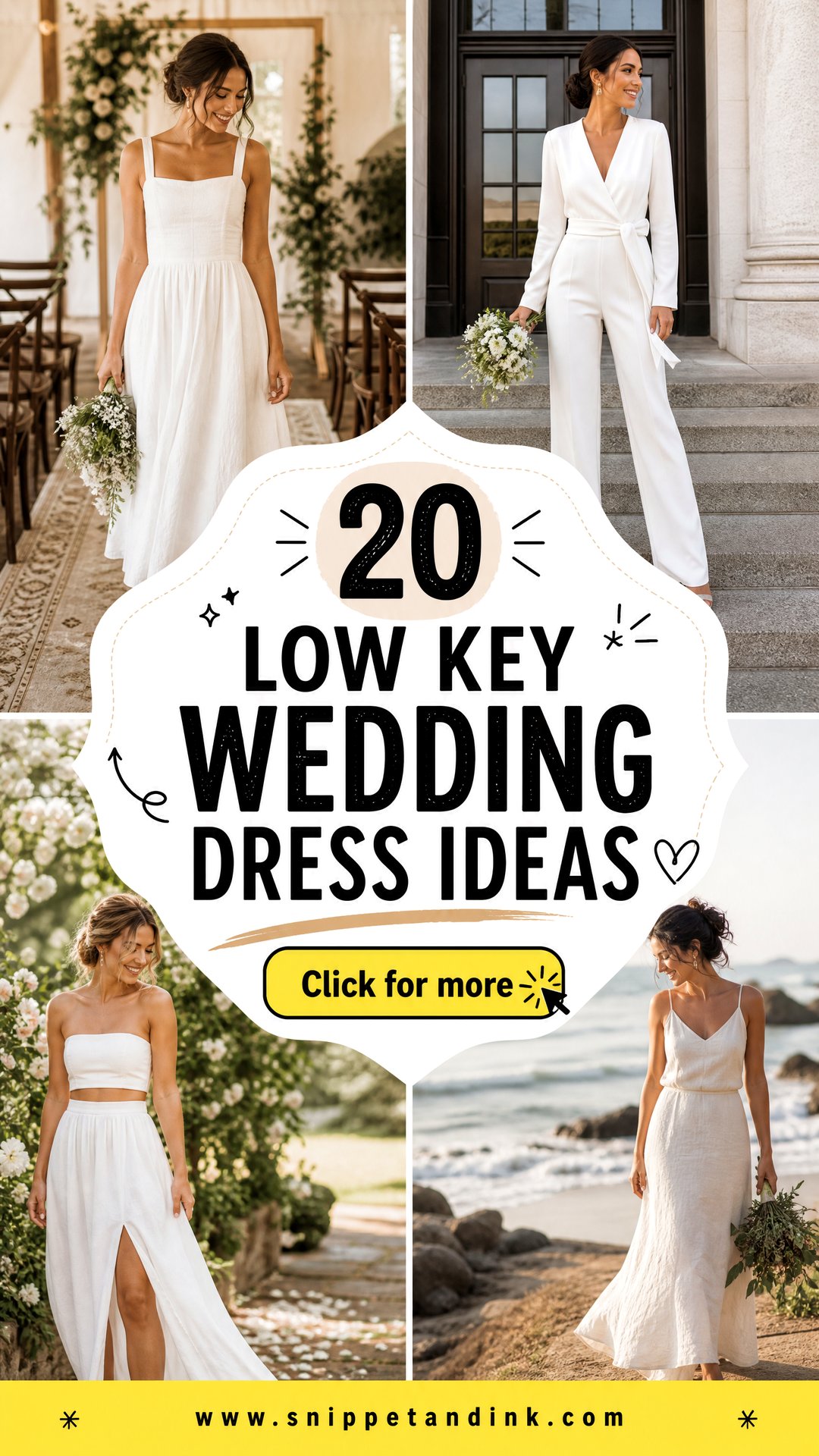
A courthouse ceremony, backyard vows or a dinner for twelve doesn’t need a gown with a train, and forcing one into those settings usually feels wrong. The dresses below are simpler: satin slips, crisp cotton midis, tailored minis and even a polished jumpsuit. With less decoration, fabric quality and fit carry everything, so those are what I’d spend on. Shoes you can walk in, a hem that clears the pavement and one or two meaningful accessories finish the look. Many of these pieces suit your everyday taste closely enough to wear again, which is half the appeal.
Shopping Outside a Bridal Salon Changes the Timeline
Most simple wedding dresses aren’t bought from bridal shops, and that’s useful to know before you start. A made-to-order bridal gown usually needs ordering many months ahead. A ready-to-wear dress from a regular store can be bought weeks before, altered by any good tailor and returned if it doesn’t work.
That freedom comes with a few checks I always run in the fitting room, because ready-to-wear isn’t built with a wedding day in mind:
- Hold the fabric up to daylight. Thin whites and ivories often need a slip that the store doesn’t sell with the dress.
- Read the care label. A dry-clean-only silk is fine; a polyester satin that marks from a single drop of water is a risk outdoors.
- Buy two of the same dress if the price allows. Spills happen, and a backup in your size removes all panic.
- Look at the shade beside a bright white sheet. Store whites range from blue-white to cream, and that affects which veil and shoes will match.
Leave at least three weeks for a tailor to take in a waist or shorten a hem, more in spring and summer when they’re busiest.
1. Satin Slip Wedding Dress
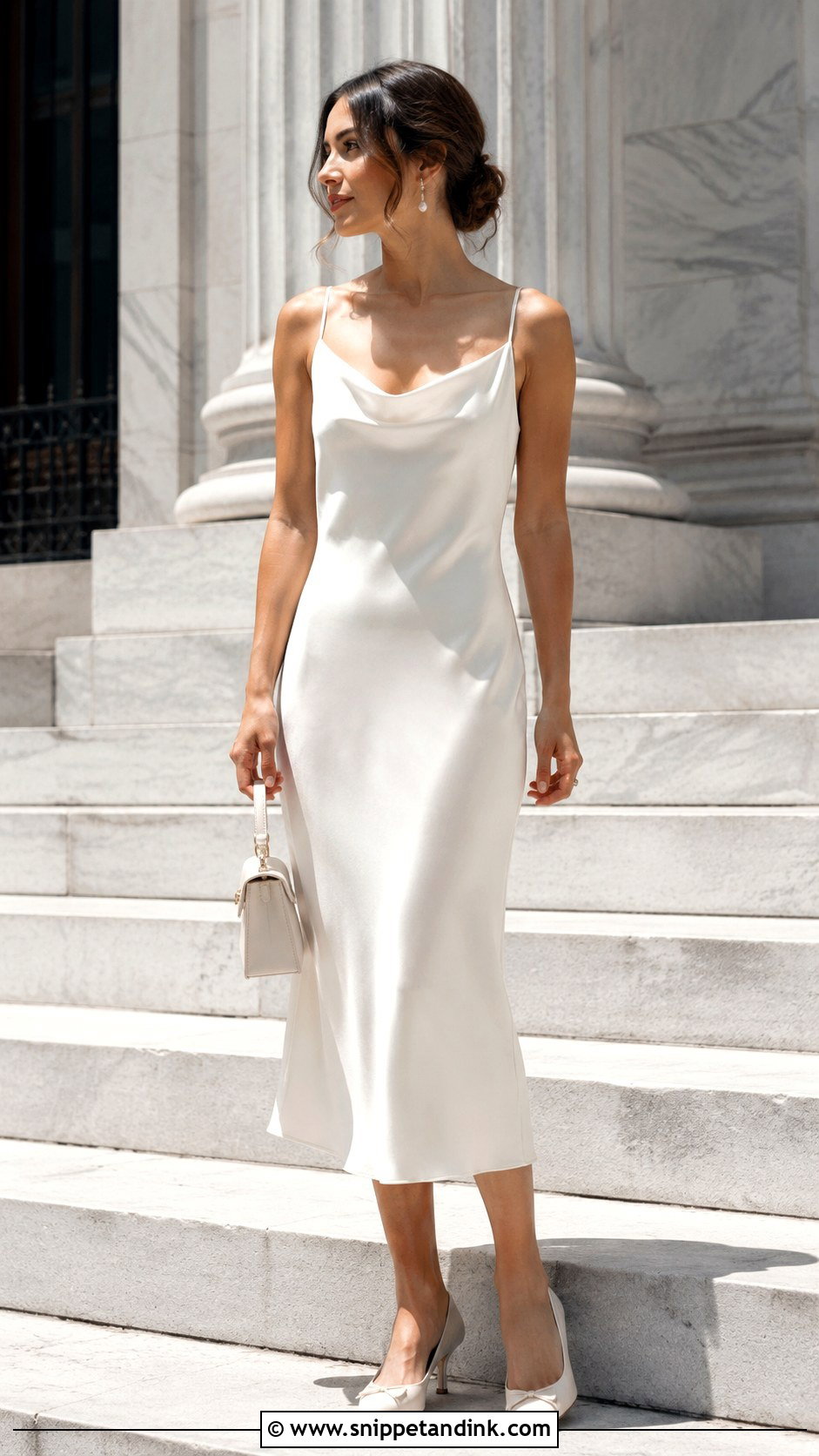
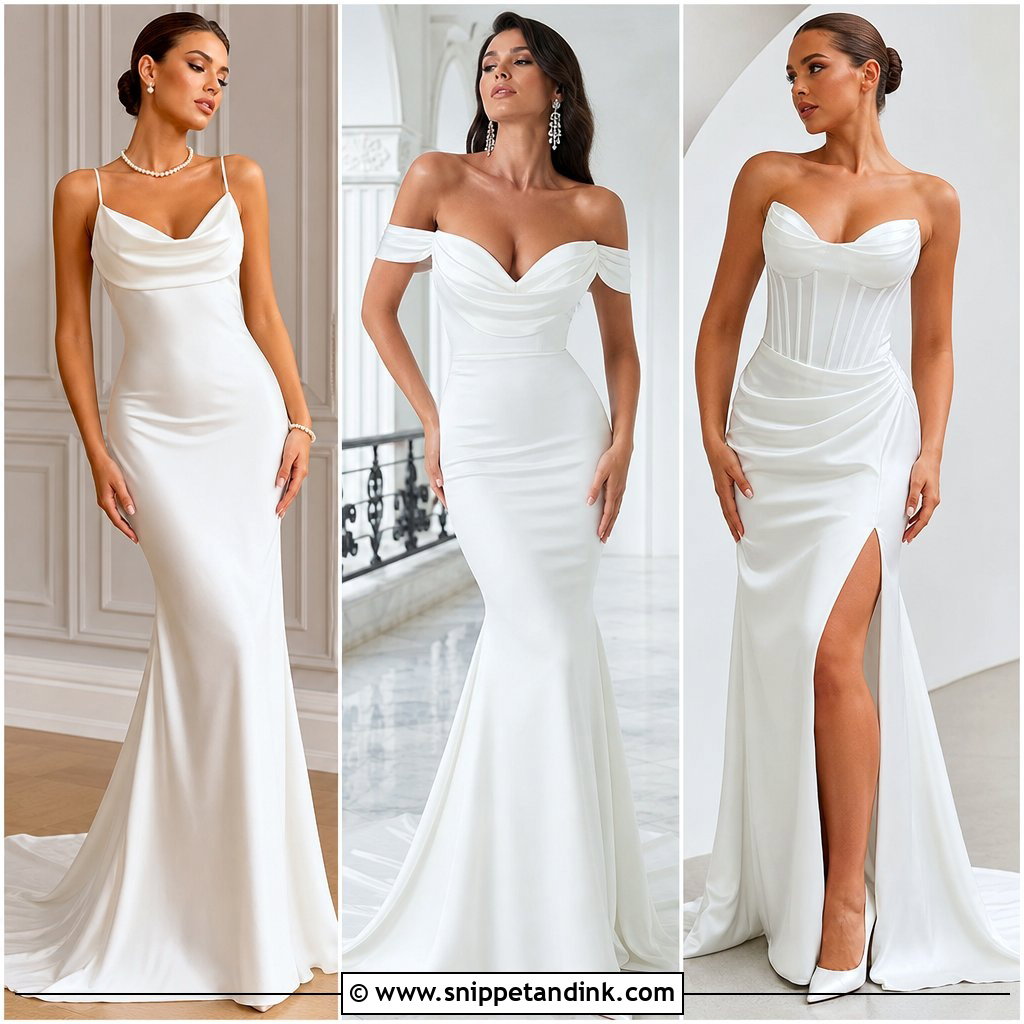
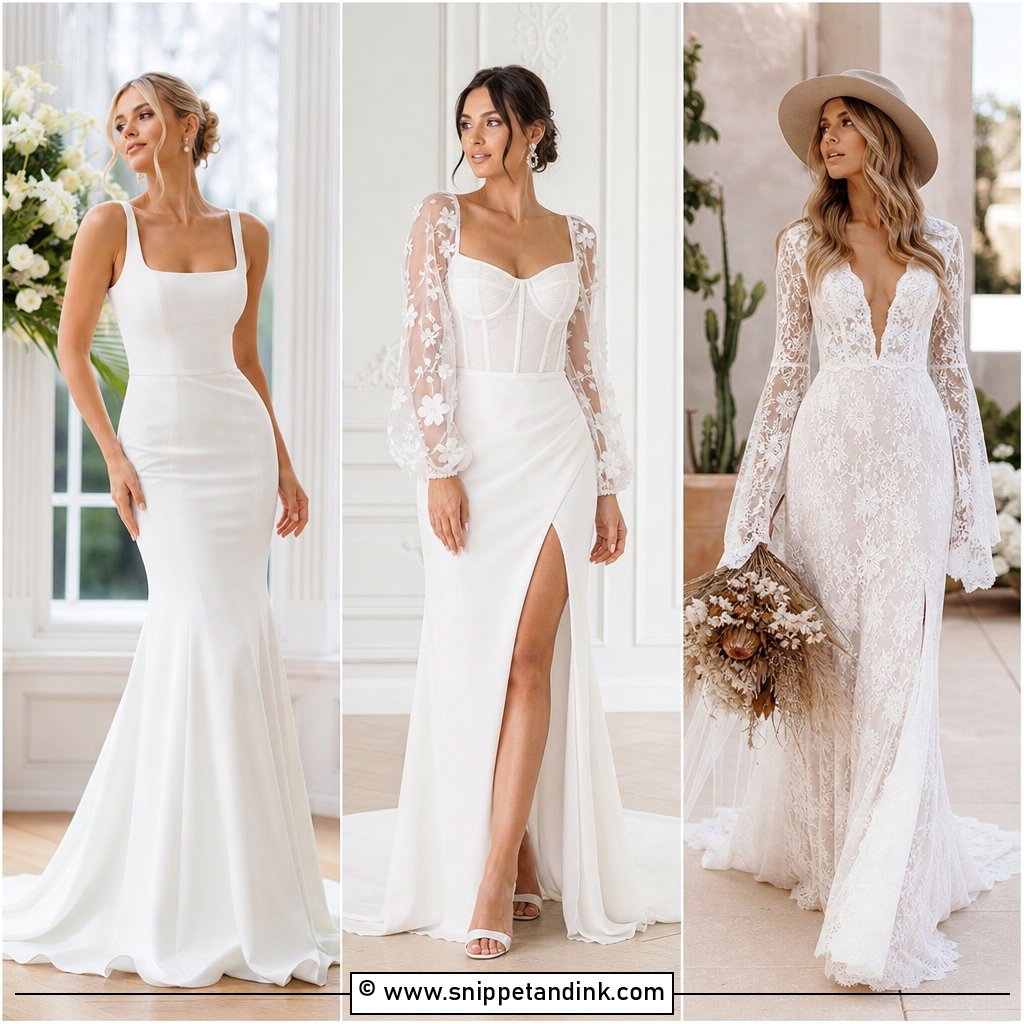
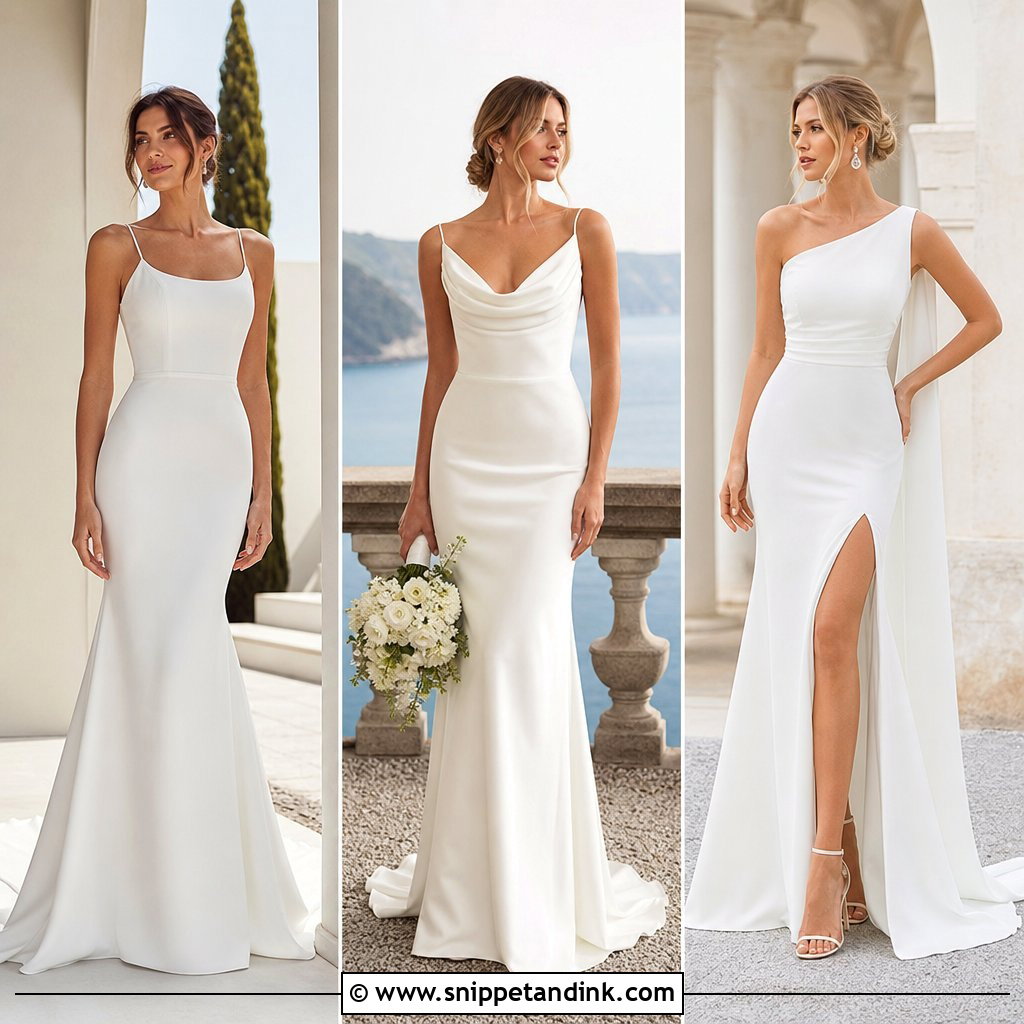
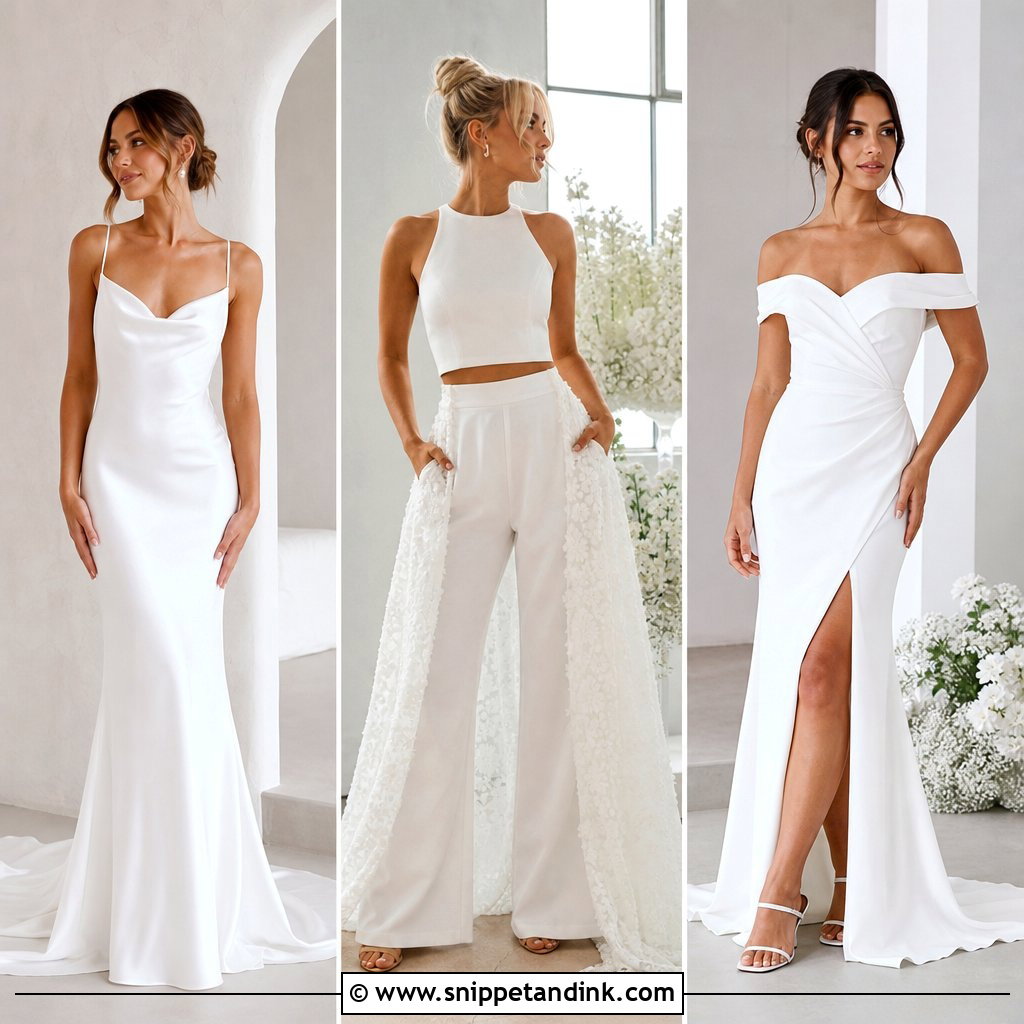
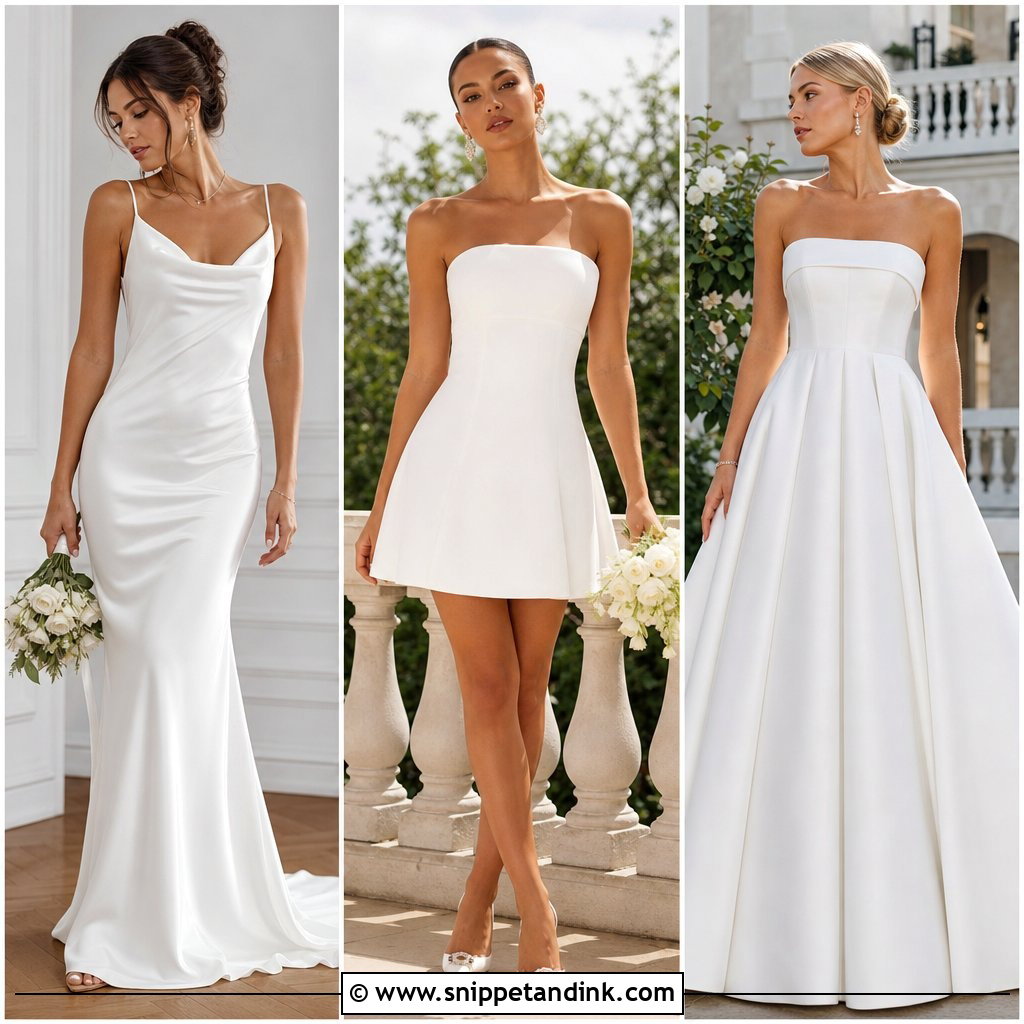
Slip dresses look simple and are surprisingly hard to fit. Bias-cut satin clings to whatever is underneath, so a visible bra band or a pantie line spoils the whole effect; I’d try it on over the exact underwear you plan to wear. Midi or ankle length in ivory, pearl or clean white all work, and adjustable straps let you fine-tune the neckline. Kitten heels, delicate drop earrings and a small structured bag keep it polished. A low bun leaves the neckline clear, and a short veil makes it ceremonial. For more coverage, a light blazer or cropped cardigan goes over the top. Courthouses, restaurants and city elopements suit it.
2. Short Lace Wedding Dress
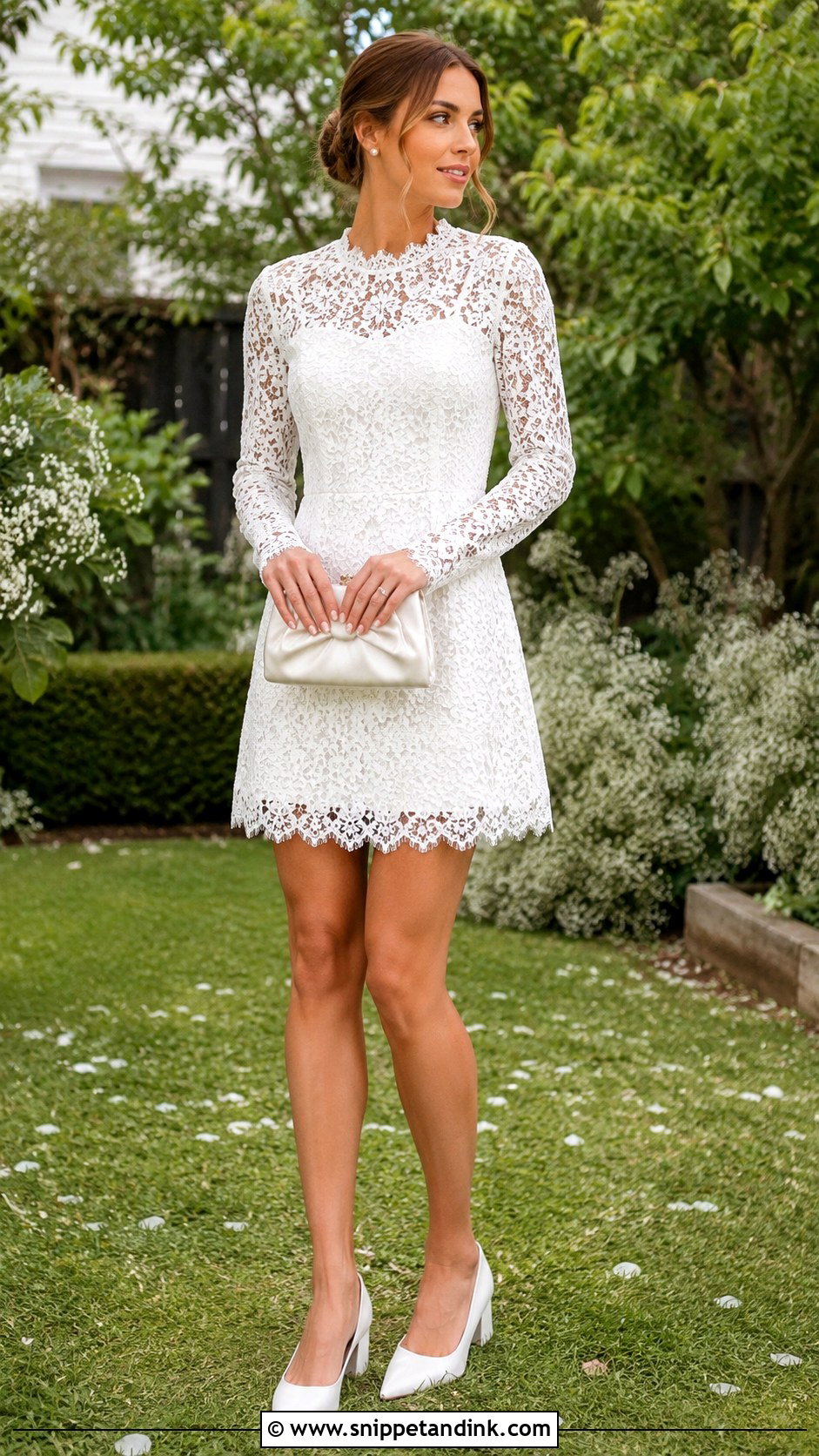
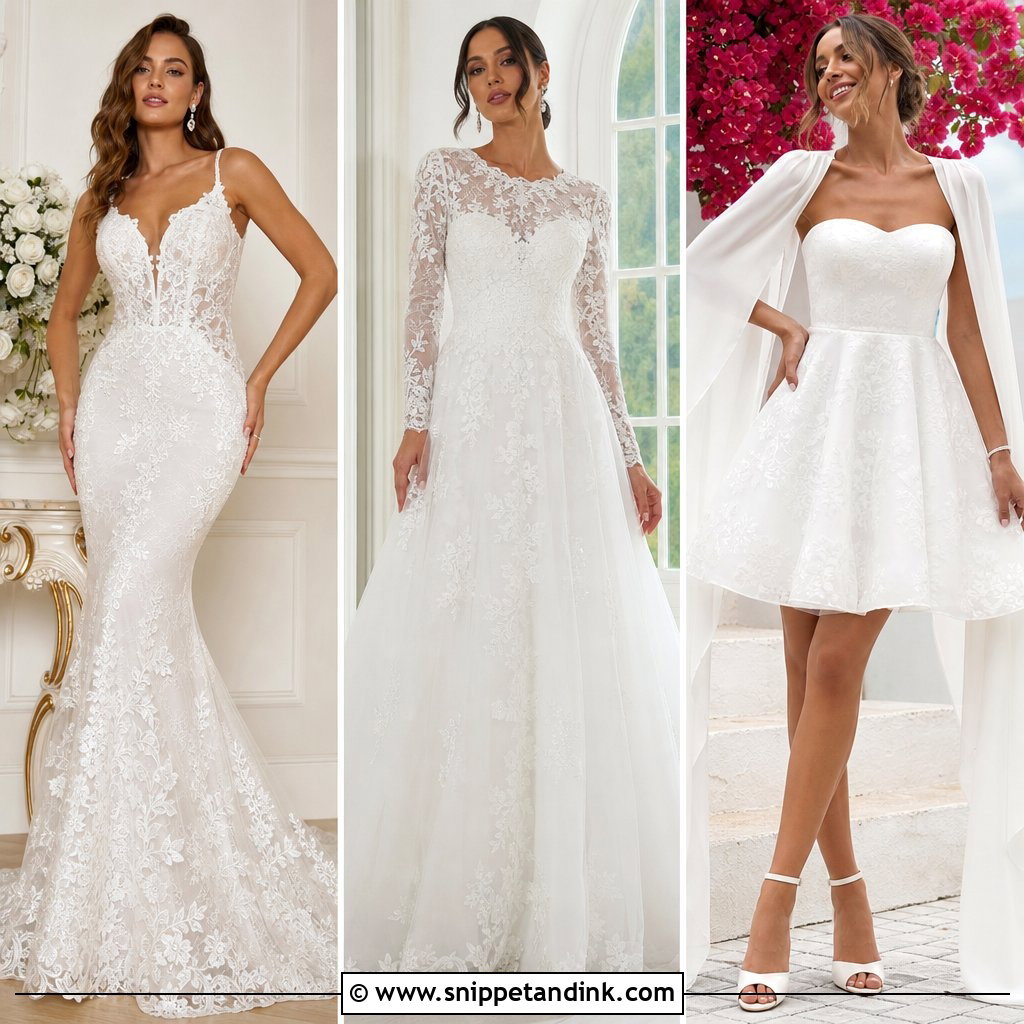
Lace is the quickest way to make a short dress read as bridal rather than as a party outfit. A knee-length or mini cut with a proper lining, a defined waist and a balanced neckline is the base. Long lace sleeves offset the shorter hem; cap sleeves suit a warm day. Check the lining length when you sit, because an unlined lace hem rides up and shows more than you planned. Pointed flats or block-heel pumps, pearl studs and a small satin clutch go well with a loose chignon or a waved bob. Outdoors, carry a compact seasonal bouquet. Backyards, courthouses and family gatherings are where this one belongs.
3. White Wrap Wedding Dress
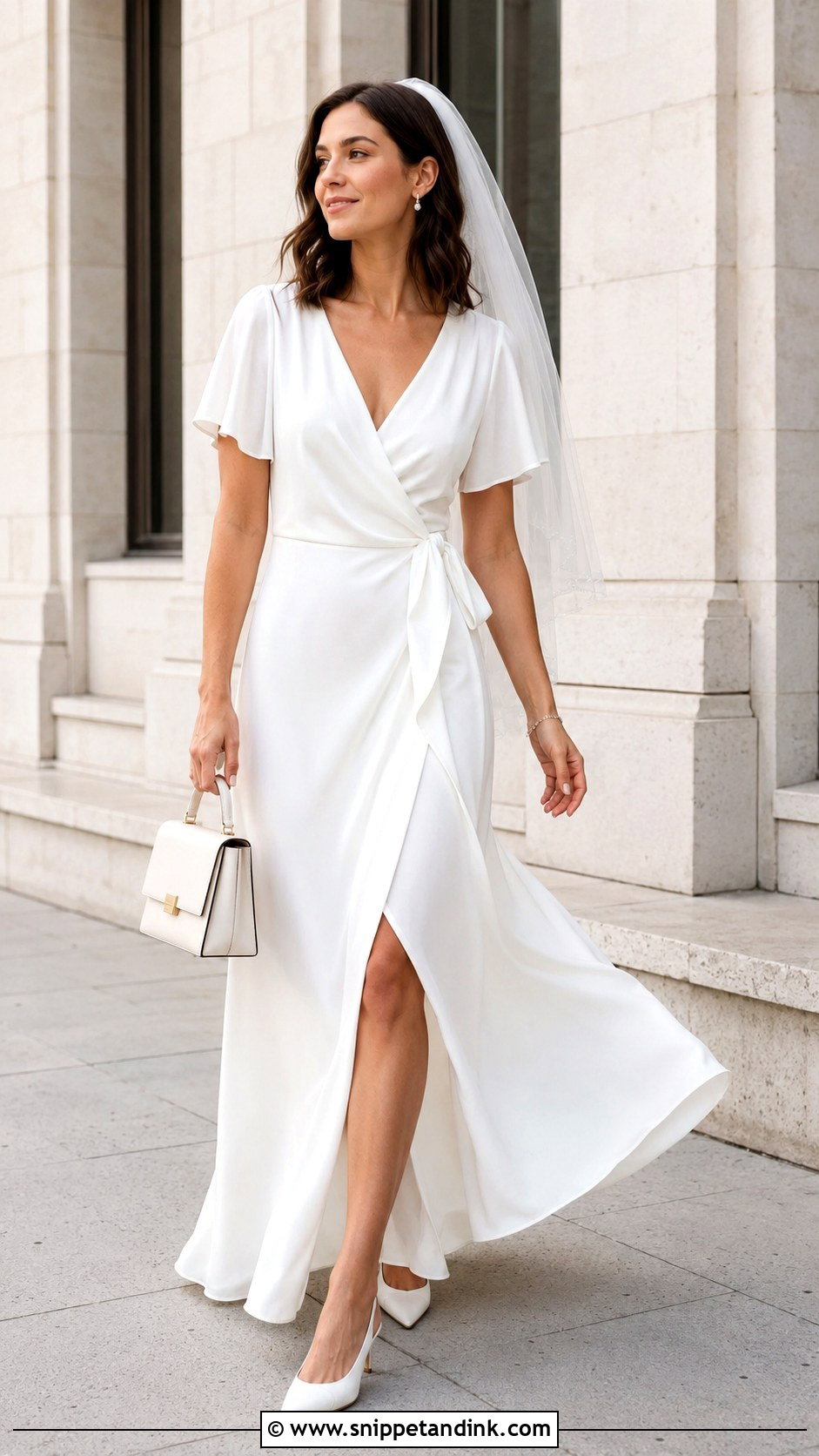
A wrap dress forgives. Because the waist ties, it absorbs small changes in your body between buying and the wedding far better than a fitted bodice. Midi crepe, satin or lightweight jacquard with secure internal ties and a generous overlap at the skirt is what I’d look for. The overlap matters: too little and the skirt opens when you sit or step up. A soft V lengthens the neck; flutter sleeves add movement. Slingback heels, a slim bracelet and a top-handle bag finish it, with a shoulder-length veil or floral comb to make it bridal. Garden ceremonies and a courthouse appointment followed by lunch both suit it.
4. Tea Length Wedding Dress
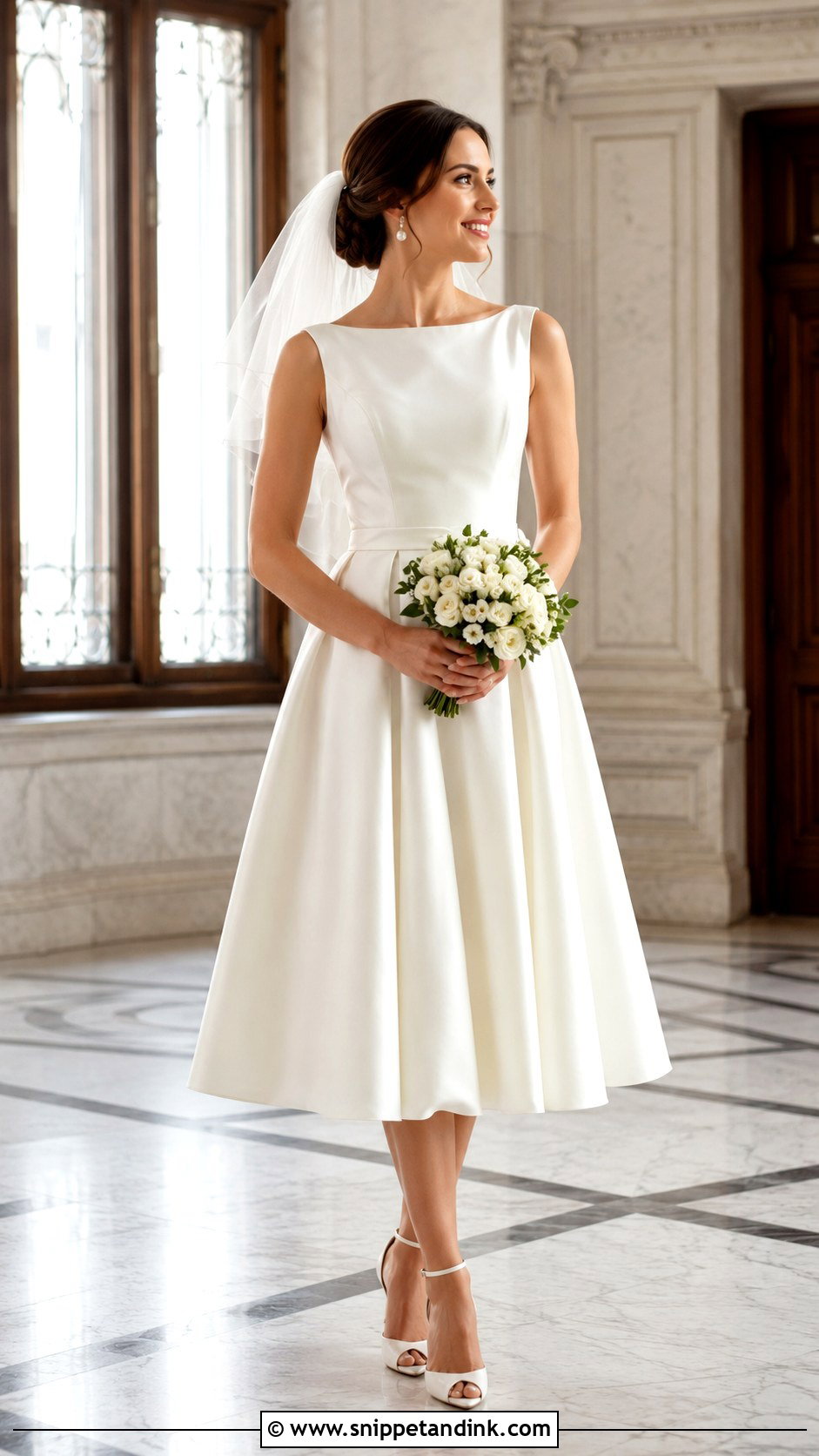
Tea length gives you a skirt that moves without filling a small room. The hem should land between knee and ankle over a fitted bodice and a softly flared skirt; satin, mikado, cotton sateen and structured crepe all hold that shape. With the shoes on show, they’re part of the outfit, so choose pumps, ankle straps or embellished flats with care. Proportion is personal here. On petite brides I often raise the hem slightly so the leg doesn’t look cut off, while taller brides can take a fuller midi. Pearl earrings, a small bouquet and a short blusher veil or headband finish it for civil ceremonies, brunches and retro-themed parties.
5. Puff Sleeve Wedding Dress
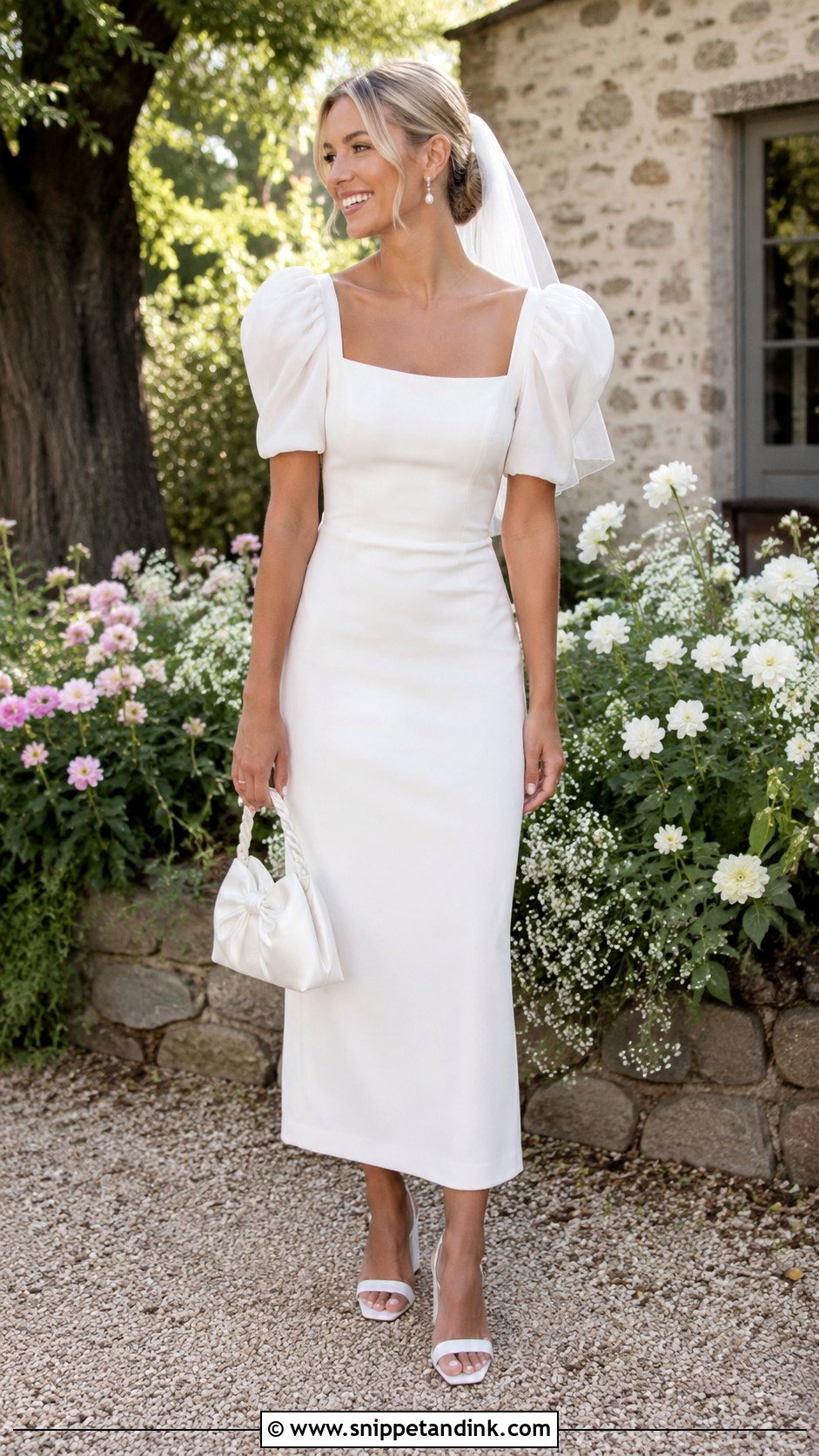
Puff sleeves do the work that beading would on a formal gown, giving a plain dress something distinctive. A fitted midi or ankle-length cut with gathered sleeves and a square or sweetheart neckline is the classic version. Keep the volume moderate; oversized sleeves look theatrical at a small ceremony and crush under a coat. Sleek block heels, a small leather or satin bag and simple gold or pearl jewelry suit it, with a ponytail or low bun so the shoulders aren’t crowded. For a backyard, cotton poplin or a linen blend breathes. A short tulle veil is optional; the sleeves can carry the look alone.
6. Square Neck Wedding Dress
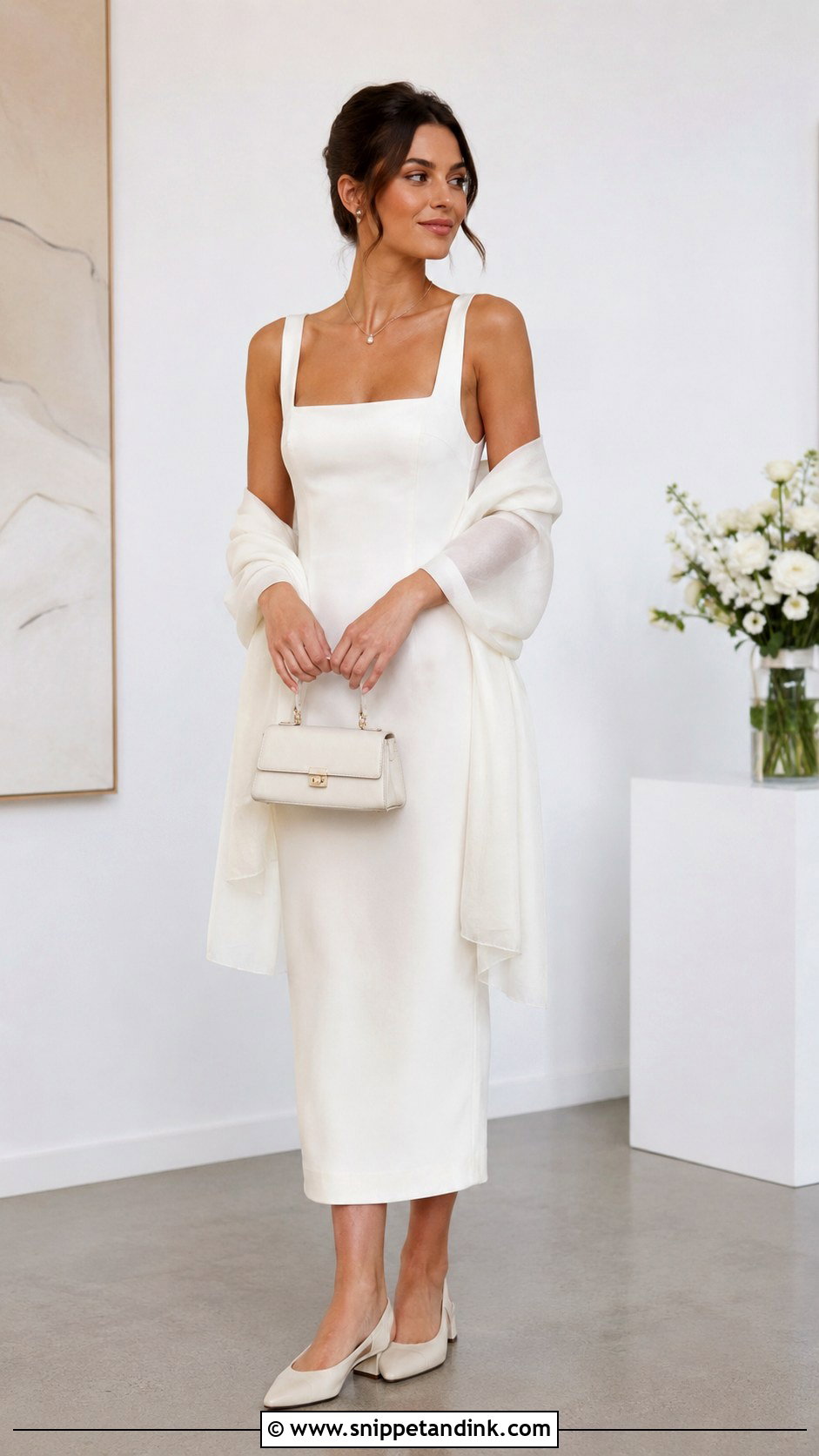
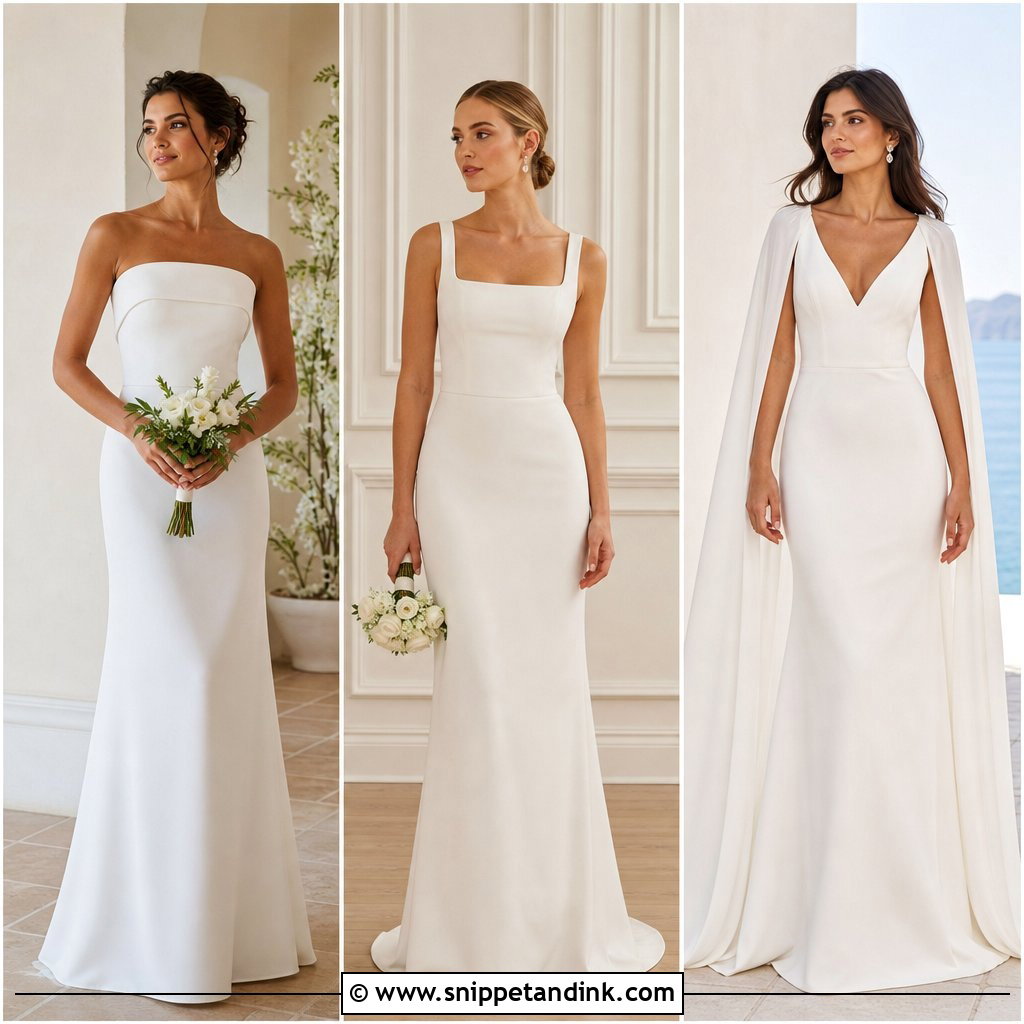
A square neckline is one of the easiest to wear with an ordinary bra, which is a practical reason to like it. On a fitted crepe midi, a flowing A-line or a streamlined ankle-length dress, it frames the collarbones and leaves room for a delicate pendant or short pearl strand. If you need more support, wider straps or internal cups solve it without changing the look. Low block heels, a structured mini bag and a smooth center-parted bun keep things clean. A light shawl covers you in cooler moments without hiding the shape. City hall, a small gallery or an intimate garden all suit it.
7. Cotton Midi Wedding Dress
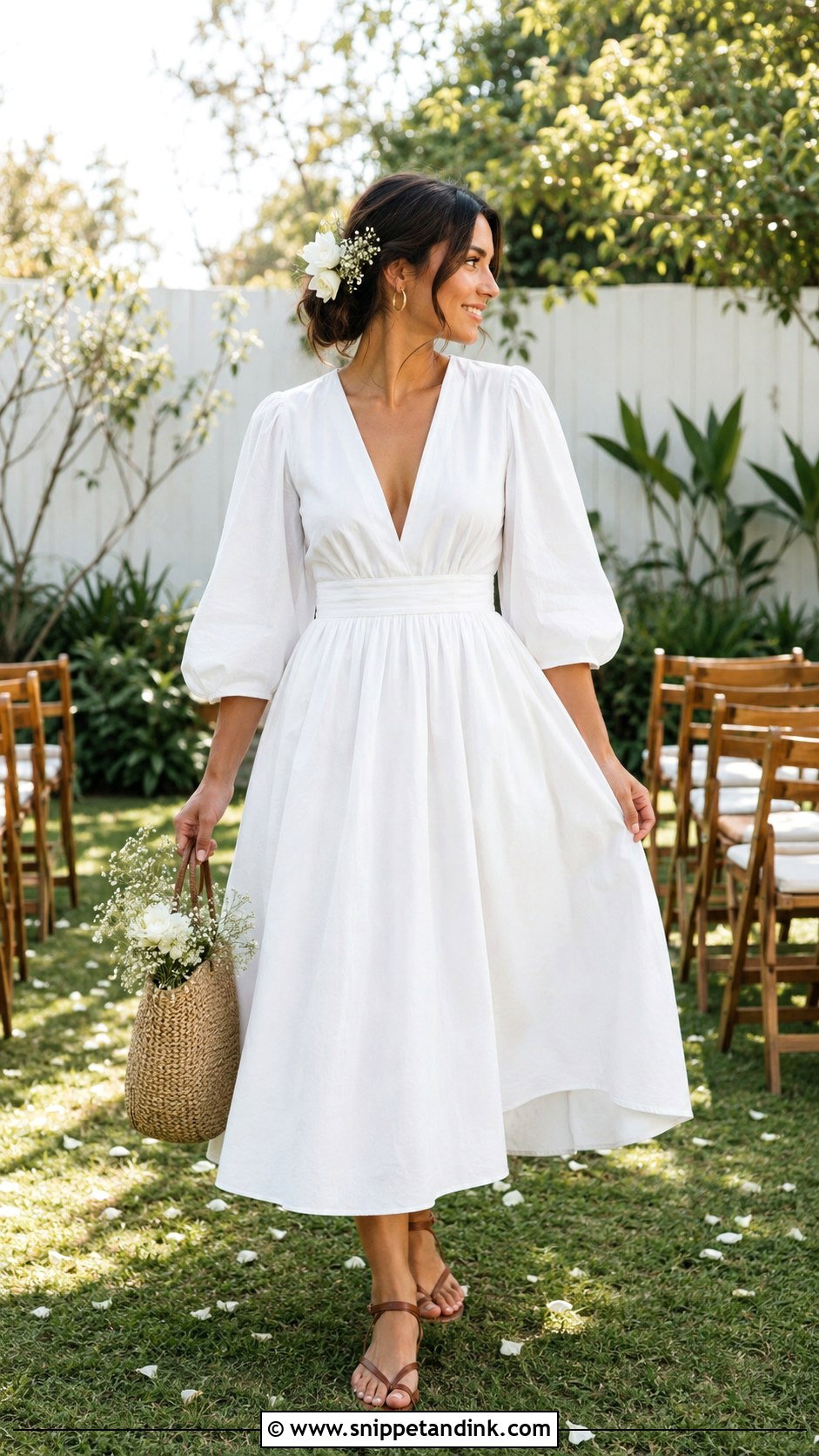
Crisp cotton breathes on a hot afternoon in a way satin never will. A lined midi with a fitted waist, a full skirt and details like covered buttons, subtle pleats or a square neck keeps it from looking like a sundress. Leather sandals, low espadrilles or ballet flats suit the ground you’ll be on. Add small hoops, a woven or structured bag and a ponytail tied with ribbon. A fingertip veil contrasts nicely with everyday cotton, or a floral hairpiece keeps it relaxed. Cotton creases quickly, so steam it right before you dress and avoid sitting in the car on the skirt. Backyard vows and farmhouse dinners are its home.
8. Long Sleeve Wedding Dress
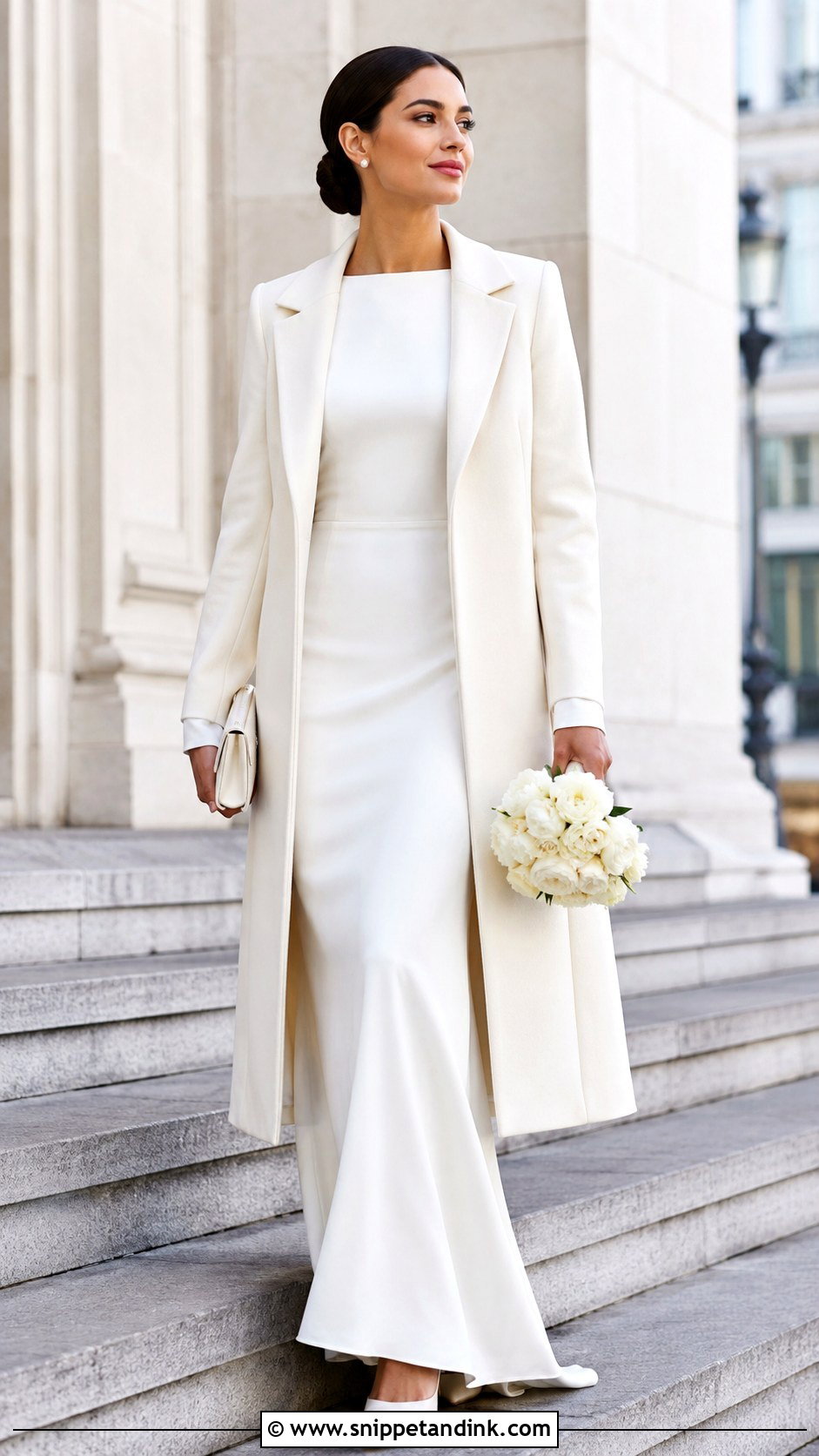
For a cool-weather wedding, a plain long-sleeved dress gives coverage without heavy lace. Matte crepe, jersey or soft satin in a column, sheath or gentle A-line keeps it modern. I always ask brides to hug me in a sleeved dress at the fitting; a sleeve set too narrow at the armhole pulls the whole bodice and you feel it all day. Closed-toe pumps, pearl or crystal studs and a compact clutch suit it. A sleek bun works with a high neck, while loose waves soften a boat or V-neck. For warmth outdoors, a tailored ivory coat ending near the hem completes it for fall courthouse ceremonies and winter elopements.
9. Minimalist Column Wedding Dress
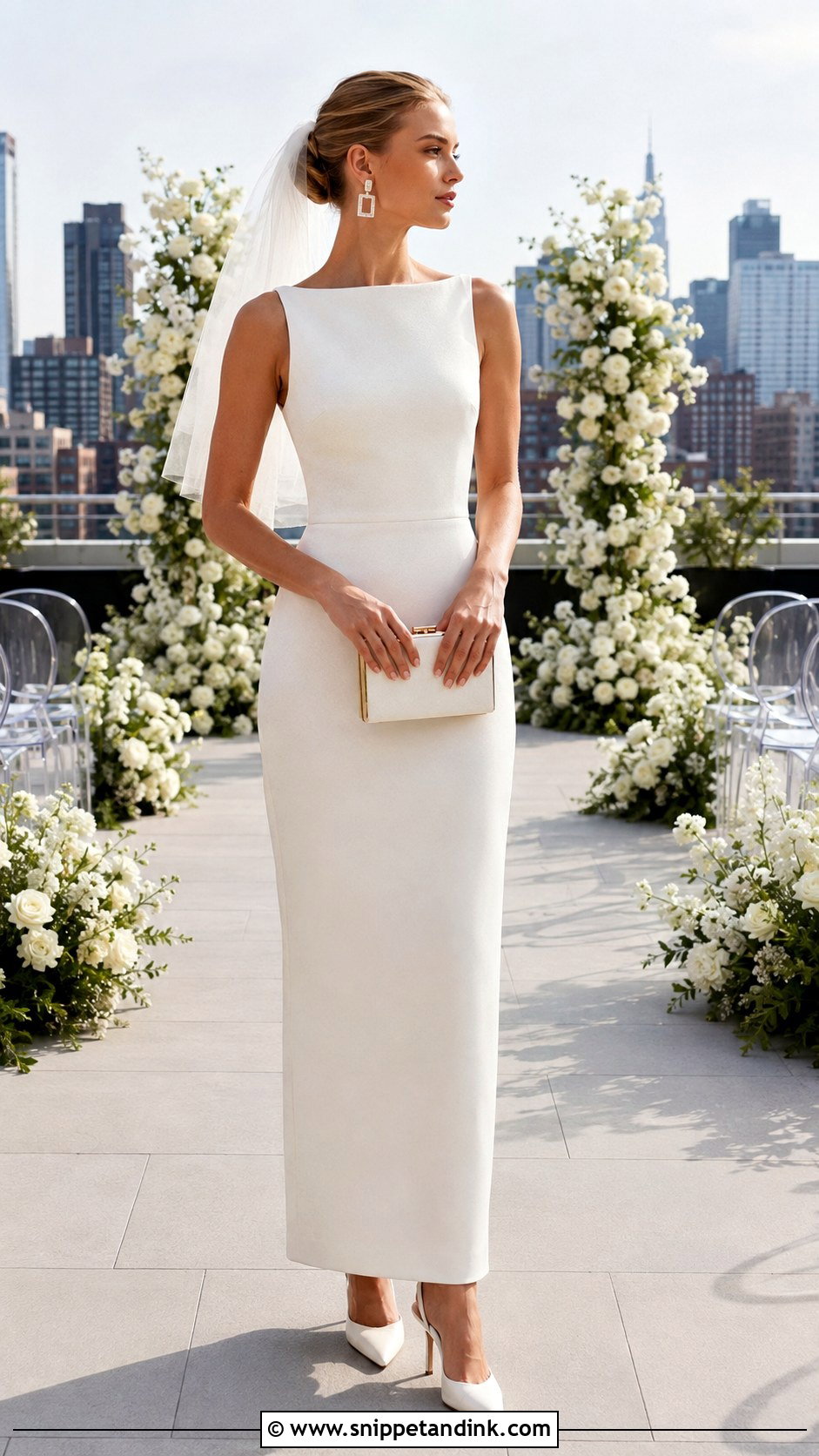
A column dress gets its grace from construction, not volume. Substantial crepe, satin or matte jersey in a straight or gently fitted cut should skim the body rather than pull across it, and that’s entirely down to tailoring. Thin jersey shows every bump; heavier fabric hangs. Ankle length feels relaxed, while floor length gives traditional coverage without a train. Slim heels, geometric earrings and a structured clutch suit it, with a low twisted bun and a short veil. I’d only add shapewear if it makes you more comfortable, not if it restricts your stride. Modern courthouses, rooftops and minimalist venues fit it.
10. Off Shoulder Wedding Dress
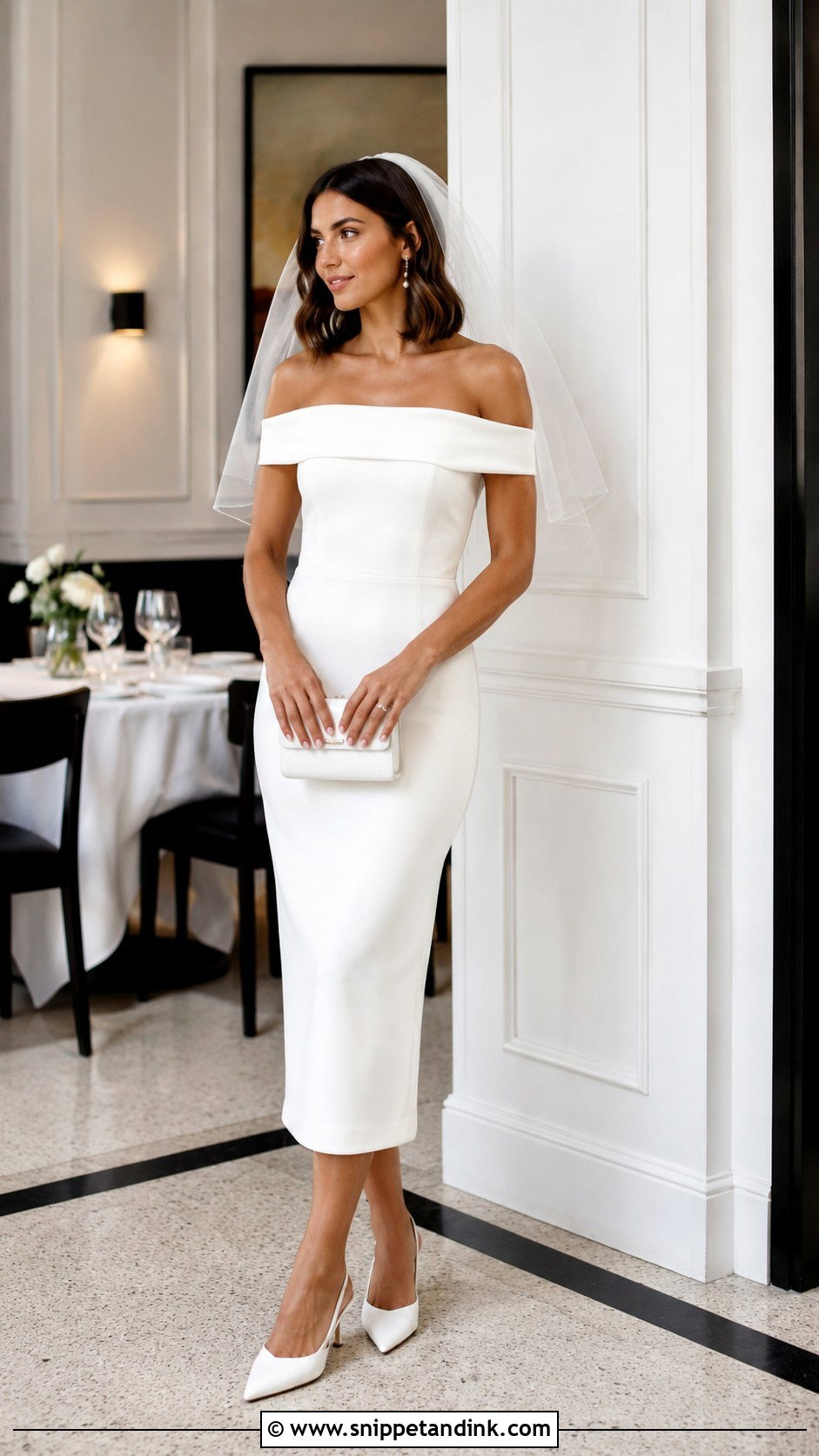
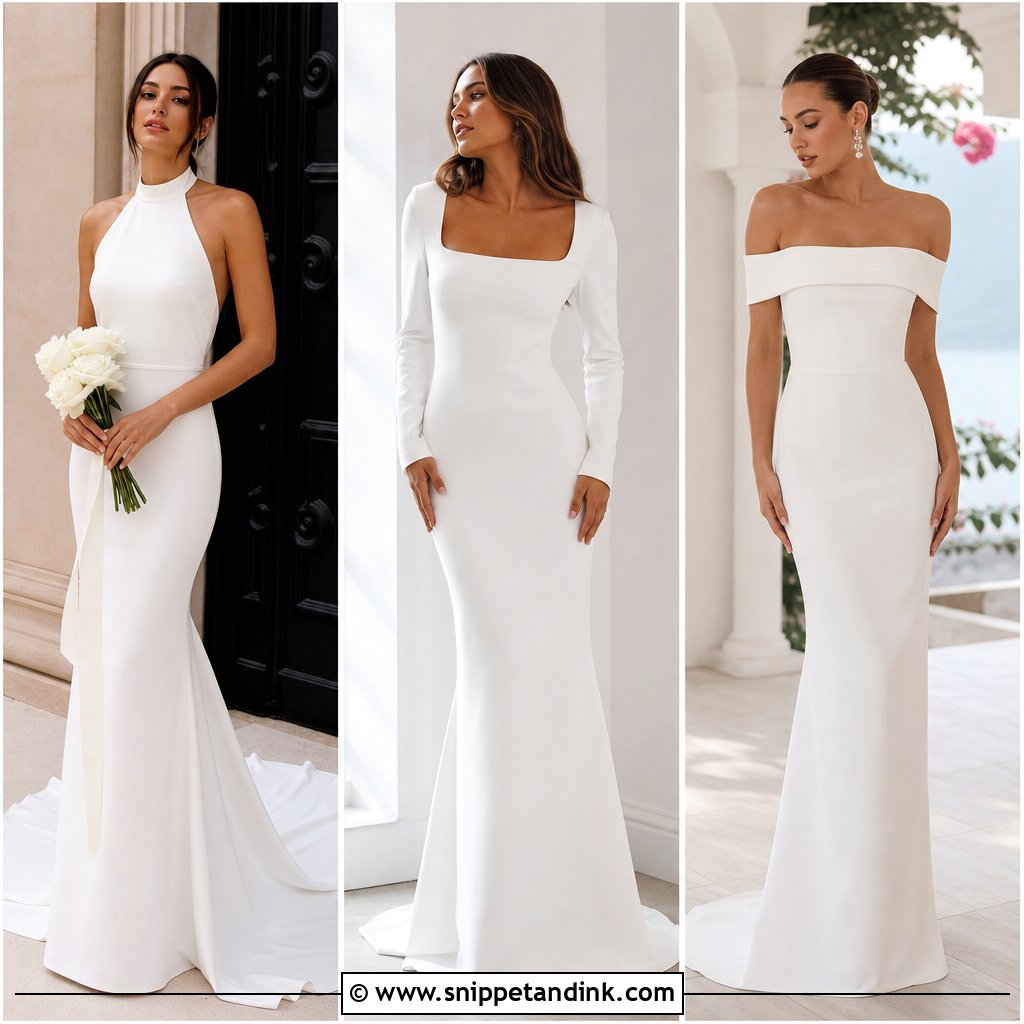
Off-shoulder necklines need a bodice with real structure underneath, or you’ll be hitching them up all day. A midi or streamlined maxi in soft crepe or stretch satin looks smooth, and lightly gathered fabric gives more flexibility. Test it before buying: sit down, then raise both arms as if waving. If the neckline slides, either the bodice needs boning or the dress isn’t right for a day of hugging. Drop earrings, low heels and an envelope clutch suit it, with no necklace and a neat updo or side-swept waves. A shoulder-length veil frames it for a small indoor ceremony or a summer evening dinner.
11. Halter Neck Wedding Dress
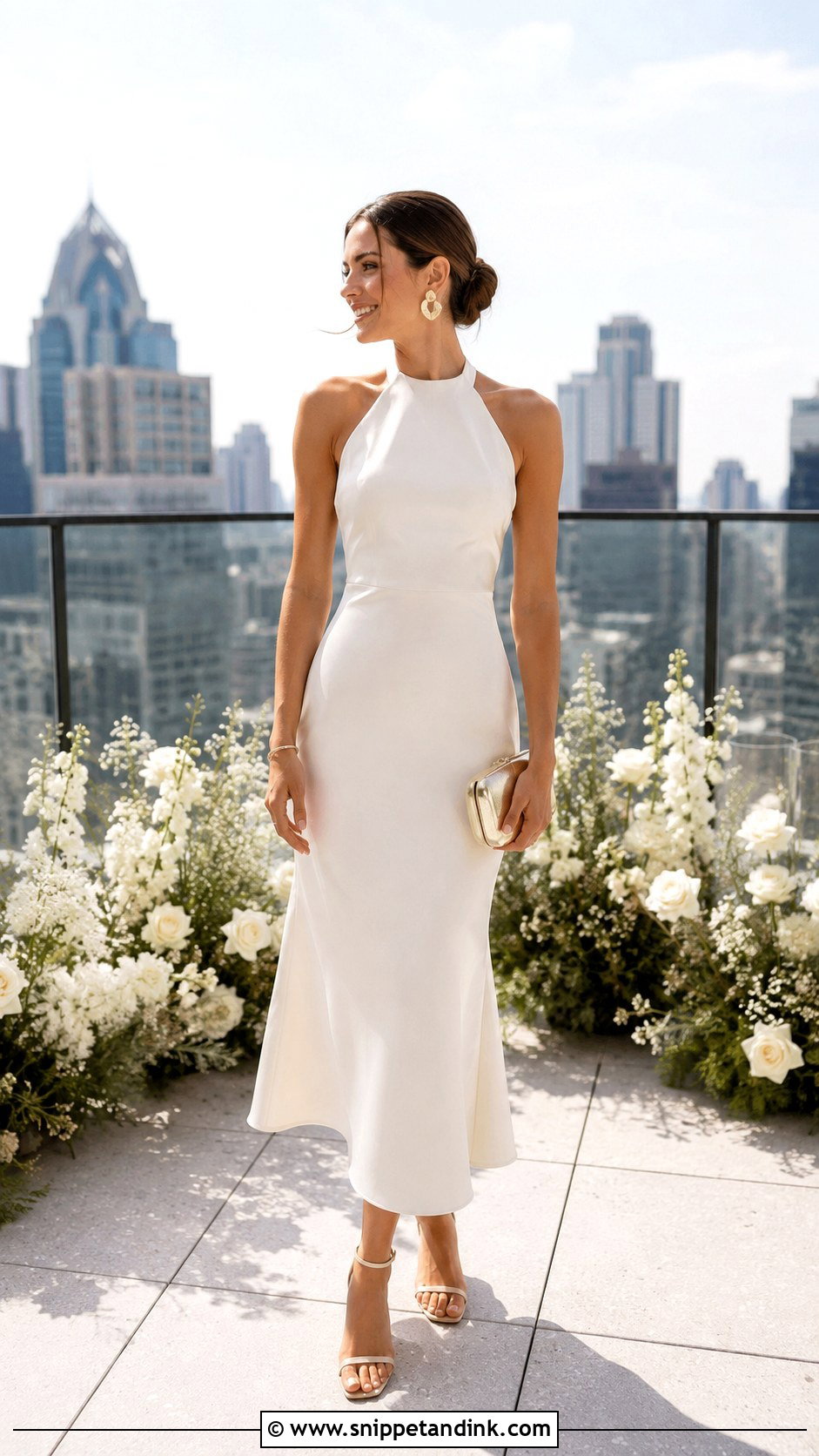
A halter-neck dress suits warm weather and strong shoulders. Satin midi, crepe column or a flowing ankle-length cut all work as long as the neck tie is secure; a thin halter strap can rub the back of the neck over several hours, so I’d look for a wider band or a covered button closure. Comfortable armholes matter too. Minimalist sandals, sculptural earrings and a small clutch in white or soft metallic leather suit it. Hair up, in a bun or high ponytail, keeps the neckline clear. Choose breathable lining and a hem that doesn’t drag for rooftops, beaches and destination elopements.
12. Button Front Wedding Dress
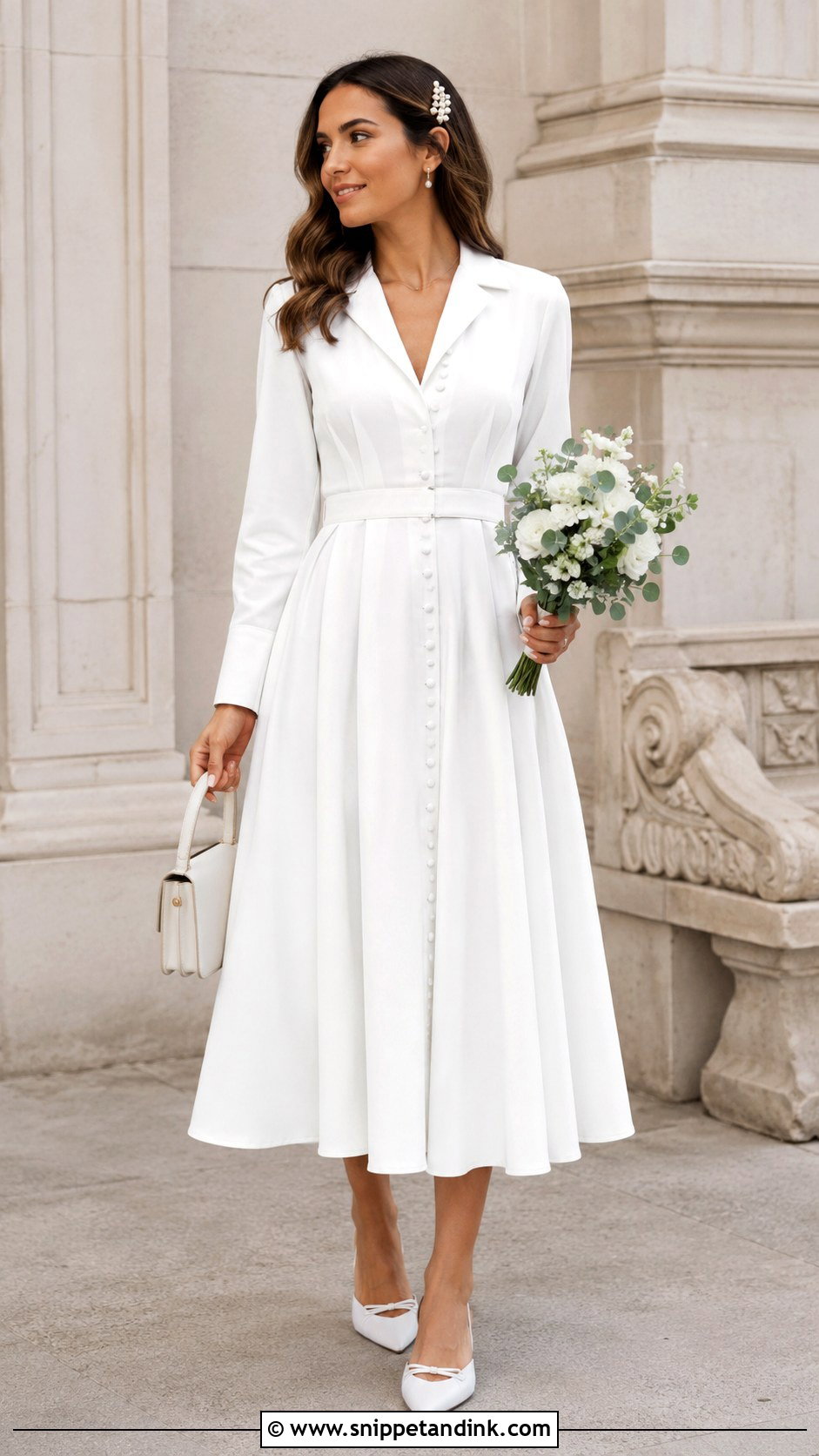
Covered buttons are a small detail that says bridal without decoration. Look at the placket, though. On a button-front midi or ankle-length dress in crepe, cotton sateen or soft jacquard, the buttons gape between each other when the dress is snug at the bust or hips, especially when you sit. If you see gaps in the fitting mirror, have the dress let out or a hidden snap added between buttons. A fitted waist and gently flared skirt suit most ceremonies. Pointed flats or low slingbacks, a pearl hairpin, a structured bag and a small bouquet of white and green flowers finish it for courthouse steps and backyard gatherings.
13. Simple Maxi Wedding Dress
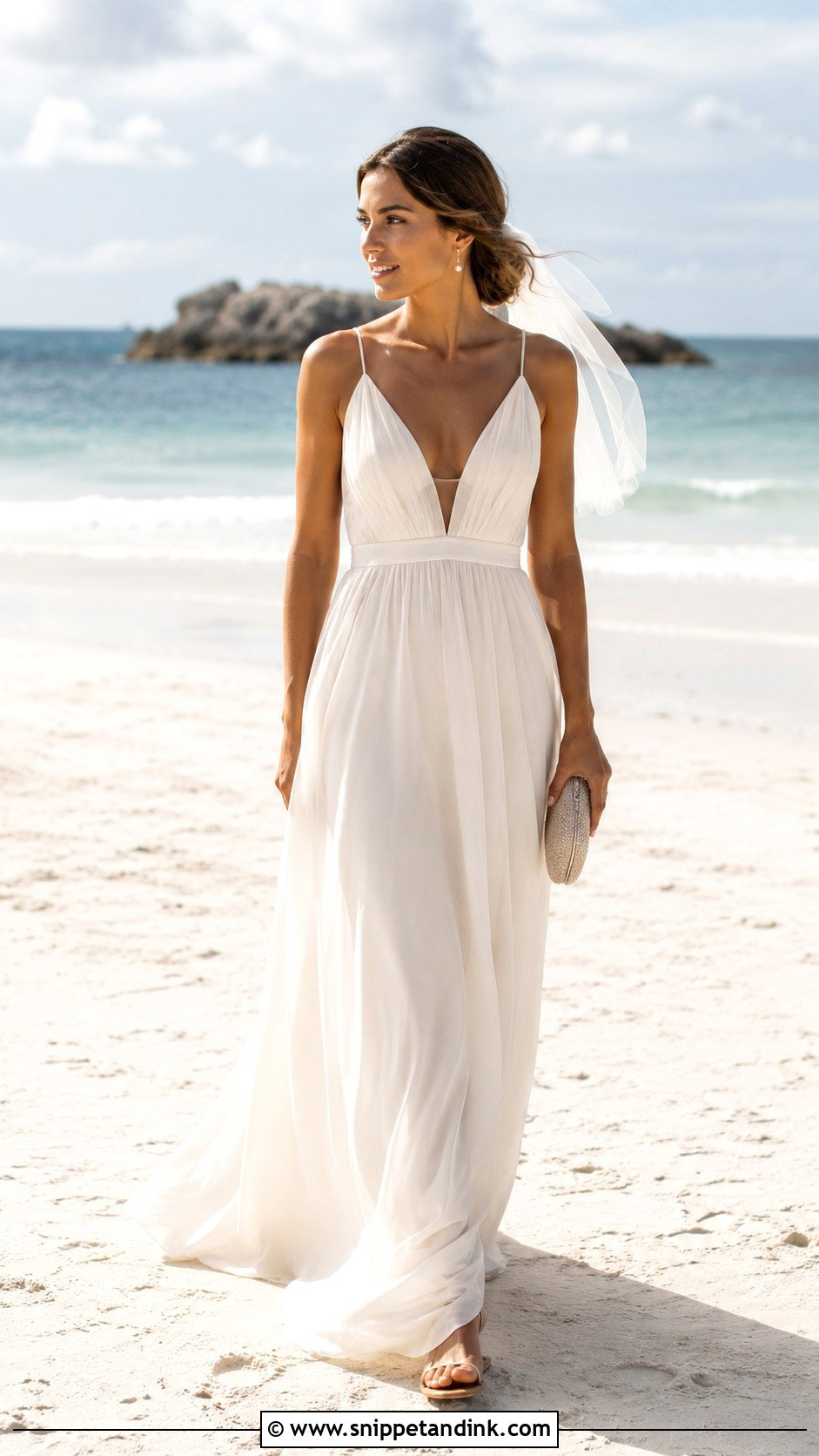
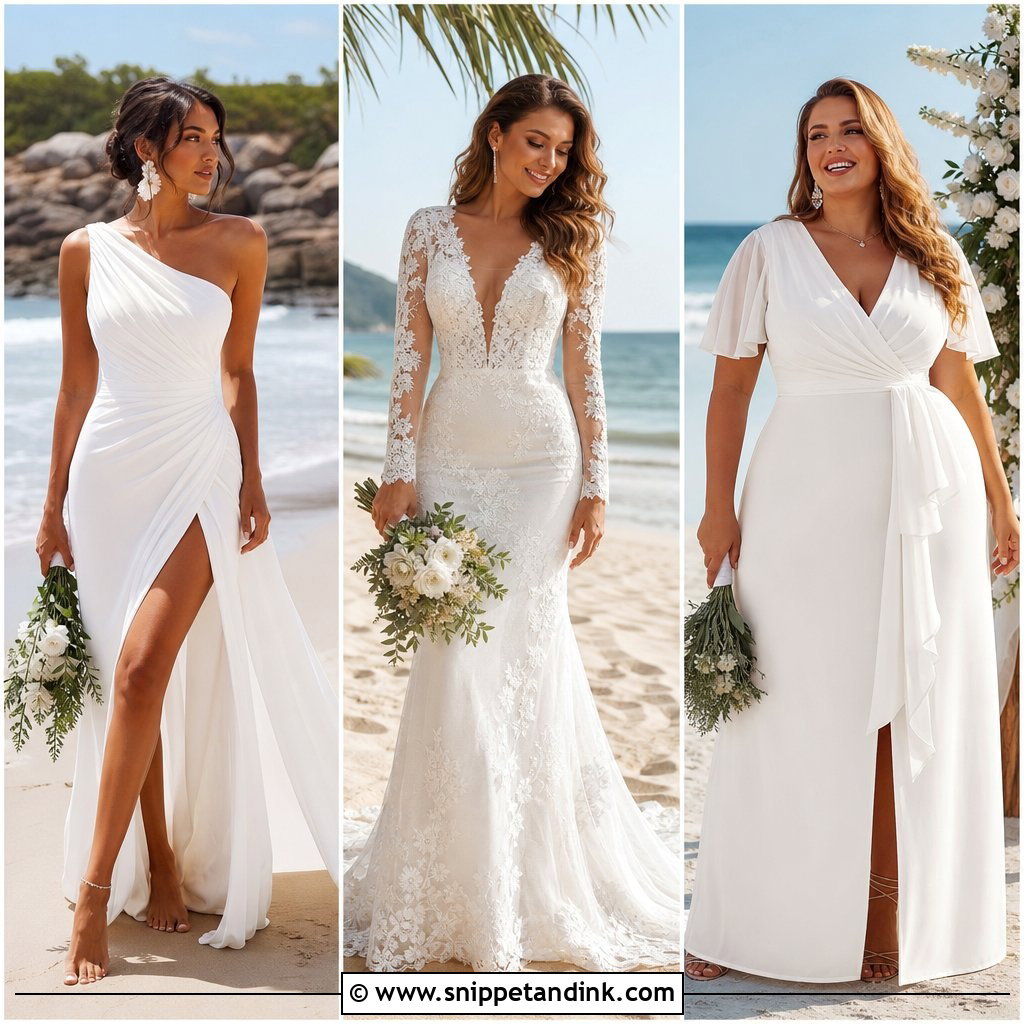
A flowing maxi feels romantic without looking like a ballroom gown. Lightweight chiffon, satin or crepe with a simple neckline and minimal gathering is the base, and an ankle-grazing hem stops it catching on grass or sand. The thing I always check is opacity. Light fabrics that look solid indoors can turn see-through in bright sun, so stand by a window in it and ask someone honest to look. Block heels, flat sandals or mules, understated earrings and a soft clutch suit it, with loose waves or a low ponytail. A narrow veil or floral comb adds a ceremony detail for garden vows, beach elopements and home weddings.
14. Blazer Wedding Dress
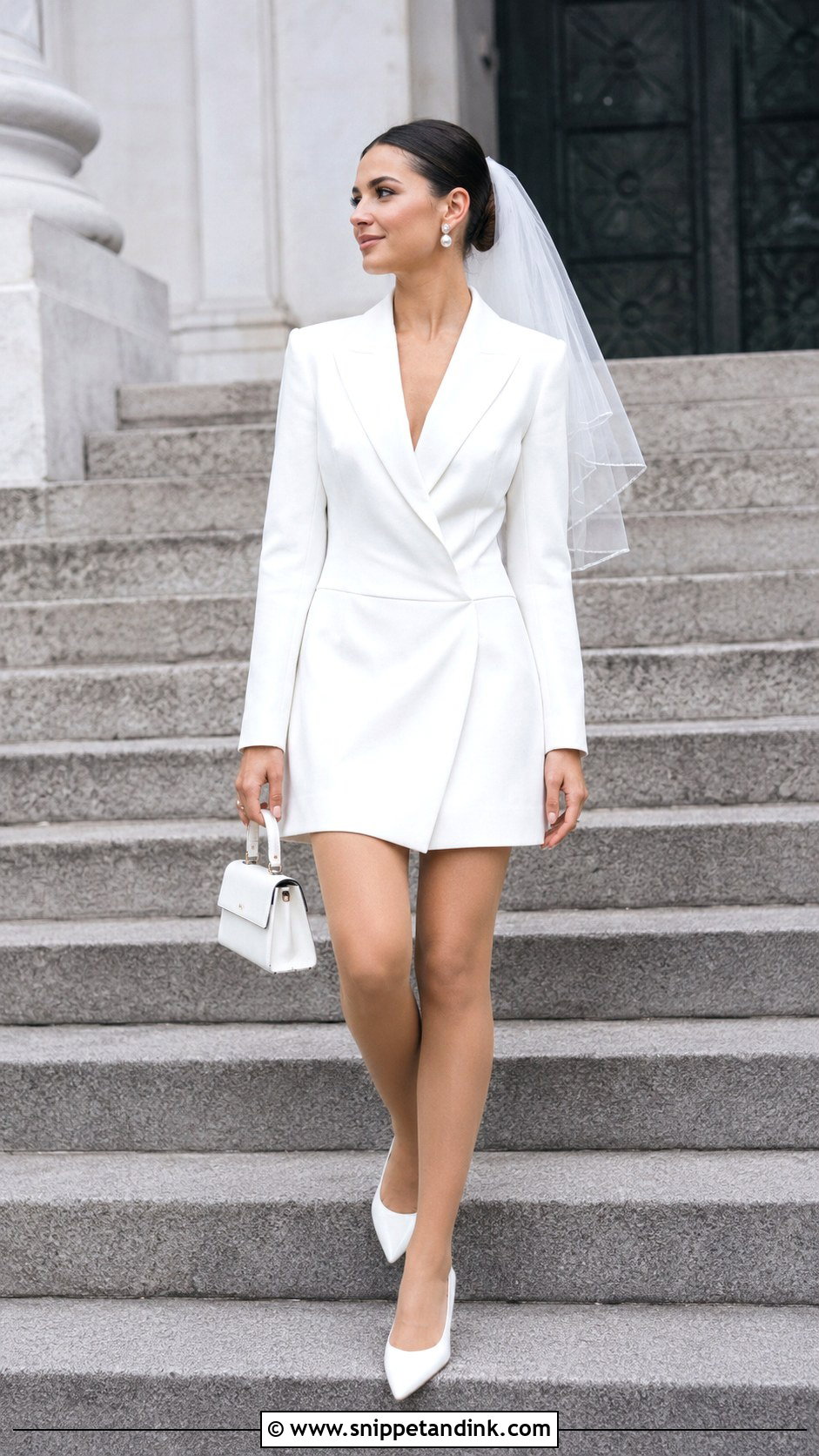
A blazer dress gives you sharp tailoring in one piece, which is ideal for city hall. Look for a structured white or ivory design with a secure wrap front, a defined waist and a hem that lets you sit comfortably. Wrap fronts can open when you bend, so a hidden hook or snap at the cross point is worth asking a tailor to add. Tailored shorts or a slip underneath give extra confidence. Pointed pumps, sheer neutral tights in cool weather and a compact top-handle bag keep it clean, along with small earrings and a sleek ponytail. A short veil or polished headband marks it as bridal at a courthouse or a small restaurant reception.
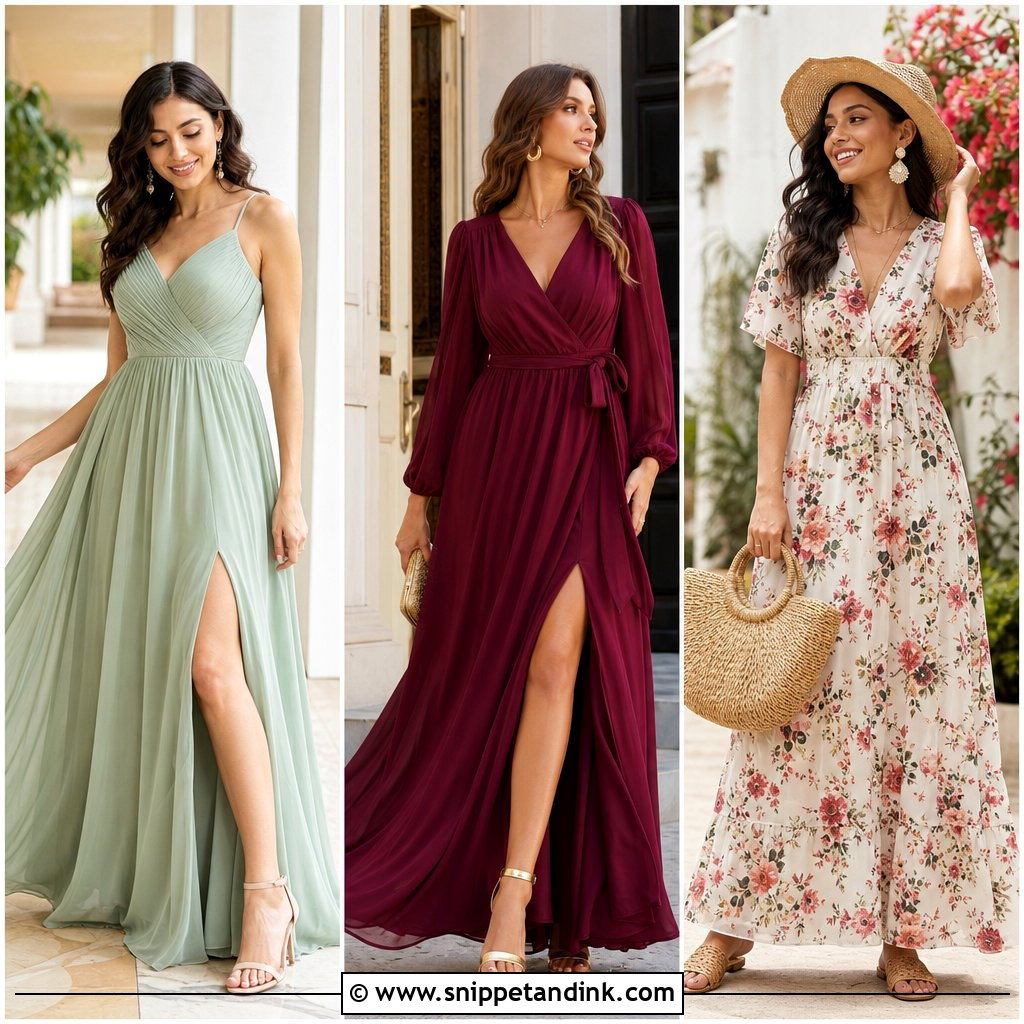
15. Bridal Jumpsuit Wedding Outfit
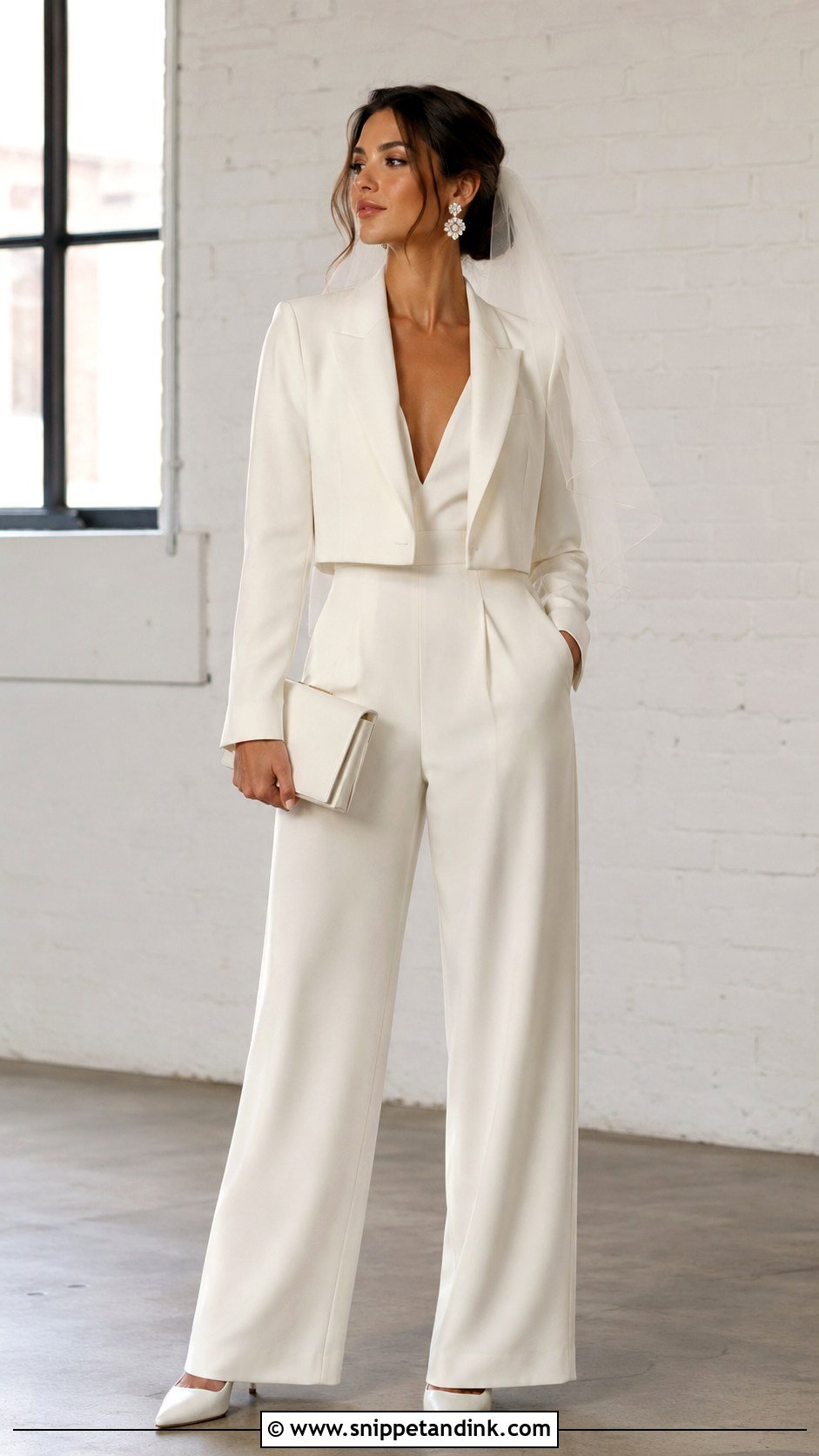
Not every low-key bride wants a dress at all. A tailored jumpsuit gives you one complete outfit with total freedom to move. Wide or straight legs, a defined waist and a neckline with reliable support are the essentials, and crepe or satin keeps it polished. Have the hem tailored to the exact shoes you’ll wear, since trouser hems are less forgiving than skirts, and test the zip with no help before the day. Pointed heels, a structured clutch and statement earrings finish it. A cropped blazer adds coverage, and a short veil makes it read instantly bridal at courthouses, lofts and civil ceremonies.
16. Two Piece Wedding Dress
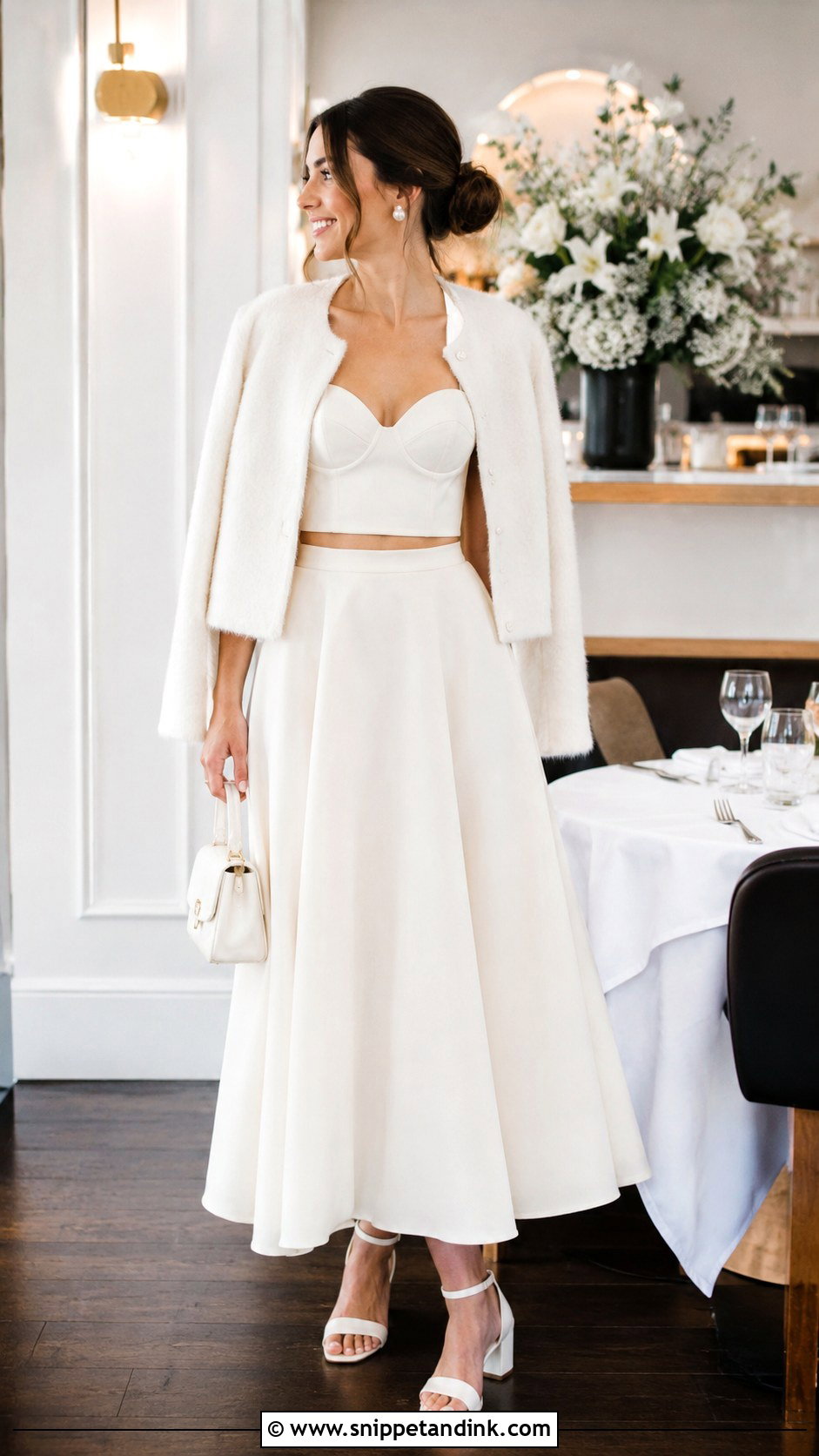
Separates look like a dress but fit like two garments, which is exactly the point if you’re a different size on top and bottom. A structured crop top, fitted blouse or satin camisole over a matching midi or floor-length skirt is the formula. Keep any bare midriff to a sliver if you want the photos to age well. Block heels, small pearl earrings and a compact bag suit it, and a cropped jacket or soft wrap gives warmth without hiding the shape. The top and skirt each get worn again after the wedding, often in completely different outfits. Courthouse ceremonies, backyard vows and restaurant parties all suit it.
17. Floral Wedding Dress
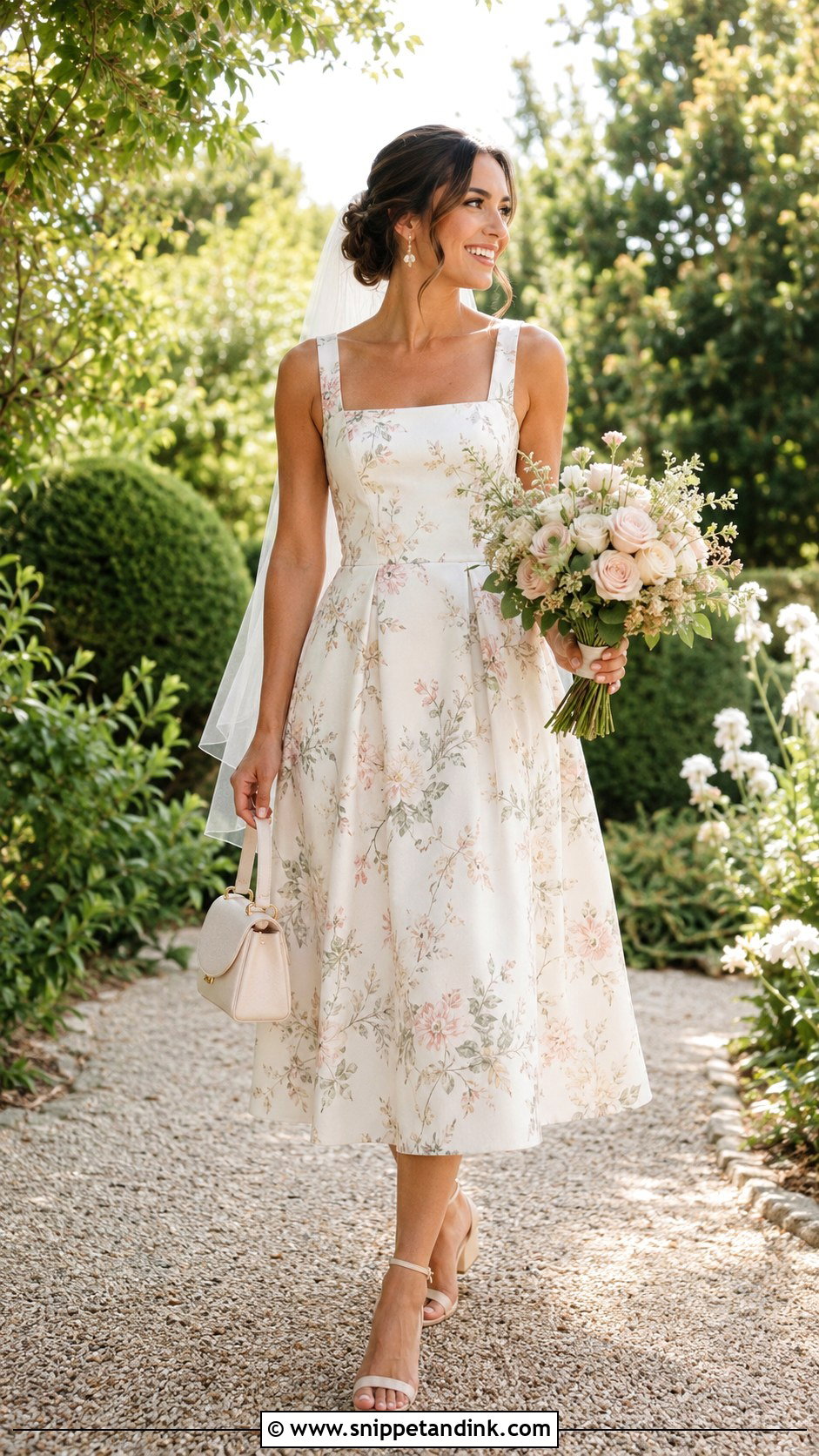
Some brides simply don’t feel like themselves in solid white, and a soft floral print solves that. An ivory base with a restrained botanical pattern in blush, blue, green or lavender still reads bridal, especially in a plain midi or maxi cut. I’d judge a print from across the room, not up close: tiny patterns turn muddy in photos and very large ones dominate. Neutral block heels, delicate earrings and a small bag that picks up one color in the print keep it calm. A loose bun or natural waves suit it, and a plain veil adds a clear bridal contrast. Gardens, outdoor elopements and family celebrations are natural settings.
18. Pastel Wedding Dress
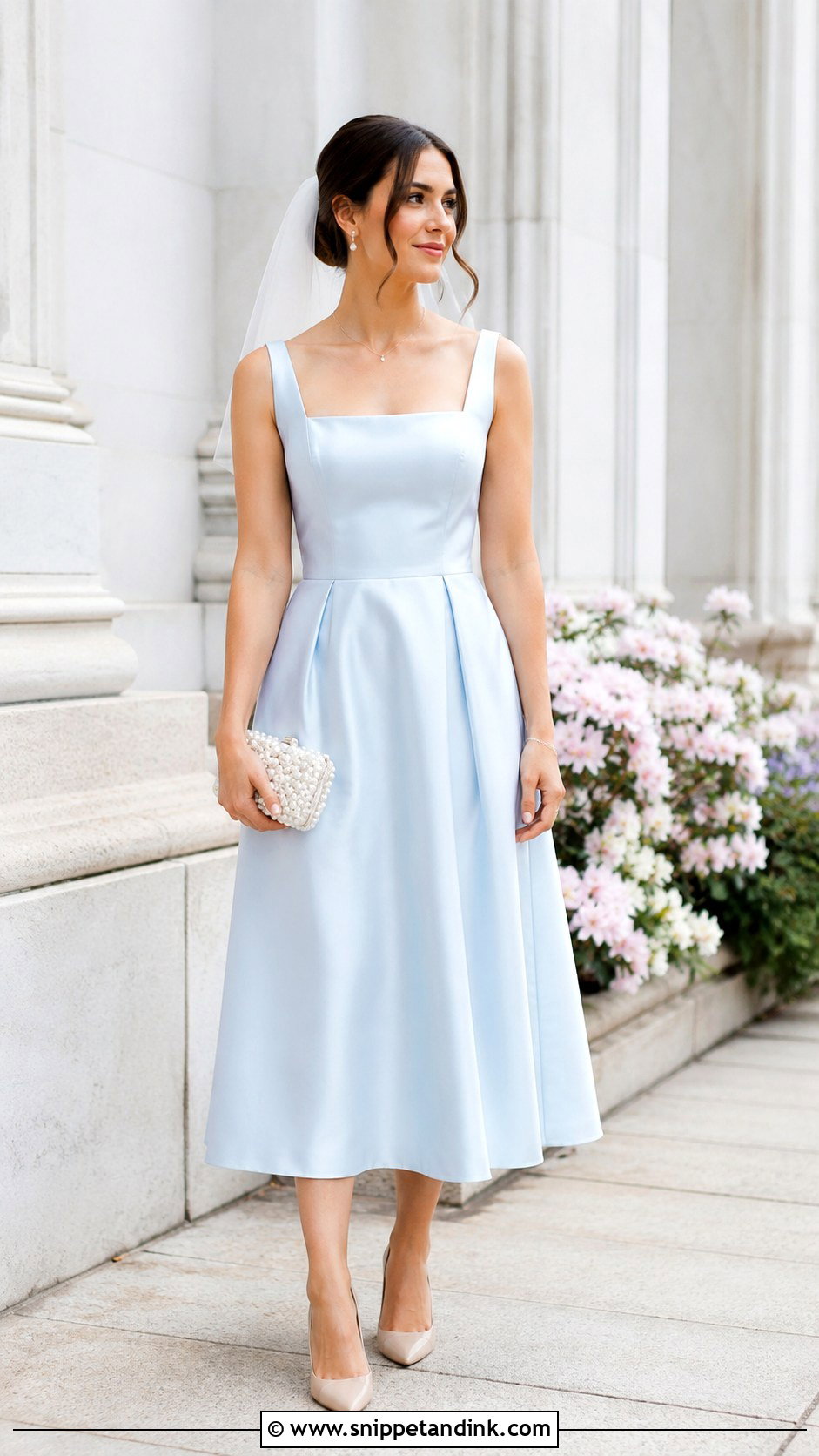
Would a soft color feel more like you than white? Blush, powder blue, pale sage, soft lavender or champagne in a midi or simple floor-length cut can look properly bridal if the fabric and fit are considered. Pastels shift under different light, so look at yours outdoors and under warm bulbs; a pale blue can read grey indoors. Neutral heels, a pearl clutch and refined jewelry suit it. A white veil gives a traditional contrast, while a matching bow in the hair feels newer. Keep the bouquet tonal so it supports the color instead of fighting it. Spring ceremonies, second weddings and courthouse celebrations suit it, and you’ll wear it again.
19. Linen Wedding Dress
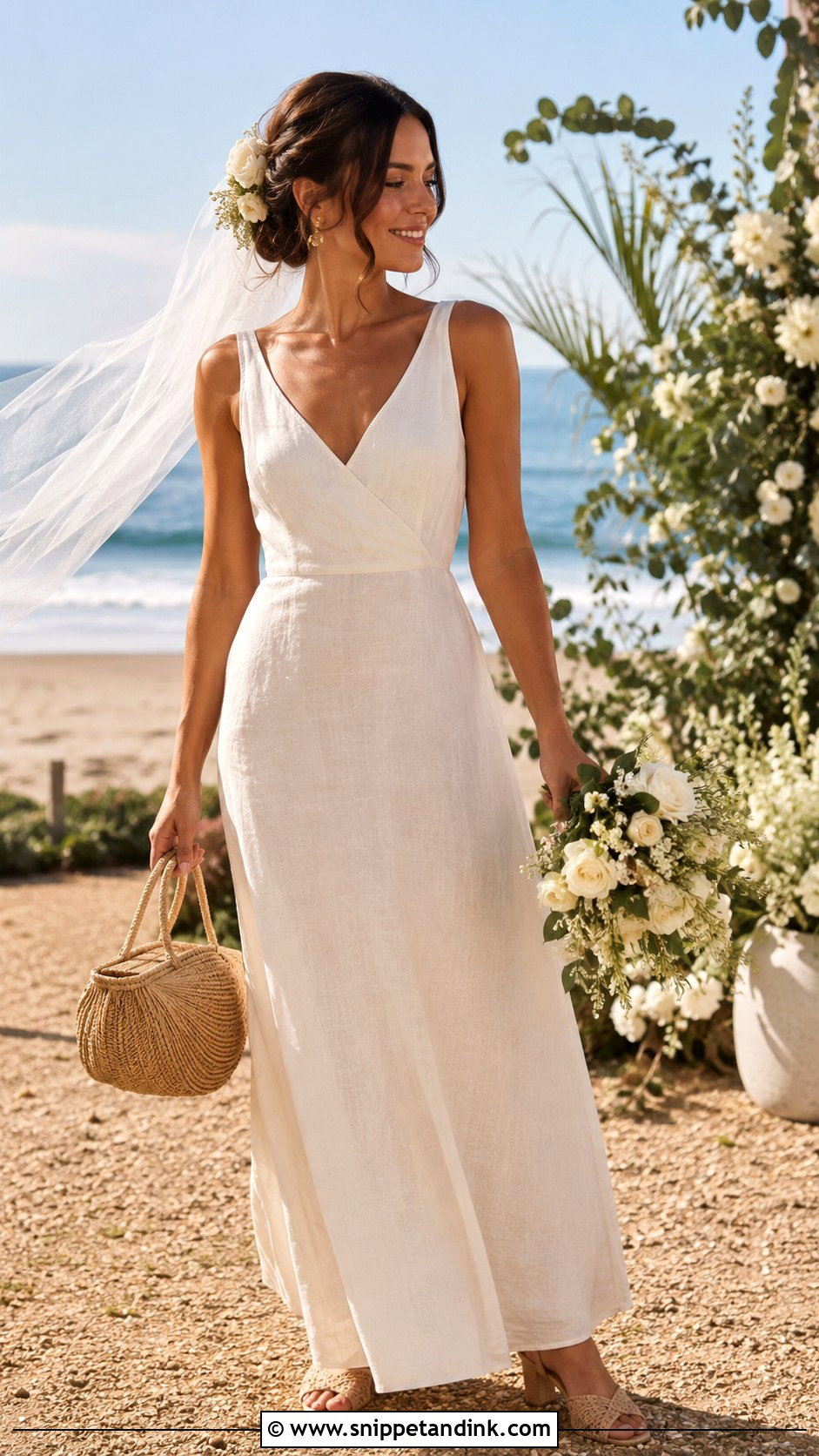
Linen will crease; accept that before you buy it, because that relaxed texture is the whole character of the fabric. A lined midi or maxi dress with a defined waist and clean neckline is the shape I’d choose, and a linen blend wrinkles less while keeping the look. Leather sandals, espadrilles or low woven heels suit it, with small gold earrings, a natural-fiber bag and a simple floral hair accessory. A lightweight veil makes it ceremonial without making it formal. Steam it shortly before dressing and let the rest go. Beaches, backyards and destination elopements are its setting.
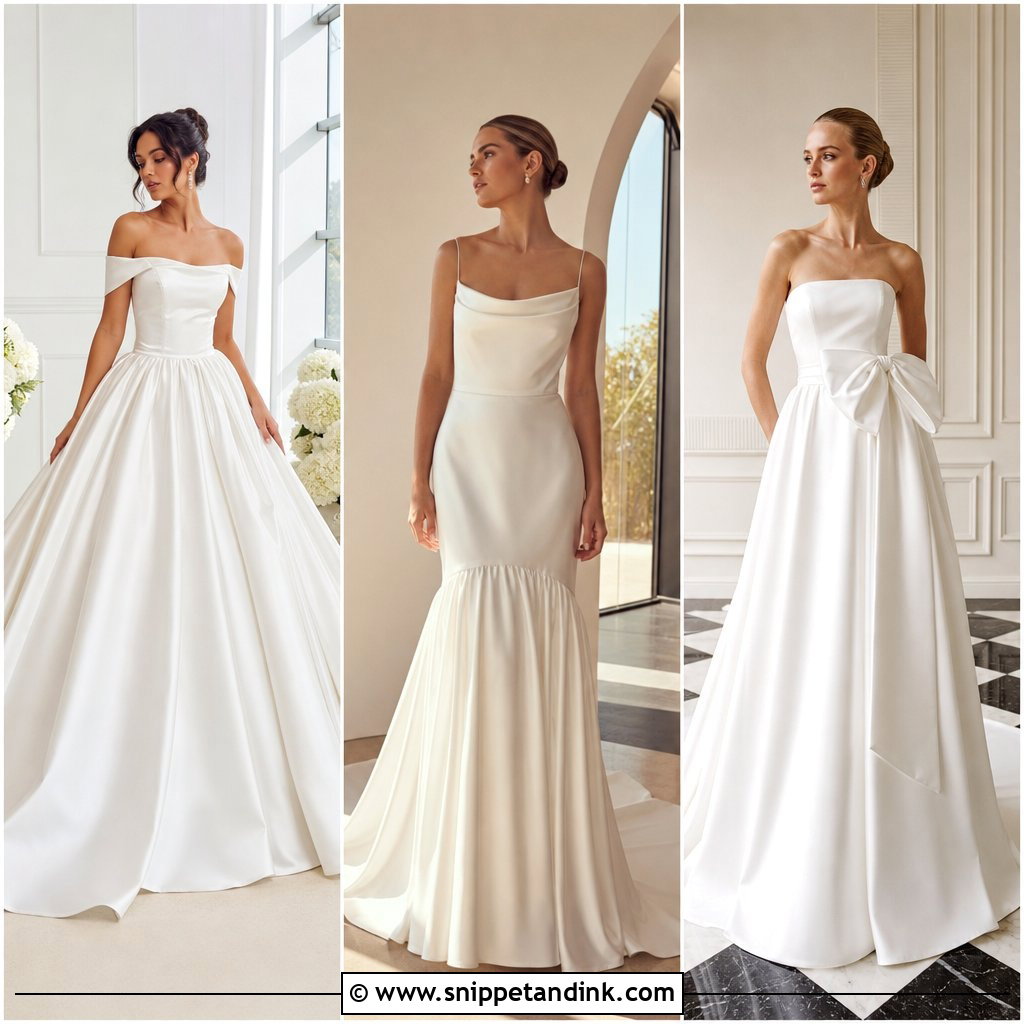
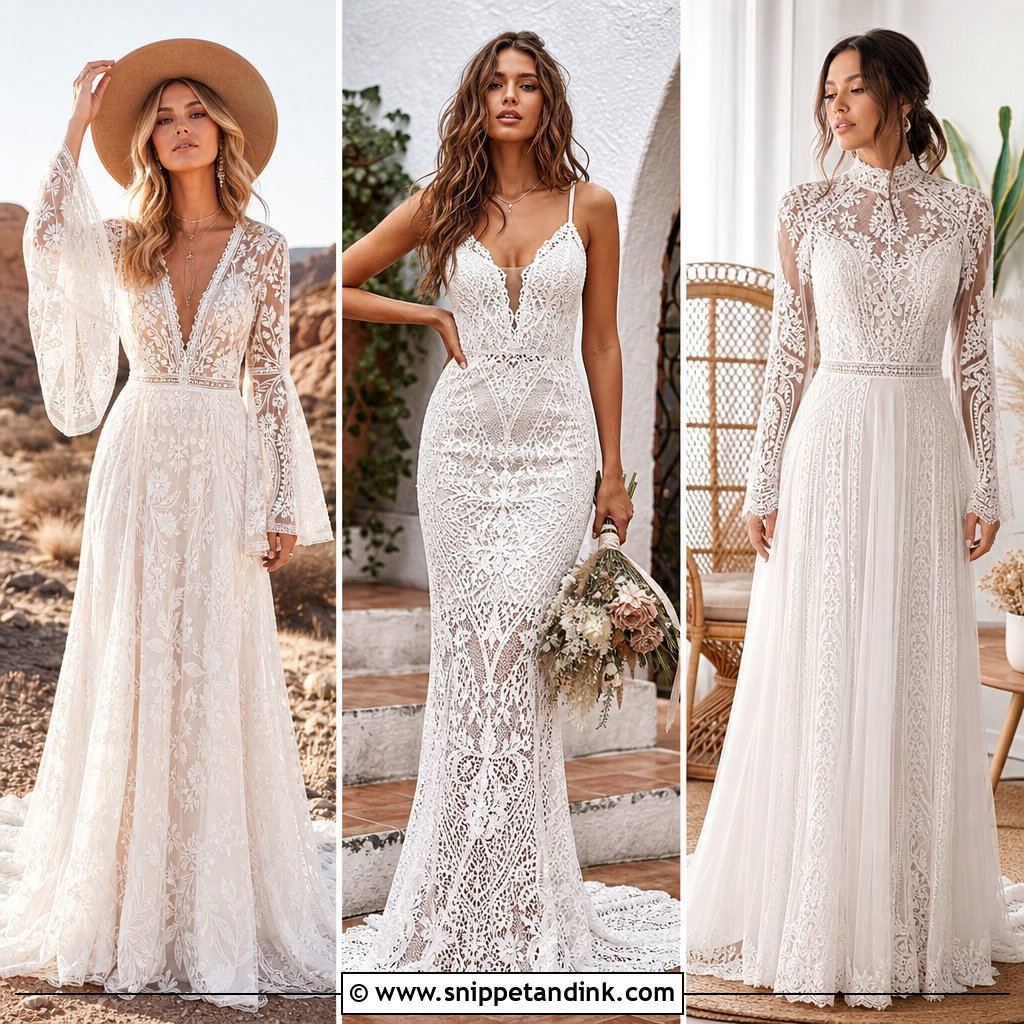
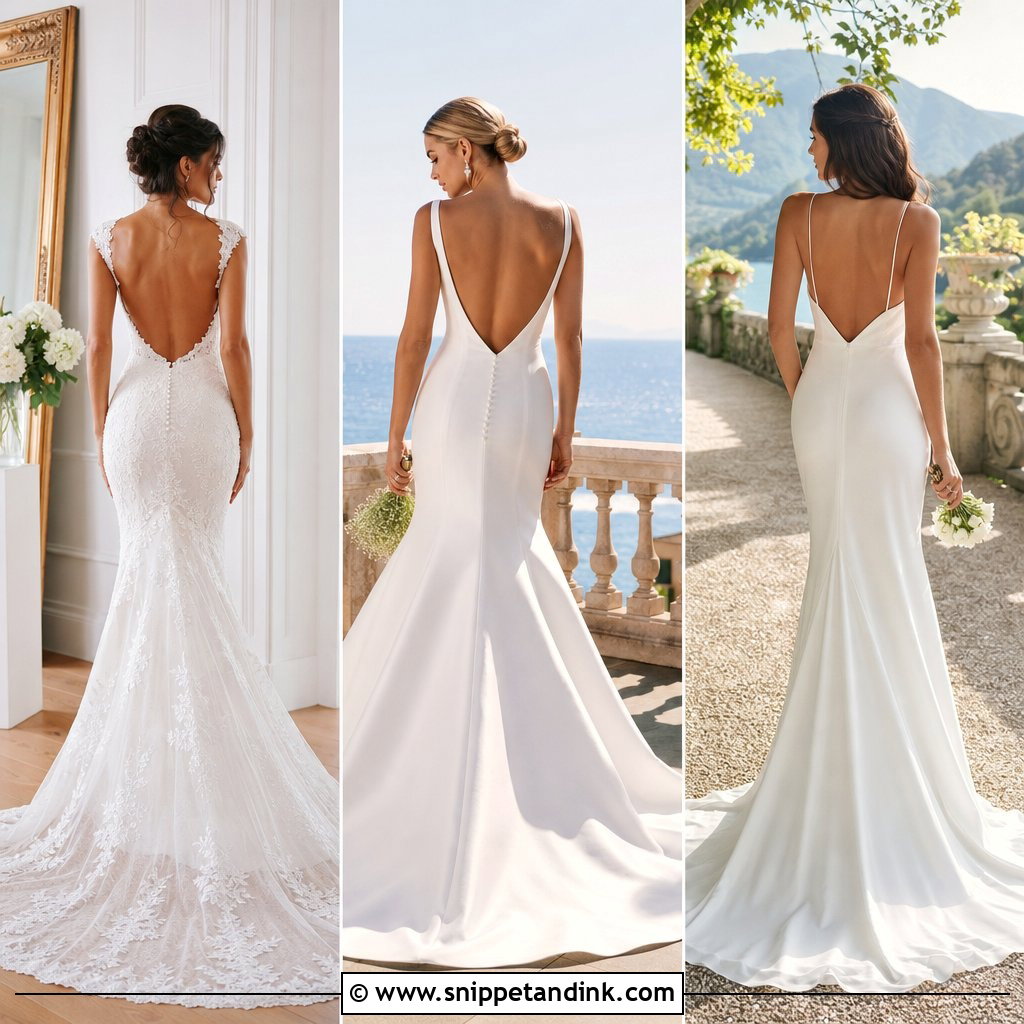
20. Sweater Wedding Dress
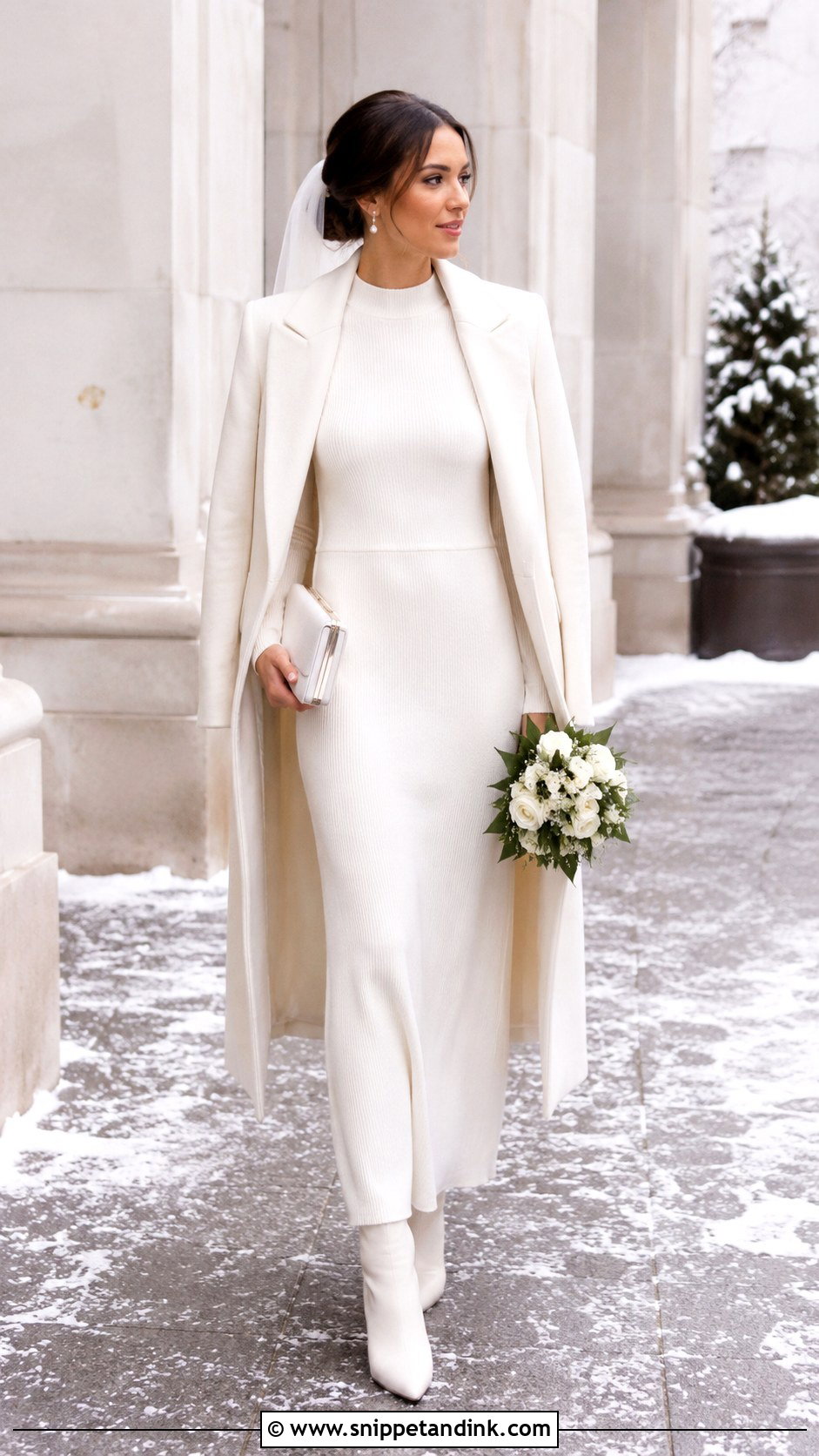
A knit dress gives a cozy bridal look for a cold ceremony without the weight of a gown. The knit has to be fine and dense enough to hold its shape; stretch a section between your hands in the shop, and if you can see through it, it’ll be sheer on the day. A long-sleeved midi or ankle-length column is the cleanest base. Pointed ankle boots or closed-toe heels, pearl earrings and a structured clutch suit it. An ivory wool coat goes over the top for outdoor photos, with a simple veil or satin headband. Smooth, close-fitting underwear lets the knit fall cleanly at a winter courthouse, a mountain elopement or a home ceremony.
Turning the Dress Into Something You Wear Again
Rewearing is one of the best reasons to go simple, but it rarely happens unless you plan for it. A few small decisions afterward make the difference between a dress in a closet bag and one you put on for anniversary dinners.
Clean it promptly
Have it cleaned within a few weeks. Sugar from champagne and cake dries invisible on pale fabric and turns brown months later. Point out every spot to the cleaner, even ones you can’t see.
Change the color
Natural fibers like cotton, linen and silk take dye well, so a white midi can become navy or terracotta. Most polyester satins won’t take a home dye at all, so check the label before buying if this is the plan.
Alter the length
A maxi shortened to knee length or a long sleeve cut to three-quarter often becomes a different dress entirely. Ask your tailor at the original fitting whether the fabric has enough seam allowance to reverse any changes later.
Simple Only Works When the Fit Is Right
A low-key outfit should suit the way you’re actually celebrating and feel comfortable from the first photo to the last toast. Satin slips, cotton midis, tailored minis, jumpsuits, separates and soft colors can all carry real meaning. Without embellishment to distract, construction and tailoring matter more, not less, so spend there first. Choose shoes and fabric for your venue and season, then add one or two ceremonial touches, a veil, a family piece of jewelry or a small bouquet. When the clothes stay put and look like you, the day gets your full attention.
You'll Like These Ideas:




Leave a Reply