
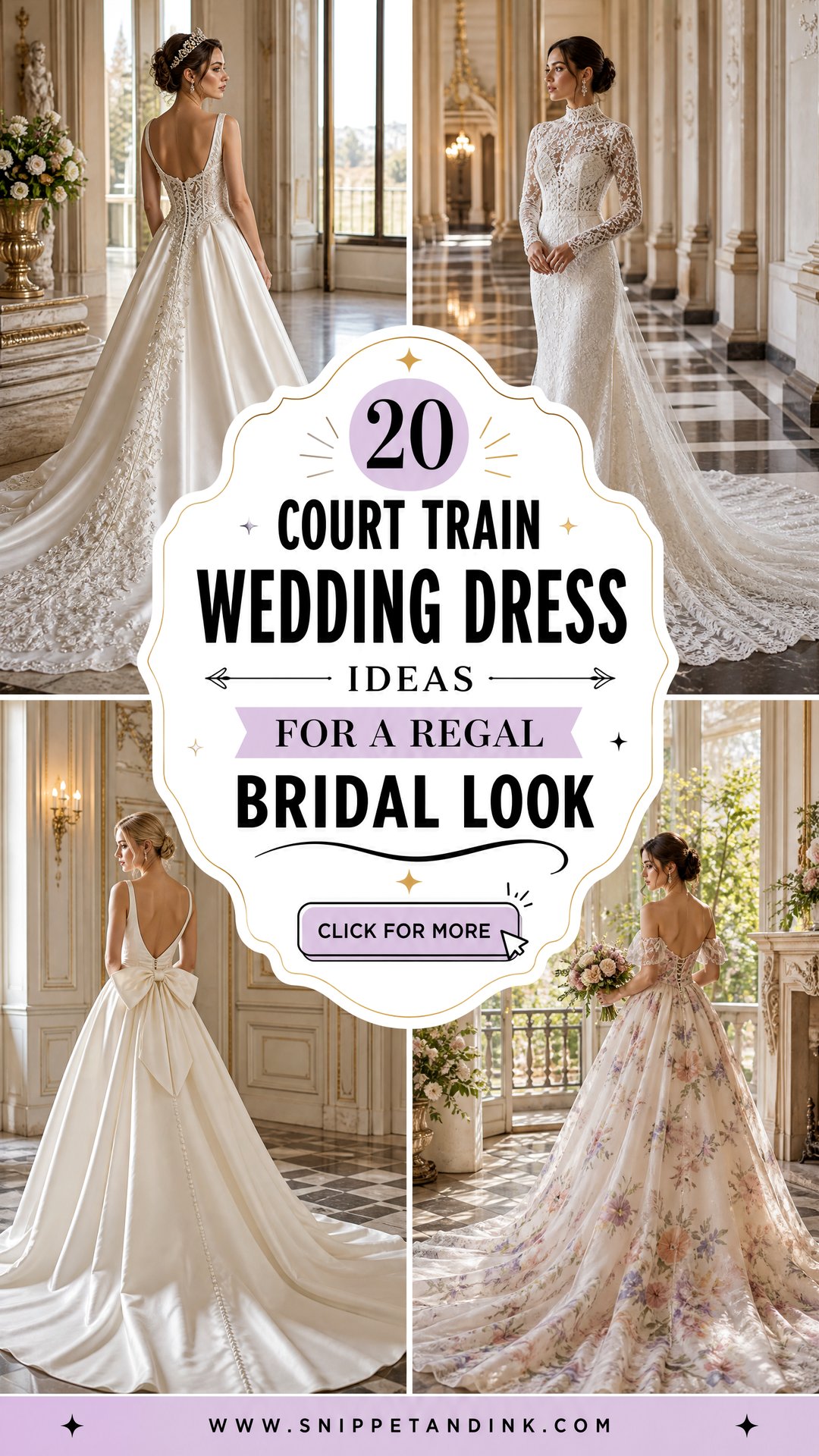
A court train is the length I suggest most often to brides who want a proper train but don’t want to be managed by it. It trails a little beyond the hem, enough to pool behind you at the altar, without the weight and the handling that come with a chapel or cathedral train. It also suits almost every silhouette, from a narrow sheath to a full ball gown. What changes the look far more than the train itself is the fabric and the back of the dress: satin falls in a smooth sheet, lace shows its edging, tulle floats. Below are twenty court train gowns, each with the fitting and styling notes I’d give at an appointment.
How Far a Court Train Actually Reaches
Train names get used loosely in shops, so it helps to picture them on the floor. A sweep train barely brushes the ground behind you. A court train extends a little further, roughly a foot past the hem, so it rests in a small pool when you stand still. A chapel train runs a few feet behind, and a cathedral train can trail well over six feet.
That middle position is why I like a court train for so many venues. It reads as a train in the aisle photos, yet it won’t sweep up grass clippings at a garden ceremony or need a bridesmaid to arrange it every time you turn. Narrow aisles, spiral staircases and outdoor paths all get easier. If your venue has a long, grand aisle and you want real drama, though, a court train can look modest there, and a chapel length may suit the space better.
1. Satin A-Line Court Train Wedding Dress
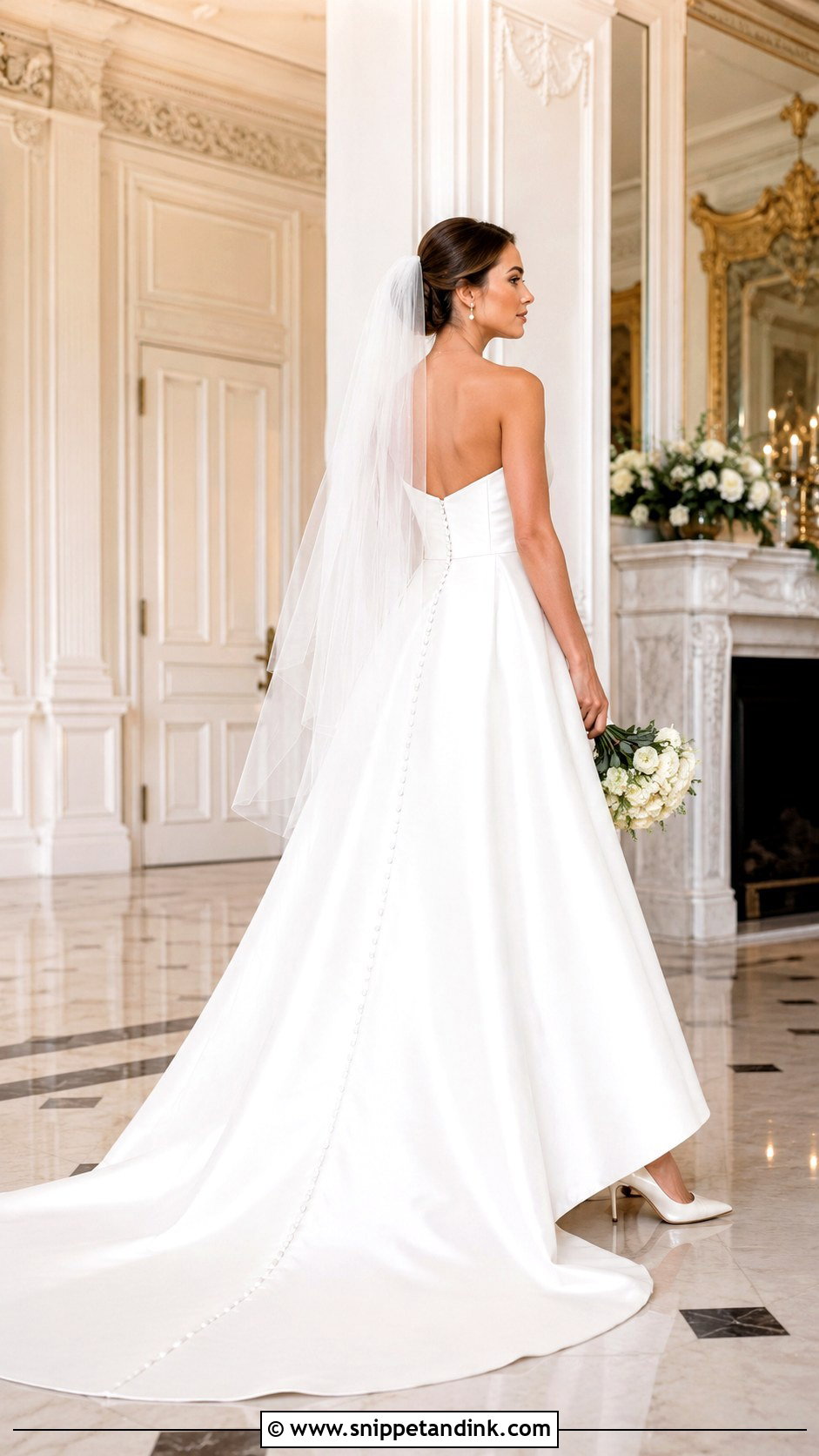
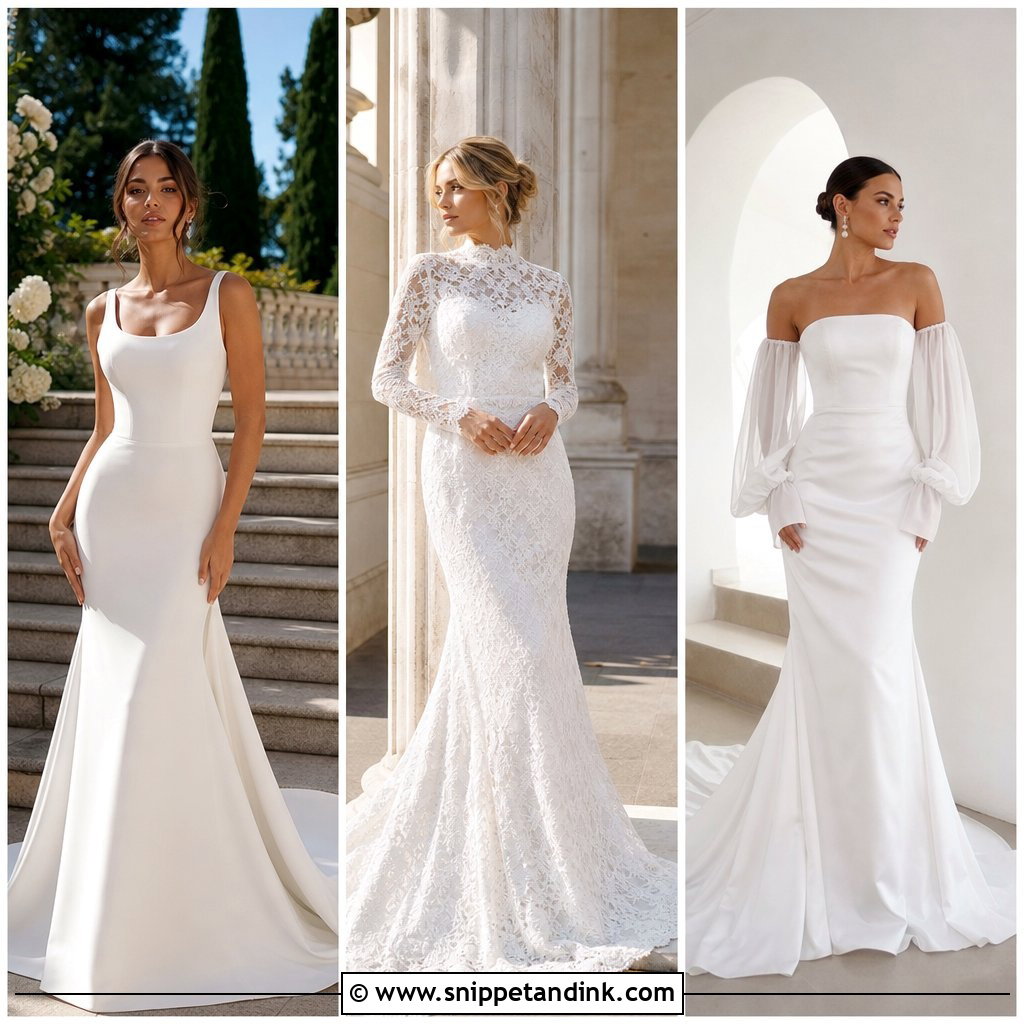
Satin and an A-line skirt are a classic pairing because satin’s weight lets the skirt open slowly from the waist and settle into the train without bunching. I look for a sweetheart bodice with real inner structure, boning or a built-in corset, so the neckline stays put without you hitching it up all day. Covered buttons down the back keep the line quiet. Pointed ivory pumps and pearl drops are all it needs. Choose a sheer fingertip veil here; anything longer will lie over the train and hide the one thing satin does best.
2. Long Sleeve Lace Court Train Wedding Dress
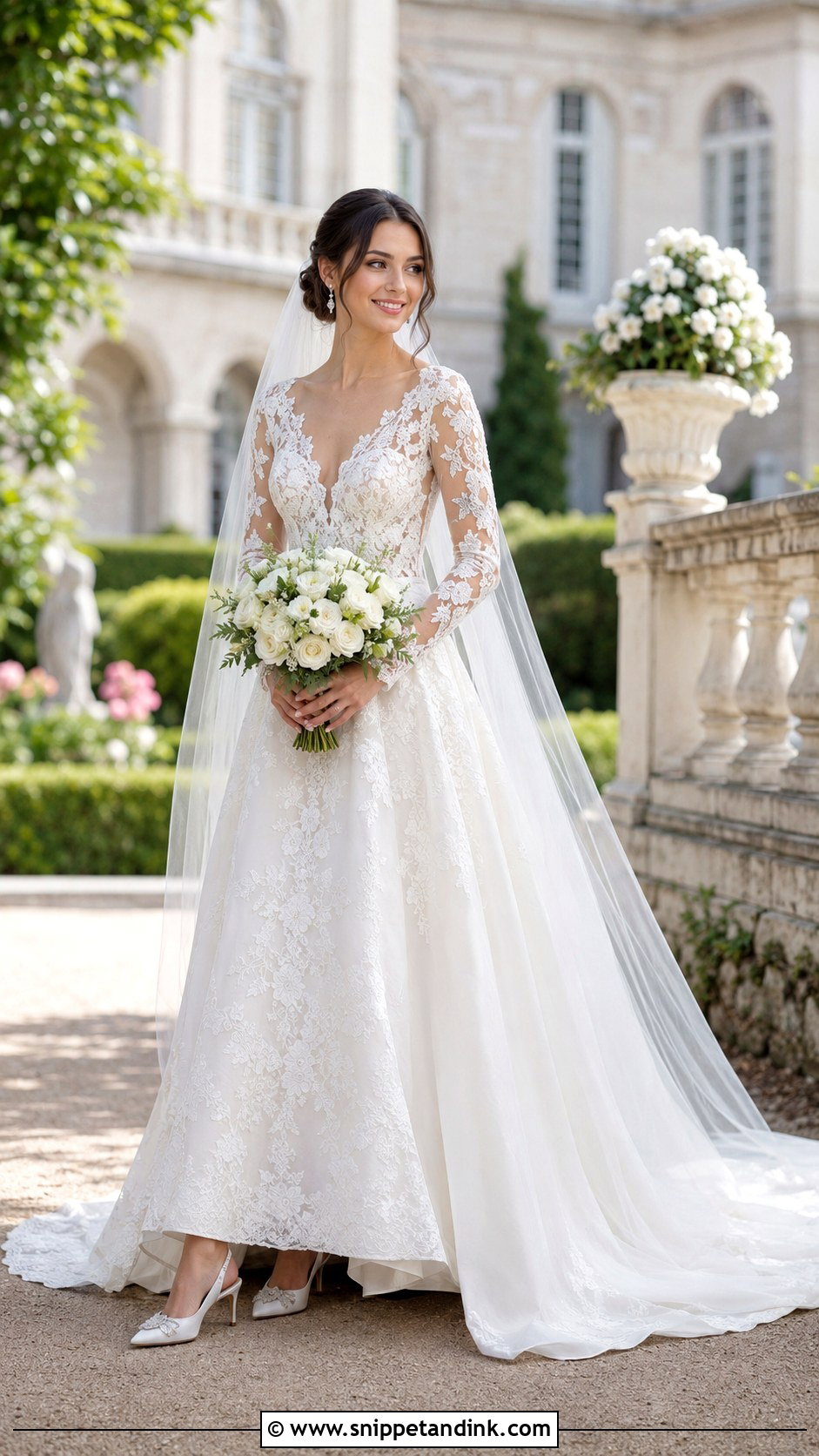
Lace sleeves give a court train gown a year-round feel, but they need testing. A fitted lace bodice with a soft V and illusion sleeves sits over an A-line skirt lined in light satin, with the lace motifs running round the hem and onto the train so the back view is finished. Ivory slingbacks and a small comb are enough jewelry. The fitting point I always check: raise your arms above your head. Lace sleeves set too tight in the armhole will lift the whole bodice when you hug someone. A plain tulle veil keeps the lace the focus in a conservatory or a formal garden.
3. Mikado Ball Gown Court Train Wedding Dress
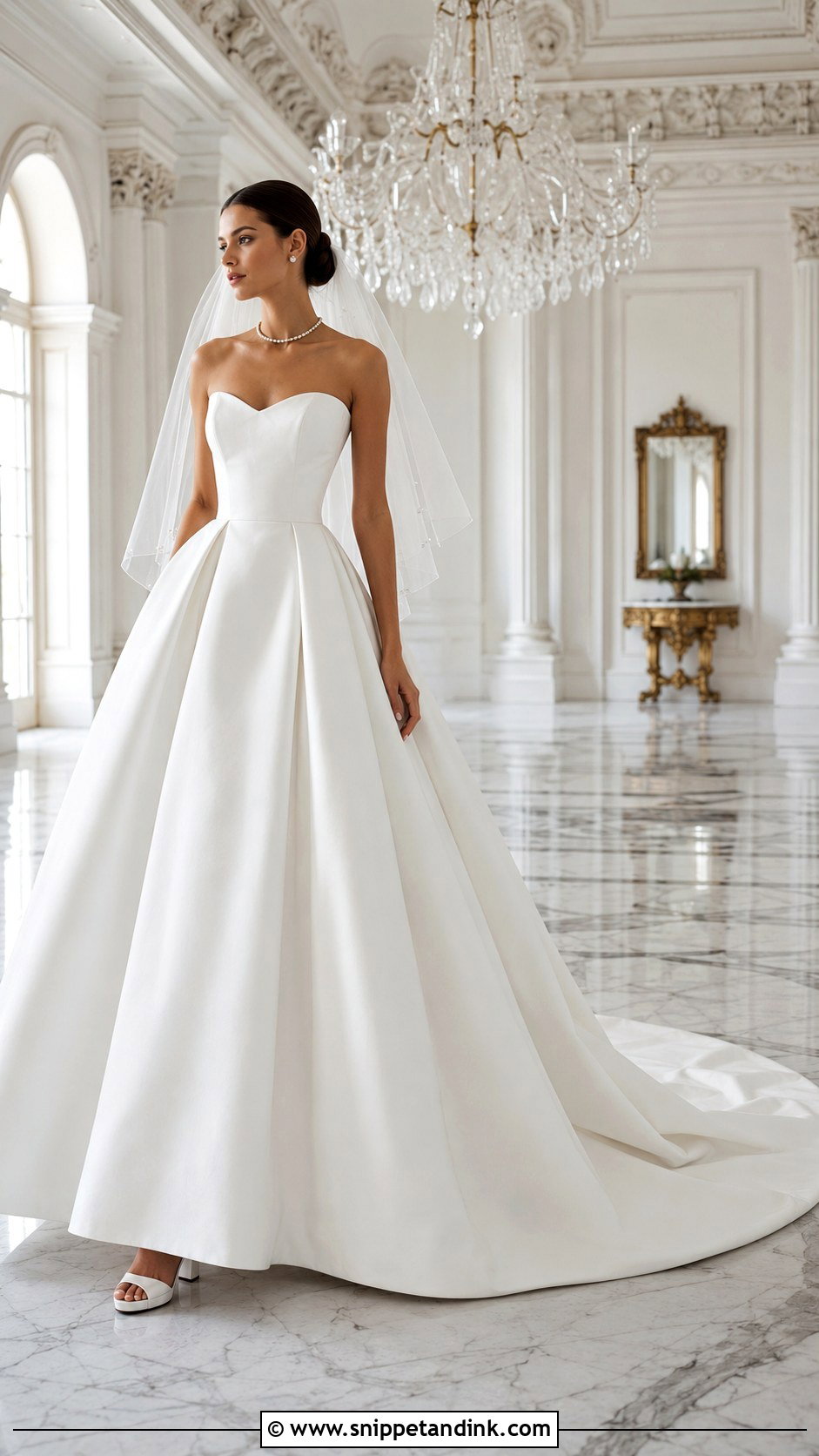
Mikado is a stiff, slightly ribbed silk blend, and that body is what lets a ball gown hold its shape without needing a long train to balance it. A sculpted strapless bodice over a full pleated skirt is the traditional build, and side pockets are worth asking for. Satin block heels, a short pearl necklace and a low bun finish it. Skip the cathedral veil, since it buries the train. Mikado also creases sharply where you sit, so practice sitting in fittings and ask your stylist to fluff the skirt before the first-look photos.
4. Crepe Mermaid Court Train Wedding Dress
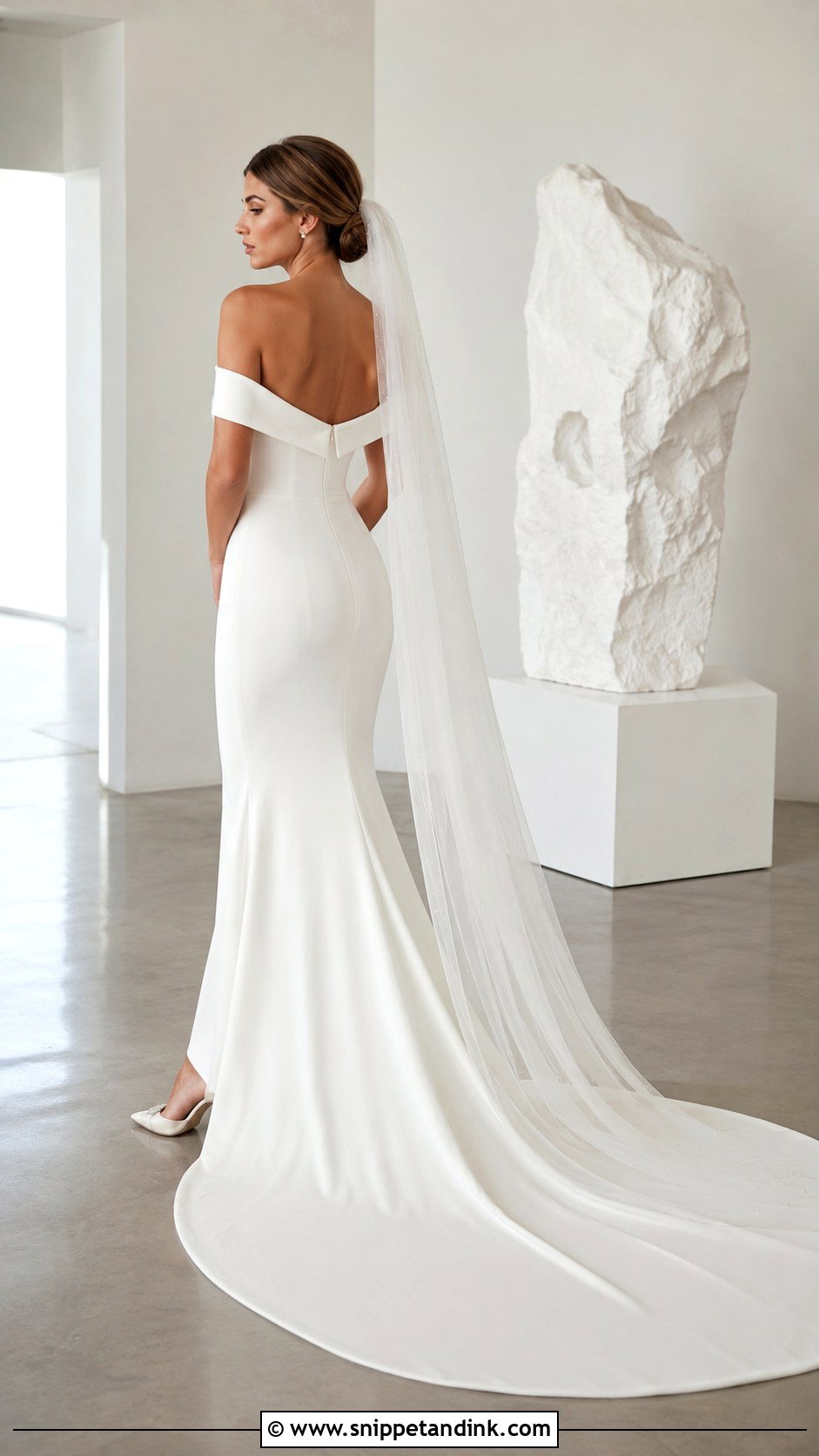
Crepe doesn’t forgive much, which is why it makes a mermaid shape look so clean. The dress follows the body through the hips, flares at or just above the knee and finishes in a narrow court train. Where that flare starts matters more than anything else. Set it too low and you’ll walk in small steps all night; set it a few inches higher and you can sit and dance. An off-the-shoulder neckline softens the fitted line. Keep the veil attached under a low chignon so the back stays uncluttered in a gallery or minimalist ballroom.
5. Floral Appliqué Court Train Wedding Dress
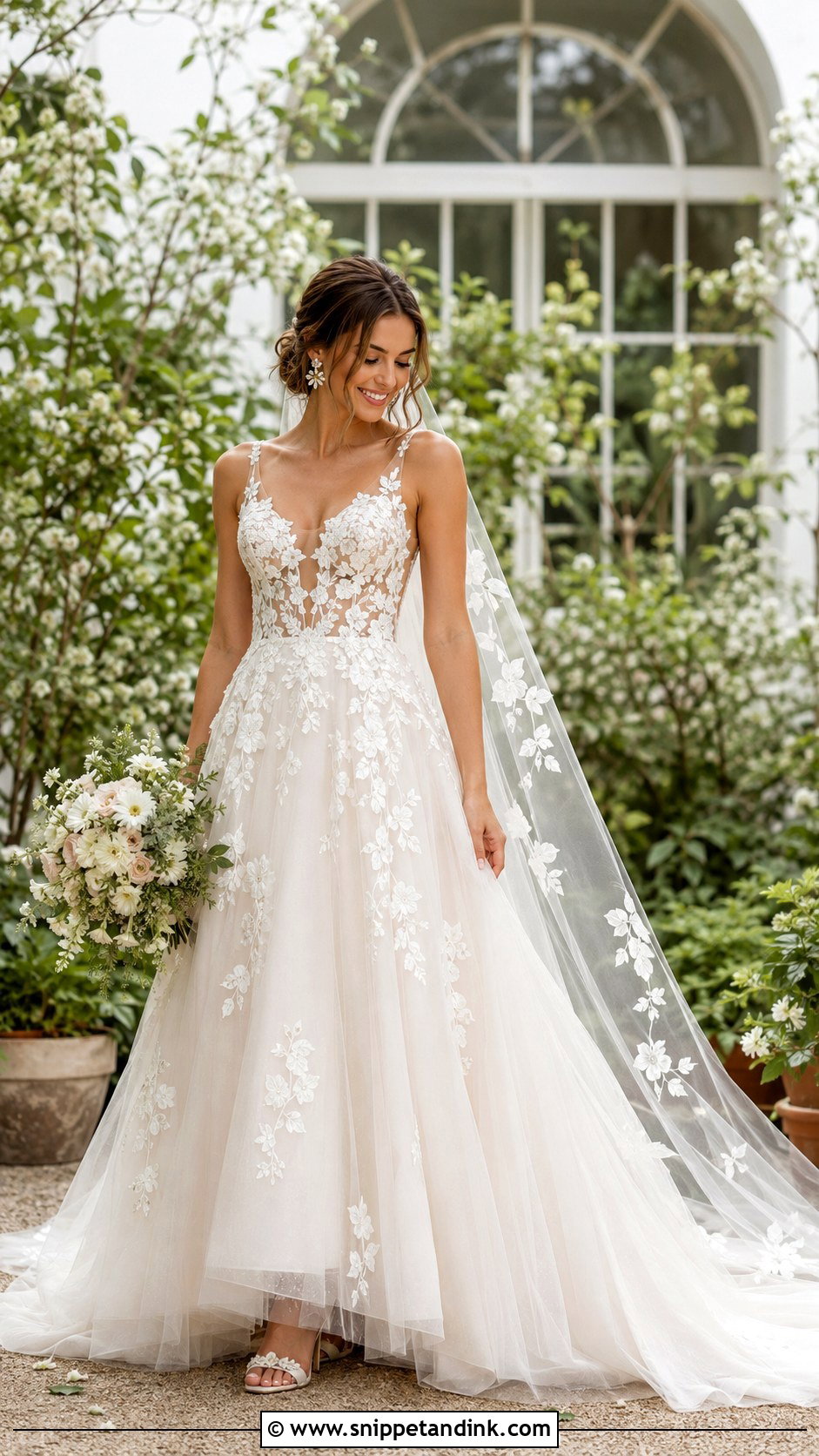
Three-dimensional appliqués look best when they thicken toward the hem, so the eye travels down to the train rather than stopping at the bodice. An illusion bodice with fine straps over a layered tulle skirt keeps the base light. I ask how each flower is attached before anything else. Petals stitched only at the center will catch on chair legs and outdoor gravel, while flowers tacked at several points move without snagging. A veil with a few matching appliqués ties it together for a botanical garden or a spring estate.
6. Square Neck Court Train Wedding Dress
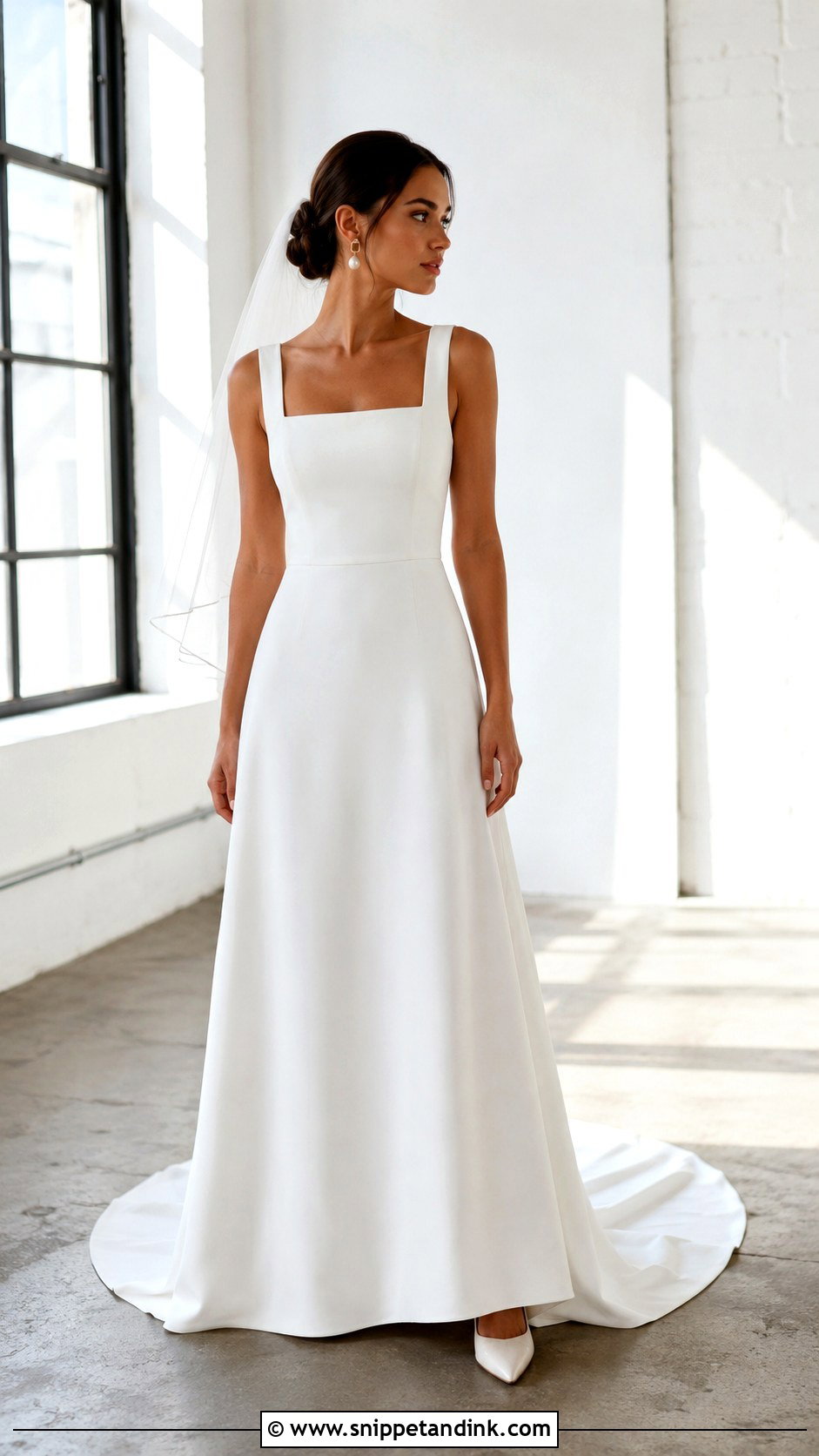
A square neckline frames the face with straight lines, so the rest of the gown should stay just as clean. Wide straps, a supportive bodice and a column or gentle A-line skirt in matte crepe or light Mikado suit it. The straps are the detail people underestimate. If they’re even a little loose, the square drifts into a trapezoid by the speeches, so get them tailored to sit flat on the shoulder. Low ivory heels, geometric pearl earrings and a neat bun with a single-layer fingertip veil keep it modern for a city loft.
7. Basque Waist Court Train Wedding Dress
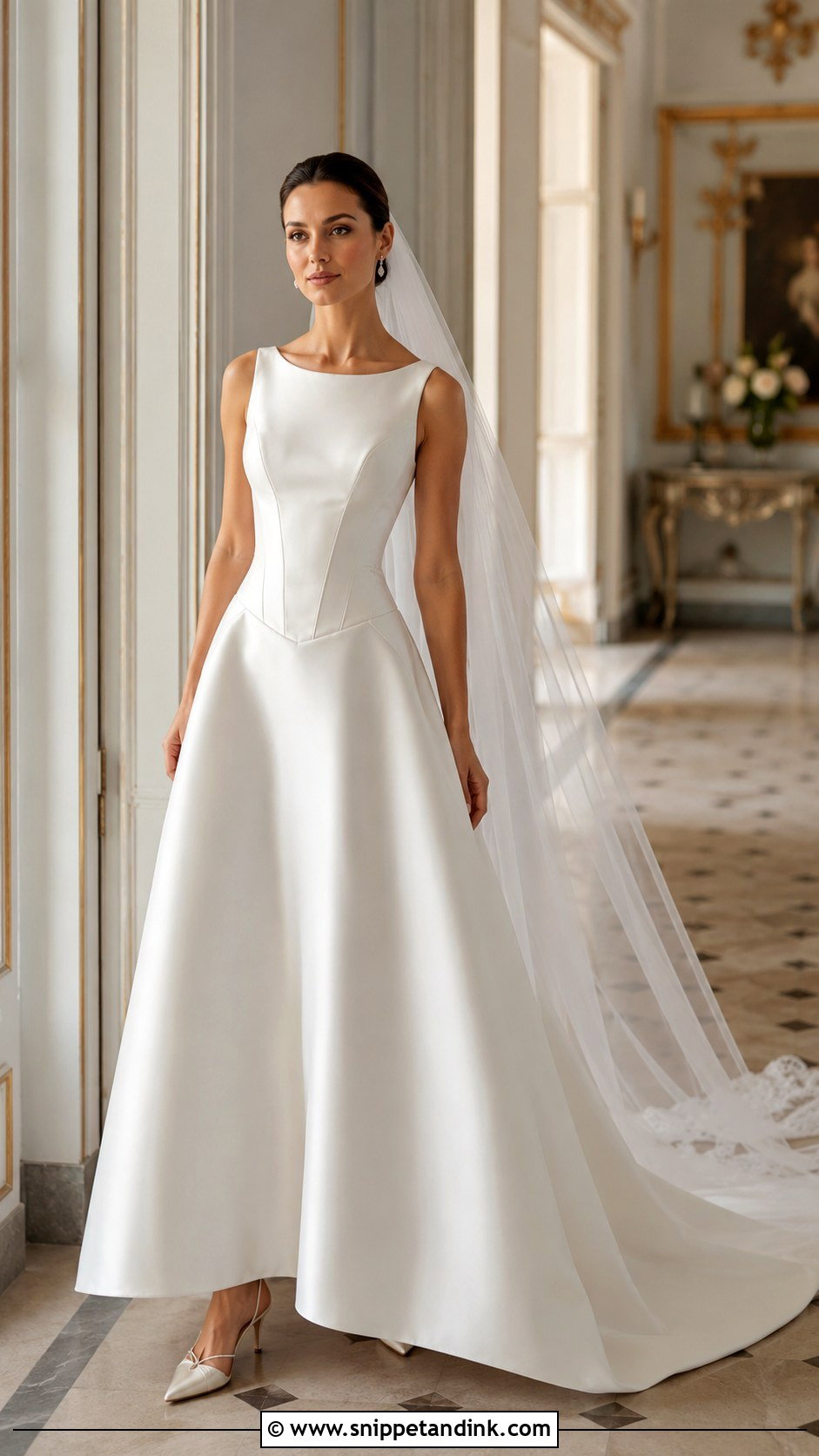
A basque waist dips into a V at the front, which lengthens the torso and makes a dramatic hand-off from bodice to skirt. Keep the fabric plain so that V stays the focus: a structured corset top with a rounded neckline over an A-line satin skirt ending in a court train. The elongated bodice needs a skilled fitter. Too tight and the point digs into your stomach when you sit; too loose and it gapes. Pointed slingbacks, pearl drops and a long sheer veil suit a manor or classic ballroom.
8. High Neck Court Train Wedding Dress
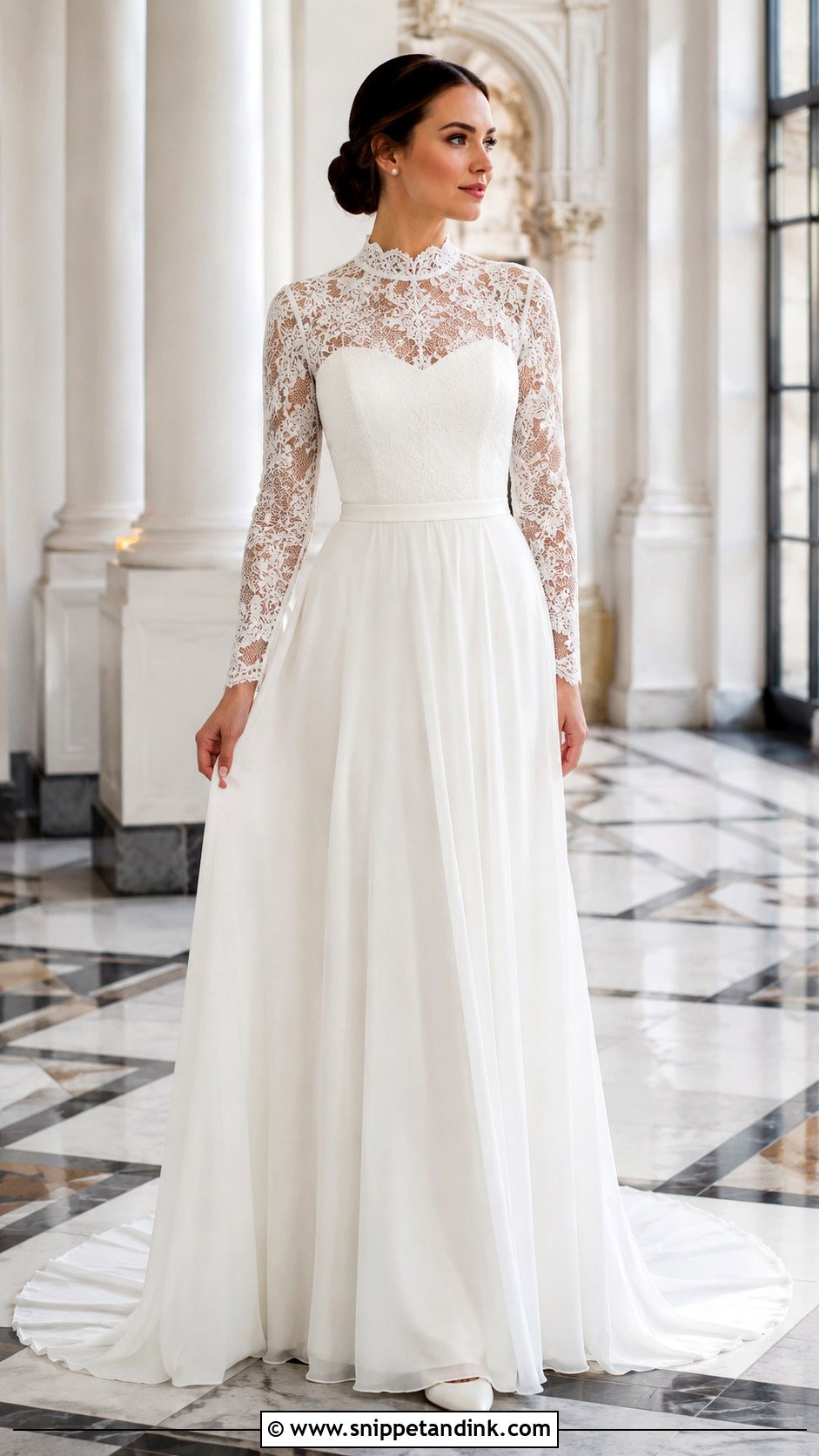
High necklines photograph modestly but can feel close by mid-afternoon, so I steer brides toward sheer lace over a lined sweetheart bodice rather than solid fabric up to the chin. Long sleeves and a chiffon or soft tulle skirt keep the gown light enough that the court train looks proportionate to the covered top. With this much detail at the neck, a veil is optional; if you want one, a simple shoulder-length style is enough. Ask for soft lining and flexible seams in the sleeves. Stiff seams at the elbow are what you’ll notice six hours in.
9. Cap Sleeve Court Train Wedding Dress
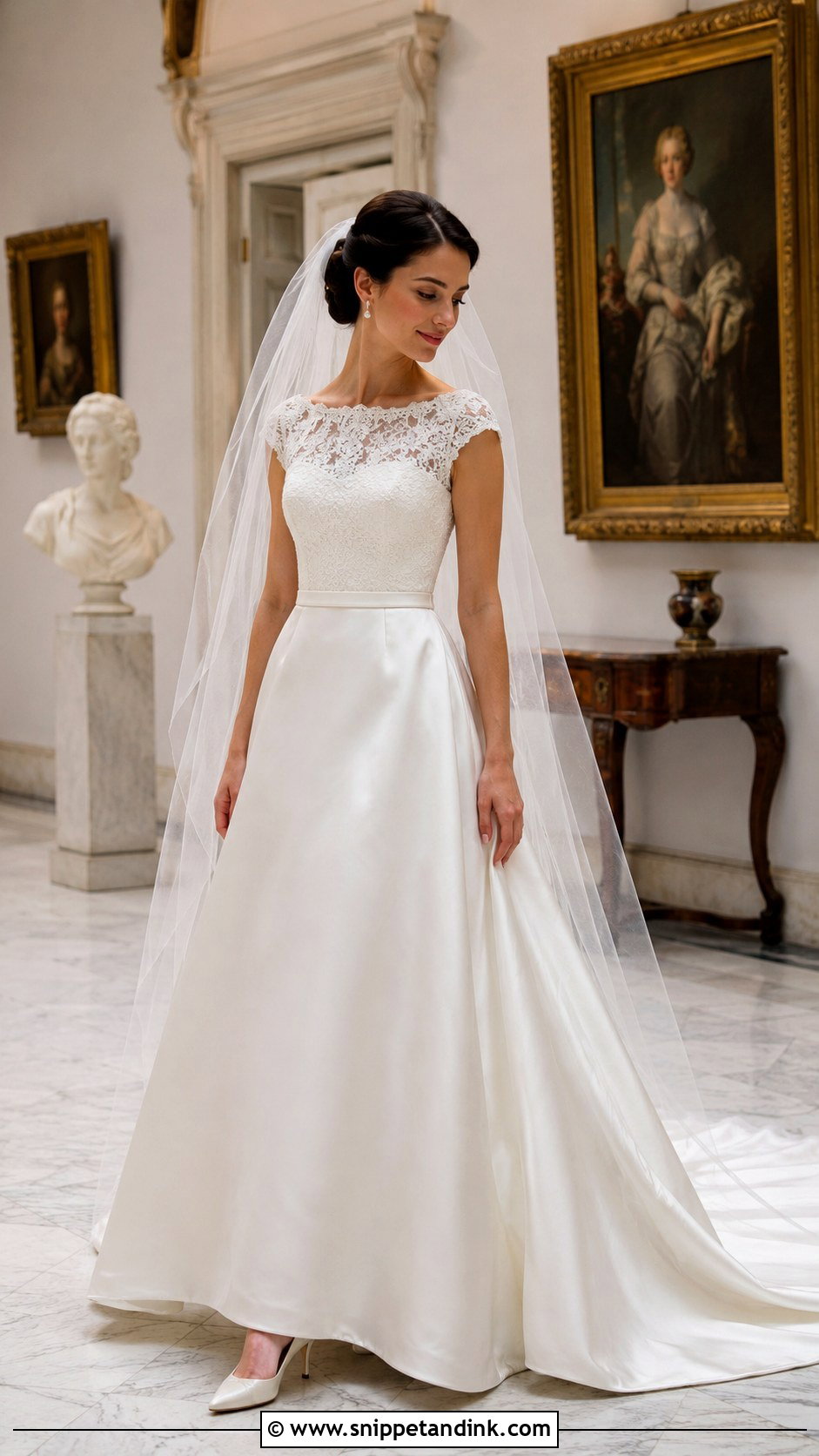
Cap sleeves have a vintage feel without covering the arm. Pair them with a bateau neckline, a fitted lace bodice and a fluid satin A-line that drops into a neat train. A narrow ribbon belt joins the detailed top to the plain skirt. Cap sleeves are prone to riding up as you lift your arms, so during alterations, lift, hug and reach exactly as you will on the dance floor. A plain fingertip veil, low almond-toe heels and soft waves or a twisted updo finish it for a museum or historic house.
10. One Shoulder Court Train Wedding Dress
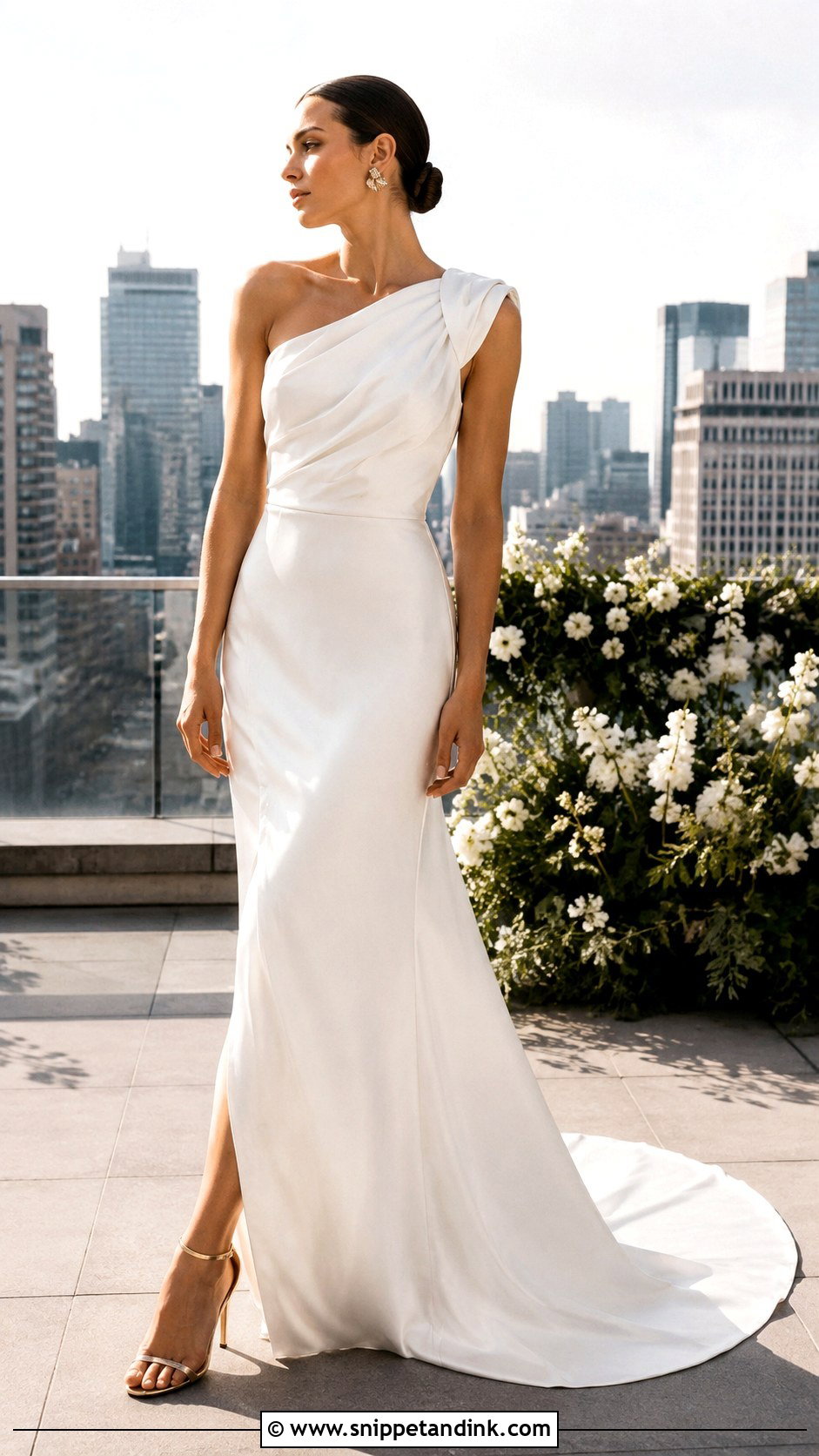
One shoulder is the most structural neckline on this list. A satin bodice draped across the body needs internal support, usually boning and a silicone strip at the top edge, or the whole thing slowly tilts toward the bare side. A folded shoulder detail adds interest without beading. Wear one sculptural earring on the exposed side, skip the necklace, and pull the hair into a low ponytail or side bun to show the line. A veil pinned at the back softens it for a rooftop or a contemporary hotel.
11. Pearl Beaded Court Train Wedding Dress
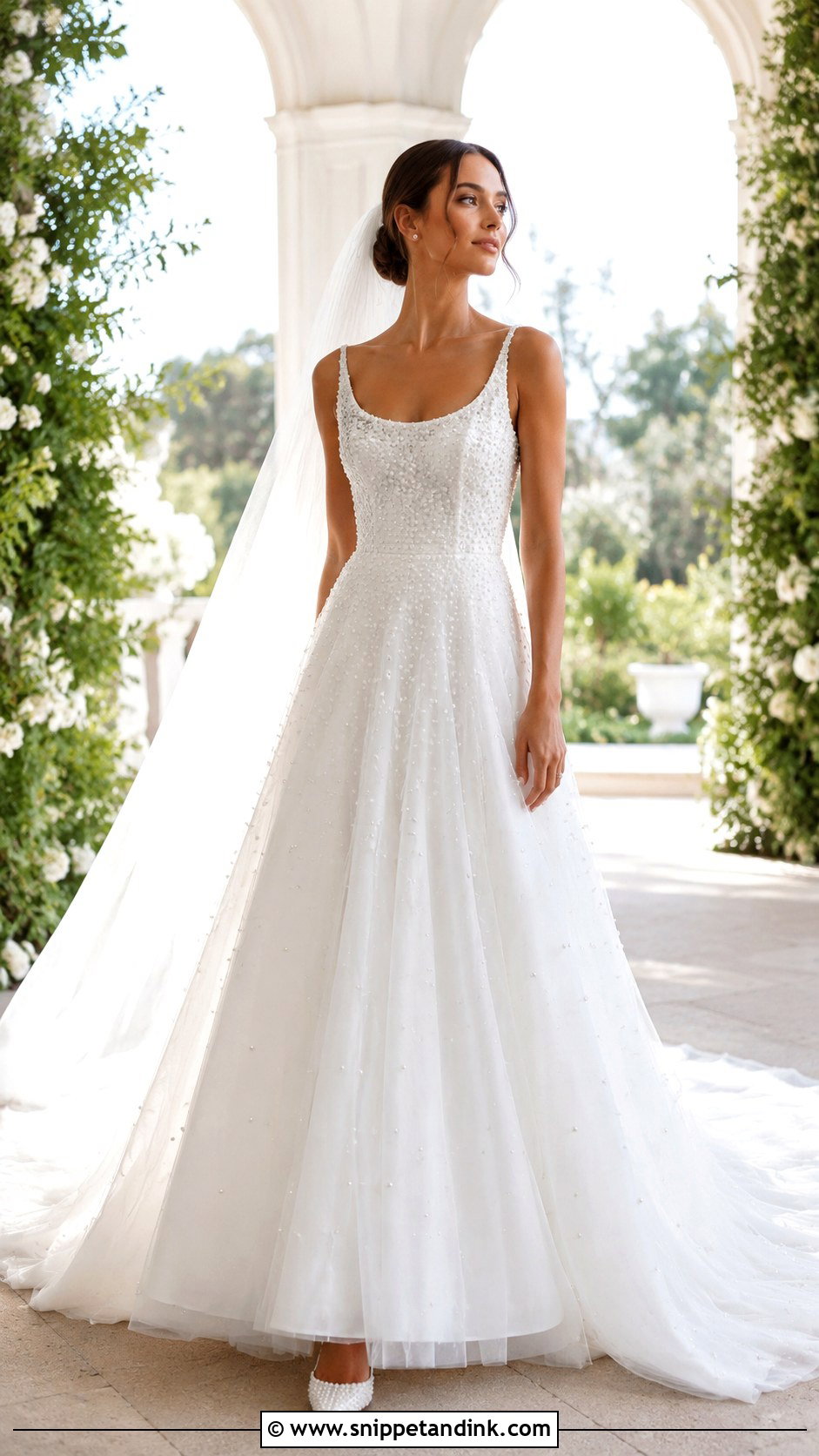
Pearls give a soft glow that sequins can’t. The prettiest versions scatter them densely across the bodice and thin them out down the skirt, which keeps the court train light enough to move. Ask about weight at the first fitting. Heavy pearl work pulls a bodice down and outward, and the fitter will need to add support or reduce the density. A soft tulle or crepe A-line, pearl-trimmed pumps and plain studs are enough, and a plain veil lets the beading show in a garden pavilion or evening reception.
12. Detachable Overskirt Court Train Wedding Dress
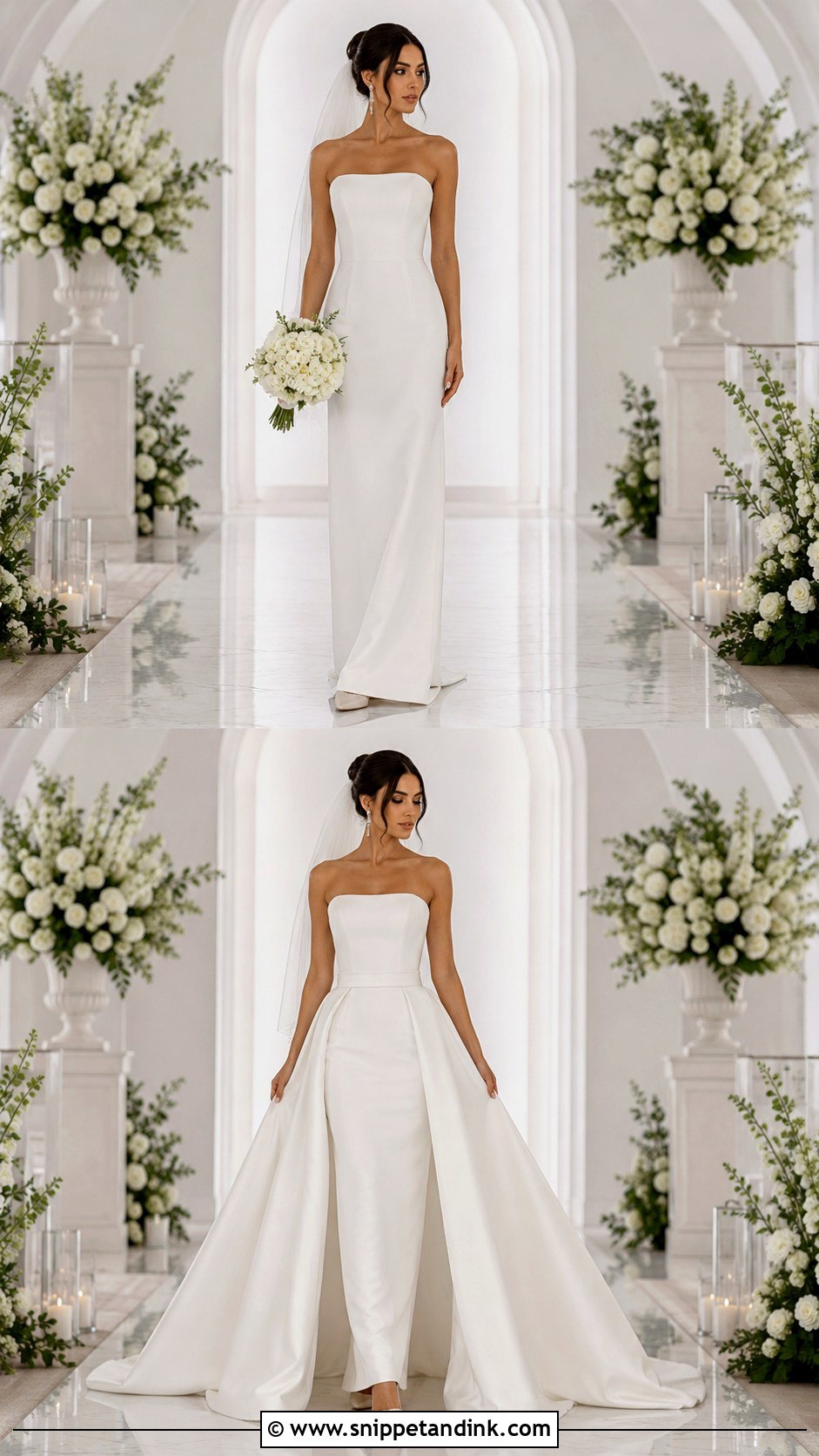
A detachable overskirt gives you two dresses for the price of one fitting schedule. Underneath is a fitted crepe sheath or mermaid ending in a simple court train; over it, a satin or tulle overskirt clipped at the waist turns the ceremony silhouette into a full A-line. Remove it before the reception and you’re free to dance. The attachment is everything, hidden hooks or a smooth waistband that doesn’t show a ridge. Teach one person how it comes off, and practice twice before the day, because nobody wants to work it out in a restroom with guests waiting.
13. Bow Back Court Train Wedding Dress
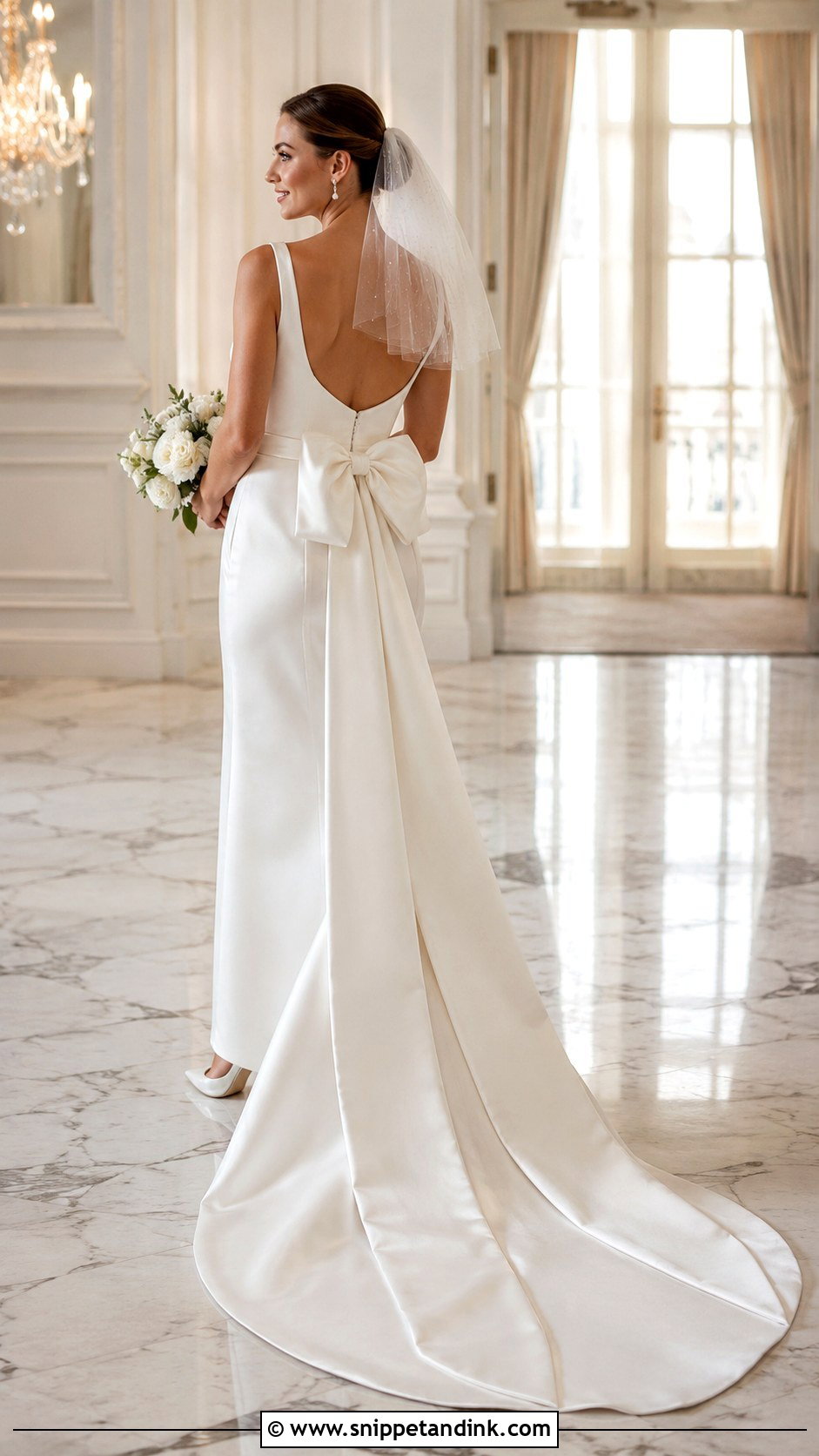
A bow at the lower back gives a plain satin column a reason to be photographed from behind. Keep the front simple, a straight neckline with supportive straps, and let the bow carry the personality. Watch the ribbon tails. They can lie over the train, but if they reach the floor beyond it someone will step on them during the recessional. A short veil keeps the bow visible. If the bow is detachable, you can take it off for dancing, which also makes the dress easier to bustle.
14. Off-The-Shoulder Lace Court Train Wedding Dress
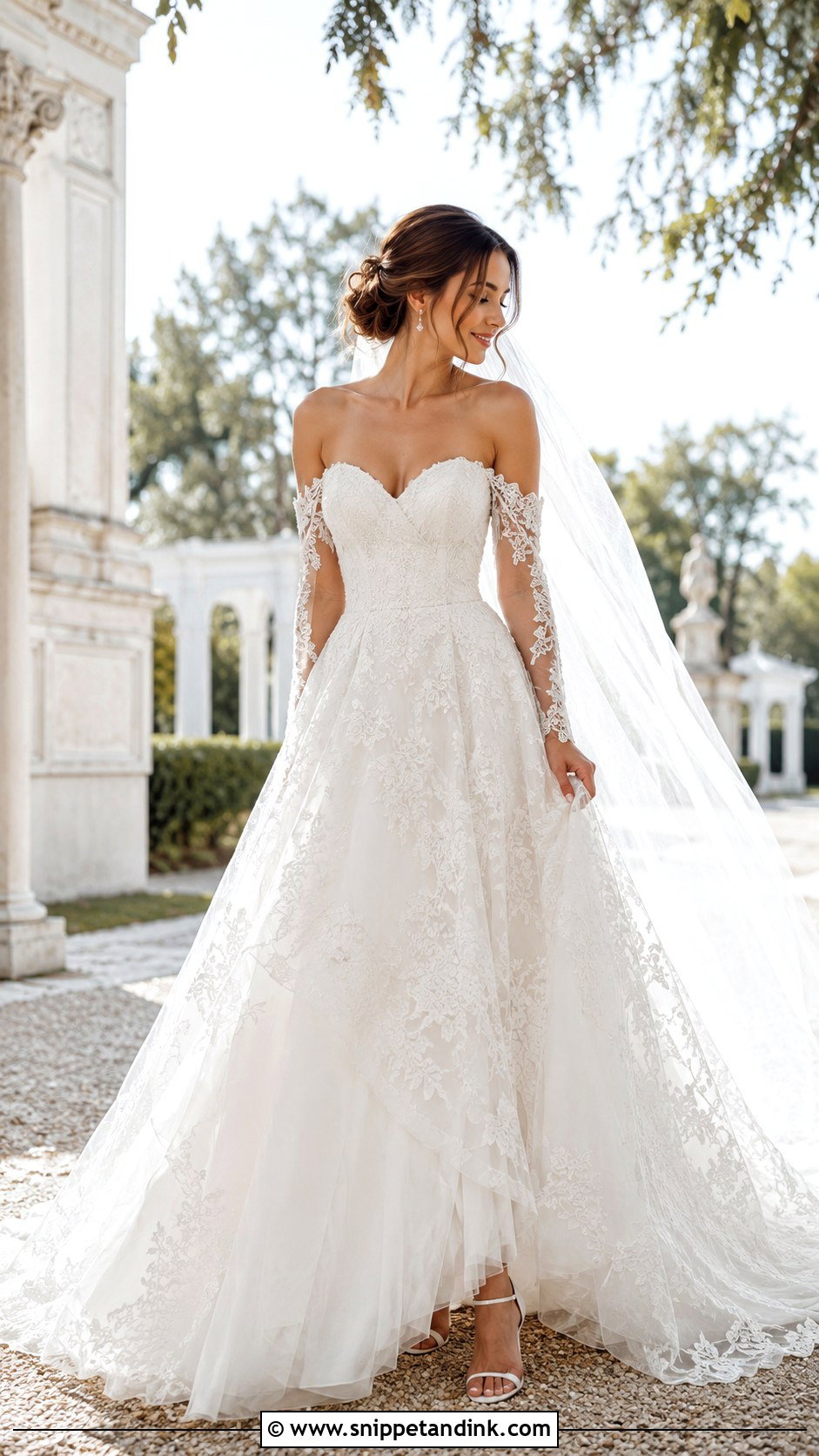
Off-the-shoulder lace is the romantic choice that most often needs alteration. The sleeves sit on the upper arm, so if they’re cut too snugly you can’t lift your arms, and if they’re too loose they slip. A fitted bodice, defined waist and layered A-line skirt with a lace-edged court train balance the open neckline. Keep accessories light: low satin heels, teardrop earrings, a fine bracelet. Place a sheer fingertip veil below a loose bun so it falls behind the neckline rather than over it.


15. Strapless Corset Court Train Wedding Dress
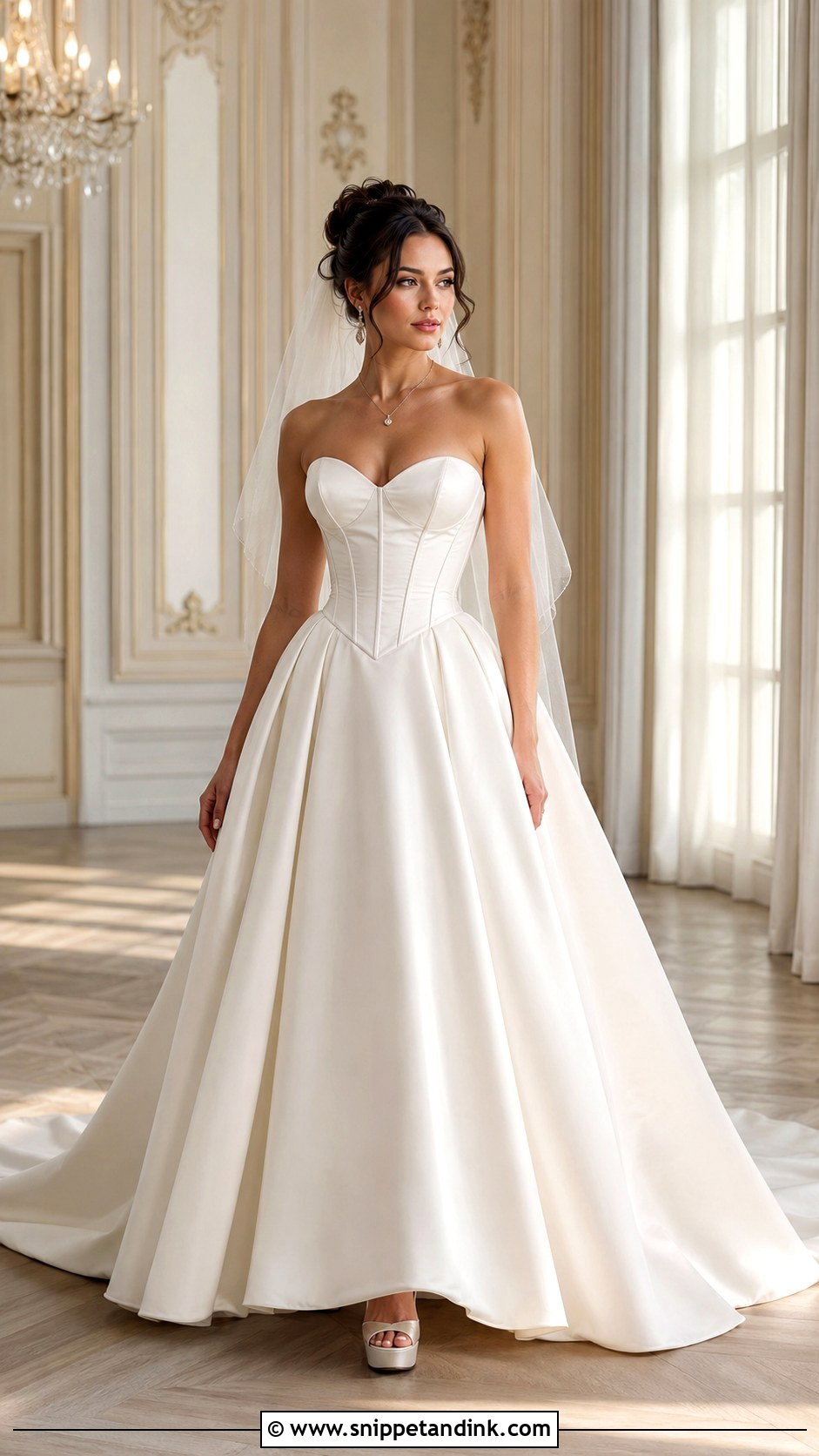
A visible corset bodice has a sharper, more modern edge than a smooth one, and it gives the court train a defined starting point. Seamwork over a softly curved neckline sits above a full satin or layered tulle skirt. My one rule for corsets: support, not squeeze. A properly fitted corset holds the dress up through its structure, so you should be able to breathe deeply and sit without the boning digging in. Platform sandals, a fine pendant and small drops work, with a simple veil softening the shoulders.
16. Plus Size Ruched Court Train Wedding Dress
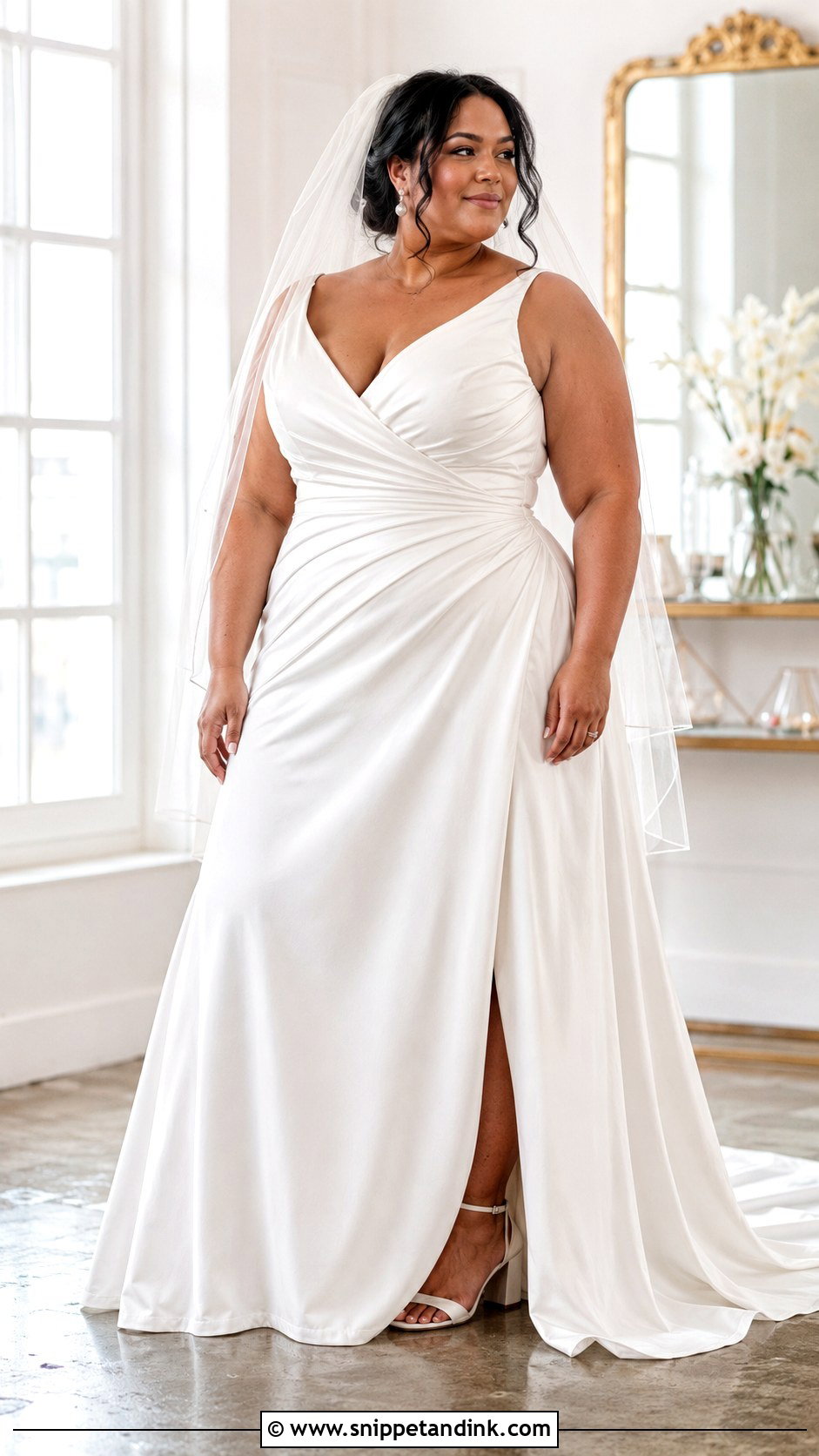
Diagonal ruching across a wrap-style V bodice is one of the most comfortable ways to get definition in a plus-size gown, because the gathers shape the waist without relying on a rigid corset. Supportive straps and a fluid satin or chiffon A-line carry the line down into the train. Buy your undergarments before the final alterations; a different bra changes how every gather lies. Wide-fit block heels, statement pearl earrings and a fingertip veil suit it indoors or out. Good ruching follows the body rather than hiding it, and the fabric should lie smooth over the curves.
17. Petite Empire Waist Court Train Wedding Dress
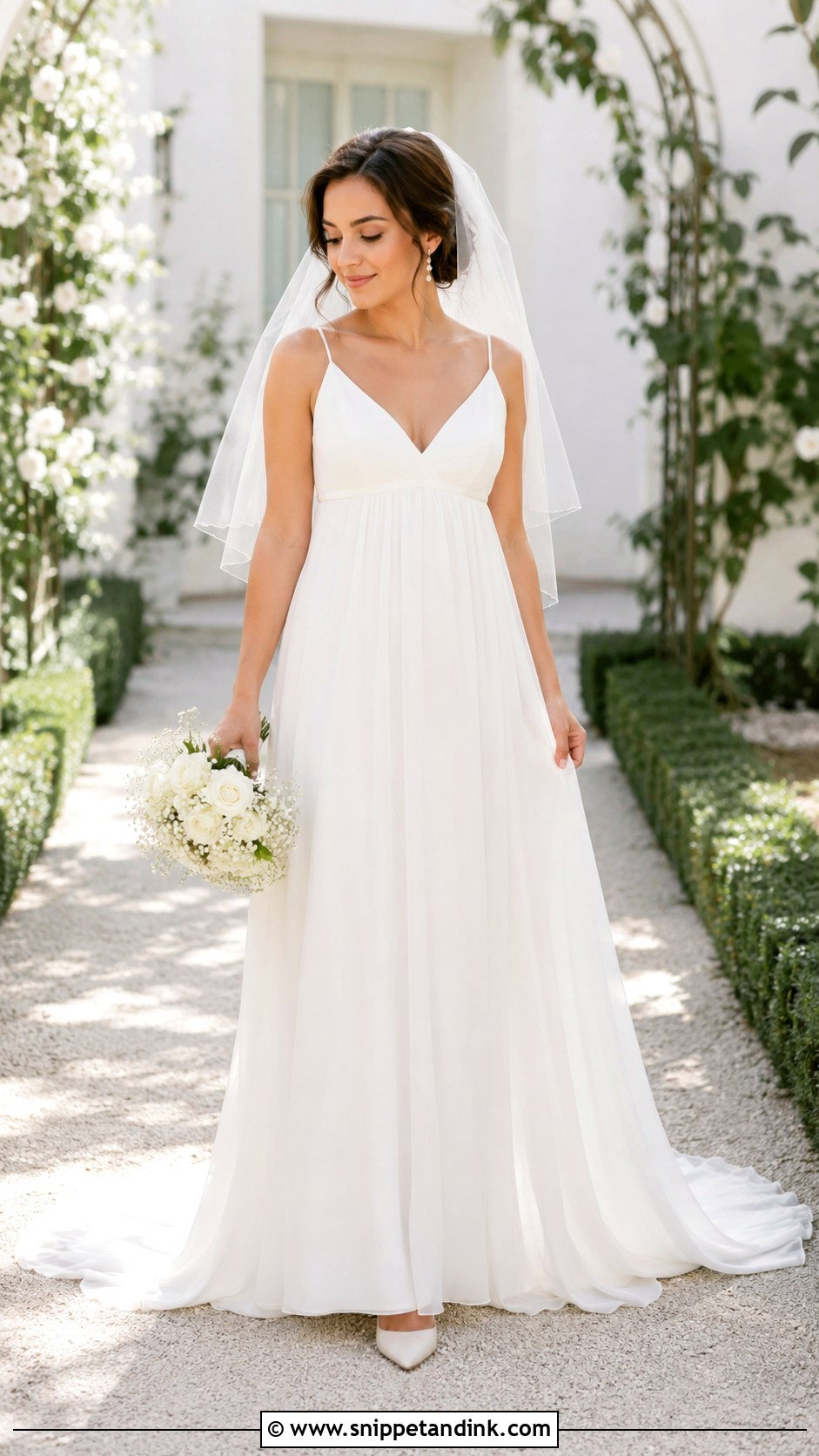
On a petite frame, an empire waist is often the kindest cut, because the skirt starts high under the bust and drops in one unbroken line. Softly gathered chiffon with narrow straps and a V-neck keeps it light. Keep the court train slim and the skirt layers controlled; a heavy train can make a small bride look as if she’s being pulled backward. Hemming is precise work here, with the front just clearing the shoes while the train rests behind. A shoulder-length veil and a narrow comb preserve the vertical line on a beach or in a small garden.
18. Vintage Inspired Court Train Wedding Dress
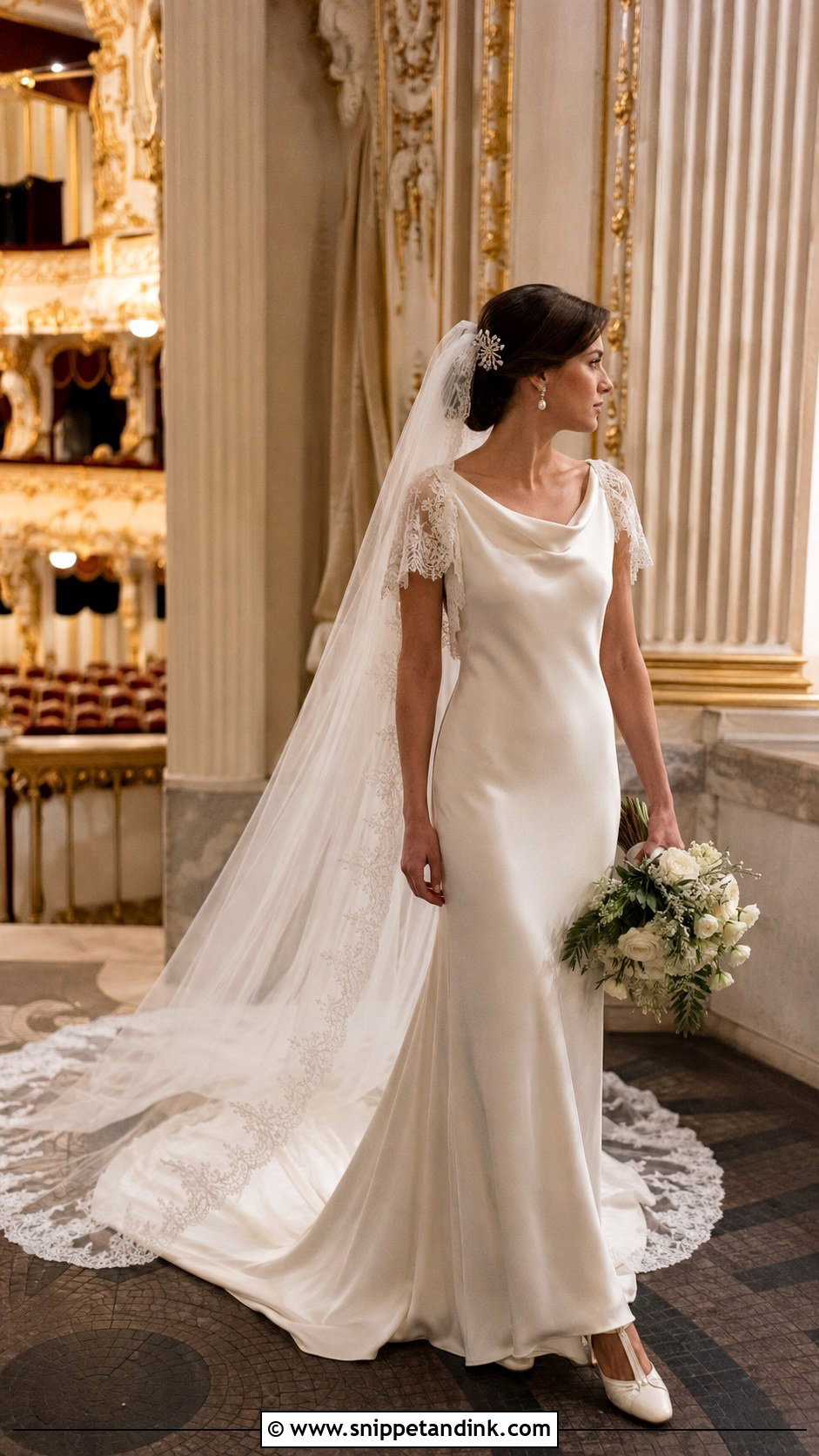
A bias-cut satin gown is the clearest way to nod to the 1930s. Cutting on the bias lets satin cling and ripple over the body, which is why these dresses look fluid. Add a softly draped neckline, covered back buttons and lace trim at the sleeves or hem. The trade-off is honesty: bias satin shows every line underneath, so a modern lining and smooth, edge-free shapewear do a lot of quiet work. Low T-strap shoes, pearl earrings and a lace-edged fingertip veil suit a restored theater or an old library.
19. Minimalist Halter Court Train Wedding Dress
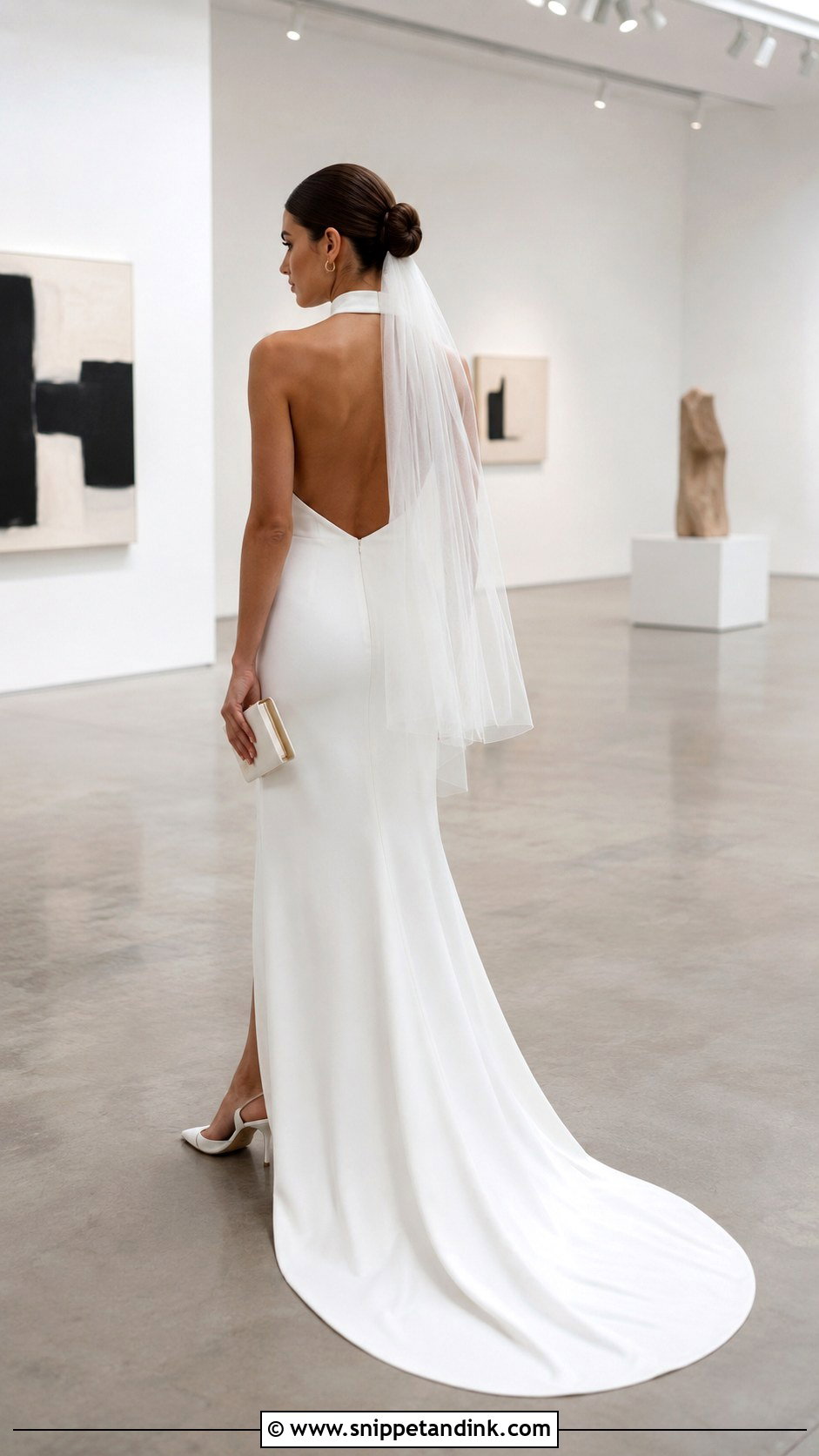
A halter neckline pulls attention up to the shoulders, so the rest of the gown can be almost bare of detail. Smooth crepe, a fitted bodice, an open back and a straight skirt into a narrow train is all it needs. The seams have to be precise because there’s nothing to hide behind. Test the halter at every fitting. A strap that pulls even slightly will leave you with a sore neck after a few hours, and the fix is easier early than late. A sleek bun and a veil pinned underneath suit galleries and city hotels.



20. Watercolor Floral Court Train Wedding Dress
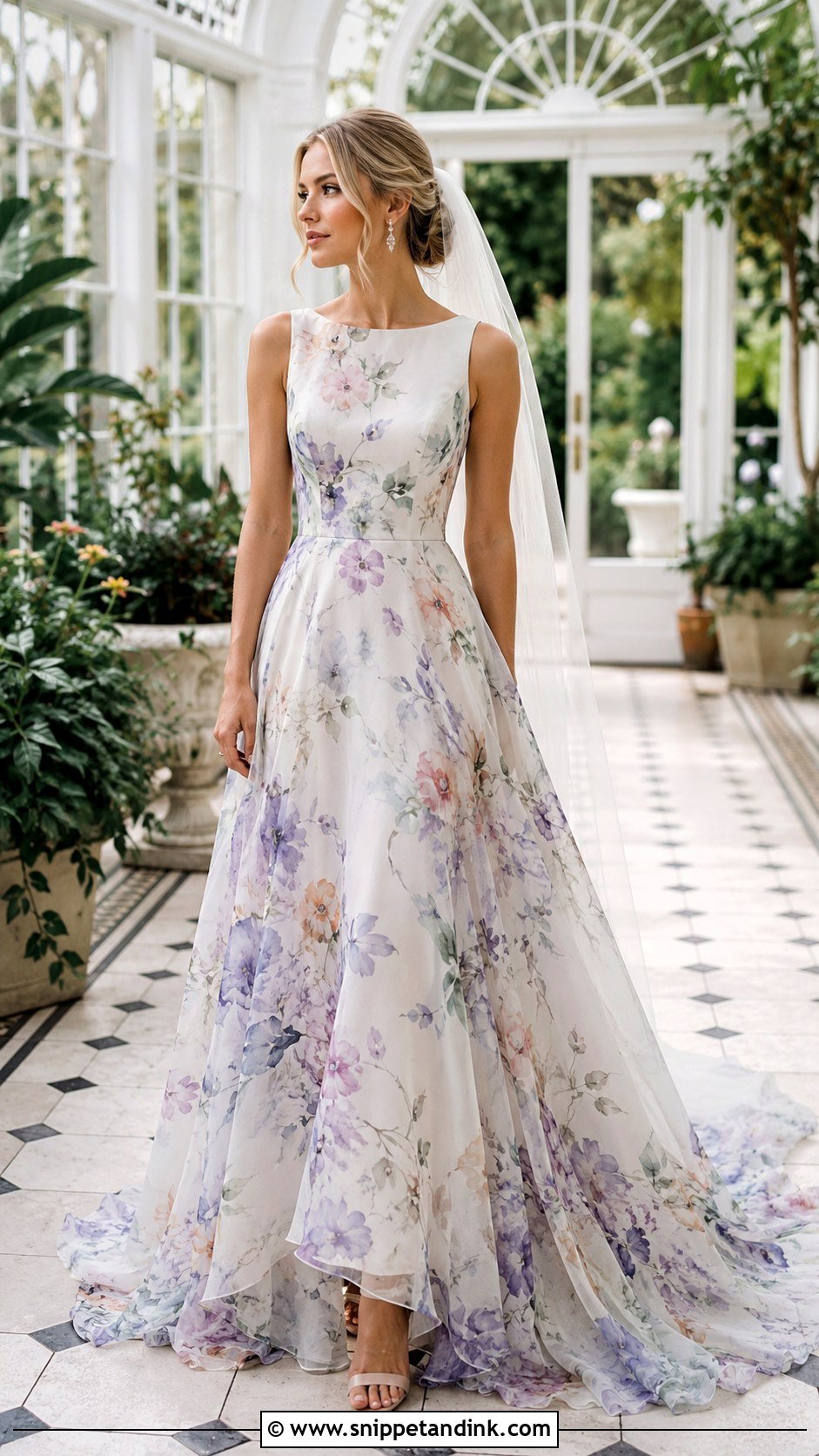
A watercolor print is a good way to bring color into a bridal gown without committing to a solid shade. Look for a pale blush or cream ground washed with muted blue, lavender or pink botanical prints, on a sleeveless bodice over an organza A-line. Organza’s sheerness lets the print look layered rather than flat, and the court train carries it into the back view. Pick a plain ivory veil and repeat only one or two print colors in the bouquet. More than that and the gown starts competing with the flowers.
Bustling a Court Train for the Reception
Even a short train gets trodden on during dancing, so plan a bustle at your alterations appointment. Court trains need fewer pickup points than longer ones, often one to three, and the right style depends on the fabric.
- Over bustle: the train hooks up onto the back of the skirt with buttons or hooks. It’s quick and suits satin and crepe, which drape cleanly when lifted.
- Under bustle: the train tucks underneath and ties with ribbons, creating soft folds. It looks lovely on tulle and lace, but it takes longer to do.
- Wrist loop: a ribbon at the hem slips over your wrist. It needs no tailoring, though holding a train all evening gets tiring.
Ribbon ties are often color coded, so take a photo of how they match up and teach a bridesmaid or your mother at the final fitting. Have her do it twice while you stand still.
Walking and Turning With a Train Behind You
A court train is easy to live with once you know three habits. Walk forward with a slightly longer stride than usual so you’re not kicking the front hem. Turn in a small arc rather than spinning on the spot, which wraps the train around your ankles. On stairs, lift the front of the skirt and let the train follow; going down, take each step slowly. Practice all three in your actual shoes before the day, ideally on the kind of floor your venue has.
The Back View Decides More Than You Think
A court train gives you ceremony without the logistics of a long train, and it suits nearly every shape, from sheath and mermaid to Mikado ball gown and lace A-line. Choose it with the venue, the season and how much you plan to move in mind. Spend time on the back view in the mirror at every fitting, because buttons, bows, appliqués and the veil all change how the train reads in photos. Then get a bustle that works and a fit that supports you, and choose the fabric and neckline that feel most like you.
You'll Like These Ideas:



Leave a Reply