
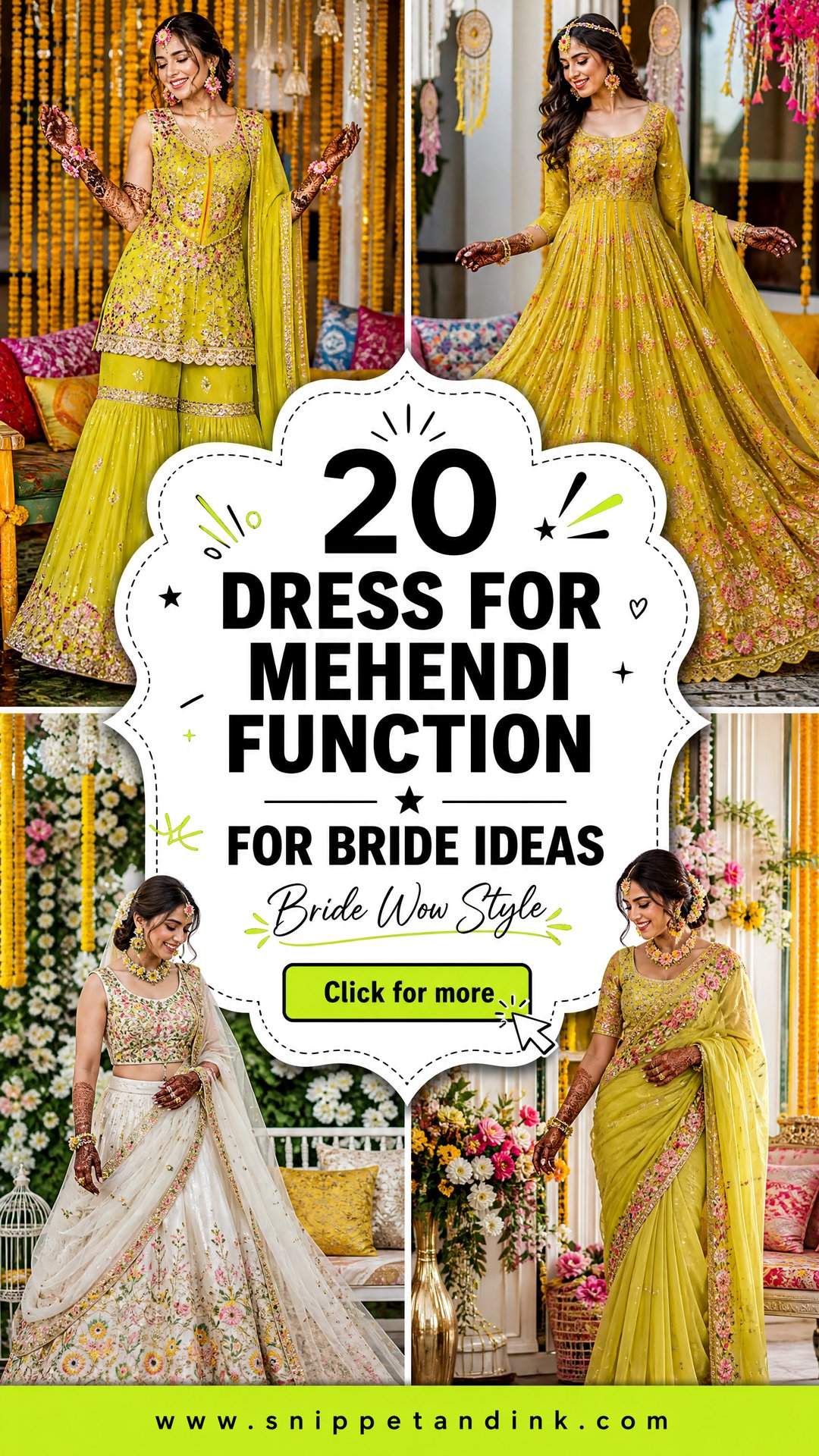
The mehendi is the one wedding event where the bride loses the use of her hands for hours. That single fact shapes every outfit decision I make for it. Sleeves have to stay clear of wet paste, the dupatta can’t need constant adjusting, and the fabric has to breathe while you sit still for a long application and then get up to dance. Lighter lehengas, shararas, mirror work, florals, capes and Indo-western sets have all grown popular for exactly those reasons. Below are twenty mehendi outfits I’d dress a bride in, with the practical note I’d give her at a fitting.
Get Fully Dressed Before the Henna Cone Comes Out
Bridal henna paste is usually left on for many hours, often overnight, and the stain keeps darkening for a day or two afterward. Once the application begins, you can’t fasten a hook, adjust a blouse or put in an earring. So the order of the day matters more than any single outfit choice.
- Hair and makeup first, then the full outfit, including the dupatta pinned in place.
- All jewelry on before the first line of henna, especially rings, bangles and anything with a clasp.
- Blouse hooks at the back or side, done up by someone else, rather than front fastenings you’d need to manage.
- A bathroom trip just before application begins, since a lehenga with a side zip is very hard to manage with wet hands.
During application, I keep an old cotton dupatta or sheet over the bride’s lap. Paste falls off as it dries, and the lemon and sugar sealant many artists dab on is sticky enough to mark silk.
1. Mehendi Function Yellow Lehenga For Bride
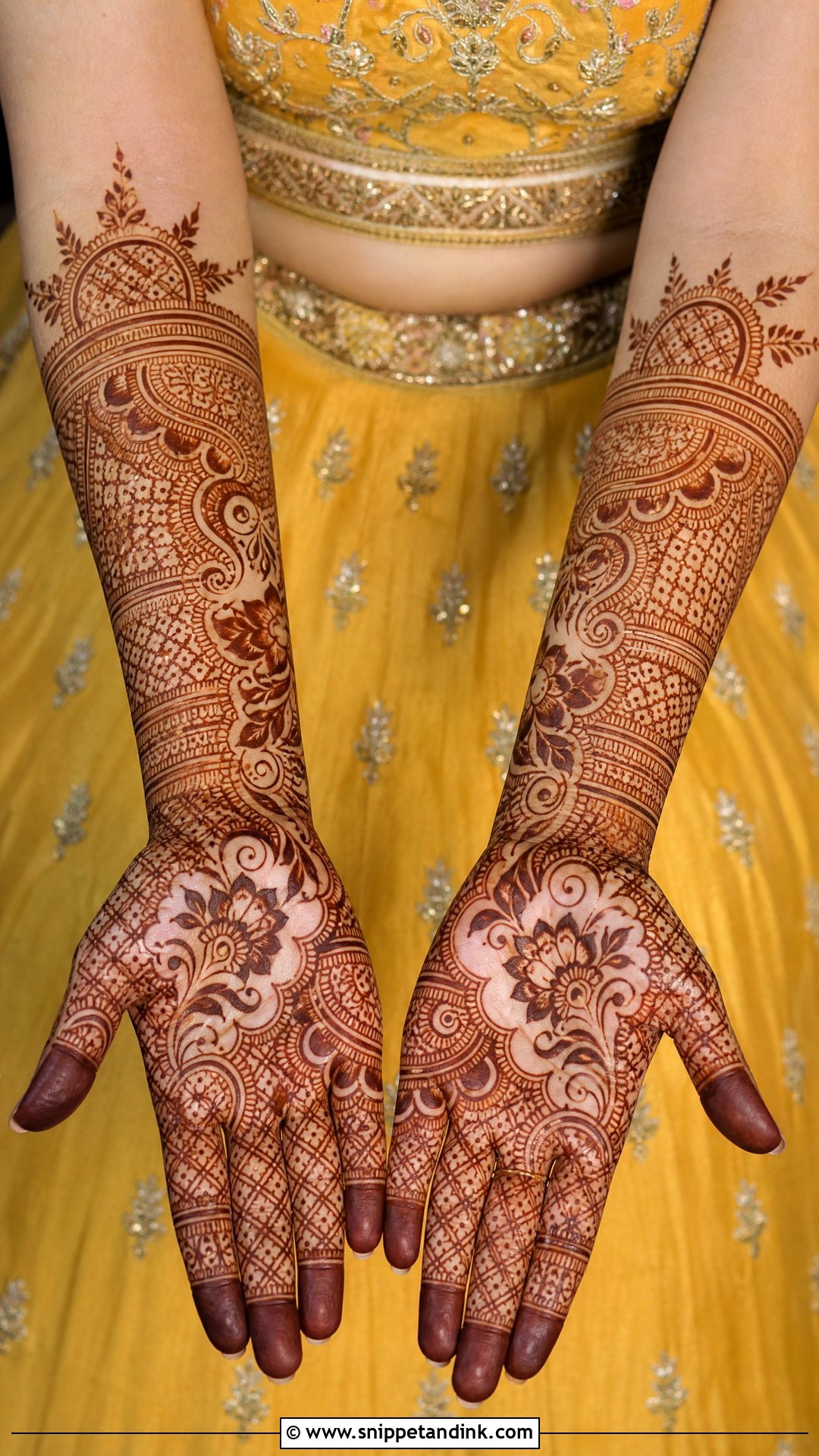
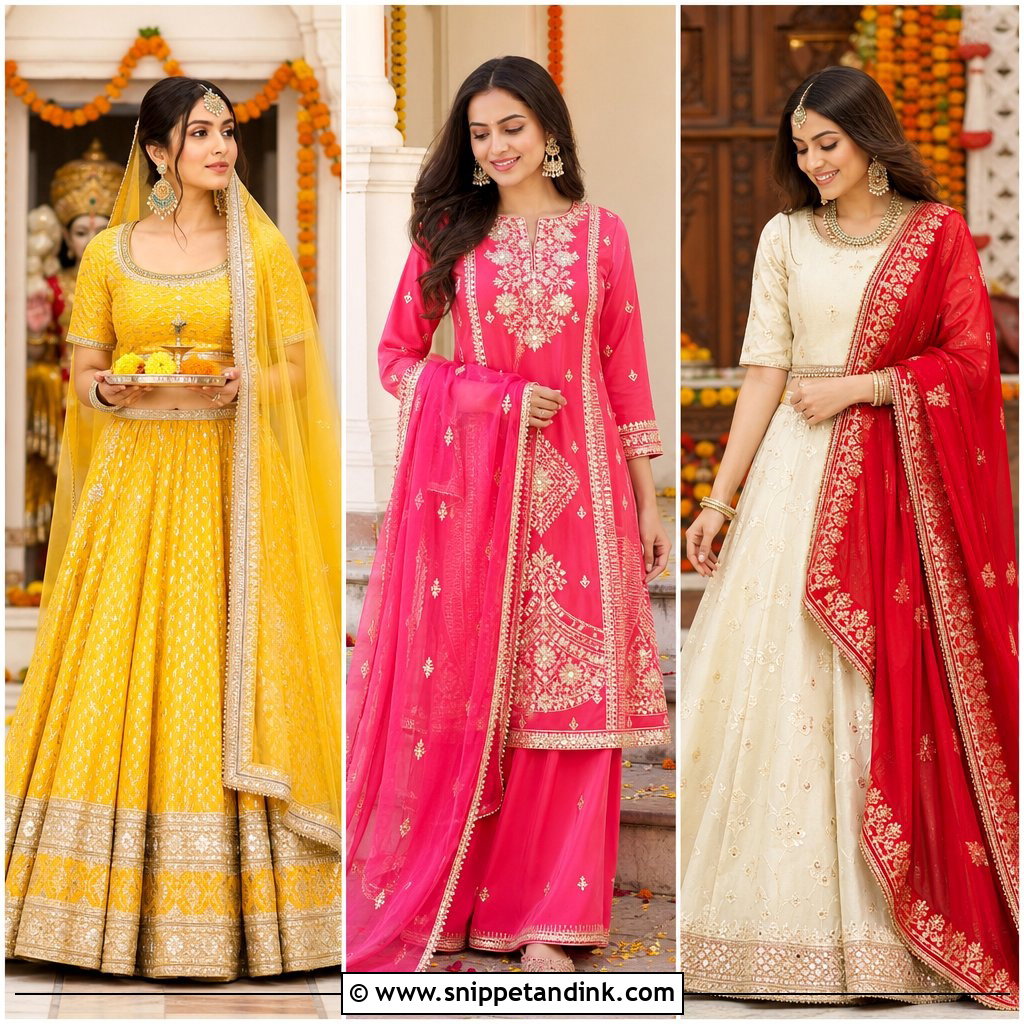
Yellow is the color most families expect at a mehendi, and it rarely disappoints in daylight. I keep the skirt light, with gota patti, mirror work or small floral embroidery rather than heavy zardozi, because you’ll be sitting cross-legged for much of the afternoon. Choose a sleeveless, short or elbow-length blouse if your henna will run past the wrist. Pin the dupatta firmly on one shoulder so it never needs a hand to fix it. Floral jewelry and juttis finish it, and it suits garden, home and resort mehendis especially well.
2. Mehendi Function Green Lehenga For Bride
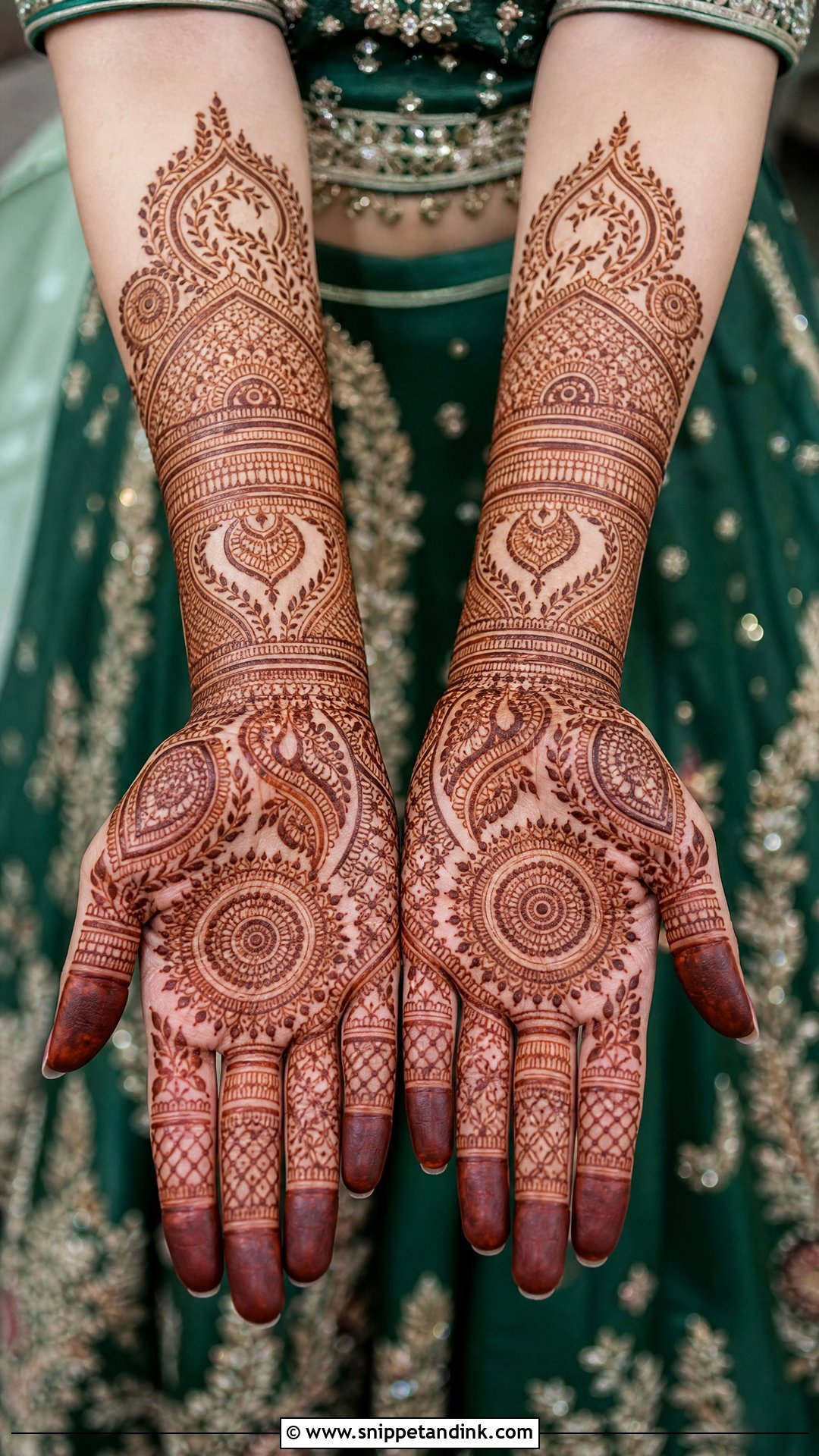
Green carries the meaning of the ceremony itself, so many brides choose it on purpose. Lime reads playful in daytime, emerald feels rich and bridal, and pista is the softest of the three. Mirror work, thread embroidery and tiny sequins add sparkle without weight. A cropped blouse with a flared skirt lets you sit and move. My main warning: avoid heavy borders at the wrist or on the dupatta edge, because they drag across fresh arm designs. Kundan, floral bangles or a statement maang tikka complete it.
3. Mehendi Function Floral Lehenga For Bride
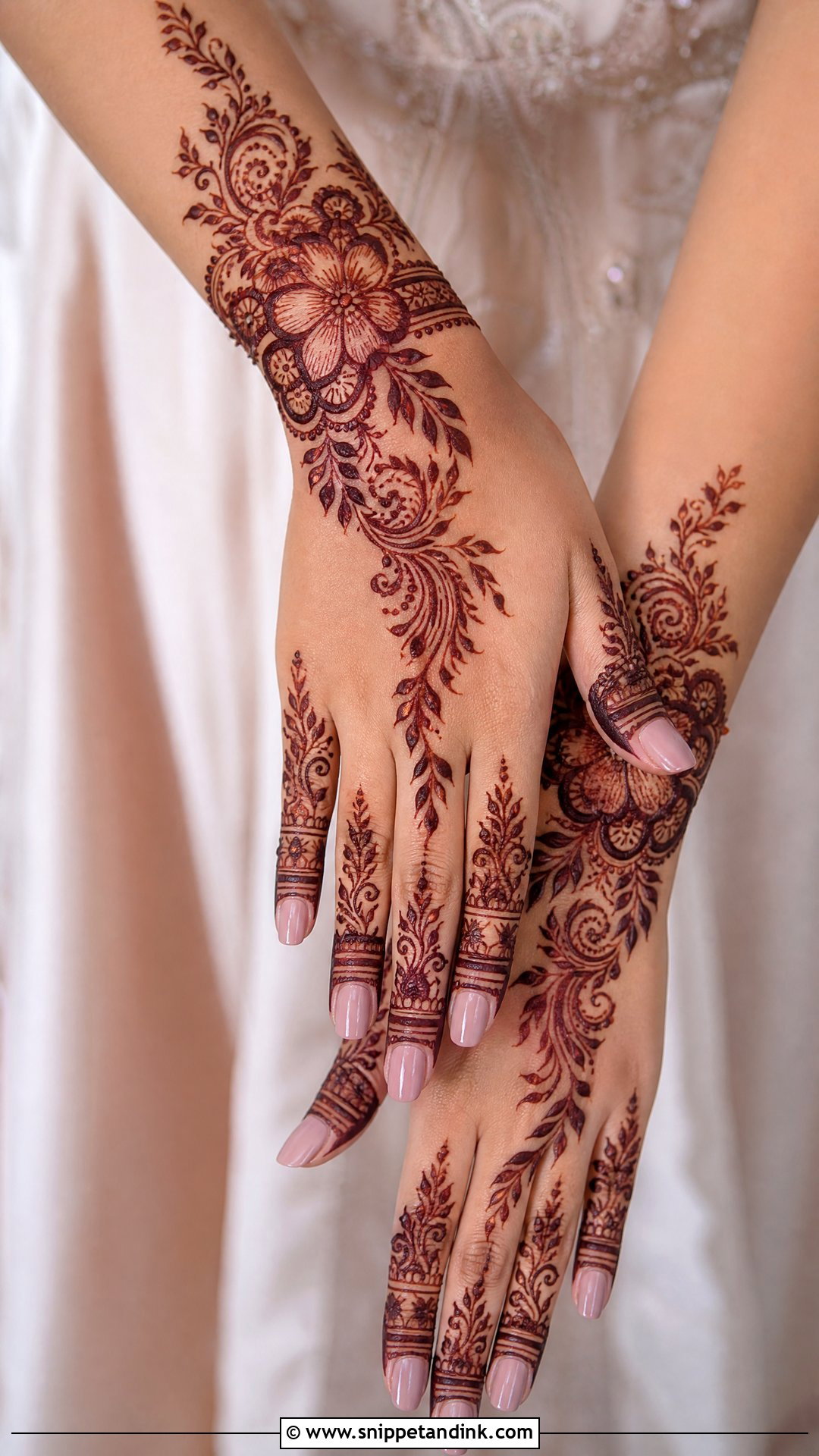
Printed florals weigh far less than embroidery, which is why I reach for them when a mehendi runs into the evening. Marigold prints, pastel roses, tropical blooms or hand-painted motifs all work. The softness of a print balances detailed henna in photos instead of competing with it. If the skirt carries large flowers, keep the blouse plain; a matching floral blouse gives a coordinated look but can feel busy with intricate arm designs. Pearls, fresh flowers or colorful bangles finish it cheerfully.
4. Mehendi Function Sharara Set For Bride
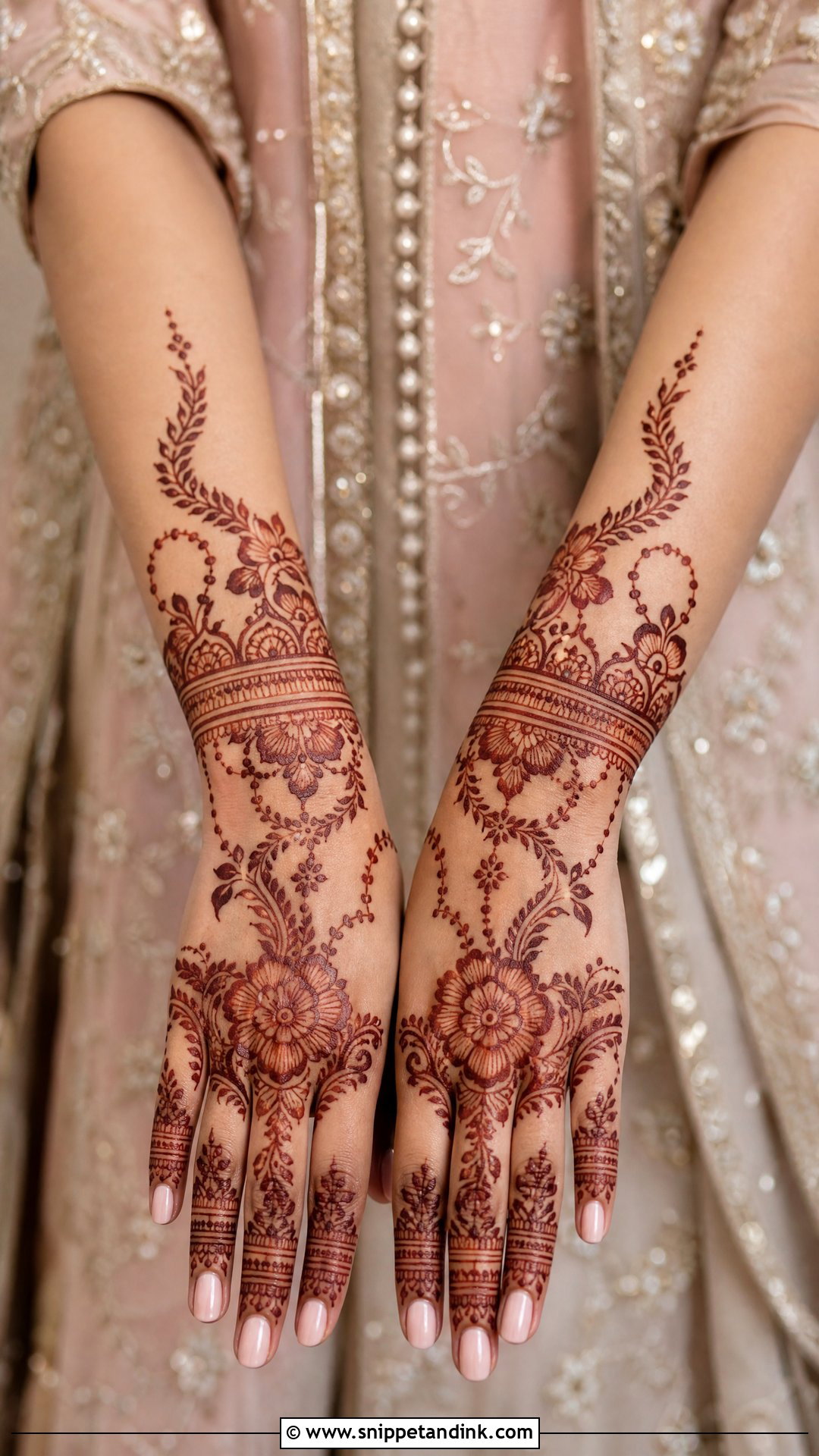
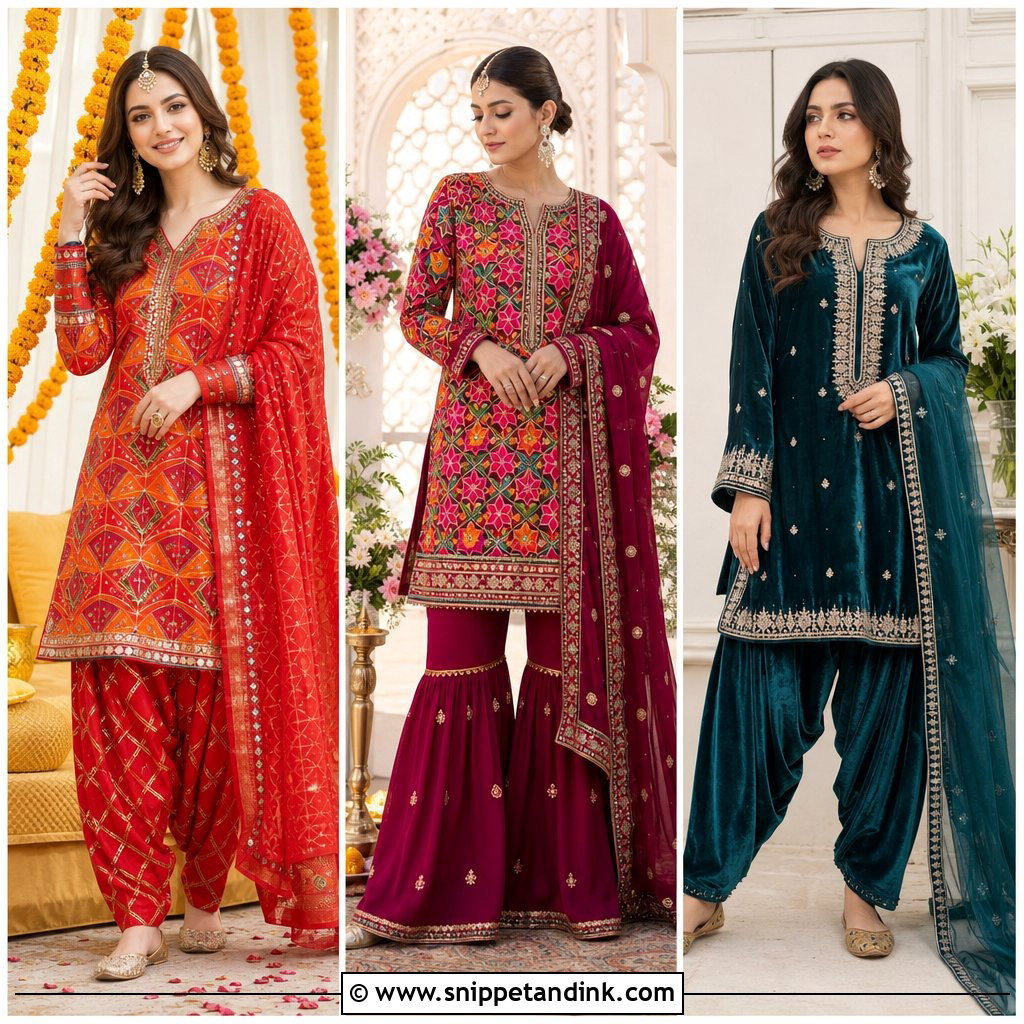
A sharara set is the outfit I recommend most to brides who dread sitting still in a lehenga. The wide legs let you sit cross-legged for application without the skirt bunching underneath you. Pair it with a short kurti in mirror work, gota or colorful threadwork, sleeveless or short-sleeved so your arms stay open. A light dupatta adds tradition. Yellow, green, orange, pink and ivory with bright accents all suit it. It still feels dressy, and you’ll move far more freely when the dhol starts.
5. Mehendi Function Gharara Set For Bride
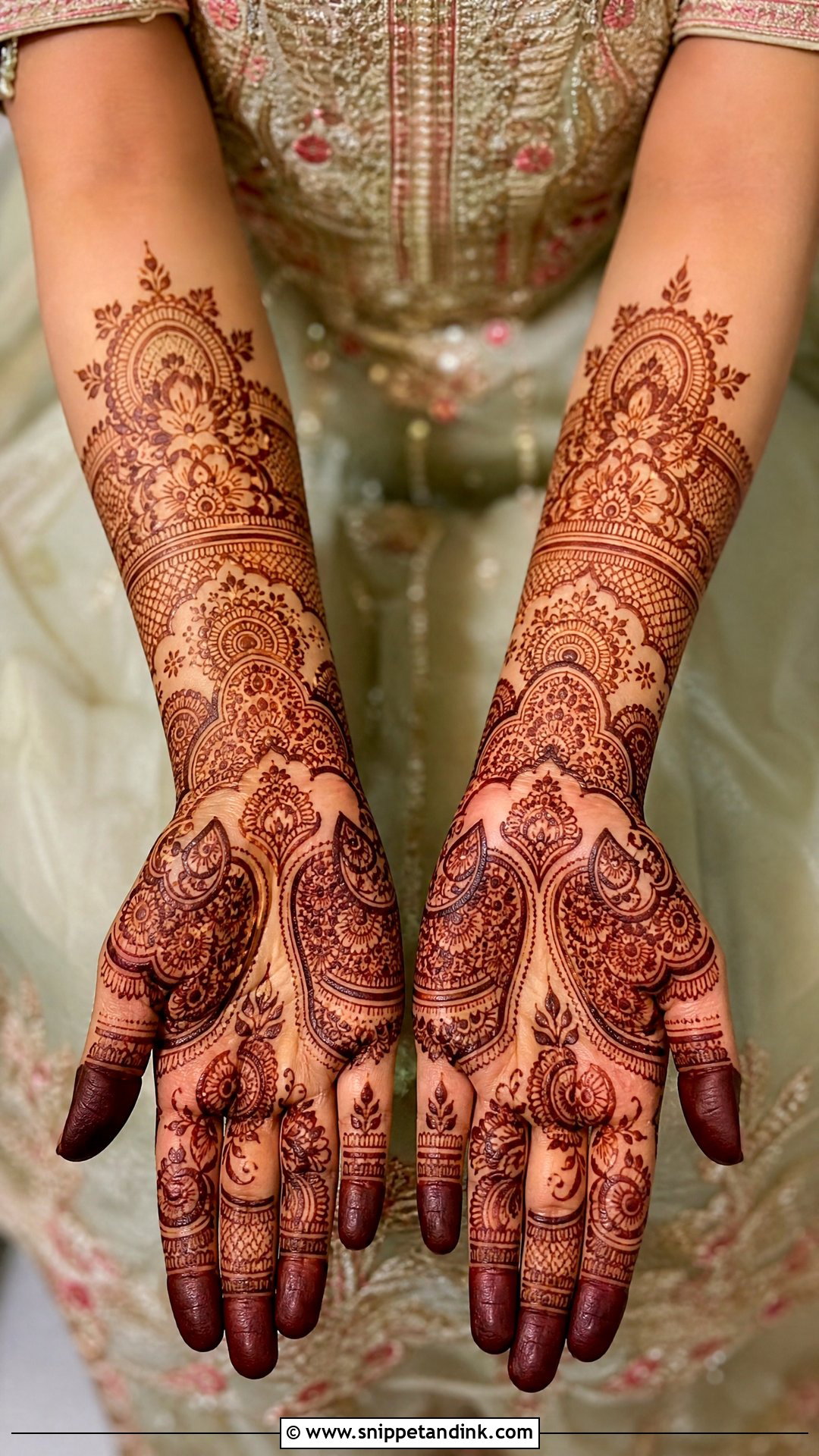
The gharara fits close through the thigh, then flares from the knee with a gathered band, a silhouette with North Indian and Pakistani roots. Georgette, silk blends, organza and light brocade drape well. Embroidered borders at the knee joint, hem and dupatta make it bridal without adding much weight. Mustard, mehendi green, peach, rani pink and ivory all suit it. One fitting note: the knee seam must sit exactly at your knee, or it pulls when you sit. Keep sleeves short or three-quarter if your design runs up the arm, and add passa earrings or jhumkas.
6. Mehendi Function Anarkali Dress For Bride
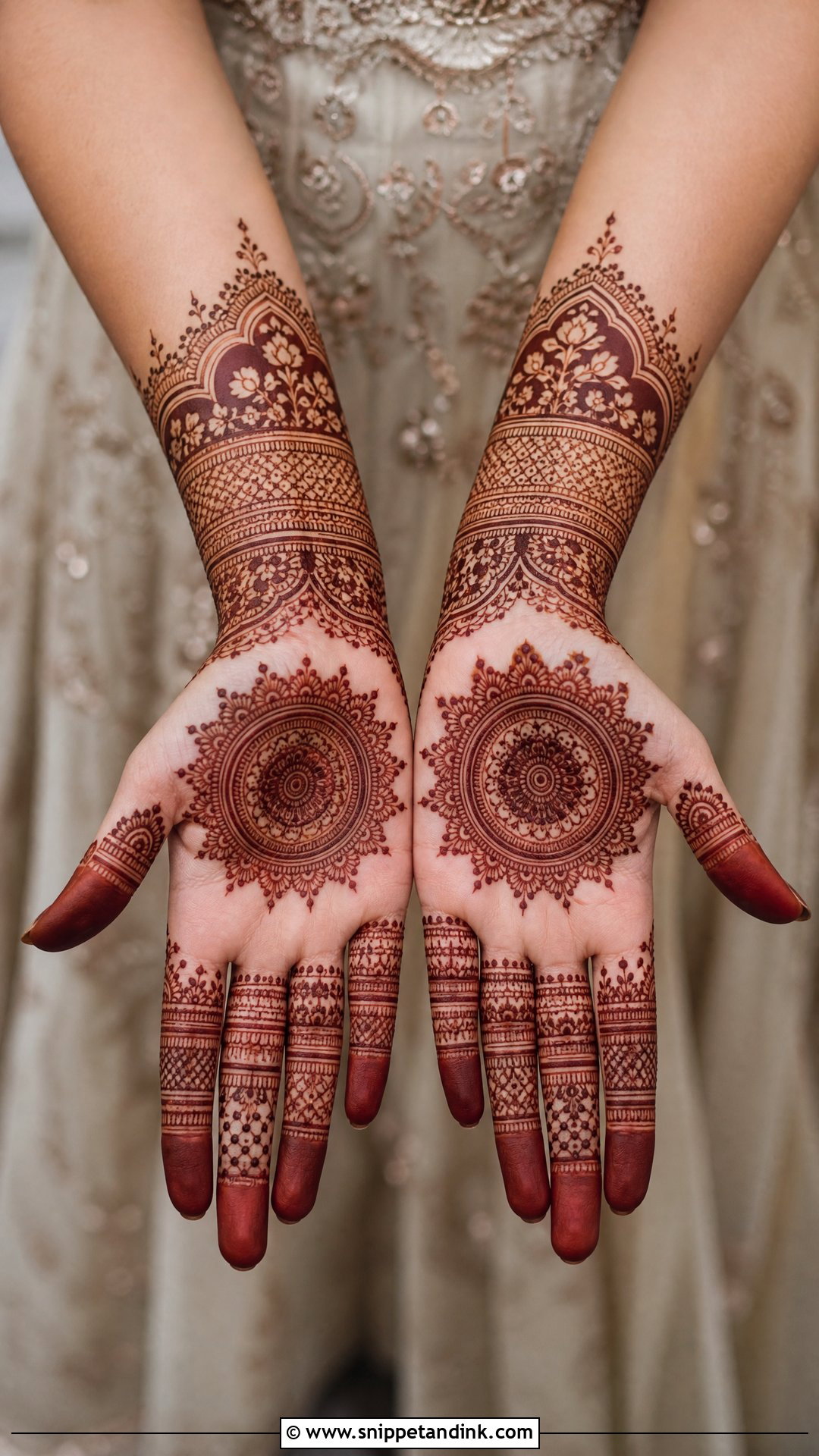
An Anarkali dress gives flow without the weight of a separate skirt. Its long flare handles sitting, walking and dancing comfortably. Bright yellow, lime, coral or pastel green with light embroidery at the neckline and hem suits the occasion. Skip tight full sleeves with heavy bridal mehndi; they rub against fresh paste and smudge the design. Sleeveless or elbow-length is the safer choice, worn with churidar, palazzos or a soft lining. A low bun and floral hair accessories keep the neck clear.
7. Mehendi Function Indo Western Dress For Bride
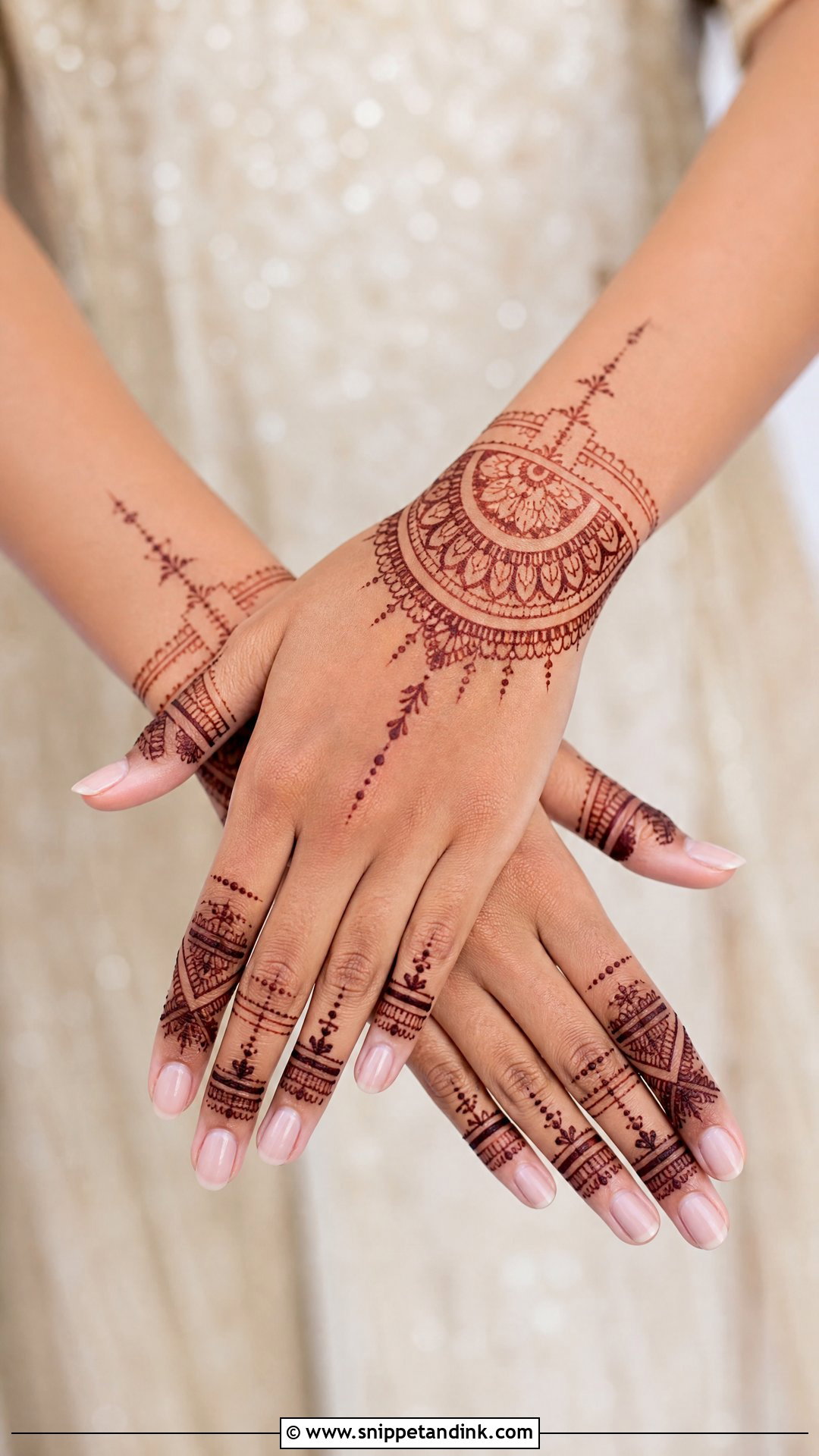
An Indo-western dress suits a bride who wants her mehendi to feel like a party. A crop top with dhoti pants, a peplum blouse with flared pants or an asymmetrical kurta over a skirt all move easily for choreographed dances. Mirror work, tassels and light capes keep it festive. Modern Arabic or Indo-Arabic mehndi patterns, with their open spaces and bold lines, pair naturally with these cleaner silhouettes. Keep accessories bold but balanced and choose embellished flats or low heels you can dance in.
8. Mehendi Function Cape Lehenga For Bride
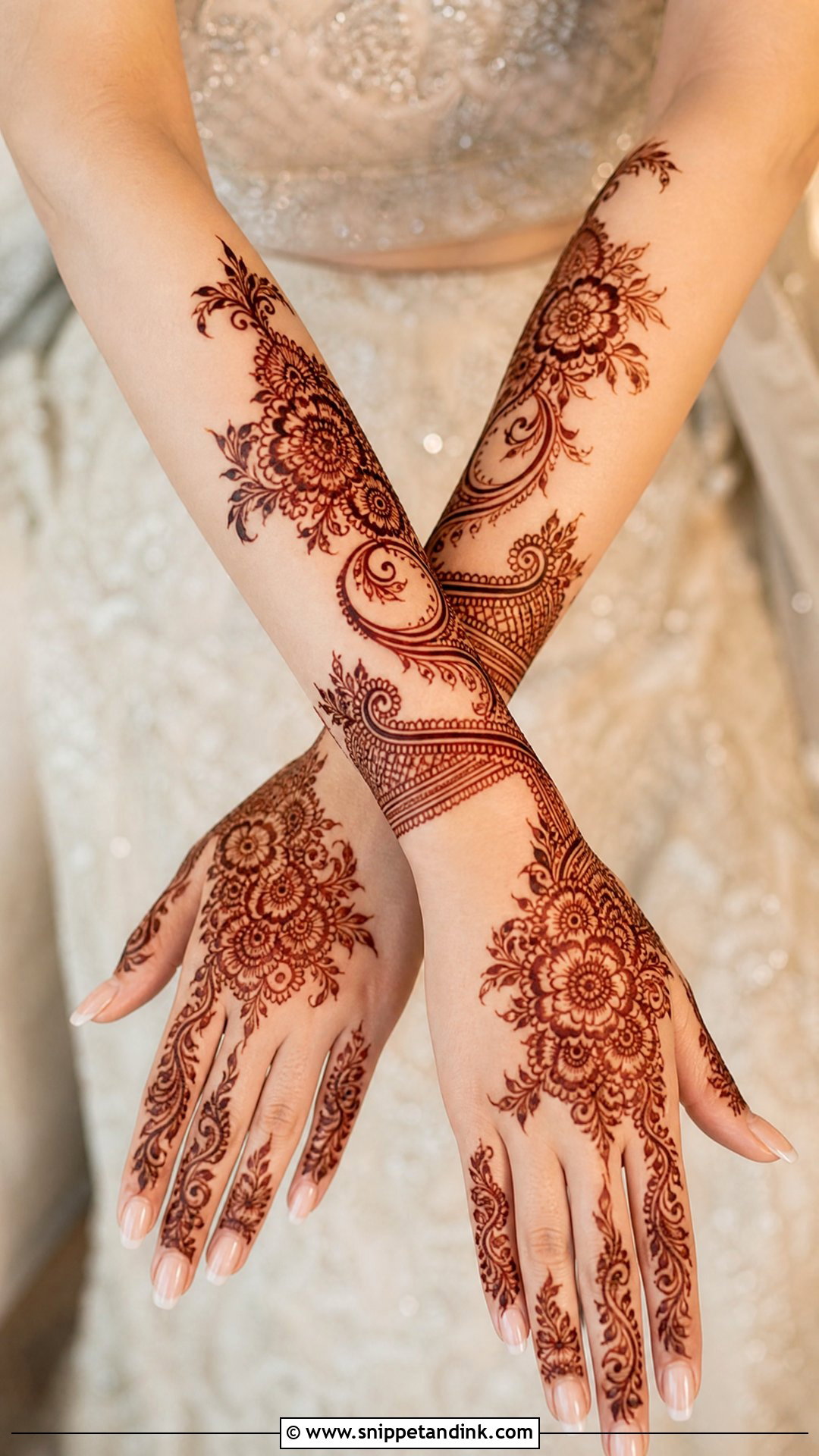
A cape solves the dupatta problem entirely. It sits over the shoulders and stays put, so you never need to lift a hennaed hand to adjust it. Sheer organza, net or georgette with light embroidery, sequins or mirrors works best. Pastel yellow, mint, blush or ivory with colorful thread suits it. I keep the blouse fitted and the skirt light so the cape stays the focus. Check one thing at the fitting: the cape’s edge should end above the elbow, or it brushes forearm designs.
9. Mehendi Function Mirror Work Lehenga For Bride
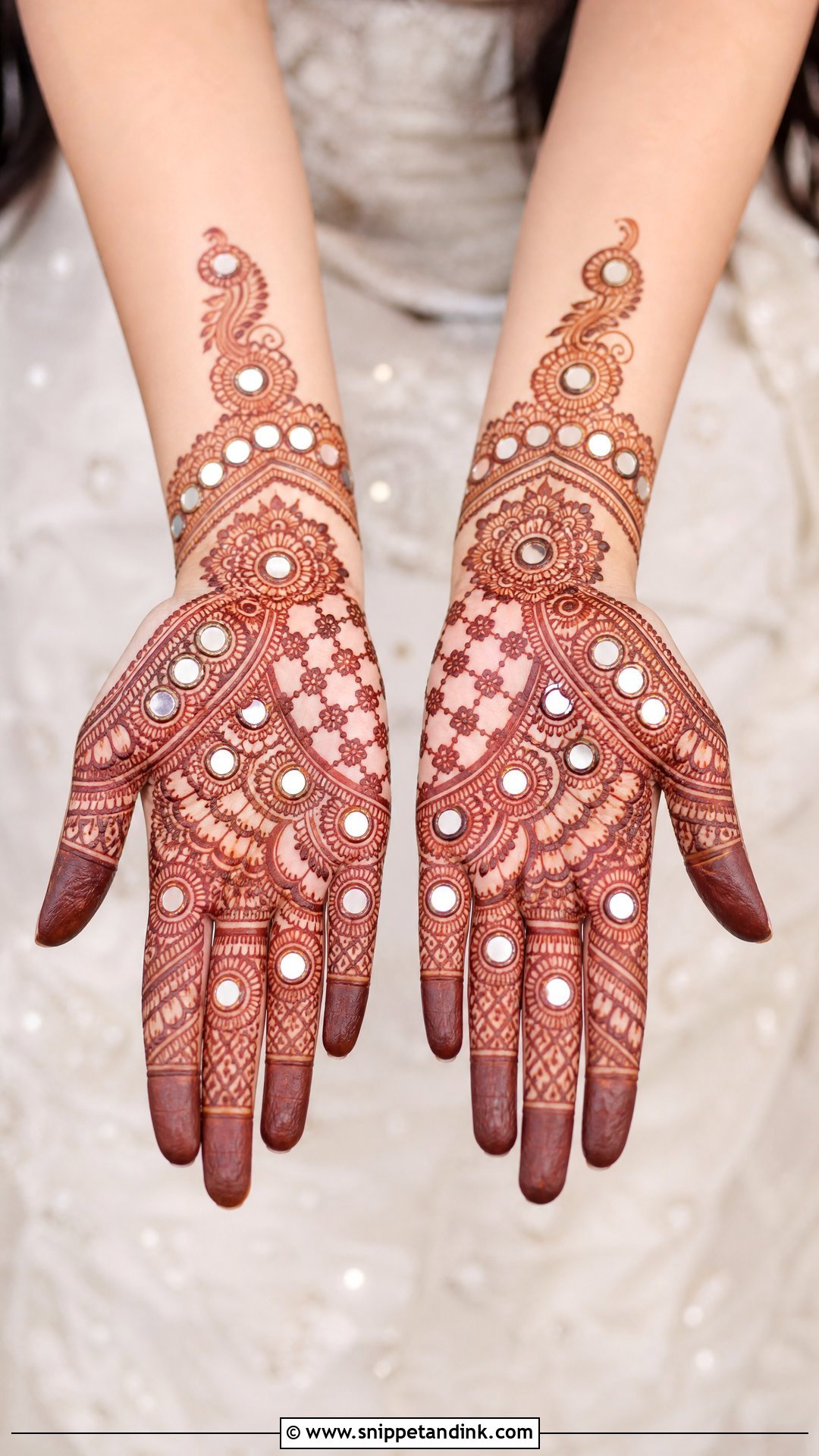
Mirror work sparkles in sunshine and under fairy lights, so it suits day and evening events alike. In yellow, green, orange or fuchsia it looks festive without much jewelry. Mirrors add real weight, so I look for a balanced spread: on the blouse, along the border, or scattered across a georgette or chiffon skirt. Heavy mirror borders can also scratch wet henna on the forearm. Choose minimal neck jewelry with a busy blouse and let earrings, bangles and your henna carry the rest.
10. Mehendi Function Gota Patti Lehenga For Bride
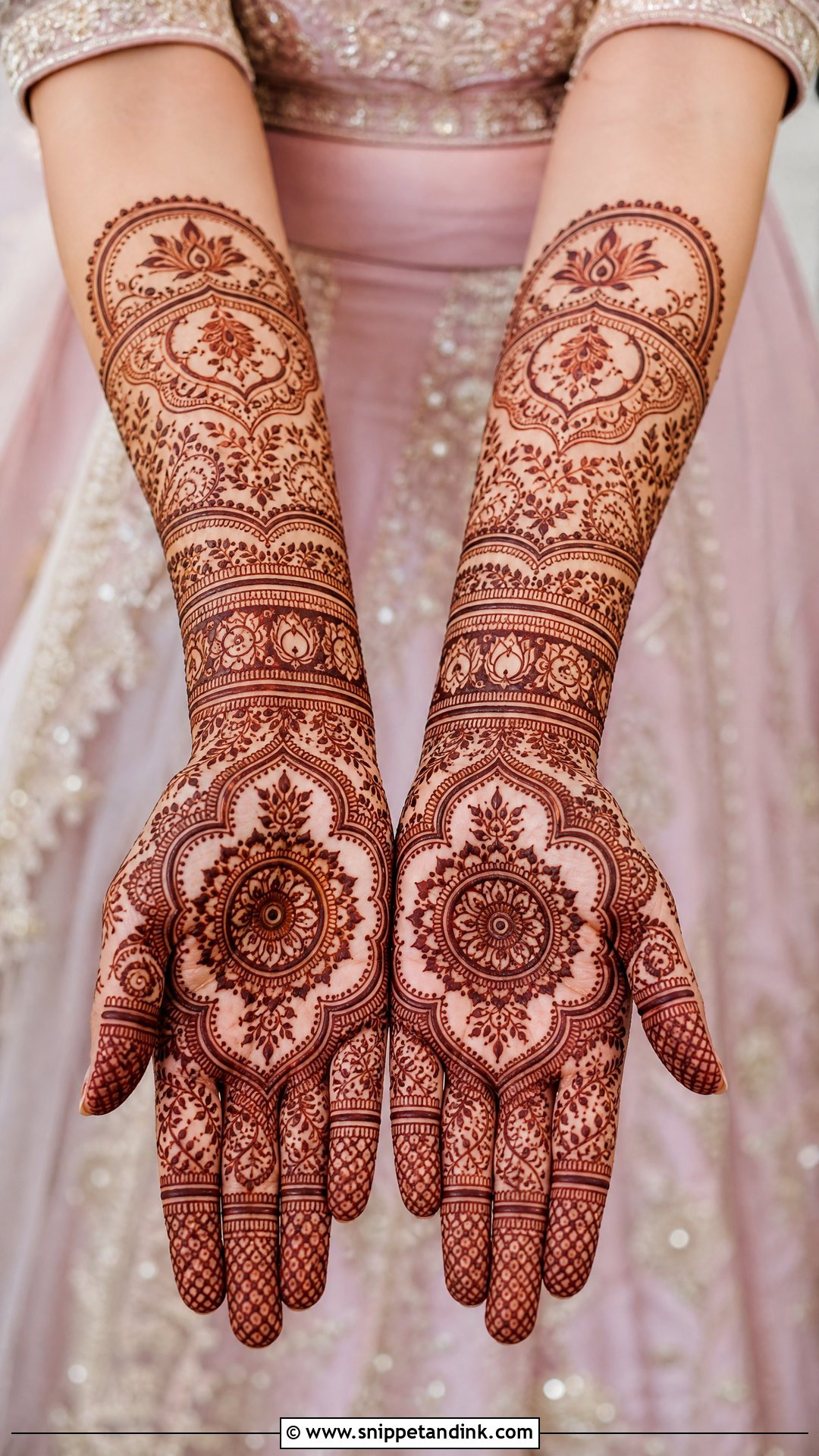
Gota patti, the flat metallic ribbon appliqued into motifs, catches light well on yellow, green, peach and orange. For a classic Rajasthani-inspired look, choose a flared skirt with gota motifs, a fitted blouse and a lightweight dupatta. It suits home ceremonies and larger venues equally. Gota stiffens the fabric where it’s stitched, so look for a breathable base like georgette or cotton silk. Kundan earrings, floral jewelry or glass bangles finish it. In henna photos, its shine sits well beside a dark stain.
11. Mehendi Function Bandhani Lehenga For Bride
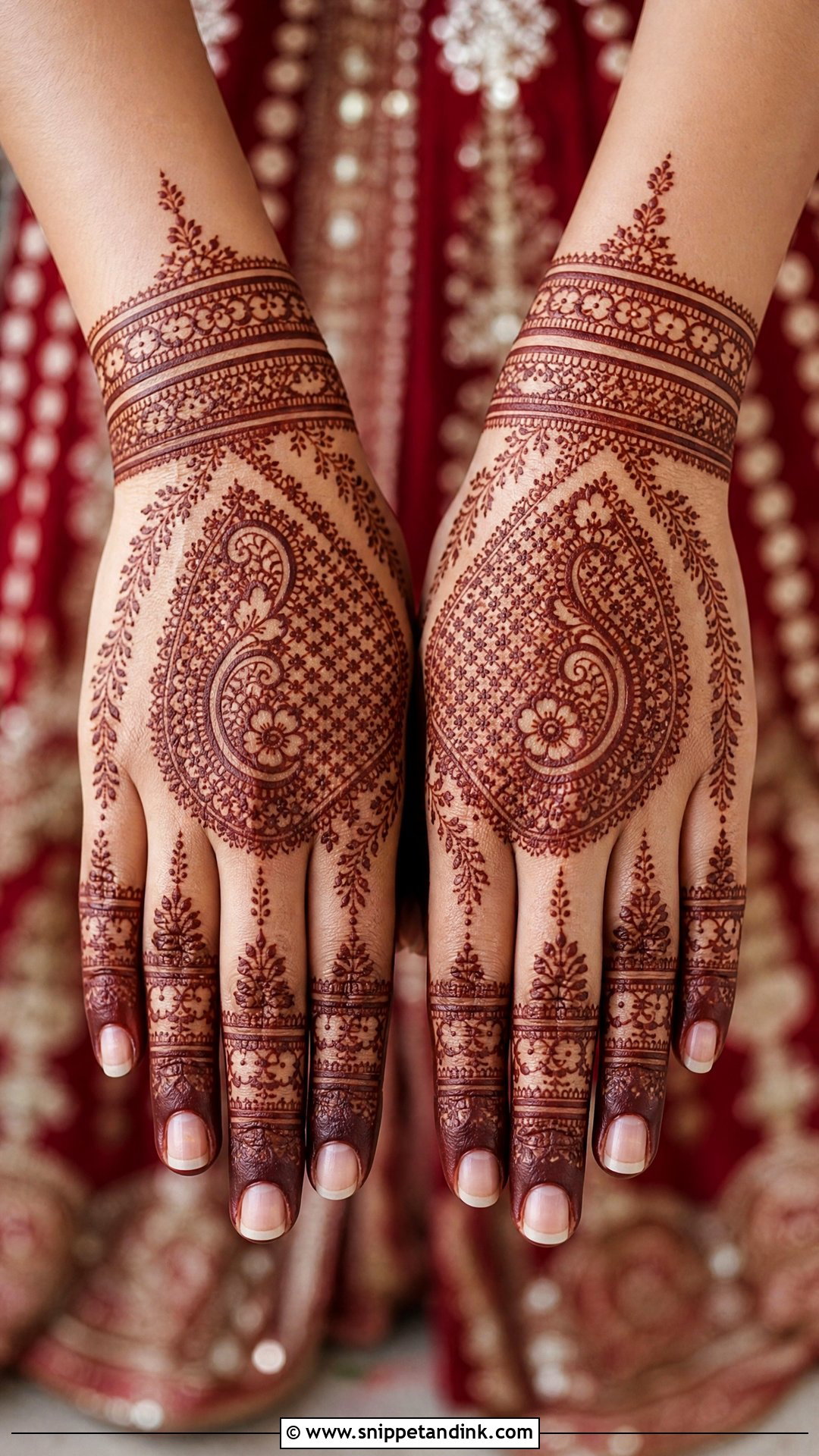
Bandhani, the tie-dyed dot pattern from Gujarat and Rajasthan, feels festive before you add any embellishment. Yellow and pink, green and orange, red and mustard, or multicolor combinations all suit a mehendi. A plain embroidered blouse balances a busy skirt; a matching bandhani dupatta adds tradition. The cloth is lighter than most embroidered lehengas, so it’s comfortable for long functions. Real hand-tied bandhani has slight irregularities in the dots, which is part of its charm. Oxidized jewelry gives a boho feel; kundan makes it more bridal.
12. Mehendi Function Rajasthani Lehenga For Bride
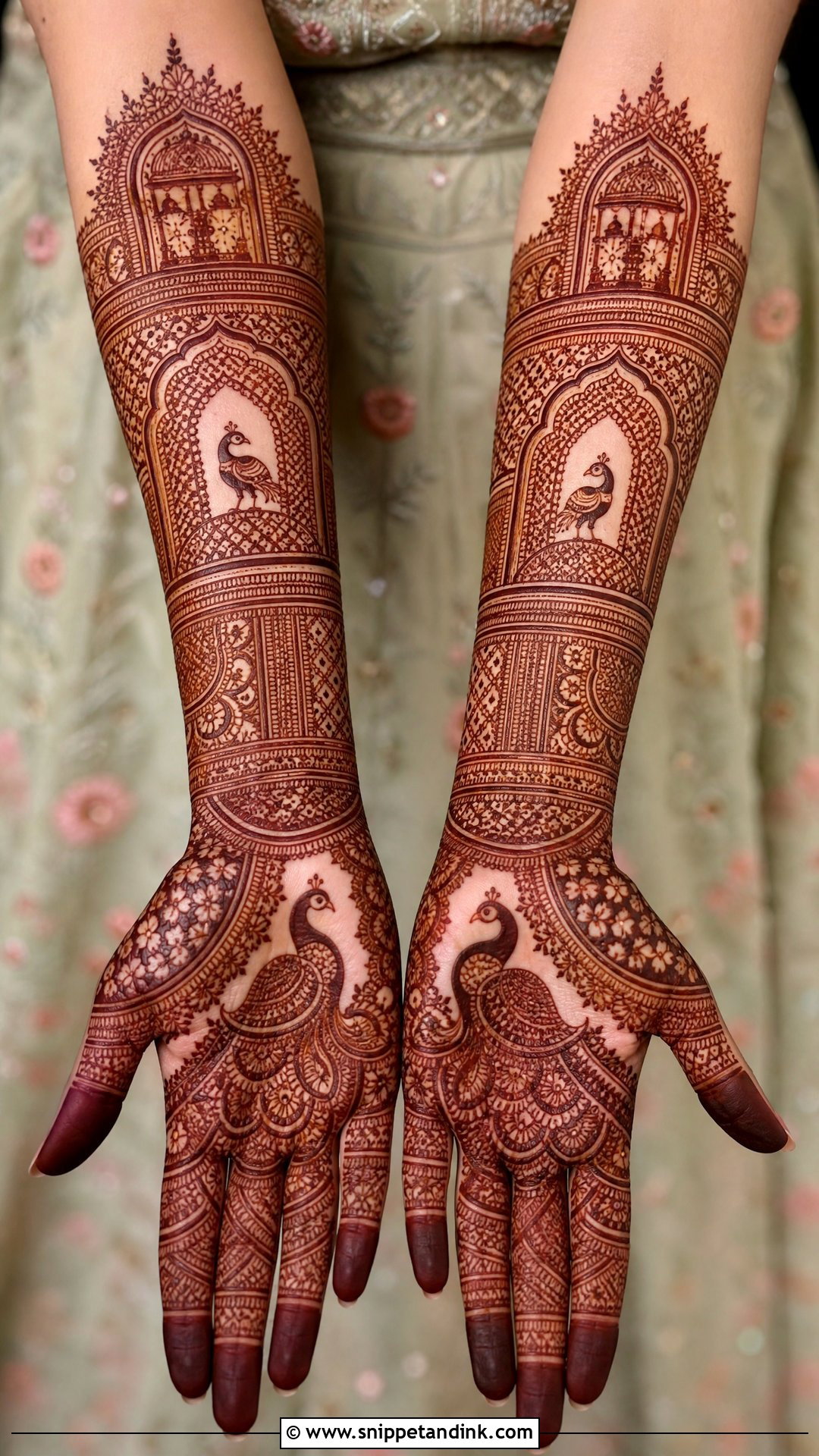
A Rajasthani lehenga combines leheriya waves, bandhani dots, gota borders and mirrors in bright combinations. Mustard, fuchsia, orange, parrot green and royal blue all work. It suits a traditional, playful ceremony. If your event includes dancing or games, ask for a lighter skirt with fewer layers of can-can. A short blouse and pinned dupatta keep the arms clear for application. A borla maang tikka, jhumkas and colorful bangles finish the regional look.
13. Mehendi Function Pastel Lehenga For Bride
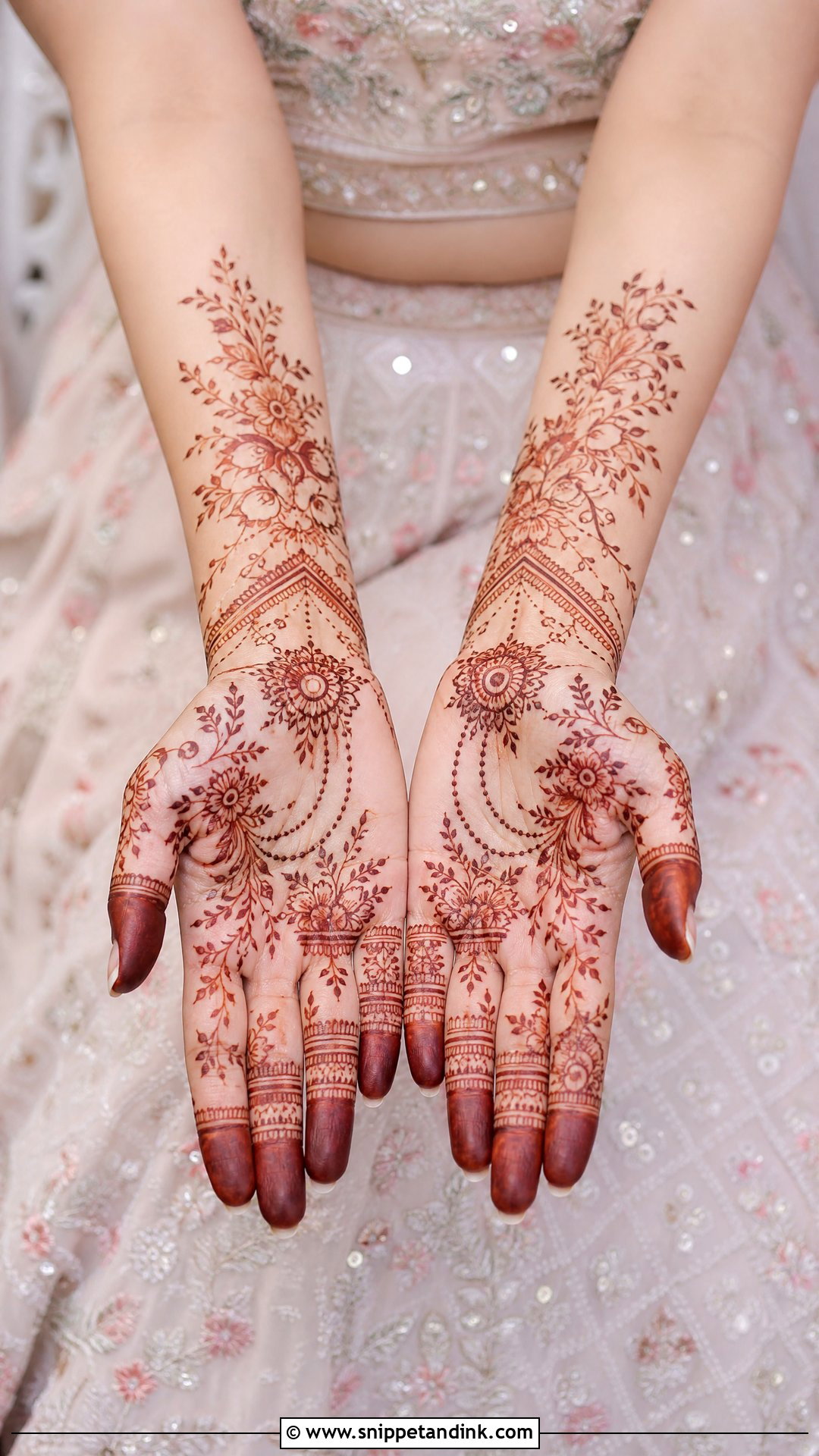
Pastels offer a softer alternative to the expected yellow or green. Mint, powder blue, peach, lavender and blush look fresh in daylight. Mirror work, thread embroidery, sequins or colorful florals keep them festive. Pastels have one real advantage: deep maroon henna stands out clearly against them in photos. They suit modern venues, poolside mehendis and intimate gatherings. The risk is staining, since a smear of paste shows on pale fabric, so keep an old dupatta over your lap during application.
14. Mehendi Function Orange Lehenga For Bride
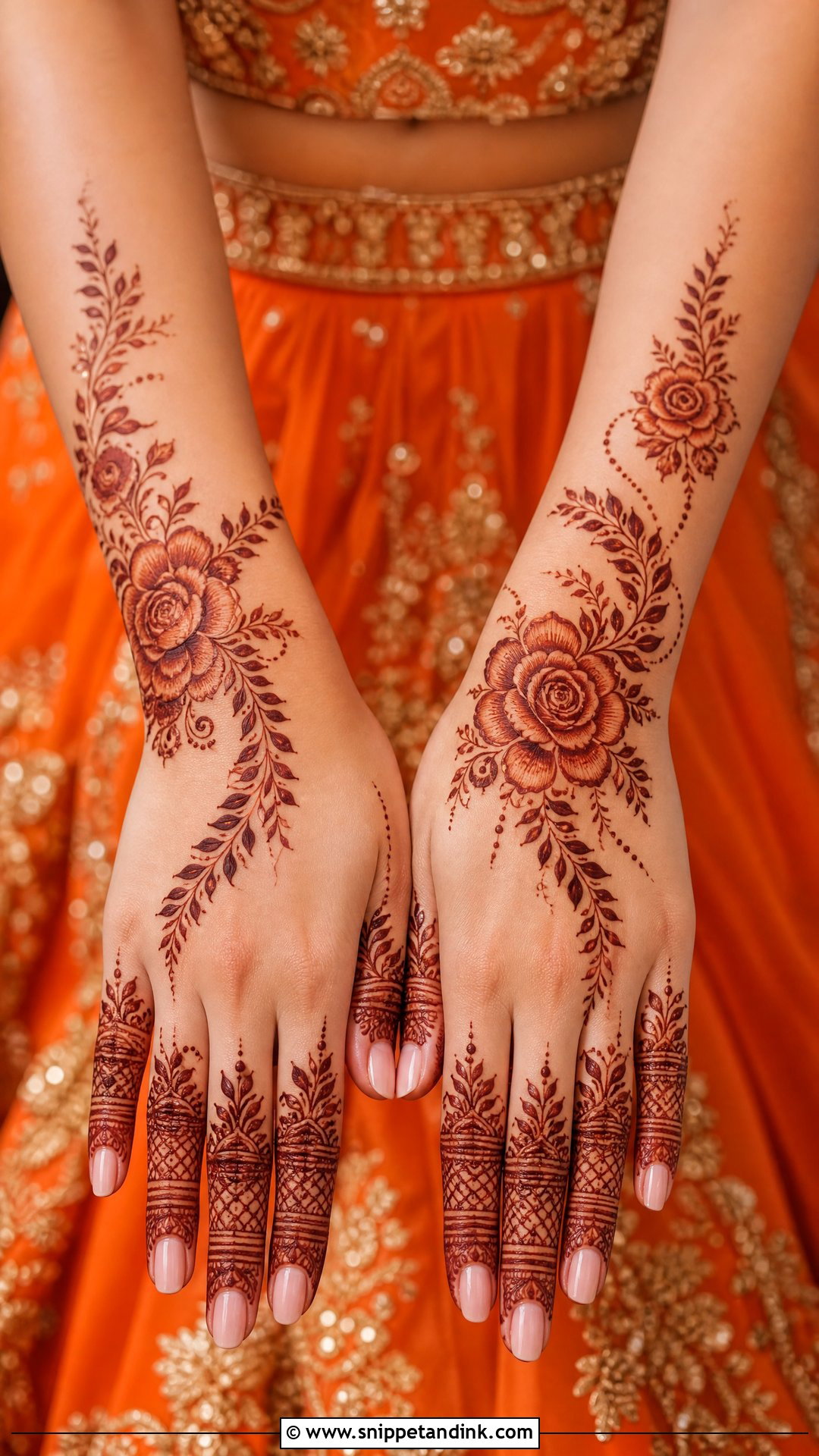
Orange looks warm beside a fresh henna stain, from soft tangerine to deep burnt orange. Mirror work, zari borders or floral embroidery give it a wedding feel. It pairs well with green jewelry, a pink dupatta, yellow flowers and gold accessories. For a bold contrast, I’d add a rani pink or emerald blouse; for something softer, peach-orange with ivory embroidery. A freshly applied henna stain starts orange too, so a mid-tone orange can briefly blend with your hands in early photos; deeper shades avoid that.
15. Mehendi Function Pink Lehenga For Bride
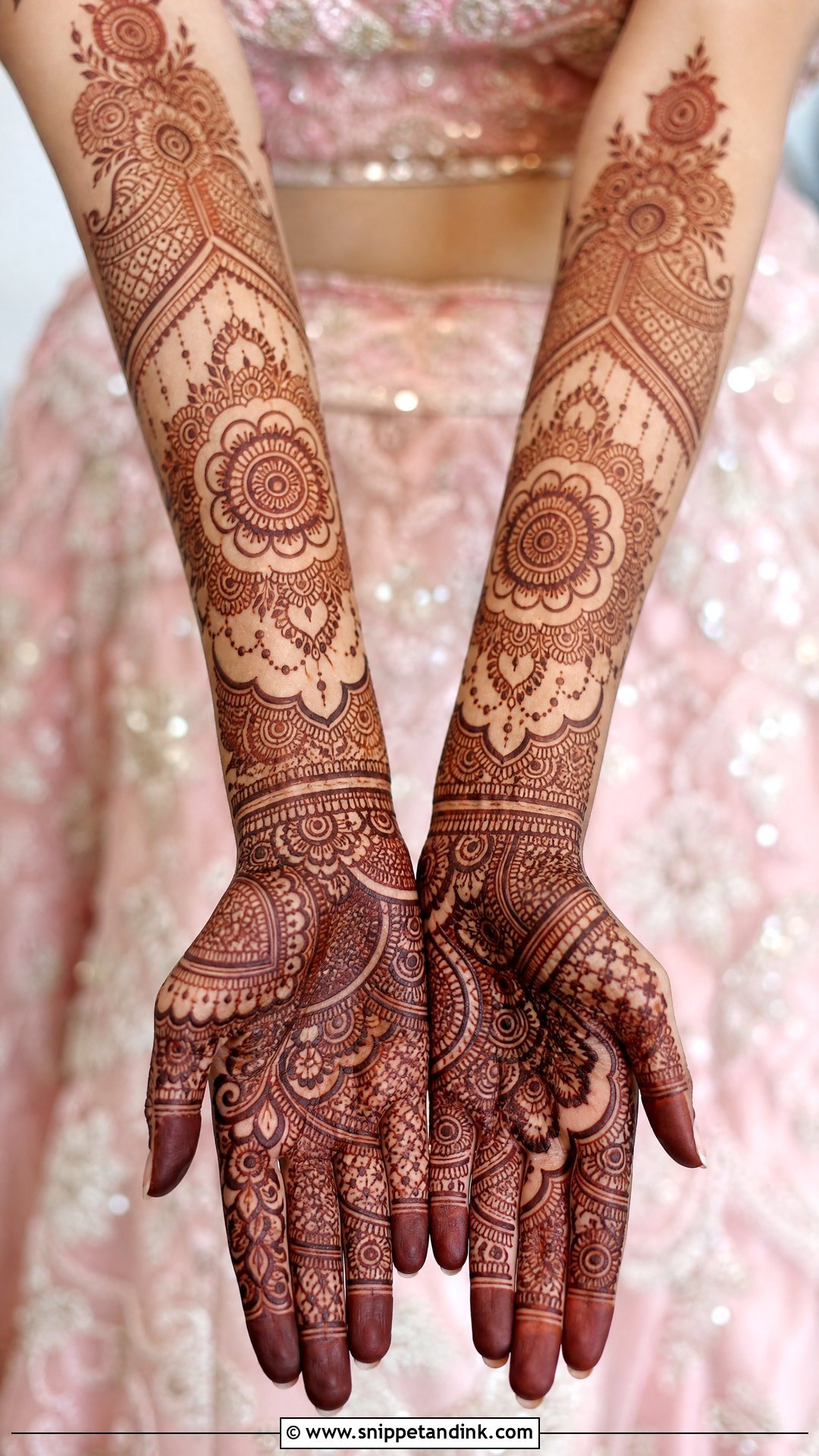
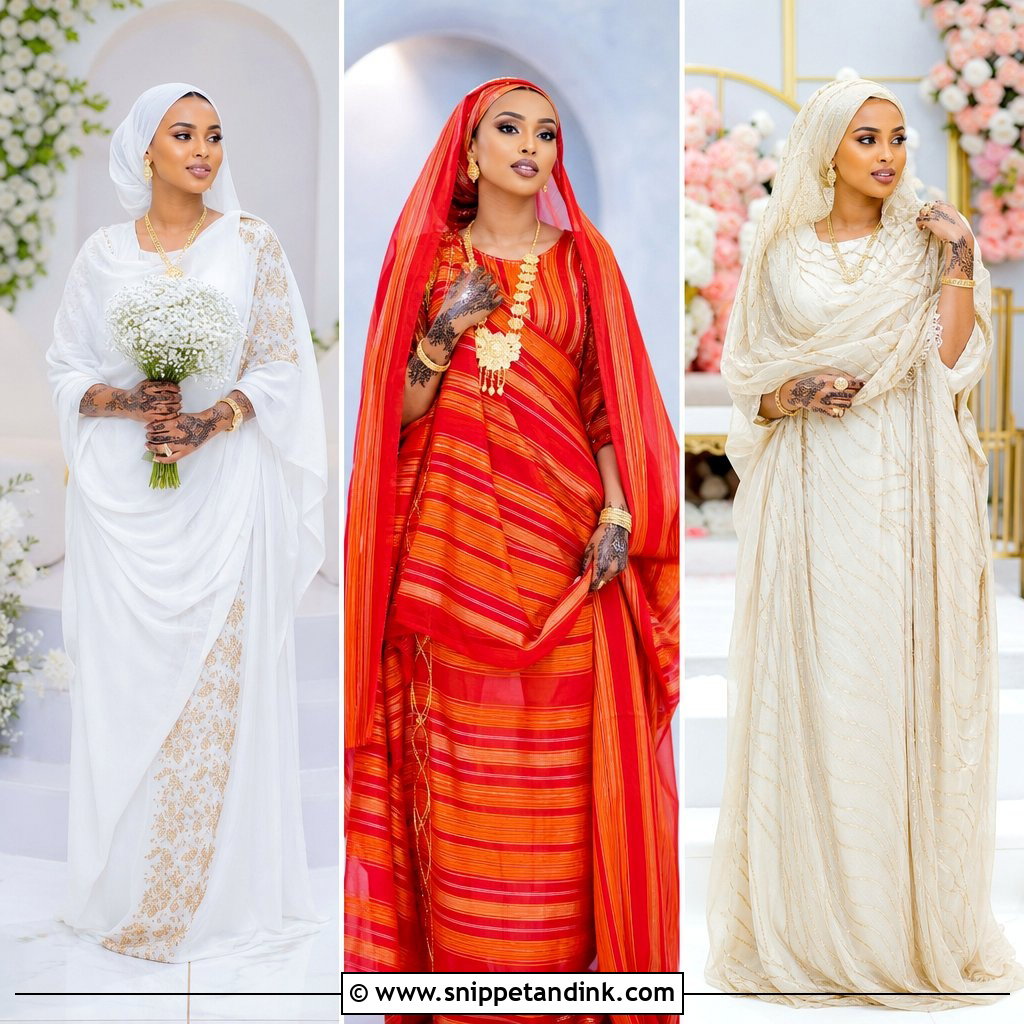
Pink gives the mehendi a sweet, festive feel: rani pink reads traditional, blush reads modern. For a mehendi function, lightweight embroidery, mirror work or floral prints keep it comfortable. Pink pairs easily with yellow, orange, green and gold, which helps with decor and jewelry. A short blouse and soft dupatta suit detailed hand and arm designs. Floral kaleeras, jhumkas or a statement choker finish it, and it’s a good answer if you want color without green or yellow.
16. Mehendi Function White Lehenga For Bride
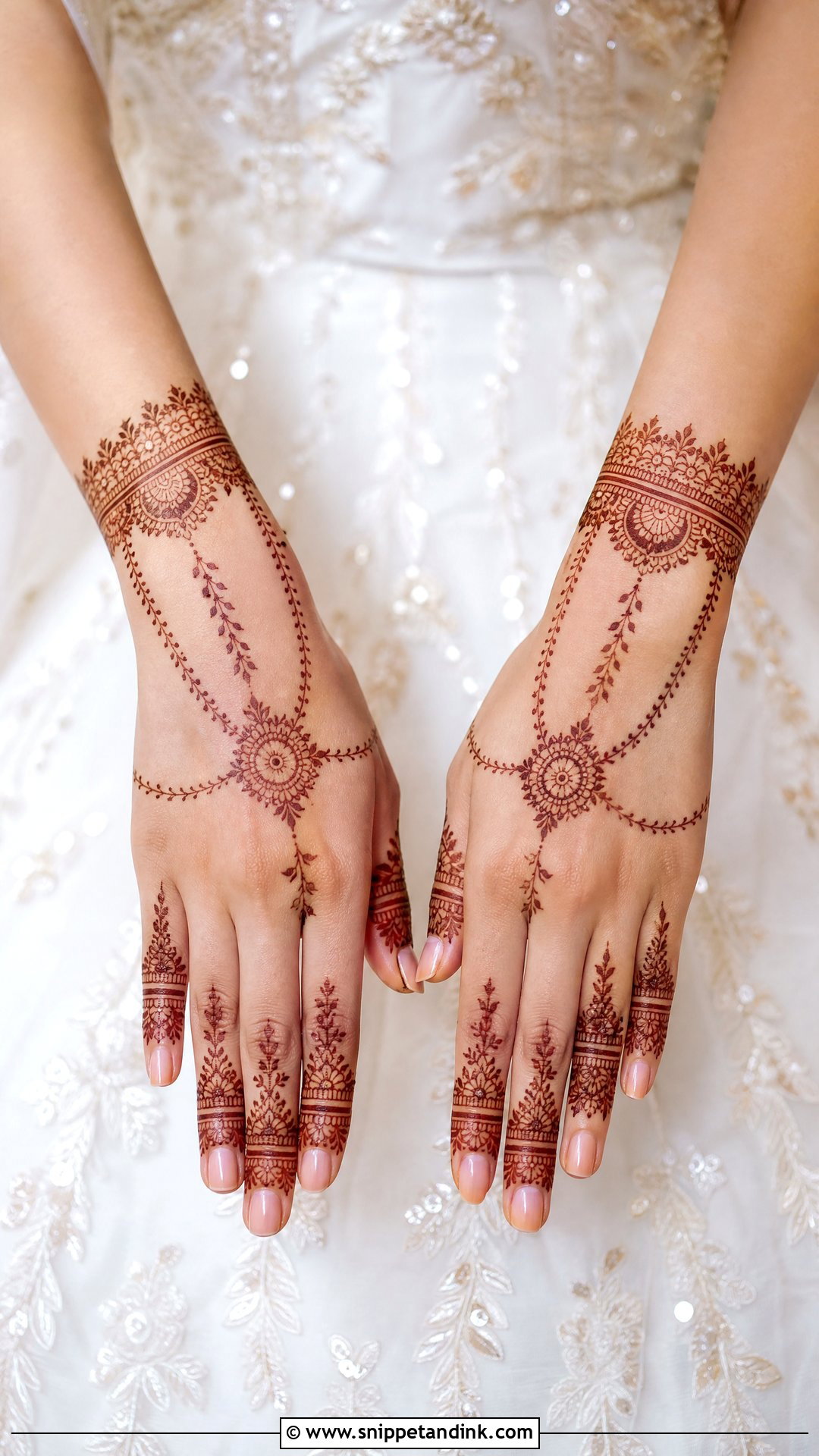
Ivory or white can work for a modern mehendi bride if the embroidery brings color: yellow, green, pink, orange or mirrors. The clean base makes your mehndi look darker and more detailed in photographs. It suits daytime beach, garden and destination functions. Keep the fabric light and avoid long sleeves if henna will cover your arms. White is also the least forgiving fabric around wet paste, so plan where you’ll sit and who helps you stand. Fresh flower jewelry, bright bangles or a colorful dupatta keep the mood festive.
17. Mehendi Function Palazzo Suit For Bride
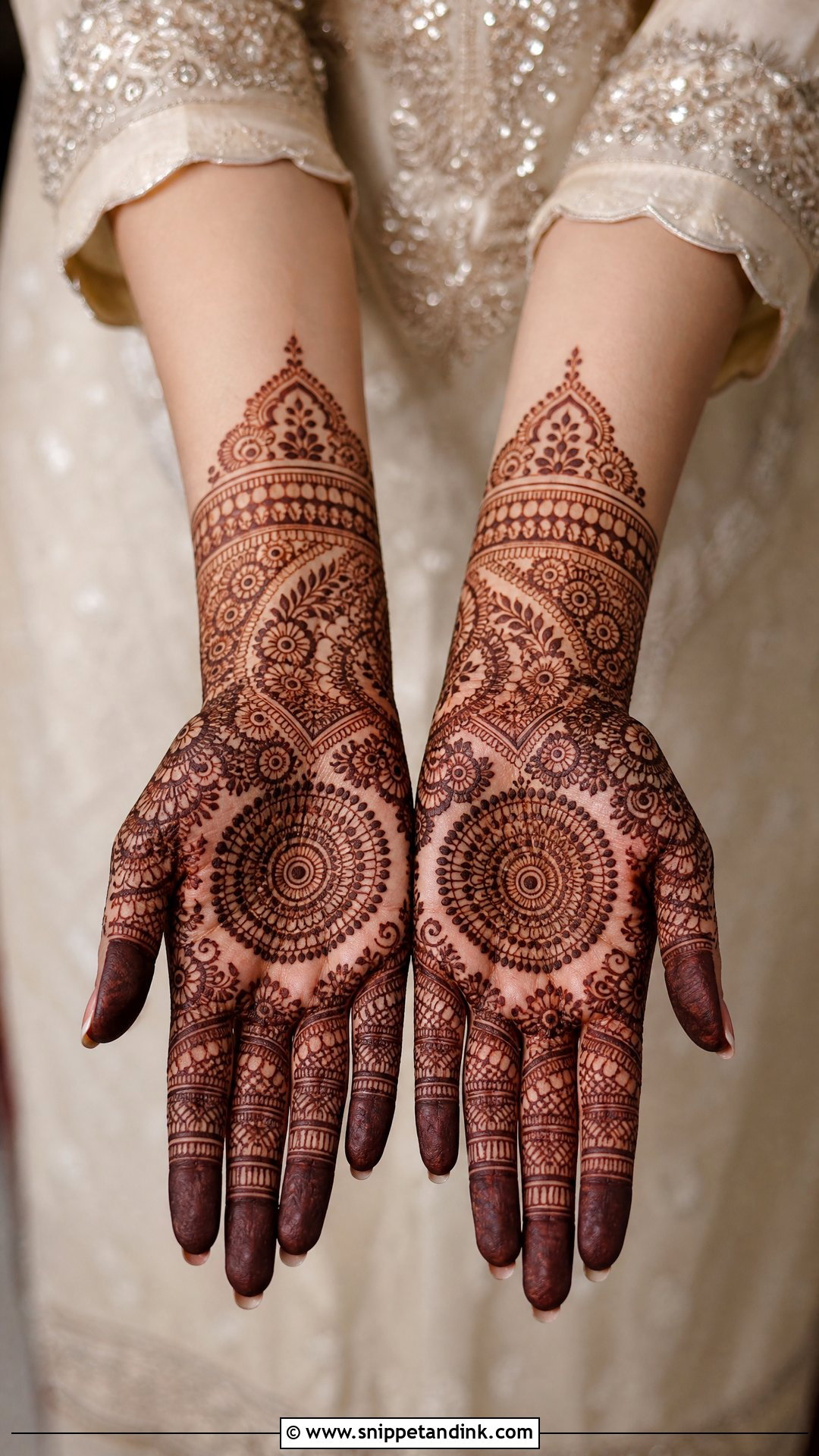
Wide palazzo pants let you sit comfortably during a long application, and a short or knee-length kurta keeps the look festive. Bright colors, mirror borders, gota or threadwork make it bridal. It suits intimate home mehendis where a heavy lehenga feels like too much. Keep the dupatta light and pinned. I’d pick a drawstring or elastic waist here rather than a side zip, because you won’t be able to manage fastenings with henna on your hands.
18. Mehendi Function Dhoti Set For Bride
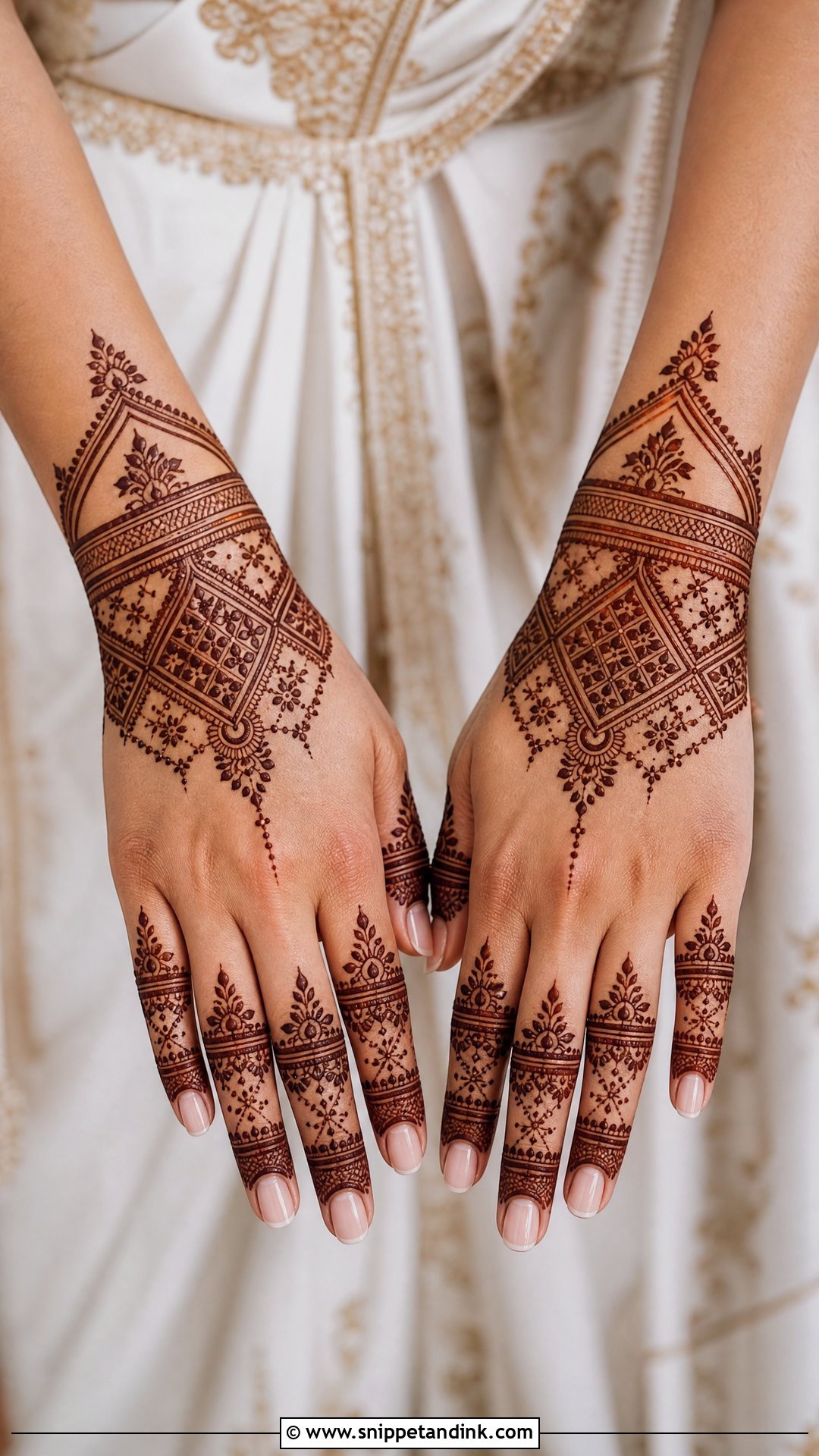
A dhoti set gives a fashion-forward look that stands apart from a lehenga. A crop top, peplum blouse or short kurti over dhoti pants creates a fun silhouette for dancing and photos. Mirror work, tassels, shells or colorful embroidery make it celebration-ready. The legs stay free, which helps at outdoor and destination events. Short sleeves or sleeveless tops suit arm designs. Ask your tailor to make the drape slightly fuller than fashion versions; very fitted dhotis restrict sitting cross-legged.
19. Mehendi Function Saree For Bride
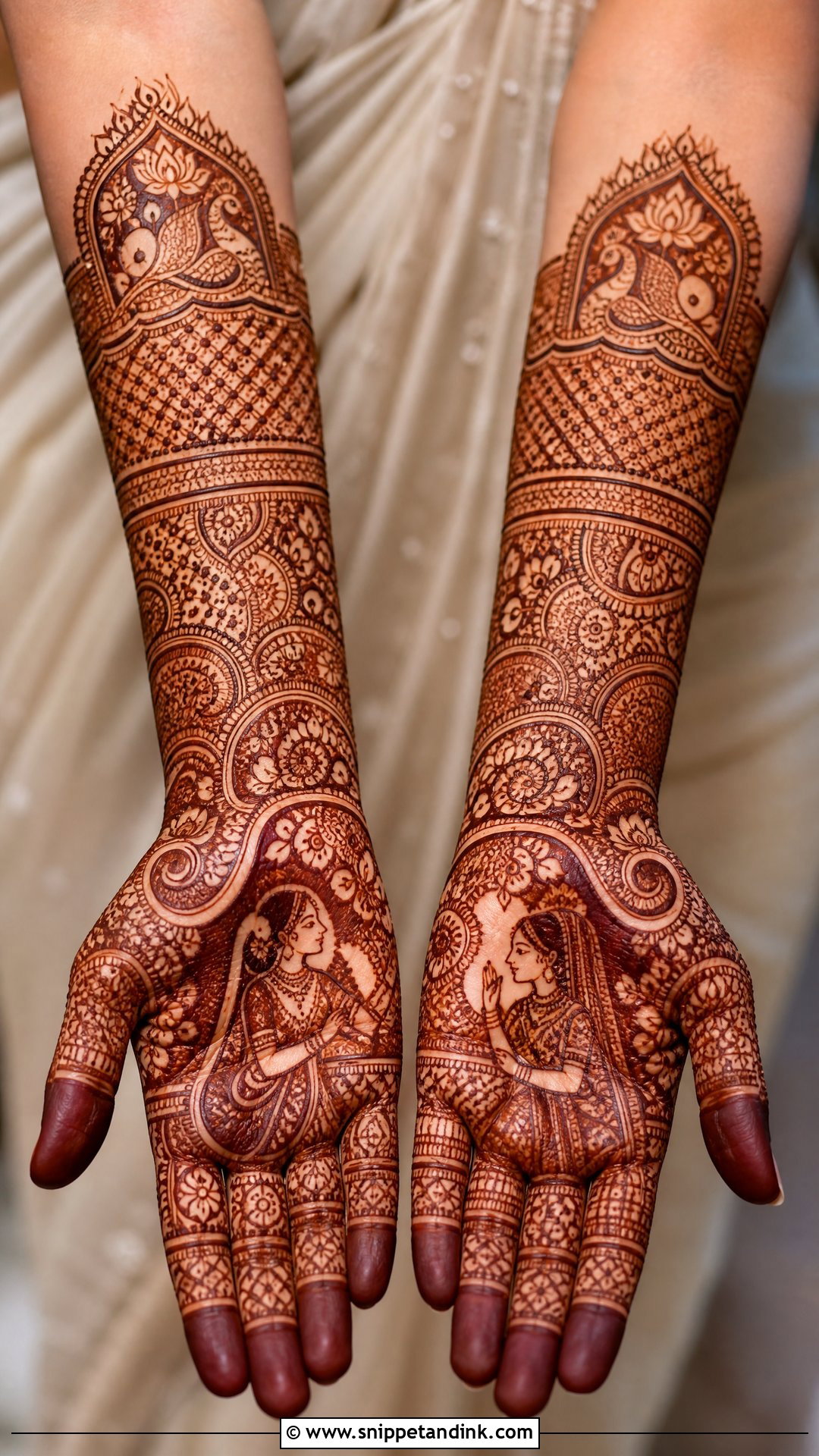
A saree gives a graceful, traditional look, but it needs the most planning around wet henna. Choose a light georgette, organza or chiffon, or better still a pre-draped saree that won’t need pleats fixed during the function. Yellow, green, orange, pink and florals suit the mood. Pair it with a short-sleeved blouse. The pallu is the main risk: pin it securely at the shoulder and waist so it can’t slip down onto wet paste. Jhumkas, bangles and soft flowers finish it.
20. Mehendi Function Co Ord Set For Bride
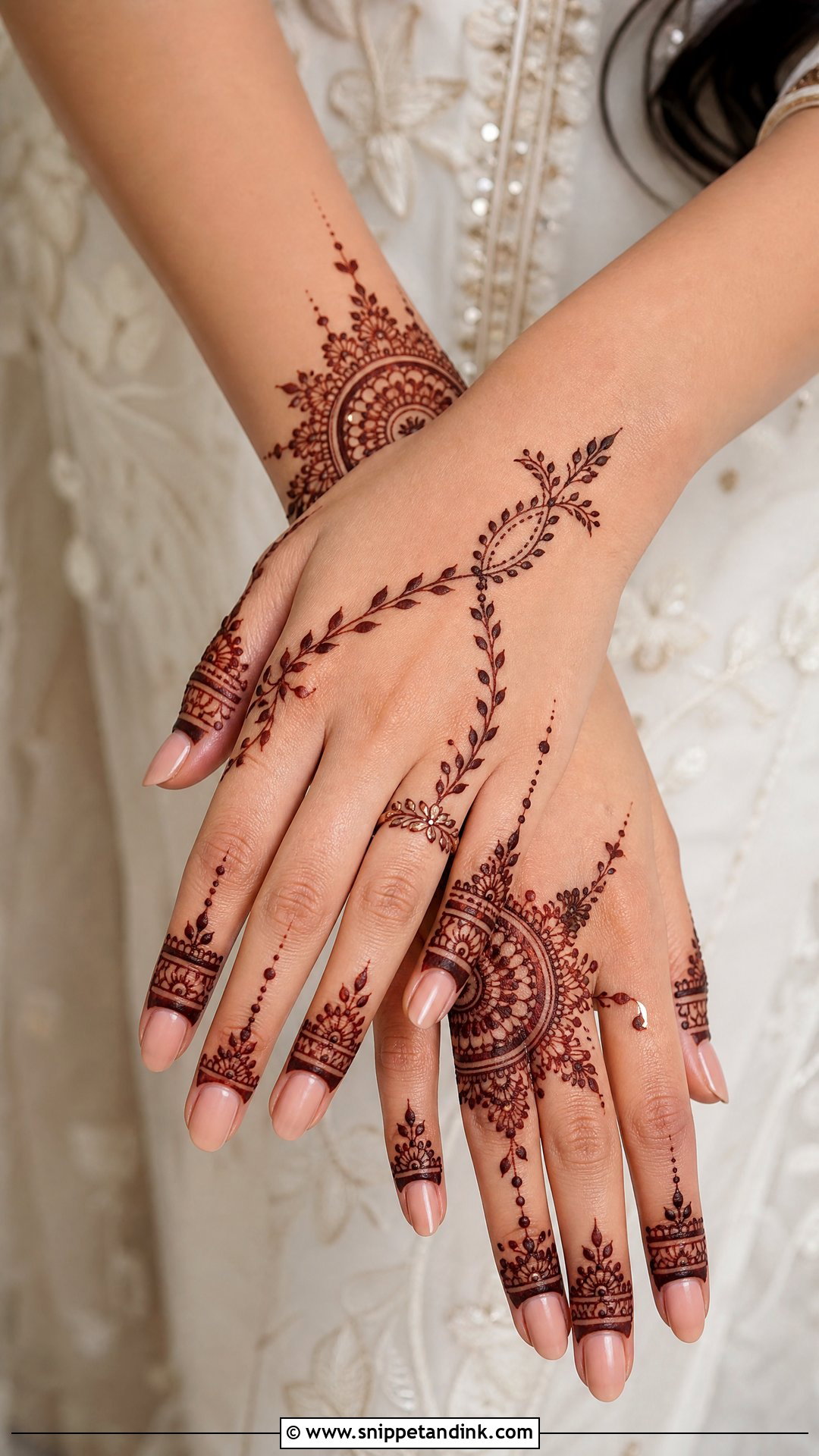
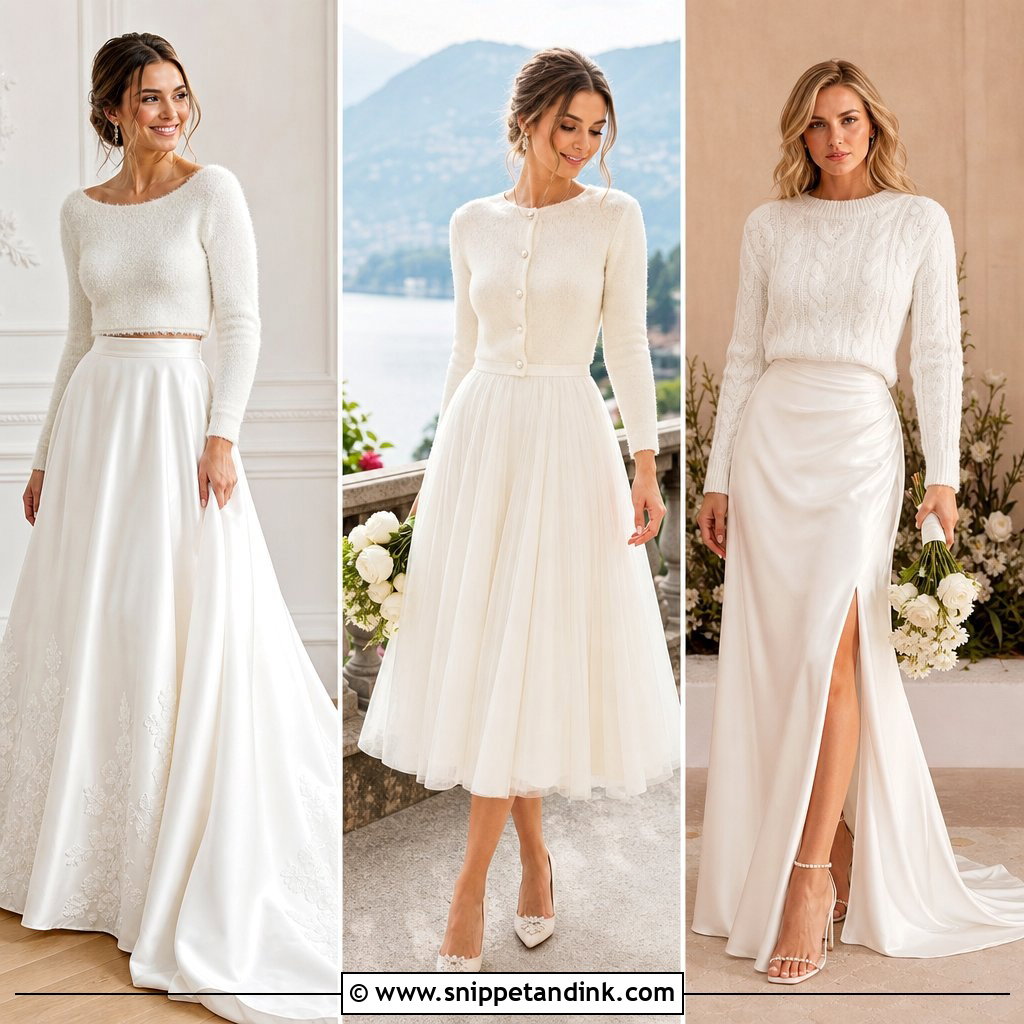
A co-ord set is relaxed but still stylish: matching crop tops and skirts, short kurtas with pants, or embroidered jackets with palazzos. Festive fabric and detailing keep it bridal; mirror work, threadwork, tassels and floral prints all help. It suits smaller mehendis, poolside functions and casual day celebrations. Keep sleeves short and the fit comfortable. If you choose an embroidered jacket, put it on before application starts, since sliding hennaed arms into sleeves later will smudge the design.
Will Henna Stain an Ivory Lehenga?
It can. Henna is a natural dye, and a smear of fresh paste on silk, organza or pale georgette can leave an orange-brown mark. If it happens, don’t rub it. Let the paste dry, lift it off gently with a blunt edge, blot with cold water and take the outfit to a dry cleaner as soon as you can, telling them it’s henna. Pale fabrics are the most at risk, which is why I’d steer a bride toward a deeper shade if her design runs past the elbow.
Storing Mirror Work and Gota So You Can Wear It Again
Shararas, co-ords and lighter lehengas are easy to wear again at festivals and family weddings, so it’s worth storing them properly. Metallic gota and zari tarnish in damp air and in plastic, so wrap the outfit in clean muslin or cotton. Put acid-free tissue between folds, especially over mirrors, which can crack or scratch the fabric next to them. Refold along different lines every few months so heavy embroidery doesn’t leave permanent creases.
Before it goes away, air the outfit for a day and have it cleaned. Sweat, perfume and traces of mustard oil from the henna aftercare all yellow pale fabric slowly if they’re left in the cloth for months.
Dress for the Hours Your Hands Are Out of Action
The right mehendi outfit is about more than color. It needs to look festive, photograph well, and let your henna dry without stress. Light fabrics, open sleeves, pinned dupattas and easy silhouettes make the whole ceremony more comfortable. Yellow and green are classic, but pastels, florals, mirror work, shararas, dhoti sets and co-ords feel fresh for modern weddings. Match the outfit to your venue, season, jewelry and how far your henna will go, and you’ll enjoy the day instead of guarding your sleeves.
You'll Like These Ideas:





Leave a Reply