
I’ve stood behind a lot of plus size brides in fitting room mirrors, and the gowns that work rarely follow the old body-shape rules. They work because the bodice is built to hold real weight, the seams were altered by someone patient, and the fabric lets you sit through dinner without counting the minutes. Below are twenty complete outfits, from lace A-lines and satin ball gowns to jumpsuits, capes and a velvet winter look, each with the shoes, jewelry and hair I’d put with it. Read them with your venue, your weather and how much you plan to dance in mind.
Bridal Size Charts Run Small, So Shop From Your Tape Measure
Bridal sizing doesn’t match the label in your wardrobe. Most designers cut one or two sizes smaller than high street clothing, so a bride who buys a 20 in jeans may order a 22 or 24 in a gown. I tell everyone to ignore the number and measure bust, natural waist and fullest hip in the underwear you plan to wear.
The gown is ordered to your largest measurement and then taken in, because a seamstress can remove fabric far more easily than she can add it. A corset back is the exception; it gives a few inches of flexibility if your weight changes before the wedding.
Call the salon before you go
Many shops still keep samples in sizes 10 to 14, which means a larger bride ends up holding a dress against her front with clips down the back. Ask how many samples they stock in your size, and book with shops that can name actual styles. Trying on a gown that fits shows you the silhouette honestly; clipping one tells you very little.
- Order around eight to nine months out if you can. Production commonly takes four to six months, and some designers need longer for larger sizes.
- Ask whether a size above the standard chart costs extra. Many designers add a surcharge, and it is easier to know at the start.
- Request the exact fabric and lining in writing, so the gown that arrives matches the sample you tried.
1. Plus Size Bride A-Line Lace Wedding Dress
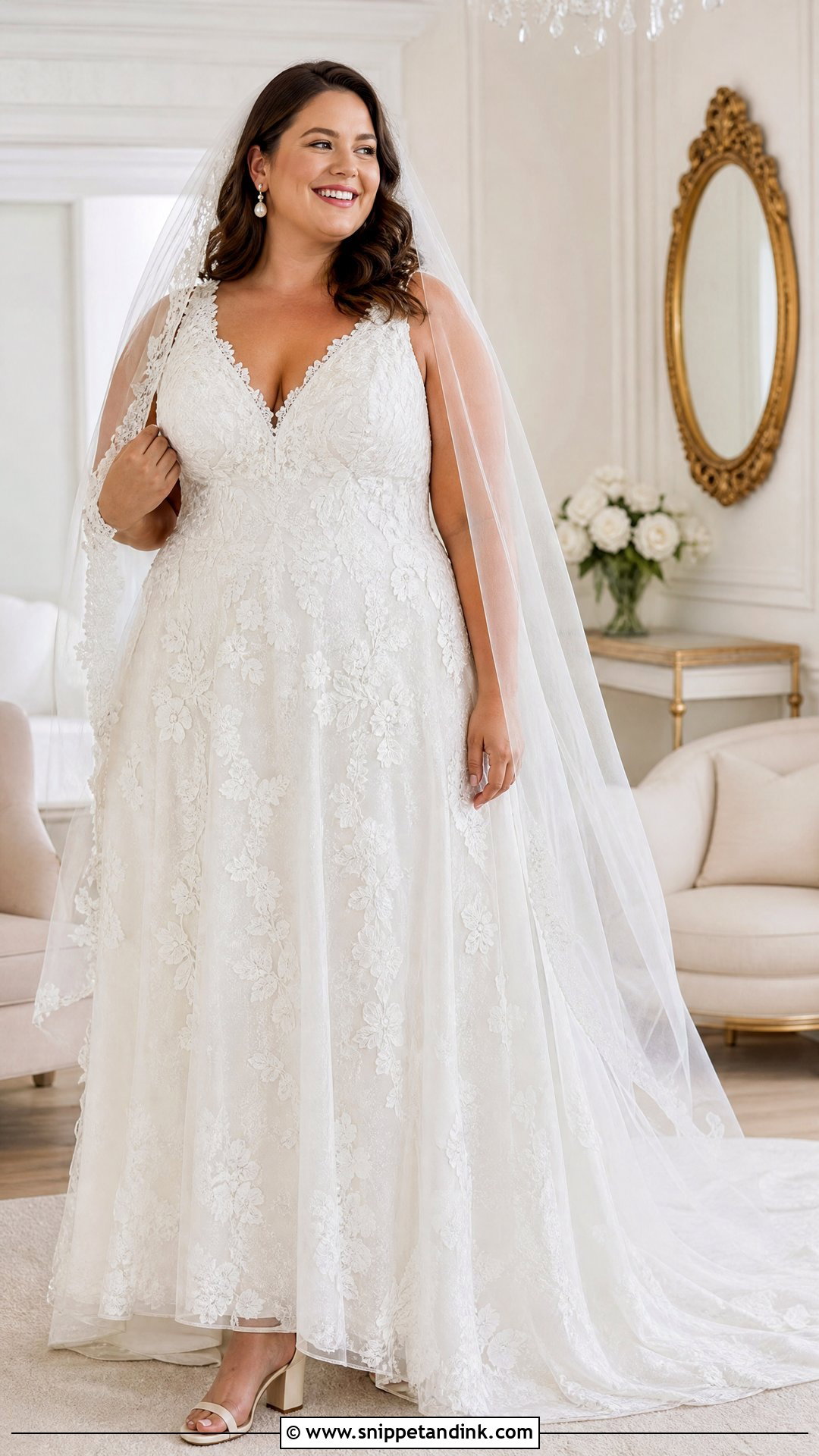
Lace A-lines are where I start most first appointments, because the shape asks very little of the body and the lace hides the small ripples a tailor can’t always press out. The part I check is the bodice: it needs boning or a corset inner so the skirt’s weight hangs from your waist and not your shoulders. A V or sweetheart neckline keeps the top half open. Add ivory block-heel sandals, pearl drops and a fingertip veil edged in matching lace. Ask your seamstress to take in straps, bust and hem as three separate jobs; plus size bodies rarely need the same adjustment in all three places.
2. Plus Size Bride Satin Ball Gown
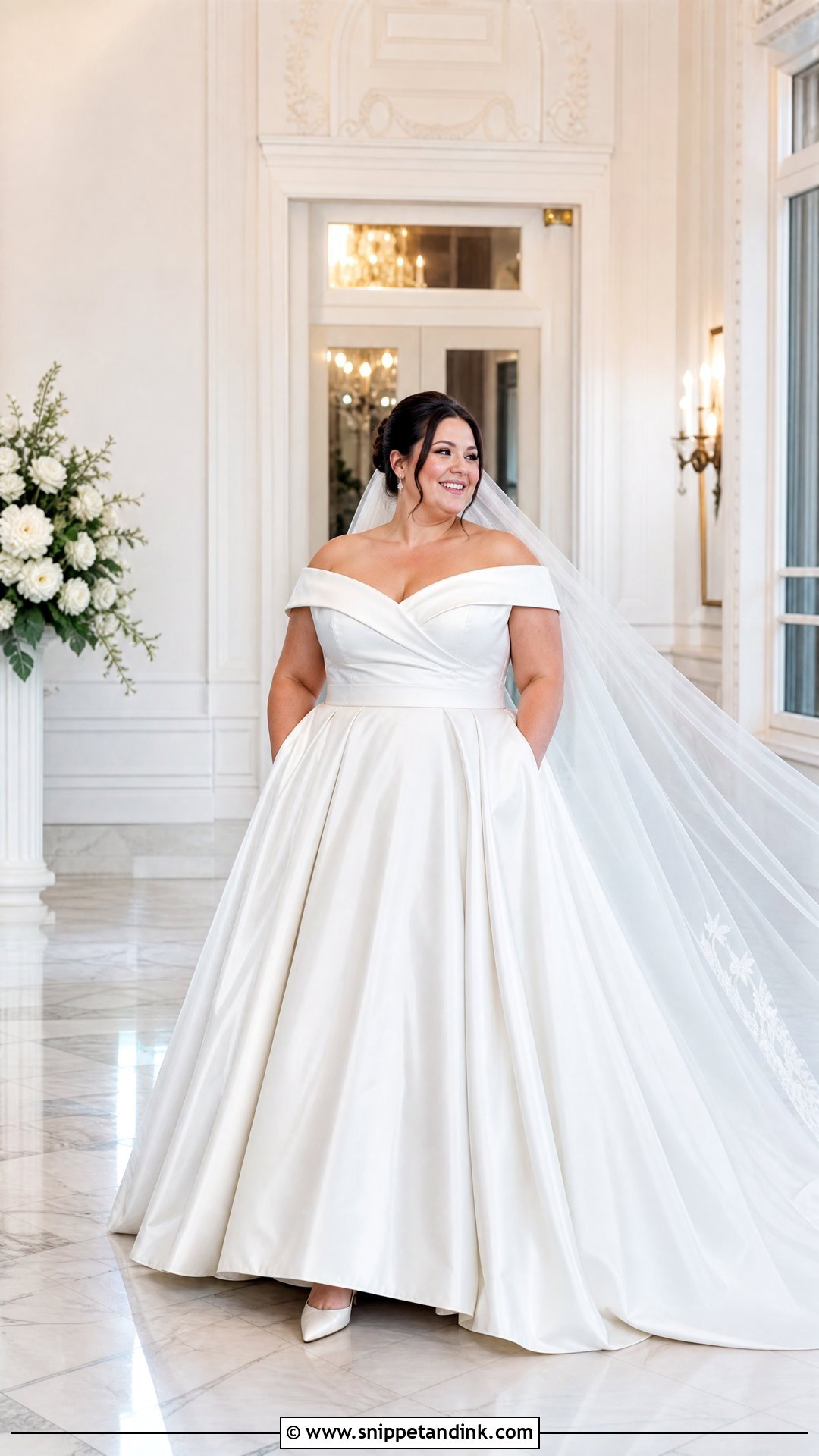
Satin ball gowns are honest fabric. Every seam, every pucker over a hook and every place the lining pulls will show, so quality of construction matters more here than in lace. Look for internal boning, wide straps or an off-shoulder line with a grip band, and pleats that start at the waist seam rather than gathers, which add bulk exactly where you don’t want it. I pair it with pointed pumps, crystal studs, a cathedral veil and a low bun. Have the bustle tested with your full skirt weight before the last fitting. Satin trains are heavy, and a single hook point will tear out by the first dance.
3. Plus Size Bride Off-Shoulder Mermaid Gown
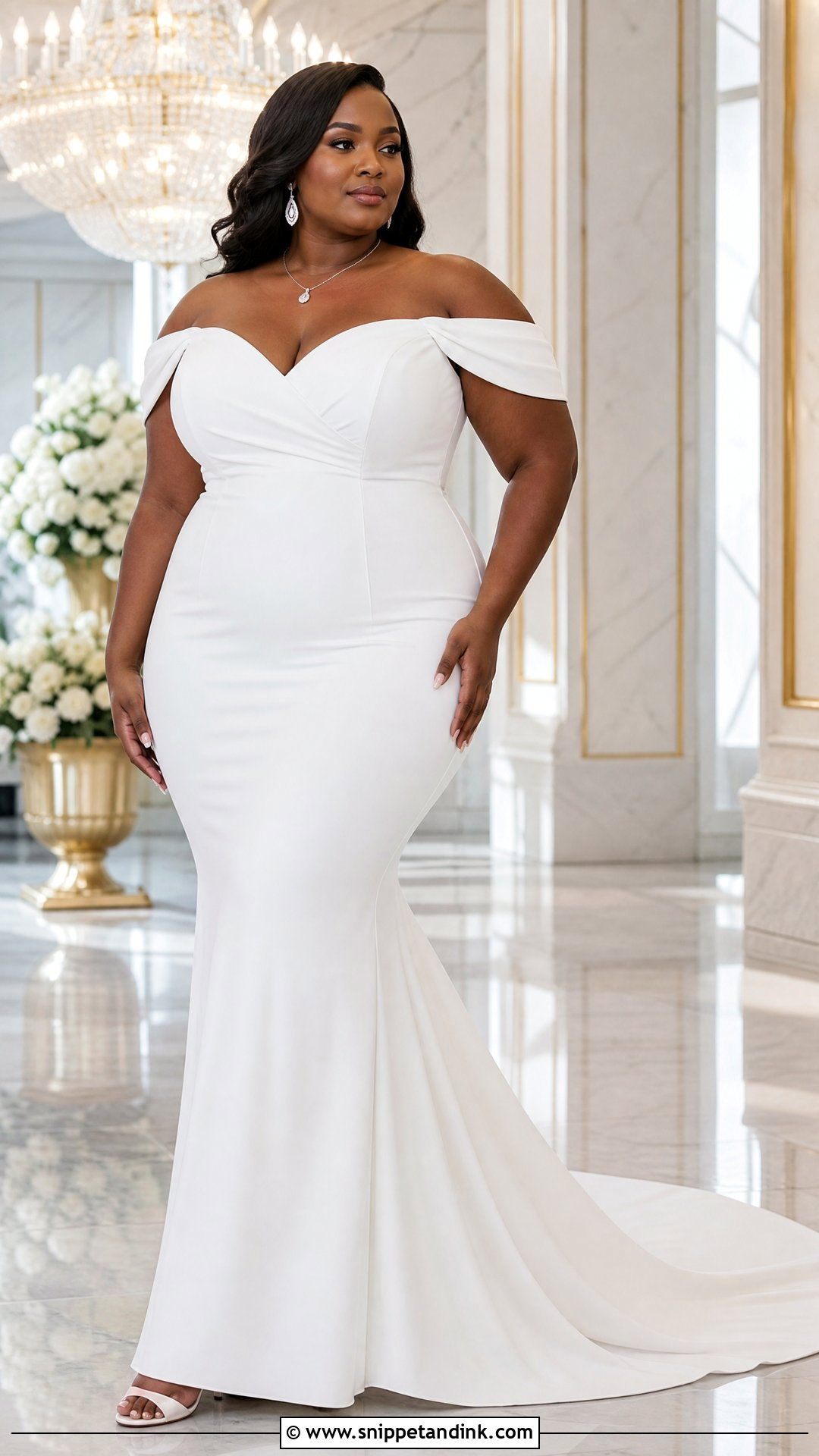
Mermaid gowns are the silhouette I’m most careful with. The fit through hip and thigh has to be close enough to show your shape, but if the flare starts above the knee you will shuffle all night. Stretch crepe or lined lace with some give makes sitting possible. At fittings I ask brides to walk, sit on a hard chair and raise both arms; the off-shoulder band should stay put through all three. Block heels, a fine pendant and medium earrings frame the neckline, and a sleek updo keeps the shoulders clear. A chapel veil or detachable train adds length for the aisle.
4. Plus Size Bride Long Sleeve Crepe Gown
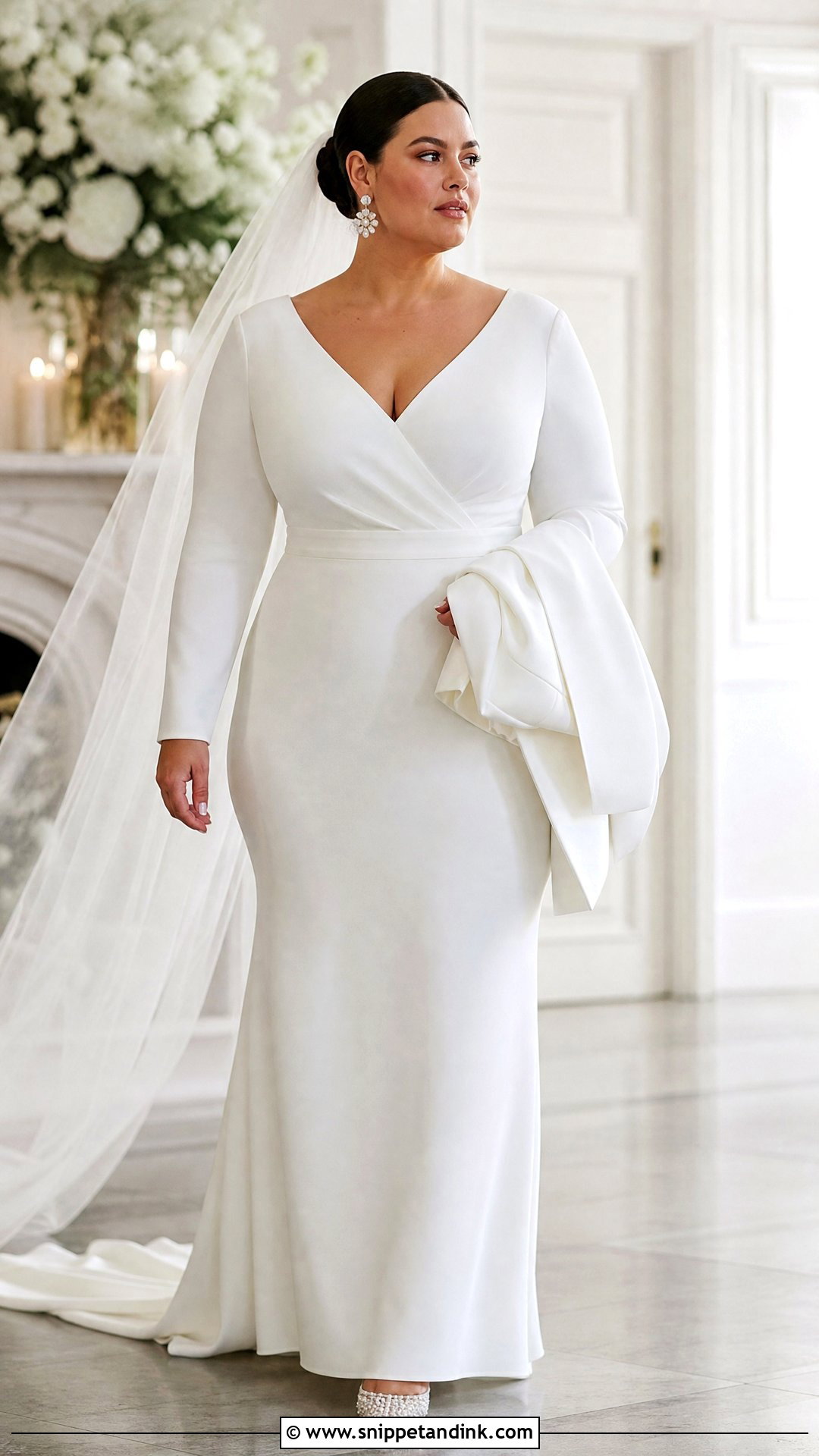
Long-sleeve crepe is the gown I’d suggest for a cold month or a formal indoor room, and the one I’d warn you is unforgiving off the rack. Crepe has no texture to hide a twisted sleeve seam, so the shoulder and armhole fit decide everything. If your upper arm is fuller than the size chart assumes, ask about adding stretch to the sleeve or recutting it; tight crepe sleeves restrict hugging and lifting a glass more than any other fabric. A V, square or bateau neck gives the plain surface character. Finish with pearl-trimmed pumps, sculptural earrings, a low chignon and a faux-fur wrap for outdoor photos.
5. Plus Size Bride Square Neck Wedding Dress
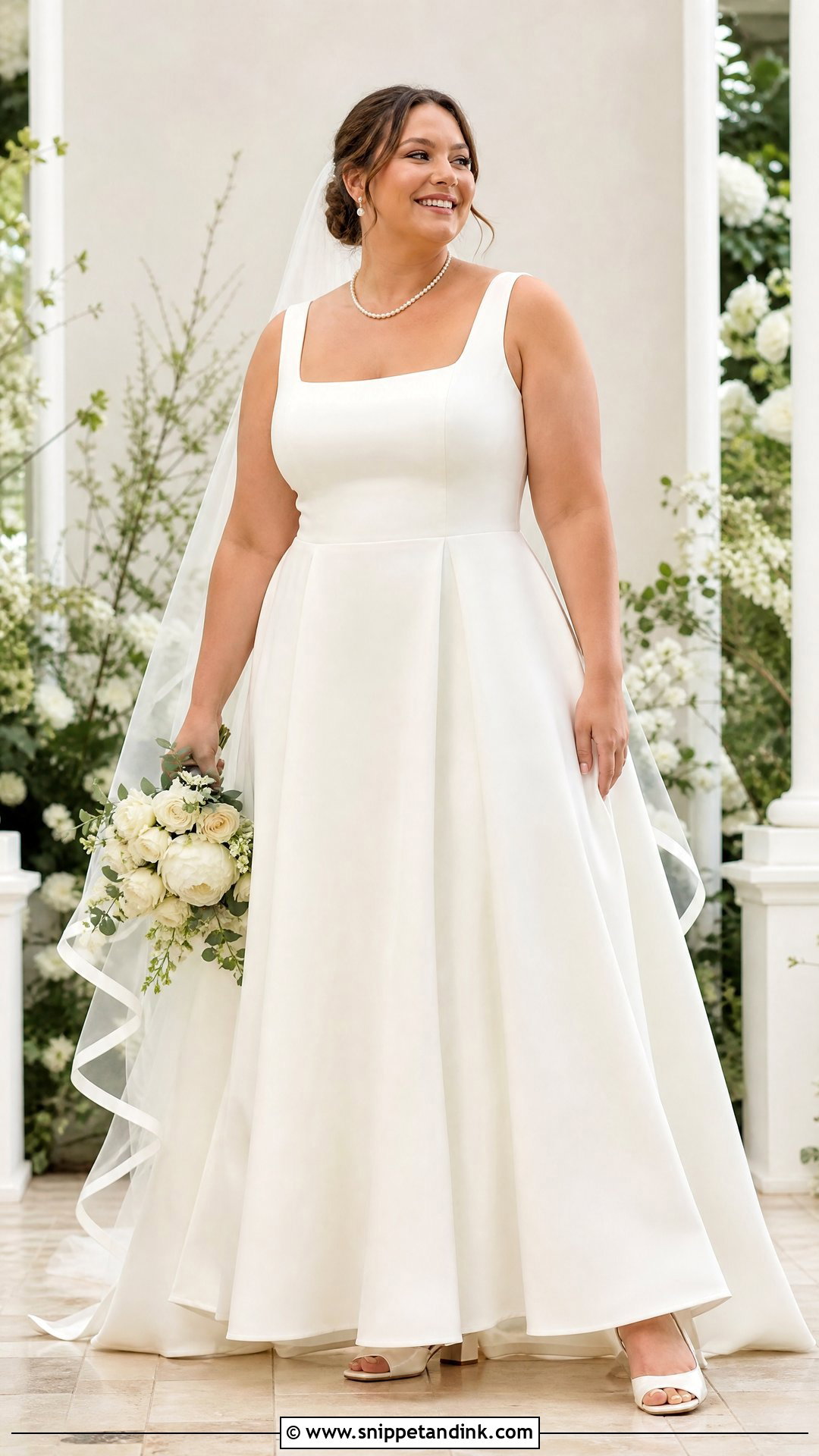
Square necklines frame the collarbone without asking anything of the bust, which is why so many of my curvier clients settle on them. The risk is gaping: when you sit or lean forward, the straight edge can tip away from the chest. Wide straps, a structured bodice and a strap length set while you’re seated fix most of it. An A-line or softly gathered skirt balances the strong line at the top. I’d style it with a short pearl strand, low slingbacks and a ribbon-edged veil. Hair can go up or stay down tucked behind the shoulders; either keeps that neckline readable.
6. Plus Size Bride Basque Waist Wedding Gown
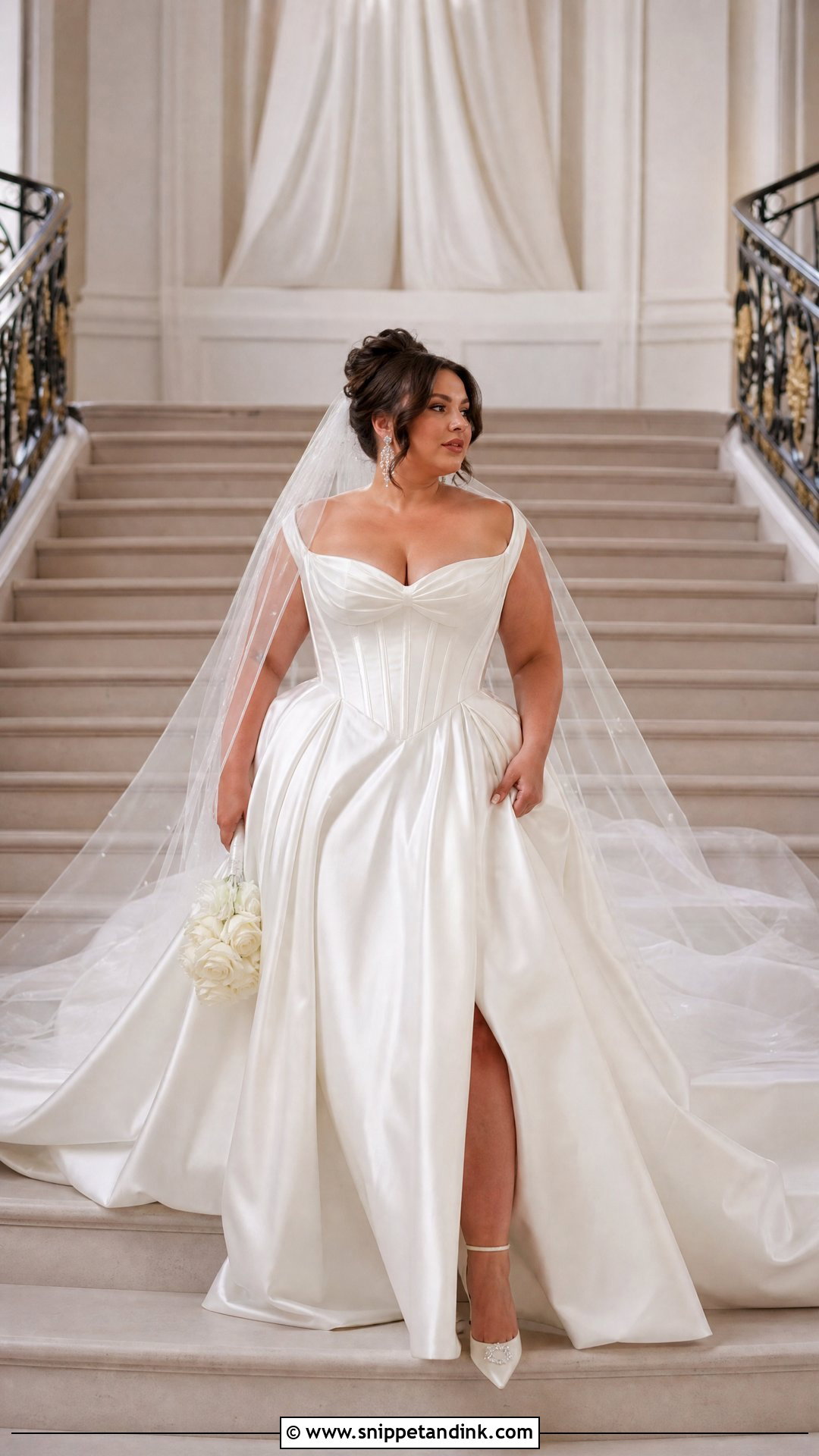
The basque waist dips into a V at the front, and on a curvy body that point draws the eye down and lengthens the torso. It needs a full skirt underneath it, satin, tulle or lace, and a formal room to justify the drama. The seam must sit on your natural waist when seated; if it digs in during the fitting, it will hurt by the reception. For lace-up backs, ask the salon to teach whoever is dressing you, because a corset laced from the top down loosens by the evening while one laced from the middle out holds. Crystal drops, pointed satin heels and a neat updo let the bodice lead.
7. Plus Size Bride Empire Waist Chiffon Gown
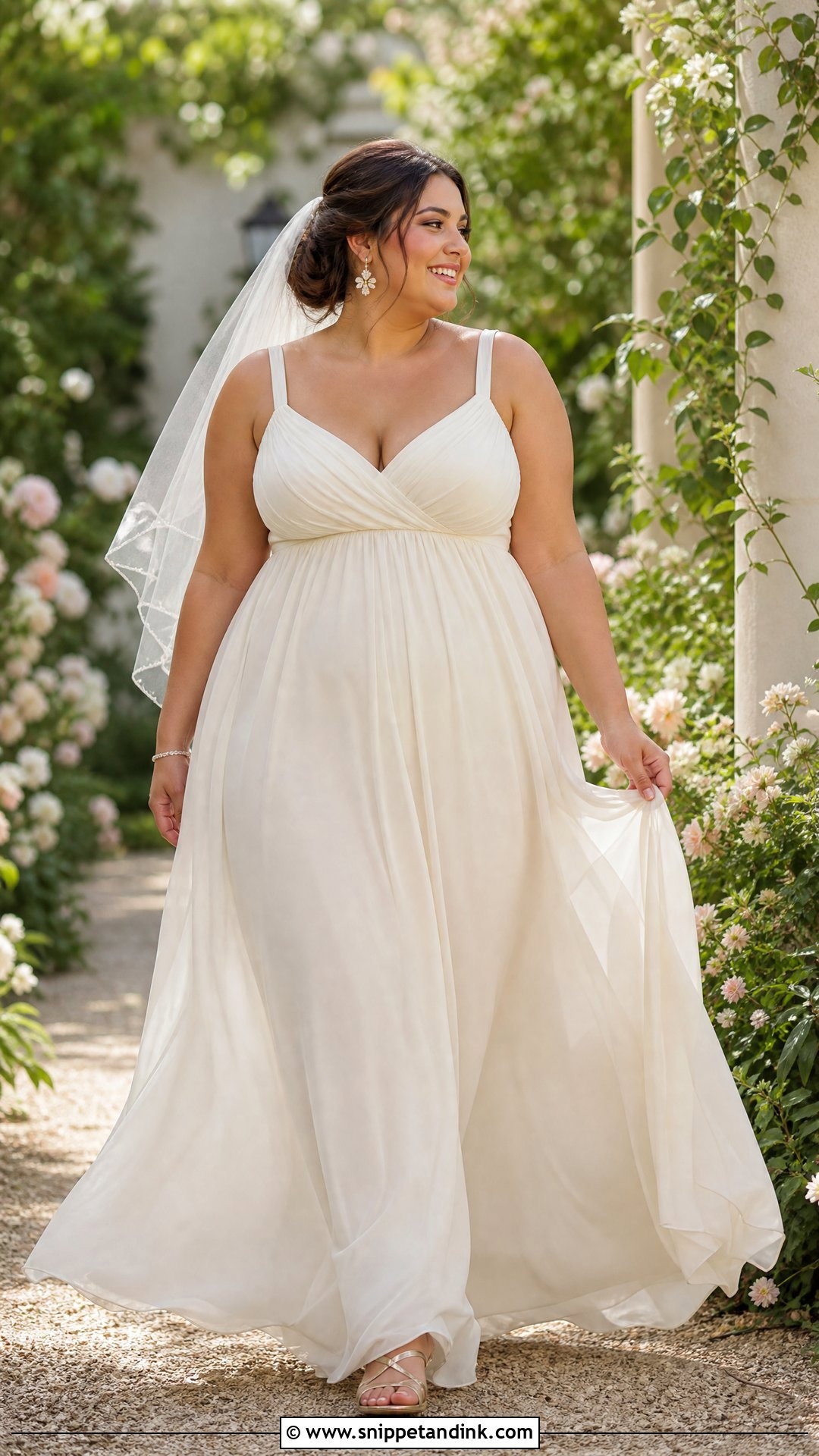
Empire waists get recommended to plus size brides by default, and I’m not a fan of that habit. On a full bust the seam can ride up and make the gown look like maternity wear, so the seam has to sit right under the bust band, not on it. When it does fit, chiffon over a solid lining moves well in heat. Hold it up to a sunny window before buying; unlined chiffon goes transparent outdoors. Metallic flat sandals, floral earrings, a fingertip veil and loosely pinned curls keep it light for a garden or a destination ceremony.
8. Plus Size Bride Boho Lace Wedding Dress
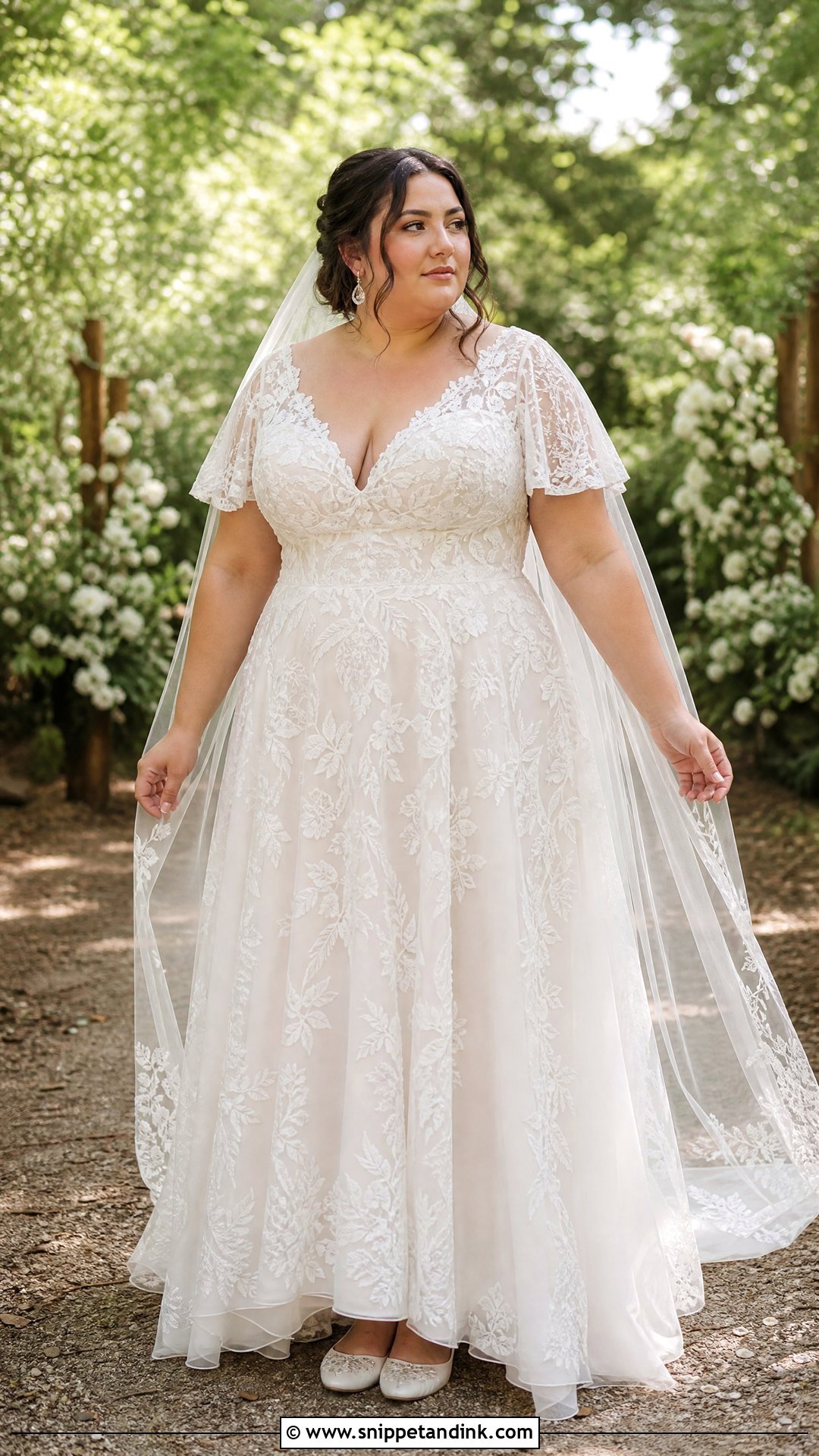
Boho lace should feel relaxed, but relaxed doesn’t mean unstructured. Without a light corset or bra cups inside, flutter-sleeve gowns slide off the shoulder by mid-afternoon. Look for botanical lace, a soft V and a lined skirt, then raise your arms at the fitting to check the sleeve openings don’t cut in. Embroidered flats, a dried-flower comb and small gold or pearl earrings are enough. Swap the traditional veil for a sheer cape veil or plain tulle under loose waves. The thing I edit out most often here is the rustic pile-up; one hairpiece and a natural bouquet carry the whole look.
9. Plus Size Bride Tea Length Wedding Dress
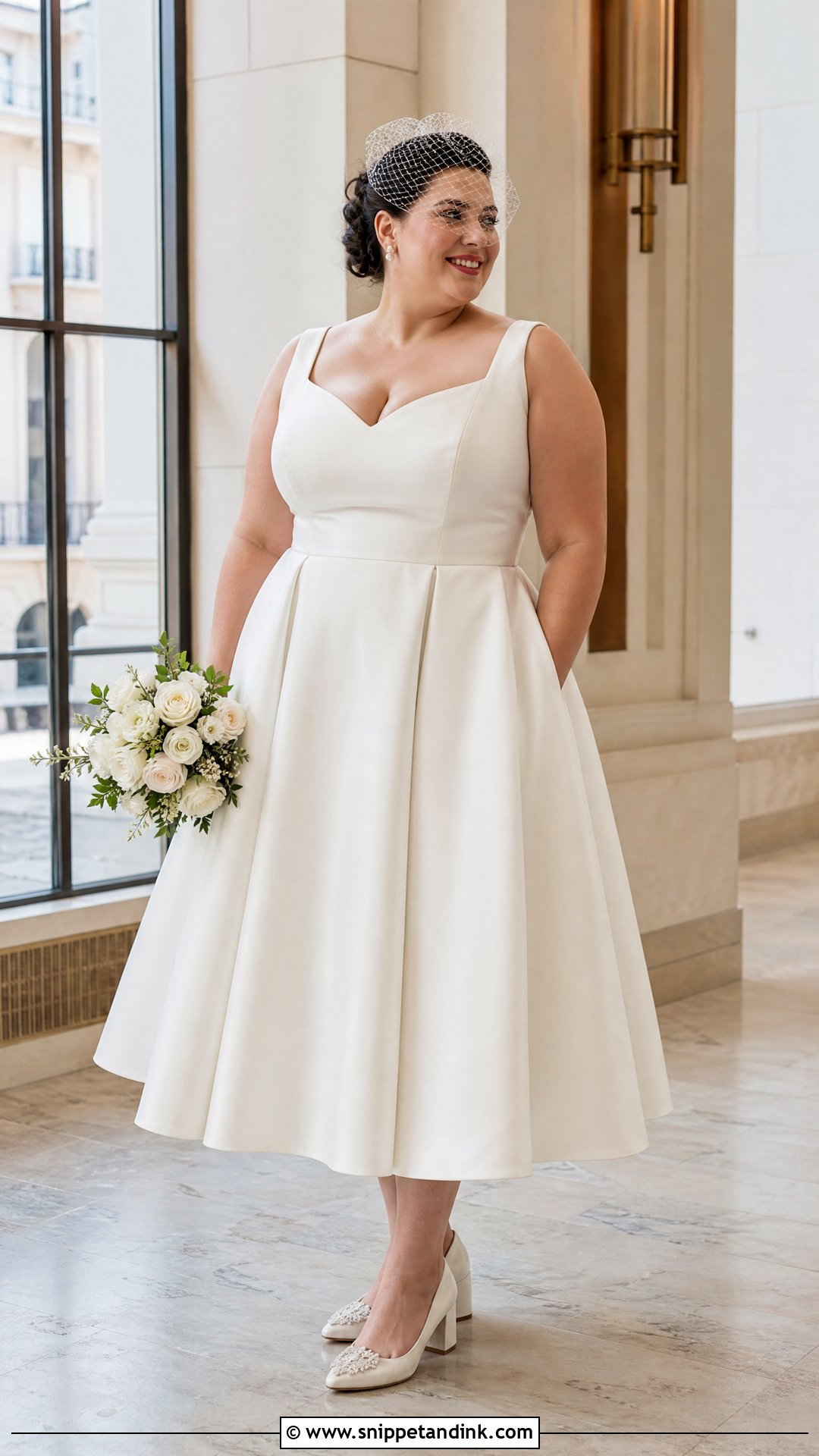
Tea length turns your shoes into part of the outfit, so I always say buy the shoes before the dress is hemmed. The skirt should finish between lower calf and ankle and hold its own shape, which is why mikado, satin, organza and lace behave best. Pumps or block heels, pearl studs and a short veil or birdcage headpiece keep it vintage without tipping into costume. A narrow belt adds contrast, but skip it if the bodice already has strong seaming. Courthouse ceremonies and daytime receptions suit this length; even a two-centimetre hem change will shift where the skirt ends on your calf.
10. Plus Size Bride White Bridal Jumpsuit
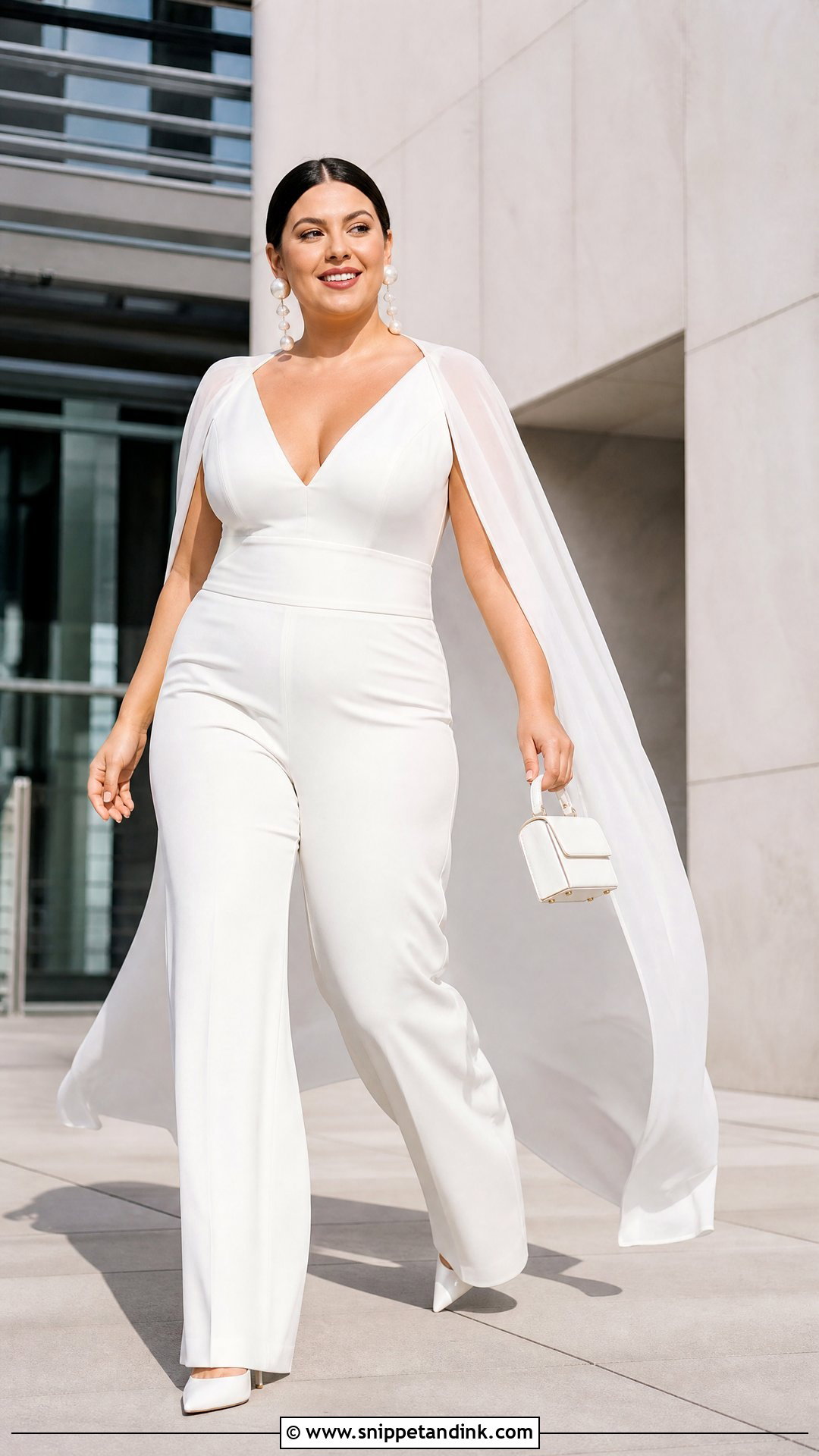
A jumpsuit is the one bridal piece where torso length matters more than chest or waist measurement. Too short in the body and it will pull at the crotch every time you sit; too long and it bags. Have the rise checked first, before anything else is pinned. Crepe gives a sharp, matte line and satin a dressier sheen. Pointed heels, bold earrings and a structured mini bag finish it, while a detachable overskirt, shoulder cape or long veil adds ceremony weight you can take off later. I find it suits city venues and modern rooms where a full skirt would feel out of place.
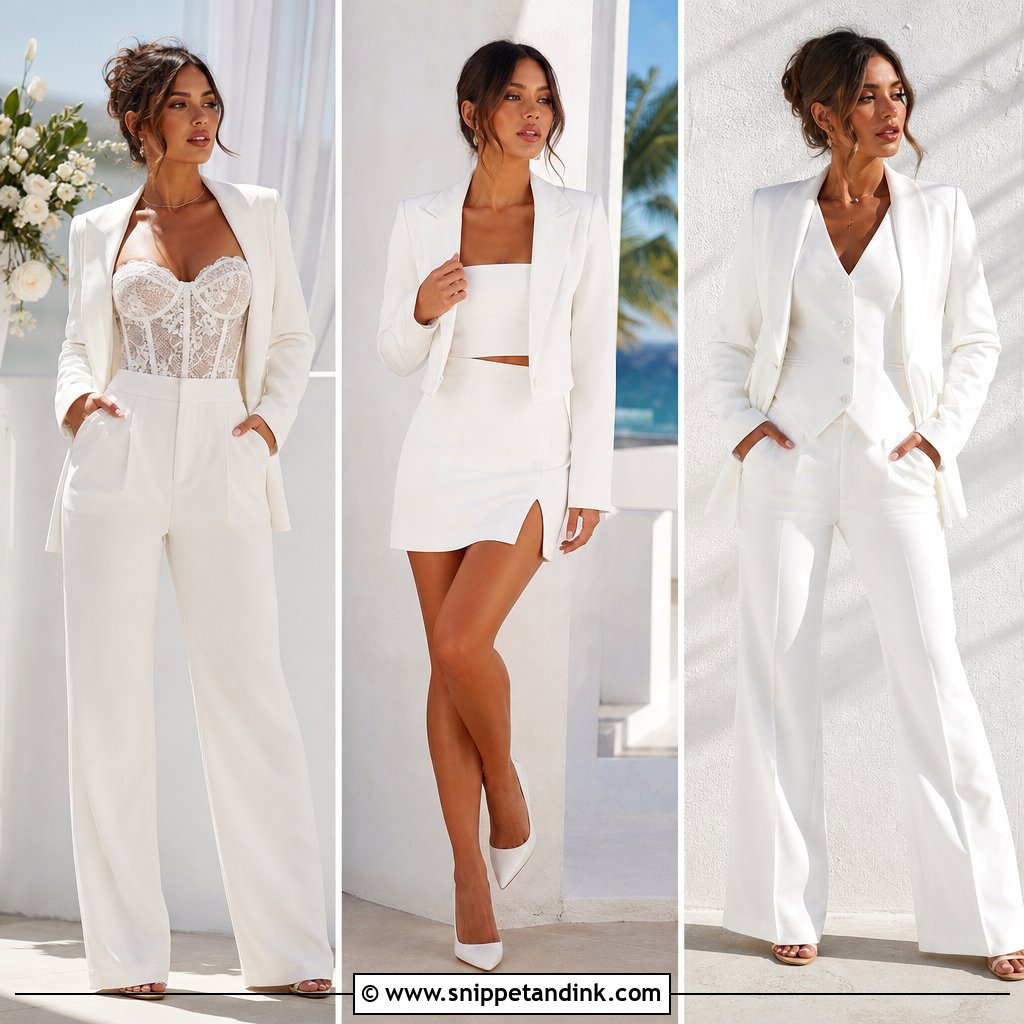
11. Plus Size Bride White Pantsuit
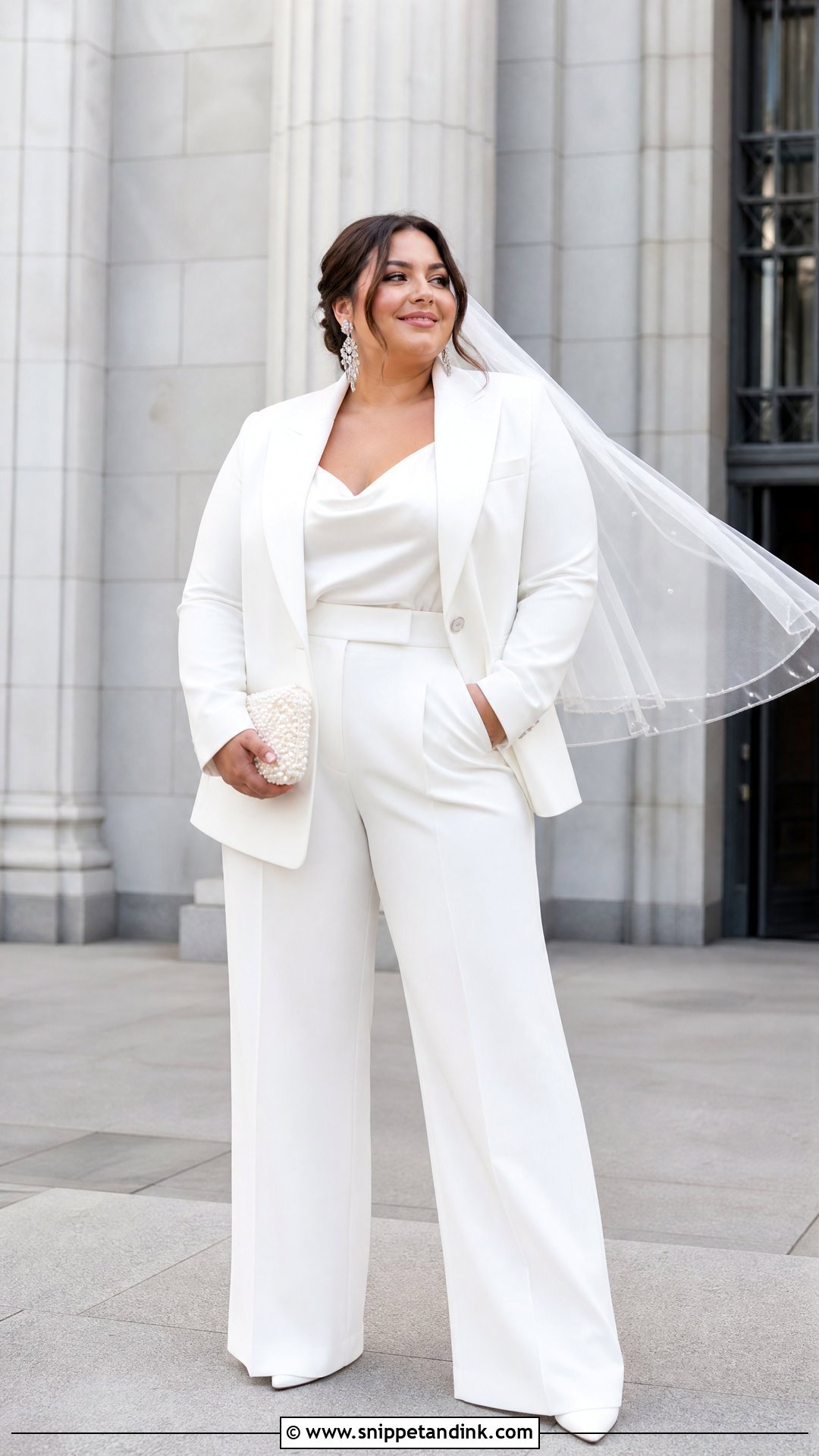
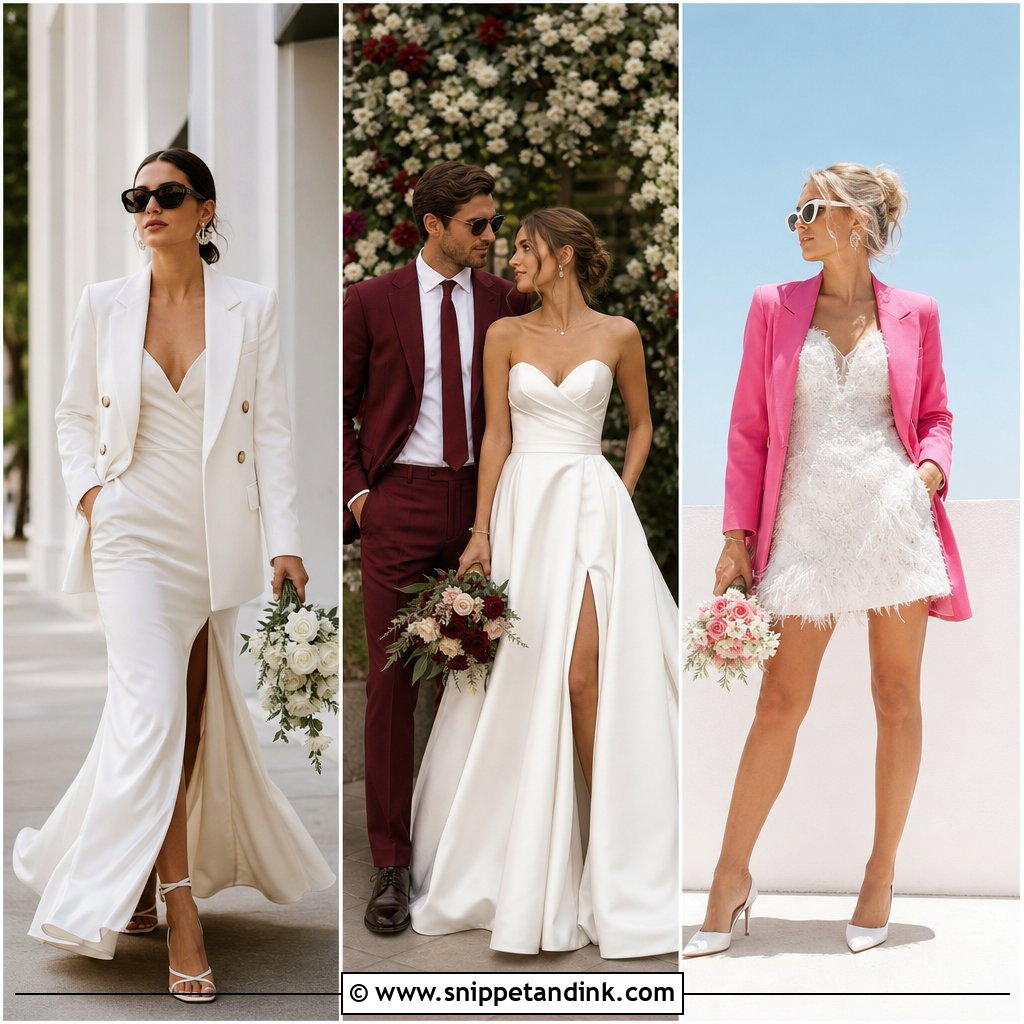
White suits are the most tailoring-dependent look on this list. I start with the blazer: it should button without the fabric pulling into an X across the bust, so you may need to size up and take in the waist. High-rise trousers in a straight, wide or gentle flare cut balance a structured shoulder. Under it, a satin camisole, lace shell or corset top sets how bridal the whole thing reads. It fits courthouse weddings, civil ceremonies and smaller receptions. Add pointed pumps, a pearl clutch and statement earrings, and keep a shoulder veil or tulle train on hand if you want the ceremony to feel formal.
12. Plus Size Bride Floral Embroidered Gown
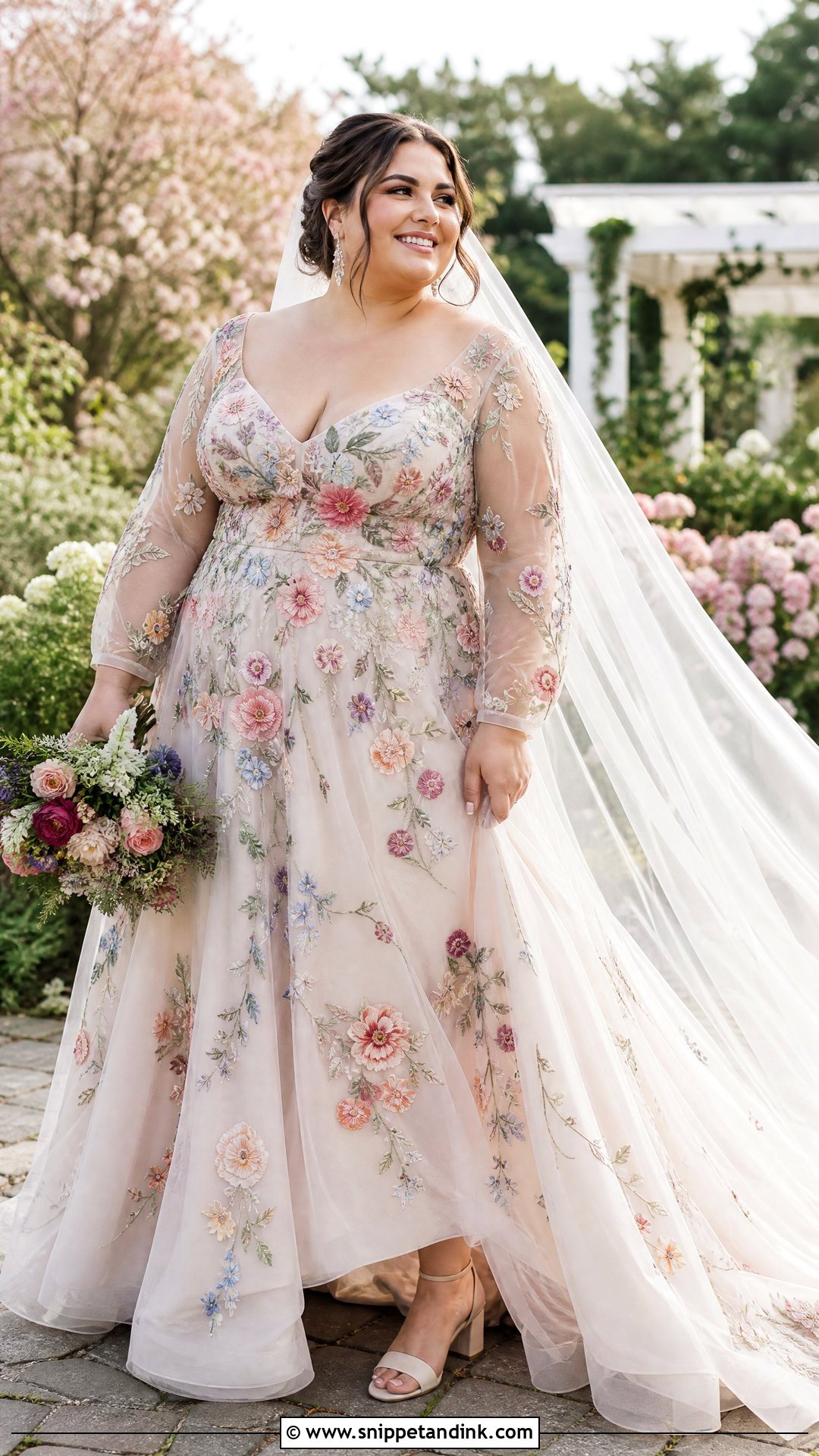
Colored floral embroidery makes a gown personal, and it’s where I look hardest at the seams. Motifs that stop dead at a side seam or get cut off at a zip look cheap from the back, which is the view guests see during the vows. Ask whether the embroidery can be re-placed or appliquéd over the seam during alterations, since a skilled seamstress can lift and reposition single flowers. Blush, champagne and pale blue bases suit multicolored work. Keep the heels neutral, the earrings small and the veil sheer enough not to cover the detail, and edit the bouquet so it doesn’t fight the flowers on the dress.
13. Plus Size Bride Cape Wedding Dress
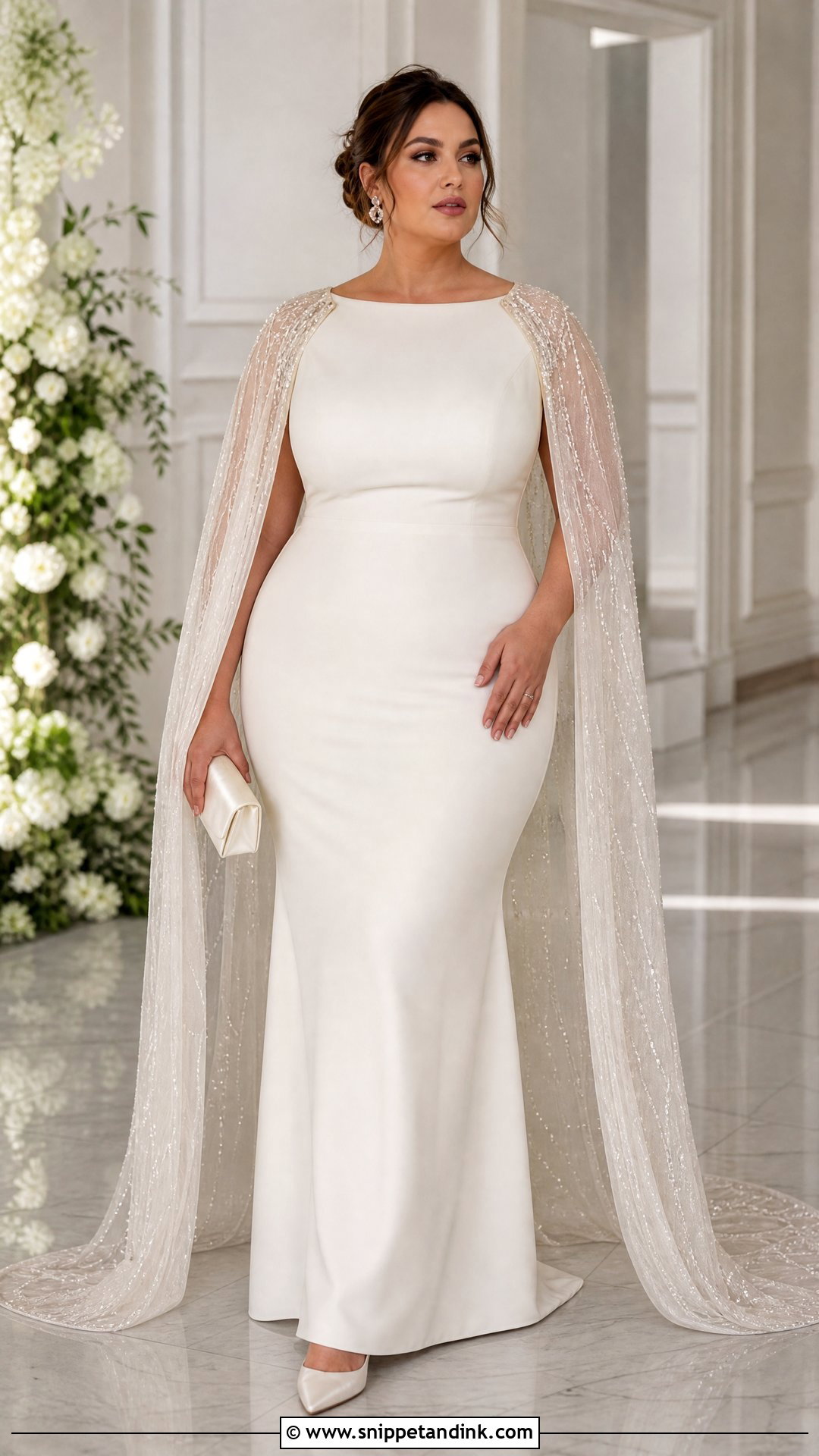
A cape lets the gown underneath stay plain while still giving you movement on the aisle. A fitted crepe dress, simple A-line or satin column all sit well under a tulle cape, a lace capelet or a floor-length embellished one. The fastening is where capes fail: buttons or hooks at the shoulder carry the whole weight, and on a plus size frame they need reinforcing so they don’t drag the neckline back. Walk and turn in every layer at the fitting. Drop the veil if the cape already trails, wear a low bun so the clasp stays visible, and ask for a removable fastening for the reception.
14. Plus Size Bride Detachable Overskirt Gown
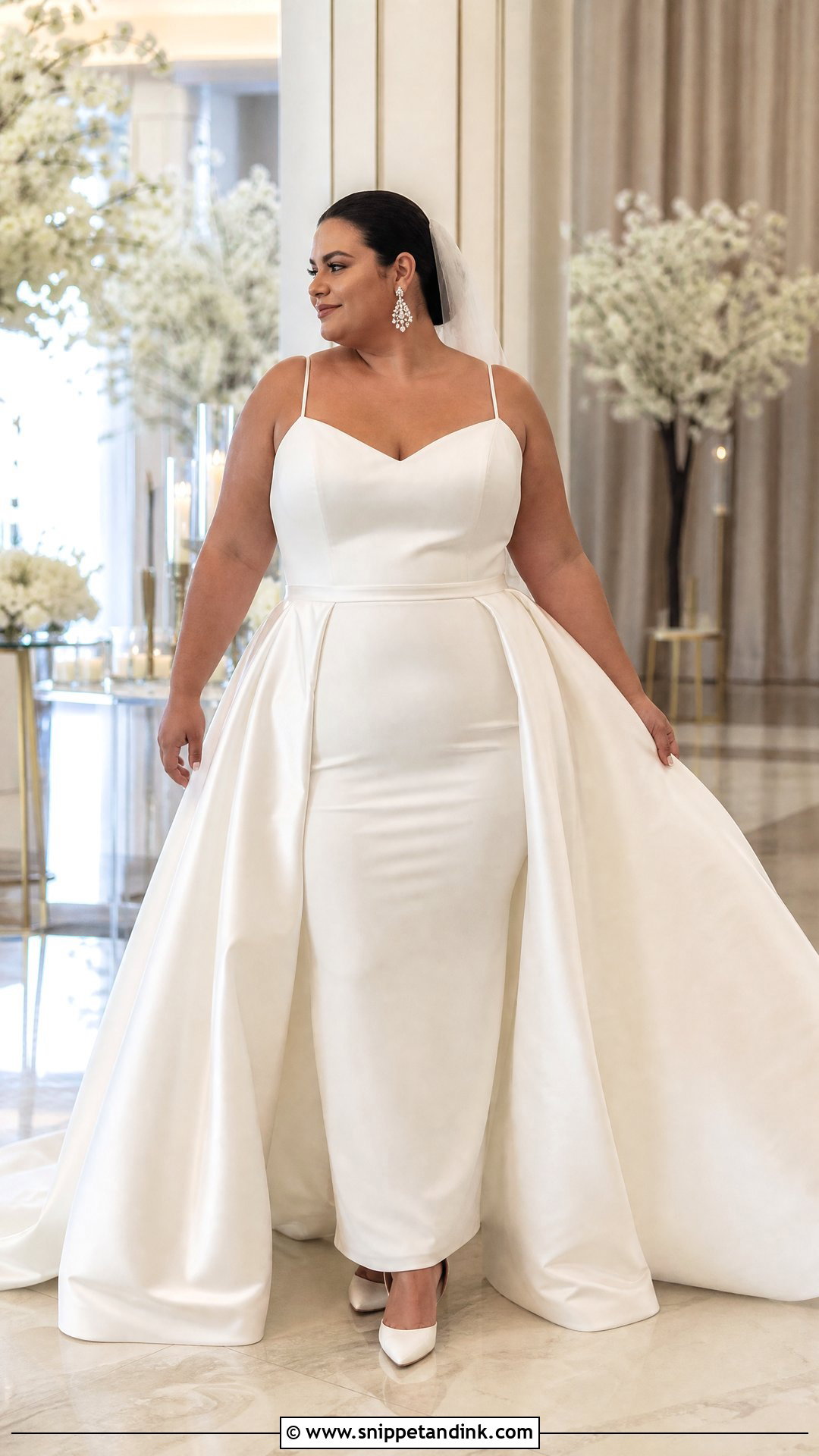
Two looks for one budget is the honest selling point of a detachable overskirt. The full skirt goes over a sheath, mermaid, jumpsuit or short dress for the ceremony, and comes off for dinner. What I check is the waistband: it needs a wide, firm band with hooks set into the gown’s own waist seam, because a thin band rolls and shows a ridge under the fitted dress. The base outfit must look finished alone, with no visible hooks. Satin heels and a simple veil for the ceremony, embellished flats after. Practise the change once with whoever will help you; it should take under a minute.

15. Plus Size Bride Minimalist Slip Gown
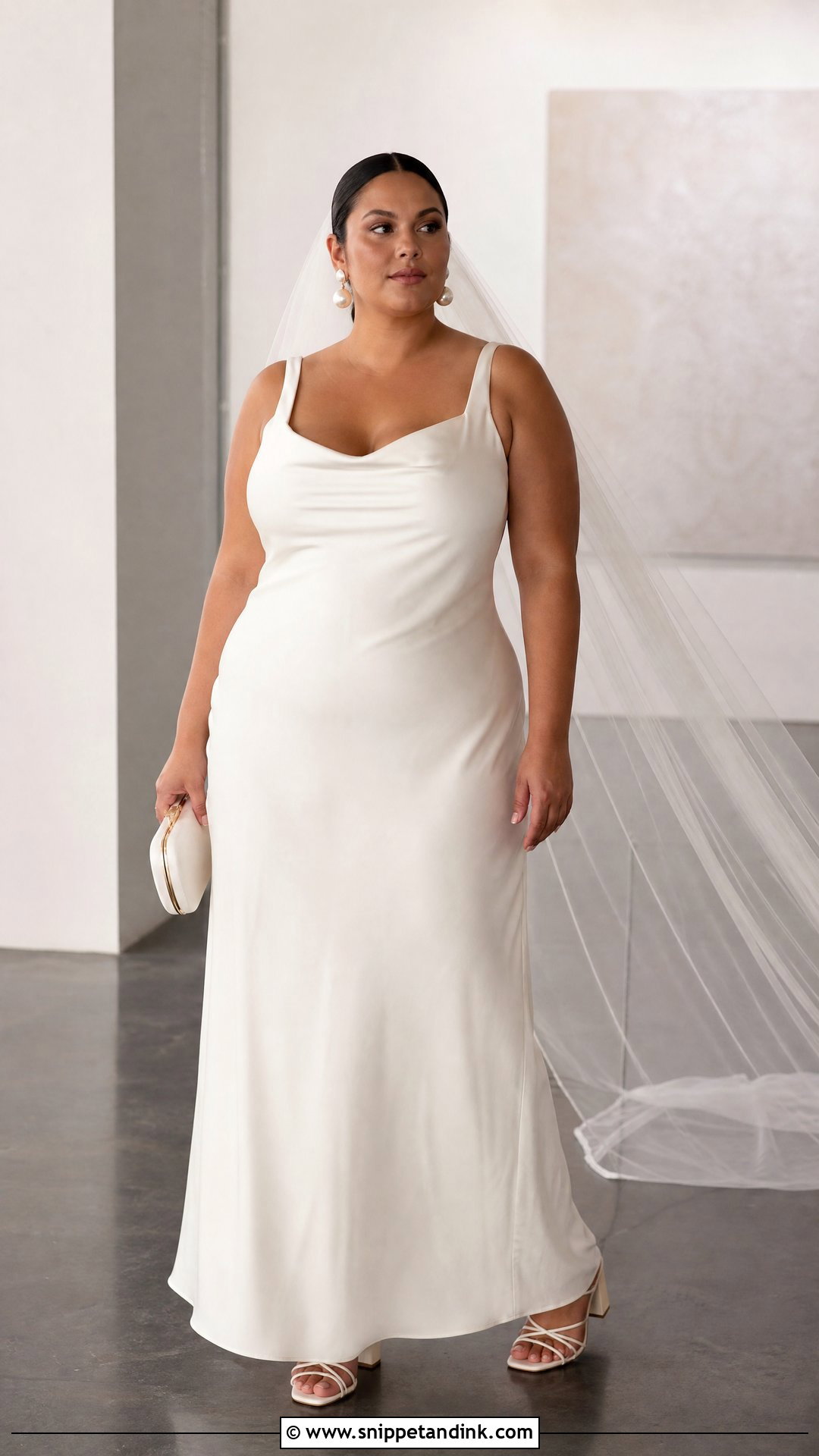
Slip gowns are the hardest silhouette on this list to wear well at a larger size, and I’d be lying if I said otherwise. Thin satin shows every line underneath it, so choose heavy satin or crepe with a full lining and, ideally, an internal bodice with bust support. A bias-cut skirt moves with you; it should skim the hips rather than cling to the stomach. Side seams, strap length and hem are the alterations that matter here, and I check them in daylight because indoor light hides drag lines. Strappy block heels, modern pearl earrings and a cathedral veil keep the look spare and deliberate.
16. Plus Size Bride High-Low Wedding Dress
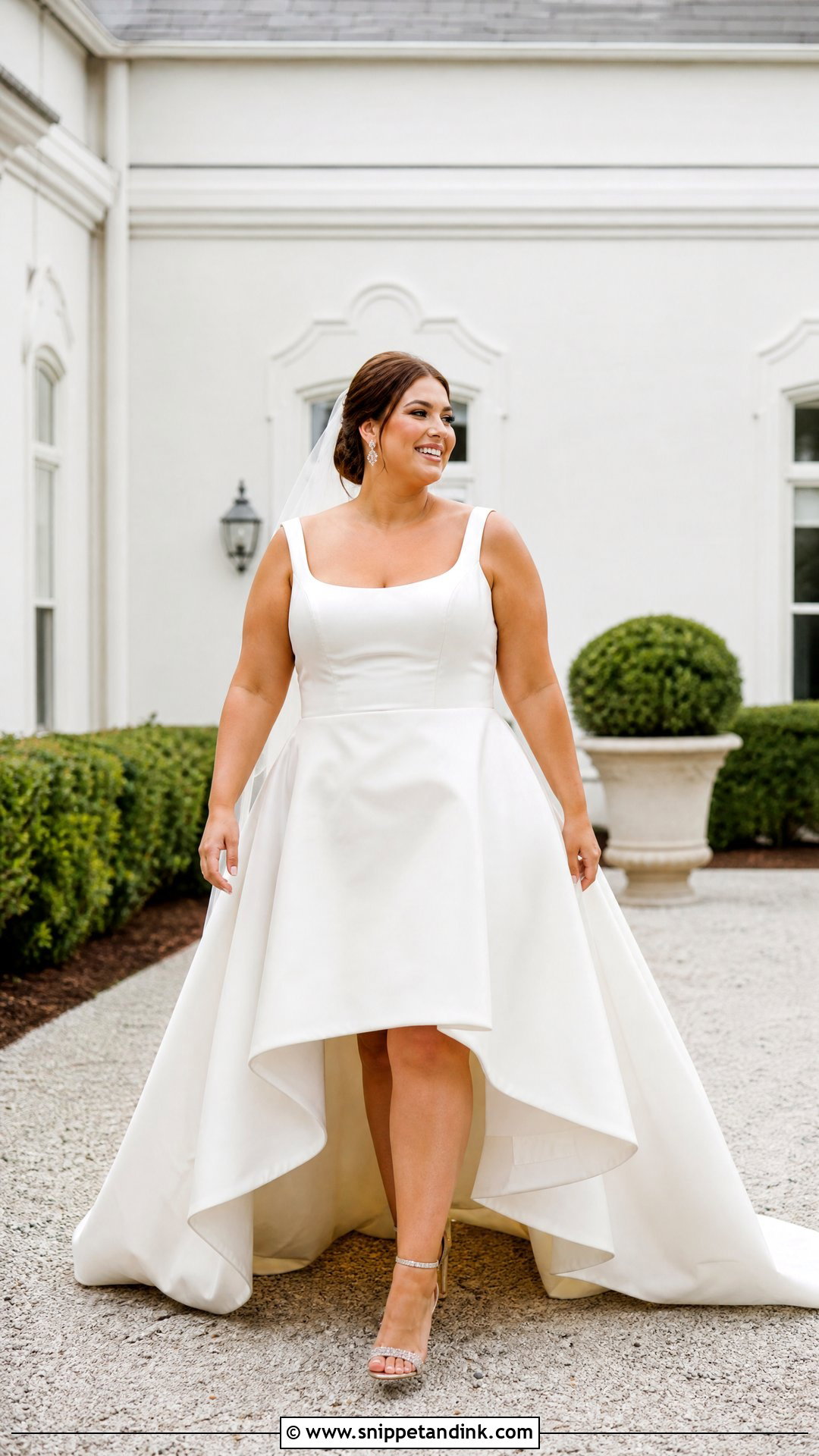
A high-low hem shows your shoes in front and keeps a train at the back, which suits outdoor ceremonies and receptions where dancing comes first. Stiff fabrics, mikado, satin or layered organza, hold the curve of the hem; soft chiffon droops into an uneven line. If you’d rather keep your ankles covered, ask for a gentle dip rather than a dramatic one. I always have this hem balanced in the actual wedding shoes, then ask the bride to walk on grass or gravel if the venue has it, because the front can flip up on uneven ground. Ankle-strap heels, bold earrings and a short veil complete it.
17. Plus Size Bride Reception Mini Dress
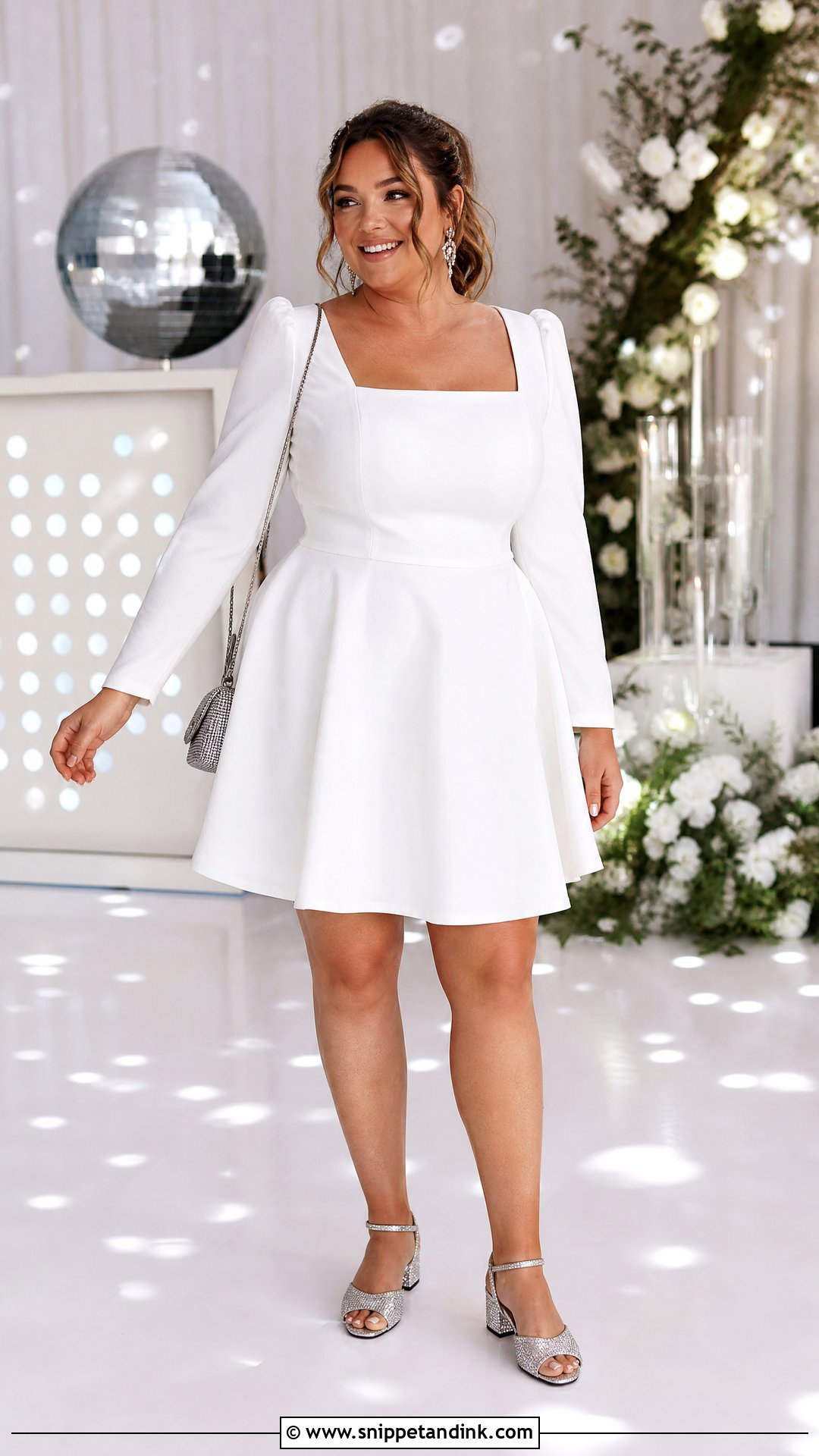
A white mini makes a fun second look once the formal part of the night is done. Test the length sitting and bending, not just standing in front of a mirror; minis rise more on curvier thighs than you’d expect. A structured A-line, embellished shift or long-sleeve mini all hold their shape on the dance floor. Beaded and sequinned minis can scratch the inner arm, so feel the underarm seam before buying. I’d add fitted anti-chafe shorts underneath, low block heels or bridal sneakers, sparkling earrings and a small shoulder bag. Change for the cake cutting or your dance entrance so the switch gets noticed.
18. Plus Size Bride Courthouse Midi Dress
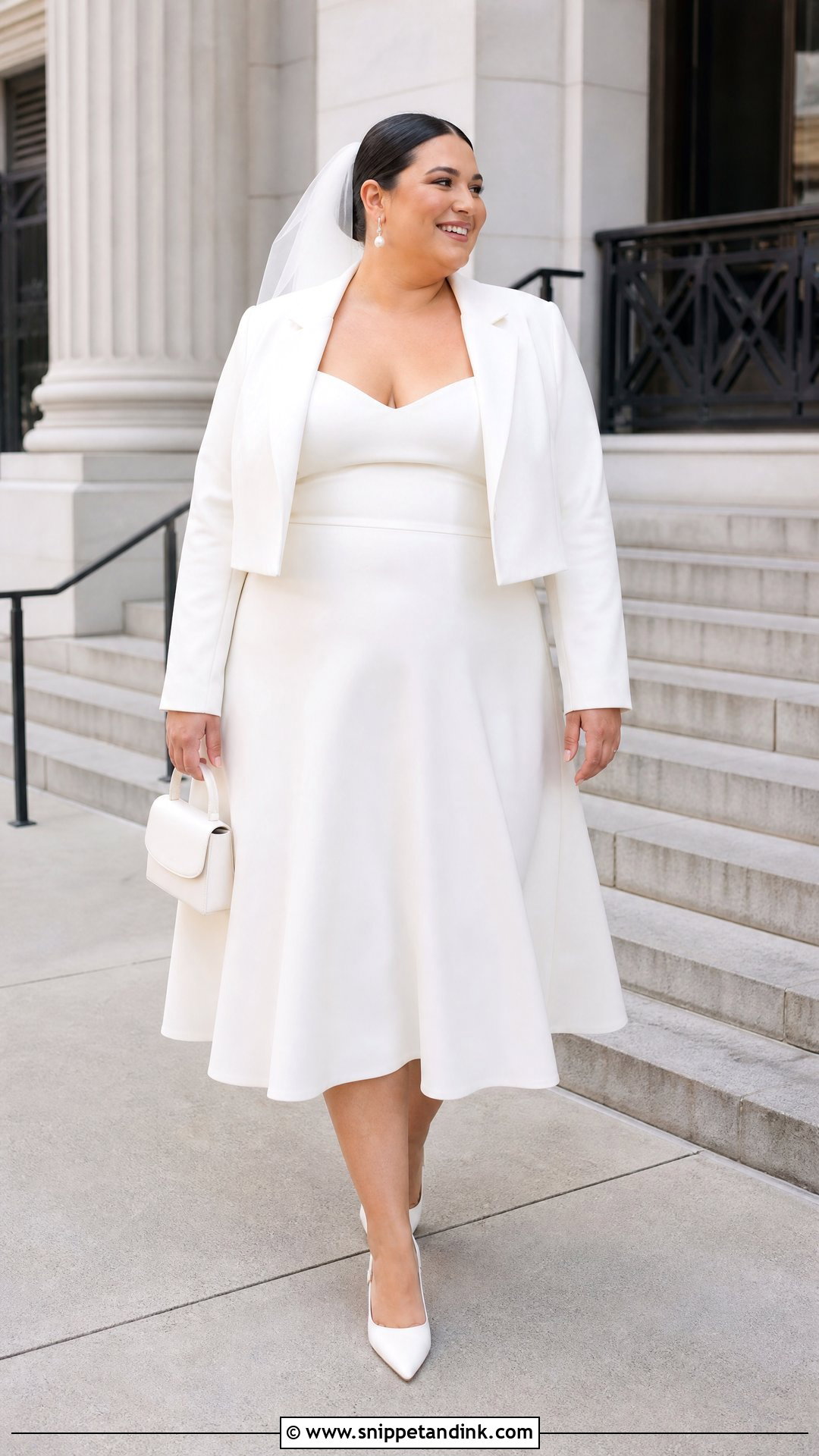
A courthouse midi dress has to survive stairs, security lines and sometimes a train ride, which shapes what I choose. A wrap shape, a structured fit-and-flare or a sleek column that ends below the knee all travel well. White crepe and textured jacquard crease less than satin, which marks badly after an hour of sitting. Slingback pumps you’ve already broken in, a top-handle bag, pearl earrings and a short veil or hair bow keep it bridal. A cropped blazer covers you between locations. Steam it just before you leave and carry pins, plasters and a stain pen.
19. Plus Size Bride Beach Wedding Gown
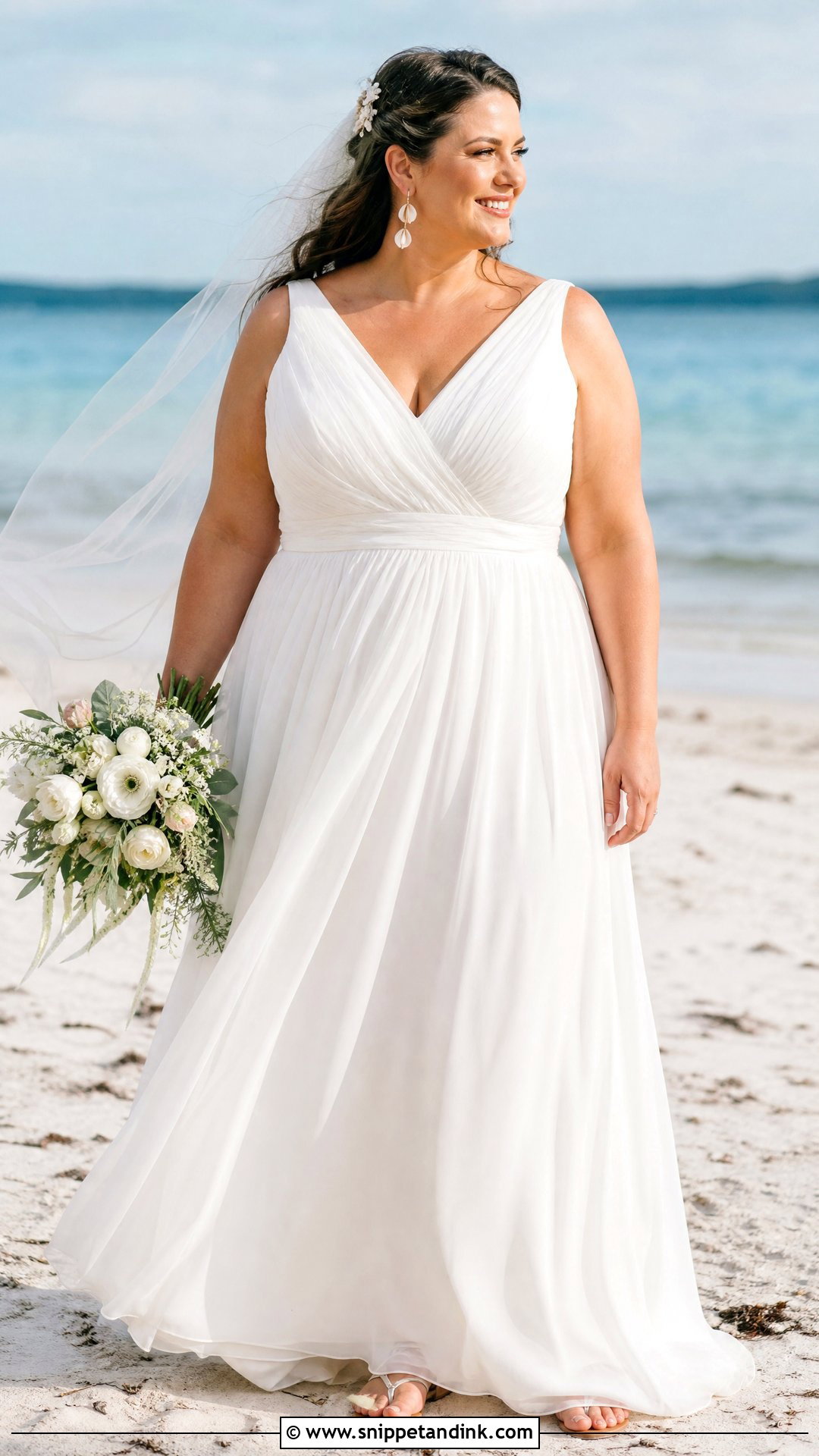
Beach gowns fail for two reasons: weight and wind. Heavy beading and long structured trains drag in sand and pick up wet grit along the hem, so I steer brides toward breathable chiffon, soft tulle, light lace or fluid crepe. An A-line, empire or relaxed column handles the walk far better than a cathedral train. Have the hem set just above the ground in your sandals, not in heels. A veil looks lovely against the water, but pin it with combs at two points or it will wrap your face in the first breeze. Flat metallic sandals, shell-inspired earrings, a hair comb and a loose updo finish it.

20. Plus Size Bride Winter Velvet Wedding Outfit
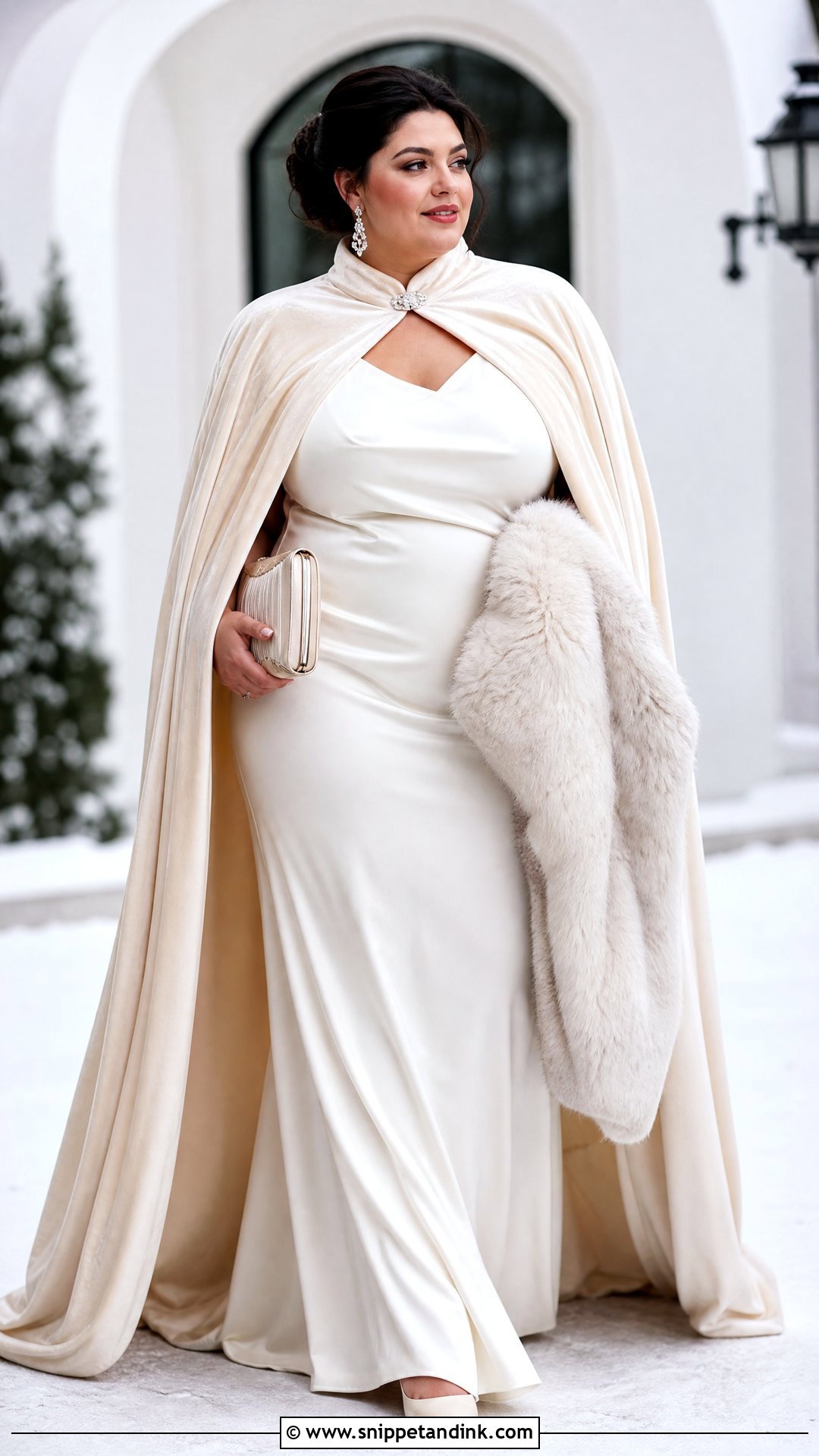
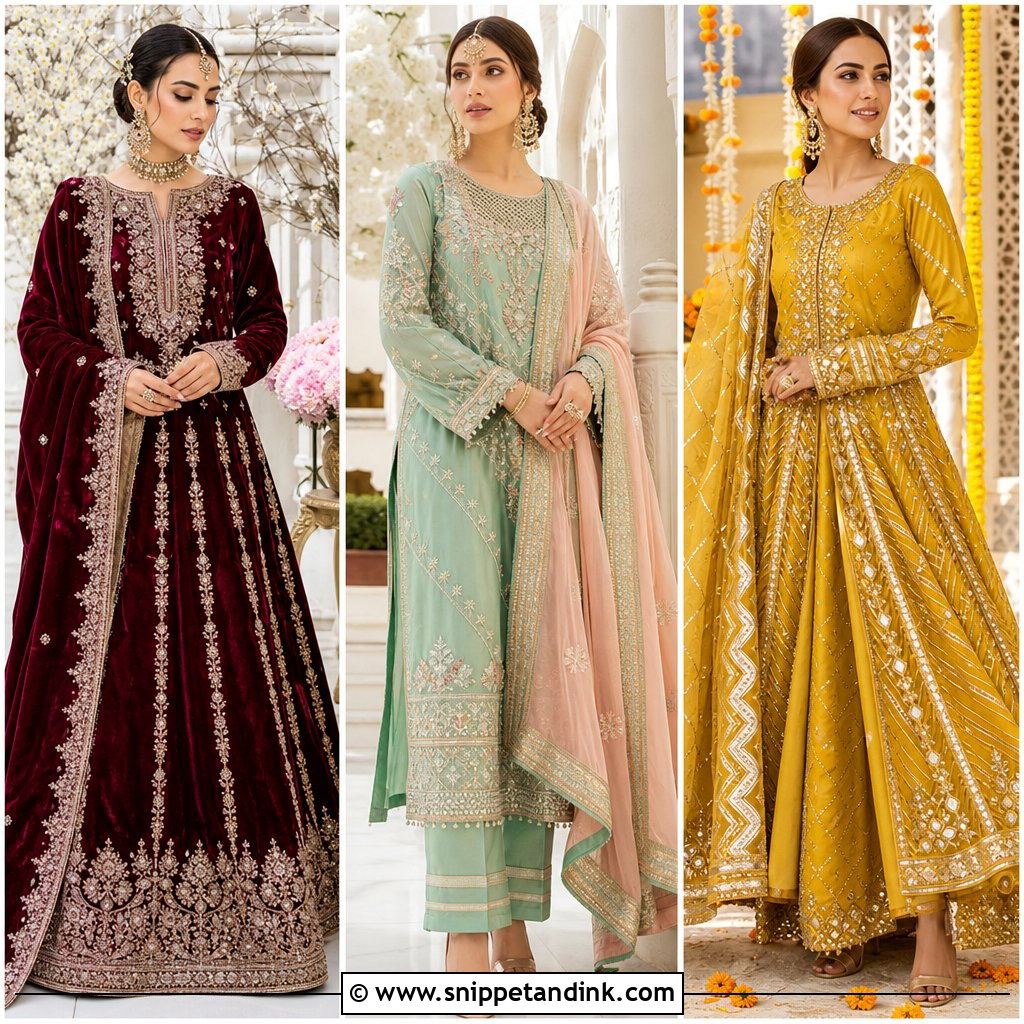
Velvet is warm and photographs richly, but it is heavy, and a full velvet gown at a larger size can weigh enough to tire your shoulders by evening. If that worries you, wear a velvet cape or cropped jacket over satin or crepe instead. The detail most tailors check first is nap direction: velvet panels cut in opposite directions look like two different colors under flash. Ivory, silver and deep jewel tones all work. Closed-toe block heels, crystal earrings, a structured clutch and a polished updo keep the neckline clear, and a faux-fur stole handles outdoor portraits.
The Layer Under the Gown Matters as Much as the Gown
Most of the fit problems I’m asked to fix late turn out to be underwear problems. A bodice shaped around one bra will gape or dig when a different one goes on, so buy the bridal bra or longline before your first fitting and wear it to every appointment after.
Thigh chafing is the complaint I hear most after a long reception, and it’s easy to prevent. Lightweight anti-chafe shorts or bands sit under any skirt that isn’t fitted to the knee. Shapewear is a personal choice; if you want it, choose one with a silicone grip at the top edge, because a rolled waistband shows straight through satin and crepe.
A small kit for the day
- Anti-chafe balm for under the arms and between the thighs, reapplied before the reception.
- Fashion tape for straps and wrap necklines that shift when you hug people.
- Spare bustle ribbon and a needle threaded in the gown’s color.
- A second, flatter pair of shoes, already worn in around the house.
Plan for two or three fittings, the first about ten weeks before the wedding. Leave the final one close enough to the date that nothing can shift, but not so late that a seamstress has no time to correct a problem.
What Holds Up From the Aisle to the Last Song
None of these outfits works because of a rule about what plus size women should wear. They work because of construction and alterations, and because you tried enough shapes to know what you actually like. Go to every fitting in the shoes and underwear you’ll wear on the day, then walk, sit and dance in the finished piece before you sign it off. Try at least one silhouette you were told to avoid. The look that fits properly and lets you forget about it by the second hour is the right one, whatever its fabric.
You'll Like These Ideas:


Leave a Reply