
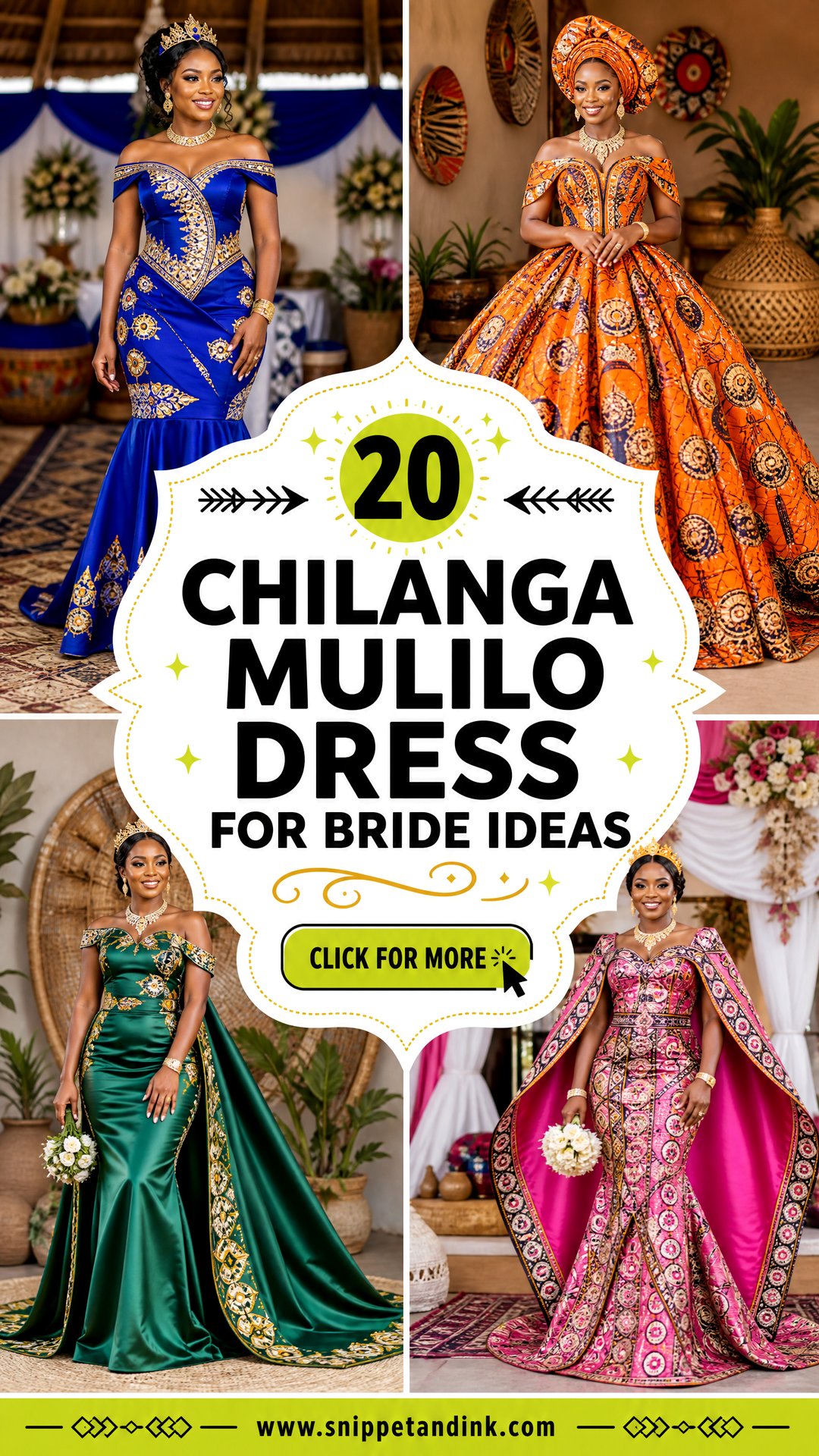
Chilanga Mulilo is the Bemba pre-wedding ceremony where the bride’s family presents its food to the groom’s side, usually a few days to a week before the wedding, and welcomes him to eat from their kitchen from then on. It’s a day of carrying, greeting, singing and dancing, and the outfit has to keep up with all of it. Most brides build their look around chitenge, often in prints chosen with the family, and add a headwrap and tailoring that hold through hours of movement. Customs differ between families, so confirm colors and your own role with your relatives or your marriage advisers before the tailor cuts anything. The twenty dresses below range from full gowns to sleek fitted shapes.
What Will You Actually Be Doing on the Day?
Families run Chilanga Mulilo differently. In some, the bride helps cook and walks in with the women carrying the dishes; in others she stays out of the presentation entirely and appears for greetings and the celebration afterward. Before choosing a silhouette, I ask brides to find out which version theirs will be, because the dress has to do that job.
- If you’ll carry food: women often bring dishes in on their heads and may enter the room walking backwards. A train or a long, full hem is a tripping risk, and a tall headwrap won’t sit under a pot. Choose an ankle-length skirt and a flatter wrap.
- If you’ll lower yourself to greet elders or sit on a mat: test the dress kneeling and sitting on the floor. Mermaid and tight column skirts fail this test without a slit or stretch panel.
- If the day ends in dancing: a full or tiered skirt and stable low heels earn their place, and detachable trains and drapes should come off easily.
Your outfit can be glamorous for photographs and practical for the ceremony, but you need to know which moments come first.
1. Red Chitenge Mermaid Chilanga Mulilo Dress
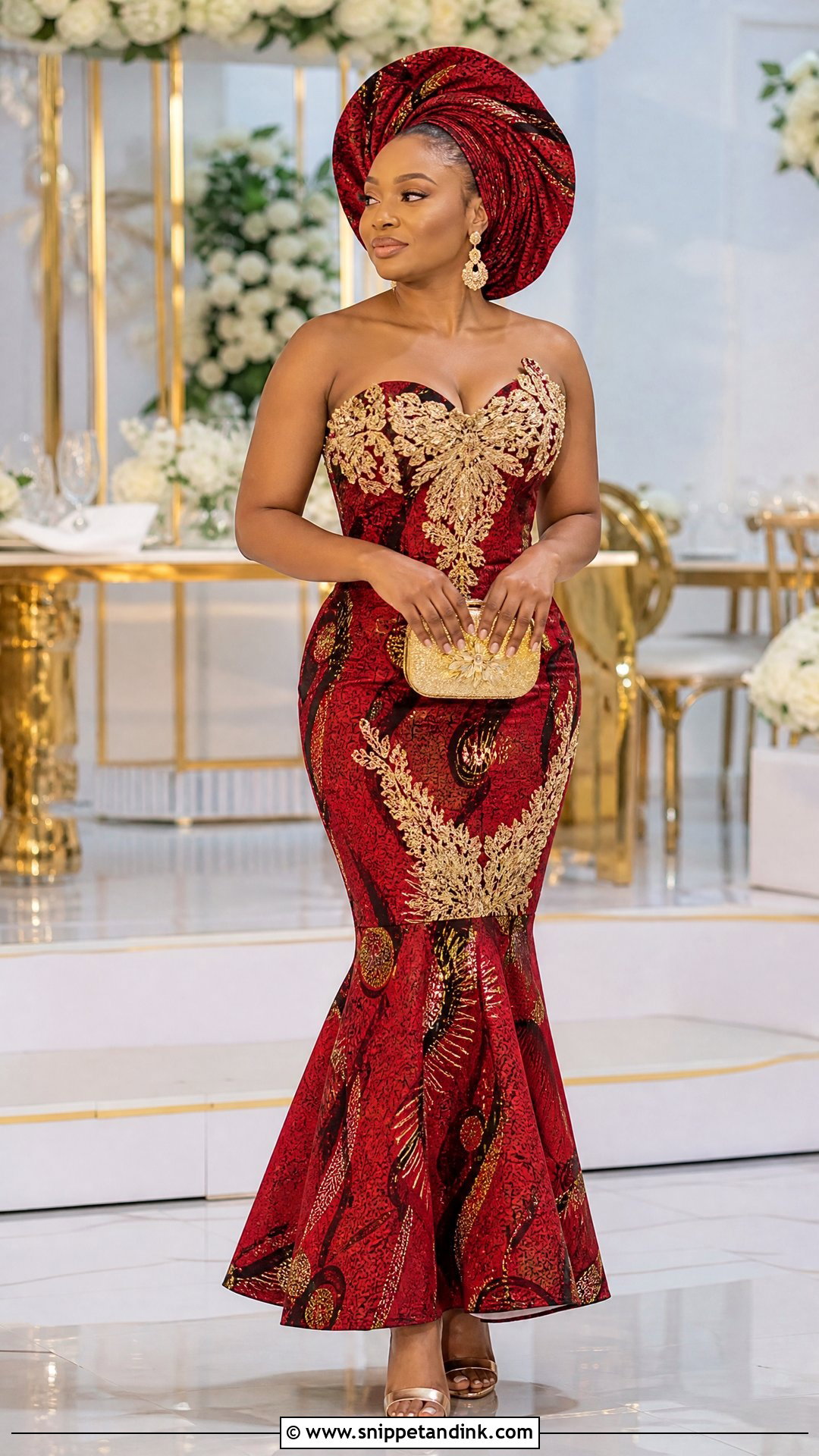
Red chitenge in a mermaid cut is a bold way to keep the traditional fabric front and center. The fitted bodice needs proper boning and the flare should start below the knee, not above it. My warning with this shape: a mermaid skirt locks the knees together, so if you’ll be dancing or lowering yourself to greet elders, ask the tailor for a back slit or a stretch lining in the lower skirt. Gold embroidery at the neckline is enough decoration. A matching chitenge headwrap, gold drops and nude block heels finish it.
2. Emerald Green Peplum Chilanga Mulilo Gown
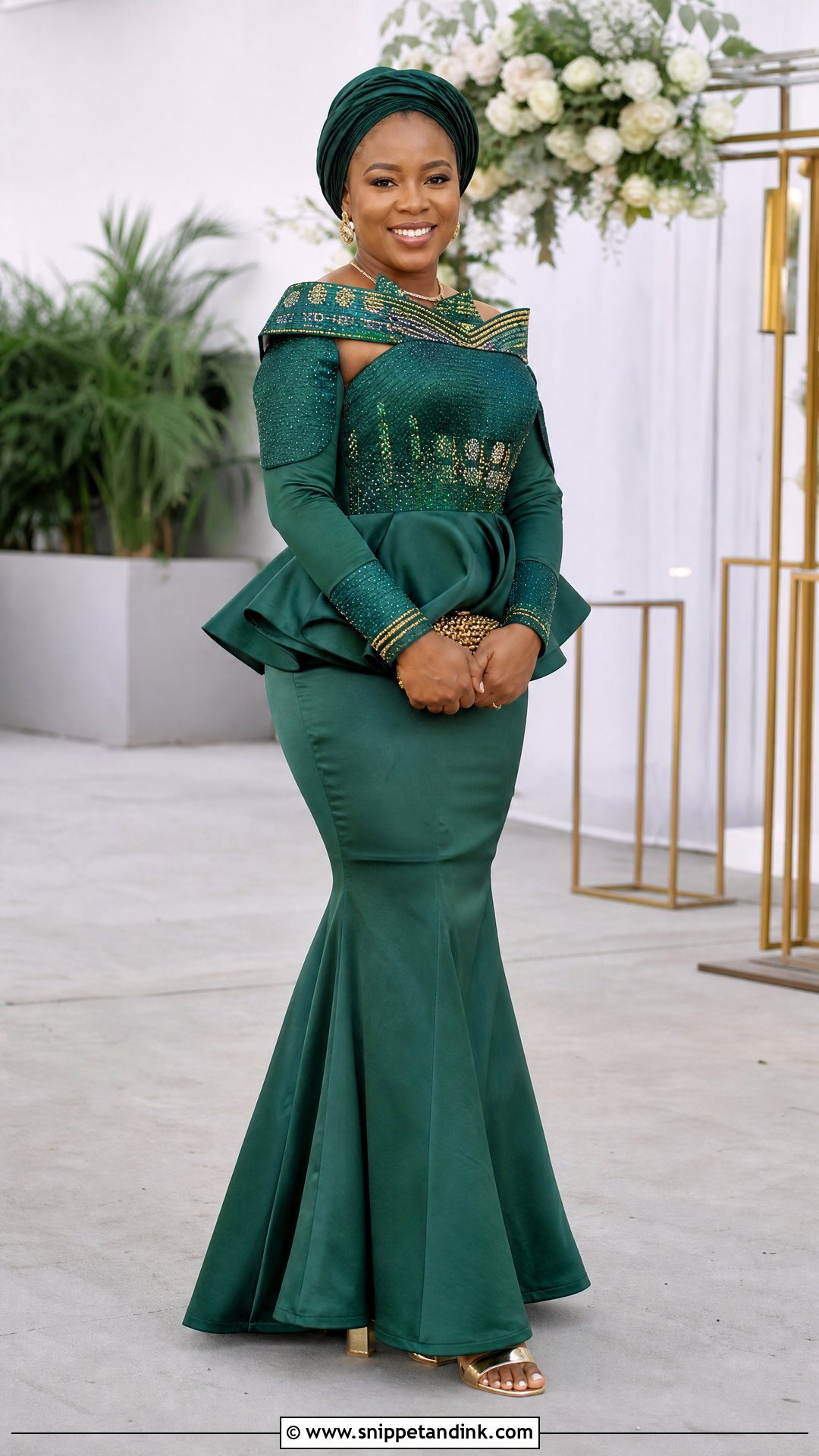
Emerald holds its depth in photographs and looks rich beside gold. A floor-length gown with a sculpted peplum defines the waist and gives soft cover over the midsection, which many brides appreciate after a long day of eating and sitting. I’d keep the chitenge to the neckline, sleeves or lower skirt rather than everywhere, so the green has room to breathe. A coordinated headwrap, gold earrings and a small beaded clutch suit it. Gold block-heel sandals keep it from feeling like an evening gown.
3. Royal Blue Off-Shoulder Chilanga Mulilo Dress
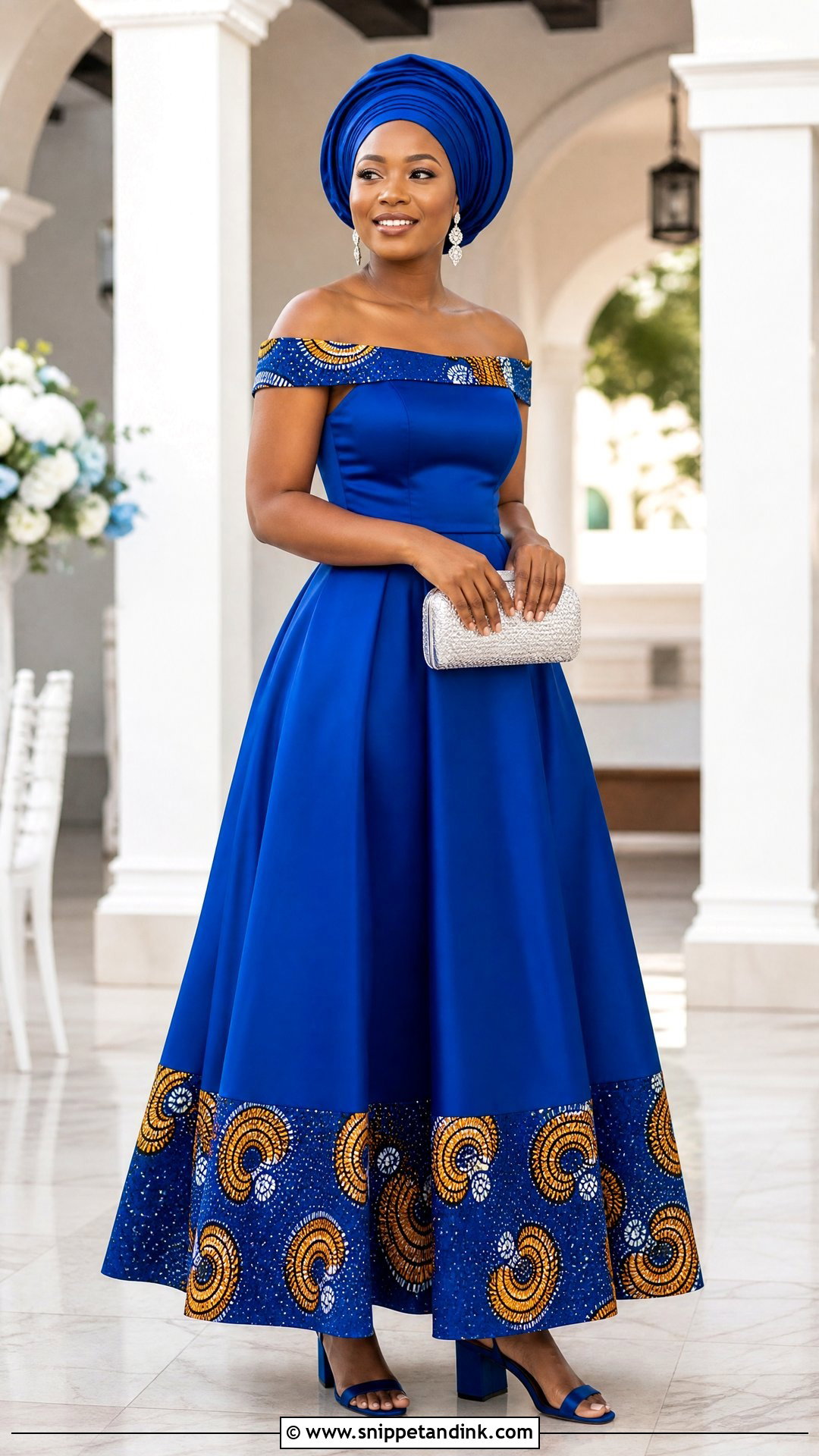
Royal blue is bright enough that it needs very little embellishment. An off-shoulder neckline with a fitted waist and a full A-line skirt gives a balanced shape, and a wide chitenge border at the neck repeated near the hem ties it together. The neckline has to stay put while you hug and greet relatives, so I’d insist on internal elastic or a boned band. Detachable short sleeves are a good idea if elders may prefer covered shoulders. A structured blue headwrap and silver earrings keep the color story clean.
4. Burgundy Lace Chilanga Mulilo Dress
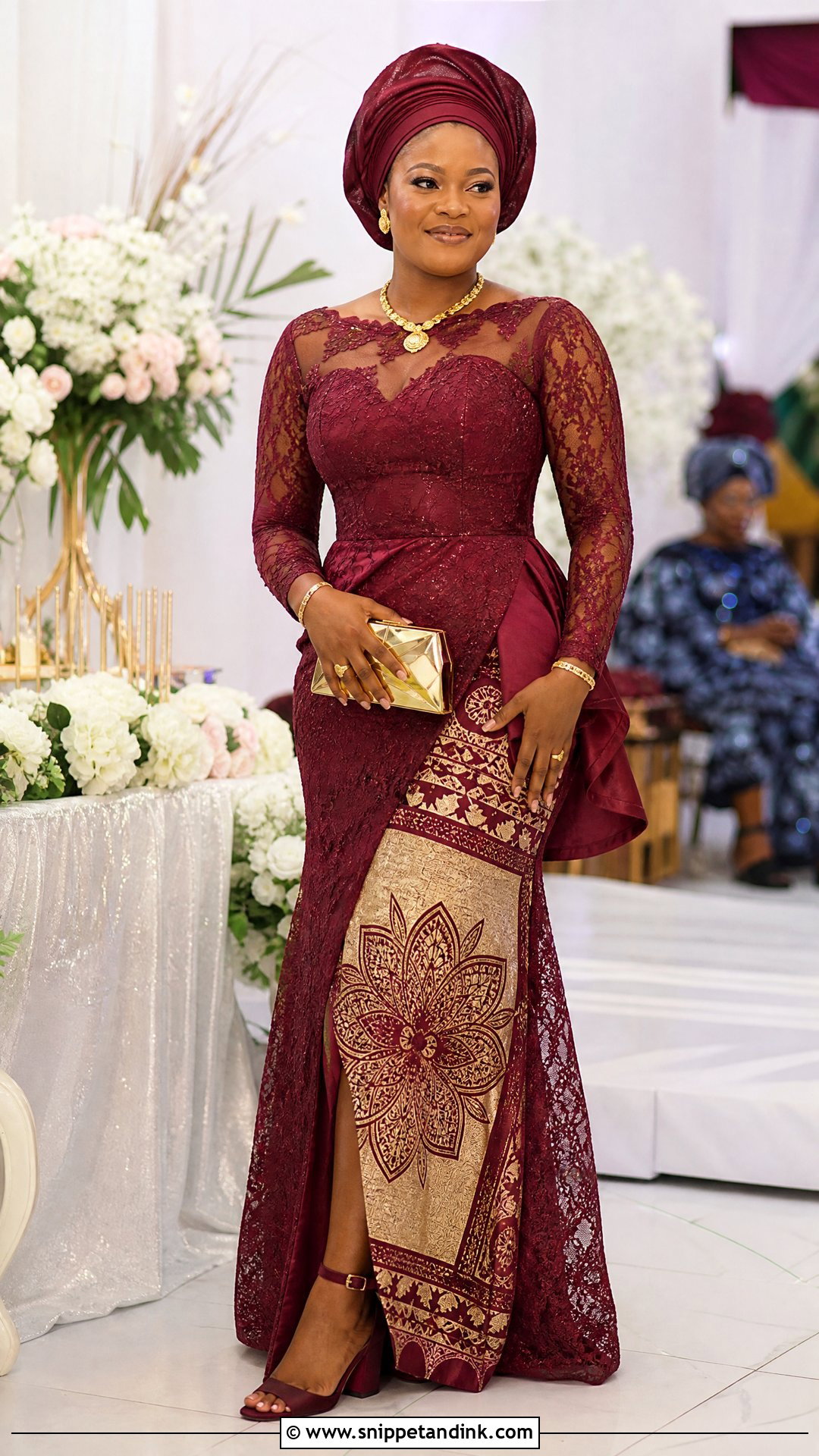
Lace softens a deep burgundy bridal outfit and suits a bride who prefers a quieter color. A fitted floor-length dress with lace sleeves and an illusion neckline works with chitenge panels placed through the bodice or skirt. Line it in burgundy satin; a lighter lining shows through the holes in the lace and looks patchy. Detailed lace and heavy beads together look crowded, so pick one. Gold jewelry, a matching headwrap and a berry lip suit the depth of the color.
5. White And Chitenge Chilanga Mulilo Dress
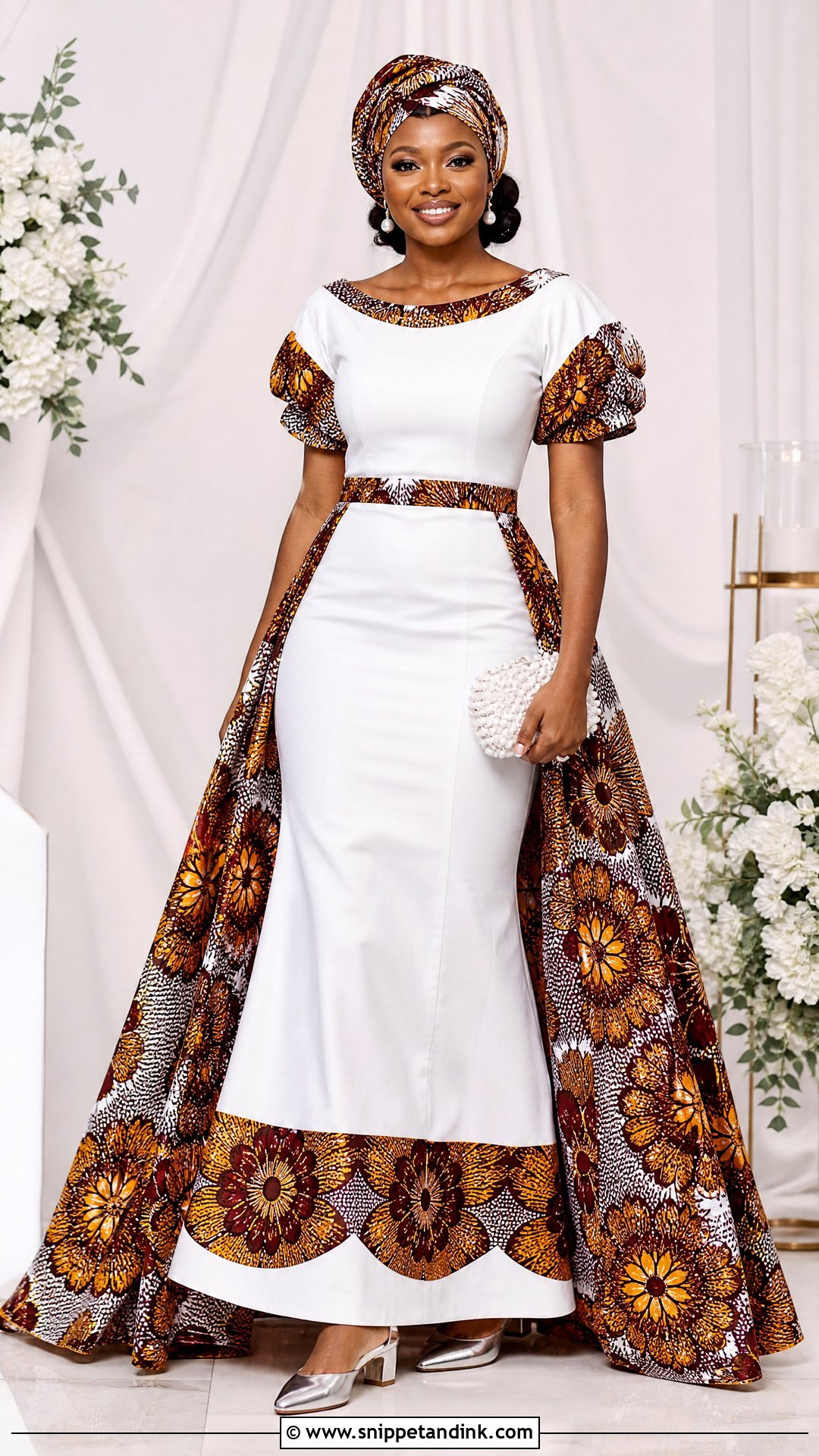
Can a traditional outfit include white without looking like a Western gown? Yes, if the chitenge does real work: at the neckline, waist, sleeves and hem rather than as a small trim. A detachable printed overskirt adds volume for photographs and comes off for the dancing. White is the most practical worry here. Food is carried and served on this day, and relish stains on white are hard to shift, so skip a train that touches the floor and choose a washable lining. A print headwrap and low metallic heels pull the look together.
6. Brown Cowrie Shell Chilanga Mulilo Dress
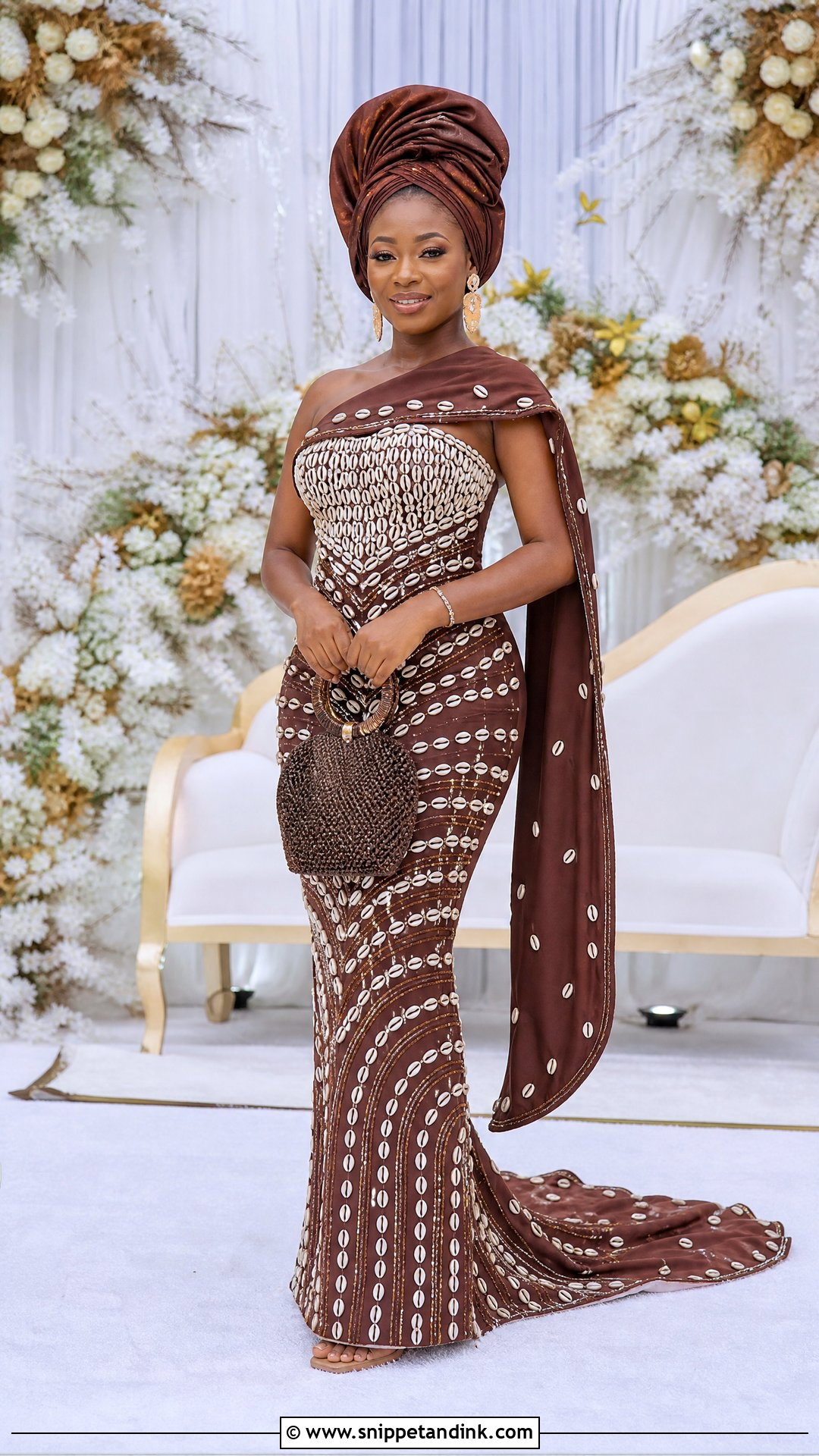
Cowrie shells on brown fabric look earthy and regal at once. Keep their placement controlled, around the neckline or waist, and check the backs: shells sewn directly onto a bodice can rub and scratch, so ask for a backing fabric under the stitching. A draped shoulder panel or short train adds movement to a body-skimming dress. A sculpted brown headwrap, bronze earrings and a woven bag suit it. It’s a strong alternative if bright colors don’t feel like you.
7. Orange Chitenge Ball Gown
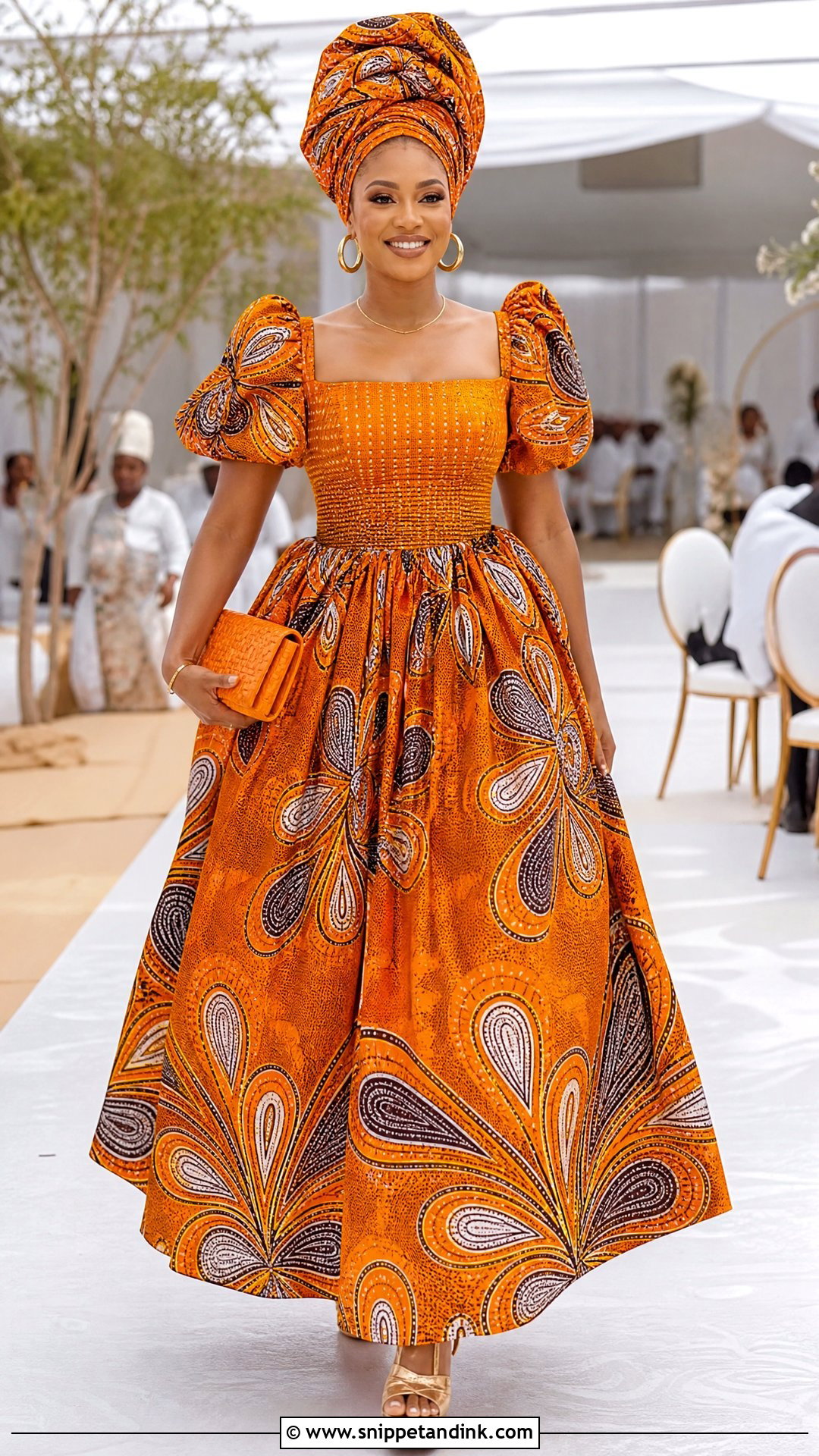
Orange makes an entrance, and a ball gown with a full chitenge skirt fits the joy of the day. When the print is busy, I add plain orange satin on part of the bodice so the eye has somewhere to rest. Puff sleeves or a square neck balance the volume. Full skirts are heavy and hot, so a smooth, light underskirt matters more than a stiff one. Gold platform sandals help with the hem, and a tall headwrap repeats the height of the skirt.
8. Purple One-Shoulder Chilanga Mulilo Dress
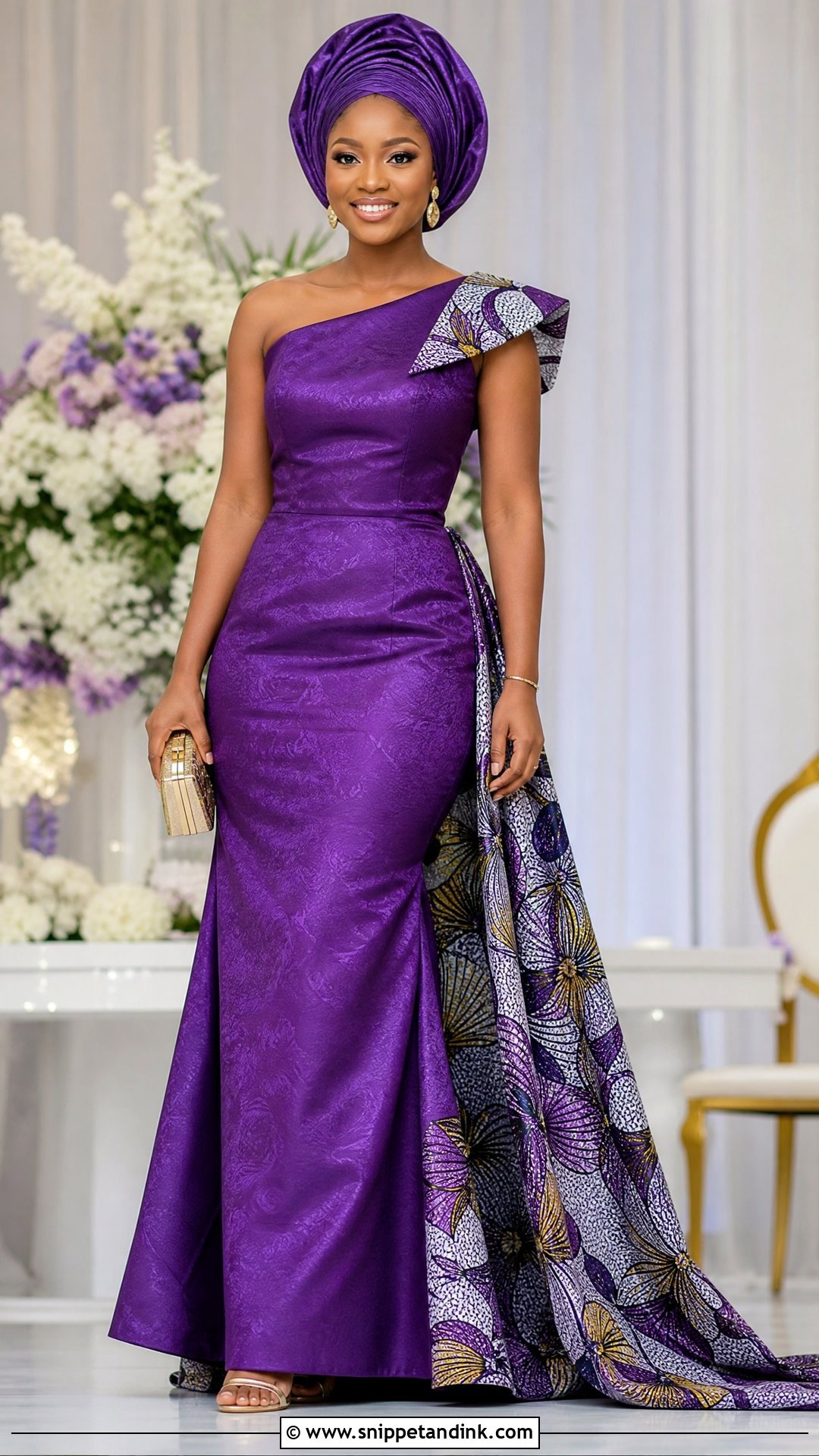
A one-shoulder neckline gives chitenge a modern direction. Purple works well with gentle draping at the waist and a straight or softly flared skirt. The one strap carries the whole bodice, so it needs inner support or you’ll spend the afternoon tugging it up. Put the chitenge where it shows, such as the shoulder panel, a waist sash or a detachable train. A slim bracelet on the bare arm balances gold statement earrings. A sheer matching sleeve gives coverage if your family prefers it.
9. Green Satin Chilanga Mulilo Dress With Train
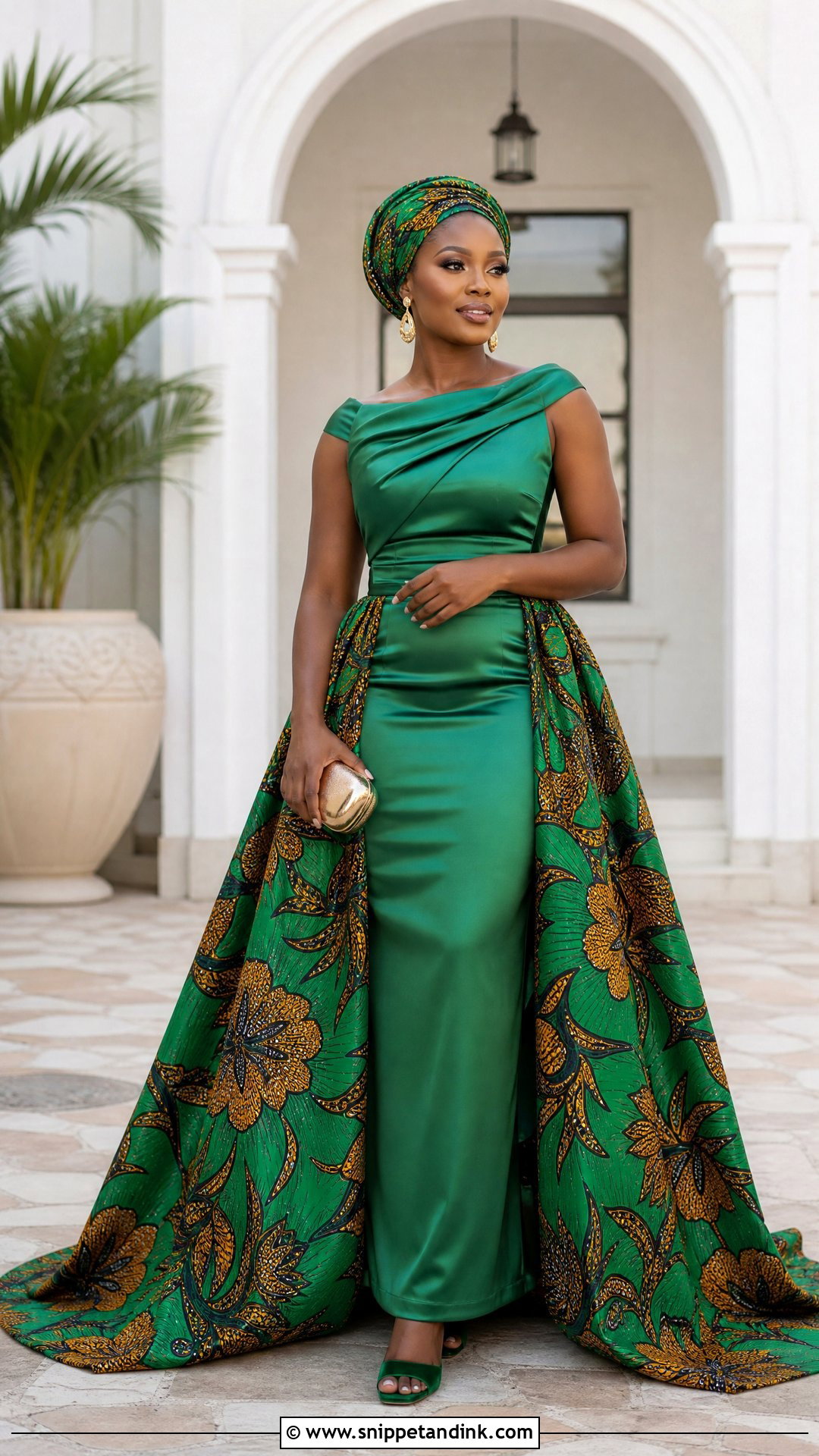
Green satin shaped into a simple column, with a long chitenge train starting at the waist, gives you formal drama for the photographs. The train should detach, because you can’t carry food, dance or move through a crowded compound with fabric dragging behind you. Satin reflects light and shows every ripple of a poor fit, so tailoring and a smooth lining are essential here. Green satin block heels continue the column line, and nude shoes work just as well.
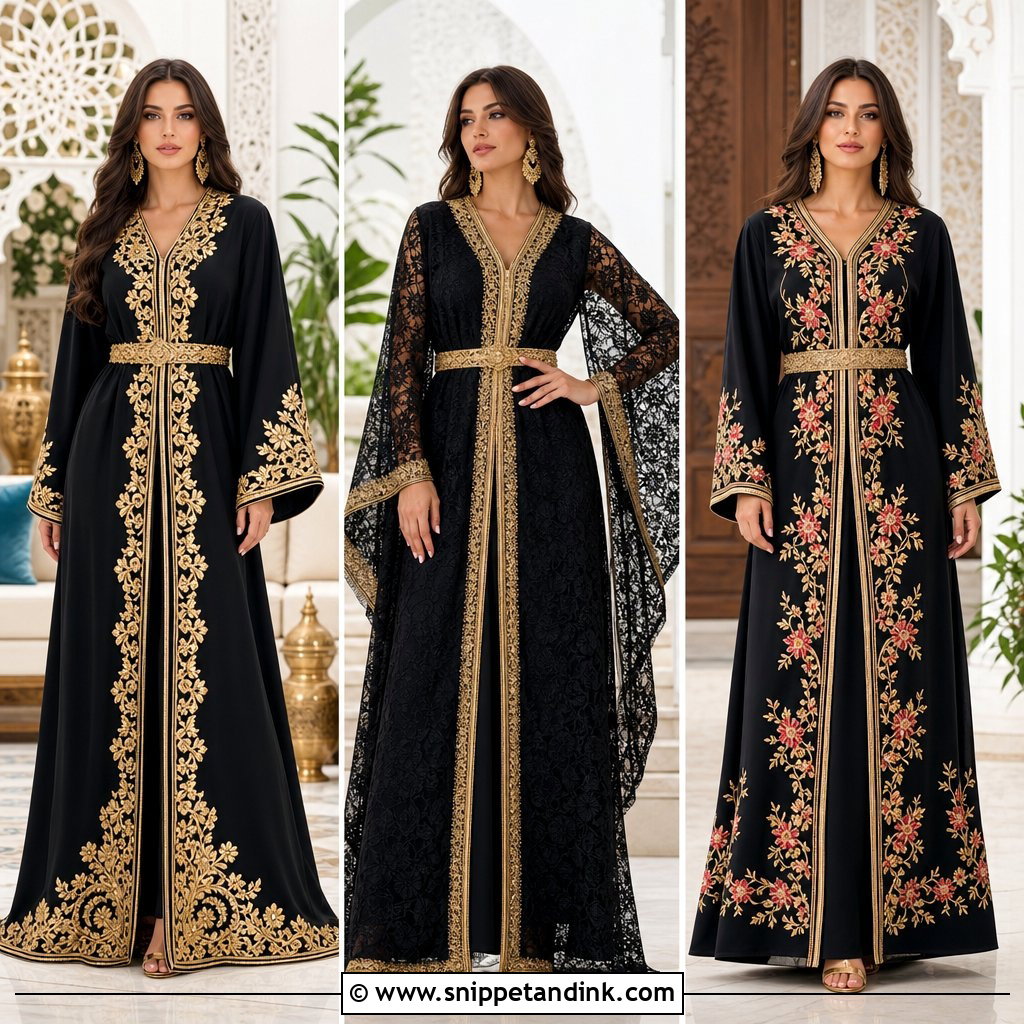
10. Black And Gold Chilanga Mulilo Dress
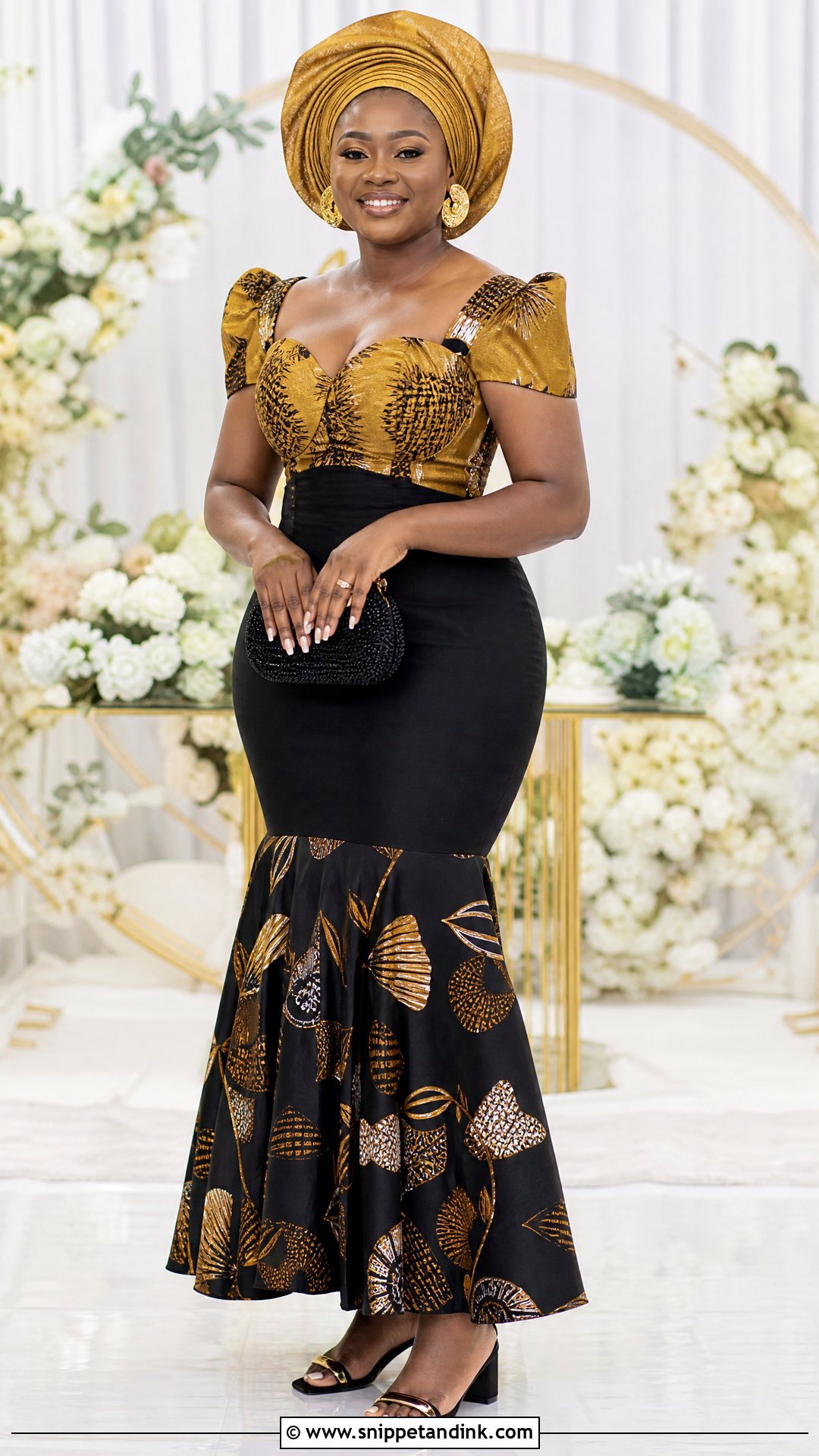
Black and gold can look properly ceremonial when the print is bright. A gold chitenge bodice, a black fitted waist and a flared printed skirt balance each other well. Some families feel black is too somber for a celebration, so this is one to check with relatives early. A bold gold headwrap brightens the face, and a rich lip keeps the black from looking severe. Skip sequins; the print is already busy enough.
11. Yellow Ruffle Chilanga Mulilo Dress
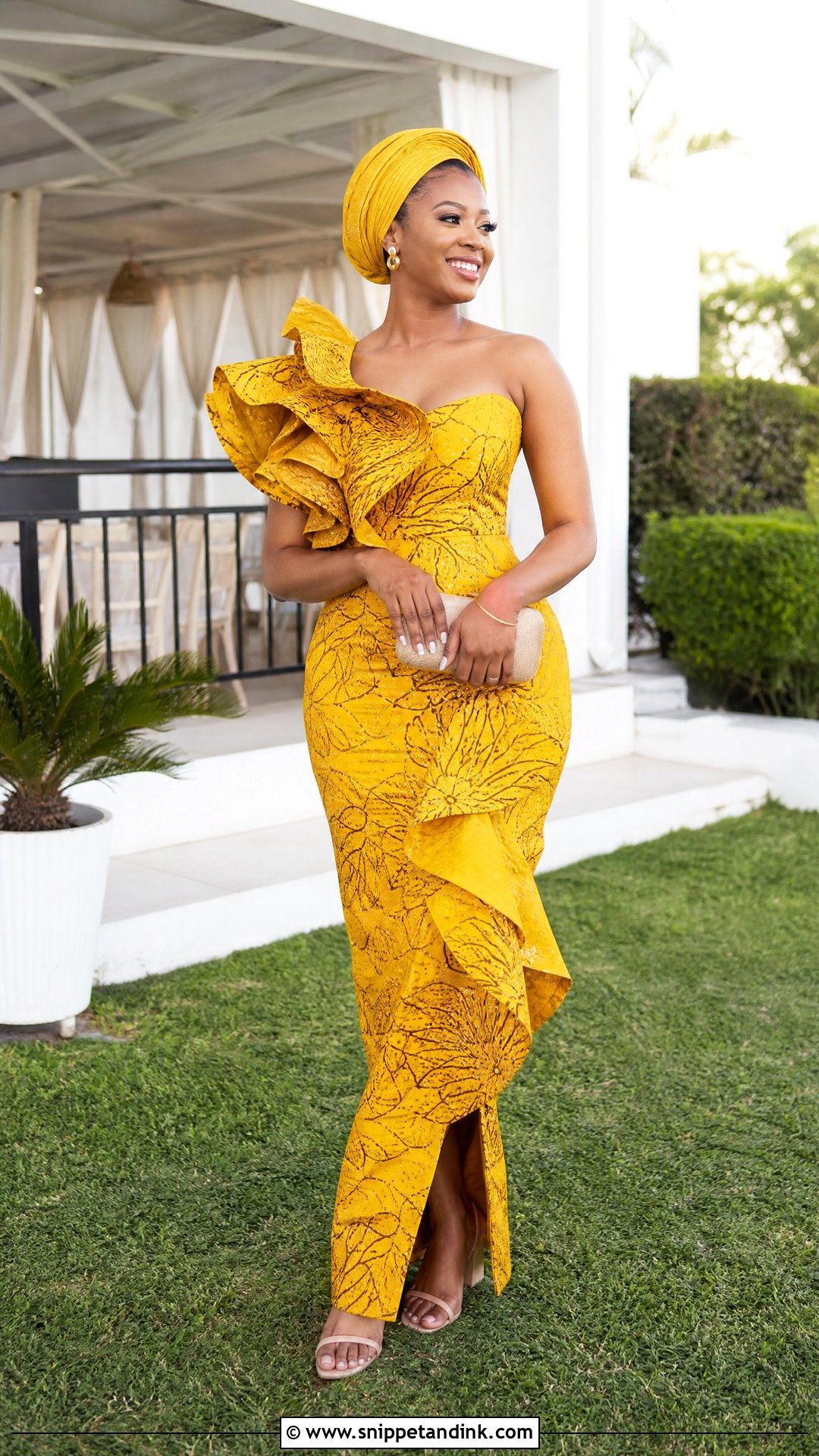
Yellow brings warmth, and a fitted yellow chitenge dress with one asymmetric ruffle running from shoulder to skirt draws a long vertical line. Keep the rest of the shape plain so the ruffle stays the feature. A modest back slit makes walking and dancing easier without spoiling the line. Bright yellow can flatten in harsh midday sun, so a slightly golden shade often photographs better than a pale lemon. A neatly tied headwrap and nude sandals keep it light.
12. Pink Cape Sleeve Chilanga Mulilo Dress
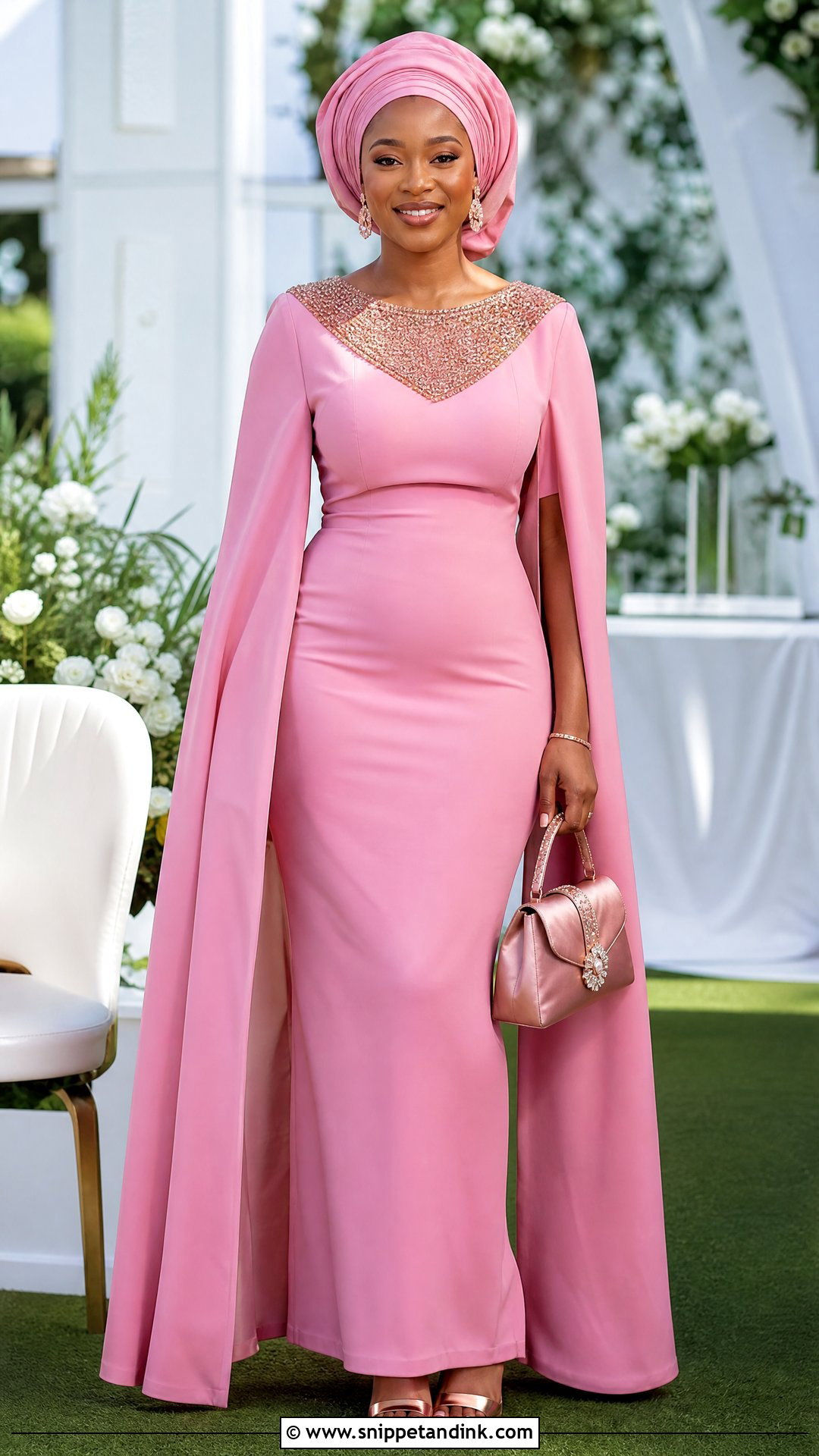
Cape sleeves give arm coverage that moves, which is helpful when elders expect modesty and the day is warm. Make them from light chiffon or soft chitenge and end them at the elbow or upper calf; longer panels catch on pots, chairs and the people beside you. Rose gold beading at the neckline adds a little sparkle. A matching pink headwrap, small earrings and rose gold flats or low heels keep it easy across a long afternoon.
13. Teal Wrap Chilanga Mulilo Dress
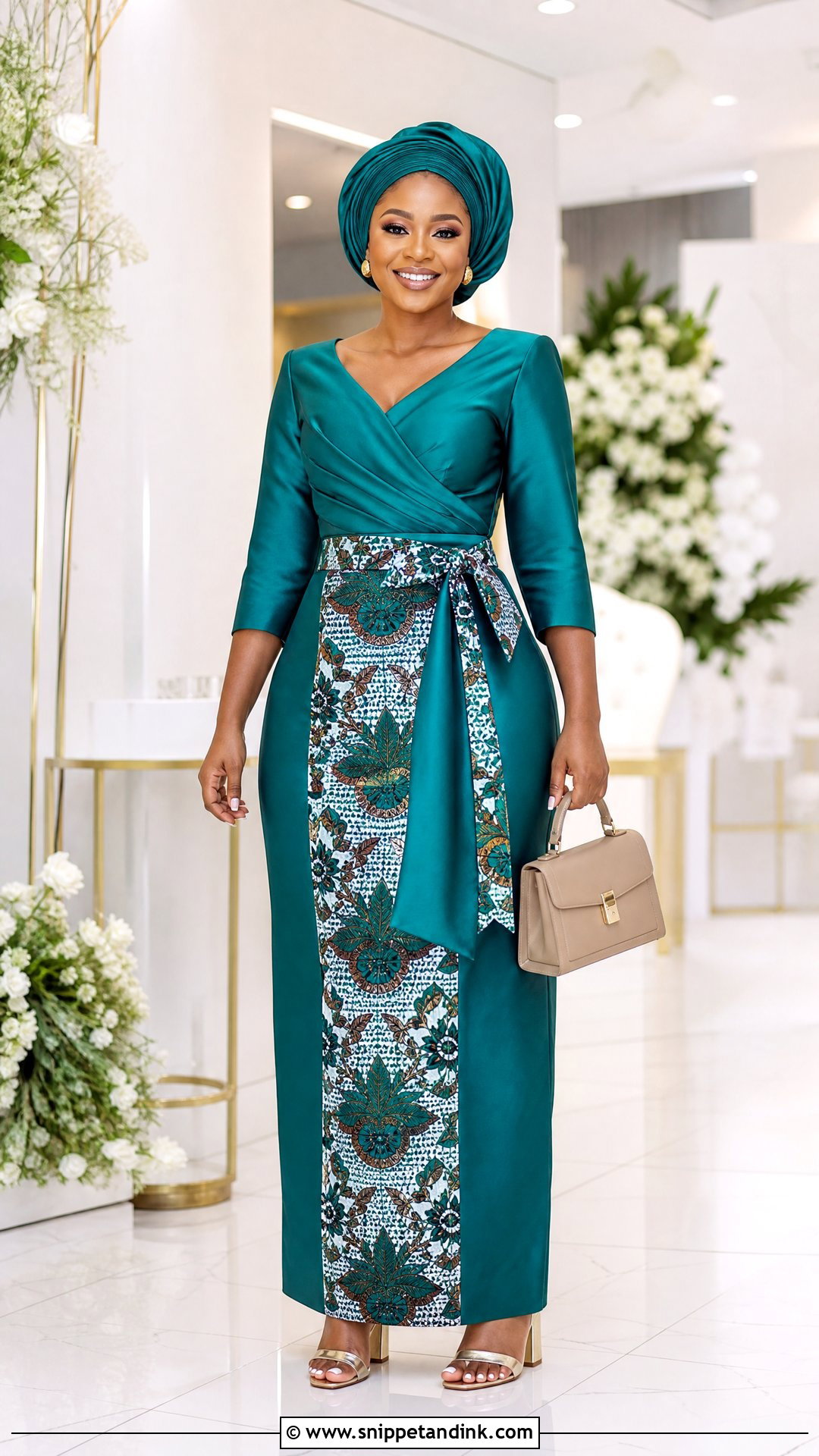
A wrap shape defines the waist and flatters a wide range of figures. For a formal ceremony, I’d have the wrap bodice stitched closed rather than tied, so it doesn’t loosen while you dance. A chitenge sash at the waist and a printed panel down the skirt add length. Three-quarter sleeves handle the temperature change between a hot afternoon and a cool evening. If the neckline is lower than you want, an inset panel in matching fabric is a quick fix. Metallic block heels keep you steady.
14. Navy Long-Sleeve Chilanga Mulilo Dress
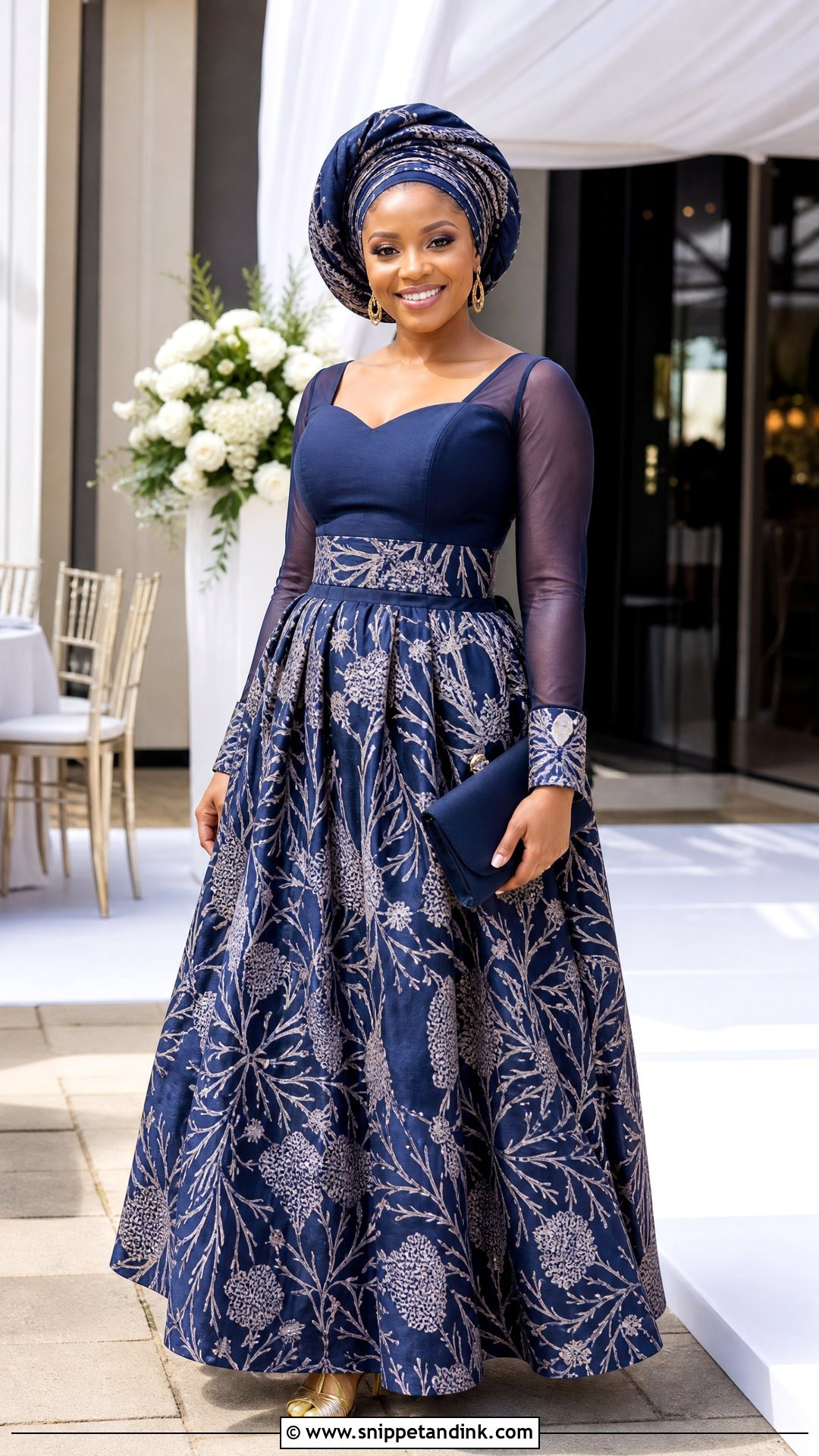
Navy is a calm base that makes colorful traditional prints look brighter. A navy bodice, chitenge waistband and full printed skirt is the classic arrangement. Sheer sleeves with printed cuffs give coverage without weight, but line the cuffs: stiff wax print or beadwork rubs at the wrist over a long day. Gold low heels pick up the warm tones in the print. It suits a bride who prefers deeper colors.

15. Rust Asymmetric Chilanga Mulilo Dress
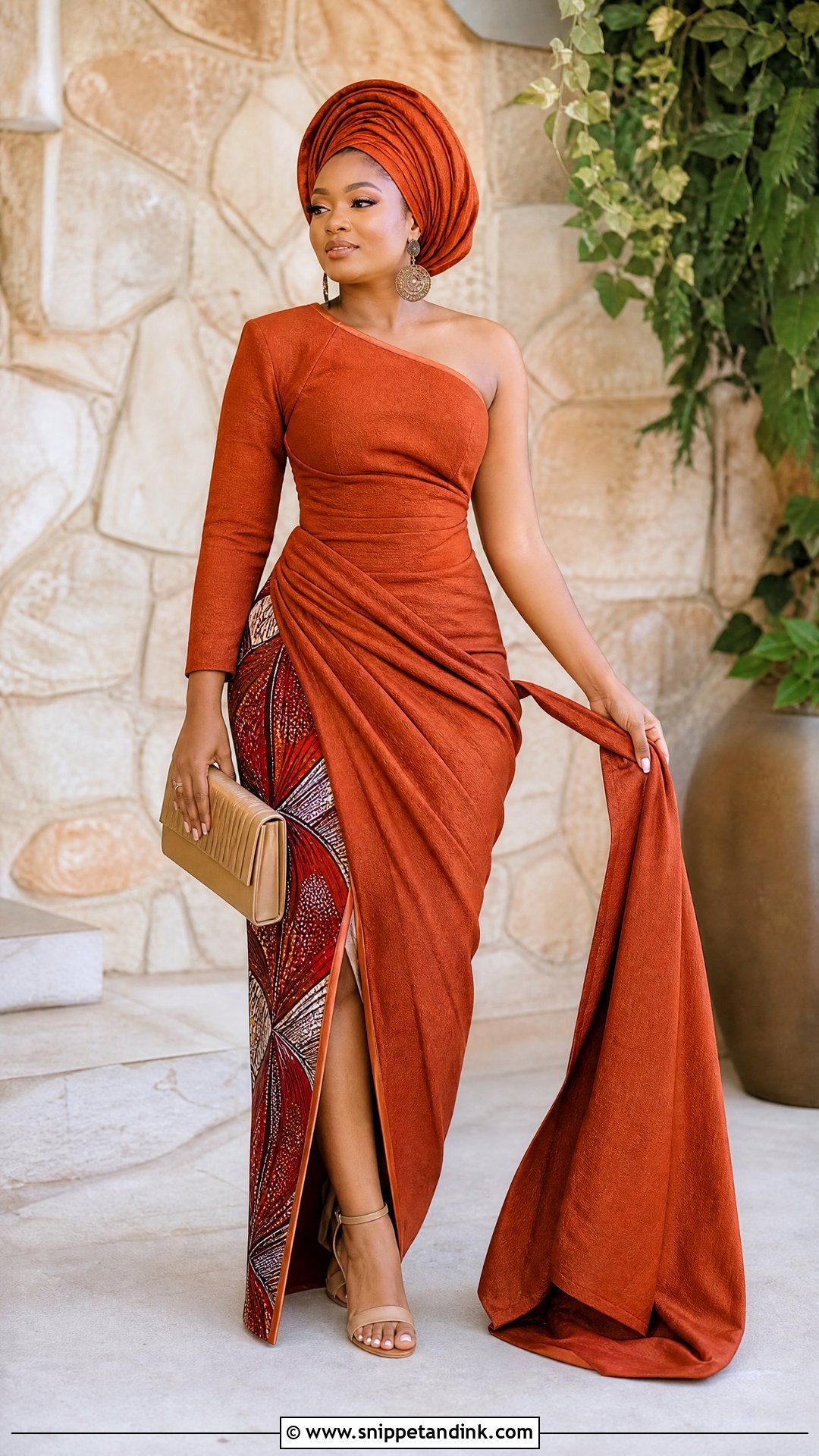
Rust looks warm against greenery and stone, which makes it a good pick for an outdoor compound. An asymmetric dress with one fitted sleeve and a diagonal neckline can carry chitenge through the shoulder, waist and side panel as one continuous line. Plan the print layout with the tailor so the pattern flows across seams rather than breaking at them. A removable side drape is for portraits only. A rust headwrap, bronze earrings and a tan clutch finish it.
16. Cream Beaded Chilanga Mulilo Dress
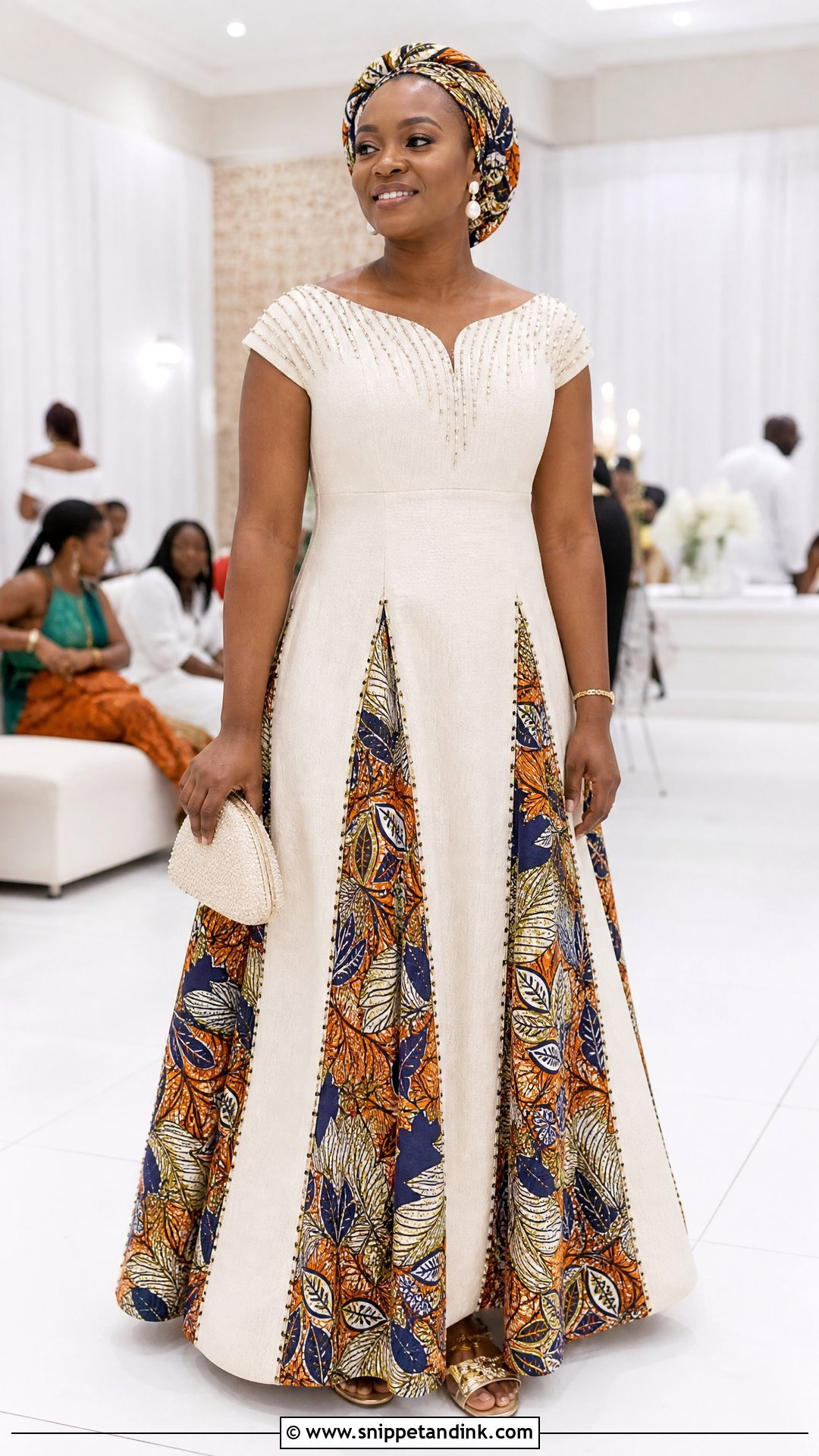
Cream gives beadwork and colorful chitenge accents a soft background. An A-line with a beaded neckline and printed panels through the skirt reads clearly as celebration wear, especially with a matching headwrap. Ask that the beads be stitched individually or in short runs; a long single thread that snaps can shed a whole row. If the day moves between indoor rooms and an outdoor yard, keep the hem short of the ground. A narrow belt or soft peplum adds structure if you want it.
17. Red And Black Tiered Chilanga Mulilo Dress
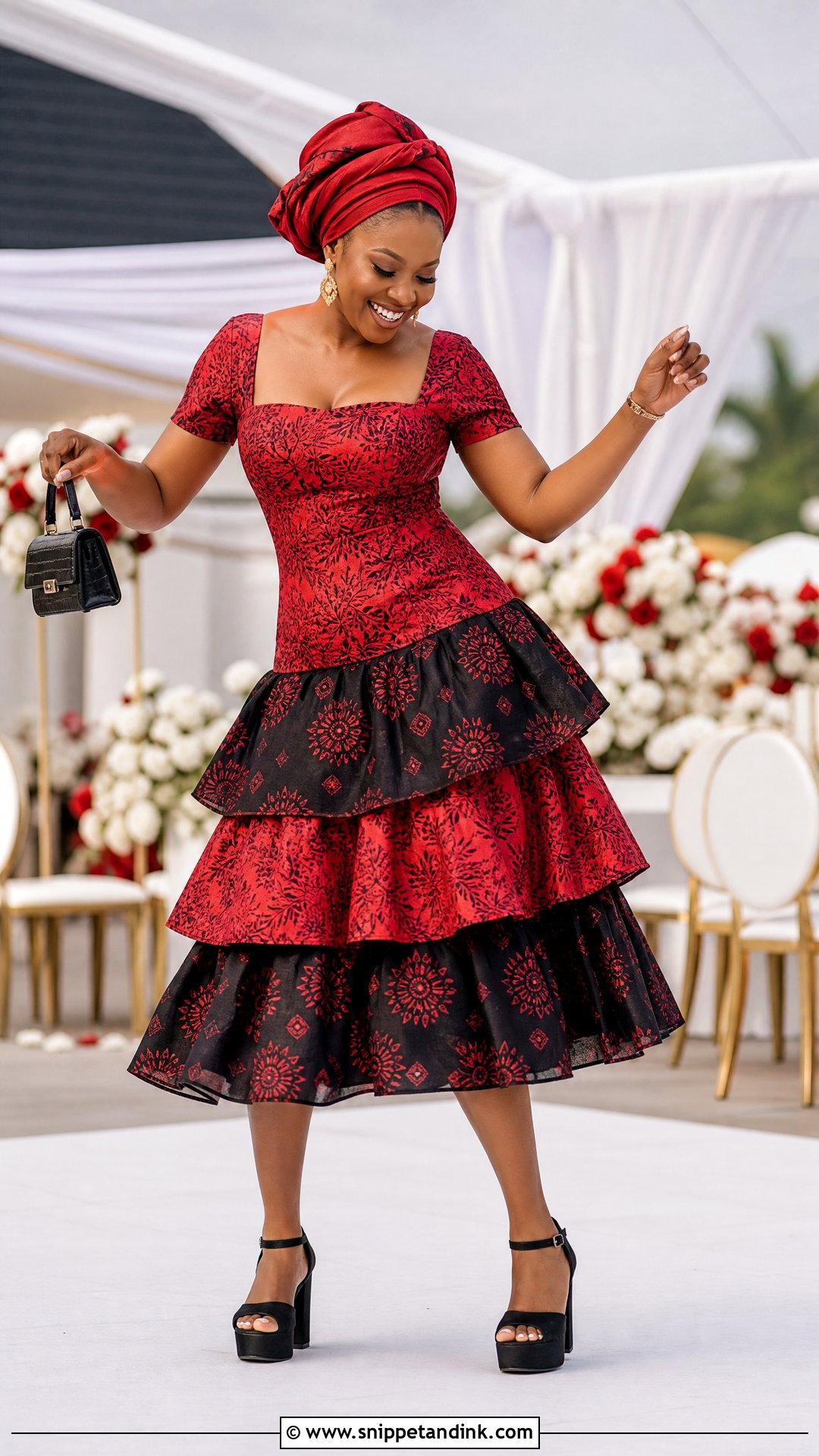
Tiers swing when you dance, which is exactly why they suit this day. Red and black chitenge on a fitted bodice with three skirt tiers works best when the first tier starts below the hip; starting at the waist adds bulk where you least want it. A square neck and short fitted sleeves balance the volume below. Three layers of wax print get heavy and hot, so ask for a light lining. Black platform heels give stability and blend into the print.
18. Multicolor Chitenge Patchwork Dress
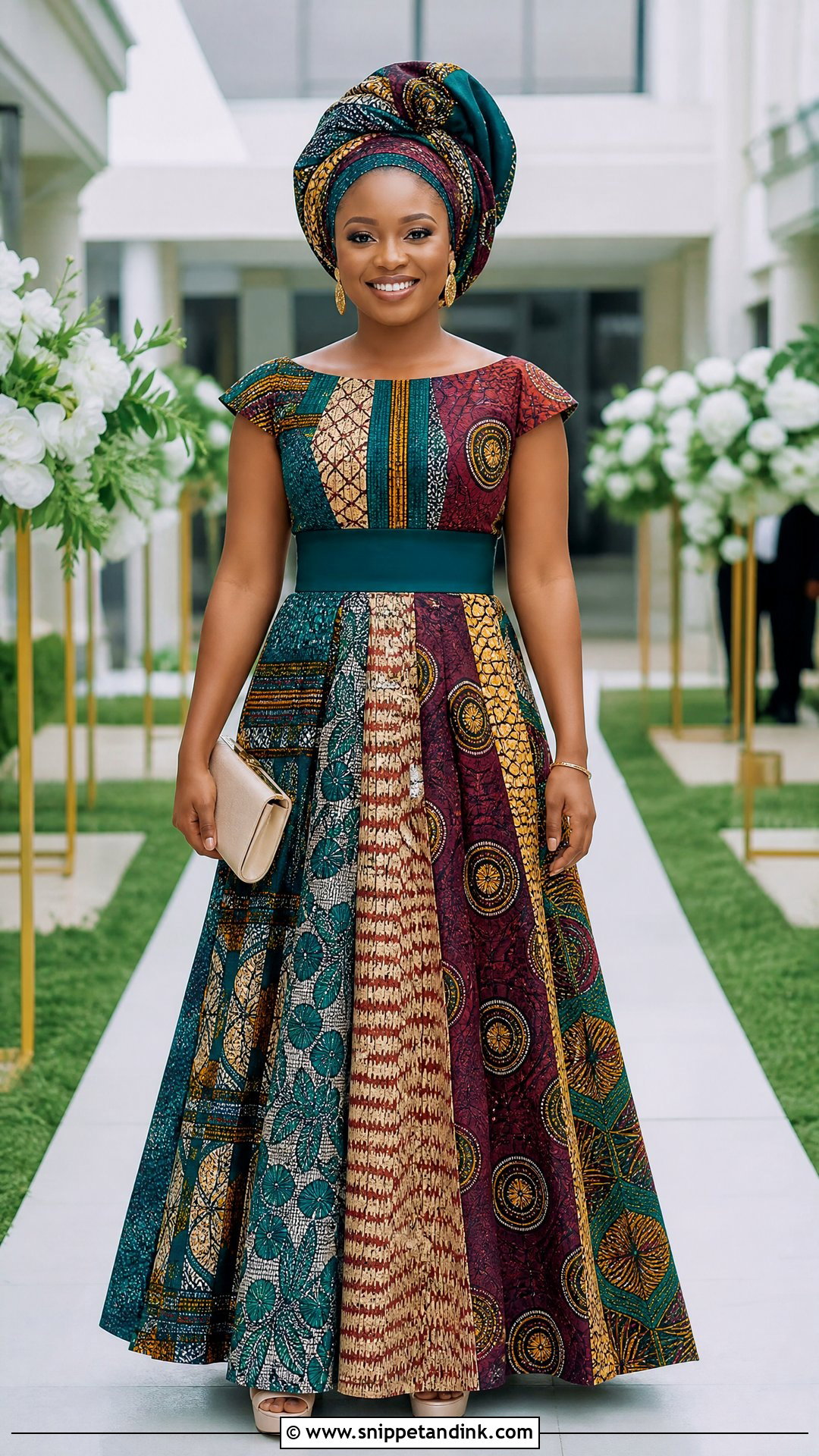
Patchwork lets you honor several family prints in one outfit, and it only works with a plan. Pick two or three chitenge designs that share at least one color, then lay them out in clean vertical panels across the bodice and skirt. I always pin the layout on the fabric with the tailor before a single cut, because a print in the wrong panel can’t be fixed afterward. Plain fabric at the waist, neck and cuffs calms it down. Tie the headwrap from the dominant print.
19. Blue And White Corset Chilanga Mulilo Dress
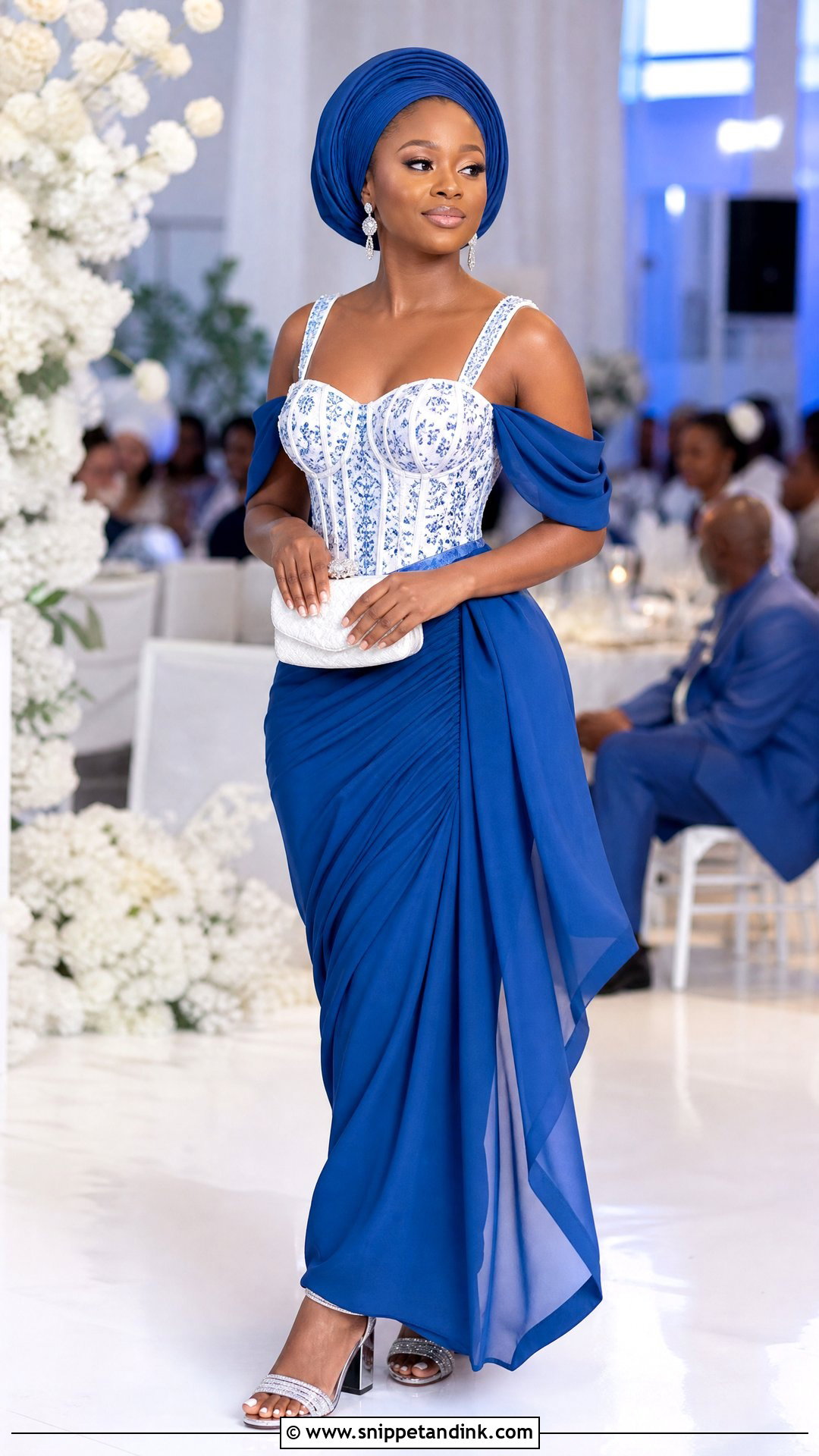
A corset-style bodice gives structure, and paired with a modest neckline and real straps it stays respectful for a family occasion. Blue and white chitenge on the bodice with a flowing blue skirt is fresh and young. The fitting matters more than usual: sit, bend forward and breathe deeply in it, because you’ll be eating and dancing. Have a final fitting close to the day, since a corset fitted a month early can feel different by then. A detachable shoulder drape adds coverage when you need it.
20. Copper Chitenge Column Dress
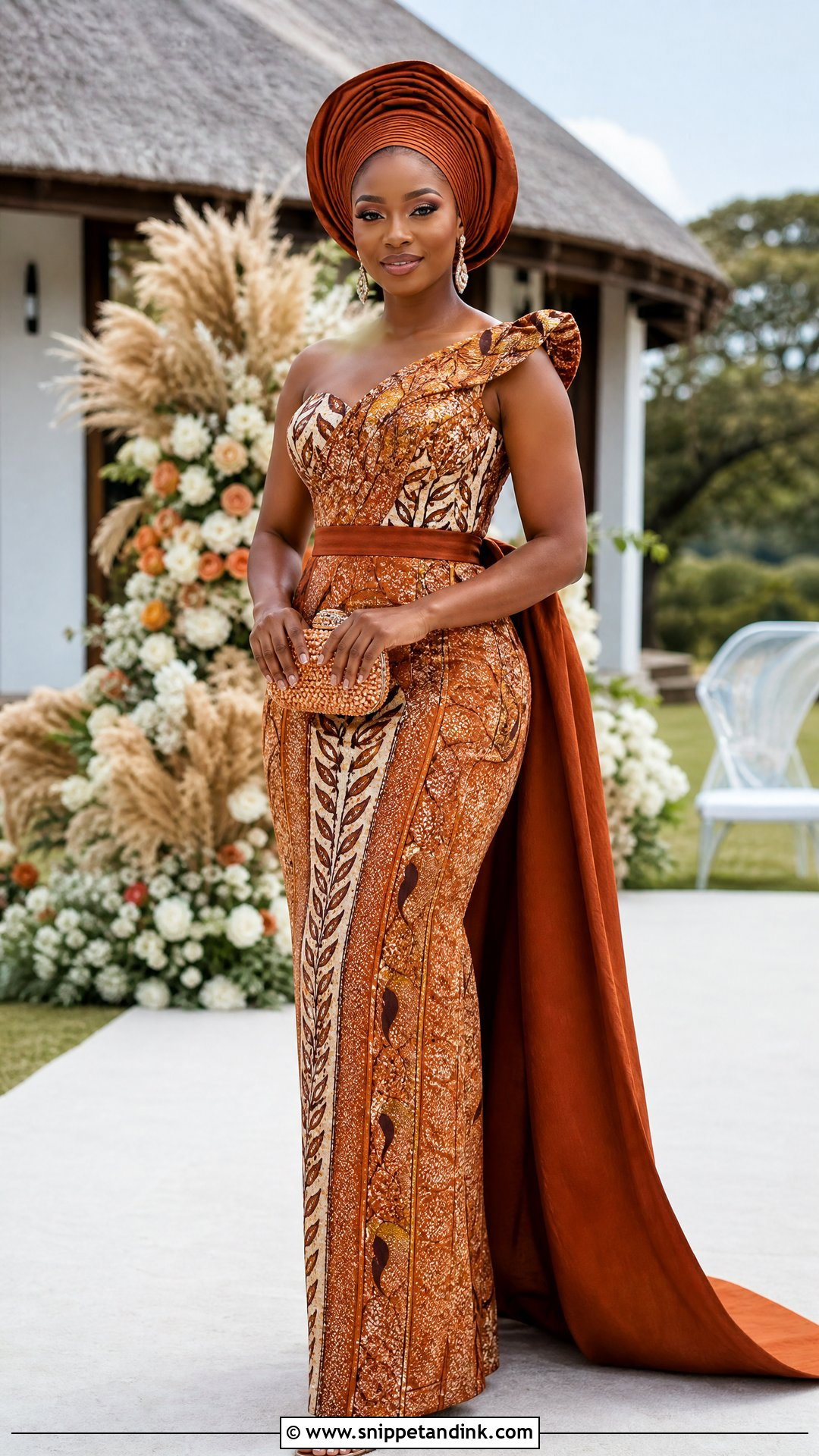
Copper reads warm and grown-up without relying on bright primaries. A column dress should skim, not grip, so you can sit on low seating and get up gracefully. Choose chitenge with copper, cream and brown in it, and add a plain copper waist panel for definition. A modest side slit helps you walk. A short overskirt or detachable back drape adds dimension for portraits. Coordinate the headwrap and jewelry with the print rather than matching every piece exactly.
How Much Chitenge a Gown Really Takes
The most common problem I see is running short of fabric halfway through. A single chitenge length is usually around two meters, which is a wrapper, not a gown. A fitted bodice with a full skirt, a headwrap and perhaps a detachable train can need several pieces, more if the print has a large repeat that must line up across seams. Take your final design to the tailor before you buy and let them tell you the quantity, then add one spare piece.
Wash it first
Wax-printed cotton can shrink a little and release dye the first time it gets wet. Ask whether your tailor prewashes, or wash it yourself in cold water before cutting, especially if the print sits next to white or cream fabric in the design.
Give the tailor real time
Structured gowns with boning, beadwork or shells take longer than a simple dress, and family members may be ordering outfits from the same fabric at the same time. Start several weeks earlier than you think you need, and book a final fitting in the last week so the fit reflects your body on the day.
Ask the Aunties Before You Settle on a Print
The right outfit for this ceremony lets you carry, greet, sit and dance while still looking like the bride everyone came to celebrate. Bright chitenge gowns look festive, and satin, lace, beadwork, cowrie shells and detachable trains bring modern character. Whatever you choose, prioritize secure construction, a breathable lining and shoes you can stand in. Above all, talk through colors, prints and your role on the day with the relatives or advisers guiding you. Customs vary between families, and their answers will shape the dress more than any trend.
You'll Like These Ideas:




Leave a Reply