
Red lehengas and silk sarees aren’t going anywhere, but brides now arrive at fittings with ivory, blush, green and gold swatches too, and plenty want something from their own region rather than a generic “bridal” look. Whatever you choose has to survive sitting through rituals, greeting a long line of relatives and walking in heavy fabric, in your venue’s climate and within your family’s customs. Below are twenty complete outfits: structured lehengas, regional sarees from Kerala to Manipur, Anarkalis, shararas, fusion shapes and heirloom pieces, each with the styling and fitting notes I’d give a client.
Why Handwork Takes Months, and When to Place the Order
Zardozi, dabka and handloom weaving are slow crafts. A heavily embroidered bridal lehenga made to measure commonly takes three to six months, and a handwoven silk saree can have a waiting list of its own. Rushed orders show up as loose threads, uneven motifs and blouses that were cut in a hurry.
A working timeline
- Six to nine months before: shop, shortlist and confirm the colour with your family.
- Six months before: order, and have measurements taken by the store rather than sending your own.
- Six to eight weeks before: first fitting, with your actual shoes and under-layers.
- Two to three weeks before: final fitting and a full dress rehearsal at home.
Get the delivery date, the number of included alterations and the policy on colour variation in writing. Hand-dyed fabric can differ slightly from the sample, and it’s better to know that before you pay the deposit.
1. Red Indian Bridal Lehenga With Double Dupatta
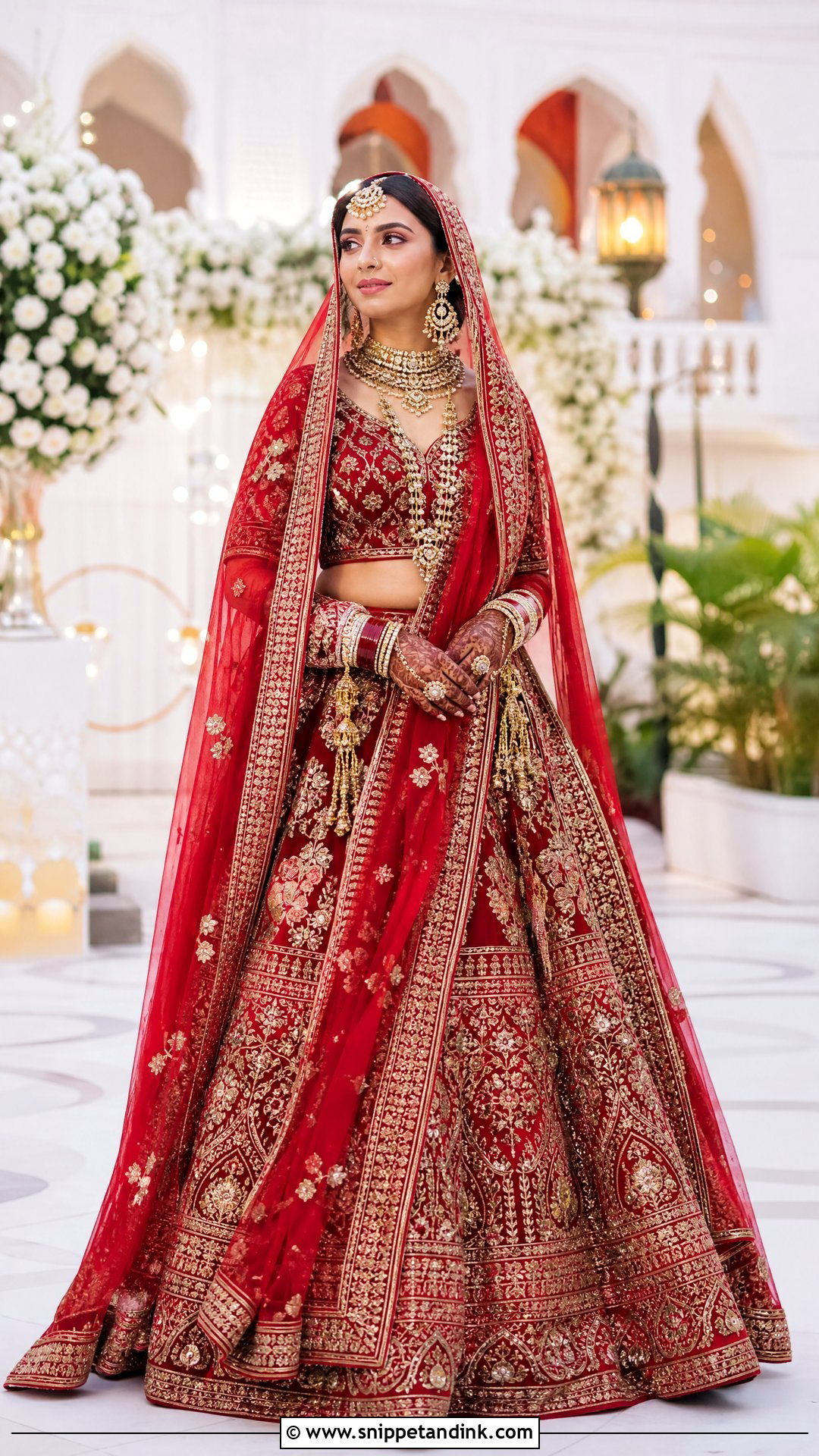
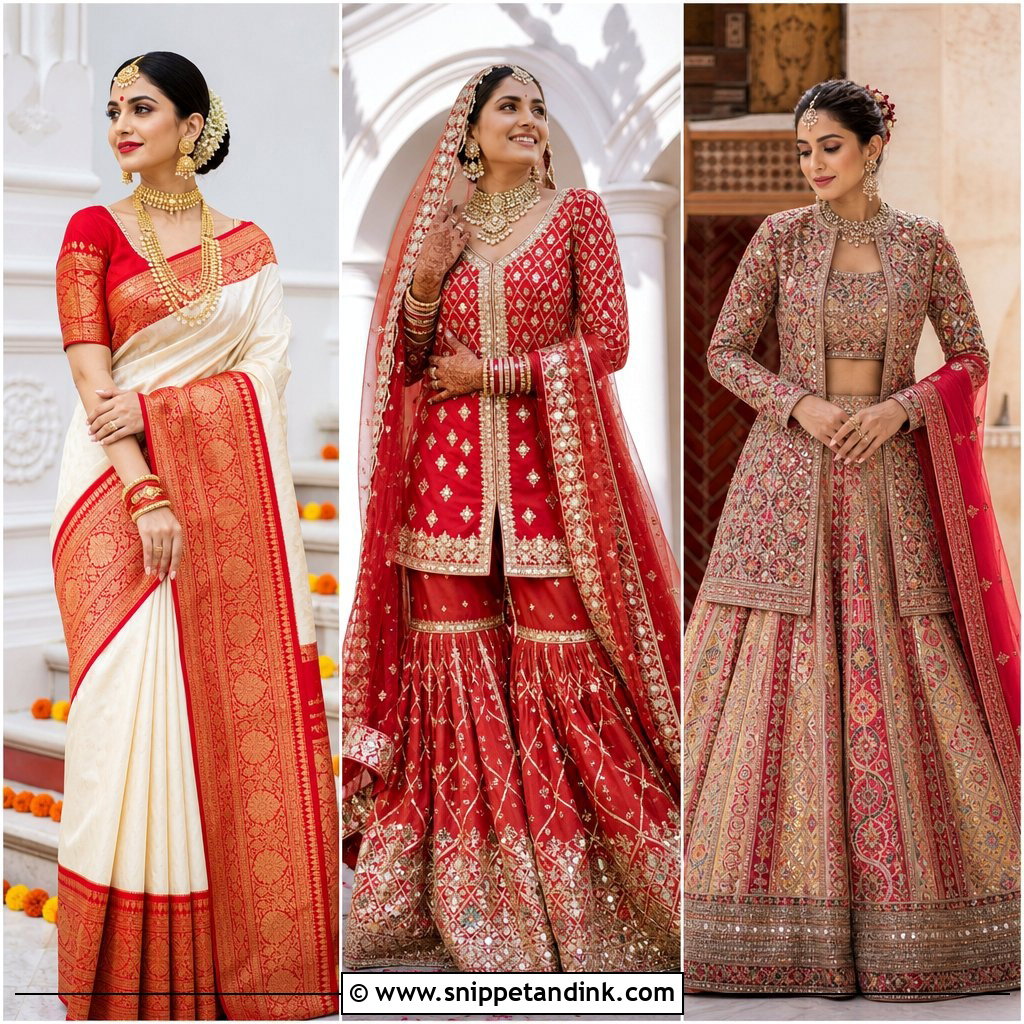
Raw silk or velvet in deep red, worked with zardozi, dabka and antique gold, is the North Indian bridal picture most families have in mind. The double dupatta is what makes it ceremonial: a light one over the head, a heavily embellished one across the shoulder. That second dupatta is heavy, so I pin it at the waist as well as the shoulder or it drags the blouse sideways. A choker, long necklace, maang tikka and juttis, a flower-dressed sleek bun and defined eyes with a rich rose or red lip complete it.
2. Maroon Velvet Indian Bridal Lehenga
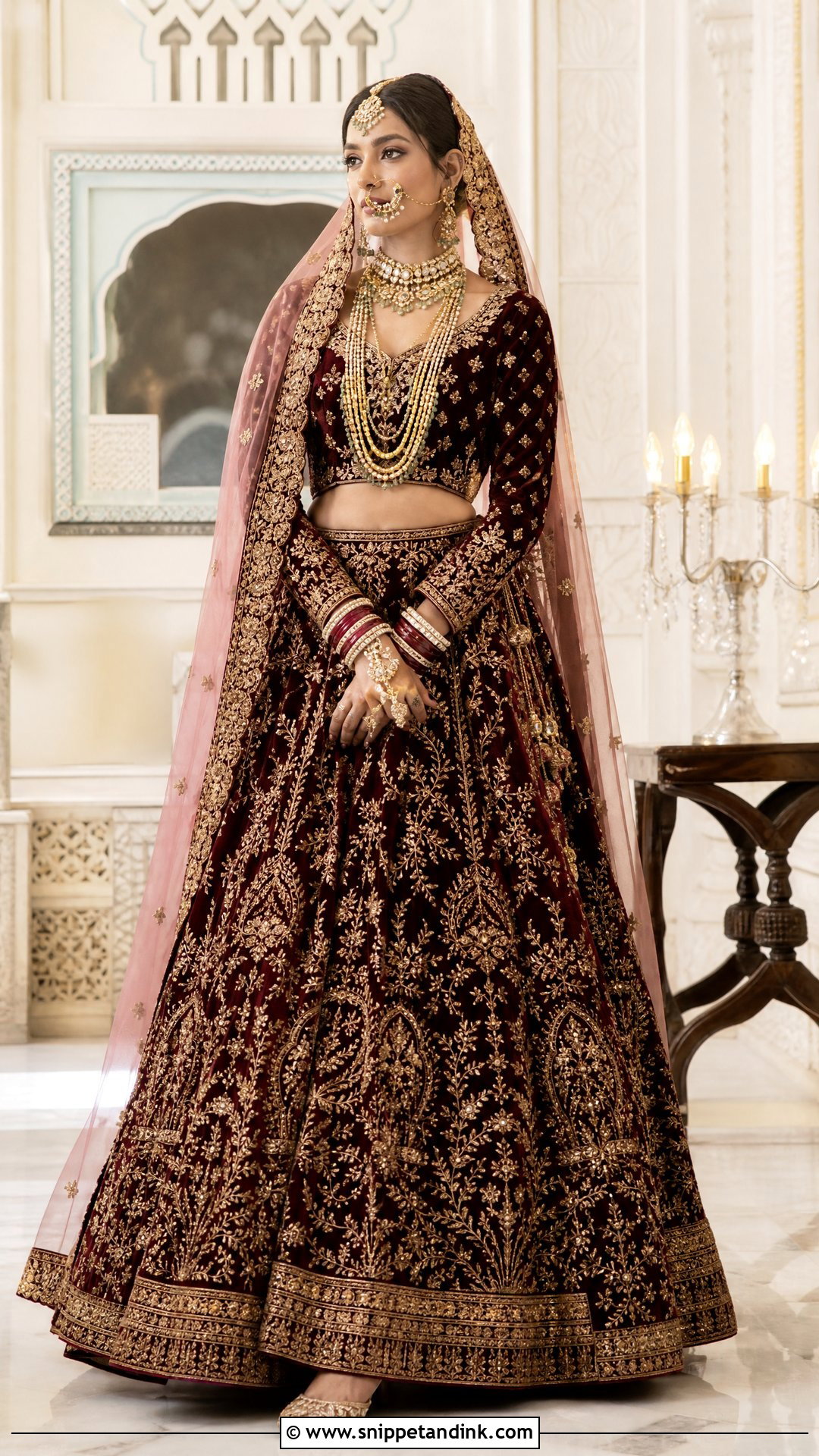
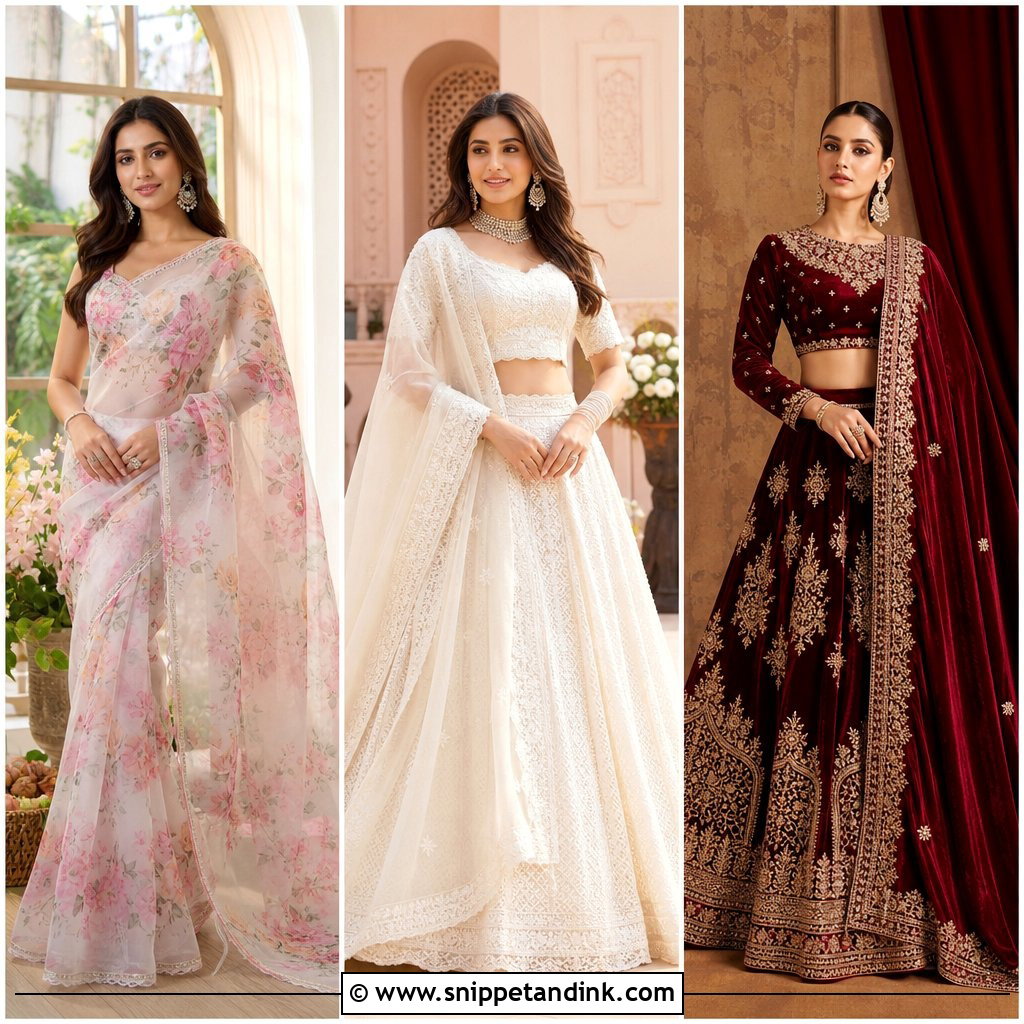
Maroon velvet is for an evening or winter wedding. Its dense pile holds antique gold, dull silver or tonal threadwork crisply, and the colour reads as rich rather than bright. A sweeping skirt doesn’t need a huge can-can underneath; velvet has enough weight to fall well on its own. A soft net dupatta balances the heaviness. Polki, layered necklaces and a statement nath suit it, with cushioned juttis. One honest caveat: velvet is warm. In a hot or non air-conditioned venue I’d choose a different fabric altogether.
3. Pink Floral Indian Bridal Lehenga
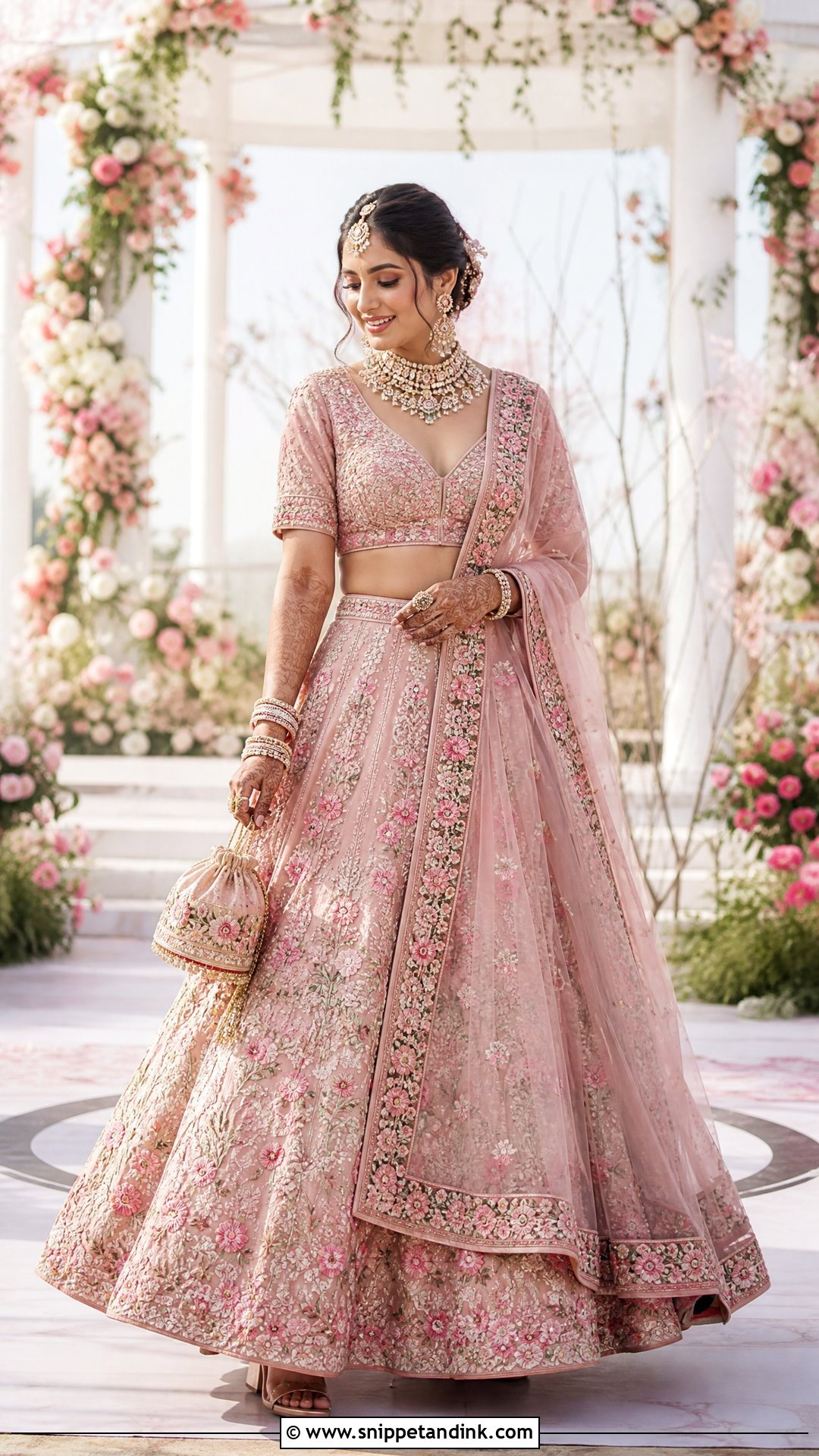
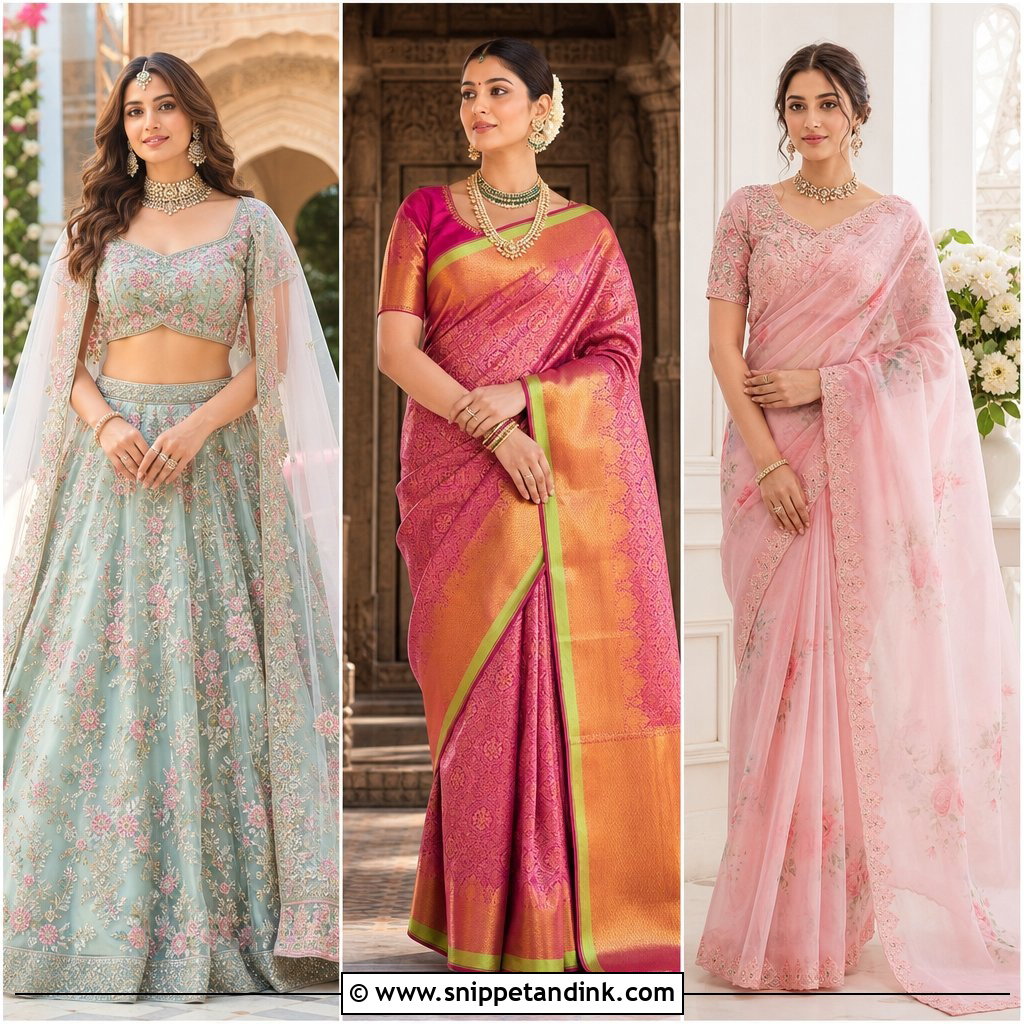
Pink florals keep the bridal presence of red with a lighter mood. Blush and dusty pink suit daylight; rani pink holds up after dark. Embroidered flowers with pearls and fine metallic thread give texture. A matching blouse keeps it cohesive and a sheer floral-bordered dupatta adds air. The hairstyle depends on the neckline and where the veil sits: a high neck wants a bun, an open neck can take waves. Kundan or polki with pearl drops echoes the palette for a garden or spring ceremony.
4. Ivory And Gold Indian Bridal Lehenga
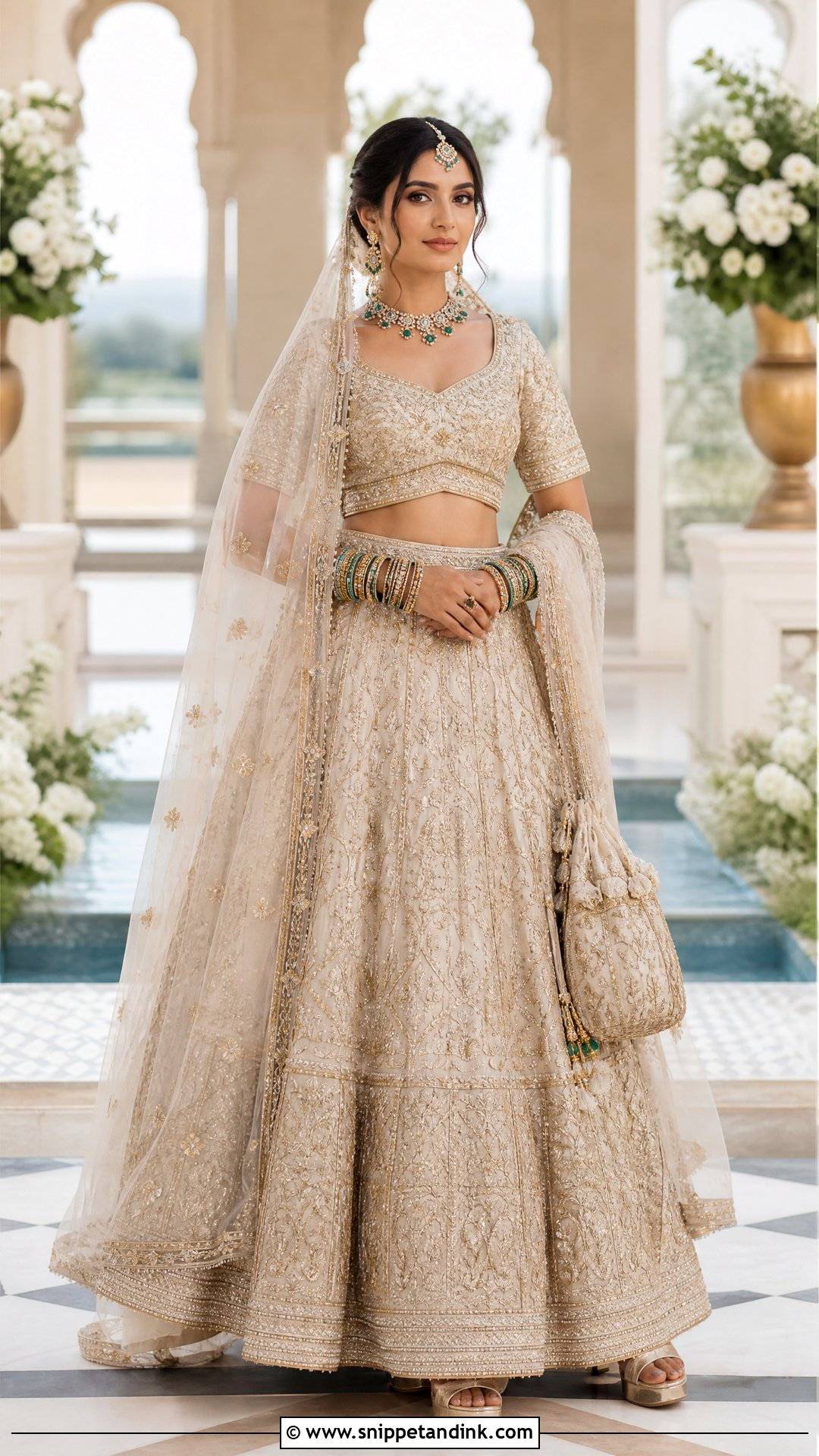
Ivory and gold reads luminous instead of loud. Silk, tissue, organza or raw silk all work, with the gold spread across skirt, blouse and dupatta so no piece looks unfinished. Pearls soften the metal. Emerald, ruby or uncut diamond jewelry adds a controlled pop of colour. More brides are choosing ivory, champagne and ecru for destination and multi-event weddings, but in some families a pale outfit isn’t right for the main ritual, so I always ask the bride to check before we order. Glowing skin and a neutral rose lip keep the face fresh.
5. Pastel Peach Indian Bridal Lehenga
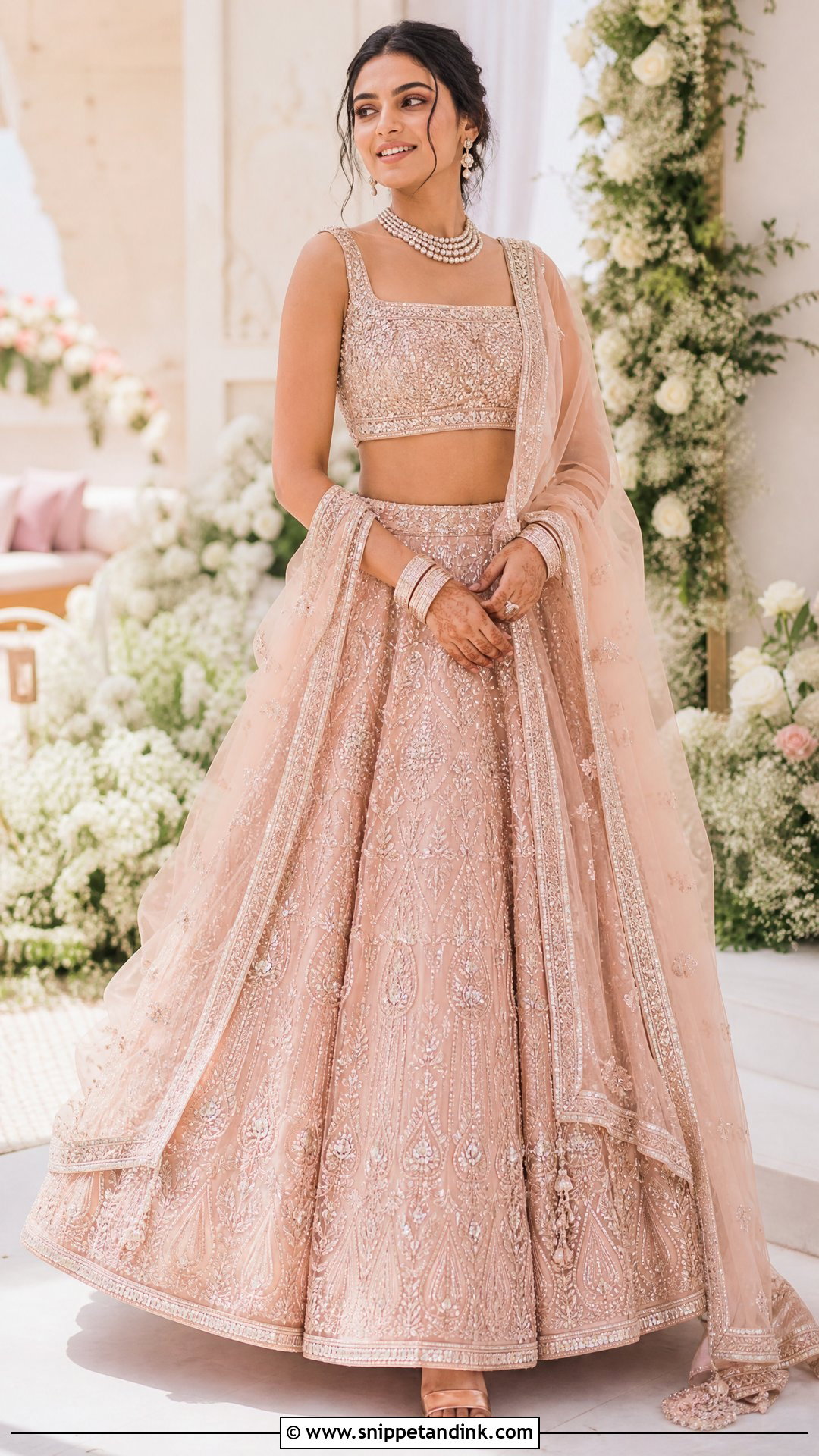
Peach is one of the most forgiving pastels on warm skin. Pick silver, champagne, pearl or rose-gold embellishment so the palette stays soft. An off-the-shoulder blouse looks modern; a scoop or square neck is more traditional and easier to drape a dupatta over. Pale colours flatten in strong sun, so choose embroidery with visible texture rather than flat print. Pearl jewelry, metallic sandals and a long-wear lip suit an outdoor morning ceremony.
6. Emerald Green Indian Bridal Lehenga
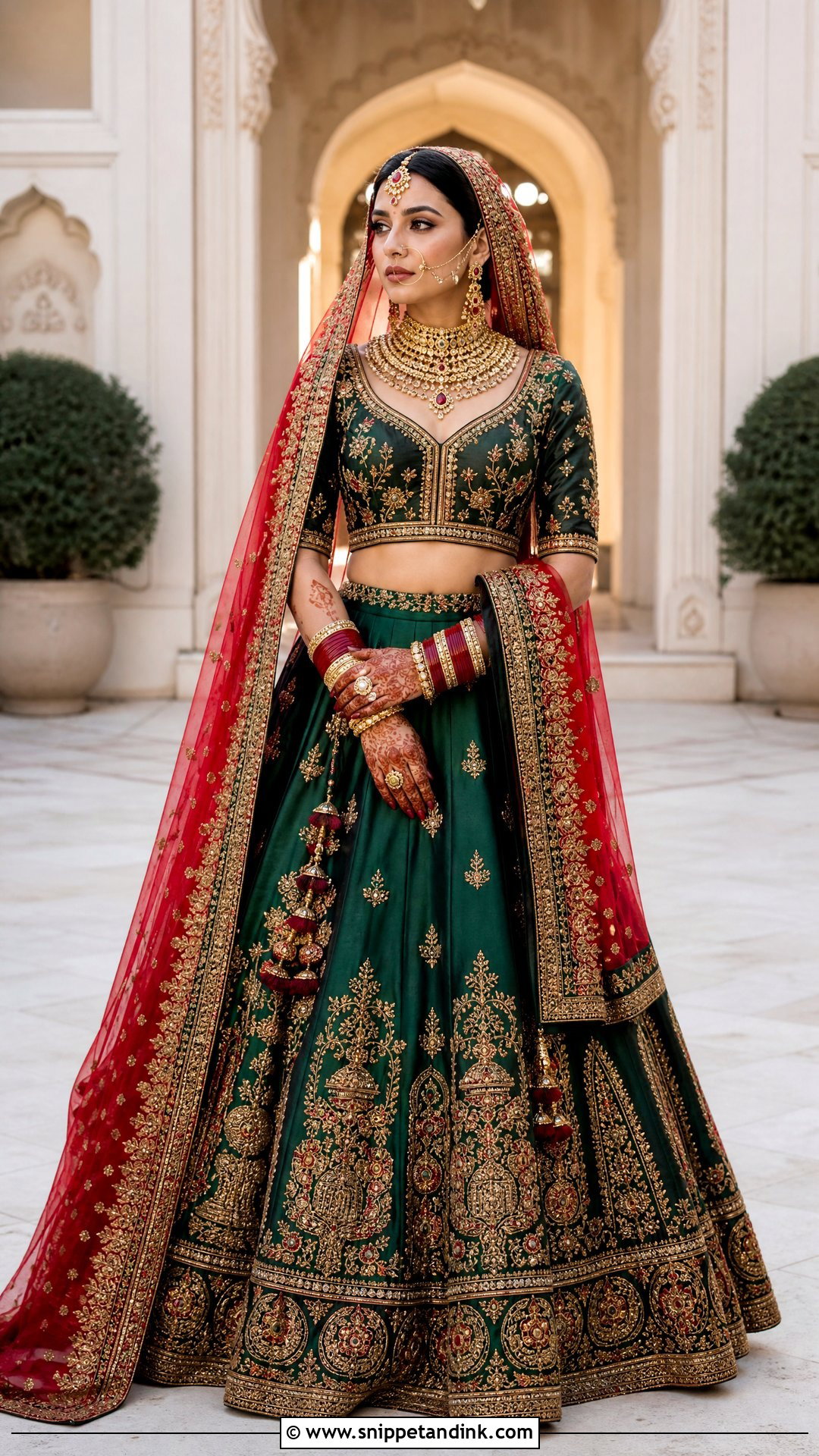
Emerald is a rich bridal colour that isn’t red, pink or maroon, and it looks best in silk or velvet with antique-gold embroidery at an evening event. Give the blouse detailed sleeves and the skirt an architectural border. A matching dupatta keeps it monochrome; a red, rust or gold veil gives it the strongest contrast. Polki, gold bangles and a maang tikka with ruby accents add warmth. I’d keep the hair up in a bun or a long braid so the neckline and jewelry stay visible.
7. Gold Indian Bridal Lehenga With Red Dupatta
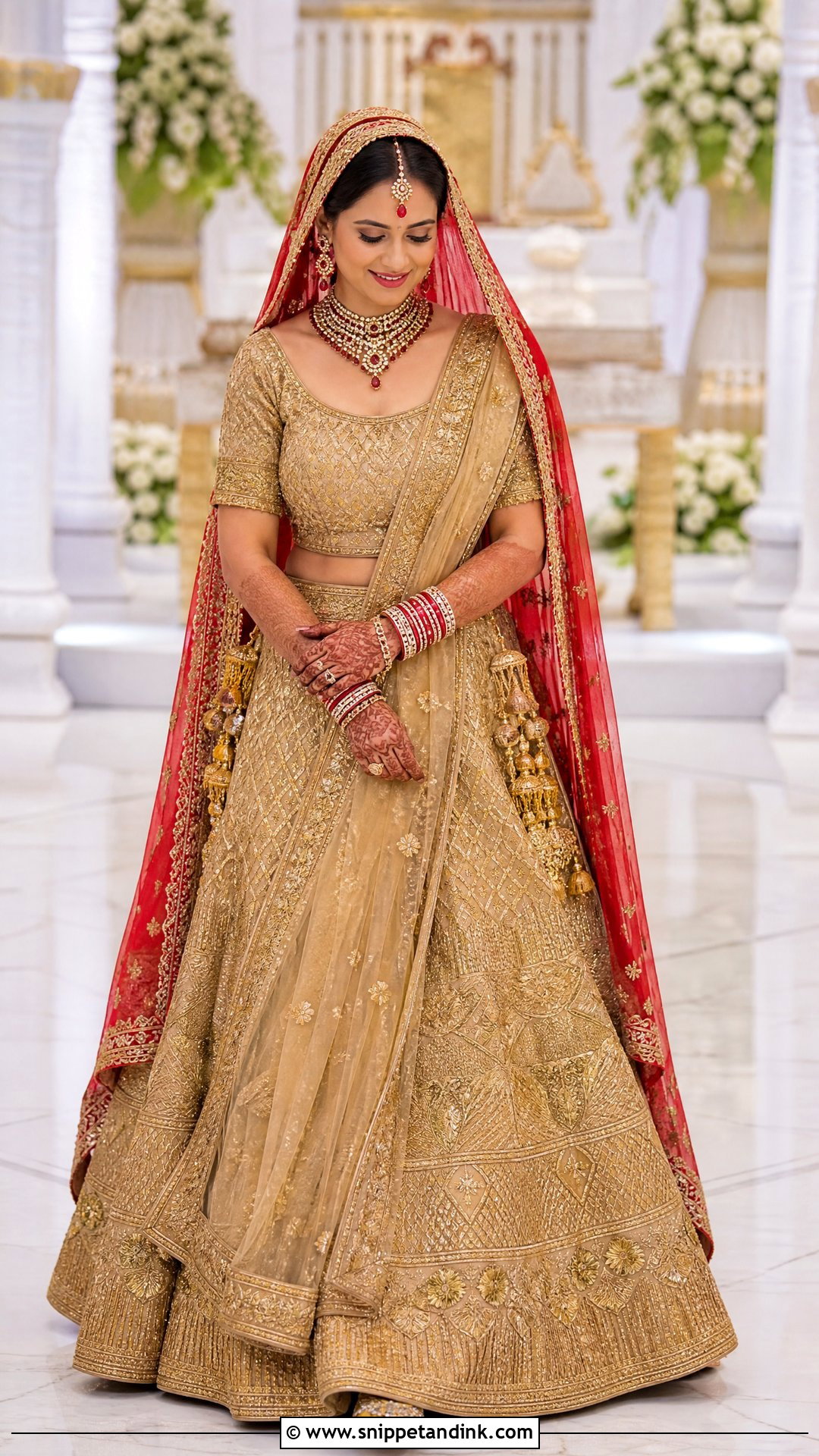
A gold lehenga with a red dupatta is a clever compromise when a bride loves metallics and her family wants red. The veil alone gives the outfit its ceremonial identity. Choose tonal embroidery, sequins or zari that sparkle without acting like a mirror; very reflective fabric bounces flash and hides detail. Kundan with red or green stones, stacked bangles and gold juttis suit it. Because a metallic base shifts with light, it moves well from a bright ceremony into an evening reception.
8. Red Banarasi Silk Indian Bridal Saree
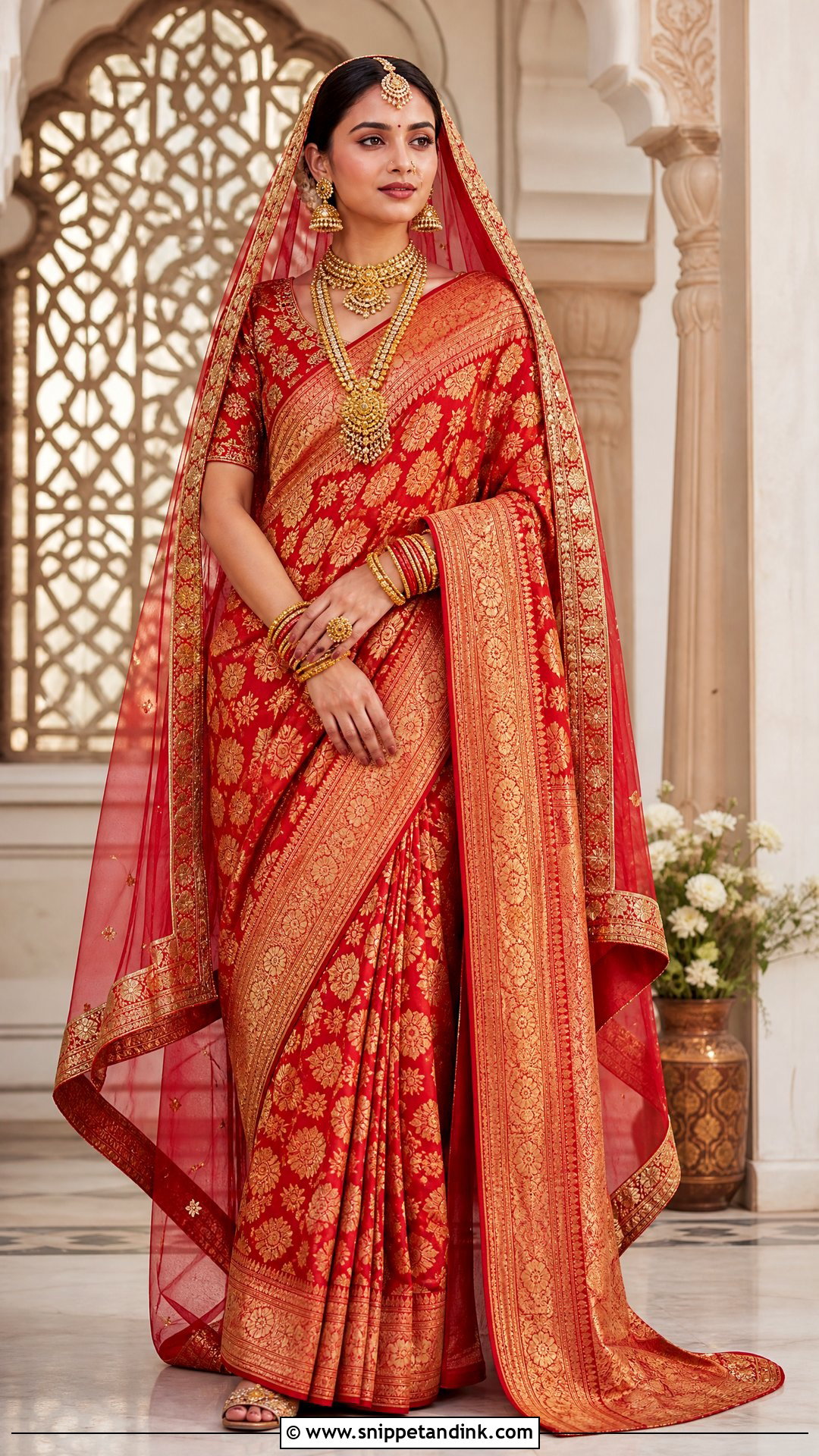
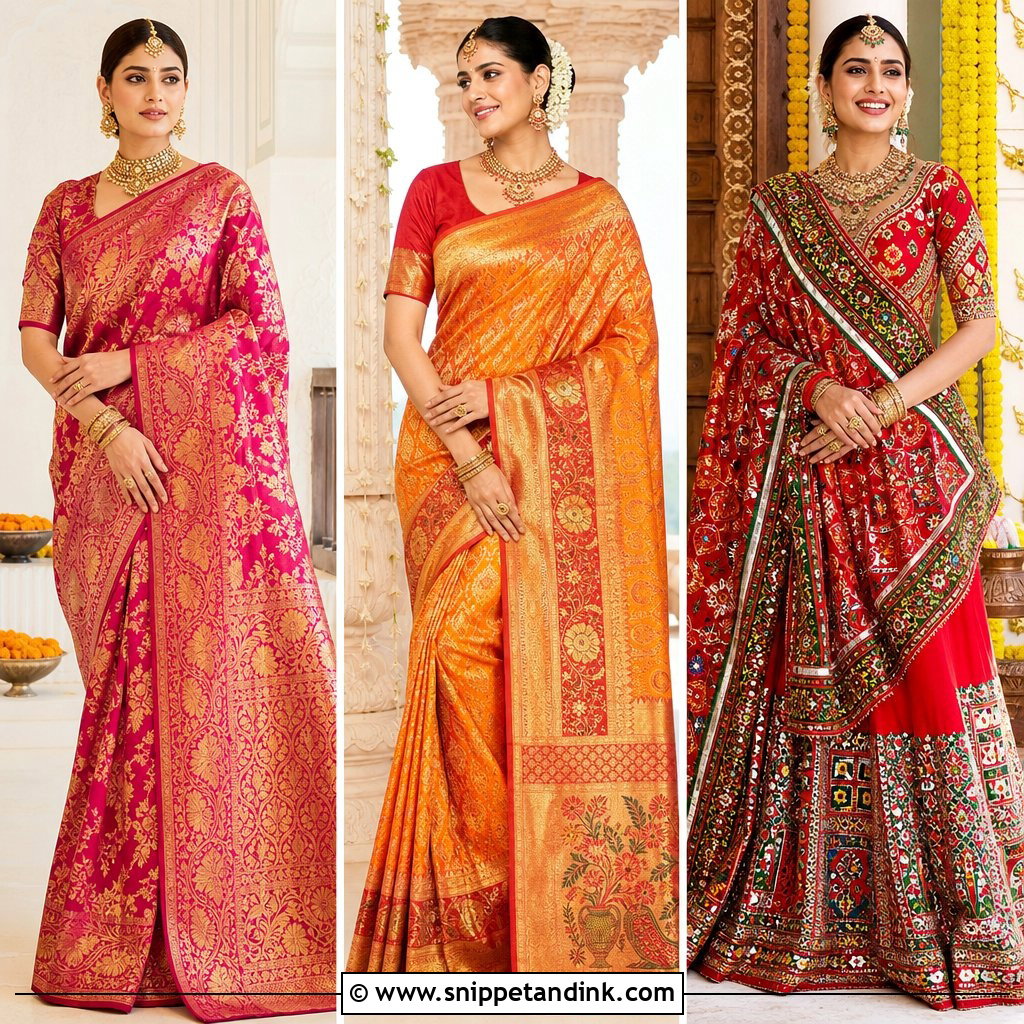
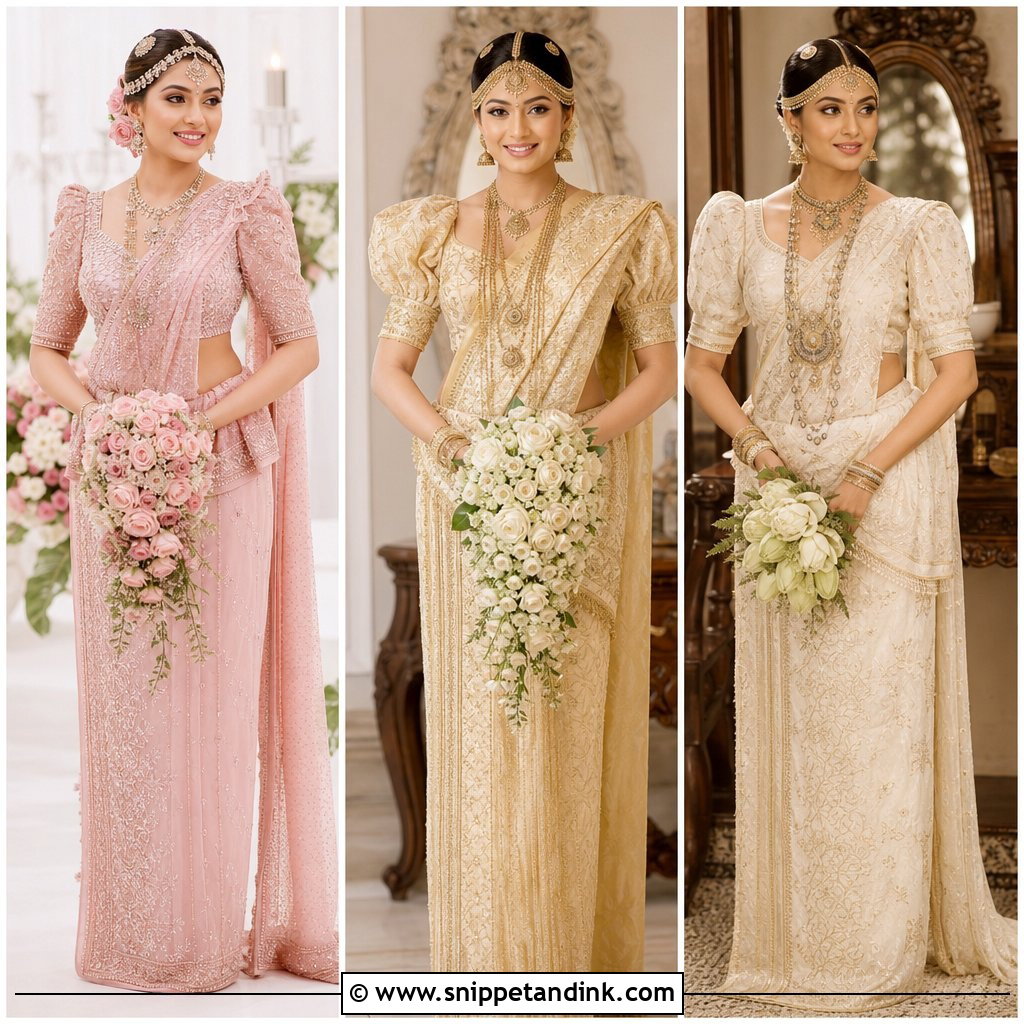
Banarasi silk woven with gold zari gives a red saree depth and history. Pair it with a closely fitted brocade, raw silk or embroidered blouse. For a bride who has never managed pleats, a pre-stitched Banarasi is a sensible shortcut, and nobody can tell from the photos. Add a separate veil if your ceremony needs head covering. Gold jewelry, jhumkas, a maang tikka and comfortable sandals finish it. Sit in it before the day; pleats that look tidy standing often splay when you sit.
9. Red Kanjeevaram Indian Bridal Saree
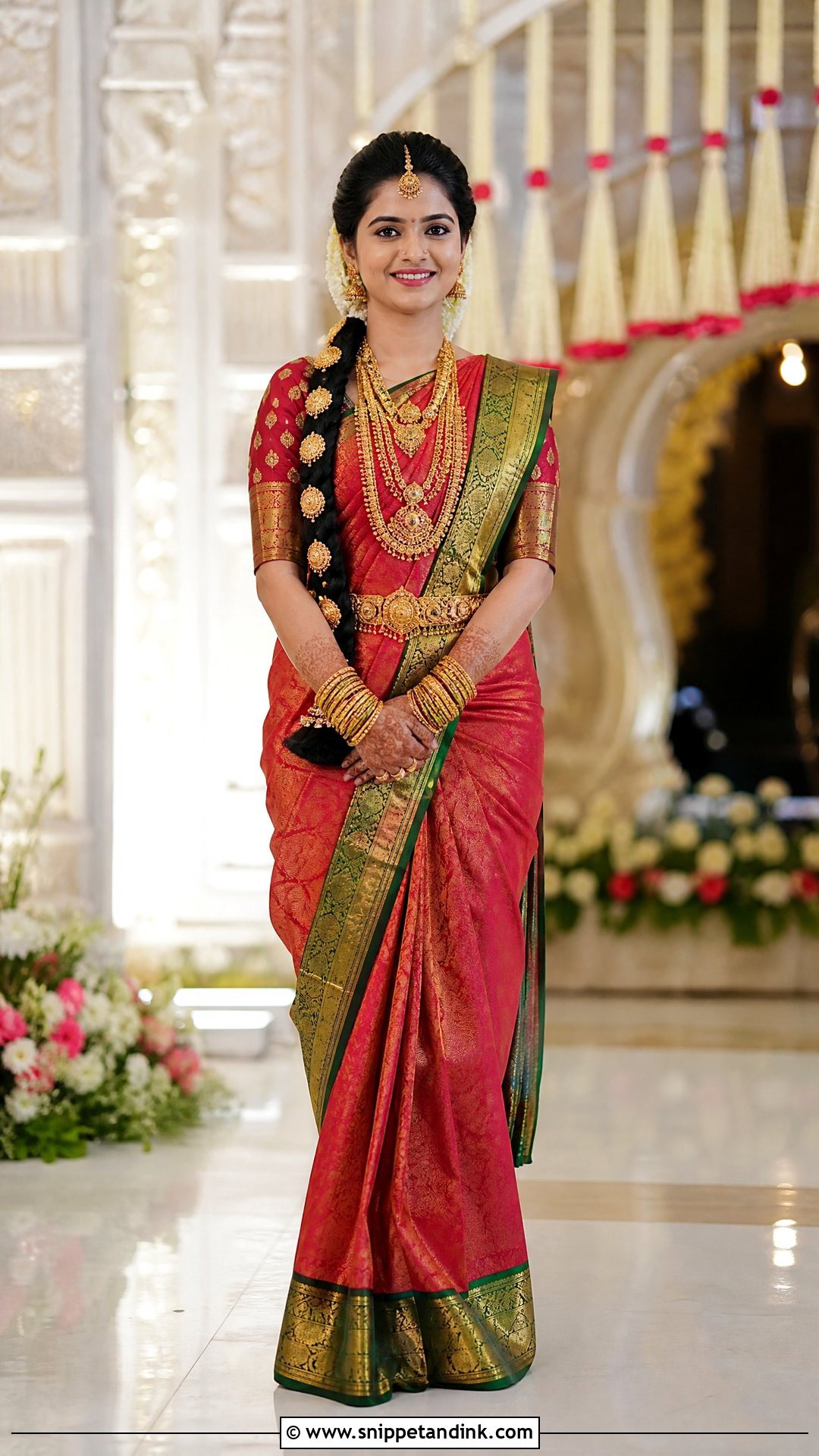
Kanchipuram silk is the traditional choice for many Tamil brides, though drapes, jewelry and rituals vary by community and family. A red Kanjeevaram with a contrasting green, maroon or gold blouse is the classic combination. The blouse has to carry a lot: a long haram, a shorter necklace, a waist belt and hair ornaments. I keep the neckline clean so the layers don’t crowd each other. A bindi and polished eye makeup and flowers around a long braid finish it. Walk in the full saree, underskirt and footwear before the ceremony.
10. White And Red Bengali Indian Bridal Saree
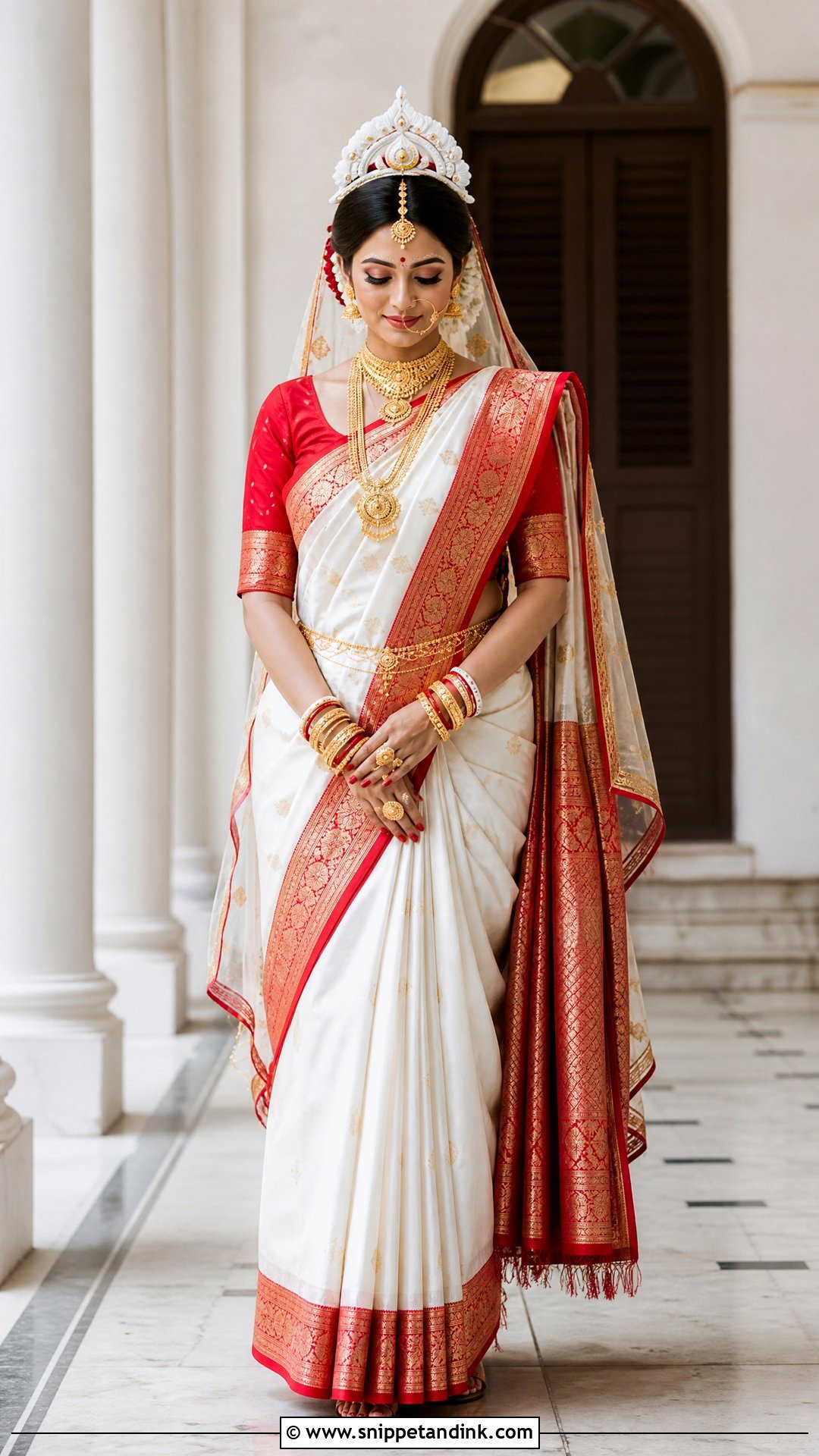
White or cream with a red border is the Bengali bridal palette almost anyone recognises. Silk or Banarasi with zari adds dimension to the pale base, and a red blouse with elbow sleeves anchors it. Layered gold, a headpiece, bangles and anklets complete the outfit. Red and white accents in makeup and accessories should follow the bride’s family customs, not a reference photo. A neat bun supports the veil. If you aren’t Bengali yourself or are unsure of the details, work with someone who dresses Bengali brides regularly.
11. Paithani Indian Bridal Saree
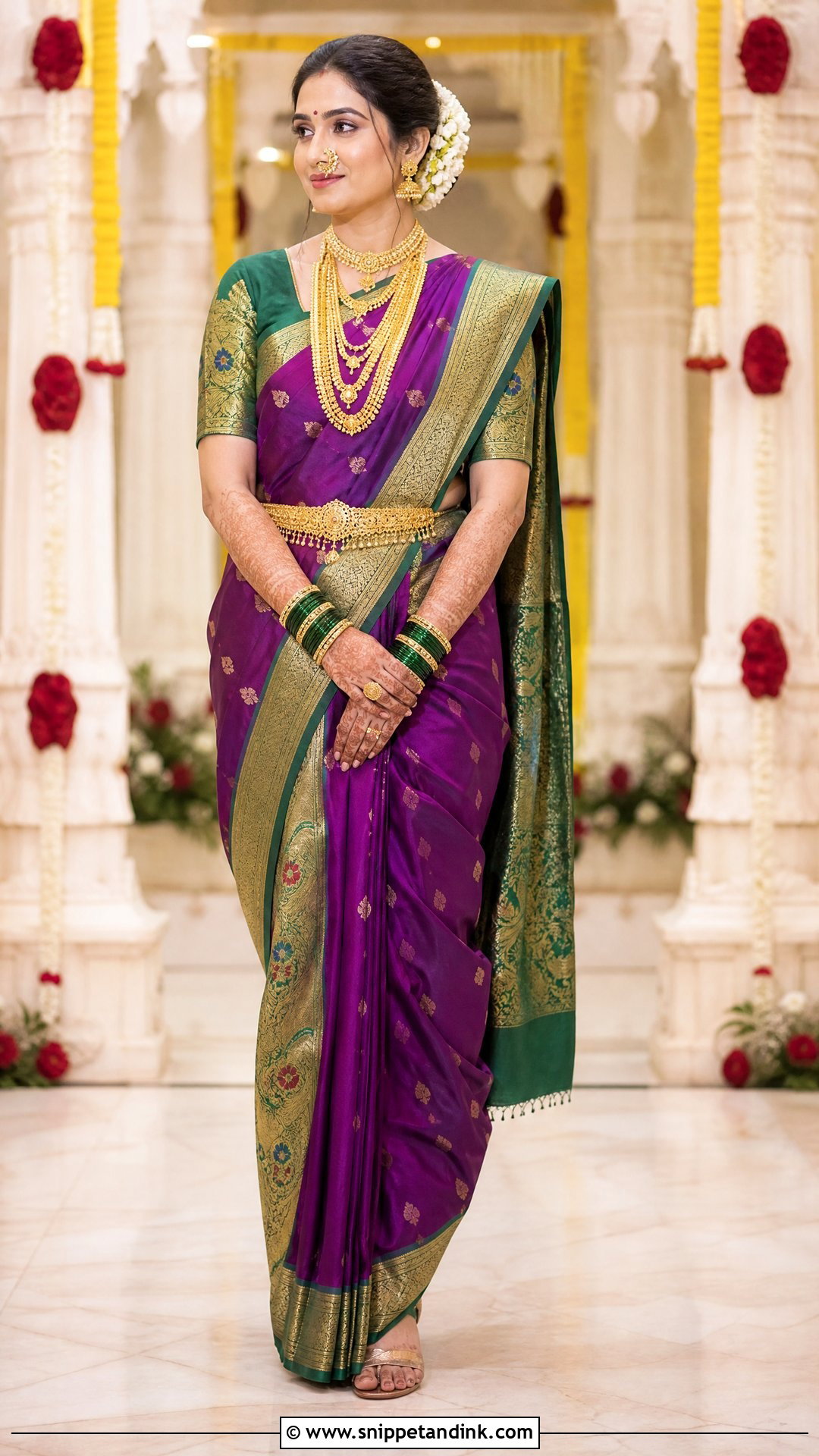
Paithani is known for its woven peacock and lotus motifs, which make it an expressive Maharashtrian bridal choice. Green, purple, red, blue and magenta with a contrasting border are all traditional. Coordinate the silk blouse with either the body or the border, not both. A nath, green bangles, a waist belt and a crescent bindi belong to the look where they fit your family’s practice. The fabric is busy, so I’d keep the blouse, bag and any extra drape plain.
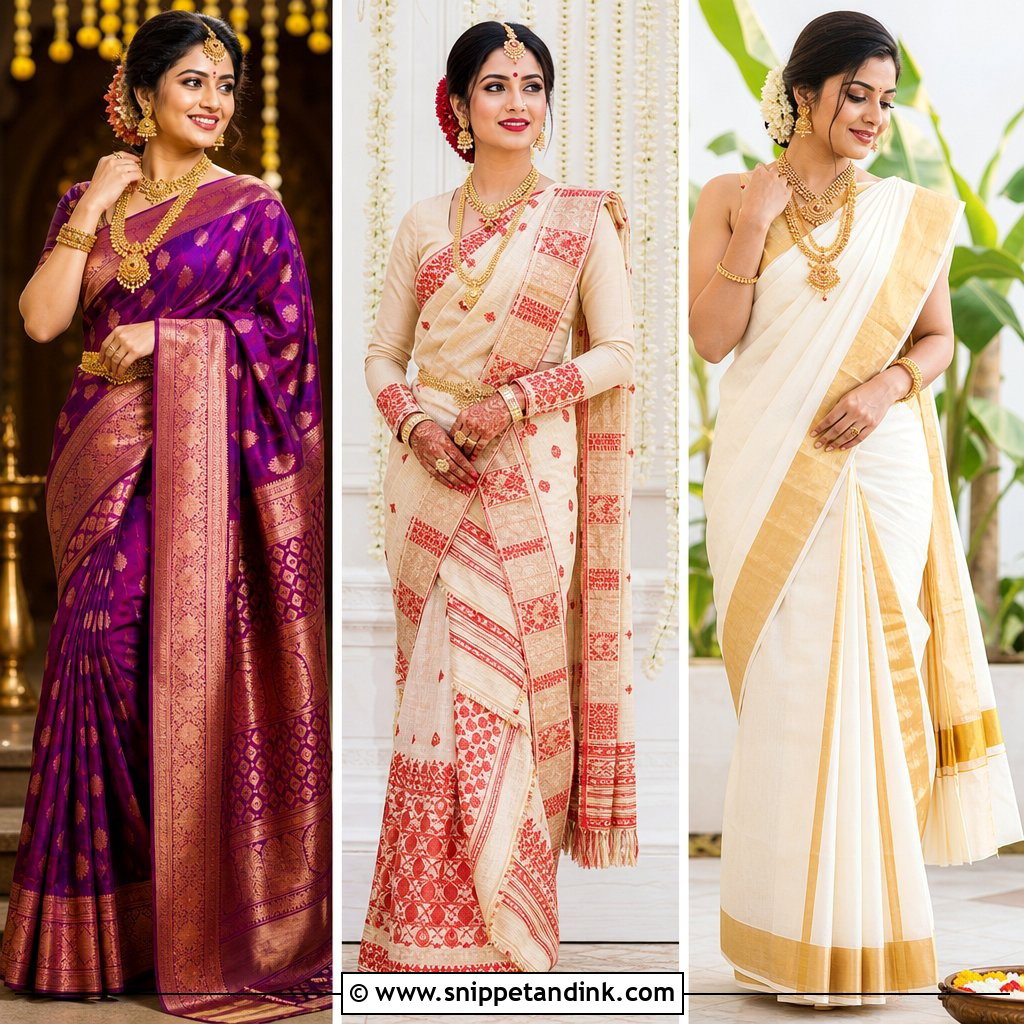
12. Ivory And Gold Kasavu Indian Bridal Saree
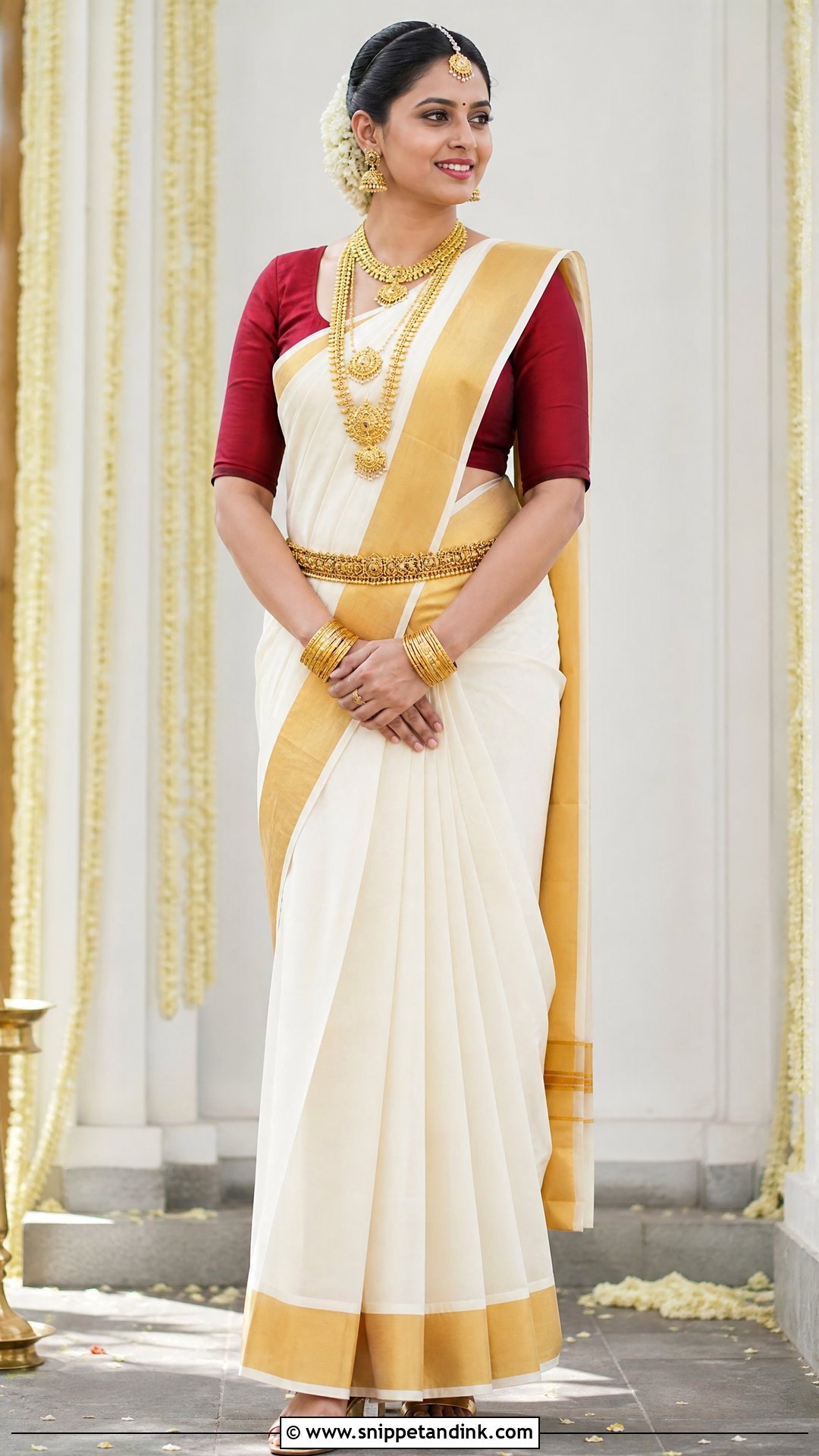
Kasavu’s calm comes from clean lines: ivory handloom, a gold border, nothing else. An ivory Kasavu saree with an ivory blouse looks serene; red, green or maroon adds contrast. Gold jewelry is the main decoration here, so arrange layered necklaces, jhumkas, a waist belt and hair ornaments with care. Jasmine around a bun or braid softens the drape. Precise pleating matters more on Kasavu than on any embroidered outfit, because there’s nothing to hide a crooked fold.
13. Red And White Gujarati Panetar Bridal Outfit
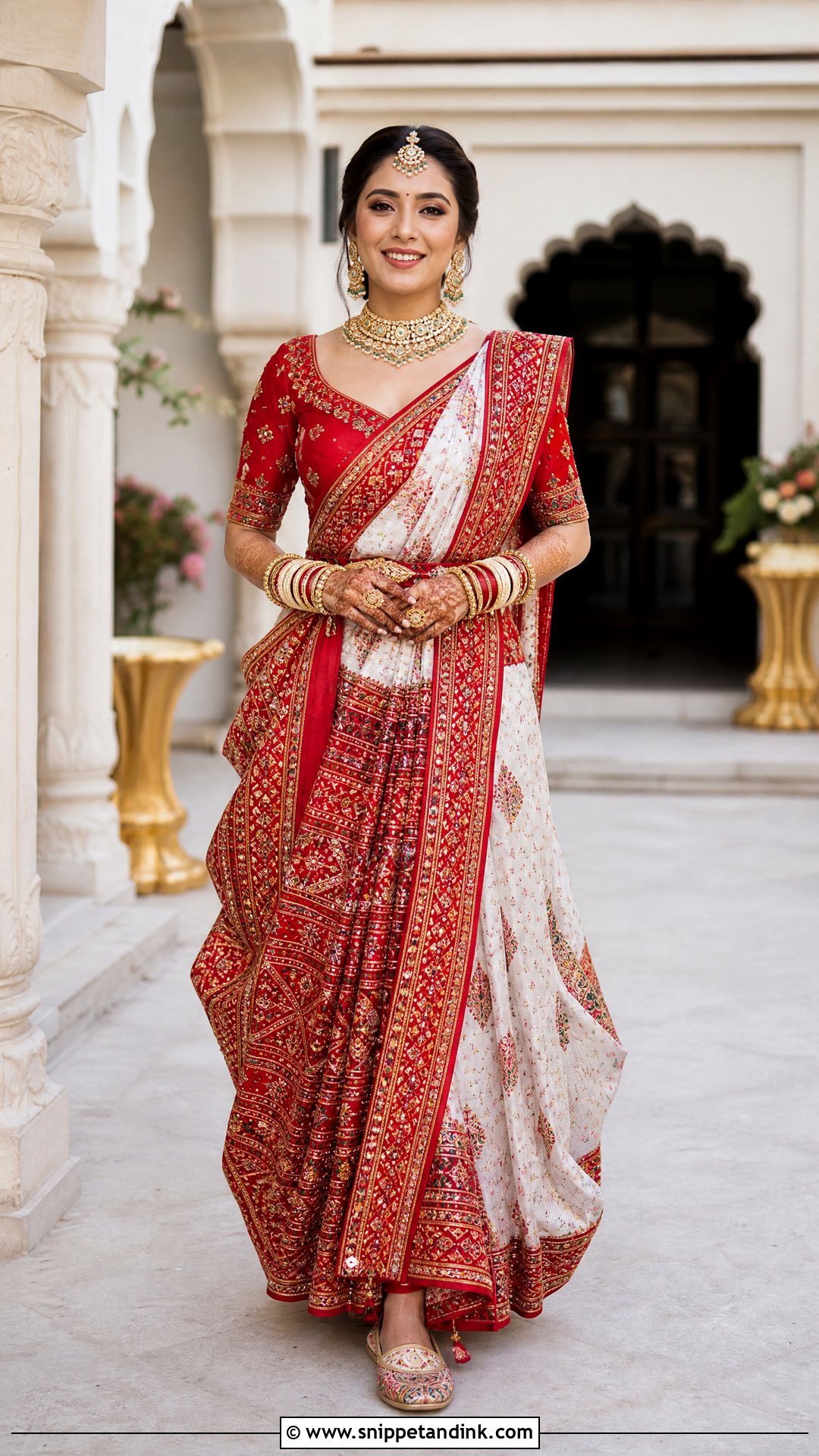
The Panetar pairs a white or ivory base with red, and the exact saree, drape and any additional textiles vary between Gujarati families, so let them guide you. A coordinated red blouse and a pallu arranged to show the border work for most versions. Gold or kundan jewelry, a maang tikka, bangles and anklets complete it. I always recommend a draping trial for this outfit. It’s the only way to check coverage, jewelry placement and how the pallu behaves when you bend for rituals.
14. Assamese Mekhela Sador Bridal Outfit
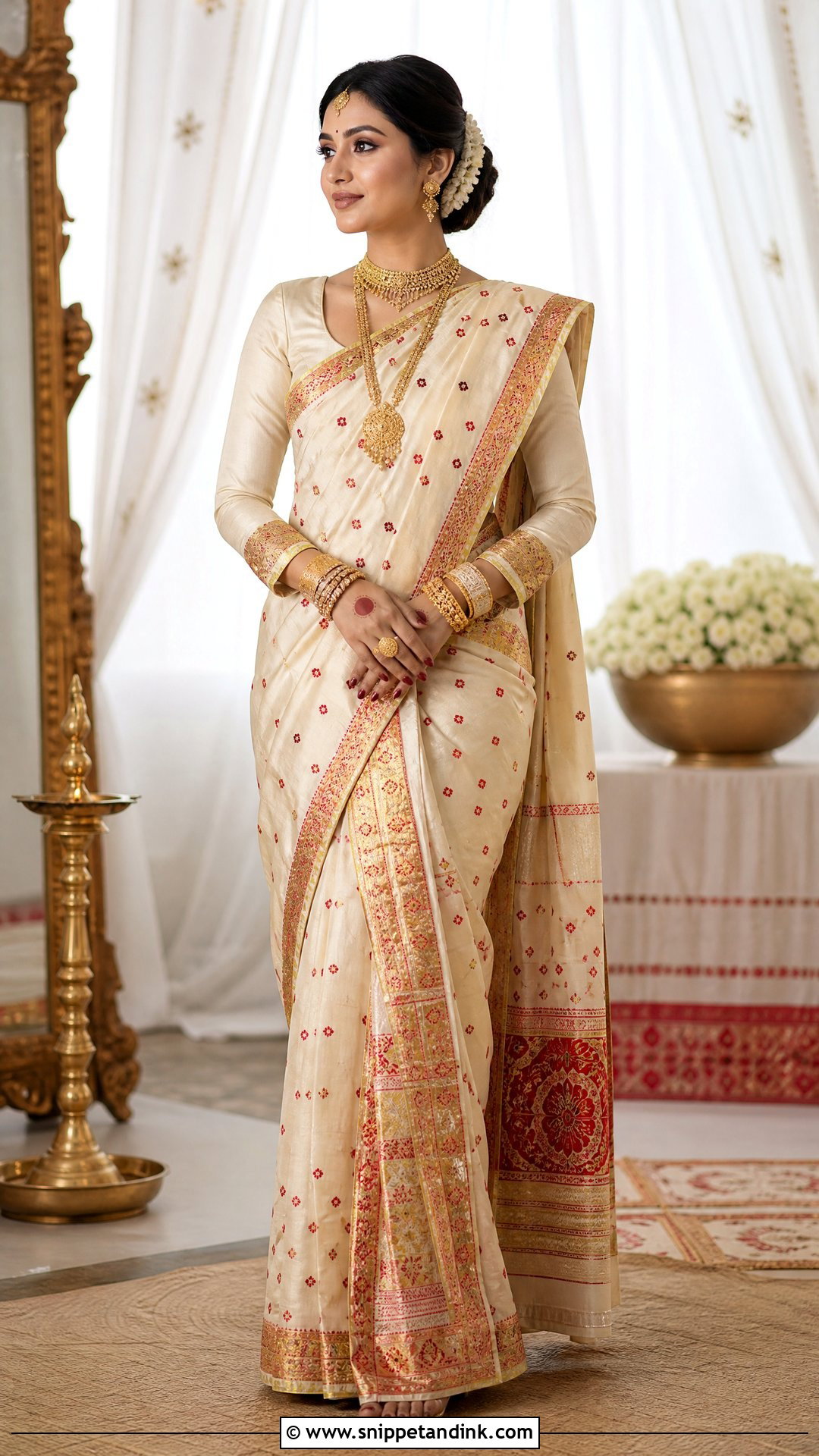
An Assamese Mekhela Sador is a two-piece drape, the mekhela pleated and tucked at the waist and the sador wrapped over the torso. For a bride, cream, ivory, gold, red or jewel-toned silk with traditional woven motifs is typical. Arrange the sador so the decorated areas stay visible. Traditional Assamese ornaments, bangles and earrings with a neat bun finish it. The motifs and jewelry carry meaning, so choose them with family or an experienced dresser.
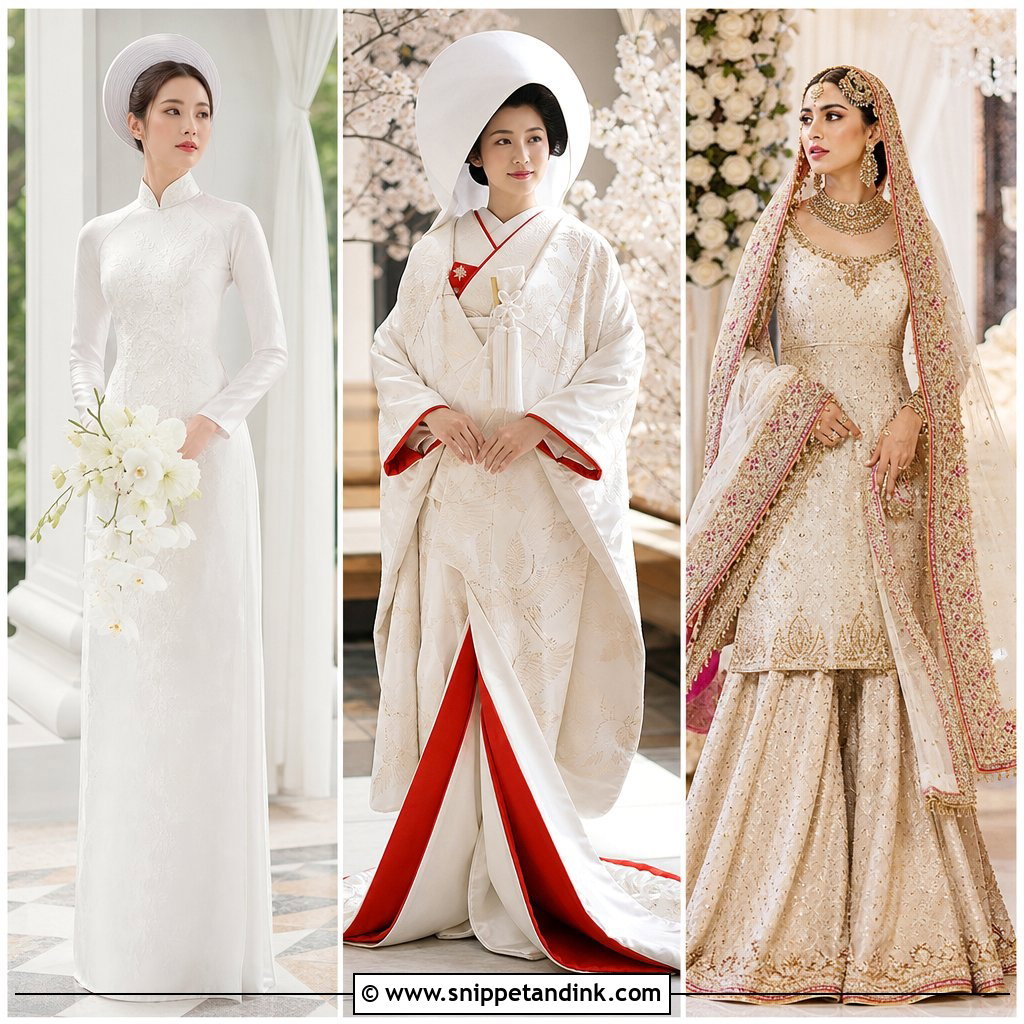
15. Manipuri Potloi Indian Bridal Outfit
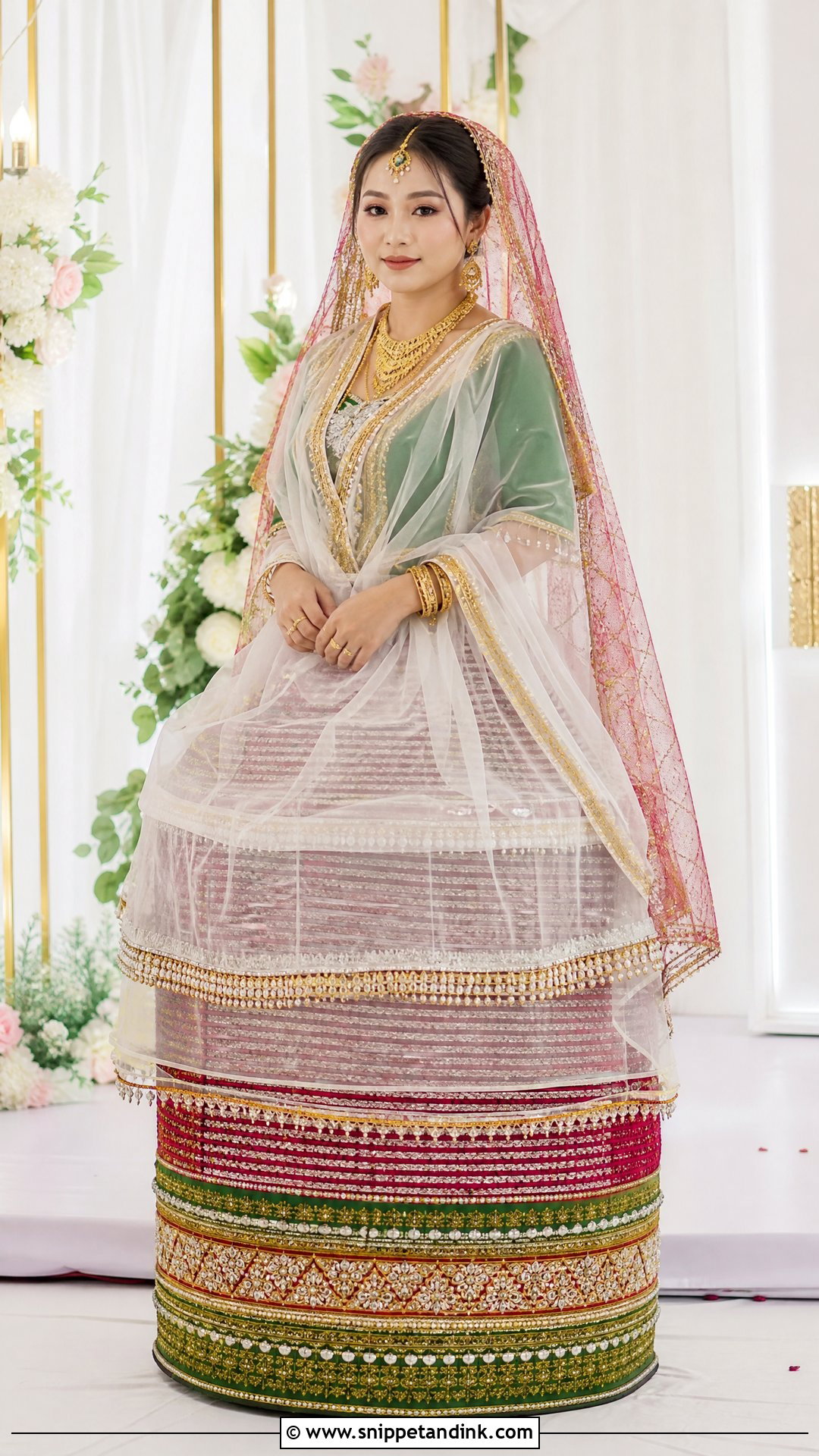
The Manipuri Potloi is unlike anything else on this list: a stiffened, drum-shaped skirt covered in mirror work and embroidery, worn with a sheer upper layer, traditional ornaments and a veil. Red, green and metallic detailing are common. Because the skirt holds its own shape, walking and sitting take practice, and the garment should be prepared and dressed by someone experienced in the tradition. Keep accessories purposeful. It belongs to Manipuri wedding custom and shouldn’t be borrowed as a trend.
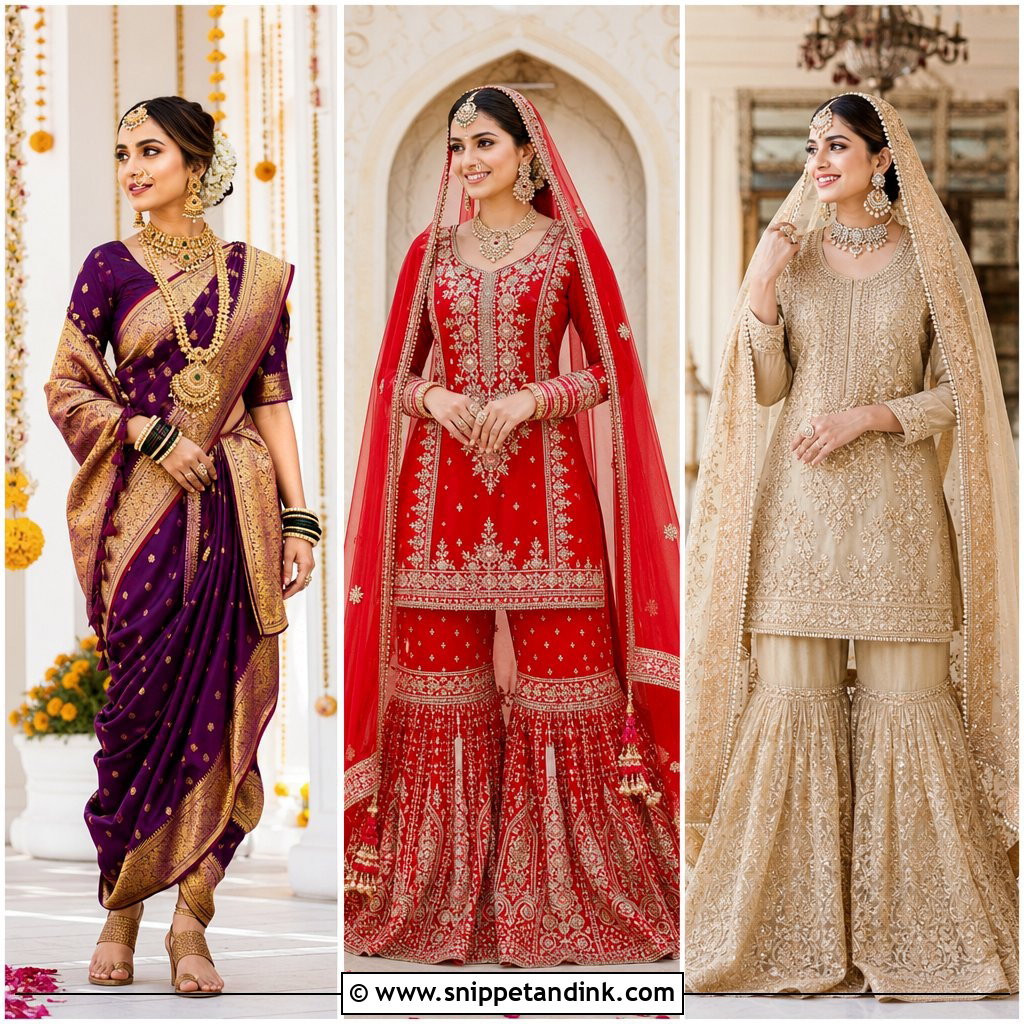
16. Punjabi Indian Bridal Sharara With Dupatta
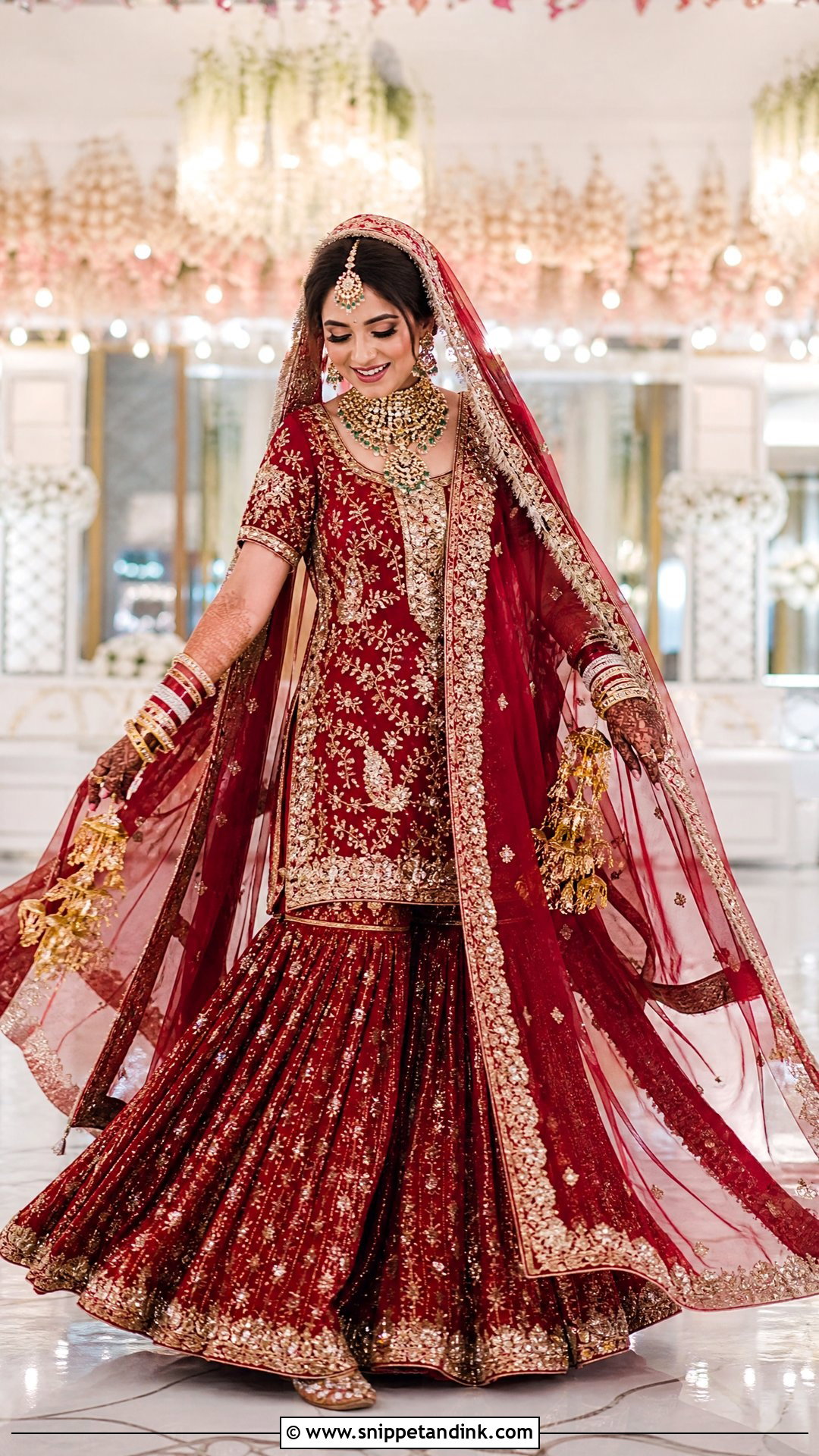
A heavily embroidered sharara gives a Punjabi bride all the grandeur with far more freedom to dance at the reception and doli. Pair a short or mid-length kurti with wide flared trousers in red, maroon, pink, green or ivory, worked with zardozi, gota or sequins. One dupatta across the body and a lighter veil over the head make it bridal. Choker, maang tikka, chooda and kaleere complete it. Kaleere are heavy and swing; ask whoever ties them to keep them clear of the dupatta border so they don’t snag the embroidery.
17. Indian Bridal Anarkali With Embroidered Dupatta
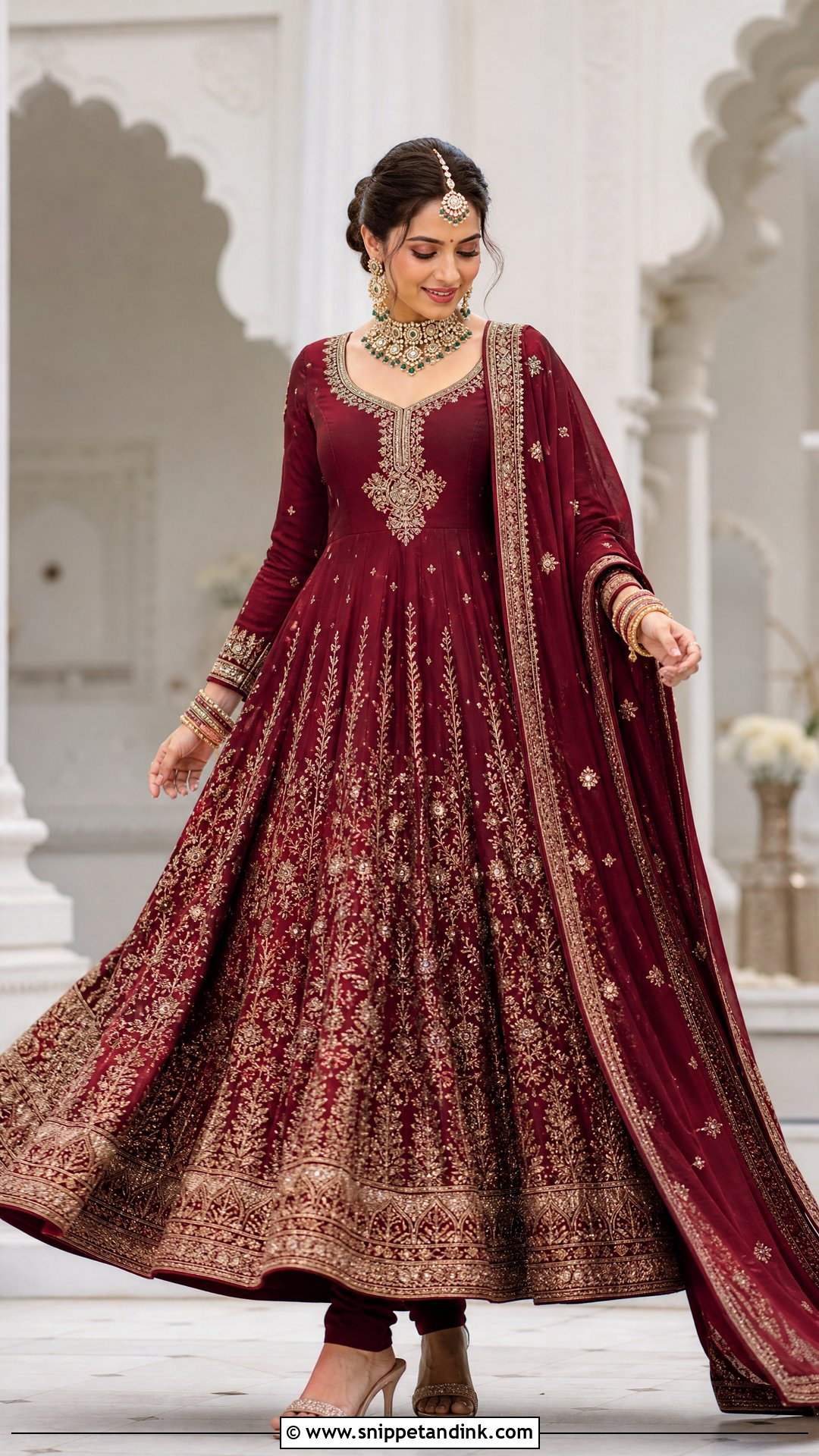
Anarkalis remove the waistband problem entirely. Choose a floor-length design in red, maroon, emerald, ivory or deep pink with embroidery concentrated at the neckline, bodice, sleeves and hem. Churidar underneath, a heavily bordered dupatta, and a lighter separate veil if the main dupatta is too heavy for your head. At the final fitting I have brides raise their arms as if accepting a garland. Tight armholes show up immediately, and they’re easy to let out at that stage.
18. Indian Bridal Lehenga Saree With Belt
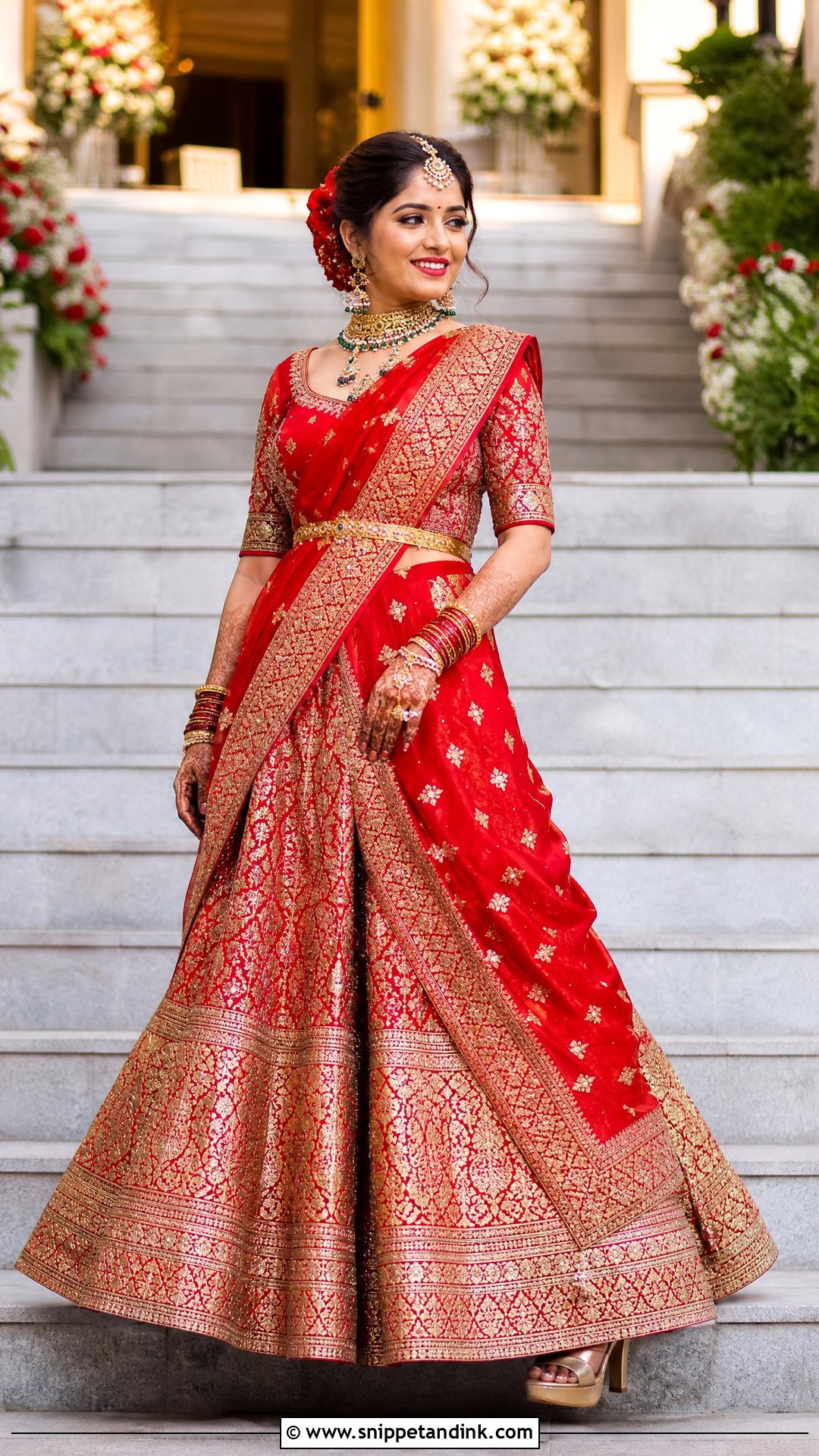
A lehenga saree gives you a skirt’s ease with a saree’s line, which suits brides who love the drape but dread managing pleats. Choose pre-stitched or pair a flared lehenga with a long dupatta across the torso. A jewelled or embroidered belt secures the drape and defines the waist. Watch the pallu attachment: if it’s fixed too tightly to the blouse, it pulls every time you take a step. Test turns, stairs and seated poses before approving the final fit.
19. Indian Bridal Gown With Dupatta
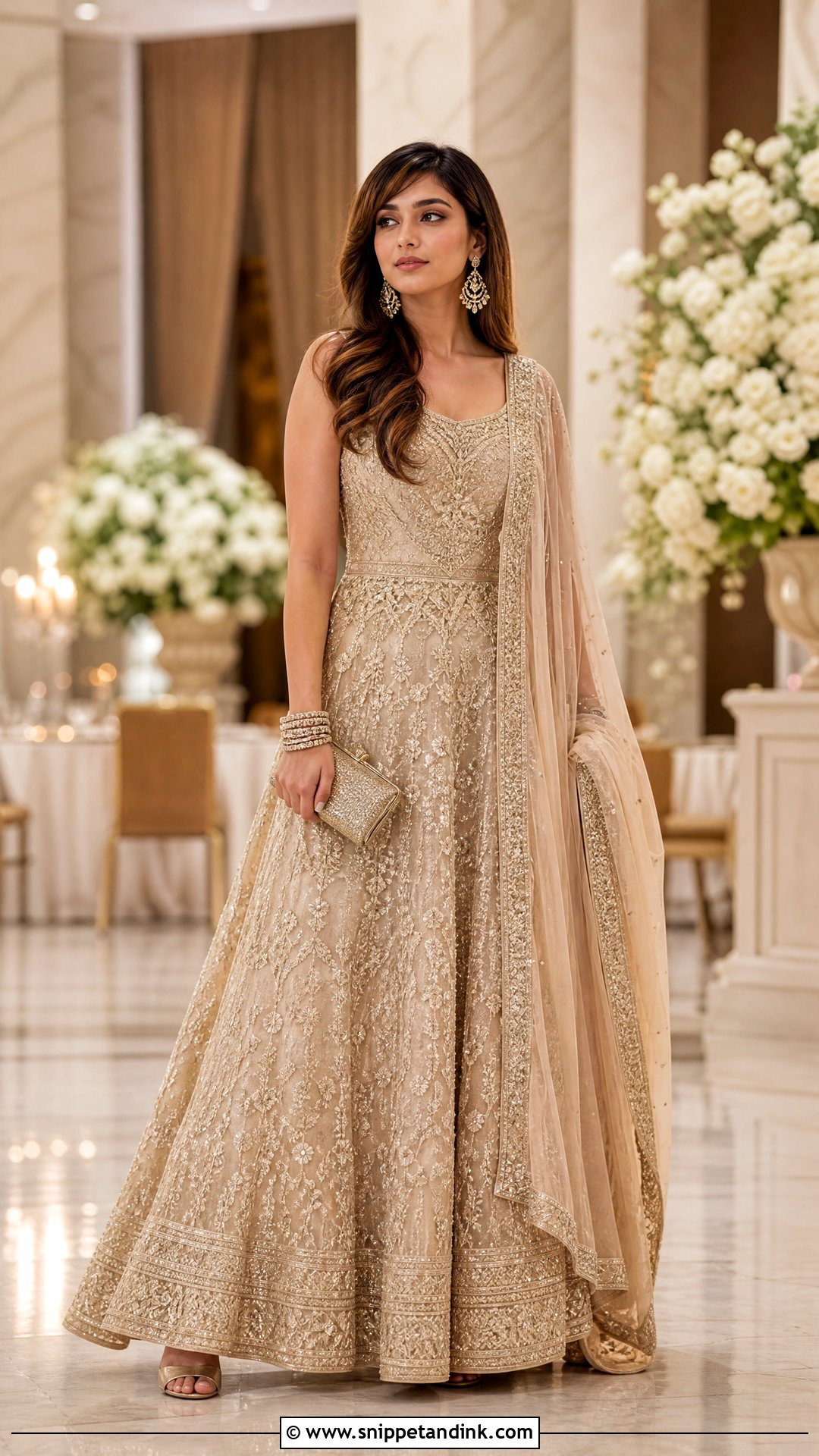
A gown with an Indian embroidered dupatta suits a reception, or a ceremony where the family is relaxed about form. A-line, ball gown or fit-and-flare shapes in champagne, blush, ivory, red or emerald all work. Repeating the dupatta’s embroidery at the gown’s bodice and hem ties the two cultures together. Wear a statement necklace or dramatic earrings, not both, if the bodice is worked. Check the train against the venue: a long train and a crowded dance floor or narrow stairs don’t mix.
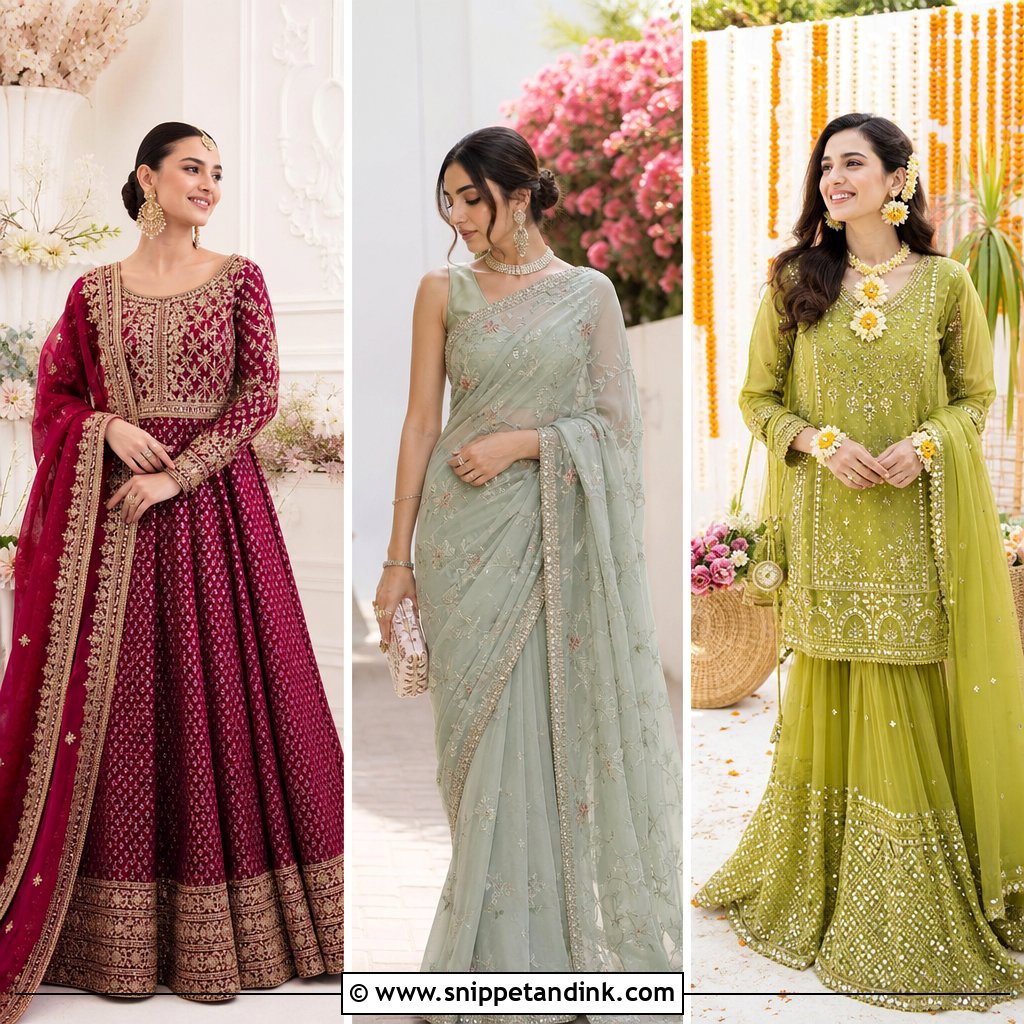

20. Heirloom Indian Bridal Saree With Modern Blouse
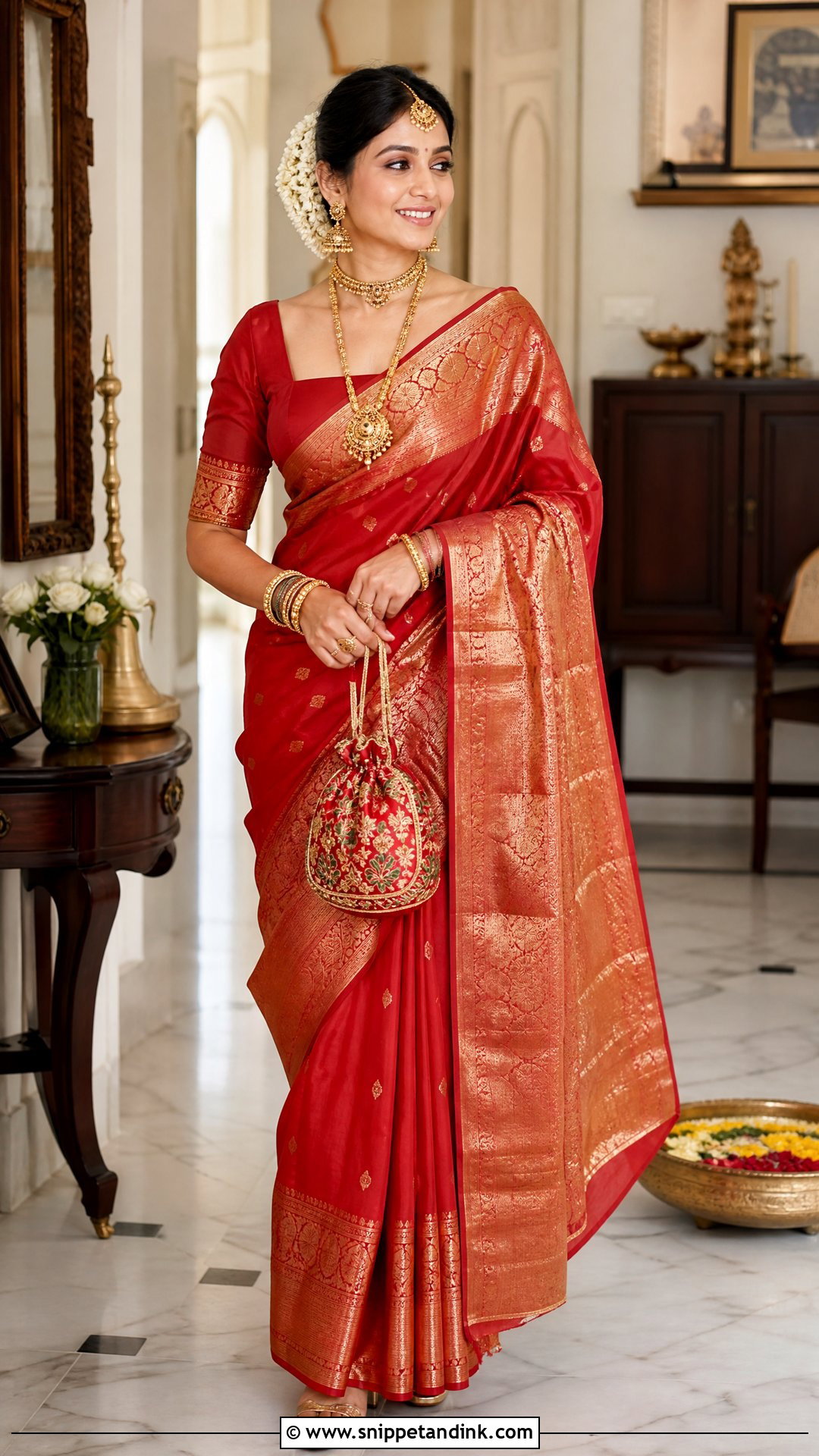
Could a family saree become the most personal outfit you wear? It often can, with a new blouse, careful restoration and matching accessories. Before anything is cut or cleaned, have a textile specialist look at any ageing silk, since old fabric reacts badly to the wrong solvent. The blouse should take its cues from the saree, with a square neck, elbow sleeves or fabric-covered buttons rather than a clashing modern design. Family jewelry, fresh flowers and a professional drape protect the fabric while showing the border. Photograph the textile before and after any alteration.
Turning One Bridal Outfit Into Several Later Looks
Most bridal outfits are worn once, which is a pity given what they cost. With a little planning at the ordering stage, the pieces can return for years of family weddings and festivals.
- Ask the tailor to leave extra seam allowance in the blouse so it can be let out later.
- A heavily embroidered dupatta works on its own over a plain silk suit or a simple saree.
- The lehenga skirt pairs with a crop top or a shirt-style blouse for a sangeet you attend as a guest.
- Silk sarees can be redraped in a lighter style, with a new blouse, for anniversaries and festivals.
Between wears
Have the outfit professionally cleaned soon after the wedding rather than months later, when sweat and makeup have set into the silk. Store it wrapped in soft cotton, not plastic, and refold it along new lines every few months so the creases don’t crack the zari. Air it out before each wear; stored silk picks up a musty smell that steaming alone won’t shift.
If you’re torn between two outfits, choose the one whose parts you can imagine wearing separately. That’s usually the better buy.
Can You Sit, Bend and Eat in It?
Start from your ceremony, your culture, your venue and the comfort you need. A bridal outfit should impress, but it also has to let you move, sit and take part in every ritual. Compare shapes in person, because photos hide weight. Book a complete fitting with the blouse, underskirt, veil, jewelry and footwear, look at the outfit in daylight and indoor light, then walk and sit in it. For regional attire, involve family members and skilled artisans. The right outfit honours the occasion and still looks like you.
You'll Like These Ideas:







Leave a Reply