
Renting a Bridal Kimono and What the Package Covers
Most brides rent their wedding kimono rather than buy it, and that’s sensible: a bridal uchikake is costly, delicate and rarely worn twice. Rental houses, shrines, hotels and photo studios usually offer packages, and prices vary widely depending on the robe and what’s included. Spring and autumn are the busiest seasons, so I’d reserve several months ahead if you have your heart set on a particular robe.
Before you sign, I’d confirm that the package includes:
- The full set: kakeshita, uchikake or hikifurisode, obi, under-layers, tabi, zori, fan and hakoseko.
- Dressing on the day by a trained kimono dresser, not just delivery of the garments.
- Hair or a wig fitting if you want a traditional bridal hairstyle under a wataboshi or tsunokakushi.
- An attendant to manage the hem and help you move, sit and use the restroom.
- Clear terms on cleaning and damage, including makeup on the collar, which is the most common mark.
Bridal kimono are sized loosely and adjusted on the body, so one fitting is usually enough. Bring the undergarments you plan to wear and tell them your height in the zori.
Walking, Sitting and Breathing in Layered Silk
A bridal kimono is several layers of silk held in place by cords, padding and a firmly tied obi. It changes how you move. Walk with small steps, toes turned very slightly in, holding the front edge of the uchikake with your left hand. Sit on the front edge of a chair and don’t lean back, or you’ll crush the obi knot. Bending at the waist is nearly impossible, so let your attendant pick things up for you.
Practical things matter too. Use the restroom right before dressing, because doing so in full kimono needs help and takes time. Eat lightly beforehand, since a tight obi and a full stomach don’t mix. When you eat at the reception, tuck a napkin into the collar. If you start to feel faint, say so early; a dresser can loosen a cord in a minute without undoing the look.
1. White Shiromuku Wedding Kimono
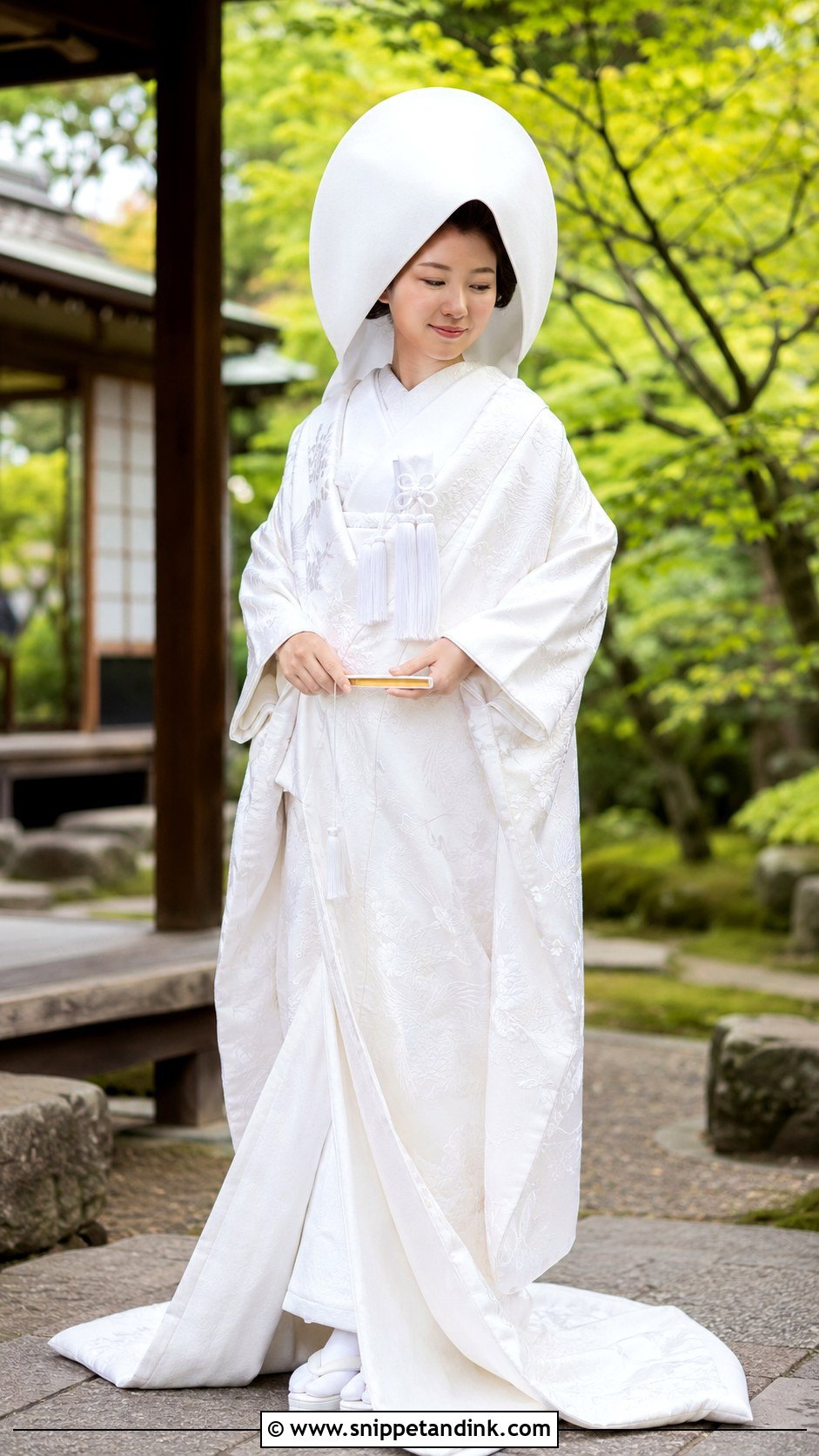
The white shiromuku wedding kimono is the look most people picture first, and the one traditionally worn for a Shinto ceremony. Everything is white: the uchikake outer robe, the kakeshita kimono beneath it, the obi, the tabi and the zori. White here stands for purity and a fresh start, so the outfit relies on woven texture instead of color. Add a wataboshi hood for a soft outline or a tsunokakushi for a crisper one. I keep makeup clean, with softly shaped brows and a gentle lip, because heavy contouring looks out of place against so much white silk. The full set is heavy, and a trained dresser plus an attendant at your side are part of wearing it.
2. Shiromuku With Wataboshi
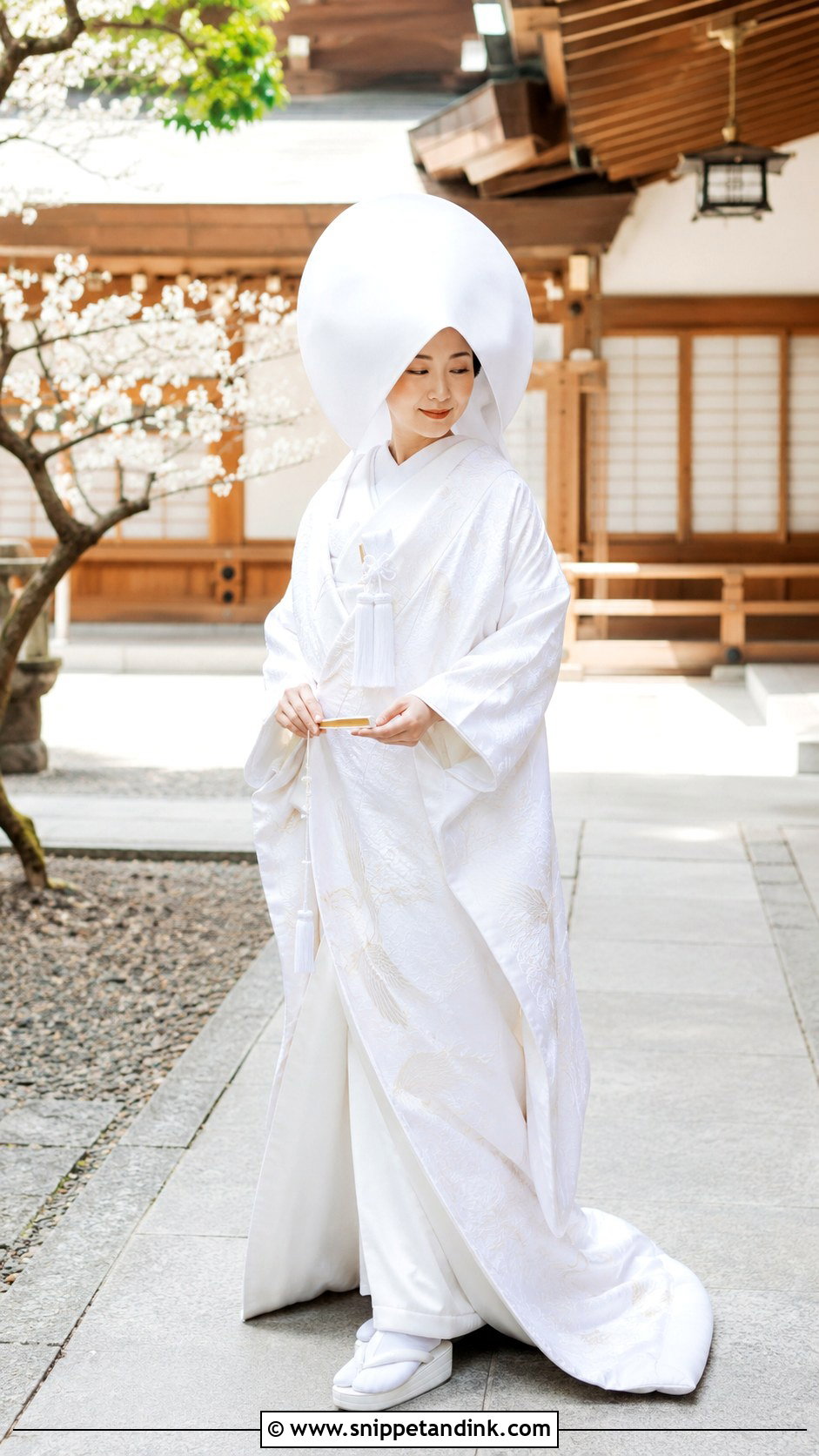
The wataboshi is a rounded white hood, and it’s traditionally worn only with shiromuku, which ties it to the ceremony itself. It’s often said to hide the bride’s face from everyone but the groom until the vows are complete. Pair it with a white silk or brocade shiromuku, a white kakeshita, white zori and the small accessories: a hakoseko purse tucked into the collar and a sensu fan. The hood sits over the hairstyle or wig, so I check at the fitting that it doesn’t push the ears forward, since that shows clearly in profile photos. A formal shrine ceremony or a quiet garden suits it best.
3. Shiromuku With Tsunokakushi
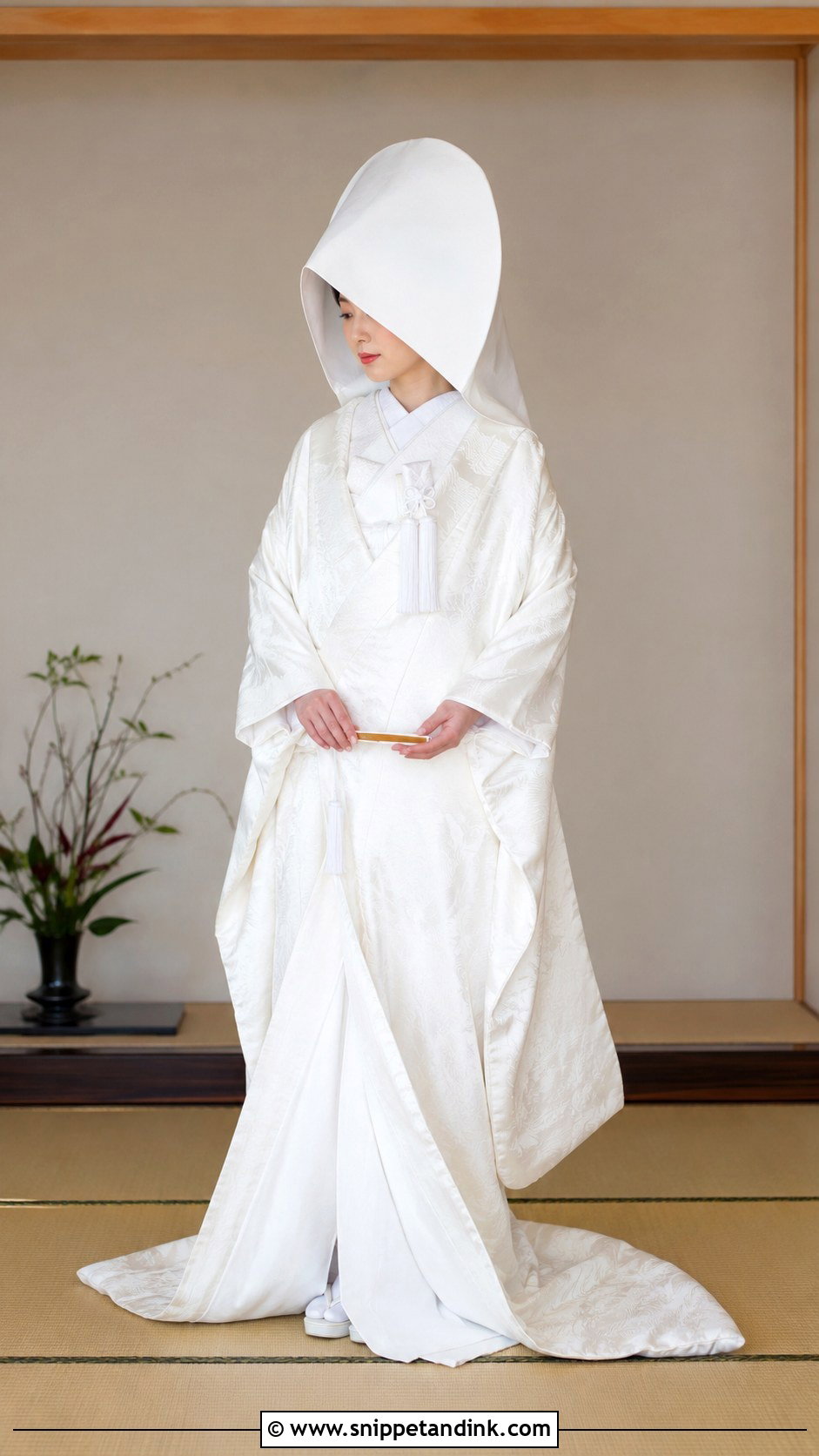
Brides who want their face fully visible tend to choose the tsunokakushi. It’s a band of white fabric worn across the top of a traditional bridal hairstyle, and the old explanation is that it hides the ‘horns’ of jealousy and ego as the bride enters marriage. Unlike the wataboshi, it can also be worn with a colored uchikake. Style it with white kakeshita, obi, tabi and zori, with the fan tucked at the front. The tsunokakushi needs a built-up hairstyle or wig underneath to sit level, so plan hair and headpiece with the same person. Skip extra jewelry.
4. Red Iro Uchikake Wedding Kimono
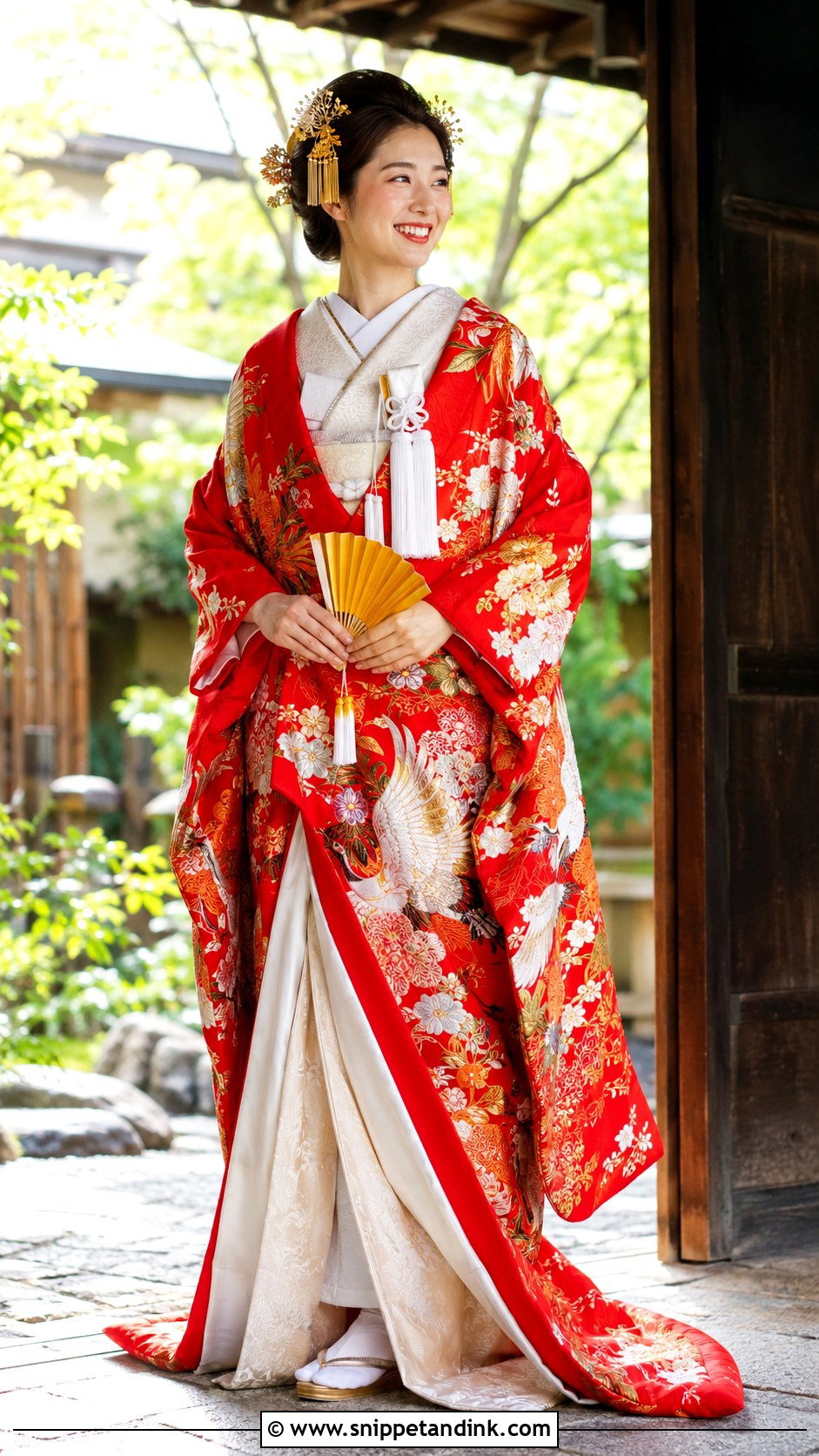
Iro uchikake simply means colored uchikake, and red is the most festive of them. Expect a bright outer robe embroidered with gold, cranes, flowers or waves over a lighter kakeshita, often worn for the reception entrance or the change after the ceremony. Red is loud enough on its own, so I keep the makeup clean and limit gold hair ornaments to a few pieces. The robe isn’t tied; it hangs open, and you hold its front edge in your left hand as you walk to keep the hem off your feet. Practise that before the day.
5. Gold Iro Uchikake Wedding Kimono
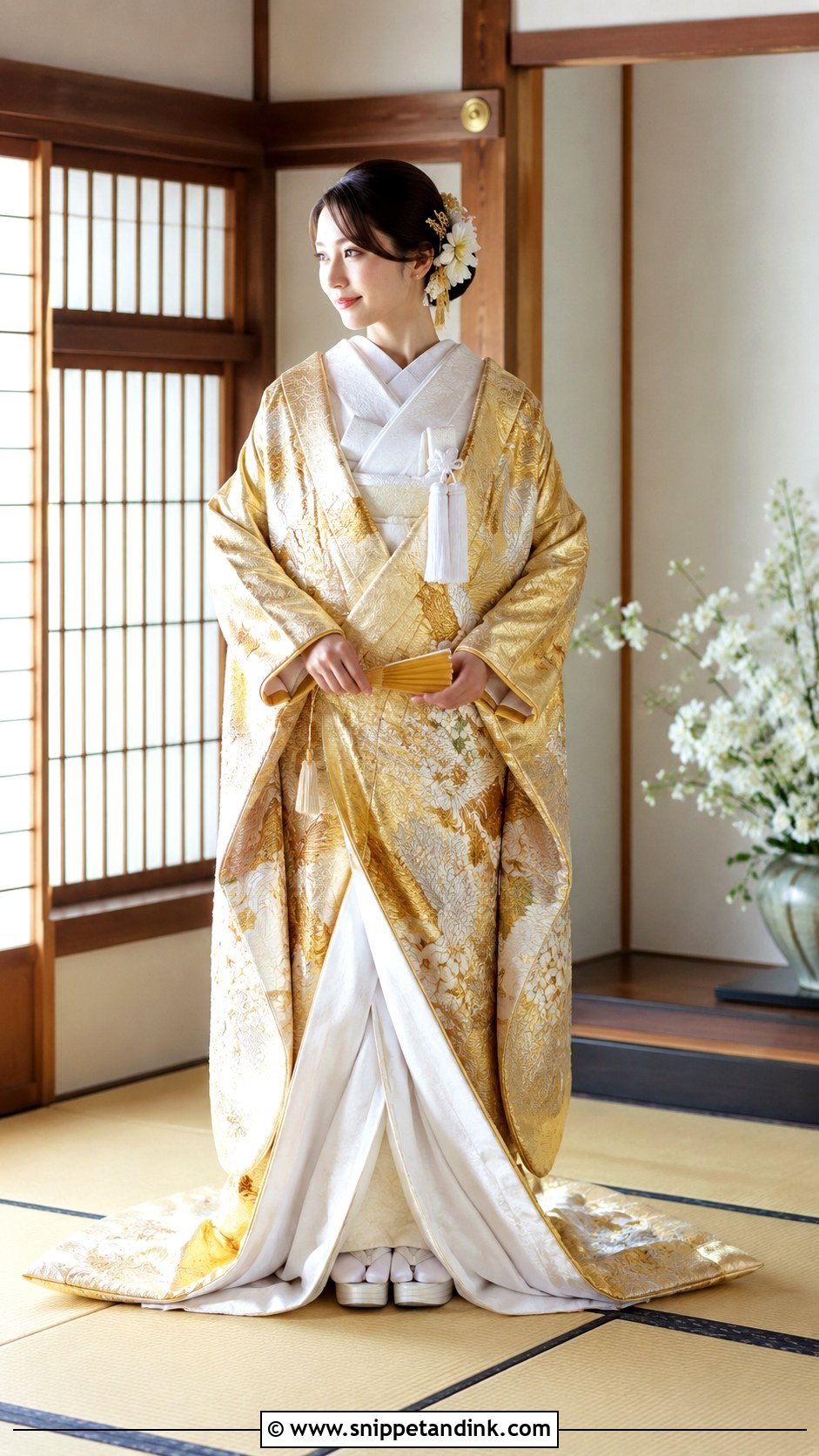
Gold uchikake are often woven rather than embroidered, with cranes, pine, peonies or clouds built into the cloth, which gives them a heavy, almost stiff drape. Layer one over a white or cream kakeshita and add gold-accented zori and a small bridal fan. Under warm indoor lighting the gold glows. Outdoors in harsh midday sun it bounces light onto the face and can wash out the skin, so I nudge outdoor portraits toward shade or late afternoon. Keep the hairstyle smooth and the accessories few.
6. Black Hikifurisode Wedding Kimono
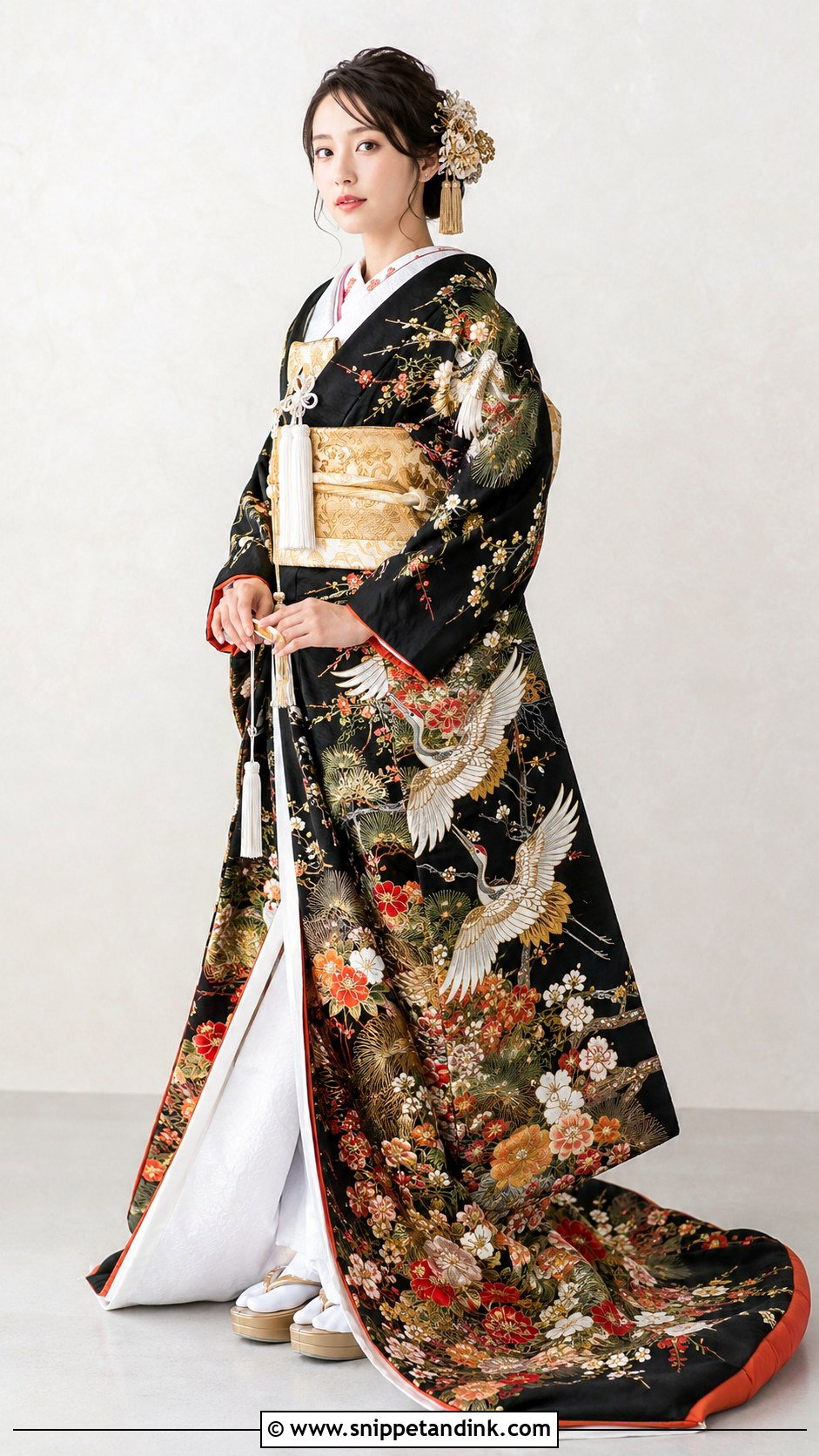
A hikifurisode differs from an uchikake in one way that changes the whole look: it’s belted with an obi and has a trailing hem, so the obi becomes part of the design. Black was a common bridal color for it in earlier generations, which is why it feels slightly vintage today. Cranes, cherry blossoms or peonies usually gather toward the hem, and a red or gold obi brightens the black. Because the obi is visible and tied firmly, it restricts breathing more than an open uchikake. I ask brides to sit and stand during the fitting and tell me honestly if it’s too tight.
7. Red Hikifurisode Wedding Kimono
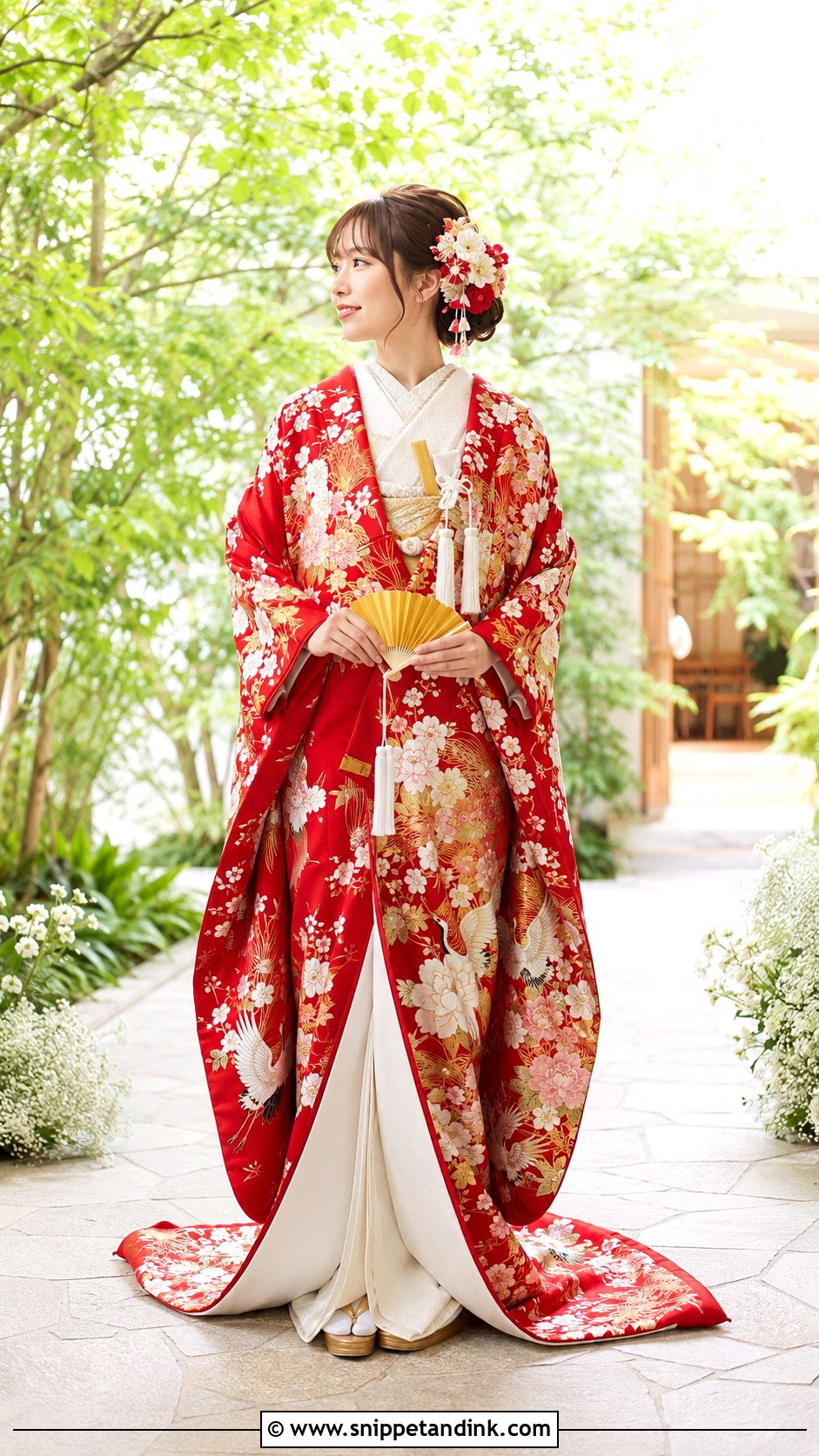
Lighter than an uchikake but still clearly bridal, a red hikifurisode wedding kimono gives you movement and color in one garment. The long sleeves and trailing hem create the shape, and the obi defines the waist. Choose floral, crane or fan motifs with a gold or ivory obi, white tabi and zori, and finish with kanzashi in a traditional updo. Those long sleeves catch on door handles and chair backs, so I teach brides to fold them over the forearm in tight spaces. It’s a lovely second look for a reception or pre-wedding shoot.
8. White Kakeshita With Colorful Uchikake
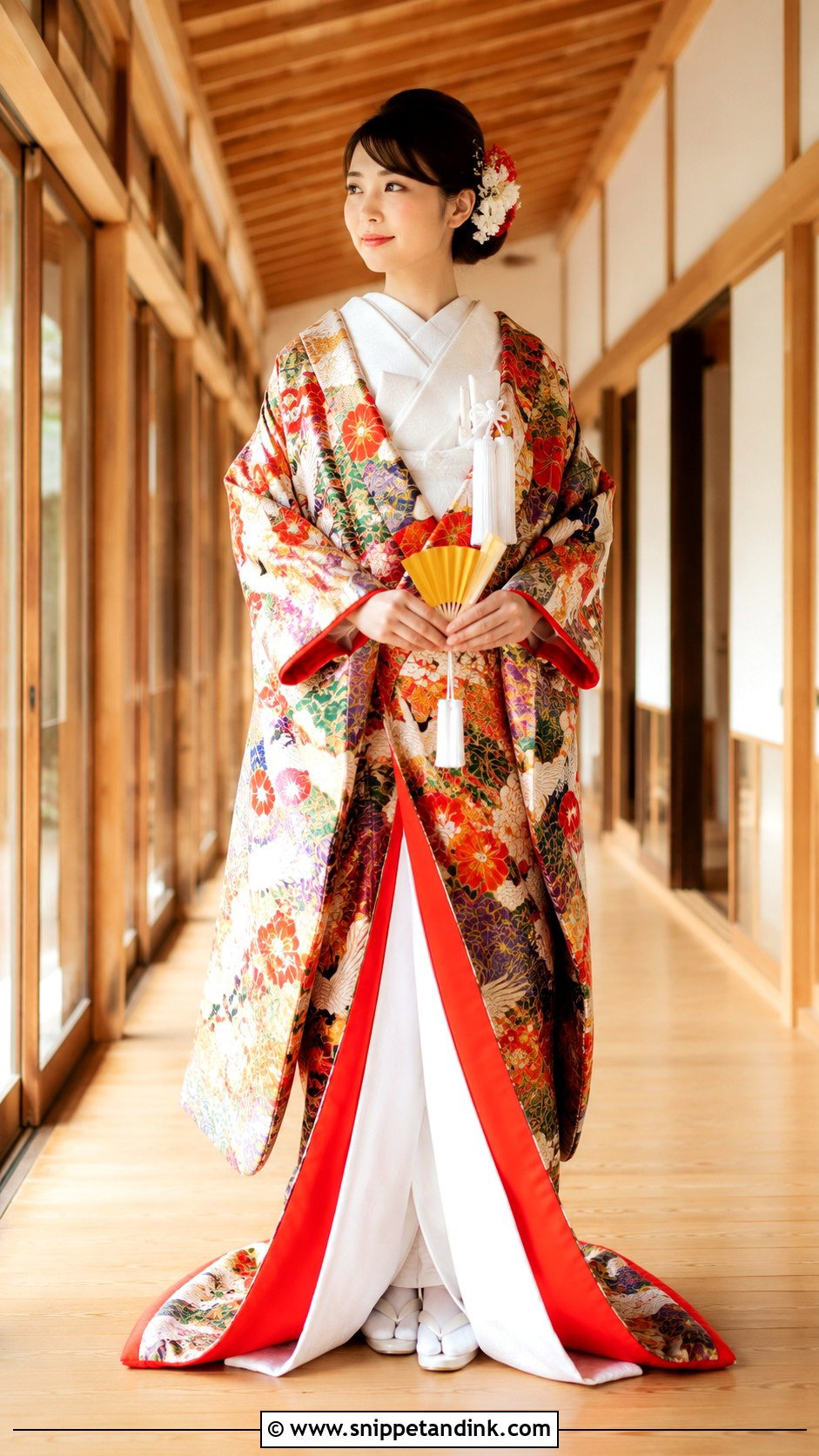
White kakeshita under a colorful uchikake is the classic pairing for the second look of the day. The white collar layers brighten the complexion in photos, while the uchikake brings red, gold, green, blue or multicolor embroidery. The kakeshita has its own obi, tied underneath and hidden by the open robe, and it still has to be tied well, because it’s what holds everything in place. Add white tabi, zori and a folded fan. Many brides switch into this from an all-white shiromuku after the ceremony.
9. Crane Motif Uchikake Wedding Kimono
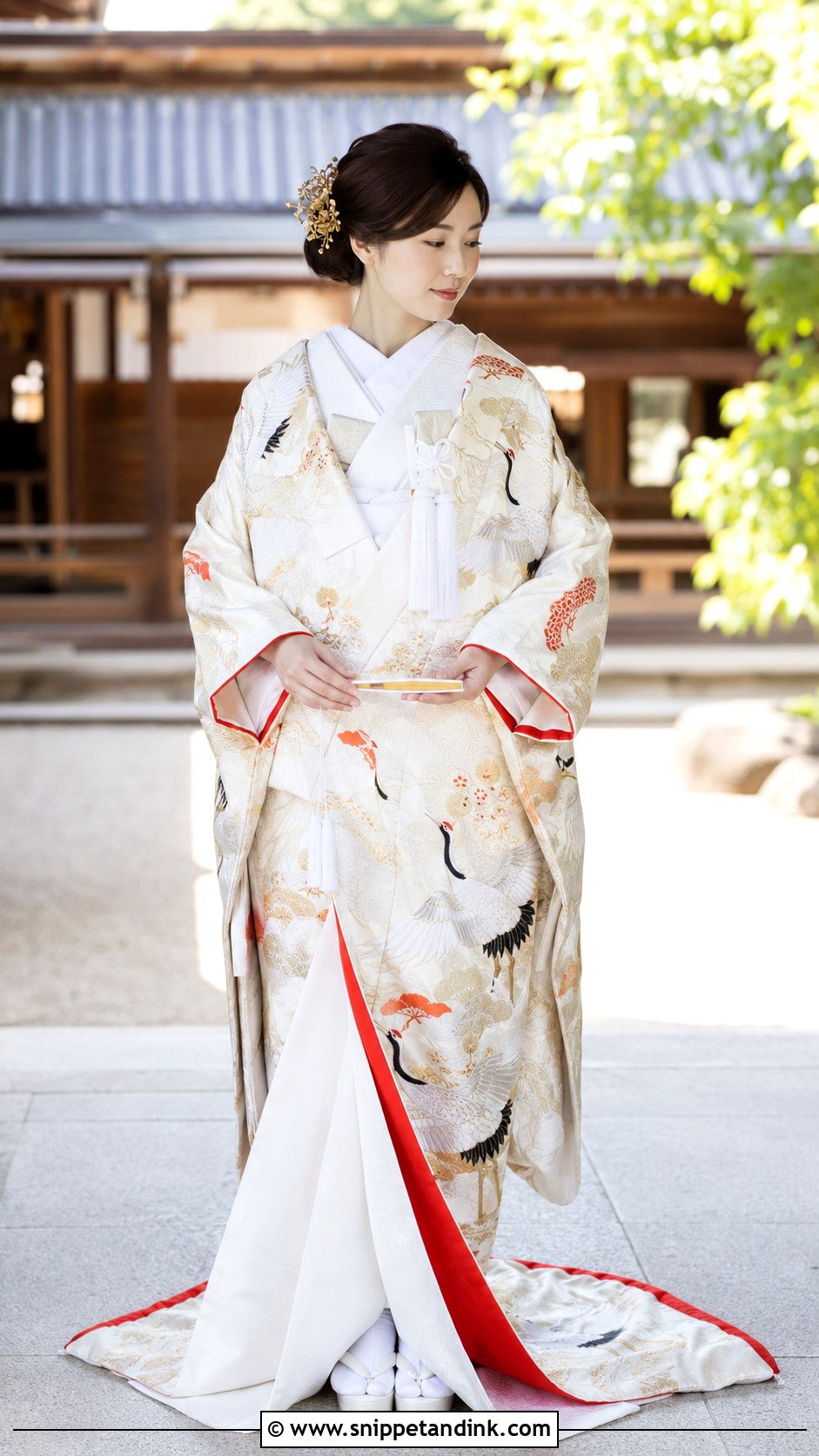
Cranes appear on more bridal kimono than almost any other motif, because they’re linked with long life and with pairs that stay together. Look for an uchikake with cranes embroidered across red, white, gold or pastel fabric, layered over a plain kakeshita so the birds stand out. When I help a bride choose, I check where the largest crane lands when the robe is on. Ideally it sits across the back, where the train is photographed, not folded under at the hem. White tabi, zori, a bridal fan and subtle hair ornaments finish it.
10. Cherry Blossom Uchikake Wedding Kimono
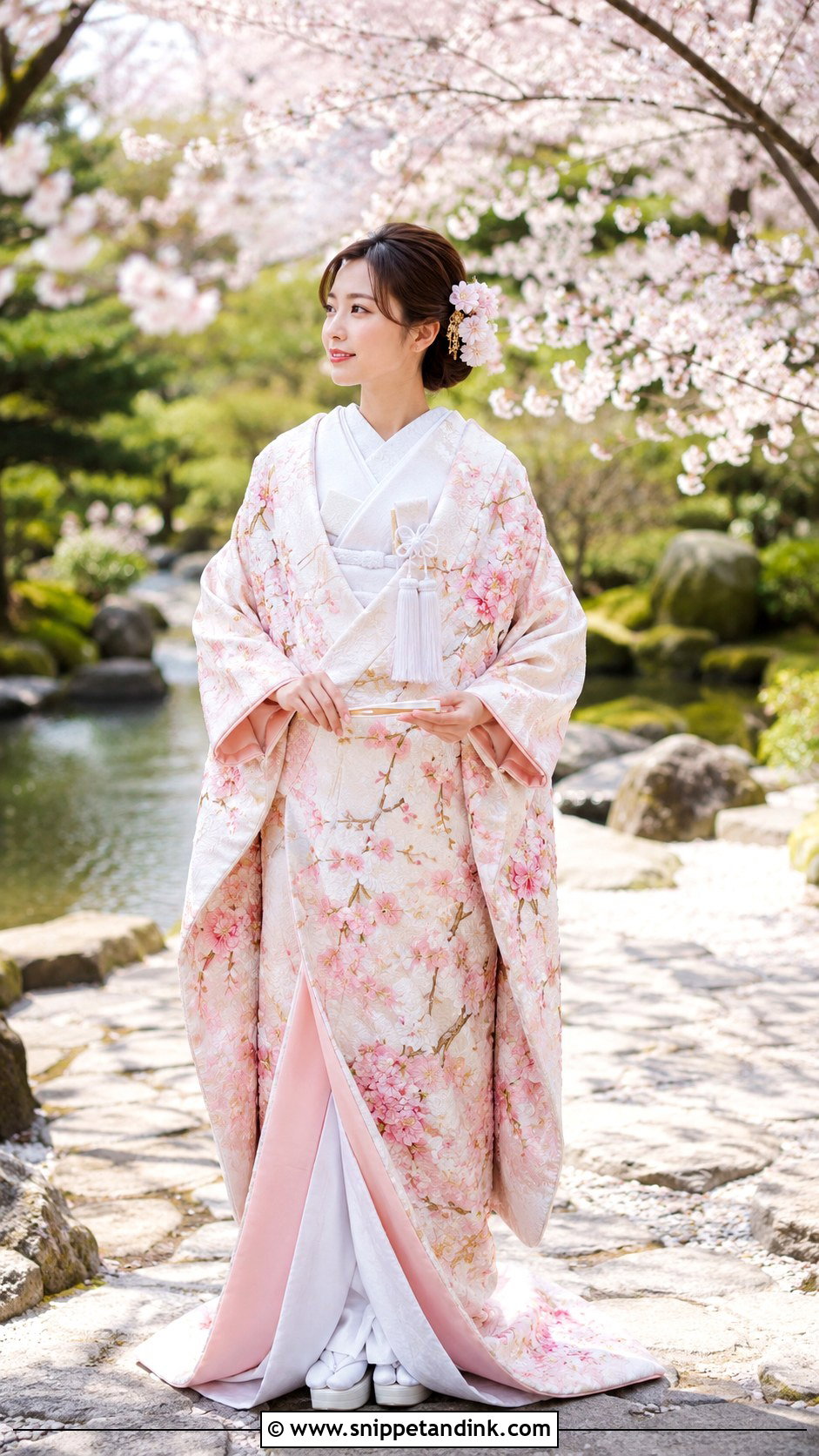
A cherry blossom uchikake ties the outfit to spring and the idea of renewal. Pale pink, ivory, red or gold robes carry sakura embroidery or woven blossoms, layered over a white or pale kakeshita with a formal obi, tabi and zori. Pink on pink turns sugary fast, so I keep makeup to soft rose tones rather than matching the robe. Kimono motifs traditionally follow the seasons, so cherry blossoms read naturally at a spring wedding and a little out of step in autumn.
11. Peony Uchikake Wedding Kimono
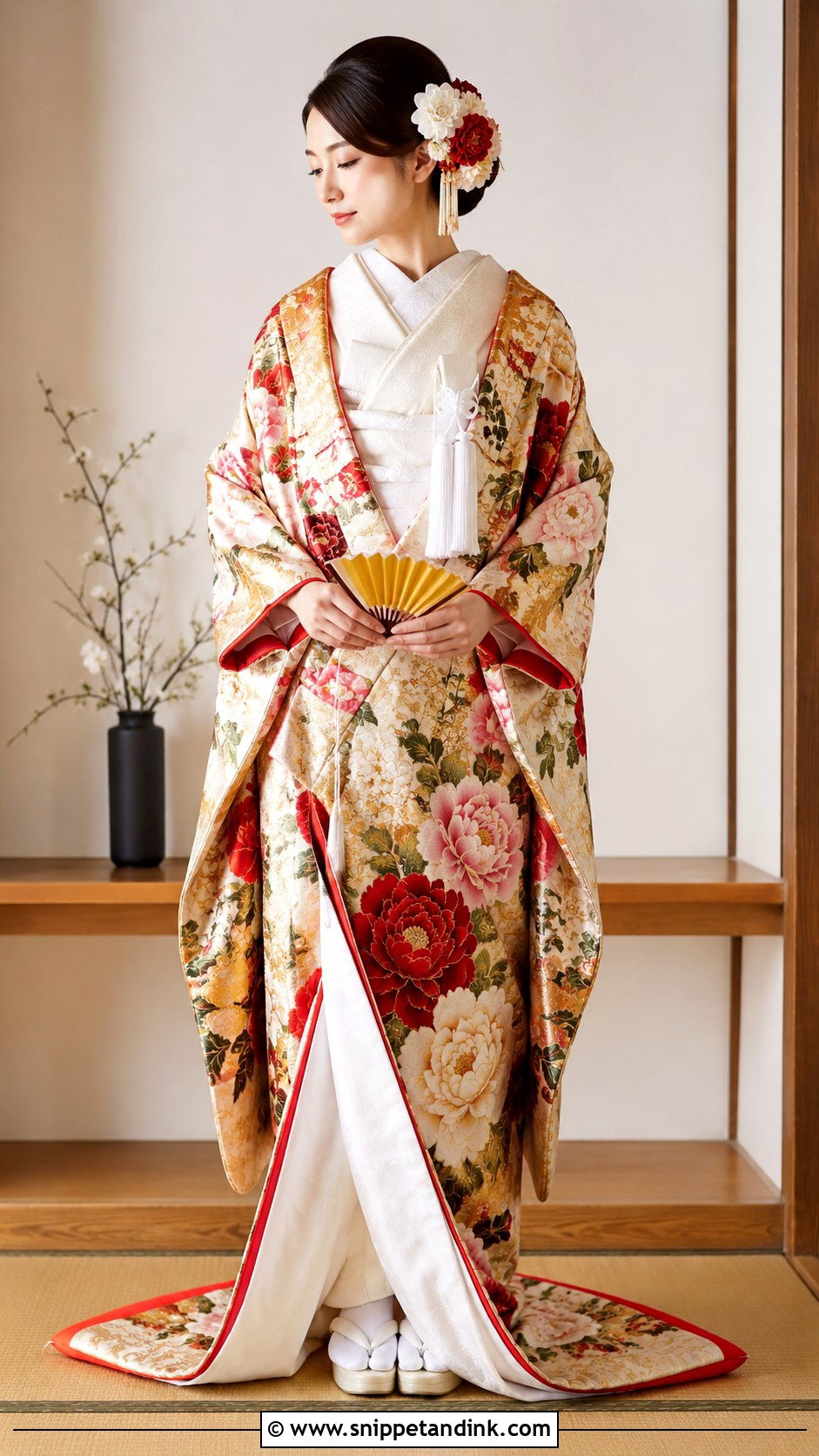
Peonies are often called the king of flowers, and they bring a generous scale to bridal kimono, frequently with gold thread, clouds or water. A red, ivory, black or gold uchikake covered in large peonies is a bold traditional choice. Bloom size matters on the body. Very large peonies suit taller brides, while petite brides usually look better in a robe with mid-sized flowers scattered more densely. Keep the kakeshita simple and pick hair ornaments that echo the flower colors. Big blooms read from across a room and still hold up in close detail shots.
12. Phoenix Uchikake Wedding Kimono
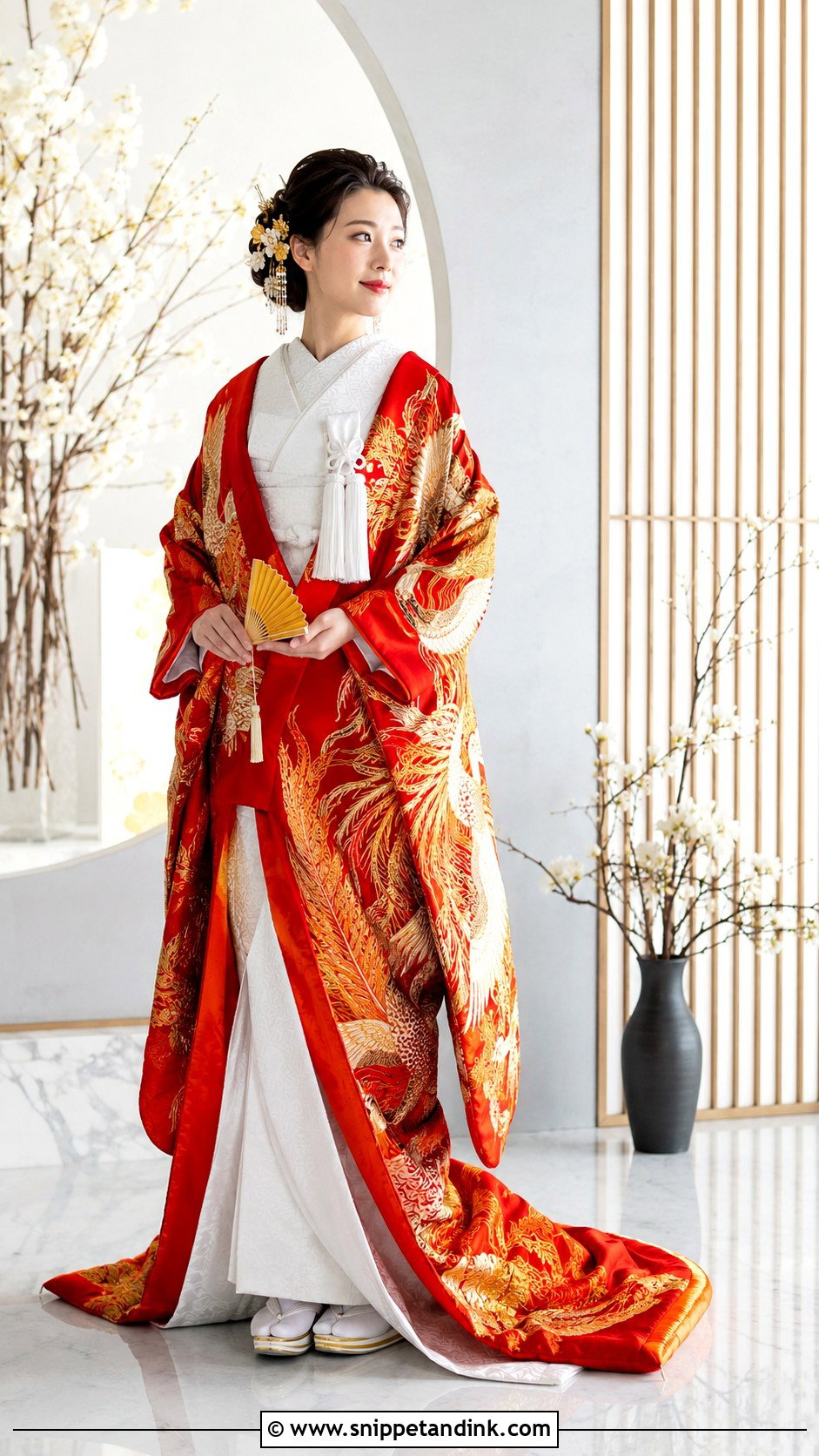
The phoenix, or ho-o, is one of the most auspicious motifs in Japanese design, long associated with good fortune and high status. On a gold, red or black uchikake it reads grand and very decorative. Layer it over a white or cream kakeshita, with a formal obi, white tabi, zori and a folded fan, and a sleek updo with a few gold ornaments. With a motif this busy, I edit accessories hard. It’s the robe I’d suggest for a reception reveal or a studio portrait that shows the whole back of the garment.
13. Pastel Iro Uchikake Wedding Kimono
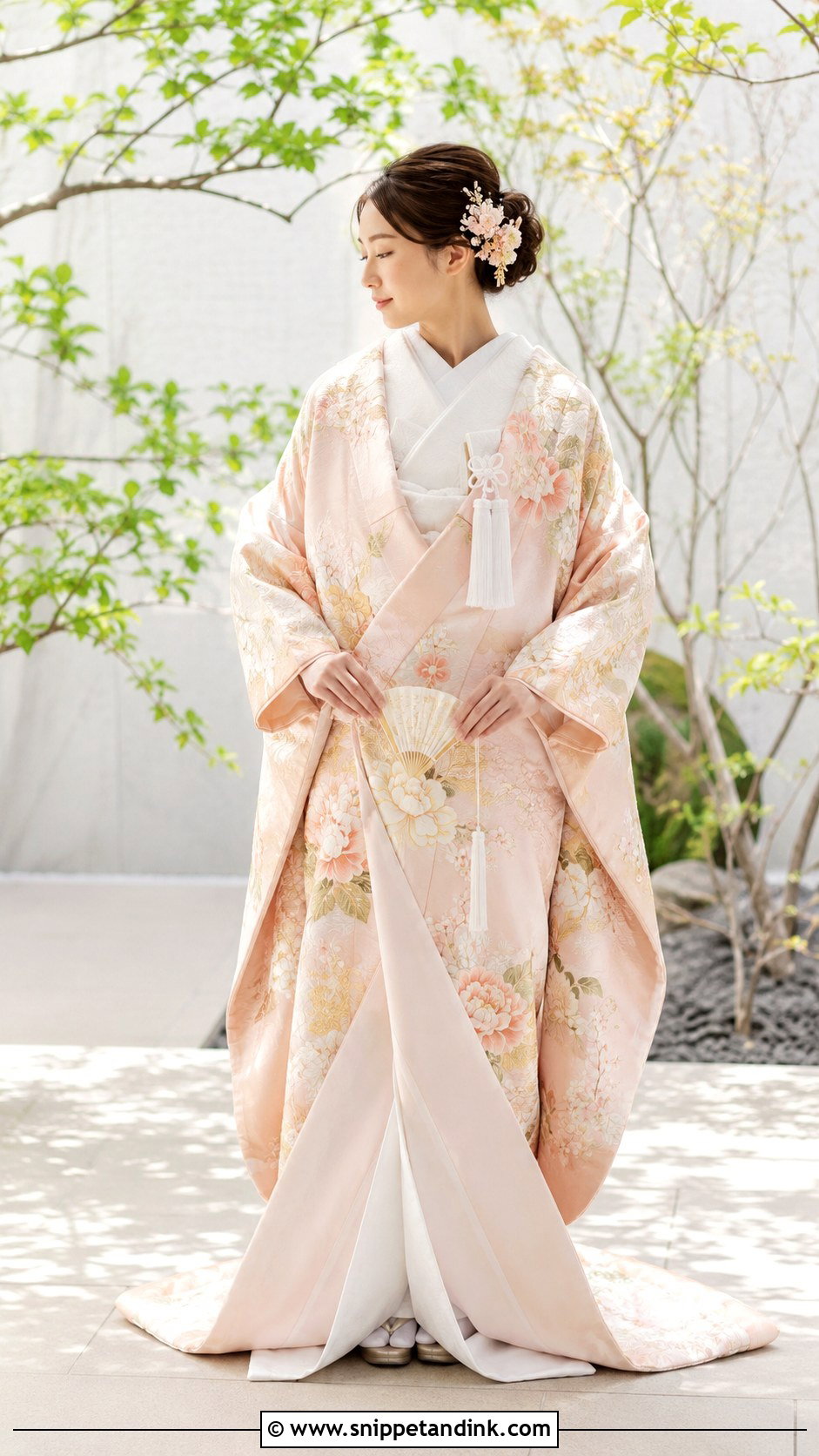
Pastel uchikake make the heavy silhouette look lighter, in blush, pale blue, mint or lavender with flowers, cranes, clouds or branches. Layer one over a white kakeshita with white tabi, light zori, a delicate fan and soft hair ornaments. My caution is about light. Pastels lose their color in dim traditional rooms and can look grey in shade, so the setting has to be bright: a sunny studio, a spring garden. For brides who find red or gold too much, it’s a gentle way to stay traditional.
14. Blue Iro Uchikake Wedding Kimono
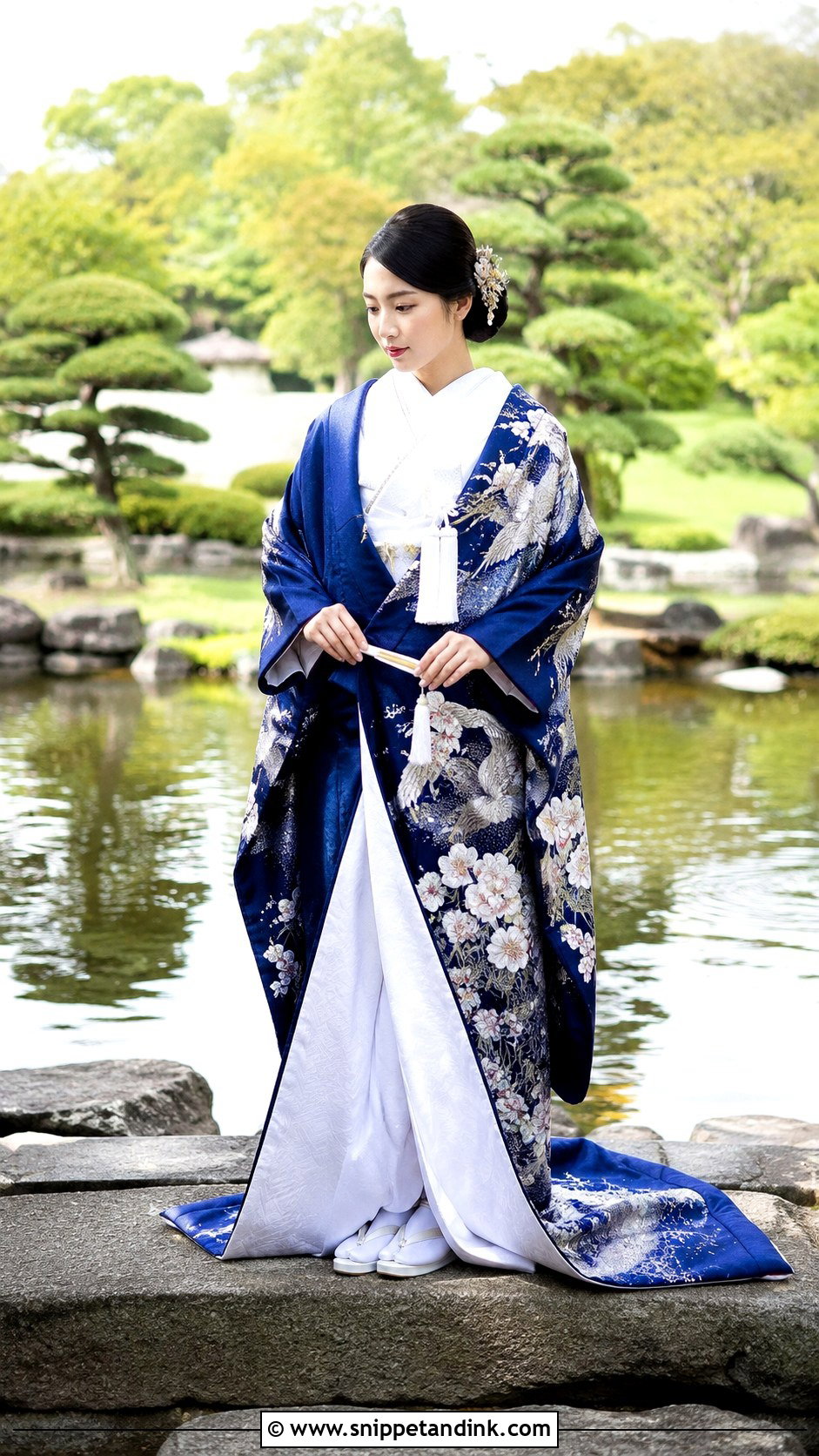
Navy feels formal and pale blue feels airy, and both pair well with silver, white or gold embroidery. Waves, cranes and fans keep a blue uchikake bridal. Layer it over a white kakeshita with white tabi, zori, a formal fan and a clean hairstyle. Blue is less expected than red or gold, so it gives a distinct look while staying respectful, and it comes into its own near water or in cool-toned interiors. Keep makeup soft with defined eyes, because blue beside the face makes a heavy blush look harsh.
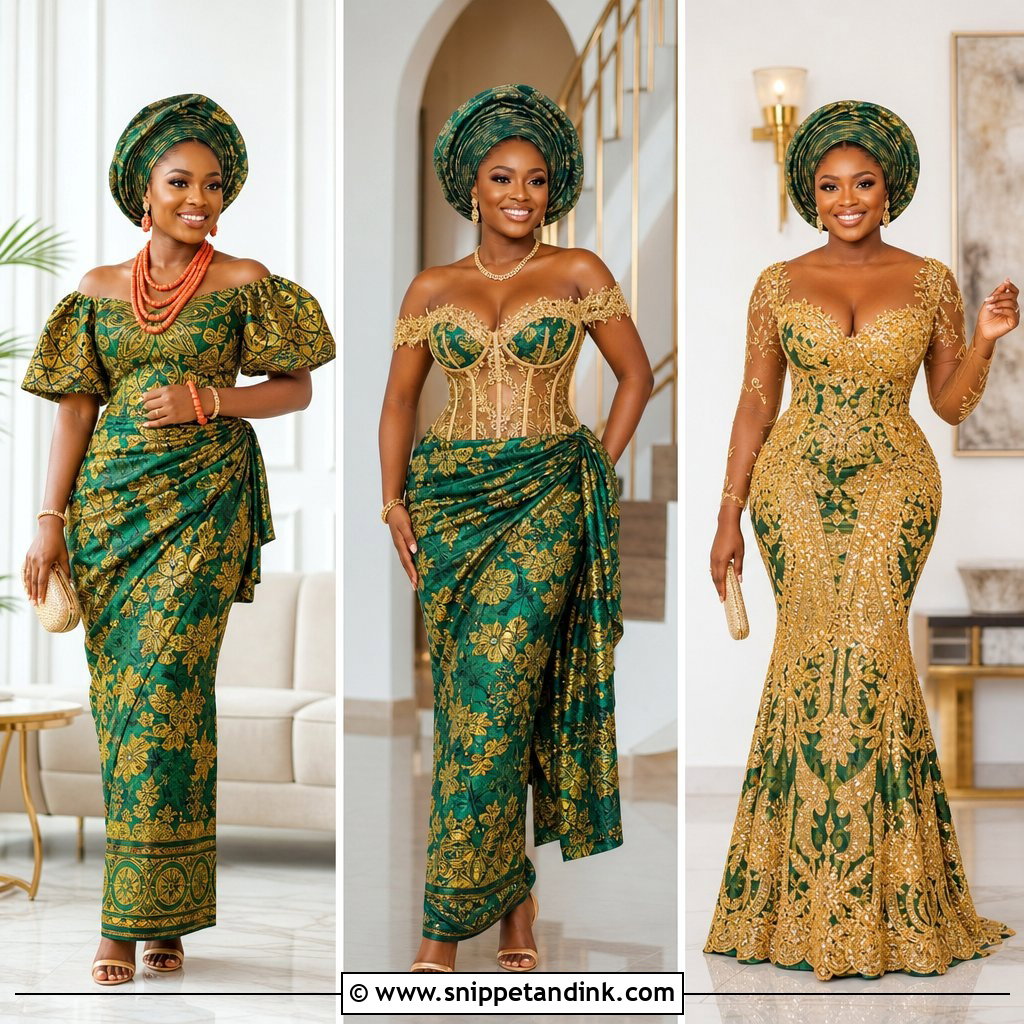
15. Green Iro Uchikake Wedding Kimono
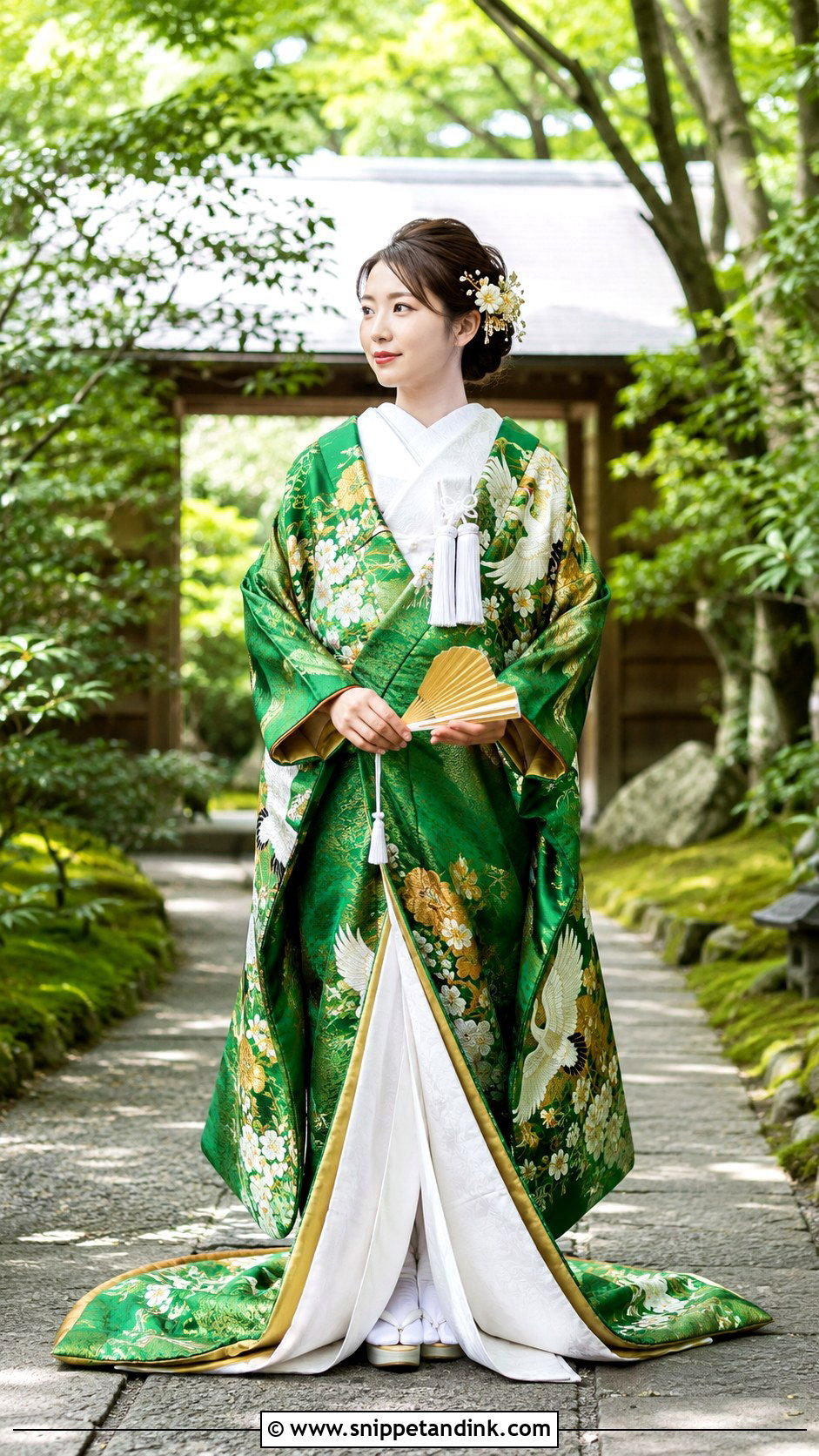
Emerald, moss and sage create very different moods: emerald rich and formal, sage gentle and modern. Pine branches, cranes and gold accents make a green uchikake read bridal, and pine in particular stands for endurance because it stays green all year. Wear it over white or cream kakeshita with tabi and zori, plus a gold fan and subtle kanzashi. Green sits naturally in gardens and traditional architecture, and it’s calmer than red for a bride who still wants color.
16. Ivory Uchikake Wedding Kimono
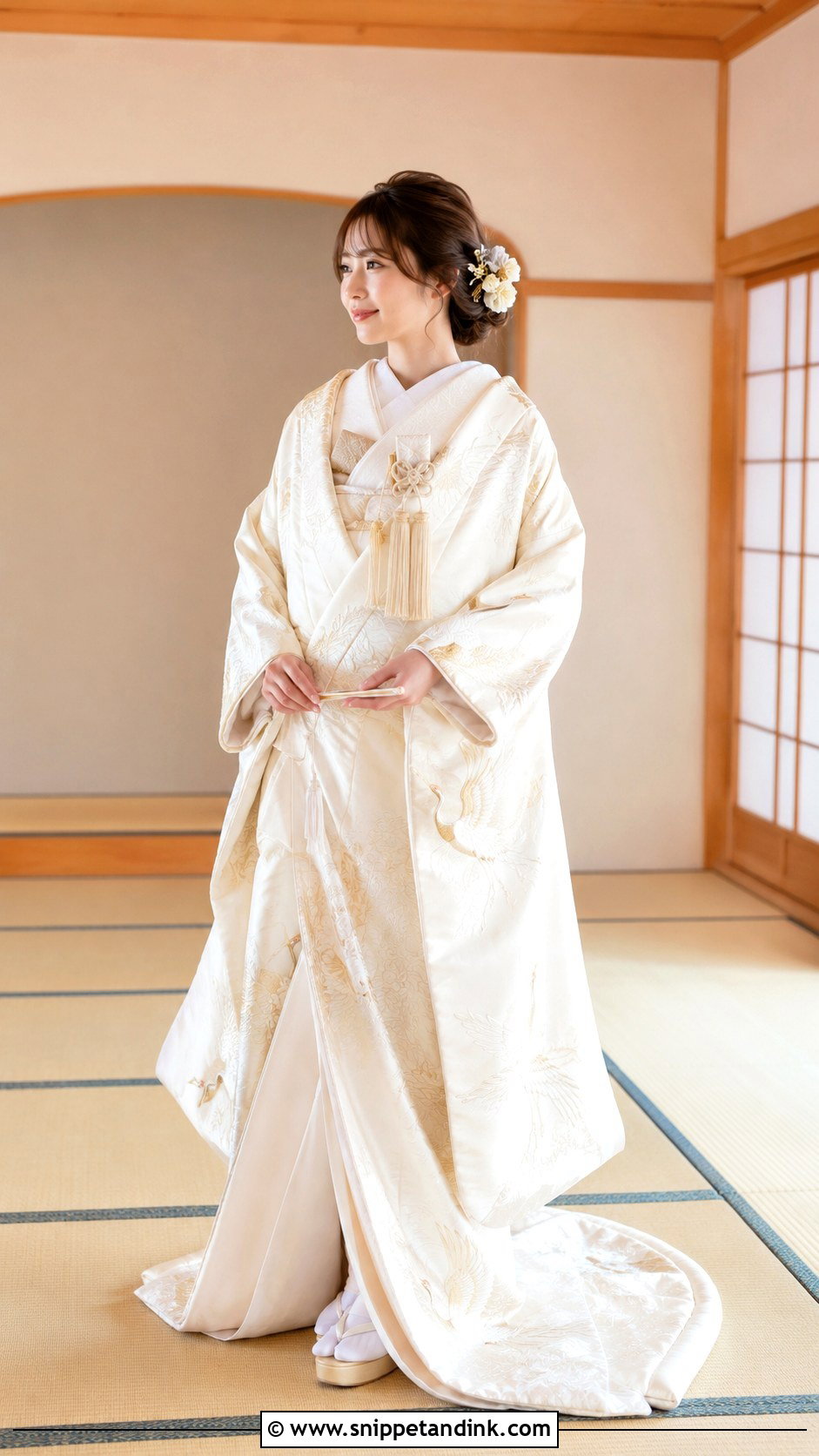
Ivory is warmer than the bright white of a shiromuku, and many complexions look healthier against it. Choose an ivory uchikake with woven cranes, floral embroidery or gold thread, over a white or ivory kakeshita, with a formal obi, tabi, zori and a fan. One thing to check: ivory beside a pure white kakeshita can make the robe look dingy by comparison, so I hold the two together in daylight before committing. A tsunokakushi makes it more ceremonial, while delicate hair ornaments suit relaxed portraits.
17. Organdy Uchikake Wedding Kimono
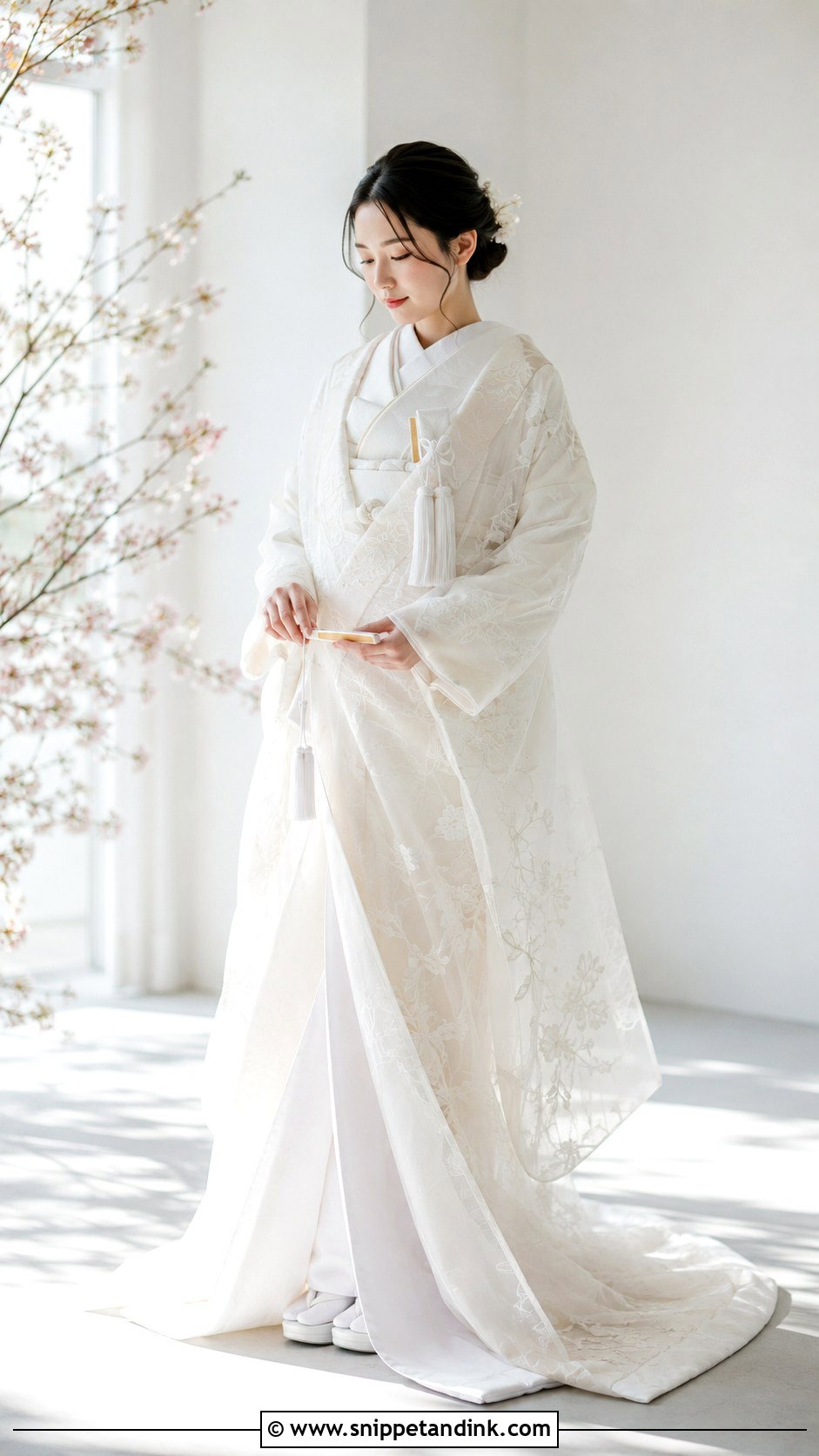
An organdy uchikake keeps the shape of traditional Japanese bridal style but swaps heavy silk for a sheer, crisp outer layer. White, ivory, blush or pale gold organdy with delicate embroidery floats over the kakeshita and moves with you. Because it’s so much lighter, it’s the robe I’d suggest for a summer wedding or a reception where you’ll be on your feet. It needs bright light to show its texture, and sheer fabric shows every crease, so have it steamed on site. A coordinated obi, tabi, zori and minimal ornaments complete it.
18. Embroidered Uchikake Wedding Kimono
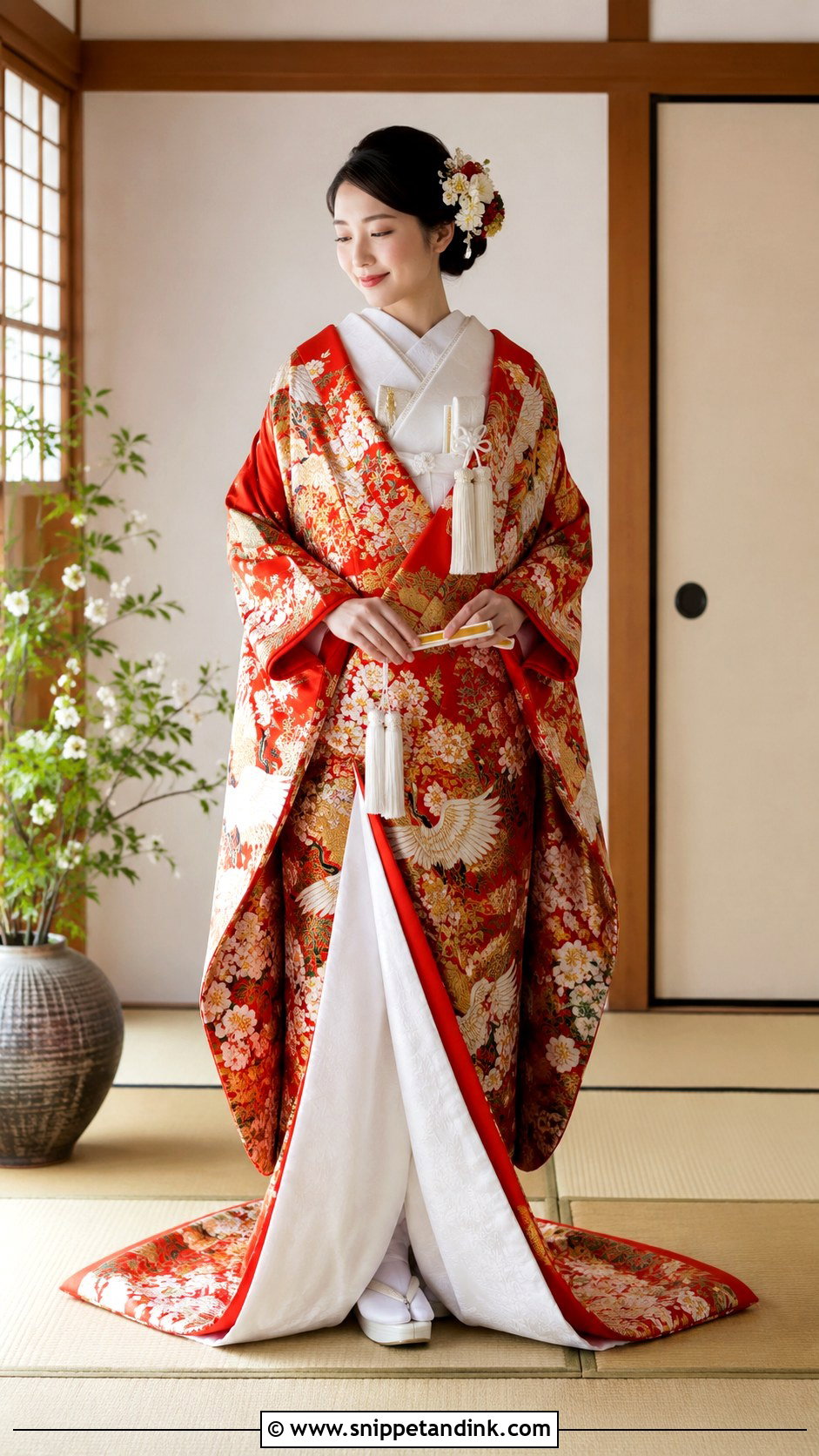
Raised embroidery and metallic thread make an embroidered uchikake one of the heaviest robes on this list, and you’ll feel it. Red reads celebration, gold grandeur, black drama and ivory softness, but the embroidery is the story, so the kakeshita underneath should be plain. I ask brides to stand in it for twenty minutes at the fitting, because the shoulders carry the load and some people tire quickly. Add white tabi, zori, a folded fan and a clean hairstyle. Close-up photos are where this craftsmanship pays off.
19. Brocade Shiromuku Wedding Kimono
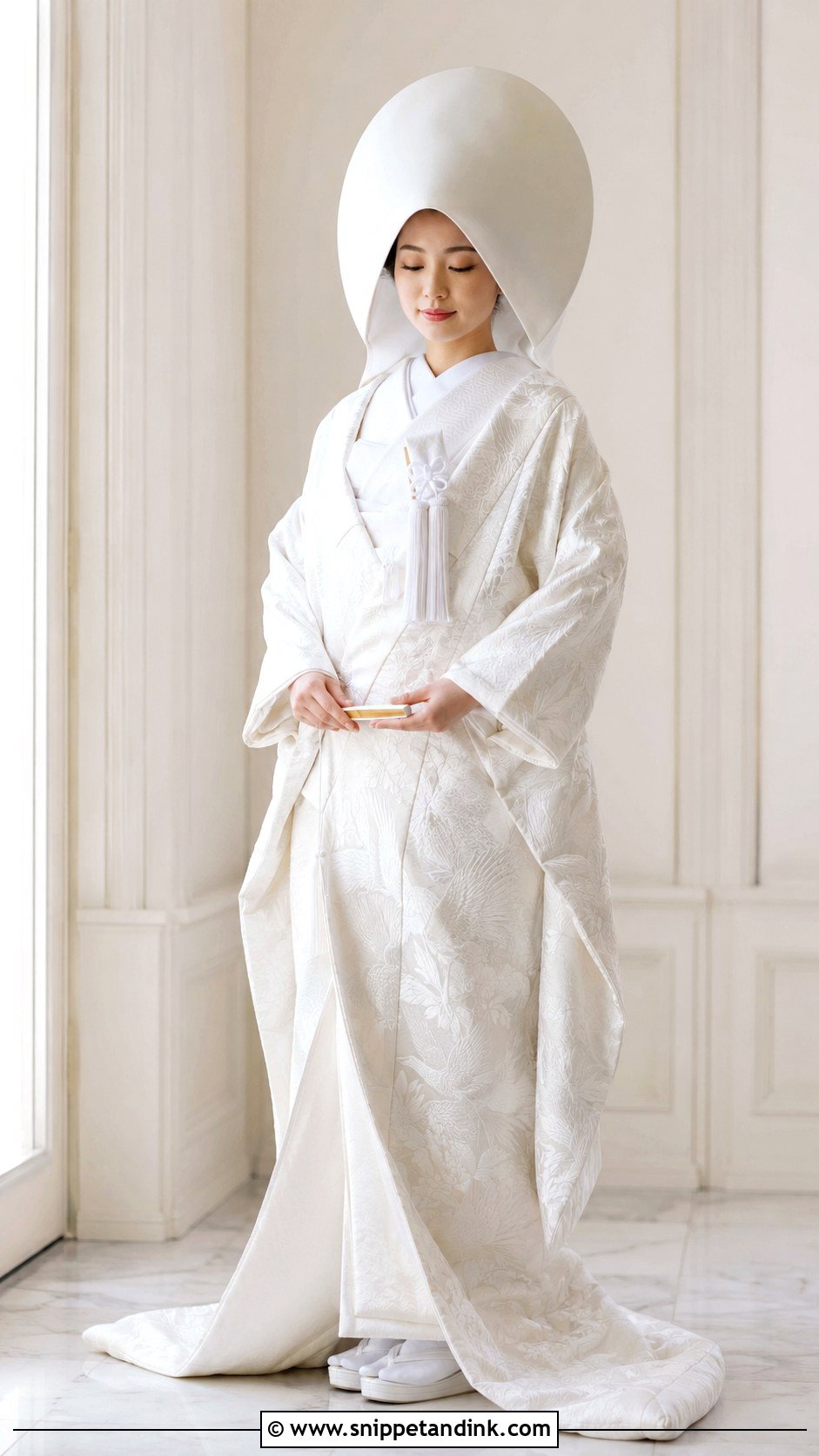
All-white doesn’t have to mean flat. Brocade shiromuku weave cranes, clouds, flowers or waves into the white silk, so the pattern appears only through light and shadow. Pair it with a white kakeshita, white obi, tabi and zori, plus a wataboshi or tsunokakushi. Texture like this disappears under flat overhead light and comes alive with light from the side, so I ask photographers to place the bride near a window for close-ups. Traditional rooms with paper screens give exactly that soft, directional light.
20. Kuro Hikifurisode Wedding Kimono
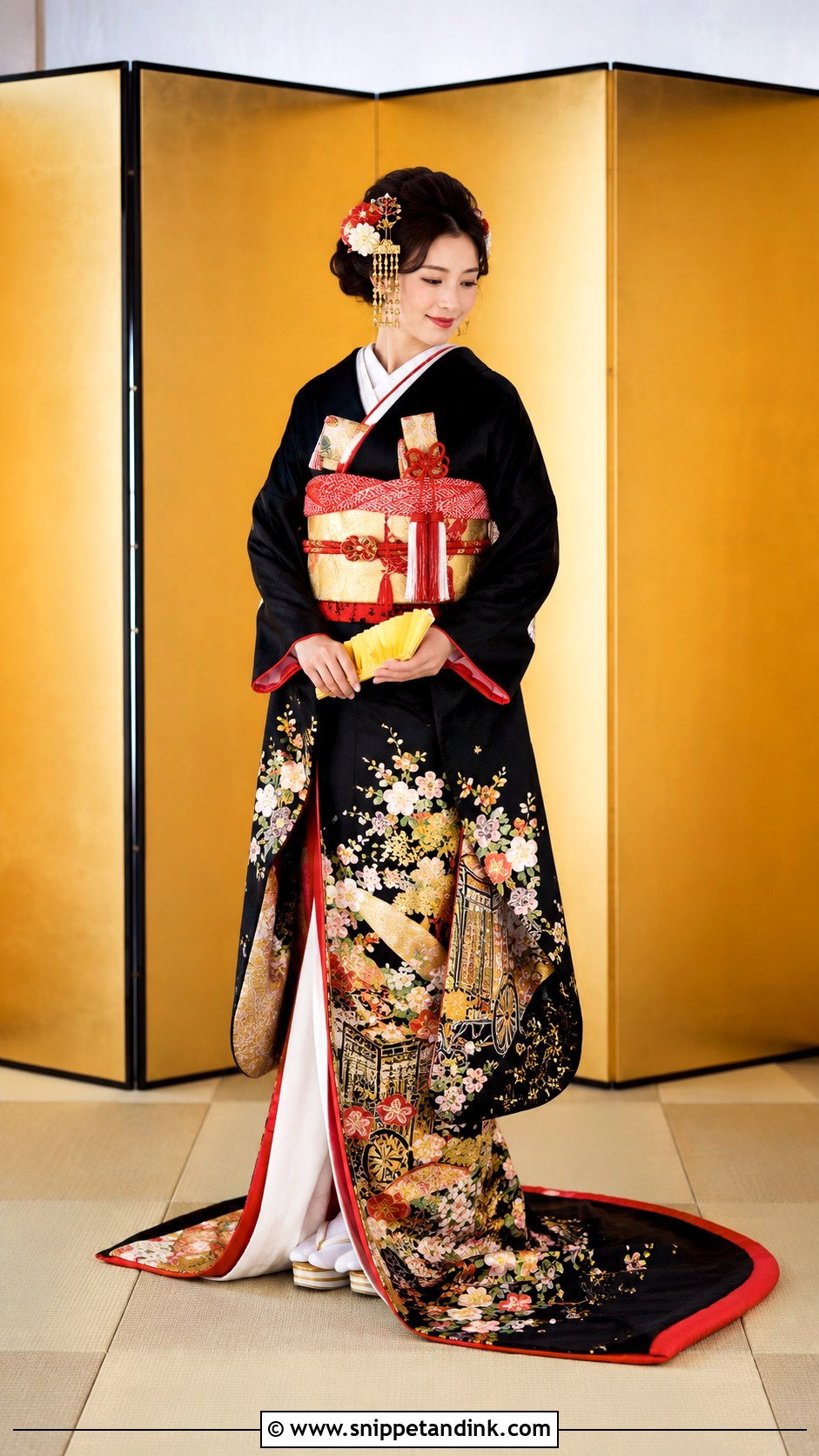
Kuro means black, and a kuro hikifurisode is the black trailing bridal kimono that many brides wore before white and colored uchikake became the norm. It’s worn with a visible obi, so color comes through the sash, accessories and hair ornaments, while bright designs gather at the lower hem. A red, gold or ivory obi works well. The trailing hem belongs indoors; outside, it needs lifting, and I’d plan for an attendant to manage it on gravel or grass. For a bride who wants tradition without all white, it’s a poised choice for receptions and portraits.
21. White And Red Wedding Kimono
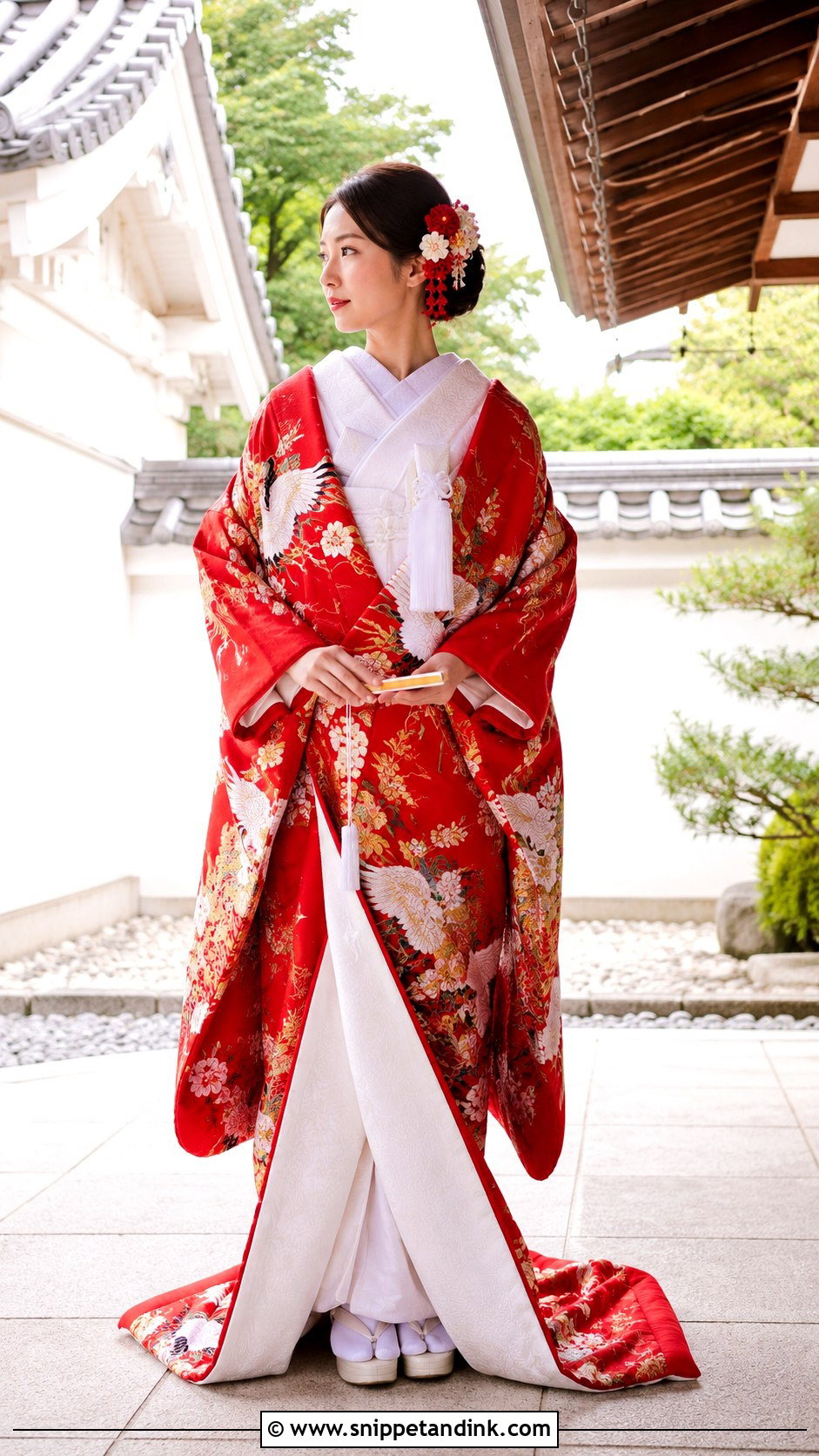
A white and red wedding kimono outfit puts the two most traditional bridal colors together. It might be a white kakeshita under a red uchikake, a shiromuku with red lining showing at the hem and sleeves, or a red hikifurisode with white accessories. The red-lined version is my favorite subtle option, since the flash of red at the edges only shows when you move. Complete it with white tabi, zori, a formal obi and a fan. A red lip works if the rest of the makeup stays clean.
22. White And Gold Wedding Kimono
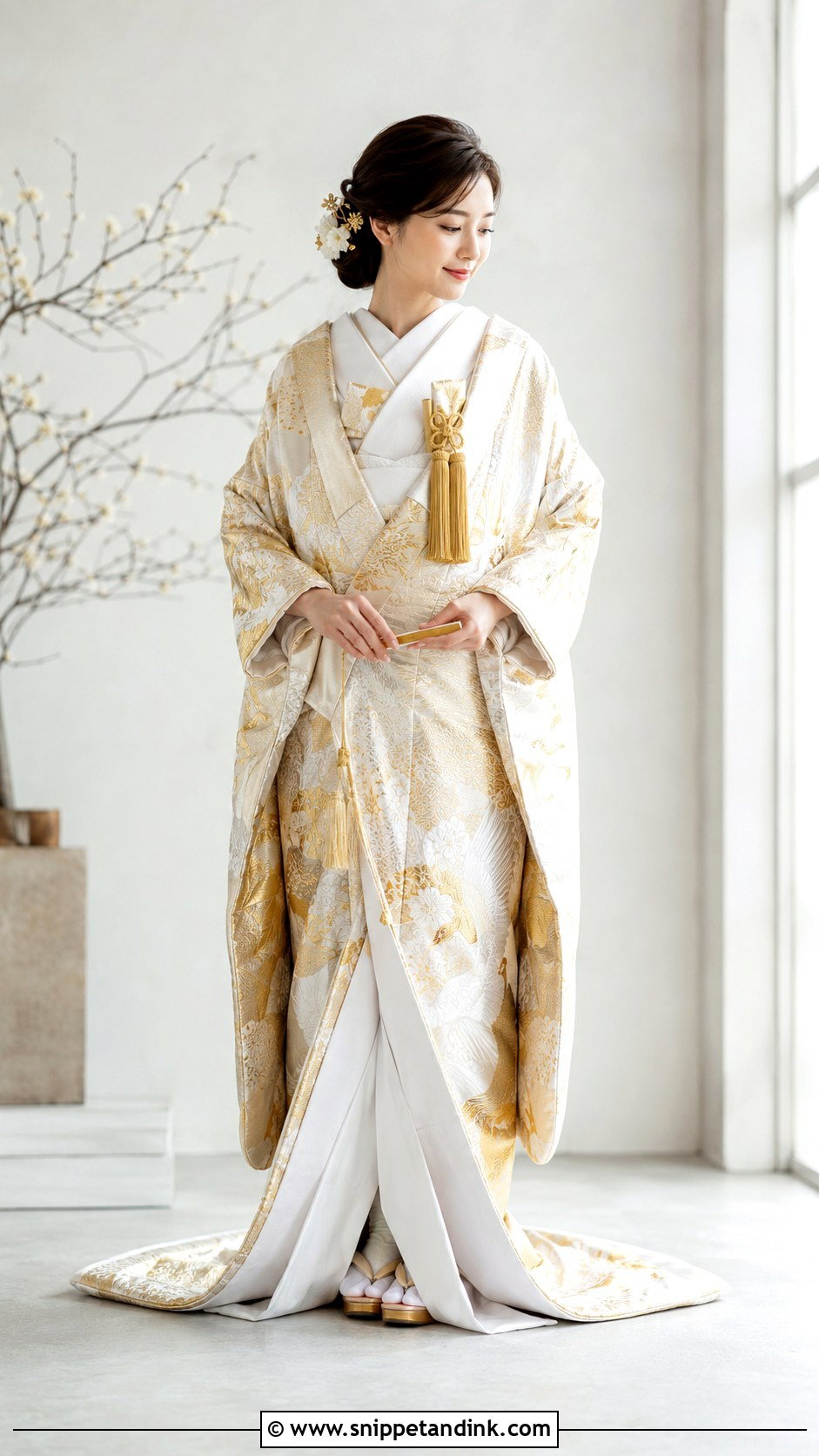
White and gold reads luminous without being colorful: a white kakeshita under a gold uchikake, a shiromuku with gold woven motifs, or an ivory robe with metallic embroidery. Complete it with white tabi, zori, a gold-accented fan and a smooth hairstyle. Metallic thread throws back direct flash harshly, so I ask photographers to bounce their light instead of firing it straight at the robe. Bright indoor spaces and traditional rooms suit it. Keep gold accessories modest so they don’t compete with the robe.
23. Uchikake With Kanzashi Hair
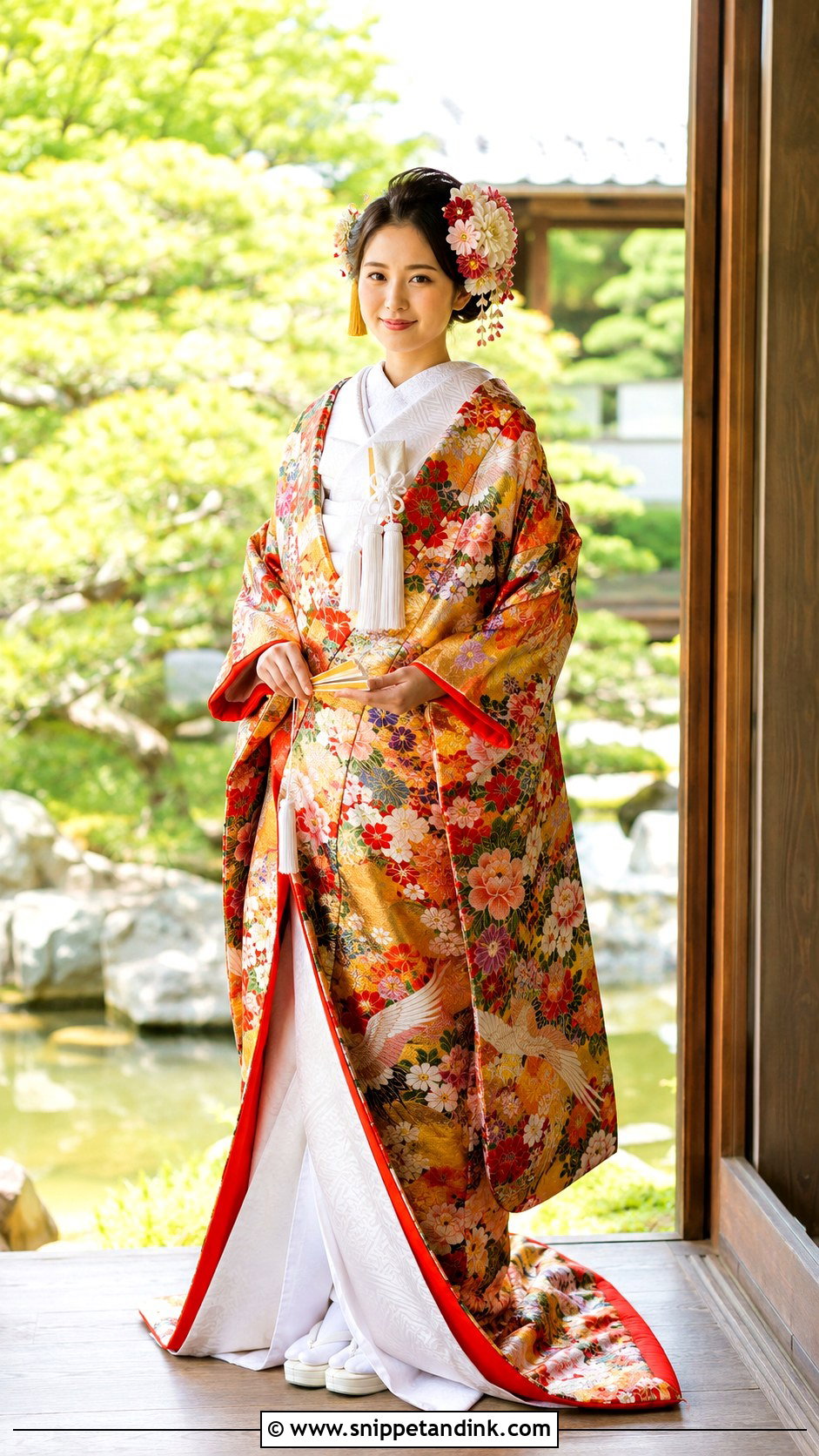
Kanzashi are the ornaments that finish the head: combs, pins, flowers and hanging pieces matched to the robe’s colors or motifs. Pair them with a red, gold, white, black or pastel uchikake over a formal kakeshita. My scale rule is simple. A heavily embroidered robe takes a few simple ornaments, and a plainer robe can carry a bolder arrangement. Traditional sets can be heavy, so if you’re using your own hair rather than a wig, the base has to be firm enough to hold every pin. White tabi, zori and a folded fan finish it.
24. Uchikake With Zori Sandals
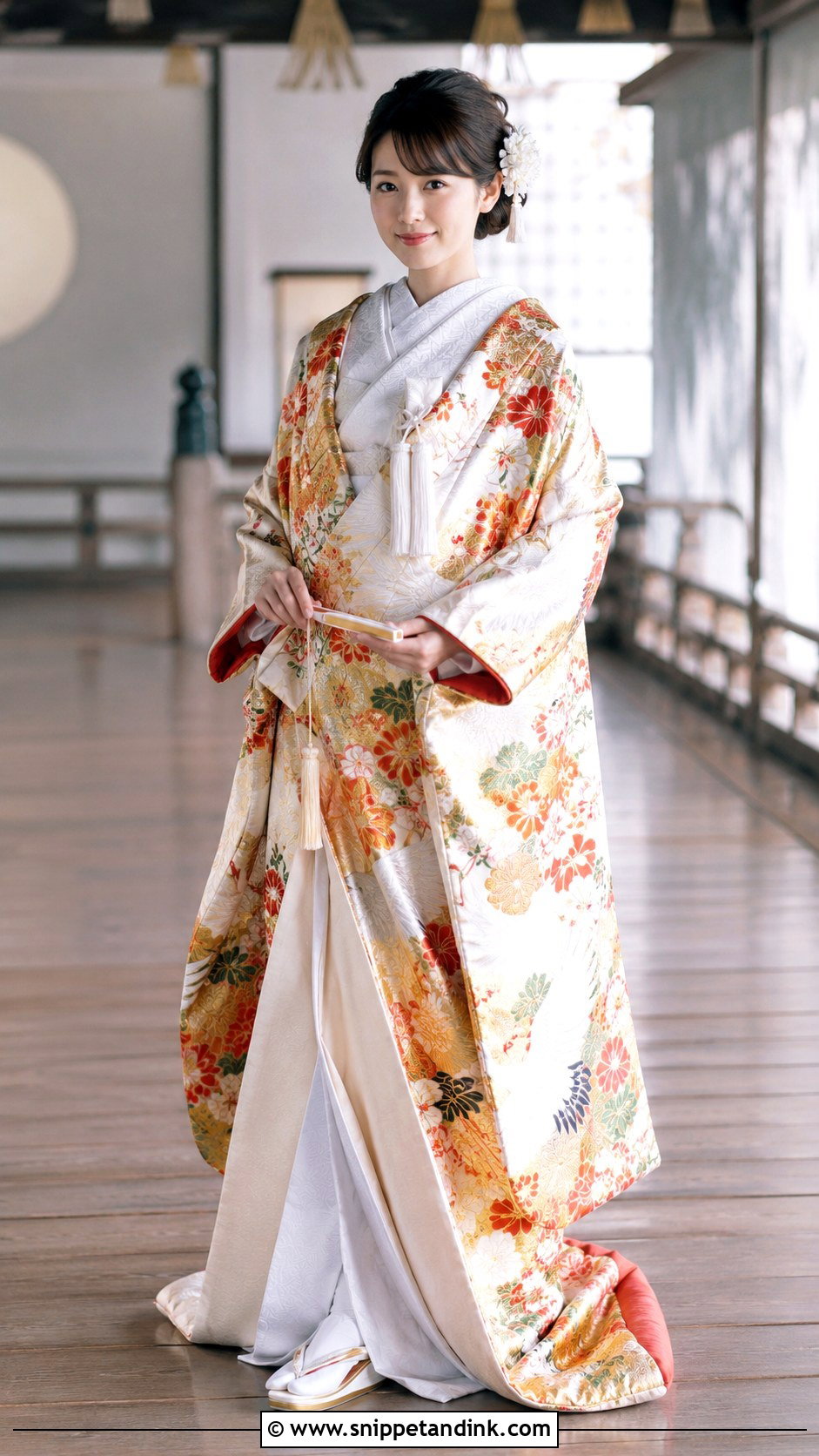
Zori seem like a minor detail until you’ve walked in them for hours. With a long, formal uchikake, the sandals should look clean and in proportion: white is the classic, and gold-accented zori suit colorful or metallic robes. Tabi should fit snugly, and I’d break the zori in at home with the tabi on, because the thong between the toes rubs when both are new on the day. Bridal zori often have a higher base than everyday pairs, which keeps the hem clear but takes a little practice. Entrances and walking shots will show your feet, so coordinate them with the rest.
25. Traditional Japanese Wedding Kimono For Photoshoot
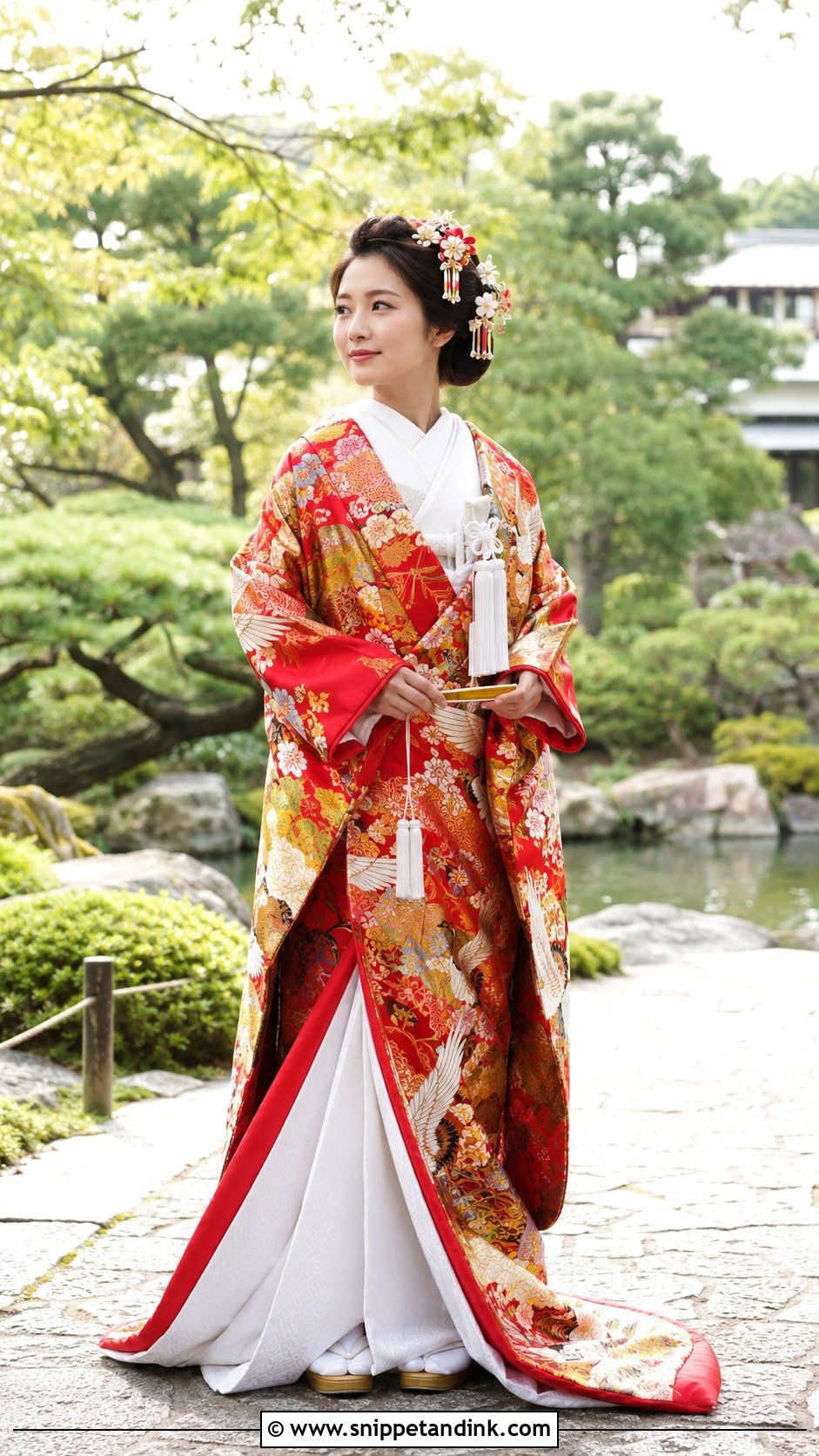
For a photoshoot, let the location choose the kimono. Shiromuku makes a pure, ceremonial portrait, red or gold iro uchikake makes a bold, festive image, and a hikifurisode gives a belted silhouette with a trailing hem. Complete the outfit with tabi, zori, a fan, hair ornaments and either a wataboshi, tsunokakushi, or styled updo. White glows in traditional interiors, red stands out against garden green, and gold looks richest in a bright studio. Many photo studios rent kimono and include dressing, which saves carrying heavy silk across town. Build in breaks, because posing in layered silk is tiring.
Ironaoshi, the Color Change After the Ceremony
Many Japanese weddings include ironaoshi, a change of outfit partway through the celebration. Traditionally the bride moves from white shiromuku into a colored uchikake, and the old symbolism is that she has been dyed in the colors of her new family. Today the change might be into a red uchikake, a hikifurisode or a Western gown.
It takes longer than people assume. Swapping an uchikake over the same kakeshita is fairly quick, but changing the kakeshita, obi and headpiece, or moving from a wataboshi to a tsunokakushi, means real dressing time. I plan the change into the schedule as its own block, with the dresser present and the second set laid out in order. If the reception runs to a timetable, give the change a fixed slot and a short guest activity, such as a speech or a toast, to fill it.
Matching the Kimono to Ceremony, Season and Setting
Japanese bridal dress has far more range than most brides expect. Pure white shiromuku, colored iro uchikake and belted hikifurisode each carry a different level of formality and a different mood, from quiet and ceremonial to bold and richly embroidered. Let the ceremony, venue, season and photographs guide you, and give the small pieces their due: headpiece, fan, tabi, zori and hair ornaments. Work with an experienced dresser, practise walking with the hem in hand, and the outfit will feel meaningful rather than borrowed.
You'll Like These Ideas:


Leave a Reply