
Retro bridal hair is built differently from modern wedding hair. Where a current style is curled, loosened and sprayed, the old looks were set: waves pressed into wet hair, curls pinned flat and left to cool, rolls shaped around padding. That structure is why they photograph so cleanly and why they last. The twenty styles here run from 1920s finger waves to the 1960s beehive, with a few Edwardian shapes along the way. Each note tells you what the style asks of your hair and the decade it belongs to, so the dress and the hair tell the same story at your trial.
Dating the Hair to the Dress Before the Trial
The quickest way for a vintage look to feel off is a mismatch of decades: a 1960s beehive over a 1920s beaded drop-waist dress, or Edwardian tucks with a 1950s full skirt. I ask to see the dress before I suggest anything, then work backwards to the era it belongs to.
- Drop waists, beading and short hemlines: finger waves, flapper bobs, faux bobs.
- Bias-cut silk and satin with a long, fluid line: Marcel waves, Hollywood waves, low chignons.
- Shoulder pads, tailored suits and tea lengths: victory rolls, pageboys, pin curls.
- Full skirts and fitted bodices: French twists, curly updos, half-up waves.
- Structured shifts and A-lines with simple necklines: bouffants and beehives.
- High lace collars and long sleeves: the Gibson tuck, rolled updos, crown braids.
If your dress is modern, you’re free to choose, but I’d still pick one decade for hair and makeup together. A sharp 1940s red lip with 1960s doe lashes rarely sits right in close-ups.
1. Vintage Bridal Finger Waves
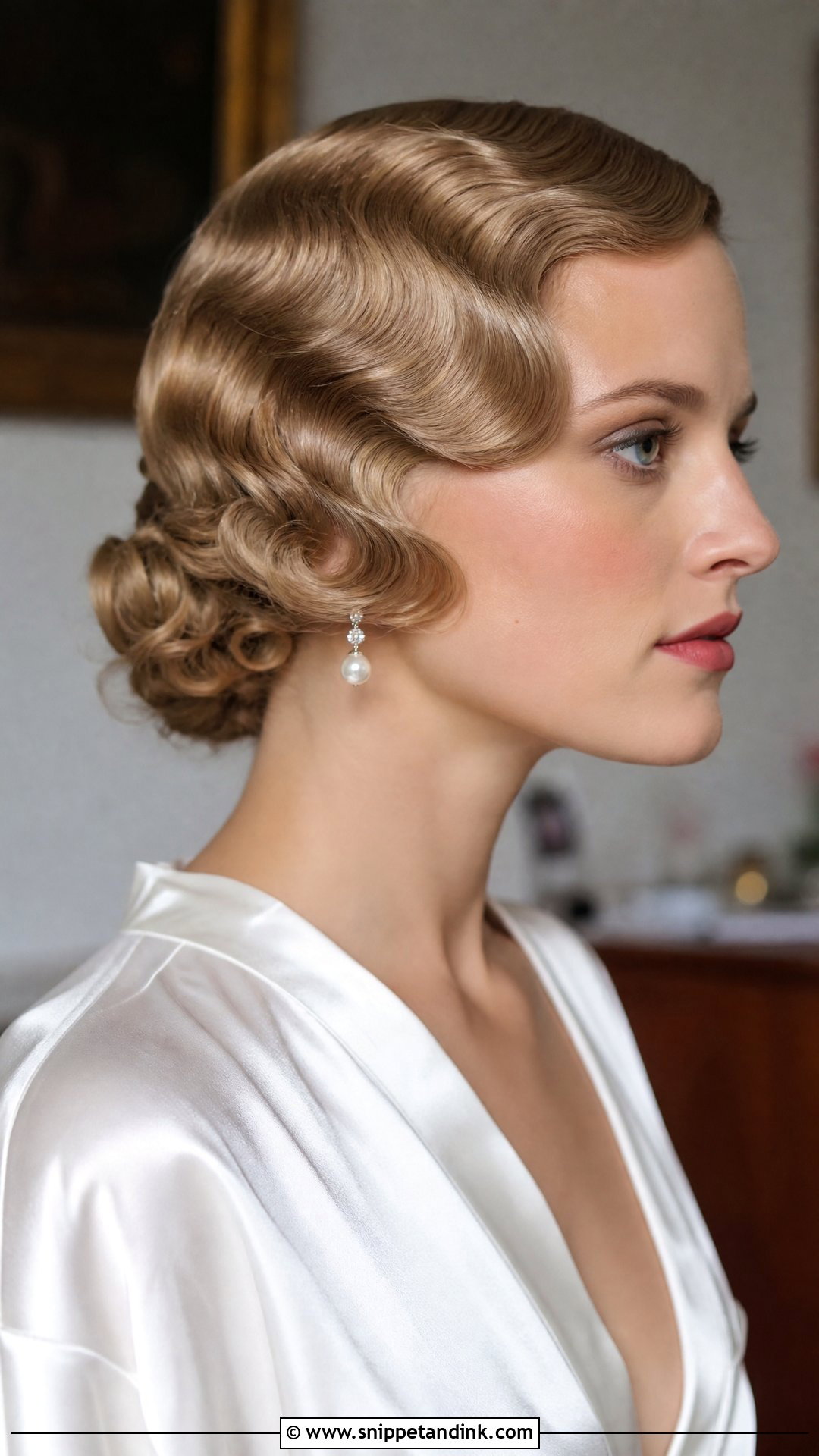
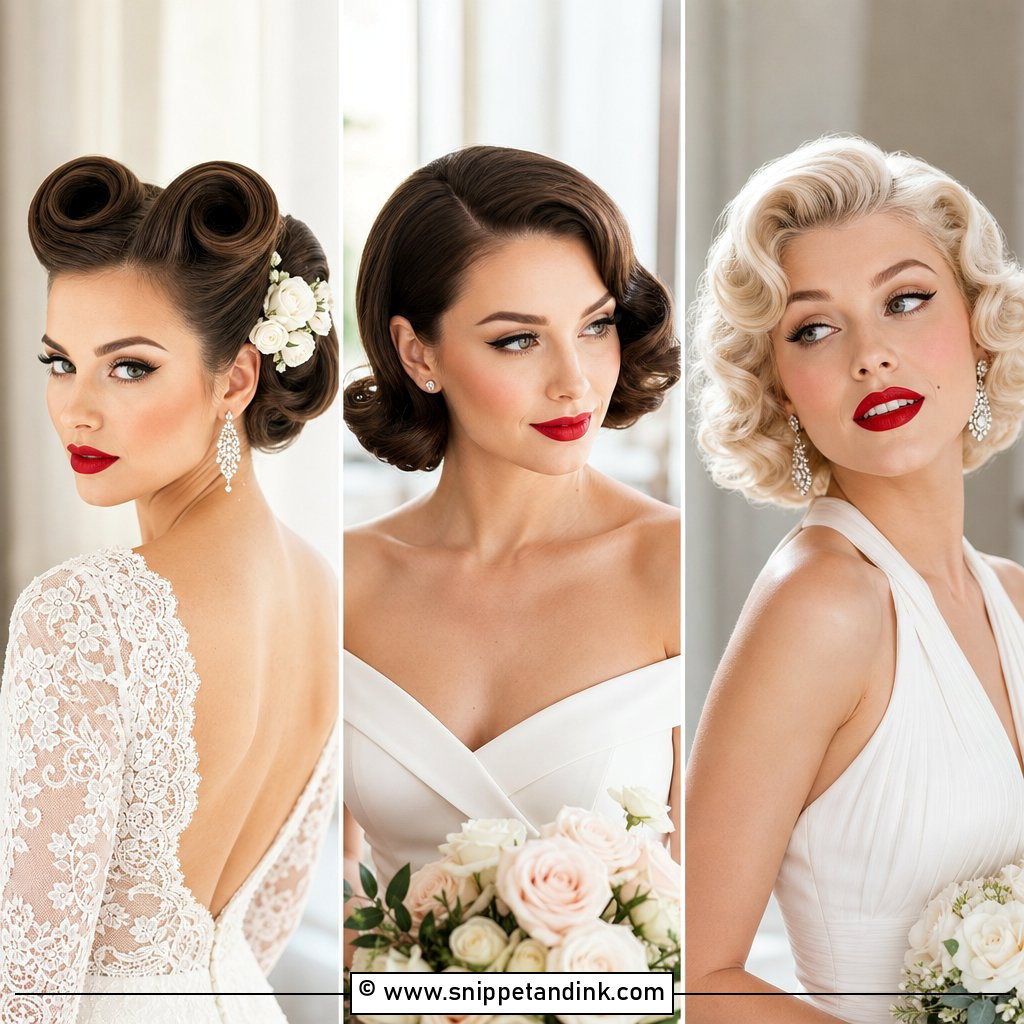
Finger waves are formed on damp hair with setting lotion, a comb and the side of the stylist’s fingers, pressing alternating ridges into an S pattern that dries flat to the head. It’s the purest 1920s influence on this list. Short bobs and pixies show the pattern best; longer hair can be waved at the front and pinned under into a faux bob. A deep side part matters, because the waves follow it. I let the set dry fully, under a hood dryer if time is short, before I touch the comb again. Red lipstick and pearl earrings are the natural partners.
2. Vintage Bridal Hollywood Waves
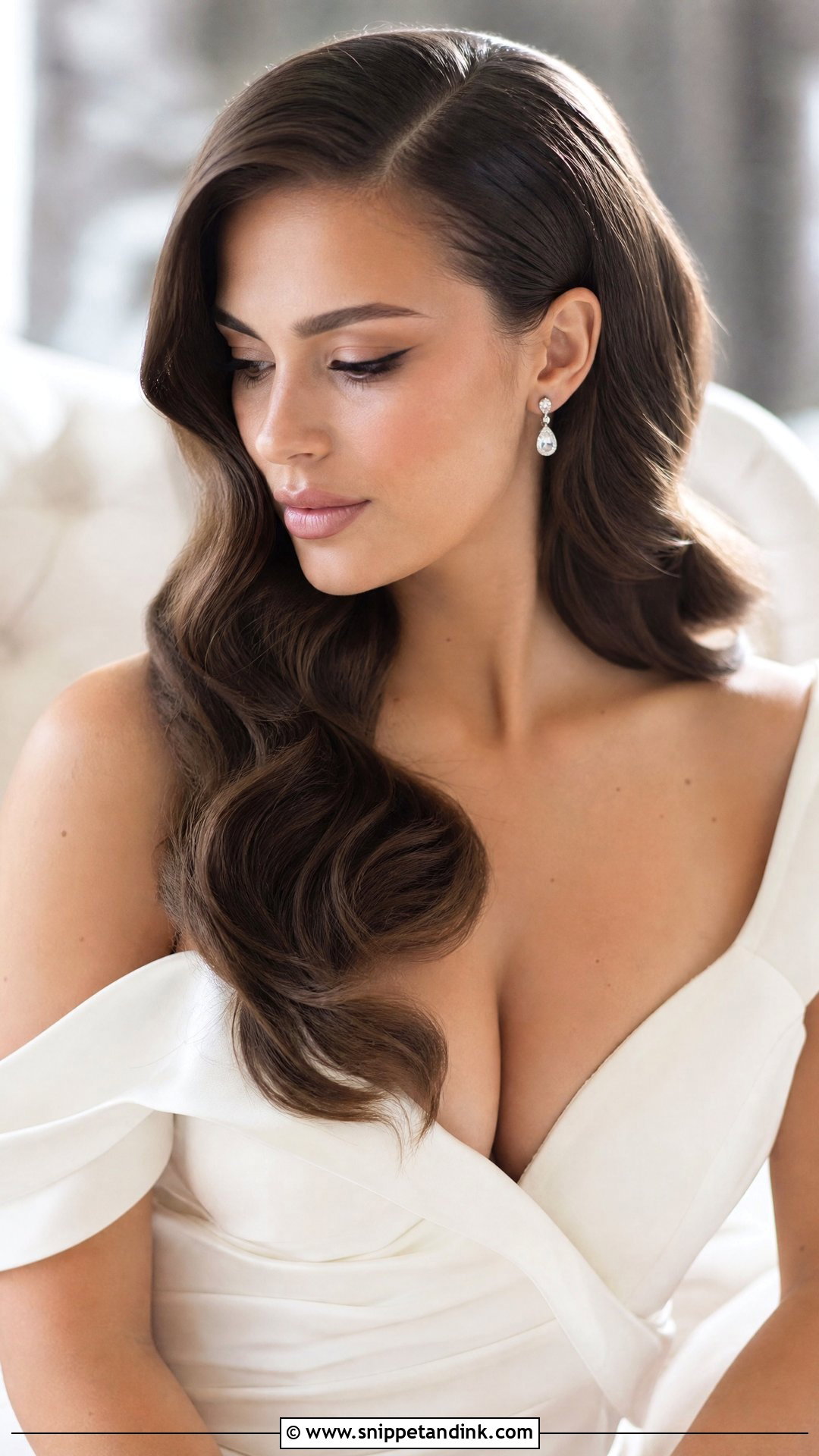
Old Hollywood waves are the brushed-out cousin of a set curl. I roll the hair in one direction, let it cool, then brush it into a single glossy wave that falls over one side. The brushing is what separates this from beach texture, and it’s the step people skip at home. Medium to long hair is needed to see the pattern. A side part gives the 1940s screen look, while a centre part feels softer and more current. Place the veil under the crown so it doesn’t flatten the first wave, and pair it with a fitted or bias-cut dress.
3. Vintage Bridal Chignon
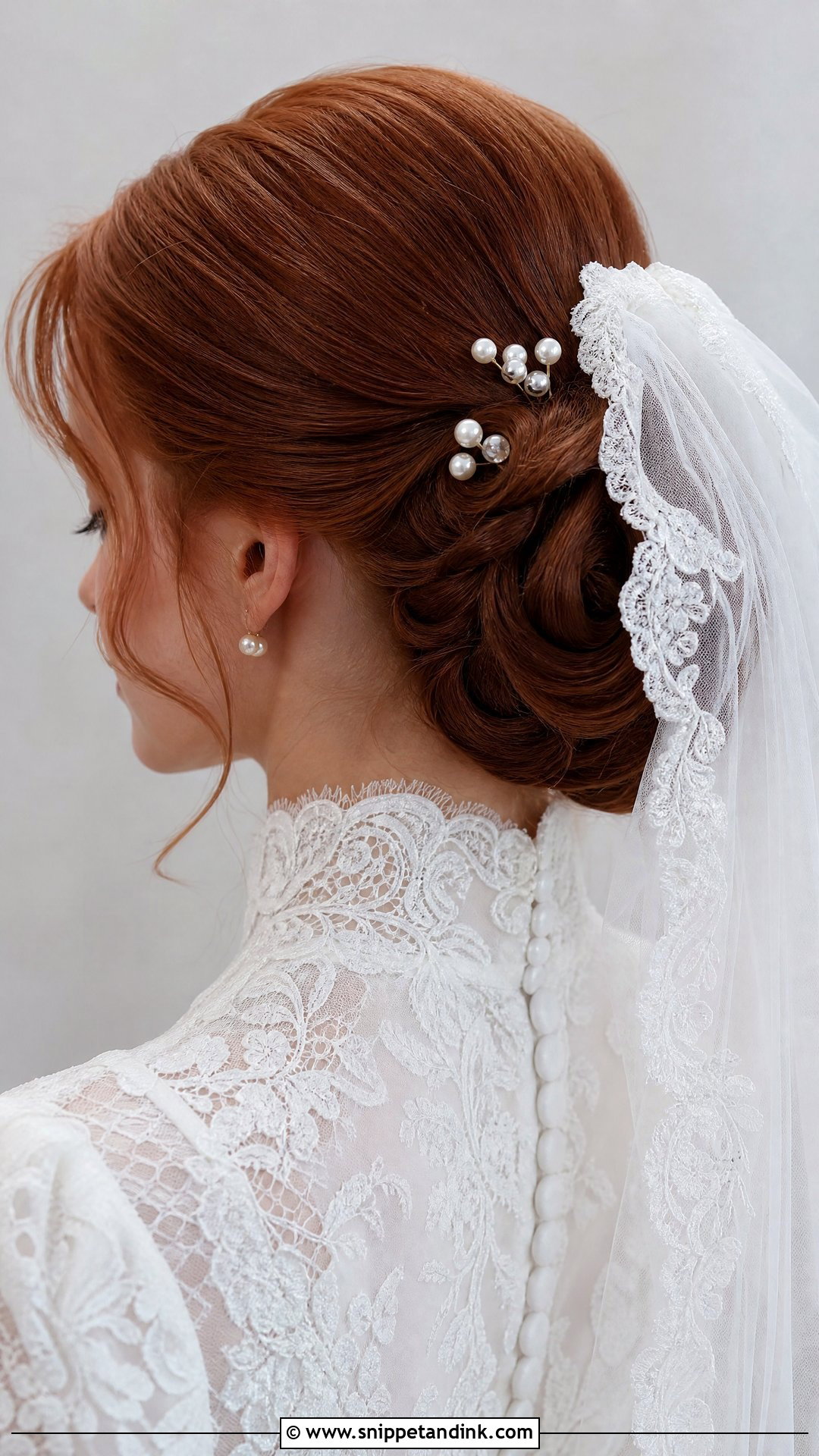
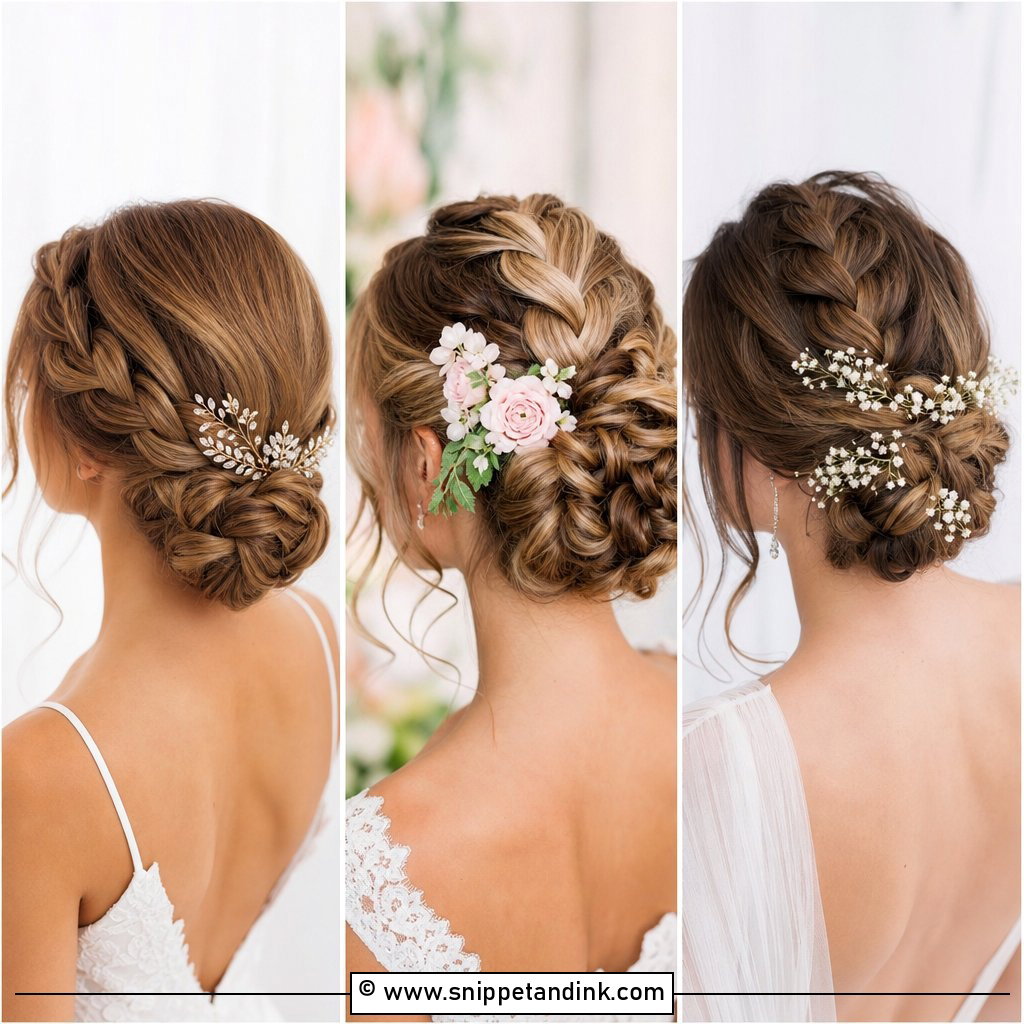
A low chignon is the vintage style I trust most for a long day. Hair is gathered at the nape and shaped into a smooth bun, a rolled knot or a tucked coil, and because the weight sits low it doesn’t pull at the scalp. It accepts almost any veil, from a cathedral length to a birdcage. My tweak for a softer feel is to set the front in a wave before gathering it, so the chignon reads 1930s rather than ballet. Heirloom jewellery and high lace necklines suit it.
4. Vintage Bridal French Twist
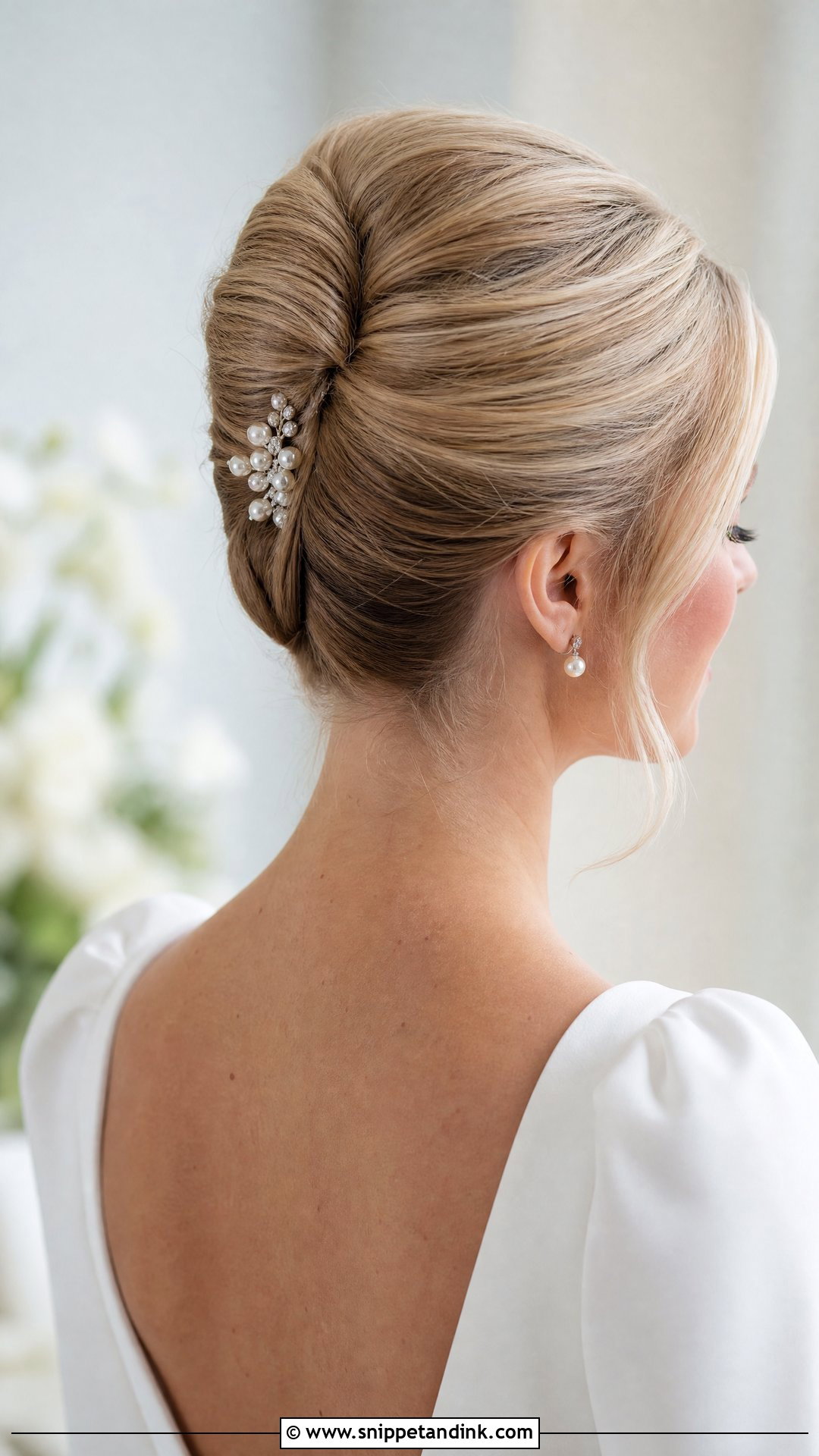
The French twist builds height vertically up the back of the head, which is why I suggest it to brides who find a round bun too heavy for their face. It belongs to the 1950s when worn sleek and lacquered. Softened with a few loose pieces, it becomes more romantic. The seam where the twist folds in is where a pearl comb or a crystal pin sits best. Medium to long hair works, and very layered cuts may need a little backcombing inside the fold so short ends don’t spring out. Boat necks and strapless dresses show it off.
5. Vintage Bridal Bouffant Updo
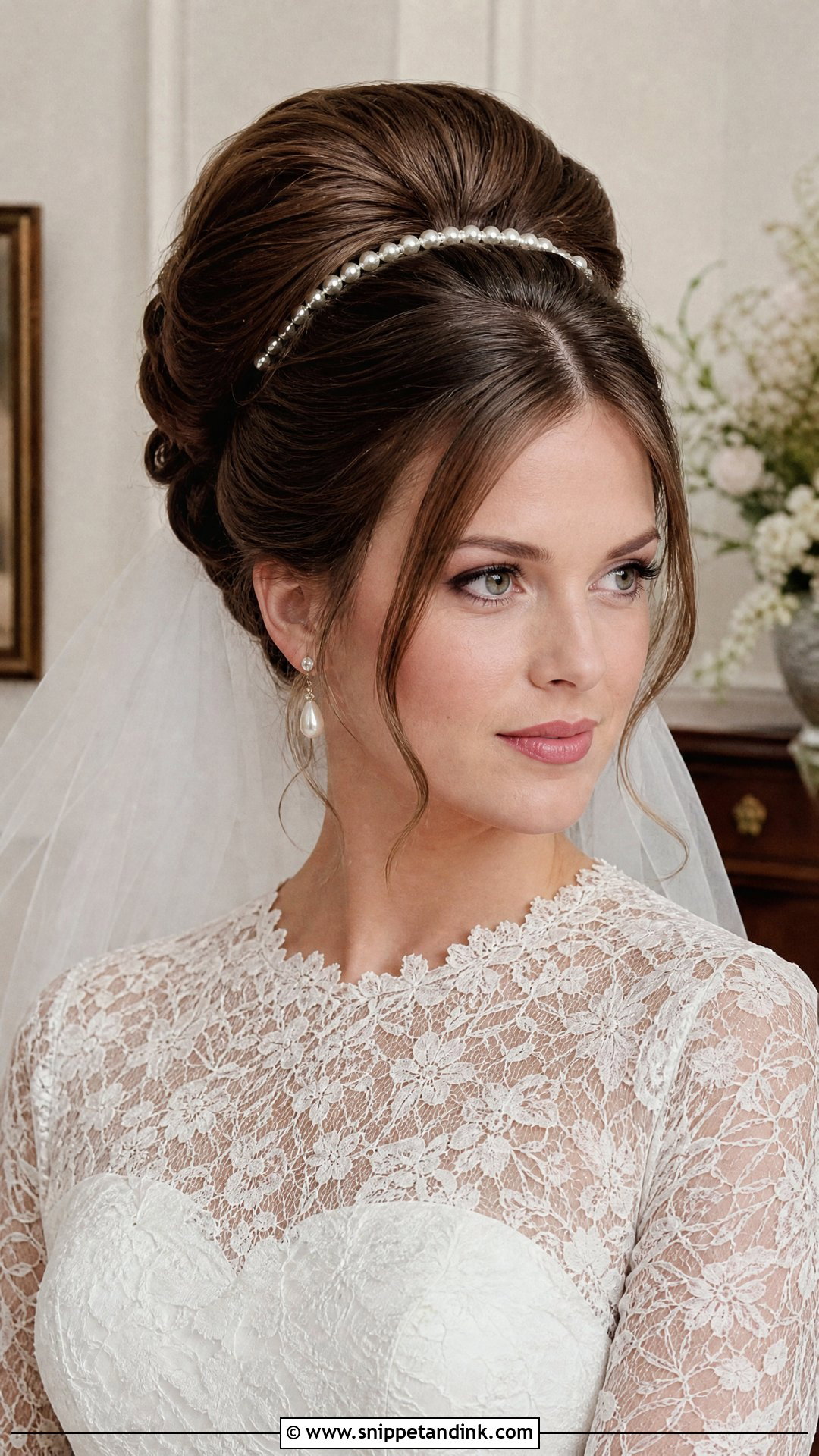
Crown height from careful backcombing is what gives this 1960s feel. The teased crown is smoothed over with a soft brush, and the back is finished in a bun, twist or tucked roll. It’s one of my favourite options for fine hair, since padding under the crown adds fullness that holds all day. The danger is overdoing it: too much height or a hard, lacquered front tips it into costume. Keep the front soft and the height moderate. A thin headband, short veil or pearl pins finish it.
6. Vintage Bridal Victory Rolls
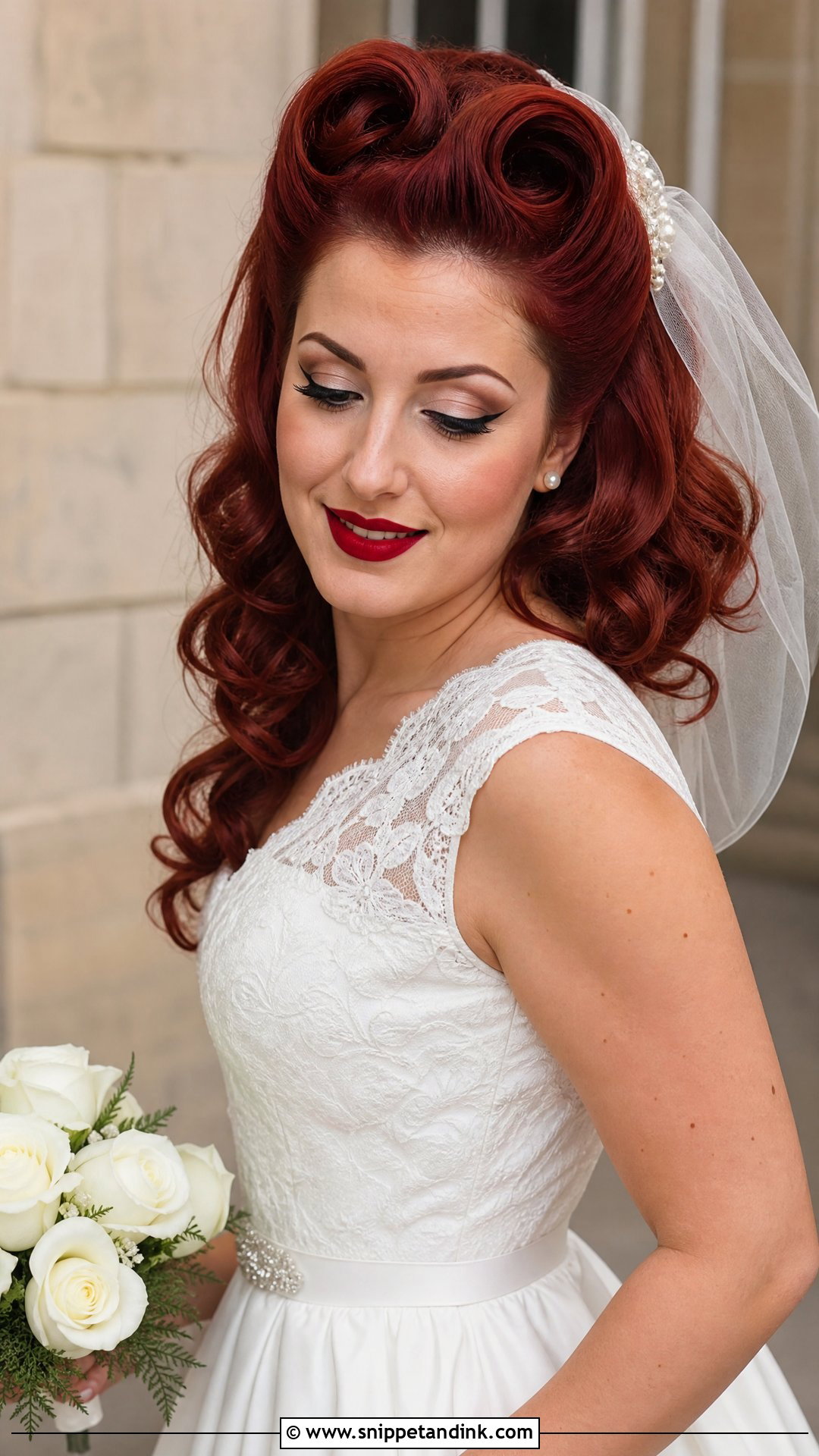
Vintage bridal victory rolls are the boldest 1940s shape here. Sections at the front or sides are rolled back over a finger or a small padding and pinned into hollow tubes. Balance is everything: rolls that differ in size look accidental. I set the sections with hot rollers first, because smooth, slightly bent hair rolls much more cleanly than straight. The back can stay in curls, a low bun or a tidy updo. Tea-length dresses and winged liner are its natural partners.
7. Vintage Bridal Marcel Waves
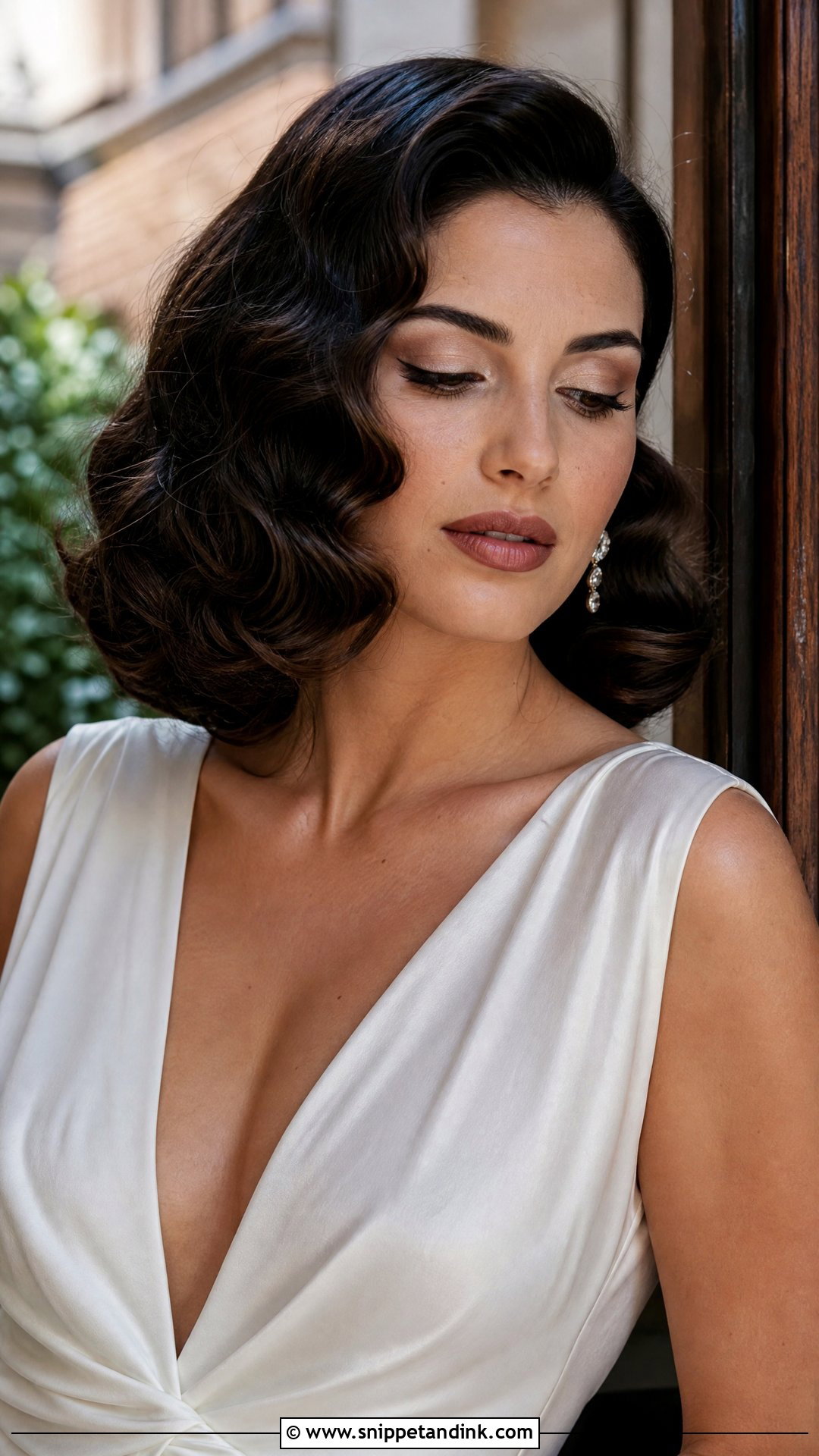
Marcel waves predate the finger wave and were originally made with a heated iron, giving a deeper, more defined ridge. The look belongs to the late 1920s and 1930s, with high shine and a deep side part. Shoulder-length hair and long bobs suit it, and longer hair can wear it down. Even spacing is what makes it work, so I section carefully and clip each ridge while it cools. Silk, bias-cut dresses and drop earrings complete the period look.
8. Vintage Bridal Faux Bob
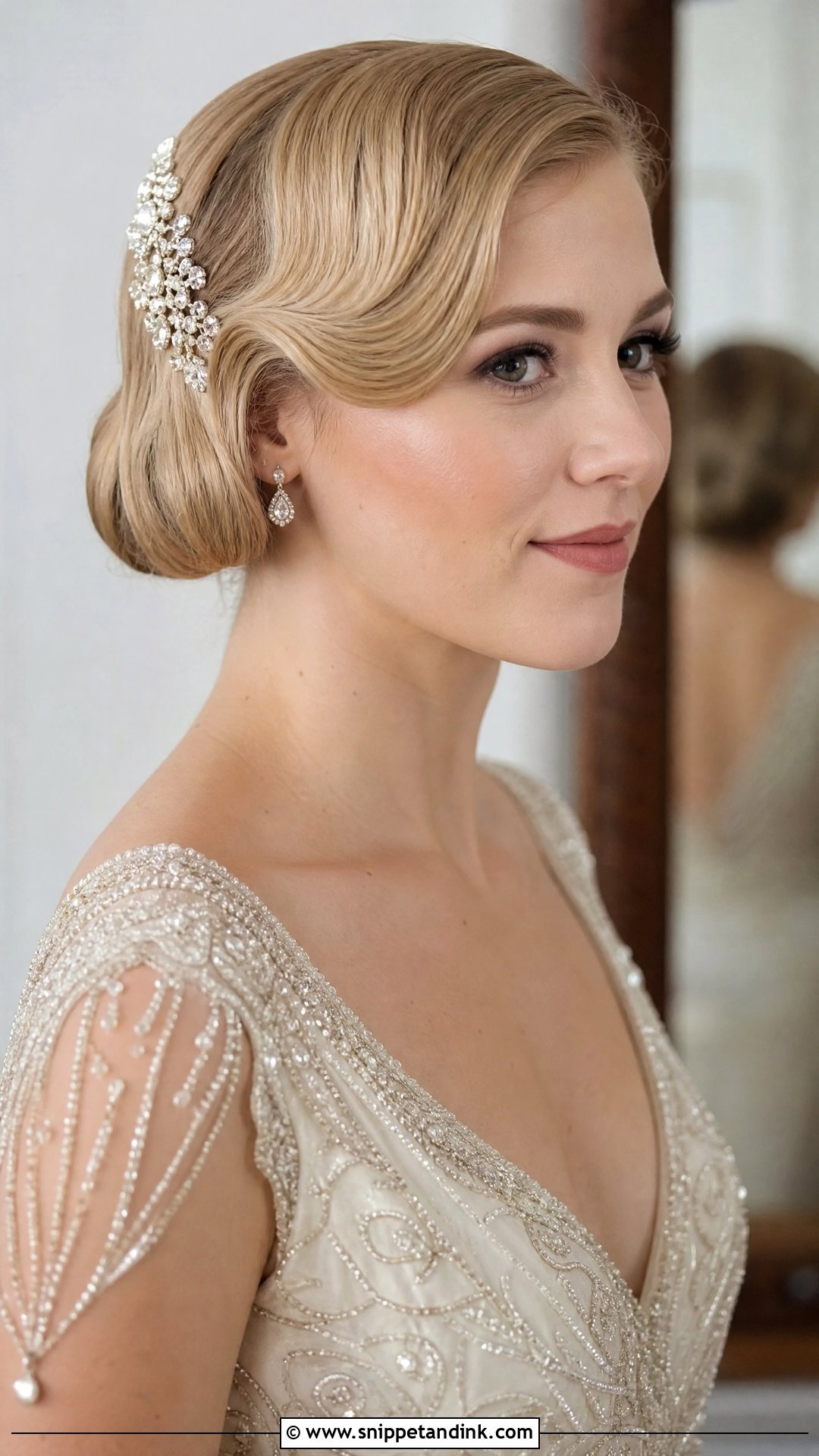
Long hair, short look. The length is curled, tucked under and pinned so it looks like a bob from the front and sides, which gives 1920s or 1930s character without a haircut. Thick hair is the challenge, not the advantage, because all that bulk has to hide somewhere; I sometimes braid the ends flat first and pin the braid under. Fine and medium hair tuck more neatly. A jewelled clip at the side or a birdcage veil completes the illusion, and beaded gowns suit it.
9. Vintage Bridal Beehive
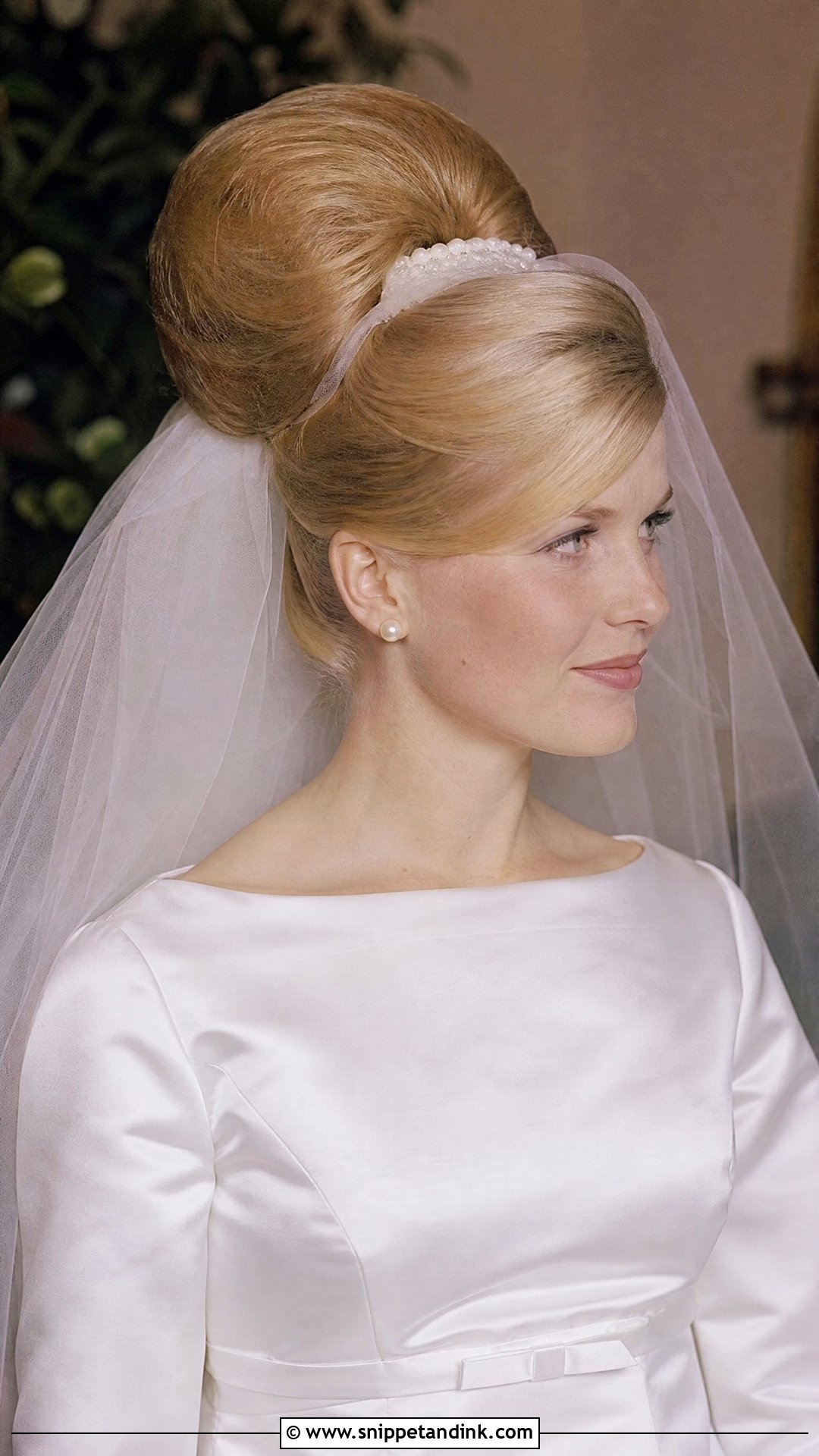
Height at the crown, sides swept back, and a shape that can balance a full skirt or a structured gown: the beehive is pure 1960s. It’s built from teased hair smoothed over a padding, so the inside is all support and the outside is all polish. The top must stay smooth, not fuzzy. I check comfort at the trial by asking the bride to wear it for an hour, since the backcombing can feel tight. Finish with a low bun or tucked ends, plus a short veil, satin bow or pearl headband.
10. Vintage Bridal Pin Curls
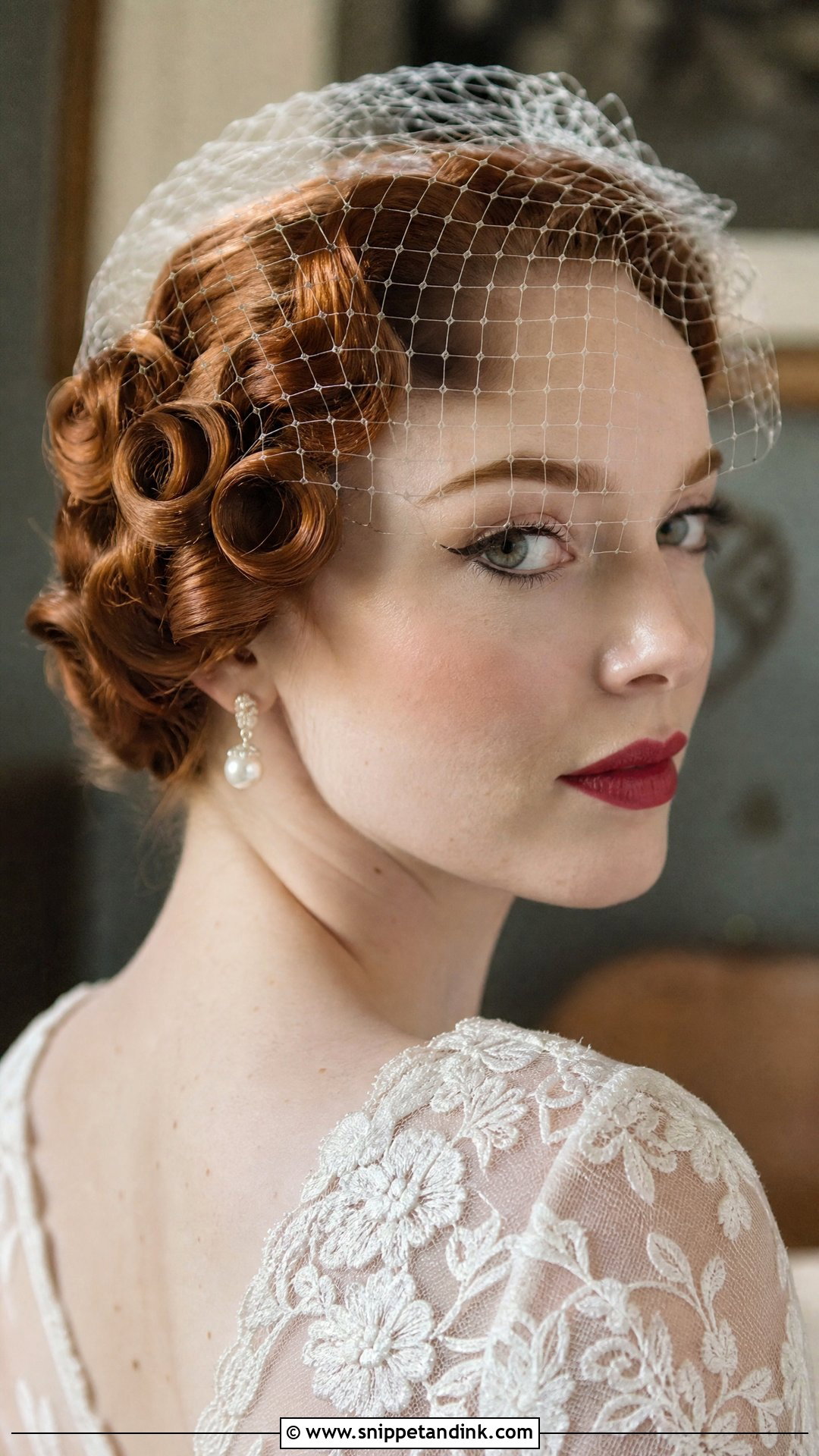
Pin curls are the foundation of most vintage styles, and here they become the style itself. Each small section is wound into a flat coil and pinned against the head to set, then left defined or brushed out. On short hair they can be worn all over; on a bob they shape the outline. They need time. A wet set takes hours to dry, so for weddings I usually set them hot and let them cool for at least twenty minutes. Naturally wavy or curly hair takes a set well. Birdcage veils and small hats suit the look.
11. Vintage Bridal Rolled Updo
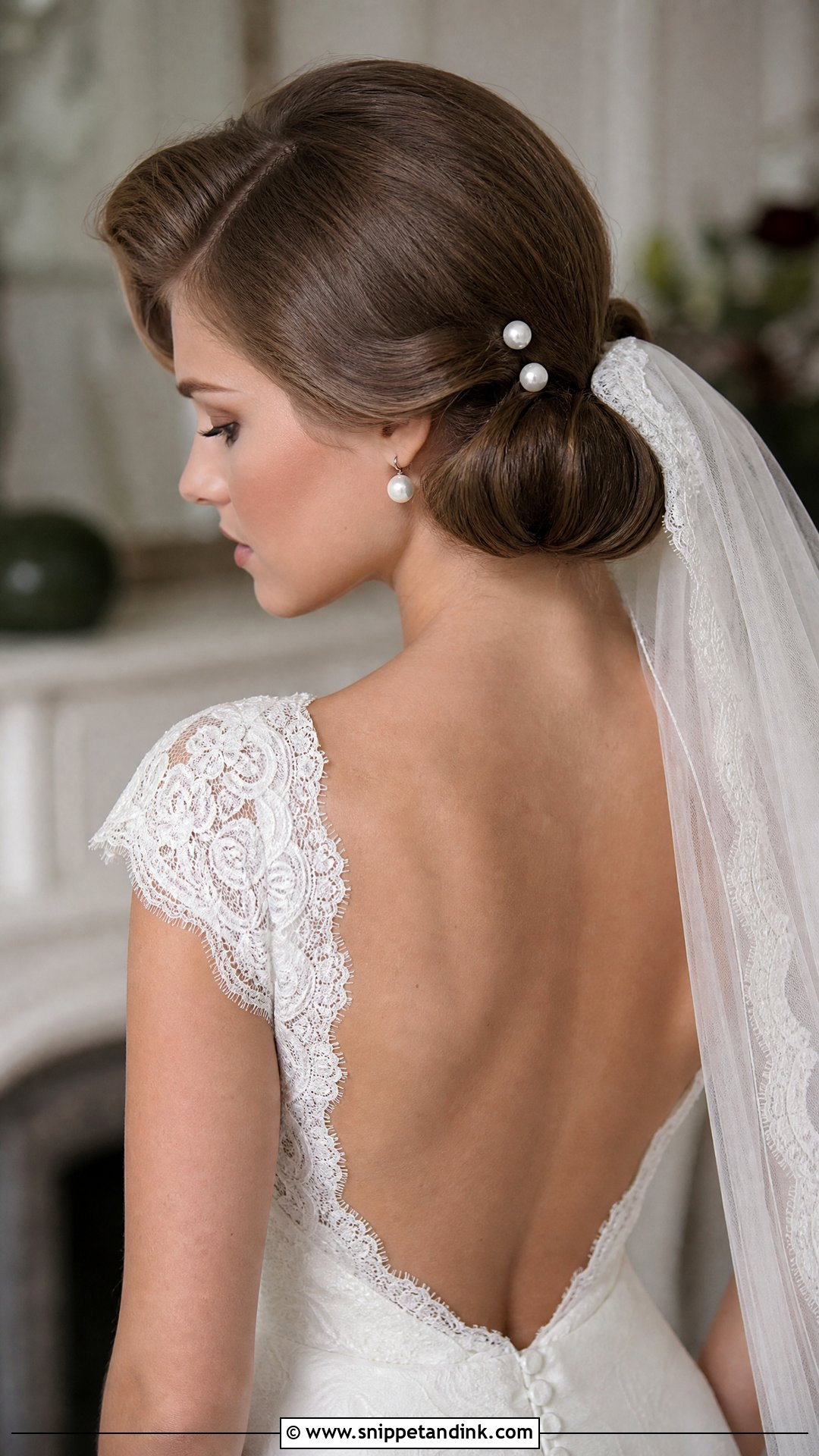
Rolled inward or upward and pinned along the nape, the rolled updo has a vintage outline without drama. There’s no big height, which makes it comfortable and easy under a veil. I roll the hair around a soft padding the colour of your hair, so the shape stays full on fine hair and smooth on thick. The front can be parted to the side, waved or kept clean. Lace veils, floral combs or pearl pins sit neatly above the roll, and open backs show it off.
12. Vintage Bridal Side Swept Curls
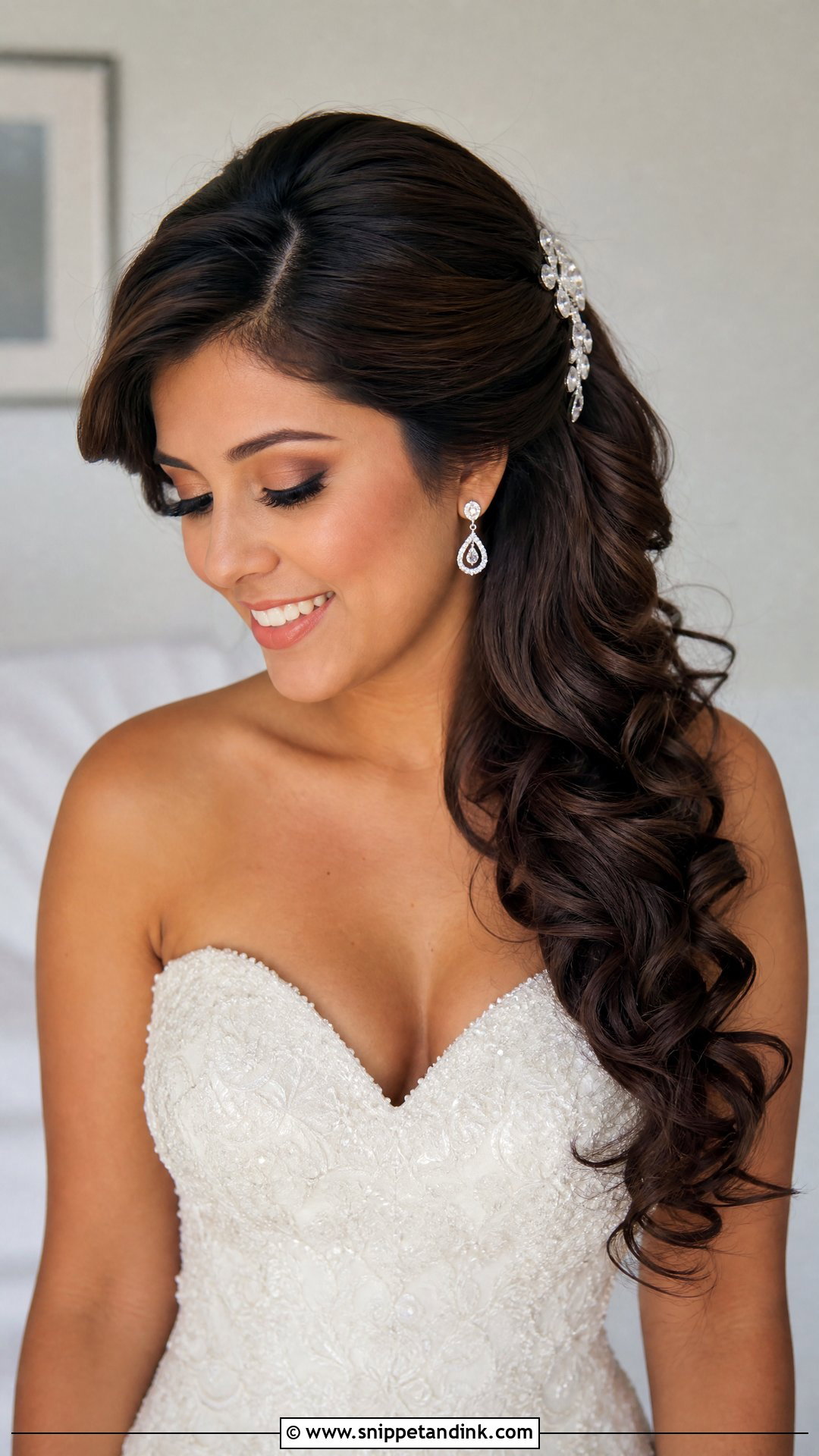
Curls brushed into smooth waves and gathered over one shoulder put the drama on one side and open the face on the other. That open side shows earrings and makeup clearly. Medium to long hair works, and one-shoulder or sweetheart necklines suit it well. The common problem is curls drifting forward through the day, so I build a criss-cross of pins behind the ear as an anchor before the curls go over. A crystal comb or pearl barrette on the pinned side hides it.
13. Vintage Bridal Curly Updo
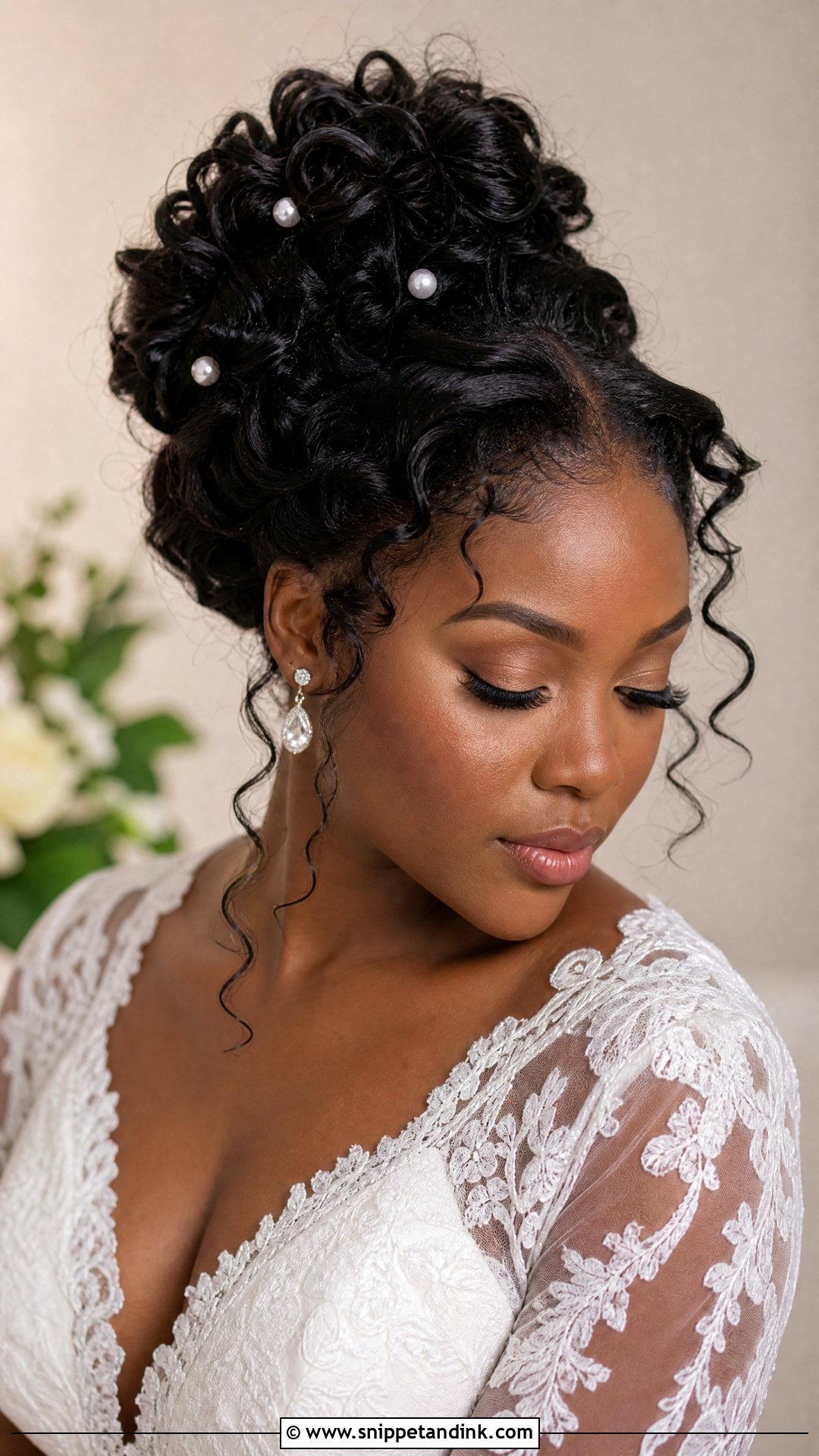
Naturally curly hair is perfect for this updo, because it works with the movement instead of fighting it. The curls are lifted and pinned into a structured shape around the crown, sides and nape. Curl size changes the era: tight curls lean 1940s, larger ones 1950s, and loose soft piles Edwardian. I set any curls that need definition first so the shape doesn’t puff in damp weather. Keep softness around the face and finish with pearl pins, lace or small flowers.
14. Vintage Bridal Low Bun
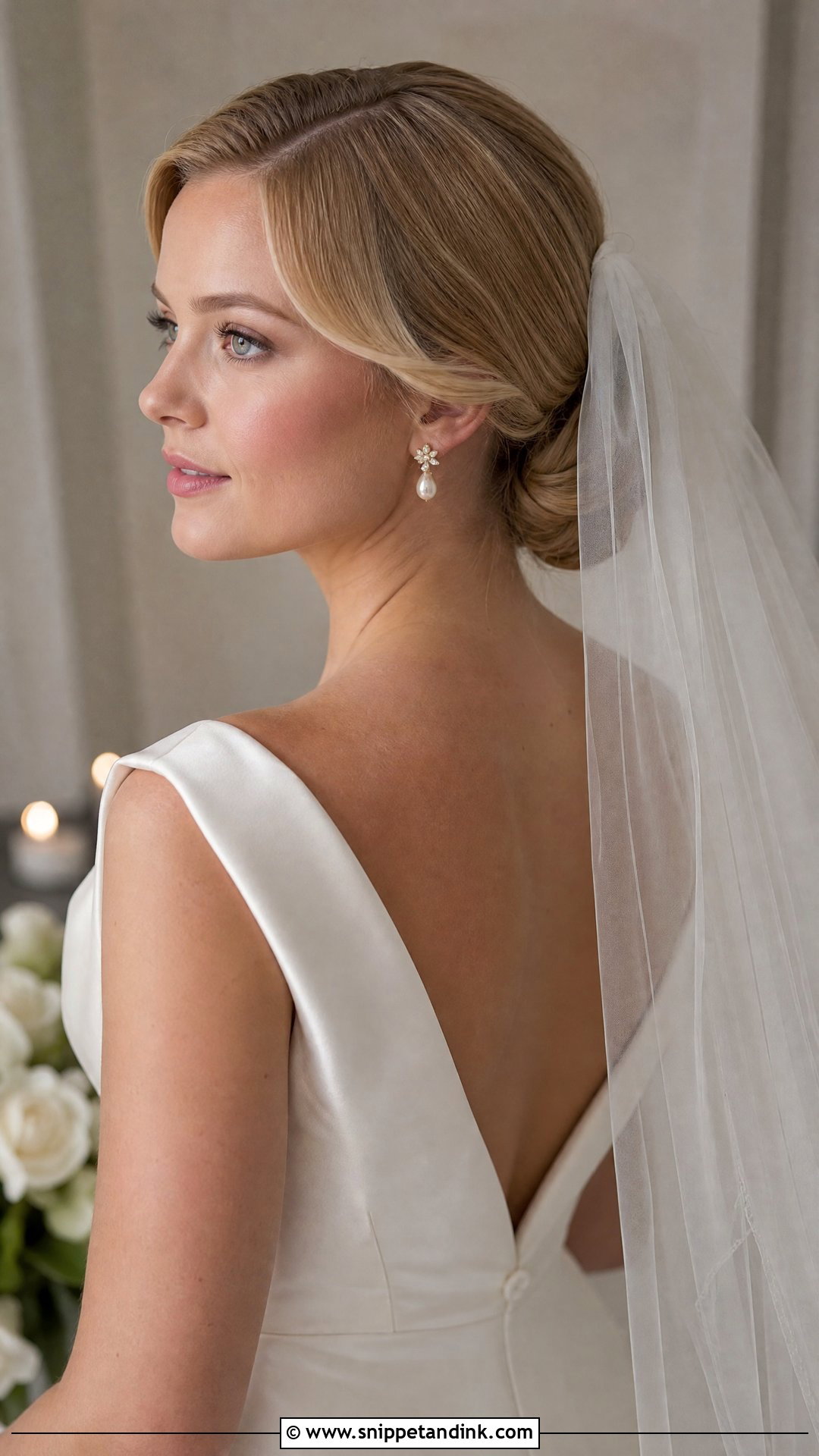
Don’t underestimate the plain low bun. It sits at the nape, smooth, softly twisted or rounded, and it reads vintage the moment you add a side part, a wave at the front or a pearl pin. It’s the one I suggest when the dress or an heirloom veil should be the feature. Windy venues barely touch it. Wear it with lace, satin, a cathedral veil or grandmother’s earrings.
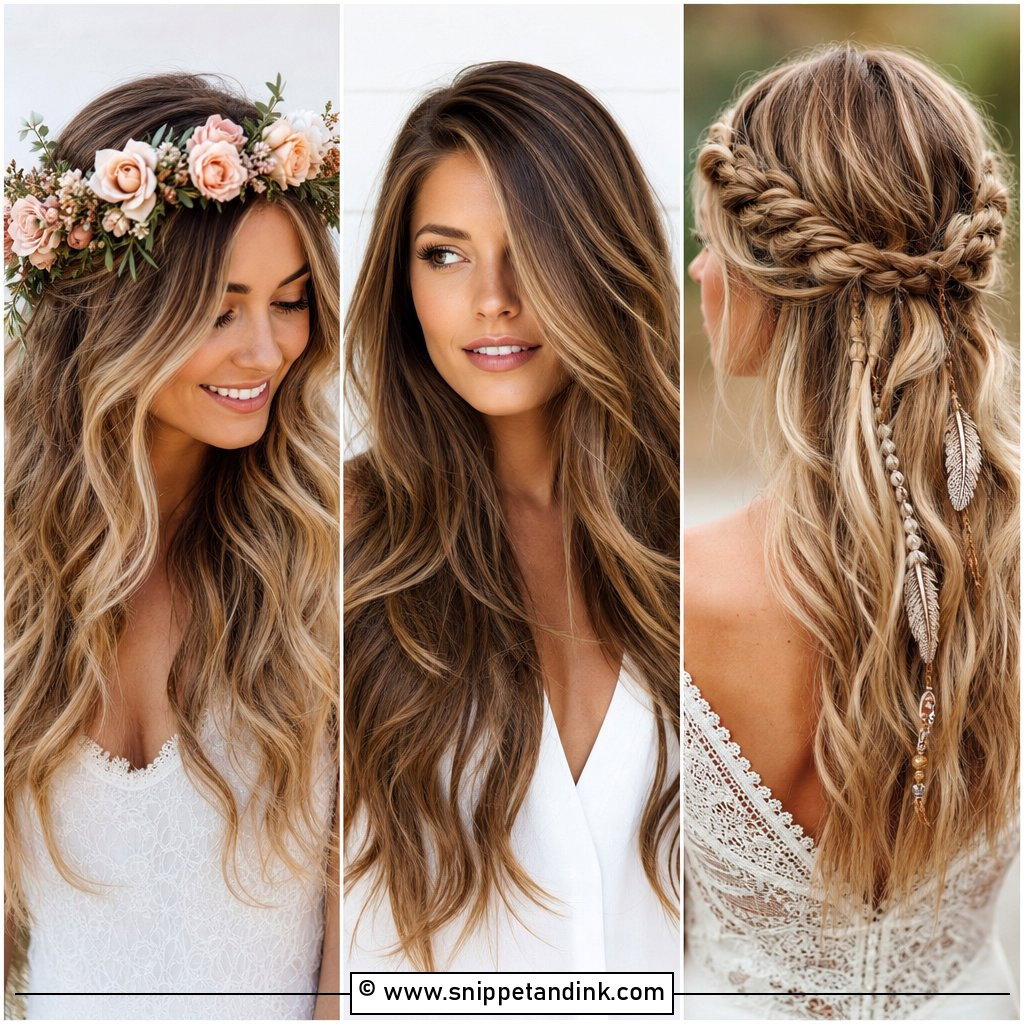
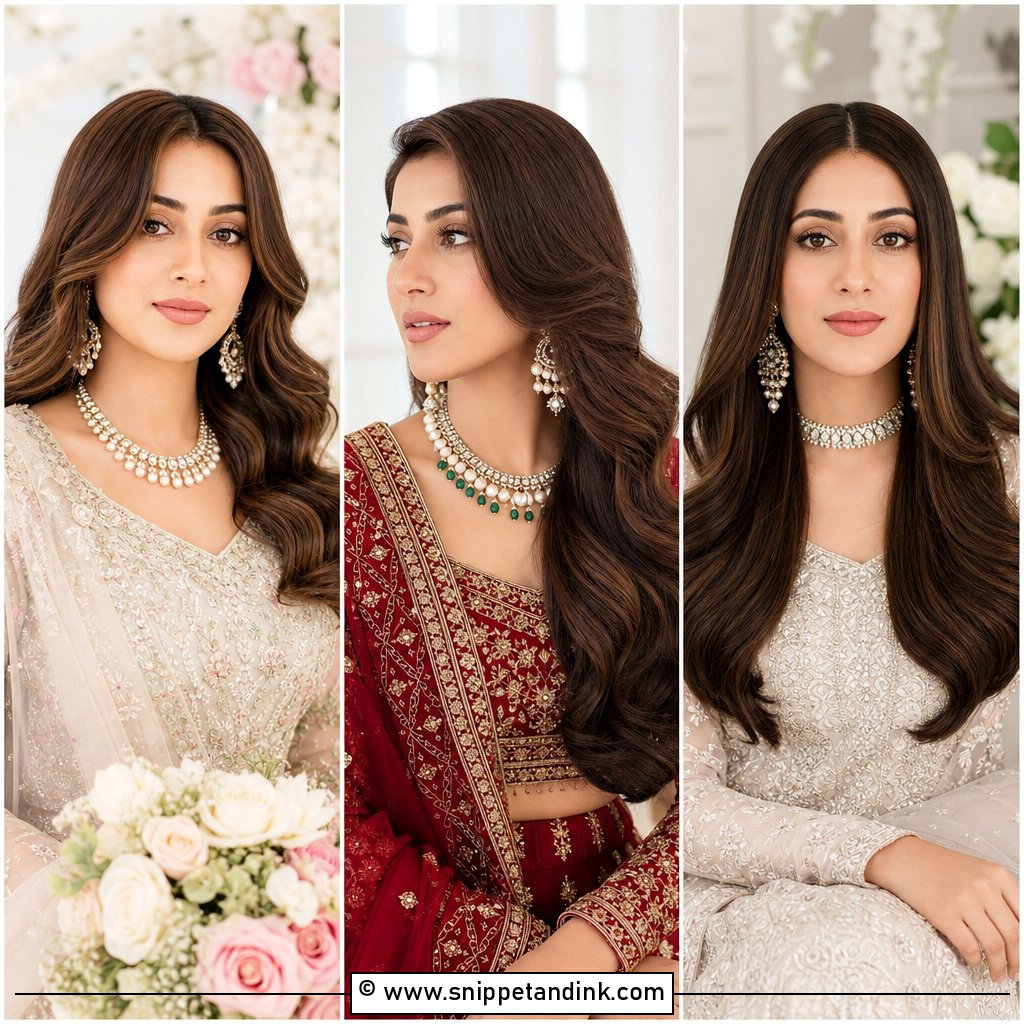
15. Vintage Bridal Half Up Waves
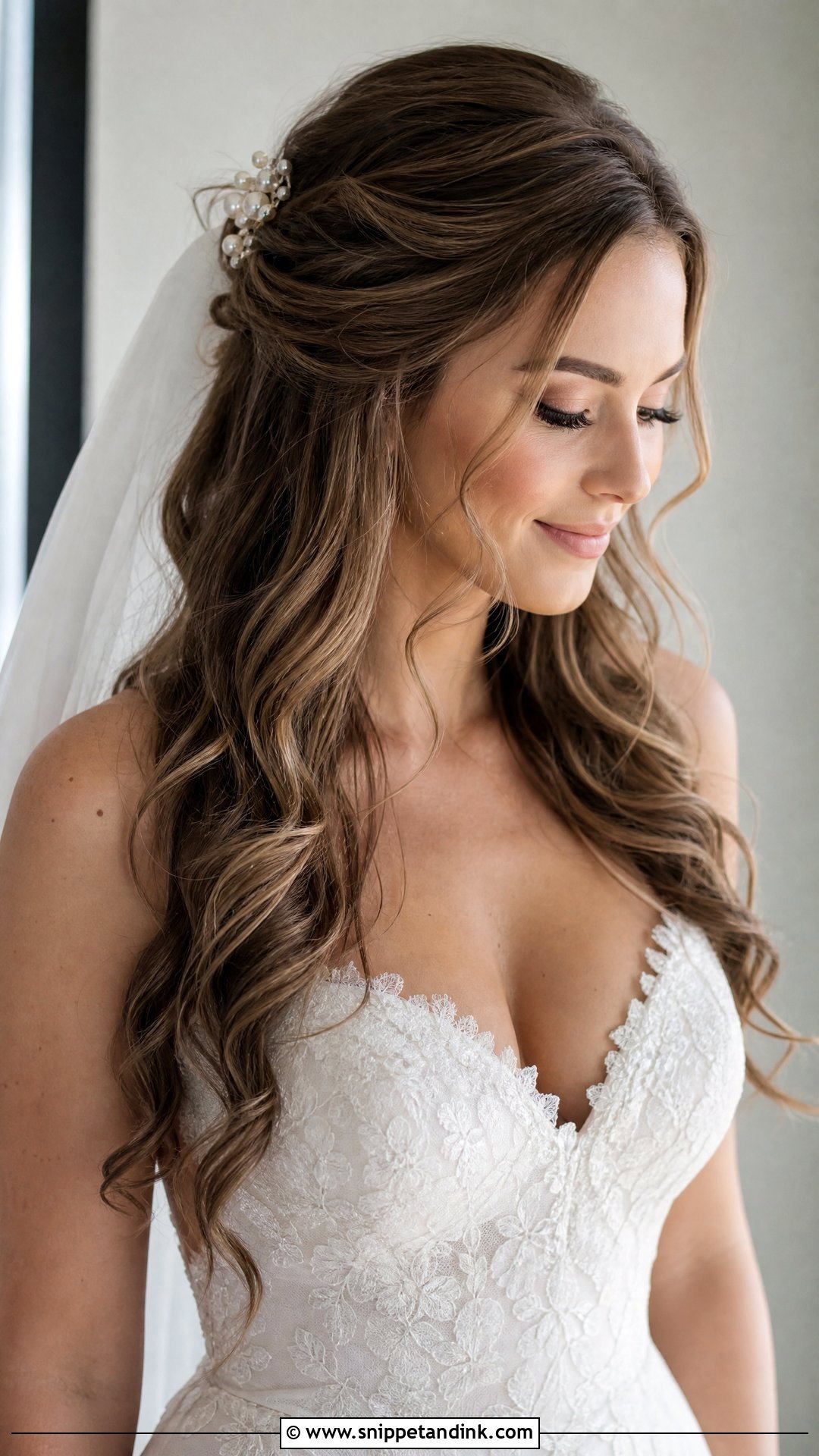
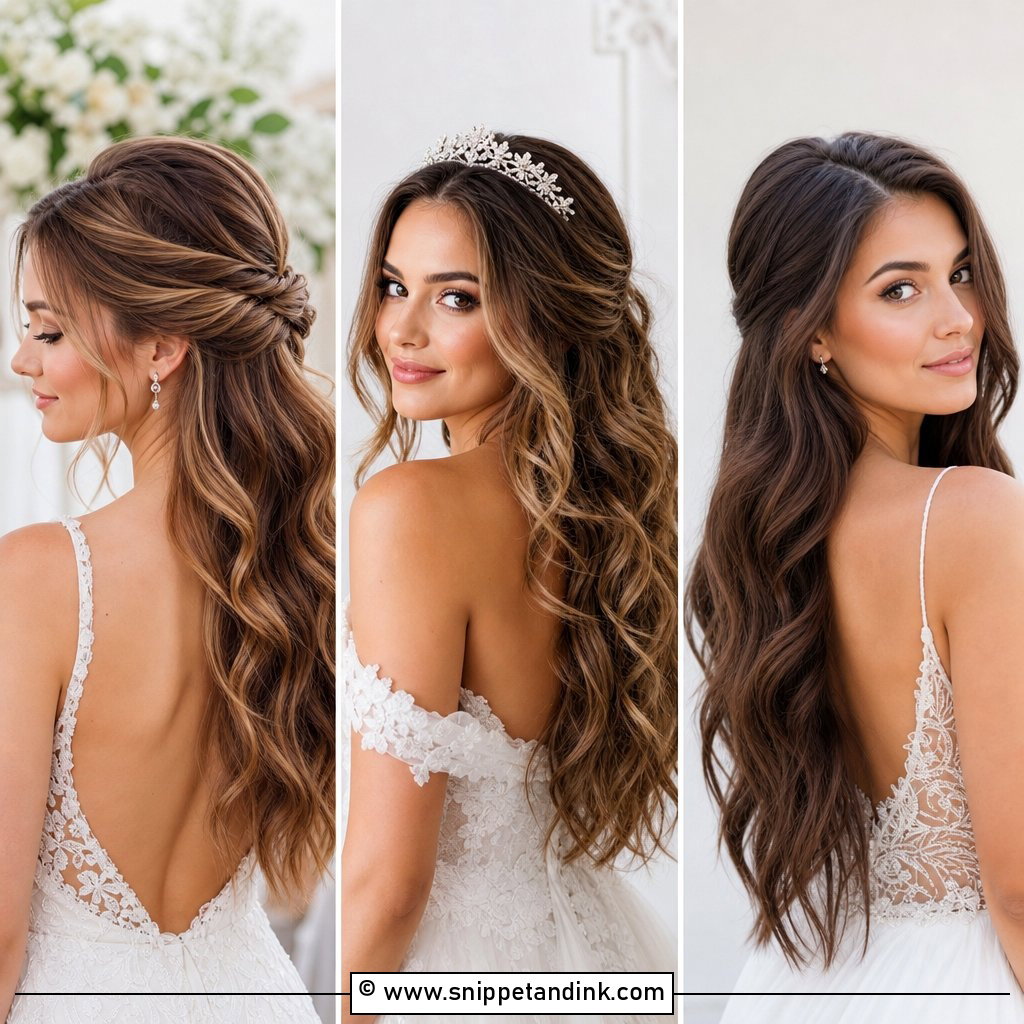
Lift the top section, twist or pin it back, and let the rest fall in polished waves. The difference between vintage and modern half-up is the finish: these waves are brushed smooth, not left messy. It works on long hair, medium hair and layers with enough length to show a wave. The weight of the loose hair can pull the pinned section down over the day, so I anchor it with two pins crossed into a small hidden braid. A comb, bow or veil at the join finishes it.
16. Vintage Bridal Crown Braid
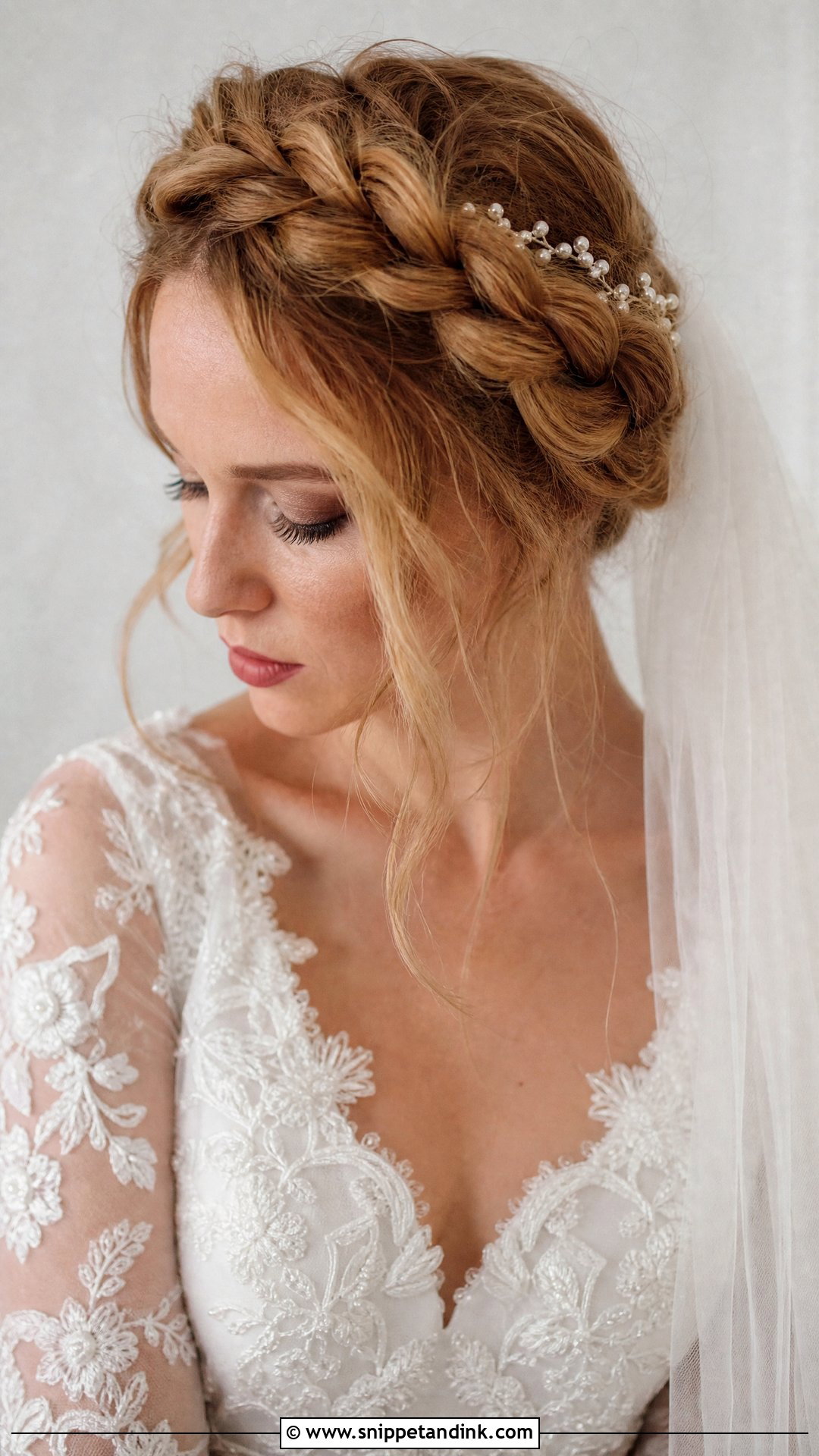
A crown braid looks more old-world than any other braid here, closer to a 1930s or 1940s country wedding than a Norse one. It keeps hair secure all day while still looking delicate. I keep it neat for a polished look or ease it loose for softness. It adapts well to thick, wavy and textured hair, which hold a braid firmly. Medium to long hair is needed for the braid to reach around. Small pearls, tiny flowers or a veil behind the braid complete it, with long sleeves and embroidered gowns.
17. Vintage Bridal Gibson Tuck
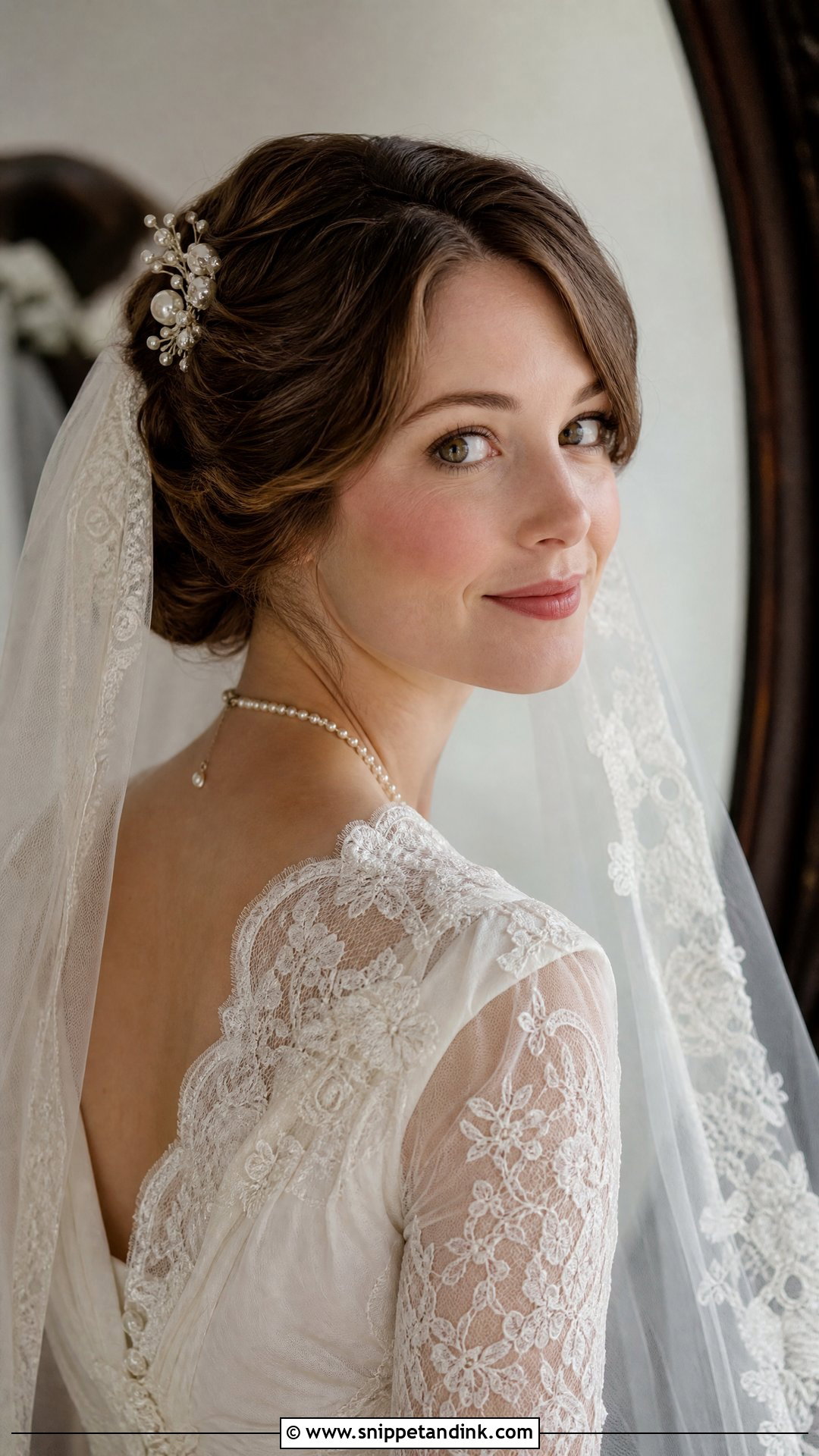
The Gibson tuck takes its name from the Gibson Girl drawings of the early 1900s, giving it a real Edwardian feel. Hair is rolled inward and tucked into a low, full shape at the back. It’s soft rather than formal, which I like for garden ceremonies. A little crown volume balances the roll, and loose pieces at the face keep it flattering. Fine hair needs a light padding to fill the tuck. Lace veils, a pearl comb or delicate pins suit it best.
18. Vintage Bridal Pageboy
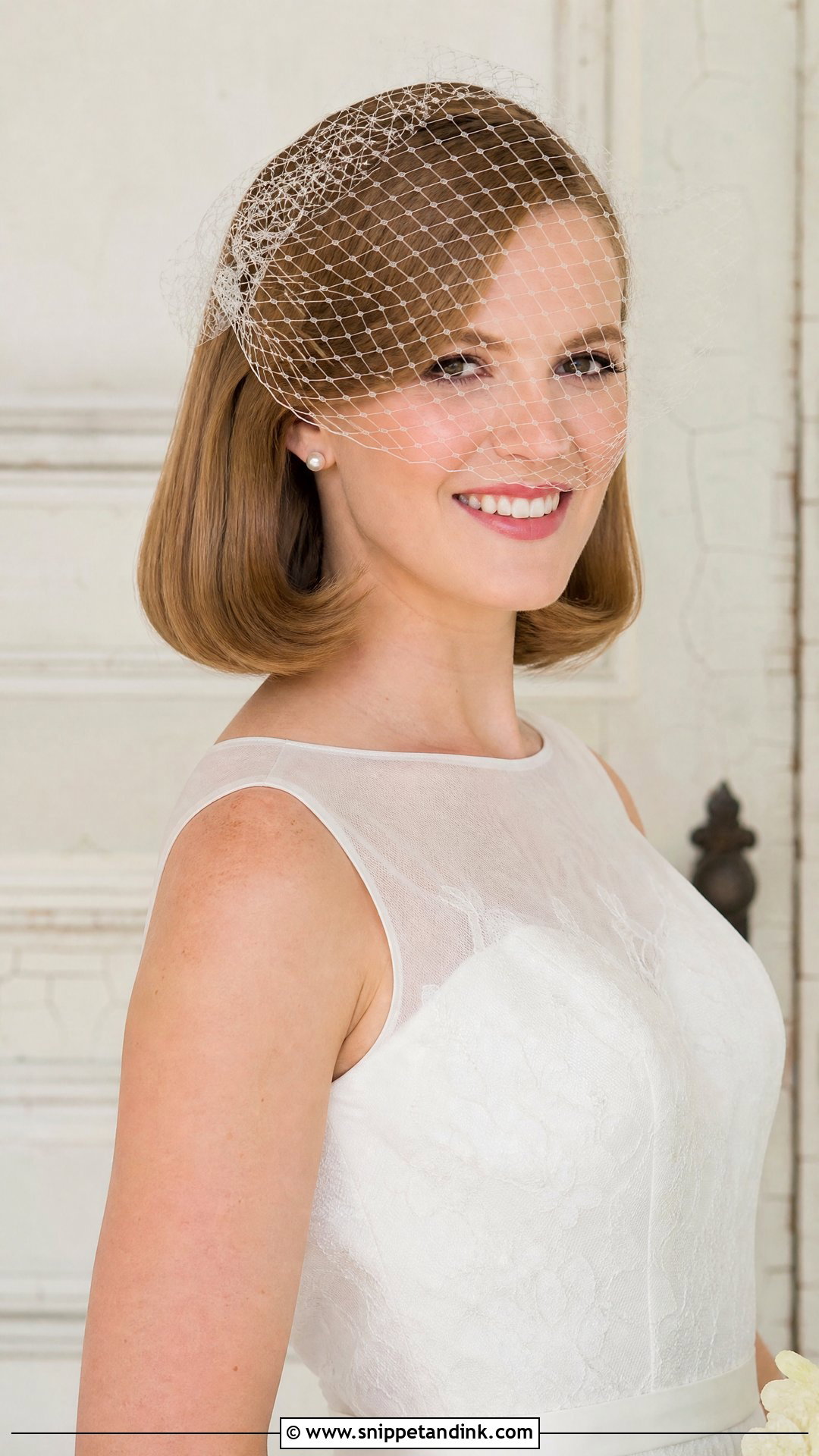
Ends turned under into a smooth curve at the jaw or shoulders: the pageboy is the 1940s and 1950s answer for short to medium hair. I roll the ends on large hot rollers and set them before brushing into the curve, because a flat iron flip doesn’t hold the same rounded shape. A deep side part or soft fringe frames it. It stays close to shape all day. Birdcage veils, short gloves, tea-length gowns and pearl studs are its era-correct partners.
19. Vintage Bridal Flapper Bob
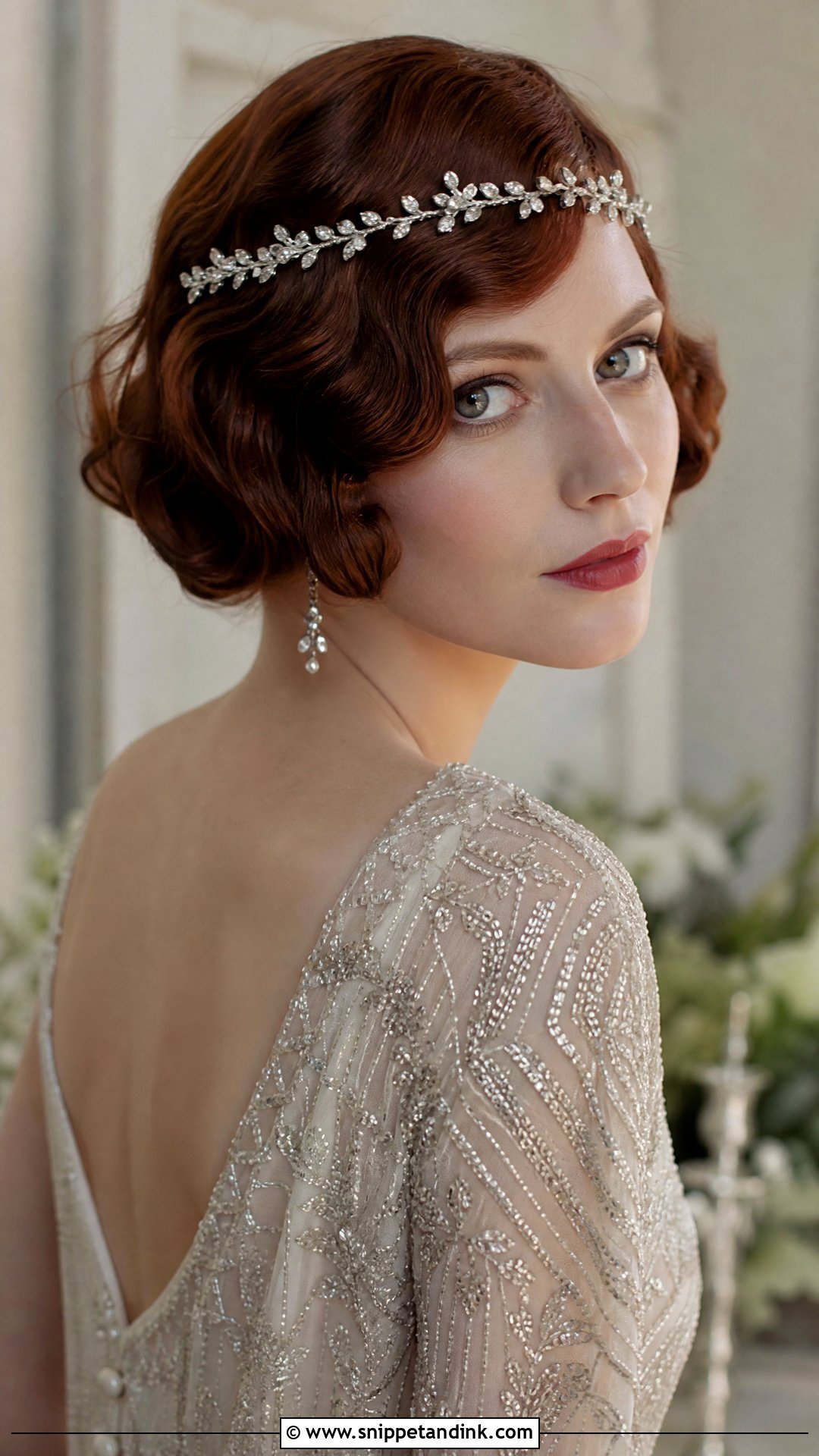
A vintage bridal flapper bob is playful and full of 1920s attitude. It sits near the chin, either on real short hair or a carefully pinned faux bob. Soft waves, a side part and a slim headband make it bridal. Beaded dresses and drop-waist gowns are its natural match. The finish should be smooth, since a messy flapper bob photographs as casual. A birdcage veil, crystal clip or pearl headpiece adds enough shine without crowding the short shape.
20. Vintage Bridal Veil Updo
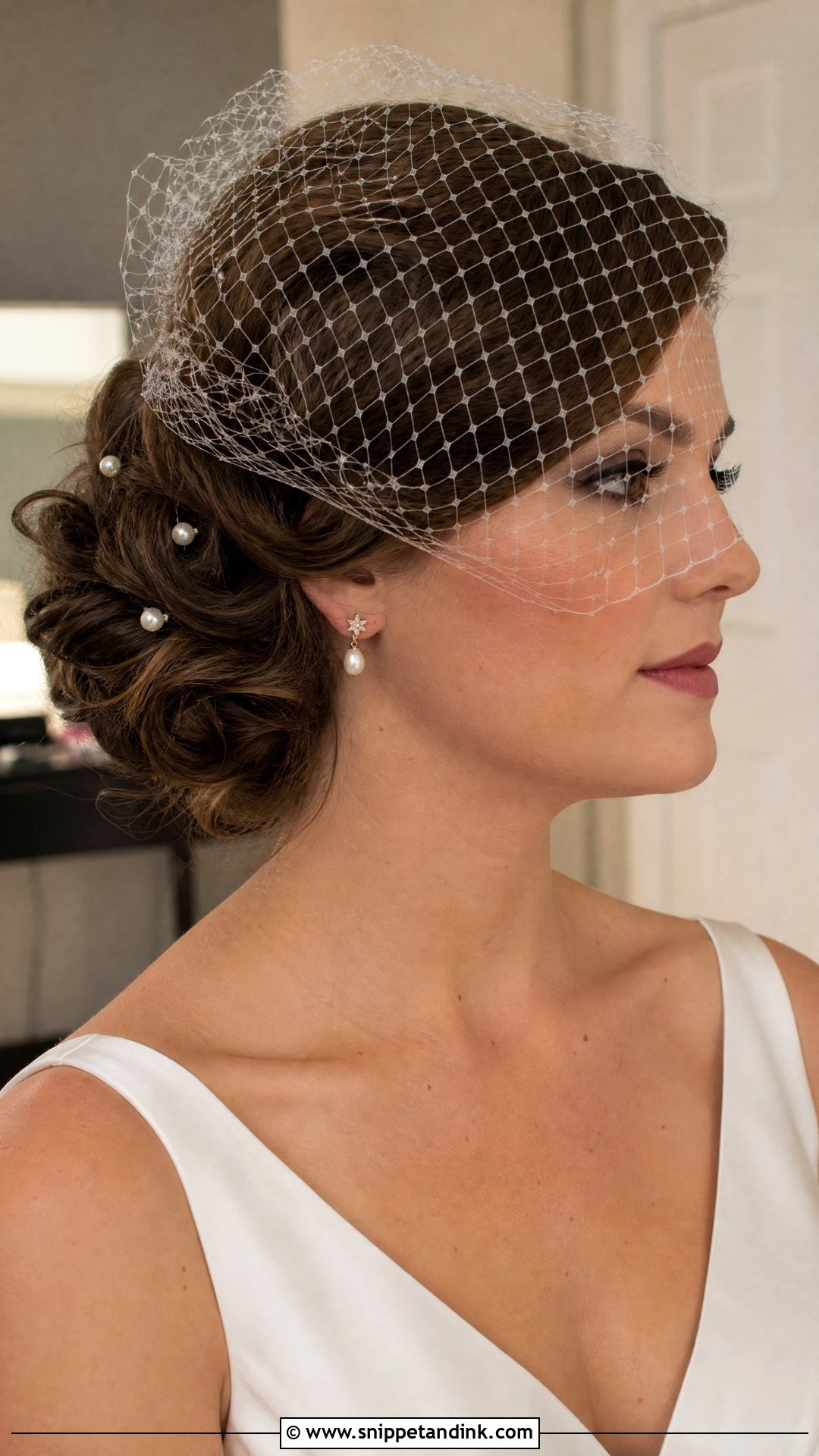
Some vintage veils, especially lace mantillas and old family veils, decide the hair for you. I plan the updo around where the veil wants to sit: a chignon or rolled bun low for a long, heavy veil, a French twist with a comb slotted into the seam, or soft curls under a birdcage at the front. Heavy antique lace needs a firmer pin base than modern tulle. Balance matters from front and back. Lace, satin, pearls and heirloom pieces all belong here.
Rollers, Clips and Cooling Time Behind Every Wave
Vintage hair takes longer than modern hair, and almost all of that time is the set. A curl only holds its shape once it has cooled in place, so I wind the hair, pin each curl flat or on a roller, and leave it. Brushing it out while it’s still warm is the single most common reason vintage waves fall flat by the speeches.
On a wedding morning that means booking more time than you’d expect. A set-and-brush style often needs a good chunk longer in the chair than a loose curl, and I schedule the bride early so she can sit through the cooling time while makeup happens. Humidity is the other factor. Damp air relaxes a set quickly, so for a summer garden I lean towards updos, which have pins holding the shape, rather than waves worn down.
Wearing Your Grandmother’s Comb Without Breaking It
Antique hair combs and pins are fragile in ways new ones aren’t. Old celluloid and tortoiseshell-effect plastics can be brittle, and teeth snap if pushed straight into a firm updo. I sew or wire an heirloom piece onto a modern comb, or slide it in only after making a pocket with a regular pin. Clean tarnished metal gently the week before, never on the morning, and keep a small padded box for it so it goes home in one piece.
A Vintage Style Should Survive the Hugs Too
The vintage styles that work best start with one decade and stay loyal to it, from the hair to the dress to the lipstick. Then comes the practical test. At your trial, wear the style through a few hours of normal life, hug someone, put the veil on and off, and look at it in daylight and in flash photos. If it holds and you still feel like yourself, it’s the right one. Bring two or three references, including the back view, and be honest about how much time you’ll have in the chair on the morning.
You'll Like These Ideas:


Leave a Reply