
Storybook dressing is about volume, movement and one or two details people remember, and none of that has to make you feel like you’re in costume. Corset bodices, raised flowers, pointed waists and full skirts are all easy to find in bridal shops right now, which means the fantasy is more about editing than hunting. Below are twenty directions I’d show a bride who tells me she wants to feel like a princess: ball gowns, flowing A-lines, floral lace, shimmer, regal sleeves and soft color. For each one I’ve noted what to check at a fitting, because the gown that feels magical in a mirror still has to get through a ceremony, a dinner and a dance floor.
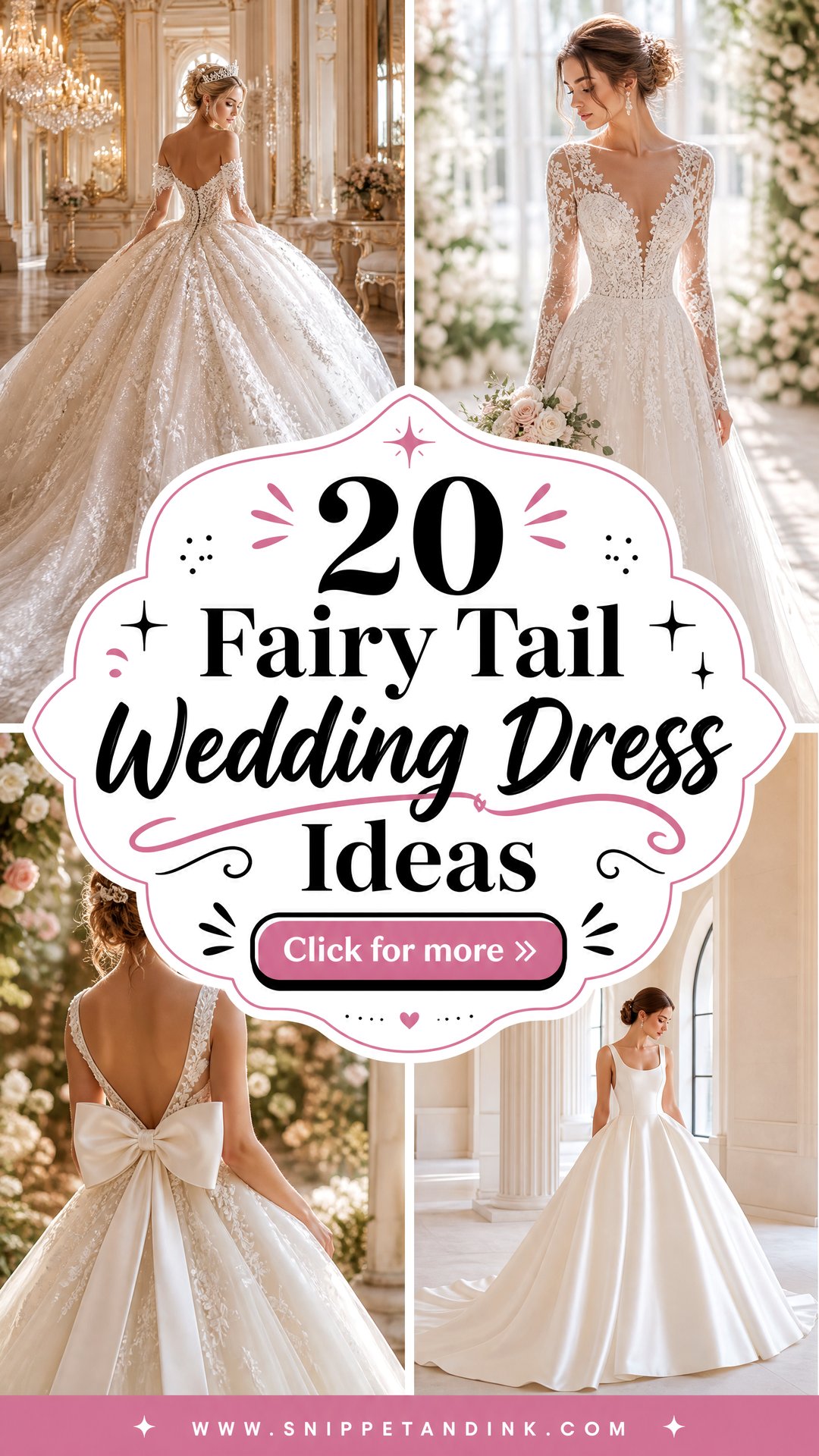
Hoops, Petticoats and the Real Weight of a Princess Skirt
Most fairy-tale gowns get their shape from what’s underneath, and brides rarely ask about it until the first fitting. It’s worth asking in the shop, because the support changes how the dress moves, how it sits and how tired you’ll be at midnight.
- Built-in tulle or crinoline layers: lightest option, softest movement, slightly less dramatic width.
- A separate petticoat: adds fullness and can be taken off for dancing, though it’s one more layer to manage in the bathroom.
- A hoop skirt: the widest, most controlled shape, but it swings when you sit and makes car journeys and narrow doorways awkward.
Weight is the other thing I want brides to feel before they commit. A full satin ball gown with a long train can be surprisingly heavy, and most of that sits on the waist and hips. Wear the sample for a good twenty minutes in the shop, not two, and walk across the room in it. If your shoulders or lower back are already complaining, look at the same shape in tulle or organza instead.
Ask the venue about door widths, the bathroom and the car too. A wide skirt is glorious down an aisle and a genuine struggle in a small cubicle, so plan which bridesmaid helps and practice the bustle together.
1. Princess Ball Gown Wedding Dress
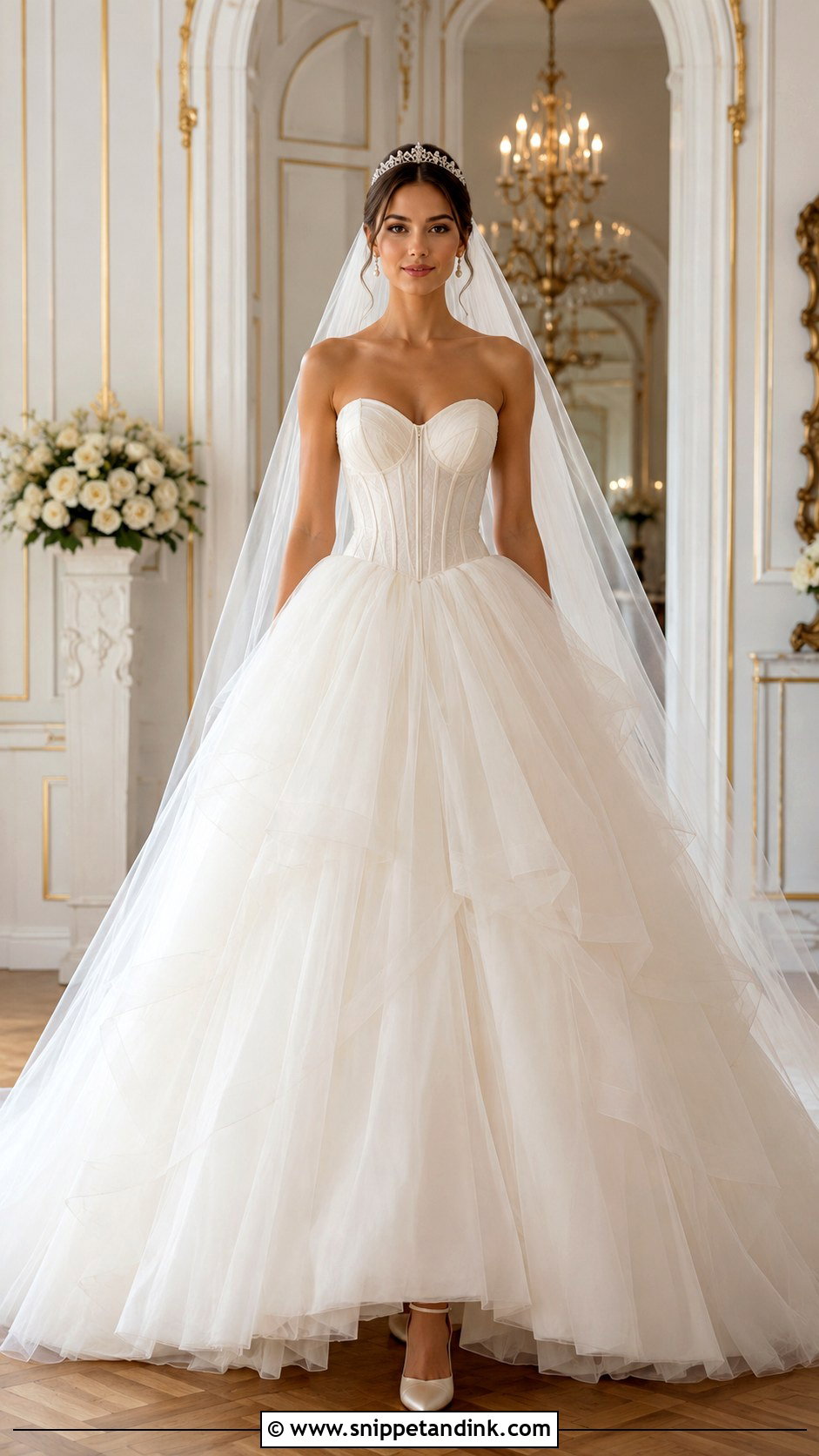
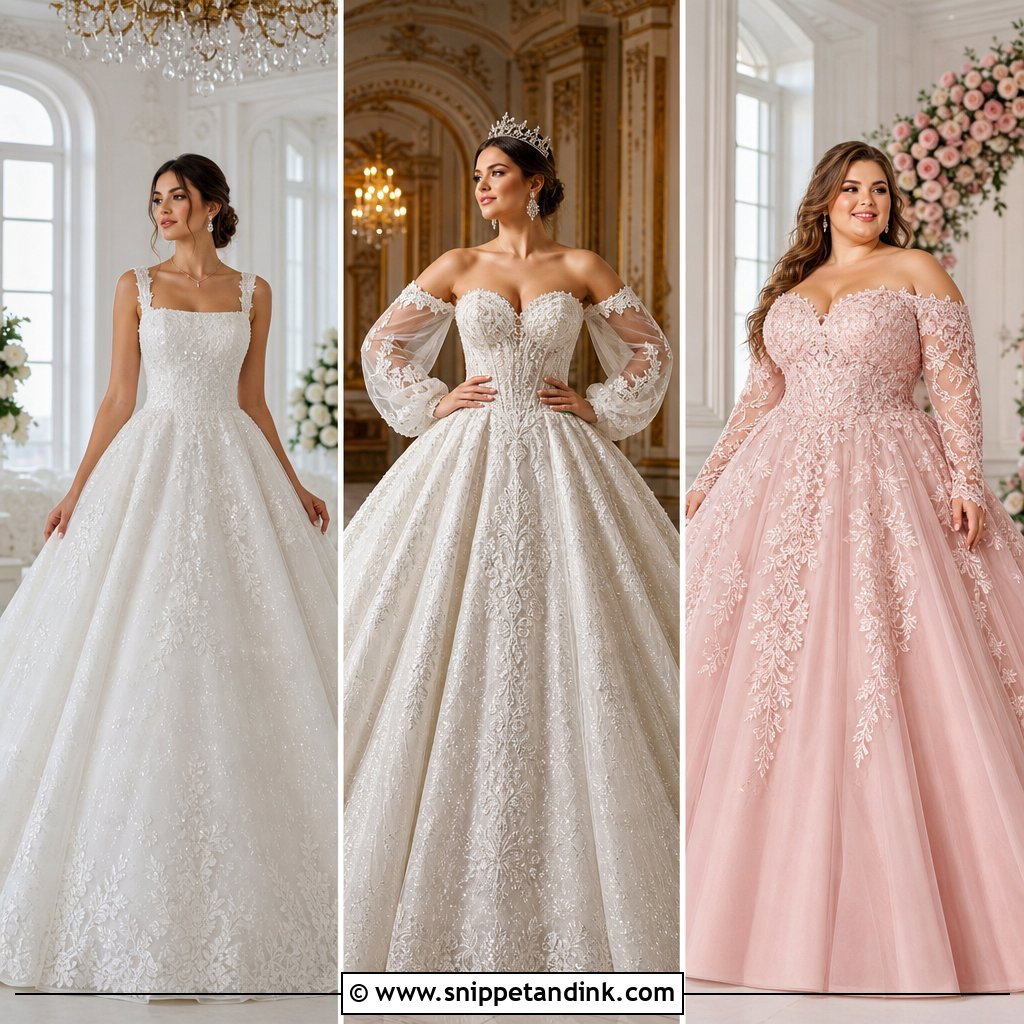
A classic princess ball gown is the obvious place to start, and for good reason: a fitted bodice over a full skirt is the shape everyone pictures. Ask what gives the skirt its volume. Layers of light tulle or organza build the shape without the weight of satin, and internal boning keeps the waist from collapsing under it. A sweetheart neckline suits the silhouette best. Pearl drops, a delicate tiara and satin block heels hidden under the skirt are all you need. Scale matters: on a petite frame I usually take out a petticoat layer, while a taller bride can carry the full drama. Plan a cathedral veil for the ceremony and a strong bustle for the reception.
2. Floral Lace A-Line Wedding Dress
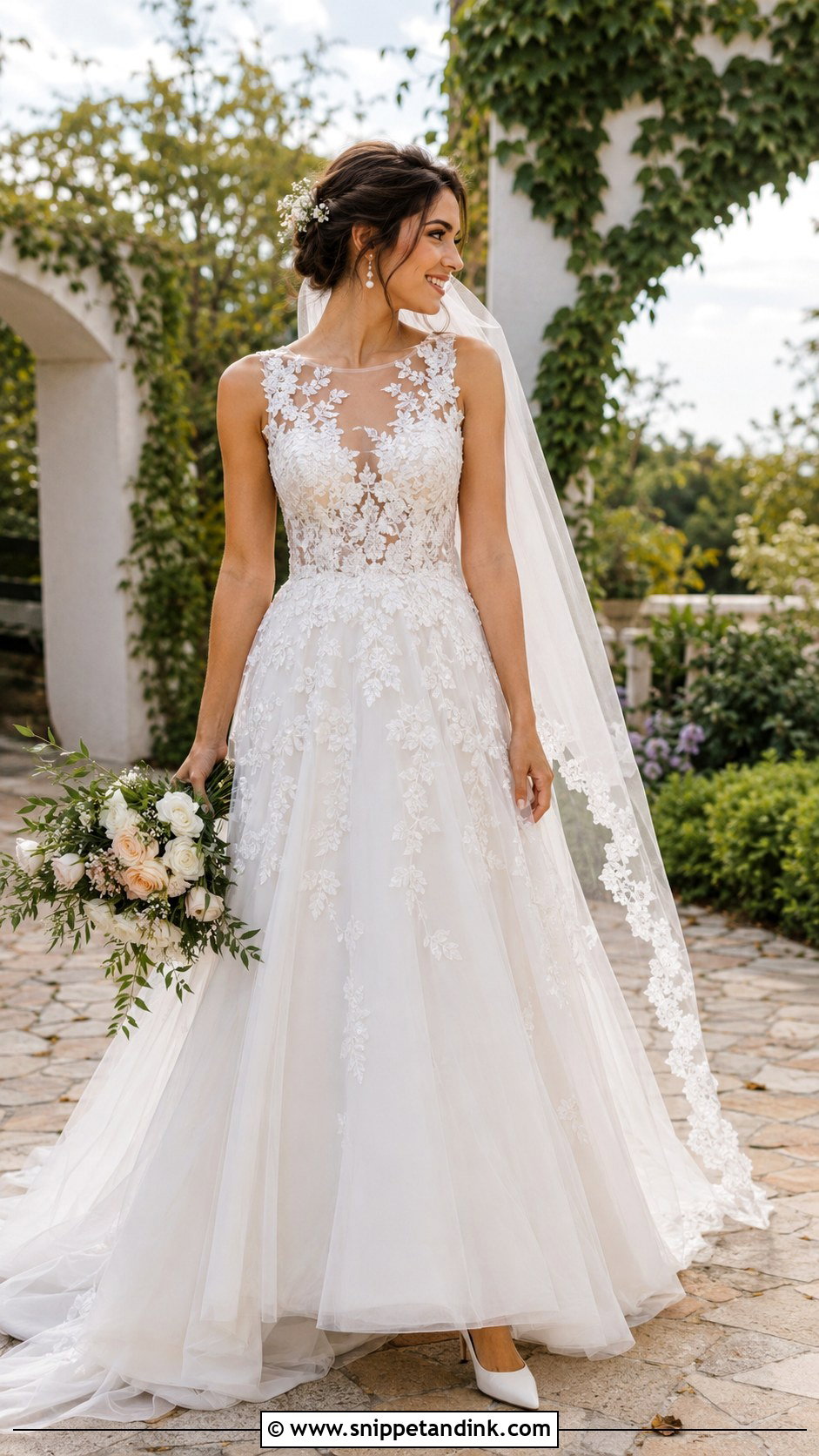
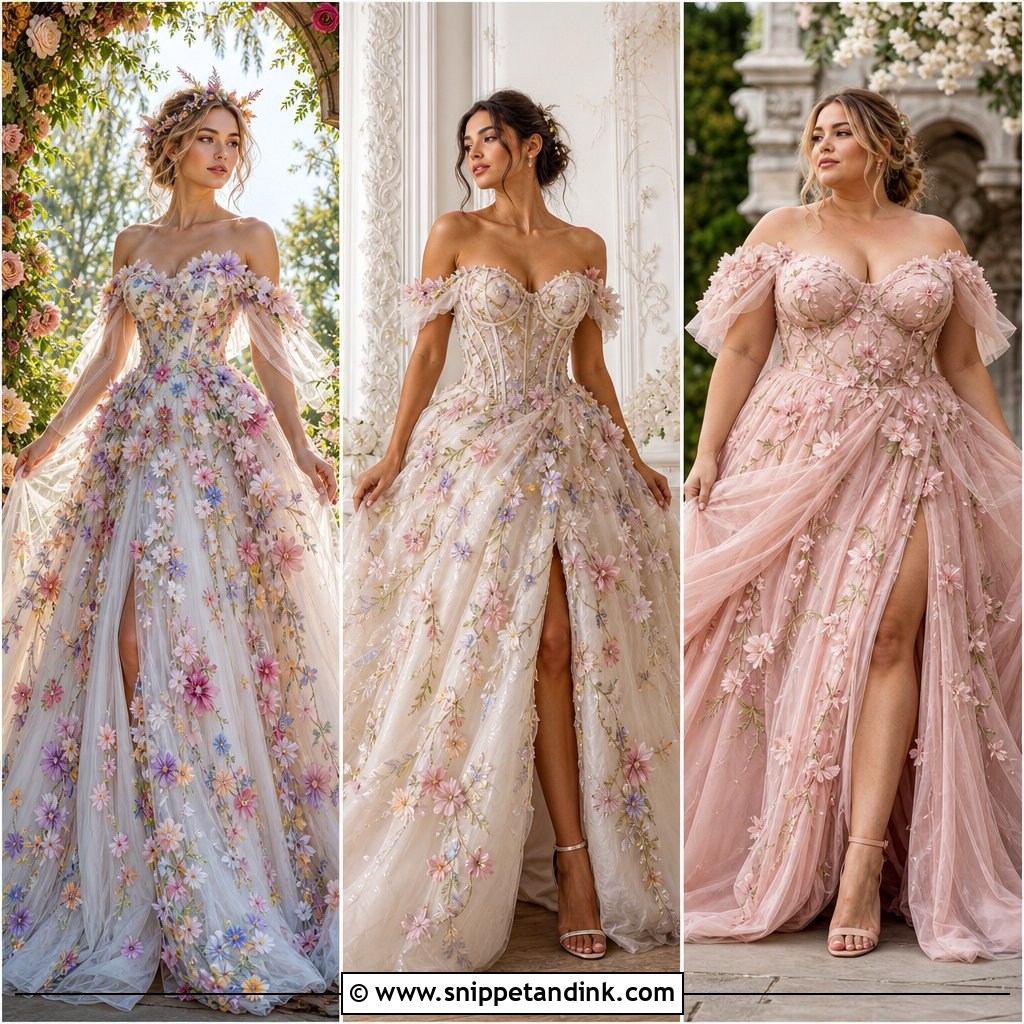
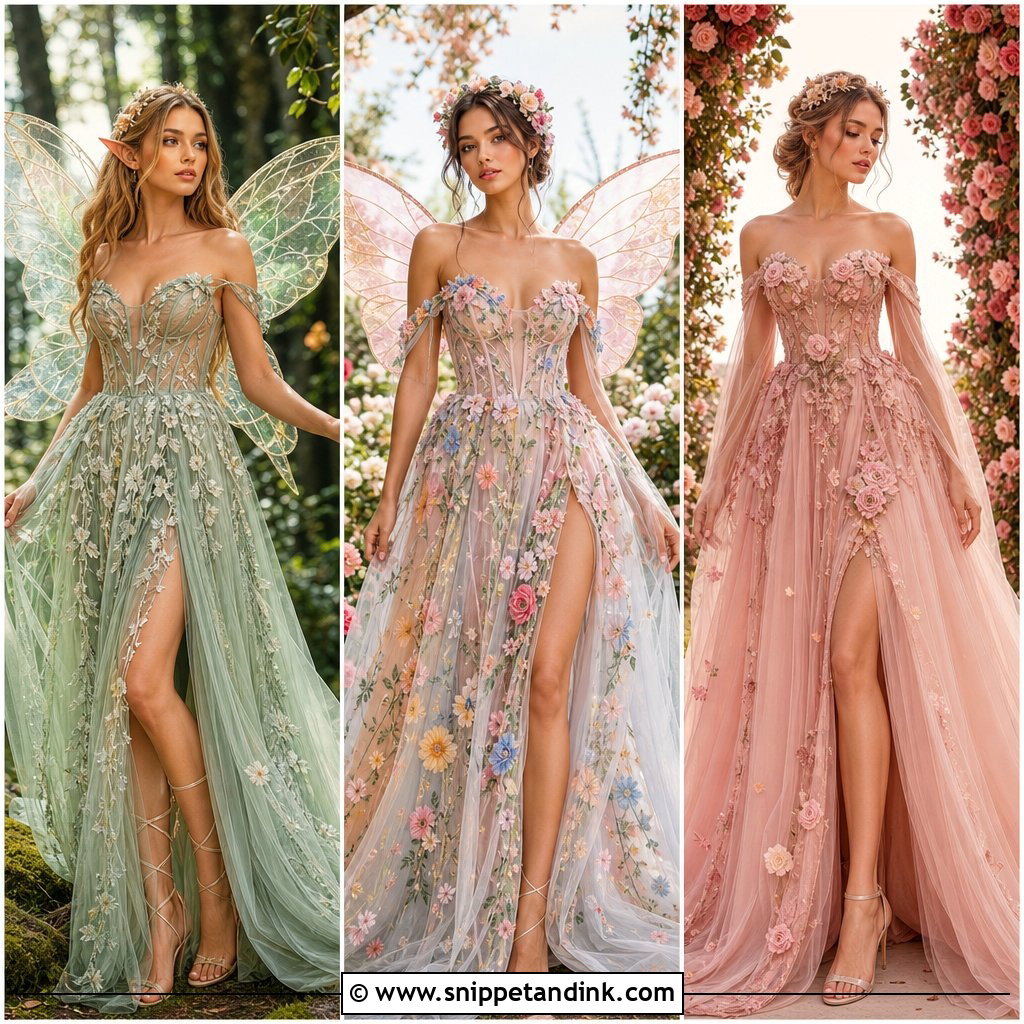
Floral lace on an A-line is the gentlest version of the fairy-tale idea. The placement I like best starts dense at the bodice and scatters down the skirt, so your eye travels from your face downward instead of stopping at the hips. A lightly structured waist and a flowing tulle underlayer let it move well. When I check lace gowns at fittings, I look at the side seams: good lace is matched or appliquéd across them so the pattern doesn’t break. Ivory pointed shoes, floral earrings and a loose braided updo with small pearl pins suit it, plus a fingertip veil with a narrow lace edge. Gardens, estates and woodland venues all suit this one.
3. Off-Shoulder Corset Wedding Dress
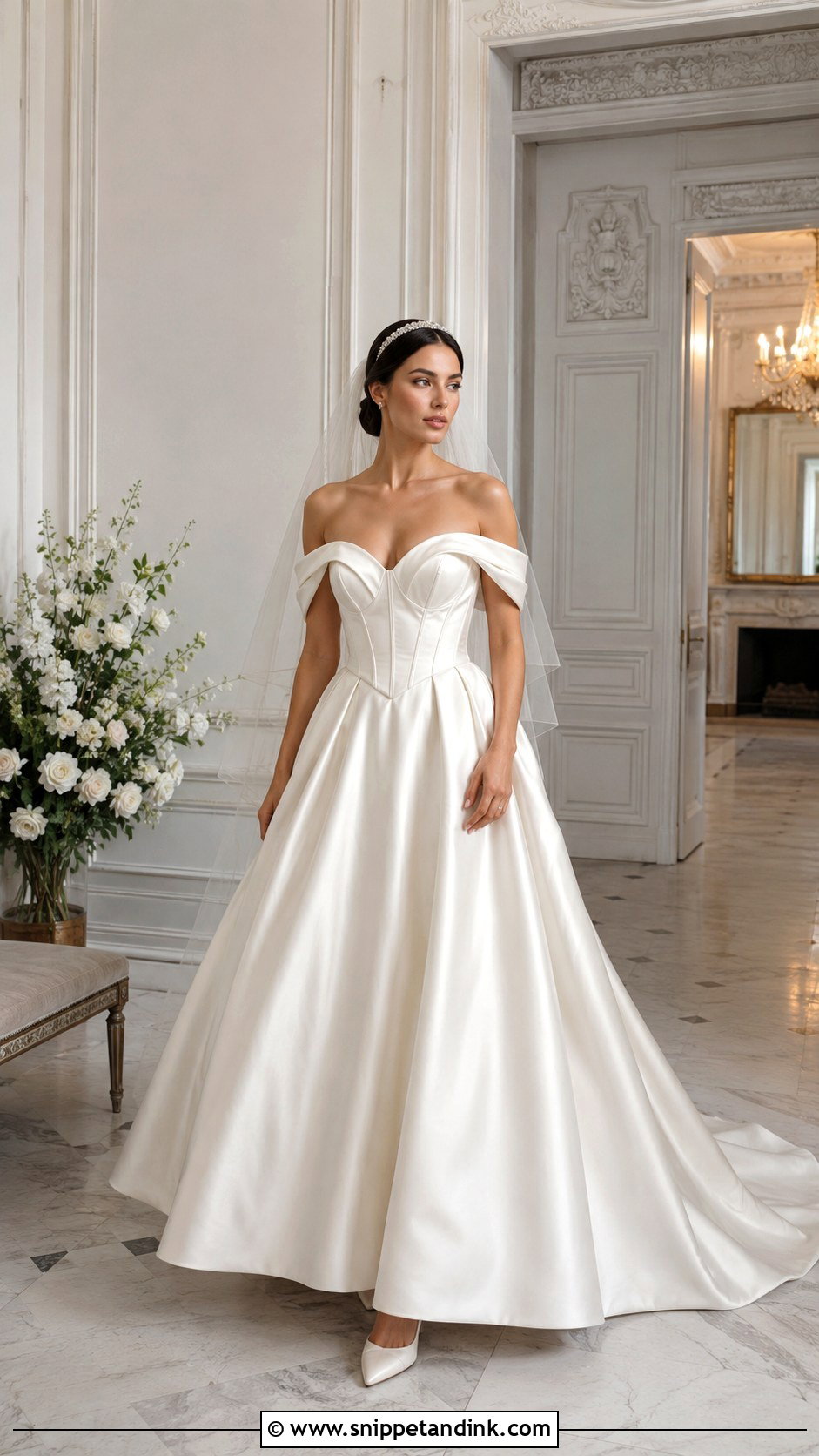
Off-shoulder sleeves and a corset together give you a royal outline with real support underneath. The neckline frames the collarbones; the corset shapes the waist. Soft draped sleeves are kinder than rigid bands, which restrict how high you can lift your arms. A full satin or tulle skirt with a pointed Basque waist gives the strongest princess effect. Accessories stay small: a crystal headband, studs, and closed-toe heels with cushioned insoles. A plain chapel veil keeps attention on the neckline. Book the final fitting close to the wedding. Corsets are cut tight to the body, and even a small change in the last month can tip them from secure to hard to breathe in.
4. Long-Sleeve Lace Wedding Dress
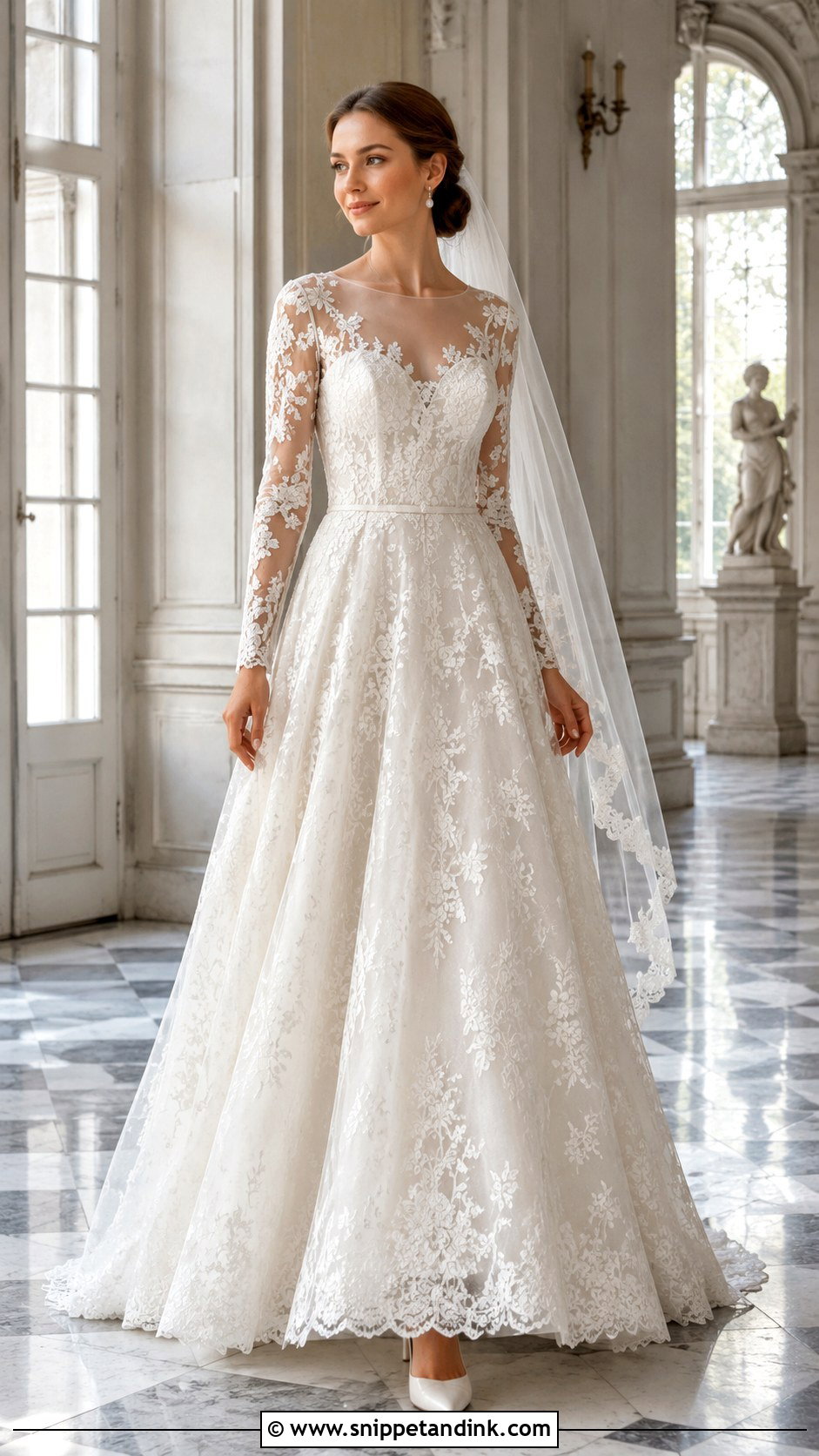
Lace that covers the arms gives a gown the feel of an old illustrated book. Illusion sleeves with placed appliqués look lightest; lined lace sleeves give more coverage and warmth. An A-line skirt balances the detail above. Here’s what I check first with long sleeves: the seam inside the elbow and the edge of each appliqué, because scratchy lace on sensitive skin is miserable by hour six. A soft stretch lining fixes most of it. Pearl earrings, a low chignon and ivory pumps with a stable heel finish the look. If you want a lace veil, choose a simpler pattern than the gown’s. These sleeves suit autumn, winter and early spring.
5. Sparkling Tulle Wedding Dress
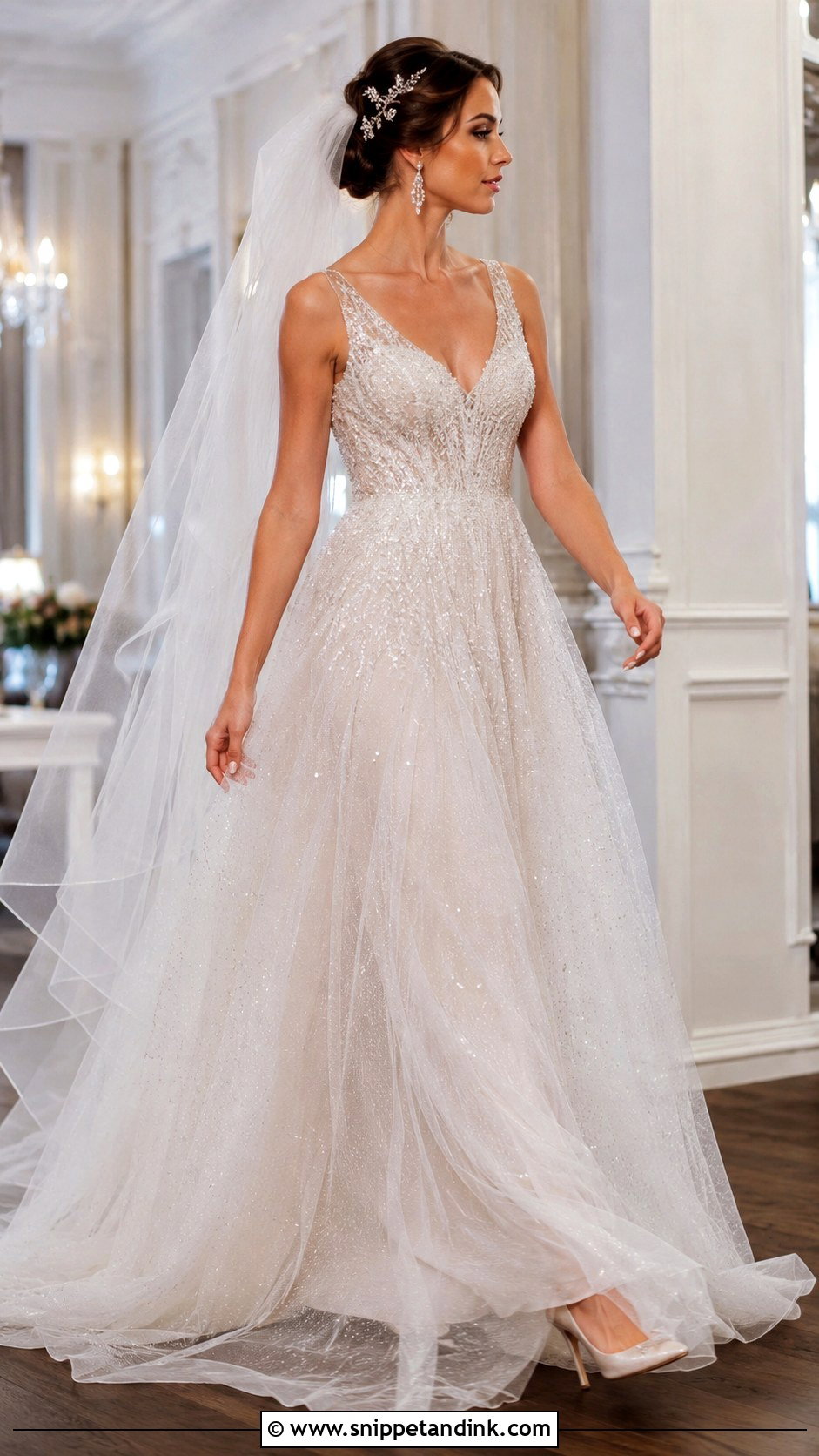
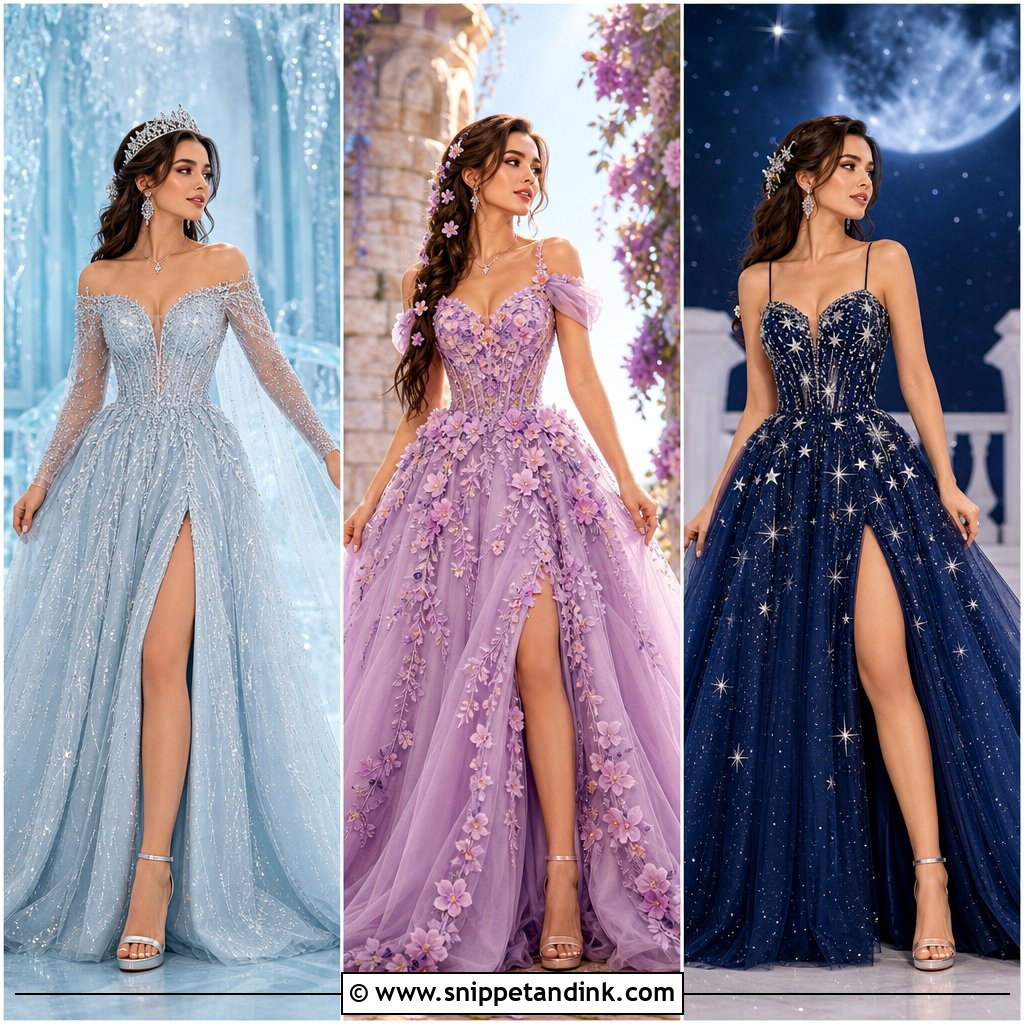
Sparkling tulle gives a gown a glow in candlelight that plain fabric can’t. I’d go for fine scattered shimmer over chunky glitter, which can shed onto your partner’s suit and looks cheaper up close. A fitted bodice, defined waist and airy A-line skirt keep it grown-up. Crystal earrings, a slim silver hair vine and metallic or ivory heels are enough; skip the necklace if the bodice is already beaded, and choose a plain raw-edge veil so there’s only one reflective surface. Test any glitter fabric in daylight and under warm indoor light before you buy. The same tulle can look like frost in one and grey sand in the other.
6. Blush Pink Wedding Dress
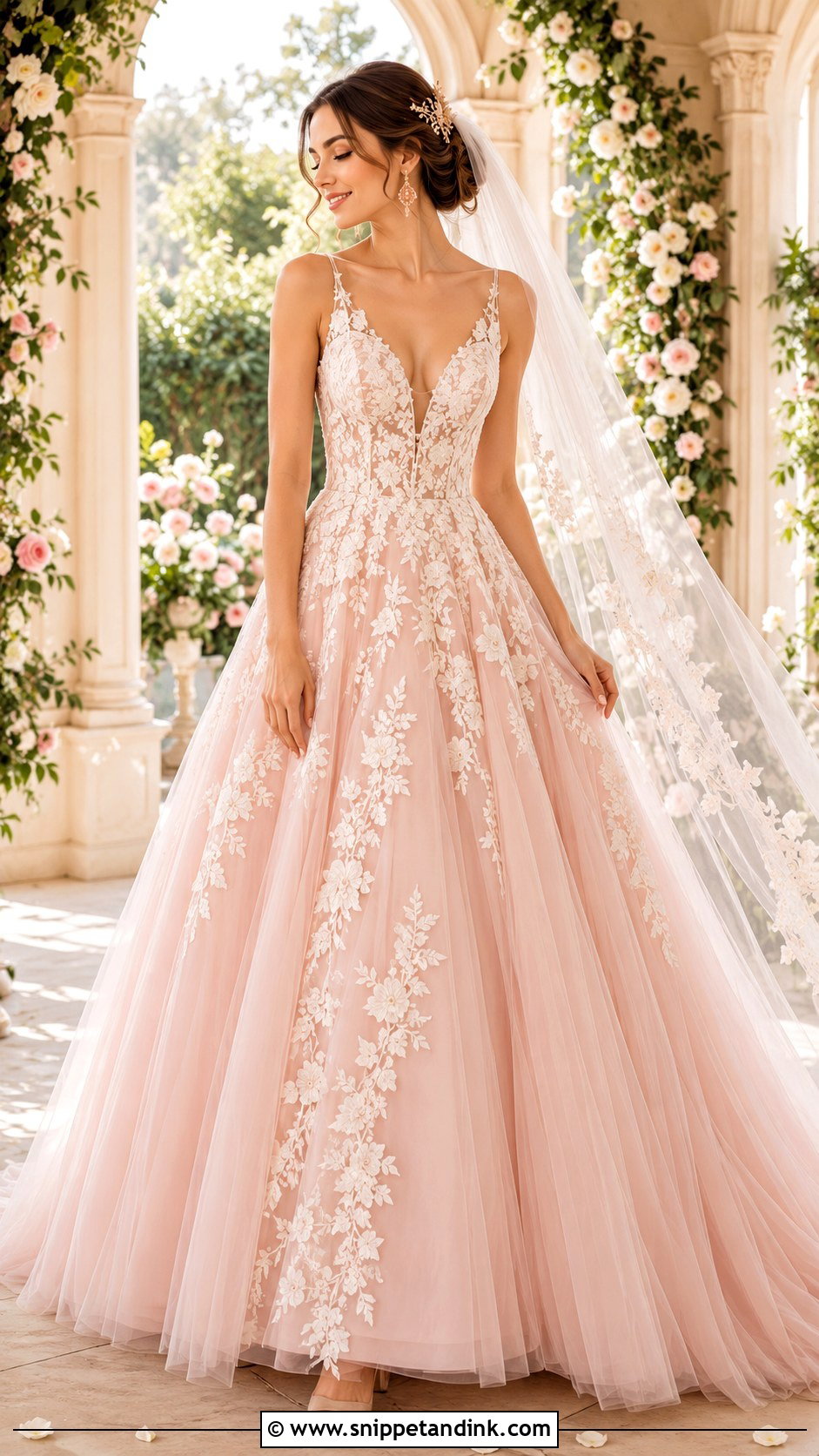
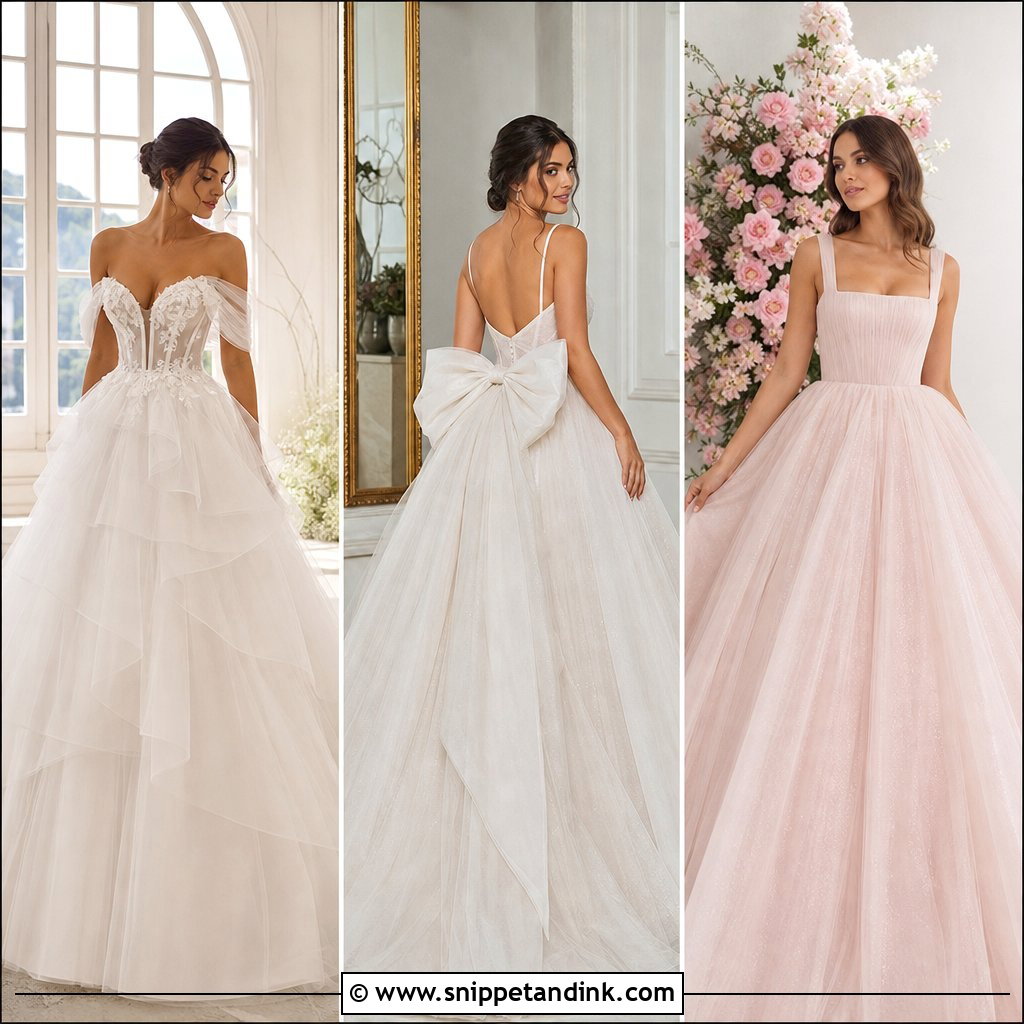
Blush is the color I see most often from brides who want something other than white but still want to look like a bride. Pale rose, shell pink or champagne-blush layered under ivory lace gives depth without turning the dress into a party gown. Undertone is the decision that matters. Cooler pinks flatter fair, rosy skin, while warmer, peachier blushes sit better on olive and deeper skin tones, so I always hold two swatches to the face in daylight. A tulle ball gown or flowing A-line suits it, with rose-gold earrings, neutral heels and a floral comb above a soft updo. Keep the veil ivory, and carry ivory, dusty rose and muted greenery rather than an exact pink match.
7. Blue Floral Wedding Dress
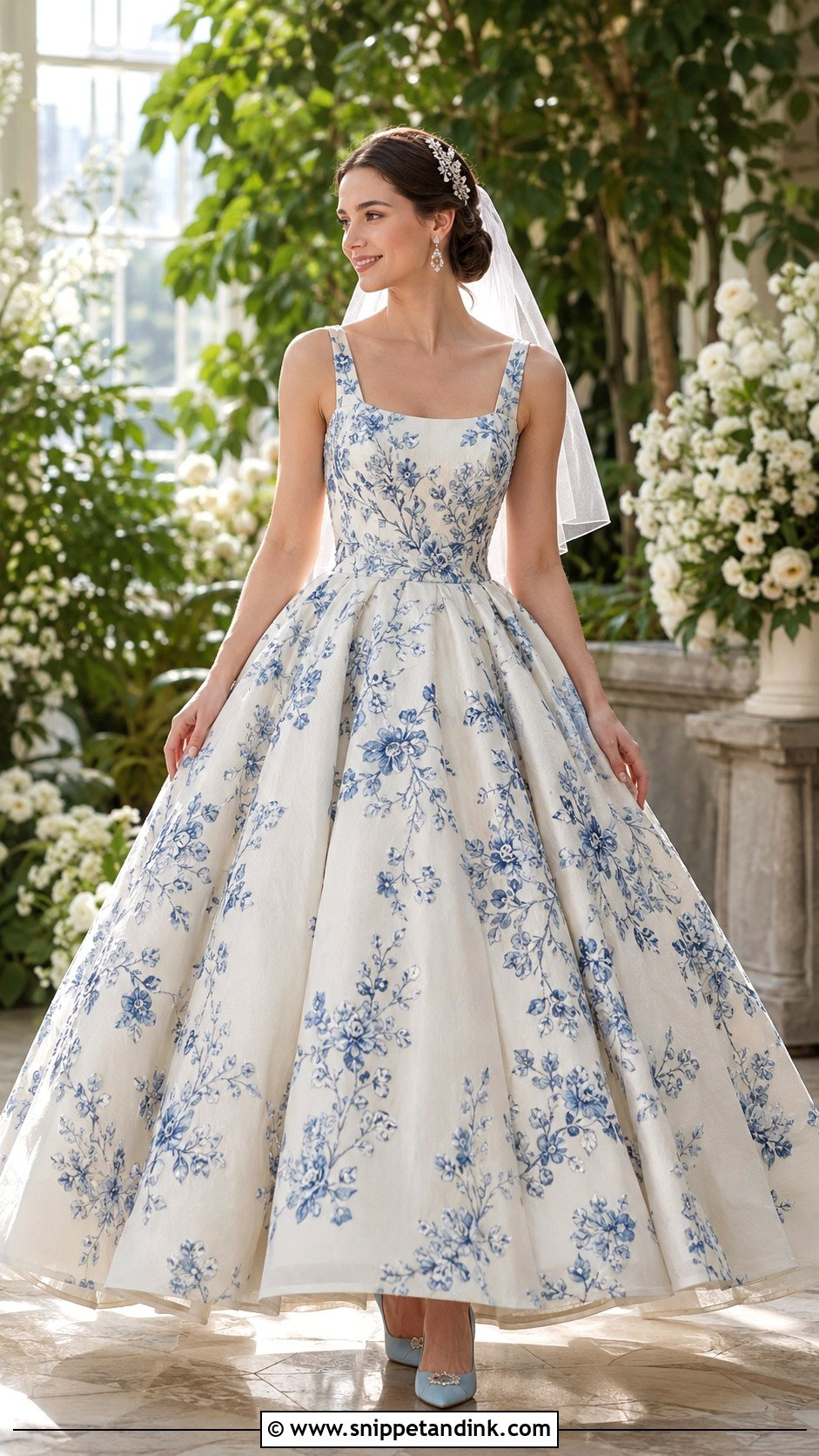
Blue embroidery turns “something blue” into the whole dress rather than a garter. Soft blue flowers, watercolor-style motifs or raised appliqués over an ivory base all work, and more designers are offering them as an alternative to all-white gowns. Keep the shape classic, a structured ball gown or romantic A-line, so the pattern looks deliberate. My one hesitation: blue thread can shift toward grey or purple under warm reception lighting, so ask to see the fabric under a yellow bulb too. Silver earrings, pale blue heels and a crystal comb in a low bun suit it. End the veil above the busiest embroidery, and keep the bouquet white with only a few blue accents.
8. Butterfly Appliqué Wedding Dress
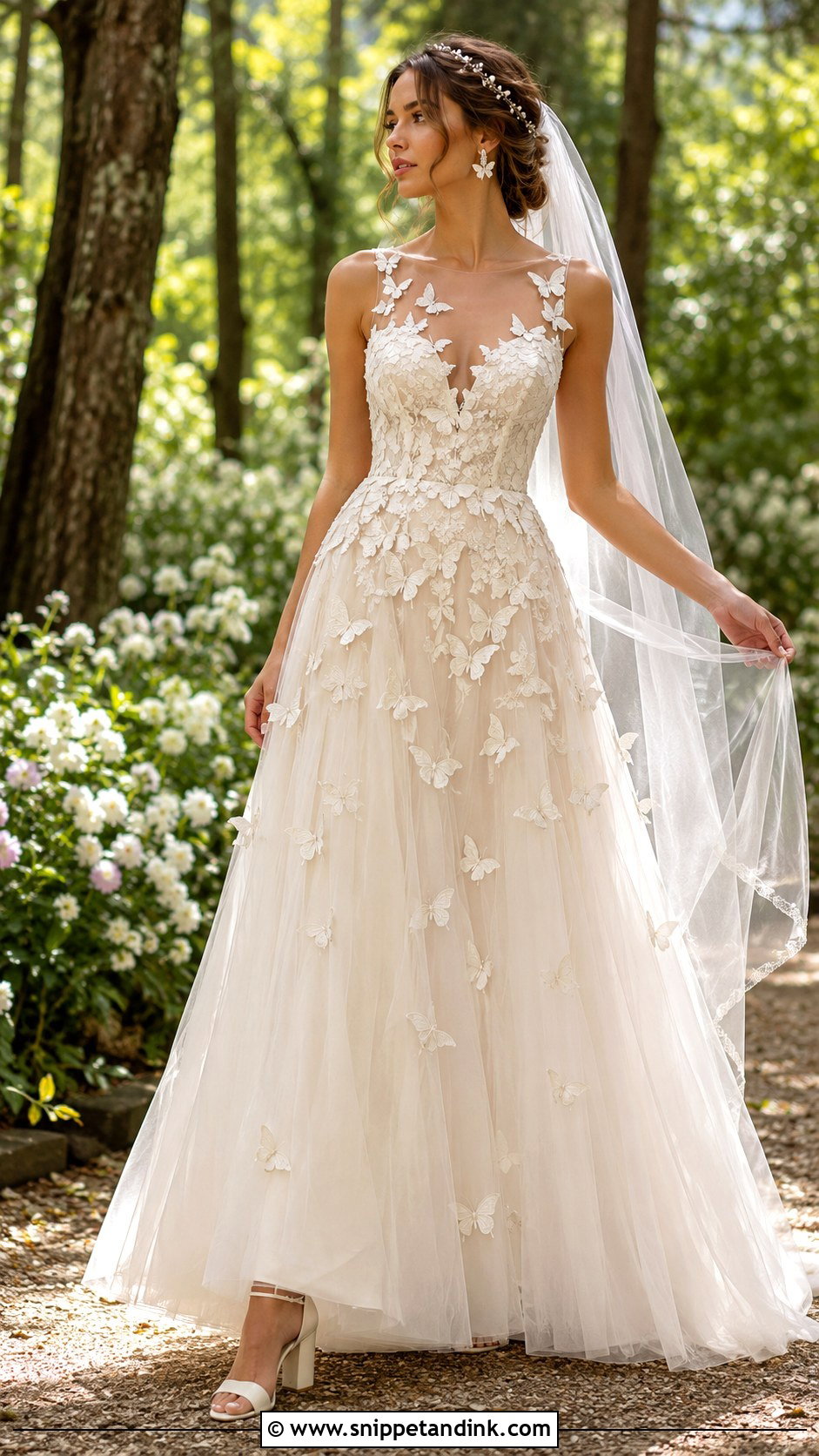
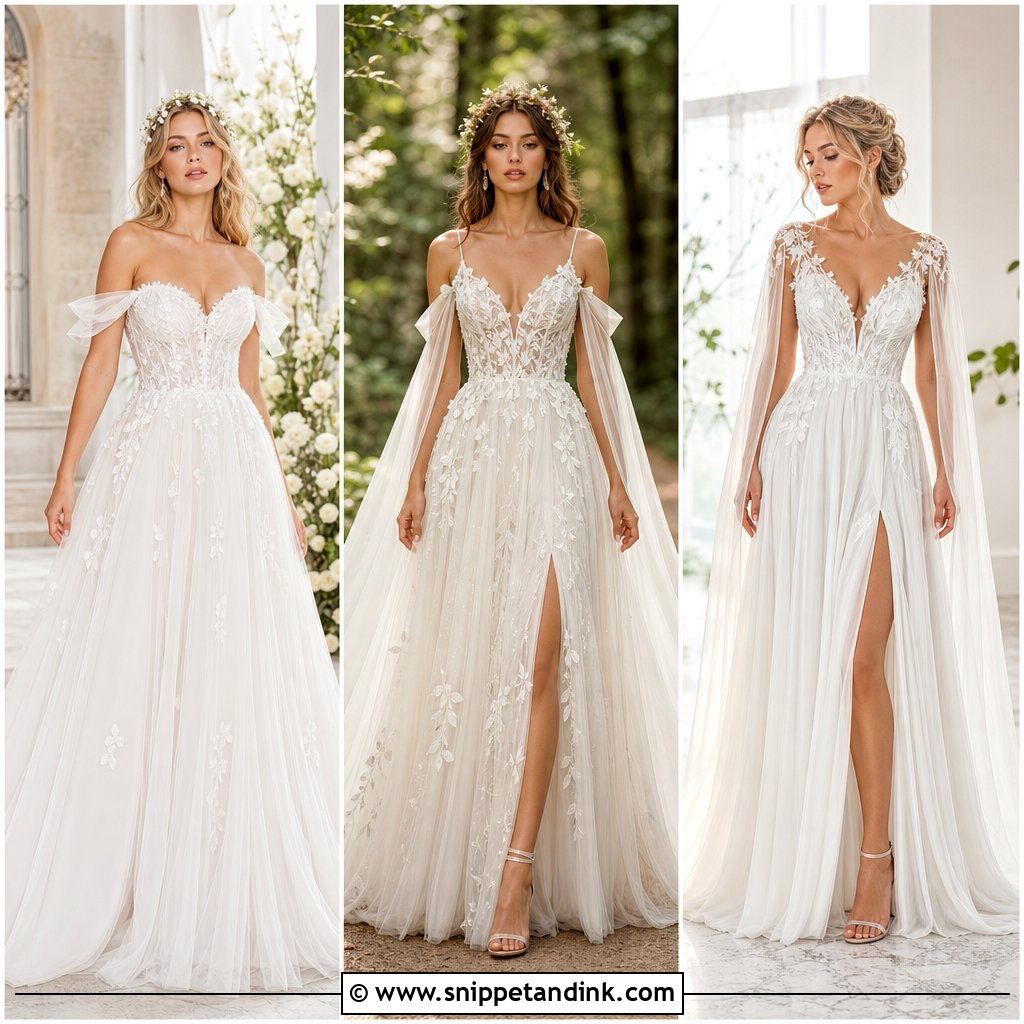
Butterflies work when you can barely tell they’re butterflies. Tonal ivory appliqués across the bodice, shoulders or upper skirt look refined; colored ones everywhere look like a party theme. A flowing A-line with a sheer neckline lets them appear to float on the skin. Wing-shaped earrings, ivory flats or block heels and a loose updo with pearl pins are enough, along with a short or fingertip veil. Don’t pile a big tiara, a statement necklace and an ornate veil on top. Before the wedding, I run a hand gently over every appliqué at the waist and train to find any that are lifting, then ask the seamstress to secure them.
9. Cape Sleeve Wedding Dress
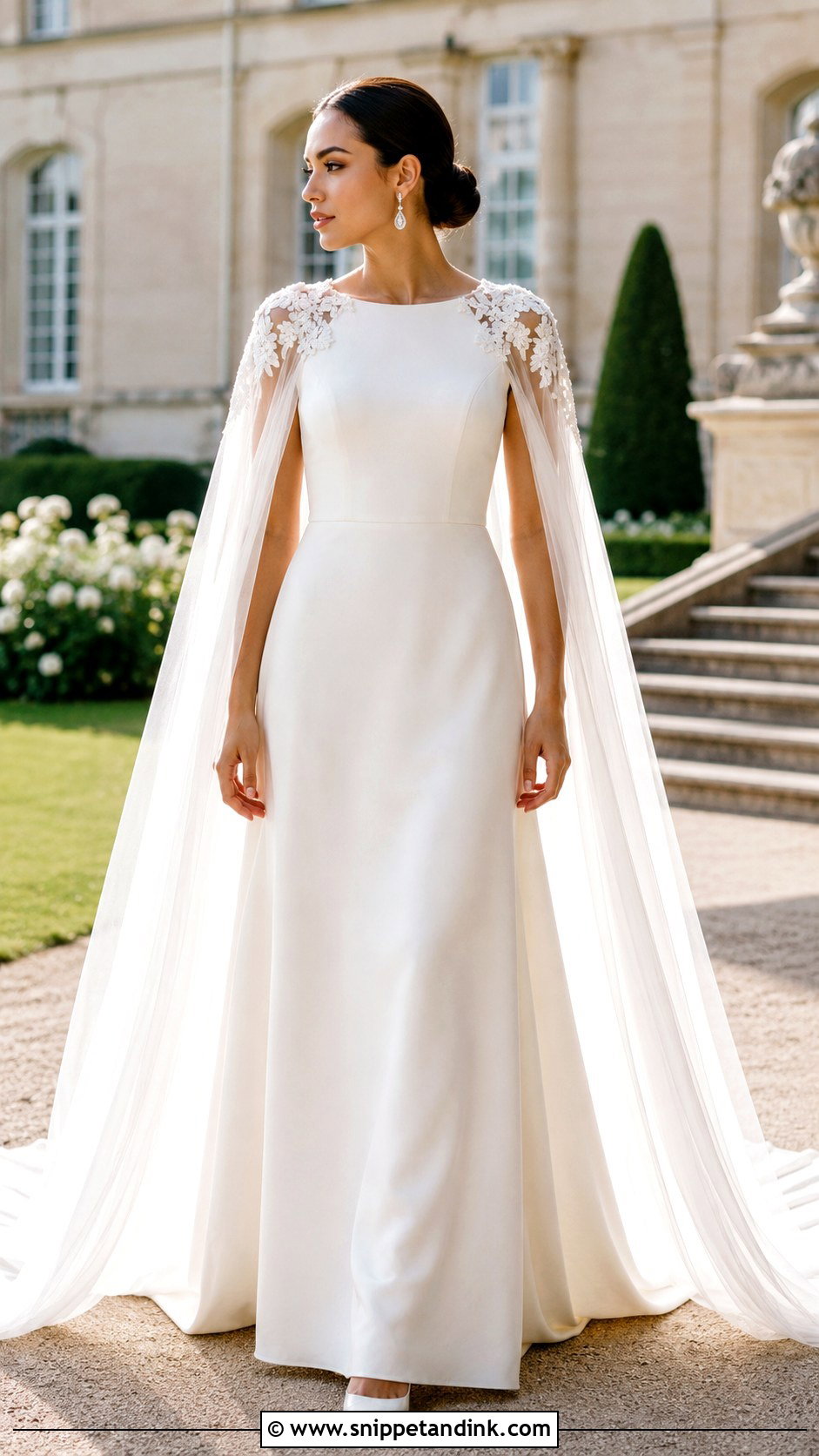
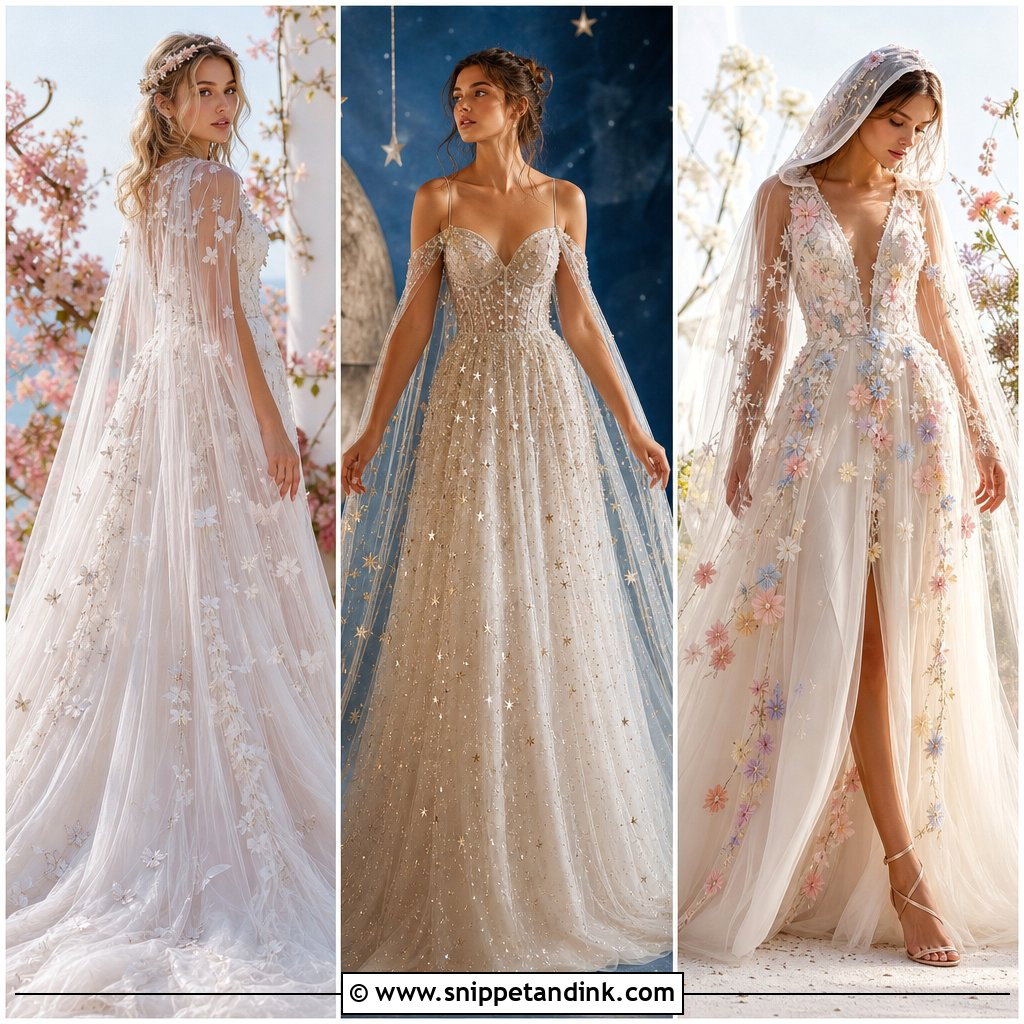
A cape delivers the ceremony drama of a veil with nothing pinned in your hair. It works best over a streamlined A-line or column gown, where the clean base lets the chiffon, tulle or lace actually move. Floral embroidery along the shoulders and hem softens it. Drop earrings, a low bun and pointed shoes complete the look; skip the necklace if the cape fastens near the throat. Detachable capes come off for dancing, which I’d recommend. At fittings, check the cape length against the train so they don’t tangle when you turn, and ask for hidden wrist loops so you can lift it for portraits and on stairs.
10. Puff-Sleeve Wedding Dress
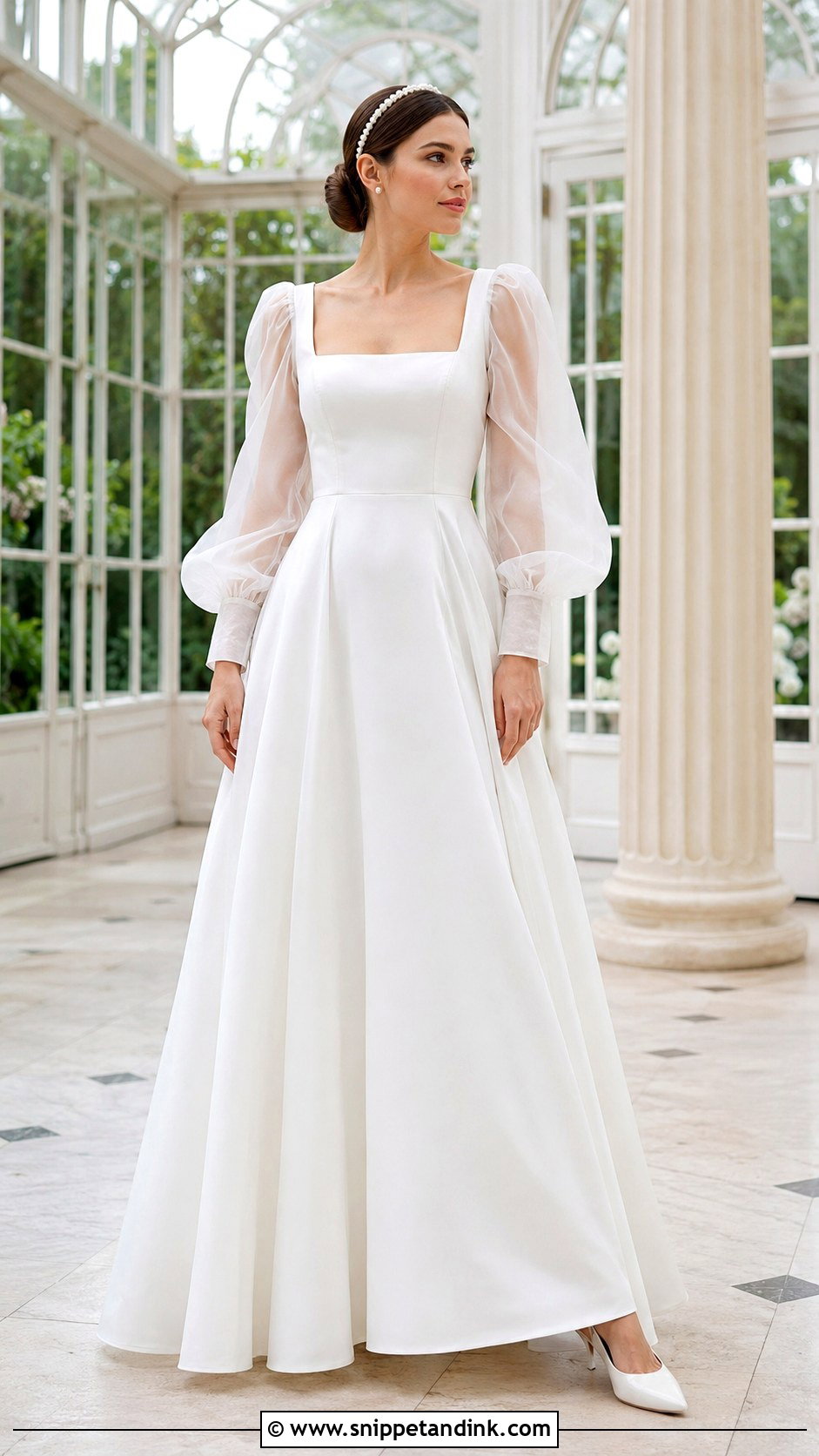
Puff sleeves change the whole proportion of a gown, so they need balancing below. Sheer organza puffs stay light; satin ones look more royal and more structured. Pair either with a defined bodice and an A-line skirt that falls cleanly from the waist. Pearl studs, a clean bun and simple ivory heels, plus a narrow headband rather than a crown, since the sleeves already take up visual space. If your shoulders are broad, a softer, lower puff works better; narrower shoulders can take more volume. The elastic or cuff is where I see trouble. If it leaves a red mark after ten minutes at a fitting, it will be painful by the reception.
11. Basque Waist Wedding Dress
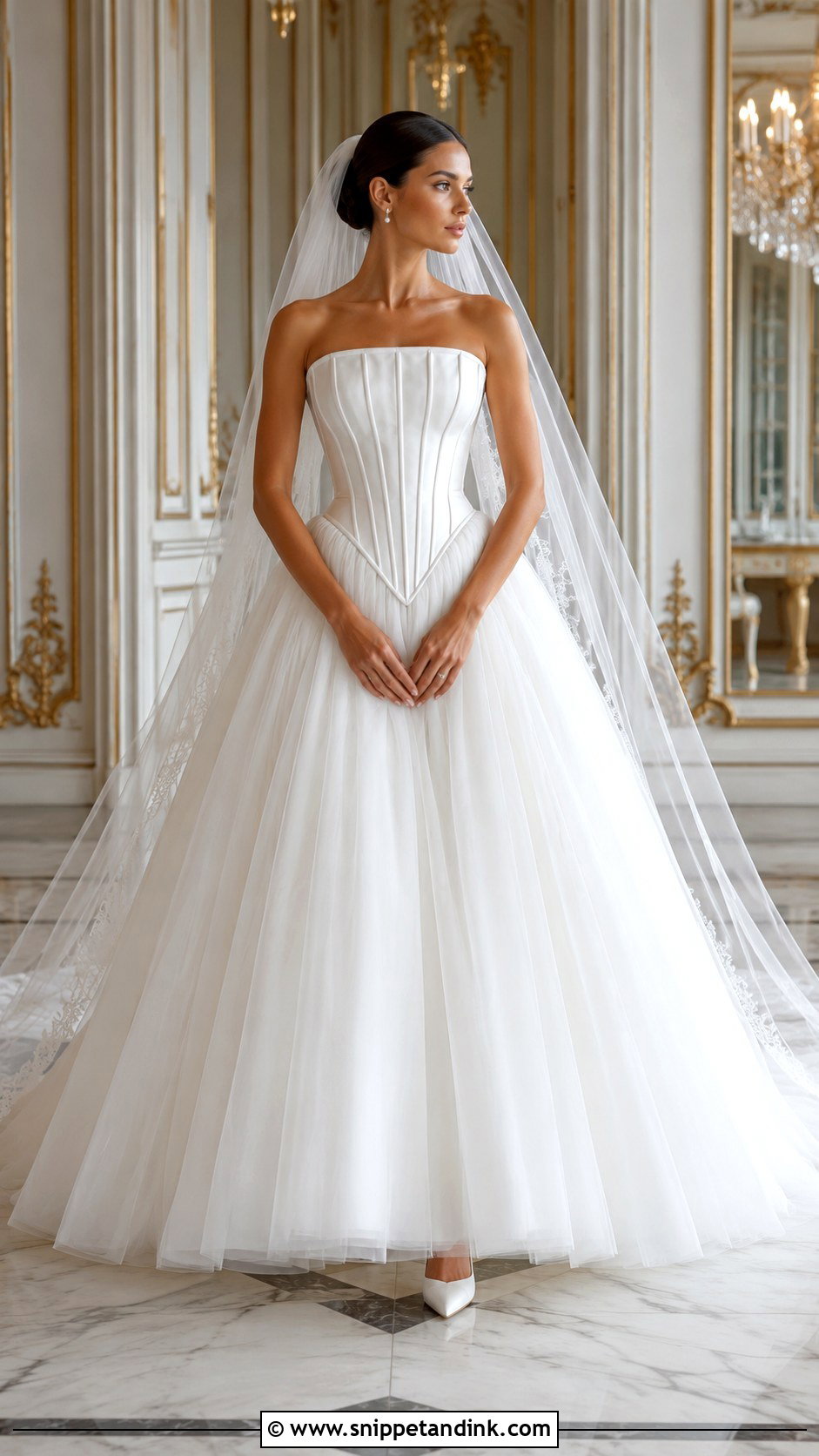
The Basque waist dips into a V at the front, which lengthens the torso and gives that regal, pointed outline. It wants a structured corset and a full tulle or satin skirt. Sit down at every fitting. The point of the V can fold or press into the stomach once you’re seated, and correct boning placement is what stops that. A cathedral veil, refined pearl earrings and satin pumps are classic with it, and a sleek updo keeps the neckline and waist visible. The shape is already architectural, so I keep extra embellishment to subtle lace or scattered beading. With adjustments to where the point sits and how full the skirt is, it suits far more body types than people expect.
12. Ruffled Organza Wedding Dress
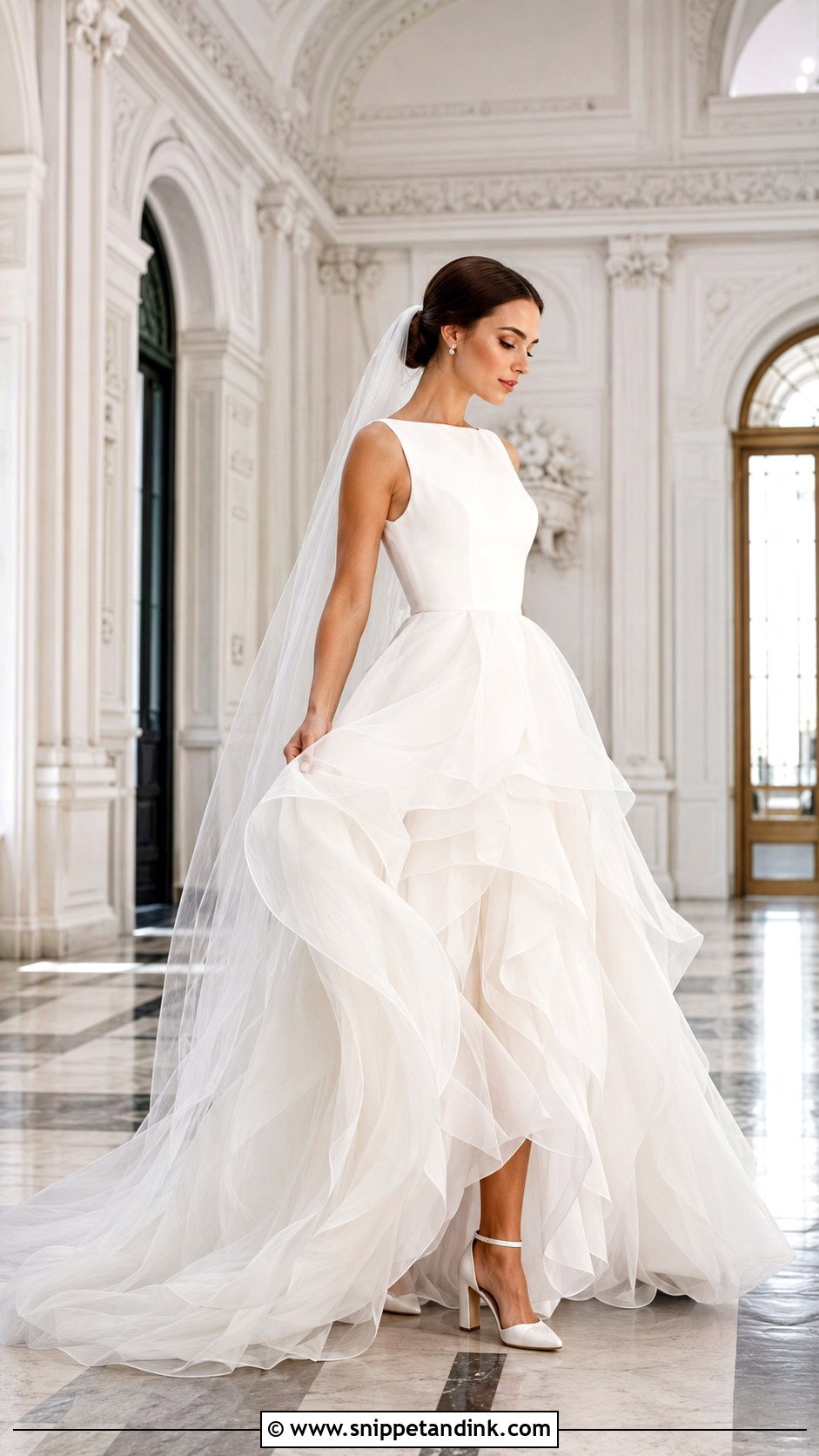
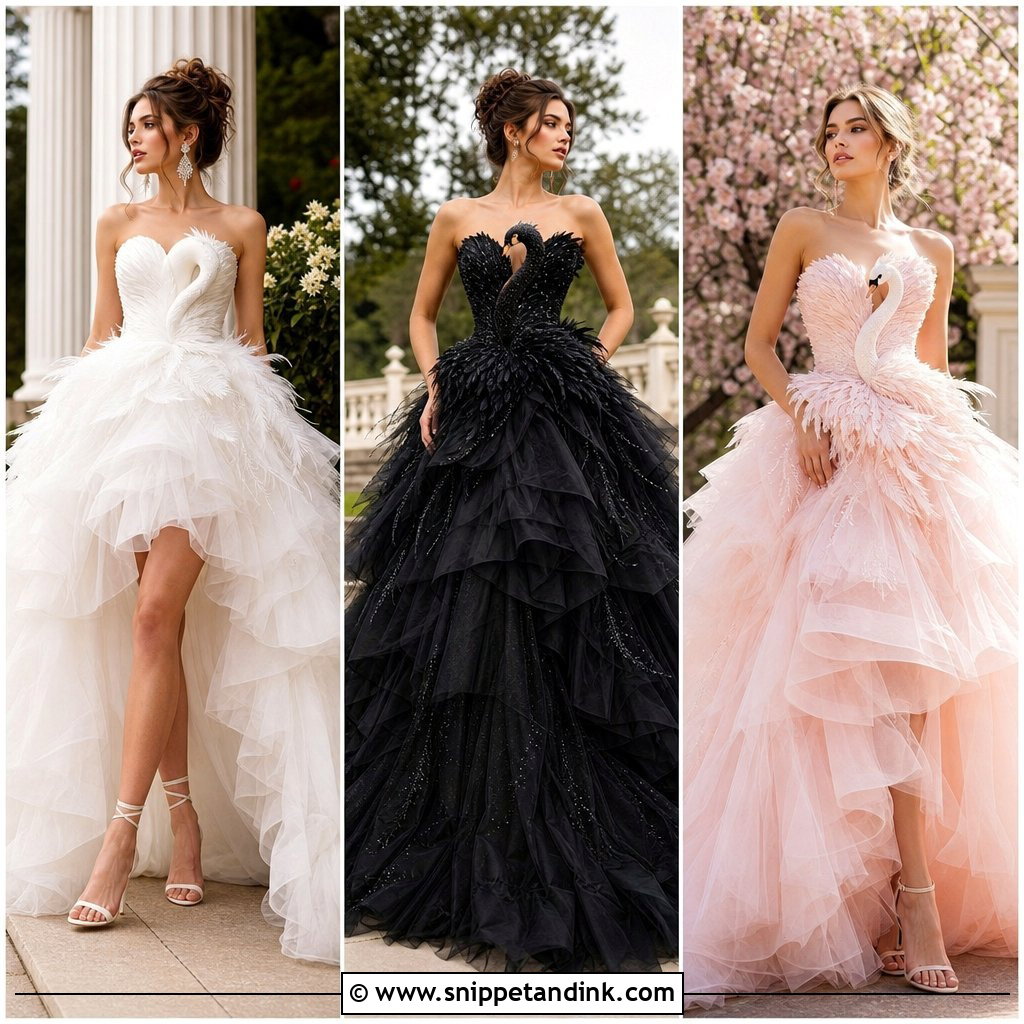
Organza ruffles give a gown a cloudlike skirt that holds its shape on its own, which soft tulle can’t do without heavy layering. Keep the bodice simple so the skirt can be the event, built from tiers or gathered layers. Small crystal earrings, a smooth low bun and wider-heeled shoes suit it, and a plain fingertip veil is enough; a long lace veil will fight the skirt. Organza creases if it’s folded, so I keep these gowns hanging from shop to venue and steam on the morning. For outdoor ceremonies, think about wind and uneven ground before you commit to a long train. A practical bustle will gather the ruffles neatly and protect the edges once the dancing starts.
13. Embroidered Wildflower Wedding Dress
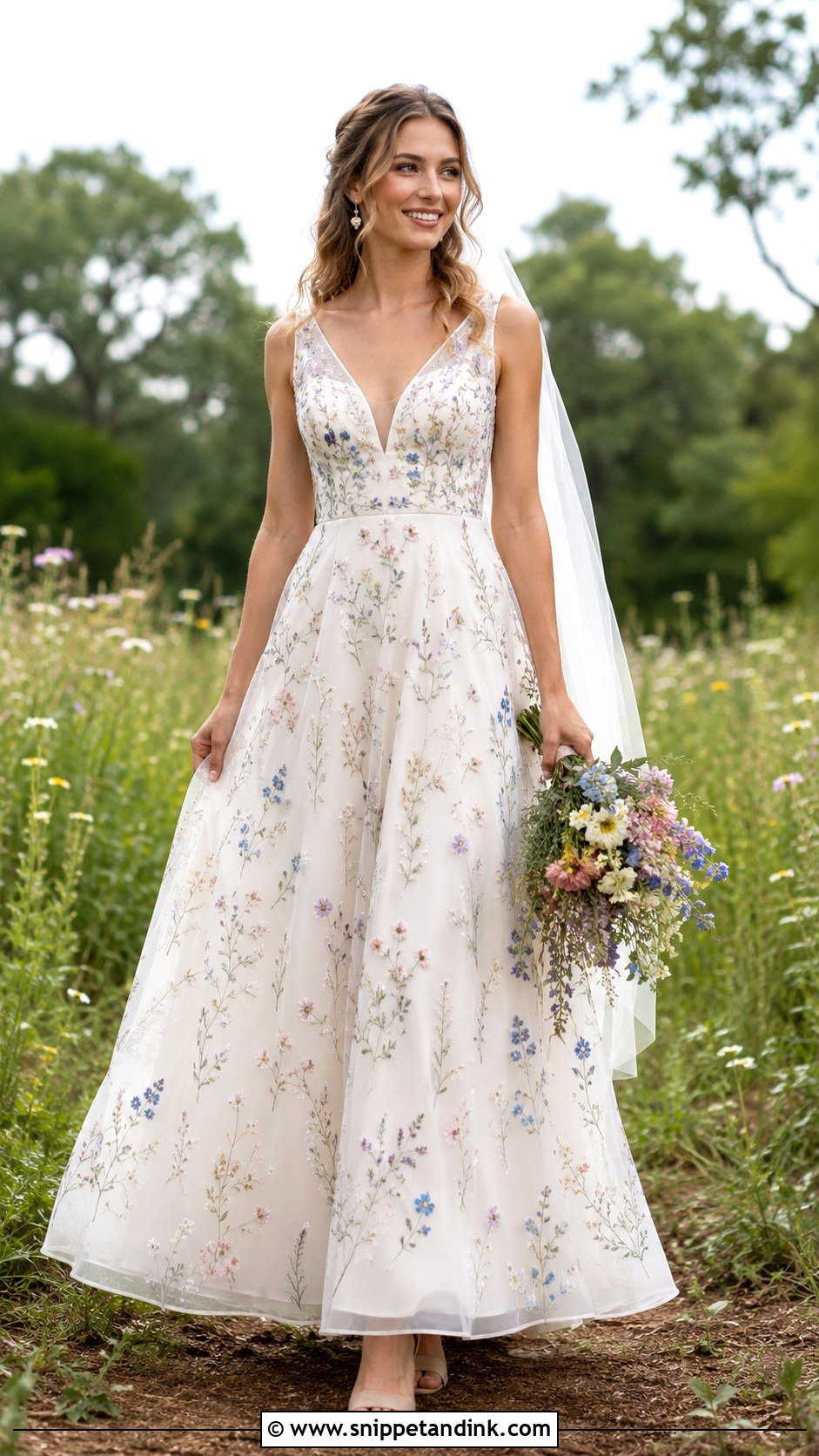
Colorful wildflower embroidery on an ivory A-line looks like a meadow pressed into fabric. Small flowers in soft blue, pink, lavender and green, concentrated at the bodice and lighter down the skirt, keep the balance flattering. Here’s the detail most brides don’t know until the alterations appointment: shortening a heavily embroidered skirt often means unpicking and moving motifs rather than cutting through them, so settle your shoes and hem length early. Nude or ivory block heels, small gemstone earrings and loose hair with a few matching flowers suit it. A plain ivory veil and a simple bouquet stop it from getting busy. Meadows, greenhouses and country venues are its natural home.
14. Medieval-Inspired Wedding Dress
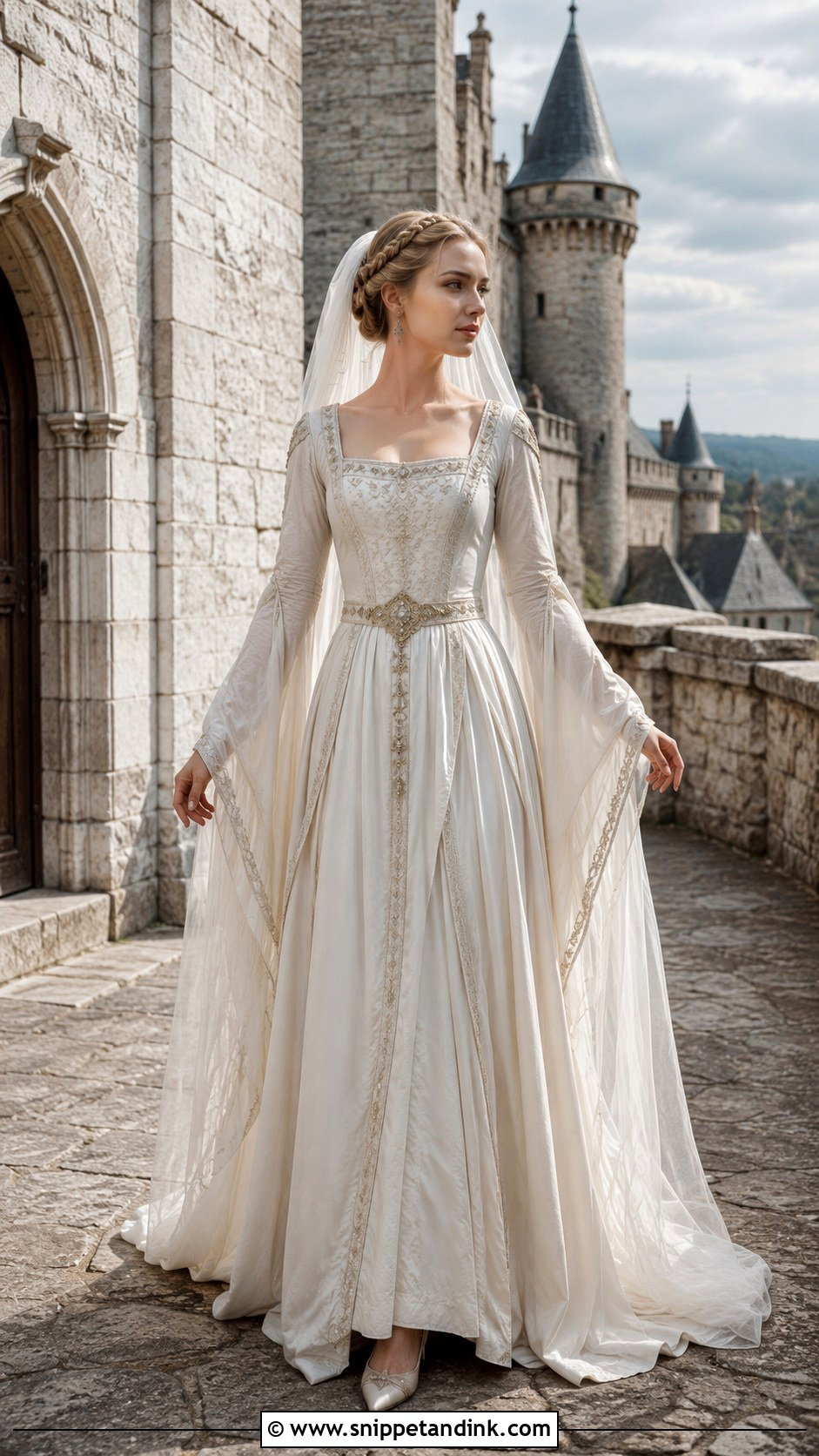
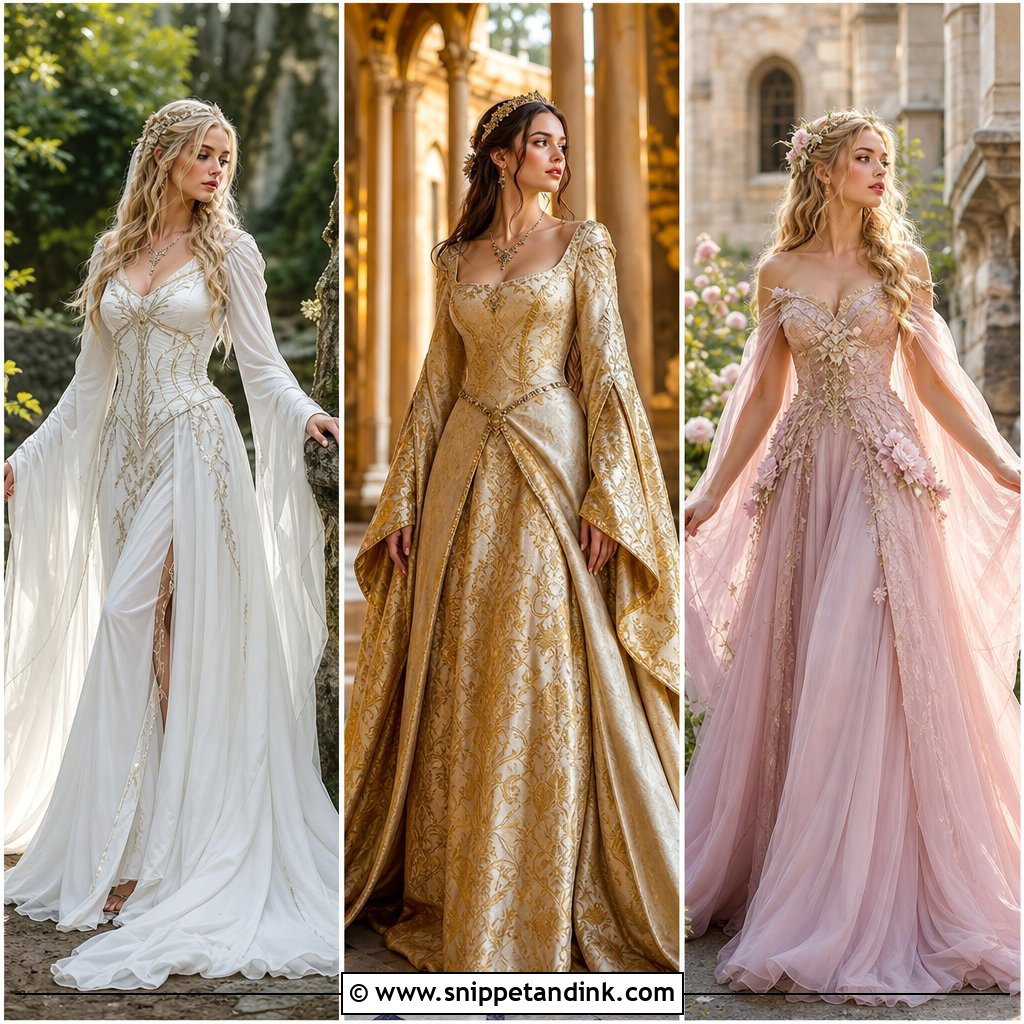
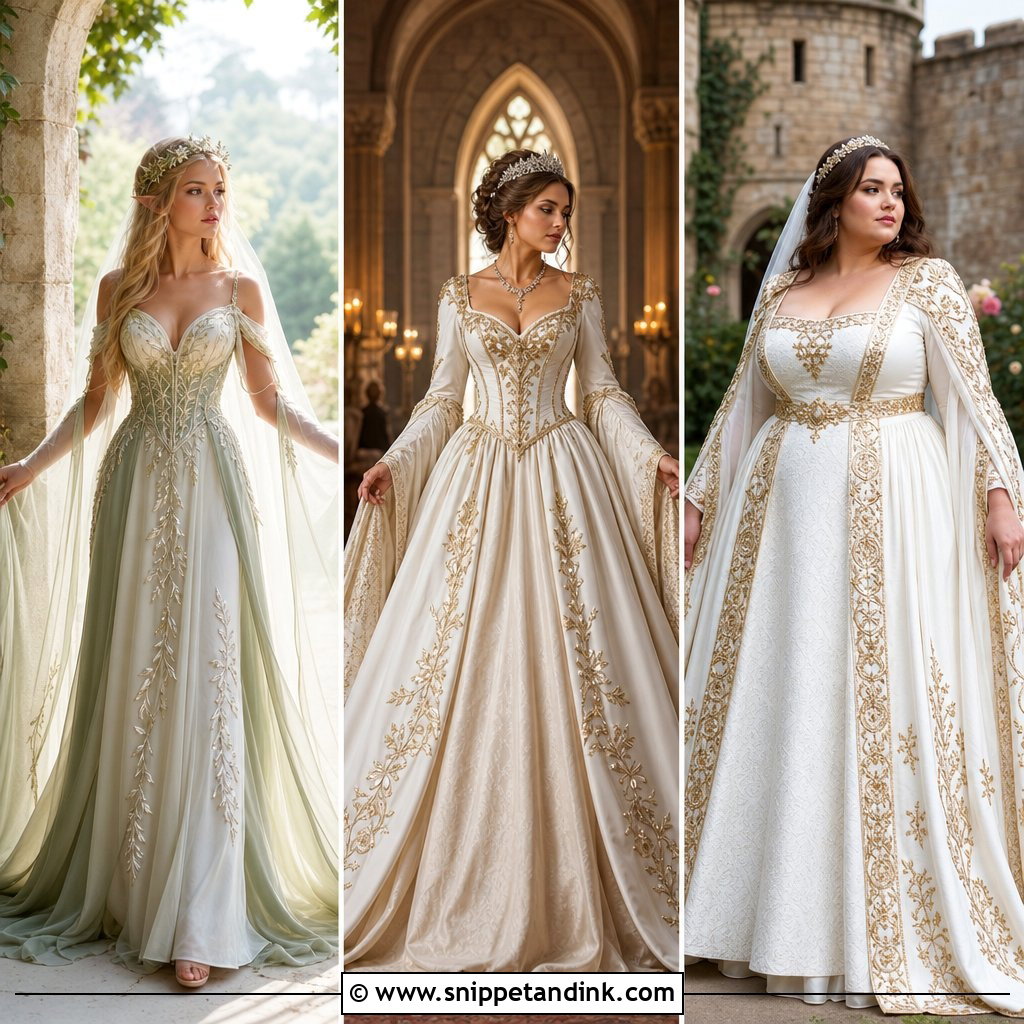
Medieval-inspired dresses look regal when the history is a hint, not a re-enactment. A square neckline, fitted bodice, flowing skirt and long bell sleeves in soft chiffon or lace carry the idea. Keep everything in one ivory tone and avoid heavy trims, which is where it starts to look like costume. A braided crown, small drops and low pointed flats or block heels finish it, with a long narrow veil attached under the braids. Wide cuffs are the practical problem: they dip into food and catch on centerpieces. Detachable sleeves solve it neatly, giving you the full look for the ceremony and a sleeveless gown afterwards. Castles, forests and historic estates suit it.

15. Forest Fairy Wedding Dress
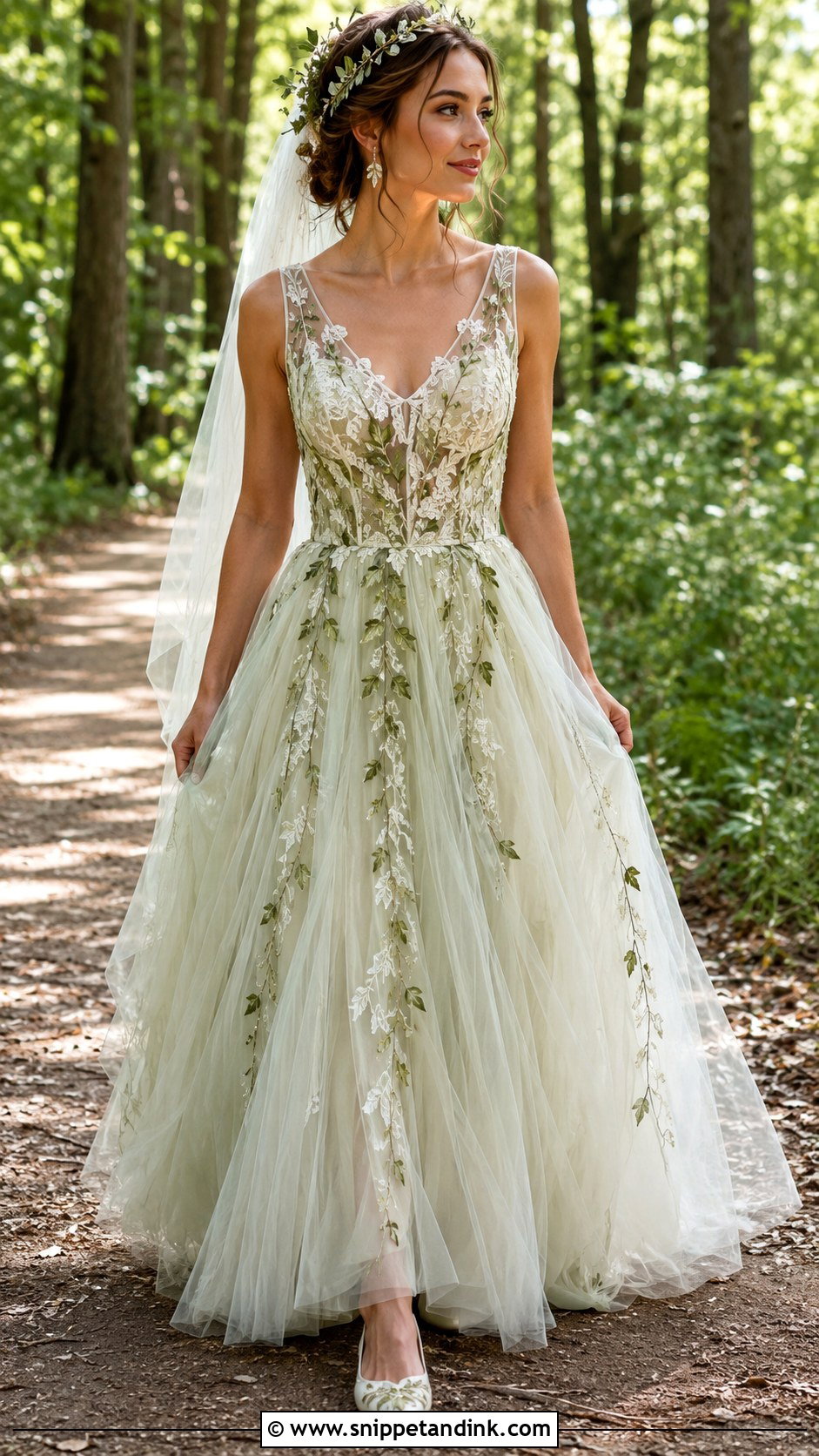
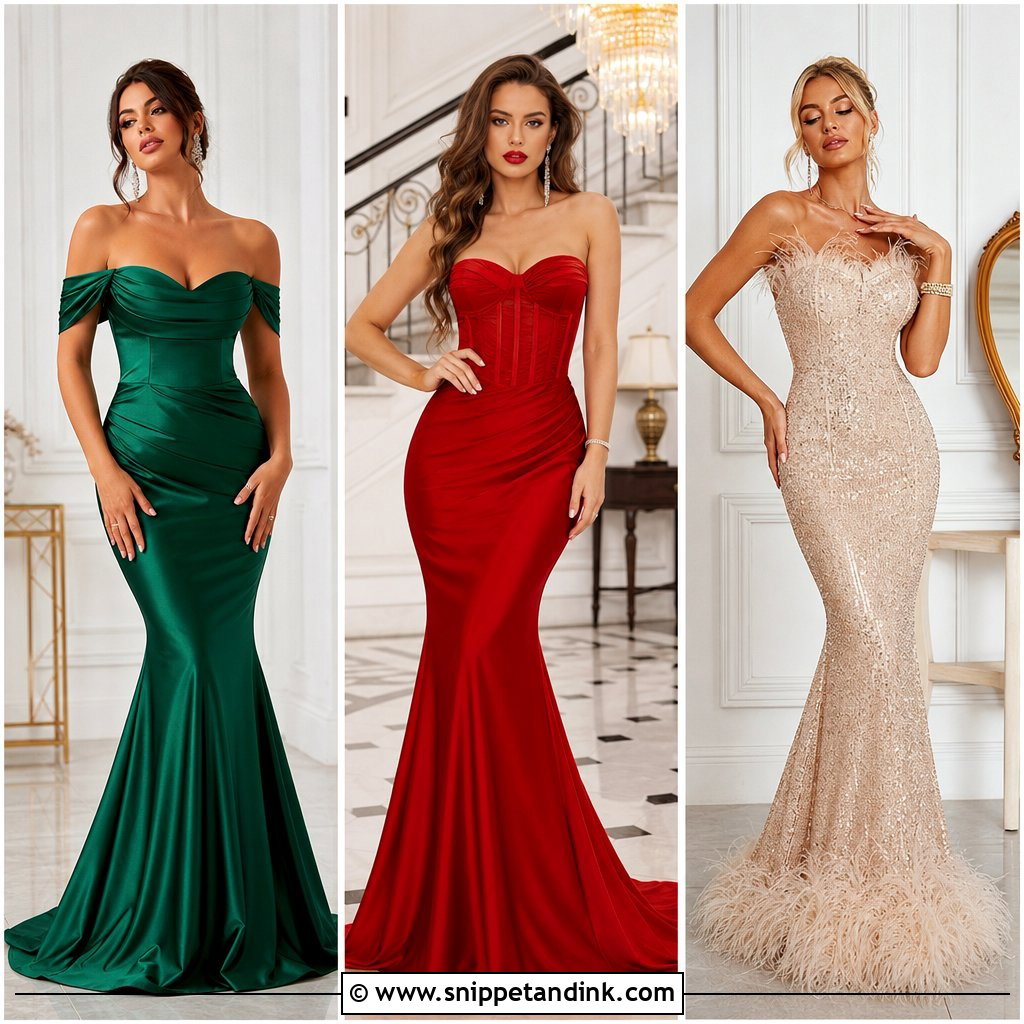
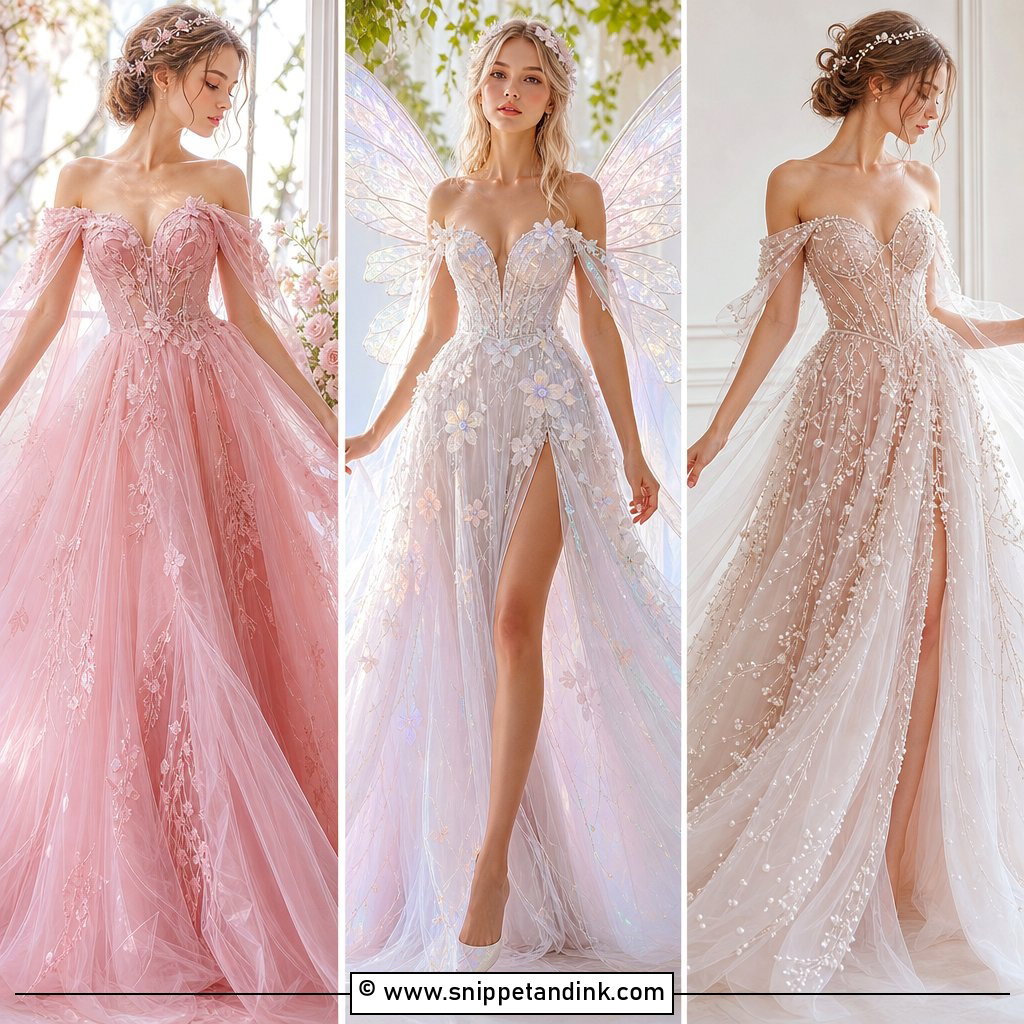
A forest fairy wedding dress needs to look grown rather than made, and it needs to survive actual ground. Flowing chiffon or soft tulle with leafy lace, vine embroidery or light floral appliqués over a lightly structured bodice is the version I’d choose. Block heels, bridal boots or embellished flats are the right footwear for paths and grass. Leaf-shaped earrings, a botanical hair vine and a light veil that moves in the breeze finish it. Keep greenery accents real or very refined; a dress wrapped in artificial vines rarely looks good up close. Avoid a very long train on woodland paths. A wrist loop, bustle or removable overskirt gives you portrait drama without dragging leaves to dinner.
16. Pearl Beaded Wedding Dress
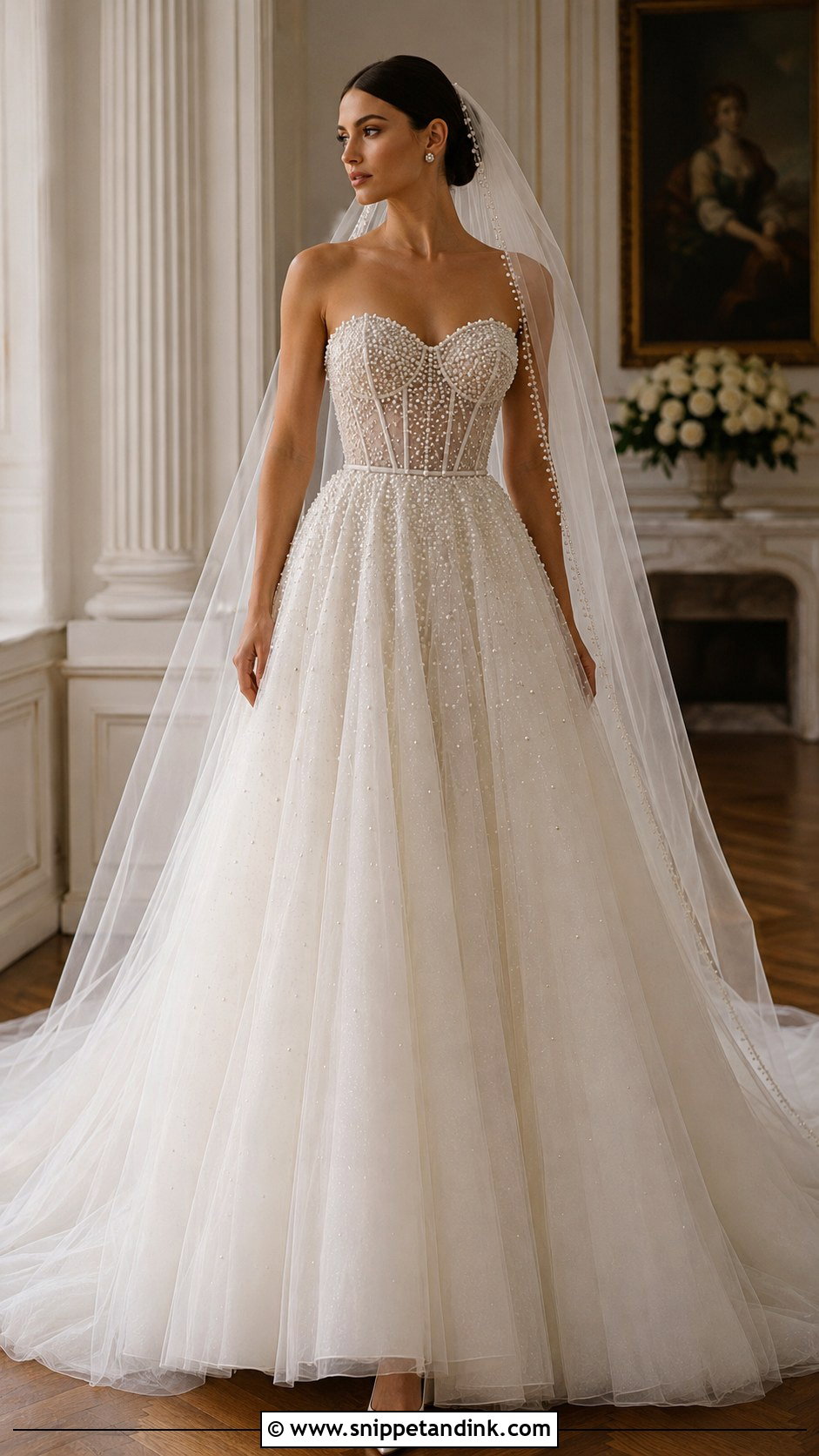
Pearls are the quietest kind of embellishment, and the one I find ages best in photos. Tiny pearls scattered over a corset bodice, an illusion neckline or a tulle skirt look lighter than heavy rows, which can drag fine fabric down. An A-line lets them catch light as you move. Pearl studs, a smooth chignon and satin heels with one small pearl detail are enough, and a plain veil with a few pearls along its edge ties in without copying the gown. Check beading under the arms and at the waist for scratching. Loose beads snag veils, so secure stitching matters, and store the dress supported or flat so the weight doesn’t stretch the fabric over time.
17. Detachable Overskirt Wedding Dress
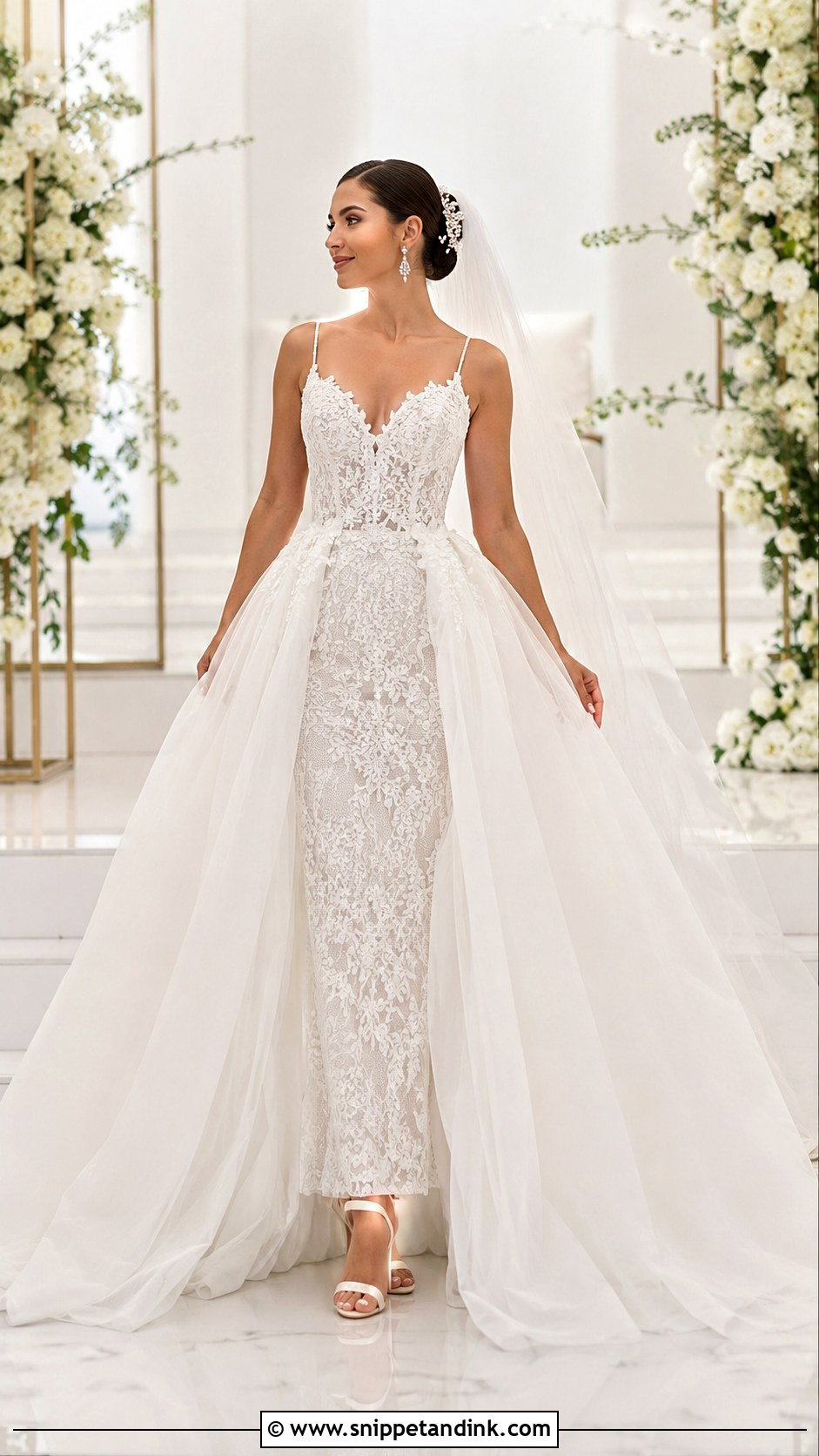
Two looks, one gown, and no outfit change. A fitted lace, crepe or satin dress with a tulle or organza overskirt for the ceremony gives you the princess silhouette; take the overskirt off and you have a lighter dress for the reception. Statement earrings, a sleek updo and block heels that suit both versions keep it simple, with a long veil swapped for a jeweled comb later. The waistband is where I look closely at fittings: it should lie flat with its fastening invisible from every side. Practice the removal before the day, and teach one trusted attendant how the closure works so the change takes minutes, not half an hour.
18. Bow Back Wedding Dress
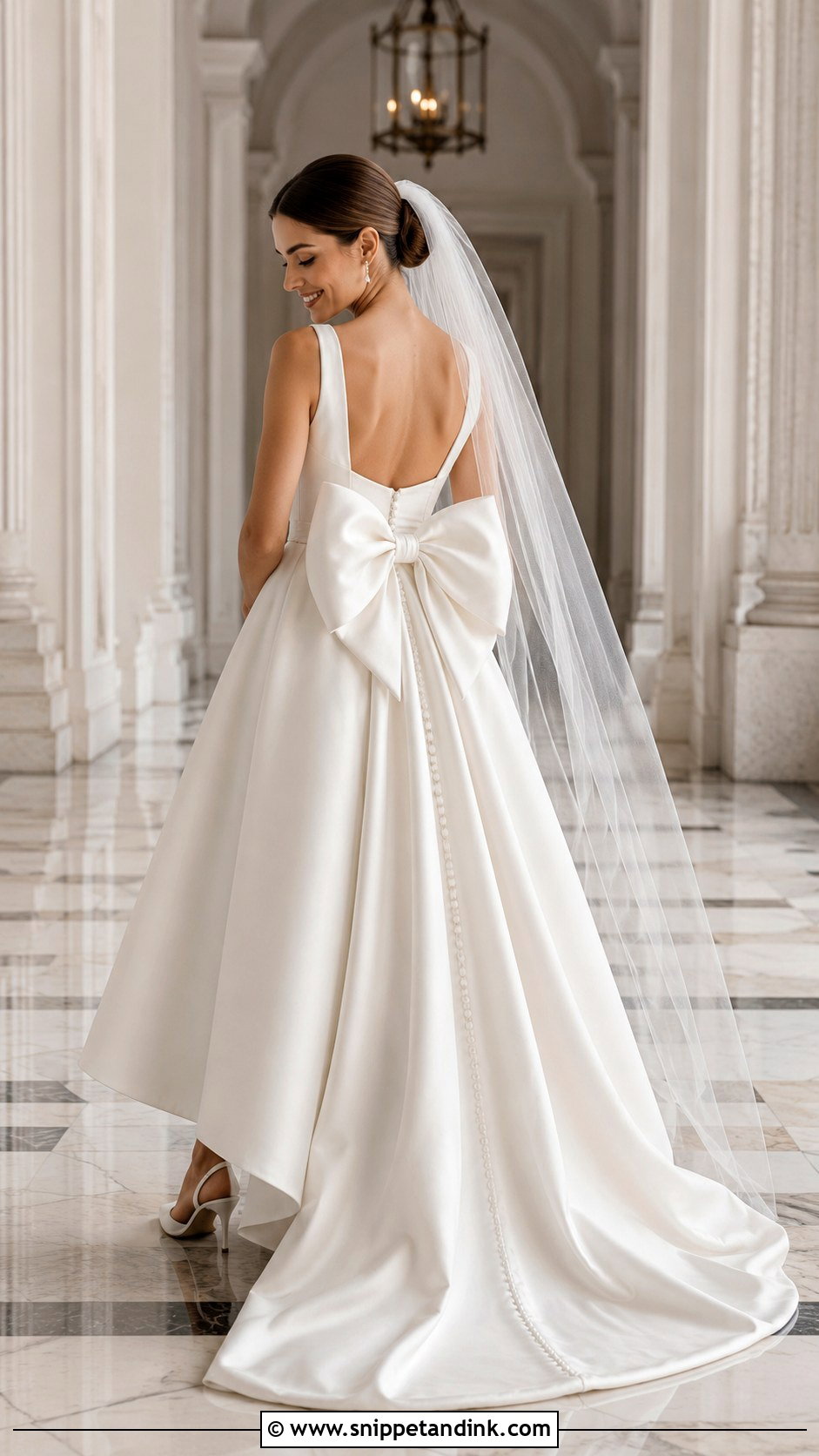
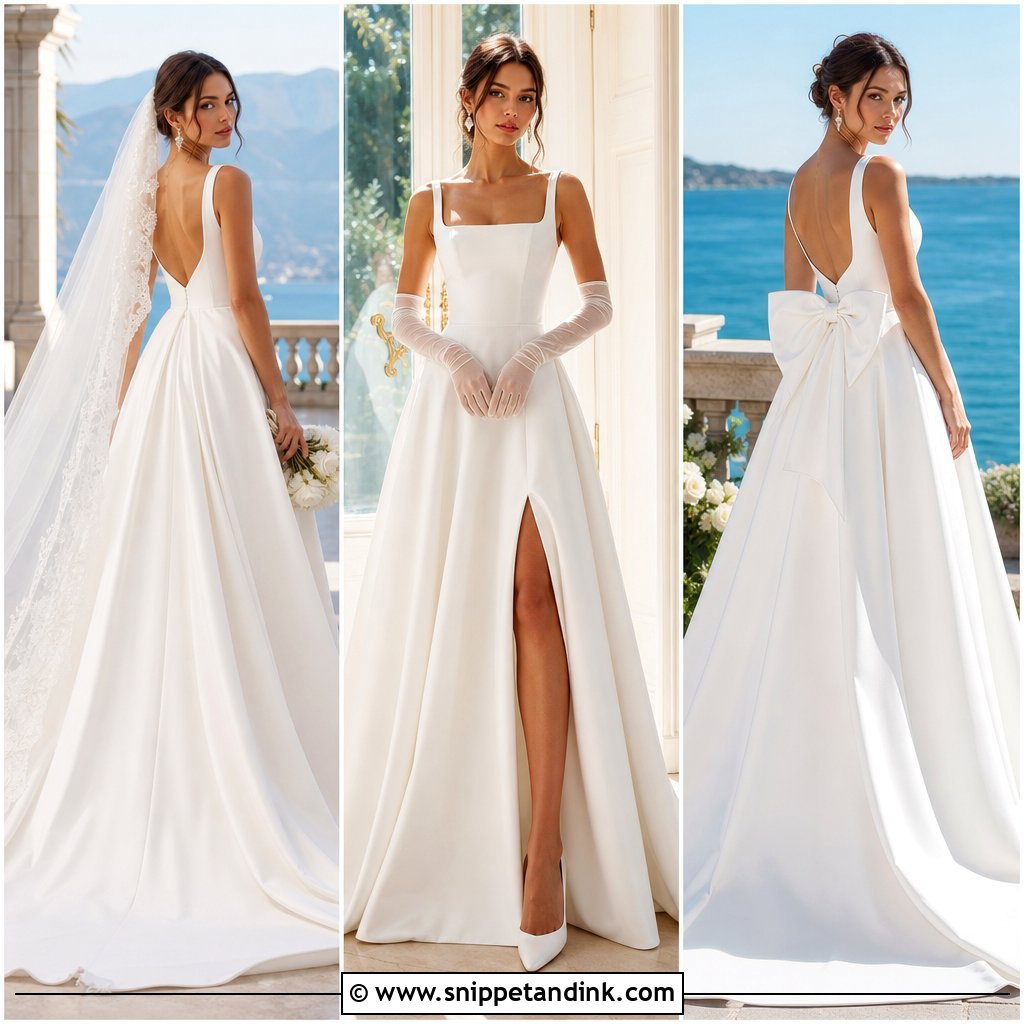
A big bow on the back gives guests something to remember during the vows, since that’s the view they have. Structured Mikado or satin carries it best, on a clean ball gown with a defined waist and the bow sitting above the train. The plain fabric makes the bow look deliberate. Pearl earrings, a polished bun and ivory pumps suit it. A sheer veil can fall over the bow during the ceremony and reveal it once removed. If you’d like less volume, a narrow bow with longer tails is subtler. Check at fittings that the bow doesn’t sit on the bustle points. A detachable bow is wise for sitting through dinner, since a large one presses awkwardly into a chair back.
19. Celestial Wedding Dress
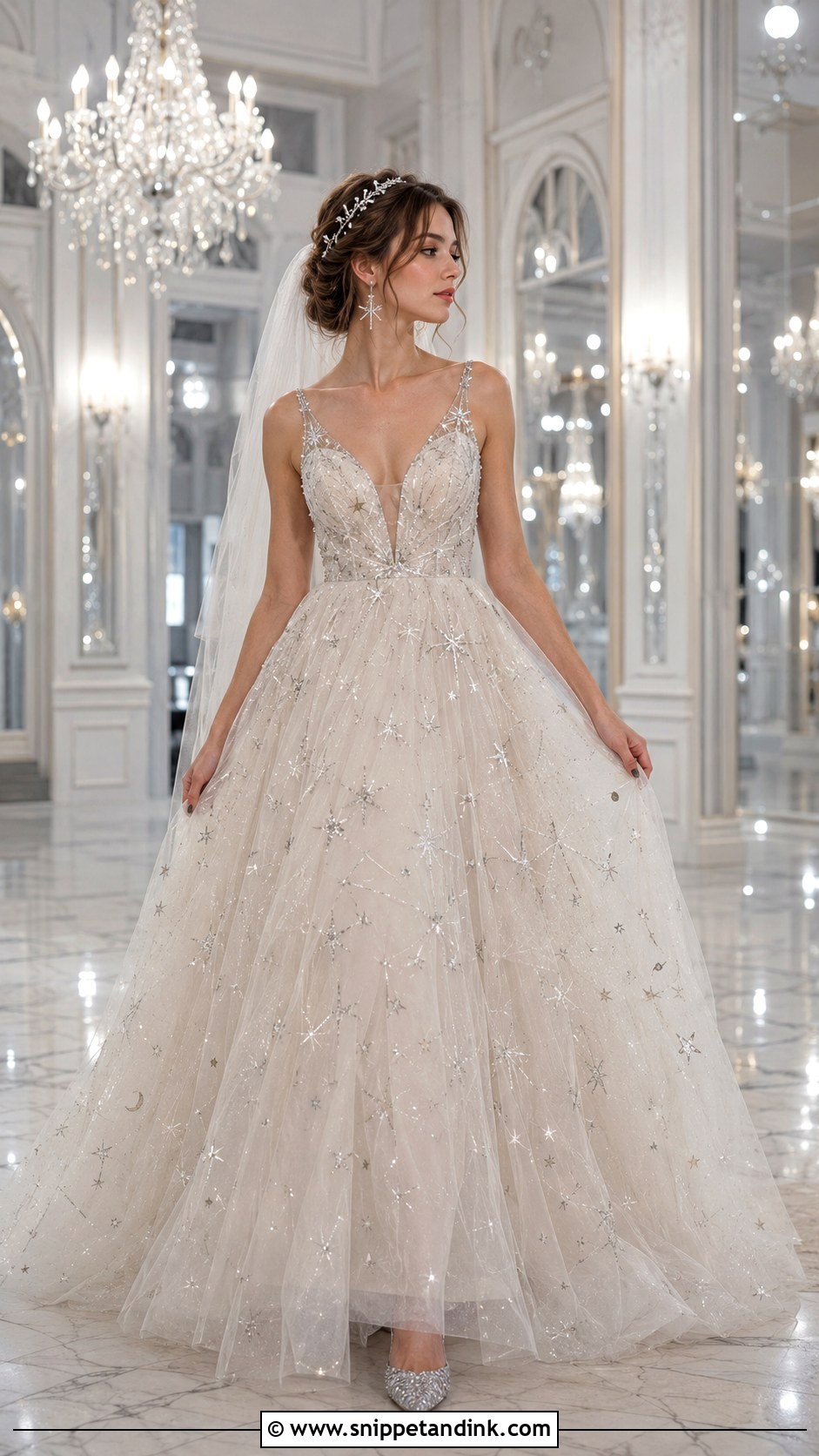
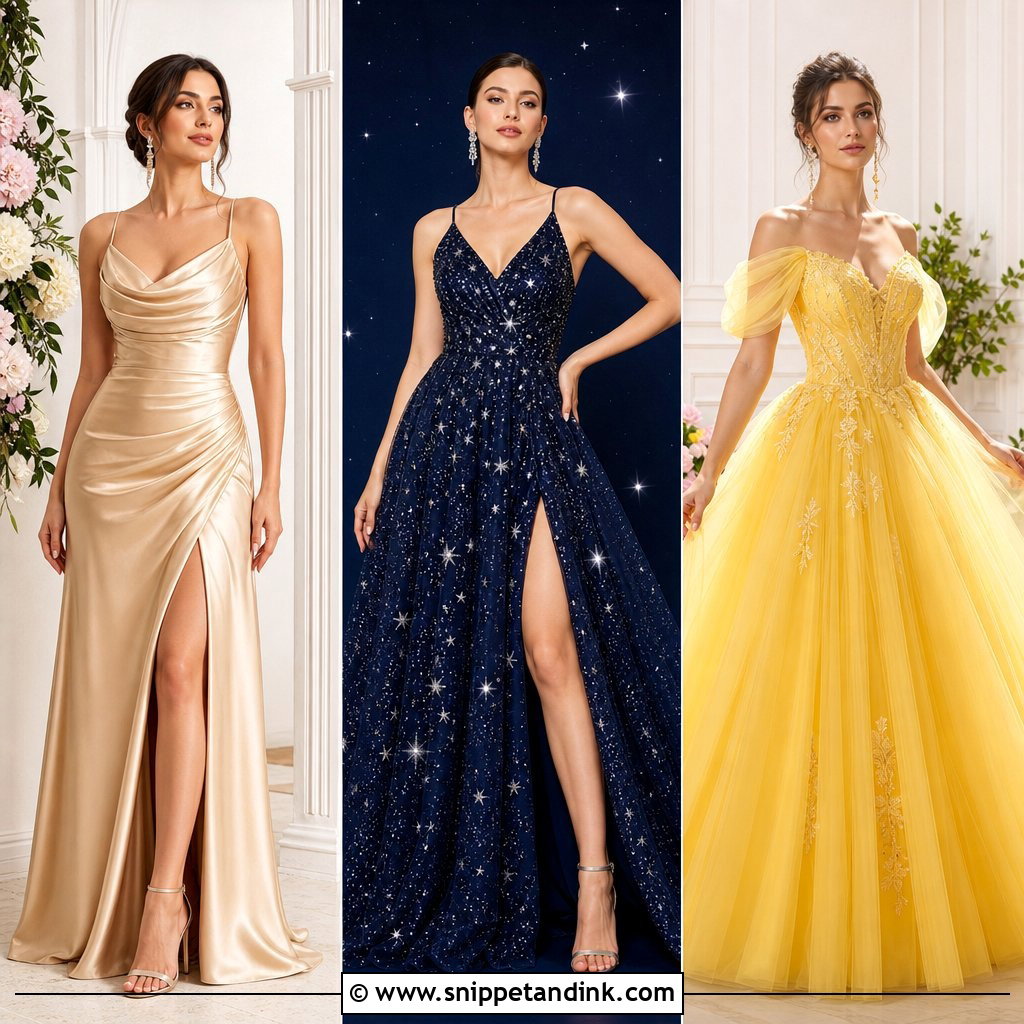
A celestial wedding dress uses tiny stars, small moons, crystal beading or silver embroidery to create a night-sky effect. A navy underlay is the bold version; ivory tulle with tonal shimmer is the more traditional one. Keep the shape simple, a fitted bodice over a flowing A-line, so the motif stays elegant. Star earrings, silver shoes and a crystal vine woven through a low updo are plenty, with a plain veil or one with only a few points of light. I’d never combine big celestial earrings, a crown and a decorated necklace. Ask your photographer for a few frames in daylight and a few after dark, since the embroidery changes character completely.
20. Minimal Satin Princess Wedding Dress
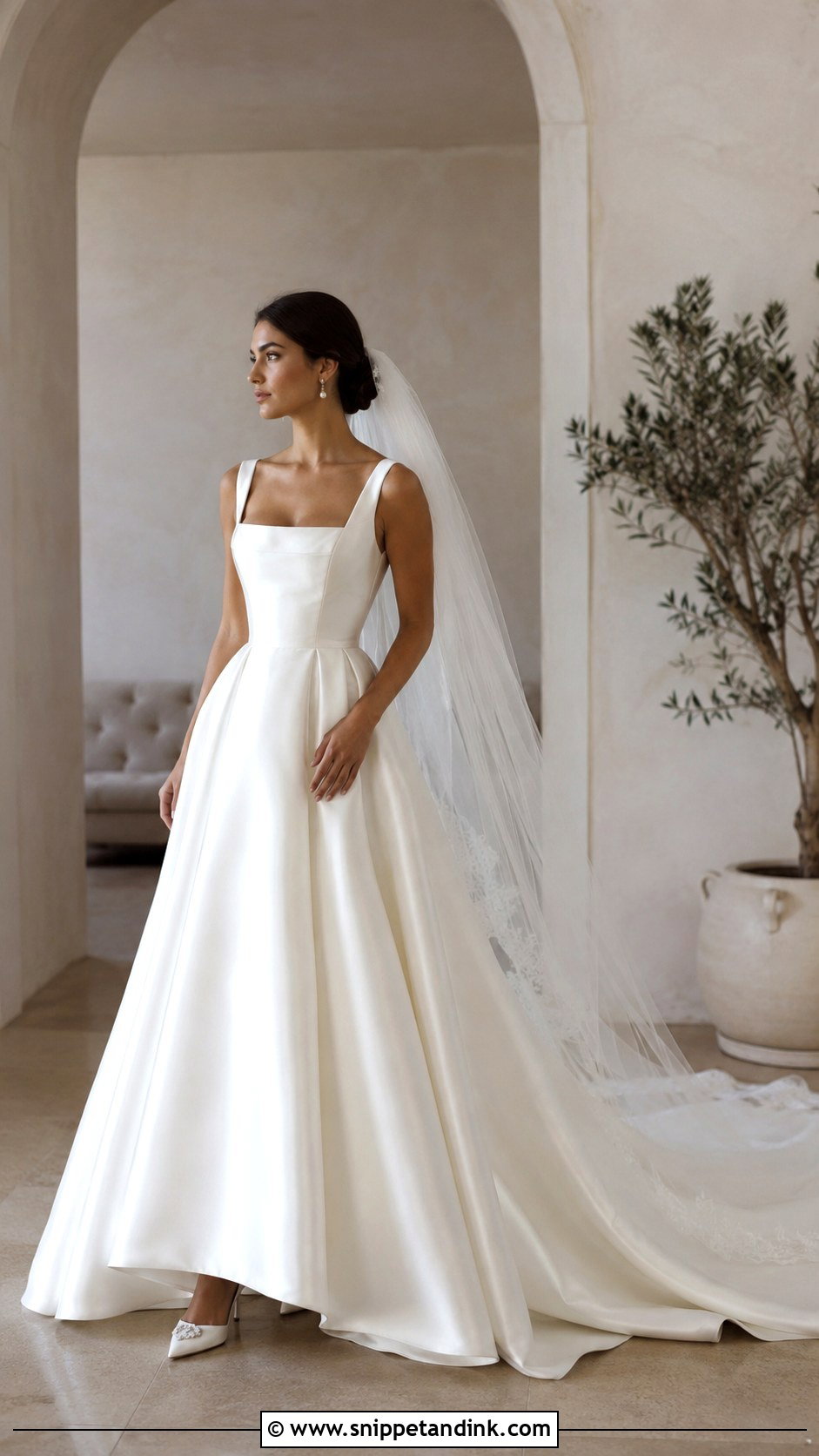
Fairy-tale dressing doesn’t need lace, glitter or embroidery at all. A minimal satin princess gown gets its impact from cut and fabric: a structured strapless or square-neck bodice, a full skirt, a long train. A folded neckline, covered buttons or a draped waist add detail without clutter. Pearl drops, pointed satin heels and a smooth low bun suit it, with a cathedral veil for the ceremony. Satin is honest to a fault. It shows every wrinkle, every bump of an undergarment and every fit issue, so skilled alterations, proper steaming and smooth underwear matter more here than with any other gown on this list. Ask about pockets; satin can hide them neatly.
Ordering a Fairy-Tale Gown on a Realistic Timeline
Structured gowns, hand-placed appliqués and custom colors all take longer to make than a simple sheath, and alterations on a corset or a heavily embroidered skirt take longer still. Lead times vary a lot between designers, so treat this as a rough guide and ask your shop for their actual production window.
- Around a year out: start trying on shapes so you know if you suit a ball gown or an A-line before falling for details.
- Eight to nine months out: order. Many made-to-order gowns take several months to arrive, and custom color or sleeves can add time.
- Two to three months out: first fitting, with your shoes and the undergarments you’ll actually wear.
- Final weeks: last fitting for corsets and fitted bodices, bustle practice with your helper, and a steam arranged for the morning.
Rush orders exist but usually cost extra and narrow your choices, and detachable pieces like overskirts, capes and sleeves are often made separately, so confirm they ship with the gown. If the date is close, a sample gown or an in-stock style with added detachable pieces can still give you the storybook look.
Which Storybook Detail Belongs on Your Gown?
The ideas here run from traditional ball gowns to botanical embroidery, celestial sparkle, detachable capes and clean satin. Start with the silhouette that makes you stand taller, then add one or two fantasy-inspired features and stop there; restraint is what keeps a storybook gown from turning into a costume. Bring your shoes, veil and hair accessories to every fitting, and test the bustle. Before you commit, sit, walk, climb a step and lift your arms in the full outfit. The dress that passes those tests is the one you’ll actually enjoy wearing all night.
You'll Like These Ideas:


Leave a Reply