
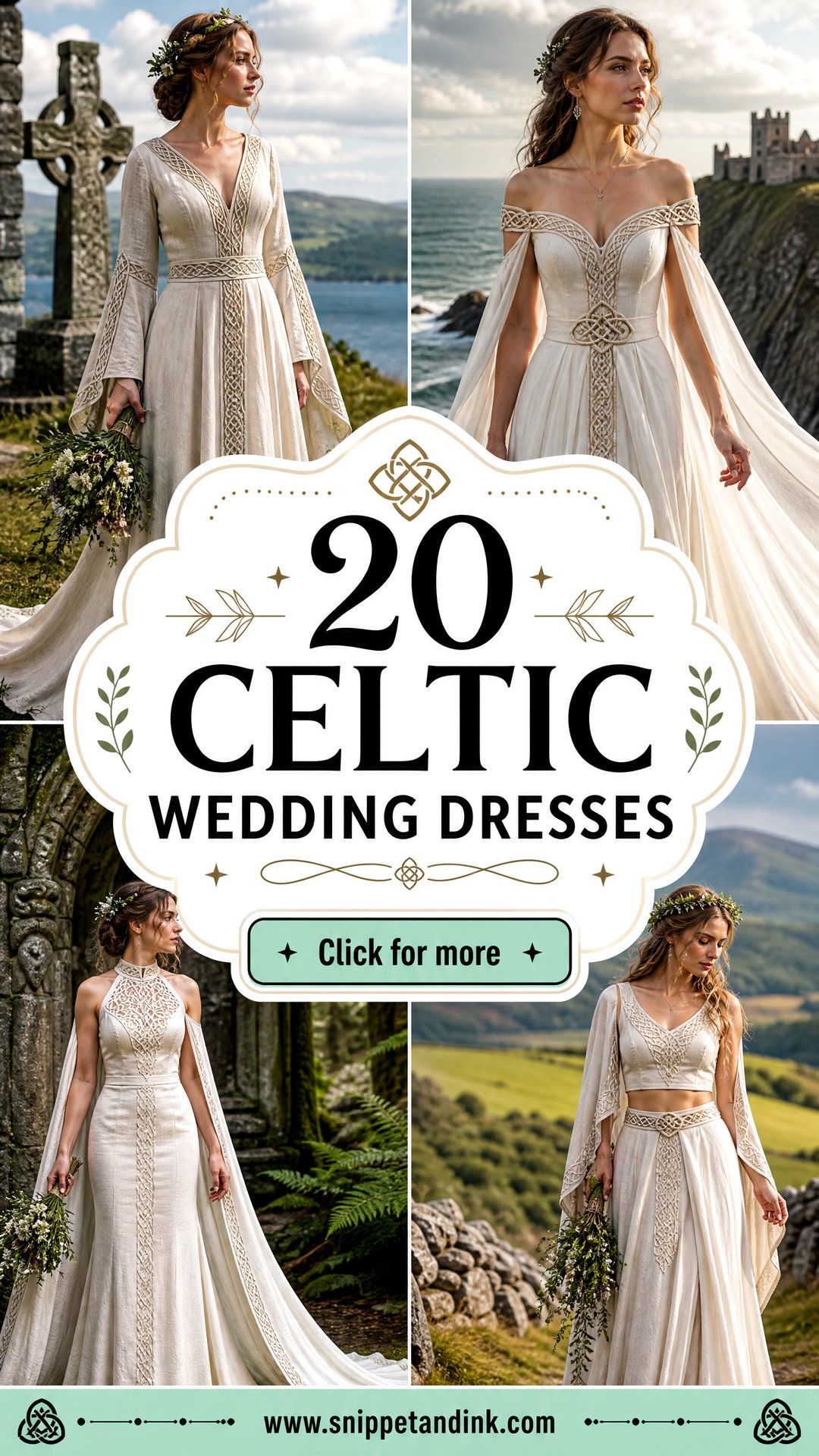
Celtic wedding dresses borrow from medieval and folk dress: bell sleeves, corseted bodices, lace, colored panels, long trains and embroidered knotwork, often with a cape on top. They sit naturally in a woodland, a castle, a walled garden or open countryside. How medieval the result feels depends far more on the accessories than on the gown, so I start every Celtic fitting by asking how much costume a bride is comfortable wearing. One heritage detail can carry the whole idea. The twenty looks below run from ivory lace to green velvet, each styled with the jewelry, shoes, veil and outer layer it needs.
Knotwork Carries Meaning, So Pick Your Pattern on Purpose
Interlaced knotwork appears in early medieval Irish and British manuscripts and carved stone, where it was largely decorative. Most of the meanings attached to individual knots today are modern readings, spread mainly through jewelry, and they’re no less valid for that. When a bride wants a motif stitched into her dress, I ask her to choose one she could explain to her grandmother.
- Trinity knot (triquetra): three interlocking loops, often read as eternity or a lasting bond. It is small enough to work at a cuff or a veil corner.
- Celtic love knot: two strands woven into one, a natural fit for a waistband where bodice and skirt meet.
- Claddagh: two hands holding a crowned heart, for love, friendship and loyalty. It is specifically Irish and usually worn as a ring, so I echo it in jewelry rather than embroidery.
- Spirals: older than knotwork and looser in feel, good for a hem border on a relaxed or boho gown.
Scottish families sometimes add a strip of clan tartan as a sash held with a brooch, and a bride might wrap her bouquet stems in a piece of her mother’s lace. Small family pieces like these signal heritage more clearly than any theme.
1. Celtic Long Sleeve Lace Wedding Dress
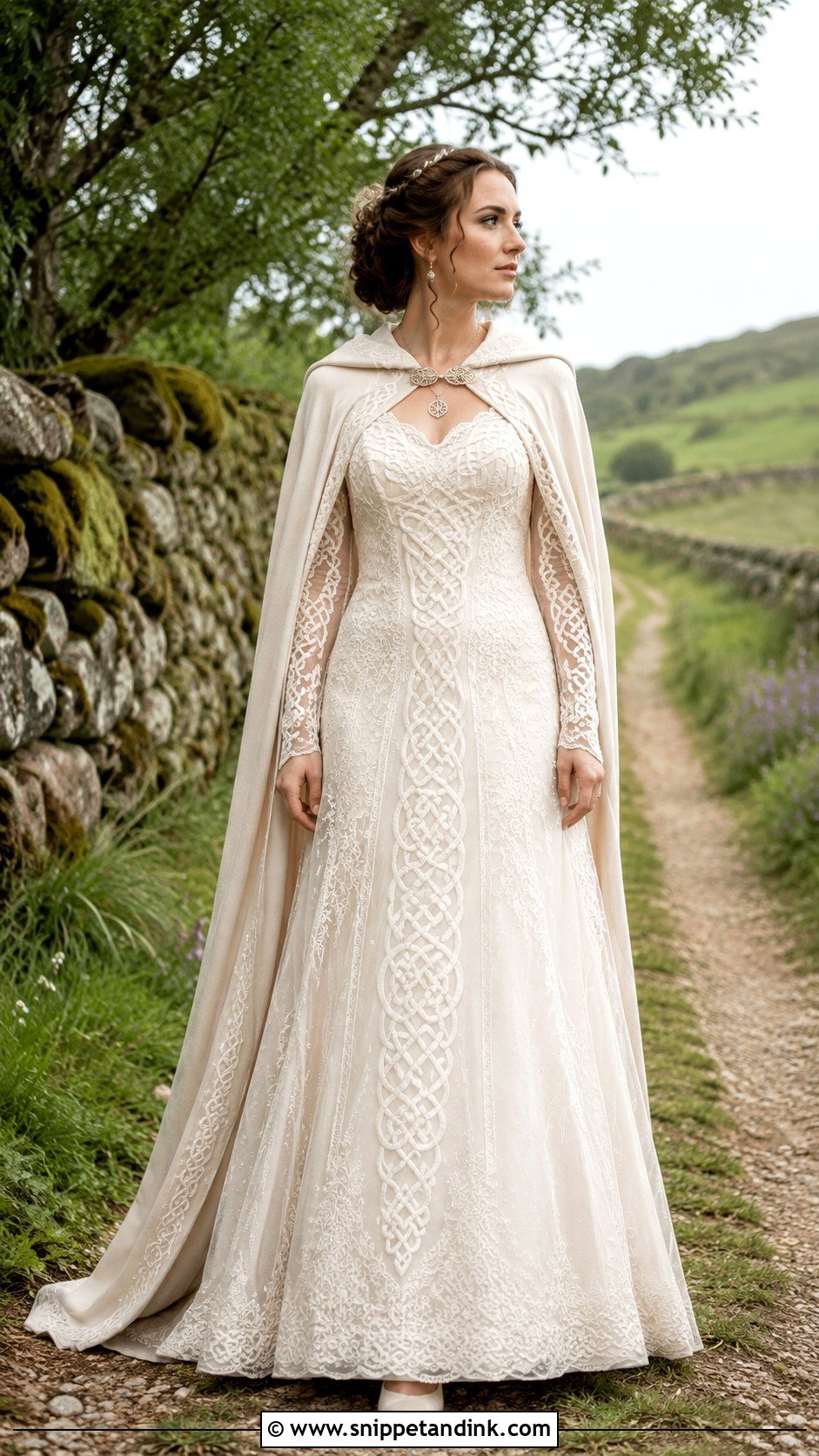
Ivory lace is the quiet way into this style. Choose an A-line with fitted lace sleeves, a gently shaped neckline and a floor-length skirt, and keep the knot-inspired embroidery to the waist or cuffs. Low ivory heels or pointed flats stay comfortable for hours, and a silver knot pendant, pearl drops and a loose braid finish it. Outdoors, a light ivory cloak fastened with a small silver brooch adds warmth. Pin that brooch through the cloak’s own fabric or a sewn tab, never through the lace of the dress, or it will have pulled a hole by evening. A relaxed bouquet of white flowers and trailing foliage keeps the setting in view.
2. Celtic Bell Sleeve Wedding Dress
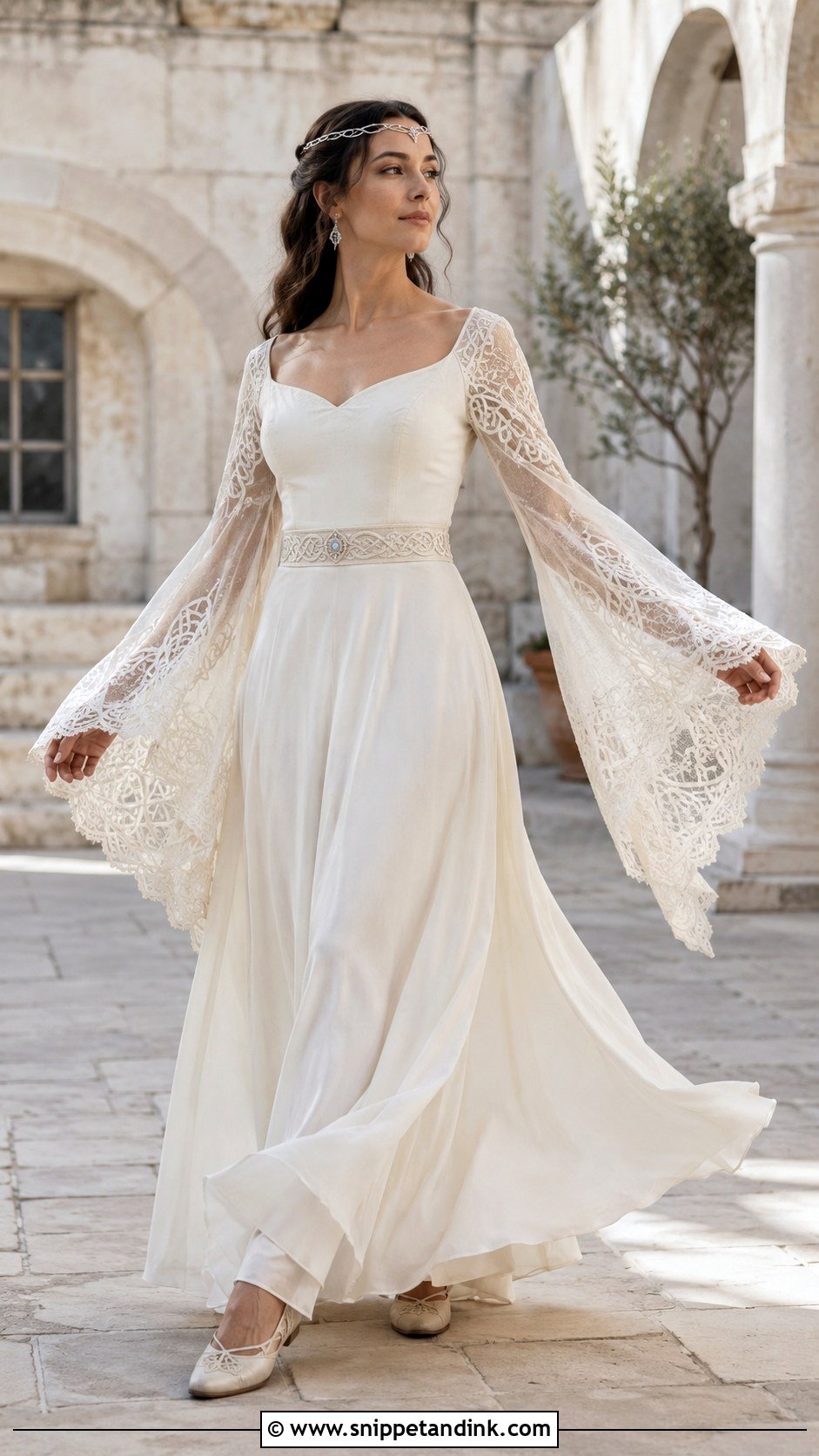
Bell sleeves are the clearest signal of an unmistakable medieval influence, and they’re the feature I fit most carefully. Pair a fitted bodice and a soft square or scoop neck with a skirt that skims without gripping. In chiffon, crêpe or light lace the sleeves float; in heavier fabric they drag at the wrist and dip into everything on the dinner table. Leather flats, low block heels or lace-up boots suit a rustic venue, and a narrow braided belt with a little metallic embroidery marks the waist. A delicate circlet, small silver earrings and soft waves are enough. Skip an elaborate veil, since the sleeves already supply all the movement.
3. Celtic Corset Wedding Dress
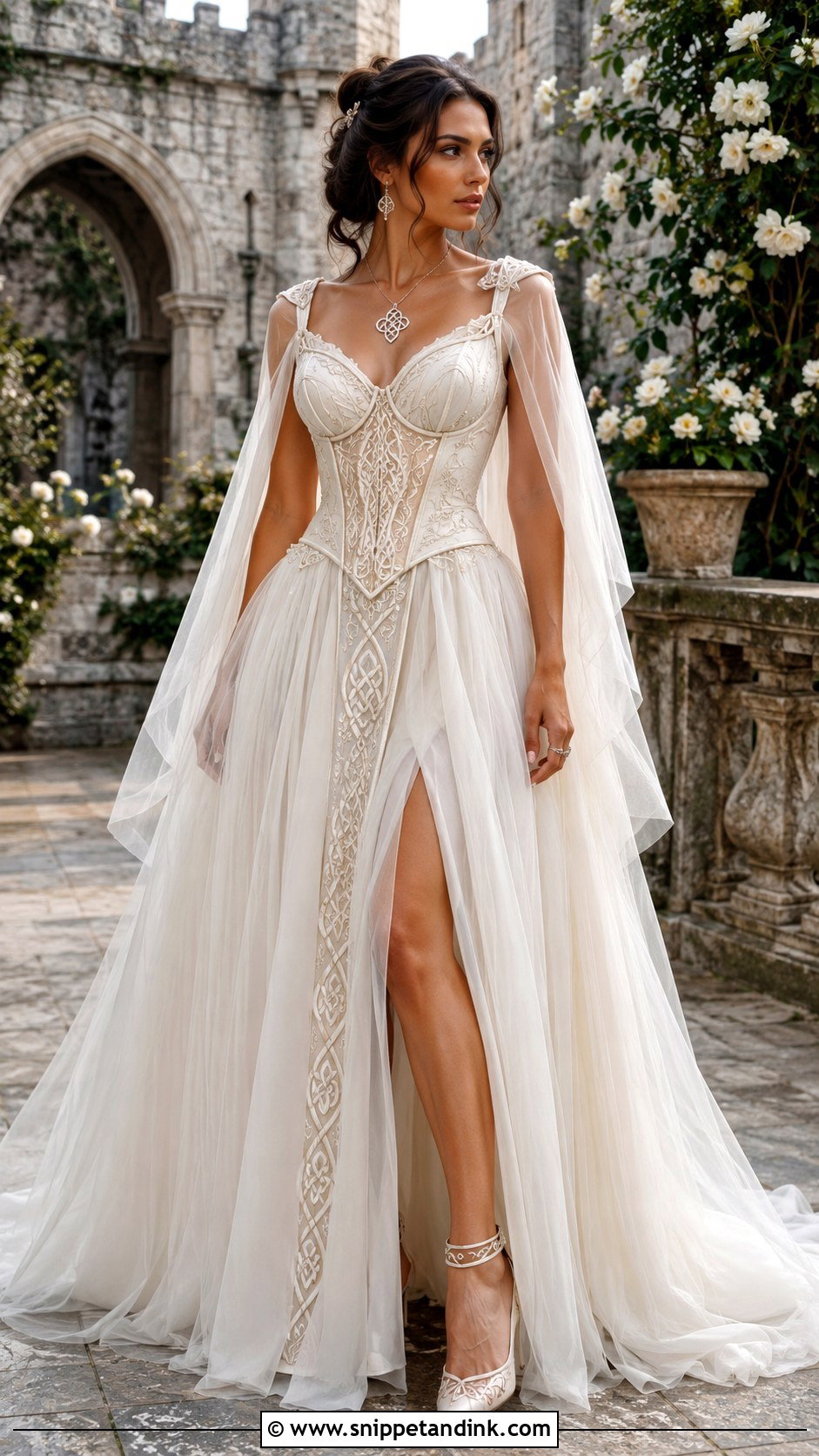
A corset bodice gives a Renaissance mood and a defined waist at once. Choose ivory with embroidered trim, supportive straps and a lace-up back that looks decorative rather than costume. The lacing needs a modesty panel behind it; without one, the gap shows skin and the cords dig in by the reception. Balance the fitted top with a full chiffon, tulle or satin skirt, and consider an underlayer in muted sage, dusty blue or pale gold for depth. Almond-toe heels, a small velvet pouch and an understated knot pendant complete it, with a loose braided updo that leaves the neckline clear. A sheer cape or fingertip veil softens the back.
4. Celtic Knot Embroidered Wedding Dress
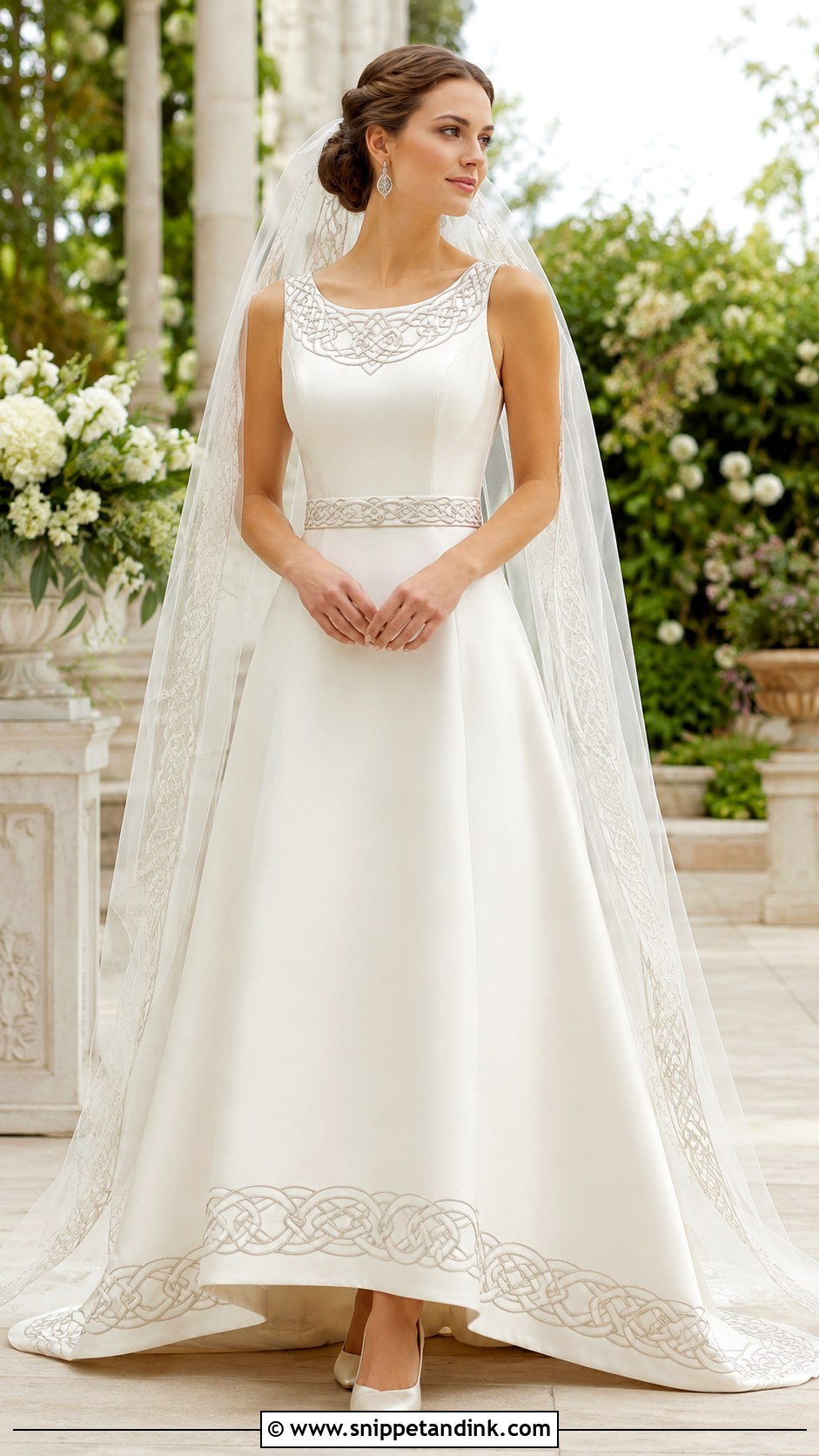
Knotwork turns a plain gown into something personal. Start with a clean A-line or sheath and place tonal knotwork along the neckline, waist, sleeves or hem. Ivory on ivory stays subtle, while silver, gold or green thread makes the pattern readable from the back row. Before I approve an embroidery design, I trace one strand with a fingertip: true knotwork alternates over and under all the way round, and cheaply digitized patterns often break that rhythm. A matching embroidered veil can echo it, but keep the pattern to the border. Plain satin heels, a small structured bag, a smooth low bun or half-up style, small knot earrings and a slim bracelet keep everything in proportion.
5. Celtic Wedding Dress With Cape
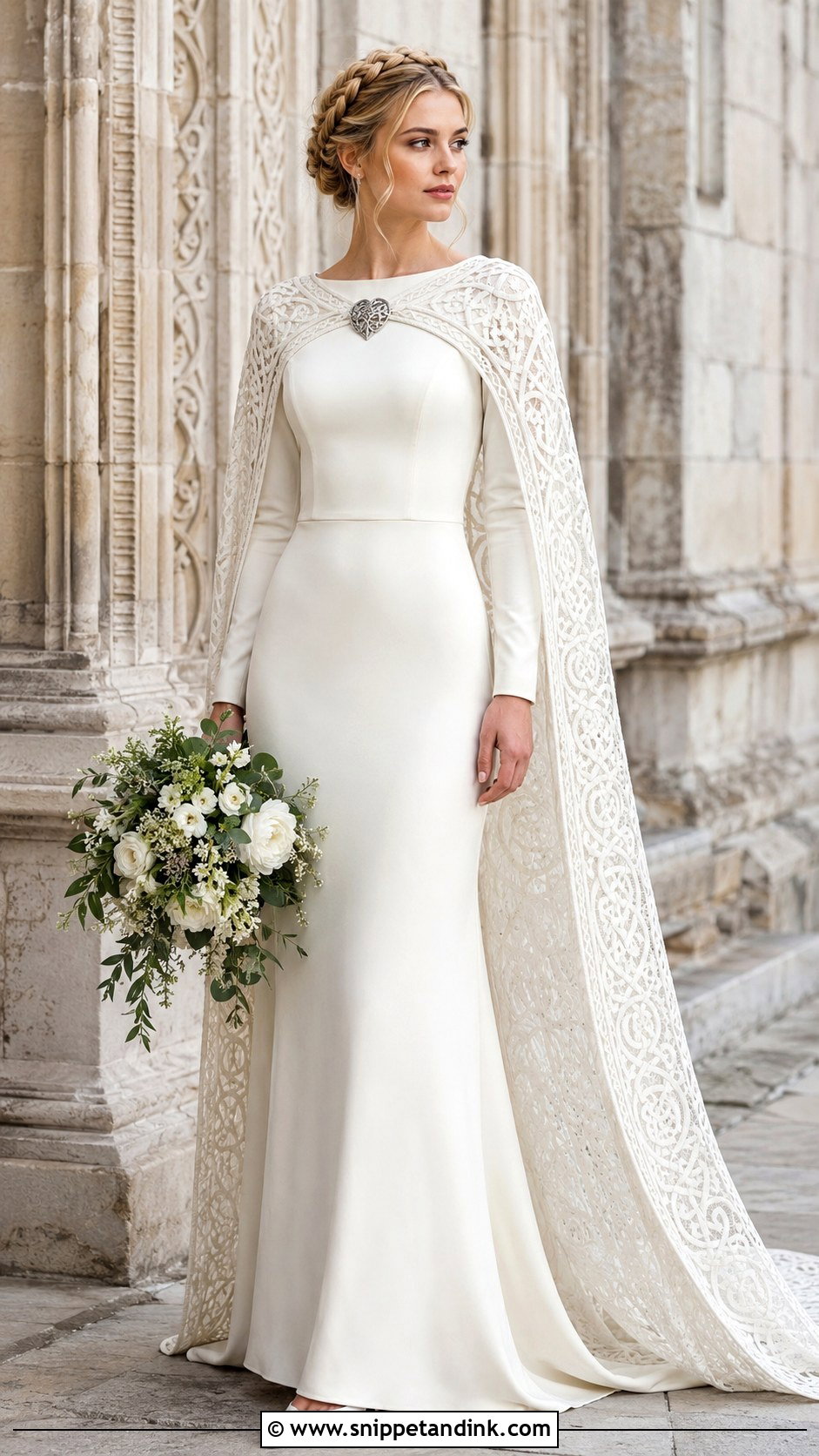
A floor-length cape brings drama, warmth and real ceremonial presence, so the gown under it should be simple, such as a long-sleeve sheath or a softly structured A-line. Choose the cape fabric by season: chiffon or lace in summer, lightweight wool or velvet in colder months. Fasten it with a silver knot brooch near the collarbone rather than a large clasp. A heavy cape pulls backward on the throat, so I add hidden snaps or loops at the shoulder seams to take its weight. Pointed flats or low bridal boots keep the outfit practical, a braided crown or low bun shows the cape’s neckline, and a small bouquet of white blooms and greenery stays out of its way.
6. Green And Ivory Celtic Wedding Dress
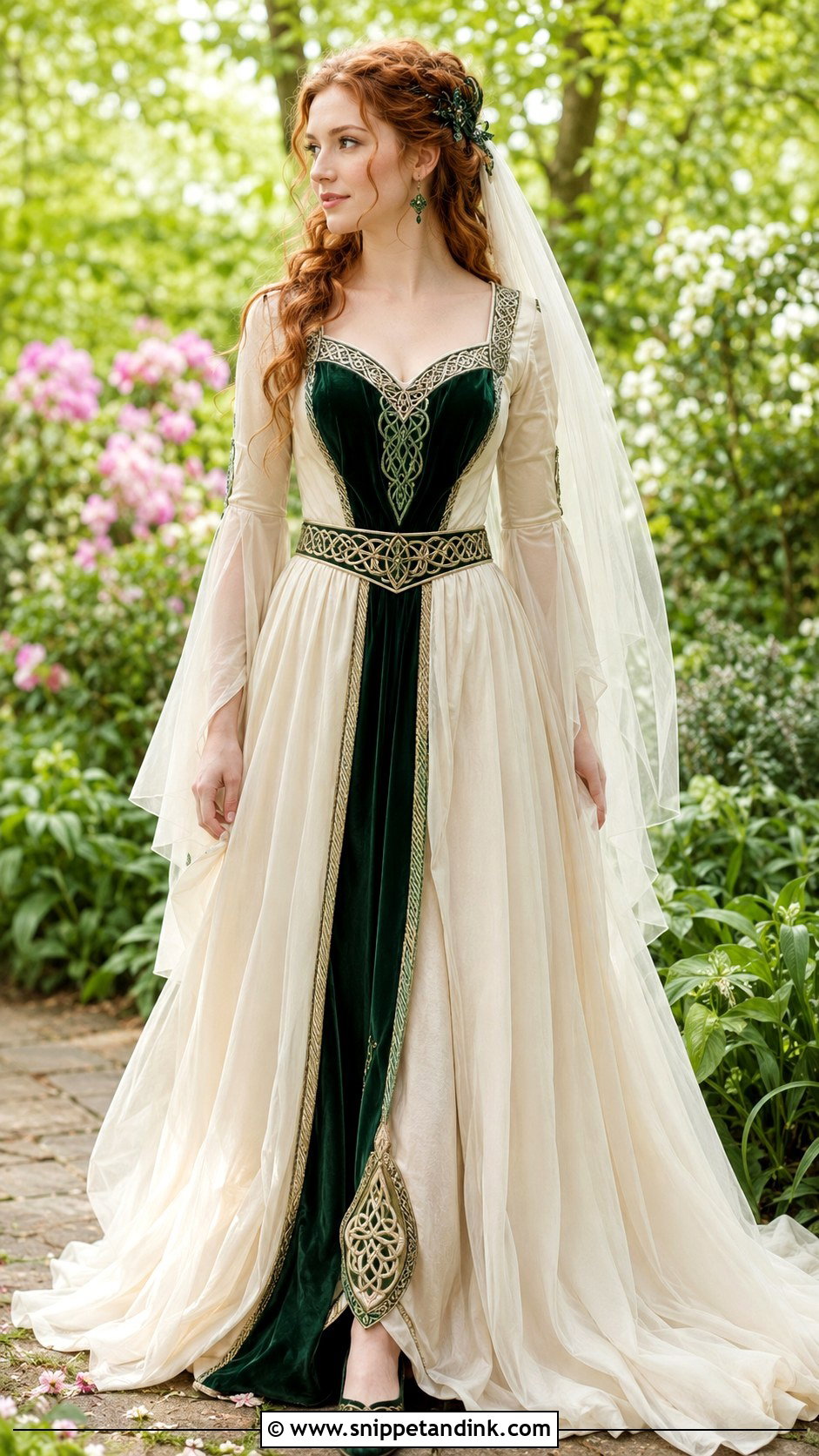
Green and ivory belong at a Celtic wedding. Keep most of the gown ivory so it reads as bridal, and bring the green in through a corset panel, an embroidered waistband, a velvet sash or an underdress. Dyed velvet can bleed onto pale fabric when it gets damp, so ask whether the green is colorfast before it spends a rainy day pressed against ivory. Dark green velvet flats, neutral block heels or brown leather ankle boots work outdoors. An emerald-toned hair comb and small silver earrings look better than matching every accessory to the dress. A sheer ivory veil softens the contrast, and white flowers mixed with ferns tie the outfit to the landscape.
7. Blue Celtic Wedding Dress
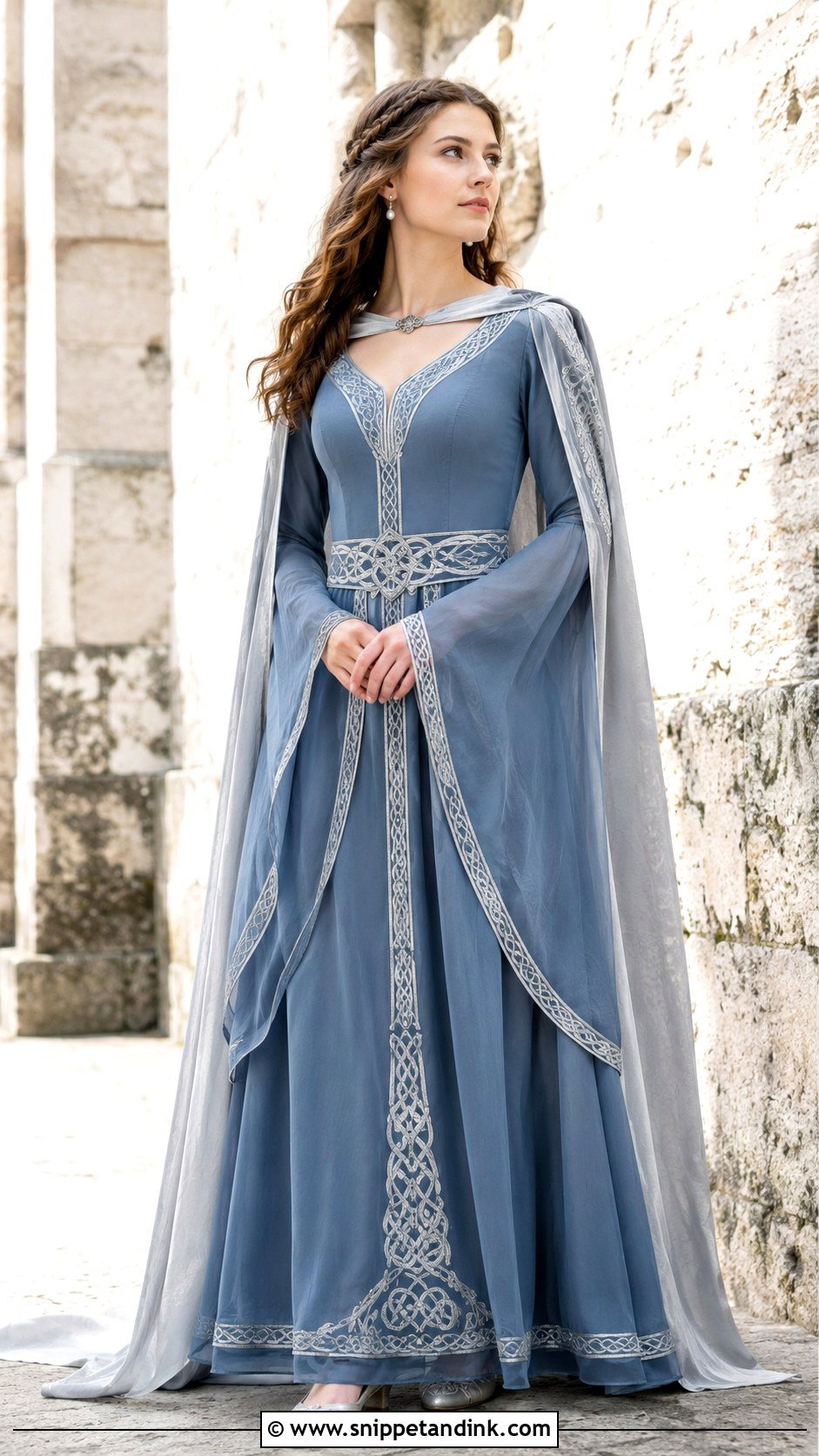
Blue was a popular bridal color in Ireland before white took over, so a blue Celtic dress is less of a departure than it sounds. Misty blue suits spring and daylight; slate and muted midnight suit evening and winter. An A-line with embroidered sleeves and a flowing skirt keeps the color graceful, and silver knotwork on the bodice or waist gives contrast. Very dark blue loses detail in dim stone rooms, so keep that knotwork in a bright thread that still shows by candlelight. Silver flats, pearl earrings, a simple pendant and a sheer pale gray or ivory cape complete it, with loose waves, narrow side braids and white flowers touched with soft blue.
8. Boho Celtic Wedding Dress
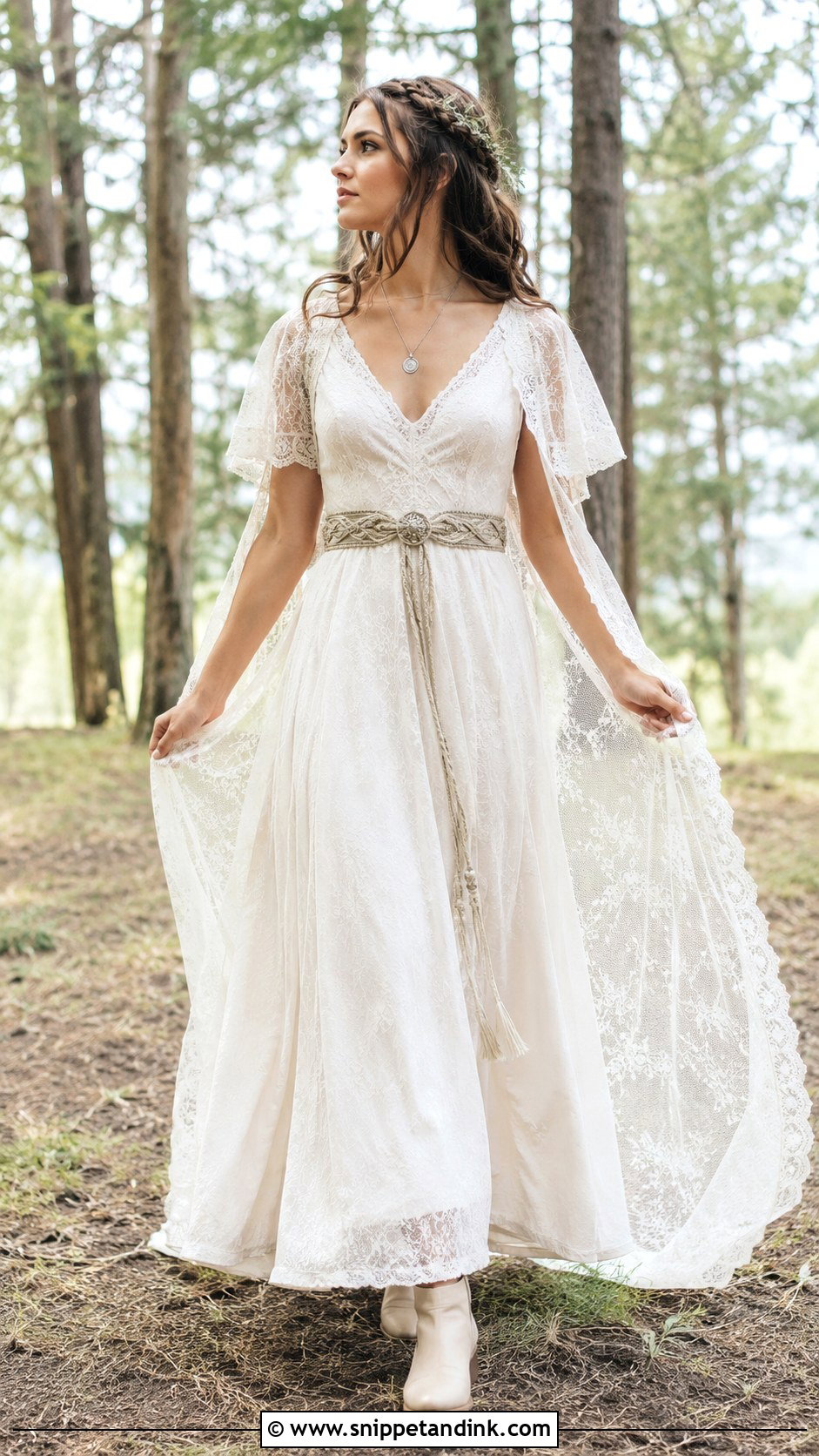
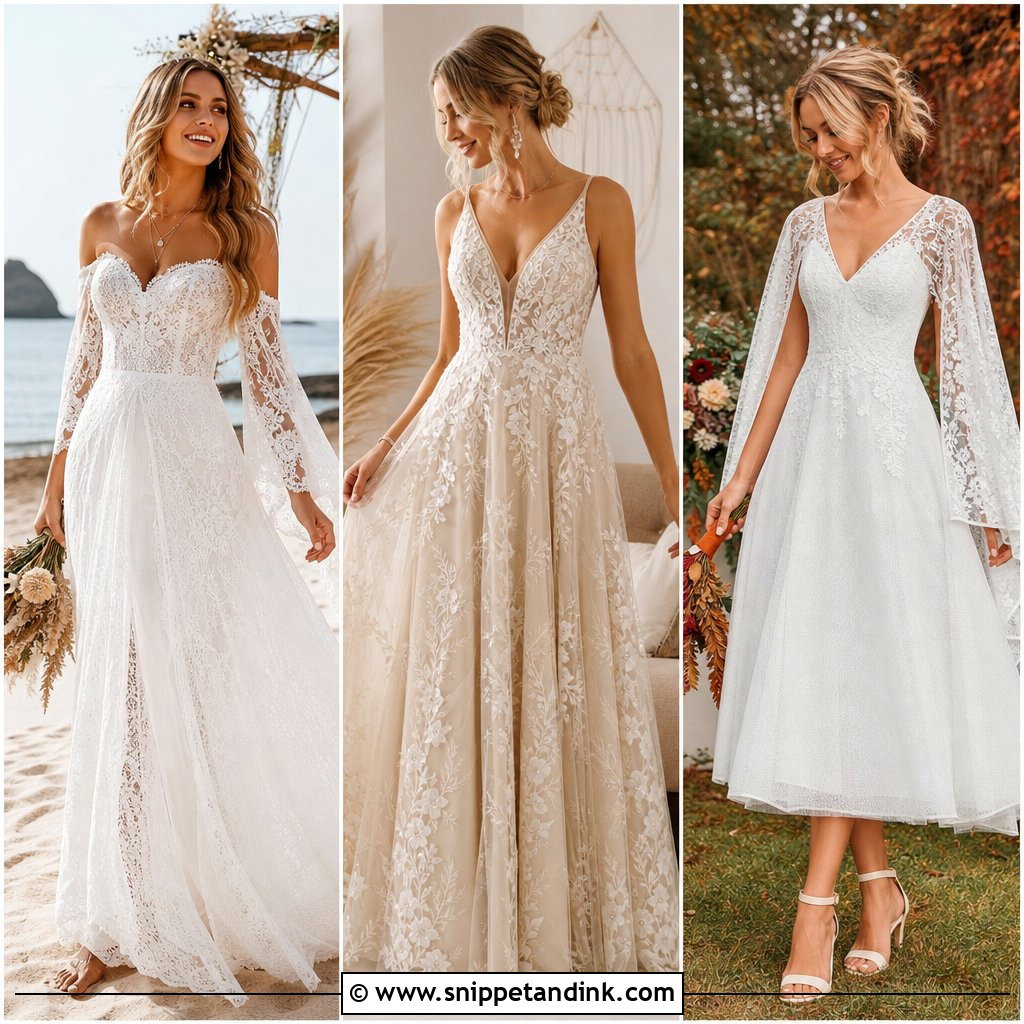
For a relaxed outdoor wedding, a boho Celtic wedding dress pairs soft fabric with small symbolic details. Pick an unstructured lace or cotton-blend gown with a V-neck, fluttering sleeves and an easy A-line skirt, and a braided belt with understated knot embroidery. Shoes depend on the ground. I ask brides to walk the actual ceremony path before choosing between embroidered flats, simple sandals and low ankle boots. Thread several tiny braids through loose waves and add a leafy hair vine instead of a tiara, with a light lace cape in place of a veil. Small silver hoops, one pendant and a loose bouquet heavy on greenery complete it.
9. Celtic A-Line Wedding Dress
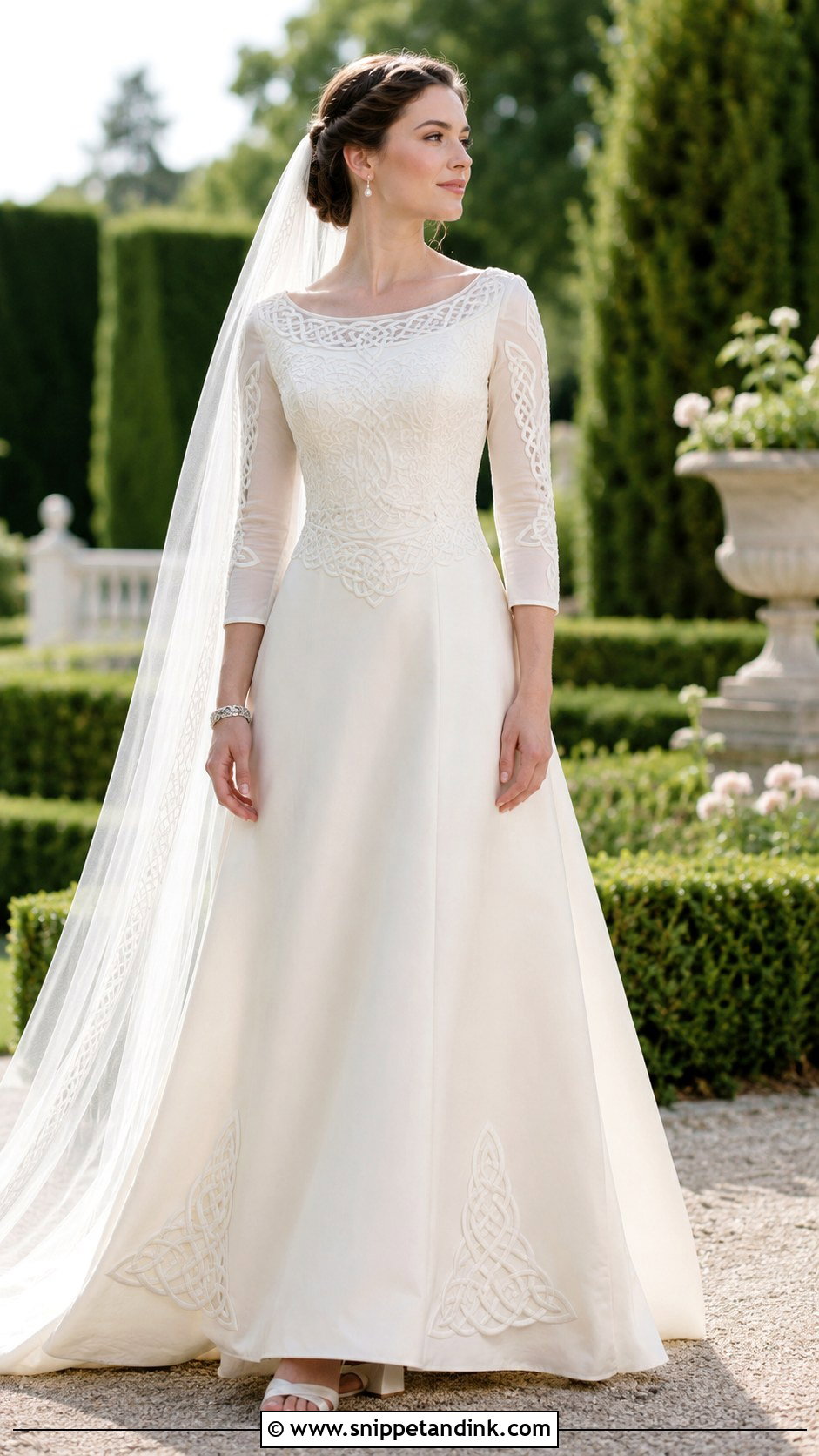
A-line is the shape I suggest when a bride wants Celtic detail without committing to drama. A fitted embroidered bodice widens gradually into the skirt, a V-neck or soft scoop keeps it balanced, and three-quarter sleeves give coverage while leaving the hands and rings visible. Keep the embroidery tonal and limited to the waist and hem for a subtle influence. Mid-height block heels, pearl drop earrings and a small knotwork bracelet suit it. A narrow cathedral veil adds formality, a braided half-up style softens it, and a compact bouquet leaves the bodice on show.
10. Celtic Ball Gown Wedding Dress
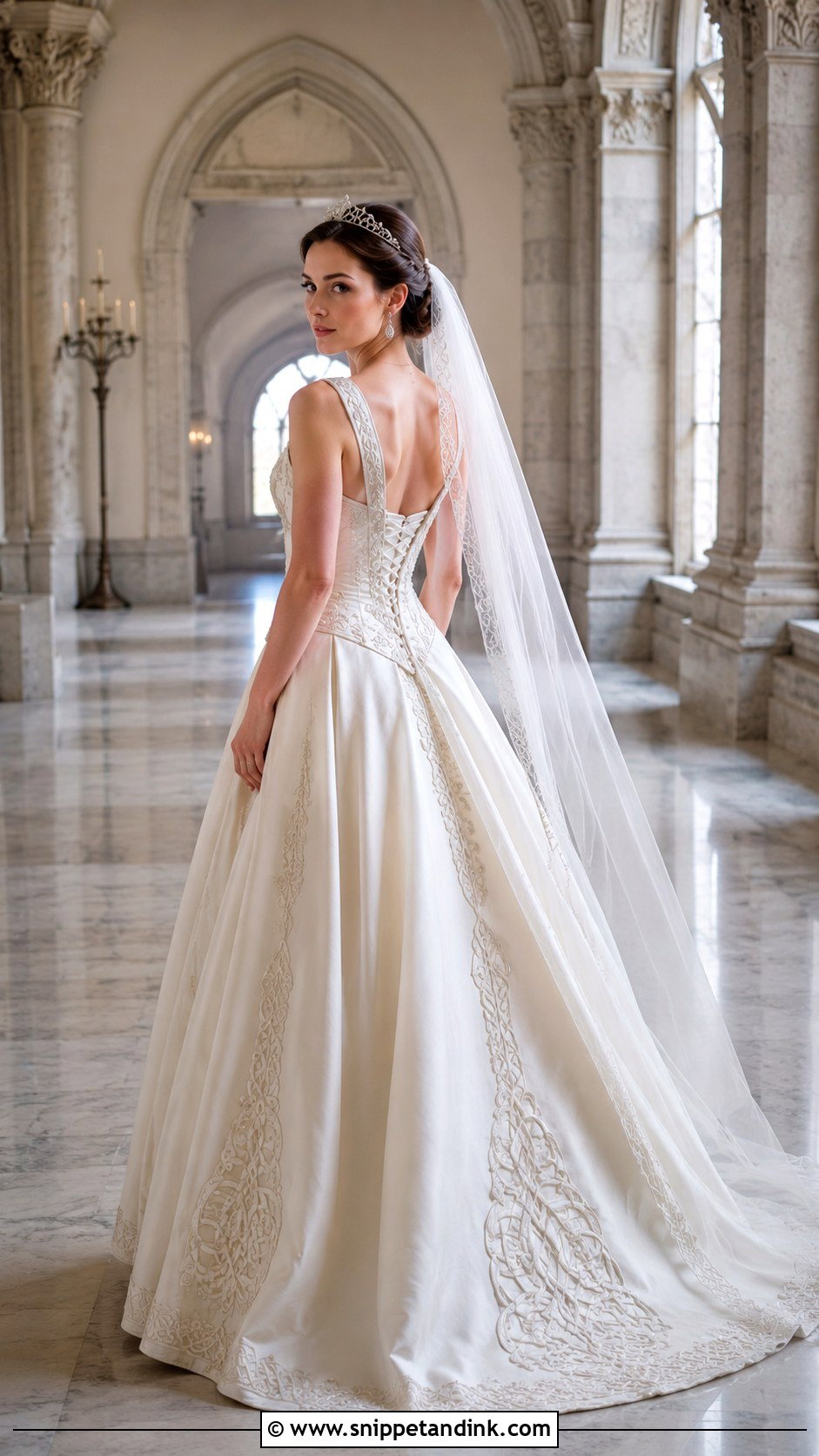
A full Celtic ball gown belongs in a castle, a historic hall or a formal indoor room. Start with a structured bodice with embroidered knot patterns, a lace-up back and supportive off-the-shoulder or wide straps, over a satin or layered tulle skirt with real volume. A structured petticoat holds that volume away from your legs; without one, tulle collapses and wraps around the shins with every step. An embroidered border at the hem links skirt to bodice. Closed-toe heels, a silver circlet, drop earrings and a long, plain veil complete it, with a polished braided bun. Check the venue’s stairs too, because a narrow stone spiral and a full skirt make a slow pair.
11. Celtic Elven Wedding Dress
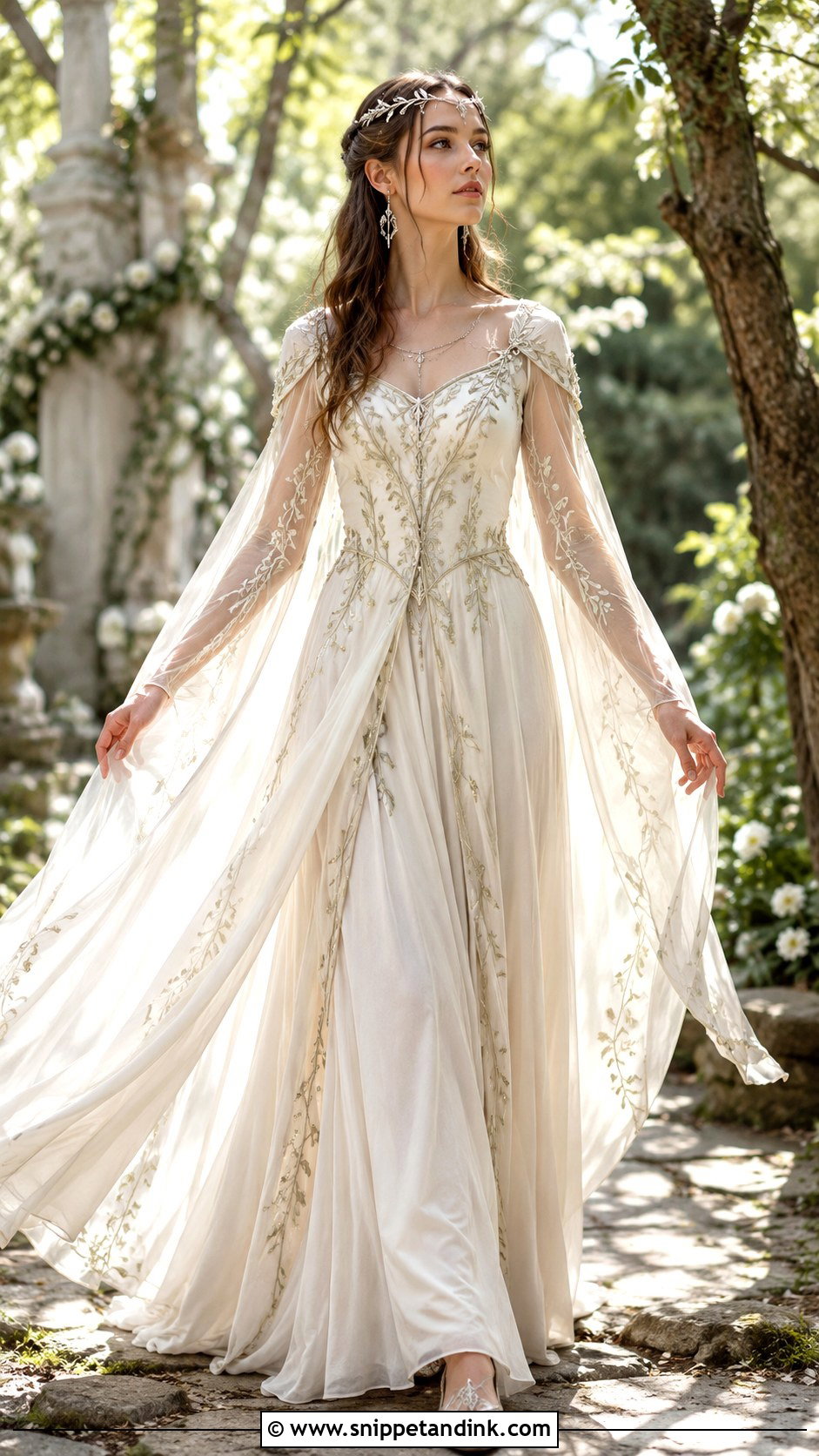
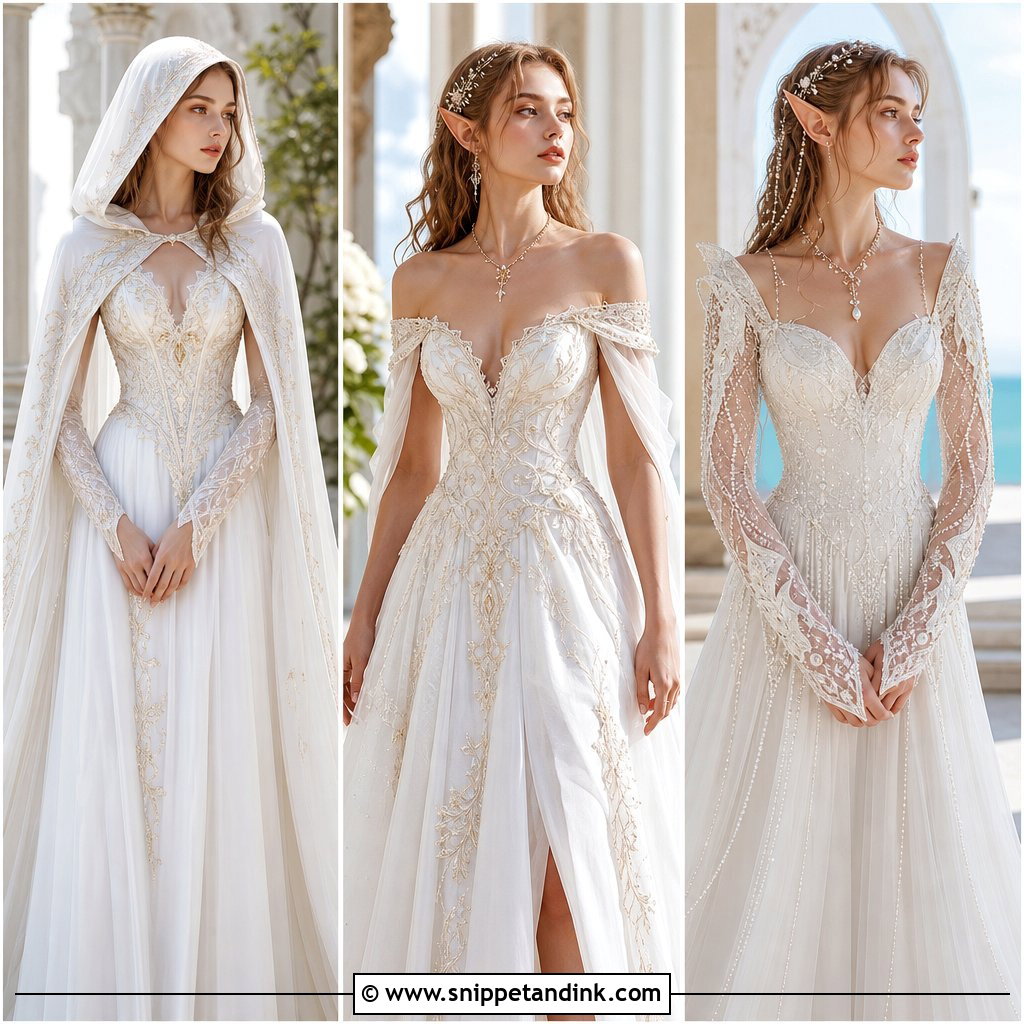
A Celtic elven wedding dress is all about long, fluid lines. Choose an ivory gown with sheer fitted sleeves, a low back and delicate embroidered vines or knot patterns, with a soft overskirt or trailing chiffon panels for movement. Trailing panels collect leaves and mud outdoors, so I’d add a hidden wrist loop to lift them for the walk. Metallic flats, narrow lace-up shoes or low boots stay hidden beneath the skirt. A delicate silver headpiece over loose waves and small leaf-shaped earrings set the tone, and a sheer shoulder cape falling into a train replaces the veil. White flowers, ferns and trailing greenery keep the woodland mood fresh.
12. Celtic Velvet Wedding Dress
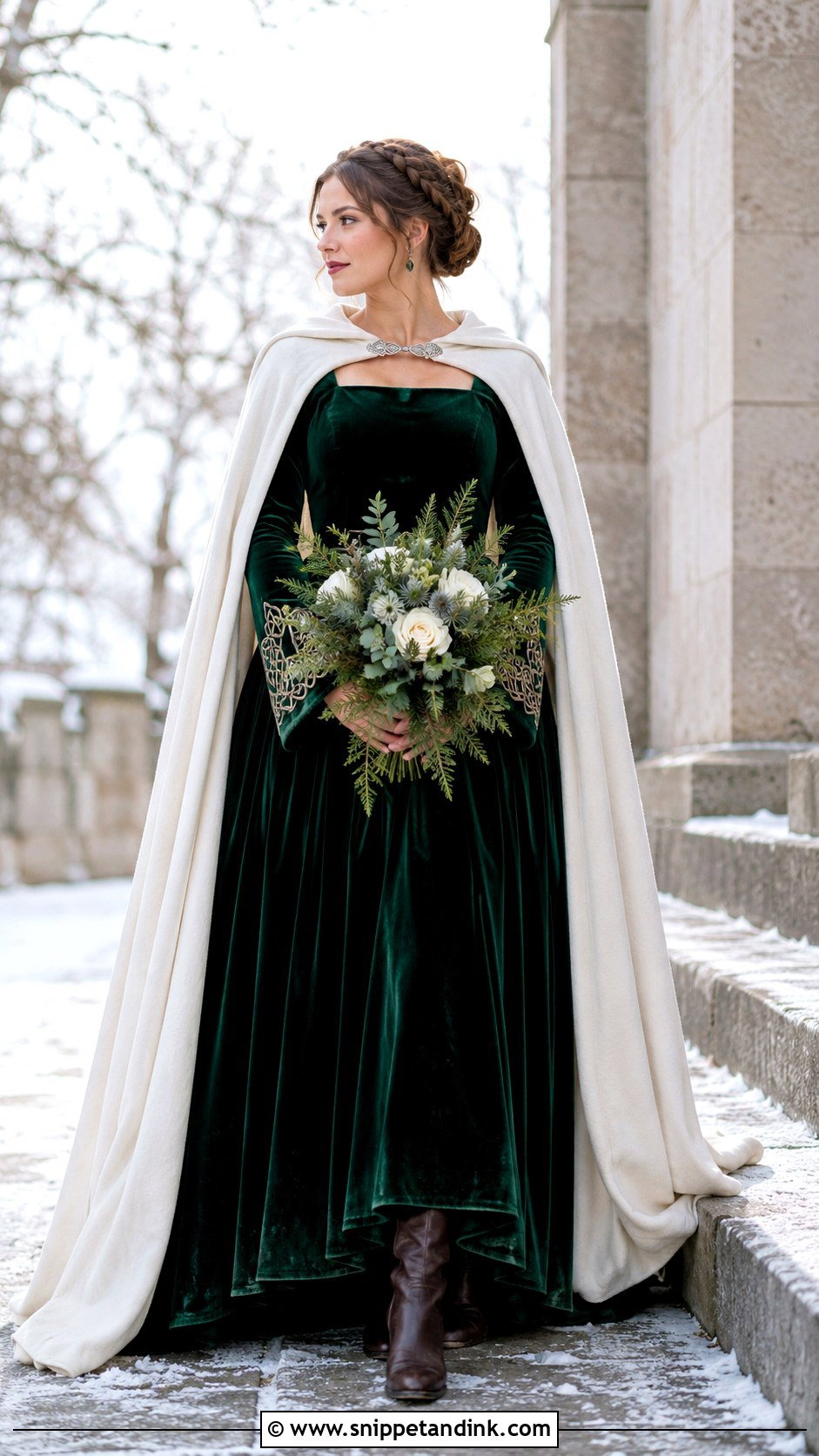
Velvet is the warmest fabric on this list and the most demanding. Choose a long-sleeve gown in ivory, forest green, navy or deep burgundy with a fitted bodice and a softly flared skirt, adding embroidered cuffs, a square neckline or a contrasting satin waistband so it doesn’t look plain. Velvet crushes where you sit and marks if it’s pressed, so steam it from the inside on the morning and never iron it flat. Closed-toe block heels or polished leather boots suit cold weather, with an ivory wool cape and a silver knot clasp if you need more warmth. A braided low bun, gemstone earrings and a simple pendant finish it, and a pale bouquet stands out against the dark pile.
13. Celtic Linen Wedding Dress
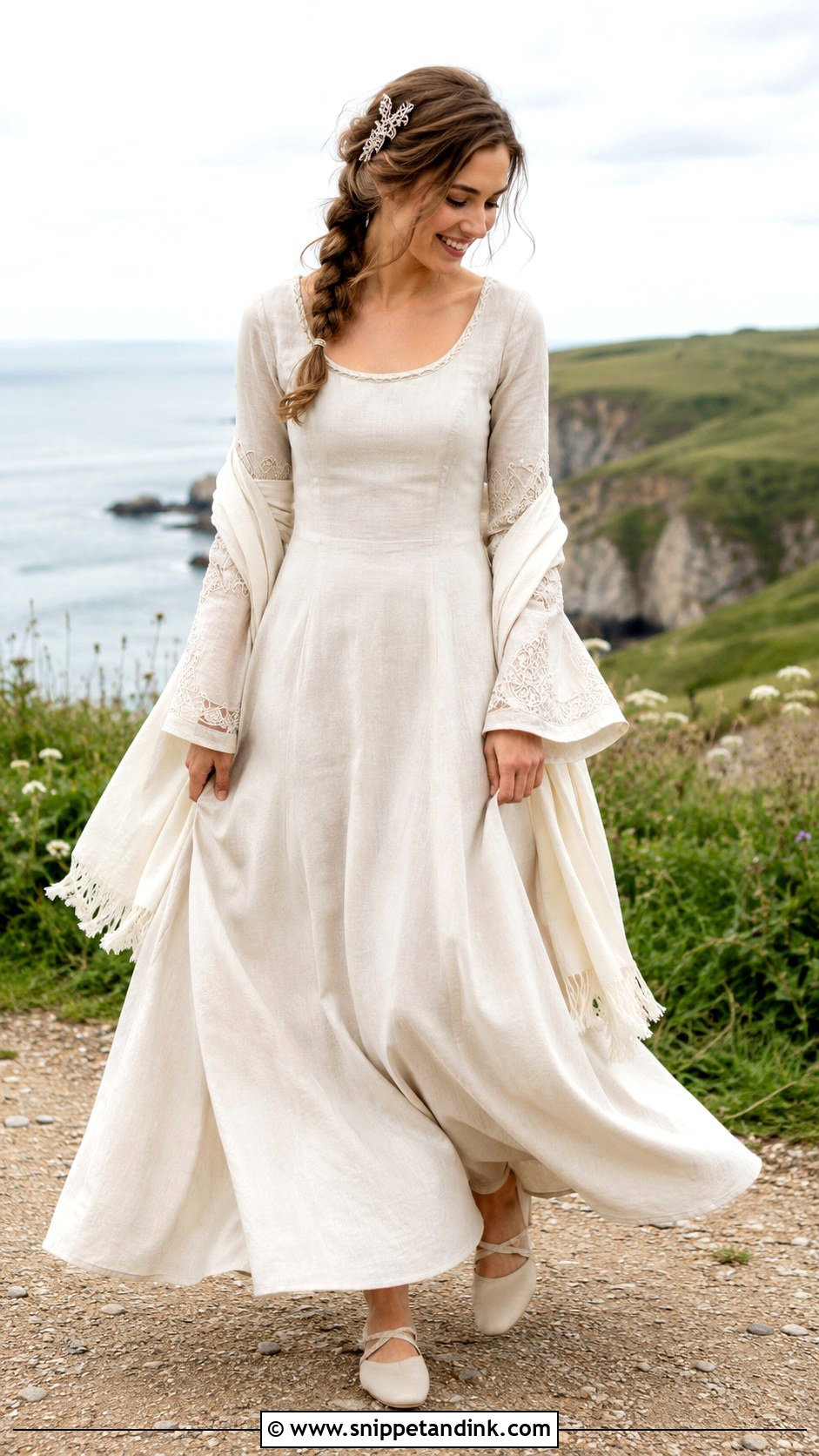
Linen wrinkles, and that’s part of its charm. A softly tailored gown with a scoop neckline, a fitted waist and an ankle- or floor-length skirt suits a countryside, garden or coastal wedding, with embroidered borders at the sleeves and neckline. Expect creases within an hour of sitting down; if that would bother you, choose a linen blend, which holds its shape noticeably better. Cream leather flats, low woven heels or practical bridal boots, plus a light shawl or short cape, keep it relaxed. A loose braid with a small silver comb, minimal jewelry and a natural bouquet of white blossoms match its understated mood.
14. Off The Shoulder Celtic Wedding Dress
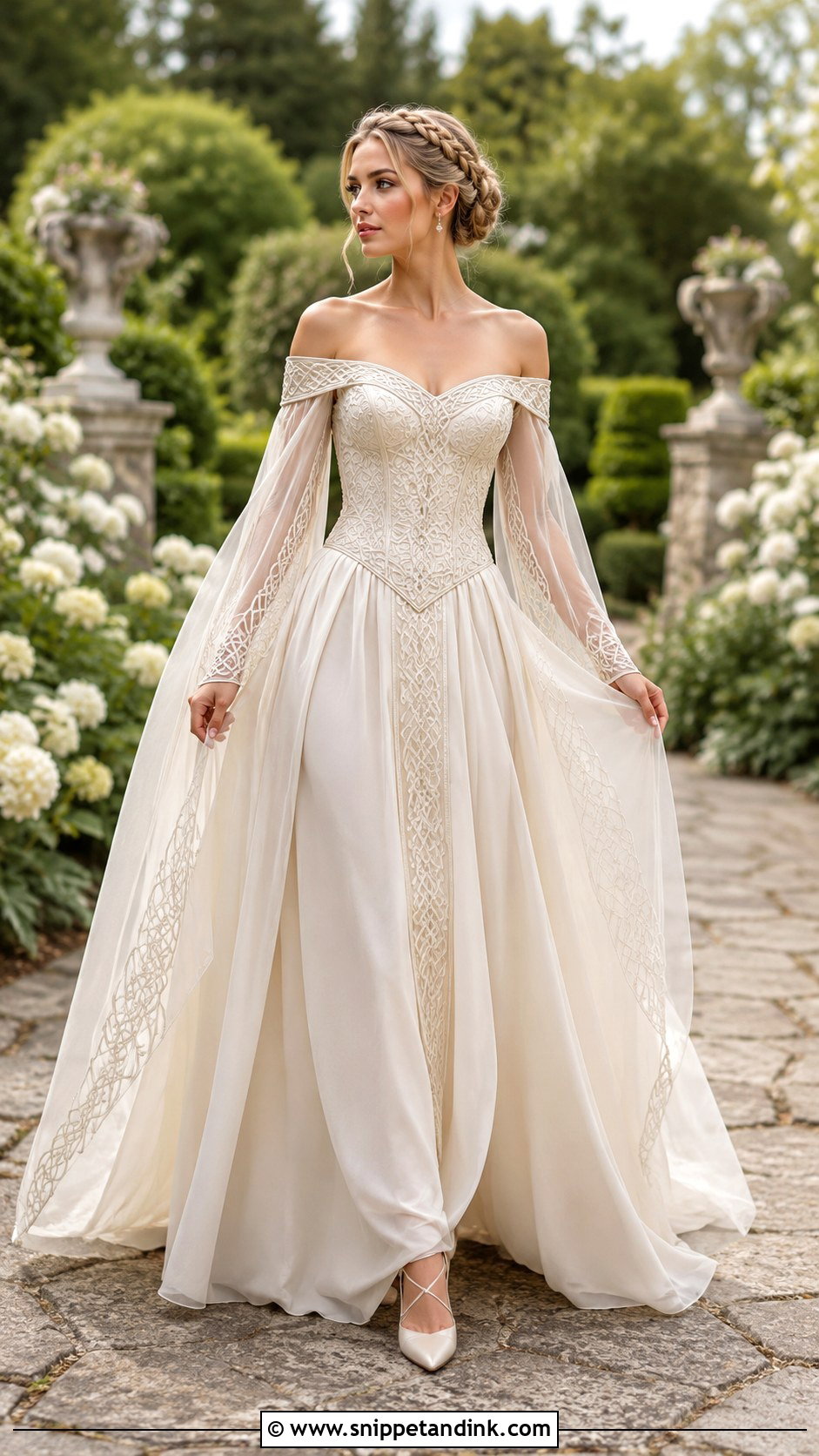
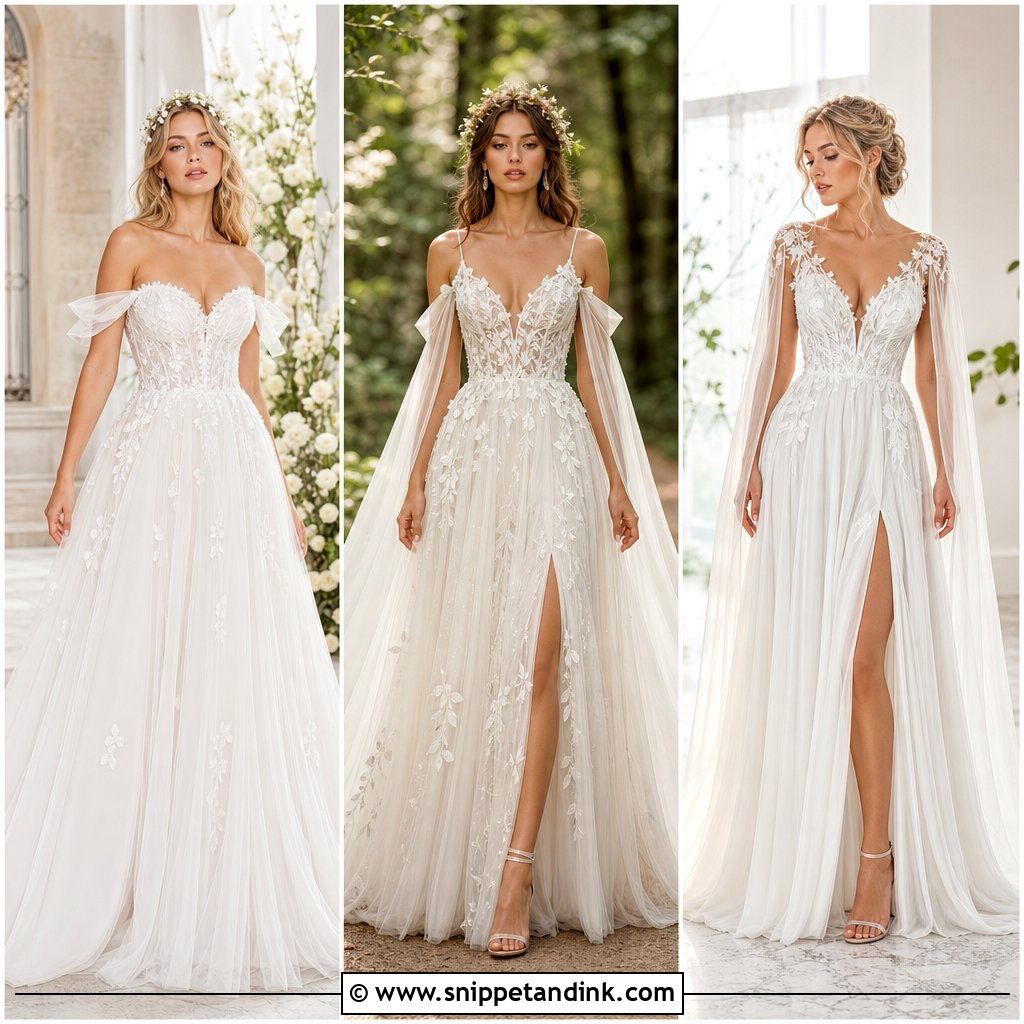
An off-the-shoulder Celtic dress pairs romance with a strong neckline. Select a fitted bodice with embroidered trim and a soft A-line or full skirt. Detachable bell sleeves bring medieval character for the ceremony and come off for dancing. The internal construction decides whether you enjoy wearing it: boning and silicone grip along the top edge keep the neckline in place, because off-shoulder styles slide every time you lift your arms. Delicate drop earrings, a short necklace and a braided updo that leaves the shoulders bare complete it, with understated ivory heels. A sheer cape attached at the back of the shoulders can stand in for a veil, and a rounded bouquet in white and soft green finishes it.
15. High Neck Celtic Wedding Dress
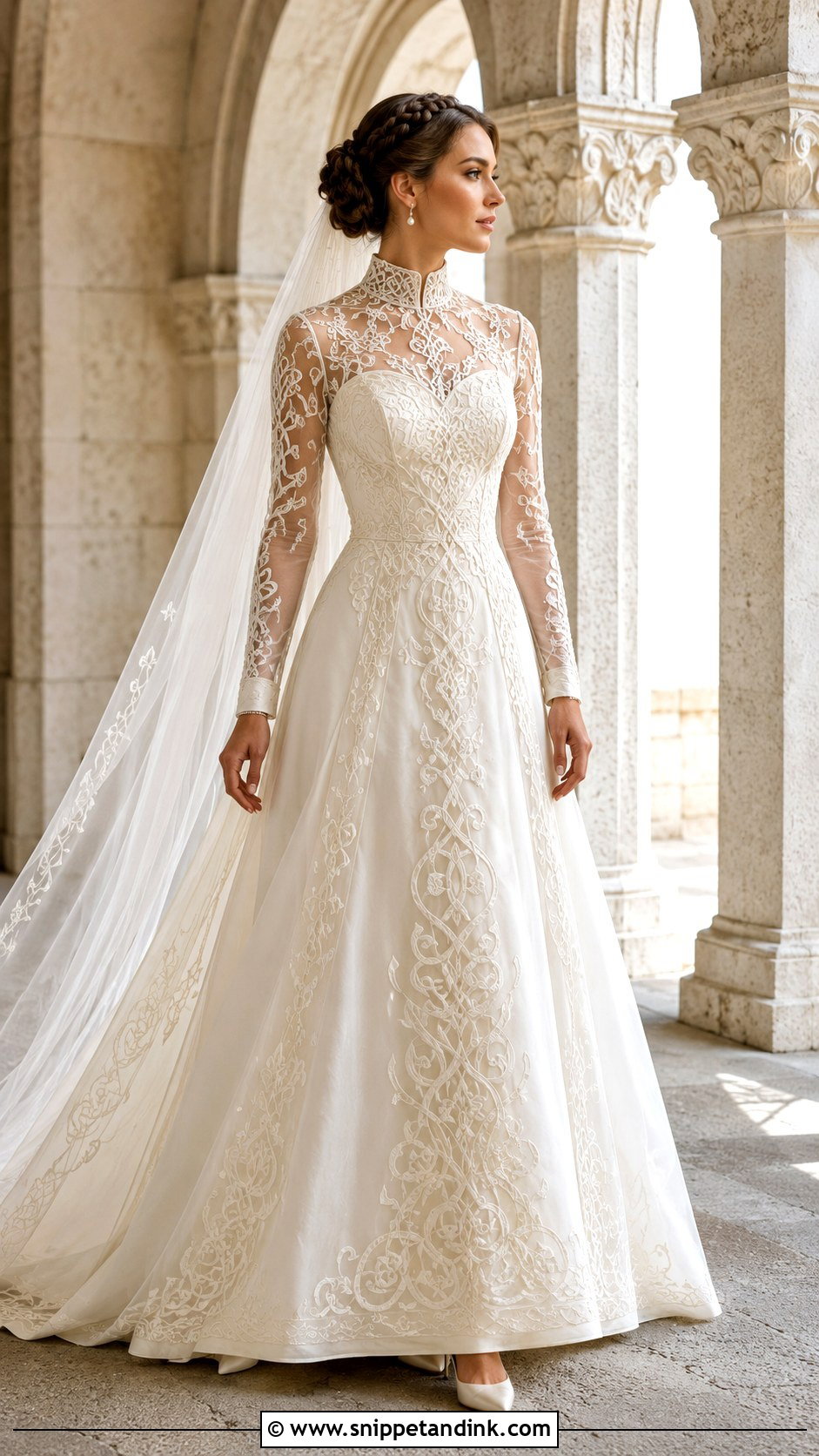
A high neck leaves room for detail. Choose a fitted lace or embroidered bodice with a sheer upper panel, long sleeves and a flowing skirt, with knotwork framing the collar and cuffs. The sheer panel should match your skin closely, and I check it in daylight before ordering, since a mismatched illusion panel shows up as a beige band in photographs. Skip the necklace and wear small pearl or silver earrings. A low braided bun keeps the collar visible and stops hair snagging on the lace. Closed-toe heels, a slim bracelet and a simple veil anchored beneath the hair finish it, with a fitted cape for cooler weather.
16. Plus Size Celtic Wedding Dress
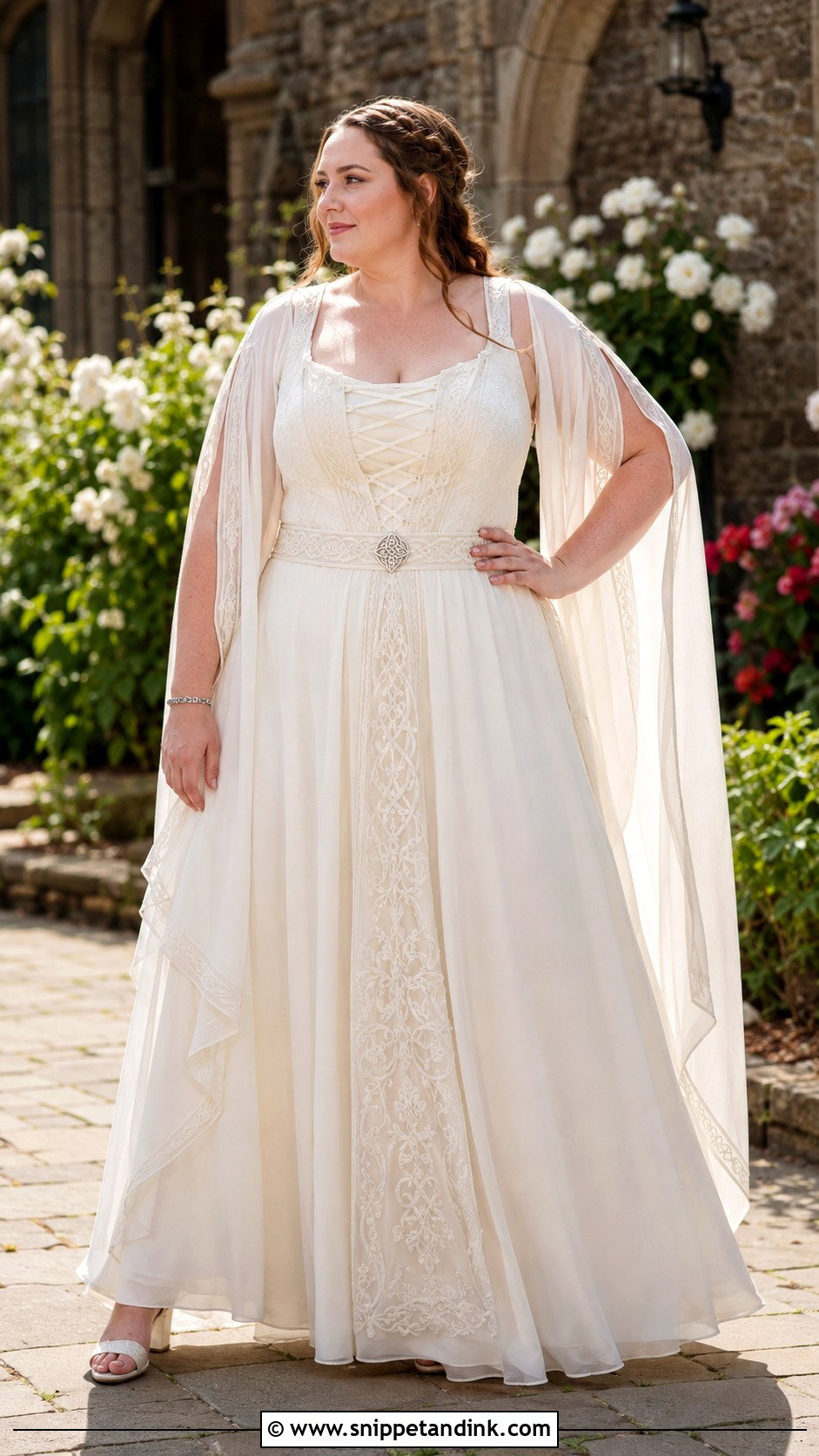
Support comes first in a plus size Celtic dress, and movement a close second. An A-line with a structured lace-up bodice, wide shoulder straps and softly flowing sleeves usually manages both, and a natural or empire waist creates shape without stiff fabric. The lace-up back is a genuine advantage, since it can be adjusted by an inch or two on the day if your body changes in the final weeks. Place knotwork around the neckline, waist or cuffs to draw the eye where you want it. Supportive block heels, cushioned flats or fitted ankle boots, a light cape, a braided half-up style, medium earrings and one statement bracelet complete it. Book professional alterations so the neckline, sleeves, hem and bodice all feel secure when you move.
17. Modest Celtic Wedding Dress
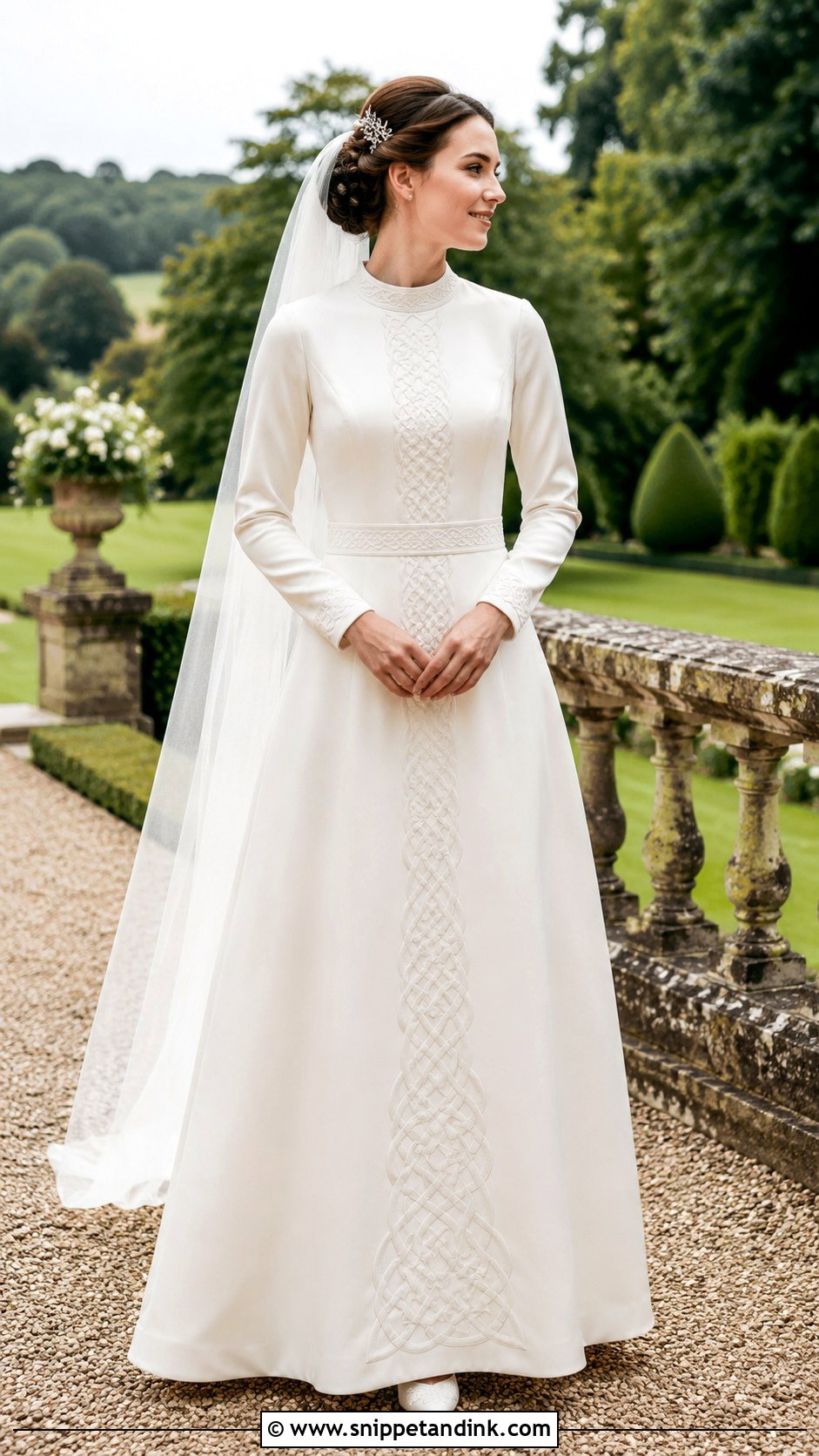
Full coverage can still feel soft and celebratory. Look for a floor-length A-line with an opaque bodice, a high or bateau neckline and long fitted sleeves, with tonal embroidery at the cuffs and waistband and a row of covered buttons down the back. Those buttons take a long time to fasten, so whoever dresses you should start early; many seamstresses add a hidden zip beneath them as a shortcut. Pointed flats or low heels, small silver earrings and a delicate knotwork comb suit it. Add a long veil for formality or a light cape to cover the shoulders outdoors, then finish with a smooth low bun or polished braid and a structured bouquet.
18. Tea Length Celtic Wedding Dress
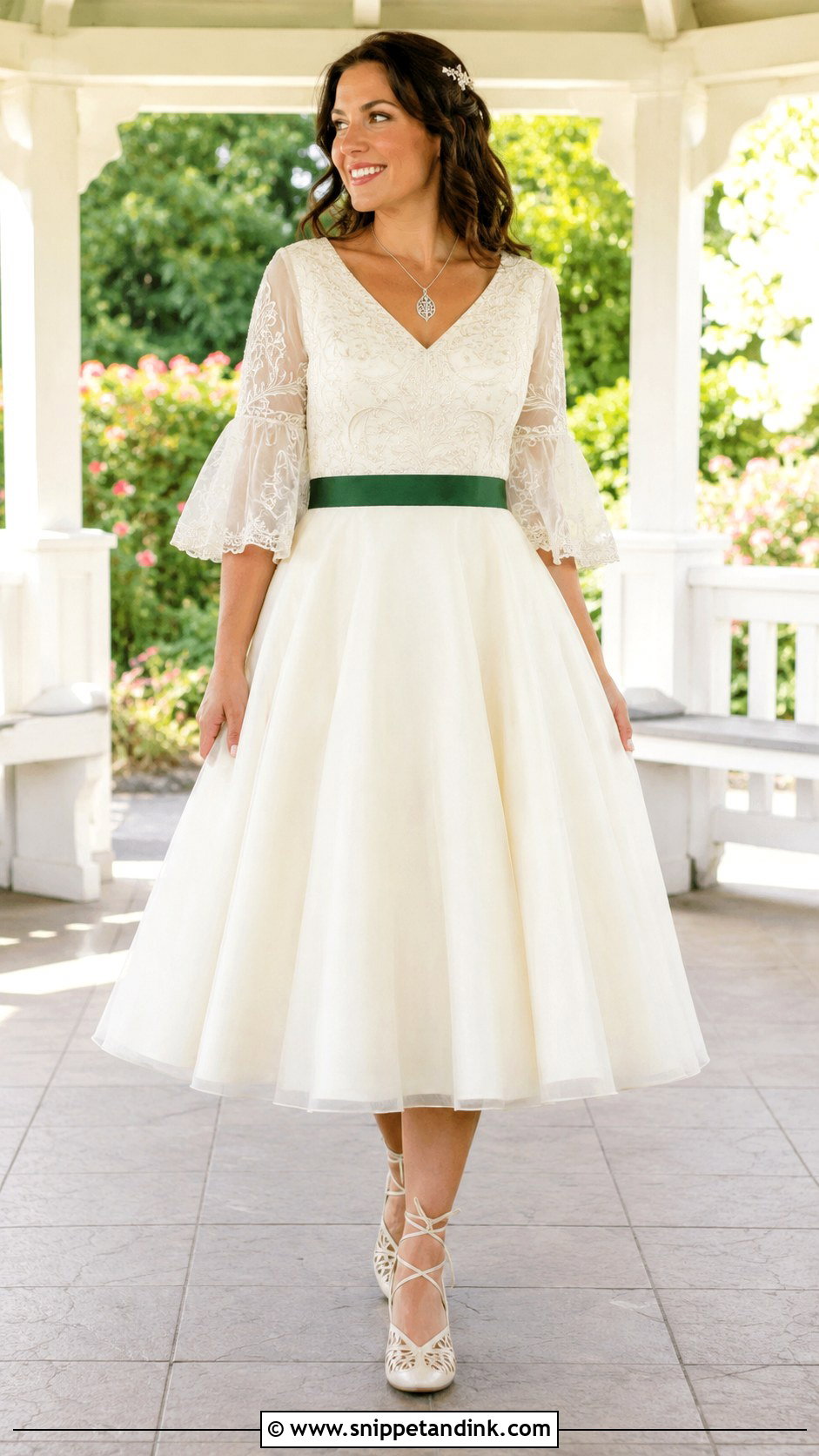
Tea length puts shoes and ankles on show, which works well at an informal Celtic wedding. Choose an ivory dress with a fitted embroidered bodice, elbow-length bell sleeves and a softly flared skirt below the knee, and bring in color with a narrow green, blue or gold waistband. Lace-up heels, decorative flats or vintage-style ankle boots all work, as long as they coordinate with the dress and jewelry, because nothing hides them. A boot that ends just under the hem looks deliberate; one that stops mid-calf with a gap of bare leg looks like an accident. A small birdcage veil, braided headband or silver comb, a compact bouquet and a simple pendant complete it.
19. Two Piece Celtic Wedding Dress
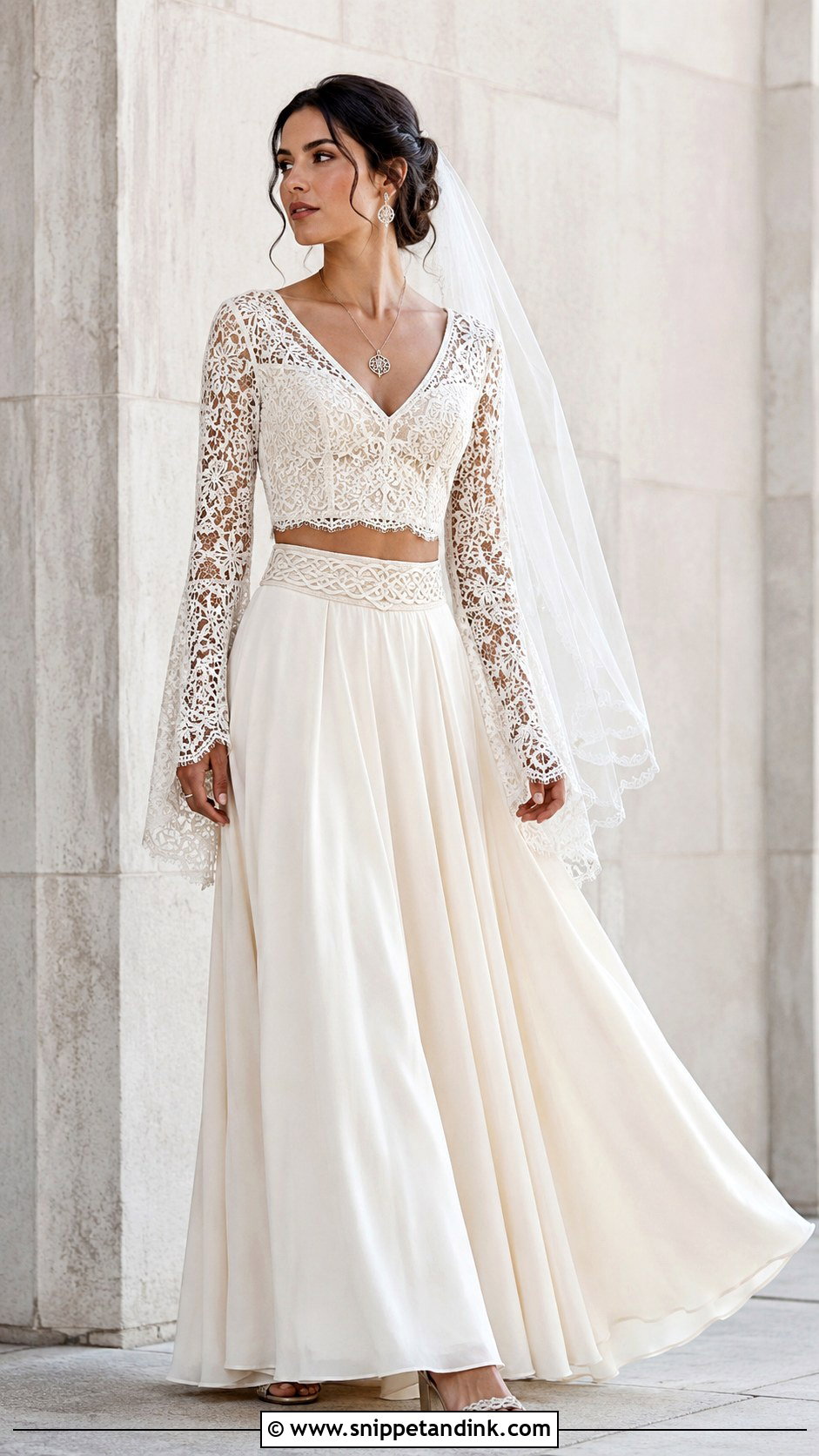
Separates give you options. Pair a fitted lace top with long bell sleeves and a high-waisted flowing skirt in matching ivory; the pieces can meet at the waist for full coverage or leave a narrow strip of skin. Whites vary between fabrics, so buy both from the same maker or compare them side by side in daylight before committing. Embroidered knotwork along the waistband links top and skirt. Low block heels, a small pendant, silver drop earrings and a soft braided hairstyle suit the relaxed shape, with a short cape or fingertip veil so the separates stay visible. Swapping the top for the reception is simple.
20. Minimalist Celtic Wedding Dress
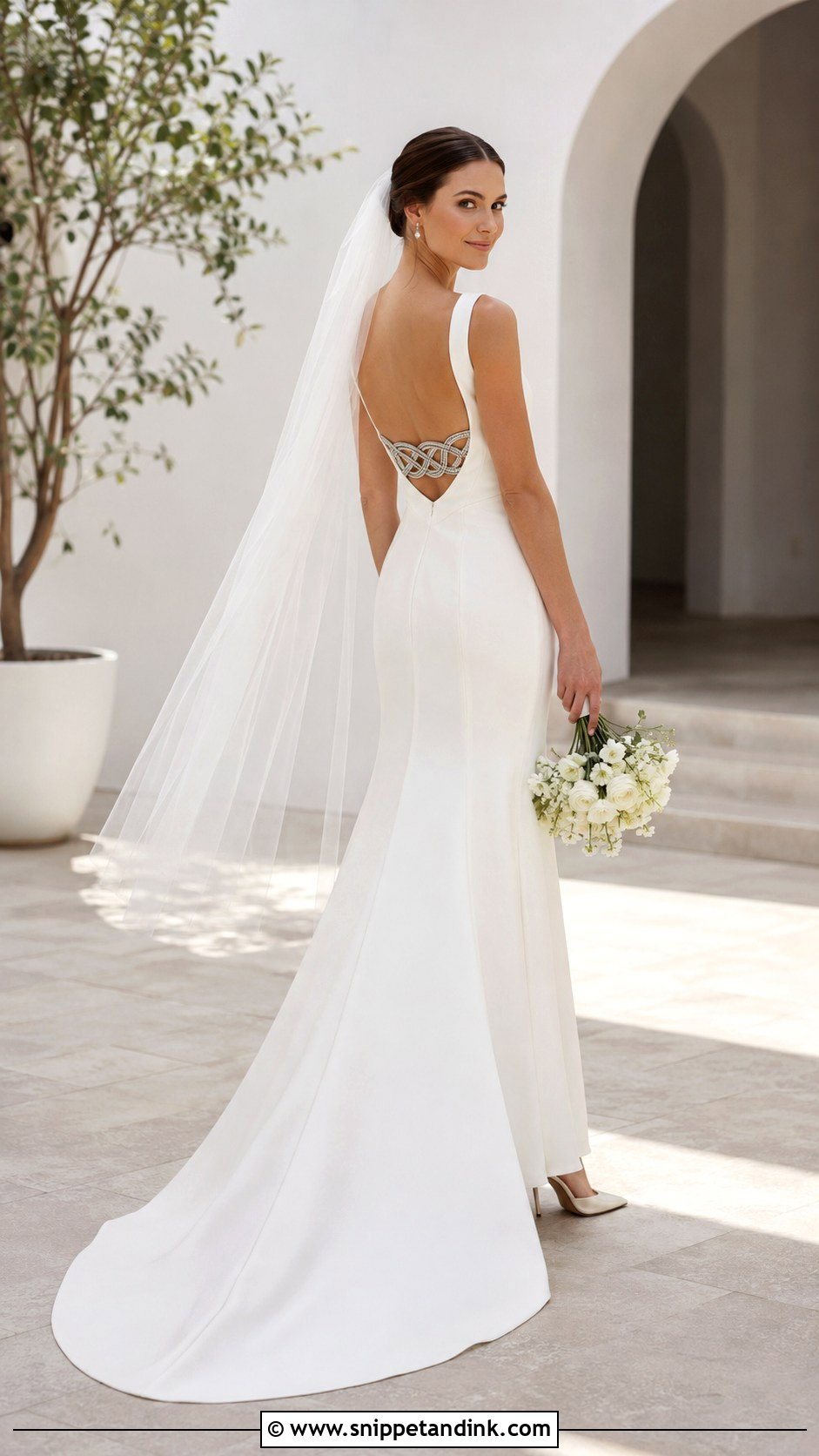
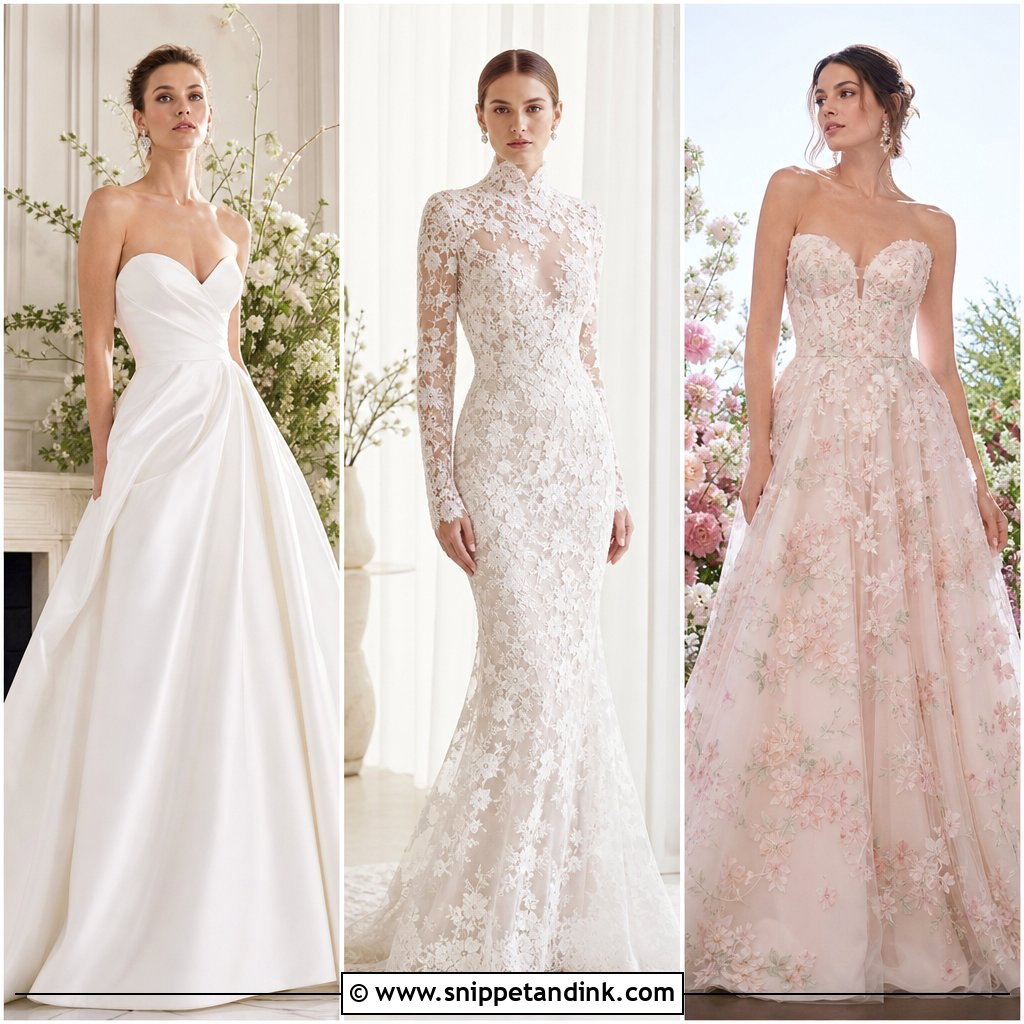
Meaningful design doesn’t need heavy decoration. Choose a clean crêpe or satin gown with a square neckline, a fitted waist and a gently flared skirt, then add exactly one Celtic feature: an embroidered waistband, a knot-shaped back detail, a silver shoulder clasp or a patterned hem. Think about where guests will be looking. During the vows they mostly see your back, which makes a back detail or shoulder clasp the smart place for it. Pointed ivory heels, a smooth low bun and small metallic earrings keep the rest quiet, with a plain chapel-length veil and a compact bouquet of white flowers and greenery.
Bell Sleeves at a Handfasting, and Other Ceremony Logistics
Many couples who choose these dresses also plan a handfasting, where cords or ribbons are wrapped around the joined hands. Long bell sleeves and loose lace cuffs get bound into the knot, so I ask brides to push the sleeves back for that moment, or to choose a fitted under-sleeve with the bell starting above the wrist. Rehearse it once with the officiant and the real cords.
Rain, grass and old stone
Celtic-style venues tend to be outdoors or very old, and both are hard on hems. A hem that clears the ground by a finger’s width in your wedding shoes stays drier on wet grass than one that skims it. Boots with a grippy sole are safer than heels on worn stone steps, and a clear umbrella keeps the dress visible in photos if the weather turns.
Layers that come off cleanly
Capes, cloaks and shawls make sense in a cool hall or a windy field, but decide where they go after the ceremony. A padded hanger and a labeled garment bag waiting at the venue save a velvet cape from ending up on a damp floor.
One Thread of Heritage Can Carry the Whole Dress
Celtic character can come from many places: flowing sleeves, knotwork, a corset bodice, a band of green or blue, natural fabric, a sweeping cape. You don’t need all of them. Pick one or two that connect to your family, your venue or simply your taste, and let the rest of the outfit stay calm. Match the shoes, jewelry, hair pieces and outer layer to the weather you’ll actually get, and leave time for alterations so the dress moves well. One meaningful detail, worn with confidence, says more about heritage than a full costume ever will.
You'll Like These Ideas:


Leave a Reply