
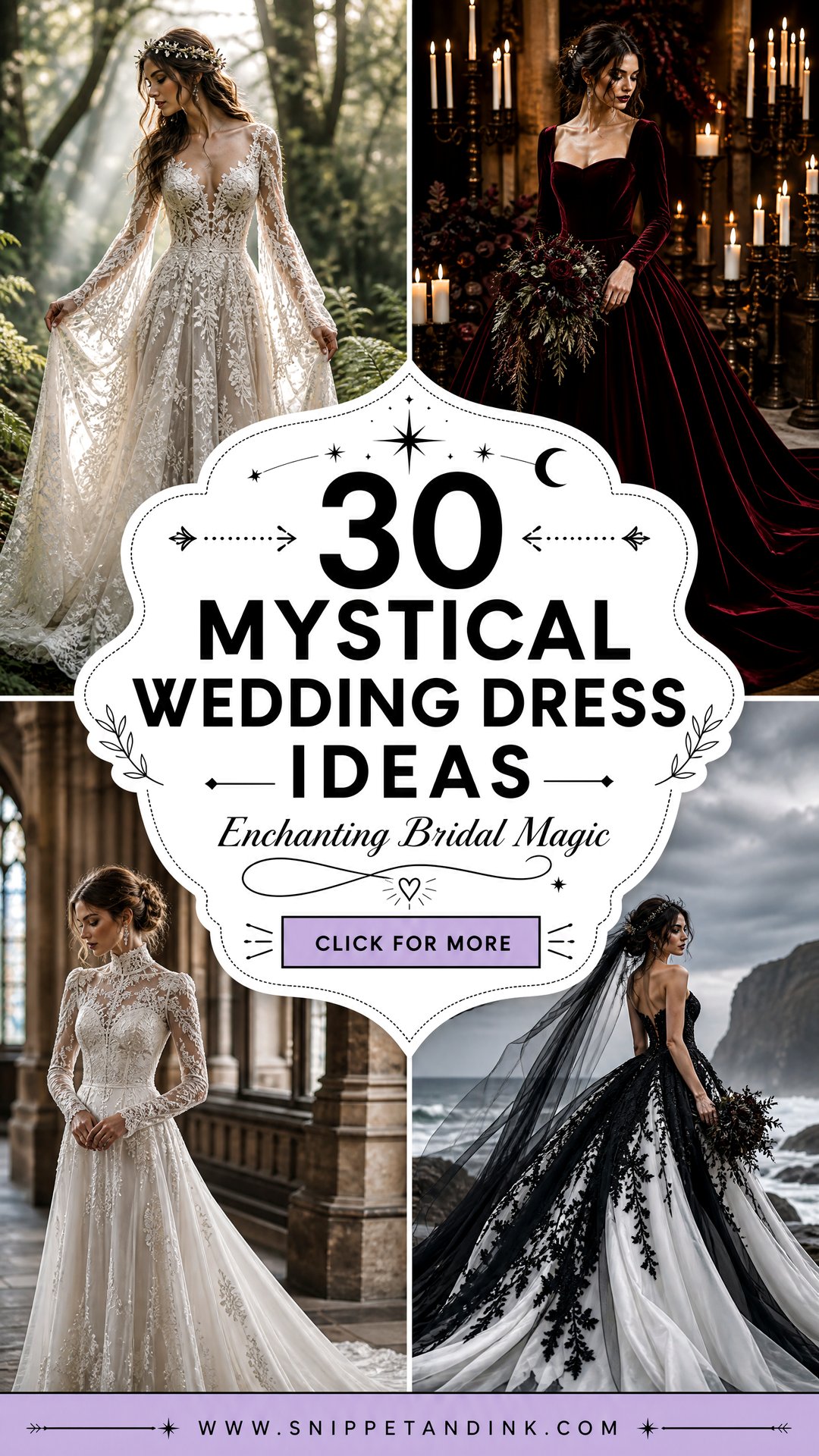
A mystical wedding dress is mostly about how fabric moves and catches light: star embroidery under tulle, satin that glows rather than shines, lace with vines instead of scrolls, a cape that lifts when you walk. The line I watch for at every fitting is where enchanted tips into costume, and it usually comes down to how many fantasy details are fighting for attention at once. Corset bodices, Basque waists, statement veils and nontraditional color are all very wearable right now. Below are thirty directions, with my notes on how each one actually behaves once you put it on and live in it for a day.
Fantasy Details That Stay Bridal Instead of Theatrical
When a bride brings me a mood board full of capes, stars, moons and colored tulle, the first thing I do is ask which one detail she would refuse to give up. That detail becomes the gown’s job. Everything else, the veil, the hair pieces, the shoes, either echoes it quietly or stays plain. Most costume-looking outfits I’ve seen got there by stacking three strong ideas on one body.
- Pick one hero detail: embroidery, color, a cape or structure. Two at most if they share a palette.
- Repeat the motif small, not big. A star gown wants tiny star pins, not a star crown.
- Try the full look under daylight and under warm indoor light; colored and metallic fabrics change between the two.
- Walk, sit and lift your arms in it. Sleeves, hoods and long trains reveal their problems only when you move.
I also ask brides to bring the shoes and the veil to the second fitting, because hem length and train behavior depend on both.
1. Celestial Star Tulle Wedding Dress
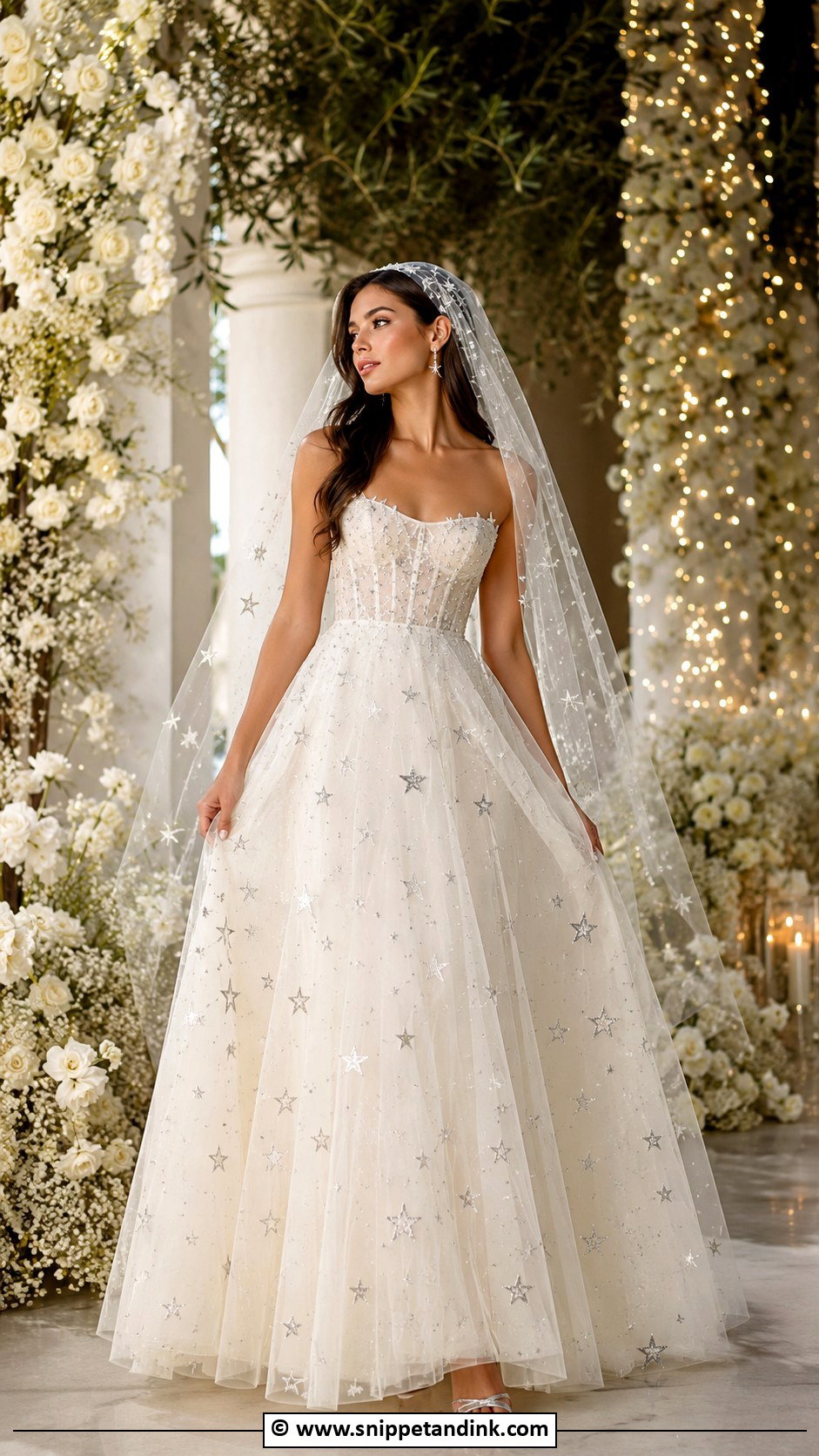
Star tulle works because the embroidery sits on a sheer layer, so the stars seem to float over the skirt instead of being printed on it. I always ask to see the layer against a dark background in the shop, since tiny silver stars can disappear completely over an ivory lining. An A-line skirt gives the stars room to spread; on a fitted shape they bunch at the hips. Keep the jewelry to a pair of fine drops, and if the veil carries stars too, make sure they match the dress in size so the two layers don’t look like separate purchases. Pale blue ribbon on a white bouquet is enough color.
2. Moon Embroidered Wedding Dress
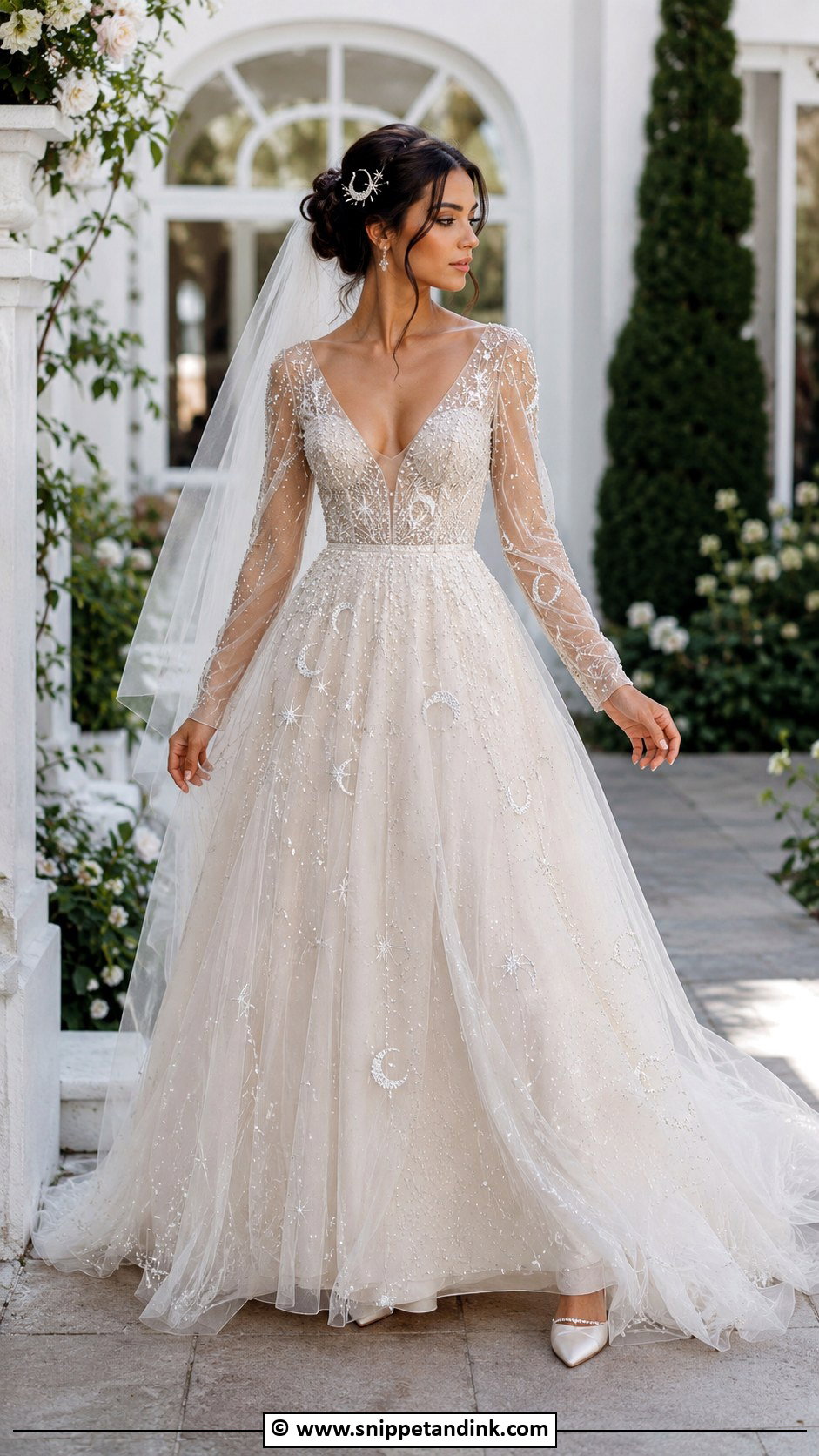
Crescent moons are quieter than stars, and that makes them easier to wear. Placement matters more than quantity: one moon at the center of a bodice reads as a motif, while dozens across the skirt start to look like fabric print. Silver thread tarnishes slightly warmer over time, so if you plan to keep the gown, store it away from rubber and plastic. A low bun with pearl pins and a moon comb sits nicely with it, and I’d keep the veil plain so the embroidery stays the one thing guests notice.
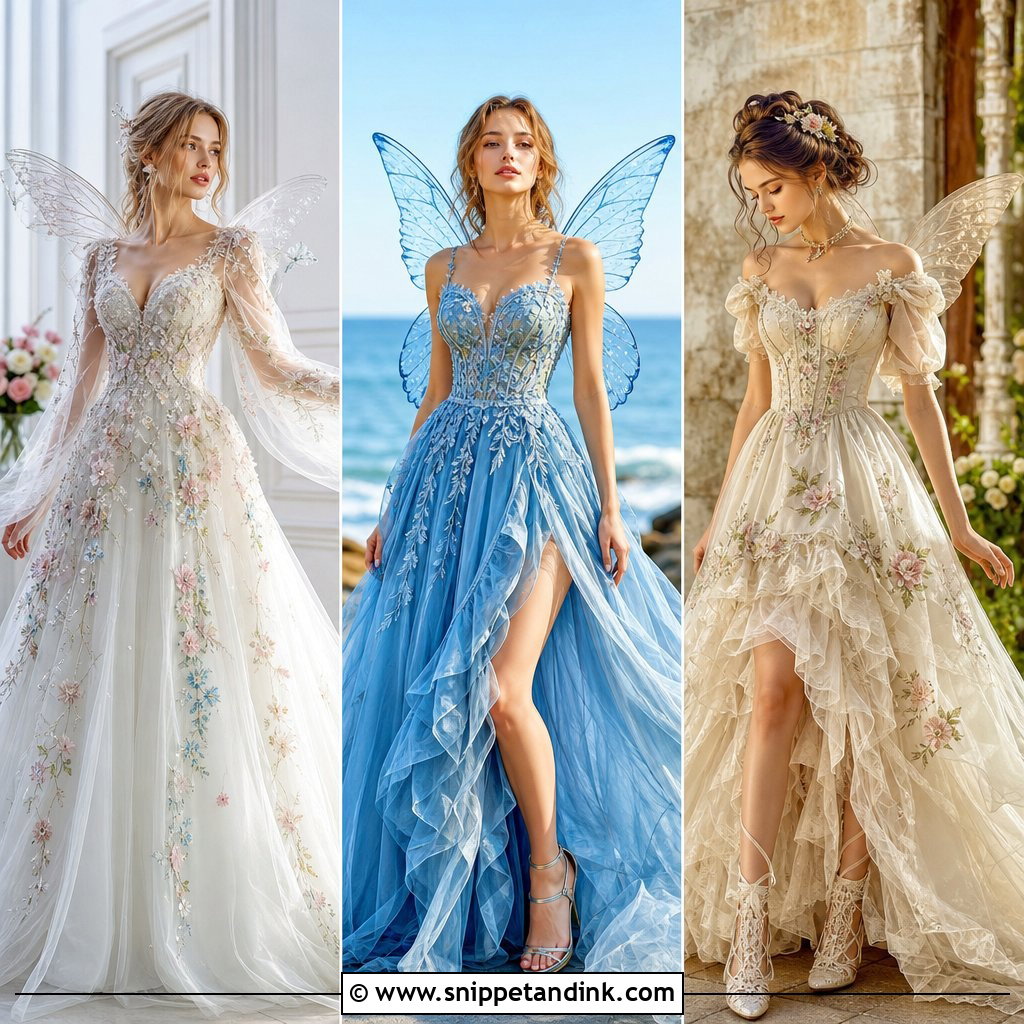
3. Fairy Tulle Ball Gown Wedding Dress
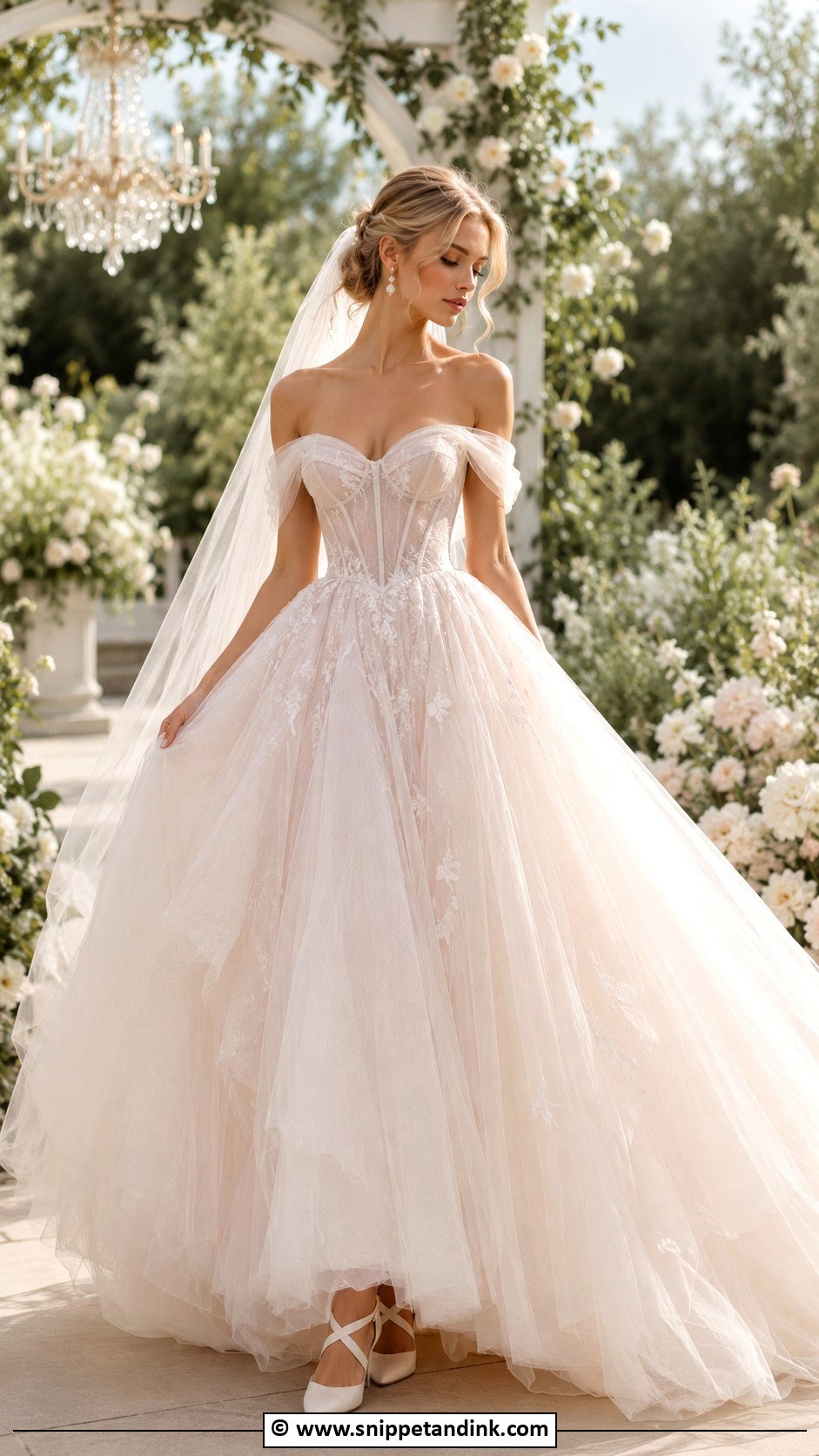
A fairy tulle ball gown looks weightless in photos, but six or more tulle layers take up a lot of space in a car, a doorway and a bathroom stall. Misty gray and blush tulle read softer than bright white, especially outdoors. An off-the-shoulder neckline or a corset bodice gives the volume something to balance against. Keep the accessories small, because the skirt is already doing the work, and ask your hairstylist for a loose updo with a few pieces left out around the face. Wherever there is natural light, the layers will show their depth.
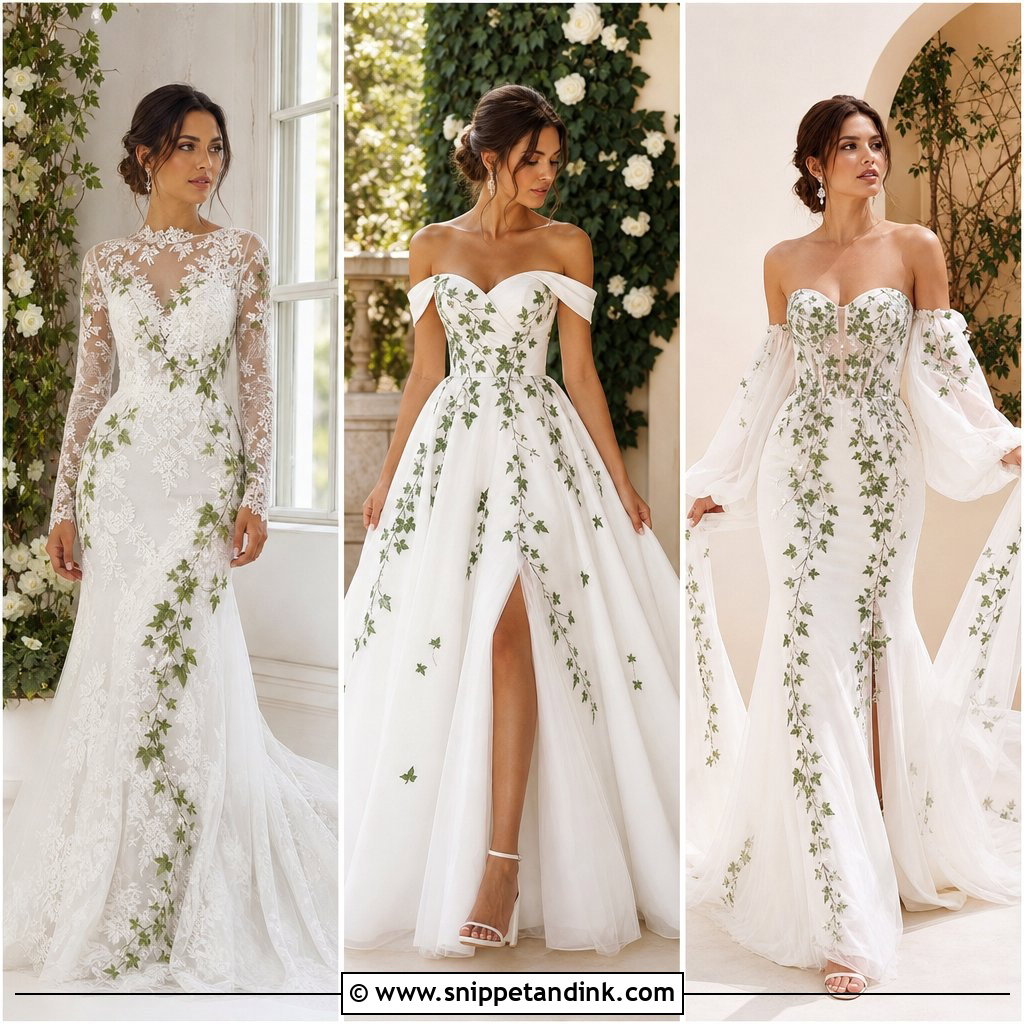
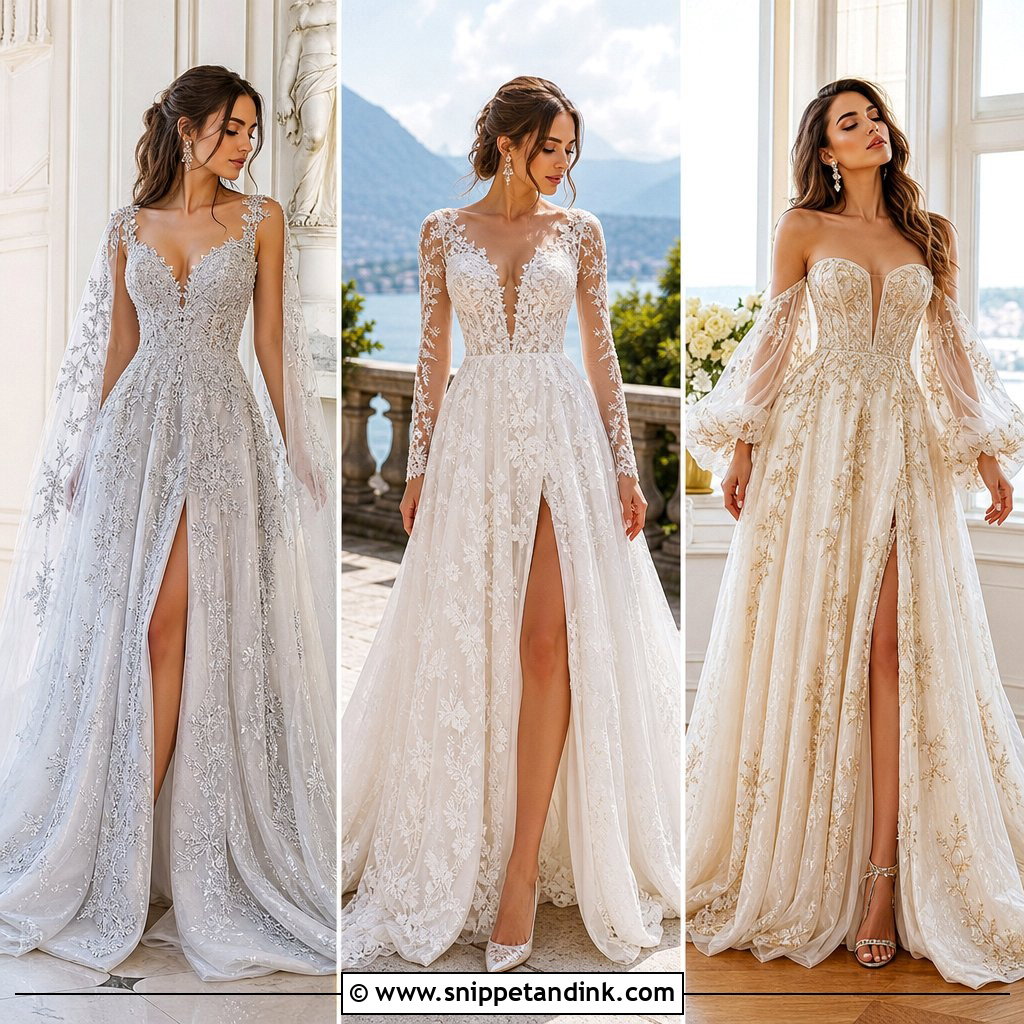
4. Ethereal Lace Wedding Dress
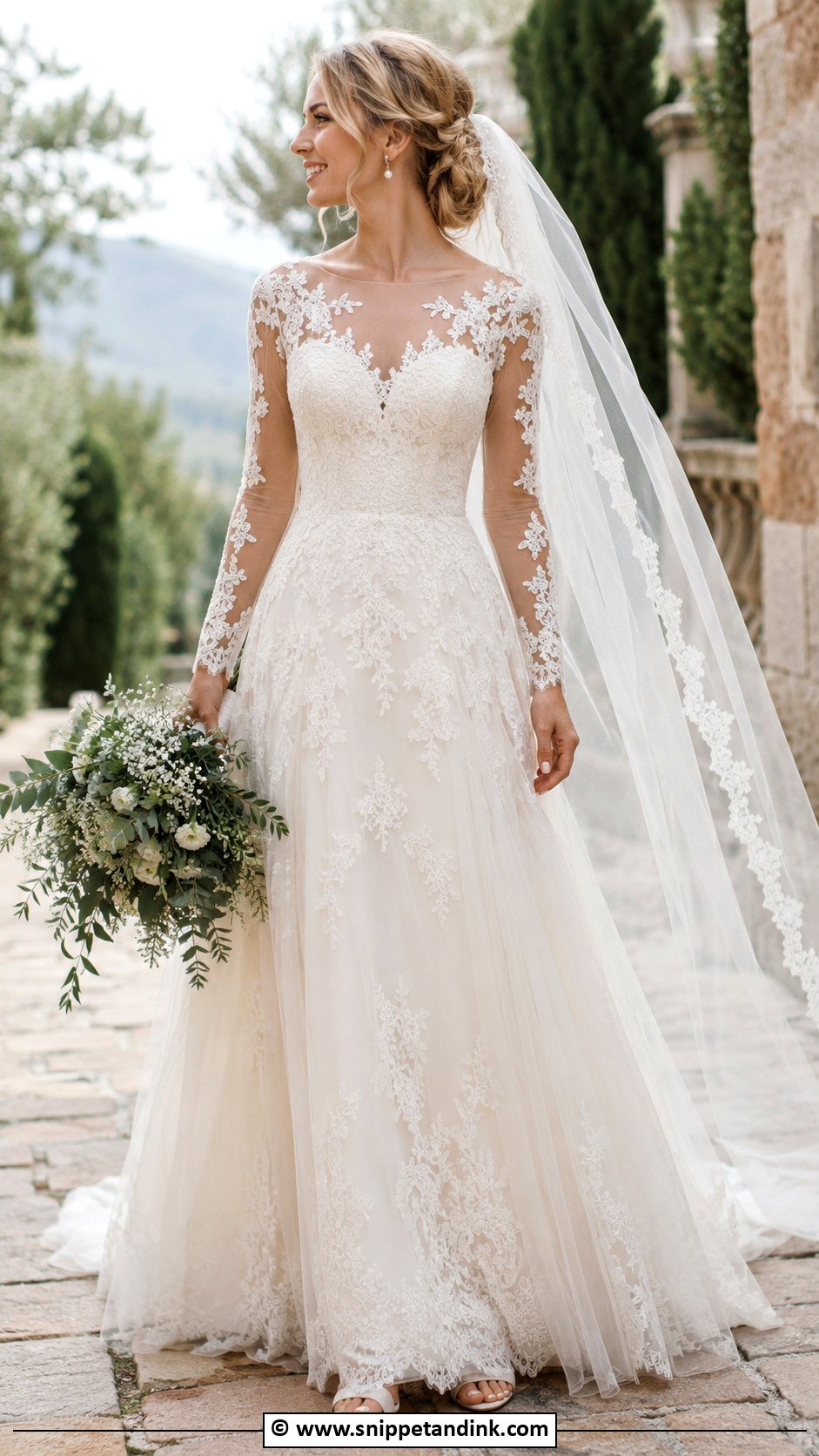
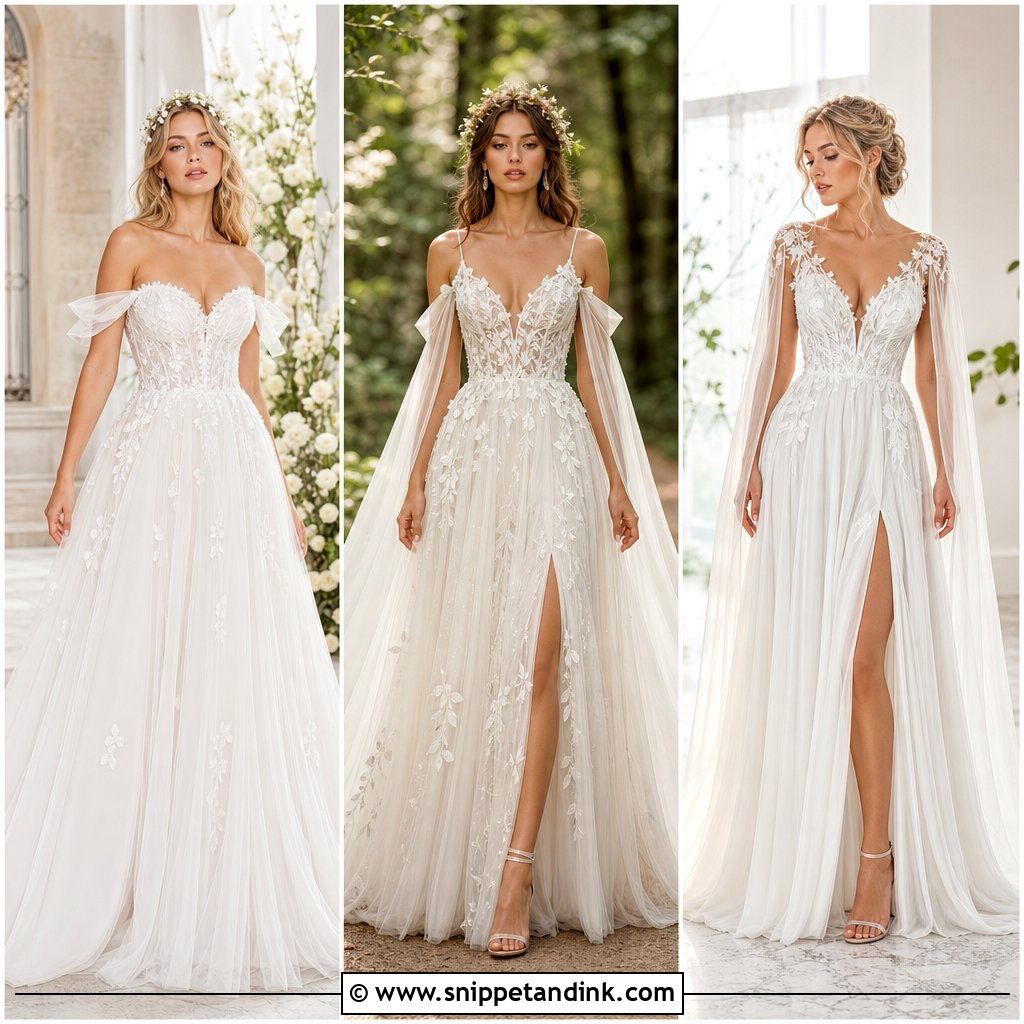
Ethereal lace depends on the motif. I steer brides toward vine, leaf or loose floral lace, because the heavy corded scroll lace you see on traditional gowns reads formal rather than enchanted. Illusion sleeves need a proper fit at the armhole; if you can’t lift your arms to hug someone at the fitting, they need adjusting. A long veil edged in matching lace and a bouquet with trailing greenery finish it without adding anything new to look at.
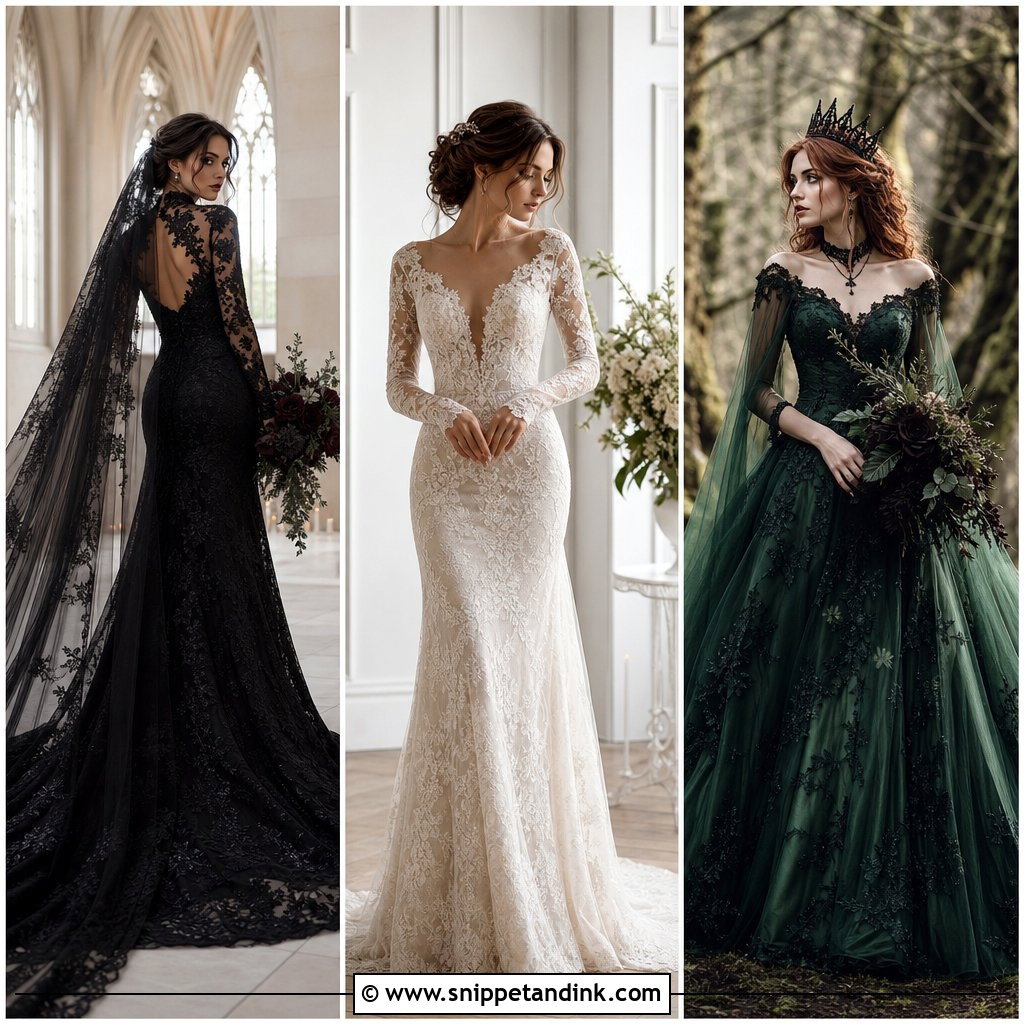
5. Gothic Black Wedding Dress
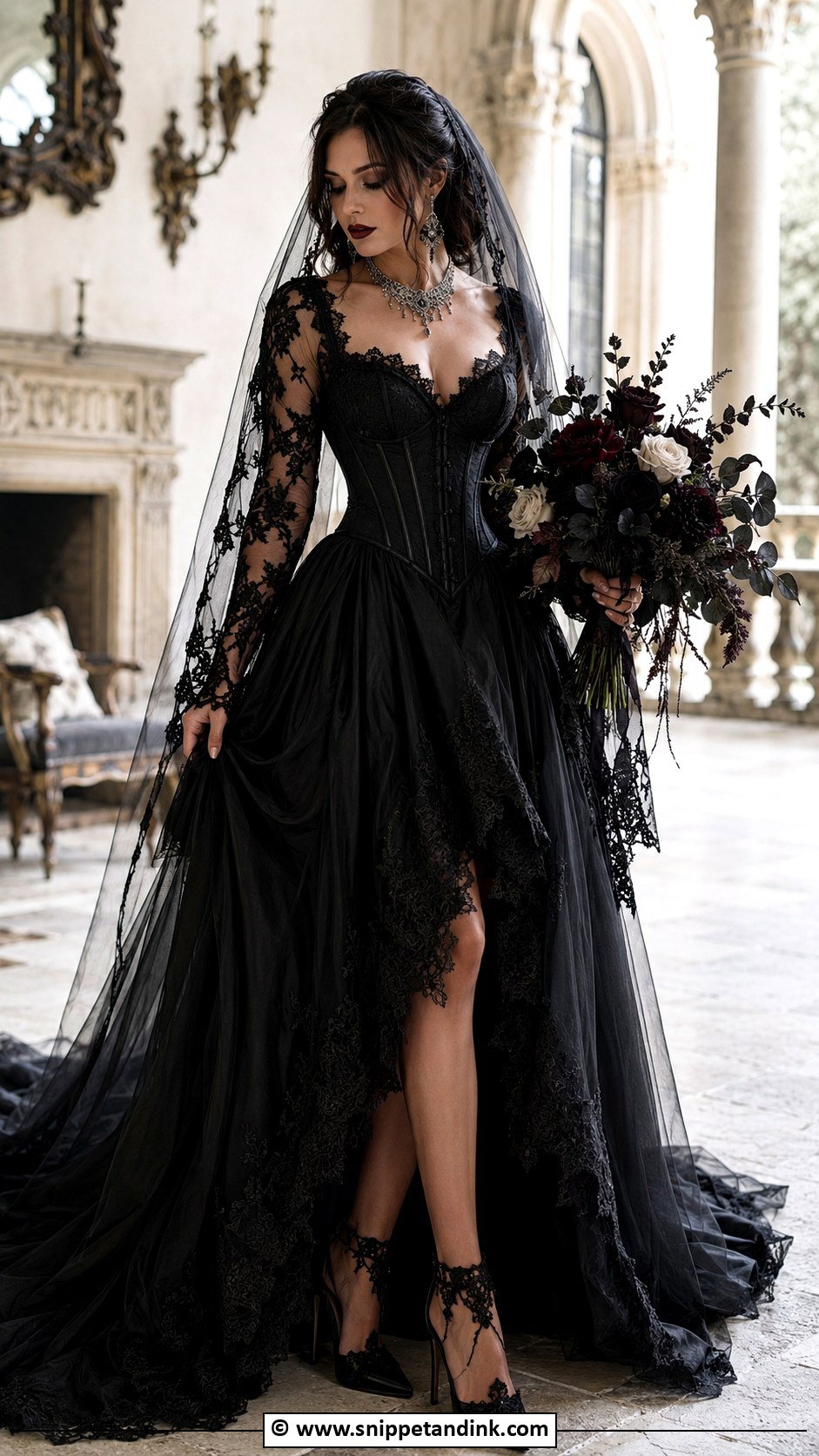
Black is the most demanding color in this list, because every fabric shows its true quality in it. Matte satin and velvet absorb light and look rich; cheap black tulle can look gray and flat on camera. I’d go with a corset bodice or long sleeves to keep the shape romantic rather than severe. If the veil is black too, consider a sheer ivory one instead for the ceremony, which softens the face in close-up photos. Ivory accents in a dark bouquet stop the whole outfit from merging into one block in pictures. Historic rooms and candlelit spaces suit it best.
6. Silver Sequin Wedding Dress
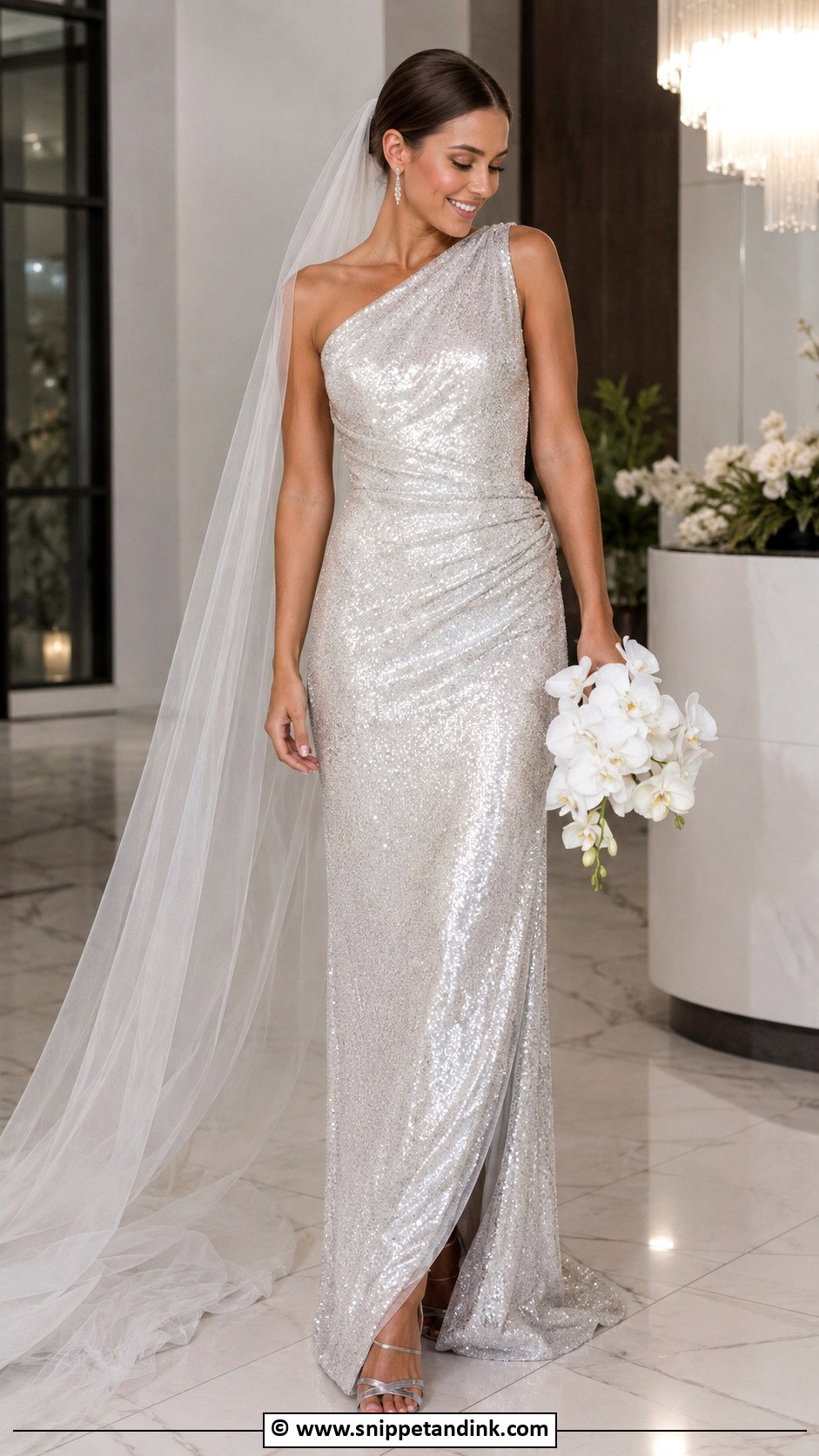
Silver sequins are heavier than they look, and a fully sequined gown can pull on the shoulders by evening. Fine shimmer on a column or soft mermaid shape gives a moonlit glow without that weight. Check the inside of the arms at the fitting: sequins on a bodice can scratch skin raw over a long day if the seam allowances aren’t bound. Once the gown is sparkling, keep everything else simple, plain metallic heels, crystal studs, and white roses or calla lilies. Under evening lighting the dress throws back light with every step, which is the whole point.
7. Pearl Corset Wedding Dress
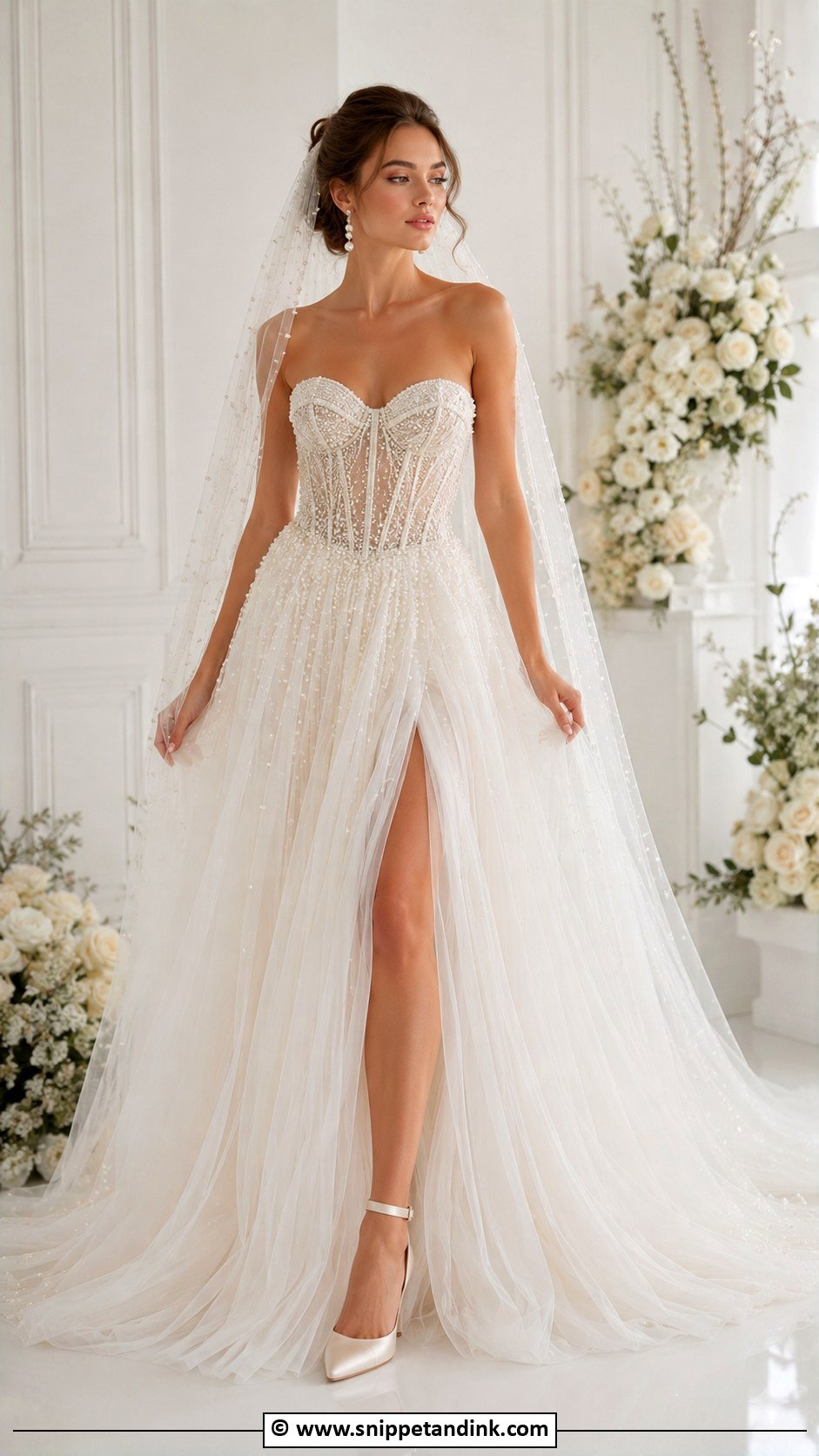
Hand-sewn pearls on a corset bodice give a glow that crystals can’t, because pearls diffuse light instead of flashing it. The trade-off is weight: a heavily pearled bodice needs proper boning and a firm waist stay to sit flat. Pair it with a plain tulle, satin or organza skirt so the detail stays above the waist. Pearl drops and a sheer veil with a few scattered pearls are plenty. I’d skip more pearls in the hair if the veil already has them.
8. Forest Lace Wedding Dress
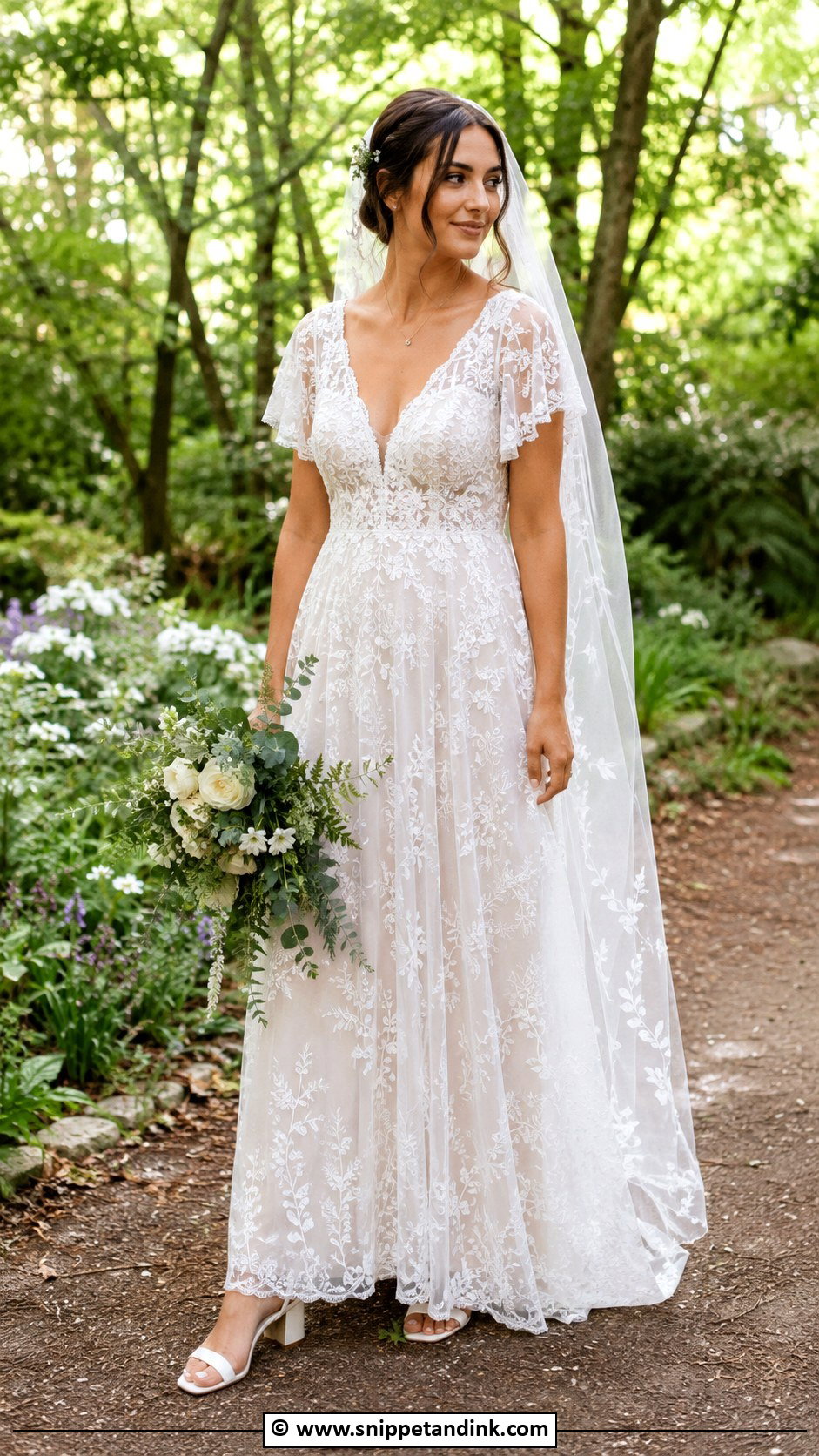
A forest lace wedding dress made with leaves, branches or wildflowers looks natural outdoors, but open lace and a long train will pick up leaves, twigs and grass seeds. If the ceremony is on a forest floor, ask your seamstress for a bustle you can hook up right after the aisle. Almond and champagne linings make the lace pattern stand out more than a bright white one. Block heels keep you upright on soft ground, and a loose bouquet with textured stems completes it without competing with the lace.
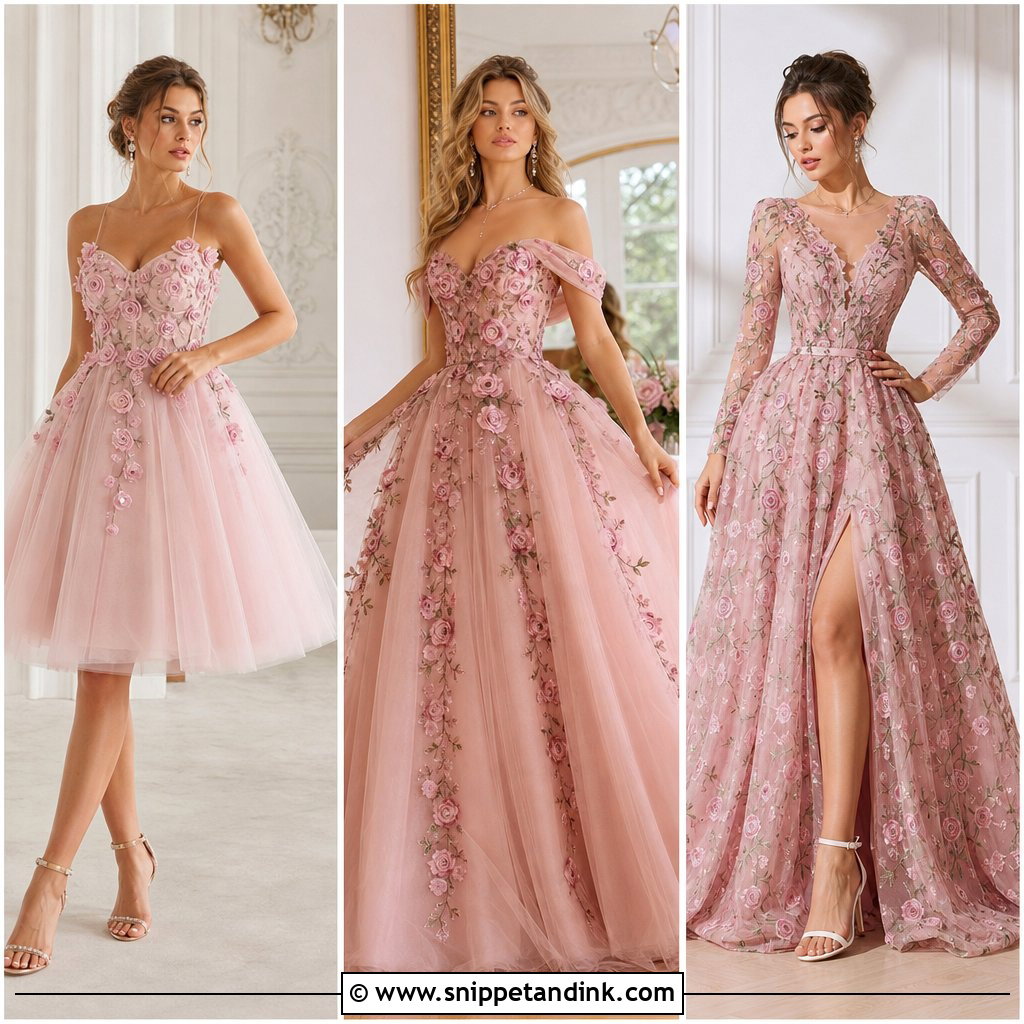
9. Blush Fairy Wedding Dress
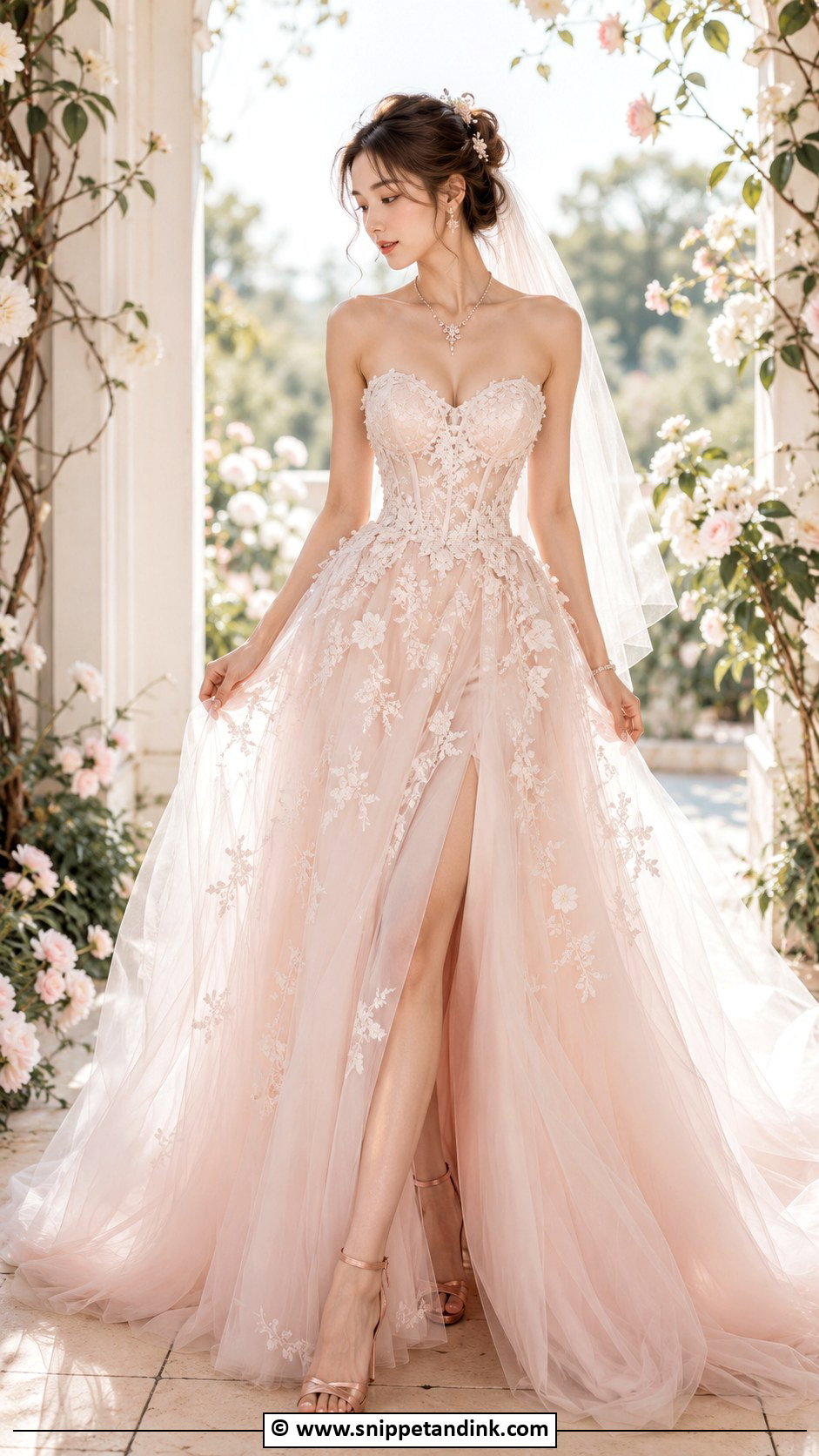
Blush is one of those colors that changes completely with the lining. Pink tulle over an ivory slip looks soft and pearly; over a nude lining it can disappear into your skin tone. I always ask to see blush in daylight, not just under shop spotlights. A sweetheart or off-the-shoulder neckline suits it, and rose gold jewelry warms the pink. Keep the makeup fresh with a rosy cheek so the dress doesn’t make you look washed out. Spring gardens are where it really shines.
10. Champagne Satin Wedding Dress
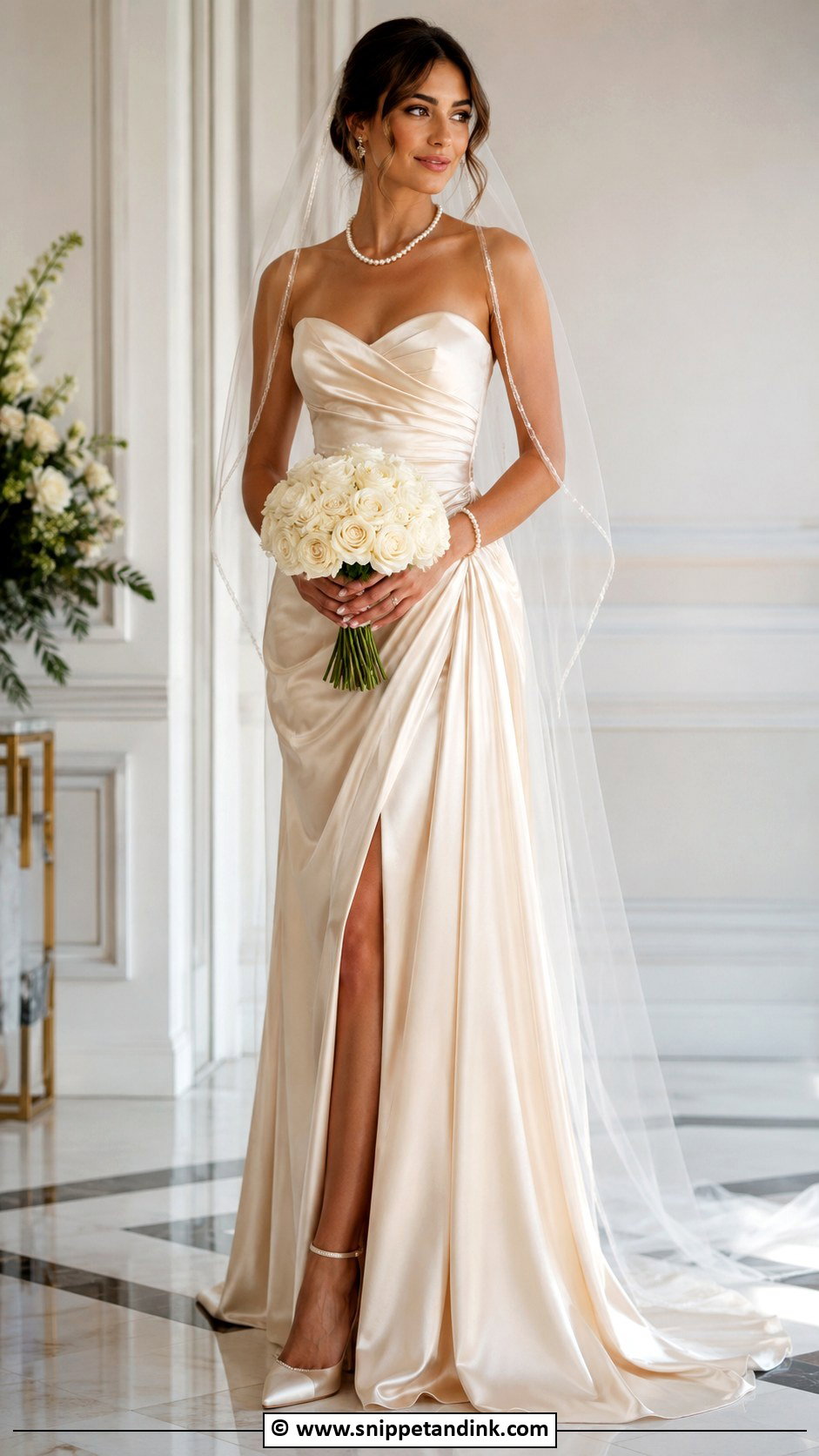
Champagne satin is warmer than white, which flatters olive and golden skin tones especially. The catch with satin is that it creases every time you sit and shows every water spot. A bias-cut gown moves like liquid but clings honestly, so the right shapewear matters at fittings. A scarf-style veil or a long cape adds drama without hiding the drape. It glows in soft evening light and in intimate rooms where guests see it up close.
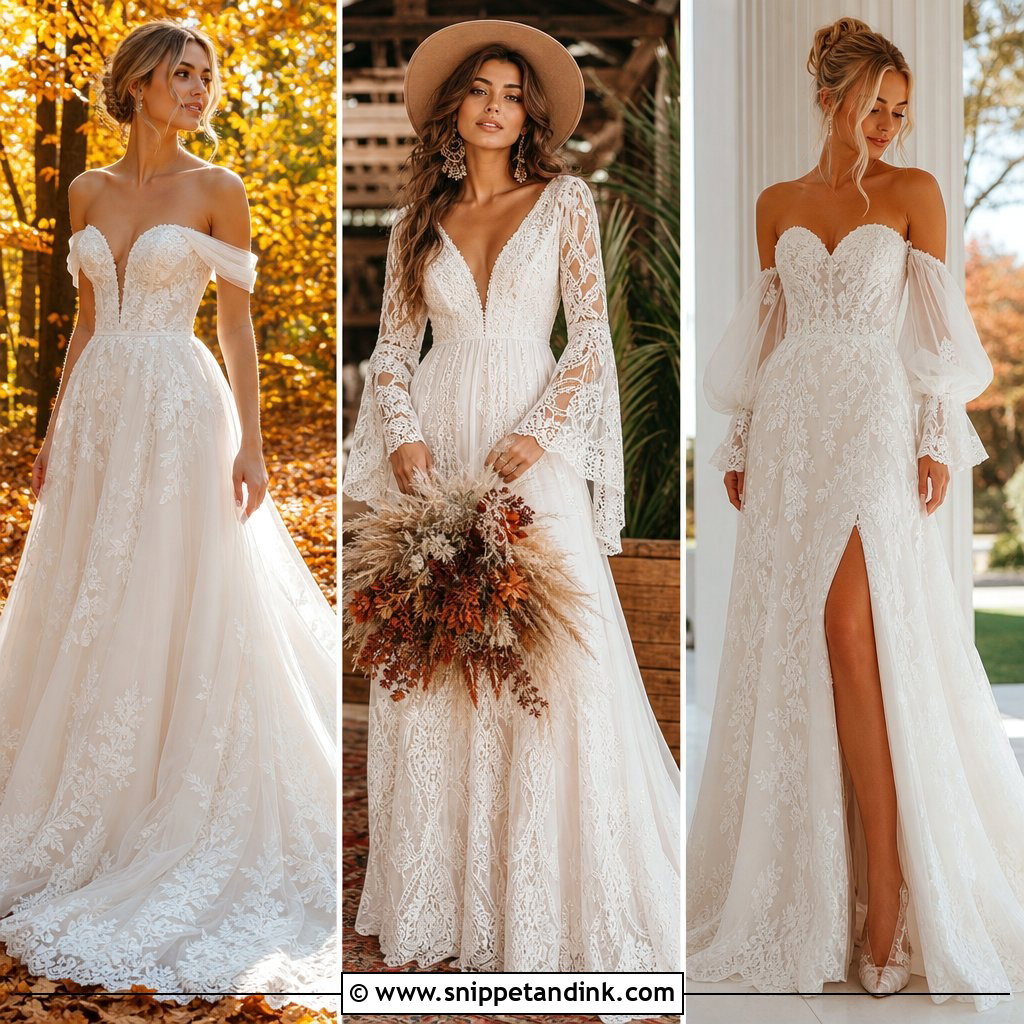
11. Sheer Sleeve Wedding Dress
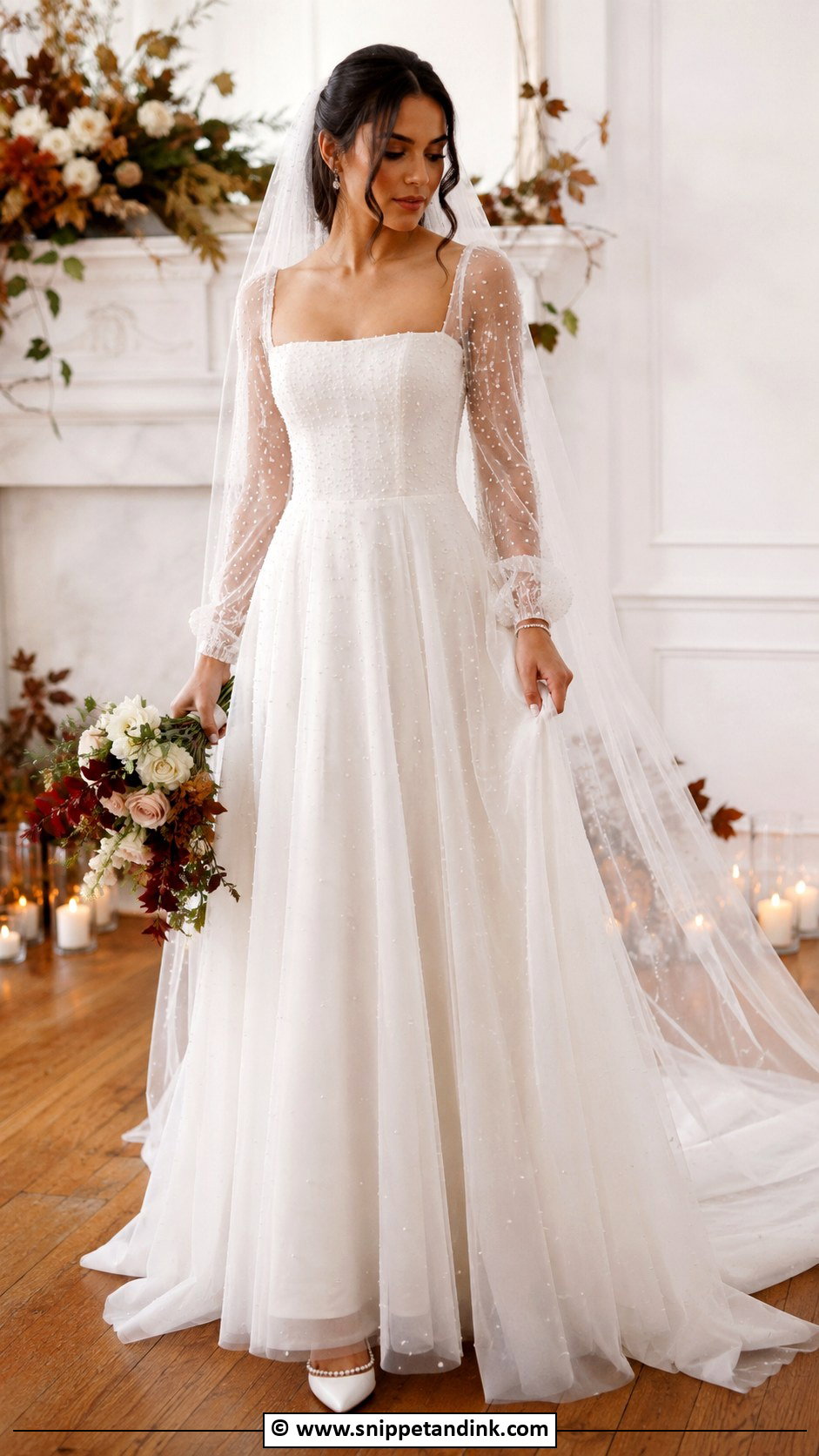
Illusion sleeves give you coverage and a light, airy look at once, which is why they suit fall and winter so well. The mesh is delicate, though, and lace or pearl appliqués on it can catch on a bouquet wrap or a ring. A fitted bodice with a flowing skirt is the classic shape; sheer bishop sleeves feel softer and more modern. I’d keep jewelry to pearl studs and a thin bracelet, since a cuff will snag the sleeve. A veil trimmed to match pulls it together.
12. Velvet Wedding Dress
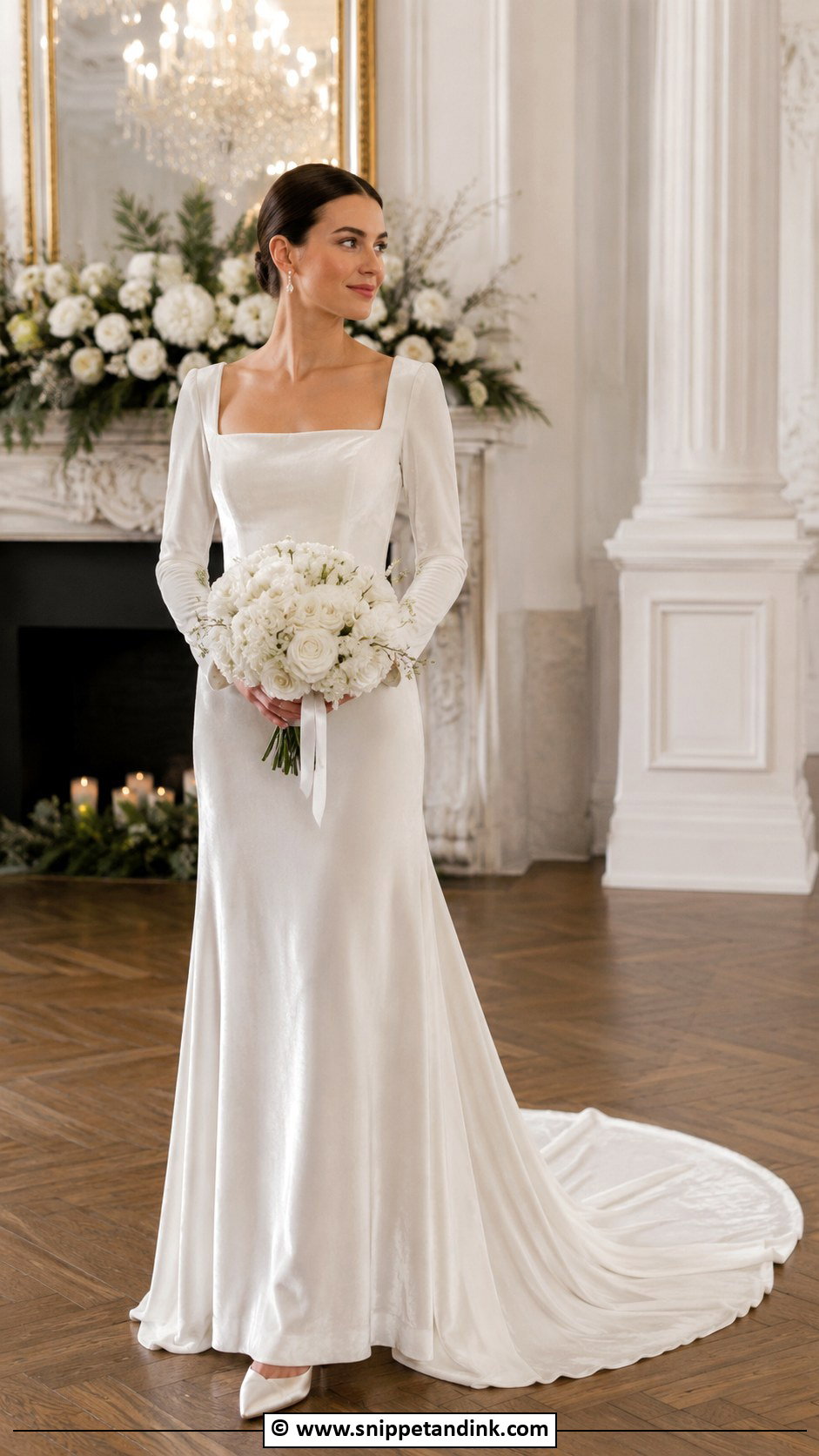
Velvet is warm, heavy and very honest about its pile: sitting crushes it, and the marks can show in photos. That’s why I suggest it mostly for cooler months and indoor venues where you won’t be sweating through it. Ivory velvet looks regal; deep emerald or black is the alternative route. Pick a clean silhouette, a long-sleeve fitted gown or a square neckline with a modest train, and keep accessories simple because the texture already carries the look. A structured bouquet with white flowers and dark greenery suits it.
13. Floral Applique Wedding Dress
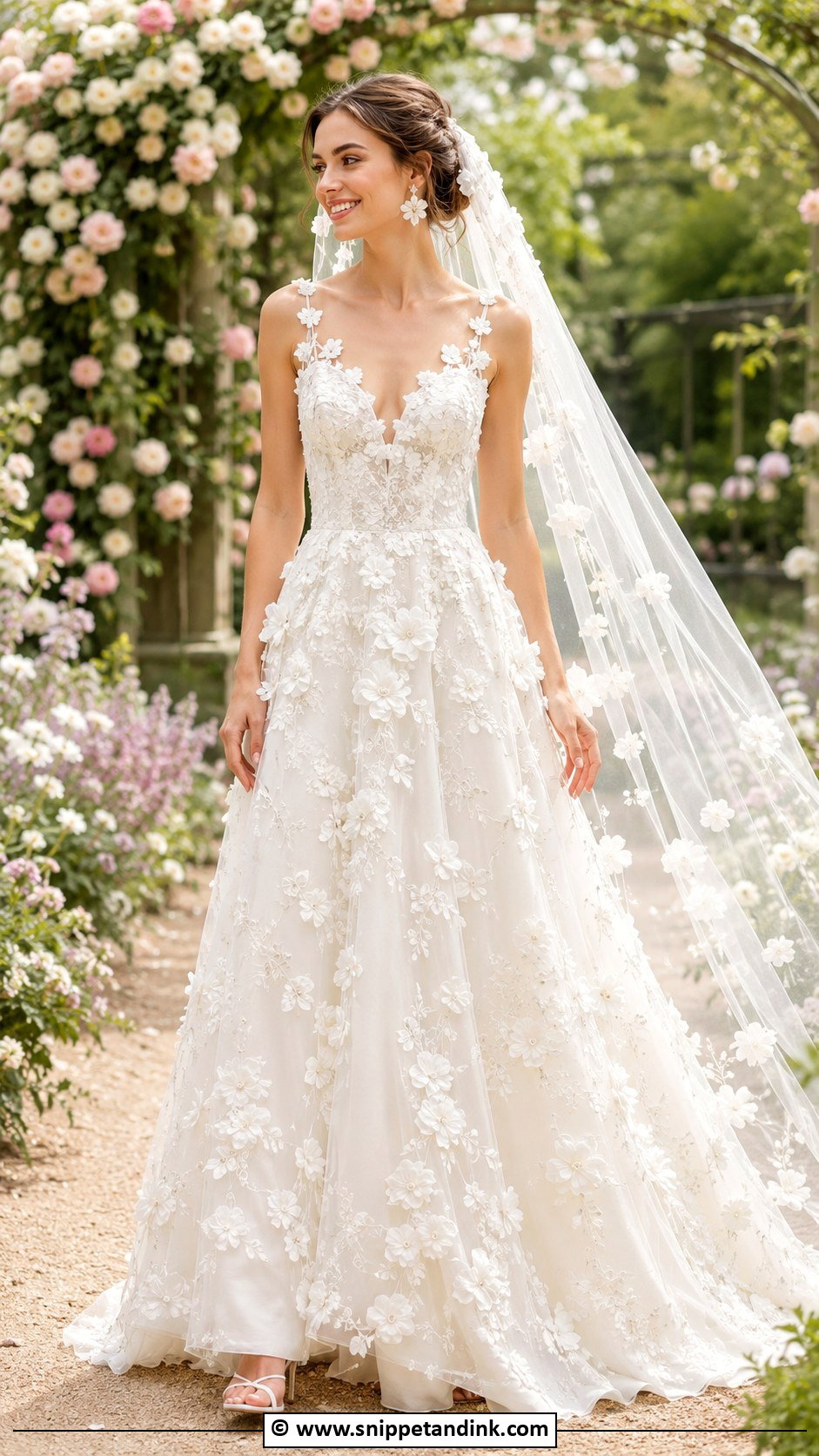
Three-dimensional flowers are what make an appliqué gown feel like a garden, and they are also the part most likely to get crushed. In the car, sit on the back of the skirt rather than bunching it into your lap. Ivory flowers feel classic, while blush, lavender or pale blue ones are more whimsical. An A-line or sheer overskirt gives the blooms space. Matching flower earrings are enough, and the veil can carry a few flowers too, but not as many as the gown.
14. Basque Waist Wedding Dress
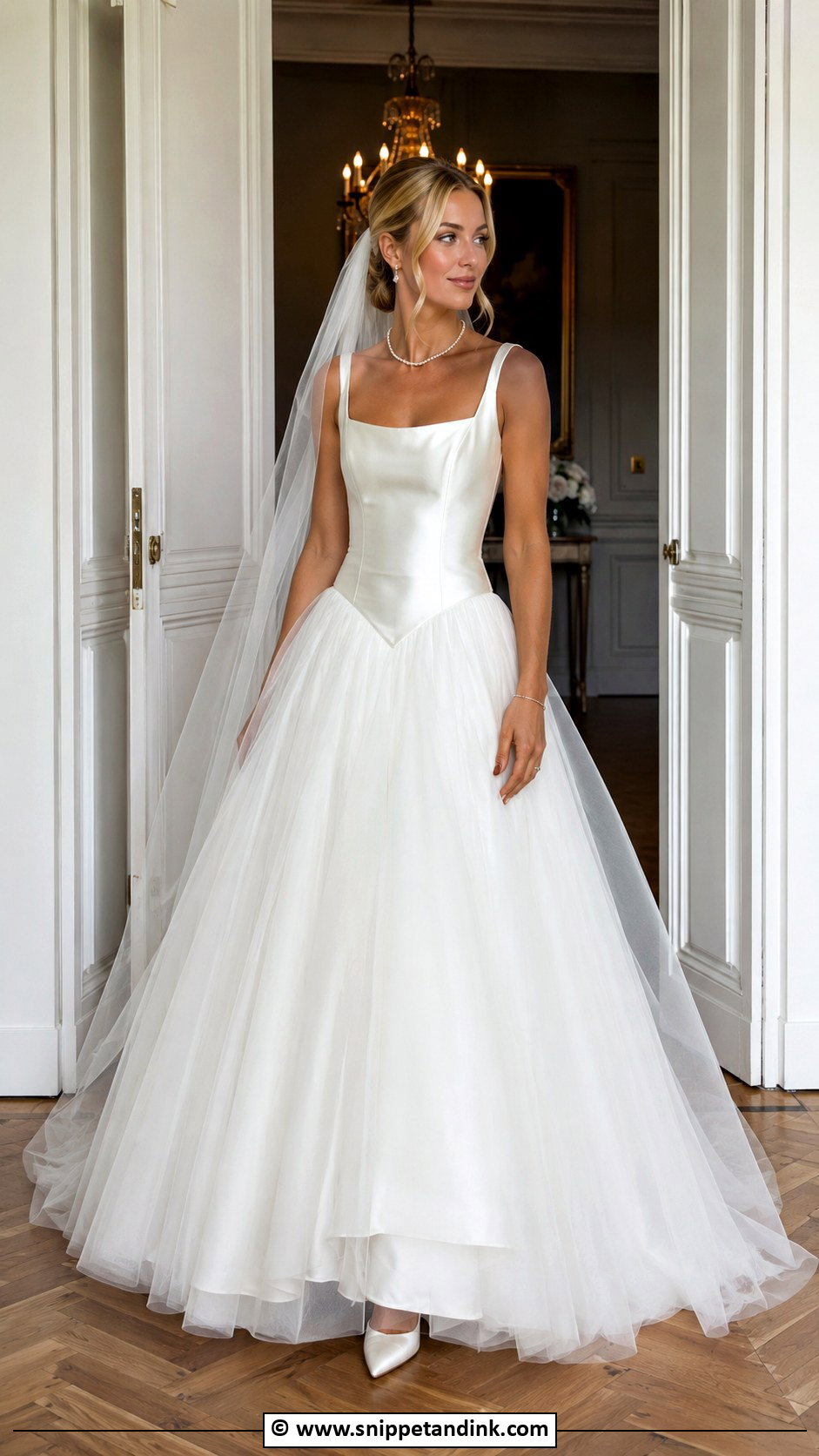
A Basque waist wedding dress dips into a V below the natural waist, which lengthens the torso and gives an old-world, storybook shape. The V has to land precisely at your hip bones, so expect it to need careful fitting; a few millimeters off and it looks like the dress is sliding down. Mikado and satin hold the point crisply, while tulle makes it softer. Pointed satin heels and pearl jewelry suit it, and a long veil finishes the line.
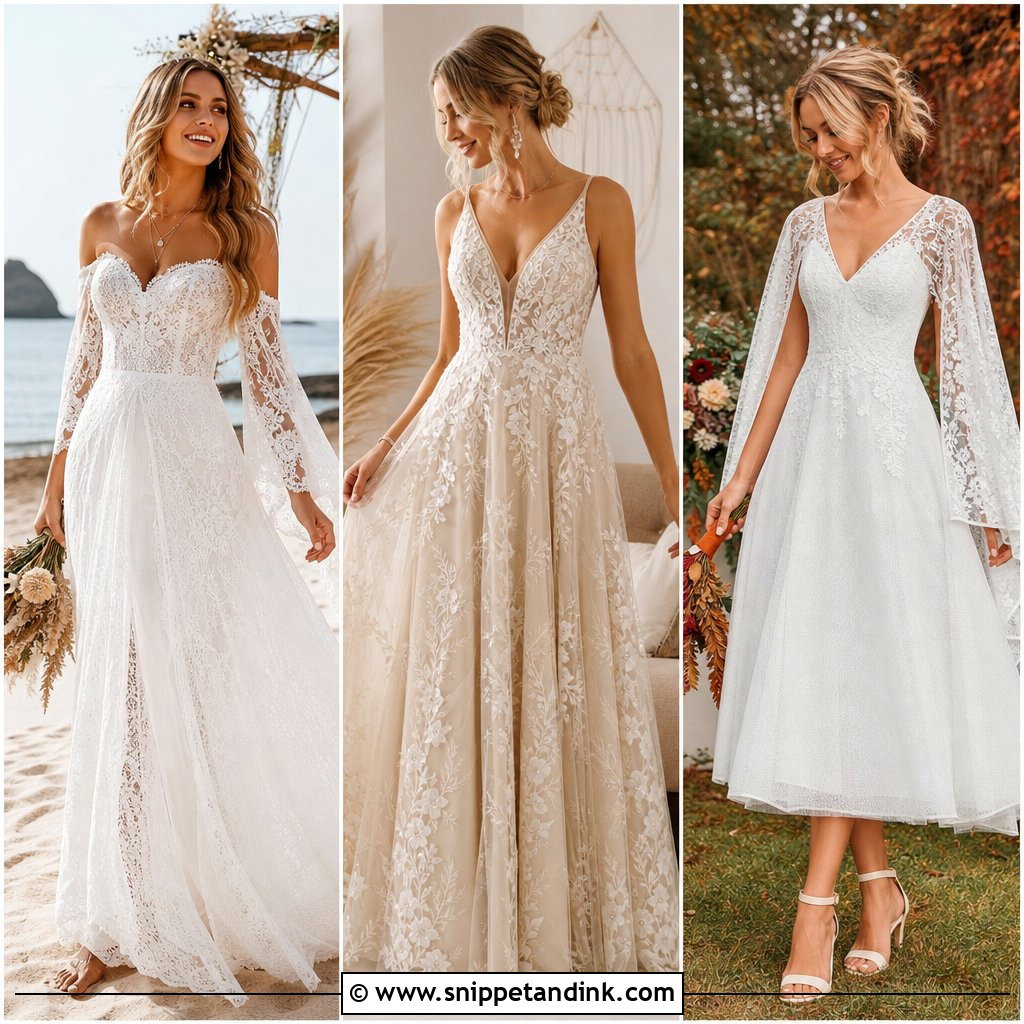
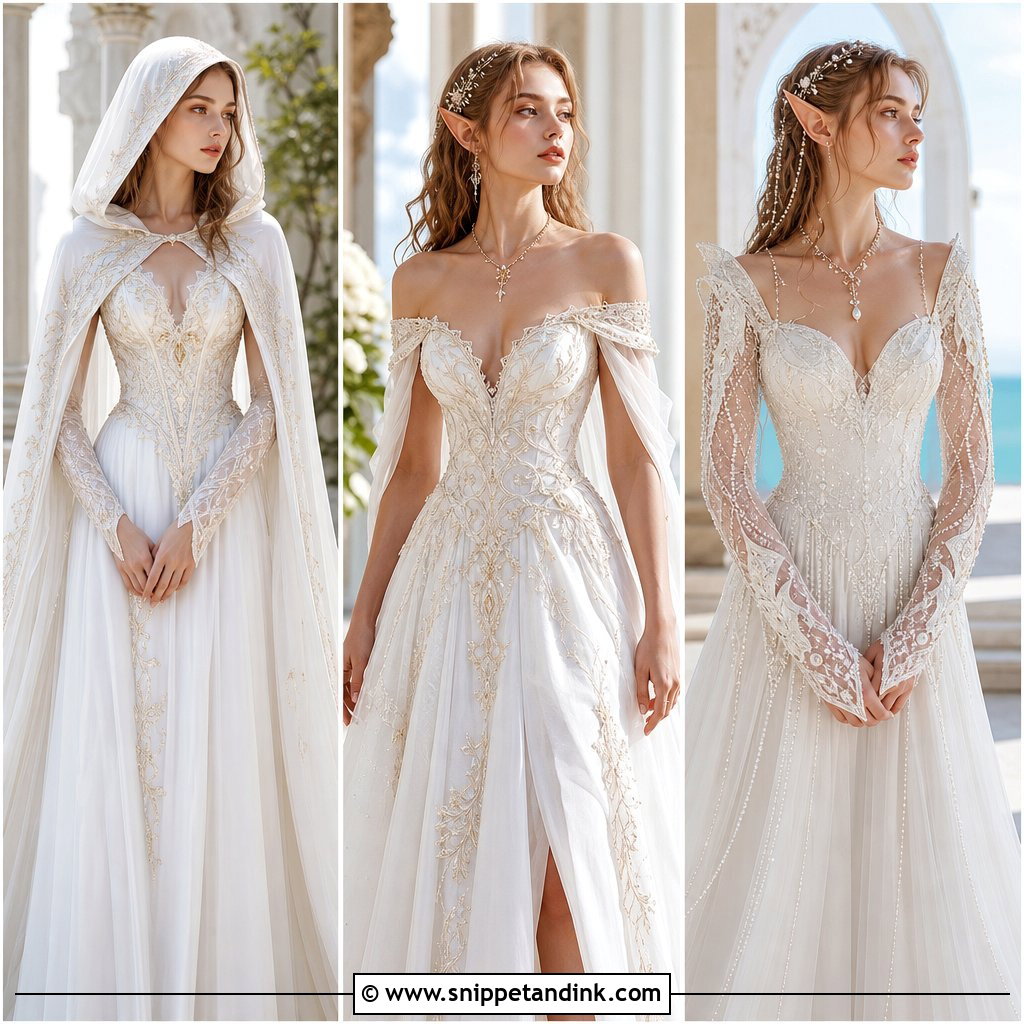
15. Hooded Cape Wedding Dress
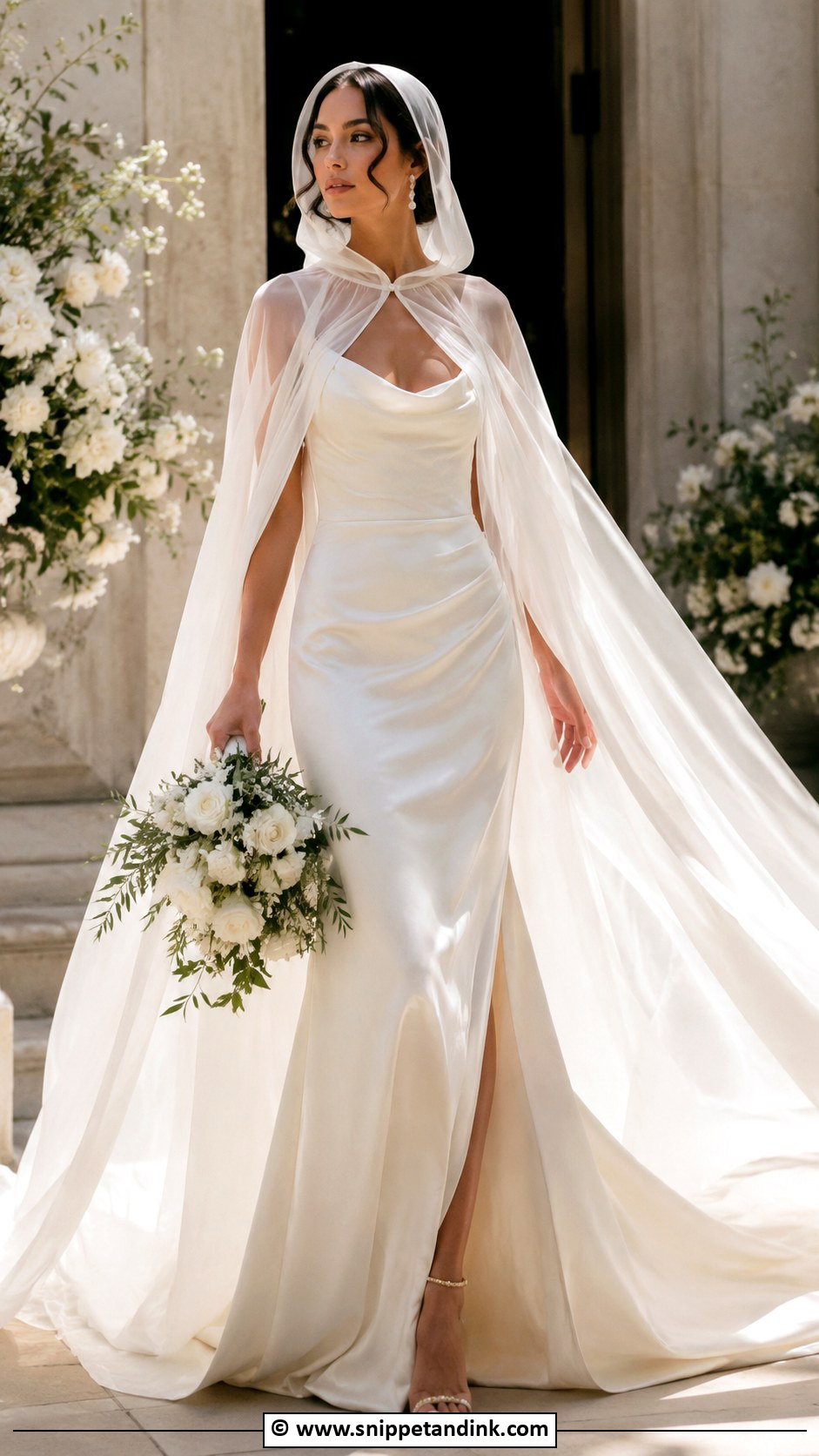
The hooded cape is pure drama, and the trick is keeping the gown underneath plain so the cape stays the statement. Sheer chiffon or tulle hoods slip back as soon as you turn your head, so I always have a comb or two small pins sewn into the hood’s edge to anchor it to the hair. Lace or embroidered capes are heavier and stay put more easily. Outdoor entrances and evening ceremonies are where a cape moves the most. Plan when it comes off, usually after the ceremony photos, so it doesn’t end up in the cake.
16. Blue Tulle Wedding Dress
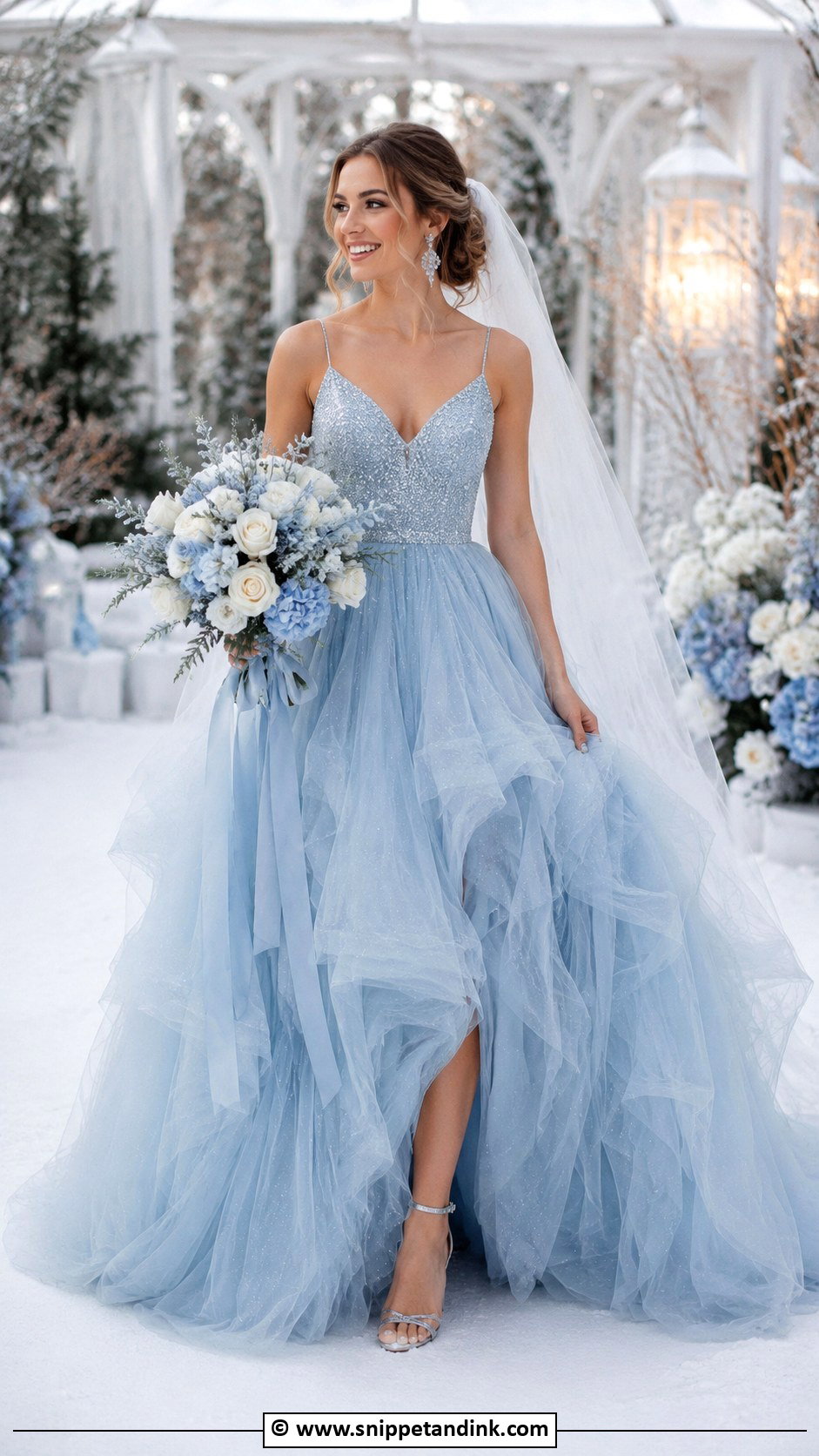
Pale blue tulle reads mystical in person, but it can shift toward gray in shade and toward white under bright flash. Mist, powder and icy blue all behave a little differently, so I ask brides to step outside the shop with the swatch. A fitted bodice and layered skirt with subtle sparkle keep it light. Silver heels, crystal earrings and a sheer ivory or blue veil work, and pale blue ribbon on white flowers ties it in. Winter and garden weddings both suit it.
17. Gold Embroidered Wedding Dress
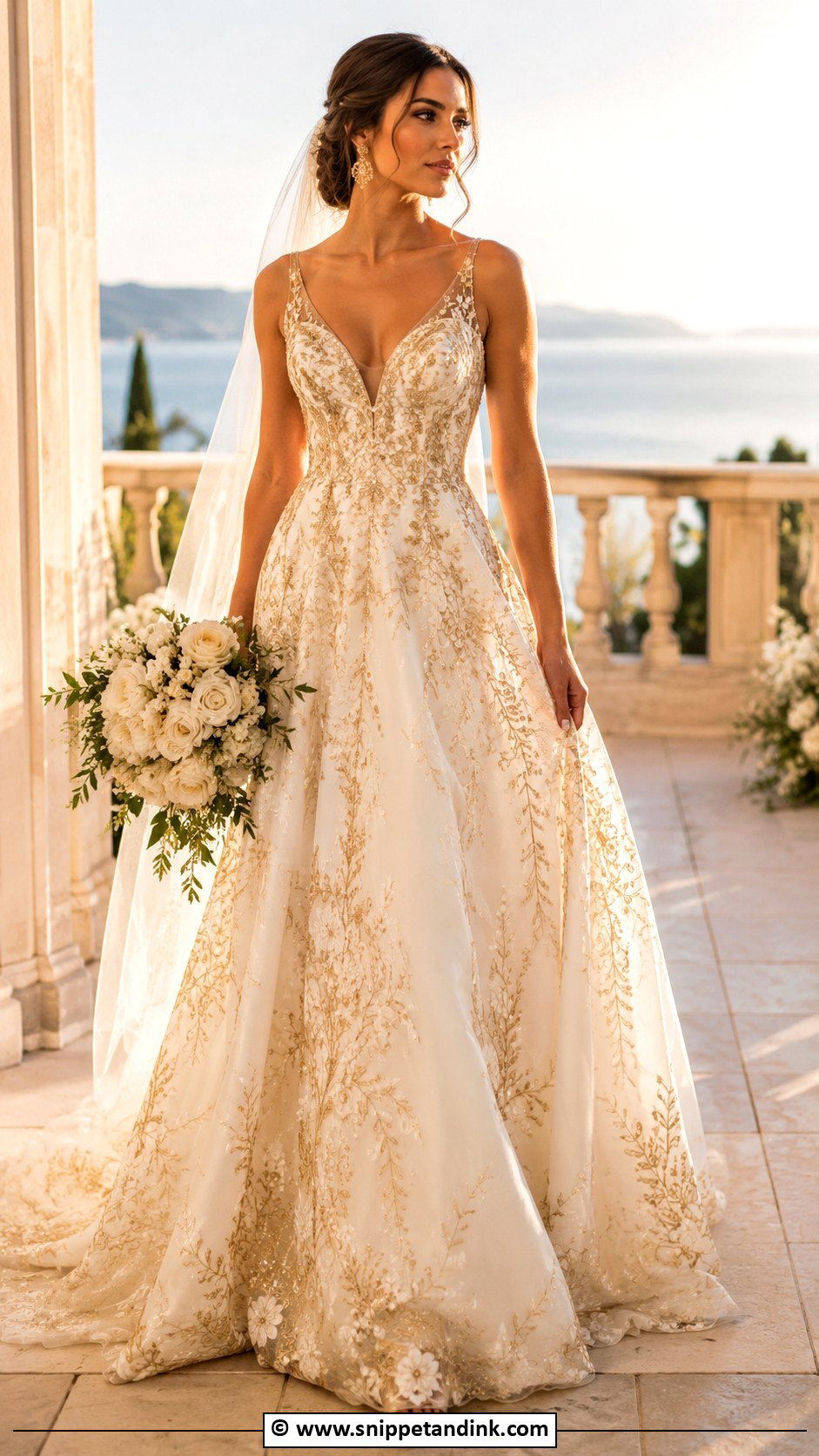
Gold thread suits warm skin and warm light, which is why this one looks its best at sunset and in fall. Placement controls how heavy it feels: a scattered pattern on the bodice and hem stays refined, while dense embroidery all over starts to look ceremonial. Metallic thread can feel scratchy on the inside, so ask for a soft lining under any embroidered panel that touches skin. Gold earrings and neutral heels are all it needs.
18. Butterfly Wedding Dress
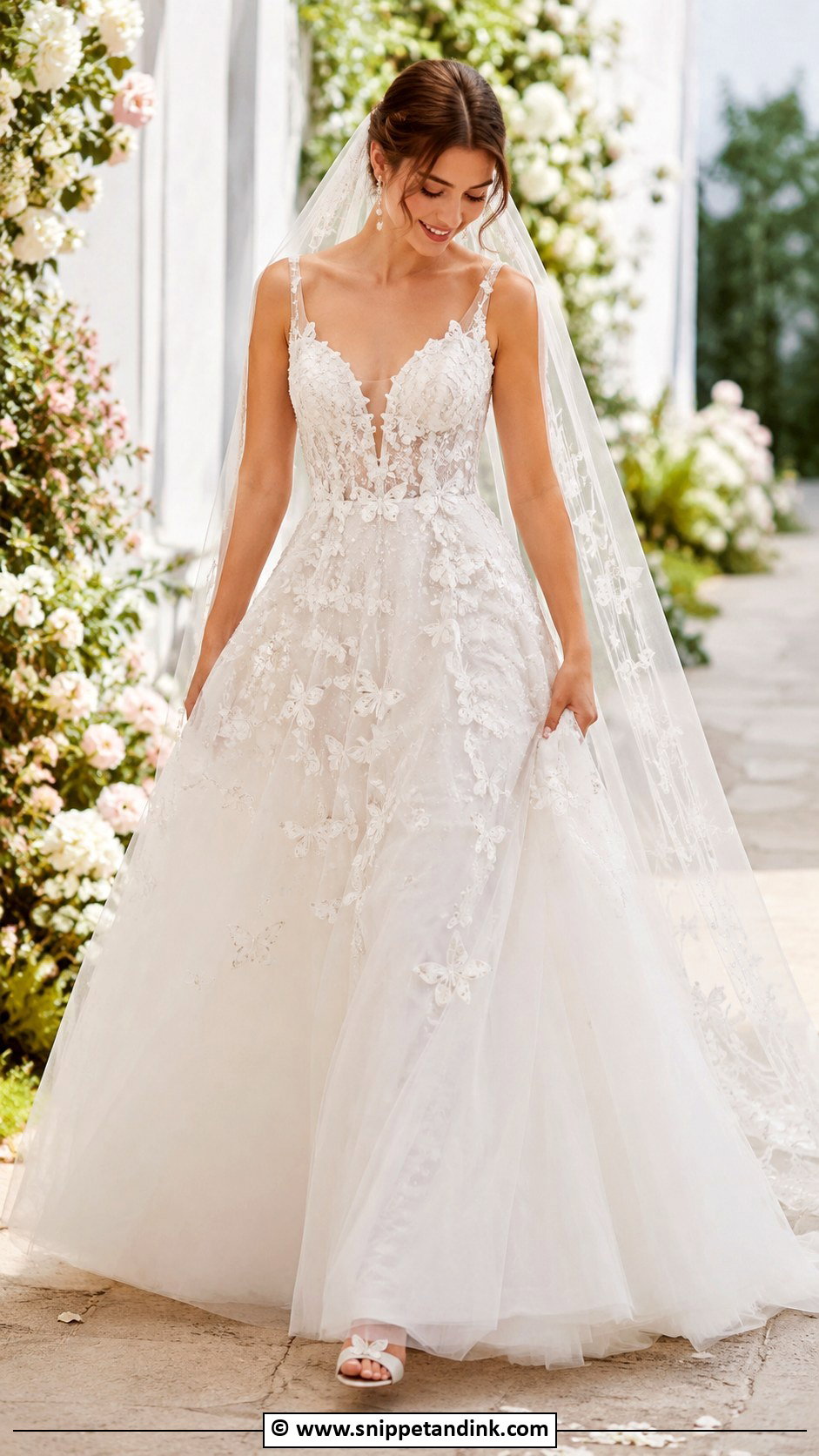
Butterflies work best when they look like they’ve landed, a few scattered appliqués or embroidered wings on a soft tulle overlay rather than an all-over pattern. Lightweight 3D butterflies tend to catch on a veil, so I’d pick a simple veil edge rather than lace. Keep the colors light, ivory, blush, champagne or pale lavender. A flowing A-line lets the details move when you walk, and a bouquet with airy flowers and ribbon matches that softness. Spring gardens fit it naturally.
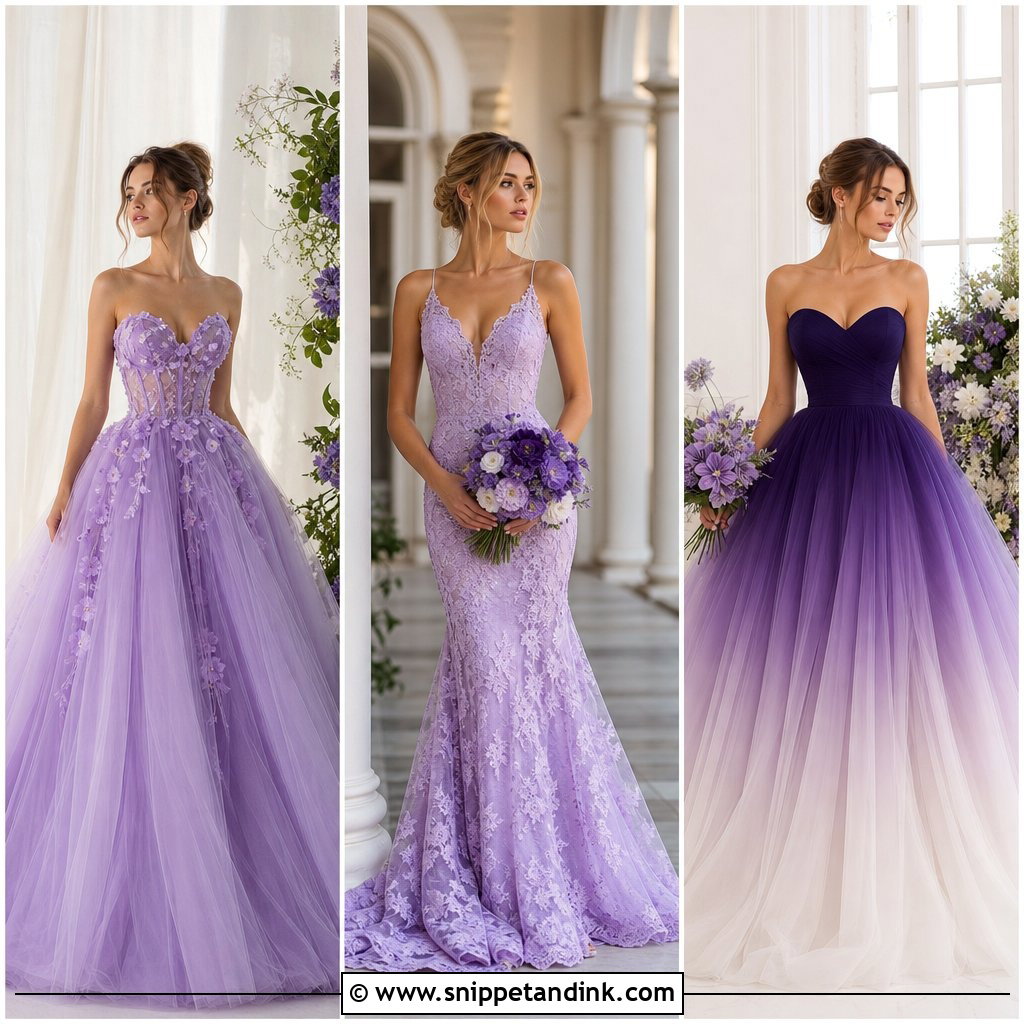
19. Lavender Wedding Dress
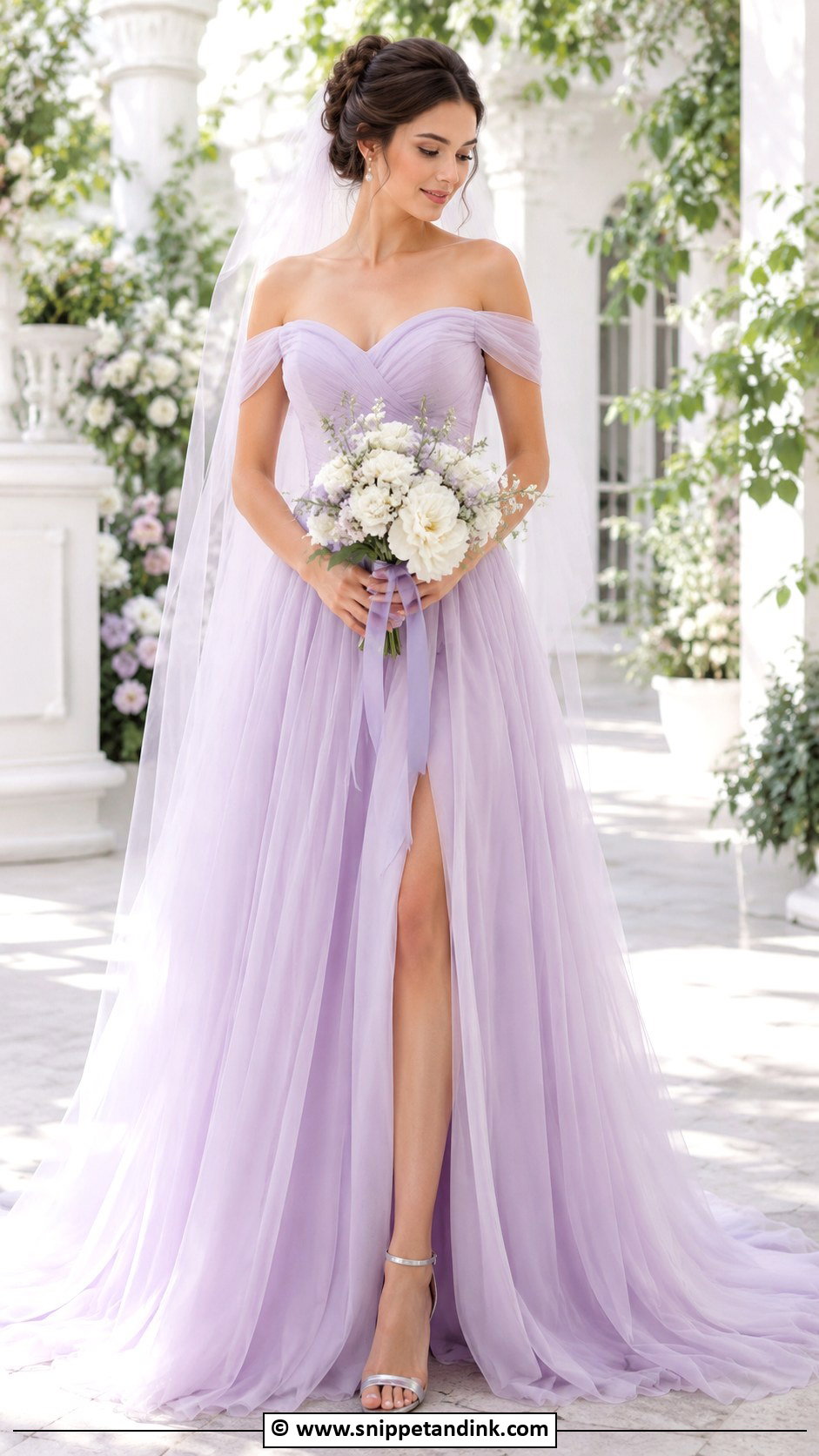
A lavender gown makes the whole mystical idea with color alone. The shade is gentle in daylight, but strong flash can wash it toward gray, so I like a slightly deeper lavender than the one that looks prettiest on the hanger. Chiffon and organza hold the color well; tulle softens it. A strapless or flutter-sleeve bodice keeps it light, and silver or ivory heels plus a sheer veil finish it.
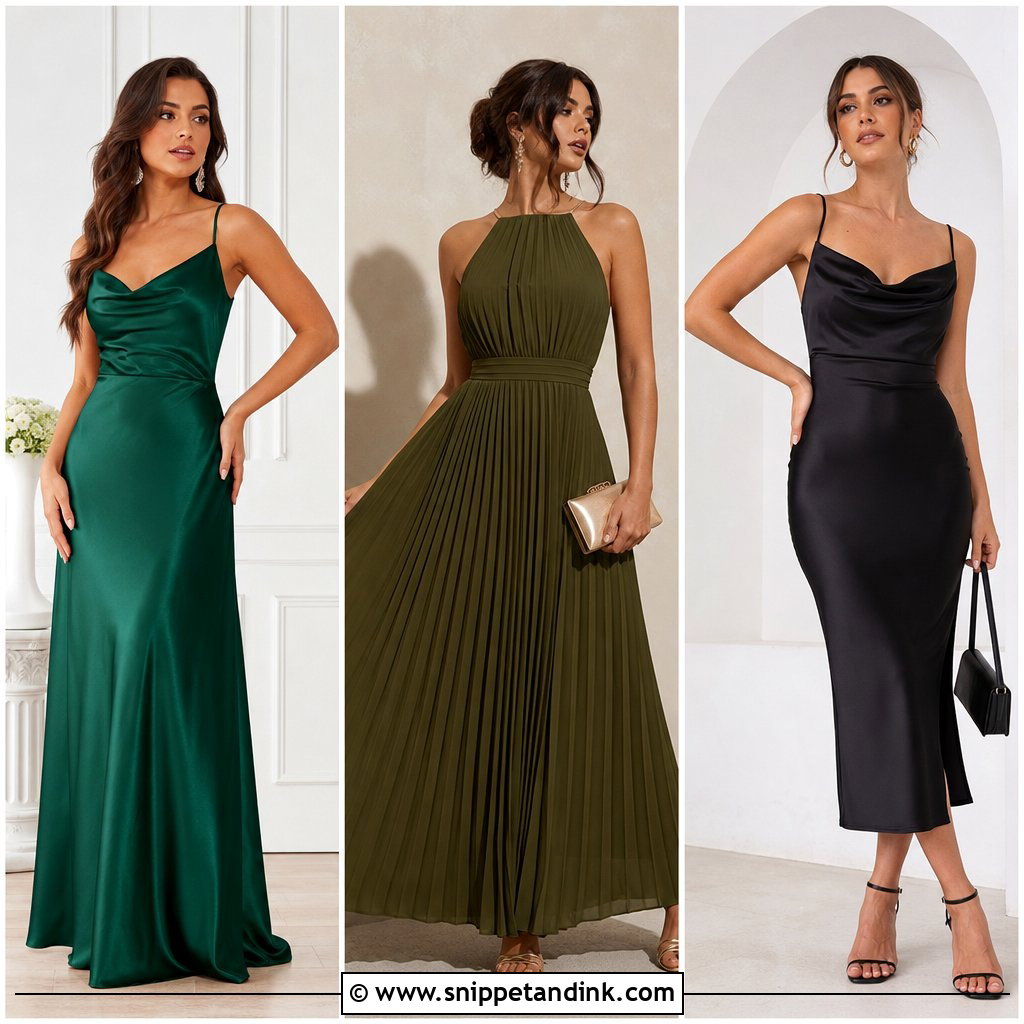


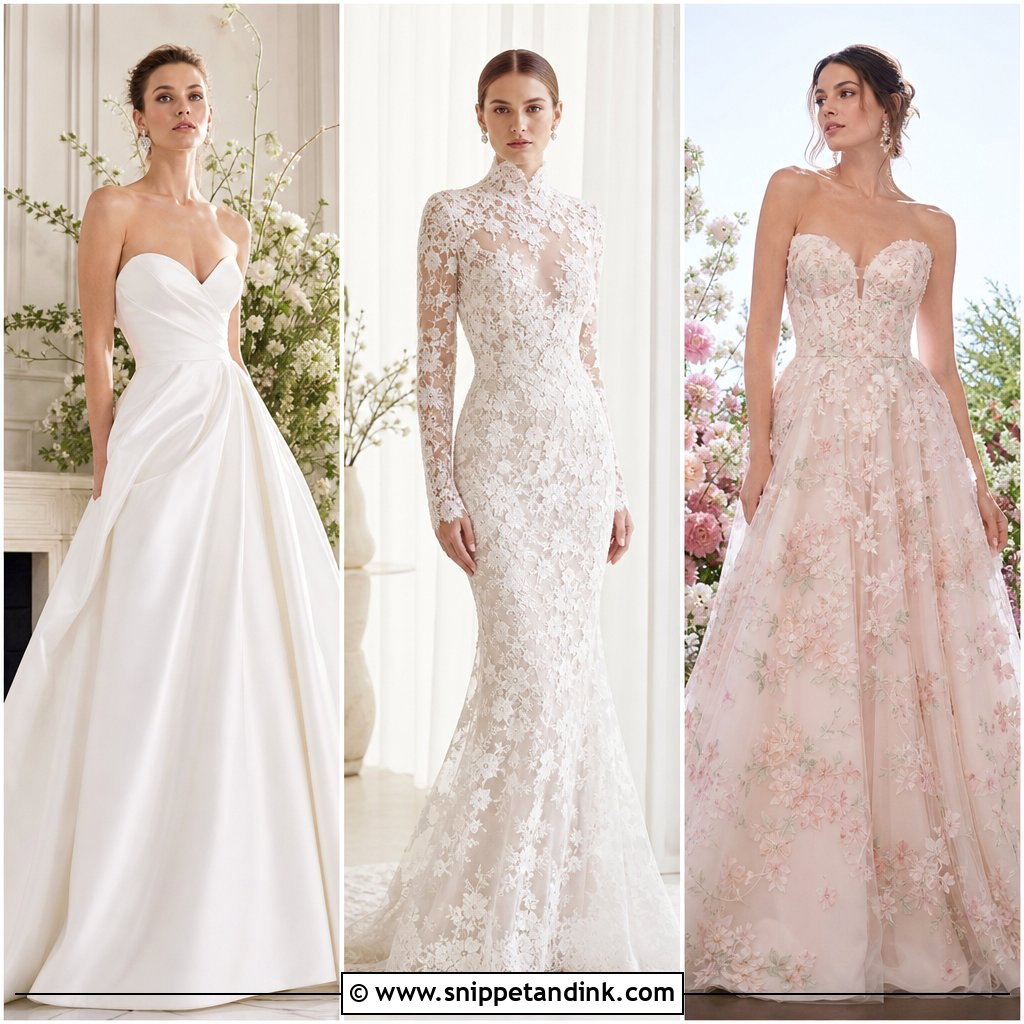
20. High Neck Lace Wedding Dress
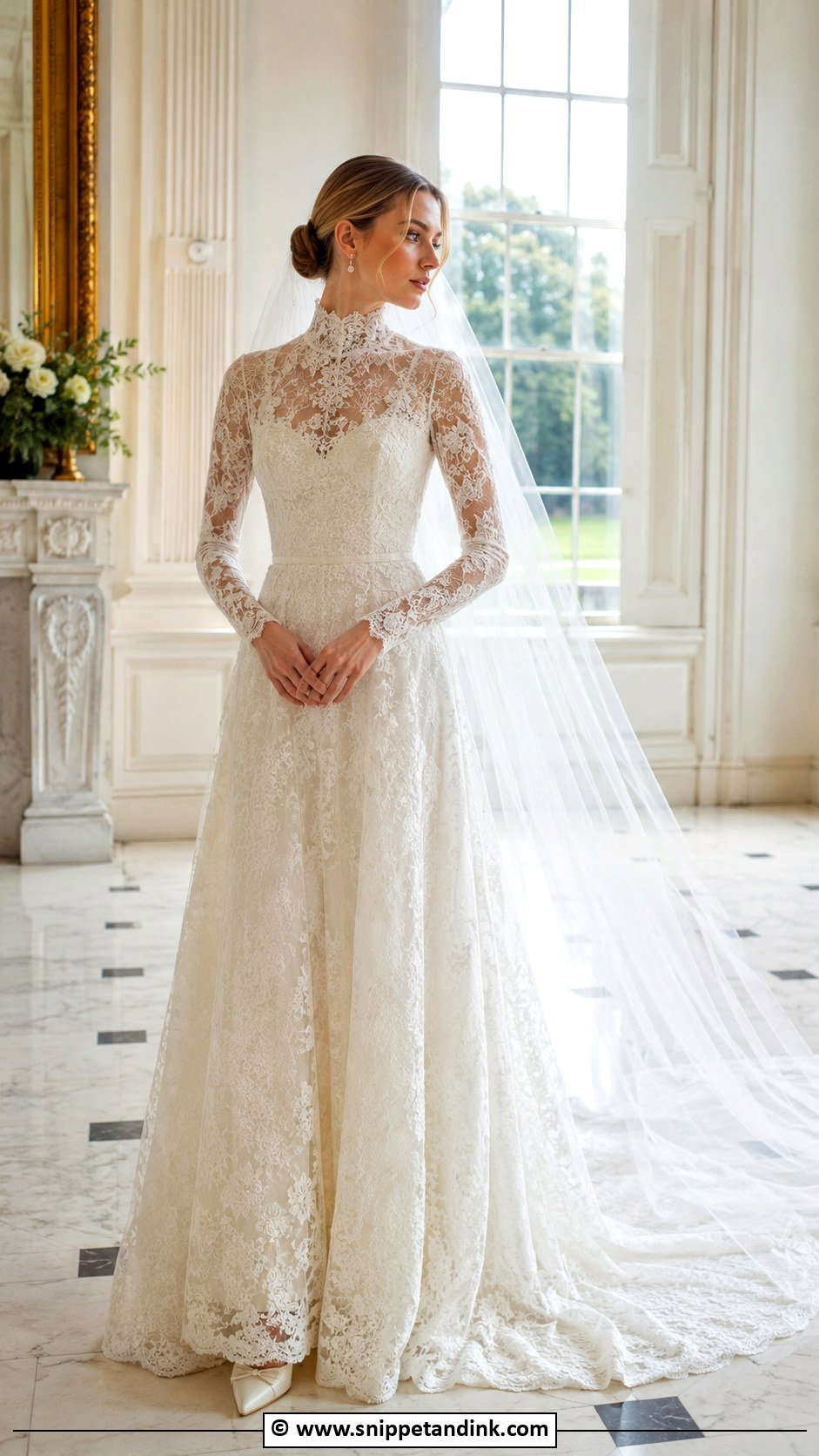
A high neckline in illusion lace frames the face and gives a quiet, vintage drama. It works best with hair up: a low bun keeps the neckline visible and stops hair from catching in the lace. Fit at the neck is everything, because lace that is too tight cuts in when you turn your head and lace that is too loose sags. A long veil adds movement without hiding the detail. Historic venues and cooler seasons suit it.
21. Off Shoulder Fairy Wedding Dress
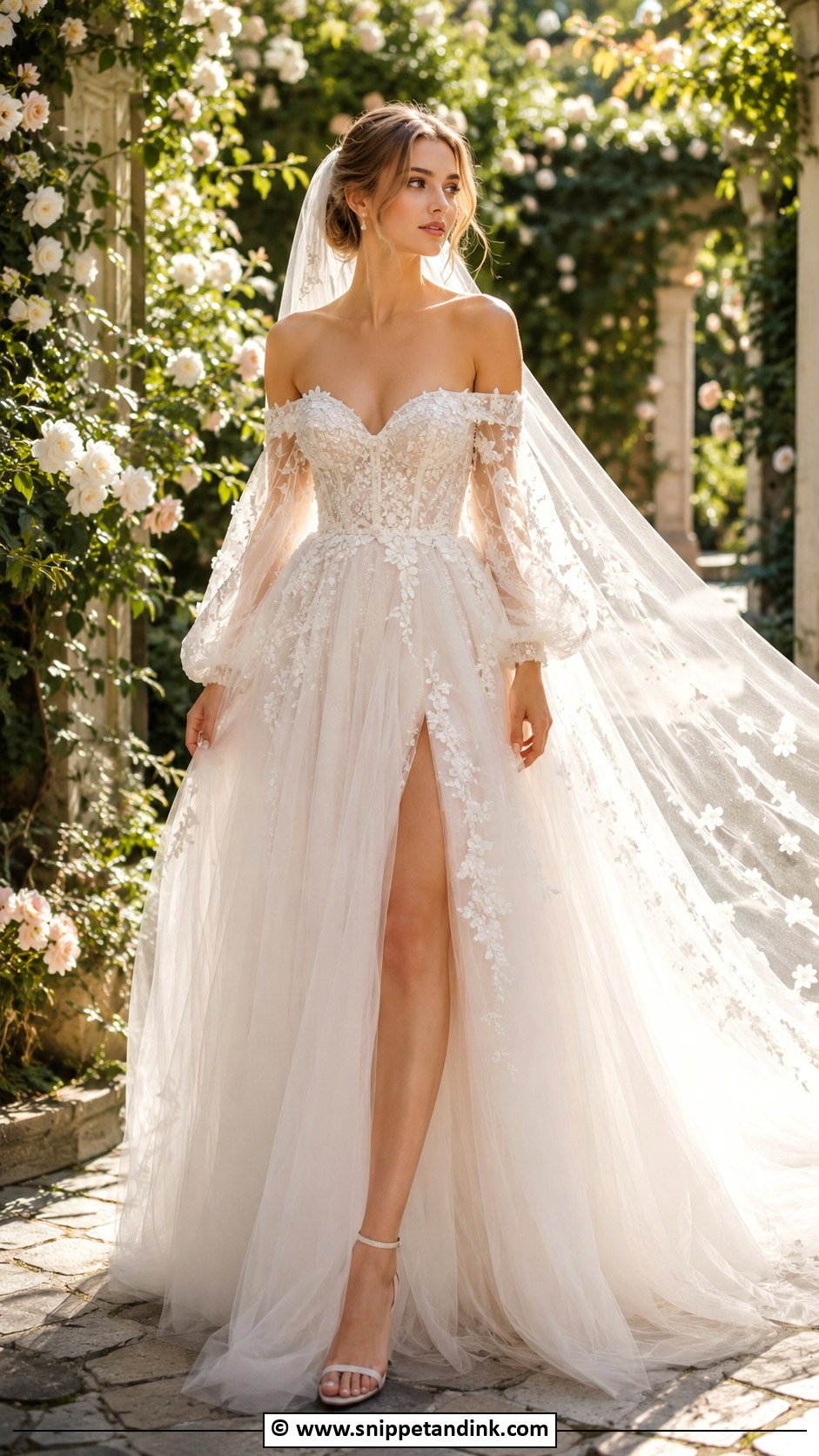
Off-the-shoulder gowns look easy, but the neckline has to be held by a firmly fitted bodice and silicone grip tape, or you’ll spend the evening pulling it up. I always have the bride lift her arms and dance a little at fittings. Tulle, organza and lace give the light feel, and detachable sleeves let you switch from ceremony to reception. Soft curls and pearl earrings keep it romantic.
22. Corset Ball Gown Wedding Dress
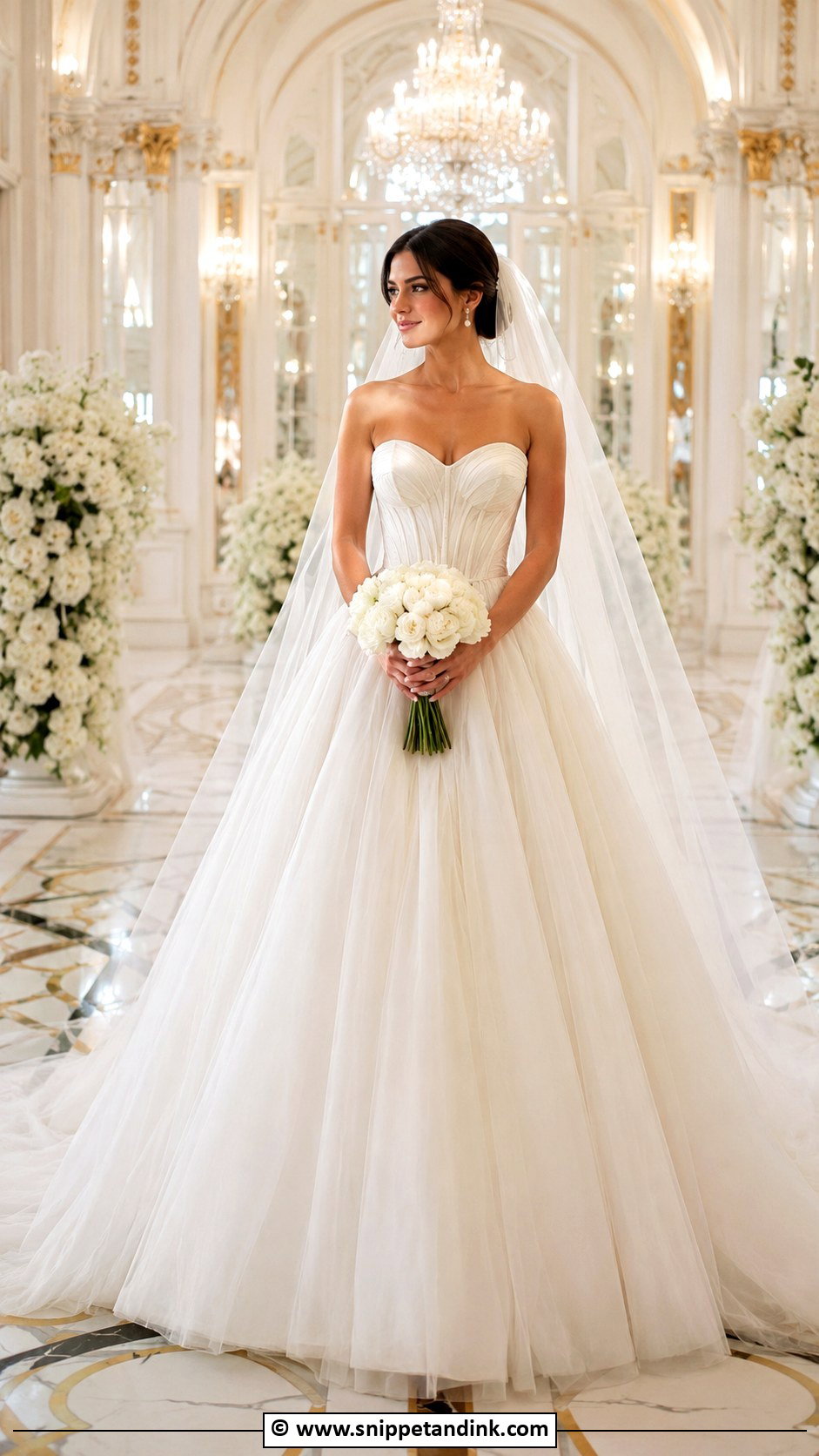
A corset ball gown wedding dress gets its drama from structure: boning defines the waist and the skirt does the rest. Do a sitting test at every fitting, because a corset that is fine standing can dig in at the ribs when you sit down to eat. Tulle feels dreamy, satin regal, lace romantic. Exposed boning or a sweetheart neckline modernizes it. A cathedral veil and a simple bouquet keep the gown center stage.
23. Sheer Overlay Wedding Dress
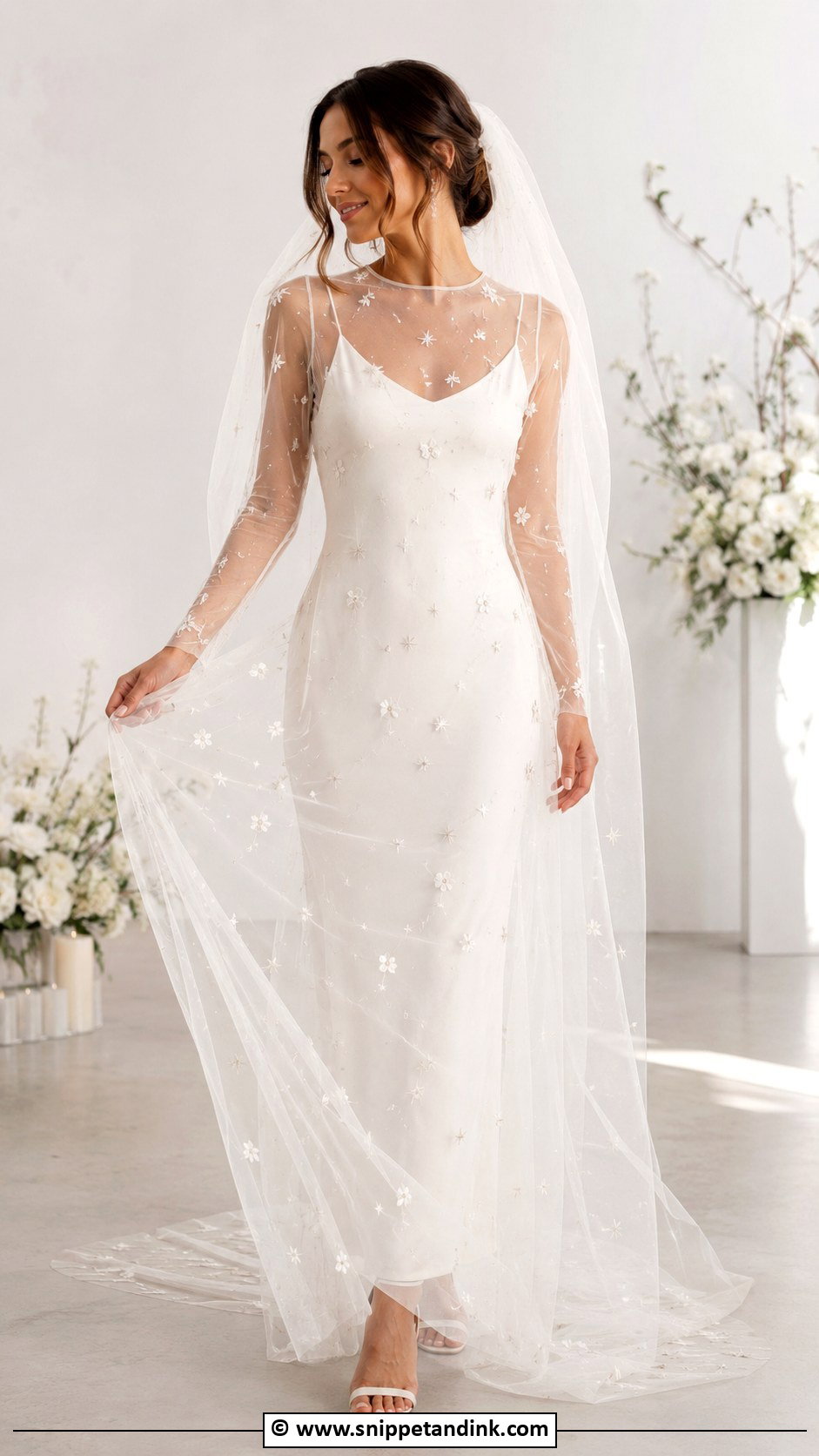
With a sheer overlay, the slip underneath is visible, so the fit and color of that slip matter as much as the overlay itself. Lines from shapewear show through, so I bring smooth, no-line underwear options to the fitting. Look for overlays with stars, flowers, pearls or a faint shimmer. Keep the hair clean and the earrings small so the transparent layers stay readable. It gives depth and movement without big volume.
24. Drop Waist Wedding Dress
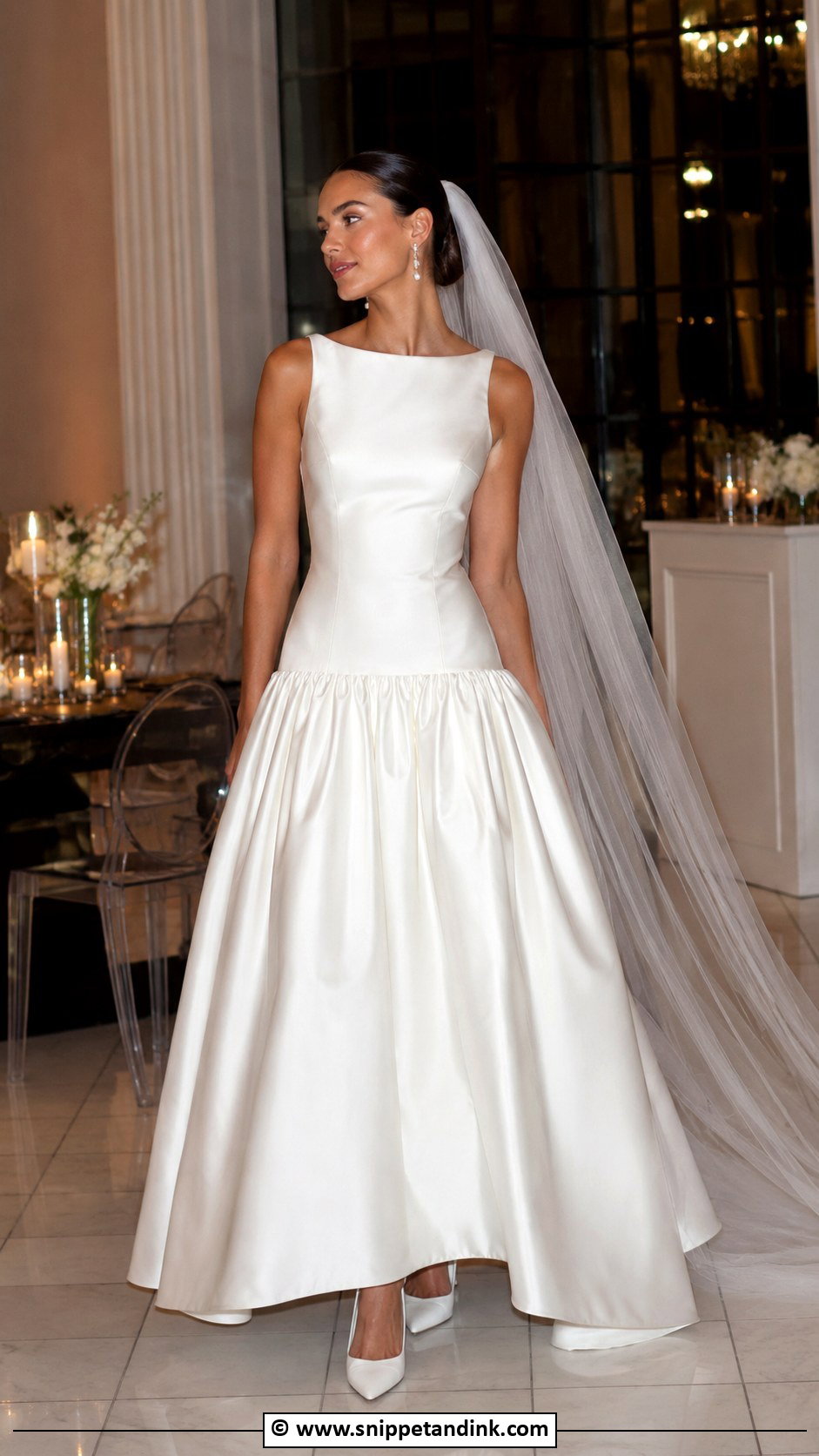
The drop waist sits low on the hips before opening into the skirt, which elongates a long torso and gives a vintage, sculptural line. On shorter torsos and petite frames it can make the legs look shorter, so I’d try it on before committing. Lace, satin, organza and tulle all work, and a clean square or scoop neckline keeps it balanced. Long earrings and a sleek veil suit the shape, and pointed heels help lengthen the legs again.




25. Gray Tulle Wedding Dress
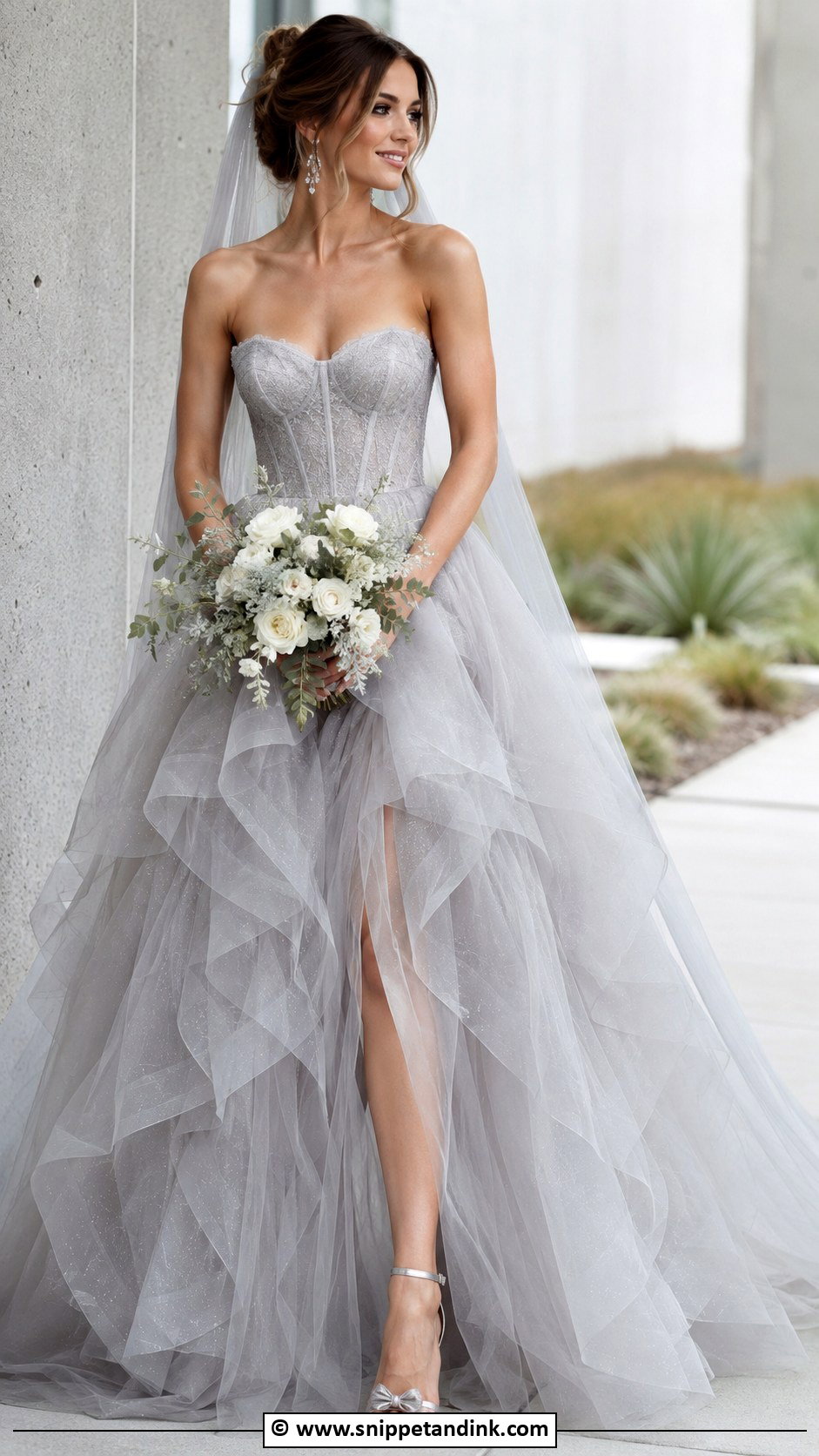
Gray tulle gives a misty, moonlit look, but it depends on undertone. Dove gray with a warm base flatters most skin; cool silver gray can make fair skin look tired. I always test gray against your face in daylight. A corset bodice, a bit of lace or subtle sparkle keeps it from looking plain. Silver heels, crystal earrings and an ivory or gray veil finish it, and white flowers with muted greenery keep the bouquet calm. A moody outdoor backdrop or a modern venue frames it best.
26. Pearl Veil Wedding Dress
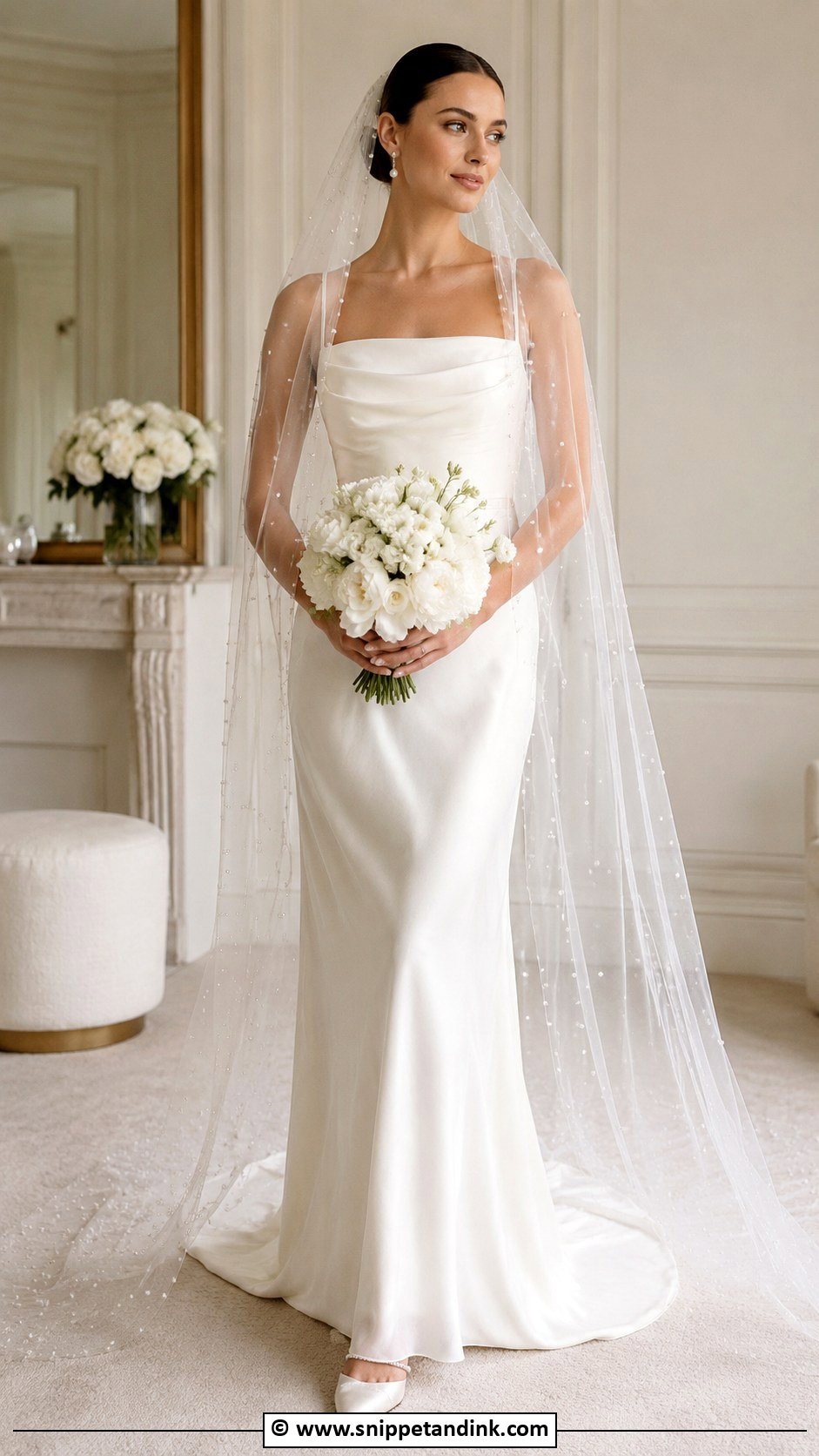
Here the veil is the magic, so start with a simple gown in satin, crepe or plain tulle and let a sheer veil scattered with pearls do the rest. Pearls add weight to the veil’s edge, which pulls it back off the head unless the comb is anchored well into the hair. If the veil is heavily detailed, keep the dress clean; if the dress has pearls on the corset, keep the veil scattered lightly. Pearl earrings and satin heels match.
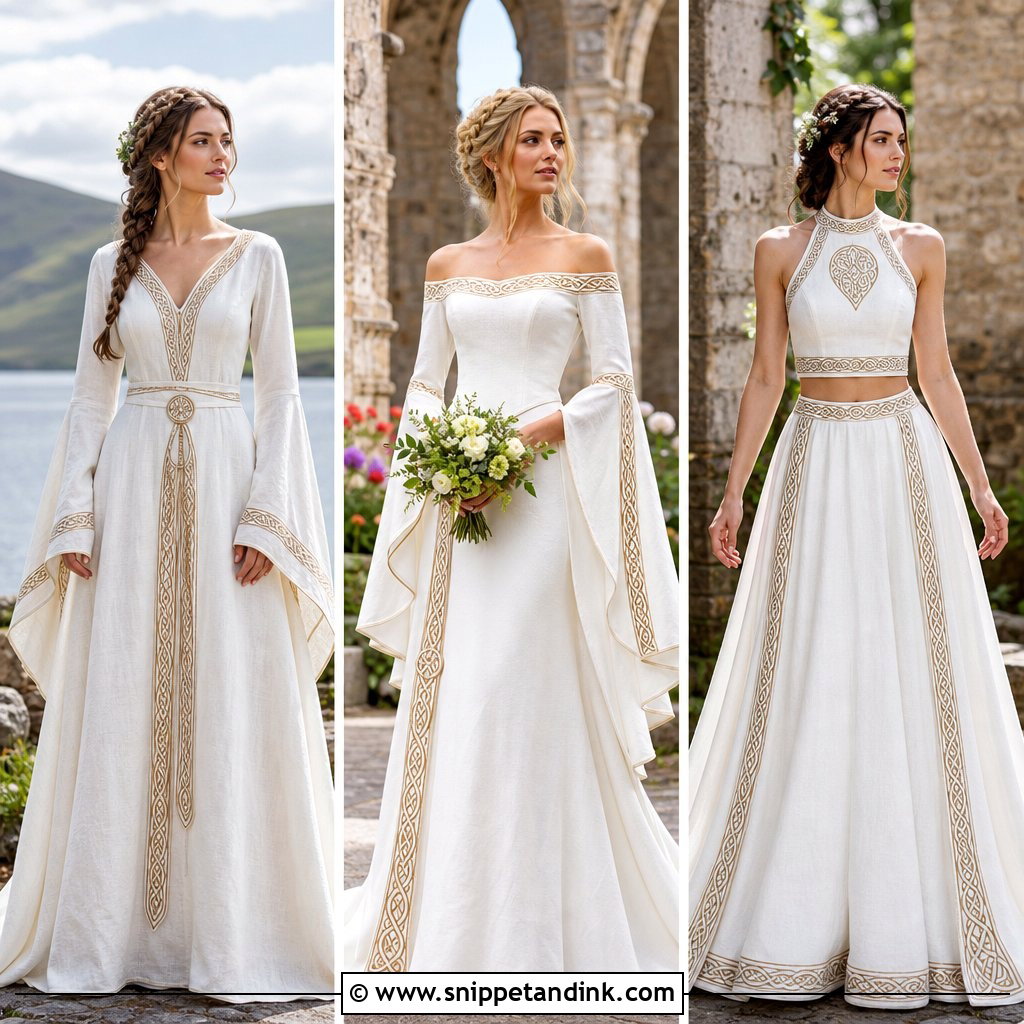
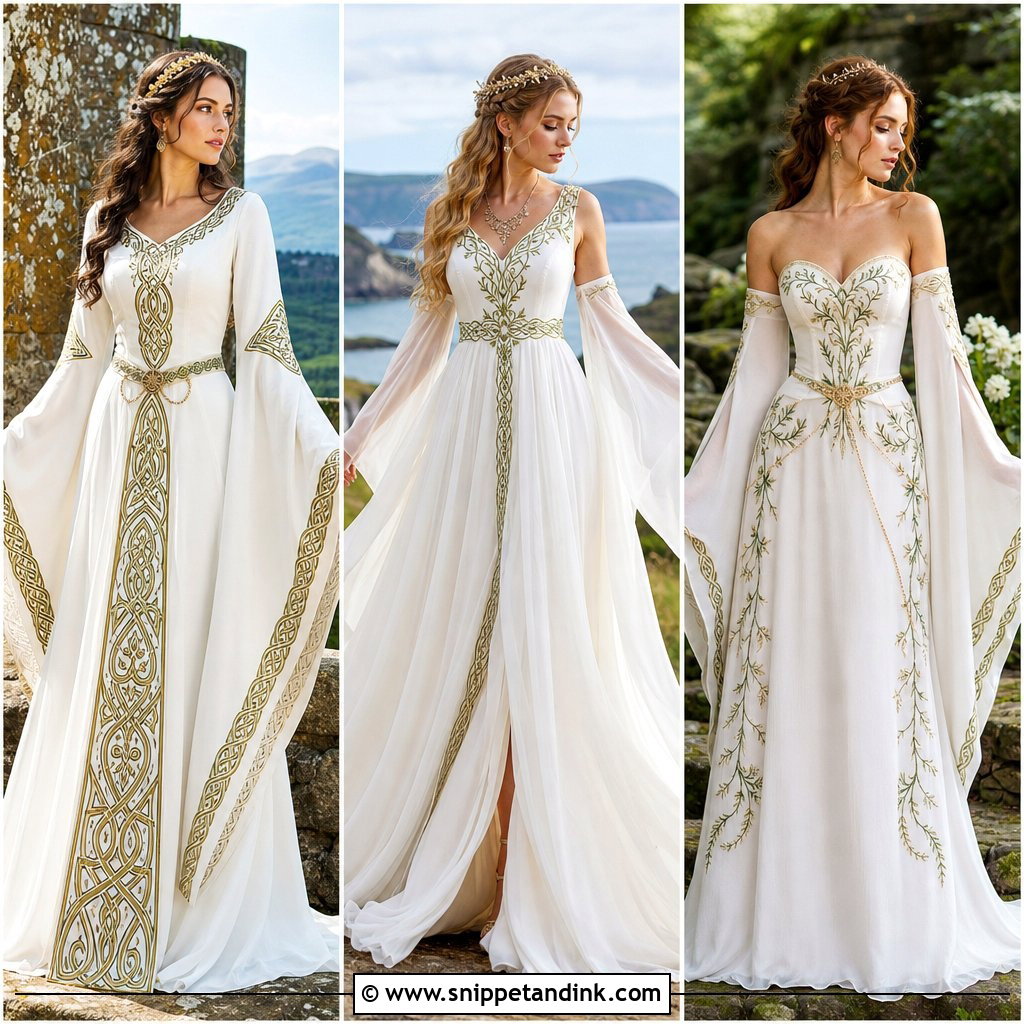
27. Elven Inspired Wedding Dress
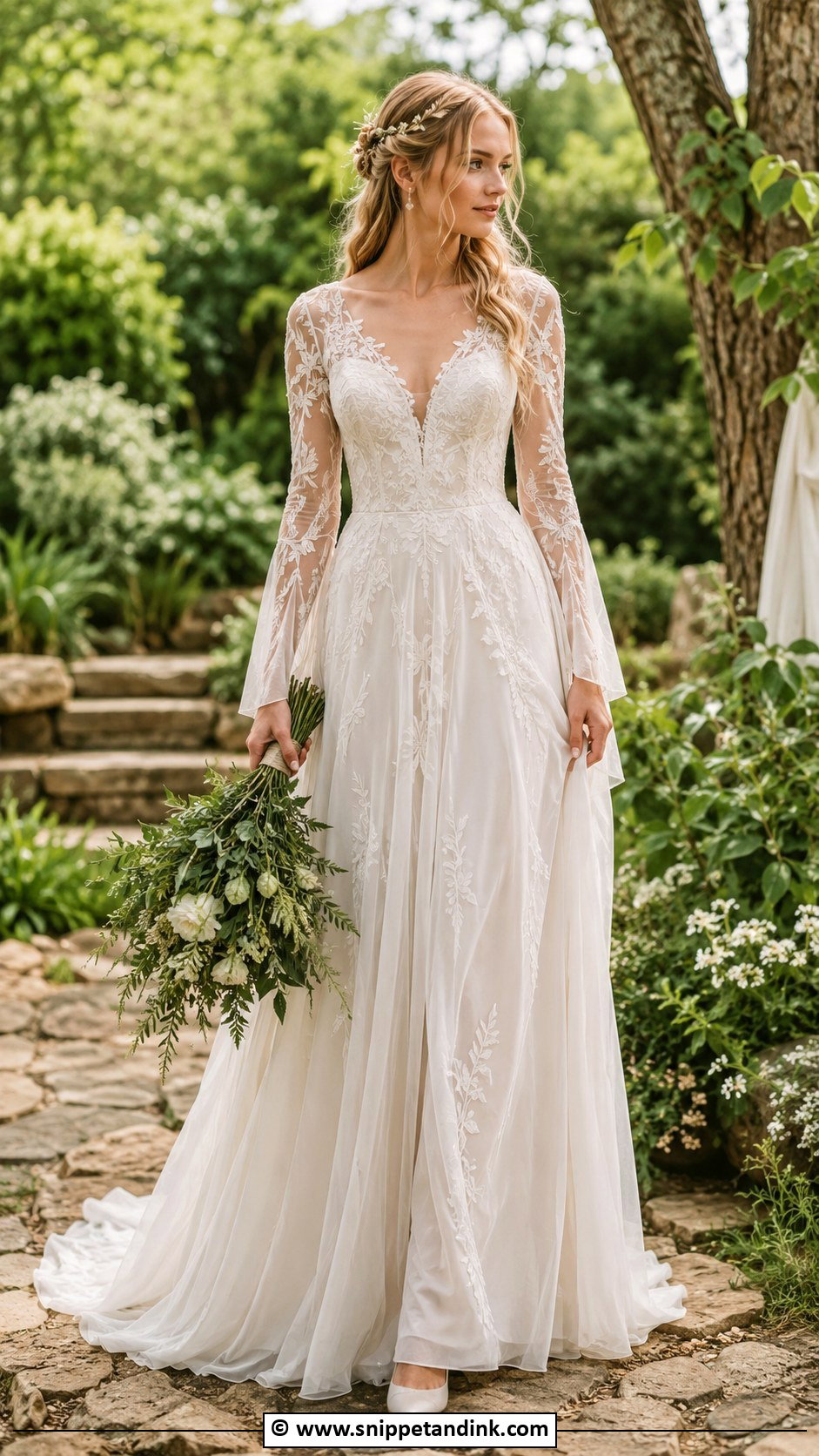
Elven style is about long flowing sleeves, vine lace and a silhouette that floats rather than holds stiff. Wide bell sleeves are the practical problem: they trail through food and catch on chair backs, so plan to tie or pin them for dinner. Ivory, champagne, pale sage and soft silver all suit the look. A V-neck, high neck or illusion bodice works depending on your comfort. Leaf hair pins and flats or low heels keep you steady on outdoor ground.
28. Crystal Beaded Wedding Dress
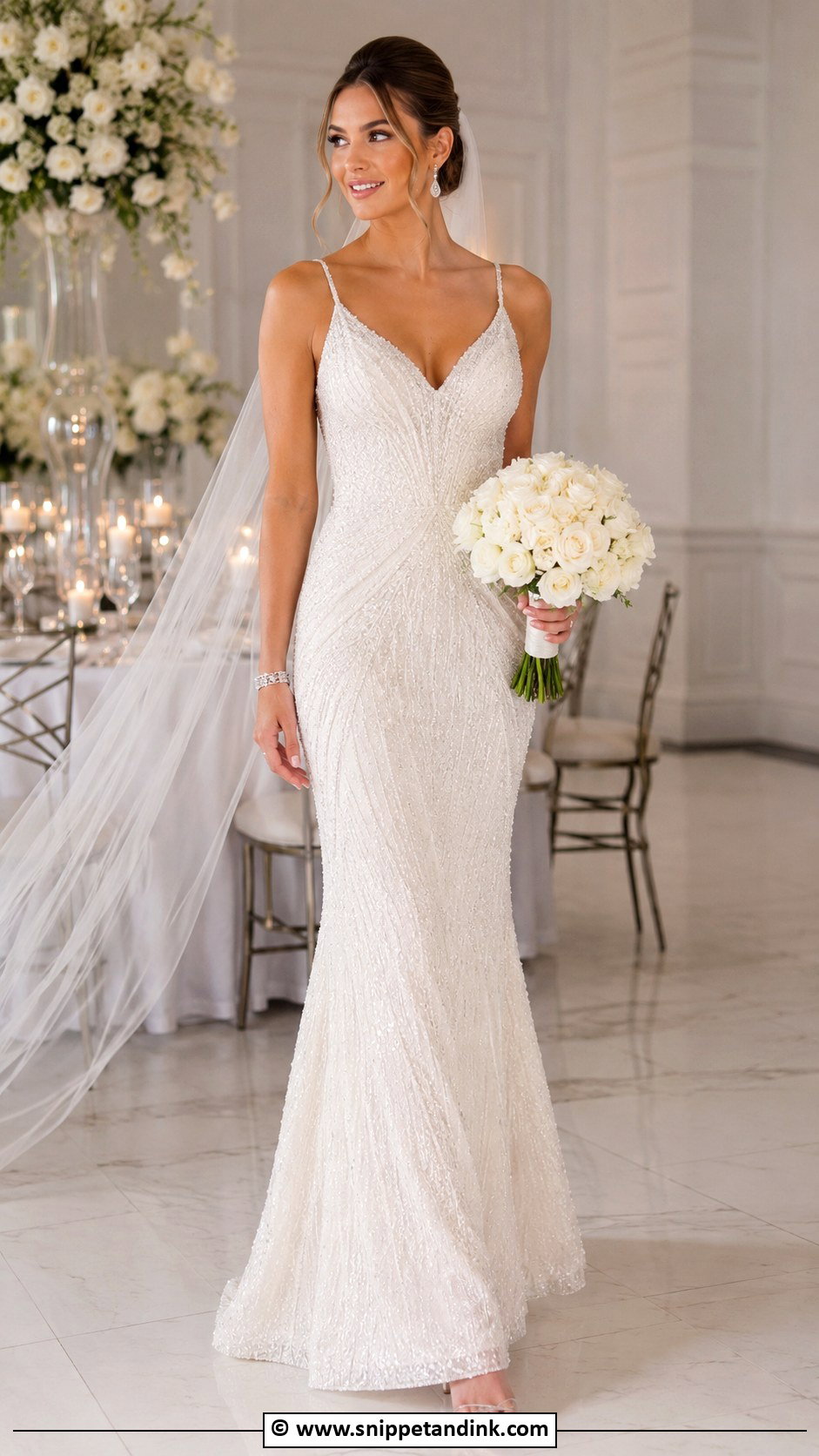
Fine crystal work across a bodice or sleeves is more refined than large stones and catches light without looking heavy. Crystals can snag a lace-edged veil, so I’d pair this one with a plain cut-edge veil. A fitted sheath, soft mermaid or A-line all work. Clear or silver heels and crystal studs are enough. A sleek hairstyle makes it modern, soft waves make it romantic. Evening receptions with candles or spotlights bring out the sparkle.
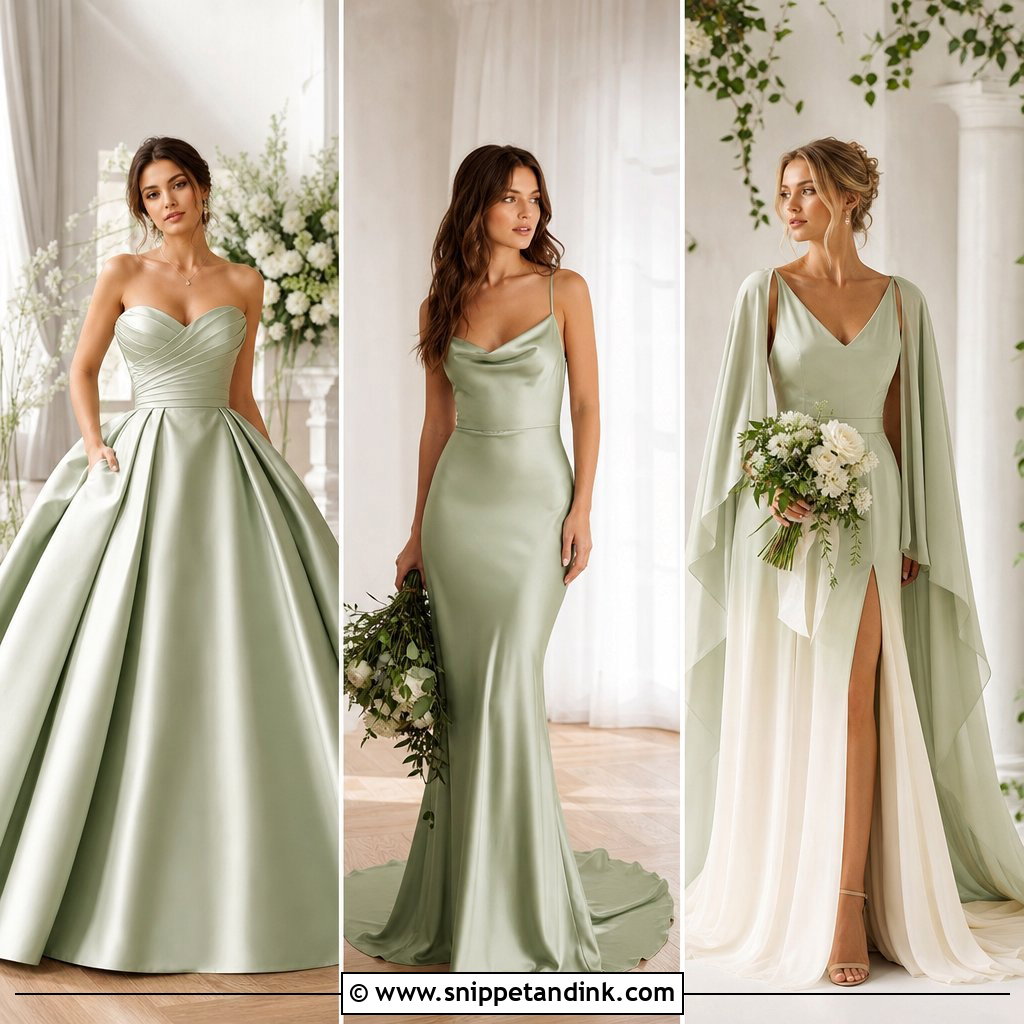
29. Sage Green Wedding Dress
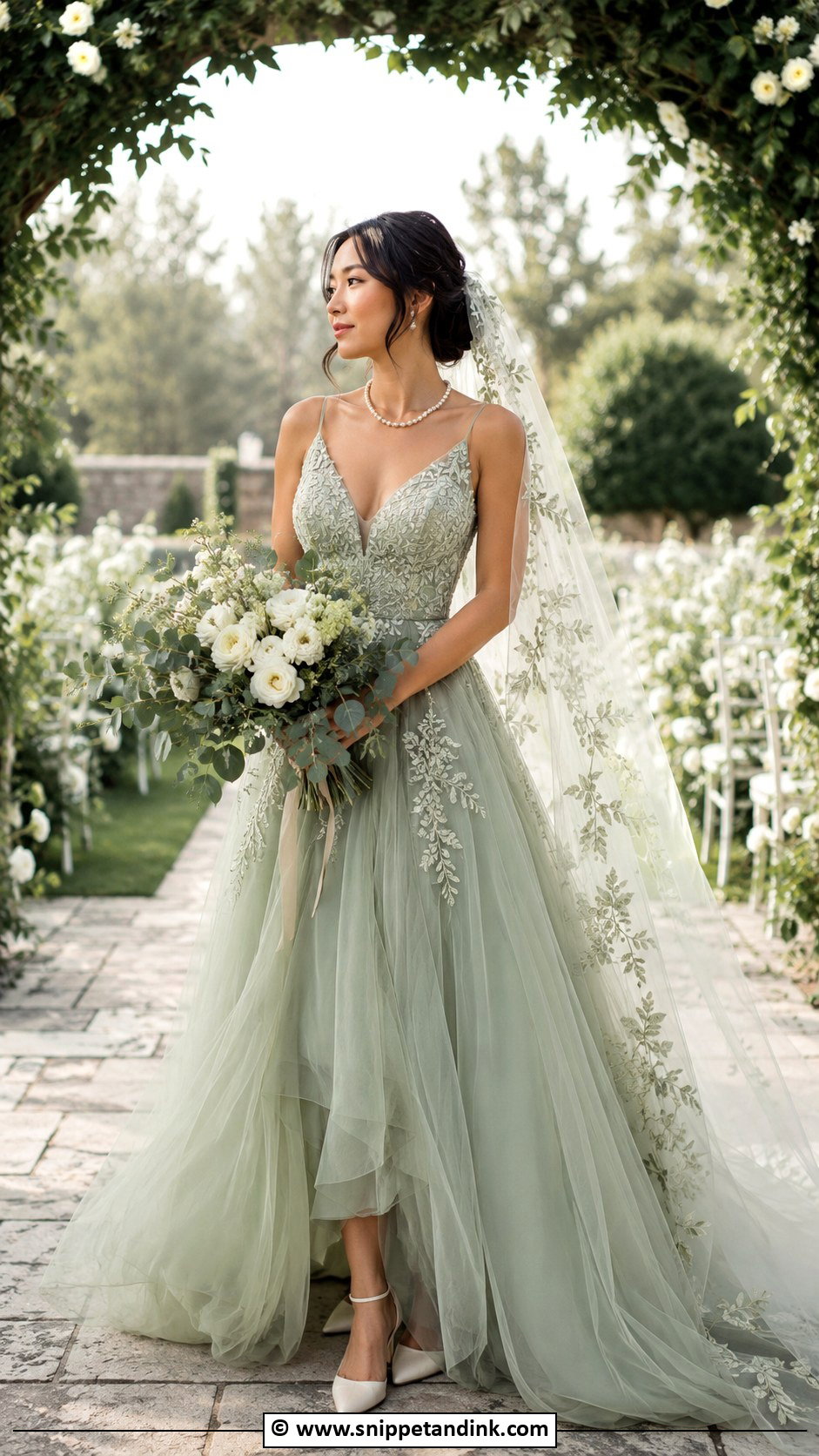
A sage green wedding dress is calm and unexpected, and the color reads differently under trees than in an indoor room. Outdoors, green light bouncing off foliage can make it look grayer, so a slightly warmer sage holds up better in photos. Tulle, chiffon, satin and lace all work in pale sage. Ivory heels, pearls and a veil with botanical embroidery suit it, and a bouquet with eucalyptus and trailing ribbon ties it to the setting.
30. Dramatic Black And White Wedding Dress
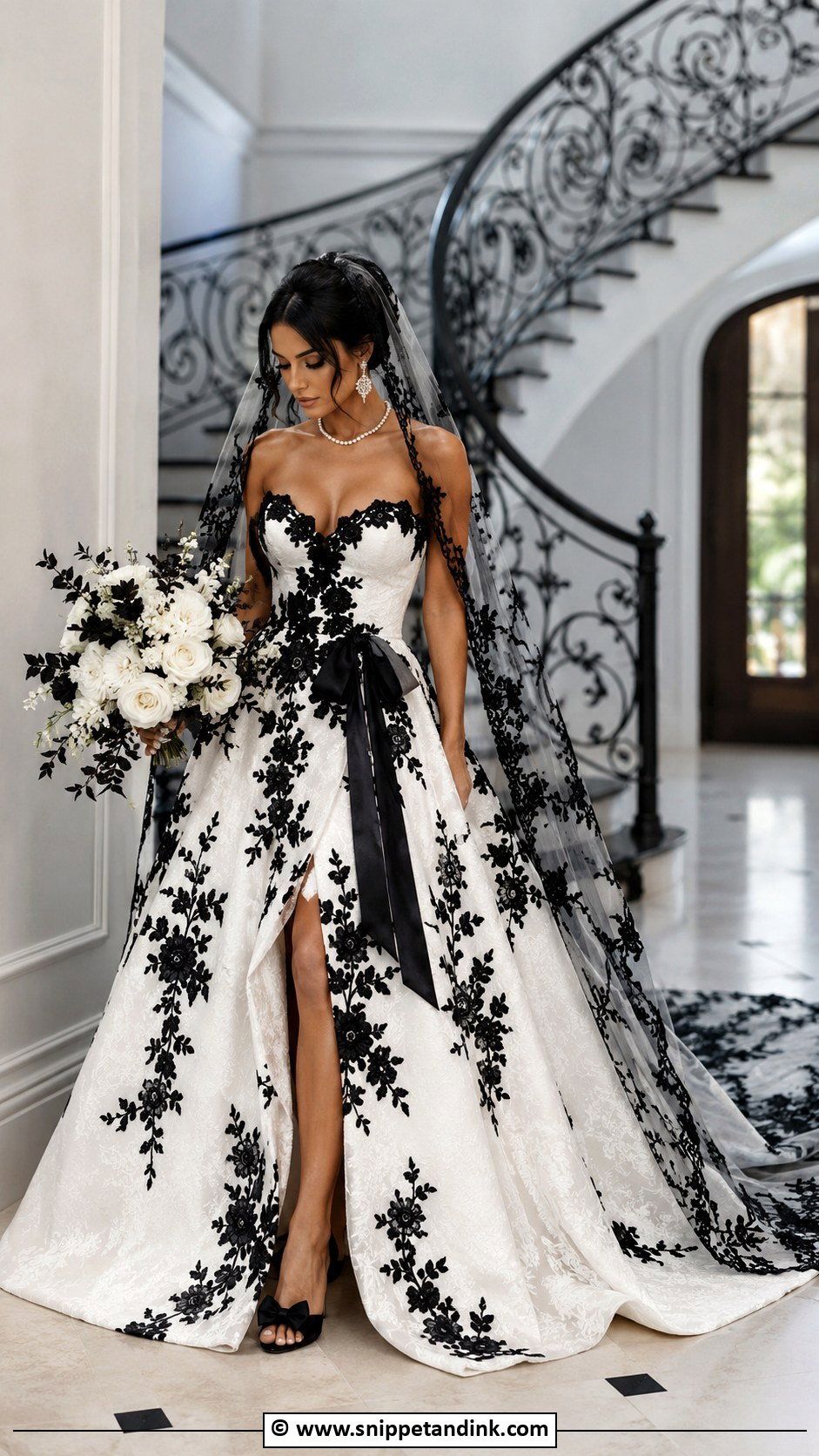
Black and white contrast gives drama without a fully black gown: black lace appliqué on ivory, a black bow, gloves, a black cape or an embroidered veil. One thing to check is dye transfer; black trims and ivory satin pressed together in heat can bleed, so ask whether the trim is colorfast. A ball gown or A-line keeps it bridal. Black heels, pearls and a bouquet with white flowers and dark greenery work well in modern venues and historic estates.
Delicate Fabrics Need a Plan for the Day and After
Many of these gowns use the fussiest fabrics in bridal: open tulle, velvet, sequins, metallic thread and colored dyes. They are worth it, but they need a bit of planning.
During the wedding
Tulle snags on bark, stone walls and rough benches, so I keep a small pair of sharp scissors and clear nail polish in my kit to trim and seal a pulled thread before it runs. Velvet and satin crease when you sit, which is why I have brides stand for the getting-ready photos and use a steamer before the ceremony, never an iron. If your gown has a cape or long sleeves, decide with your planner exactly when they come off.
Cleaning and storage
Get the gown to a specialist cleaner within a few weeks, because sugar from drinks and cake turns brown over time even when you can’t see it. Tell the cleaner about any metallic thread, sequins, colored tulle or black trims so they can test colorfastness first. At home, store it flat or folded in acid-free tissue in a breathable box, away from light and plastic, which traps moisture and can yellow fabric. Hanging a heavy beaded or velvet gown for months stretches the shoulders.
Which Kind of Magic Is Yours?
Mystical style can be celestial, gothic, botanical or simply soft, and the right one depends on your venue, the season and how you want to feel walking in. If subtle magic suits you, look at pearl details, sheer sleeves or vine lace. If you want drama, black tulle, silver sequins or a hooded cape will get you there. Whichever way you lean, build the veil, shoes, jewelry, hair and bouquet around one mood, and let the gown carry the strongest detail.
You'll Like These Ideas:


Leave a Reply