
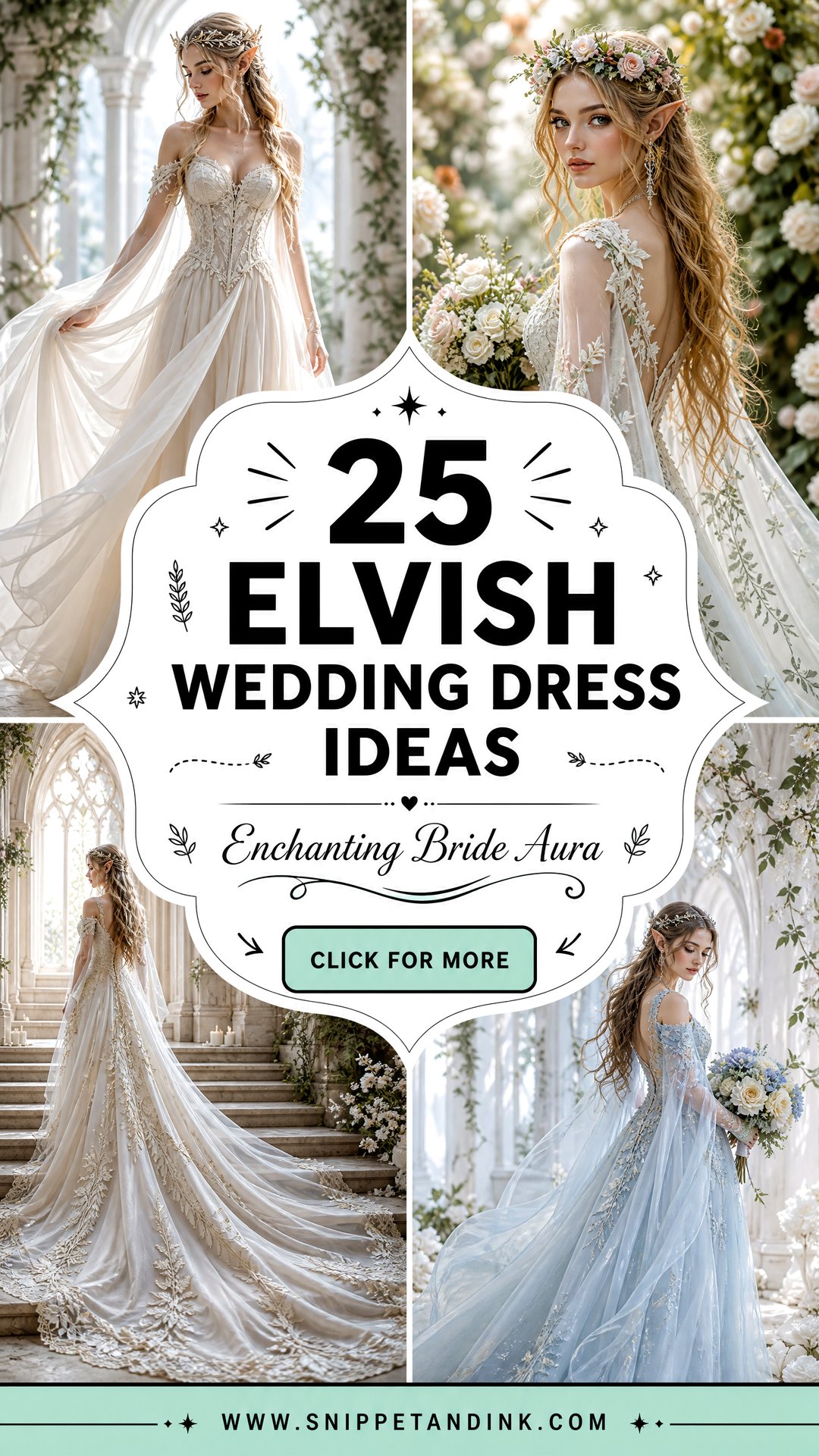
An elvish wedding dress sits in a narrow space. It should feel a little otherworldly, yet still read as a bridal gown rather than something borrowed from a film set. In fittings I find that line is held mostly by fabric and restraint: fluid chiffon, vine embroidery, a pointed waist or a long sleeve does the work, and one fantasy accessory finishes it. Each of the looks below comes with the hair, shoe and veil notes I’d give a bride at her second appointment, and I’ve flagged where a detail fights a forest floor, a cold castle or a long day on your feet.
Where an Elven Gown Actually Comes From
Few bridal shops keep a rail labelled elvish. In practice brides reach this look by one of three routes, and each one runs on a different timeline.
An ordinary bridal gown, adapted
Many of the looks below start life as a simple A-line or sheath in chiffon or lace. A skilled seamstress can add bell sleeves, a detachable cape or a pointed waist. Allow for the gown order itself, which commonly takes several months, and then two or three alteration fittings spread over the last couple of months before the wedding.
A dressmaker who builds it from scratch
Independent makers who specialise in historical or fantasy gowns can create the whole dress, embroidery included. Hand embroidery is slow work, so ask how long the maker needs before you fall for a design, and get the dates for each fitting in writing.
Separates
A lace bodice with its own tulle or chiffon skirt lets you choose a sage or blush skirt without dyeing a whole gown. Separates are also easier to alter, because the top and skirt can be fitted independently.
Whichever route you take, bring these to the first appointment:
- Two or three images showing the silhouette you want, not only the mood
- Photos of the ground at your venue: grass, gravel, stone steps or forest floor
- The headpiece you’re considering, so the neckline and crown are judged together
- Your shoes, or at least the heel height you’ll really wear
1. Elvish Wedding Dress With Bell Sleeves
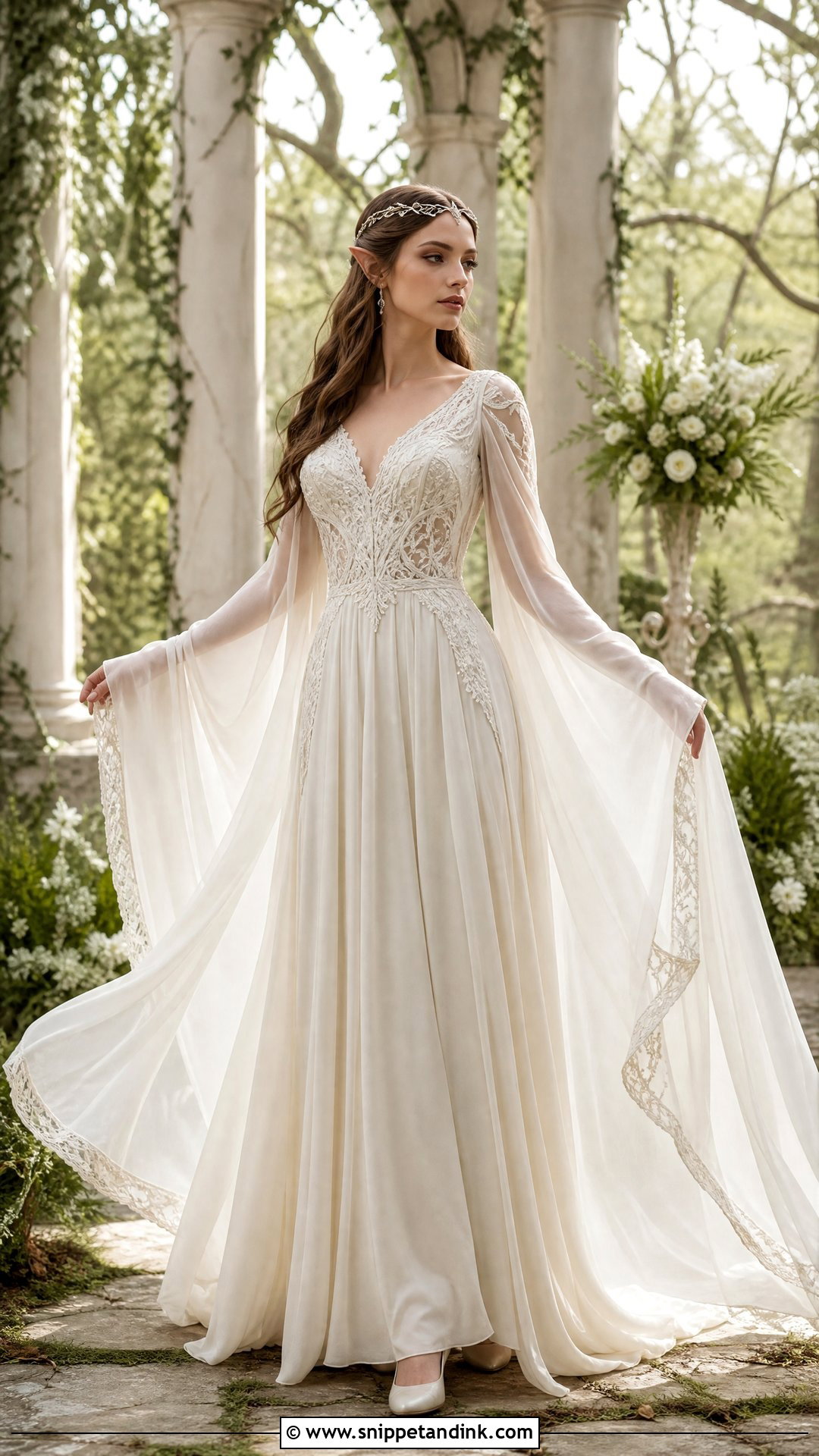
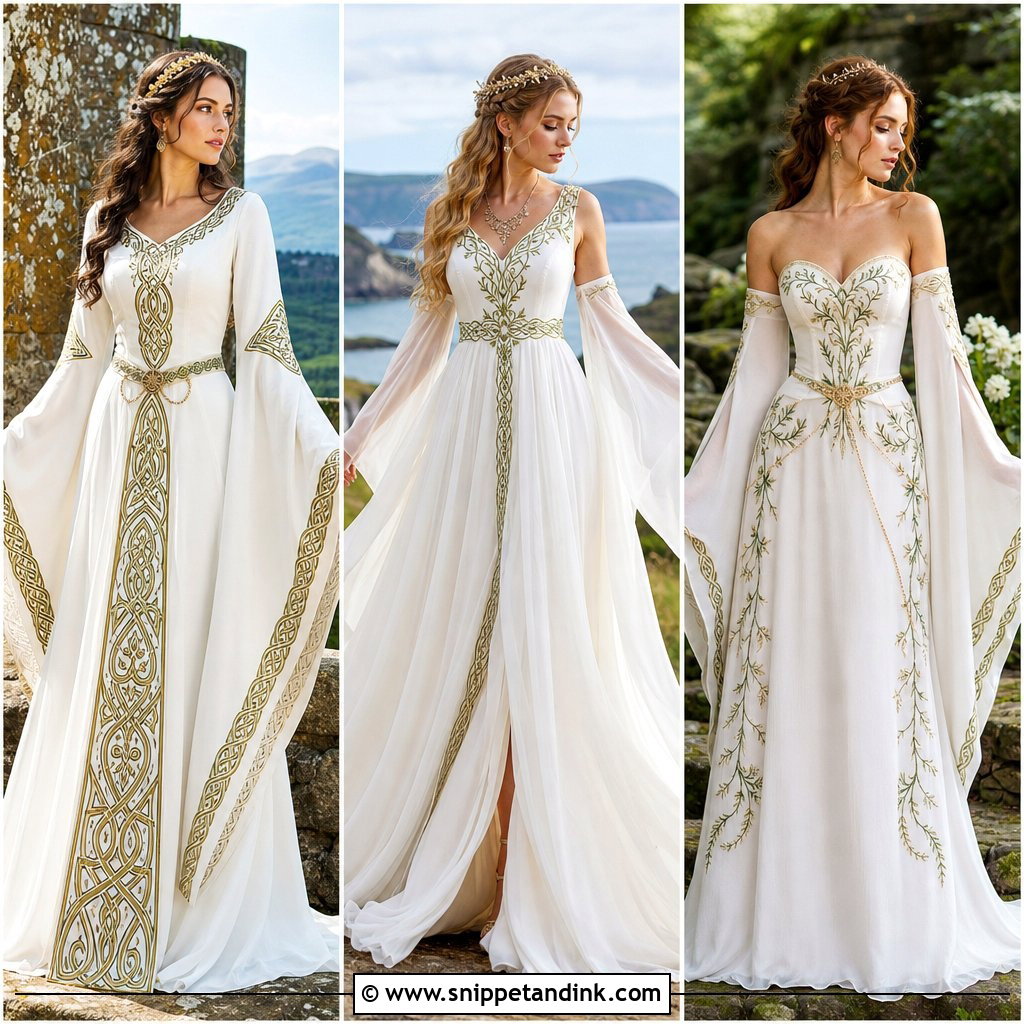
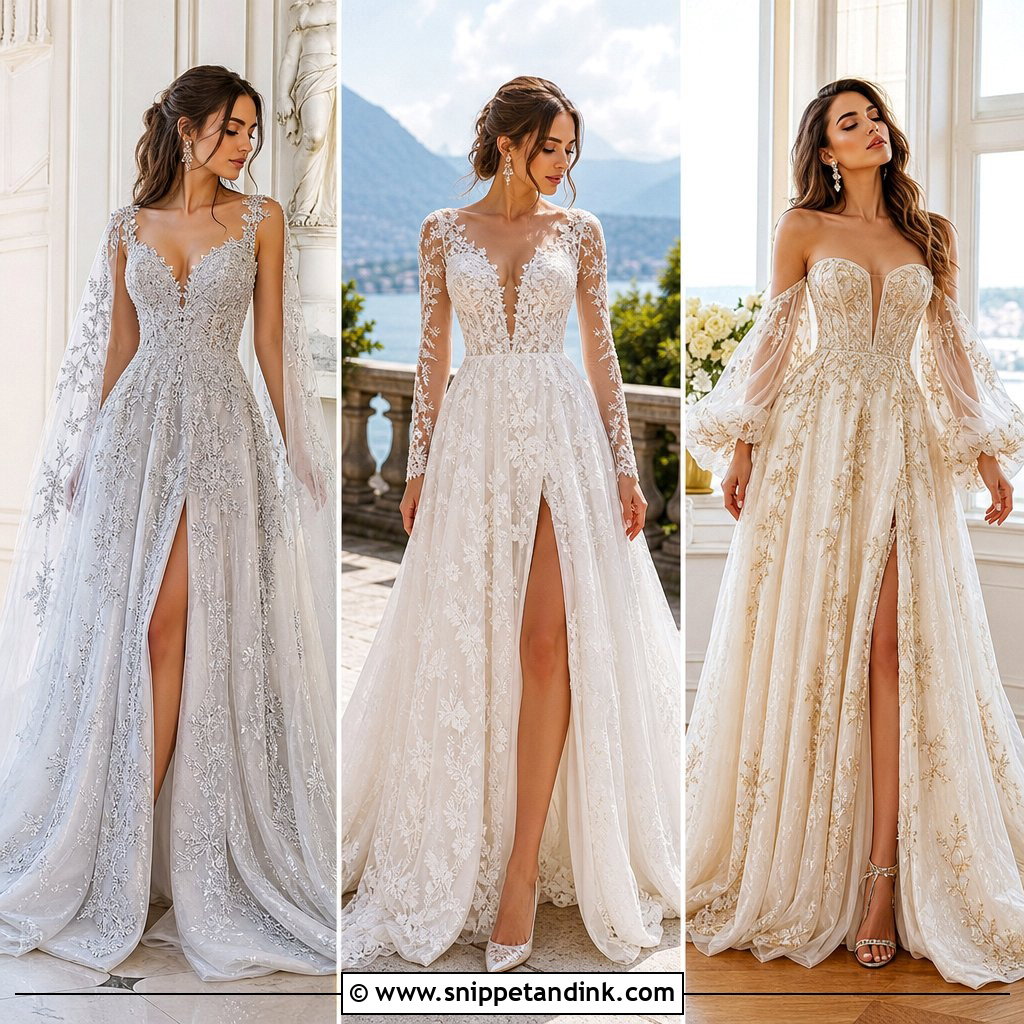
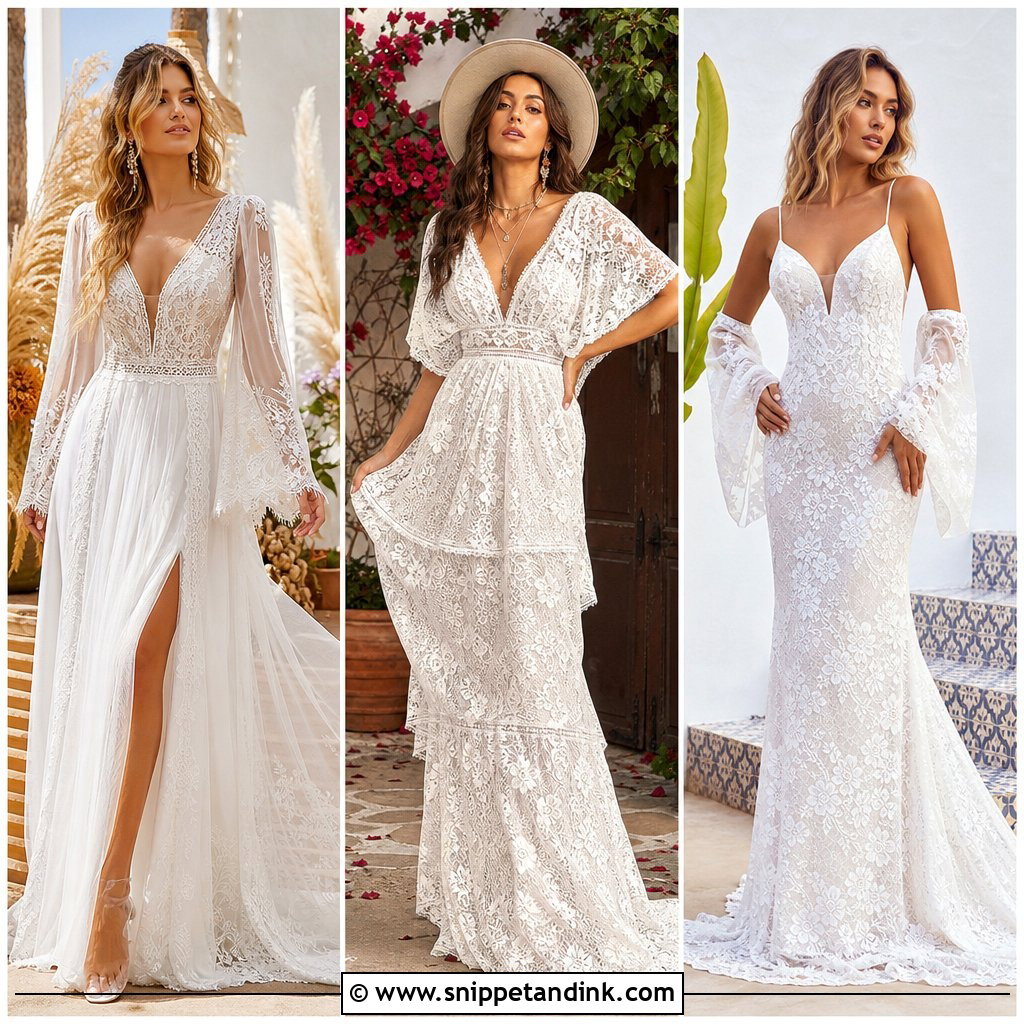
Bell sleeves are the first thing most brides picture for an elven gown, because the fabric swings a beat behind your arm every time you move. I always ask for lightweight chiffon or silk here. A bell cut in heavy satin hangs like a curtain and drags the shoulder seam down. A V-neck and natural waist keep the bodice simple enough for the sleeves to lead, and a silver circlet, loose waves, pearl drops and ivory flats finish it. One check before you buy: hold your arms out as if signing the register. A deep bell can sweep straight across a table or a candle.
2. Elvish Wedding Dress With Leaf Embroidery
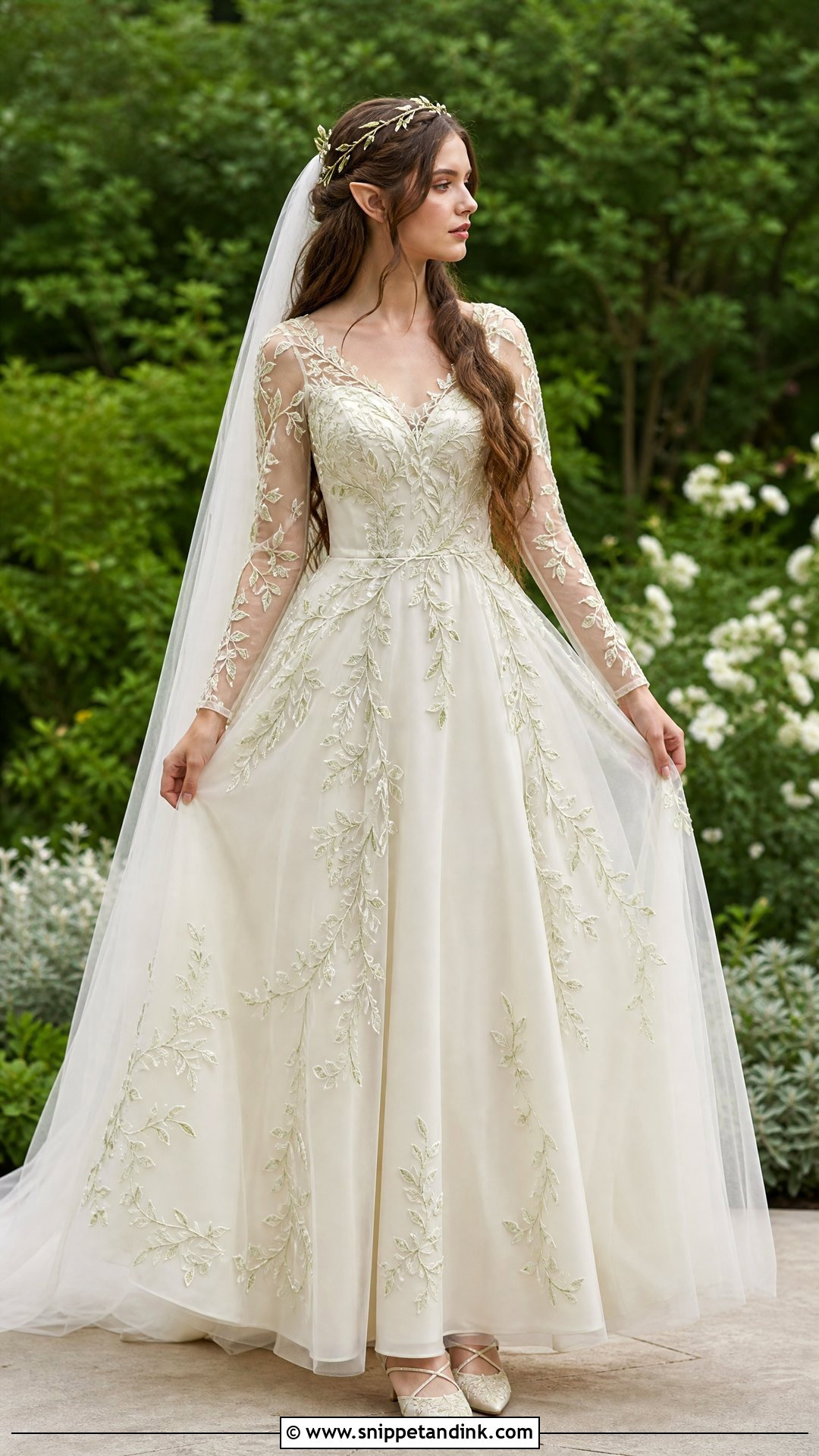
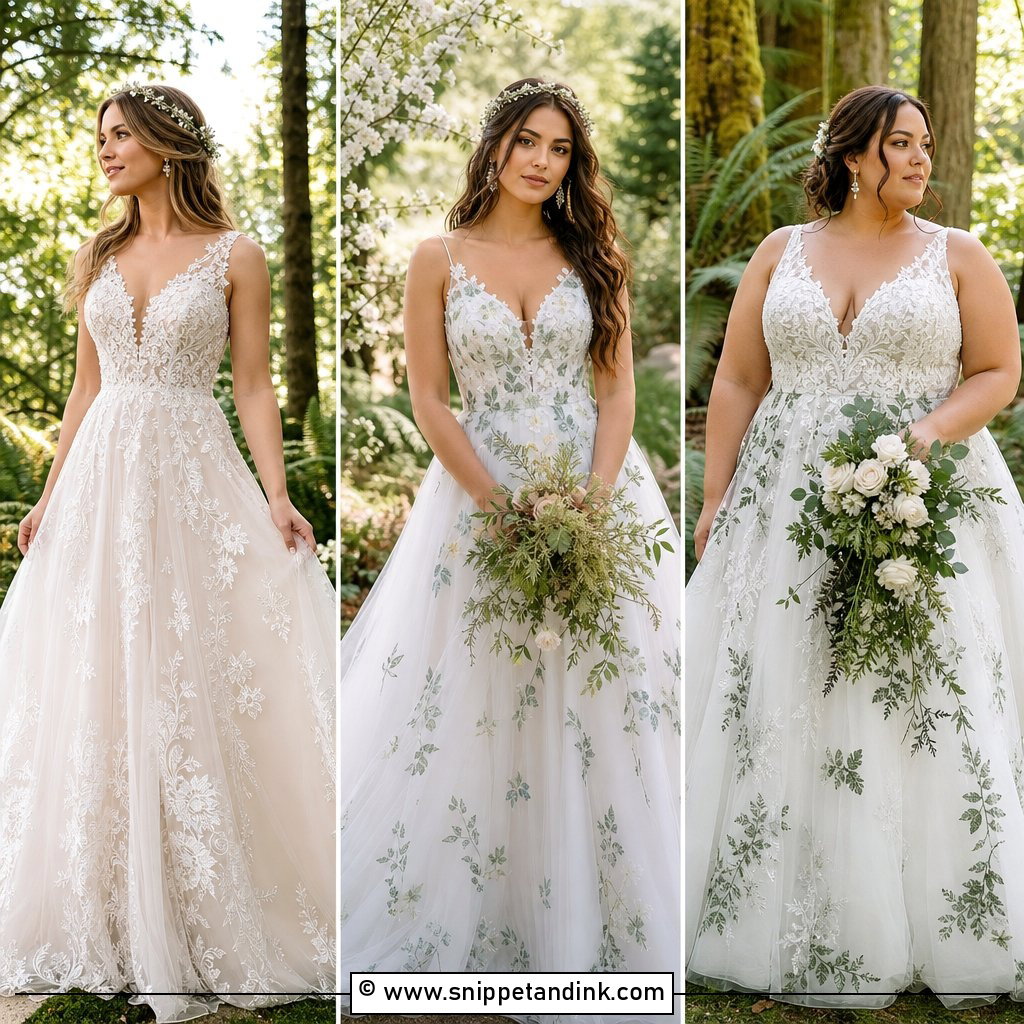
A leaf embroidered elvish wedding dress reads as woodland without shouting about it. The embroidery works best when the vine travels, along the bodice and down a sleeve or into the skirt, so the eye follows a line instead of hopping between patches. Tonal ivory thread stays quiet, while sage, gold or silver thread pushes it toward fantasy. A-line and sheath shapes both carry it well. I’d add a leafy hair vine, pointed-toe flats and a sheer veil edged in matching botanical lace, then stop at tiny pearl studs. Raised embroidery can catch on a lace veil, so try the two together before you commit to either.
3. Elvish Wedding Dress With A Hooded Cape
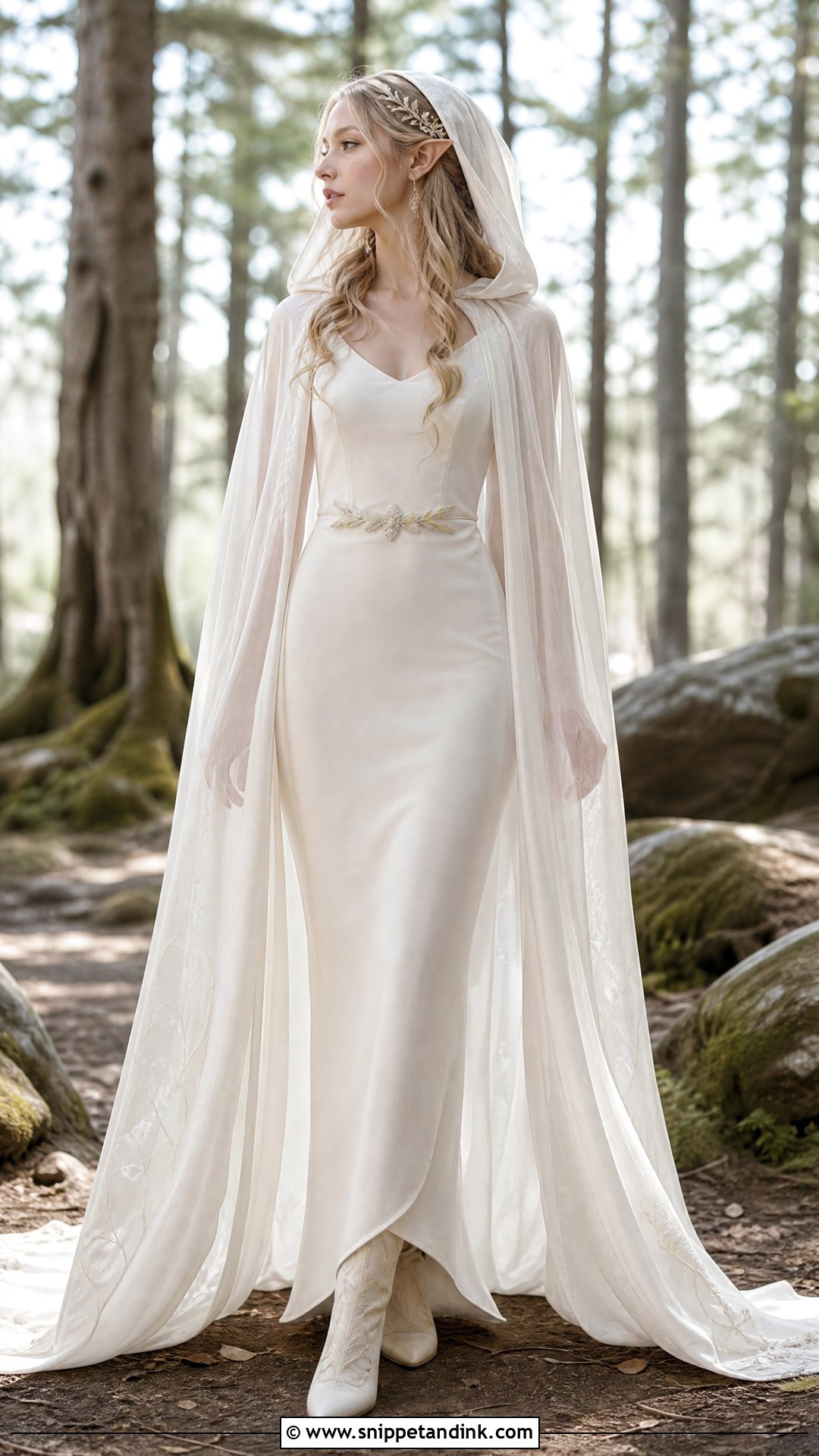
Nothing on this list changes an entrance like a hooded cape. Keep the dress underneath plain silk or crepe, since a busy bodice and a busy cape fight each other at the shoulders. Sheer tulle gives a light, almost ghostly hood; velvet or satin is warmer and heavier, which matters in an autumn forest. The hood has to be cut deep enough to sit over soft curls or a braided crown without crushing them, so wear your trial hairstyle to the cape fitting. Finish with boots, a crystal pin and small earrings. And decide in advance when the hood comes down, usually at the altar, and who will tidy the hair underneath.
4. Elvish Wedding Dress With A Corset Bodice
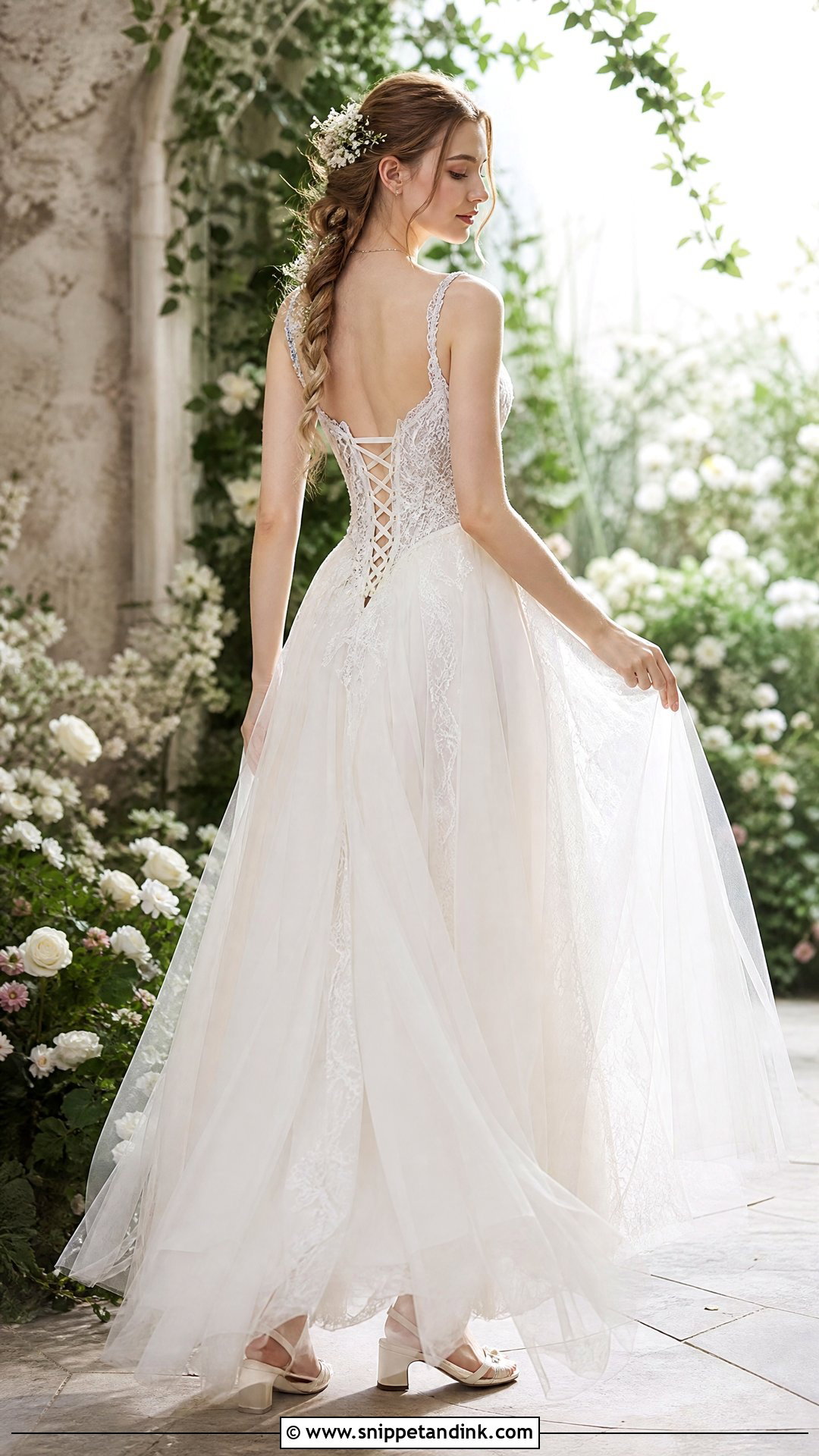
A corset bodice gives a soft fantasy gown its structure. The boning defines the waist, so the skirt has somewhere clean to fall from. I steer brides toward floral lace or vine-embroidered corsetry rather than hard, glossy panels, which tip the look toward a costume fair. Sweetheart, square and gently curved necklines all sit well, with layered tulle below, a lace-up back, a fine necklace and low block heels. A loose braid with a few small flowers tucked in suits it. Sit down at every fitting: a corset that feels fine standing can press into the hip bones an hour into dinner. Done right, you get a defined shape with fairytale detail.
5. Elvish Wedding Dress With A Flowing Chiffon Skirt
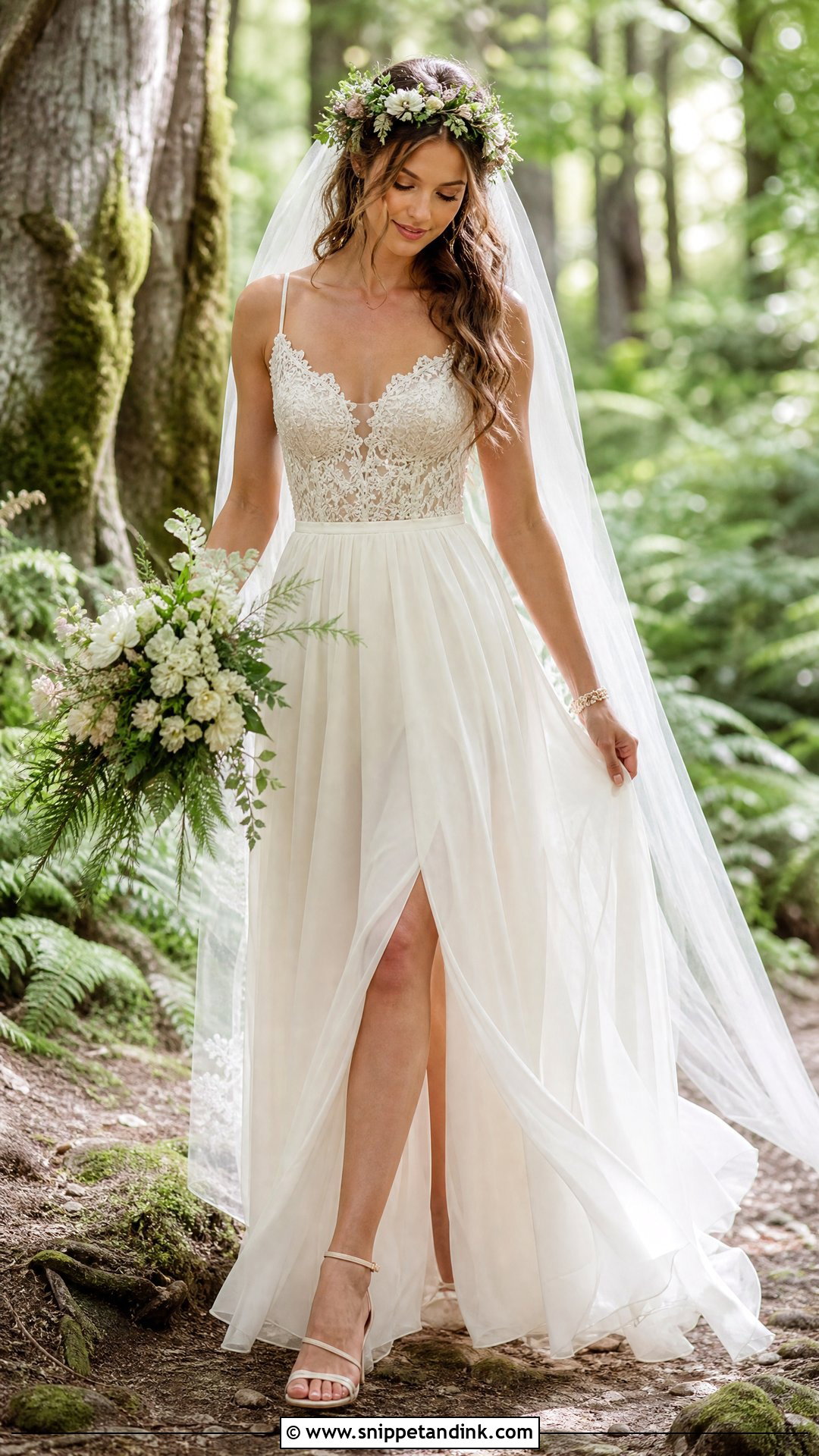
Chiffon is the easiest fabric here to live in for twelve hours. It weighs almost nothing and moves with each step, which is why it suits walking portraits and outdoor vows. A fitted lace bodice gives the skirt a firm anchor at the waist, and soft ivory, misty gray, pale champagne or warm cream all hold the elvish mood. The catch is that chiffon frays and snags. On a path with brambles or rough bark, ask for the hem to sit just off the ground. Ankle-strap heels or flat sandals, a long veil, a small floral crown and one thin bracelet are plenty.
6. Elvish Wedding Dress With A Sheer Lace Overlay
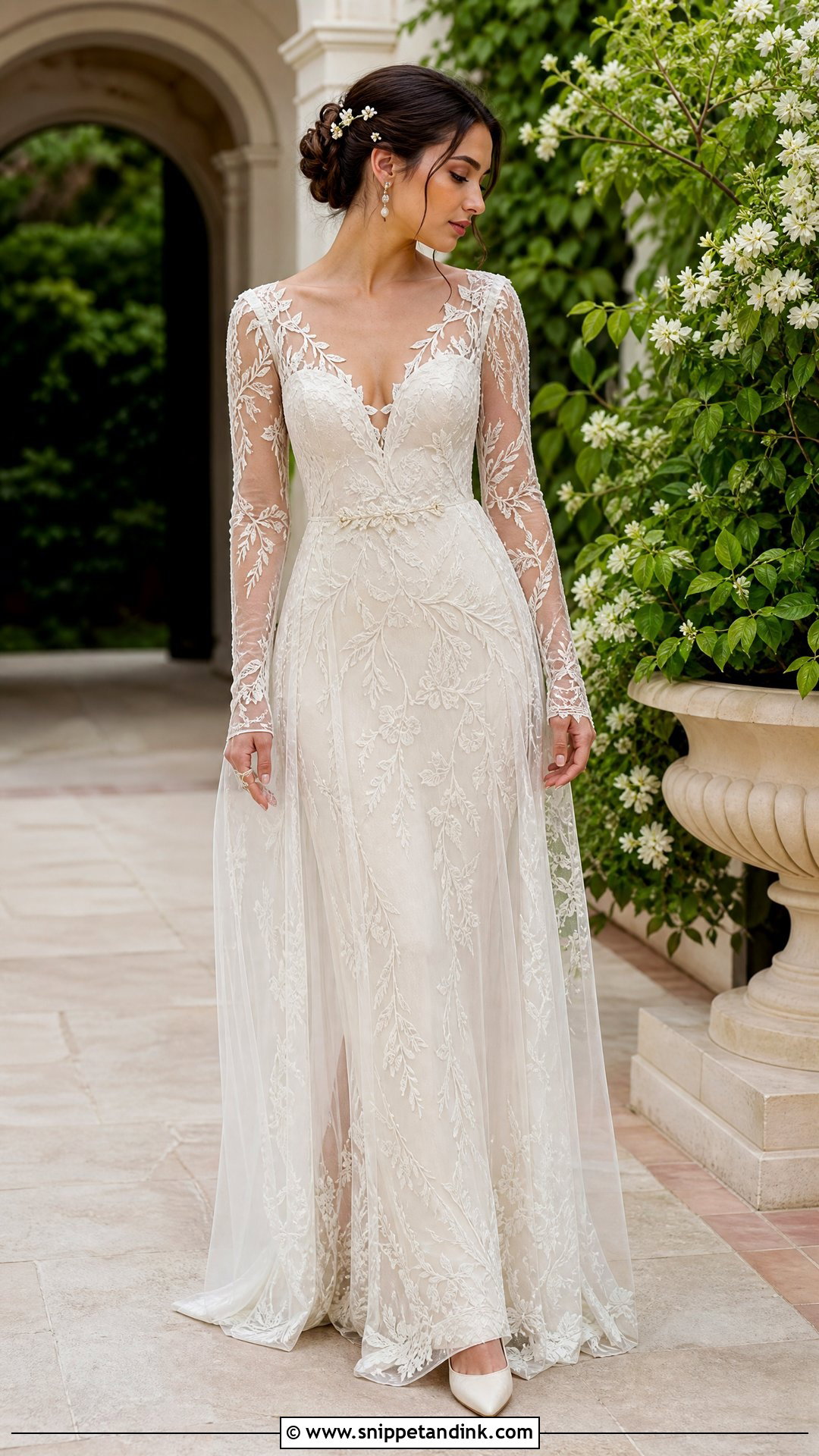
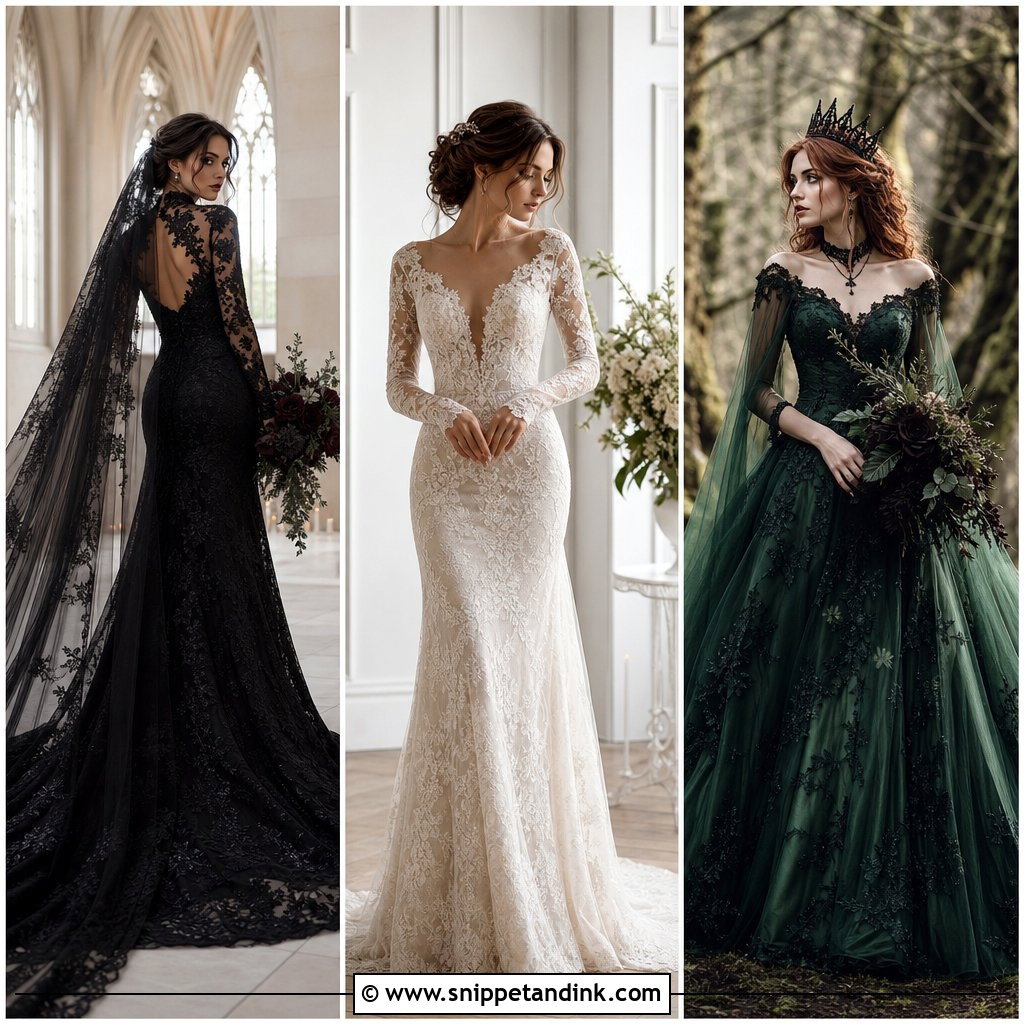
An overlay turns a plain silhouette elven only if the lace looks grown rather than printed. Vines, leaves, open flowers and soft scrollwork do that; stiff geometric lace doesn’t. The lining underneath decides everything. Hold nude, ivory and pale blush swatches against your skin in daylight: a lining close to your own tone makes the lace appear to float on bare skin in photos, which some brides want and others find too revealing. Long fitted sleeves, a high neck or an illusion back add the medieval note. A low braided bun, pearl pins and pointed flats complete it.
7. Elvish Wedding Dress With A High Neckline
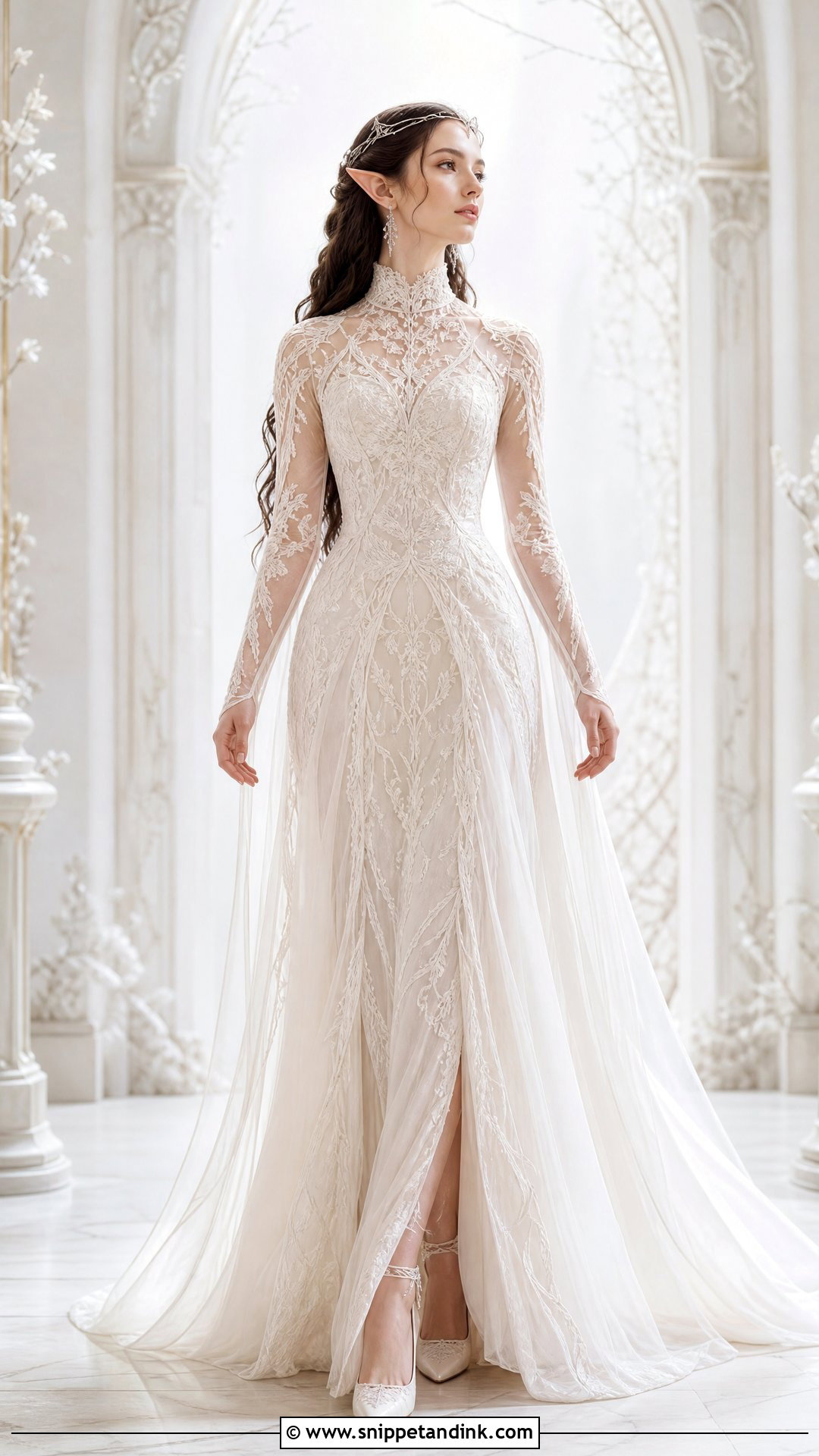
I like a high neckline on an elven gown when the fabric at the throat is sheer lace, soft embroidery or an illusion panel. Solid fabric right up to the chin tends to look heavy and shortens the neck. Long sleeves and a narrow waist give that tall, nearly royal shape, and a skirt that flows rather than clings keeps it from turning severe. Because the neck is already decorated, skip the necklace and move the attention to the hair: a sleek braided updo, small crystal earrings and a thin circlet or vine. It belongs in a historic venue or a formal evening ceremony.
8. Elvish Wedding Dress With Off Shoulder Sleeves
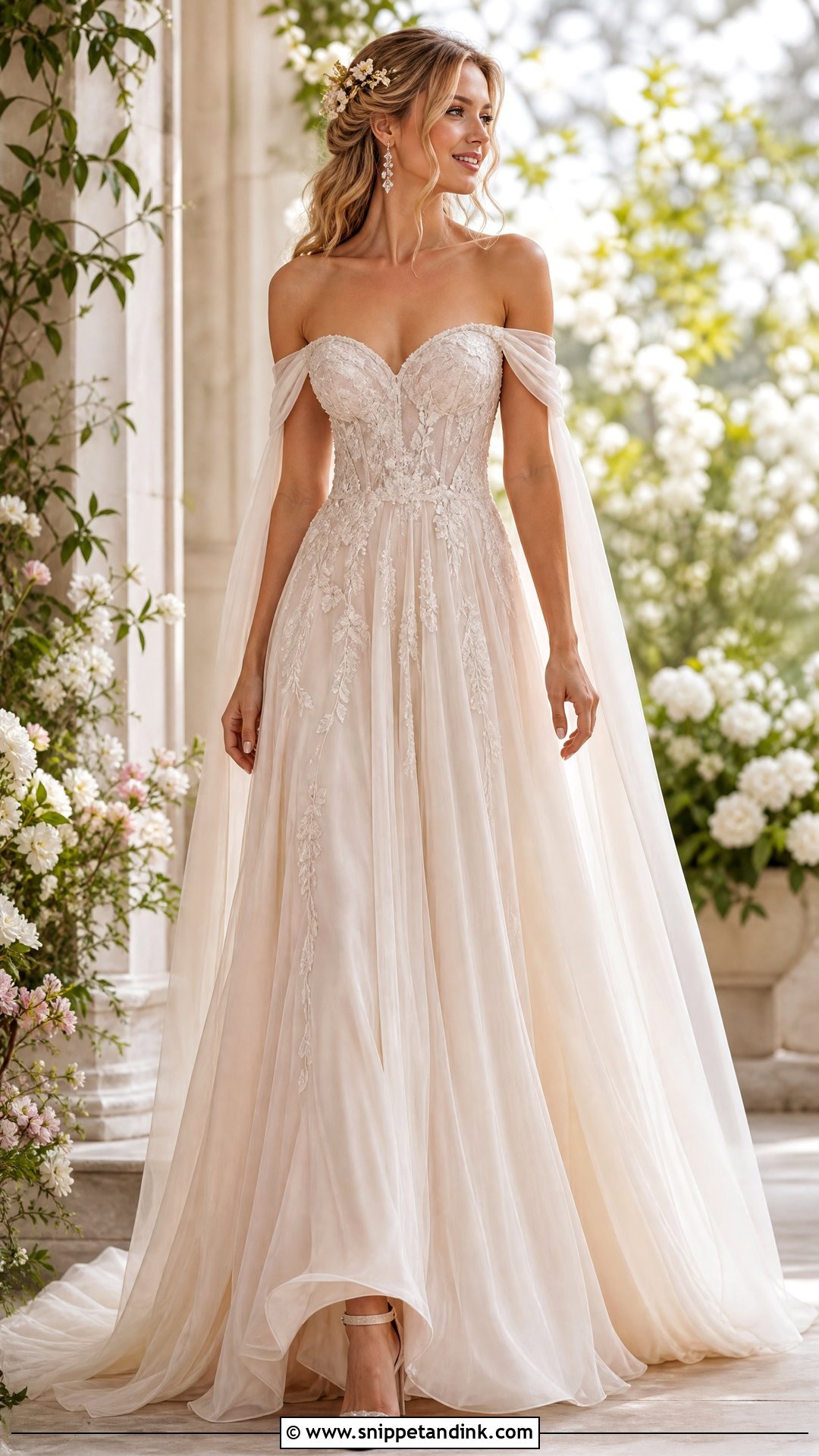
Off-shoulder sleeves soften the fantasy look and show off the collarbone. They need to be delicate lace, tulle or chiffon so they drape instead of jutting out. The honest drawback is movement: an off-shoulder band limits how high you can lift your arms. In the fitting, hug someone, wave and reach for a glass. A fitted bodice over an A-line skirt keeps the weight balanced, and loose curls, a small floral comb, drop earrings and ivory heels or flats suit it. In spring and summer it feels airy rather than costumed.
9. Elvish Wedding Dress With A Medieval Waistline
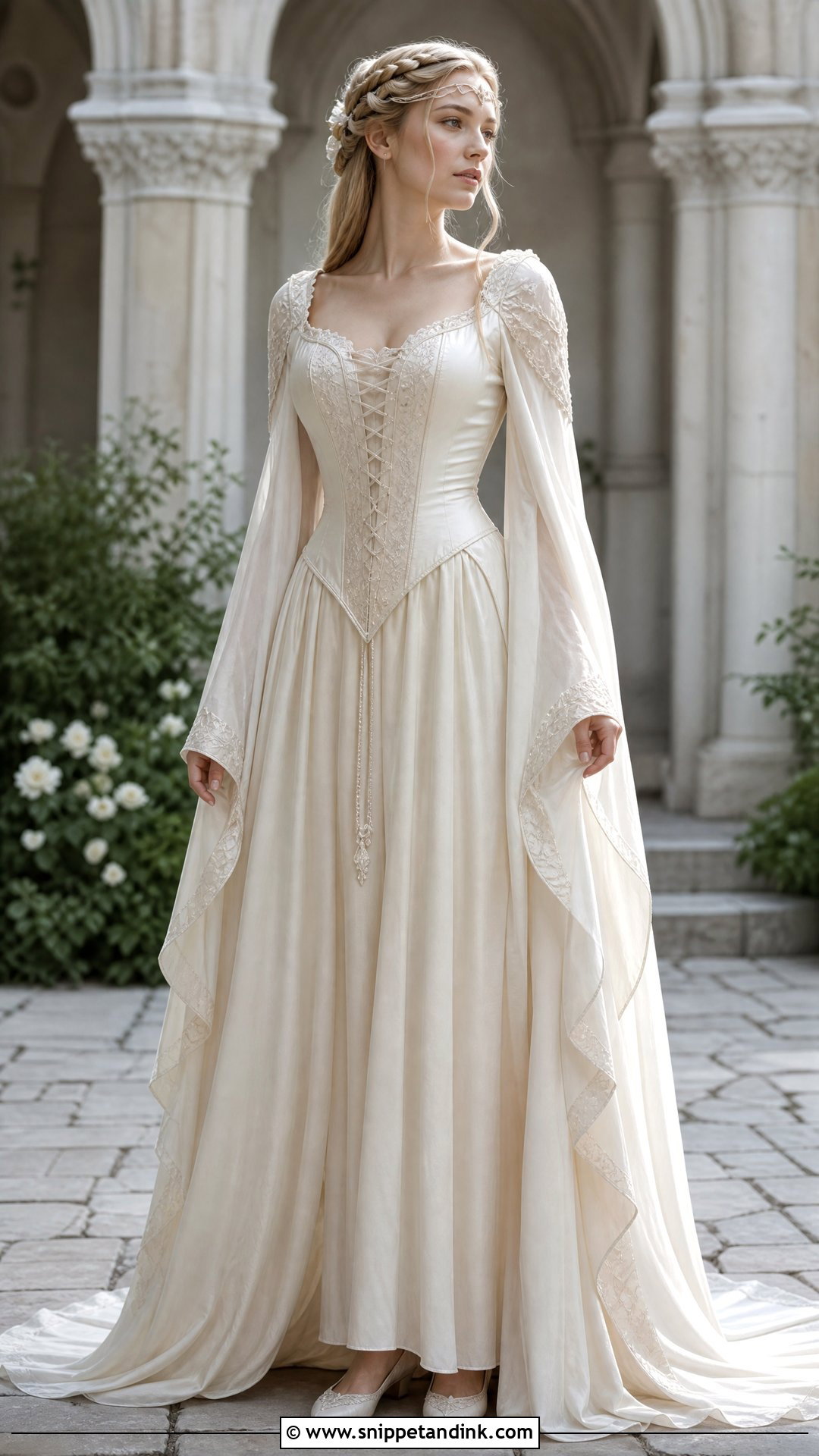
A medieval waistline makes an elven dress feel more authentic without tipping into theatre. That might be a pointed waist, a dropped waist or a lace-up bodice flowing into a soft skirt. The pointed version lengthens the torso, which is why it partners so well with bell sleeves or fitted lace sleeves. Ivory, champagne or soft silver fabric keeps it bridal. I’d add a braided style, a slim metal circlet and closed-toe shoes, plus a sheer cape or long veil for the ceremony. If you’re petite, try a dropped waist on before ordering, because it can shorten the leg line.
10. Elvish Wedding Dress With Silver Details
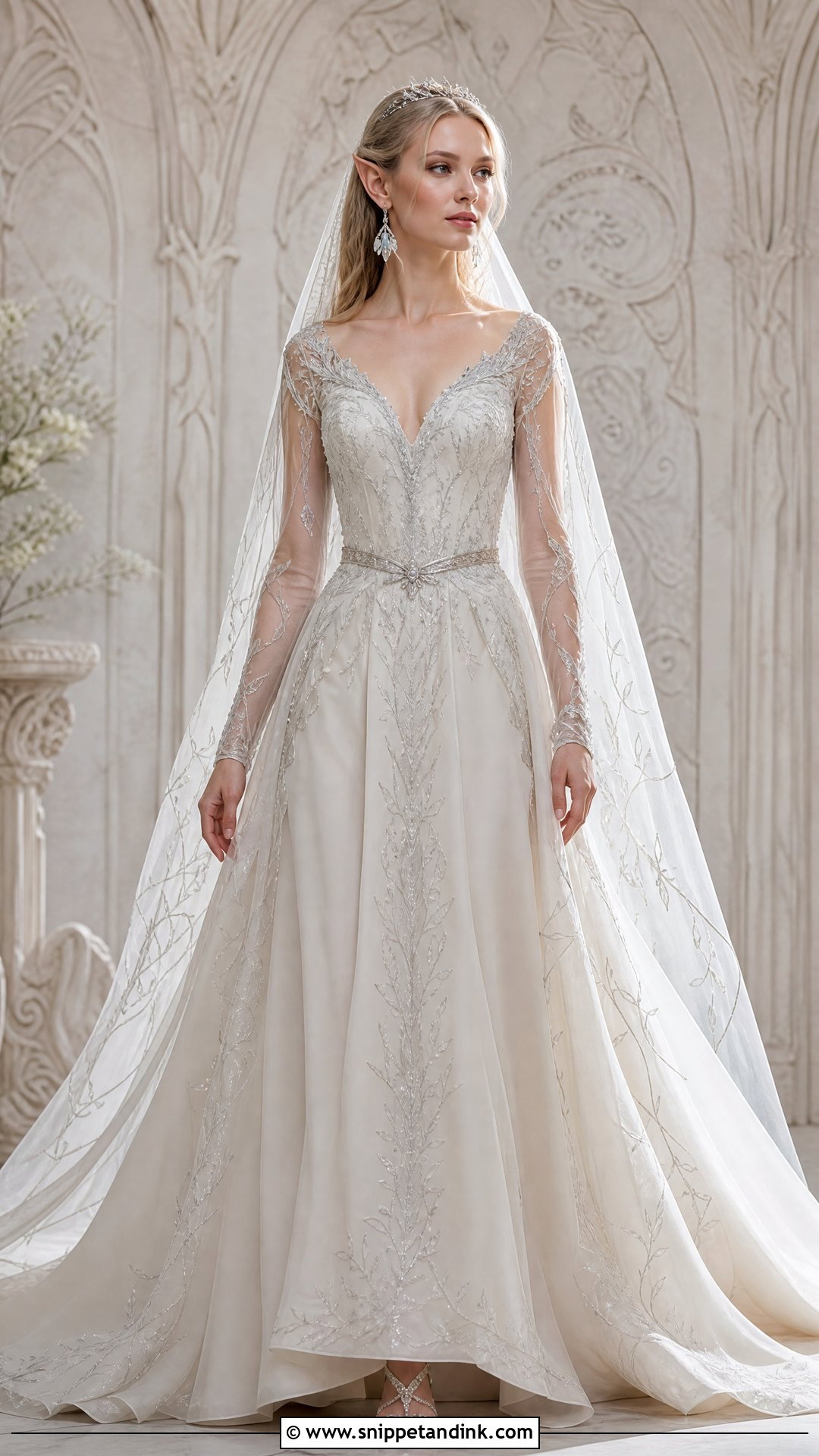
Silver detailing gives a moonlit cast, and it behaves best on cool bases like ivory, white, pearl gray or icy blue. On a warm champagne it can look faintly grey. Beading, metallic thread, crystal appliqués or a shimmer woven into the fabric all count. Keep the shape quiet, an A-line, sheath or empire waist, so the metal reads as light rather than armour. Silver sandals, moonstone-style earrings and a fine tiara or circlet tie it together, with a softly sparkling veil if you want one. Metallic thread can scratch the inner arm on long sleeves, so check the lining before you order.
11. Elvish Wedding Dress With Gold Embroidery
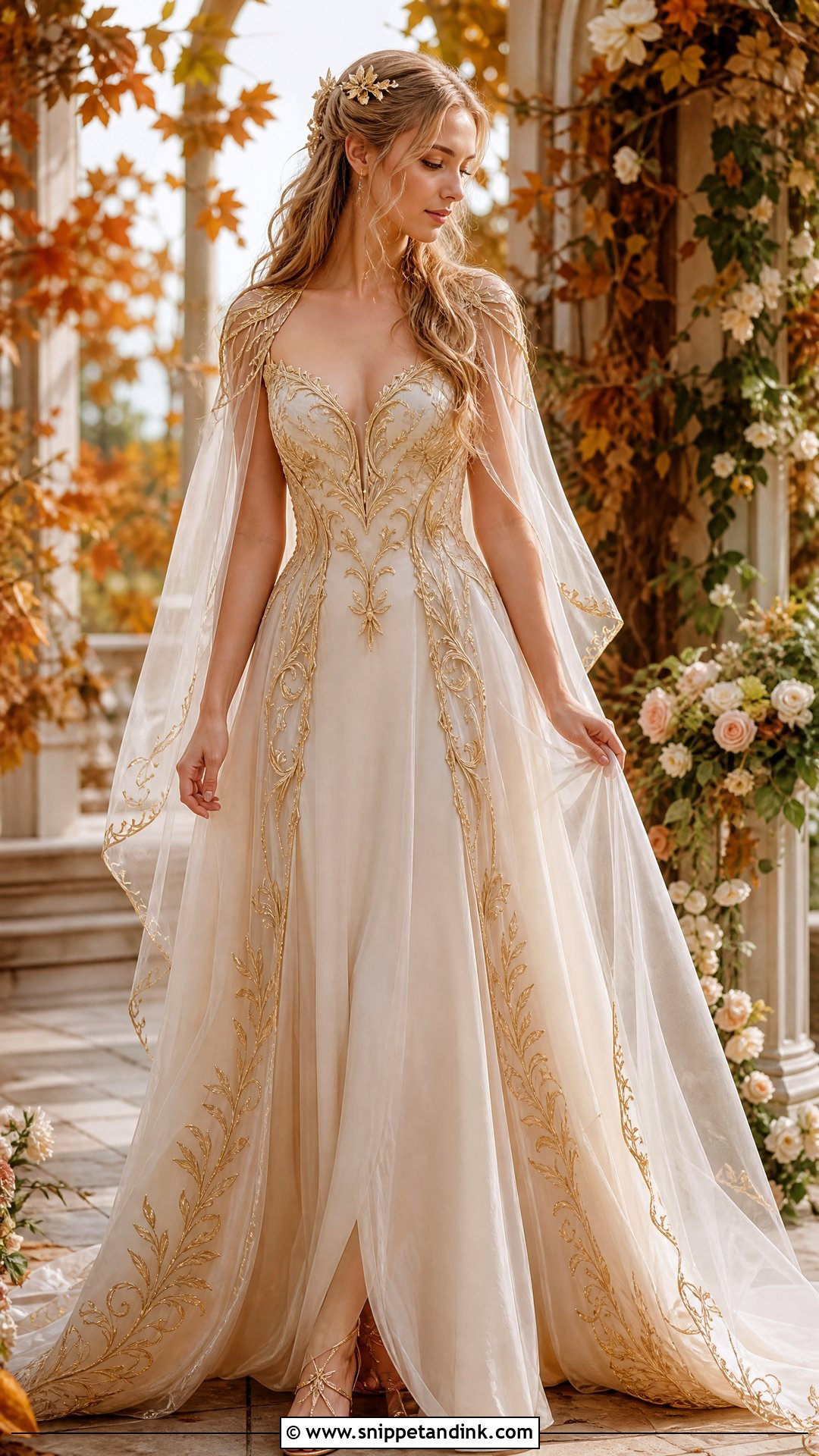
Gold thread warms an elven gown and makes it feel old in the best sense. It sits most naturally on cream, champagne, ivory or soft beige. I place it where the dress already has an edge, the neckline, waist, cuffs or hem, so it looks deliberate. Gold spread across the whole bodice starts to look ceremonial rather than bridal. A flowing skirt balances the weight, and gold pins, soft waves and delicate sandals finish it, with a sheer cape edged in fine gold if you want more drama. Choose leaf and vine motifs over scrolls to keep it tied to nature in an autumn garden or a castle hall.
12. Elvish Wedding Dress With A Floral Crown
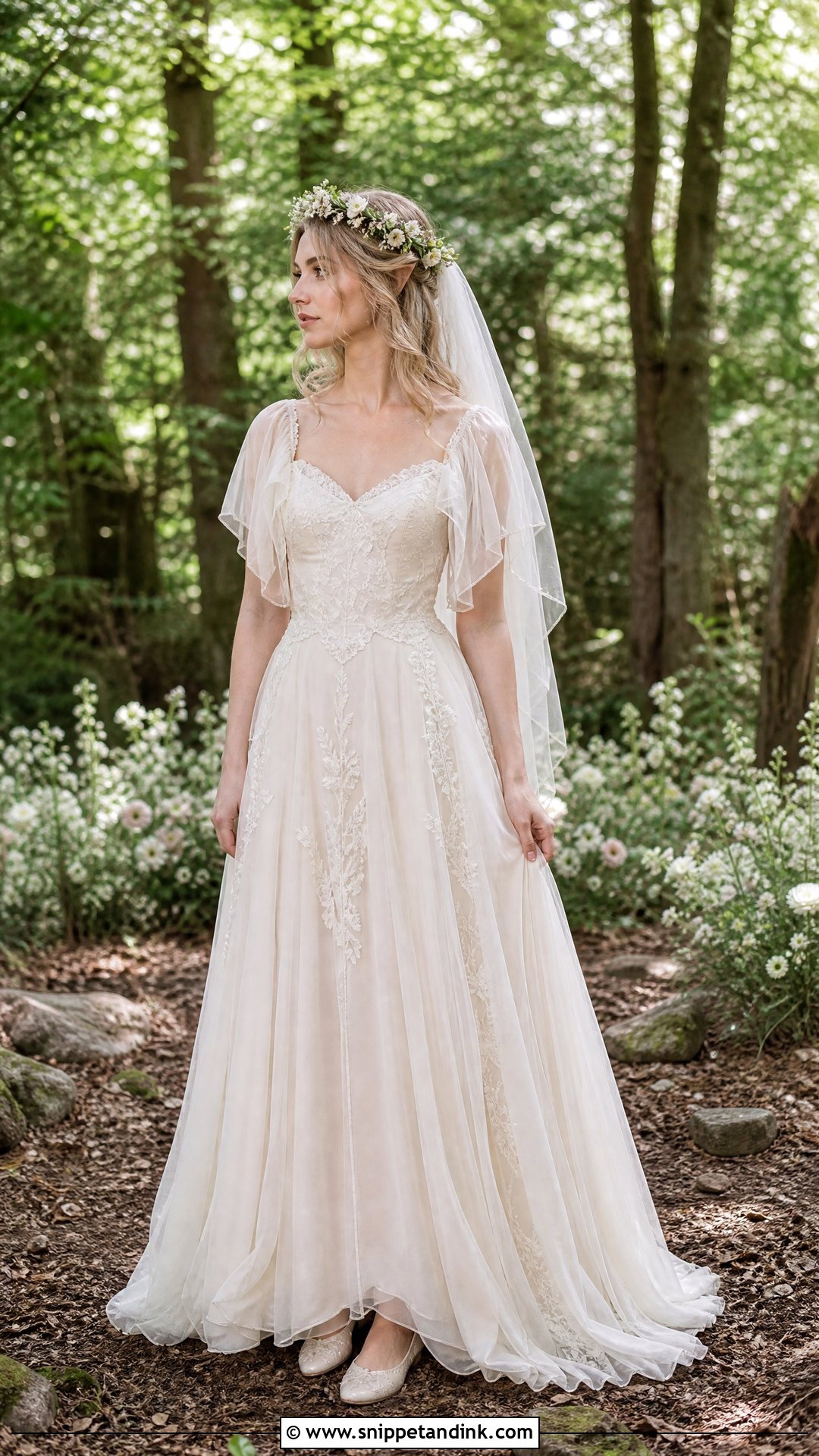
A floral crown needs soft, moving fabric beneath it: chiffon, tulle, lace or silk. Scale is the whole decision. Small flowers, trailing greenery and thin vines look elven, while oversized blooms look like a music festival. A lace bodice, flutter sleeves and an A-line skirt sit well under it, with nude or ivory flats and natural makeup. If you want a veil as well, anchor it under the crown with its own comb so the crown isn’t carrying the weight. Fresh flowers wilt quickly against warm hair outdoors, so ask your florist which stems last, or use silk flowers for the crown.
13. Elvish Wedding Dress With A Long Train
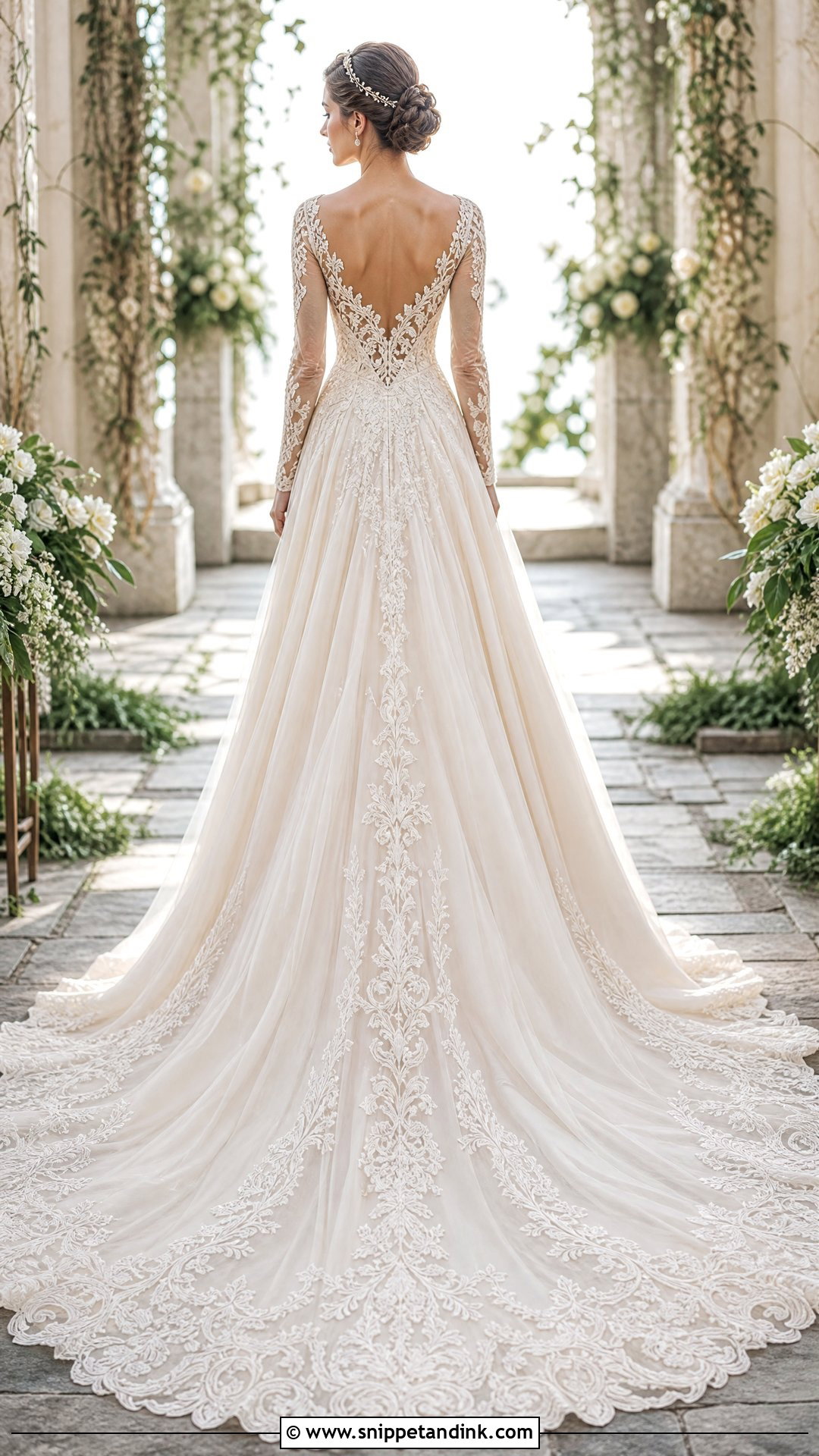
A long train draws a regal line behind you, and on a forest path or a wide staircase it’s the image guests remember. Lightweight fabric is non-negotiable. A train in heavy satin drags and stiffens, while chiffon or soft tulle trails along. Lace edging, vine appliqués or soft embroidery along the hem make it feel enchanted. A fitted bodice, long sleeves, small earrings and a secure updo keep the neckline on show, and low heels or hidden platforms help you move it. Outdoors, a train collects leaves, pine needles and mud, so plan a bustle and name the person who will lift it after the ceremony.
14. Elvish Wedding Dress With A Sheer Cape
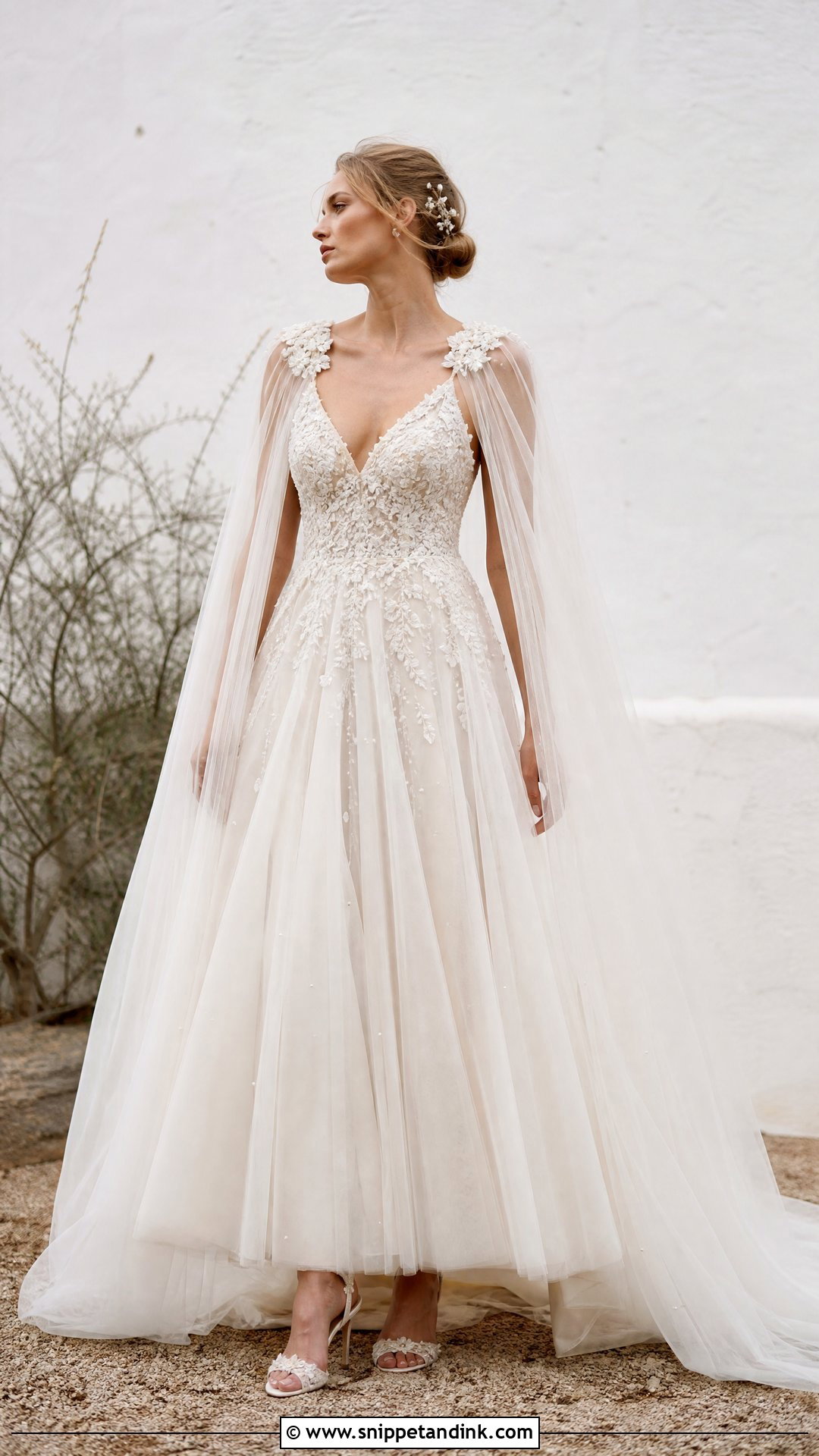
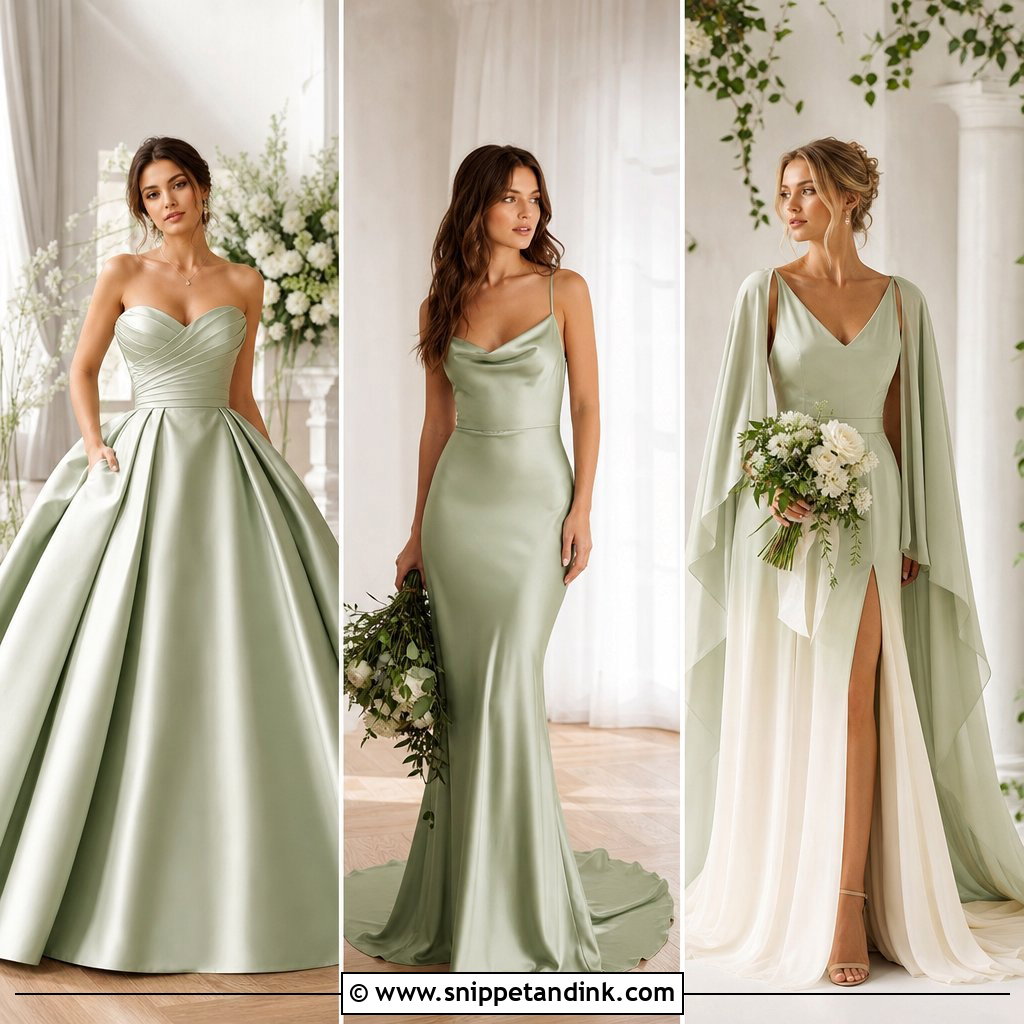
A sheer cape takes the place of a veil and leaves the face open, which I like because nothing sits between you and your partner during the vows. Soft tulle, organza or chiffon with small leaves, pearls or a clean edge all work, over strapless, sleeveless or fitted long-sleeve gowns. The attachment is where capes fail. It should button, snap or hook neatly at the shoulders or neckline, never hang from a single pin. Add a low bun, crystal pins and flats or heels, and you have a fantasy bridal look that still feels modern and wearable.
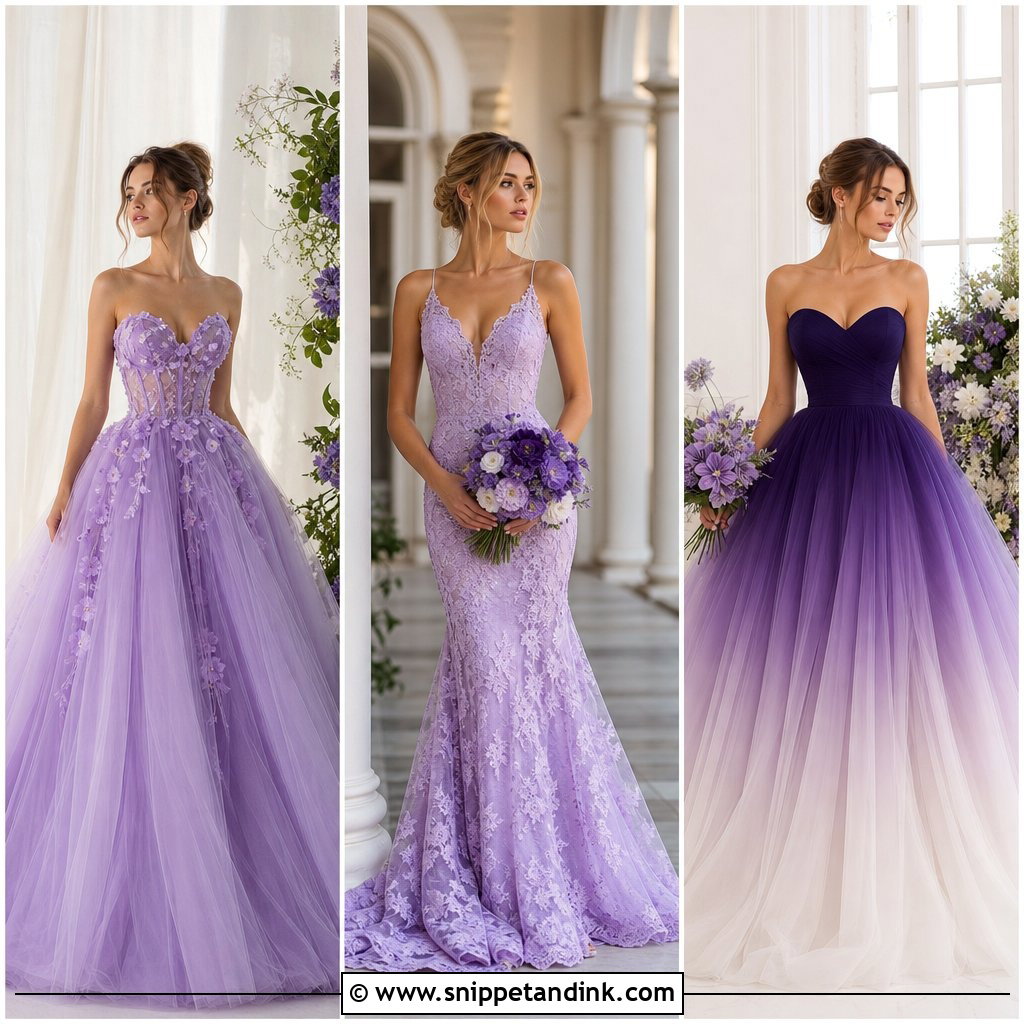
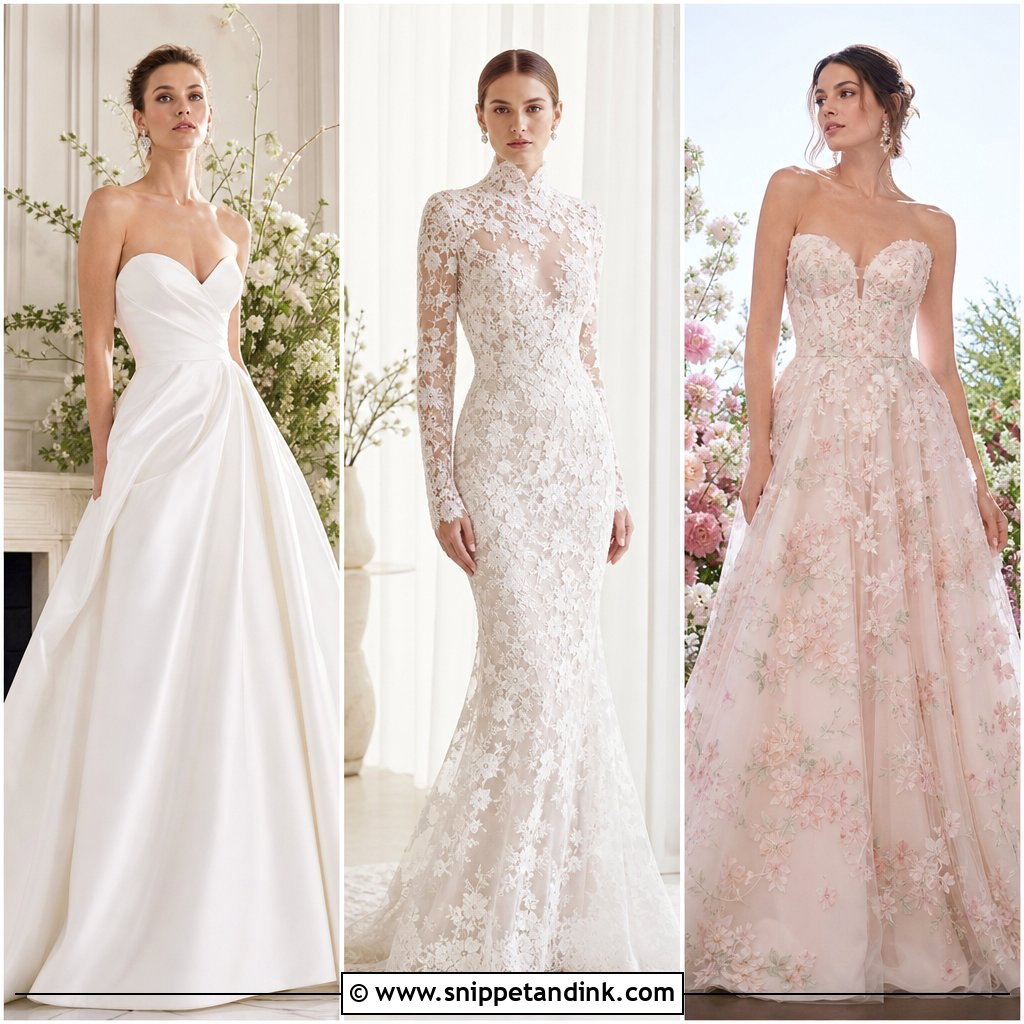
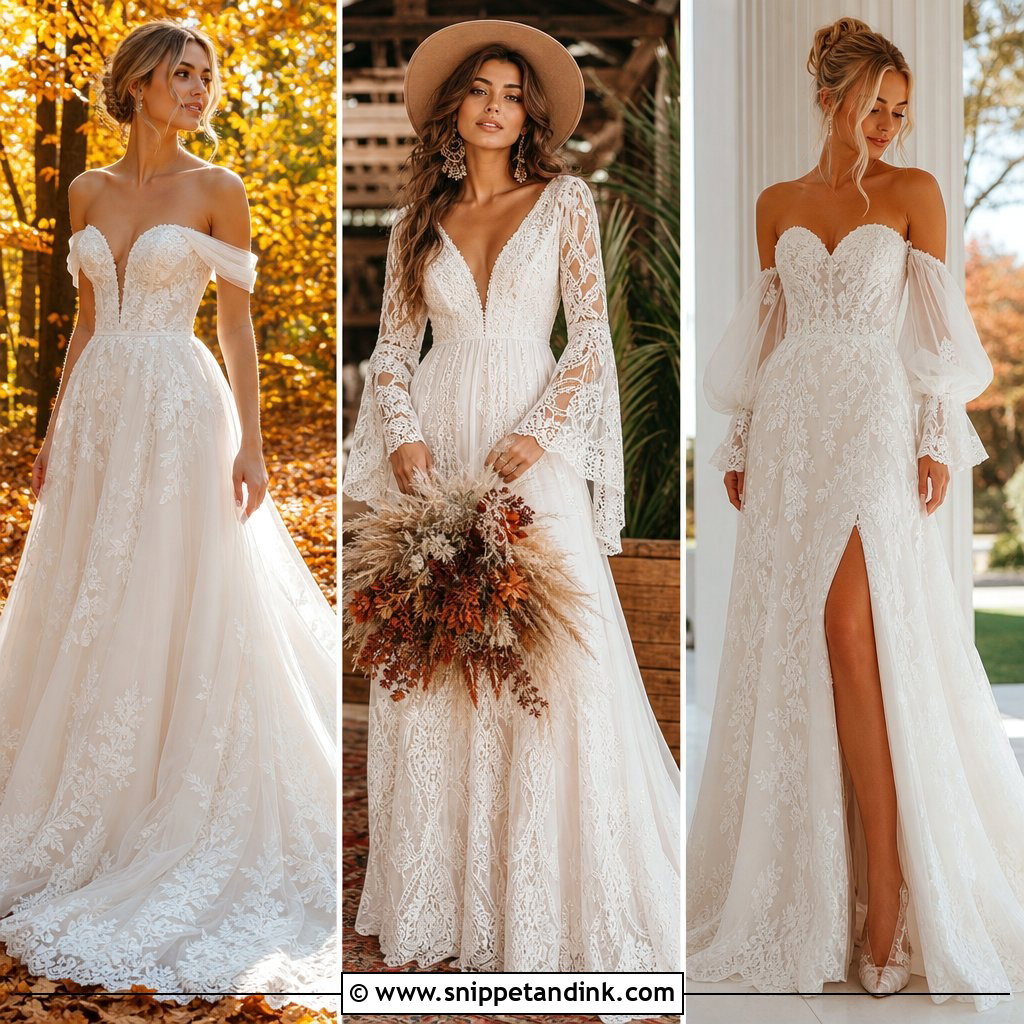
15. Elvish Wedding Dress With A Sage Green Skirt
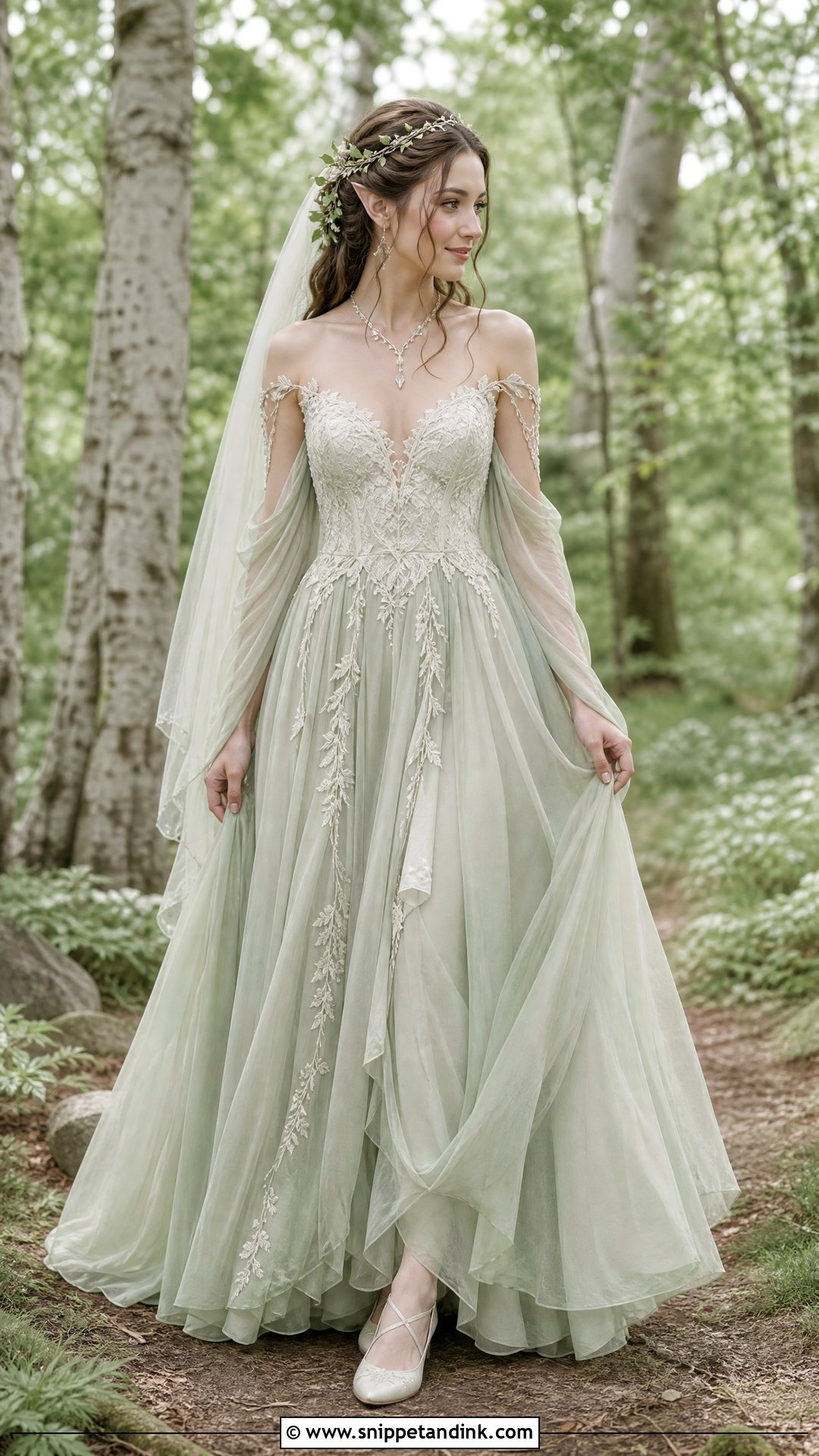
Sage is the gentlest way to bring colour into an elven dress. A pale sage tulle or chiffon skirt under an ivory lace bodice still reads as bridal from the back row. Look at the swatch outdoors and again under warm indoor bulbs, because some sages turn grey at an evening reception. Silver or pearl accessories keep it light, and a braid threaded with small greenery ties the hair to the skirt. Ivory ballet flats, low heels or fine sandals, depending on the ground. If a fully white gown has never felt like you, this is the route I’d try first.
16. Elvish Wedding Dress With A Blush Tulle Skirt
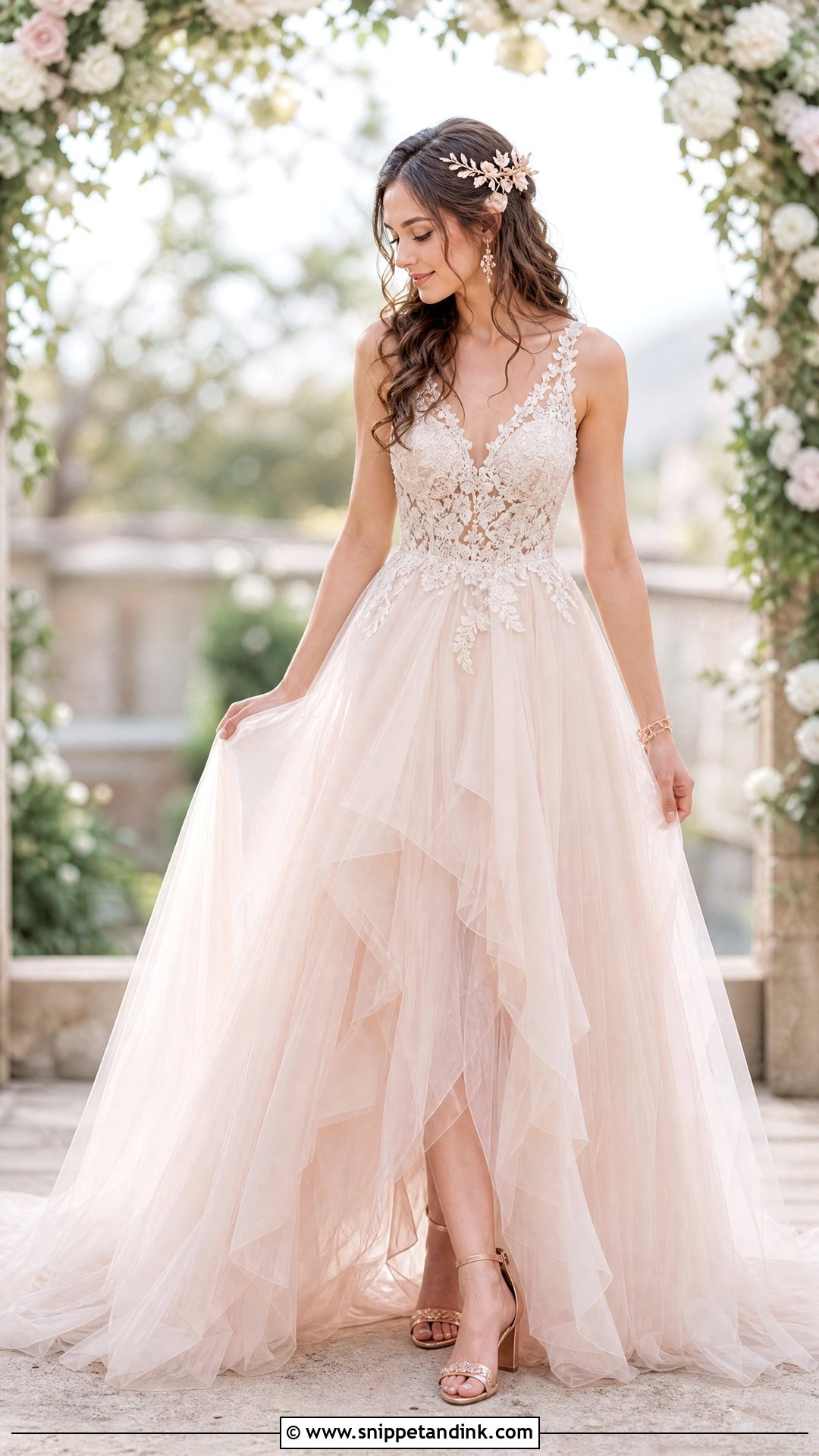
Blush tulle warms the look and gives it a sweeter mood while still reading as bridal, especially under a fitted lace bodice with a defined waist. Layered tulle takes its colour from the stack: the more layers, the pinker it photographs. Ask to see the full skirt, not just a single swatch. Rose gold, pearl or soft silver accessories all sit well, and the styling should stay gentle, with loose curls, a floral comb, comfortable low heels and a sheer veil in ivory or blush. It reads dreamy rather than dramatic.
17. Elvish Wedding Dress With A Velvet Cape
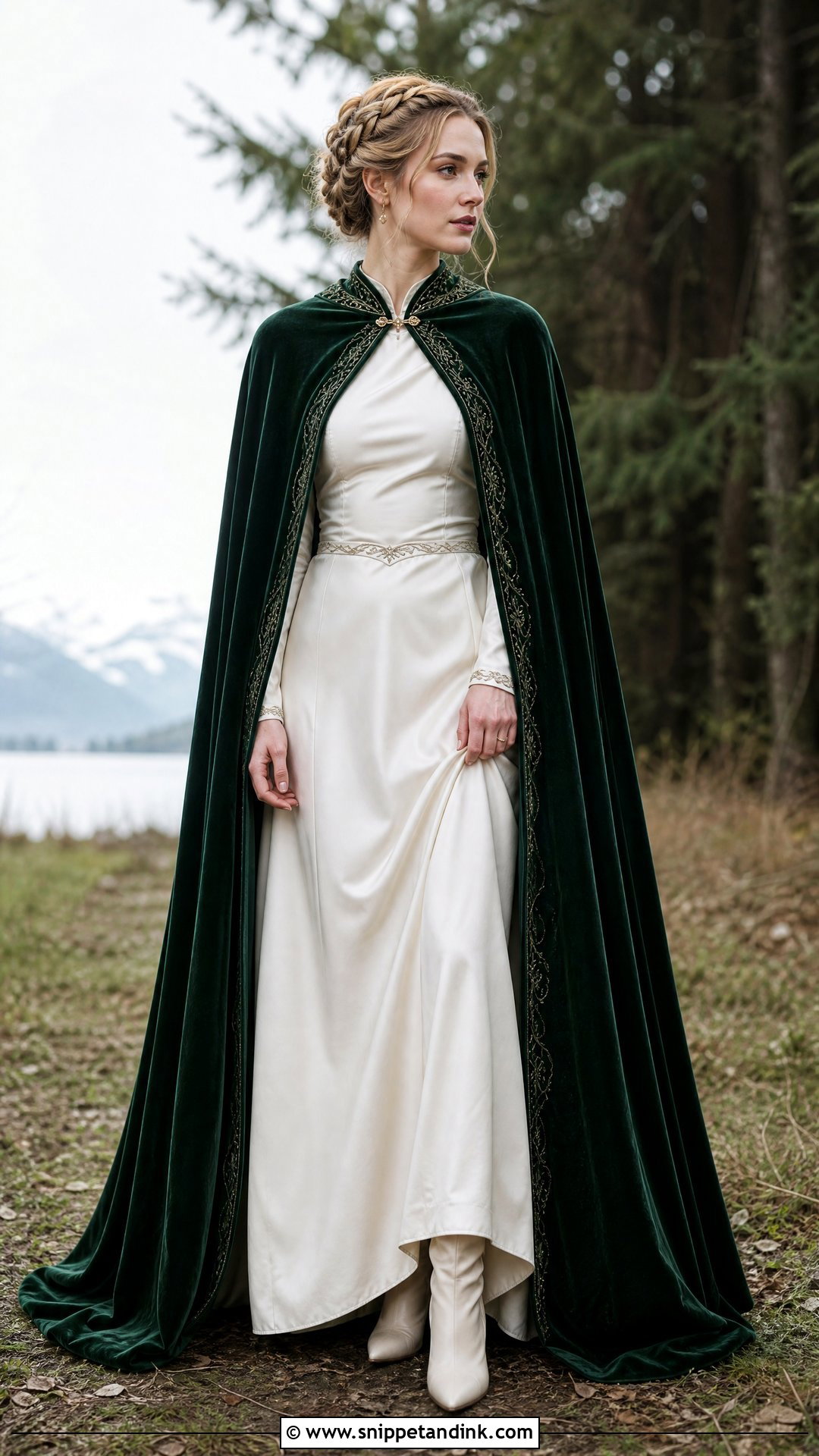
Velvet earns its place in fall and winter. The dress underneath can stay simple, a satin sheath, a lace A-line or a long-sleeve crepe, while the cape brings depth in ivory, forest green, silver gray or deep blue. Velvet absorbs light, so it photographs rich rather than shiny, and it genuinely keeps you warm at an outdoor ceremony. It’s heavy, though. A full-length velvet cape pulls the neckline backward, so it needs a firm fastening across the collarbone. Closed-toe heels or boots, a braided updo and small gold or silver earrings complete it.
18. Elvish Wedding Dress With A Lace Up Back
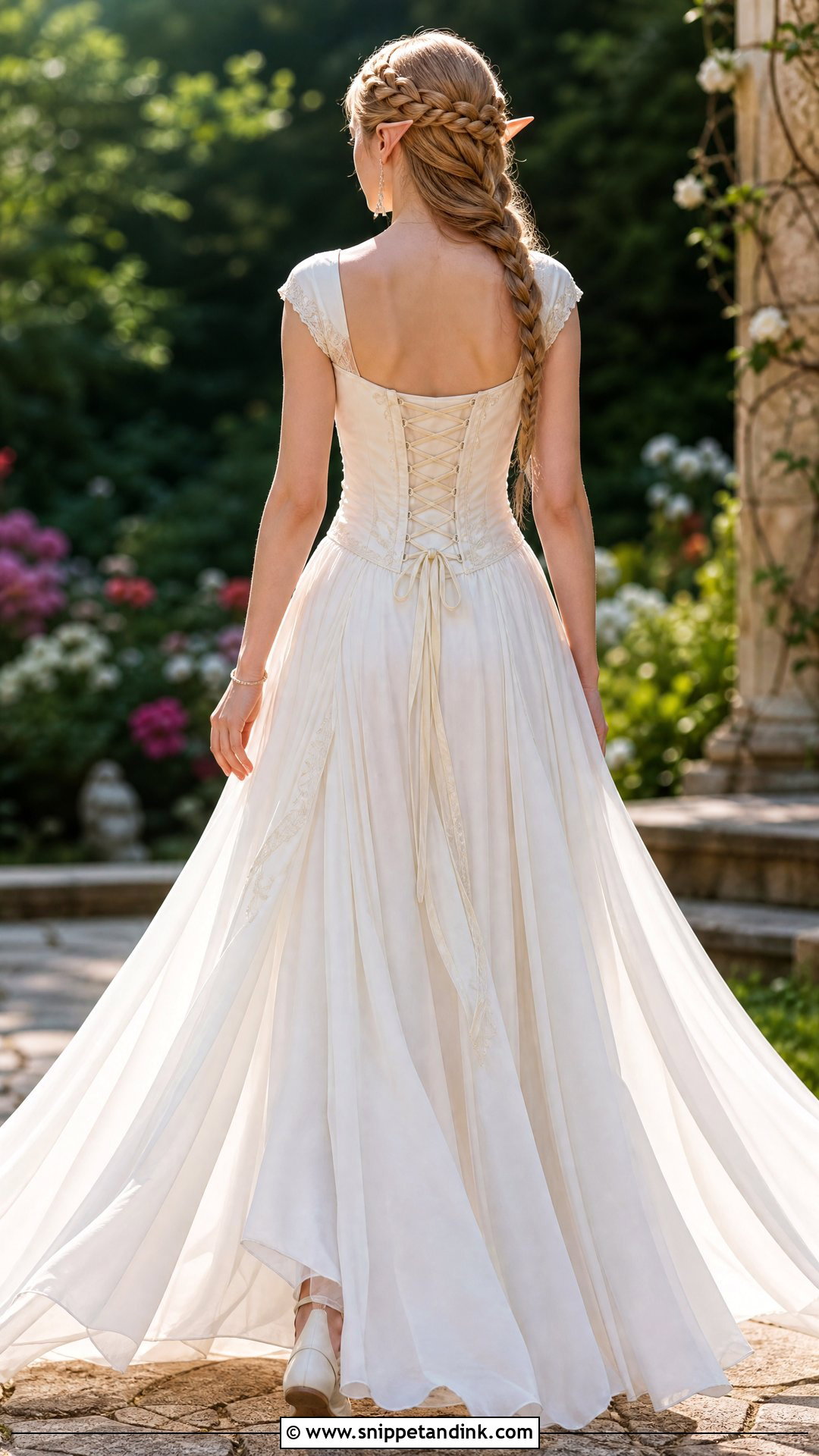
A lace-up back adds a handmade, medieval feel, and it has a practical bonus: the fit adjusts on the day. You can be laced snugly for the ceremony and eased a little after dinner. Ties should match the fabric, with a modesty panel underneath so skin doesn’t show through the gaps. The back can stay plain or be framed with lace, vines, pearls or sheer panels. Wear an updo or a side braid so the lacing shows, with drop earrings, a thin bracelet and shoes you can walk outdoors in. Have a bridesmaid practise lacing you before the morning itself.
19. Elvish Wedding Dress With A Soft Blue Tint
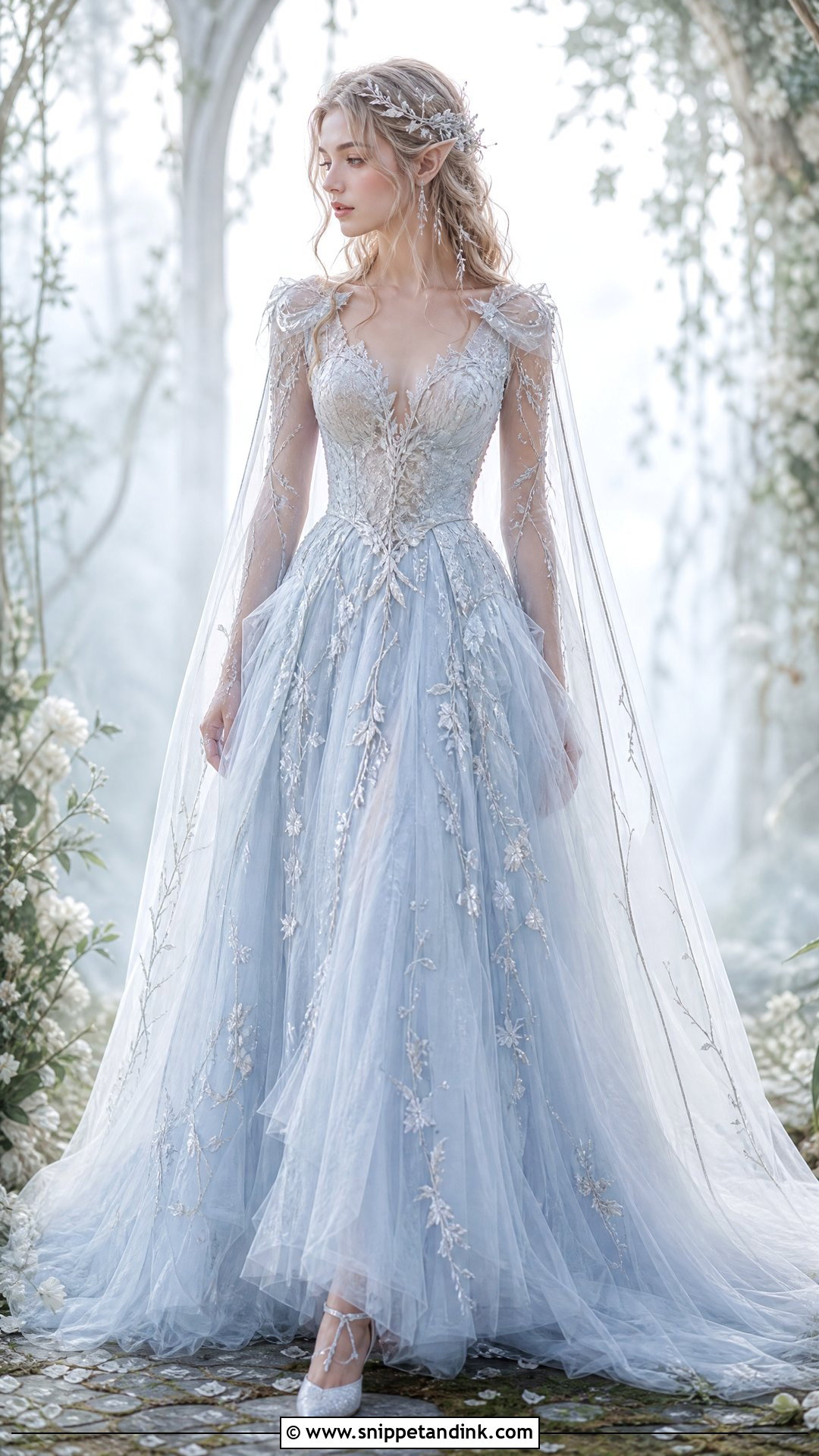
Pale blue tends to surprise brides once they try it on. Blue tulle, silver-blue chiffon or a cool blue underlay beneath ivory lace gives a quiet, enchanted effect. It sits naturally with silver accessories, crystal pins and white or pearl shoes, and a flowing A-line skirt, sheer sleeves or a delicate cape adds movement. Keep makeup soft, with rosy cheeks and a natural lip, since a strong lip fights the cool tone. On a winter day or a misty morning it creates a celestial woodland mood. Check the blue against your skin in daylight, as the iciest shades can wash out very fair skin.
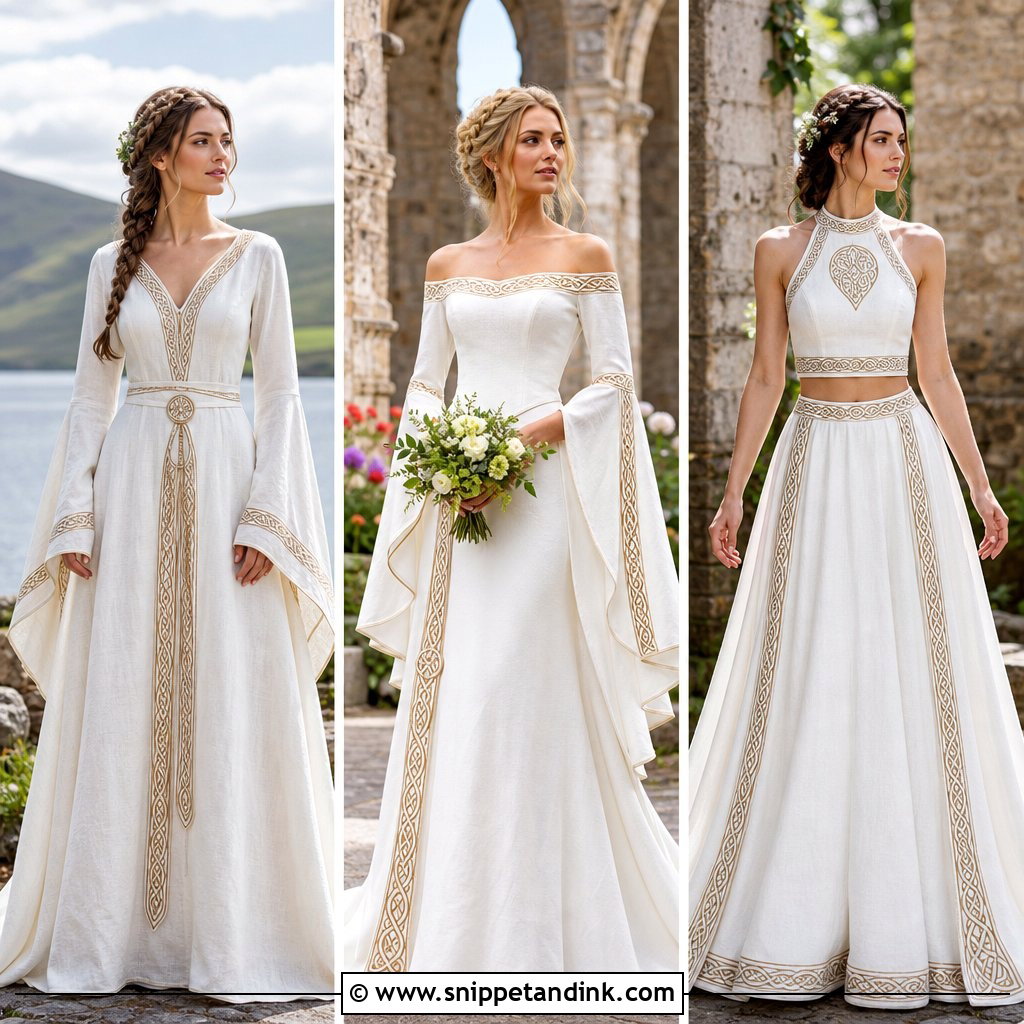


20. Elvish Wedding Dress With A Simple Silk Silhouette
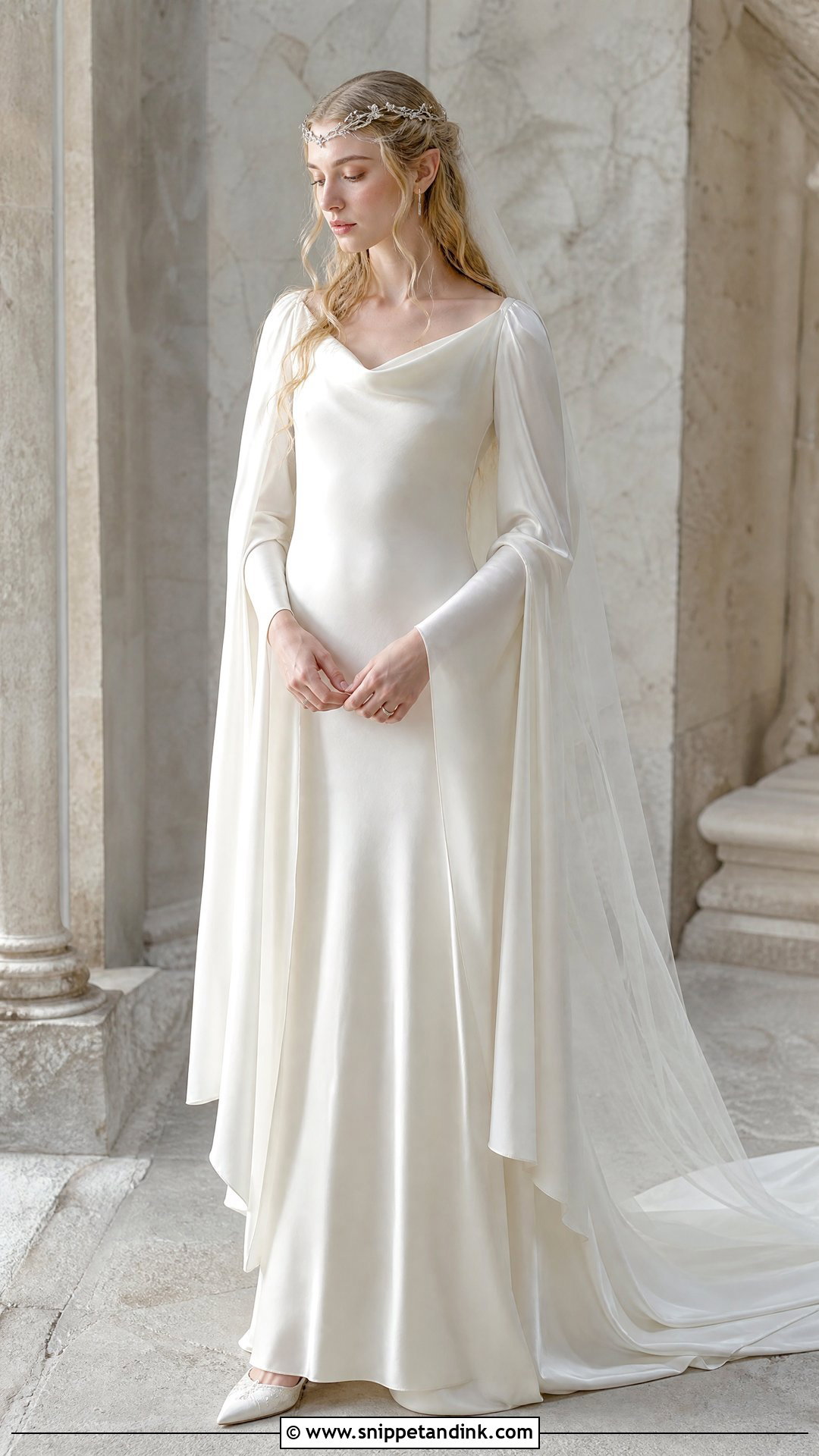
Fantasy bridal style doesn’t need heavy decoration. A clean bias-cut gown with long flowing sleeves and a soft train can look deeply elven, because bias-cut silk follows the body and moves like water. The trade-off is honesty: bias cut shows every line underneath and creases when you sit, so plan your underwear at the first fitting, not the last. Pearl white, ivory or champagne silk give a luminous finish. Add a fine circlet, a long veil, minimal earrings and barely-there sandals or pointed flats. It shines at a small ceremony, where guests stand close enough to see the fabric itself.
21. Elvish Wedding Dress With Pearl Details
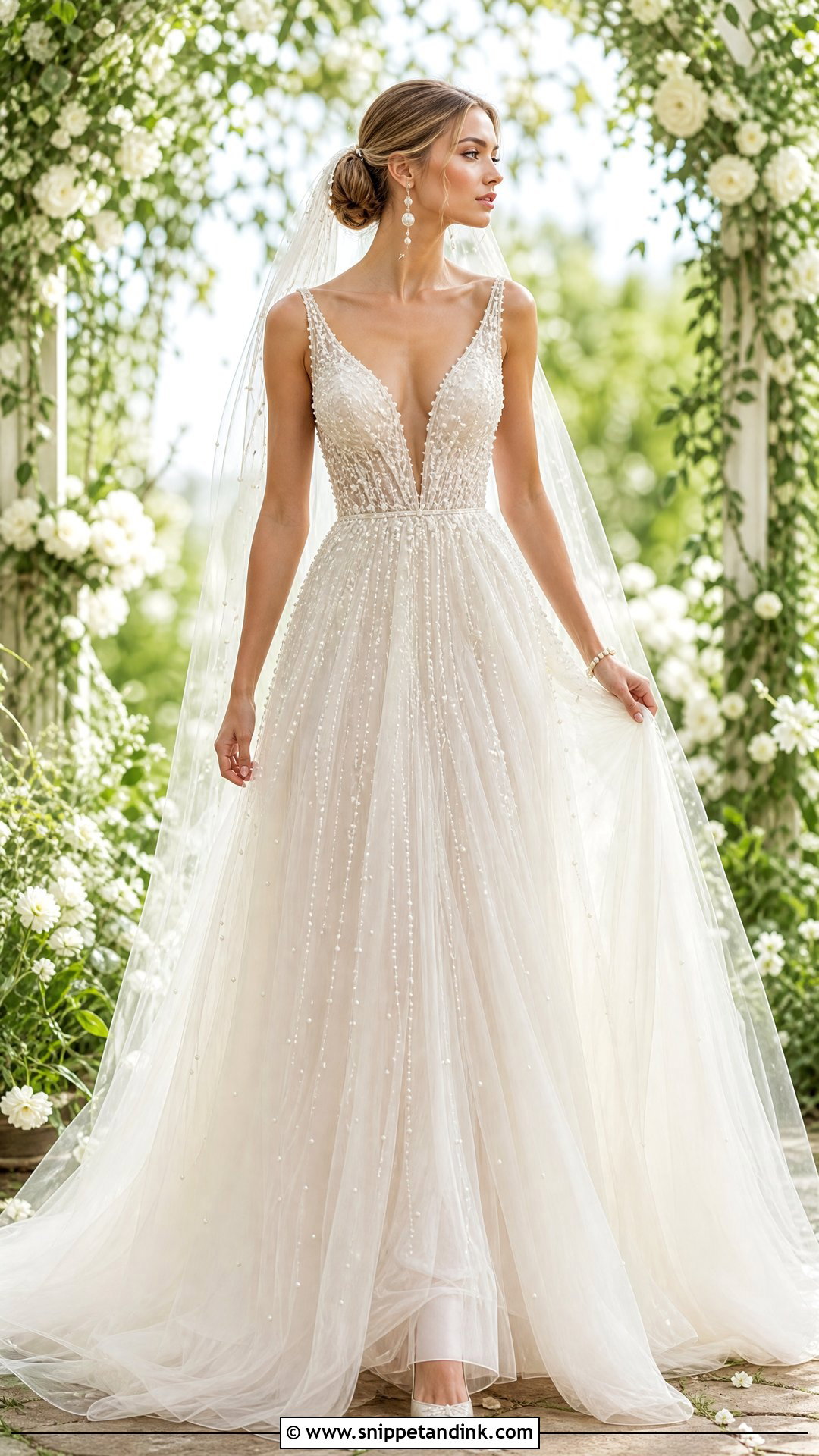
Pearls give an elven gown a soft glow, and they can live on the bodice, sleeves, veil, cape or hair. Scattered small pearls stay delicate; a pearl edge along the neckline or cuff reads more polished. A flowing tulle, chiffon or crepe base keeps them from drifting toward a formal ballroom look. Pearl drops, a low bun and ivory heels or flats suit it, and a pearl-scattered veil catches light in aisle photos. Hand-sewn pearls add weight at a veil’s edge, so turn your head quickly in the fitting and check it still floats.
22. Elvish Wedding Dress With A Braided Hairstyle
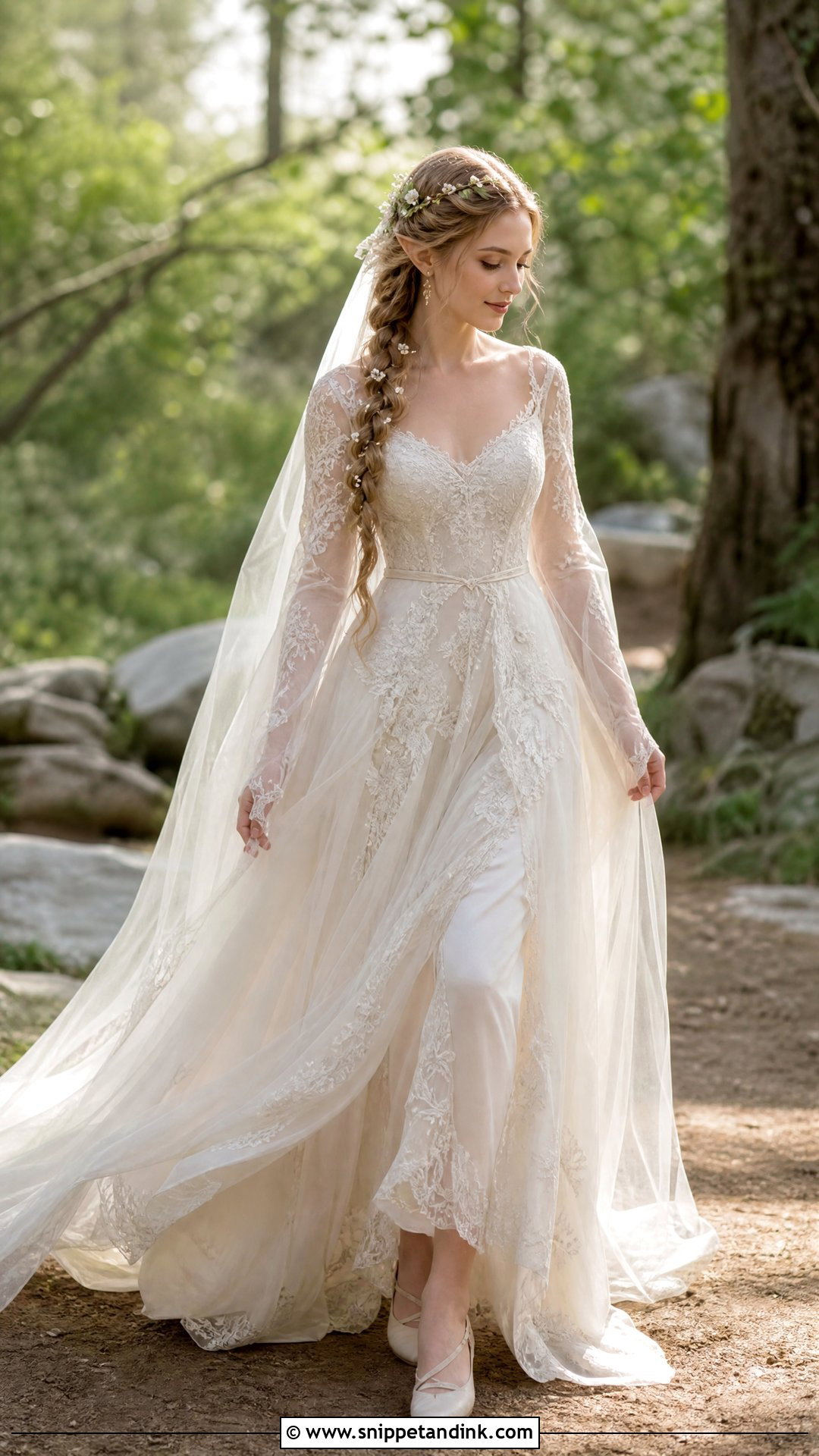
Braids bring the woodland mood faster than any accessory. A loose crown braid, a long side braid, a half-up braid or a braided bun can all be dressed with small flowers, pearls or silver pins. With a flowing lace gown, sheer sleeves and flats or low heels, the look turns elven straight away. If the braid is intricate, keep the rest light. Braids also hold outdoors far better than loose curls, which drop in humidity, so they’re a sensible choice for a long day in the open. Fine hair may need clip-in pieces to give the braid enough body.
23. Elvish Wedding Dress With Pointed Sleeve Cuffs
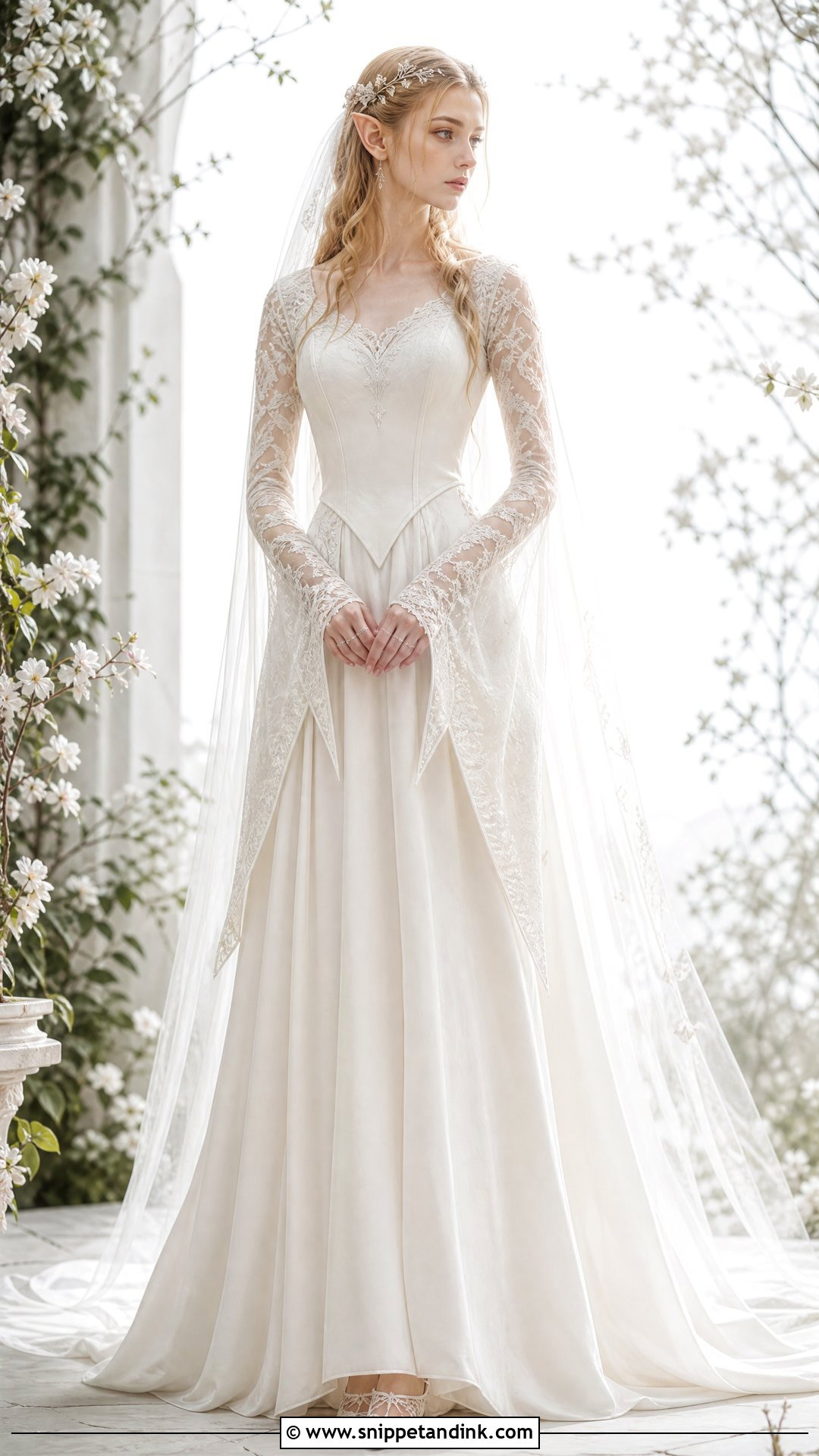
Pointed sleeve cuffs are small, yet they change how the hands read. The point extends over the back of the hand and frames it, a detail taken straight from medieval gowns. Fitted lace sleeves cut slightly long, or soft chiffon with shaped cuffs, both work with a sleek bodice and flowing skirt. Because the eye goes to your hands, keep the bouquet small and wear a thin ring stack. Two checks at the fitting: the cuff needs a finger loop or it will ride up, and the point shouldn’t cover the ring finger during the exchange.
24. Elvish Wedding Dress With Woodland Boots
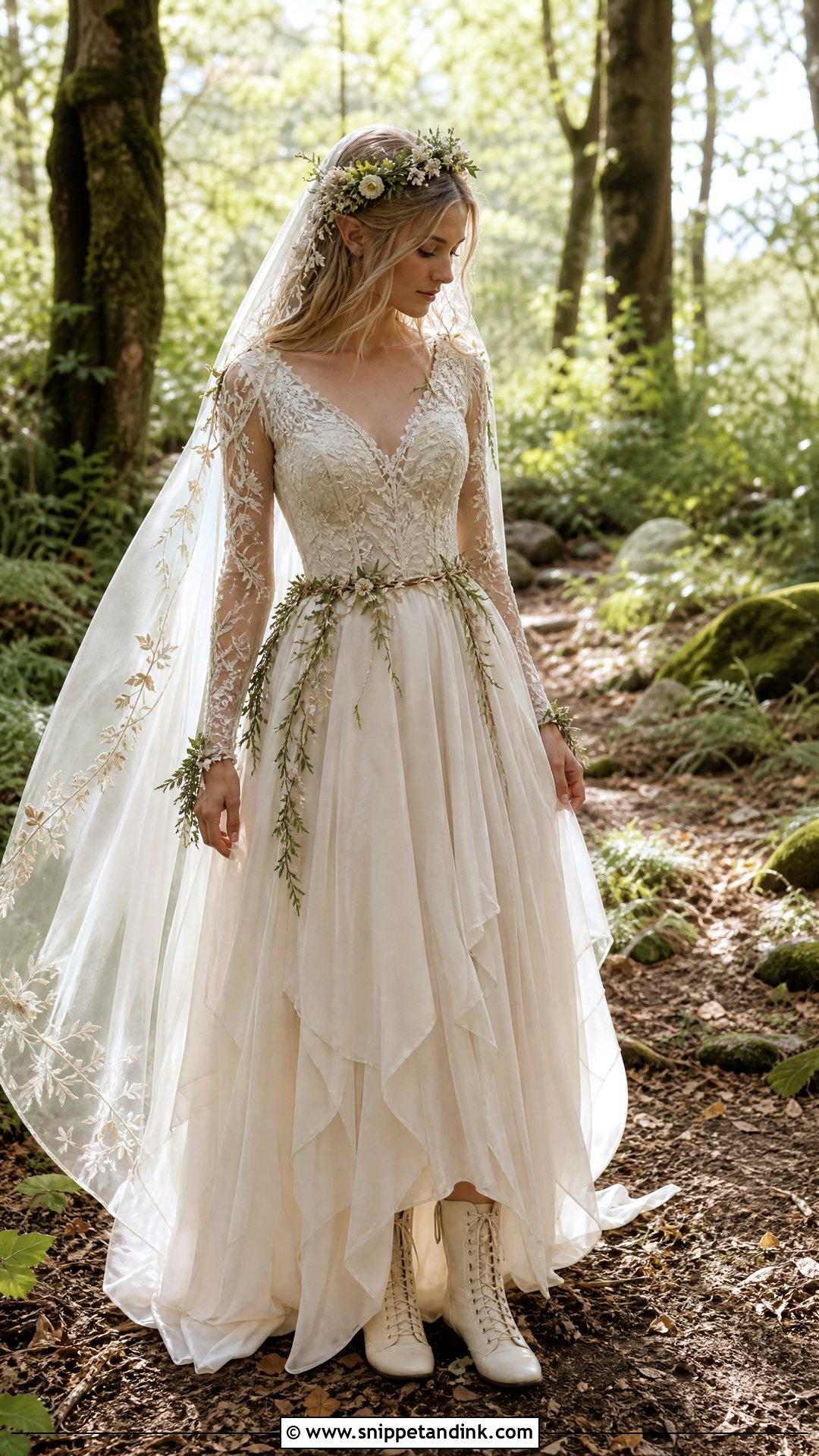
Boots solve the problem of a ceremony down a forest path or up a hillside. Lace-up ivory boots, soft suede ankle boots or pale leather all suit the mood, and they pair best with chiffon or tulle that swings freely. A lace bodice, long sleeves and a floral crown complete the woodland look, with a short cape or embroidered veil if you want more. Have the hem set while you’re wearing the boots: a dress hemmed for heels will drag in flat boots. Wear them around the house for a couple of weeks first so they’ve softened by the day.




25. Elvish Wedding Dress With A Crystal Crown
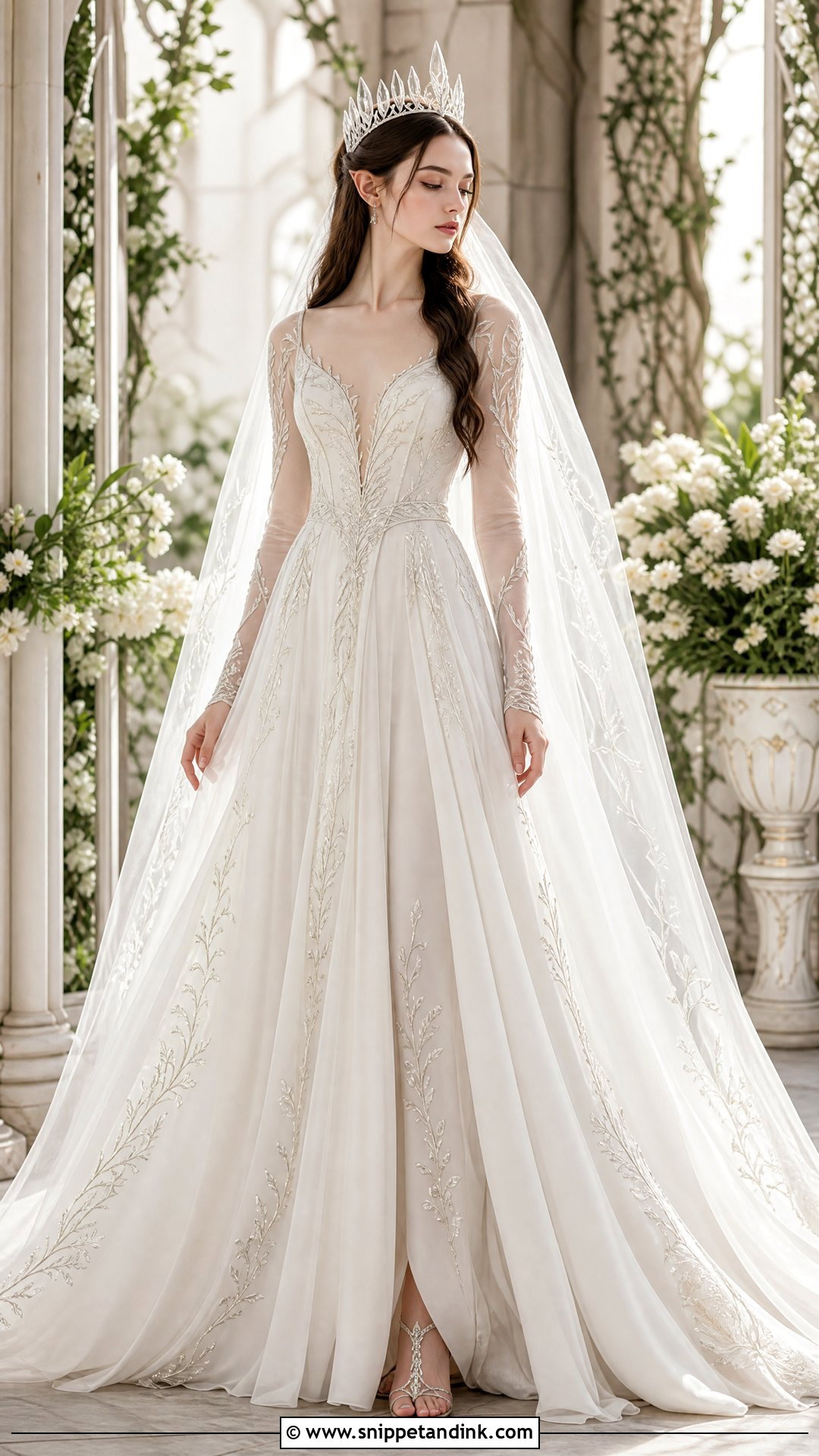
A crystal crown works on a gown with clean lines or fine embroidery; surround it with too many details and it looks crowded. Clear or silver crystal gives a cool moonlit finish, gold-toned a warmer woodland queen. Pair it with a flowing A-line, sheer sleeves and a long veil tucked behind, and keep the earrings small. Crowns are heavier than they look. Your hairstylist should build a secure base first, a small braid or pinned section, and pin through the crown’s loops instead of balancing it on top of the hair.
Sleeves, Capes and Hems Over a Real Wedding Day
Fantasy gowns are designed to look right standing still in a clearing. A wedding day means sitting, eating, hugging and walking over uneven ground, so I put every elven dress through a few tests at the final fitting.
Sleeves near food and candles
Bell and draped sleeves trail into plates, cake and candle flames. Tuck a sleeve loop or a couple of clear hair elastics into your emergency kit so you can gather a sleeve at the elbow during dinner, and ask whoever is setting up to keep open flames away from where you’ll stand for the vows.
The pull of a cape
A cape, velvet especially, pulls backward all day. One that hooks into the dress at two or three points stays straighter than one tied at the throat. If it’s detachable, decide when it comes off, usually after portraits, and who looks after it.
Hems on soil, grass and gravel
Pale chiffon and tulle pick up soil and grass stains and snag on gravel. Have the hem set to clear the ground in the shoes you’ll actually wear, and add a bustle if there’s a train. Afterwards, let any mud dry and brush it off gently rather than rubbing, then get the gown to a specialist cleaner soon after the wedding, before stains have time to set.
Letting One Fantasy Detail Lead the Gown
Every look here comes down to balance: one fantasy element is allowed to lead, and everything else stays wearable. A cape, bell sleeves, leaf embroidery, plain silk or a coloured skirt can each carry the gown. Let the venue settle it, since a forest favours chiffon and boots while a stone hall can take velvet and a long train. Then add hair vines, circlets, pearl veils and jewellery that support the dress rather than crowd it. Before your final fitting, wear the whole thing together once, crown and shoes included, and walk the length of a room in it.
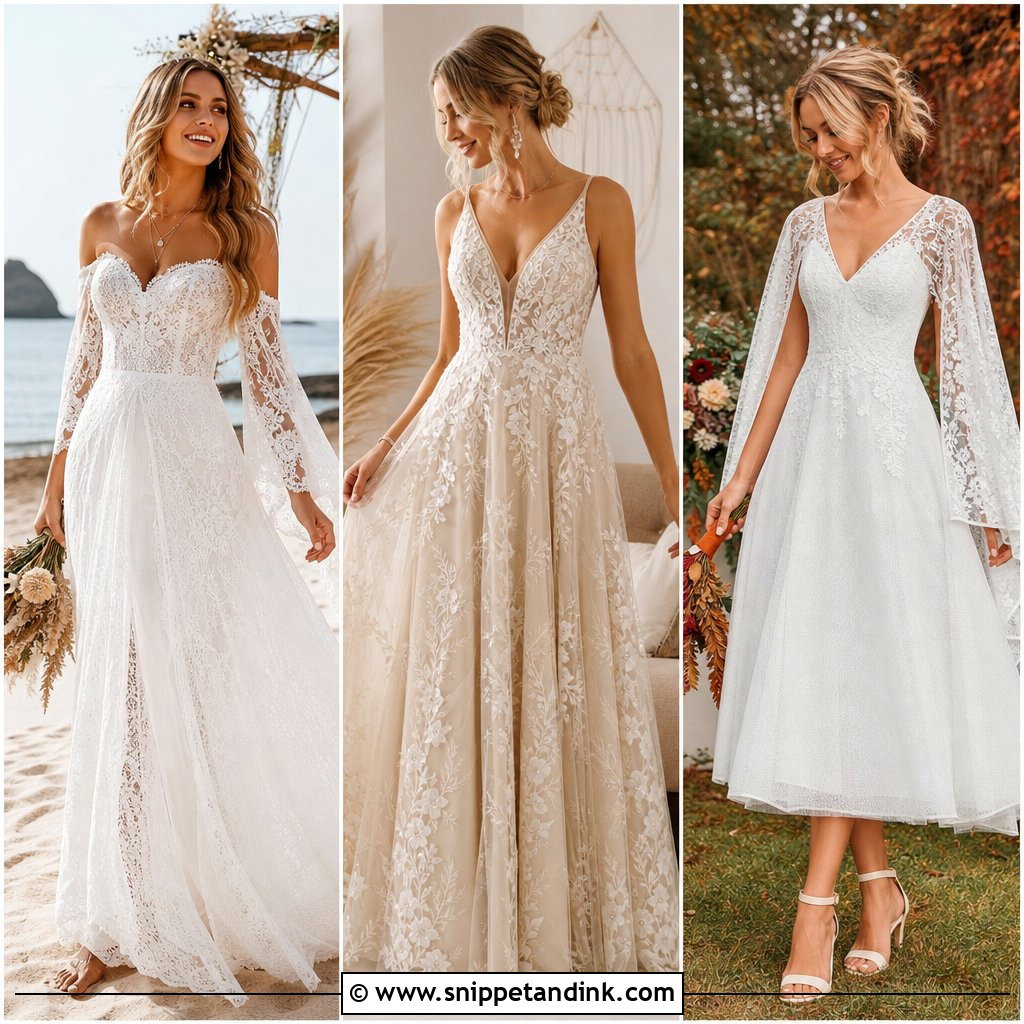
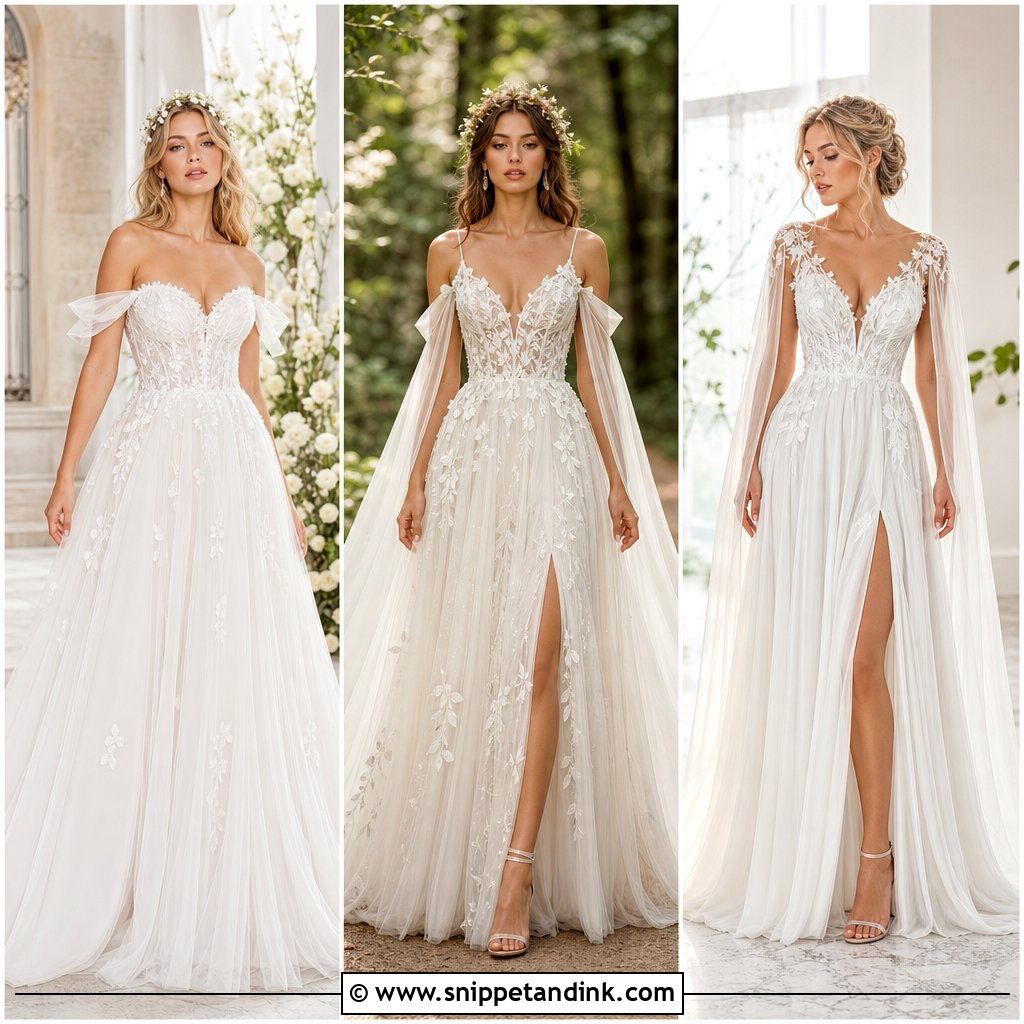
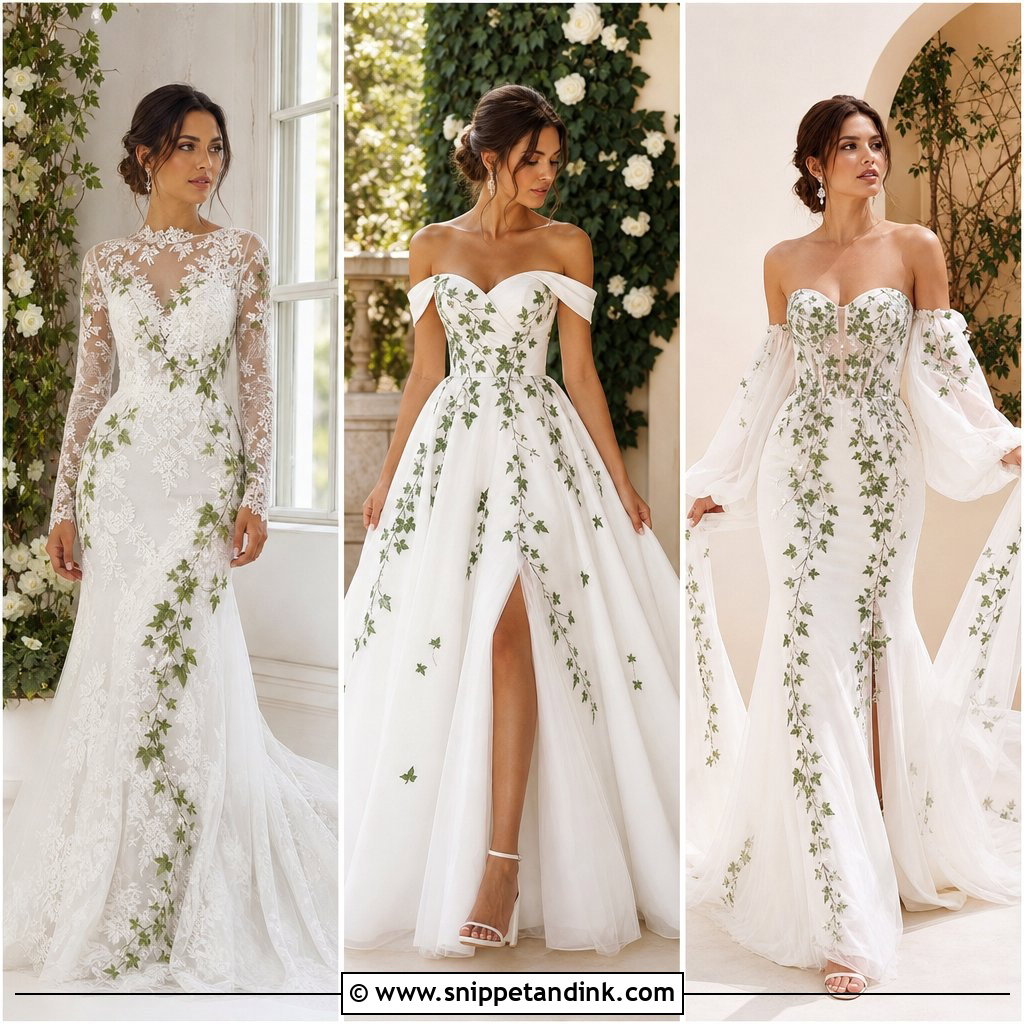
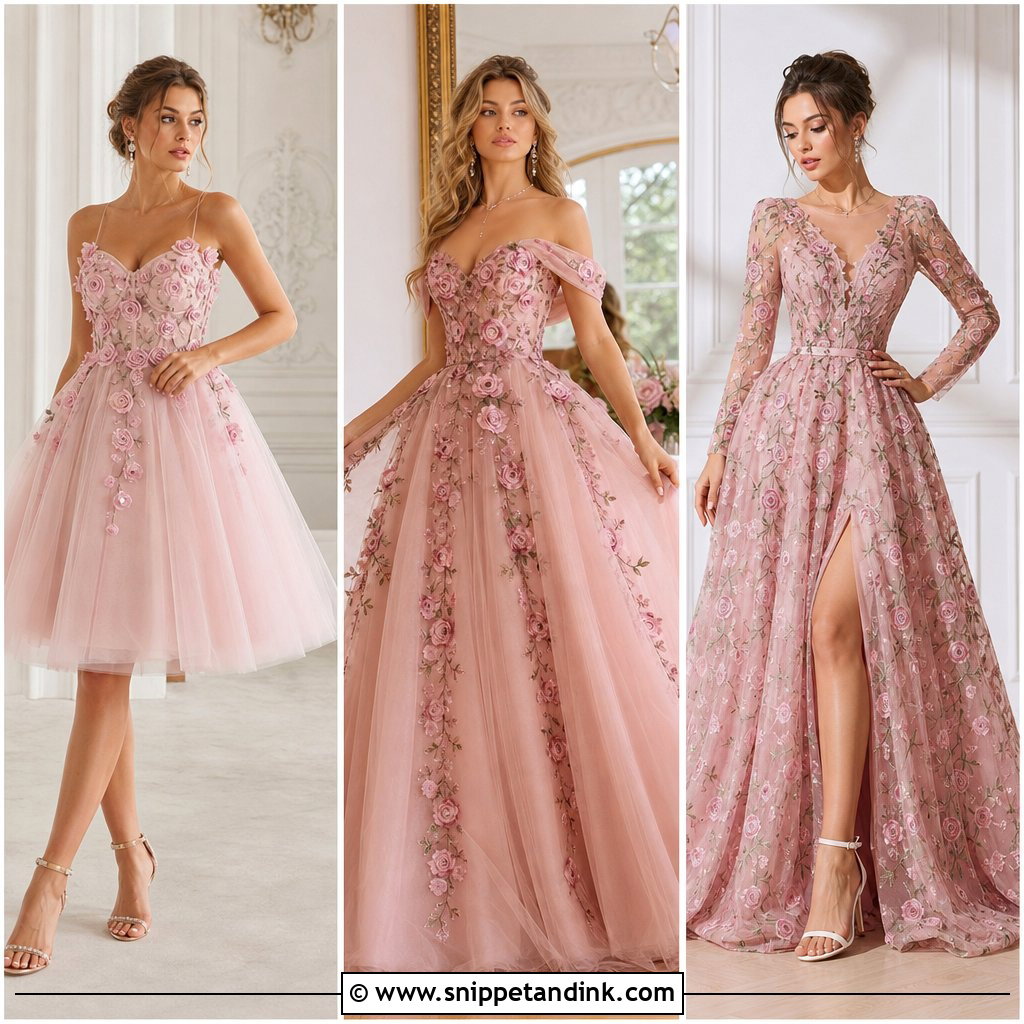
You'll Like These Ideas:


Leave a Reply