
Most brides who come to me asking for something tight actually mean something that follows them closely and still lets them eat dinner. That’s the gap between a fitted gown that works and one you’re counting the hours in. The answer is structure on the inside and enough give in the right places. From clean crepe sheath dresses to lace mermaids, there’s a close cut for most venues and bodies. Bridal designers are also using draping, corsetry, basque waists, pearls and detachable layers more than they used to, which gives you ways to make a simple shape your own. Each of the twenty below comes with my notes on styling it and testing it.
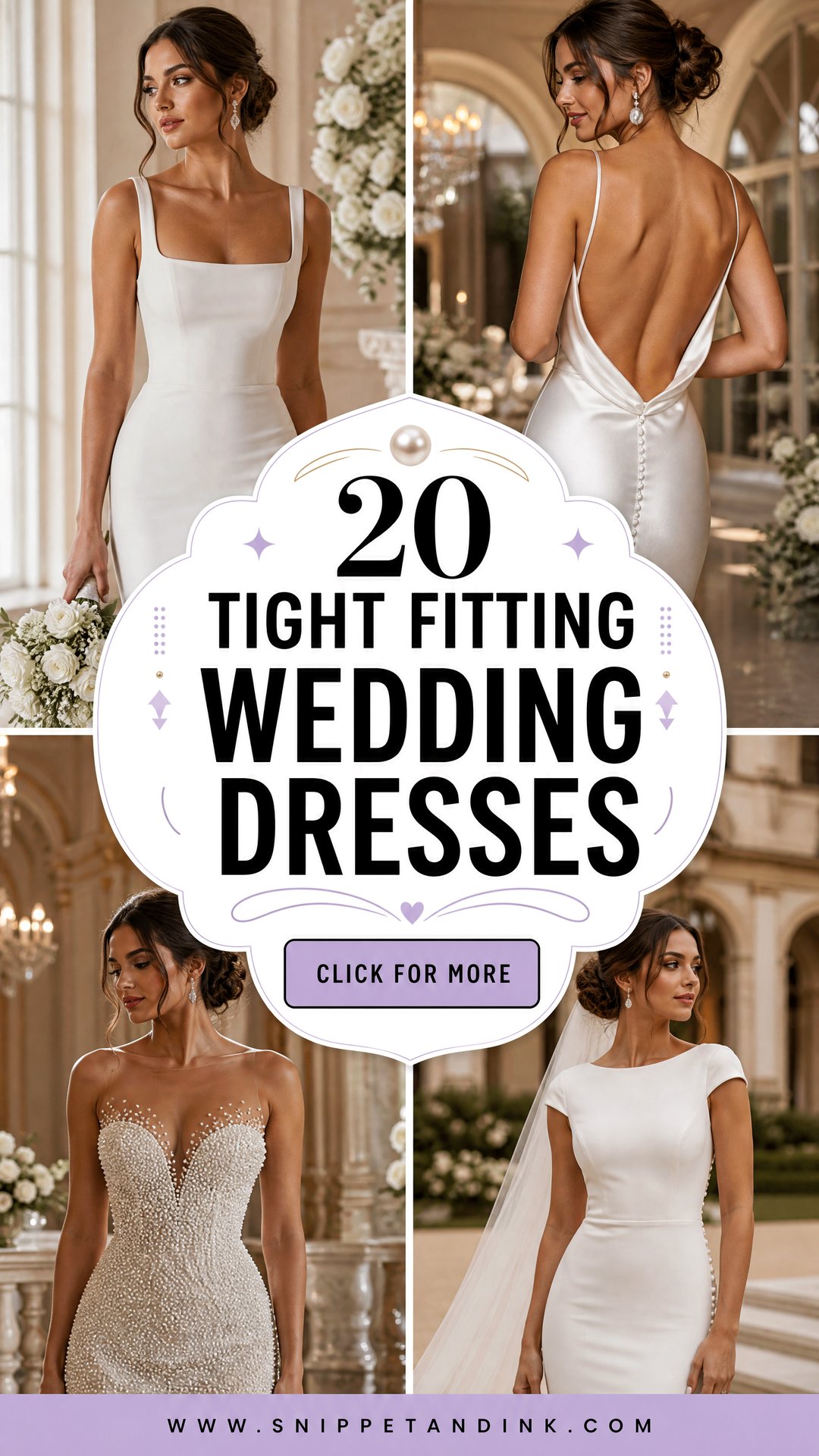
Reading a Clipped Sample in the Bridal Shop
Shop samples come in a handful of sizes, so most brides try fitted gowns either clipped at the back or not zipped at all. That’s normal, but I find it makes a close cut hard to judge. A mermaid held by clamps looks sleeker in the mirror than it will feel, and a sample a size too big hides where the flare actually breaks on you.
Here’s what I ask brides to do so they can see past the clips:
- Wear smooth nude underwear and bring shoes close to your wedding heel height.
- Ask the consultant to show you where the bones sit on your body, not on the hanger.
- Walk across the room and back. Mirrors flatter stillness, and fitted gowns are judged in motion.
- Sit on the edge of a chair, even if the sample won’t close. You’ll feel where the skirt grips.
When a gown is made to order, it’s cut to the size chart, not to you. I tell brides to expect fitted styles to need more alteration than a ball gown, because there’s no full skirt to absorb small differences.
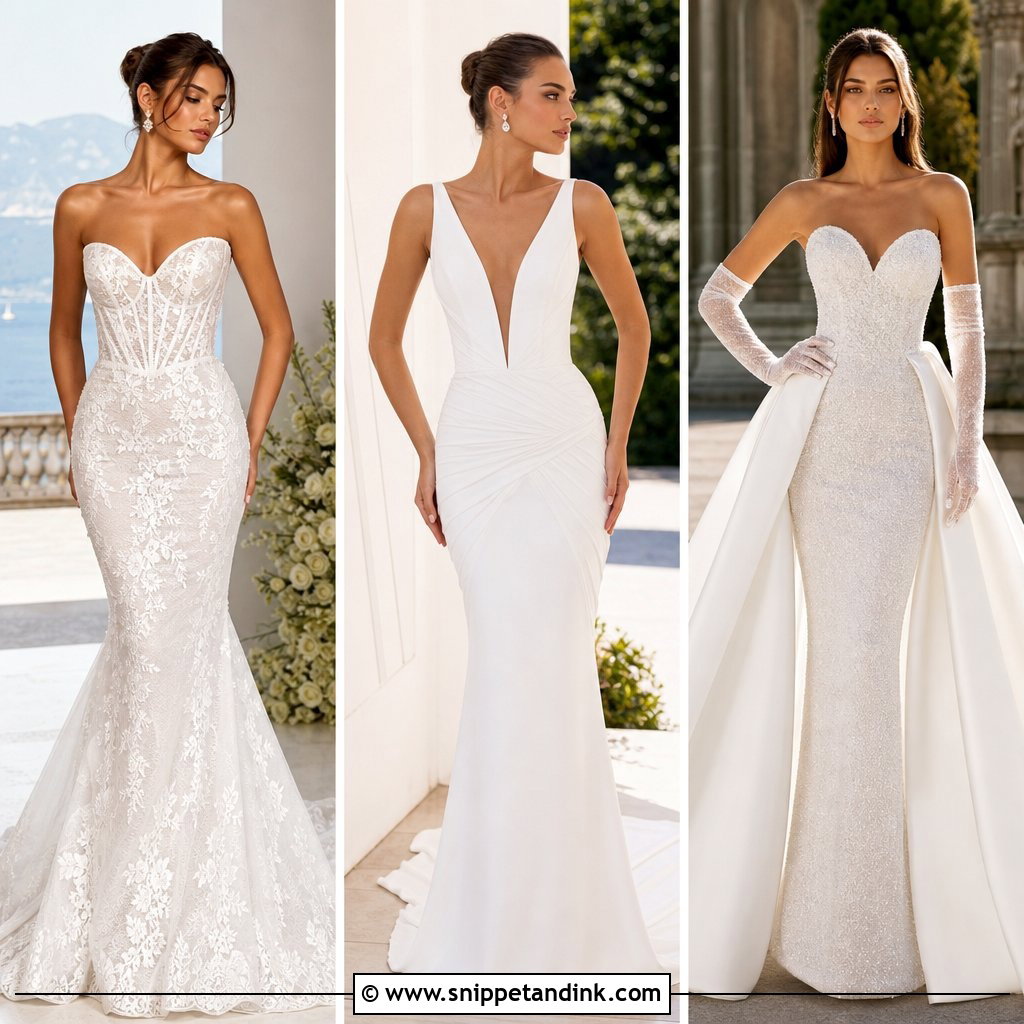
1. Strapless Satin Mermaid Wedding Dress
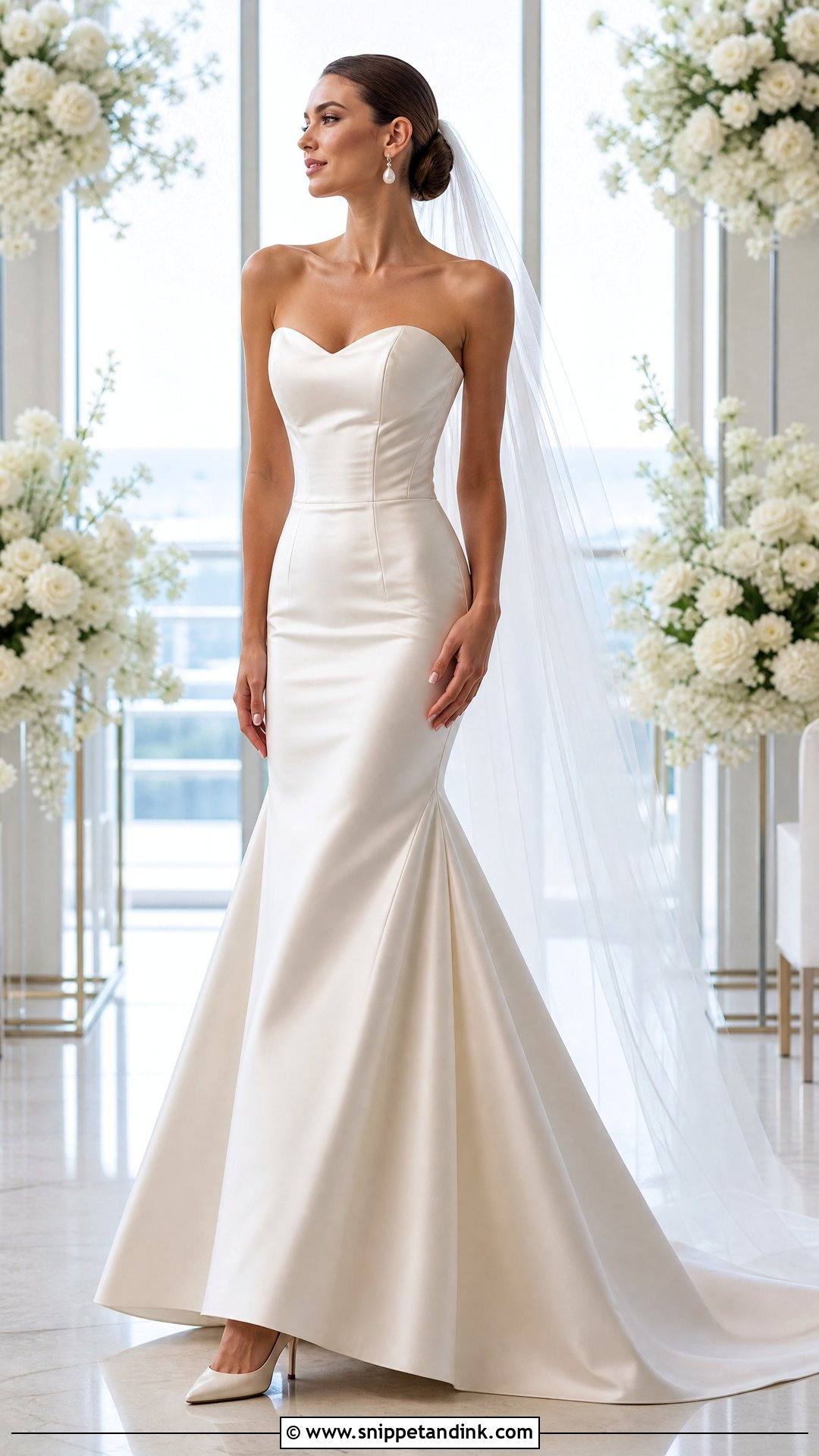
Satin mermaids look easy only when the boning is doing the work. Ask whether the bodice has internal bones and a waist stay; without them you’ll be hitching the neckline up all evening. The waist and hip should be fitted, with the flare starting near the knee so you can walk. Pointed ivory pumps, pearl drops, a sleek low bun and a long plain veil are all it needs. Wear skin-tone underwear to every fitting. The hip and upper thigh are where satin shows strain first, as diagonal pull lines pointing toward the tightest spot.
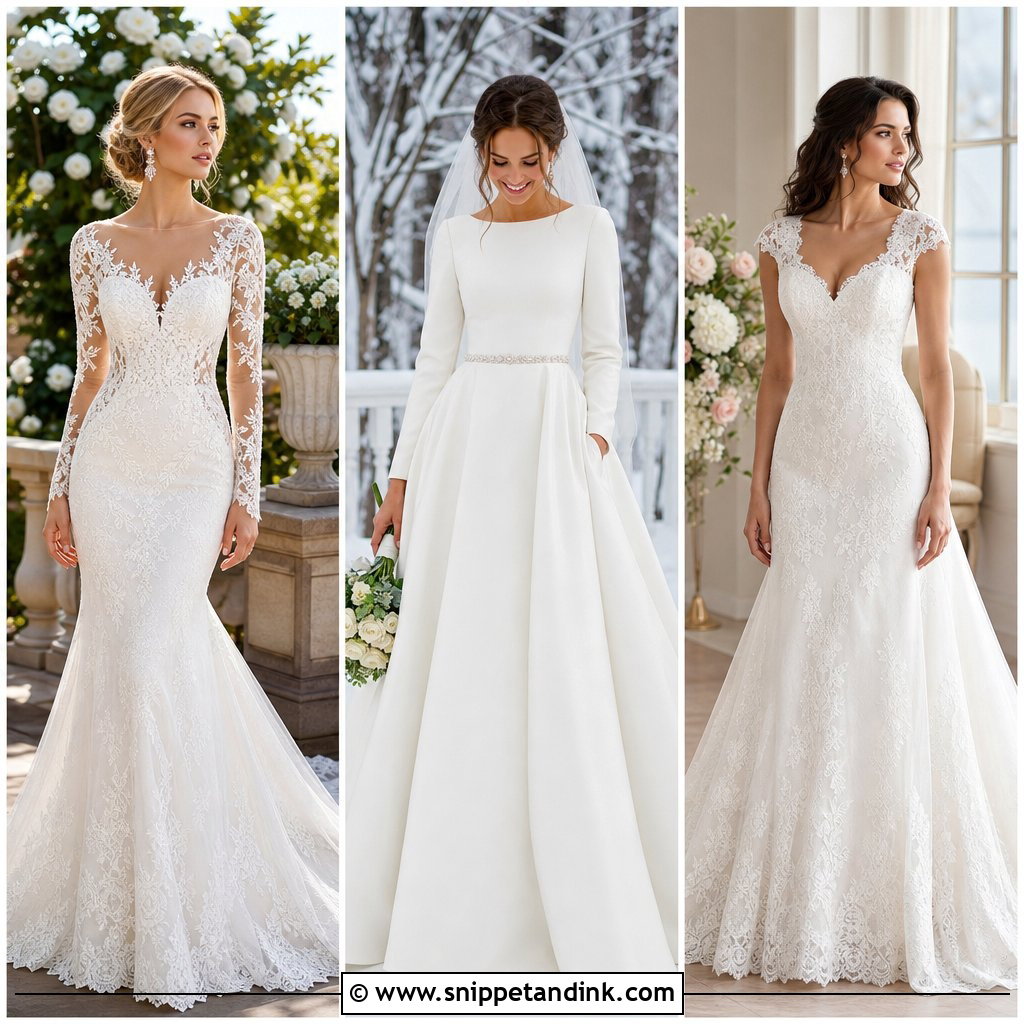
2. Long Sleeve Lace Mermaid Wedding Dress
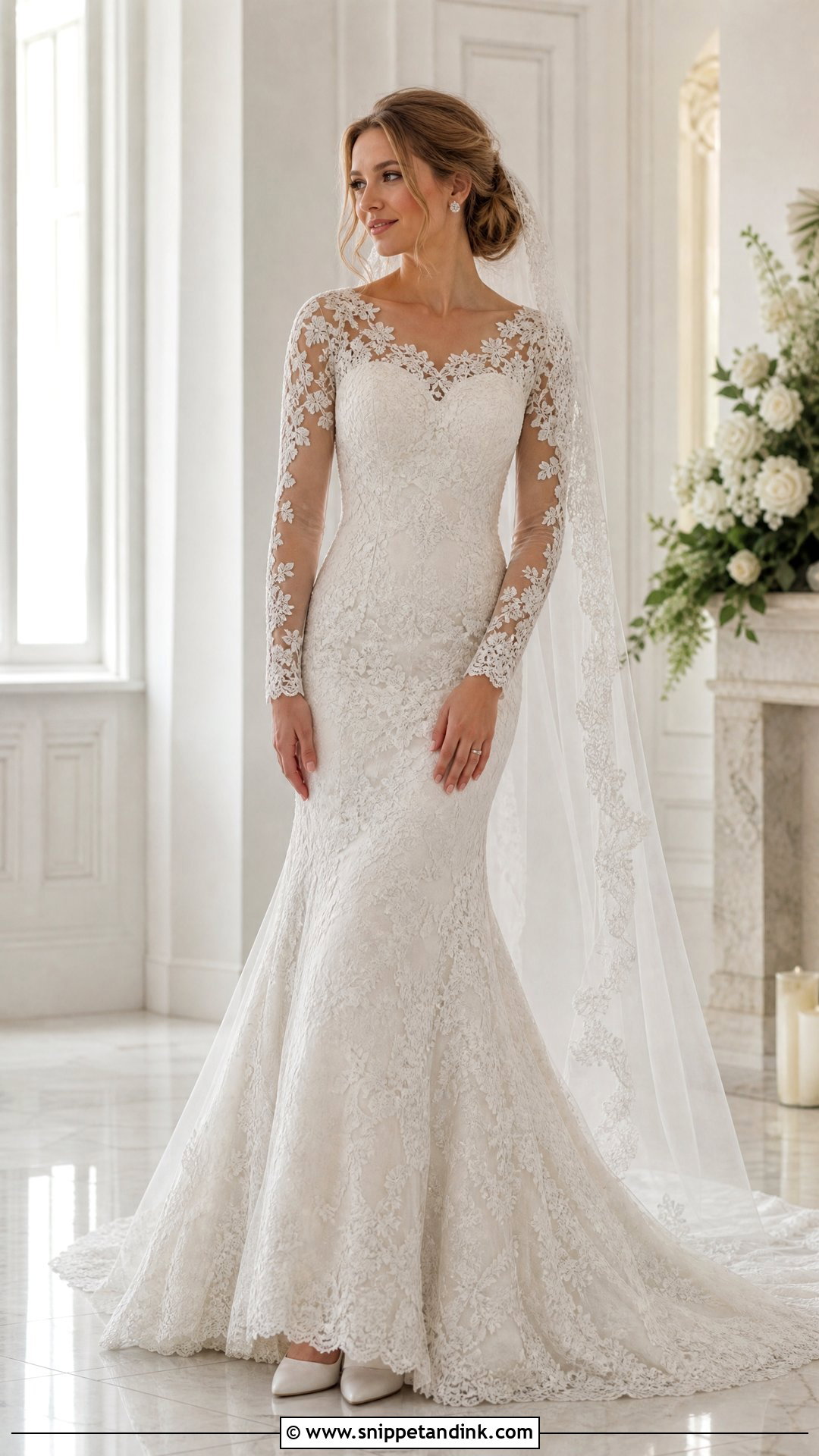
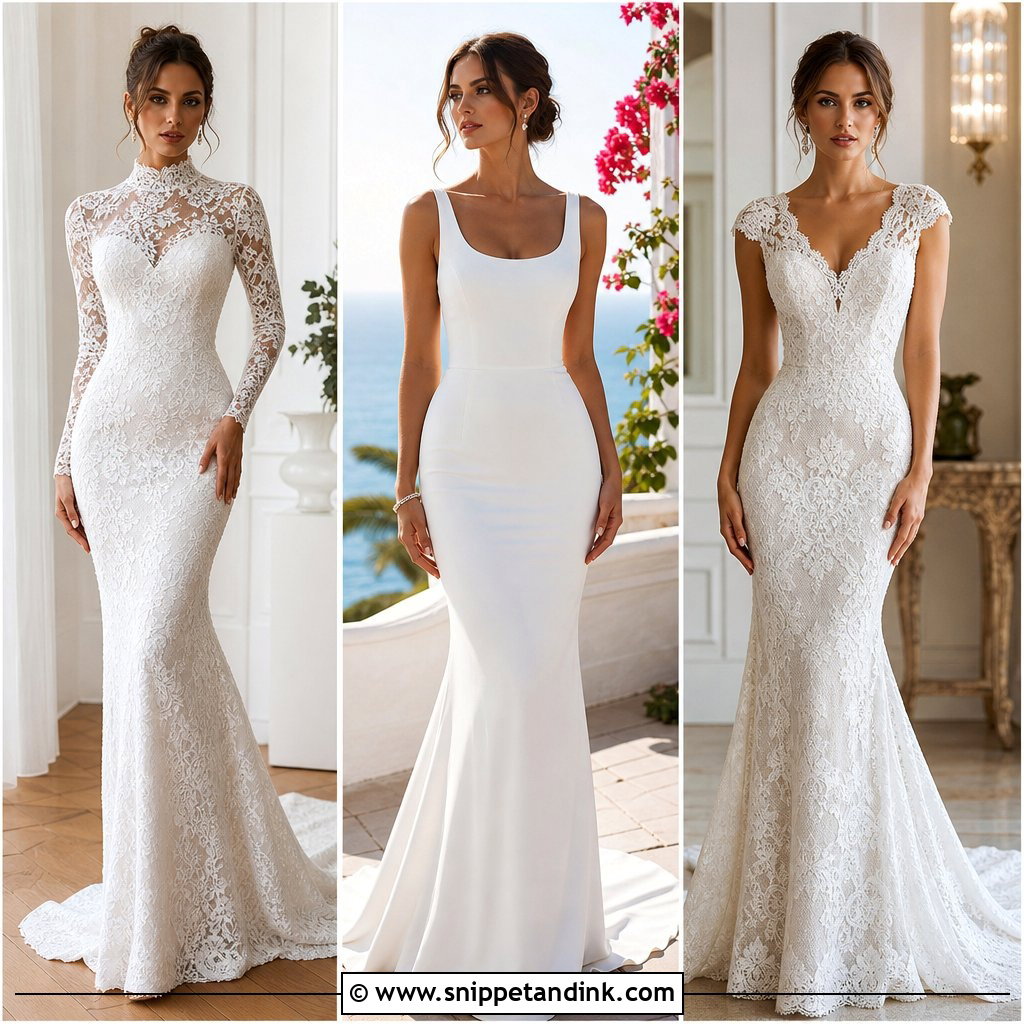
Long illusion sleeves let lace sit right on the skin, so you get coverage without bulk. I’d choose a lined bodice for support and keep the neckline a little sheer to lighten the top half. Closed-toe ivory heels, small studs and a fingertip veil edged in matching lace suit it, with a loose chignon. For a cold day, a light cape you can drop indoors works better than a cardigan. Check the wrists: lace sleeves cut tight at the cuff stop you bending your arm to hold the bouquet, and that shows in every processional photo.
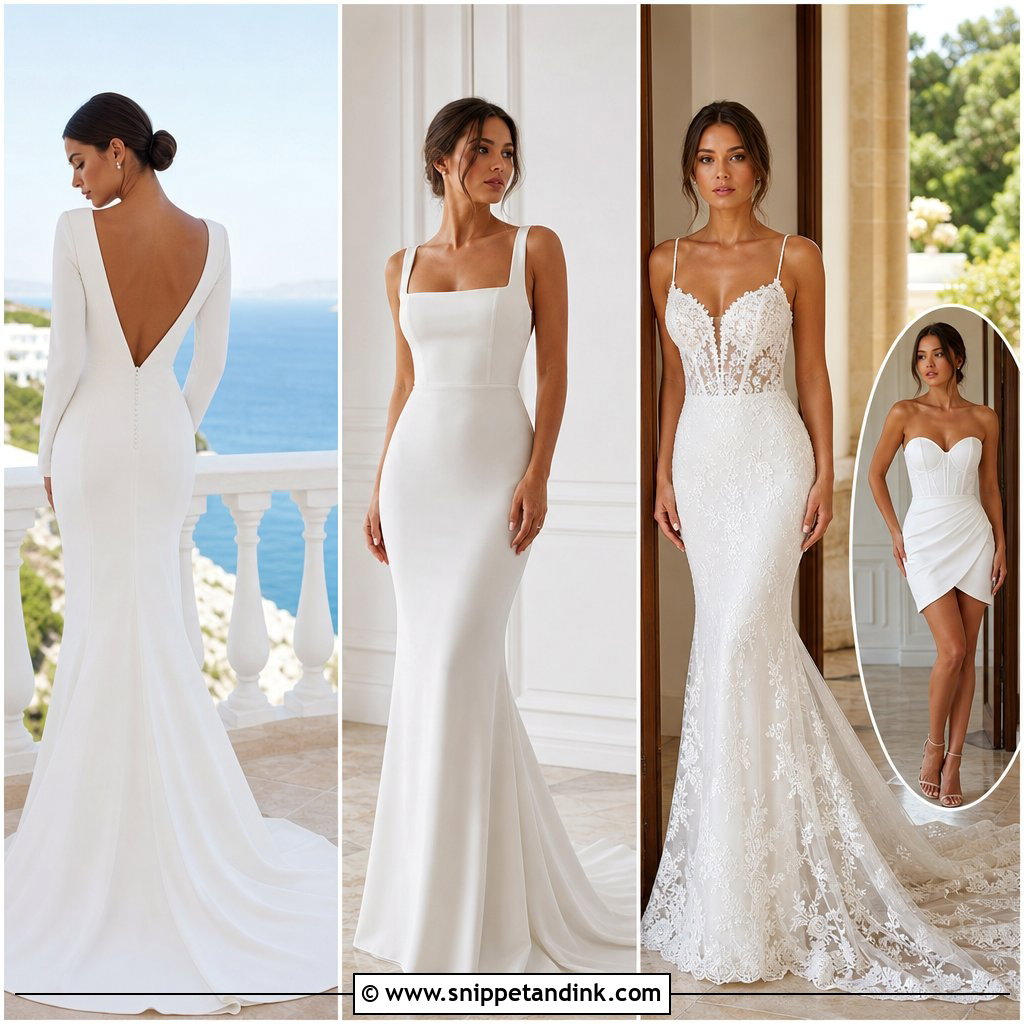
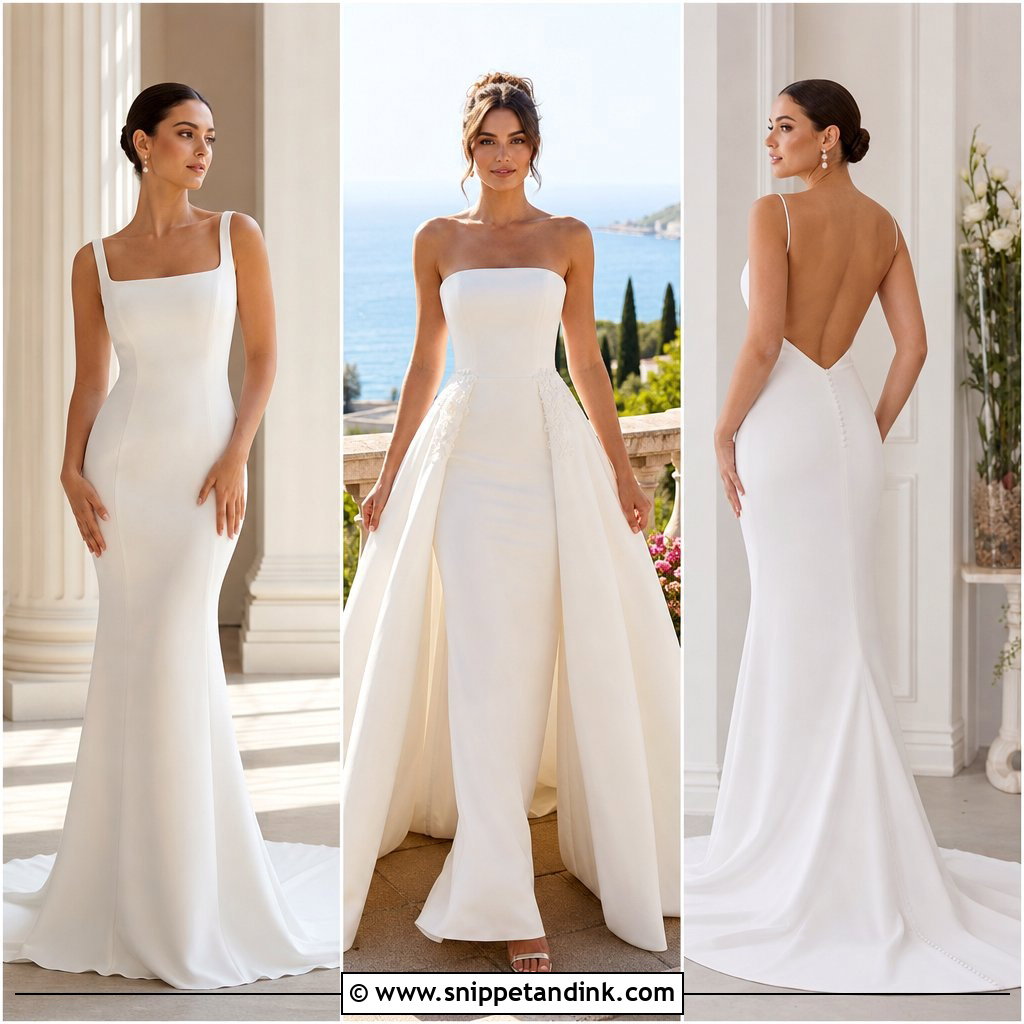
3. Square Neck Crepe Wedding Dress
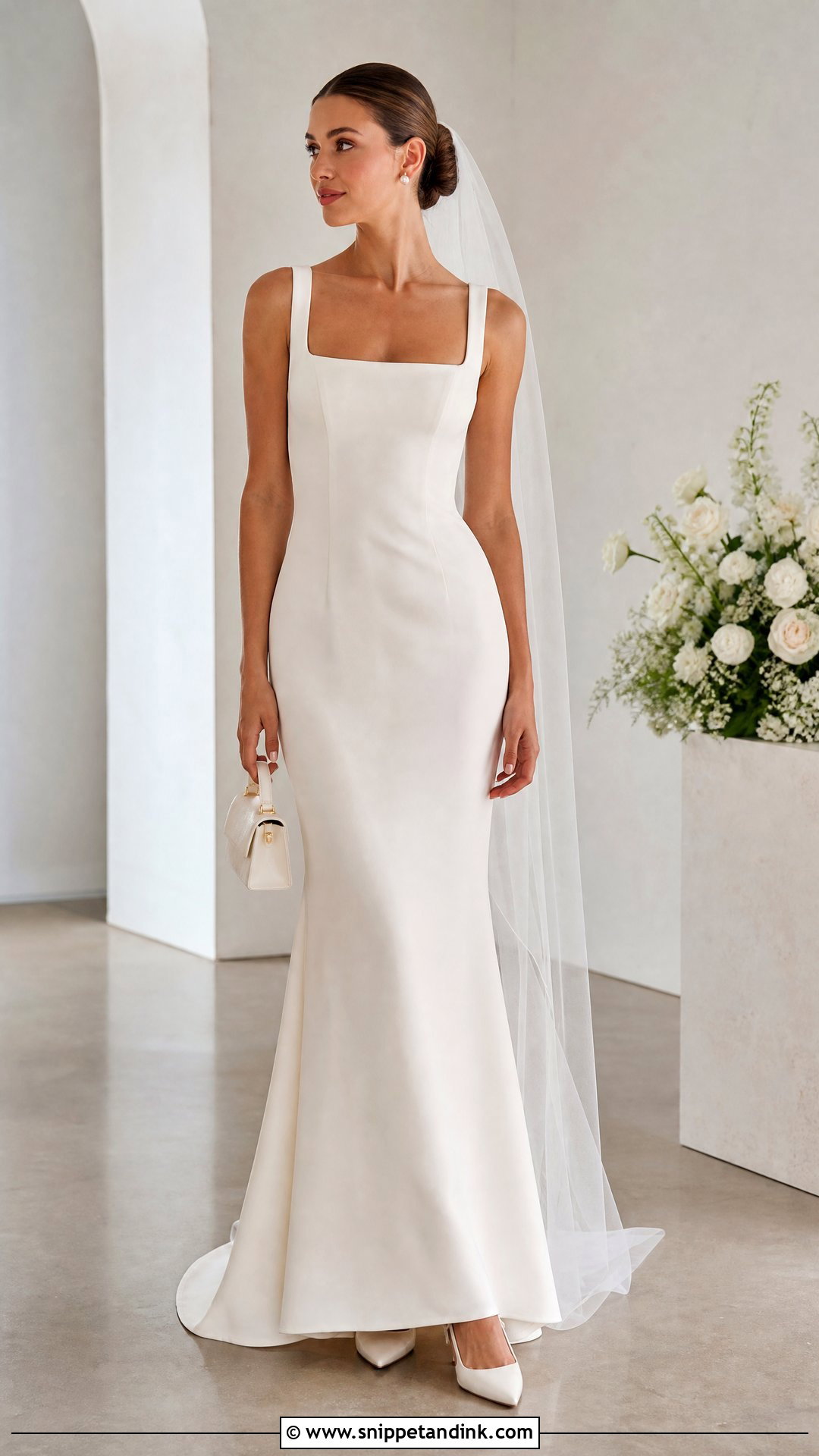
My test for crepe is to sit for two minutes, then stand. Good medium-weight stretch crepe springs back; cheaper crepe keeps the creases across the lap. The square neck frames the collarbone and thick straps carry the bodice without boning. A column or a very soft fit-and-flare keeps it streamlined. Slingbacks, a structured mini bag and small pearl earrings are enough, with a plain chapel veil and a smooth bun. Have the tailor look at the waist, seat and upper thigh from the side. Don’t size down to feel slimmer; crepe shows tension instantly.
4. Off Shoulder Corset Wedding Dress
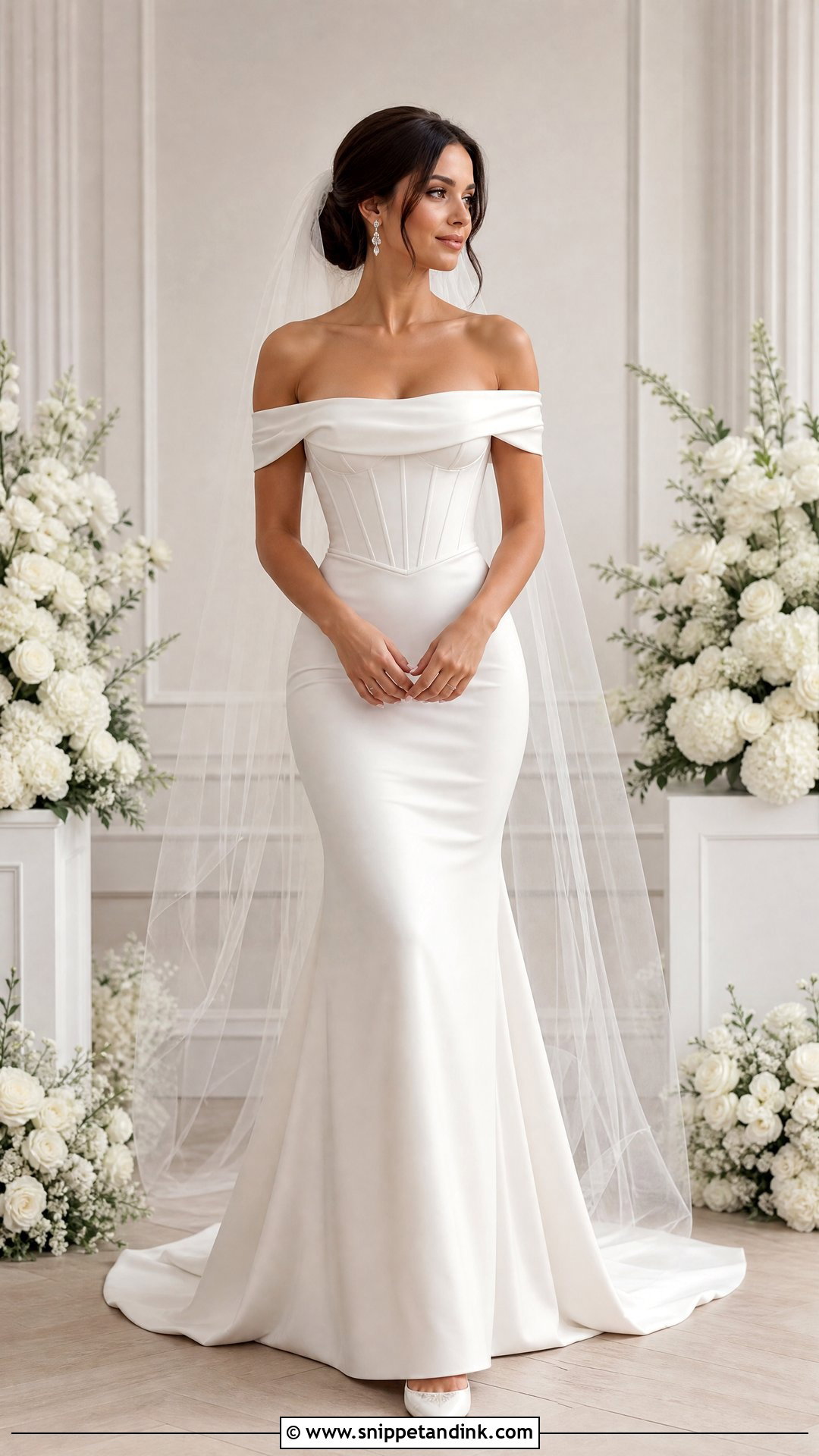
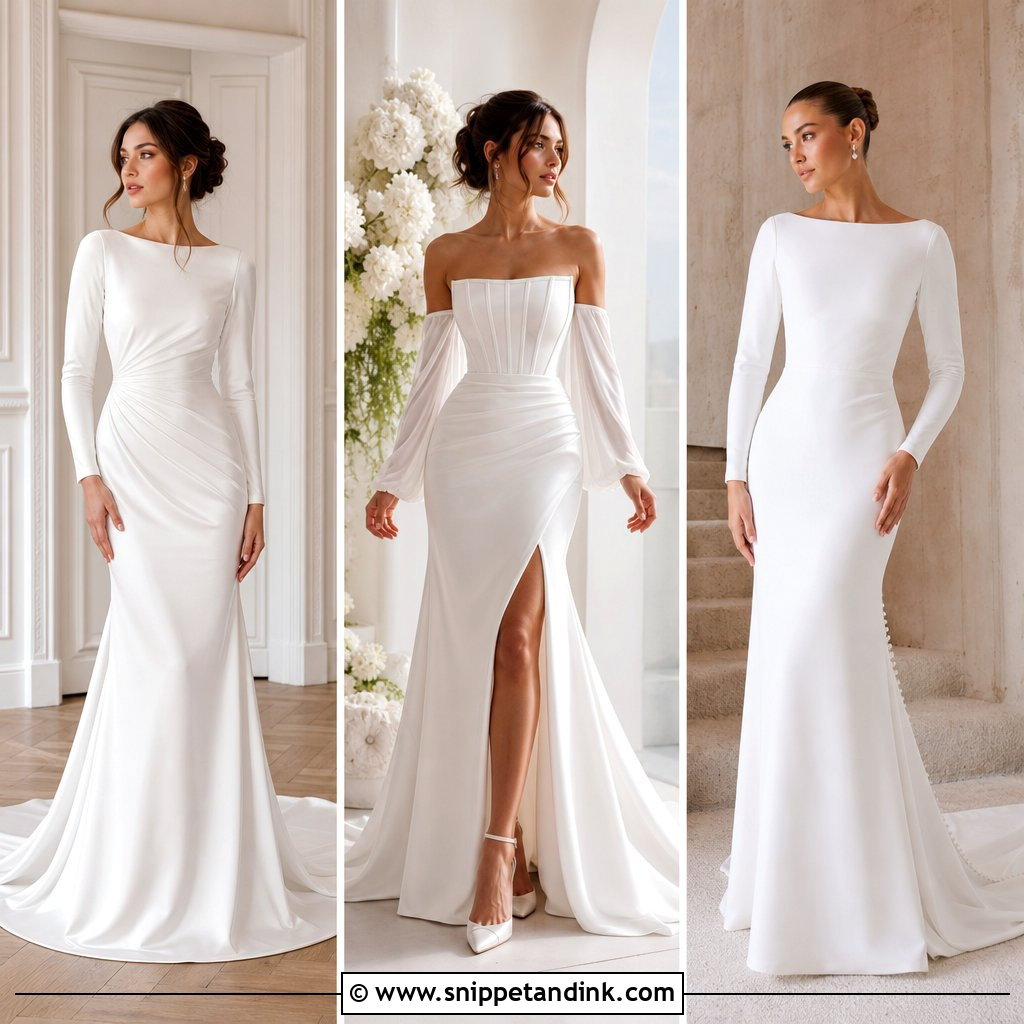
An off-shoulder corset should hold you up through the bodice, with the sleeves just resting on your arms. If the sleeves feel like they’re keeping the dress up, the cups and waist seam aren’t right yet. A trumpet skirt opening below the thigh balances the neckline. Crystal drops, pointed satin heels and a gathered veil under a low updo keep the shoulders clear, so skip the necklace. If it laces at the back, teach a bridesmaid at the final fitting. Lacing pulled from the top down instead of evenly from the middle leaves the bodice crooked.
5. Sweetheart Beaded Trumpet Wedding Dress
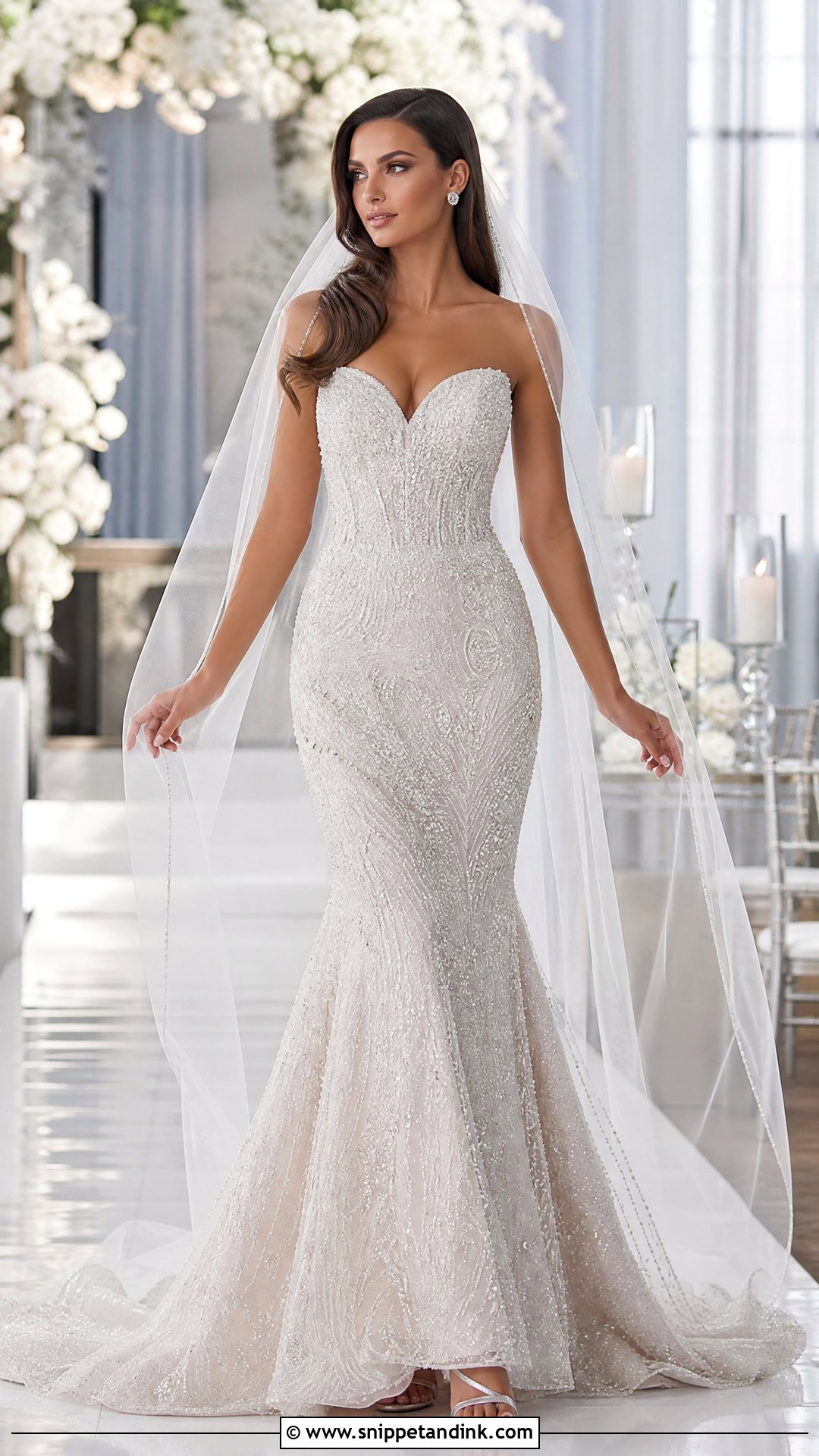
Beading on a sweetheart trumpet catches light every time you turn. The trumpet’s gradual flare gives more walking room than a mermaid, so this is a kinder choice for long venues. Beads concentrated at the bodice look formal; evenly scattered beads look lighter. Silver heels, crystal studs and a sheer chapel veil with no trim keep it clean, and a polished ponytail makes it current. Beading is heavy, so check the straps and lining hold firm, and run your hand under the arms for rough backing. A discreet wrist loop or bustle makes the beaded train manageable on the dance floor.
6. Halter Neck Fitted Wedding Dress
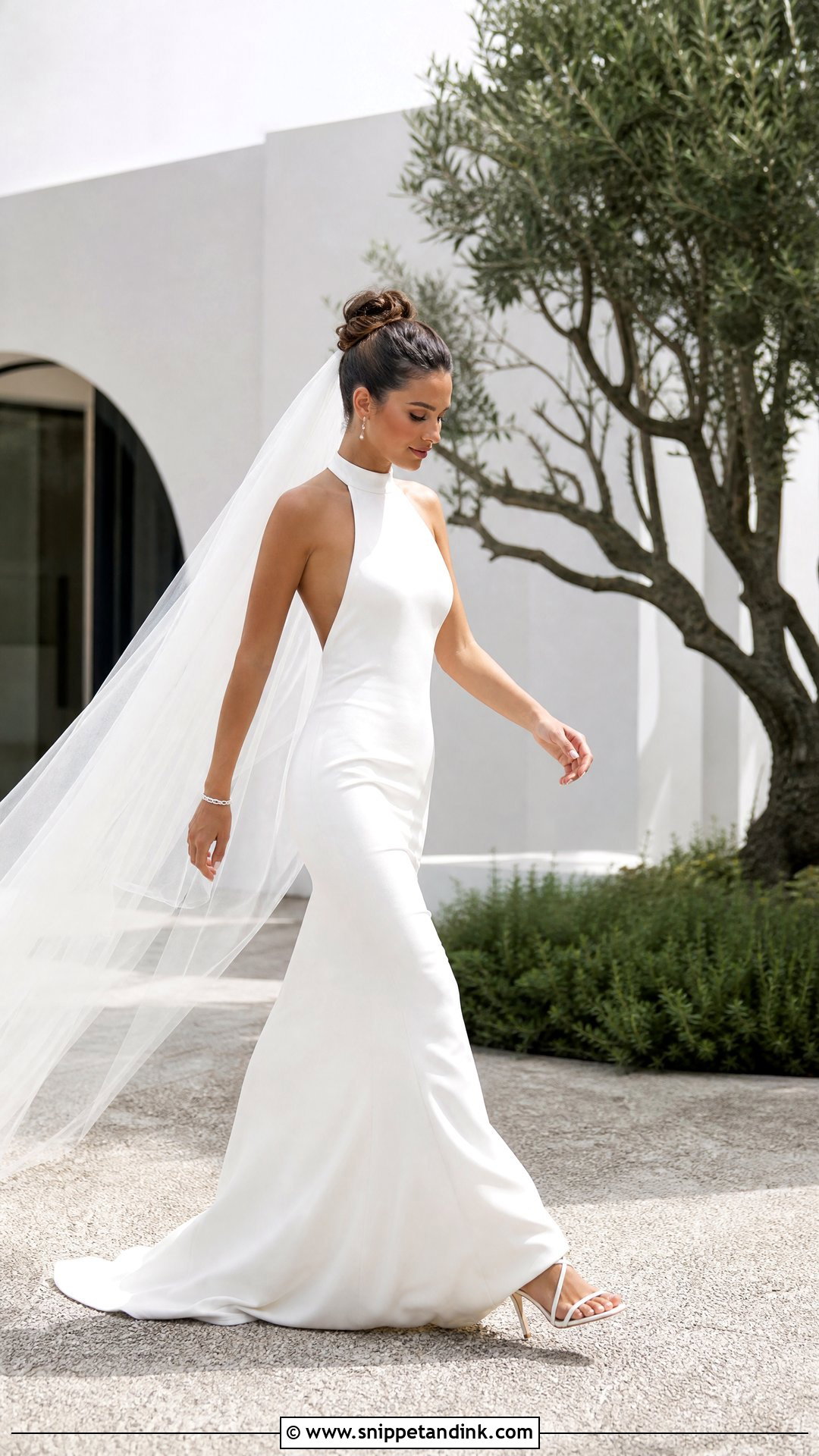
A halter draws the eye to your face and shoulders, which is why it photographs so well in portraits. Stretch crepe, satin and lightly beaded fabrics all work. The neck strap should neither press nor gape, and an open back balances the extra coverage in front. Sleek earrings, a narrow bracelet, strappy heels and a high bun keep it clean, with the veil set low. Halters often need specialist cups, so bring yours to every fitting. Watch the armholes from the side; they’re the spot that cuts in or shows too much once you start dancing.
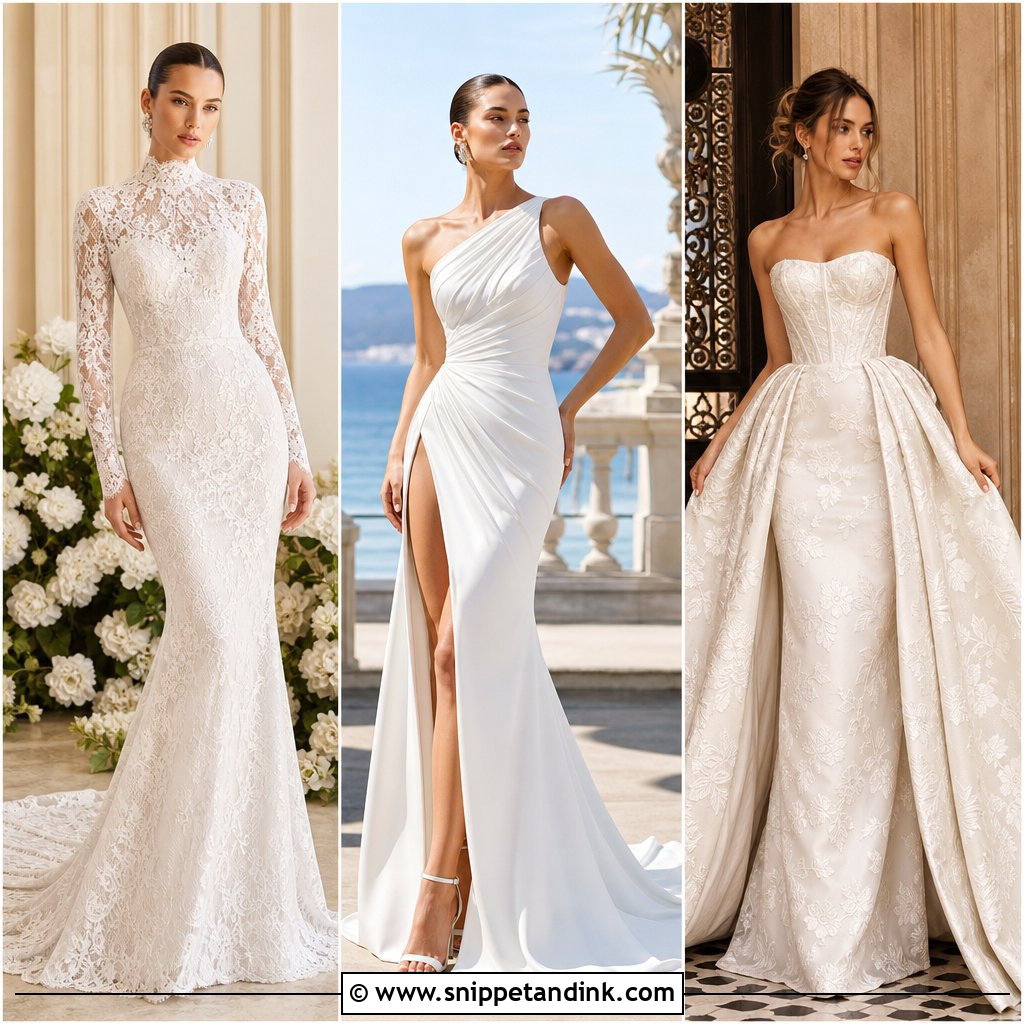
7. High Neck Lace Fitted Wedding Dress
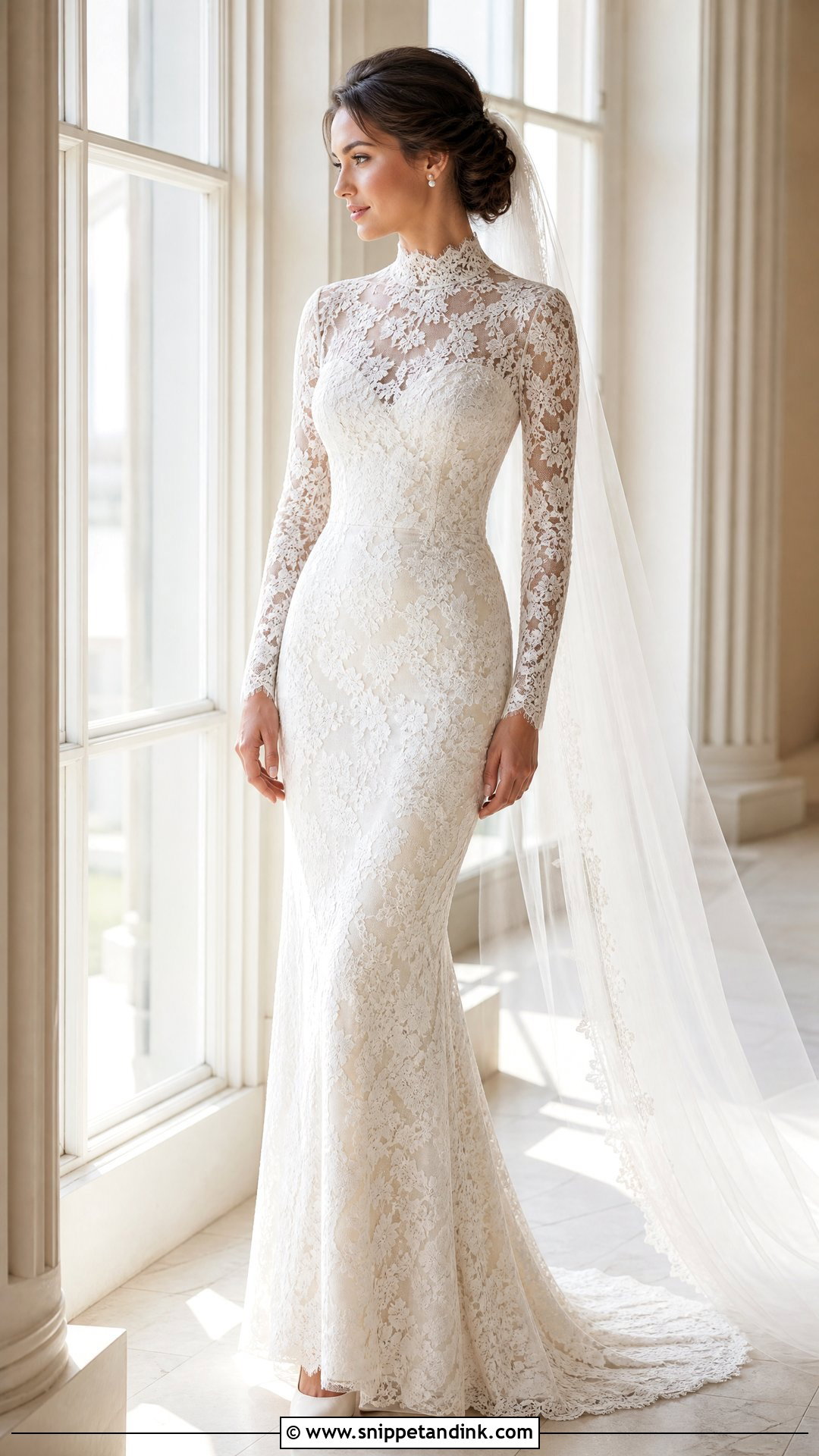
A sheer lace yoke gives the look of a high neck while keeping the bodice light. The skirt should stay modest so the collar is the feature. Pearl studs, ivory pumps and a twisted updo work, with a long veil attached below the hair so it doesn’t hide the lace. No necklace. A removable lining can give you more coverage for the ceremony and less for the party. Turn your head and lift your chin at the fitting. Lace collars with scratchy edges are miserable by the third hour, so ask for a soft binding inside.
8. Backless Satin Fitted Wedding Dress
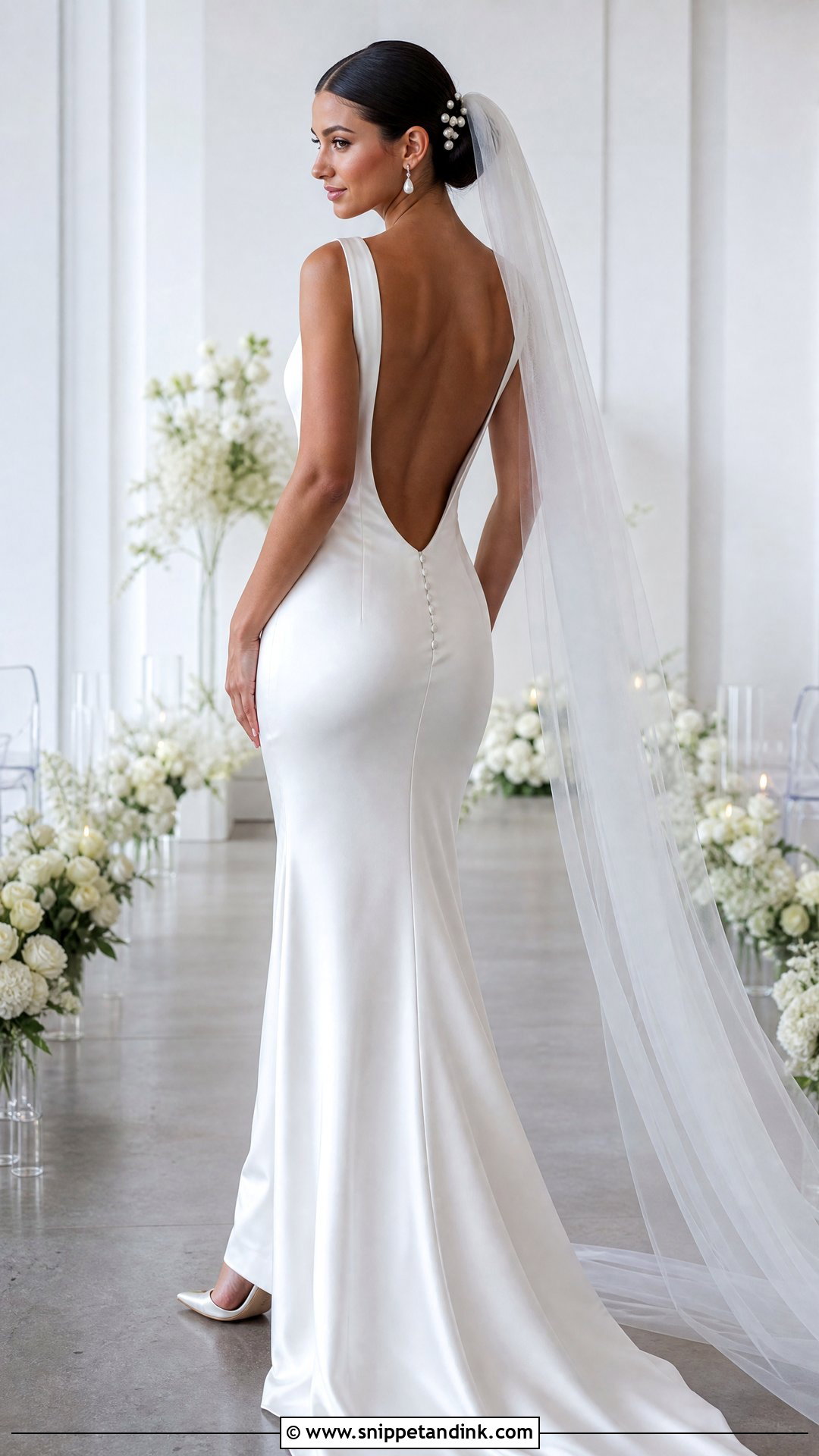
Backless satin is all about the line from shoulder blade to waist, so the front can stay plain: bateau, scoop or a soft drape. Built-in cups and firm side seams replace the bra. Pearl hairpins, drop earrings, pointed heels and a sheer veil that shows the back finish it, with a smooth low bun. Low backs shift when the fit is off, so walk and sit with the tailor watching from behind. Tape is a last touch, not the thing holding the dress on.
9. Basque Waist Fitted Wedding Dress
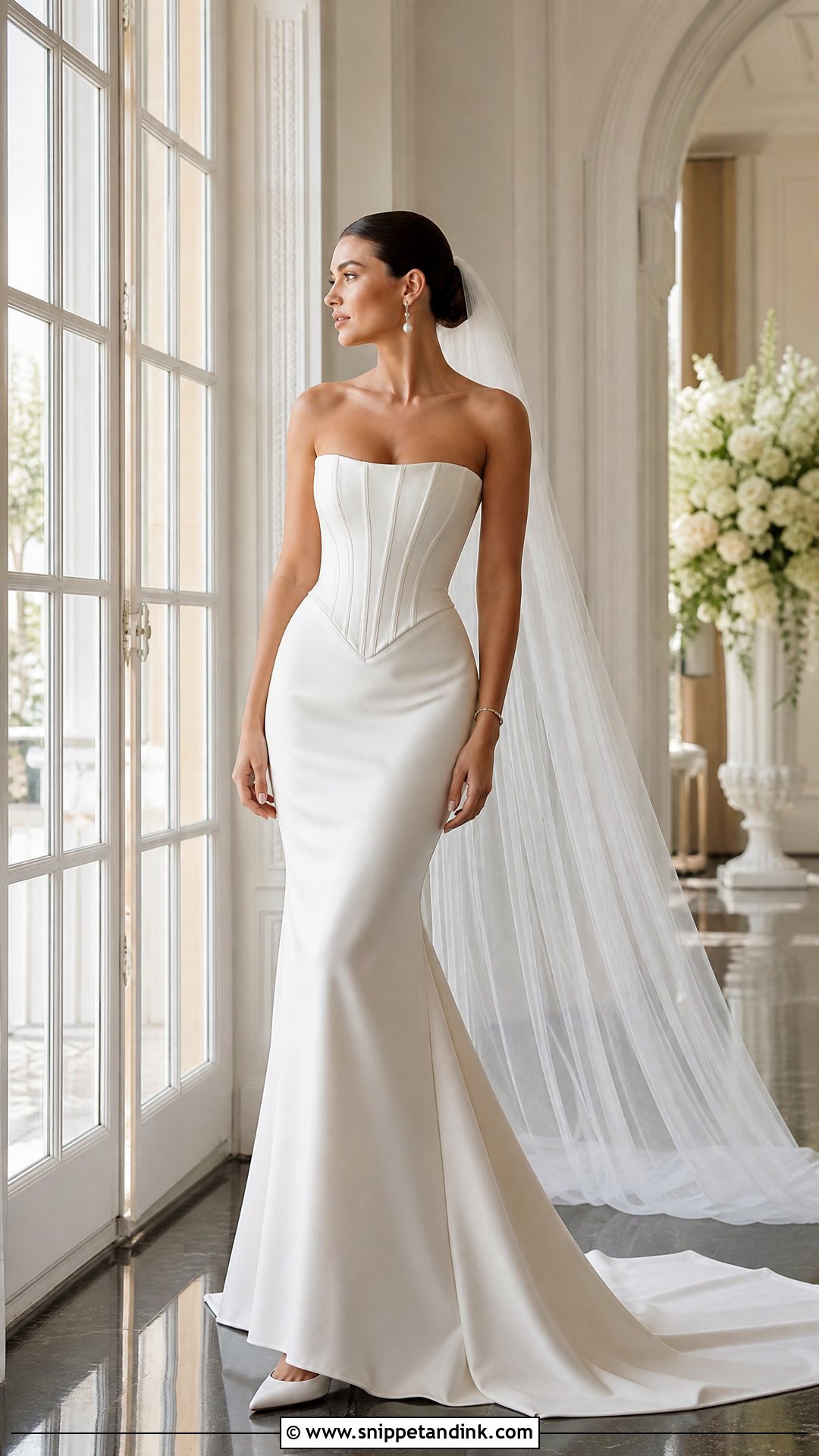
The pointed waistline lengthens the torso and suits corset construction with a close trumpet or fit-and-flare skirt. Satin looks architectural; lace looks gentler. Pointed pumps, a fine tennis bracelet, pearl drops and a long plain veil keep the waist seam visible, with a smooth bun or waved ponytail. Two things to check: the point must lie flat when you sit rather than folding, and the boning should end above the hip crease. If it stops right on the crease, it digs in every time you bend.
10. Scoop Neck Fitted Wedding Dress
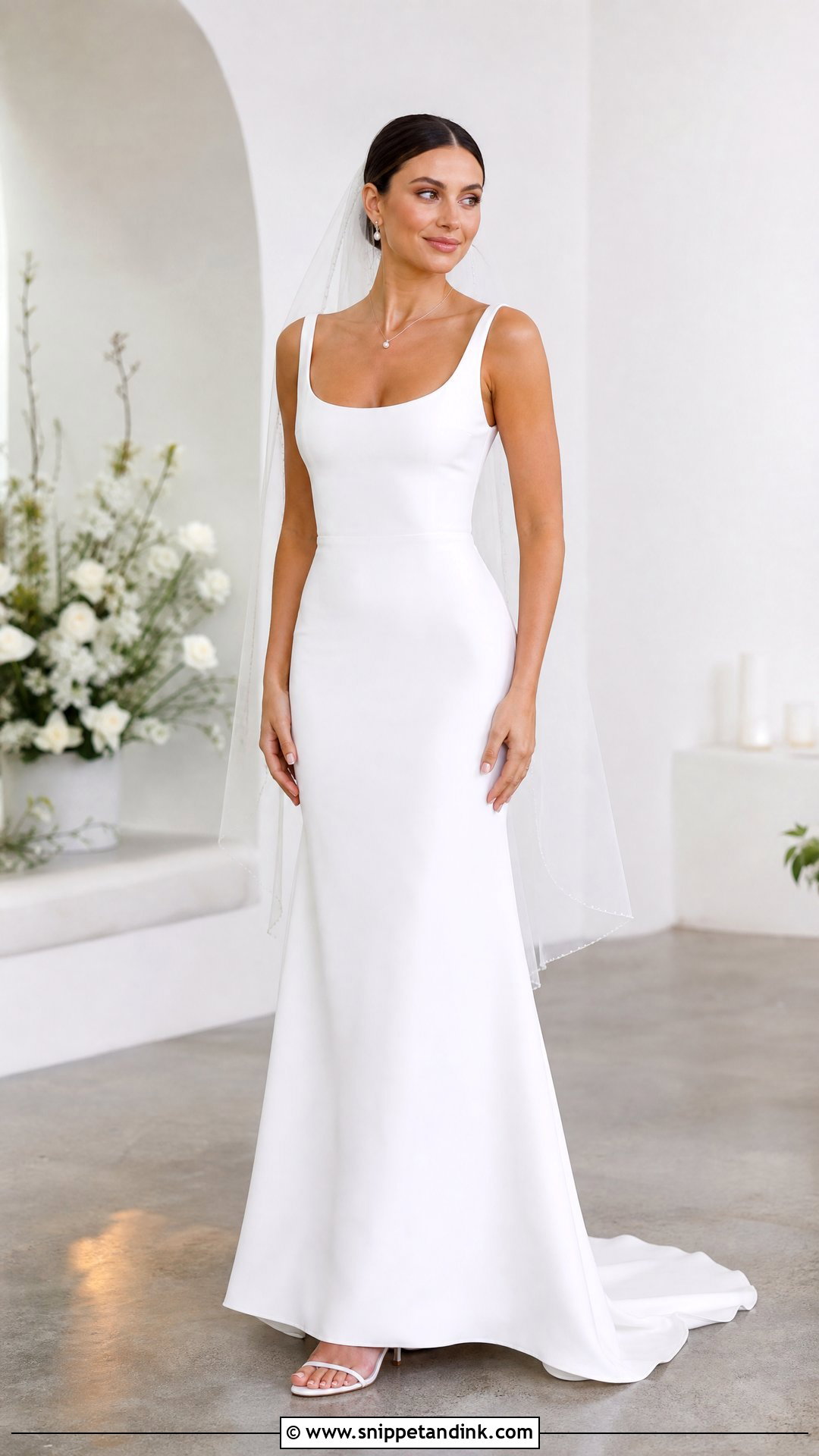
A scoop neck fitted wedding dress is the easiest of these to accessorize, because a rounded neckline takes almost any earring and a short pendant. In stretch satin or crepe it pairs with a sheath or a restrained fit-and-flare. Slingbacks, pearl earrings, a fingertip veil and soft waves or a low bun suit it. Wider straps and hidden cups add support if you need it. Lean forward at the fitting and look down; a scoop that gapes there will gape in every photo of you signing. A back slit helps on stairs.
11. Detachable Overskirt Fitted Wedding Dress
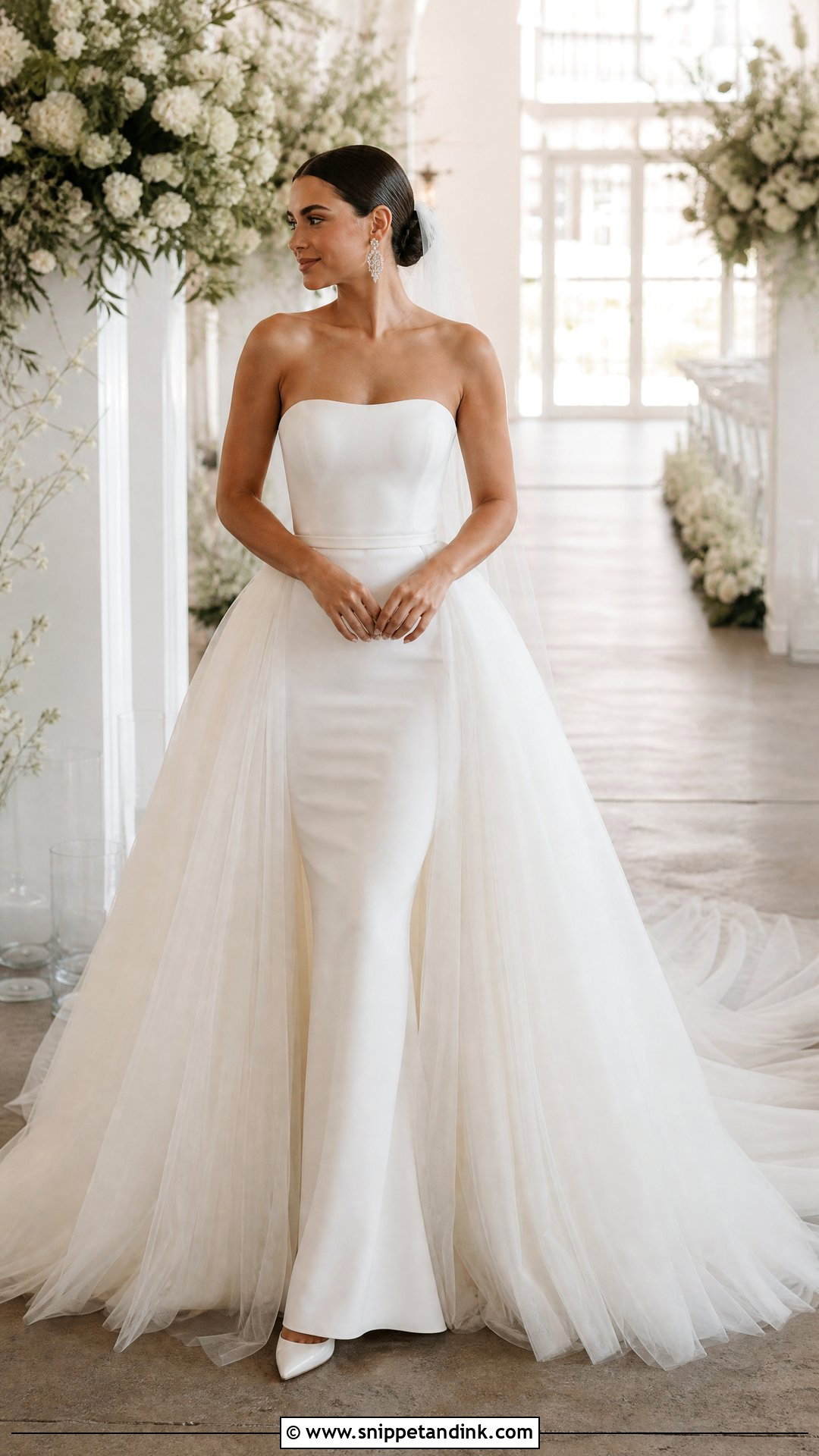
With a detachable overskirt you get ceremony volume and then the sleek dress underneath. Start with a strapless mermaid, crepe column or lace trumpet, add tulle or satin over it for the aisle, and remove it to reveal the close-fitting silhouette underneath. Pointed heels, statement earrings, a low bun and a plain veil work for both versions. A thick waistband leaves a ridge under the overskirt, so ask for a slim one. One person should rehearse taking it off, and the hooks must vanish once it’s gone.
12. Pearl Embellished Fitted Wedding Dress
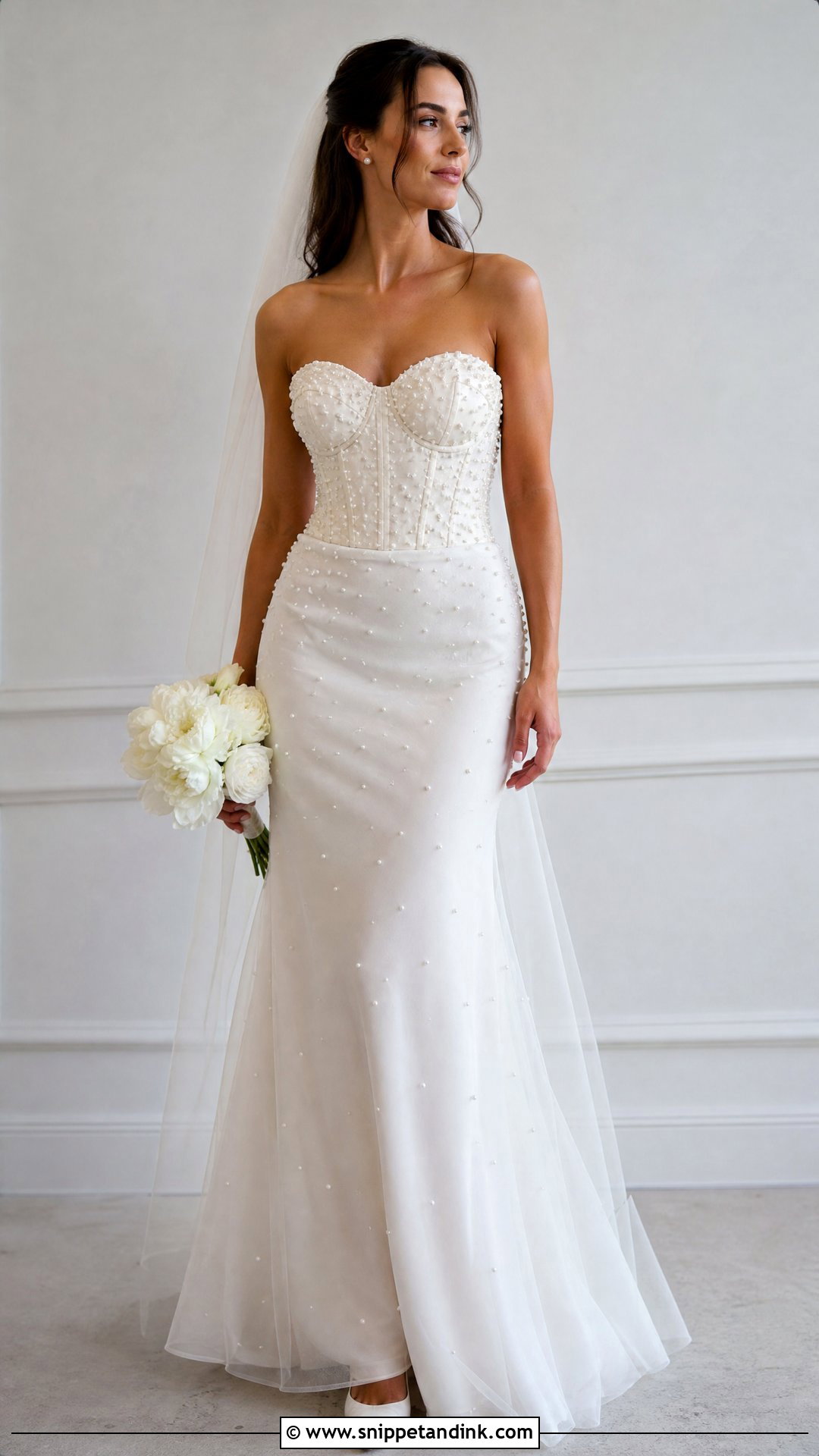
Pearls add a soft, matte shine that suits a fitted gown better than heavy crystal. They might cover an illusion bodice, trace the neckline or scatter over tulle. Keep everything else plain: pearl studs, satin pumps, a sheer veil and a low bun or half-up style. Ask the shop how much a heavily pearled gown weighs and how the pearls are attached. Then sit on a hard chair in it; pearls on the back of the skirt can press into you through dinner, and rough backing under the arms rubs.
13. Minimalist Crepe Sheath Wedding Dress
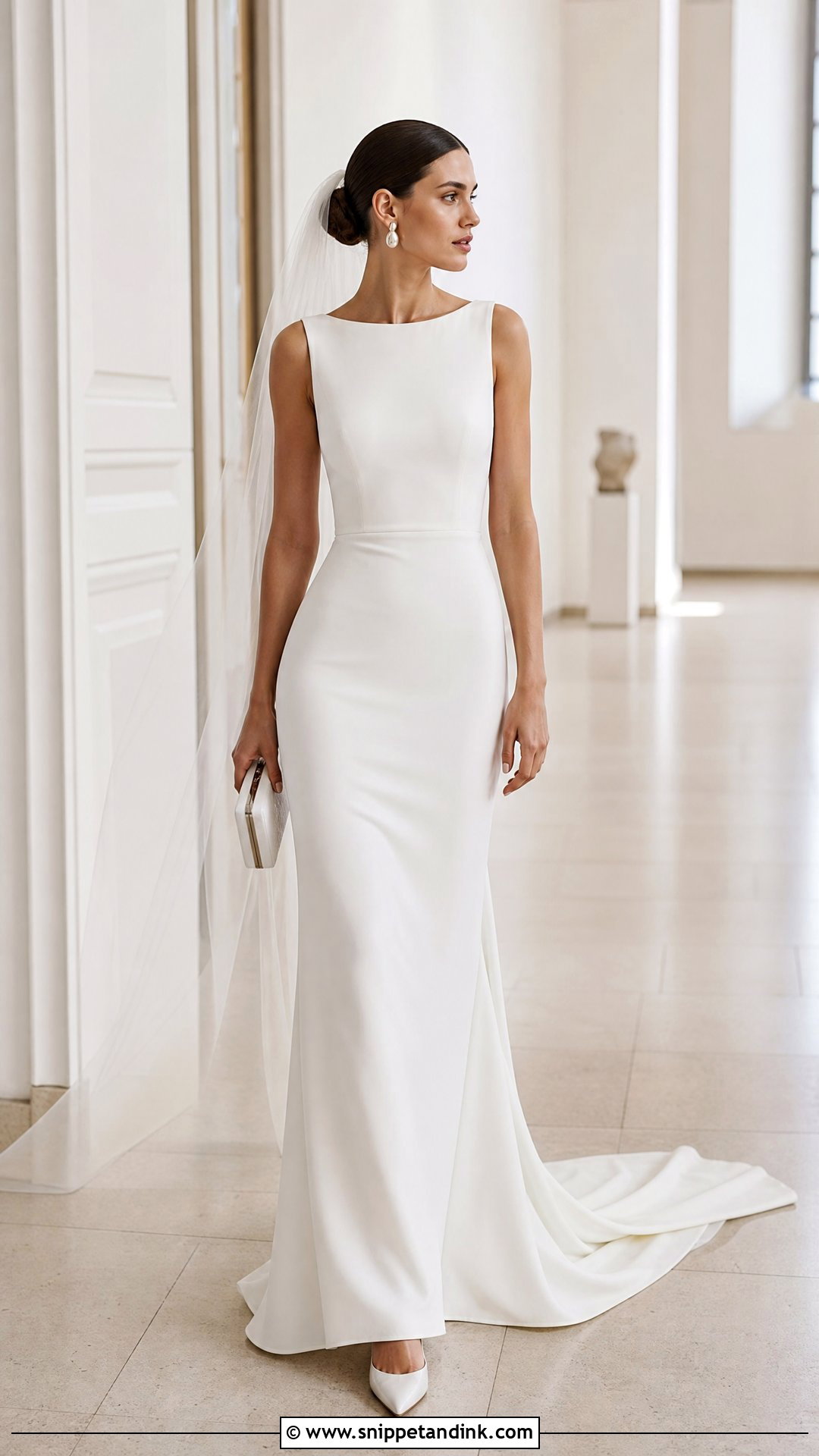
With a crepe sheath, the tailoring is the design. Choose substantial stretch crepe, a smooth lining, defined waist seams and a back vent so you can walk. Sculptural earrings, pointed pumps, a sleek clutch and a narrow veil or bridal scarf keep the minimal mood, with a smooth bun. The two faults I look for are horizontal lines at the hip, which mean it’s too tight, and a rippled zip, which means the seam was sewn under tension. Climb stairs in it before you sign off.
14. Floral Appliqué Mermaid Wedding Dress
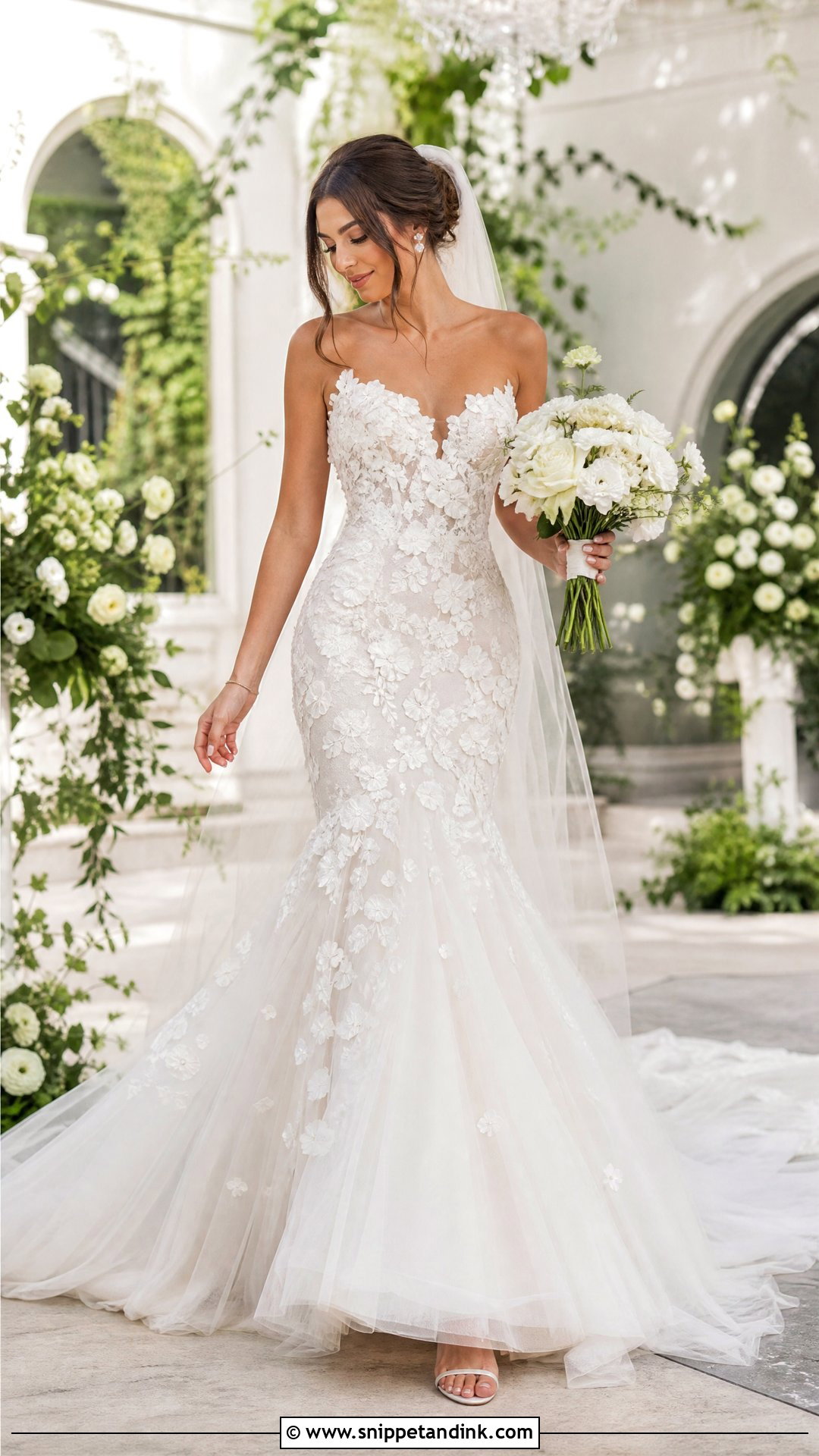
Three-dimensional flowers on a mermaid look romantic when they’re placed with thought; clumps at the hip only add bulk. A tulle flare and floral train give movement behind you. Delicate heels, small crystal earrings, a plain veil and a loose low bun let the appliqués lead, and the bouquet should stay simple. Check under the arms and across the seat, where raised flowers catch and press. If seams are taken in, expect the tailor to lift and reapply some appliqués by hand, which adds time to alterations.


15. Cap Sleeve Fitted Wedding Dress
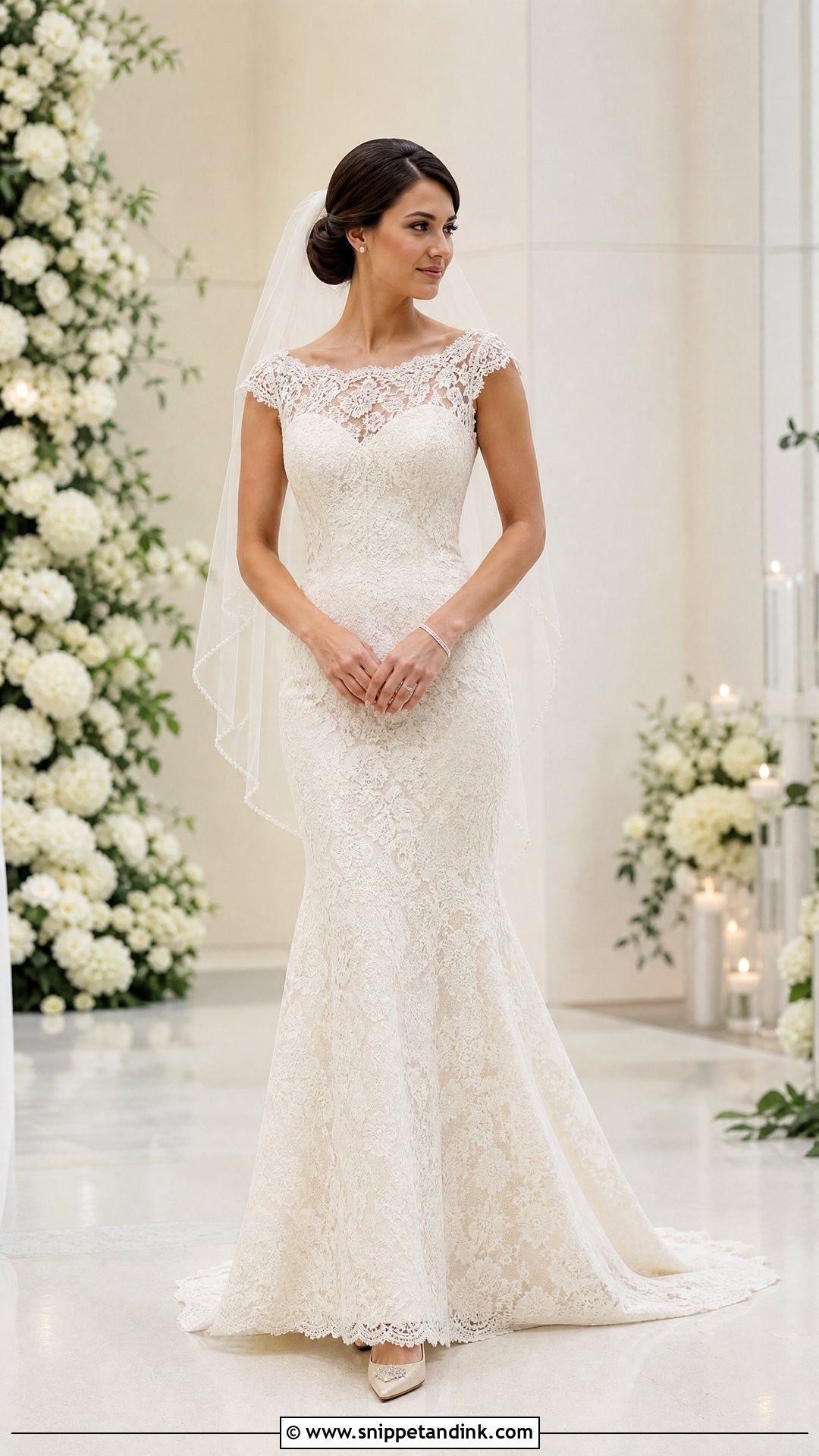
Cap sleeves give a little shoulder coverage and keep the line fresh. Lace versions look softer, satin or crepe sharper. A trumpet skirt that opens near the knee balances them well. Pointed heels, a slim bracelet, studs, a fingertip veil and a side-parted chignon suit the delicate sleeve. The common problem is sleeves cut too narrow, which tug the bodice up when you lift your arms. Reach forward and raise your bouquet at the fitting. A small underarm gusset fixes it without changing the look.
16. One Shoulder Fitted Wedding Dress
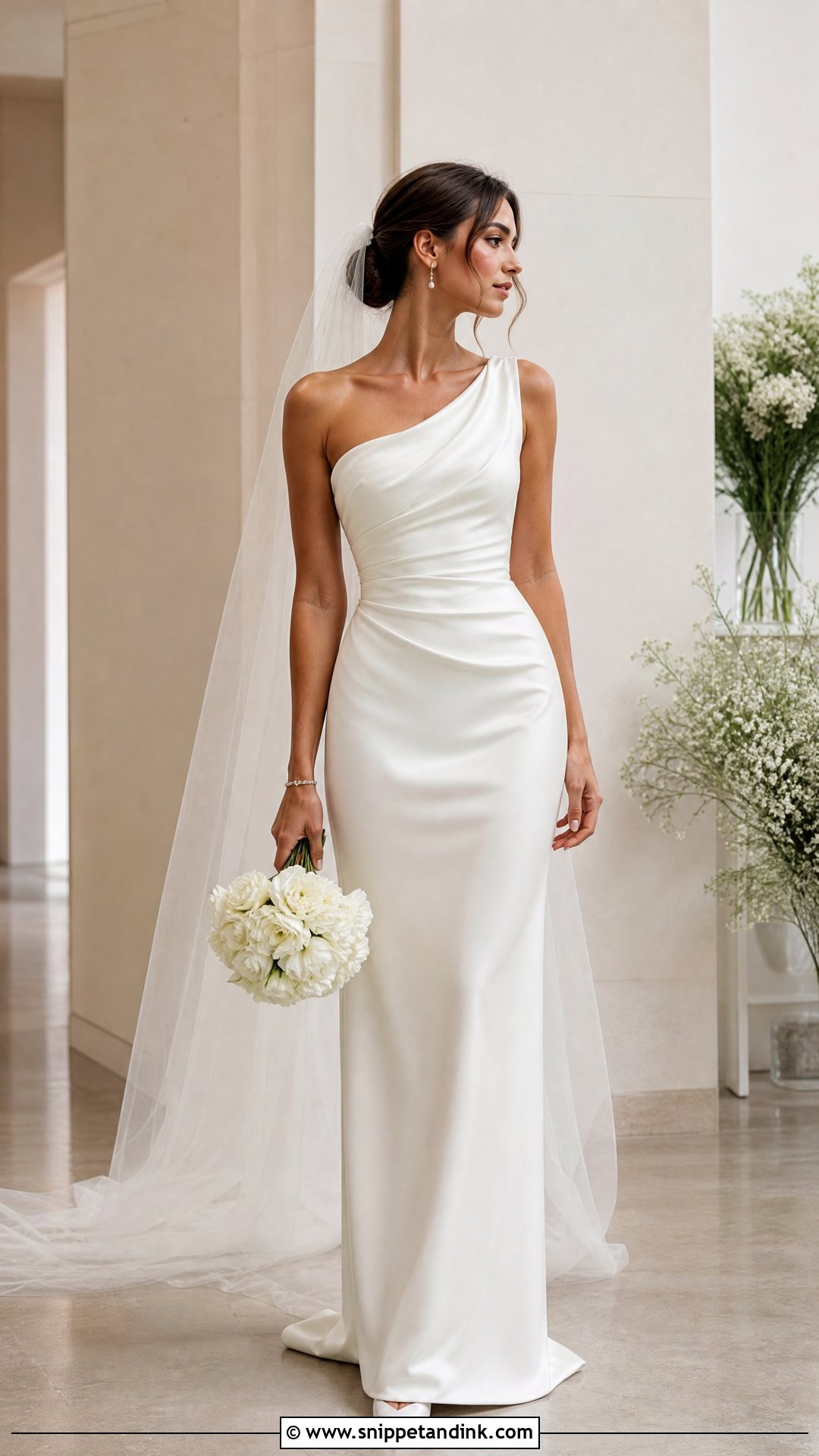
One shoulder needs almost no decoration. Stretch crepe keeps it minimal and draped satin softens it, over a column, sheath or gentle fit-and-flare. Earrings on both sides, a simple bracelet, pointed heels and a low bun set away from the shoulder detail work, with the veil tucked under the bun. Leave the necklace off. At the fitting, check the bodice sits level. The single strap shouldn’t be carrying all the tension, and the strapless side needs to stay put on its own.
17. Ruched Fitted Wedding Dress
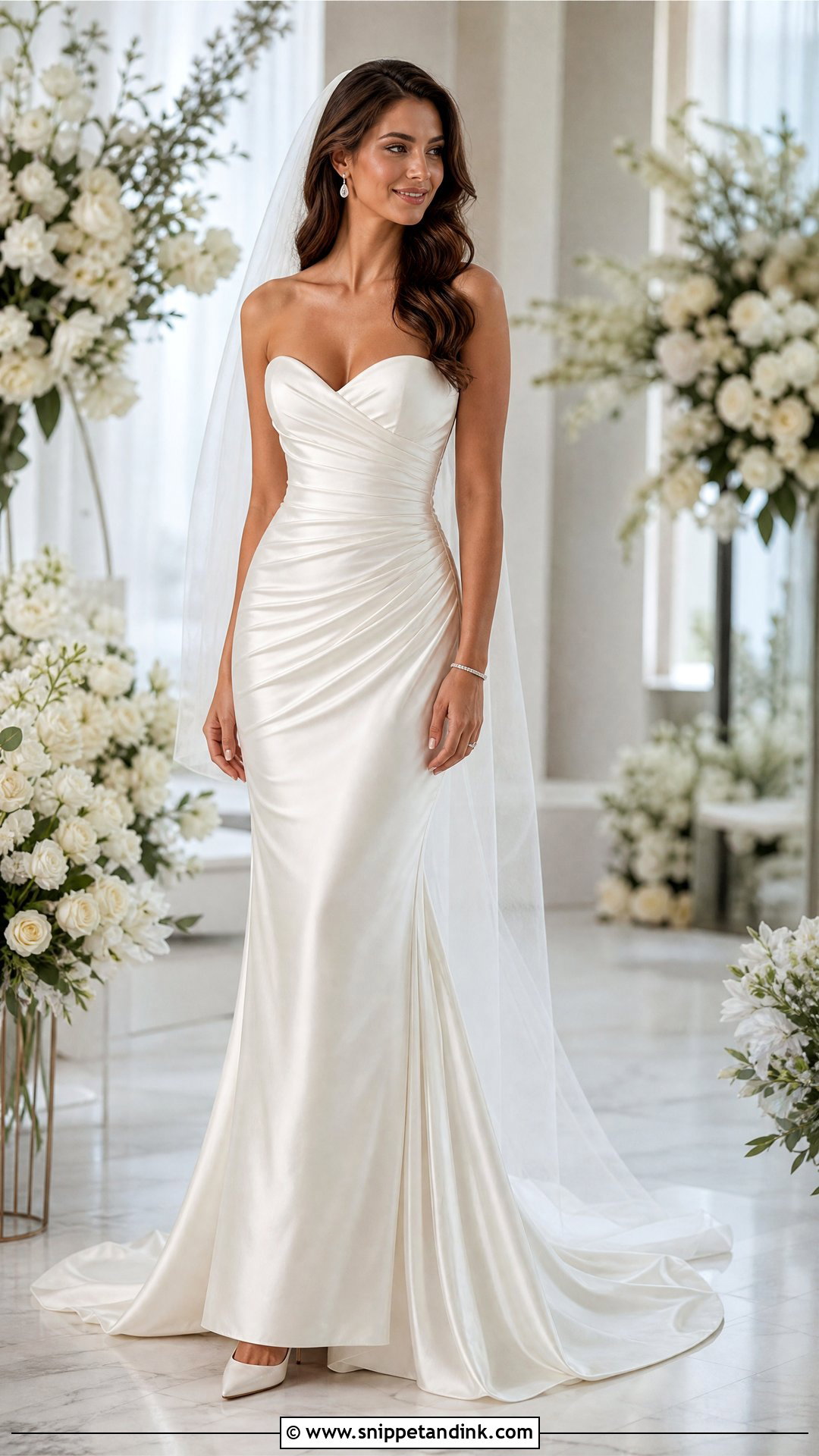
Ruching is forgiving. Gathers across the waist or hip define shape while softening the starkness of plain fabric, and they hide small changes in your body between fittings. Stretch satin or jersey-backed crepe moves best. A sweetheart or off-shoulder neck pairs well with a ruched trumpet skirt. Pumps, small drops, a slim bracelet, a plain veil and Hollywood waves or a polished bun finish it. Make sure the gathers are stitched down to a lining so they stay put when you move.
18. Plus Size Corset Fitted Wedding Dress
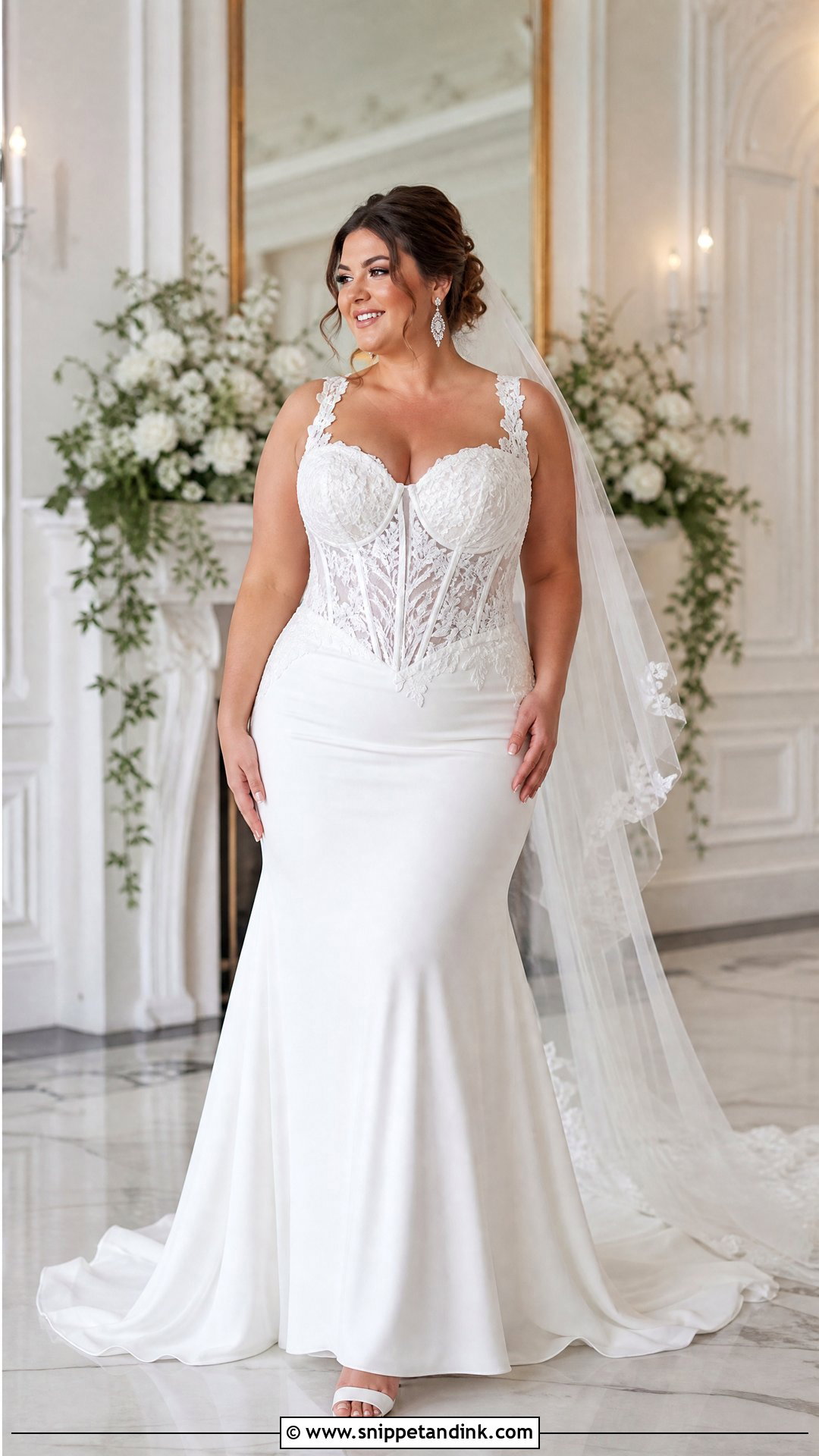
A corset bodice can give a plus-size bride excellent support, with an adjustable back, firm boning and cups placed where your bust actually sits. A fit-and-flare skirt defines the waist and hip and opens below the thigh. Lace, crepe and stretch satin all work with a smooth lining. Block heels, drop earrings, a veil on a strong comb and a soft updo suit it. Order by your largest measurement and tailor the rest. Breathe, sit and dance during the fitting; any numbness or pinching means the fit isn’t finished, and the skirt shouldn’t twist as you walk.
19. Petite Column Wedding Dress
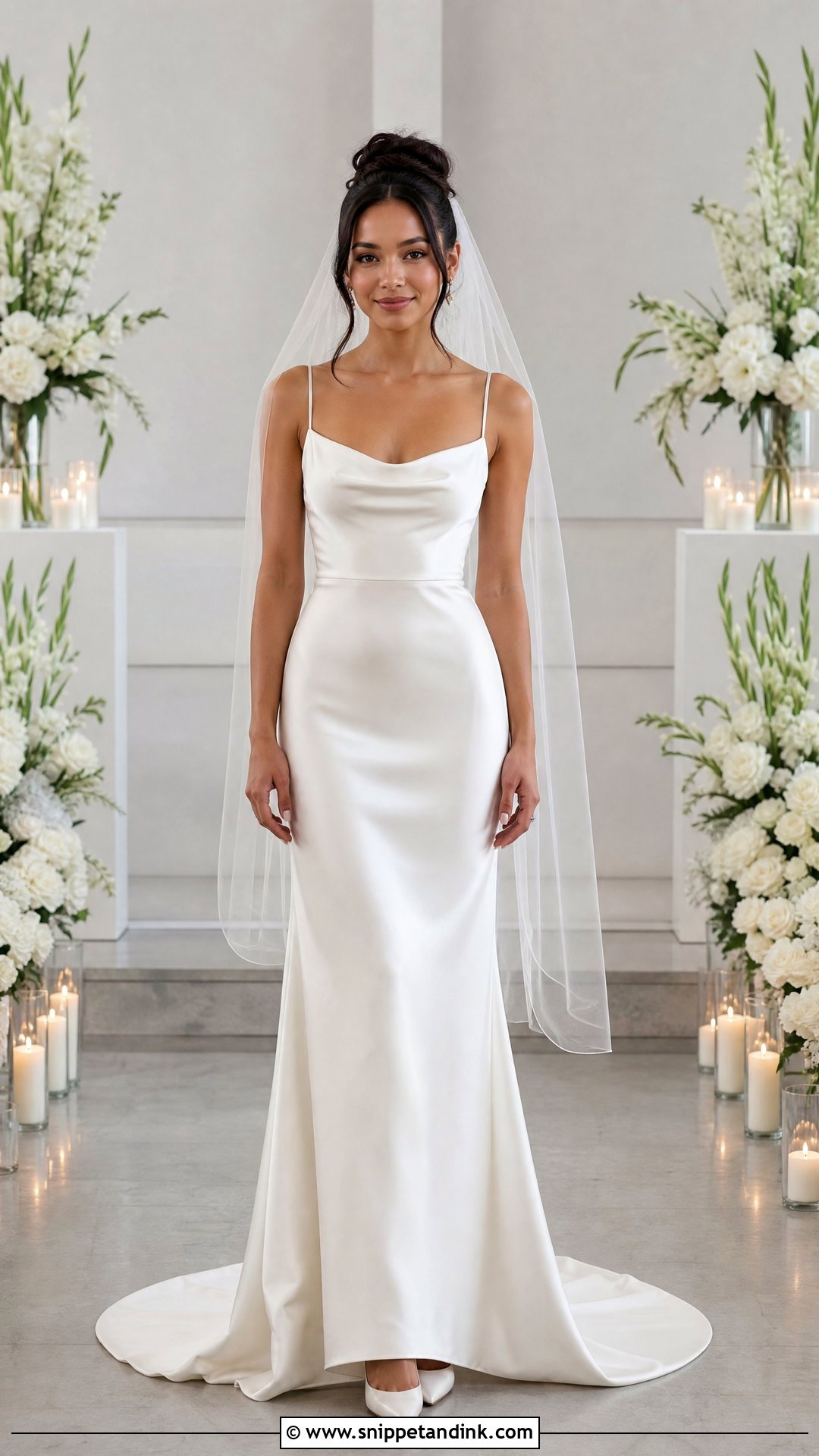
On a petite bride, a column’s long, unbroken line adds visual height. Look for a waist placed where yours is, a neckline scaled to your frame and straps that aren’t wide. Smooth crepe or satin keeps it clean, and a small back train adds drama without swamping you. Pointed heels, delicate earrings, a narrow fingertip veil and a high bun extend the vertical. Don’t leave the hem long to look taller; it pools and trips you. Petite alterations often mean shortening the bodice too, so the waist, hip curve and flare all land at your real height.

20. Fitted Wedding Dress With Train
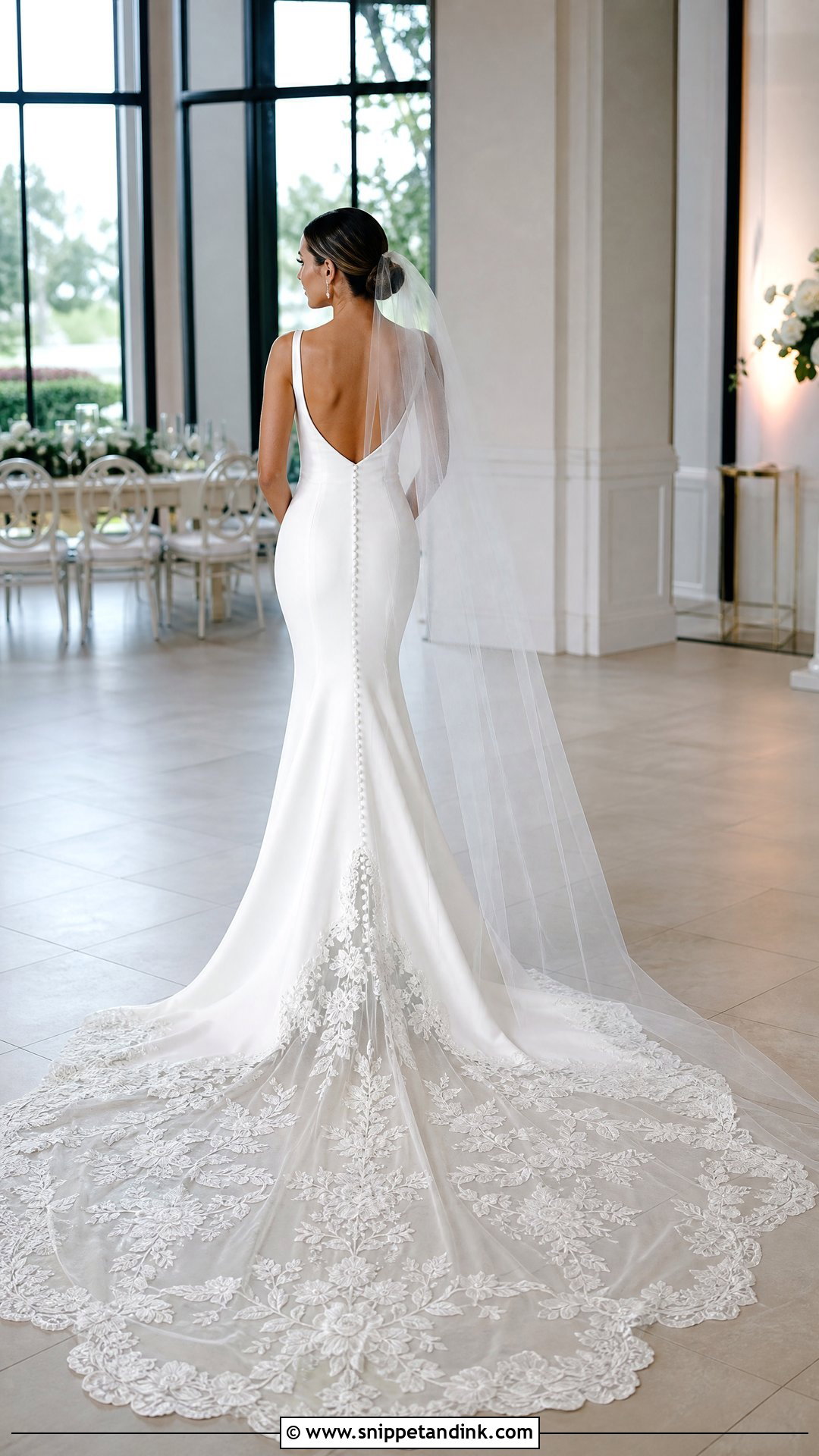
A statement train gives you a clean front and something memorable behind. The base can be a crepe sheath, lace mermaid or satin trumpet, and the train might carry covered buttons, appliqués, scalloped lace or clean folds. Comfortable heels, refined earrings, a low updo and a veil plainer than the train keep layers from competing. Ask the tailor for a bustle that lifts the train without bunching the fitted skirt, and practise fastening it beforehand. It should keep the train off the floor and still leave room at the hips and knees.
The Bathroom, the Car and the Dinner Chair
Nobody tests these in the shop, and in my experience they’re where a close gown gets awkward. I plan them with brides as carefully as the look.
Bathroom trips
A fitted skirt has to be lifted from the hem, not pulled up from the waist. With a mermaid, it’s easiest to face the toilet and gather the skirt forward. A bustled train should be let down first. Bring one bridesmaid you’re comfortable with and do it once during a fitting so it isn’t a surprise.
Getting in and out of cars
Sit first, bottom onto the seat, then swing both legs in together. Stepping in leg first strains the seam at the knee of a tight skirt. A clean sheet over the seat keeps satin off a dusty floor mat.
Heat and long dinners
Satin shows sweat marks under the arms and at the small of the back in a warm venue, and fitted styles sit close enough to make it worse. I have dress shields sewn into the armholes for warm venues, and so does an antiperspirant that dries fully before you dress. At dinner, sit toward the front of the chair so the fabric isn’t stretched across the hip for two hours.
If It Stays Put Without Pinching, It’s Ready
Fitted gowns are shaped by construction and tailoring, not by squeezing. Think about the whole outfit as one: veil, shoes, jewelry, hair, underwear and any removable layers. Mermaid, trumpet, sheath, and column silhouettes each give a different amount of definition and movement, and stretch crepe, satin and lace each behave differently on the body. Walk, sit, raise your arms and dance at fittings before you approve the final alterations. If the dress stays put without pinching, it’s ready.
You'll Like These Ideas:





Leave a Reply