
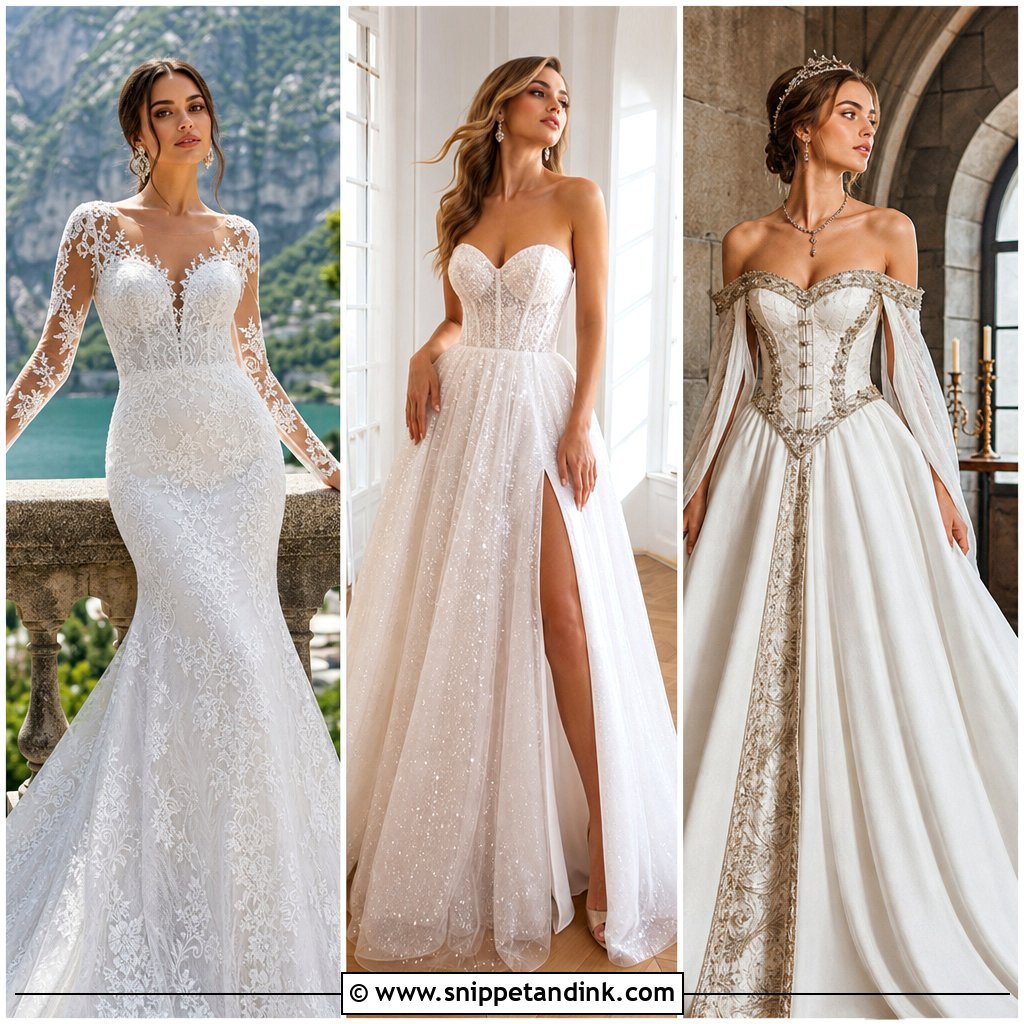
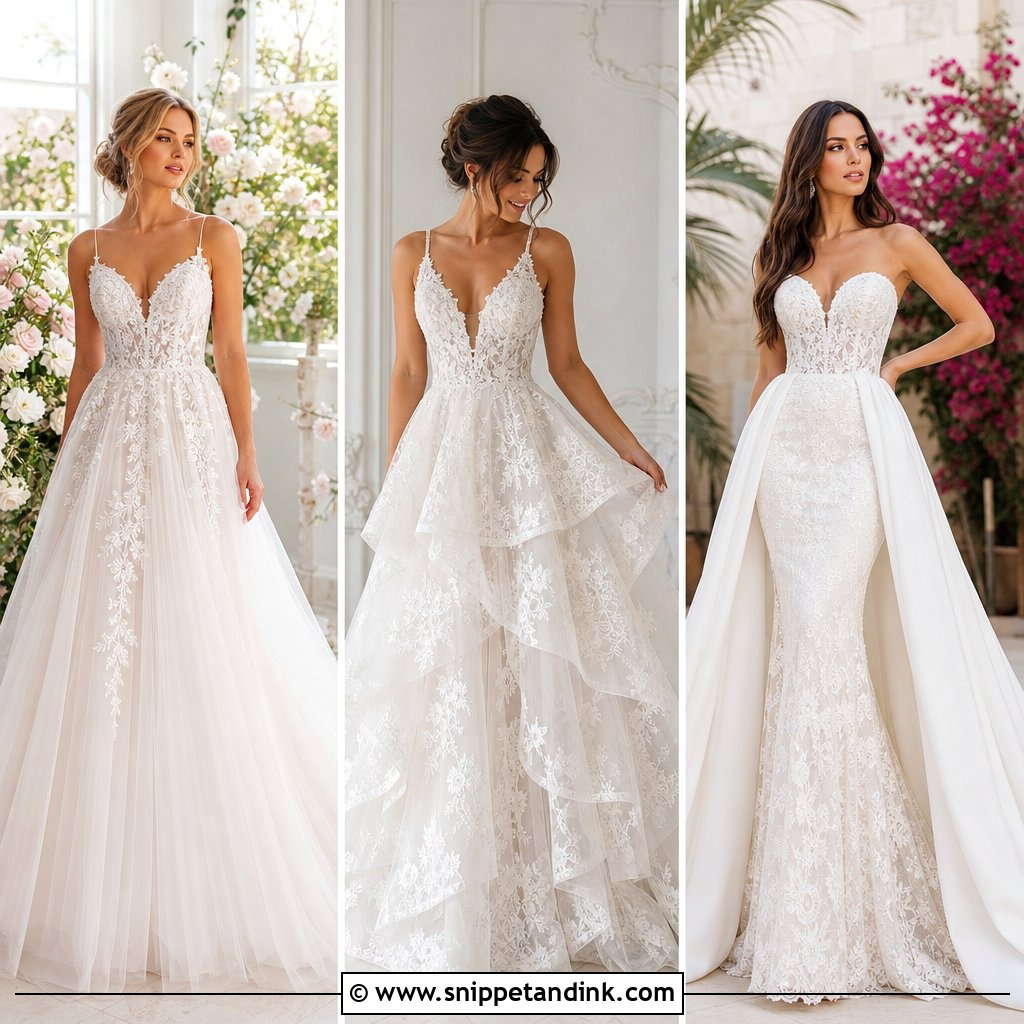
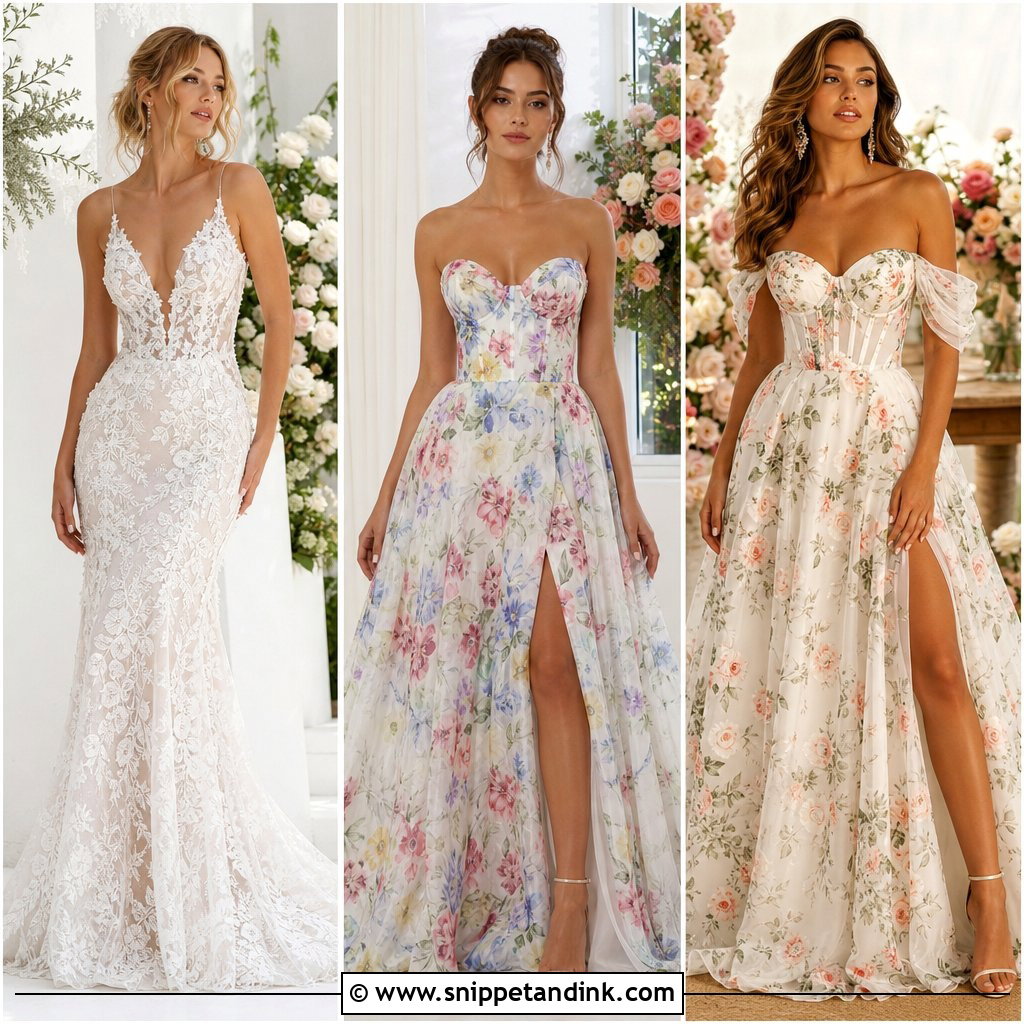
Flowers on a wedding dress can be stitched, woven, painted or built up in layers, and each method changes how the gown feels on you. Lace vines read quiet, raised petals read sculptural, and colorful wildflower embroidery brings a garden right onto the skirt. In fittings I start with scale: big blooms on a small frame swamp it, while tiny sprigs disappear on a full ball gown. The other half of the job is restraint everywhere else. Below are twenty-five floral gowns I’d put in front of a bride, with the shoes, veil and bouquet I’d pair with each.
A Bouquet for a Dress That Already Has Flowers on It
The question I’m asked most with floral gowns is what to carry. A bouquet sits right against the bodice, so it either frames the embroidery or competes with it.
My rule is contrast in one direction only. If the dress is busy with color, the bouquet goes quieter, mostly white and green with one shade borrowed from the gown. If the dress has white-on-white appliqués, the bouquet can carry the color, because the dress is giving you texture rather than pattern. Matching the dress flower for flower almost never works; in photographs the two merge into one blur.
- Send your florist a close-up photo of the bodice in daylight, not just a full-length shot. Thread colors look very different up close.
- Ask for a fabric swatch from the salon if they’ll give one, and let the florist hold it against stems.
- Size the bouquet to the busiest part of the dress. A heavily embellished bodice suits a smaller, looser bunch held lower.
- Check stems are wrapped in ribbon all the way down. Bare wire or rough stems will pull raised appliqués.
1. 3D Floral Appliqué Ball Gown
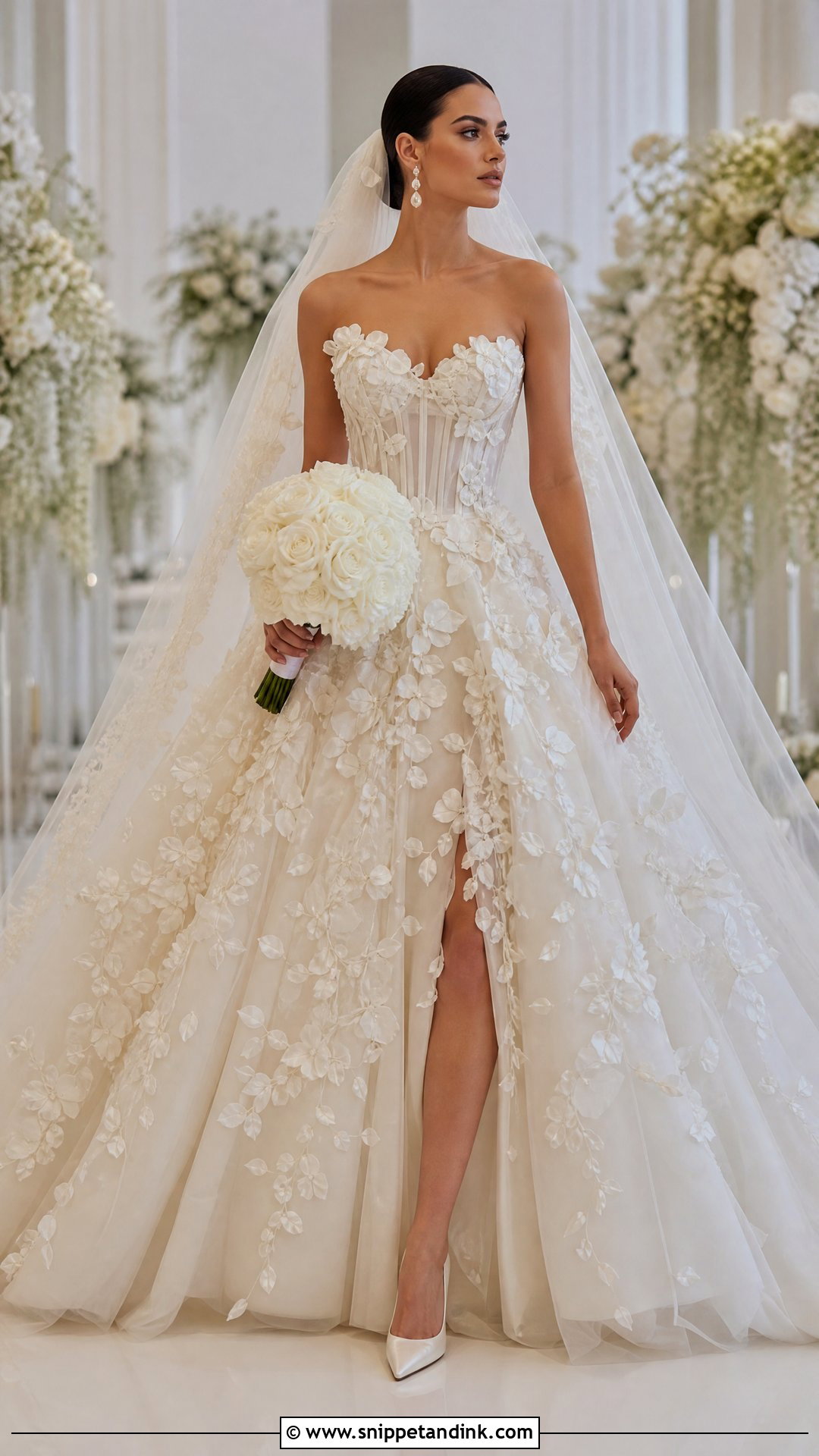
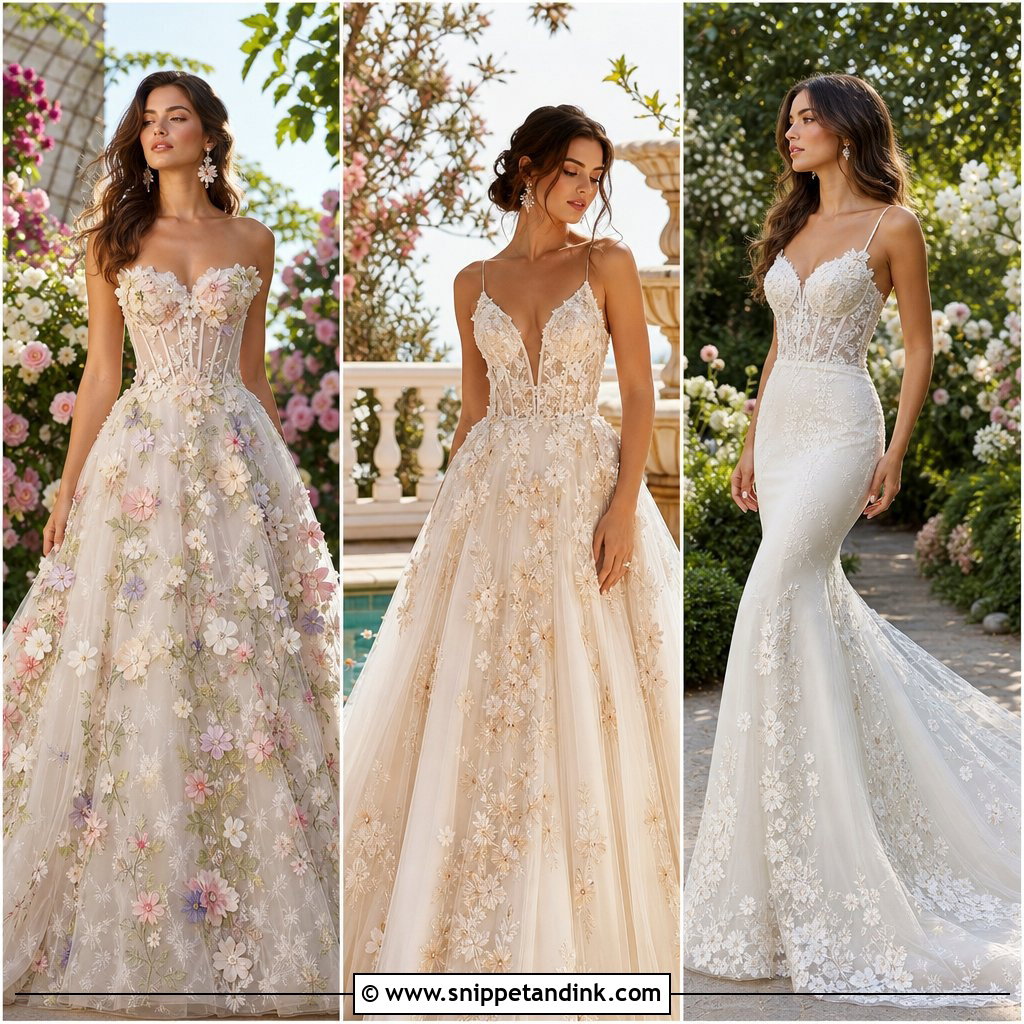
Raised petals running from an ivory corset into a full tulle skirt give a formal wedding real depth. I prefer scattered appliqués to dense coverage; past a certain point the flowers flatten into one texture and the gown gets heavy at the hem. A strapless or softly curved neckline keeps the eye on the petals. Pearl drops, a plain-edged cathedral veil and pointed pumps under the skirt are all it needs, plus a structured bouquet of white roses. Ask how the appliqués are attached; hand-tacked flowers survive a day of hugging far better than glued ones.
2. Embroidered Wildflower A-Line Bridal Dress
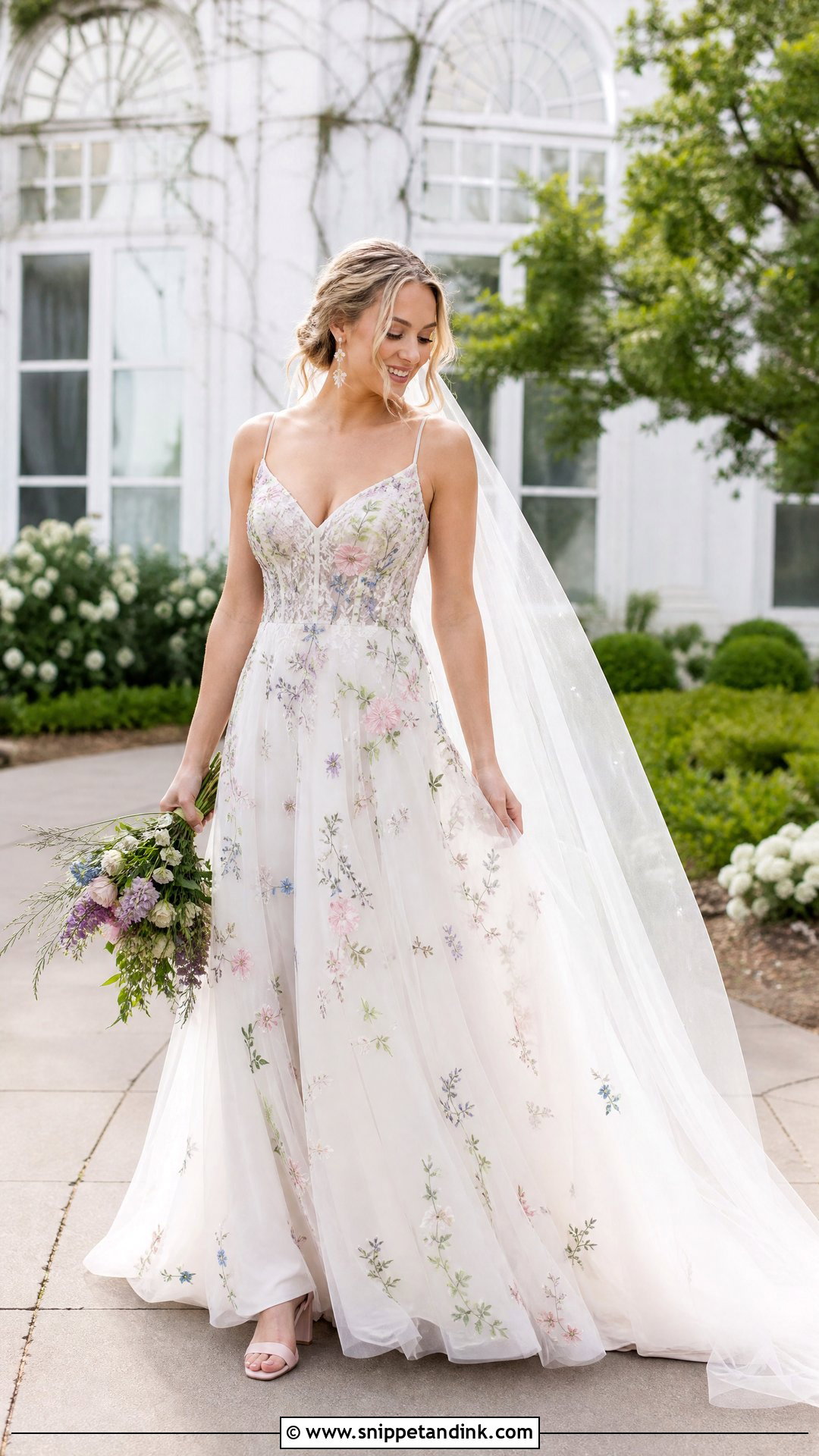
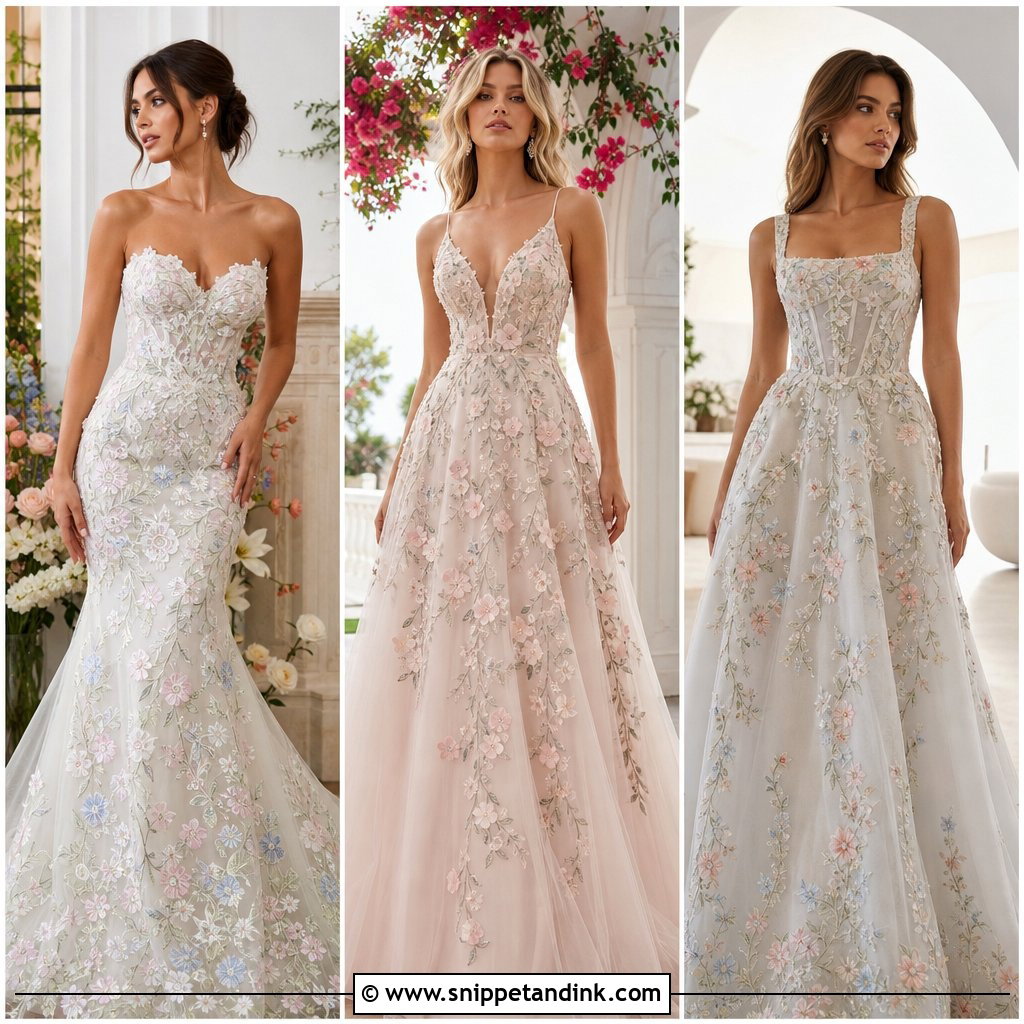
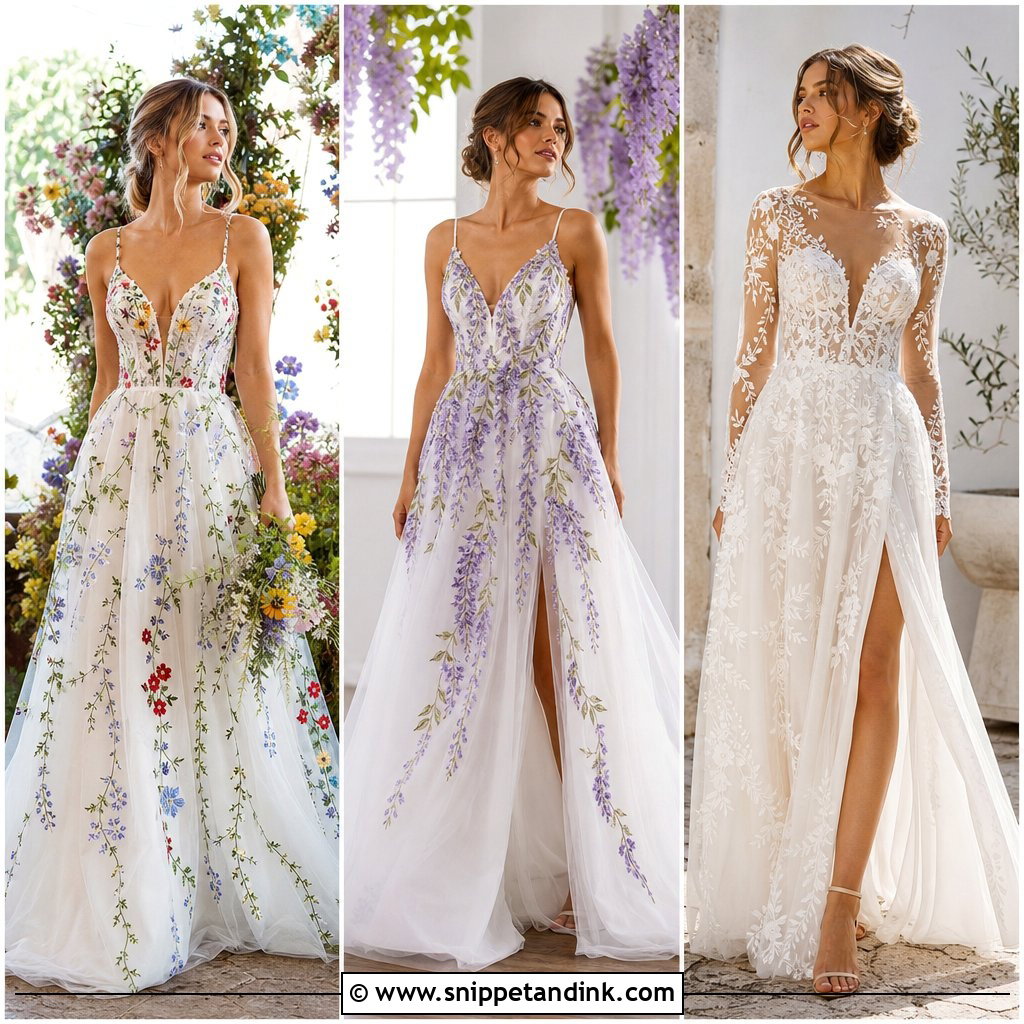
Tiny wildflowers in muted pink, lavender, blue and green turn a classic tulle A-line into something relaxed. Keep the veil plain at the edge, because embroidery on both layers turns busy fast. Blush block heels and small gemstone earrings pick up one thread color without copying the dress. I’d hand your florist a photo of the skirt close up, so the loose bouquet borrows the same muted shades. Soft waves or a half-up style suit spring gardens and botanical venues.
3. Colorful Floral Tulle Bridal Dress
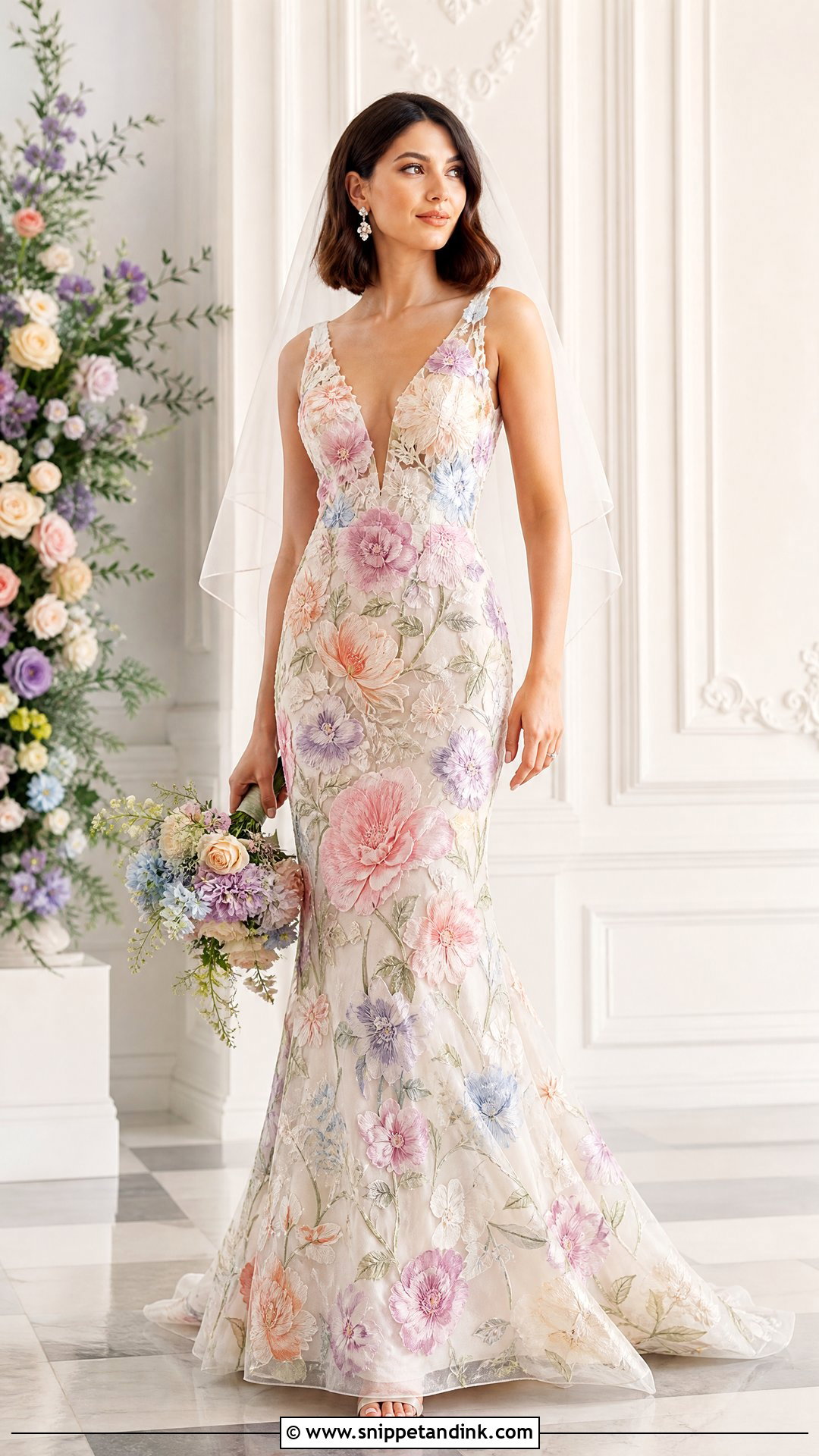
Not every bride wants white, and a colorful floral tulle gown still looks ceremonial if the base stays soft. Ivory or blush tulle under oversized peach, lilac and pale-blue blossoms photographs clearly in daylight. The bouquet is the trap here. Use fewer flower varieties than the dress shows, or the two blur together in pictures. Neutral satin heels, small crystal earrings and a shoulder-length veil that doesn’t cover the skirt keep the color on the gown itself.
4. Floral Lace Mermaid Bridal Dress
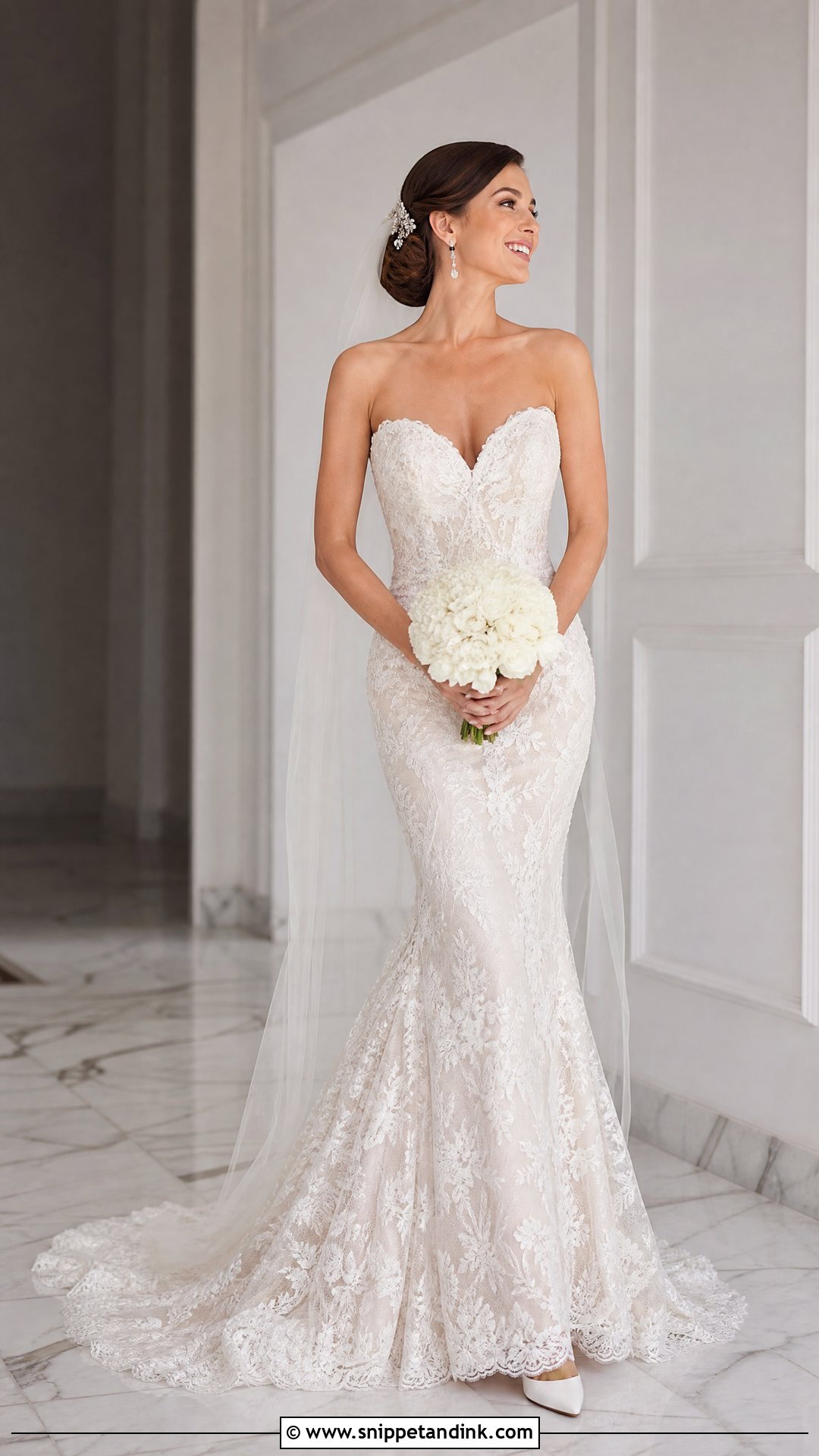
A mermaid follows the body through the waist and hips before flaring, so the lace has to be placed carefully across the seams. Medium-scale floral lace over a smooth lining shows each motif; very small lace on a fitted shape reads as texture rather than flowers. When I fit these, I check where the flare starts by having the bride walk and climb a step. Set too high, it hobbles her. A sweetheart or soft V, pointed pumps, one sparkling comb and a plain chapel veil let the train do the talking.
5. Long Sleeve Botanical Lace Bridal Dress
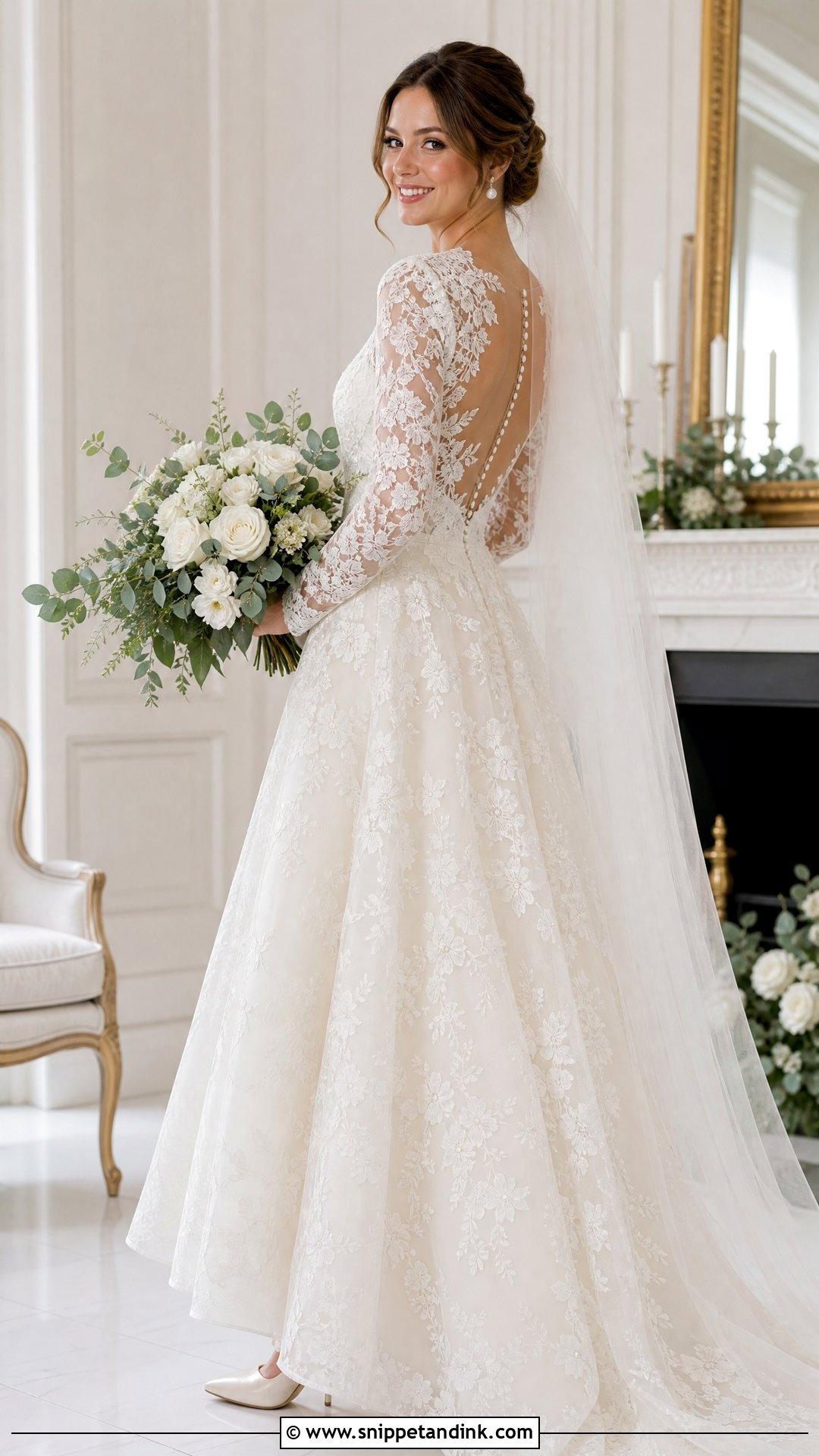
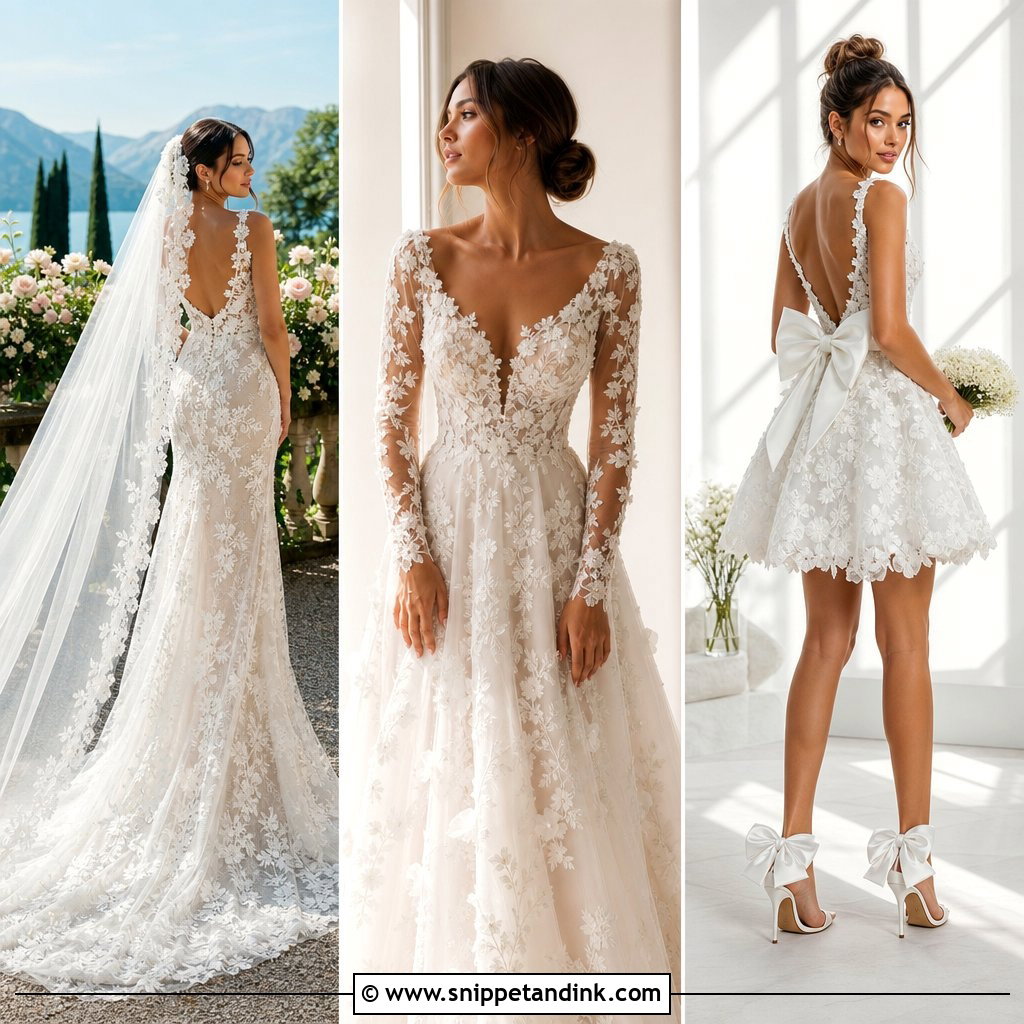
Cool-season weddings are where sheer botanical lace sleeves earn their place: coverage without weight. Look for leaves and flowers placed deliberately along the arm, a lined bodice and a flowing A-line skirt, perhaps with an illusion back. Lace sleeves are the hardest part to alter, so I’d have them fitted at the first appointment, not the last. Closed-toe satin heels, pearl studs and a long plain veil suit it. A low chignon keeps the back visible, and eucalyptus in the bouquet echoes the leaf pattern.
6. Off Shoulder Organza Floral Bridal Dress
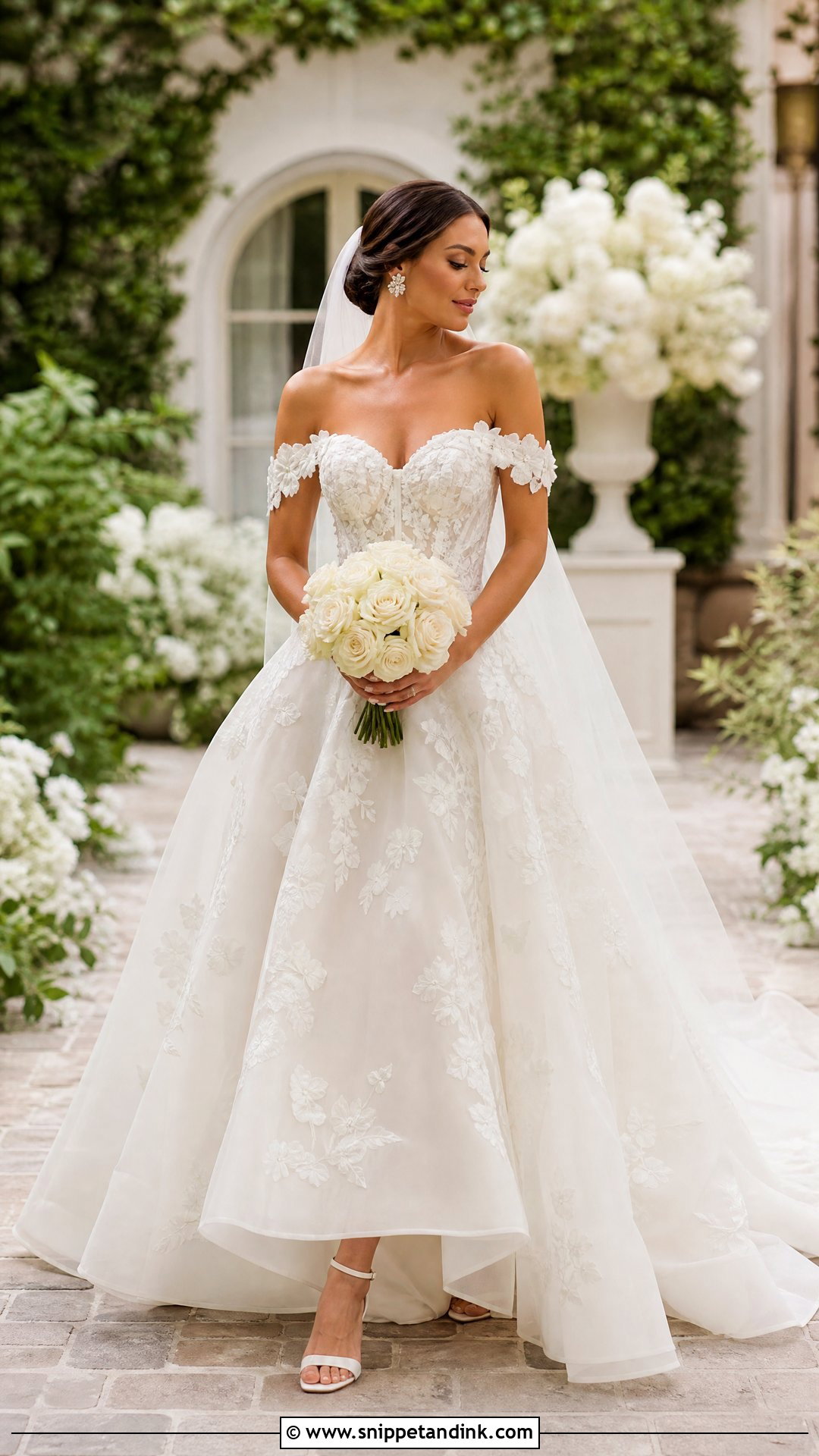
Floral appliqué straps around an off-shoulder organza bodice frame the collarbone so well that a necklace only gets in the way. Organza gives volume with less weight than layered tulle, which makes the skirt easier to manage on a long day. The strap band needs internal elastic or it creeps up whenever you lift your arms, and I always test that with a hug at the fitting. Studs, a slim bracelet, ankle-strap heels and a veil tucked below a low bun keep the shoulders clear. A rounded cream bouquet finishes it for an estate or ballroom.
7. Strapless Watercolor Floral Bridal Dress
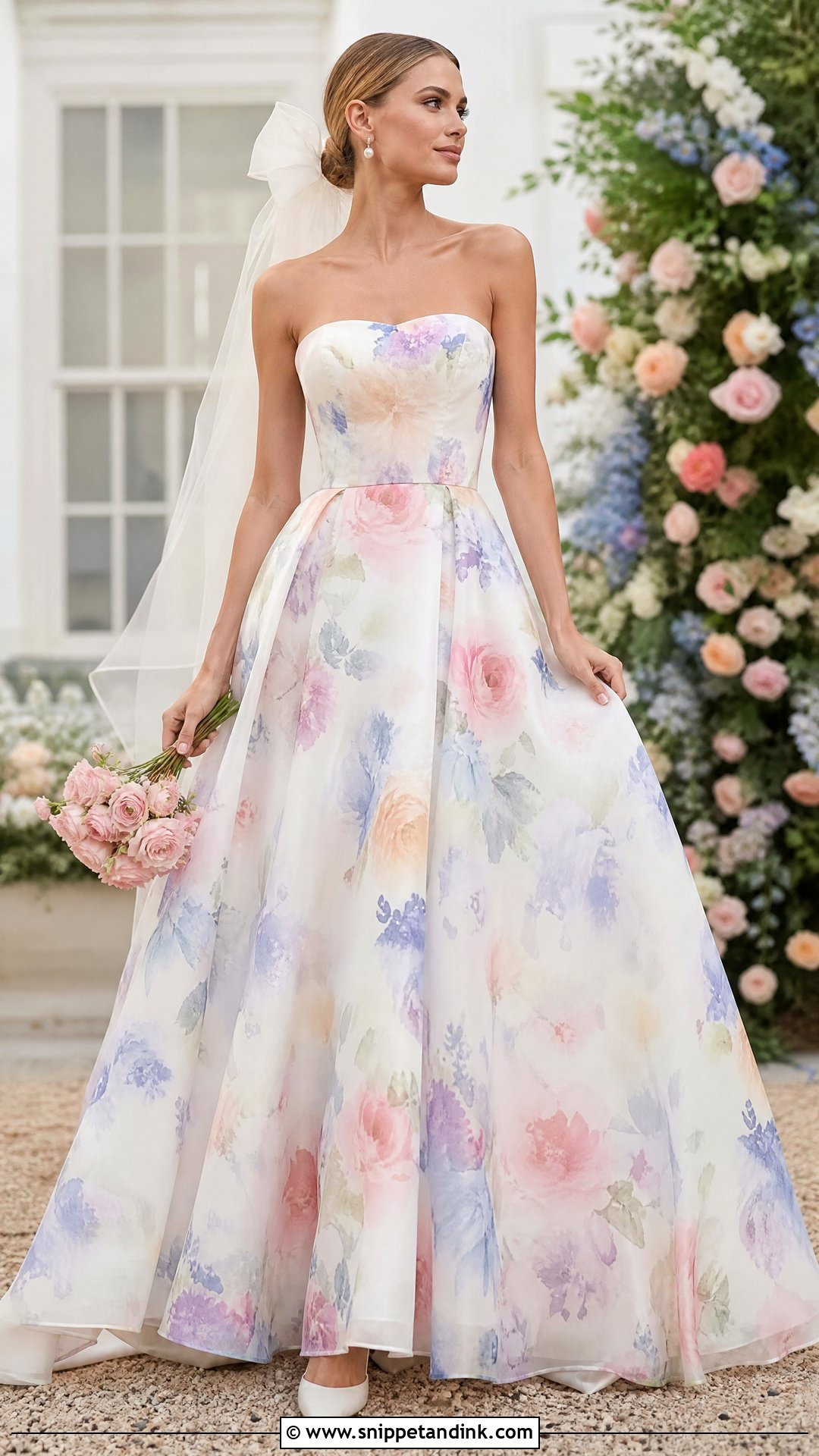
Blurred watercolor blossoms can make a strapless gown look like a hand-painted work of art, and blurred is the key word; sharply outlined prints start to look like a summer dress. Pale rose, blue or peach washes over ivory are the easiest to wear. Because printed silk can shift tone between daylight and indoor light, I’d view the fabric in both before ordering. Nude or ivory heels, pearl studs and an elbow-length plain veil are plenty. Ask the florist for one dominant bouquet color rather than every shade in the print.
8. Floral Jacquard Square Neck Bridal Dress
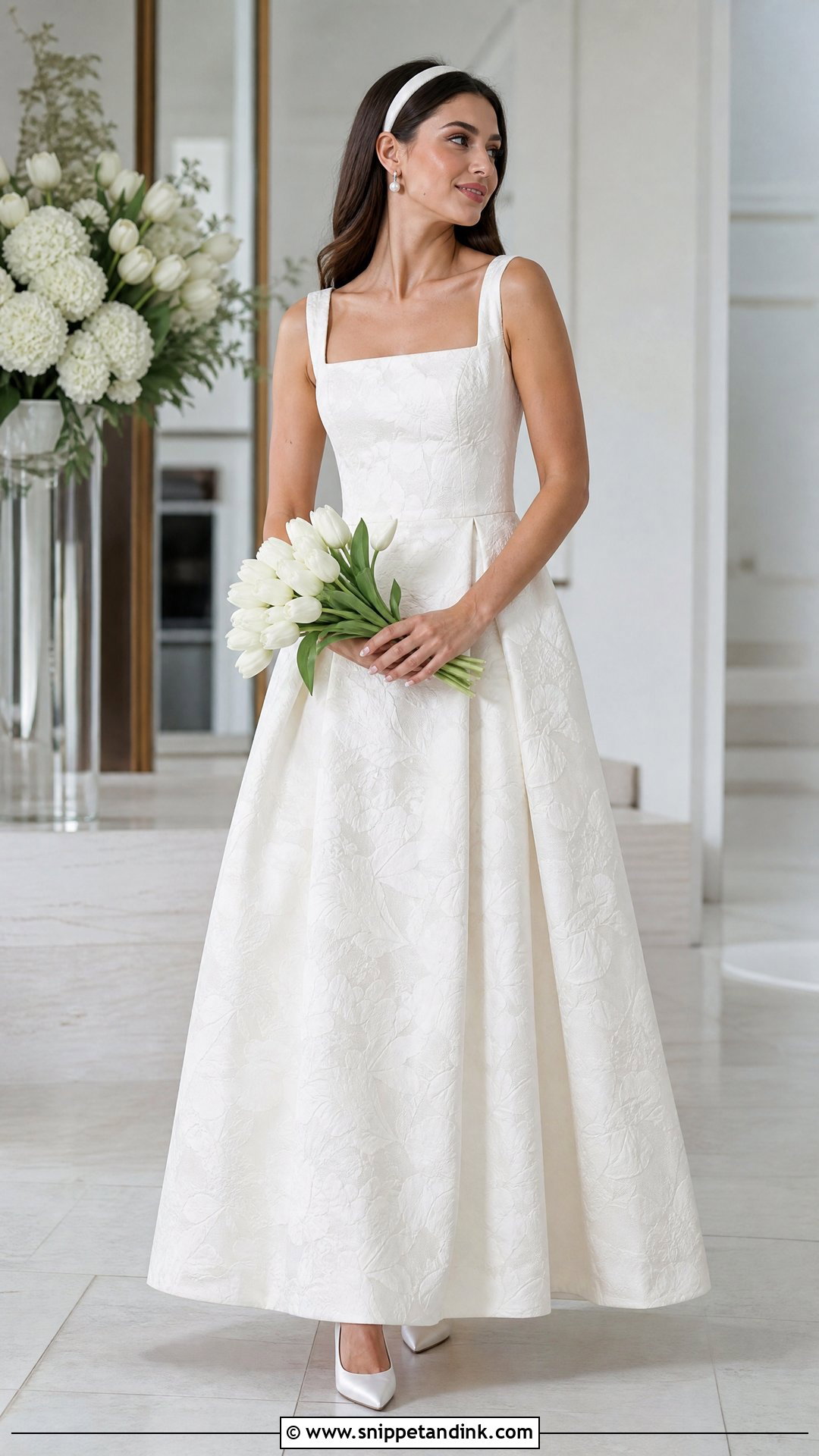
Jacquard weaves the floral pattern into the cloth itself, so you get texture in one color that only shows when light rakes across it. An ivory square-neck bodice with wide straps and a structured A-line skirt suits brides who want detail nobody notices until they’re close. Jacquard is fairly stiff, which means it creases at the hip when you sit; I’d steam it at the venue, not at home. Pearl drops, pointed satin pumps and a smooth bun keep things neat. A narrow satin headband can replace the veil, with white tulips or calla lilies in hand.
9. Floral Corset Bridal Dress
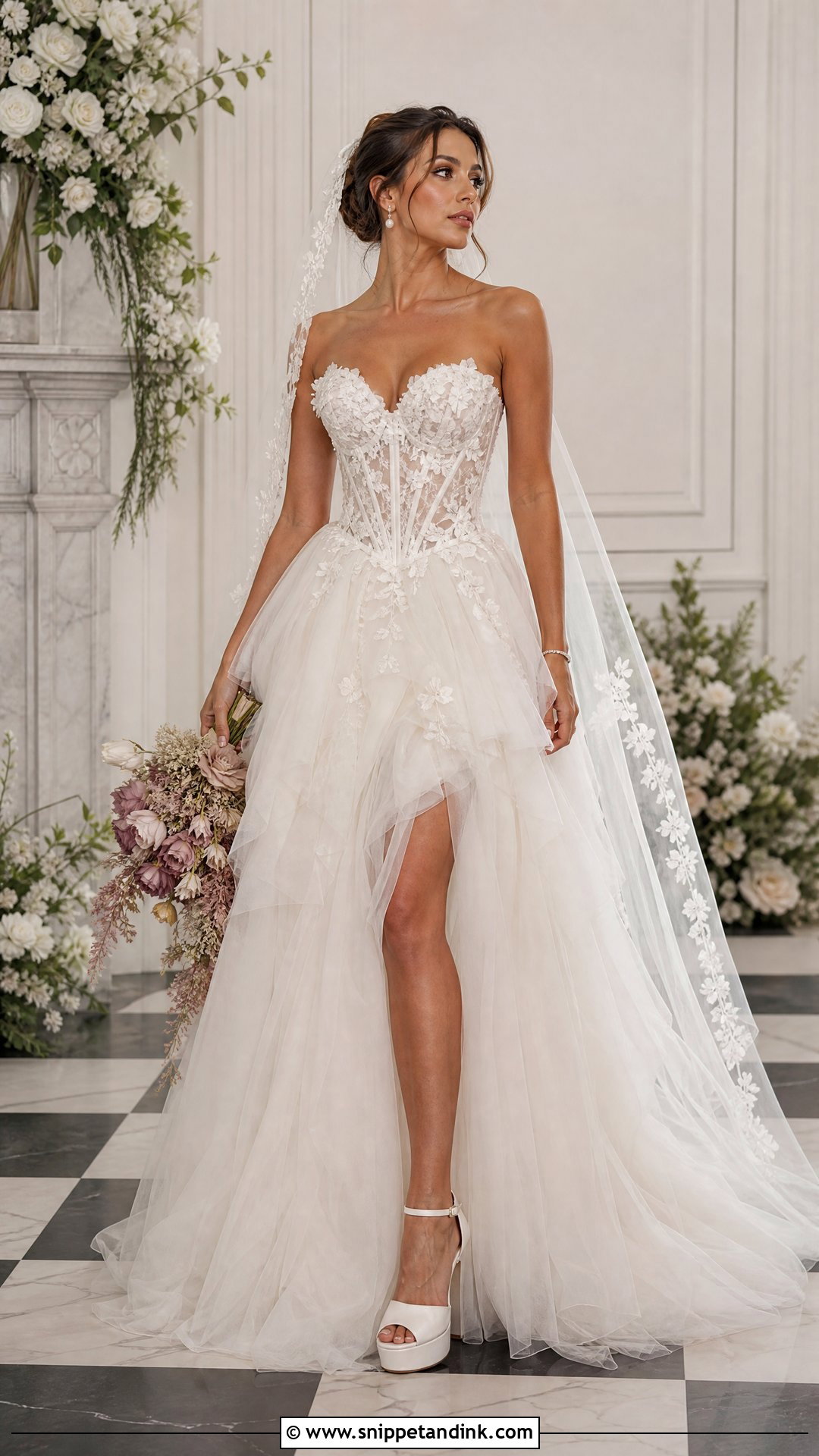
Visible boning softened with embroidered vines gives a corset bodice structure that still feels delicate. A basque or slightly dropped waist leads into full tulle or organza and makes an hourglass shape. Corsets only work when they’re fitted tight at the ribcage; most of the comfort complaints I hear come from bodices left loose, which then slip and get yanked up all night. Platform heels keep you comfortable on long standing stretches. Choose a veil with flowers only near the edge, and a half-up style so the bodice shows.
10. High Neck Floral Lace Bridal Dress
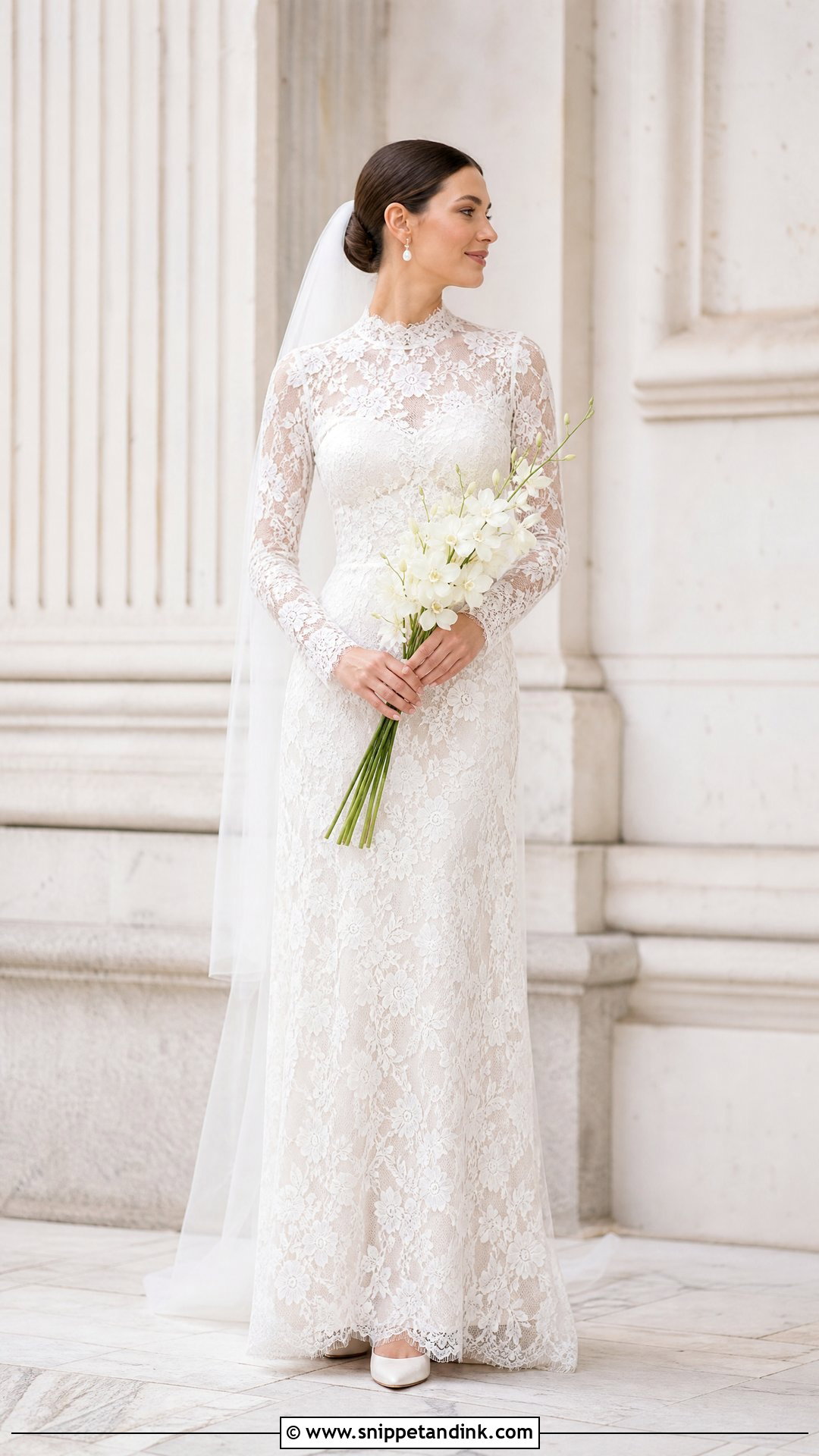
A raised lace neckline with fitted sheer sleeves feels regal and covered. Keep the skirt to an A-line or narrow column, because a full skirt under all that upper detail looks top-heavy. Skip the necklace; small pearl earrings are enough. I’d fit the collar with your head turned both ways, since a high neck cut too snug rubs within the first hour. A sleek ponytail or low bun keeps the lace on show, and long-stemmed white flowers echo the vertical line.
11. Floral Tea Length Bridal Dress
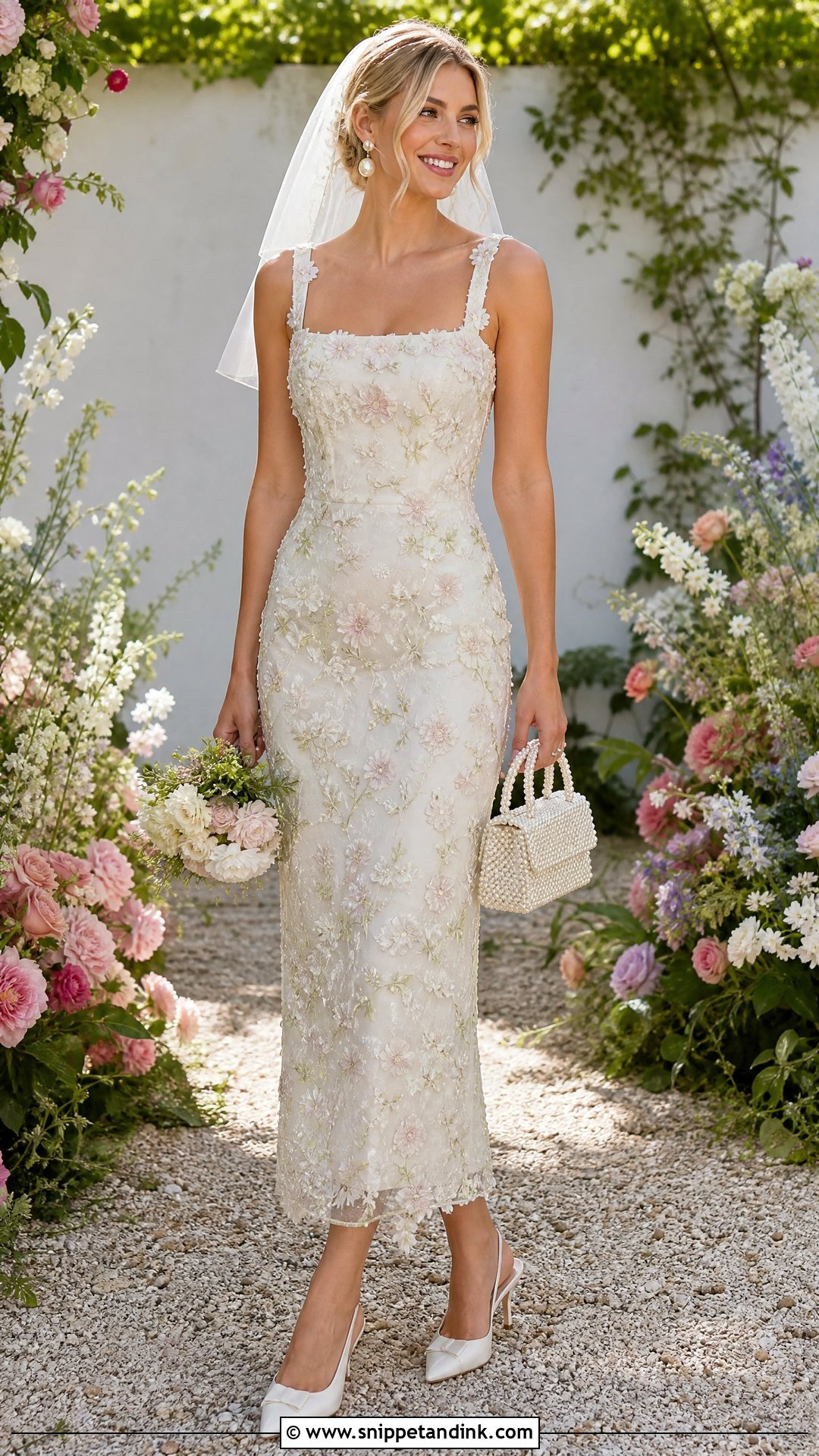
A skirt ending between knee and ankle suits a courthouse ceremony or a relaxed garden reception. Embroidered flowers or small appliqués add interest without weighing down the short shape. The shoes are on show from every angle, so pick them before the dress is hemmed; the right hem height depends on the heel. Pearl earrings, a short veil and a little structured bag fit the retro proportion, with a polished ponytail. Keep the bouquet small so it doesn’t swallow the dress.
12. Floral Bridal Mini Dress
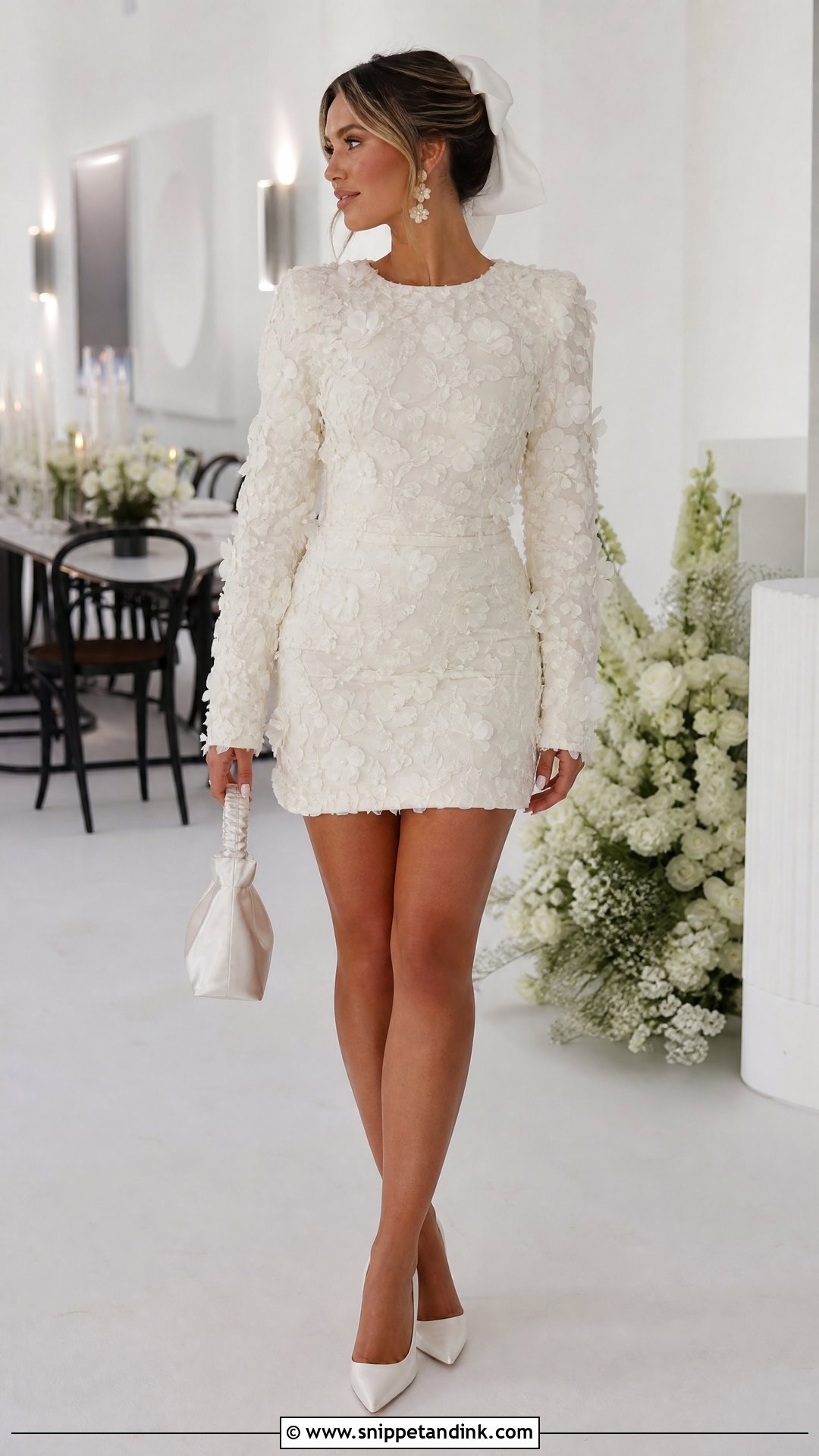
A structured mini with three-dimensional flowers suits a reception, a civil ceremony, a welcome event or a second outfit after the gown comes off. A secure neckline matters more on a short dress than a long one, since you’ll be dancing in it. Long sleeves balance the shorter length; strapless looks cleaner for a party. Match the heel height to how long you’ll stand. Statement earrings and a short veil or oversized bow suit it, and a sleek ponytail stays tidy through the night.
13. Blush Floral Bridal Dress
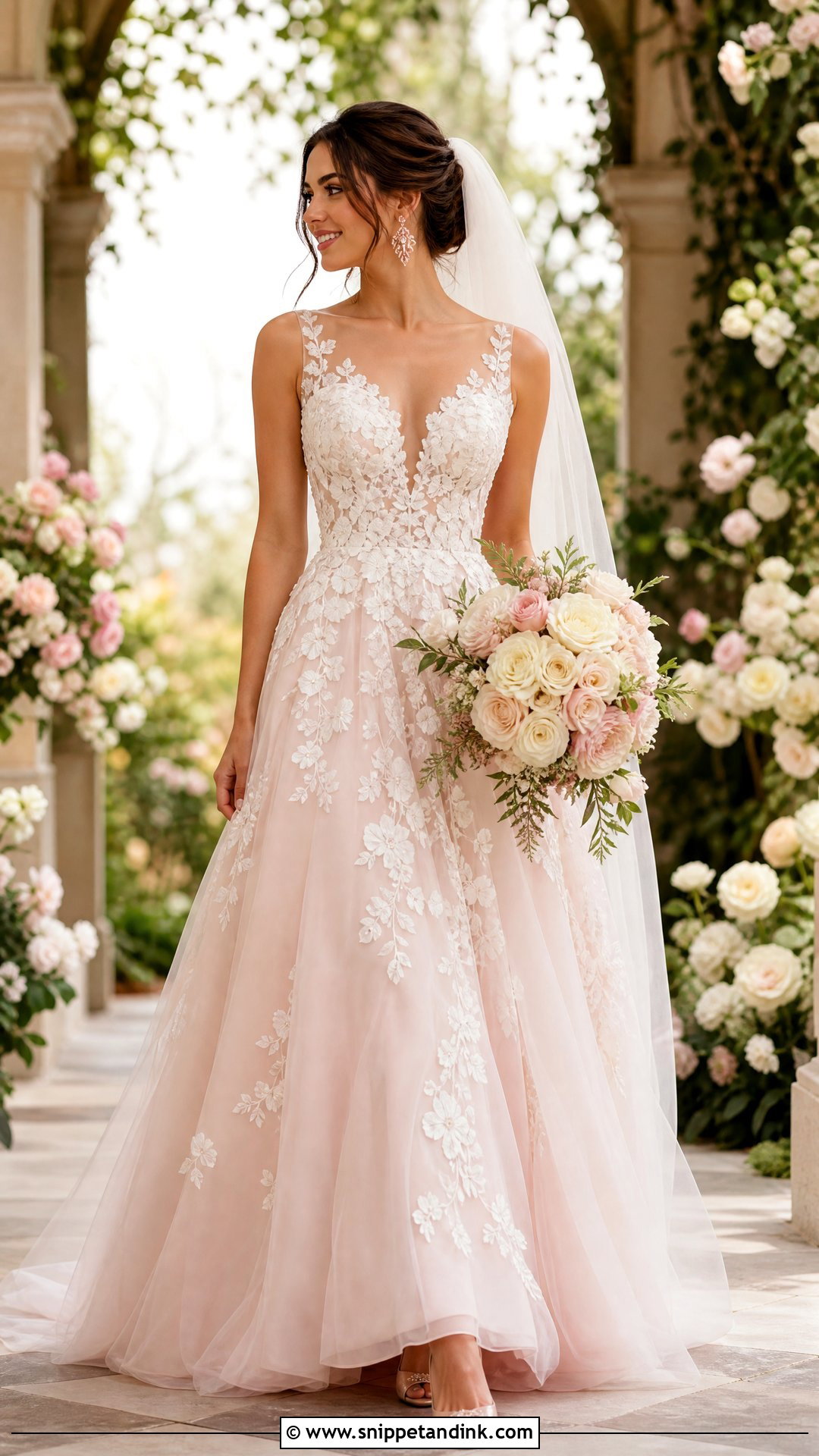
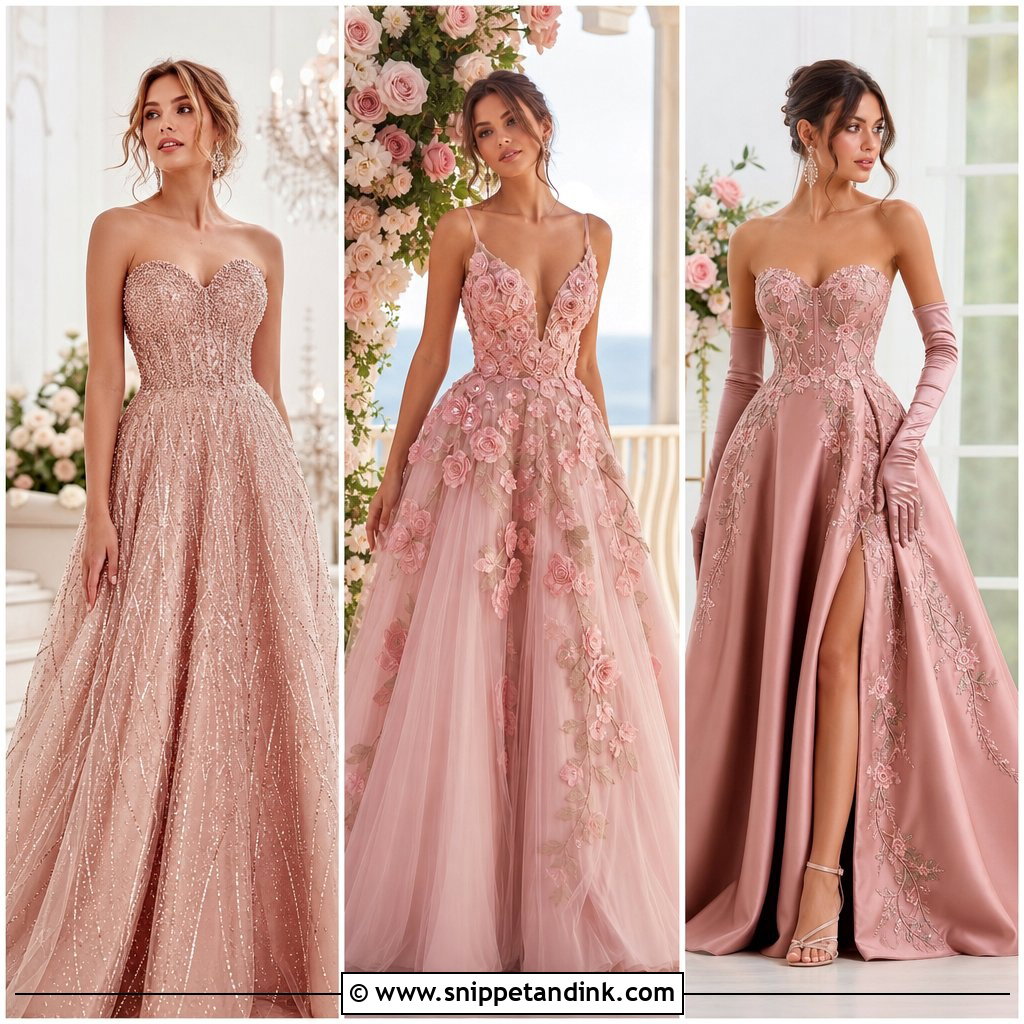
Tonal flowers over a pale pink lining under ivory tulle give you color that shifts as you move. The layering gives the appliqués depth and helps them show up in photos, where white-on-white sometimes disappears. Champagne heels, rose-gold earrings and a plain ivory veil fit, along with a bouquet in cream, blush and dusty pink. I’d keep pearl pins in a loose low bun and natural pink makeup, but avoid matching every accessory, which flattens the whole look.
14. Blue Floral Embroidered Bridal Dress
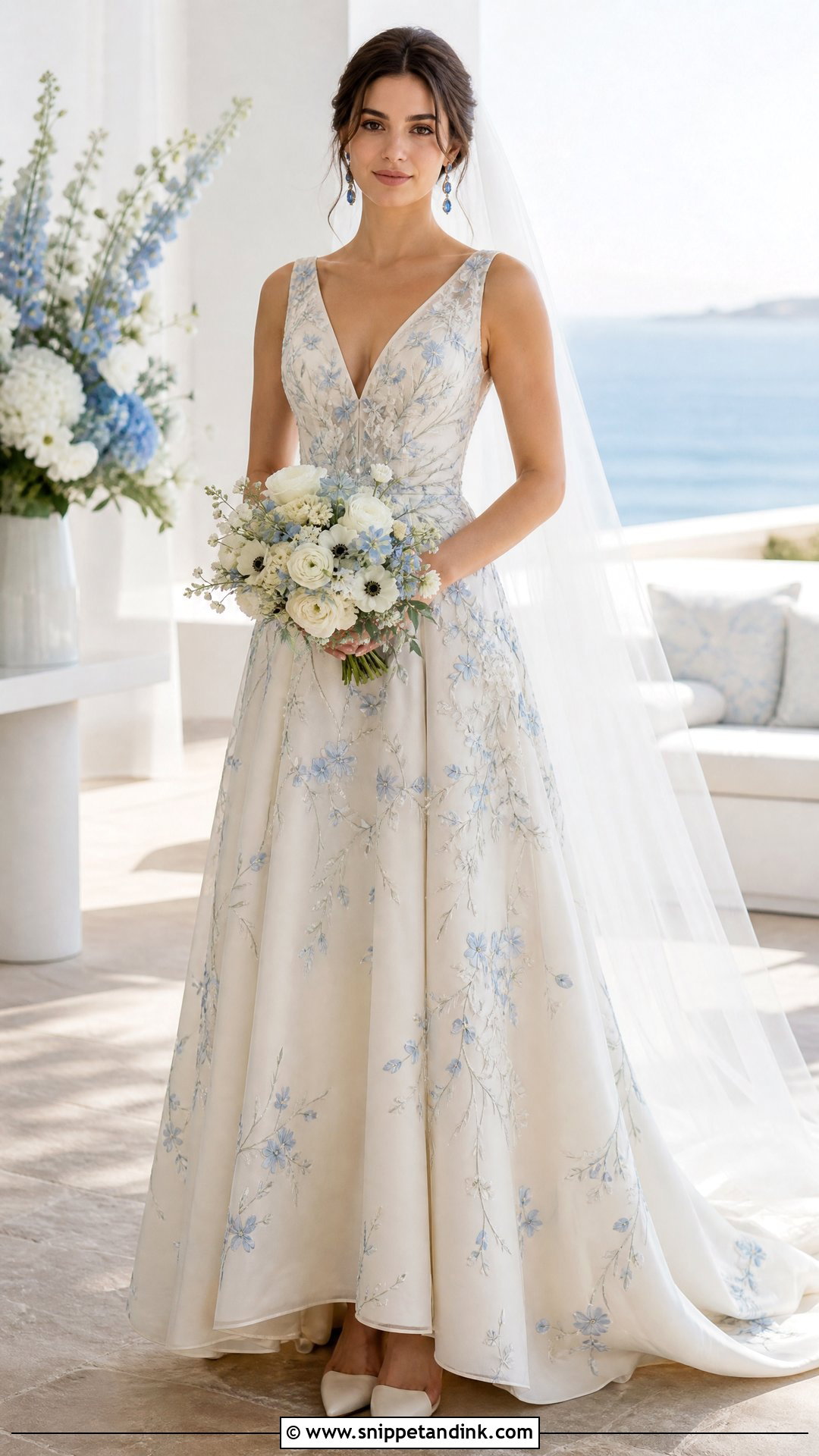
Blue embroidery on ivory can carry the whole color story of the wedding. Scatter it around the bodice, waist and lower skirt instead of one dense block, which looks like a patch from a distance. A soft A-line or column keeps it refined. Sapphire studs and a plain veil are enough blue; adding it to shoes, bag and bouquet as well tips into theme. A few pale-blue accents among white blooms do the job, with a smooth half-up style.
15. Black And White Floral Bridal Dress
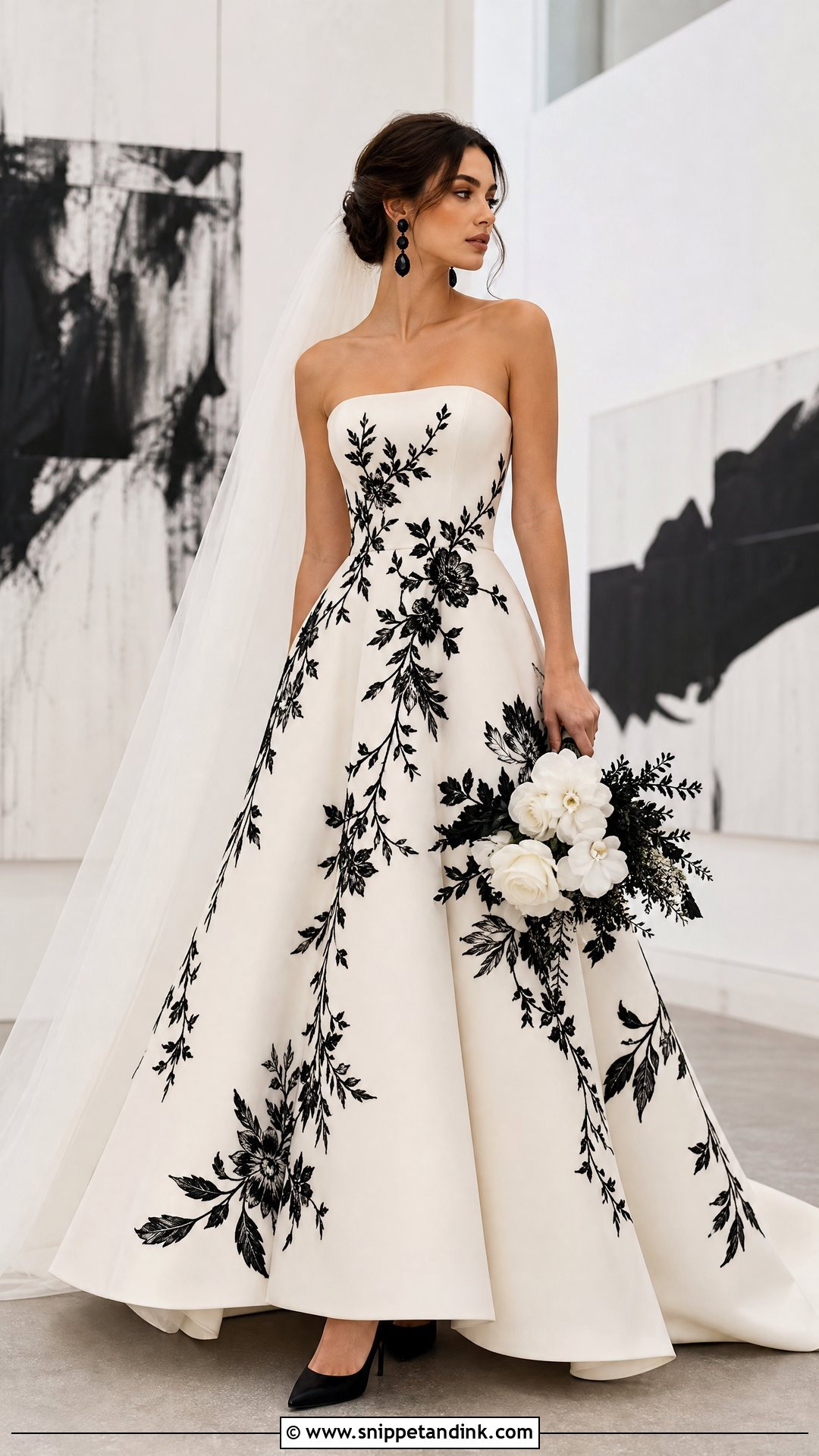
Black vines on ivory make the strongest contrast in this list, so the silhouette has to stay simple: a strapless A-line or fitted column. Black pointed pumps, onyx studs and perhaps a narrow black ribbon at the waist repeat the palette. The plain ivory veil is what tells everyone this is a wedding dress, so I wouldn’t skip it. White flowers with dark foliage suit the monochrome, and defined eye makeup holds up next to the graphic print. It suits a bride who already dresses in black and white.
16. Boho Floral Chiffon Bridal Dress
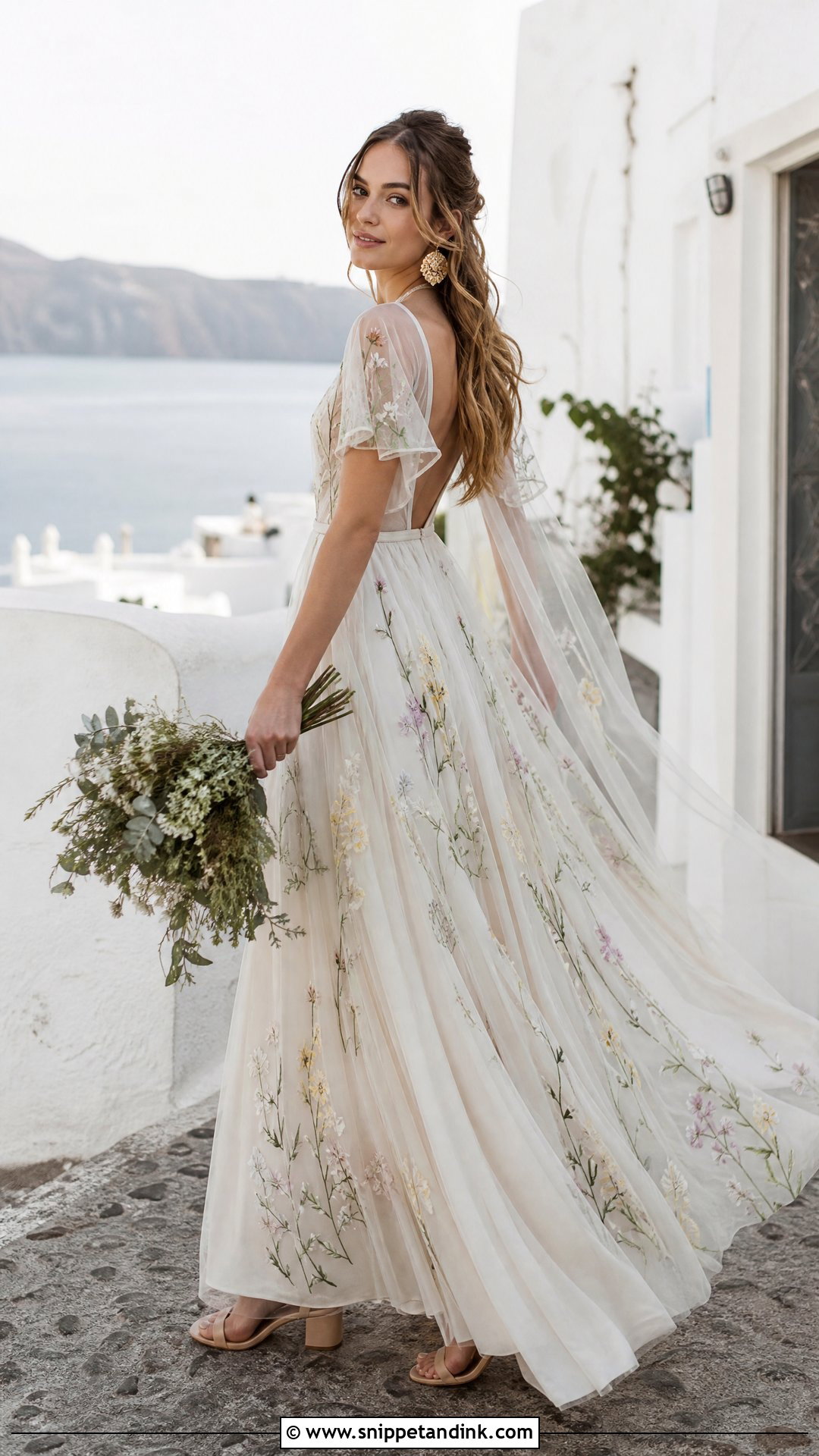
Light chiffon catches every breeze at an outdoor or destination celebration, which is exactly why it suits a boho floral gown with flutter sleeves. Embroidered wildflowers or tonal lace panels decorate it without adding weight. Loose chiffon can look shapeless in photos, so I always take the waist in a little more than the bride expects. Low block-heel sandals, fine gold jewelry and a fingertip veil or floral cape are practical outside. Loose waves or a soft braid with tiny flower pins fit the mood.
17. Vintage Rose Floral Bridal Dress
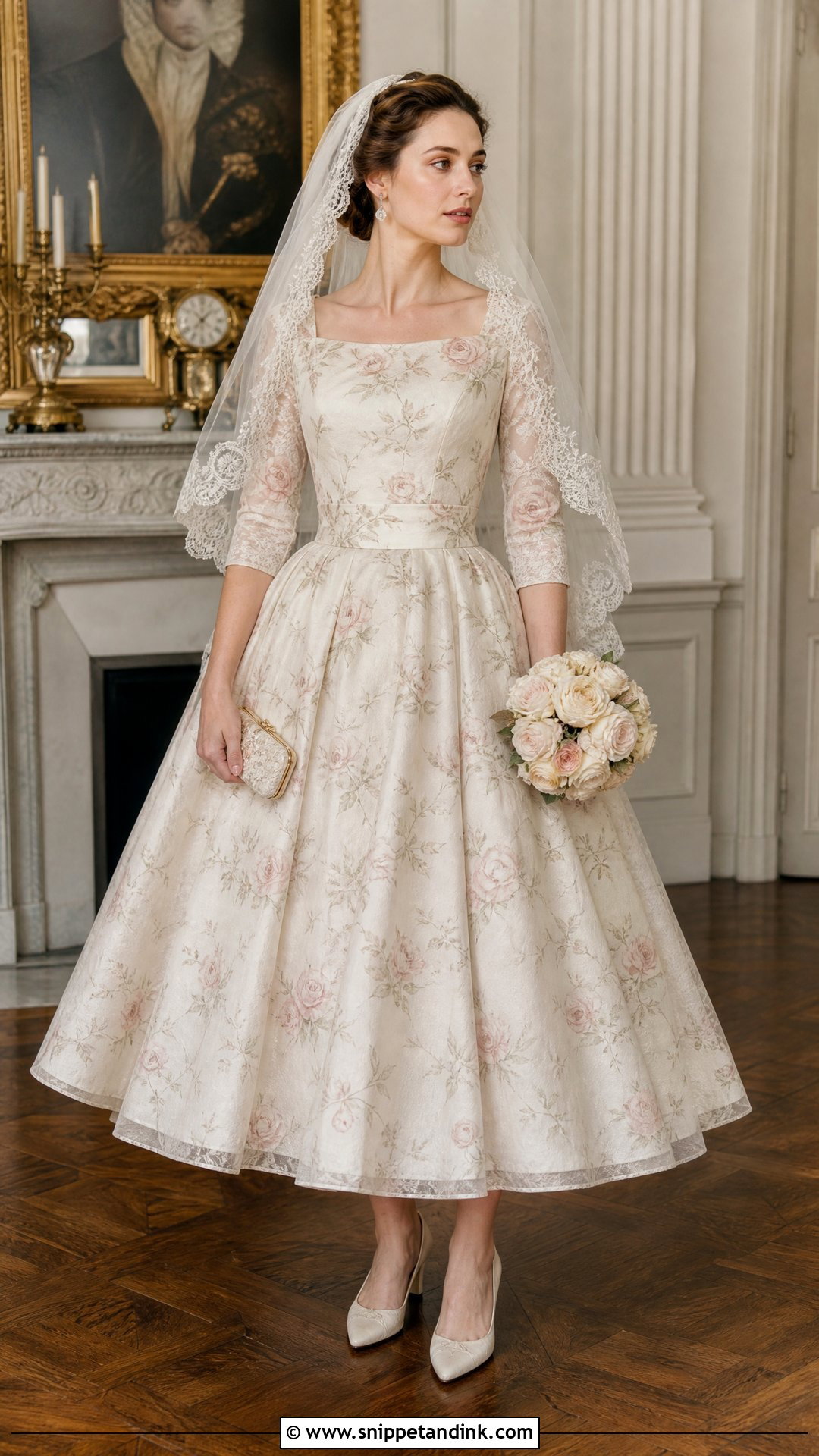
Woven roses, embroidered buds or rose-patterned lace give a gown a nostalgic feel without turning it into a period costume. A fitted waist, modest V and full skirt carry it well. If you choose a lace-edged veil, its pattern should be simpler than the dress; two competing laces fight in close-up portraits. Pointed pumps, pearl earrings and a small vintage-style clutch suit it, with brushed side-parted waves. Garden roses tied with a narrow ribbon finish the outfit.
18. Plus Size Floral A-Line Bridal Dress
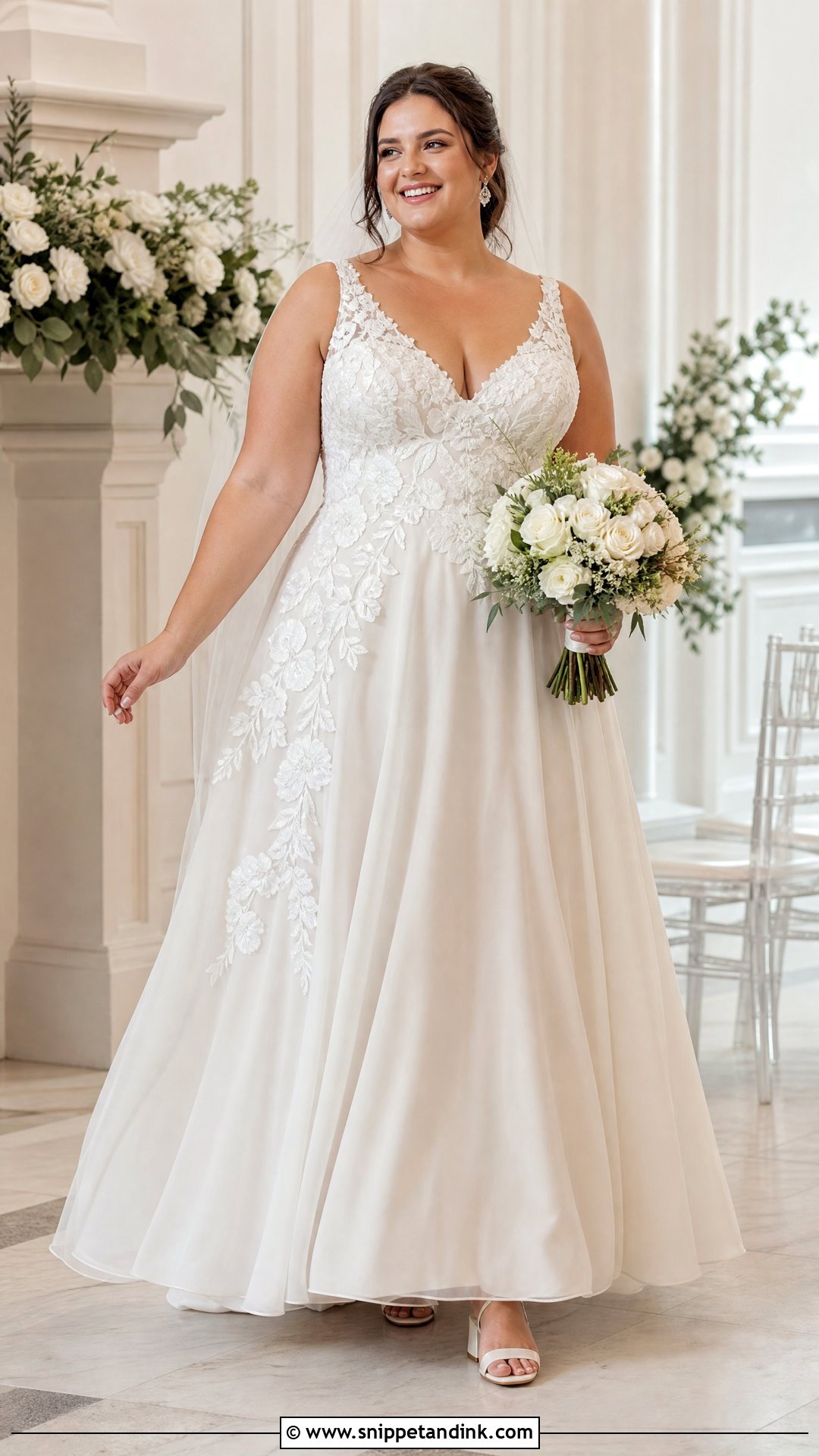
Support built into the gown is what makes a plus-size floral A-line comfortable: wide straps, internal structure, and a waist seam placed where you want it, not where the sample sits. Appliqués that travel diagonally from bodice to skirt create one continuous line and draw the eye across the figure. I’d have the skirt skim rather than cling, with room to sit and dance. Correct alterations matter more than anything else on this list, since a precise fit is what makes the flowers lie flat. Cushioned block heels and a half-up style that anchors the veil complete it.
19. Petite Floral Sheath Bridal Dress
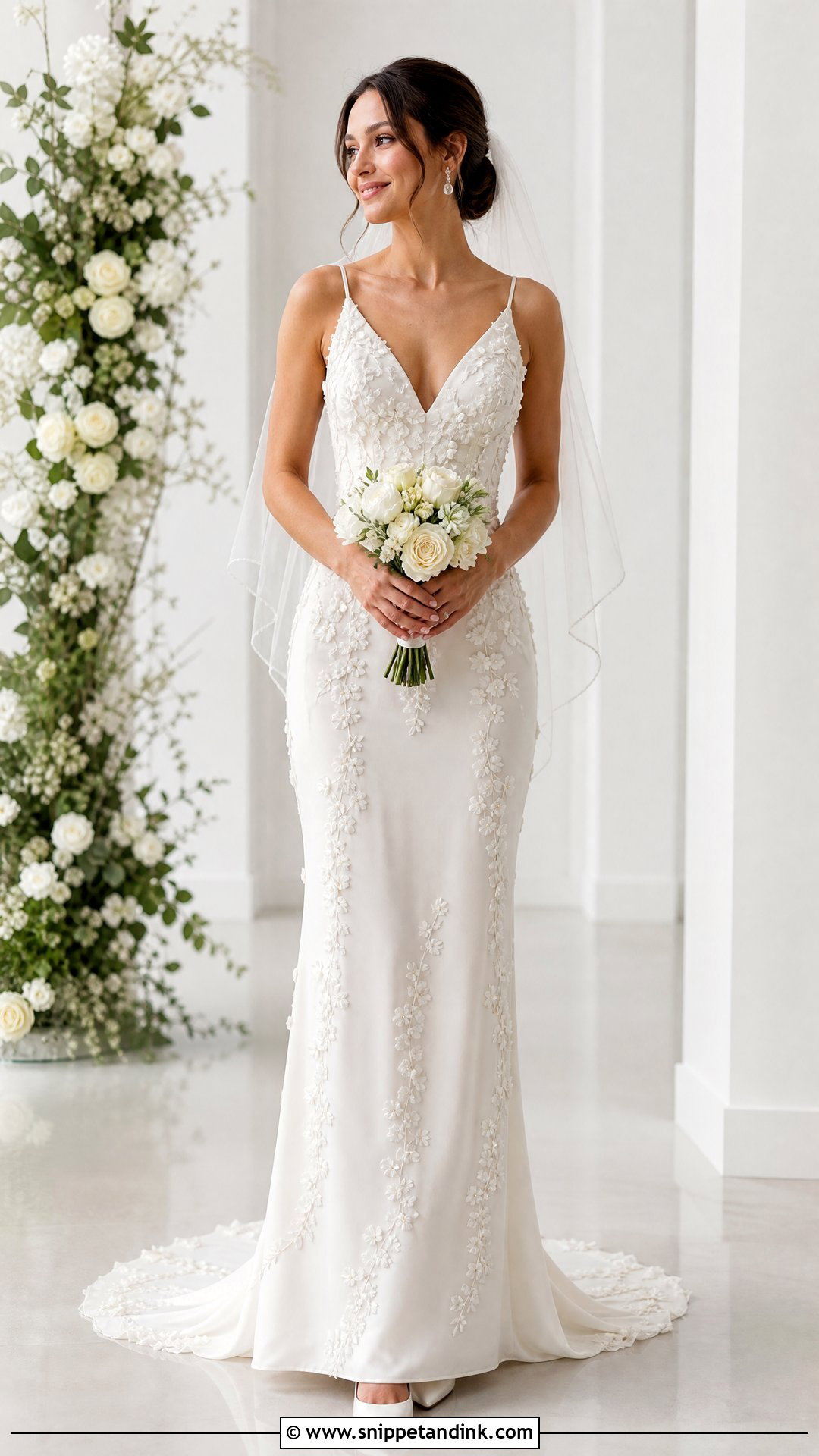
On a petite bride, a floral sheath keeps one long unbroken line. Small or medium motifs arranged vertically lengthen; big horizontal sprays cut you in half. A V-neck, slim straps and a natural waist help, and a long train does not. Hemming is fiddly on this shape because motifs near the hem may need to be lifted and re-sewn, so allow extra time. Ivory or skin-tone pointed pumps, small drops and a compact bouquet keep the proportions right.
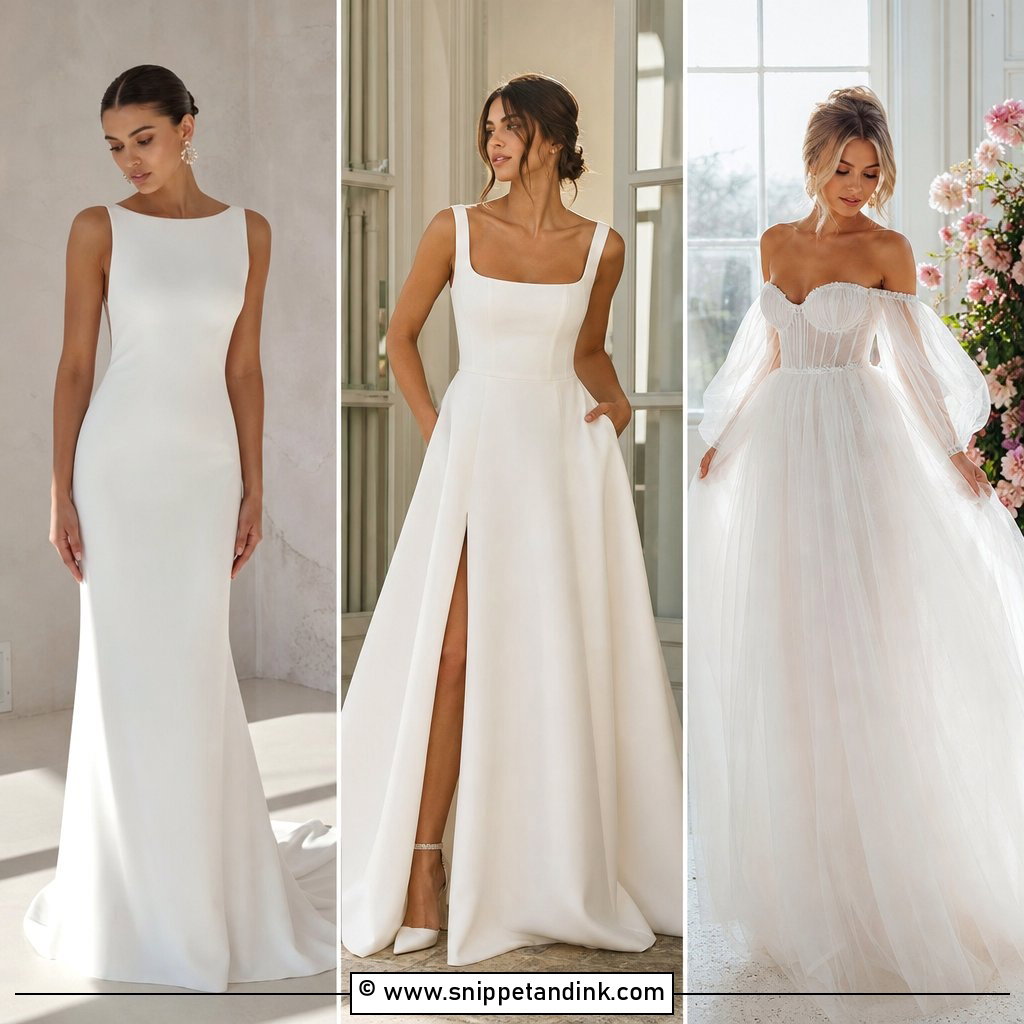
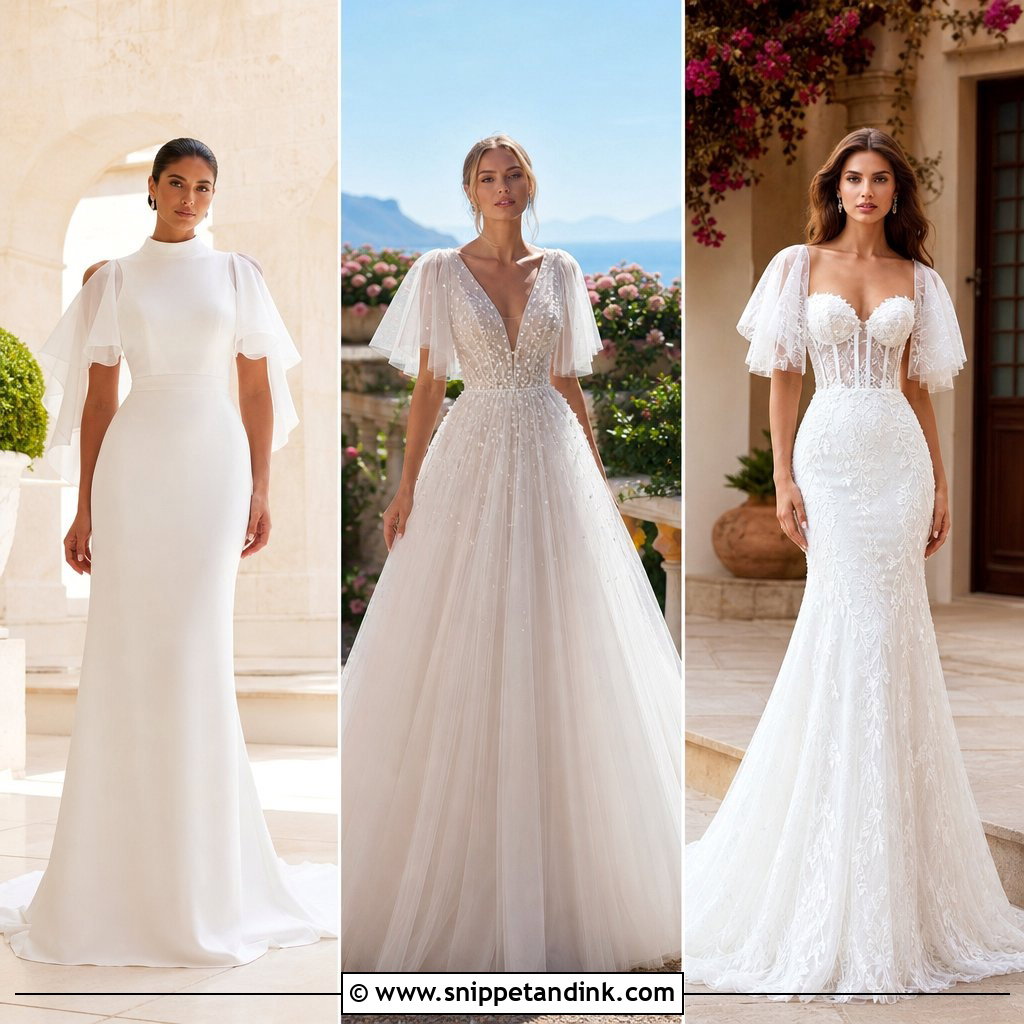


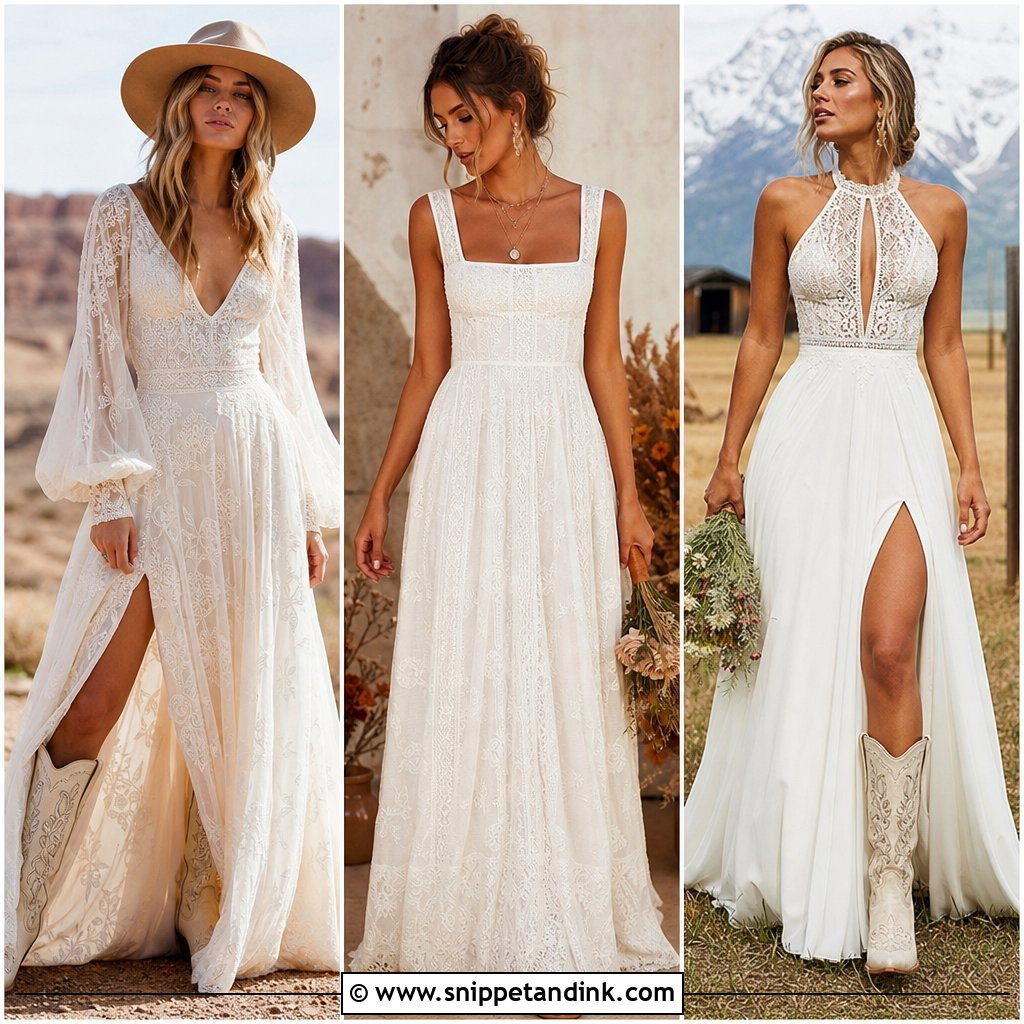
20. Modest Floral Bridal Dress
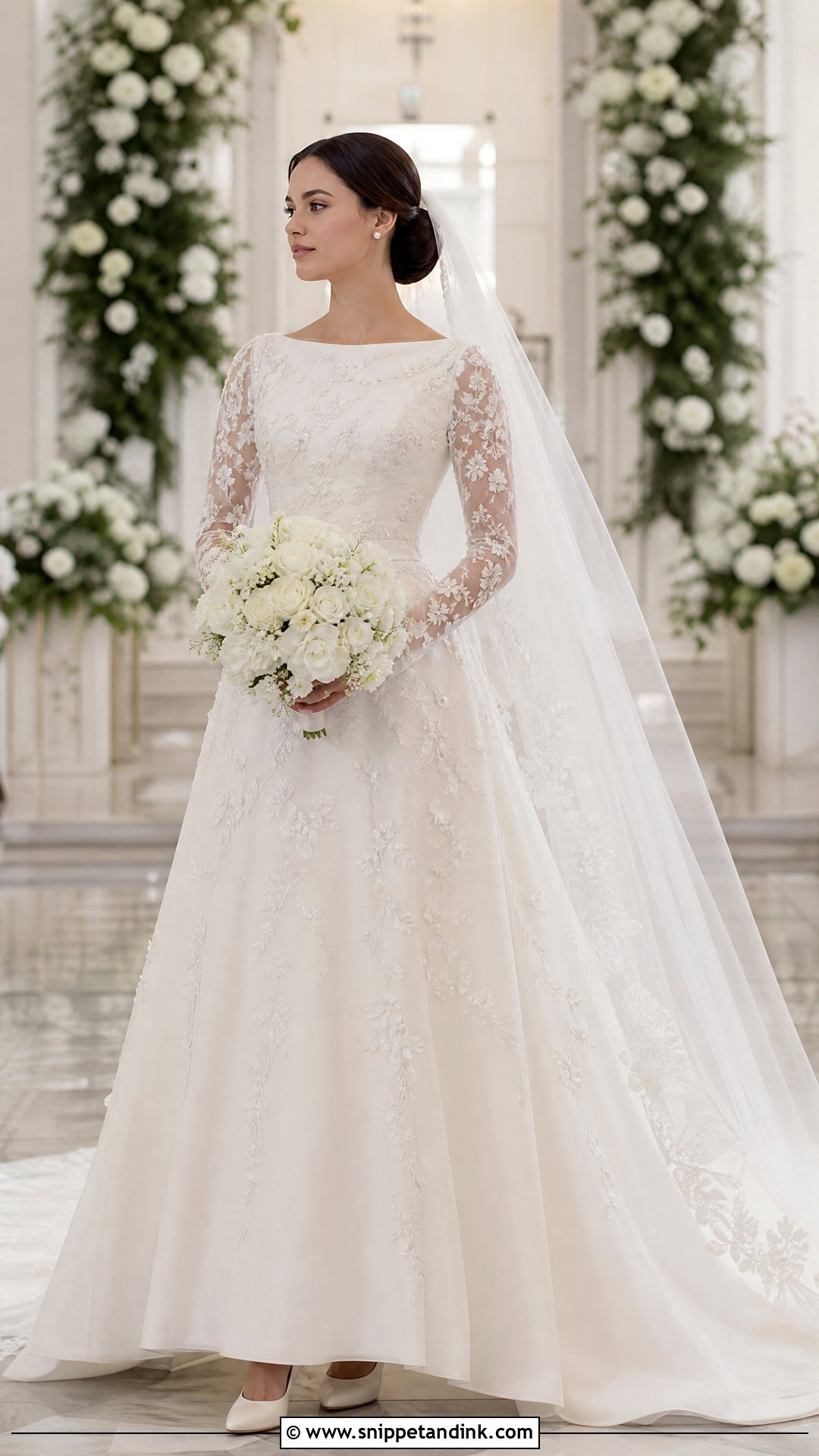
Full coverage needn’t look heavy. An A-line with long light sleeves, an opaque bodice and a neckline near the collarbone gives you that, with tonal embroidery adding depth in a single ivory shade. I check lining placement in bright light at fittings, because sheer areas that look solid indoors can show through in sunshine. Closed-toe pumps, pearl studs and a plain cathedral veil anchored to a smooth low bun suit it. A structured bouquet of white flowers keeps the lines clean.
21. Detachable Floral Overskirt Bridal Dress
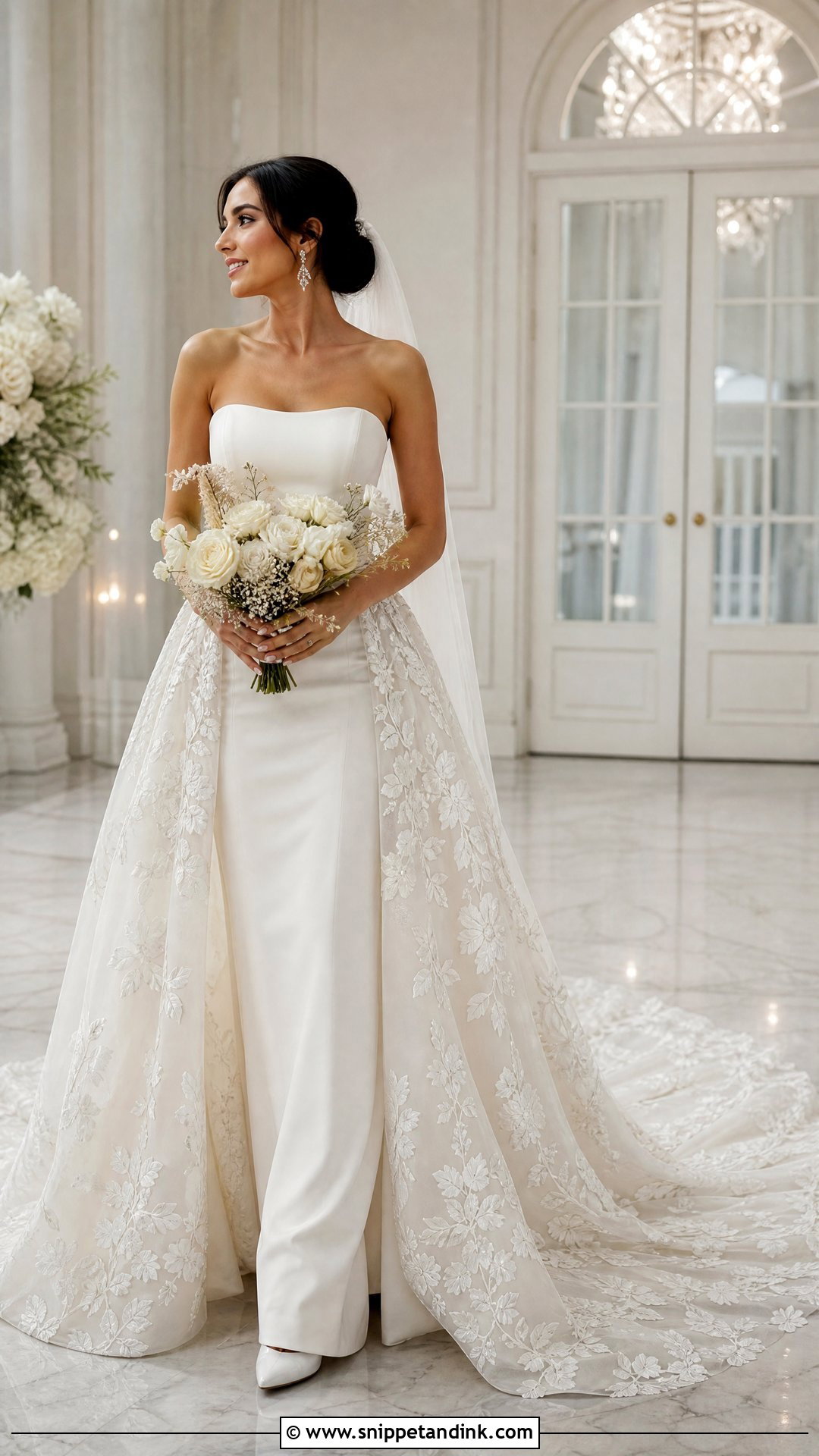
A detachable overskirt lets one gown cover both ceremony and party. Start with a fitted crepe, satin or smooth lace base, then add a sheer layer with appliqués or embroidered vines for the aisle. After the vows, the overskirt and veil both come off, and a sleek bun with a sparkling comb works for each half. The waistband is the weak point: it should fasten with hooks or buttons hidden under a band, and someone should practise removing it with you before the day.
22. Floral Cape Sleeve Bridal Dress
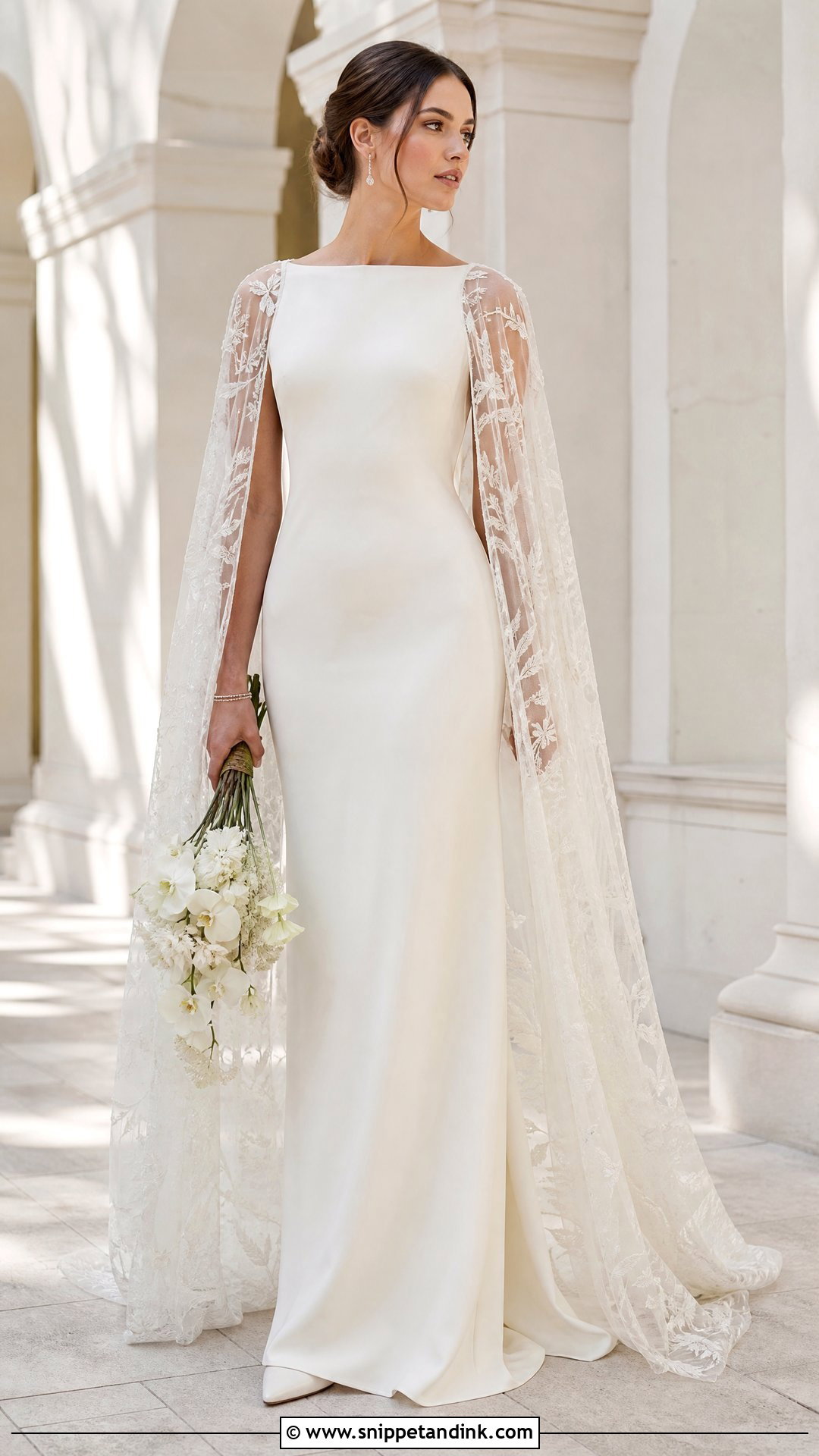
An embroidered cape falling from the shoulders can replace a veil altogether. Keep the gown underneath plain, column or A-line, so the leaves and blossoms on the cape stay the focus. A small comb or hidden snap near the neckline stops it sliding back, which capes do once you start moving. Pointed satin shoes and understated earrings are enough. Wear hair up, and carry long stems to keep the line vertical.
23. One Shoulder Floral Bridal Dress
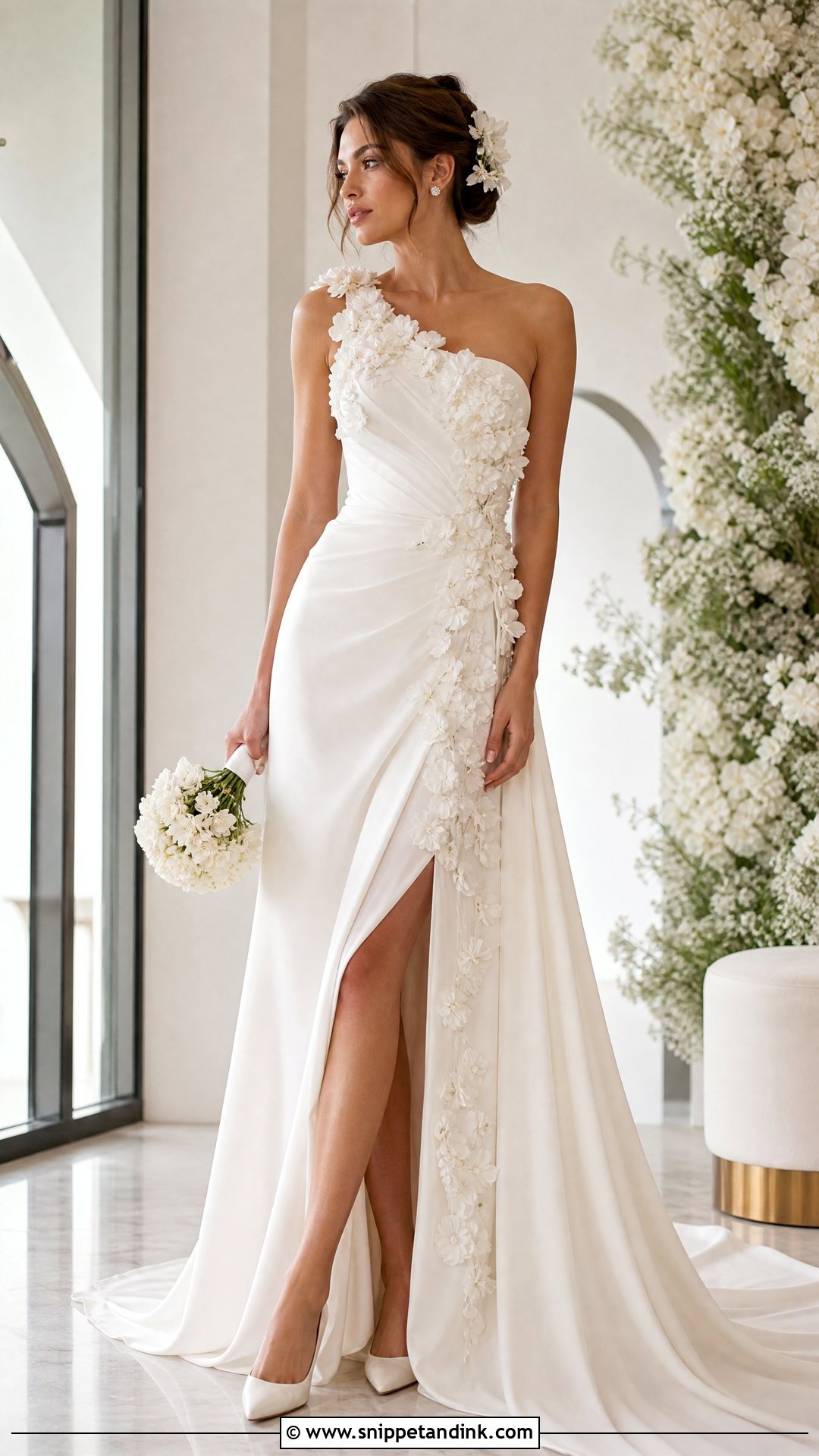
One shoulder, flowers clustered along the strap and running diagonally across the bodice: the asymmetry does all the work, so jewelry stays to a slim bracelet and studs. A fitted waist and flowing skirt balance the neckline. If you’d rather skip a veil, wear a sculptural floral piece on the opposite side from the strap. I’d fit the single strap carefully; if it isn’t anchored into the back seam it slides off the shoulder when you raise your bouquet. Keep the bouquet compact and controlled.
24. Floral Silk Slip Bridal Dress
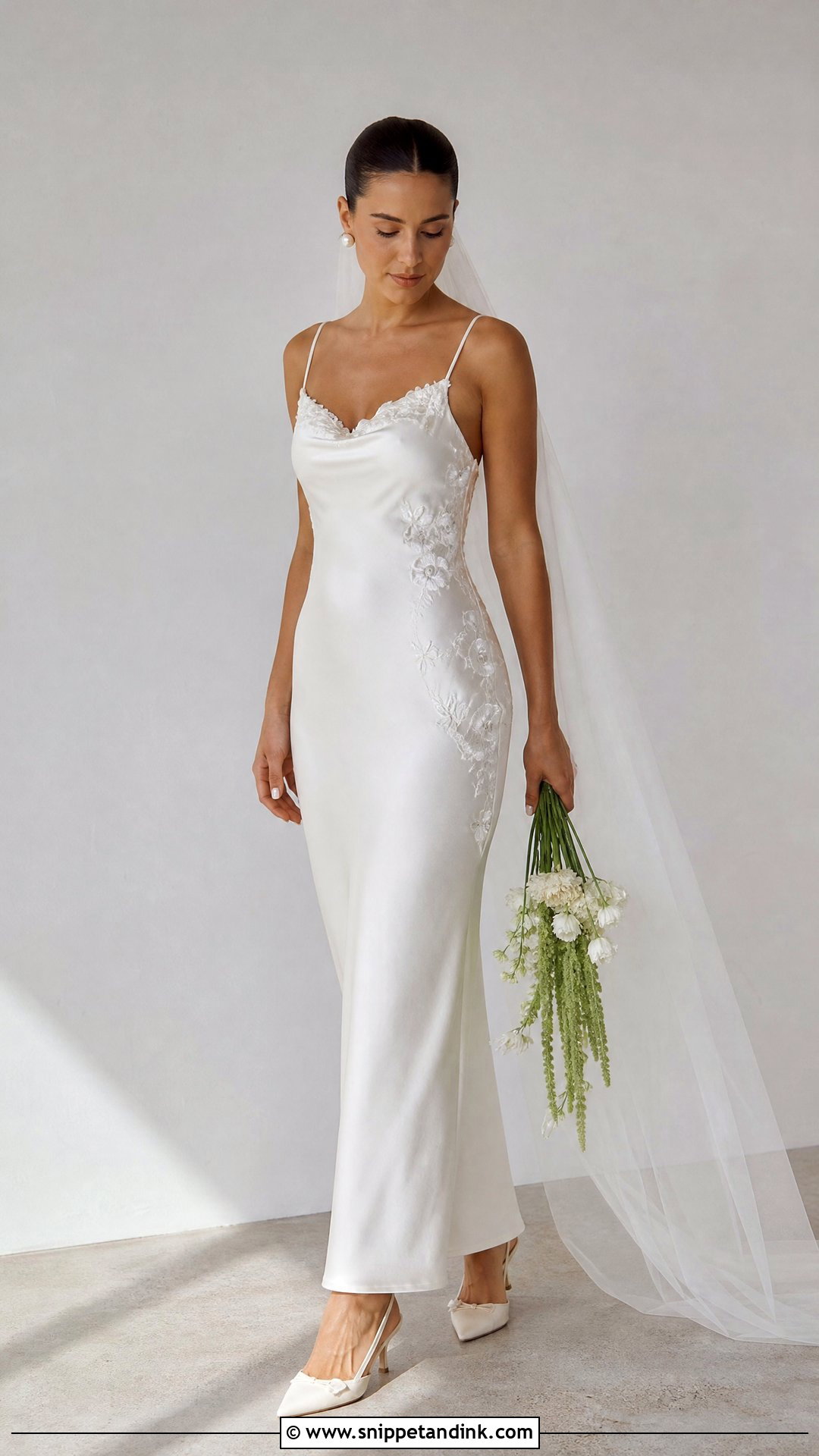
Bias-cut silk with flowers embroidered only at the neckline, side seam or hem is about as minimal as a floral dress gets. Thin straps and a draped neck keep it relaxed. Silk on the bias moves beautifully but shows every bump, so fit it over the exact underwear you’ll wear and keep embroidery away from the hip, where it adds bulk. A sheer floor-length veil, slingbacks and smooth waves suit it. Carry a narrow bunch of long stems rather than a round bouquet.
25. Floral Rosette Reception Dress
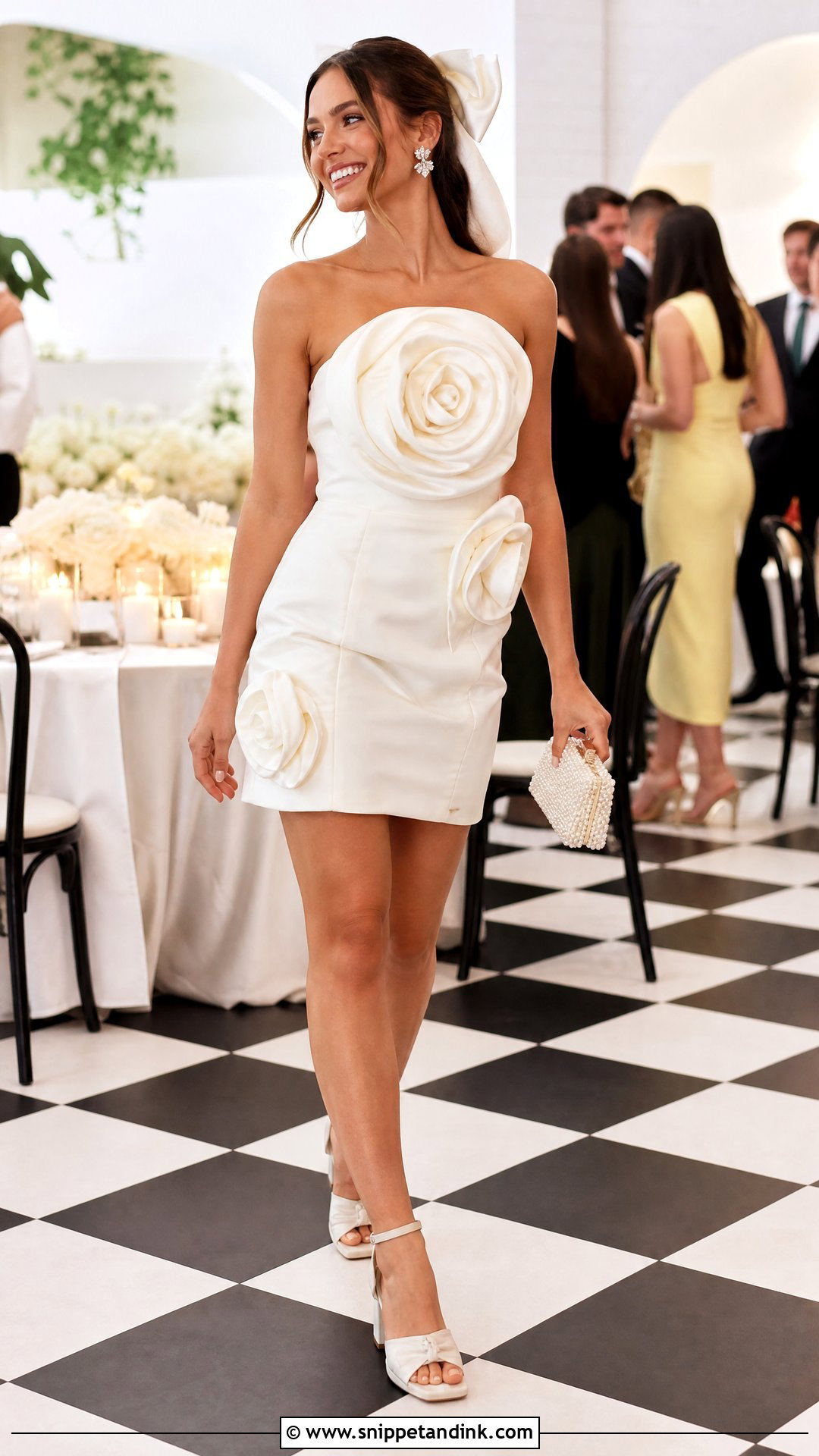
A floral rosette reception dress is the outfit for the last few hours, when you want to dance. Fabric roses at the neckline, waist or hem need a structured base underneath, or they droop and look bulky. A strapless mini under a detachable overskirt gives you an entrance and then a party look. Swap the veil for a satin bow or small floral comb, wear block heels you can dance in, and set the bouquet down so the rosettes show.
Appliqués Slow Down Alterations, So Order Early
Floral detail looks easy on the finished gown, but every flower near a seam or hem has to be unpicked and re-sewn when the dress is altered. That’s the part brides don’t expect.
How much time to allow
Made-to-order gowns usually take several months to arrive, and lace or appliqué alterations often need three fittings rather than two. I’d aim to have the dress ordered around eight to ten months out, and to start fittings about two to three months before the wedding. Timings vary between designers, so ask the salon for their current delivery estimate in writing.
Questions worth asking at the salon
- Are the appliqués hand-sewn or glued? Sewn ones can be moved; glued ones often can’t.
- If the hem is shortened, will the border motifs be lifted and replaced, or cut through?
- Are spare appliqués or extra lace included for repairs and bustle points?
- Can embroidery thread colors be changed, and does that add time?
On a garden lawn
Raised petals near the hem collect grass seed, and printed silk can mark if dew soaks the train. Have the bustle put up for photos on grass, and keep a soft brush in the emergency kit to lift seeds out of tulle before they work their way in.
Let the Flowers Suit Your Frame First
A floral gown works when its flowers suit your frame, your venue and how long you’ll be wearing it. Raised appliqués give the most texture; embroidery, lace, jacquard and watercolor print are softer ways in. The silhouette decides just as much: ball gowns for drama, A-lines for ease, sheaths and slips for a clean line. Once you’ve found the dress, let the shoes, jewelry, veil and bouquet support it quietly. Then pick your own colors and flowers to make it yours.
You'll Like These Ideas:



Leave a Reply