
Braids have come right back to the center of Indian bridal hair, dressed with jada billai, jasmine, pearls and jeweled pins. I like them for a practical reason too: a well-built braid survives a ten-hour ceremony, a dupatta and a lot of dancing better than almost any open style. The looks below run from a heavy South Indian jada to a light marigold plait for haldi. With each one I’ve added how it’s built, what it weighs on the head, and which function it actually suits.

A Decorated Braid Weighs More Than You Think
Brides rarely ask how heavy a braid will be, and it’s the first thing I think about. Gold jada pieces, fresh gajra, a parandi and a dupatta pinned on top all pull from the same point at the crown. On a short photo shoot that’s fine. Over a ceremony that runs most of the day, it can turn into a headache that shows on your face.
How I spread the load
- Heavy ornaments get sewn onto the braid or onto a backing strip, so their weight sits along the plait instead of hanging from a few pins.
- The braid starts slightly lower on the head when the decoration is heavy; a high start pulls hardest on the scalp.
- I check the braid seated, not just standing. Many rituals happen on the floor or a low seat, and a long jada folds under you if nobody plans for it.
- Fresh flowers are added last, close to leaving, because they gain weight and wilt as they warm.
If you already know your scalp is sensitive, or you get tension headaches from a tight ponytail, say so at the trial. I’d rather build a slightly looser braid with a hidden support underneath than have you pulling pins out halfway through the pheras. Wear the full look for at least two hours at the trial and pay attention to how the back of your head feels when you sit.
1. Traditional South Indian Jada Braid
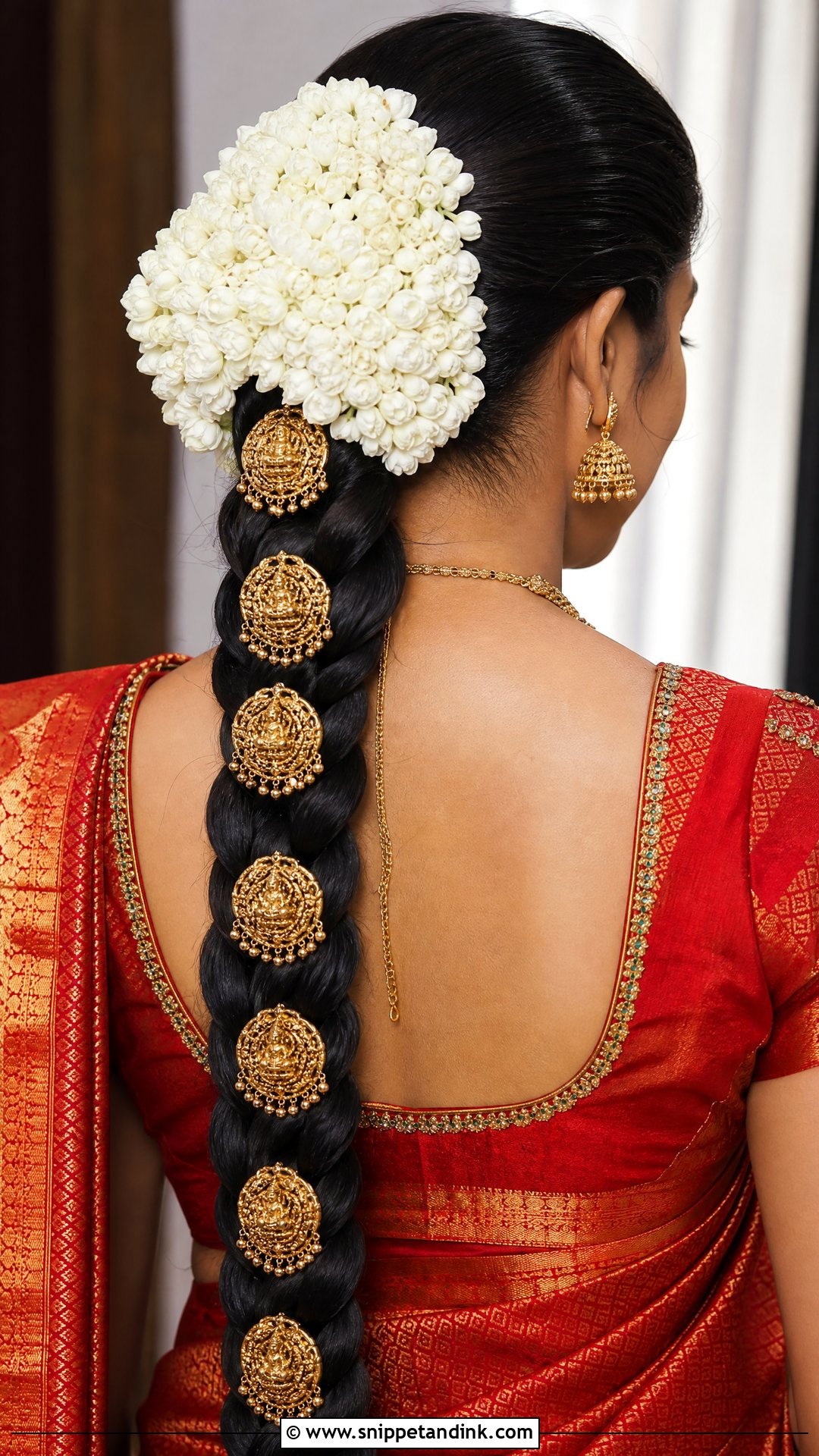
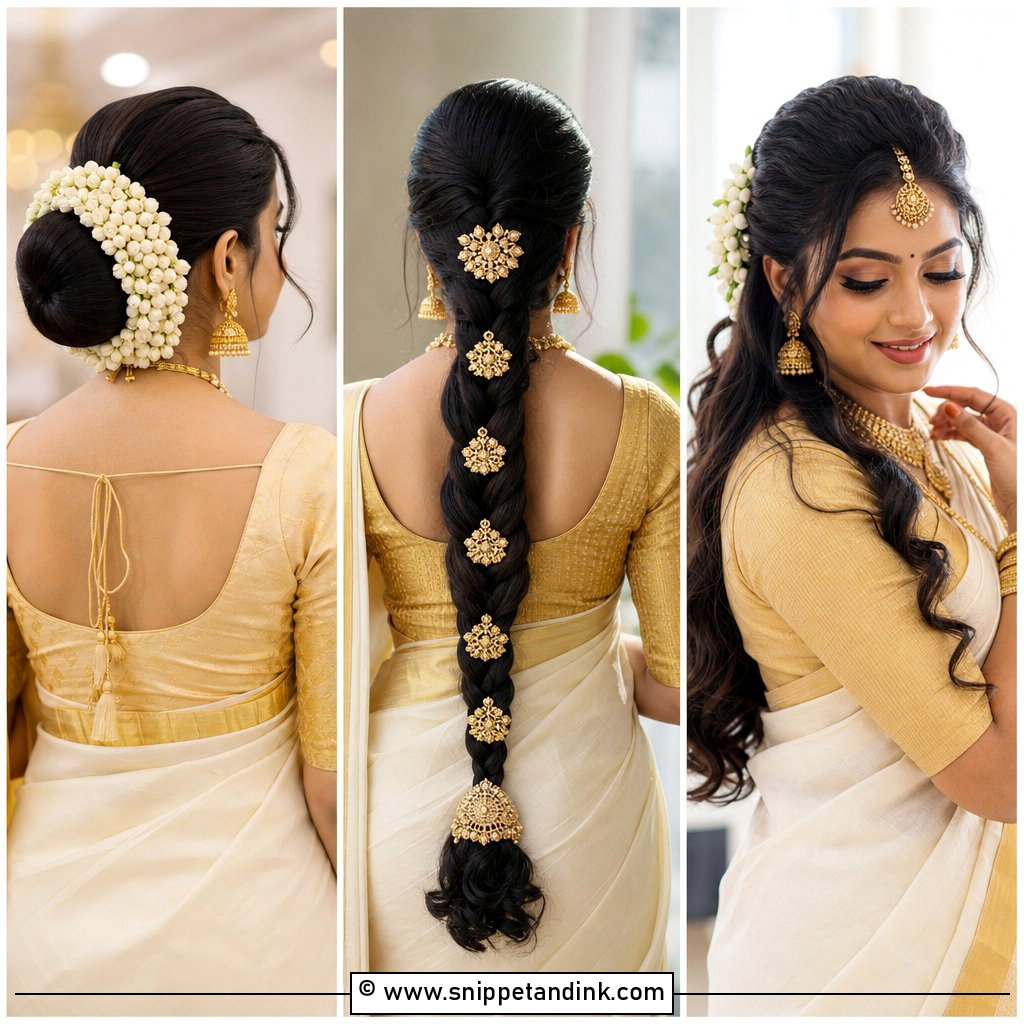
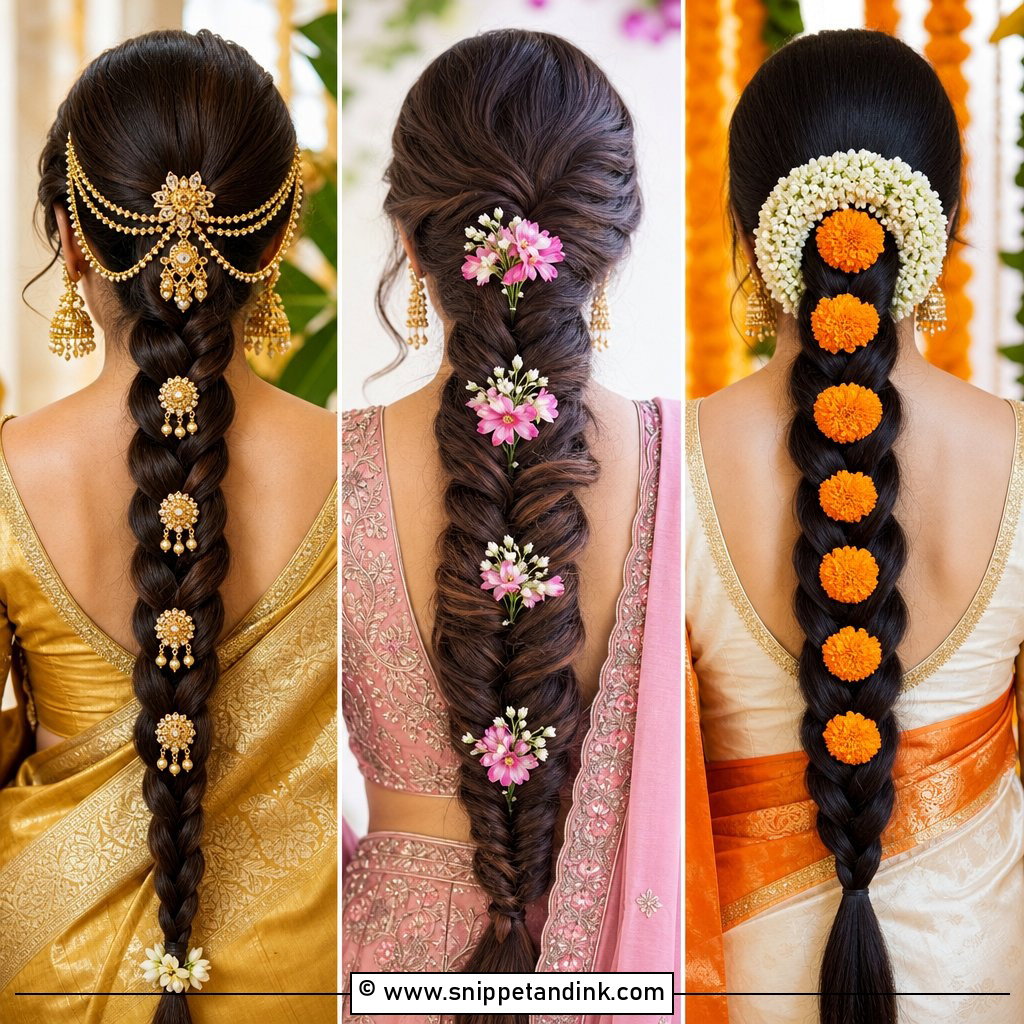
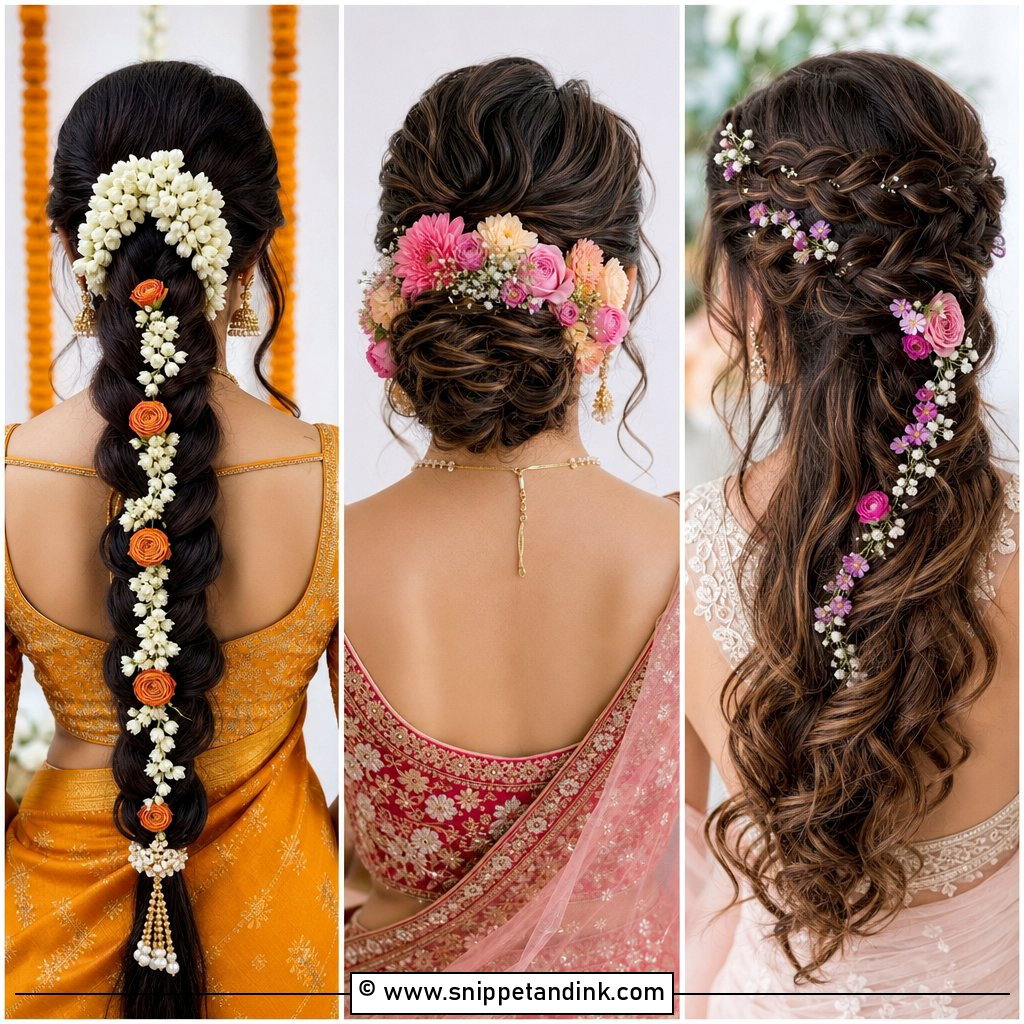
A full jada is a serious piece of work. The hair is pulled back smoothly from the center part and plaited tightly to the tips, then the gold jada billai discs are attached down its length, largest at the crown and narrowing toward the end, with jasmine strings along both sides. That much ornament is heavy, so I sew the pieces onto the braid or onto a fabric backing rather than relying on pins, which loosen the moment you sit down for the muhurtham. It belongs with a Kanjeevaram saree and temple jewelry, the classic South Indian bridal braid. If your own hair stops at mid-back, a braid extension inside the jada carries the length and nobody can tell.
2. Floral Fishtail Braid
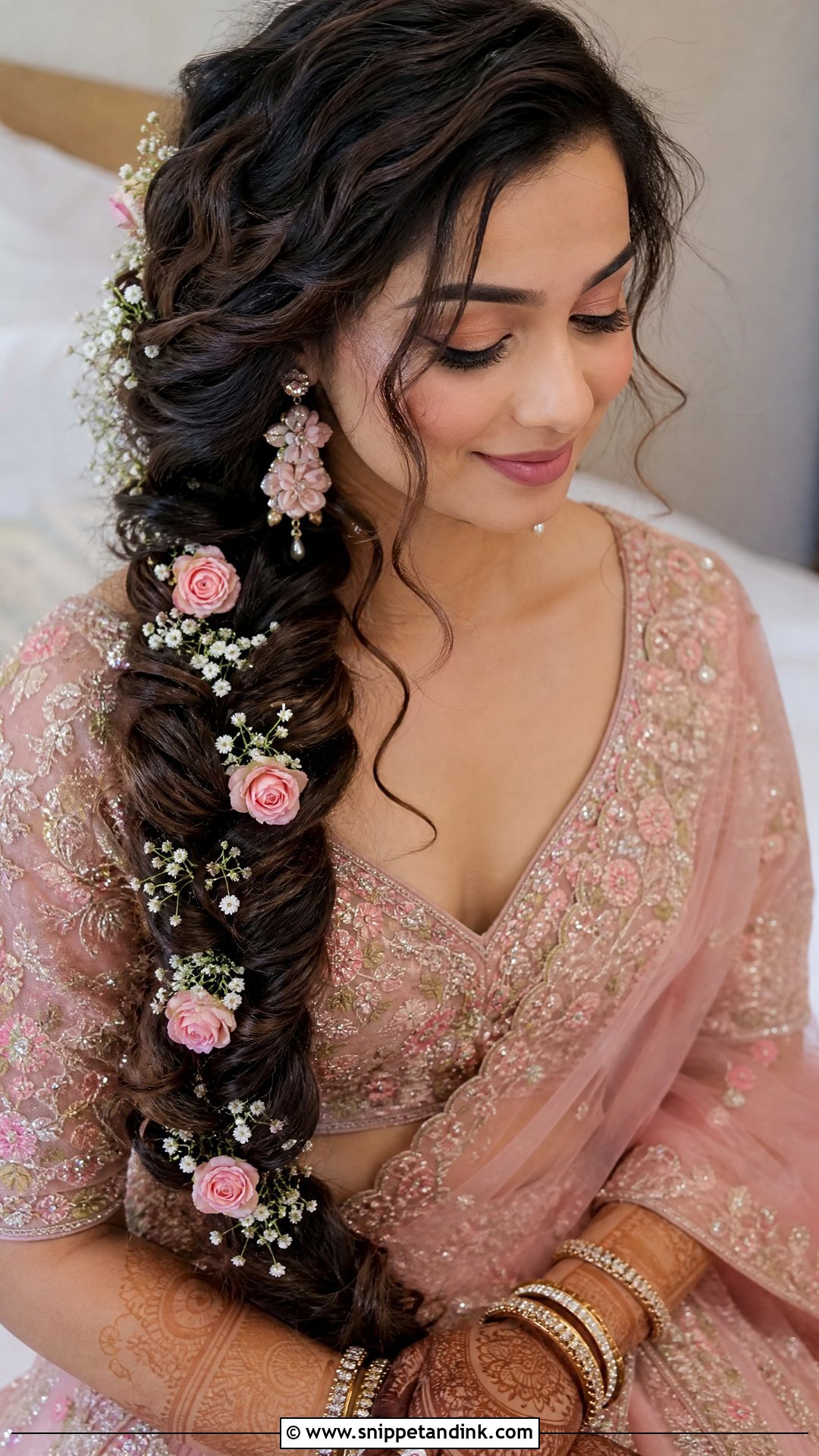
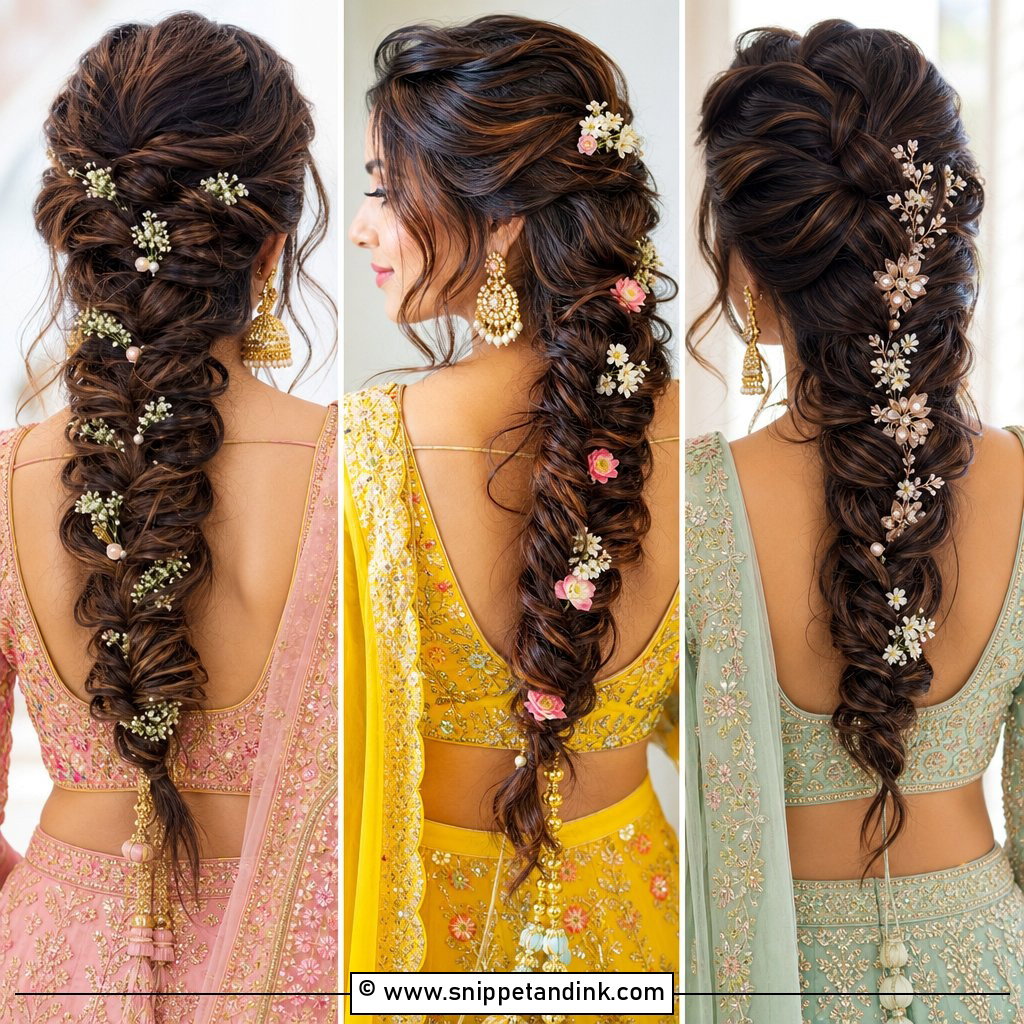
A fishtail with flowers is the braid I’d pick for a mehendi afternoon. I start from a gentle side part and work a loose fishtail, then pull the edges outward so the herringbone looks wide and soft. Baby’s breath, mini roses or marigolds tuck straight into the weave without pins. Loose braids do soften as the day goes on, so I secure the end with a clear elastic and a pin hidden through it. It suits pastel lehengas and floral kaleere.
3. Dutch Braid with Flowers
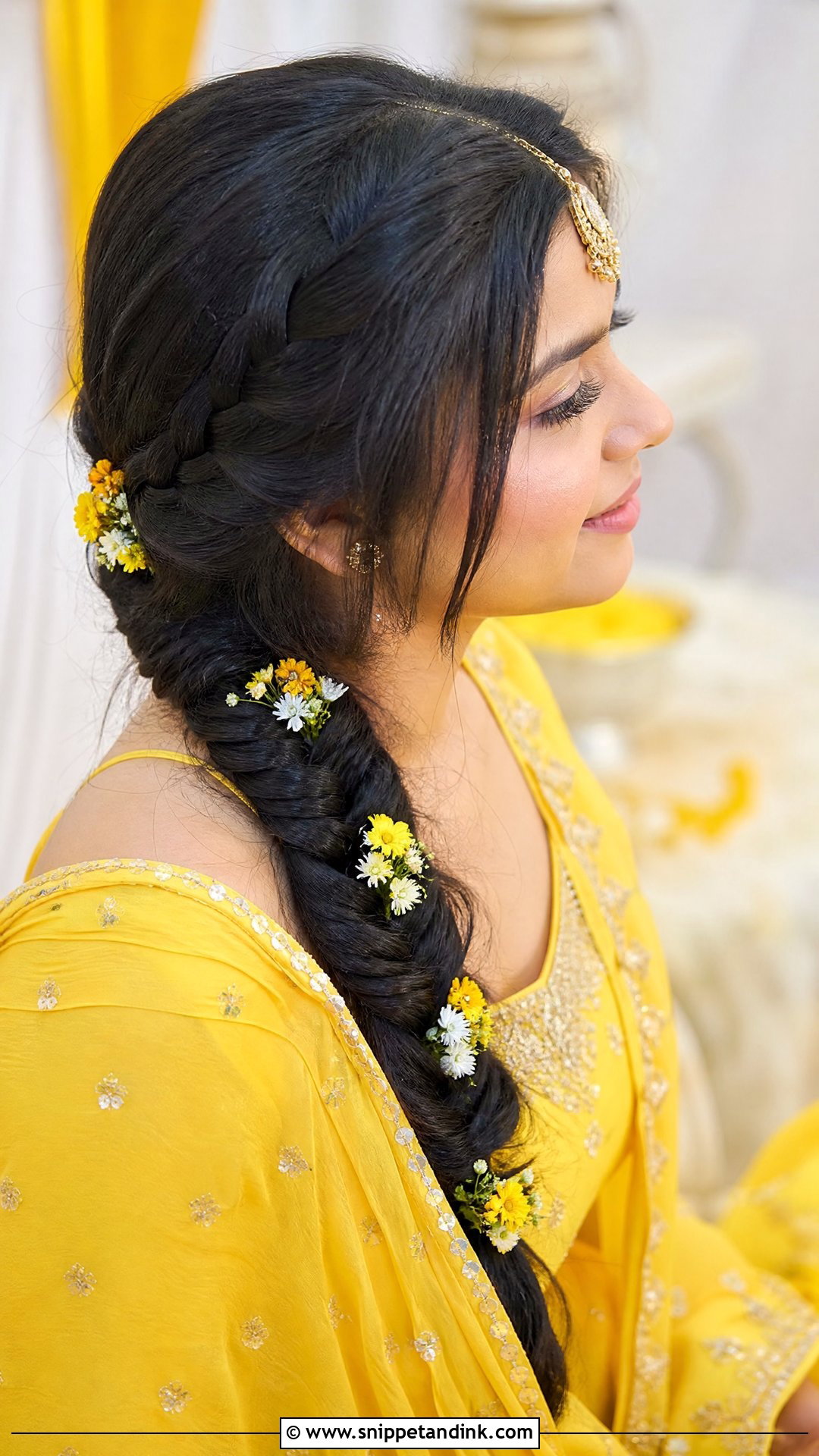
Because a Dutch braid is crossed under rather than over, it sits raised on top of the hair like a rope, and it grips the scalp along its whole length. That’s why it holds through hours of dancing. I start it at the crown and keep the tension even, then press small flower heads into each section. For a haldi outfit or a bright mehendi lehenga this is my safest choice. One thing to know: a tight Dutch braid along a sensitive scalp can ache by evening, so tell me at the trial if your head feels tender.
4. Pearl Embellished Braid
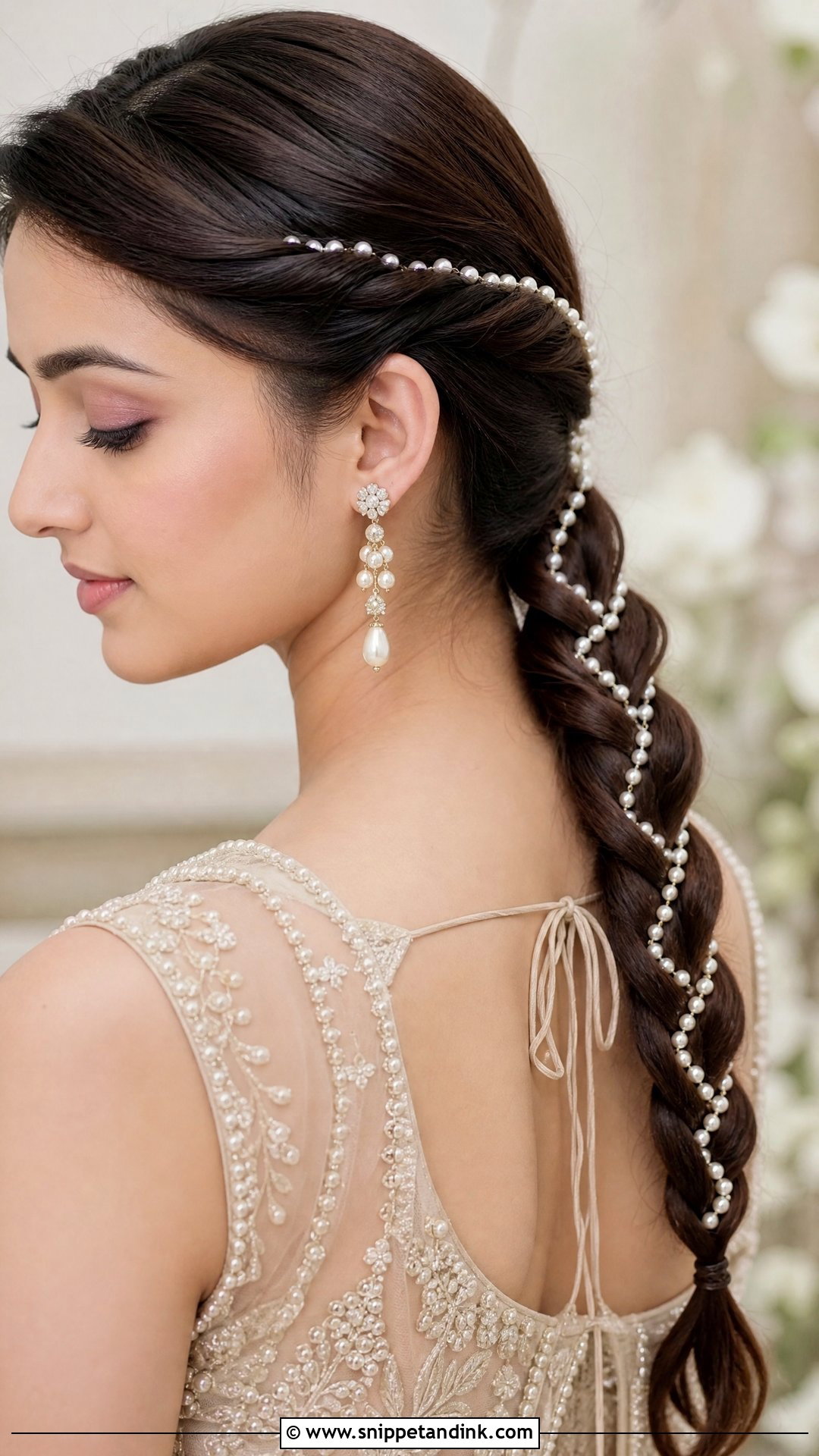
Pearls threaded through a braid give shine without much weight, which makes this the gentlest decorated braid on your scalp. I braid neatly first, then lay fine pearl strings along the plait and pin them at short intervals with tiny U-pins that disappear into the weave. Pinning only at the top and bottom lets the strands sag into loops by the reception. It suits a pastel lehenga or an ivory engagement outfit, with pearl drops at the ears.
5. Mermaid Braid with Butterflies
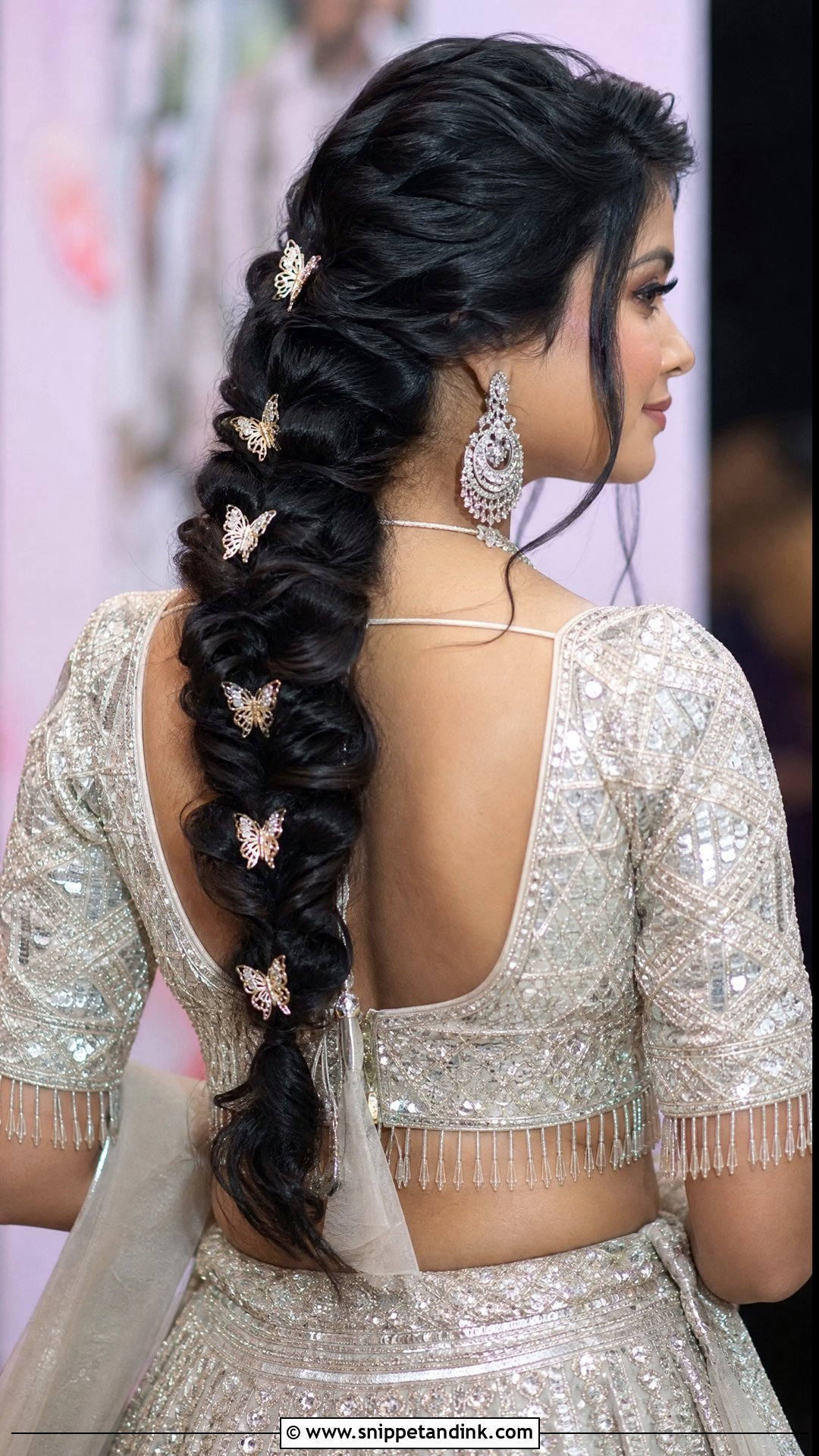
The mermaid braid is all volume: a thick, loosely woven plait pulled wide so it looks like it’s spilling down the back. Jeweled butterfly pins scattered through it catch light as you walk, which is why it works at receptions. Most brides need clip-in wefts underneath to get this fullness, and I’d be honest that very fine hair won’t reach it without them. Because it’s pulled loose, it’s also less secure than a tight plait, so keep it for an evening when you aren’t sitting through long rituals.
6. Side Swept Braid with Gajra
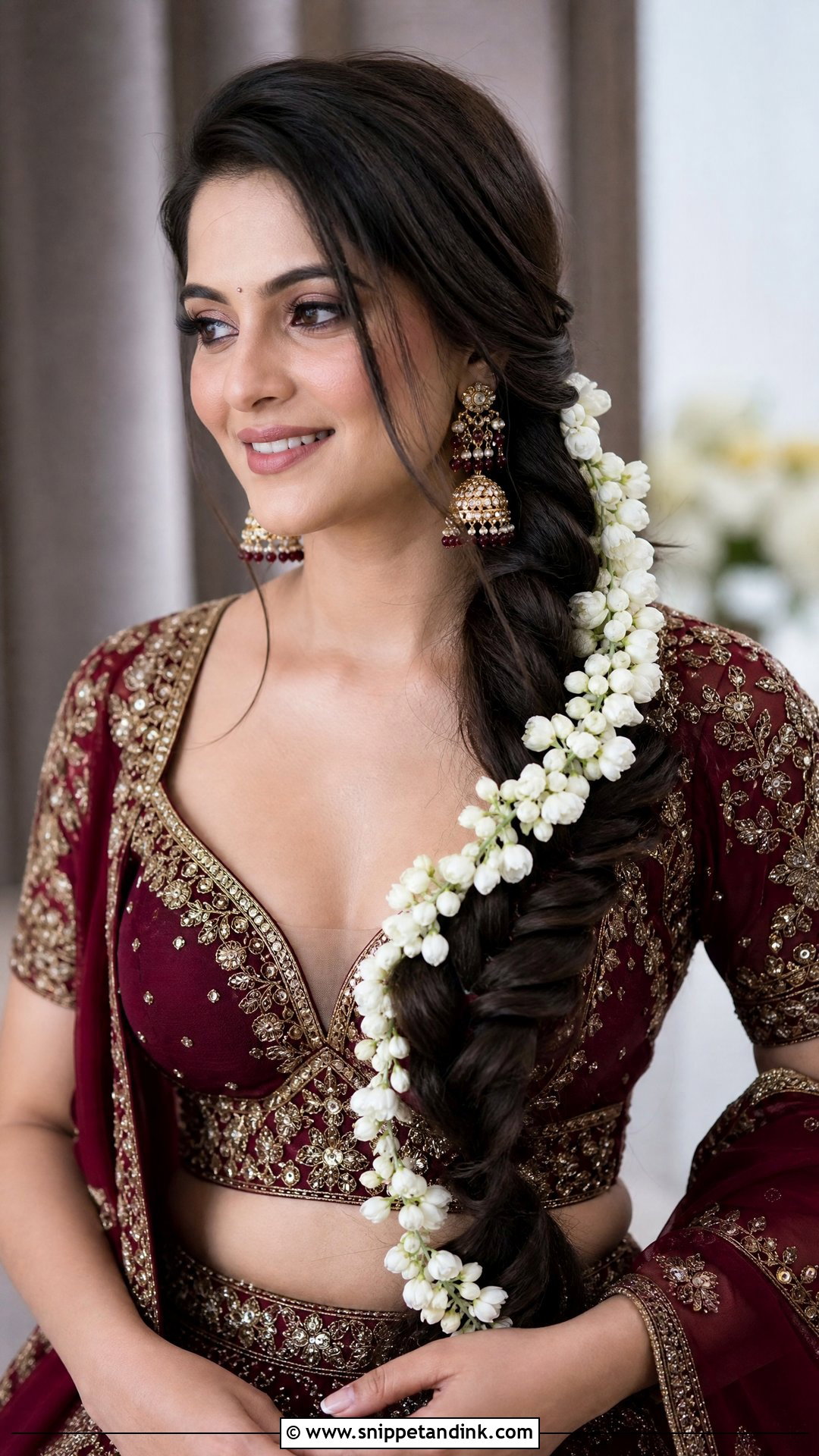
Draped over one shoulder with a mogra gajra wrapped at the base, this braid puts the flowers right where they’re seen and smelled. I gather the hair to one side, plait it loosely and let the gajra trail down the length. Pin the gajra into the braid itself, not into loose hair at the nape, or it slides as you turn your head. It suits sangeet or a reception with a heavy lehenga and jhumkas. The braid sits on the collarbone, so check it doesn’t catch on a beaded neckline.
7. Chand Choti Braid
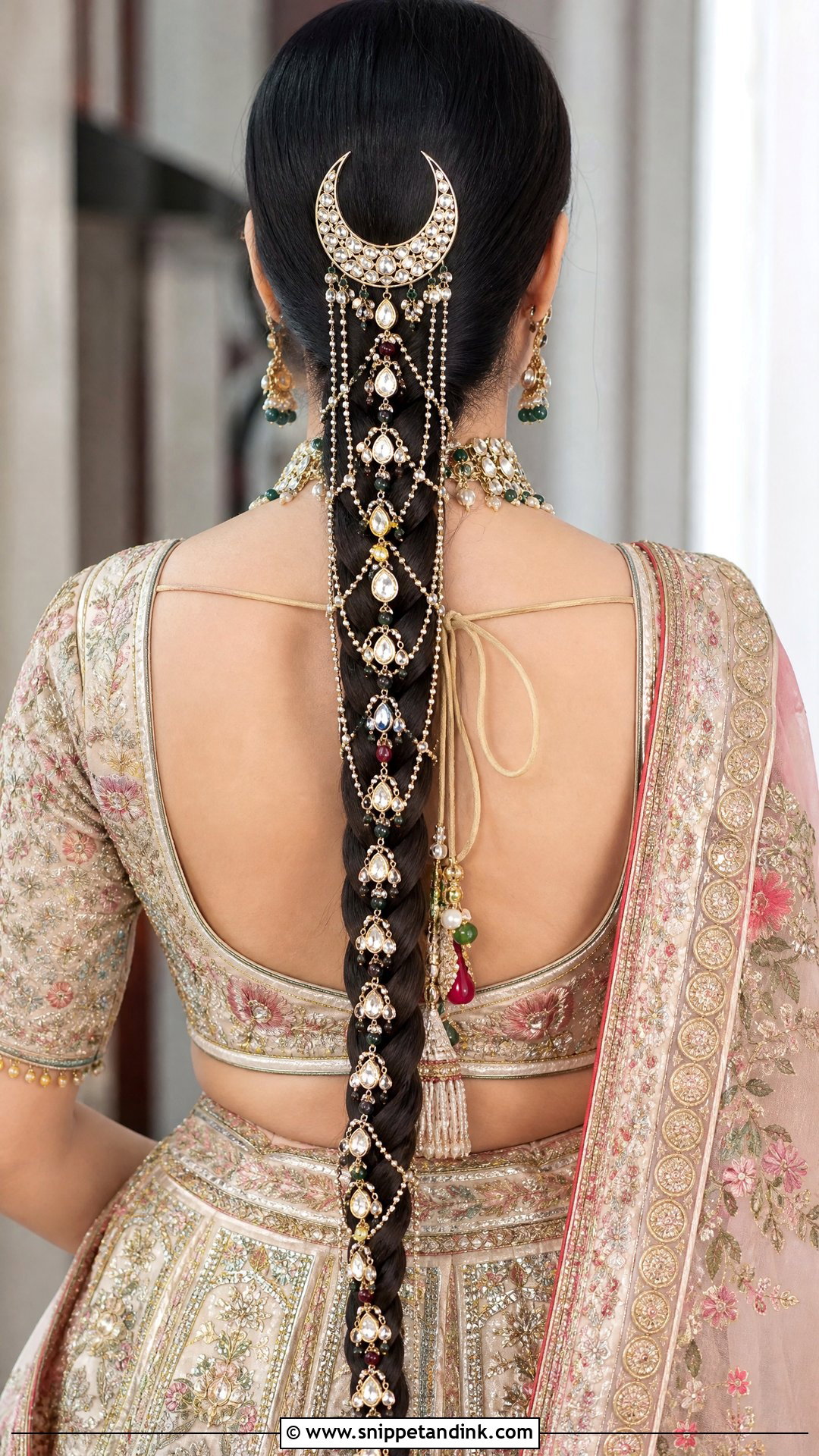
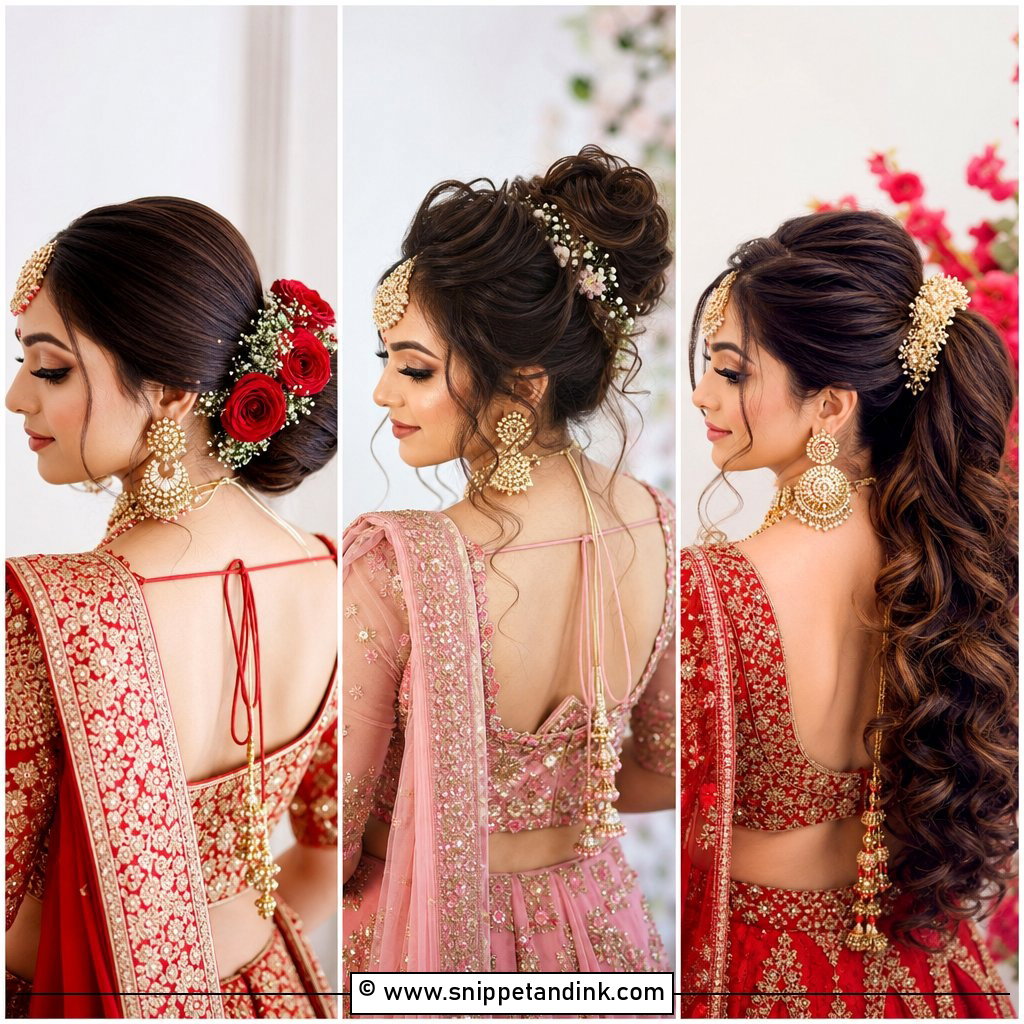
A chand choti uses a crescent-shaped ornament, the chand, fixed at the start of the braid near the crown, with matching jewels or chains carried down the plait. Metal pieces like these are weighty, and the chand needs a firm anchor. I braid a tight small section underneath where it sits and pin the ornament through that, so it can’t tilt. It goes with kundan or polki and a richly embroidered lehenga, and I’d keep it for the main ceremony when you’ll be photographed from behind as often as from the front.
8. Bubble Braid for Reception
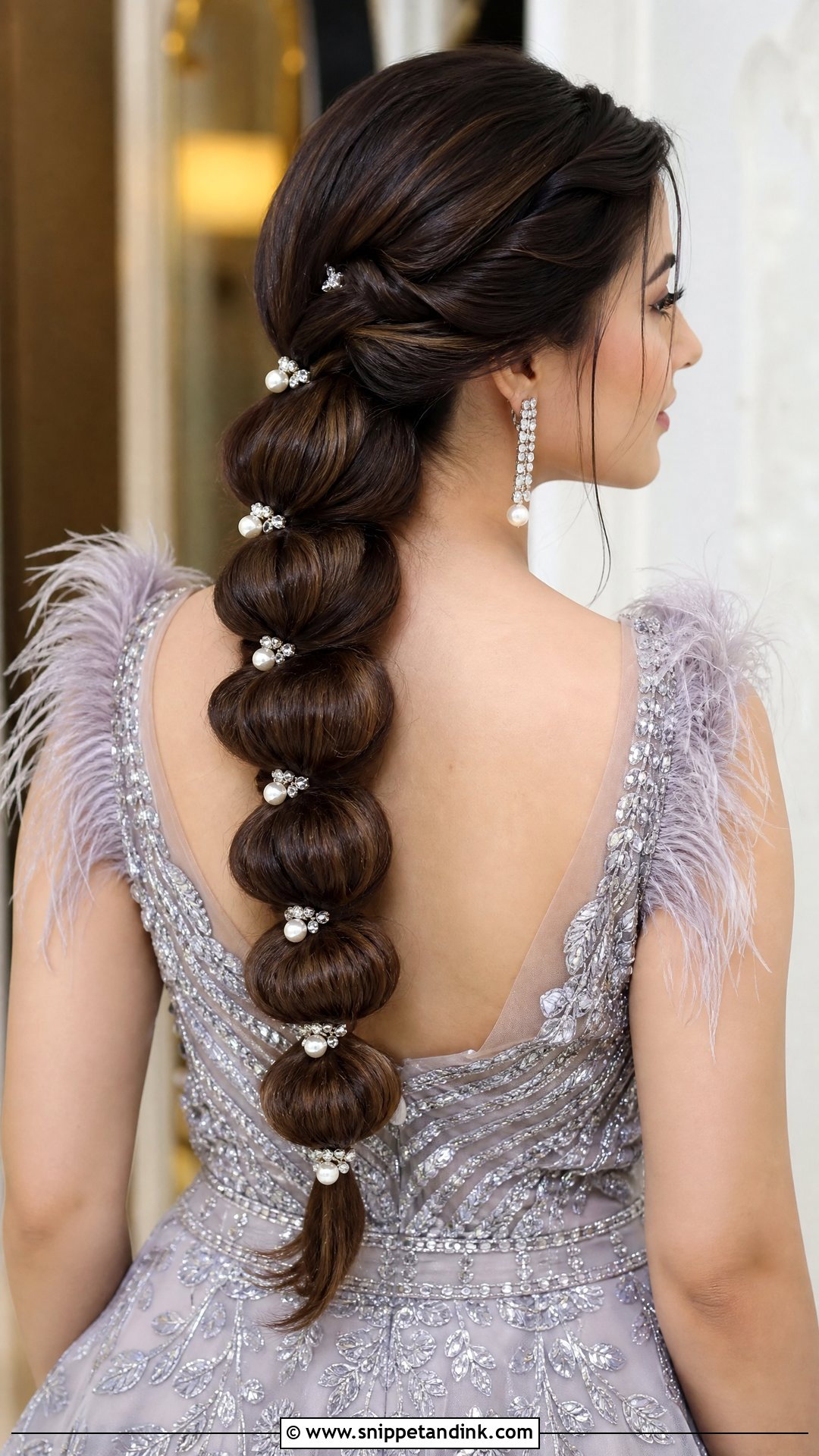
A bubble braid isn’t really a braid. It’s a ponytail sectioned with small elastics every few inches, each section gently pulled out into a rounded bubble. That makes it quick to build and very secure, which I appreciate on a reception schedule. Pearls or small jewels pinned between the bubbles make it festive. It suits a gown or a contemporary lehenga. Fine hair can show gaps when the bubbles are stretched, so I keep them smaller on thinner hair.
9. French Braid with Maang Tikka
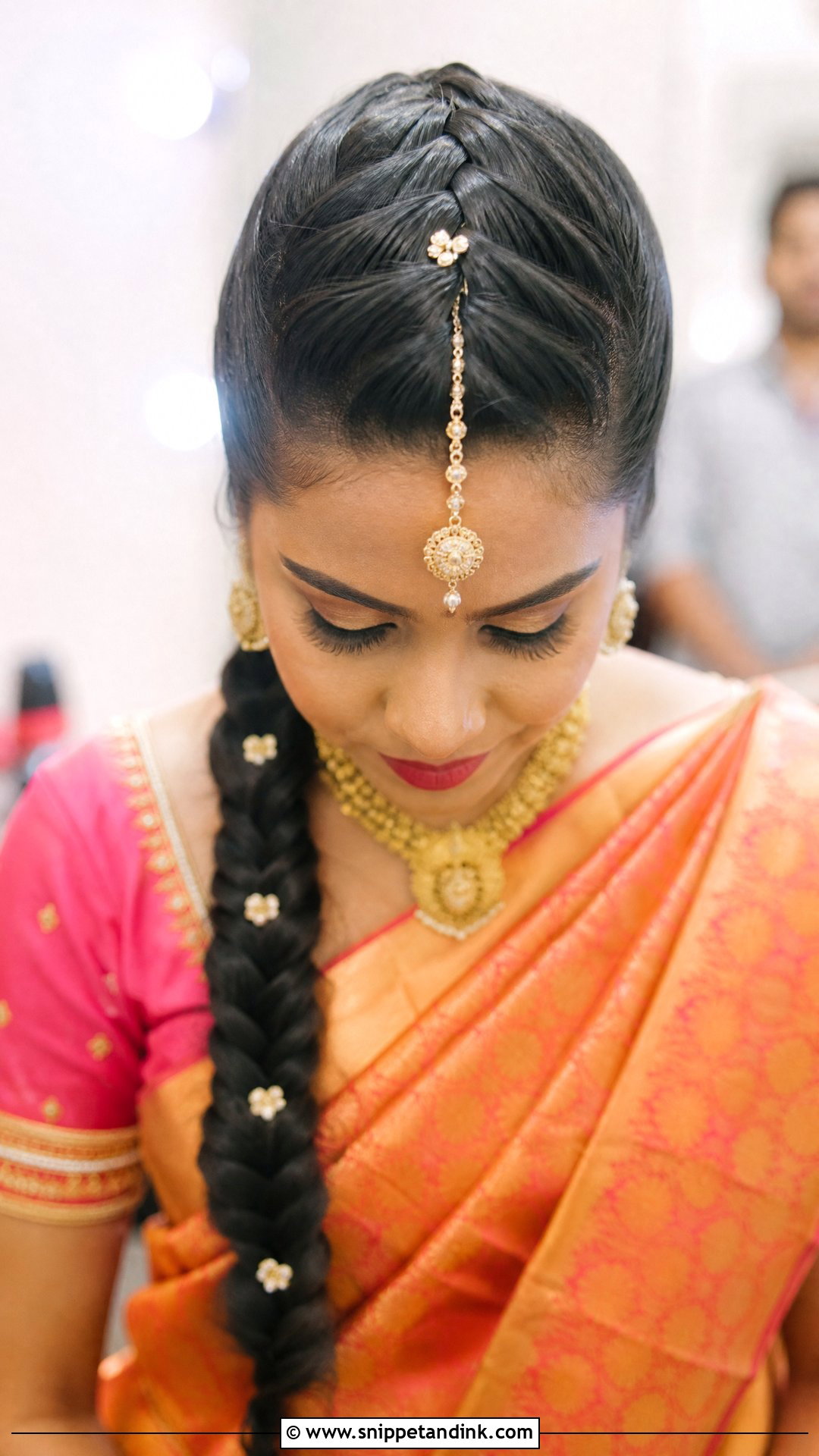
Starting at the hairline, a French braid keeps every strand in place for hours, which makes it my default for daytime pre-wedding rituals. I part cleanly at the center so a maang tikka can sit there, braid with steady tension and pin small jewels along the plait once it’s done. It frames the face without hiding the ears. With traditional gold jewelry and a bright silk outfit it looks neat and complete. If your hairline has short baby hairs, a light gel keeps them from frizzing out of the braid in heat.
10. Rose Twist Braid
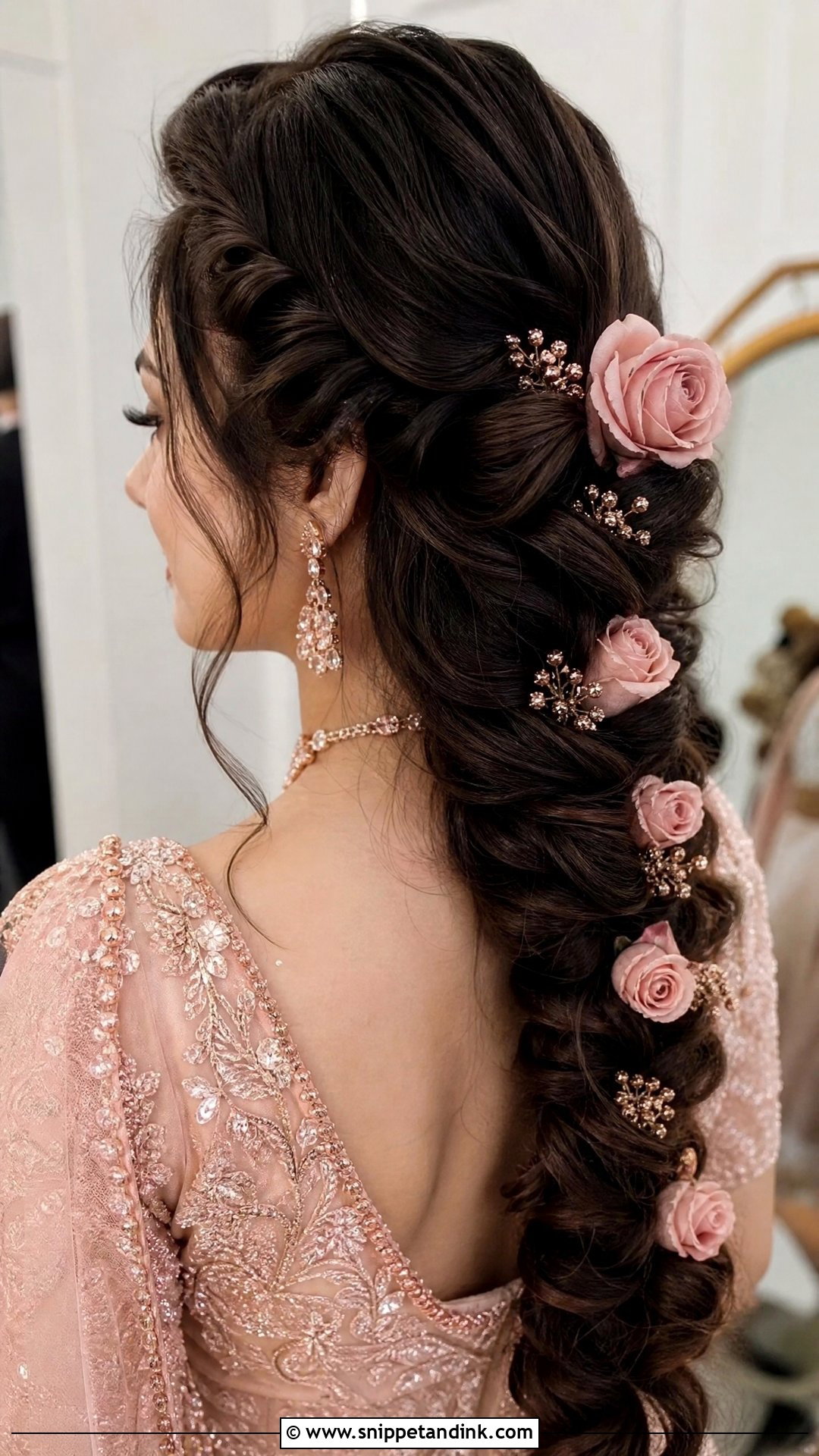
Rose twists are small sections twisted, coiled and pinned so they look like petals along the back of the head. They need hair with some texture; very silky hair unwinds unless I prep it with a texture spray first. A few real or fabric roses tucked between the twists reinforce the idea. This one is delicate, so I’d save it for an engagement or a smaller ceremony with a blush or peach outfit, and rose gold jewelry.
11. Thick Long Braid with Parandi
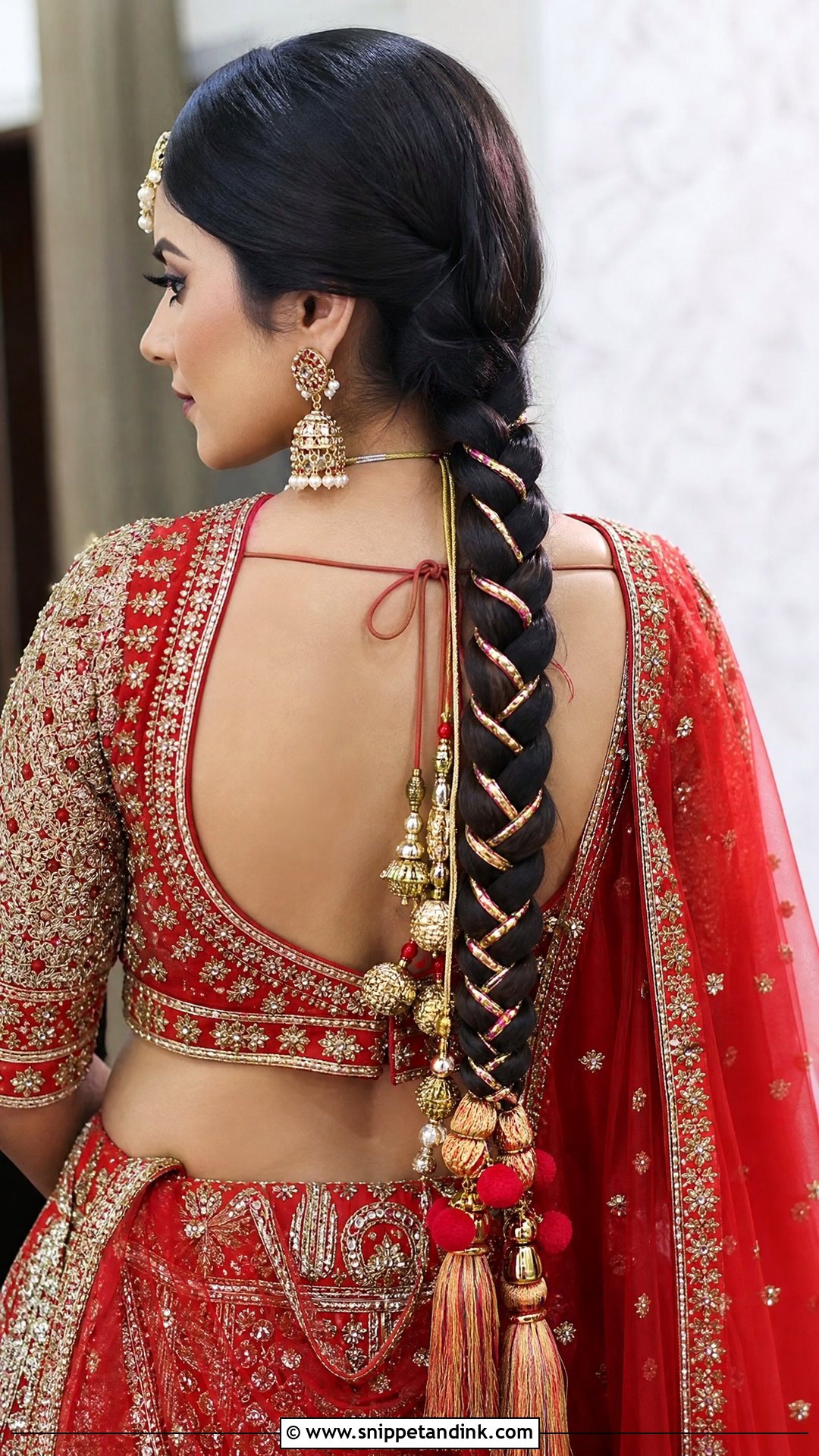
A parandi is woven from colored threads and finished with tassels, and in Punjabi and North Indian weddings it’s tied into the braid as part of the look. I plait the hair tightly and weave the parandi in from about a third of the way down, so the tassels trail past the end and add length. It adds weight at the bottom, which actually helps a braid hang straight. Pair it with a heavily embroidered lehenga and chunky jewelry. Pick a parandi with colors pulled from the outfit, rather than one that only matches the dupatta.
12. Half Up Half Down Braid
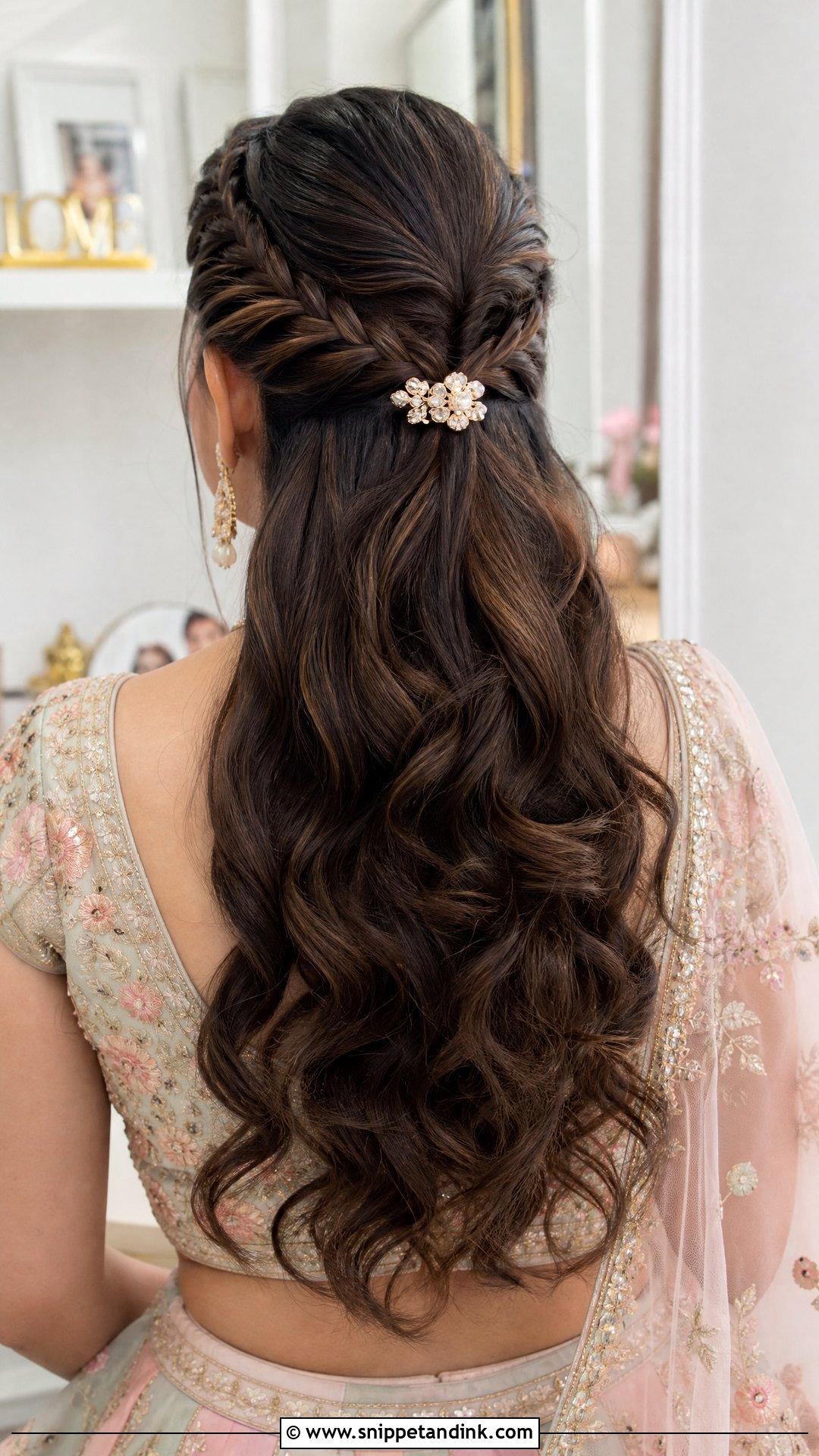
Half up with a braid gives you detail at the crown and movement below. I braid the top section back, pin it where it meets the loose hair, then wave the lengths. A jeweled clip or a few flowers hide that join. It’s comfortable for sangeet and reception, and it keeps hair off the face without tying everything back. The waves are the weak point on straight hair; I set them with pins while they cool so they last into the evening.
13. Crown Braid for Bride
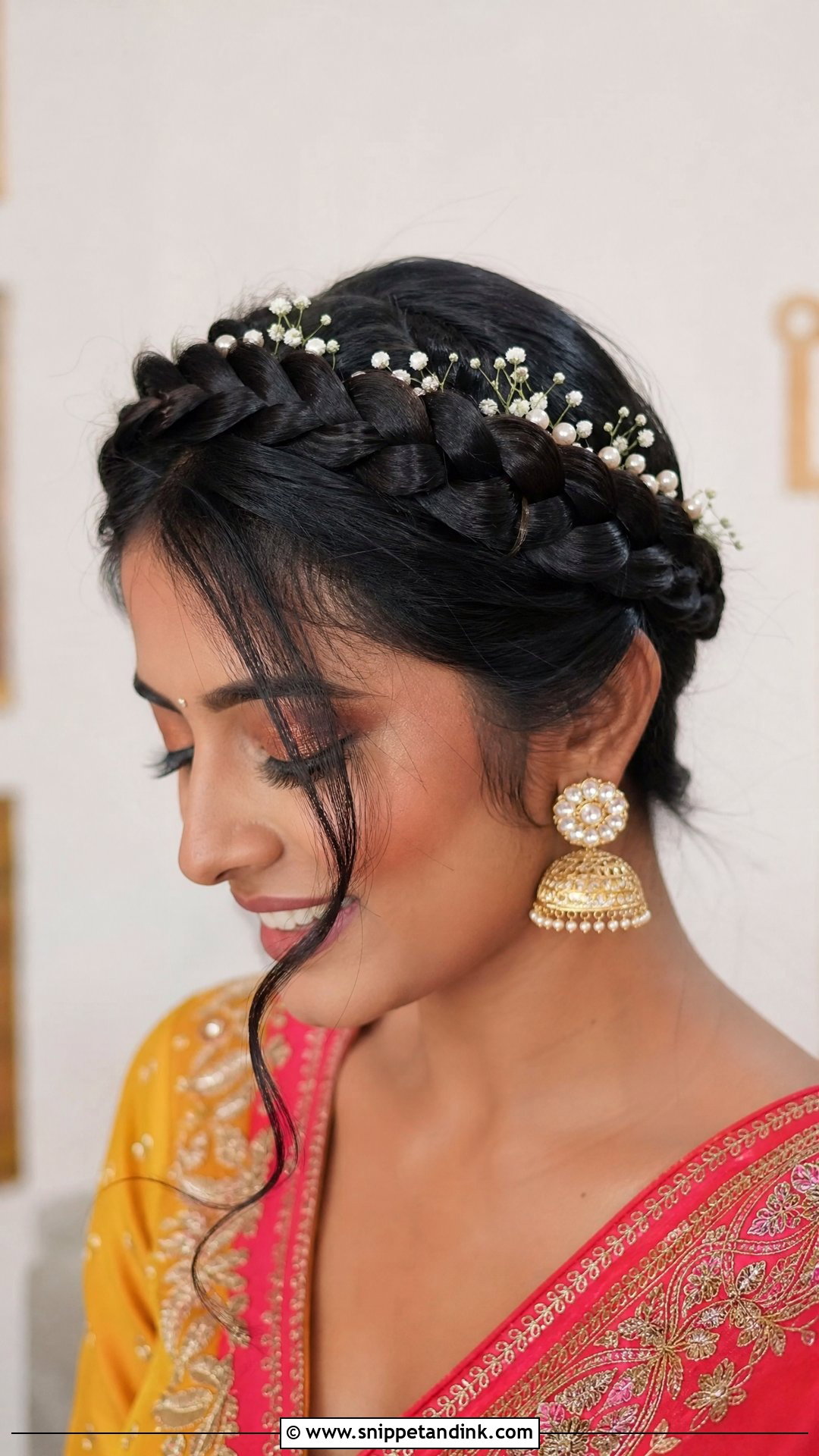
A crown braid circles the head and keeps everything off the neck, which matters at a daytime temple ceremony in the heat. I braid from behind one ear across the top and back around, pinning it flat as I go, then tuck tiny flowers or pearls into it. Hair needs to be at least shoulder length to reach all the way round. It suits statement jhumkas and a bright traditional outfit, and it’s one of the most comfortable braids to sit in for hours.
14. Waterfall Braid with Loose Curls
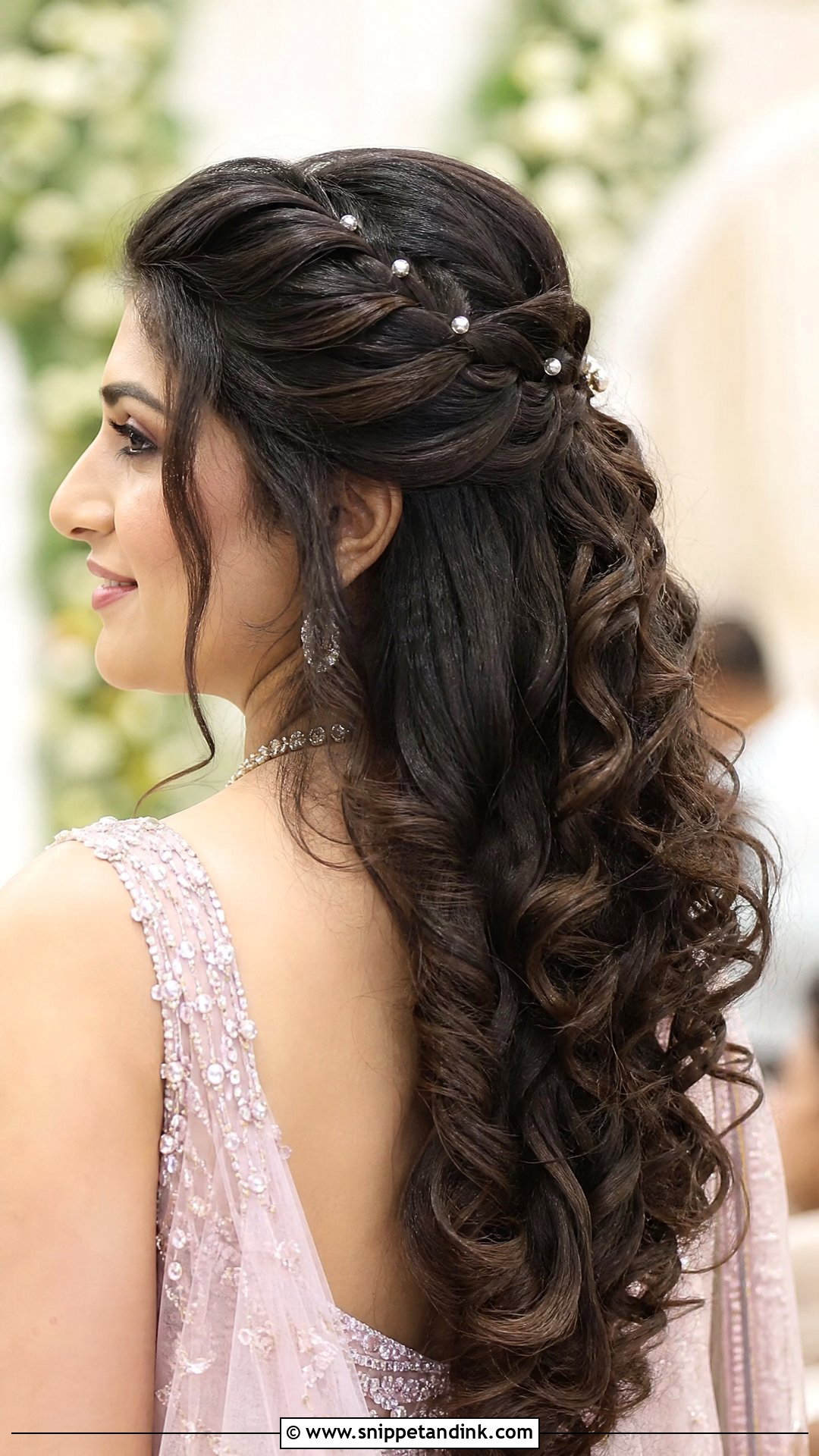
Waterfall braids weave across the head while dropping one strand at each pass, so the hair below falls through in loose curls. It’s a light, romantic look for an engagement party with a pastel gown or a light lehenga. Be aware that the curls carry this style. If your hair doesn’t hold a curl, the dropped strands go flat and the braid loses its shape, so I’d test it at the trial and pin-set the curls.
15. Boho Braid with Baby’s Breath
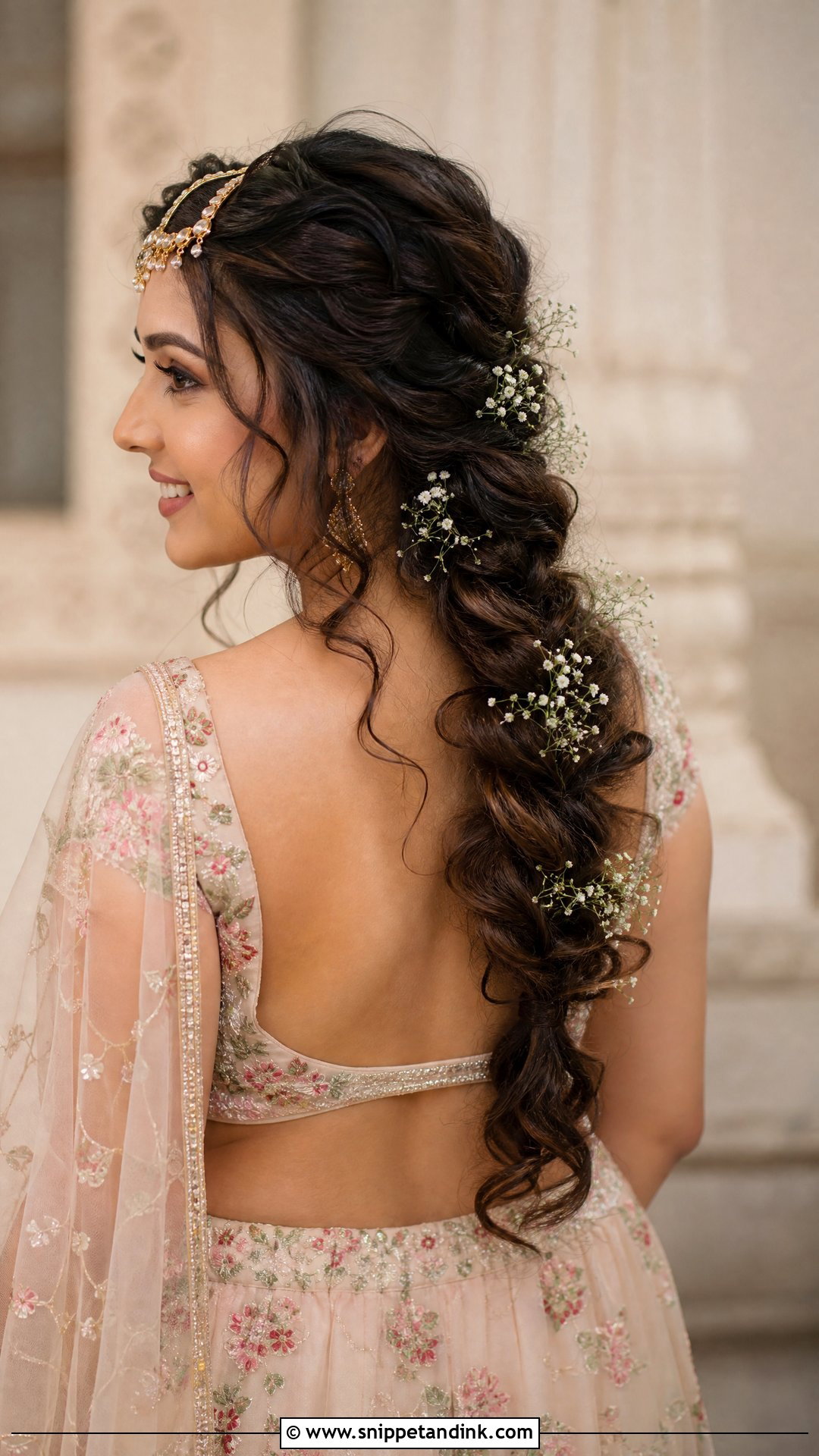
A boho braid is loose and a little undone, with soft strands left around the face and baby’s breath scattered through it. It suits outdoor and daytime functions, especially mehendi and haldi celebrations, with a floral lehenga or pastel saree. A delicate matha patti adds a touch of tradition. Undone doesn’t mean unpinned, though. I braid it firmly first, then loosen it by hand, so it holds its shape when you’re hugged a hundred times.
16. Floral Bun Braid Combo
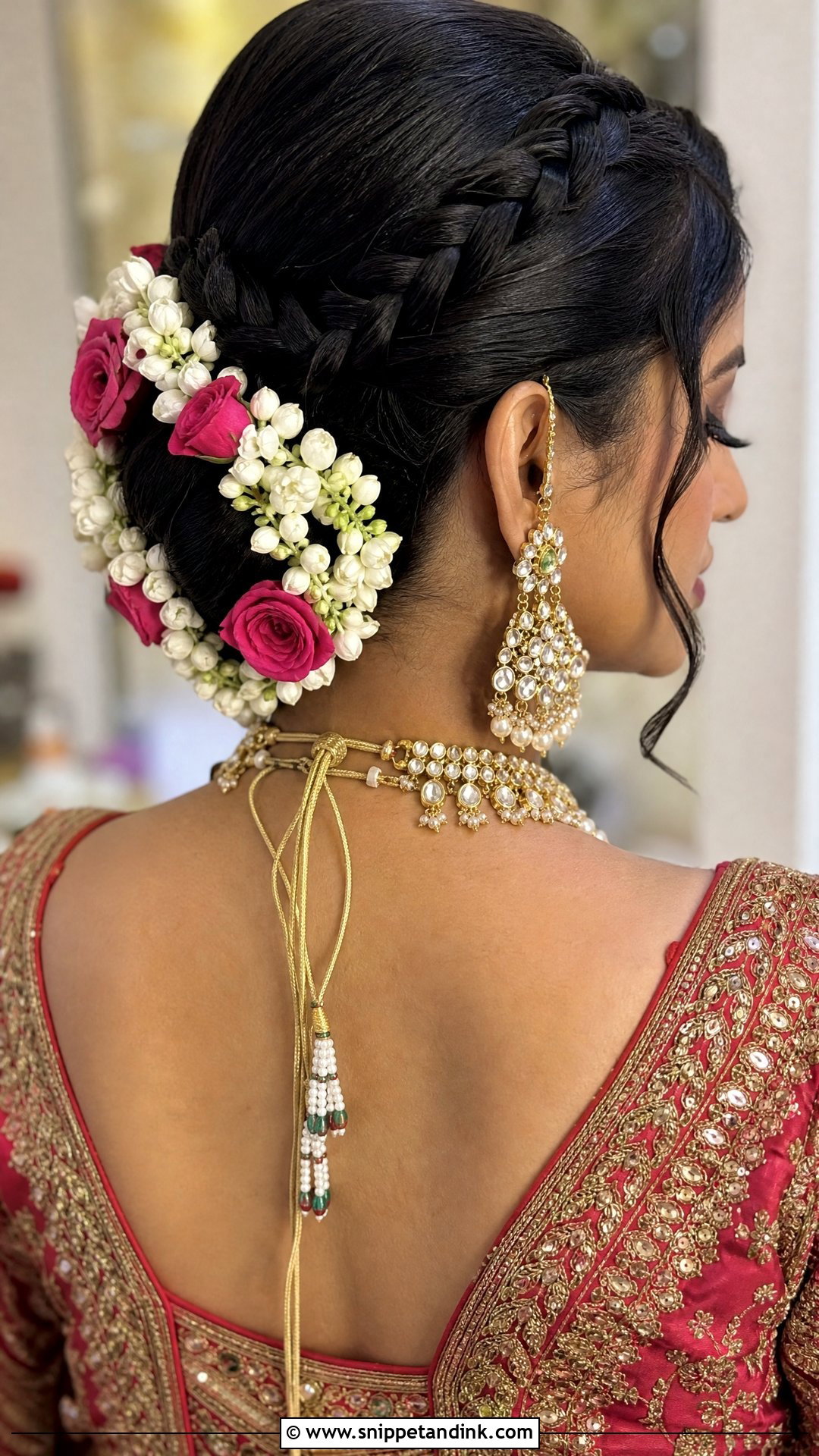
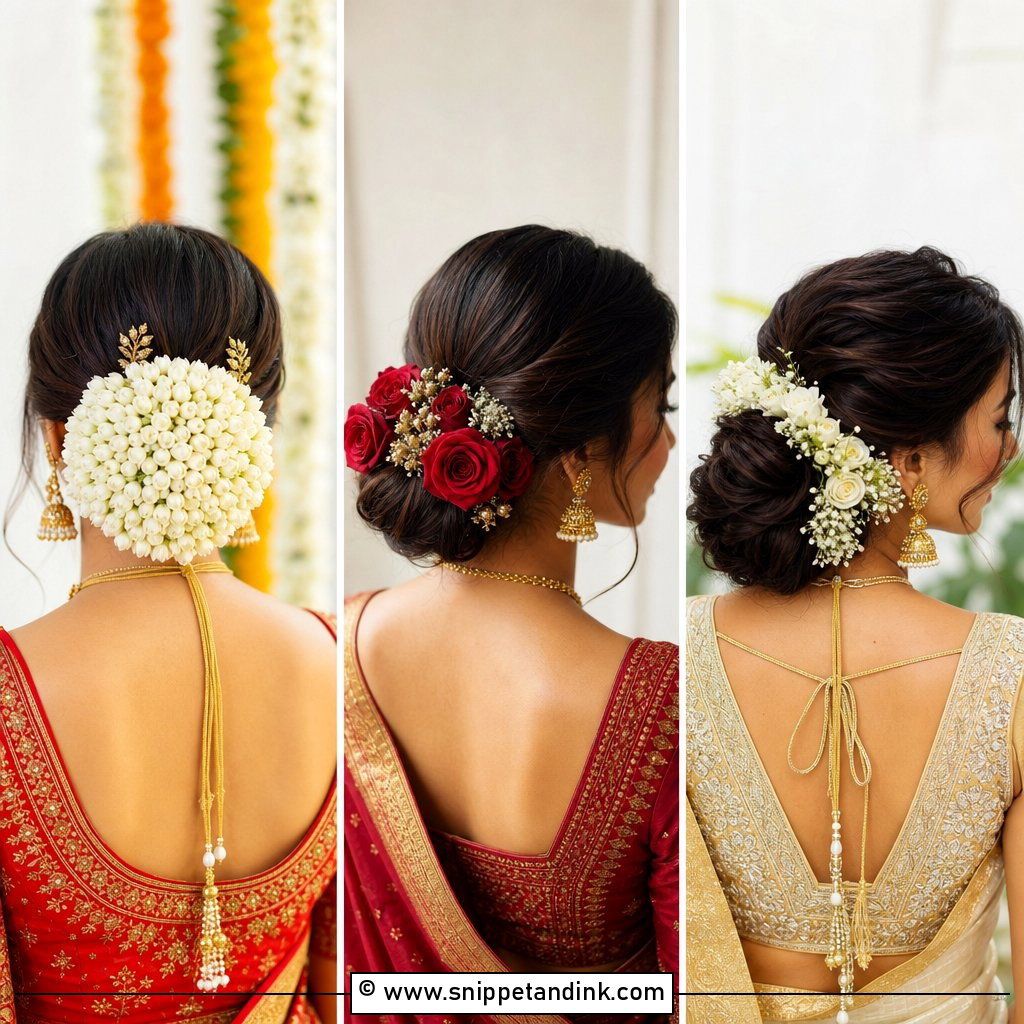
A braid that leads into a floral bun gives you detail on the way up and security at the back. I braid one or two sections from the front or side and wrap them into a full bun, then cover it in roses or jasmine. The bun holds a dupatta or heavy kundan pieces without strain, so this works for the main ceremony as well as a reception. Fresh flowers add surprising weight; I pin them into the bun’s base, never just into its surface.
17. Fishtail Braid with Matha Patti
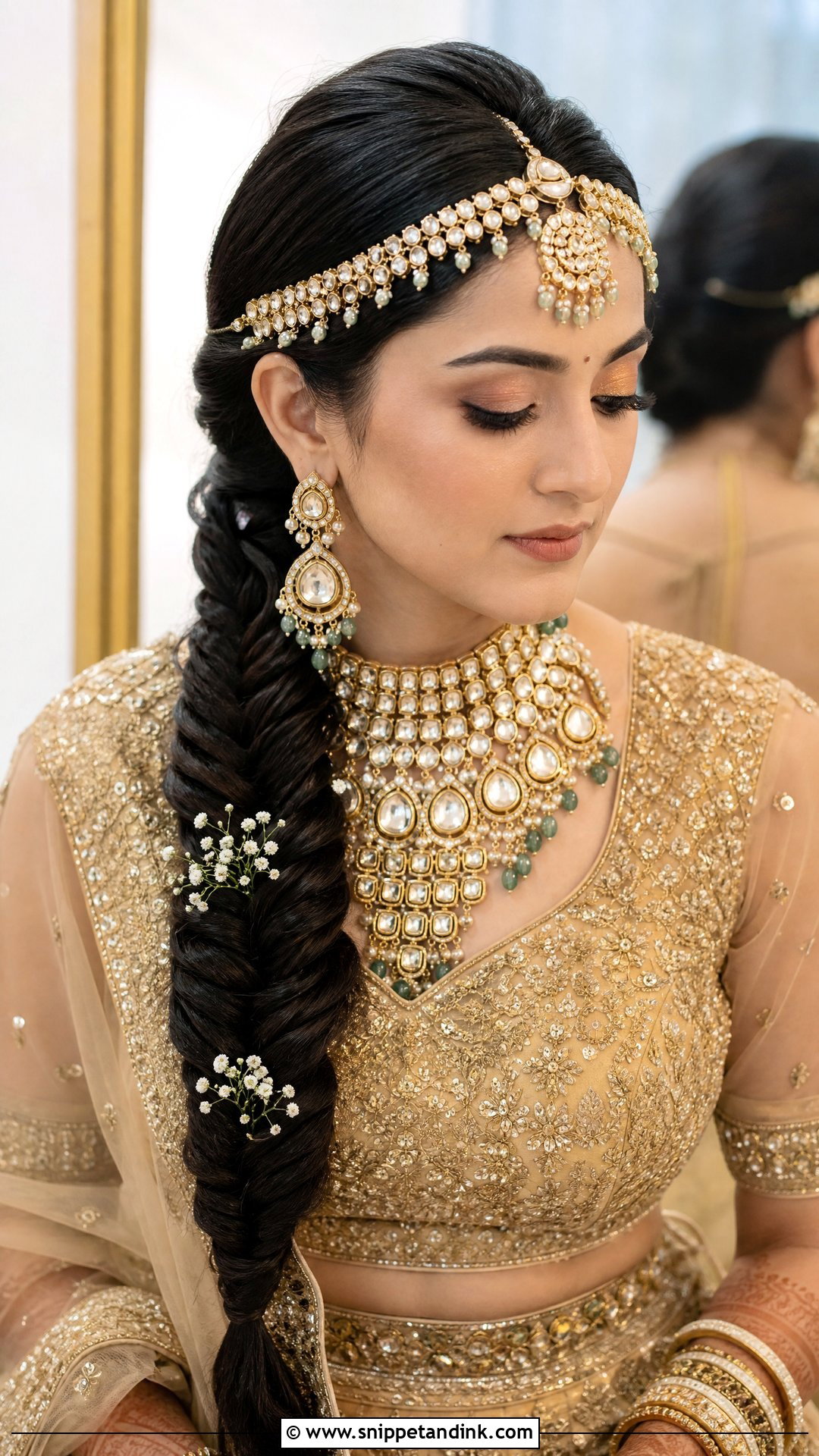
A matha patti across the forehead and part, with a fishtail braid running down the back, gives the look weight at the front and detail behind. I set the matha patti on a pinned base along the part first, then braid, so the plait doesn’t pull the headpiece back as it tightens. Small jewels along the braid tie the two together. It suits polki jewelry and a heavy lehenga for the ceremony or reception. A fishtail is less firm than a classic plait, so I keep it snug at the nape.
18. Multi Braid Combination
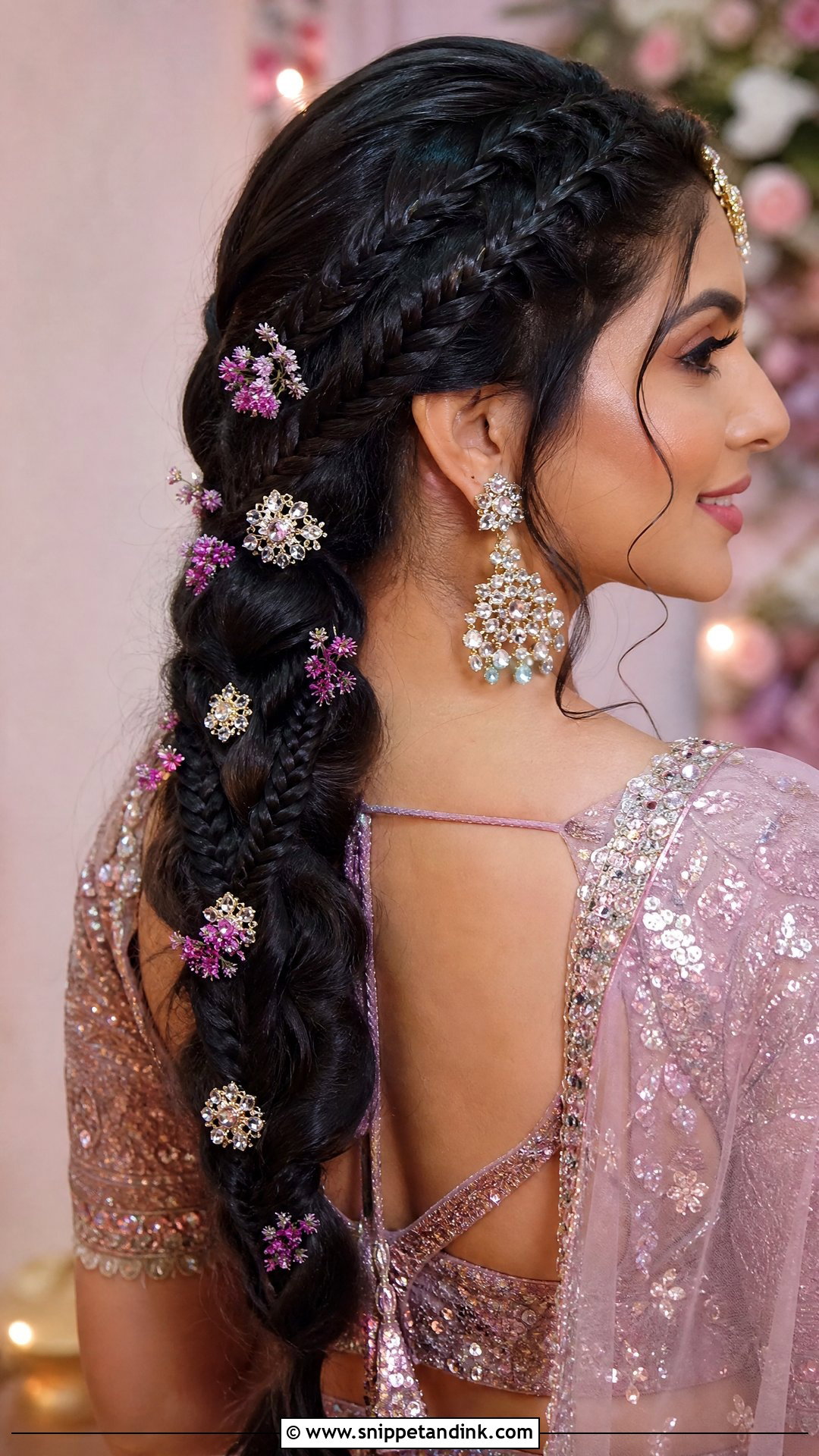
Three mini fishtails braided alongside one thick main plait give a layered, detailed finish that’s very much a statement. It takes time, easily one of the longest builds here, so it needs a realistic slot in the getting-ready schedule. The smaller braids work best on thick hair; fine hair split four ways can look thin. Flowers or jewels tucked throughout pull it together for a sangeet or the main ceremony.
19. Diamond Accented Open Braid
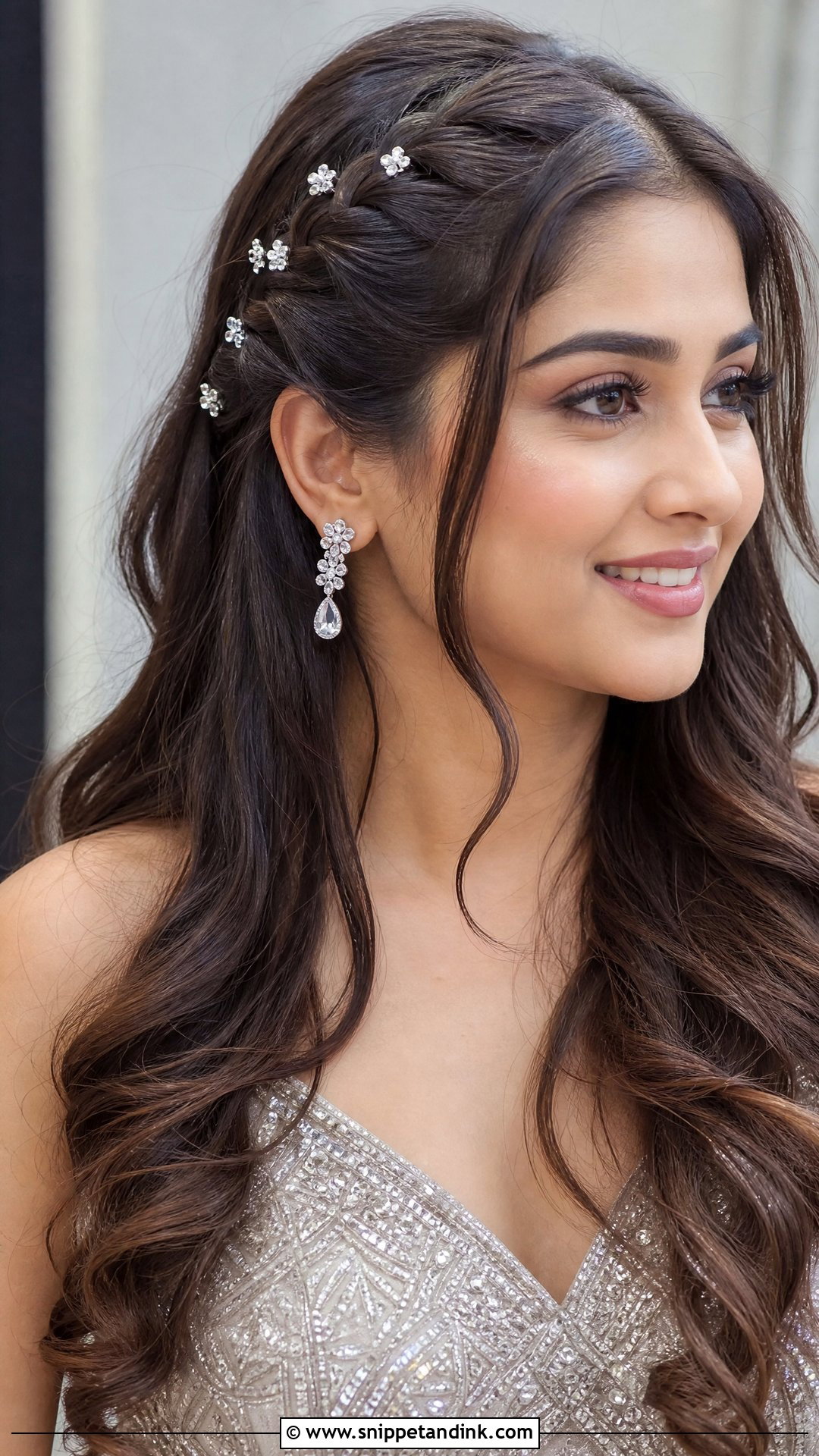
An open braid runs along one side while the rest of the hair stays loose, dotted with tiny diamond or crystal pins that catch light as you move. It’s a reception look for a gown or a shimmery lehenga, with diamond drops at the ears. The loose hair is the part that changes over the night, so I’d add root lift and a flexible spray. Crystal pins can scratch the scalp if they’re pushed in too deep; set them into the braid itself.


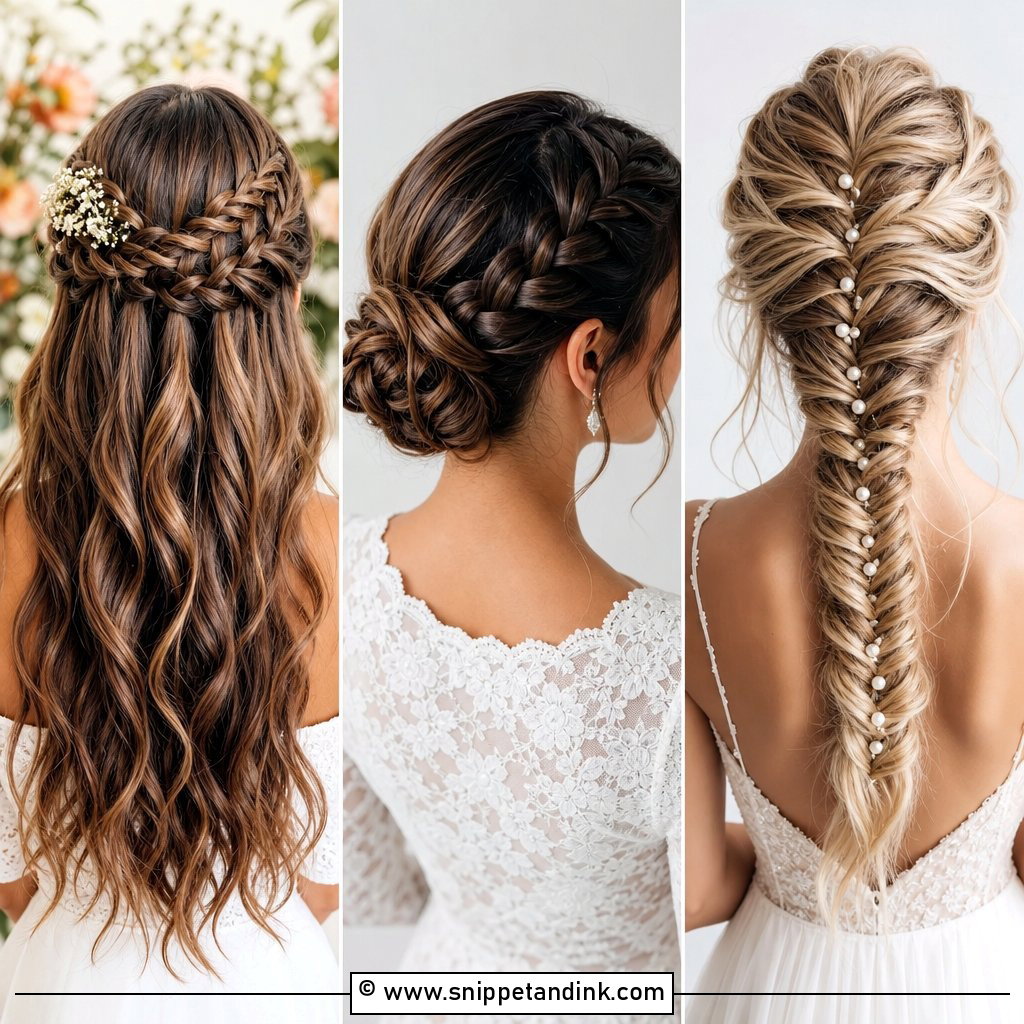
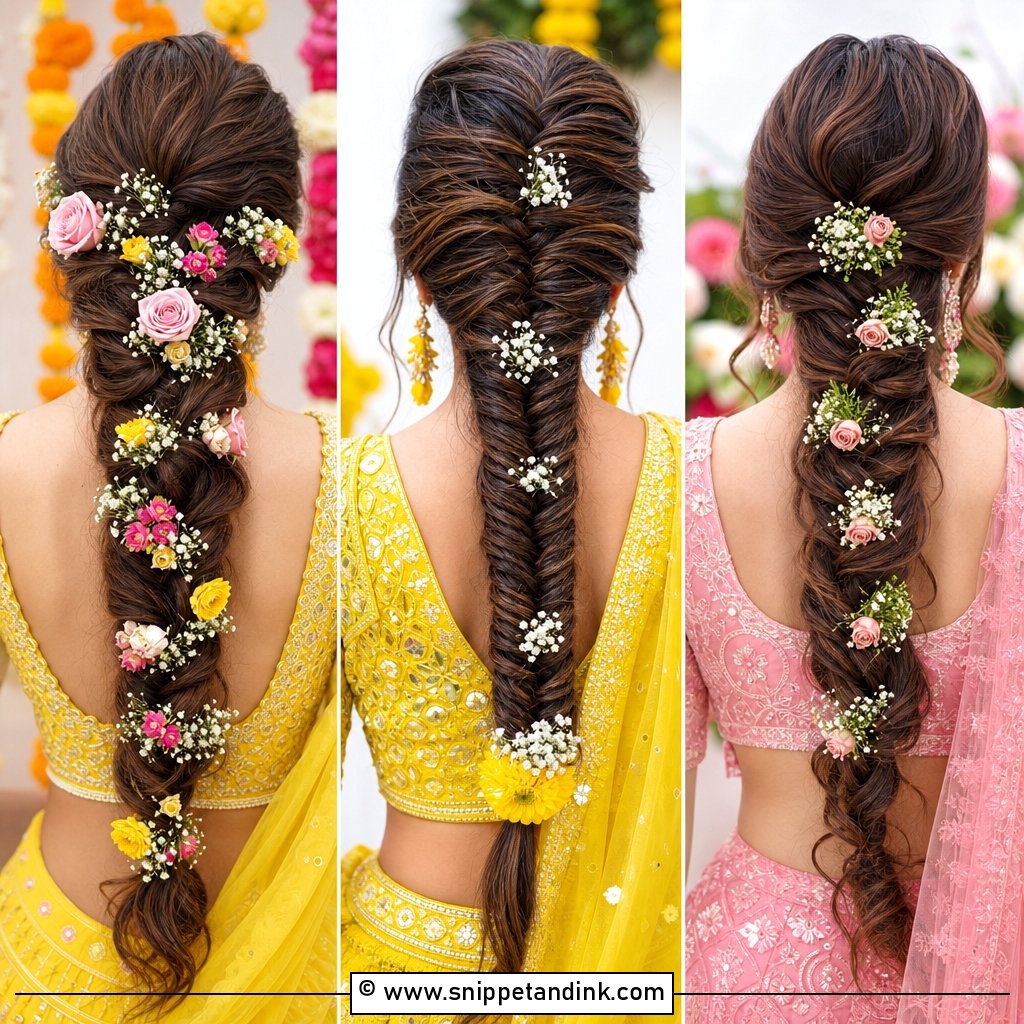
20. Marigold Braid for Haldi
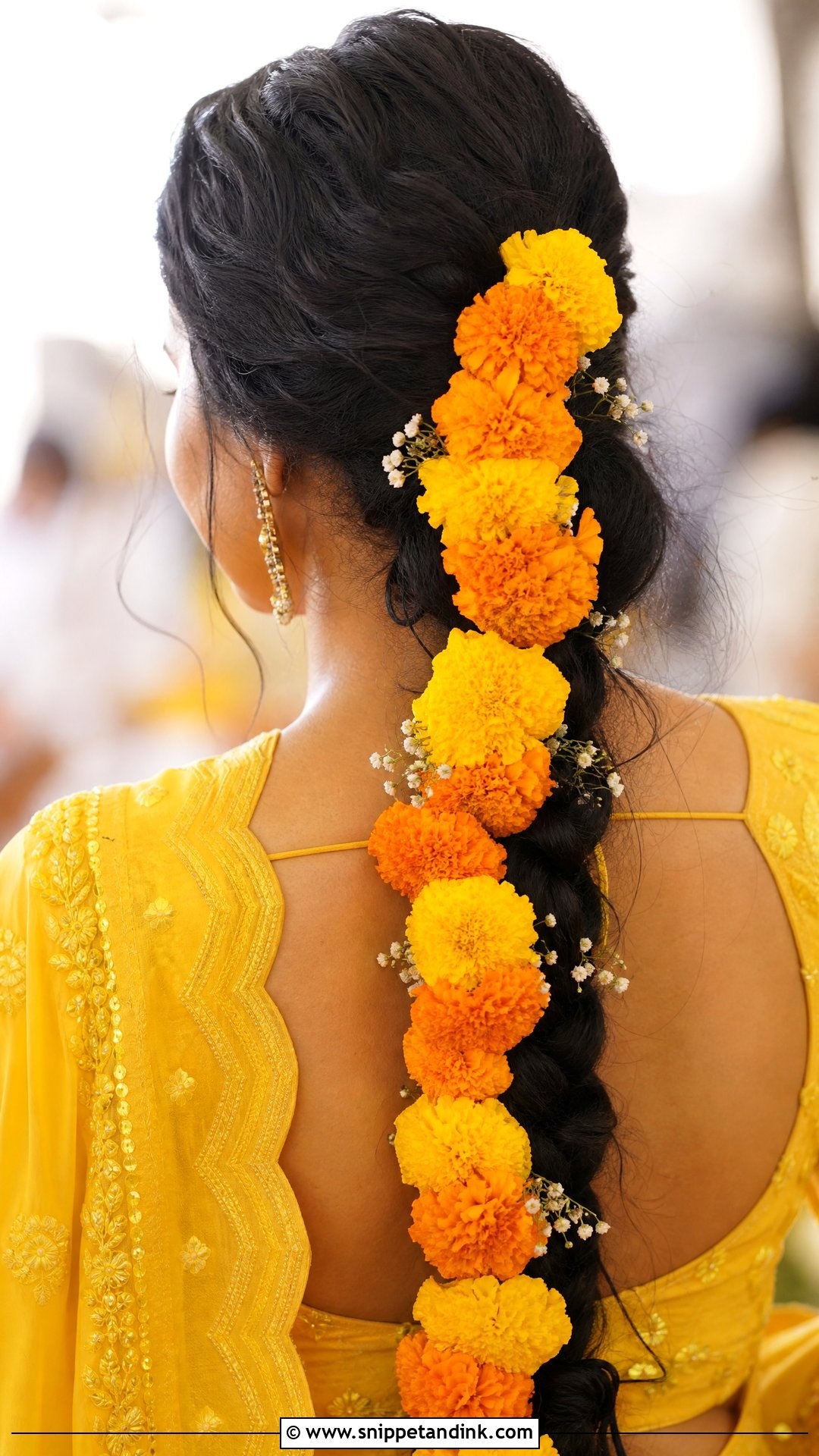
Marigolds belong to the haldi. The flowers are bright and tough, and they survive turmeric paste and splashing far better than delicate blooms would. I weave them along a loose braid from top to bottom. It goes with a yellow or orange haldi outfit. A practical note: haldi paste stains light hair and stains flowers, so wear a braid you’re happy to wash out straight after, and don’t use expensive extensions for this function.
Extensions Hidden Inside a Jada or Parandi
Plenty of the long, thick braids in bridal photos have help inside them. A braid extension or clip-in wefts woven into the plait are completely normal for a jada or a mermaid braid, and I’d much rather use them than strain thin hair into a style it can’t hold.
Match the extension to your hair in natural light, and order it early enough to try at your trial. Human hair blends best and can be curled; synthetic is cheaper and fine inside a tight braid, though it reflects flash differently. Wear it once before the wedding to see how the weight feels after a few hours. And plan the takedown: decorated braids take a while to unpick, so ask someone patient to help you that night.
One Braid per Function, Planned Around Your Jewelry
A braid can carry your whole wedding week, from the jada at the muhurtham to a chand choti for the main ceremony and a bubble braid at the reception. Think about weight, seating and how long you’ll wear it as much as the photos. Show your stylist two or three braids you like, along with the jewelry you’re planning, and decide at the trial which function each one goes to.
You'll Like These Ideas:







Leave a Reply