
A bun is the style I’m asked for most, and the reason is practical: it keeps hair off your neck and out of your face through the hugs, the heat and the dancing, and it gives a veil something solid to hold onto. What people underestimate is how much range sits inside that one word. Below are 25 versions, from a tight nape knot to a loose braided crown, and for each one I’ve noted what it asks of your hair and where it tends to struggle, so you can bring a realistic shortlist to your trial.
Where the Knot Sits Matters More Than Which Bun You Pick
Before you fall for a particular style, decide on height. Where the bun sits on your head decides which necklines it flatters, where the veil can go and how comfortable you’ll be at eleven at night. When a bride shows me a photo, the first thing I do is work out where that knot sits on the model, because that usually explains why she loves it.
- At the nape: the most secure place for a veil comb and easy with strapless or V-necks. It can sit on top of a high lace collar or a row of back buttons, though, and hide the detail you paid for.
- Mid-back of the head: the most forgiving height. It clears almost every neckline, and a veil can go above or below it.
- At the crown: lengthens the neck and suits halters and high necks. It’s the heaviest to wear and the hardest to rest your head against in the car or at dinner.
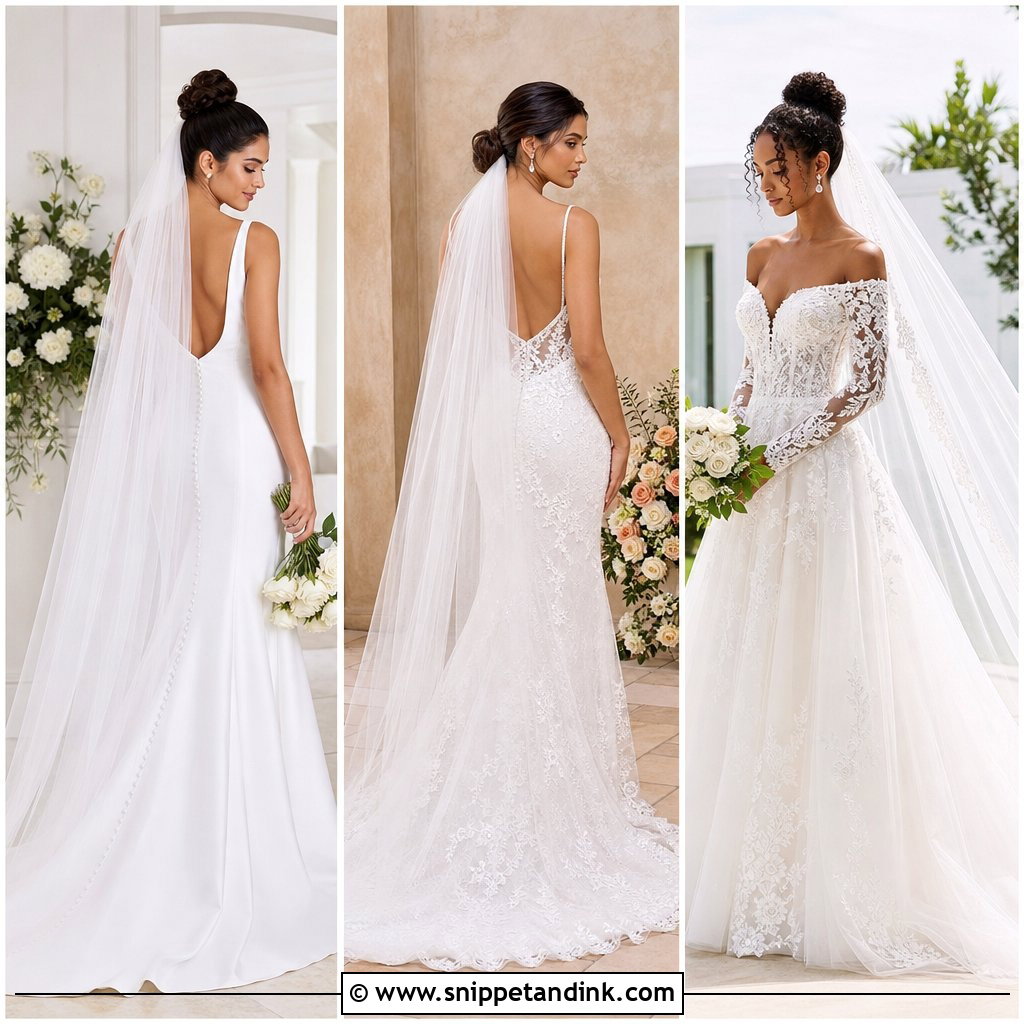
Look at photos of your dress from behind. Guests spend the whole ceremony looking at the back of your head, so the bun and the back of the gown need to work as one picture.
1. Sleek Low Bun Wedding Hairstyle
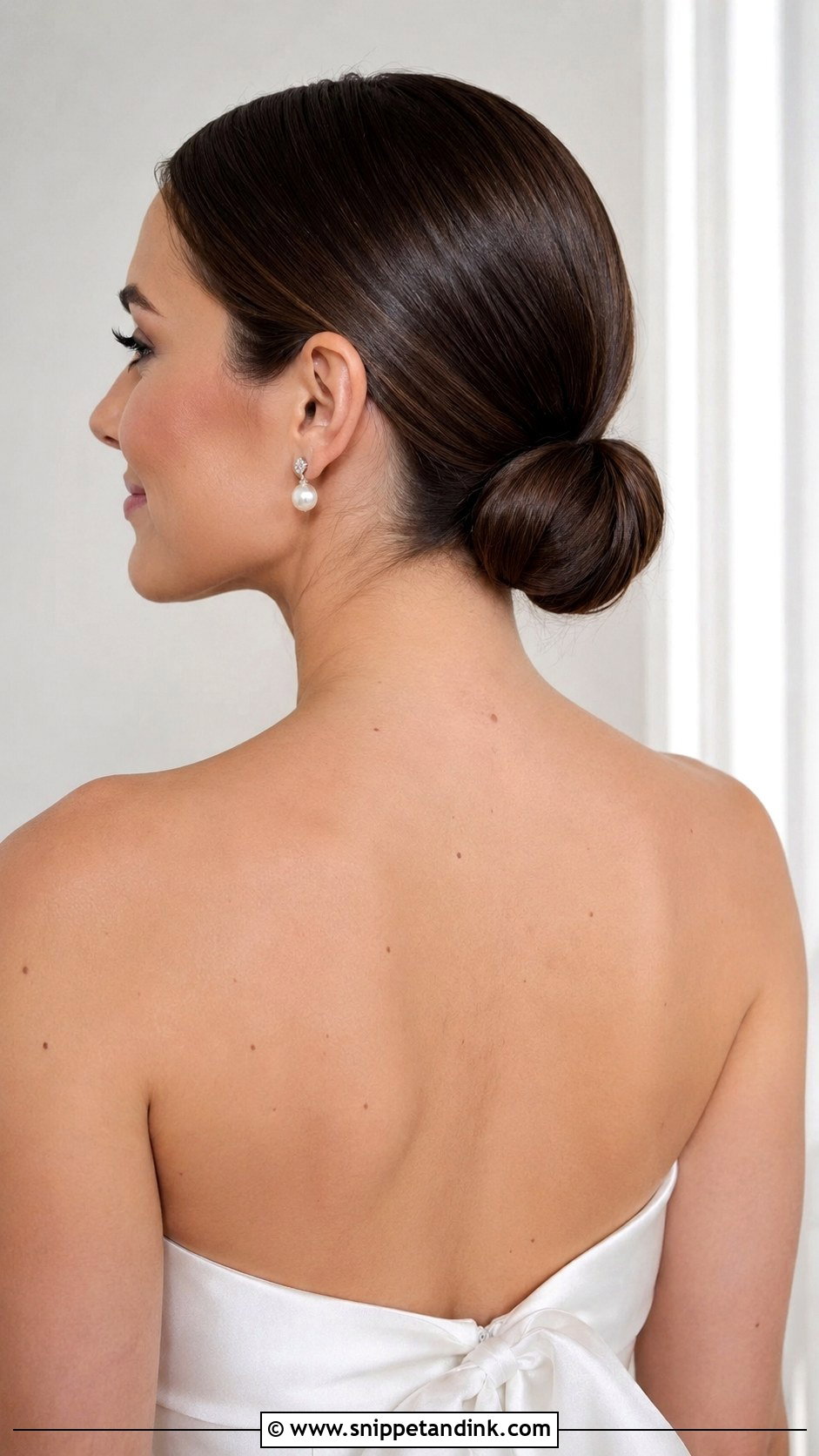
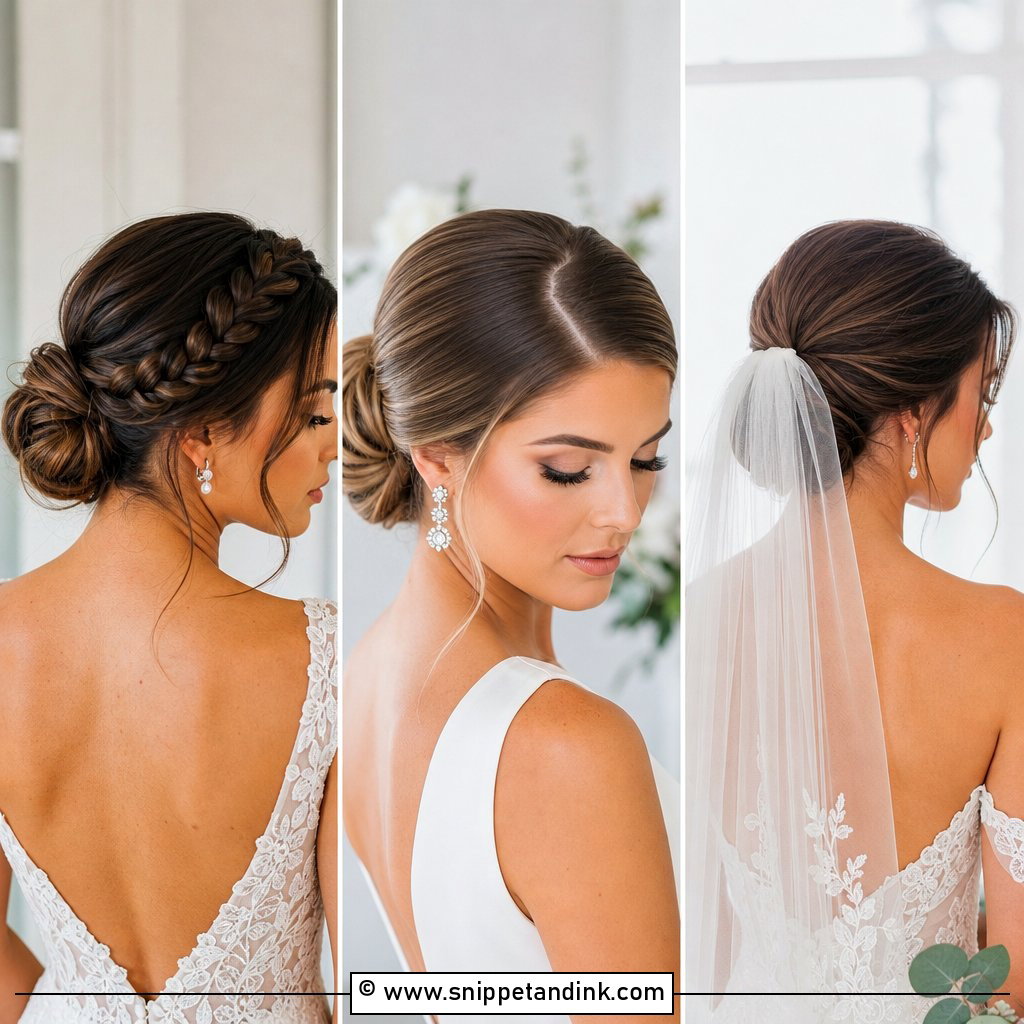
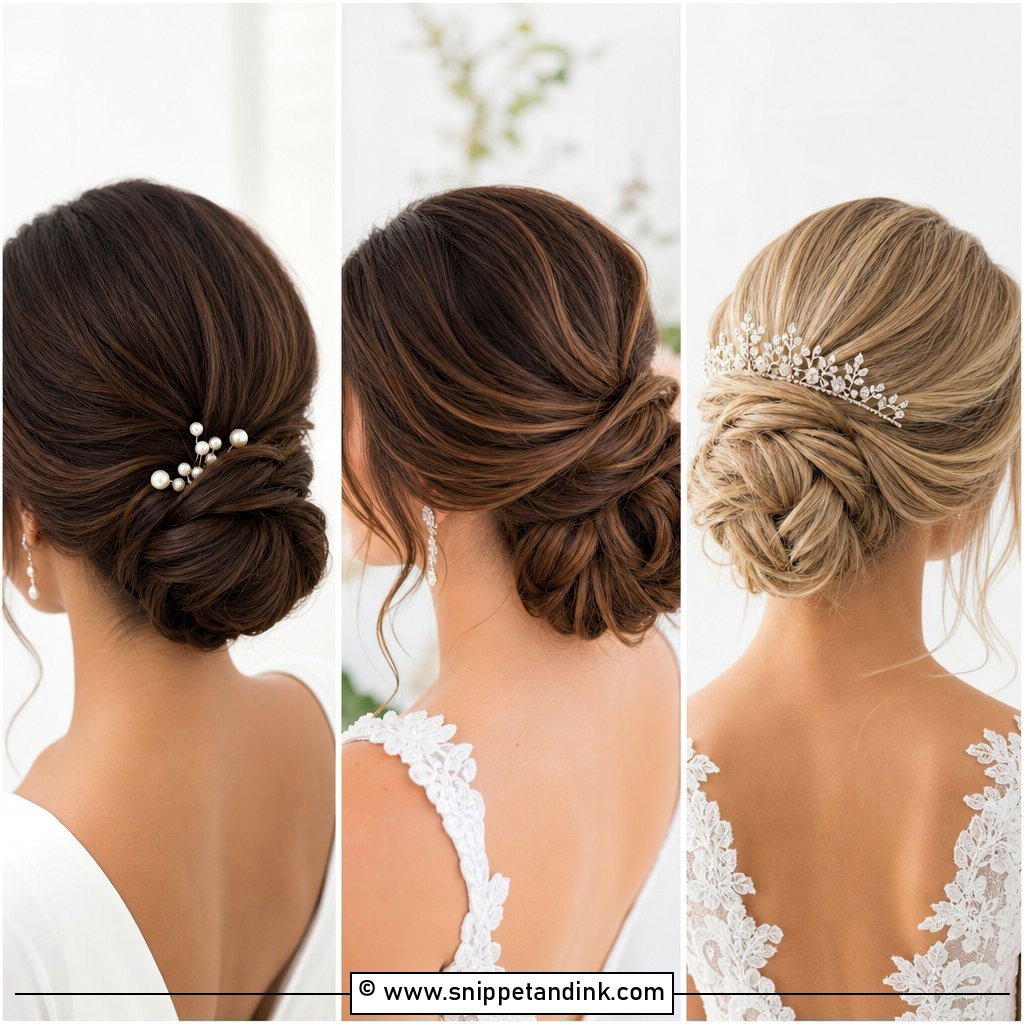
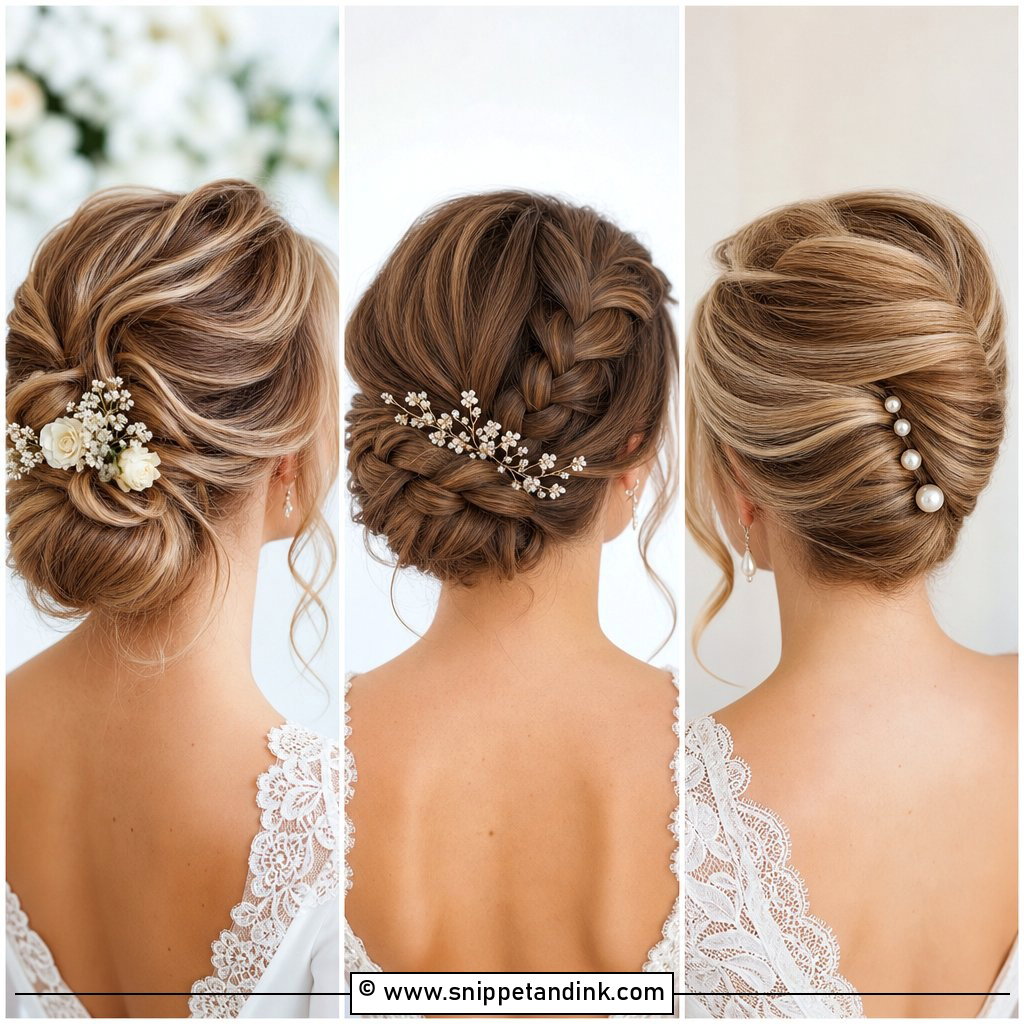
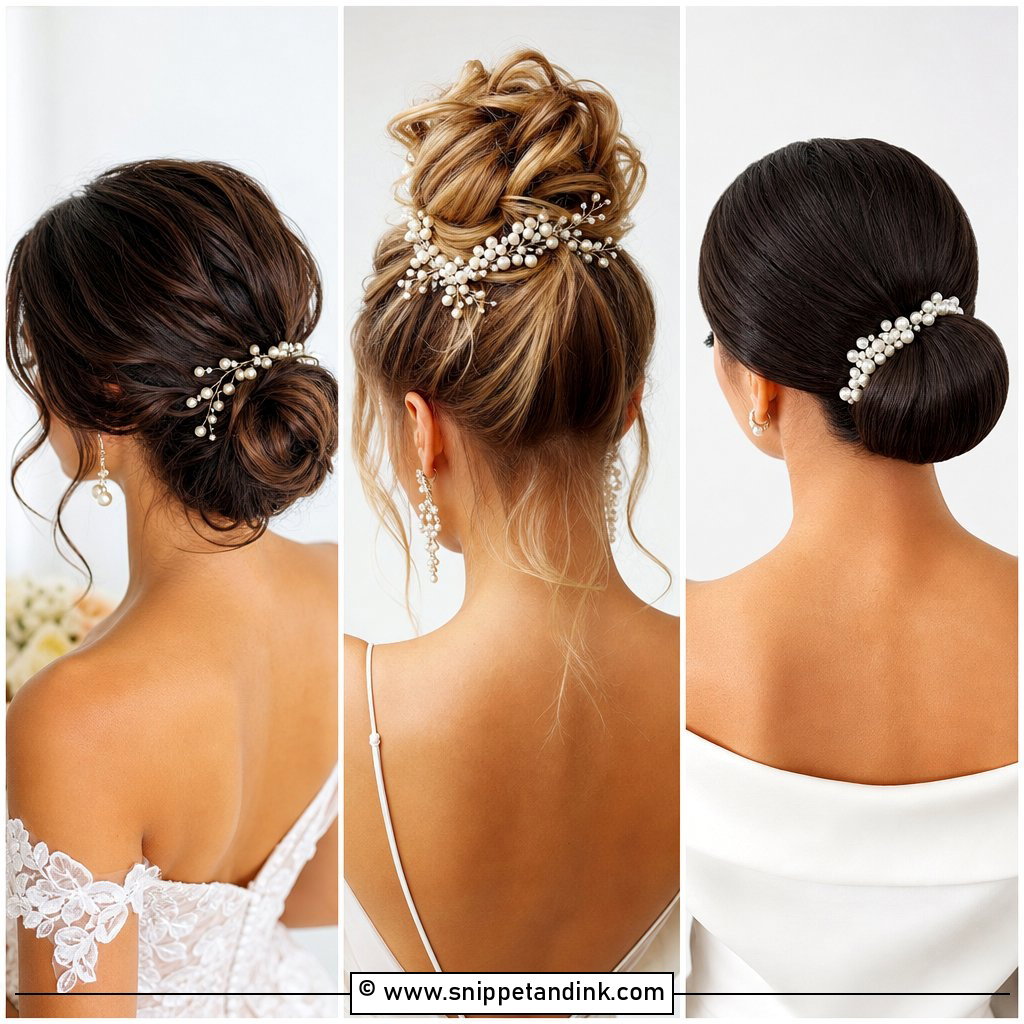
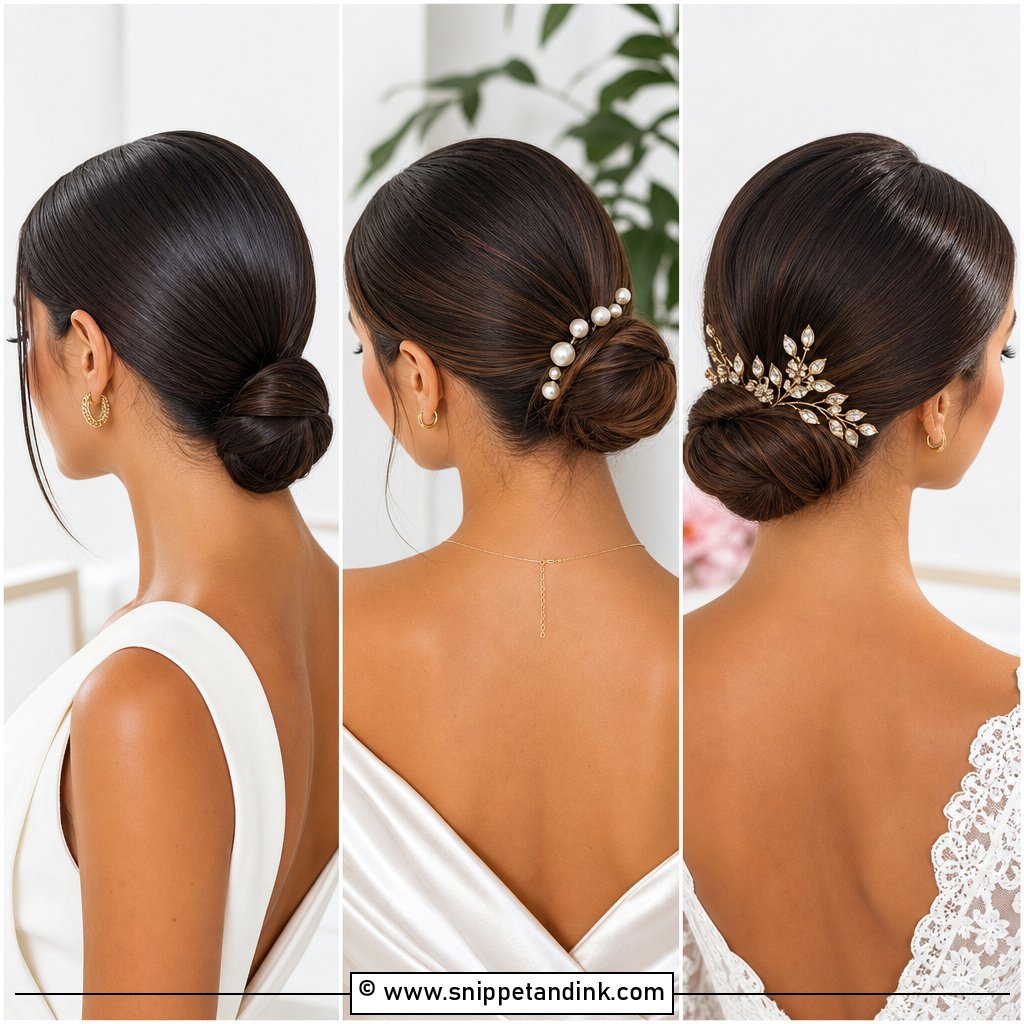
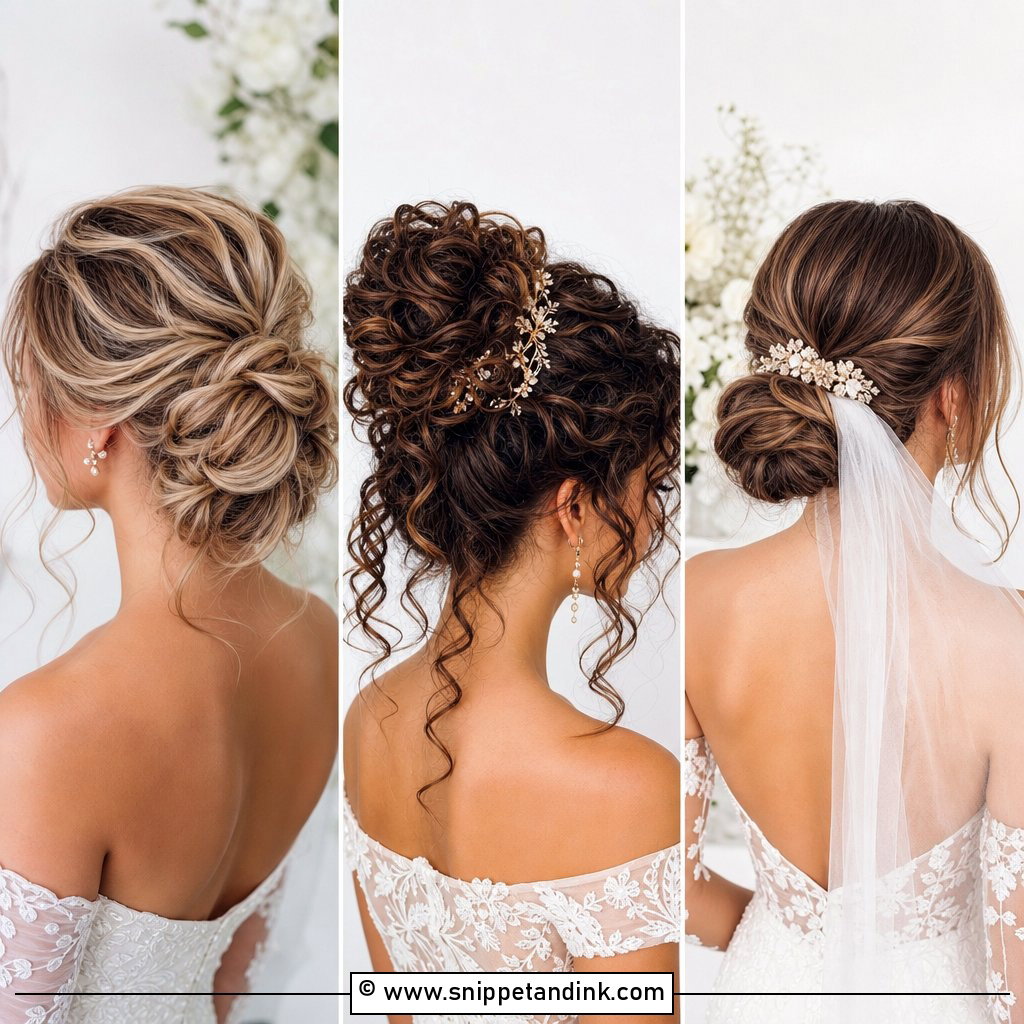
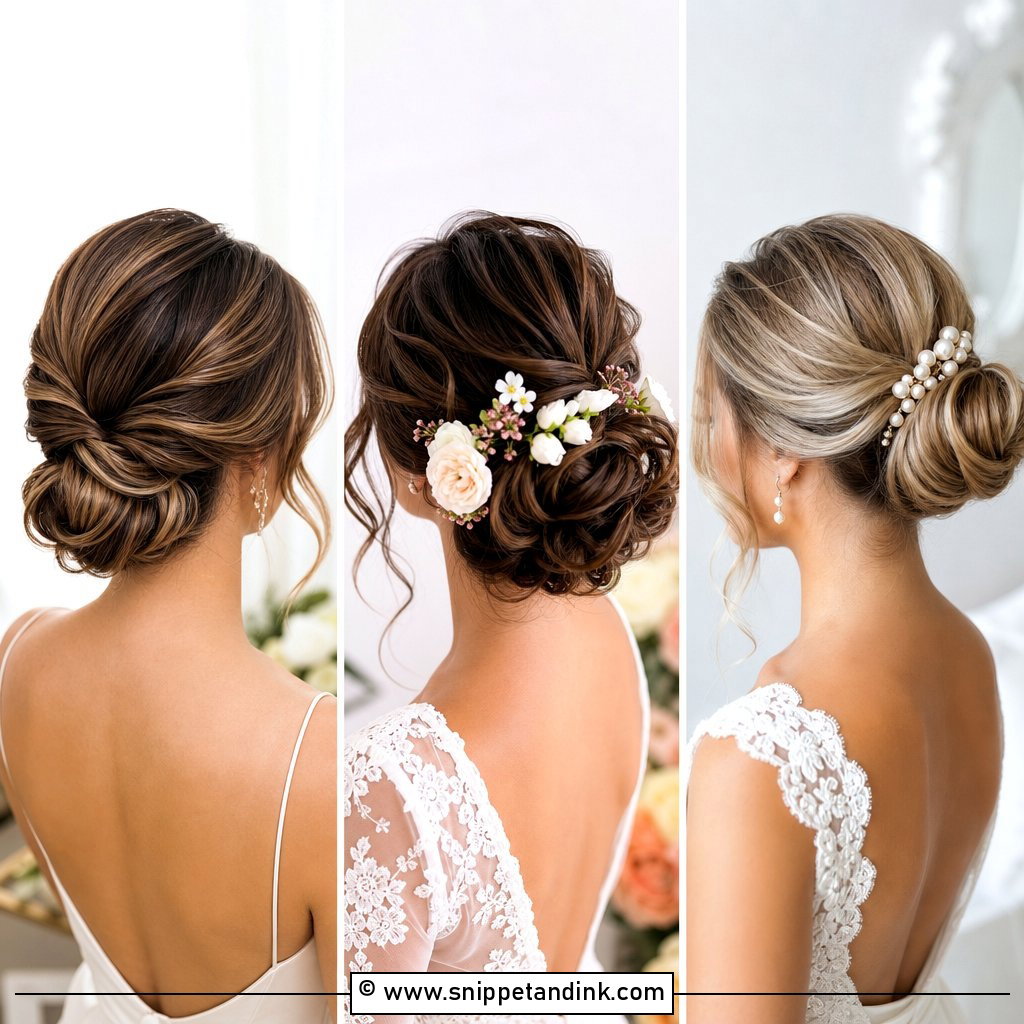
A sleek low bun looks simple, which is exactly why it’s unforgiving. I smooth the hair back with a bristle brush and a little cream while it’s still warm from the blow-dry, then secure a ponytail with an elastic before wrapping, because a wrapped knot with no base loosens by the speeches. Every flyaway and uneven patch of hairline shows, so ask your stylist to hold up a hand mirror at the trial and check the nape with you. One thin pearl pin is plenty; the shape is the whole point.
2. Messy Low Bun With Loose Strands
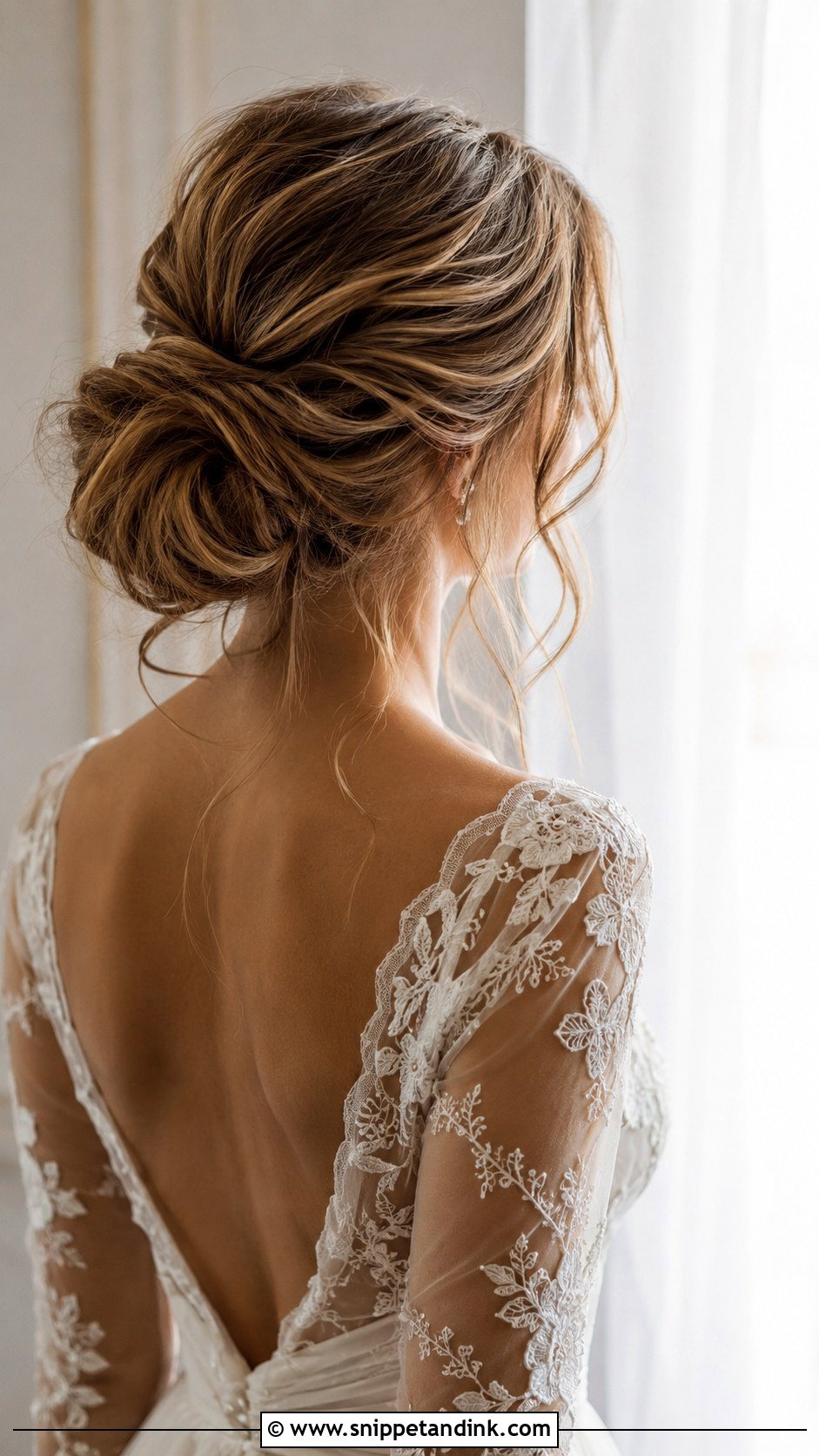
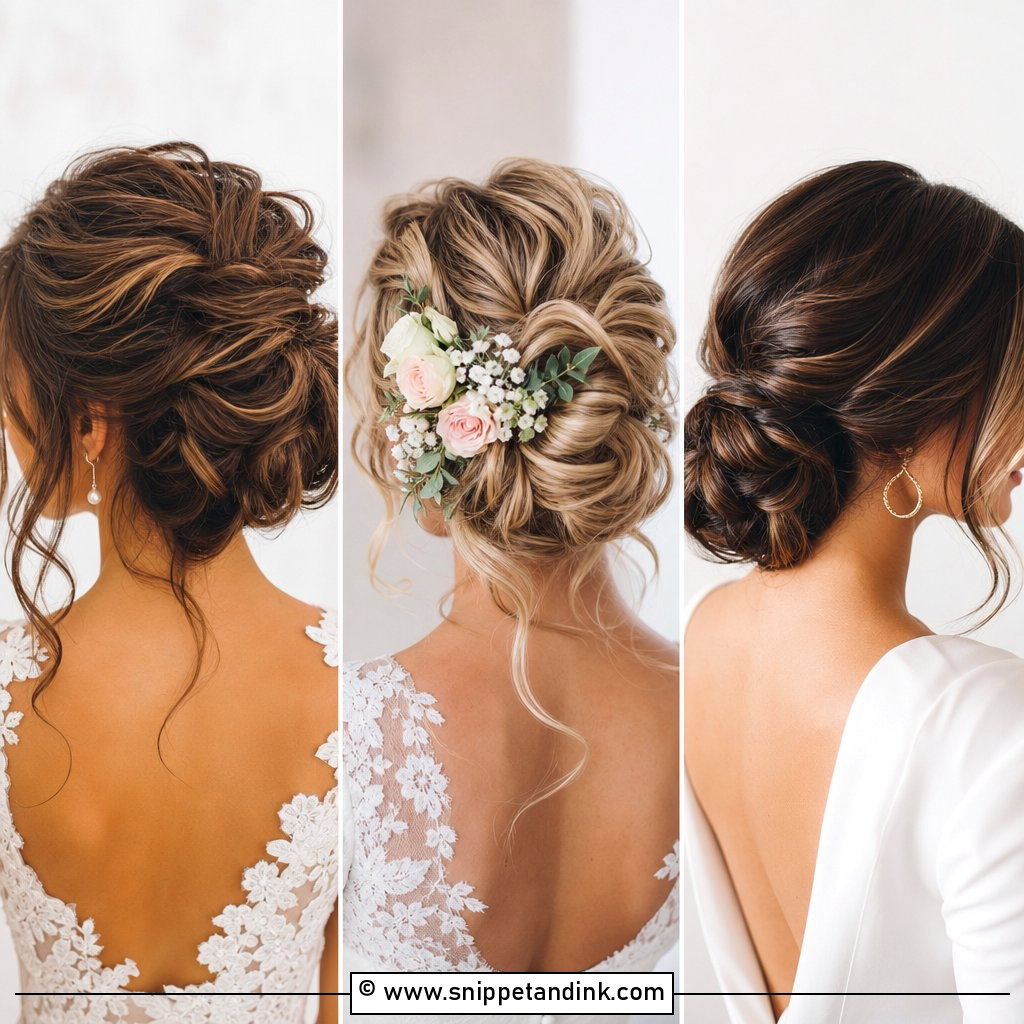
Messy is the hardest word in bridal hair, because the hair has to stay messy in the right places all day. I build this one on curled, sprayed hair so the texture has grip, then pull pieces out of the finished knot by hand instead of leaving them loose from the start. Fine to medium hair holds the shape best. Very silky hair tends to slide back into a plain bun by evening unless it’s been prepped with a texture spray first.
3. Braided Low Bun Wedding Updo
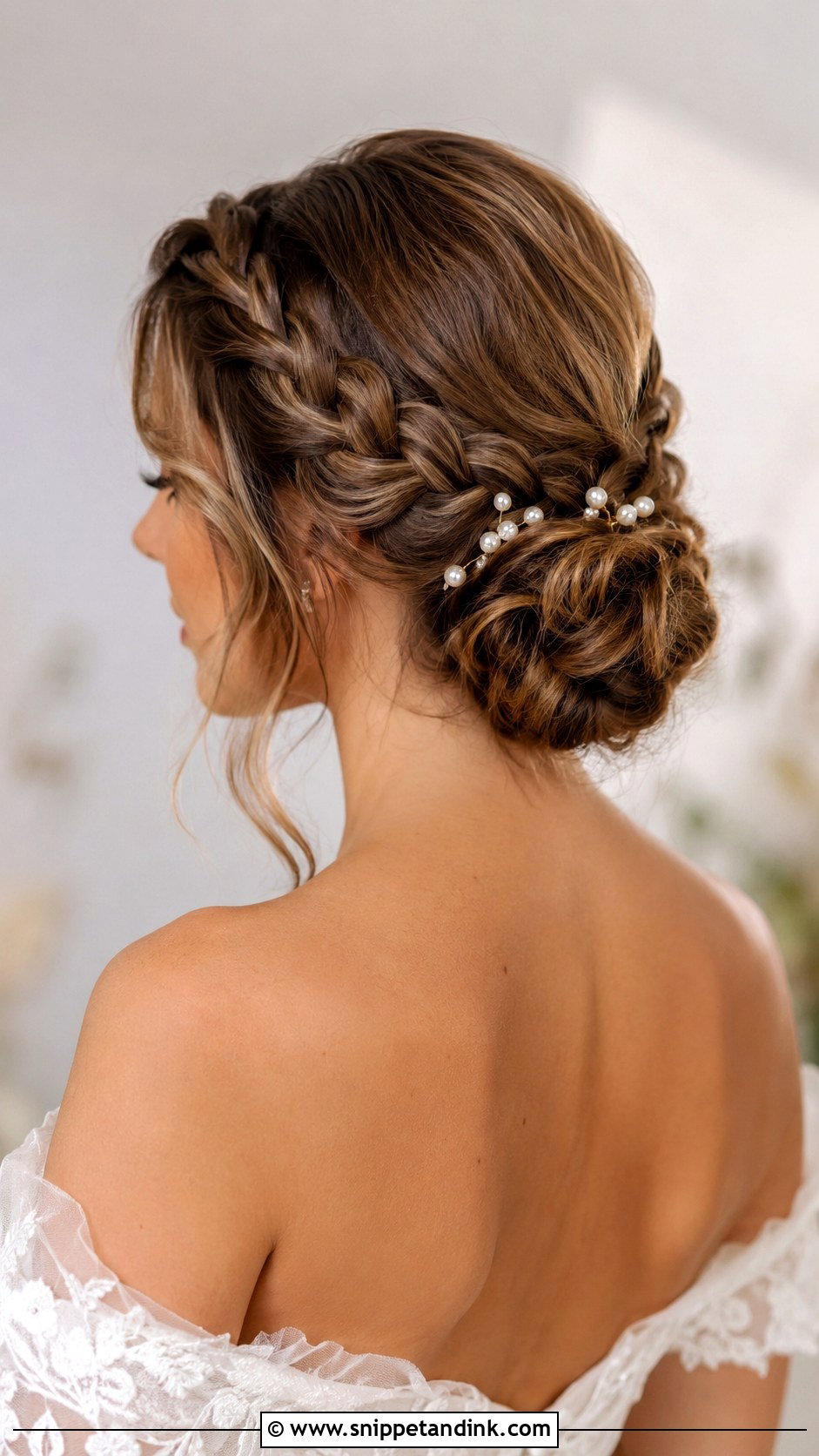
A braid gives a low bun structure as well as detail, and it’s one of the steadier choices for a long reception because the plait locks in hair that would otherwise slip. I usually run the braid along one side into the knot, or wrap it around the base where it hides the pins. Heavily layered hair is the catch: short layers poke out of the plait, so each section gets a touch of paste as it’s woven. Tiny flowers or pearl pins sit neatly between the strands.
4. Classic French Twist Updo
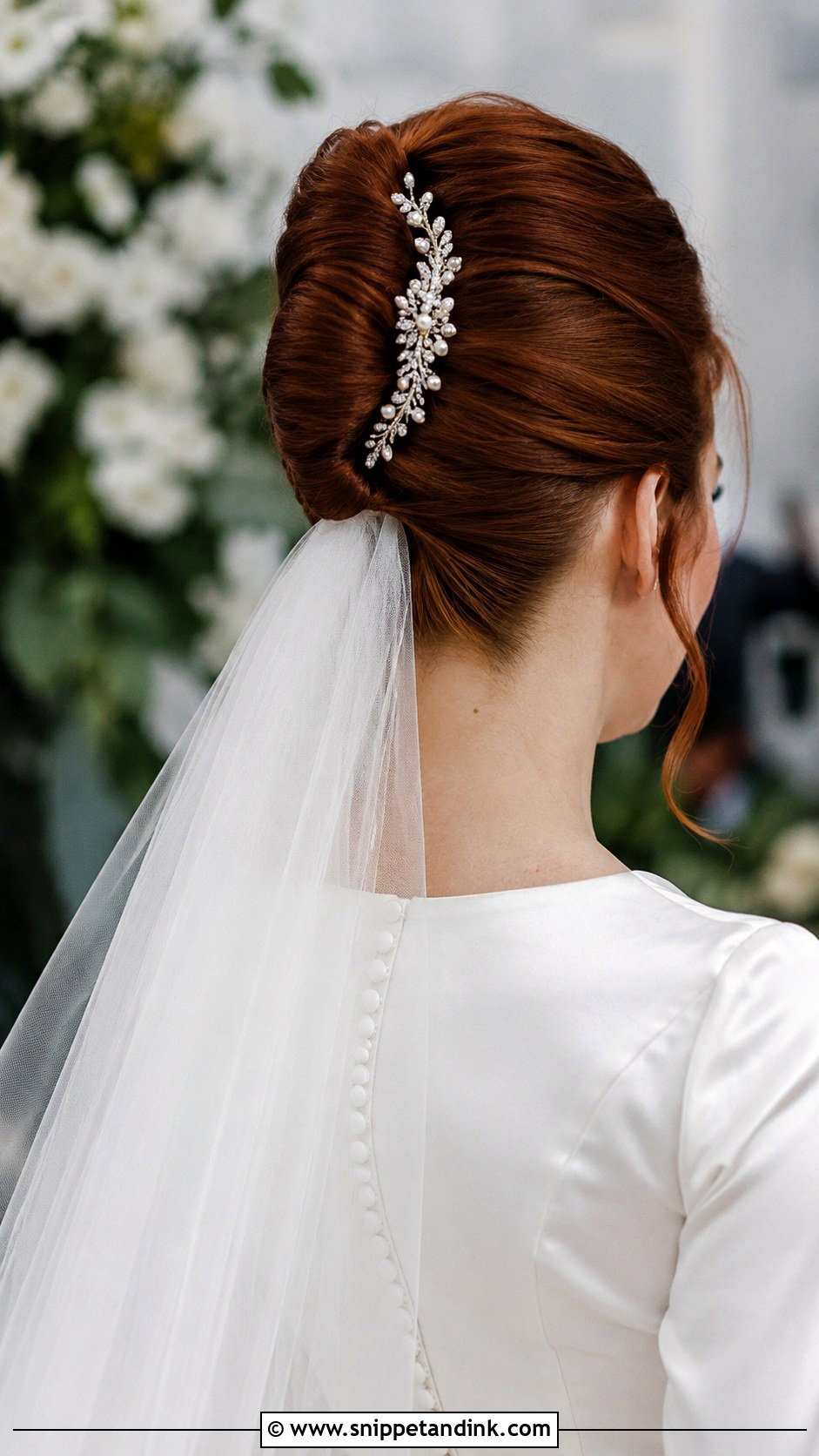
The French twist is still one of the most elegant wedding hairstyles I can put on a bride, and one of the most technical. Hair is swept to one side, rolled vertically up the back of the head and pinned along the seam of the roll, which is where all its strength lives. It needs at least shoulder-length hair with some weight to it. On fine hair I backcomb at the base so the roll has something to bite into, and a jeweled comb at the top of the seam hides the last few pins.
5. Floral Bun Wedding Hairstyle
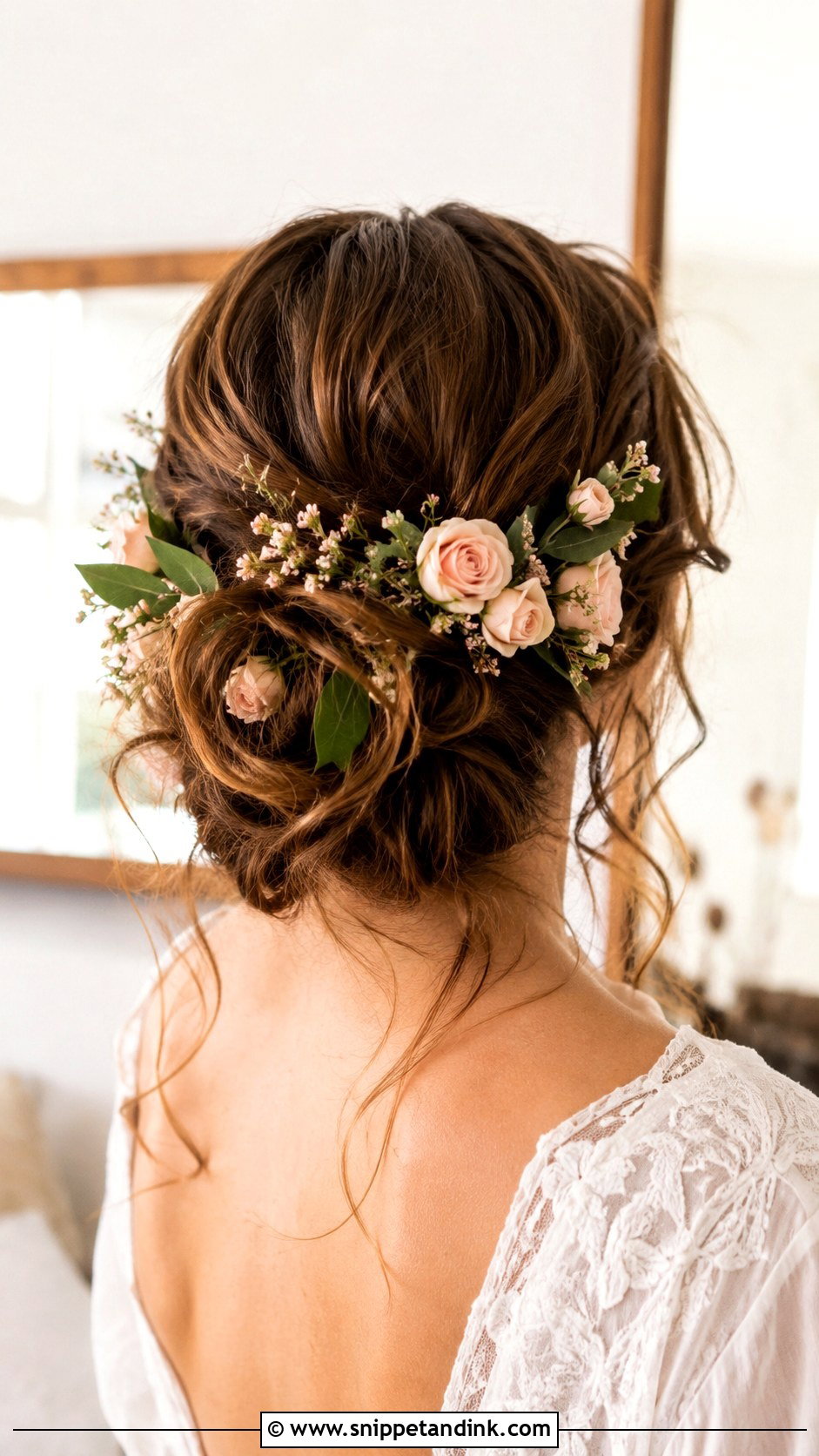
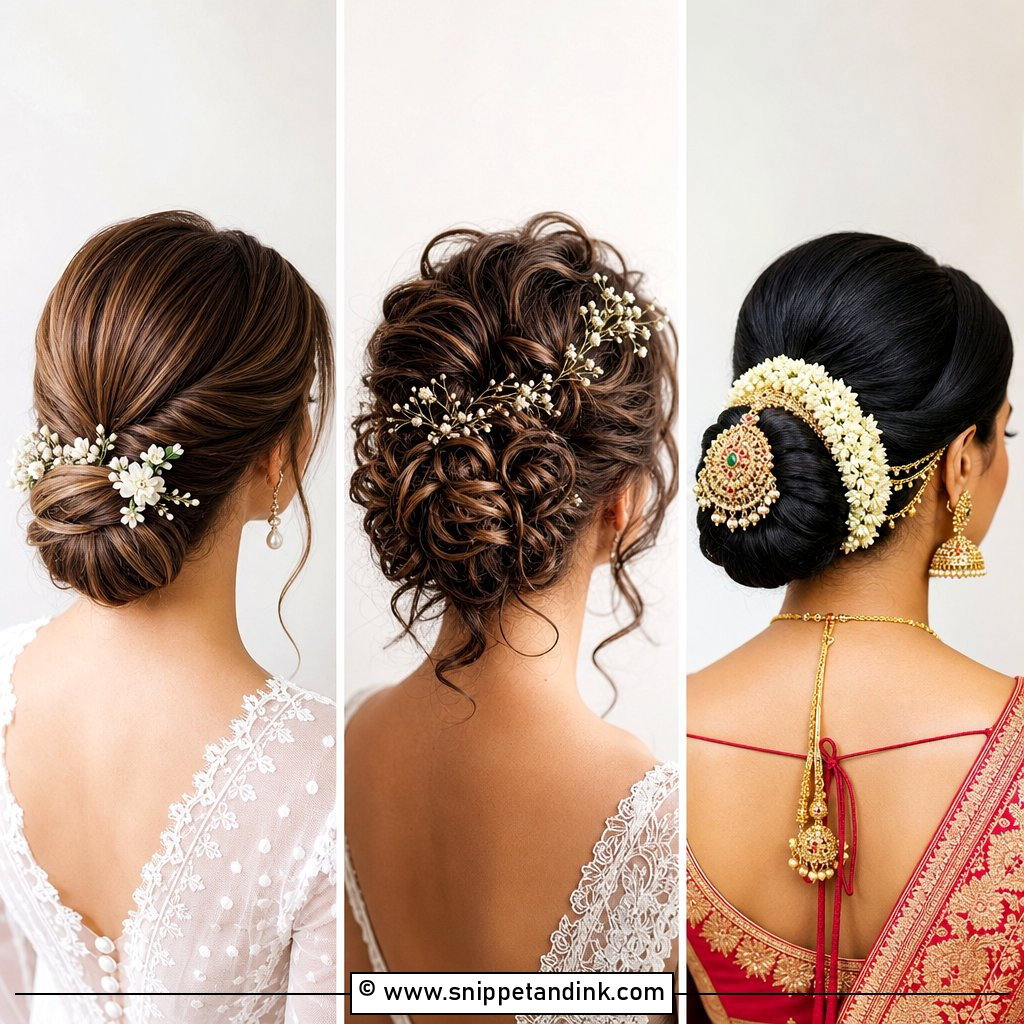
Flowers in a bun need choosing with the clock in mind. Baby’s breath, spray roses and waxflower last for hours out of water, while gardenias and open garden roses bruise and brown quickly against warm skin. I ask the florist to wire and tape the stems, because a bare stem pushed into a knot drops out the first time you turn your head. Repeating one or two blooms from your bouquet ties the look together without needing a full crown.
6. Sleek High Bun for Brides
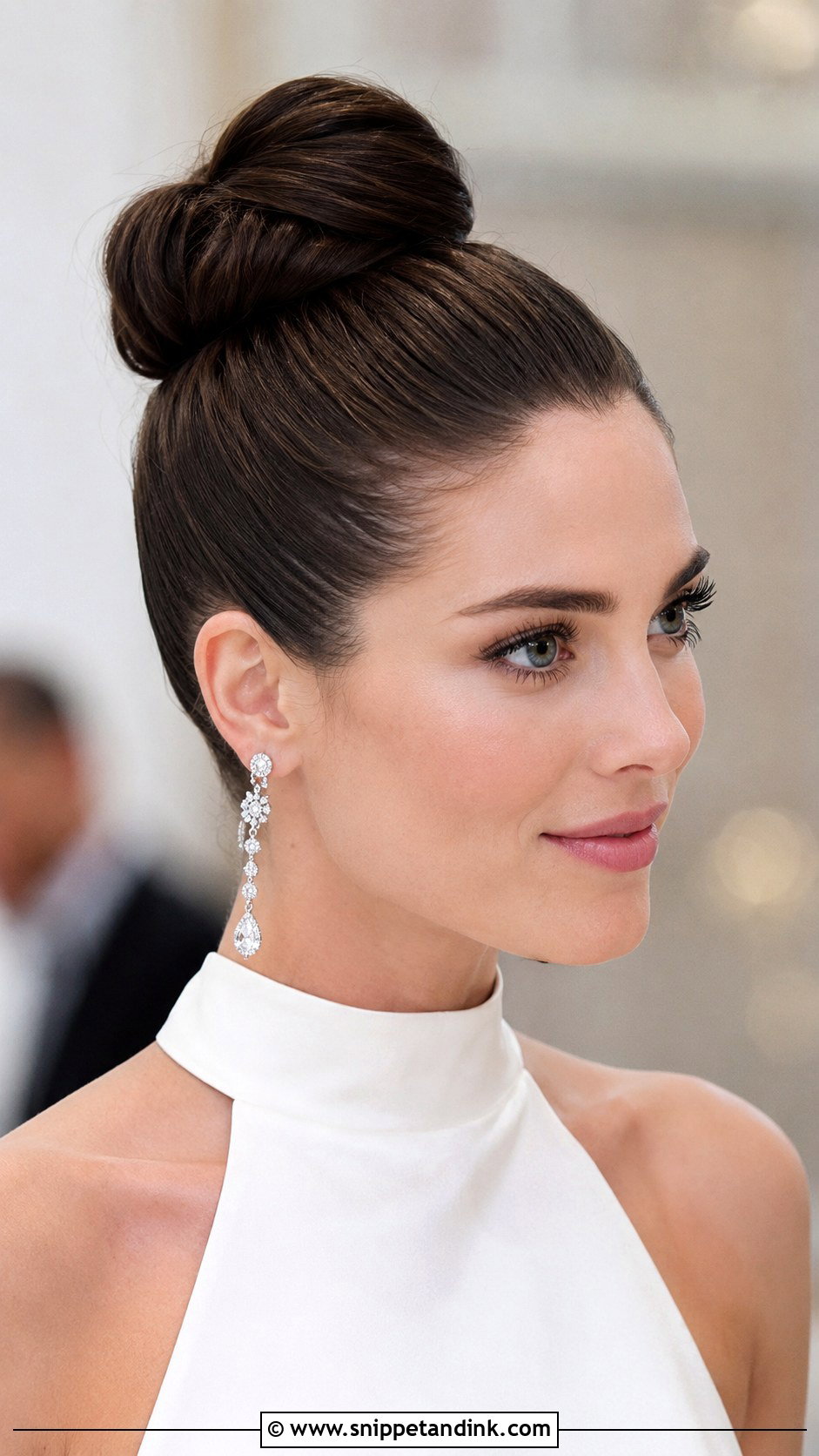
A high bun lengthens the neck and clears the jawline, so it sits well with high necklines and big earrings. It’s also the one I’d warn you about if you get tension headaches, since the weight rests at the crown and pulls harder as the hours pass. I set the ponytail a little lower than a gym bun and wrap it around a padded base, which gives fullness without needing it tight. Under a long veil it can crowd the comb, so decide where the veil goes before you commit.
7. Low Bun With Side Braid
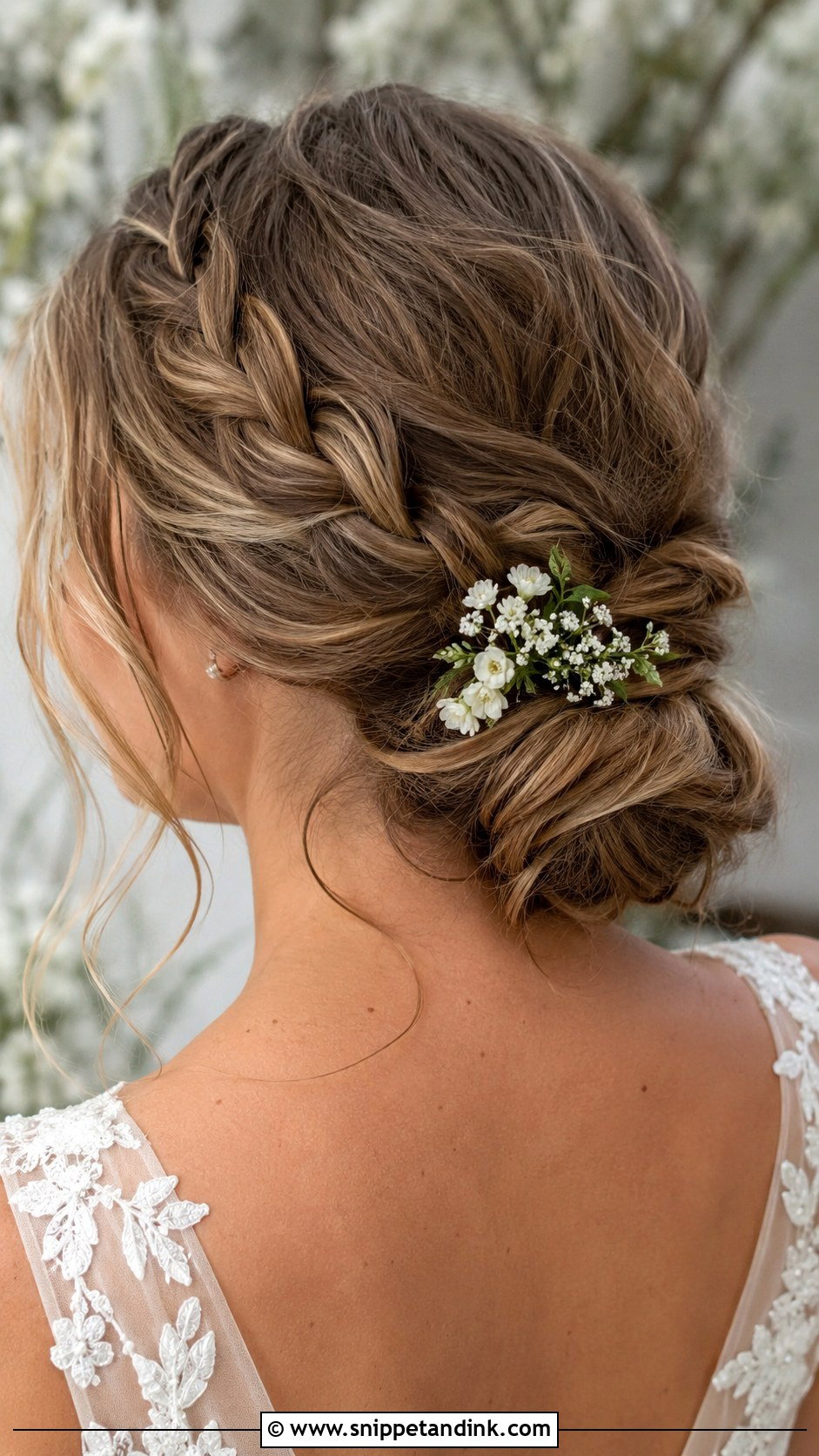
A side braid running into a low bun puts the detail on one side of your face, so I always ask which side you’ll stand on during the ceremony. That’s the side guests and the photographer see for most of the vows. Loose, pulled-out braids look softer but need more pins underneath to stop them shifting, while a tight braid stays put almost on its own. A veil sits cleanly just above or below the knot.
8. Twisted Low Bun Updo
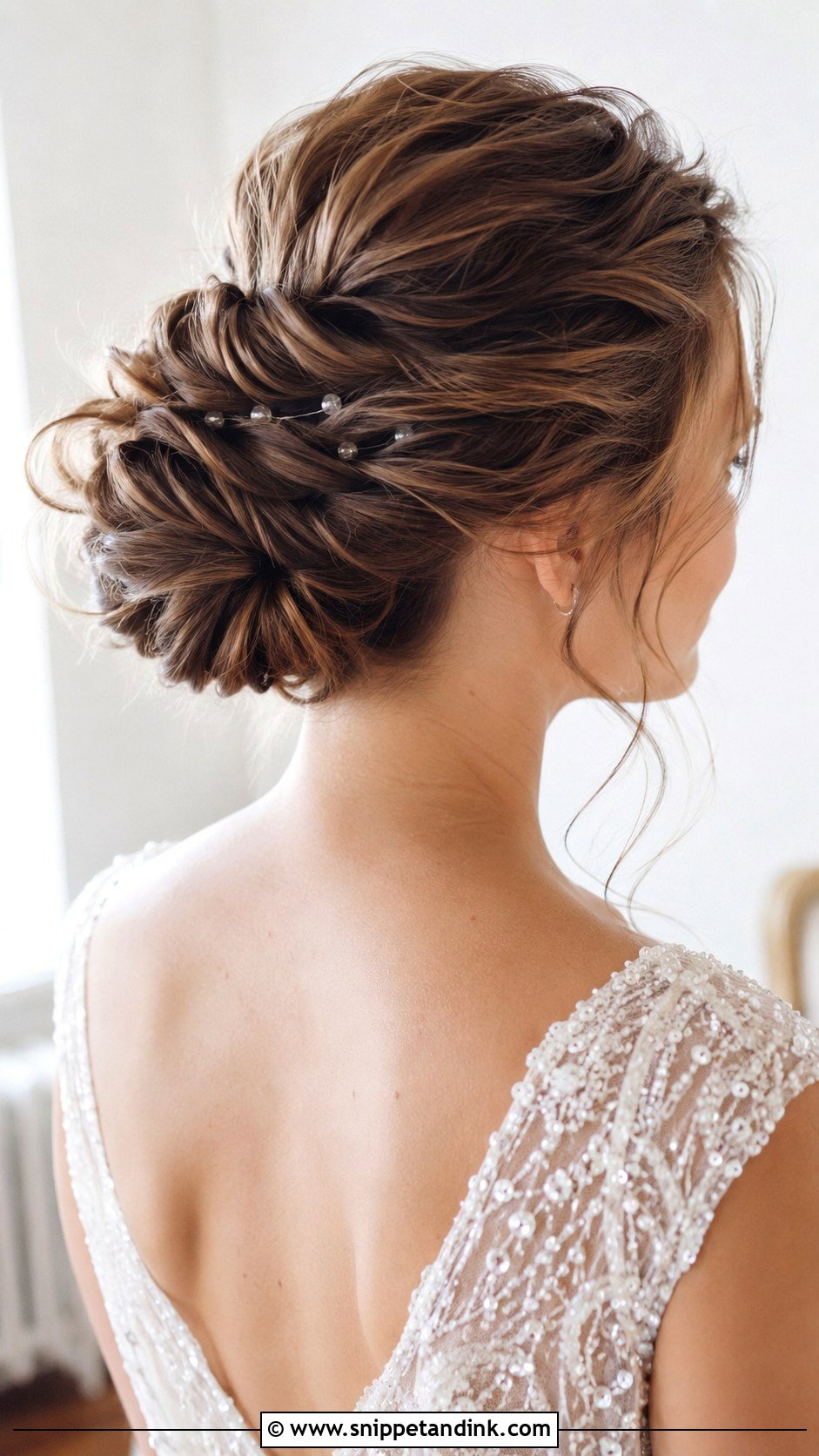
Twisted buns are built from small rope twists pinned over each other, so the hold comes from lots of anchor points instead of one elastic. That makes them a good fallback for medium to long hair that usually drops out of updos. Leave face-framing pieces only if your hair holds a curl; straight pieces go limp and look accidental by the evening. A delicate hairpiece sits well near the twists, right where it covers the crossed pins.
9. Curly Bun Wedding Hairstyle
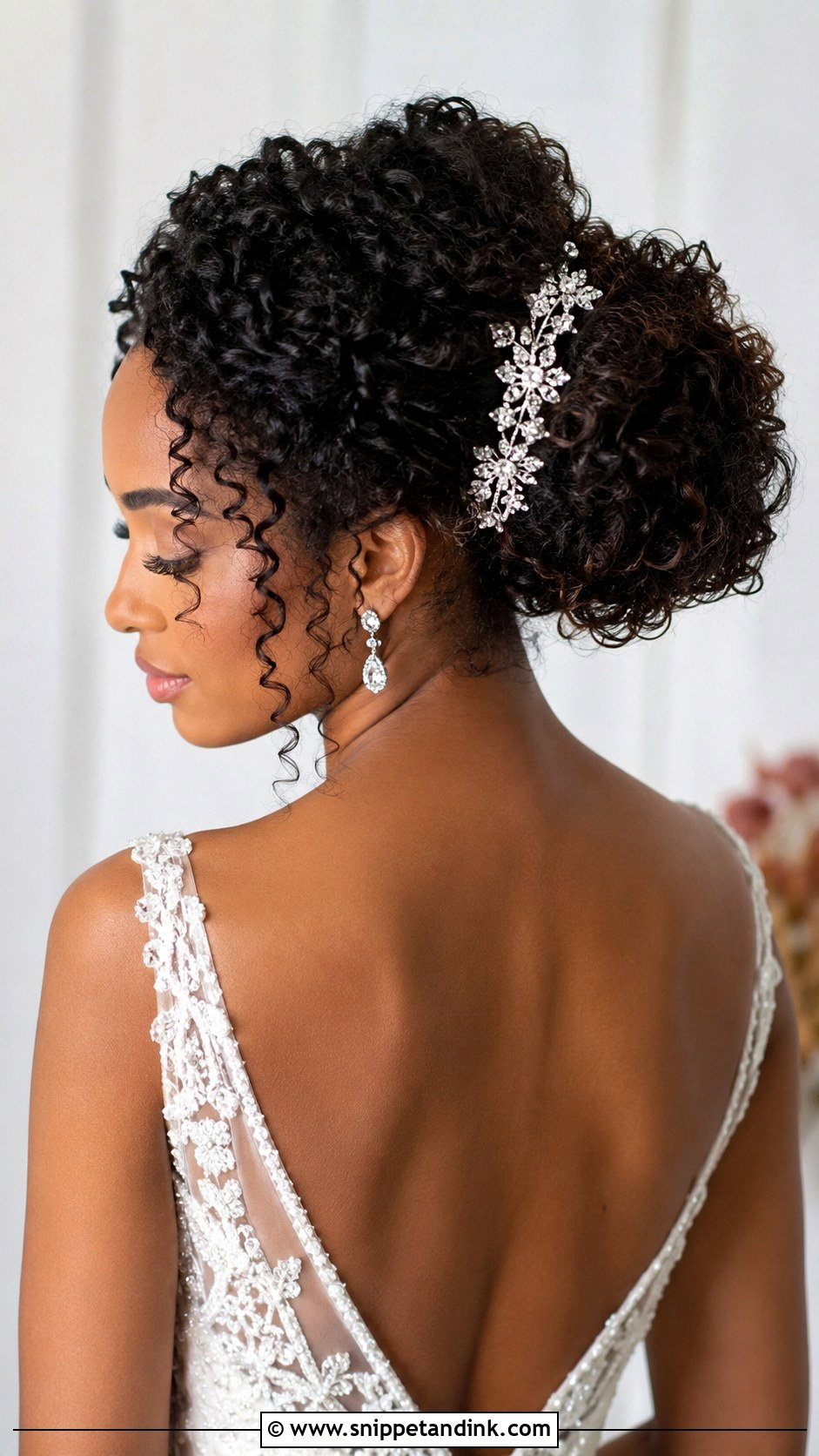
With curly or coily hair I work with the curl pattern rather than blowing it out. I’d ask you to arrive with hair washed and defined the way you normally wear it, then I gather it with fingers or a soft brush, never a fine-tooth comb, and pin it into a loose, full knot. A little cream on the ends keeps the curls from frizzing in a warm room. Leave a few spirals around the face and it still looks like your own hair.
10. Bridal Chignon With Pearls
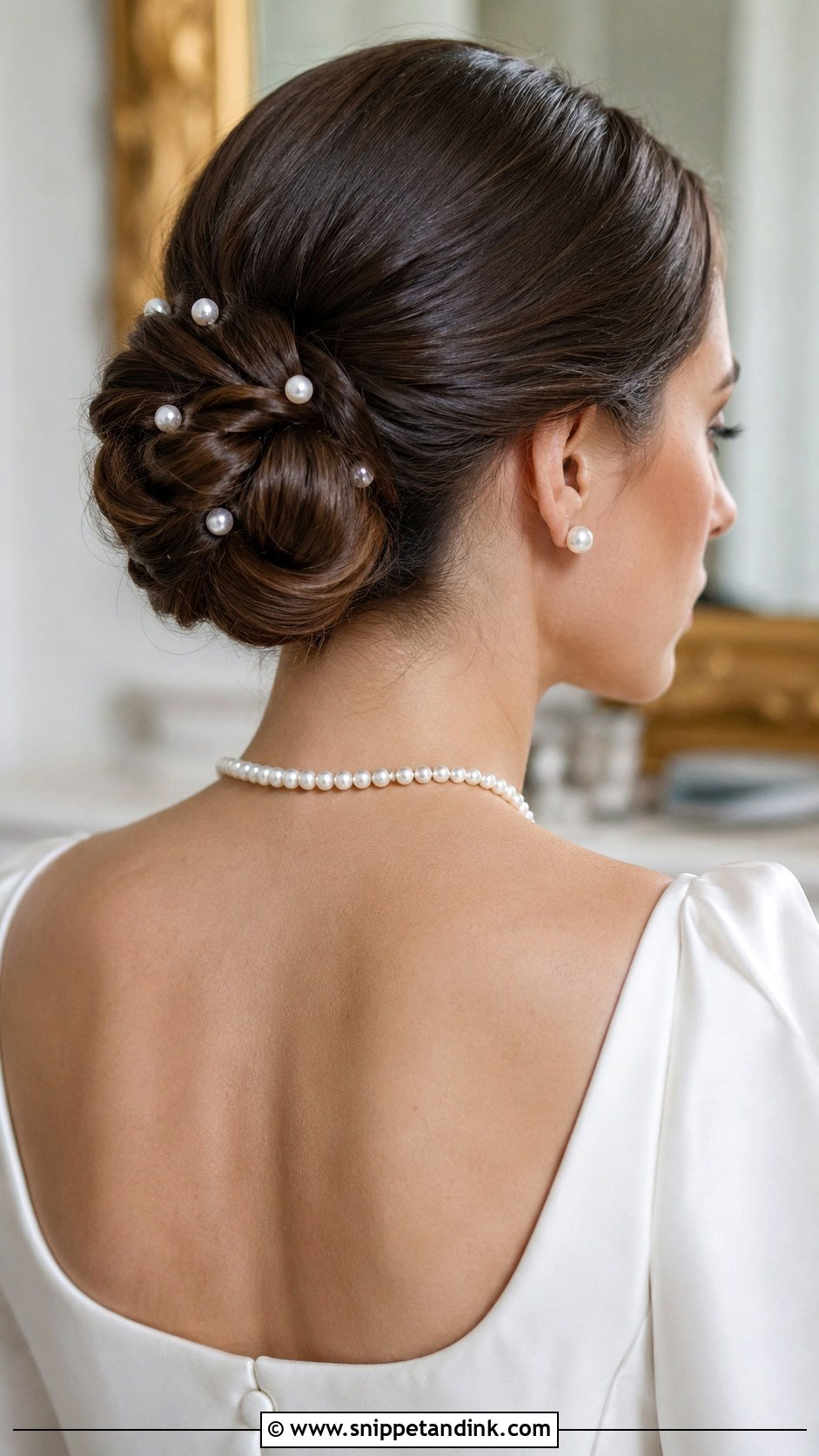
A chignon is a rolled or looped knot set low at the nape, and pearls suit it because the smooth surface shows each one clearly. I add the pearl pins after the shape is finished and sprayed, pushing them in at a slight angle so they hook under the roll rather than resting on top. Five or seven is usually enough; scattered too widely they read as random. It pairs best with a plain neckline and pearl earrings.
11. Double Bun Wedding Hairstyle
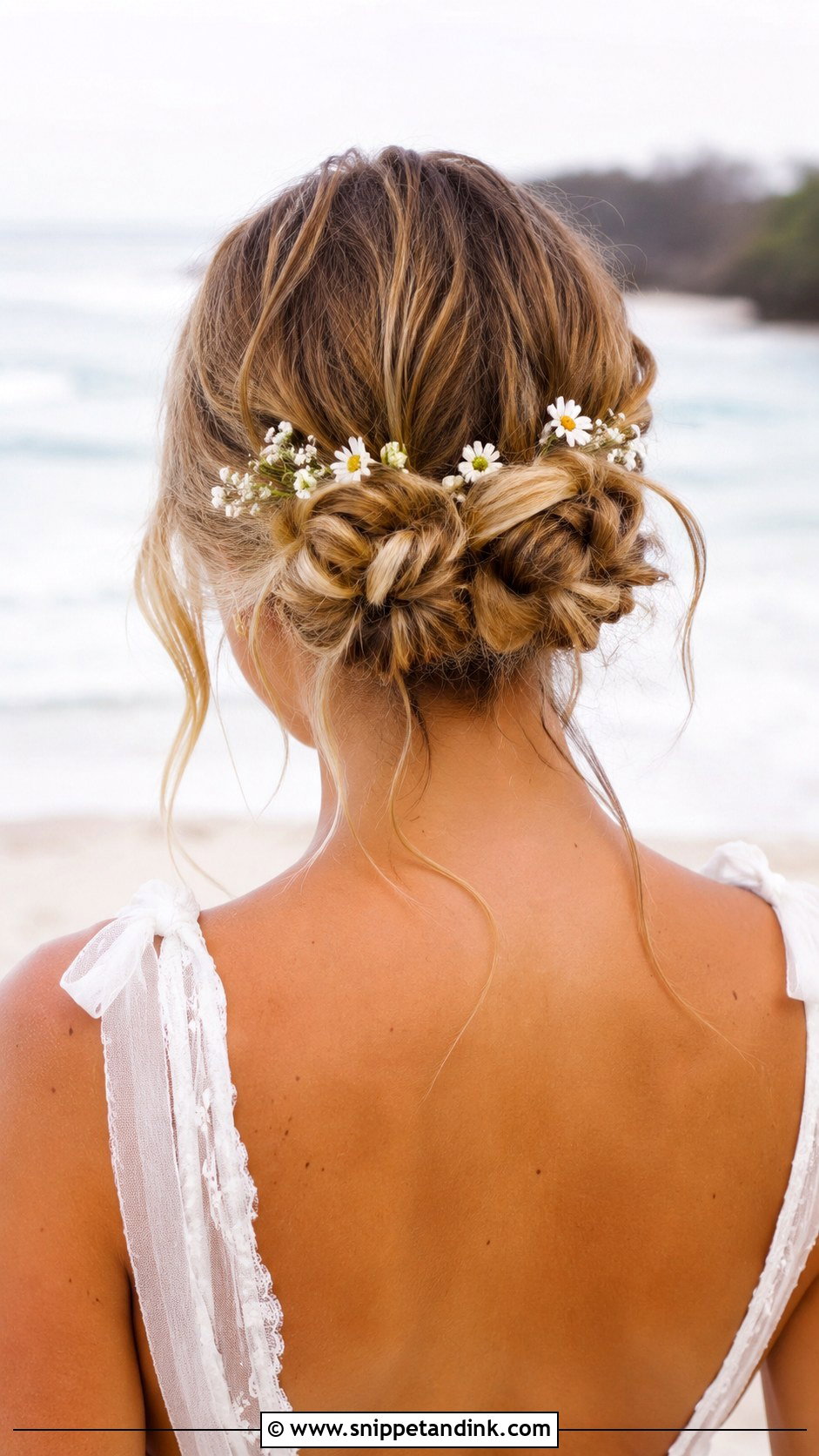
Two buns is a playful choice, and it can suit a beach or very relaxed wedding. Be honest with yourself about the photos you’ll keep for decades, though. I’d test it with your veil or headpiece at the trial to make sure it still reads as bridal, and set the buns lower than festival height. They also have to be exactly level, because any difference is obvious straight on.
12. Low Bun With Curtain Bangs
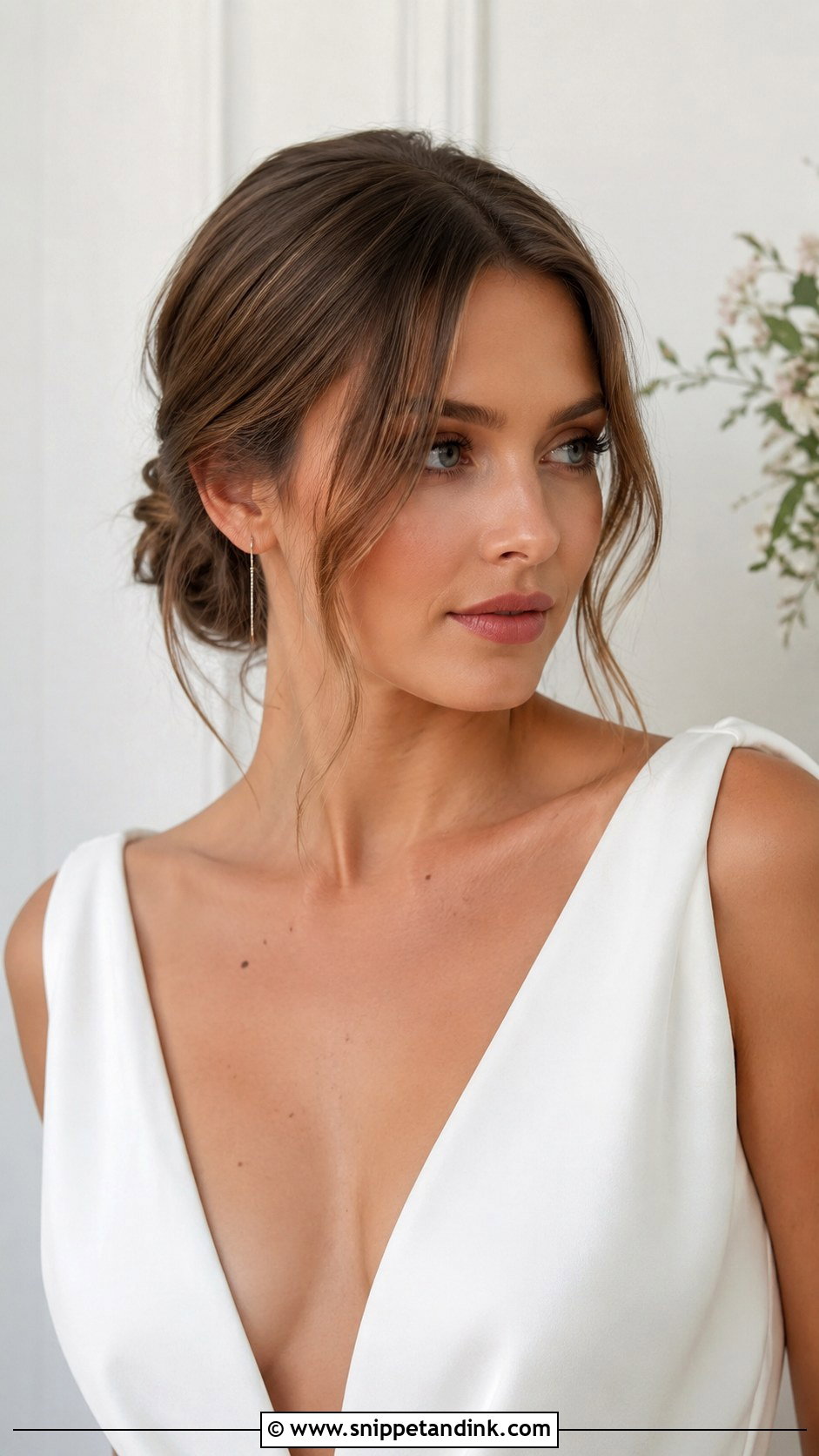
Curtain bangs stop a low bun from looking severe. If you’re cutting them for the wedding, do it several weeks ahead so they’ve grown into a length that splits and sweeps naturally. On the morning I round-brush them away from the face and set them in a velcro roller while the rest of the hair is styled. Humidity flattens them faster than anything else in the look, so a light, flexible spray matters here.
13. Fishtail Braided Bun
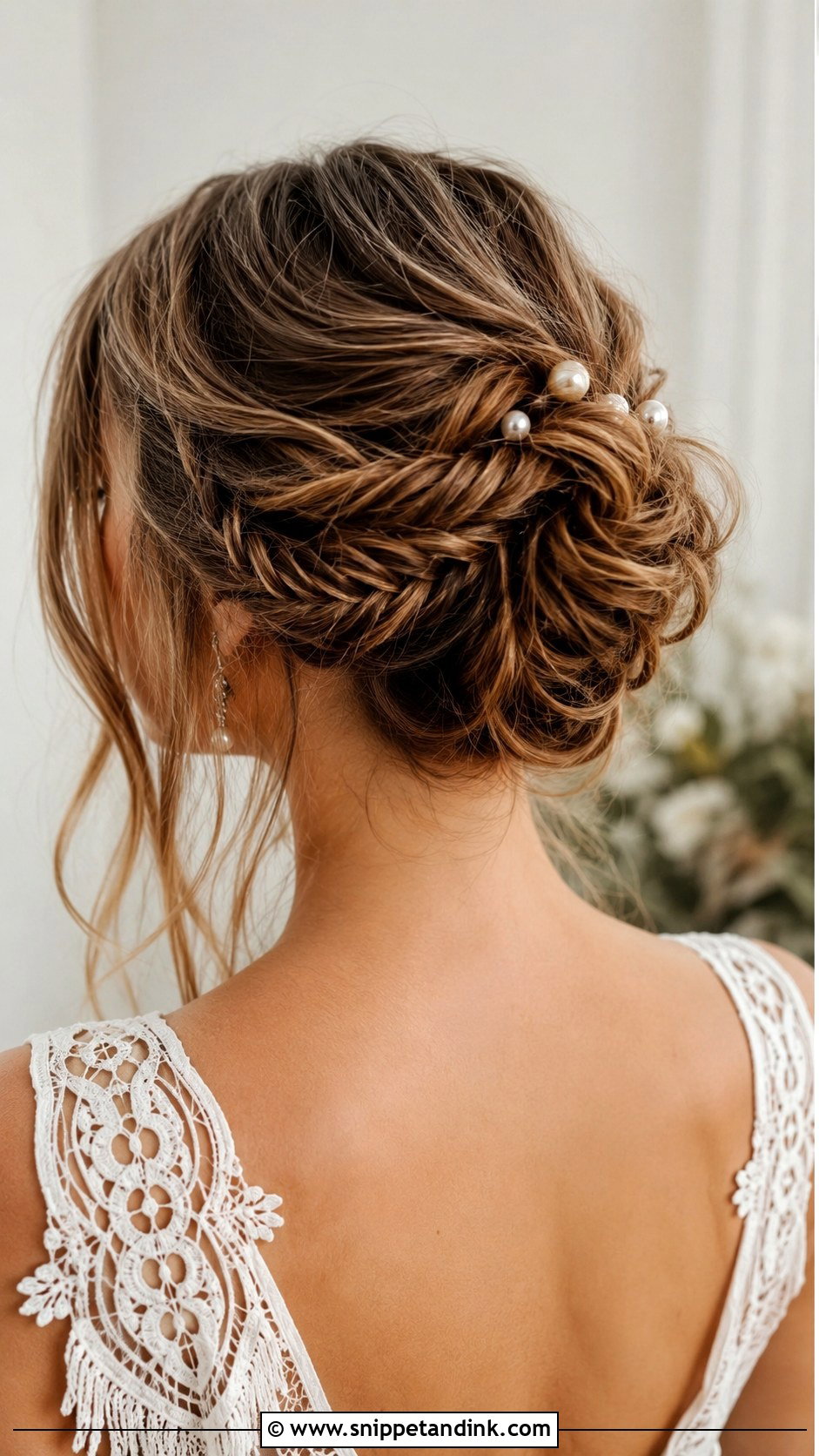
A fishtail looks intricate but is really two sections passing thin pieces back and forth, and it needs length: hair below the shoulder blades is the comfortable minimum for wrapping one around a bun. I braid it tight, secure it, then gently pull the edges wider. Any strand shorter than the crossing point will fan out, so a little wax on the fingers keeps the pattern clean. Small flowers or pearls tuck easily between the woven strands.
14. Sleek Ballerina Bun for Brides
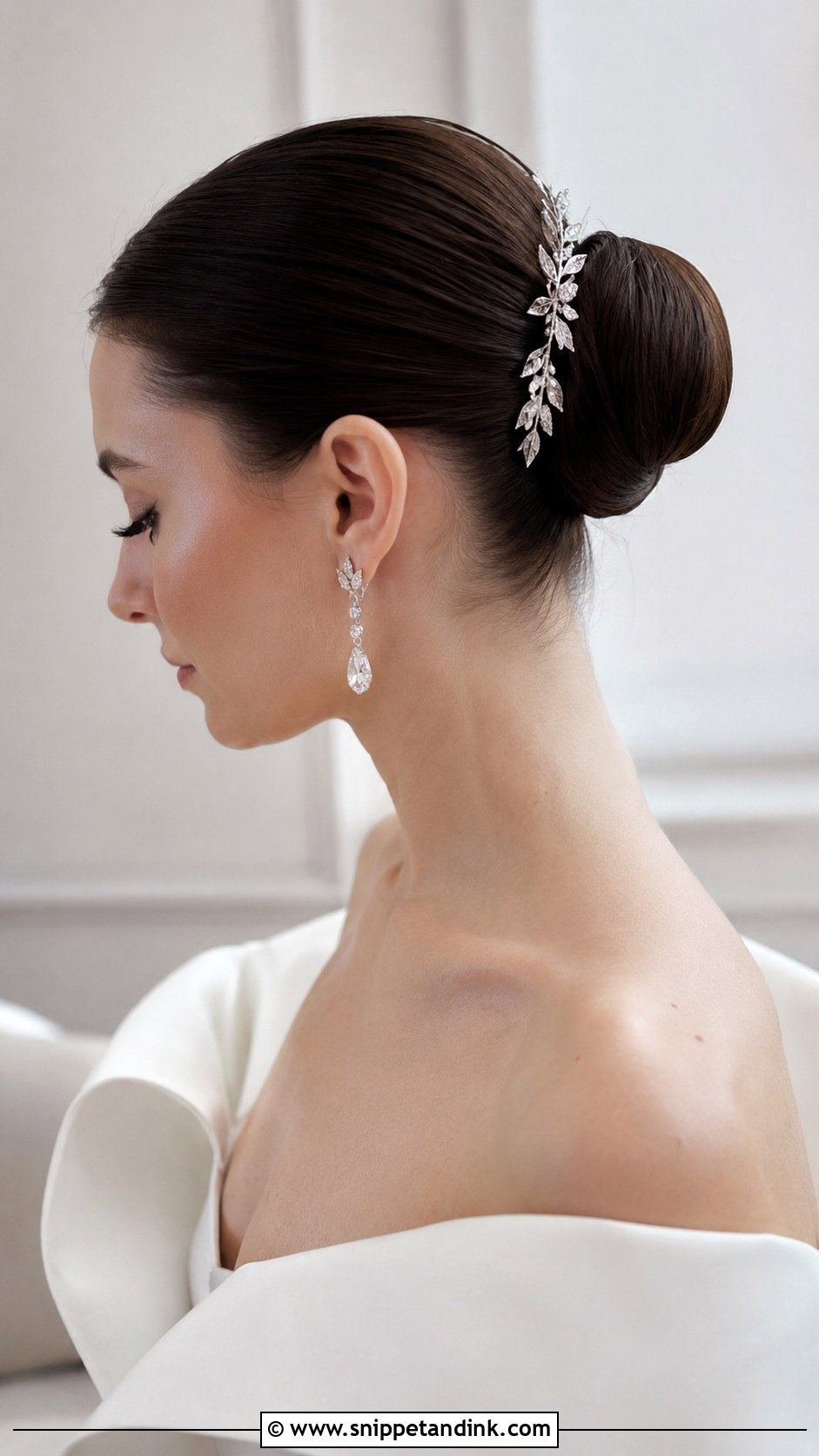
The ballerina bun is all about tension, so it isn’t kind to fragile hairlines or a sensitive scalp. I brush the hair back firmly, secure a ponytail at the crown or nape, and wrap it flat around a slim base so the shape stays round. Gel keeps the hairline neat, but too much can flake once a veil comb starts rubbing against it. Statement earrings or a small hairpiece are all it needs.
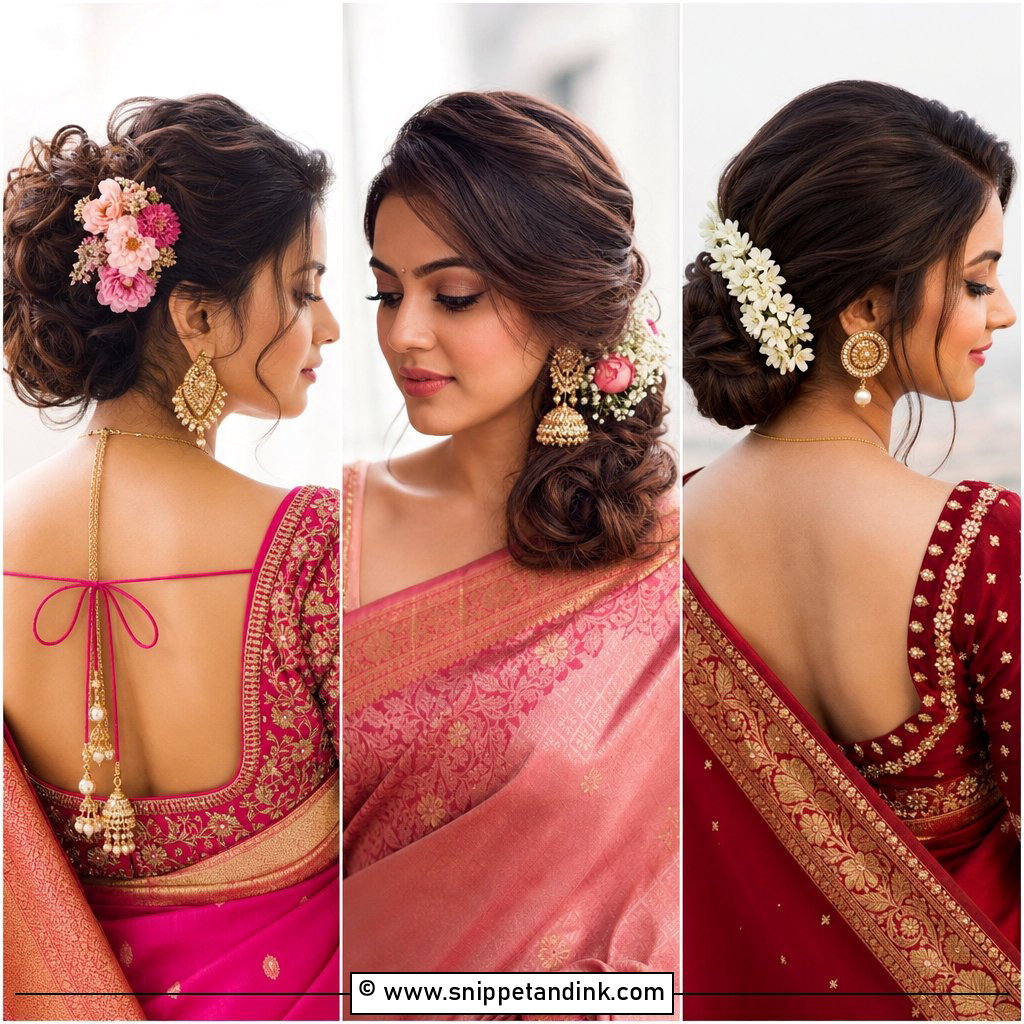
15. Low Bun With Dutch Braid
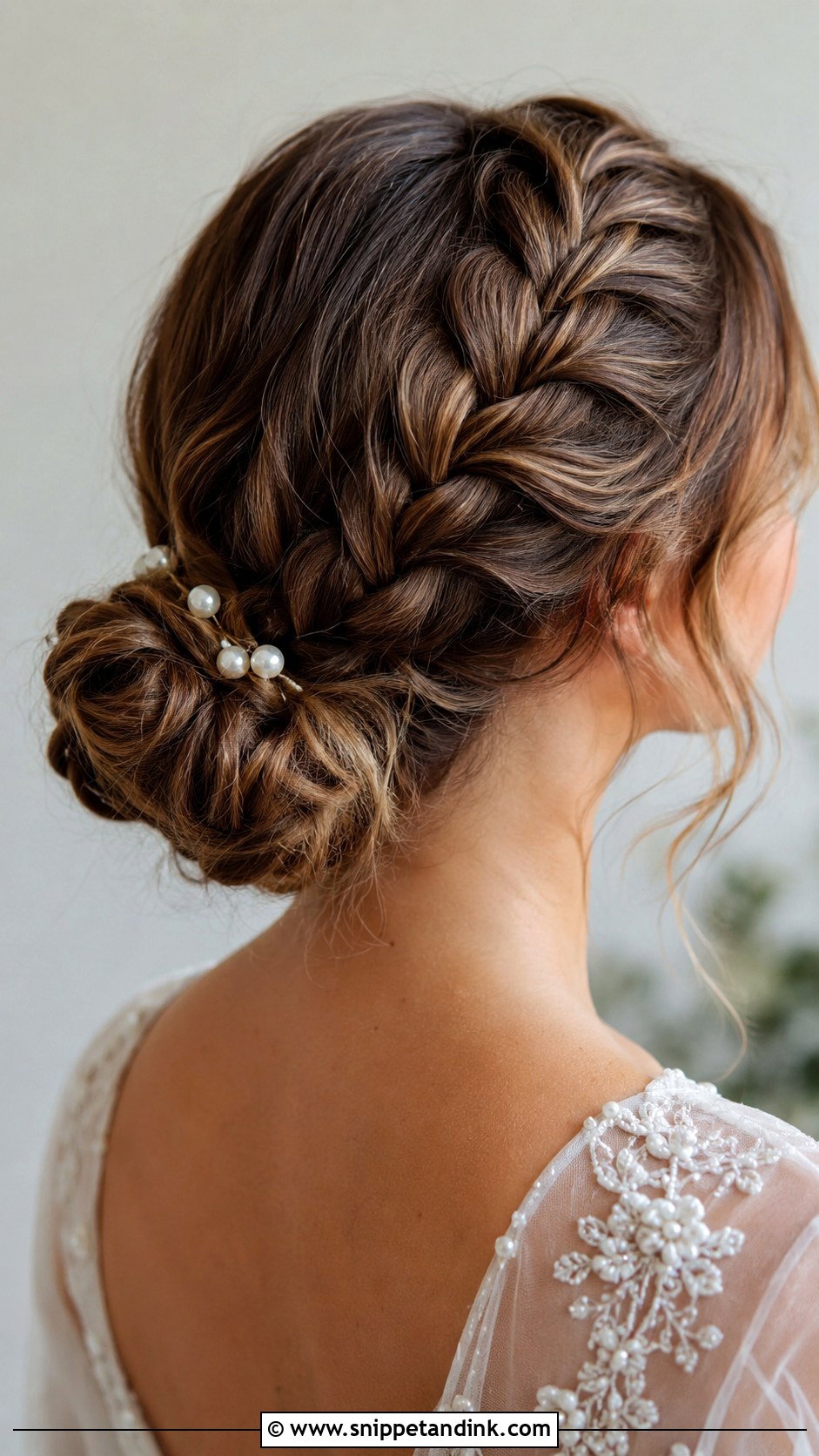
A Dutch braid is woven under rather than over, so it sits raised on top of the hair and reads clearly from across a room. One central braid or two mirrored ones both lead neatly into a low knot. Thinner hair can still carry it if I pancake the braid outward once it’s finished. Pearl pins or flowers along the braid work well, but keep the knot plain so the braid stays the focus.
16. Voluminous Textured Low Bun
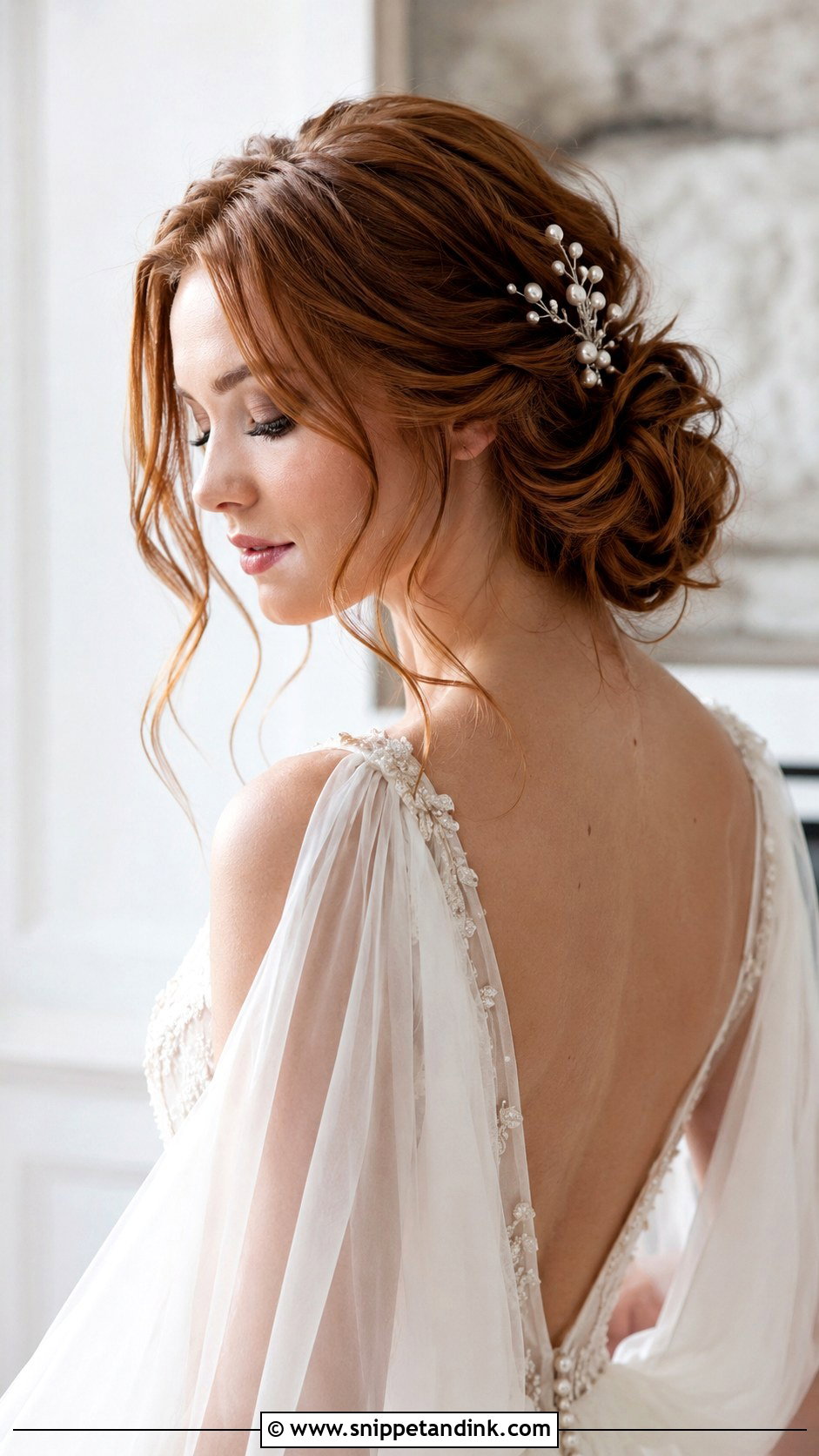
Volume in a bun mostly comes from preparation. I backcomb at the roots in sections and sometimes hide padding or a clip-in piece inside the knot, especially on fine hair that can’t fill this shape on its own. Thick hair has the opposite problem. It gets heavy and drags, so I split it into two sections and pin each one separately to spread the weight.
17. Vintage Rolled Bun Updo
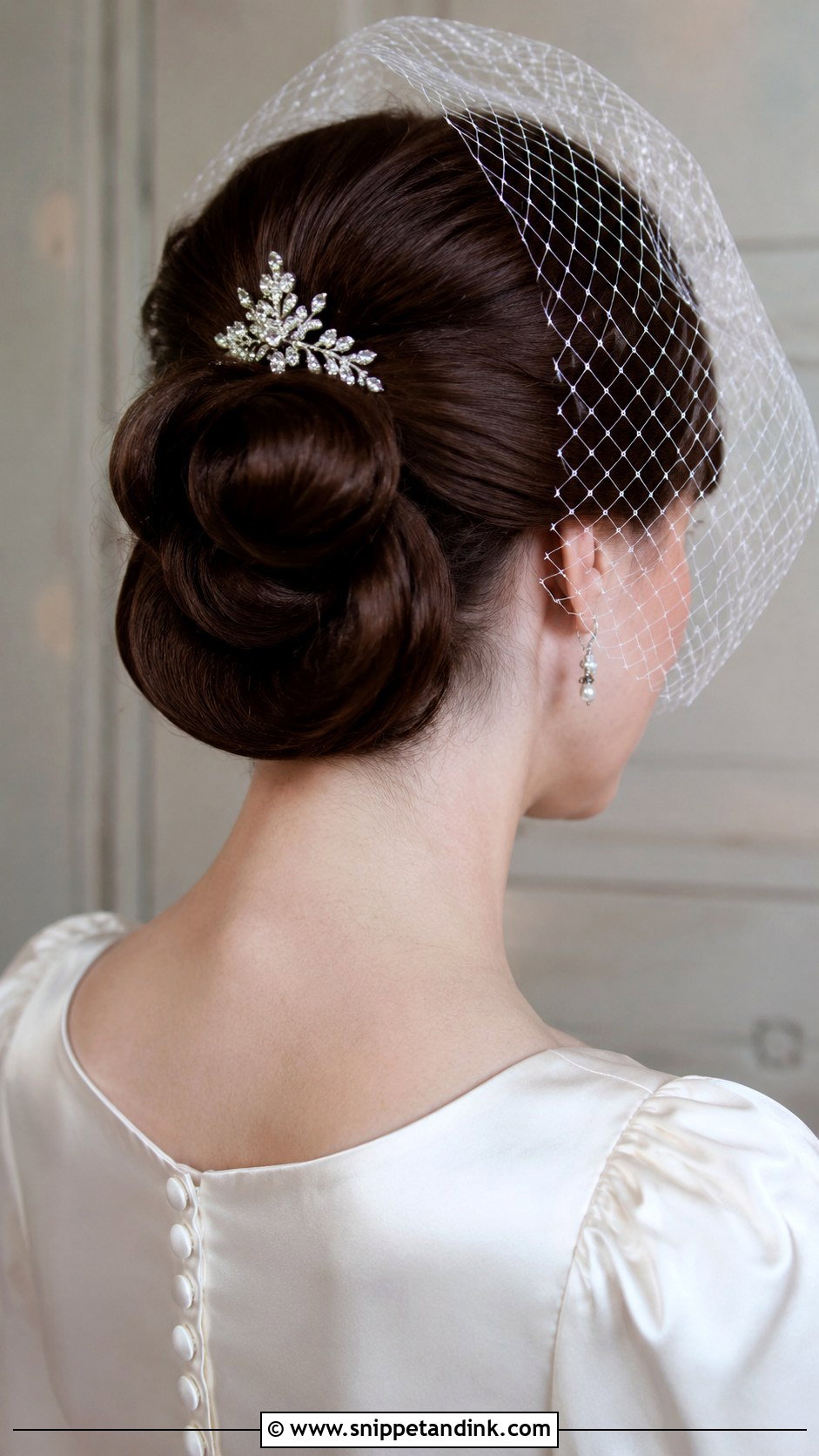
Rolled buns start with a set, either hot rollers or pin curls, and the hair has to cool completely before it’s brushed into shape. Rush that step and the rolls collapse within an hour. The structure carries a strong 1940s feeling, so it sits best with a vintage cut gown and simple jewelry. A birdcage veil or jeweled comb finishes it.
18. Bun With Cascading Tendrils
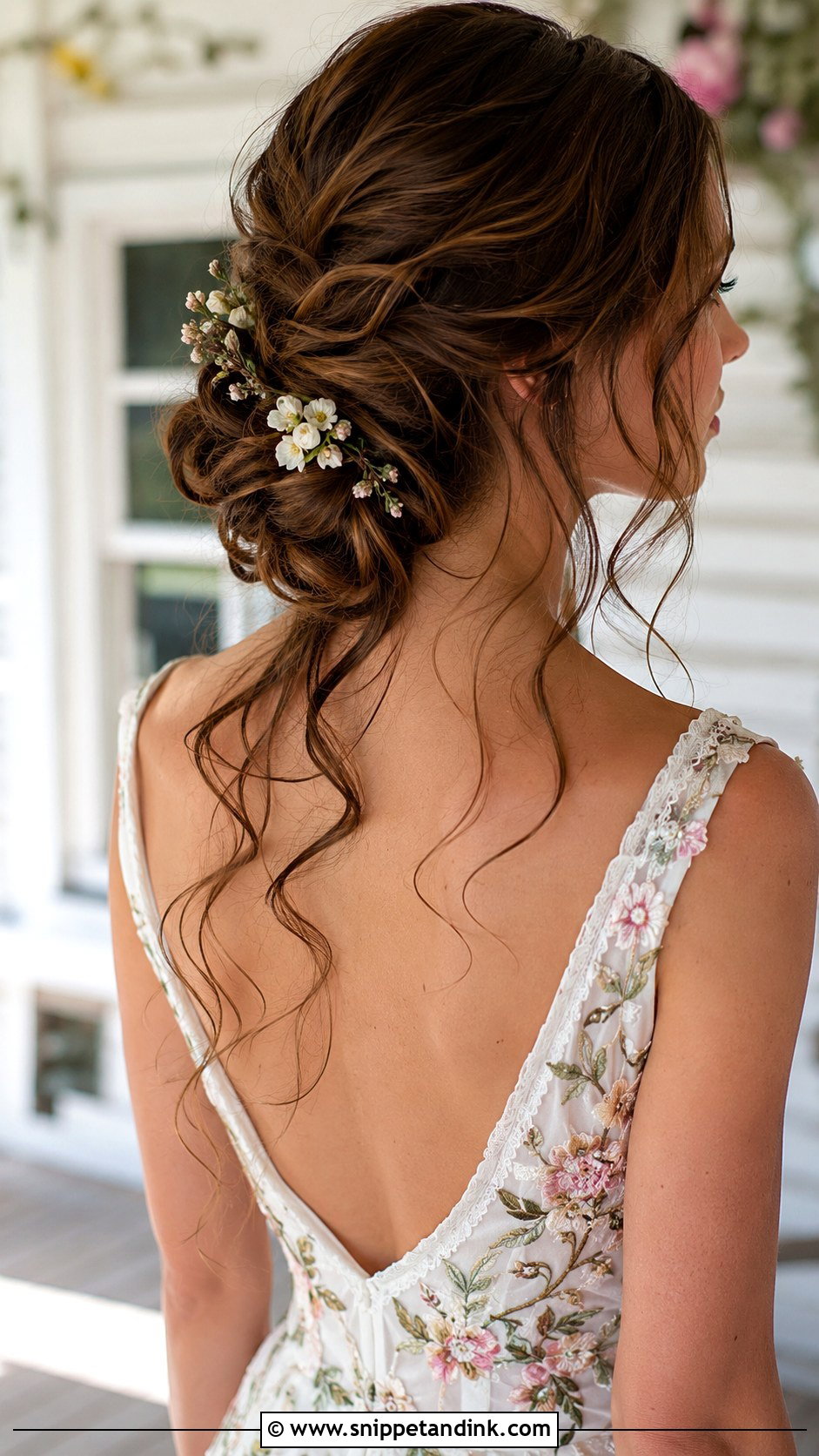
Tendrils sound easy, but they need deciding at the trial, not on the morning. I pull them out before setting, curl them with a smaller barrel than the rest, and clip them up out of the way until just before the ceremony so they don’t drop early. Very straight hair struggles to hold them through summer heat. Two or three per side is usually enough; any more starts to look like the bun is coming down.
19. Knotted Low Bun Wedding Style
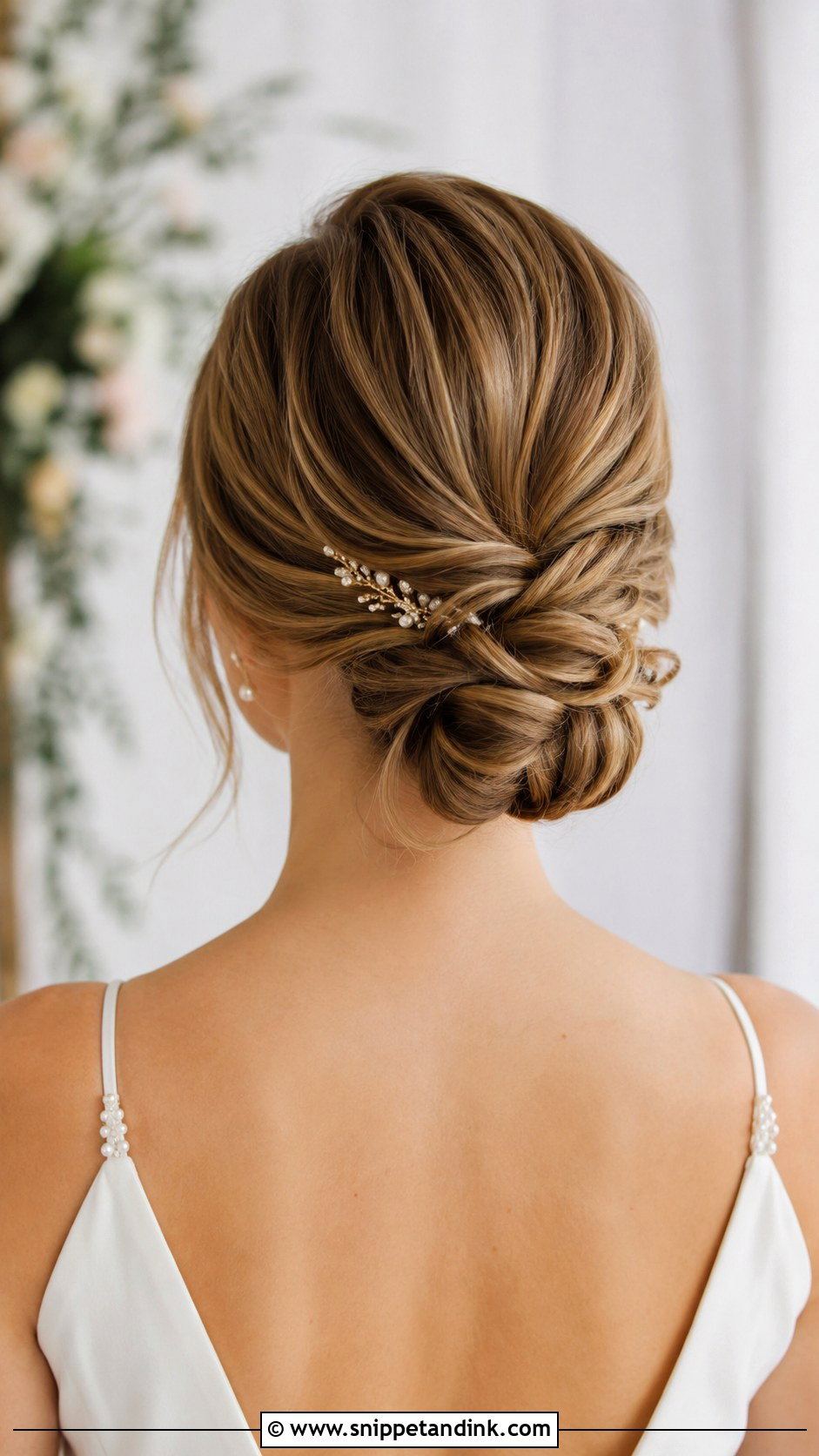
Knotted buns are made by tying sections of hair around each other, which gives a woven look without any braiding. Because each knot locks itself, the style is secure on medium to long hair and needs fewer pins than most. On very thick hair it can look busy, so I work with fewer, larger sections there. Delicate pins or a few fresh stems slot into the gaps.
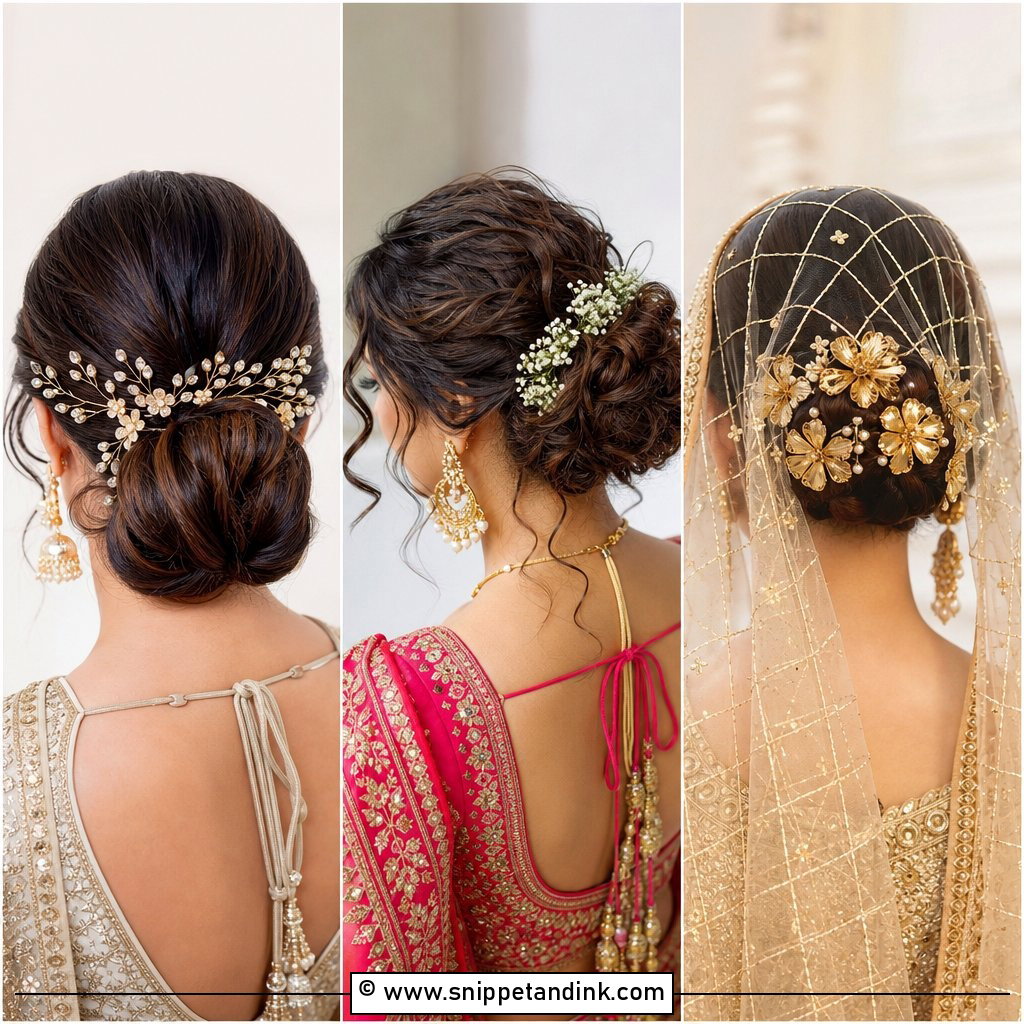
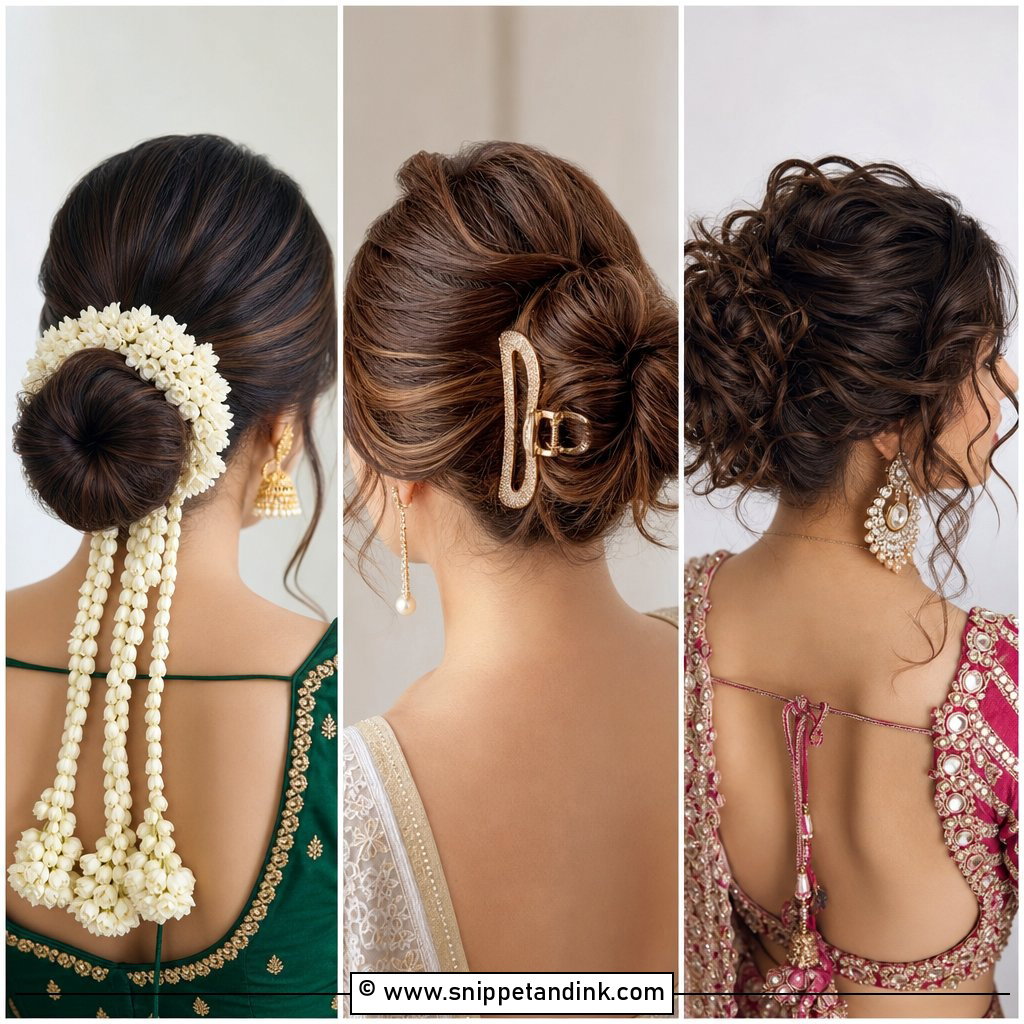
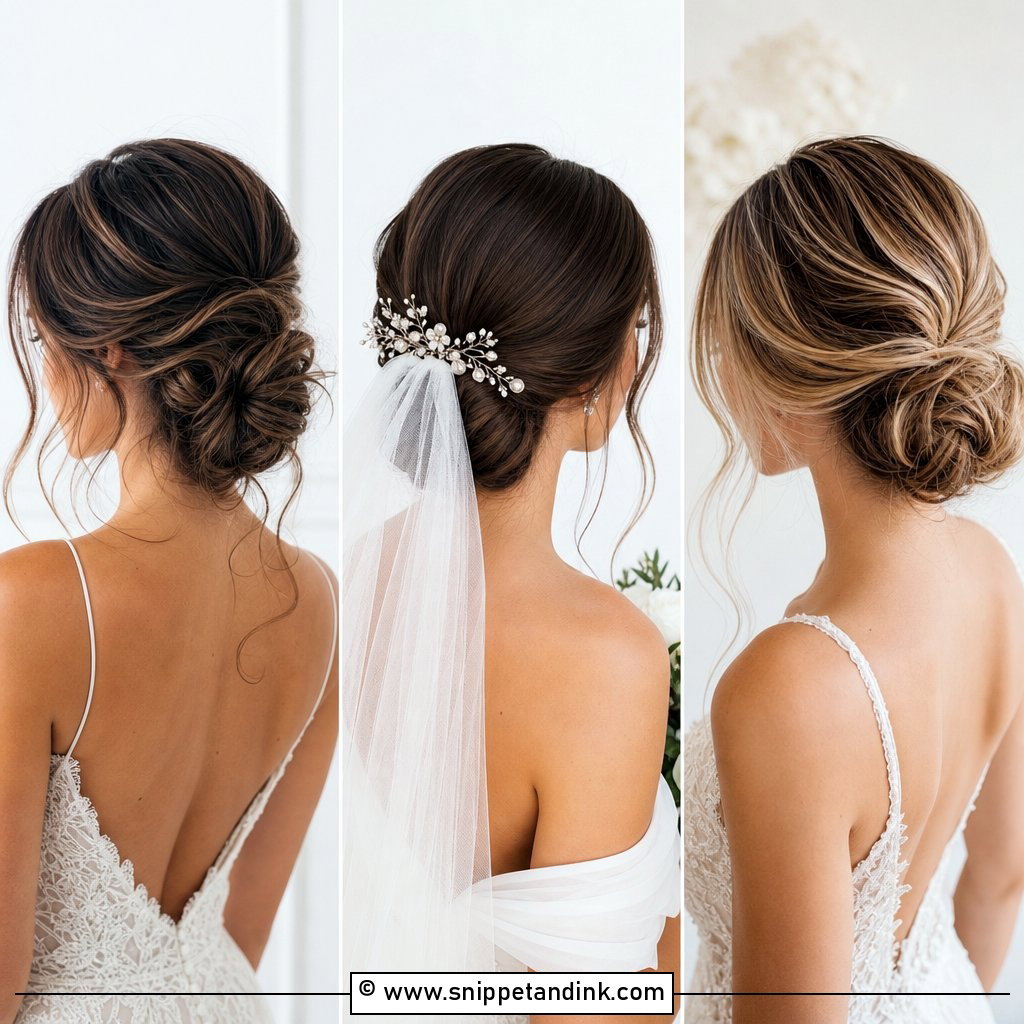
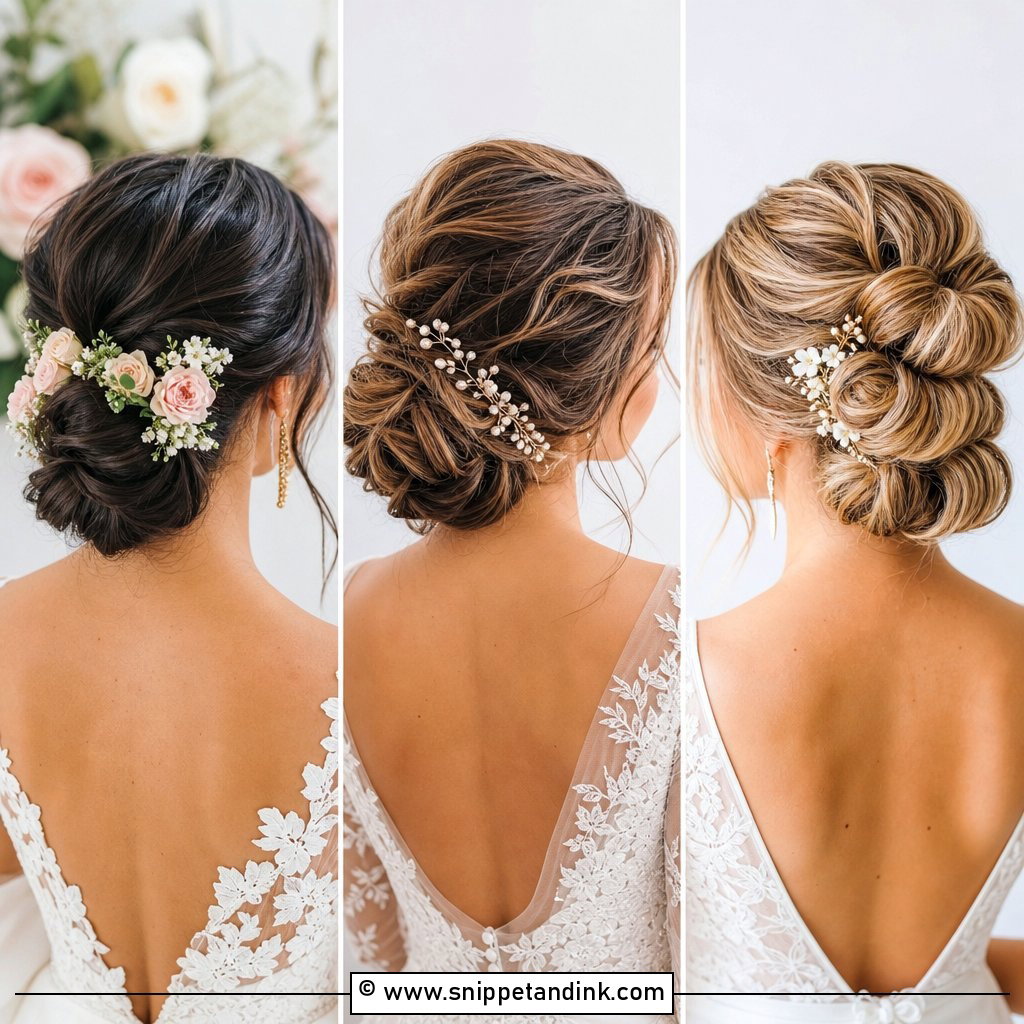
20. Half-Up Bun With Flowing Hair
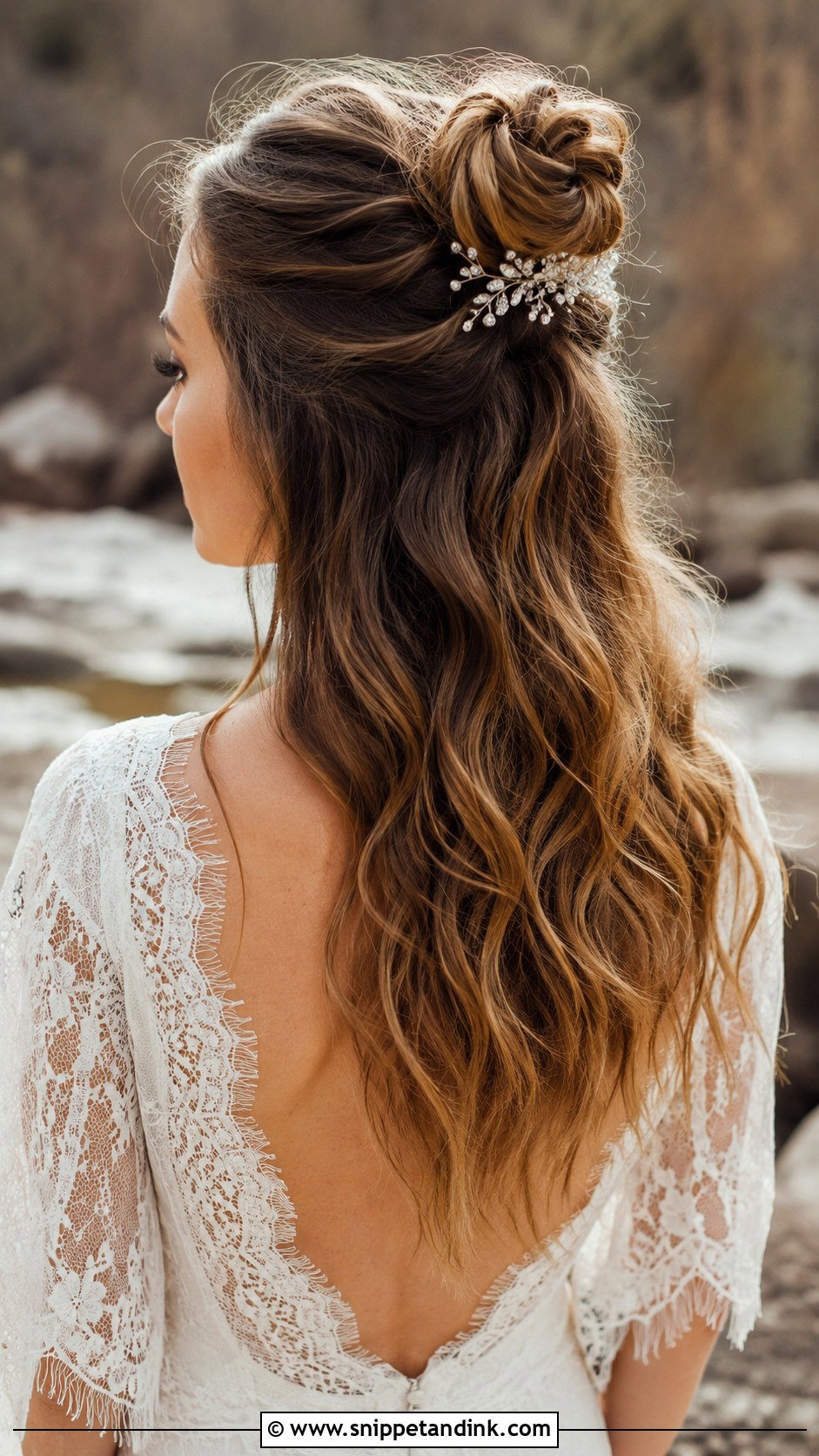
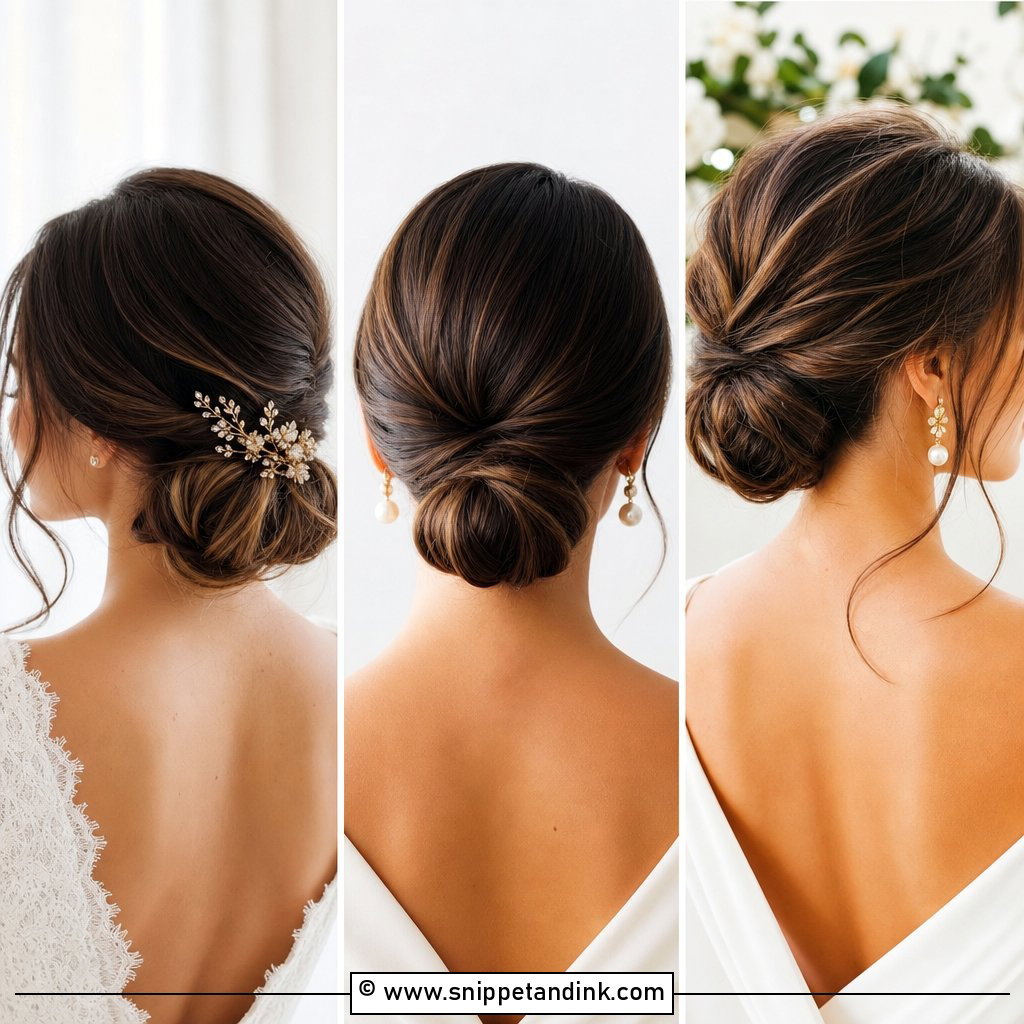
A half-up bun keeps hair off the face while leaving length down, but it has the shortest life of anything here, because loose curls drop in heat and humidity. I set the lower lengths with a large barrel, pin each curl up to cool, then release them late and brush through gently. Fine, straight hair usually benefits from a few clip-ins for body. A flower or a small pin at the knot is enough decoration.
21. Crown Braid Bun Updo
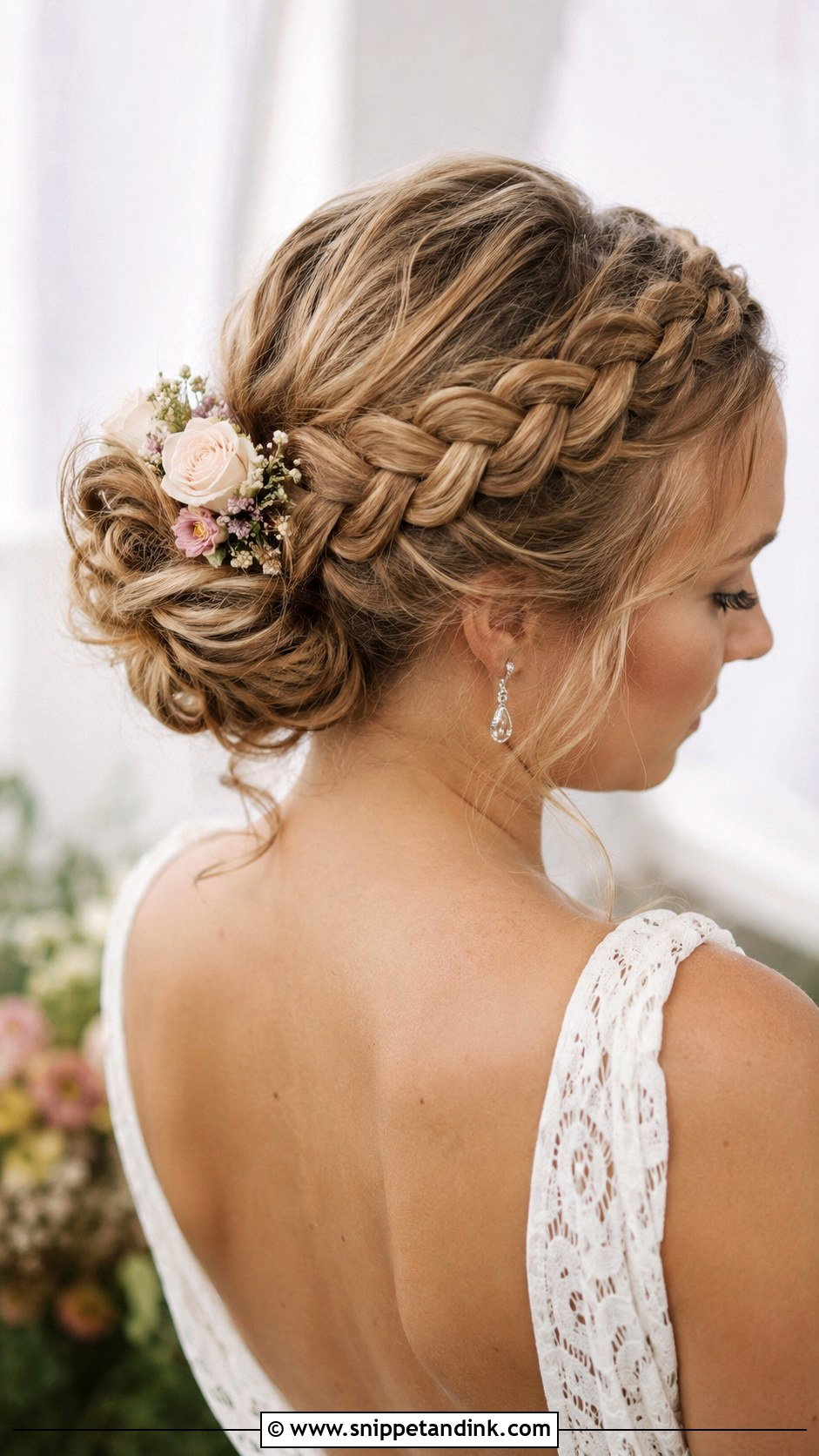
A crown braid circles the head before meeting a soft bun at the back, so it frames the face like a halo. It’s really a style for long hair, or for clip-in extensions woven into the braid. Outdoors it holds up well, even in wind, because the braid carries most of the weight. Small flowers tucked between the strands suit a garden or festival-style wedding.
22. Low Bun With Veil
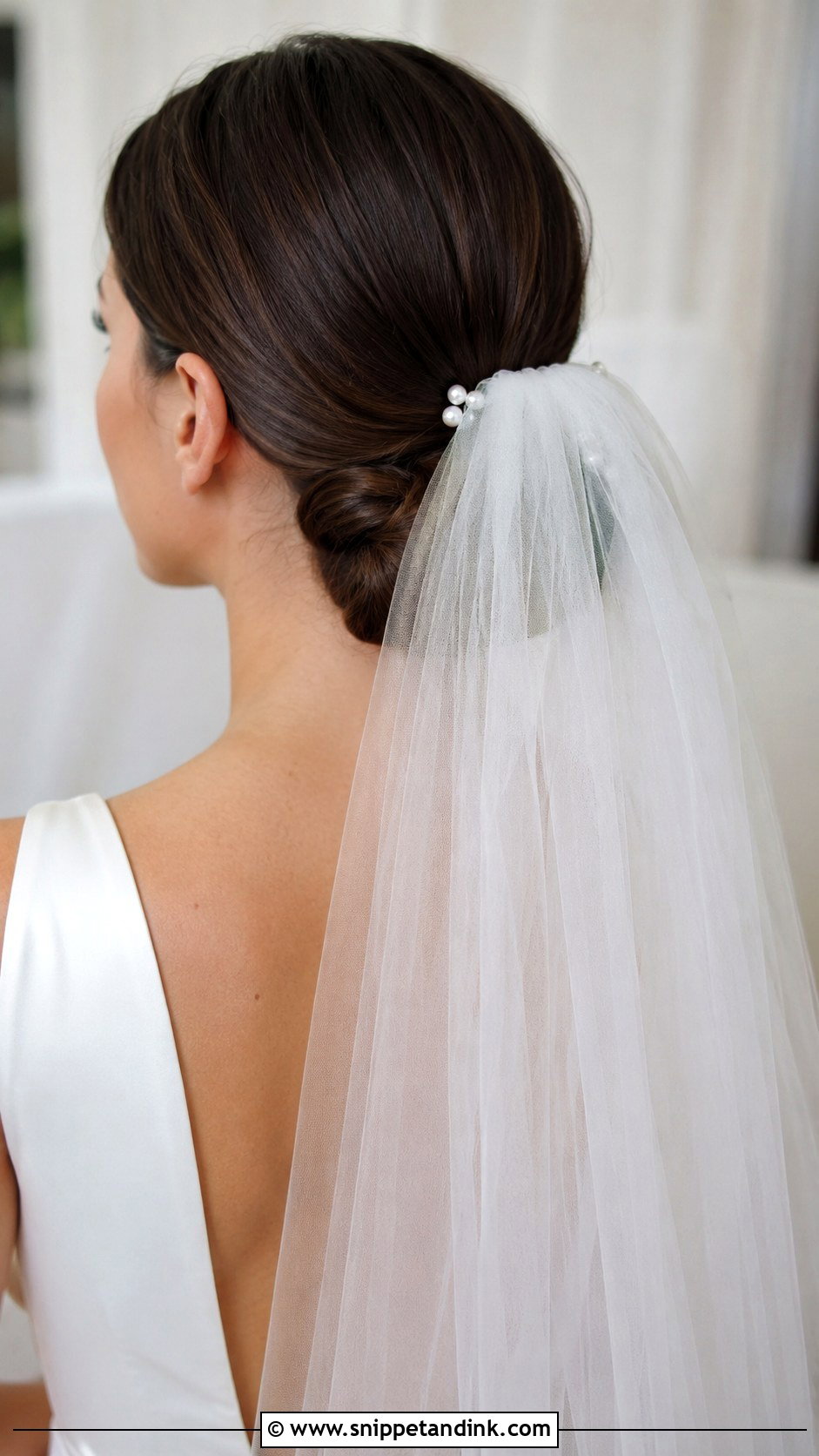
A bun is the most reliable veil anchor there is, which is why so many brides end up with one. Where the comb goes depends on the veil: above the knot for lift, below it for a heavy cathedral length that needs more support. I always place the veil at the trial using the real one, because the comb’s teeth need a crisscross of pins underneath to grip. A comb or a few pearl pins can cover the join.
23. Sleek Bun With Center Part
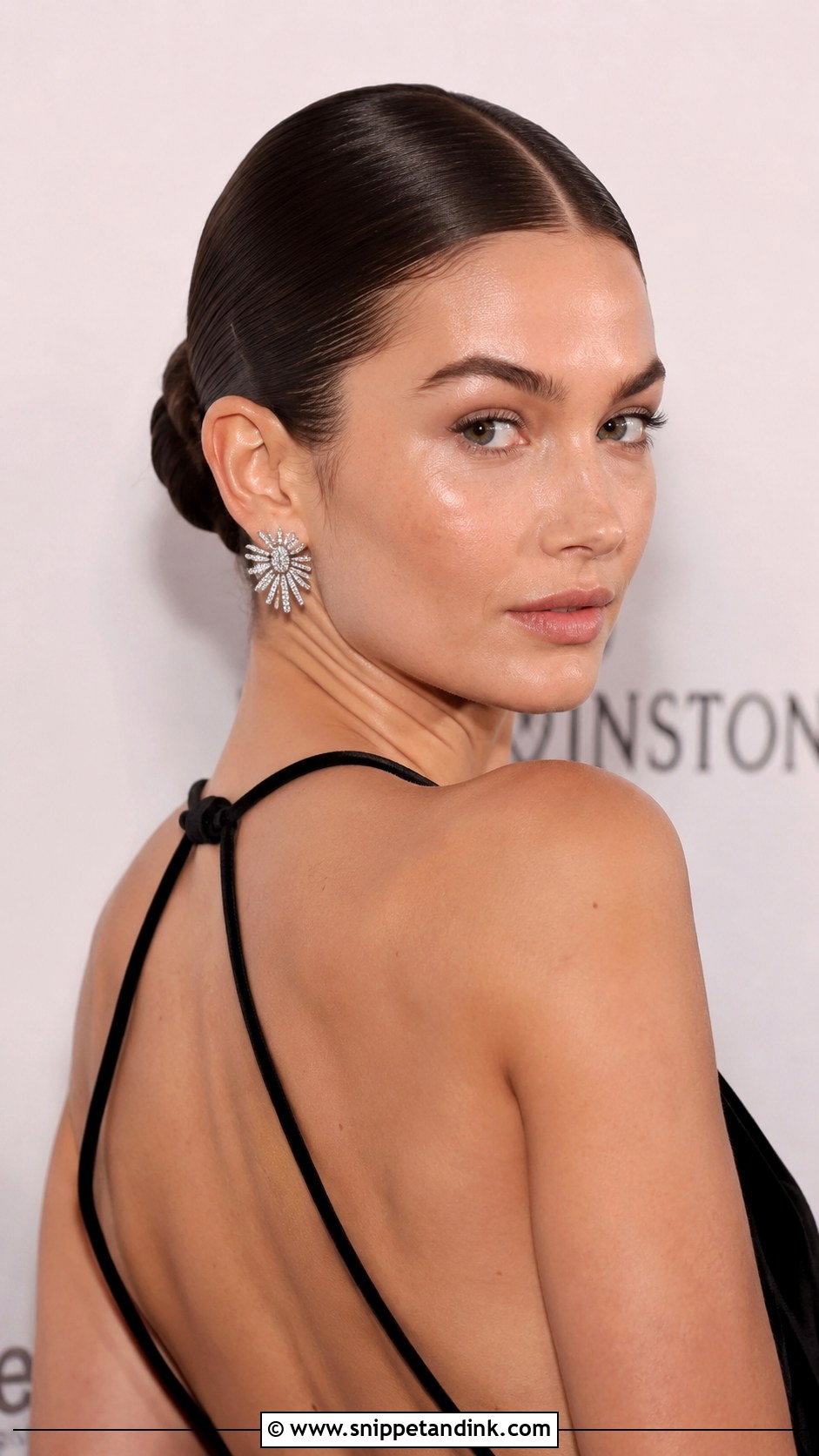
A sharp center part with a sleek bun is a symmetrical, modern look, and it shows everything. Before recommending it I check the front hairline for a cowlick, because a stubborn swirl will drag the part off center by the afternoon. Glossing cream and a flat brush give the shine. Statement earrings are all it needs.
24. Boho Bun With Baby’s Breath
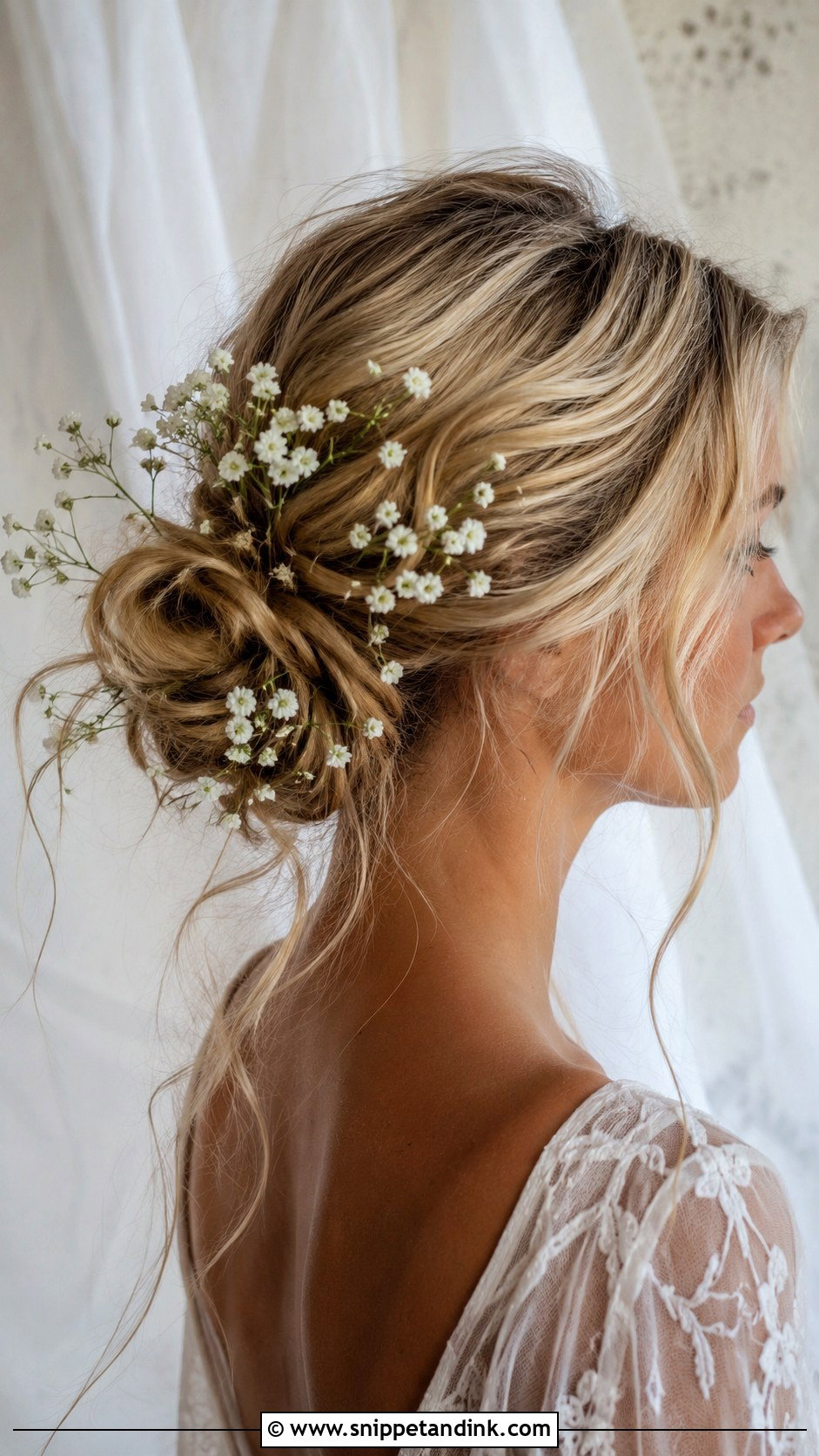
Baby’s breath is one of the few flowers I’m happy to scatter through a loose bun, because the tiny heads are light and survive out of water far longer than most blooms. I break it into small clusters and pin each cluster rather than pushing in stems. Keep the knot low and soft, with a few strands left free. Some people find its scent unpleasant up close, so hold a sprig near your face before the wedding if you’re sensitive.
25. Elegant Side-Swept Low Bun
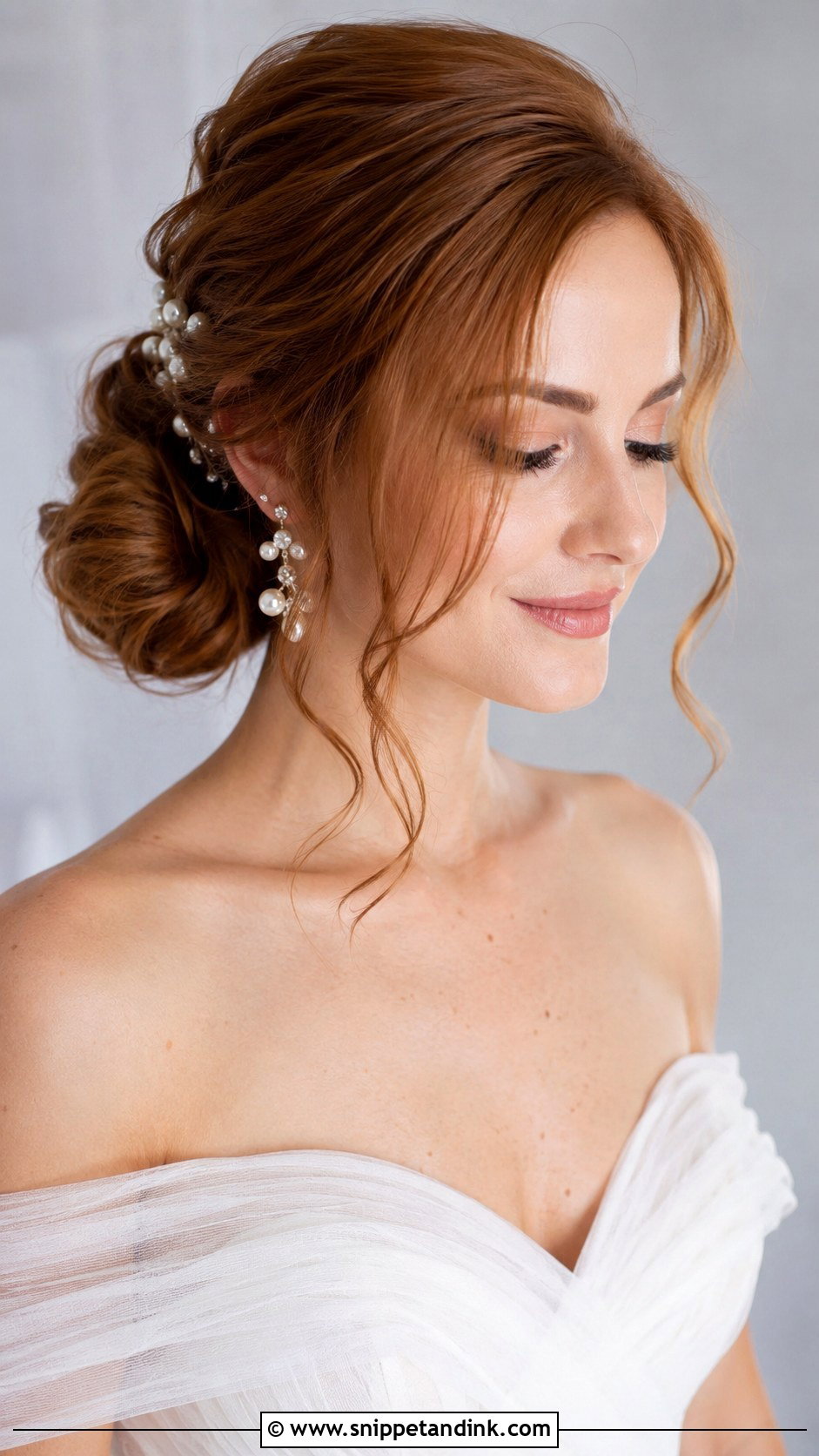
A side-swept low bun sits just off center at the nape, showing one shoulder, and it suits off-shoulder and one-shoulder gowns. I place it on the opposite side to a one-shoulder strap so the neckline and hair balance each other. It’s also comfortable to lean back in, which seems minor until you’ve sat through a long dinner with a knot pressing into your chair. Finish with a comb or pearls on the open side.
Freshly Washed Hair Slips, So Plan the Wash
The most common reason a bun loosens early isn’t the stylist or the pins. It’s hair washed that morning with a rich conditioner, which leaves every strand too smooth for a pin to grip. For most brides I recommend washing the day before, using conditioner only on the lengths, and arriving with hair fully dry and free of oil or serum.
If your roots get greasy overnight, washing on the morning is fine. Just tell your stylist, so she can add texture spray or dry shampoo before she starts. Curly and coily hair is the exception: arrive with it defined the way you’d normally wear it, since rewetting it at the station adds a long drying time to your schedule.
When a Pin Works Loose During the Dancing
Even a well-built bun can shift after hours of hugging and dancing. A small pouch handed to one bridesmaid will rescue most problems, and it helps if she watches how the style was pinned at the trial.
- A dozen bobby pins in your hair color, plus a few U-shaped pins for heavier buns
- A travel-size flexible hairspray
- A small mirror and a tail comb
- Two clear elastics in case a ponytail base gives way
To re-pin, slide the bobby pin in with the wavy side facing your scalp, against the direction the hair is falling, then cross a second pin over it in an X. That crossed pair holds far more than two pins pushed in side by side.
Three Buns Is Plenty to Test at One Trial
Bring two or three of these to your trial, not ten, along with photos of your dress from the front and back and of your veil. Wear a top with a similar neckline, then keep the style in for a few hours afterwards and notice what loosens first. That small test tells you more than any picture, and it means the bun you walk out with on the day is one you’ve already lived in.
You'll Like These Ideas:


Leave a Reply