
Brides marrying in France usually tell me they want to look relaxed rather than overdone, and that’s a good instinct. The French bridal look leans on fabric and cut: fine lace, fluid silk, clean tailoring, very little sparkle. There are also more options than a single gown now, from civil ceremony minis to separates and embroidered tulle. Let the place decide. Heavy satin looks right in a Paris salon, chiffon makes sense in a Provence summer, and a château can carry a fuller skirt and a long train. Each of the twenty dresses below comes with notes on shoes, veil, jewelry and flowers.
The Town Hall Rule That Shapes Many French Wedding Wardrobes
A detail that surprises many destination couples: in France, the legally binding wedding is the civil ceremony at the mairie, the town hall. A religious or symbolic ceremony can follow, but it doesn’t marry you in law on its own.
For foreign couples this has two common outcomes, and each changes what you wear.
- You marry legally at home and hold a symbolic ceremony in France. This is what most destination brides do, because a civil wedding in France normally requires one partner to have lived in that commune for a period beforehand, plus paperwork and translations. One dress is enough here, chosen purely for the venue.
- You marry at a French mairie. The civil room is usually small and formal, and the ceremony is short. Many brides wear a city-length or tea-length dress here and a full gown for the celebration later, sometimes on a different day.
Requirements differ by town and change over time, so confirm them with the mairie or your planner early. Once you know which of the two weddings you’re having, you’ll know if you’re shopping for one dress or two.
1. French Lace A-Line Wedding Dress
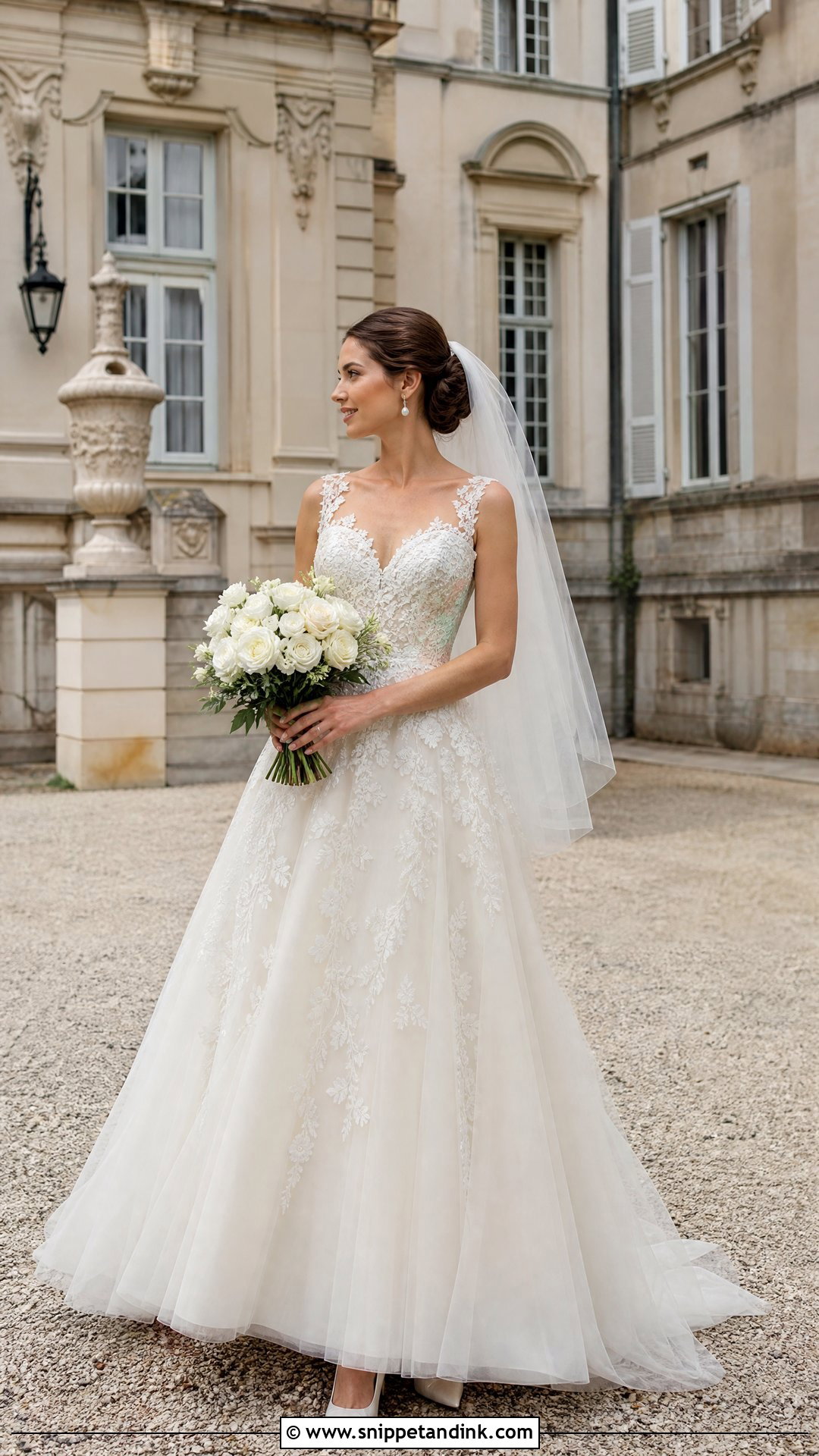
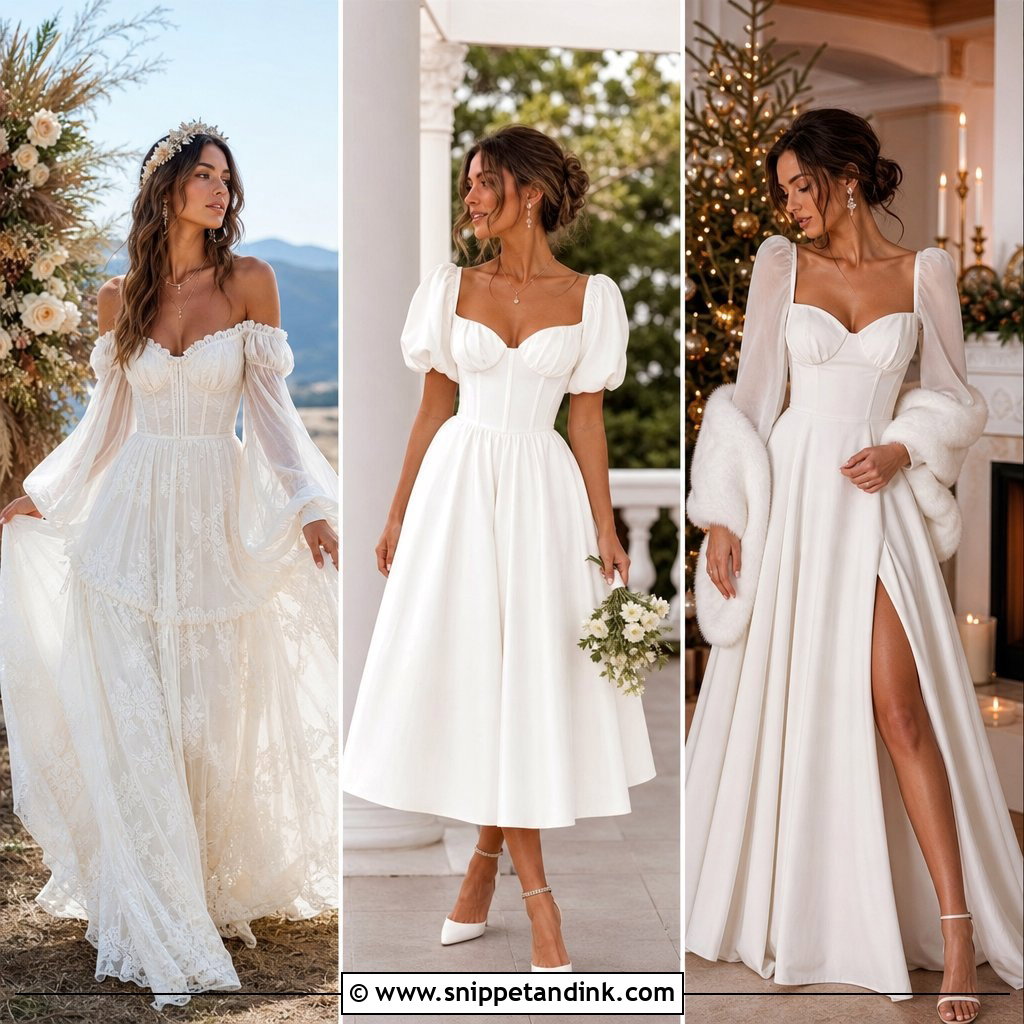
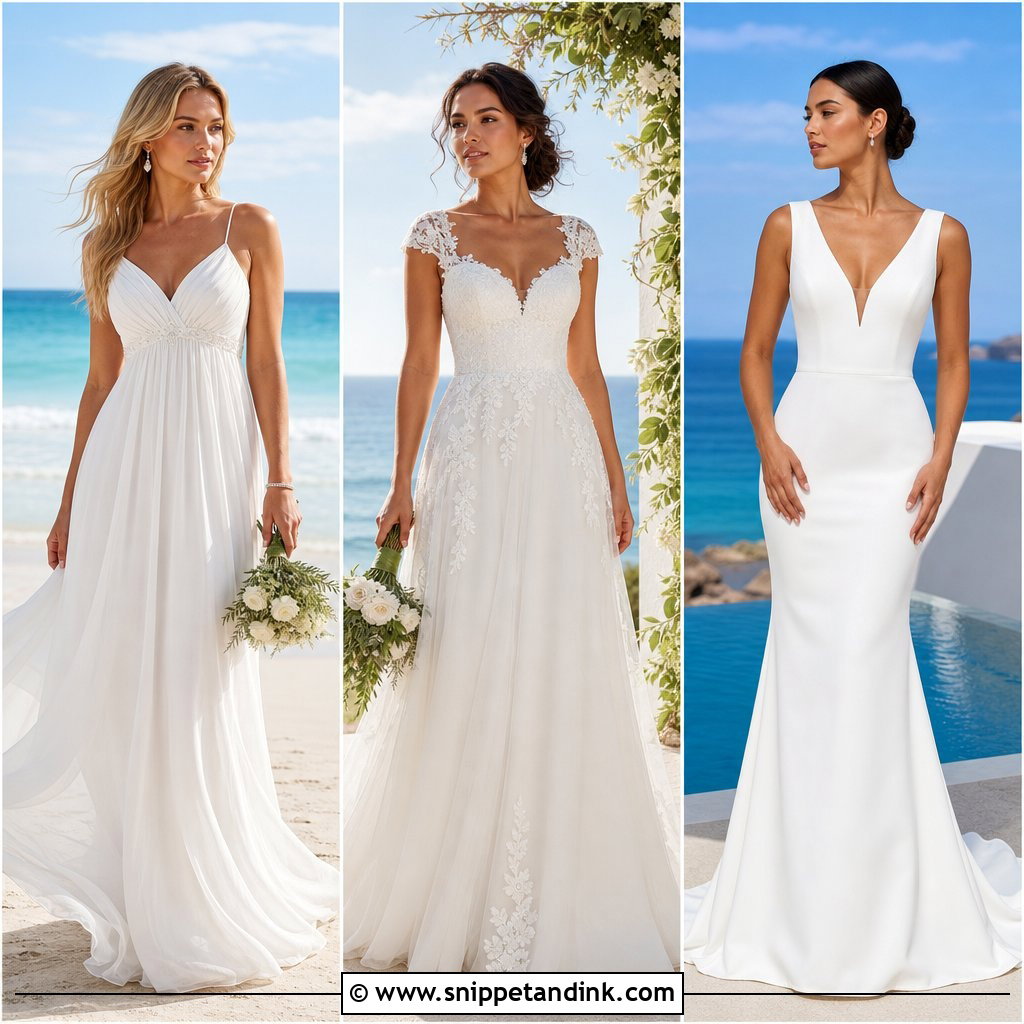
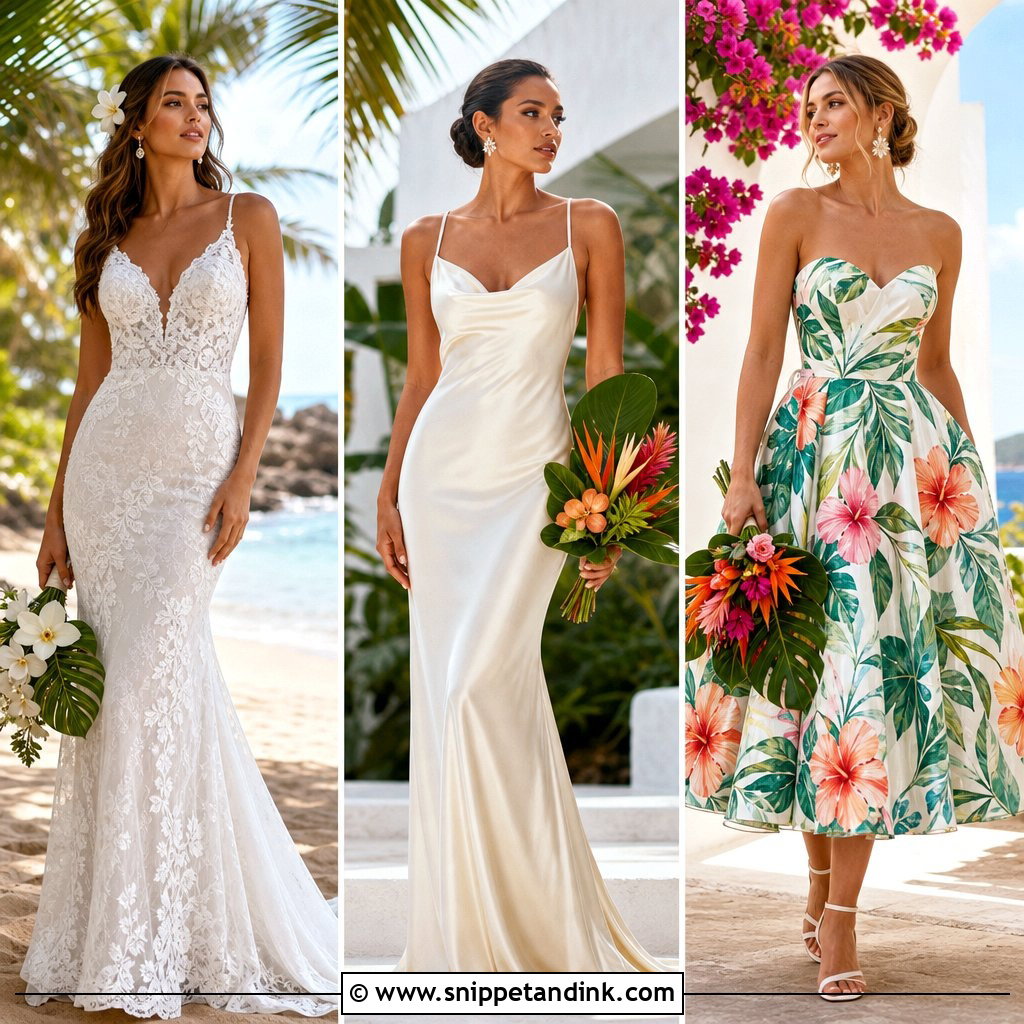
Lace on an A-line skirt is the dress I’d suggest to a bride who wants romance without volume. A fitted lace bodice, a natural waist and a softly layered skirt move well on uneven ground. Covered buttons down the back look lovely but take time to fasten, so whoever dresses you needs ten minutes and a crochet hook. Low block heels handle vineyard paths better than pumps. Pearl drops, a tulle veil and white garden roses keep it understated.
2. Silk Satin Paris Wedding Dress
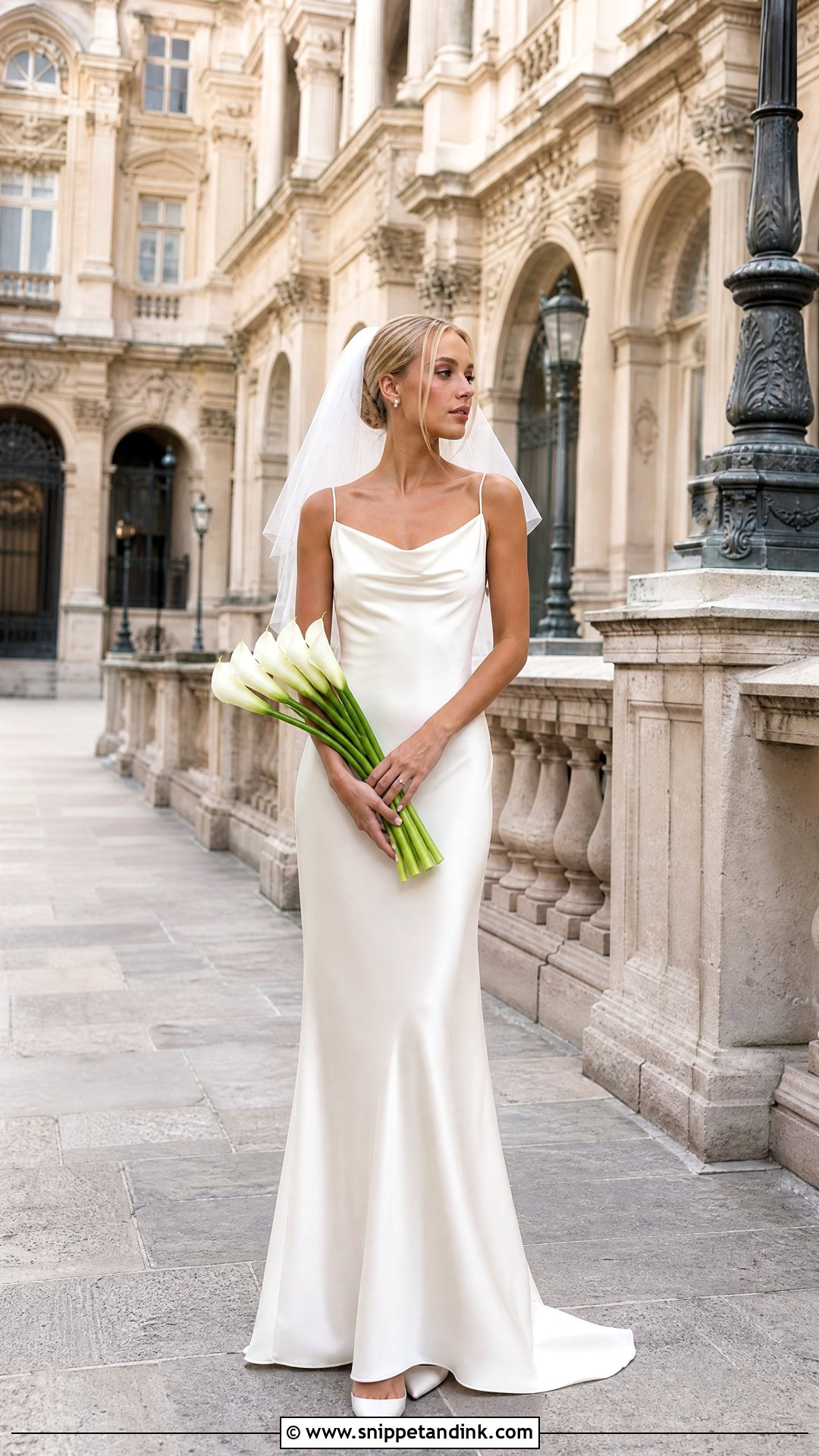
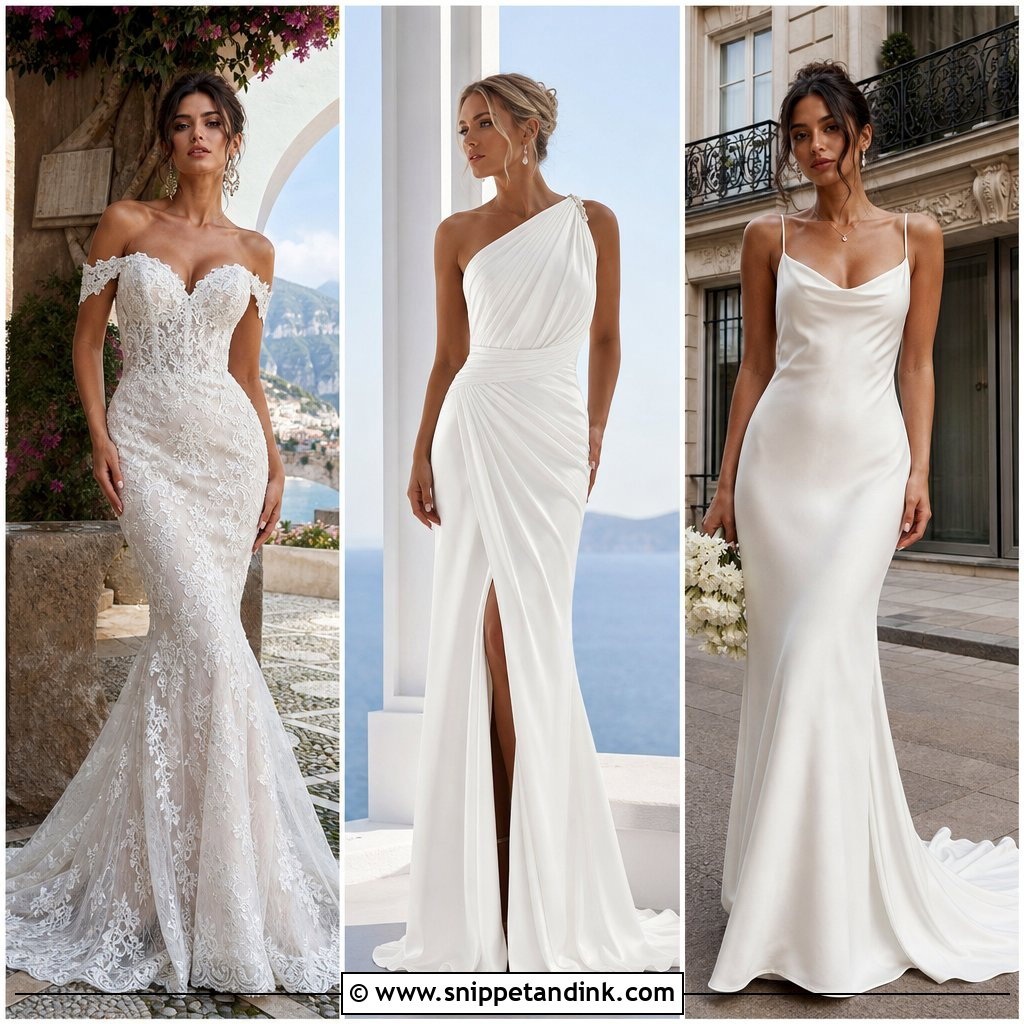
Bias-cut silk satin is the Paris dress, but it’s also the least forgiving fabric I fit. Cut on the diagonal, it clings and shows every line underneath, so the weight of the silk matters: heavy silk falls cleanly, thin silk looks cheap and shiny. Narrow straps and a softly draped neckline suit it. Pair pearl studs with sleek pumps and a short blusher veil. I reach for it most for a city hall ceremony or a small restaurant dinner.
3. Long-Sleeve Crepe Wedding Dress
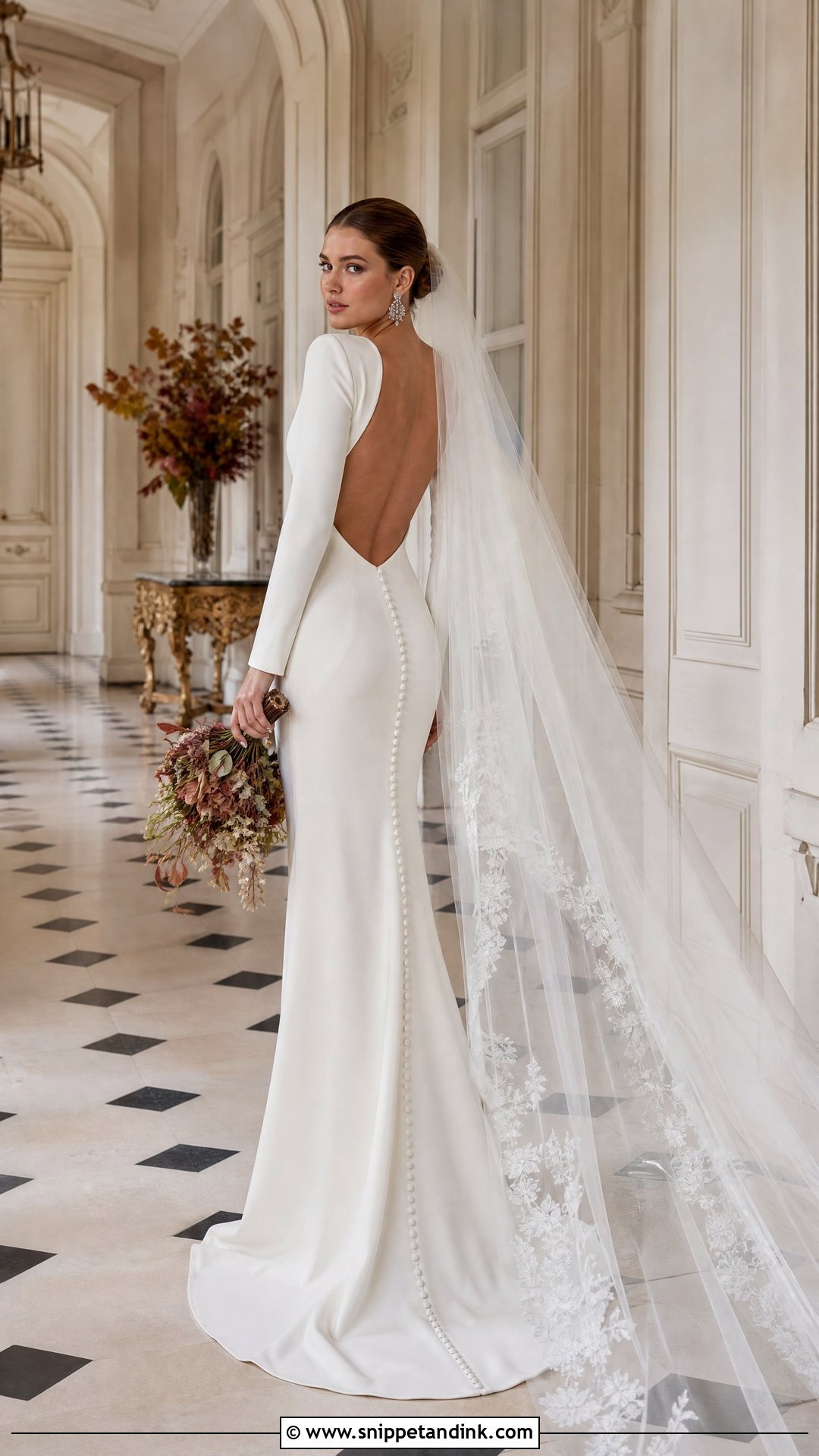
Long sleeves in heavy ivory crepe give a tailored line that suits autumn in Paris or a cool château. Crepe is opaque and smooth, so it needs very little decoration; a low open back adds contrast to the covered arms. Check you can lift your arms to hug guests. Fitted sleeves set too tightly at the armhole restrict movement, and that’s an alteration to make early. A cathedral veil brings ceremony drama.
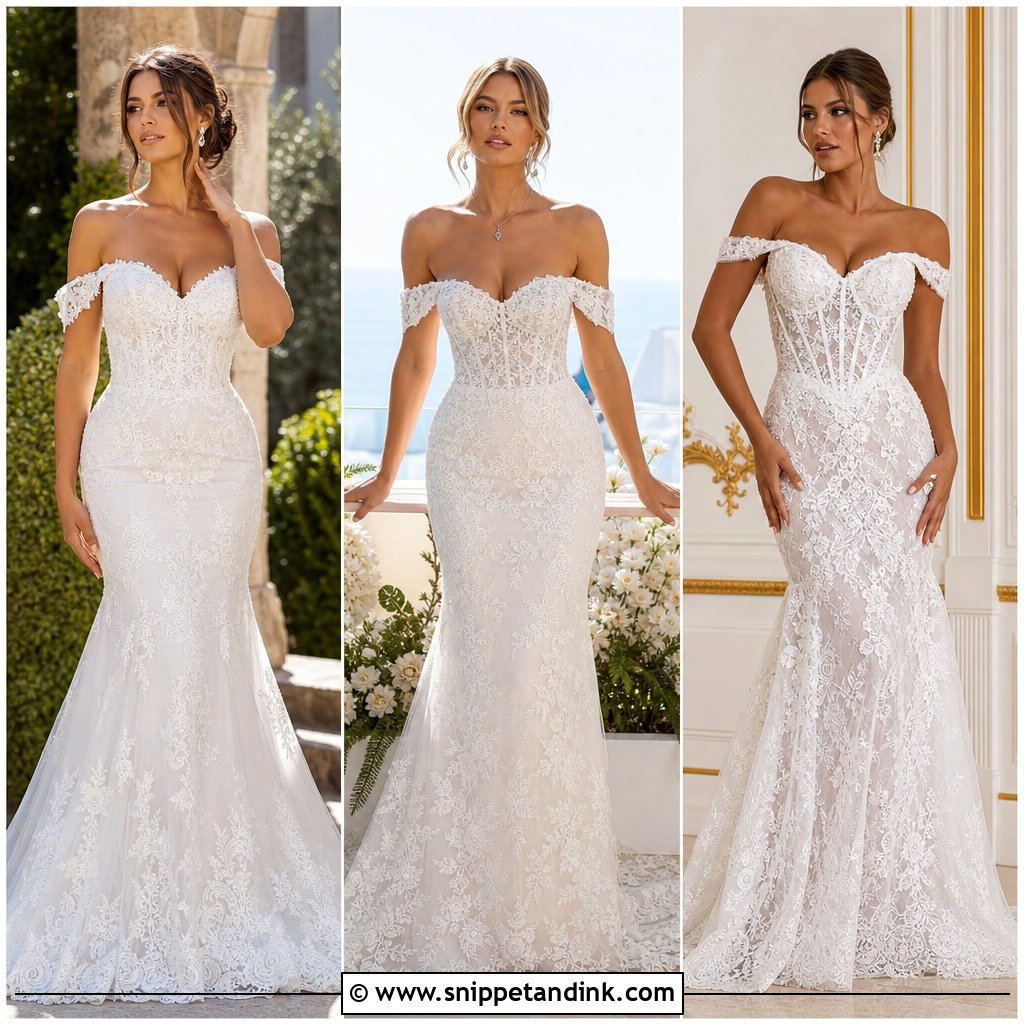
4. Off-Shoulder Château Wedding Dress
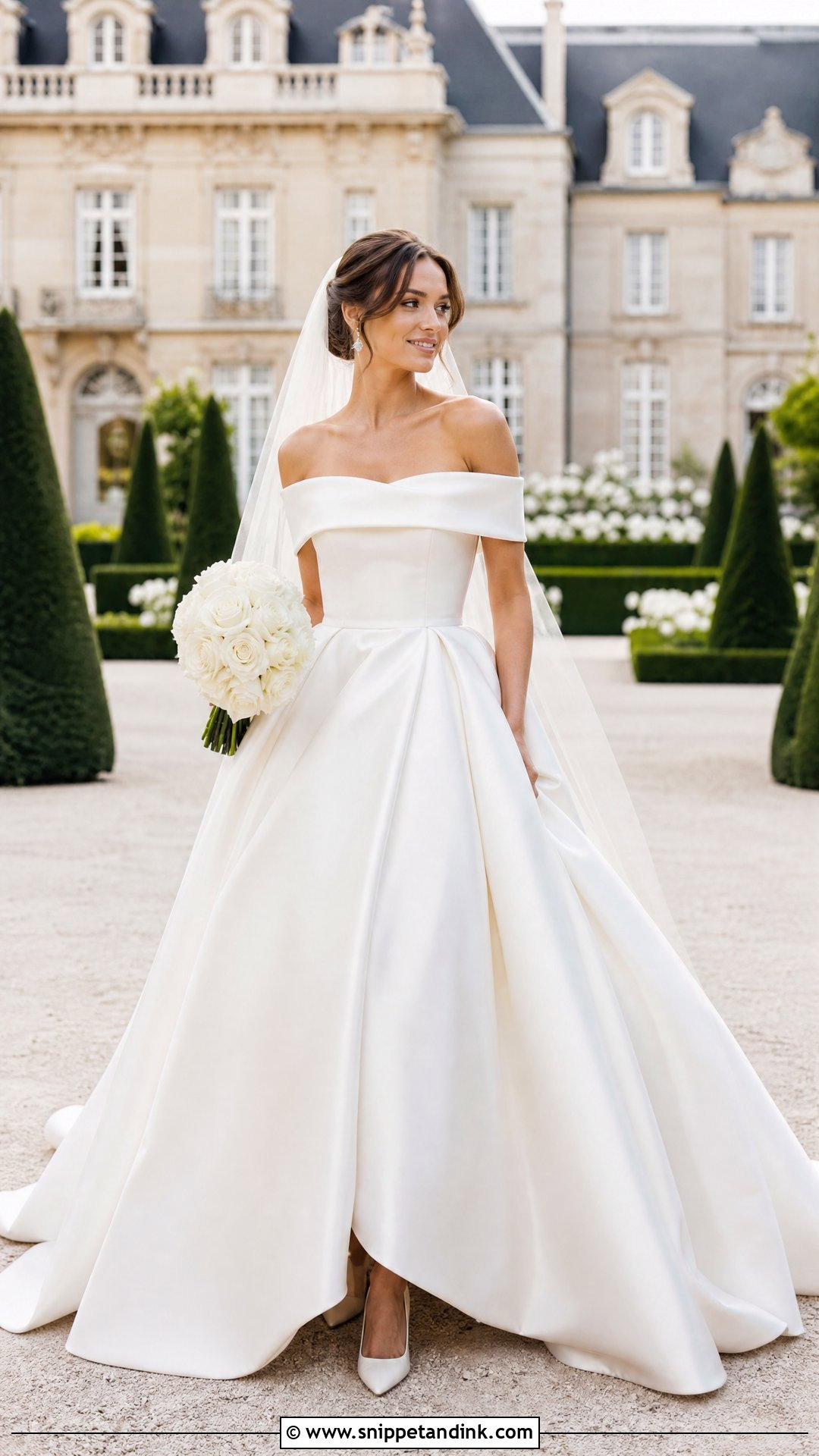
Château rooms are big, and an off-shoulder gown with real structure holds its own in them. A folded neckline, a defined waist and a full skirt in matte satin or mikado photograph well against stone and tapestried walls. The bodice must be boned to stay up through hugging and dancing. Pack embellished flats for the gravel courtyard. A rounded bouquet of white roses suits the scale.
5. Square-Neck Lace Wedding Dress
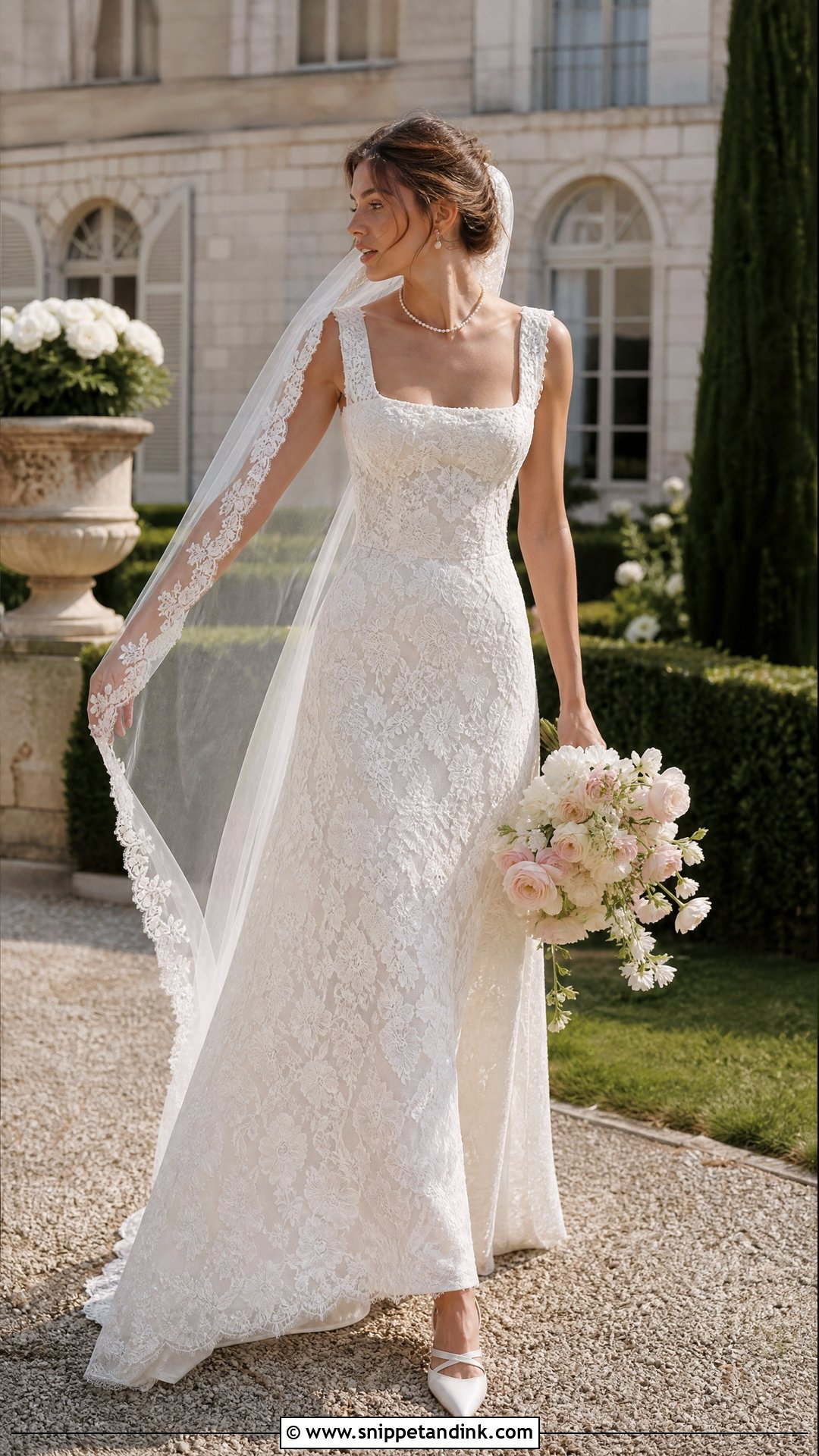
A square neckline modernises lace and frames the collarbone. It pairs with straps, cap sleeves or fitted three-quarter sleeves, which helps if you want some coverage for a church. Choose a veil with a narrow lace edge rather than one fully covered in lace, or the two compete. A relaxed updo with a few loose pieces and a loose bunch of ranunculus and sweet peas feel right for a village ceremony.
6. High-Neck Guipure Lace Wedding Dress
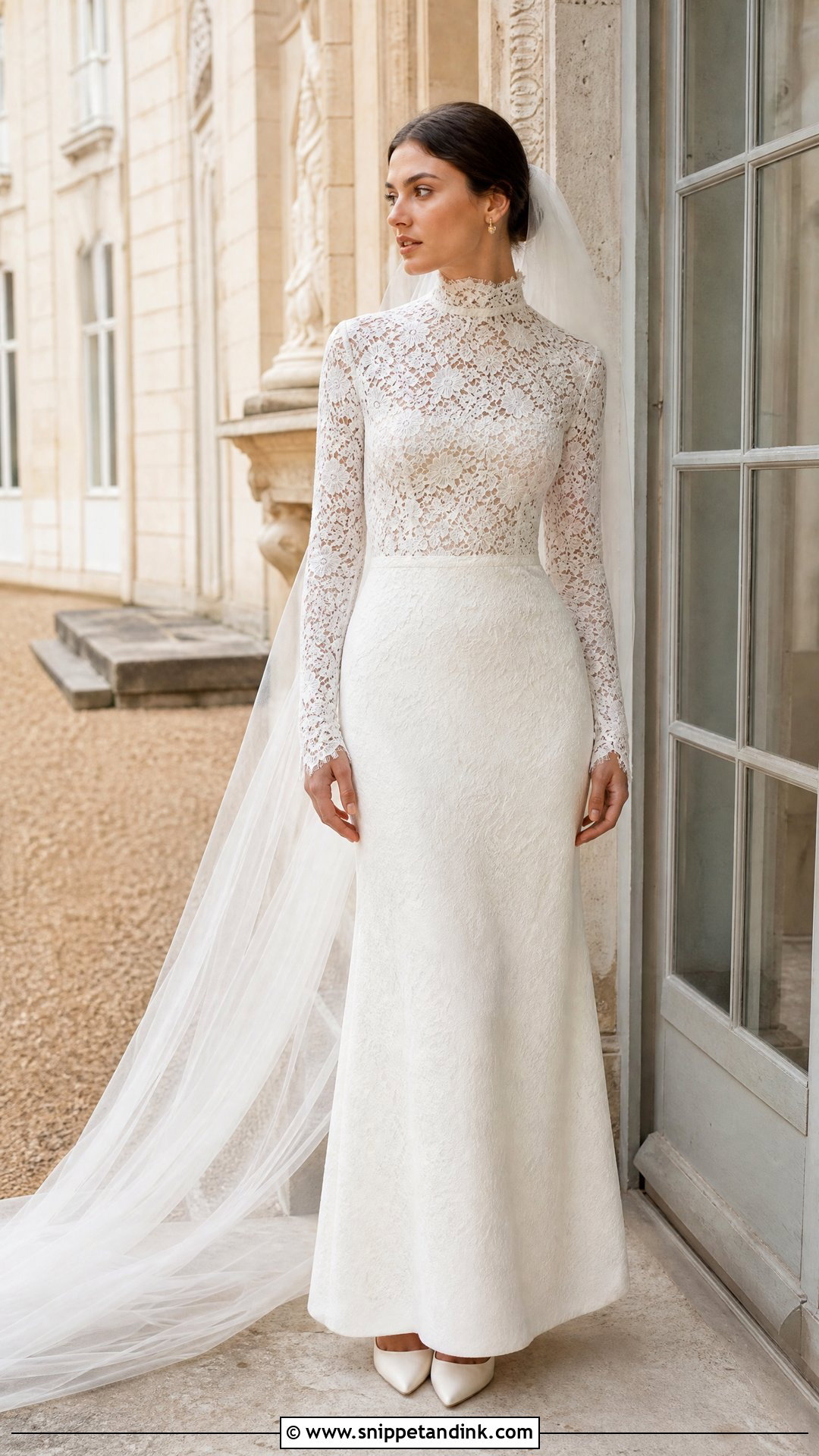
Could a covered dress still look modern? A high-neck guipure lace gown answers that well. Guipure has bold, raised motifs with no net between them, so it holds its shape and doesn’t need boning to look structured. Keep the skirt plain crepe so the bodice leads. Sheer sleeves with scalloped cuffs and a center-parted bun suit it, with the veil pinned beneath the bun so the lace stays visible.
7. Bateau-Neck Fit-and-Flare Wedding Dress
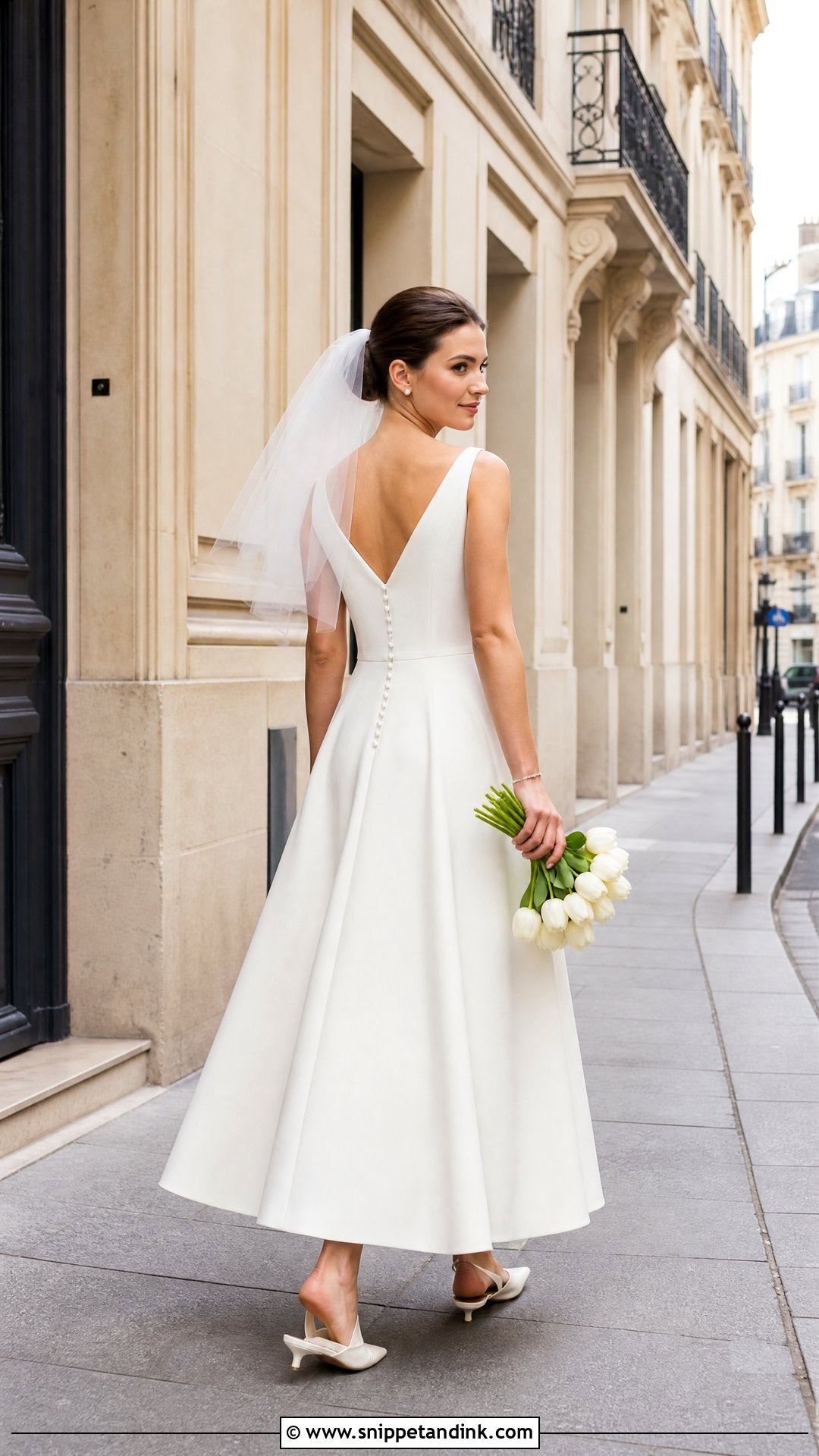
Bateau necklines run straight across from shoulder to shoulder, and they flatter narrow shoulders more than broad ones. In stretch crepe or smooth satin with a gentle flare below the hips, the front stays clean and the interest moves to a V-back or covered buttons. Pointed kitten heels and pearl studs keep it simple. A low twist shows the neckline from every side.
8. Basque-Waist Satin Wedding Dress
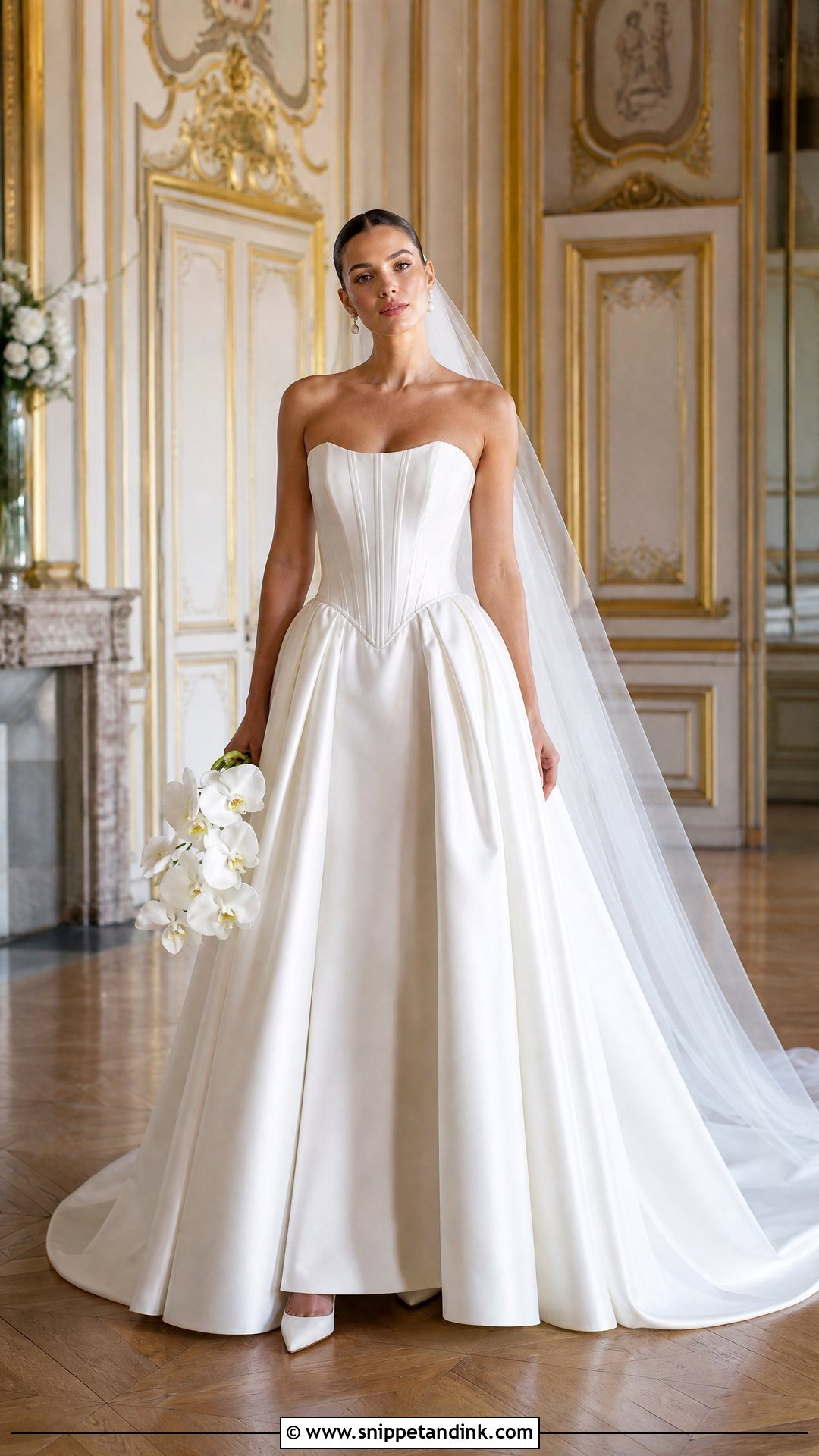
Basque waists dip into a V at the center front, which lengthens the torso and sets off a full skirt. The bodice has to fit precisely, so plan on at least two fittings. Matte satin keeps the shape refined. Skip a belt and a big necklace; the waistline is already the focal point. A smooth bun or waved bob and a long plain veil complete it.
9. Chiffon Provence Wedding Dress
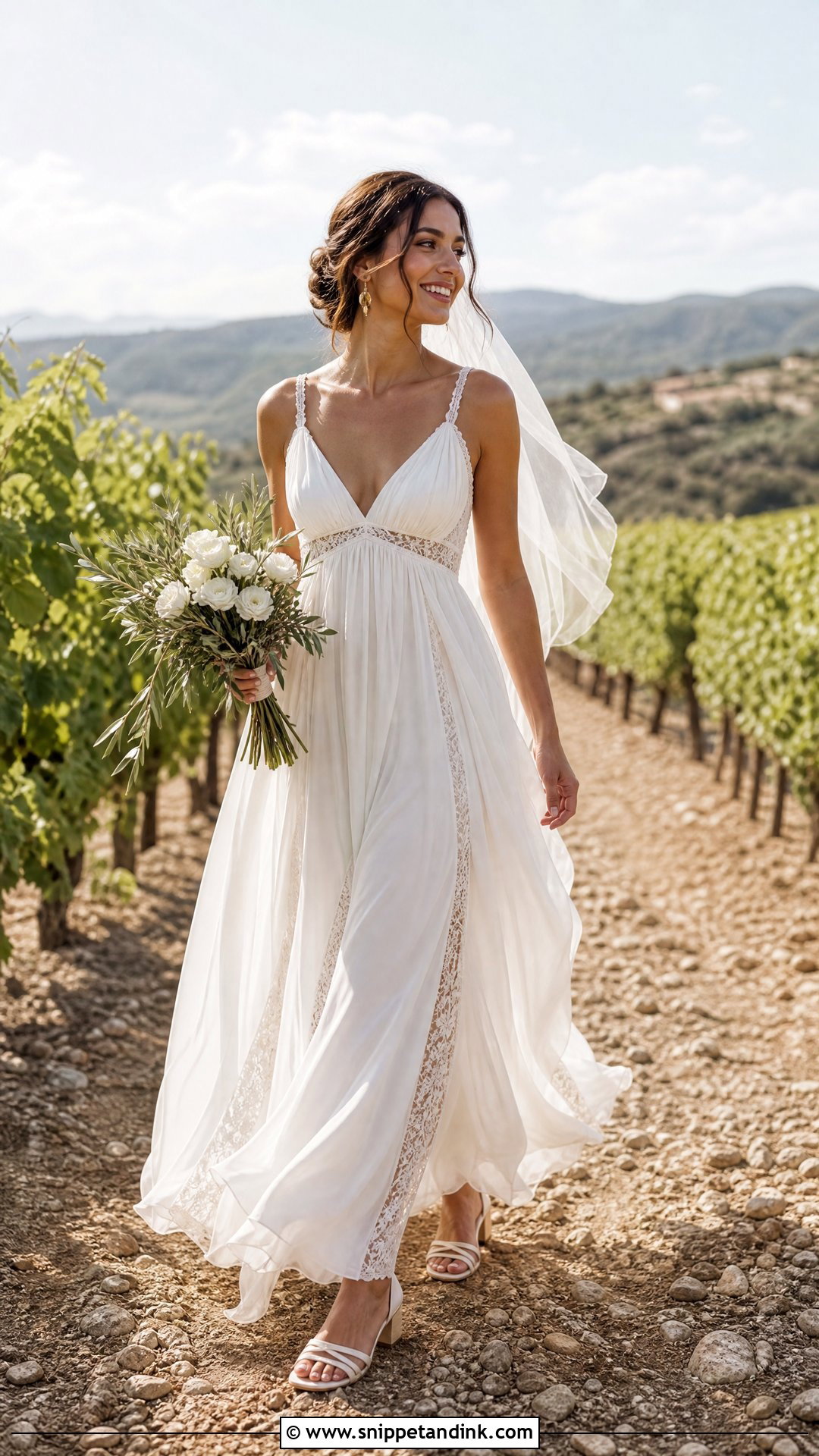
Provence summers are hot, and chiffon is the fabric I’d send a bride there in. It breathes and moves in the warm air. An A-line or empire gown with light gathering and a lined skirt carries small lace inserts without adding weight. Gravel and old stone need low block-heel sandals. Olive branches and white flowers in the bouquet pick up the landscape. Pin the veil firmly; the afternoon wind there can lift it straight off.
10. Short Civil Wedding Dress
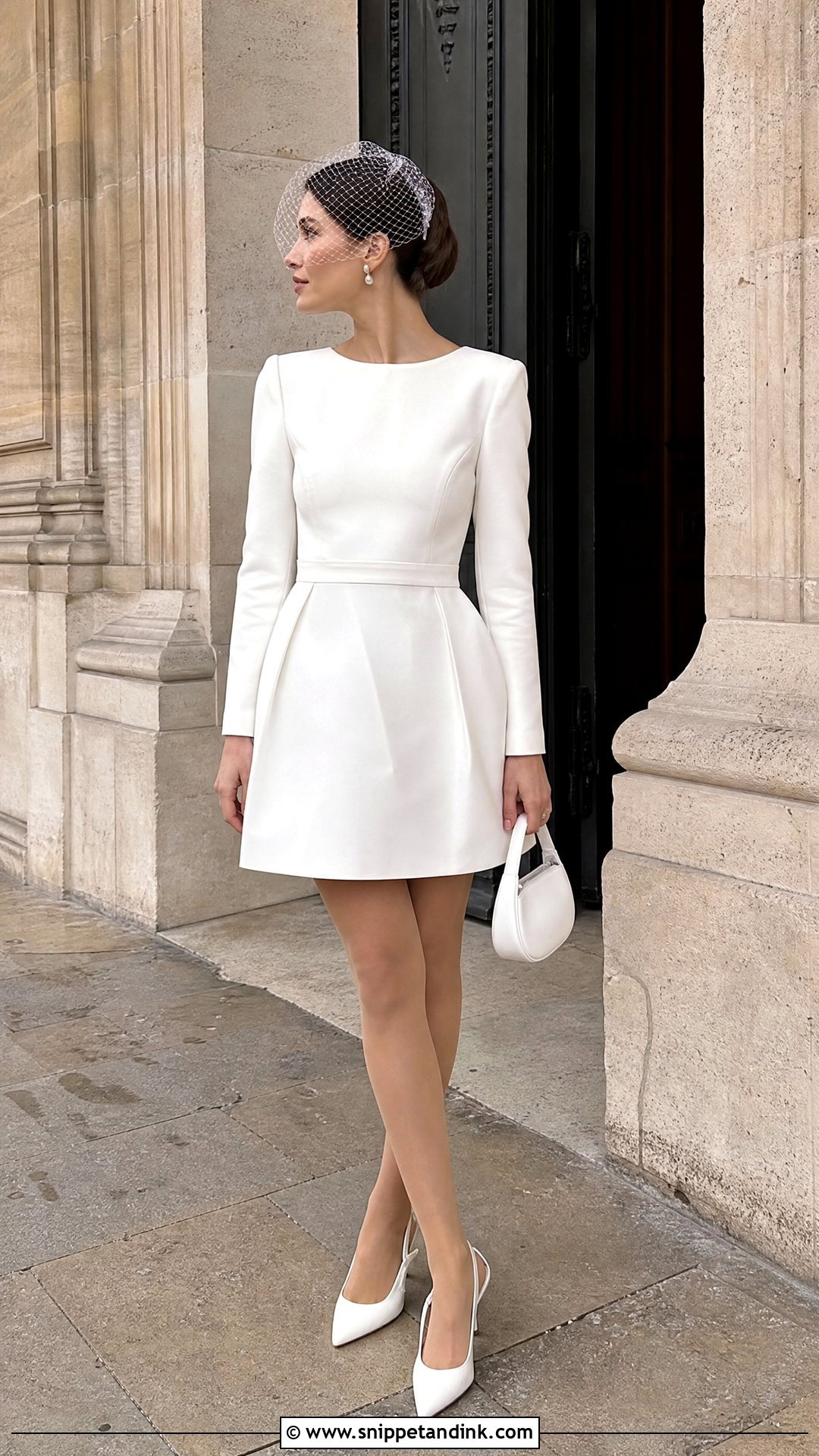
In France the legal ceremony happens at the town hall, and a short civil wedding dress suits that room and the walk through town afterward. A structured mini or knee-length dress in satin or crepe with a clean neckline looks deliberate. Long sleeves balance a short hem in cooler months. Pointed slingbacks, pearl earrings and a small bow or birdcage veil give it bridal character, and a white tailored coat covers you on the steps outside.
11. Tea-Length Paris Wedding Dress
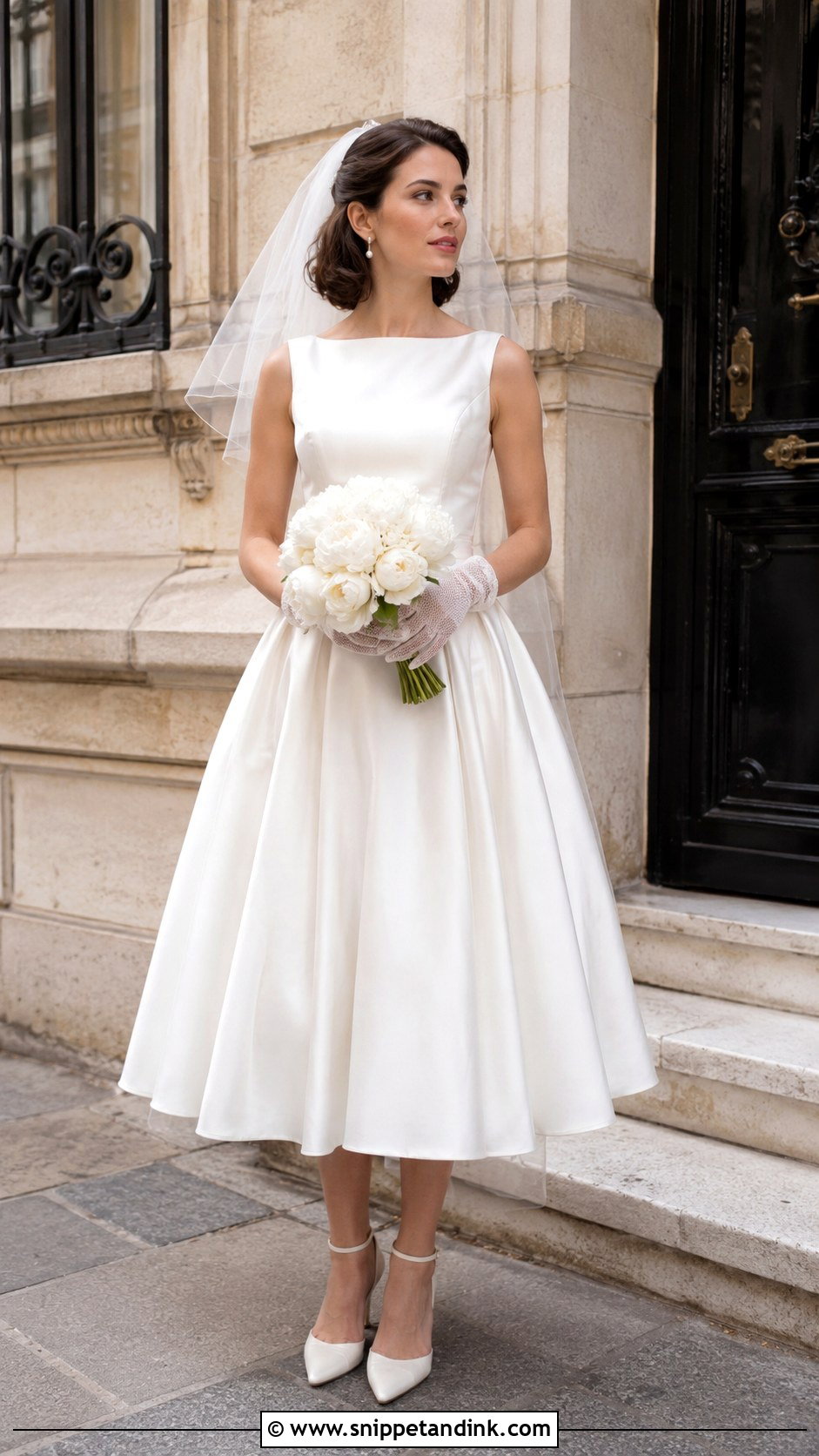
Tea length, finishing between knee and ankle, is practical for a Paris day of walking and dancing, and the visible shoes become part of the look. Satin, jacquard and fine lace all suit it, depending on how formal the venue is. Short gloves and a shoulder-length veil give a retro note; a polished chignon keeps it from looking like a costume. It sits well in a restaurant or a historic Parisian building.
12. Lace Two-Piece Wedding Dress
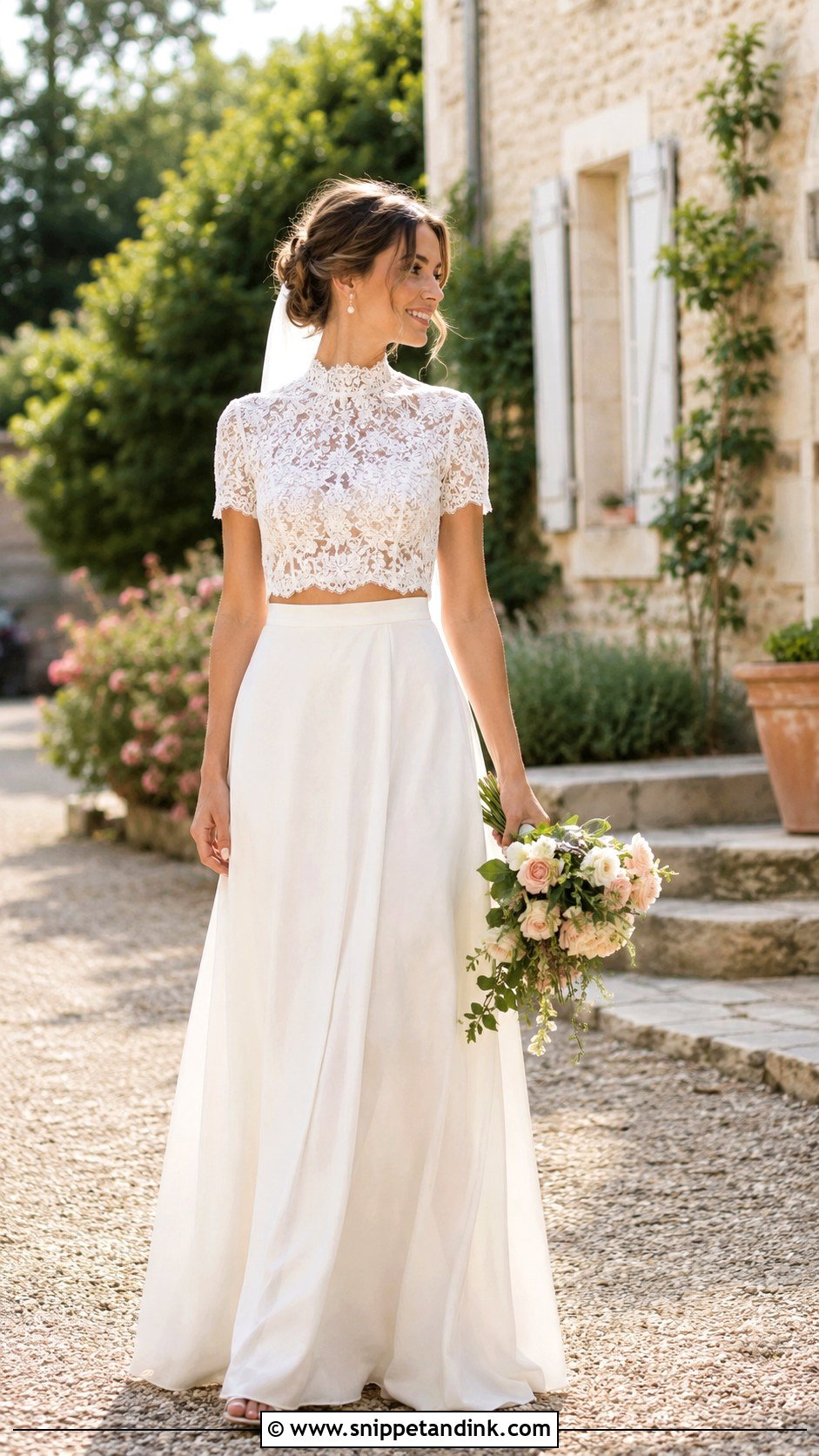
Separates solve a real problem: brides whose top and bottom are different sizes, and destination brides who want to rewear the skirt. A fitted lace top over a high-waisted silk or crepe skirt reaching the floor looks bridal when the gap between them is minimal. Avoid heavy gathering at the skirt waist, which adds bulk exactly where the eye lands. It’s comfortable through a long country celebration.
13. Cape-Sleeve Crepe Wedding Dress
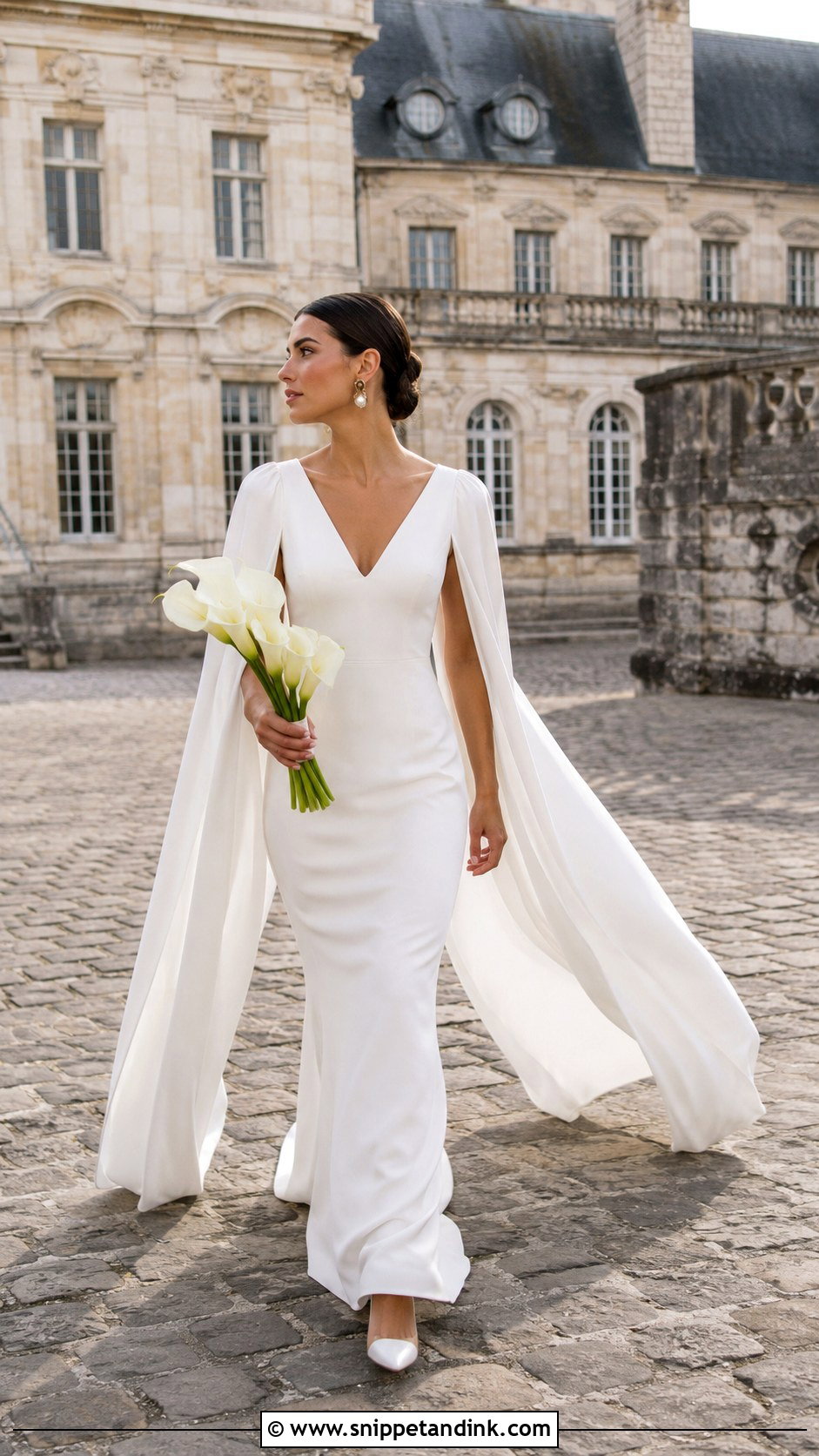
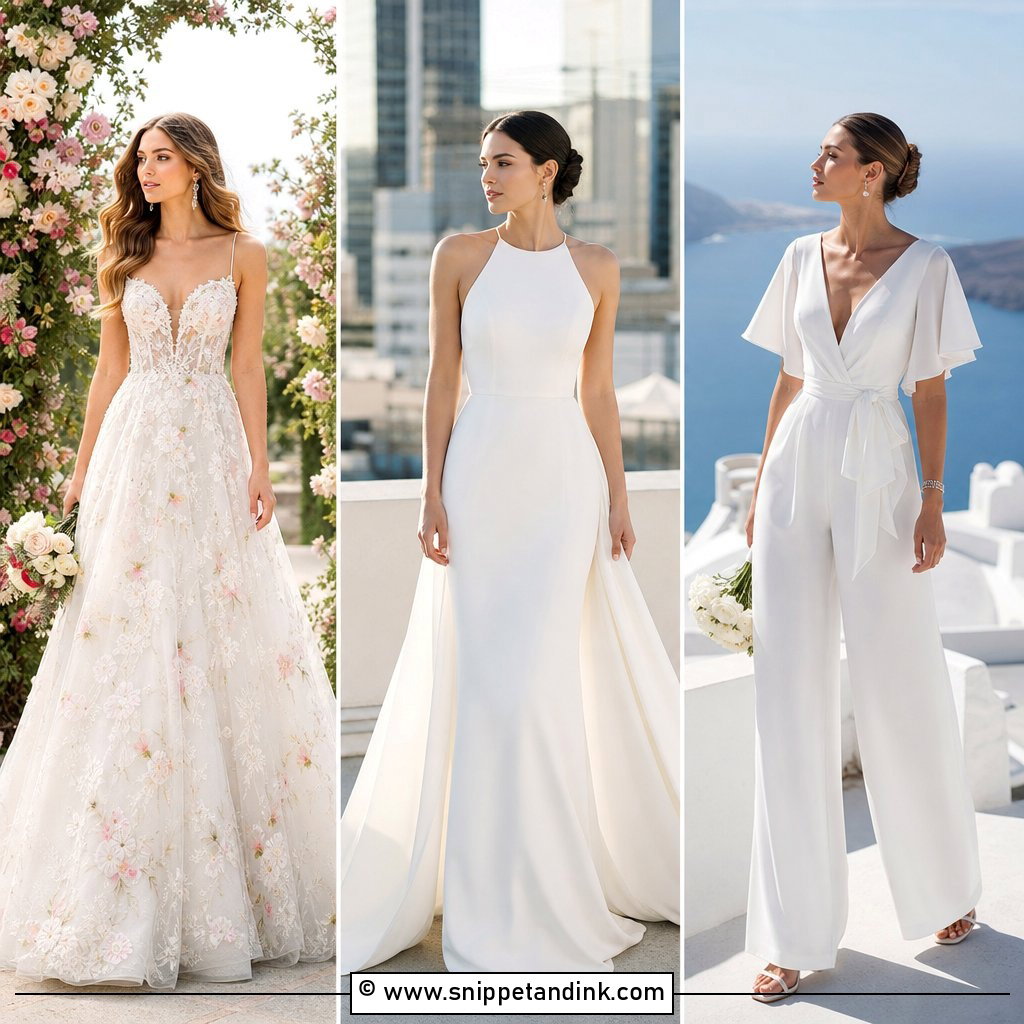
Cape panels falling from the shoulders give you movement down a long château aisle without a heavy veil. A clean crepe column underneath keeps it modern. If you want a veil too, choose a short one and check it doesn’t tangle with the capes. Sculptural earrings and a sleek bun are enough. Calla lilies or orchids suit the long line.
14. Floral Embroidered Tulle Wedding Dress
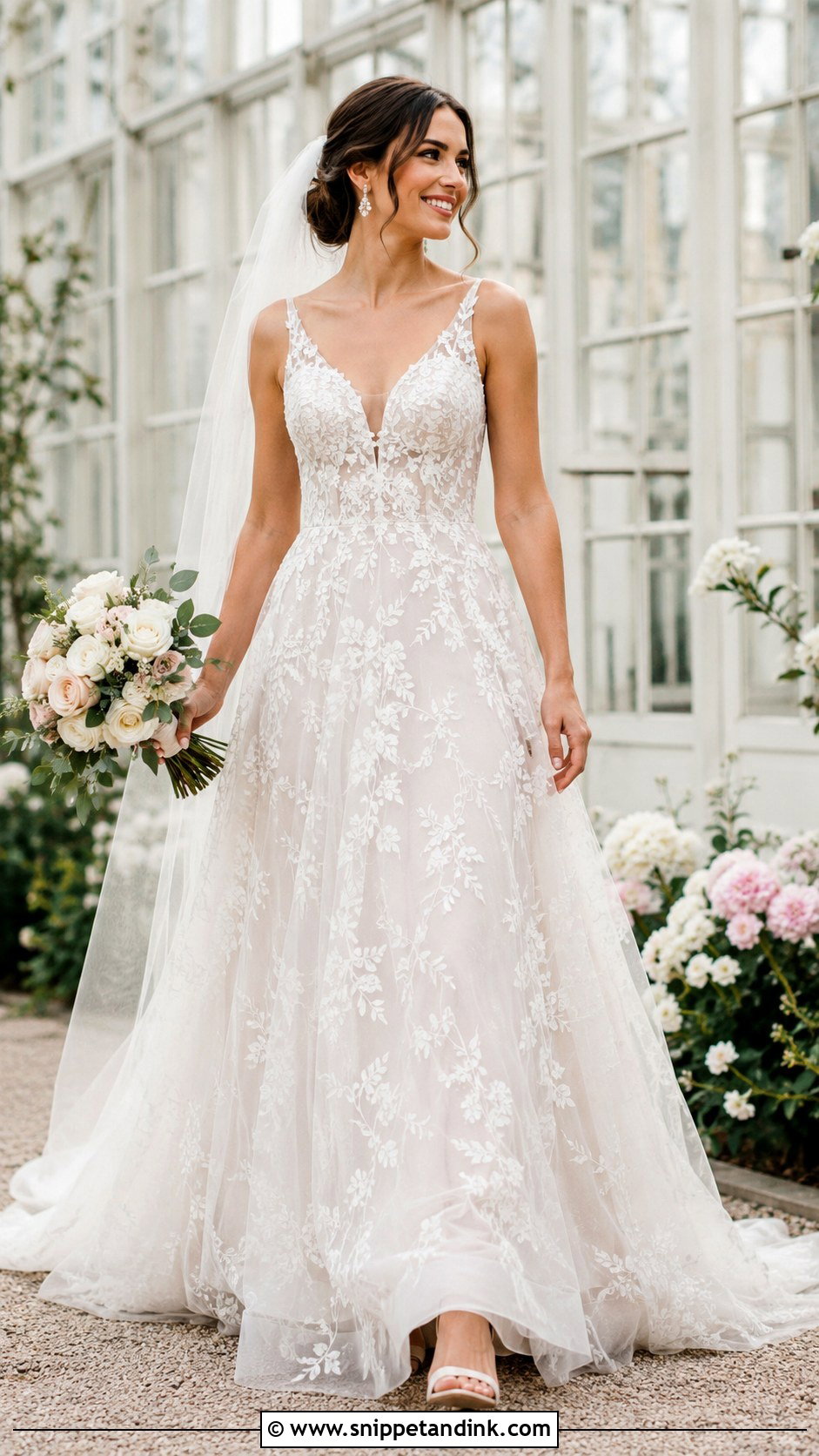
Embroidered tulle is the romantic garden dress, and the underlayer changes everything. A pale blush or champagne lining makes white embroidery visible from a distance, whereas ivory on ivory can disappear in photographs. Choose a plain sheer veil so the dress isn’t fighting another pattern. A bouquet in white, blush and pale green echoes the flowers without copying them.
15. Backless Silk Wedding Dress
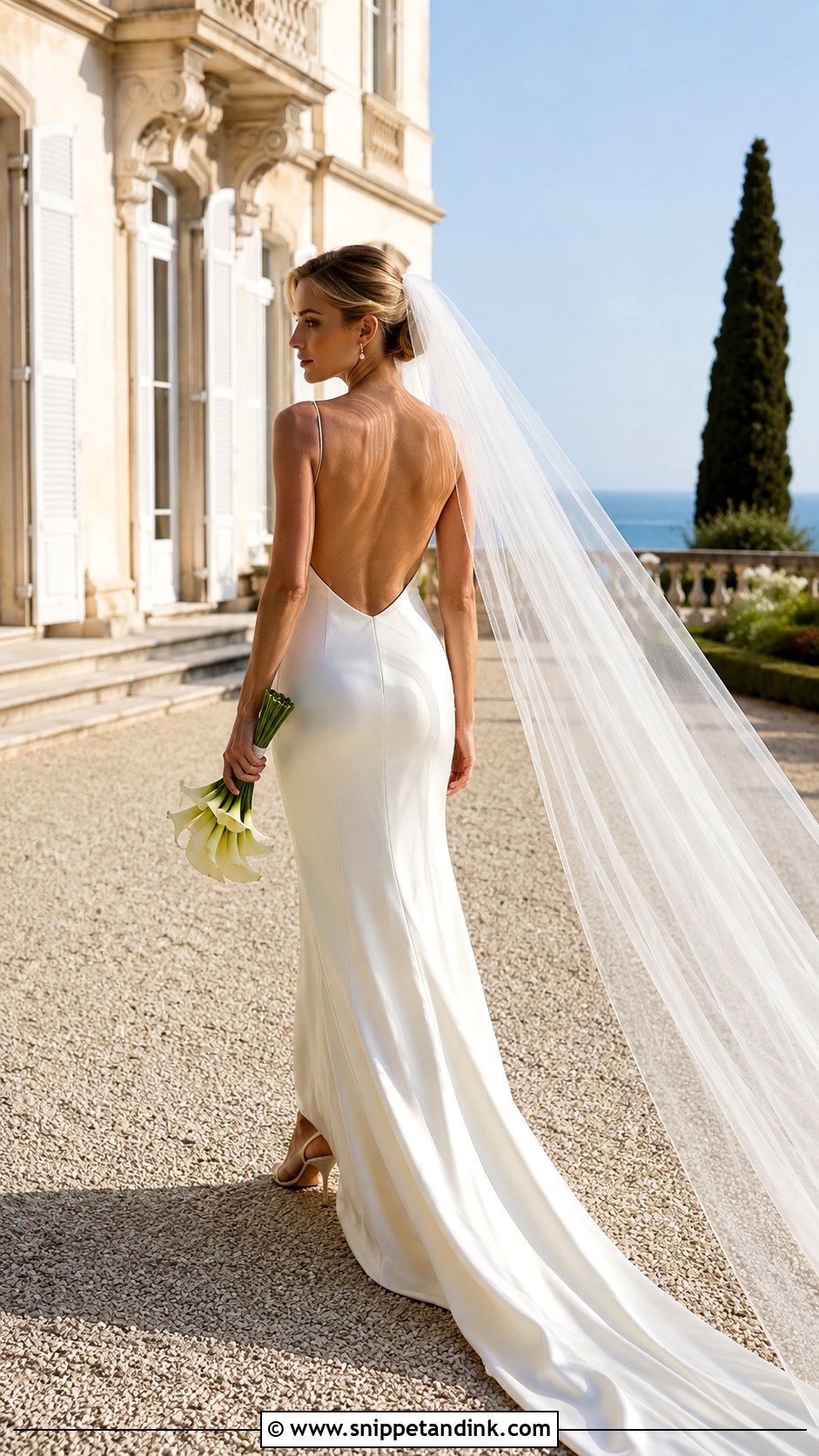
An open back on a simple silk gown looks quiet from the front and striking from behind. The support has to be built in, with cups sewn into the lining or a backless adhesive bra tested for a full day, because any visible strap ruins the line. Wear your hair up so the back shows. A cathedral veil can come off after the ceremony to reveal it.
16. Puff-Sleeve Organza Wedding Dress
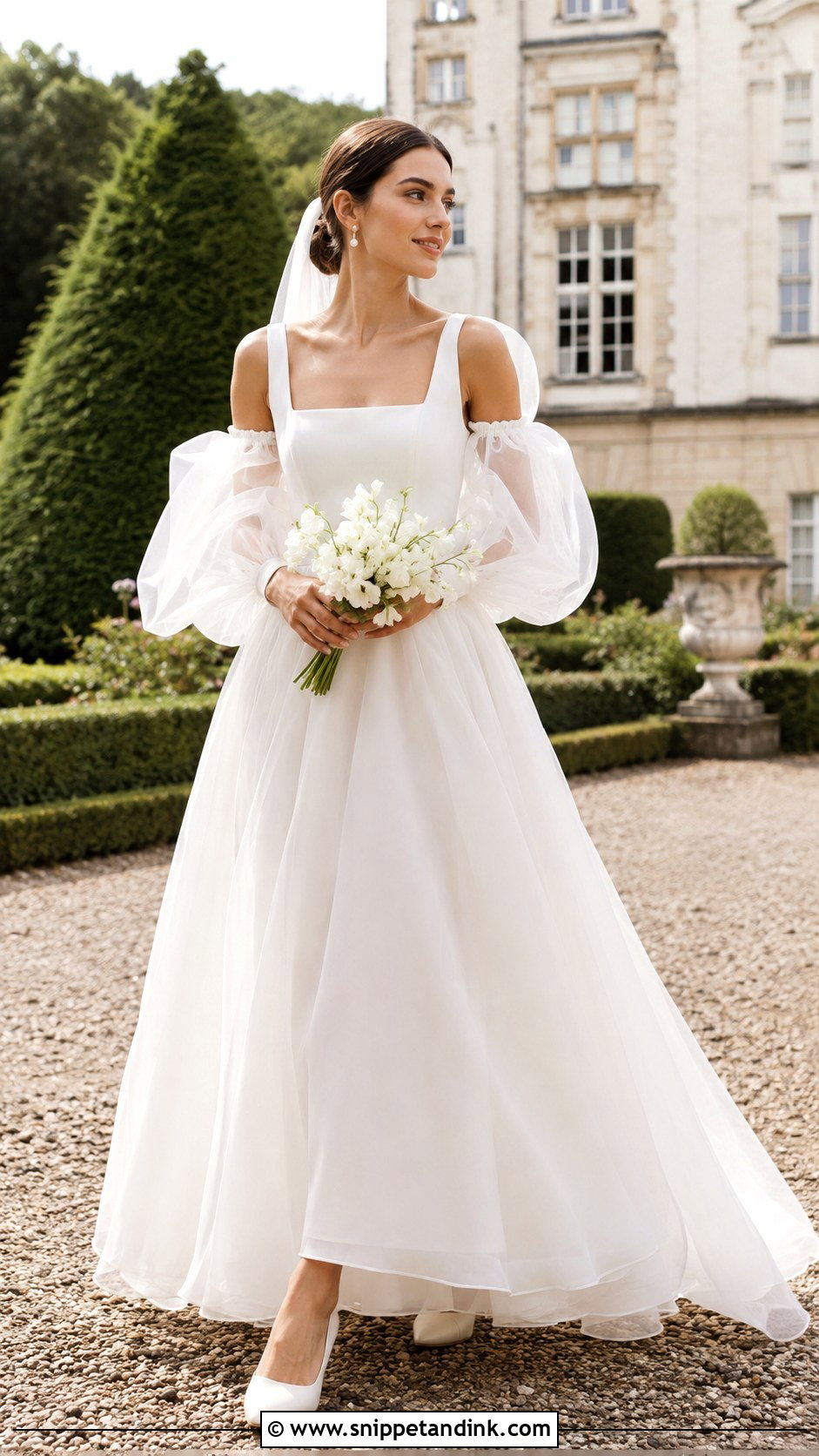
Organza is stiffer than chiffon and holds a puff sleeve’s shape, which is why softly shaped puff sleeves work best in it. Detachable sleeves give you two looks in one day. Organza also creases sharply when crushed, so travel and steaming matter more here than with lace. A softly textured bun balances the sleeve volume, and a modest bouquet keeps the proportions right.
17. Halter-Neck Satin Wedding Dress
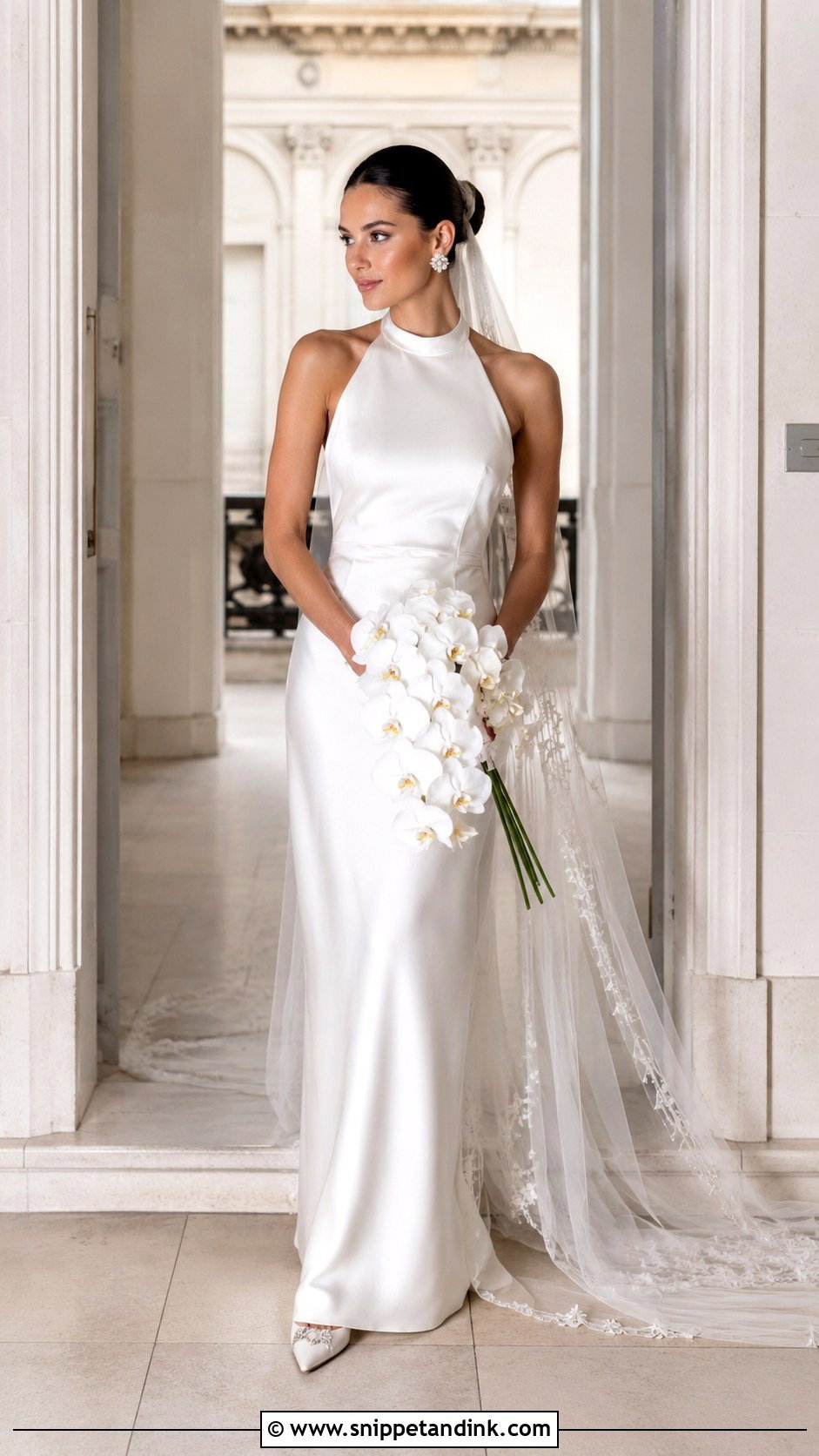
Halter necks show the shoulders and upper back, so posture and undergarments both matter. Fit the strap so it sits flat on the neck without pulling the bodice up when you raise your arms. A satin column with a small train keeps the line clean. Statement earrings replace a necklace. The veil goes beneath a neat bun to soften the shape for the ceremony.
18. Drop-Waist Wedding Dress
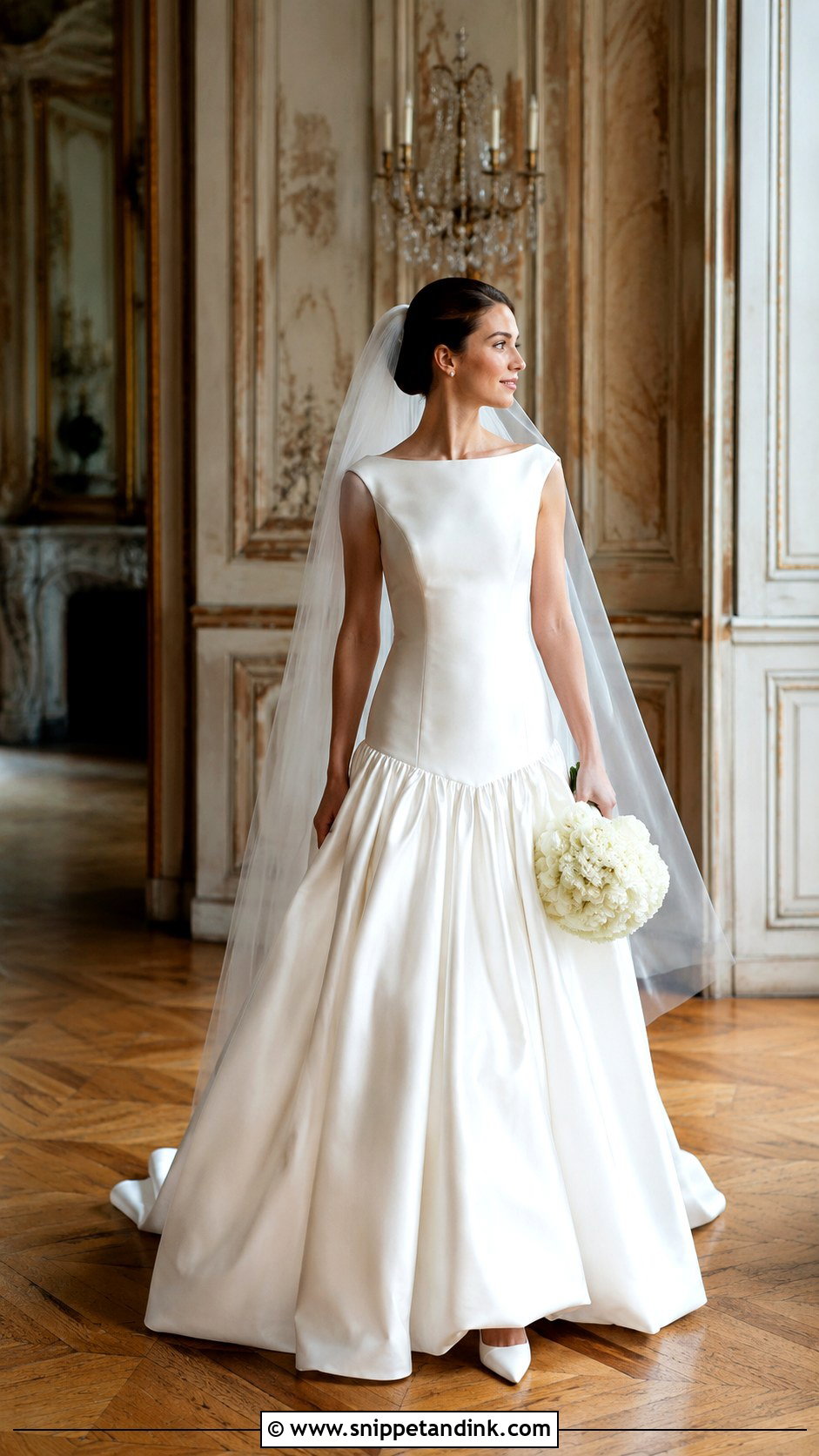
Drop waists suit long torsos and can shorten shorter ones, so this is a cut to try before you fall for it in photos. The fitted bodice continues past the natural waist before the skirt opens, and where that seam lands makes or breaks it. Satin or mikado gives the structure needed. Plan careful fittings and keep jewelry minimal.
19. Champagne Silk Wedding Dress
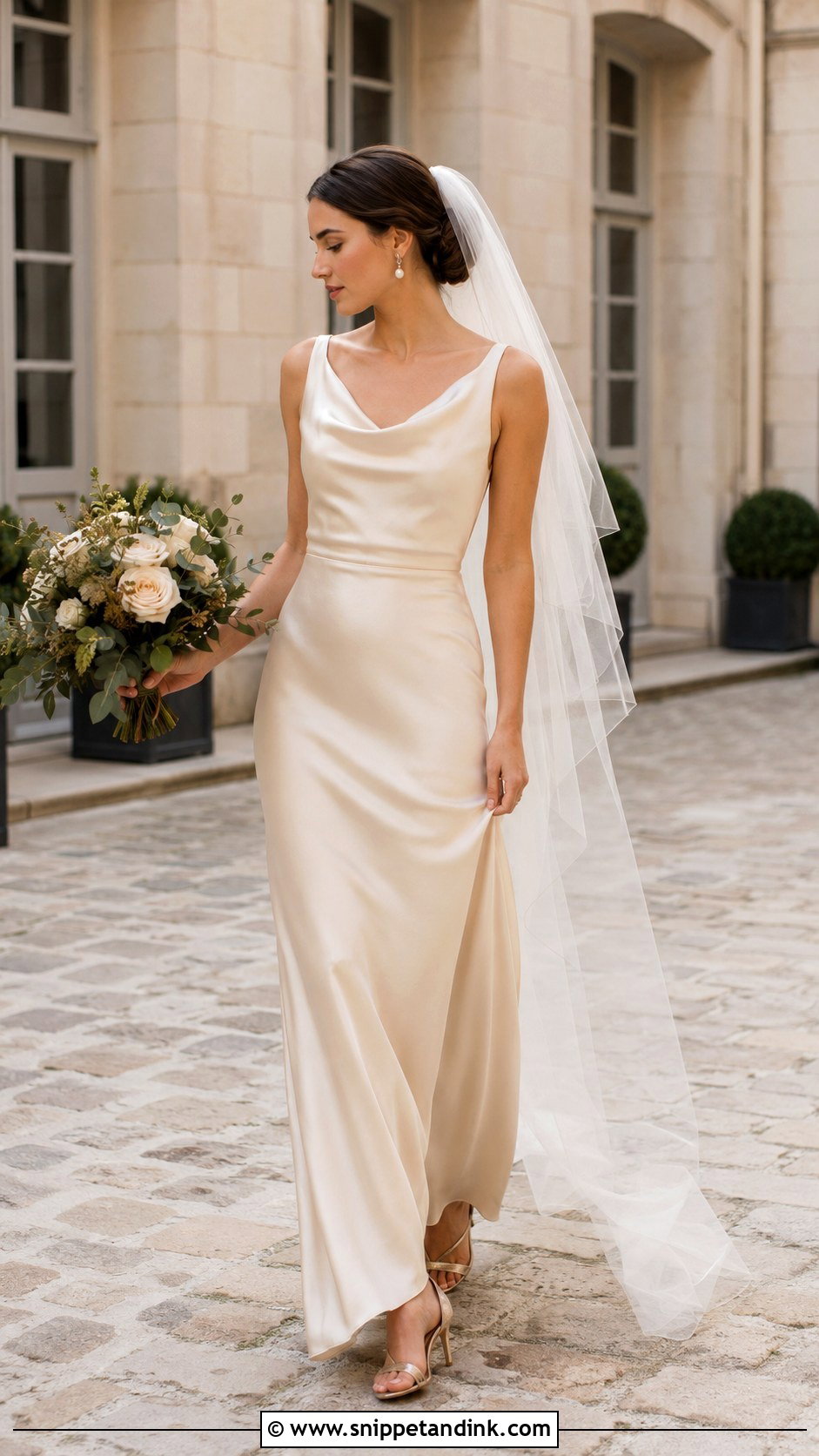
Champagne silk gives warmth that bright white doesn’t, and it glows in candlelight and late-afternoon sun. Shades vary a lot between brands, from almost ivory to clearly gold, so look at a swatch next to your skin in daylight and under warm bulbs. An ivory veil adds gentle contrast. Cream roses and muted green foliage suit the palette.
20. Bow-Back Mini Wedding Dress
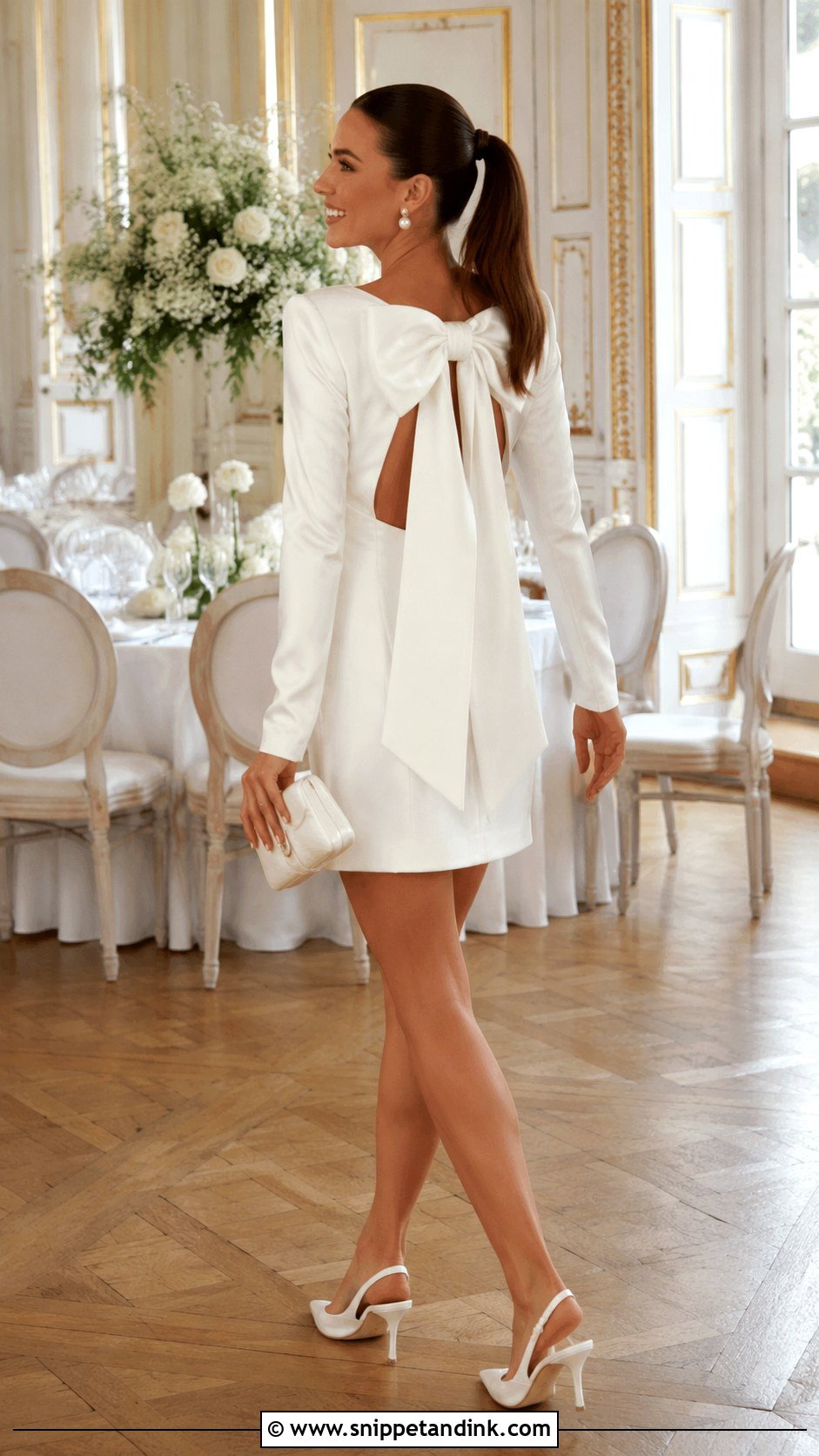
A bow-back mini is the dress I suggest for the evening or the next-day brunch. It frees you to dance after hours in a full gown. A structured crepe, satin or jacquard keeps a short dress feeling bridal, and the bow across the back gives a reveal as you walk away. Swap the veil for a sleek ponytail or a bow. Sheer tights or long sleeves add coverage if you’d like it.
Flying a Gown to France and Readying It on Arrival
I’ve never met a bride who wanted her dress in the hold. Here’s how I send gowns abroad with the brides I dress.
- Call the airline before you fly and ask about a wedding dress as cabin baggage. Some will hang it in a wardrobe if there’s space; otherwise it goes folded in the overhead bin.
- Have your shop pack it with acid-free tissue in every fold, bodice on top, skirt layered rather than crushed.
- Carry the shoes, veil, undergarments and any alteration kit in the same bag. Those are the hardest things to replace in a French village on a Saturday.
- Hang it the moment you arrive, from the internal hanging loops. Most fabrics lose their light creases in a day or two.
- Book a steamer or a pressing service near the venue in advance, or ask your planner. Never let a hotel iron near silk or organza.
Small fixes to bring with you
A few safety pins, ivory thread with a needle, fashion tape and a stain pen will deal with most last-minute problems. If your dress has a bustle, ask the shop to teach a bridesmaid how it goes up before you leave. Hooks and ribbons are much harder to work out at midnight in a château hallway.
Pack the Dress Last and the Shoes First
Your personality, your proportions, the venue and the season should all shape the dress. Lace suits estates and the countryside, silk and crepe feel at home in Paris, chiffon handles a hot Provence afternoon, and a tailored mini works for the town hall or a second look. Pick shoes for the ground you’ll stand on before anything else. Finish alterations before you fly, and practise walking, sitting and dancing in the full outfit. The best French look is the one you can forget about once you’re there.
You'll Like These Ideas:





Leave a Reply