
Lace changes character completely depending on which lace it is and where it sits on the dress. Fine Chantilly lace is soft and light, almost like a drawing on net, while corded and guipure lace give a firmer, more sculpted outline. Designers now also float lace under sheer layers, run it over corseted bodices and use it on pieces you can take off after the ceremony. When a bride tells me she wants lace, my first questions are about the venue, the season and how much she plans to dance, because those decide the weight of lace that will actually be comfortable. The gowns below are styled head to toe, with shoes, veils, jewelry and flowers chosen to support the lace rather than fight it.
Reading the Lace at Your Appointment
Two gowns can both be called lace and feel nothing alike once they’re on. Knowing the main types helps you describe what you want and spot what you’ll be comfortable in.
- Chantilly: very fine floral pattern on a net background, outlined in thin thread. Light and soft, but delicate, so it snags more easily.
- Alençon: a net lace whose motifs are outlined with a heavier cord, giving a raised edge. Holds its shape well on bodices.
- Guipure: no net at all; the motifs connect to each other directly. Firm, graphic and noticeably heavier.
- Embroidered or 3D lace: motifs stitched or appliquéd onto tulle, sometimes with beading or raised petals.
What I check with my hands
I run a finger along the side seams and the back closure. On a carefully made gown, lace motifs are cut around and lapped over the seam so the pattern carries on unbroken; on a cheaper one, the seam slices straight through flowers. Then I feel the inside of the arms and underarms, where lace rubs most. If it scratches in a ten-minute try-on, it will be raw by the end of the reception, and a soft lining there is worth paying for.
1. Chantilly Lace A-Line Wedding Dress
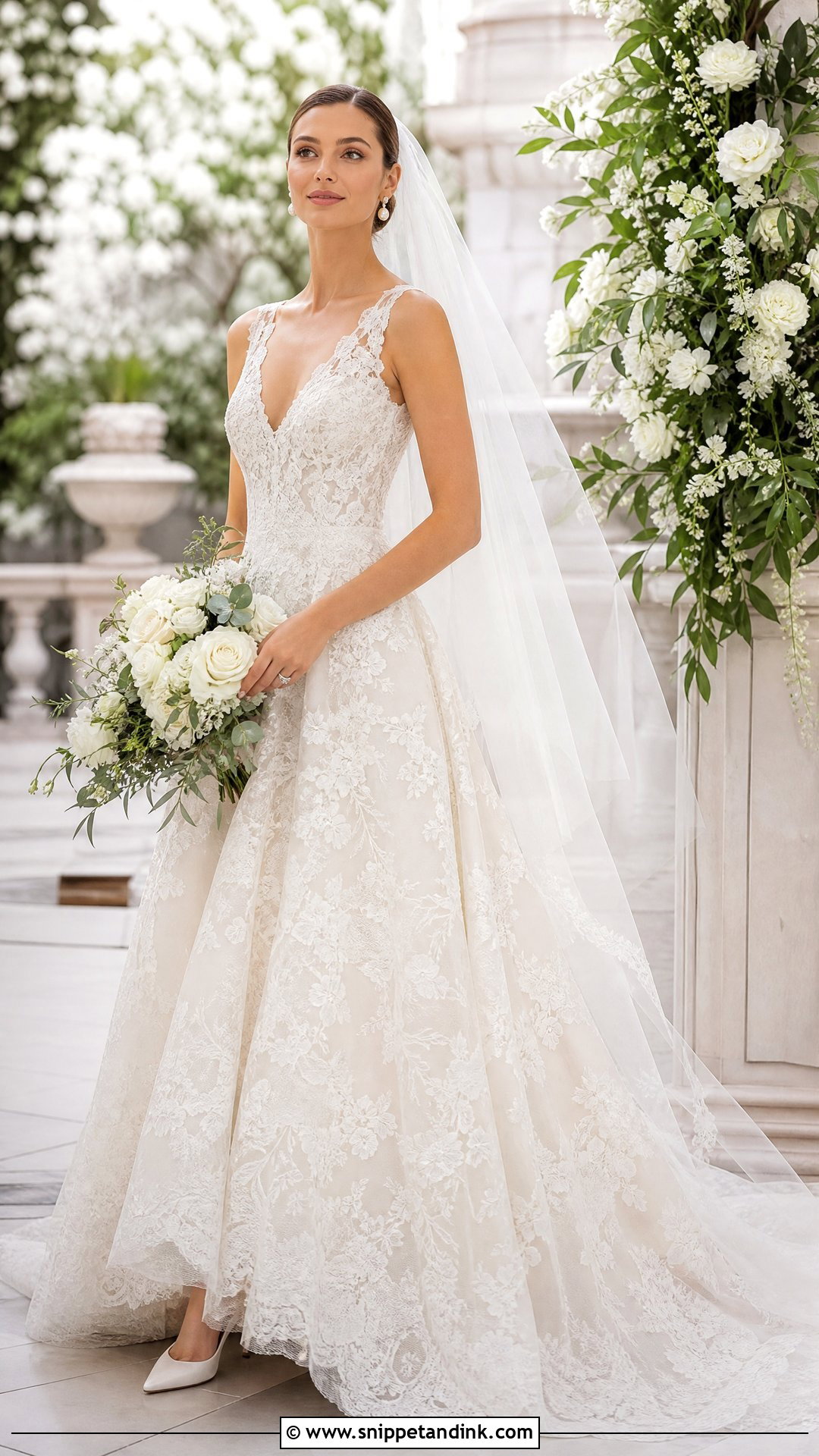
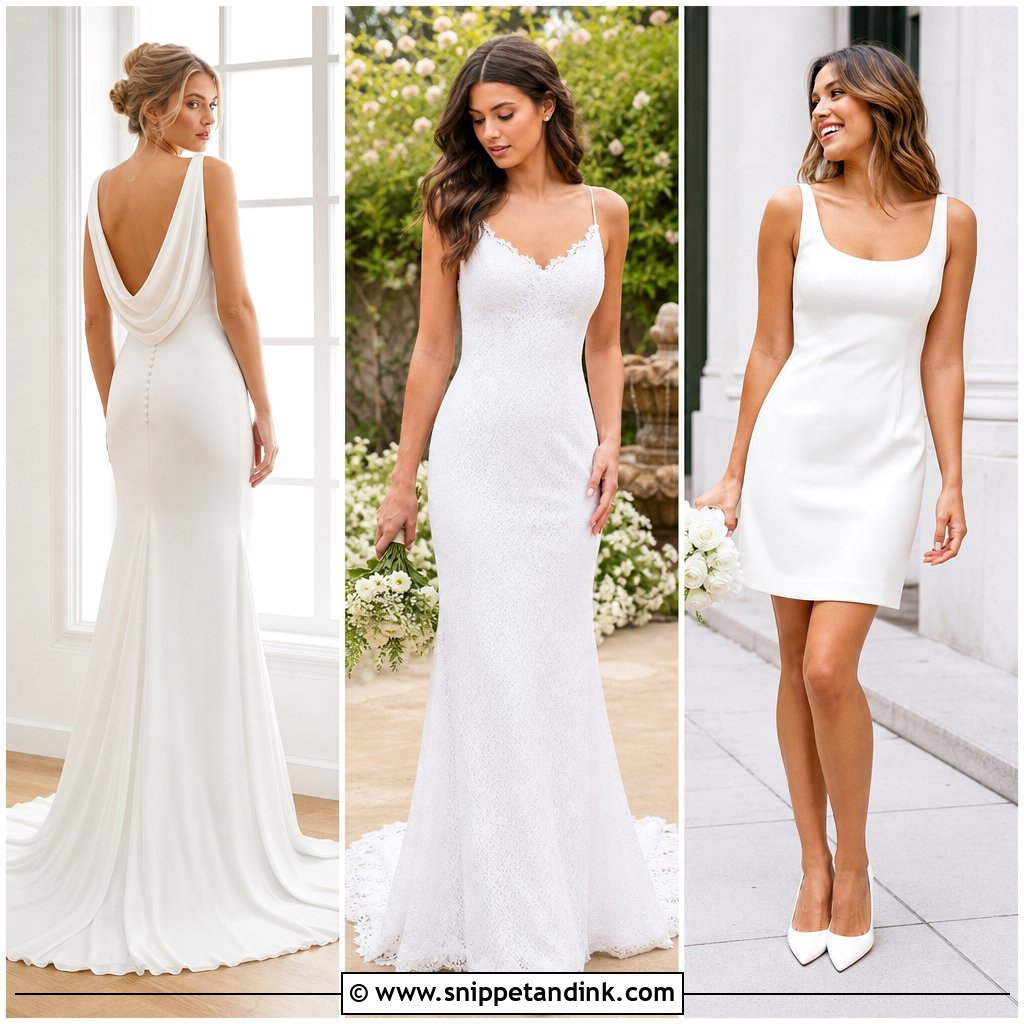
Chantilly is the lace I suggest to brides who want softness without anything that reads old-fashioned. A Chantilly lace A-line gown with a fitted bodice and a natural waist moves easily, and the skirt falls rather than stands. One detail worth asking for: ivory Chantilly over a slightly warmer lining. Over a stark white lining the fine pattern disappears in photos, and the warmer tone lets it show. Pointed ivory pumps, pearl drops and a single-layer raw-edge veil keep the styling quiet, with a compact bouquet of sweet peas or garden roses that doesn’t cover the bodice. Wear your hair softly gathered so the neckline stays visible.
2. Long Sleeve Lace Ball Gown
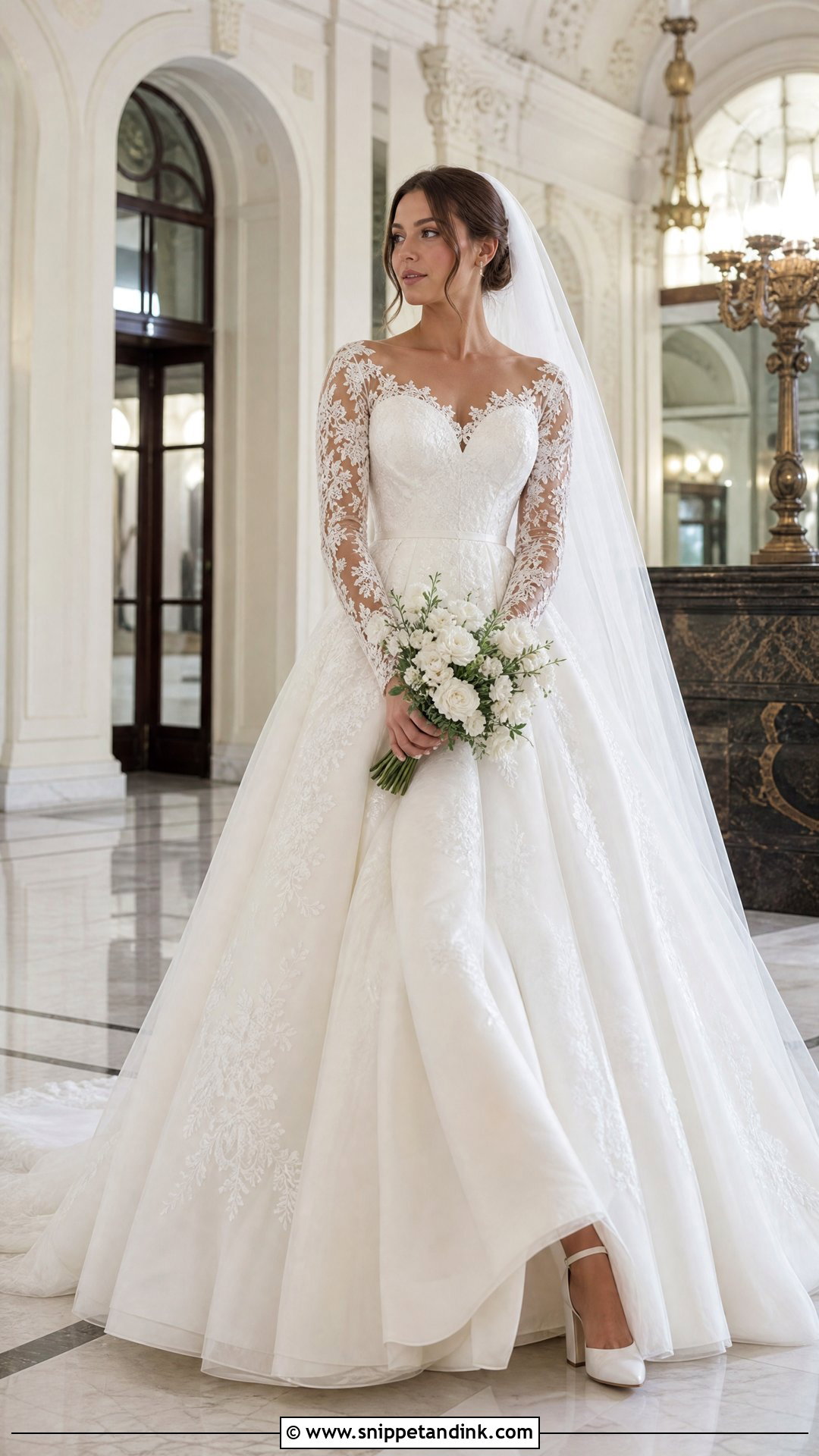
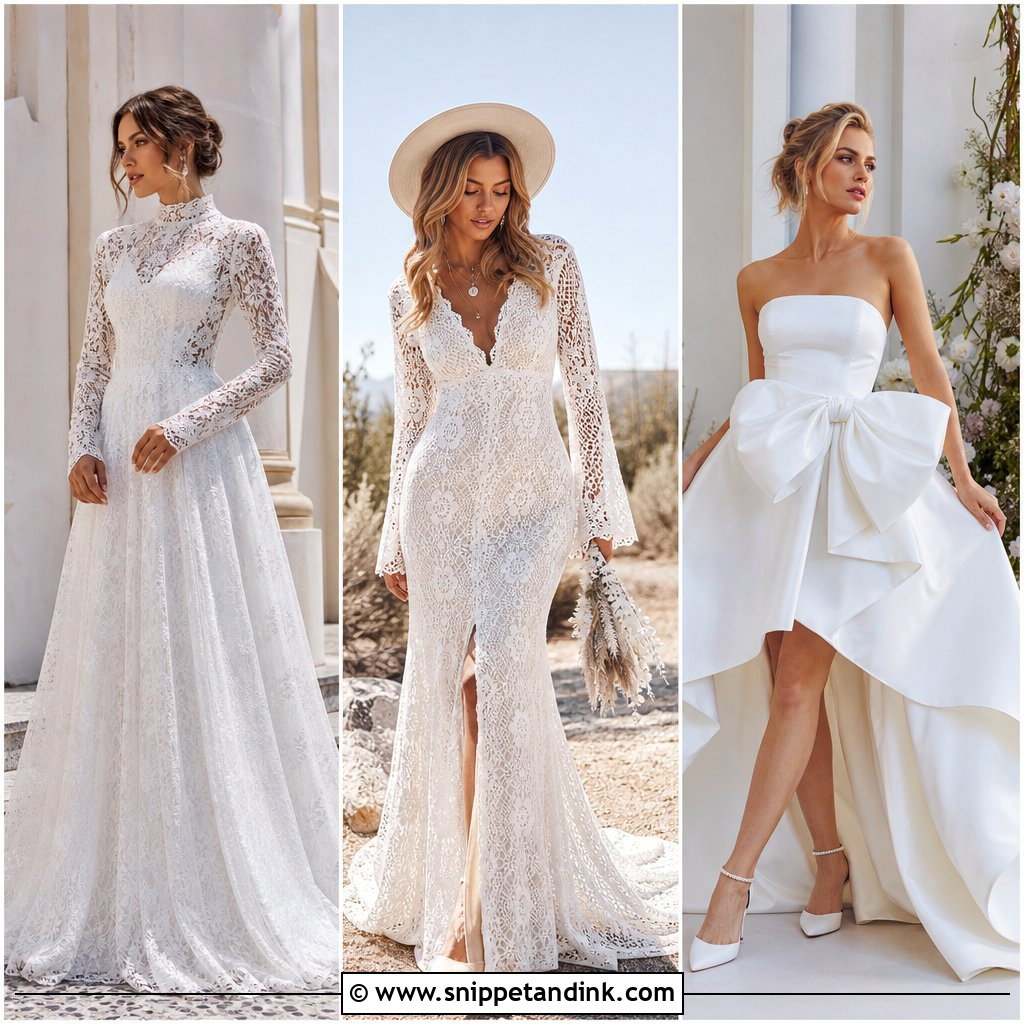
A lace ball gown with long illusion sleeves and a structured waist is made for a formal entrance. The fitted sleeves balance the volume of the skirt, and appliqués placed at the cuffs and neckline look refined rather than heavy. The thing I always ask the salon is how many underskirts are in there, because layers of stiff petticoat are what make a ball gown tiring to sit and dance in; a lighter tulle build gives the same shape with half the bulk. Satin block heels, crystal studs and a cathedral veil with a narrow lace edge suit it. A sleek low bun keeps hair off the sleeves and back detail. Save it for grand hotels, historic venues and cooler months.
3. 3D Floral Lace Mermaid Wedding Dress
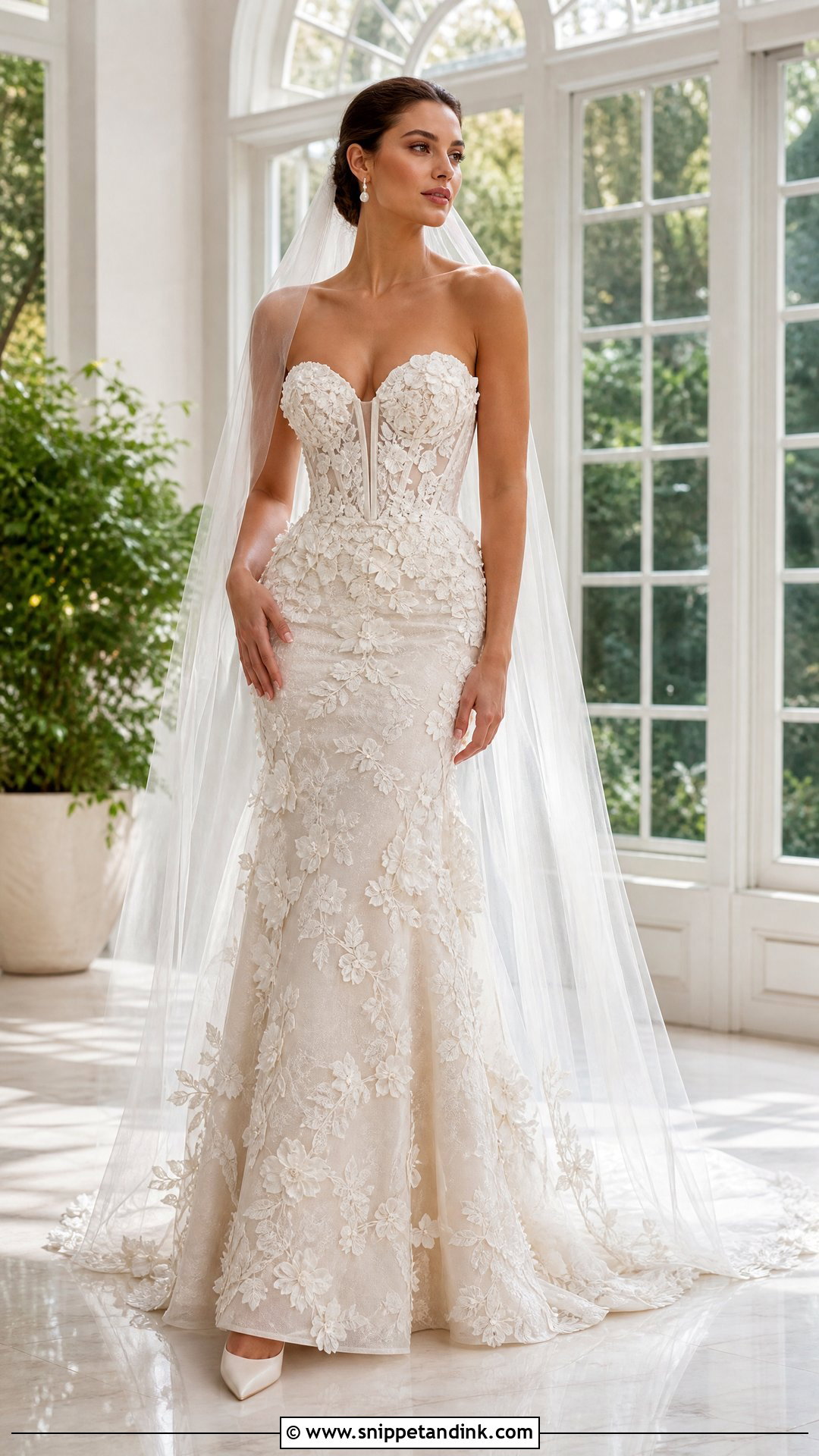
Raised floral lace on a mermaid gown is about depth: the petals catch light and throw small shadows, so the texture reads from across a room. Look for appliqués that scatter as they reach the hem, easing the eye from the sculpted bodice into the flare. An internal corset holds the shape and makes the dress feel secure. Keep the veil smooth, fingertip length, and untrimmed, since a lace-edged veil lying over 3D flowers just looks crowded, and add pearl earrings, neutral pumps and white orchids. It suits modern ballrooms, conservatories and coastal venues. Mermaid skirts are tight at the knee, so at every alteration appointment sit down and take full strides before the seamstress pins anything.
4. Guipure Lace Column Wedding Dress
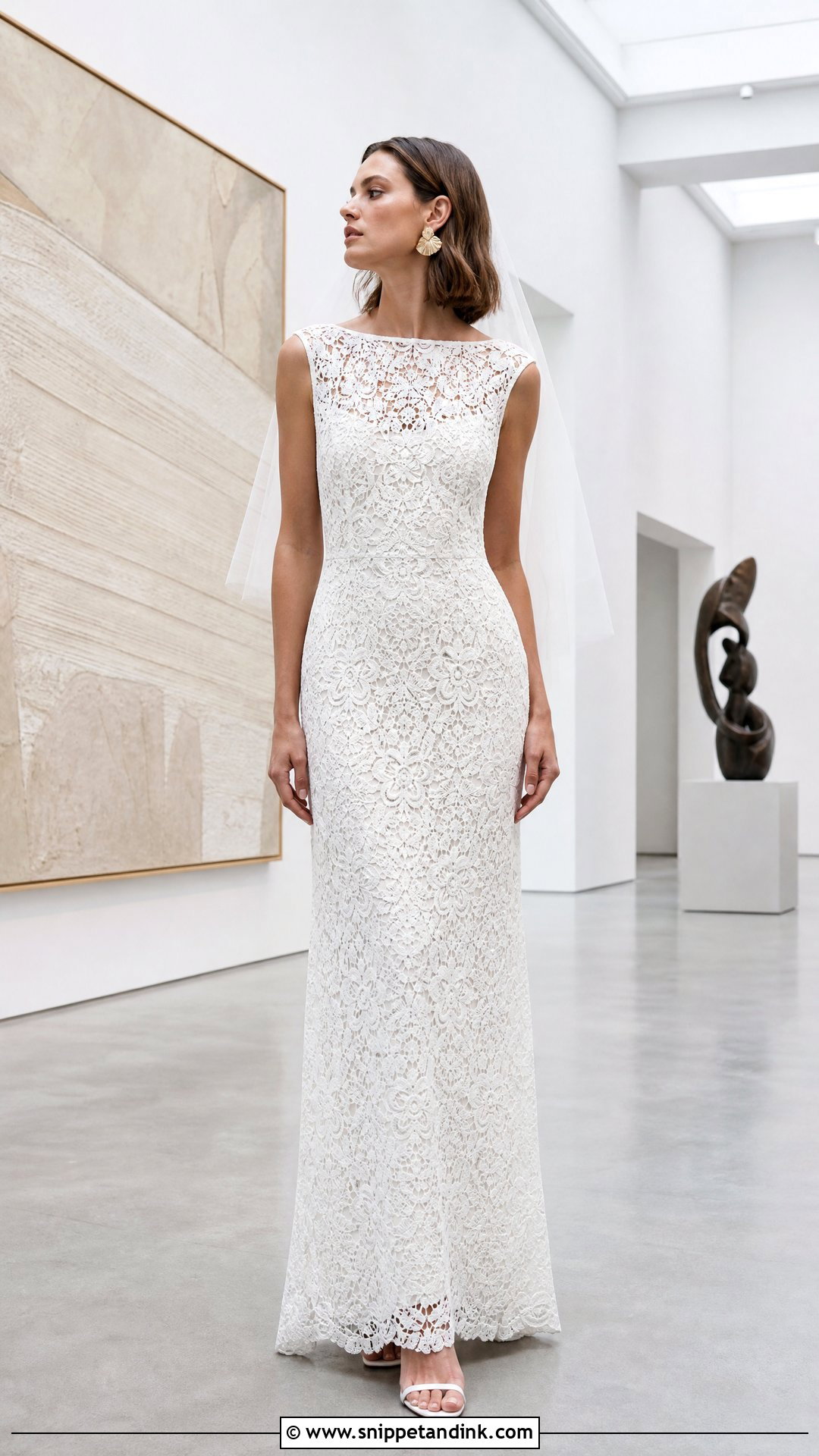
Bold guipure lace turns a plain column into something graphic. It has no net background; its motifs are joined directly to each other, which gives it a firm, almost three-dimensional texture. That same construction makes it heavier and less forgiving than net lace, and it doesn’t stretch, so a guipure column has to be fitted precisely and can feel warm in summer. Choose clean seams, a comfortable lining and a bateau or modest square neckline. Minimal ivory sandals, sculptural earrings, a smooth shoulder-length veil and a structured white bouquet keep the direction modern. It belongs at galleries, rooftops and small city weddings.
5. Off Shoulder Lace Wedding Dress
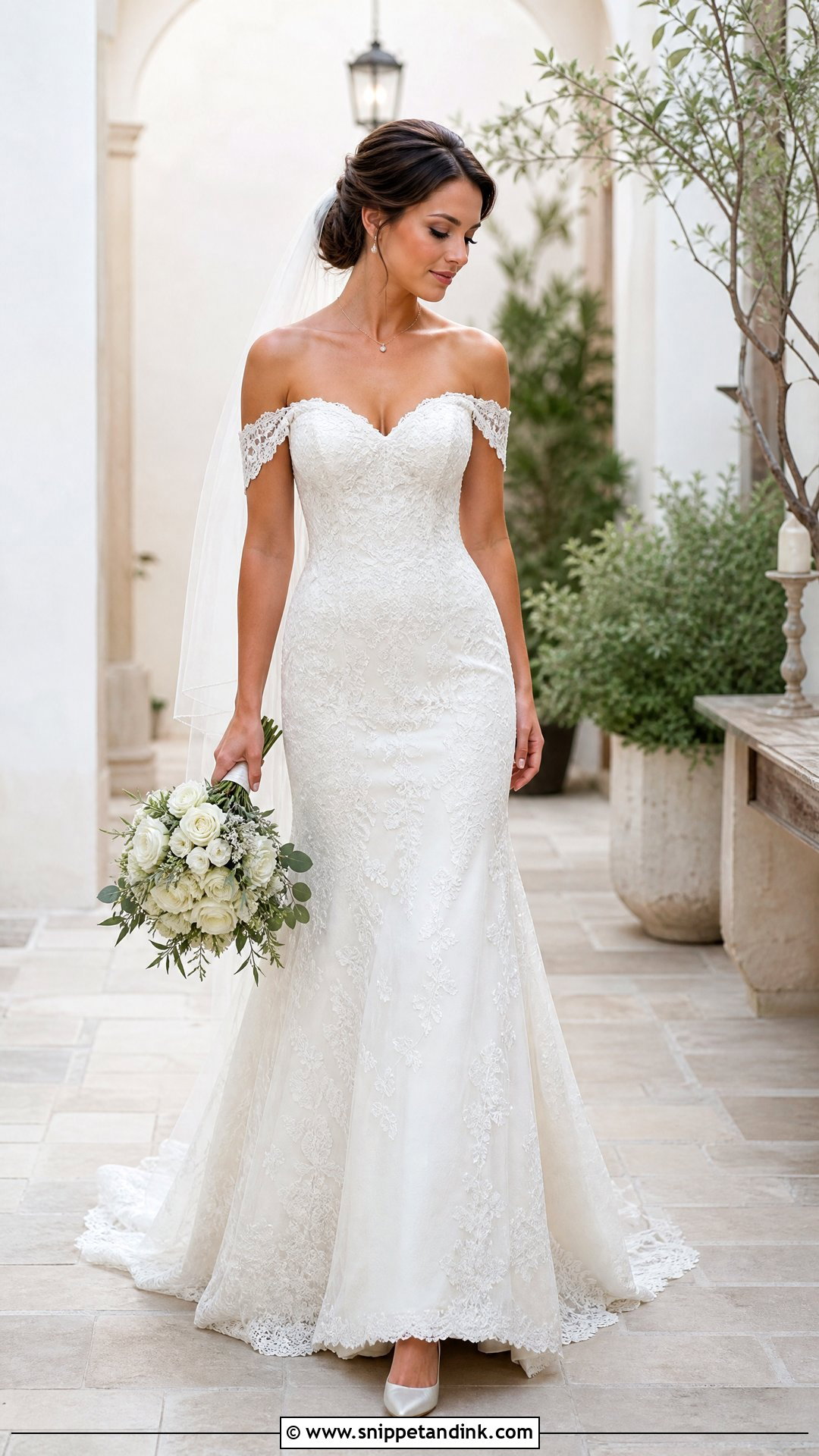
Off-the-shoulder lace frames the collarbone, and an A-line or fit-and-flare skirt keeps the neckline from feeling too dramatic. The bands are everything. They should sit securely on the upper arm without biting, and lace-covered bands with a little elastic inside move far better than rigid ones. My fitting-room test is simple: lift your arms, hug someone and sit down. If the neckline climbs or the bands slip, it will happen all day. Add a short pendant, pearl studs, ivory pumps and a sheer veil set beneath a low chignon, with a loose bouquet of pale roses and greenery. It works indoors or outside in mild weather.
6. Lace Corset Basque Waist Wedding Dress
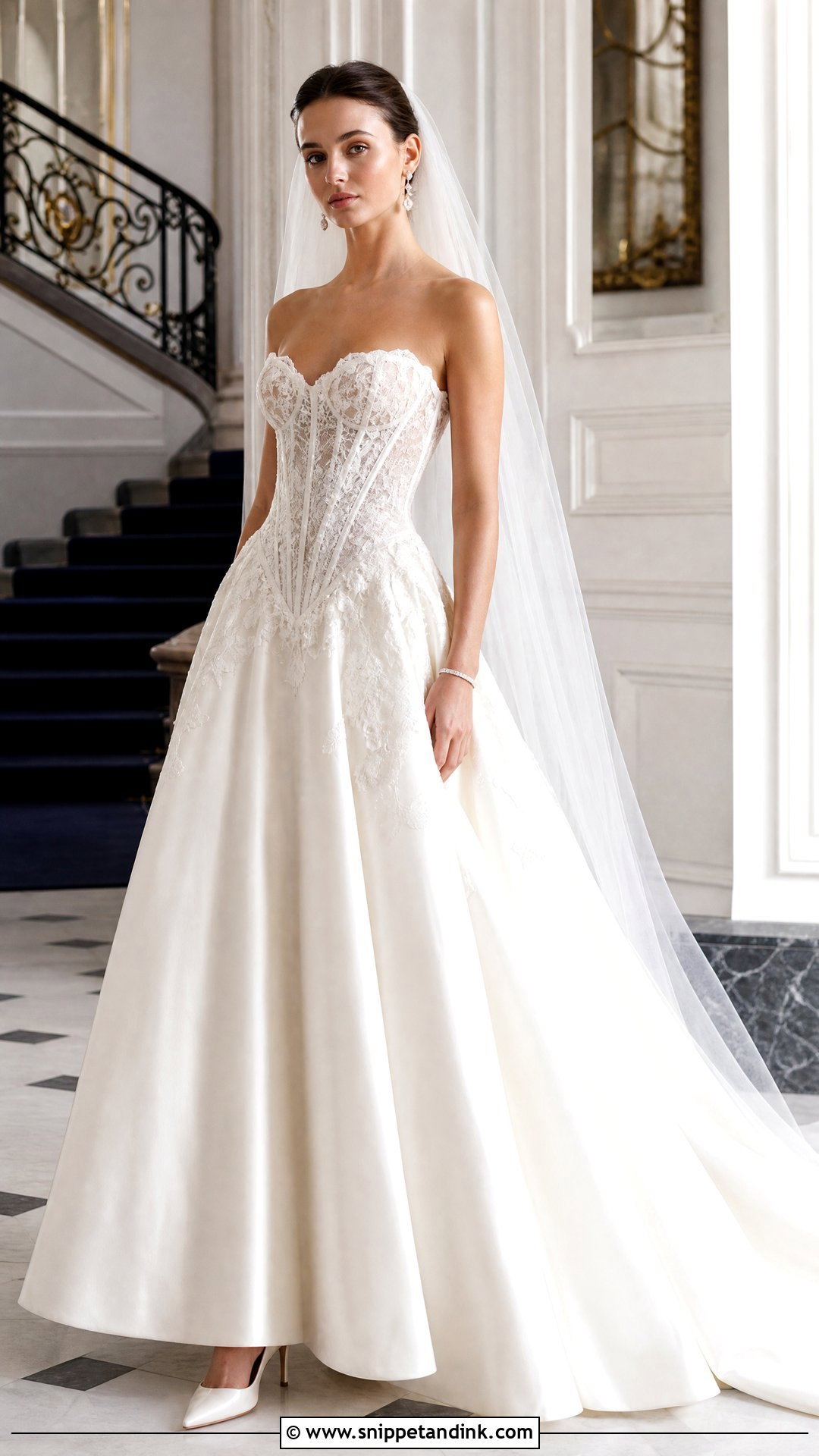
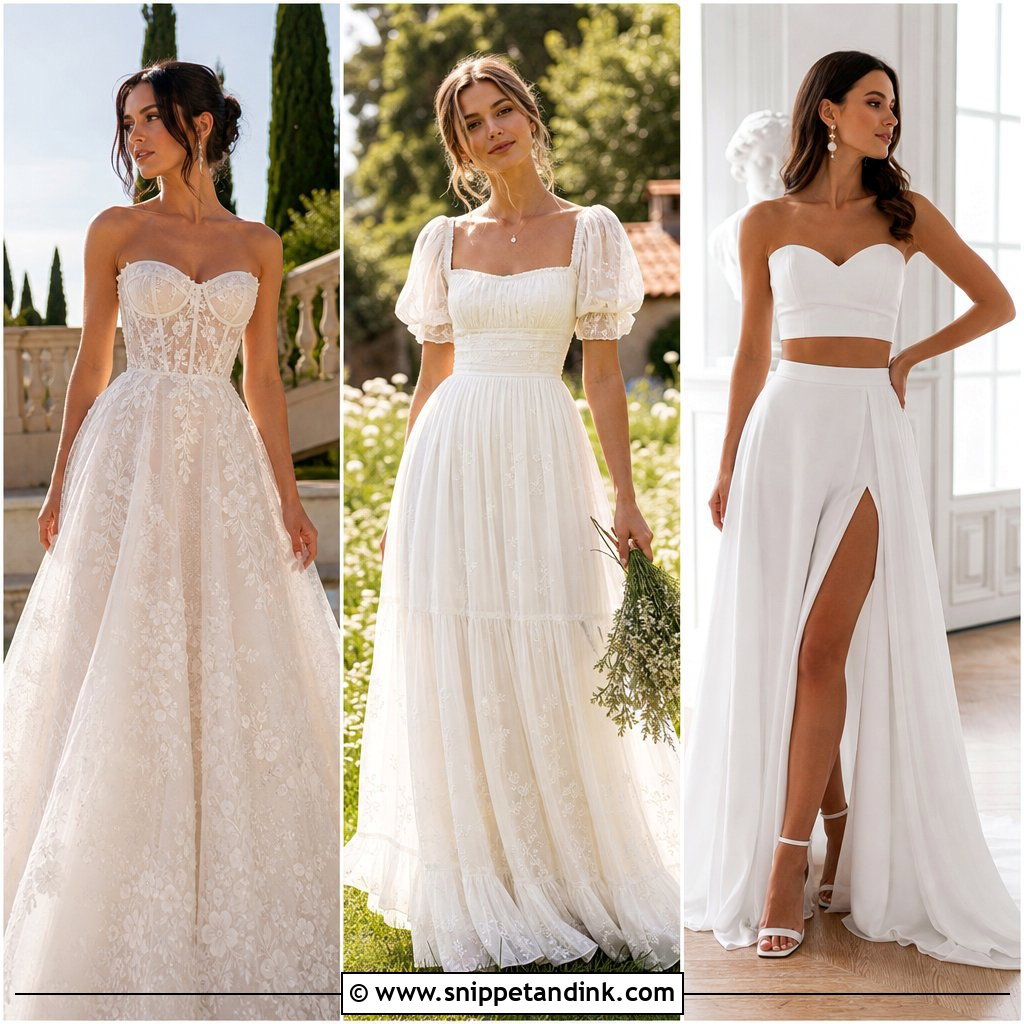
A basque waist dips into a V below the natural waist, which lengthens the torso and lets the skirt flow from a lower point. Put it on a corseted lace bodice and you get vintage structure with a current shape. Choose fine lace over the boning so the bodice reads defined but not rigid. This is the gown where alterations make or break the result: the point of the V, the cups and every bone have to line up, and a basque that sits even a little off-center is obvious in photos. Pointed satin heels, a fine tennis bracelet and a long plain veil keep attention on the waistline. Formal estates and museums suit it.
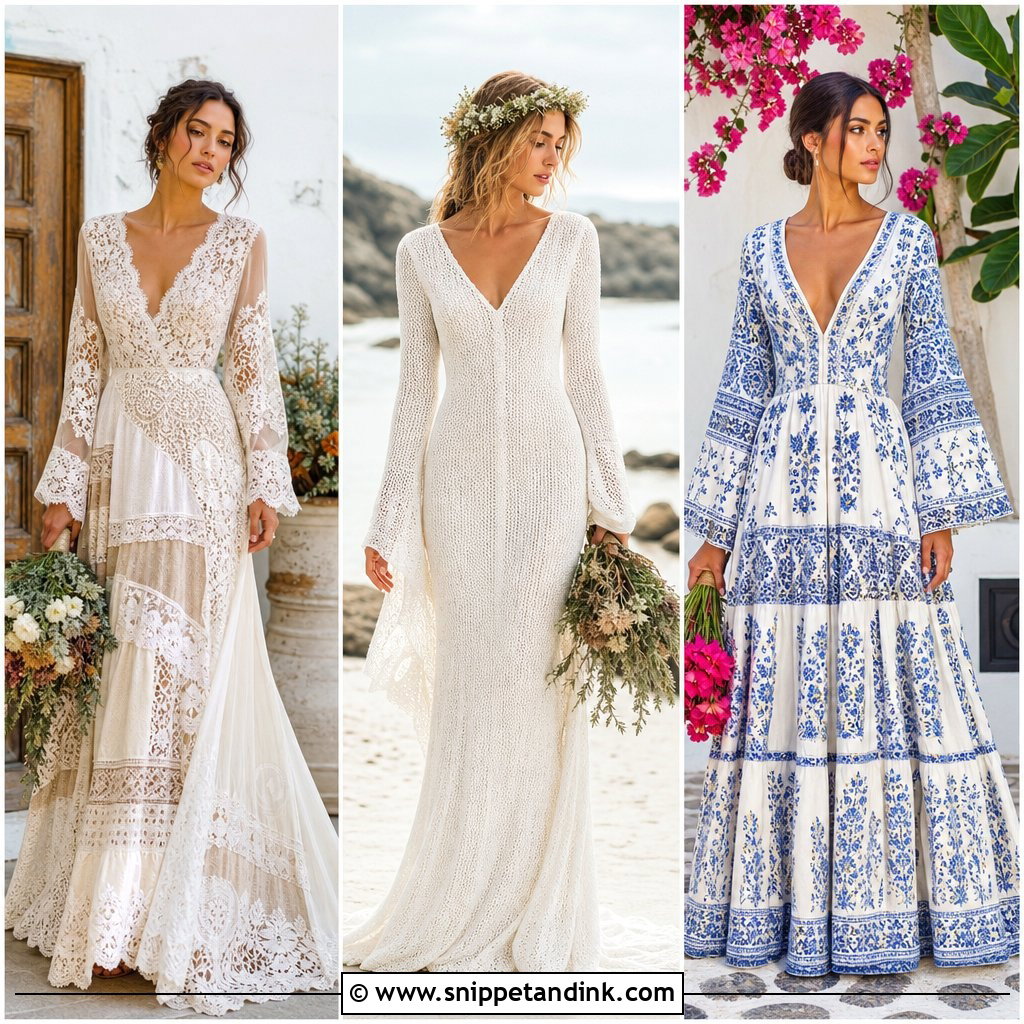
7. Boho Crochet Lace Wedding Dress
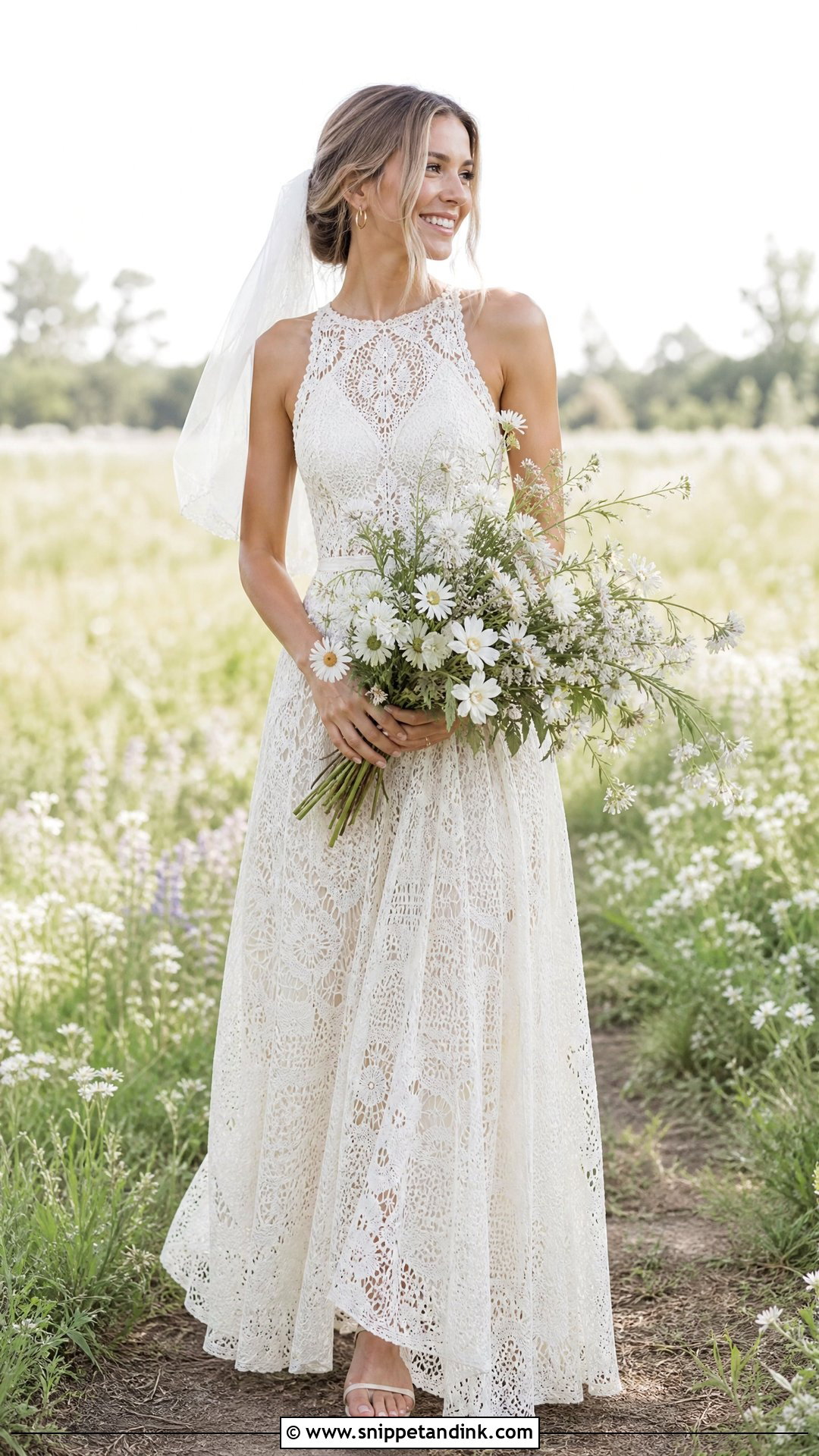
Crochet-style lace has a handmade, open texture that belongs outdoors. Look for an easy sheath or soft A-line with wider motifs, a lined bodice and a skirt that falls naturally. Open crochet catches on everything, so I’d steer clear of it for a woodland ceremony with brambles underfoot unless the hem is lined or finished close. Ivory leather sandals, small gold hoops and a light veil or a simple hair ribbon are enough, with a loose bouquet of white wildflowers to suit the organic aesthetic. It fits a meadow, a desert lodge or a casual beach. Go easy on fringe and oversized accessories, which tip the look into costume.
8. High Neck Lace Wedding Dress
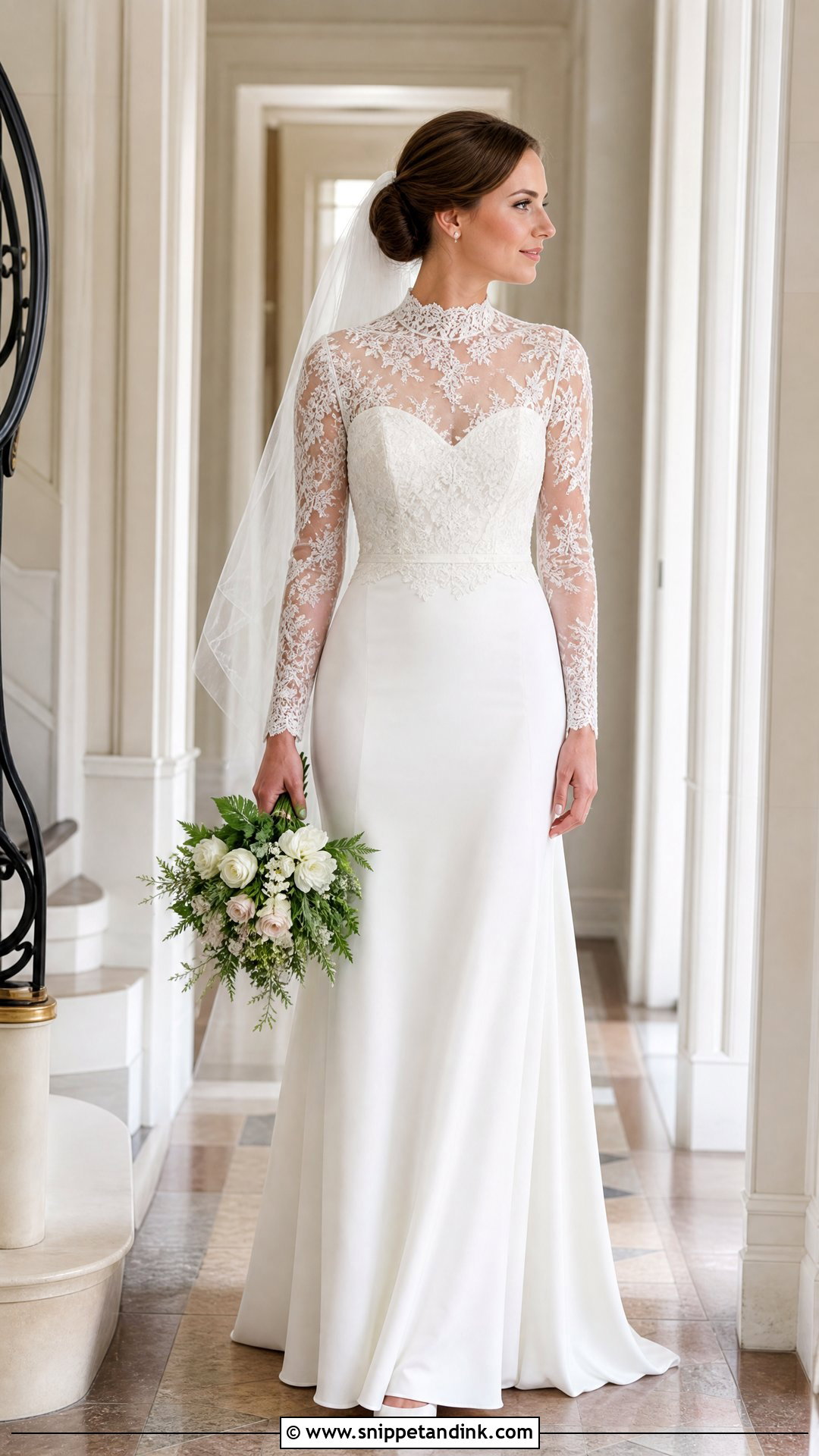
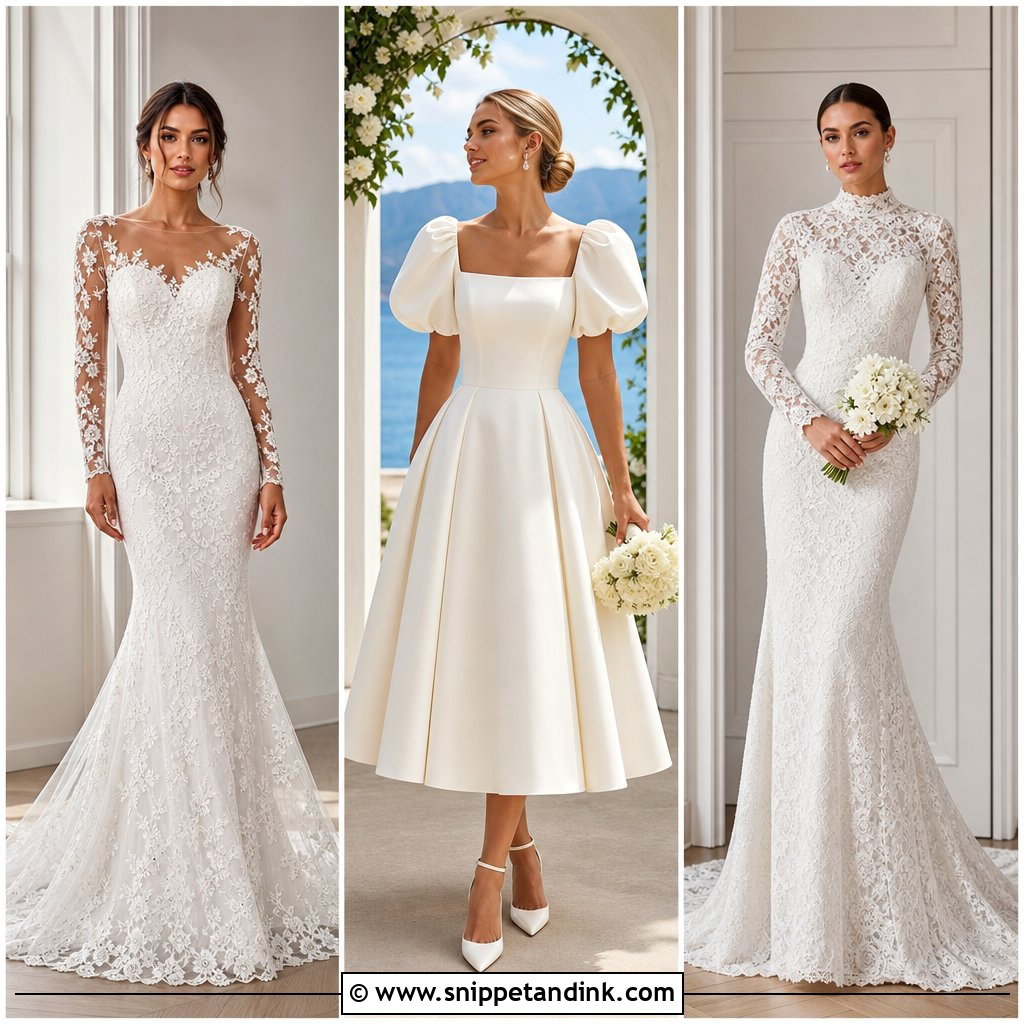
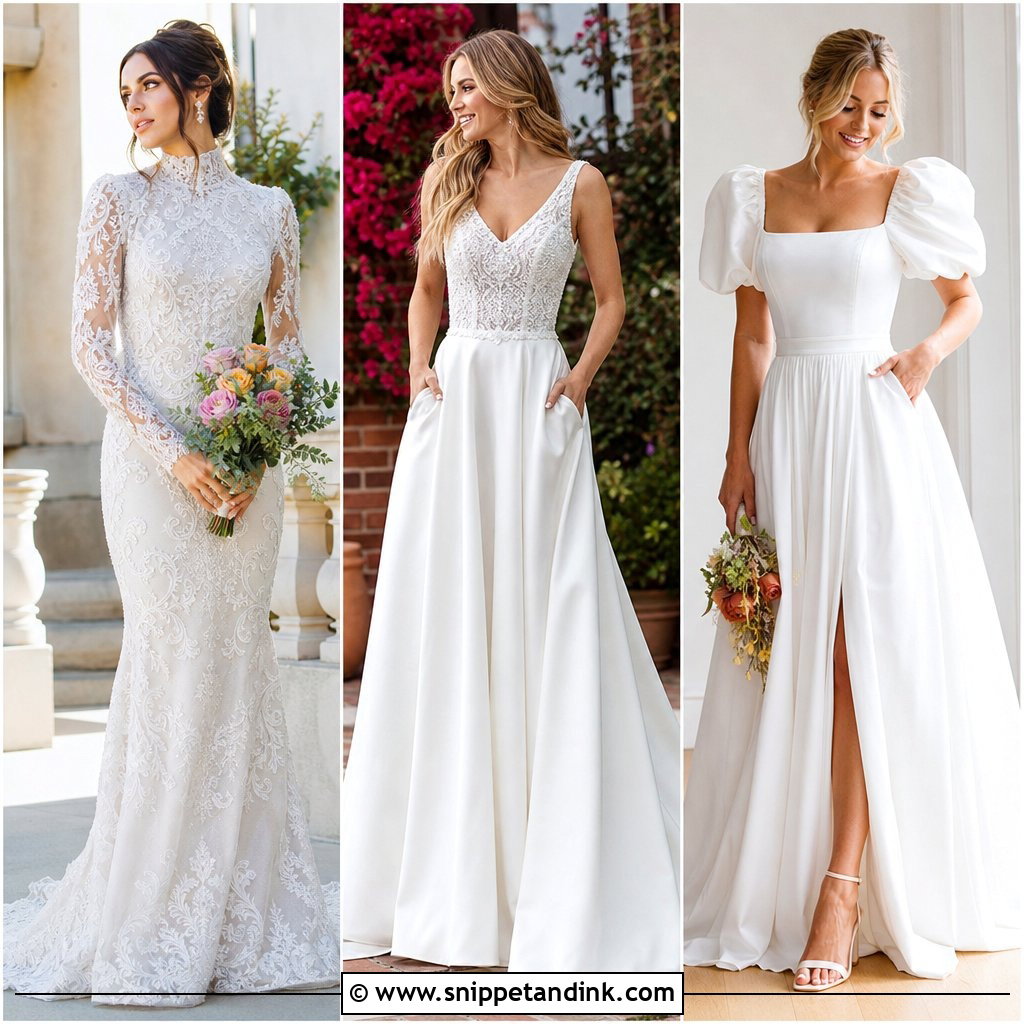
A high neck puts the lace right around your face and shoulders, so the pattern there matters more than anywhere else on the dress. I check the collar edge first: if it’s a cut lace edge rather than a finished scallop, it can rub every time you turn your head, and you’ll feel it by the speeches. Look for a lined front, a sheer upper panel and an open or buttoned back. A chiffon or crepe skirt balances the detailed top. Skip the necklace, wear delicate studs, closed-toe ivory pumps and a veil below a neat bun. A slender bouquet of calla lilies follows the gown’s vertical line in historic houses or cool-weather ceremonies.
9. Square Neck Lace Wedding Dress
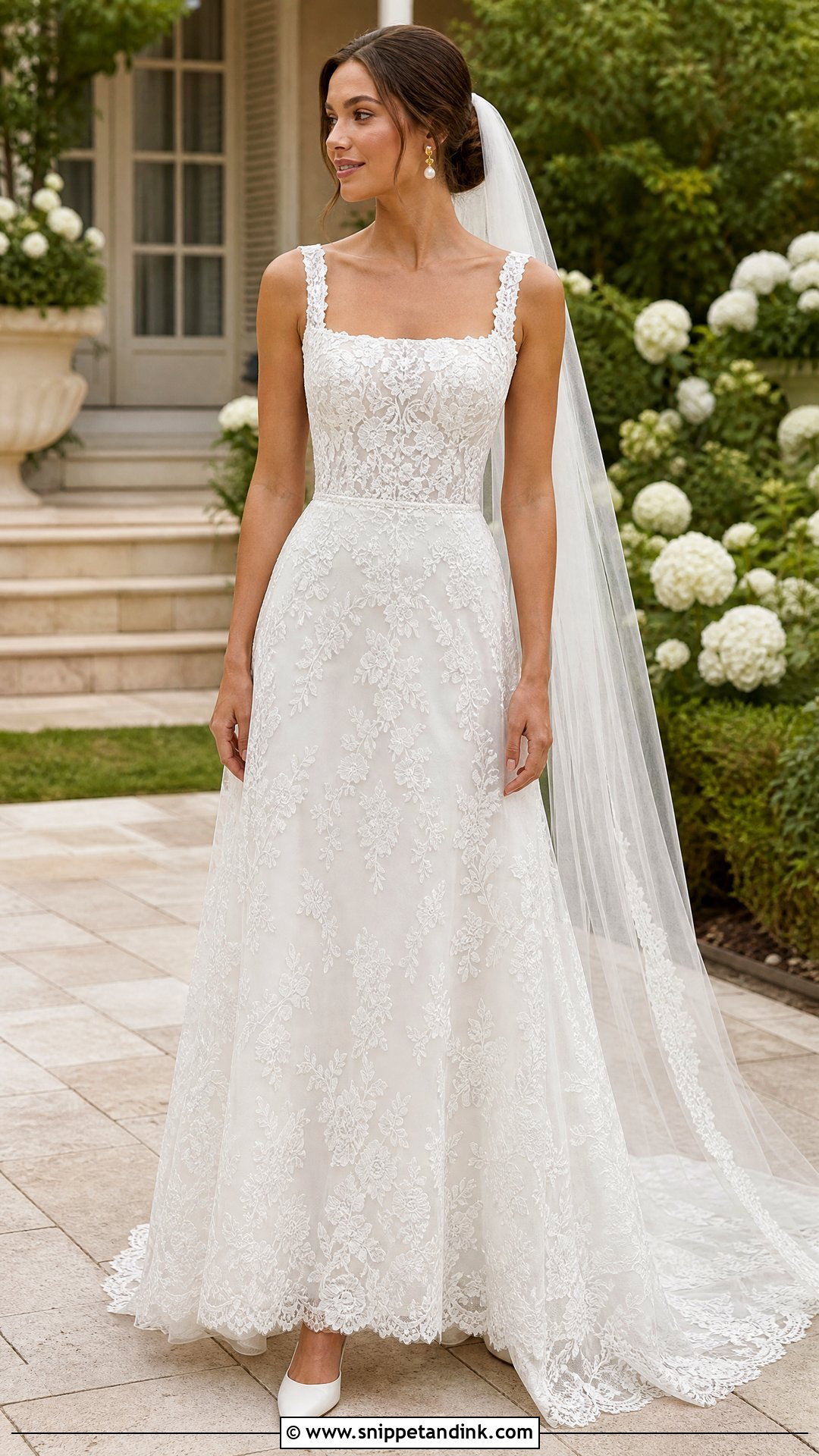
A square neckline adds clean geometry to lace, and it’s at its best on a fitted bodice with wide straps and a defined waist. Medium-scale lace frames the corners without blurring them; very busy lace can make the square look rounded. Strap placement is the alteration to watch, because a square neck only lies flat if the straps sit where the seamstress set them, and a few millimeters too wide will make the corners gape when you lean forward. Pearl-and-gold earrings, slingback heels and a fingertip veil with minimal trim suit it, along with a structured bun and a round bouquet of cream roses. Courtyards and country clubs are natural settings.
10. Lace Slip Wedding Dress
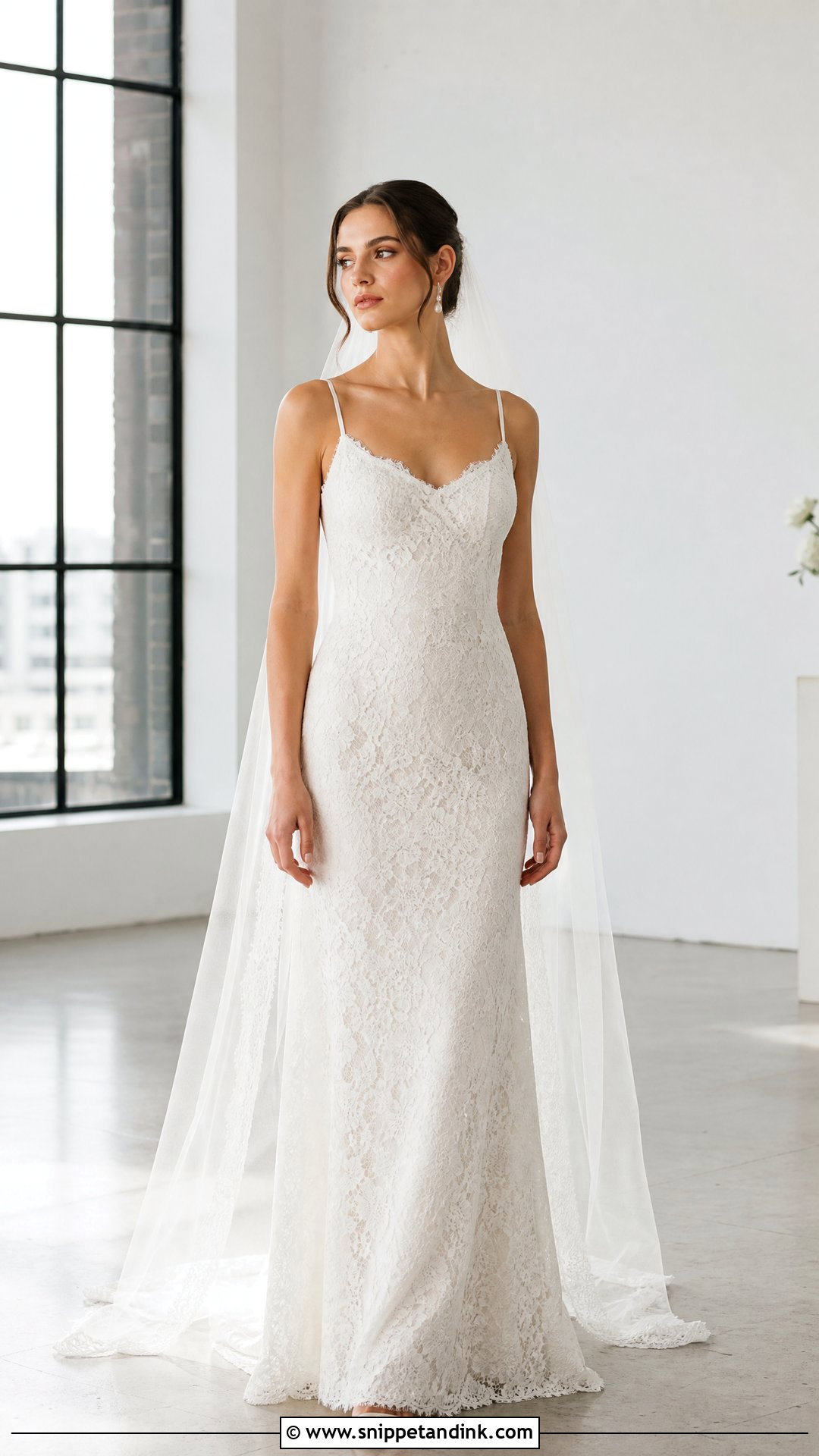
A lace slip dress skims rather than shapes, so it hides nothing. Choose fluid lace over a smooth lining, narrow straps and a softly cut neckline. The fit should follow the body without pulling at the hips or waist; if it creases across the hips when you stand still, it needs letting out or a size up. Underwear matters more here than with any other gown, and so does the hem, which must be level in your actual shoes. Minimal ivory sandals, a small satin clutch and delicate earrings are plenty, with a sheer chapel veil for the ceremony. It suits restaurants, lofts and destination weddings, especially where the dress has to travel in a suitcase.
11. Detachable Lace Overskirt Wedding Dress
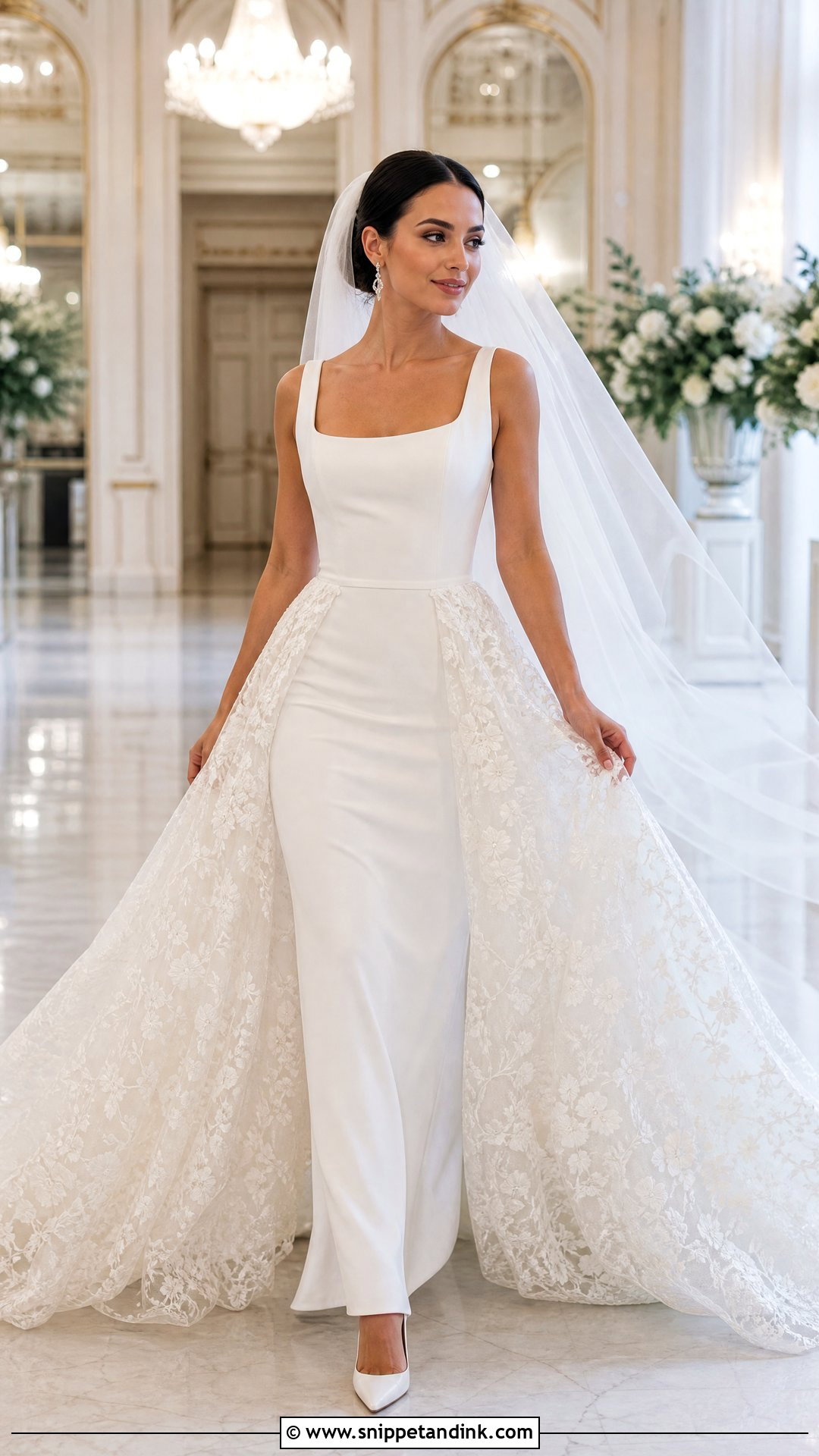
A detachable overskirt gives you two silhouettes from one dress. Start with a crepe column or fitted lace gown and add a full lace overskirt for the ceremony, then take it off after photos for a reception you can dance in. The join is what I scrutinize. Hidden hooks or snaps along the waist look much neater than a bulky visible fastening, and someone in your party should practice removing it before the day, since it’s fiddly the first time. Pointed pumps, crystal earrings and a plain cathedral veil work for the ceremony half, with a compact white bouquet.
12. Lace Cape Sleeve Wedding Dress
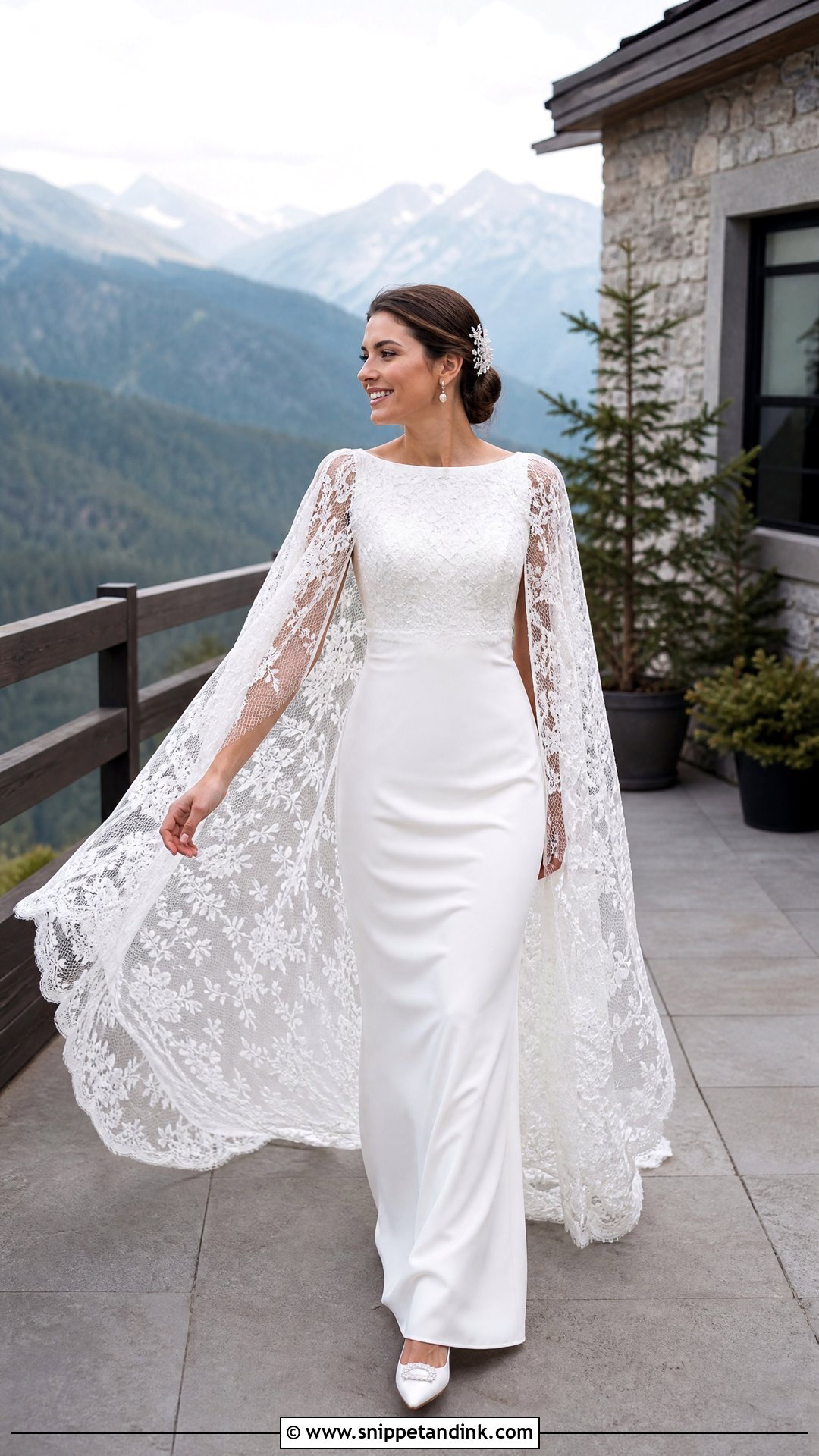
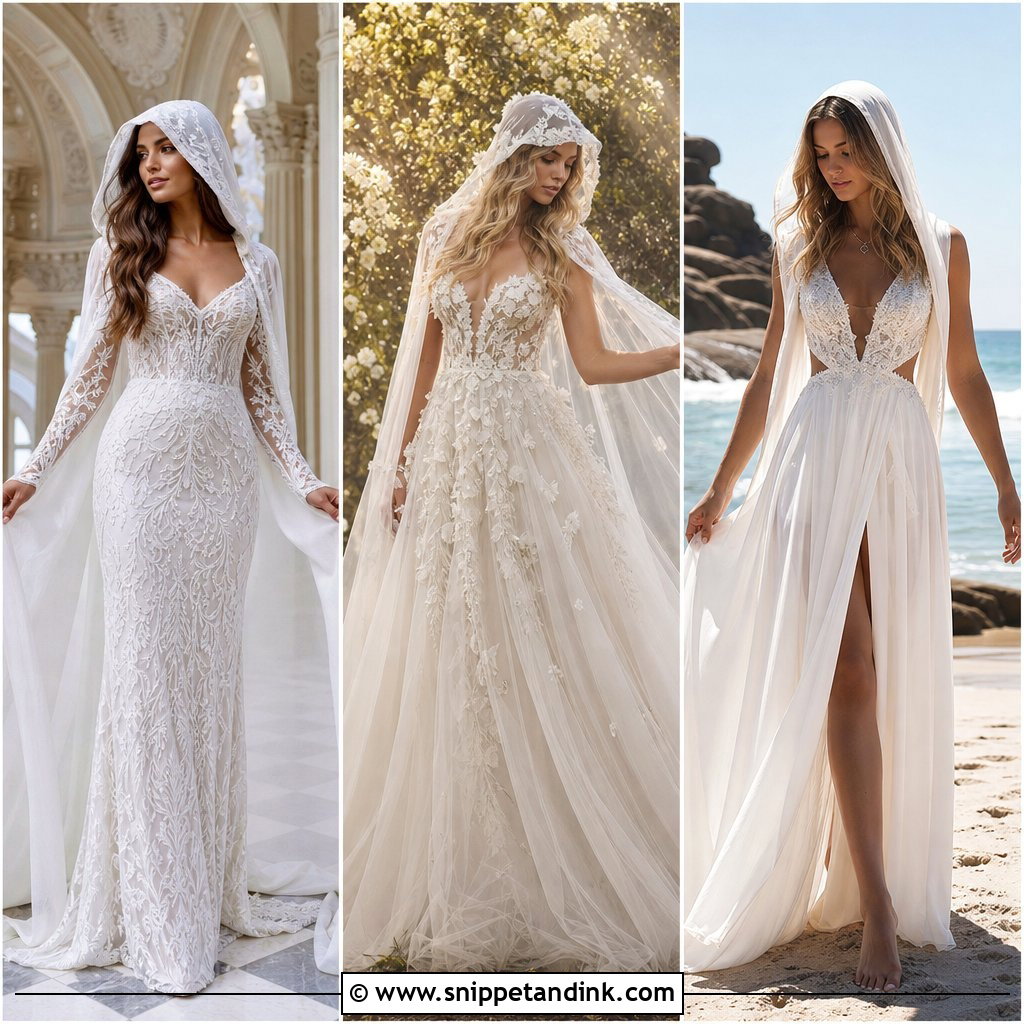
Cape sleeves give light coverage across the shoulders and float when you move. Put them on a slim A-line or column so the cape stays the main statement, and pick fine floral lace that drapes without bulk. Length is the critical fitting point: the cape has to clear your hands and stay off the floor, or it will catch on bracelets, the bouquet and chair backs all evening. A veil and a cape tangle across the shoulders, so I usually suggest a small hair comb instead of a veil. Low pointed heels, understated earrings and a narrow bouquet with trailing greenery suit mountain venues and mild outdoor ceremonies.
13. Tea Length Lace Wedding Dress
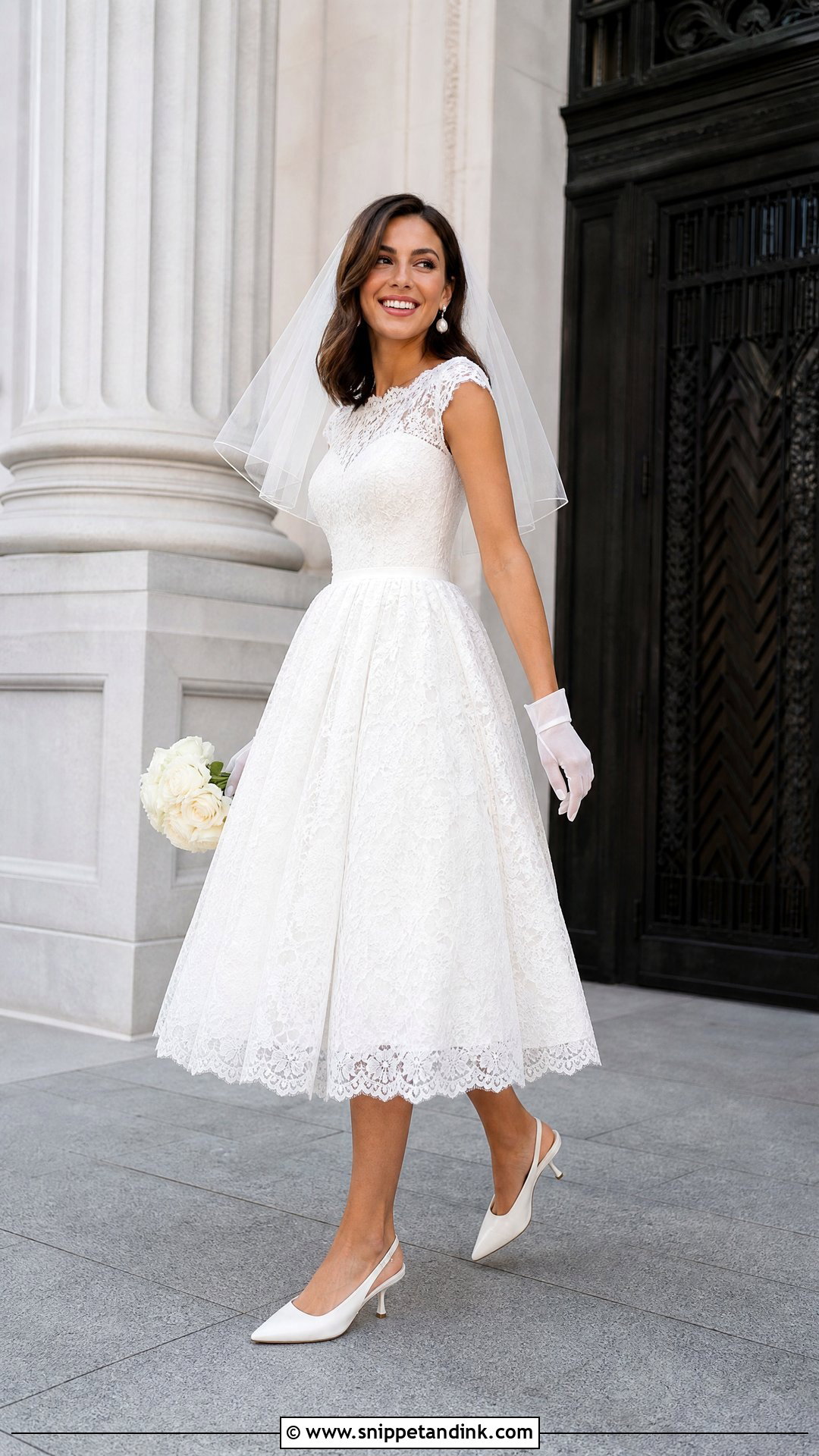
Tea length ends between the lower calf and the ankle, which puts your shoes on show. That makes footwear part of the outfit: a clean ivory pump, a slingback or an embellished low heel. Hem it wearing those exact shoes, because a couple of centimeters up or down changes the whole proportion, and a tea-length dress hemmed carelessly looks like a long dress that was cut short. Add pearl earrings, short gloves if you like them, and a shoulder-length veil or a neat bow. A small round bouquet keeps everything in scale. It’s a natural fit for a courthouse ceremony, a daytime reception or a vintage-leaning restaurant wedding.
14. Blush Lace Wedding Dress
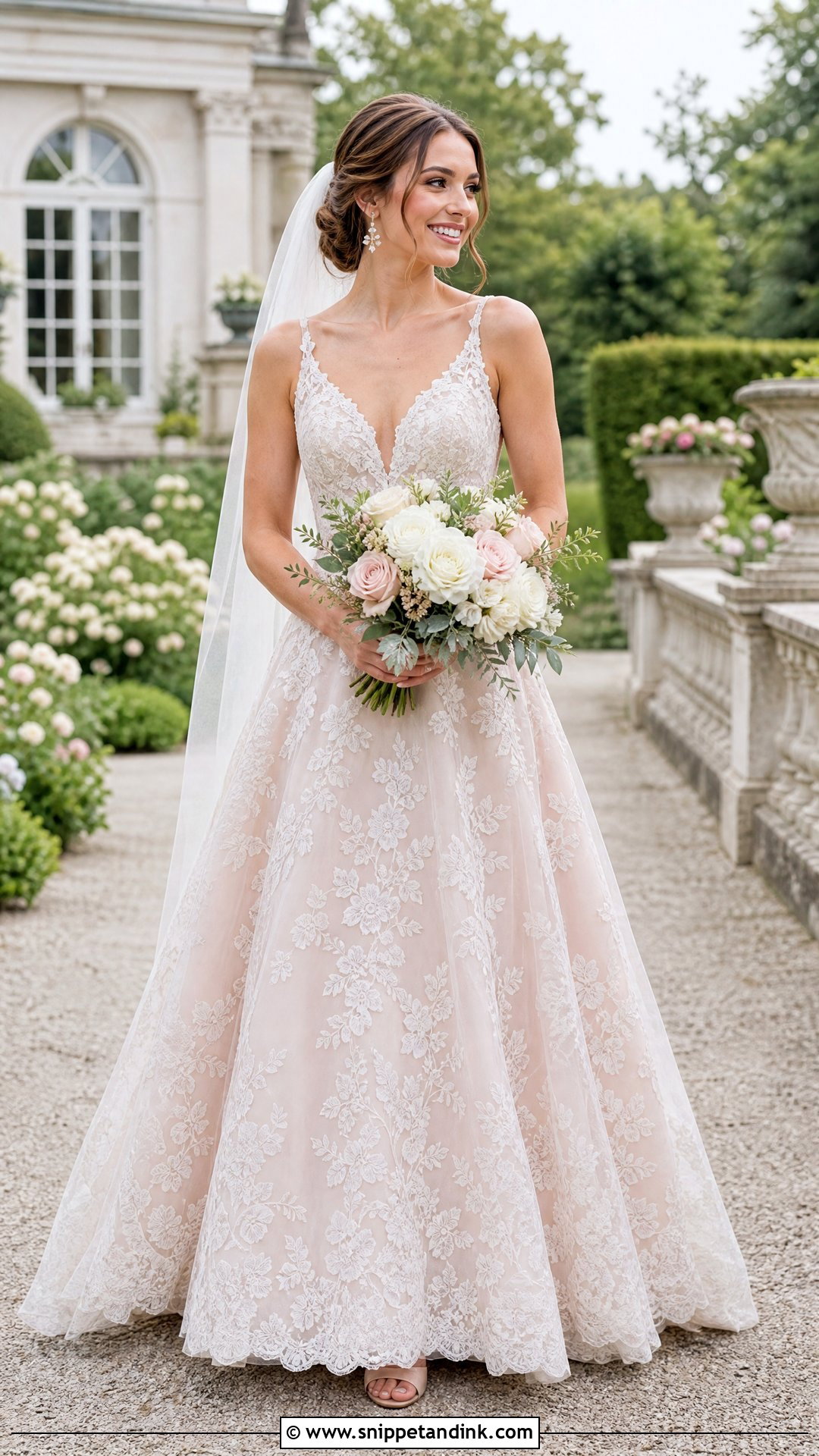
Blush lining under ivory lace gives a whisper of color and makes the lace pattern easier to see. The lining should flatter your skin rather than match it, since a lining too close to your skin tone can read as bare skin in photos. Ivory floral lace over pale blush still looks unmistakably bridal. Neutral heels, rose-gold earrings and a plain ivory veil suit it, with white and muted pink flowers. Boutique lighting is often warm and flattering, so I always take the dress to a window and look at it in daylight before a bride commits, and snap a quick phone photo from a few angles to check the contrast.
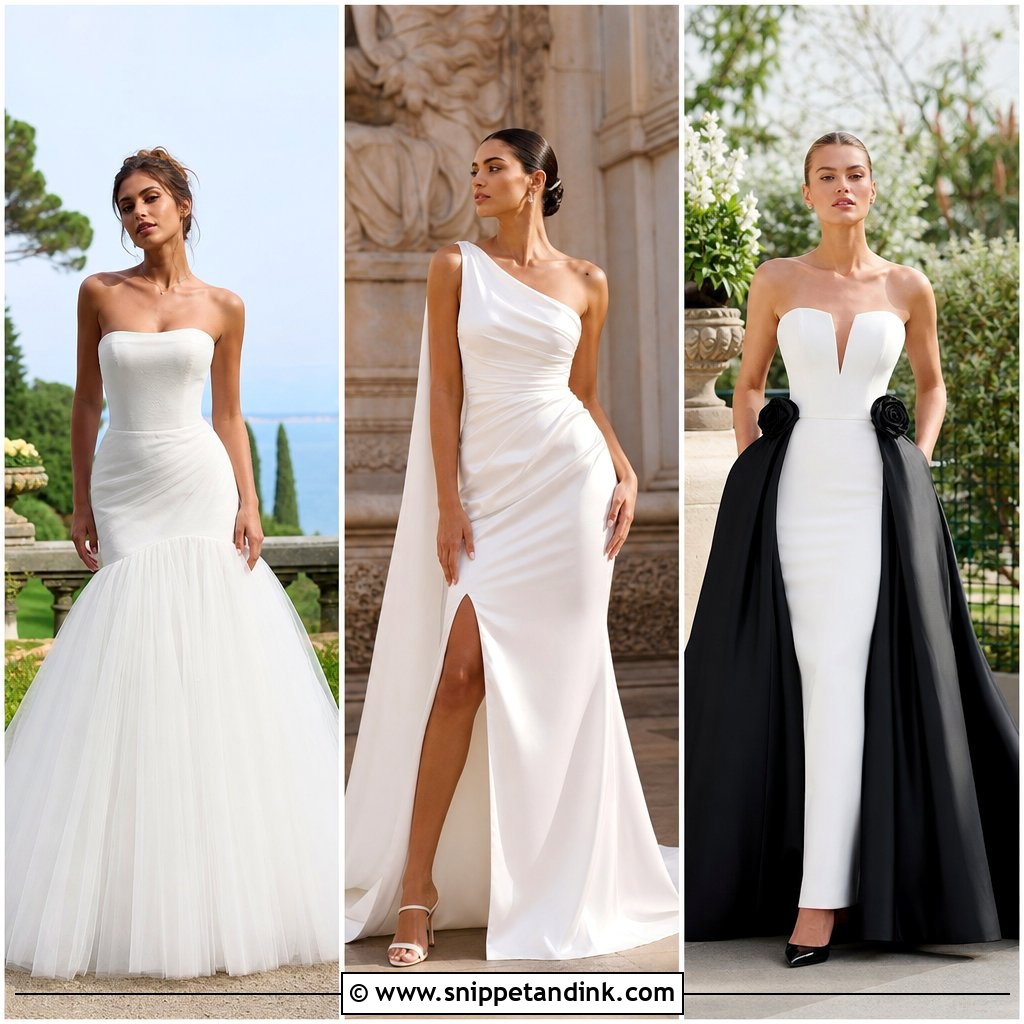
15. Black And Ivory Lace Wedding Dress
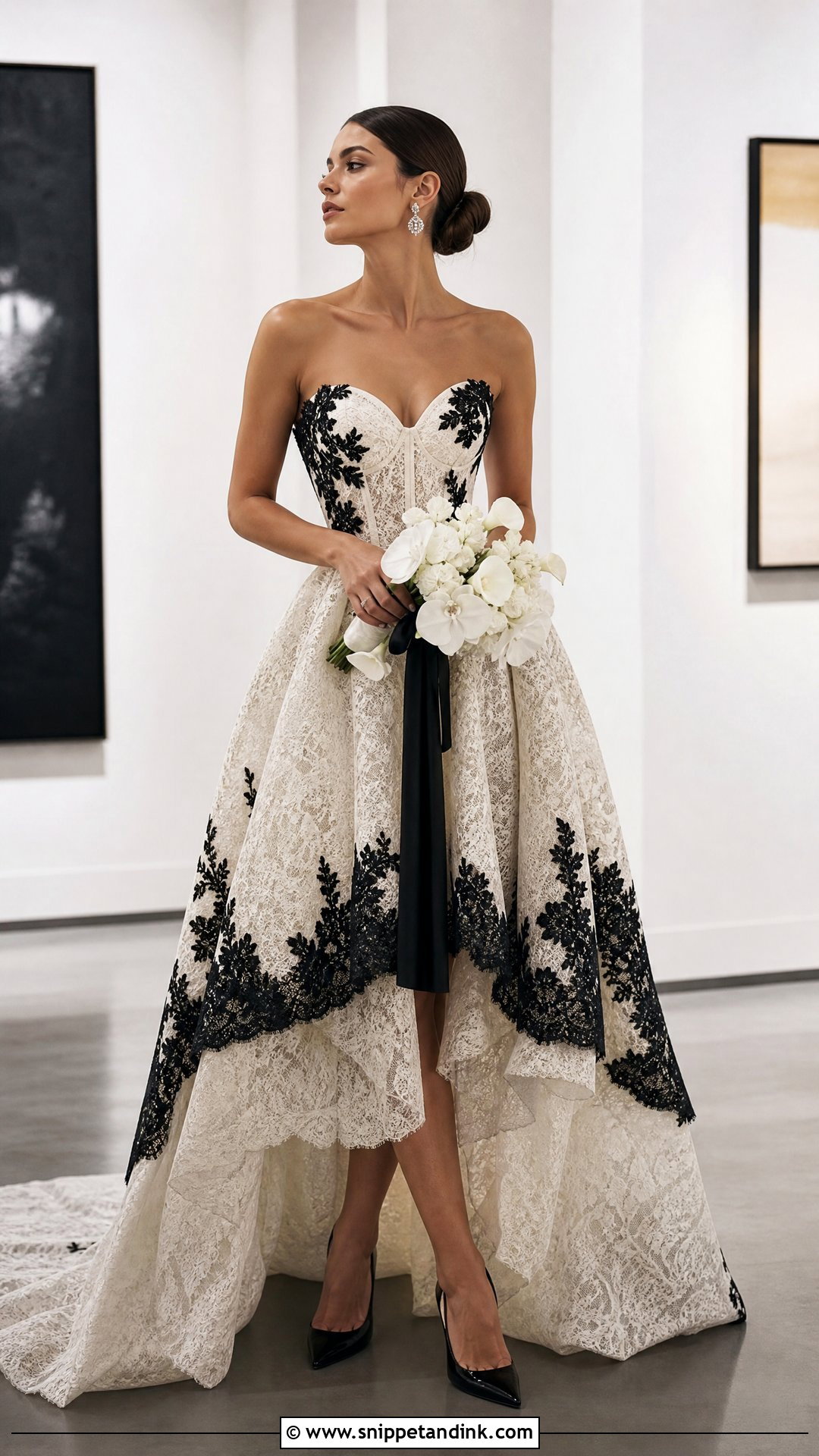
Black lace on an ivory gown is a fashion decision, and it works best with restraint. Keep the gown mostly ivory, column or ball gown, with black floral lace on the bodice, at the waist or at the hem; a removable black lace cape over a simple ivory dress is the gentler version. Black lace on ivory shows every motif sharply, so placement has to look deliberate from the side and back as well as the front, and that’s where I spend most of the fitting. Black pointed pumps, small crystal earrings and an ivory bouquet wrapped in black ribbon finish it, with a sleek bun and defined liner. Galleries, theaters and dramatic architecture suit it.
16. Lace Wedding Dress With Scalloped Train
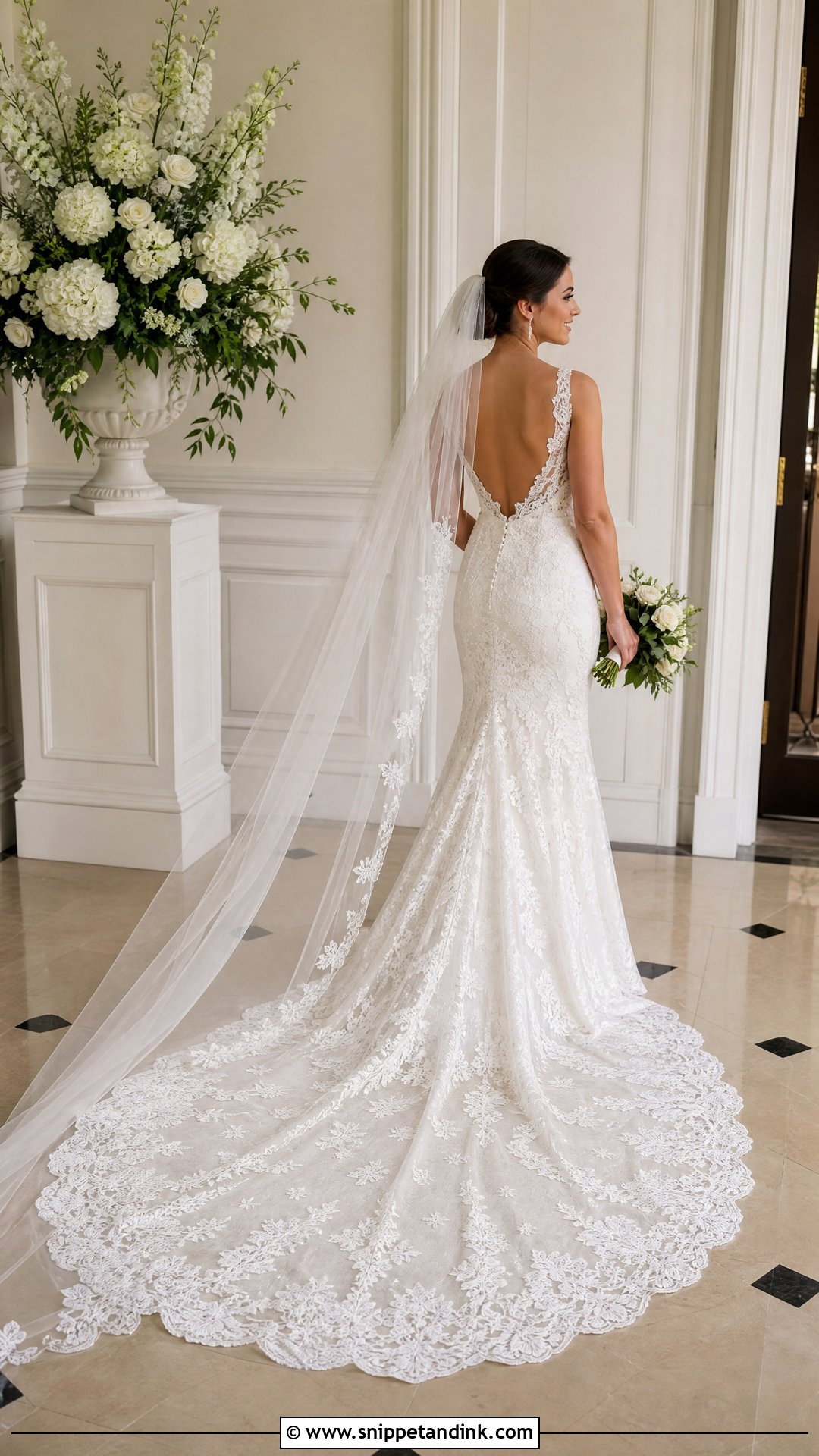
A scalloped train puts its detail at the back, where guests look during the ceremony and where portraits linger. Choose a fitted or A-line gown with lace motifs running along the train’s edge. Chapel length gives impact and stays manageable; a long cathedral train is a lot to steer through a reception. The veil should end before or beyond the scallops, never right on them. Bustling is the part brides forget: on a lace train, the bustle points should be hidden behind motifs so the pattern still reads when lifted. Ask your seamstress to mark them with ribbon colors, and have whoever does it practice before the day. Simple pumps, drop earrings and a compact bouquet keep the focus on the dress.
17. Plus Size Empire Waist Lace Wedding Dress
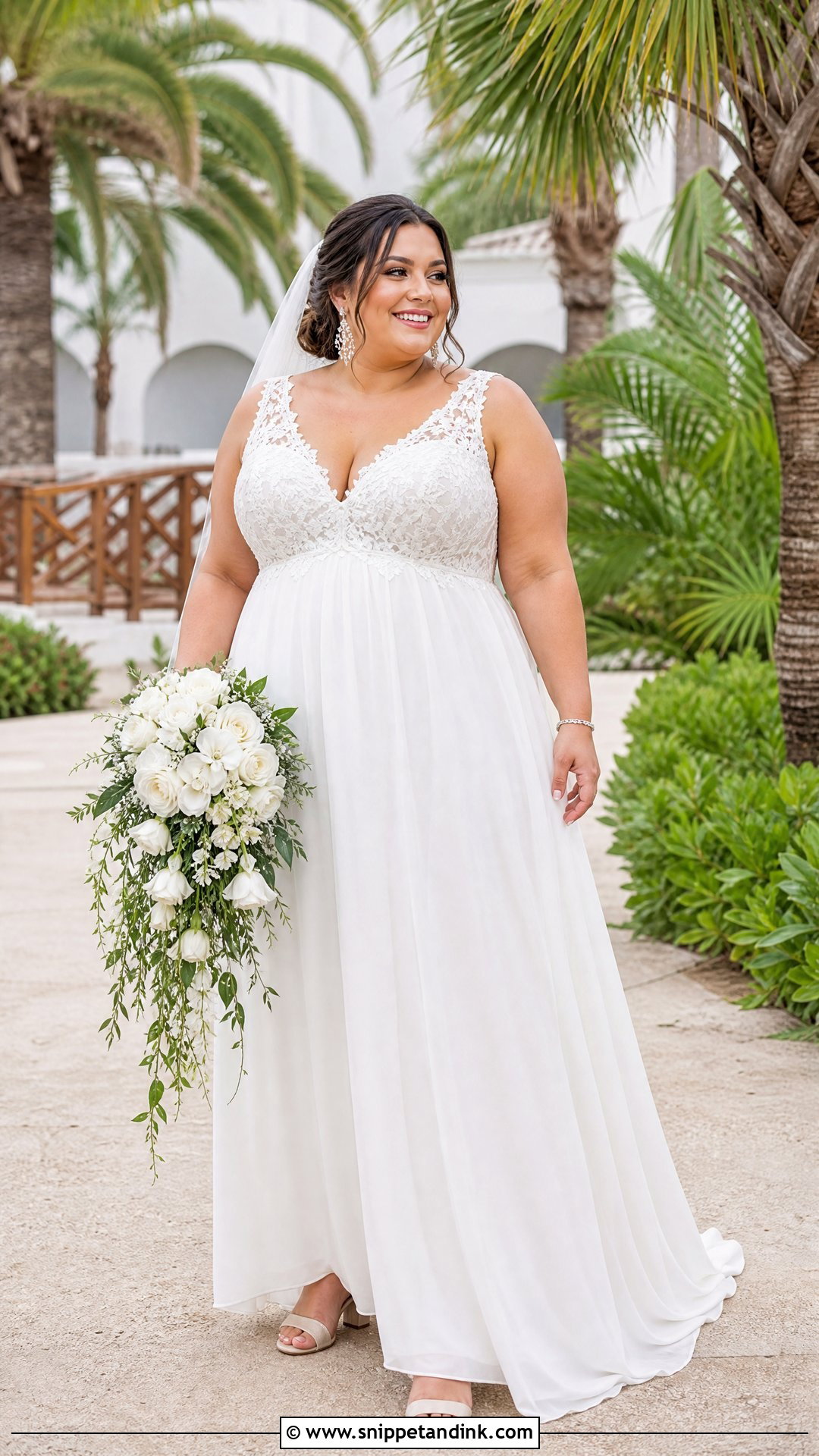
An empire waist lengthens the line and gives room through the waist and hips, which is why so many curvy brides feel at ease in it. The bodice does all the work here. Look for properly positioned cups, wide straps and an under-bust seam that sits flat rather than riding up. Lightweight lace over chiffon lets the skirt move without adding volume. Supportive block heels, statement earrings and a fingertip veil in a half-up style suit it, with a loose cascading bouquet. Fit matters far more than the number on the label, so choose a boutique and a seamstress who regularly work with inclusive sizing and know how to build support into the bodice.
18. Crepe Wedding Dress With Lace Back
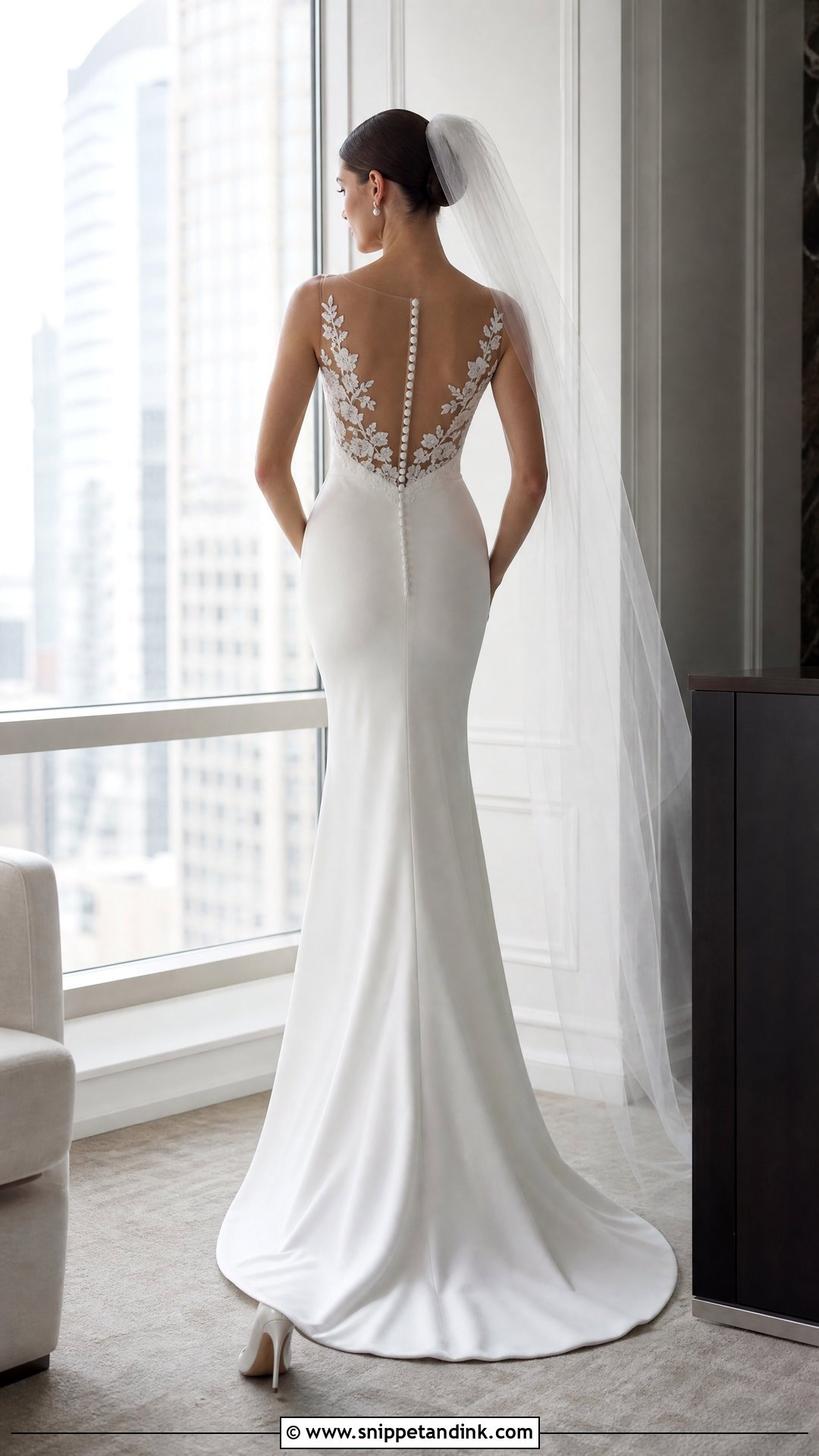
Plain crepe at the front and lace across the back is a favorite of brides who like minimalism but still want a moment as they walk away. Choose a column or fit-and-flare with sheer floral lace over the shoulders and down the back, and covered buttons where lace meets crepe. Two things to sort early: the lace and crepe have to be the same ivory, and an open lace back usually means sewn-in cups rather than a bra, which your seamstress should plan from the first fitting. Modern ivory pumps, small pearl earrings and a plain veil under a sleek bun suit it, with structured white tulips or roses. City venues and contemporary hotels are its home.
19. Two Piece Lace Wedding Dress
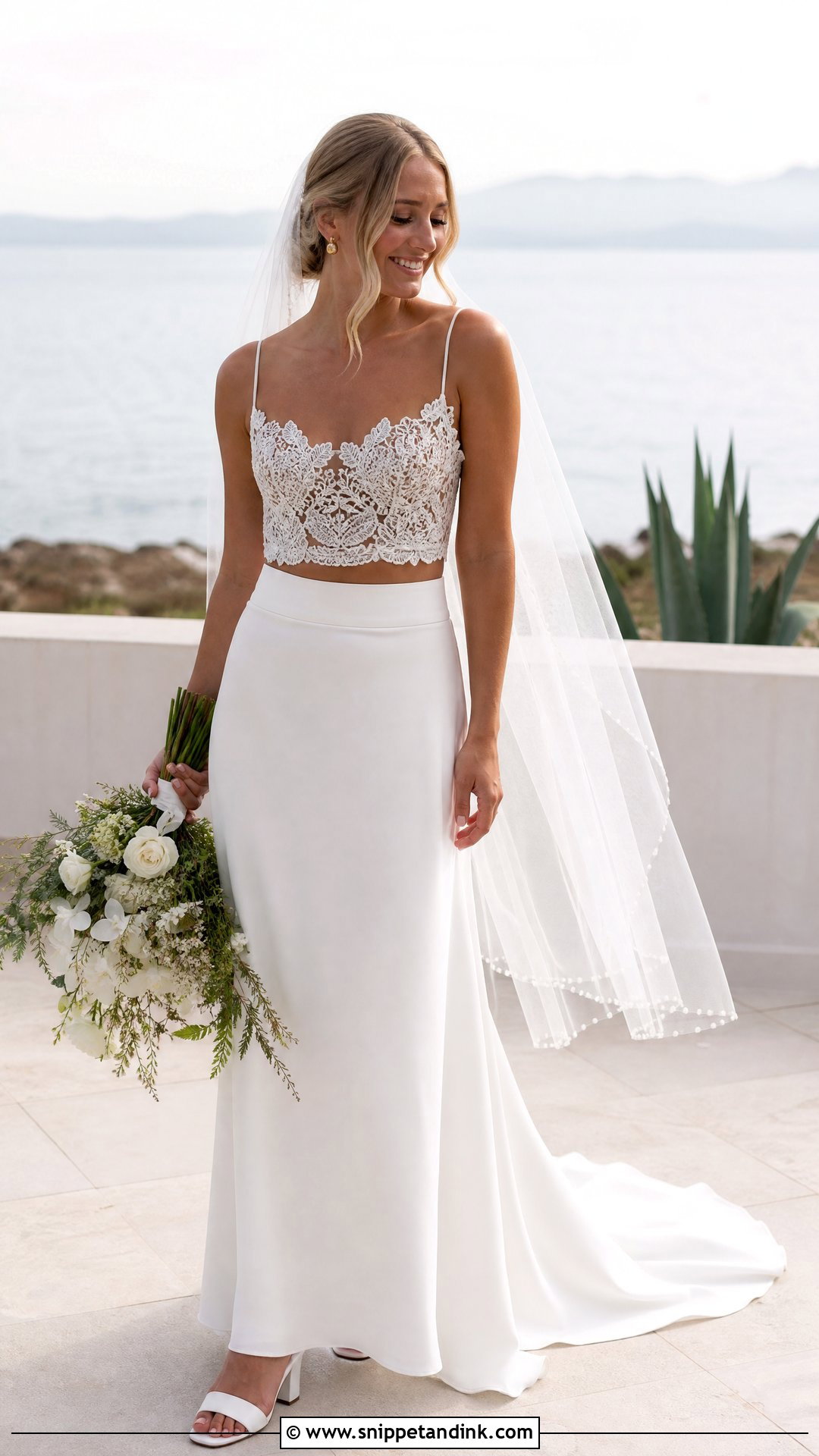
A two-piece pairs a fitted lace top with a high-waisted skirt in crepe, chiffon or matching lace. A narrow gap at the waist feels modern; overlapping pieces give more coverage. The practical problem is drift: as you walk and sit, a top can ride up and the skirt slide around. Discreet snaps or a small hidden hook connecting the two layers fix that. Also compare the two ivories in daylight, since separates are often cut from different fabric batches. Block-heel sandals, small gold earrings and a fingertip veil keep it relaxed, with a natural white bouquet for outdoor, courthouse or destination ceremonies.
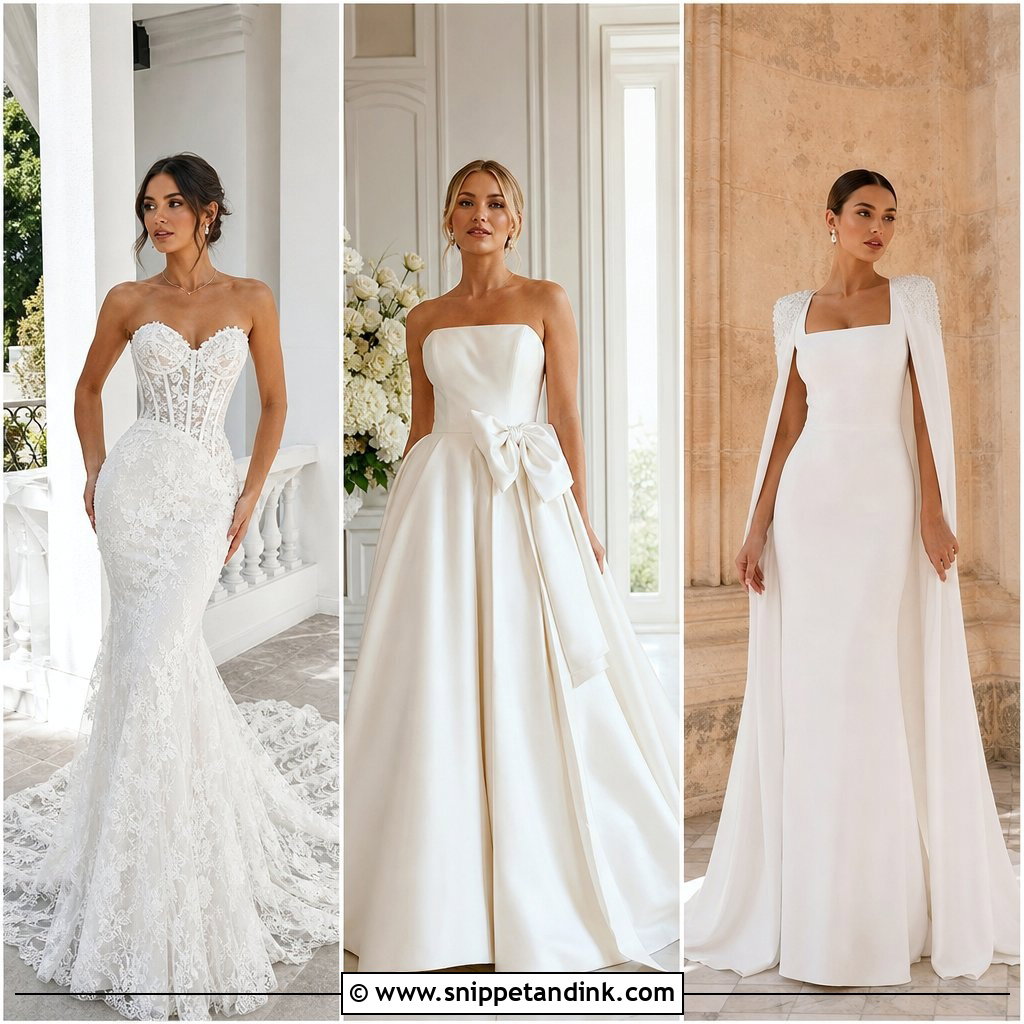
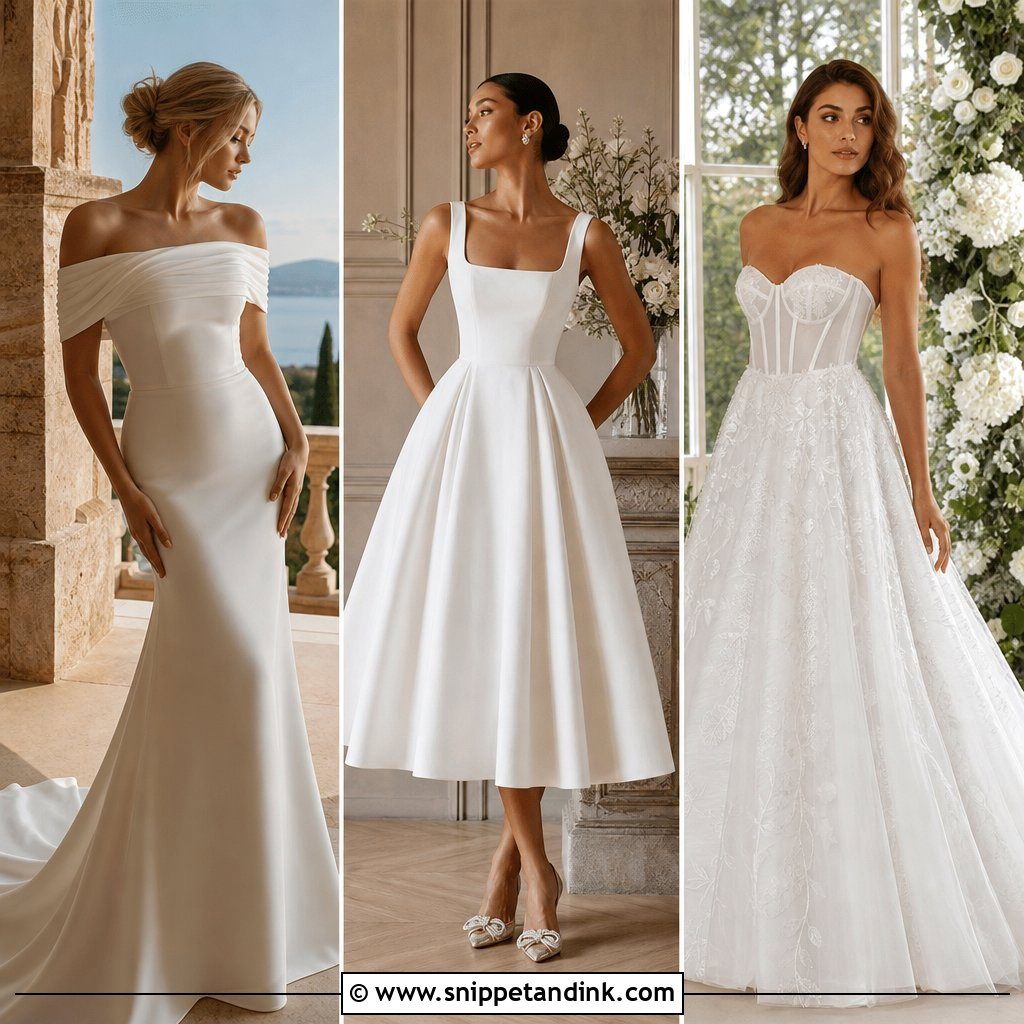
20. Puff Sleeve Lace Wedding Dress
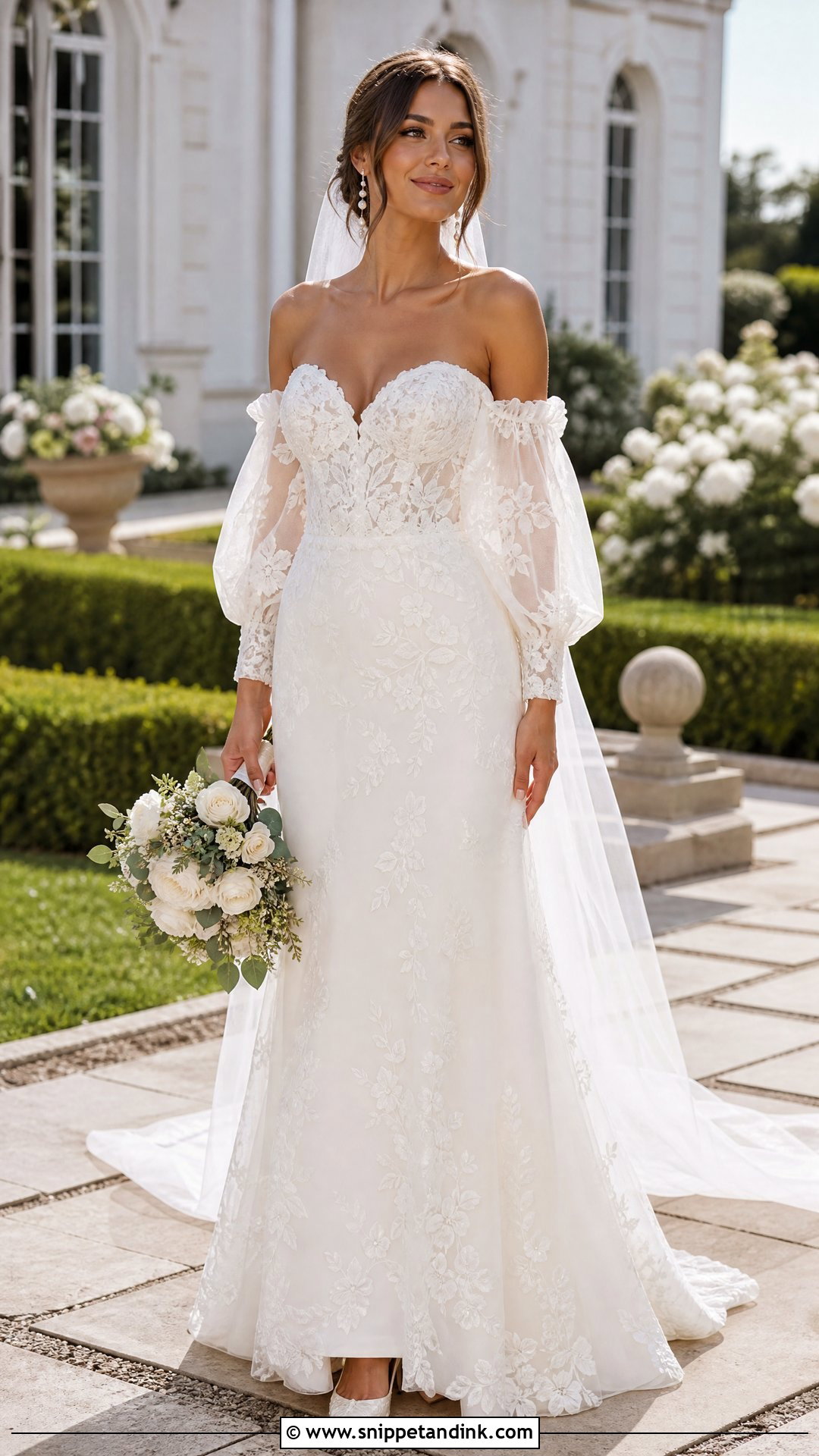
Puff sleeves give a lace gown personality without extra embellishment. Pair a fitted bodice and defined waist with softly gathered sleeves in lace or lace-covered tulle, and balance them with a streamlined A-line or column skirt. The arm opening is where puff sleeves fail. Elastic that’s too tight pinches by evening, and a sleeve cut too high stops you lifting your arms to hug anyone, so test both at the fitting. Detachable sleeves are worth asking about if you want a cooler look for dancing. Simple pointed heels, delicate drop earrings, a plain veil worn behind the sleeves and a smooth low bun keep the neckline clear.
Lace Alterations Need Extra Weeks
A plain hem can be cut and stitched. A lace hem usually can’t, because the scalloped edge is the finish. The seamstress has to unpick the lace border, shorten the skirt, then hand-sew the scallop back on along the new line, and the same goes for taking in a lace bodice without breaking the pattern. That handwork takes time, so I tell brides to expect lace alterations to need longer than they would on satin or crepe and to start fittings well before the wedding, not in the final month.
Bring your wedding shoes, the exact underwear you’ll wear and any sewn-in cups question to the first fitting. Changing any of them later can shift where the lace sits, and moving appliqués a second time is slow work.
Snags, Steam and the Morning Of
Lace’s enemies on the day are small and sharp. Watch for bracelet clasps, the hook-and-loop strap on a camera bag, florist’s wire poking from a bouquet stem and rough brick or stone walls during portraits. Ask your florist to wrap the stems fully.
Never iron lace directly. A handheld steamer kept a hand’s width away relaxes creases from travel, and anything stubborn is better left to the bridal shop. If a thread does pull during the day, don’t cut it; tuck it to the inside with a needle from your emergency kit so the hole doesn’t run.
Lace Looks Different Off the Hanger
Lace is the fabric that surprises brides most in the fitting room. A pattern that looked busy on the rack can settle beautifully over the right lining, and a gown you nearly passed over may suit you better than the one you saved. Across delicate Chantilly gowns, structured guipure silhouettes, contrast linings, detachable layers and two-piece sets, the same rule holds: try necklines and shapes you didn’t expect to like. Check the lace in daylight and against your skin, then think about weight, support and how much altering it will need before you buy. The shoes, veil and flowers come last and only need to agree with the lace.
You'll Like These Ideas:




Leave a Reply