
A wedding in Thailand can mean anything from formal Thai silk to a light gown that copes with a beach at noon. Thailand’s national costume has eight formal styles, each with its own neckline, sleeve and drape, and many couples hold a traditional morning ceremony followed by an evening reception, which gives a bride room for two very different outfits. I’ve grouped the traditional styles first, then the modern silk gowns, temple-appropriate dresses and destination options. For each one I’ll tell you what I’d pair with it and what to watch for in the heat.
Kneeling Barefoot With Water Poured Over Your Hands in a Silk Skirt
A traditional Thai morning is physical in ways a Western ceremony isn’t, and the dress has to allow for it. If monks are invited to bless the couple, you’ll sit or kneel on the floor, shoes off, with your feet tucked to the side and pointing away from the monks. During the water-pouring ceremony, the couple usually kneel or sit with hands pressed together over a tray while elders pour blessed water from a conch shell over their hands, often for a long line of guests.
- Sit and kneel in the skirt at your fitting. A sinh or column skirt needs enough ease at the knee to fold your legs to one side without strain.
- Choose sleeves that end above the wrist or can be pushed back slightly. Water runs off your hands for a long time and silk cuffs stain.
- Keep a small towel and a dark-coloured handkerchief nearby for drips on the skirt front.
- Wear shoes you can step in and out of without bending or using your hands.
Also plan for the double garland that joins the couple’s heads. Hair needs to sit low and flat enough that it doesn’t get crushed when the loops are placed.
1. Gold Thai Chakri Wedding Dress
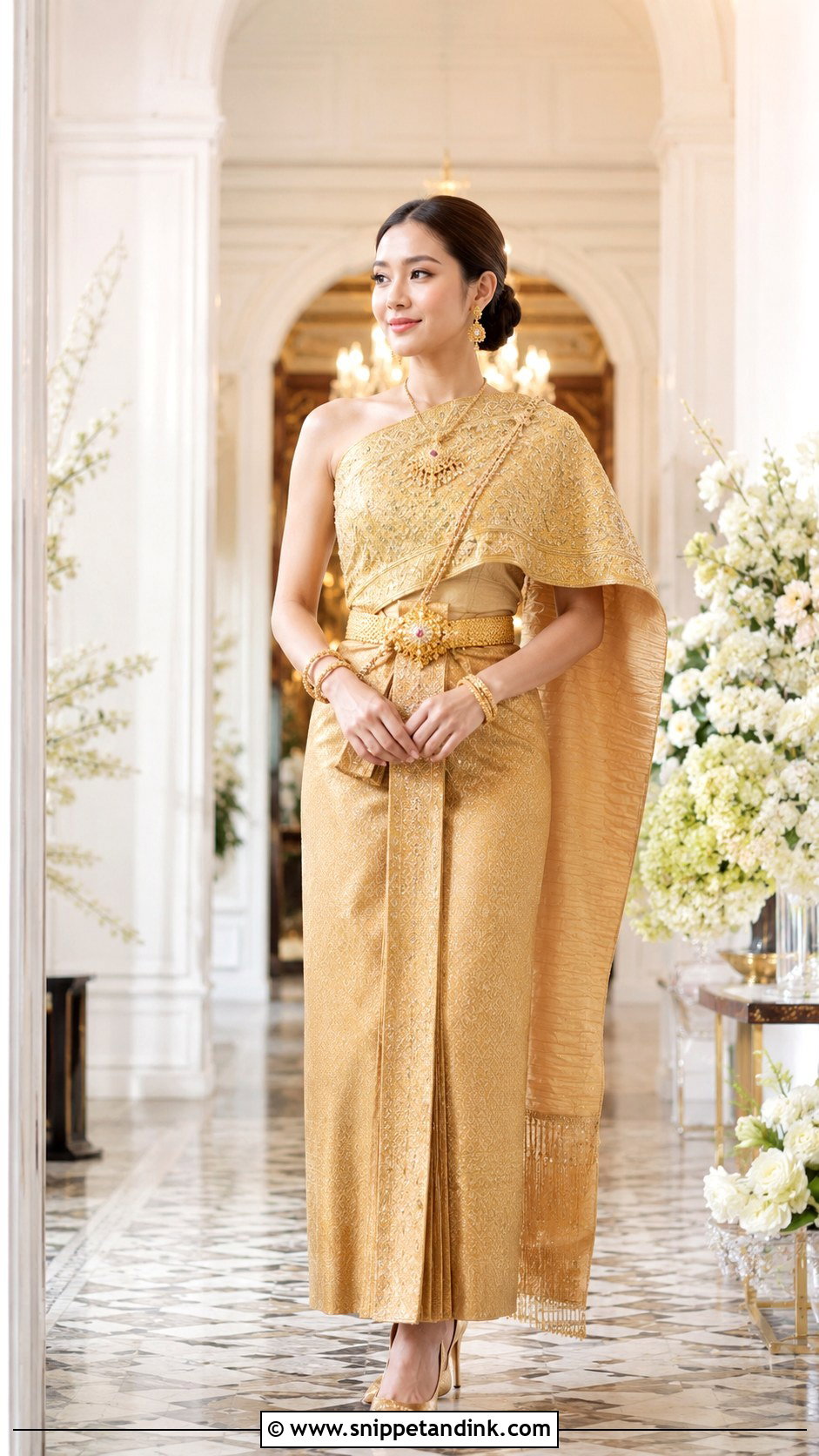
The Chakri is the style with the one-shoulder sabai over a fitted silk bodice, worn with a long patterned sinh whose front pleats are folded by hand. A gold Thai Chakri wedding dress suits a formal family ceremony or a hotel ballroom. I’d pick antique gold over bright metallic silk; it glows softly instead of flaring in flash photos. Have the sabai draped by someone who has done it before, since it needs pinning at the shoulder and waist to stay flat. A low bun, fine gold earrings, stacked bracelets, pointed gold heels and a jewelled belt complete it. Carry white orchids or cream roses so the flowers stay quieter than the fabric.
2. Ivory Thai Siwalai Wedding Dress
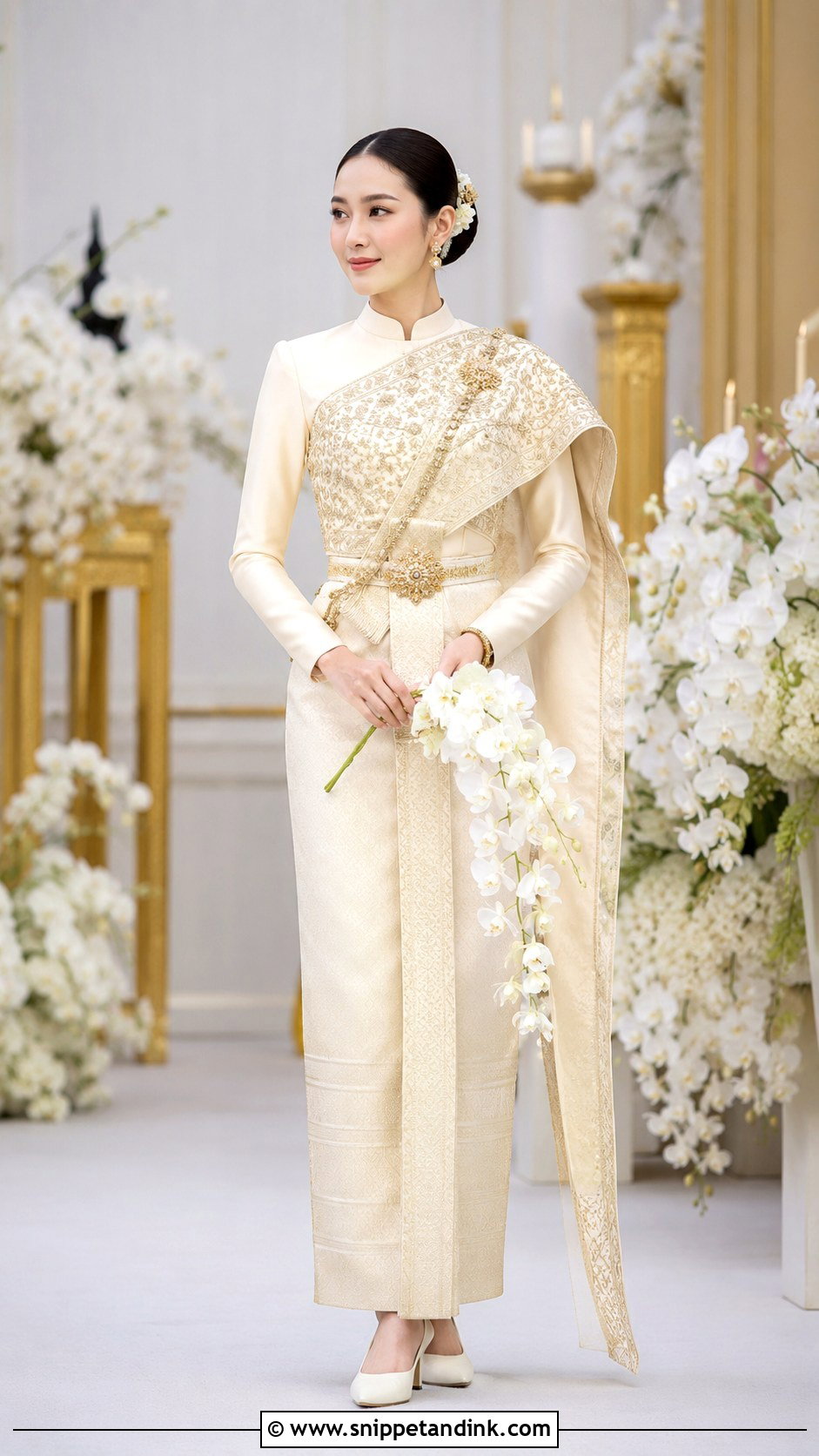
The Siwalai covers the arms with a long-sleeved fitted blouse, then adds a sabai and a decorative belt over a floor-length silk skirt, so you get full ceremony splendour with modest coverage. In ivory with tonal gold embroidery it reads clearly as bridal. I’d choose closed kitten heels or embellished flats you can slip off quickly, because shoes come off for a temple blessing and often for the water-pouring ceremony at home. A smooth chignon, pearl drops and a slim gold bracelet keep it refined. A small silk clutch is useful for portraits and the reception entrance.
3. Red Thai Chakraphat Wedding Dress
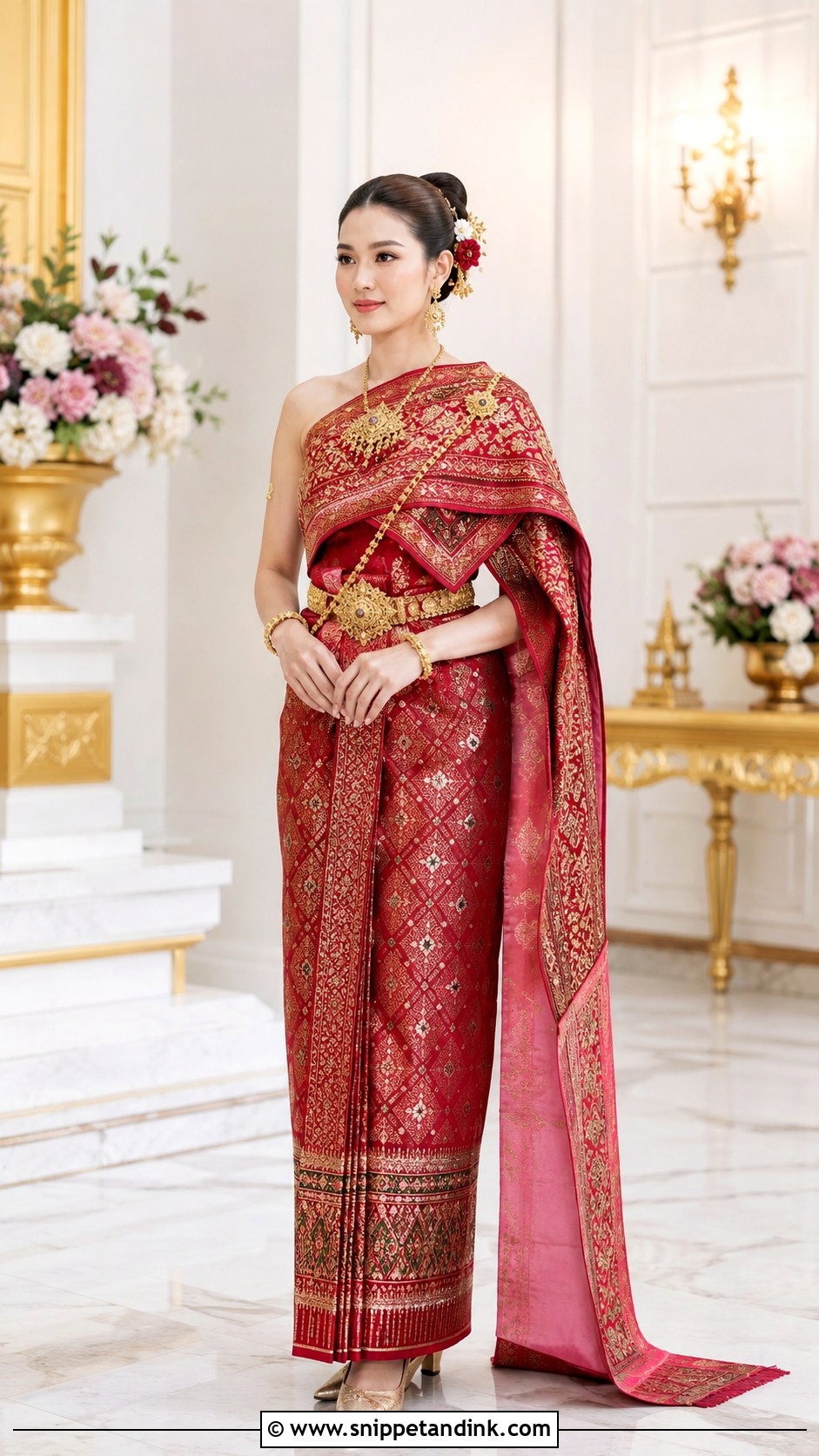
The Chakraphat is the most formal and layered of the Thai styles, with the sabai wrapped in several layers across the shoulder. In deep red silk it carries real weight, both visually and physically, so I’d warn any bride that it’s warm to wear for hours. A Thai Chakraphat wedding dress looks richest in ruby, garnet or dark crimson; a very bright red can look cheap on camera. Gold brocade and a sculpted belt show off the craftsmanship. Since the shoulder draping already fills the neckline, skip the necklace and let earrings frame the face. Gold pumps, an updo with a small flower ornament and a compact ivory bouquet balance the colour.
4. Champagne Thai Boromphiman Wedding Dress
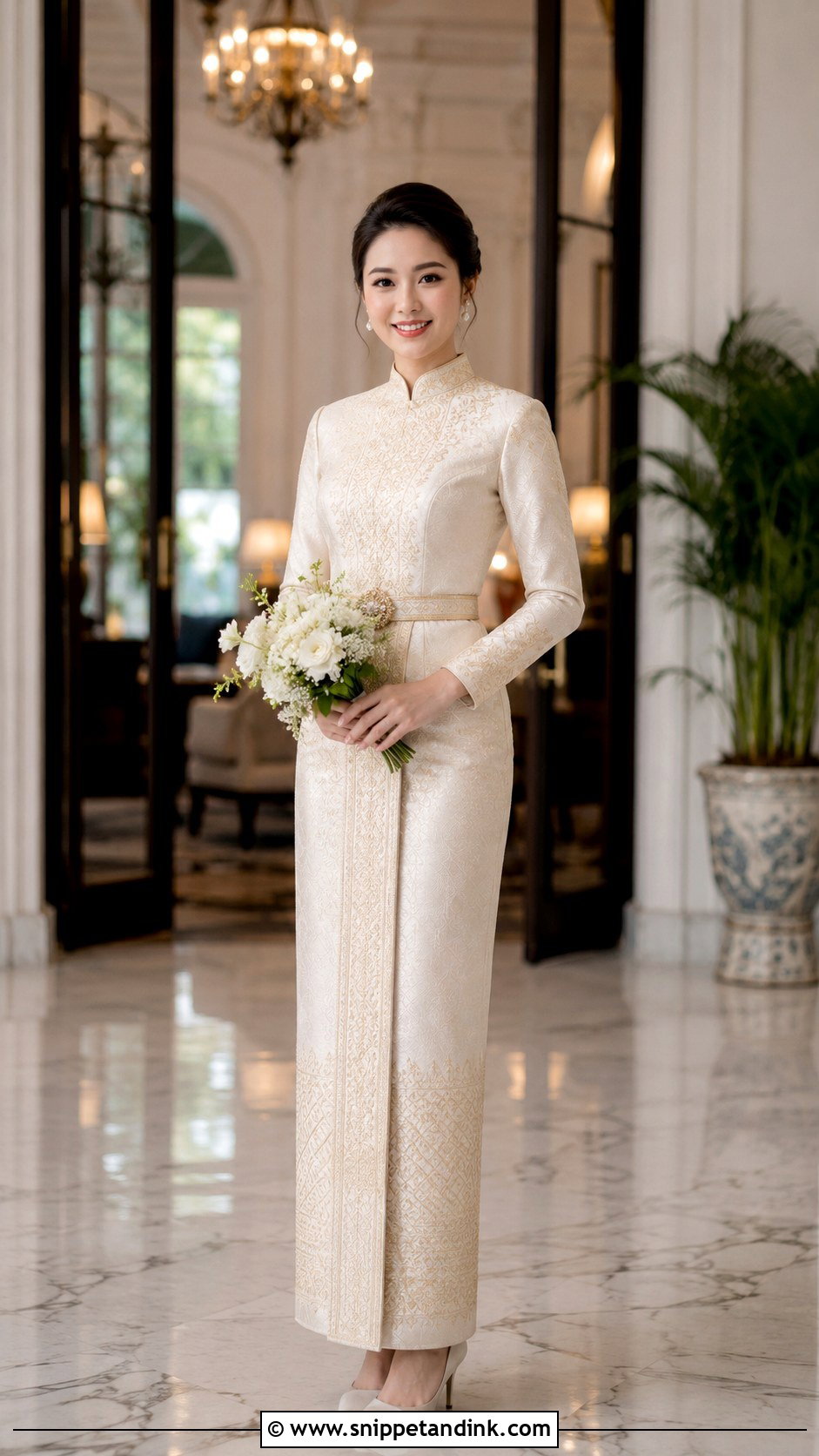
The Boromphiman is the cleanest of the formal styles: a long-sleeved blouse with a round neck, a long silk sinh and usually an ornamental belt, all cut as one piece so the blouse and skirt join neatly at the waist. Champagne silk with pale gold weaving gives it gentle warmth. I’d keep the belt narrow so it marks the waist without breaking that long line. Pearl-and-gold earrings, a centre-parted bun and pointed satin pumps suit it, with fine embroidery at the neckline and cuffs if you want more detail. A white bouquet with fresh green leaves fits morning ceremonies, heritage venues and families where conservative coverage is expected.
5. Beaded Thai Dusit Wedding Dress
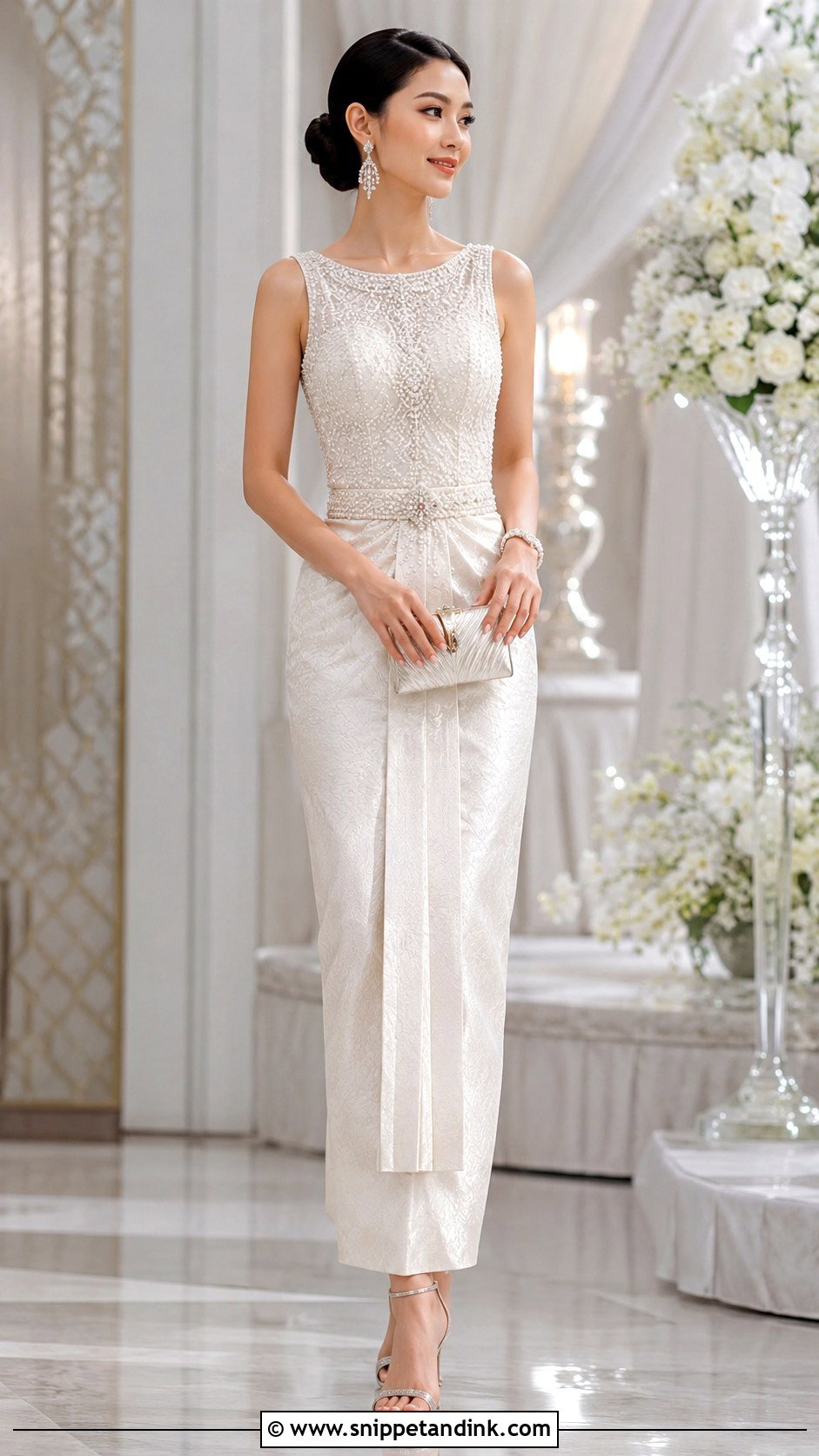
Dusit is the evening style, sleeveless with a wide neckline and an embellished bodice, and it’s the most Western-influenced of the eight. That makes it the easiest traditional option for a ballroom reception. Pearl beading on ivory silk gives a soft glow; silver crystals feel cooler and more modern. Heavy beading drags on a sleeveless bodice, so I check the shoulder seams at the fitting for any pull. A straight or gently flared skirt keeps the volume down. A smooth updo, sparkling drops, metallic ankle-strap heels, a structured white bouquet and a satin clutch finish it.
6. Pastel Thai Chitralada Wedding Dress
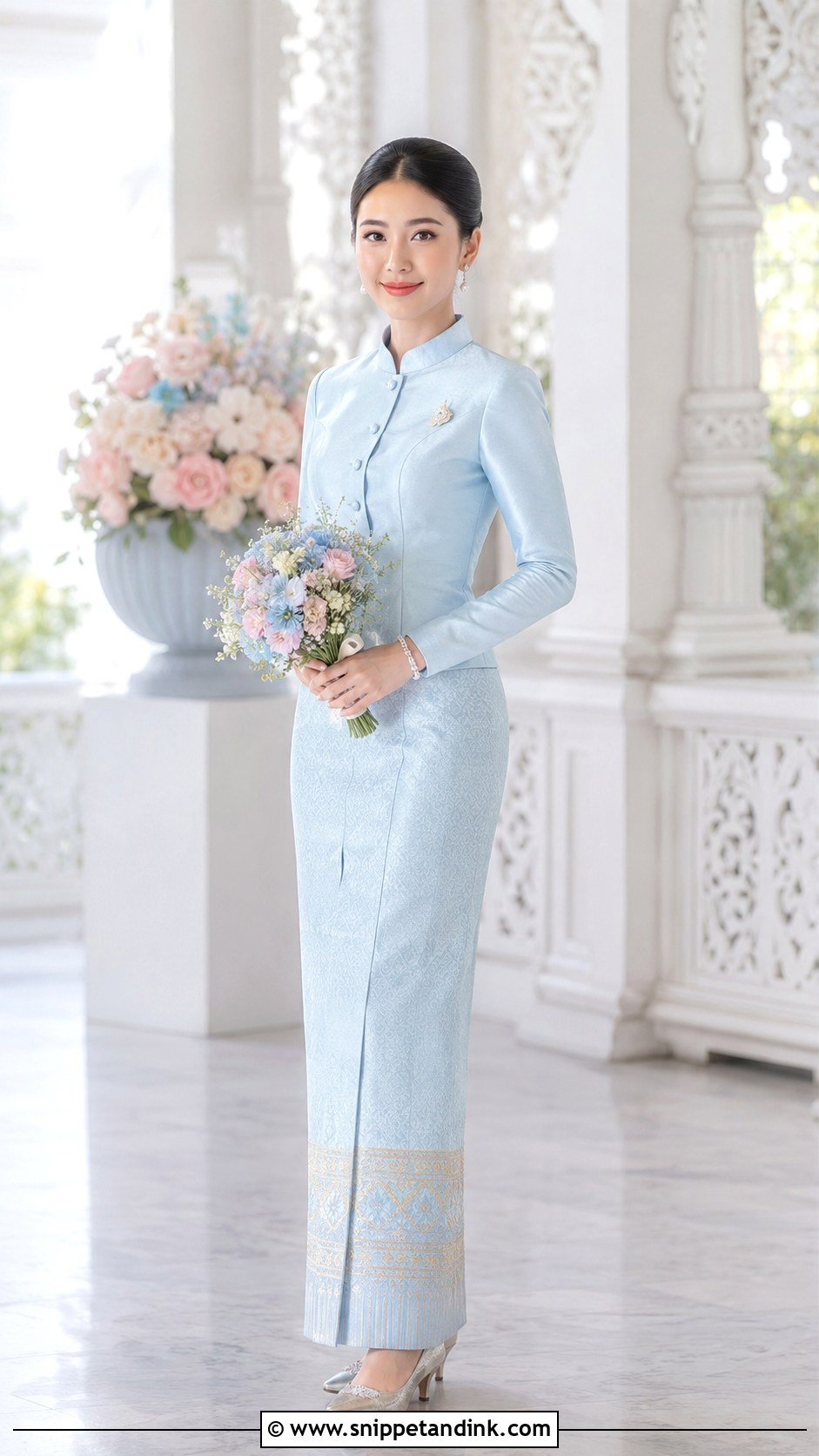
Chitralada is a daytime style with long sleeves, a formal standing collar and an ankle-length sinh, which makes it appropriate for a respectful morning ceremony. I like it in pastels when white doesn’t fit the wedding colours: blush, powder blue, pale lavender or muted sage, with woven gold along the skirt border. That collar sits close to the throat, so have it fitted while you’re seated and turning your head, not just standing still. Low gold heels, small pearl earrings, a tidy bun with a fresh flower or two and a slim bracelet keep it modest. A small pastel bouquet matches.
7. Brocade Thai Amarin Wedding Dress
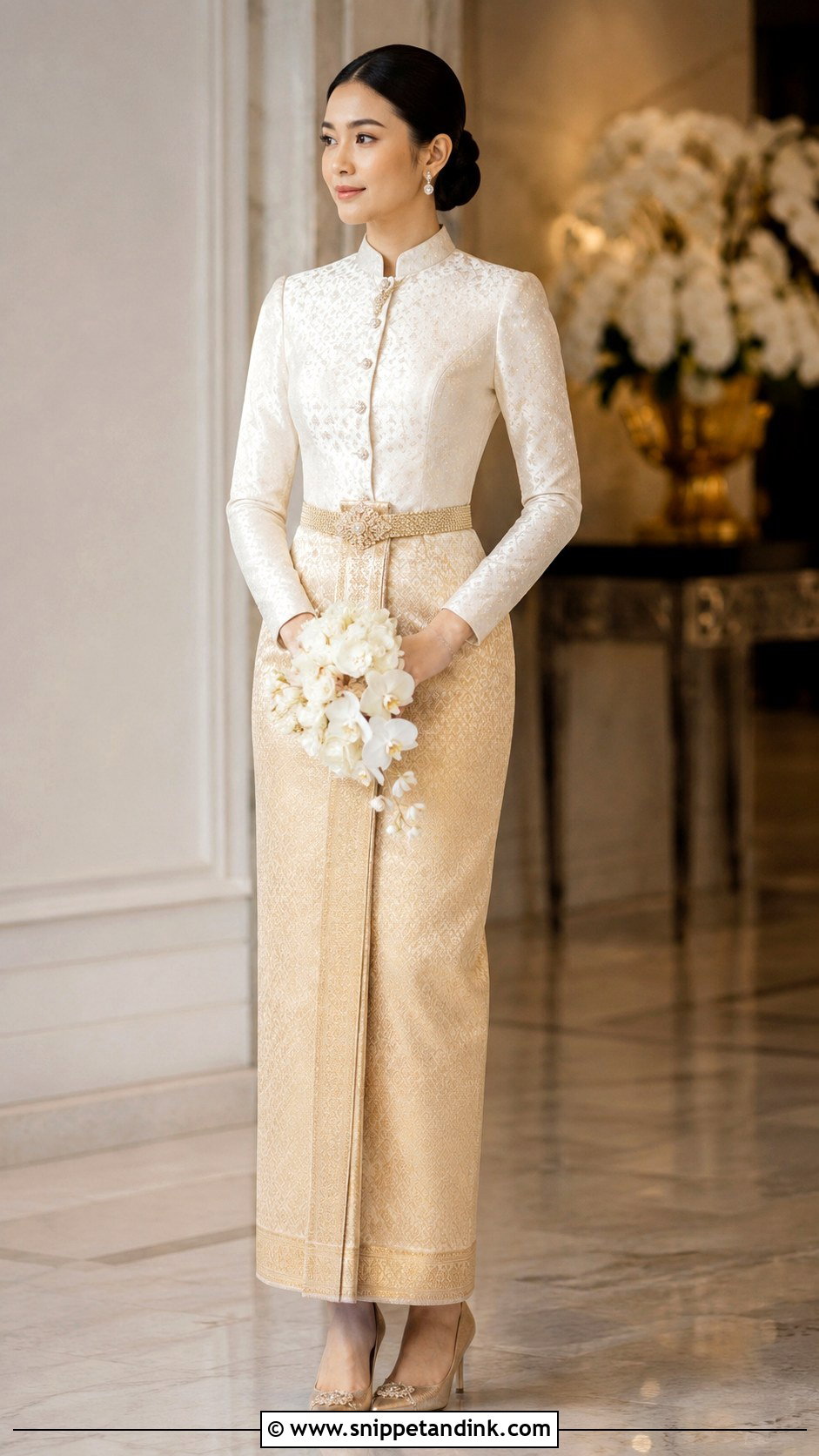
The Amarin pairs a long-sleeved blouse with a silk brocade skirt, and that brocade does all the work. It’s stiff, so it holds a structured shape, and it barely needs jewellery. An ivory blouse with a pale gold brocade skirt is the classic bridal palette. Brocade doesn’t drape or forgive, which is why I’d have the skirt waist fitted carefully; even a small gap shows as a ridge under the belt. Pearl earrings, a slim bracelet, closed gold heels and a sleek low bun suit an evening ceremony. White orchids keep the formal mood.
8. Thai Ruean Ton Wedding Dress
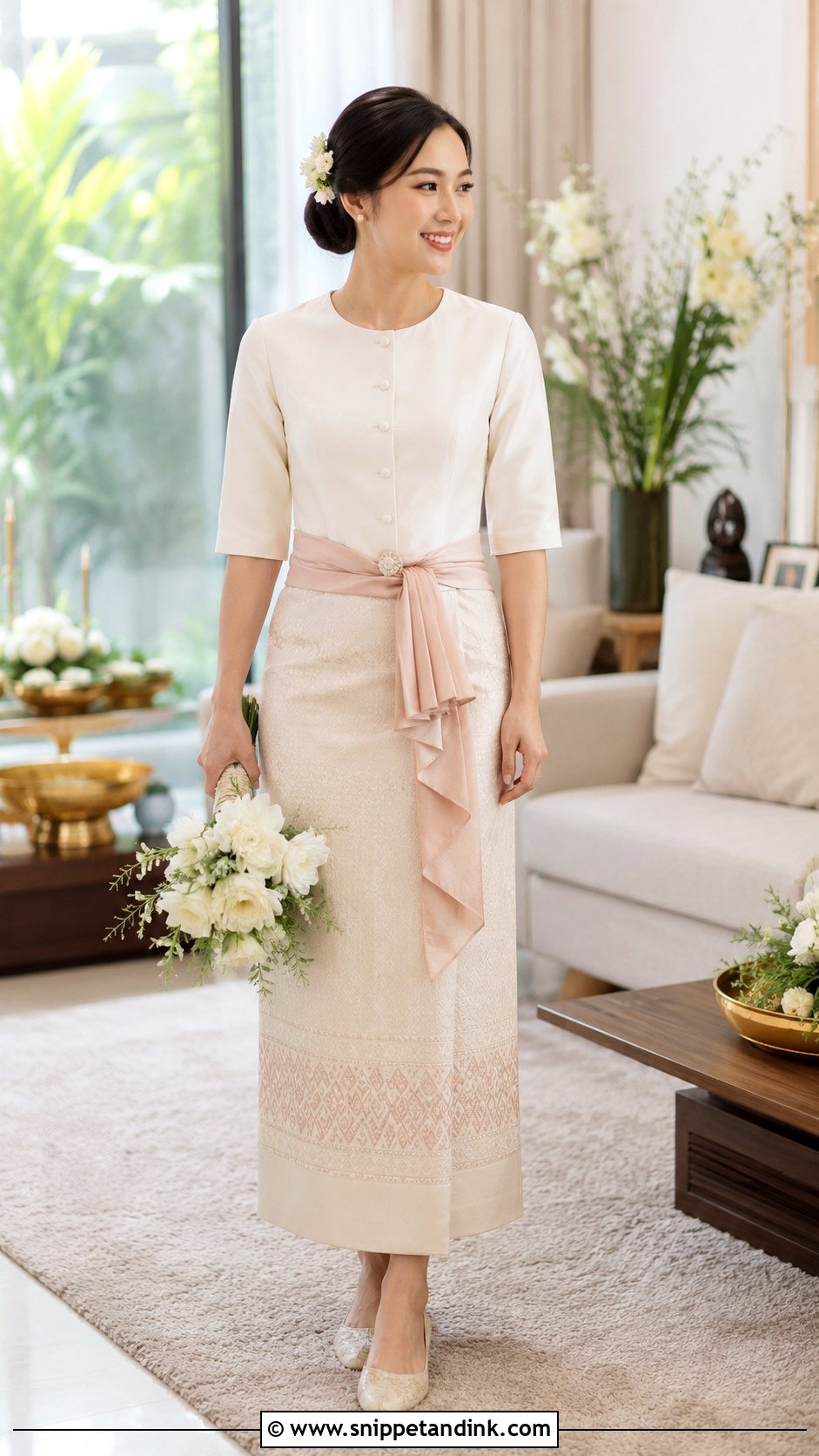
Ruean Ton is the most relaxed of the eight: a collarless blouse with elbow-length sleeves and a straight sinh, with no sabai. For a bride I’d make it in soft ivory silk with tiny woven patterns and pearl buttons, perhaps with a muted gold or blush sash. It’s the easiest one to kneel and sit in for long ceremonies. Embroidered flats, pearl studs and a twisted low bun suit it, and a floral hair comb works better than a crown. A loose bouquet of white flowers and greenery fits a home ceremony or a small garden gathering.
9. Modern Thai Silk Column Wedding Dress
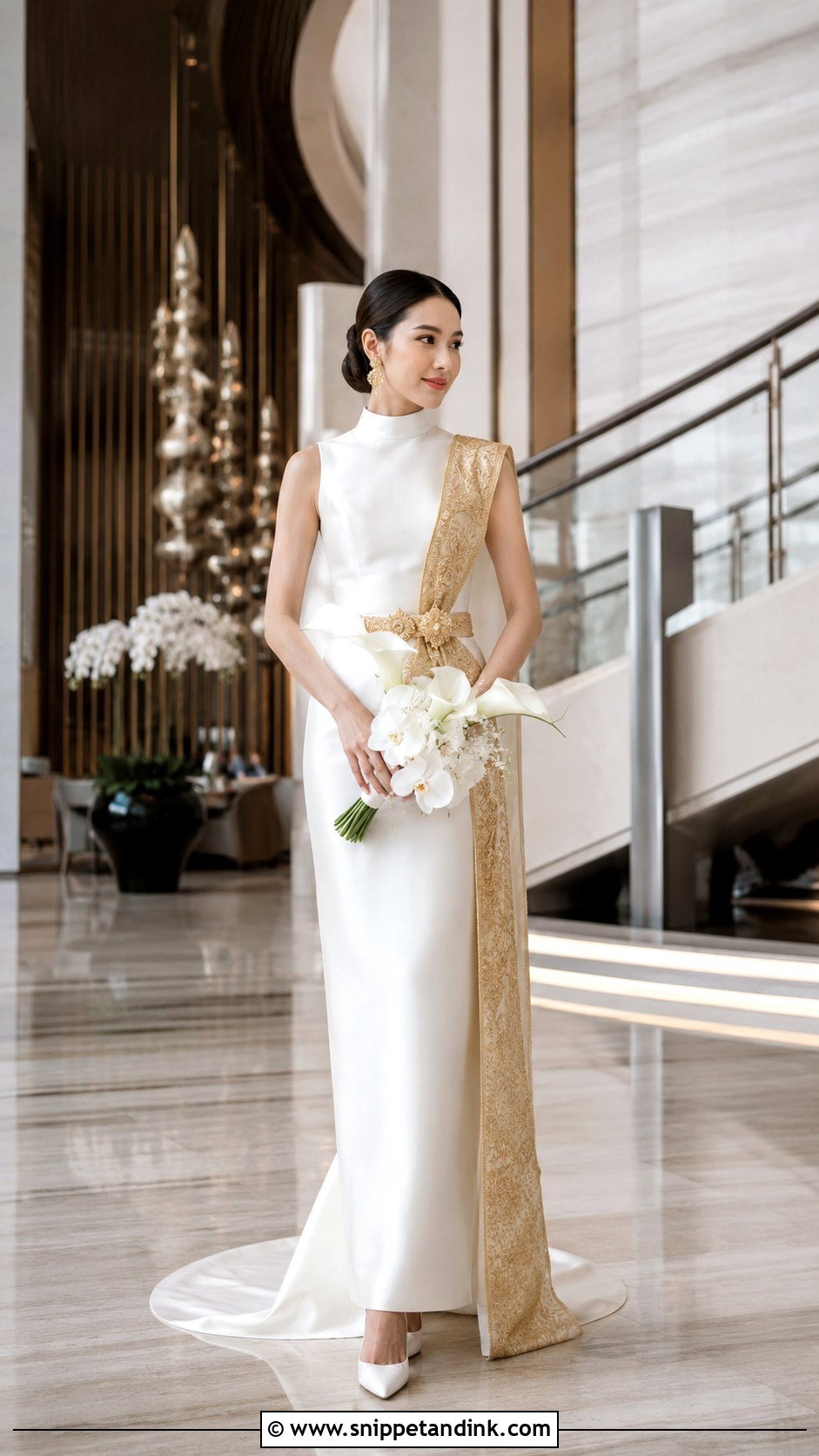
A modern column gown in Thai silk relies on the fabric’s slubbed texture to stop a plain shape from looking flat in photos. Go for ivory or pearl-white with a high bateau neck, fitted waist and short train. To bring in the culture, I’d add a detachable embroidered sash worn across the bodice or tied at the waist, and take it off after the ceremony. Thai silk creases where it’s folded, so steam the column on site, not before travelling. Pointed ivory pumps, sculptural gold earrings, a low chignon and a small architectural bouquet suit villas, galleries and modern hotels.
10. Thai Lace Mermaid Wedding Dress
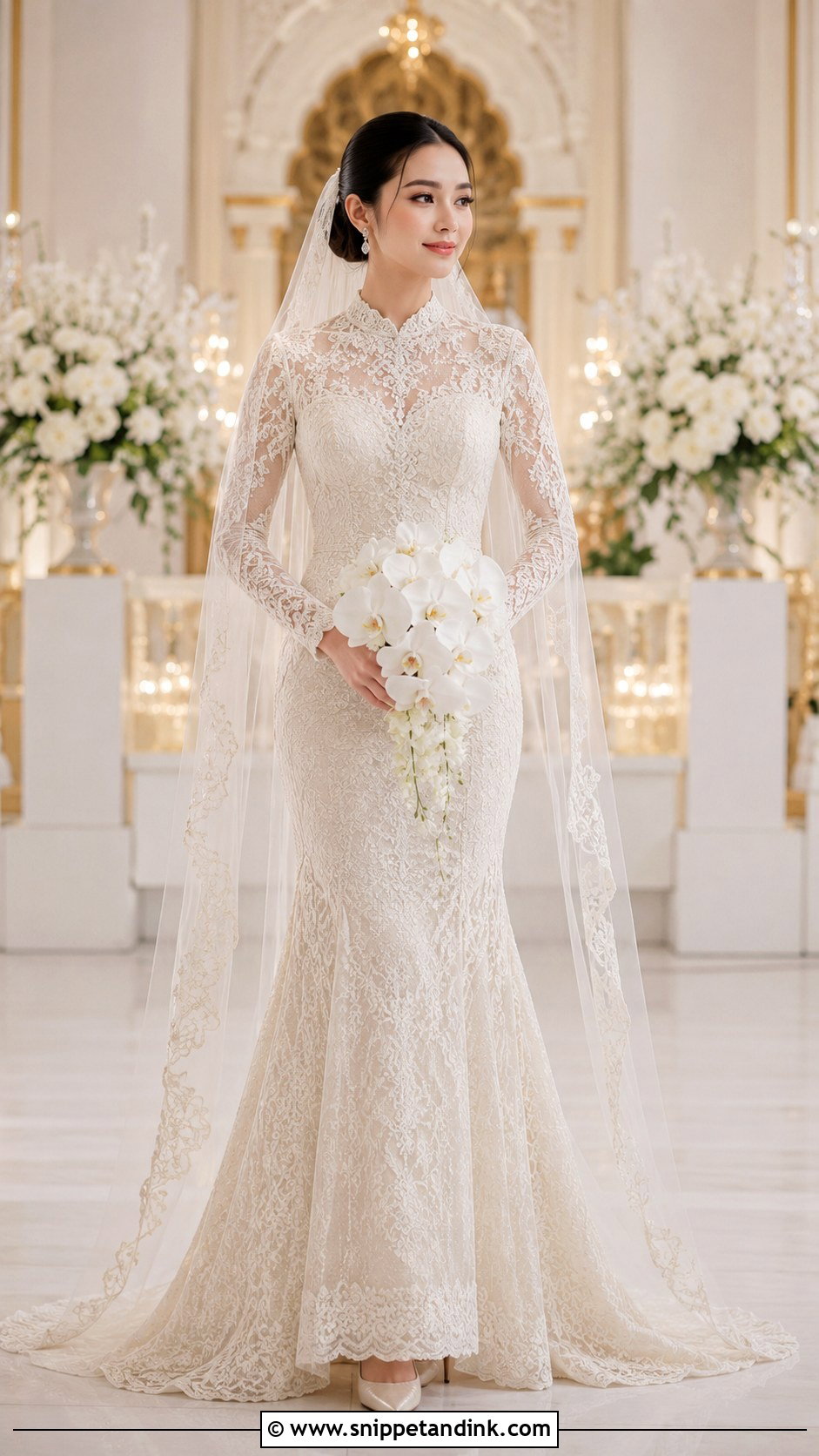
A mermaid shape follows the body to the hips and flares below, so it’s the gown I’d be most careful with in tropical heat. Fitted lace over the hips holds sweat and restricts walking on uneven ground. For an indoor ballroom it’s lovely, especially with Thai-patterned lace or fine gold embroidery placed on the bodice, sleeves and train only. An illusion neckline adds coverage and support without weight. Drop earrings, a side-parted low bun and a fingertip veil with a narrow embroidered border suit it, with a white orchid bouquet. Practise sitting and dancing in it at the final fitting.
11. Thai Silk Ball Gown Wedding Dress
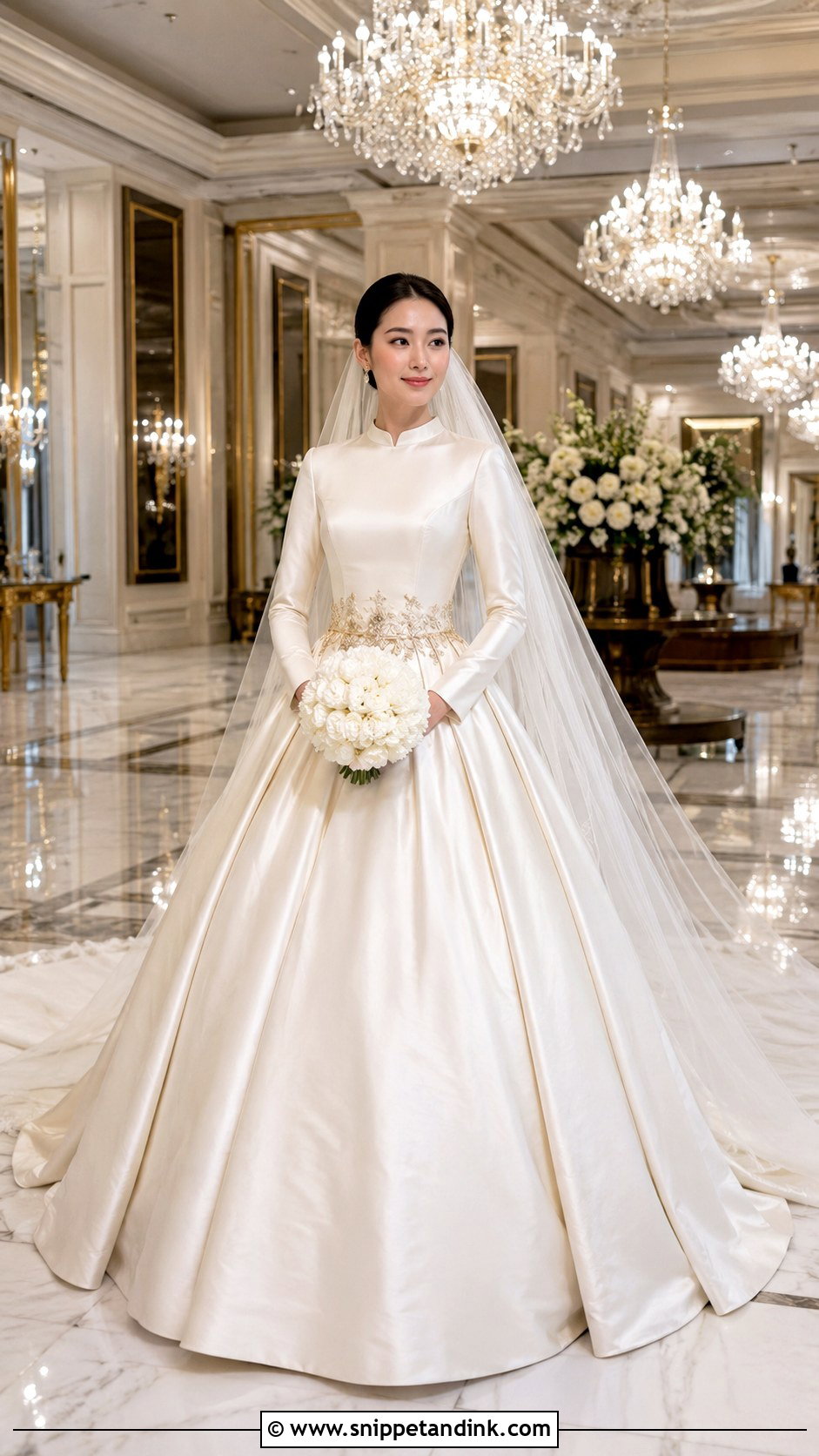
Thai silk on a full ball gown gives the classic ballroom shape a sheen that satin can’t match. Choose pearl white, light champagne or soft ivory, with Thai-inspired embroidery at the neckline or waist. I’d suggest a detachable overskirt for the entrance, since a full skirt in silk gets heavy and hot by the second hour. Pearl earrings, a thin bracelet, closed heels and a polished updo keep the rest simple. A cathedral veil matches the scale of the gown, but keep its edge plain. A round bouquet of white roses or orchids finishes it.
12. One-Shoulder Sabai A-Line Wedding Dress
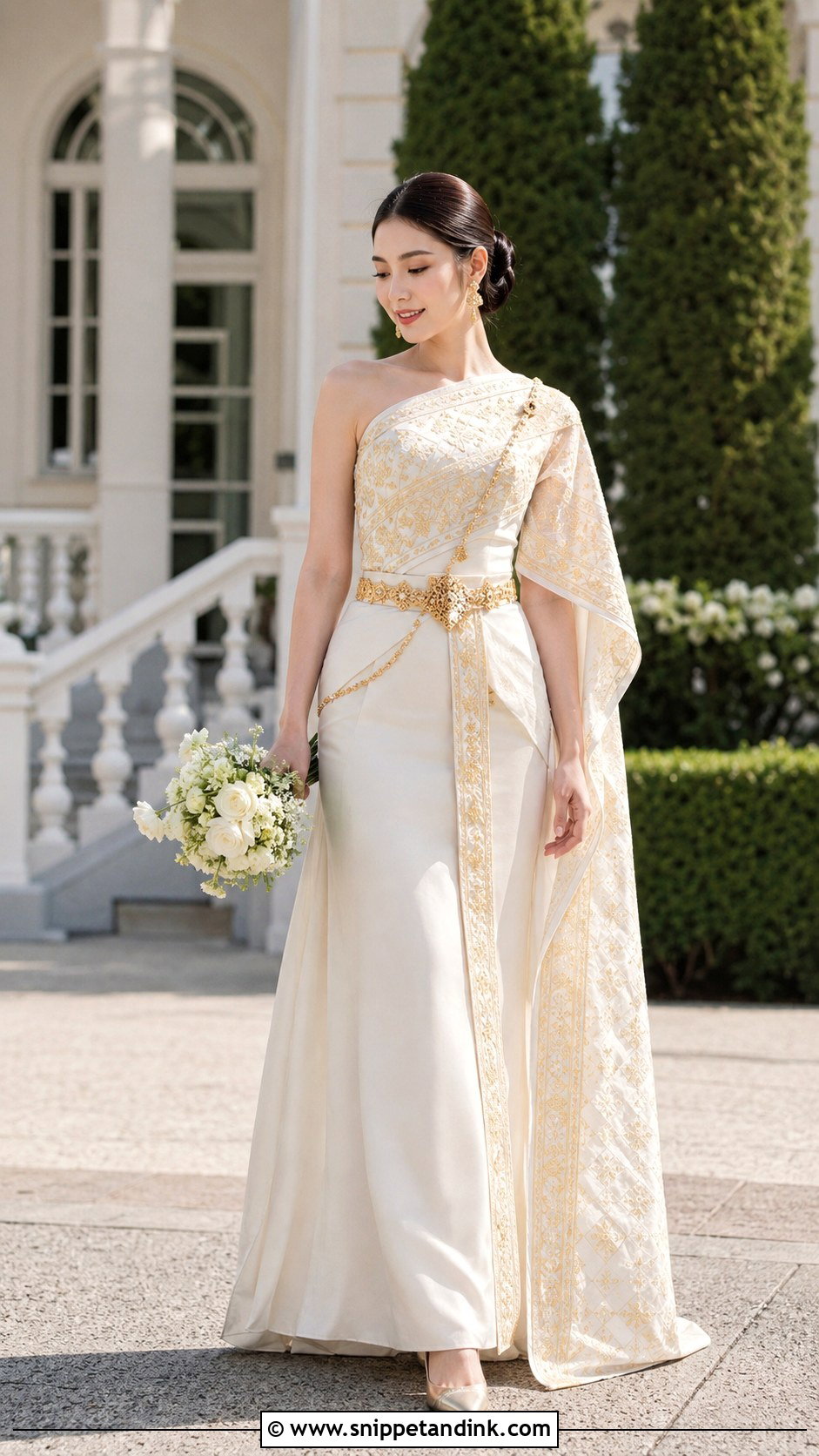
Adding a sabai to an ivory A-line gown is the simplest way I know to blend Thai draping with a Western silhouette. The gown fits through the waist and falls to the floor, and the silk or embroidered sabai crosses one shoulder and is secured at the waist under a gold belt. Pin it in at least two hidden points, or it slides off the shoulder when you raise your arm for photos. With that asymmetric line as the focus, wear small earrings and no necklace. Metallic low heels, a compact bouquet and a sleek bun keep it light, and it moves easily from ceremony to portraits to dinner.
13. Long-Sleeve Thai Temple Wedding Dress
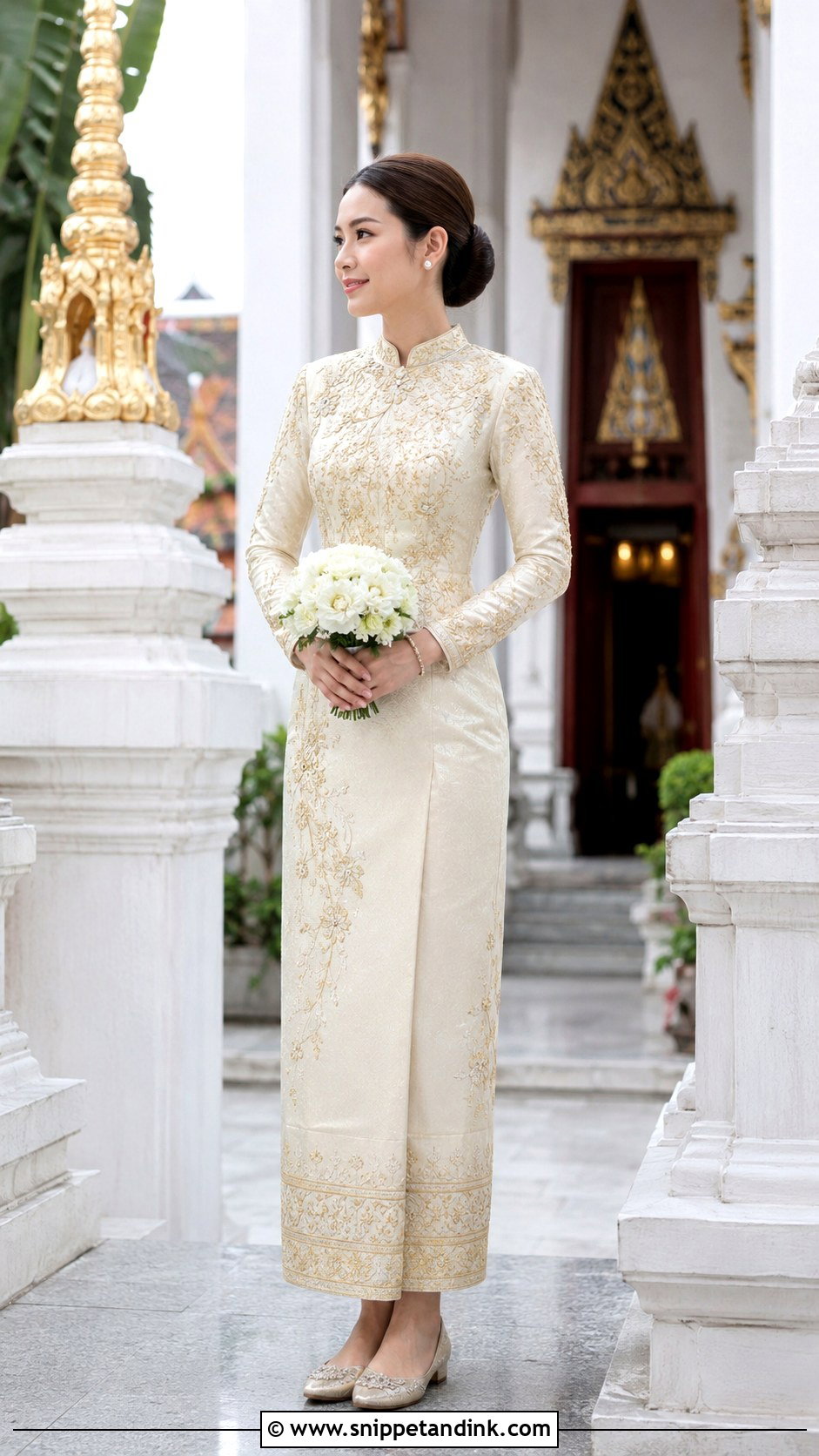
For a temple ceremony, cover your shoulders and knees, and expect to take your shoes off and sit on the floor. That rules out tight mermaid skirts and long trains. A high-neck silk gown or a fitted blouse and ankle-length skirt with a secure neckline works best, in ivory with pale gold embroidery. Choose low block heels or flats you can step out of quickly, and keep a light shawl in your bag in case extra coverage is asked for. Pearl studs, a simple bracelet and a tidy low bun keep it respectful. A small white bouquet is plenty.
14. Lightweight Thailand Beach Wedding Dress
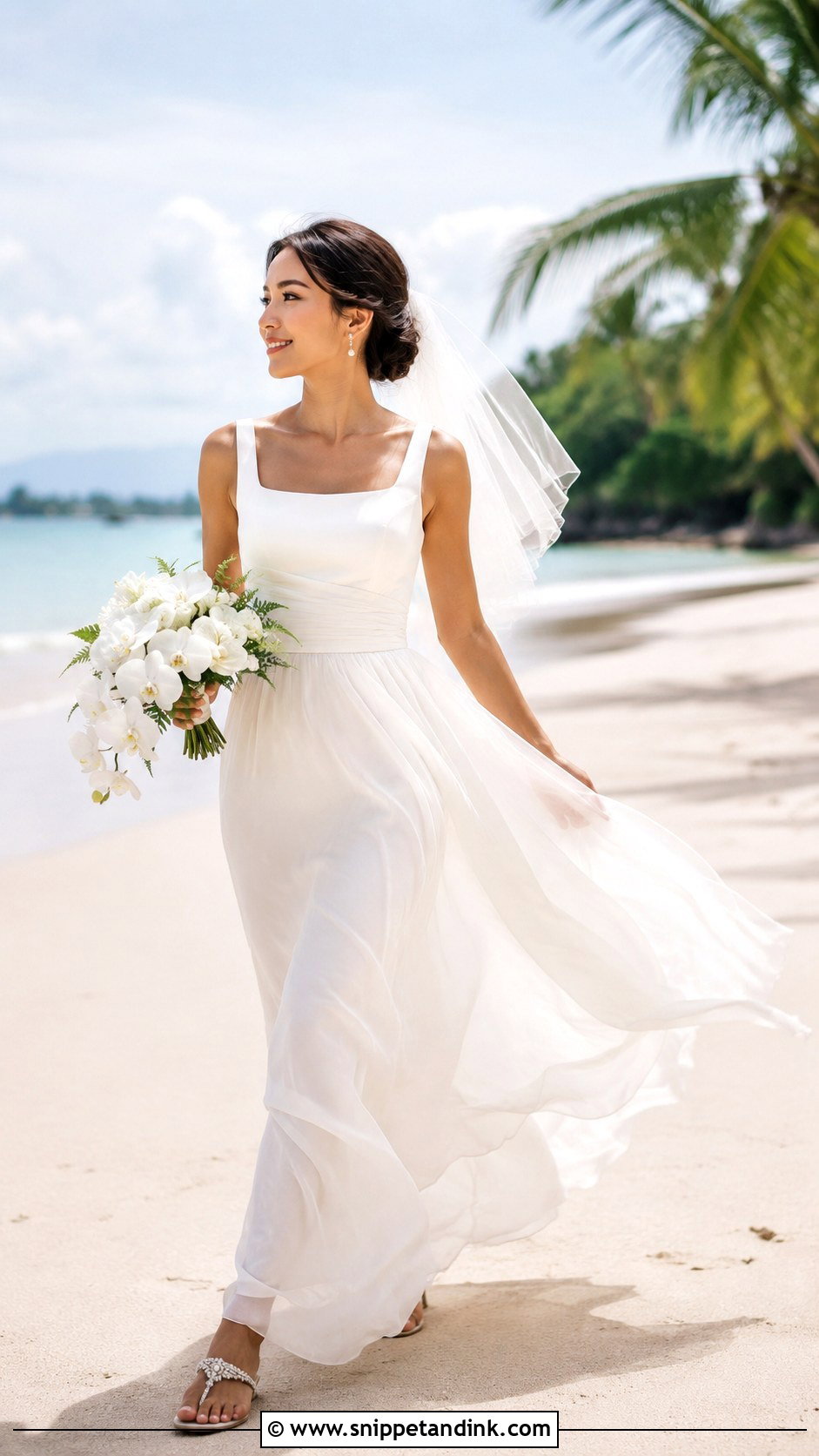
Heavy fabric on a Thai beach at midday is miserable, so for a beach ceremony I’d choose silk chiffon, light crepe or a breathable silk blend in an airy A-line. A supportive square-neck or halter bodice keeps everything secure when the wind picks up, and a skirt with no slit stays modest in a gust. Swap a long train for a removable shoulder cape or a short veil you can hold. Flat embellished sandals, pearl earrings and a textured low bun suit sand. Skip dense beading and extra layers; they trap heat. White orchids with greenery suit the setting.
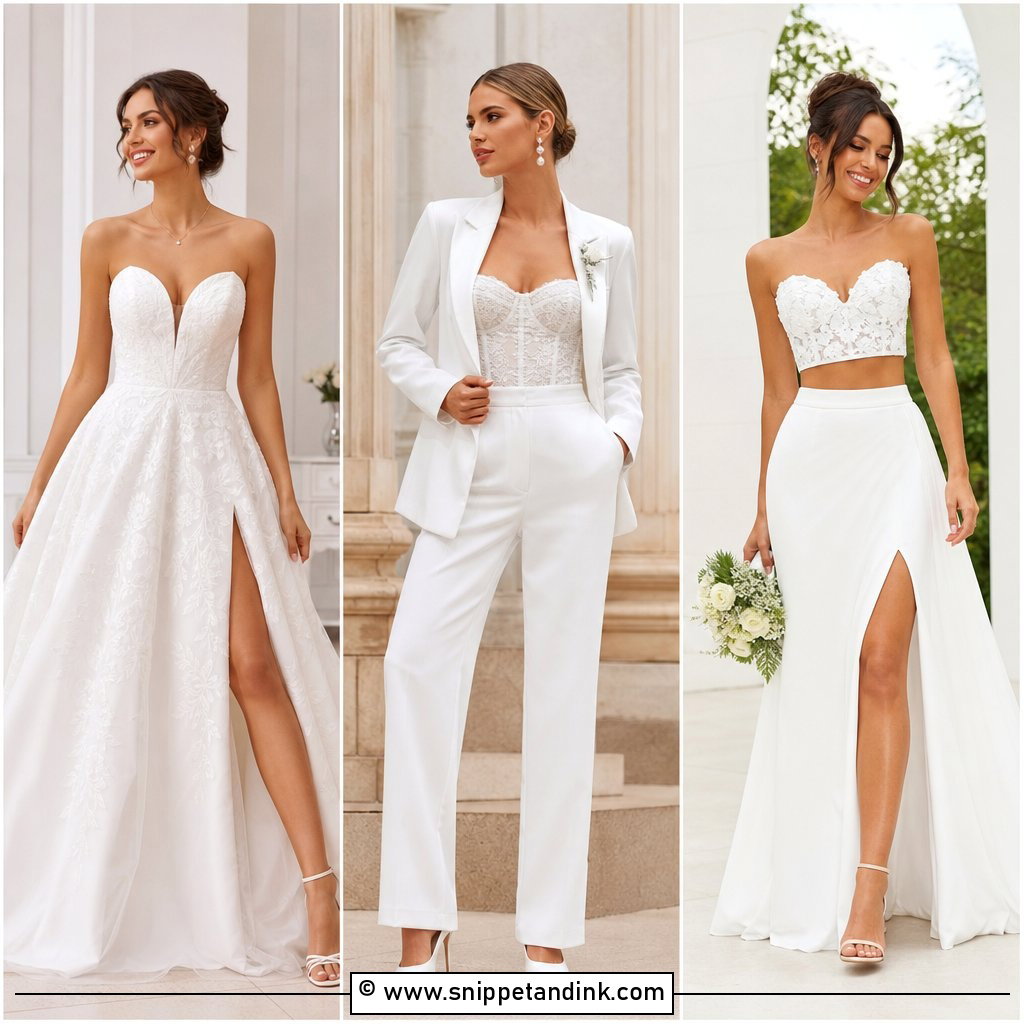
15. Floral Thailand Garden Wedding Dress
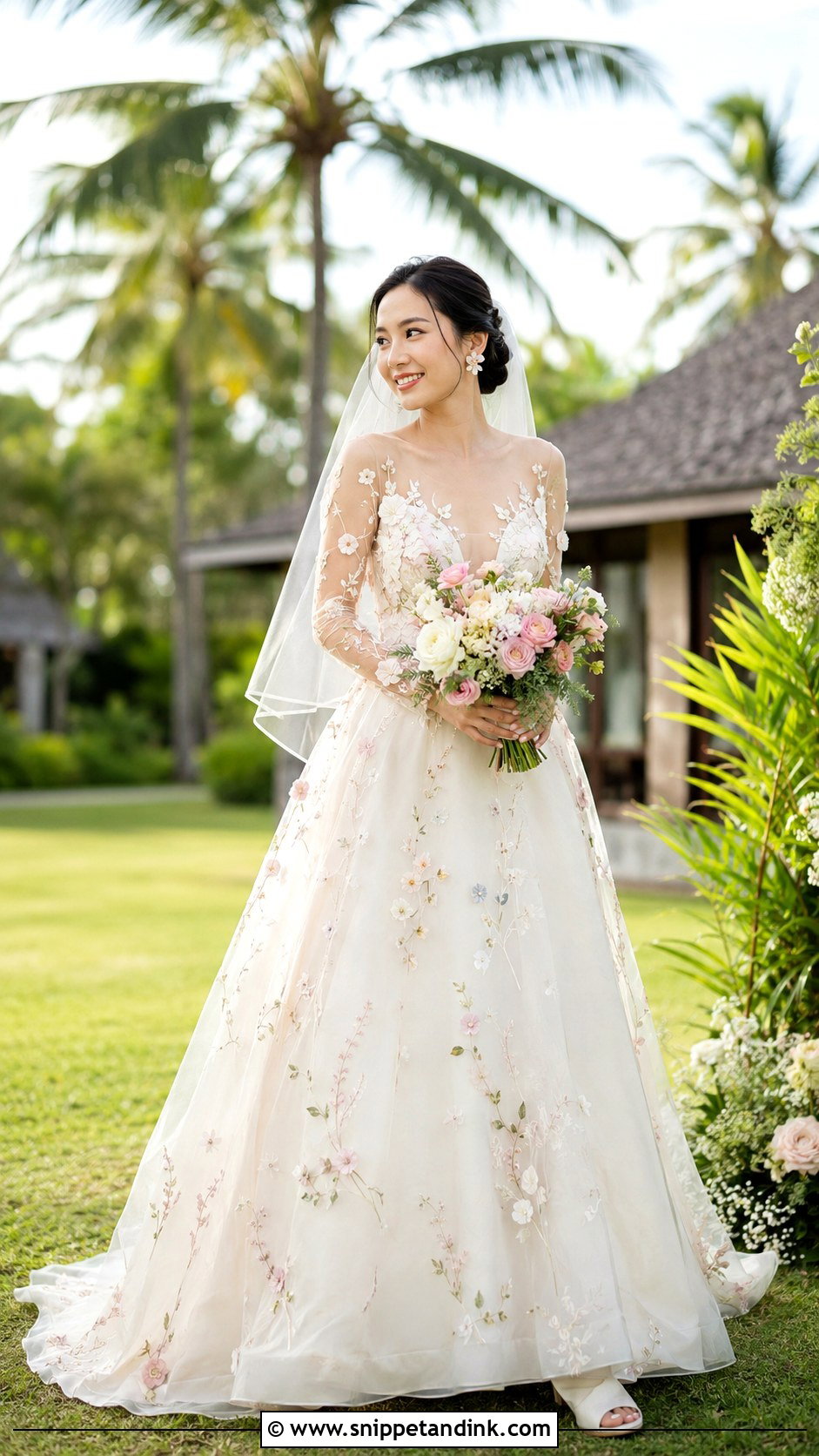
Three-dimensional flowers on a gown suit a tropical garden, but placement matters. I like the embellishment heaviest on the bodice and fading down the skirt, so the eye goes to your face and the hem stays light. Choose a soft ivory A-line or fit-and-flare with flutter or illusion sleeves for light coverage. Block heels stay stable on resort lawns. Floral earrings, a loose low bun and a short veil or understated hair vine keep the head light in the heat. White and pastel flowers finish it.
16. Minimal Satin Wedding Dress With Thai Sash
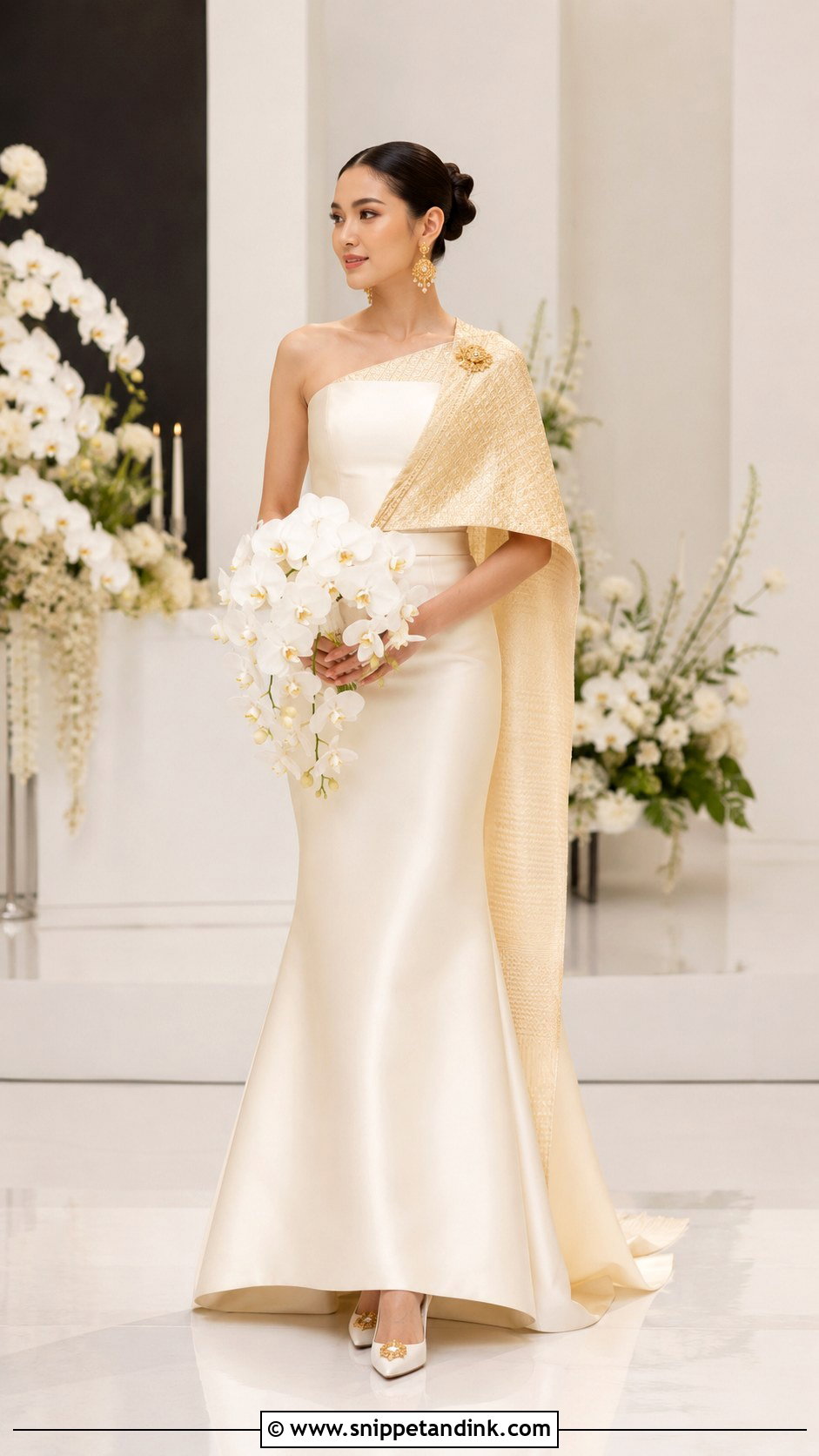
A plain ivory satin gown is the best base for a handwoven Thai silk sash, because there’s nothing to compete with the weave. Keep the gown simple: straight neckline, fitted waist, gently flared skirt. Drape the sash in pale gold, blush or muted blue over one shoulder or wrap it at the waist, then take it off for the reception. Satin shows water marks, so keep drinks and damp hands away from it in humid weather. Pointed pumps, modern gold earrings, a sleek bun and a single-variety bouquet such as white orchids suit it. No heavy beading.
17. Short Thailand Wedding Reception Dress
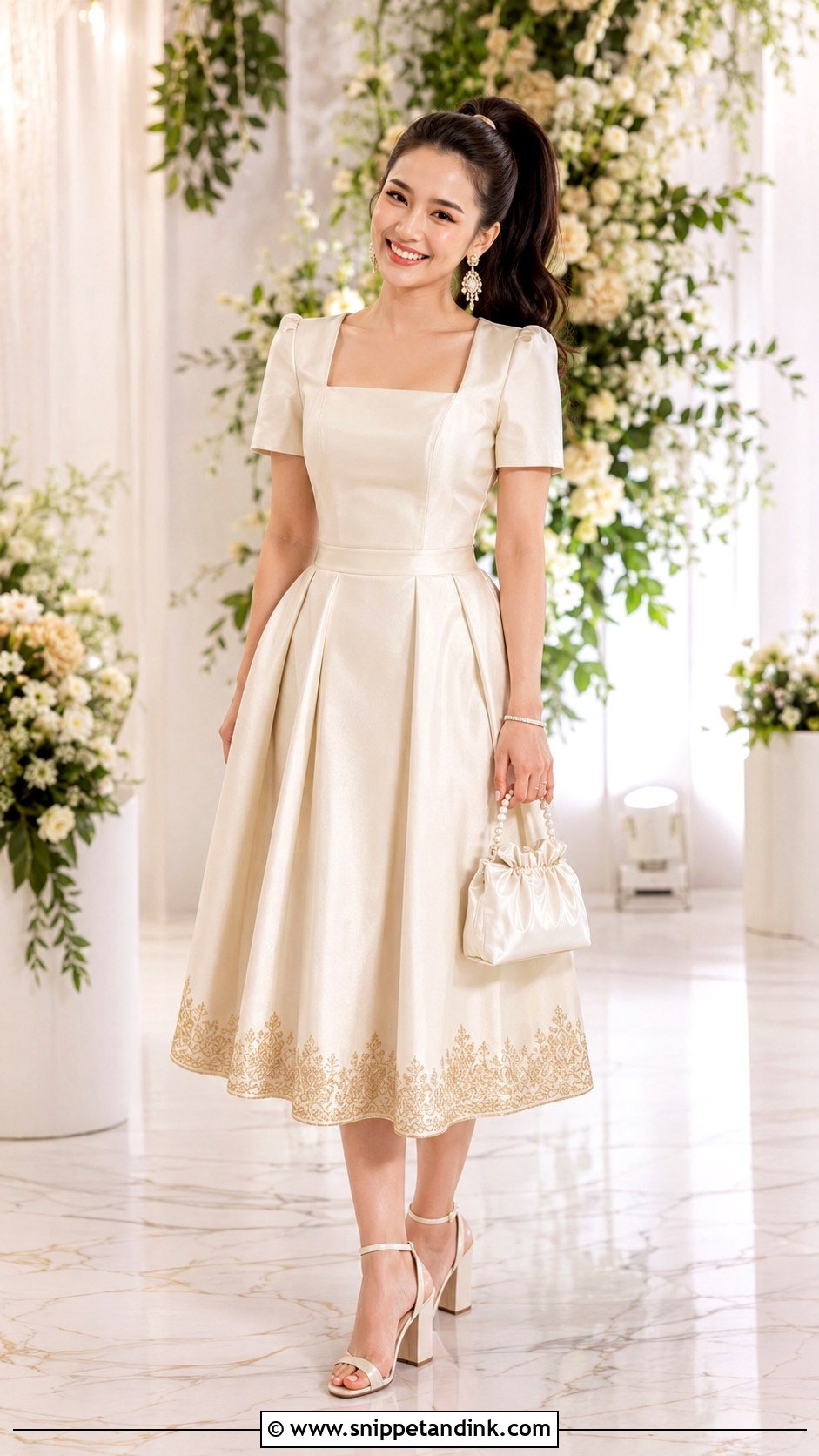
After hours of ceremony in silk, most brides I’ve dressed are glad to change into something shorter. Choose a knee-length or tea-length ivory dress in Thai silk with a fitted waist and soft flare, a square neckline and short structured sleeves. A band of gold embroidery at the hem ties it back to the morning look. Block heels survive dancing better than stilettos. Statement earrings and a mini bag for lipstick and blotting papers are all you need. Redo the hair as a high ponytail or loose bun, and swap the bouquet for a small wrist corsage.
18. Convertible Thai Wedding Dress
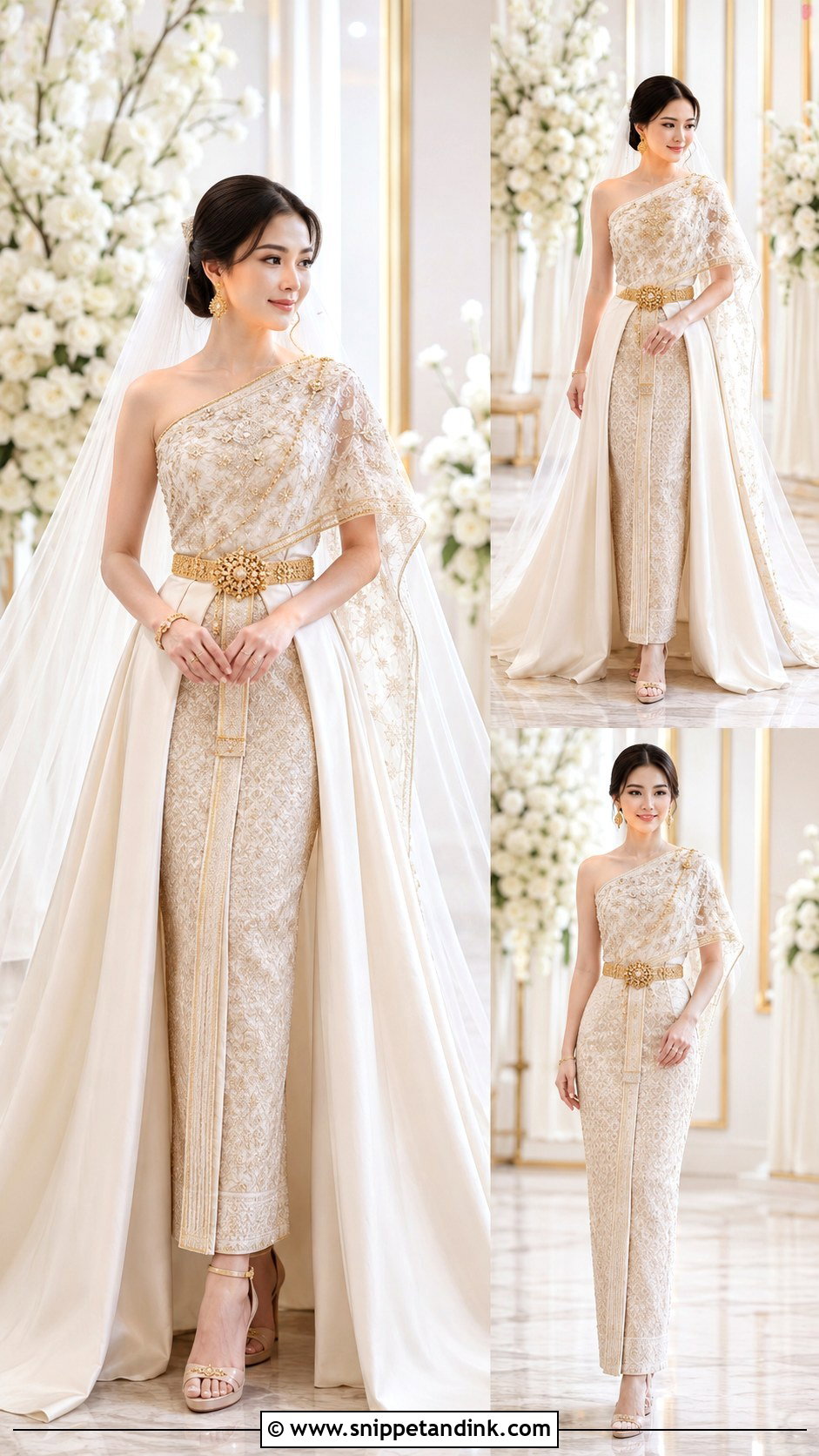
A convertible gown solves the two-ceremony day without a full change. Start with a fitted ivory column or A-line, then layer a removable Thai silk overskirt, an embroidered sabai and a gold belt for the traditional part. After portraits, those pieces come off and you’re in a lighter dress for dinner. The base dress must be simple and fitted precisely, or the layers bunch. Ask your seamstress to fit everything together and separately. Classic earrings, comfortable heels, a secure low bun and a fingertip veil you can remove work for both versions.
19. Plus-Size Thai Silk Wedding Dress
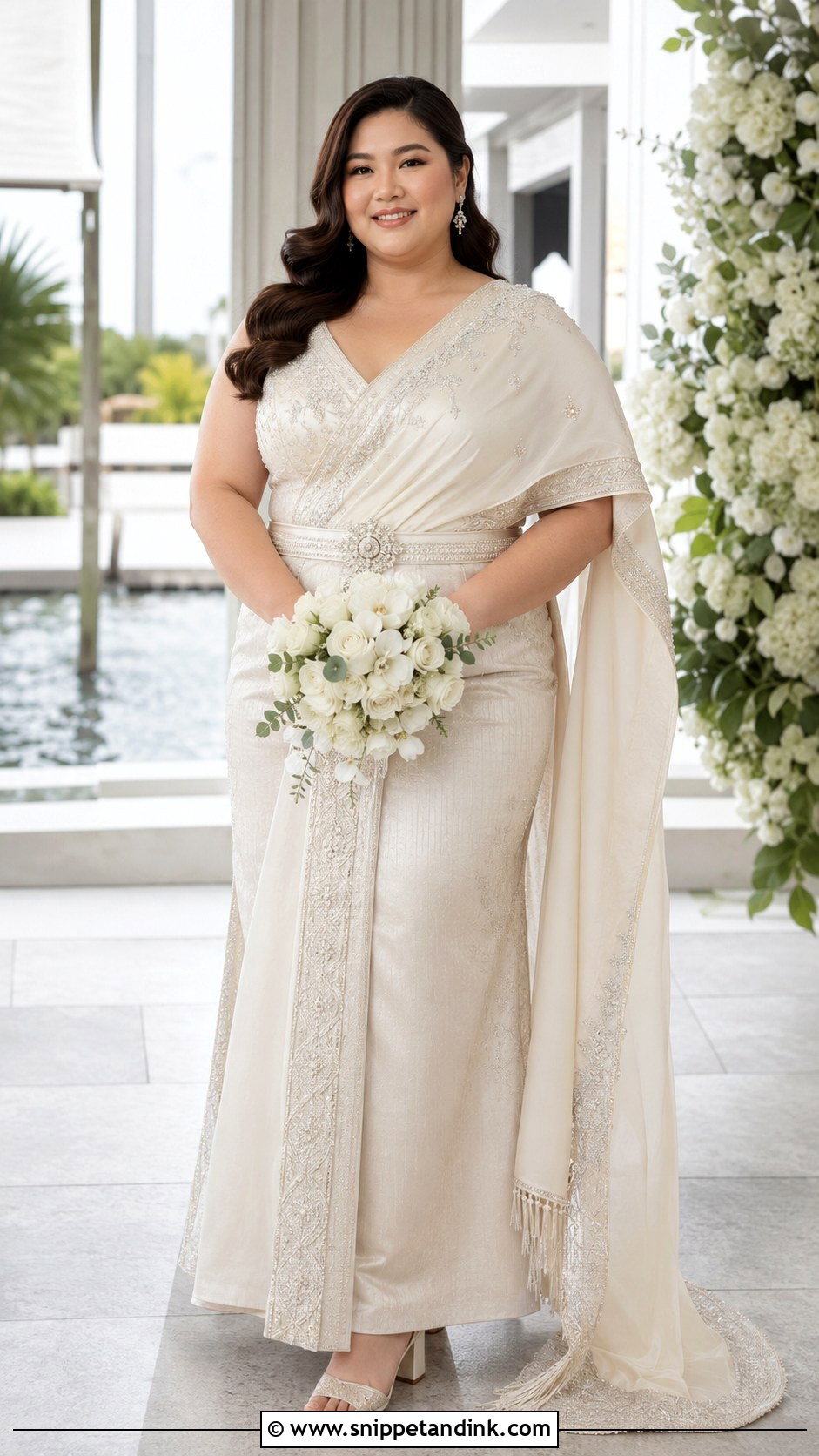
For a plus-size bride in Thai silk, structure should come from the seams, not from stiff layers piled on top. An A-line with a defined waist, a supportive V-neck bodice and a softly pleated skirt is a strong base. Add Thai silk panels or a diagonal sabai to lead the eye across the outfit. A properly fitted lining stops the silk from pulling at the seams, which it does under strain. If you add a belt, sit down in it at the fitting; it should lie flat, not dig in. Medium block heels, drop earrings and an updo or side-swept waves suit it, with a medium bouquet.




20. Elegant Thai Wedding Dress For Mature Brides
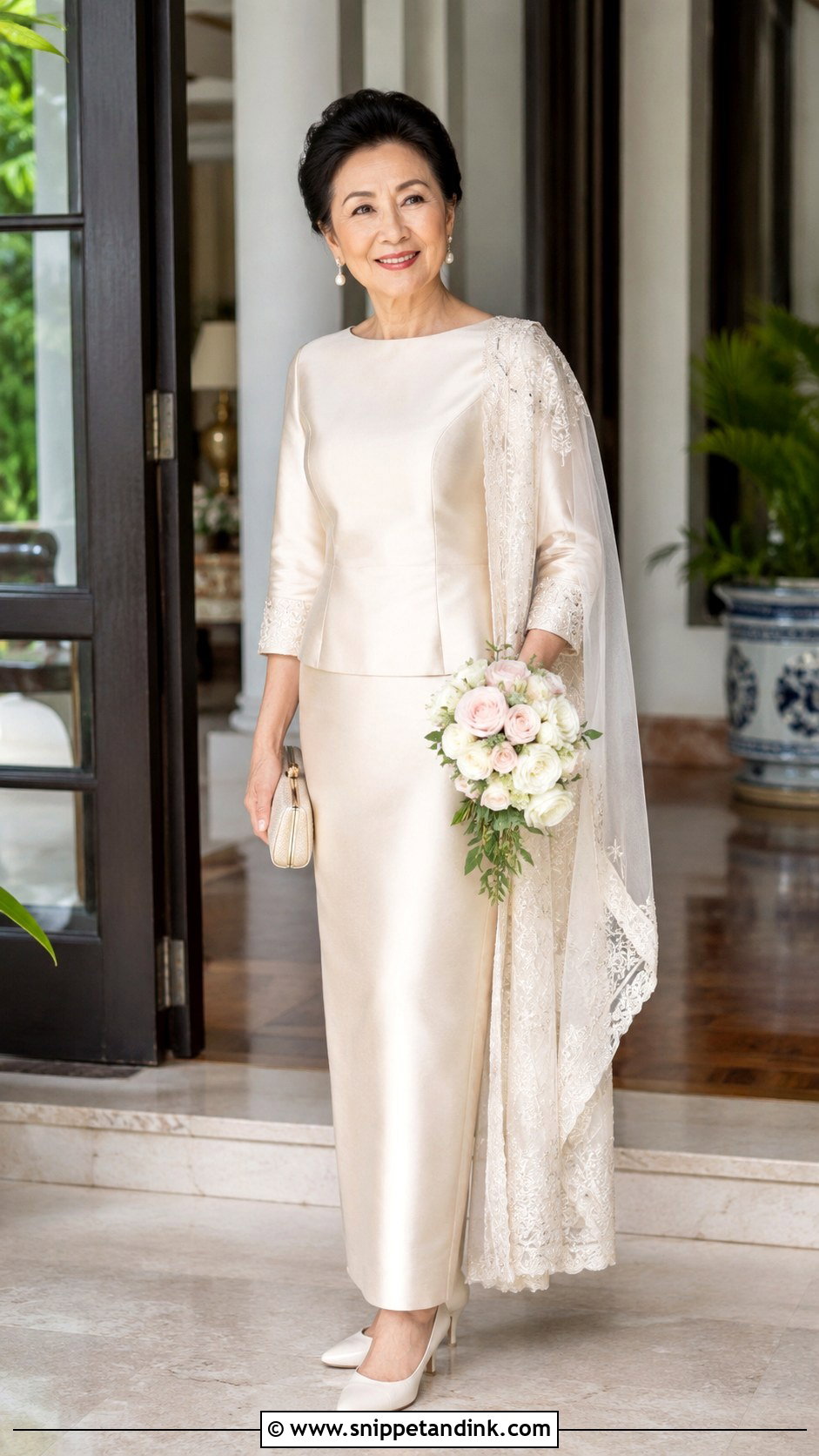
For an older bride I’d usually suggest three-quarter sleeves, a bateau neckline and gentle shaping at the waist rather than a tight bodice. An ivory silk column or softly flared gown works, with tonal embroidery at the cuffs, neckline or skirt border. A light sabai over one shoulder brings in Thai tradition for the ceremony and comes off for the reception. Low satin pumps, pearl-and-gold earrings and a structured clutch are comfortable for a long day. A chin-length cut, soft waves or a classic updo all suit the neckline. A compact white and blush bouquet finishes it.
What Thai Silk Does in Tropical Humidity
Real Thai silk is a dense, slightly slubbed weave. It holds colour well and has a rich shine, but it’s warmer than most brides expect and creases at every fold. In humid air it also shows sweat marks under the arms and at the back of the waist, especially on lighter shades.
Plan the season and the timing
The cooler, drier months from roughly November to February are the most comfortable time for a silk-heavy ceremony in much of the country. Rain patterns differ by coast, so check the local wet season for your exact island or region before fixing the date. Morning ceremonies are cooler than afternoon ones, which is one more reason to wear the heaviest outfit early and the lightest one at night.
Small things that save the dress
- Ask for underarm shields sewn into the blouse or bodice; they’re invisible and save the silk.
- Travel with the dress on a hanger in a breathable garment bag as cabin baggage, then steam it on arrival.
- Keep the dress in an air-conditioned room until you’re ready to put it on, and dress last after hair and makeup.
- Pack blotting papers, a small fan and a spare pair of flats in the bag your attendant carries.
Ceremony Silk, Reception Ease and a Dress That Copes With the Heat
The right dress for a wedding in Thailand balances culture, comfort and the venue. The Chakri, Siwalai, Chakraphat and Boromphiman bring heritage into the morning ceremony. Modern silk gowns, light beach dresses and convertible designs give you more freedom later in the day. Before deciding, check the ceremony schedule, the coverage your families expect, the ground you’ll walk on and if you plan to change outfits. For traditional dress, use a dresser who knows how to pleat a sinh and drape a sabai. Then put your money into tailoring and shoes you can actually stand in.
You'll Like These Ideas:




Leave a Reply