
What makes a dress feel French is mostly restraint. The fit is exact, the fabric is good, and there is usually one detail, a lace sleeve or a low back, instead of five. Relaxed A-line skirts, slip silhouettes and lace confined to the sleeves or the back come up again and again. The style travels well: it works at a château, and it works at a ten-minute city hall ceremony. It also has no age limit and suits most figures, because a well-fitted simple dress flatters more bodies than a heavily decorated one. The twenty looks below each come with the shoes, veil and hair I’d put with them.
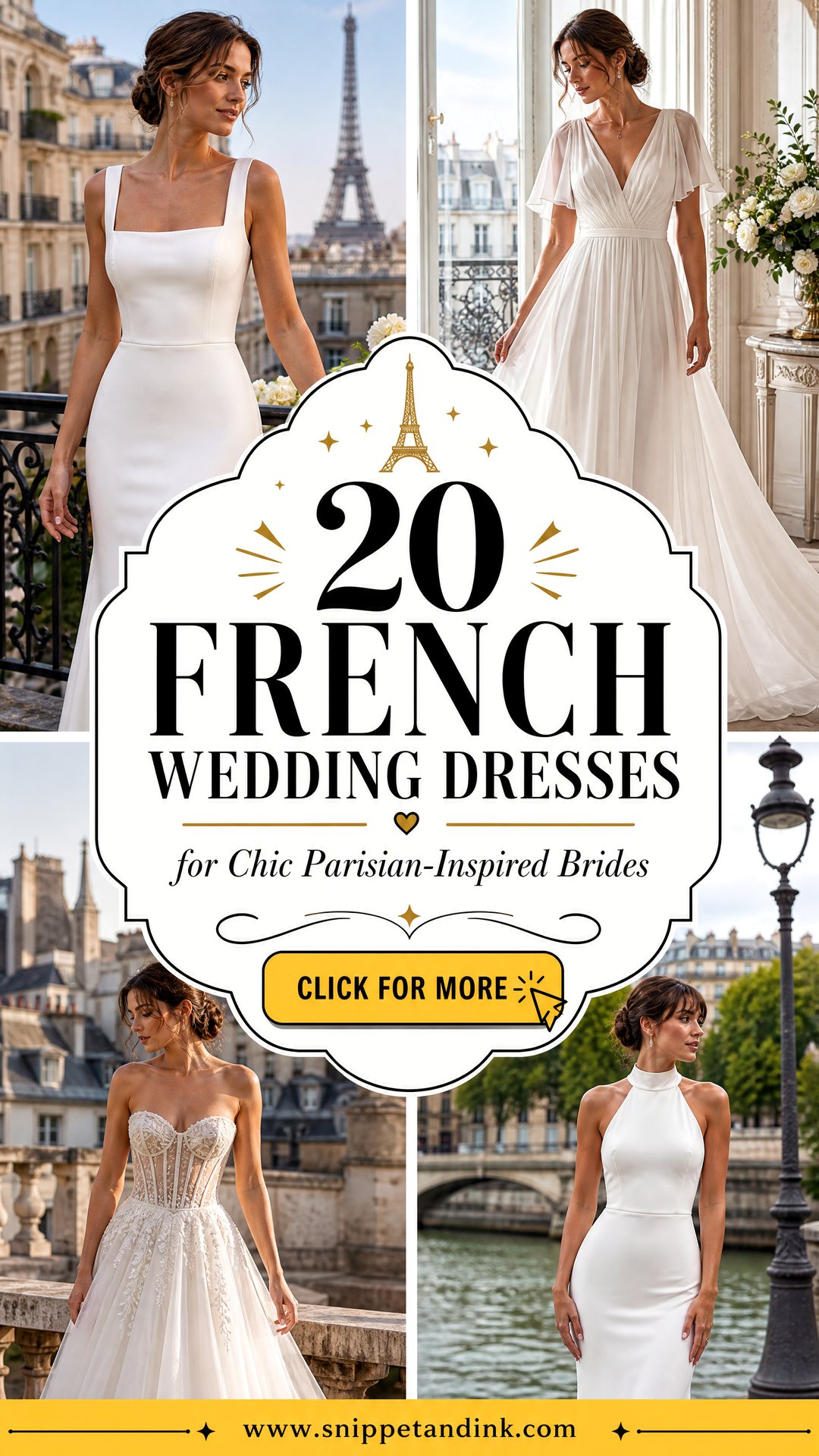
The One-Feature Rule I Use to Edit Every Look
When I style a French-inspired bride, I start by asking which single part of the dress should be remembered. Everything else is chosen to stay out of its way. It’s a simple test, and it stops a minimal dress from slowly filling up with accessories.
- If the feature is the back, keep the veil sheer and plain, and wear hair up or swept to one side so the back stays visible.
- If it’s the neckline, skip the necklace and let earrings do the work.
- If it’s the sleeves, keep the hair sleek and close to the head so the shoulders don’t compete with volume.
- If it’s a contrast detail like a bow, repeat that color once at most.
- If it’s the fabric itself, as with silk crepe or jacquard, keep jewelry tiny and let the light on the cloth be the decoration.
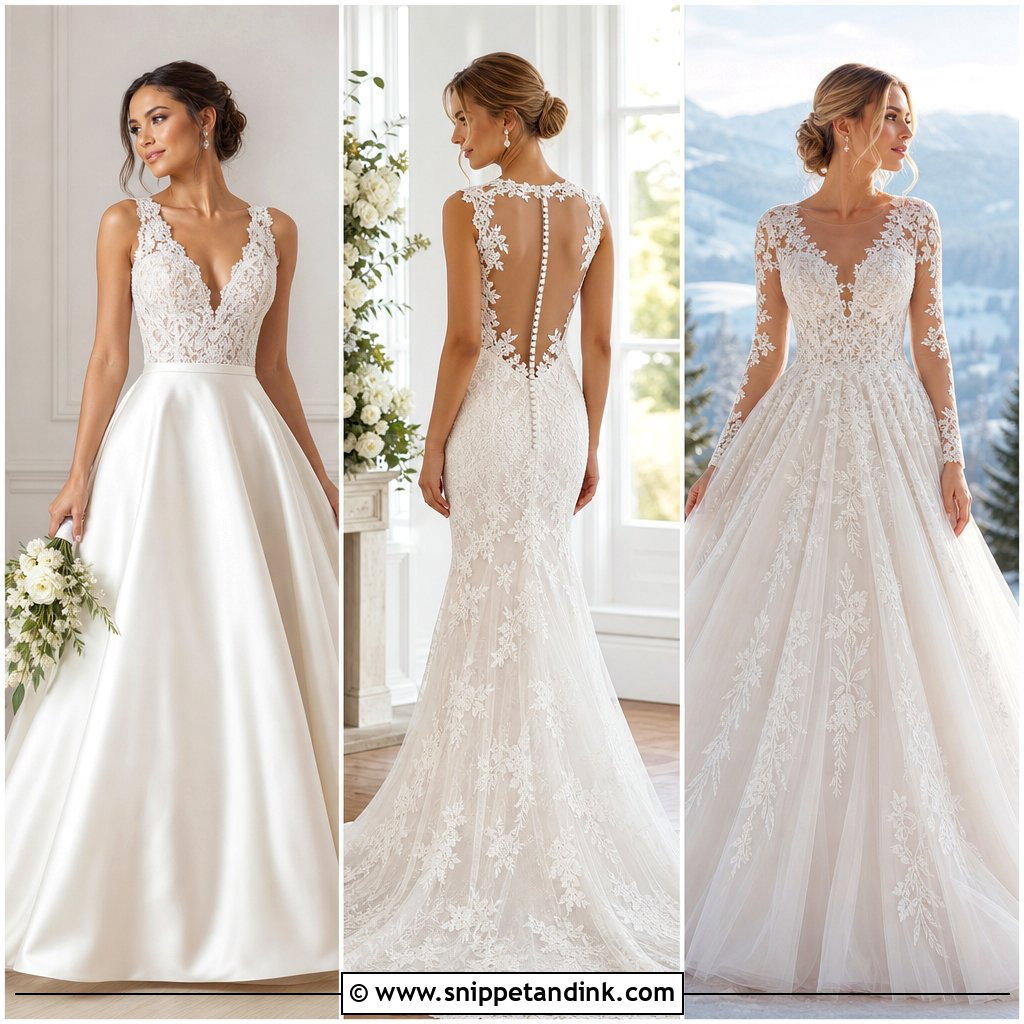
Try it as you read the looks below. Most of the styling choices follow from that one decision.
1. Minimalist Silk Slip French Wedding Dress
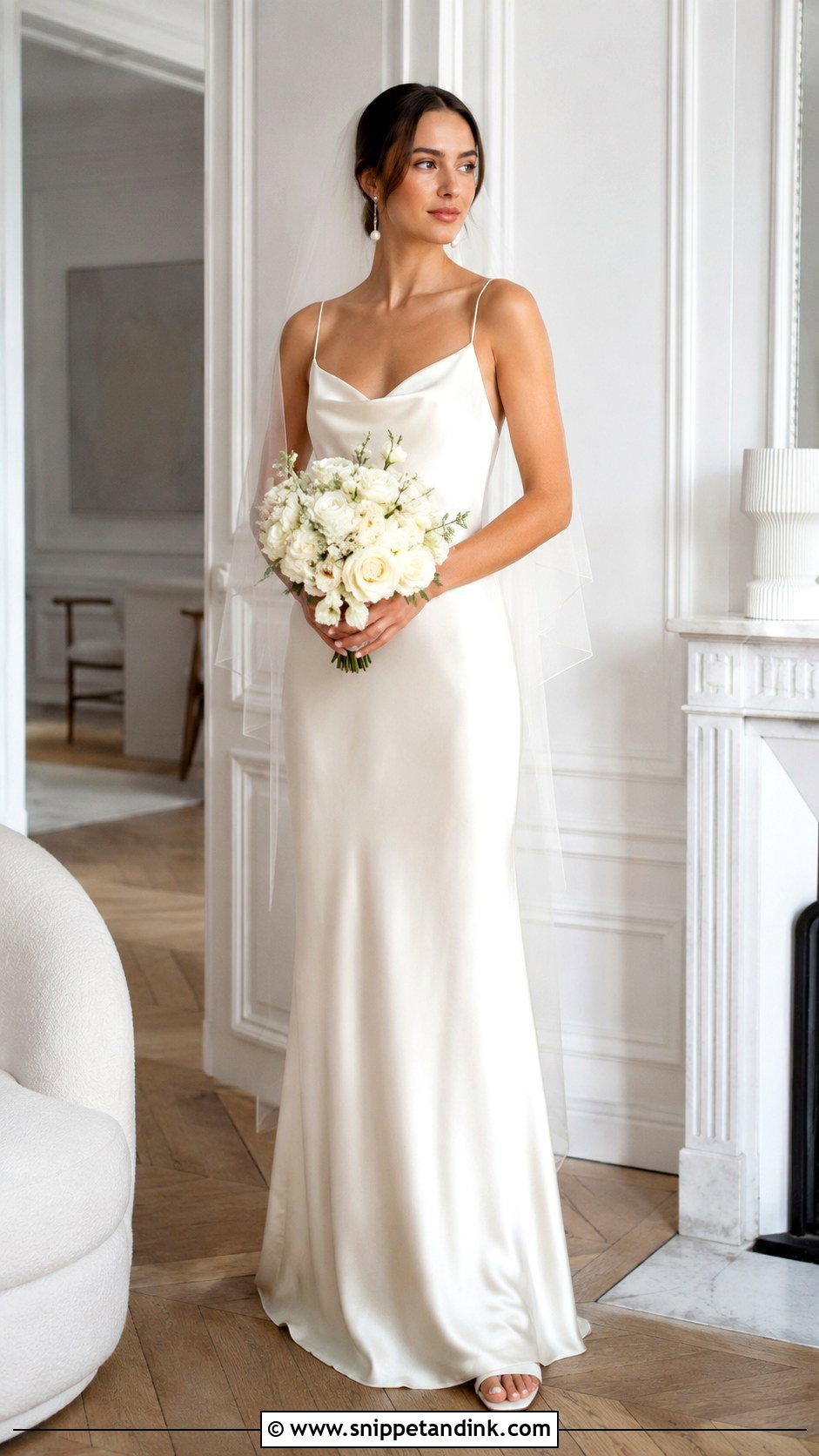
Of every dress in this list, the silk slip demands the most from the fitting. Bias-cut silk is cut on the diagonal so it drapes and moves, but that also means it shows everything underneath. Bring your final underwear to every appointment and have the straps and hem adjusted to the millimeter; a strap a little long lets the neckline sag. Ivory or soft white keeps it quiet. Low satin heels, pearl drops, a small bunch of white garden roses and a fingertip veil are all the extra it needs. A summer ceremony or a restaurant reception suits it.
2. Long Sleeve Lace French Wedding Dress
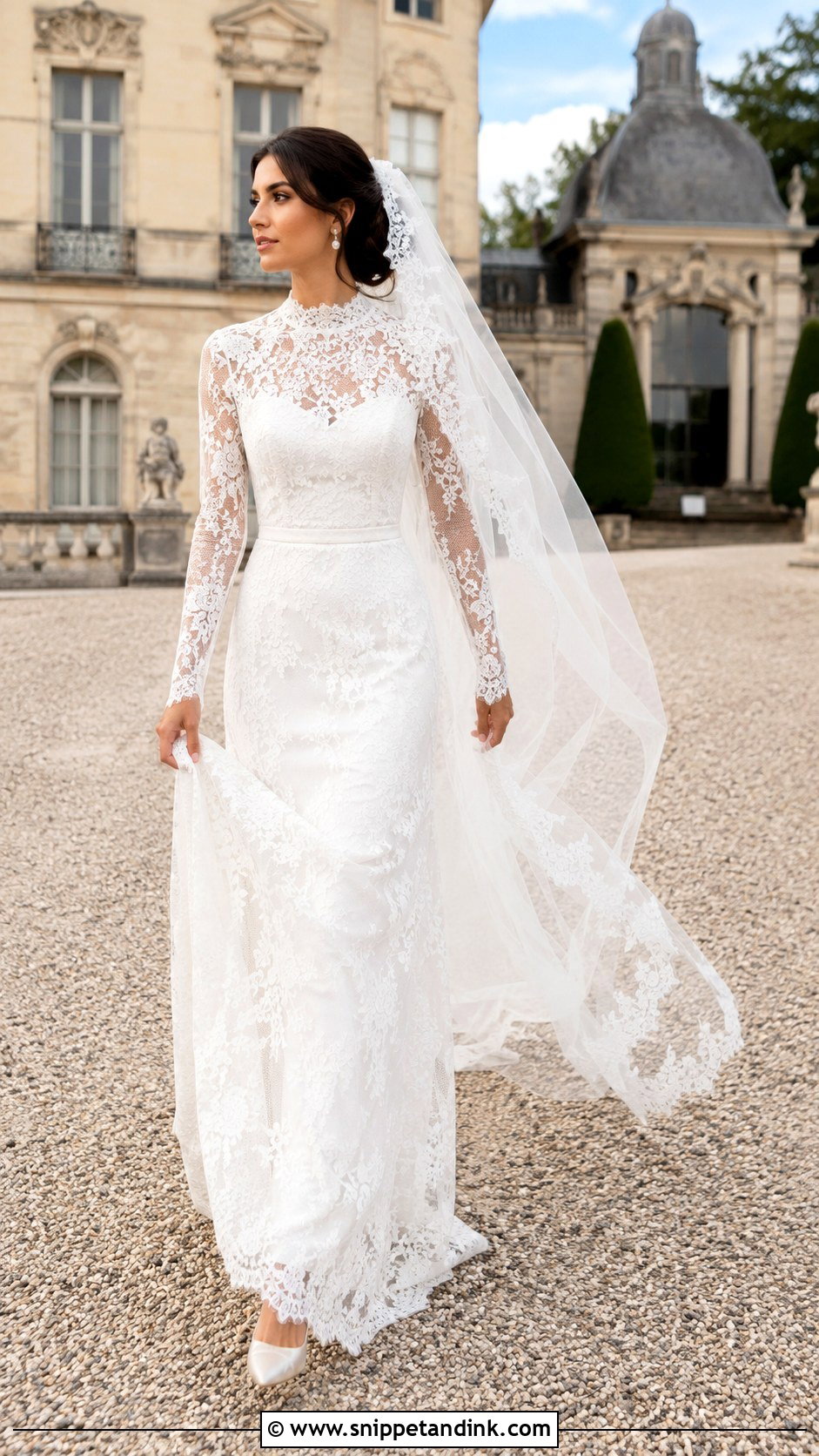
Long lace sleeves look romantic and can be miserable if the lace has no give. I always ask whether the sleeve lace stretches, because rigid lace at the elbow means you can’t lift a glass comfortably. Fine floral lace over a soft lining, a defined waist and a flowing skirt are the basis; a bateau, jewel or shallow V-neck balances the coverage. A narrow lace-trimmed veil can echo the dress if the lace motifs are similar, otherwise go plain. Pointed ivory pumps, small pearl studs and a loose chignon finish it. If you need support, a structured bodice can sit under the lace without showing. Autumn and château interiors suit it.
3. Square Neck Crepe French Wedding Dress
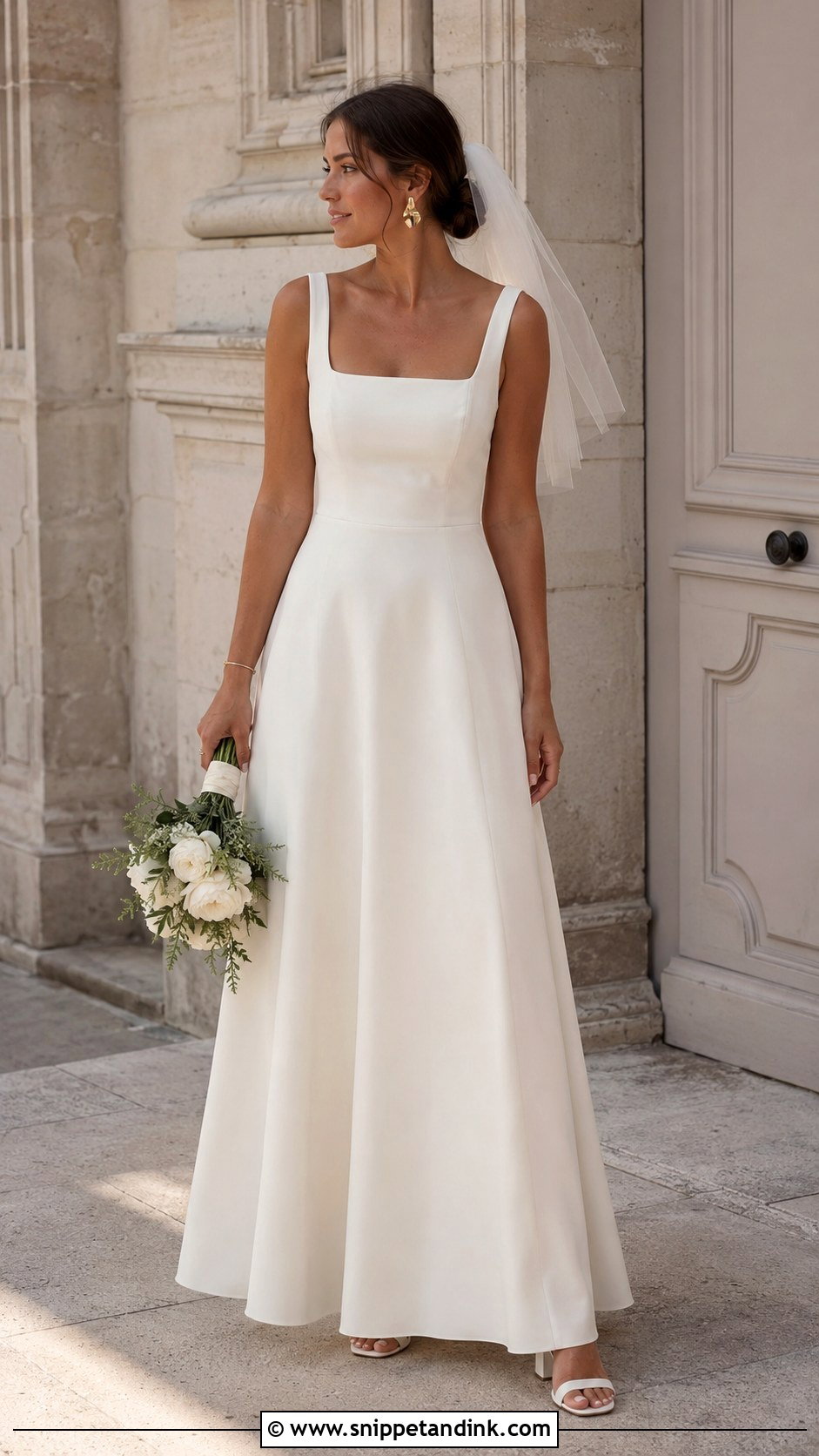
Crepe is the fabric behind that sharp Parisian tailoring look: matte, dense, and able to hold a clean seam. Paired with a square neck and wide straps, it gives you more support than spaghetti straps and frames the collarbone neatly. The downside is that crepe shows every line underneath, so test shapewear at fittings, not on the morning. A fitted bodice with an A-line or slim column skirt, block-heel sandals, sculptural gold earrings, a low bun and a short tulle veil keep it modern. It suits city ceremonies and minimalist indoor spaces.
4. Short Civil Ceremony French Wedding Dress
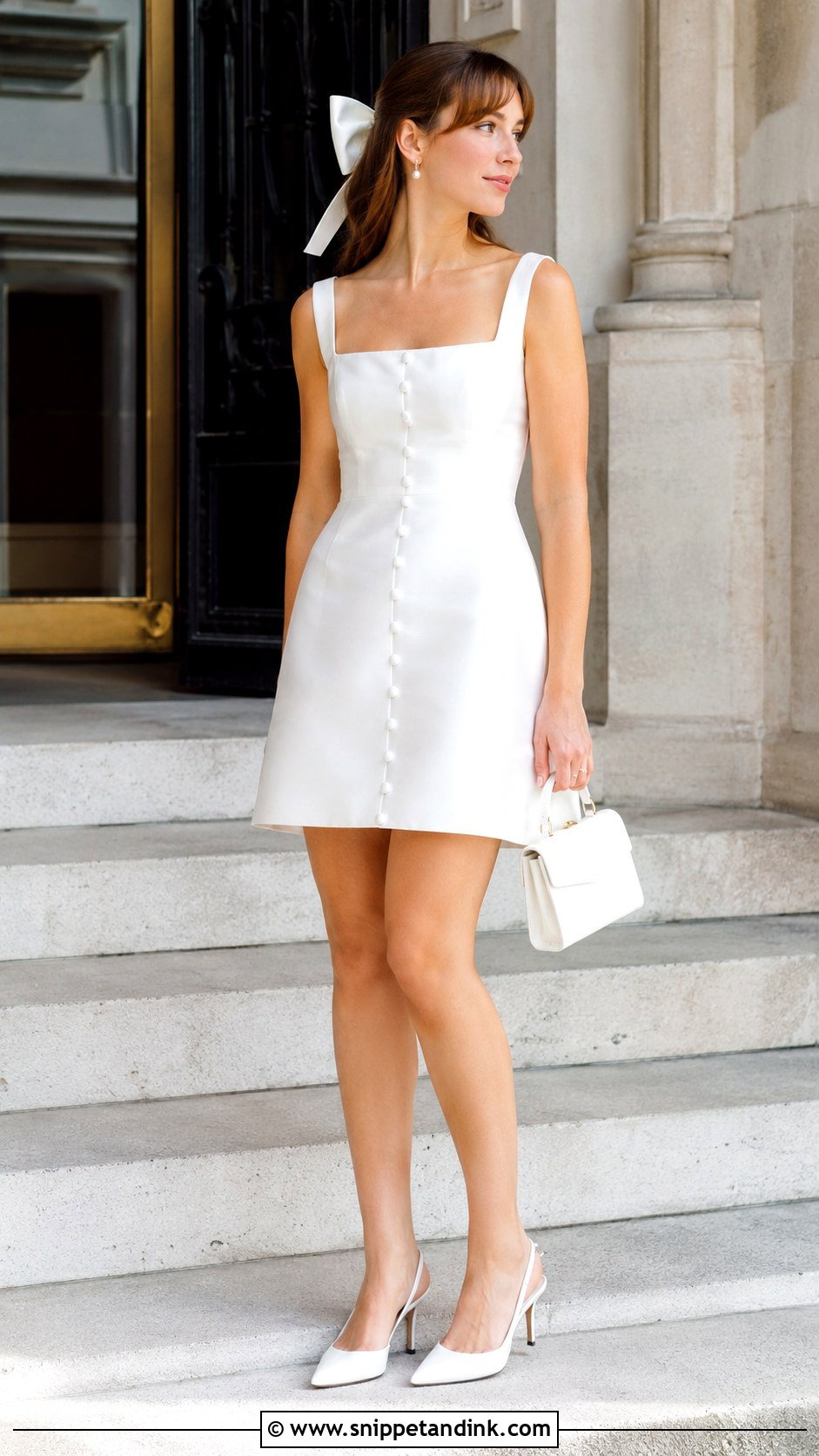
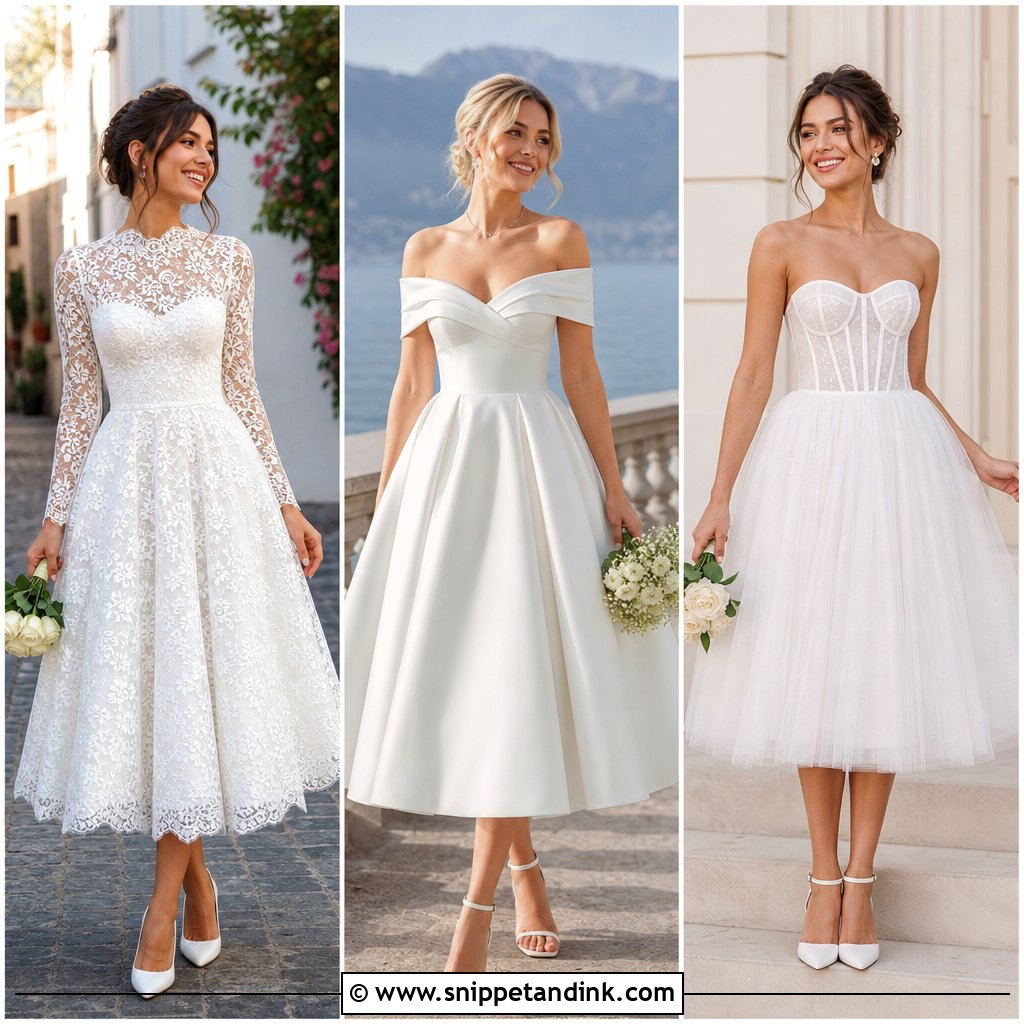
In France the legal wedding takes place at the town hall, and a short white dress is a classic choice for it. Civil-ceremony styles tend toward clean short cuts, good satin, structured necklines and small couture details rather than decoration. Choose a tailored mini or knee-length dress with a straight neckline and a lightly defined waist. Covered buttons, a lace waistband or soft pleats add interest. A short hem shows off the shoes, so it’s a good place for satin, pearl details or a pale blue pair. Add slingbacks, sheer tights in cool weather, a top-handle bag and a birdcage veil or ivory bow. Keep jewelry to small earrings and one bracelet.
5. Tea Length French Wedding Dress
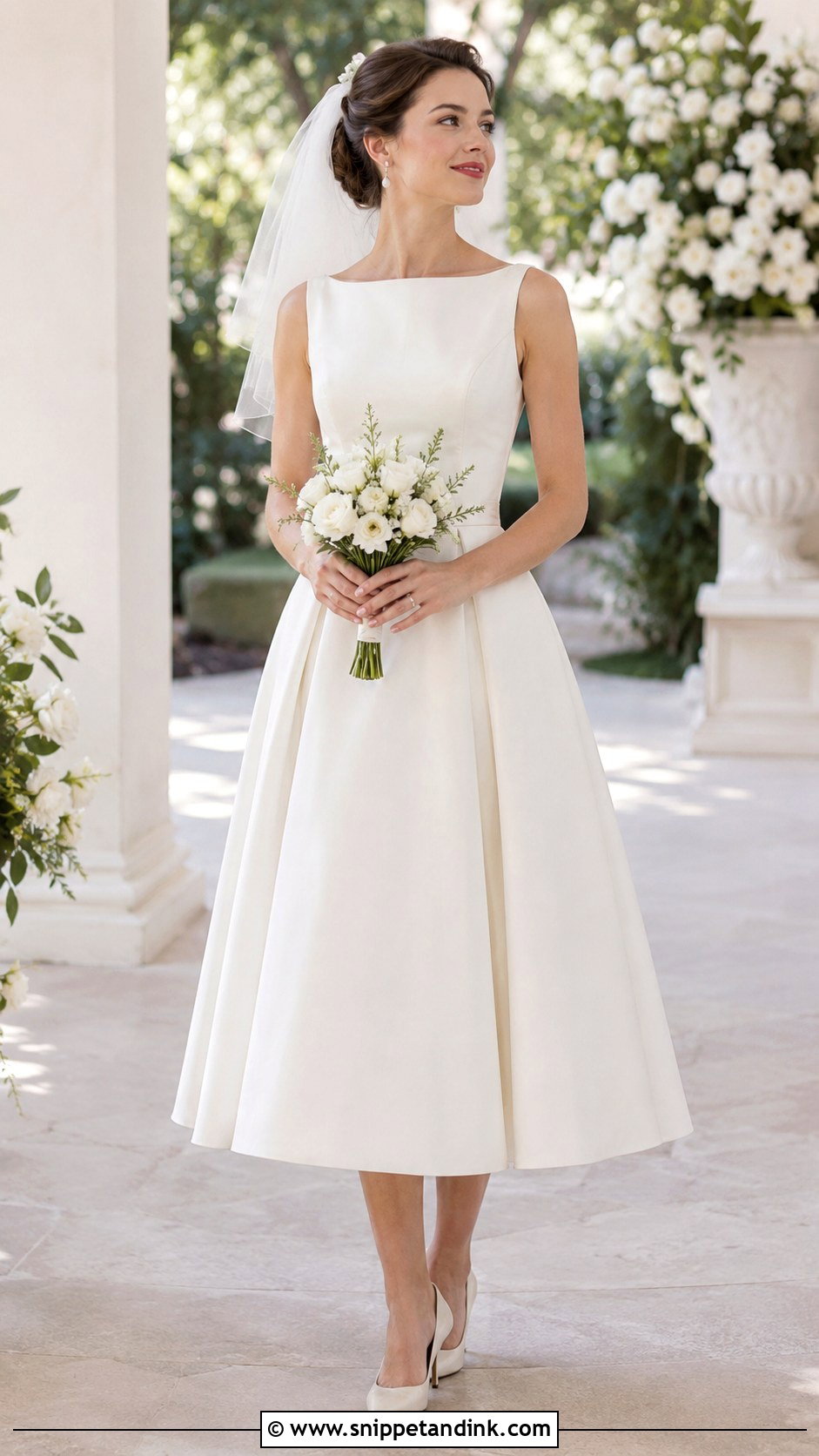
A tea-length gown sits between the knee and the ankle, and the exact point decides whether it looks graceful or stumpy. For petite brides, I usually take the hem slightly higher so more leg shows; taller brides can carry a fuller midi with ankle-strap shoes. Pin it with your wedding shoes on. A fitted bodice with a gently flared skirt in silk faille, satin or organza is the classic version. A ribbon at the waist in the same shade as the dress adds shape without breaking the line. Almond-toe pumps, a short veil and pearl earrings complete it.
6. Off Shoulder Satin French Wedding Dress
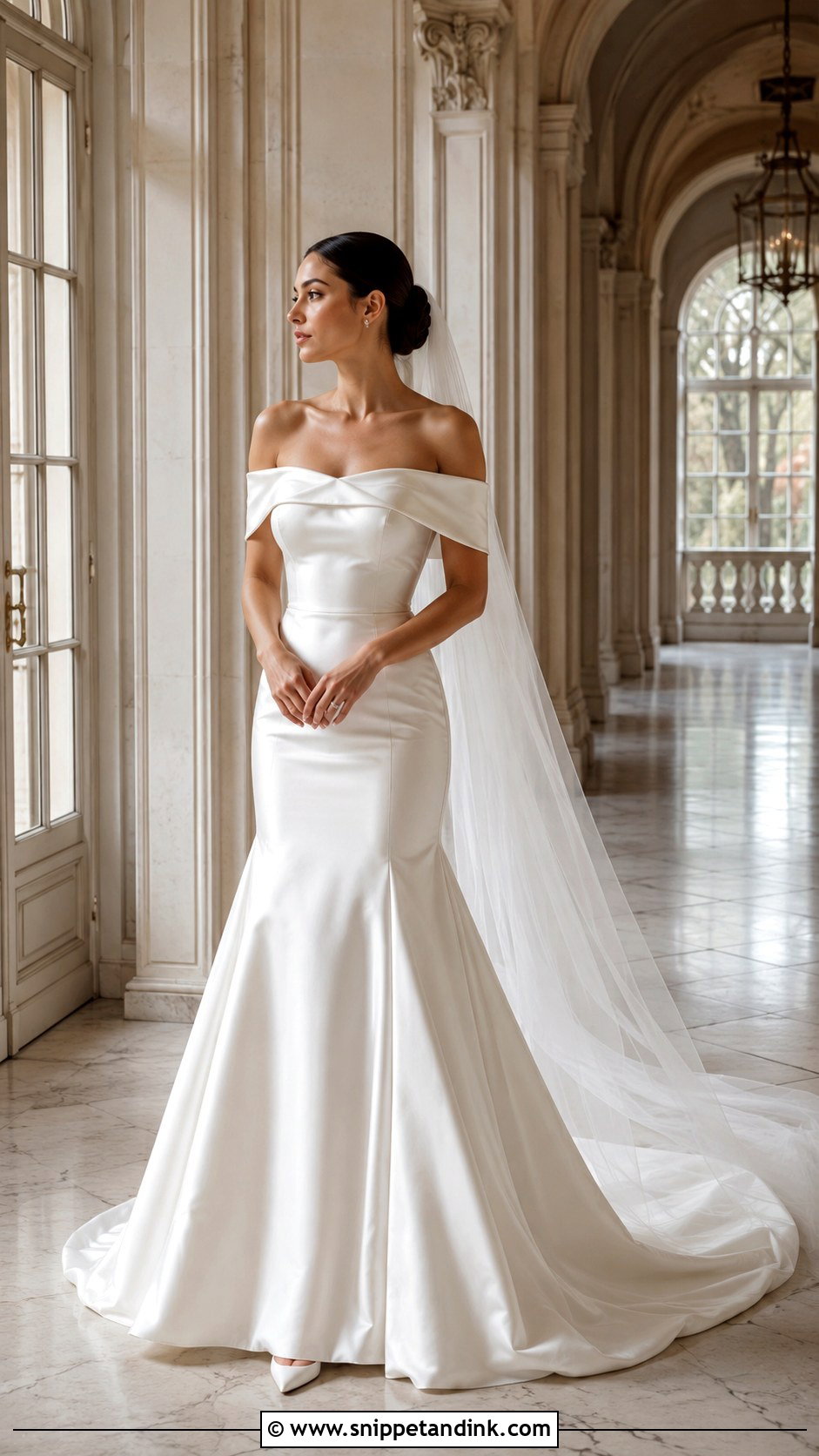
The fold-over neckline is the off-shoulder style I trust most, because a cuff of satin across the upper arm leaves you able to move. It does need tailoring to your shoulder width and usually a hidden stay so it doesn’t creep up. At alterations, raise your arms, sit, hug someone. If the neckline shifts, it isn’t finished. A fitted waist and flared skirt balance the bare shoulders. Crystal studs, a sleek chignon, satin pumps and a chapel or cathedral veil suit a formal ceremony; for something smaller, swap the veil for a simple ribbon in the hair.
7. High Neck Lace French Wedding Dress
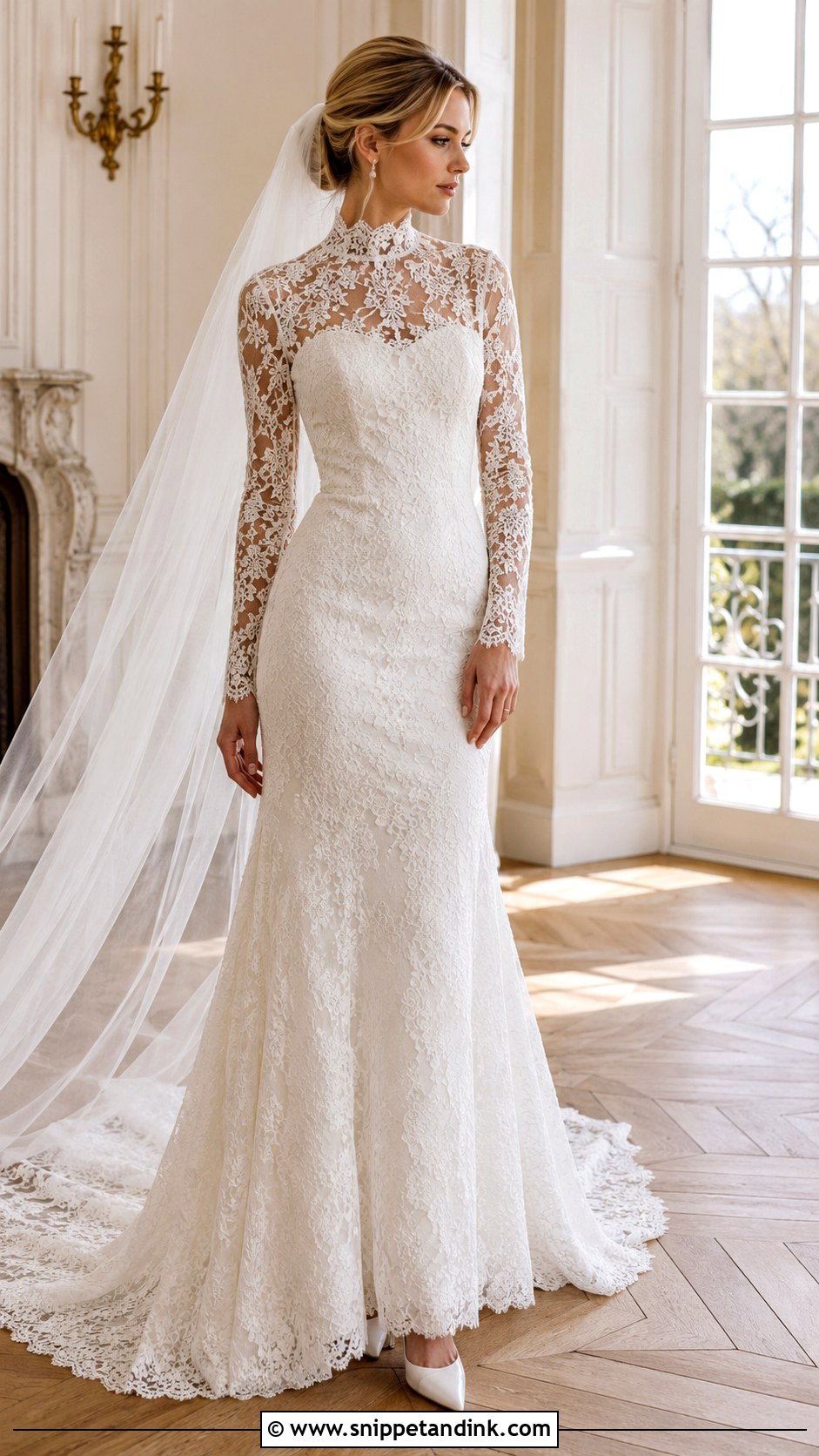
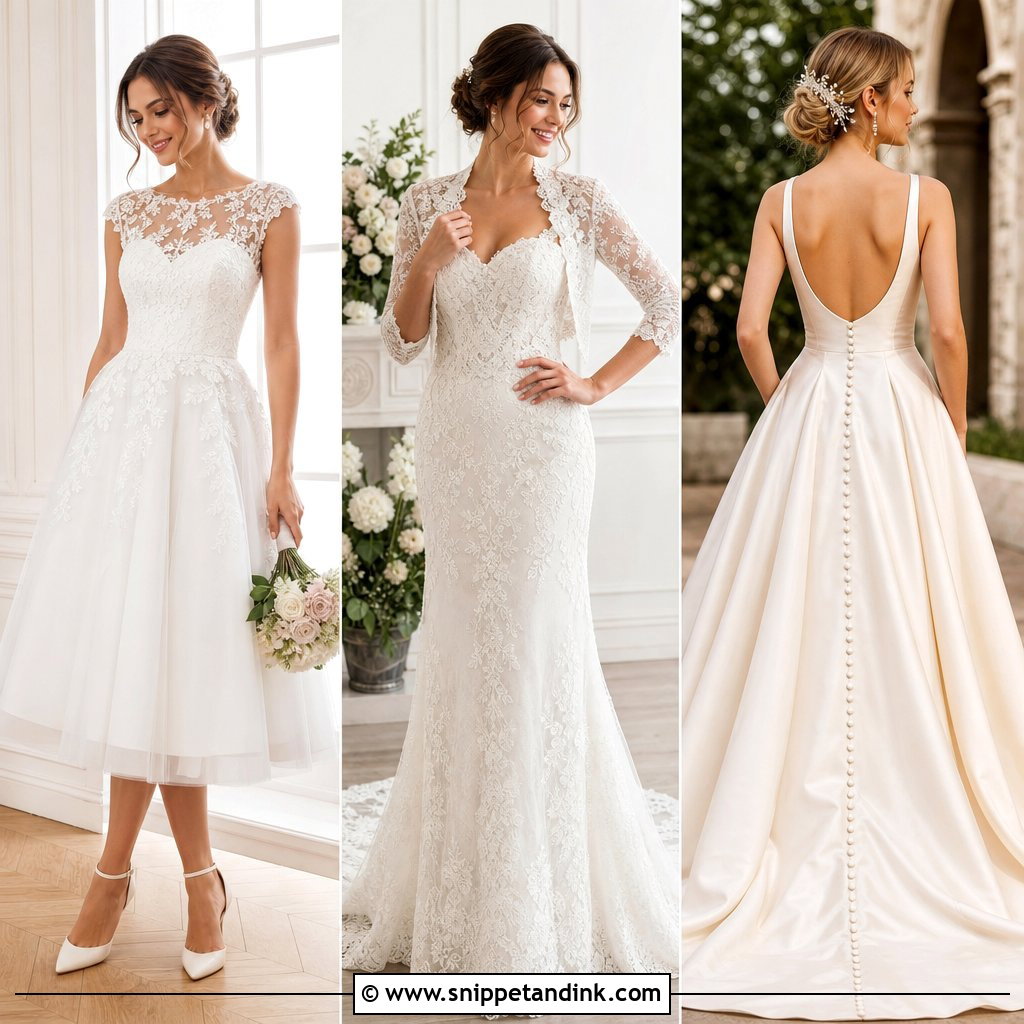
High necks are about the lining. Lace across the throat and sleeves, with an opaque sweetheart or straight lining underneath, gives coverage that still looks light; lace lined all the way up looks heavier. Check the collar for softness, since a scratchy edge against the neck is hard to forget for twelve hours. A softly defined waist and fluid skirt balance the detail up top. Pearl buttons, pointed pumps, small earrings and a low knot suit it, and a plain tulle veil works better than a second pattern. Skip the necklace. I’d suggest it for cooler seasons and formal venues.
8. Open Back Silk French Wedding Dress
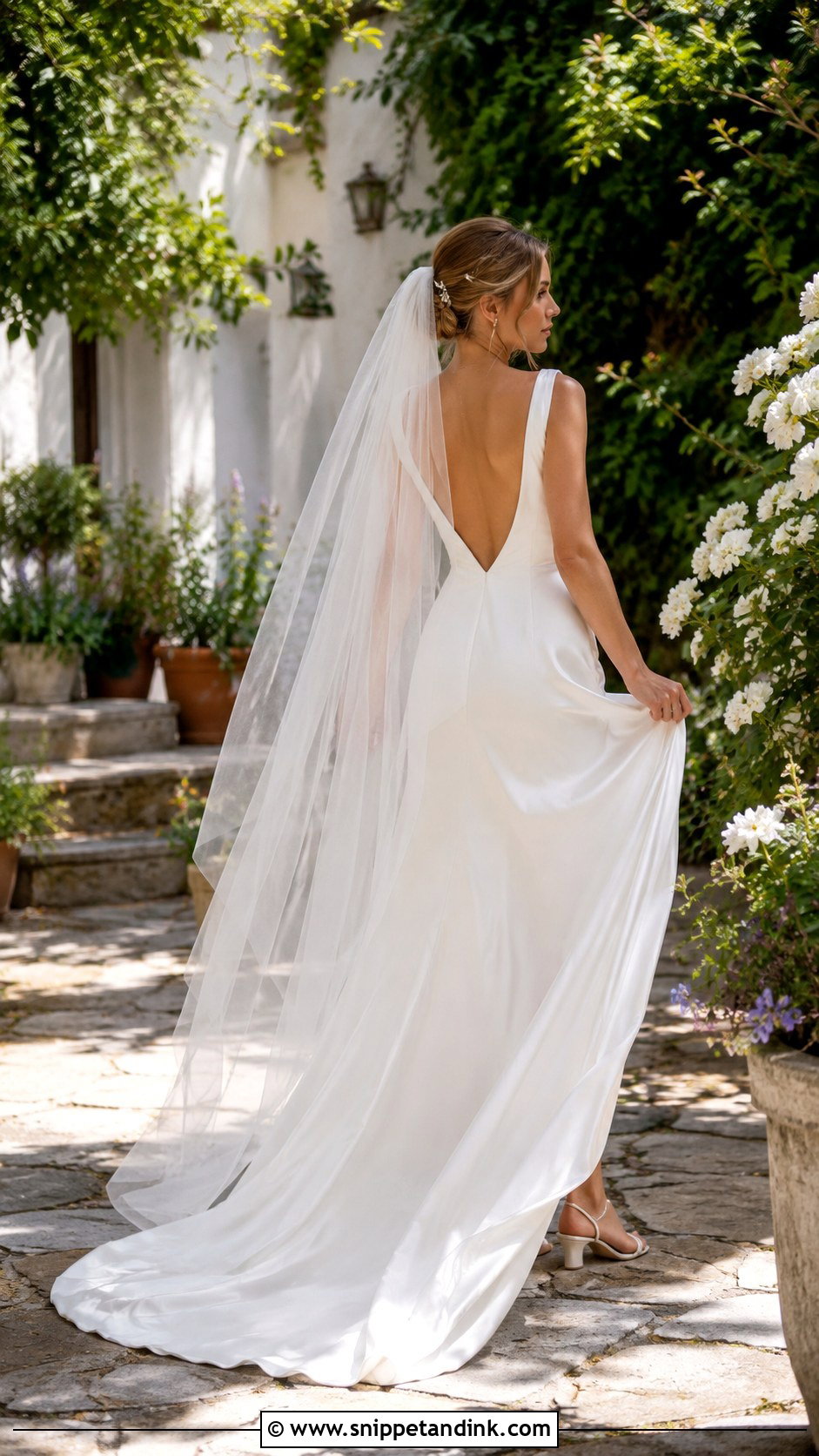
An open back shows off the dress from the angle most guests see during the ceremony. The front can stay simple: bateau, modest V or a clean sleeveless bodice. Behind, a low curve or narrow V does the work. Support needs early planning with your tailor, whether that’s built-in cups or internal structure, because there’s nowhere for a standard bra to go. Choose a depth you can move in; very low backs need more structure to stay flat. A long sheer veil frames the back during the ceremony and can come off for the reception. Pearl hairpins, low-heeled sandals and a small bouquet with trailing greenery suit a warm-weather wedding.
9. Boho Lace French Wedding Dress
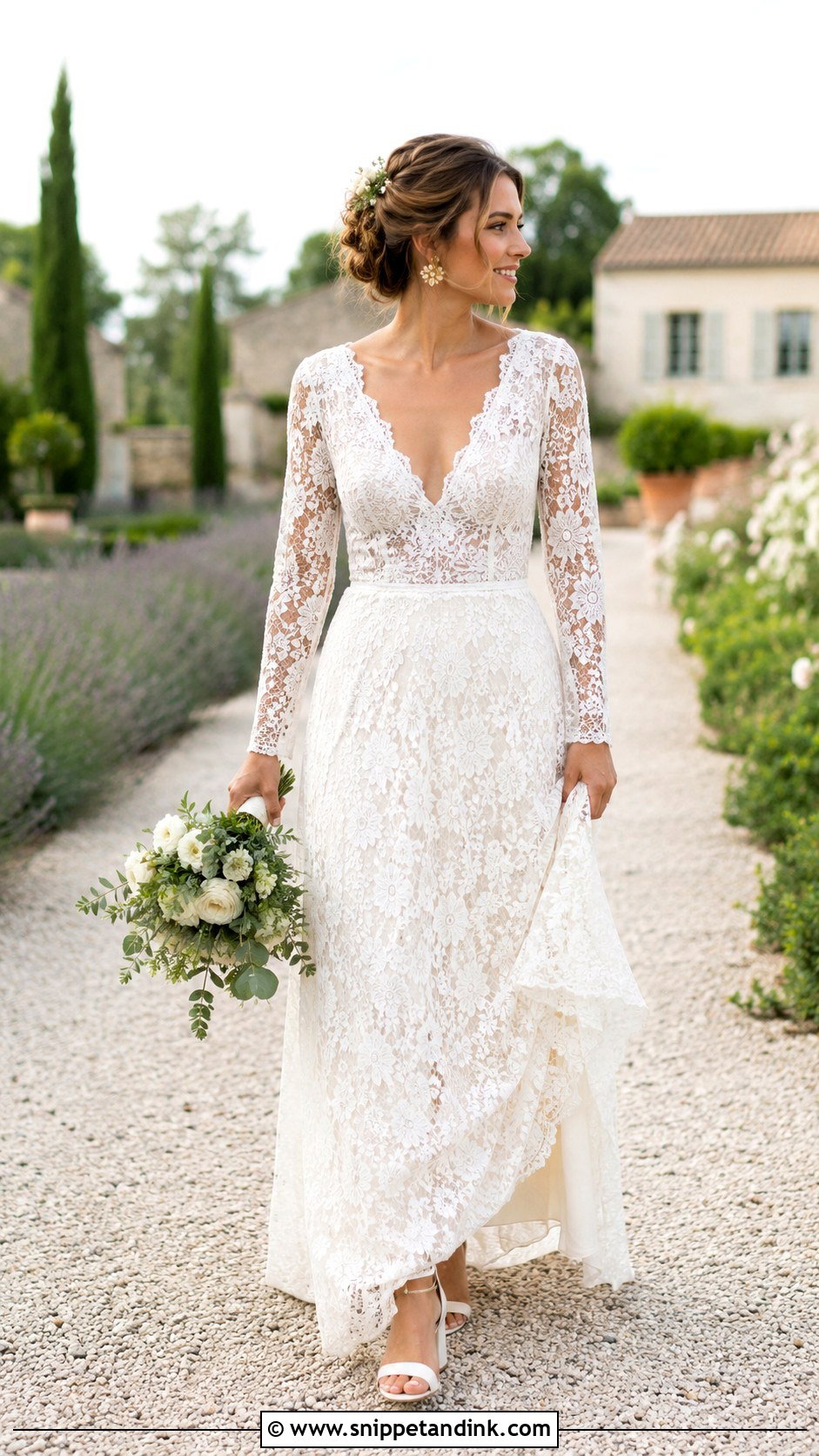
Outdoor lace has to survive grass, gravel and stone, and long trains collect all three. For a garden or countryside estate, I suggest a short train or none, and a lace with a soft hand rather than a heavy corded one. Botanical lace, a soft V-neck, flutter sleeves or light long sleeves and a flowing skirt give the airy shape. Block-heel sandals, textured gold earrings and a loose updo with a few floral pins work outdoors. A plain veil or a lace-edged cape adds the bridal layer. Keep the bouquet natural but contained: white flowers and green foliage.
10. Basque Waist French Wedding Dress
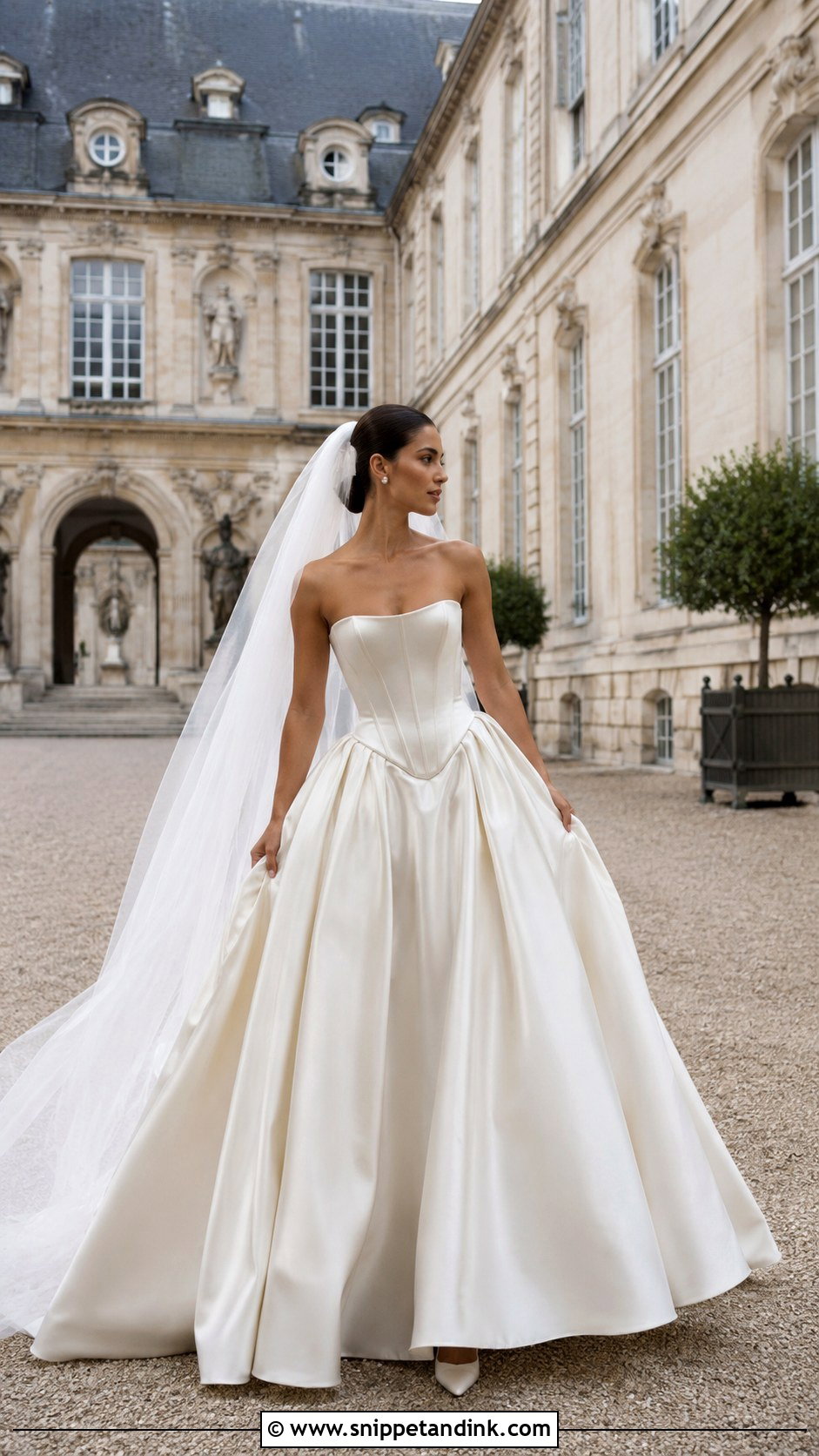
A basque waist dips into a point below the natural waistline, lengthening the torso. It suits curvy, straight and athletic figures, but only if the point is placed for your body. I’d ask your tailor to position it by your proportions rather than a standard measurement, and to check it seated, where boning presses hardest. A corset-style bodice and smooth satin skirt give the modern version. The waist does the defining, so skip belts and bold jewelry. Pointed pumps, a long plain veil, pearl earrings and a neat bun are enough.
11. Chiffon A-Line French Wedding Dress
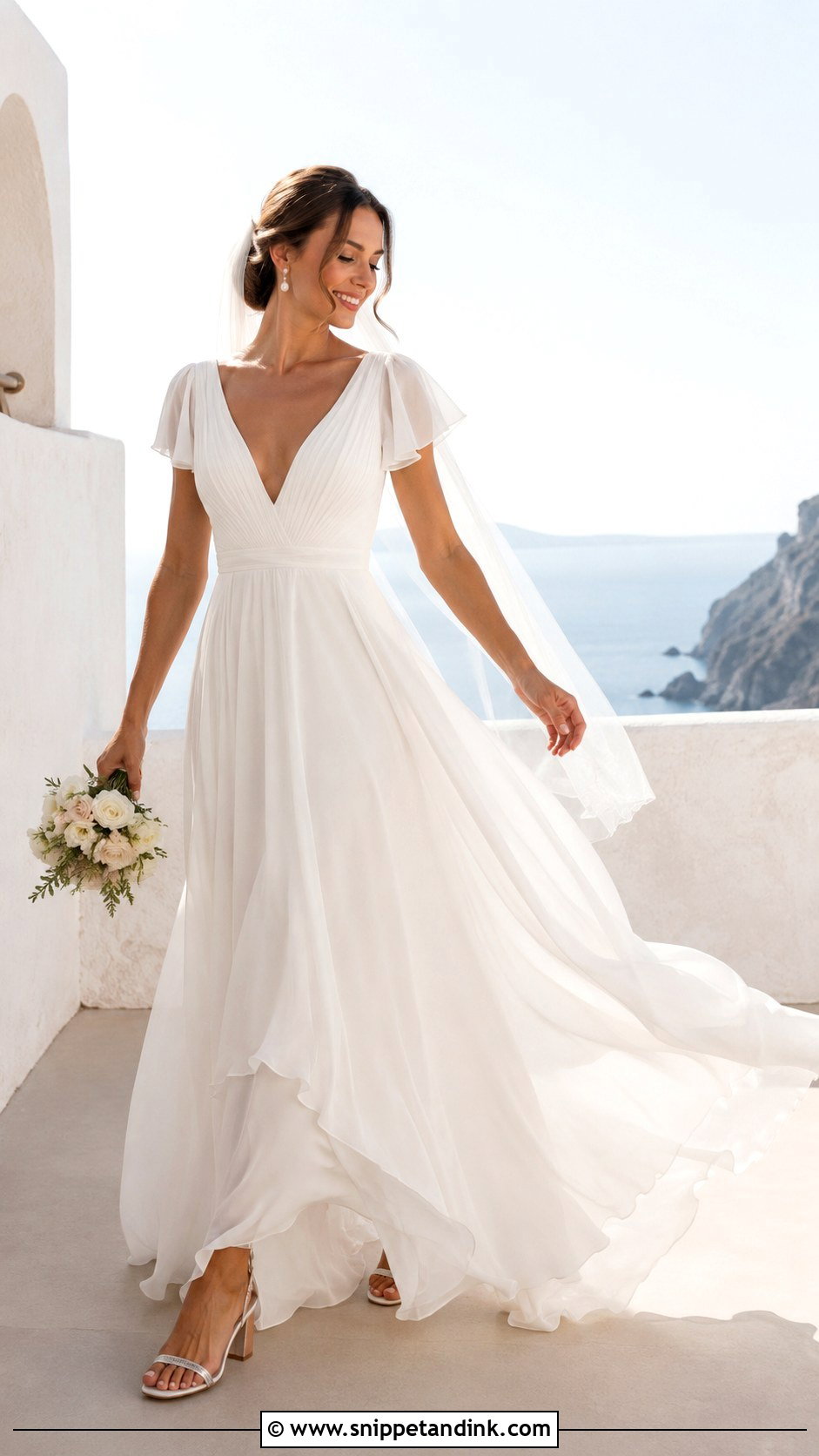
Chiffon floats because it is light and slightly sheer, which also means the lining matters. Stand in daylight and under warm indoor light at a fitting to check it stays opaque. A fitted bodice with a shallow V, gathered waist and layered skirt is the classic shape, with flutter sleeves or narrow straps depending on the season. If the skirt feels too full, removing one chiffon layer often gives a cleaner fall. Low block heels, a fine gold bracelet, pearl earrings and loose waves suit it, and a fingertip veil won’t fight with the skirt. It’s comfortable in heat and travels well to destination weddings.
12. Column Crepe French Wedding Dress
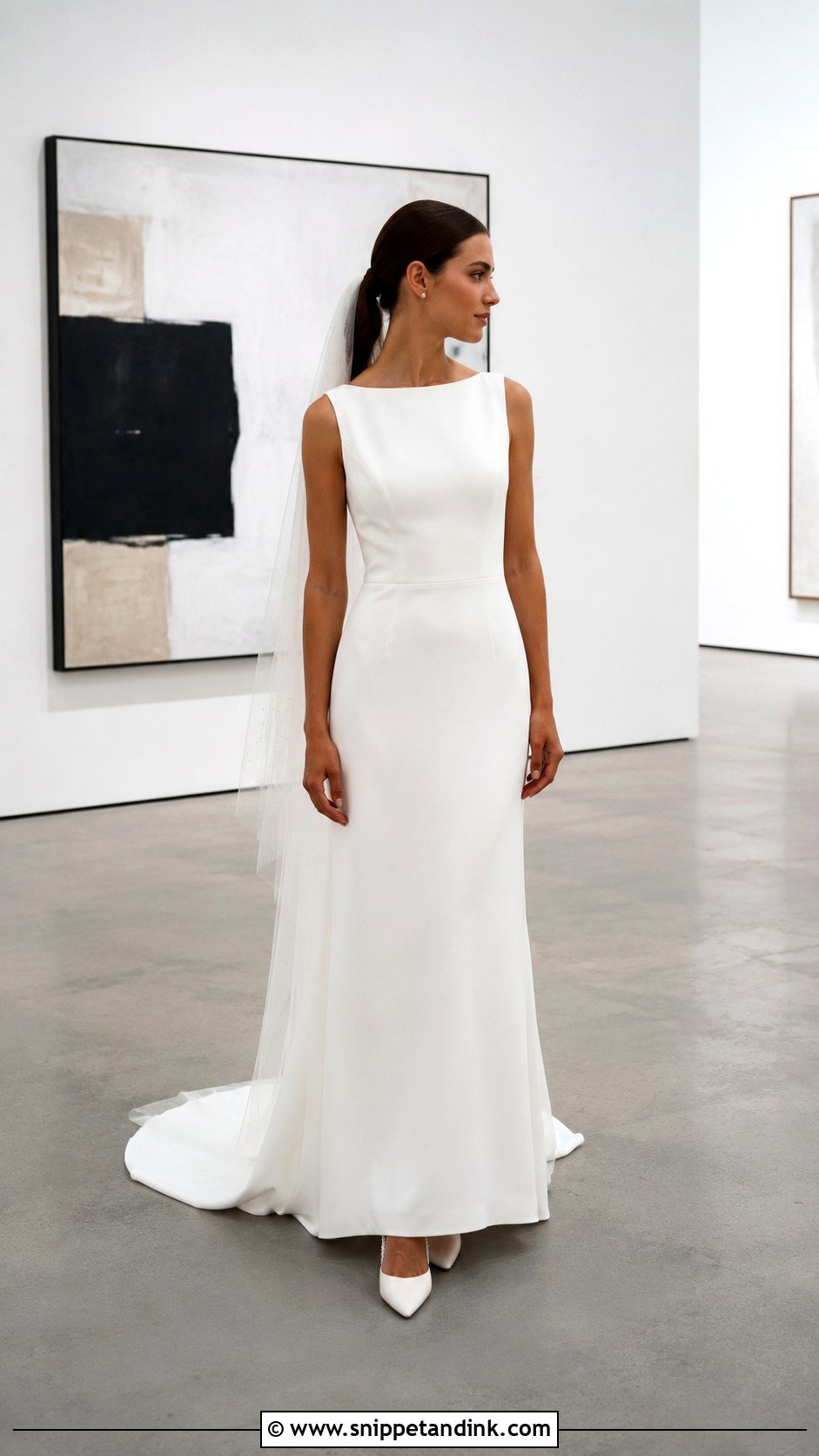
The column is the most modern shape here: long, narrow, with very little going on. Matte crepe suits it because it holds a seam and still lets you walk. A high boat neck, gentle waist shaping and a short sweep train are enough. The fit across the hips is where these go wrong. The fabric should skim, not pull, so alterations need to be precise. On a petite bride, an unbroken neckline and shoes in the same shade as the dress lengthen the line. Pointed slingbacks, a structured clutch, small studs, a low ponytail and a detachable tulle veil suit galleries, modern hotels and city venues.
13. Corset Bodice French Wedding Dress
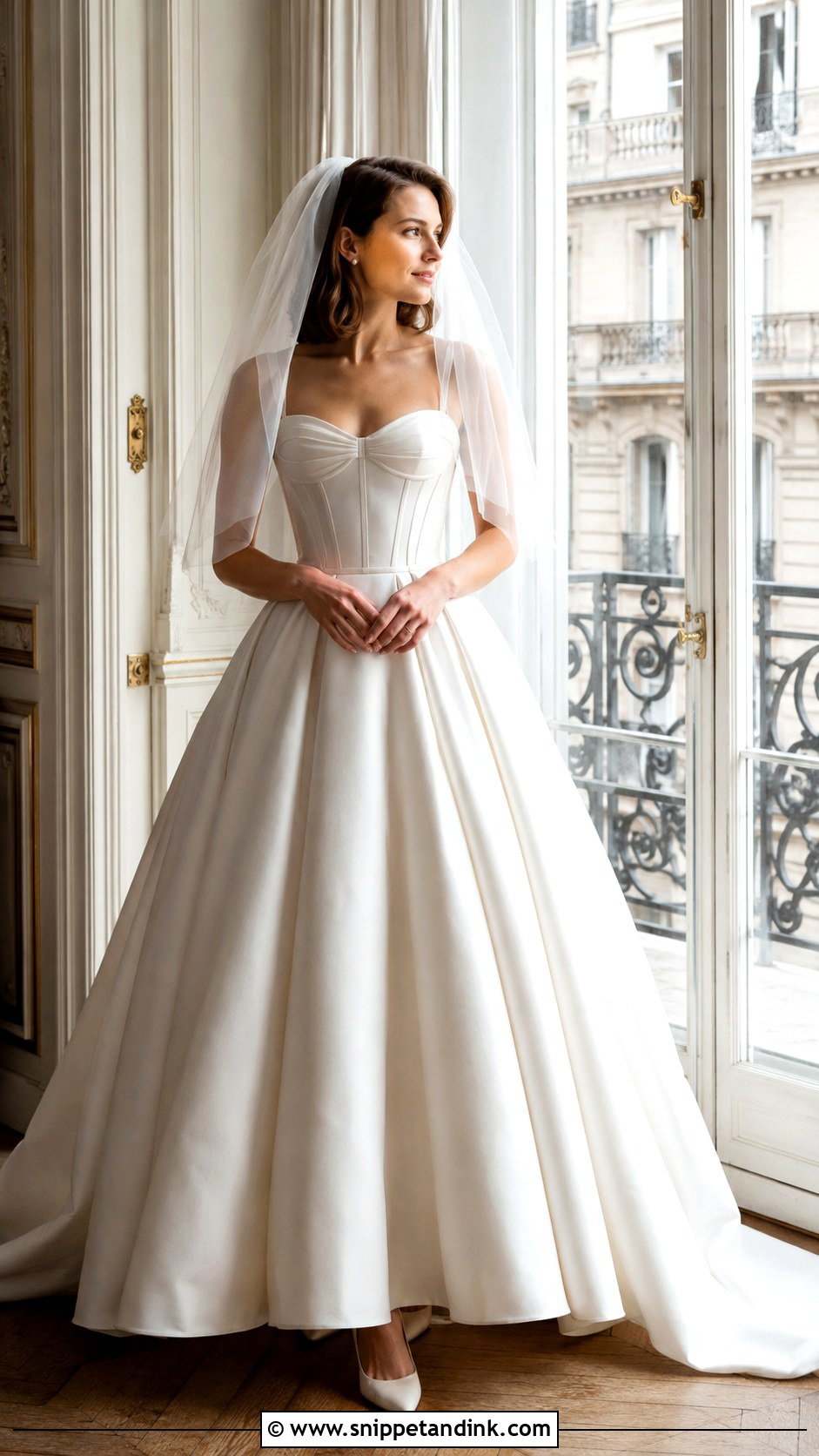
Built-in corsetry looks refined when the fabric around it stays plain. Internal boning, a gently curved neckline and a full satin or silk skirt, with minimal visible seams, keep it modern. It gives the most dependable support of any dress here. At fittings, take a deep breath, sit, and lift your arms; a properly fitted corset feels secure, not tight, and the top edge shouldn’t press into the skin. If the neckline already frames the chest, skip the necklace. Classic pumps, a sheer shoulder-length veil, pearl studs and a clean bun or soft waves finish it.
14. Cape Sleeve French Wedding Dress
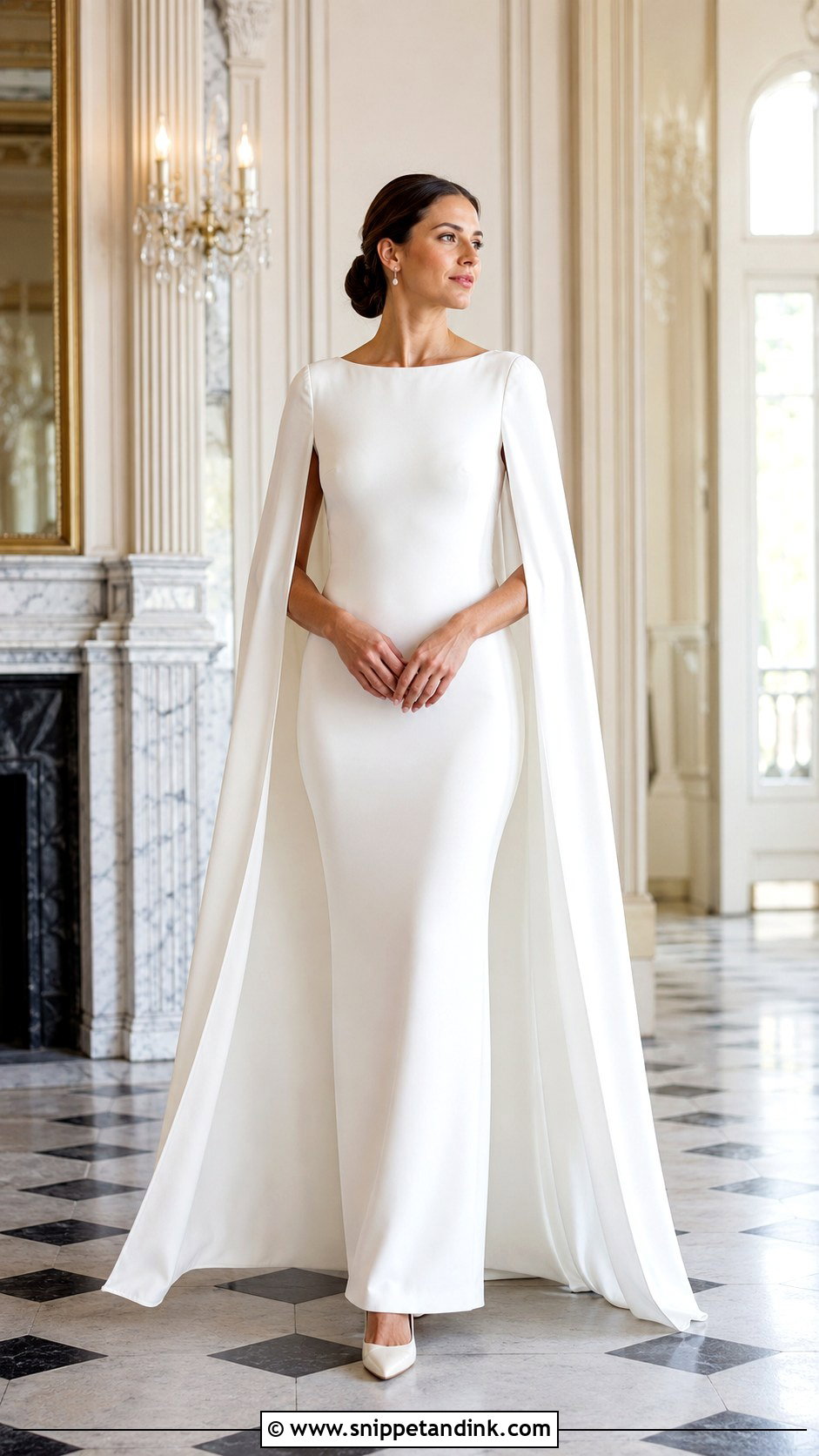
Cape sleeves fall from the shoulders and end at the elbow, wrist or floor, and that length decides how much drama you get. A clean sheath or A-line in crepe, satin or silk is the best base. On narrow shoulders, I like a lightly structured attachment so the cape doesn’t slope away; on fuller upper arms, the soft coverage is often the main reason brides choose it. Check that it doesn’t bunch under the arms when you move. Usually you won’t need a veil, because the cape already gives a back view. Closed-toe pumps, small earrings and a low chignon suit cooler ceremonies and formal indoor venues.
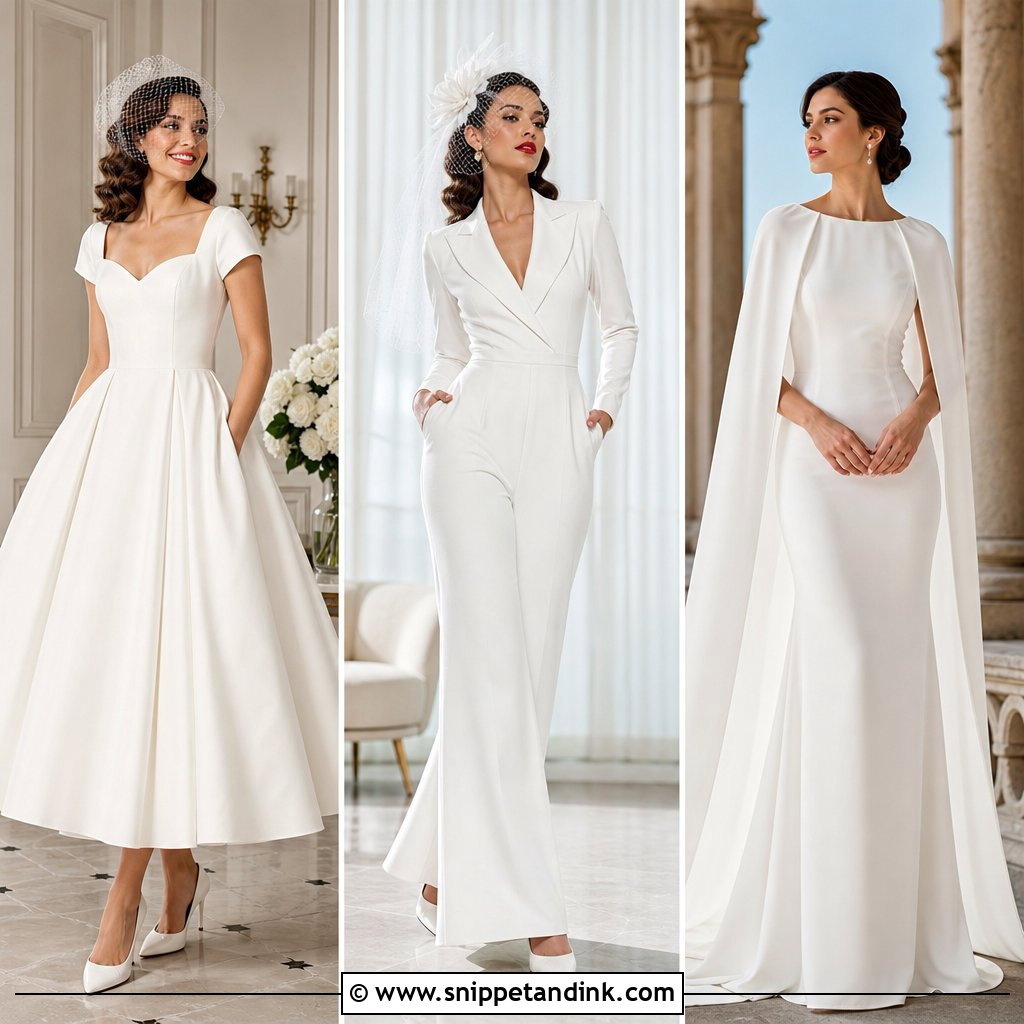

15. Puff Sleeve Organza French Wedding Dress
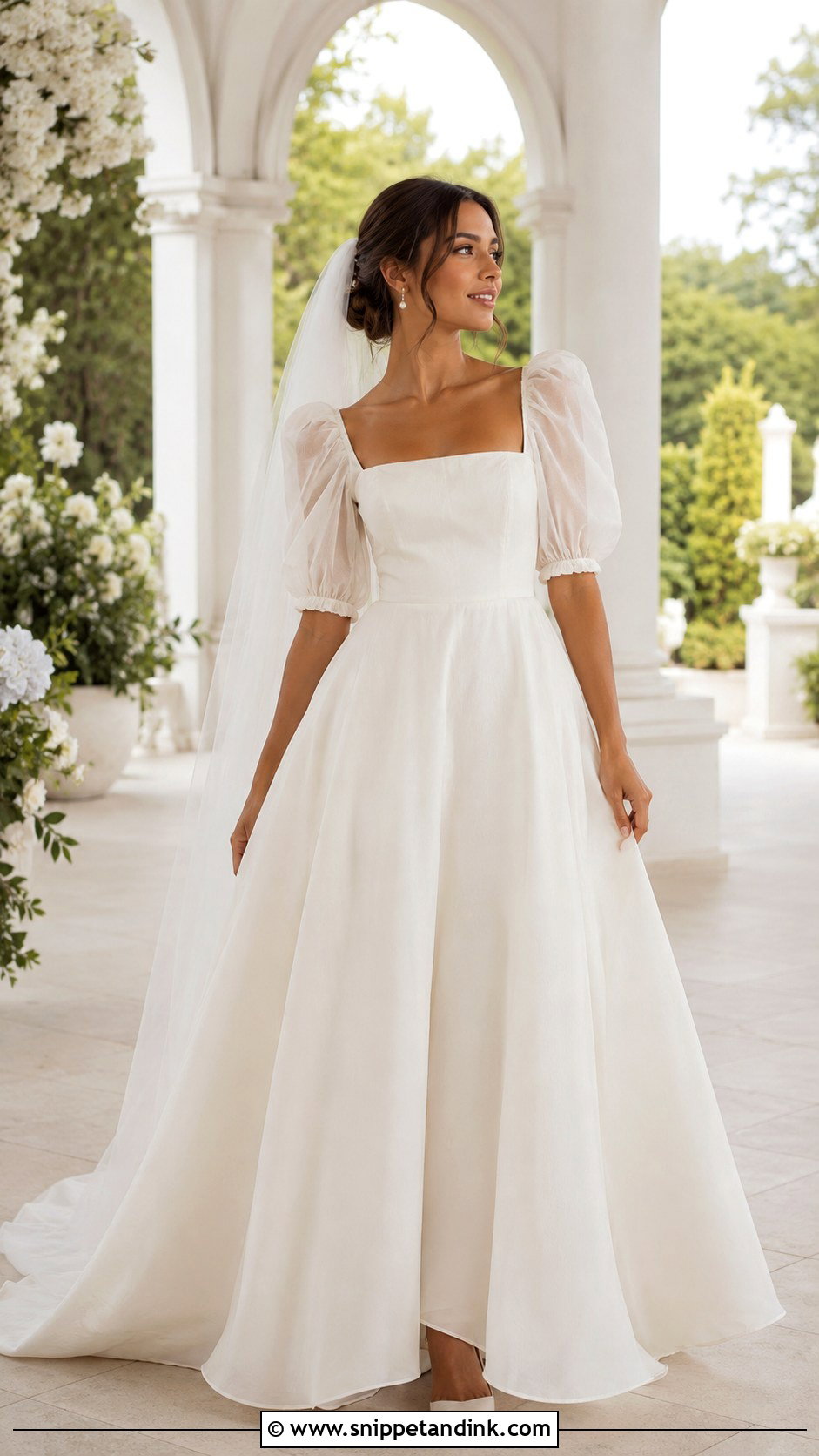
Organza is stiff enough to hold a puff without padding, which is why I prefer it to soft chiffon for this sleeve. Medium-sized puff sleeves photograph well on most frames; petite brides look best with softer gathers and shorter sleeves, while taller brides can carry more volume as long as the shoulders look balanced from the side. Pair them with a simple fitted bodice, square neck and A-line skirt. Removable sleeves let the dress turn strapless for the reception. Sleek hair, small pearls, ivory pumps and a plain veil set under the hairstyle keep the sleeves in focus.
16. Halter Neck French Wedding Dress
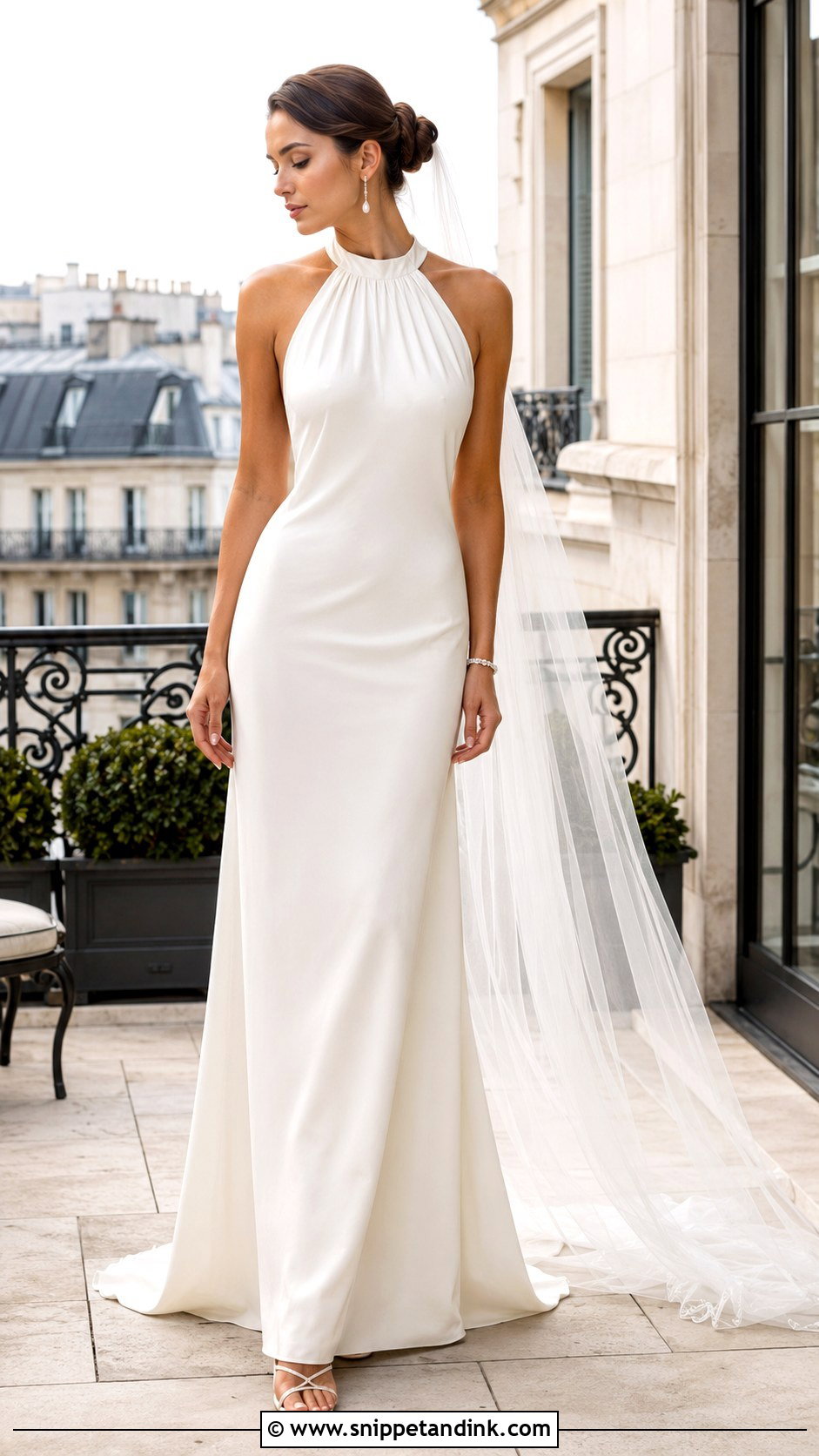
A halter-neck gown pulls the eye upward to the shoulders and face. One warning: the halter tie should not be the thing holding the dress up. If you need bust support, look for built-in structure, or the neck strap will ache after a few hours. Fluid silk, satin or crepe with a softly gathered neck and an open or keyhole back suits it. A slim A-line moves more; a column gives a sharper city look. Drop earrings, a polished bun, strappy heels and a narrow bracelet are enough, with a long veil attached below the bun. Summer and modern venues suit it.
17. Drop Waist French Wedding Dress
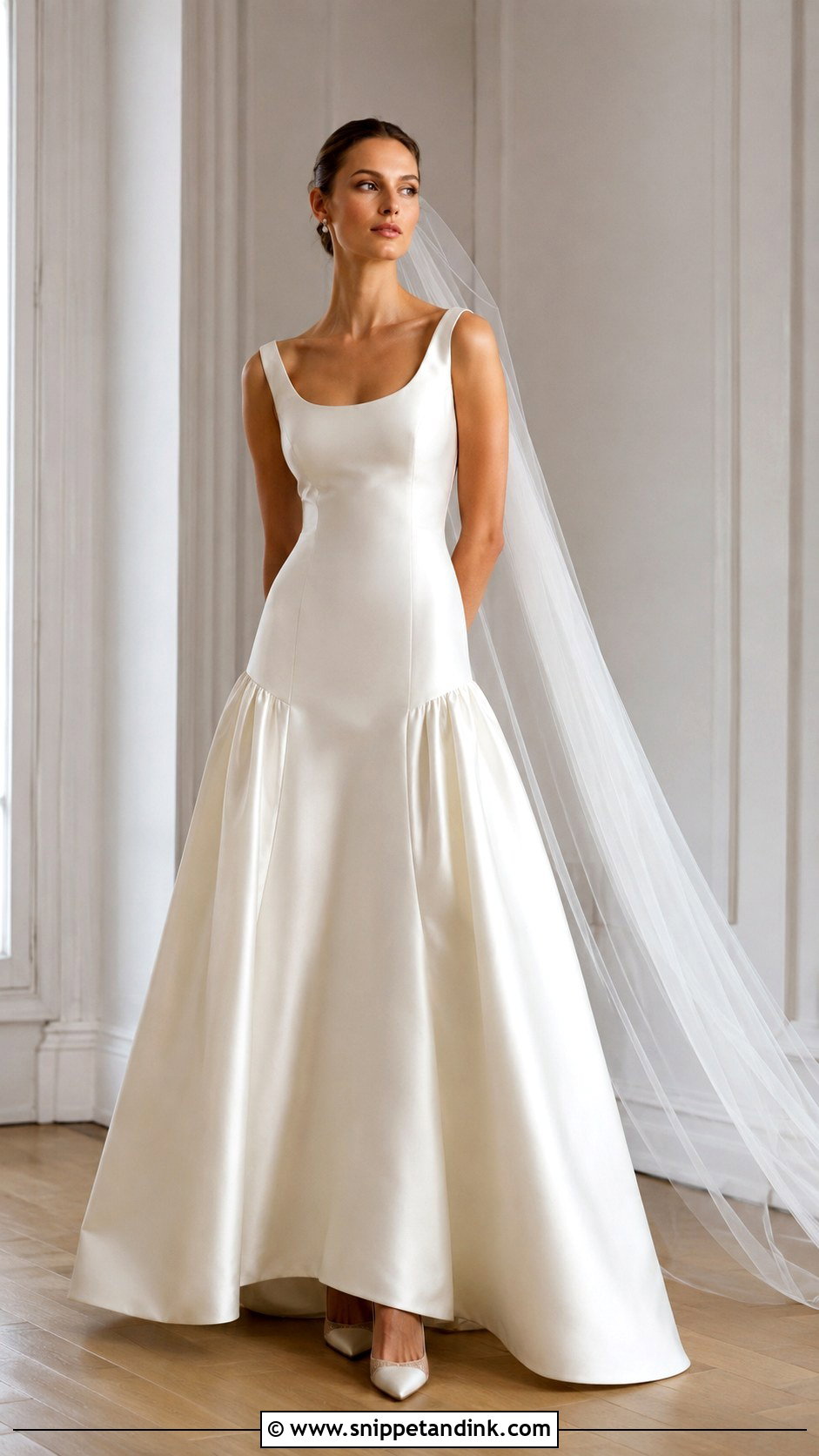
A drop waist stretches the bodice down past the natural waist before the skirt opens. It looks most striking on taller brides, though good tailoring can adapt it for petite ones. The crucial point is where the seam lands: it must not cut across the widest part of the hips. Matte satin, silk faille or structured crepe with a scoop, straight or bateau neckline keep the line clean. Skip a contrasting belt. Pointed heels, a minimal veil, small earrings and a neat updo suit it, and sit in it at every fitting to make sure the long bodice stays comfortable.
18. Floral Appliqué French Wedding Dress
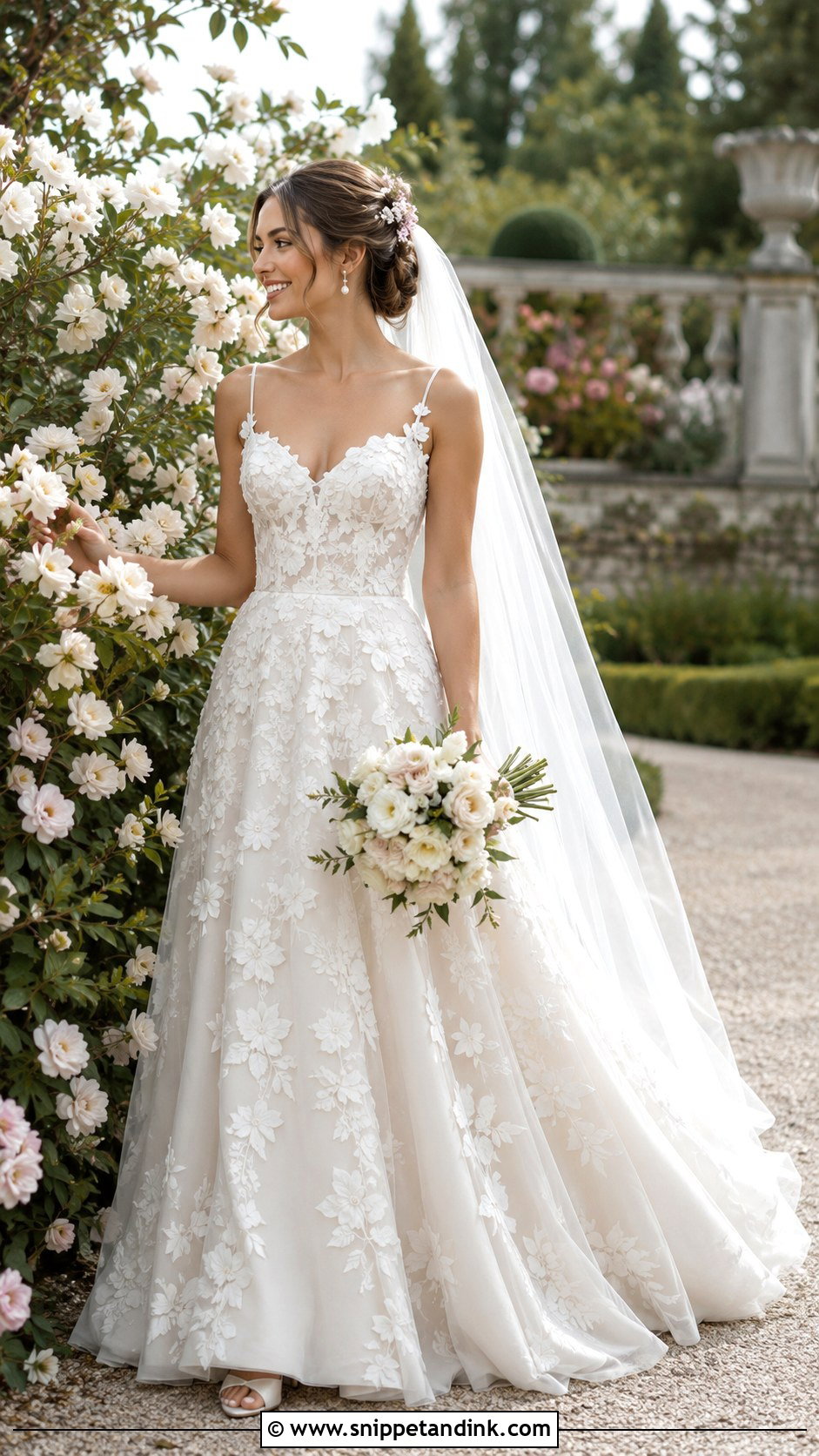
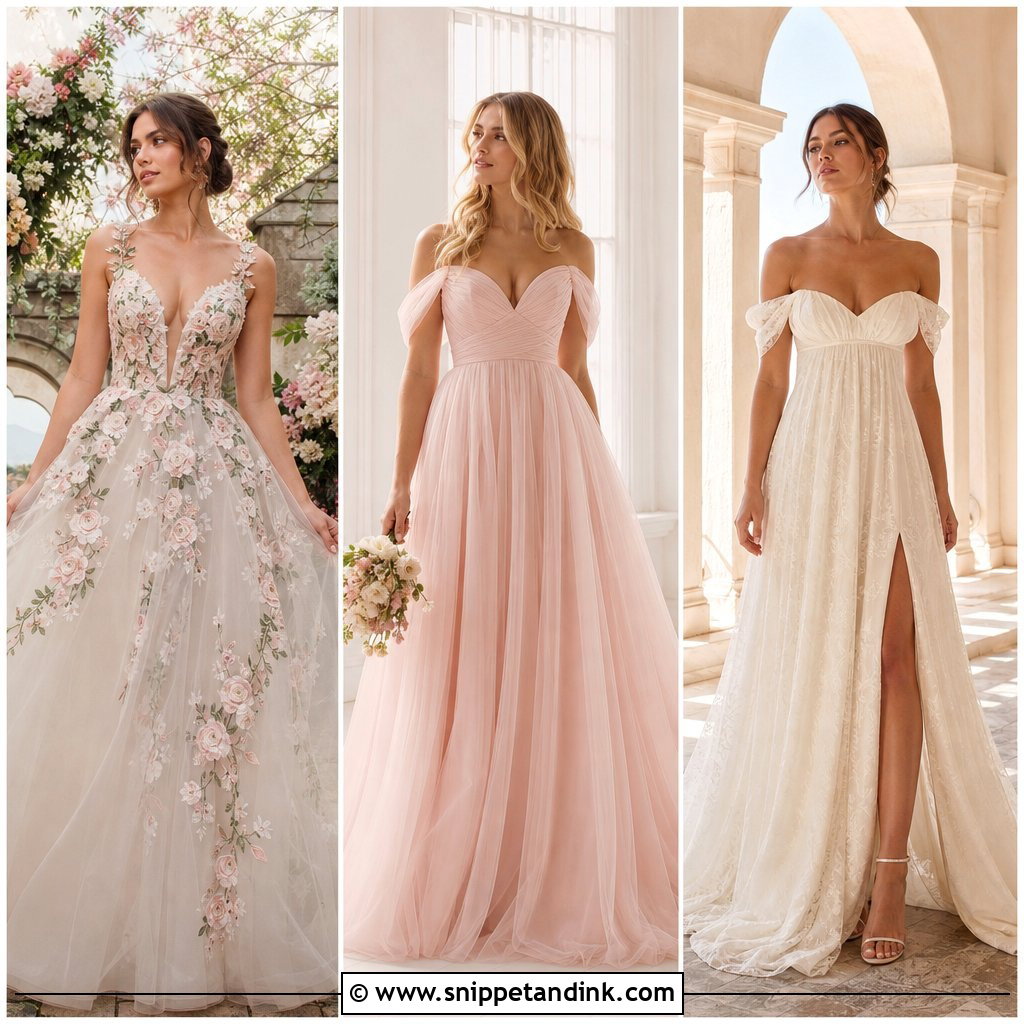
Floral appliqués work because of the space between them. Spaced flowers across a sheer or lightly lined bodice, continuing sparsely down an A-line skirt, look fresh; packed together, they read as heavy. For subtle texture, keep them to the bodice or sleeves. For more impact, ask for flowers that grow larger toward the hem in the same ivory. Keep the bouquet compact so it doesn’t compete. Simple satin heels, floral hairpins, pearl earrings and a plain veil suit garden and estate weddings in spring.
19. Black Bow French Wedding Dress
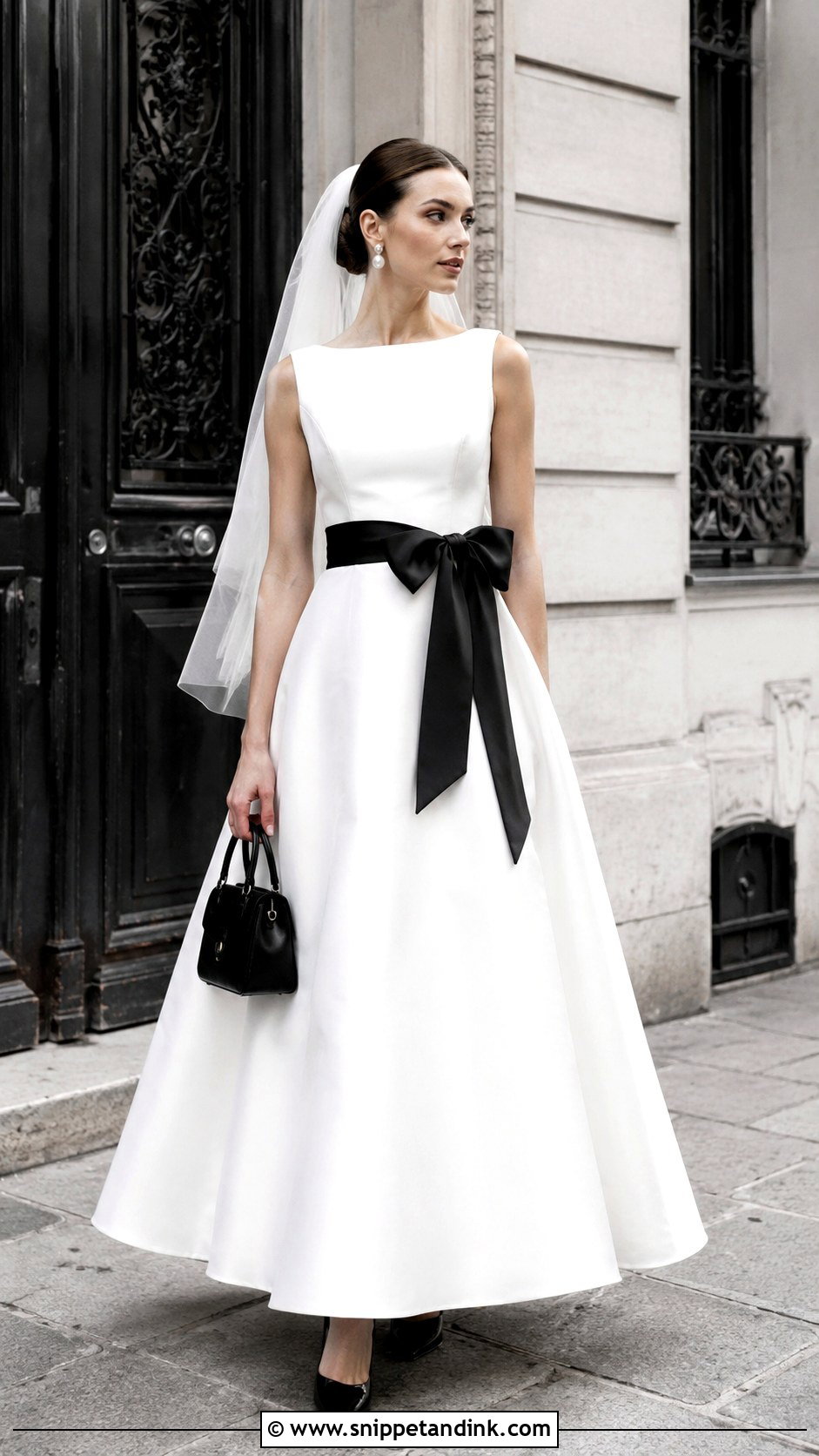
One black bow on a white gown is about as French as a bridal detail gets, and the rule is just that: one. Place it at the waist, the back neckline or the base of the train on a simple white satin or crepe gown. Repeat the black once more at most, with pointed pumps or a small bag; more than that and the contrast fights the dress. Pearl earrings and a plain white veil keep it unmistakably bridal. If black feels too stark, deep navy gives the same effect more gently. It belongs at city weddings and monochrome receptions.
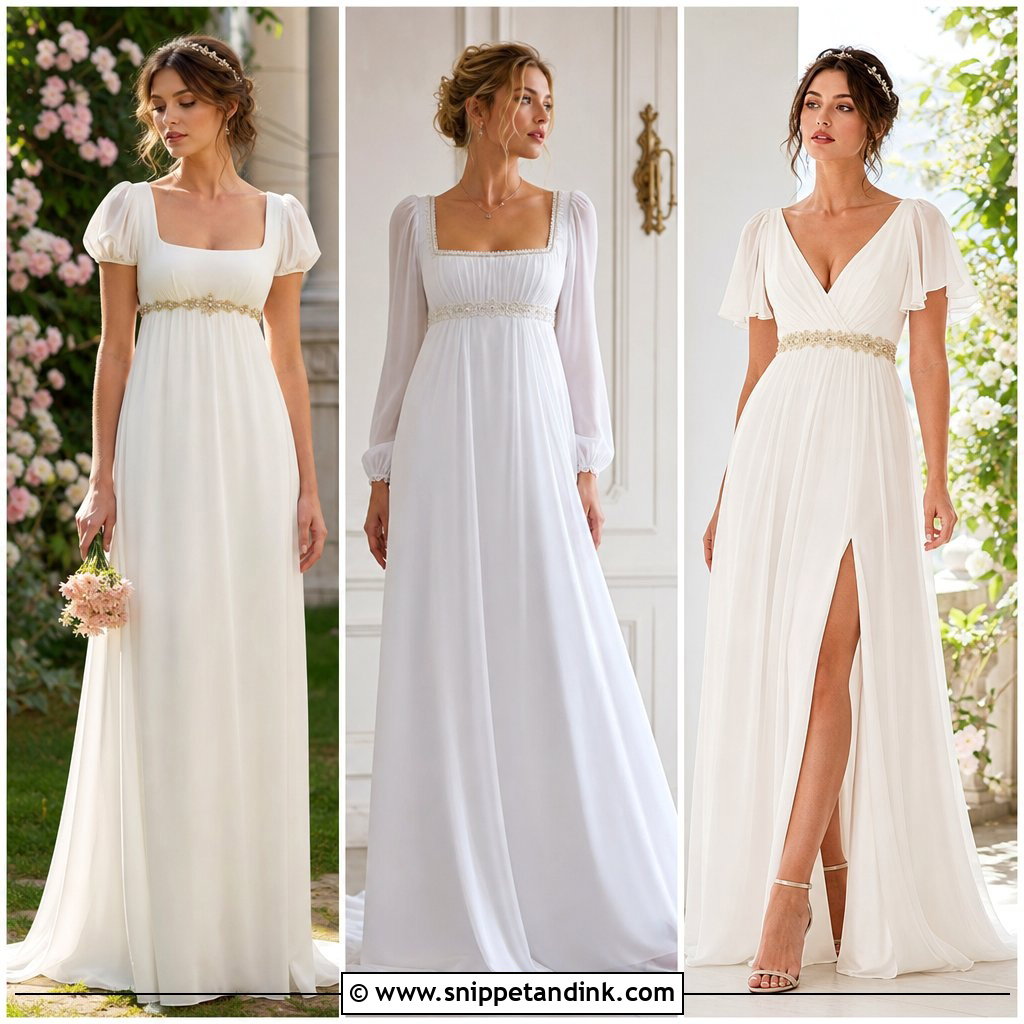
20. Draped Plus Size French Wedding Dress
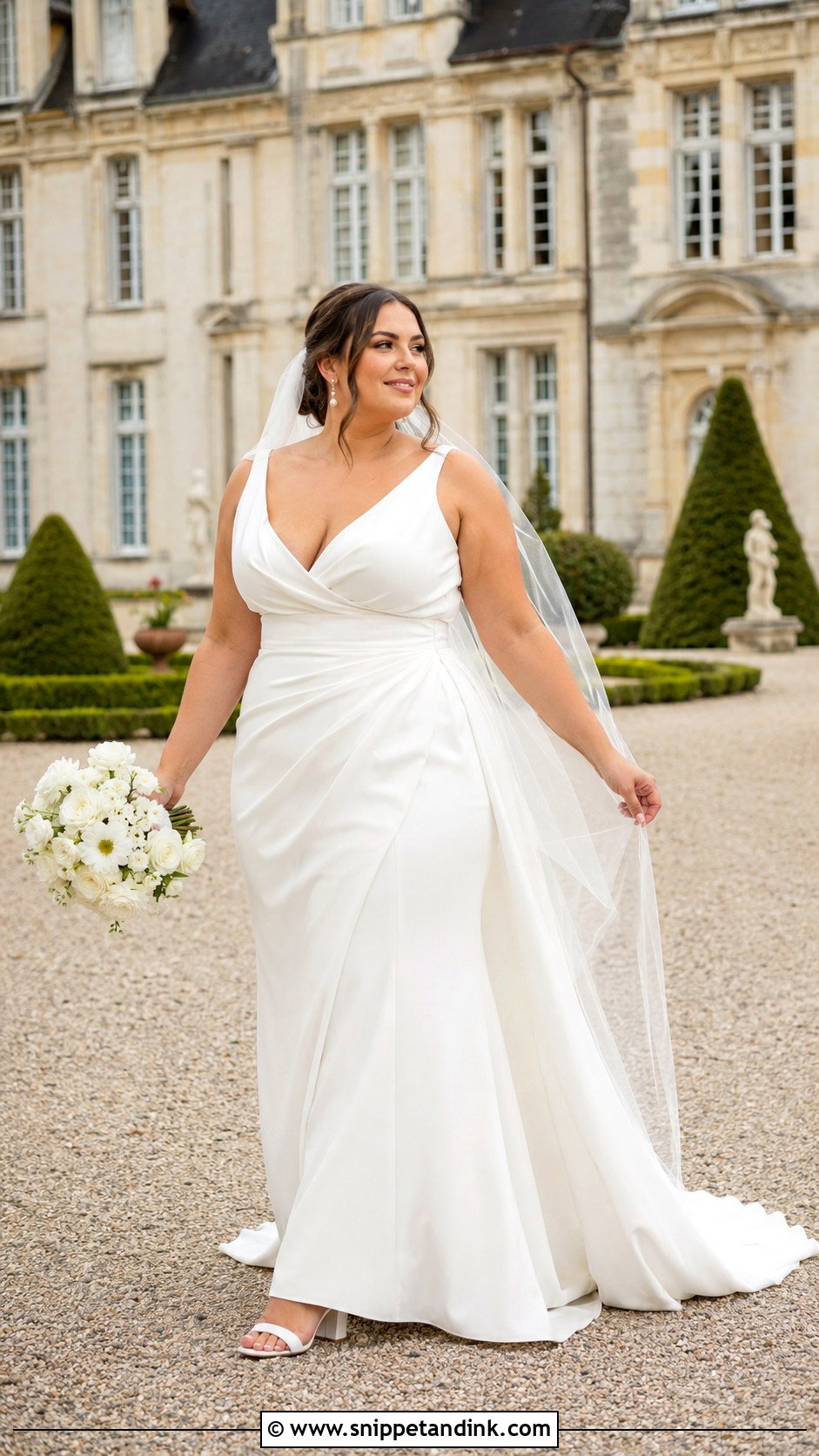
Draping is the most useful tool I know for plus-size bridal fitting, because diagonal gathers create shape and smooth the middle without hiding the body. A supportive V-neck bodice, defined waist and draped crepe or chiffon skirt is a strong start, with wider straps that make room for proper support. Don’t size up just for coverage; extra fabric distorts the shape. The tailor should fit the widest area first and take in everything else from there. A wrap-style bodice is another good option, as long as the neckline is secured. Block heels, medium drop earrings, a fingertip veil and a structured bouquet complete it.
Shoes for Cobblestones, Gravel and a Polished Ballroom
French-style weddings often mean old buildings and outdoor spaces, and the ground is rarely kind. Thin stiletto heels drop into gaps between cobbles and sink into lawns; gravel scuffs satin in minutes. I plan the shoe around the ground first, then the dress.
For stone and gravel, a block heel or a low kitten heel is the honest choice. For grass, clear heel caps that slip over the tip of a stiletto spread the weight and stop you sinking. Inside, the problem is the opposite: new leather soles slide on polished floors, so rough them up lightly with fine sandpaper before the day.
Color matters too. Bring a fabric swatch from the dress when you shop, because ivory shoes beside a pure white gown look yellow in photos, and bright white shoes beside ivory look gray. With a short or tea-length dress, the shoes are on show all day, so this is the place to spend; under a floor-length column, comfort can win over looks.
Break your shoes in at home for a few evenings, wearing them on carpet so the soles stay clean. And if your shoes are satin, keep them away from wet grass until after the photos; water marks on satin rarely come out.
Fit Over Decoration, From the First Fitting to the Last Dance
None of these looks depends on a body type or a big budget for embellishment. They depend on a cut that fits and suits how you actually move. Slip gowns, lace sleeves, a short civil dress, a corset or soft chiffon all say the same thing in different ways. Choose the shoes, jewelry, hair and veil to support the dress’s strongest feature, not to compete with it. Then put your money and your fitting time into tailoring, and move around in the finished dress before you call it done. That’s what shows in the photos.
You'll Like These Ideas:


Leave a Reply