
European bridal fashion isn’t one look. French lace, Italian satin, Greek draping and Scandinavian tailoring all come from different ideas about what a bride should look like, and that variety is exactly what makes it fun to dress for. Minimal satin, dimensional lace and soft draping are all being worn right now. What I ask a bride planning a wedding abroad is simple: where exactly will you stand, and what will the weather be doing? A cathedral veil belongs in a château; a silk scarf or short veil feels right at a city registry. The twenty gowns below take a cue from a different country each, with the shoes, veil and hair I’d style them with.
Covered Shoulders in Old European Churches
If your ceremony is in a Catholic or Orthodox church in Italy, Spain, Portugal or Greece, the building may have its own rules about dress. Many churches expect shoulders to be covered inside, and some are strict about deep necklines and bare backs. Ask the parish or your planner early, before you buy, because a strapless or backless gown might not be allowed as it is.
Easy ways to add coverage
- A lace bolero or a shrug cut from the same fabric as the dress, removed for the reception.
- Detachable illusion sleeves that snap into the bodice.
- A long mantilla or cathedral veil worn over the shoulders during the service.
- A sheer cape that falls from the neckline and comes off after the vows.
Have whichever one you choose made or fitted at the same time as the dress, so the colours match. Ivories vary a lot, and a cover-up in a different white looks like an afterthought in photos.
1. French Lace A-Line Wedding Dress
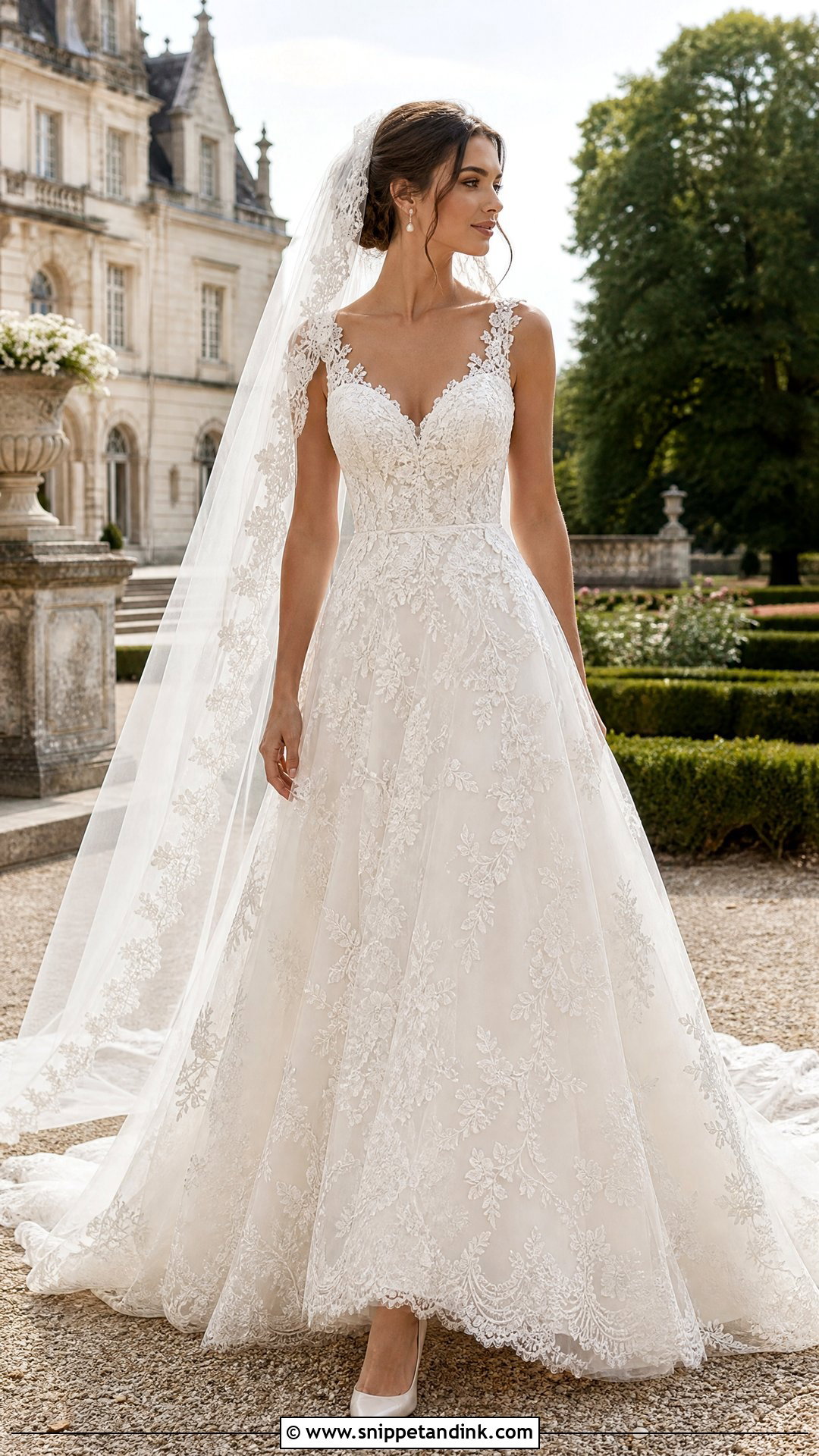
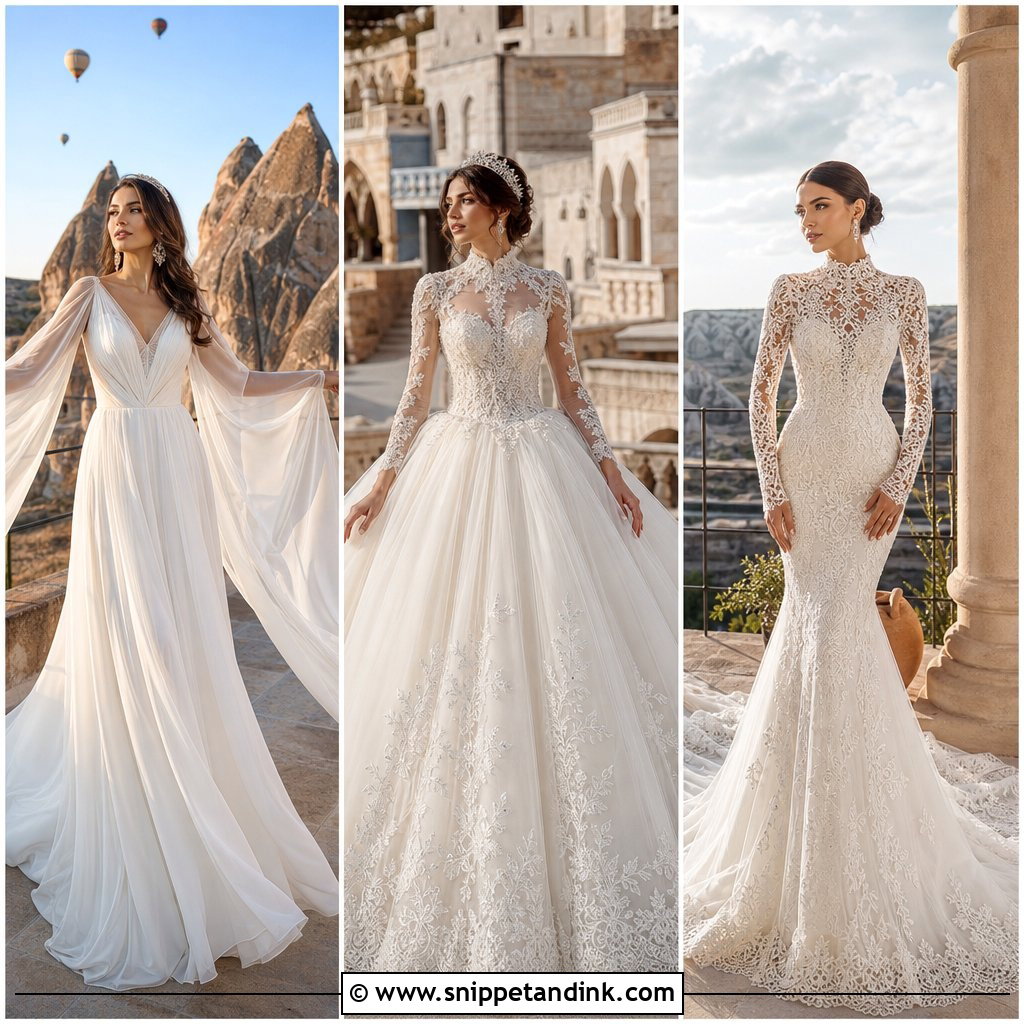
French lace is soft and fine, and the lining under it decides how much of the pattern shows. Ivory makes it subtle; champagne lining lets the flowers stand out in photos. A fitted bodice and gently widening A-line skirt give you a waist and room to move. Long illusion sleeves suit autumn and winter, a sleeveless neckline suits spring. Pearl drops, pointed ivory pumps and a cathedral veil edged in matching lace. Keep the bouquet loose, white roses and greenery. Soft waves or a low chignon. I always ask the seamstress to hand-cut the hem around the lace motifs rather than run a machine hem through them.
2. Italian Satin Ball Gown Wedding Dress
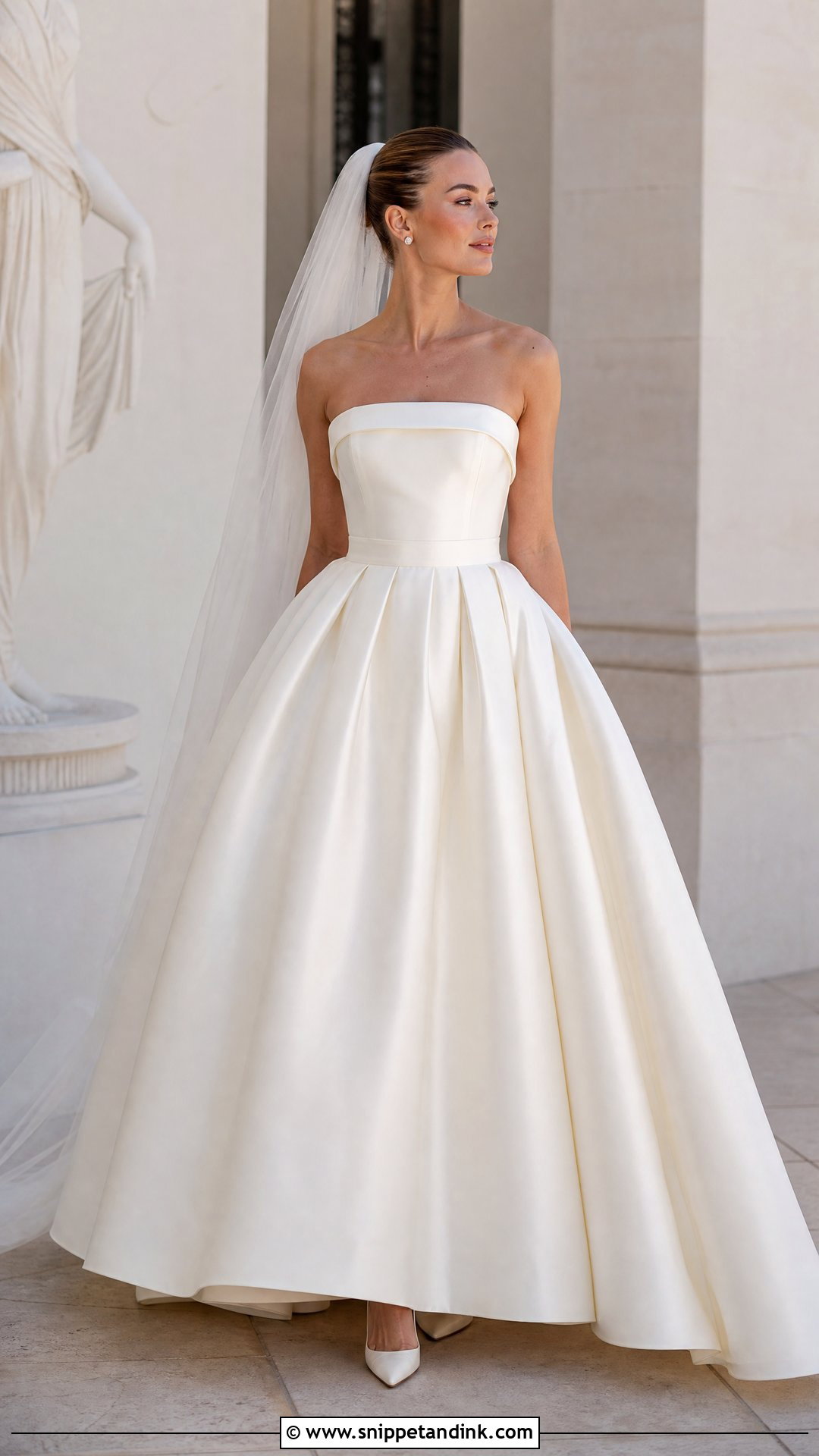
Heavy Italian satin is all about structure. The bodice needs internal boning, the waist needs to be precise and the skirt has to hold its shape on its own. A straight or softly curved strapless neckline keeps it classic, and I’ll always ask for pockets if the design allows. A long plain veil lets the fabric be the decoration. Crystal studs, ivory satin pumps and a small structured clutch. A sleek bun or sculpted twist. The weight is the trade-off: a full satin skirt is warm, so in a Mediterranean summer I’d save this for an evening ceremony in a palazzo or grand hotel.
3. Spanish Lace Mermaid Wedding Dress
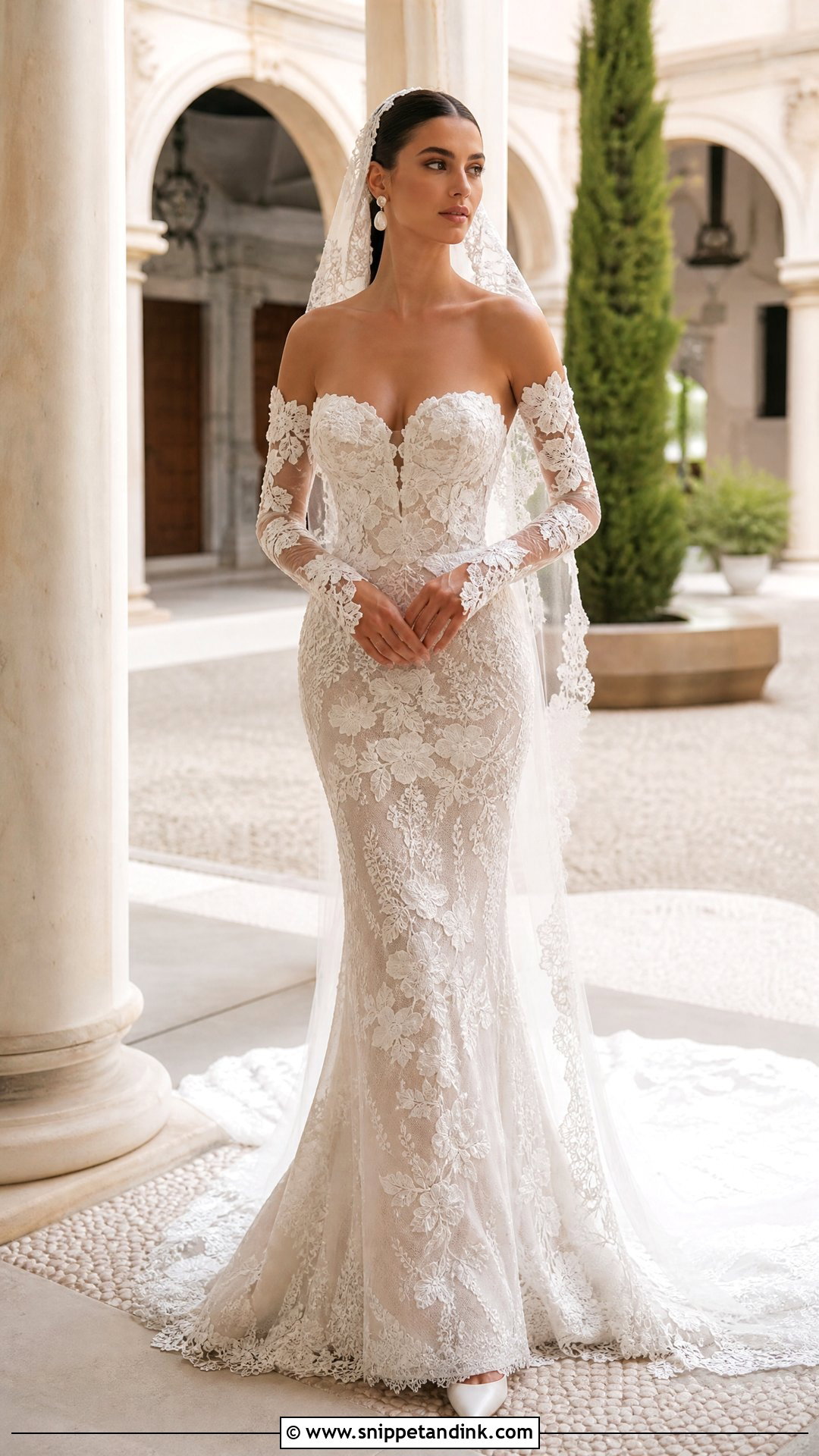
A Spanish-inspired lace mermaid wedding dress follows the waist and hips and flares lower down, so it’s dramatic and demanding in equal measure. Bold floral lace or embroidered appliqués give depth through the bodice and train. A soft sweetheart neckline and detachable lace sleeves give you two looks. The mantilla is the obvious veil here: lace-edged, worn over a smooth low bun, and secured with a comb pushed firmly into a base of pins. Pearl earrings, a delicate bracelet and comfortable pointed heels. Walk and sit in it before final alterations; the flare point decides how much stride you get. Courtyards and candlelit rooms suit it.
4. Greek Draped Column Wedding Dress
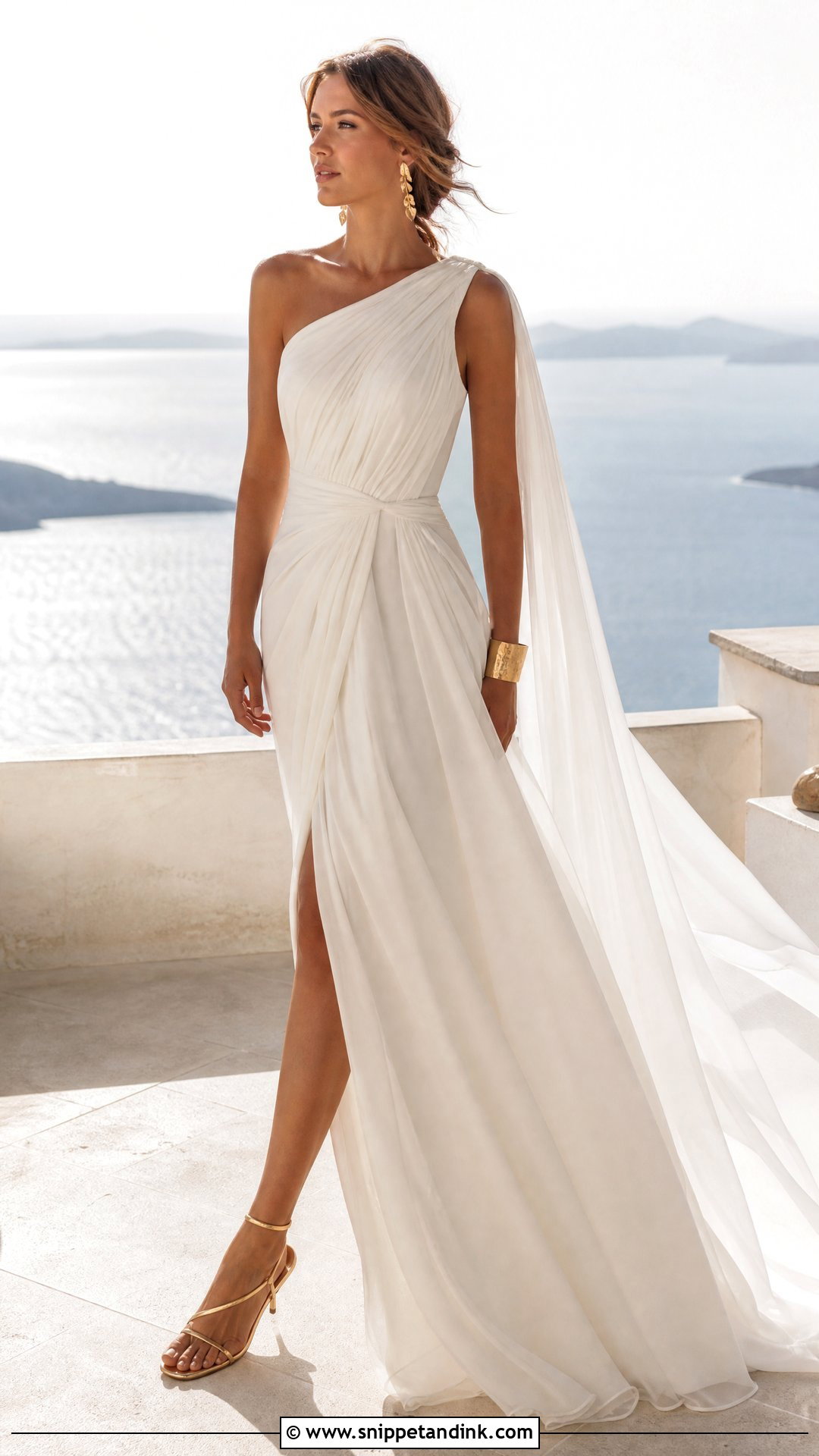
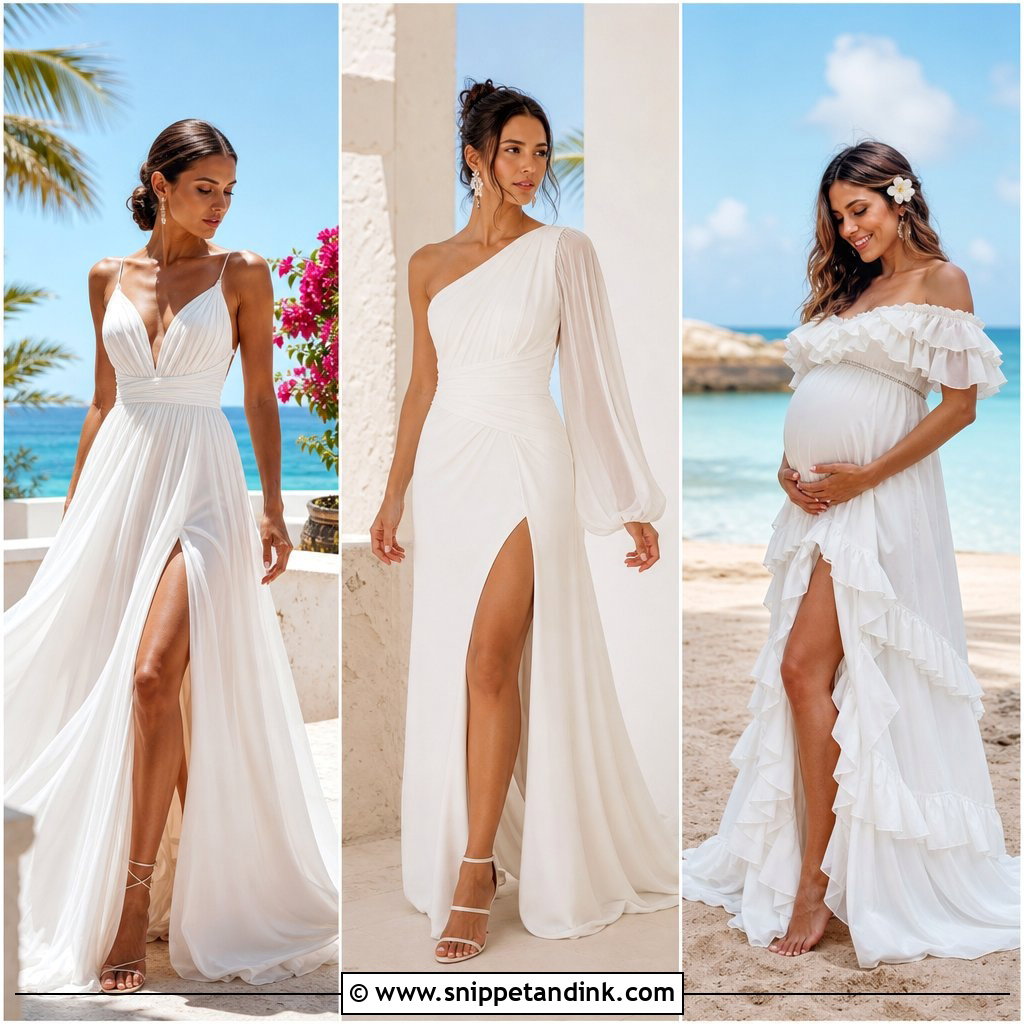
A draped column moves like water and is much cooler than a full skirt, which makes it my first suggestion for a summer island wedding. Soft crepe, silk or chiffon falls over the body without volume. Look for gathering at the waist, a one-shoulder neckline or a twisted bodice. Slim metallic sandals, small gold earrings and a cuff bracelet. A low textured bun or loose waves. Instead of an ornate veil, a sheer fingertip veil or a chiffon cape. Draping shows sweat marks less than tight satin does, which matters in July. Terraces, coastal venues and white stone architecture all suit it.
5. English Long Sleeve Wedding Dress
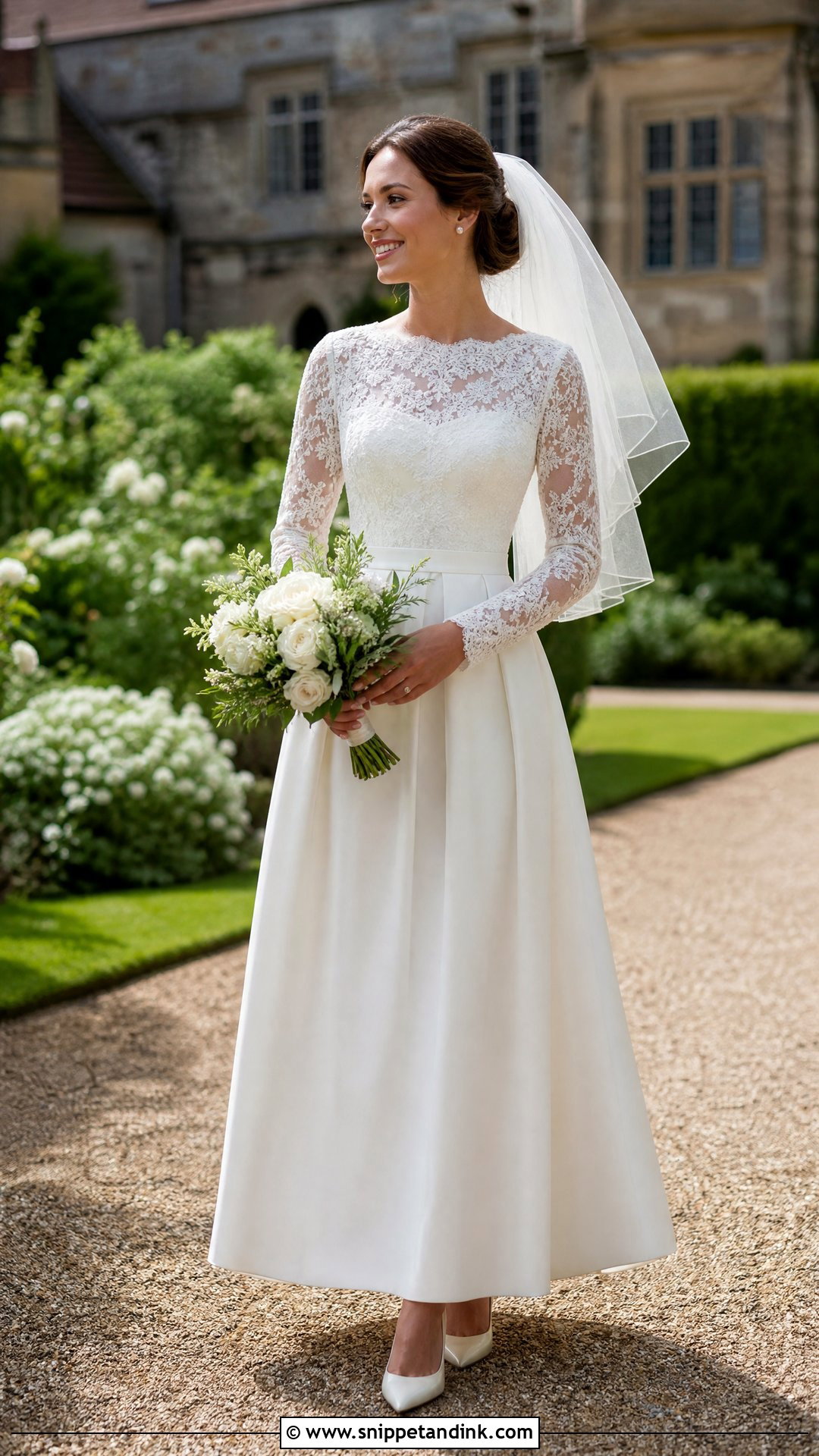
The English long-sleeved gown is a classic for good reason: it suits churches, country houses and unpredictable weather. An ivory dress with a fitted lace bodice, defined waist and softly structured skirt. Sheer sleeves with placed appliqués give coverage without weight. Bateau, V or a modest plunge, depending on how covered you want to feel. A medium veil, pearl studs and classic ivory pumps. A neat chignon and natural makeup. Carry seasonal white and pastel flowers in a modest bouquet. Sleeve opacity, neckline depth and skirt fullness can all be adjusted, so the look adapts to almost any age or shape.
6. Scandinavian Minimalist Wedding Dress
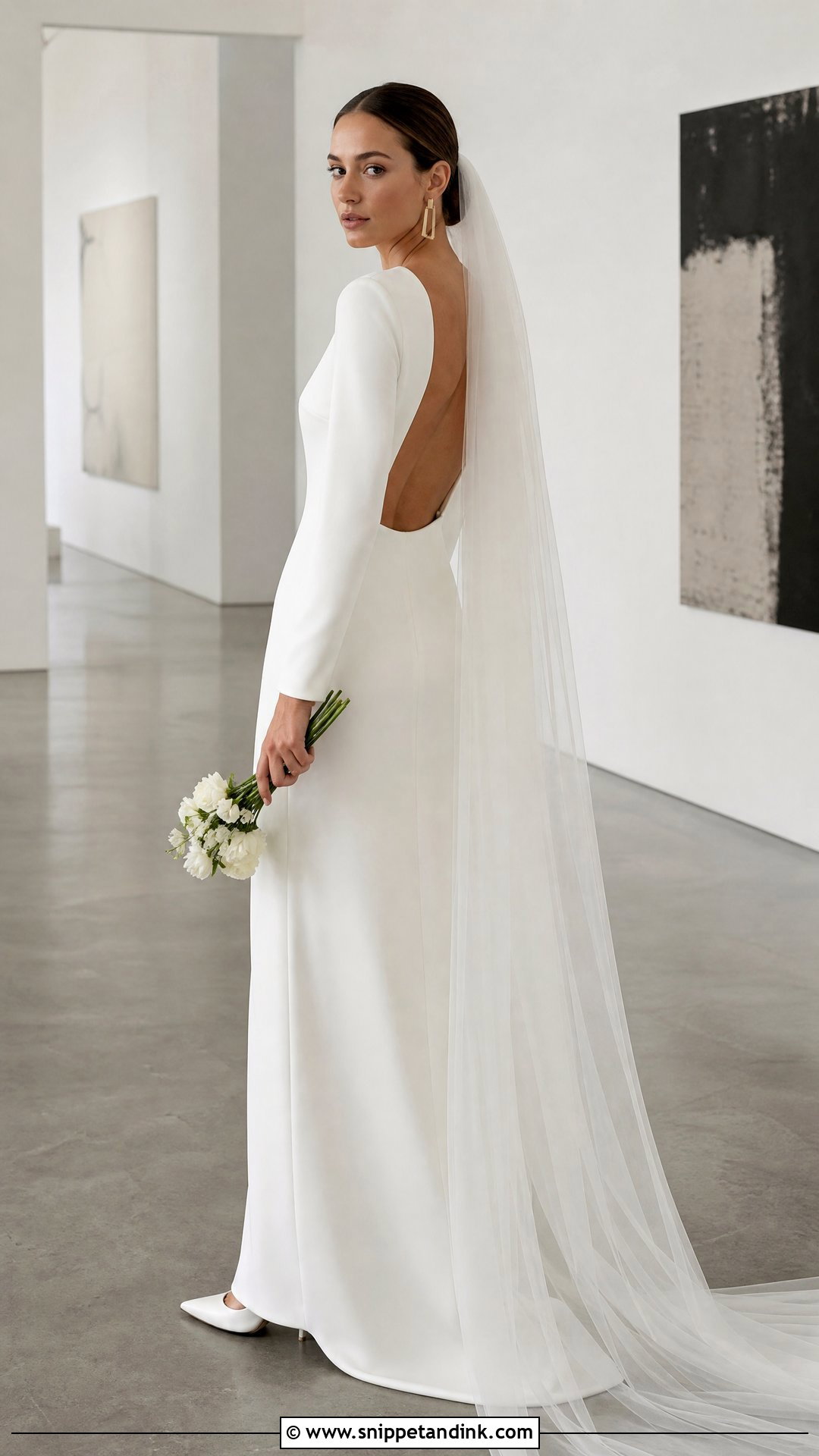
A Scandinavian-inspired minimalist wedding dress has nowhere to hide, so I fit it as carefully as tailoring: shoulders, bust, waist and hem. Choose a column or soft A-line in matte crepe, silk or smooth satin. A high neck with a low back gives it interest, and slim sleeves work for cooler weather. Geometric earrings, pointed leather pumps and a compact bouquet of white flowers. A sleek ponytail or low bun. A plain floor-length veil for the ceremony, off for the evening. Galleries, city halls and calm countryside venues suit it.
7. Parisian Silk Slip Wedding Dress
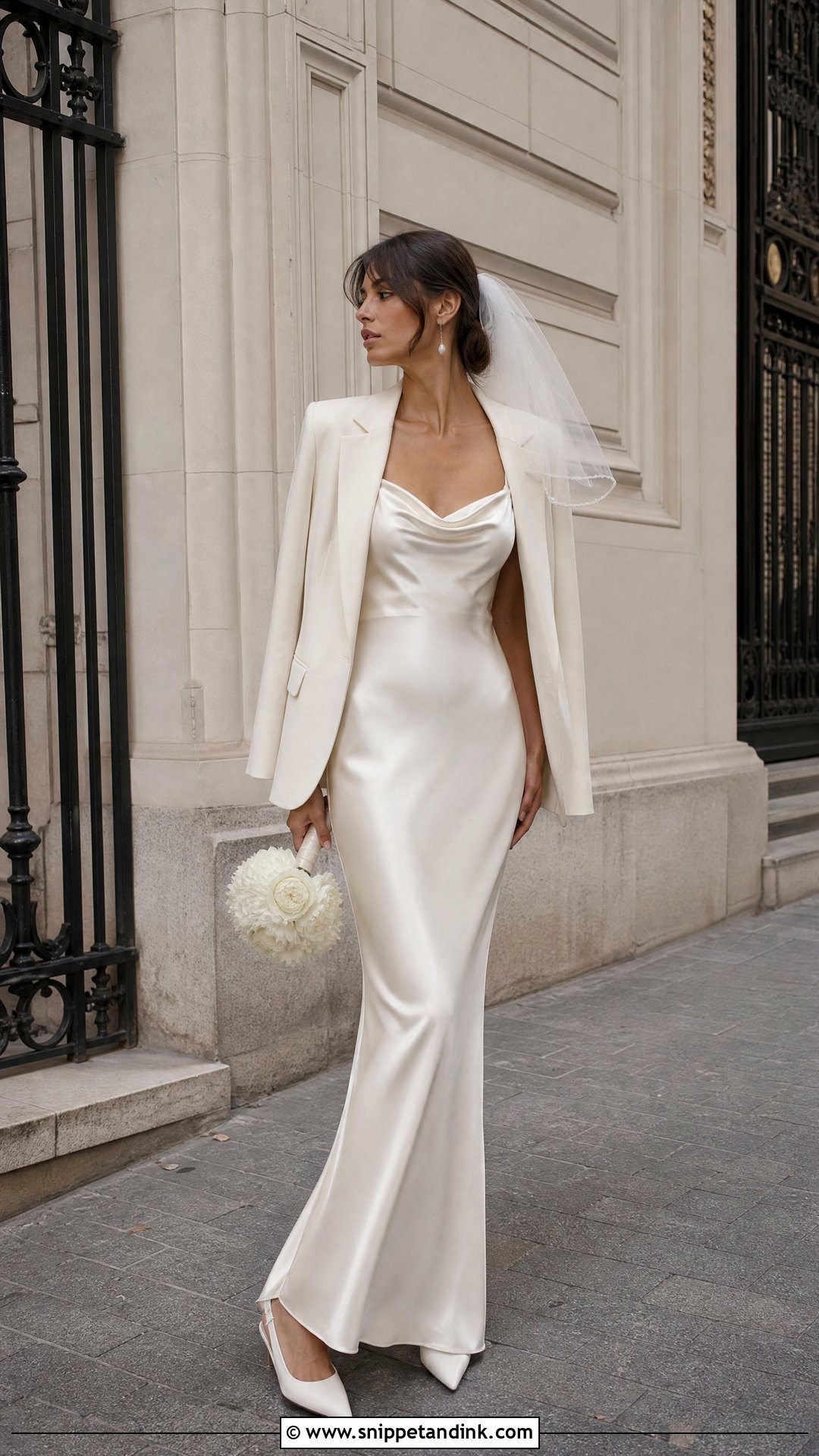
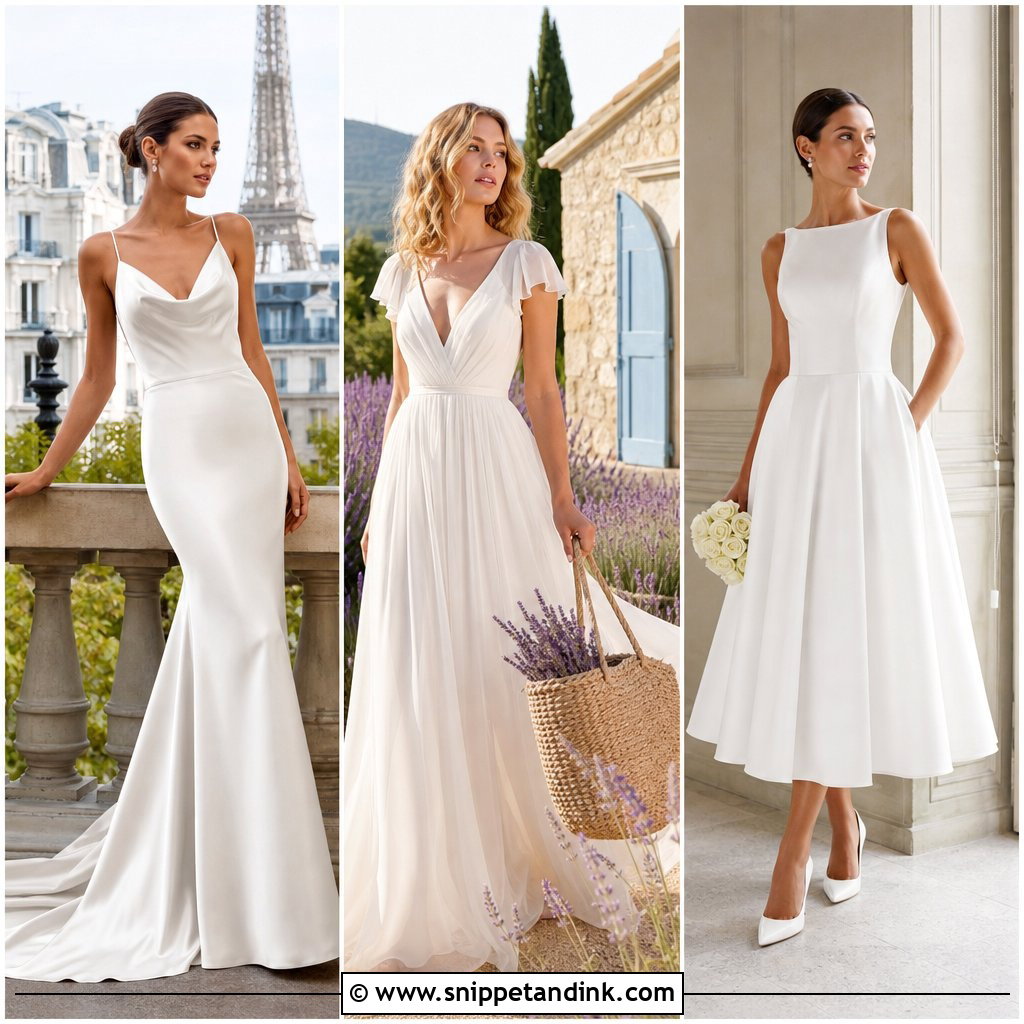
A silk slip is the Parisian answer to bridal: understated, a little louche, and very hard to fit well. Choose a bias-cut silhouette that skims rather than clings, with a soft cowl neck, thin straps and a low back. Silk shows everything underneath and every damp spot from a warm day, so supportive, invisible underwear and a good alteration matter more than any accessory. Pointed slingbacks, a short sheer veil, pearl drops and a small bouquet. A polished bob, loose waves or a neat bun. A tailored ivory blazer covers you for the ceremony. City venues, dinners and rooftop weddings suit it.
8. French Château Princess Wedding Dress
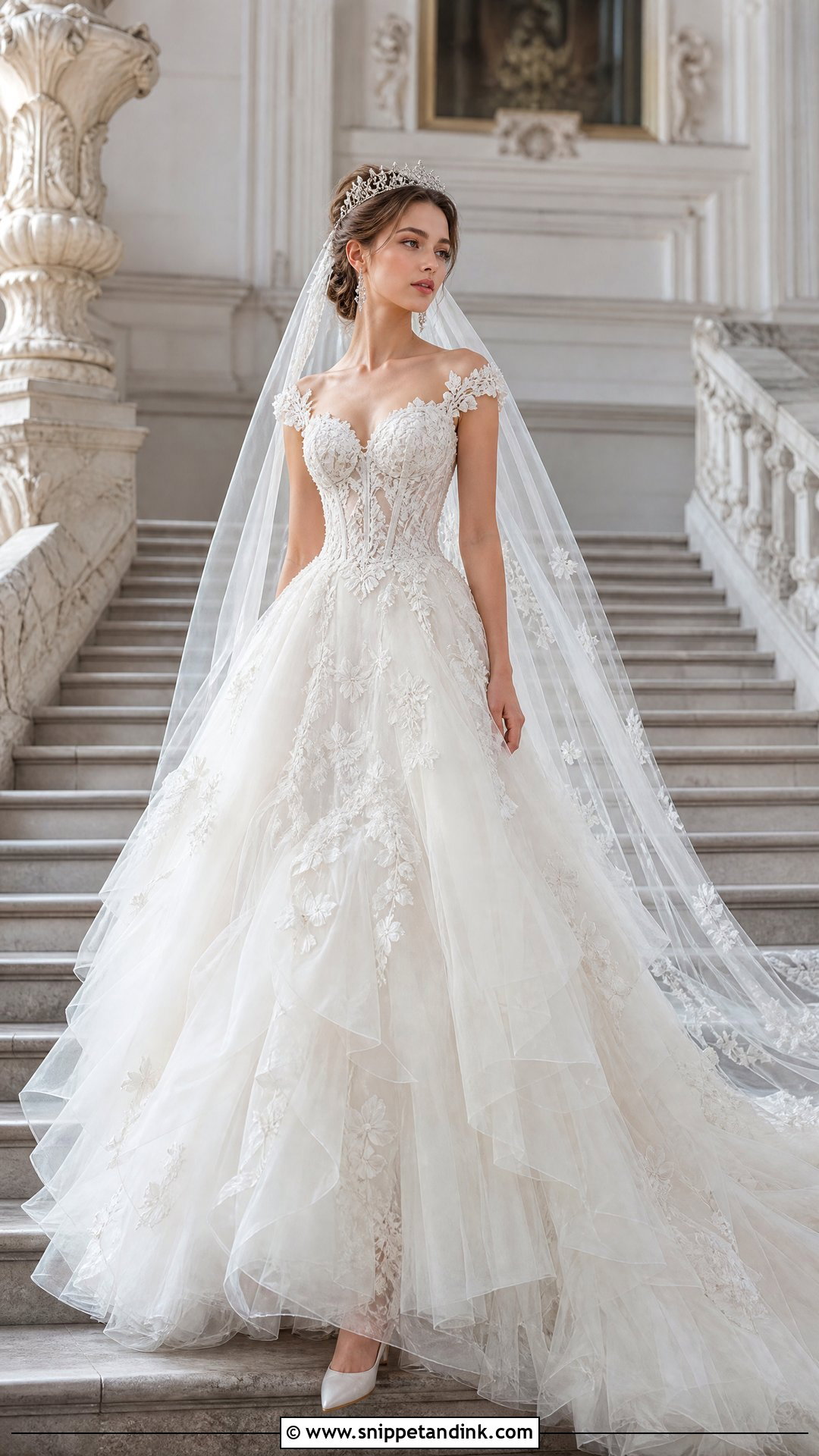
A château calls for scale. I start with a structured bodice, natural waist and a layered tulle skirt that has volume without looking stiff. Embroidery or lace appliqués running from bodice into the upper skirt tie it together. A cathedral veil should trail behind the gown, not compete with the train, so I usually have it cut a little longer than the skirt. Crystal earrings, a delicate tiara and closed-toe ivory heels. Pin the hair firmly for outdoor photographs; château grounds are often open and windy. Fewer tulle layers keep the shape with less bulk. Staircases and formal gardens make the most of it.
9. Italian Off The Shoulder Wedding Dress
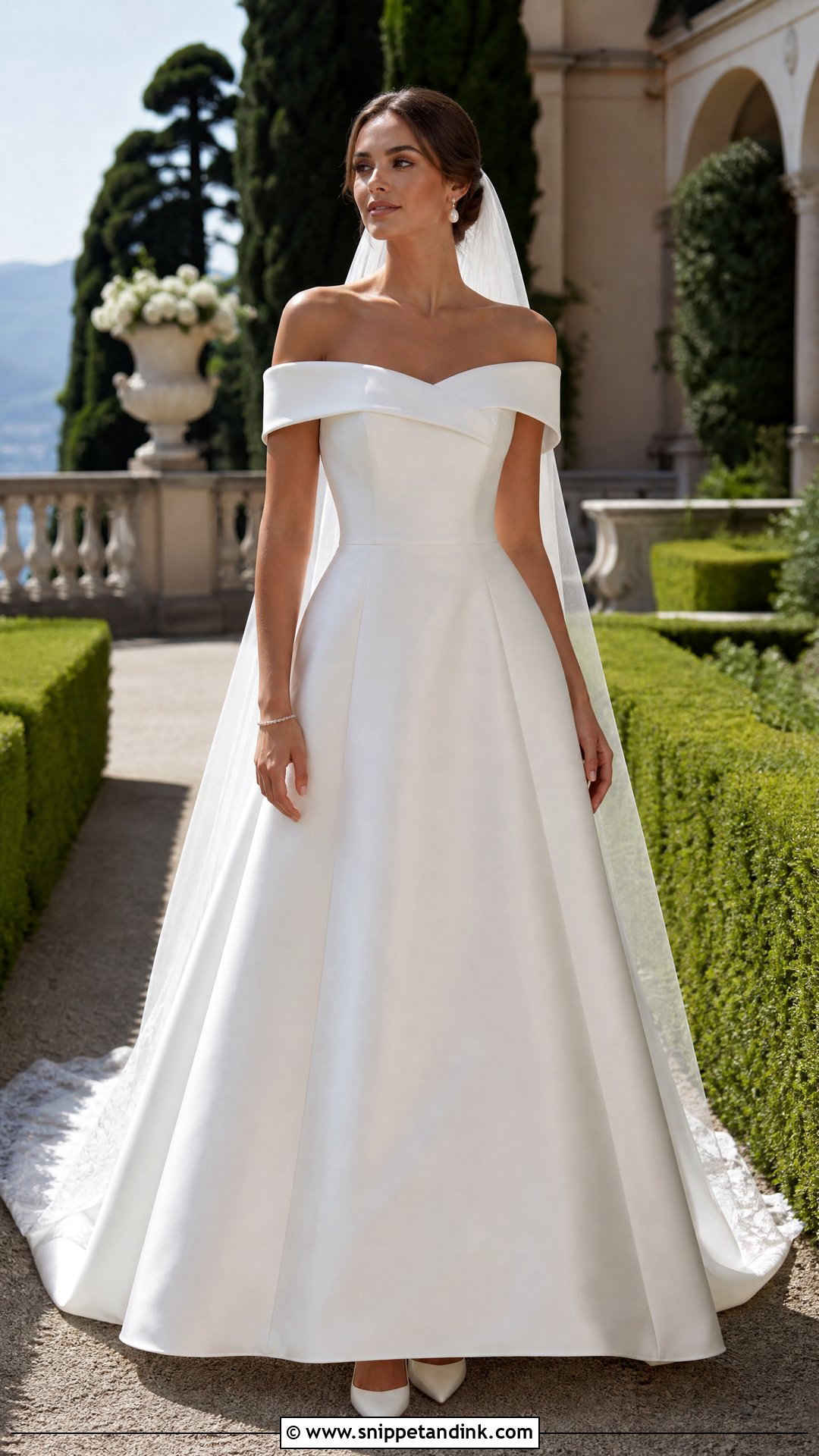
The Italian off-the-shoulder look depends on a folded satin or mikado neckline that stays exactly where it’s placed. That needs a supportive bodice, often with a hidden strap or grip tape. A fitted waist and either an A-line or a sculpted fit-and-flare skirt. A plain chapel veil, pearl or diamond-style earrings and pointed satin shoes. Skip the big necklace; the neckline is the jewellery. A slim bracelet and a polished low bun. Lift your arms and sit at every fitting, because off-shoulder sleeves can pin your arms down. Villas, gardens and smart restaurants suit it.
10. Portuguese Embroidered Wedding Dress
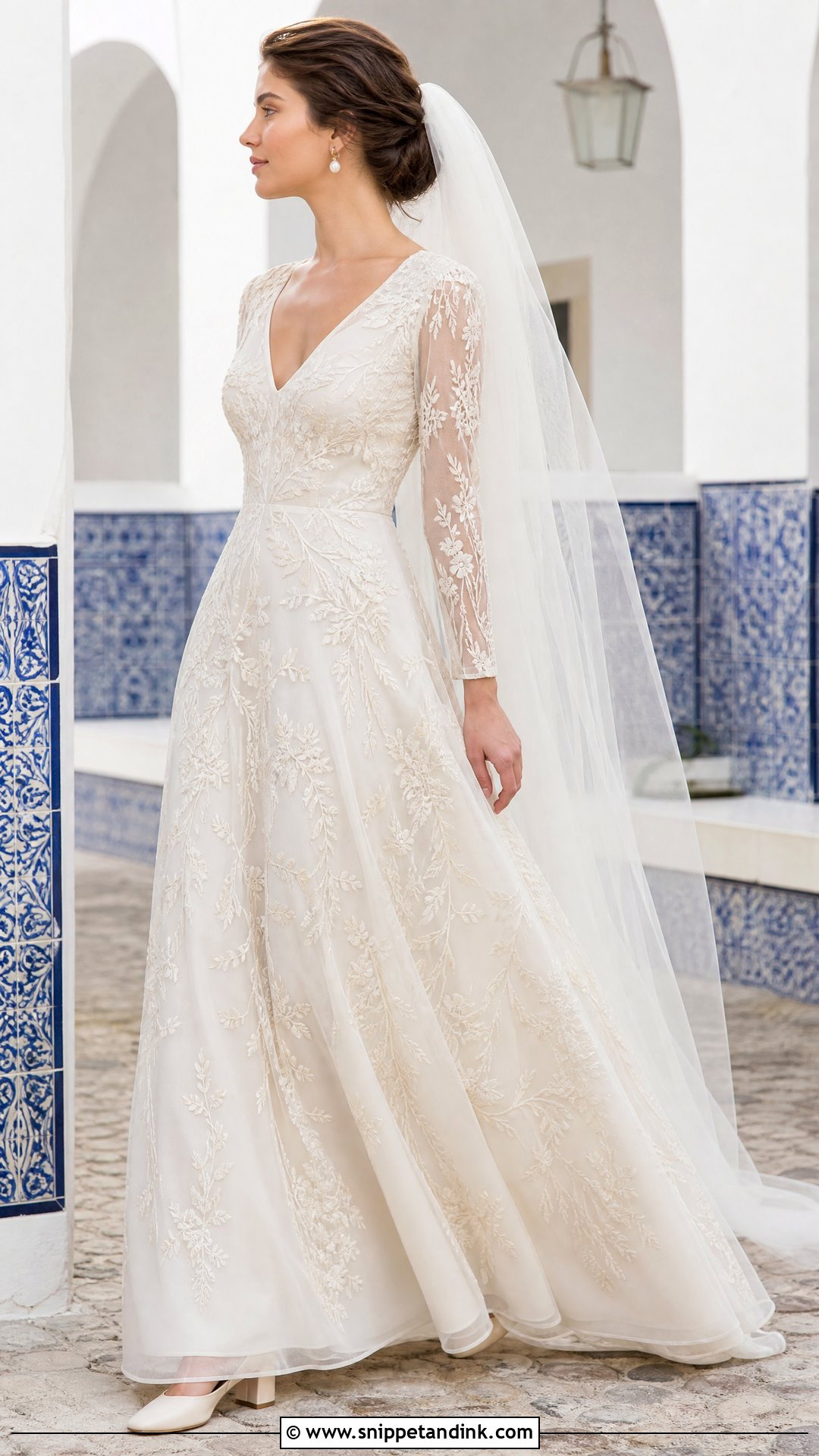
Portuguese embroidery is all about handwork, so the placement matters more than the amount. I look for flowers across the bodice, sleeves or skirt, not every surface. Ivory thread on sheer tulle is subtle; white over nude or champagne lining makes the motifs readable from a distance. A fitted bodice and flowing A-line keep it wearable. Pearl earrings, ivory block heels and a soft tulle veil with minimal edging. A braided low bun suits the handmade feel. A simple bouquet, so the dress stays the centrepiece. Tiled courtyards and coastal estates are its natural setting.
11. Dutch Square Neck Wedding Dress
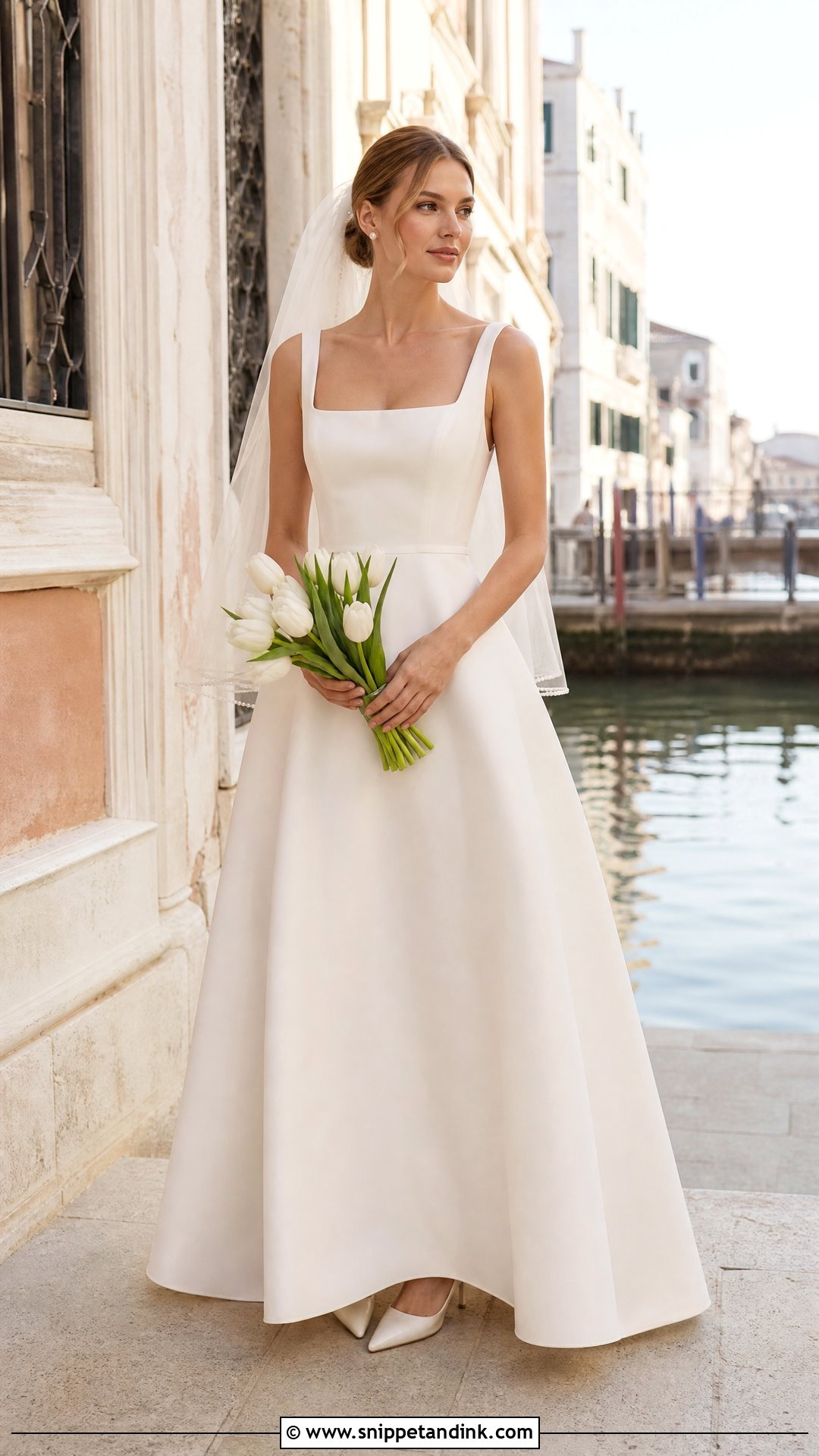
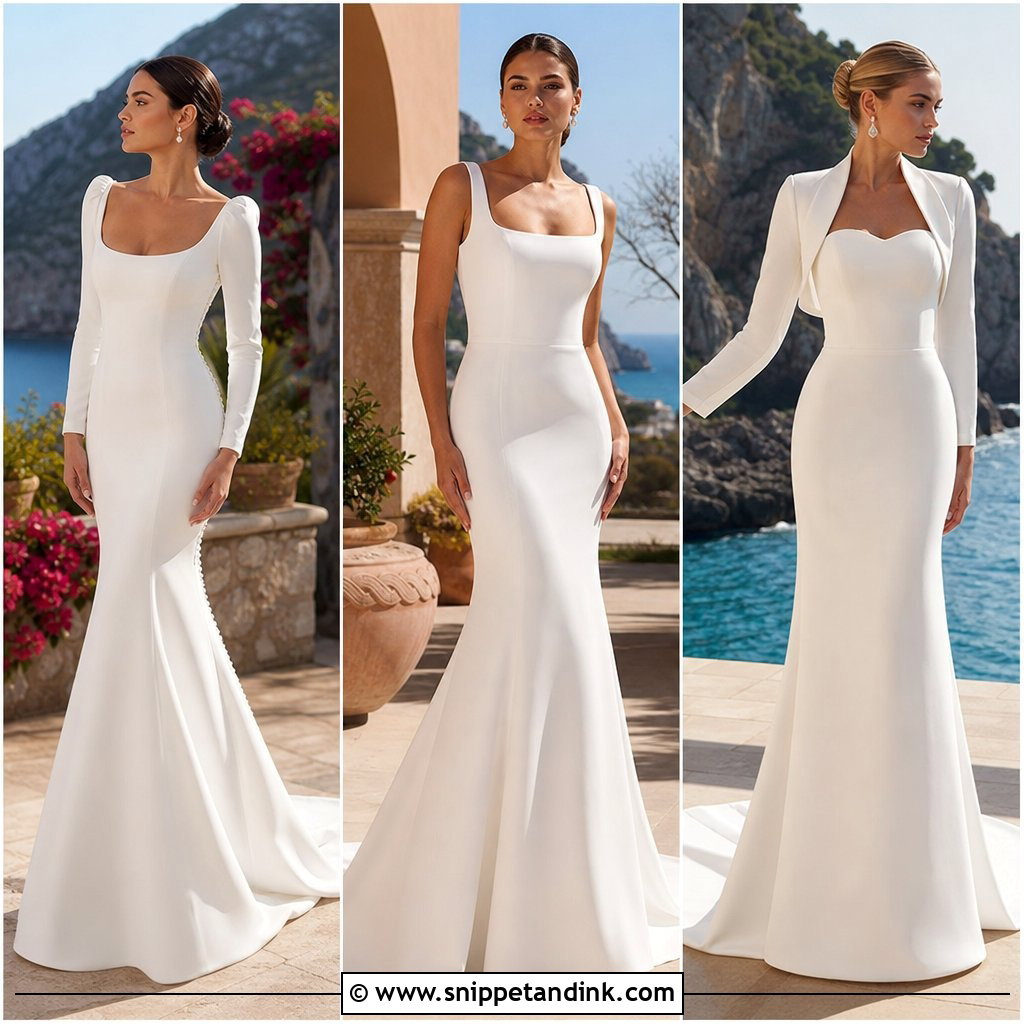
Square necks look clean and structured, and they need wide straps to sit right. I’d choose substantial crepe or satin, with a fitted bodice for support and either an A-line or a slim column skirt. Covered buttons down the back add detail. A fingertip veil, pearl studs, low ivory heels and a neat bunch of tulips, which suit a Dutch-inspired look and hold up well out of water. Soft curls or a low ponytail balance the straight line. Strap width, neckline depth and waist placement can all be adjusted, so it works on most body types.
12. Austrian High Neck Wedding Dress
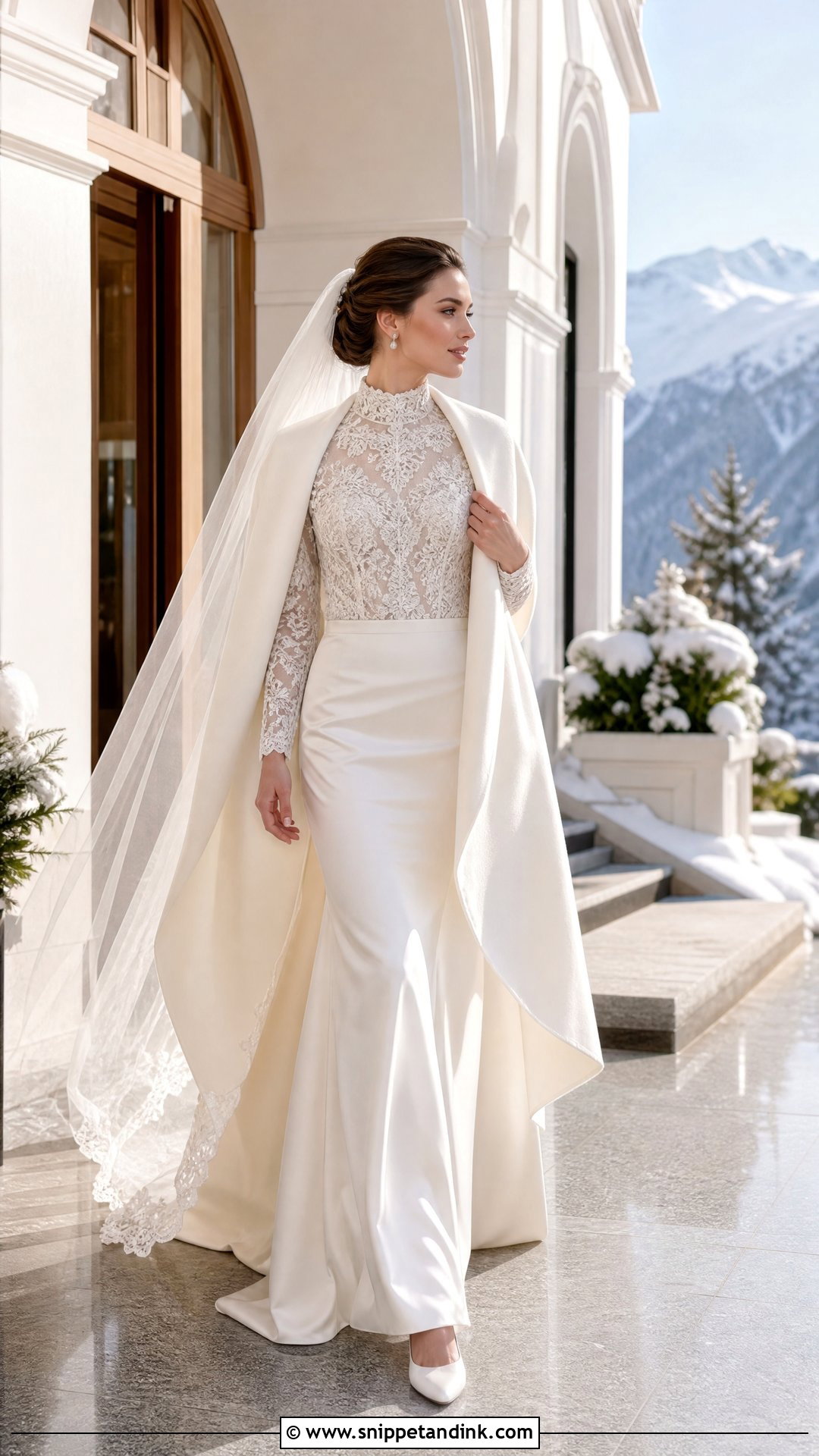
A high neck draws attention to the face and shoulders, and on an Austrian-inspired gown I like it in lace or embroidery over a smooth satin skirt. The contrast keeps it from feeling heavy. Long fitted sleeves for cold months; sleeveless for spring. Small pearl earrings, a low chignon and a long veil tucked beneath the hair. Closed-toe pumps and a tailored wool wrap for warmth. No necklace. In a mountain venue in winter, I’d also check that the heels have grip, because snow-dusted stone steps are slippery. Formal halls and historic estates suit it.
13. German Crepe Fit And Flare Wedding Dress
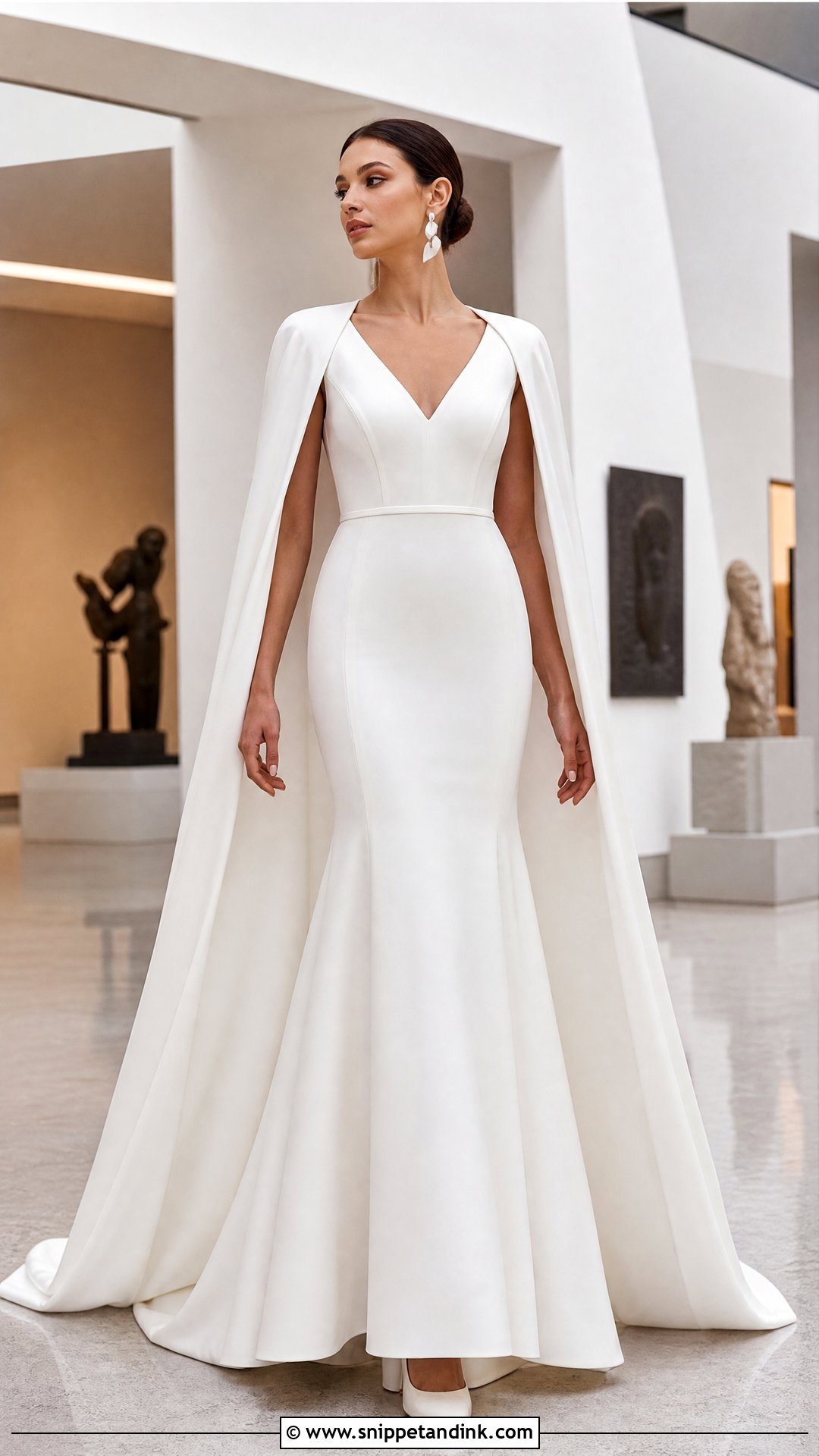
Structured crepe gives a fit-and-flare a crisp, modern line. This German-inspired look has a clean bodice, a defined waist and a skirt that widens gradually below the hips. Princess seams do the shaping, so there’s no embellishment to distract from them, which also means any fit flaw shows. A V or scoop neckline. A detachable cape or plain long veil for the ceremony, removed for the reception. Sculptural earrings, pointed pumps and a small structured bouquet. A sleek bun or brushed waves. Modern hotels, museums and industrial venues suit it.
14. Irish Lace Sleeve Wedding Dress
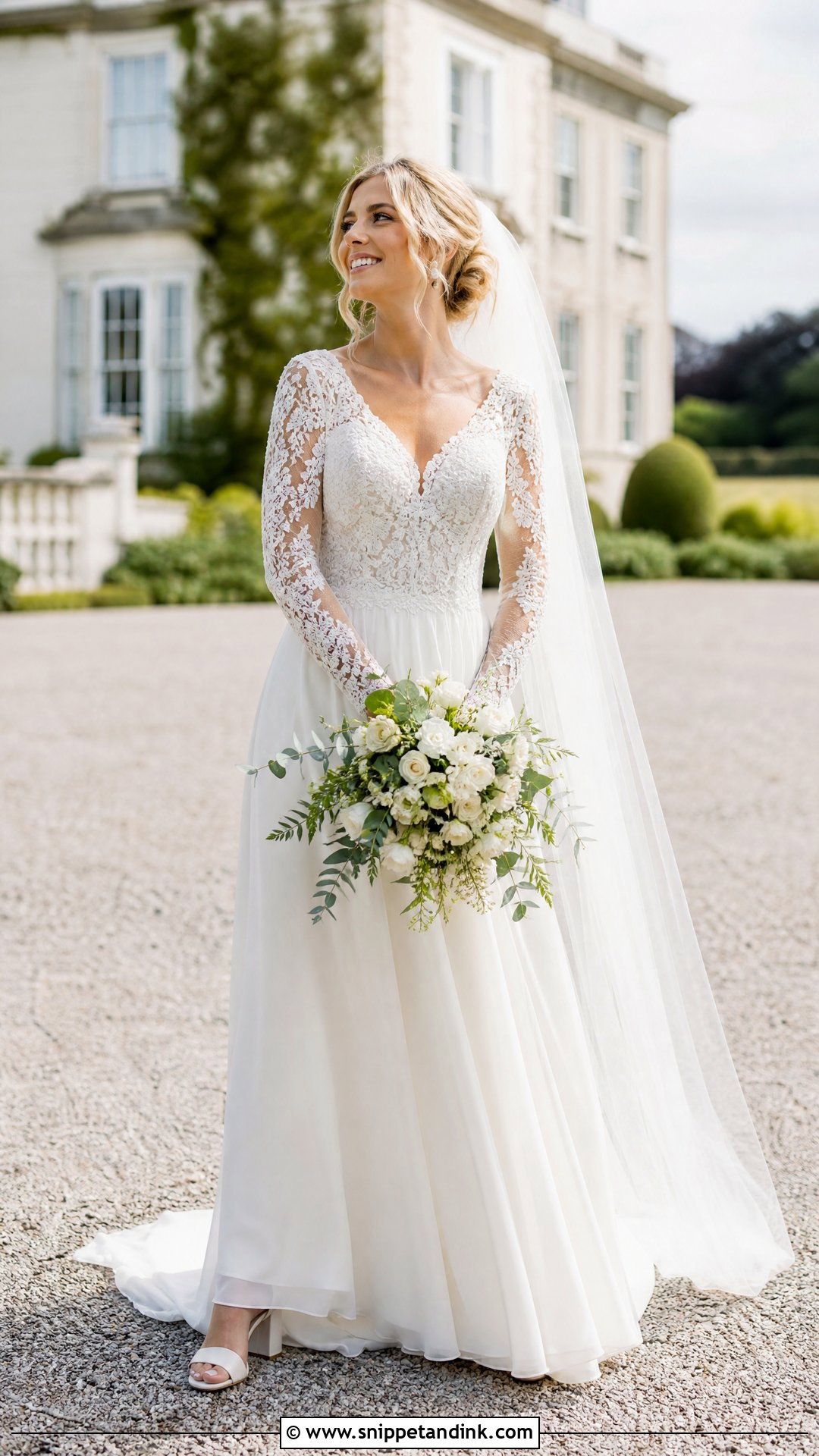
Fine lace sleeves give an Irish-inspired wedding dress a gentle, old-fashioned quality. Lace on the sleeves and upper bodice, then a plain chiffon, crepe or soft tulle skirt, keeps it balanced. A soft V-neck lengthens the upper body, and covered buttons finish the back. A light chapel veil, pearl earrings, ivory block heels and a loose white-and-green bouquet. A textured low bun. Irish weather changes quickly, so for an outdoor ceremony I’d pack a tailored cape and keep a clear umbrella on hand for photos. It works for any season and any age.
15. Swiss Satin Cape Wedding Dress
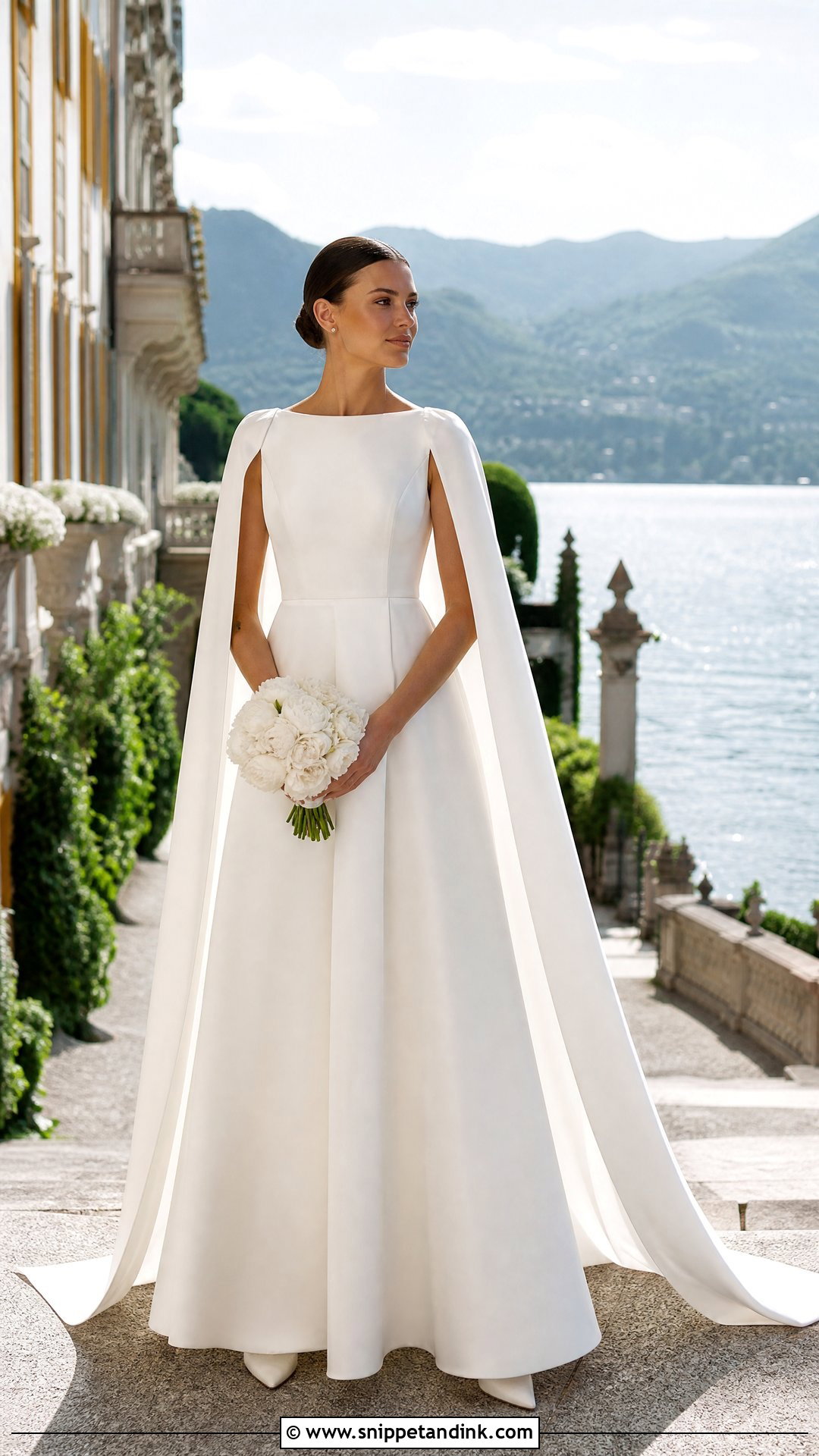
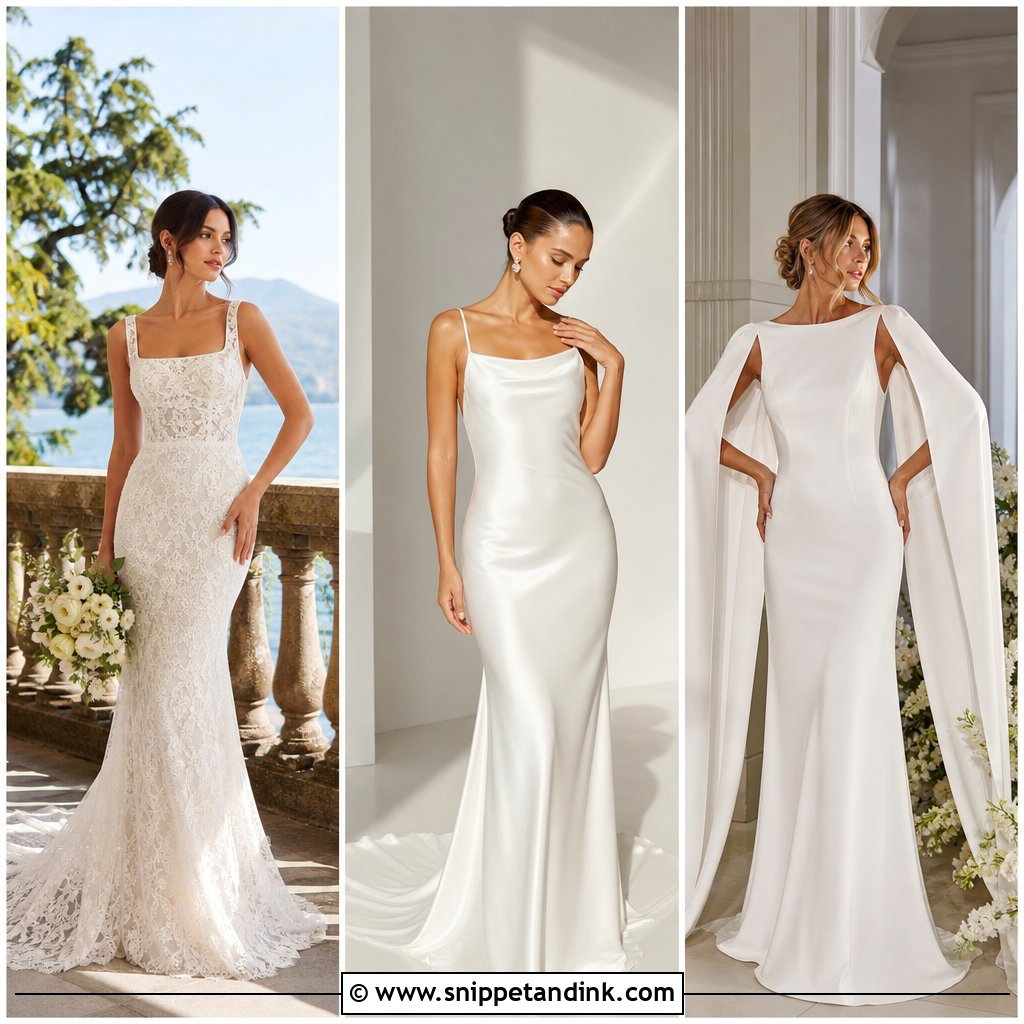
A detachable cape solves the problem of a minimal satin gown needing a bit of ceremony. Start with a clean A-line or column with a high bateau neckline and a precise waist. A light cape attaches at the shoulders and falls to the floor, giving coverage and movement without a veil. Crystal studs, pointed ivory shoes and a structured white bouquet. A polished bun keeps the cape’s neckline clear. Take it off after the ceremony. At a lake or mountain venue, the weather can turn within an hour, so this extra layer is genuinely useful rather than decorative.
16. Belgian Floral Appliqué Wedding Dress
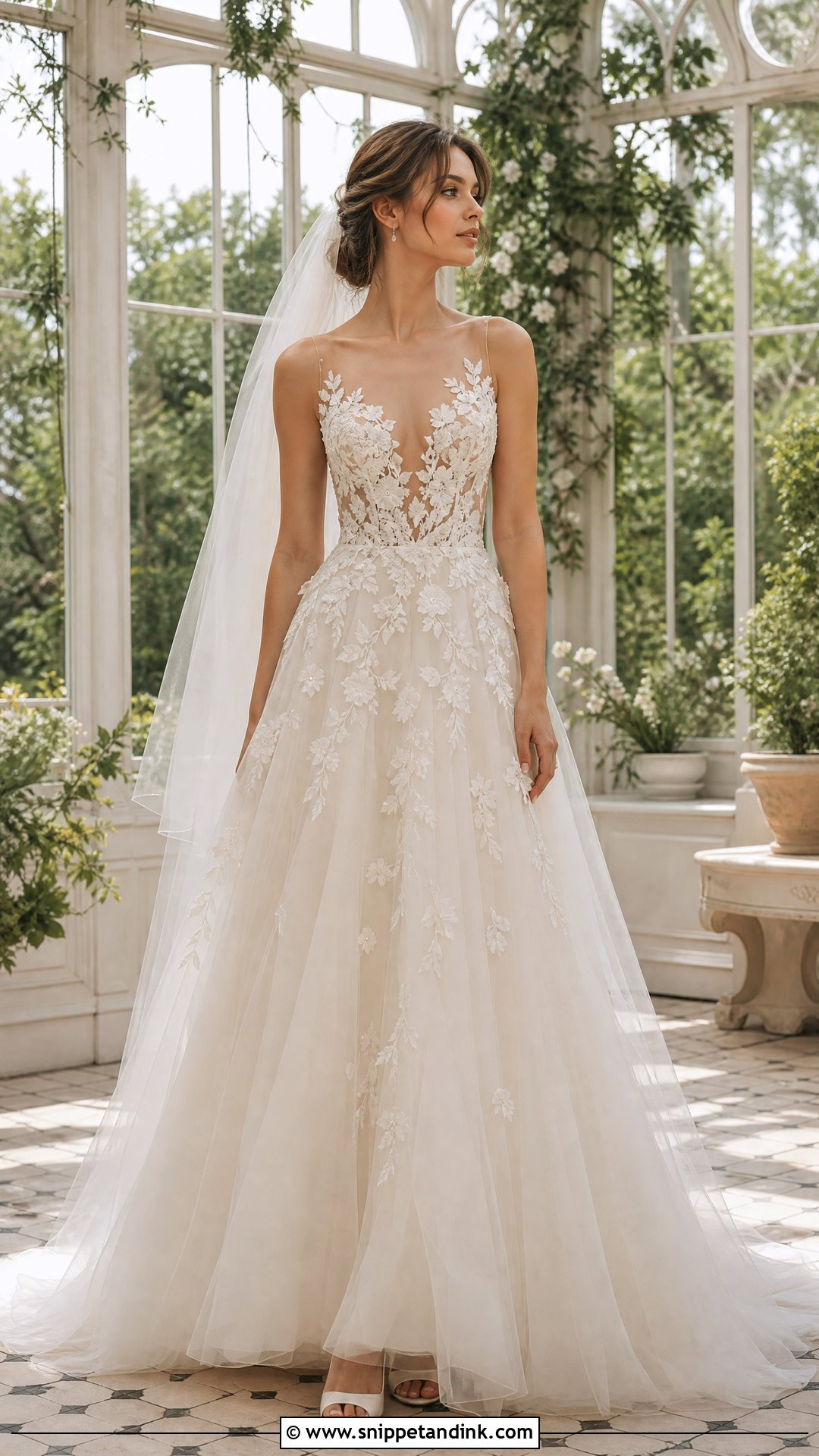
Three-dimensional flowers look lightest when they’re concentrated on the bodice and scattered more sparsely over the skirt. An A-line with that placement keeps the silhouette visible. A sheer neckline or delicate straps support the flowers, with a solid lining for coverage. A plain tulle veil, small crystal earrings and simple ivory heels; anything ornate competes. A smooth bun or pinned waves. A compact bouquet in one colour family. Appliqués can catch on a tulle veil, so I check that the veil edge sits clear of any raised petals at the shoulders. Conservatories and estate gardens suit it.
17. Czech Bohemian Wedding Dress
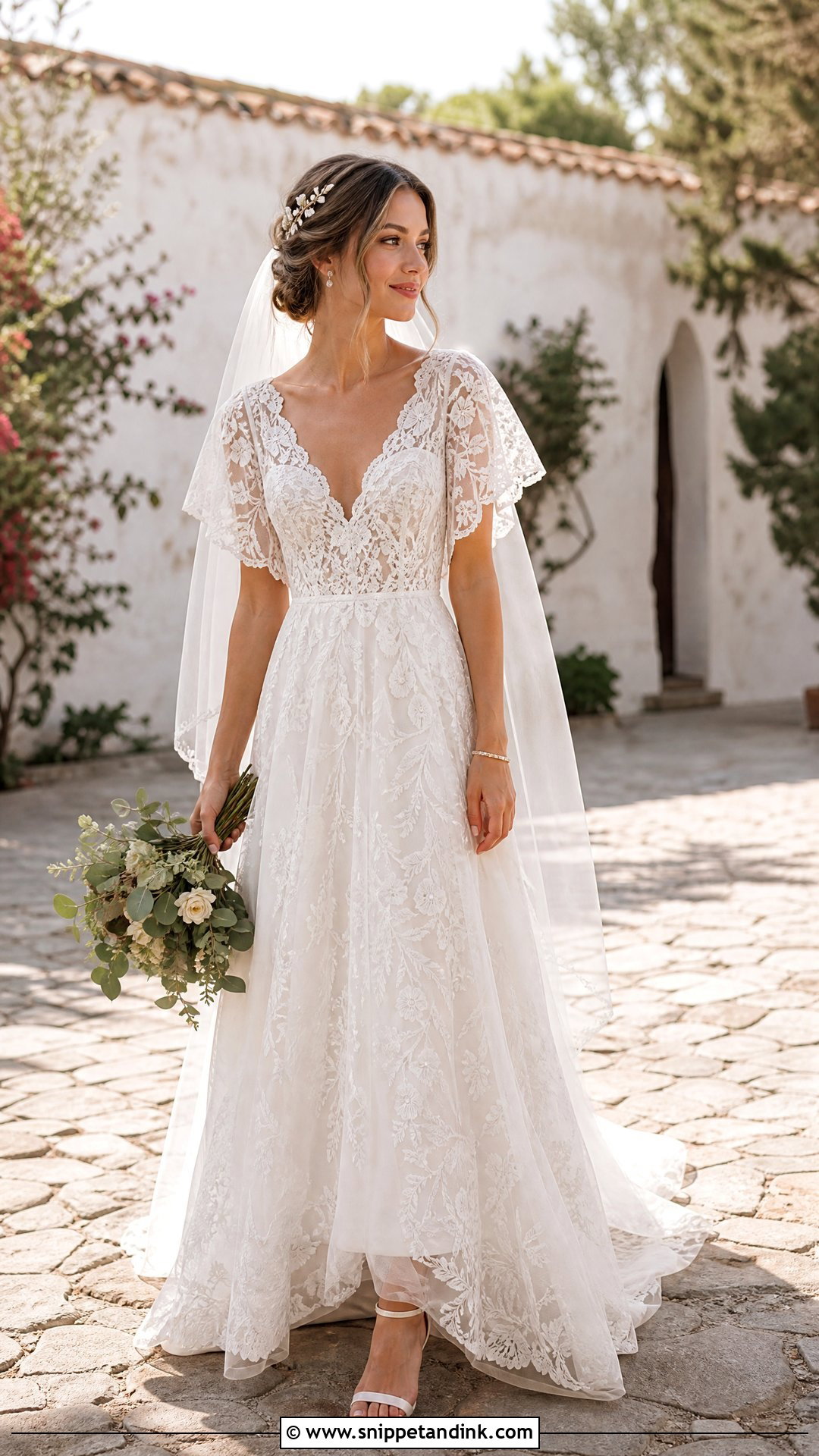
A Czech-inspired bohemian gown is relaxed but still clearly bridal. A soft A-line in light lace, chiffon or embroidered tulle with a fitted bodice, flutter sleeves and a natural waist. Geometric or botanical lace patterns give the simple shape character. Ivory ankle-strap sandals, a delicate comb and a fingertip veil. A loose braid or a soft updo. Small earrings and one fine bracelet are enough. Outdoors, I’d keep the train short or add a wrist loop; a lace train on forest paths picks up twigs. Woodland venues and rustic courtyards are a natural fit.
18. Croatian Coastal Wedding Dress
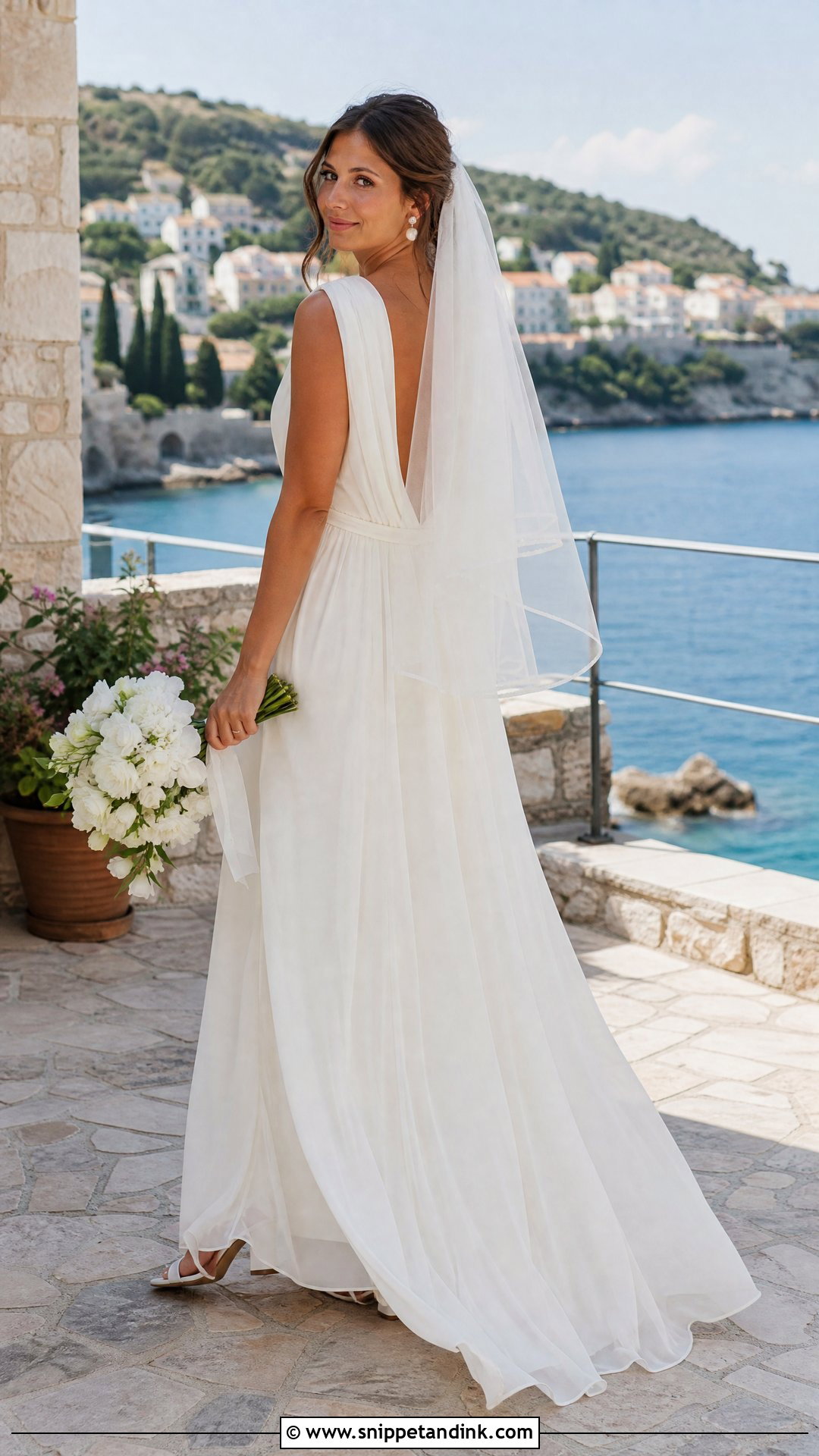
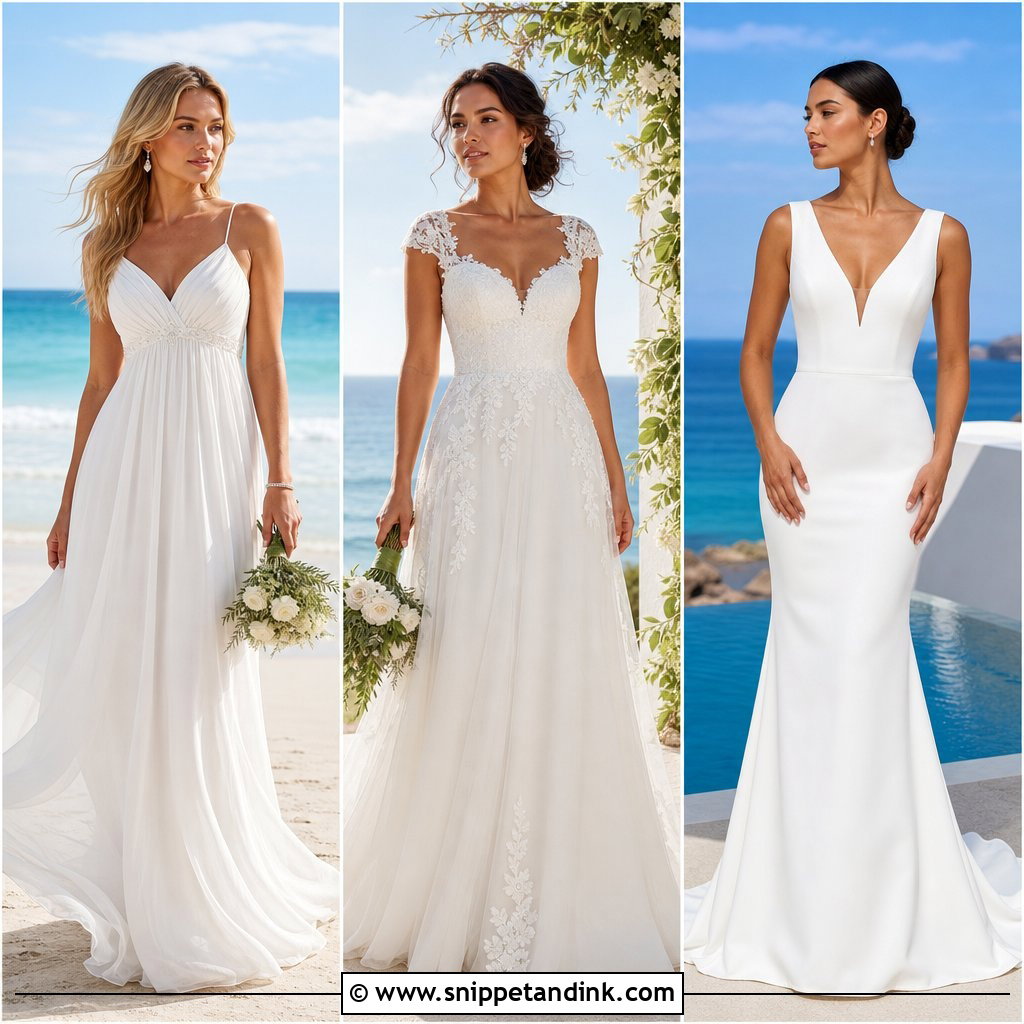
On the Dalmatian coast, a dress has to handle heat, sea breeze and polished stone streets. A flowing chiffon or silk gown with a softly gathered bodice and a narrow A-line skirt does that well. A low back, slim straps or a draped neckline add interest. Block-heel sandals or elegant flats, because old stone paving gets slippery and stilettos catch in the gaps. Small pearl earrings, a sheer shoulder-length veil and a loose low bun. White flowers and greenery. Avoid layered skirts and long trains near water. Terraces, islands and waterfront hotels are where it belongs.
19. Romanian Corset Wedding Dress
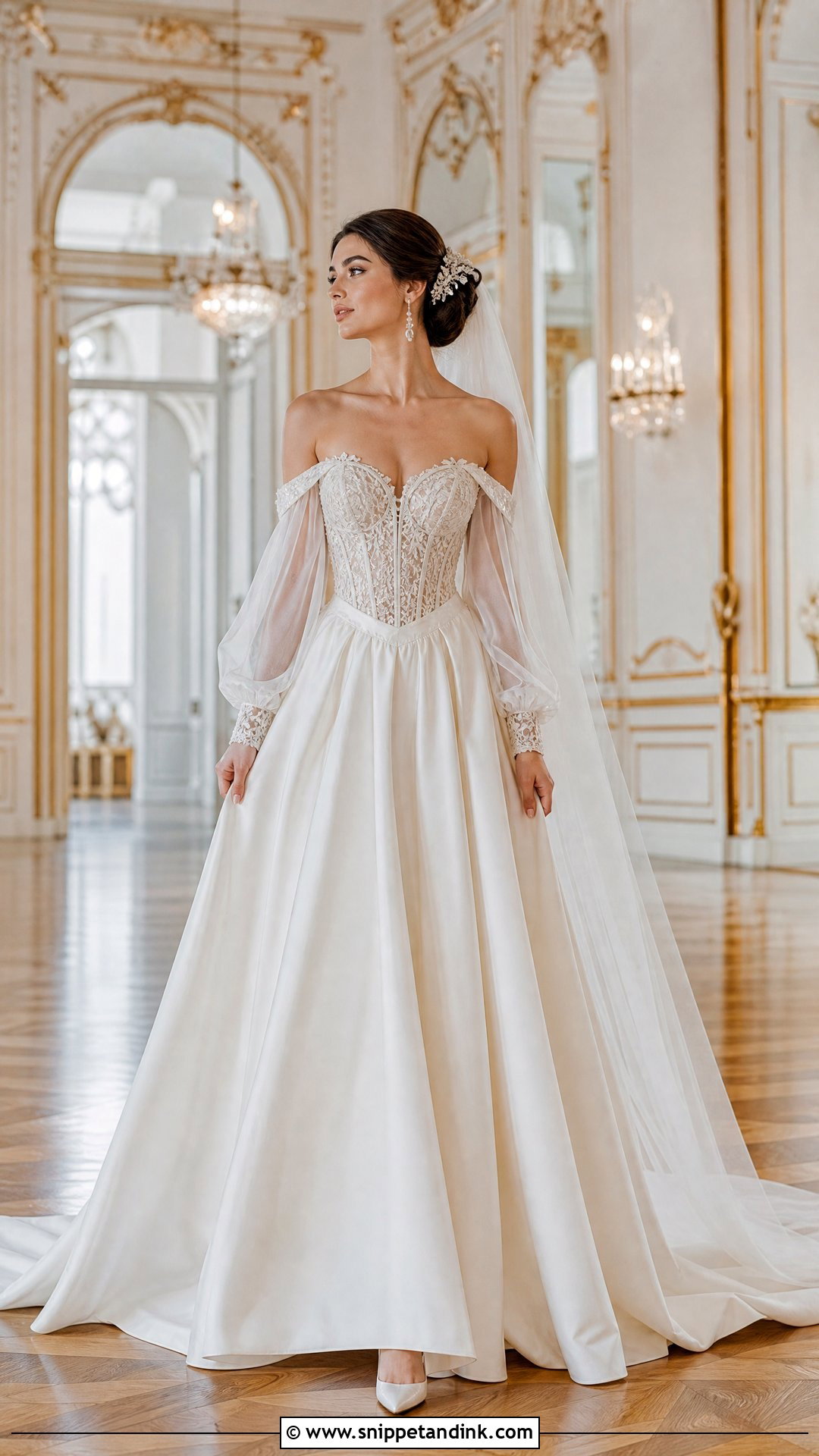
A visible corset gives a Romanian-inspired gown its structure, and it only looks refined when the boning is covered in lace, satin or embroidered tulle. Bare boning reads as costume. Pair it with a full A-line skirt for balance. Detachable sleeves give a softer ceremony look and come off for the reception. A long plain veil, drop earrings, closed-toe pumps and a floral hairpin. If the bodice is embroidered, skip the necklace. At alterations, take a deep breath and sit down: the corset should hold the bust without stopping either. Ballrooms, castles and formal halls suit it.


20. European Bridal Mini Wedding Dress
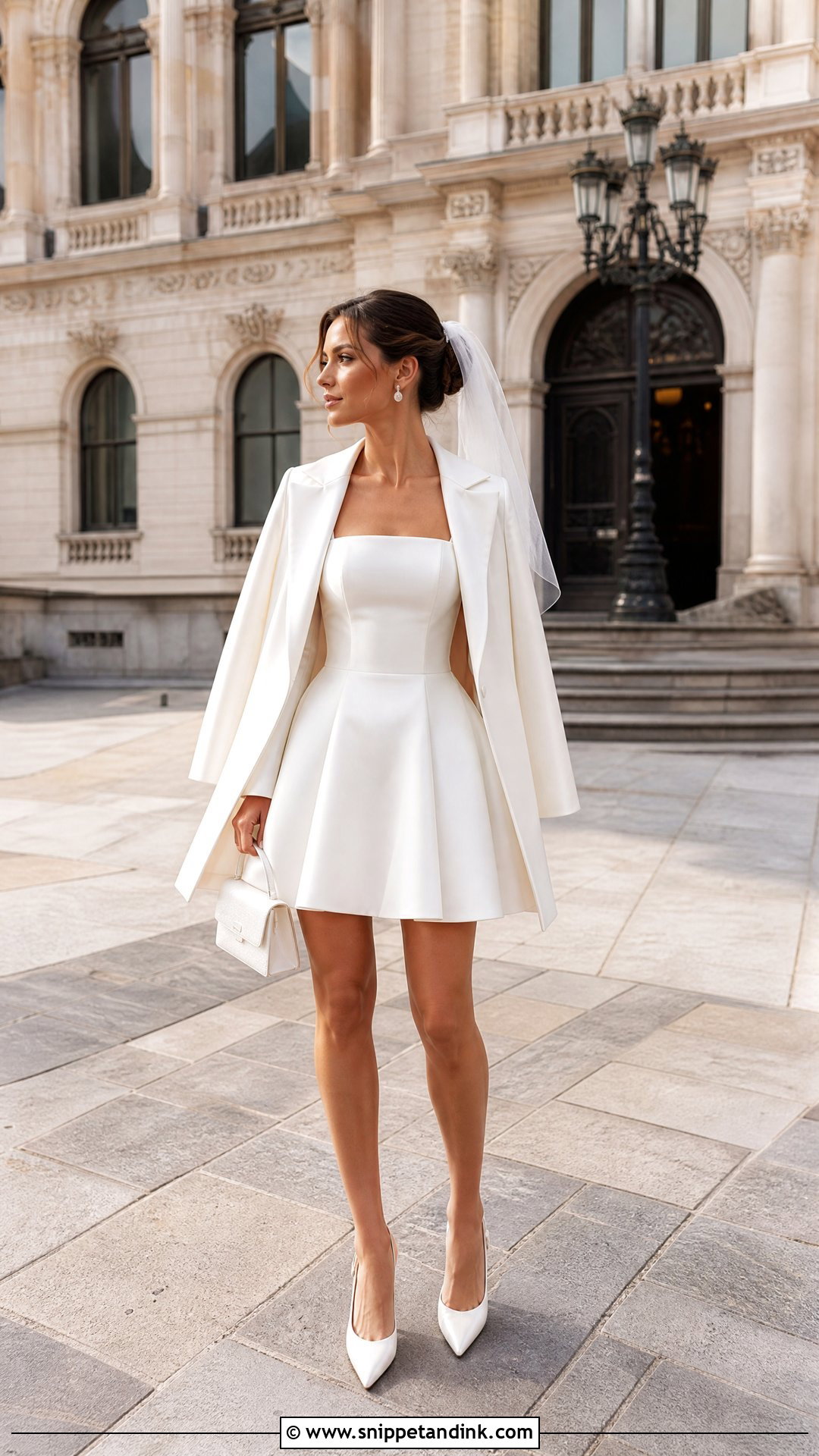
A bridal mini is a modern option for a civil ceremony, the evening or a second look. Structured satin, crepe or lace keeps a short length polished. A square neckline, fitted waist and slightly flared skirt are flattering and comfortable. A short veil, pearl earrings, pointed slingbacks and a top-handle bag. Sheer tights for cooler months and a tailored ivory coat for arrival. A knee or midi length gives more coverage if you’d prefer. Your shoes are fully visible, so choose a special pair you can actually walk in. City halls, restaurants and rooftops suit it.
Heat, Cobblestones and Stone Steps
Southern Europe in summer is hot, and historic venues weren’t built for long trains or thin heels. These are the practical things I plan for when a bride is marrying abroad.
- Fabric: silk, chiffon and light crepe breathe; heavy satin and layered tulle trap heat. In high summer, consider an evening ceremony.
- Shoes: cobbles and old marble swallow stilettos. Block heels, heel protectors or flat sandals for walking between locations.
- Trains: stone stairs and dusty courtyards mark a long train quickly, so have a bustle or wrist loop ready.
- Steaming: dresses arrive creased. Ask your venue or planner about a local seamstress or steaming service, or bring a travel steamer and test it first.
Midday sun on white walls is harsh and makes ivory look flat. Talk to your photographer about portraits in late afternoon or early evening, when the light is softer and warmer and you’re cooler too.
Watch the tan lines before the trip
Arriving a week early for a holiday is tempting, but a strap mark across the shoulders will show with a strapless or off-shoulder neckline. If you’ll be in the sun before the wedding, wear a top with the same neckline as your dress, or keep covered. Sunburn also makes lace sleeves and tight bodices sore, so a high-factor sunscreen is part of the outfit that week.
From Château to City Hall, Wear the Country You Love
A European-inspired look comes together when the gown, accessories, shoes, layers and hairstyle all agree with each other. French lace, Italian satin, Greek draping, corsetry and Scandinavian minimalism are very different starting points, and you don’t have to stick to one country. Mix what suits your body, venue and taste. Put your budget into alterations and good foundations, and choose fabric that’s comfortable in the climate you’re marrying in. Try on the full outfit, veil and shoes included, before you decide. A château ball gown or a city mini, it should feel recognisably yours.
You'll Like These Ideas:





Leave a Reply