
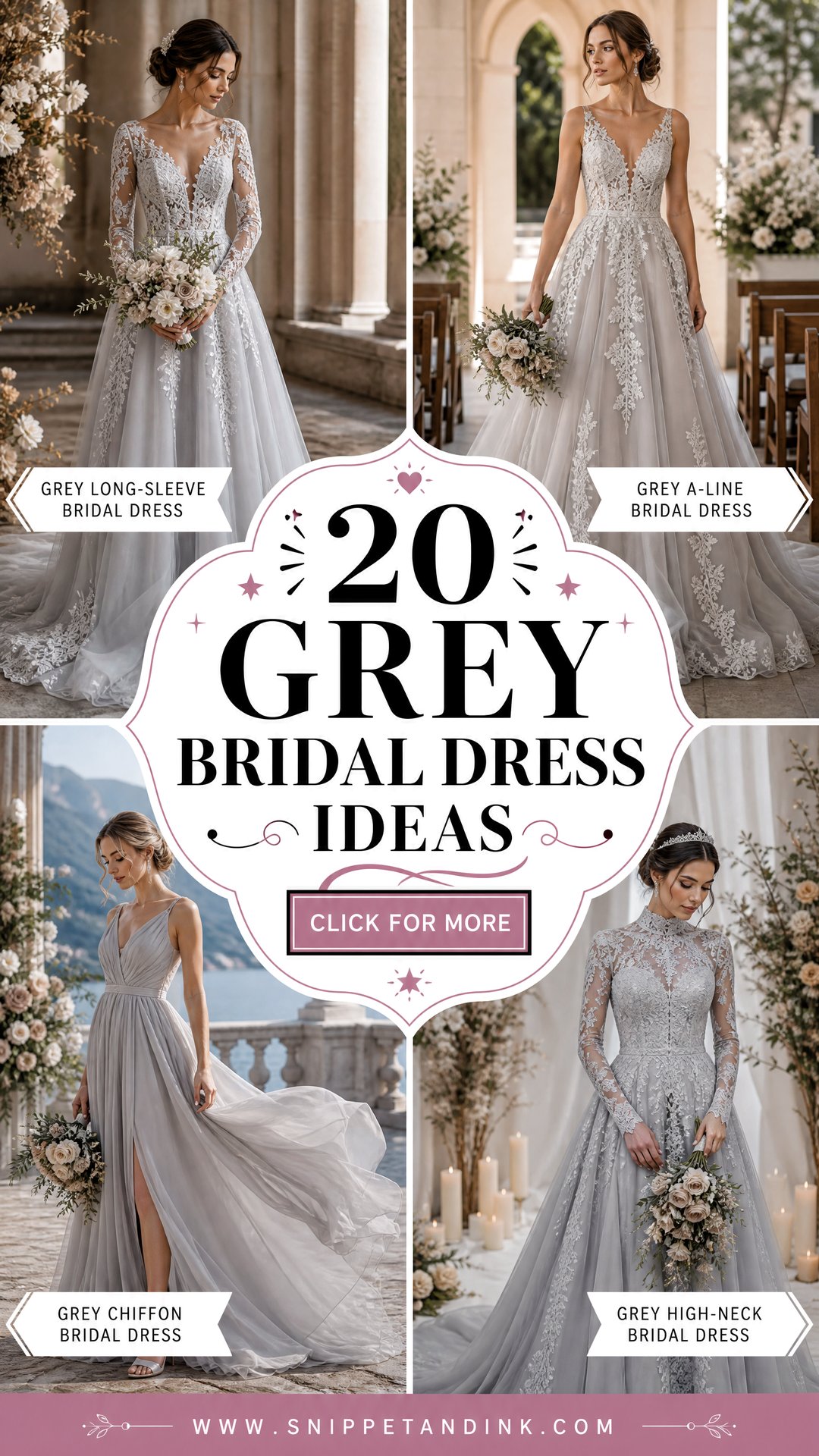
Grey wedding gowns are the colour I suggest when a bride tells me white washes her out but she still wants the dress to read as bridal from the back of the room. The range is wider than most people expect, from pale dove and misty silver to slate and deep charcoal, and fabric changes the shade almost as much as the dye does. Tulle diffuses grey into something hazy, satin throws light and reads closer to silver, and beading adds a cool glint under evening lighting. Bridal collections now cut grey in A-line, ball gown and fitted shapes, so the colour isn’t tied to one silhouette. Below are twenty ways I’d style it, each with the shoes, veil and flowers that keep the whole outfit coherent.
How Grey Shifts Against Skin and Venue Light
Grey is never just grey. Every grey fabric leans somewhere, usually toward blue, green, violet or warm taupe, and that lean decides whether it brightens your face or drains it. When I pull grey gowns for a client, I hold each fabric under her chin by a window first, before she sees the dress on a hanger and falls for the shape.
Reading the undertone
Cool, blue-leaning greys such as silver and dove tend to suit very fair skin and skin with pink undertones. Warmer greys with a beige cast, often sold as greige or mushroom, usually sit better on olive and golden skin. Deep skin often glows against charcoal, pewter and true silver, while a washed-out mid-grey can look dusty. If a shade makes the area under your eyes look darker, it’s the wrong lean for you, however much you love the dress.
Testing it in more than one light
- Look at the fabric by a window, then under warm indoor bulbs. Some greys shift from silver to almost lilac between the two.
- Take a phone photo with flash and one without. A shade that reads blue in the camera will usually read blue in your gallery too.
- Hold it beside your bridesmaids’ colour if you’ve chosen one. Grey next to navy looks crisp; next to blush it can turn muddy.
- Ask for a swatch to take home. A few days of seeing it next to your own clothes tells you more than a showroom mirror does.
1. Light Grey Tulle Bridal Dress
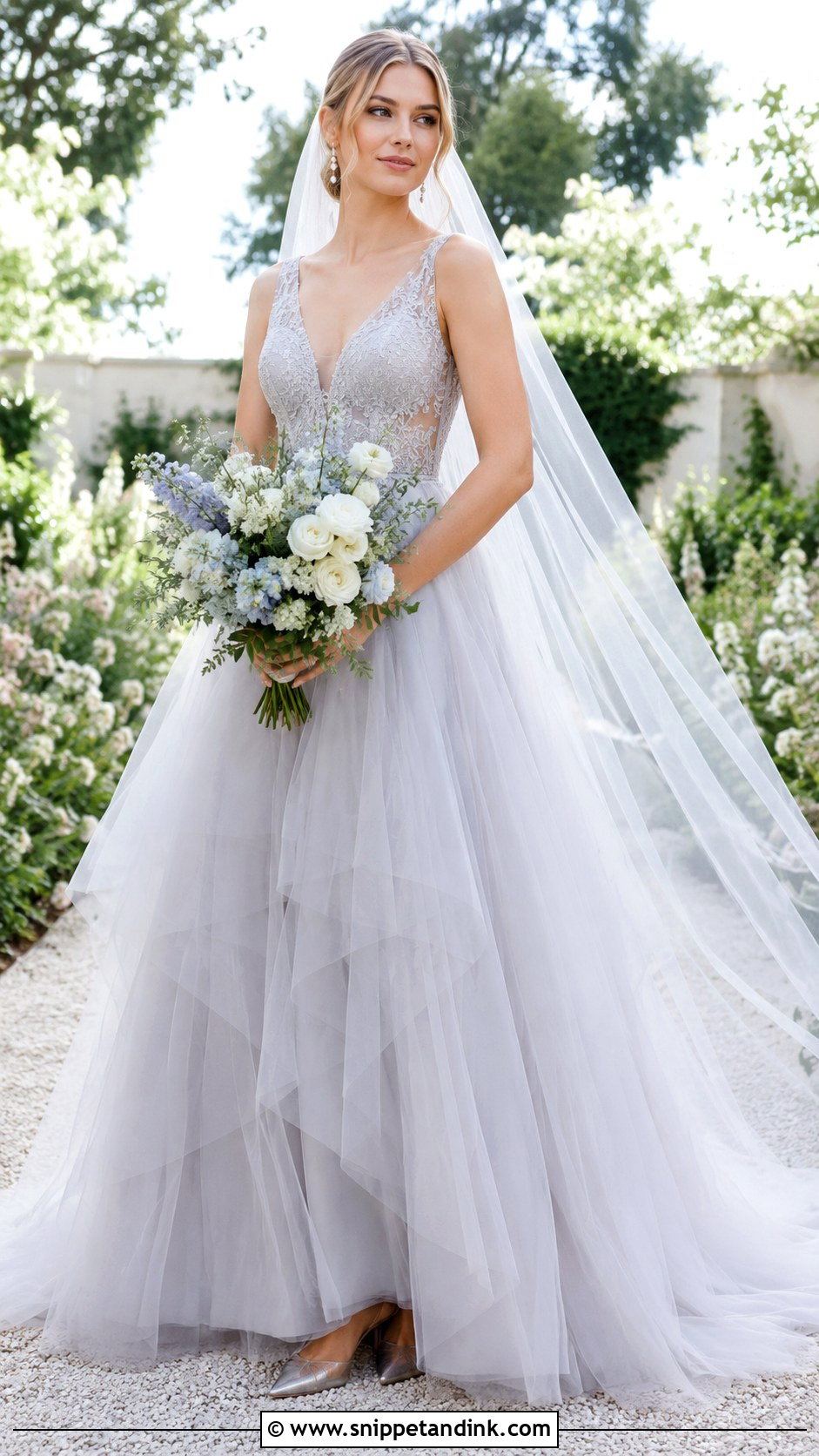
Layered tulle is the gentlest way into grey, because each sheer layer lightens the one beneath it. A light grey tulle bridal dress with a fitted bodice and a sweep train is the version I hand a bride who’s nervous about colour; in person it reads almost silver-white. Ask how many layers the skirt has, since two thin layers can look flat and slightly blue in daylight. Silver pointed-toe heels and a pale grey cathedral veil keep the tones continuous, pearl drops and a loose low bun leave the neckline clear, and white garden roses with dusty blue flowers suit a spring garden or a bright ballroom.
2. Silver Grey Sequin Bridal Dress
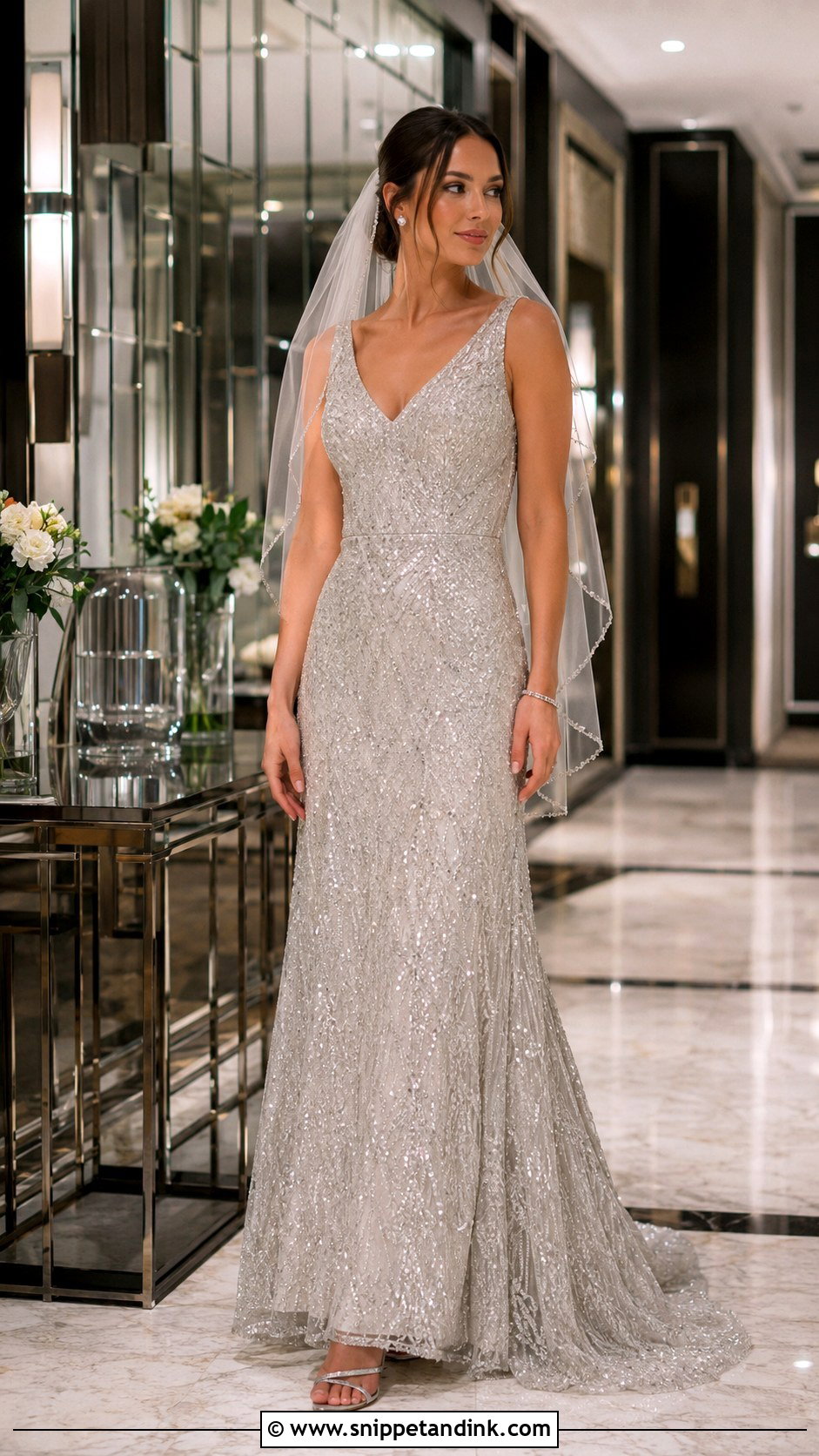
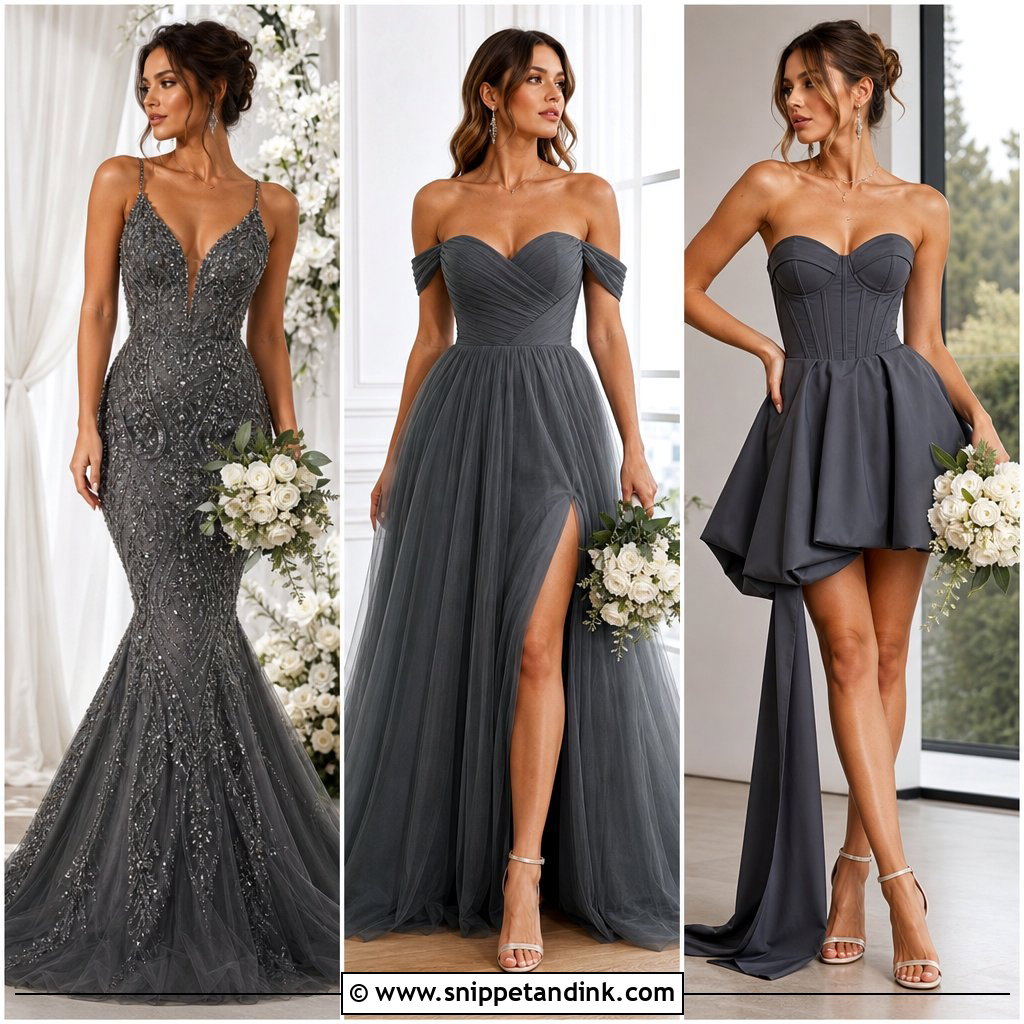
Sequin size is the first thing I look at on a sparkling grey gown. Fine sequins on a floor-length fitted dress shimmer like brushed metal, while oversized paillettes bounce flash straight back at the camera and can blow out in photos. A V-neck over a properly structured bodice and a softly flared skirt gives the shine a shape to sit on. Sequins also scratch the inner arm over a long evening, so at a try-on I have the bride hug someone and then check her arms. Keep the extras quiet: silver heels, crystal studs, one slim bracelet, smooth Hollywood waves and a sheer fingertip veil, with white roses and eucalyptus for an evening hotel wedding lit by candles.
3. Dove Grey Lace Bridal Dress
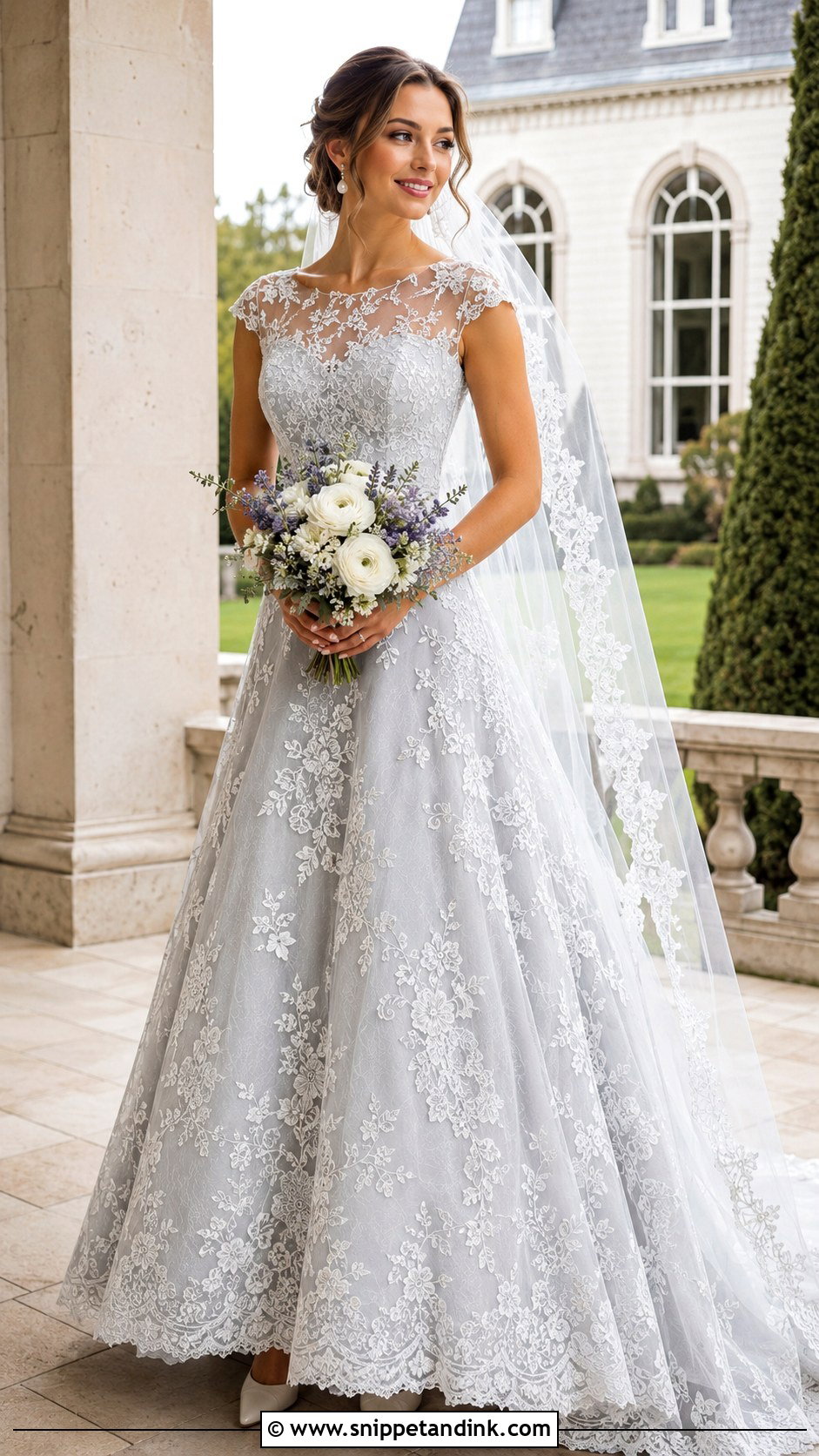
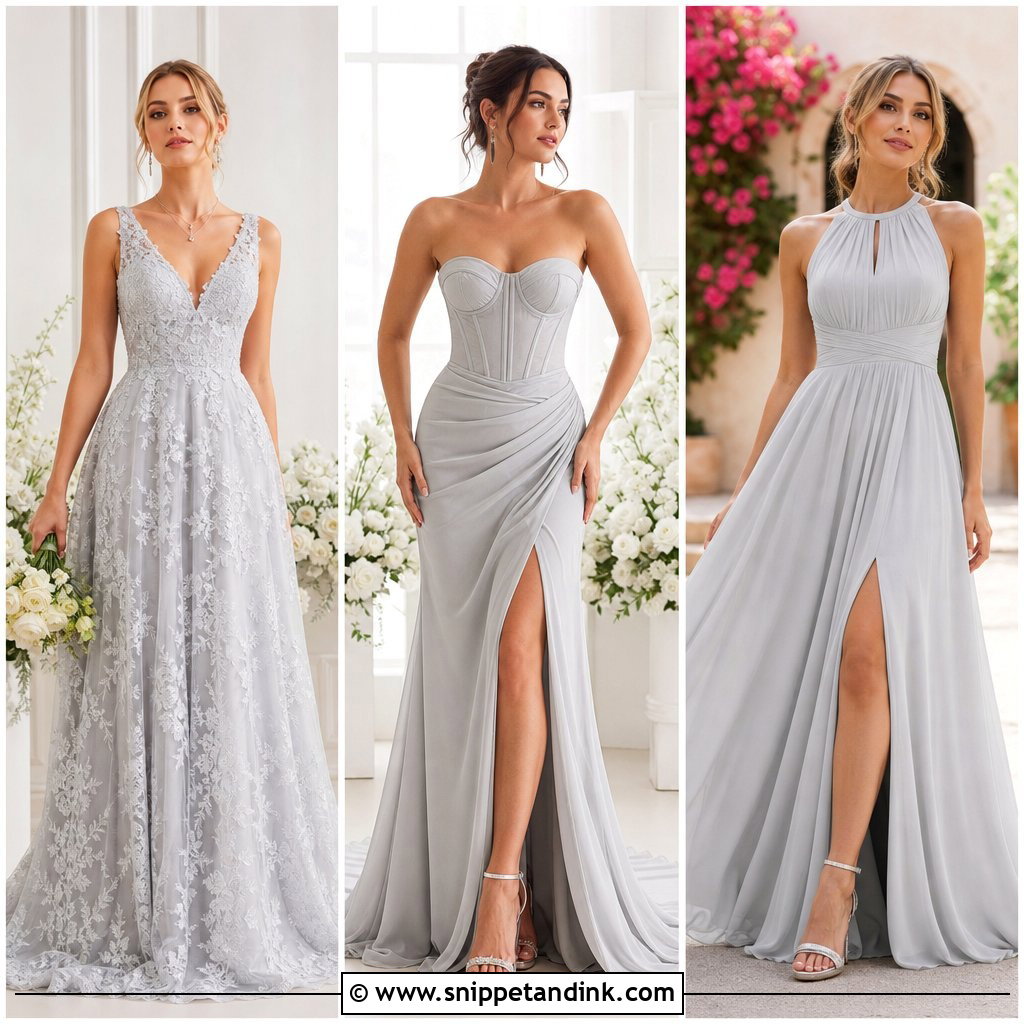
Dove grey lace only works if the lining does its job. I always ask for a grey lining under a lighter embroidered lace, because lace on a matching lining melts into one flat tone from a few metres away. An A-line skirt, a defined waist and an illusion neckline suit a wide range of figures, and the illusion tulle can usually be matched close to your skin at a fitting. Pearl earrings, a slim silver comb and closed-toe satin pumps keep it gentle, while a sheer veil with a narrow lace edge repeats the texture without doubling it. White ranunculus, pale lavender and silvery foliage belong at an estate or botanical venue.
4. Charcoal Grey Ball Gown Bridal Dress
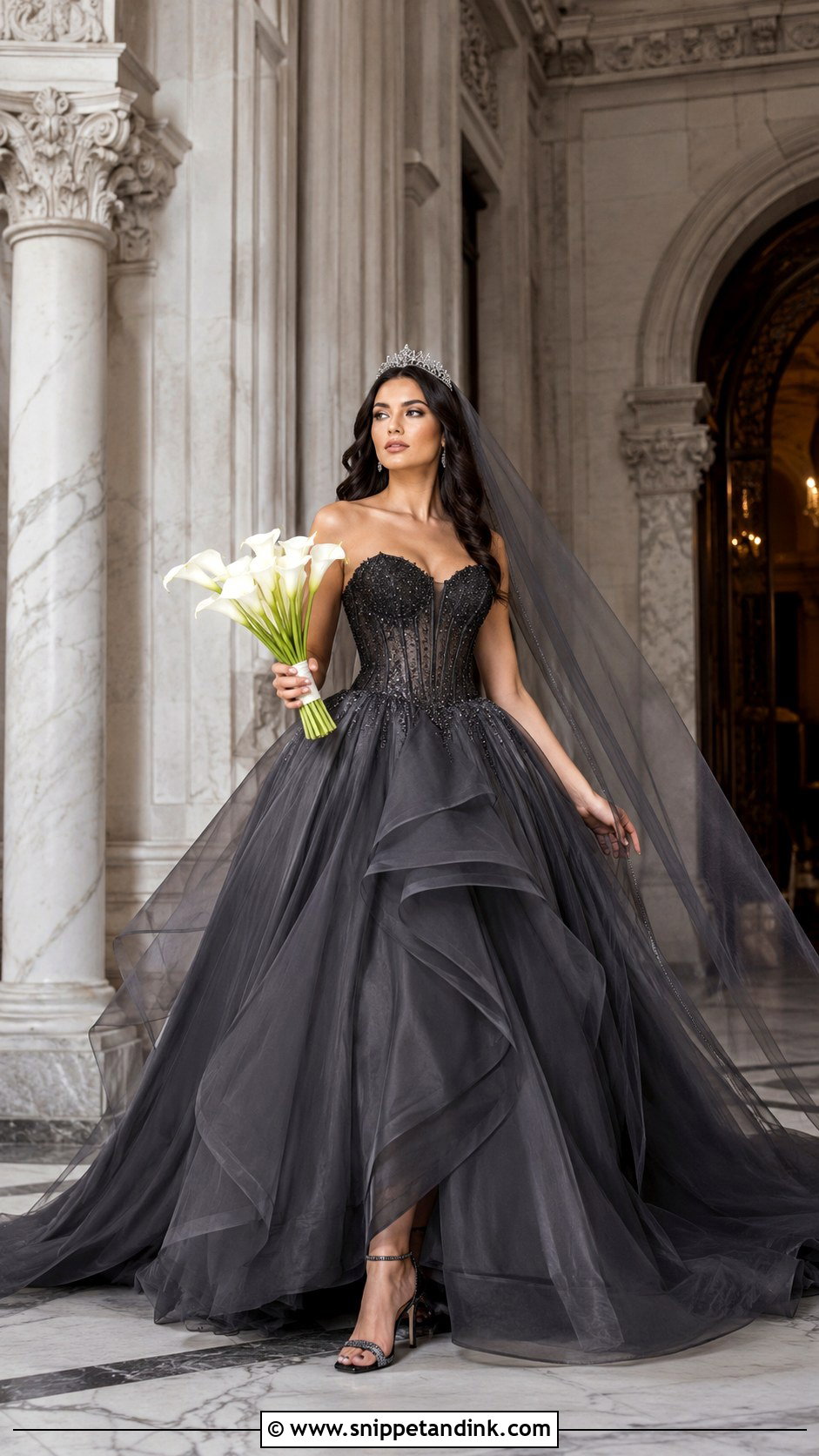
A charcoal grey ball gown is the most dramatic dress here, and I’d only steer a bride toward it if she’s happy being the darkest thing in the room. Dark grey already carries the weight, so a structured corset bodice over a full tulle, satin or crisp organza skirt needs a clean neckline and restrained embellishment. Black or gunmetal heels vanish under the hem, and a crystal tiara puts light back near the face, which charcoal otherwise pulls away from. A long charcoal veil that turns translucent at the edges and a handful of white calla lilies give strong contrast for a winter wedding in a grand indoor venue.
5. Grey Satin Slip Bridal Dress
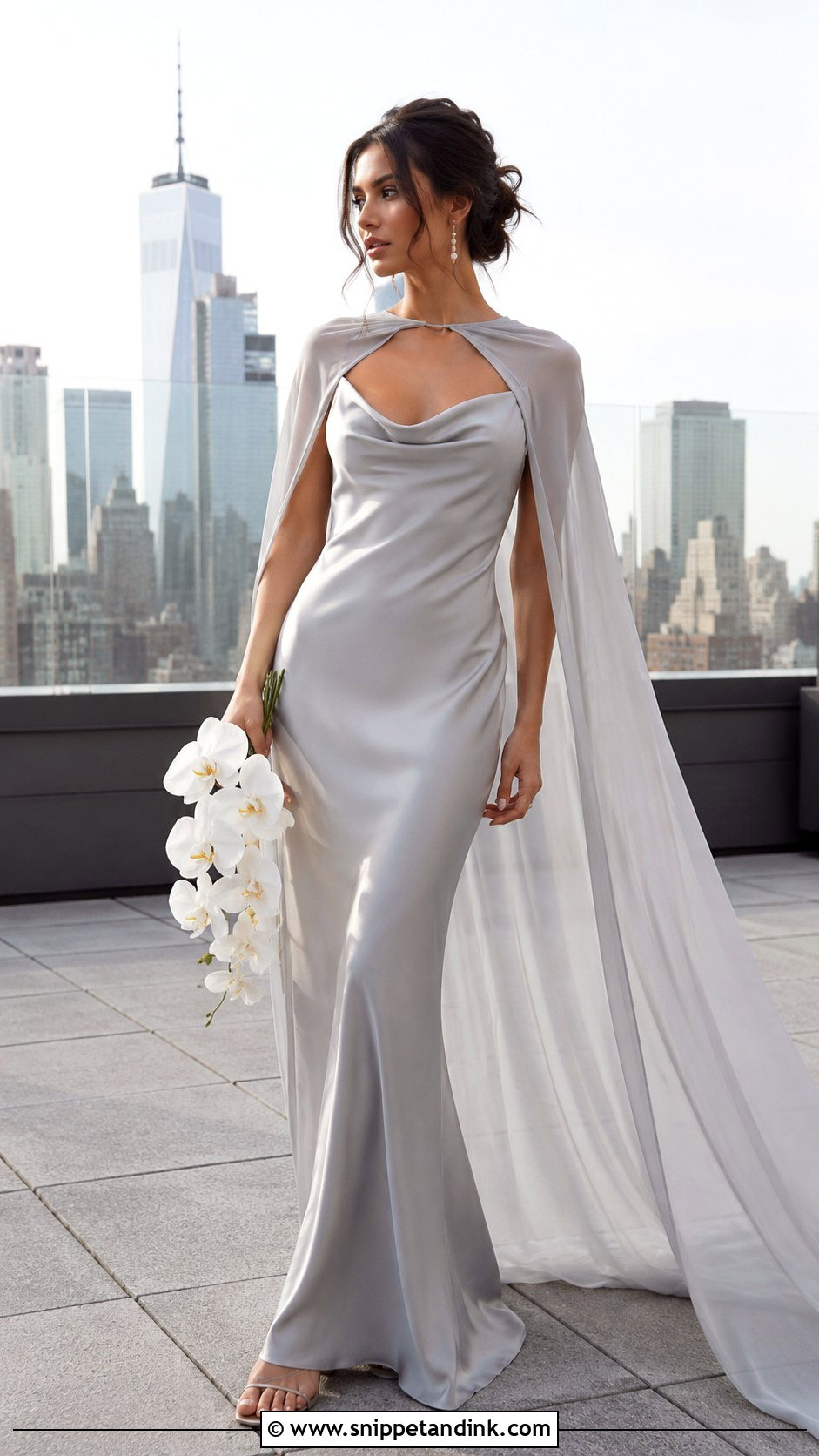
Bias-cut satin is honest fabric. It shows every seam, every line of underwear and every crease from sitting in the car. That’s why I fit grey satin slips over smooth shapewear or nothing at all, and why pearl-grey is kinder here than a darker shade, which shows creasing more. The cut moves with you and the sheen does the decorating, so narrow silver sandals, small drop earrings and a tennis bracelet are plenty. Swap a heavy veil for a shoulder-length one or a detachable chiffon cape, carry white orchids, and take it to a rooftop, a gallery or a city ceremony where a big gown would feel out of scale.
6. Grey Off-Shoulder Bridal Dress
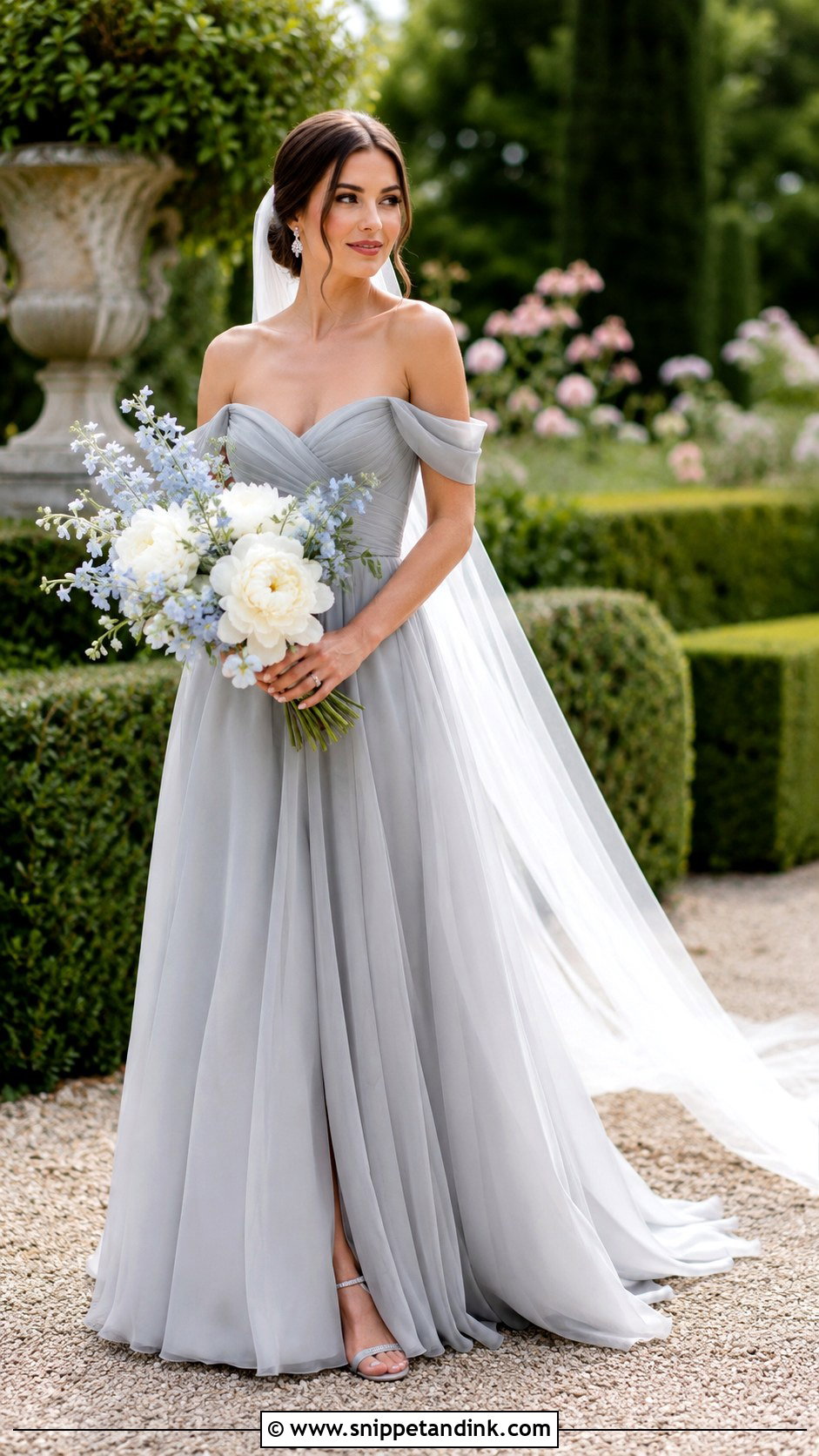
Off-shoulder sleeves slide. The fix is inside the dress: a boned bodice with silicone grip along the top edge, so the sleeves stay put when you lift your arms to hug people. With that sorted, a flowing A-line or fit-and-flare skirt keeps attention on the neckline. I’d only add a fine pendant if the bodice is completely plain; otherwise crystal earrings and a matching hairpin are enough. Silver block heels, a long plain veil, and white peonies with dusty blue delphiniums and eucalyptus suit a ballroom or a formal summer garden with blue-grey details.
7. Grey Long-Sleeve Bridal Dress
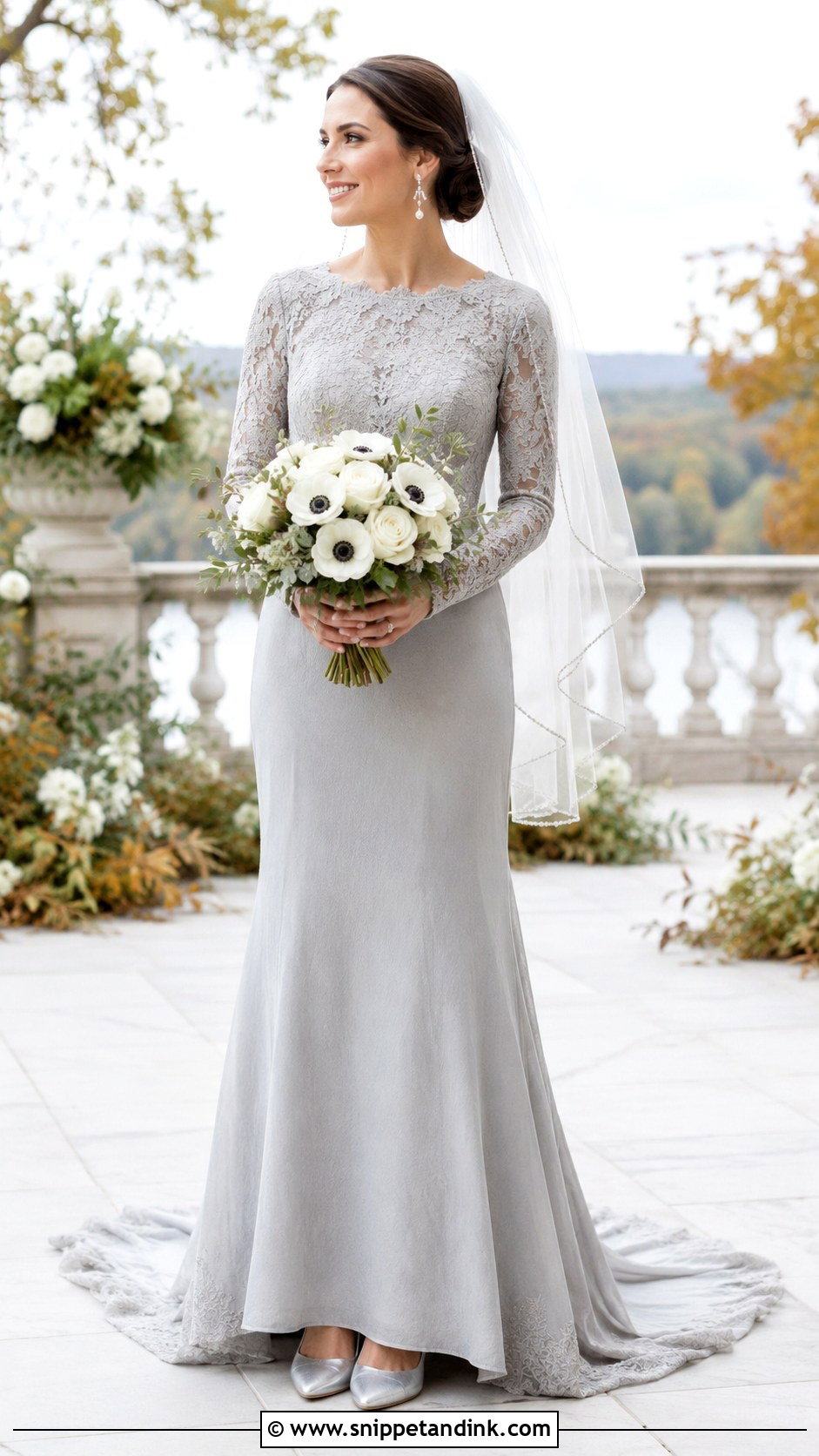
Long sleeves change how a grey dress reads more than almost any other detail. Sheer lace sleeves over a lined bodice look delicate, while fitted crepe sleeves look tailored and modern. Whichever you prefer, raise both arms and reach forward at your fitting, because sleeves set too tight at the armhole make the whole bodice lift every time you hold the bouquet. A defined waist and gently flared skirt stop the extra coverage from looking heavy. Closed-toe silver pumps, pearl and crystal earrings, a low chignon and a fingertip veil that leaves the sleeve detail visible fit a cool-weather ceremony in a historic building, with white anemones, ivory roses and blue-grey foliage in hand.
8. Grey Corset Bridal Dress
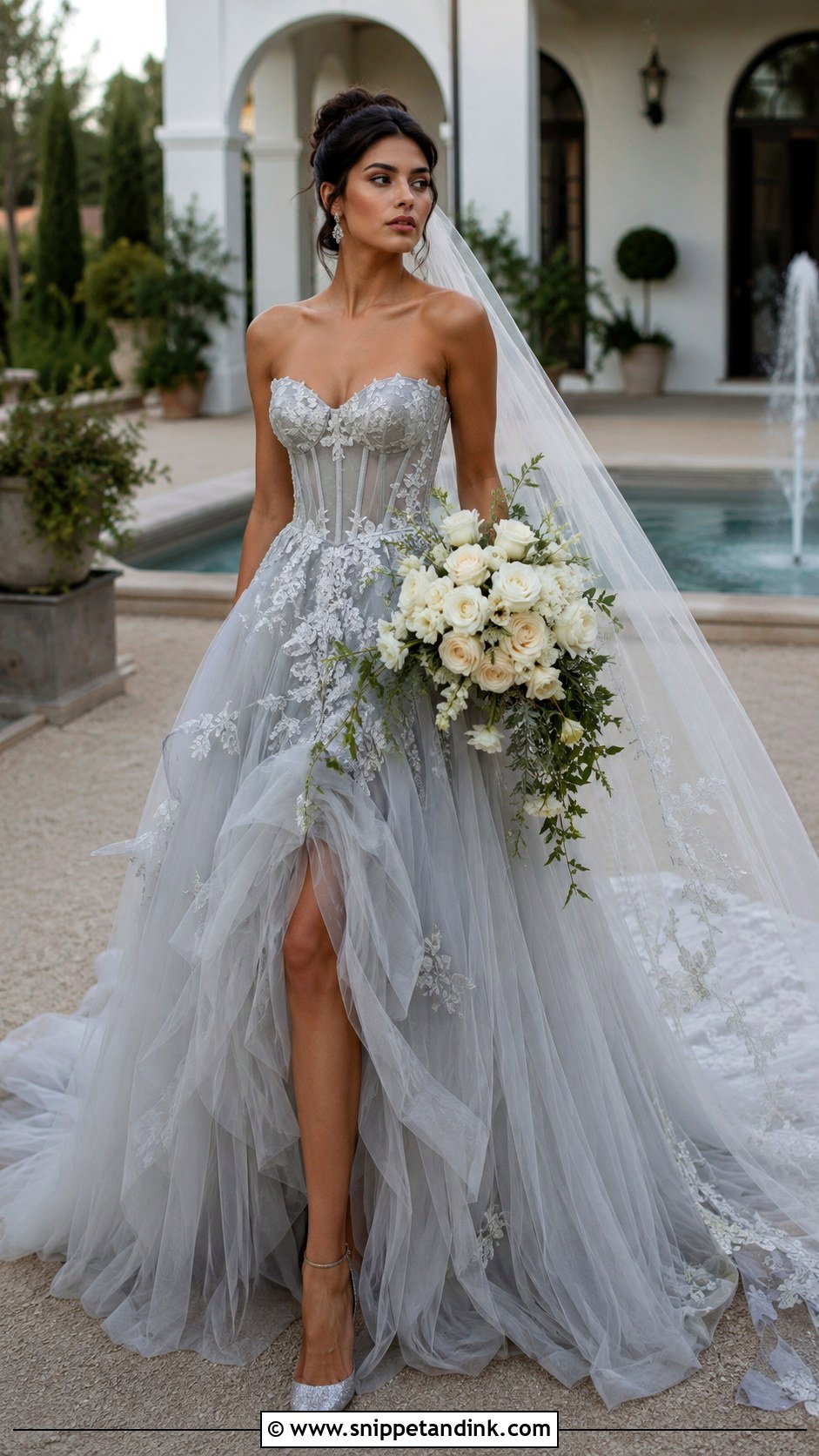
On a corset bodice, boning placement decides whether it flatters or pinches. I look for bones that follow the body’s curve instead of running stiffly to the hip, plus built-in cups so there’s no bra fighting the structure. Pale grey tulle over a matching lining keeps the skirt light, and a few floral appliqués soften the seams. Pointed silver heels and small crystal earrings stay out of the way. Attach a sheer cathedral veil beneath a relaxed updo so the back lacing still shows, then carry white roses with trailing greenery and a touch of lavender.
9. Grey Mermaid Bridal Dress
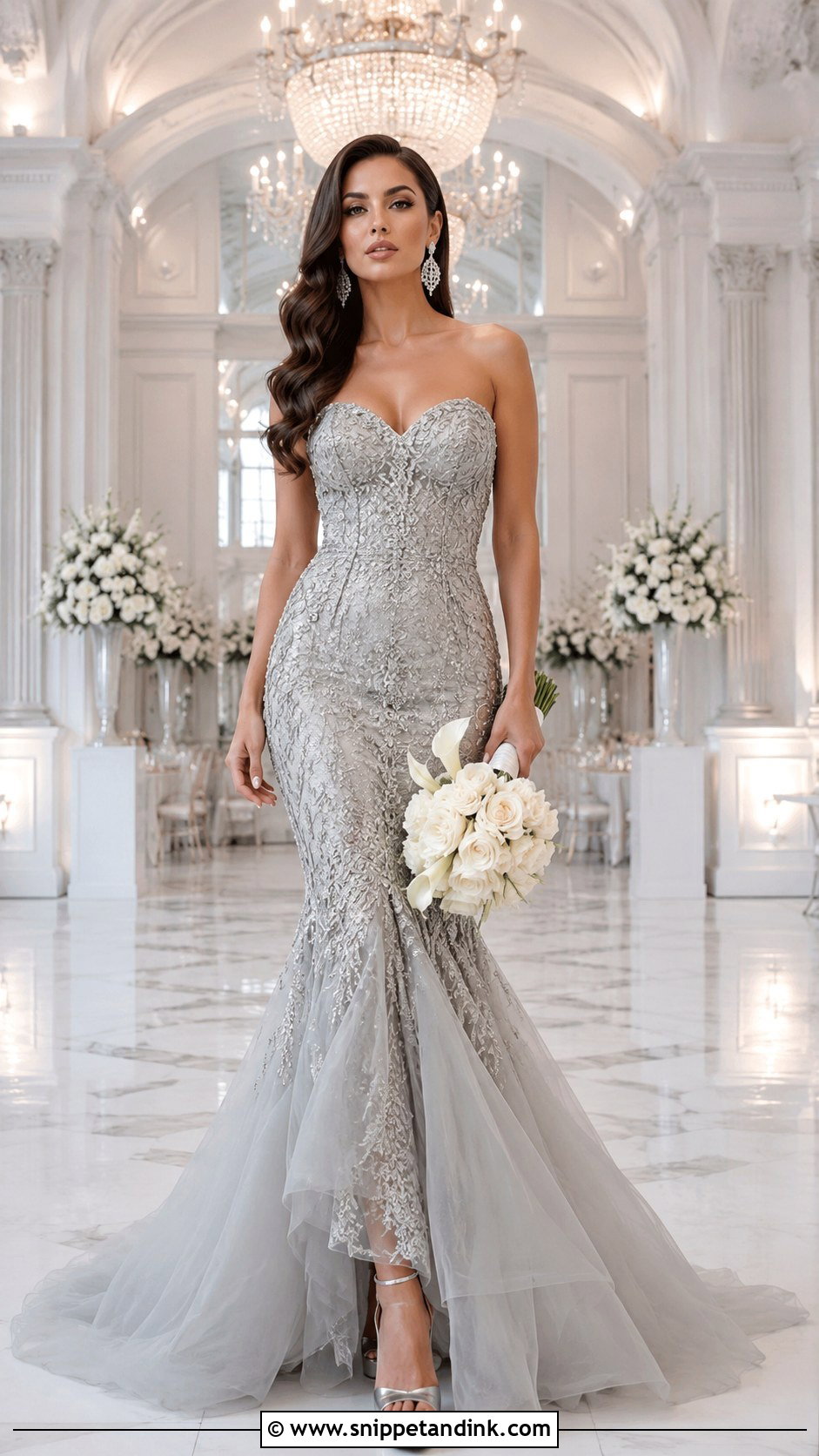
Mermaid gowns are where I spend the most time on fit, because the flare point decides everything. Set too high, it shortens the leg; set too low, you can’t climb a step. In grey the body-skimming line looks glamorous, and tonal lace, silver embroidery or tiny beads can trace the shape without turning busy. I often pair it with metallic platform sandals, which lift the hem off the floor and feel steadier than stilettos inside a narrow skirt. Wear statement earrings and skip the necklace if the neckline is embellished, add a sleek ponytail, and carry a structured bouquet of white roses and calla lilies to an evening ballroom or waterfront ceremony.
10. Grey A-Line Bridal Dress
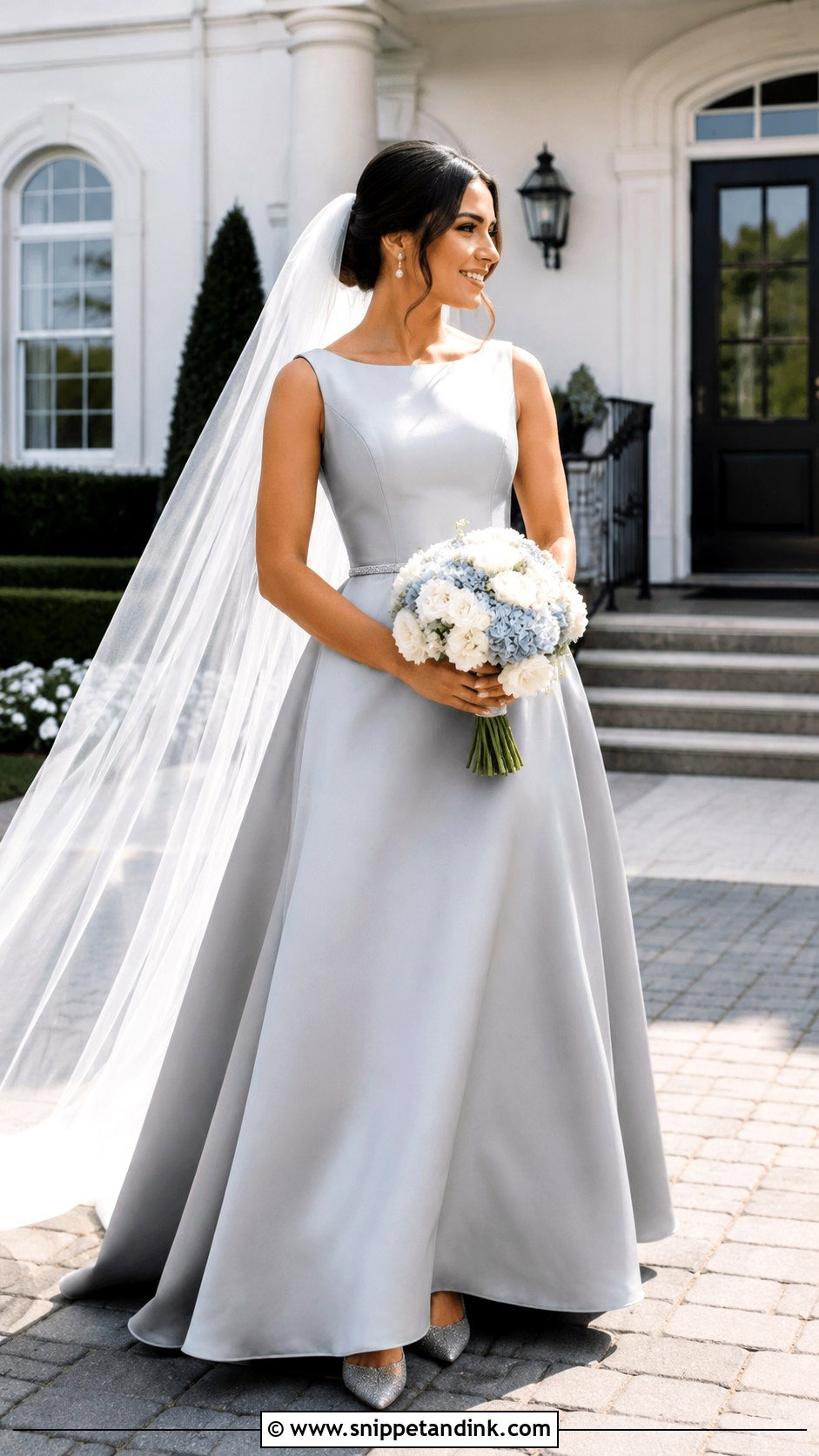
When a bride can’t settle on a silhouette, I start her in a grey A-line, because it tells us which shade suits her without the cut getting in the way. The fitted top and gradually widening skirt let you walk, sit and dance, which matters when the ceremony is outdoors and the reception is not. Light grey chiffon reads soft, satin holds a crisper shape and layered tulle adds volume. Silver slingbacks, pearl earrings, a narrow crystal belt if the waist wants definition and a plain chapel veil keep it balanced, and white hydrangeas with pale blue flowers move happily from garden to country club.
11. Grey Floral Appliqué Bridal Dress
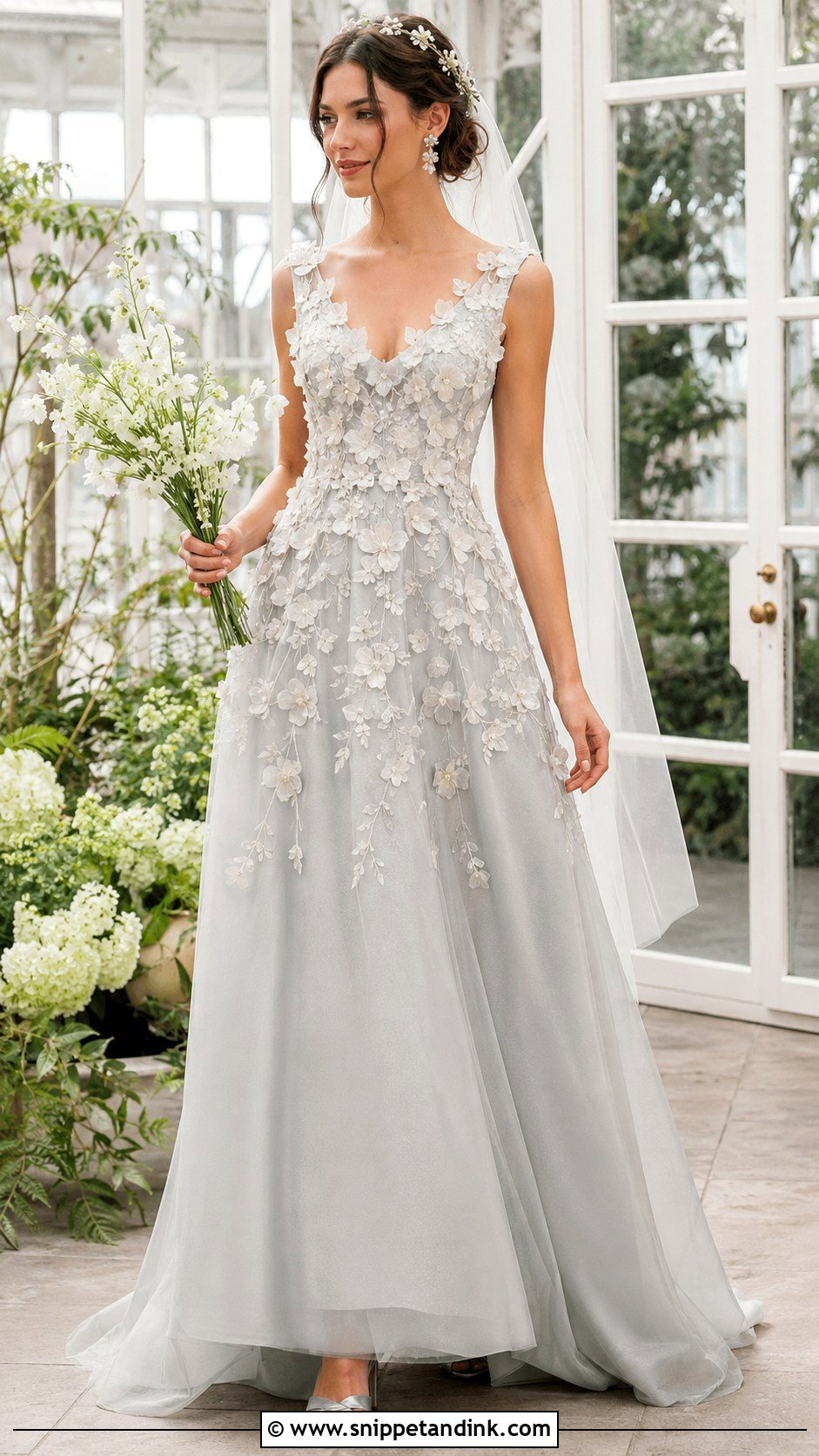
Three-dimensional flowers need room to breathe. I prefer appliqués massed at the bodice and thinning out across the skirt, since an even scatter from neck to hem flattens the silhouette in photos. A pale grey lining helps ivory or silver embroidery stand out. Raised appliqués also catch on lace veils, so a plain veil with a cut edge is the safer partner. Simple satin heels, floral crystal earrings and a vine hairpiece, with white sweet peas, roses and wispy greenery, suit a spring conservatory or a garden ceremony.
12. Grey Beaded Bridal Dress
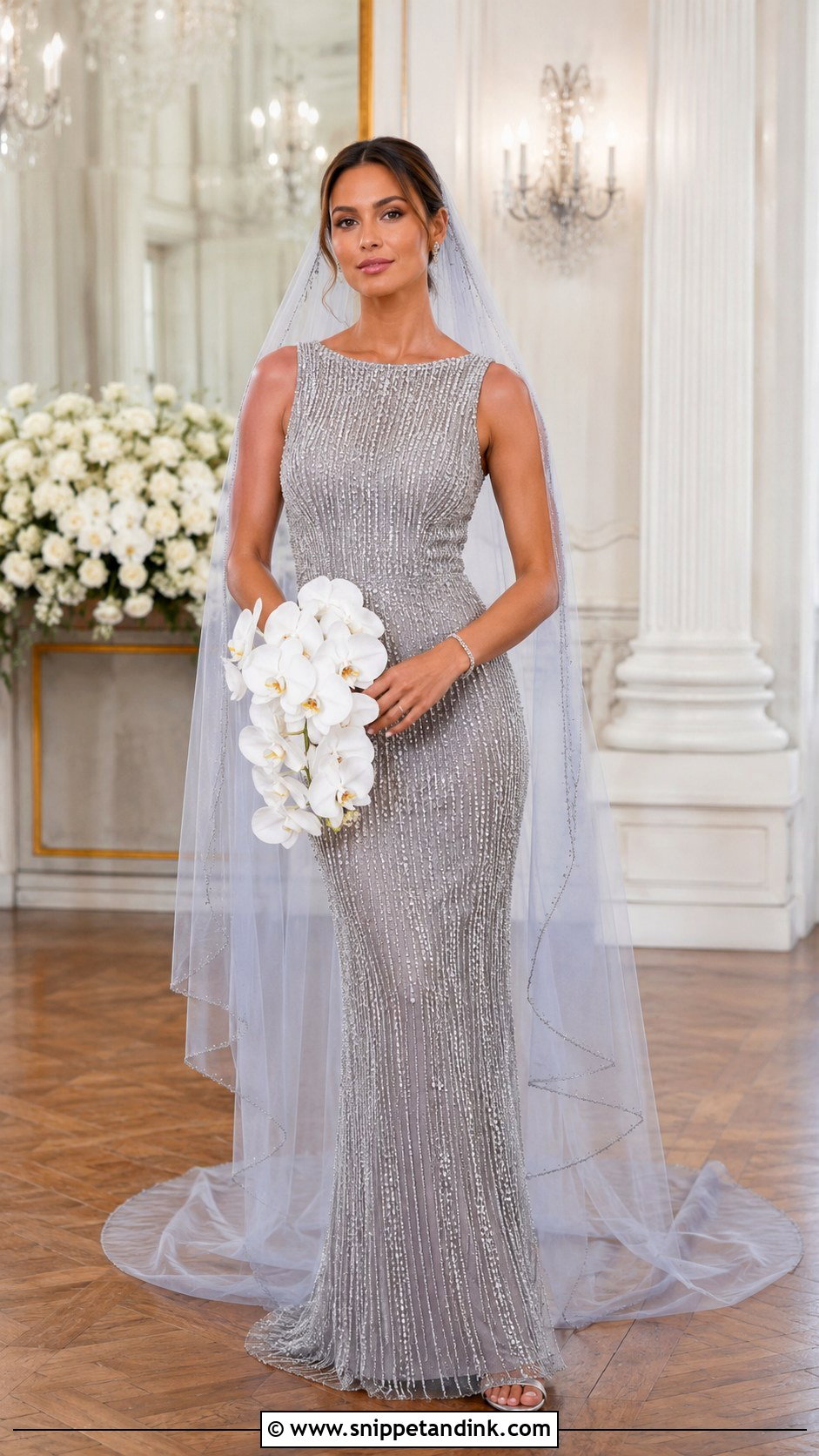
Heavy beadwork adds real weight, and by the speeches the bride feels it in her shoulders. Vertical or botanical bead layouts on a column, fit-and-flare or soft A-line spread that weight better than random clusters and give a cleaner line too. Under warm evening light, silver beads on grey glow rather than glitter. Keep everything else minimal: silver heels, small studs, a narrow bracelet and a low bun so the neckline shows. A light grey veil with a barely beaded edge and a small bouquet of white orchids or calla lilies finish it for a formal ballroom.
13. Grey Chiffon Bridal Dress
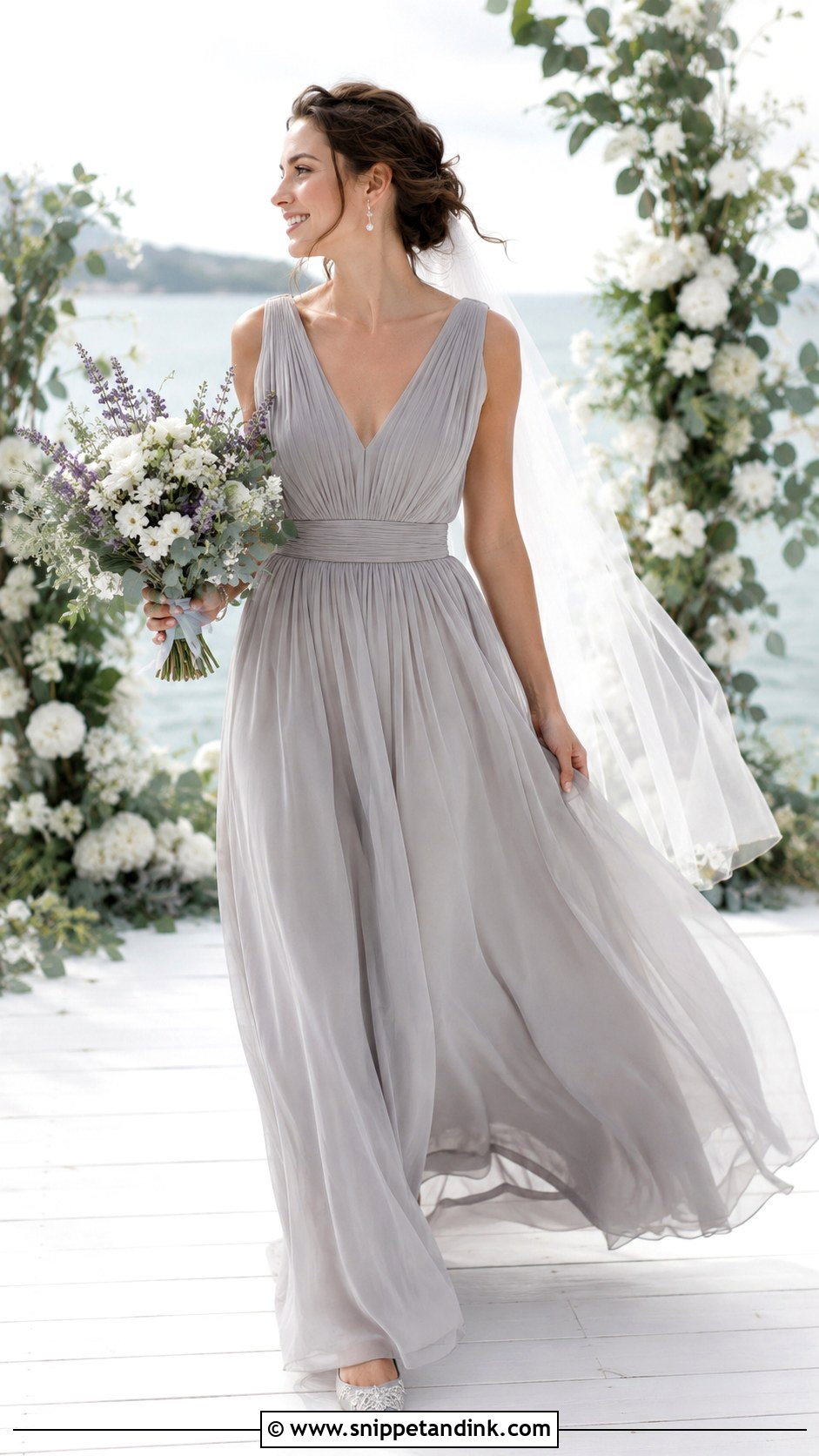
Chiffon is the grey I’d take to a beach or destination wedding. It packs reasonably well and moves in a breeze instead of fighting it, though it snags and frays easily, so outdoor brides should hem it just clear of the ground. A wrapped, pleated or gathered bodice and a defined waistband give it shape. Silver low heels or embellished flats cope with grass and sand. Pearl drops, a loose braided updo, a lightweight fingertip veil and white wildflowers with lavender and eucalyptus keep the whole thing relaxed.
14. Grey High-Neck Bridal Dress
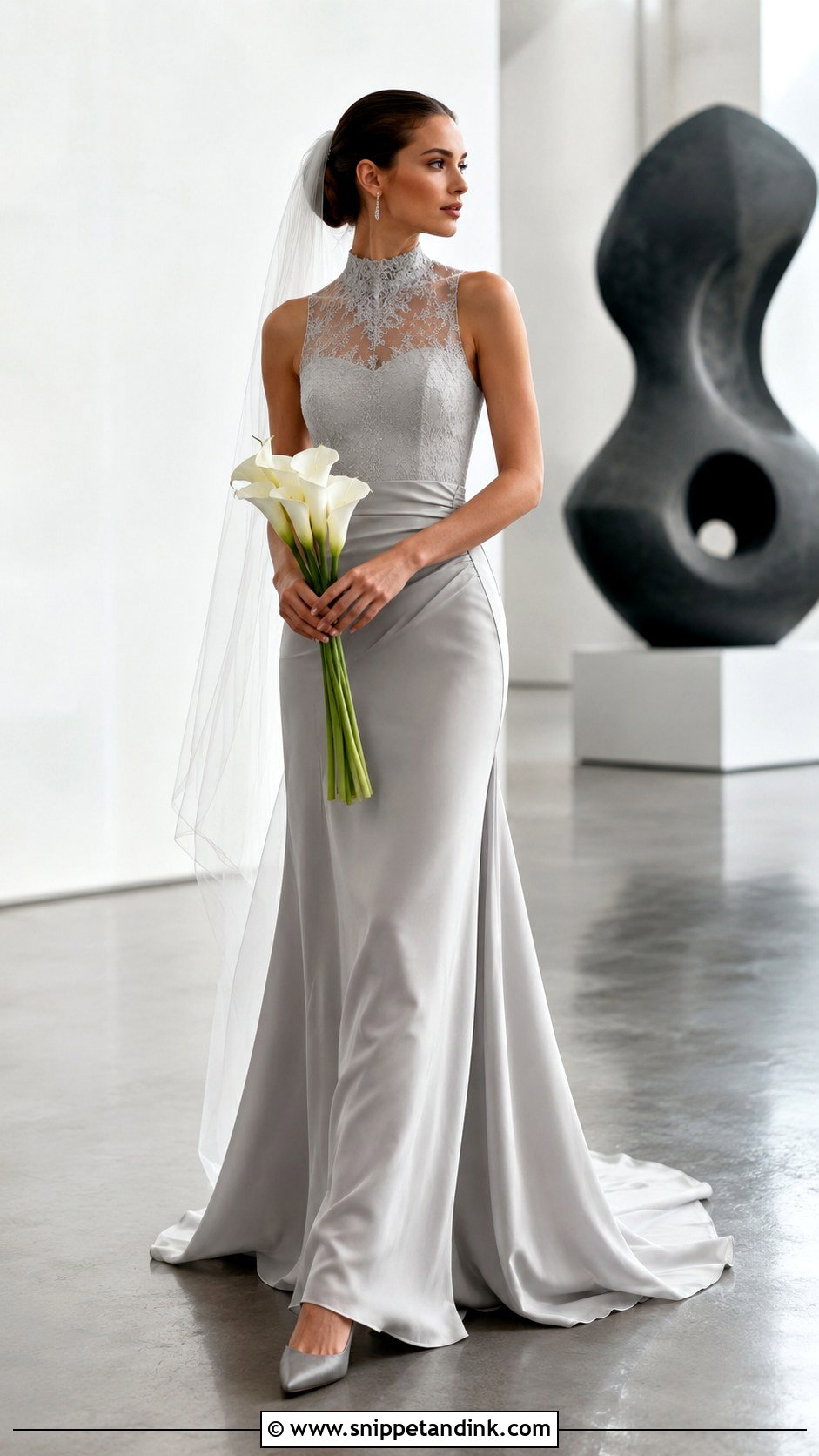
A high neckline frames the face, so try it with your hair up before you commit. Illusion lace at the throat feels delicate; plain crepe looks minimal and architectural. Sleeveless keeps it light and fitted long sleeves make it formal. I tell brides to skip the necklace entirely and wear slim earrings, then secure the veil under the hair rather than on top so nothing crowds the collar. Grey satin pumps, a polished low bun and white tulips or long calla lilies suit a courthouse, a museum or a modern venue.

15. Grey Bridal Dress With Cape
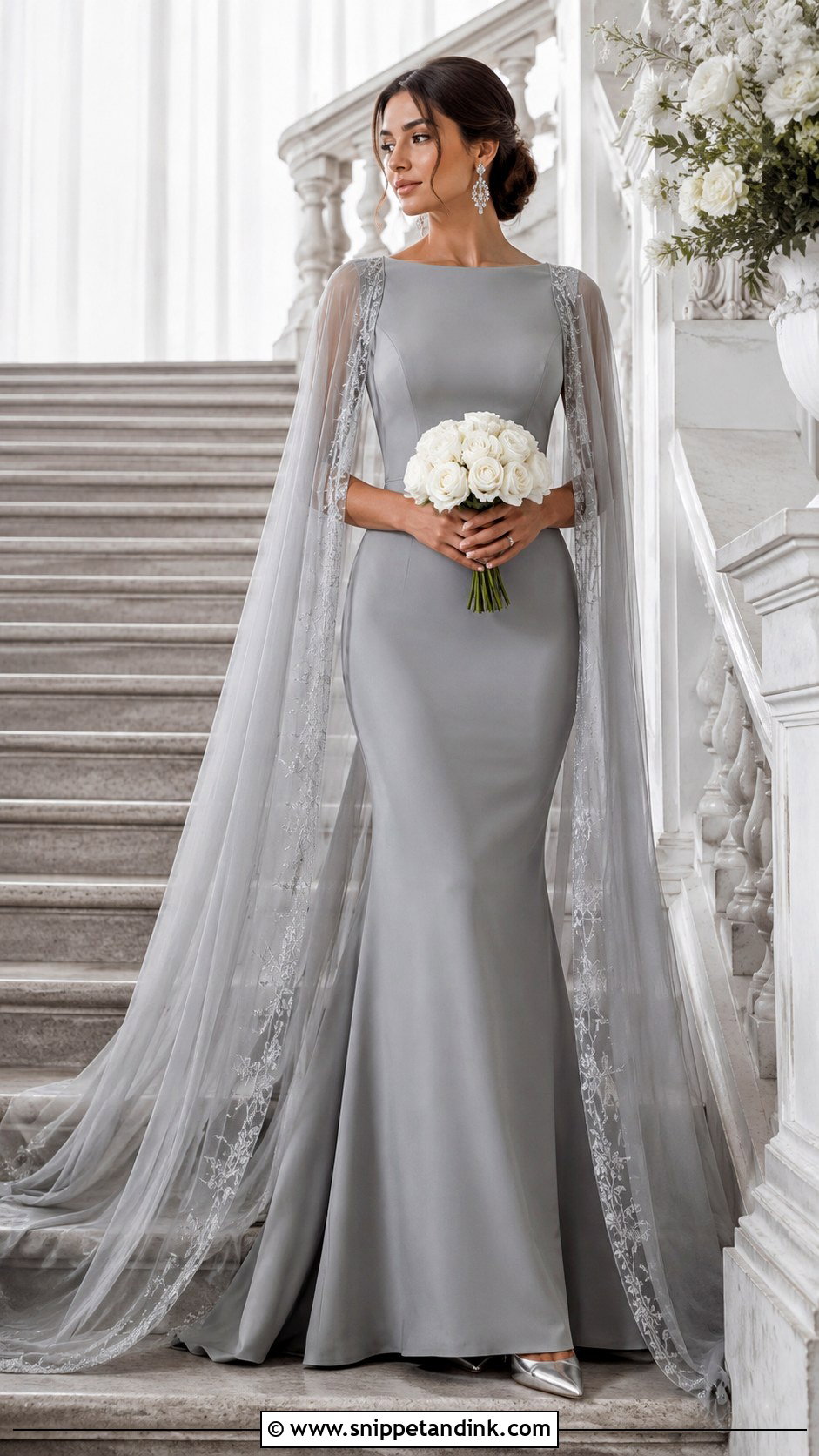
A cape gives a plain grey gown ceremony without a veil, and it’s what I suggest when a bride wants drama she can take off. Start with a fitted satin or crepe dress in dove, pewter or soft slate, then add a sheer floor-length cape with crystals, embroidered edges or shoulder detail. Check how it attaches: snaps at the shoulder seam come off for dancing far more easily than a cape sewn into the neckline. Pointed metallic heels, crystal earrings, a smooth bun and a minimal bouquet of white roses or orchids are enough. The back view is the strongest angle, so it suits grand staircases and high-ceilinged winter venues.
16. Grey Ombre Bridal Dress
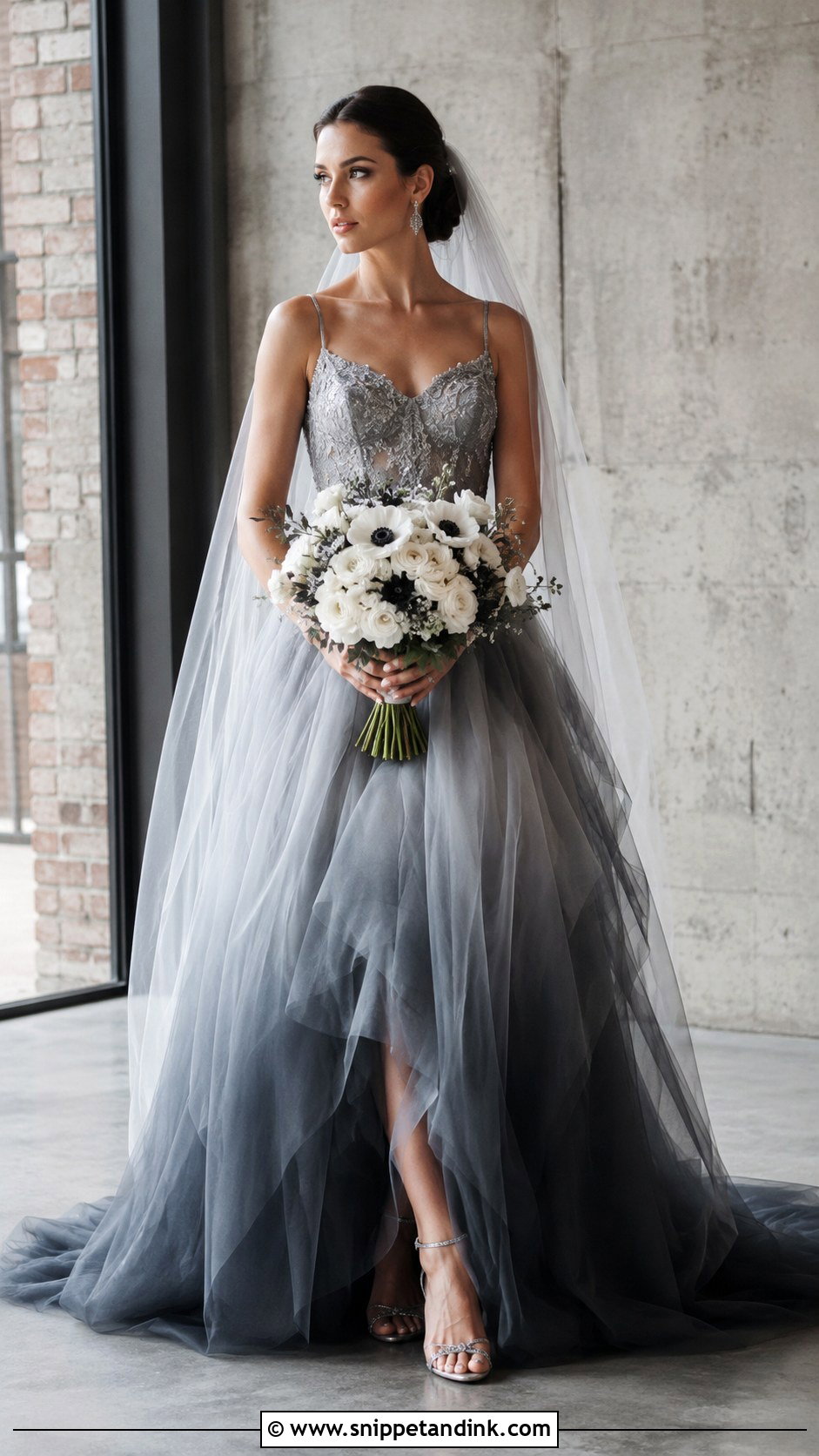
Ombre needs distance to read. Up close, a skirt shading from pale silver at the bodice to slate or charcoal at the hem just looks like a few greys; it’s on the walk down the aisle that the gradient makes sense. Layered tulle blends those steps best. The dark hem also hides grass and floor marks, a real bonus outdoors. Silver heels, clear crystal earrings, a plain pale veil and a curled half-up style keep the focus on the colour change, and white flowers with a few dark-centred blooms tie the light and deep tones together.
17. Grey Tea-Length Bridal Dress
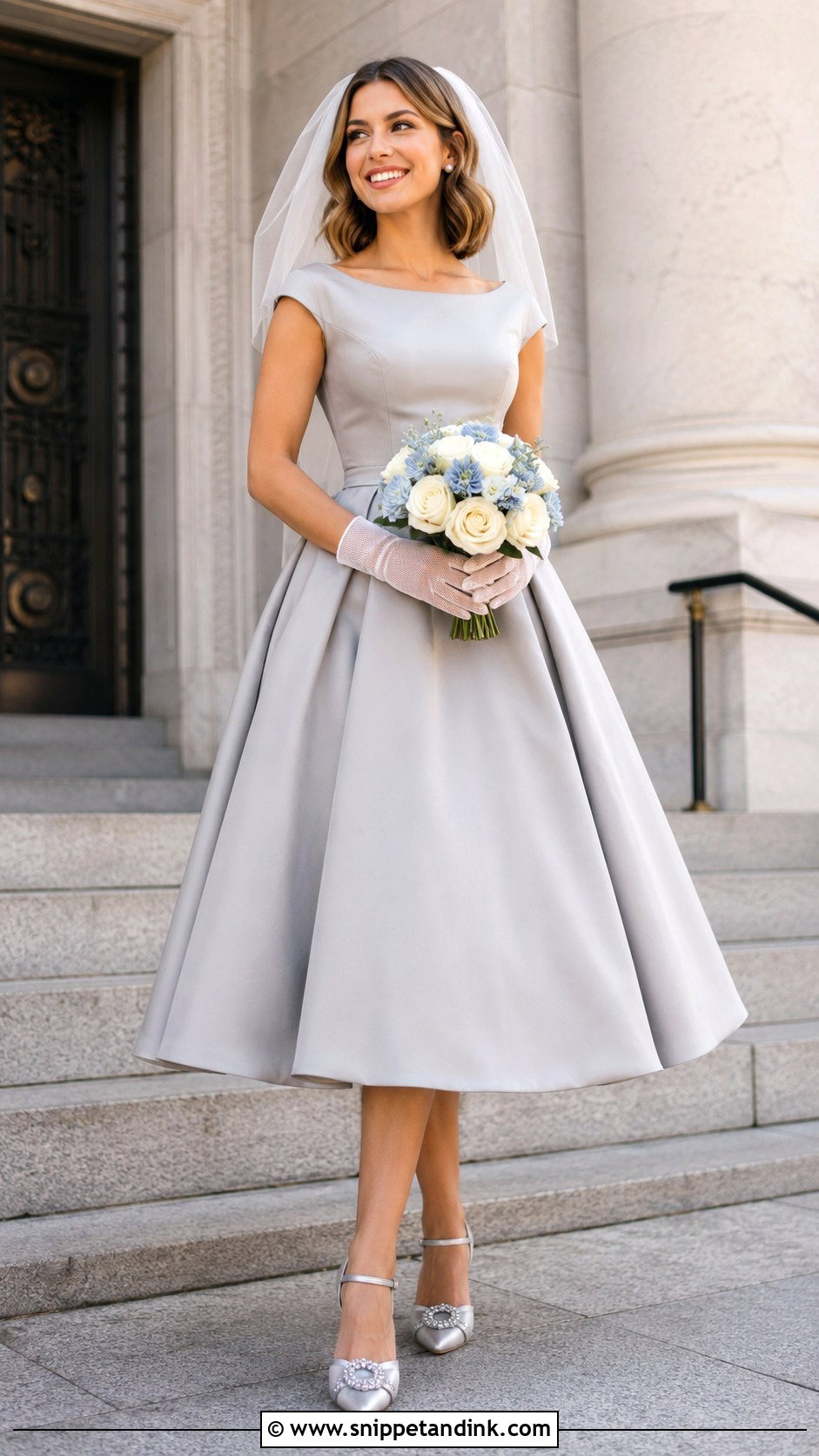
Tea length puts your shoes on show, so I treat them as half the outfit. The hem should land between knee and ankle, and I check it with the actual shoes on, because a change in heel height moves where the hem falls on the calf. Silver pointed pumps, embellished Mary Janes or ankle-strap sandals all suit it. Pearl studs, short gloves if you like them and a birdcage or shoulder-length veil keep the proportions right. A neat bun or waved bob and a compact bouquet of white roses and dusty blue flowers make it easy for a courthouse ceremony or a restaurant reception.
18. Grey Bridal Jumpsuit Dress
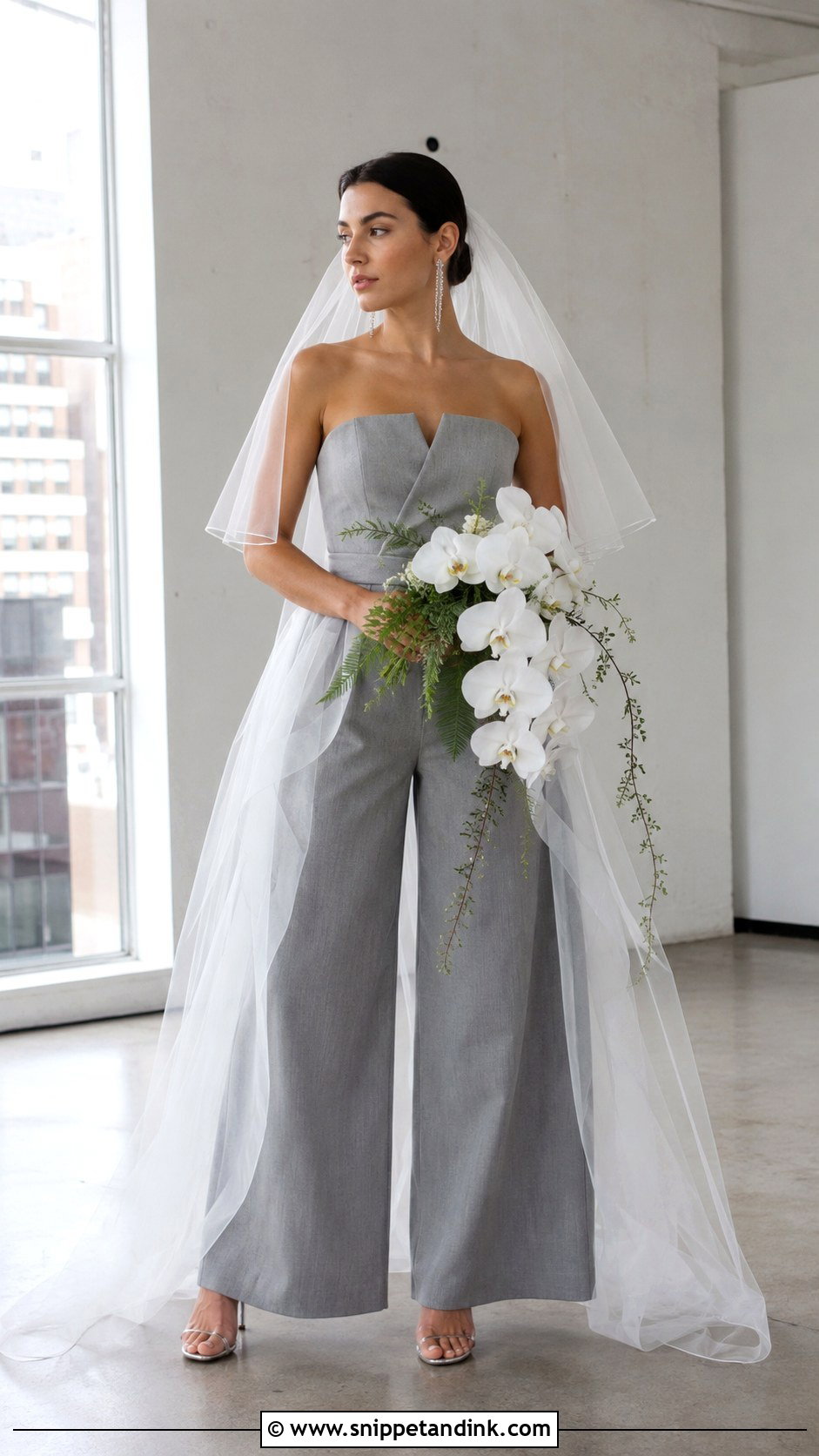
A jumpsuit only looks bridal if it’s tailored like a gown. Wide legs need hemming with the exact shoes, and the rise has to be right or it pulls when you sit down. A structured bodice and defined waist in smooth silver-grey fabric, plus a detachable tulle or organza overskirt for the ceremony, give you two outfits in one. I ask the seamstress for hidden hooks rather than a wrap tie so the overskirt comes off in seconds before the first dance. Metallic heels, long crystal earrings, a sleek ponytail, a fingertip veil and white orchids suit a loft or city wedding.
19. Plus-Size Grey Bridal Dress
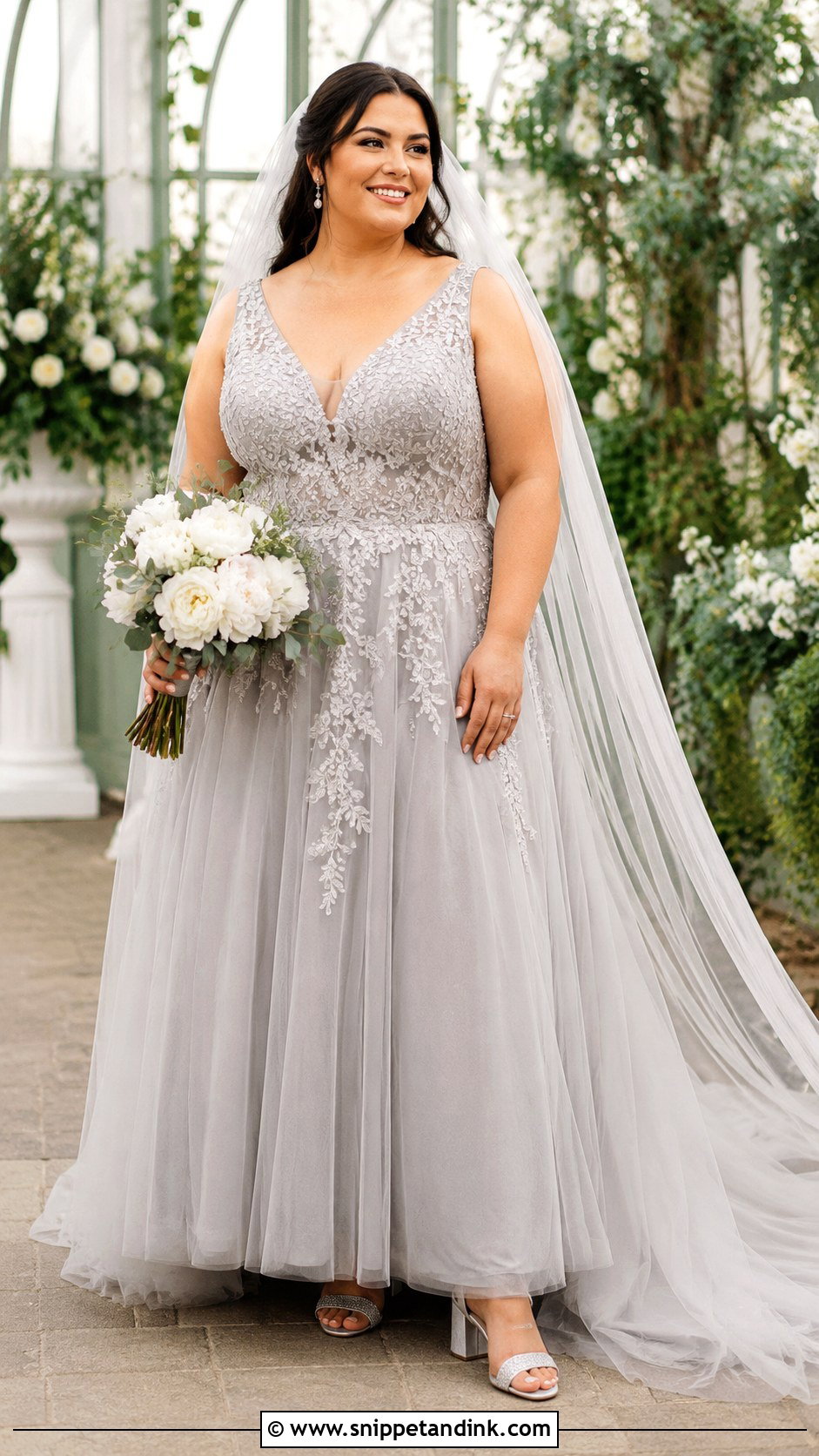
For a plus-size grey gown, support comes first. I look for a structured bodice with proper internal corsetry, straps wide enough to carry the weight of the skirt, and a flowing tulle or chiffon skirt. A V-neckline opens the shoulders, and tonal embroidery adds interest without breaking the line. Ask for a dress designed and patterned in your size rather than a smaller sample stretched through alterations; the bodice proportions are simply better. Cushioned silver block heels, pearl drops, a soft cathedral veil, a half-up style and white peonies, roses and eucalyptus keep you comfortable from ceremony to last dance.
20. Grey Velvet Bridal Dress
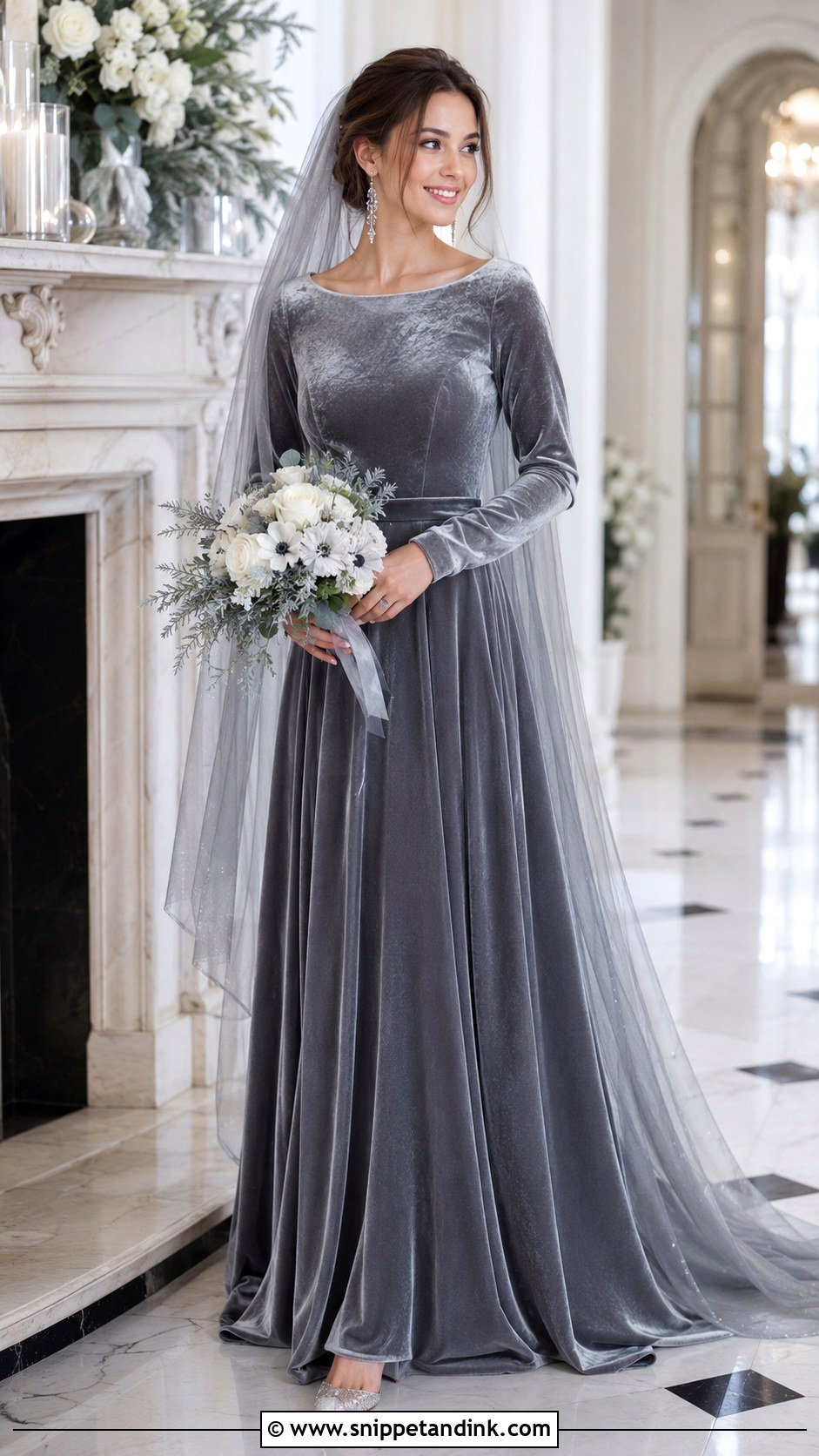
Velvet is the warmest grey here and the hardest fabric to alter, because the pile shows needle holes and pressing marks. I want the fit close to right at the first fitting rather than nudged over three. Silver-grey, slate or smoky charcoal velvet with a defined waist looks regal with long sleeves, and an off-shoulder or V-neck balances the heavier cloth. Silver closed-toe heels, crystal drops and a velvet ribbon tying a low ponytail, then a sheer veil instead of another heavy layer. White roses, anemones and silvery foliage give clean contrast at a winter lodge or historic estate.
Ordering a Coloured Gown on a Realistic Timeline
Most bridal gowns are made to order after you choose them, and a coloured fabric can add a step because the exact shade has to be dyed or sourced. I advise ordering roughly eight to ten months ahead. Production commonly runs several months, some designers quote longer, and alterations need a couple more on top. Rush orders exist, but they usually cost extra and narrow what you can have.
Ask whether the grey you tried on matches the production colour. Shop samples are handled, steamed and spot-cleaned for years under bright lights, and it’s common for a sample to look a touch paler than the finished gown. A swatch from the current fabric settles the question before you sign.
Fittings that suit grey fabrics
Plan two or three fittings starting around eight weeks out, and bring your wedding shoes, underwear and any shapewear to the first one. Satin and velvet show needle marks, so a careful seamstress will pin once and sew once rather than adjust the same seam again and again.
Grey Hides Hem Dirt but Shows Deodorant
Grey forgives a muddy hem far better than white, yet it shows other marks more clearly. Deodorant and setting powder leave pale streaks on charcoal, and water spots can dry darker on silk satin. I keep a white cloth and a little plain water in my kit, blot instead of rubbing, and ask brides to put deodorant on well before they dress. A handheld steamer on a low setting, held a short distance from the fabric, takes out creases from the car without leaving a shine.
After the wedding, get the gown professionally cleaned within a few weeks. Sugar from spilled drinks and sweat can oxidise into brownish marks over time, and grey won’t disguise them. Store it loosely folded in acid-free tissue inside a breathable cotton bag, somewhere dark, because light slowly fades dyed fabric along the folds.
Grey Asks More of the Fabric Than White Does
Grey changes more than white does from one fabric to the next. Dove tulle softens, silver sequins sharpen and charcoal satin takes over a room. Treat the gown, shoes, veil and flowers as one outfit rather than four separate decisions. Before you commit, look at the shade in daylight and under lighting close to your venue’s, and wear it long enough to know how it sits. Then go with the grey dress that suits your setting and the way you actually move through a day. With good tailoring and a bouquet that respects the colour, grey reads every bit as bridal as white.
You'll Like These Ideas:



Leave a Reply