
Bridal fashion right now pulls in two directions at once. On one side are sleek satin columns and plain crepe; on the other, Basque waists, floral appliques, pearls and bubble hems. Shorter hemlines, separates and gowns that change between ceremony and reception sit in the middle. I don’t think any of them is the right answer on its own. The right dress fits your proportions, suits the floor you’ll walk on and lets you sit through dinner without fighting it. Below are twenty complete looks, each with the accessories I’d pair with it and the fitting detail I’d check first.
The Calendar Behind a Made-to-Order Gown
Most of the dresses below are made to order, which means the sample you try on is not the one you’ll wear. Yours is cut and sewn after you order, and that takes longer than people assume.
Production time varies widely by designer, but several months is normal, and alterations add another stretch on top. This is the rough order I plan around:
- Start trying on around nine to twelve months out if you can. Structured gowns like the Basque waist or drop waist often have longer production times than a simple slip.
- Order once you’re sure. Changes after the order is placed are usually limited or charged extra.
- Book the first alteration appointment for when the dress arrives, and expect two or three fittings in total.
- Leave the final fitting until roughly two weeks before the wedding, so the fit reflects your body as it actually is then.
Short on time? Sample sales and ready-to-wear bridal lines exist for exactly this. Minis, tea-length dresses and slip gowns are much easier to find off the rack than a corseted ball gown.
1. Square Neck Satin Bridal Dress
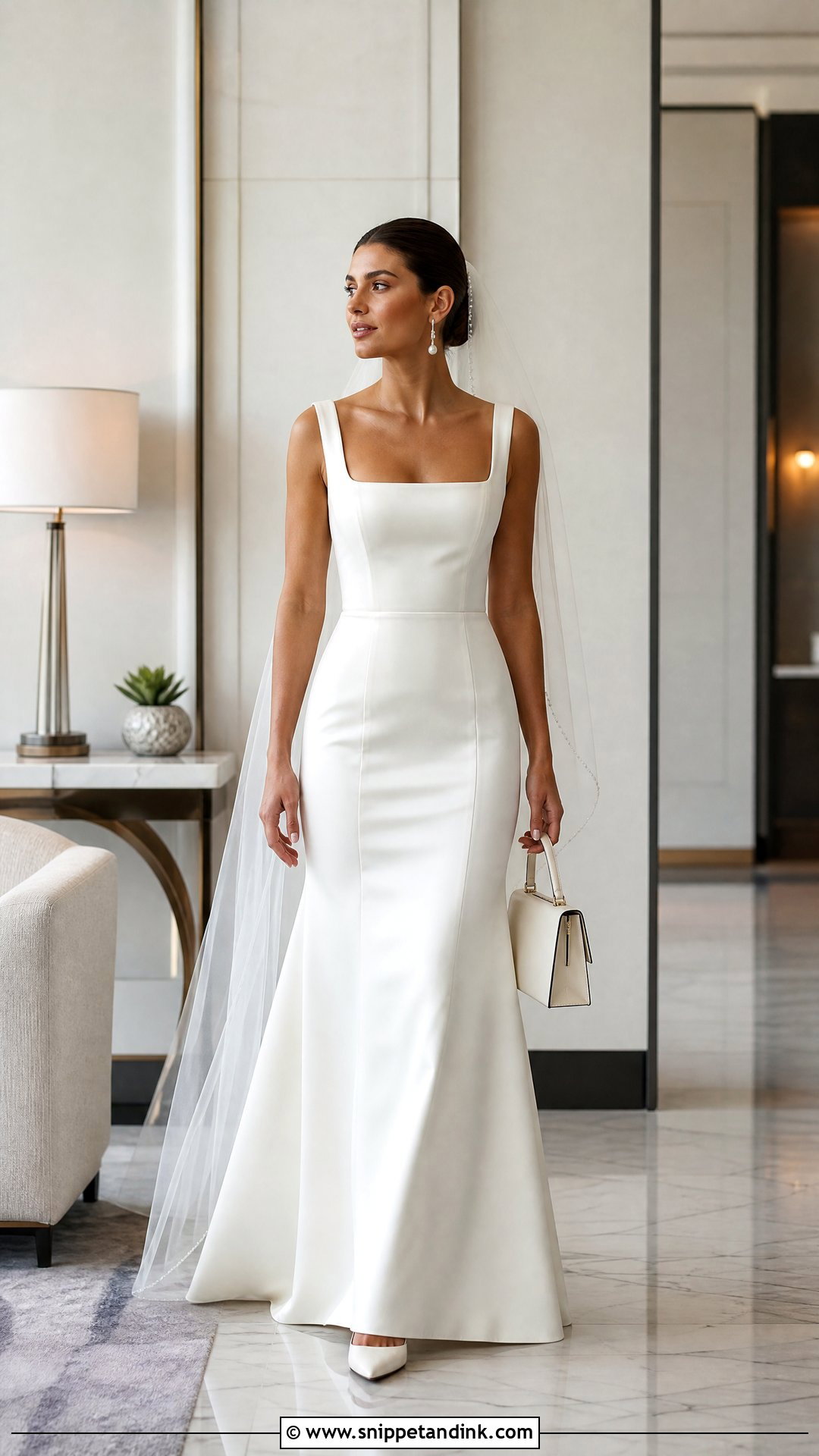
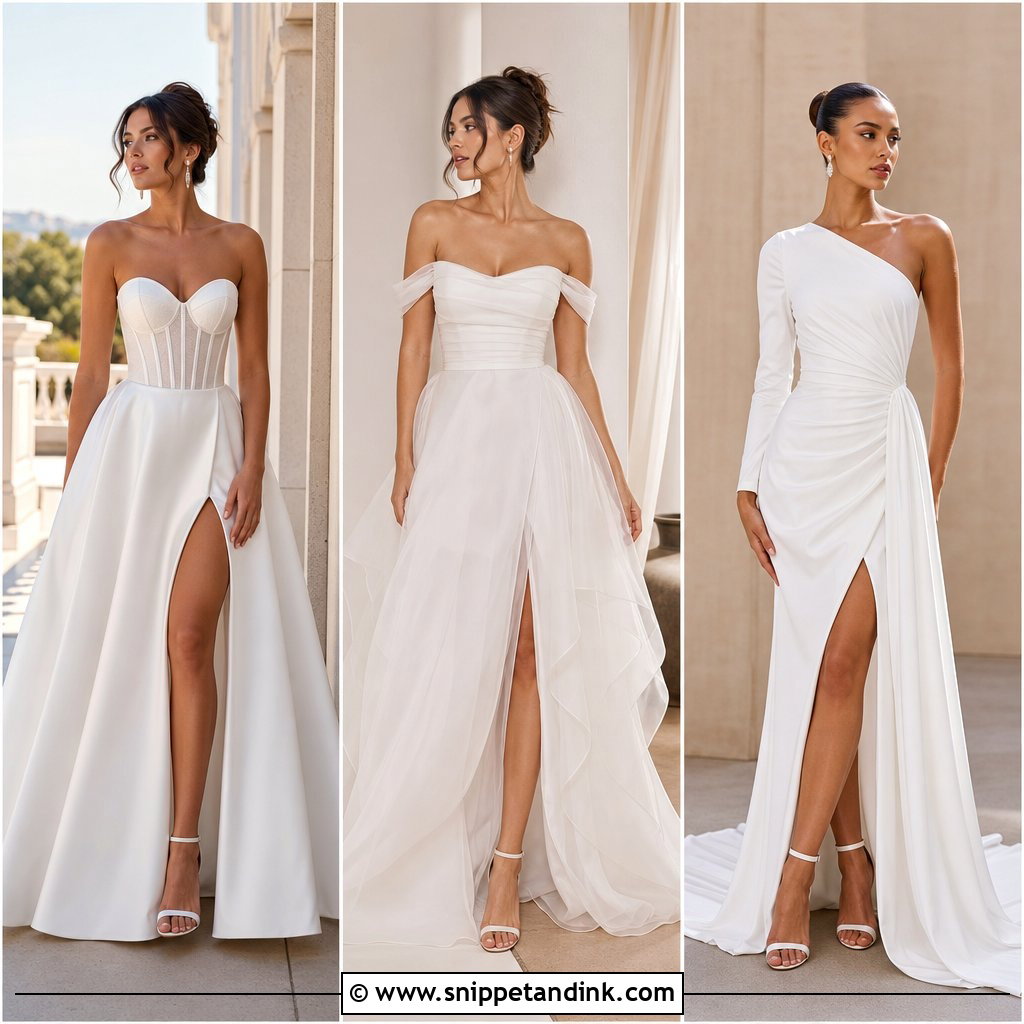
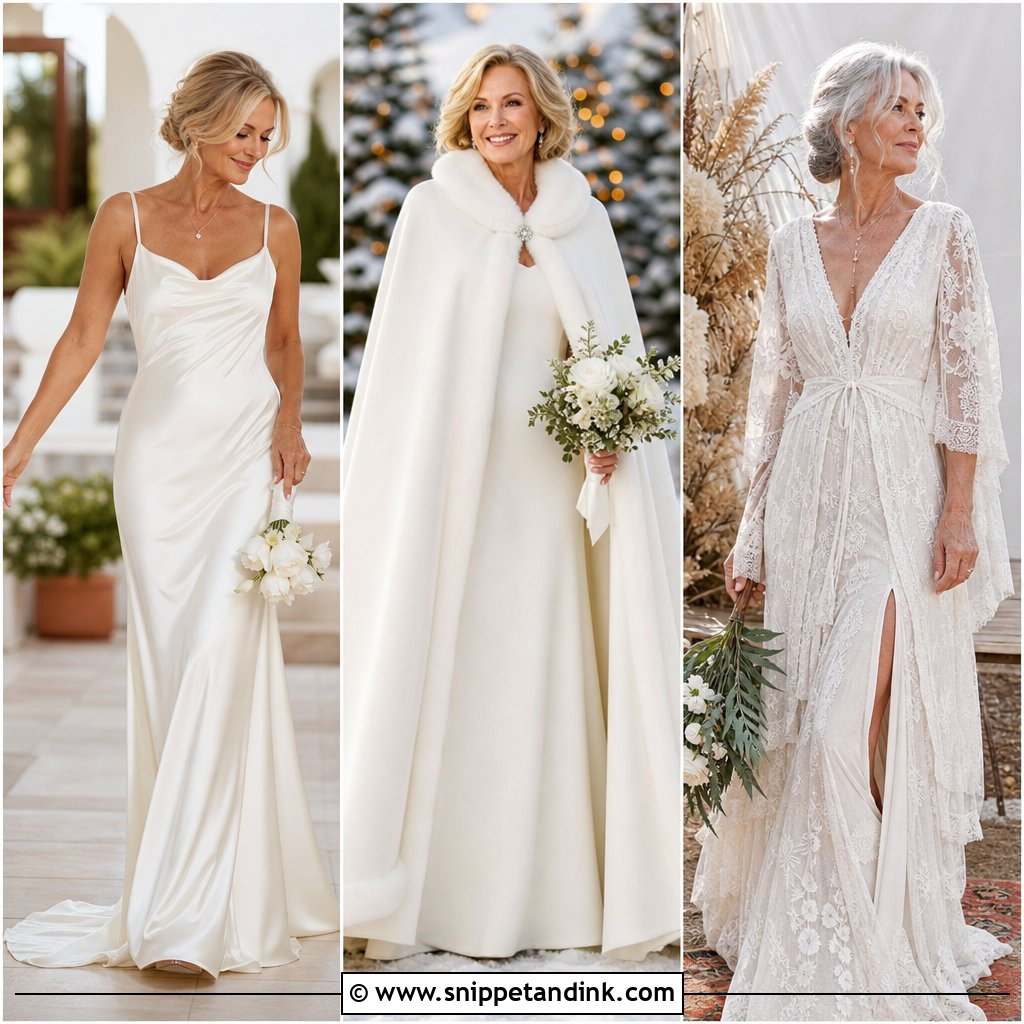
Satin makes a square neckline look crisp because the fabric holds a sharp corner. I’d pair it with wide straps, a supported bodice and a skirt that flares gently, so the neckline stays the main event. Pointed pumps, pearl drops, a small structured bag and a low bun leave room for a fingertip veil. The one thing to watch with ivory satin is how it handles a long day: it marks where it creases, so a satin with a little body is a better buy than a thin, very shiny one. Fitted long sleeves can be added for more coverage. Hotels, galleries and rooftop venues suit its clean lines.
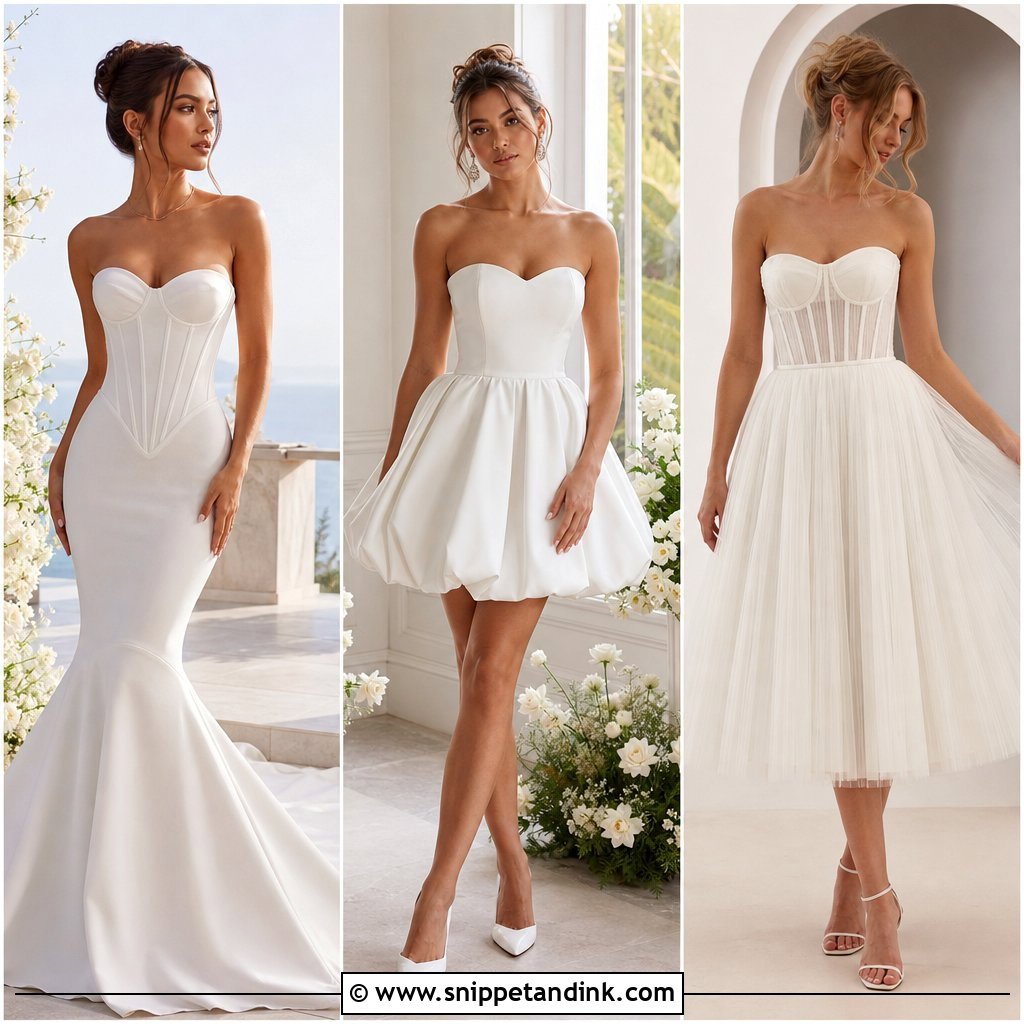
2. Basque Waist Bridal Ball Gown
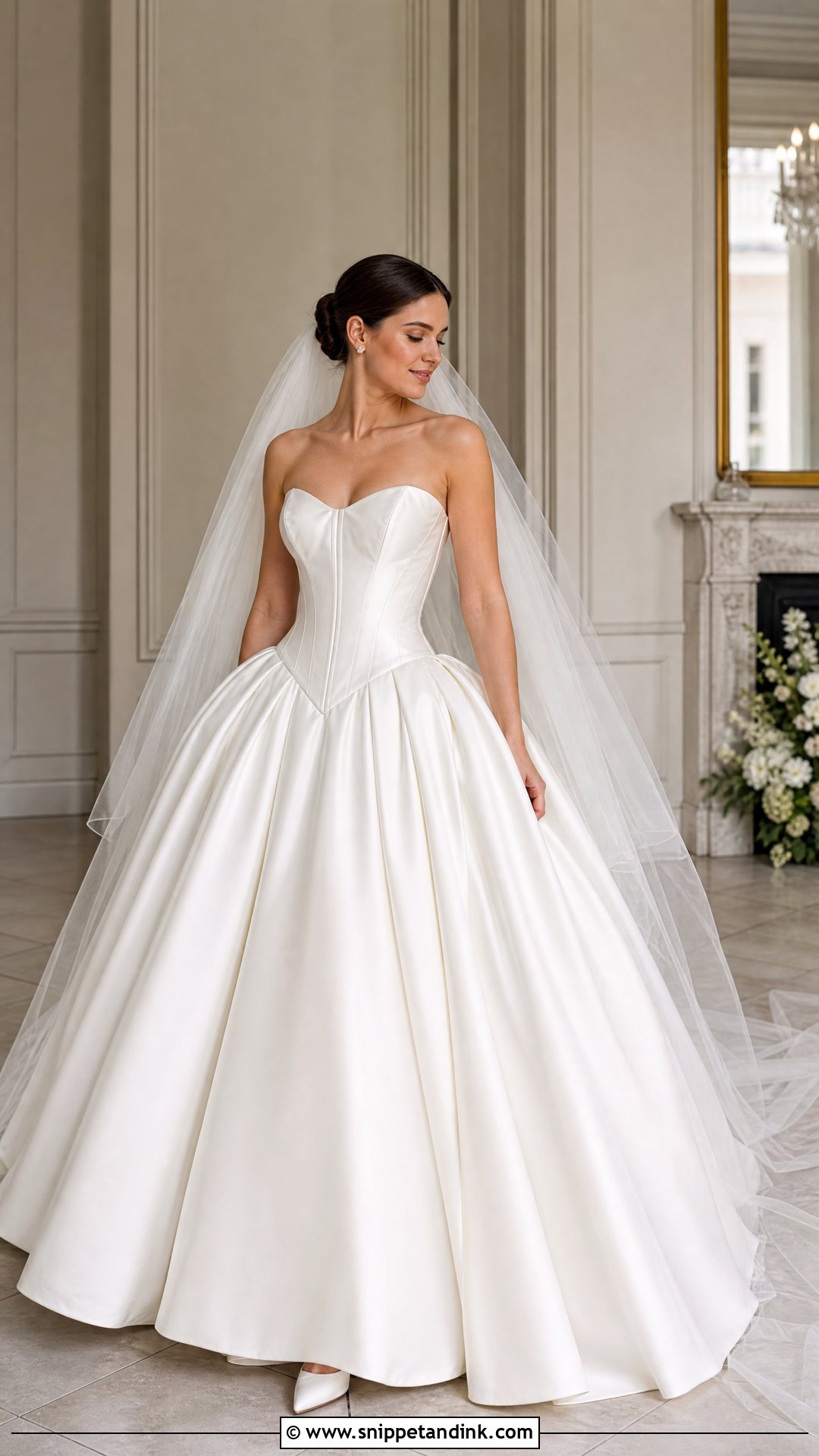
A Basque waist dips into a V below the natural waistline, which visually lengthens the torso. With a corset bodice above and a full satin or mikado skirt below, it reads regal rather than costume. The point of the V is what I fit most carefully. If it sits too low on a short-waisted bride, the skirt starts at the hip and the proportions collapse. Soft pleats rather than heavy gathers keep the volume manageable. Add closed-toe heels, small studs, a plain-edged cathedral veil and smooth hair, then save it for a ballroom or historic house with the space to carry the skirt.
3. Drop Waist Corset Bridal Dress
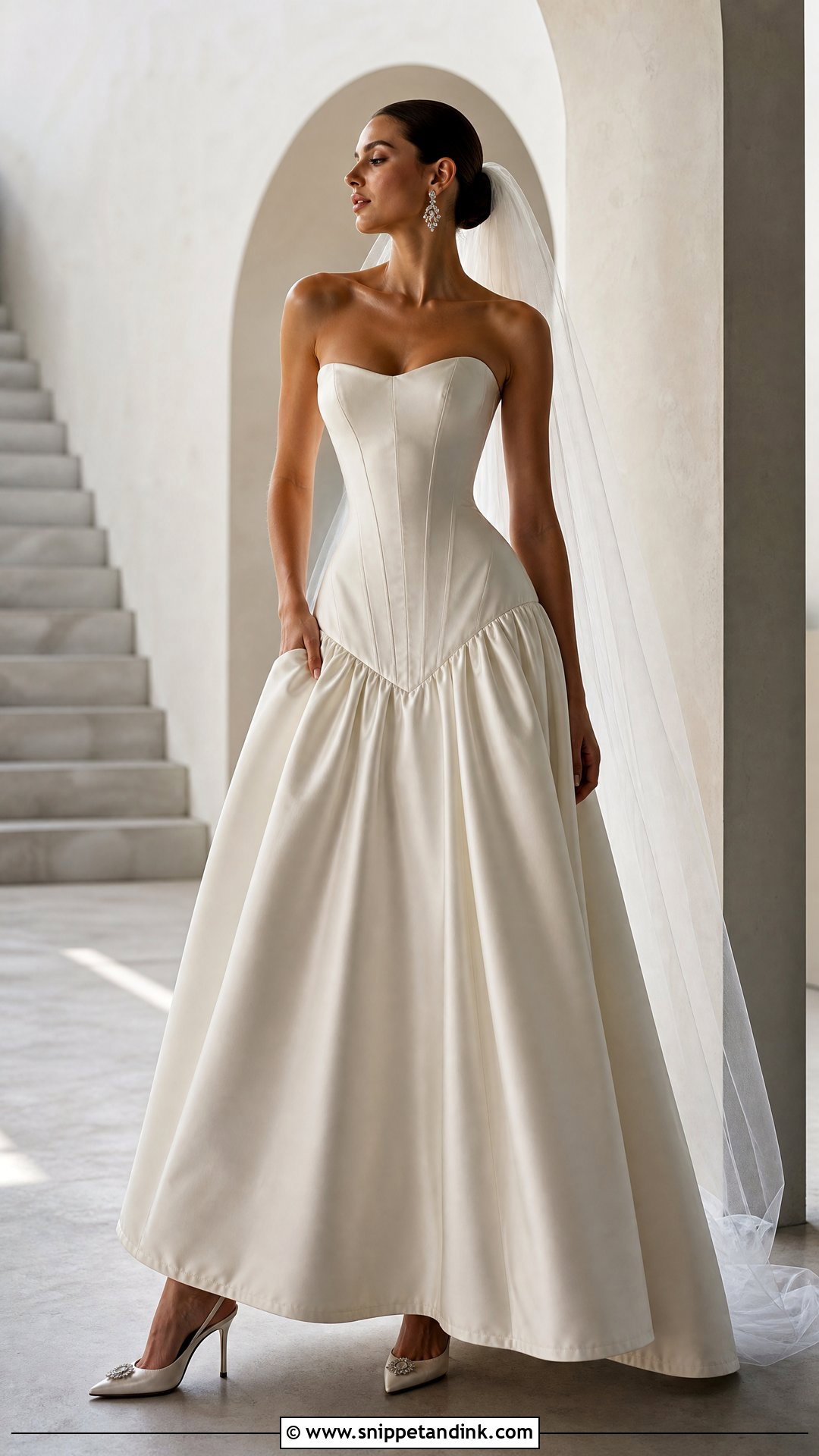
A drop waist extends the corset past the natural waist before the skirt opens out, so the body reads long and sculpted. It is not forgiving. The seam lands at the hip, which means a few centimetres in either direction changes the whole shape, and I’d expect at least one fitting focused on that line alone. Matte satin gives sharp definition; layered tulle softens it. Slingback heels, small crystal earrings and a light veil under a polished bun are enough, and the corset seams already give the eye plenty, so leave the necklace at home. City venues and museums with clean architecture suit it best.
4. Minimalist Crepe Bridal Dress
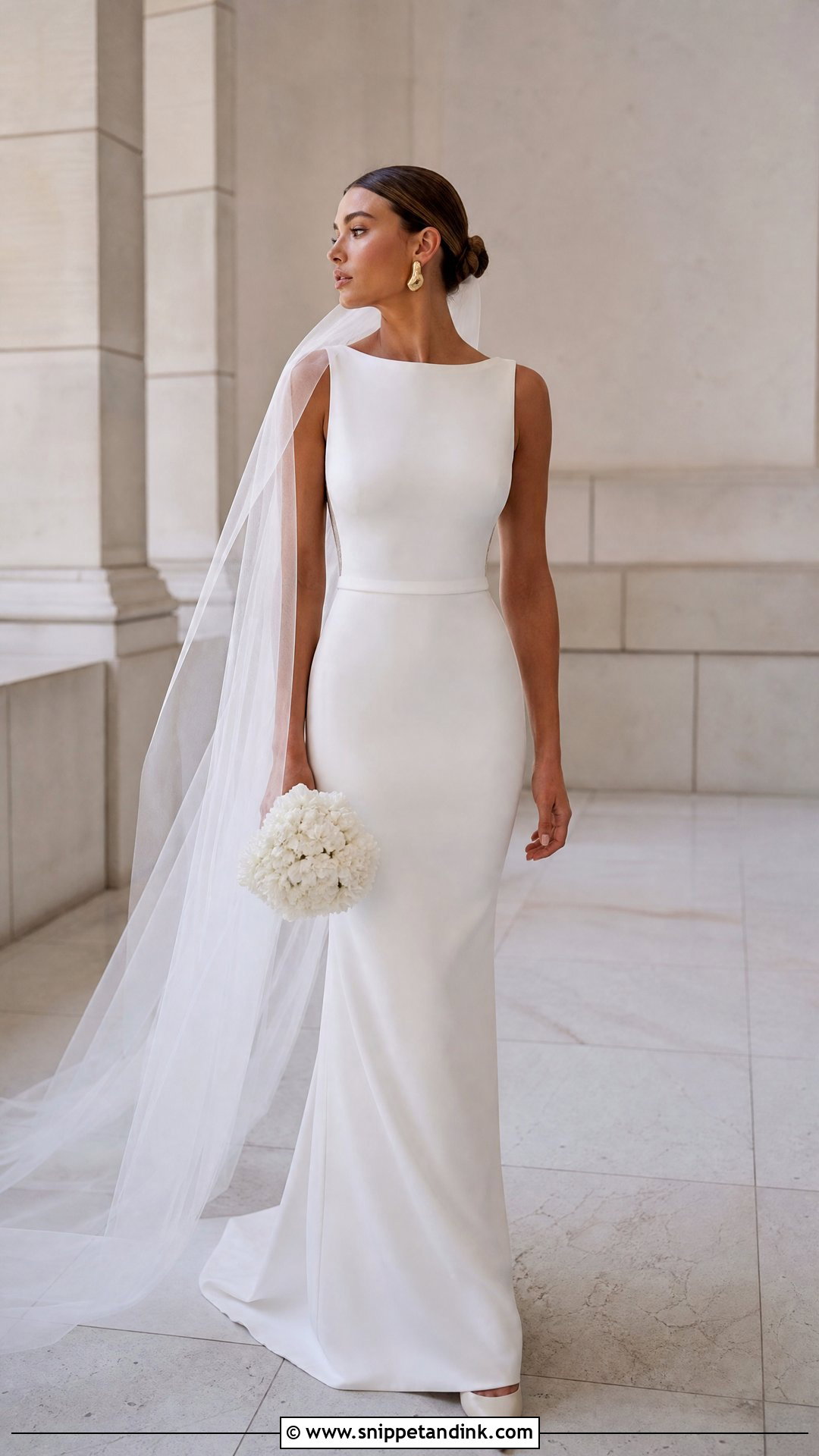
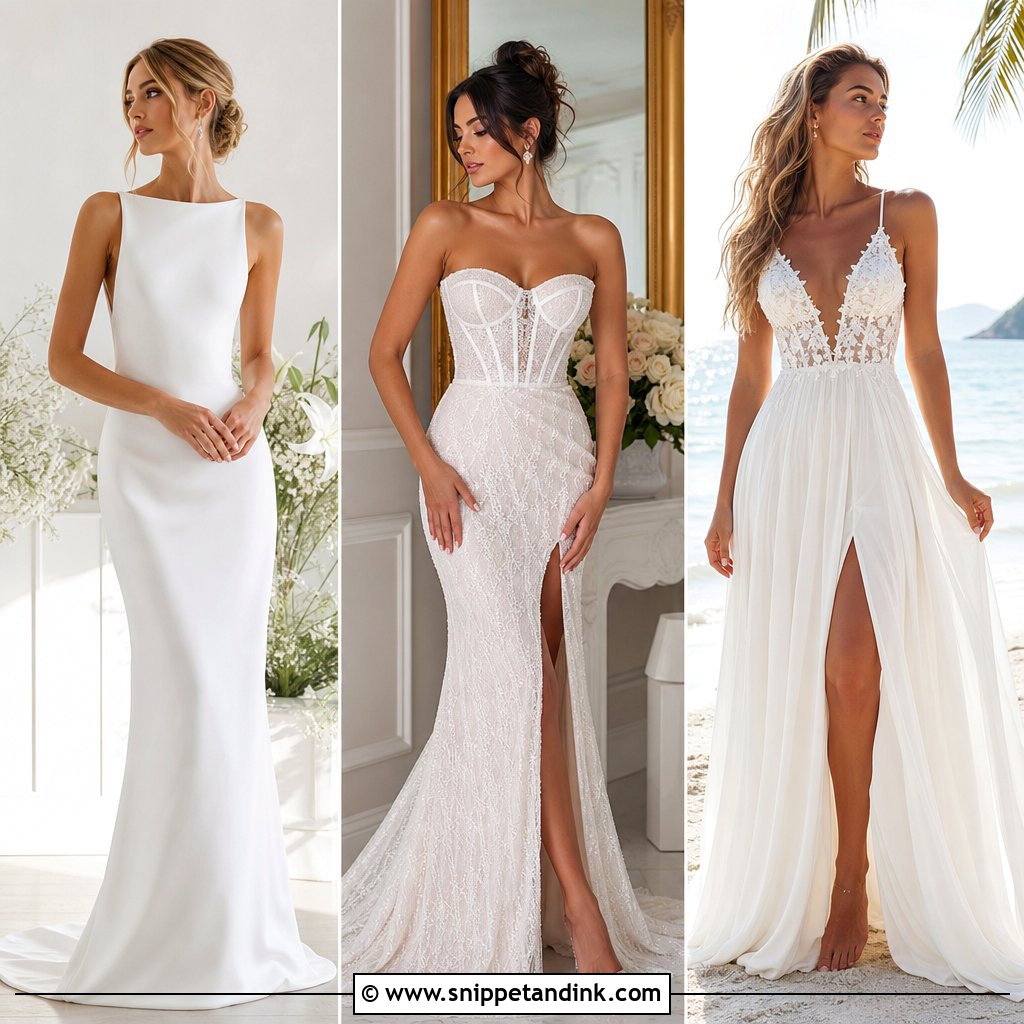
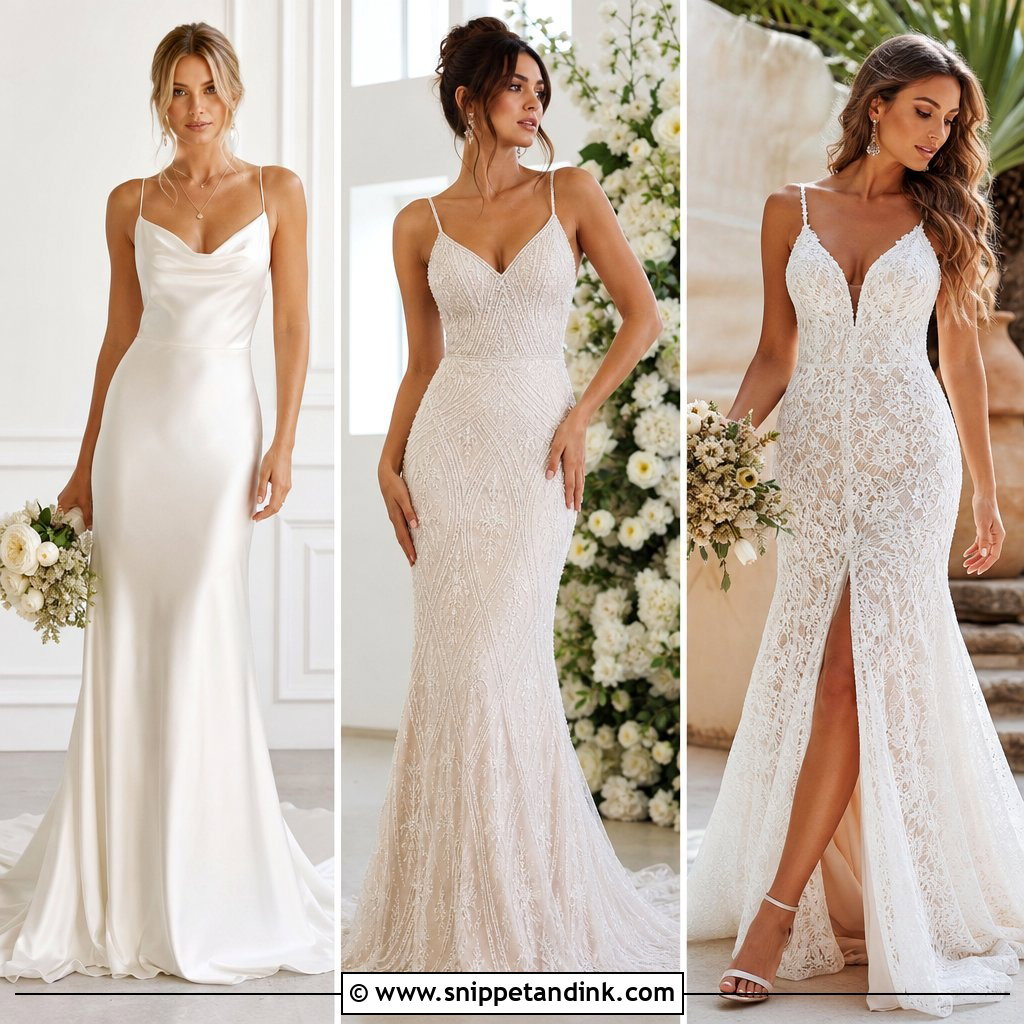
Crepe has weight, and that weight gives a plain dress its elegant drape. A fitted sheath or a gentle fit-and-flare with a bateau neck and low back is all it needs. Pointed ivory heels, sculptural gold earrings, a compact white bouquet and a long plain veil complete it. Thicker crepe, built-in cups and panel seams give real support without visible structure. Because crepe skims, it shows the edge of every bra band and waistband, so smooth underwear with bonded edges is part of the dress, not an afterthought. It moves easily from a courthouse to a restaurant reception.
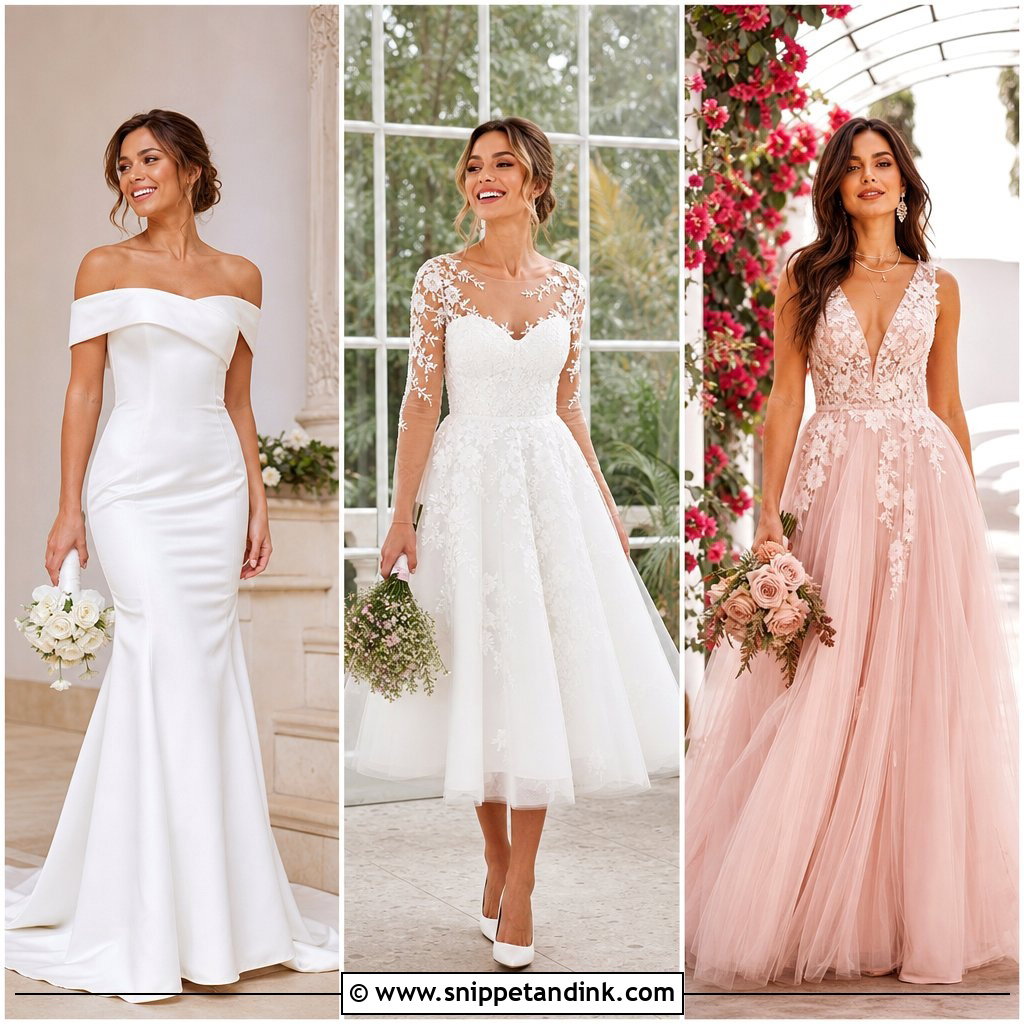
5. Off Shoulder Draped Bridal Dress
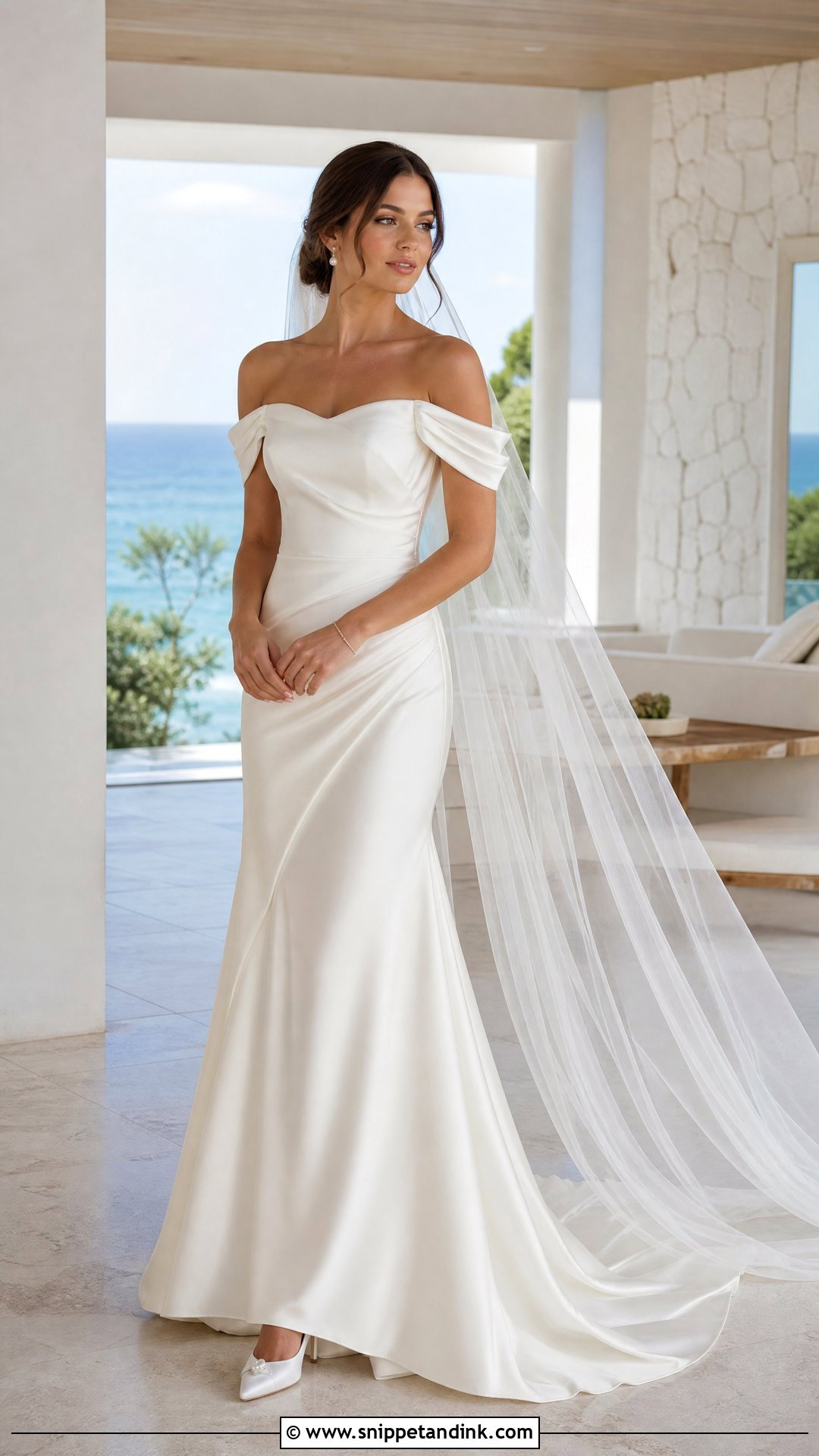
Draping the off-shoulder band in folded satin or gathered crepe frames the collarbone softly. The catch is arm movement. A band that sits across the upper arm restricts how high you can reach, so at alterations I ask brides to hug, sit and lift both arms above their shoulders. If the band digs in, it needs a little more ease, or the bodice needs to hold it up from inside. A fitted bodice with a gently flared skirt balances the shoulder. Pearl earrings, a fine bracelet, almond-toe heels and a low chignon with a chapel veil set beneath it keep the neckline visible.
6. High Neck Lace Bridal Dress
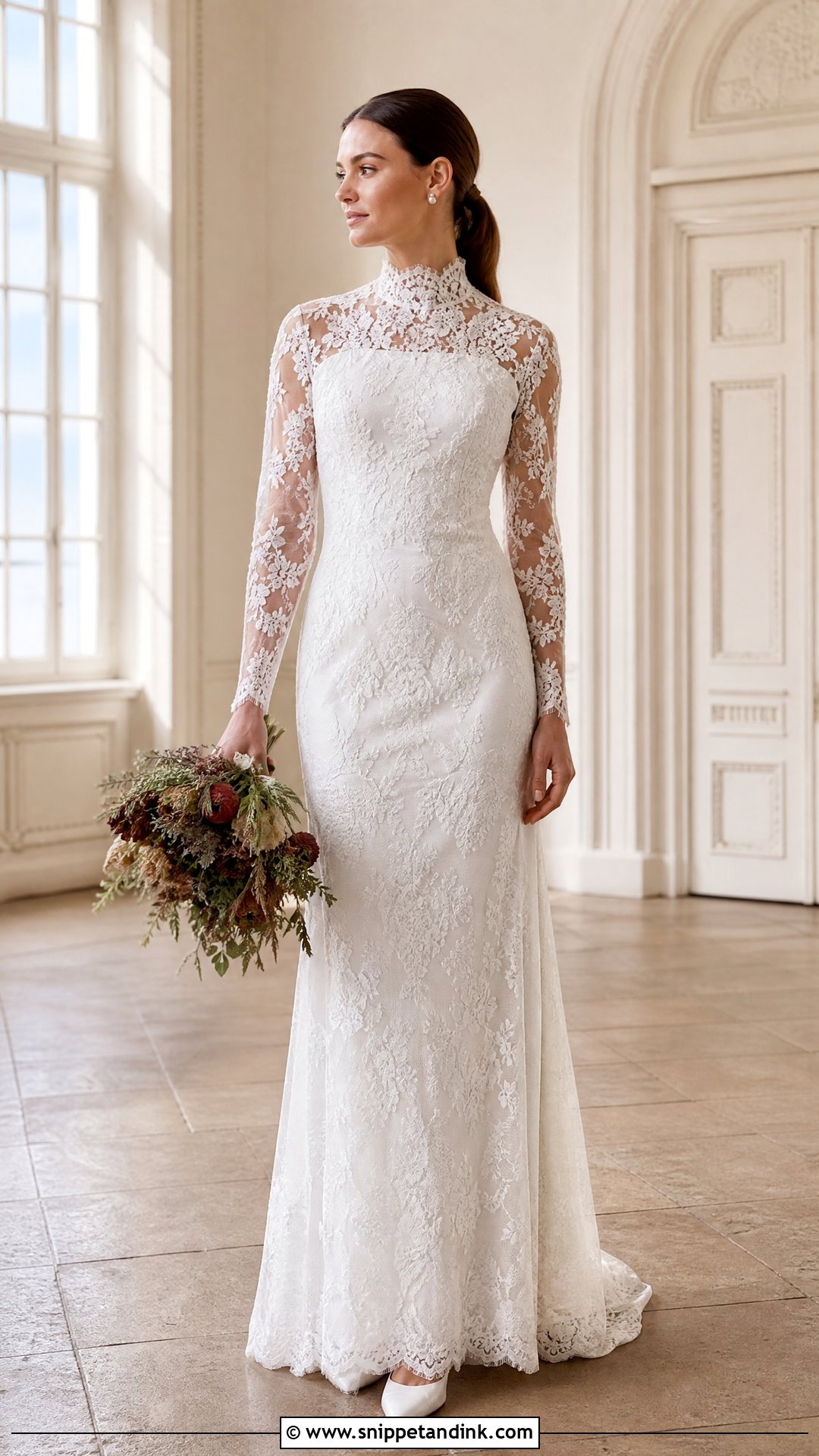
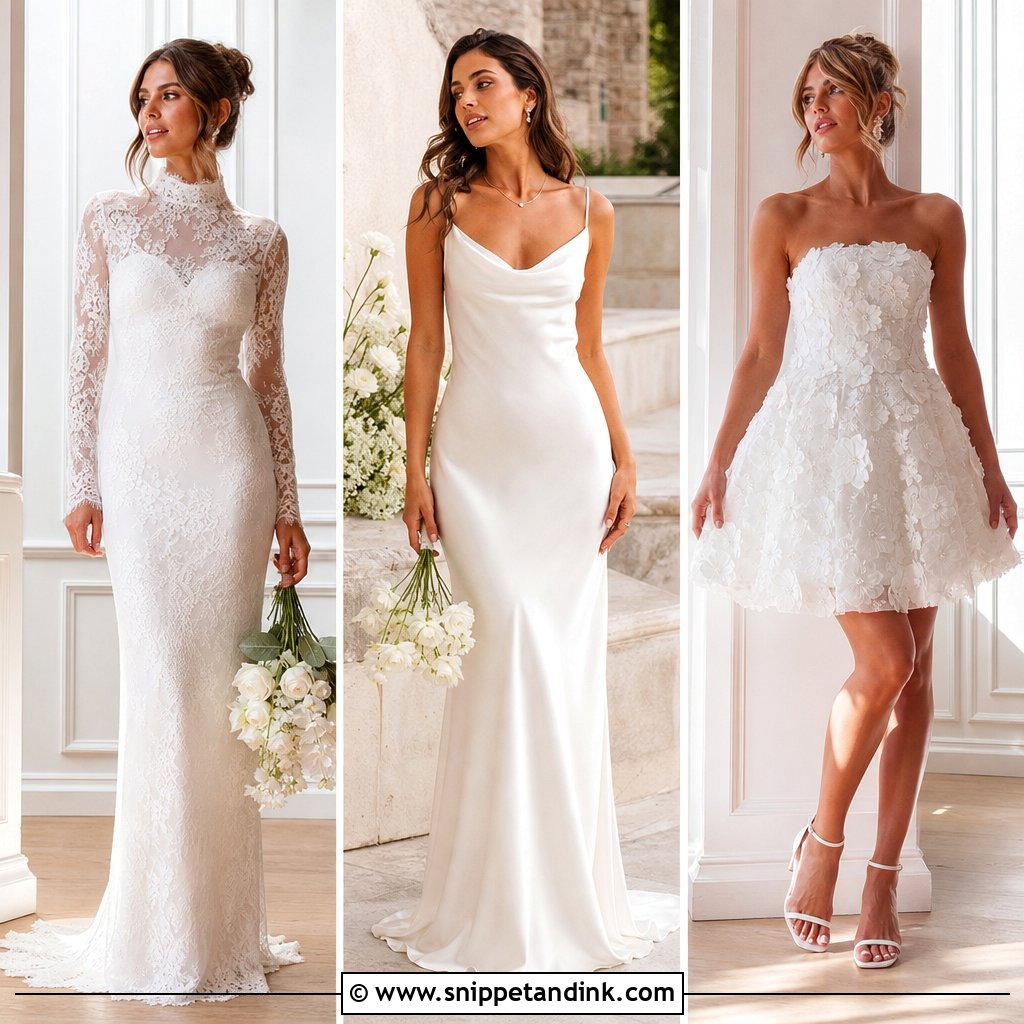
Lace can look fresh when it is cut into a narrow, high-neck shape instead of a full traditional gown. Botanical or geometric lace over a smooth lining, with sheer sections at the neck and sleeves, keeps it light. A column or slim A-line skirt stops it feeling old-fashioned. The lining colour makes more difference than most brides expect: a nude lining lets the lace stand out sharply, while an ivory one blends it in. Hold both against your skin before choosing. Satin pumps, tiny pearl studs and a low ponytail are plenty, with a plain veil or none. It is a good fit for cooler months and formal rooms.
7. Strapless A Line Bridal Dress
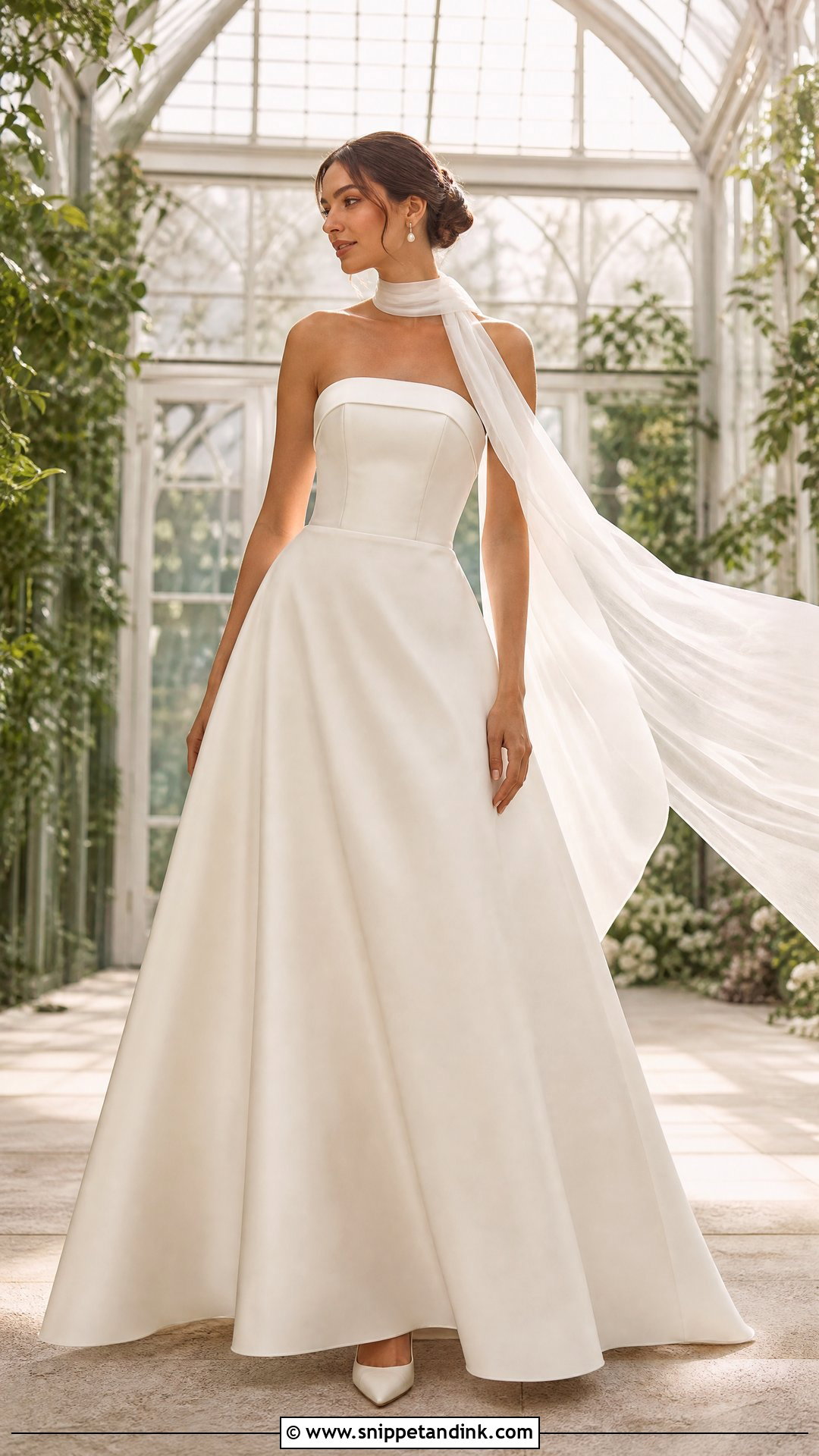
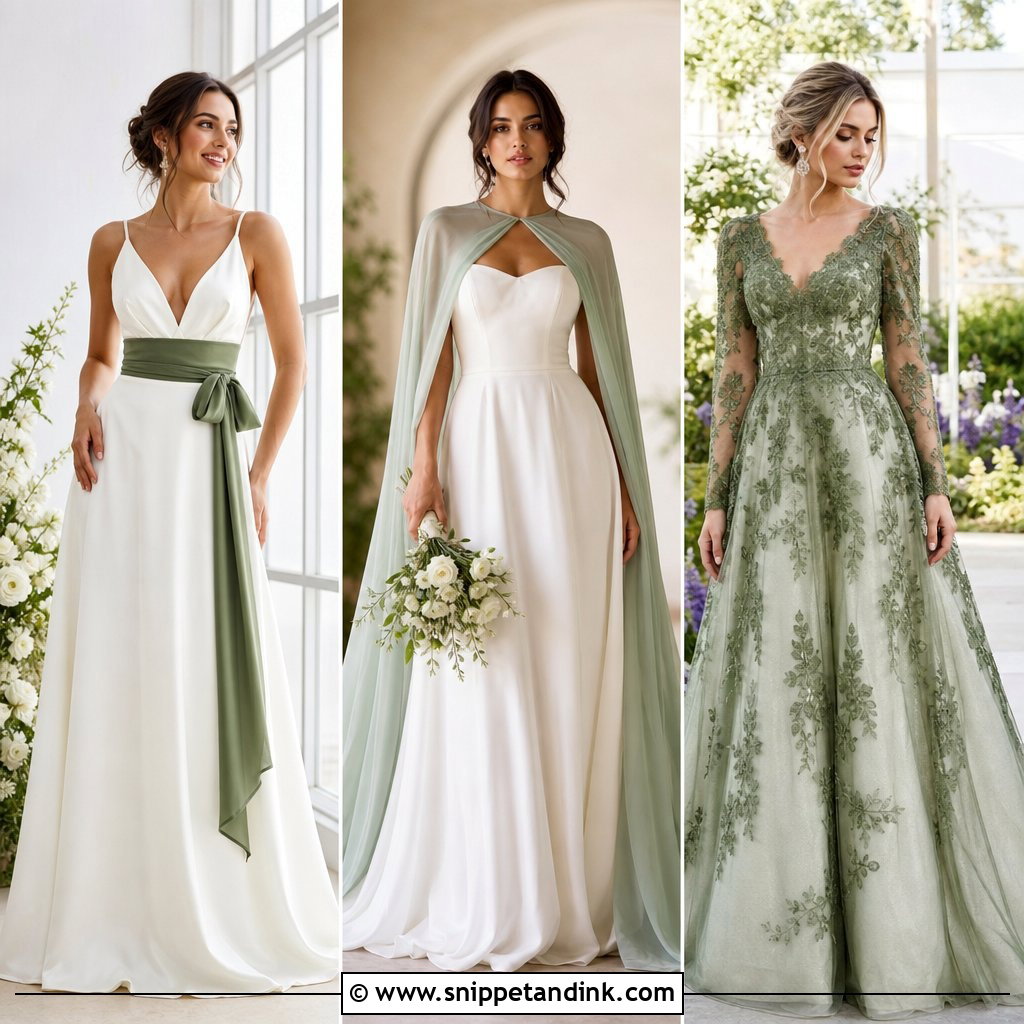
Strapless A-lines suit a wide range of figures because the skirt falls away from the waist instead of following the hip. Pick a structured bodice with a straight or slightly curved neckline and a skirt without excess volume. A long chiffon scarf at the neck, pearl drops, pointed pumps and an updo give it a runway feel, and the scarf comes off for dancing. My non-negotiable with strapless is internal boning plus a waist stay. Without them you’ll be pulling the bodice up all night, and it shows in every candid photo. It works from greenhouse to ballroom.
8. One Shoulder Bridal Dress
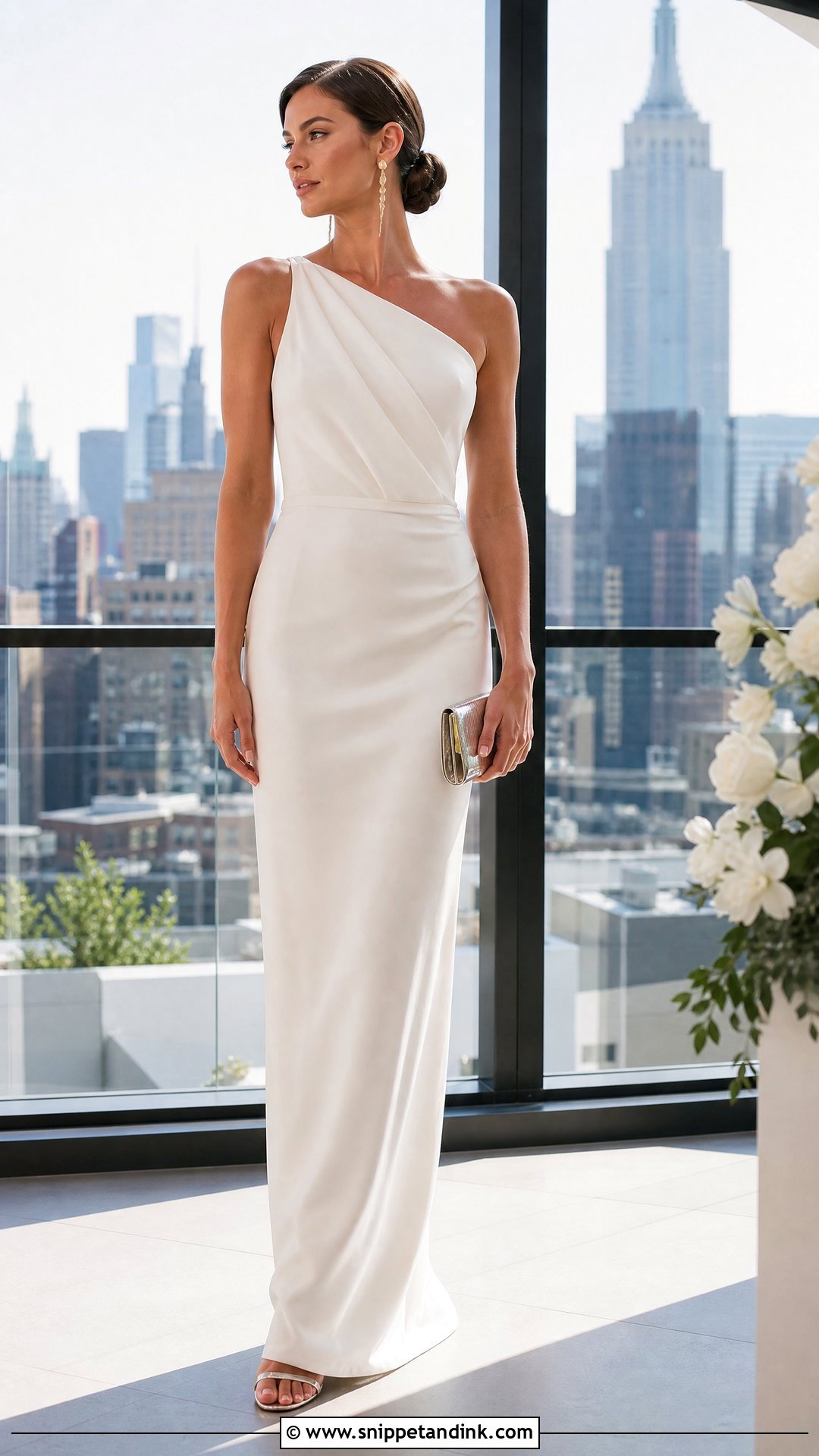
An asymmetric neckline changes a gown’s whole attitude. A one-shoulder dress works in fluid crepe, satin or softly pleated chiffon, either as a slim column or a fitted bodice over a controlled A-line skirt. Wear a single statement earring on the bare side and sweep the hair into a low side-parted bun so nothing crosses the diagonal. A cape-like panel off the shoulder adds drama without embellishment. Check the back view in a mirror: single straps often pull the bodice toward one side, so the zip ends up running at a slight angle. Sleek heels and a metallic clutch finish it for an evening celebration.
9. Long Sleeve Sheer Bridal Dress
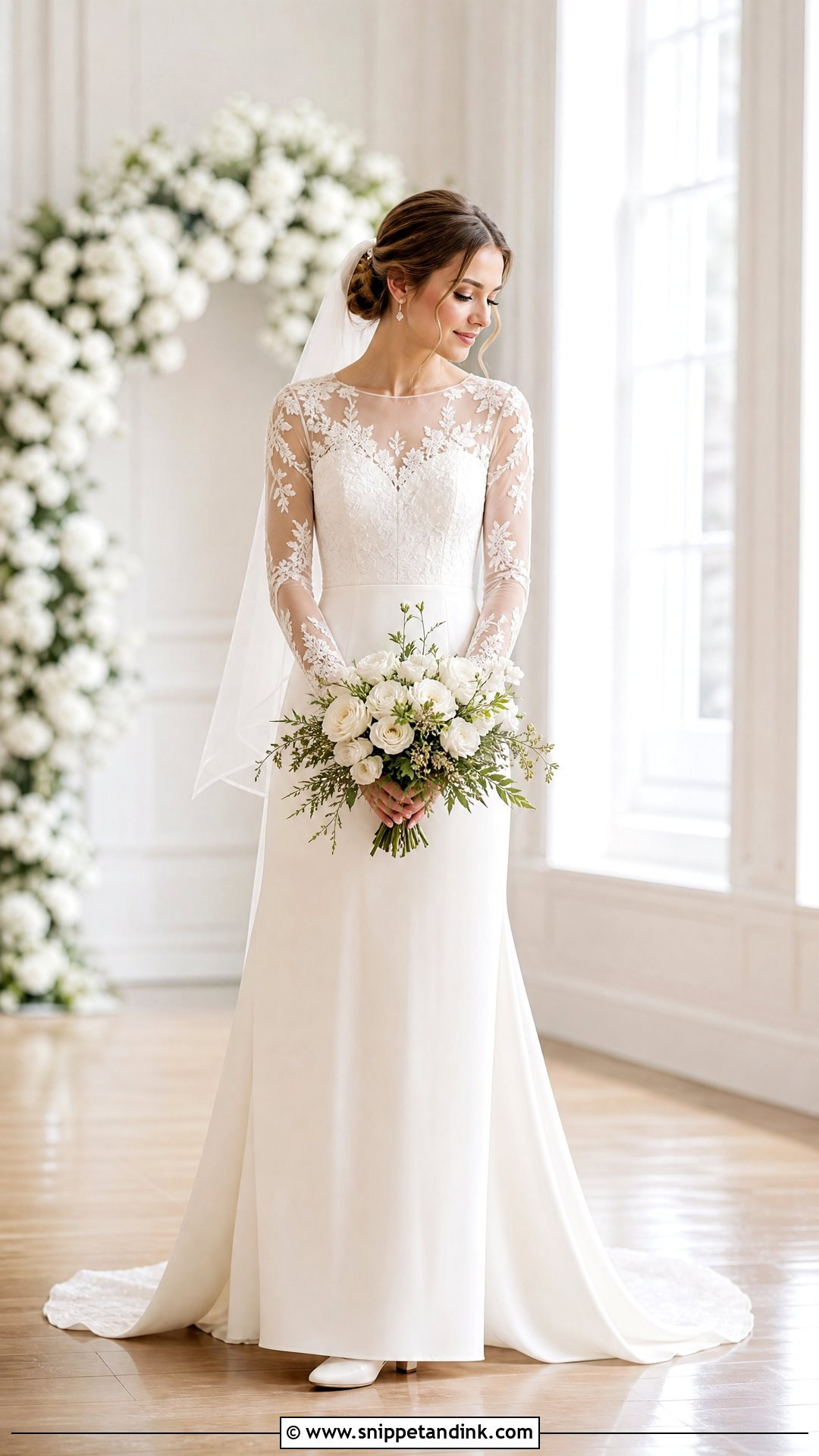
Sheer sleeves give coverage without weight. Fine tulle, delicate lace or lightly beaded mesh over a lined bodice and flowing skirt creates contrast between bare-looking arms and an opaque body. Closed-toe pumps, small earrings and a soft veil with minimal edging suit it, along with a relaxed low bun or smooth waves. The cuff is the detail I test: mesh has little stretch, so a tight wrist makes it hard to hold a bouquet or sign the register. It is practical for autumn and winter, air-conditioned venues and breezy outdoor ceremonies.
10. Tea Length Bridal Dress
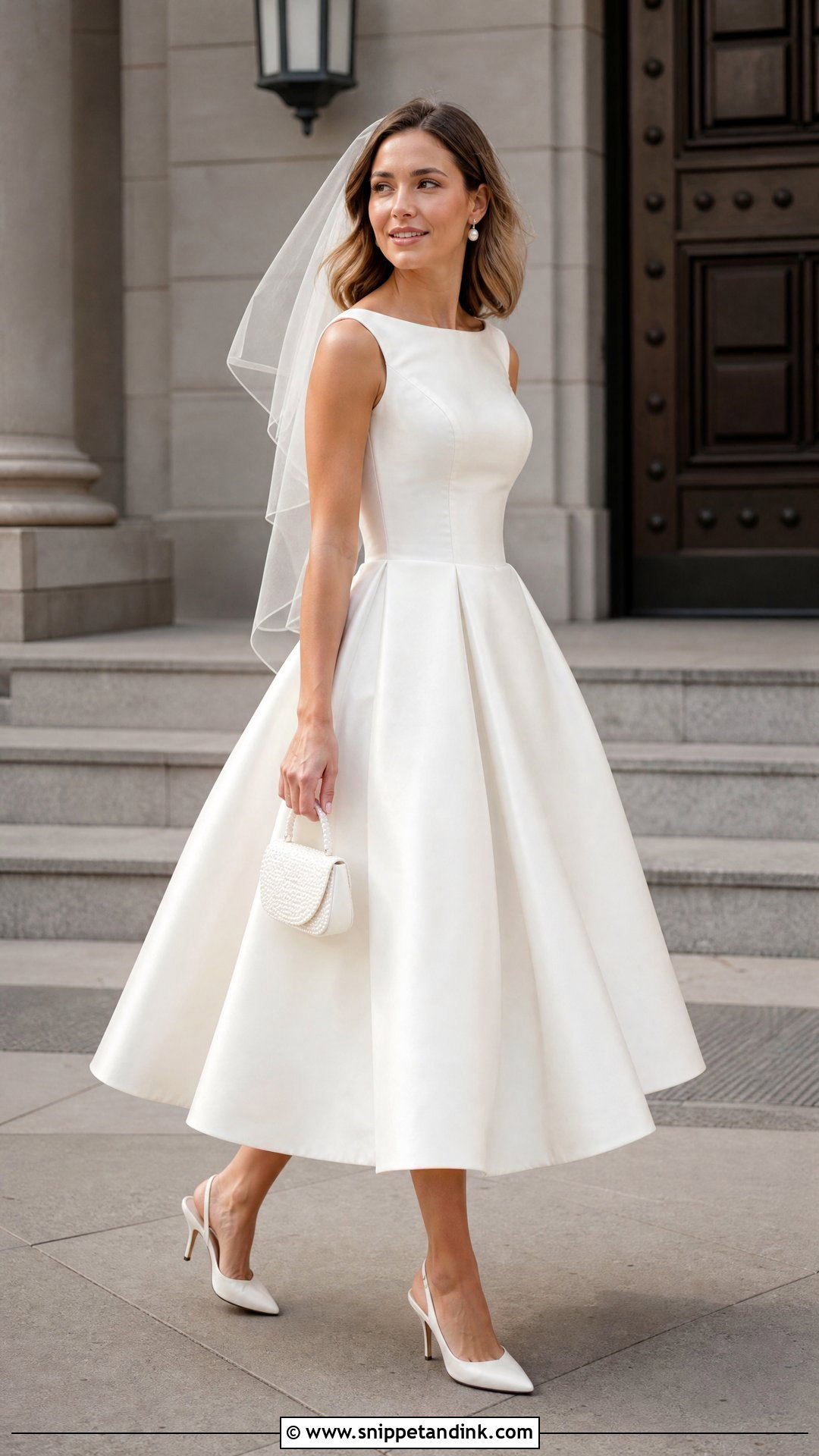
A tea-length hem falls between knee and ankle, and suddenly your shoes are half the outfit. A fitted bodice with a full mikado skirt has a retro structure; a slimmer satin cut feels cleaner. Pointed slingbacks, pearl earrings and a top-handle bag suit it, with a birdcage veil for a vintage note or a shoulder-length one to keep it current. It is easy to walk and dance in. Take your actual shoes to every fitting, because a change of heel height shifts where the hem hits your calf. Courthouses, restaurants and garden parties suit it.
11. Modern Bridal Mini Dress
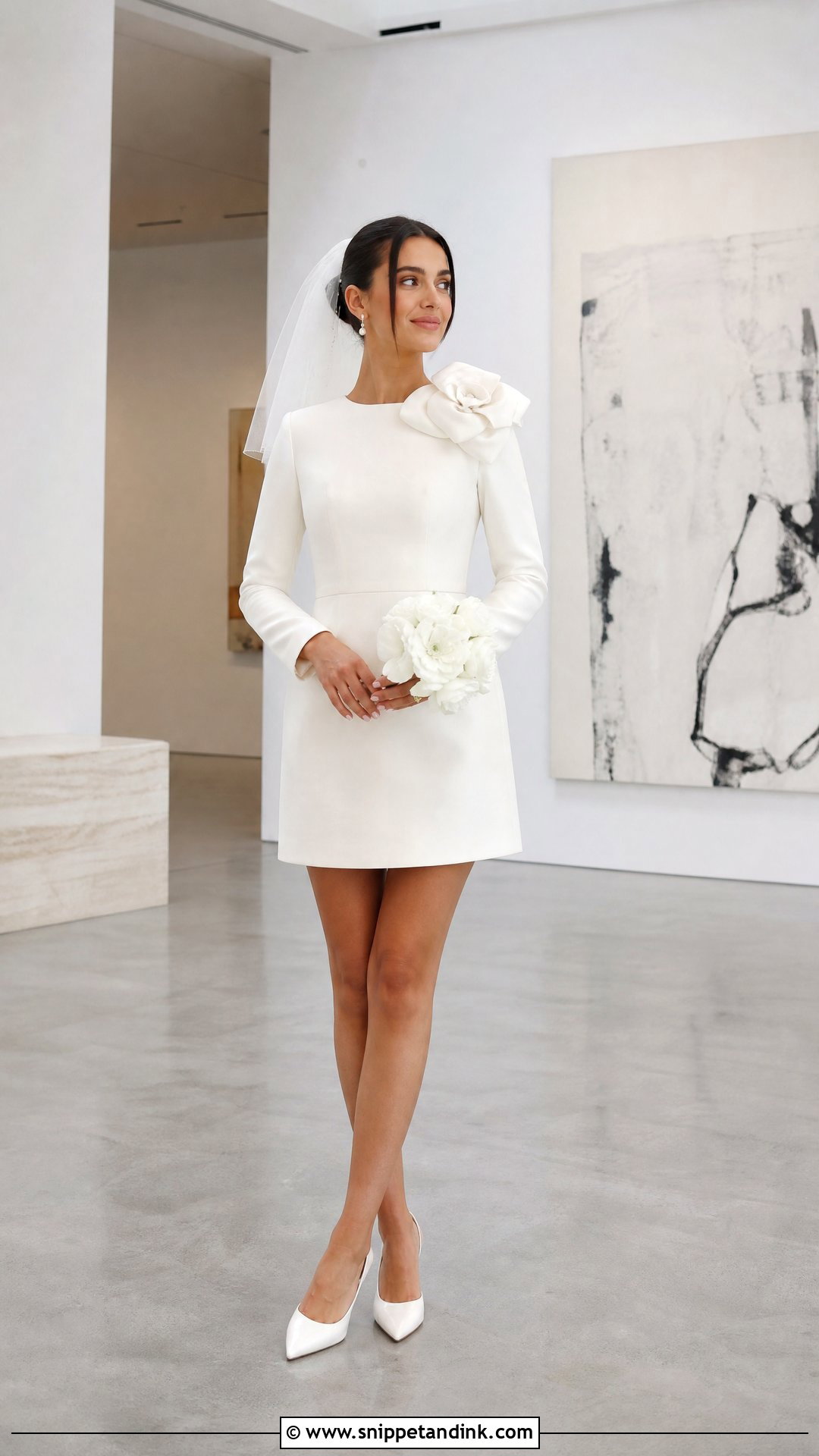
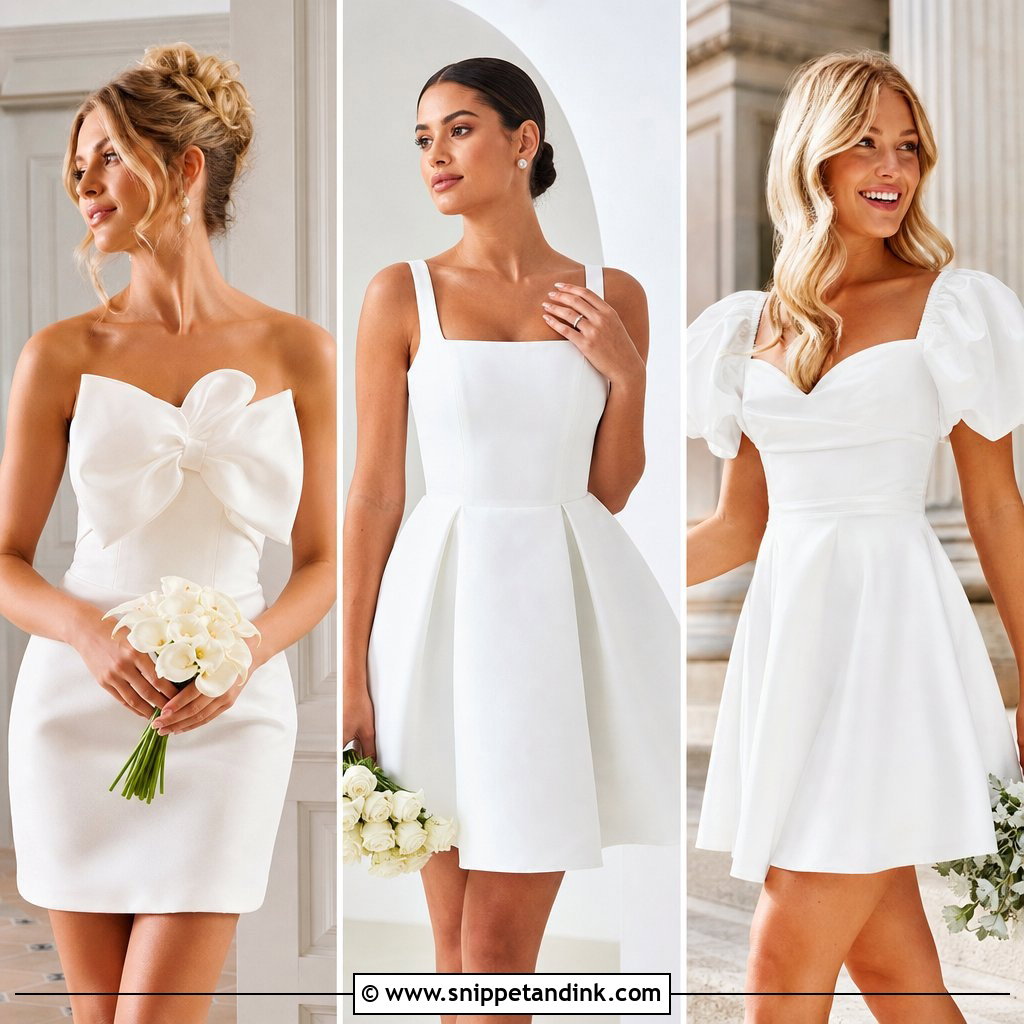
A mini only looks bridal in substantial fabric with one clear feature: a sculpted neckline, long sleeves, a few dimensional flowers or one large bow. Pick one, not all four. Pointed pumps, sheer tights in cold weather, delicate drop earrings and a short veil balance the shorter hem. A fitted mini rides up when you sit, so I check it on a chair and on a stair step before hemming. If you’d rather show less leg and arm, an above-the-knee shift with opaque sleeves is the answer. Rooftops, restaurants and city ceremonies suit it.
12. Cape Sleeve Bridal Dress
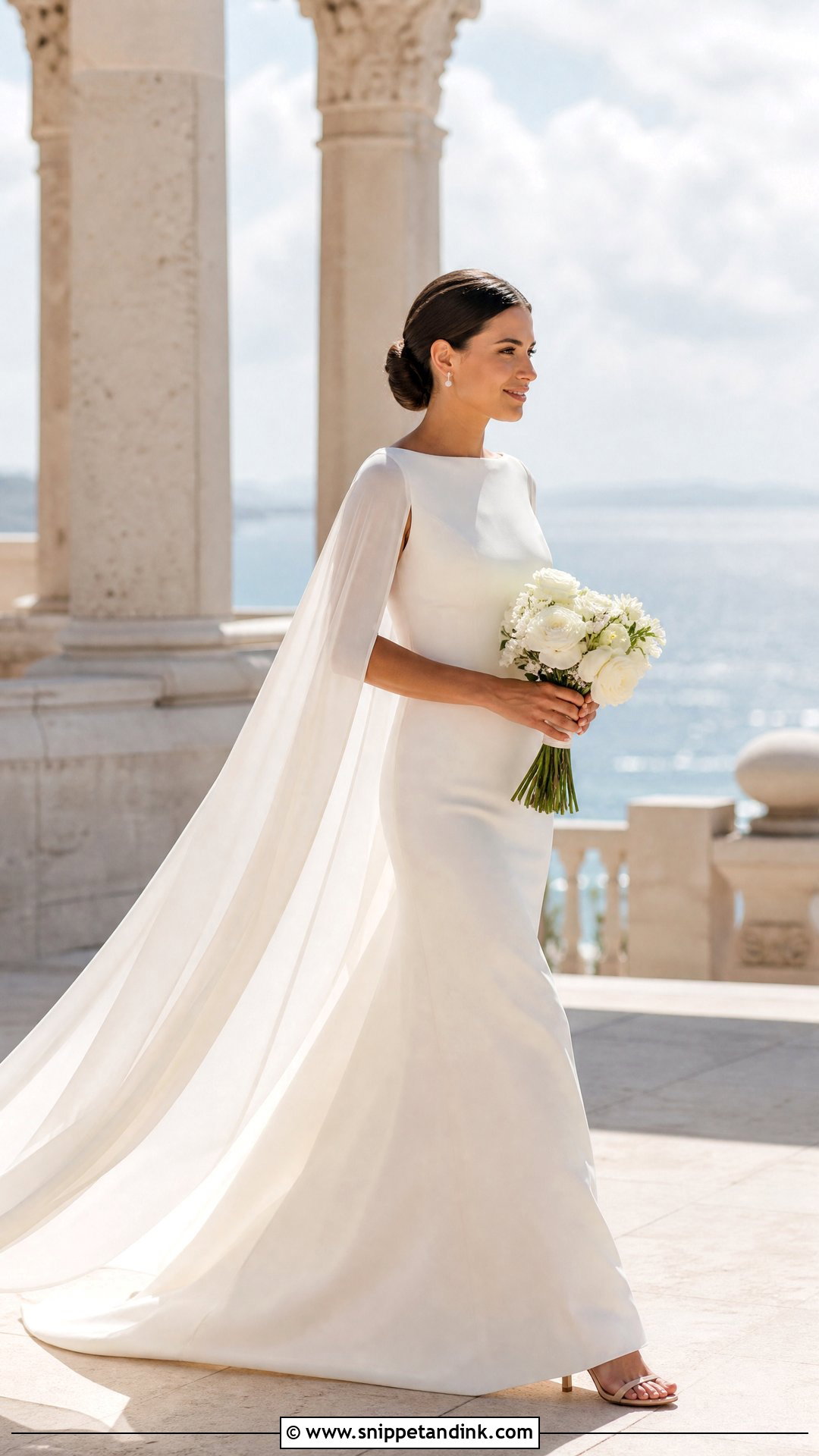
A cape turns a plain column or A-line into a ceremonial look. Attach it at the shoulders or neckline in chiffon for movement, or in tulle, lace or pearl-dotted fabric for more surface interest. Because the cape already creates length behind you, I’d drop the traditional veil; wearing both crowds the back view. Smooth hair in a bun lets it fall cleanly, with simple heels and small earrings. Ask for a detachable cape so it comes off for dinner. Outdoors, and especially in breezy coastal settings, chiffon catches the wind well in photos, but tulle can wrap around you, so test it outside.
13. Detachable Overskirt Bridal Dress
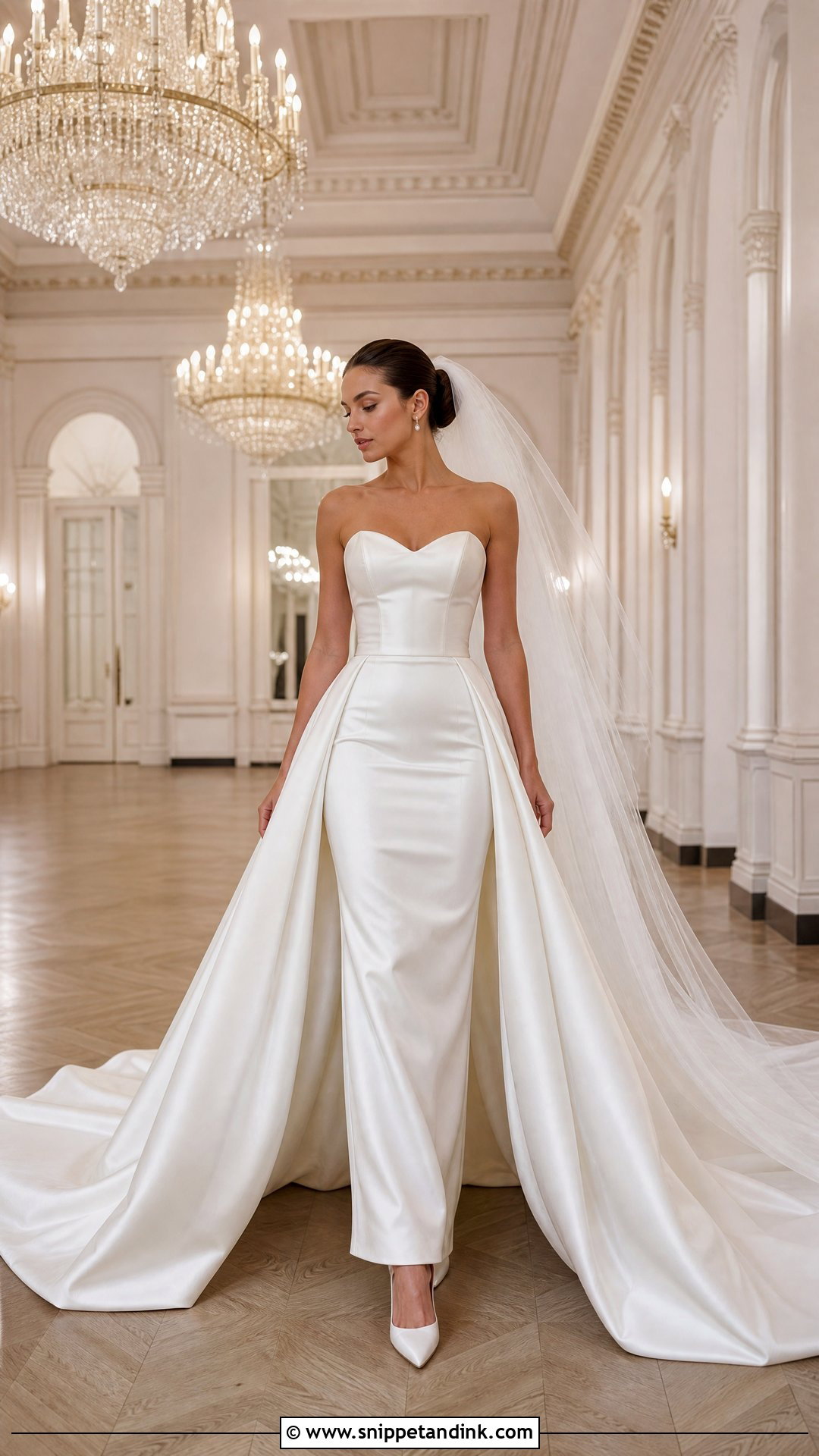
Why choose between a sleek gown and a full skirt? A fitted dress with a detachable overskirt gives ceremony volume and a slim reception line. Matching satin hides the join; layered tulle makes the contrast obvious. Pair the ceremony version with pointed heels, a long veil and simple earrings, then switch to a bolder bracelet once the skirt comes off. The attachment is where these dresses succeed or fail. Hooks under a waistband sit flatter than a tie, and I always have the bride practise removing it with one helper during the final fitting. Ballrooms and estates suit the full version.
14. Floral Applique Bridal Dress
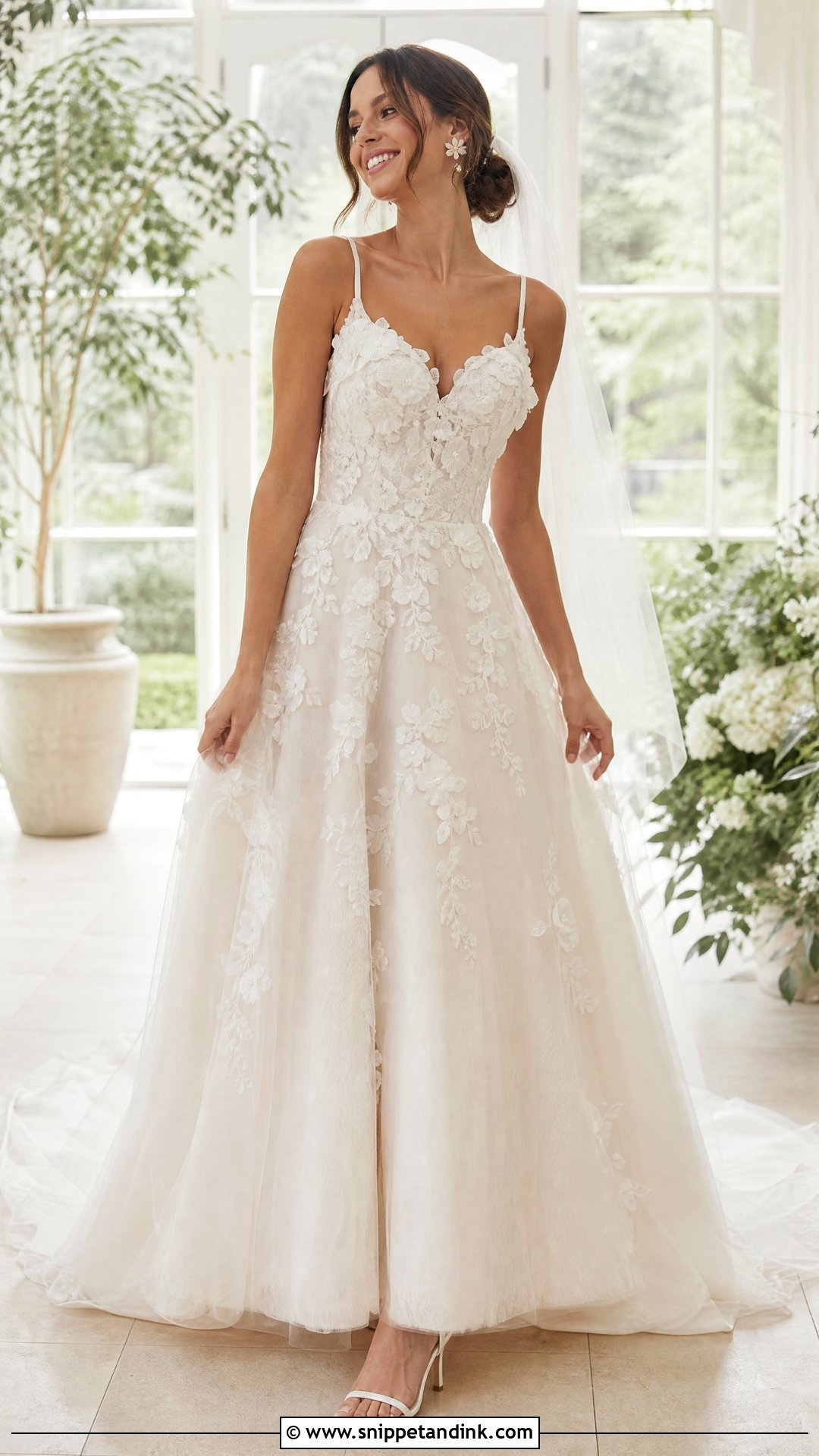
Three-dimensional flowers give a gown texture and character. Place appliques across the bodice, skirt or sleeves of an A-line or fitted shape, over a plain base so they stand out. Scale matters with petite frames: large blooms can swamp a small bride, while smaller motifs scattered in clusters keep the balance. Satin heels, delicate floral earrings and a loose low bun suit it, along with a plain veil that extends past the appliques rather than adding another pattern. Ask how the flowers are attached. Hand-stitched ones survive a hug; glued ones sometimes lift at the edges after a long day. Gardens and spring weddings suit it best.
15. Pearl Embellished Bridal Dress
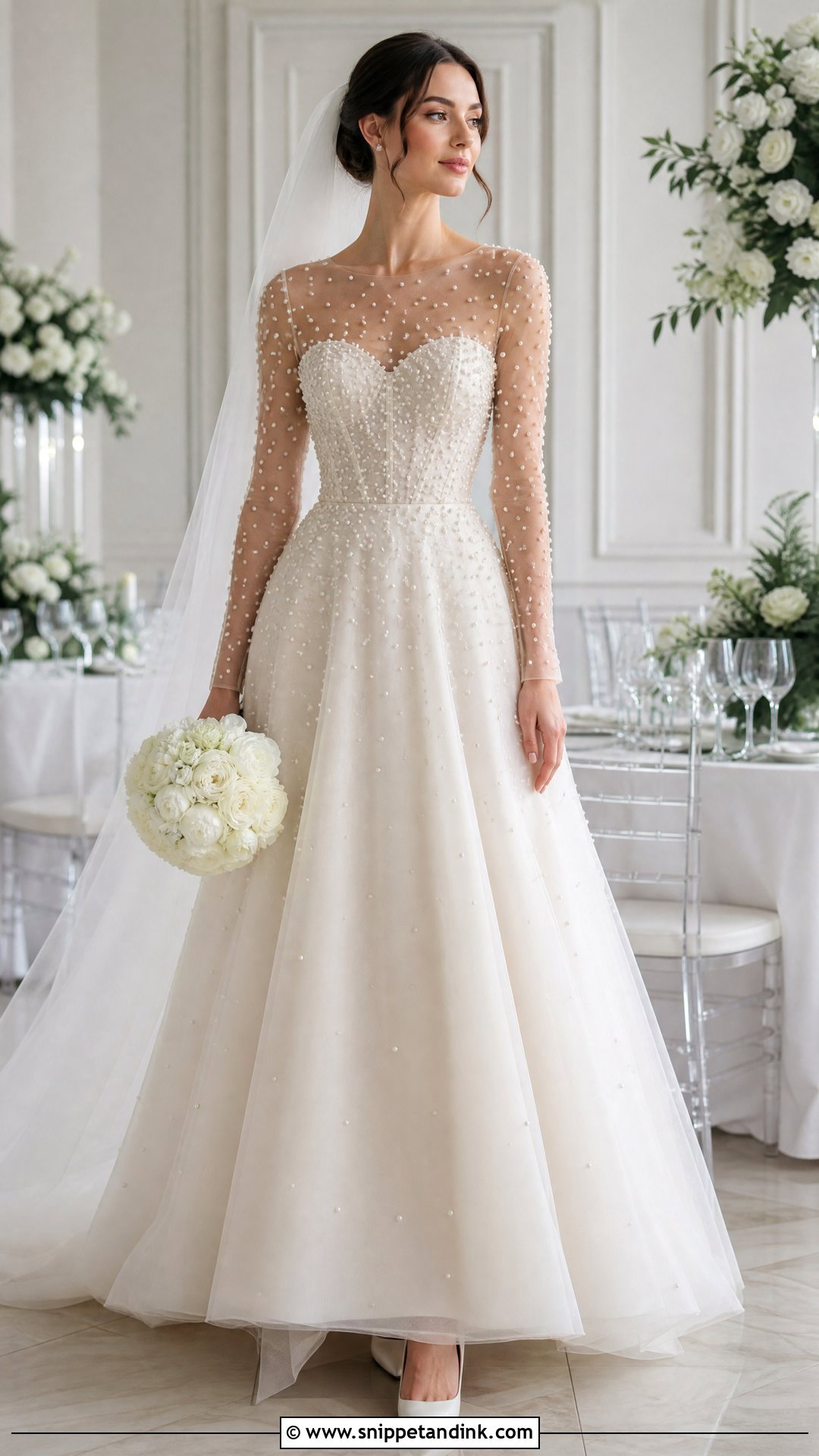
Small pearls give a soft glow rather than sparkle. They can be scattered over sheer sleeves, a structured bodice or an entire tulle overlay, but the silhouette should stay clean. Pearl studs, satin pumps and a plain fingertip veil are plenty; adding a pearl necklace and pearl hair pins on top gets busy fast. Before the wedding I turn the bodice inside out to check for knots and thread ends that scratch, and I look for loose beads that need a few stitches. Pearls concentrated at the neckline or waist are subtle; a fully beaded gown makes a bolder statement for an evening reception.
16. Cowl Neck Slip Bridal Dress
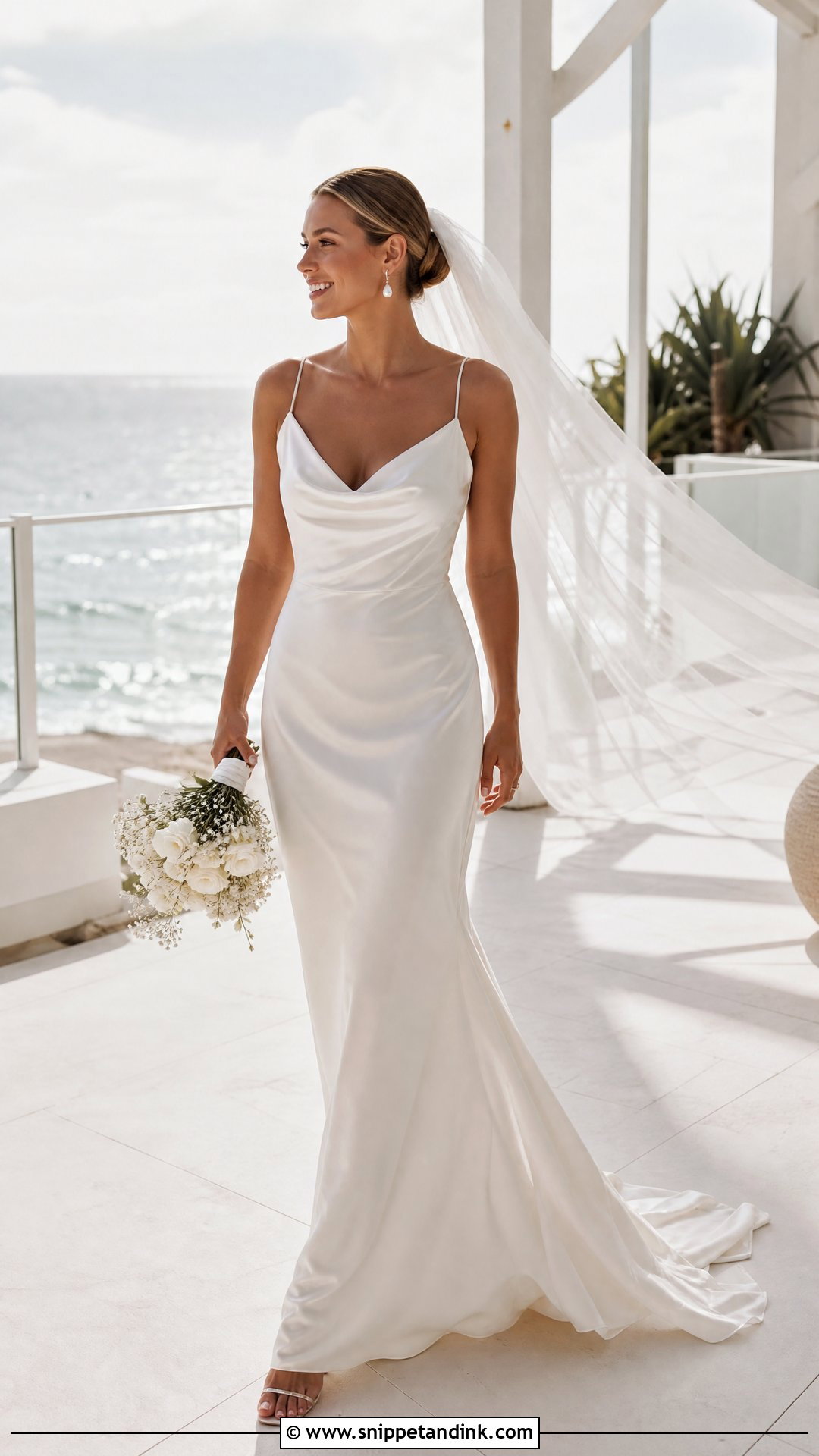
A satin cowl falls into soft folds at the neck. Choose a bias-cut slip dress that skims the body rather than gripping it. Thin straps, a low back and a short train add interest. Barely there ivory sandals, drop earrings and a sleek bun or soft waves keep it relaxed, with a long sheer veil for the ceremony and a blazer for cooler moments. Bias-cut satin stretches as you wear it, so I leave hemming until the last fitting and have the dress hang for a day first. Beaches, rooftops and destination weddings suit it.
17. Bubble Hem Bridal Dress
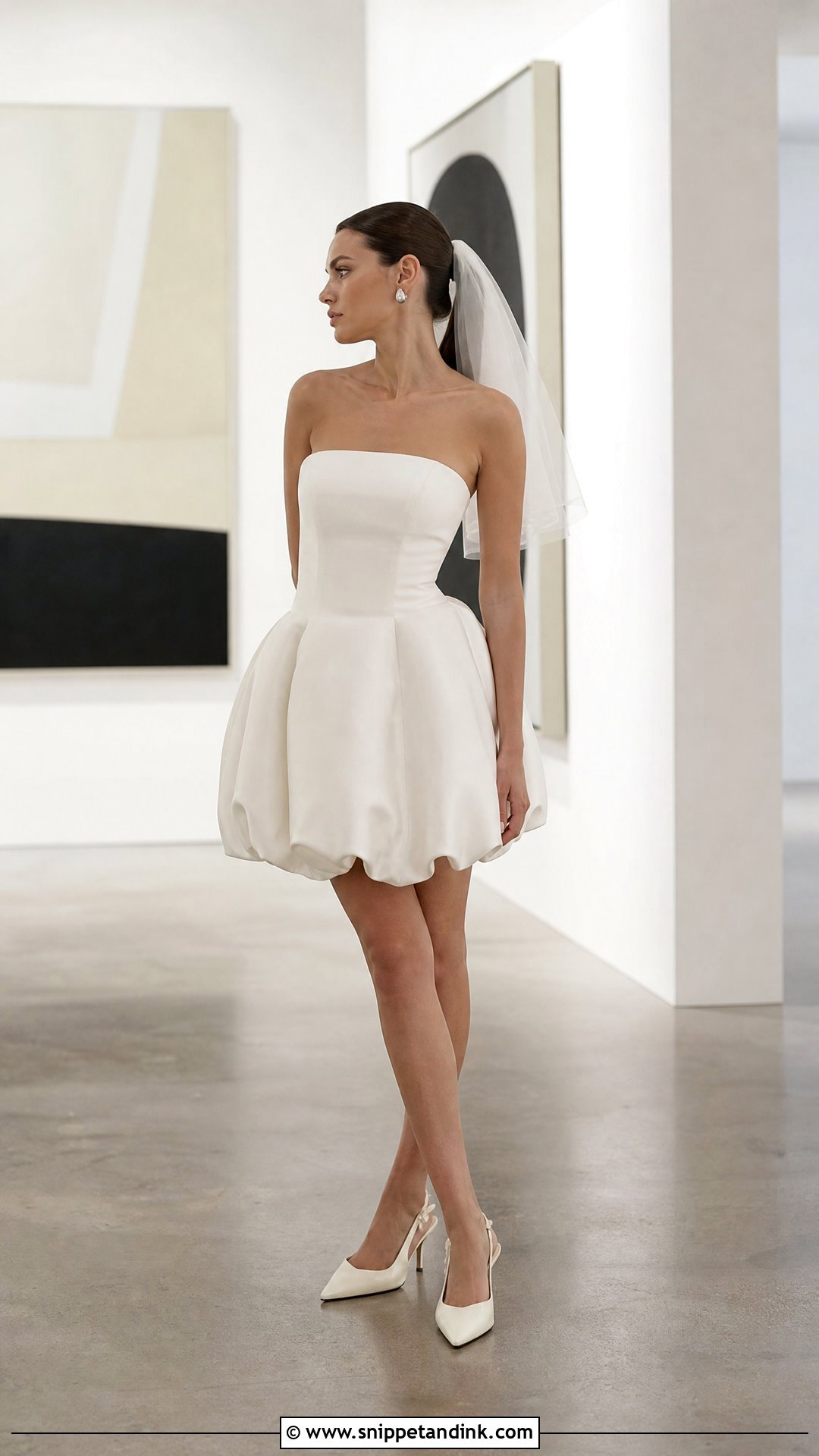
A bubble hem curves inward at the bottom, giving a short or ankle-length dress a sculptural round shape. It needs a fitted, plain bodice to balance it, and a stiff fabric such as taffeta, satin or mikado to hold the curve. Soft fabrics simply collapse. Pointed slingbacks, small earrings, a short veil and a smooth ponytail or neat bun suit the graphic outline; skip large bows. Sit down in it during the fitting. Some bubble hems crush flat on a chair and never fully recover, which is worth knowing before you commit. City ceremonies and galleries suit it.
18. Blush Bridal Dress
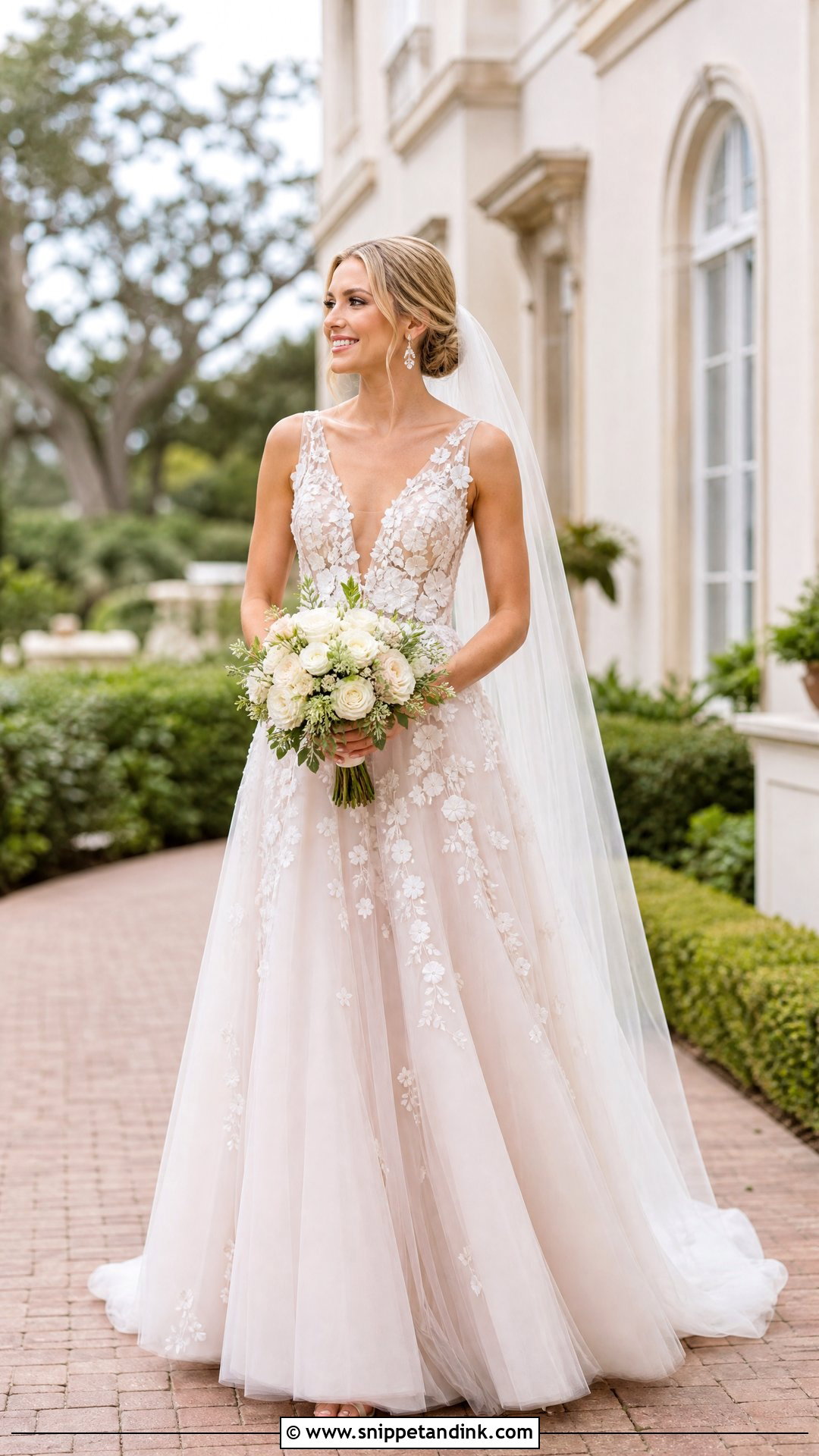
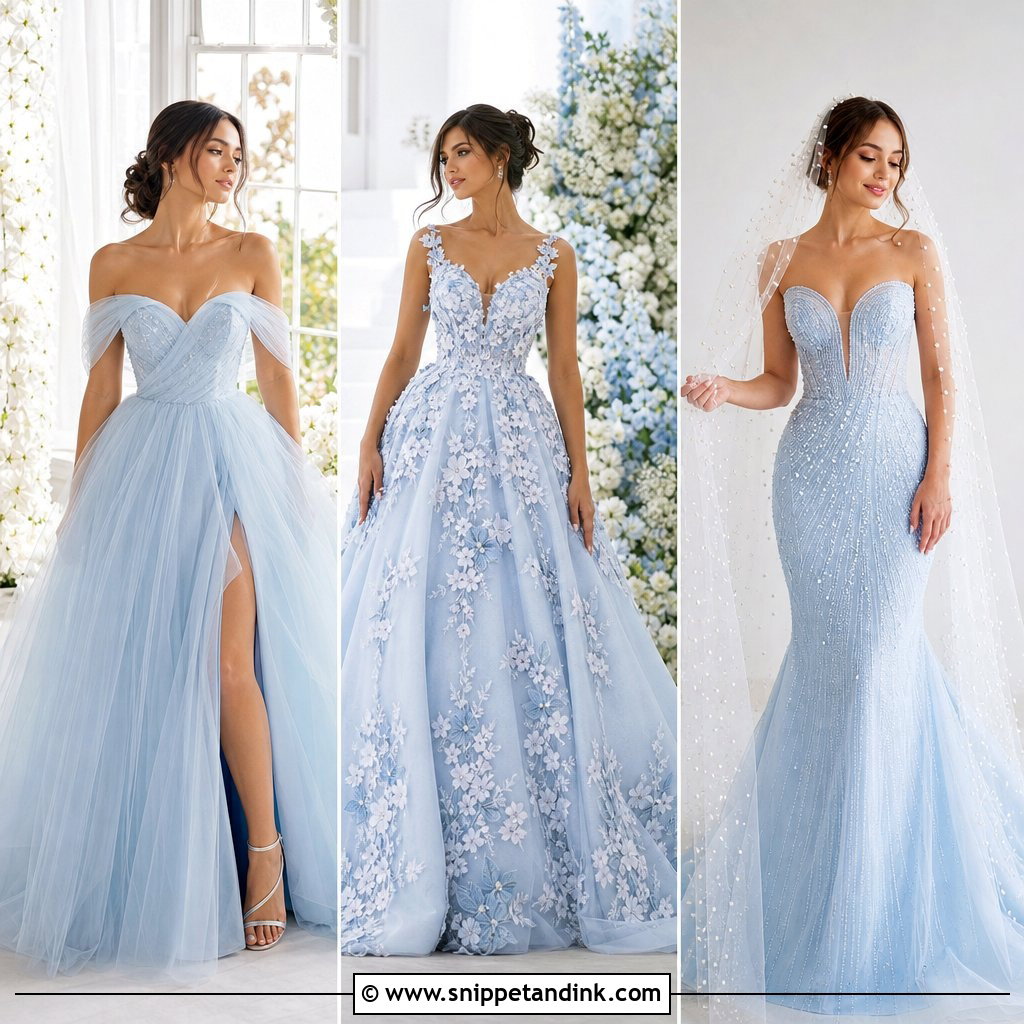
Blush gives a gentle alternative to bright white. Usually it comes from a soft pink, nude or champagne lining under ivory tulle, lace or organza, and that tinted layer makes applique and beadwork easier to see. Neutral heels, rose-gold earrings and a sheer ivory veil keep the colours together, and a bouquet with cream and pale pink picks up the undertone. Check the colour in daylight and under warm indoor lights. Some blush linings read beige or grey in photos, depending on your skin tone and the venue lighting. It suits gardens, estates and soft evening decor.
19. Black And White Bridal Dress
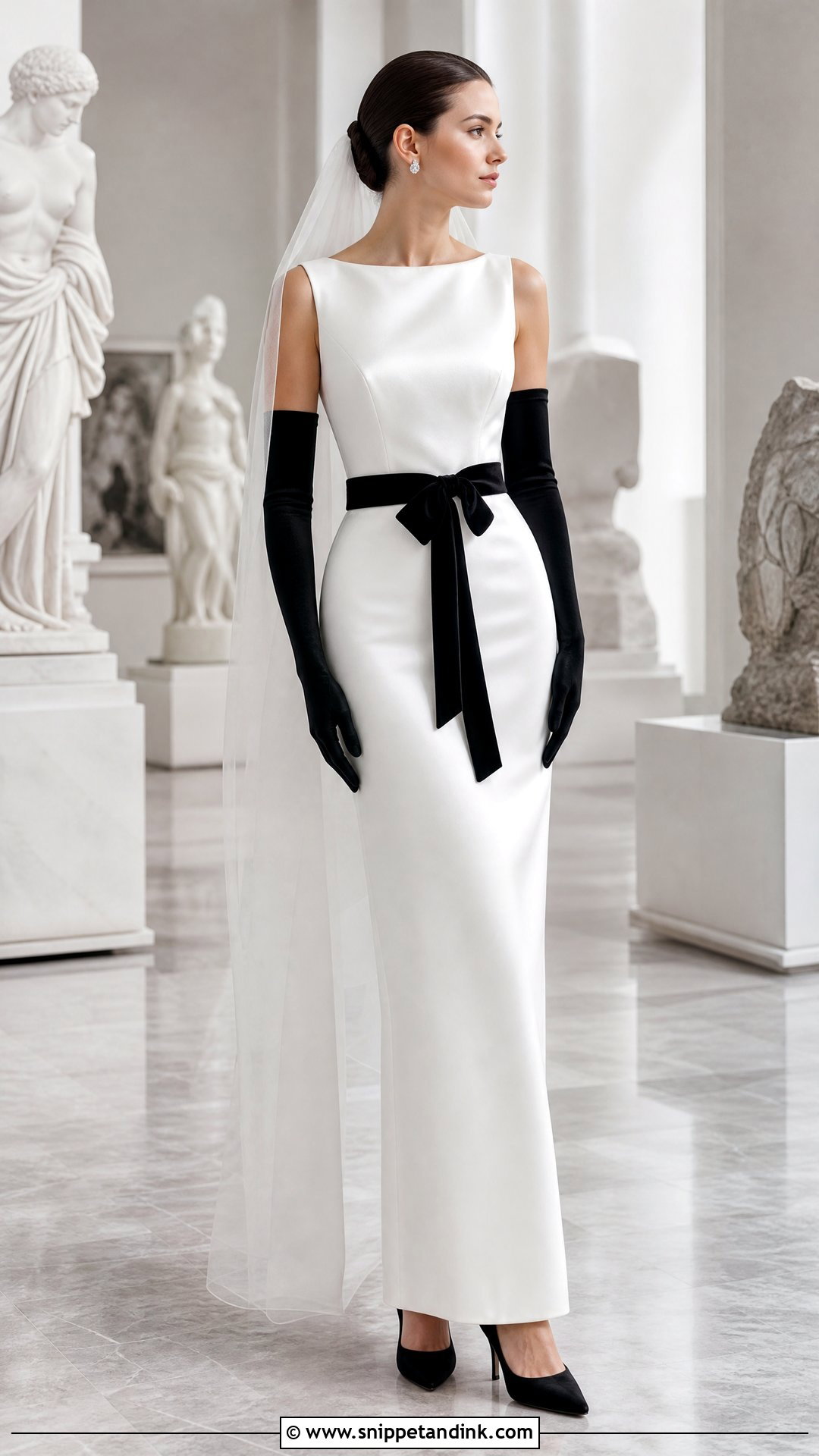
Black and white keeps the formality of a wedding gown while adding contrast. Start with a white satin column, A-line or ball gown and bring in black through a velvet waist bow, narrow straps, floral appliques or opera gloves. Limit the black to one or two places. Black pumps, sparkling studs, a plain white veil, a sleek bun and defined eye makeup support the graphic look. One practical point: dark velvet can transfer dye onto white satin if it gets damp, so I’d ask the seamstress to line the bow and test it. Remove the gloves or sash for a softer reception look in a museum or city hotel.
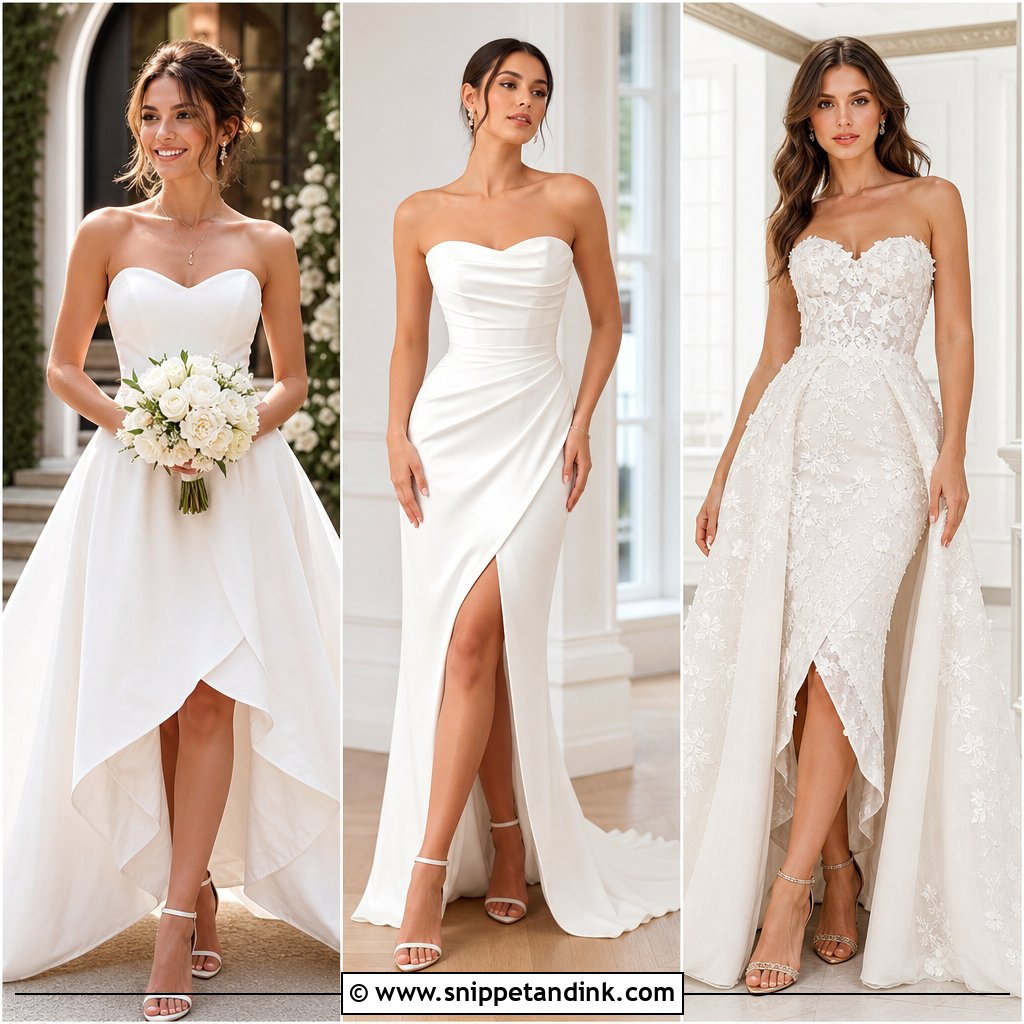
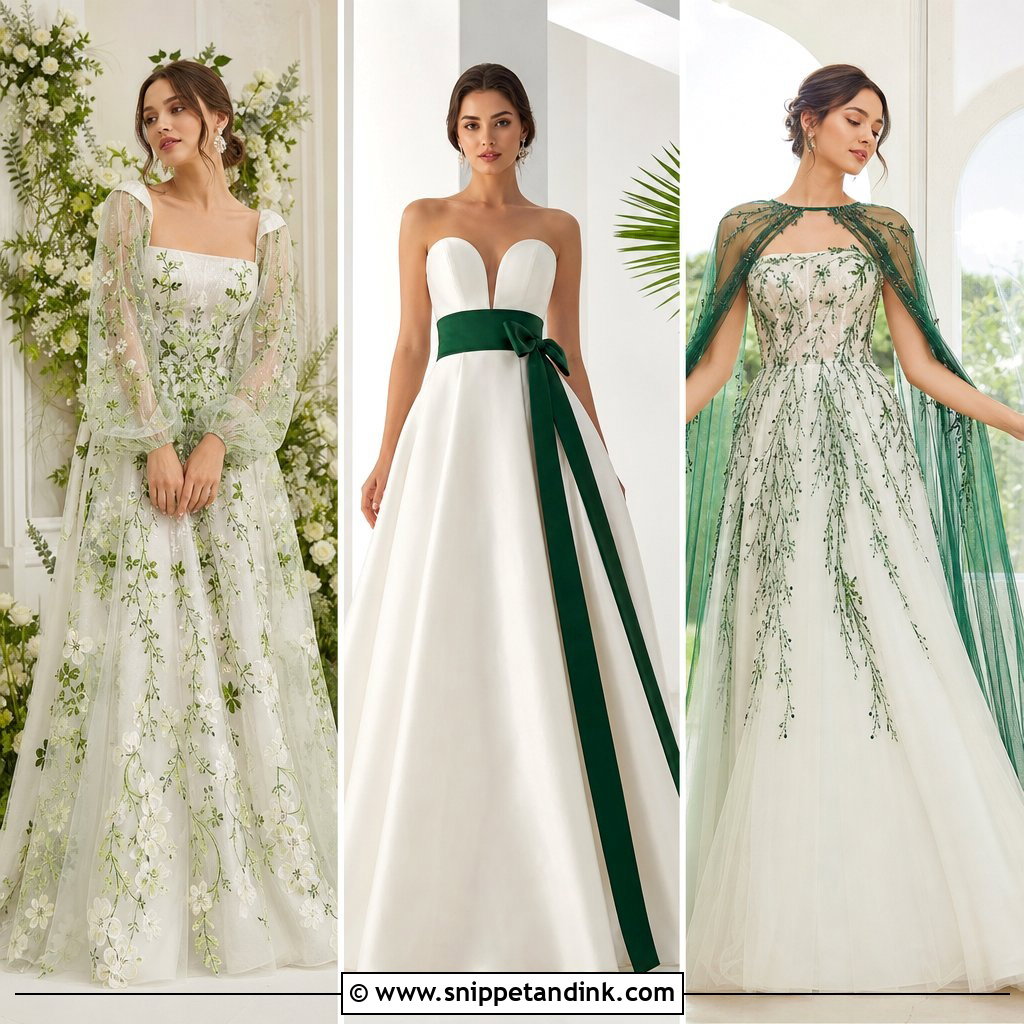
20. Convertible Bridal Dress With Sleeves
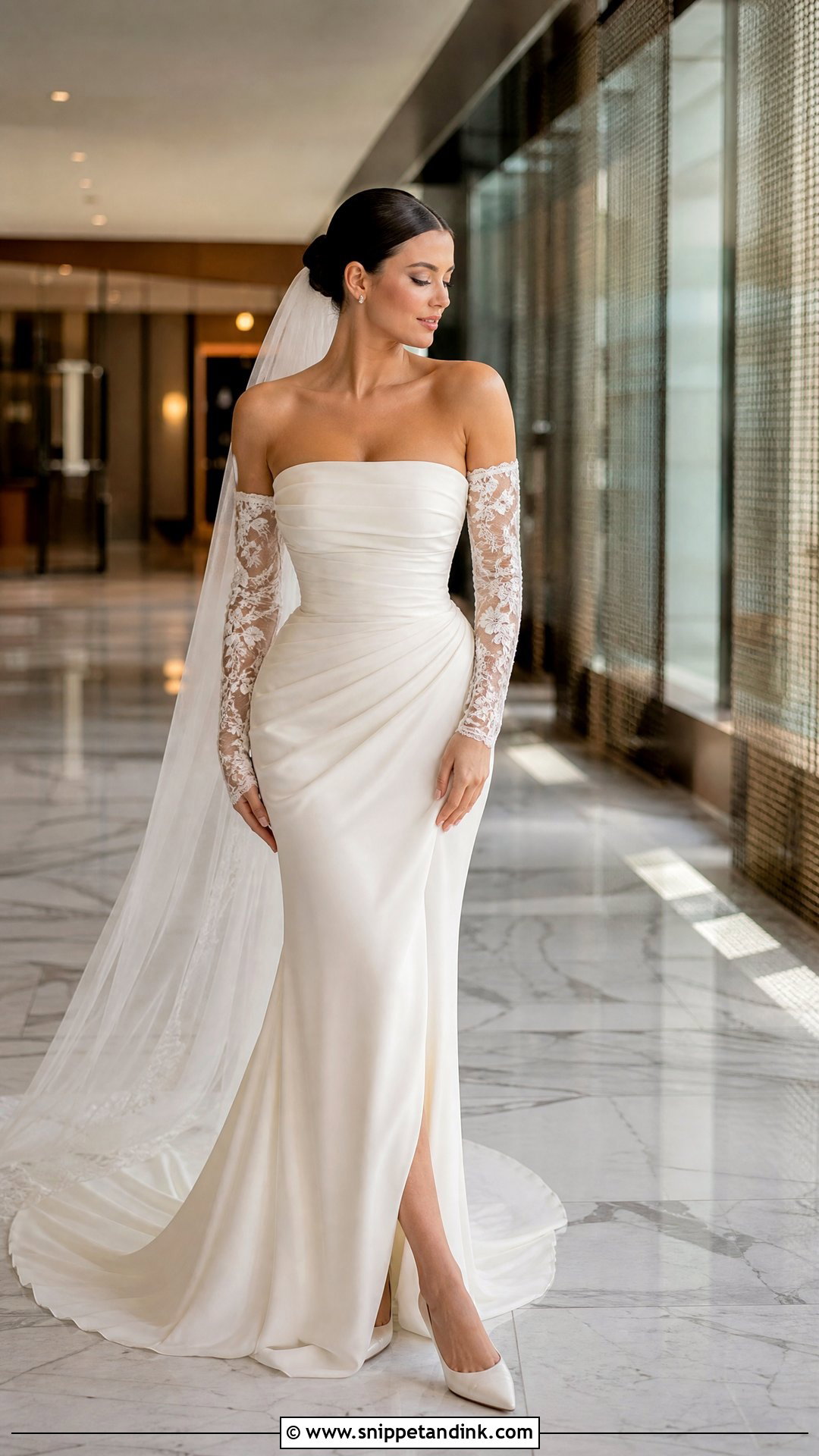
A convertible gown changes your look without a second dress. Begin with a strapless or sleeveless fitted base, then add detachable long sleeves, an off-the-shoulder wrap or a removable lace topper for the ceremony. Wear a long veil, classic pumps and small earrings with the covered version, then take off the extra layer, change into block heels and add a bolder accessory for the reception. The test I always run: put on the base dress alone and ask whether you’d be happy wearing only that. If not, the conversion won’t feel like a second look. Check that every fastening is hidden from the front and back.
Who Unhooks the Overskirt?
Several looks on this list change partway through the day: detachable overskirts, capes, toppers, removable sleeves. On paper the switch takes a minute. In real life it can eat into the first course when nobody knows how the fastenings work.
Teach one person, not the whole bridal party
Bring a single helper to your final fitting and have the seamstress show them every hook, snap and bustle loop. Let them practise twice. Hooks on overskirts and capes are often hidden on the inside, and they’re impossible to find in a dim room under pressure.
Plan where the change happens
Ask the venue for a private room near the reception space, with a mirror and a clear table. Bring a garment bag for the removed piece; a tulle overskirt dropped on a chair will snag. If you’re also changing shoes or earrings, pack them in one small pouch so the helper is not searching through a tote.
For black-and-white or blush gowns, add a stain pen and a small white towel to the same pouch. Reception changes tend to happen right before food and drink are served, which is exactly when accidents happen.
Let the Venue Floor and Your Own Mirror Decide
The right gown combines your taste, construction that feels comfortable and details that suit the day. A sleek crepe sheath fits a modern room; a Basque-waist ball gown matches a grand one. Short hems, detachable layers, tinted linings and sculptural skirts all give modern options without losing the bridal feel. Before deciding, ask someone to photograph each gown from several angles, and walk, sit and raise your arms in it. Think about the season, the flooring, how you’ll travel and how long alterations will take. Trends are useful starting points, but the dress you choose should feel natural on your body.
You'll Like These Ideas:





Leave a Reply