
Satin is the most honest fabric in a bridal salon. It has no lace to hide a loose seam and no beading to distract from a bodice that gaps, so whatever the construction is doing, you will see it. That is exactly why I love styling it. Below are twenty satin gowns, from bias-cut slips to boned ball gowns with Basque waists, and for each one I’ll explain how the cut behaves on a real body, what I’d pair with it, and where it tends to cause trouble at fittings.
Duchess, Crepe-Back or Charmeuse? Reading the Satin on the Tag
Brides often say “satin” as if it were one fabric. It isn’t, and the weight on the tag decides which of the dresses below will actually work on you. Before I style anyone, I feel the fabric between my fingers and watch how it falls off the hanger.
- Duchess satin is heavy and dense. It holds a Basque point, a pleat or a sculpted bow, and it hides a lot underneath. It is warm, though, and a full skirt in it can feel weighty by evening.
- Crepe-back satin has a shiny face and a matte back. It is softer than duchess and drapes into cowls and gathered bodices without collapsing.
- Charmeuse is light and fluid, the fabric of bias slips. It moves well and packs small, but it clings and shows every seam and strap line.
- Silk versus polyester: silk satin breathes and has a deeper glow; polyester resists creasing better and costs less. Both photograph well when the fit is right.
A quick rule I give at appointments: if the gown relies on structure, choose weight; if it relies on movement, choose drape. Mixing them up is the most common reason a satin dress looks wrong even when the size is right.
1. Basque Waist Satin Bridal Dress
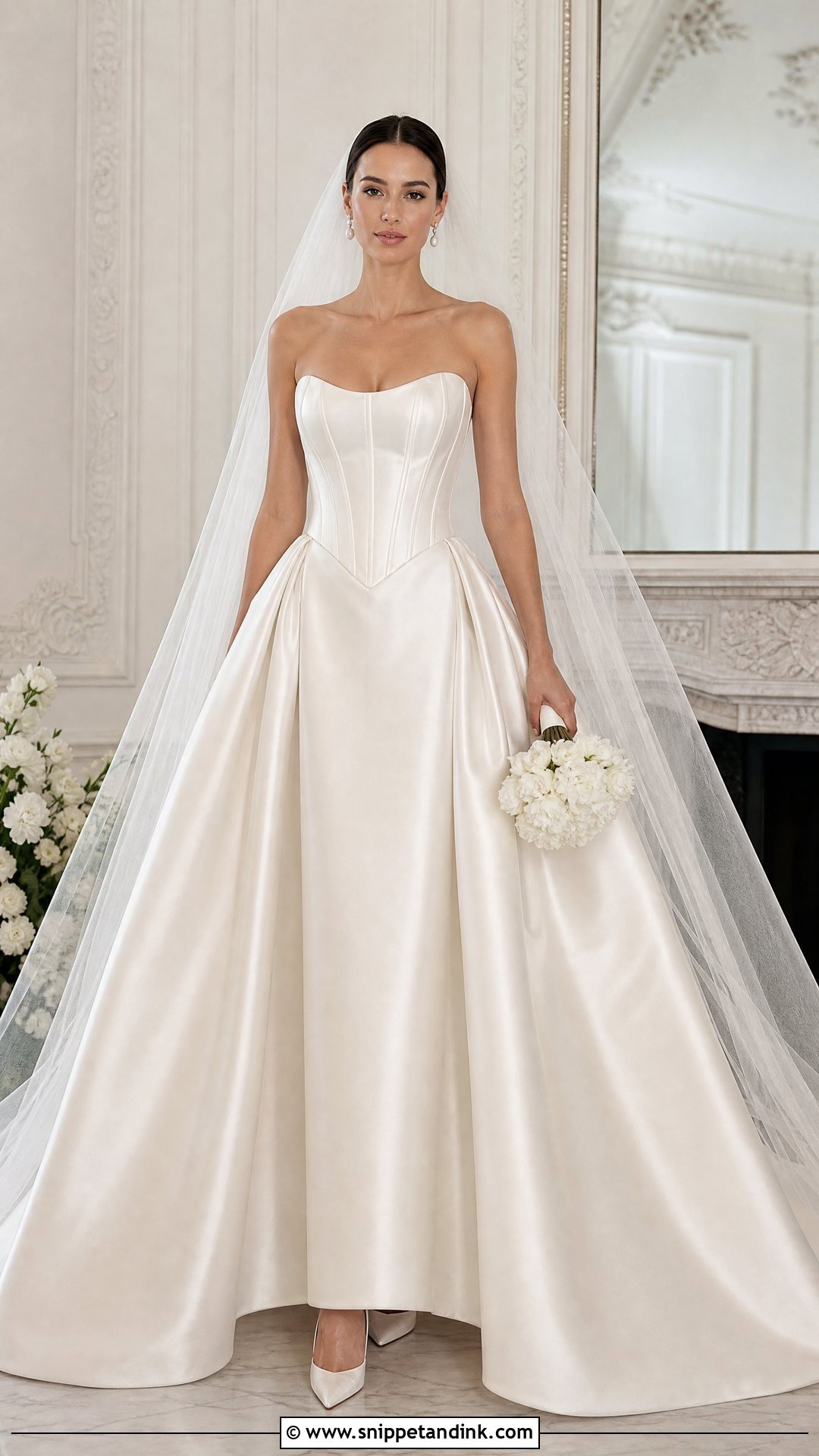
The pointed Basque waist dips below the natural waistline and makes the torso look longer, which is why it has come back so strongly alongside full satin skirts. In a heavy satin the point holds crisp; in a thin one it can buckle when you sit, so I always ask brides to sit on the fitting-room stool before we commit. A cathedral veil, pearl drop earrings and pointed satin pumps keep the line clean. Hold the bouquet low and small, because the point of the bodice is the whole reason to choose this dress. Visible boning gives a sharper finish; a softly draped version is kinder if you dislike feeling held in.
2. Square Neck Satin Bridal Dress
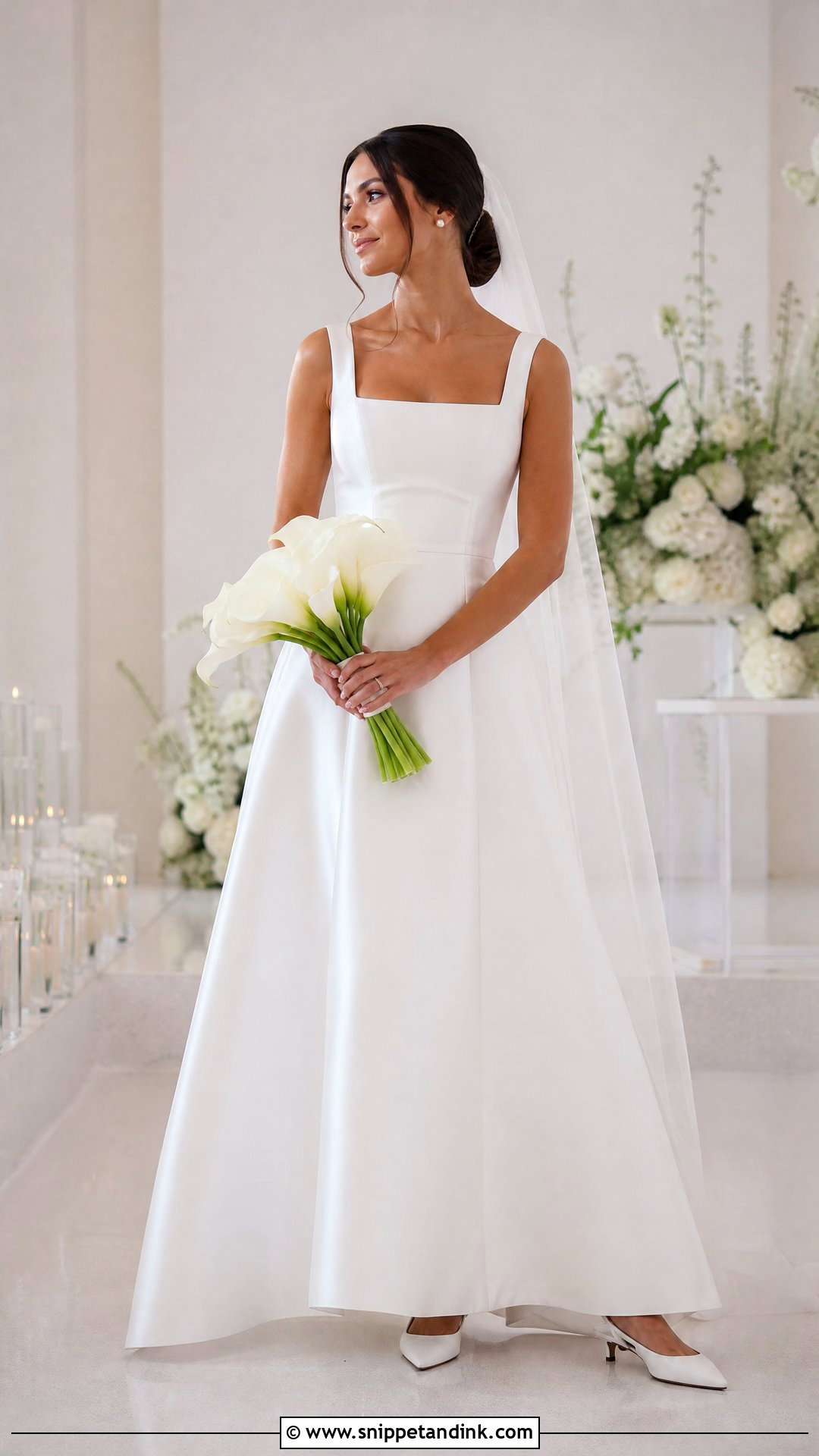
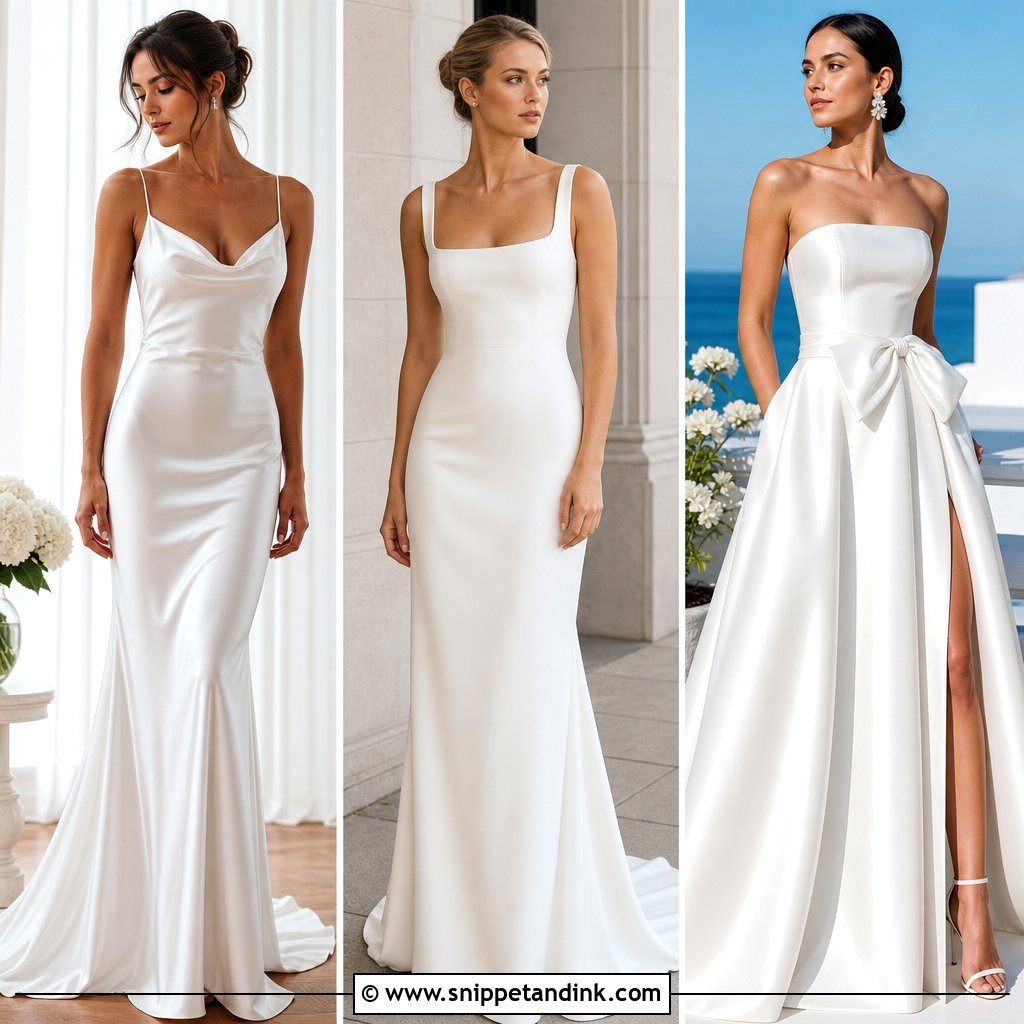
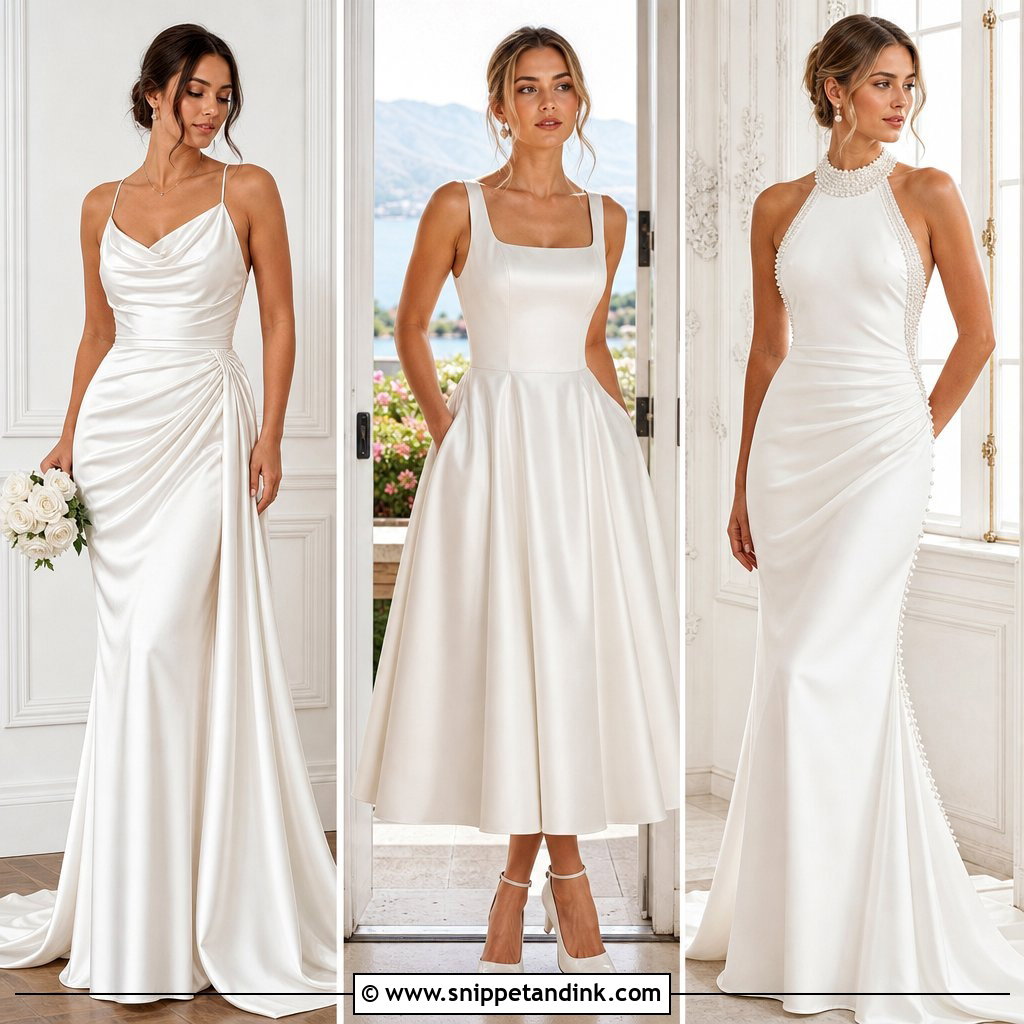
A square neckline frames the collarbones without the exposure of a plunge, which makes it easy to wear in a church and easy to style. Over an A-line skirt it moves well; over a column it looks sharper and more modern. I pair it with a smooth low bun, small pearl studs and a single-layer fingertip veil. Wide straps already do the framing, so I’d skip the necklace entirely. On petite brides I often raise the waist seam a little at alterations, because a square neck sitting above a low waist can shorten the body.
3. Cowl Neck Satin Bridal Dress
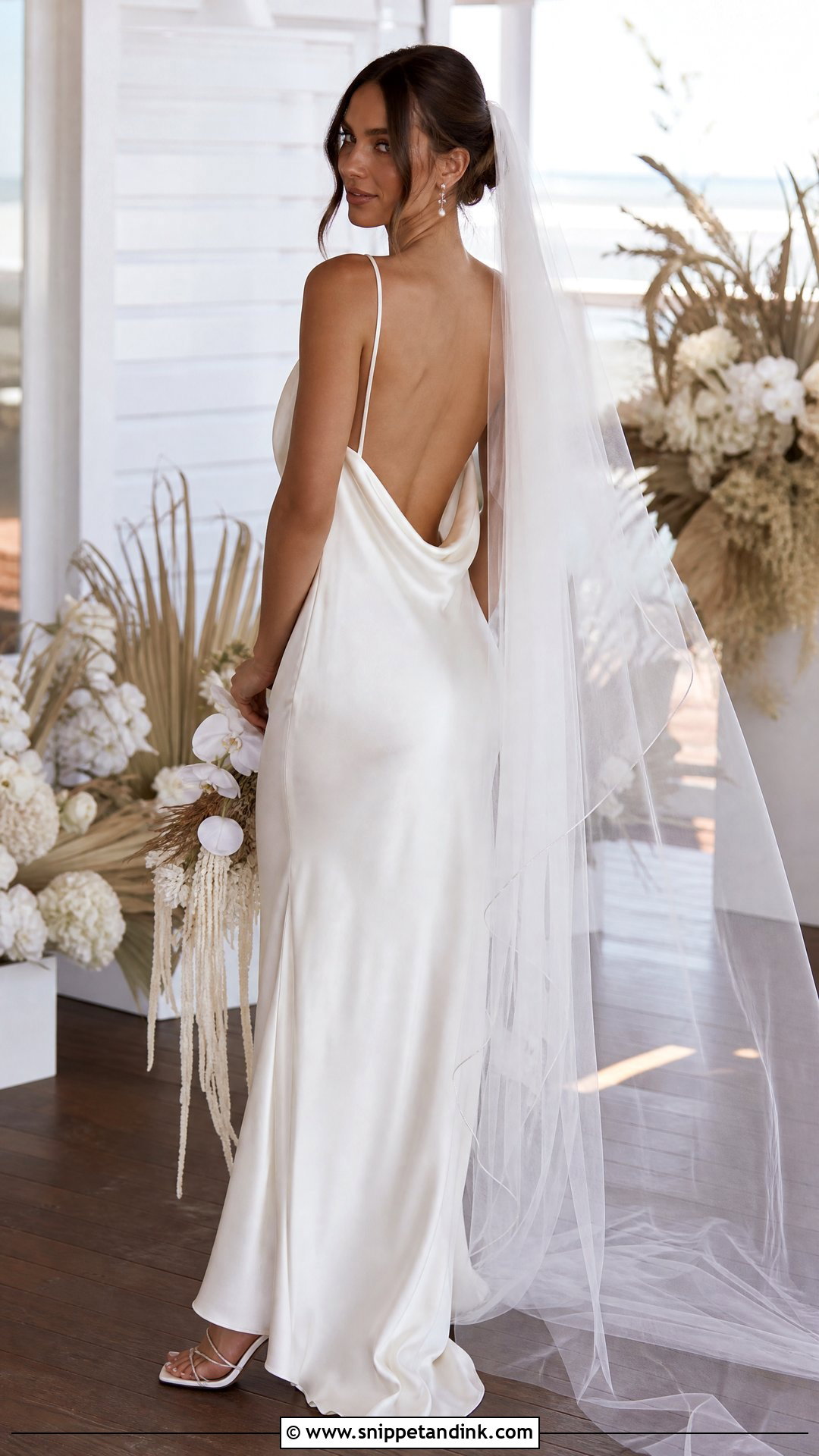
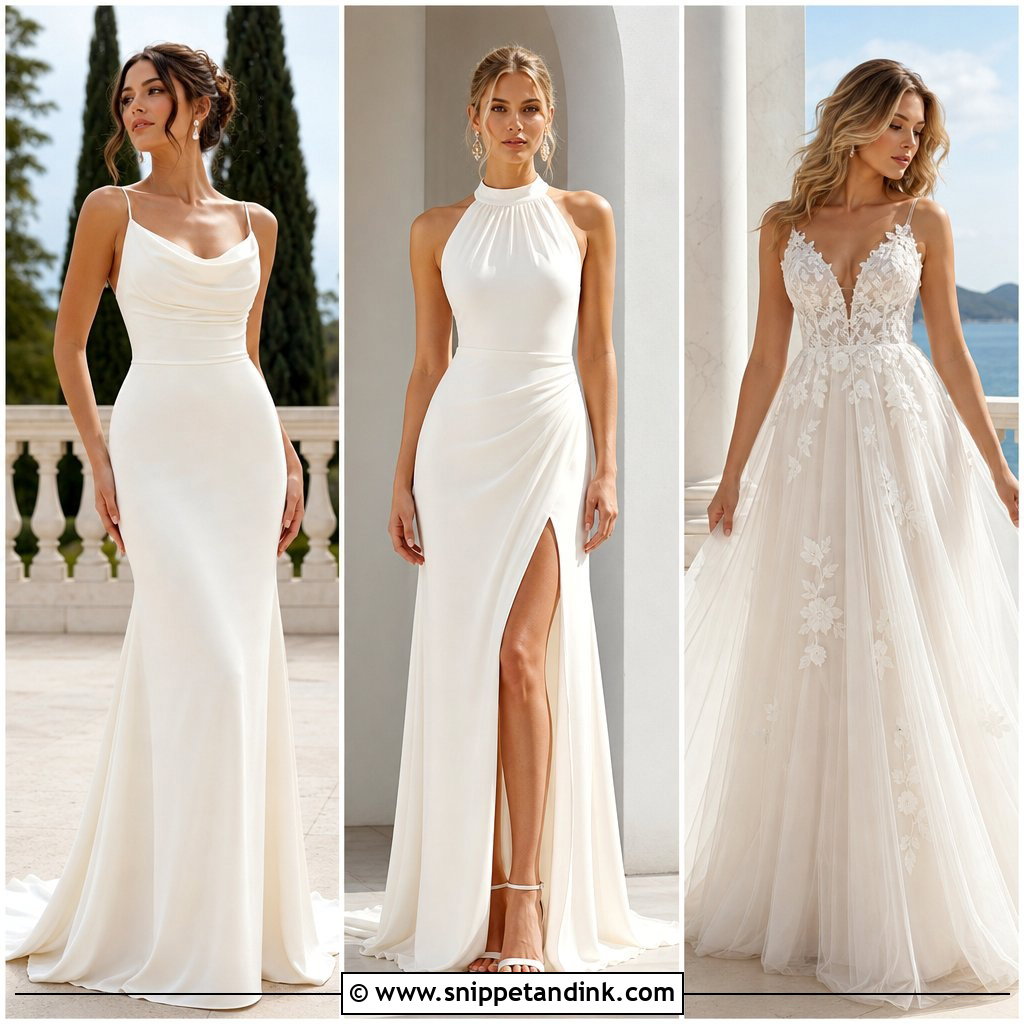
A cowl only works if the fabric is soft enough to fall into its own folds. Stiff satin fights the drape and ends up looking like a pucker, so this neckline belongs in lightweight satin or charmeuse, ideally cut on the bias. That fluid slip shape travels well, which is why I suggest it so often for destination and city weddings. Slim metallic sandals, small earrings and a sheer chapel veil are all it needs, plus a sleek bun so loose hair doesn’t tangle with the folds. One warning from every fitting I’ve done in charmeuse: it shows every seam underneath. Bring smooth, no-line underwear to the very first appointment.
4. Off Shoulder Satin Bridal Dress
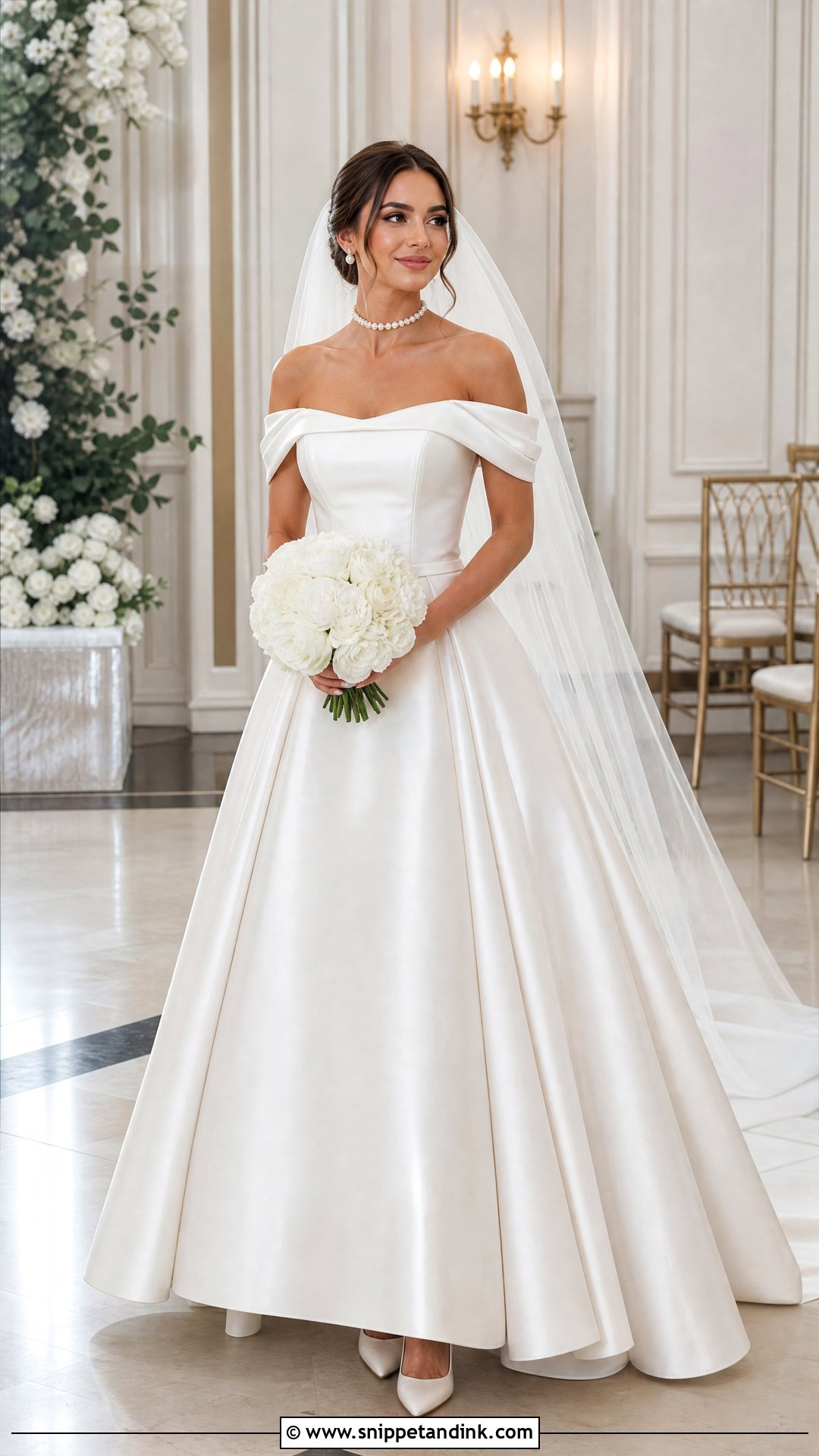
Folded satin bands across the upper arms draw the eye straight to the shoulders and face, and a full A-line or ball-gown skirt keeps the proportions traditional. The common problem is movement. Off-shoulder bands are anchored to the bodice, so lifting your arms to hug someone can pull the whole neckline up. At fittings I make brides raise their arms, hold a bouquet and lean in for a pretend hug. If that feels restrictive, detachable off-shoulder straps over a strapless base solve it. A pearl choker, swept-back hair and a long veil pinned below the bun finish the look.
5. Strapless Corset Satin Bridal Dress
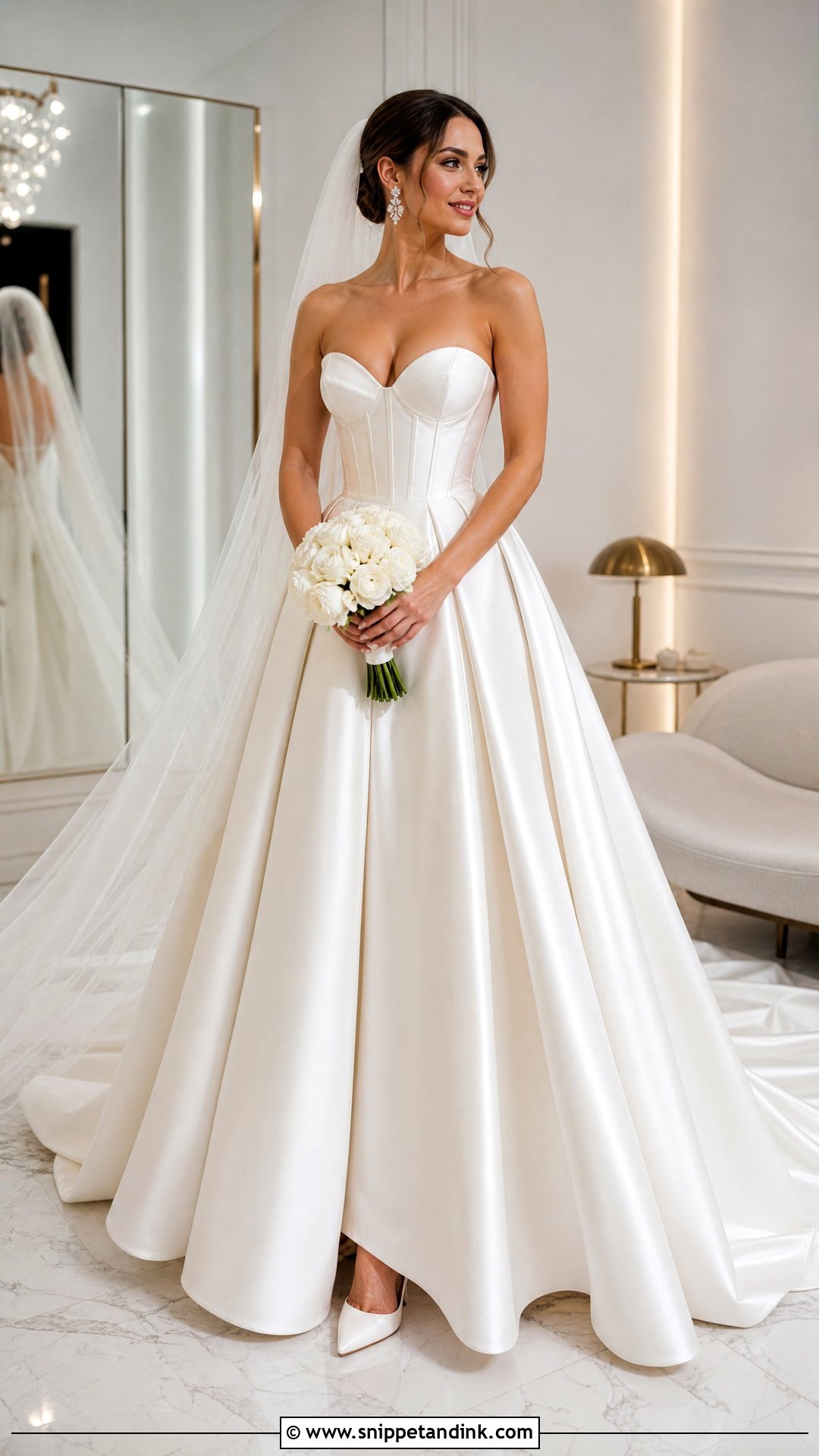
Here the structure is the decoration. Boning shapes the torso and a sweetheart or softly curved neckline sets the upper body, so nothing needs to be beaded. A full pleated skirt makes it formal; a fit-and-flare skirt brings it closer to the body. The test I care about most is whether the bodice stays up while you breathe, laugh and bend without you tugging it every five minutes. If it doesn’t, ask your seamstress about an internal waist stay, which takes the weight of the skirt off the bodice. A cathedral veil, crystal studs, a thin tennis bracelet and cushioned pumps are plenty, and a lace bolero gives you a covered ceremony look you can take off later.
6. Long Sleeve Satin Bridal Dress
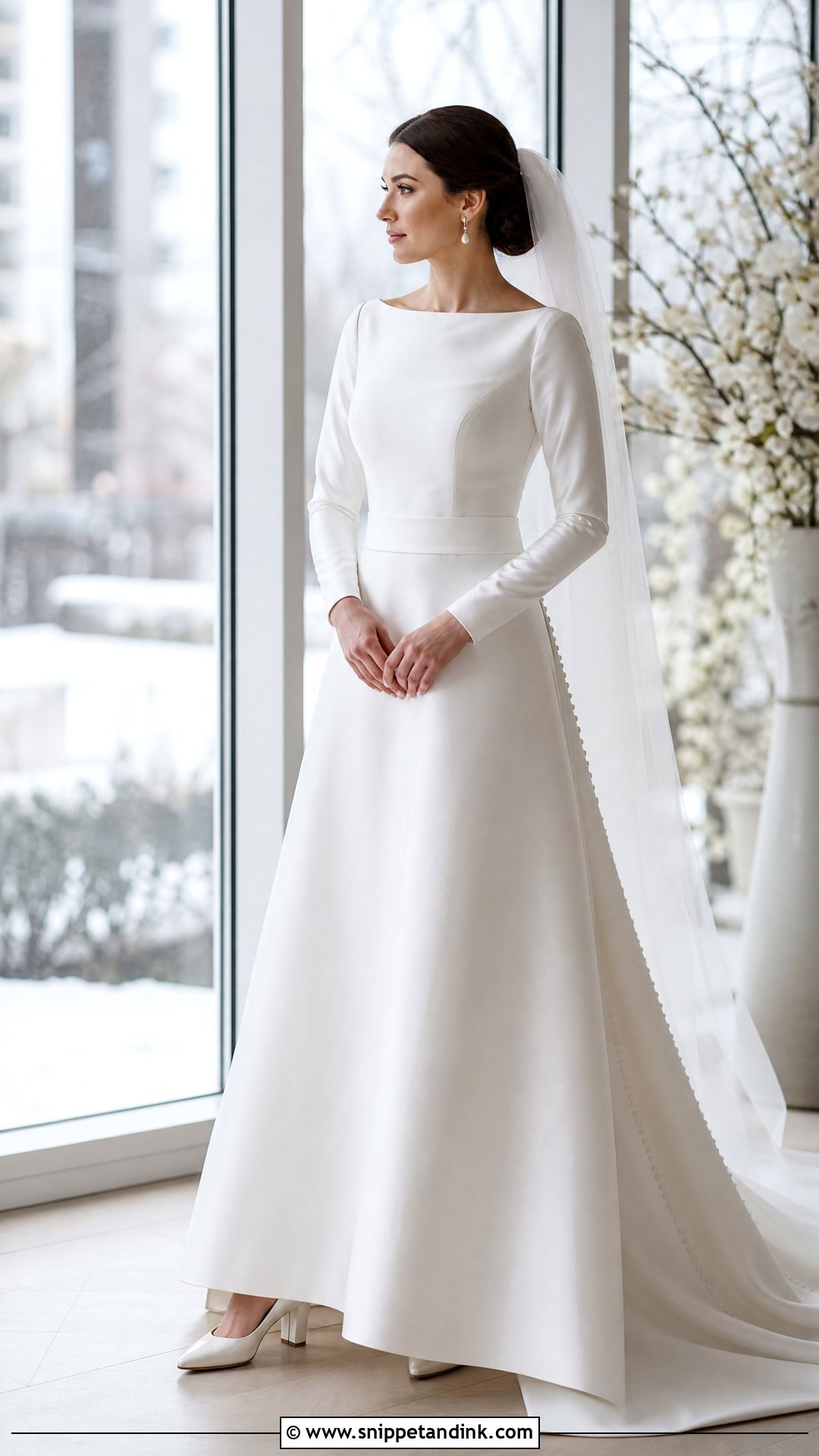
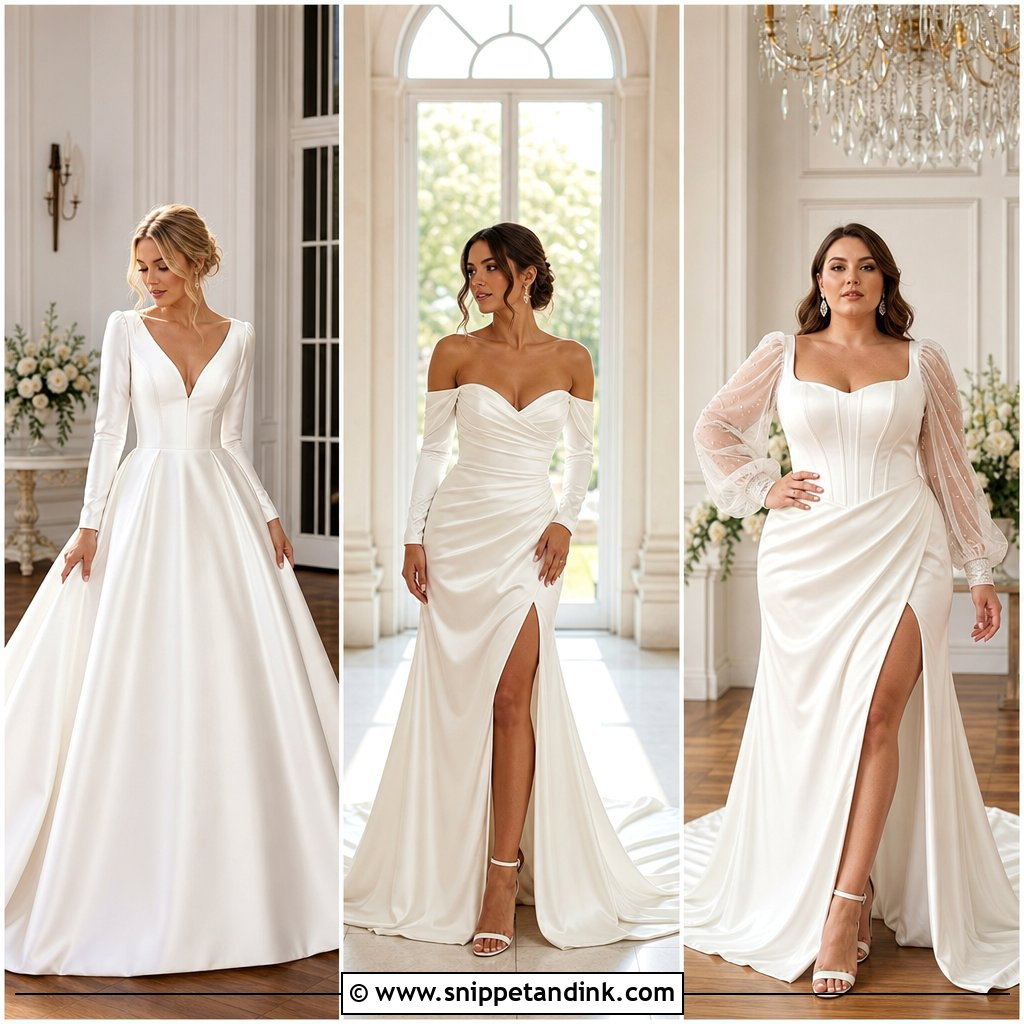
Long sleeves are where heavier satin earns its keep in autumn and winter. Keep the sleeves slim and the neckline clean, a bateau or a modest V, so all that fabric doesn’t look heavy. A fitted waist and A-line skirt with a chapel train balance the coverage. I’d add pearl earrings, a low chignon, a plain veil and closed block heels. The fitting check I never skip is reaching forward and bending the elbow: satin sleeves cut too close will pull at the shoulder seam. For outdoor portraits in the cold, a white tailored coat or faux-fur wrap comes off easily indoors.
7. Halter Neck Satin Bridal Dress
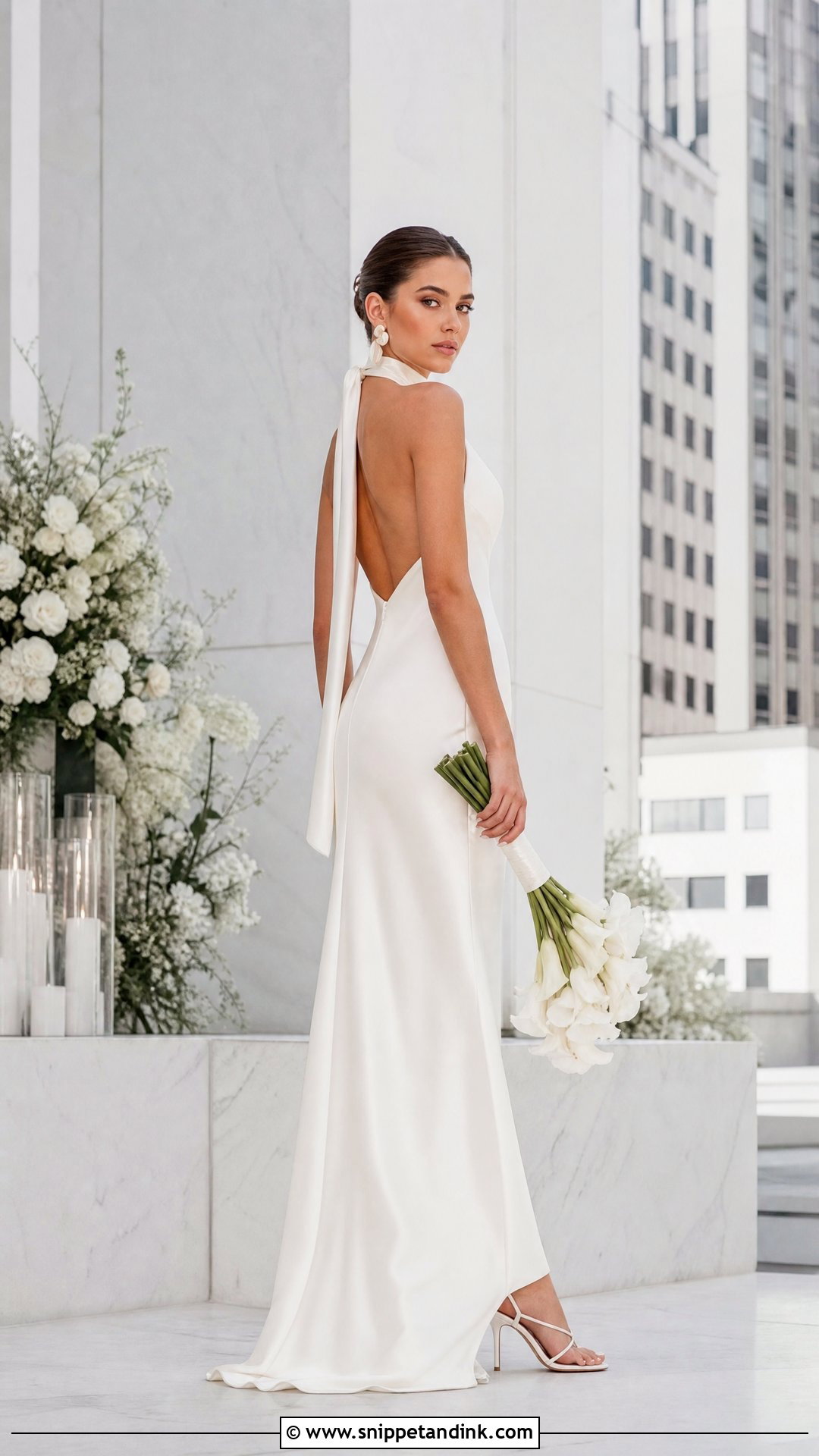
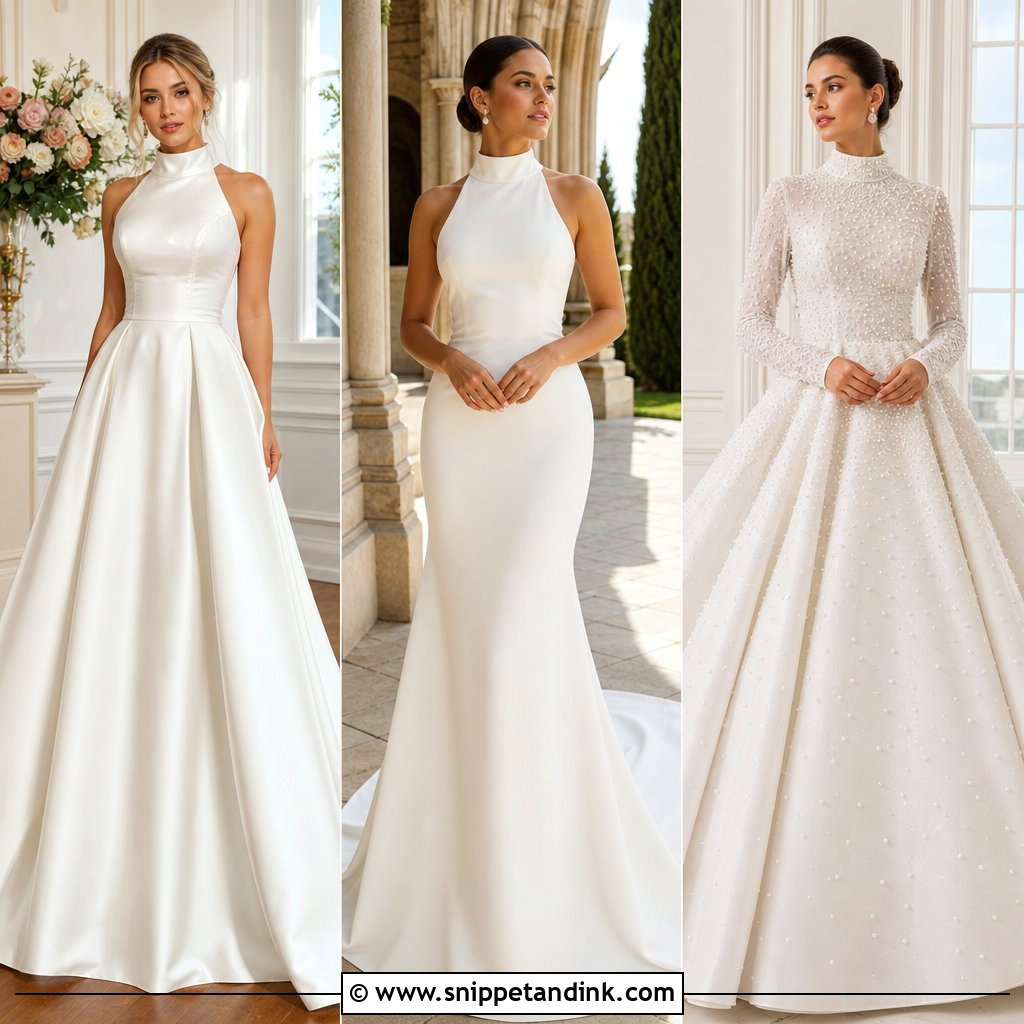
A halter pulls attention upward and gives a strong vertical line, especially over a column or a gentle fit-and-flare. A plain band reads minimal; a gathered halter adds texture without beading. Because the neckline is high, I leave the neck bare and put the interest in sculptural earrings and an updo. An open back balances the covered front and gives the photographer something for the walk away. Brides with a fuller bust should check for internal cups and a firm inner bodice, since the strap around the neck shouldn’t be carrying the support. Strappy heels and a long-stem bouquet keep everything narrow and tall.
8. One Shoulder Satin Bridal Dress
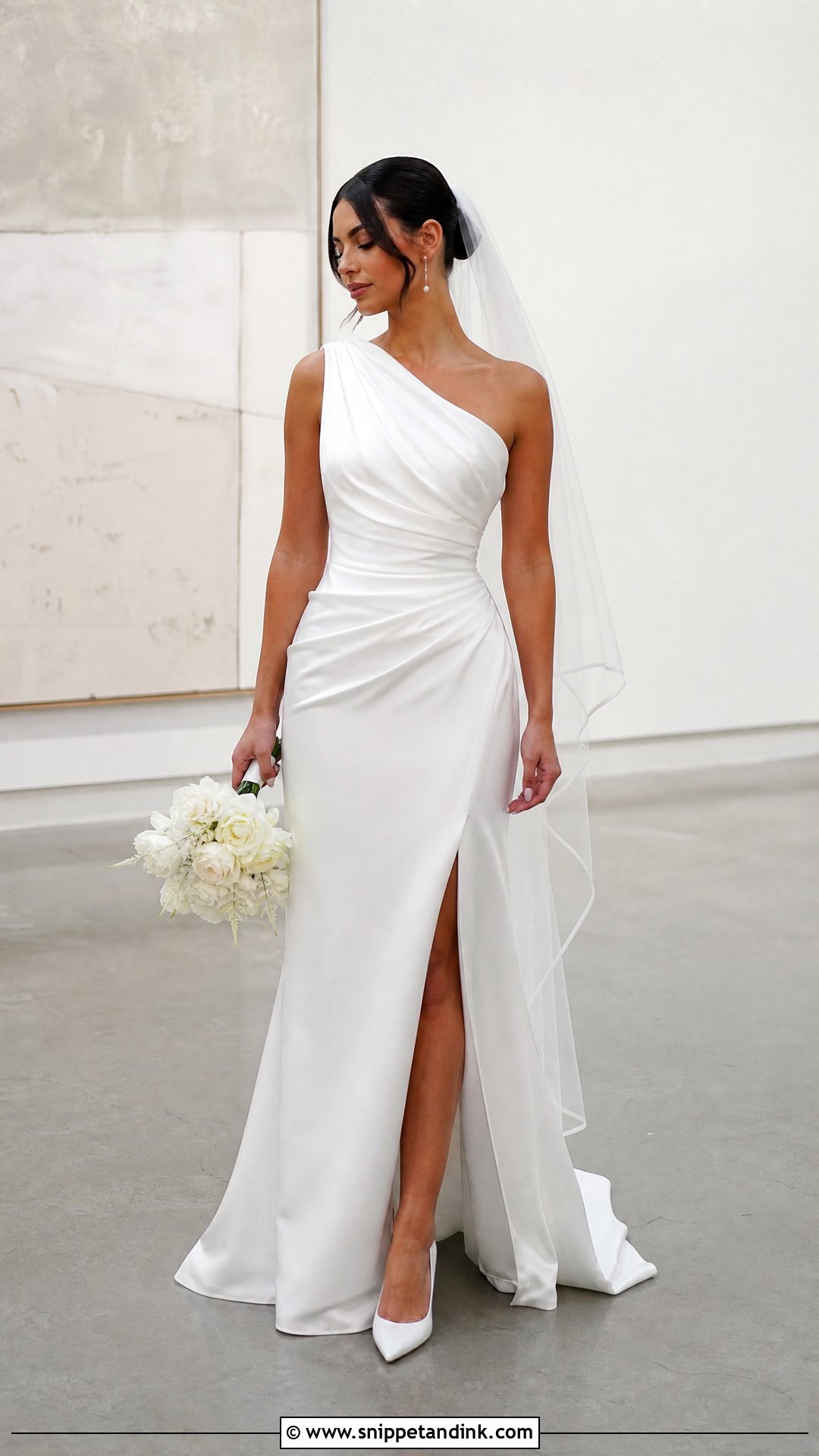
Asymmetry is the quickest way to make satin look modern. A soft draped strap reads gentle; a sharply folded one reads architectural. Keep the skirt simple, a column or a plain A-line, maybe with a controlled side slit. I sweep the hair toward the bare shoulder or pin it into a neat bun so the diagonal line stays visible. A necklace almost always fights that diagonal, so I go with one statement earring on the open side or two small drops. Attach a fingertip veil at the back of the head rather than the crown, and it won’t hide the shoulder detail.
9. Sweetheart Mermaid Satin Bridal Dress
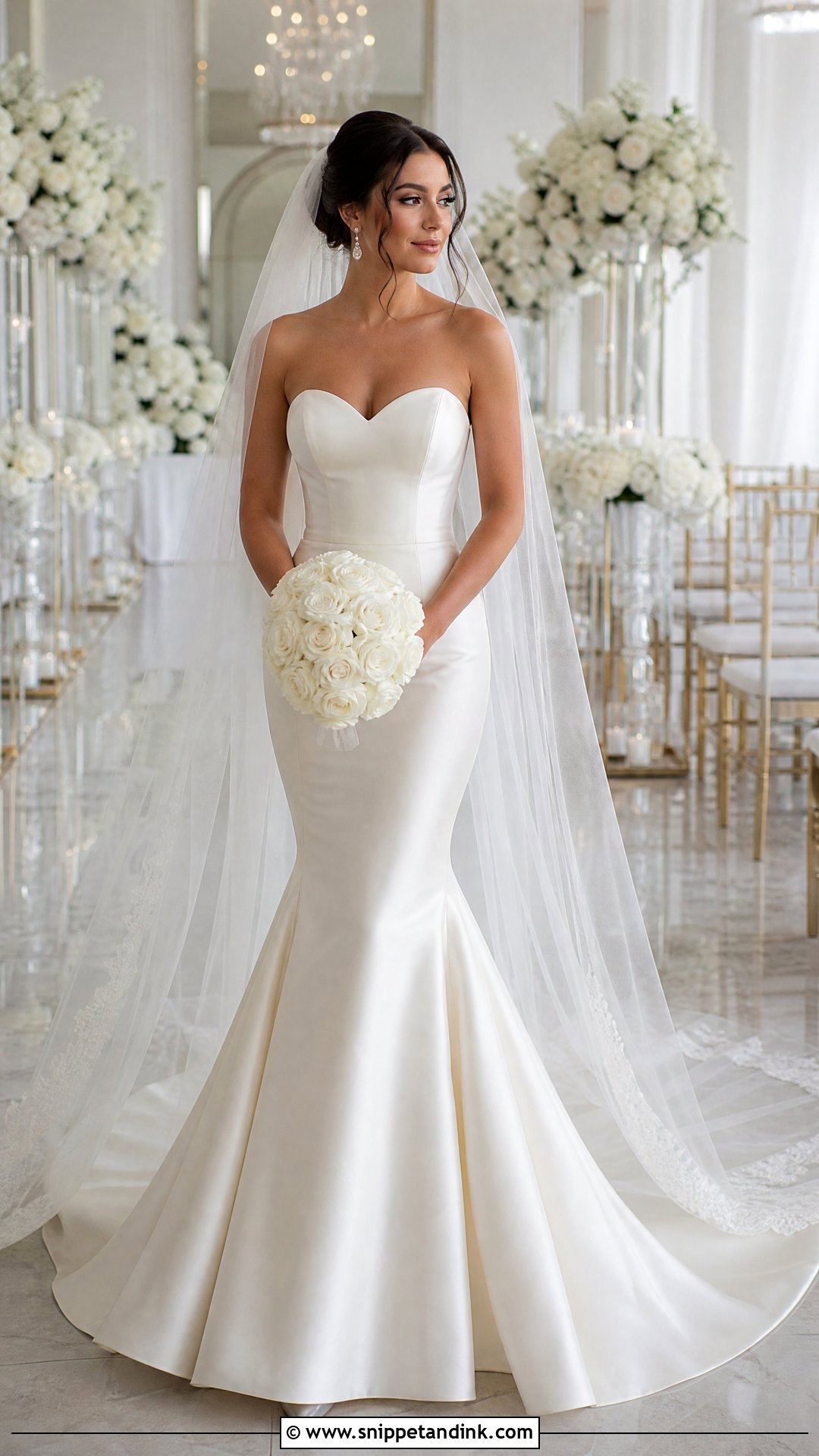
A sweetheart mermaid satin bridal dress follows the body through the hips and releases near the knee, and in satin every seam and every inch of that flare shows. That’s why tailoring matters more here than in almost any other cut. Walk the length of the fitting room and sit down: if the flare starts too low, your stride shortens to a shuffle. Brides who want more freedom should try a trumpet, which opens higher on the leg. Pointed heels high enough to clear the hem, a sheer cathedral veil and drop earrings finish it, with a simple oval bouquet held at the hip.
10. High Neck Satin Bridal Dress
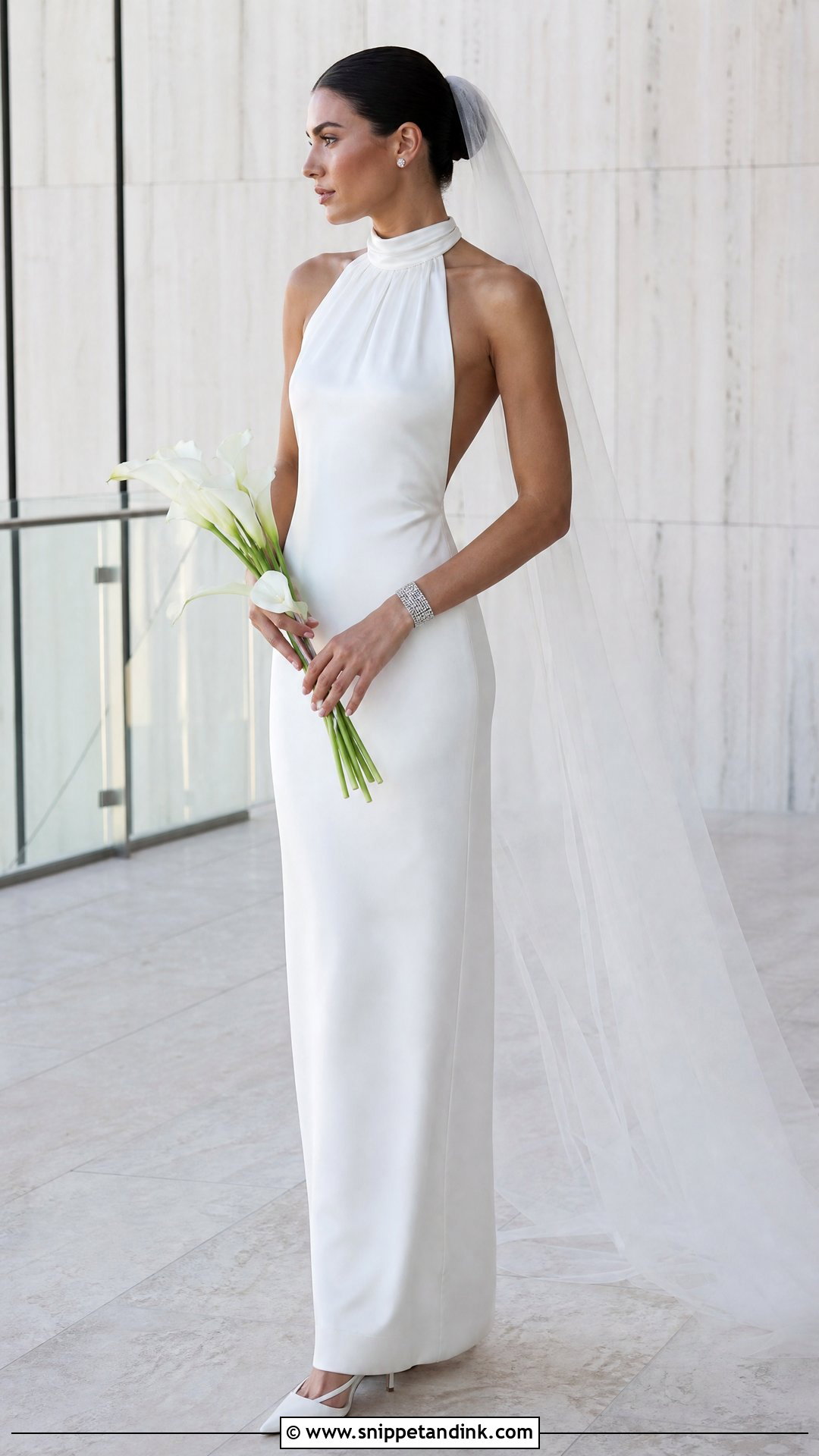
High necklines feel fashion-led in satin, whether softly gathered, draped or cut into a clean mock-neck design. Balance the covered front with an open back, bare arms or a slim column so it doesn’t feel stiff. Lightweight satin is usually the better choice for a gathered collar, since thick satin stands away from the neck instead of settling against it. Before buying, turn your head both ways and sit down; a collar that rubs at the fitting will rub all night. Small studs and a cuff bracelet replace a necklace, and a narrow chapel veil adds the bridal note.
11. Draped Bodice Satin Bridal Dress
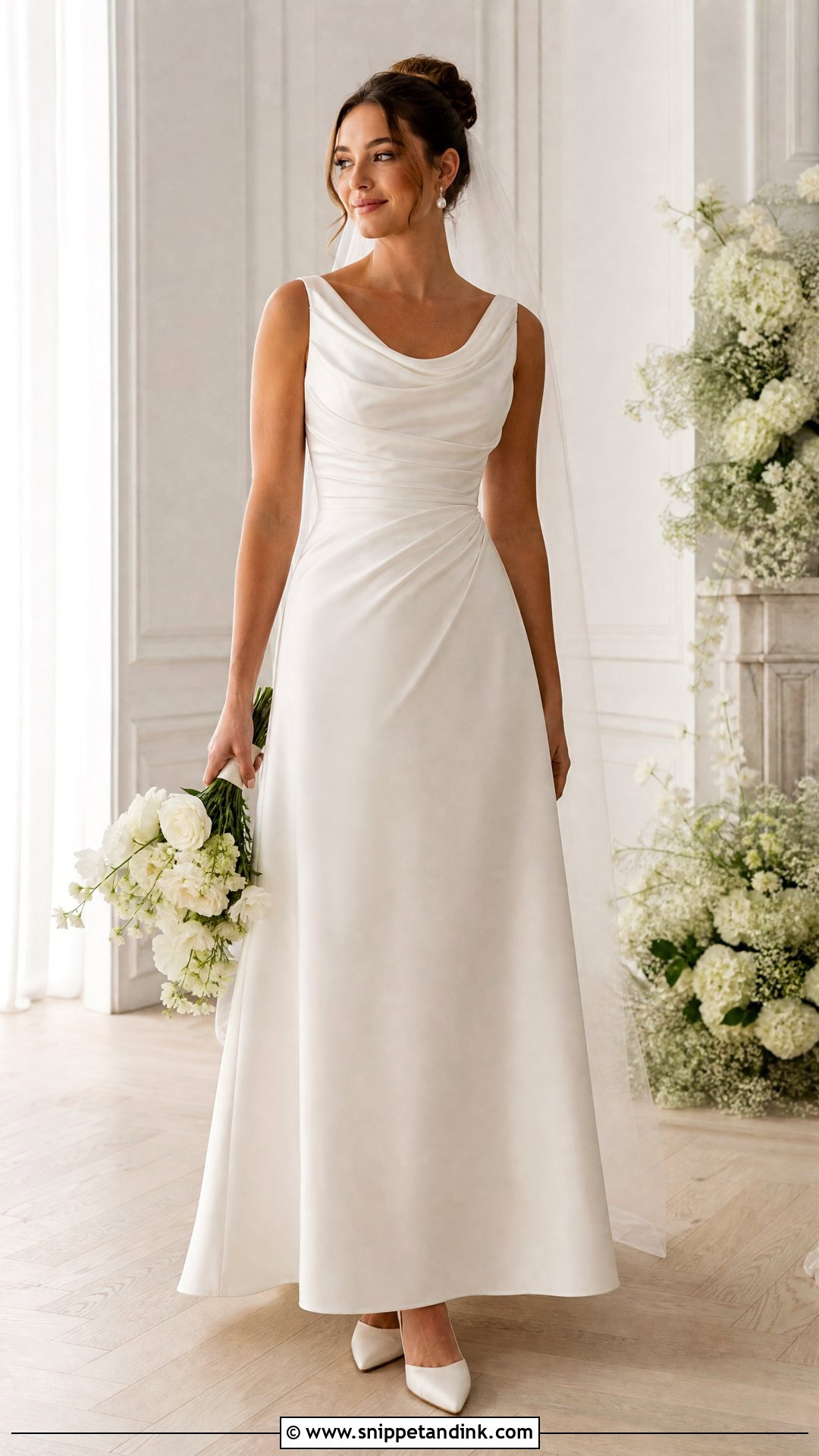
Draping gives satin shape without lace or embroidery: diagonal folds, gentle ruching, or fabric gathered toward the waist. The folds should lie flat and even. Where they pull, satin shows it instantly as a shiny strain line, so I ask the tailor to check the bodice by a window and again under indoor light. A flowing A-line skirt suits almost every figure here. Pearl earrings, a plain veil and kitten heels keep it quiet, and a side-swept bun follows the direction of the folds. Carry the bouquet lower than usual so it doesn’t sit on top of the draping.
12. Bow Back Satin Bridal Dress
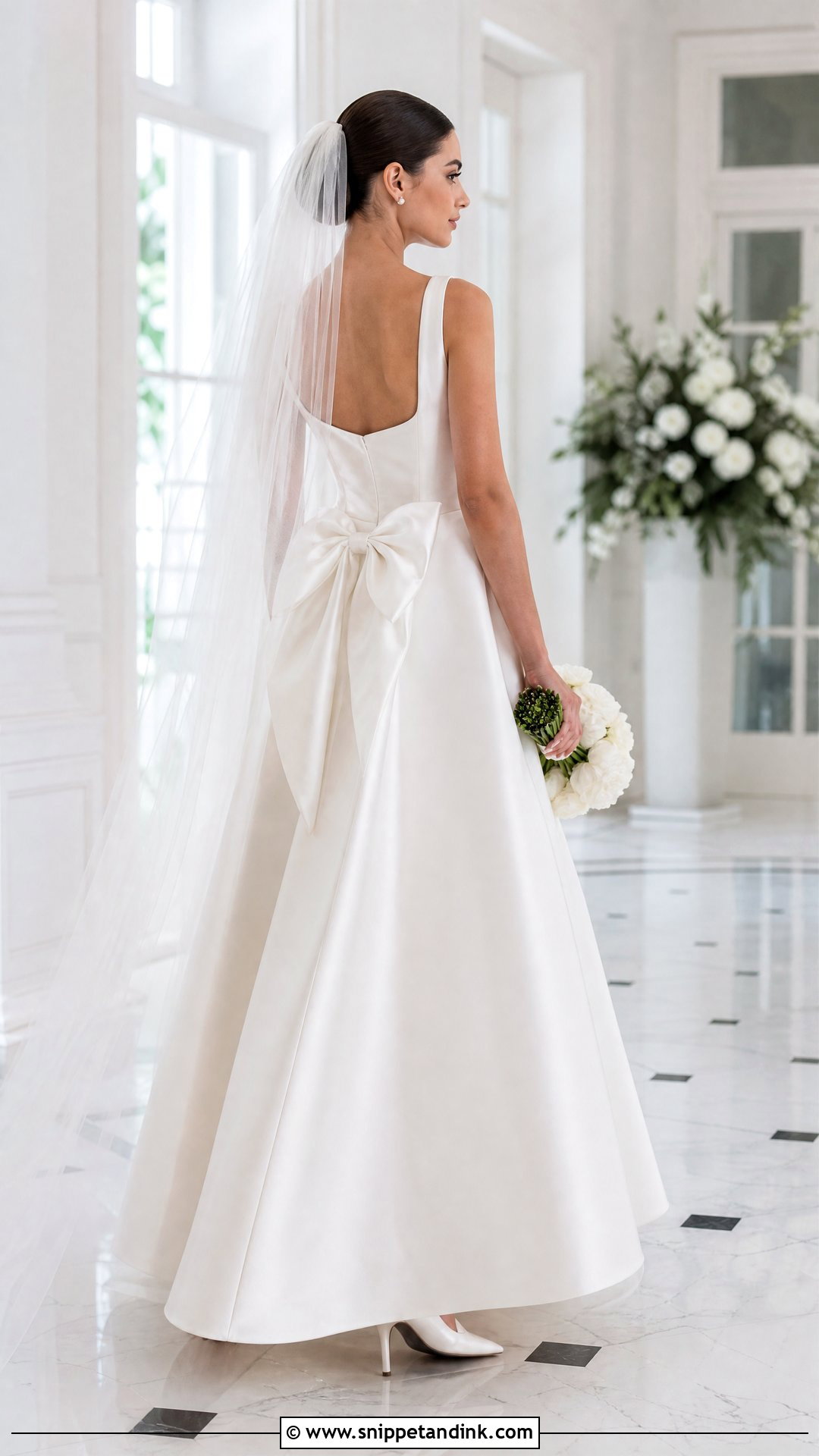
A bow at the back gives you a memorable exit while the front stays plain. It can sit at the waist, above the train, or trail into long tails that move as you walk. I keep the silhouette simple, a fitted A-line or a modest ball gown, so the bow doesn’t fight anything. The detail I check is the loops: well-made bows are interfaced inside so they keep their shape after hours of sitting against a chair, while unlined ones collapse. Wear your hair up and choose a sheer veil so the bow shows through. A detachable bow is worth asking for if you want a cleaner dance-floor look.
13. Open Back Satin Bridal Dress
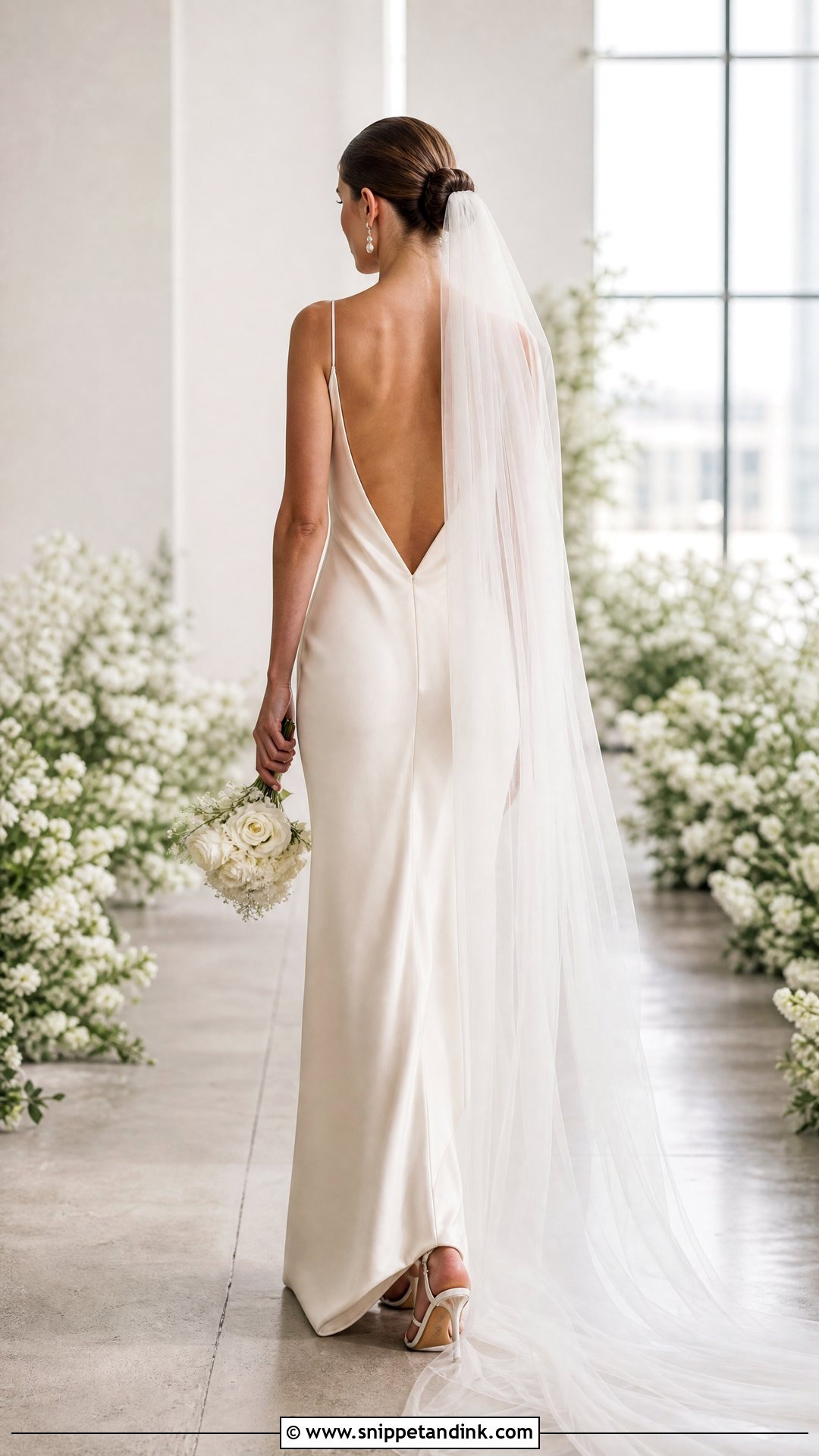
An open back relies on clean lines, so the cut has to be precise. A deep V, a soft scoop or a frame of thin straps all work over a fitted column or a fluid A-line. Support is the conversation to have early in alterations, because a normal bra is out. Built-in cups, side boning and body tape are the usual fixes, and they need to go in before the final hem is set. Wear your hair up or to one side, add delicate drops, and consider a back necklace if the opening is deep enough. A veil pinned below the bun falls over the back without covering it completely.
14. Cape Sleeve Satin Bridal Dress
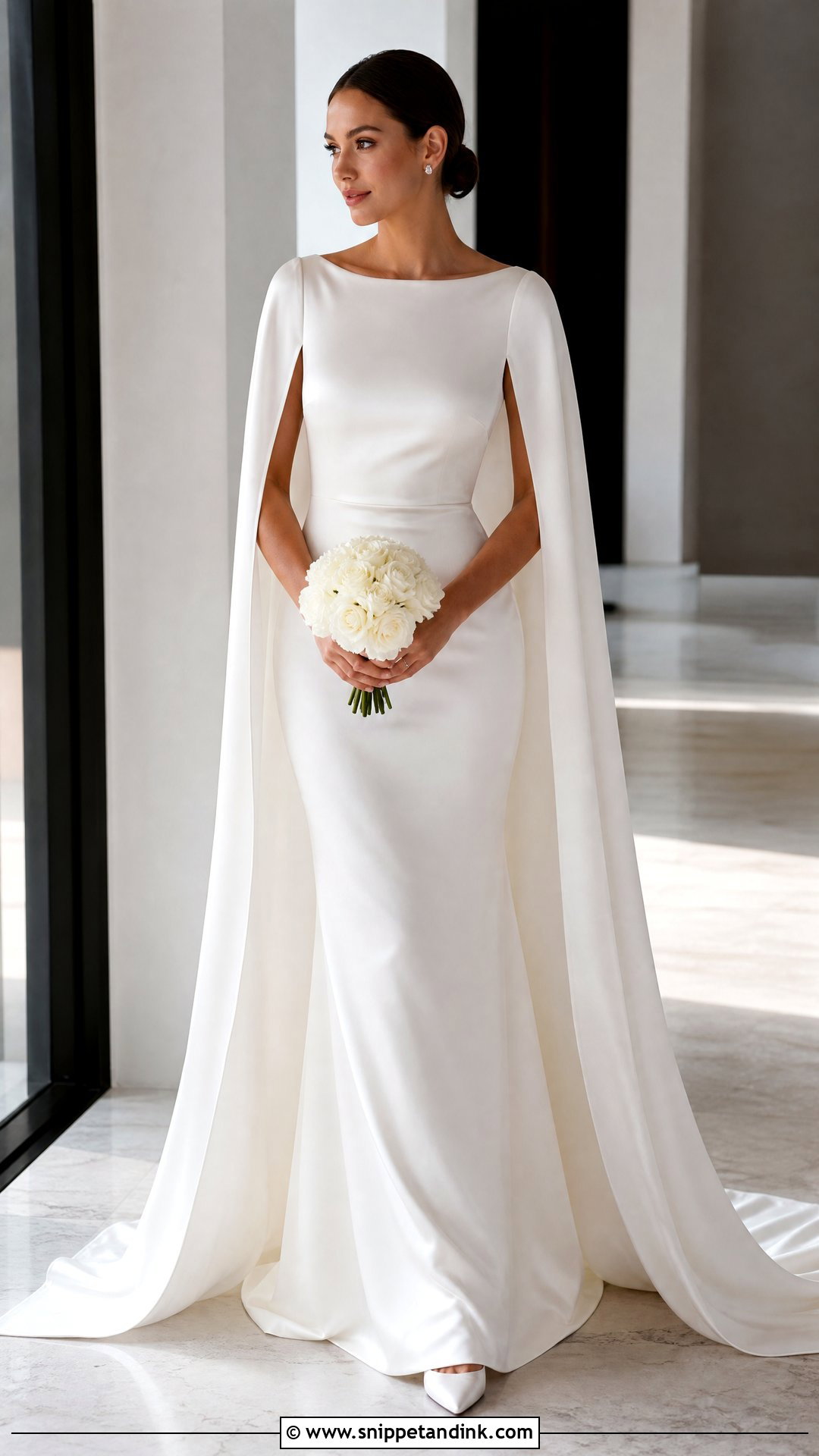
A cape changes the whole outline of a satin gown and adds light shoulder coverage. It can attach at the neckline, fall from the shoulders, or stretch into a train long enough to replace the veil. With that much drama behind you, the dress itself should stay plain, a fitted column or restrained A-line. I’d avoid bracelets, which catch on the cape’s edge. Test it on stairs and in a breeze before the day; long capes wrap around the legs outdoors. The satin needs some weight to fall cleanly, but too heavy and it bunches at the shoulder seam.

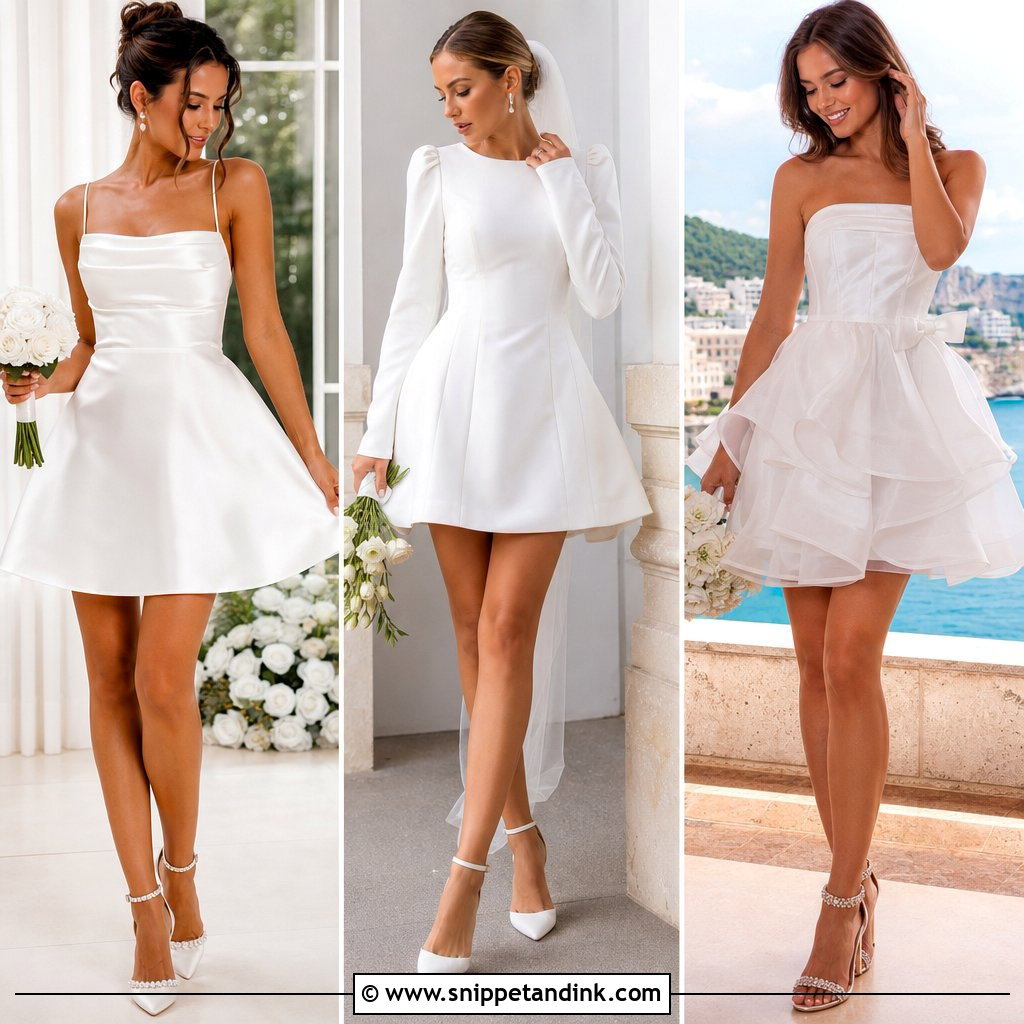

15. Tea Length Satin Bridal Dress
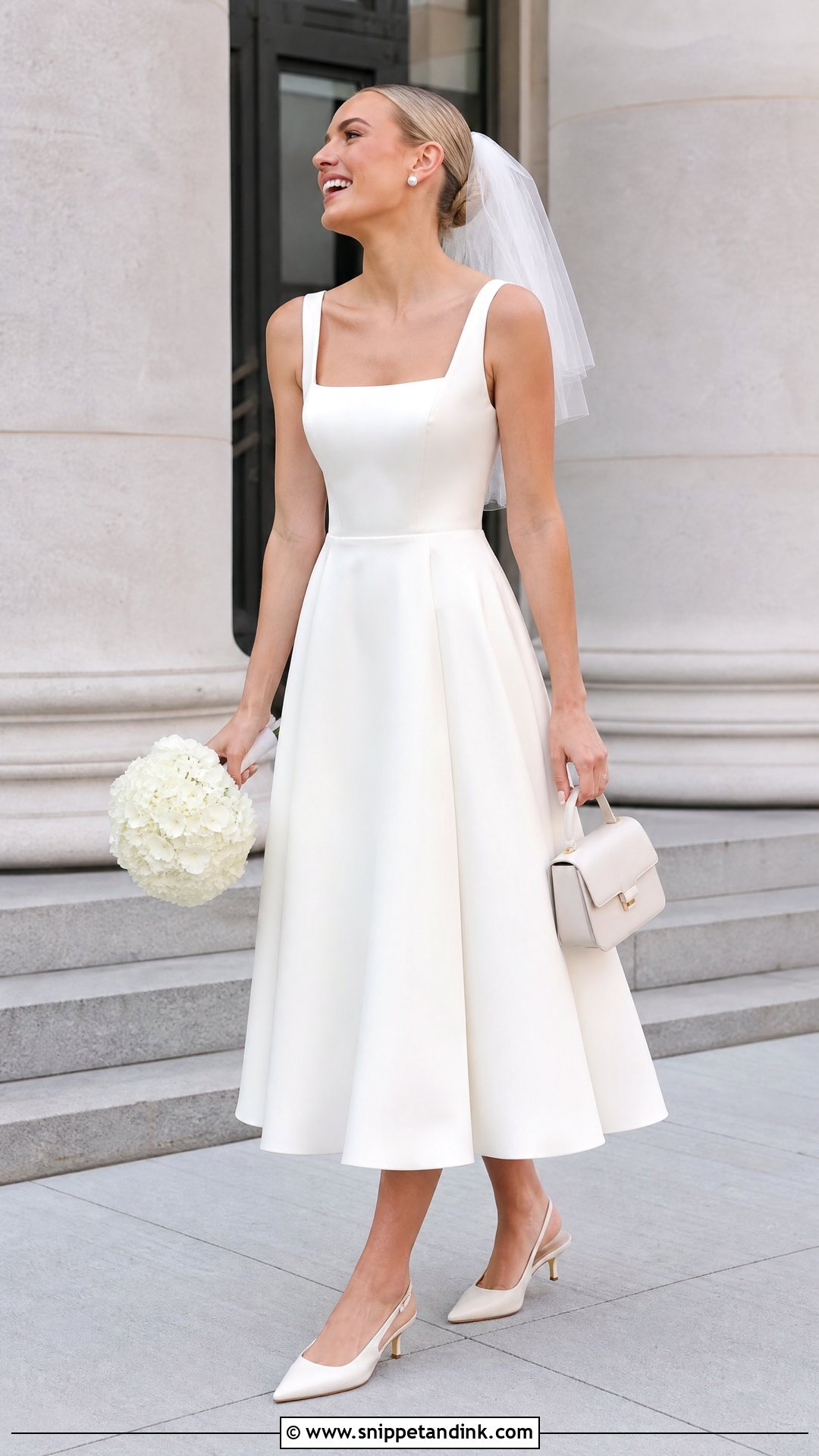
Tea length falls between knee and ankle, and suddenly your shoes become half the outfit. It suits courthouse ceremonies and daytime parties, and it has a vintage feel over a fitted bodice and softly flared skirt. Exact hem placement is the alteration to fuss over: a couple of centimetres change how long your legs look, so try it with the actual shoes on. Pointed slingbacks, pearl studs and a short veil or a structured bow in the hair finish it. A square neckline with box pleats is the more modern take, and a small top-handle bag beats a clutch for this length.
16. Satin Bridal Mini Dress
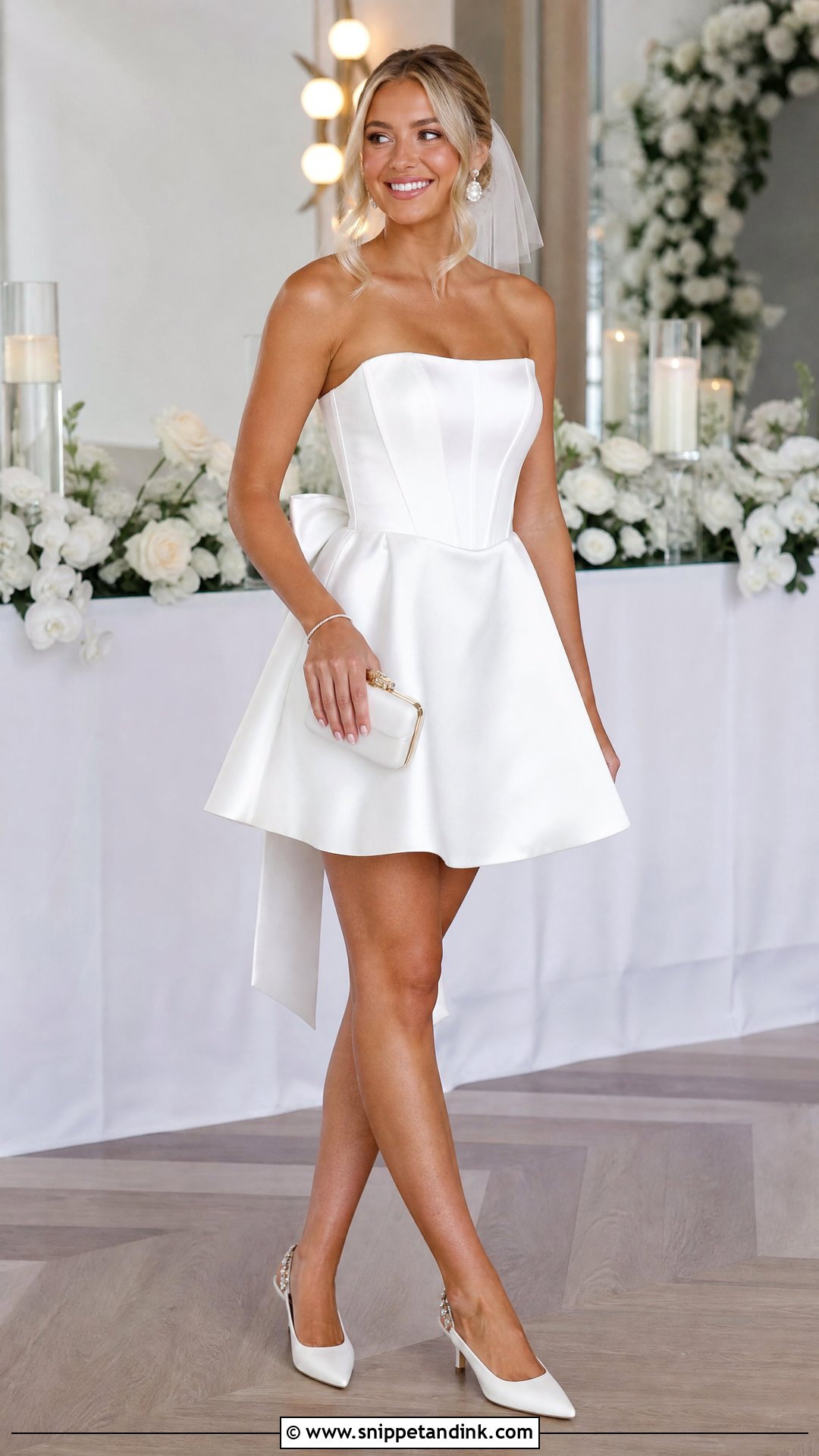
A satin bridal mini dress is a common second look for receptions, and it suits elopements on its own. A structured shift, a corset mini or a softly draped style all work, but the short hem needs good tailoring higher up so it still reads bridal. Slingback kitten heels, statement earrings and a miniature veil do the job. In cooler months sheer tights help; in summer, platform sandals. Sit, walk and dance in it at the fitting, because satin minis ride up faster than you expect once you sit on a banquet chair.
17. Empire Waist Satin Bridal Dress
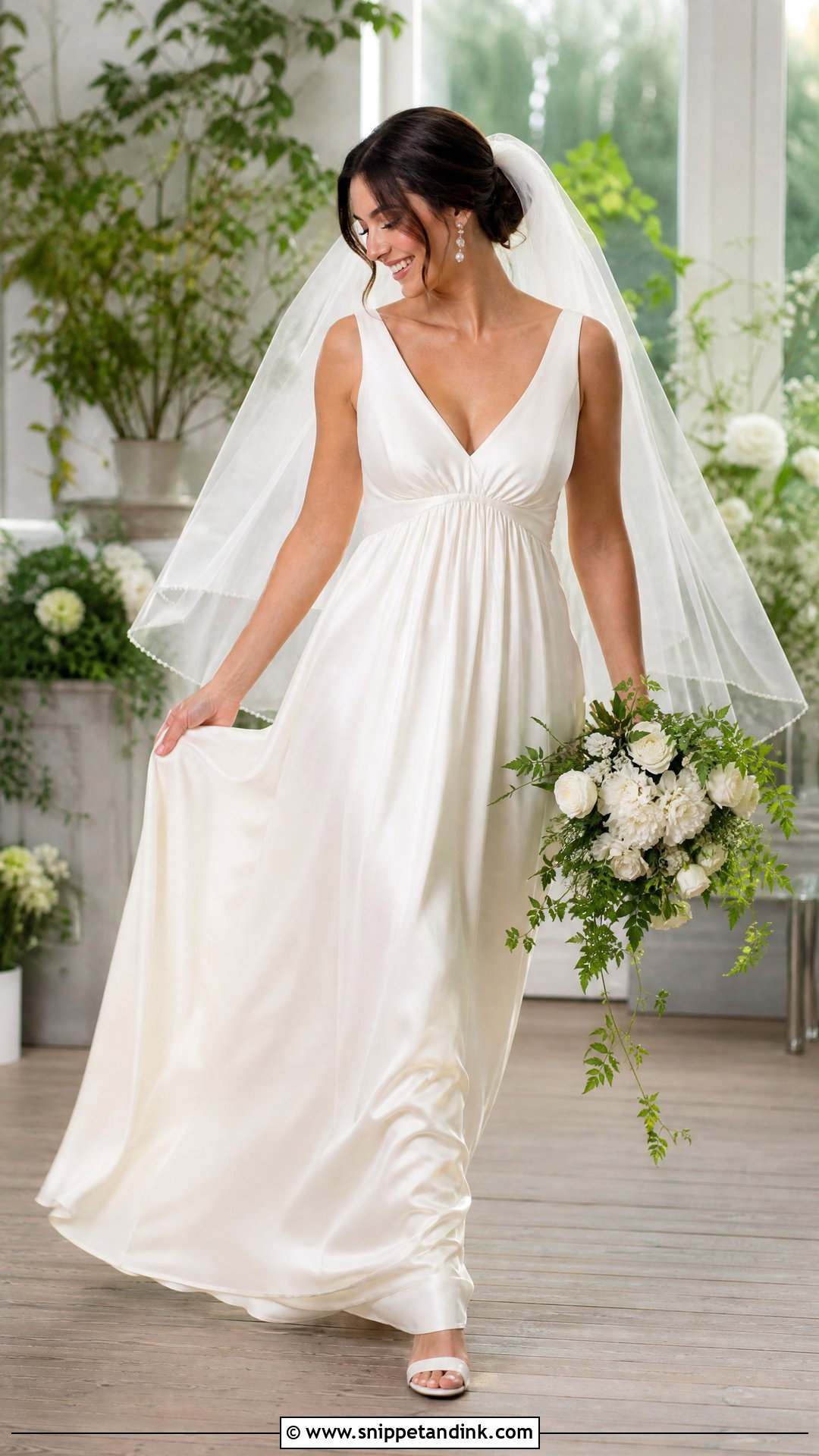
An empire seam sits just under the bust and lets the fabric fall freely, so there’s no pressure at the waist or hips. That makes it a natural choice for pregnant brides, petite frames, and anyone who dislikes structure through the middle. Choose a fluid satin; a stiff one tents out from the seam and adds bulk. A gathered V-neck gives definition and wider straps make a regular bra workable. I’d skip a wide belt at that raised seam, which breaks the long line. A narrow satin band, low block heels, pearl drops and a loose bouquet with trailing greenery suit the movement.
18. Pleated Skirt Satin Bridal Dress
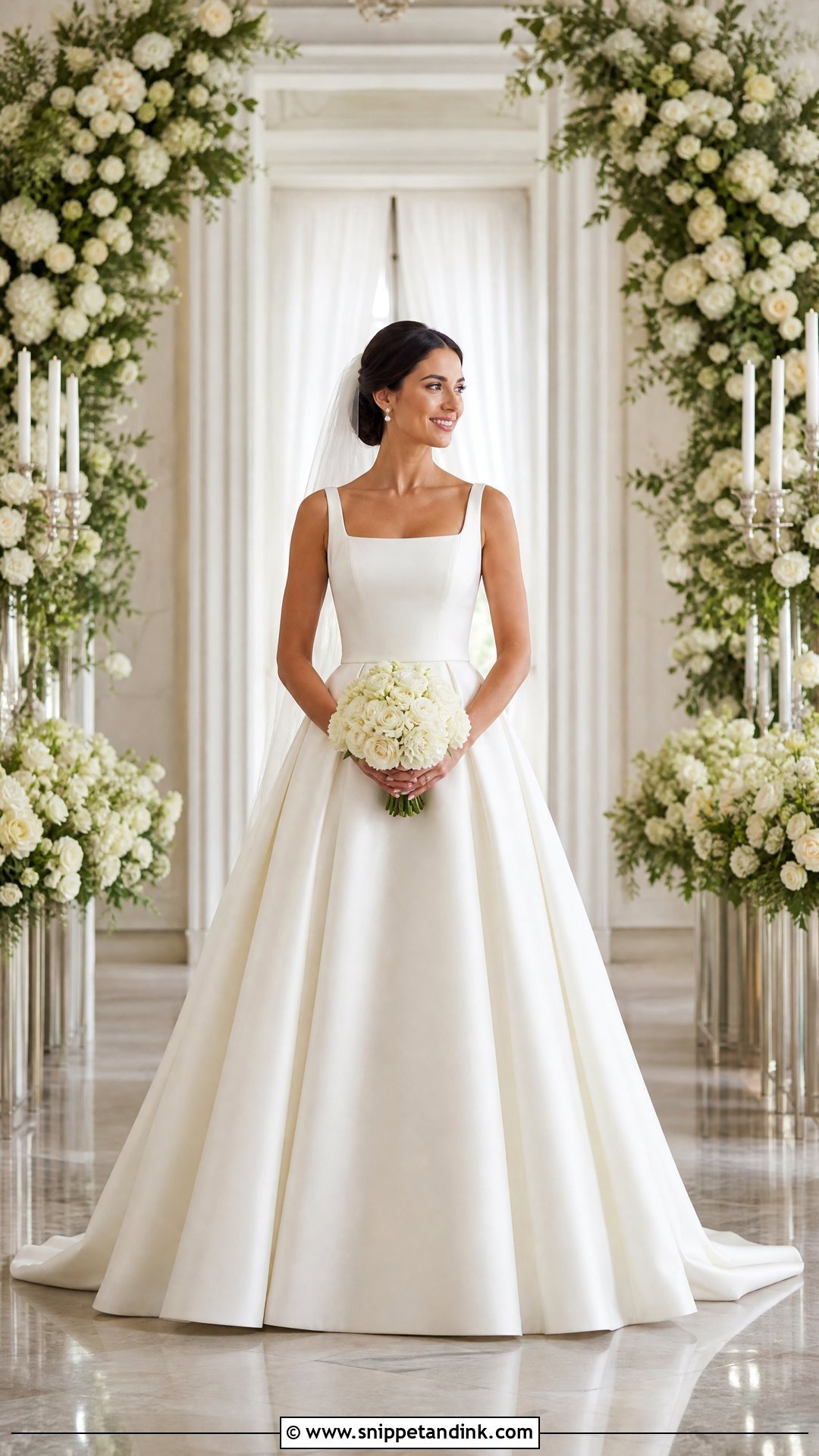
Pleats give satin volume with crisp edges: wide box pleats for formal fullness, narrow ones for a softer A-line. A smooth fitted bodice keeps the waist defined, and the neckline can be square, scoop or strapless. Ask the salon exactly how to steam the skirt, because pressing over pleats with a hot iron can flatten them or leave shiny lines on the satin. If you worry about volume at the hip, pleats that start just below the waist are more forgiving. Block heels hidden under the skirt, a plain veil and a small bouquet let the folds show in photos.
19. Detachable Overskirt Satin Bridal Dress
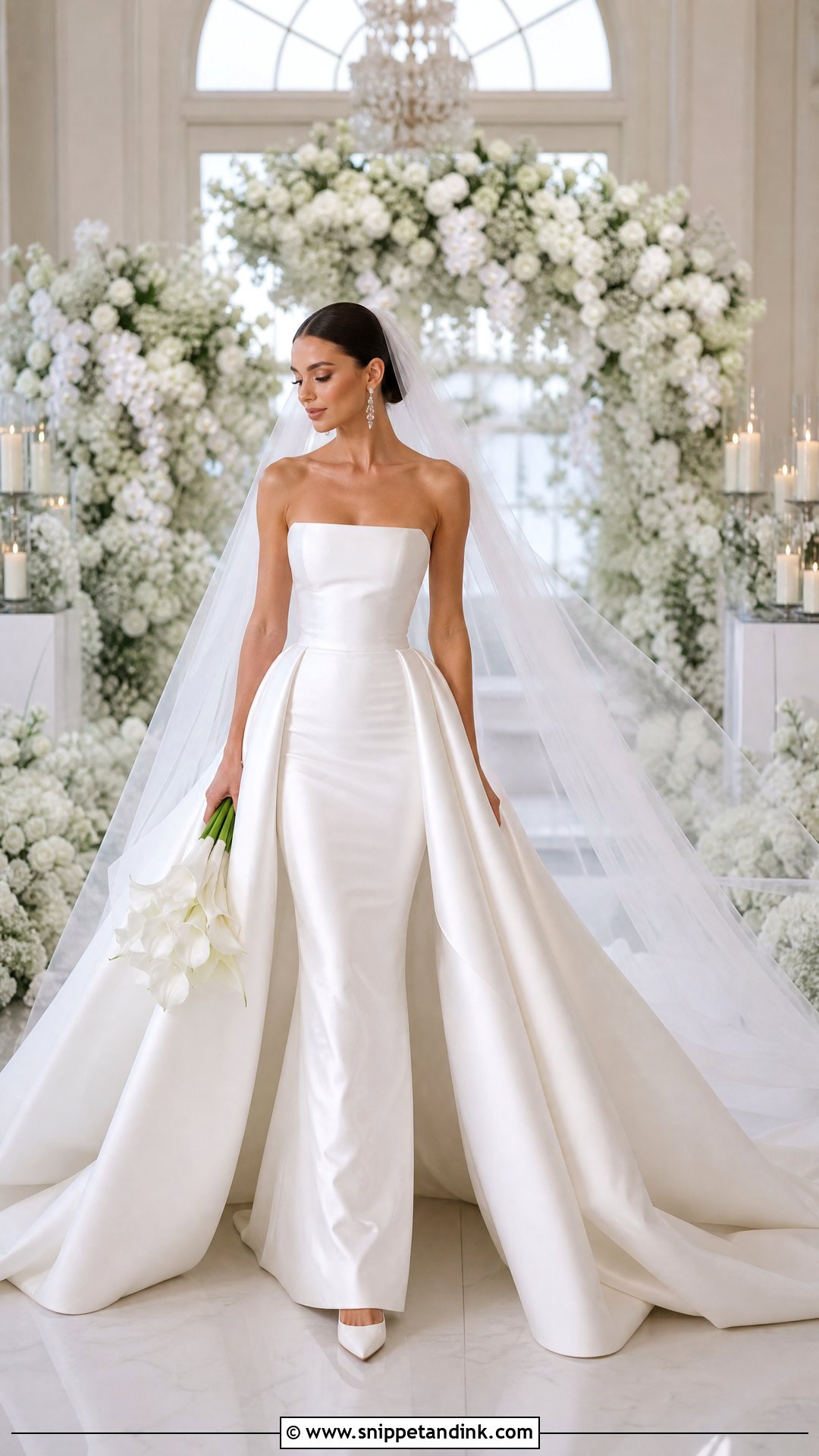
With a detachable overskirt you get two silhouettes and no full change. Ball-gown volume for the ceremony, then a column, mermaid or mini underneath for the party. The waistband is where these succeed or fail: it should blend into the bodice without a ridge of bulk. Practise taking the skirt on and off with the person who’ll help you on the day, since hooks and snaps behave differently in a hurry. Look at the base dress alone from every side too; it’s a second wedding dress, not a slip. Swap the cathedral veil for a shorter one or a sparkling clip when the skirt comes off.



20. Champagne Satin Bridal Dress
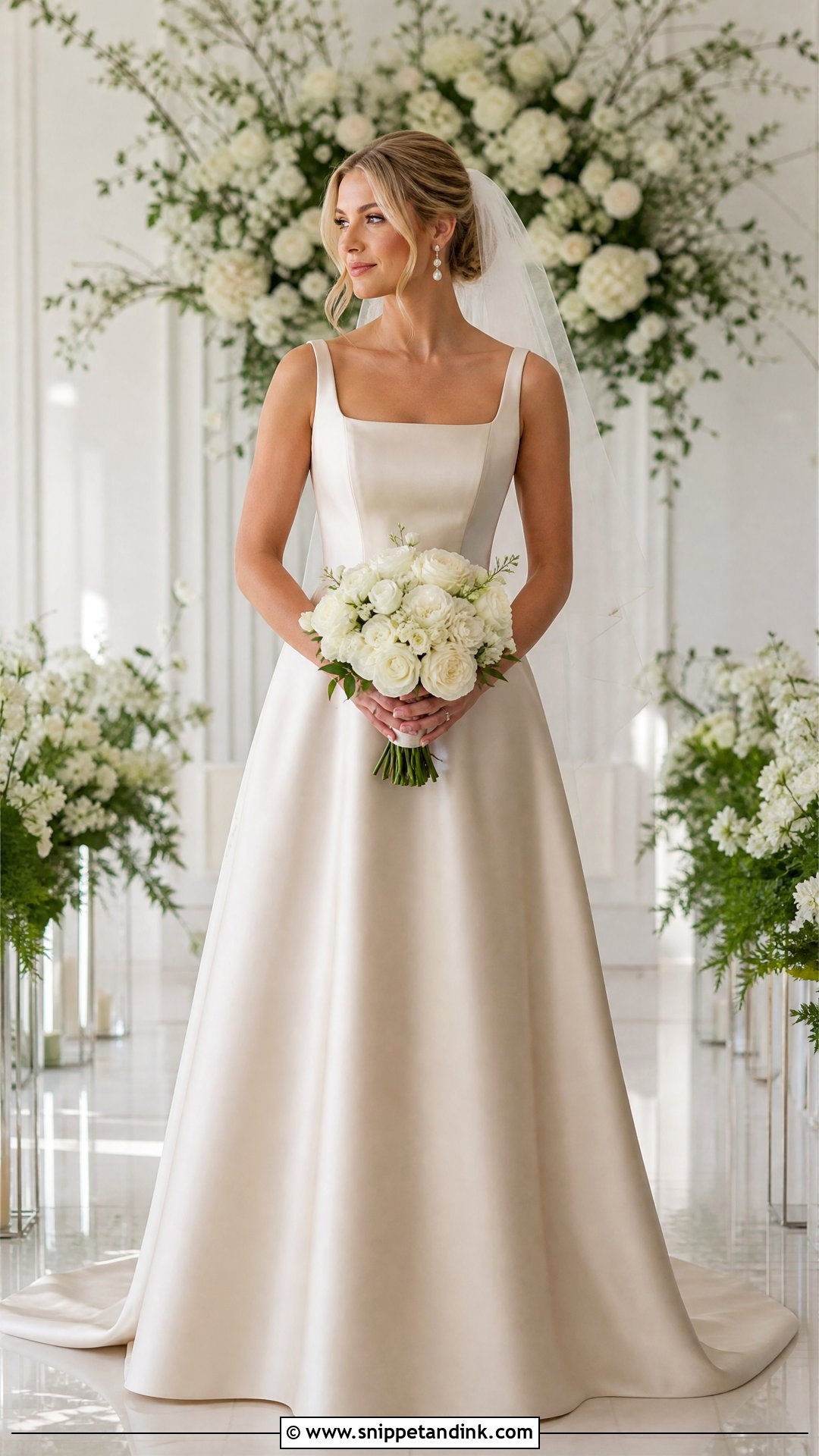
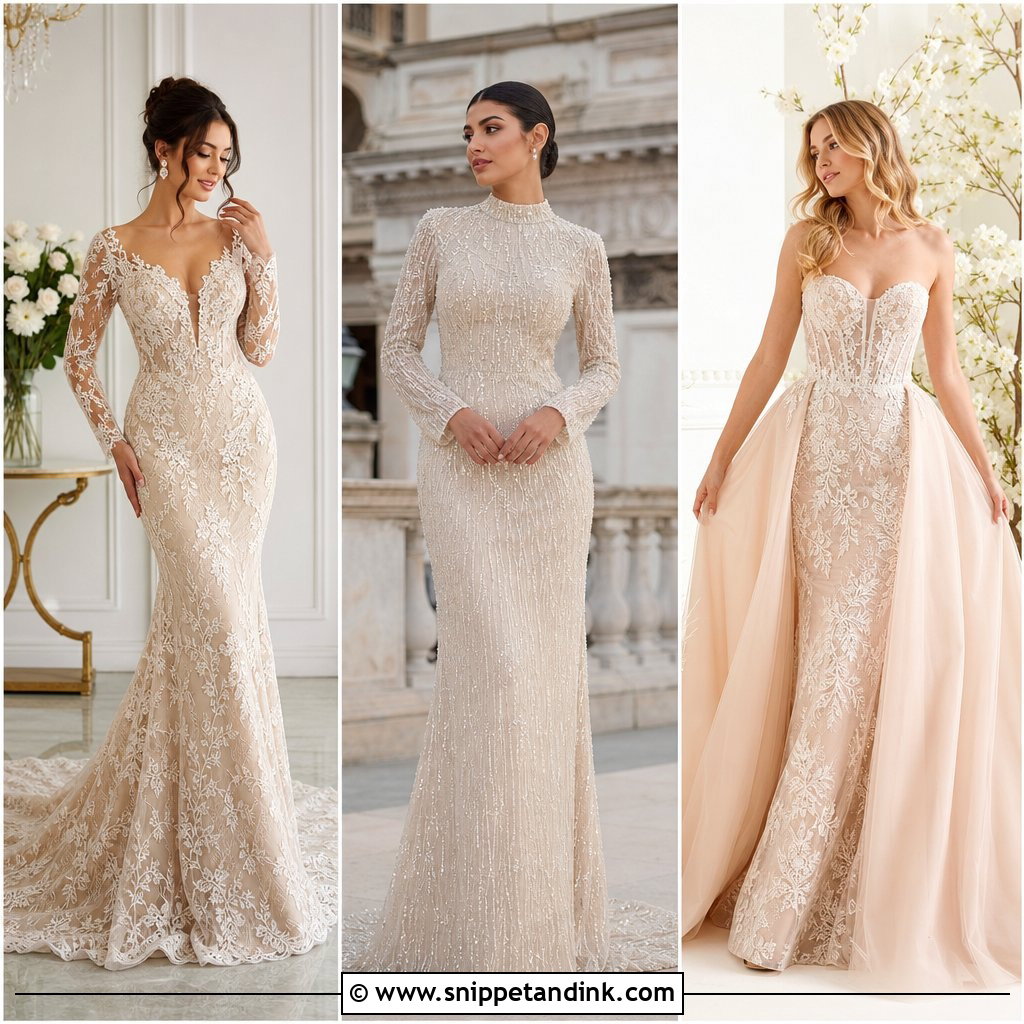
Champagne gives satin a warmer glow than bright white, and its sheen shows more in that colour. Undertone is everything: some champagnes lean pink, some gold, and one will flatter you while the next washes you out. Try champagne, pale gold and ivory side by side by a window before deciding. A clean A-line, cowl slip or ball gown keeps the colour central. Neutral pumps, pearl earrings and an ivory veil add soft contrast; gold jewellery warms the look, silver cools it. White and cream flowers stop it reading monochrome. I always suggest giving the photographer a fabric swatch so they can set the colour accurately.
Creases, Water Spots and the Wedding Morning Steam
Satin creases where you sit and keeps the marks. Expect soft lines across the lap after the ceremony and the meal; heavier satins recover better than charmeuse. That’s normal, and it’s one reason I suggest a quick touch-up before evening portraits.
Steaming without damage
Steam satin from the inside of the skirt, holding the steamer a hand’s width away and keeping it moving. Never let it spit water onto the face of the fabric, and never press an iron directly on satin. Silk can water-mark and polyester can go glassy under too much heat. If a crease is stubborn, use a press cloth on a low setting and test inside the hem first.
When something spills
Blot, don’t rub. Rubbing satin breaks the surface fibres and leaves a dull patch that’s worse than the stain. A drop of plain water on silk satin can leave a ring, so for wine or makeup I’d rather a bride leave it for a professional cleaner than scrub it in the bathroom. Pack white cloths and a little chalk in the emergency kit for small marks.
After the wedding
Hang the dress by the inner hanger loops, not the straps, and keep it in a breathable cotton bag rather than plastic, which traps moisture and can yellow ivory satin over time. Get it cleaned within a few weeks, because sugar from cake and champagne turns brown as it oxidises even when you can’t see it yet.
Satin Will Show Everything, So Start With the Fit
One fabric covers a huge range here, from a relaxed bias slip to a boned Basque-waist ball gown. Start with a silhouette you can walk, sit and dance in, then look at neckline, satin weight, train and inner structure. Bring your wedding shoes and underwear to every fitting, and view the dress in daylight and indoor light before signing off. Keep accessories quieter than the gown, since satin already brings its own shine, and the right one will feel like yours from the first fitting to the last dance.
You'll Like These Ideas:





Leave a Reply