
Korean bridal fashion runs on two tracks at once: sharply tailored modern gowns and the flowing lines of traditional hanbok. A bride might wear a clean satin gown for the main ceremony, an embroidered hwarot for the family rites, and a fusion piece somewhere in between. The modern side leans on smooth fabric, fine lace, sculpted necklines and detachable layers. The traditional side brings the full chima skirt, the short jeogori jacket, the norigae ornament and richly worked ceremonial robes. When I style a Korean wedding, the real question is how each outfit will move through its part of the day, and that’s how I’ve written up the looks below.
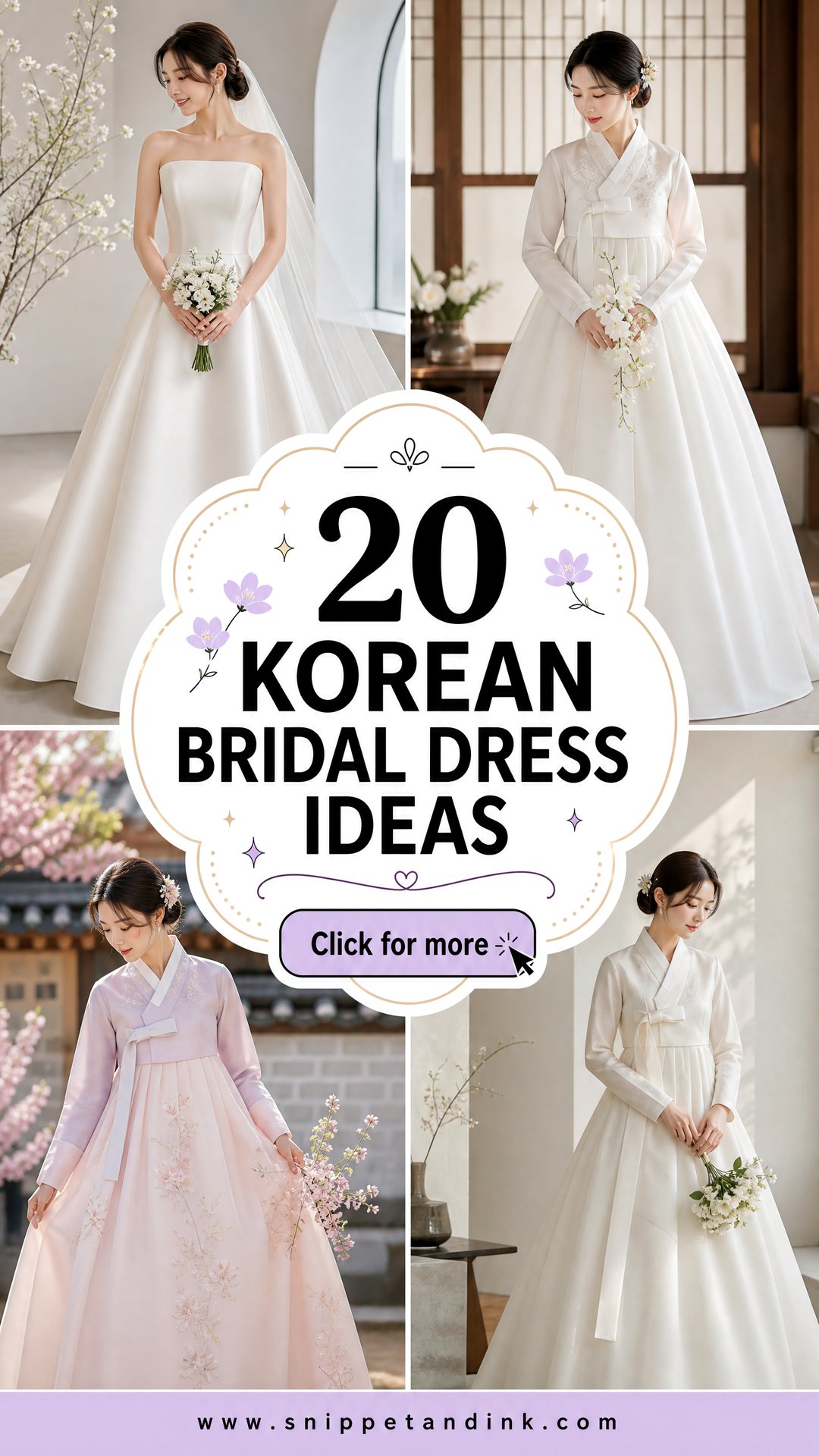
Gown Studio, Hanbok Maker or Both? Plan the Orders Early
A Korean wedding wardrobe often comes from two different places, and they work on different clocks. Western-style gowns need several fittings; a custom hanbok needs measurements, fabric choice and time for the maker to cut and sew by hand. If you’re wearing both, I map the orders backwards from the date.
- Decide the role of each outfit first: which one is for the main ceremony, which for the pyebaek or family rites, which for the reception.
- Order the gown roughly six to nine months ahead if it’s made to order, leaving at least two months for alterations.
- Book a custom hanbok two to three months out. Rental hanbok is common and perfectly fine for the pyebaek; reserve it early in busy spring and autumn seasons.
- Bring the gown’s fabric swatch to the hanbok fitting so the ivories match, or choose a deliberate contrast.
Sizing differs, too. A hanbok skirt ties above the bust and is cut generously, so it forgives small weight changes. A fitted satin gown does not. Schedule the final gown fitting about two weeks before the wedding and wear your actual shoes and underwear to it.
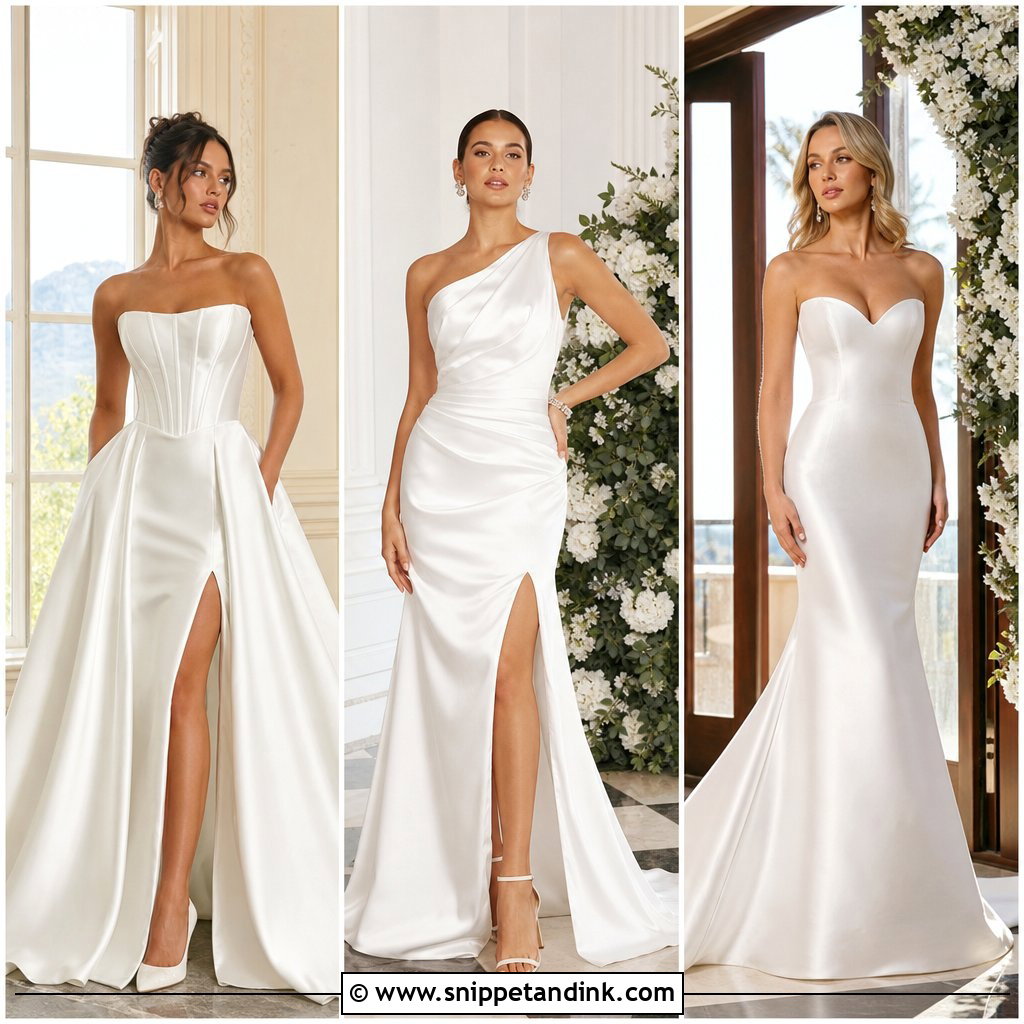
1. Minimal Satin A-Line Korean Bridal Dress
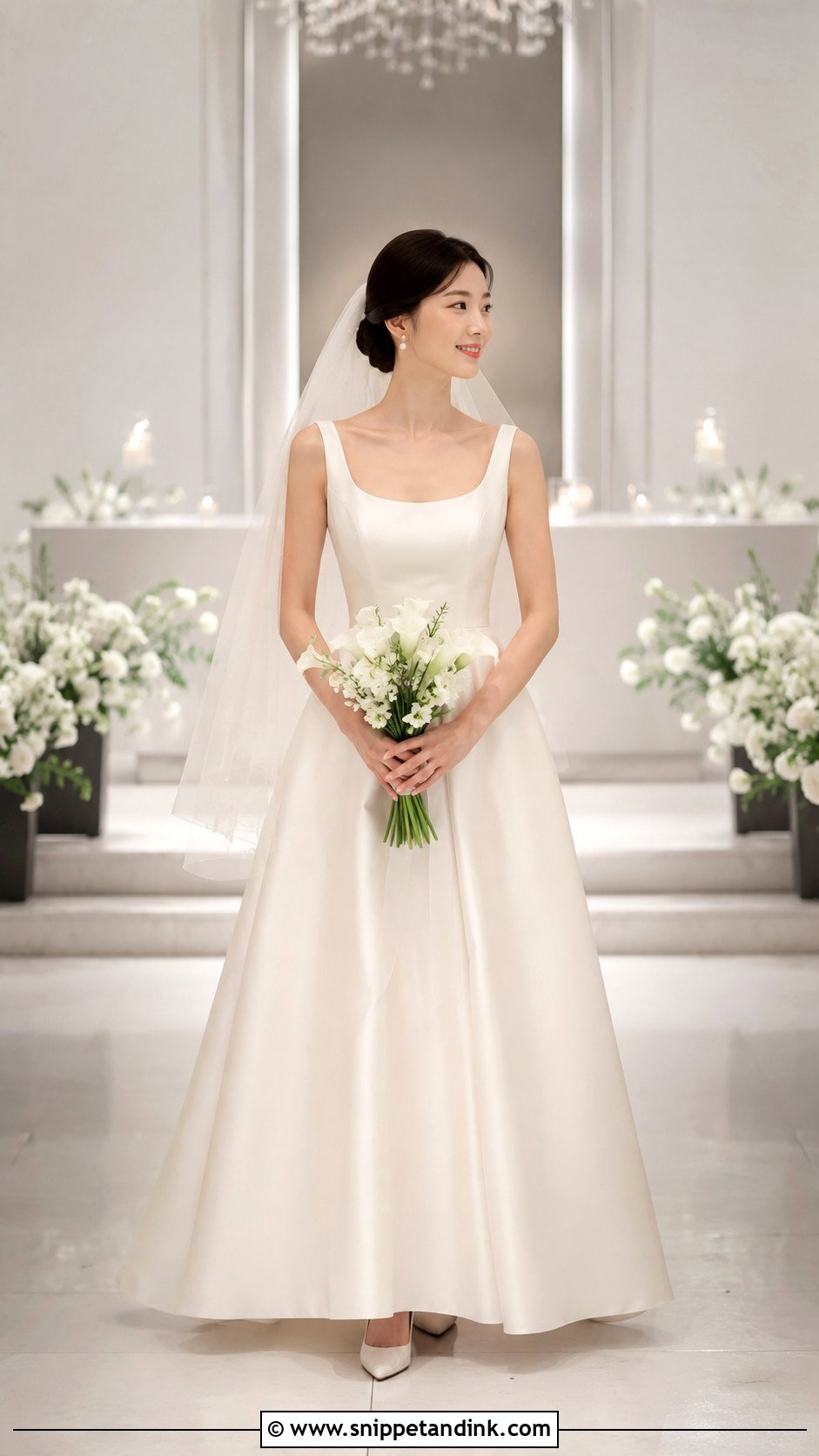
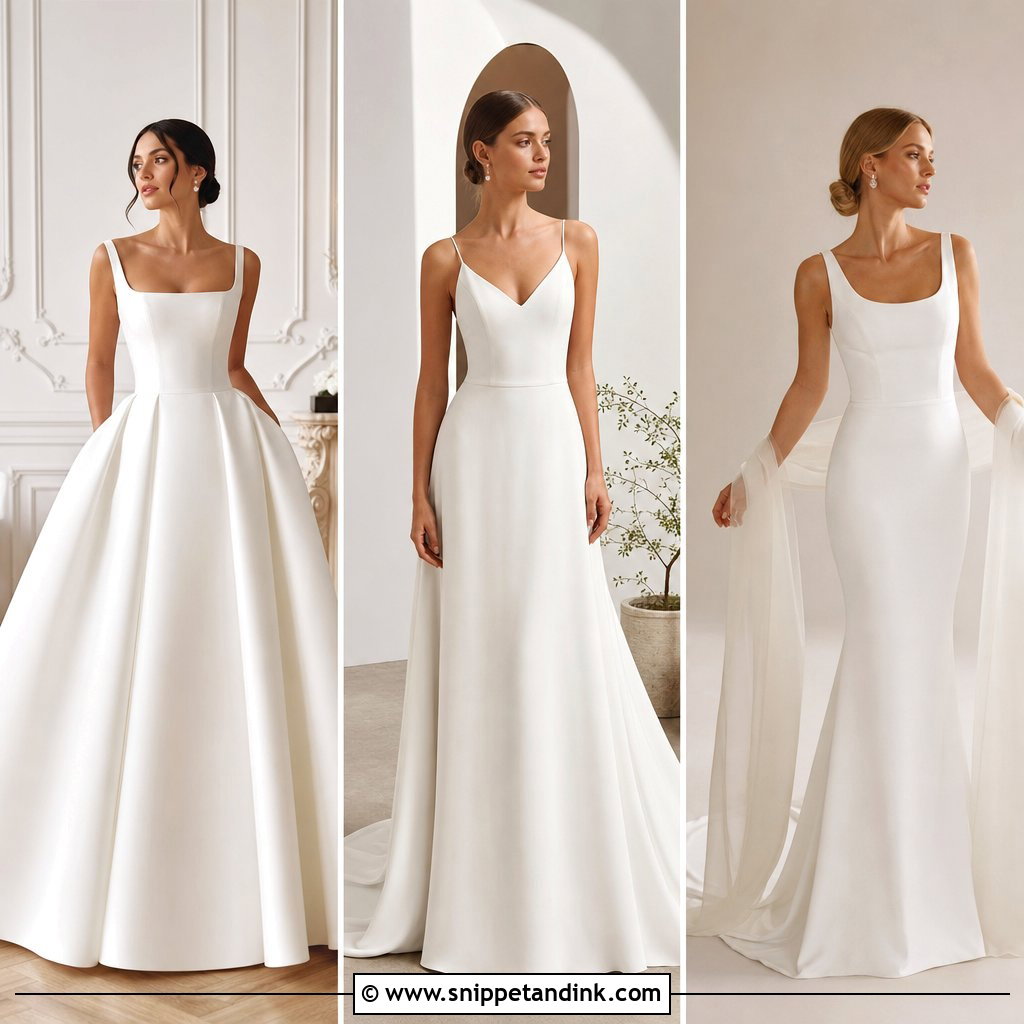
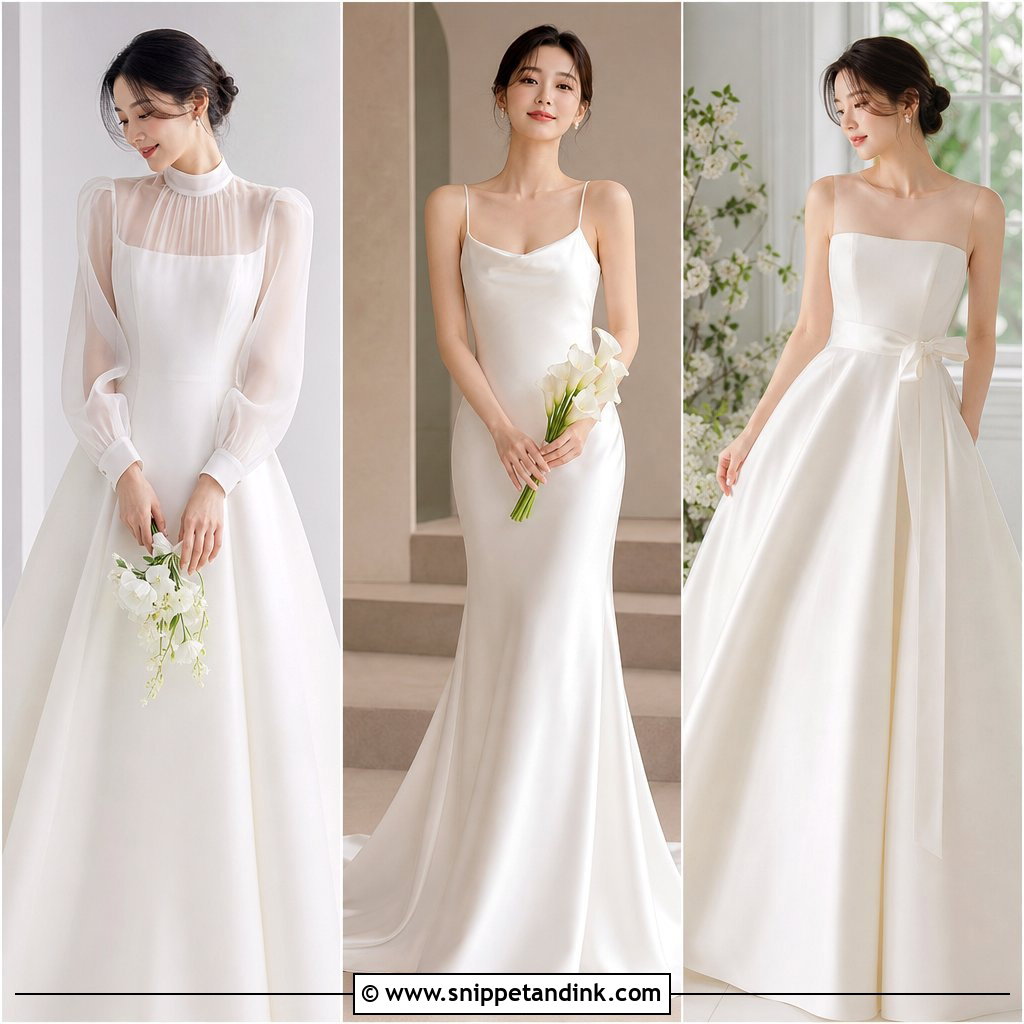
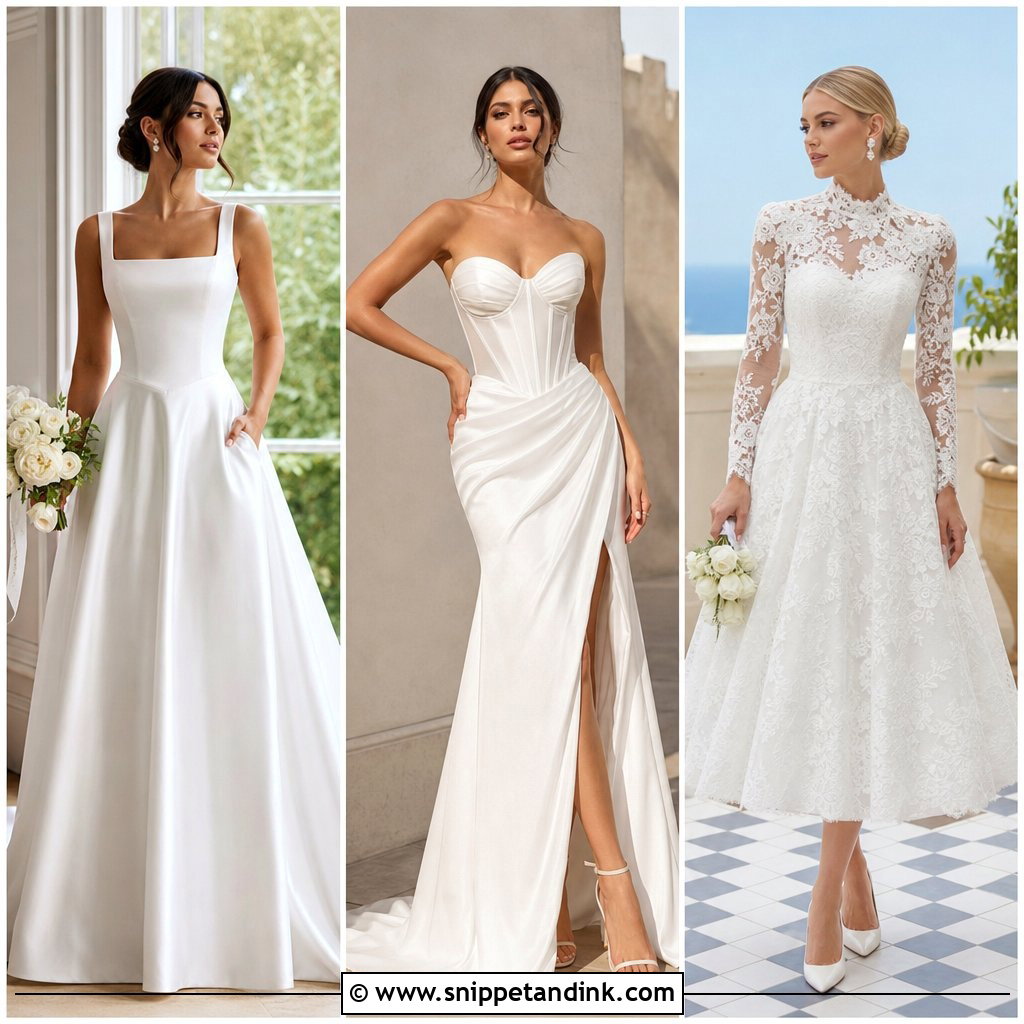
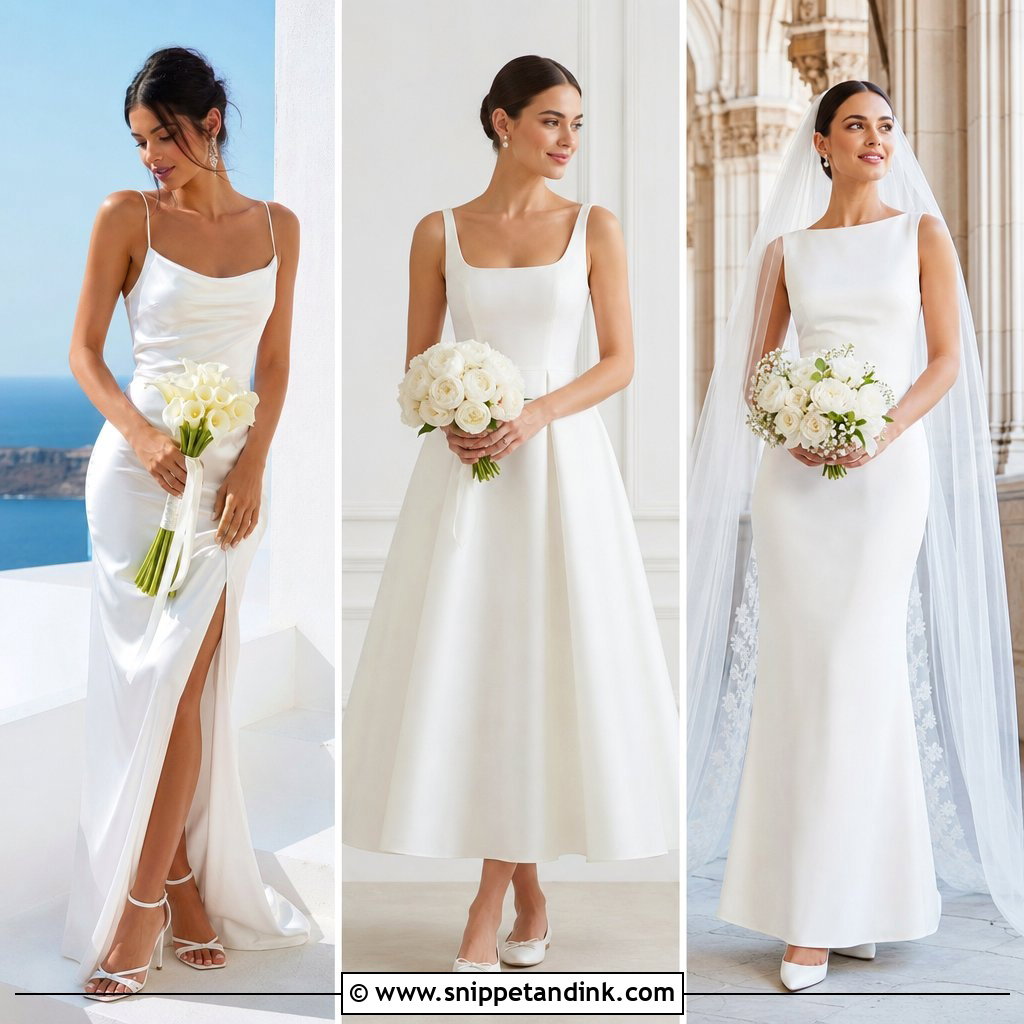
Satin does the work here, which is why this gown needs no beading. A structured bodice with a soft scoop or square neckline, a skirt dropping straight from the natural waist, and ivory duchess satin that glows under hall lighting. The catch with plain satin is that it shows every pull, so the bodice must be fitted precisely; a wrinkle at the side seam is visible in every photo. Pointed satin pumps, a pearl clutch, small pearl earrings, a low chignon and a sheer fingertip veil keep it clean. Ask for hidden pockets and a light lining. It suits a modern wedding hall or bright ballroom and leaves room for an heirloom piece.
2. Square Neck Ball Gown Korean Bridal Dress
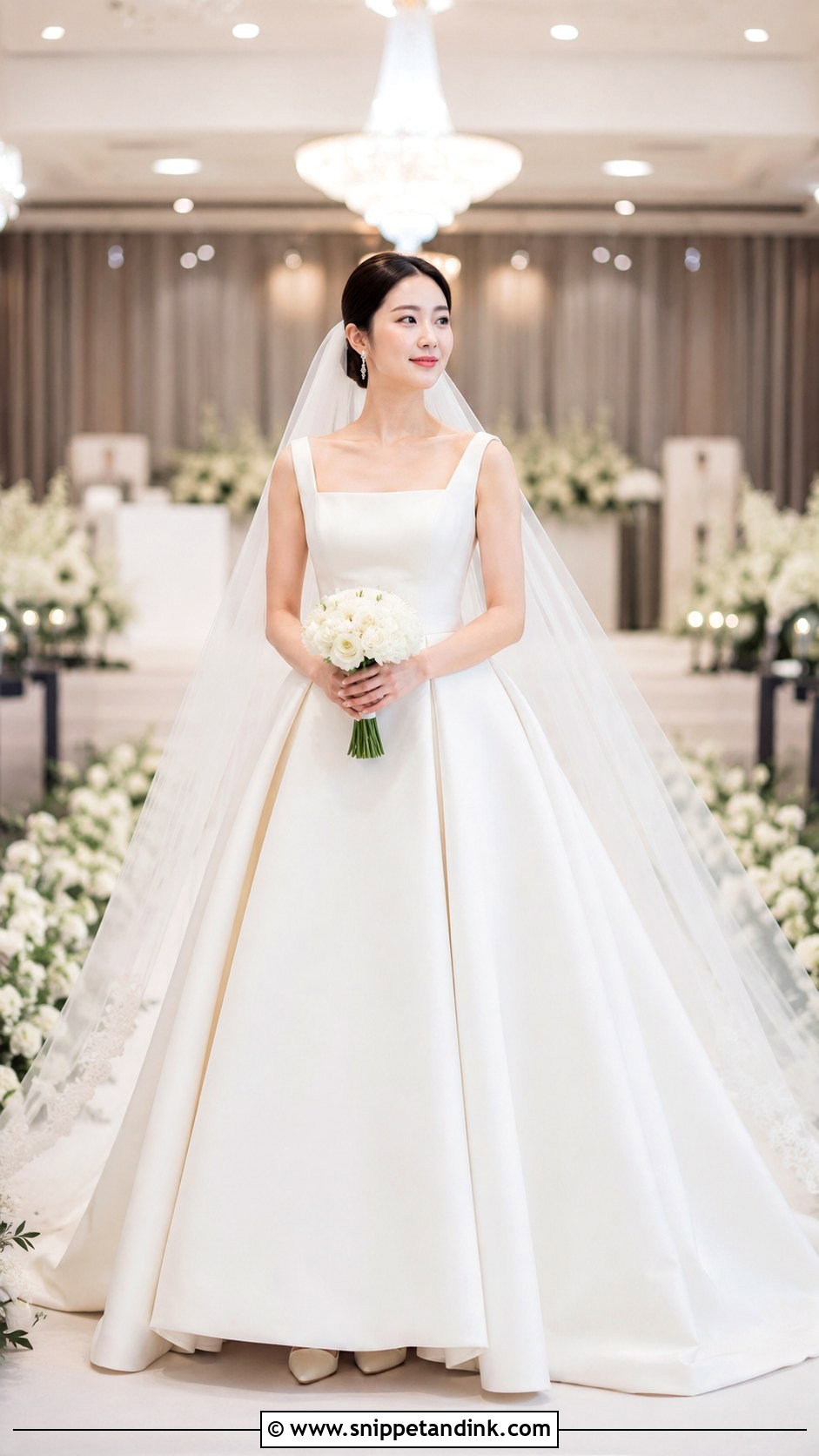
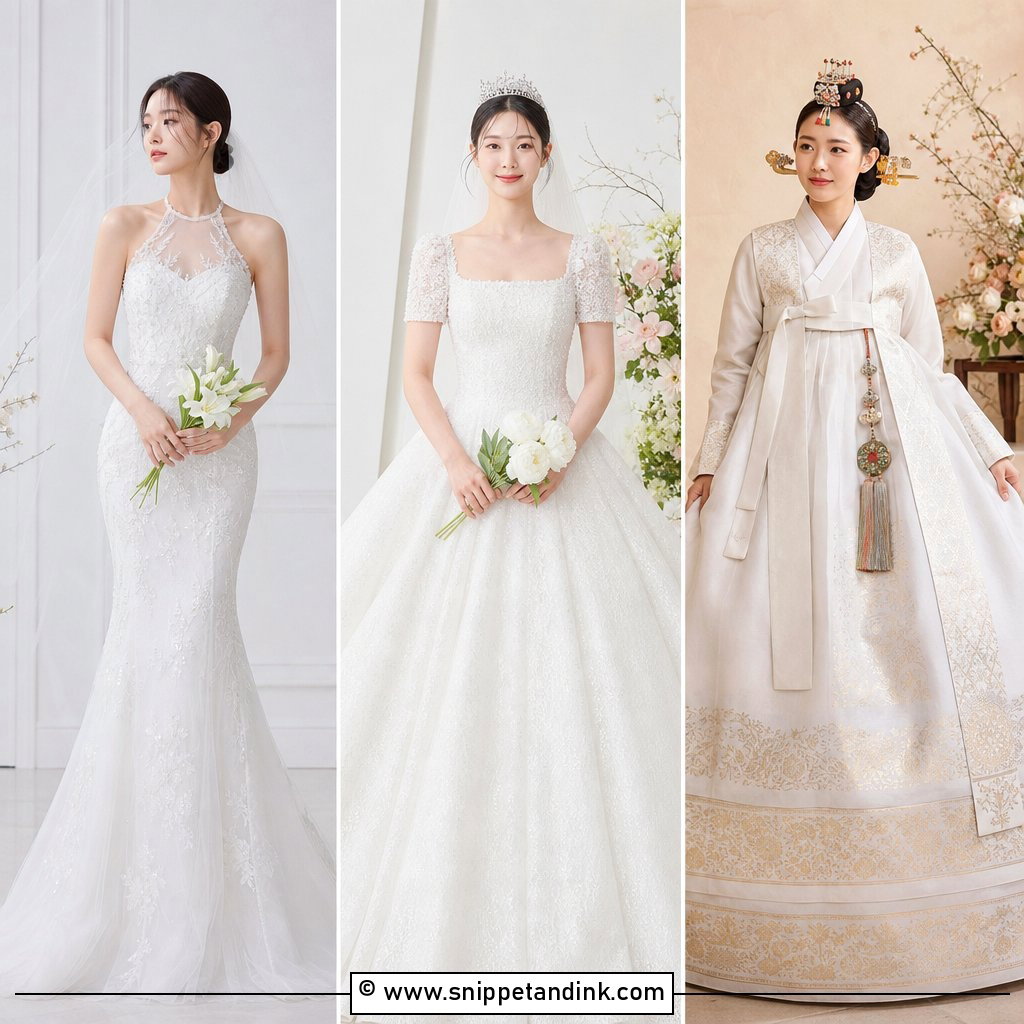
A square neck on a ball gown is my answer to a bride asking for volume without frills. The straight neckline frames the collarbone and keeps a full skirt from looking fussy. Crisp mikado or structured satin holds the shape through a long ceremony; softer satins start to collapse at the hip after a few hours of sitting. Style it with fine drop earrings, closed-toe ivory heels and a cathedral veil with a plain edge, plus a sleek centre-parted bun, which is the hairstyle you’ll see in so many Korean studio portraits. Sheer fitted sleeves or a removable bolero add coverage. Keep the bouquet compact: white roses or calla lilies.
3. Long Sleeve Lace Korean Bridal Dress
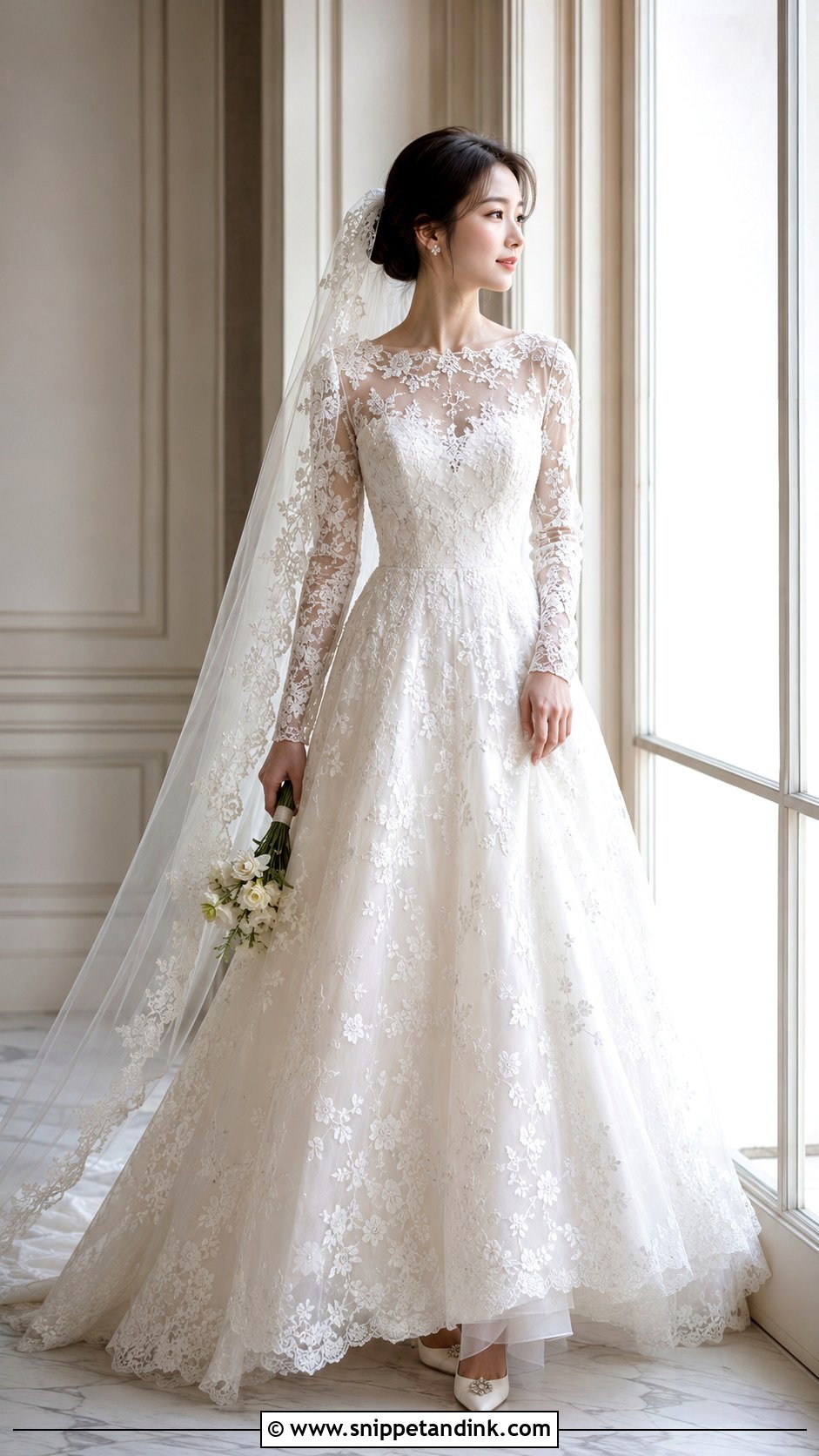
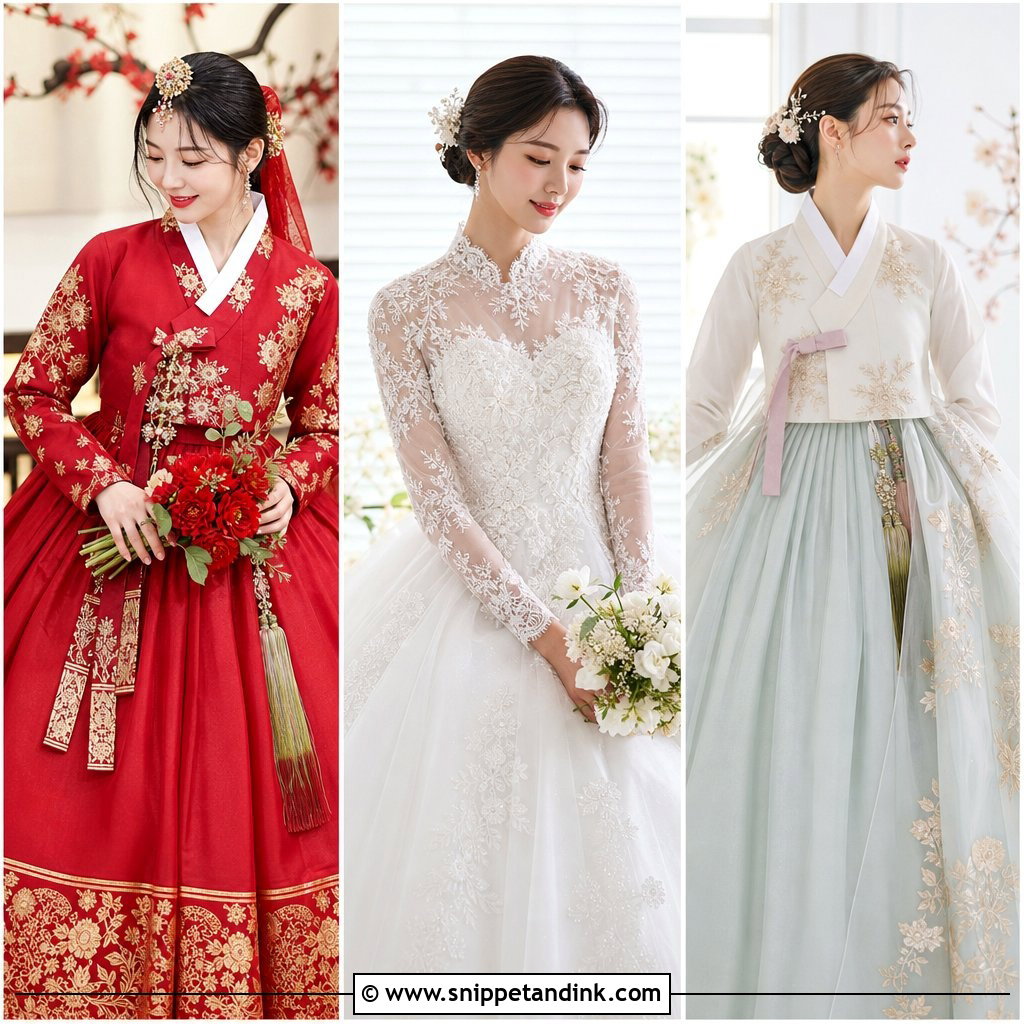
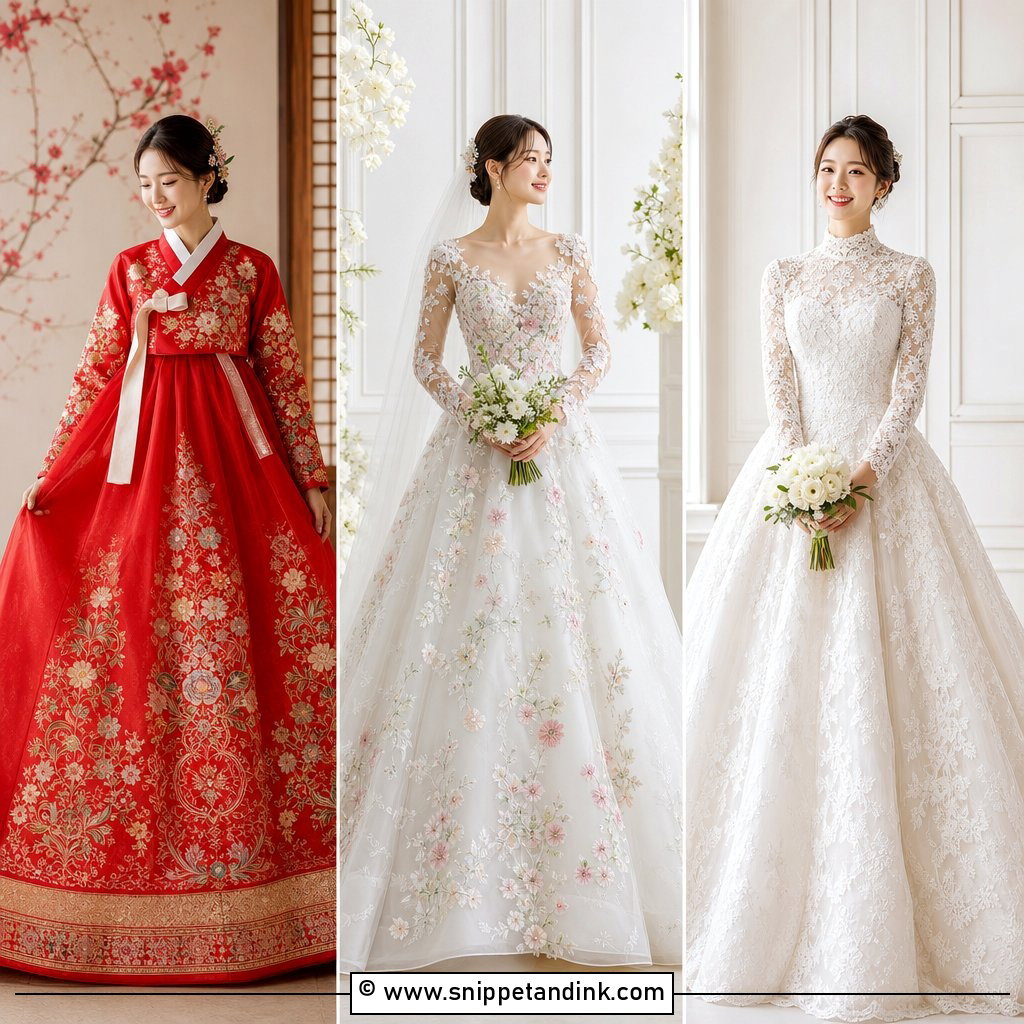
Lace sleeves give coverage without weight, as long as the lace itself is fine. Bulky guipure on the arms makes a fitted gown look shorter and stiffer. Look for delicate floral lace over a smooth sweetheart or bateau lining, with an A-line or gentle fit-and-flare skirt below. At fittings, I have brides cross their arms and reach forward; if the sleeve pulls at the elbow, it needs stretch mesh under the appliqués. Ivory pumps, crystal studs and a hair comb above a low textured bun work well, and a chapel veil edged in matching lace ties it together. It’s a strong choice for cooler months and hotel weddings.
4. Off Shoulder Mikado Korean Bridal Dress
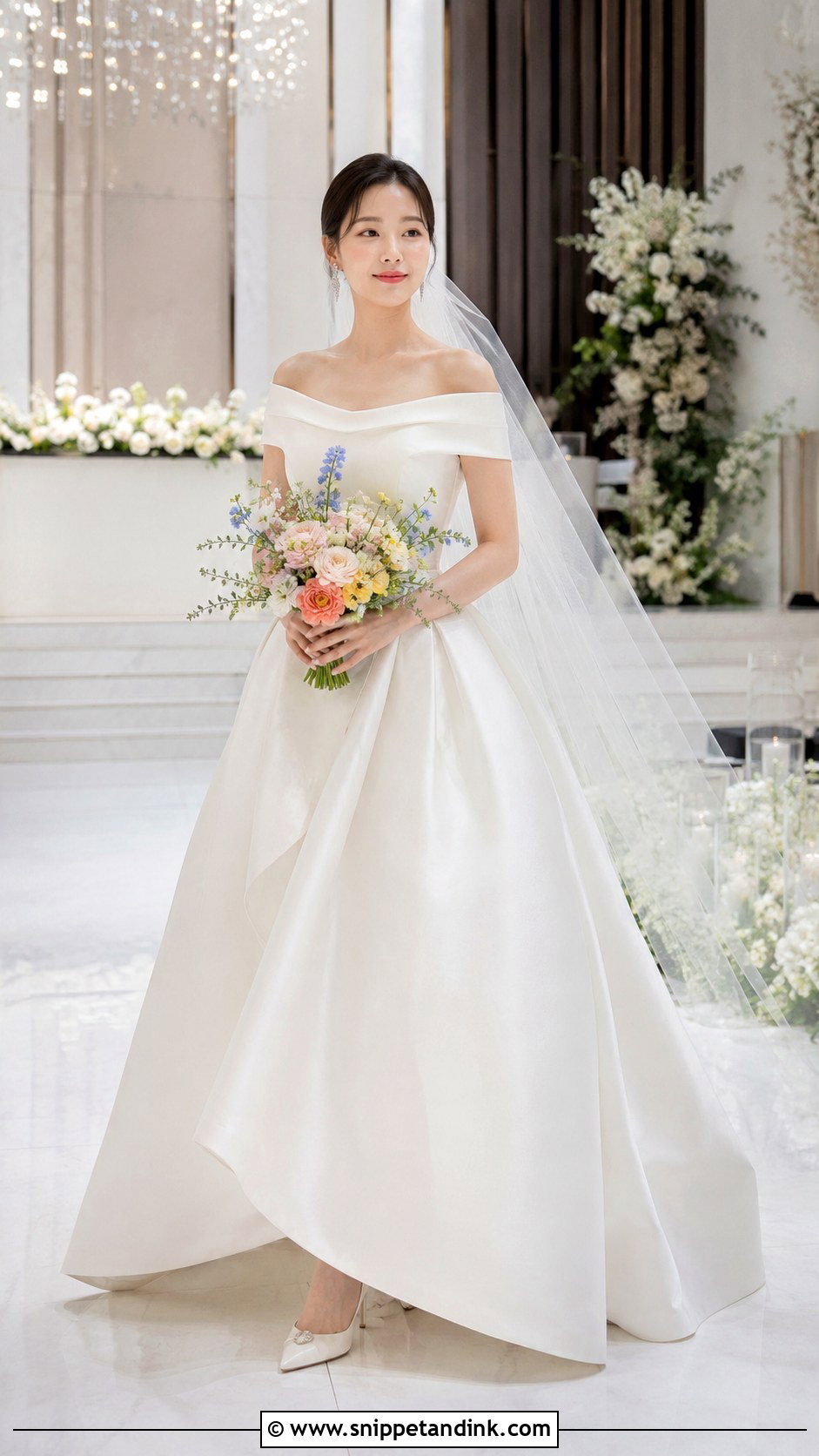
The off-shoulder mikado gown is all about the fold. A folded neckline must sit securely across the upper arms, which means a well-boned bodice; otherwise you’ll spend the day hitching it up. Mikado has enough body that the skirt holds a controlled A-line without any embellishment. Pearl-and-crystal earrings, pointed ivory heels, a small structured bag and a smooth updo keep the neckline on show, with a long plain veil for movement. Removable off-shoulder straps help once dancing starts, since arms can’t lift far in a fixed fold. Grand indoor venues and formal evenings suit it, and the plain fabric shows off a colourful bouquet or family jewellery.
5. High Neck Korean Bridal Dress With Sleeves
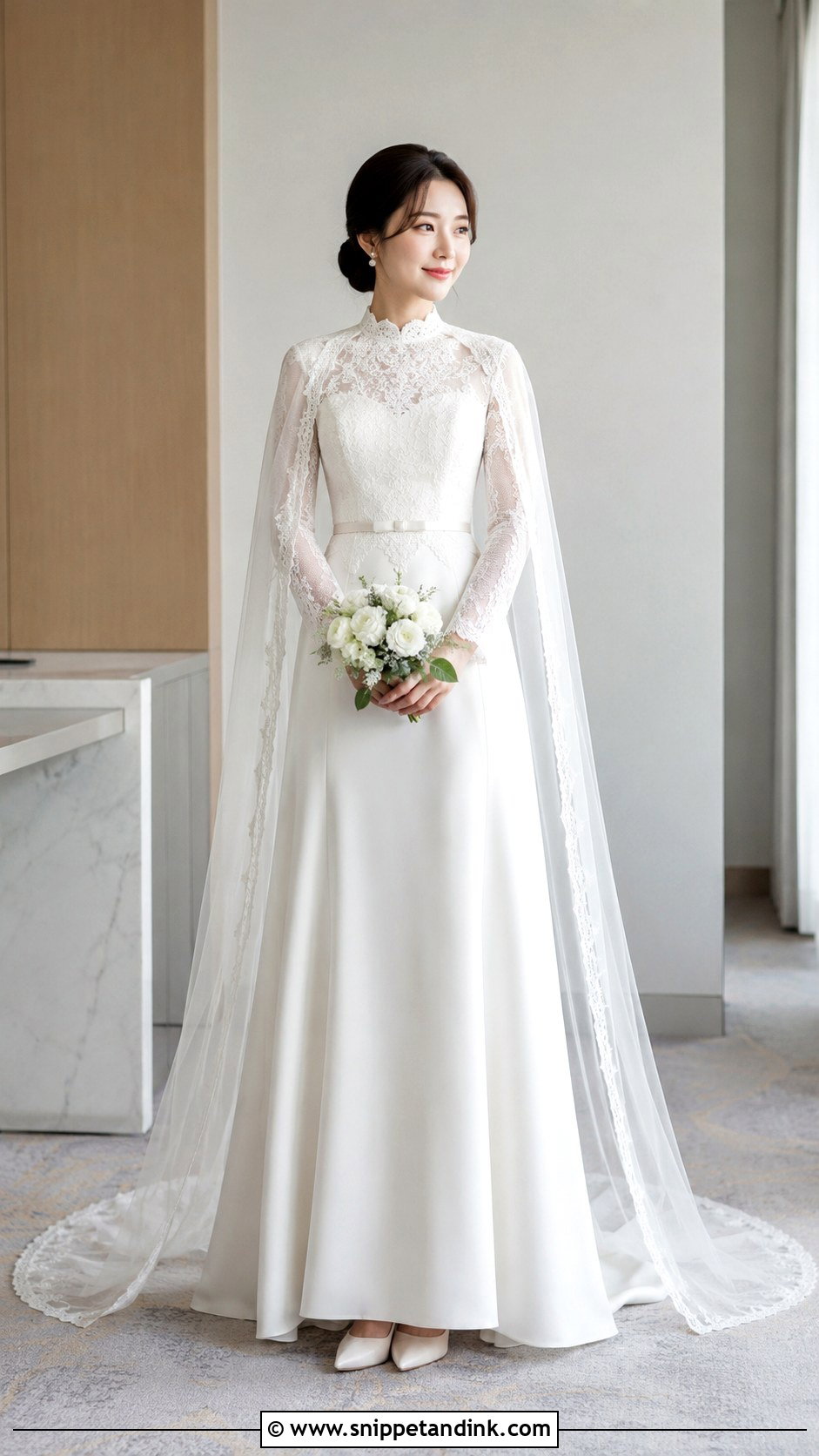
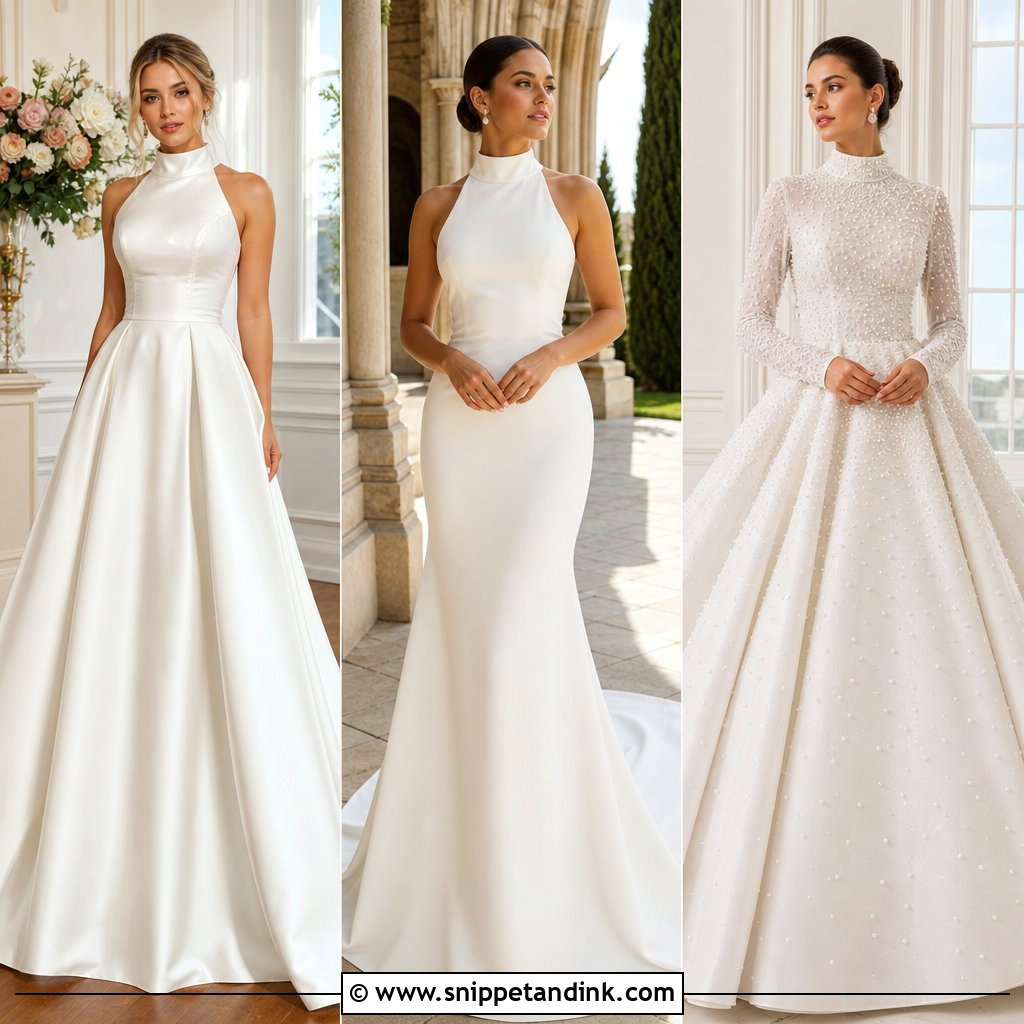
A high neck flatters long necks and narrow shoulders most. On a shorter neck it can feel tight and look abrupt in photos, and I’d suggest a bateau instead. Choose a lace or crepe bodice with long slim sleeves and a fluid A-line skirt. Pearl drops, low satin heels and a narrow ribbon belt add definition without sparkle. Wear a neat bun or low ponytail so nothing covers the neckline, and consider a cape veil fixed at the shoulders instead of a traditional one. Fit is everything around the throat, shoulders and underarms. A neckline that’s even slightly tight becomes uncomfortable by dinner, so sit and talk through a full fitting.
6. Strapless Corset Korean Bridal Dress
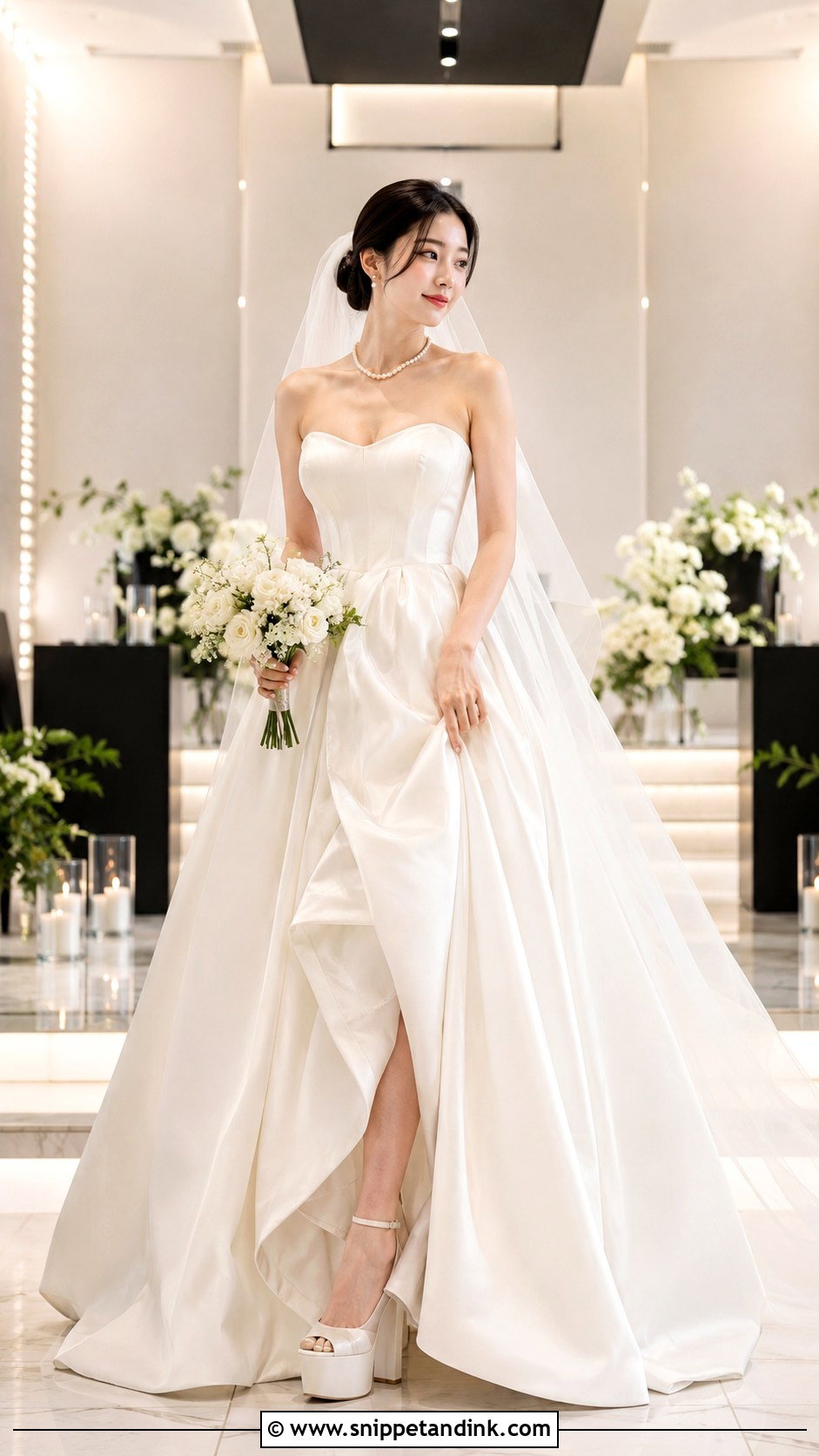
Strapless corset gowns photograph with a very defined waist, which is why they show up so often in Korean wedding studio albums. The construction should be hidden: internal boning, a softly curved neckline and smooth fabric over the corset lines. A full satin skirt balances it. Add a short pearl necklace, matching earrings, ivory platform heels and a sheer cathedral veil. Waves worn down soften the look; a low bun sharpens it. I test every strapless bodice with the bride sitting, walking and raising her arms. It should stay up from the boning and fit, never from being laced too tight. A removable satin bolero covers the shoulders for the ceremony.
7. Pearl Embellished Korean Bridal Dress
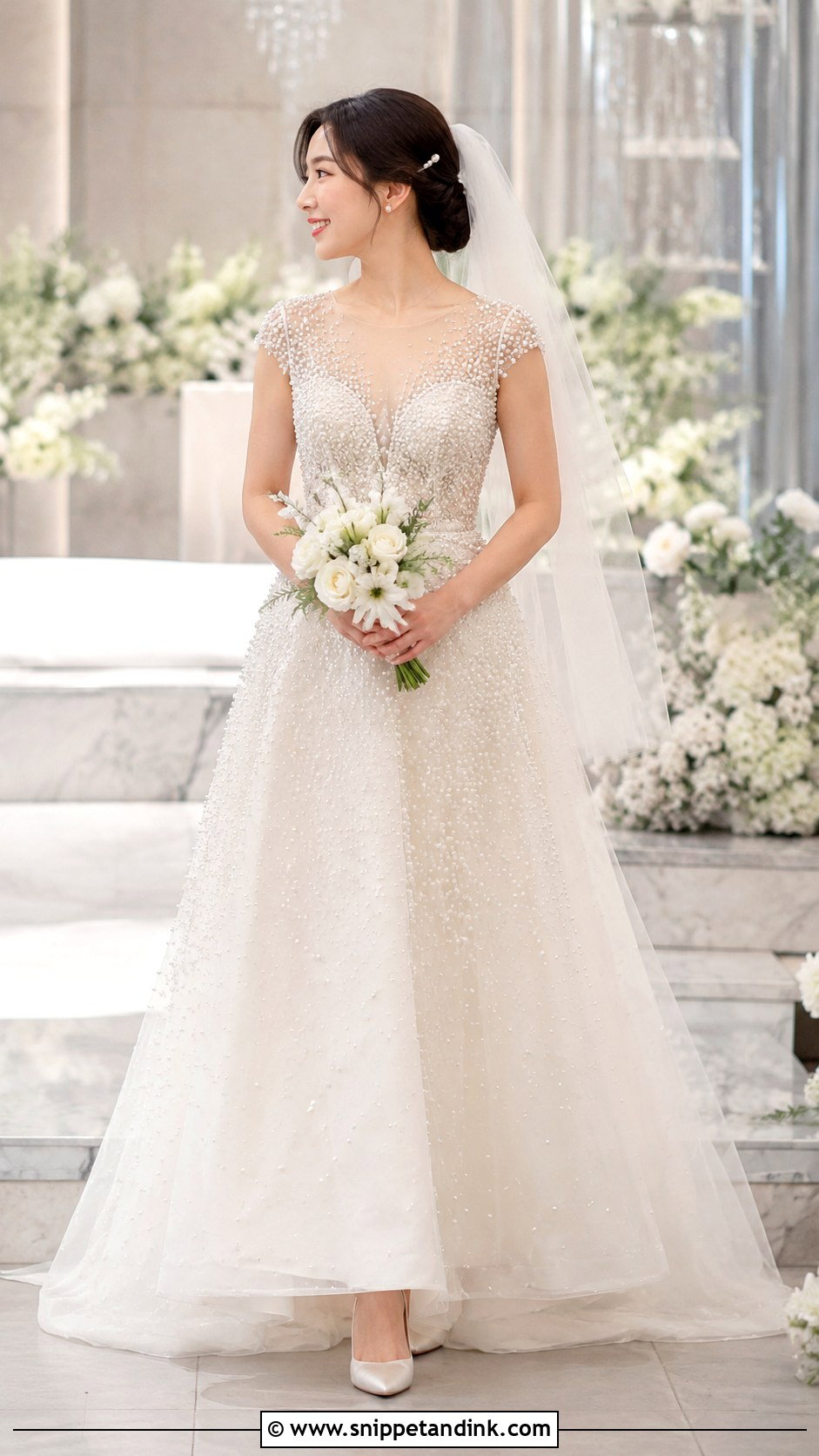
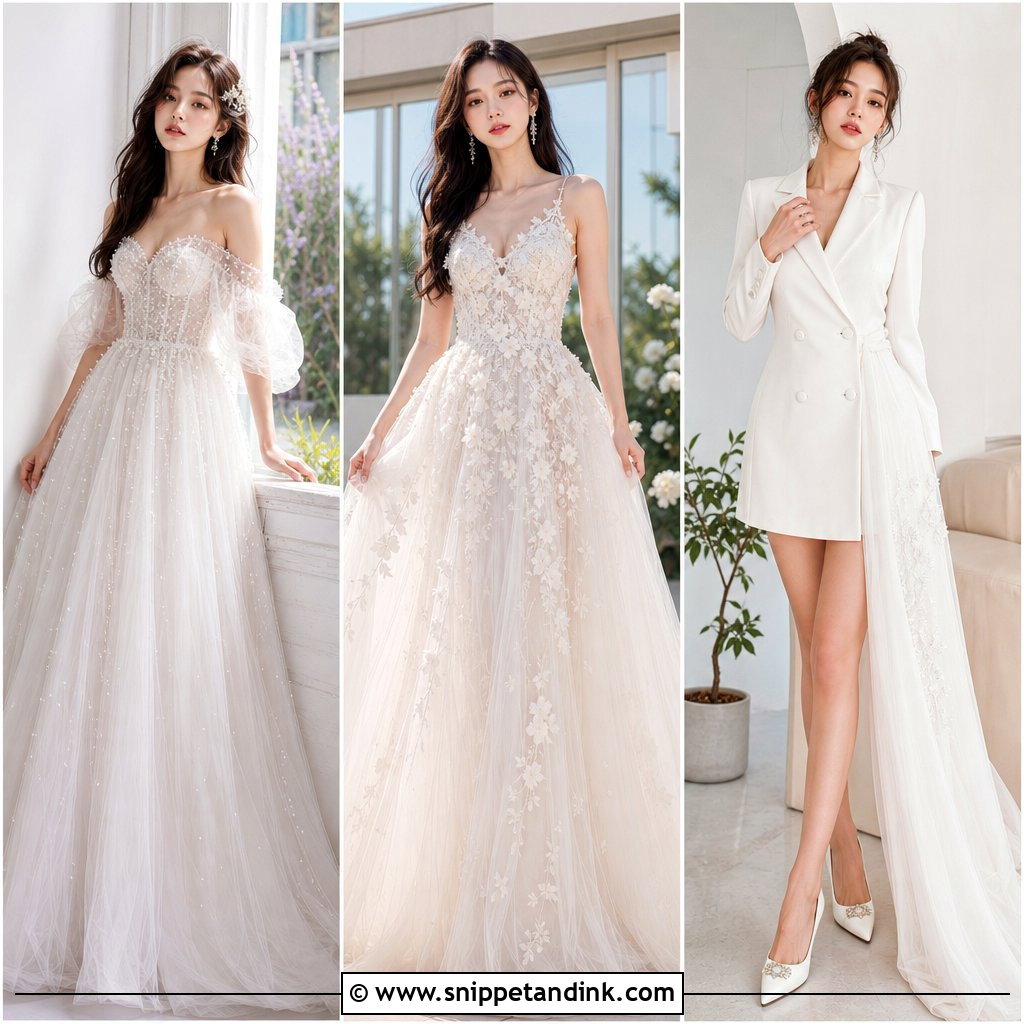
Seed pearls give a quieter shine than crystals, and they don’t throw flash glare back into the camera. Pick a sheer pearl-dotted overlay over a simple bodice and tulle skirt, with the pearls spaced evenly so the surface looks light rather than heavy. Style it with plain satin pumps, pearl studs, a small white bouquet tied in silk ribbon and a sleek bun with a single pearl pin. Keep the veil plain. Before the wedding, run your hand over the overlay and check that every pearl is stitched individually; loosely chained beads catch on veil tulle and can come away in a string. It works best indoors with bright, neutral decor.
8. Bow Back Korean Bridal Dress
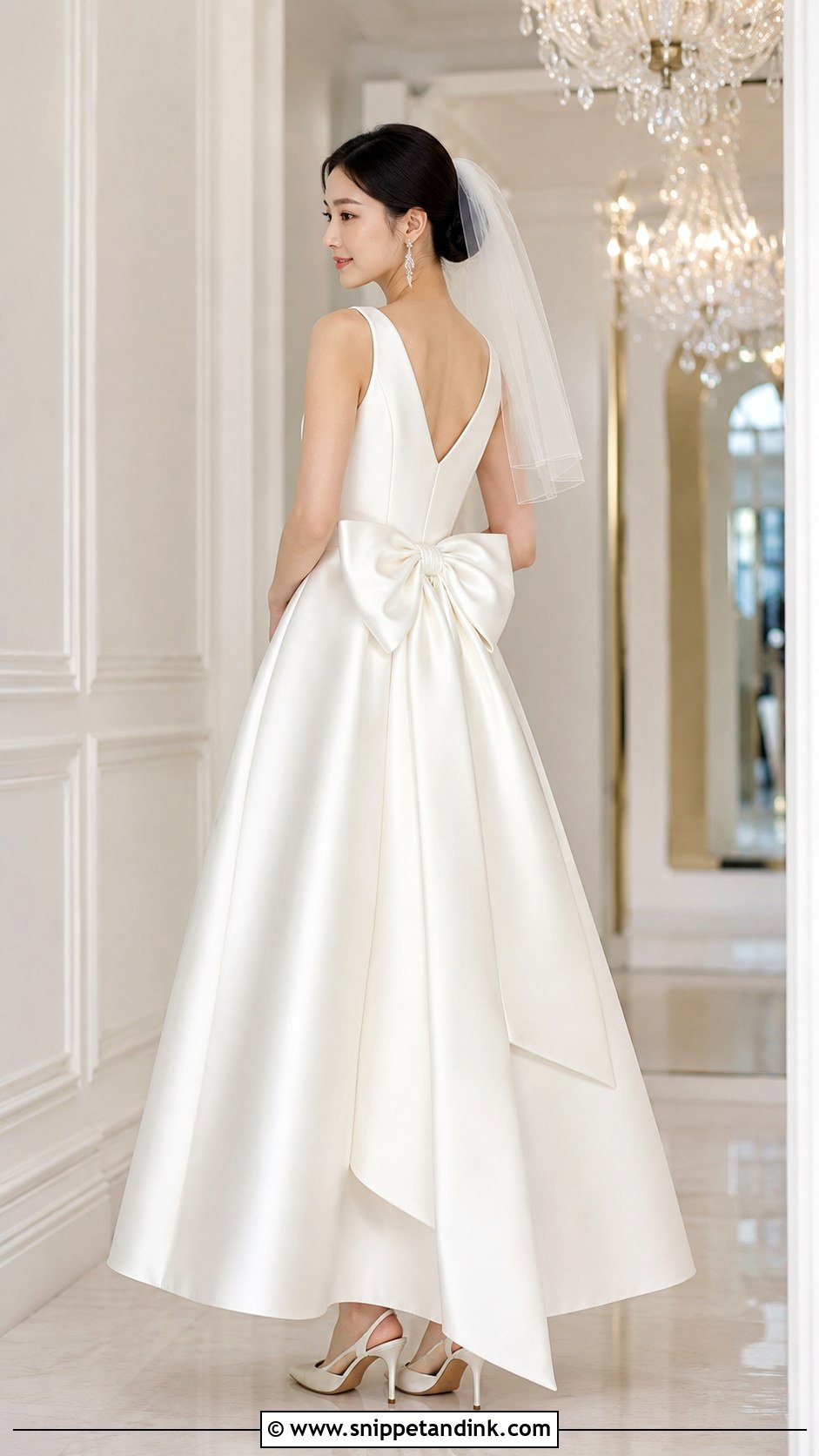
A big bow at the back turns a plain gown into a look people remember from behind, which matters because guests see your back for the whole ceremony. Start with a square-neck or bateau dress in satin or mikado and add an oversized detachable bow at the lower back, with tails that run into the train. Keep everything else minimal: crystal studs, ivory slingbacks and a shoulder-length veil, so the bow isn’t hidden. A centre-parted chignon leaves the back clear. Choose a compact bouquet. Detach the bow after the ceremony; sitting on a stiff bow for dinner crushes it and pushes you forward on the chair.
9. Cape Sleeve Korean Bridal Dress
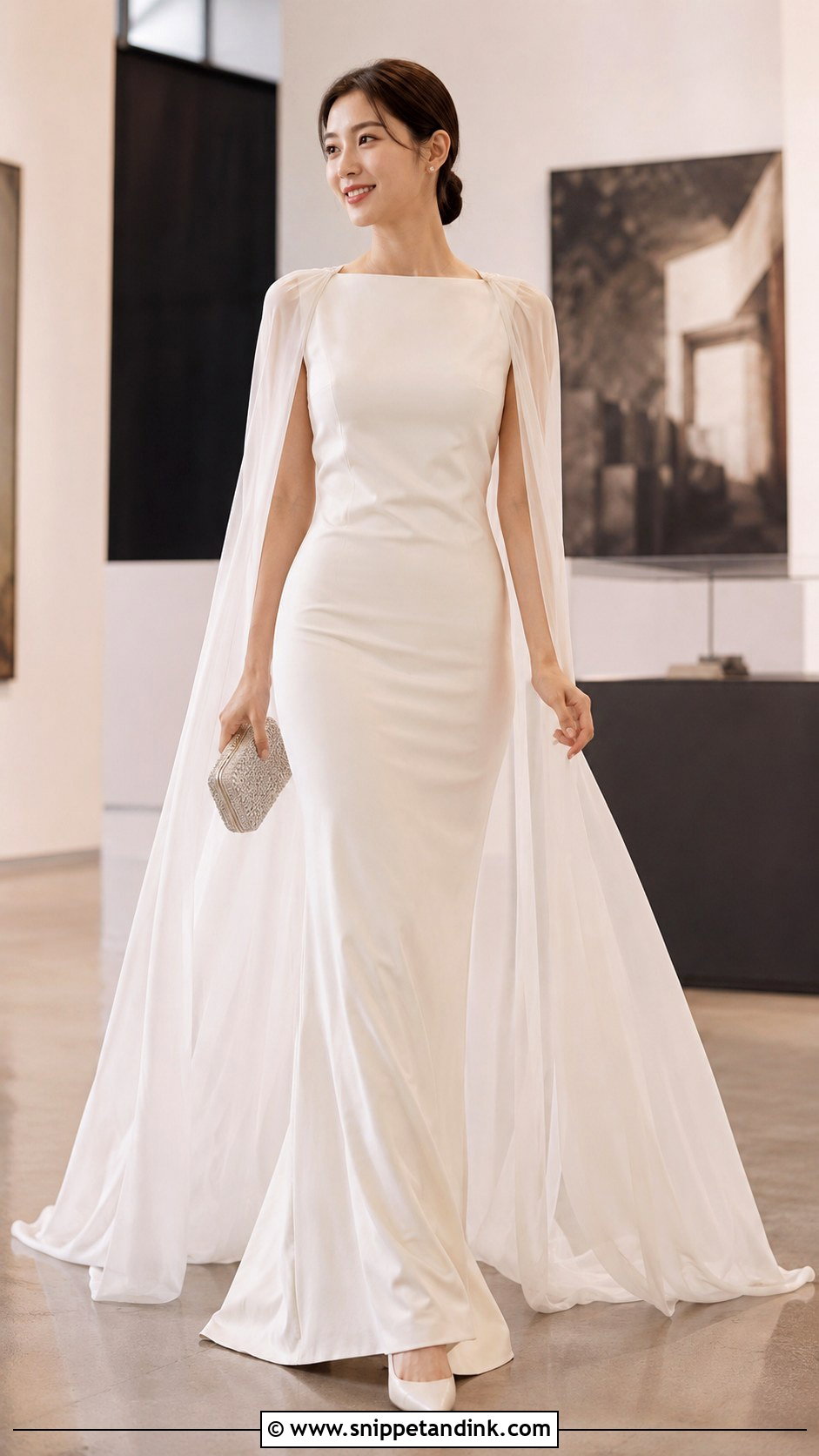
Cape sleeves give coverage and movement without anything clinging to the arms. Start with a simple column or A-line dress and layer a sheer cape that reaches the wrists or the floor. Tulle, chiffon or organza keeps it light; chiffon moves the most and organza holds its shape. Pair it with pointed ivory heels, small earrings and a structured mini clutch, plus a low knot and a fine comb, since volume at the shoulders fights the cape. You can skip the veil with a floor-length cape; both do the same job visually. I’d always make the cape detachable. A long cape drags through dinner and gets stepped on during dancing.
10. Tea Length Korean Bridal Dress
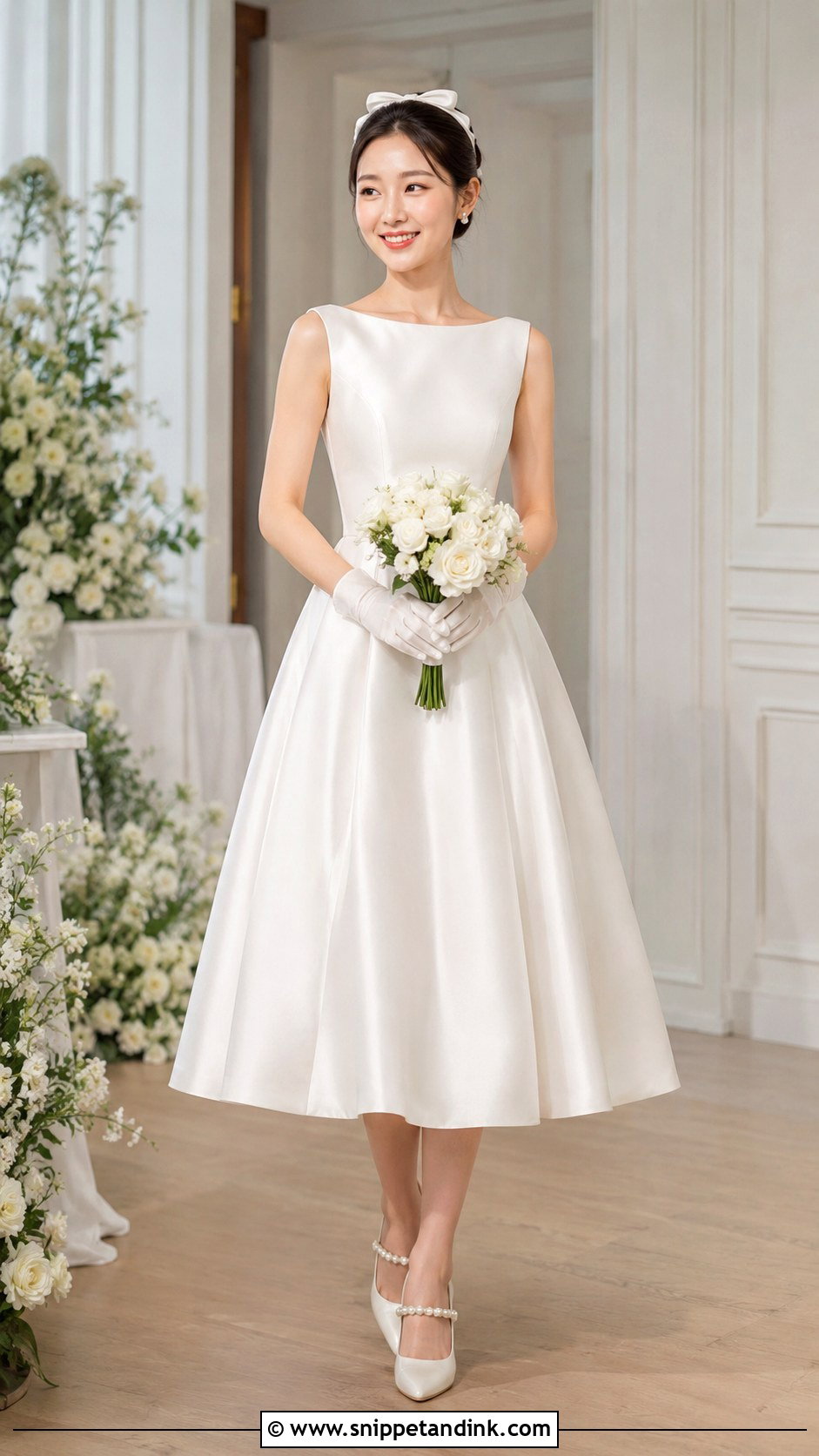
Tea length is cheerful and practical, and it puts your shoes on show. Look for a fitted bodice with a bateau, square or modest sweetheart neckline, and a skirt ending between knee and ankle in structured satin or layered organza. The hem placement is the detail I fuss over most: it should land at the narrowest part of the calf, not mid-calf, or the leg looks shorter. Polished slingbacks, pearl-trimmed heels or Mary Janes, short gloves, pearl earrings and a birdcage veil or small bow headband finish it. A neat updo keeps the proportions fresh. It’s practical for a civil ceremony, a reception change or a smaller daytime wedding.
11. Modern White Hanbok Korean Bridal Dress
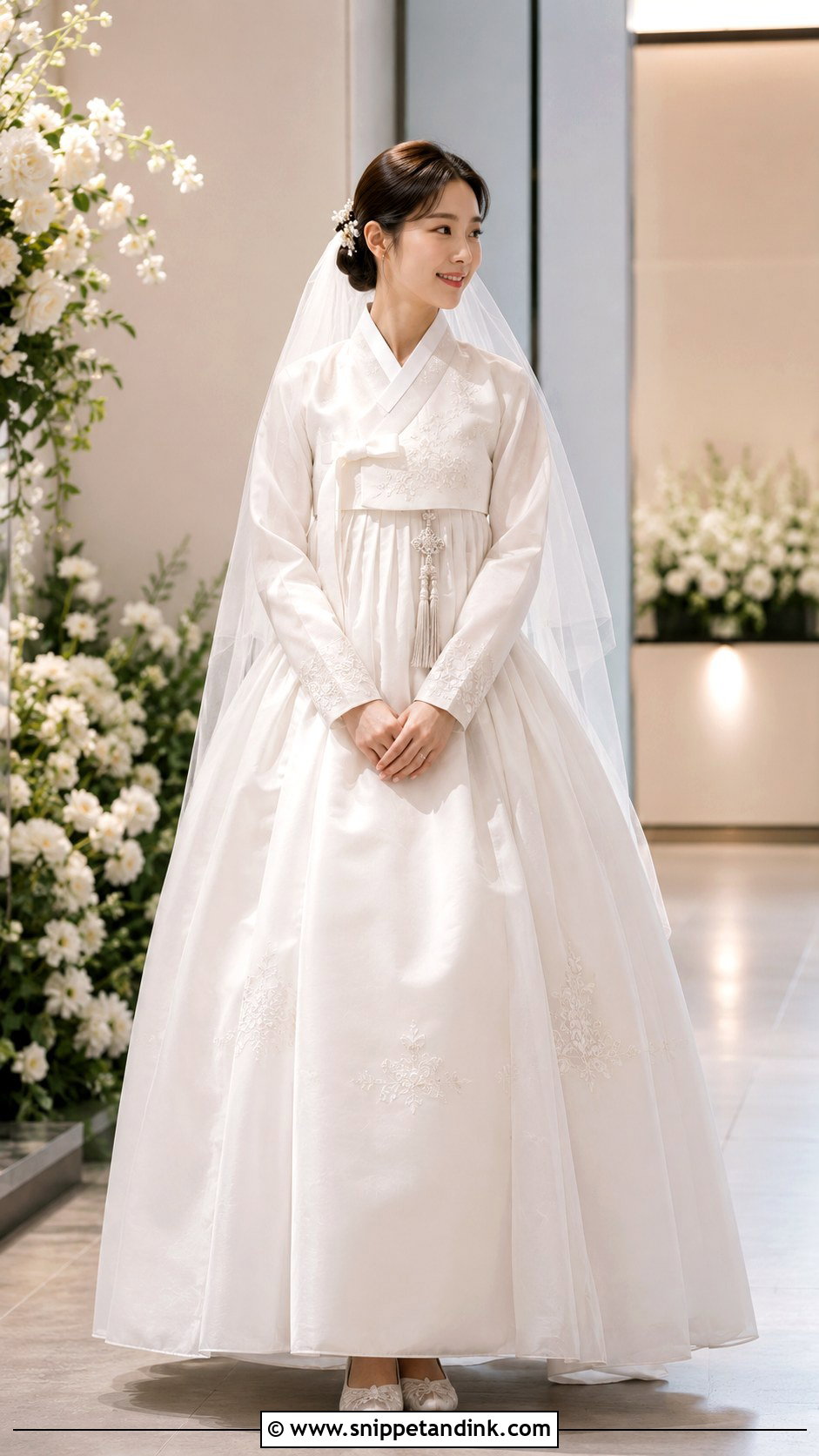
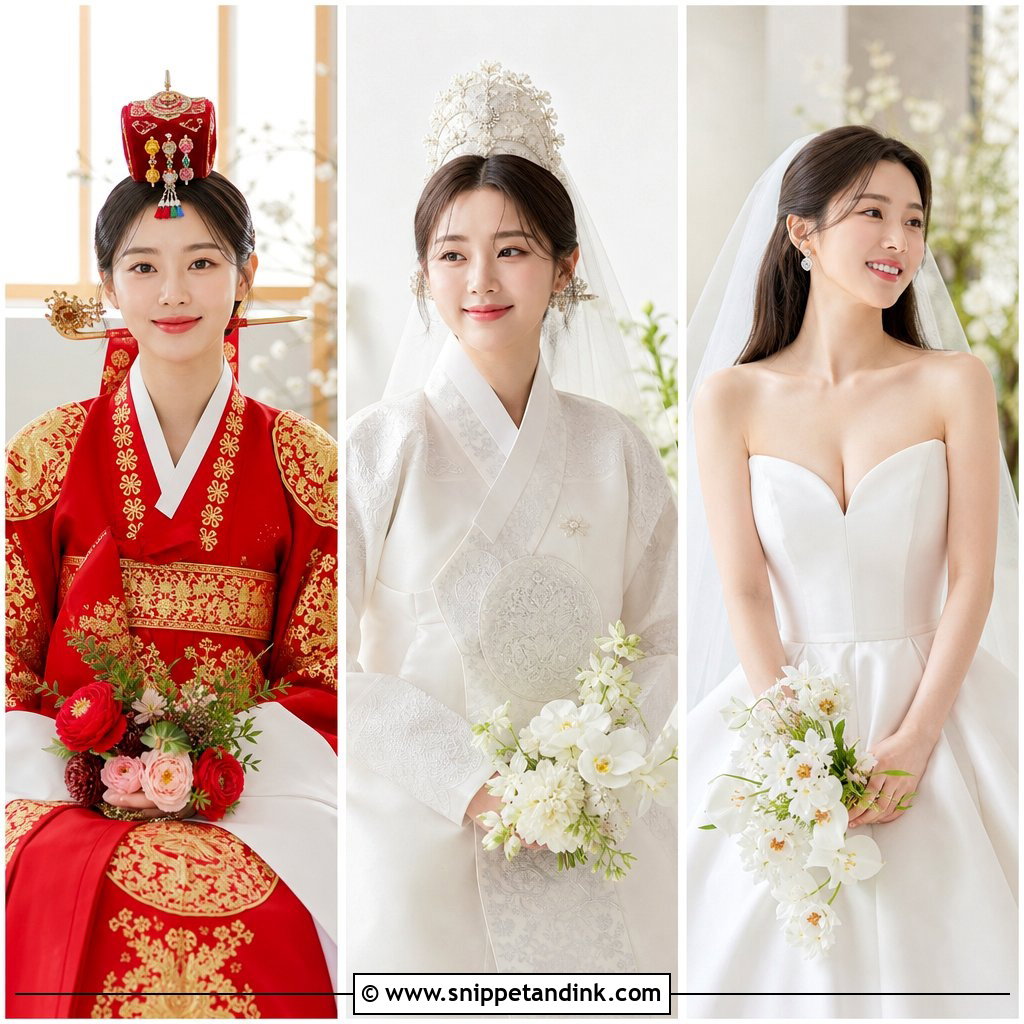
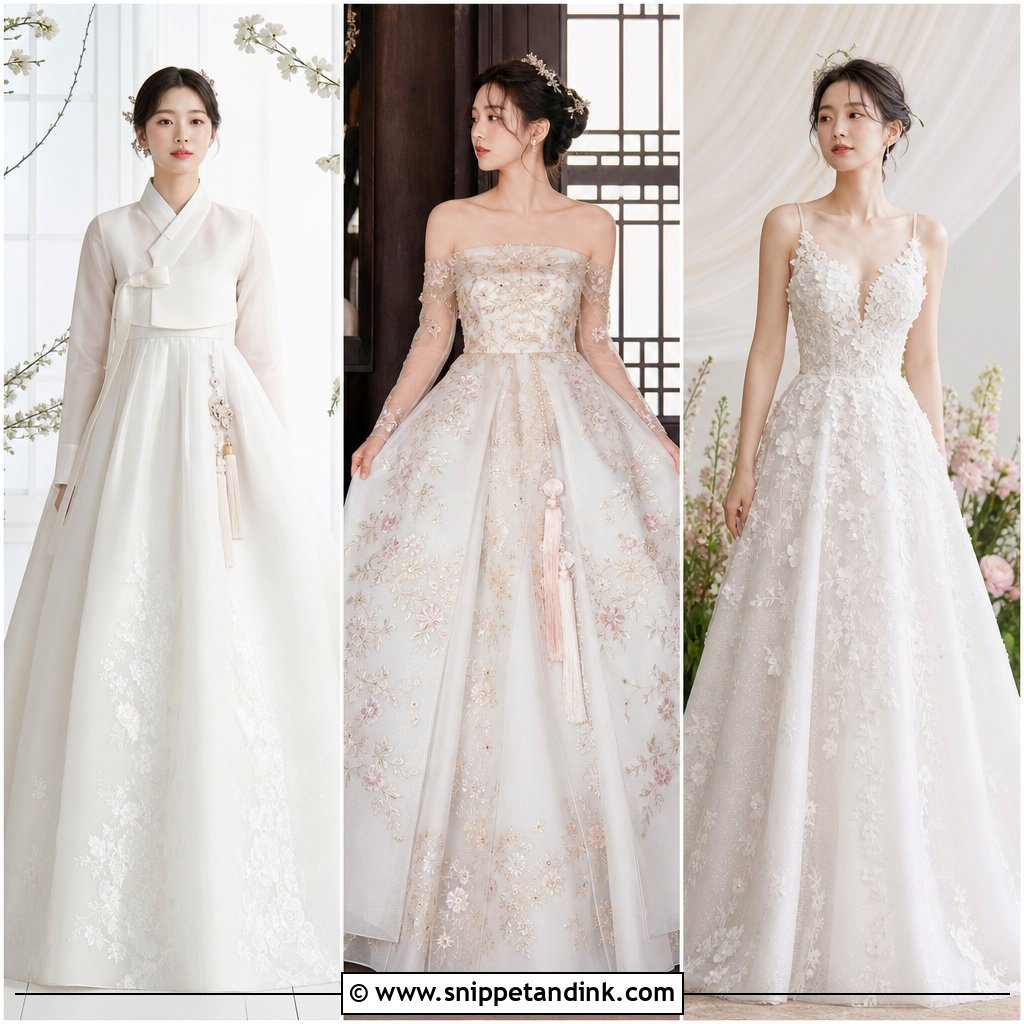
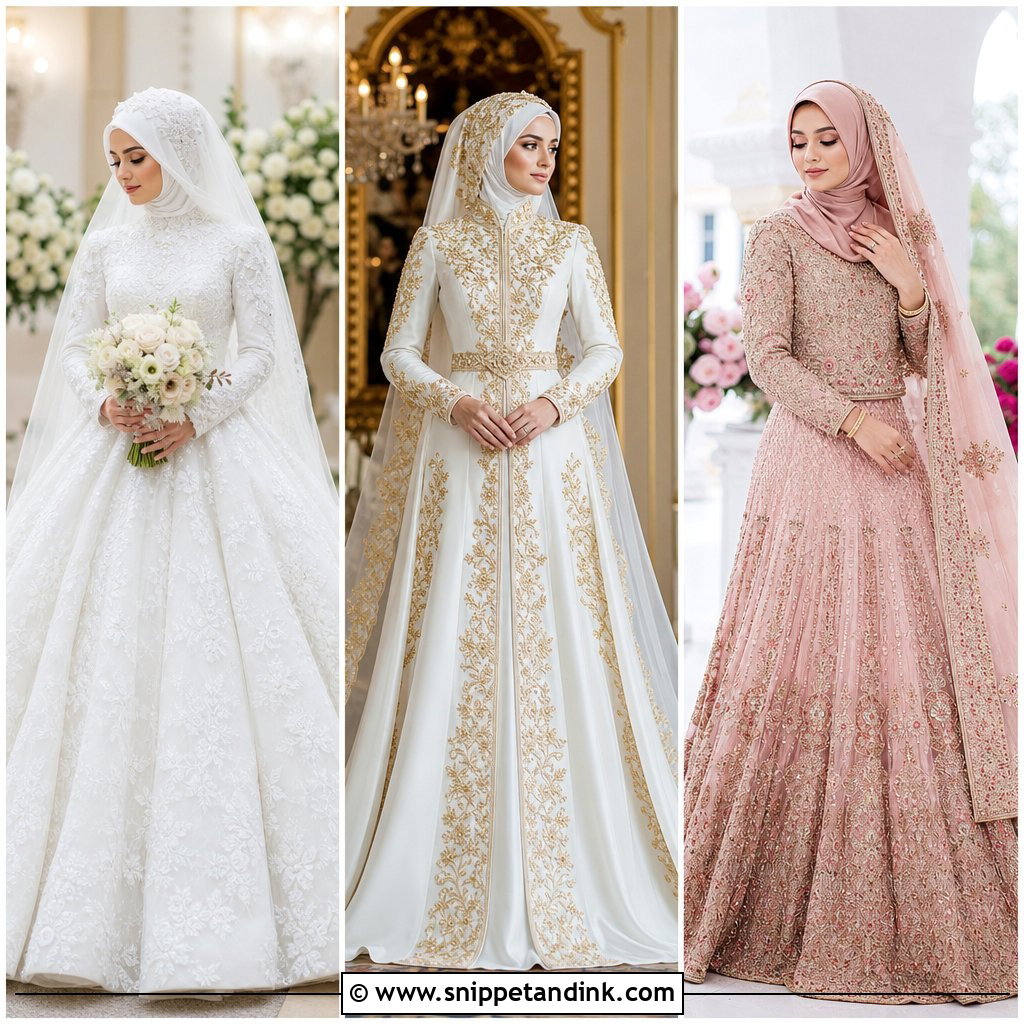
A modern white hanbok keeps the shape of Korean traditional dress but borrows the colour of a Western wedding gown. An ivory jeogori-style top over a full chima-inspired skirt in silk, satin or textured organza is the base, and contemporary versions may add lace, beading or a train. The chima ties high above the bust, so the skirt falls from there; a corset-trained eye has to adjust to that line. Embroidered flats, pearl hairpins and a norigae hung at the front complete it. A sheer veil works only if it doesn’t hide the jacket neckline. Work with an experienced hanbok maker so the proportions and the ties are right.
12. Red Hwarot Korean Bridal Dress
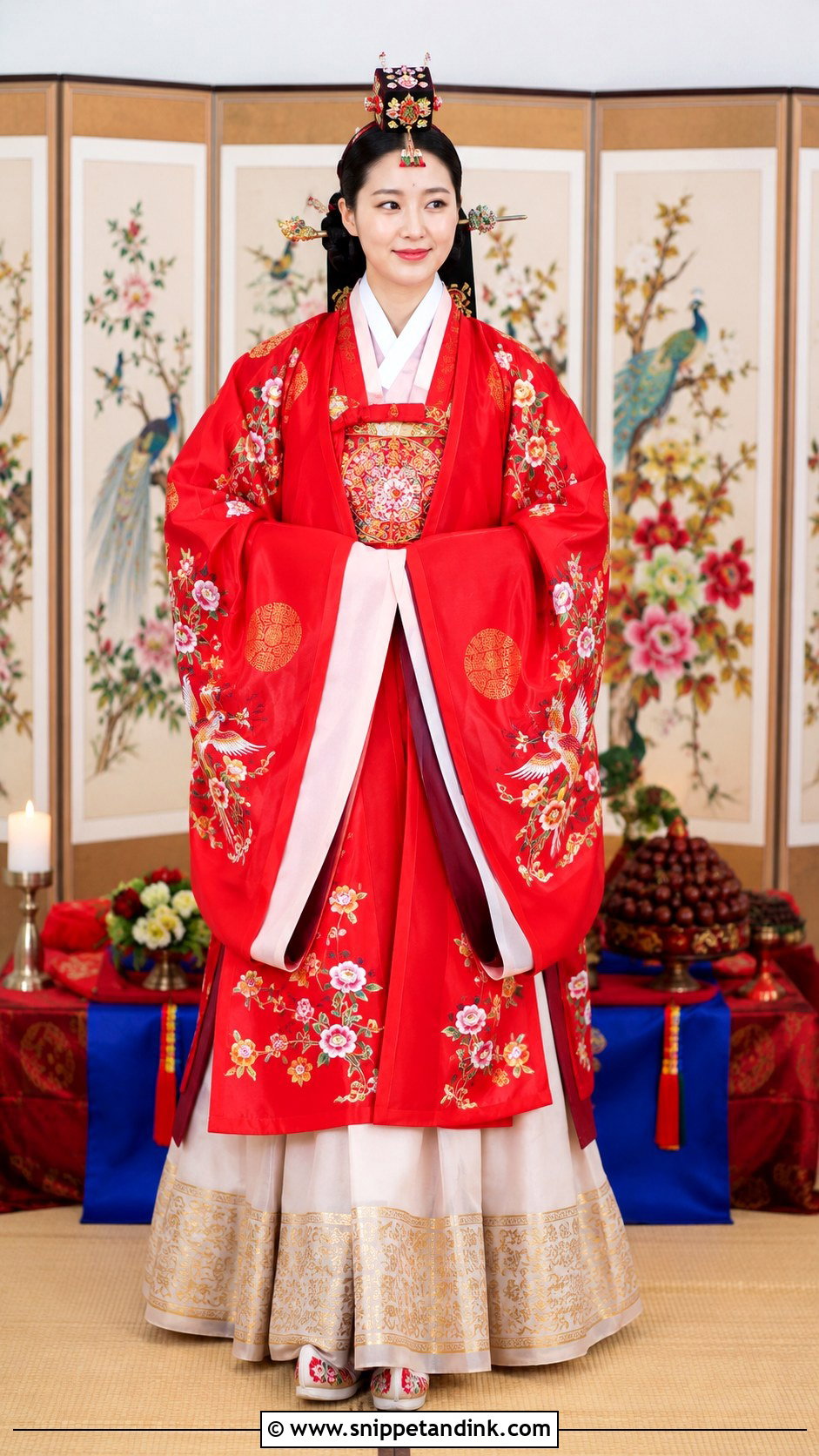
Red silk and dense embroidery make the hwarot one of the most recognisable Korean ceremonial bridal garments. It was historically worn by brides over a hanbok, often with a jokduri crown or other ceremonial headwear. Build the look around the embroidered robe, a coordinating full skirt, white beoseon socks and embroidered shoes. Skip modern jewellery; the robe already carries its colour, pattern and symbolism. The hwarot is heavy, with long sleeves that cover the hands, so practise sitting, bowing and walking in it before the pyebaek. Most brides are surprised by how much the sleeves restrict their reach on the first try.
13. Pastel Hanbok Korean Bridal Dress
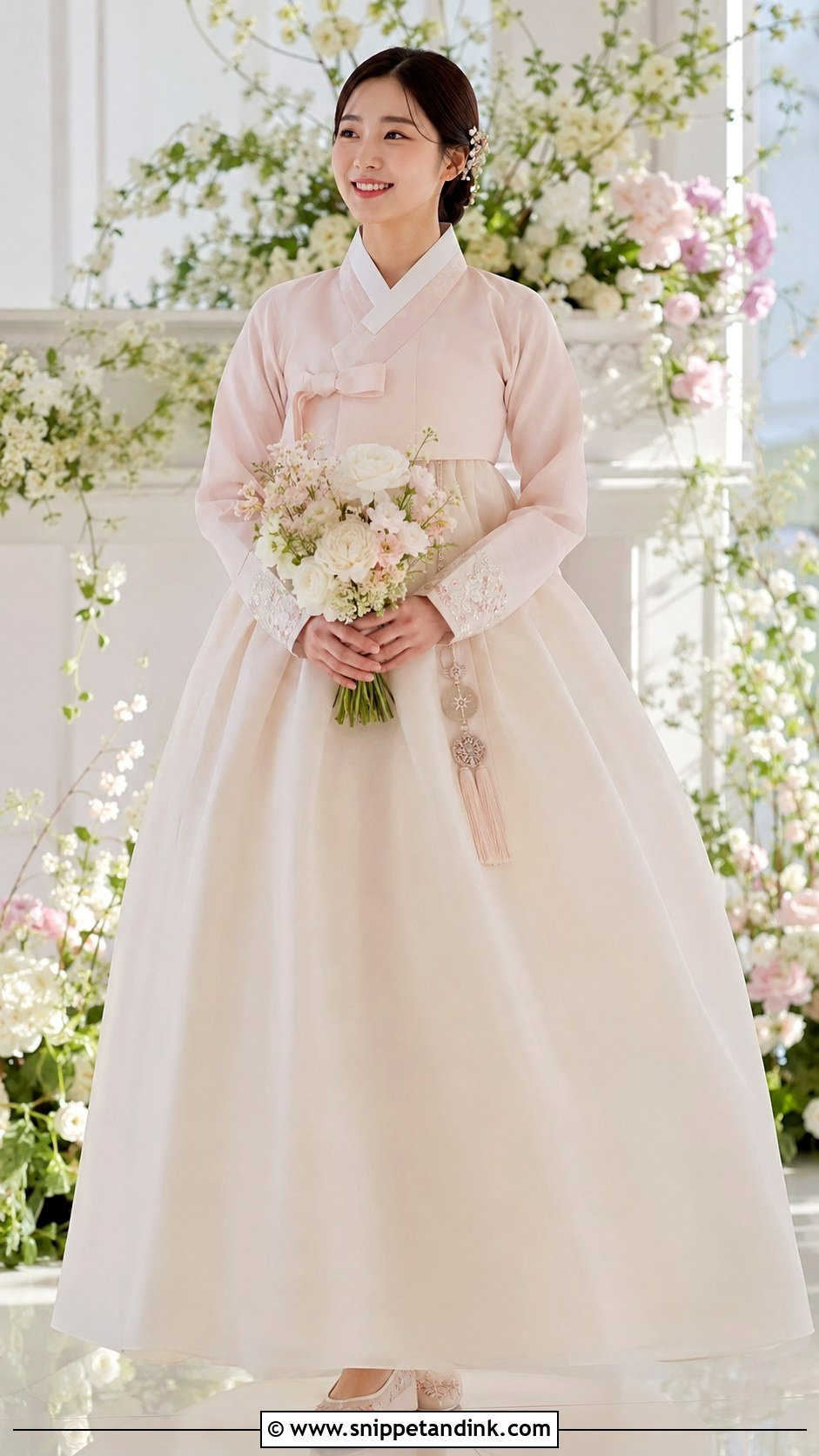
Pastel hanbok softens the mood and suits the smaller family moments well. A pale blush, ivory, powder blue or sage jeogori over a full cream chima, with fine embroidery only around the cuffs and neckline, keeps it gentle rather than formal. Light silk blends let the skirt move without weighing it down. Add embroidered flats, a subtle norigae and pearl pins in a low bun. A big bouquet hides the short jacket and the goreum ties at the front, which are the details that make it a hanbok, so I’d carry a small round posy in white and blush. It suits engagement portraits, a family tea ceremony or a reception change.
14. Korean Western Fusion Bridal Dress
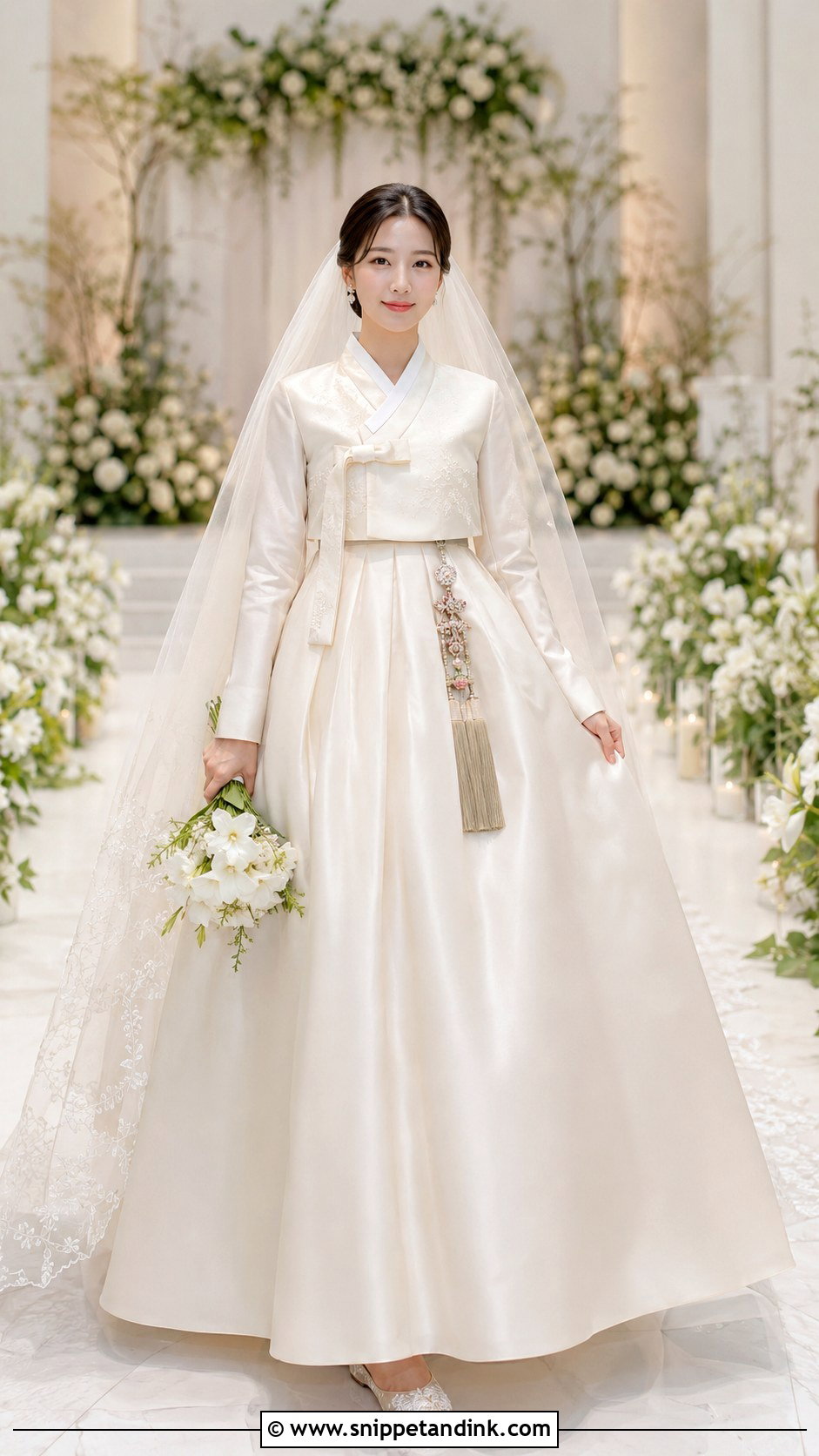
A Korean-Western fusion gown works when the two influences are clearly chosen, not blended at random. One route is a simple ivory A-line gown with a cropped jeogori-inspired jacket, curved sleeves and traditional ties. Another is a full chima-shaped skirt under a fitted Western corset bodice. Pearl earrings, embroidered ivory shoes and a clean chapel veil finish either one, and a norigae at the waist adds a meaningful focal point. My rule is two recognisable influences, three at most. Beyond that, the eye can’t tell what it’s looking at, and the dress starts to look like a costume rather than a considered design.
15. Floral Embroidered Hanbok Korean Bridal Dress
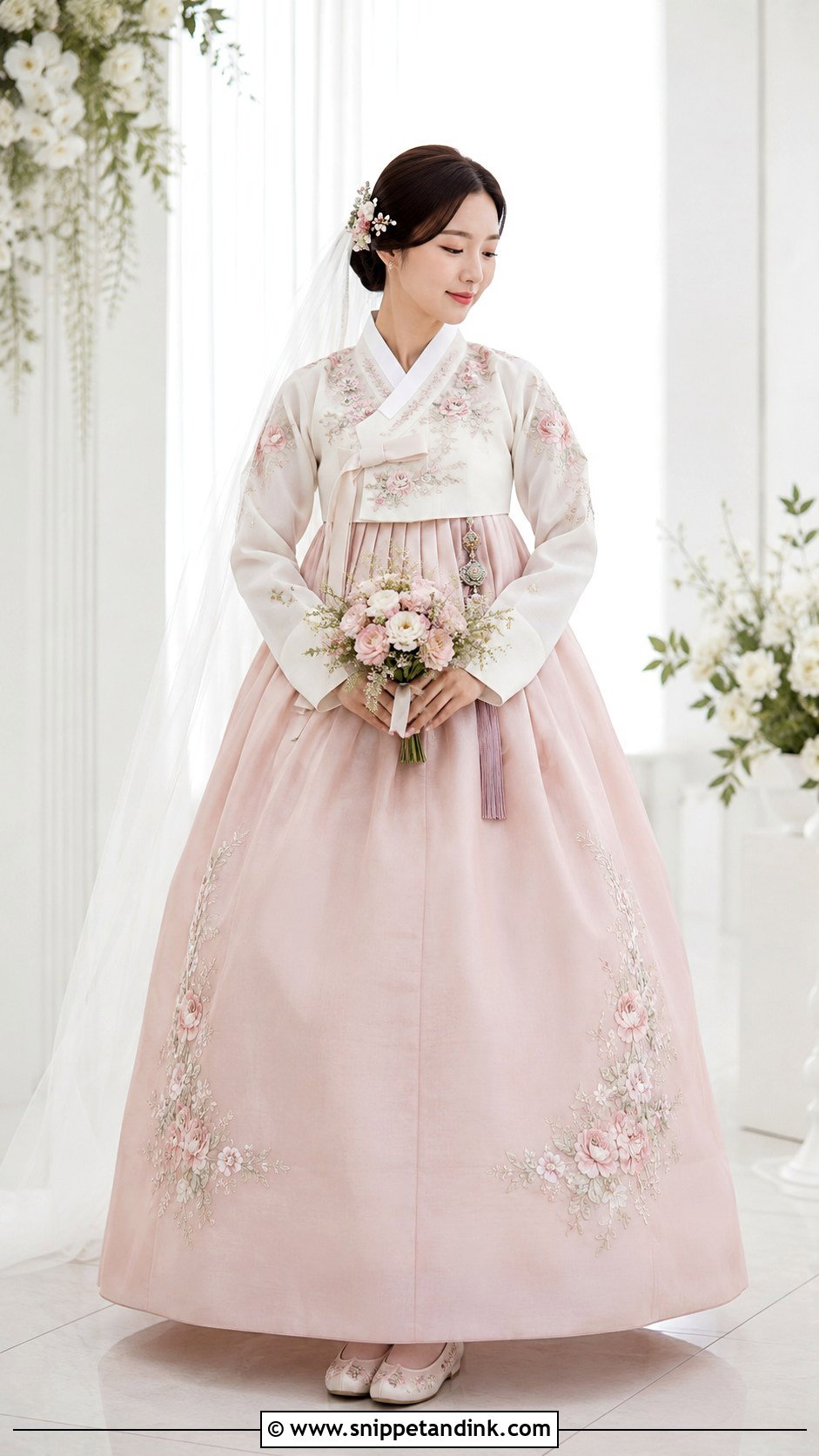
Embroidery on a hanbok usually carries meaning: peonies, cranes and paired birds are traditional wishes for prosperity, long life and a good marriage. Place it around the cuffs, shoulders and ties of an ivory jeogori and keep the blush or cream chima mostly plain, so the upper half gets the attention. Embroidered silk flats, a refined norigae and small floral ornaments around a smooth braided bun finish it, with or without a narrow sheer veil. Match the bouquet to the embroidery with a few pale seasonal flowers. Before ordering, ask to see the motif placement from the front, side and back. Embroidery that bunches under the arm crowds the look.
16. Gold Embroidered Korean Bridal Dress
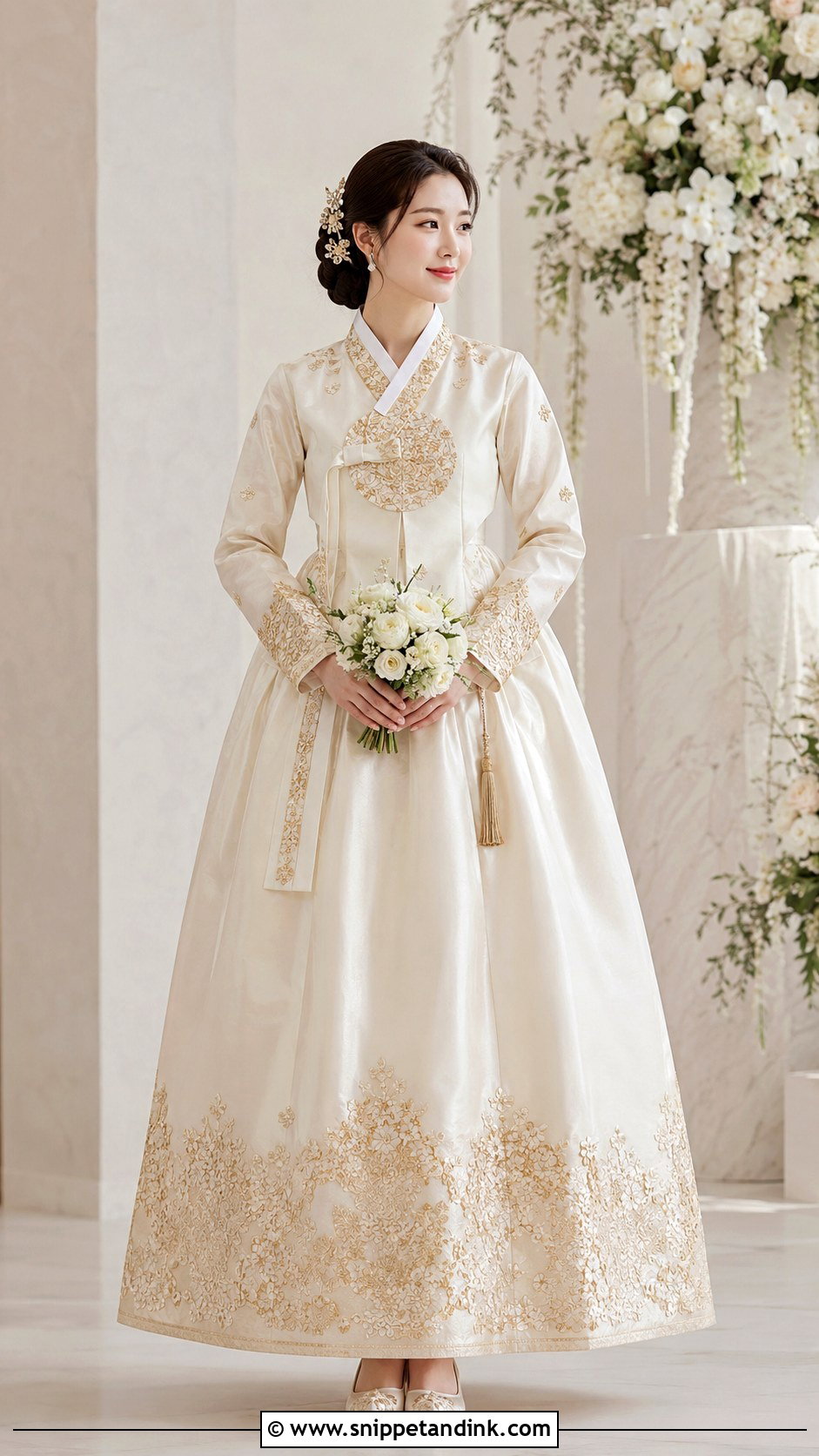
Gold embroidery is the quickest way to make a Korean bridal outfit look ceremonial, but it needs restraint. Use it on an ivory hanbok, a modern A-line gown or a red hwarot-inspired robe, mainly around the neckline, sleeves and hem, over a cream chima with a soft sheen. Add gold-toned hairpins, embroidered flats and small pearl earrings, and leave out any heavy necklace that would compete with the borders. Carry a plain white bouquet or a ceremonial fan. Gold thread shifts colour under warm or cool lighting, from bright yellow to almost bronze, so look at a fabric sample at the venue if you can.
17. Detachable Overskirt Korean Bridal Dress
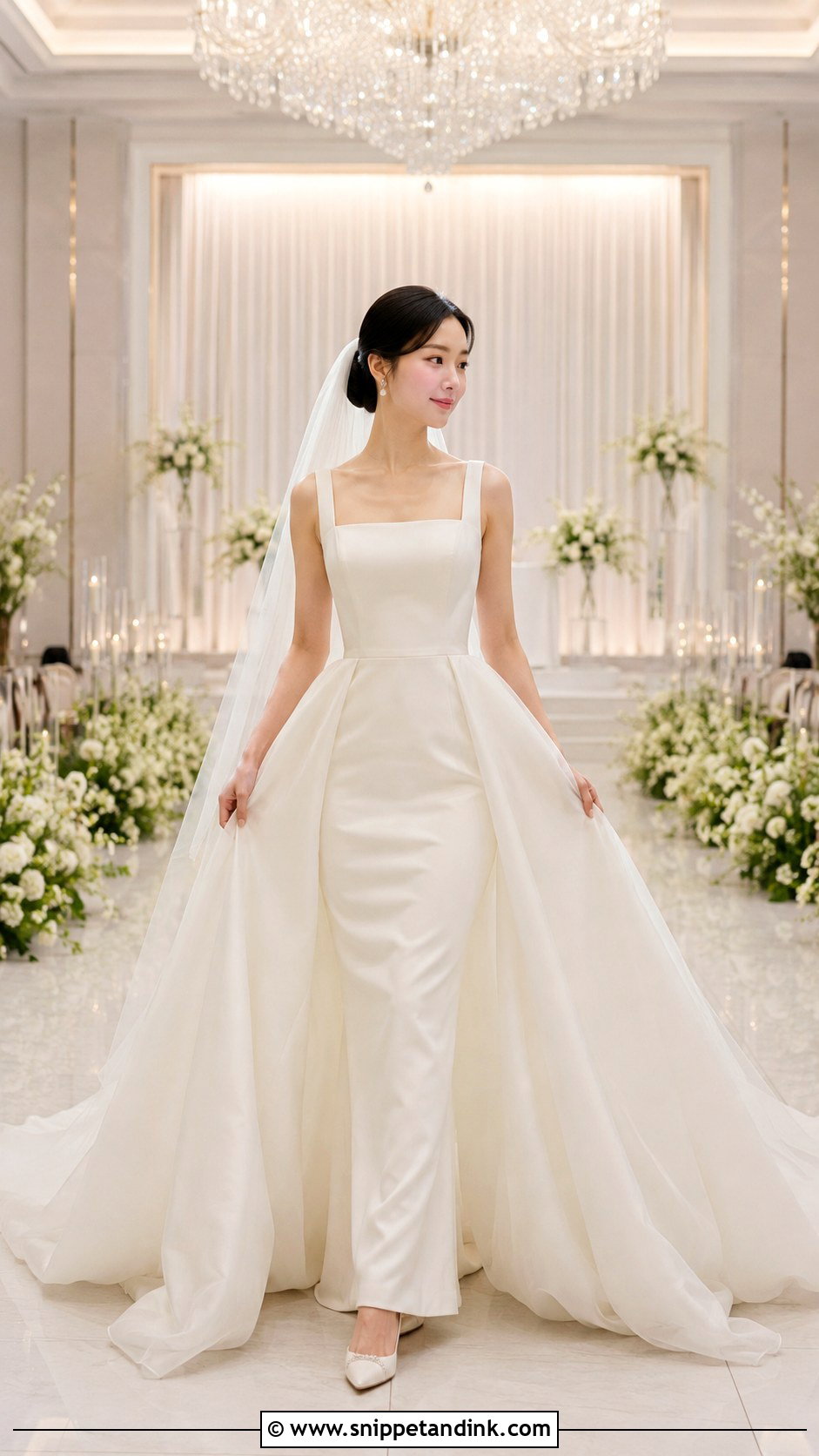
A detachable overskirt gives you a ball gown for the ceremony and a column dress for the party. Start with a streamlined crepe or satin column with a square or soft neckline, and add a full organza or mikado overskirt on top. Remove it for the reception. Pointed ivory heels, pearl drops and a low polished bun suit both versions; a long veil goes with the ceremony shape and a comb can stay in once the veil comes out. The weak point is the waistband. It has to lie flat with the fastening hidden from every angle, and I always have a bridesmaid practise the removal once before the day.
18. Minimal Wrap Hanbok Korean Bridal Dress
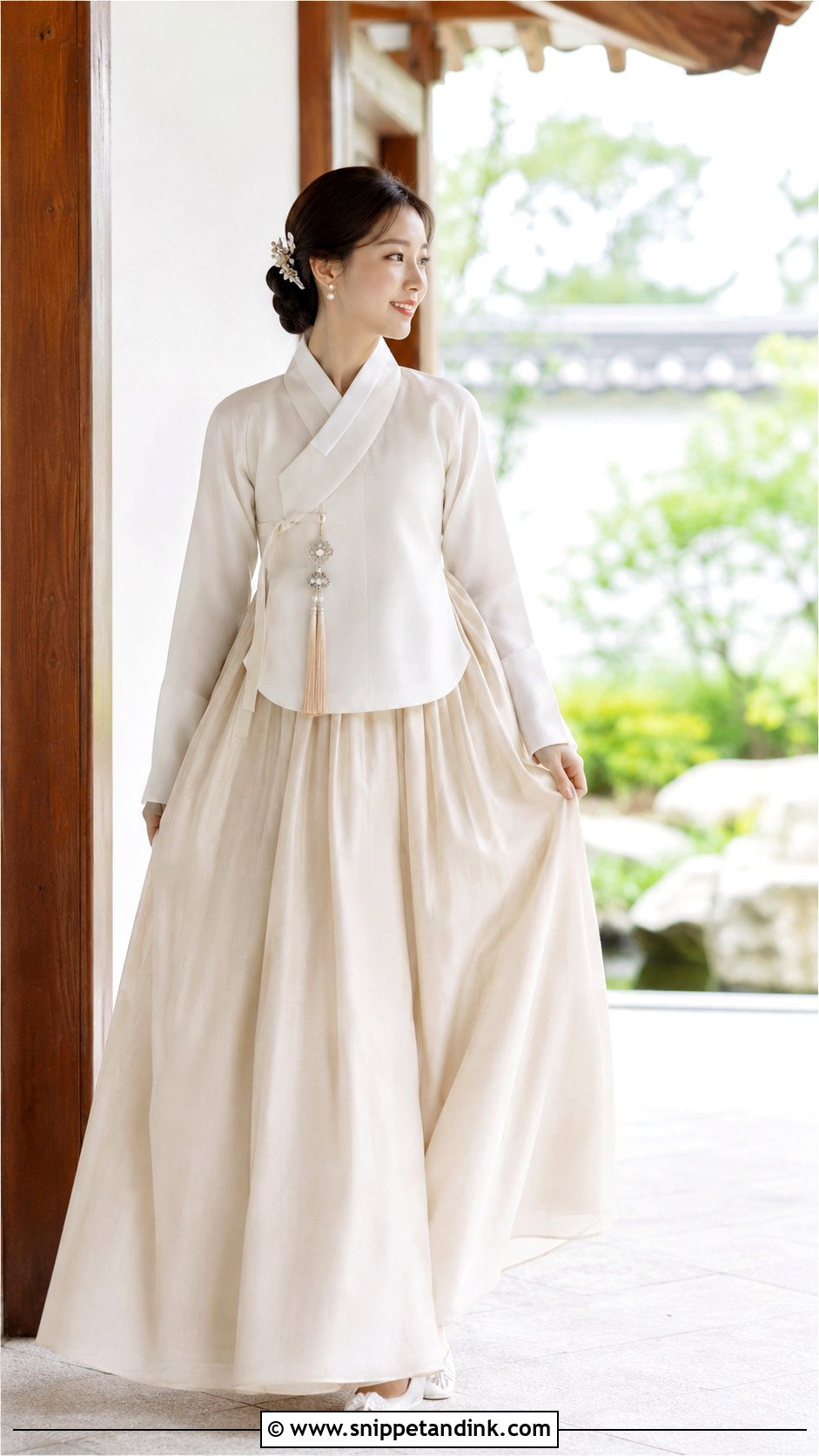
A minimal wrap hanbok suits small ceremonies and brides who don’t want heavy embroidery. Choose an ivory wrap-style top with clean ties and gently curved sleeves over a light silk chima in cream, beige or pale blush. The wrap cut is forgiving: it adjusts easily if your size changes between ordering and the wedding, which is a real advantage over a fitted gown. Finish with simple embroidered flats, a small mother-of-pearl norigae, tiny pearl earrings and a smooth low knot with one decorative pin. A short sheer veil adds a Western touch. Bright indoor rooms and garden settings show the fabric moving, which is where this look comes alive.
19. Reception Mini Korean Bridal Dress
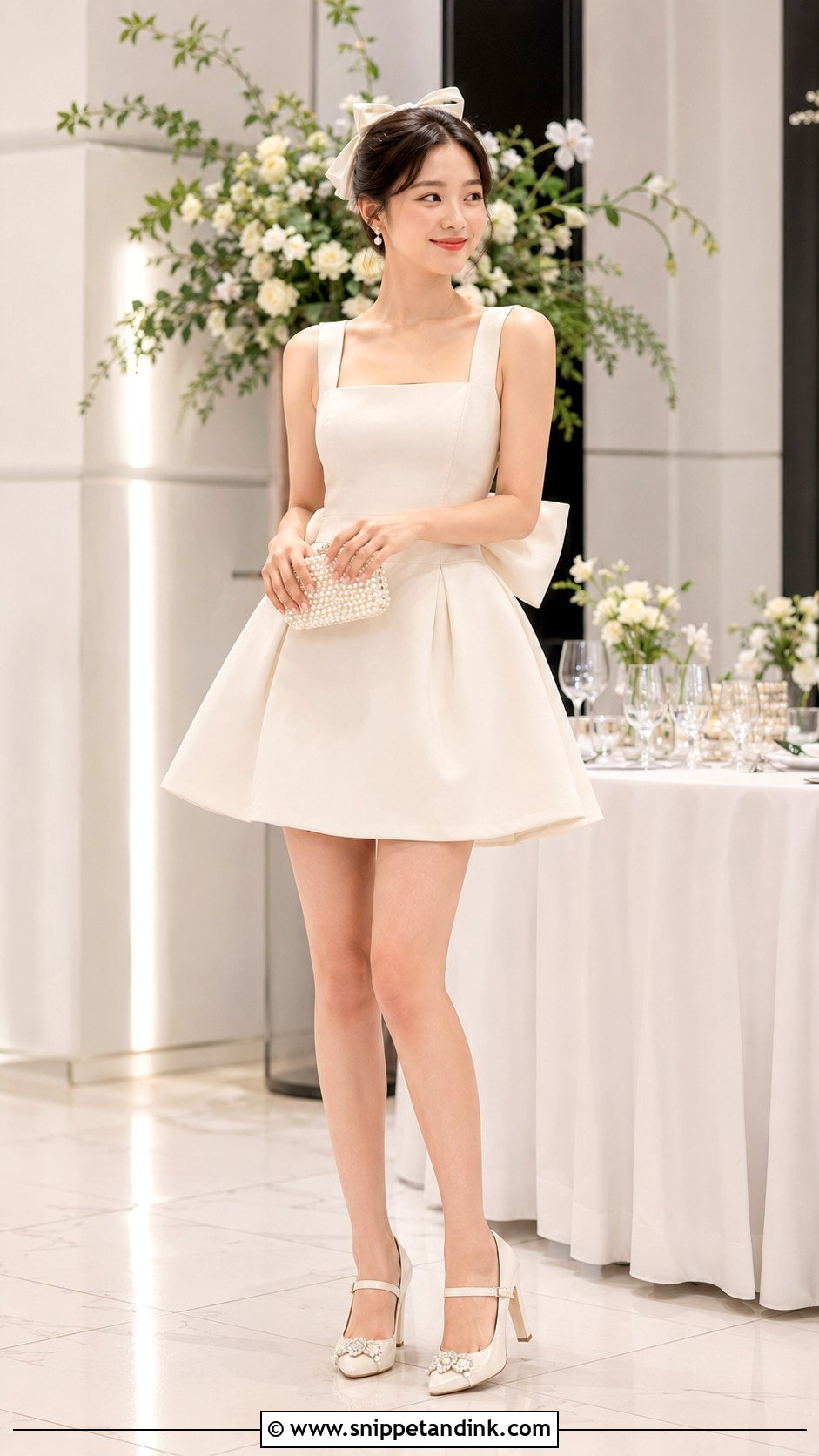
A bridal mini is the outfit you’ll actually dance in. Pick a structured ivory design with a square neck, fitted waist and soft flared skirt, and link it to your main gown through one shared detail such as pearl trim, a small back bow or a floral appliqué. Comfortable block heels or embellished Mary Janes, optional sheer ankle socks and compact pearl earrings complete it. Swap the veil for a satin bow, crystal headband or short tulle piece. A cropped jacket with jeogori-style ties gives extra coverage. Check the hem while sitting and dancing, not just standing in the mirror. Structured skirts ride up more than you’d expect.
20. Two Piece Korean Bridal Dress
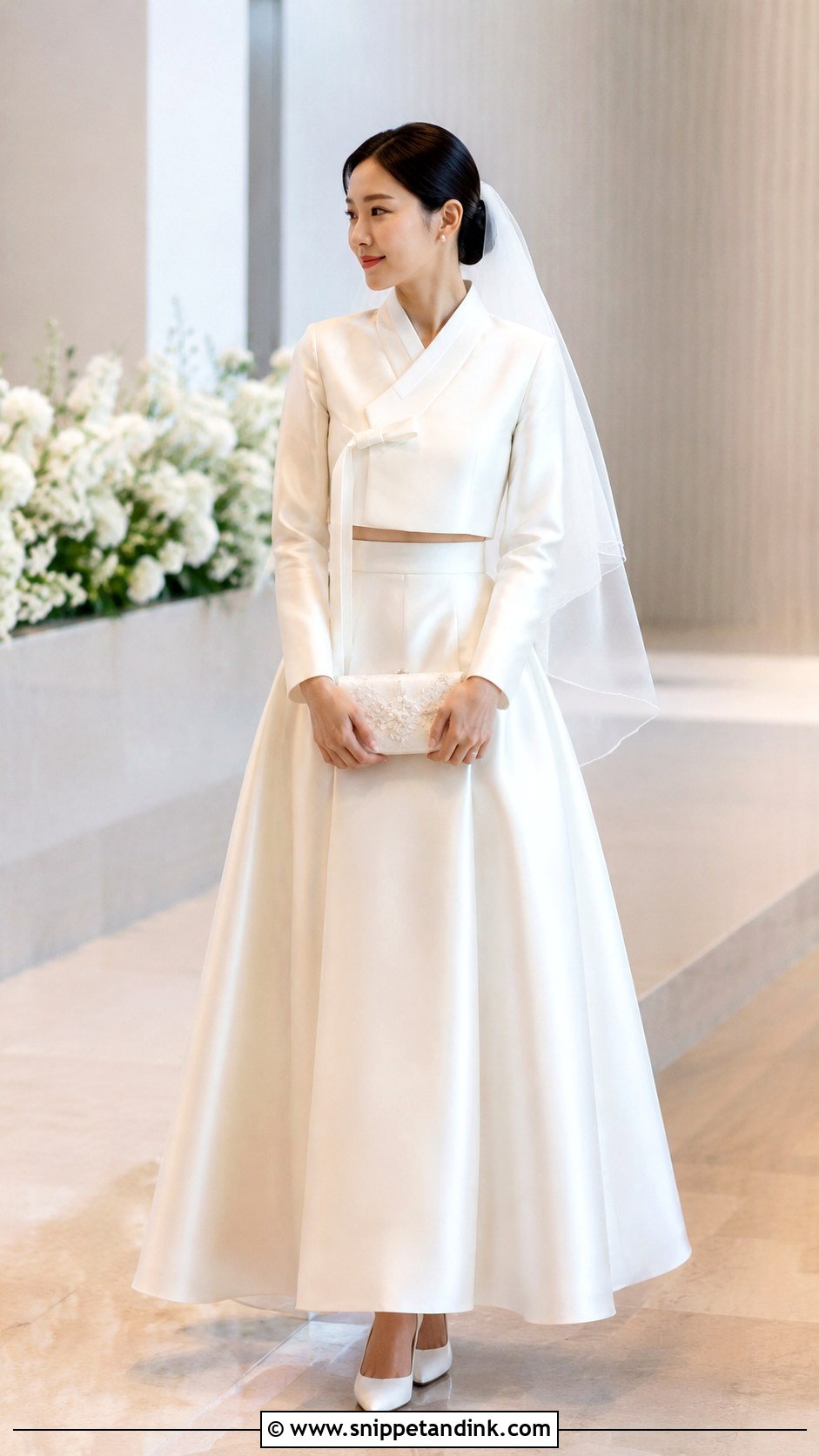
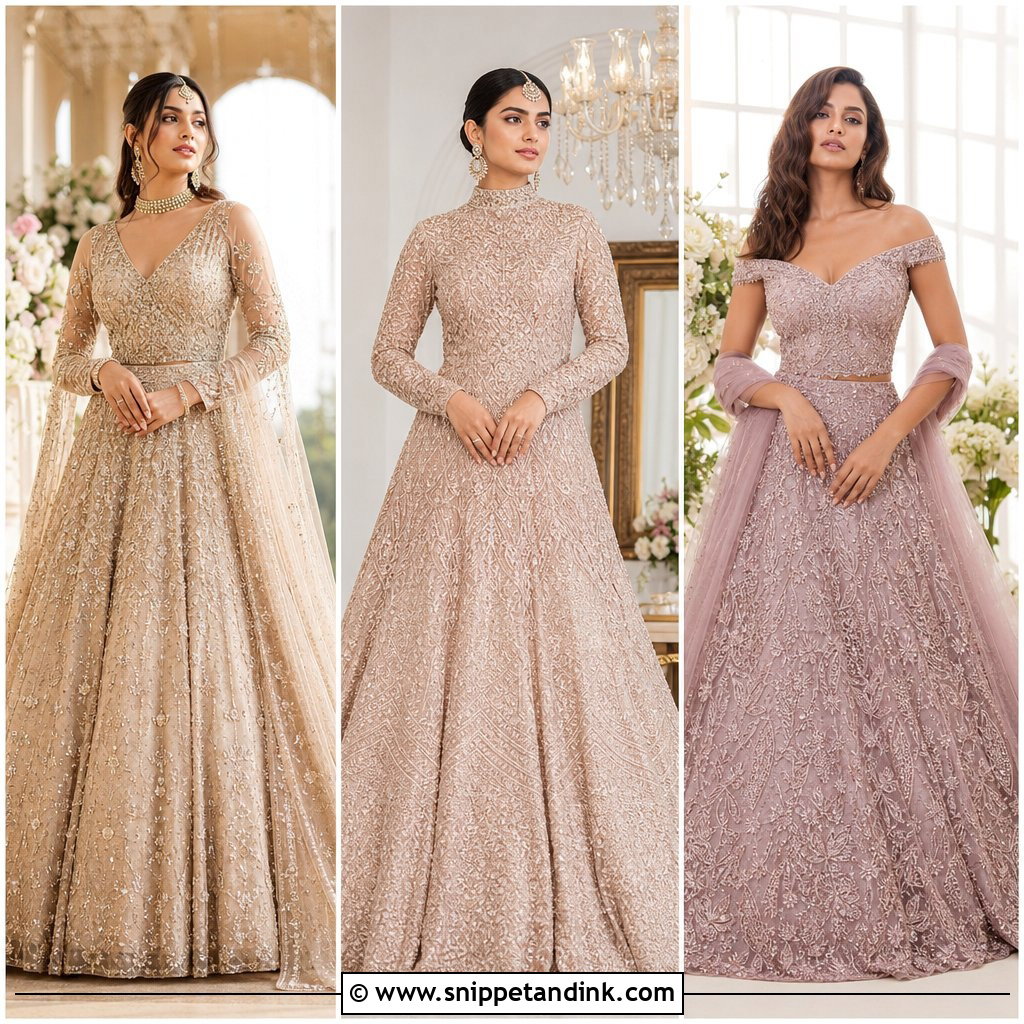
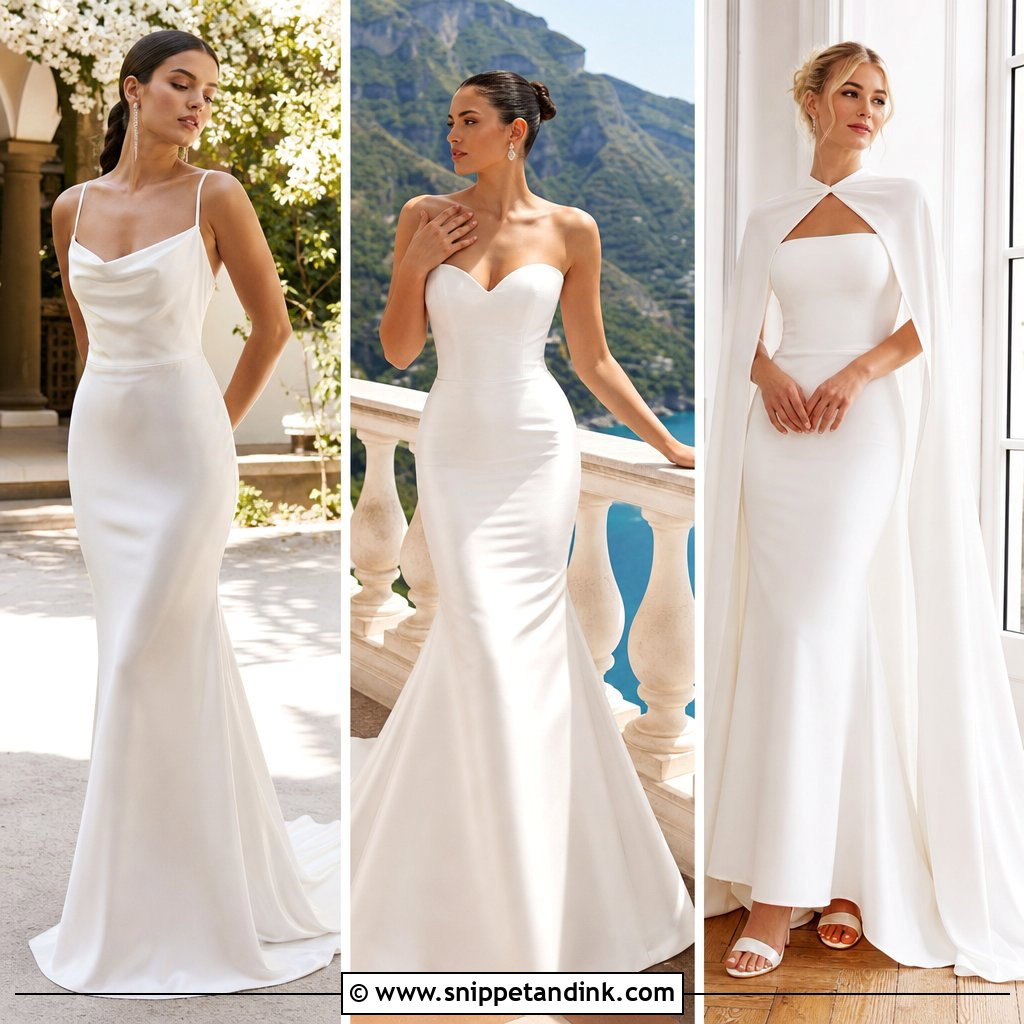
Two pieces give you more control over fit, especially if your top and bottom are different sizes. Pair a cropped ivory jacket or jeogori-inspired top with a high-waisted satin skirt in a soft A-line, or take a Western route with a fitted lace top and a clean silk skirt on a narrow waistband. Pearl studs, pointed pumps, a shoulder-length veil above a low bun and a small embroidered clutch complete it. The top must overlap the waistband by a few centimetres so no gap opens when you lift your arms. After the wedding, either piece can be worn again for another formal event.
Bowing, Catching and Kneeling in a Hwarot at the Pyebaek
The pyebaek is the family ceremony, and it’s physically the hardest part of the day to dress for. The couple makes deep, formal bows to the parents and elders, then sits on the floor for the rest of the rite. At the end, the parents toss dates and chestnuts, and the couple tries to catch them in the bride’s skirt or a cloth; the number caught is a playful prediction of future children.
That sequence tells you exactly what to practise. A full formal bow in a hwarot means kneeling down and rising again with long sleeves covering your hands and a heavy robe on your shoulders. Most brides need a helper on each side the first time. Do a run-through at home with the actual garment or a rental of similar weight, and ask whoever is assisting on the day to rehearse with you.
Hair and headpiece for the rite
The jokduri or other ceremonial headpiece sits on top of a low bun, traditionally secured with a long binyeo pin. Ask your stylist to build the bun firm and low, with pins anchored in a ponytail base, because bowing tips the head forward again and again. If you’re changing from a gown with a veil, plan the hair so the bun can stay and only the ornaments change.
Allow at least 30 minutes for the change from gown to hanbok, more if you’re layering a hwarot. Keep a stool, a mirror and the socks laid out in the changing room, because the beoseon go on first and are nearly impossible to pull on once the skirt is tied.
How Many Outfit Changes Does Your Day Really Need?
Most Korean weddings I style end up with two or three looks: a modern gown, a hanbok or hwarot for the family rites, and sometimes a lighter reception dress. A minimal satin gown sets a modern tone, while a hwarot or flowing hanbok brings traditional detail. Fusion gowns, detachable layers and reception minis let you change the mood without losing a consistent bridal style. At every fitting, walk, sit, lift your arms and look at photos from the side and back. Let accessories support the neckline, embroidery and silhouette rather than covering them.
You'll Like These Ideas:


Leave a Reply