
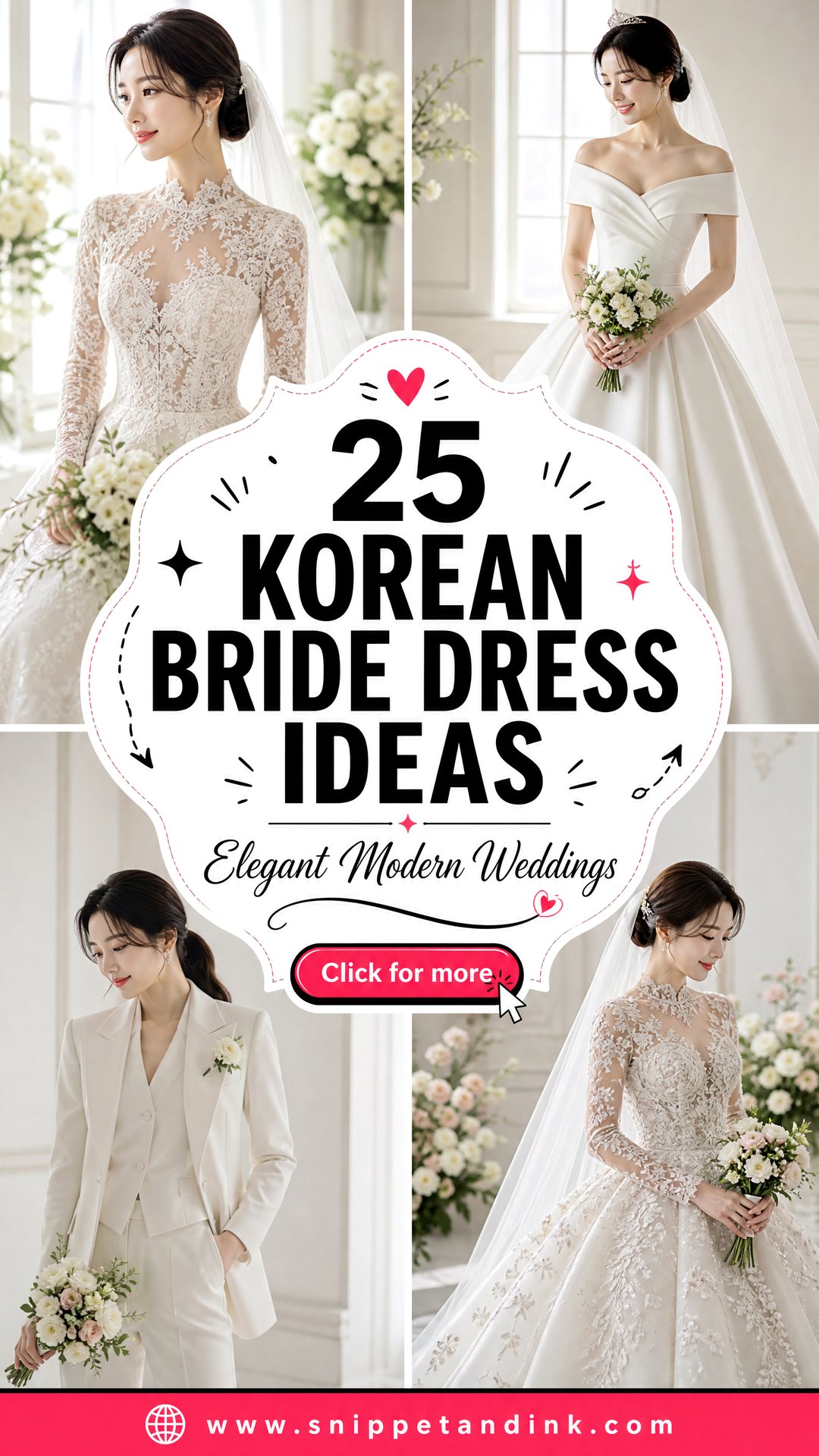
A Korean wedding can call for more than one outfit, so my fittings with Korean brides usually start with the timeline rather than a dress. You might wear a classic hanbok for pyebaek and a sleek white gown for the ceremony, or one fusion dress with hanbok lines that carries you through the whole day. The ceremony format, your family’s expectations and how many changes you can realistically fit in will shape the choice far more than any trend. The 25 looks below run from full ceremonial robes to suits and short reception dresses, with notes on how each one actually wears.
Mapping Each Outfit to the Pyebaek, Ceremony and Reception
Before I pull a single dress, I ask for the order of the day. A Korean wedding might run a Western-style ceremony, a short pyebaek with the families, a portrait session and a reception, and each part asks something different of what you wear.
- Pyebaek: you’ll kneel, make deep bows and catch dates and chestnuts in your skirt, so a full chima or a hwarot works far better than a fitted gown.
- Ceremony: this is where most brides want their main dress, and where fit, train length and how you walk the aisle matter most.
- Portraits: embroidery, structure and strong color show up best in still photographs, so save the detailed pieces for this part.
- Reception: lighter fabric, a shorter hem or a fastening you can manage after hours on your feet.
Many wedding halls and hanbok rental shops supply the pyebaek outfit for the day, which can make a three-outfit plan more affordable than it sounds. Ask how long each change takes and who will dress you. Hanbok ties are not something to learn in a hurry in a back room.
1. Traditional Korean Hanbok Wedding Dress
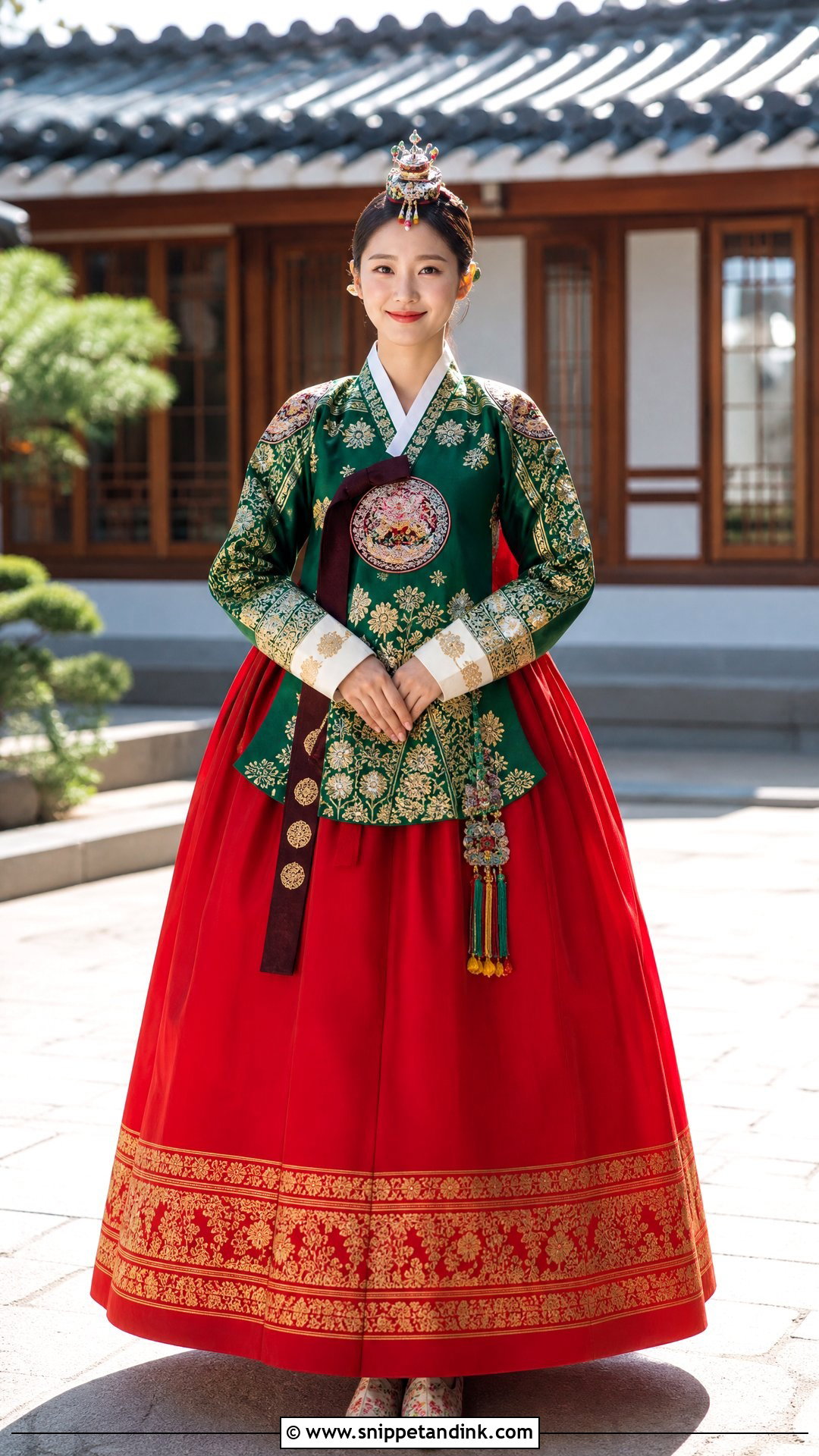
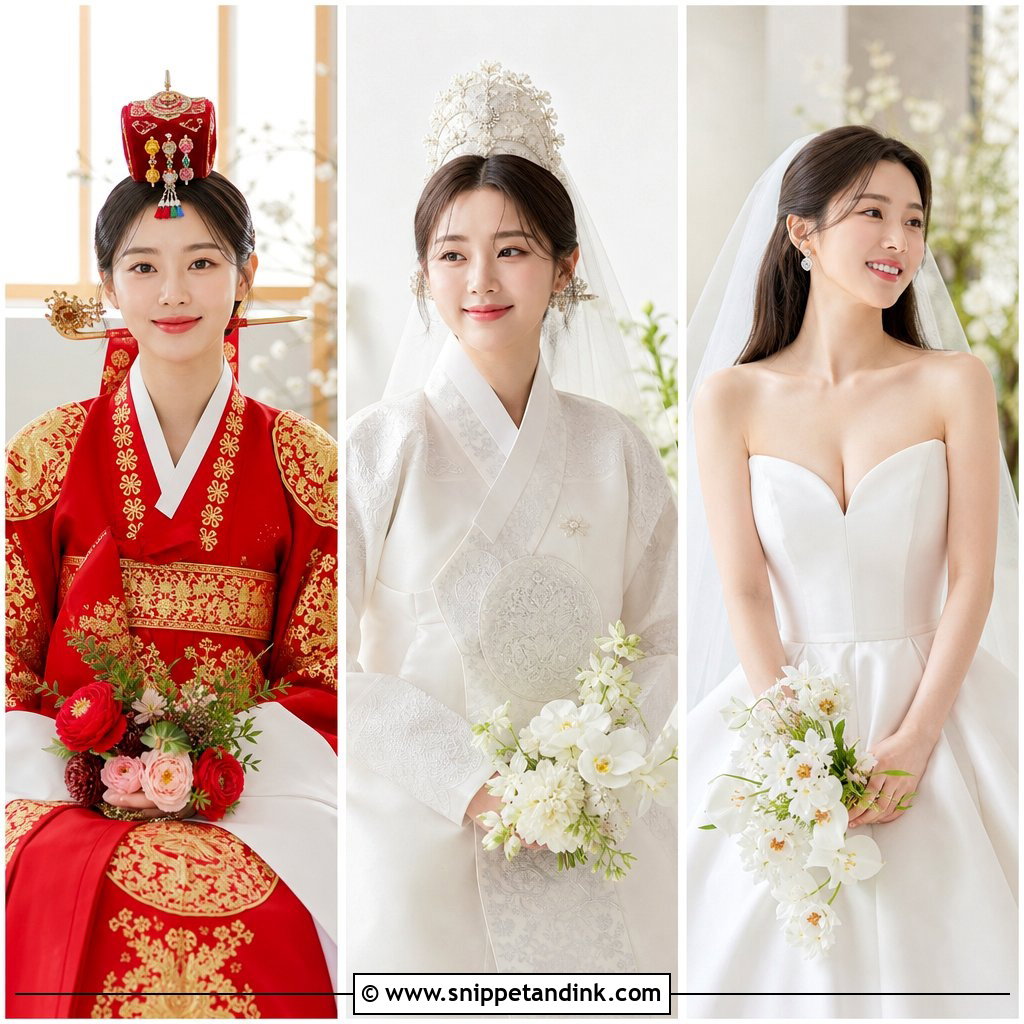
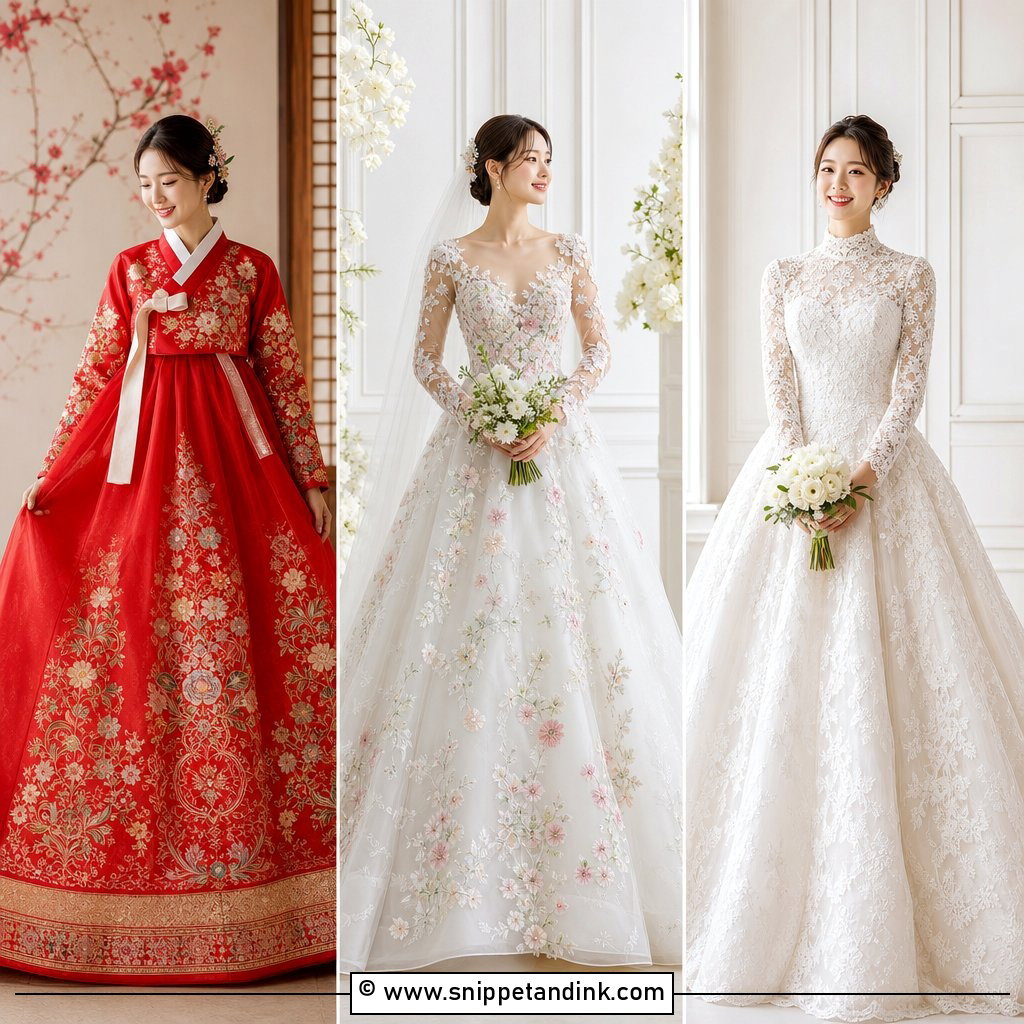
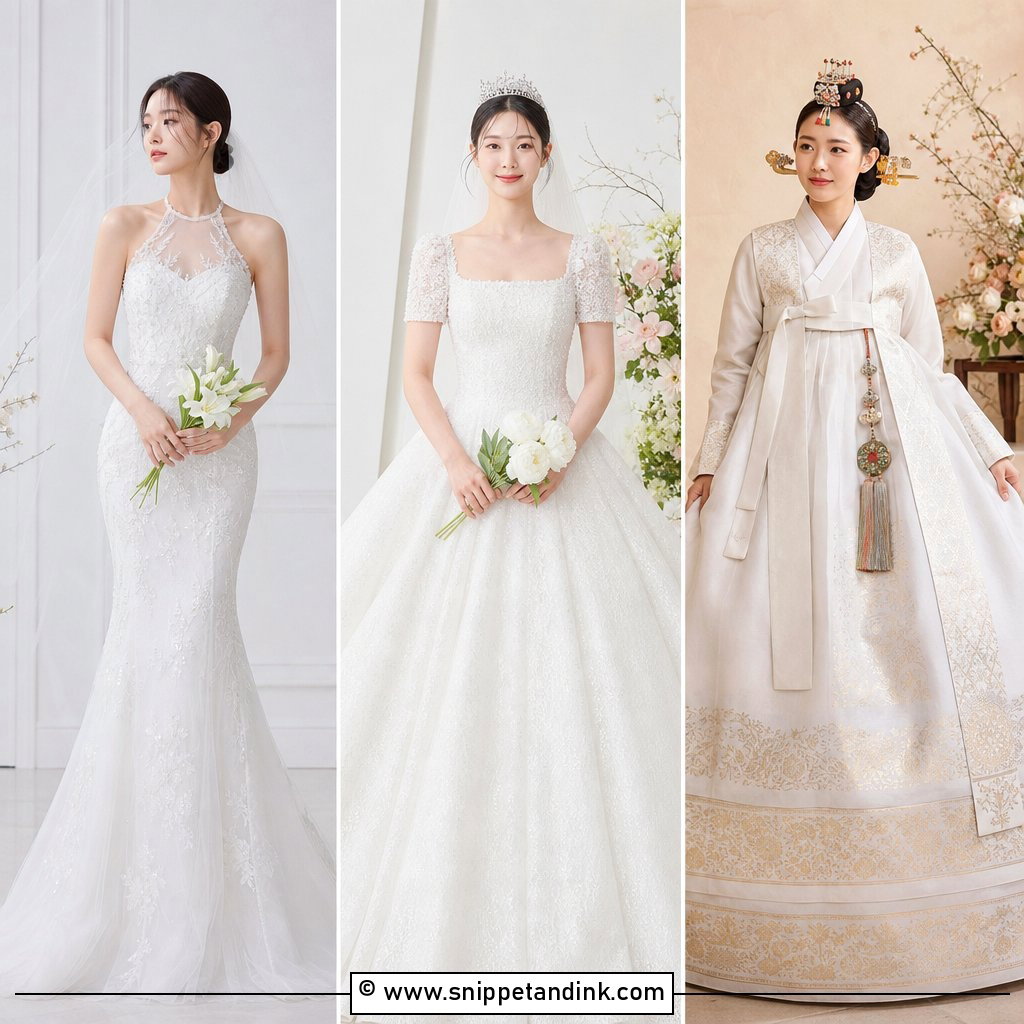
A traditional Korean hanbok wedding dress pairs a short fitted jeogori jacket with a full, high-waisted chima skirt, usually finished with a jokduri or hwagwan headpiece. Red, green, blue, ivory and gold all carry symbolic meaning, so ask your elders before you settle on a color; some households have firm views. Because the chima ties above the bust, the skirt falls from high on the body and hides almost any waistline. When I dress a bride in one, I check the length of the otgoreum ribbon first, since a bow tied too long drags into the bouquet. Keep hair neat and makeup soft so the garment leads.
2. Modern Korean Hanbok Wedding Dress
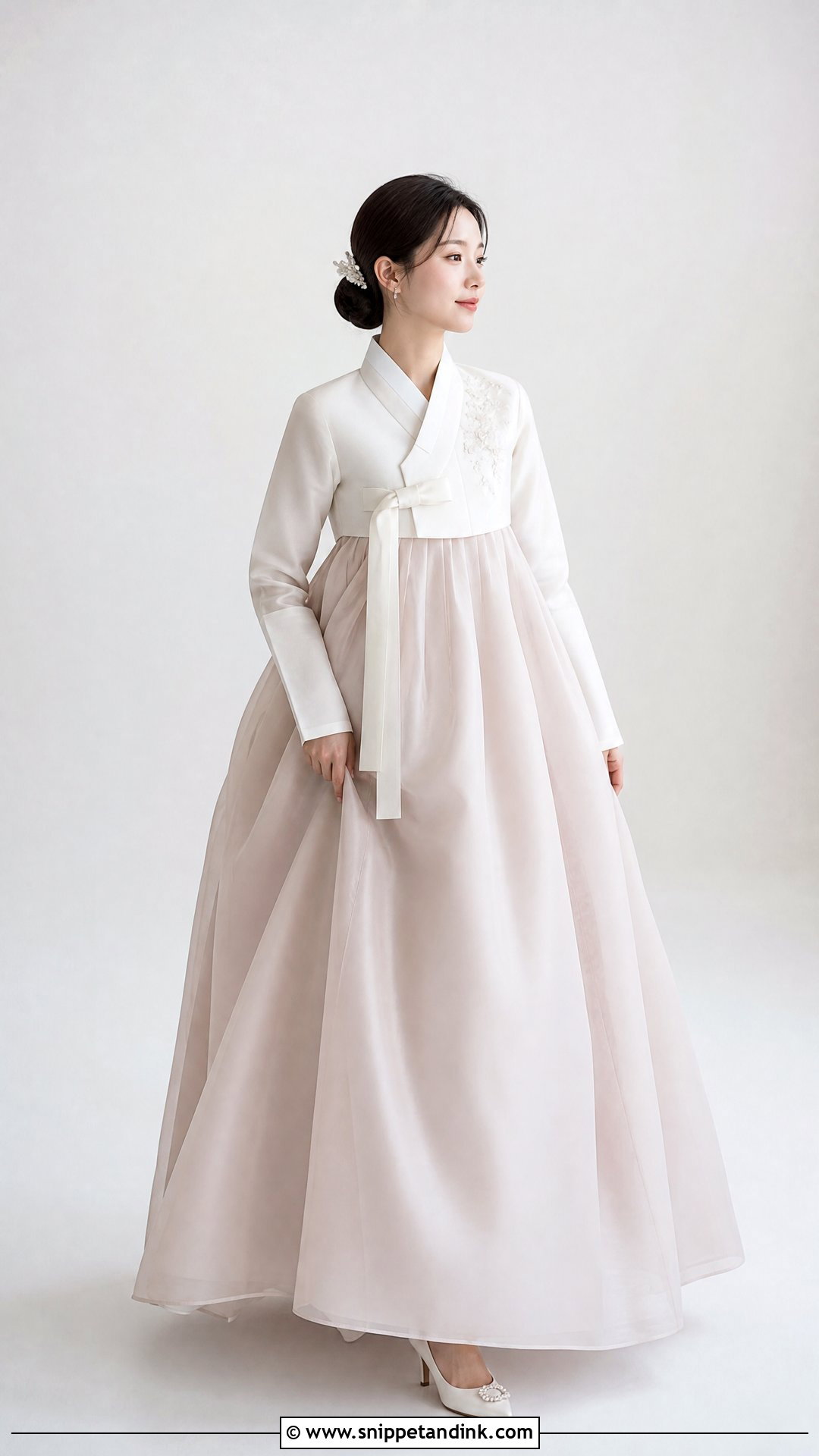
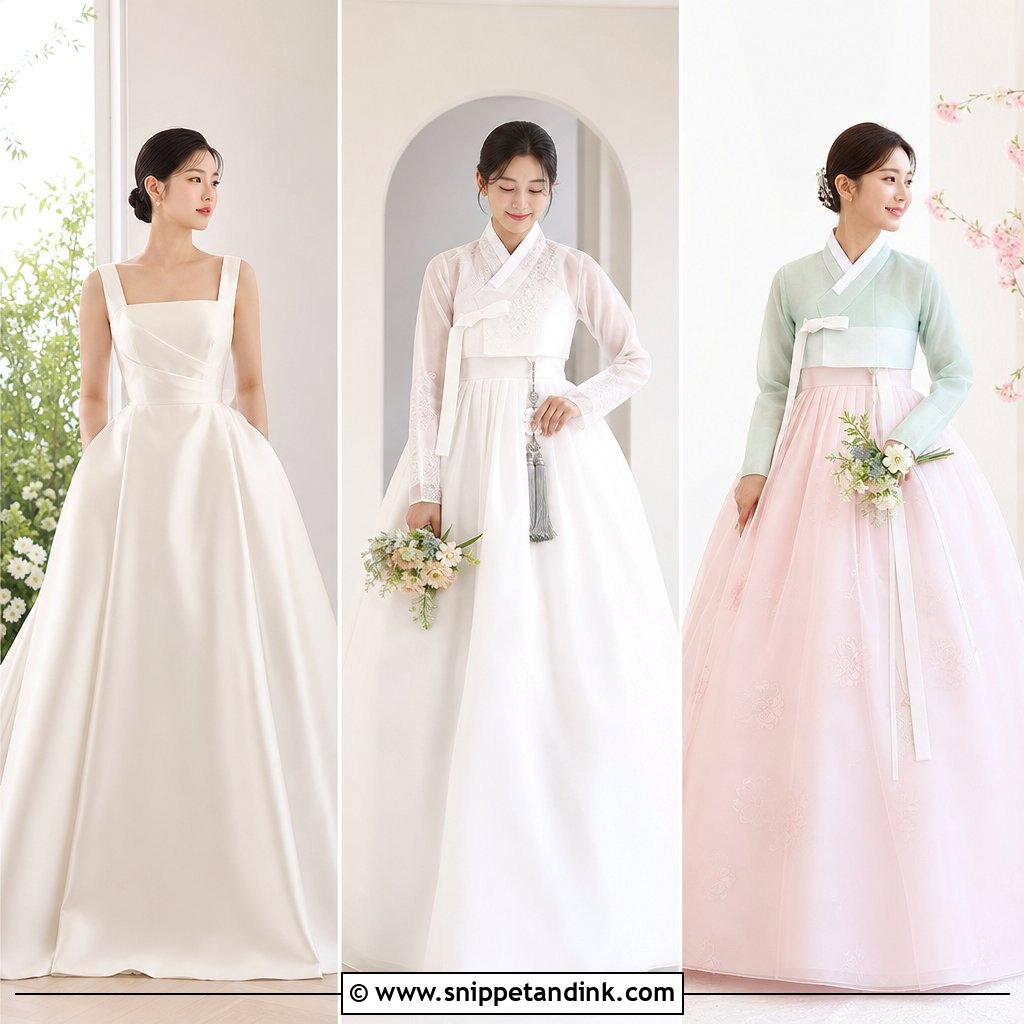
Lighter fabric is what makes a modern hanbok wearable for a full day. Organza, thin silk and tulle replace the layered underskirts, and the jeogori is often cut a little longer so it doesn’t ride up when you lift your arms. Ivory, blush, pale blue and champagne are the usual bridal shades. One honest catch: sheer organza creases at the waist tie after an hour of sitting, so I steam it right before portraits. Pearl earrings, low heels and a sleek bun suit an engagement shoot, a reception entrance or a small ceremony.
3. White Korean Hanbok Wedding Dress
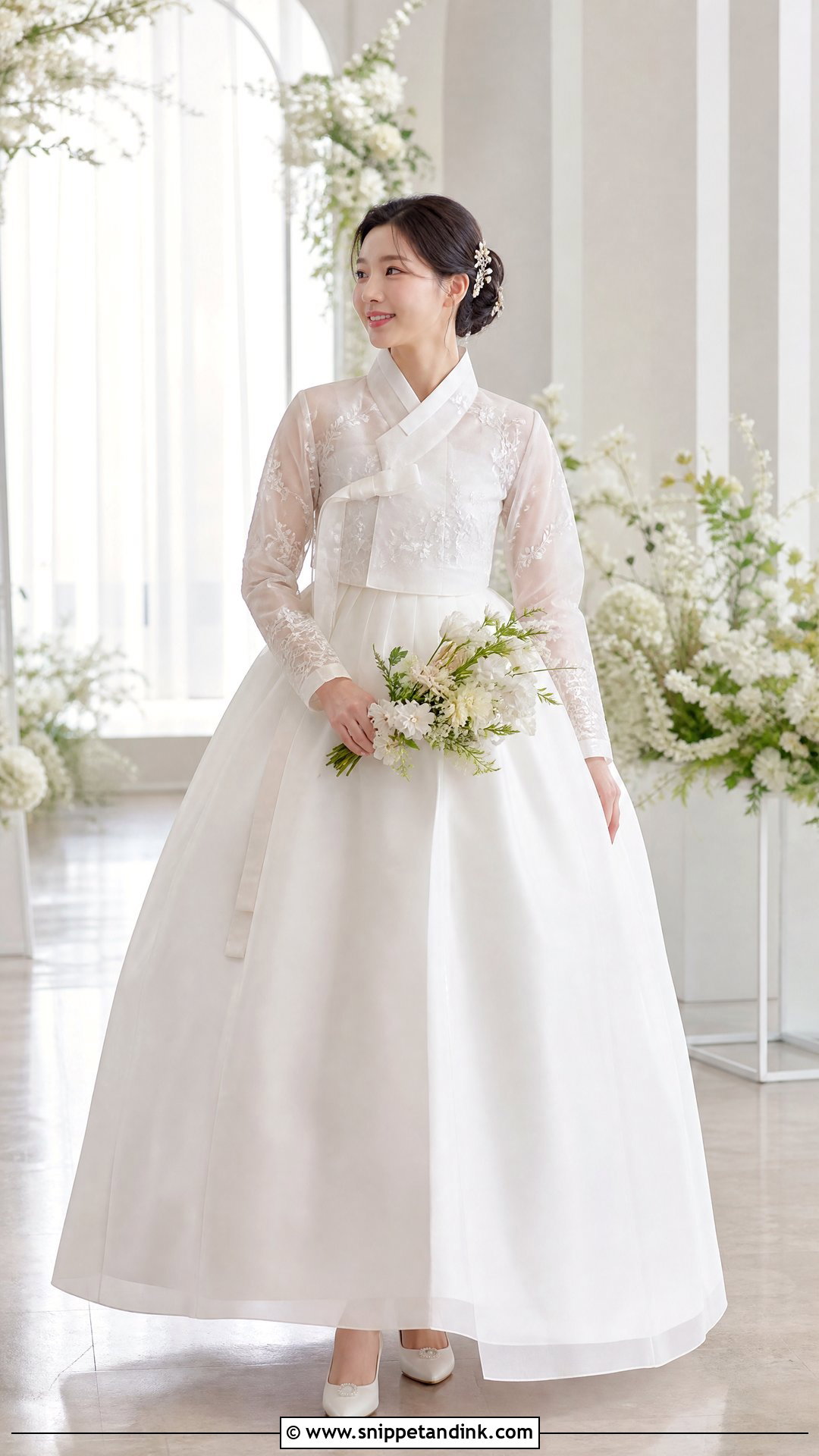
White hanbok sits between two traditions, which is exactly why some families love it and a few older relatives hesitate, since plain white was once the color of mourning dress. Warm ivory sidesteps that conversation for many families. Pair a crisp chima with a jeogori carrying subtle embroidery, sheer sleeves or silk ties, then add pearl hairpins or a soft metallic norigae so the outfit doesn’t read as plain. In wedding halls and studios the pale fabric bounces light back onto your face, which photographers appreciate.
4. Red Korean Bridal Hanbok Dress
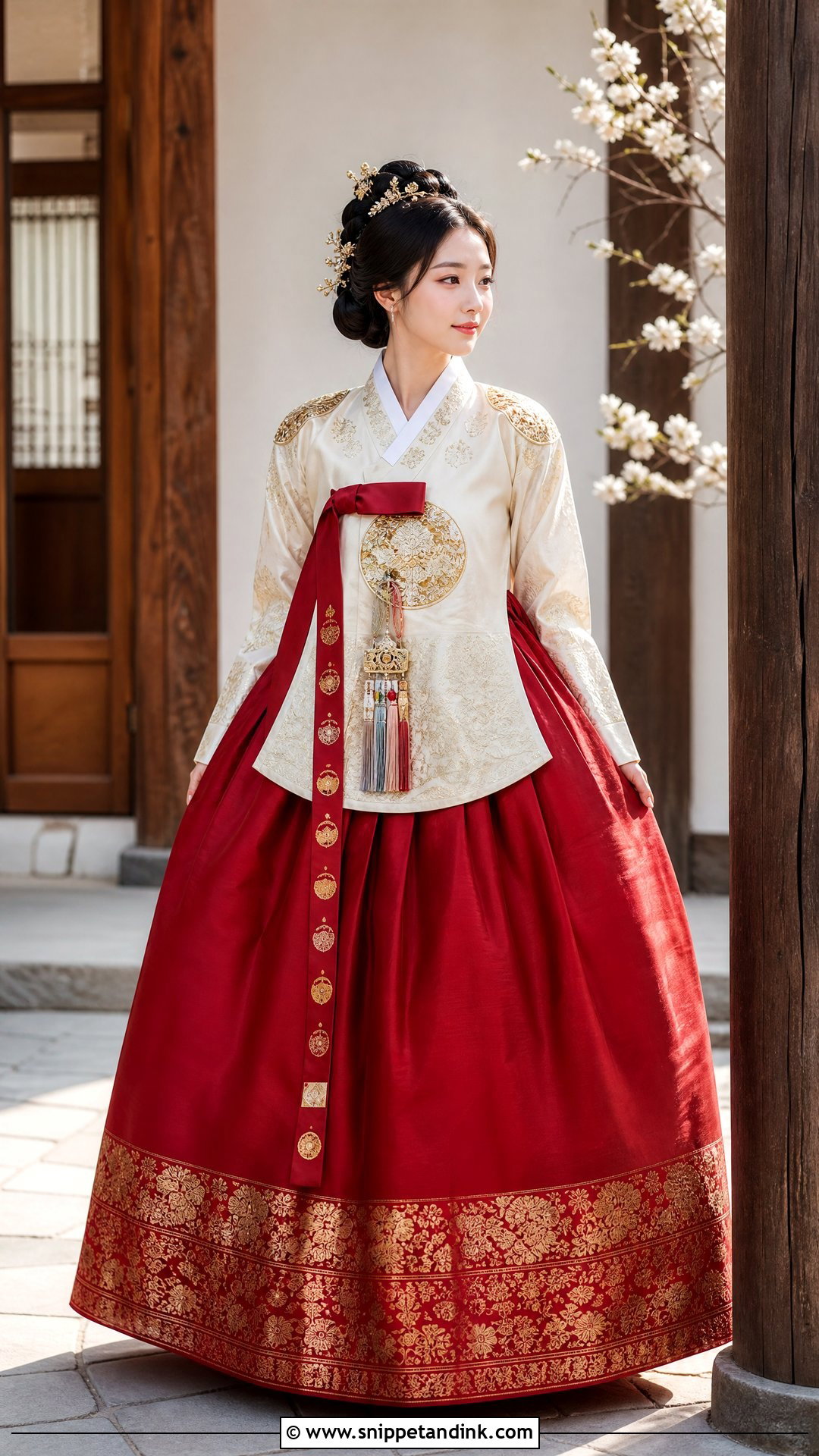
Red stands for celebration and protection in Korean bridal dress. The classic pairing is a red chima under a green or blue jeogori, finished with embroidery and traditional hair ornaments. For a modern version I’d put a deep ruby skirt under a cream jacket with gold trim. Red silk reads darker under warm indoor lighting than it does in daylight, so look at the fabric in the light of your actual venue before you commit. Keep the shoes simple and let the color carry it against neutral walls or traditional architecture.
5. Ivory Korean Bridal Gown
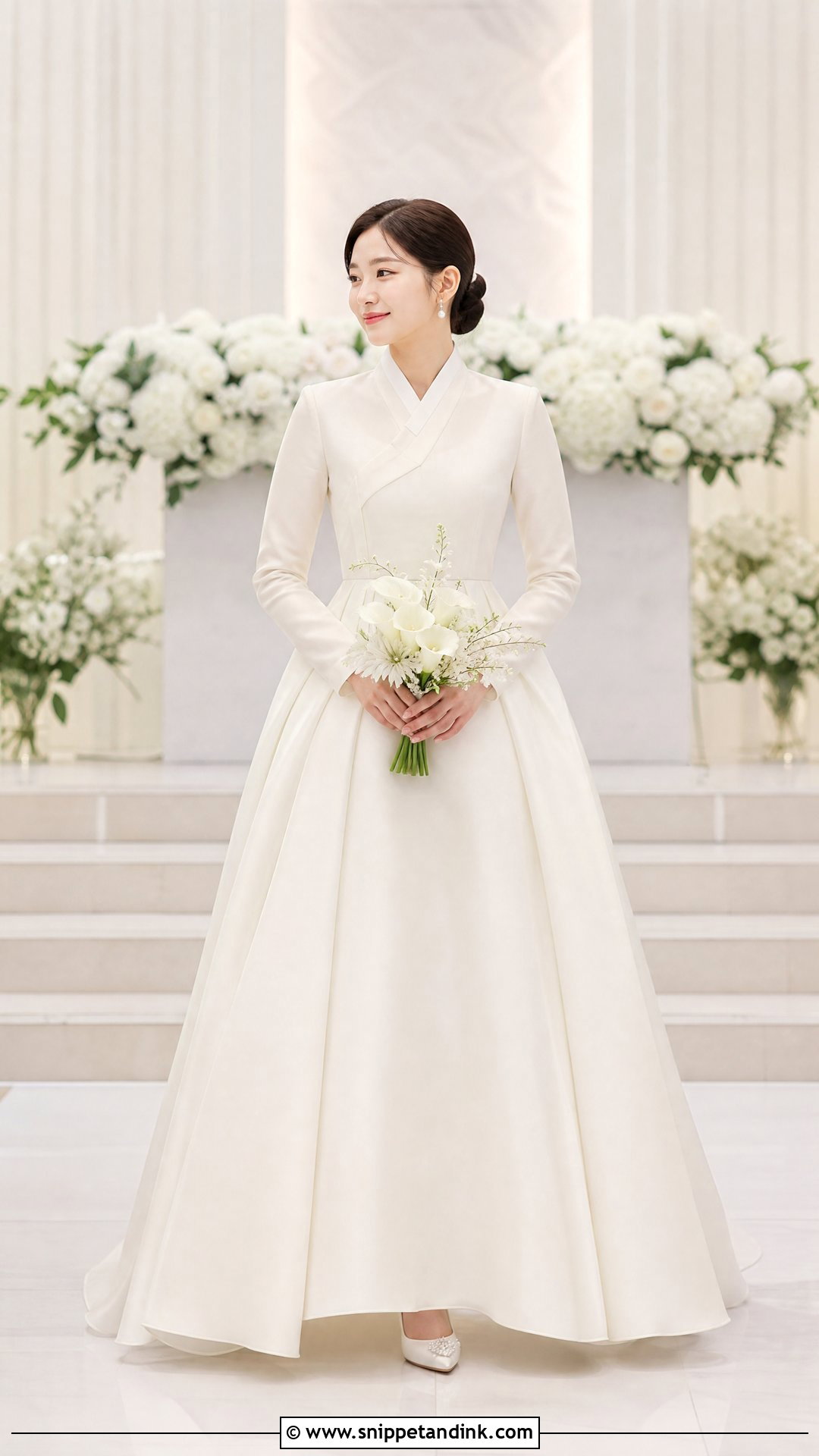
Ivory is kinder than bright white to most skin tones. It pairs naturally with Korean-inspired details such as silk texture, a wrap bodice, soft sleeve lines and light floral embroidery. A fitted bodice and A-line skirt give you a Western shape, while a crossed hanbok-style neckline or ribbon tie brings in the cultural note. Ask to see swatches against your skin in daylight, because “ivory” ranges from nearly white to almost champagne between fabric houses. Pearl drops, satin heels and a low chignon finish it for a hotel ceremony or portrait session.
6. Korean Lace Wedding Dress
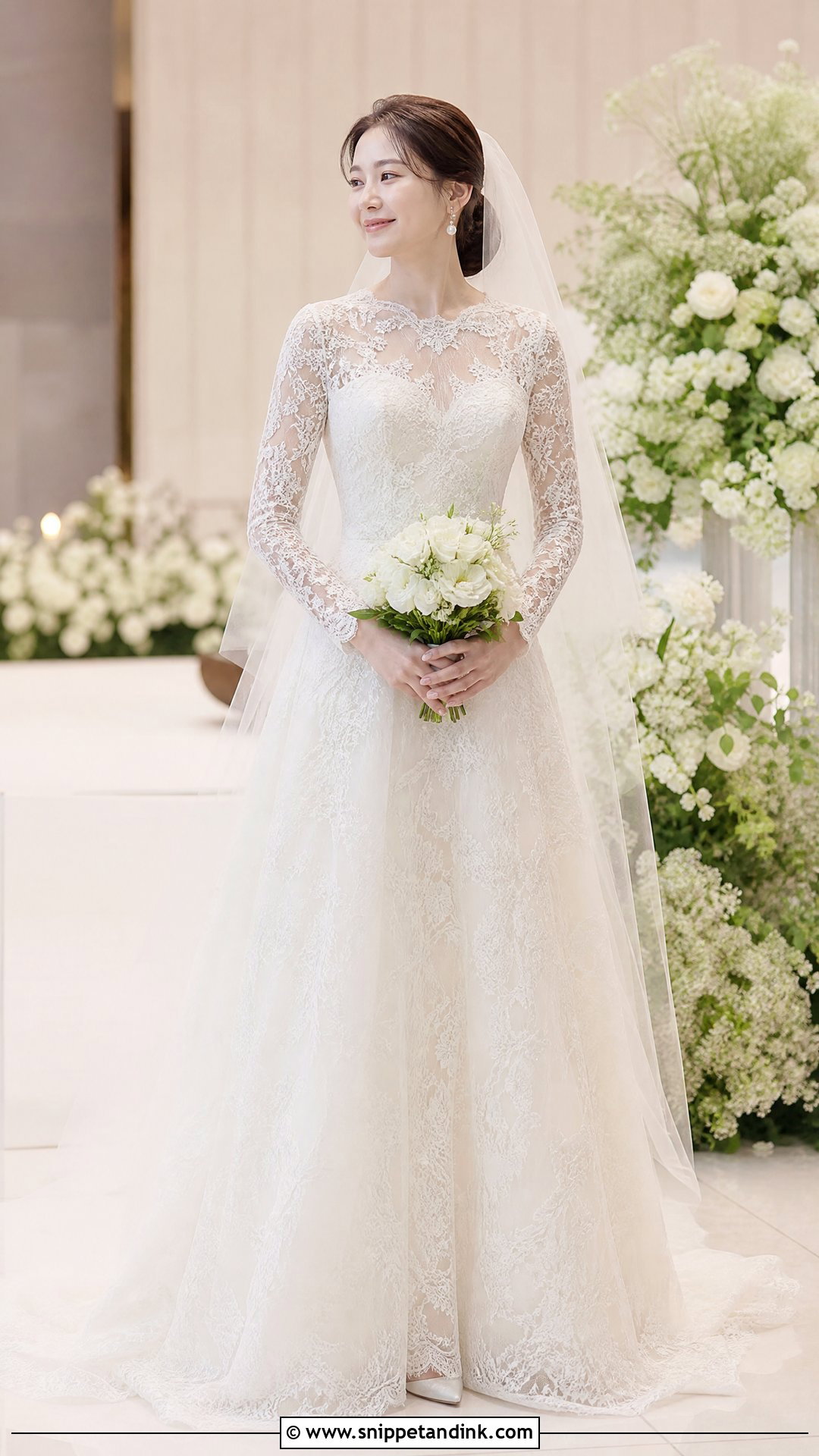
Lace is where Korean bridal fashion shows its restraint. A fine Chantilly or thin corded lace over satin or crepe reads cleaner than heavy guipure, especially on a high neckline or a sheer sleeve, and a slim A-line or soft mermaid keeps it comfortable. I always turn the dress inside out to look at the seams: good lace is hand-appliqued across the seam lines so the pattern doesn’t break at the sides. Pointed heels, a small pearl clutch and a plain veil are enough.
7. Korean Satin Wedding Dress
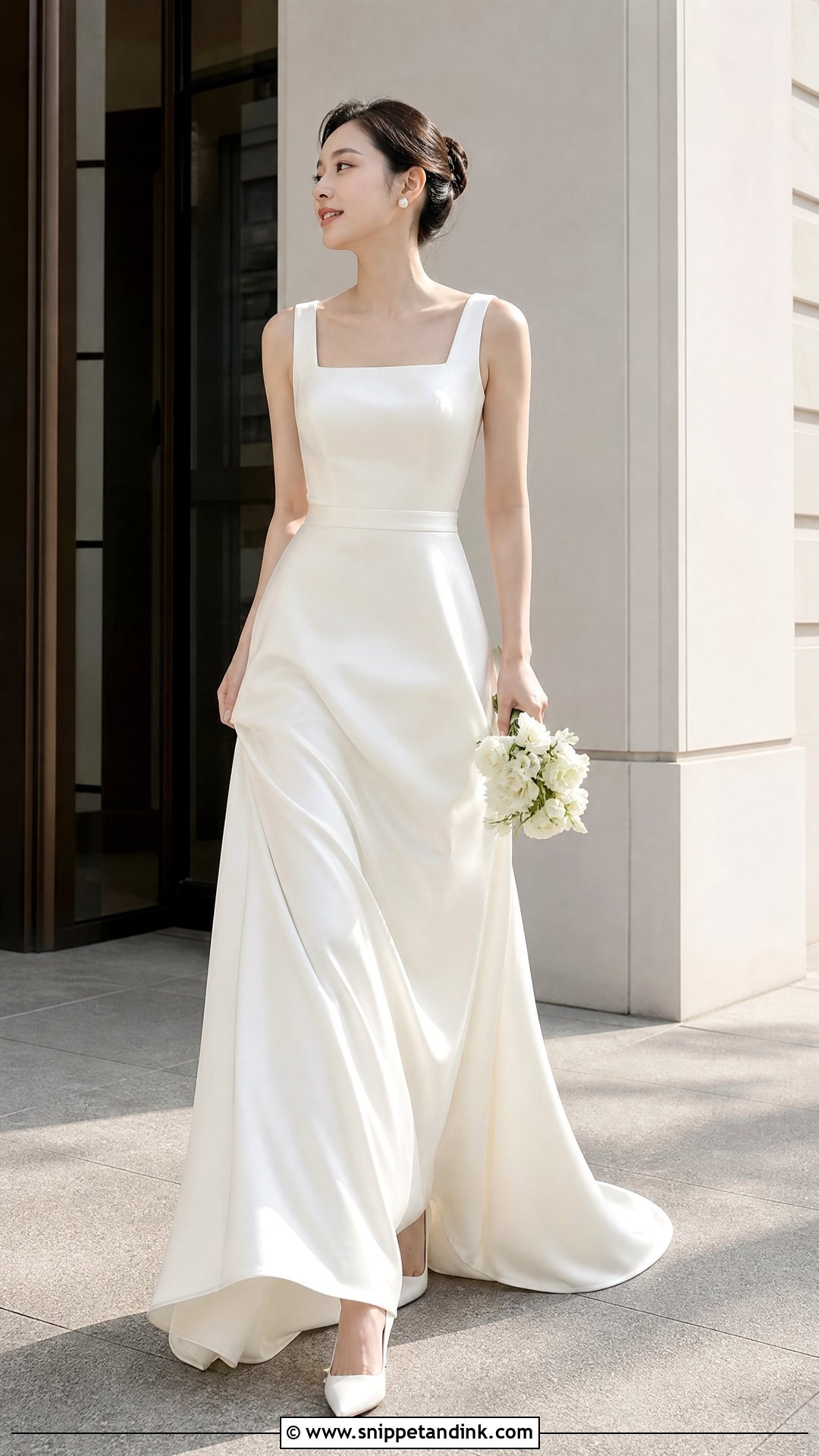
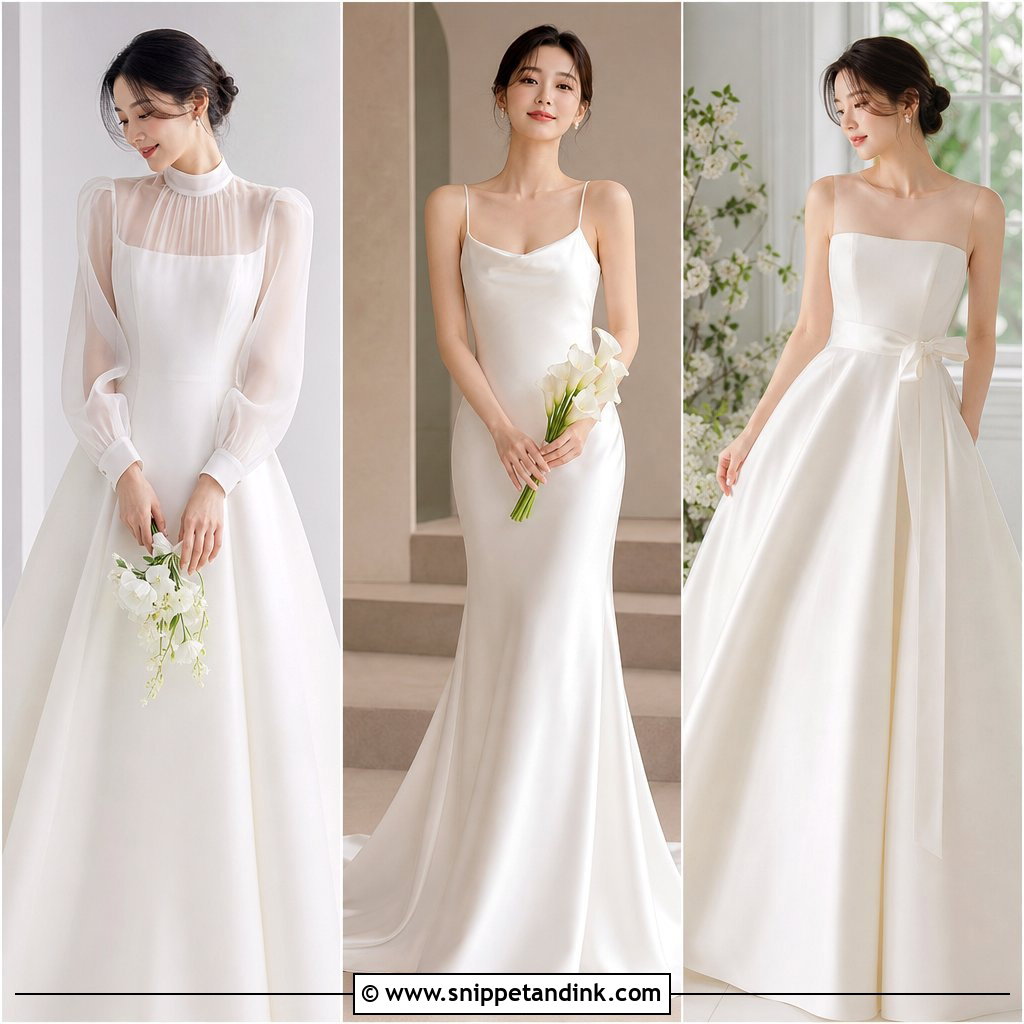
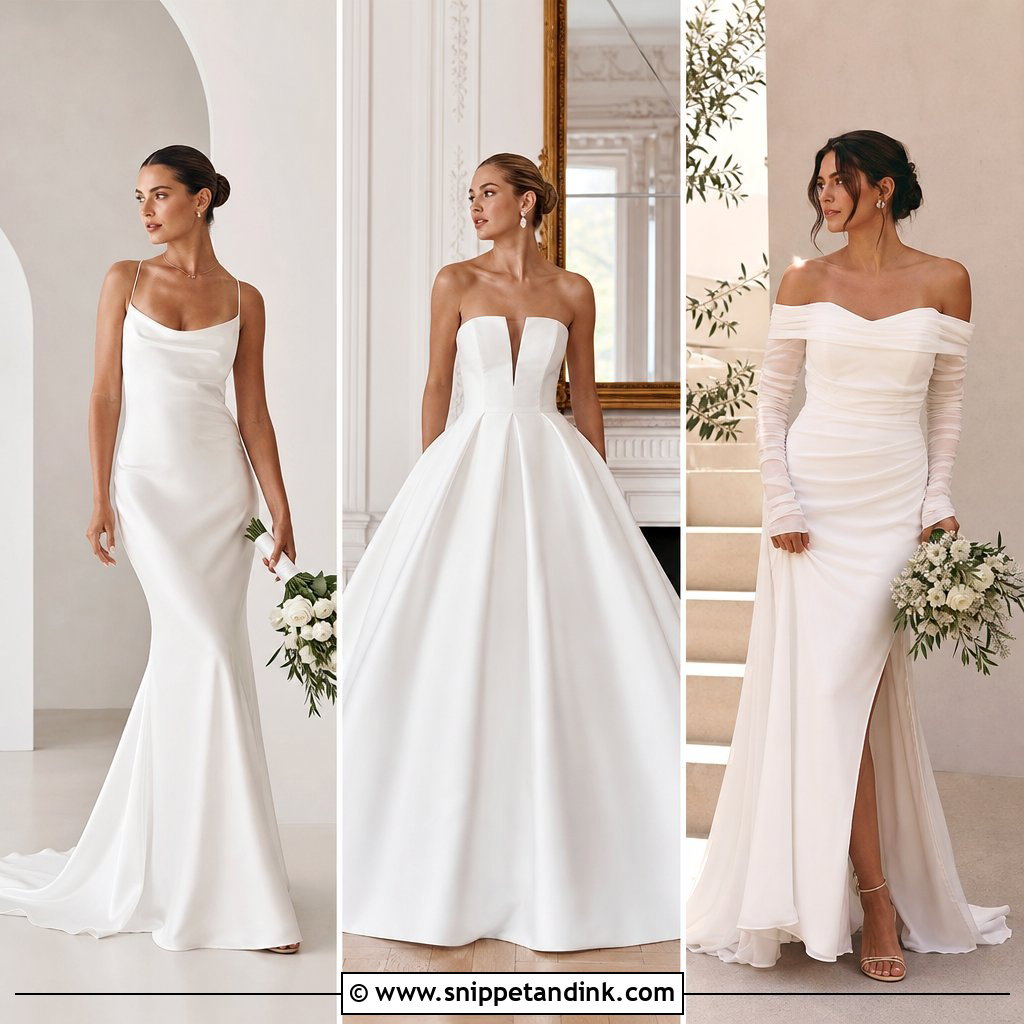
Satin hides nothing, and that is both its appeal and its risk. It catches light quietly and makes a simple cut look expensive, but it also shows every pull at a seam, so fittings matter more here than with lace. A square neckline or long sleeve suits a structured A-line, while a slim bias-cut slip feels more current. Heavier duchess satin creases less during the meal than thin charmeuse. Sleek hair, pearl studs and ivory heels keep the minimal mood intact.
8. Korean Minimalist Wedding Dress
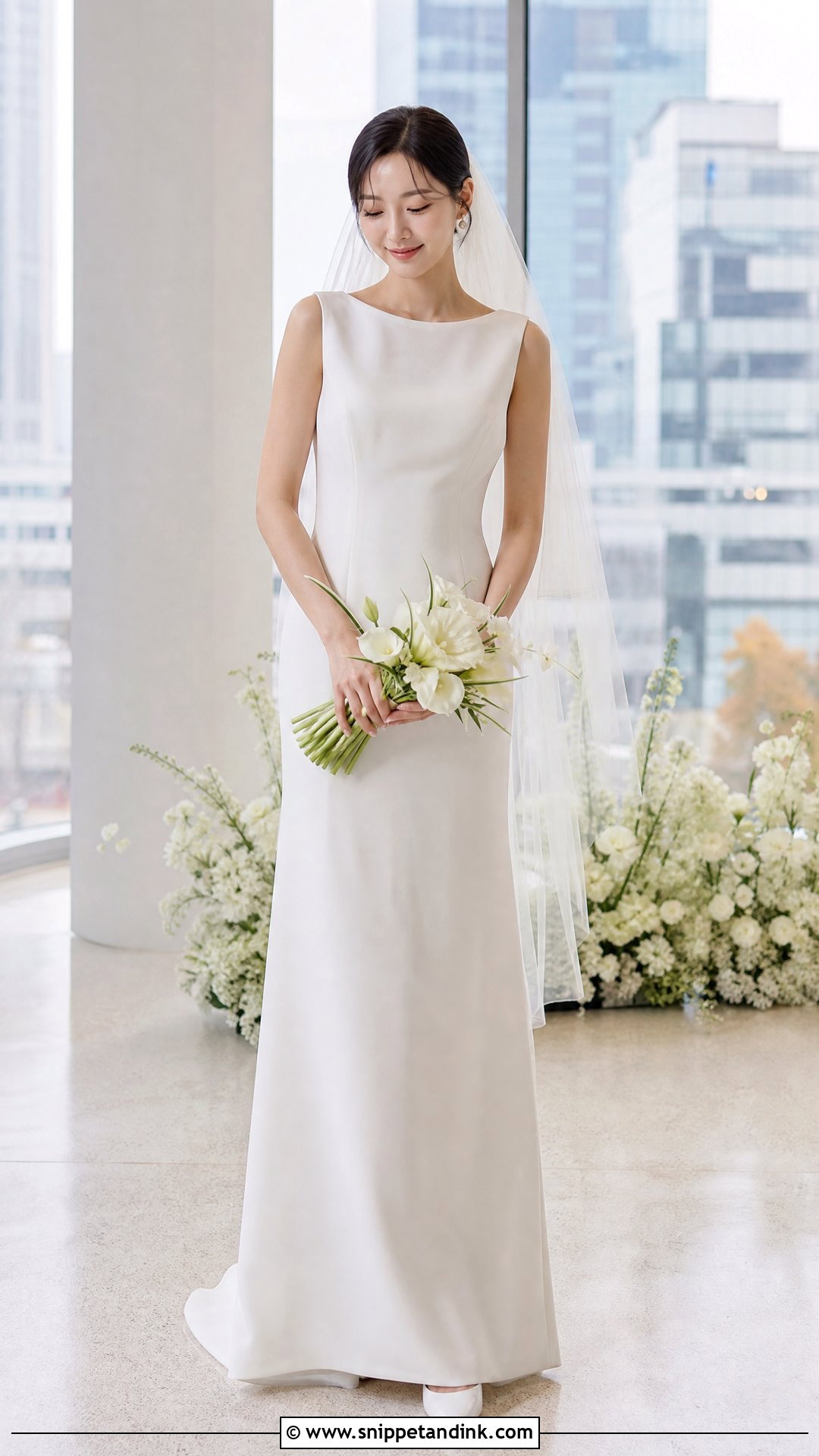
With almost no embellishment, the cut carries the whole dress. Smooth crepe, silk or satin in a column, a square-neck A-line or a long-sleeve sheath gives that calm Seoul-inspired feel, but only if the tailoring is sharp, so put your budget into alterations rather than beading. Crepe is forgiving over the hips and doesn’t flare under flash. Pearl earrings, a neat veil, white pumps and a structured bouquet are all it needs. Brides who find ornate gowns fussy tend to relax the moment they try this one on.
9. Korean Ball Gown Wedding Dress
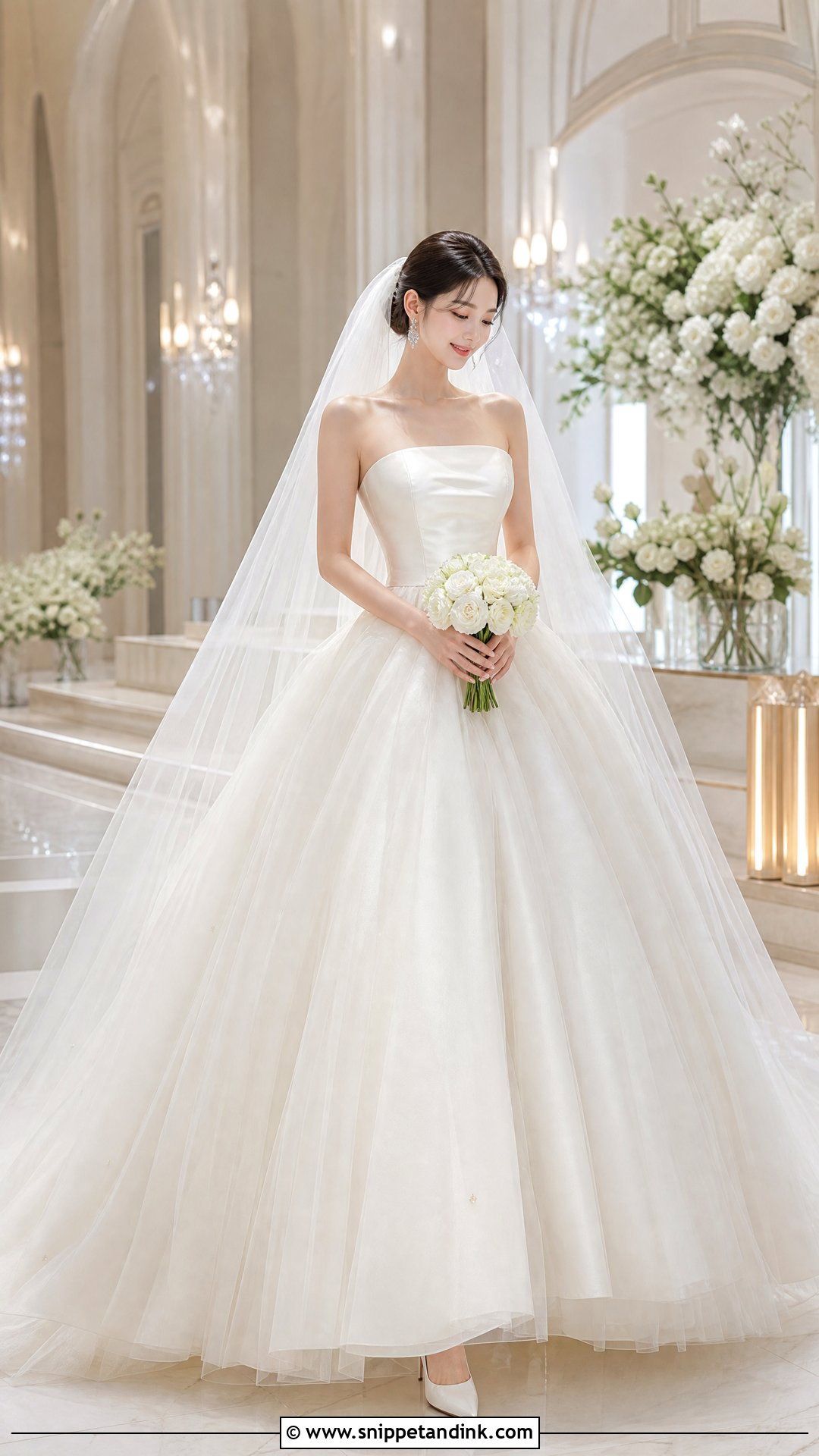
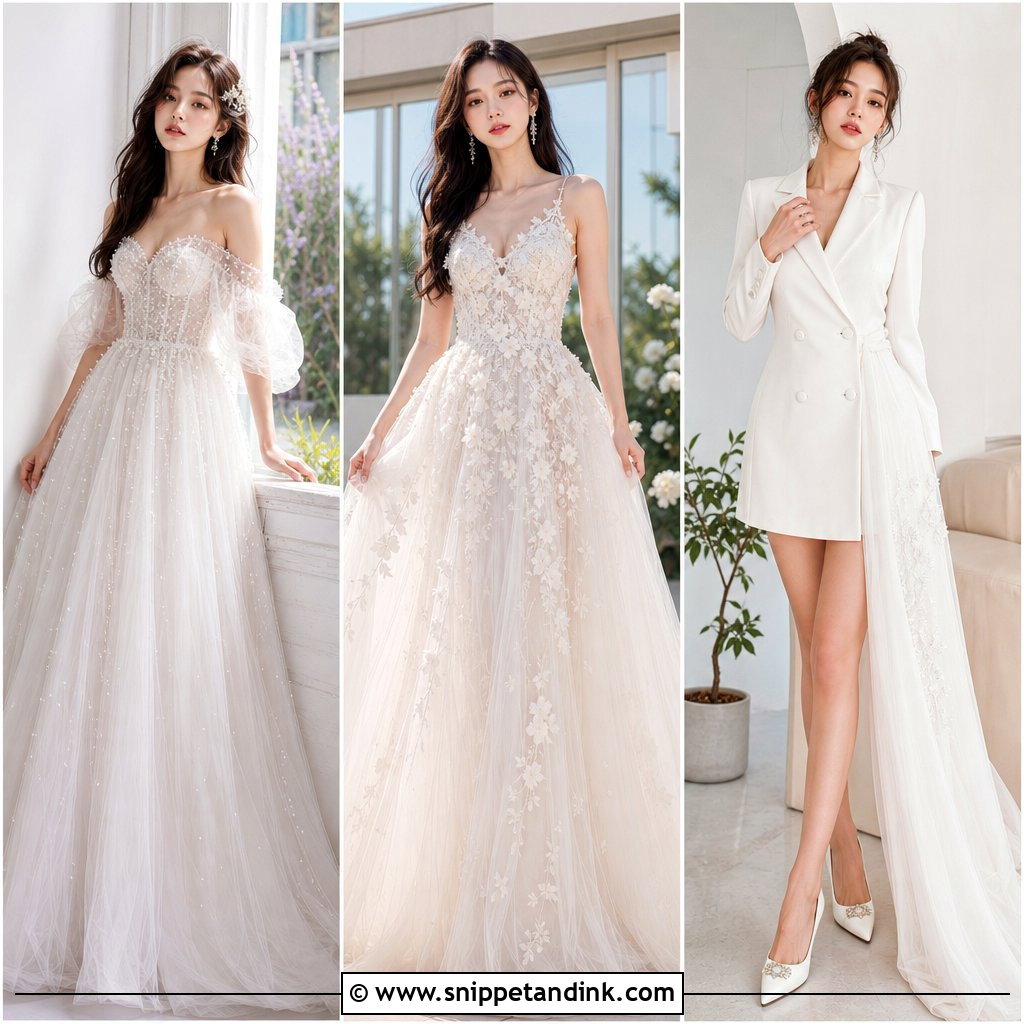
Korean styling usually keeps the top half of a ball gown quiet, with a simple neckline, a lace sleeve or a little beading, so the volume stays in the skirt. The skirt fabric changes everything: tulle is lightest, satin holds its shape best, and organza sits in between but crushes easily. Ask how many petticoat layers are built in, because a heavy skirt is tiring by the reception. A soft veil, crystal earrings and a formal heel suit a grand hotel or banquet hall entrance.
10. Korean A Line Wedding Dress
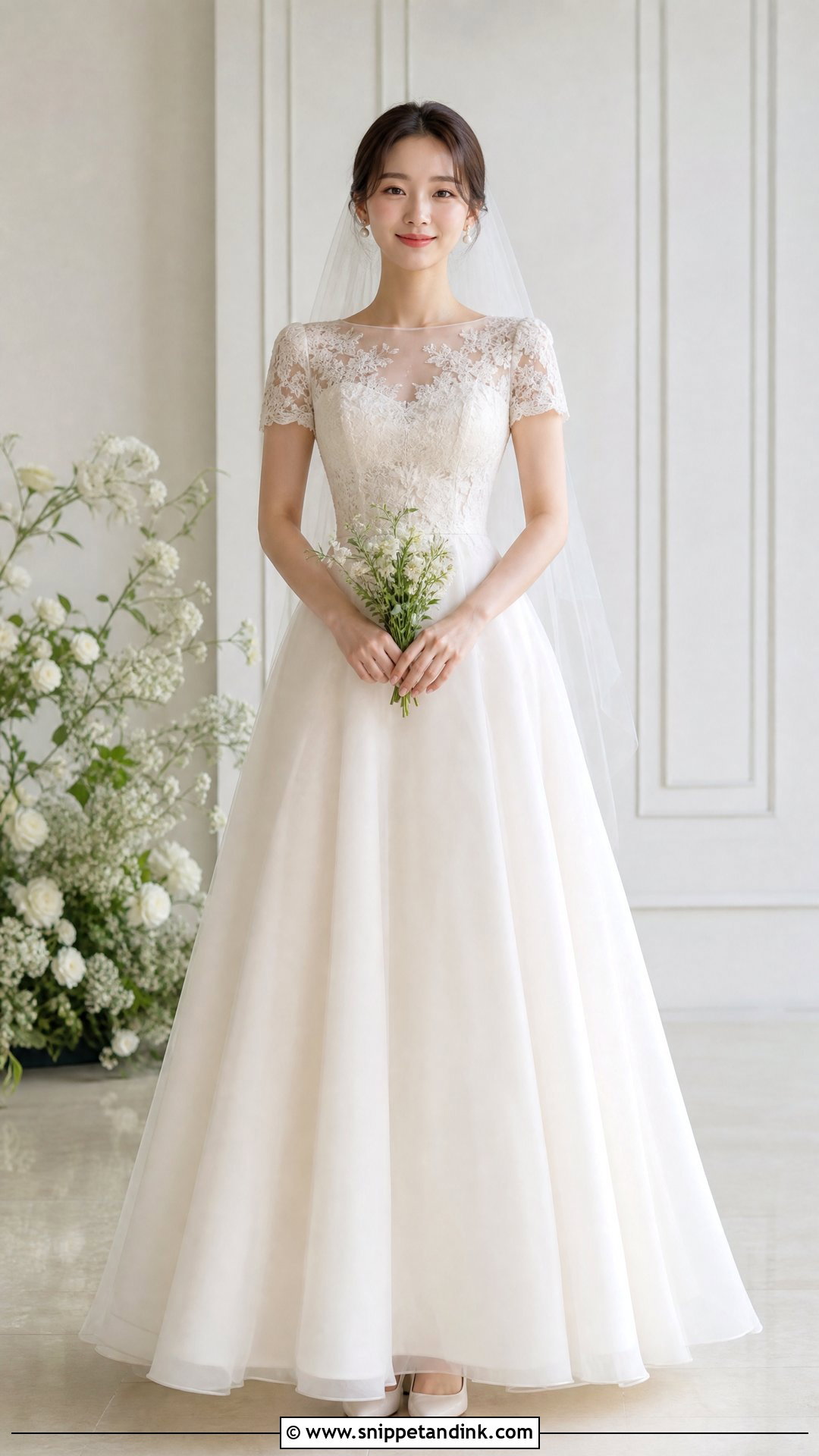
Fitted through the bodice and opening gently from the waist, the A-line suits more body shapes and more fabrics than any other silhouette; satin, lace, tulle and chiffon all work. For a Korean feel, look for soft sleeves, a modest neckline, delicate beadwork or floral embroidery. It’s also the easiest shape to bow, sit and climb stairs in, which I weigh heavily when a bride has several ceremony moments in one day. Pearls, closed-toe heels and a light veil finish it.
11. Korean Mermaid Wedding Dress
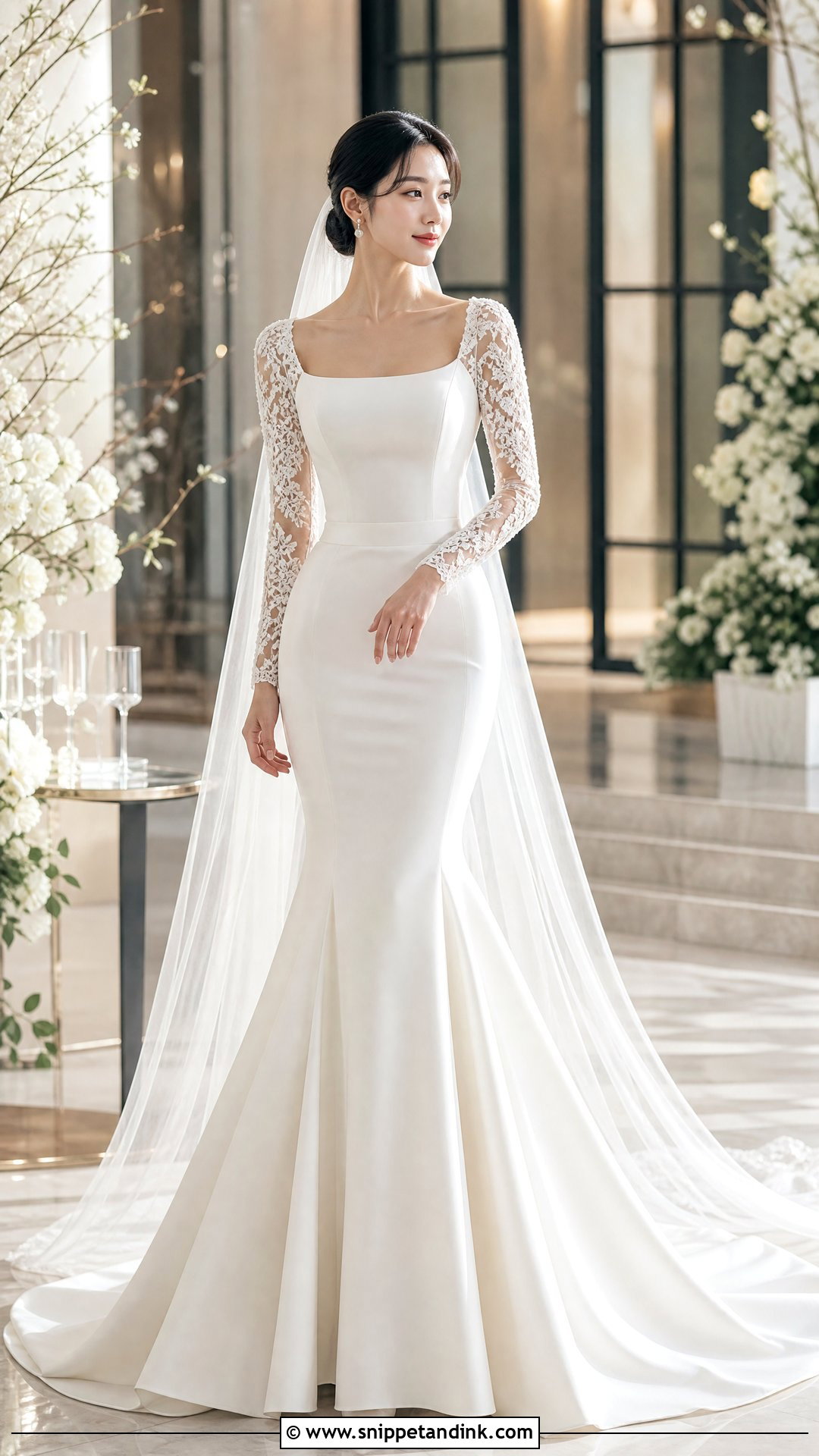
A mermaid holds close through the bodice and hips, then flares near the knee or lower thigh. Where that flare sits decides whether you can walk: a lower flare looks dramatic but shortens your stride, so walk and sit in it at every fitting. Crepe, satin or lace keep it refined without heavy embellishment. I’d steer you away from wearing it for pyebaek, because the kneeling bows are close to impossible in a fitted skirt. Slim heels, a fitted veil and soft waves or a clean updo pair well.
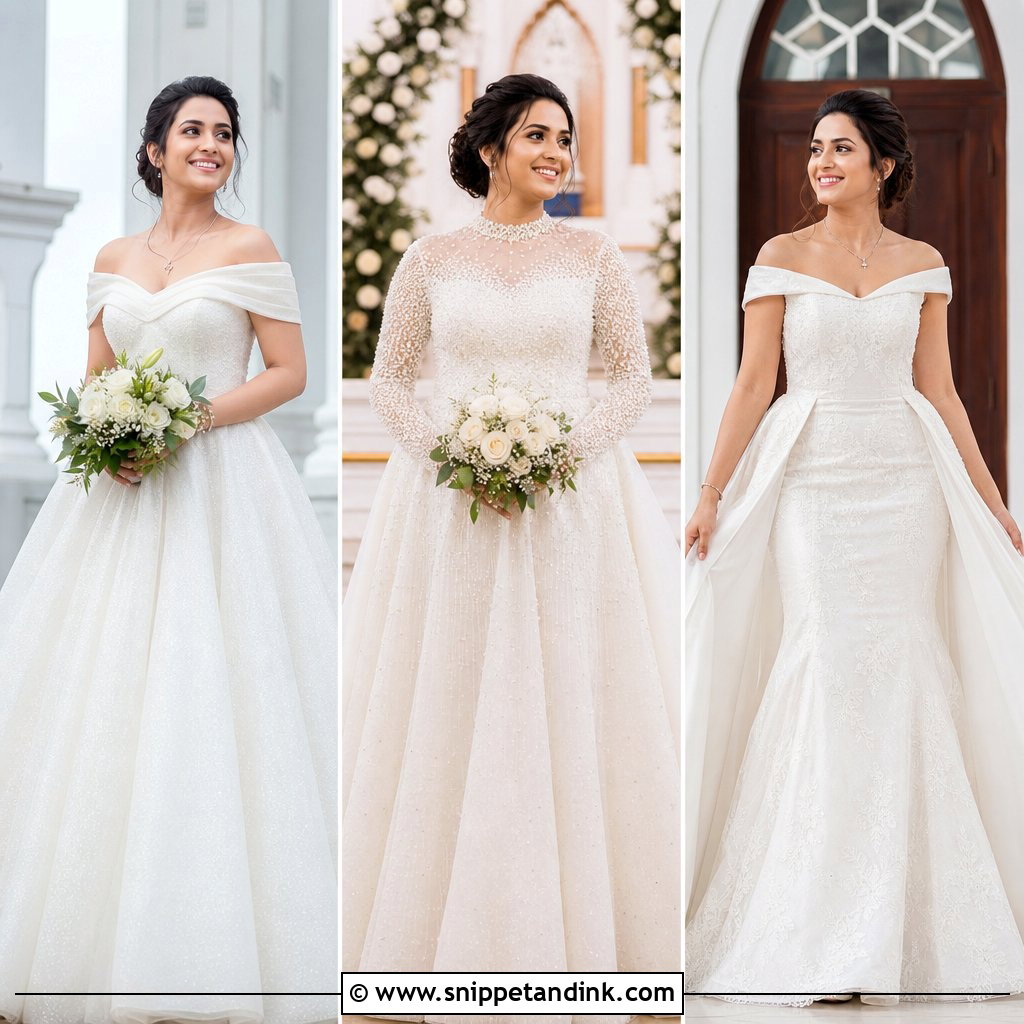
12. Korean Off Shoulder Wedding Dress
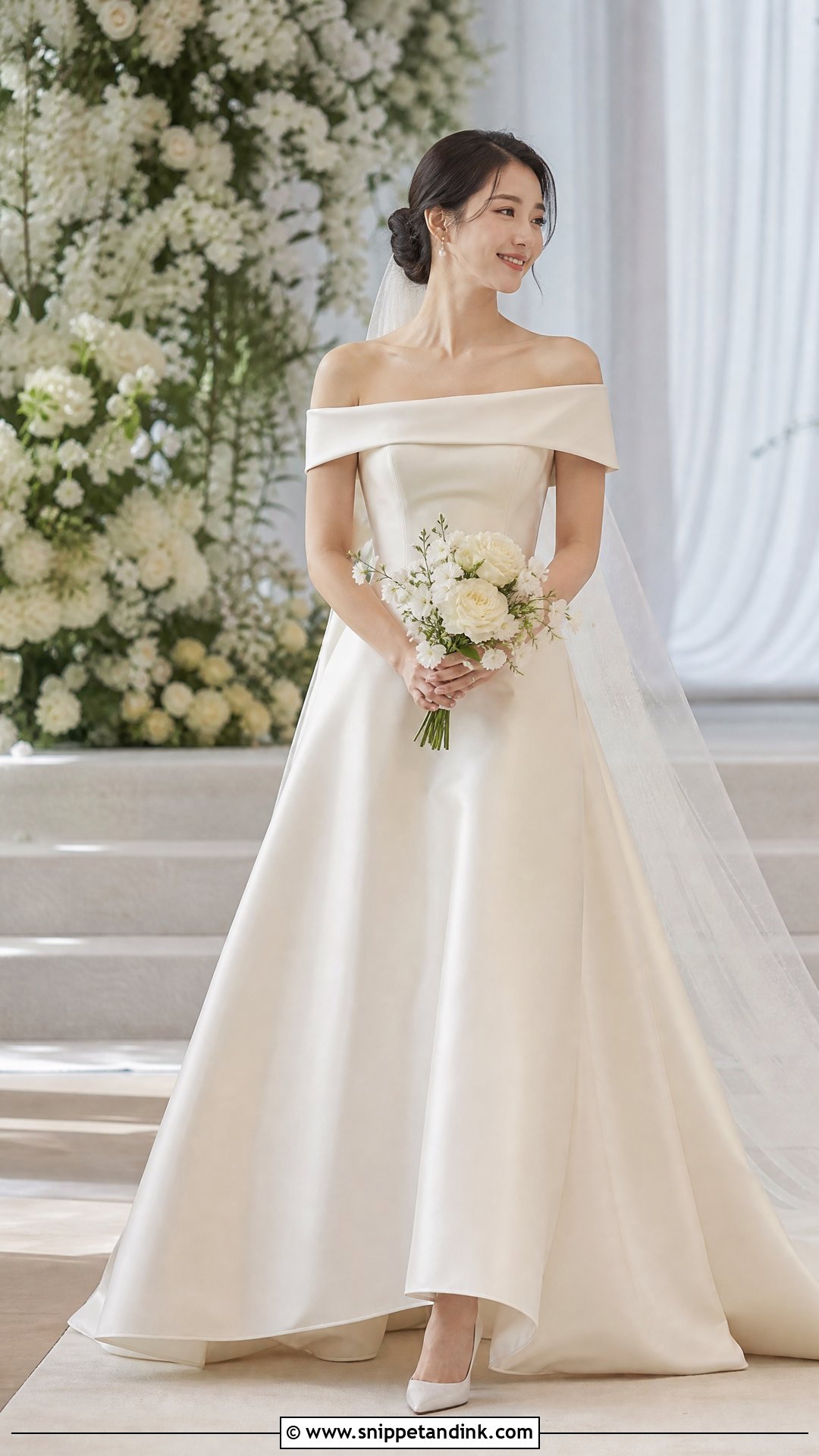
An off-shoulder neckline shows the collarbone while staying modest everywhere else, and it works on A-line, ball gown and mermaid shapes alike. Satin gives a clean finish; lace sleeves feel softer. The fit point that matters is the band across the upper arm. Too loose and it slides down all evening; too tight and you can’t lift your arms to hug anyone. Skip the necklace or keep it tiny, then add pearl earrings, a low bun and a soft veil.
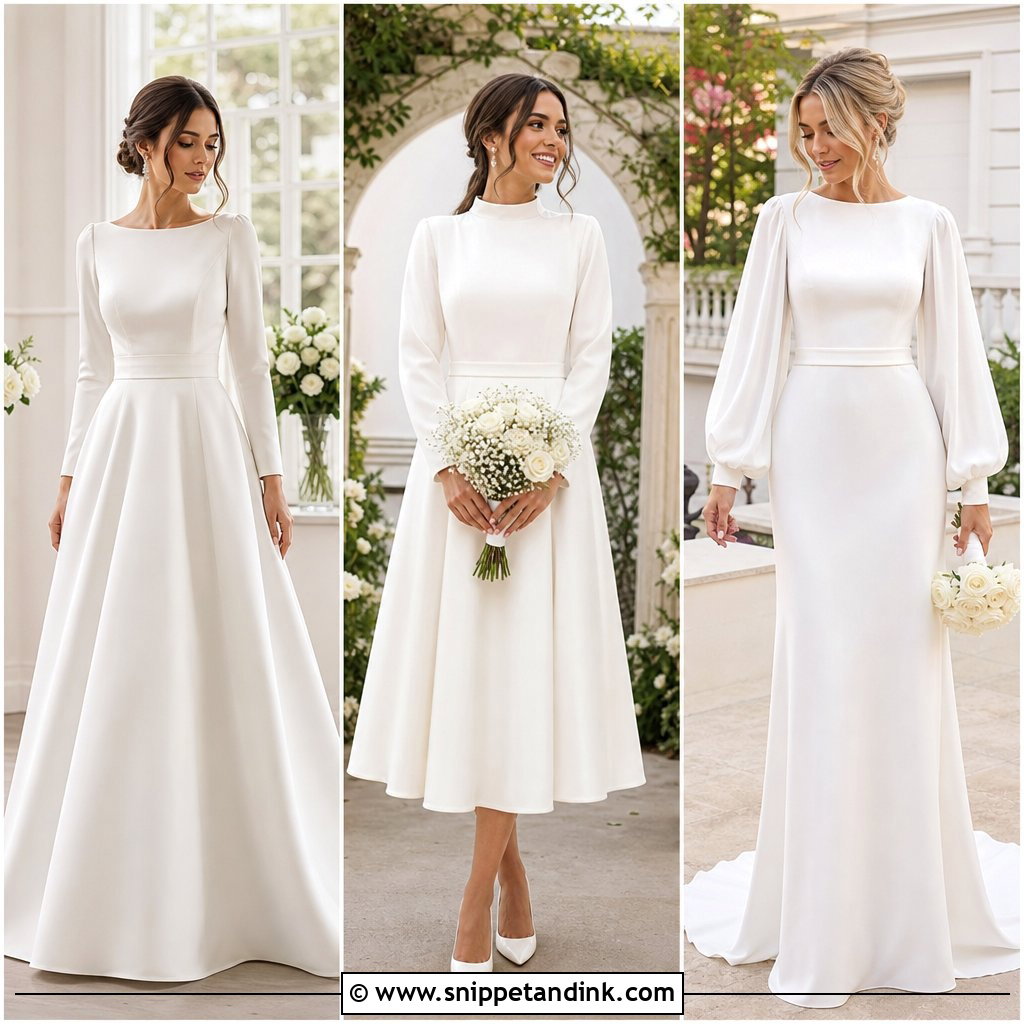
13. Korean Long Sleeve Wedding Dress
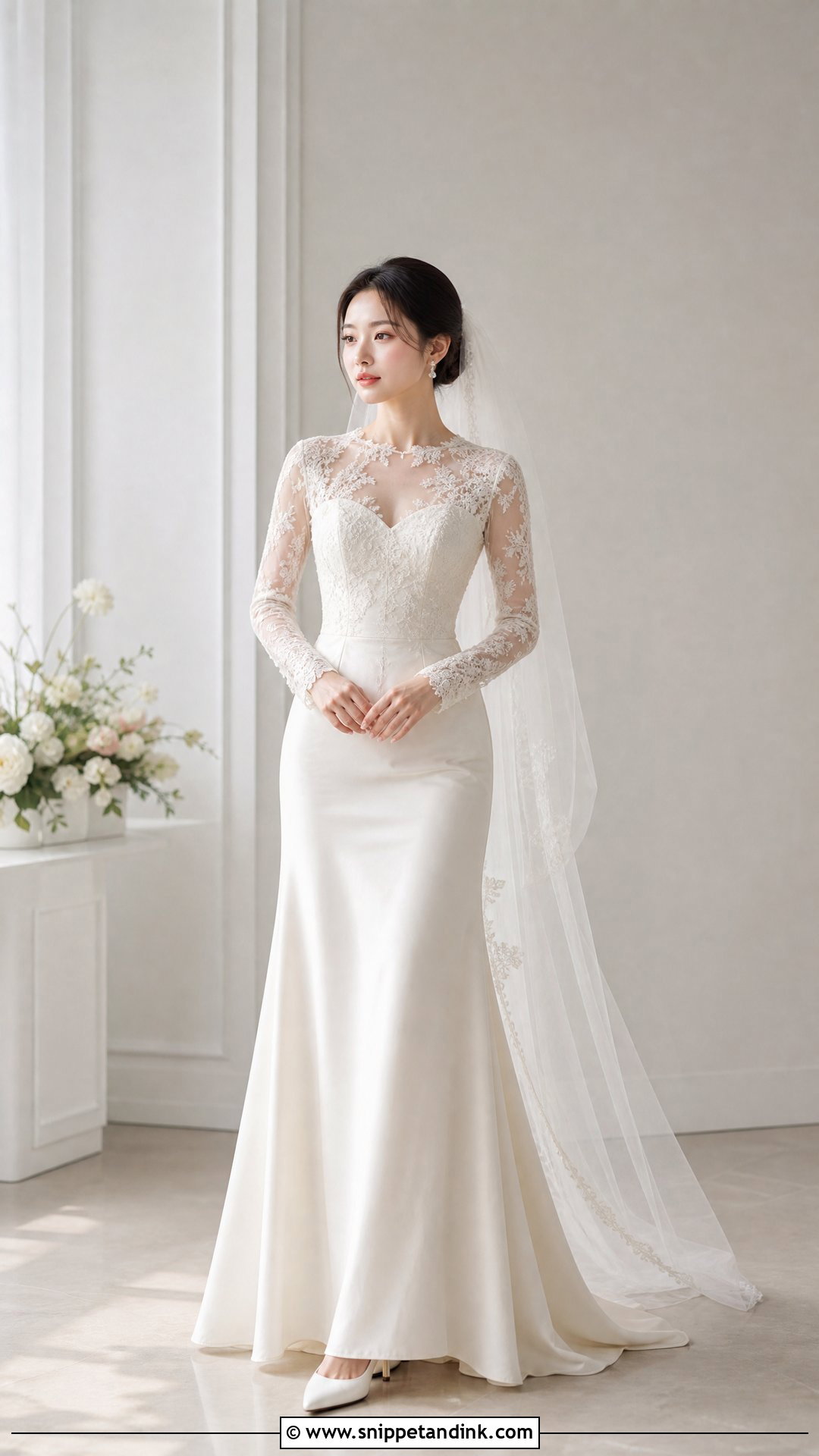
Long sleeves come in lace, sheer tulle, satin or crepe, and the choice usually follows the season. Lace reads romantic, plain satin reads minimal. Watch the armhole: a set-in sleeve cut too high or too tight stops you raising your arms for the bouquet toss or your first dance, and it’s the most common complaint I hear about long-sleeve gowns. Pair with an A-line, a slim column or a structured ball gown, and keep accessories light for a fall or winter wedding or a formal family ceremony.
14. Korean High Neck Wedding Dress
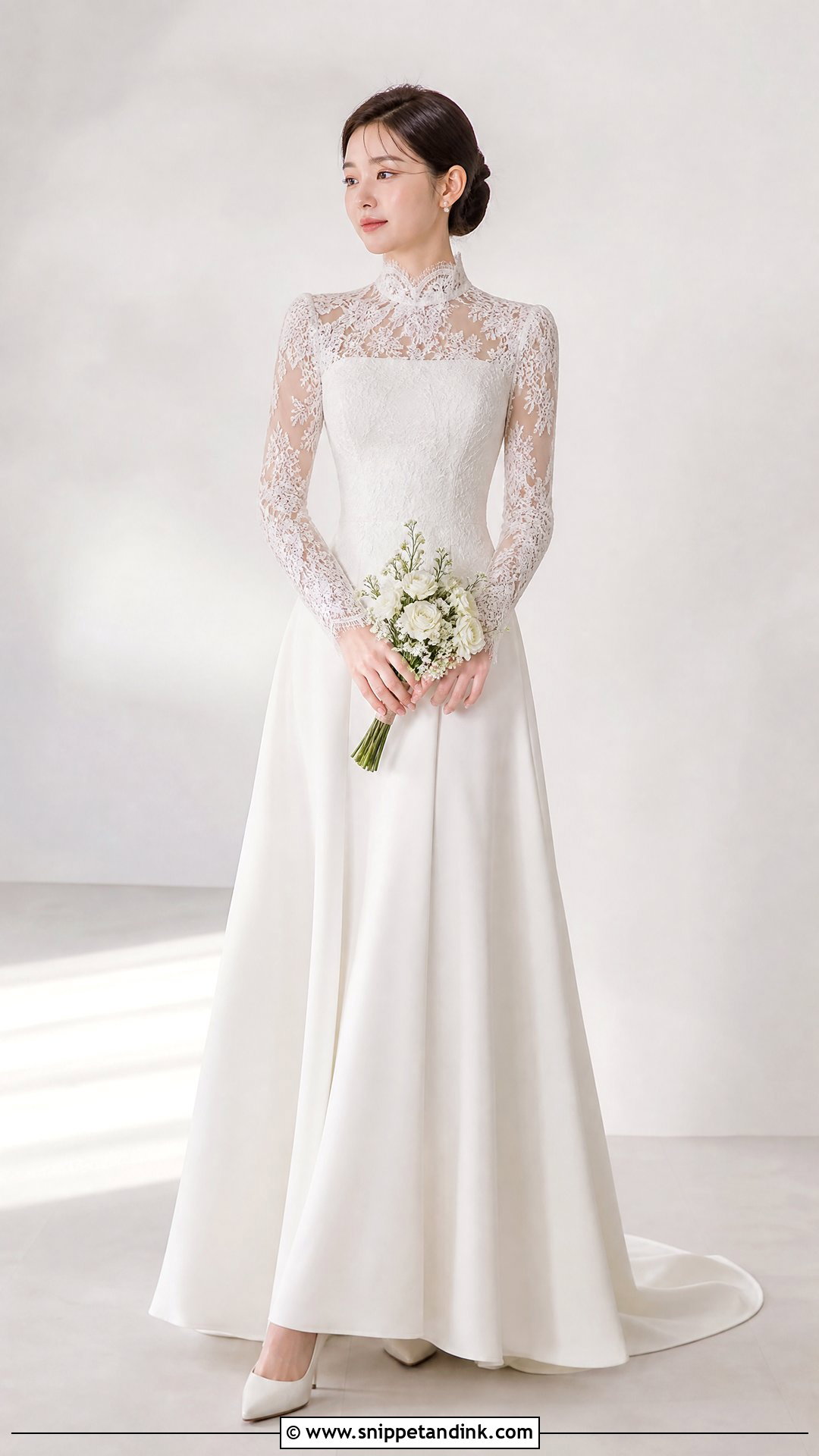
A high neck in lace, sheer mesh, crepe or satin looks refined rather than dated when the fabric is light and the fit is clean. Choose a slim skirt for a city wedding or an A-line for something softer. A neckline this close to the throat dictates your hair, too. An updo or sleek low bun keeps the line visible, while loose hair tends to catch on lace at the collar. Small pearl earrings and pointed heels are plenty.
15. Korean Tea Length Wedding Dress
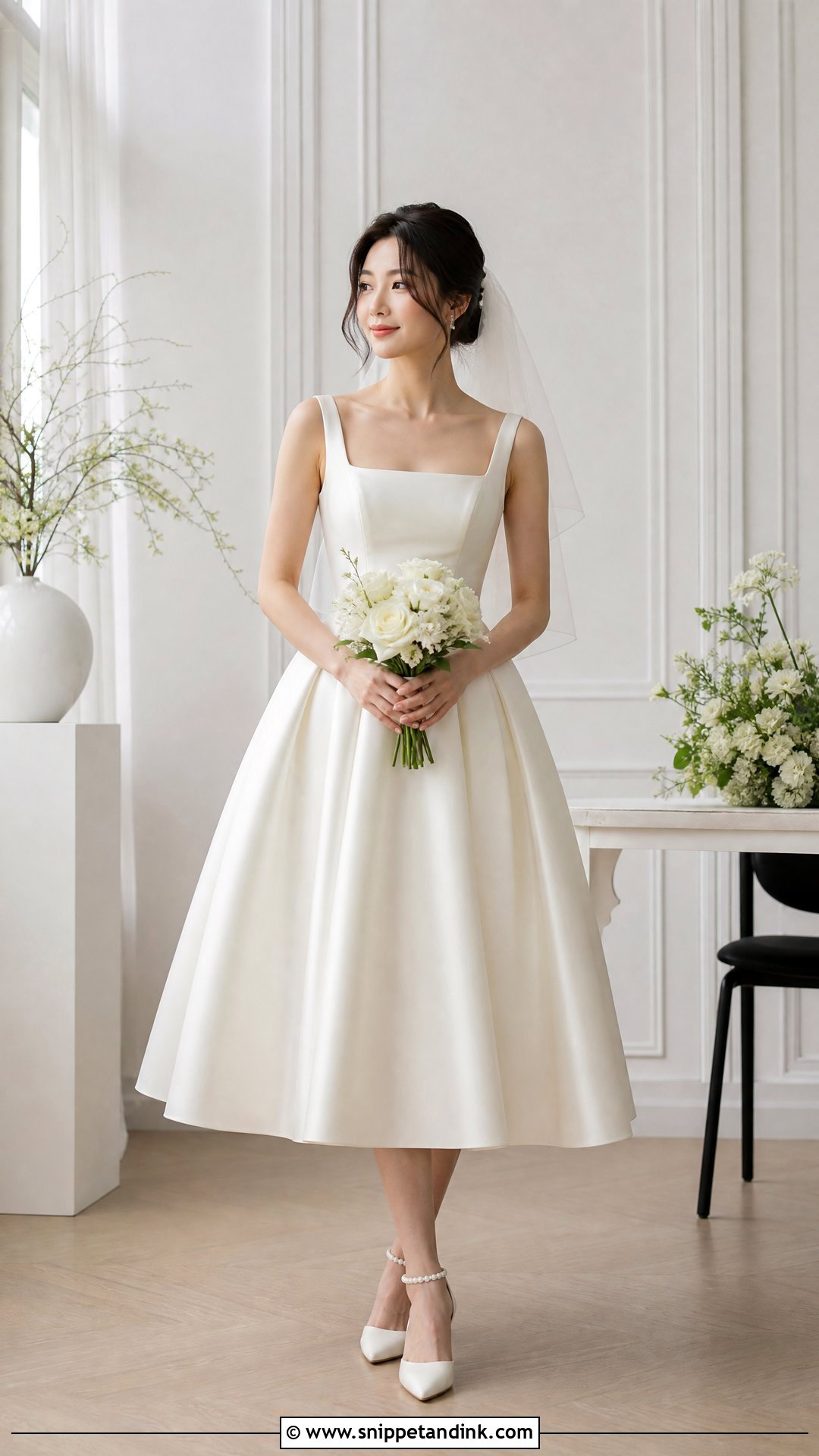
With the hem landing between knee and ankle, your shoes are on show all day, so choose them as carefully as the dress: ivory satin pumps, pearl-strap heels or slingbacks. A fitted bodice over an A-line skirt feels vintage; a square neckline modernizes it. Have the hem set while you wear the actual shoes, because a tea length that stops at the widest part of the calf looks shorter than intended. It suits a civil ceremony, a small reception or second-look portraits.
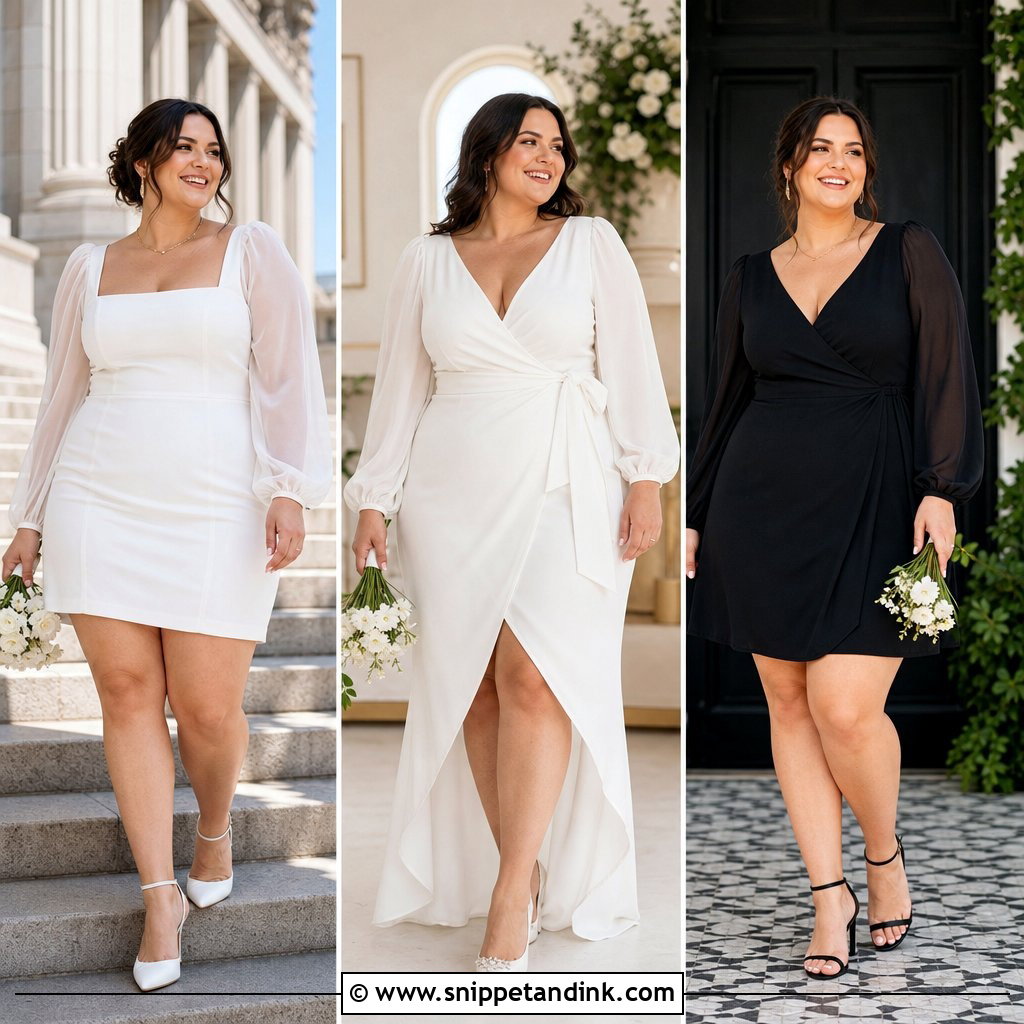
16. Korean Short Wedding Dress
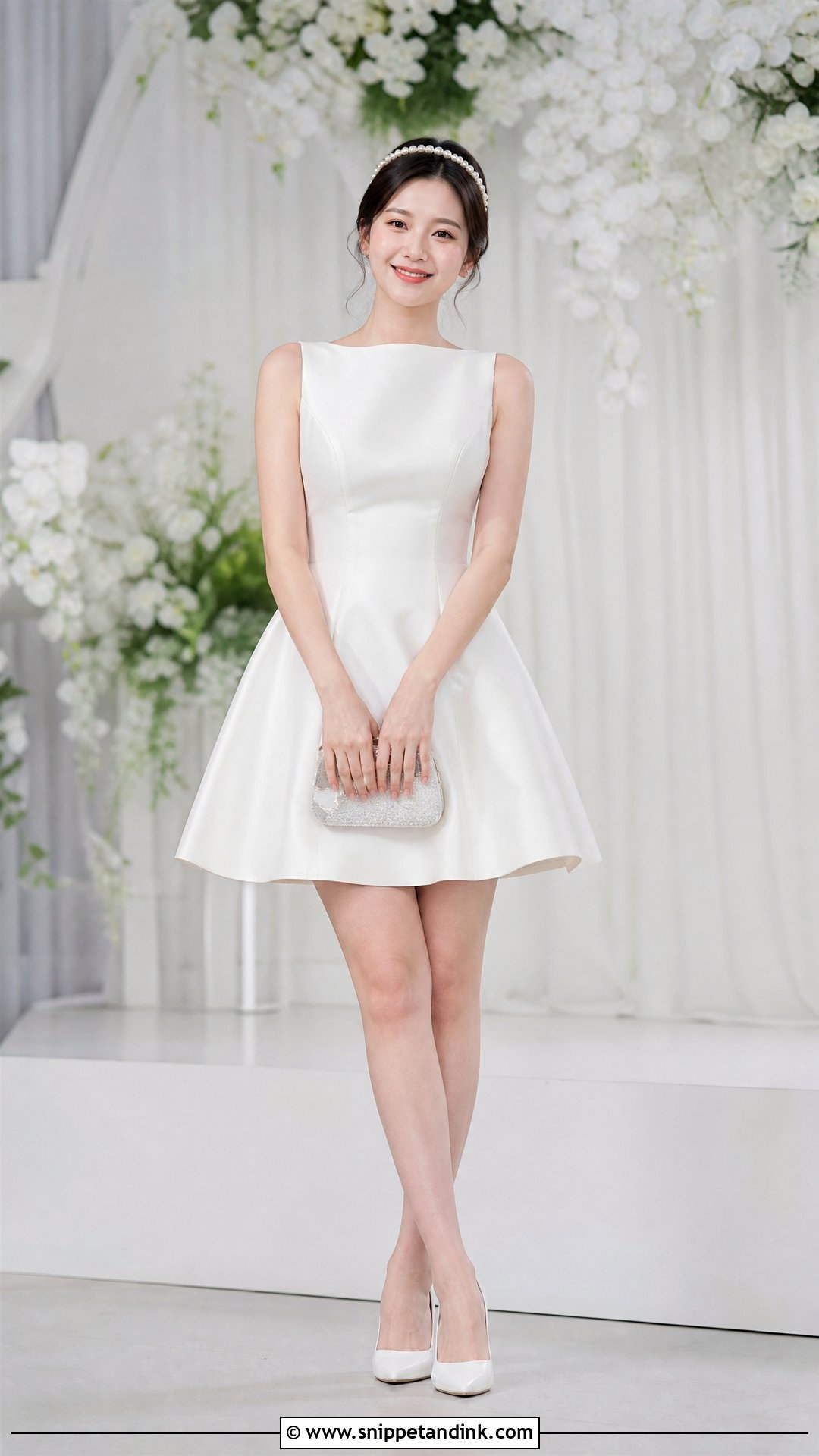
Short can still read as bridal when the details are deliberate: structured satin, bow accents, pearl trim, puff sleeves or a crisp mini A-line. White heels, a short veil or pearl headband and a neat clutch stop it looking like a party dress. Sit down in front of the fitting room mirror before you say yes. Short structured satin rides up more than you’d expect, and an extra inch at the hem saves a lot of tugging during dinner. For a courthouse ceremony or a reception change, it frees you to dance and move between venues.
17. Korean Two Piece Wedding Dress
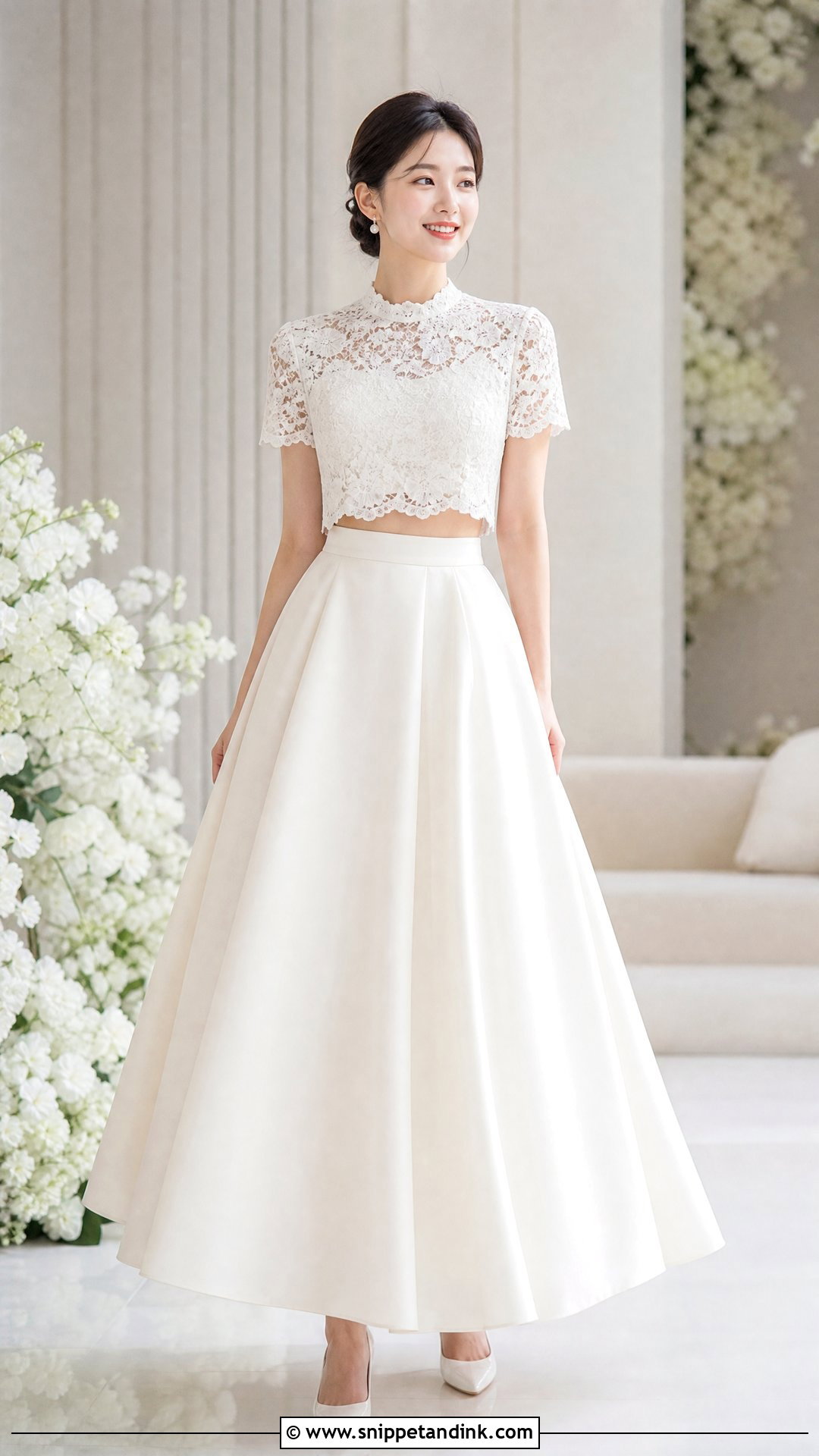
A two-piece lets you mix: a cropped lace top over a high-waisted skirt feels romantic, a structured satin top with a full skirt feels more fashion-led. A wrap top, ribbon detail or jeogori-like cut brings in the Korean influence. The gap between top and skirt is the detail I fuss over. Raise your arms and bow slightly in the mirror to see how much skin shows, then decide if you’re comfortable with that in front of your grandparents. Pearl earrings, white heels and a smooth updo suit it, and it makes an easy reception change after a hanbok ceremony.
18. Korean Bridal Jumpsuit
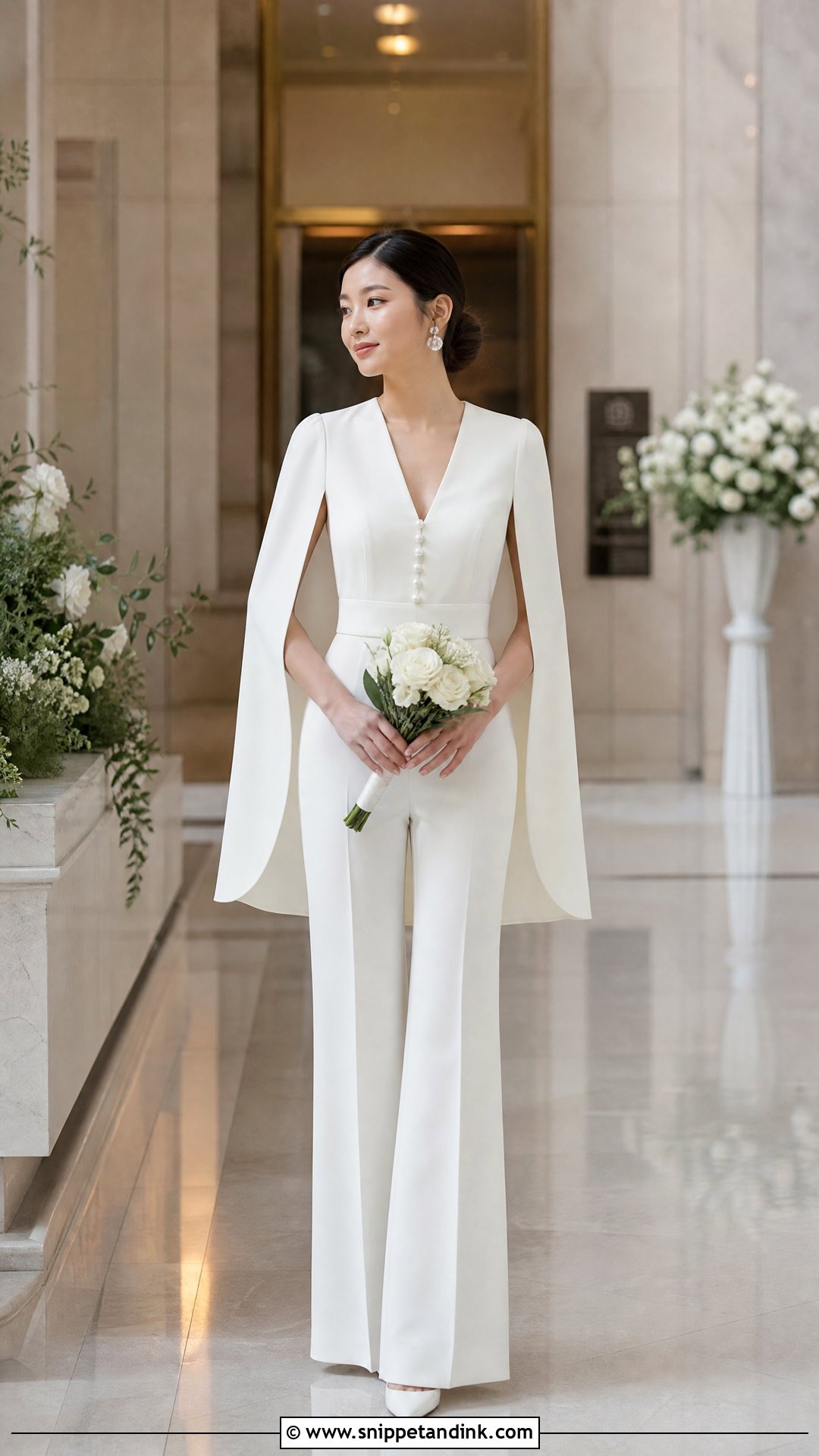
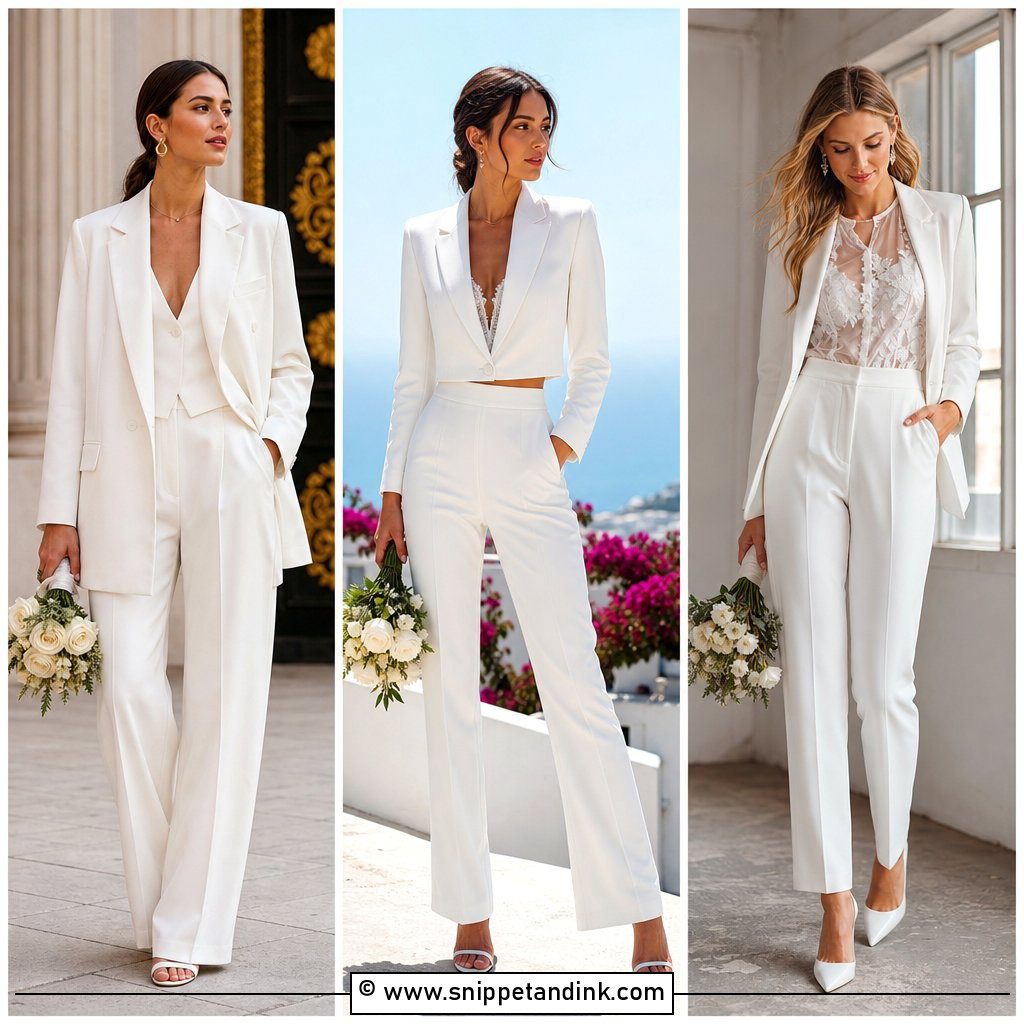
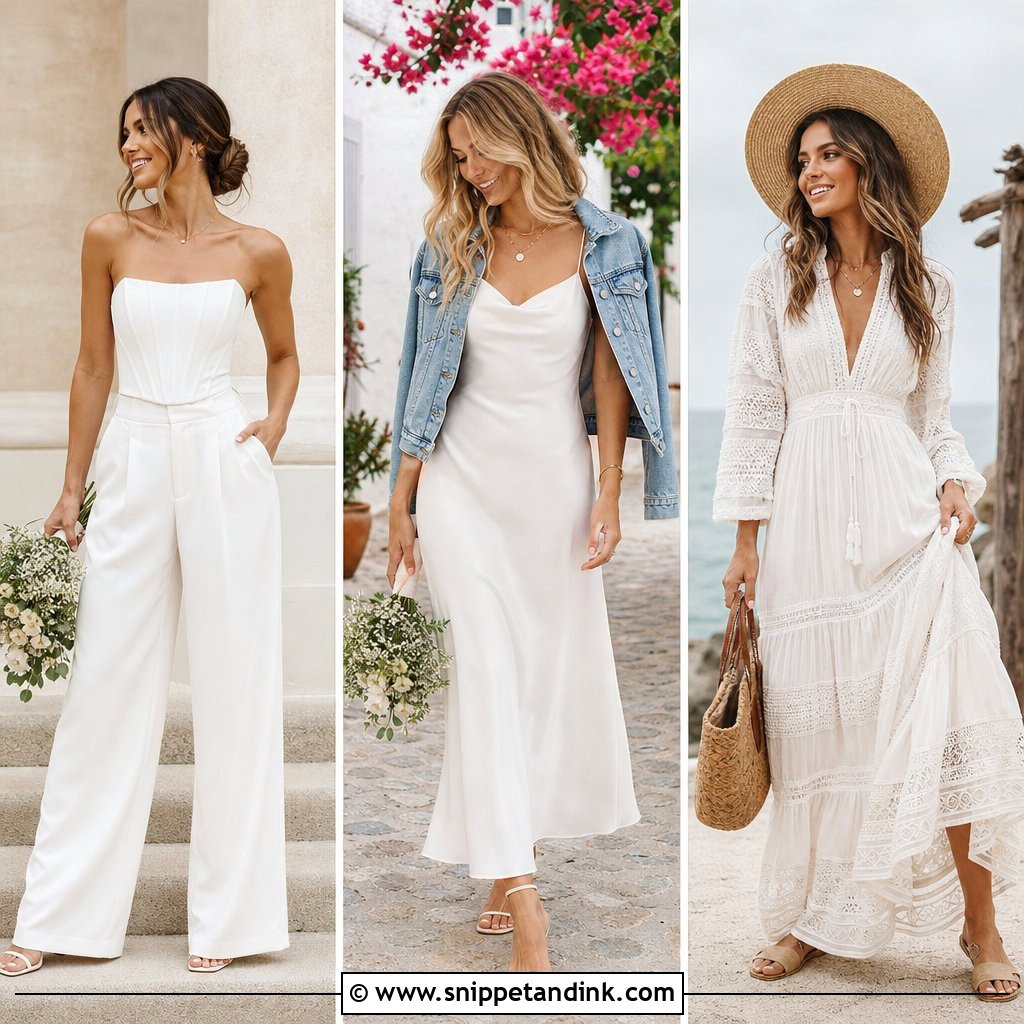
A white or ivory jumpsuit with wide-leg trousers and a defined waist moves with you all day, and cape sleeves, pearl buttons, lace panels or a soft bow make it read as bridal. The practical question nobody asks until the day is how you’ll use the bathroom. Look for a back zip you can reach yourself or a separate top and trouser, and hem the legs with your wedding heels on. Pointed heels, statement earrings and a sleek low bun suit civil ceremonies, receptions and second looks.
19. Korean Bridal Suit
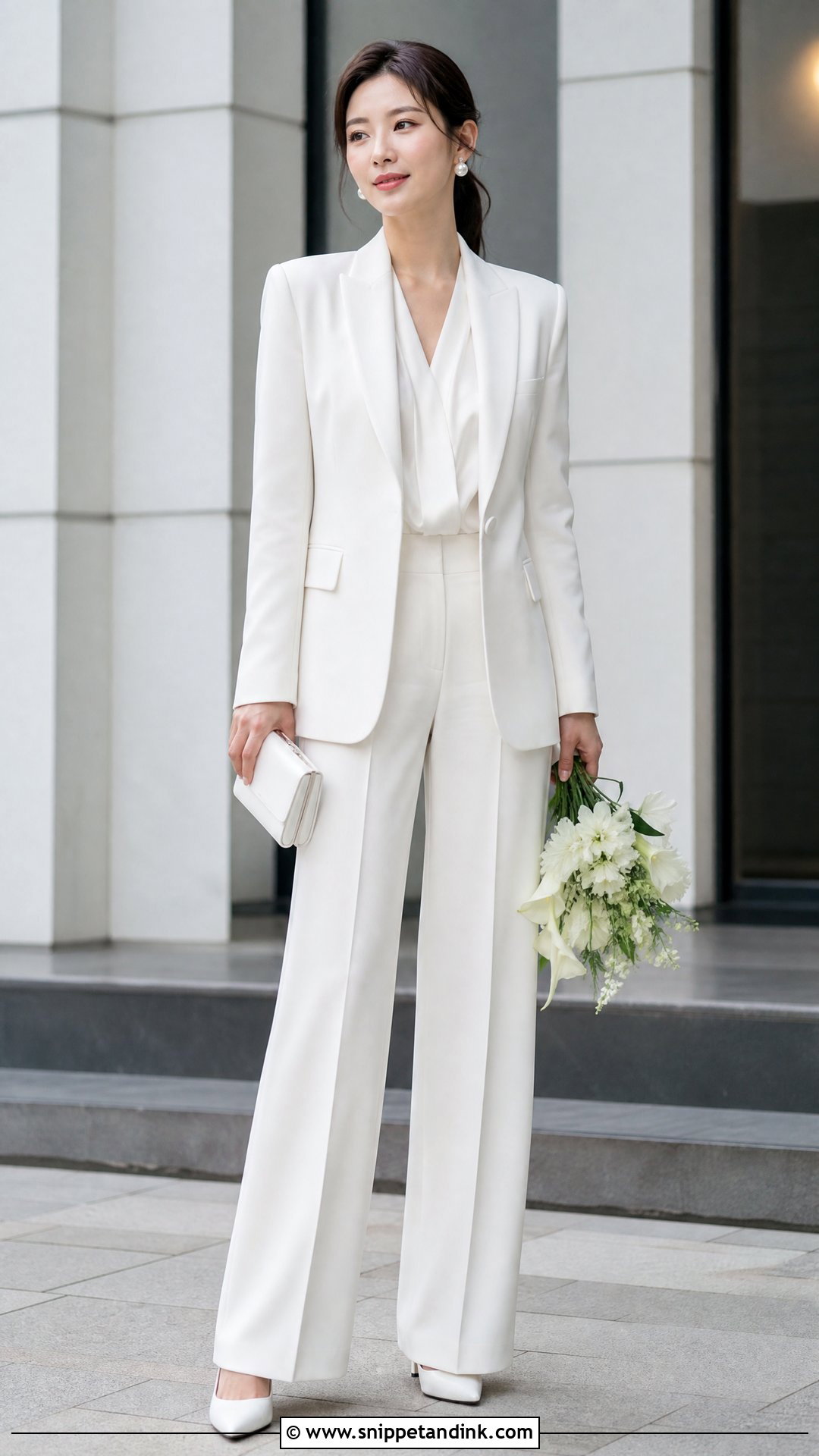
An ivory tailored blazer with matching wide-leg or pencil trousers looks sharp, and a silk camisole, lace top or high-neck blouse underneath keeps it bridal. Fit the shoulders first. Sleeves and trouser length are simple alterations, but a shoulder that’s too wide never sits right, however much work goes into it. A long blazer dress over trousers adds some drama. White heels, pearl earrings and a slim clutch finish it for a city wedding or civil ceremony.
20. Korean Fusion Hanbok Wedding Dress
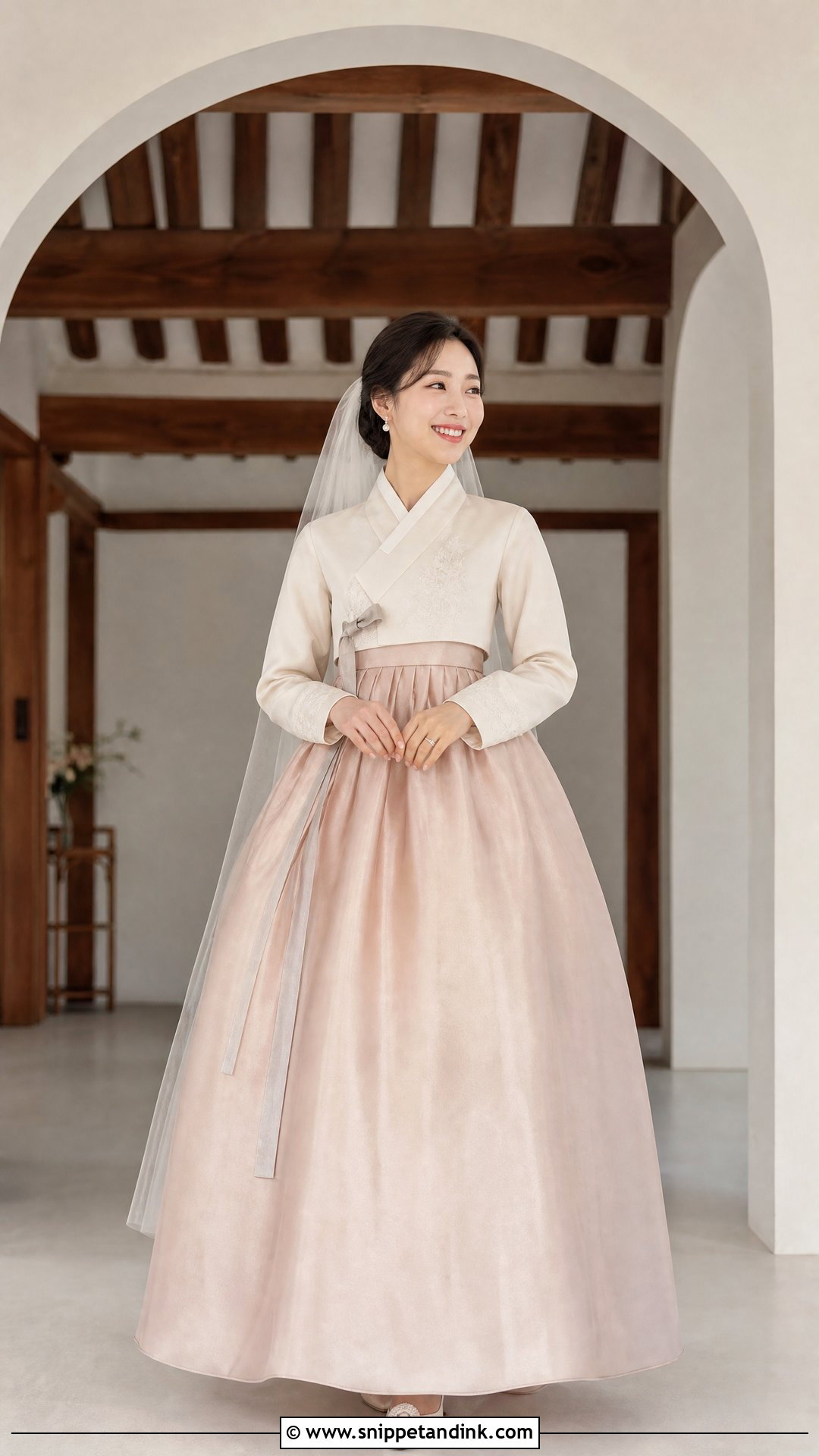
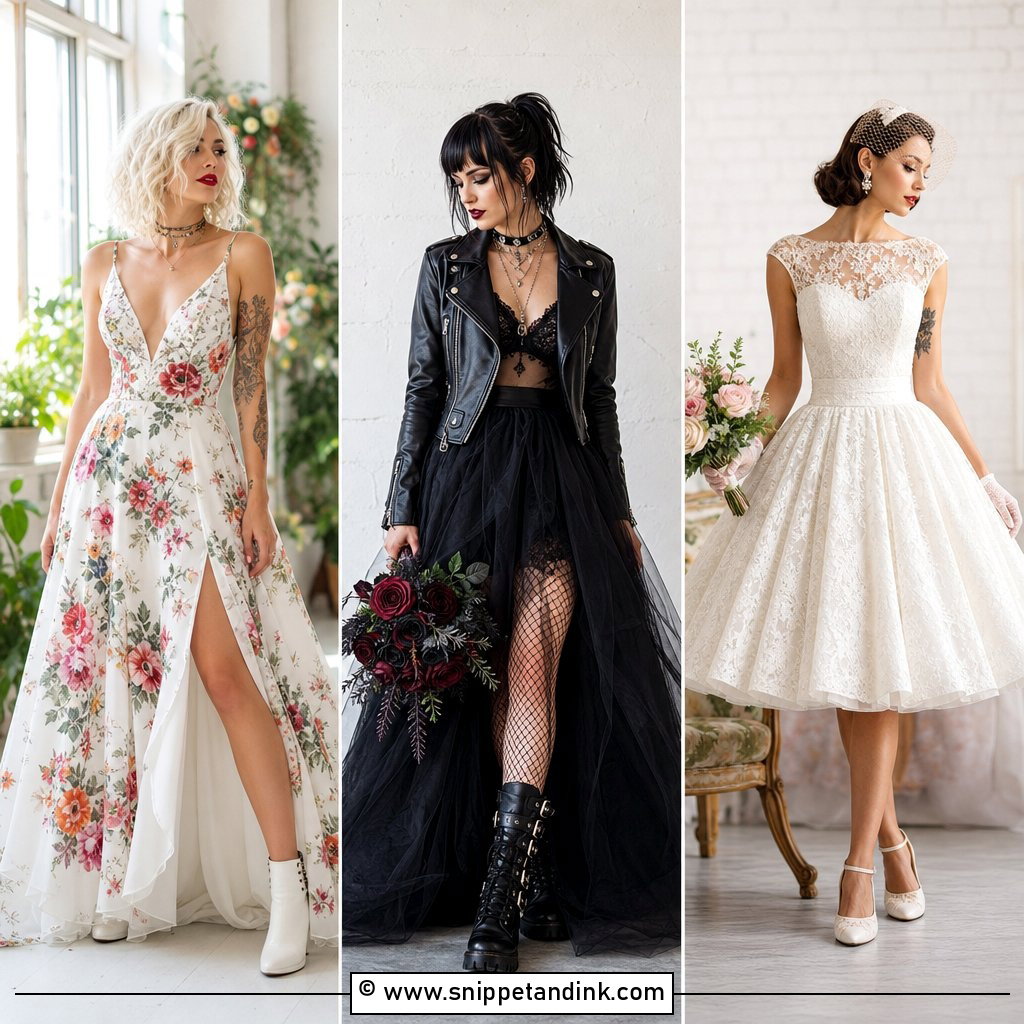
Fusion dresses take one or two hanbok elements and set them on a Western gown: a jeogori-inspired bodice over an A-line skirt, a ribbon-tie waist, silk sleeves or embroidery borrowed from traditional motifs. It’s often the answer when a bride wants one outfit that respects both families. Ivory, blush, pale gold and sky blue are popular. Check the ribbon at fittings; a single decorative bow needs a few hidden stitches or it loosens every time you sit. Pearl accessories, delicate heels and a simple veil or hairpin are enough.
21. Korean Hwarot Bridal Dress
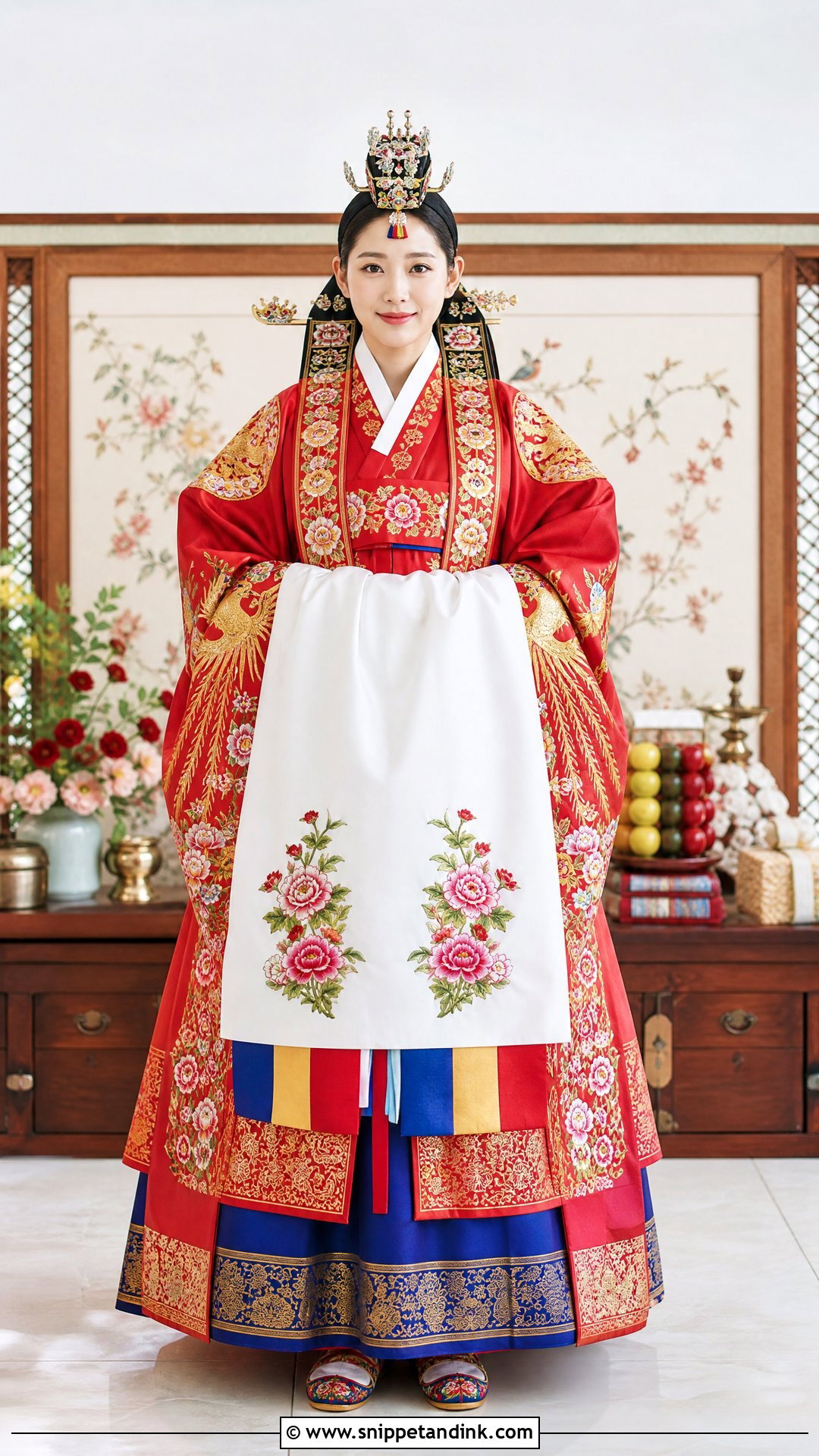
A Korean hwarot bridal dress is the most ceremonial robe a Korean bride can wear: richly embroidered, wide-sleeved and vividly colored, worn over hanbok for pyebaek or a traditional ceremony. Long white hansam cuffs extend from the sleeves so the bride’s hands stay covered while she bows. It’s heavy and warm, which is why many families rent one for the hour it’s needed instead of buying. Balance it with traditional hair, a formal headpiece and embroidered shoes; its color and structure carry heritage portraits on their own.
22. Korean Dangui Bridal Dress
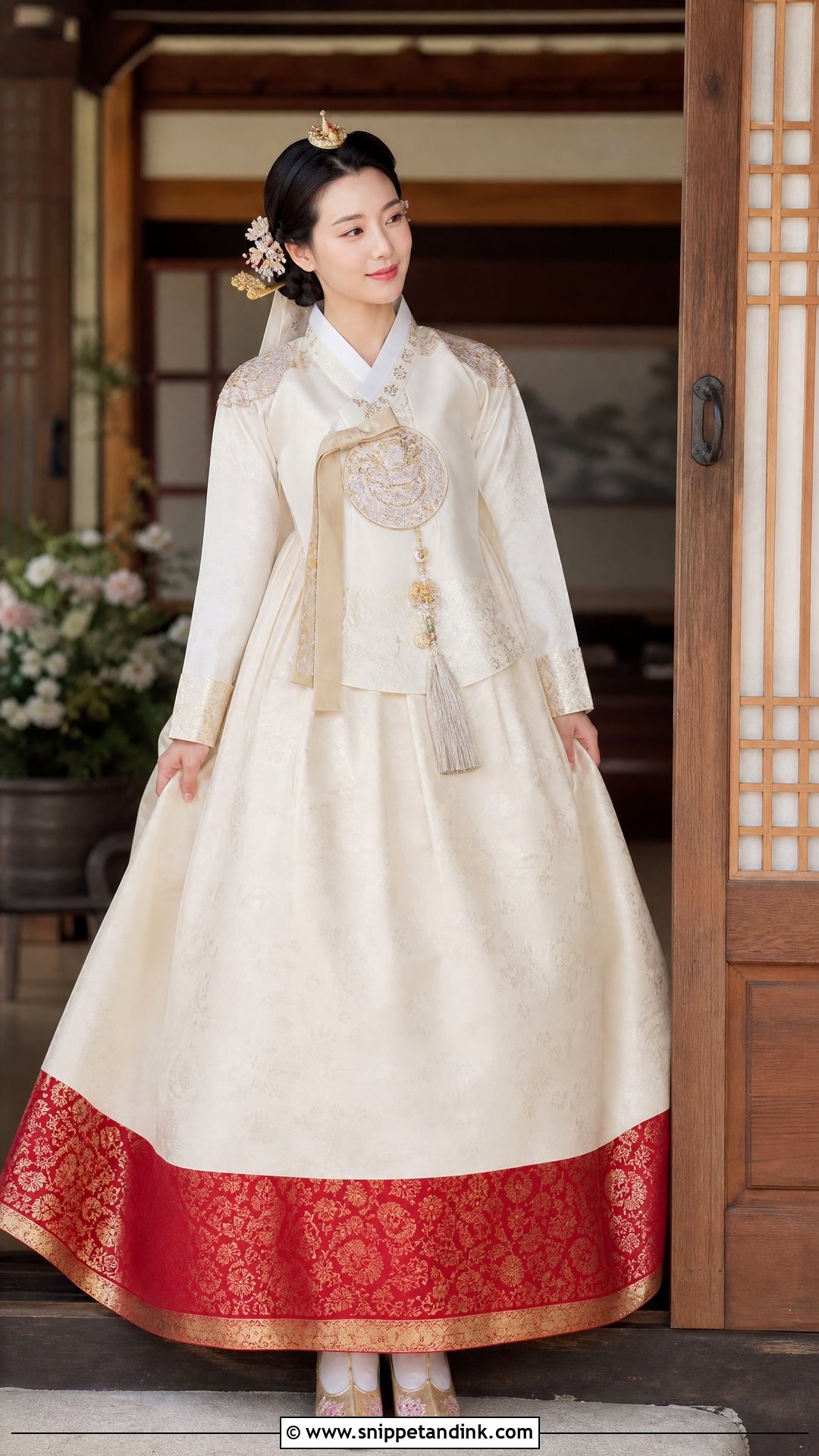
The dangui is a longer upper jacket with curved side slits, historically worn by court women for formal occasions and often decorated with gold-stamped patterns. Over a full chima in ivory, red, green or a soft pastel, it reads ceremonial without the full weight of a hwarot. Gold trim, embroidery and a neat ribbon tie are typical. I suggest it to brides who find the hwarot too much but want more formality than a plain jeogori, since it stays comfortable through pyebaek and family portraits.
23. Korean Pastel Hanbok Wedding Dress
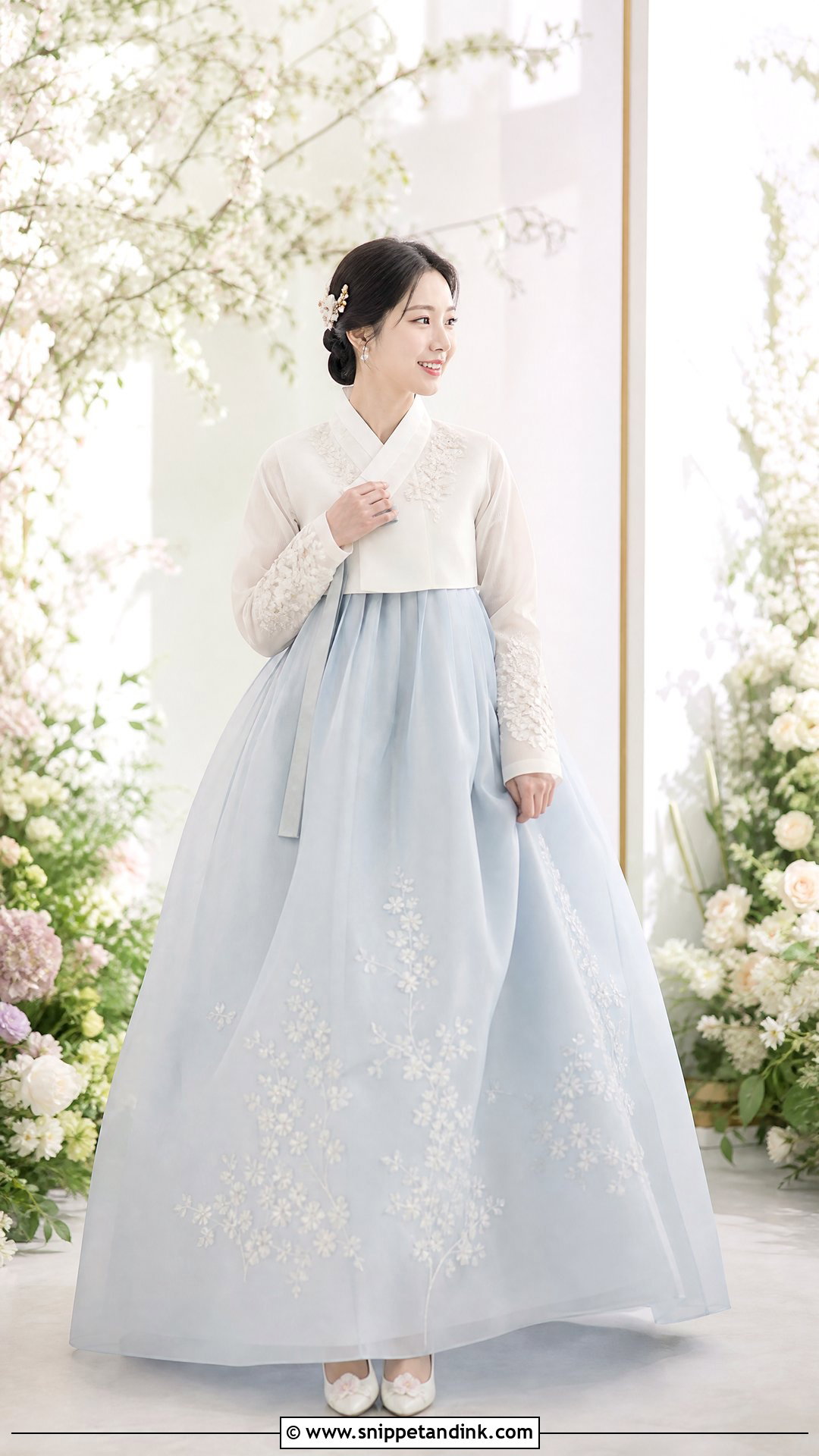
Pastel pink, lavender, mint, powder blue, peach and butter yellow give hanbok a gentle mood that suits spring weddings and outdoor portraits. An ivory jeogori over a pastel chima keeps the palette from turning sugary, and light silk or organza keeps it airy. Pastels are fussy in photographs, though. Mint and lavender can drift toward grey in open shade, so ask your photographer for a test frame in the real setting. Pearls and embroidered shoes finish the look.
24. Korean Embroidered Wedding Dress
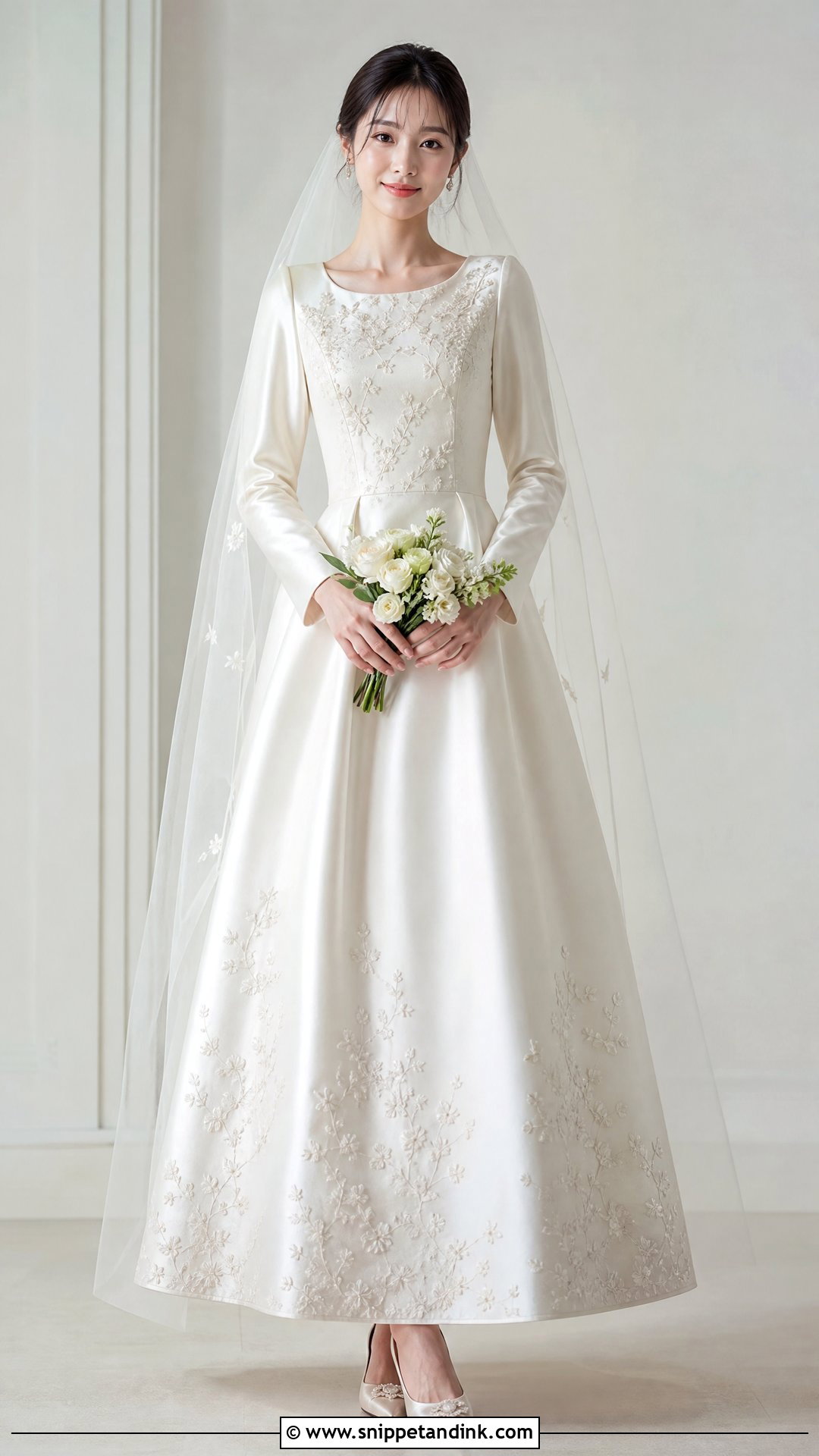
Embroidery can sit on the sleeves, bodice, hem or the whole skirt, and traditional motifs such as peonies, cranes, clouds and longevity symbols each carry a meaning, so it’s worth asking what yours say. Dense hand embroidery adds real weight. A heavily worked hem needs a firm lining, or it drags the skirt out of shape by evening. The base can be hanbok, a fusion gown or a Western silhouette. Keep accessories simple so close-up portraits show the needlework.
25. Korean Reception Wedding Dress
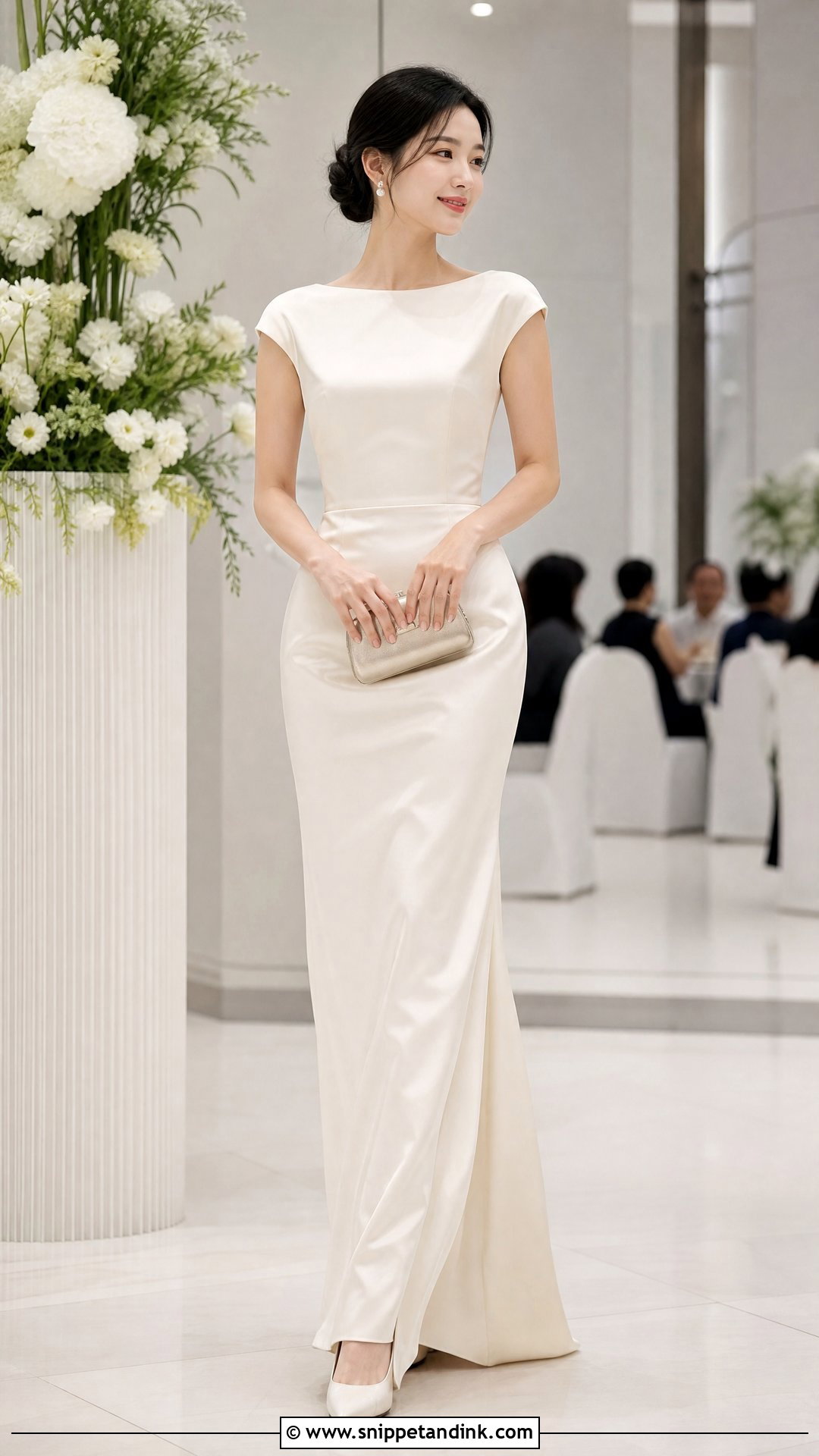
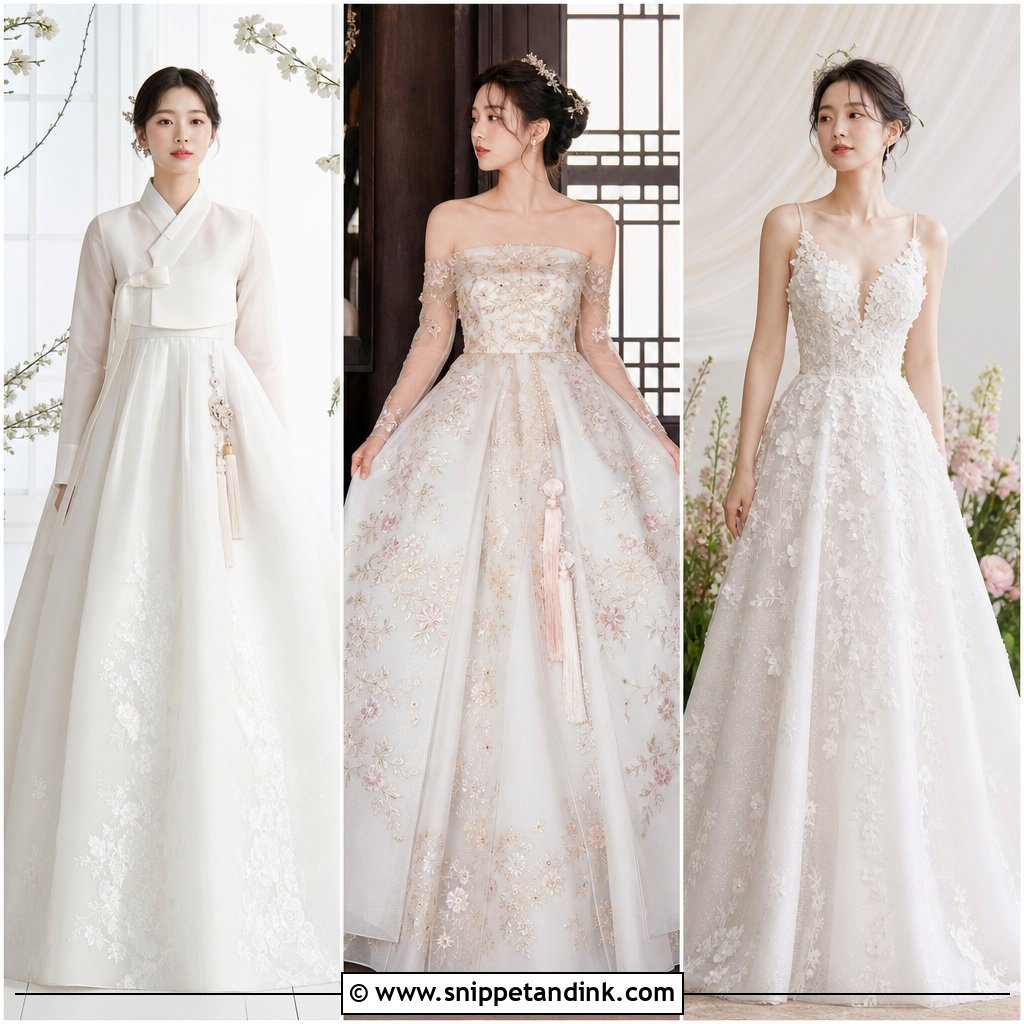
A reception dress should let you greet every table and dance without a bustle giving way halfway through. A slim satin dress, a short bridal dress, a tea length or a soft A-line all work. If hanbok was your ceremony outfit, a white dress makes a clear change; if you wore a gown first, a modern hanbok or fusion dress becomes the meaningful second look. Plan the change itself: one helper who knows the ties and fastenings, enough time that nobody rushes, and a hairstyle that survives a dress going over your head.
Bowing in a Chima Without Stepping on Your Hem
The deep bridal bow, the keunjeol, is the part of pyebaek that catches brides off guard. You raise your joined arms to forehead height, kneel, sit back, bow and rise again, often under a heavy headpiece and with almost no view of your own feet. Traditionally two attendants help the bride down and up, and I’d keep that custom even if everything else about your day is modern.
- Practice the bow twice at home in a long skirt so the movement feels familiar.
- Have the hem checked while you kneel. A chima that is too long gets trapped under the knees as you stand.
- Wear beoseon socks or flat embroidered shoes; a heel catches the hem on the way up.
- Keep the front of the skirt clear and slightly spread so you can catch the dates and chestnuts the parents toss at the end.
If your ceremony dress is a mermaid or slim column, change before pyebaek rather than trying to bow in it. A long train also piles up awkwardly behind you on the floor cushions.
Caring for a Silk Hanbok Once the Day Is Over
Silk hanbok and embroidered robes need gentler handling than a polyester gown. Take yours to a cleaner who works with silk and, ideally, hanbok, and ask them not to press the ribbons flat with high heat. At home, store the jeogori folded in acid-free tissue rather than on a hanger, because the shoulders stretch under their own weight. Use a breathable cotton bag, never sealed plastic, which traps moisture and yellows silk over time, and refold it along new lines once a year so creases don’t set.
If you rented, the return is often due within a day or two, so give that job to a named person before the wedding, not to whoever happens to be around afterwards.
How Many Outfits a Korean Wedding Day Really Needs
Korean weddings often include several distinct moments, and the outfit plan works best when each one gets what it needs: hanbok or hwarot where tradition asks for it, a gown, suit, jumpsuit or fusion dress where you want comfort and your own taste. Fit, fabric weight and how you’ll move matter more than the name of the style. Try every outfit sitting, bowing and walking, and the right combination usually makes itself obvious.
You'll Like These Ideas:





Leave a Reply