
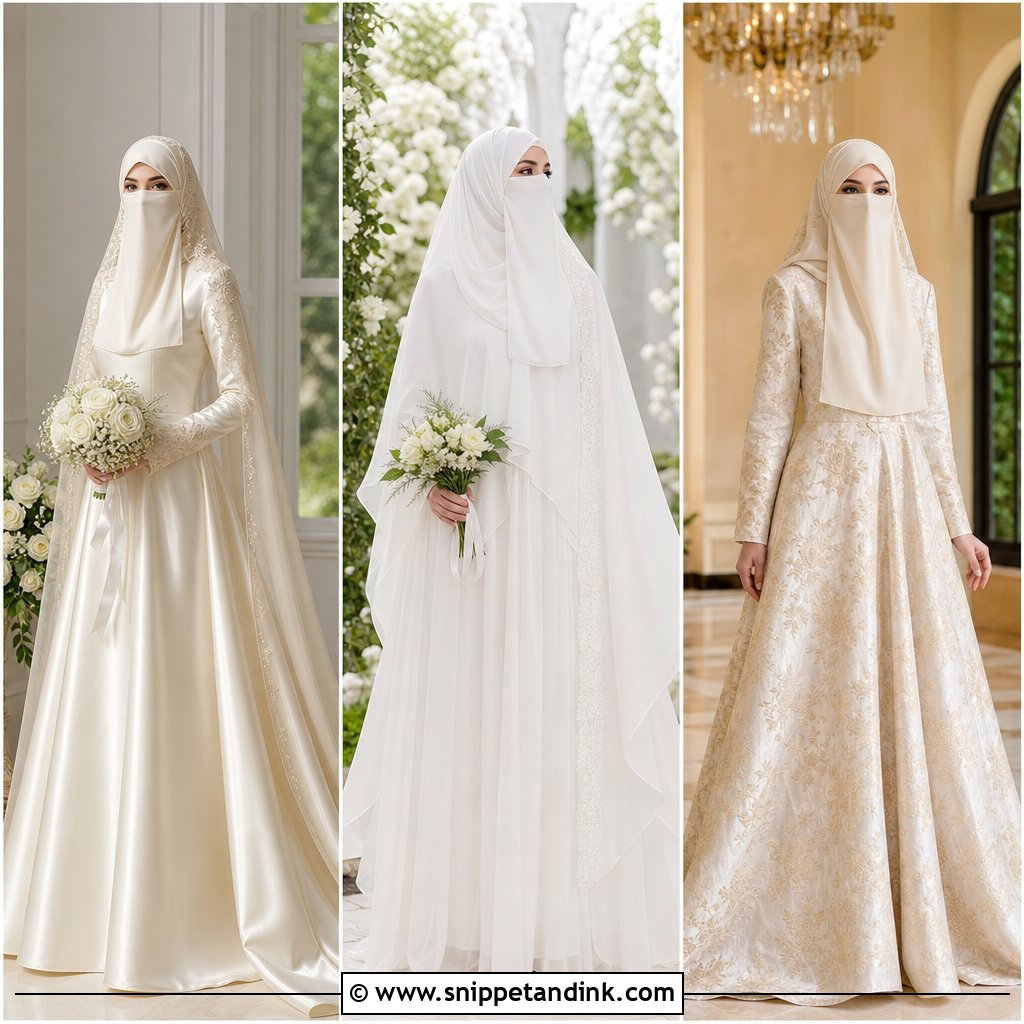
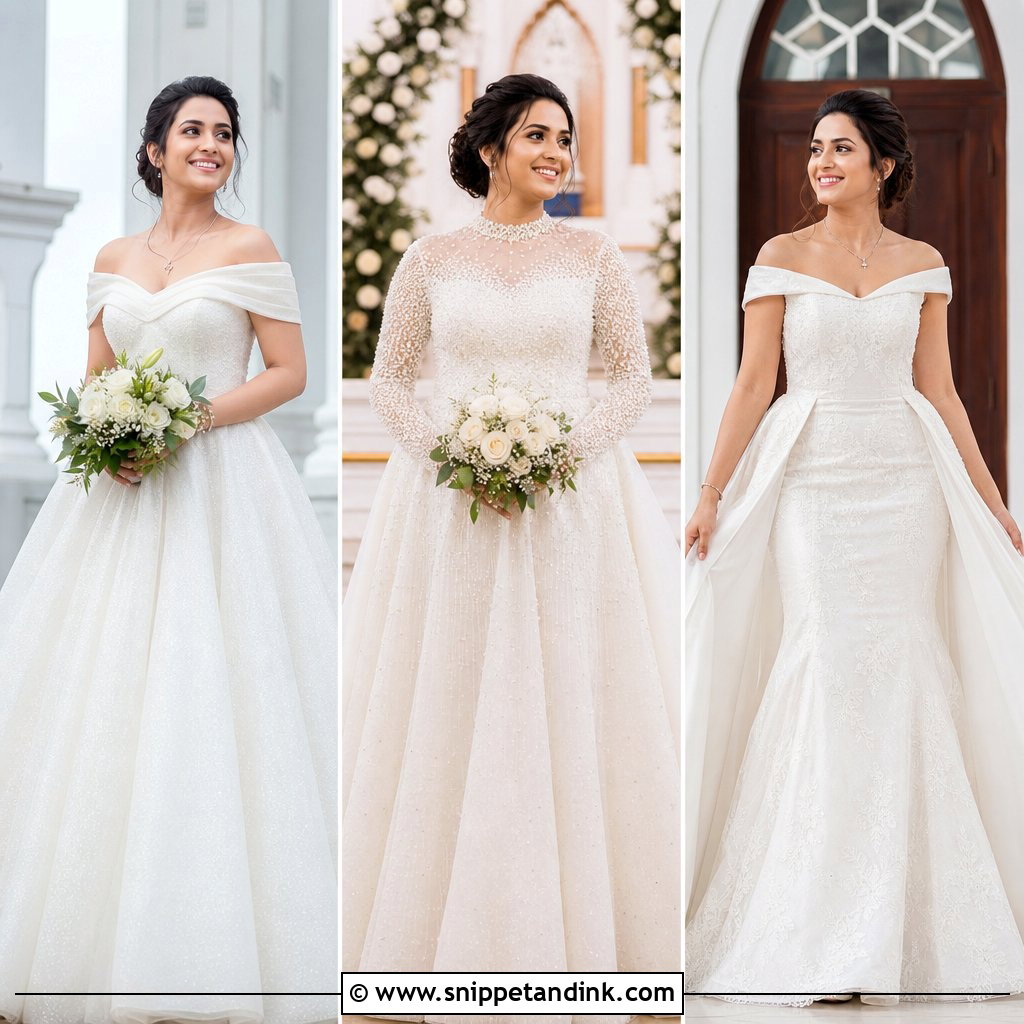
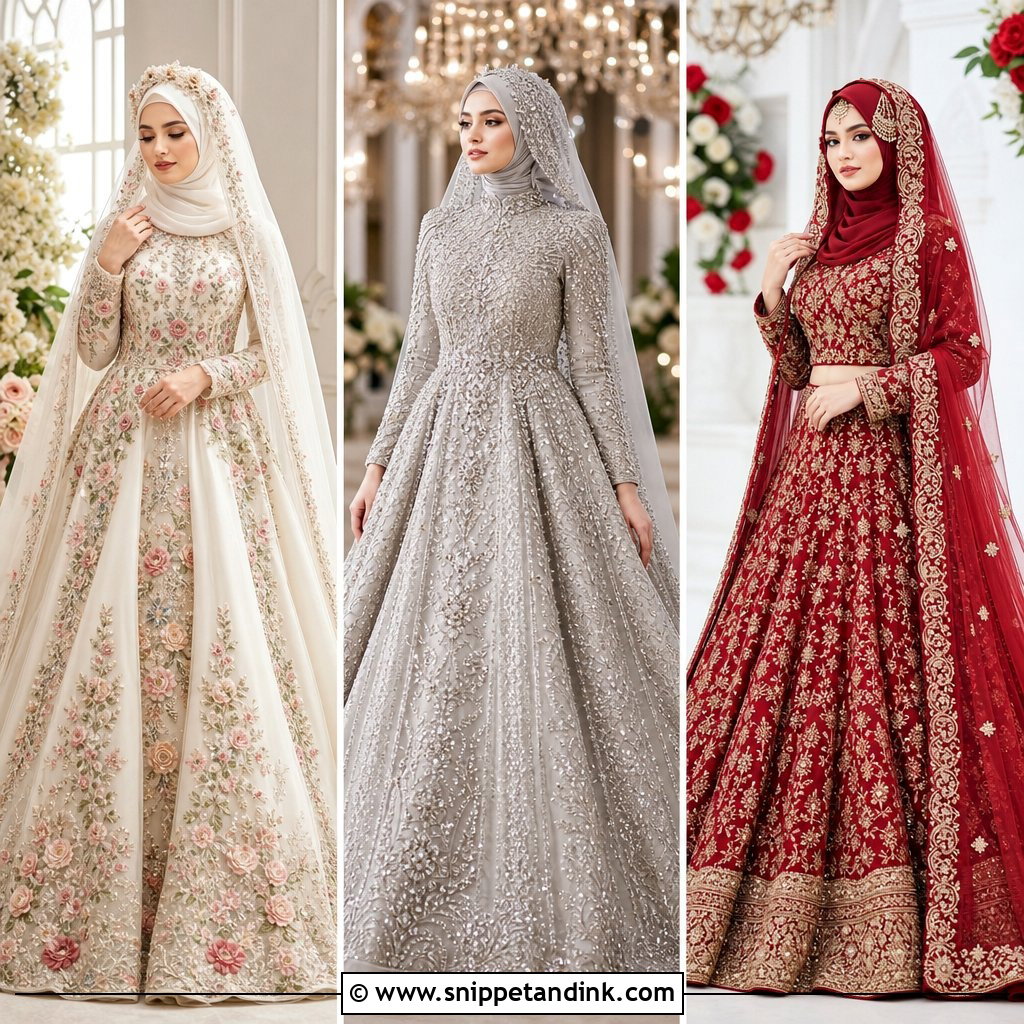
A covered wedding dress can be a high-neck lace gown, a satin A-line with sleeves, a suit-inspired look or a romantic tulle design, and none of them has to look plain. In fittings, the difference between a modest gown that looks intentional and one that looks like a compromise usually comes down to proportion: where the seams fall, how the sleeve meets the shoulder, and whether the fabric breathes. The looks below suit formal venues, outdoor ceremonies, civil weddings and small gatherings, and I’ve added what I’d look for in each when you try it on.
How Much Coverage Does the Ceremony Itself Require?
Before shopping, find out what your venue expects, because personal preference and house rules aren’t always the same. Many churches, mosques, temples and synagogues ask for covered shoulders, and some expect sleeves past the elbow, a neckline at the collarbone, knees covered or hair covered. A quick question to your officiant saves a panicked alteration later.
If the rules apply only during the ceremony, you have more freedom. A bolero, cape or detachable sleeves can meet the requirement at the altar and come off for the reception, which lets you wear one gown for two settings.
Trying On Samples When Most of Them Are Strapless
Bridal salon racks still lean heavily strapless and sleeveless, which makes it hard to picture a covered version. I ask brides to wear a fitted, skin-toned long-sleeve bodysuit to appointments. Under a strapless sample it gives a fair idea of sleeves and a higher neckline, and it saves you from rejecting a skirt you love because the top is wrong.
- Ask the consultant which designers offer sleeves or necklines as a custom change.
- Request fabric swatches of the sleeve lace and lining to check opacity in daylight.
- Have the consultant pin a sample’s neckline higher so you can see the proportion before you order.
1. Modest Long Sleeve Lace Wedding Dress
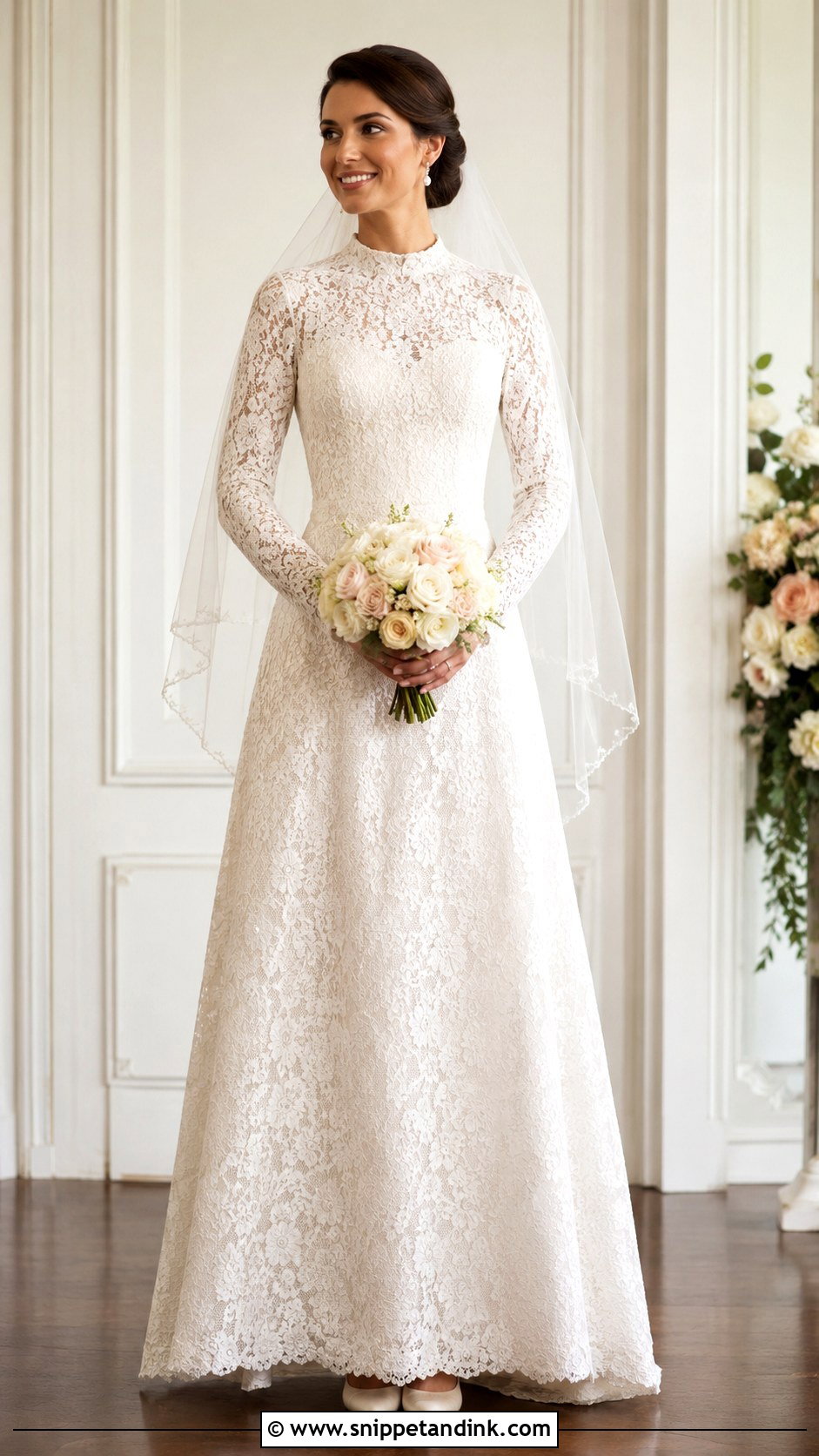
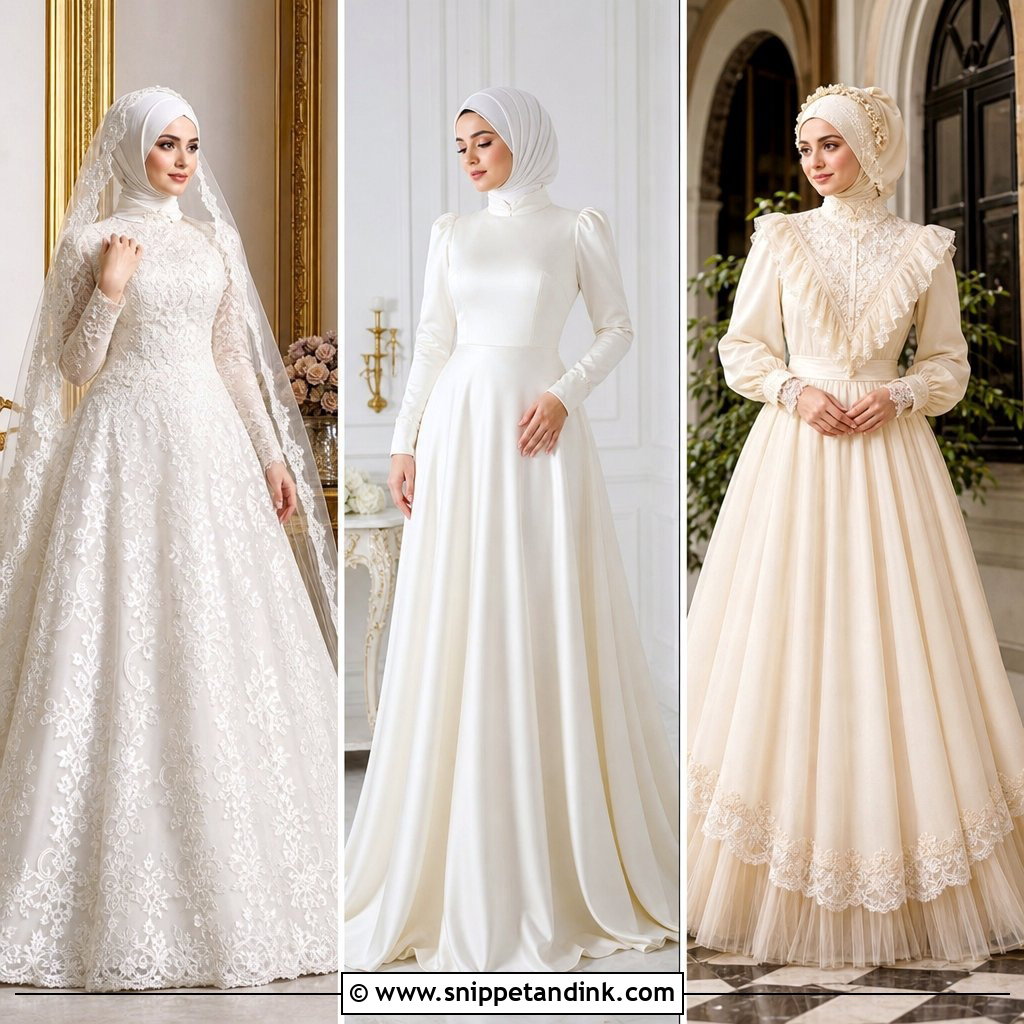
Lace with long sleeves is the classic covered gown, and an opaque bodice with lined sleeves keeps it truly modest. Balance the sleeve with a soft A-line or fit-and-flare skirt. Corded and beaded lace can be scratchy at the underarm, where you’ll feel it most after a few hours, so ask for a soft lining or a lace edge trimmed back from that seam. When the lace runs from neck to hem, a simple bouquet and a smooth updo let the pattern read. A fingertip veil and closed-toe satin heels finish it.
2. Modest High Neck Wedding Dress
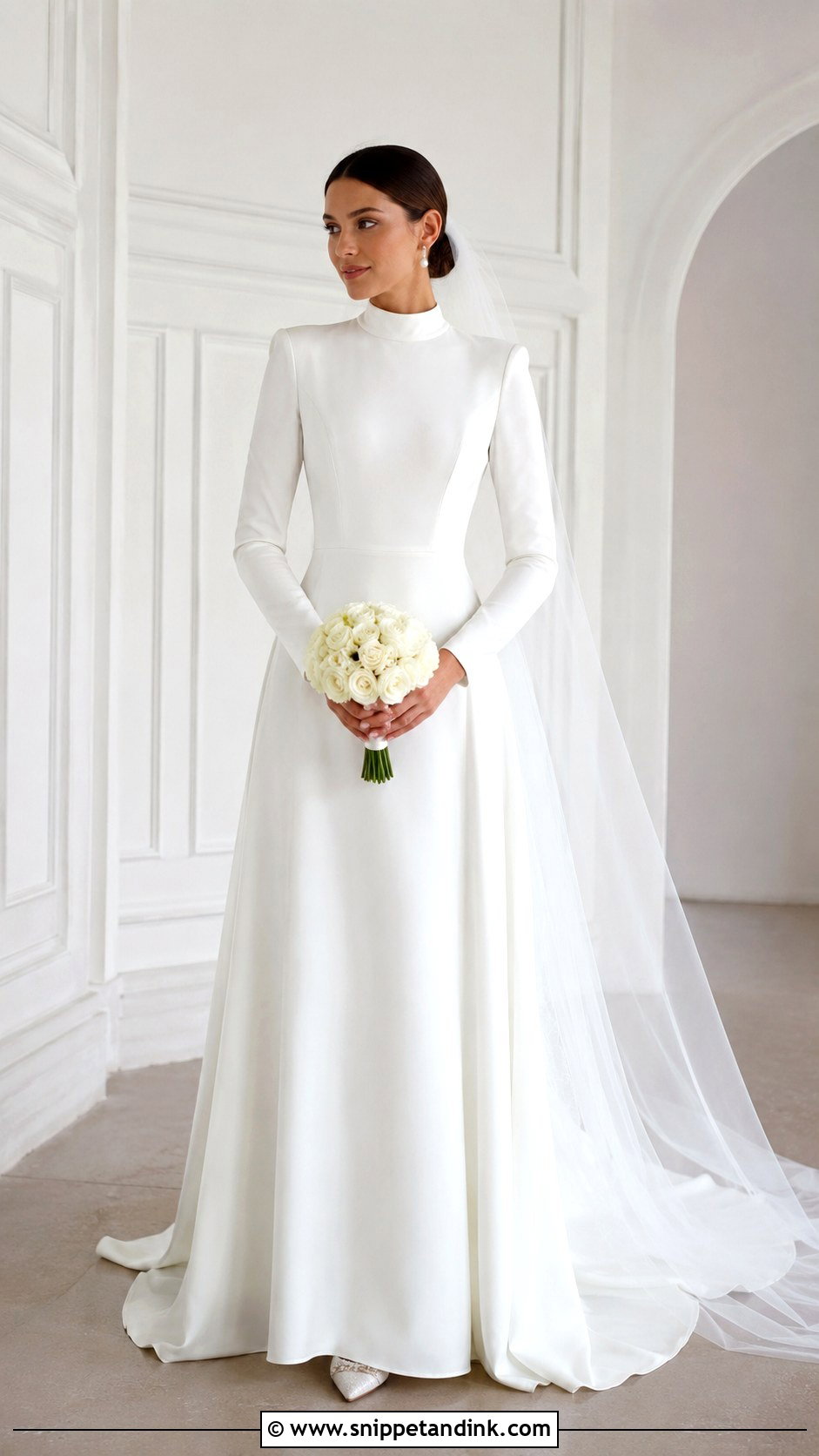
The high neck gives the whole look a regal outline and suits crepe, satin, lace and mikado, which all hold their shape at the throat. A fitted bodice with a flowing skirt keeps it soft; a column makes it modern. Skip the necklace and wear drop earrings instead. One small thing I always plan for: foundation transfers onto a high collar within minutes, so the makeup artist should set the neck and jaw, and the dress should be stepped into from the floor, never pulled over the head. A sleek bun and pointed pumps complete it.
3. Modest Satin A Line Wedding Dress
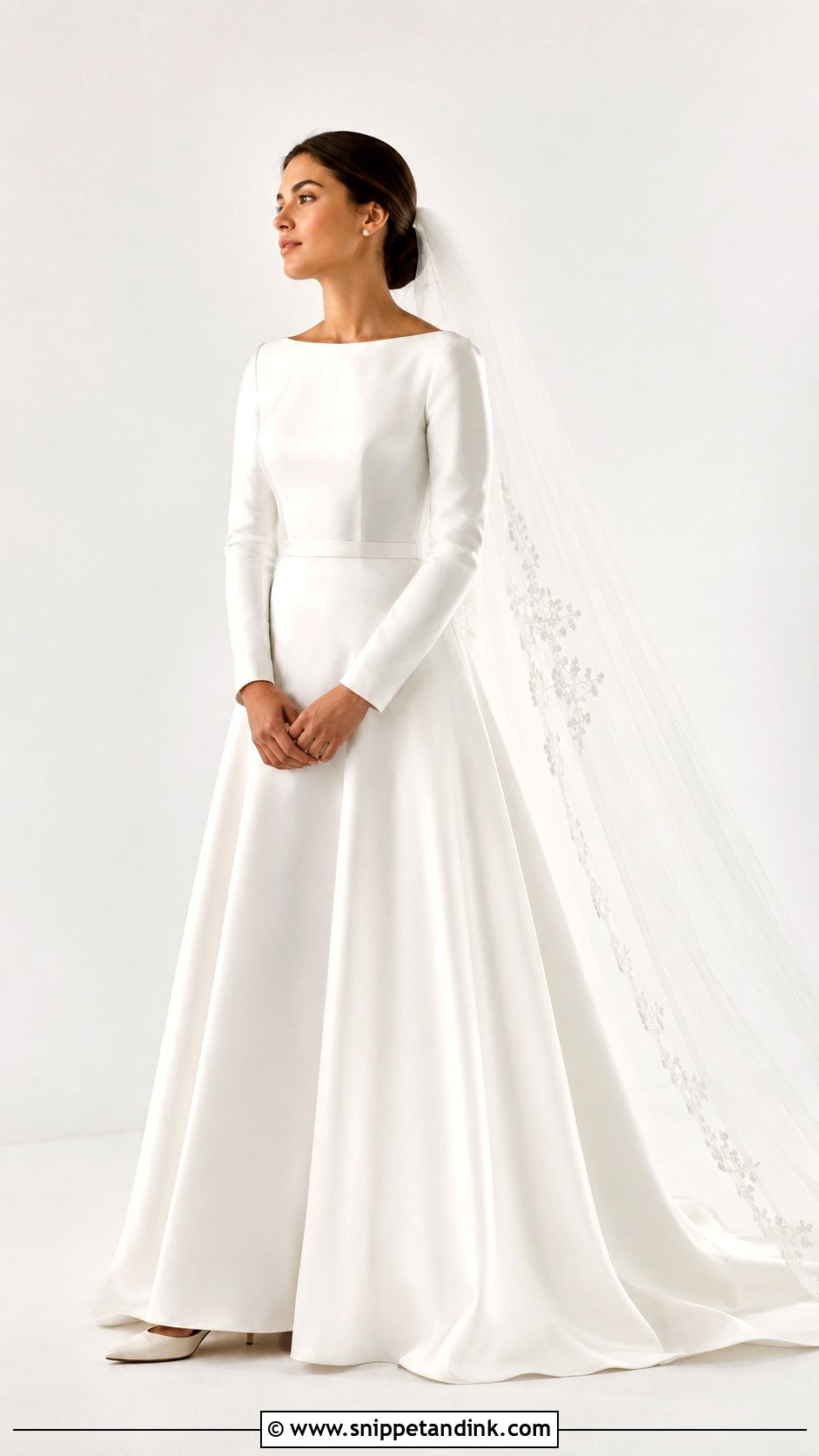
Satin catches light without any embellishment, so an A-line in it looks special while staying simple. Long sleeves, a bateau neck or a soft square neck with full lining give comfortable coverage, and the A-line defines the waist before floating away from the hip. Satin’s sheen also shows every wrinkle, so I keep a handheld steamer at the getting-ready suite for the last touch-up. If the gown feels too bare, covered buttons, a back bow or a slim satin belt add interest. A cathedral veil and low pearl heels suit it.
4. Modest Crepe Wedding Dress
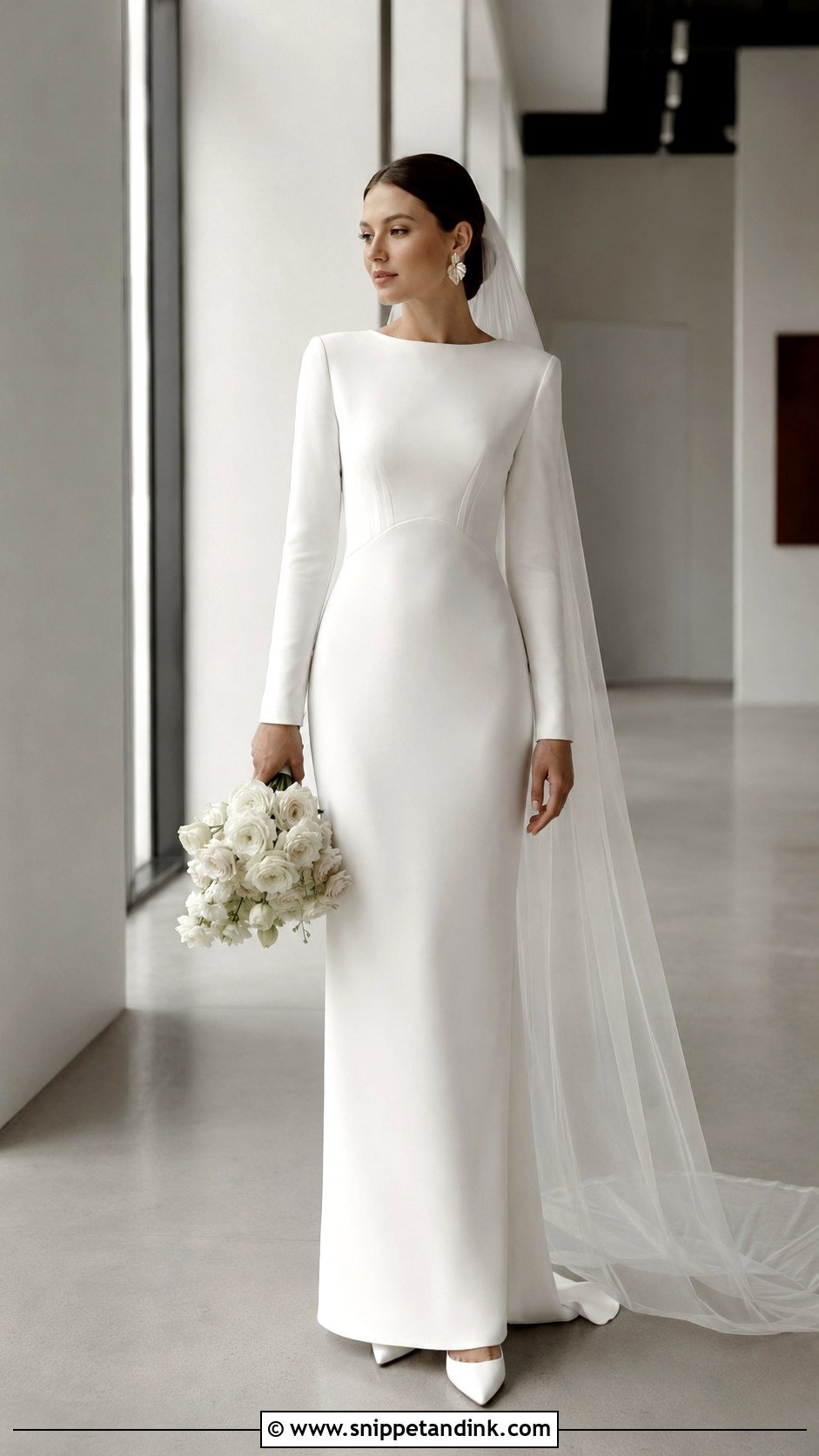
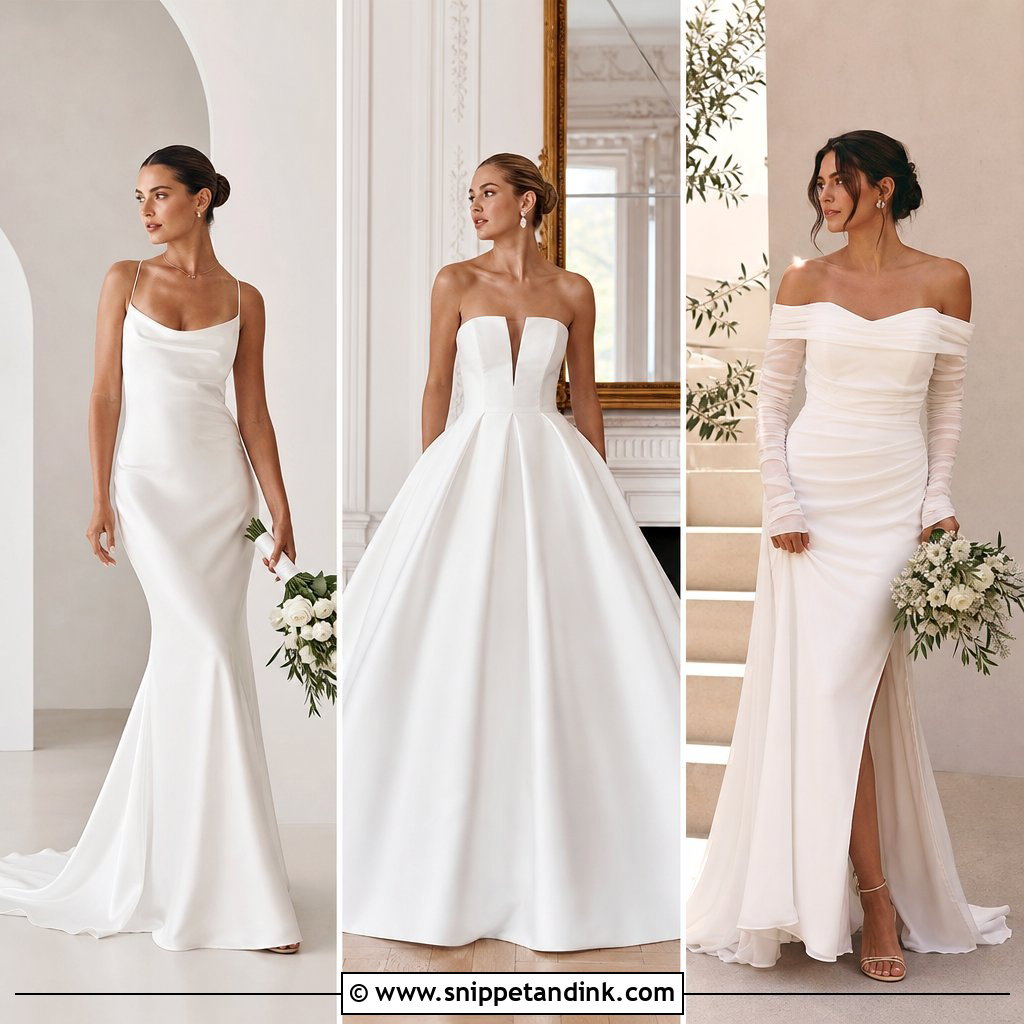
Crepe skims the body with a matte, mature finish, which is why it suits the bride who likes sleek and modern. Try a long sleeve sheath, a high-neck column or a gently flared skirt. Crepe shows every line underneath it, so precise tailoring and smooth, edge-free underwear matter more here than with lace. Add a long veil, sculptural earrings and pointed block heels. A detachable overskirt can give you a fuller entrance and a simpler reception look later.
5. Modest Ball Gown Wedding Dress
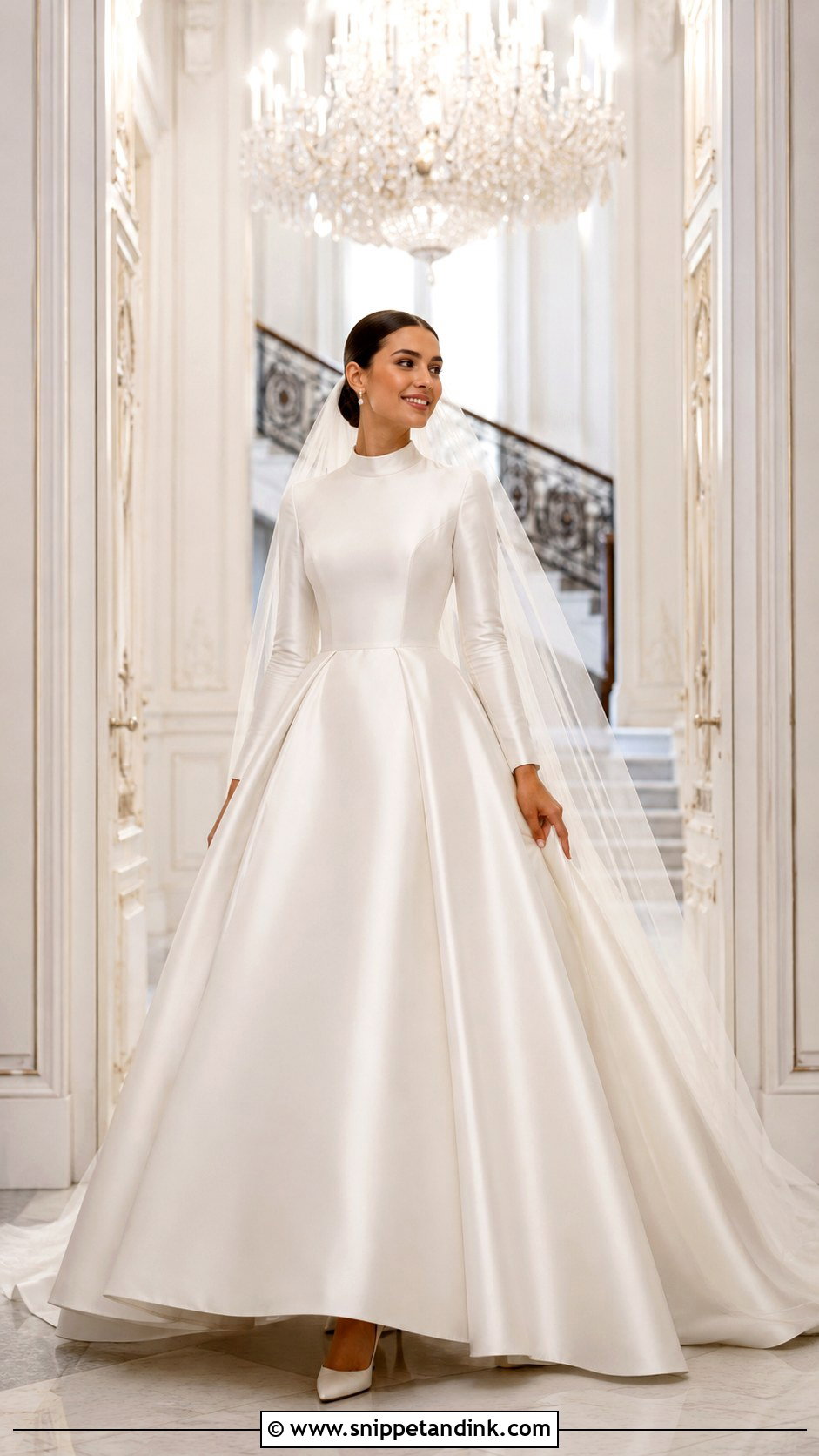
Want drama without showing skin? A ball gown gives fairytale volume, and a fitted bodice with long sleeves and a high or bateau neck balances the skirt. Tulle and organza feel airy; mikado adds structure. A full skirt puts noticeable weight on the hips and needs a solid bustle for the reception, so ask how many bustle points it has and have someone practice it before the day. Keep accessories to a smooth veil, pearl earrings and satin pumps; the skirt is already the statement.
6. Modest Tea Length Wedding Dress
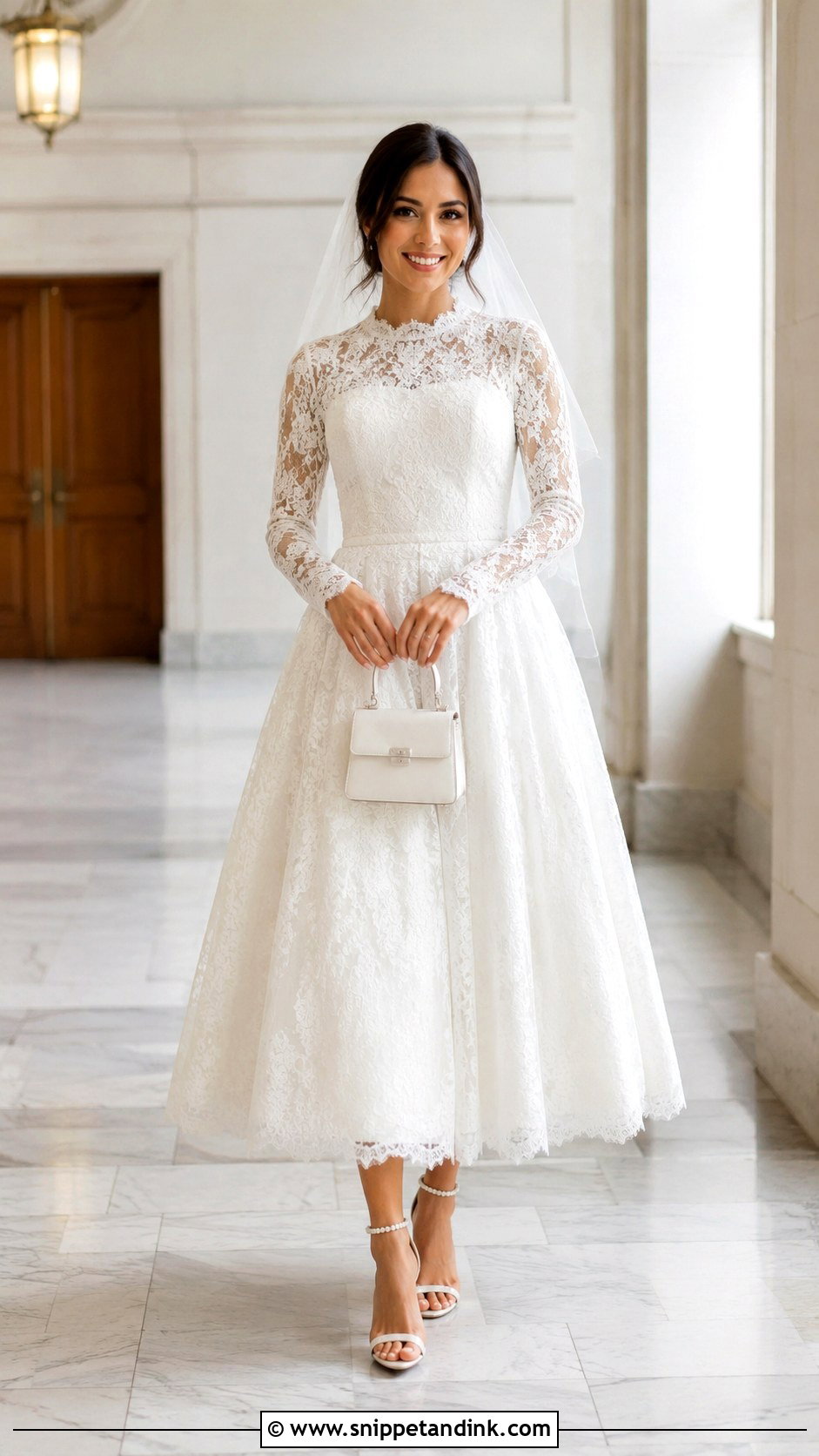
Tea length falls between knee and ankle, so it’s easy to walk in and suits courthouse weddings, small receptions and daytime parties. Long sleeves, a high neck or a lace overlay on a lined bodice keep it bridal and covered. The hem height decides whether it flatters: ending just below the widest part of the calf tends to look awkward, so I pin it at a couple of heights and let the bride choose in the mirror. Because shoes show, pick something worth seeing, satin pumps or pearl-strap heels, and add a short veil.
7. Modest Tulle Wedding Dress
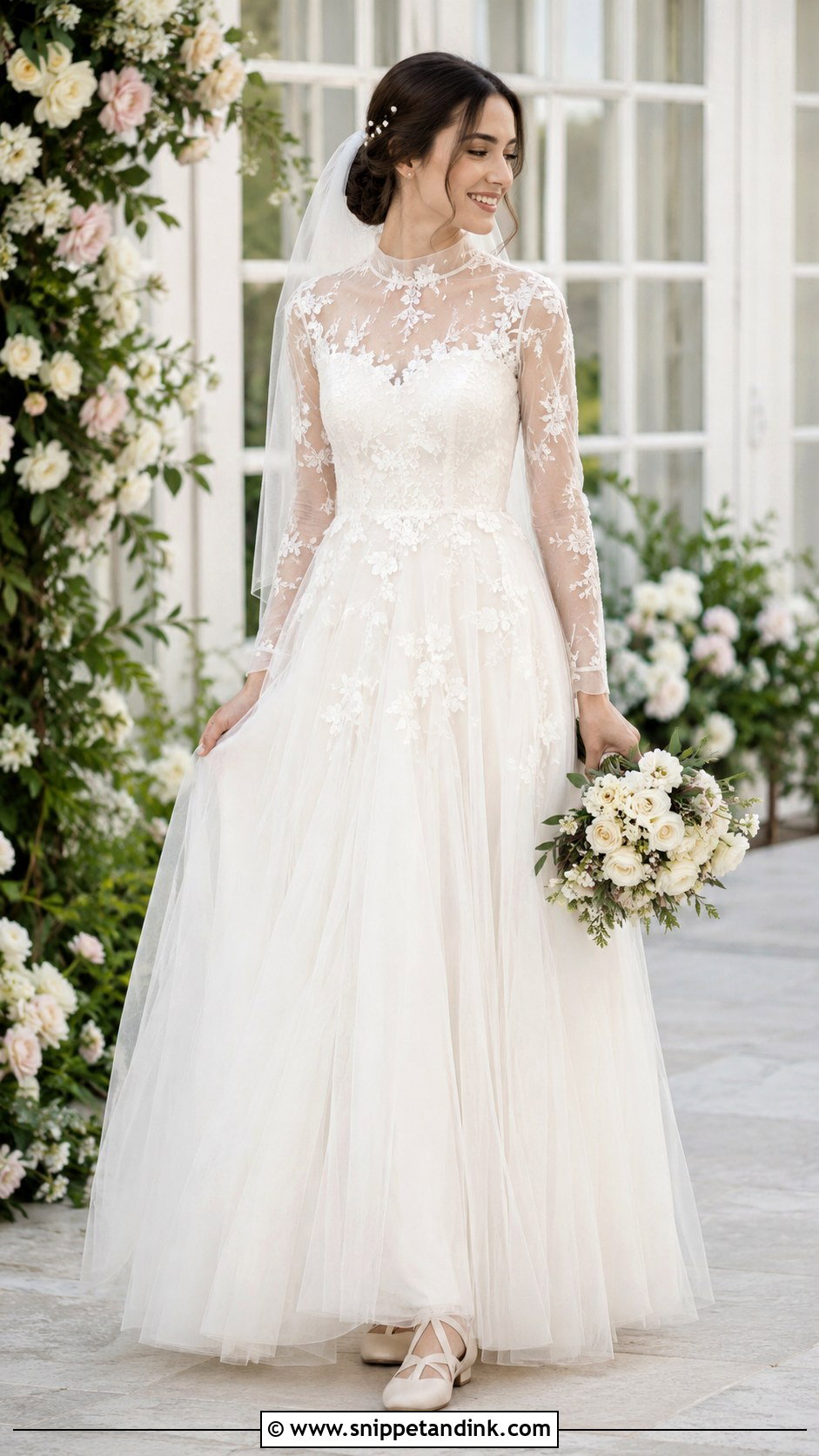
Tulle gives softness and lightness without a revealing cut. A lined bodice, long sleeves, a high neckline and a layered skirt make a graceful shape, and scattered floral appliqués or small pearls look more current than heavy sparkle. Layered tulle builds static in dry air and clings to tights or the legs, so an anti-static spray on the underskirt is worth having in the emergency kit. Balance the volume with a neat hairstyle and low heels or ballet flats for a spring wedding.
8. Modest Square Neck Wedding Dress
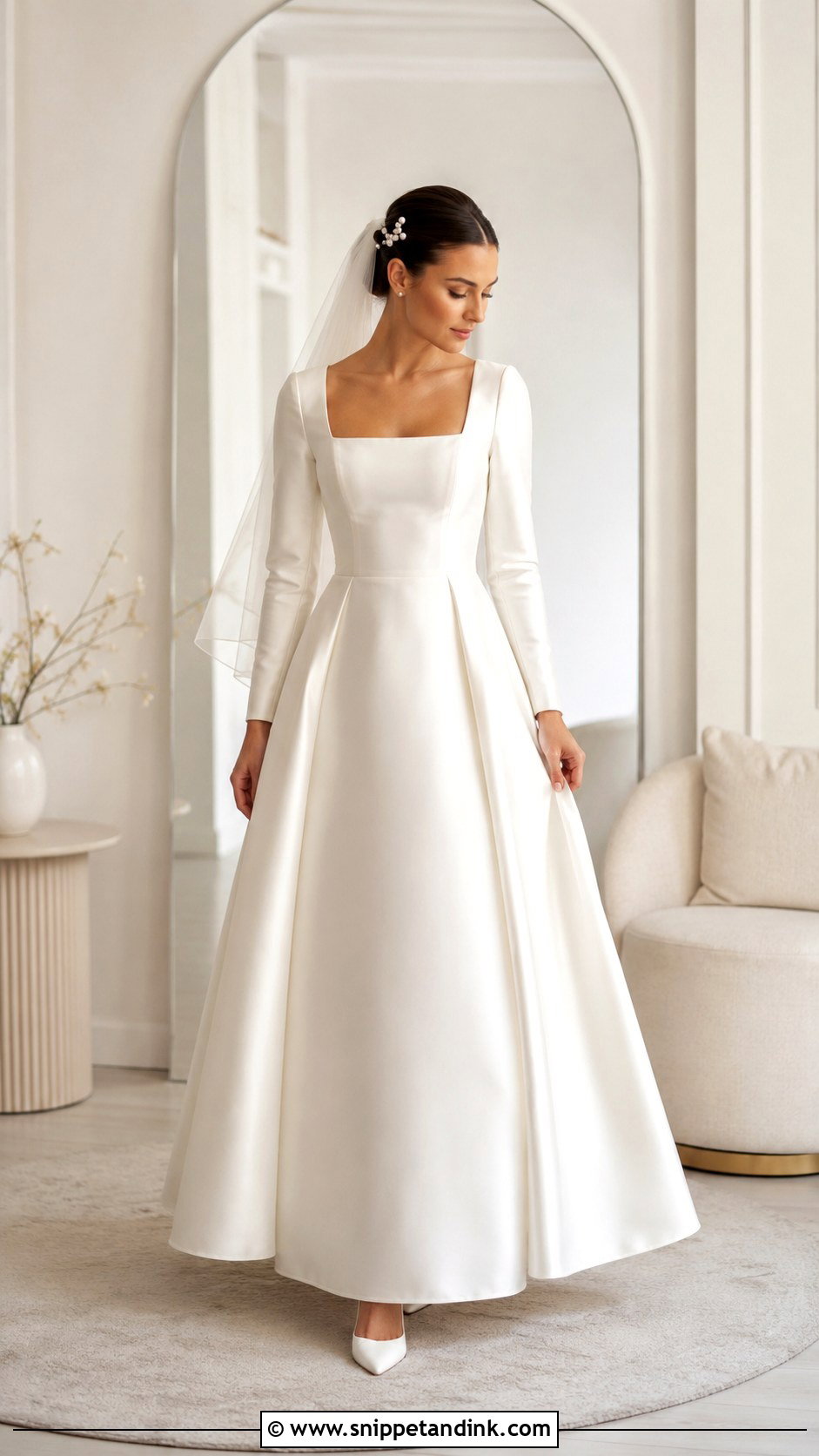
The square neck draws a clean line across the collarbone without dipping low. Long fitted sleeves, a tailored bodice and an A-line or column skirt suit it, in satin, crepe or lace. If the gown is very minimal, a thin waist belt defines the shape. Square necks are only as good as the corners, so I check them while the bride sits, leans and reaches, because a loose corner gapes instantly. A soft veil, pearl hair pins and closed-toe pumps complete the look.
9. Modest Bateau Neck Wedding Dress
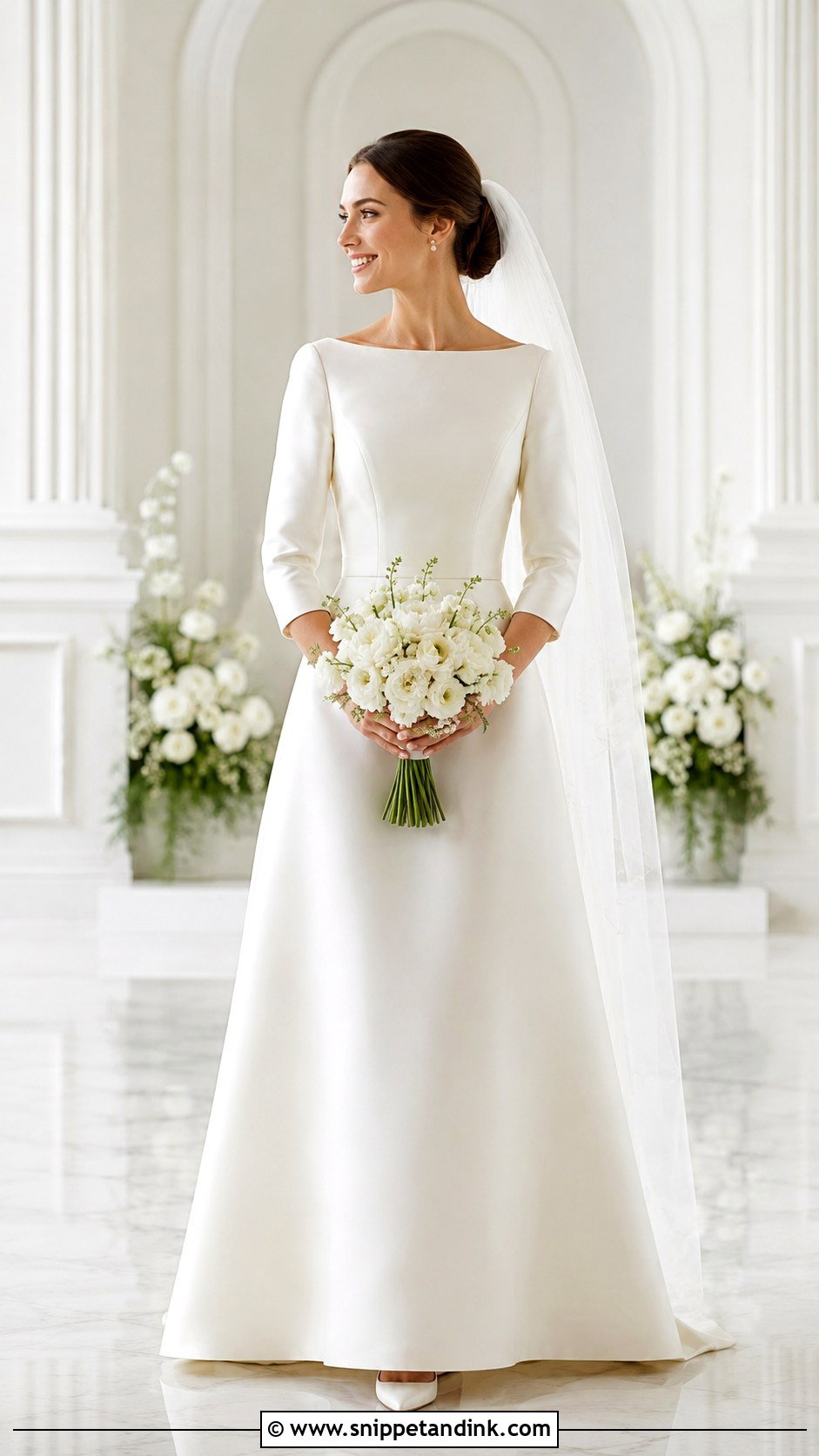
The bateau neckline sits wide across the collarbone and gives the upper body a graceful frame. It works with three-quarter or long sleeves, or with a sleeveless base under a matching bridal jacket. A slim A-line keeps it classic; a column makes it contemporary. The wide line exposes bra straps easily, so I usually suggest a strapless or sewn-in support for this cut. Small earrings, a low bun and a veil placed at the back of the head keep the neckline clear, especially in satin, mikado or crepe.
10. Modest Bishop Sleeve Wedding Dress
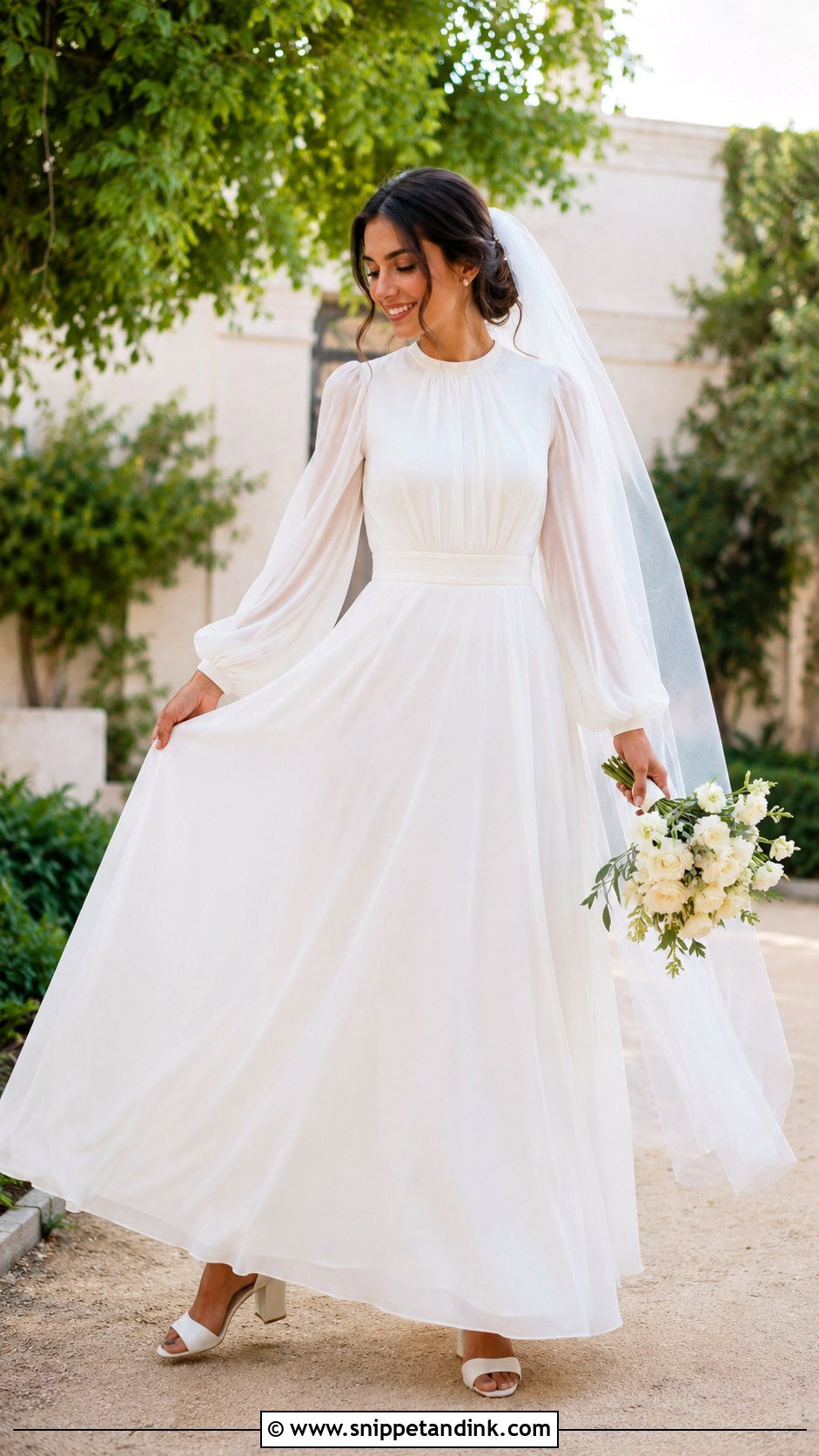
Bishop sleeves are full through the arm and gathered at the wrist, so they add movement without bulking the body. Keep the bodice fitted and the skirt simple so the sleeves stay the focus. Chiffon sleeves feel light; lace sleeves feel traditional. A practical warning from the reception: a full sleeve drags across plates and the cake table, so a slightly shorter cuff that clears the hand is worth asking for. A slim veil and simple earrings suit cooler weather and outdoor ceremonies.
11. Modest Puff Sleeve Wedding Dress
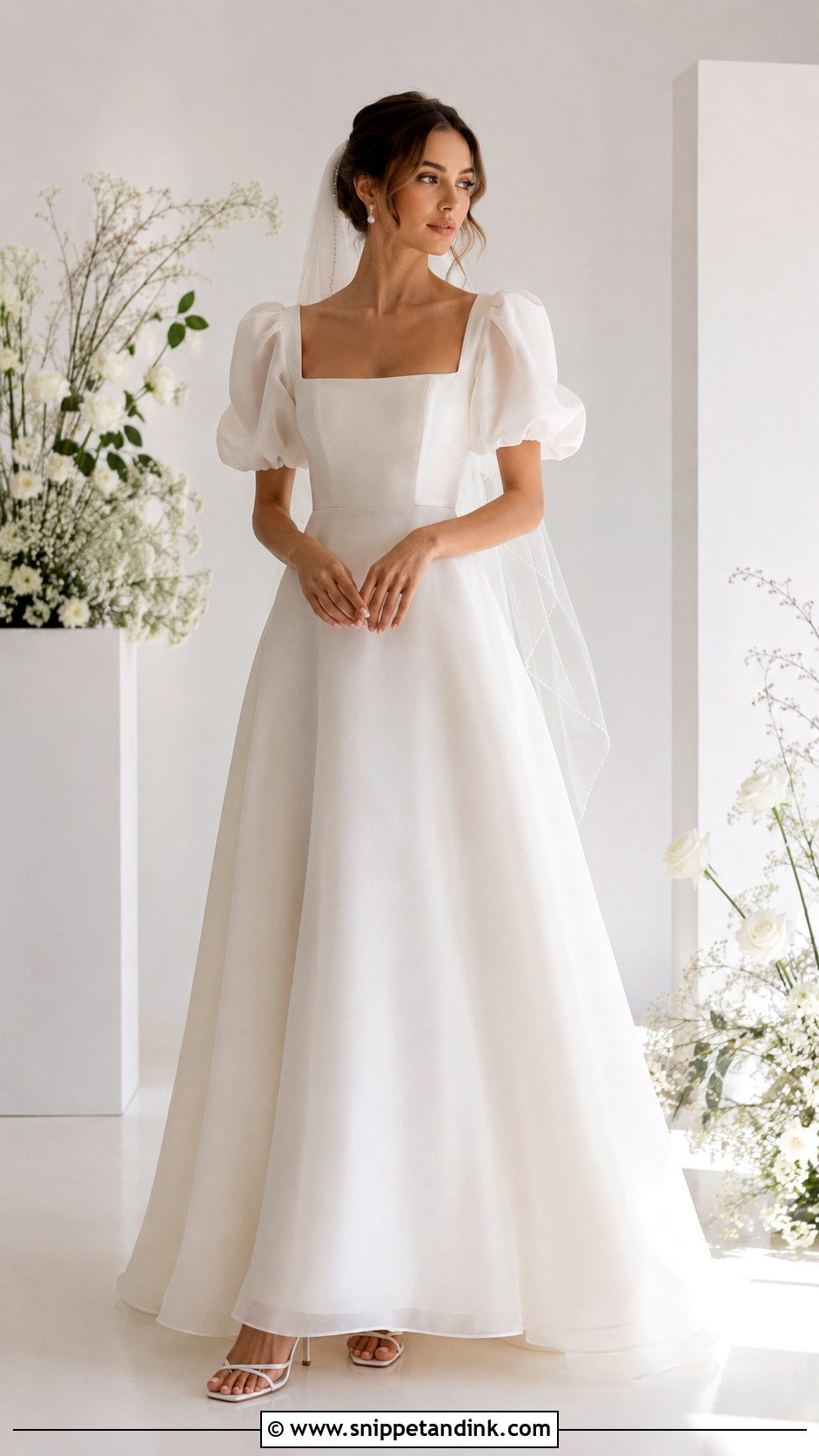
A puff sleeve wedding dress works when the volume is controlled. I judge the puff against the bride’s shoulder width: on narrow shoulders a big sleeve swamps the frame, while on broader shoulders it can widen the silhouette further. A fitted waist, smooth bodice and simple A-line skirt keep it balanced. Organza holds a crisp puff; satin is rounder; tulle and lace are softer. Keep the neckline high, square or bateau, and add pearl earrings and a clean veil.
12. Modest Wedding Dress With Cape
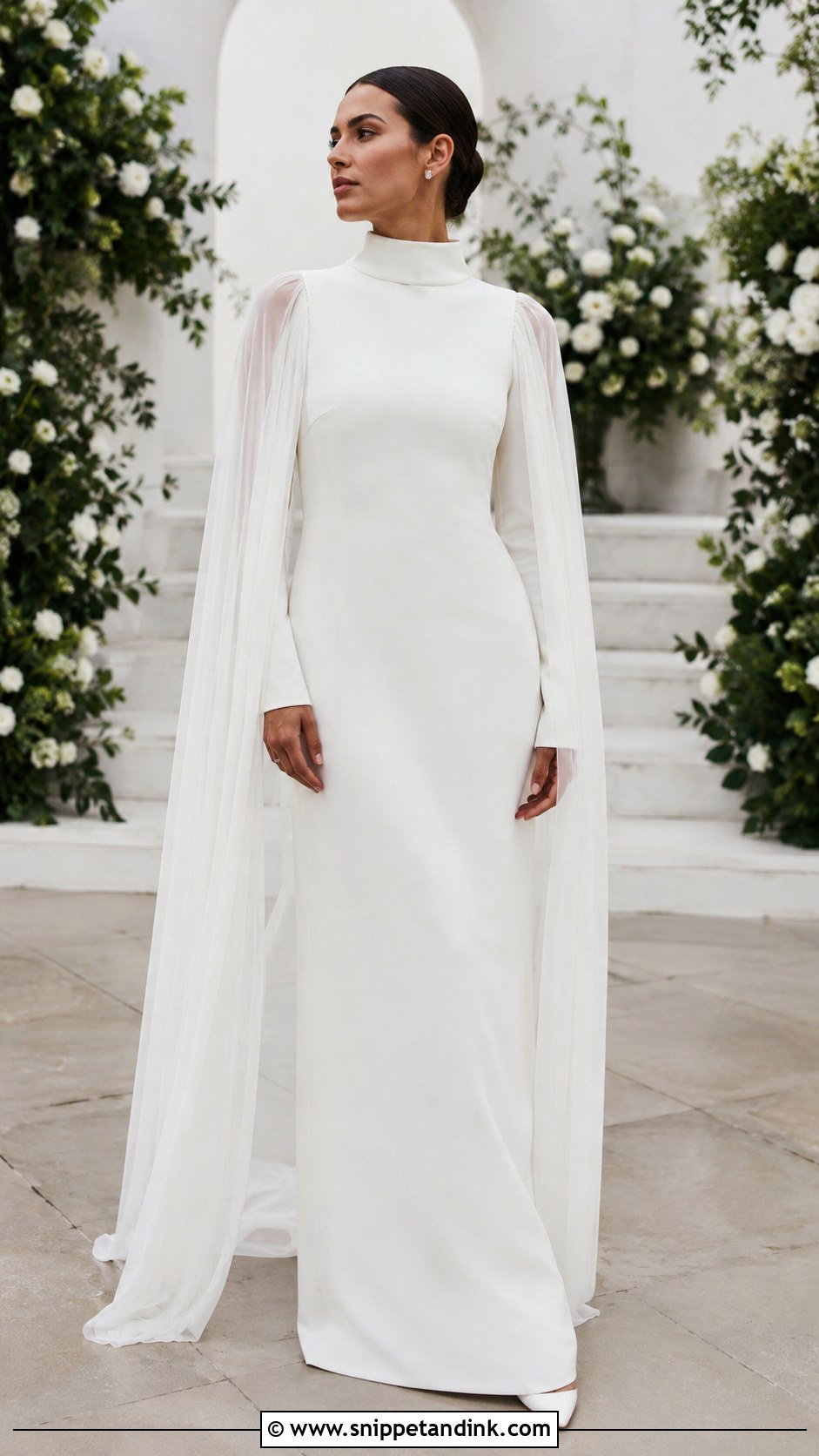
A cape can replace the veil or layer over a simple gown for more drama. A high-neck crepe column with a sheer cape looks sharp; a satin A-line with a floor-length capelet looks softer. It gives covered shoulders without sleeves all day, which suits brides who find sleeves restrictive. Don’t wear a long cape and a long veil together, as the two layers tangle and fight for the same space at the back. Keep jewelry minimal, with simple heels and a sleek hairstyle.
13. Modest Wedding Dress With Jacket
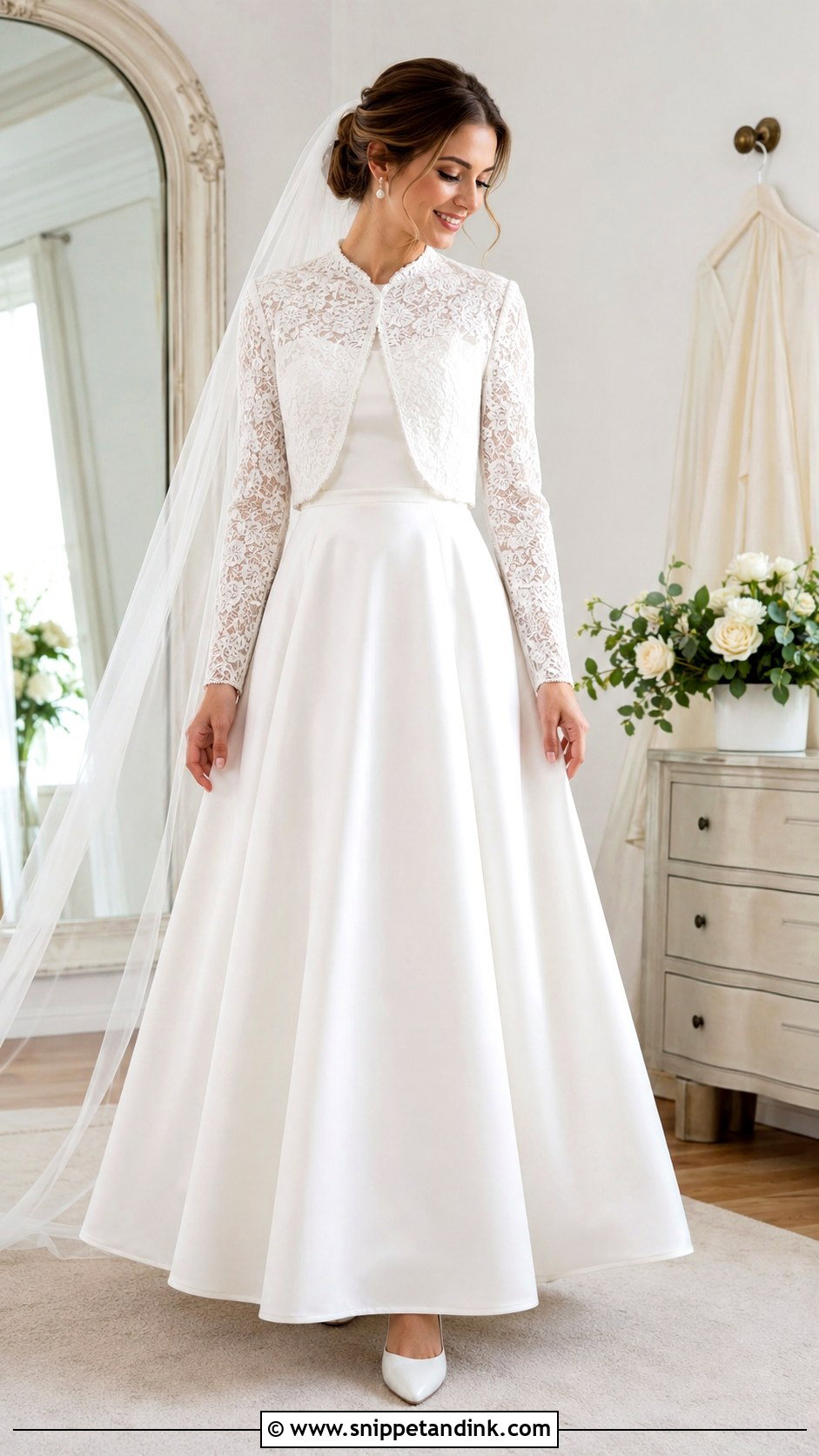
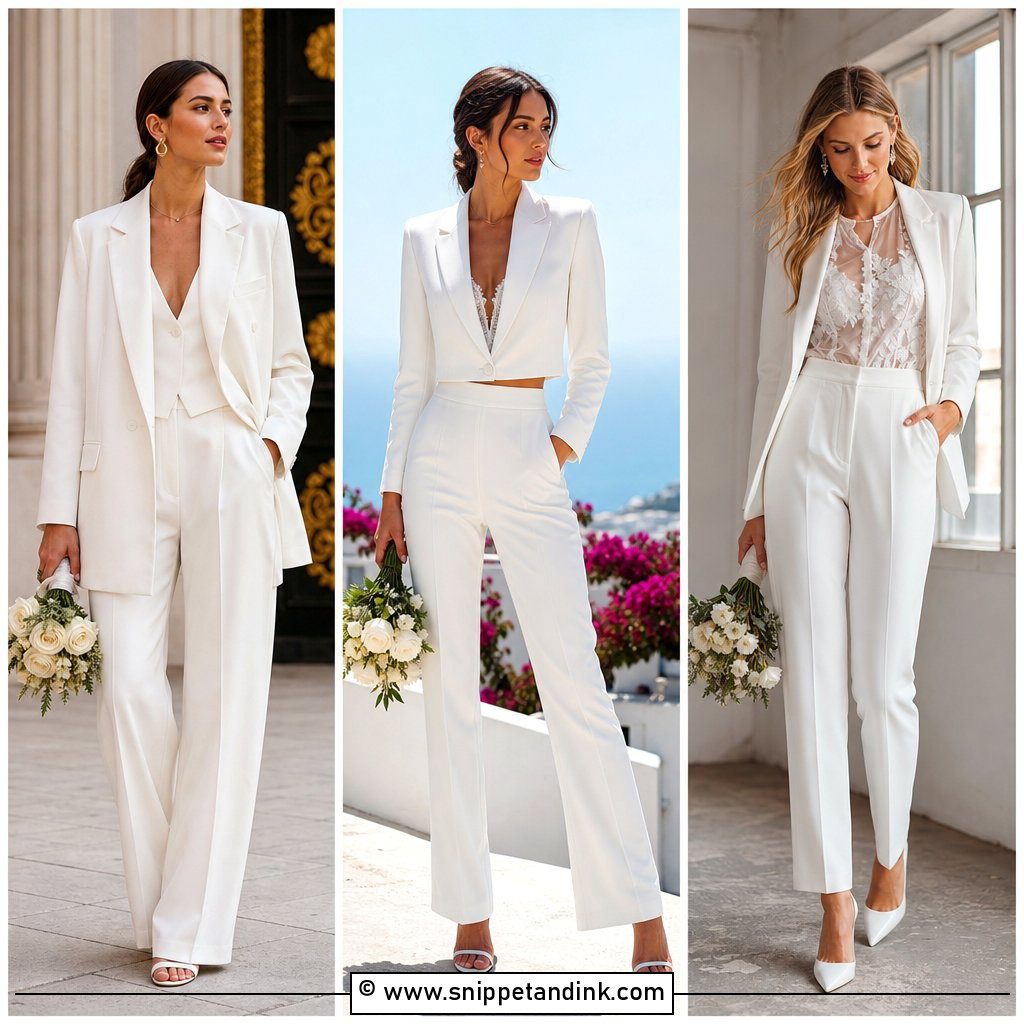
A jacket lets you keep a dress you love and add coverage on top: a lace bolero, a cropped satin jacket, a tailored blazer or a long organza cover-up. Matching fabrics look unified, while lace over satin adds texture. The jacket should be fitted at the shoulders and waist like part of the gown; bought loose, it looks like an afterthought. It also earns its place in cooler months, when it can stay on for photos outside. Closed-toe heels, pearl earrings and a smooth veil finish the outfit.
14. Modest Wedding Dress With Overskirt
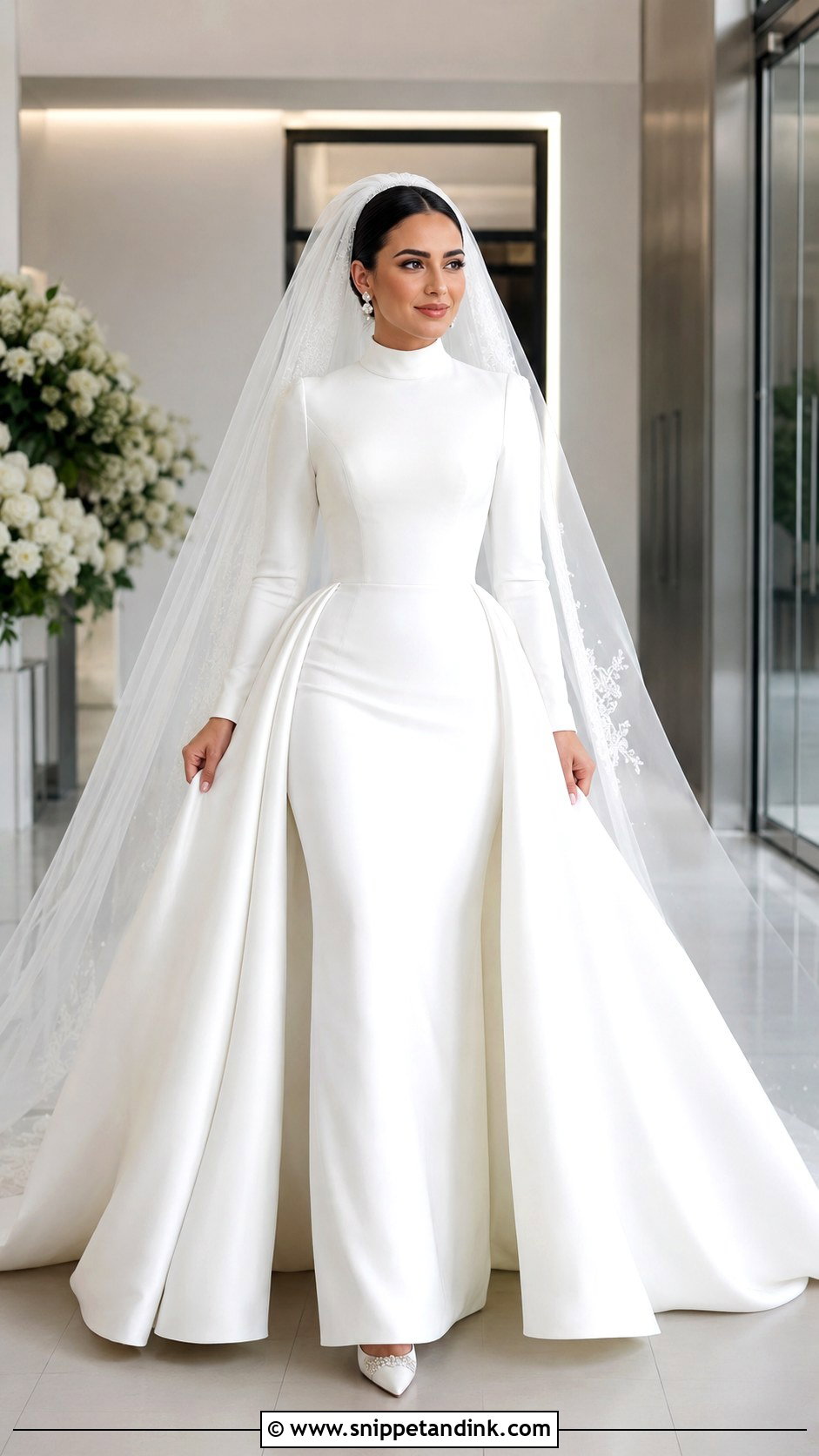
Two looks, one dress: a covered column, sheath or fit-and-flare gown underneath, with a full detachable overskirt for the ceremony. Long sleeves, a high neck or a lined lace bodice keep it modest. Satin overskirts add structure; tulle feels softer. When the overskirt comes off, the base dress has to look finished on its own, so check its hem and waist seam as carefully as the full outfit. A long veil, simple earrings and comfortable heels complete it.

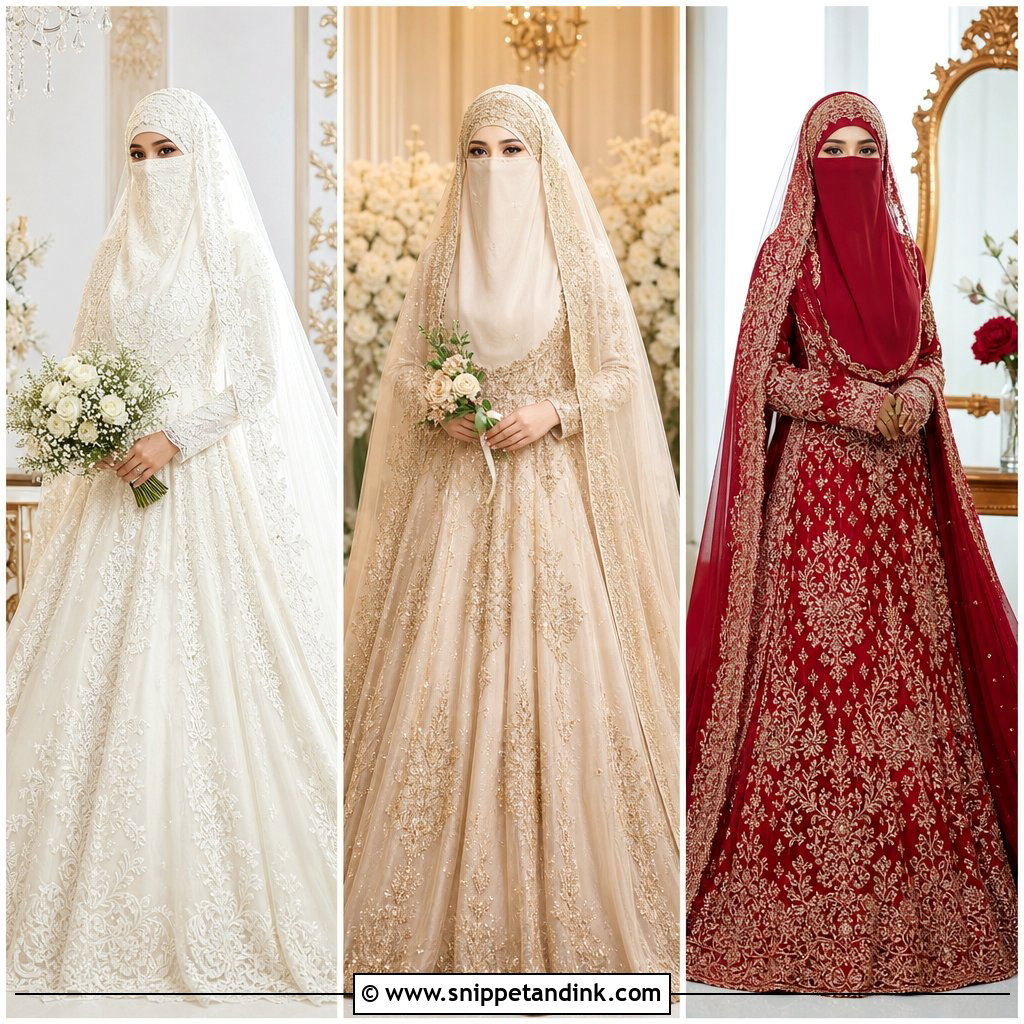
15. Modest Embroidered Wedding Dress
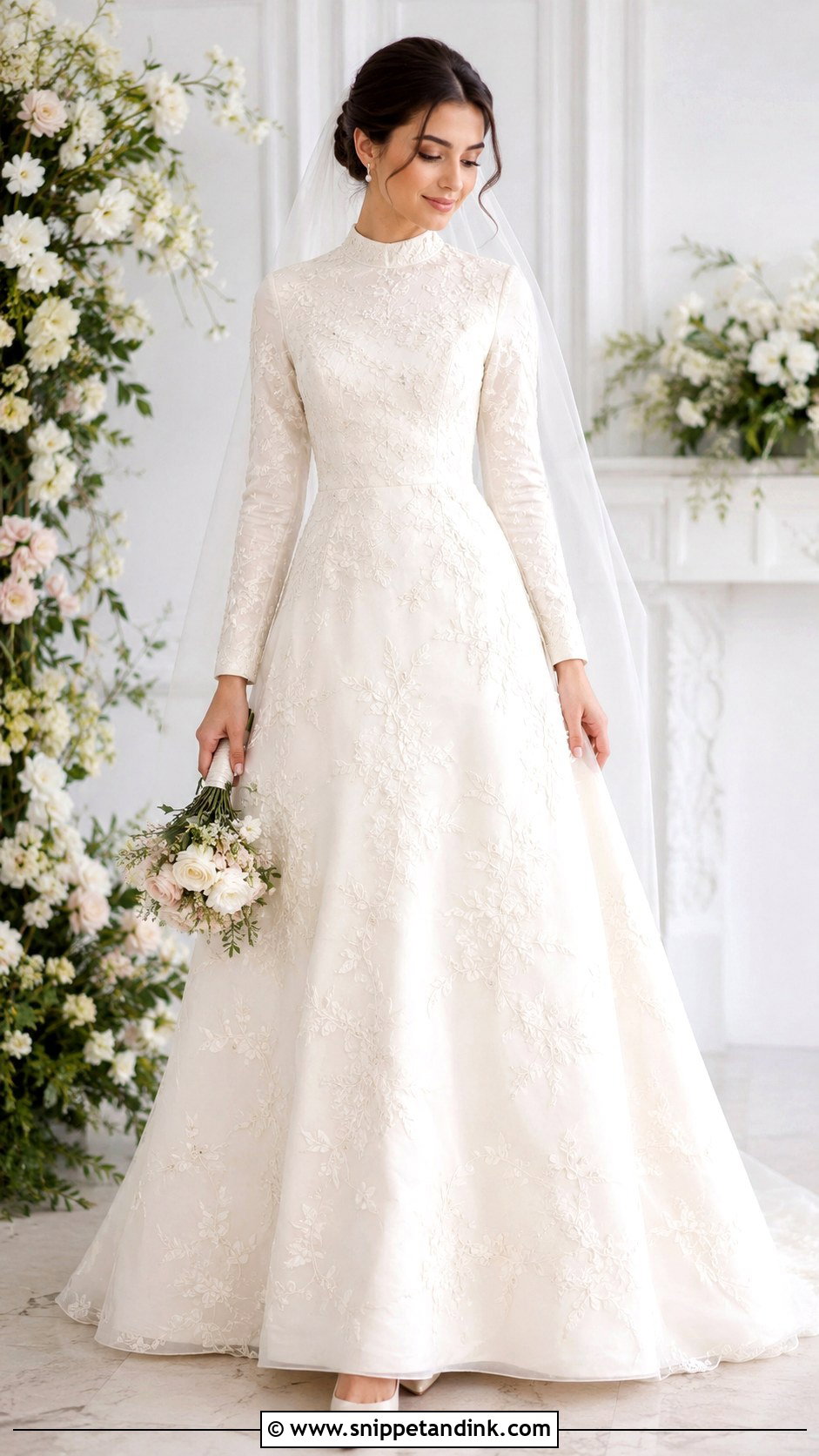
Embroidery adds depth to a covered gown. Floral, vine, pearl or tone-on-tone stitching over a lined bodice and skirt shows clearly in ivory, champagne and off-white. Concentrated on the bodice, it needs a smooth skirt; spread across the whole dress, it means no bold jewelry. Hand embroidery is slow work, so a custom piece needs extra production time, and I’d never assume a rush order will match the sample. A plain veil, small earrings and satin shoes keep the stitching in front.
16. Modest Pearl Wedding Dress
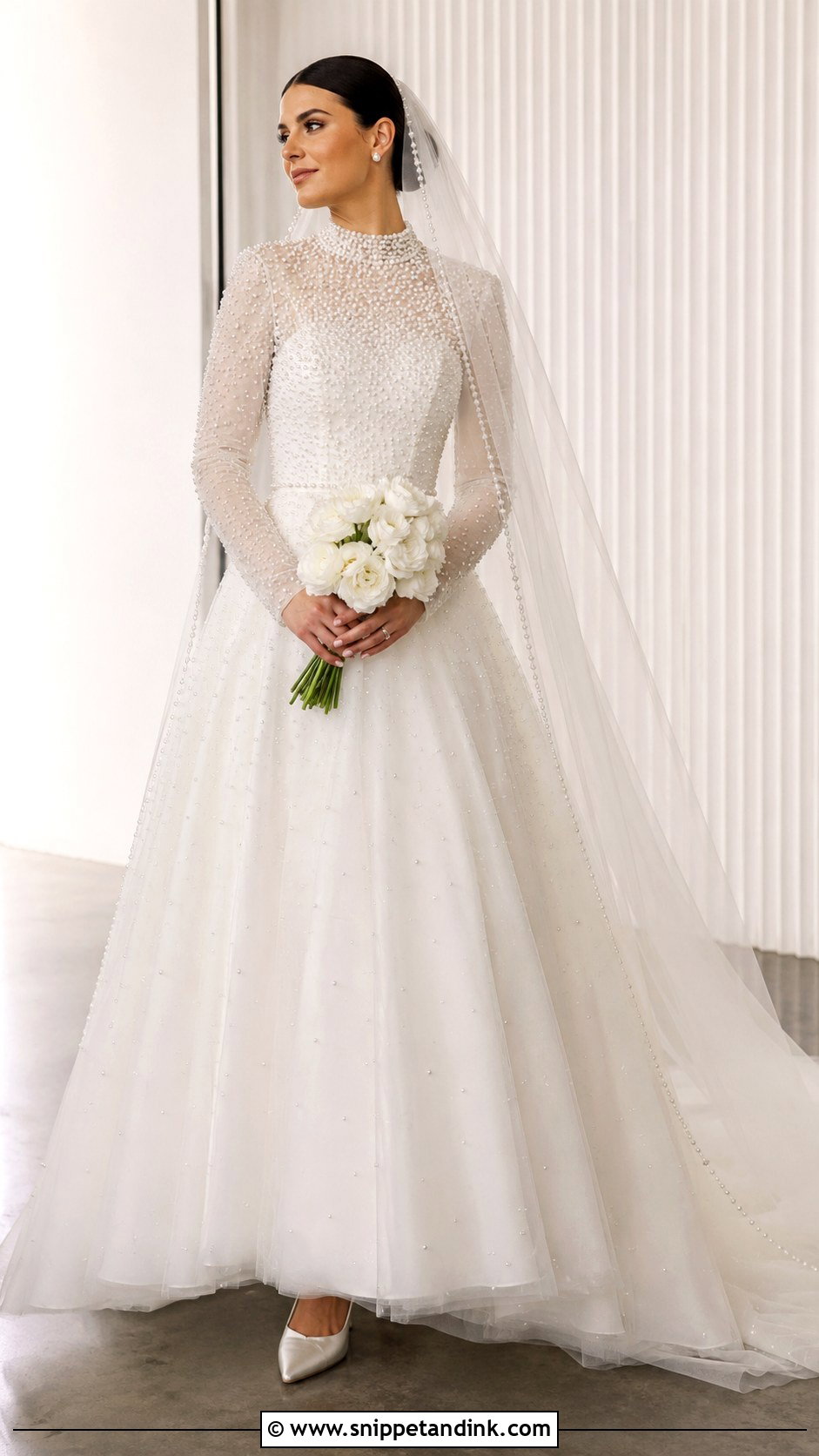
Pearls bring a soft glow instead of the hard flash of crystals. They can trace the sleeves, neckline, waist or a tulle overlay, and a simple A-line, sheath or column stops the dress feeling busy. A high neck or long sleeves keep it covered. Pearls on the shoulders and back can catch a fine tulle veil, so I test the veil against the bodice at the fitting and choose a smoother edge if it snags. Pearl earrings and satin pumps are all it needs.
17. Modest Chiffon Wedding Dress
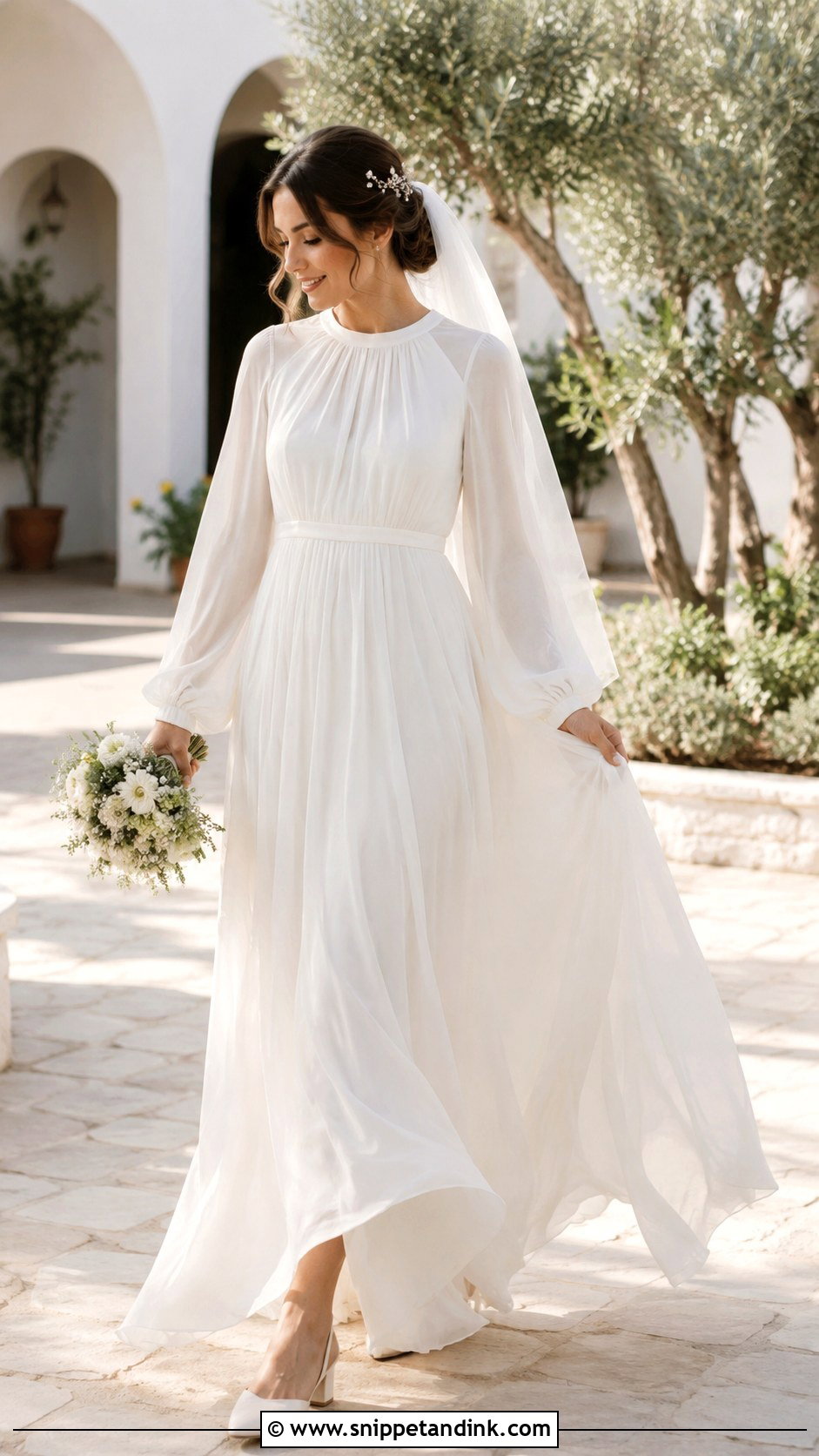
Chiffon drapes and moves, which suits long sleeves, gathered bodices and full skirts. A lined high-neck or wrap-style bodice gives secure coverage. It’s my pick for warm weather and beach settings because it breathes, and it creases less than satin after hours of sitting. The flip side is fragility: chiffon pulls easily, so avoid bracelets with prongs and heavy hair accessories that can catch it. Low heels, a simple veil and delicate pins suit it.
18. Modest Mikado Wedding Dress
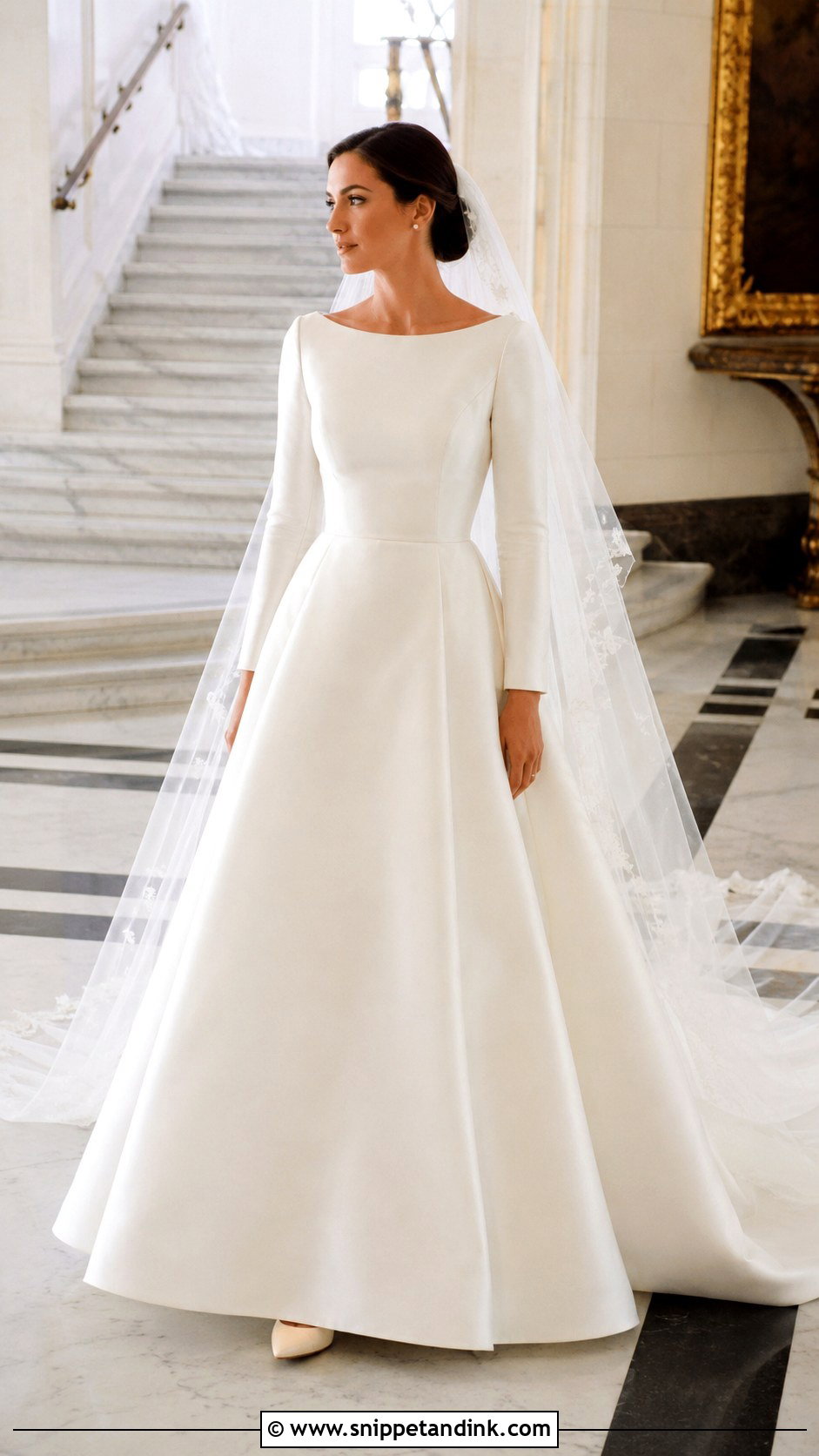
Mikado holds a sculpted shape with a slight sheen, so a modest mikado wedding dress looks refined without lace or sparkle. It suits A-line skirts, ball gowns and tailored bodices, with a high neck, long sleeves or a bateau cut. Defined waist seams flatter it most. Mikado creases sharply rather than softly, so pack it with tissue in the folds if it travels, and hang it as soon as you arrive. A cathedral veil, pearl studs and satin pumps keep it classic.
19. Modest Mermaid Wedding Dress
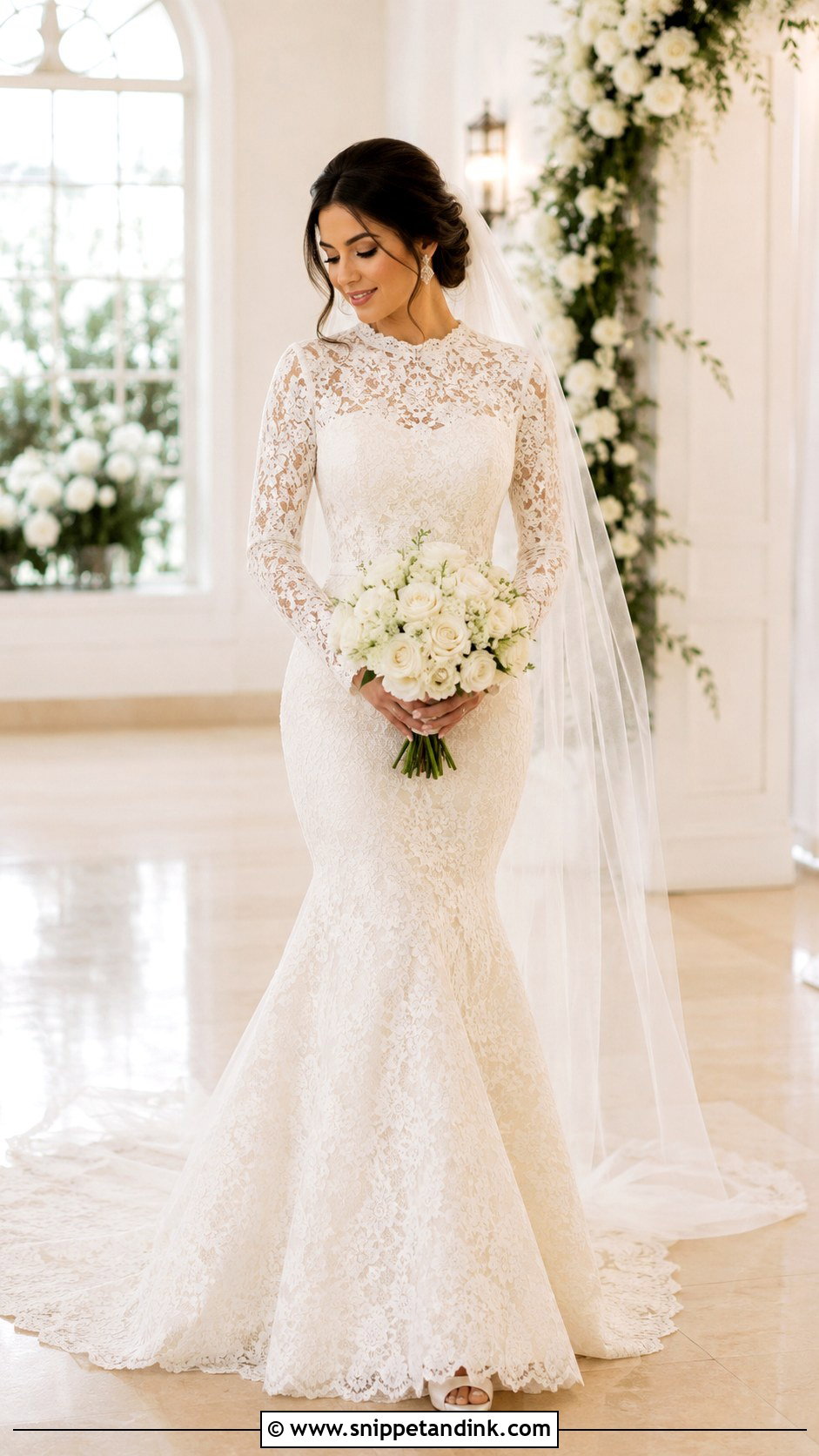
Mermaid can be modest when the fit supports rather than squeezes and the neckline is covered. A long sleeve gown with a high neck, bateau or square neckline works in crepe, lace or satin. Because the silhouette follows the body, the lining has to be smooth, and I always check that the bride can climb a step and sit. Mermaid trains are also the hardest to bustle neatly, which affects how you’ll dance. Heels with some height balance the flare.
20. Modest Empire Waist Wedding Dress
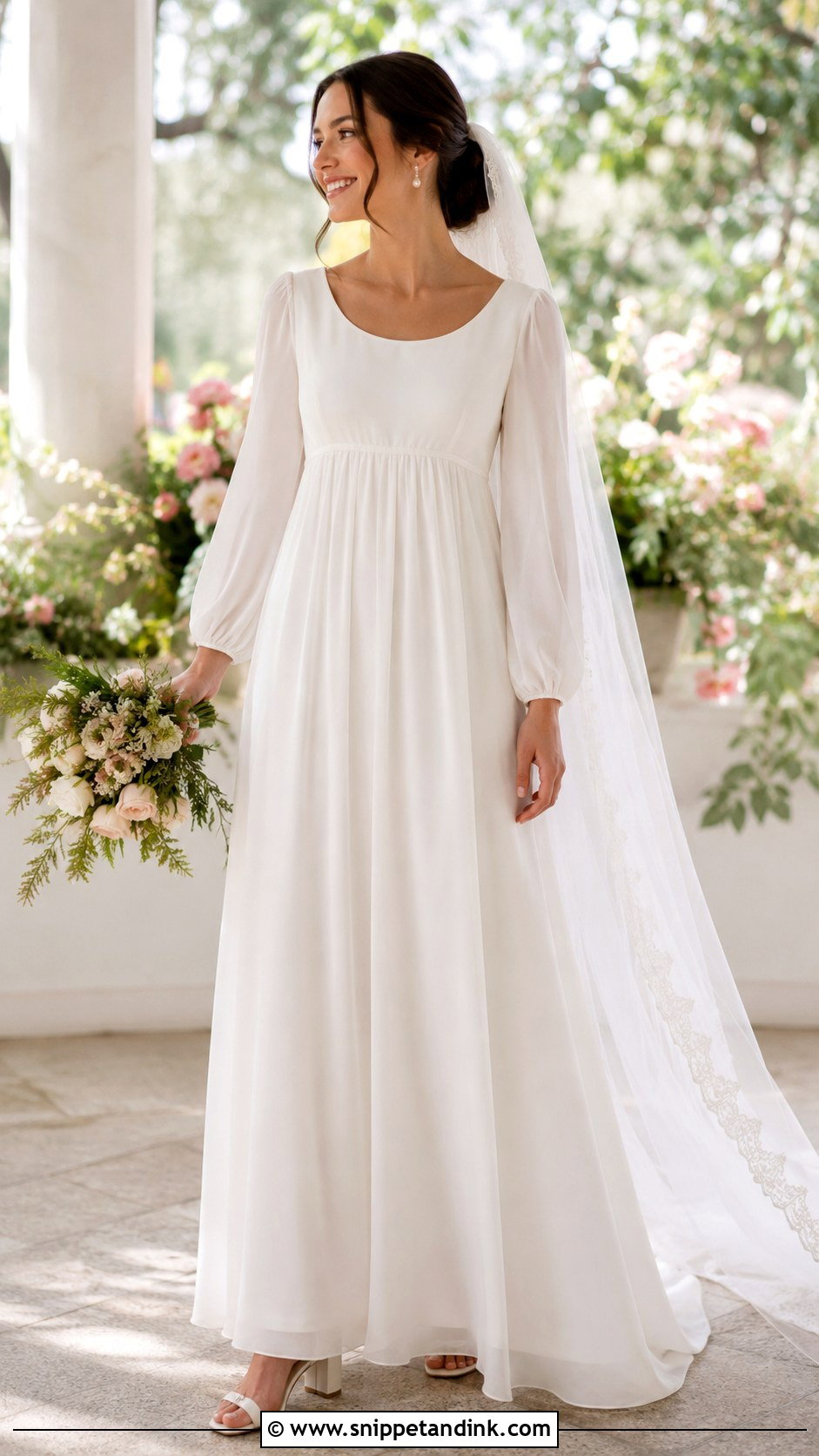
An empire waist sits just under the bust and lets the dress fall freely, so there’s no fitted waist pressing on you all day. Chiffon, crepe or soft satin move well in it, and long sleeves with a high or scoop neck keep it covered without stiffness. Petite brides should watch the skirt volume: too much fabric below a high waist can shorten the frame. A simple veil, delicate earrings and low block heels suit its relaxed mood.
21. Modest Plus Size Wedding Dress
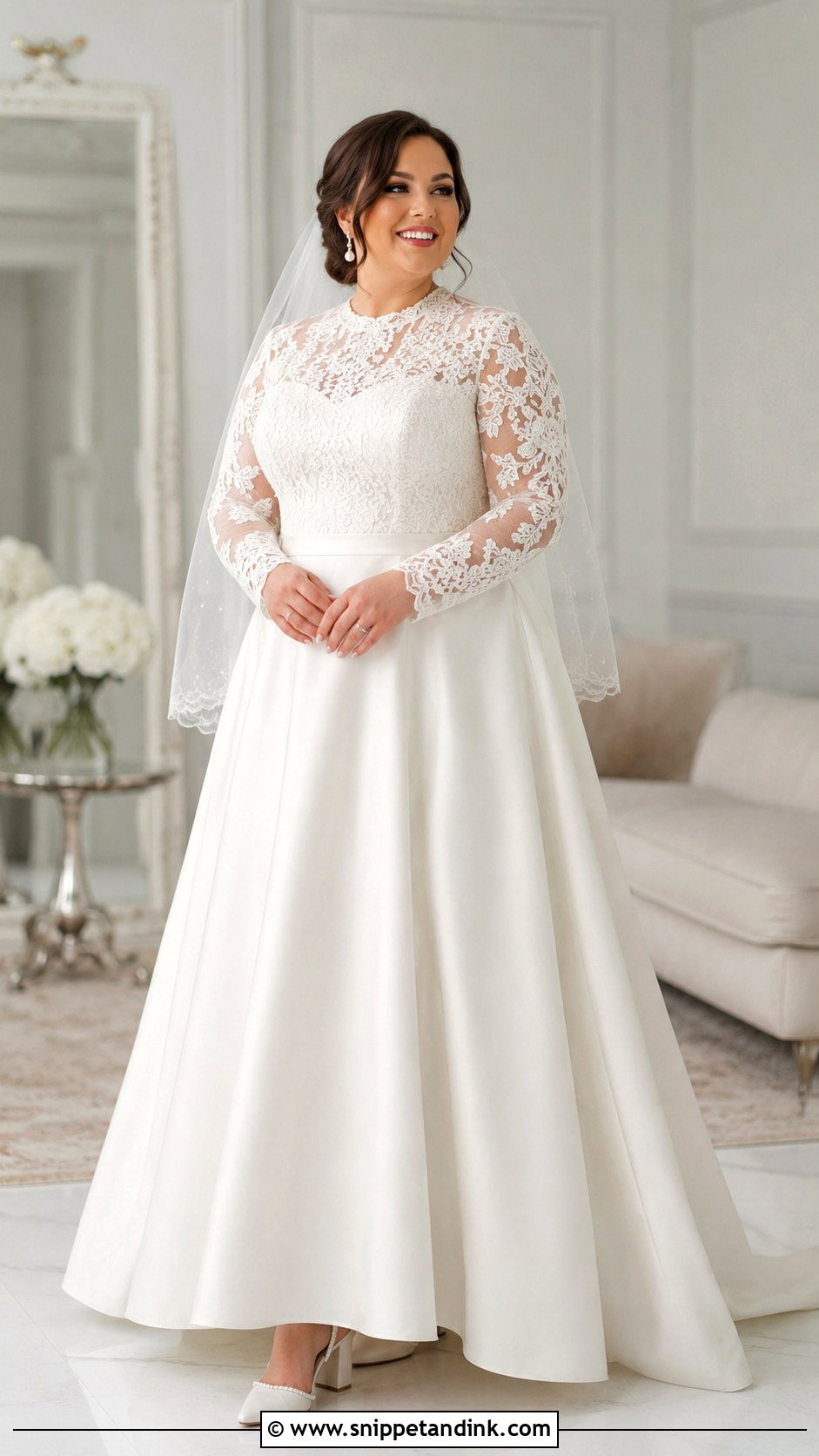
Support comes first in a plus size modest gown: strong inner construction, smooth lining and seams that shape the waist without squeezing. A-line, ball gown, empire and fit-and-flare all work depending on preference, with long sleeves, a high neck or a lace overlay for coverage. Bridal sizing runs smaller than high street sizing and varies by designer, so order by your measurements, not your usual size, and expect alterations. Supportive shoes and jewelry that frames the face finish it.
22. Modest Maternity Wedding Dress
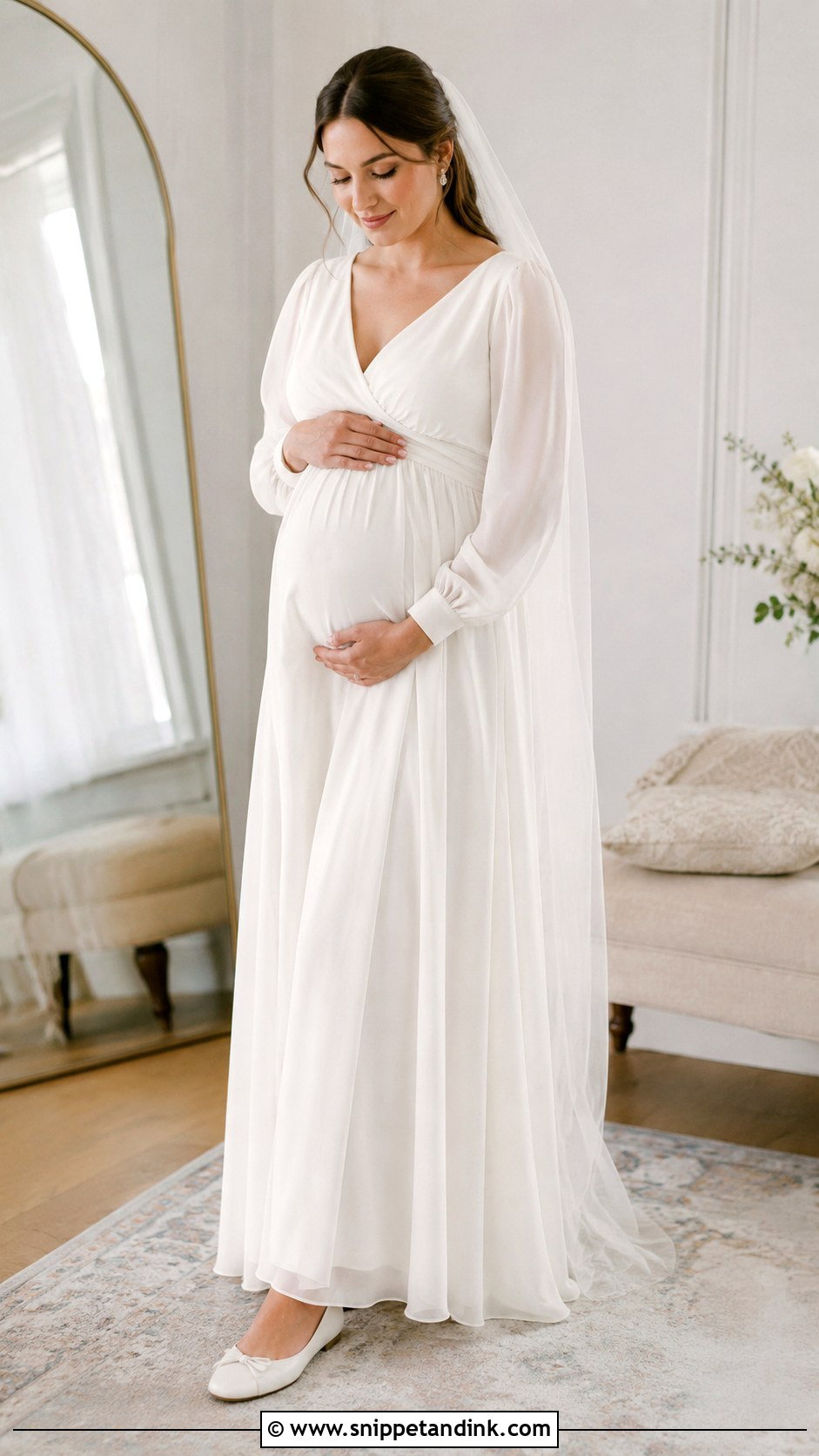
A modest maternity wedding dress needs room to change. Empire waists, soft A-lines and chiffon overlays avoid pressure on the bump, and stretch crepe, chiffon and soft tulle feel gentle. A lace-up or adjustable back is worth a lot here, because the body can change noticeably in the weeks before the wedding; I schedule the final fitting as close to the date as the seamstress allows. Choose a lined bodice, long sleeves, low block heels or flats, and a light veil.
23. Modest Courthouse Wedding Dress
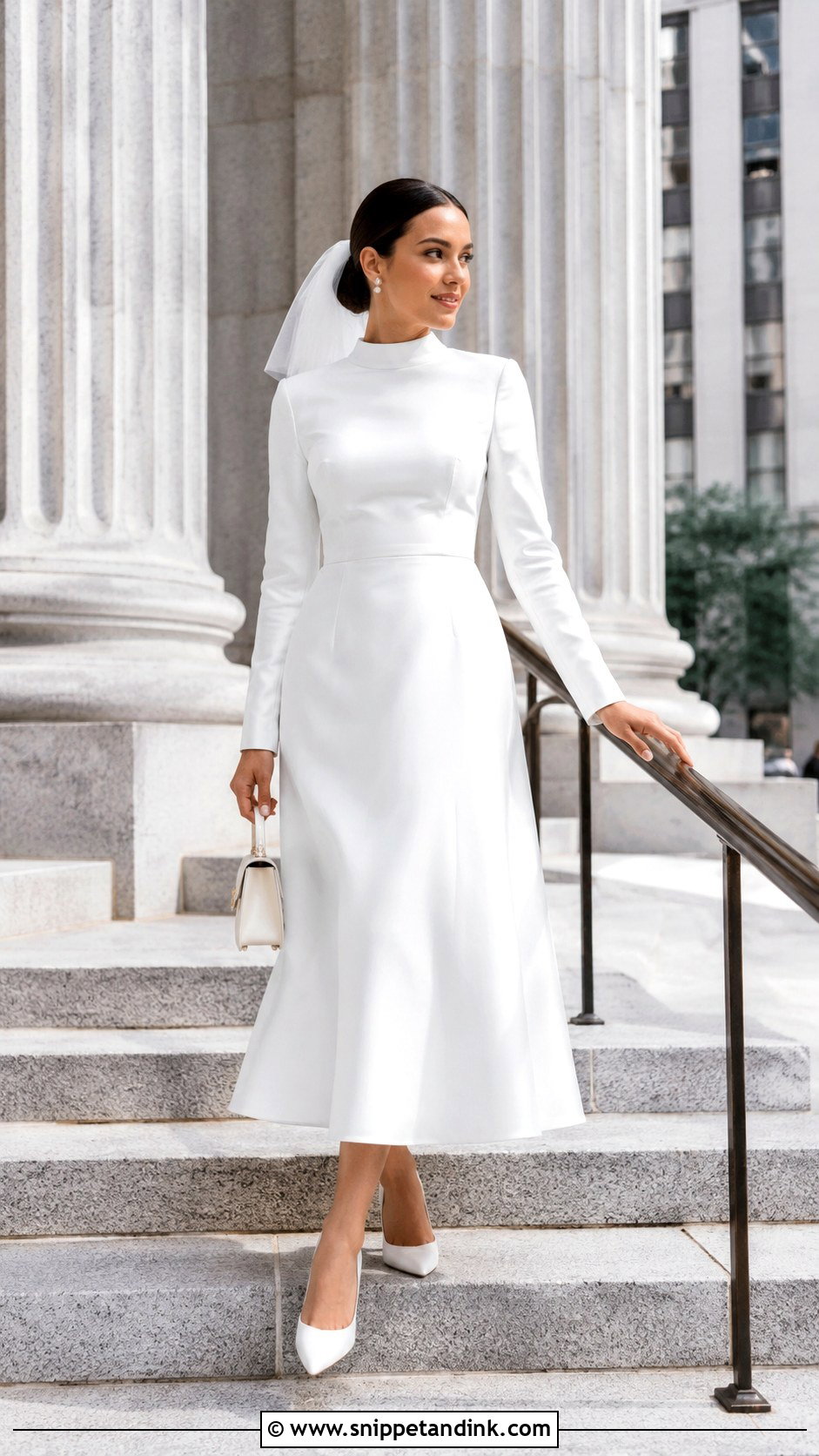
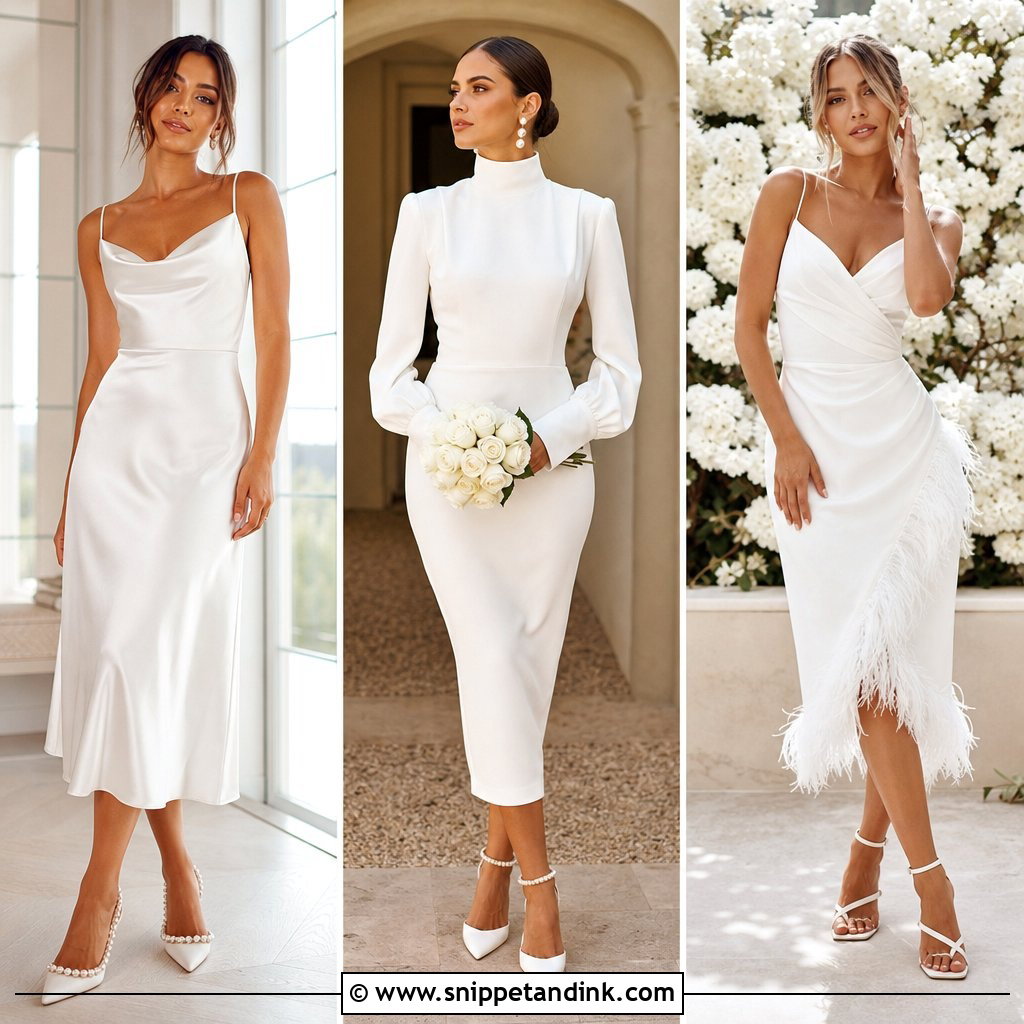
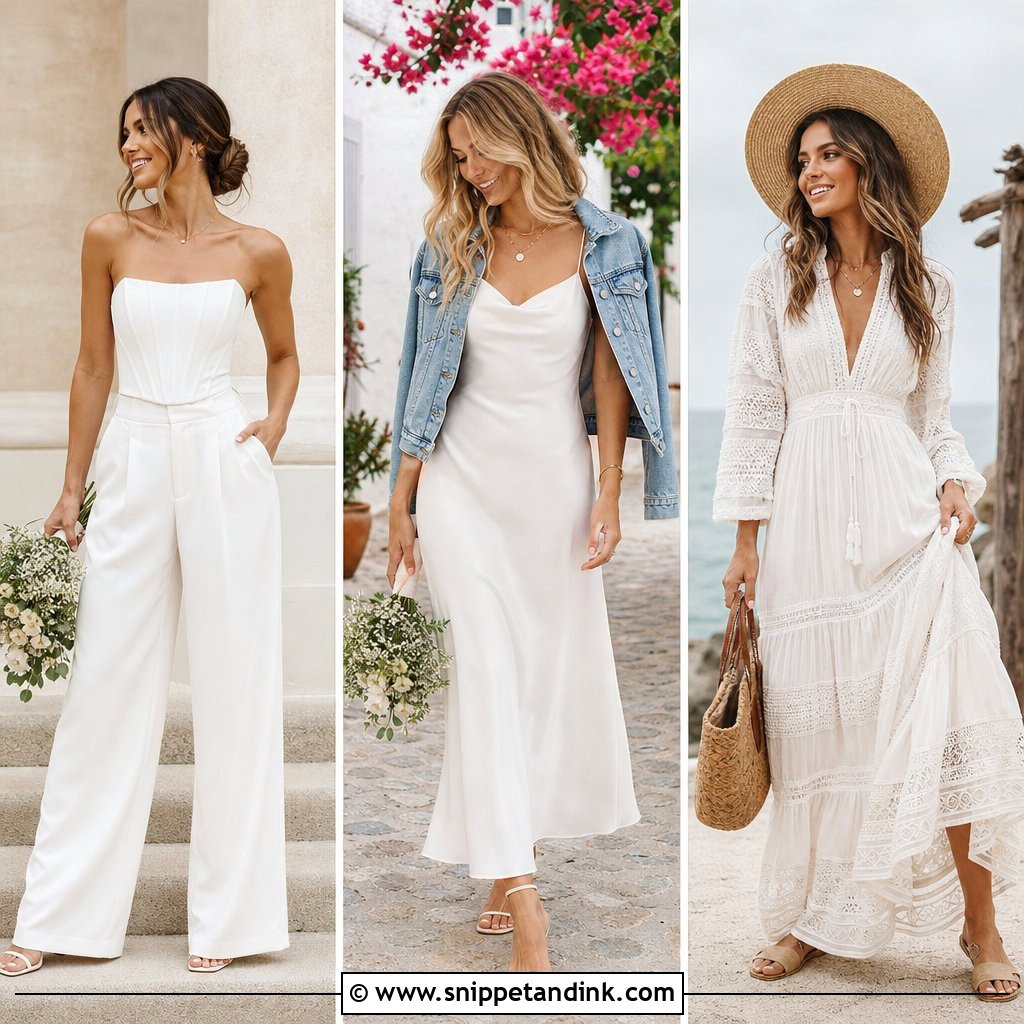
Courthouse weddings suit a knee-length, midi or tea-length dress with long sleeves, a high neck or a tailored jacket. Crepe, satin and lace all read cleanly in photos without looking overdressed for an office setting. You’ll likely sit while waiting and while signing, so pick a fabric that doesn’t crease badly across the lap. White pumps, a small bouquet, pearl earrings and a short veil or headband keep it neat and clearly bridal.
24. Modest Civil Wedding Dress
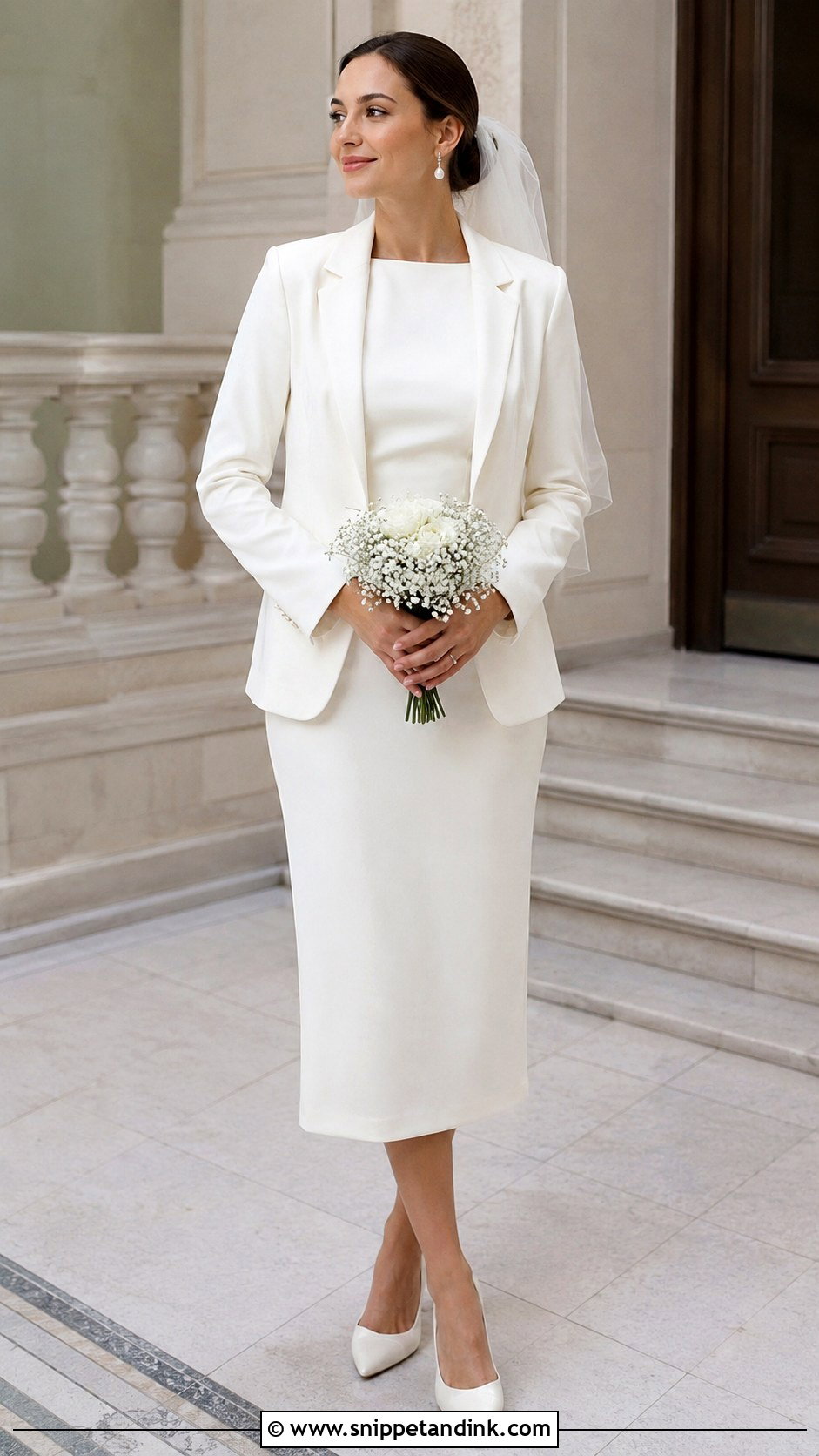
Civil ceremonies call for something elegant but easy: a midi, a tailored column or a simple A-line with sleeves. A high, bateau or square neckline keeps it covered and modern. Soft styles suit lace or chiffon; cleaner tastes suit crepe or satin. A blazer, short veil, pointed heels and small bouquet complete it. This works well for city hall, private legal ceremonies and small gatherings, and it’s often the dress brides wear again.


25. Modest Reception Wedding Dress
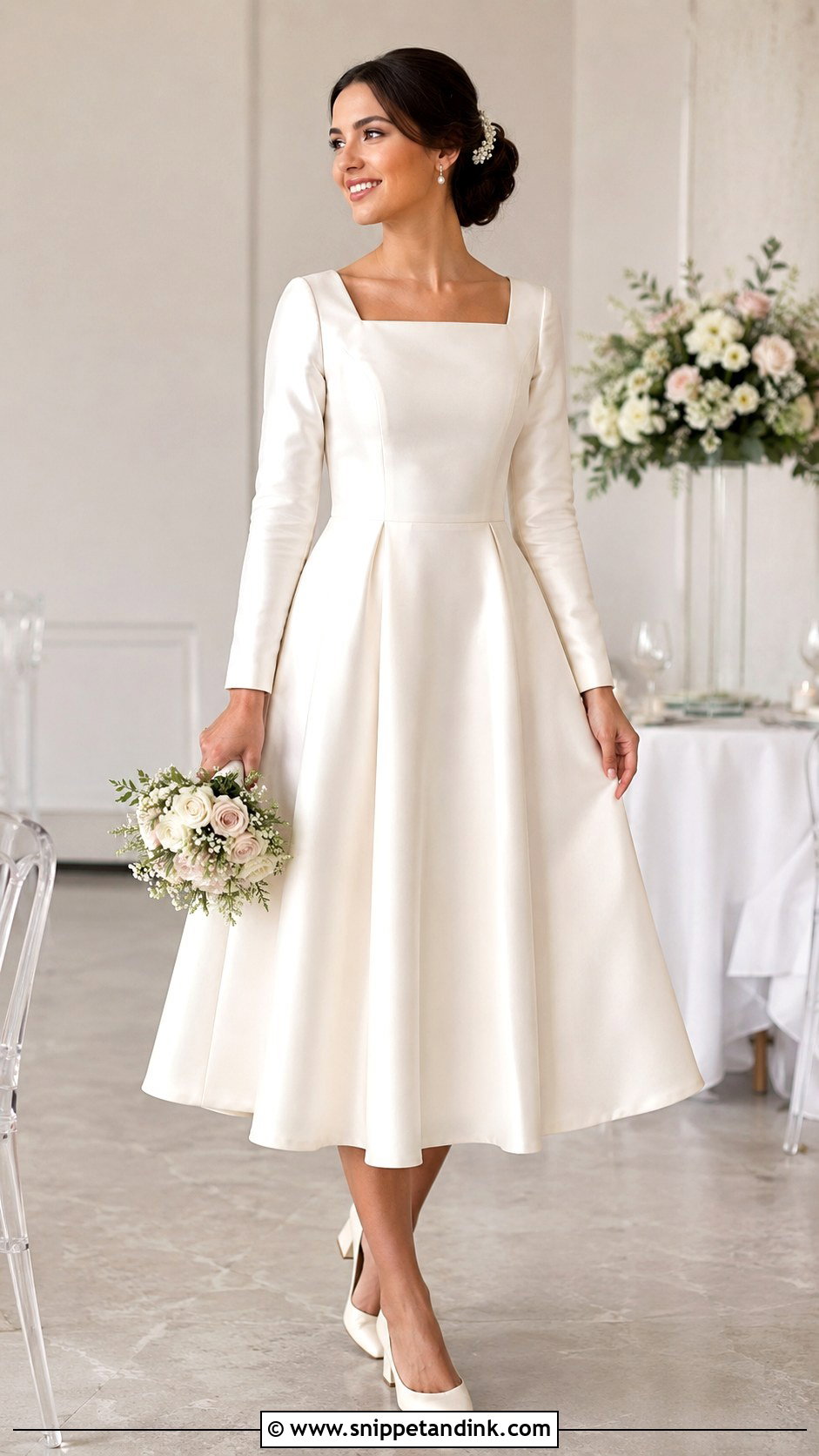
A reception dress gives you a second look that’s easier to dance in. A midi, a tea-length gown or a simple long dress with sleeves and a covered neckline all work, in lightweight satin, crepe or tulle. Contrast is the useful rule: a detailed ceremony gown pairs best with a cleaner reception dress, and a minimal first dress can be followed by pearls, embroidery or soft sleeves. Comfortable heels and a small hair accessory finish it.
Kneeling, Bowing and Sitting on the Floor
Some ceremonies ask the bride to kneel at an altar, bow, sit on cushions or walk around a sacred fire, and a covered gown has to do all of that without riding up or pulling open. Fitted sleeves bind at the elbow when you kneel and reach forward, and a high back neckline can choke slightly when you bow your head.
At the second fitting, act out the ceremony: kneel, rise without using your hands, bow, and sit on the floor if that’s part of it. Watch the hem at the back, since kneeling lifts it more than you expect. Fixes are usually small, a little ease in the sleeve, a gusset under the arm or a slightly lower back collar, but they’re only possible if the problem shows up before the final fitting.
Fit First, Then Fabric, Then Everything Else
Modest wedding dressing goes in many directions, from lace long sleeves and satin A-lines to capes and bridal jackets. In every one, fit decides most of the result, so settle that first, then the fabric, neckline and sleeve, and only then the accessories that suit your venue. A covered dress can be classic, structured or soft without feeling limited. Use any of these looks as a starting point and adjust it to your body, your season and the ceremony you’re actually having.
You'll Like These Ideas:







Leave a Reply