
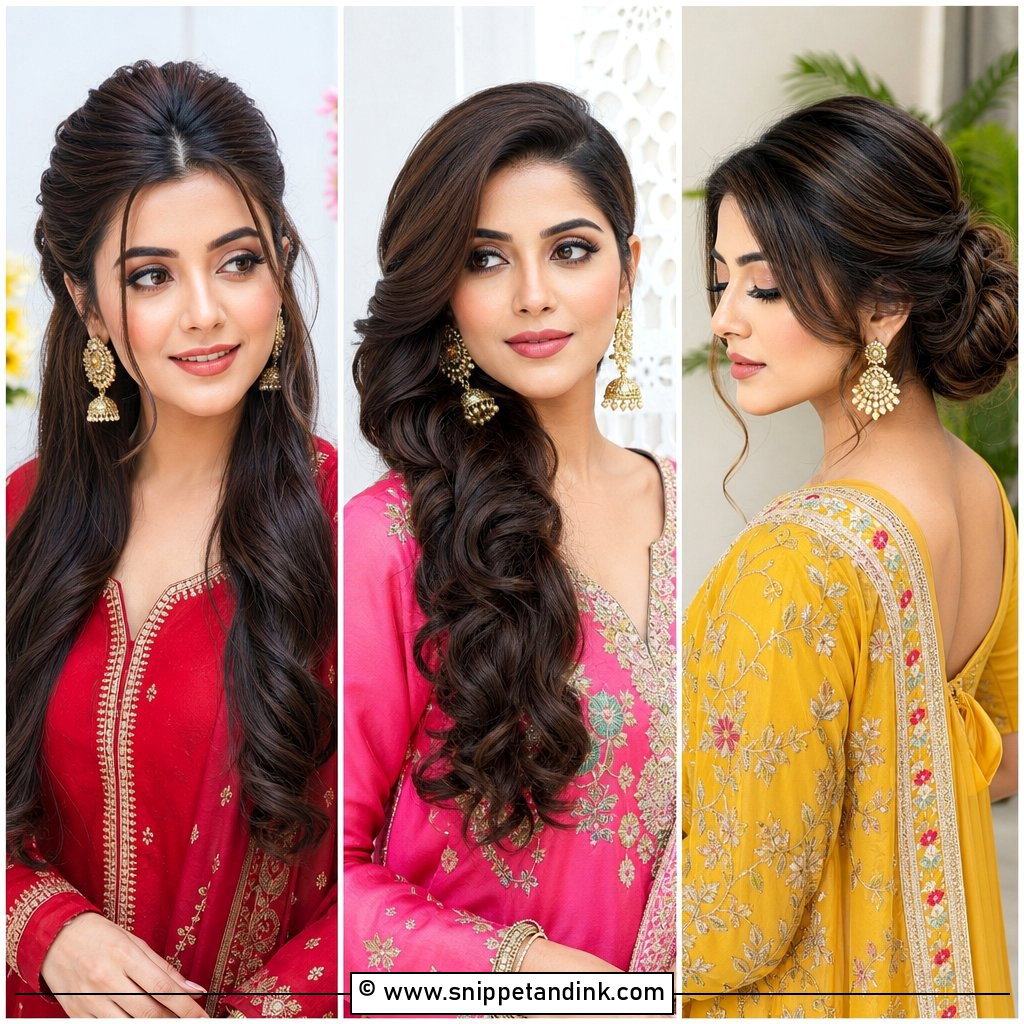
At an Indian wedding, hair does a lot of quiet work. It has to anchor a dupatta, give a maang tikka, matha patti or heavy jhumka something to sit against, and survive hours of sitting, bending for blessings and dancing at the baraat. When I plan a look, I start from the outfit and the jewelry rather than a photo, because a style that suits a light anarkali can collapse under a net dupatta. The fifteen ideas below cover buns, braids and open hair, and they work for sisters, bridesmaids and guests as much as for the bride.
Your Dupatta and Jewelry Decide More Than the Photo Does
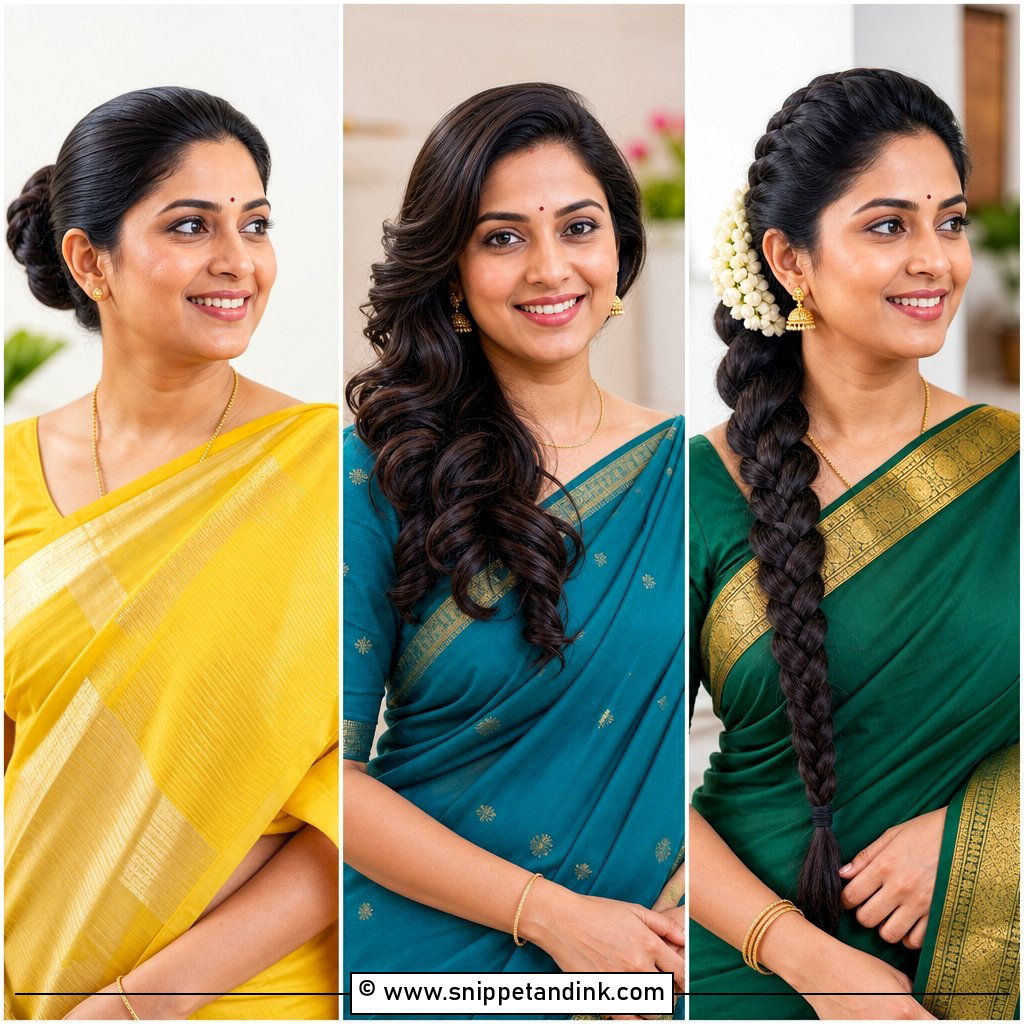
Before I pick up a comb, I ask where the dupatta or pallu is going to sit. A bride with a dupatta pinned over her head needs a solid base at the back, so a bun, juda or braided bun. A guest usually drapes hers over one shoulder, which frees you to wear open curls or a ponytail. With a saree, the pallu sits over the left shoulder, so a side braid looks tidier falling to the right. Heavy jhumkas and chandbalis catch in loose curls all evening, so if your earrings are large, I tuck the hair behind the ears or put it up.
Then I look at the hair itself, because the same style behaves very differently on different heads.
Thick, long hair
It holds curls well but is heavy, and a high bun on thick hair can pull for hours. I sit buns lower and braid a section underneath to take some bulk. Blow-dry it completely the day before; thick hair left damp inside a bun stays damp all day and loosens.
Fine or layered hair
Shorter layers poke out of braids, so they need pinning in as you go. A juda or full bun will need padding, and a long braid will need a clip-in weft. Curl smaller than you think, because fine hair drops fastest.
Curly or wavy hair
Work with the pattern. A defined curly bun or a braid holds far better than curls that were straightened and reset, which can revert in a humid hall. Tell your stylist your texture when you book, so she brings the right products.
1. Indian Bridal Bun With Gajra
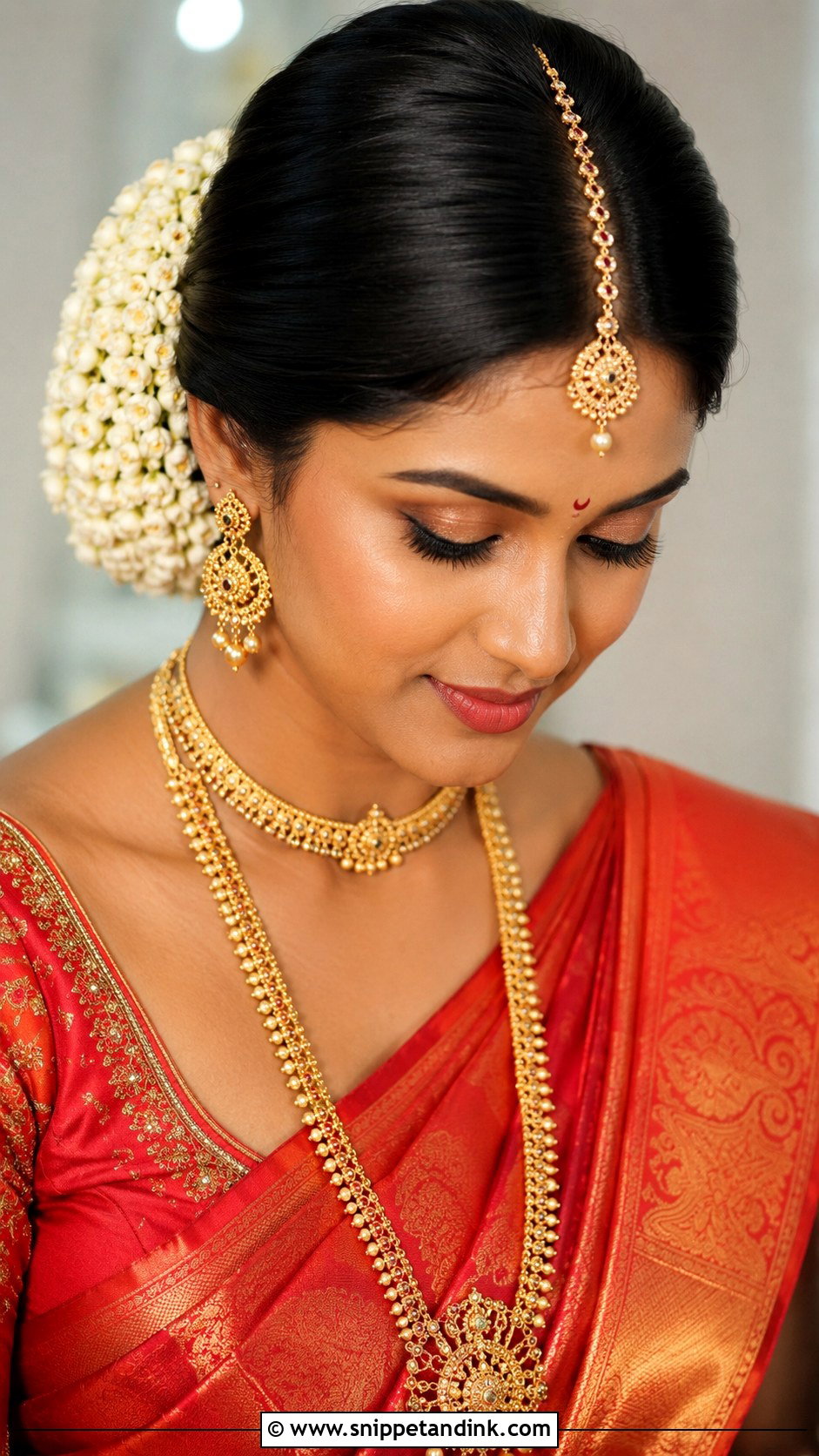
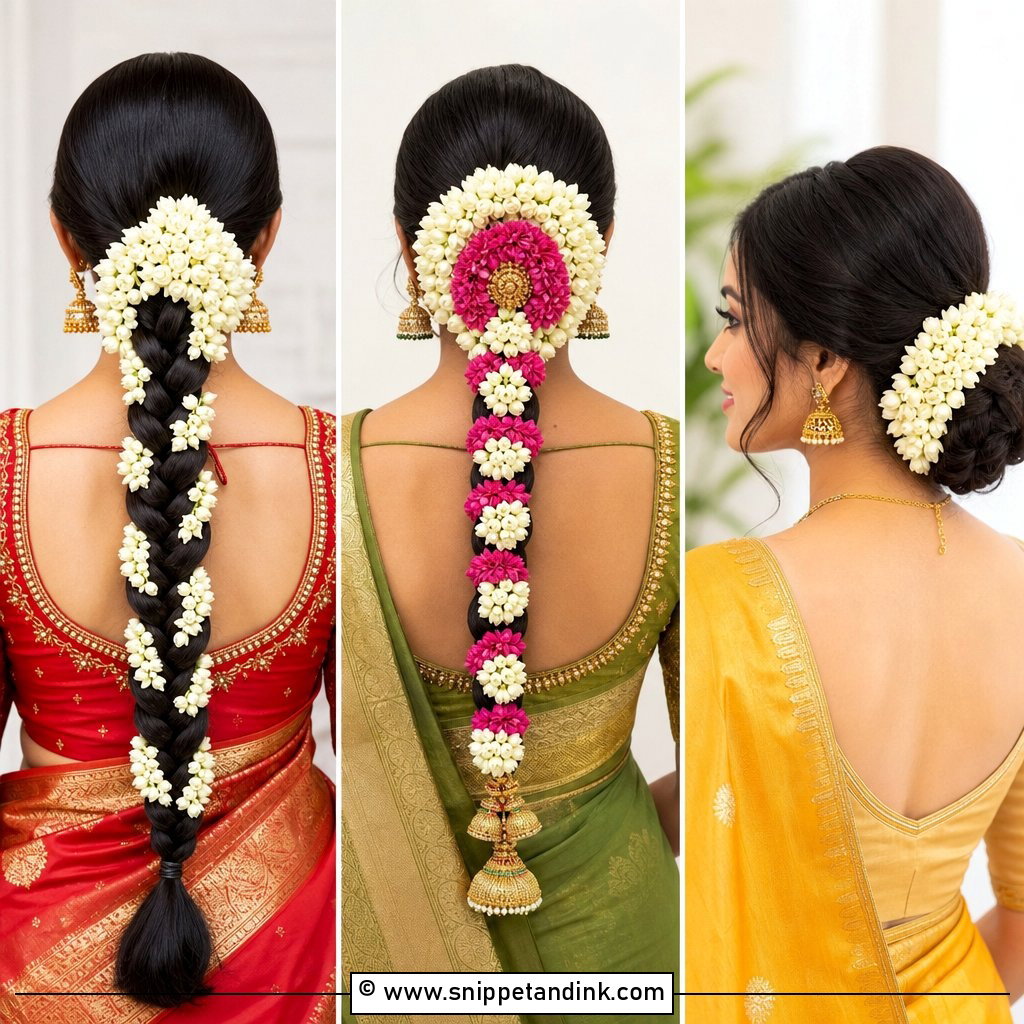
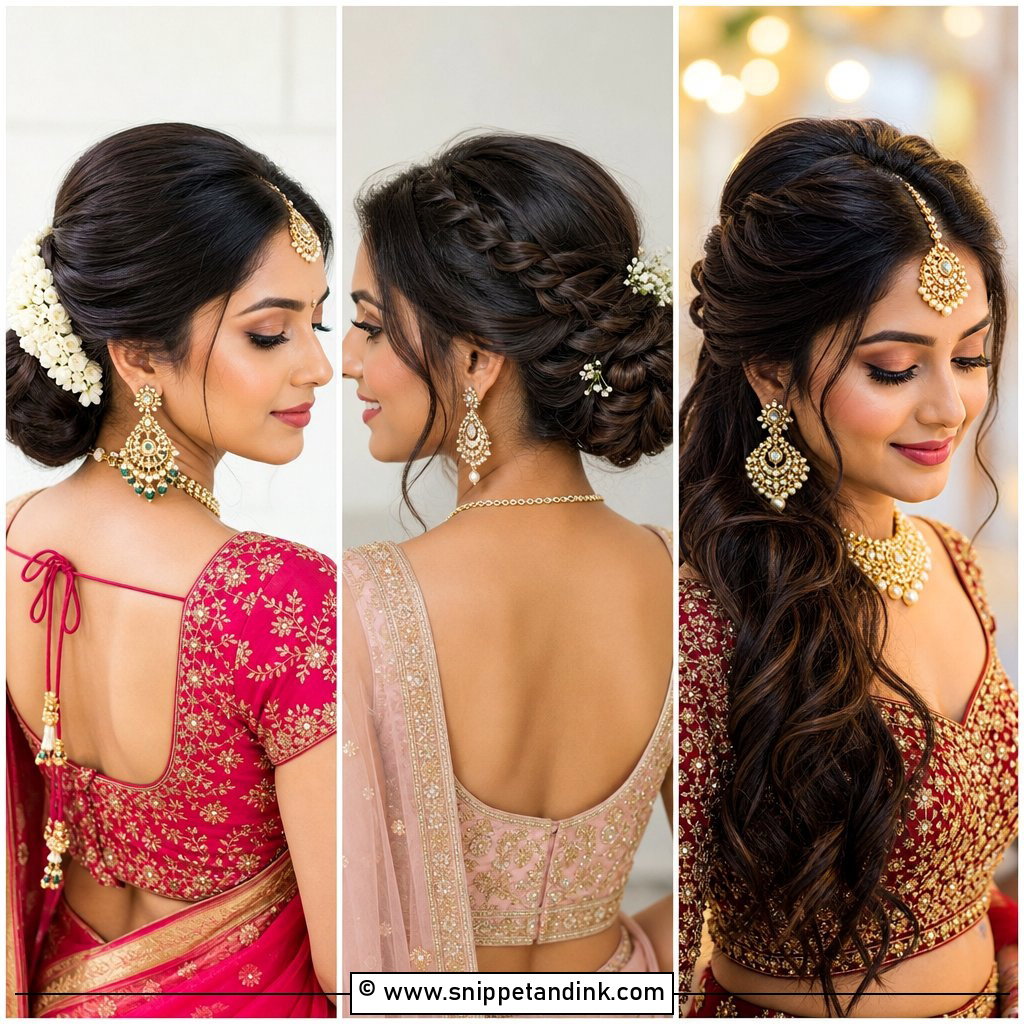
An Indian bridal bun with gajra is the style I’m asked for most at morning ceremonies, and it earns its place. I build it on a tight base ponytail or a crisscross of bobby pins, because three or four strings of jasmine weigh more than people expect. Sitting it low at the nape suits a dupatta; a little higher gives lift at the crown but can push a head-pinned dupatta forward. I pin the gajra with U-pins through the thread, never through the flowers, and add it last so the buds aren’t crushed while you dress. A sleek center part keeps the maang tikka straight.
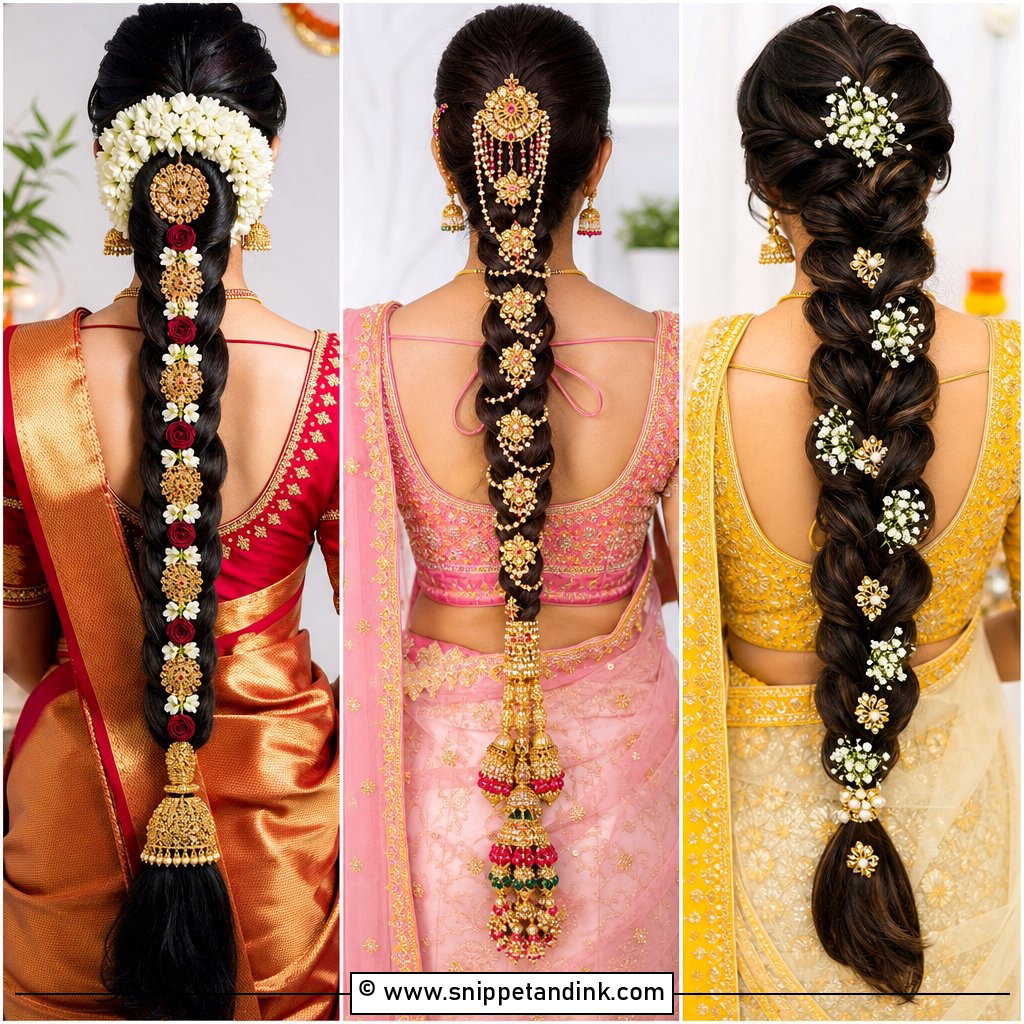
2. South Indian Bridal Braid
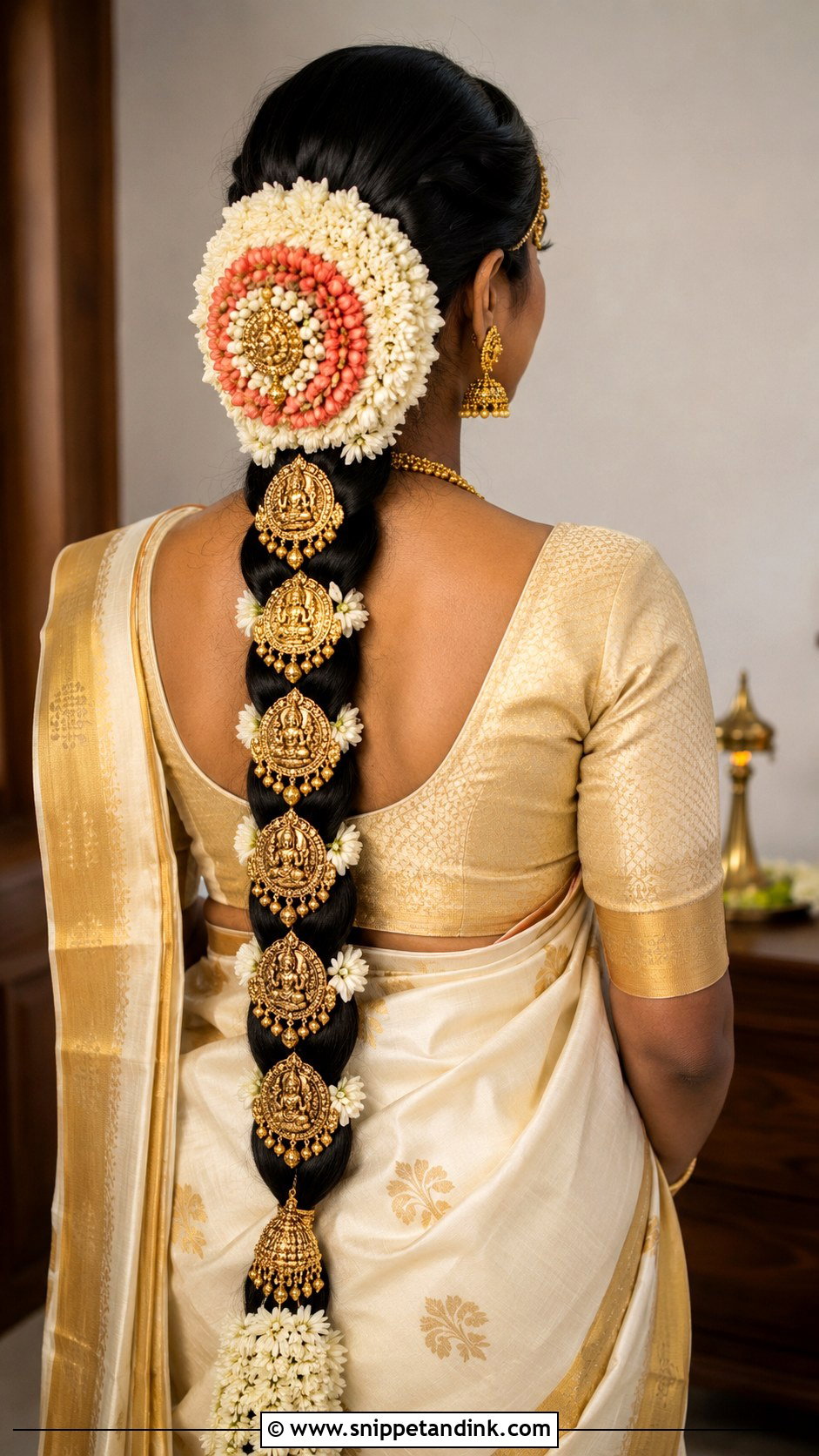
Done properly, a South Indian bridal braid is built for the back view, which is what most of the hall sees during a long muhurtham. It’s a long structured plait dressed with flowers or a poola jada, and the jada’s gold pieces are clipped or stitched onto the braid. That weight twists a thin plait sideways, so I add padding or a braid extension even for brides with decent length; it keeps the jewelry lying flat down the spine. Expect a clean middle part and a maang tikka in front. Once it’s secured, it barely moves through the rituals.
3. Indian Wedding Low Bun
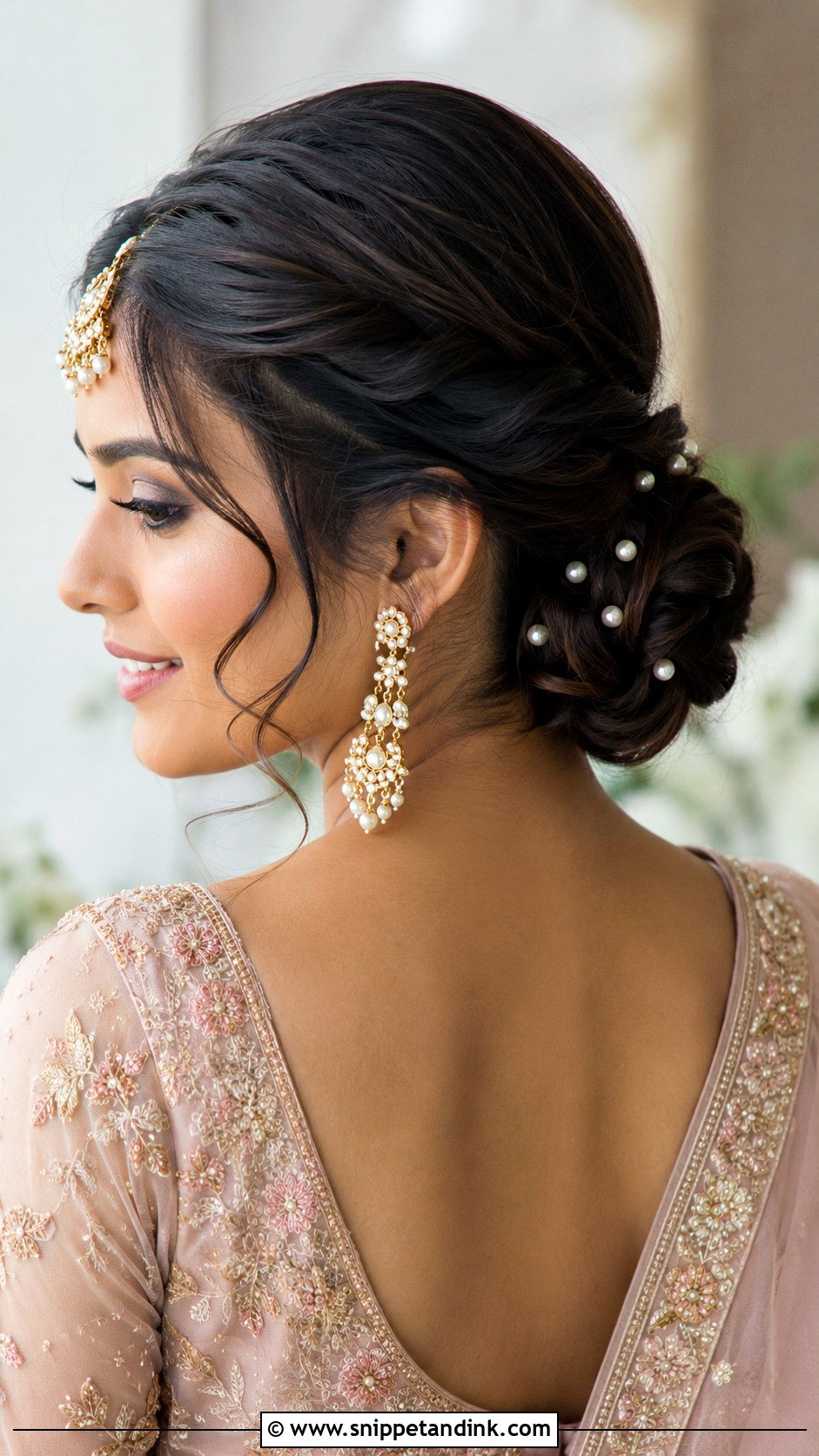
A low bun sits close to the nape, so it slides under a dupatta without lifting it and leaves a deep-back blouse fully on show. I’d pick it over a high bun for anyone sitting against a chair back for hours, since a high bun gets knocked and loosened. Smooth sides read classic, while a couple of twists along the sides add texture without much extra pinning. A few face-framing pieces at the front soften a round or square jaw. Pearl pins or one gajra wrap are plenty here.
4. Indian Bridal Juda Hairstyle
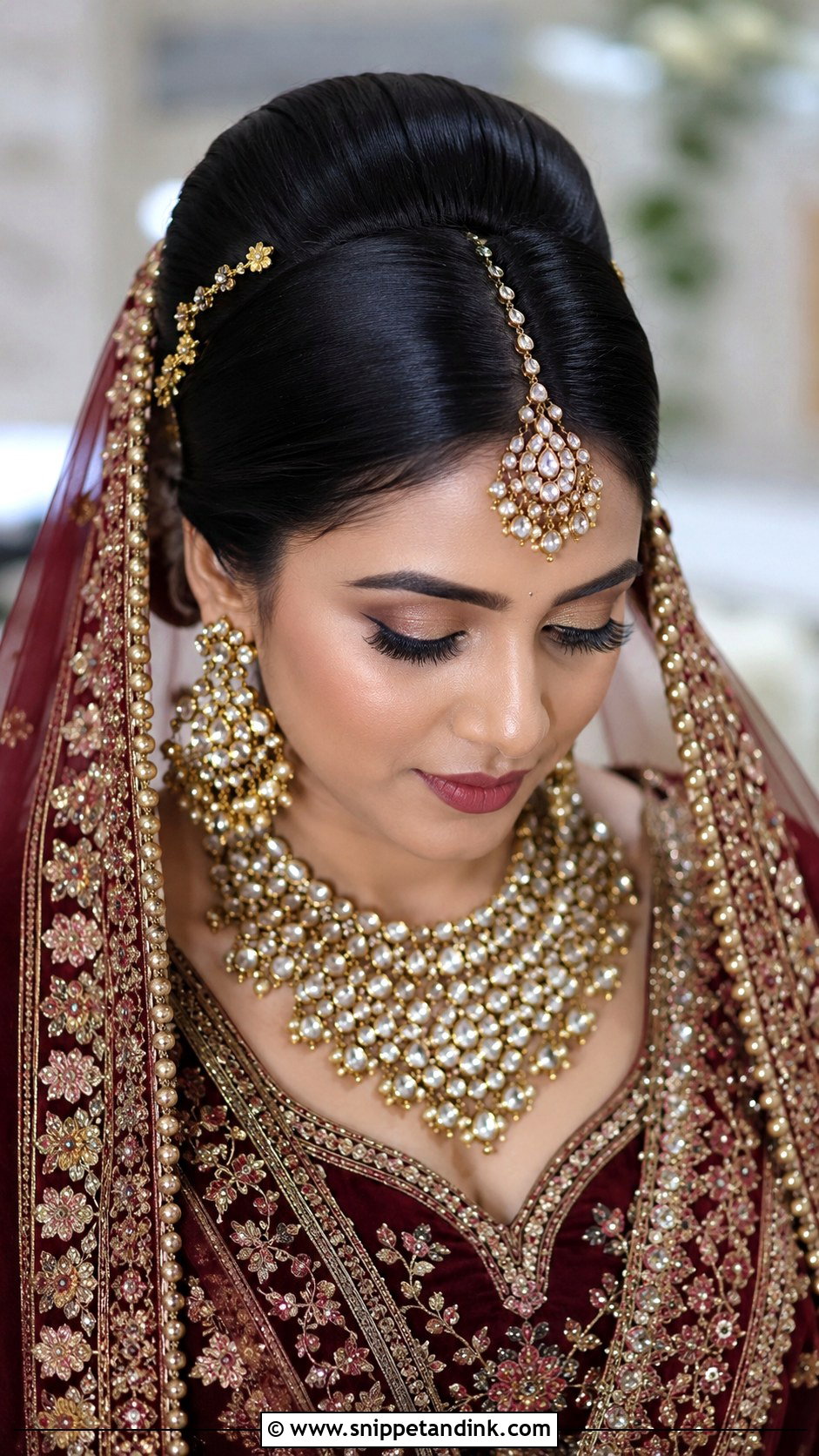
The juda is the fuller, sculpted cousin of the bun. Most of that roundness comes from a donut, padding or backcombing underneath, because very little natural hair holds that shape on its own. I like it under a heavy bridal dupatta for exactly that reason: the padding gives me something solid to pin into. Pins pushed into loose hair are how a dupatta creeps backwards by the second hour. Wrap it in flowers or gold pins or leave it smooth, and keep the front sleek unless you want softer waves near the face.
5. Indian Bridal Half Up Hairstyle
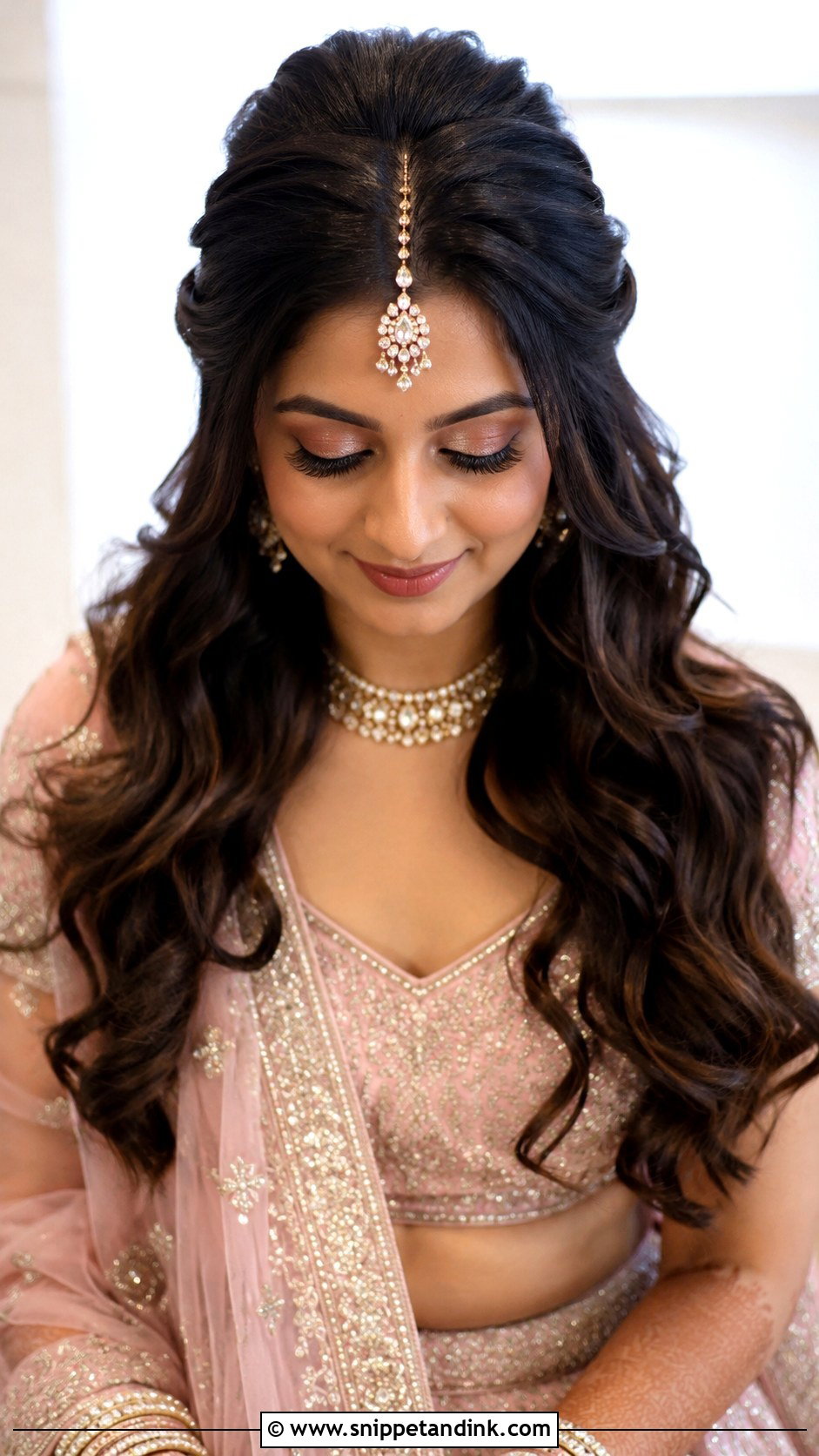
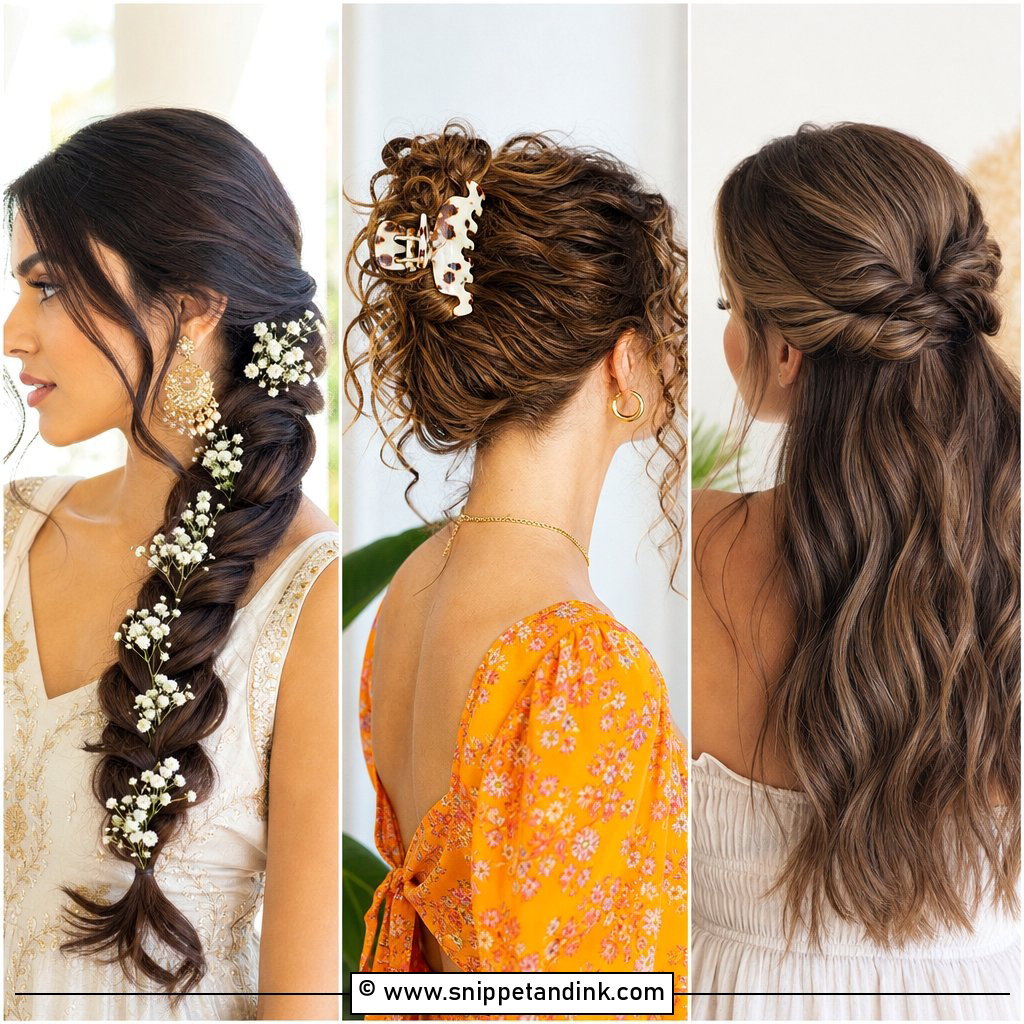
Half-up gives you open hair with a pinned top section that can still hold a tikka chain or a veil. I lift the crown with a little backcombing, then lock it with a small braid or twist across the back, because a plain clipped section slides the moment a dupatta drags on it. The lower lengths get waved. For the main ceremony with a heavy dupatta I’m cautious about this one. It comes into its own at the sangeet, the engagement or a reception, with decorative pins hiding the anchor point.
6. Indian Wedding Open Curls
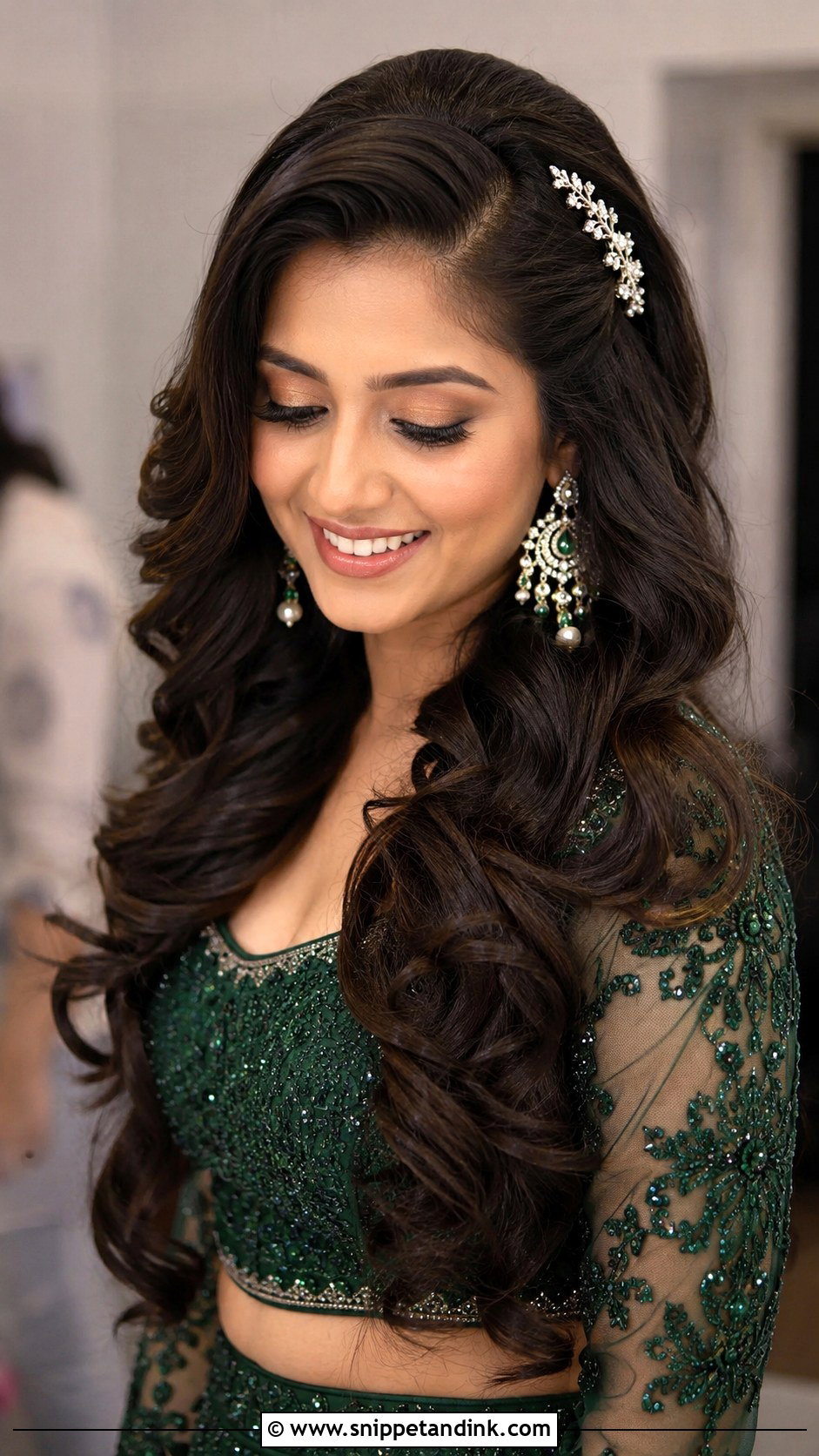
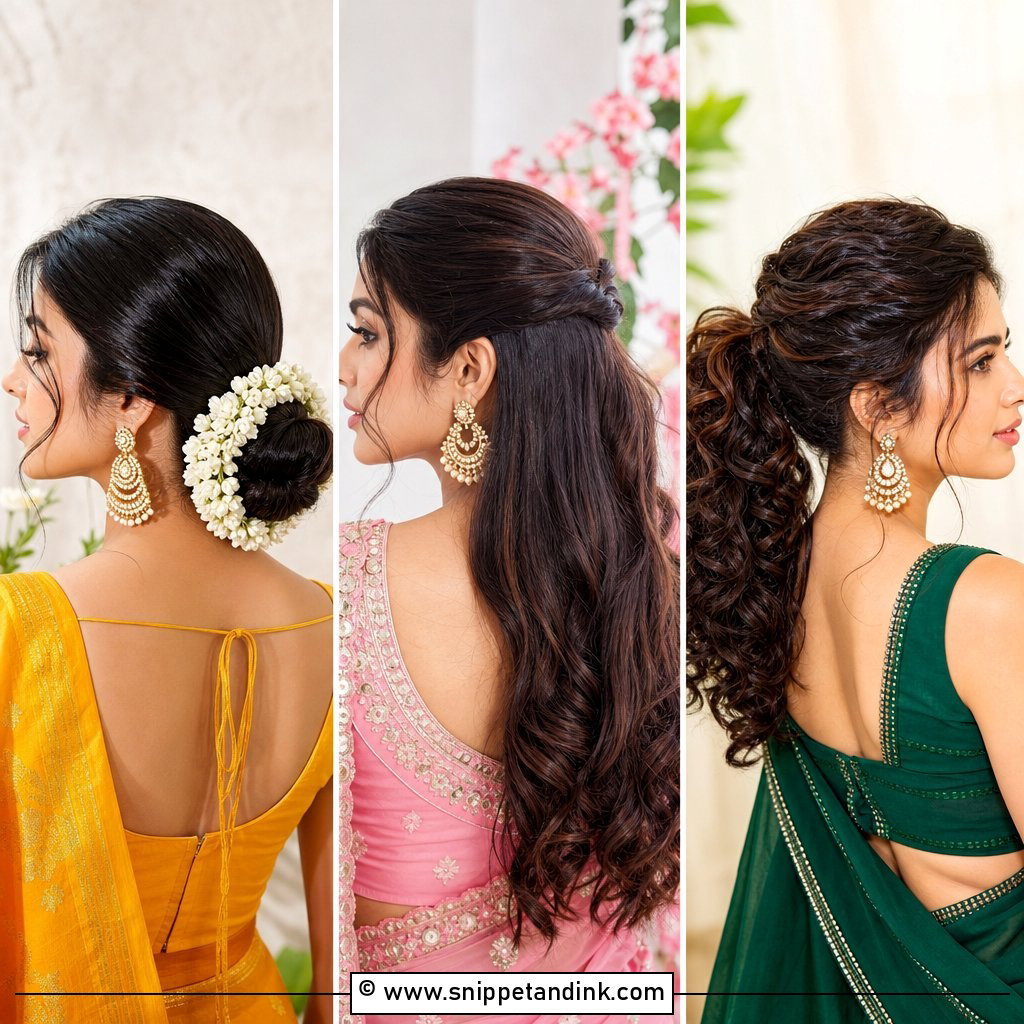
Open curls are the reception favourite, and they depend more on the foundation than on the iron. I set volume at the crown first and keep the front smoother so jewelry sits flat, then curl. Big brushed curls give fullness, but in humid weather I curl smaller and brush out less, since every curl relaxes a size or two by evening. A center part suits a maang tikka; a deep side part looks more dramatic but pushes the tikka off-center. I pin the front pieces lightly behind the ears so they don’t stick to lip gloss.
7. Indian Wedding Side Braid
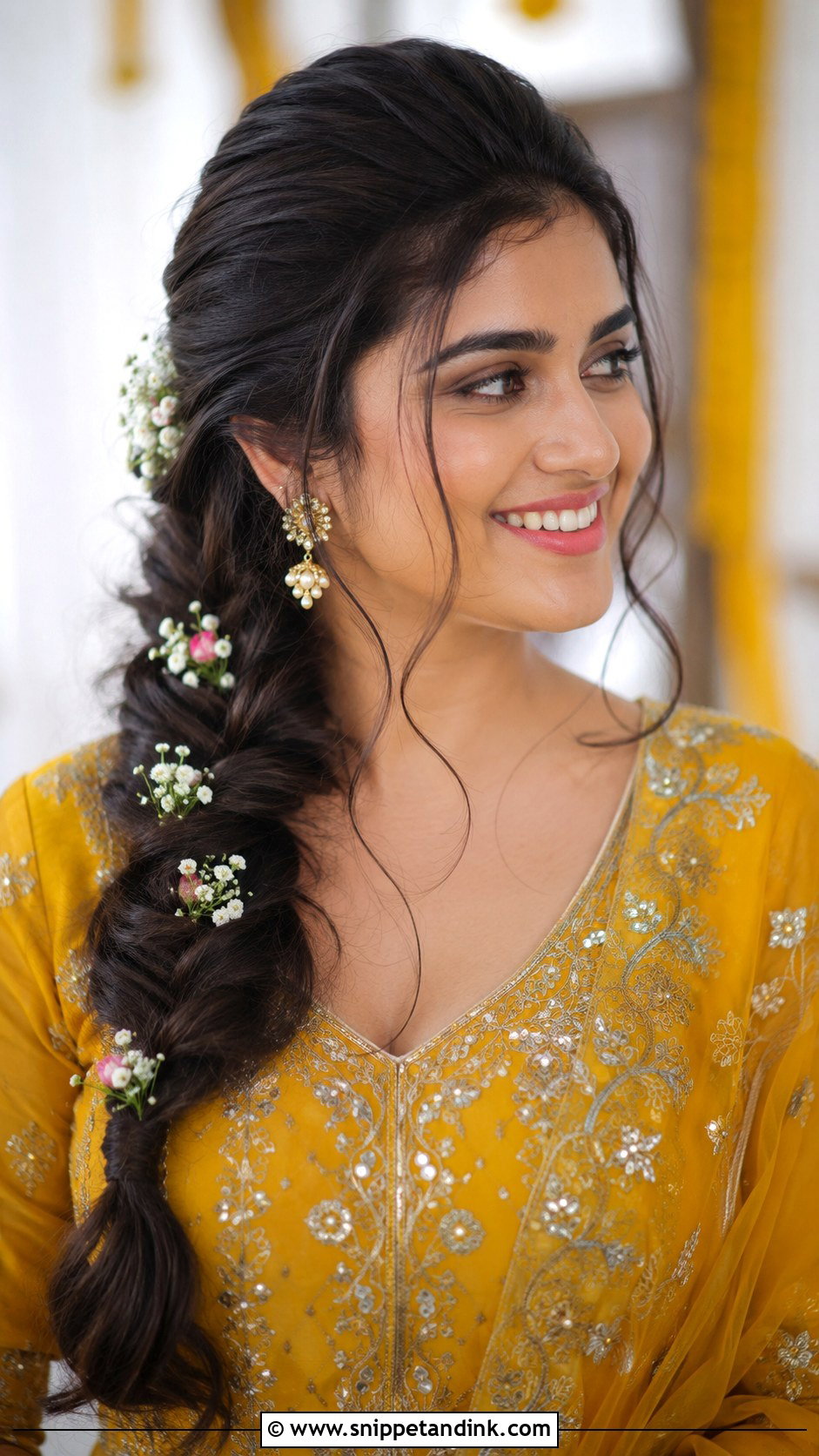
A side braid puts the detail where the camera usually is, over one shoulder and in front. It’s handy at mehendi and haldi because it keeps hair away from wet henna and turmeric paste. Fishtail, a loose three-strand or a textured plait with tucked flowers all work, but length matters: on hair shorter than mid-back the braid ends high on the chest and looks stubby, so I add a clip-in weft. Lift the crown slightly before you start braiding, otherwise the side of the head looks flat in photos.
8. Indian Bridal Floral Bun
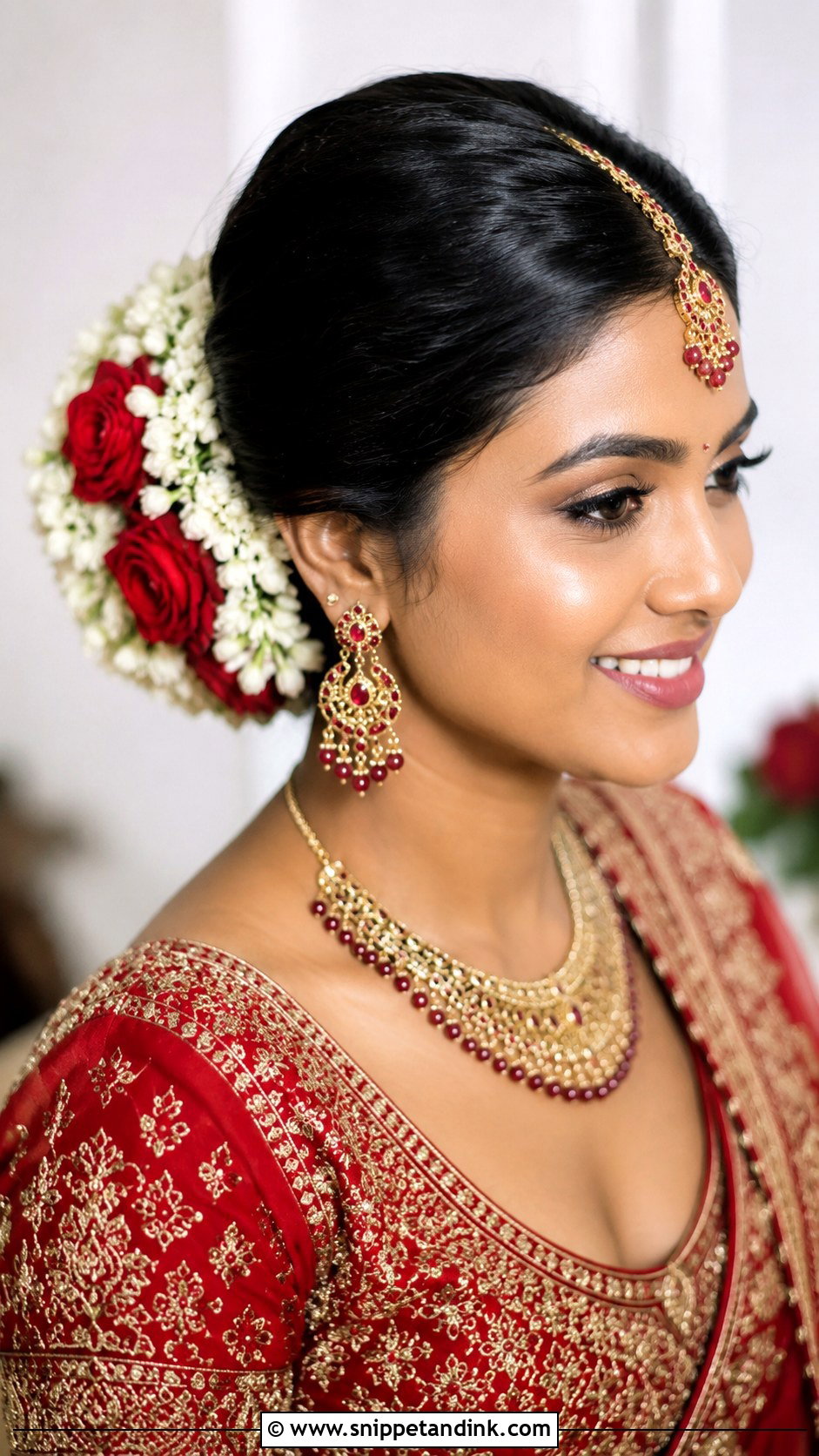
An Indian bridal floral bun goes further than a single gajra string, mixing roses, jasmine, baby’s breath or orchids around the bun. The flowers must be light. A ring of full-headed roses drags a bun downward over a few hours, so I place heavier blooms at the base where the pins are strongest and keep small buds higher up. Orchids and baby’s breath cope with heat far better than open roses. It gives a finished back view for the long stretch the bride spends seated at the mandap.
9. Indian Wedding Messy Bun
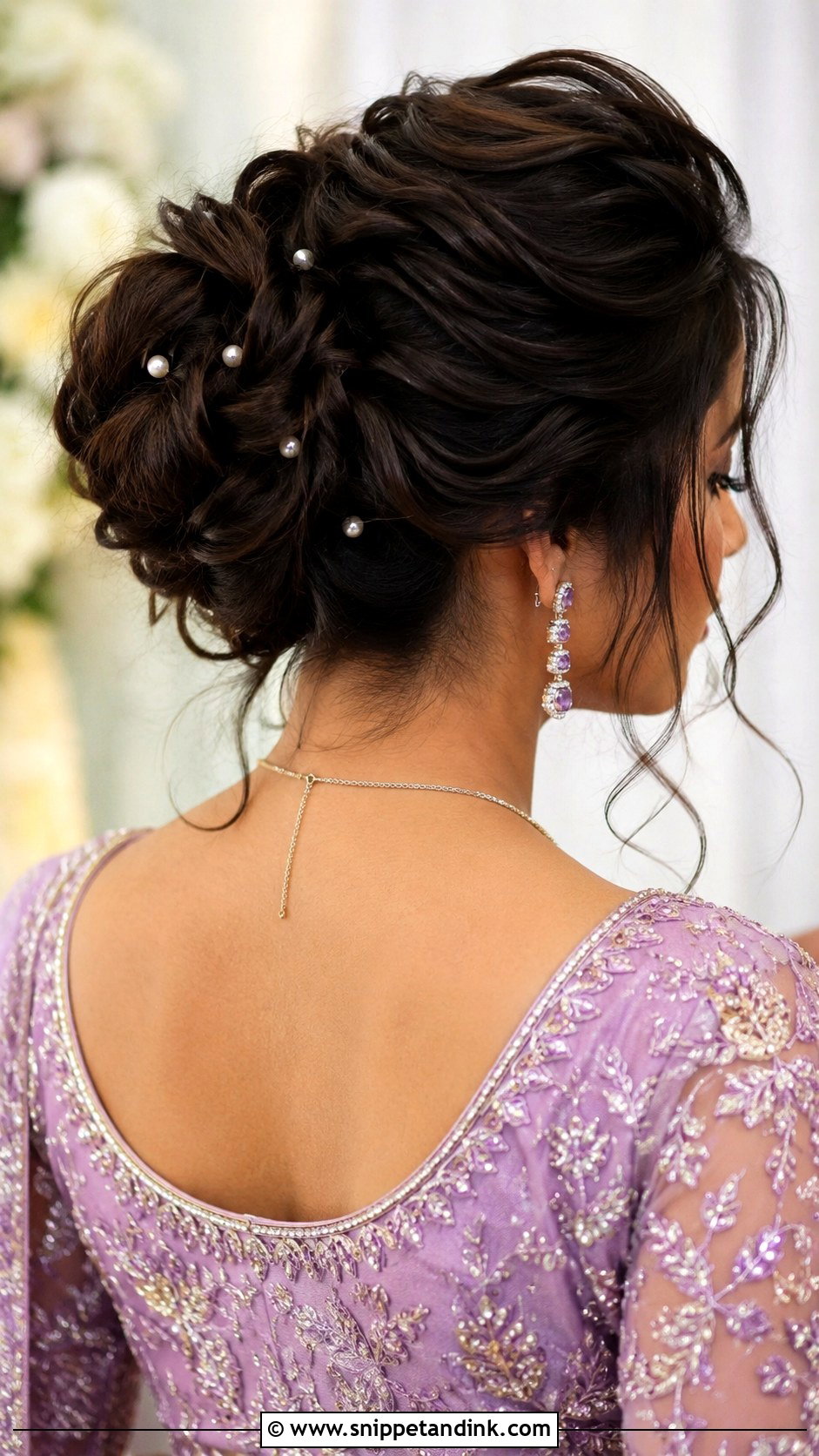
A messy bun is never actually messy. I build it on a secure base, pancake the sections for width and then pull out a few chosen strands at the face; random flyaways look like an accident in close-up photos. It’s relaxed enough for mehendi or sangeet and still holds a lightweight dupatta. Fine, silky hair is the hardest to keep in this texture, so expect your stylist to prep with texture spray or a quick curl first. Small flowers or pearl pins suit it better than anything heavy.
10. Indian Bridal Sleek Bun
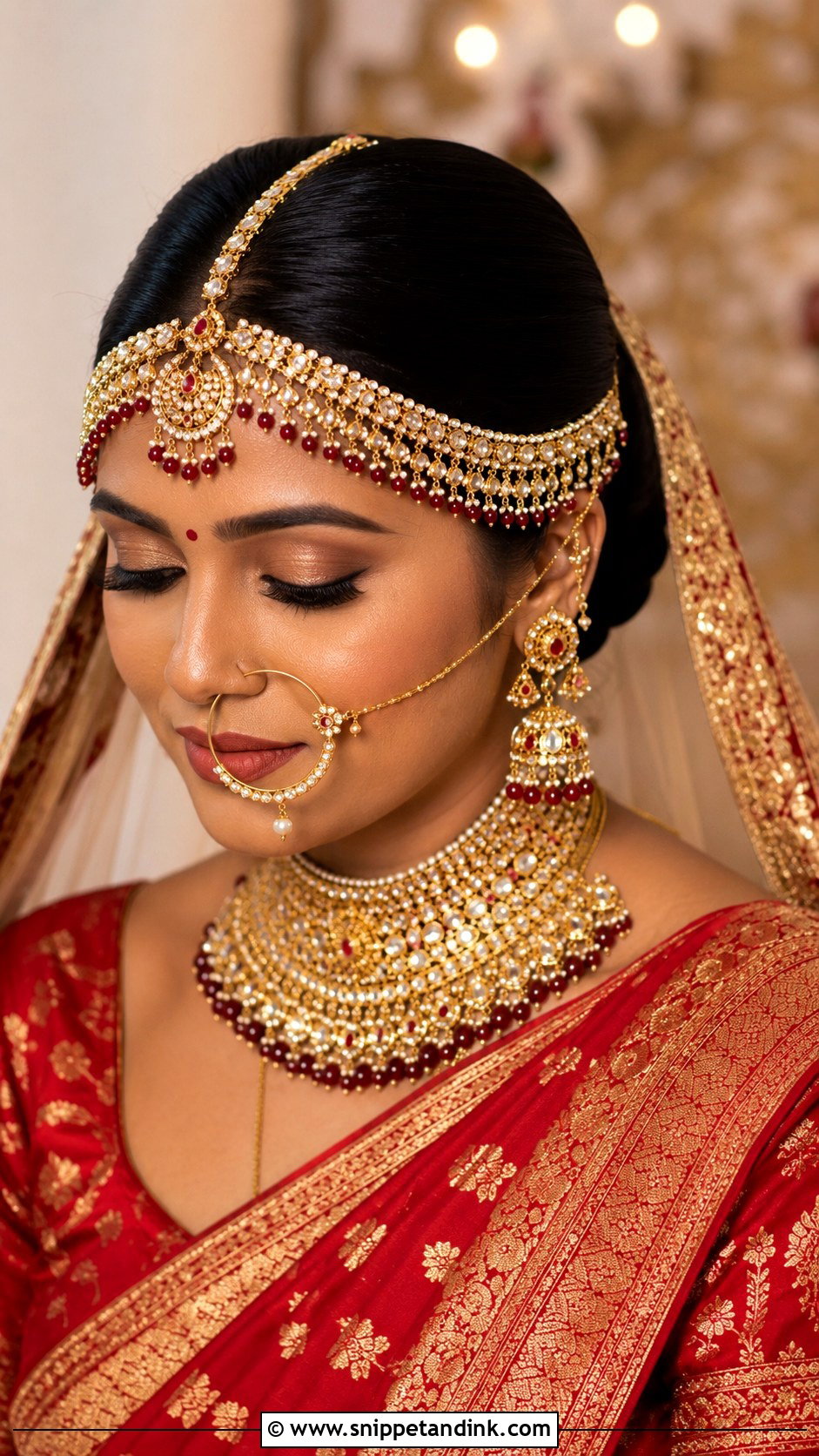
An Indian bridal sleek bun is a straight middle part, smooth sides and a rounded bun with nothing left loose. I recommend it when the jewelry is the point: a matha patti, bold earrings, a heavy dupatta. It needs almost no touching up through a long ceremony. The risk is shine. Too much serum on the sides reads as greasy under flash, so I use a drop on the lengths and smooth the hairline with gel and a toothbrush instead.
11. Indian Bridal Braided Bun
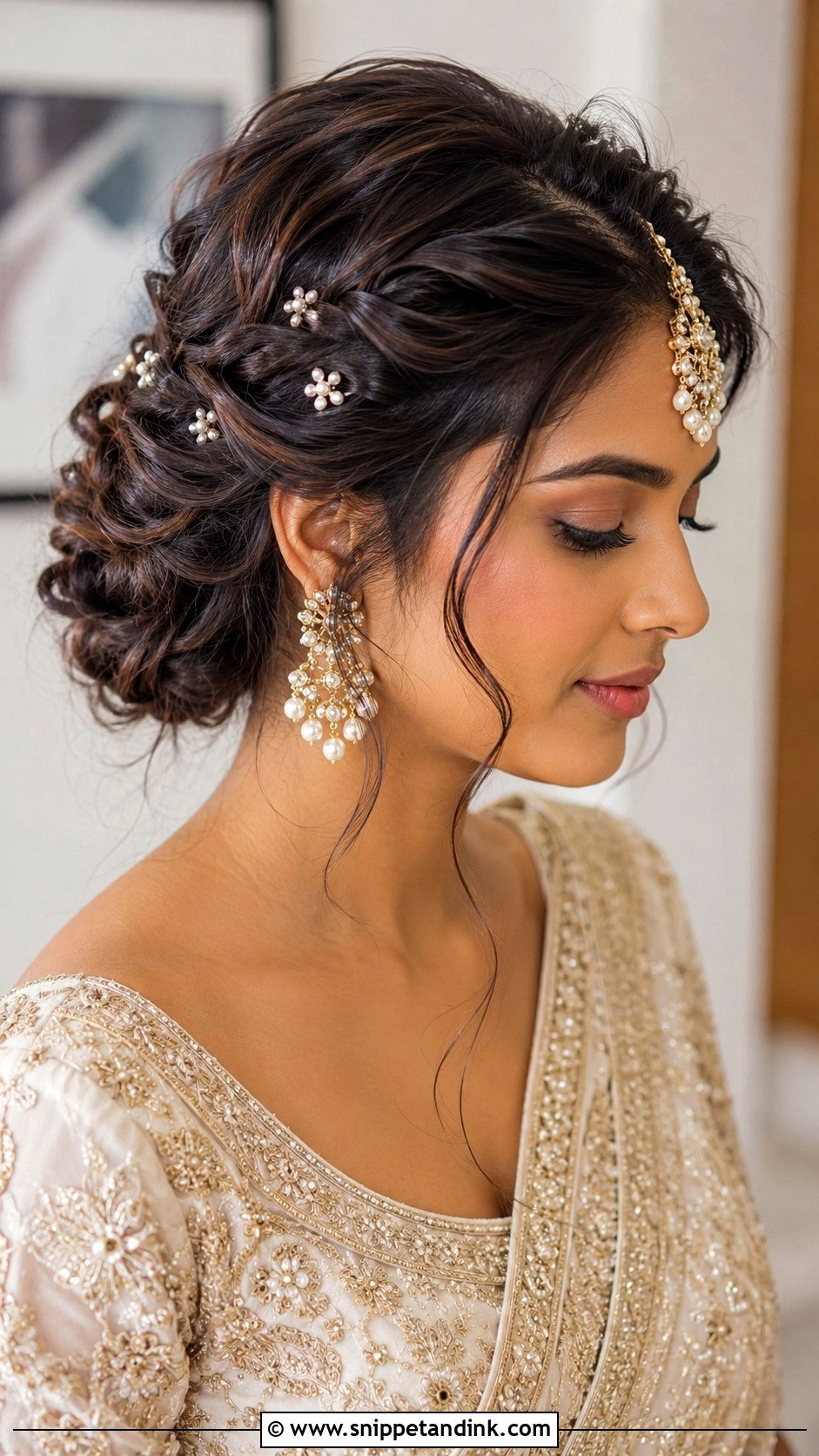
Braiding into a bun gives you the stability of a juda with detail on every side. Side braids can wrap into the bun, a braid can run over the crown, or a whole plait can coil into a round juda. Because the braids lock the sections, this is one of the strongest bases I know for dupatta pinning; the pins grip the braid instead of sliding through smooth hair. Pearl pins and small flowers tuck neatly into the gaps between the braid loops. It sits comfortably with a lehenga, a saree or a fusion outfit.
12. Indian Wedding Ponytail Hairstyle
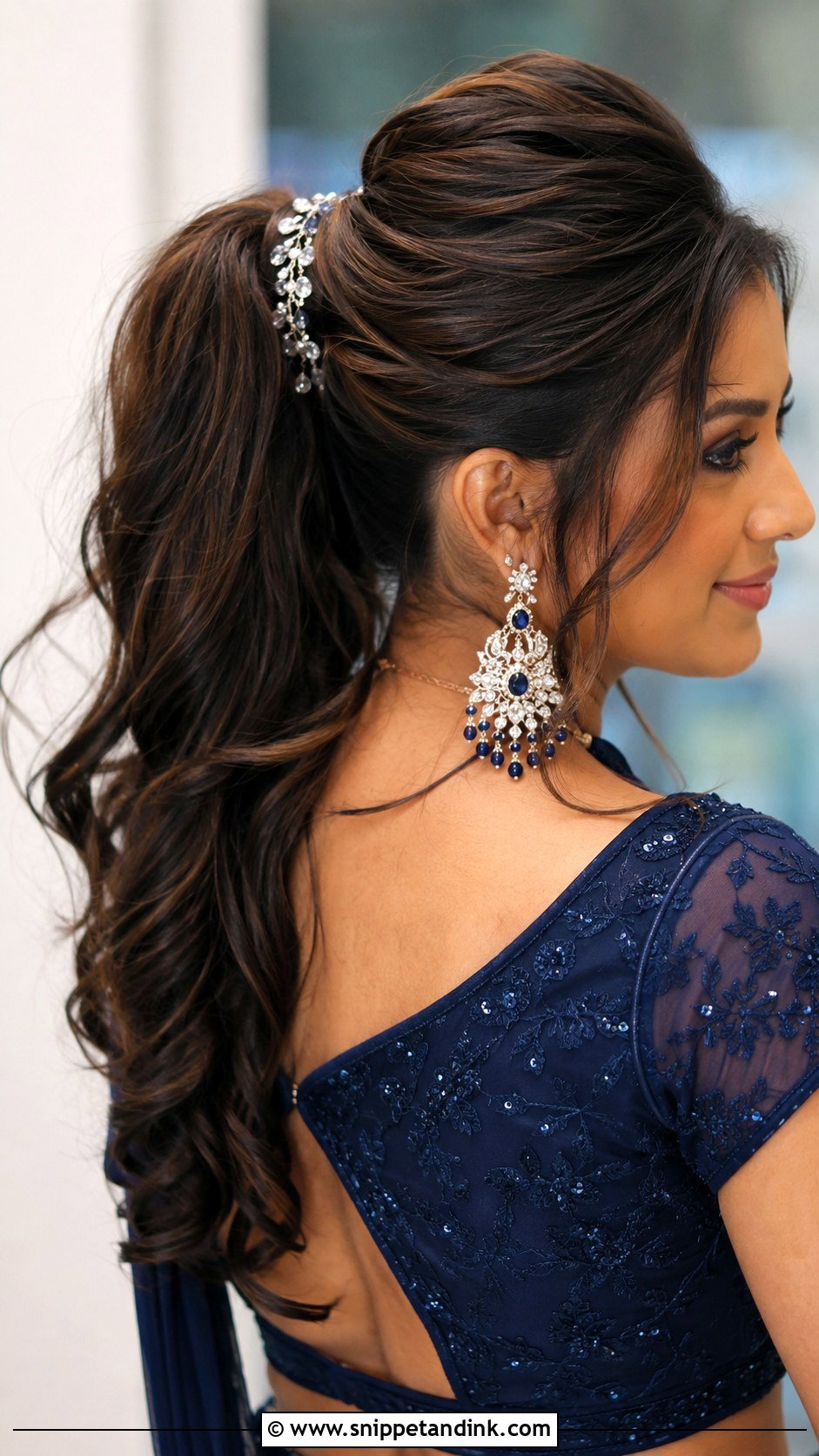
I treat the ponytail as a sangeet and reception look rather than a ceremony one, because a dupatta has nowhere to anchor on it. It can be high and sleek or low with waves, with volume built at the crown. I wrap a section of hair round the elastic, pin it underneath and add a jeweled pin at the base. High ponytails pull on the scalp, so if you’re dancing for hours or get tension headaches, sit it a little lower. Waves through the lengths make it look fuller and keep it moving.
13. Indian Bridal Crown Braid
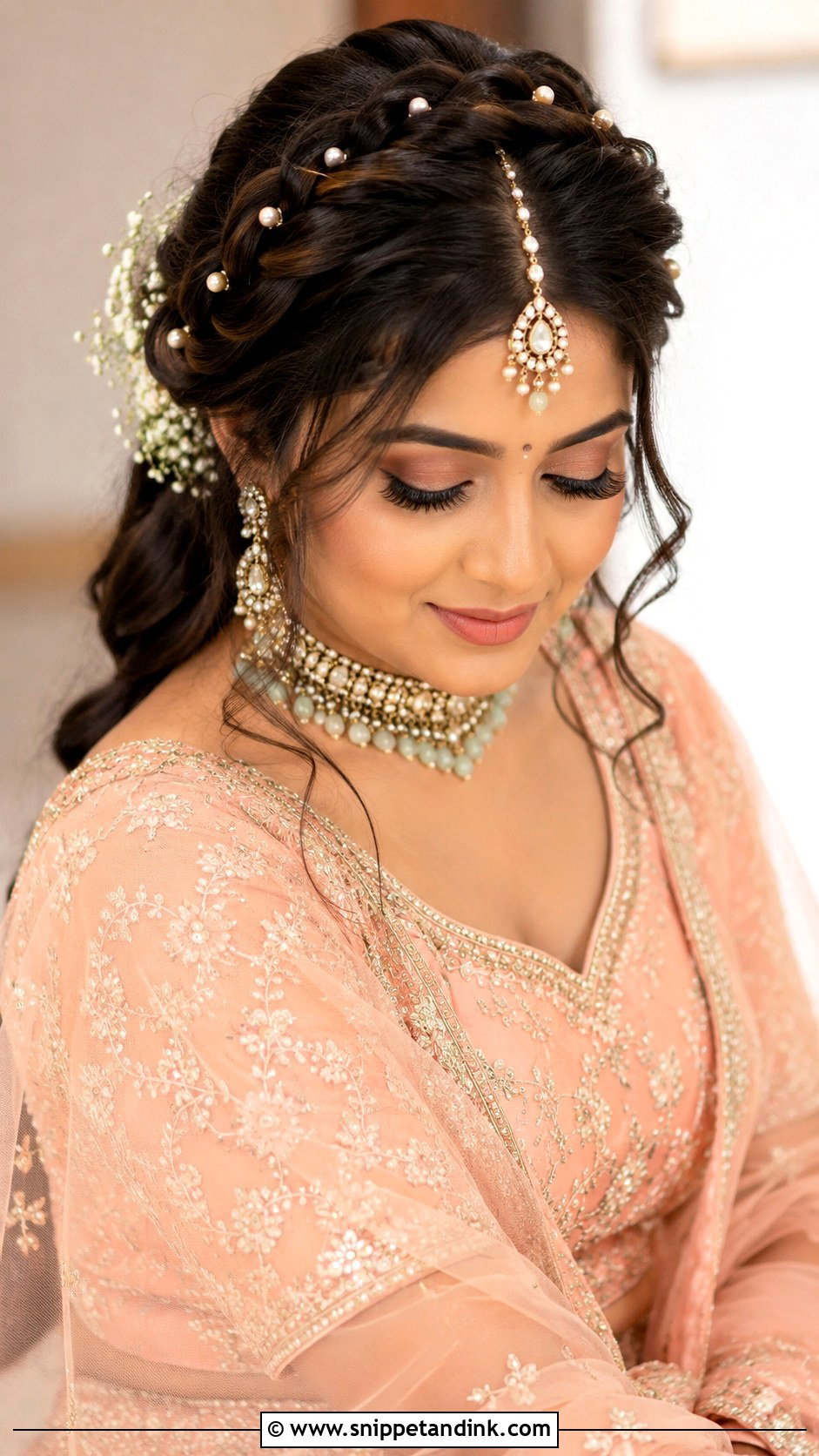
A crown braid frames the face and stops the front sections from falling forward during rituals. It can sit like a halo, feed into a bun or join loose curls at the back. I keep it slightly full by easing the loops out after braiding, since a tight crown braid looks thin and shows scalp under bright lights. A maang tikka chain can run down the part and clip behind the braid, which holds it straighter than clipping into loose hair. Delicate pearls or small floral pins finish it.
14. Indian Wedding Fishtail Braid
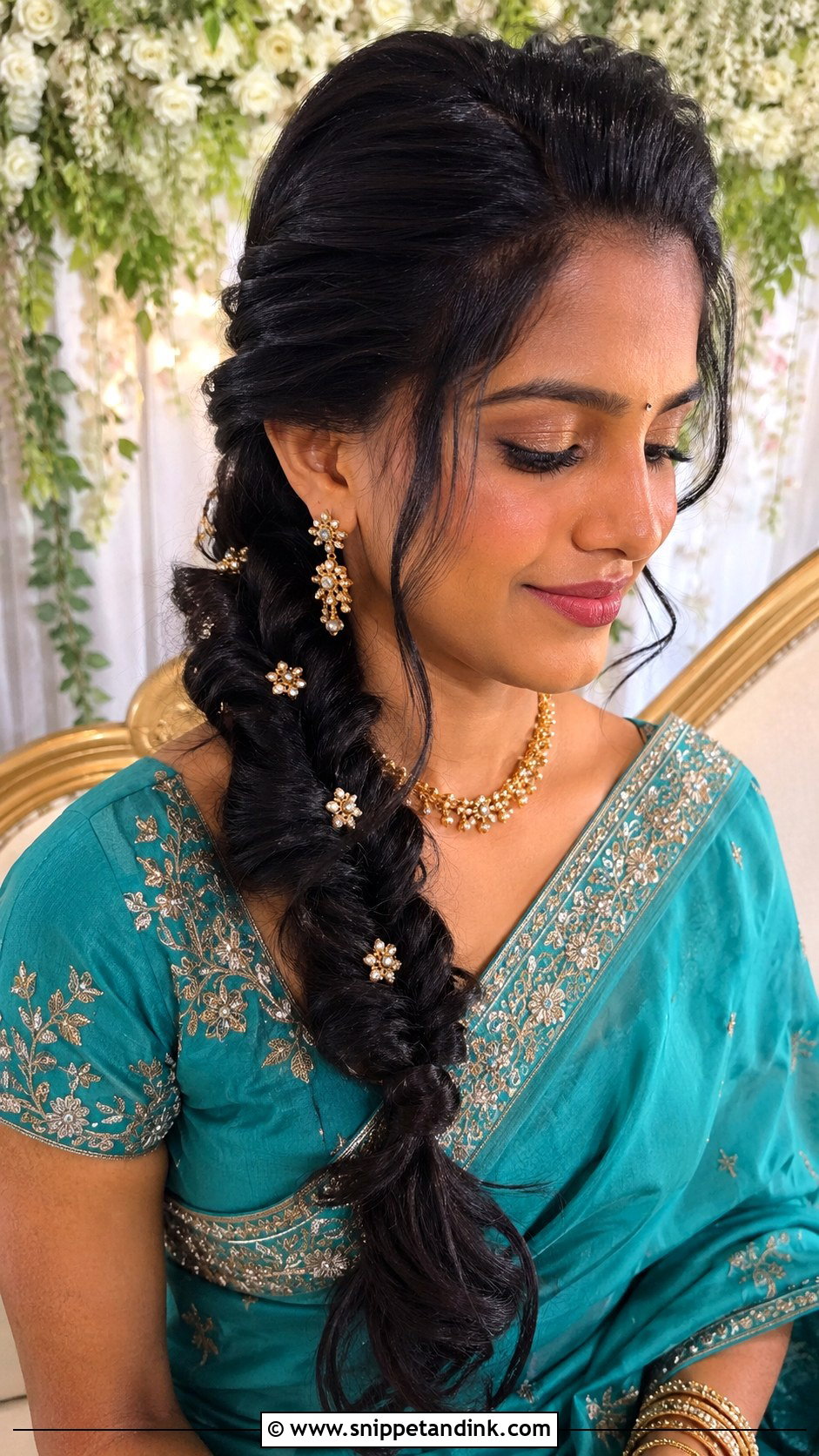
Fishtail needs length and density to show its pattern, which is why I pair it with long hair or add a clip-in for anyone without. Down the back it looks traditional; over the shoulder it’s softer and easier to photograph. It goes with lehengas, anarkalis, sarees and mehendi outfits, and small flowers or gold clips can be threaded through. Once braided I pull gently at the edges for width, then spray. Outdoors it outlasts loose curls, because wind can’t separate a braid the way it pulls waves apart.
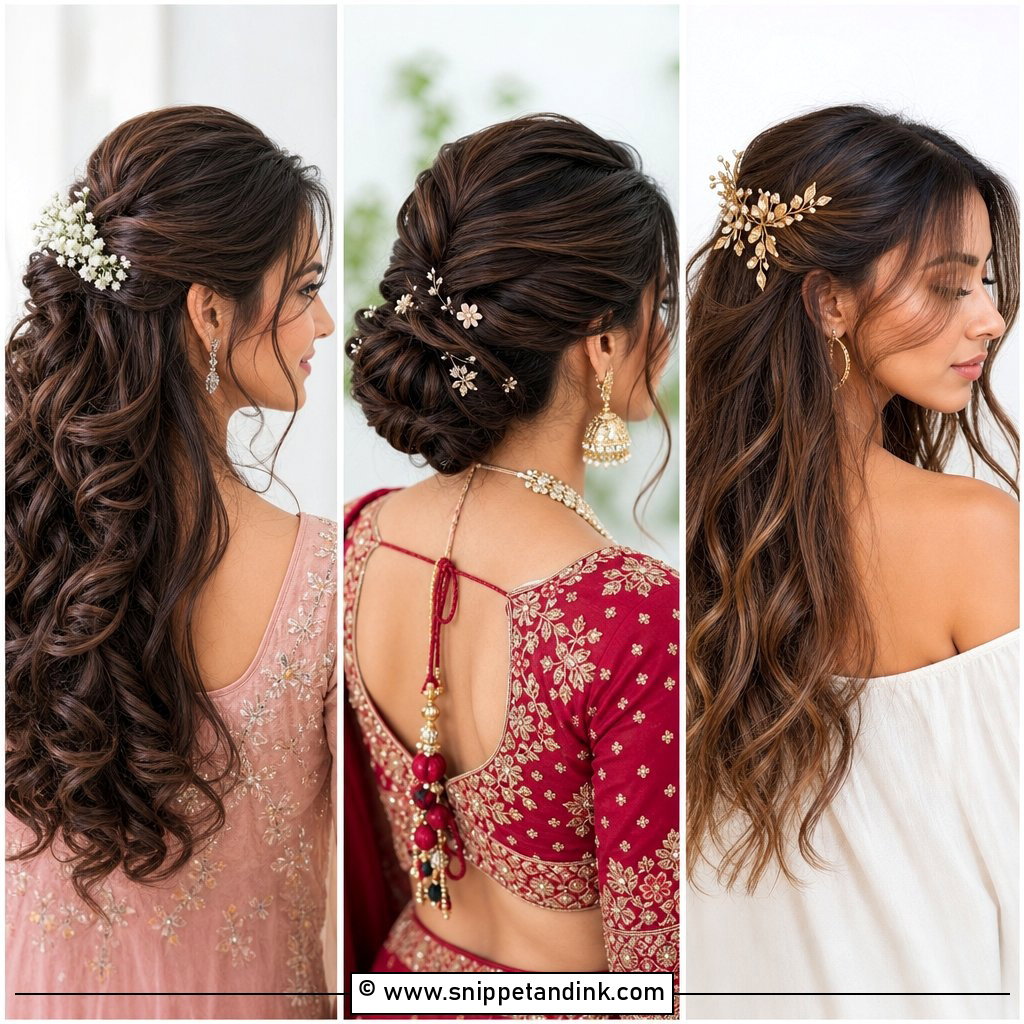
15. Indian Reception Hairstyle With Waves
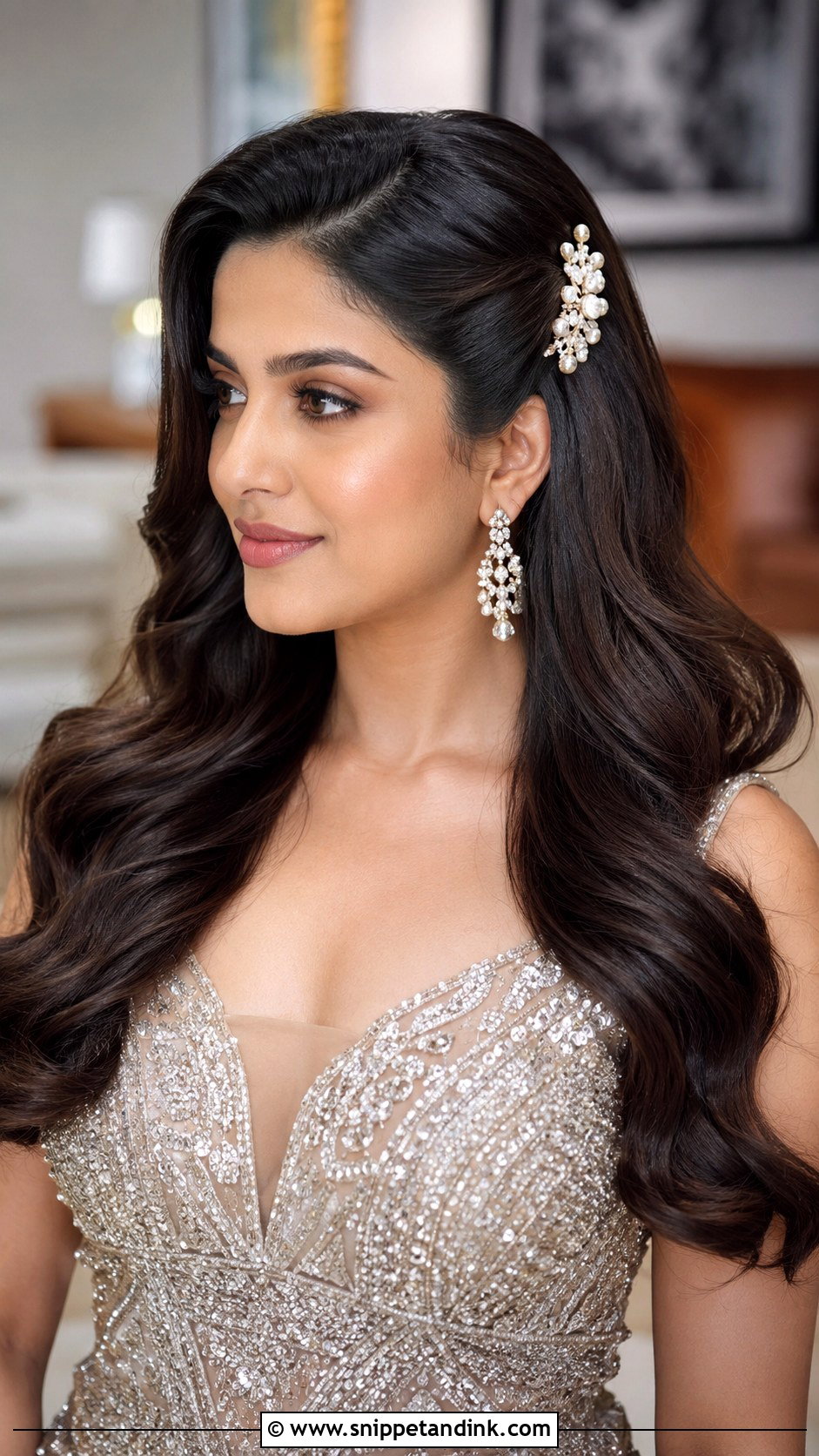
Waves are what most brides change into once the pheras are over and the heavy dupatta comes off. The crown stays smooth, the part is defined, and the lengths fall in brushed waves that suit a gown, a lighter lehenga or a pre-draped saree. I set each wave with a tong, let it cool pinned in a coil, and brush them out only just before the entrance, so they stay soft without dropping. One jeweled clip at the side is enough. Under evening lighting they catch shine around the shoulders.
The Wedding Morning Queue and Where You Fit Into It
On a wedding morning the bride’s hair and makeup take the longest slot, often a couple of hours, and family and guests usually go first. If you’re sharing her stylist, expect an early start and ask for your time in writing. Arrive with hair washed the day before and fully dry. Skip the oil massage the night before; oiled hair makes pins slide out, so if you want a champi, have it two nights ahead and wash it out. Wear a top that buttons down the front so you don’t drag it over finished hair.
Bring every accessory you plan to wear, including the dupatta, because I set pin positions around them. Fresh gajra keeps best wrapped in a damp muslin cloth in the fridge and goes on last. For the rest of the day, a small kit in your clutch saves most problems:
- Six or so bobby pins and U-pins in your hair colour
- A travel-size hairspray
- A tail comb for fixing the part
- One hair elastic, in case a braid end slips
When you take it all down at night, remove every pin first, then loosen the hair with your fingers and brush from the ends upward. A little conditioner or oil worked through the backcombed sections saves you from snapping hair out in clumps.
A Bun for the Pheras, Waves for the Reception
Match the hairstyle to the function, the dupatta and your own hair before you match it to a picture. A traditional gajra bun or a South Indian braid sits right for sacred rituals, while open curls, ponytails and half-up styles belong at the sangeet and reception. A heavy dupatta needs a bun, juda or braided base to pin into. If you want softness, ask for waves or a few loosened pieces at the face. Book a trial if you can, bring the real accessories to it, and photograph the result from the front, side and back. The aim is hair that still feels secure when the last guest leaves.
You'll Like These Ideas:



Leave a Reply