
An Indian wedding rarely means one hairstyle. Most brides I style wear three or four across the haldi, mehendi, sangeet, the ceremony and the reception, and each one has a different job: surviving turmeric, sitting under a heavy dupatta, staying up through choreographed dancing, or looking glossy in reception photos. So when you look through the 25 ideas below, think about where each would be worn, not just how it looks in a still photo. I’ve added what I’d actually check before putting each one on a bride: hair length, how it handles heat and weight, and which outfits it sits well with.
Hair Oil, Color and Cuts in the Weeks Before
Many Indian brides oil their hair regularly, and I’m all for it, until about two days before the wedding. Heavy oil left in the hair makes curls fall flat and pins slide, even after one wash. I ask brides to stop oiling a couple of days out and do their last wash the evening before, so the hair is clean but has a little grip.
- Color: do any coloring or gloss about two weeks ahead, so the tone settles and any mistake can be fixed.
- Smoothing treatments: keratin and similar treatments make hair very silky, which is lovely day to day but makes updos and curls much harder to hold. Skip them in the weeks before unless you want only sleek open hair.
- Cuts: a trim two or three weeks out tidies the ends without leaving you with short layers that poke out of braids.
- Extensions: buy them early, color-match them to your ends and bring them to your trial.
1. South Indian Bridal Braid
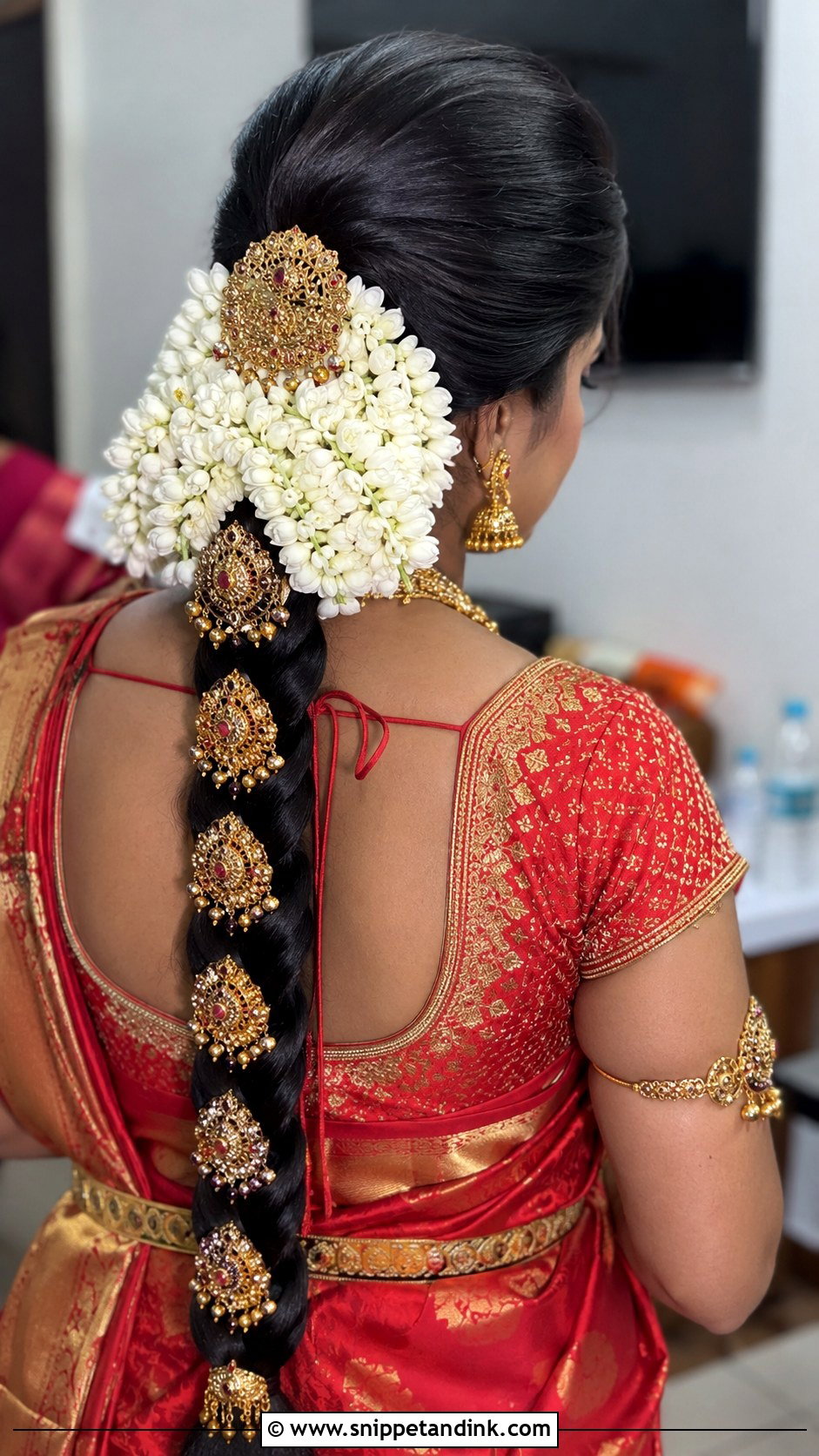
The classic South Indian braid is all about length running down the spine, and very few brides have enough of their own for it. I usually add a matching braid extension, the kind called a savaree, under the top section so the plait reaches the waist and stays thick all the way down. Then come jasmine, gold thread and the jadai billa ornaments. Those ornaments are heavy, so the braid needs a firm, tight start at the crown or it pulls backward. With a silk Kanjeevaram saree and temple jewelry, it’s the look most South Indian families expect at the muhurtham.
2. Floral Low Bun
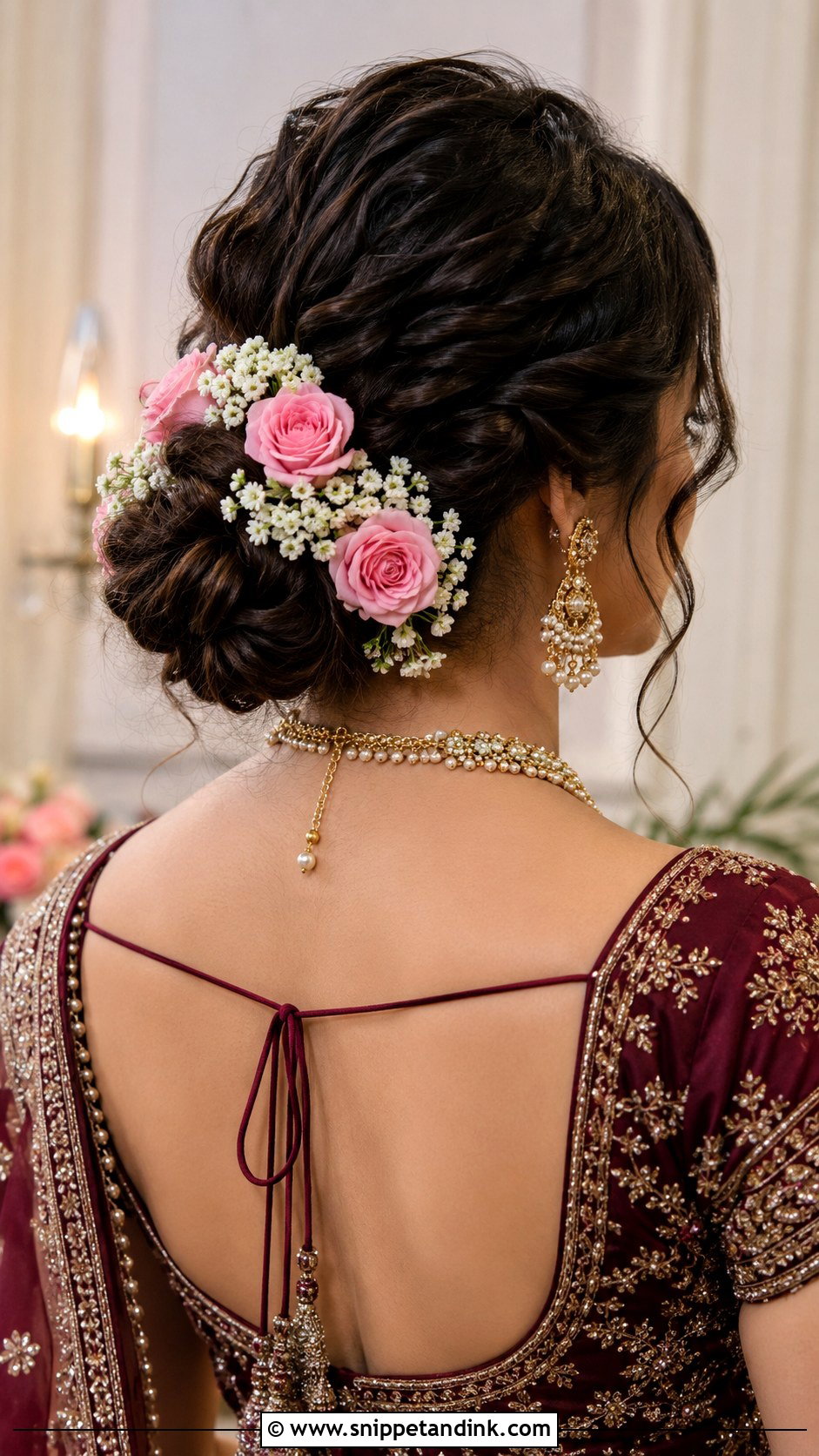
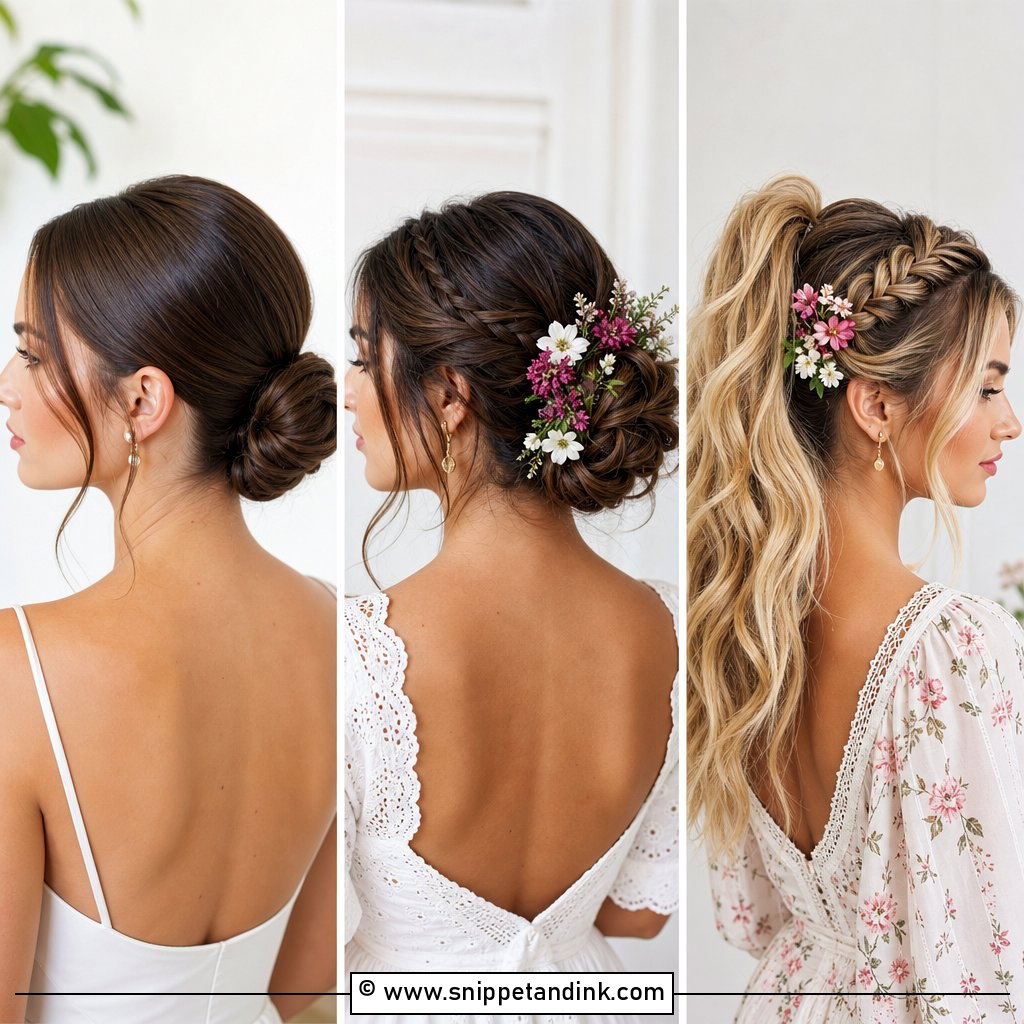
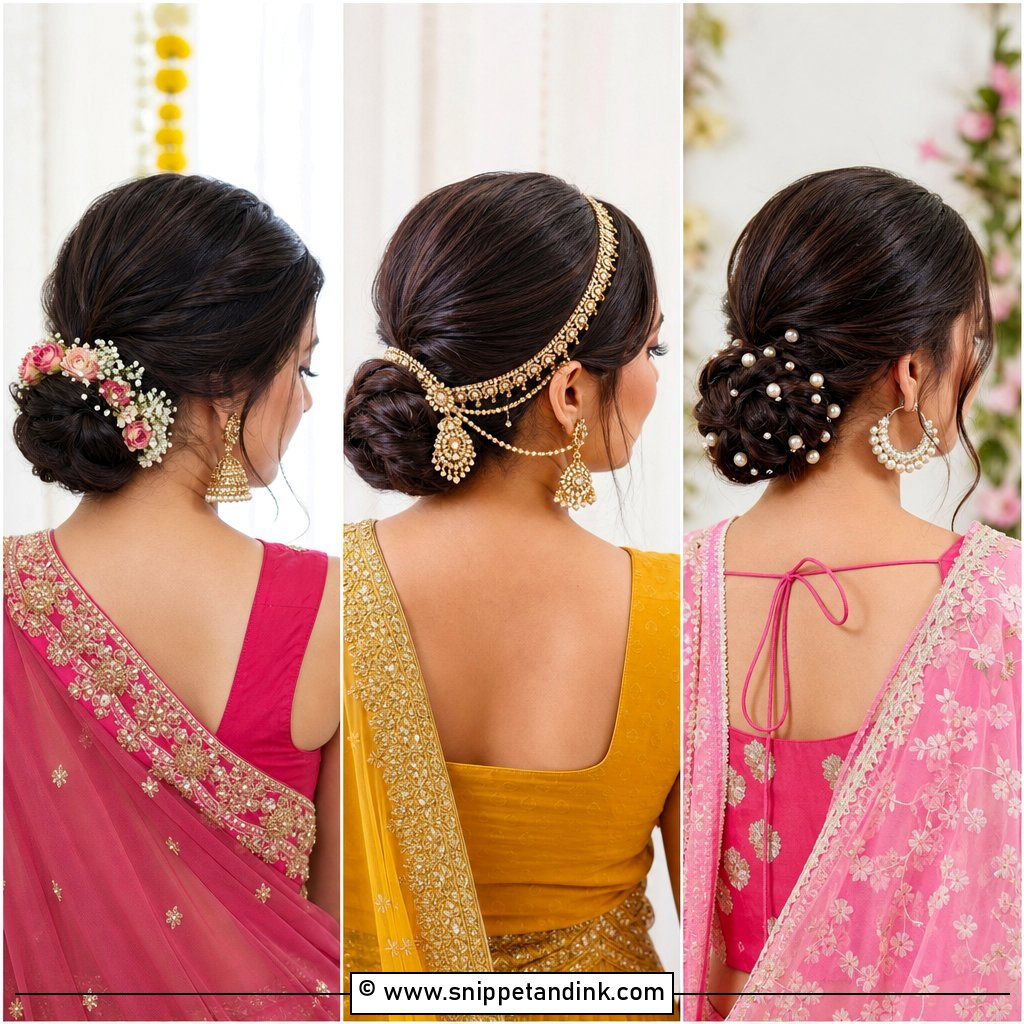
A low bun at the nape is the most comfortable bridal style I do, because nothing presses on the crown during hours of sitting. Fresh roses, mogra or orchids go around it, with the heavier blooms placed right at the anchor point. I often add a slight puff at the crown so the head doesn’t look flat under a dupatta. It suits most face shapes and carries heavy lehengas and statement jewelry well. One caution: orchids bruise when pinned tightly, so I wire them on loosely.
3. Messy Bun With Side Braid
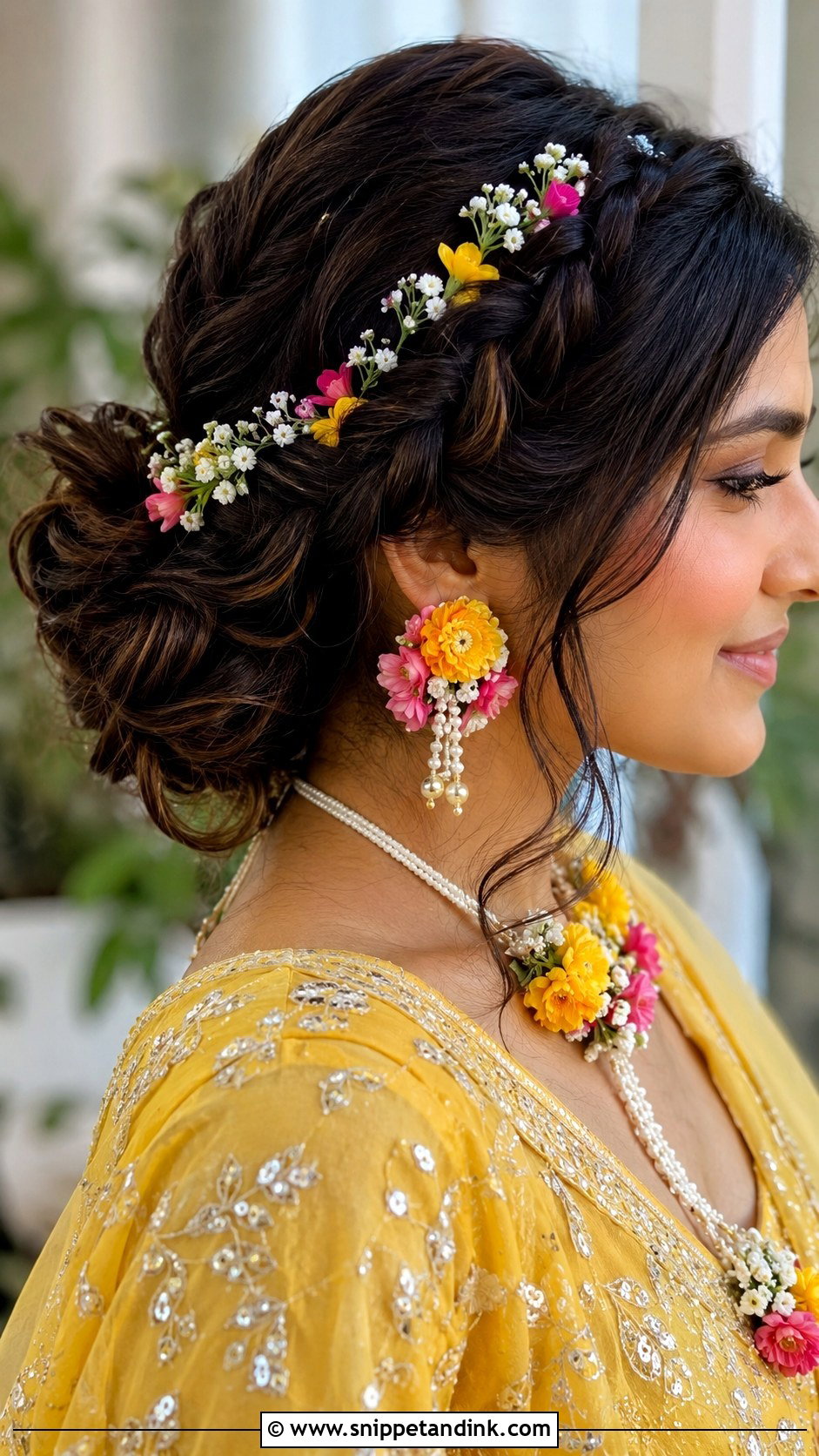
Messy bun plus side braid is my pick for the mehendi or haldi, when a bride wants something relaxed but secure. The braid runs along one side of the head and feeds into a loosely gathered bun, which means it acts as an anchor, and the whole style survives being hugged and pulled into group photos. Small flowers, pearls or plain pins finish it. Very fine, slippery hair needs some texture spray first, otherwise the loose pieces collapse into flat strands by afternoon.
4. Half-Up Half-Down Curls
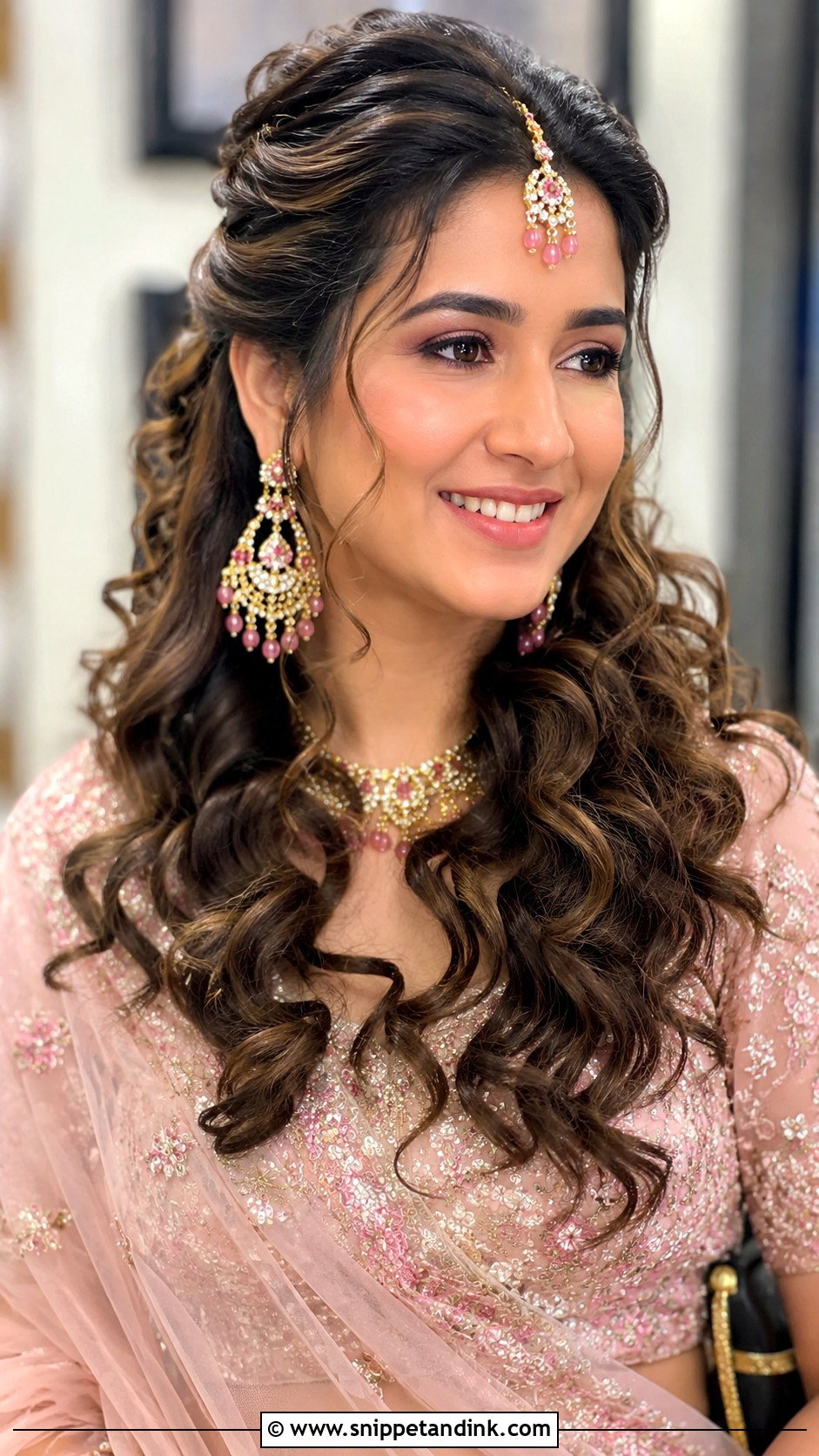
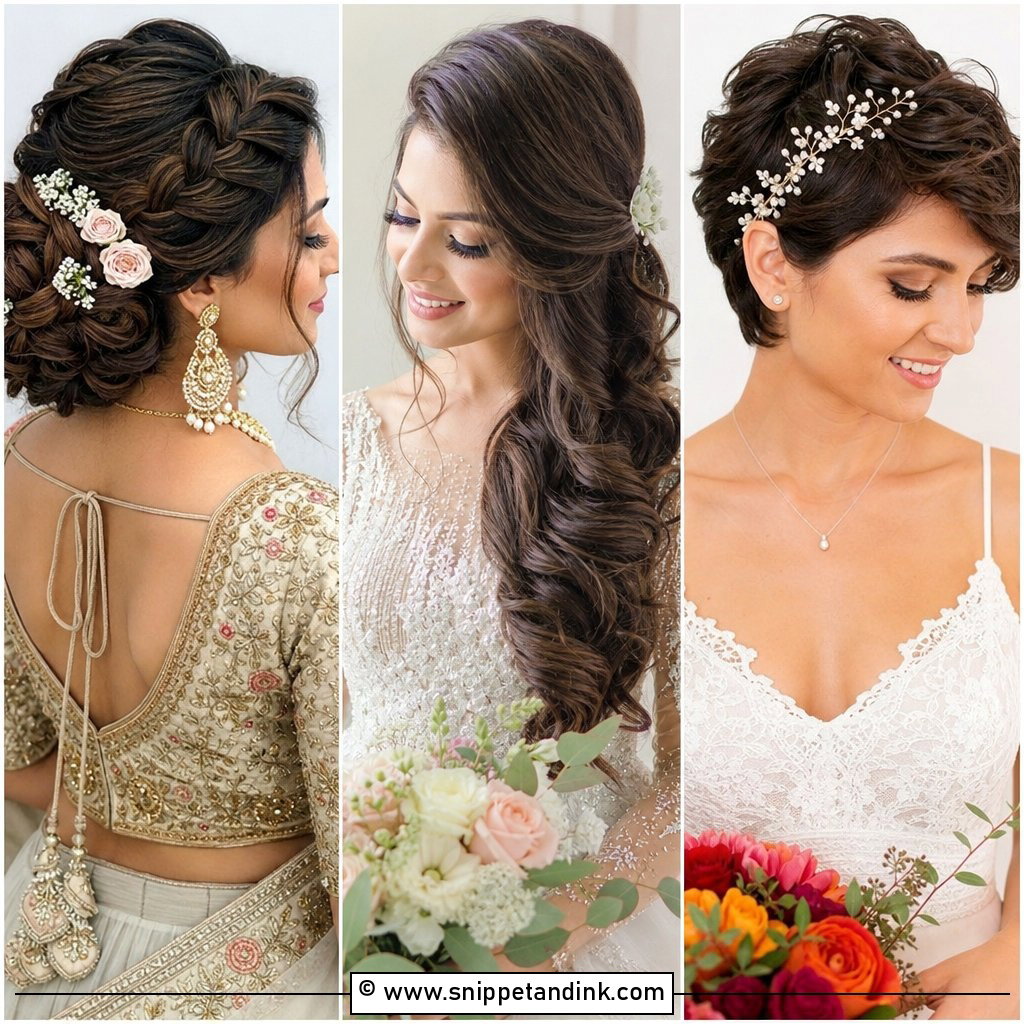
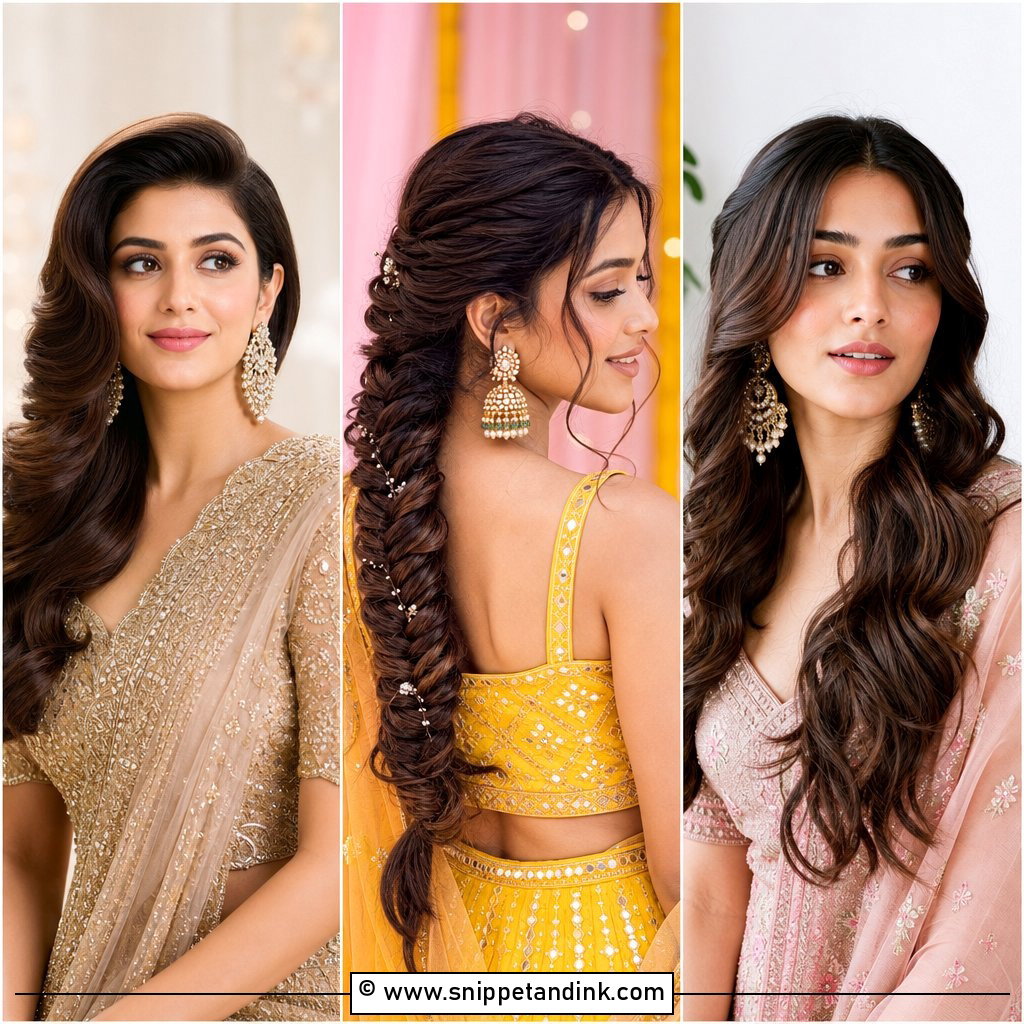
Half-up, half-down shows off length while keeping hair off the face, which is why it’s common for receptions and sangeet nights. I pin or braid the top section back, then curl the lower lengths. The weak spot is the curls: on heavy, straight Indian hair they can drop within a couple of hours unless each curl is pinned while it cools and set with spray. A maang tikka and statement earrings work with it, and small flowers or jeweled clips can hide the pins on the half-up section.
5. Hollywood Waves Open Hair
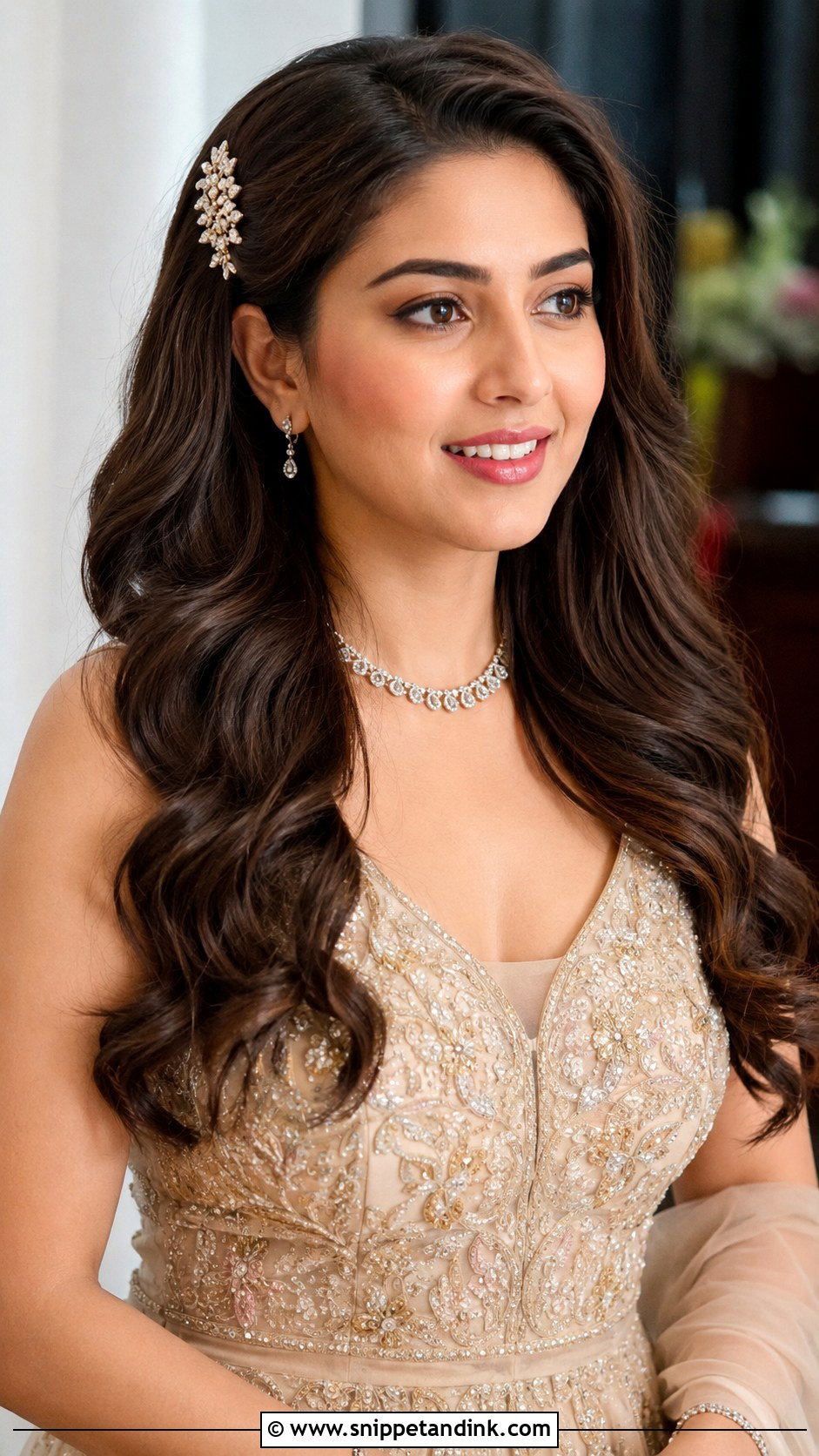
Hollywood waves are the most demanding open style I do. Every wave has to line up in one direction, so I curl all sections the same way, let them cool completely, then brush them out with a boar bristle brush into one continuous ripple. In a humid outdoor setting they soften within an hour or two, so I’d keep them for indoor receptions or destination weddings in dry weather. They pair well with Indo-Western gowns and modern lehengas, and one diamond-accented pin at the side is enough decoration.
6. Fishtail Braid With Pearls
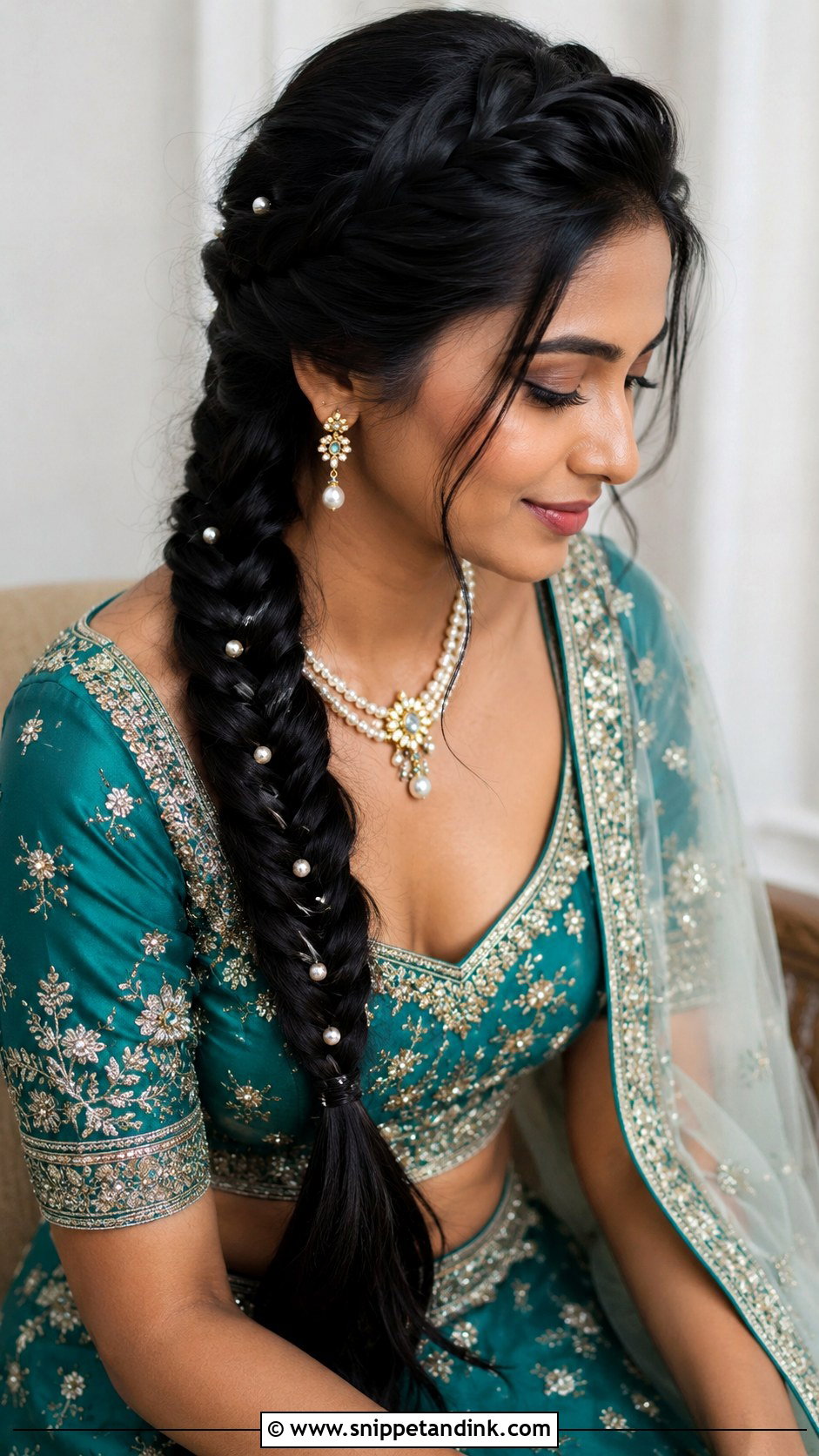
Fishtail braids look woven and intricate because they’re made from many thin crossings instead of three thick strands. Pearls or gold strands threaded through them make the braid read as jewelry. It needs long, fairly thick hair; on thinner hair I add a clip-in weft first, or the fishtail looks skinny once it’s loosened. I can place it center-back or sweep it to one side. Threading pearls on wire lets me add them after the braid is finished, which keeps the pattern even.
7. Maang Tikka Centered Bun
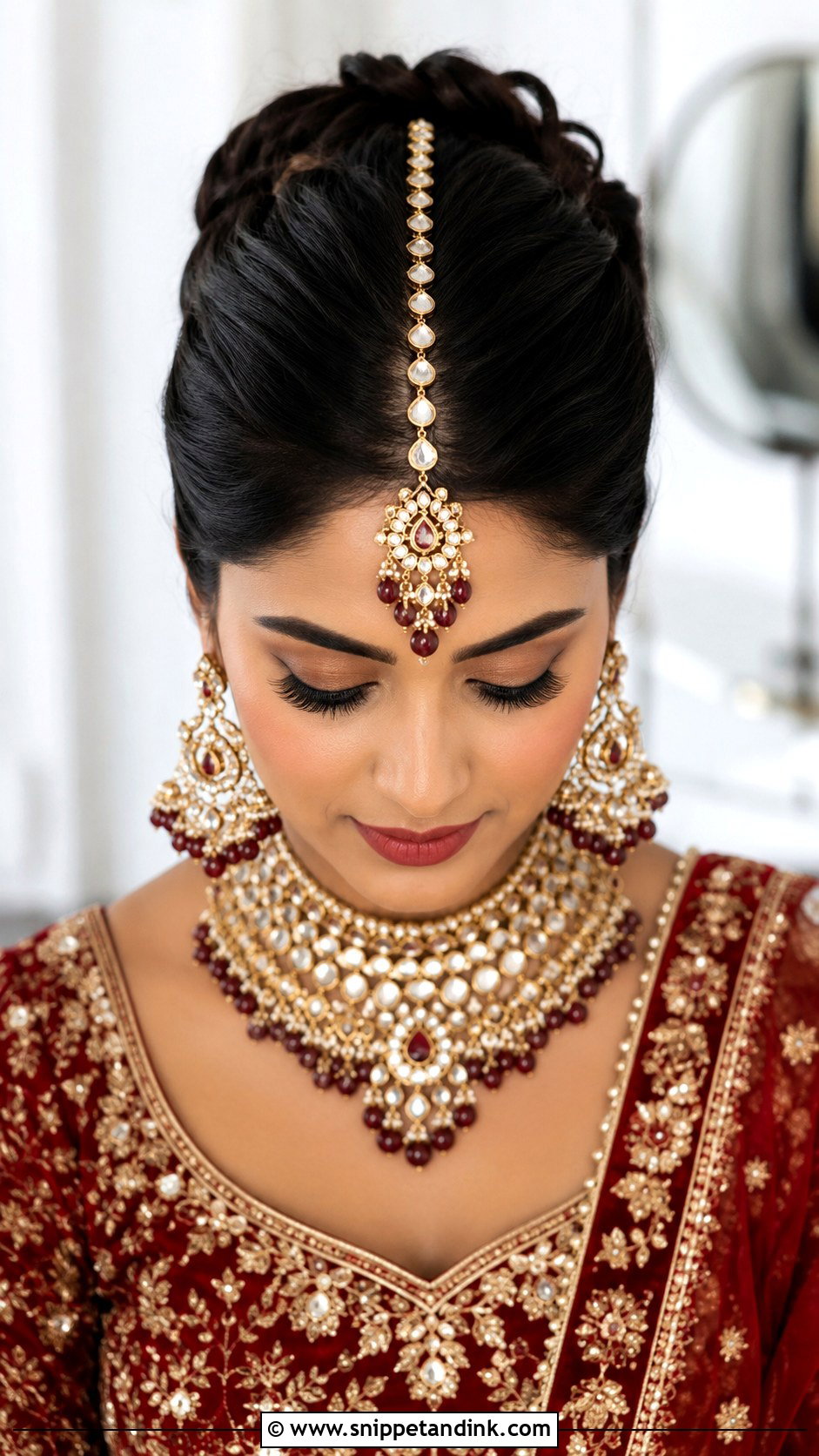
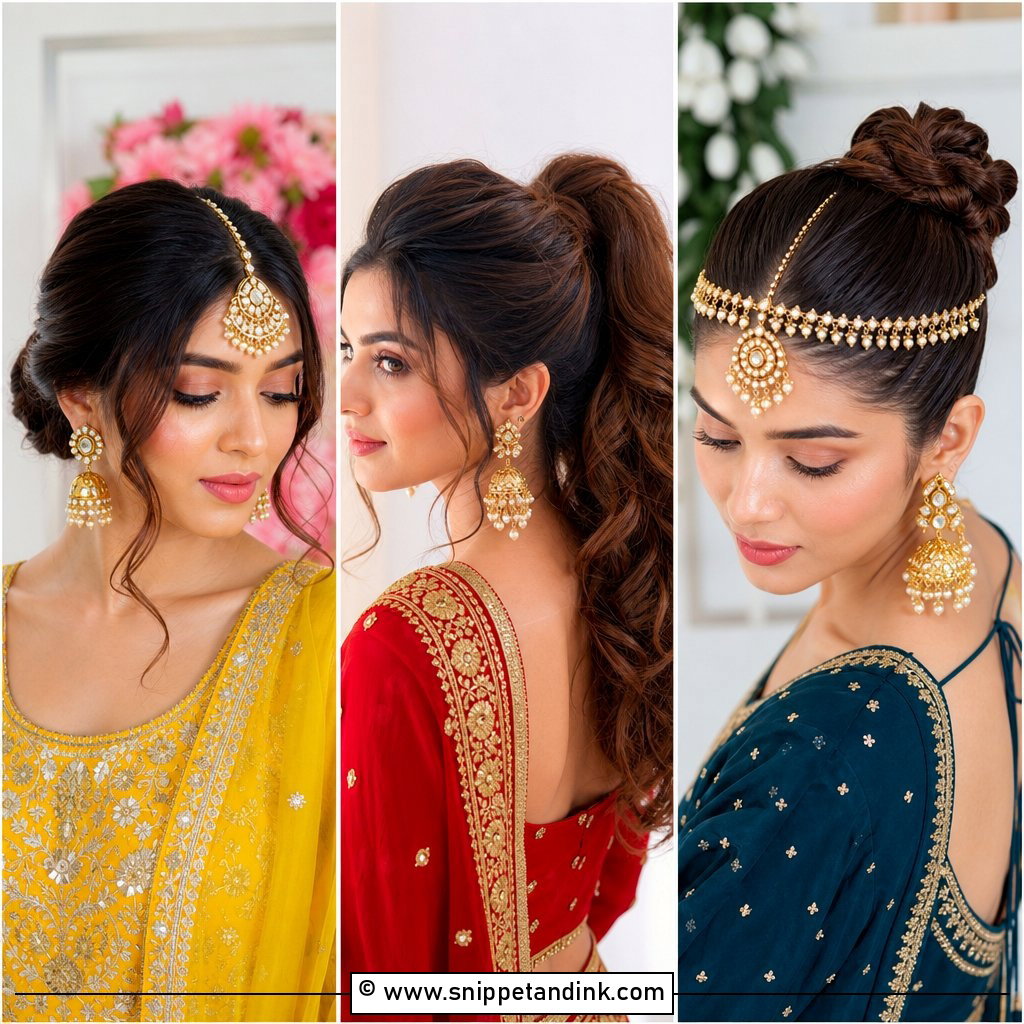
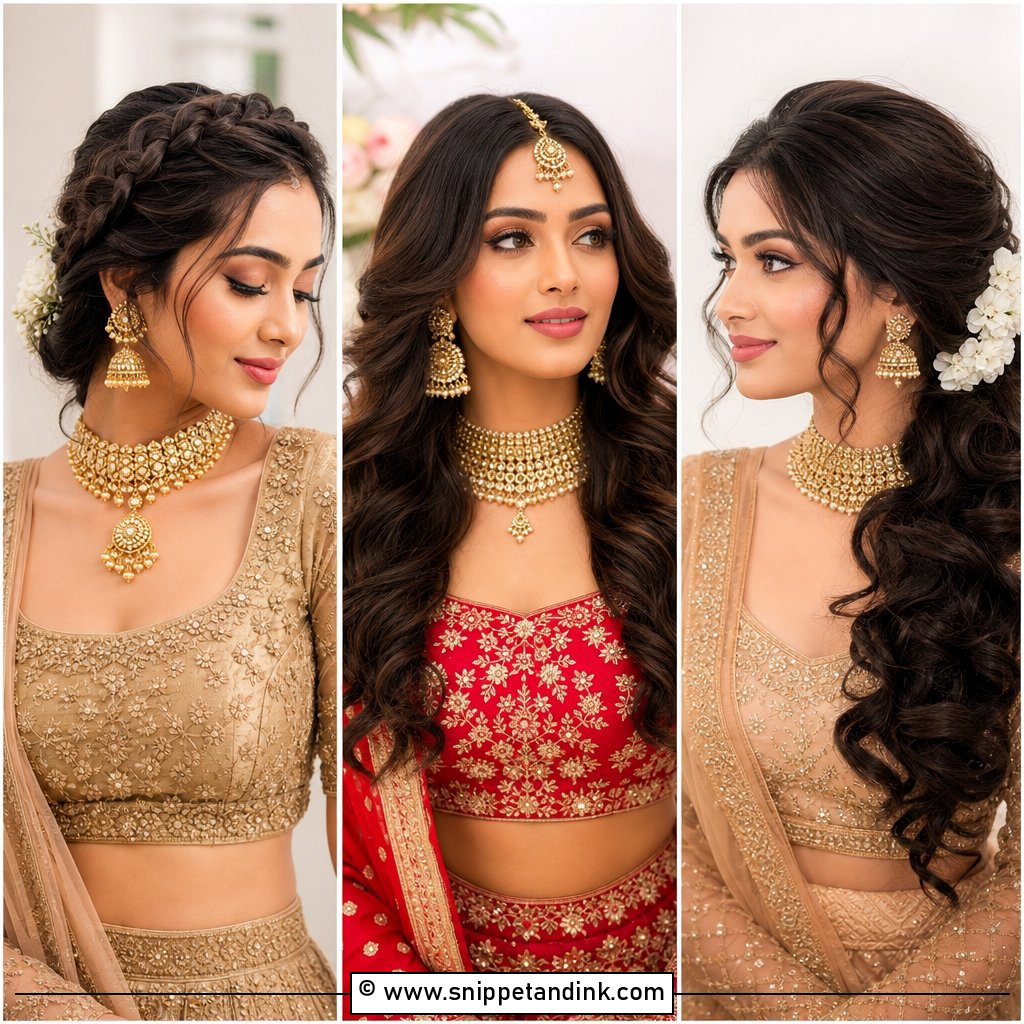
A centered bun with a beautiful maang tikka depends on a perfectly straight center part. I set the part first, hook the tikka into a small hidden section at the crown, and only then build the bun, so the chain stays straight and doesn’t tug the bun forward. The bun can sit low or slightly raised. Match the tikka metal to your main jewelry set rather than the lehenga color. For ceremonies with a lot of traditional ritual, this symmetrical style sits well under a head dupatta.
8. Puffed Crown With Open Hair
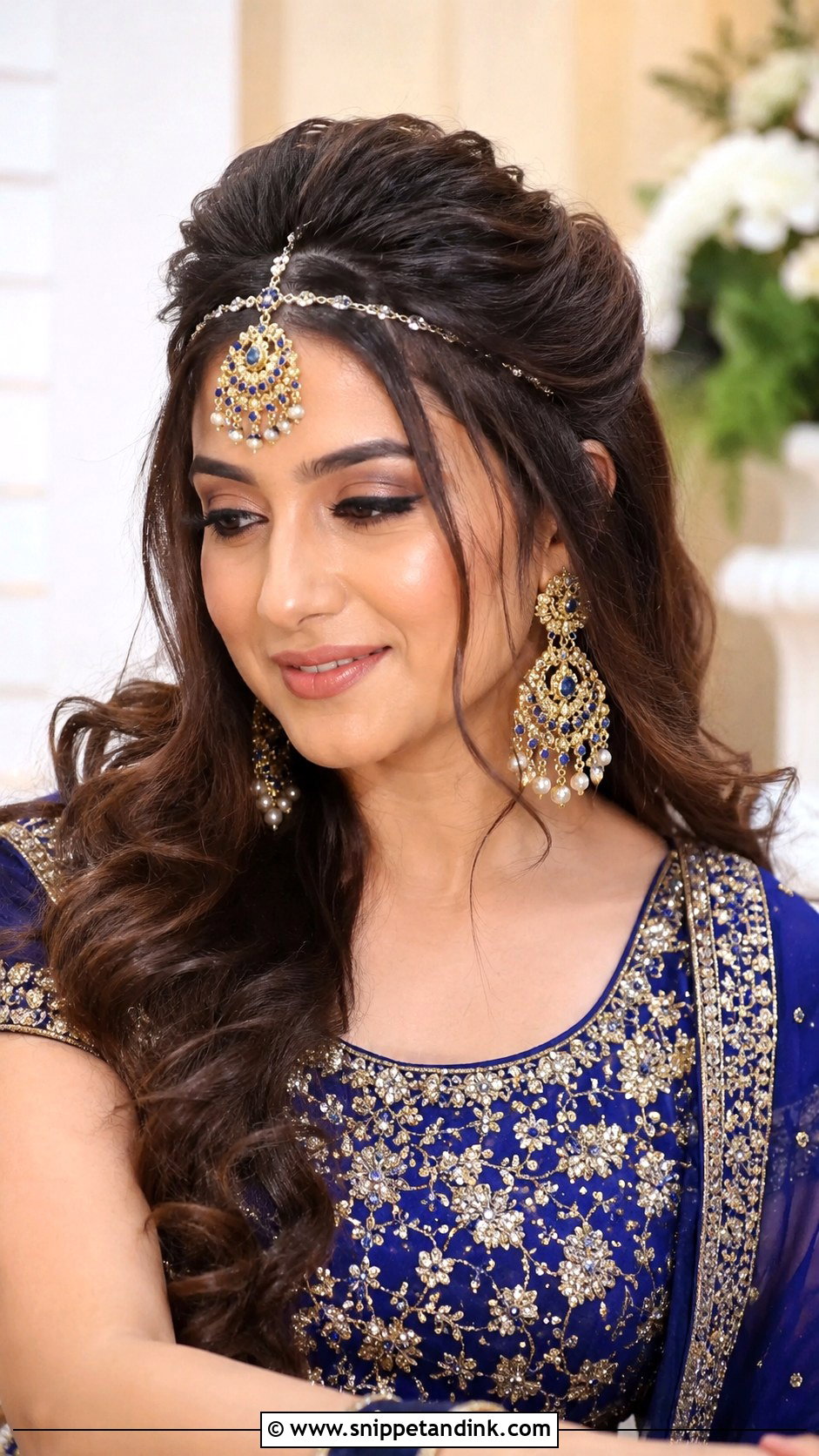
A puffed crown with open hair gives height and lengthens the face. I backcomb the front section at the roots, smooth the top layer over it and pin it, then curl or straighten everything below. The puff needs to be modest if a matha patti is going on top, because the jewelry sits along the hairline and a tall puff pushes it out of place. It’s a sound choice for sangeet or reception nights, when there’s no heavy dupatta on the head. Open hair under strong stage lights gets hot, though, so expect to want it up by the end of the night.
9. Jasmine Flower Braid
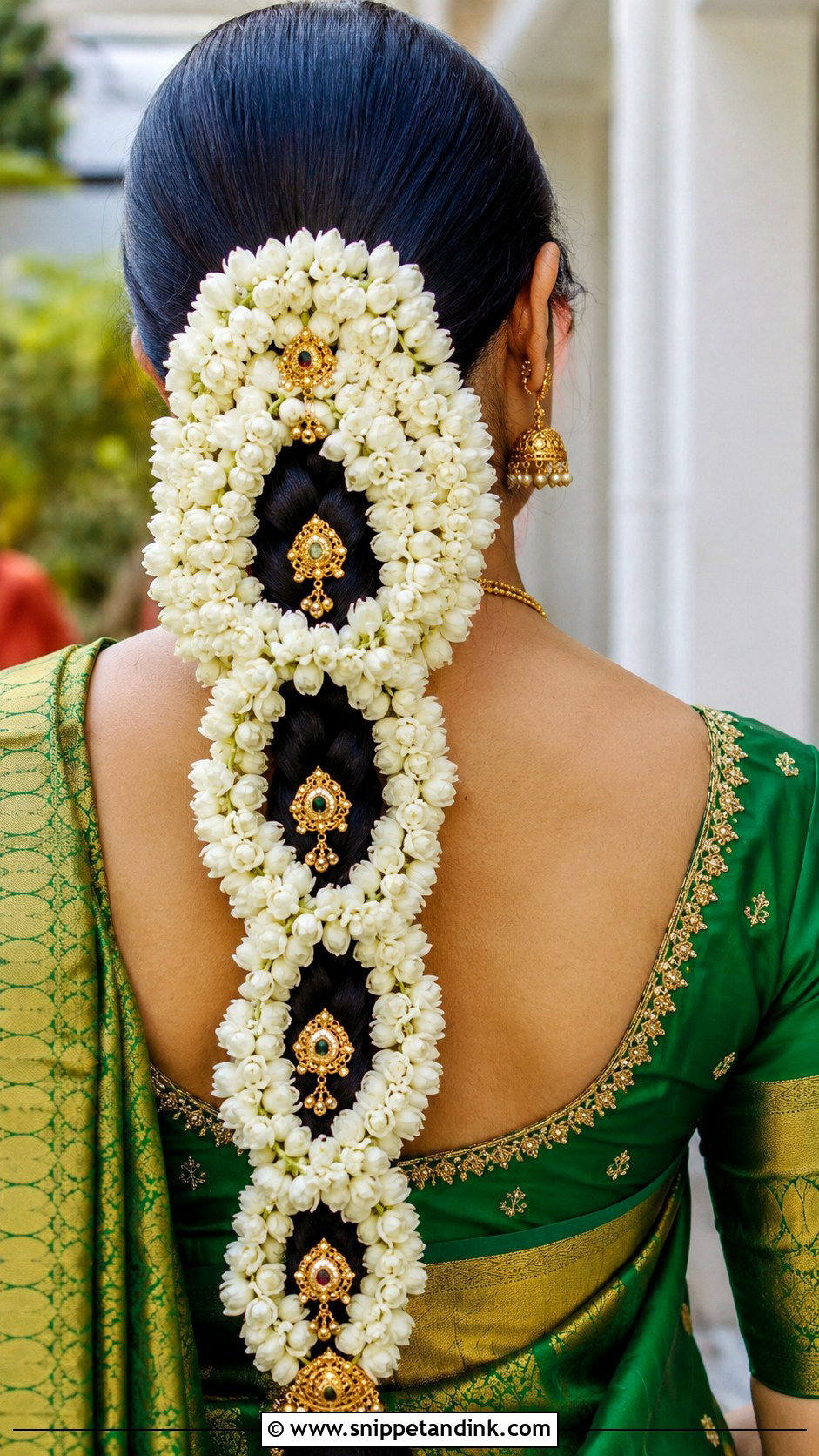
Nothing says traditional Indian bride quite like a jasmine-covered braid. Strands of mogra wrap around a thick plait, white against dark hair, and the scent lasts through the ceremony. I pin each strand separately, starting at the top, so one loose strand doesn’t unravel the rest. Jasmine browns wherever it’s handled, so it should arrive the morning of the wedding and wait in a damp cloth in the fridge. With silk sarees, temple jewelry and small gold ornaments, it’s the classic South Indian look.
10. Side Swept Curls
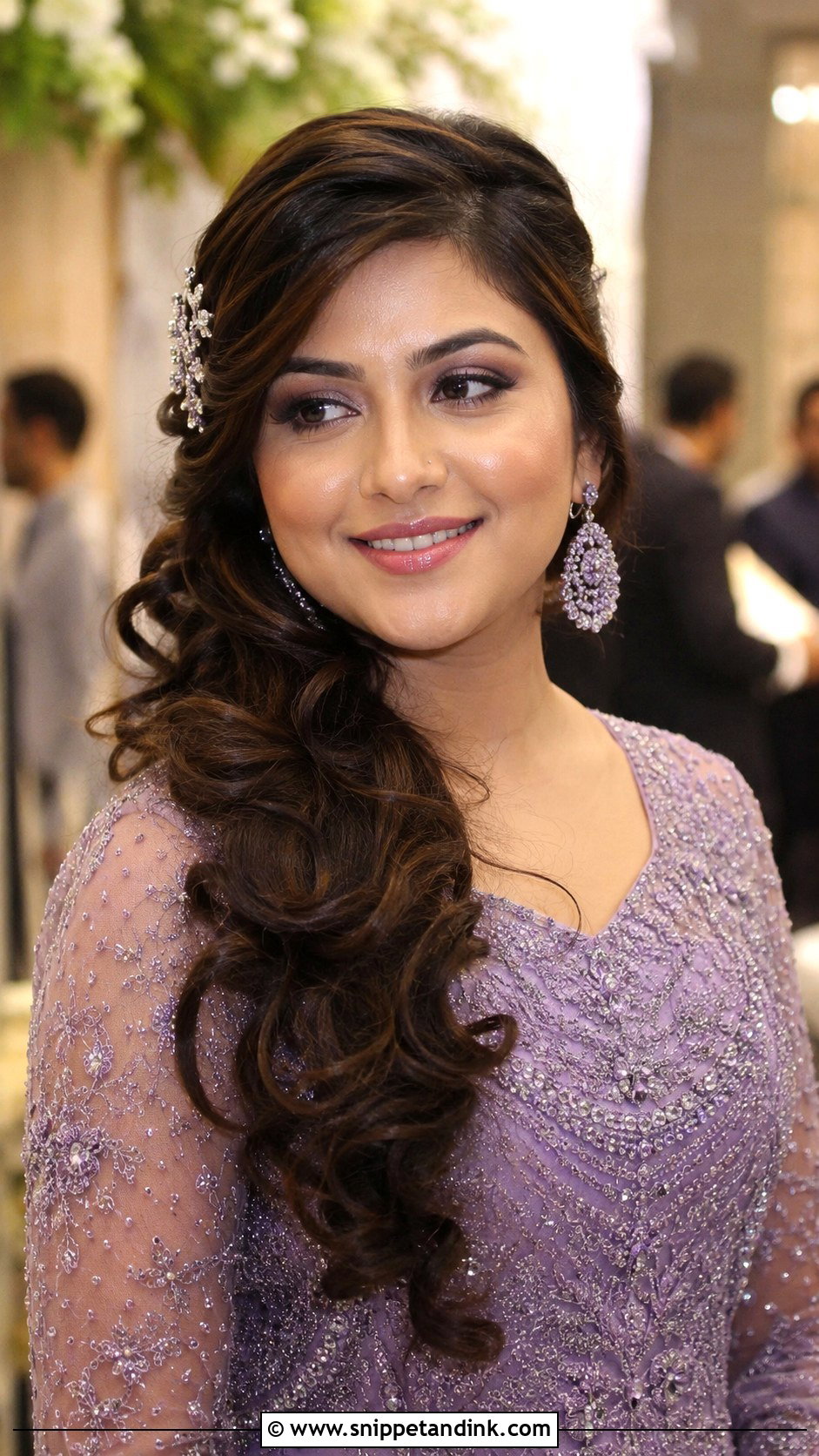
Side-swept curls gather everything over one shoulder, leaving the other side of the neck bare and the earrings on show. I pin the hair at the back of the neck with crossed bobby pins first, or the whole sweep slides back toward the center as you move. Pick the side your photographer will usually shoot from, and avoid the side where a heavy dupatta is pinned. A small flower or jeweled pin at the nape hides the anchor. It reads glamorous at receptions and cocktail evenings.
11. Braided Bun With Gold Thread
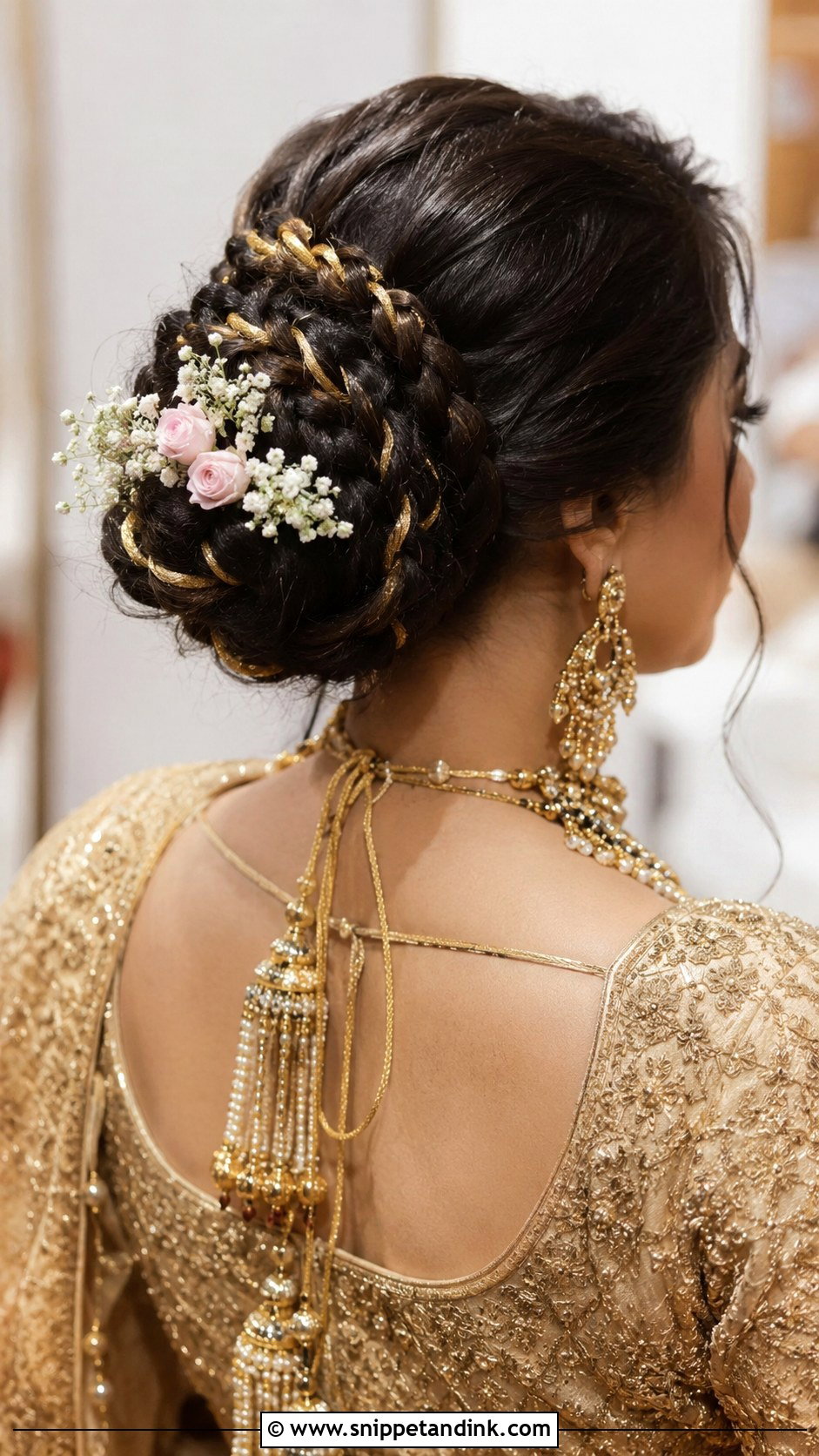
A braided bun with gold thread is built from several small braids coiled together, each one pinned flat to the next. That makes it one of the most secure updos here and one of the best for the main ceremony, where you’ll be sitting, standing and bowing for hours. I wrap gold thread around the finished braids rather than braiding it in, because thread braided in tends to twist and catch. Under a heavy lehenga and full gold jewelry it holds its shape without needing touch-ups.
12. Dutch Braid Crown
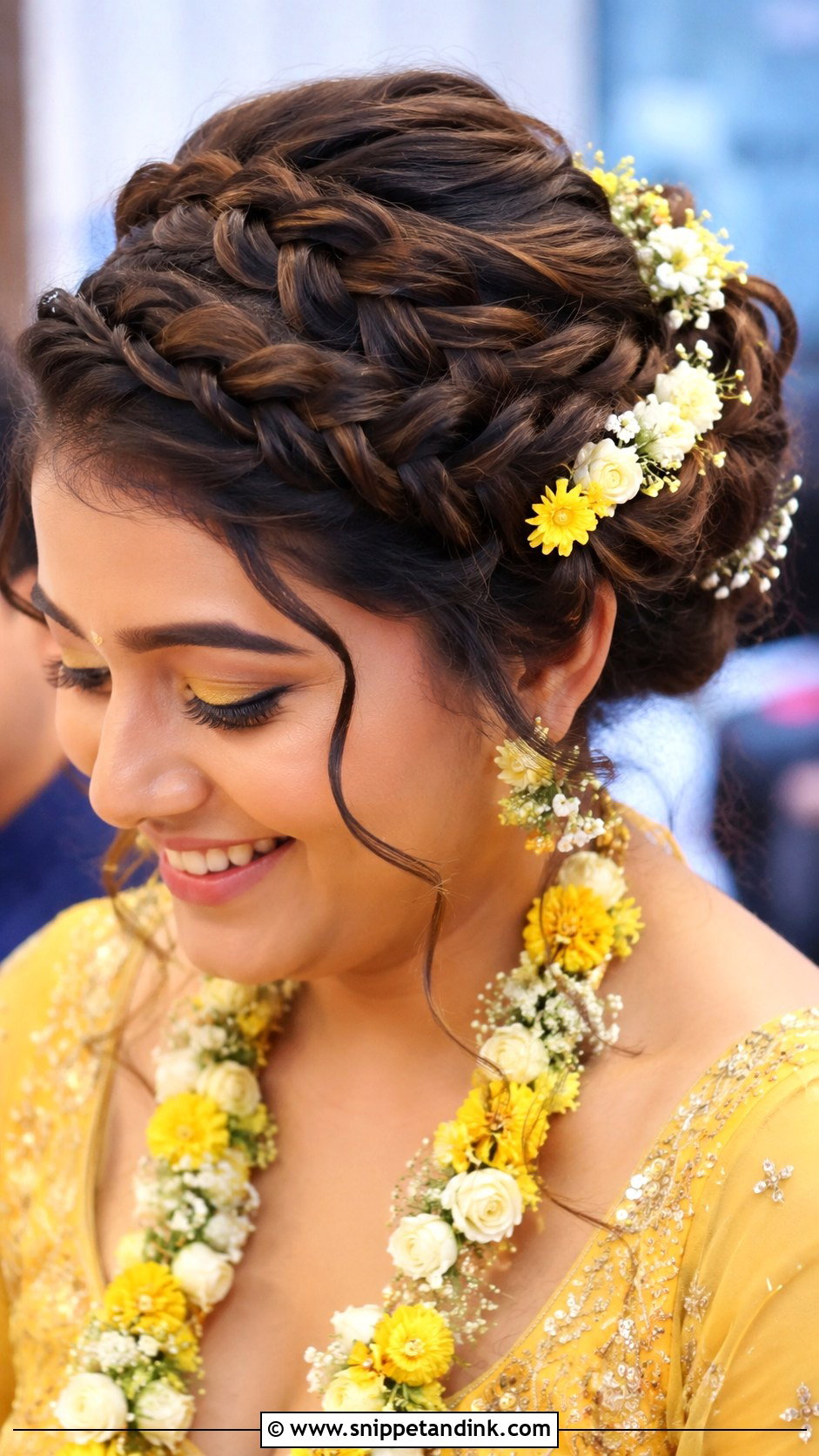
A Dutch braid crown uses underhand crossing, so the plait sits raised off the head rather than flat. Wrapped all the way round, it keeps every strand off the face and neck, which makes it my go-to for outdoor haldi and mehendi functions in summer heat. Small flowers or pearls tuck neatly between the crossings. It needs at least shoulder-length hair to reach around; with layered cuts, short pieces poke out along the braid, so I tuck them with small pins.
13. Low Chignon With Hair Accessories
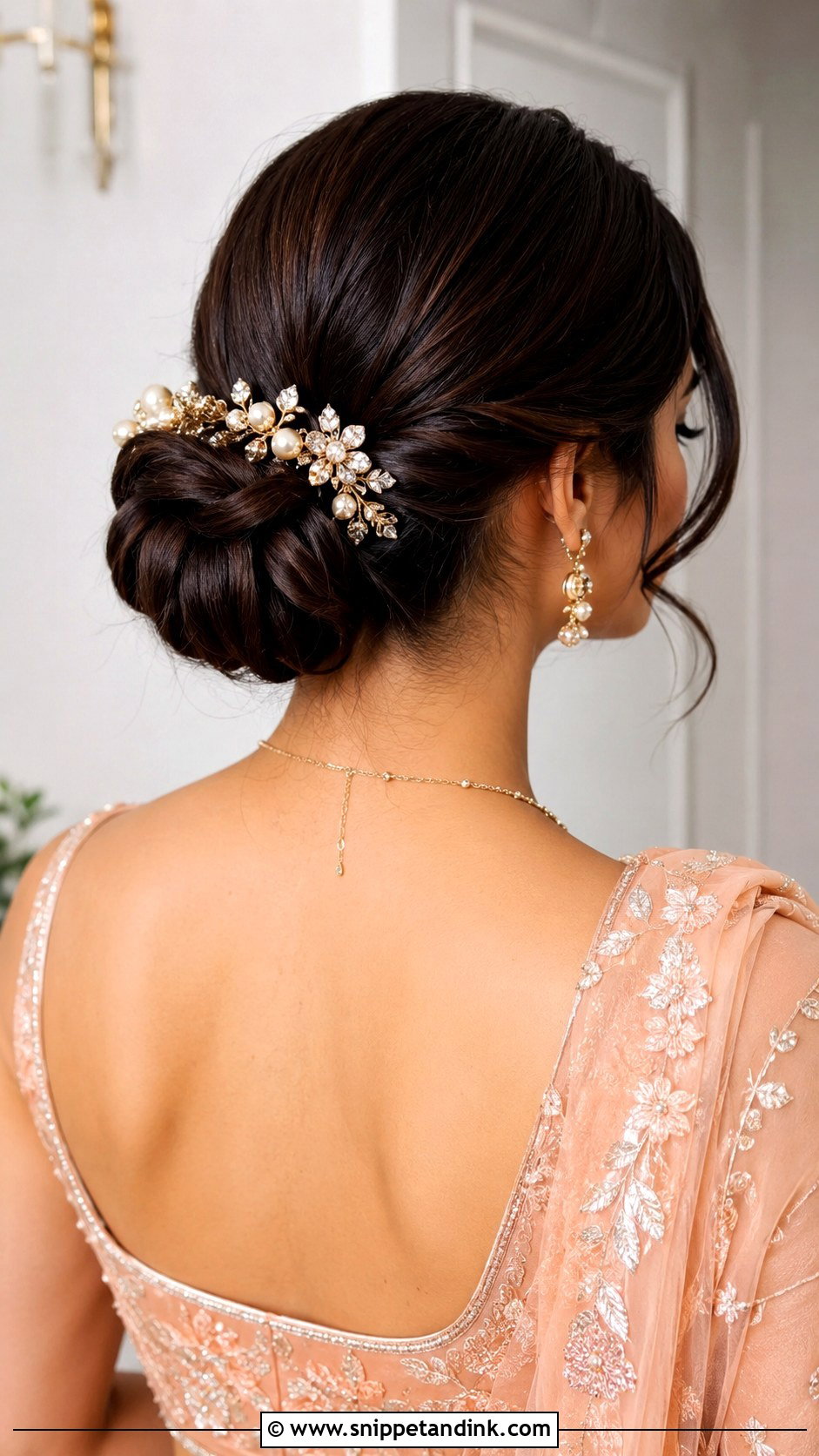
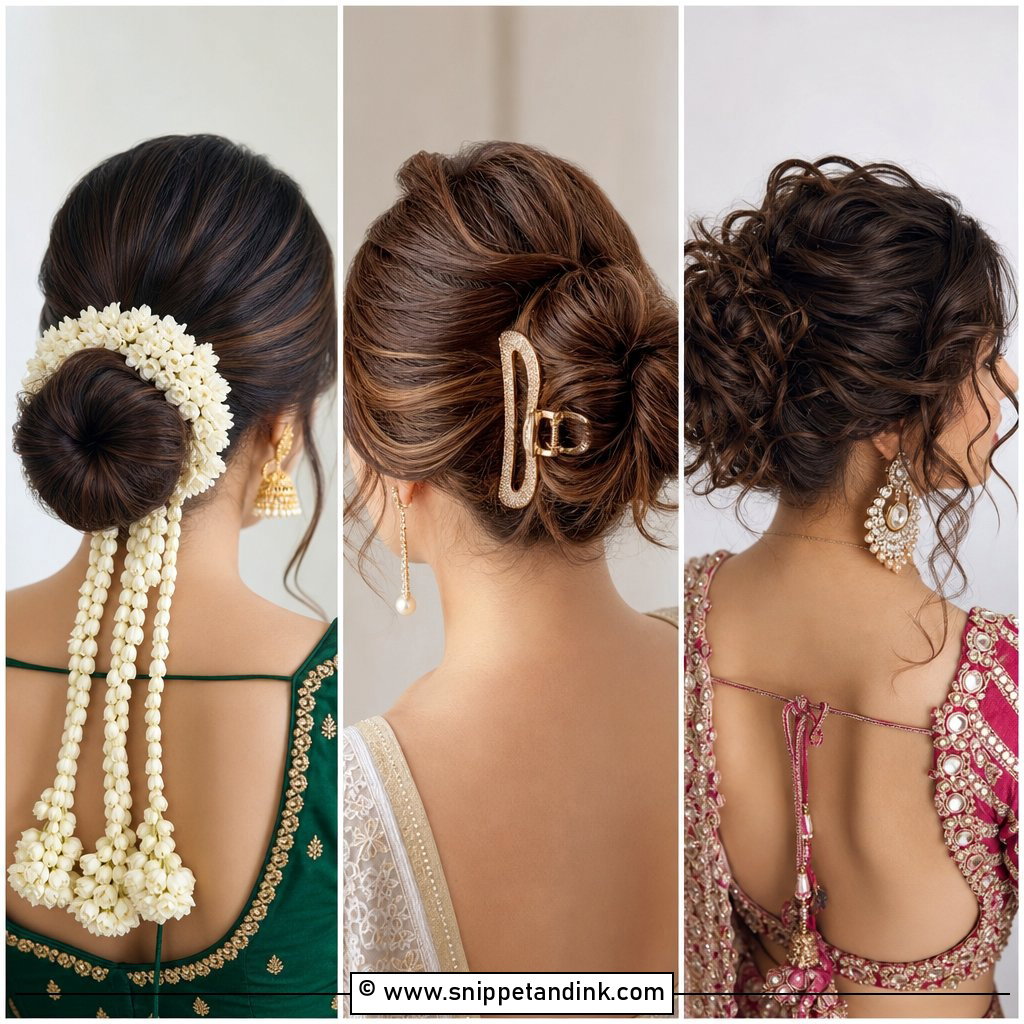
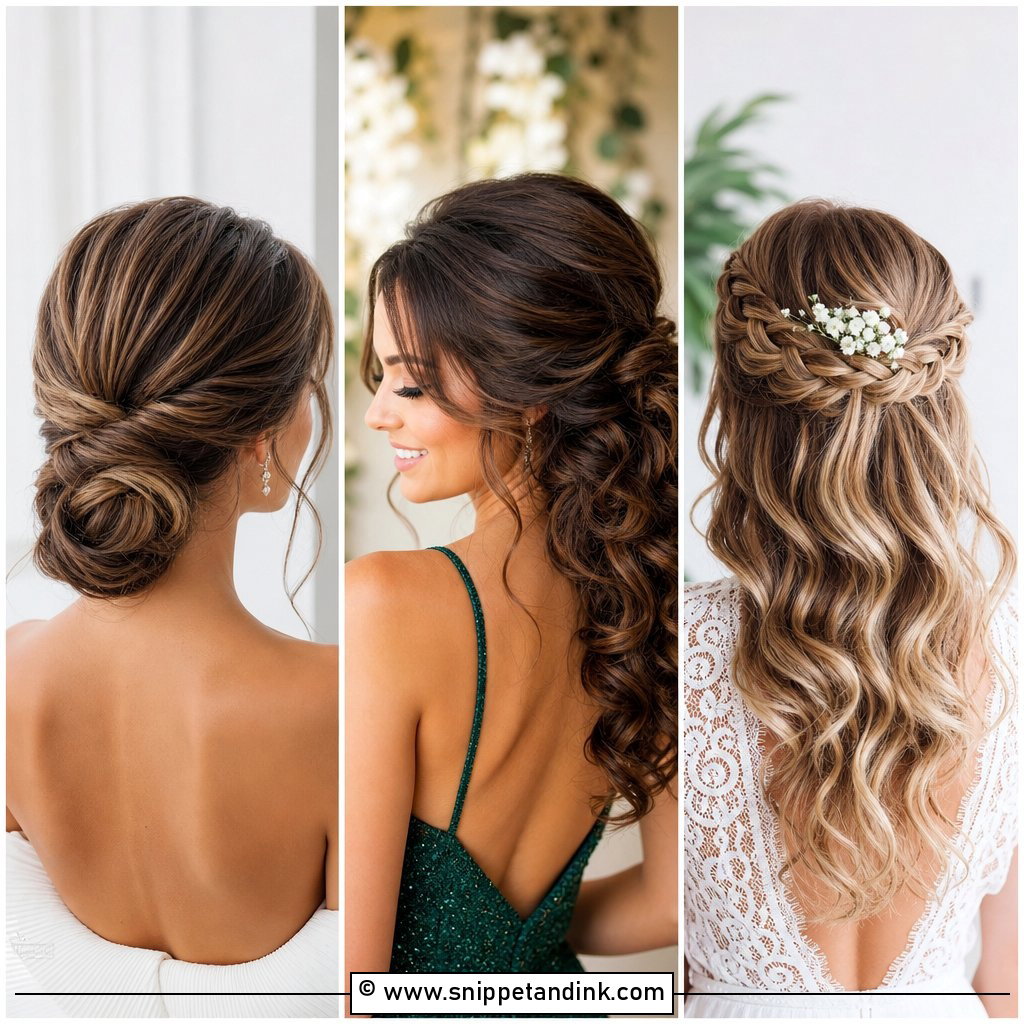
A low chignon is a smooth, twisted knot at the nape, and it looks simple only when the hair underneath has been smoothed well. I blow-dry the hair straight first, then twist and pin it so no section is bumpy. Jeweled pins, pearls or a small hairpiece add shine without competing with your jewelry. It pairs well with modern lehengas and Indo-Western outfits, and it’s the updo that survives long ceremonies with the least maintenance.
14. Open Hair With Maang Tikka
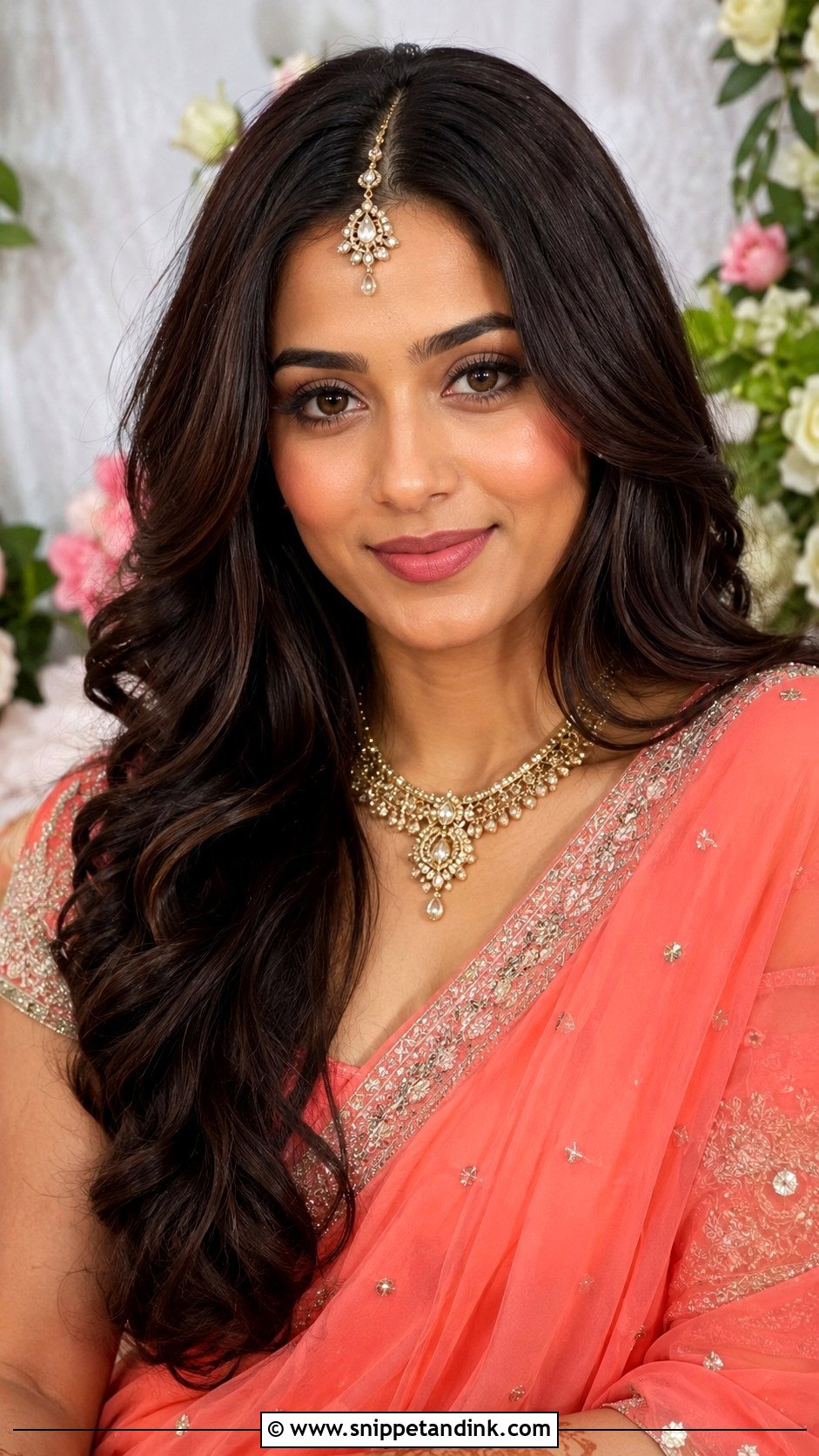
Open hair with a maang tikka feels soft and romantic, and it’s what many brides ask for when they’re used to wearing their hair loose. The practical problem is the tikka chain: with nothing to hook into, it slides. I make a tiny hidden braid or twist at the crown and pin the tikka into that. Waves or straight hair both work. I’d skip fully open hair for the pheras, though, because sitting near the sacred fire with loose lengths and a draped dupatta is a real safety concern.
15. Rose Adorned Updo
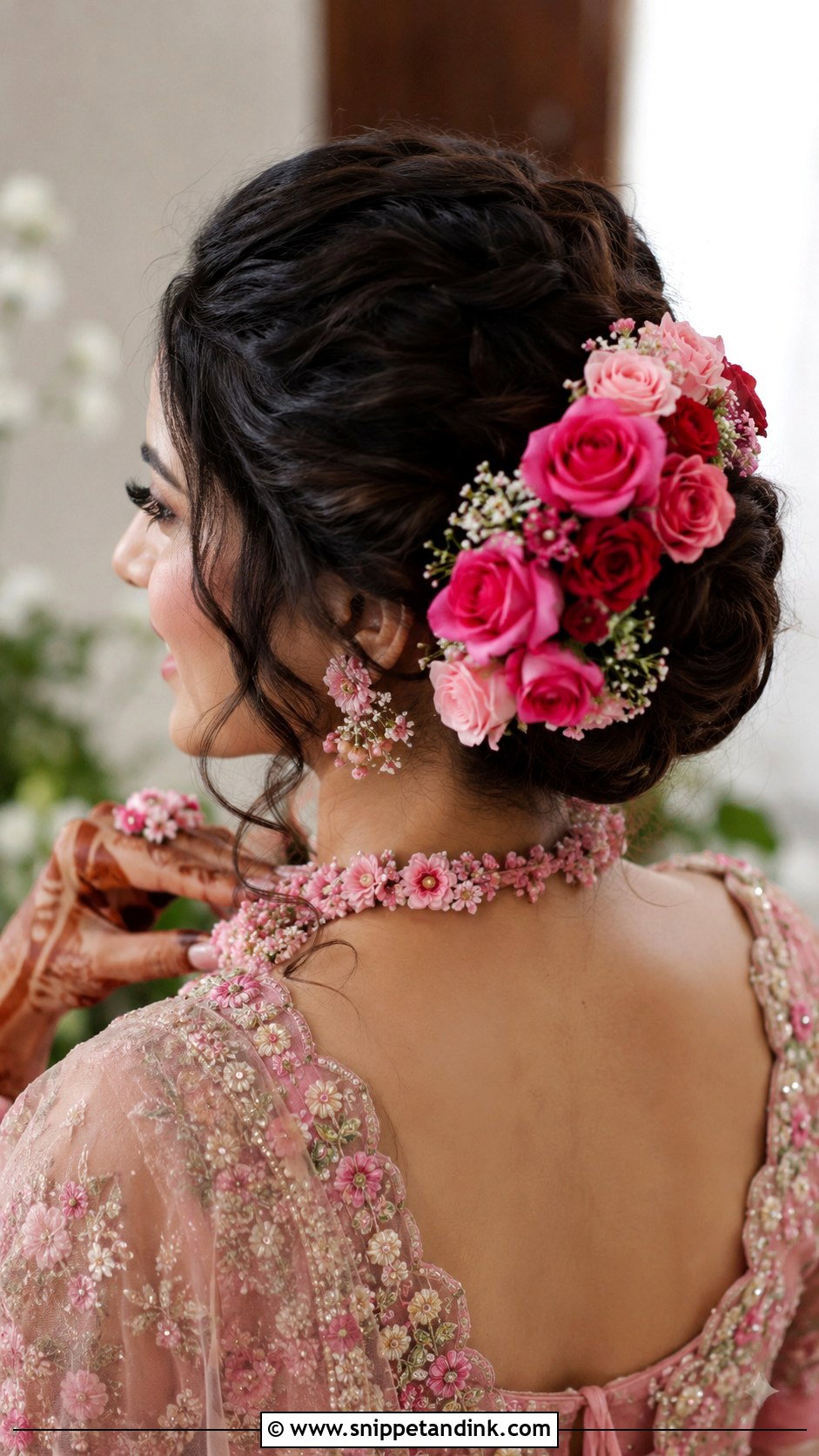
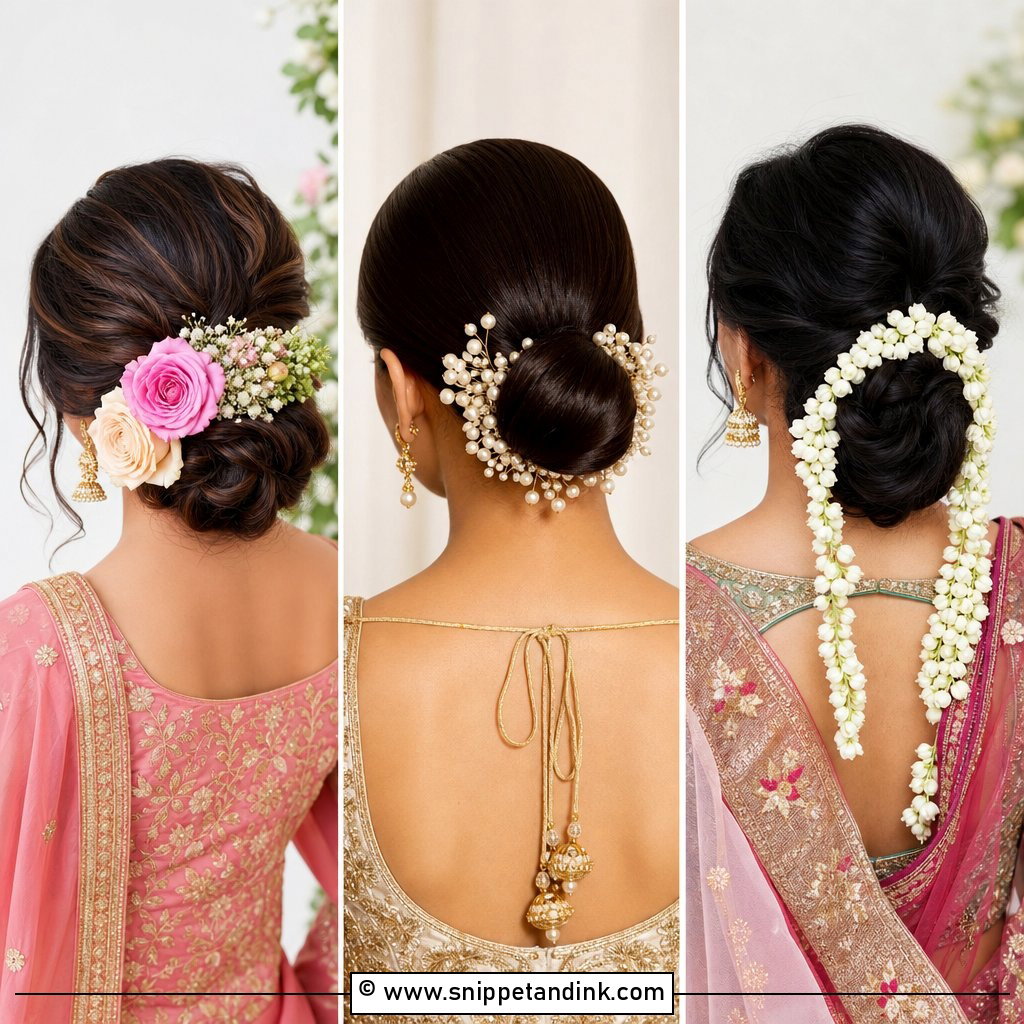
A rose updo can match the lehenga color or contrast with it. Roses are heavy blooms, so I use buds or half-open flowers with short taped stems, place the largest ones low on the updo near the anchor, and keep spares in a cool box for daytime events. It brings fragrance and a garden feel and goes well with floral jewelry for haldi or mehendi events. Expect roses to soften and droop by late afternoon in heat; swapping a couple of blooms mid-event keeps it fresh.
16. Bun With Gajra Wrap
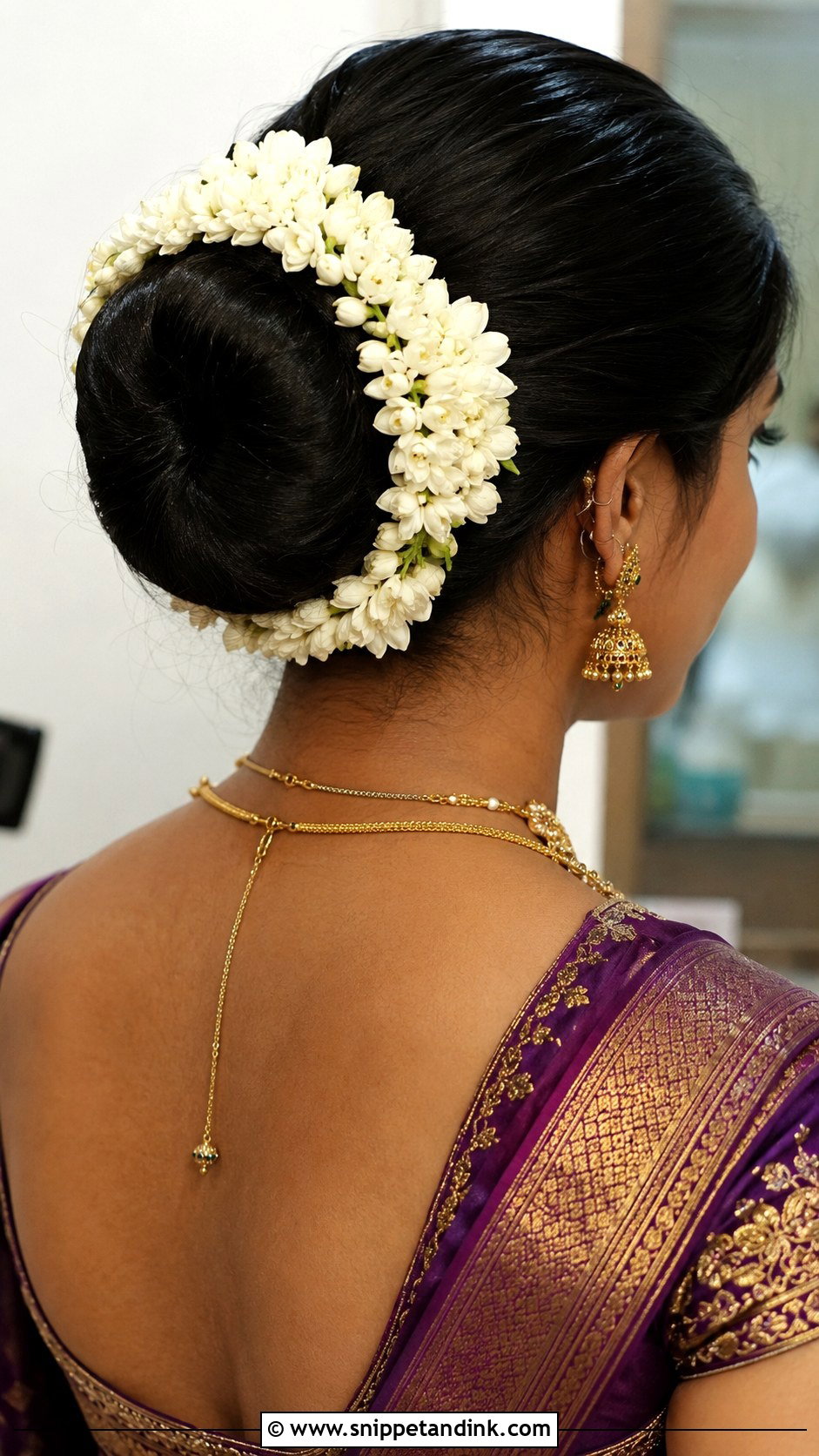
A gajra is a string of fresh flowers, usually jasmine, wound around the base of a bun. It’s rooted in tradition and works with silk sarees and traditional jewelry for the main ceremony or puja. The gajra-wrapped bun stays comfortable through long rituals as long as the bun underneath is built on a firm ponytail, since even two strands of gajra add real weight. I tell brides to tell me about any sensitivity to strong fragrance at the trial, because jasmine smells much stronger worn behind the head for hours.
17. Twisted Side Bun
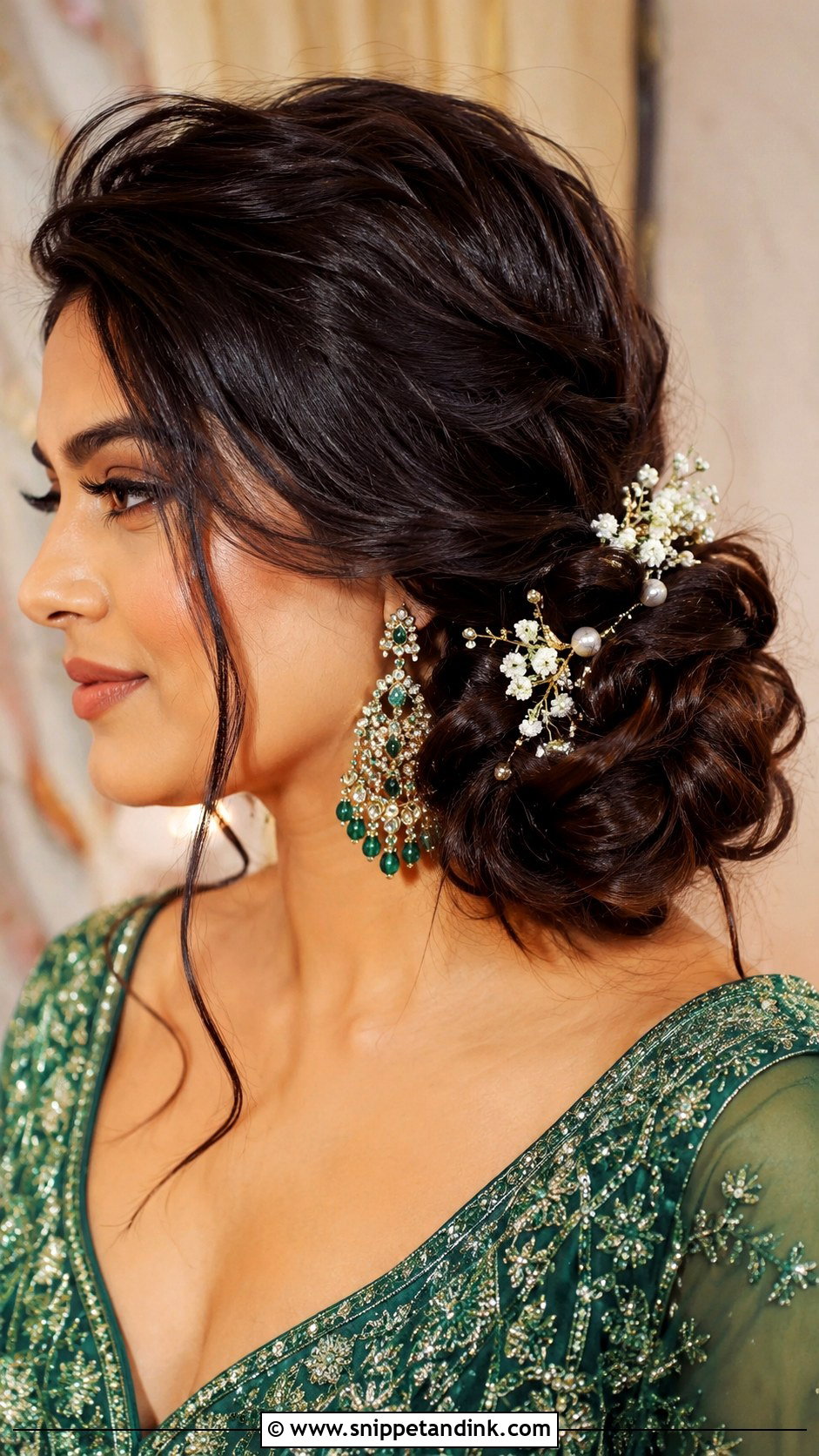
A twisted side bun sits near one ear and gives an asymmetric shape that frames the face. I twist the hair in two or three ropes and pin them into a knot just behind the ear, not on the shoulder, so it doesn’t get crushed by a dupatta or a jacket collar. Small flowers, pearls or jeweled pins finish it. It suits statement earrings and open necklines at a sangeet, reception or cocktail evening.
18. Braided Half Updo
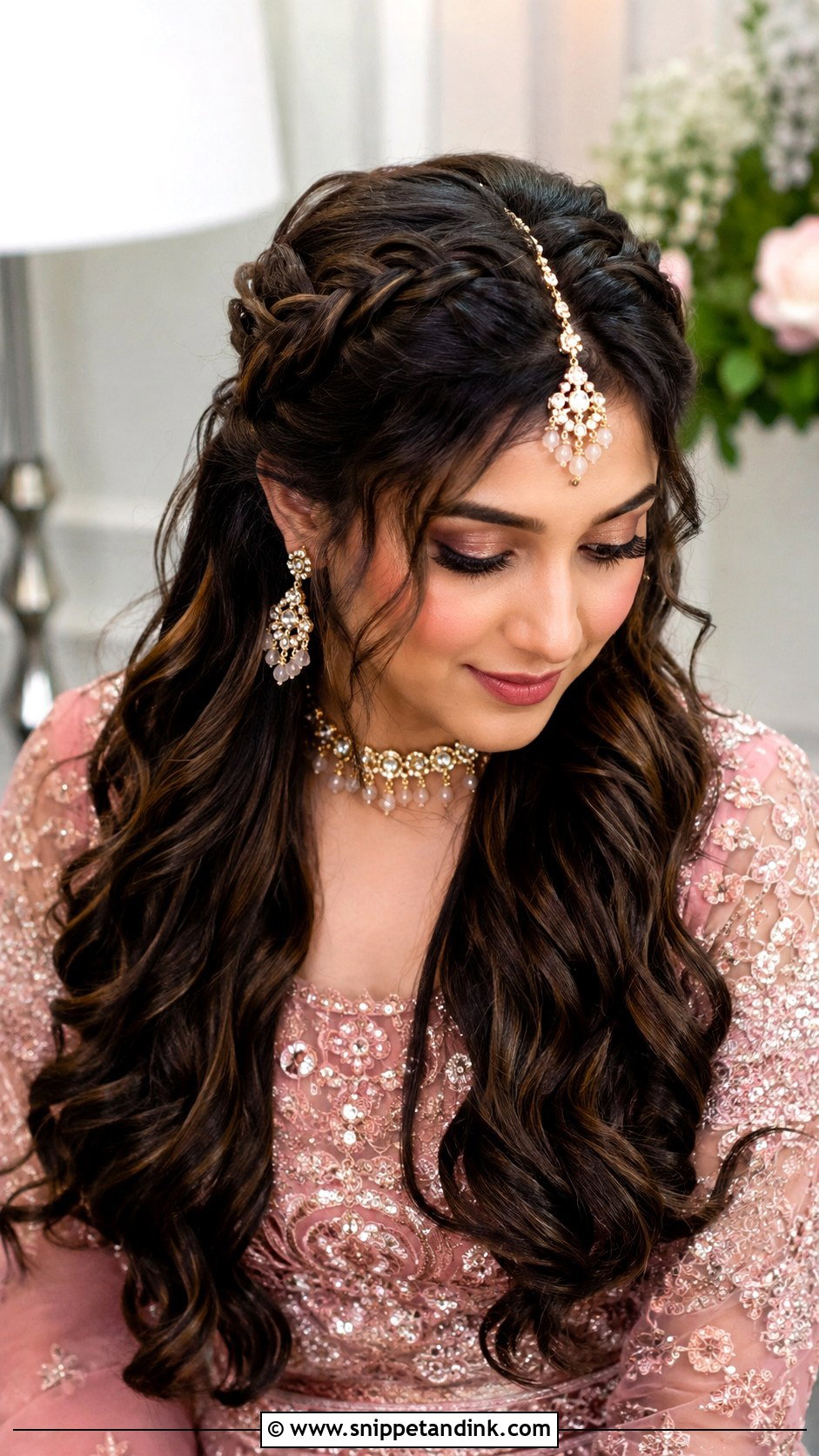
A braided half updo pairs a braided top section with loose curls underneath, which shows both detail and length. I braid two thin plaits from the temples and join them at the back of the head, then curl the lengths. Small flowers or jeweled accessories go on the join to hide pins. It sits well with maang tikkas and statement jewelry at sangeet nights and receptions. As with any half-up style, the curls are the part that drops first, so set them well.
19. Sleek Straight Open Hair
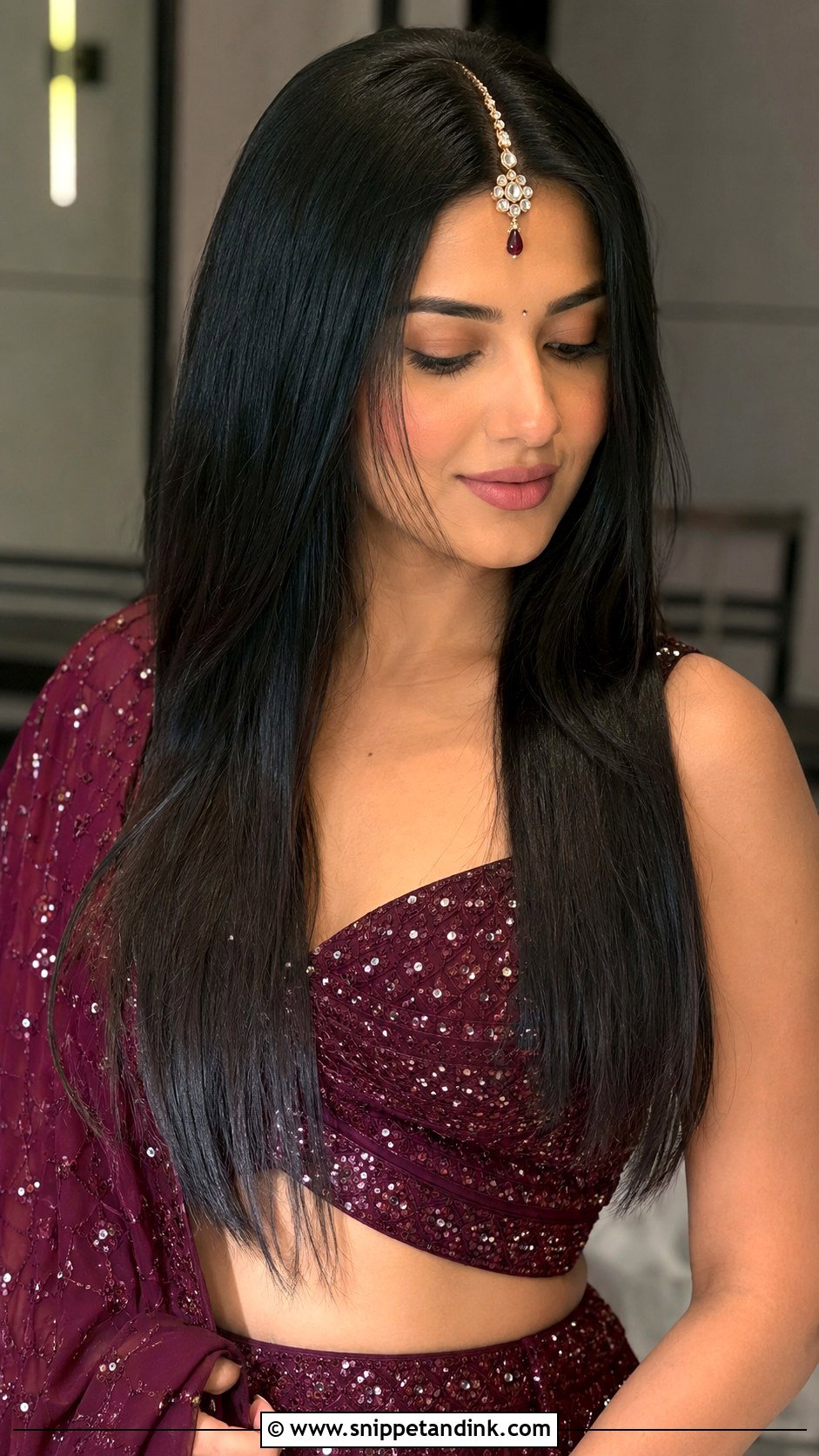
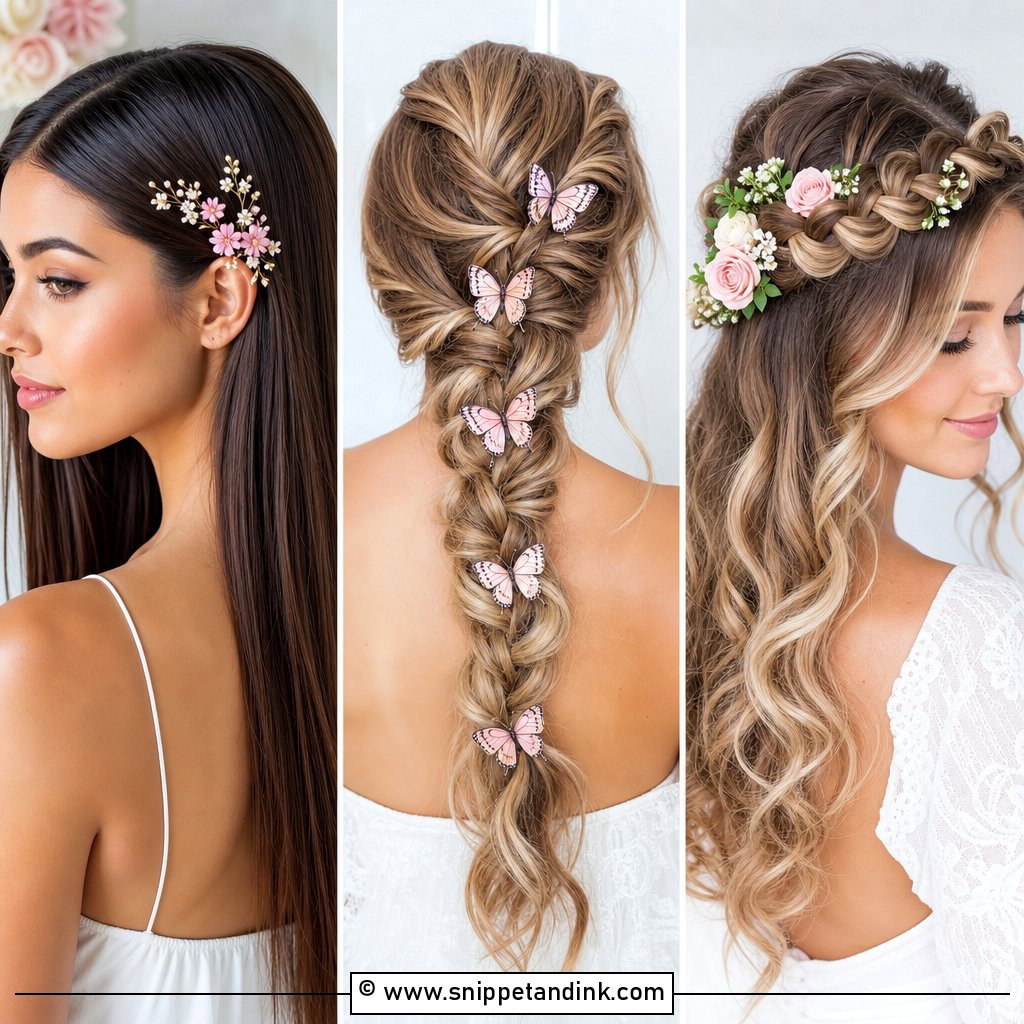
Sleek, straight open hair looks simple, but the polish comes from preparation: a smoothing blow-dry, a flat iron in small sections, and a light serum only on the ends. Too much product and it looks greasy by evening under lights. A center part with a delicate maang tikka adds tradition. It pairs with contemporary lehengas and gowns at a reception or cocktail. It’s also the open style that handles humidity worst, frizzing at the hairline first, so I’d choose it for air-conditioned venues.
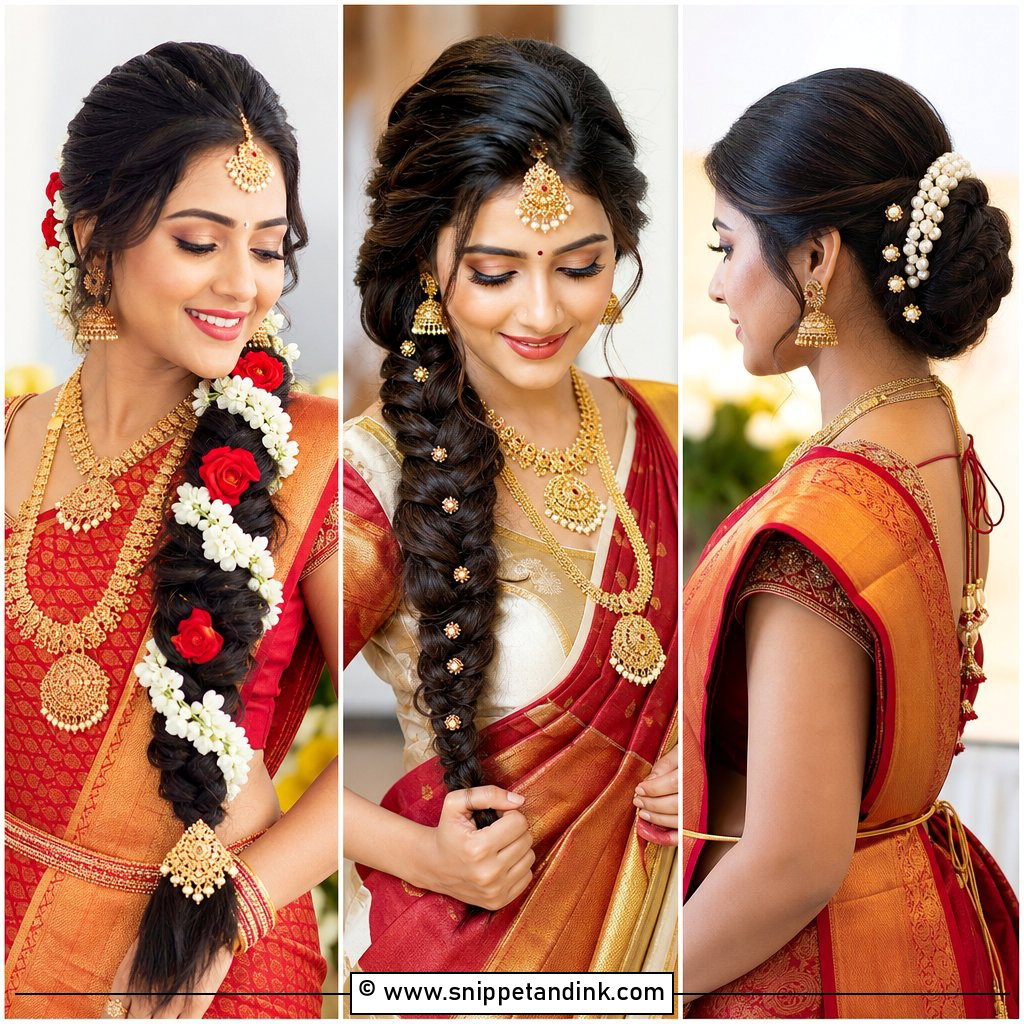
20. Pearl Embellished Braid
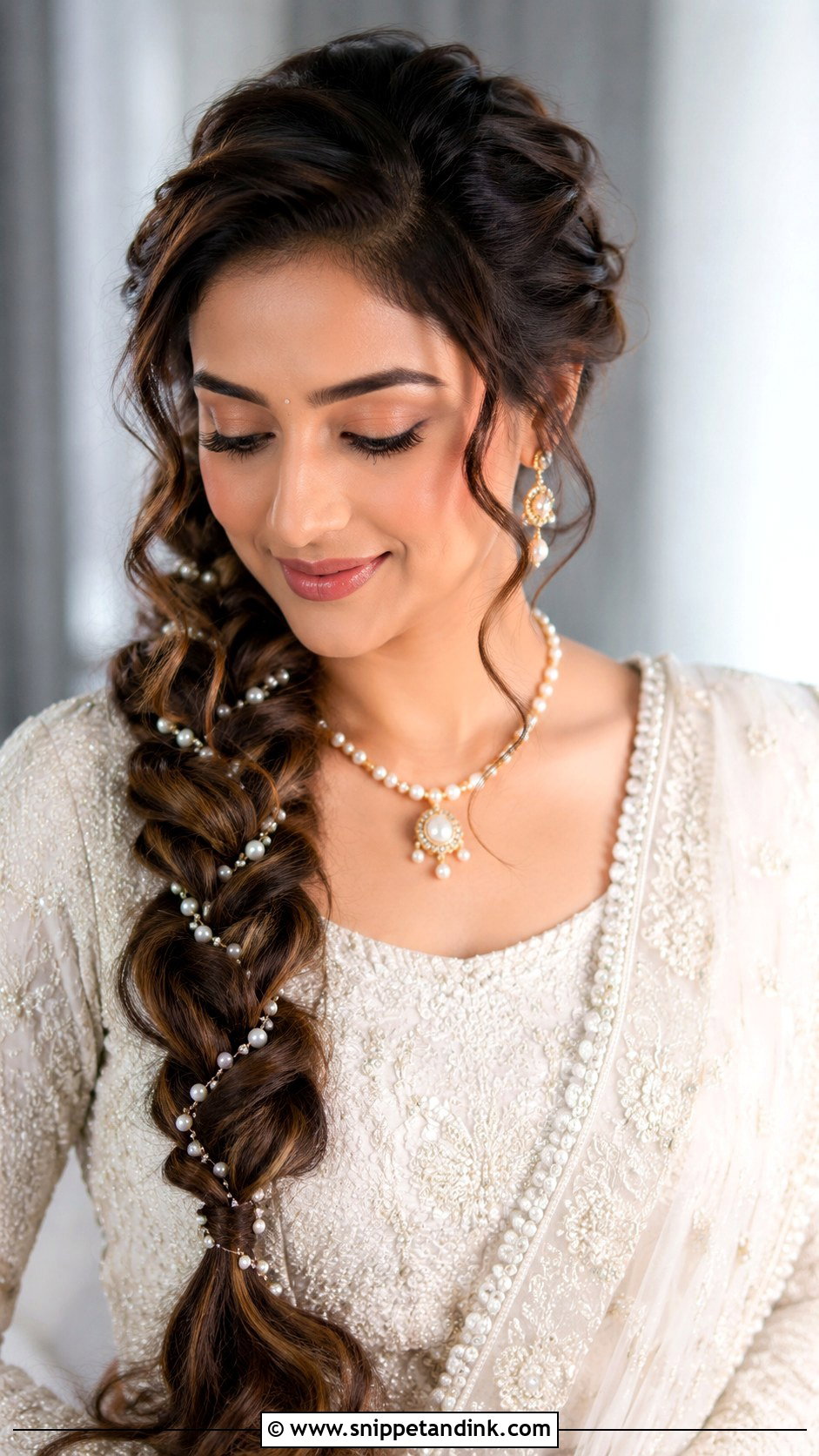
A pearl-embellished braid threads small pearls through a structured plait. I add them after braiding, with pearl pins or pearls on fine wire, so the braid stays even. It suits long hair and refined accessories, centered or swept to one side. Pearls are lighter than flowers and don’t wilt, which makes this a good option for a reception or sangeet that runs late. On very fine hair, pearl pins slide out, so each one needs a crossed bobby pin underneath.
21. Voluminous High Bun
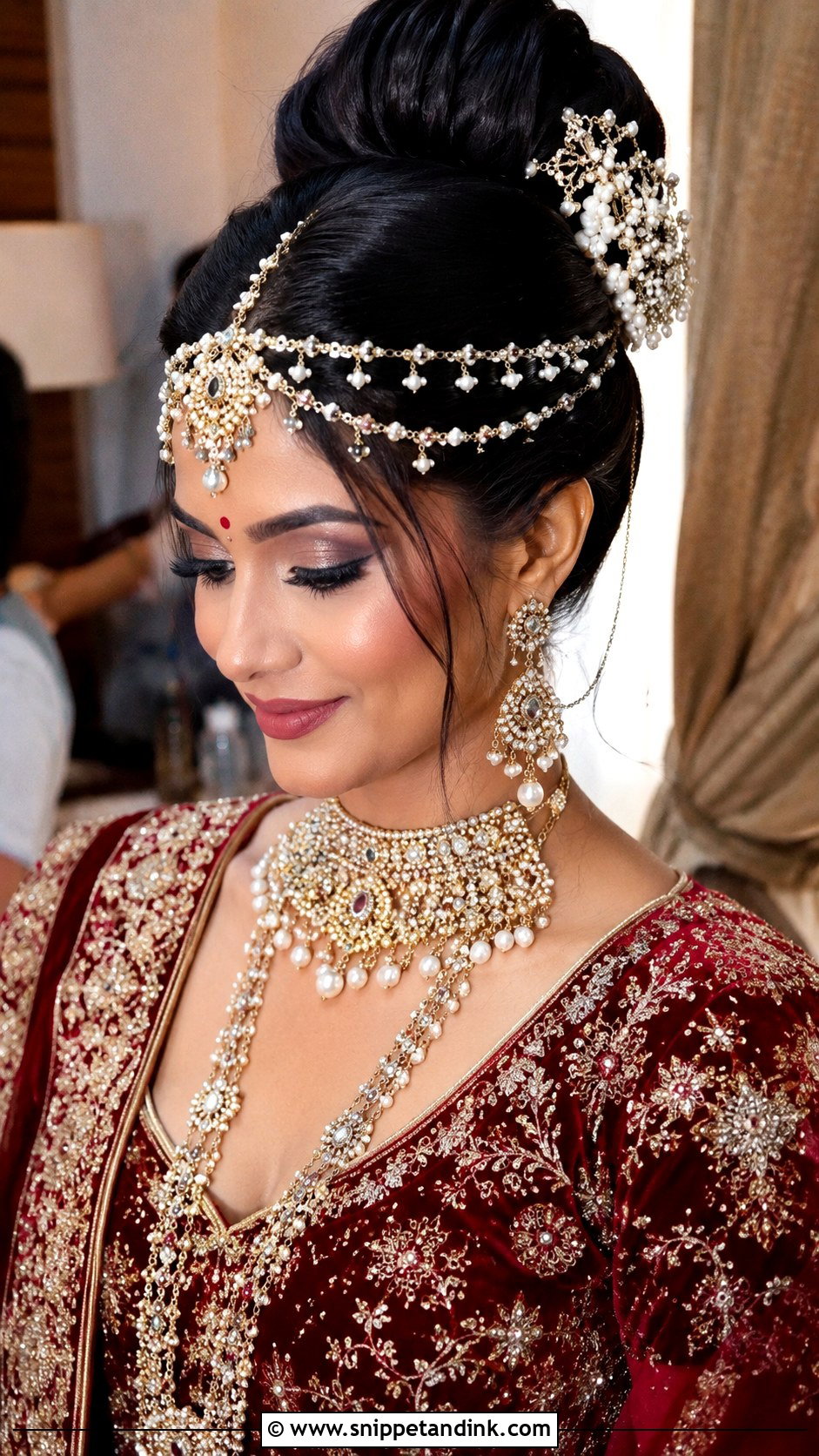
A high, voluminous bun sits at the crown and lengthens the neck. It’s built with backcombing and often a bun filler for size, then pinned firmly to a high ponytail. A matha patti and statement earrings complete it. It looks commanding at the main ceremony, but it has one problem: a head dupatta has to be pinned over or around a high bun, so test the draping at your trial. Flowers, pearls or jeweled pins can decorate the bun.
22. Loose Boho Waves With Flowers
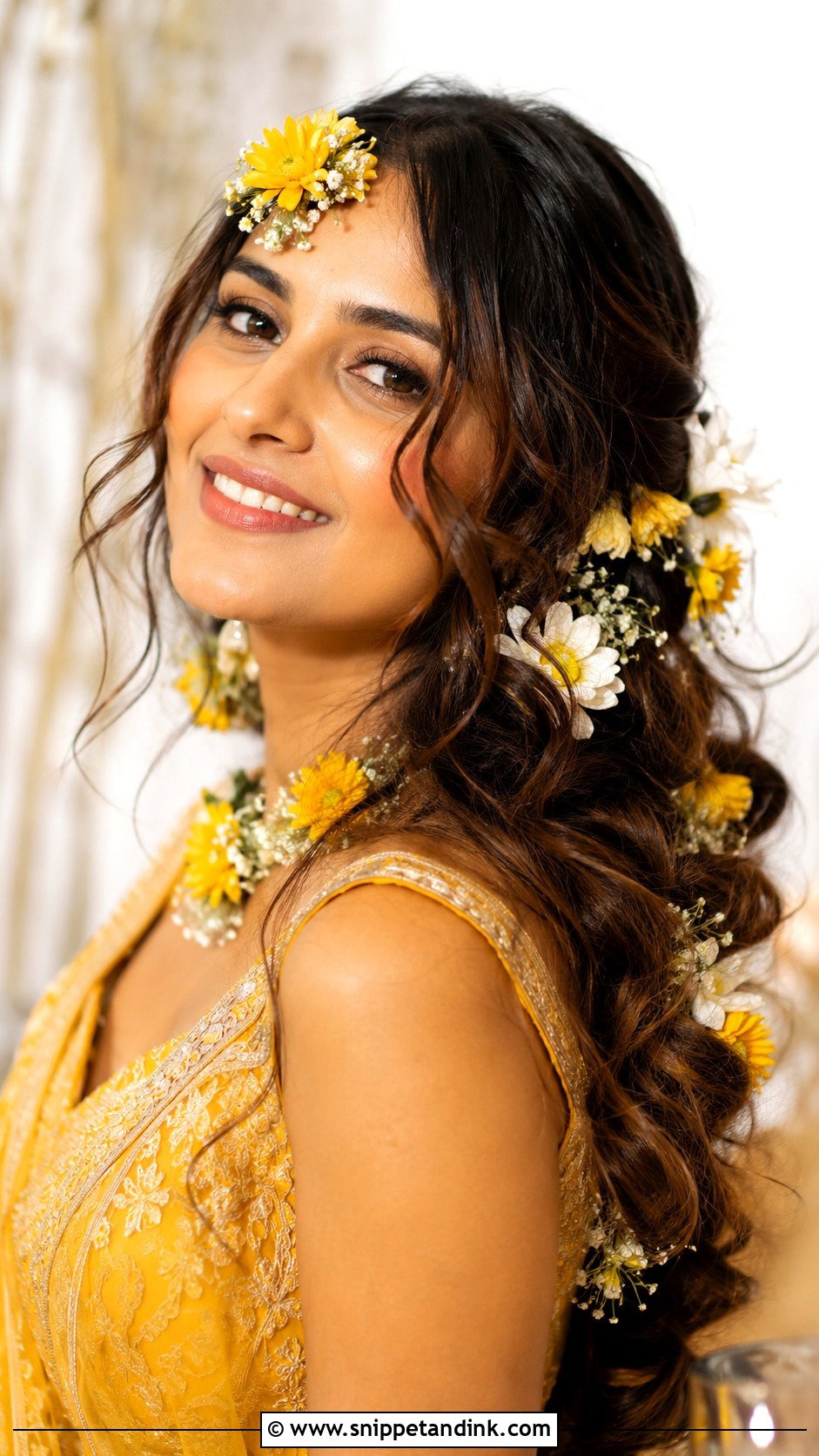
Loose boho waves with flowers scattered through them are made for outdoor and destination weddings, where a softer look fits the setting. I create waves with a flat iron or large barrel and pin small blooms in clusters rather than single flowers, so they don’t fall out. It suits haldi and mehendi functions and flowy lehengas with floral jewelry. In wind, open hair gets tangled quickly, so I’d pin the front sections back lightly if the venue is by the sea.
23. Fishtail Braid Over Shoulder
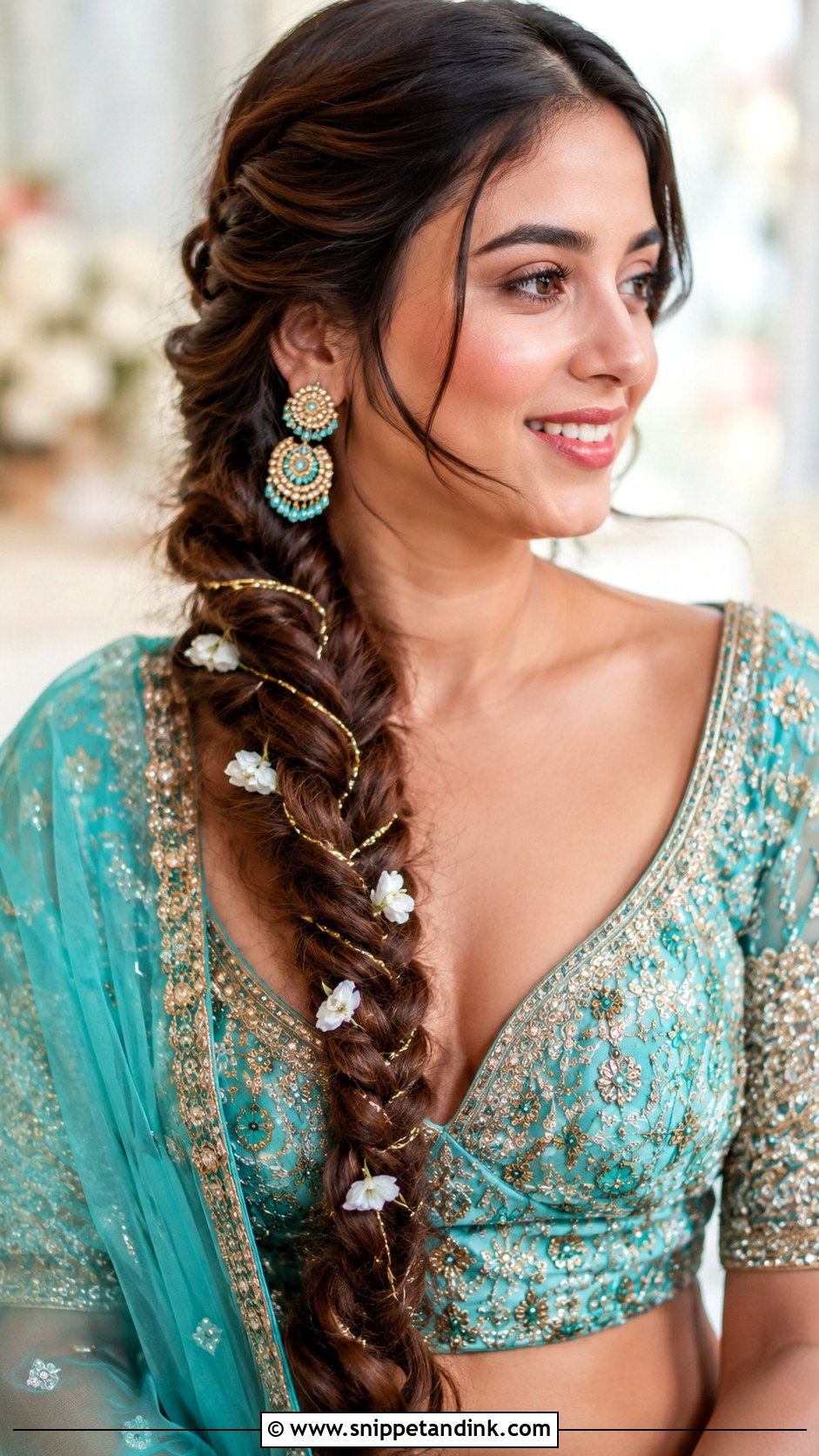
A fishtail braid over the shoulder shows the woven texture from the front, where most photos are taken. I start it low at the nape and secure the end with a small elastic hidden under a flower or a pearl pin. The shoulder placement frames the face and draws attention to statement earrings. Small flowers, pearls or gold thread finish it, and it works at sangeet, mehendi or reception events. If you’re wearing a one-shoulder blouse, put the braid on the bare side.
24. Crown Braid With Open Hair
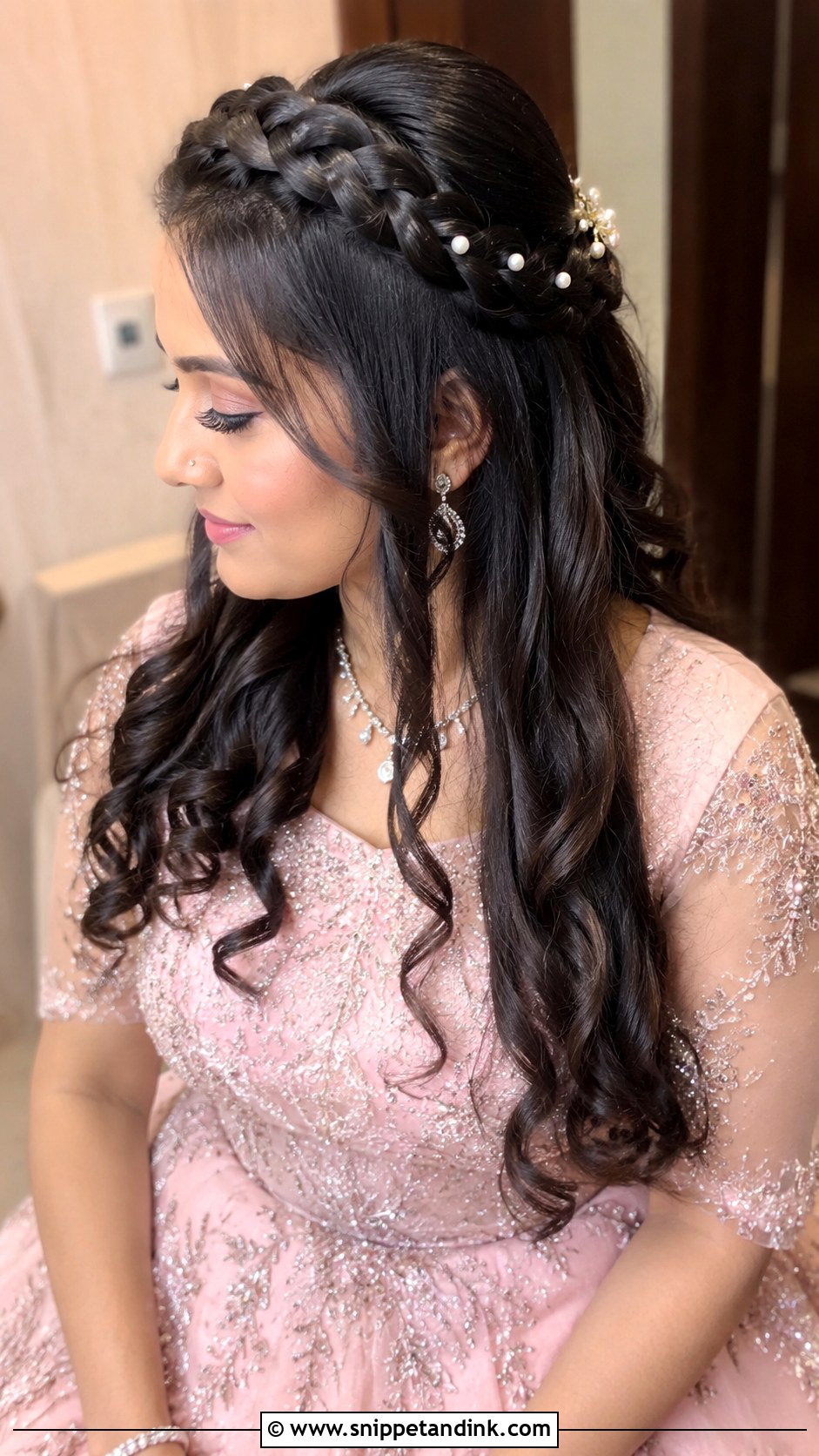
A crown braid with open hair runs a braid around the top of the head and leaves the rest of the hair loose and curled. It keeps hair off the face while showing waves below. I braid it slightly back from the hairline so a maang tikka can sit in front of it. Small flowers or pearls tuck into the braid easily. It works well for sangeet and reception celebrations and sits nicely with delicate jewelry.

25. Diamond Accented Open Hairstyle
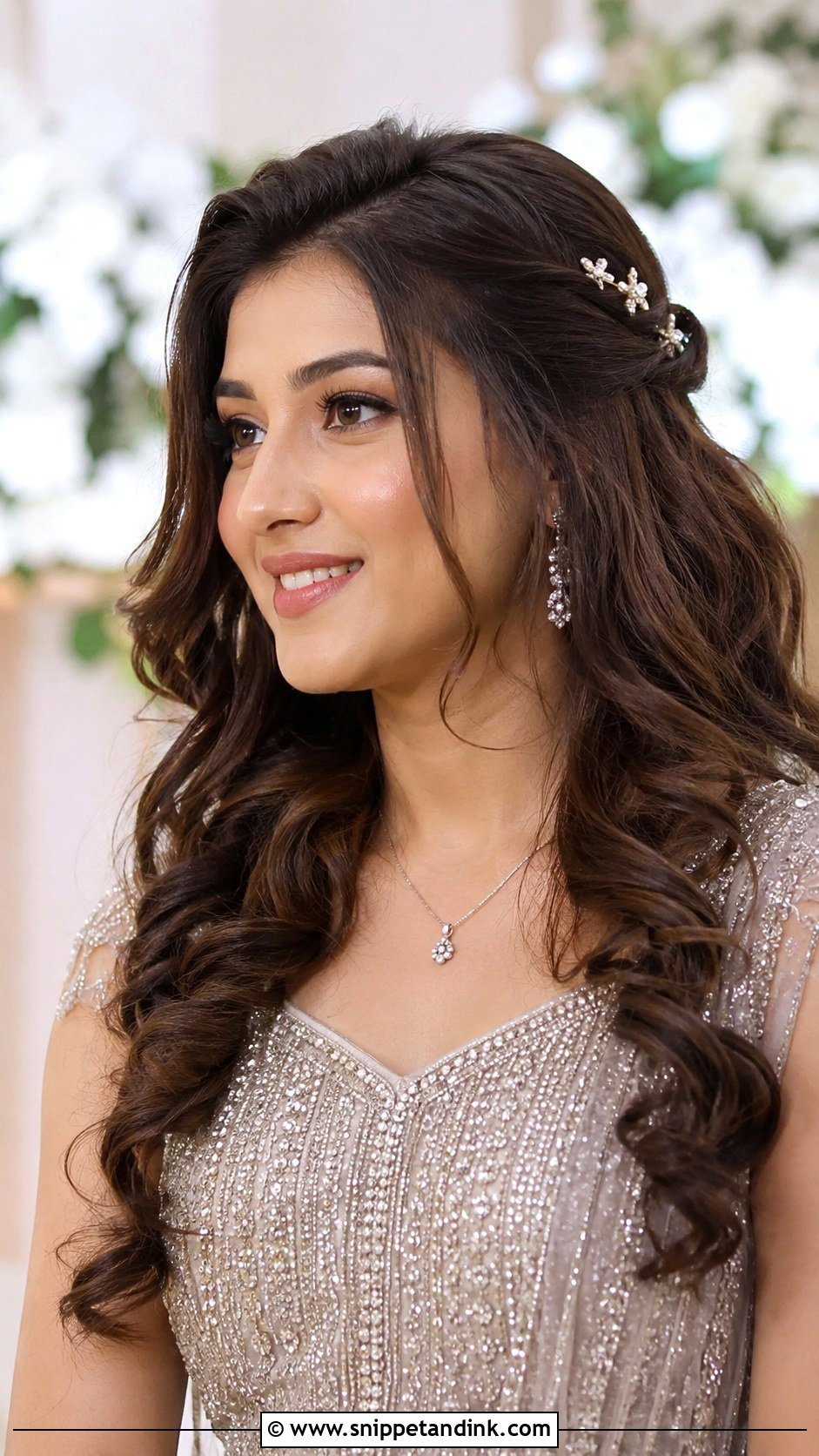
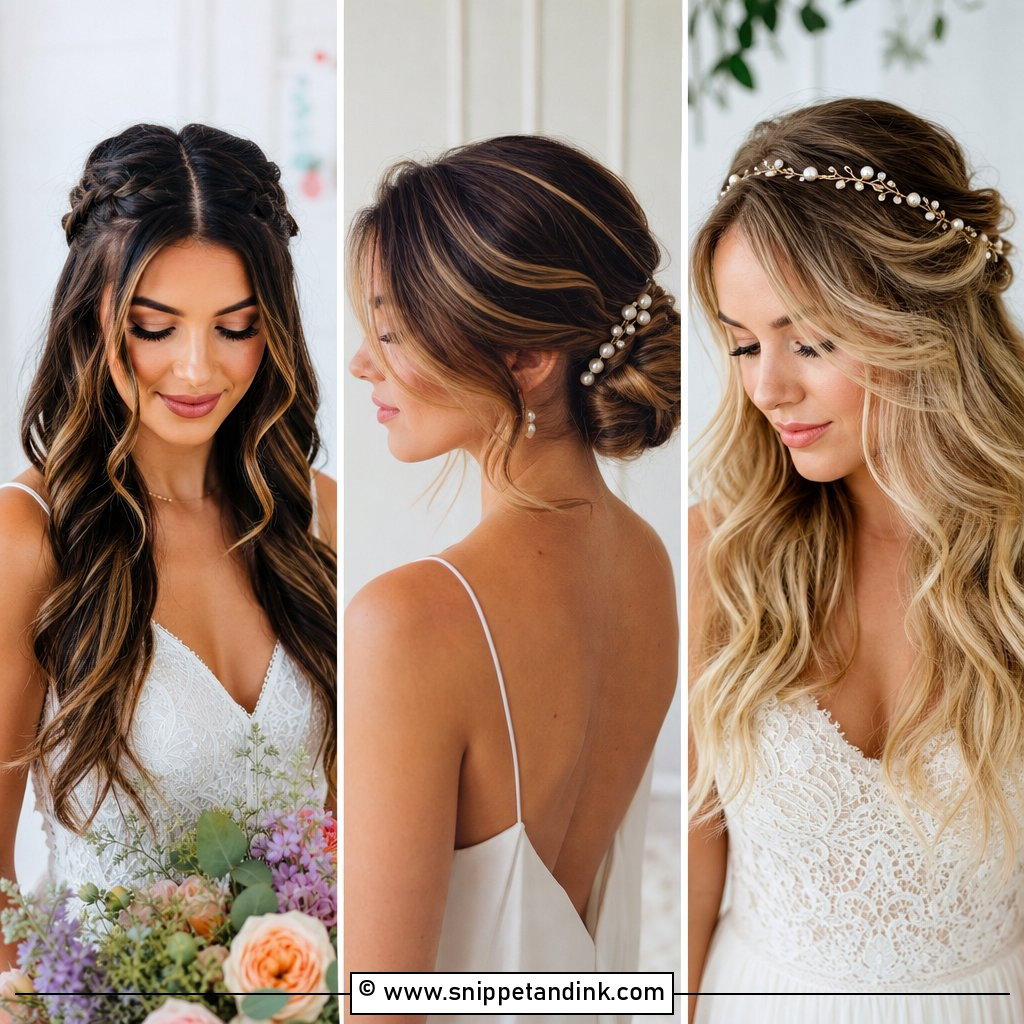
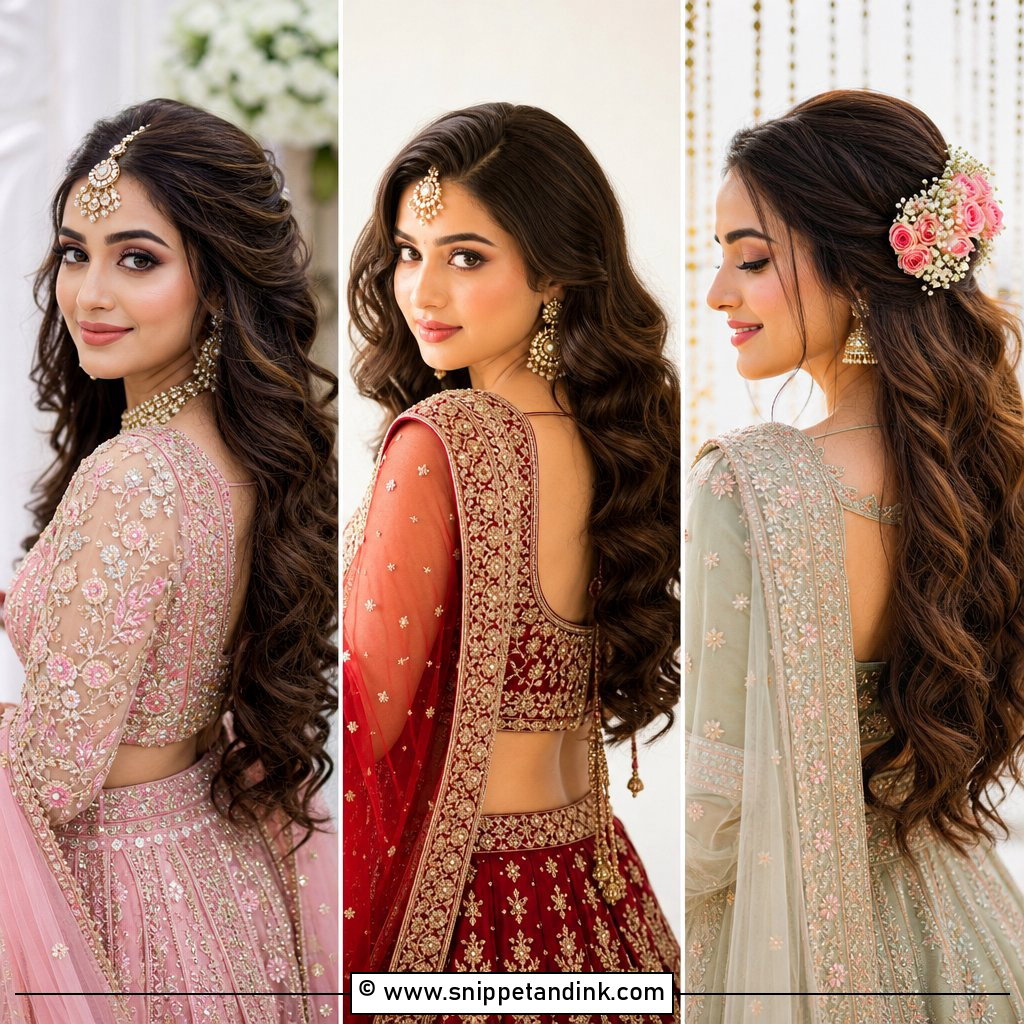
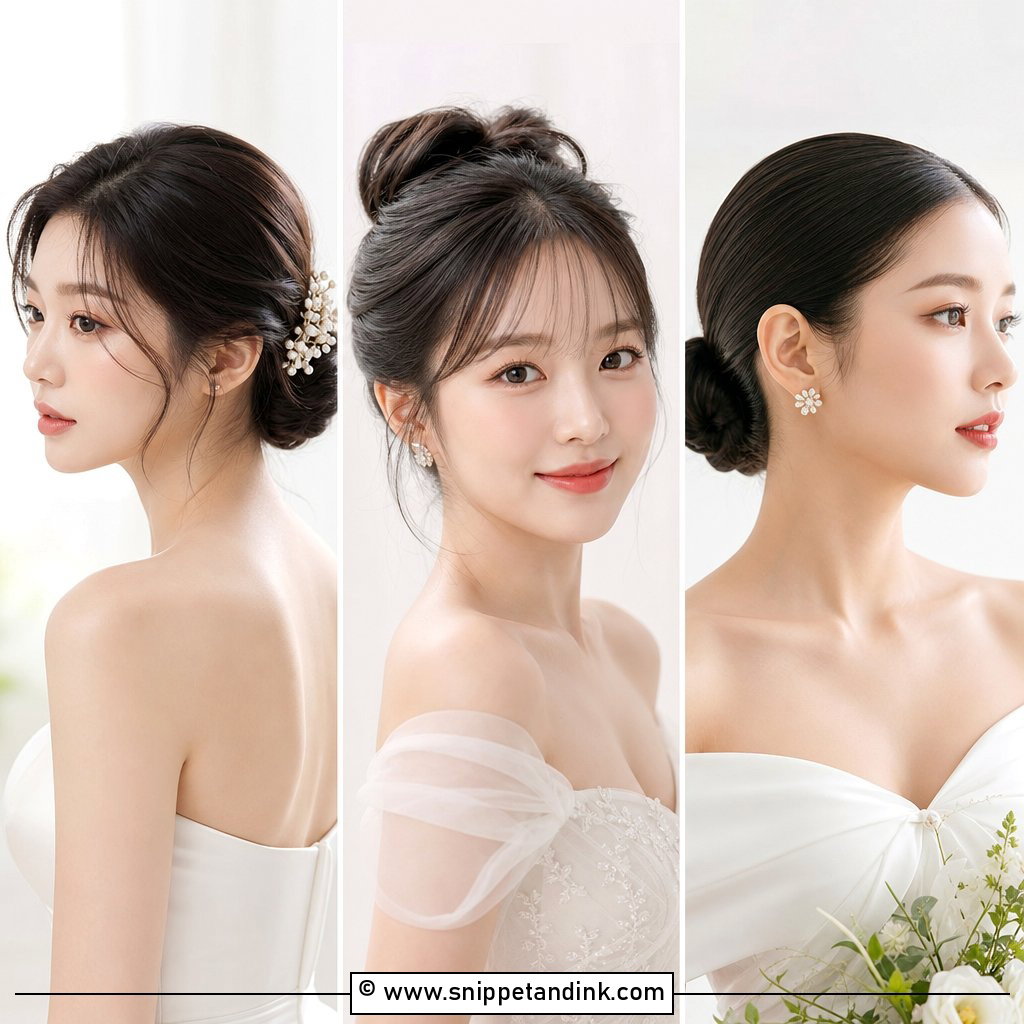
Diamond or crystal pins scattered through open hair add light, modern sparkle without flowers. I curl or straighten the hair first, then slide pins in at an angle into denser sections so they don’t slip down. They suit Indo-Western gowns and contemporary lehengas at reception events. It’s a softer alternative to heavy floral styling, and the pins can be moved in seconds if you want to change the look between functions.
Which Style Goes With Which Function
I plan bridal hair one function at a time, because the conditions change more than people expect. Here’s how I usually think about it:
- Haldi: turmeric paste gets everywhere, including hair, and it can tint light or highlighted hair. A braid or a crown keeps lengths out of the way.
- Mehendi: you’ll sit for hours with wet paste on your hands and can’t touch your hair, so choose something that won’t need fixing.
- Sangeet: dancing and stage lights. Secure styles, or open hair you’re happy to let move.
- Wedding ceremony: a head dupatta, heavy jewelry and the sacred fire. Updos and braids are safest, with hair secured away from the face and shoulders.
- Reception: usually indoors and air-conditioned, which is where open waves and sleek hair hold up best.
The order on the wedding morning
On the main day I usually start hair prep while the makeup artist works on skin, then finish the style once the face is done. Jewelry goes on before the dupatta, and the dupatta is pinned last, into the hairstyle. A full bridal look can take a couple of hours, so build in extra time for photos of getting ready and for family members wanting their turn in the chair.
Turning a Saved Photo Into Hair That Fits You
These 25 Indian marriage hairstyle ideas cover everything from jasmine braids to Hollywood waves, but a photo is only a starting point. Your stylist needs to know your hair length, its texture, your outfit for each function and how long you’ll be wearing each style. Bring the photos to your trial along with your dupatta and jewelry, and be honest about what you can live with for eight hours. Mix tradition with modern styling where it feels right, and plan each function separately.
You'll Like These Ideas:




Leave a Reply