
Hair for an Indian wedding has to do three jobs at once. It has to hold jewelry, flowers and a dupatta, it has to last through rituals that run for hours, and it has to look right in photos where the whole family stands together. That last part is often forgotten: the bride, her sisters, her mother and her aunts all appear in the same frames. Whatever the outfit, a silk saree, lehenga, sharara, gown or an Indo-western set, the shape of the hair sets the mood around it. Here are 20 styles I use across the bride and her family, with the practical detail behind each one so you can brief your stylist clearly.
Styling Mothers, Aunts and Grandmothers Too
A lot of my wedding bookings include the older women in the family, and their hair usually needs a different approach than the bride’s. Hair thins with age, especially at the crown and temples, and grey hair has a coarser, more wiry texture that resists curls and shows every pin.
- For thinning crowns, a soft low bun with gentle backcombing underneath gives fullness without exposing the scalp under flash.
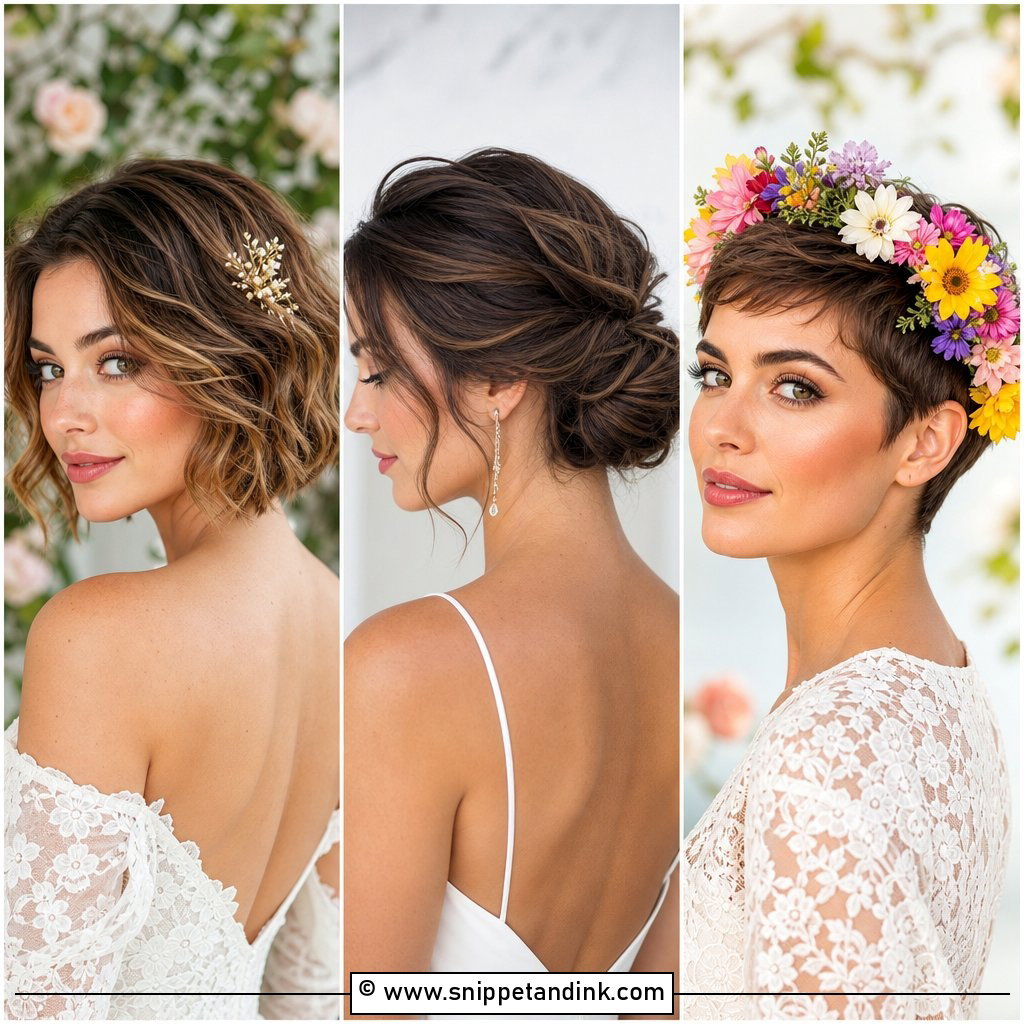
- Short bobs can still take festive detail: a jeweled clip above one ear or a small gajra pinned along the back.
- Grey and silver hair looks striking with pearls and white jasmine; a matte, light-hold spray avoids a stiff finish.
- Nothing heavy on fragile hair. A large juda pin or long jadai can tug at weak strands over a long day.
I always ask older relatives how long they’re comfortable sitting in the chair. Twenty minutes is often the honest limit, so their styles should be quick and secure rather than elaborate.
1. Indian Bridal Bun With Gajra
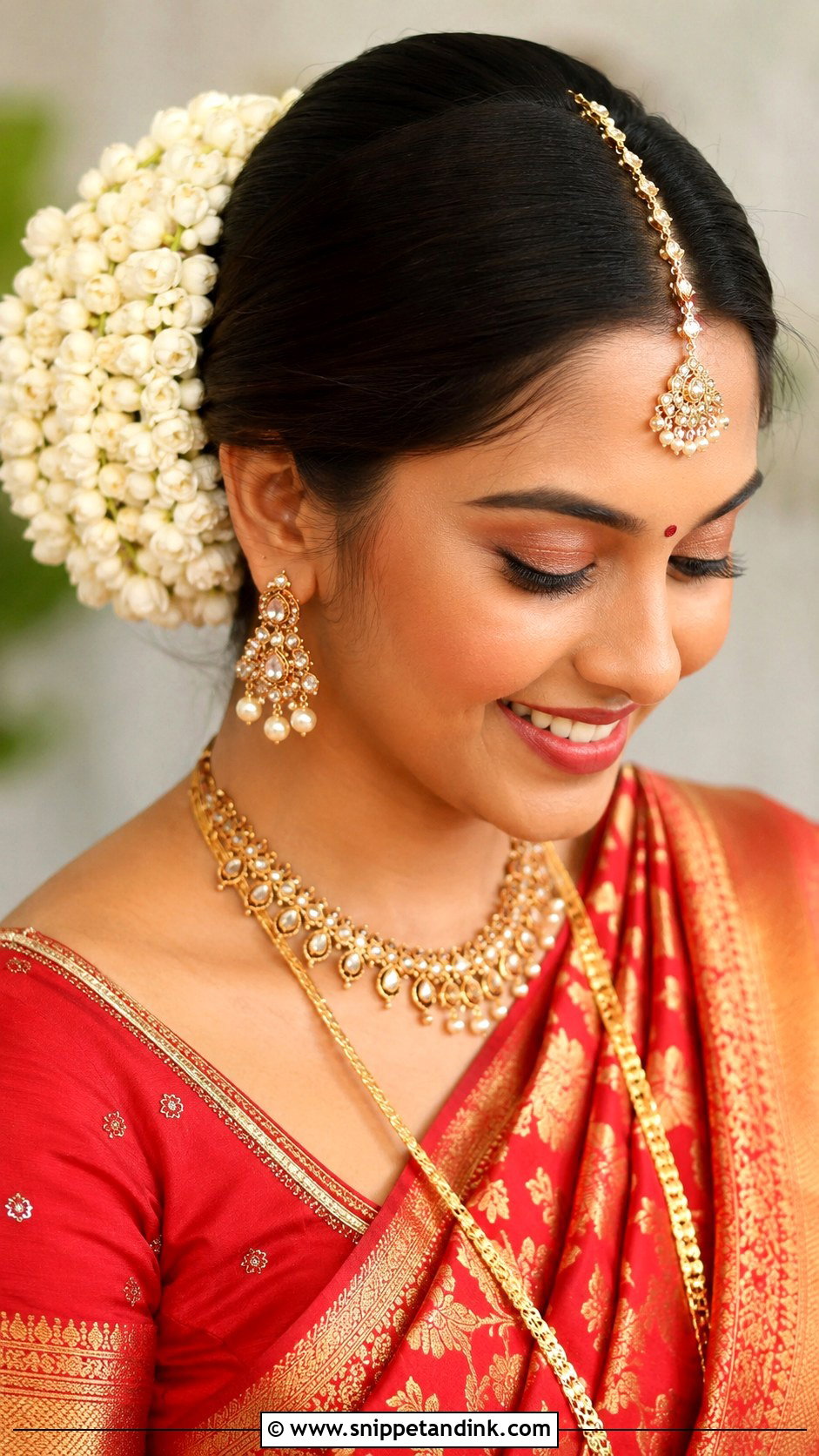
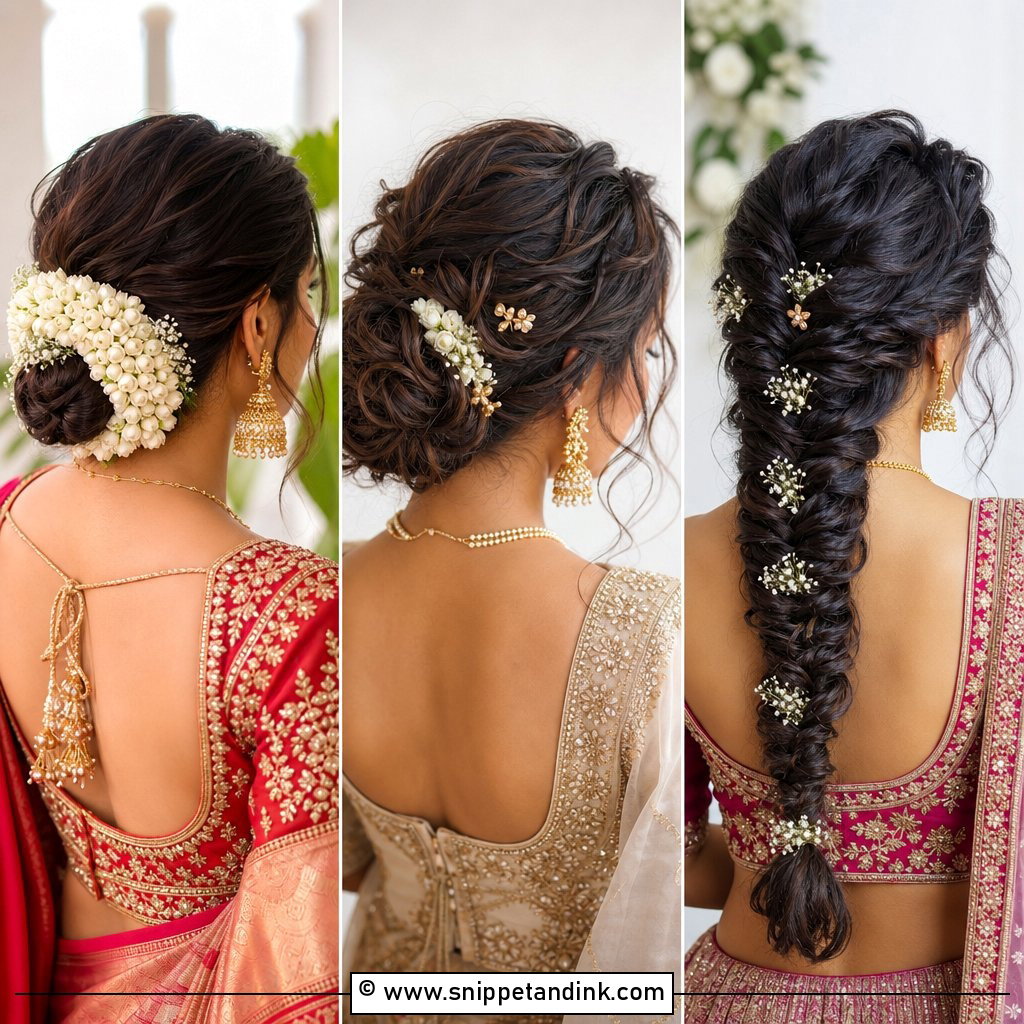
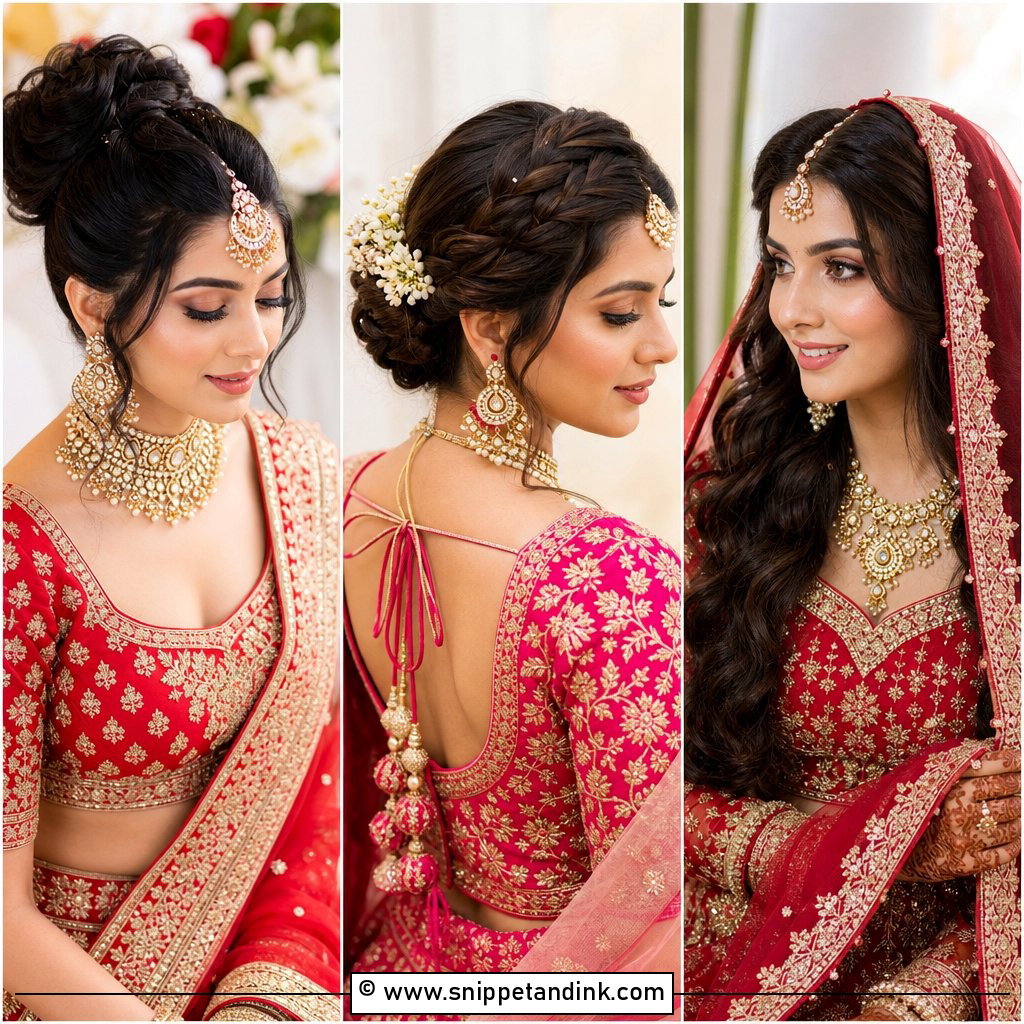
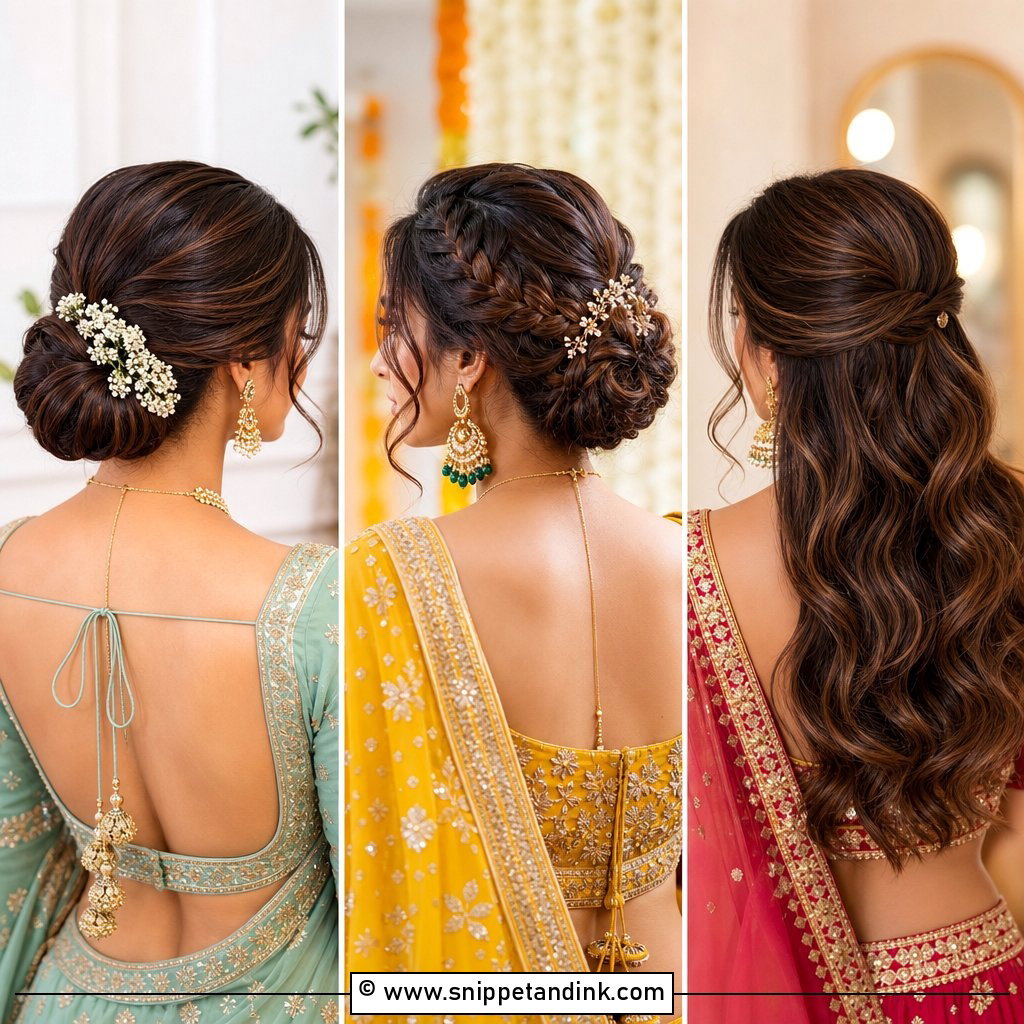
The bun wrapped in jasmine gajra is still the look most families picture first. I part it in the centre, smooth the front with a little gel, and set the bun low or at mid-height so it carries a dupatta draping over the head. Temple jewelry, a maang tikka and red lehengas all sit naturally with it. A flat crown can make a round face look wider in photos, so I add a small amount of lift just behind the parting.
2. South Indian Bridal Braid
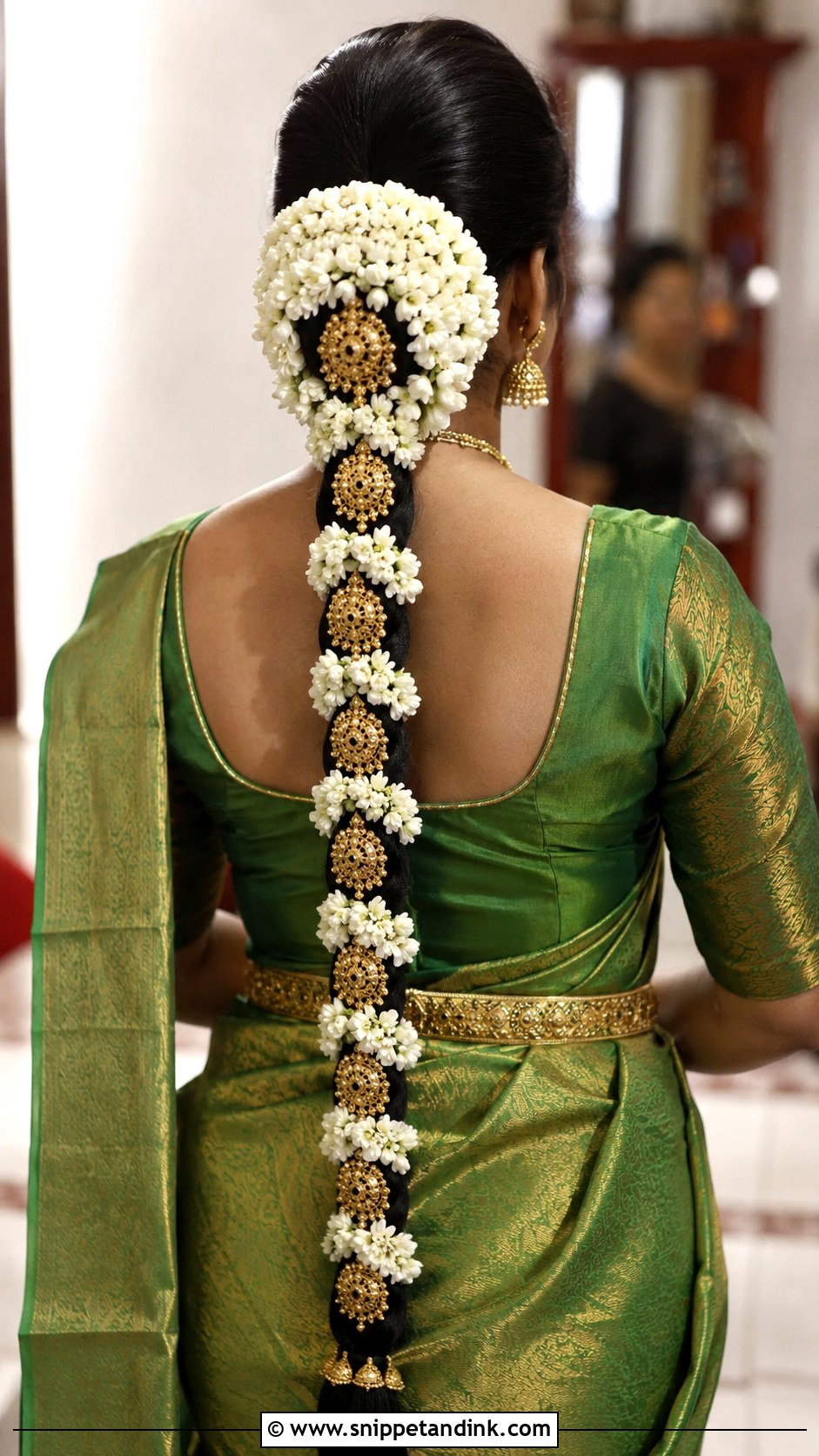
The South Indian bridal braid is all about the back view, the one guests see during rituals and the entrance. It’s usually lengthened with a braid extension, then dressed with flowers, gold jadanagam or braid jewelry, alongside a Kanjeevaram saree and temple pieces. Ask for it full but not tight. A braid pulled hard from the nape gives the bride a sore scalp by the end of the muhurtham, and loosening it mid-ritual isn’t an option.
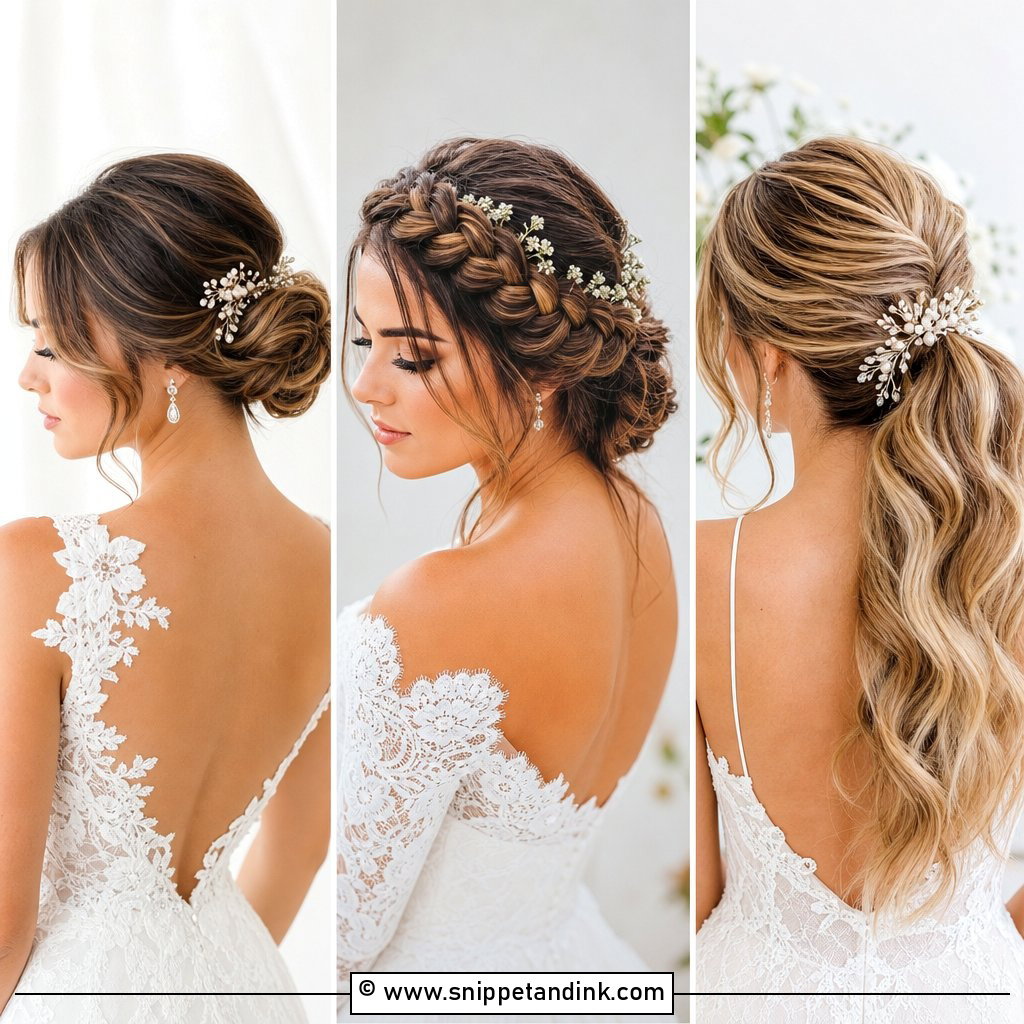
3. Indian Wedding Low Bun
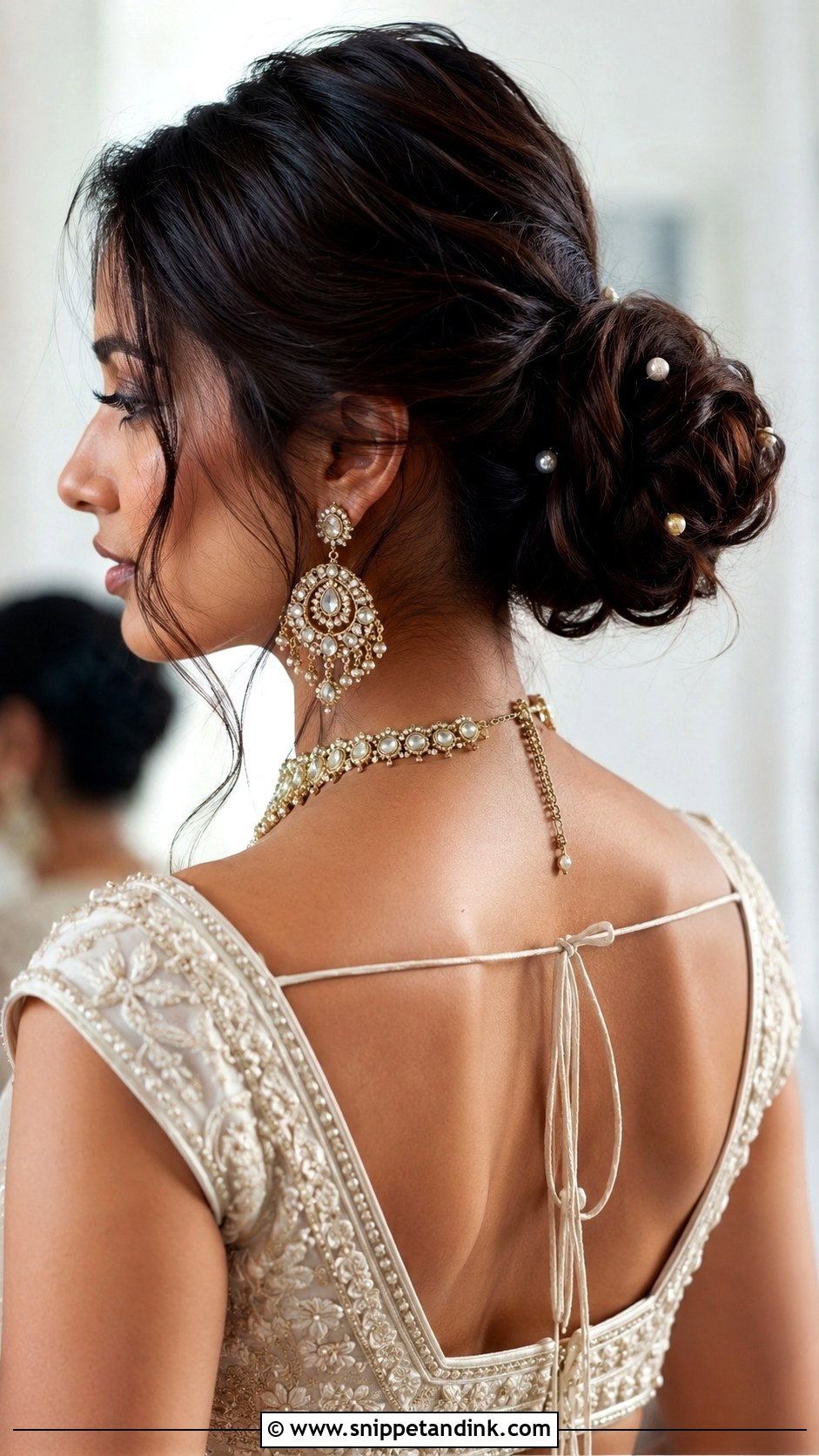
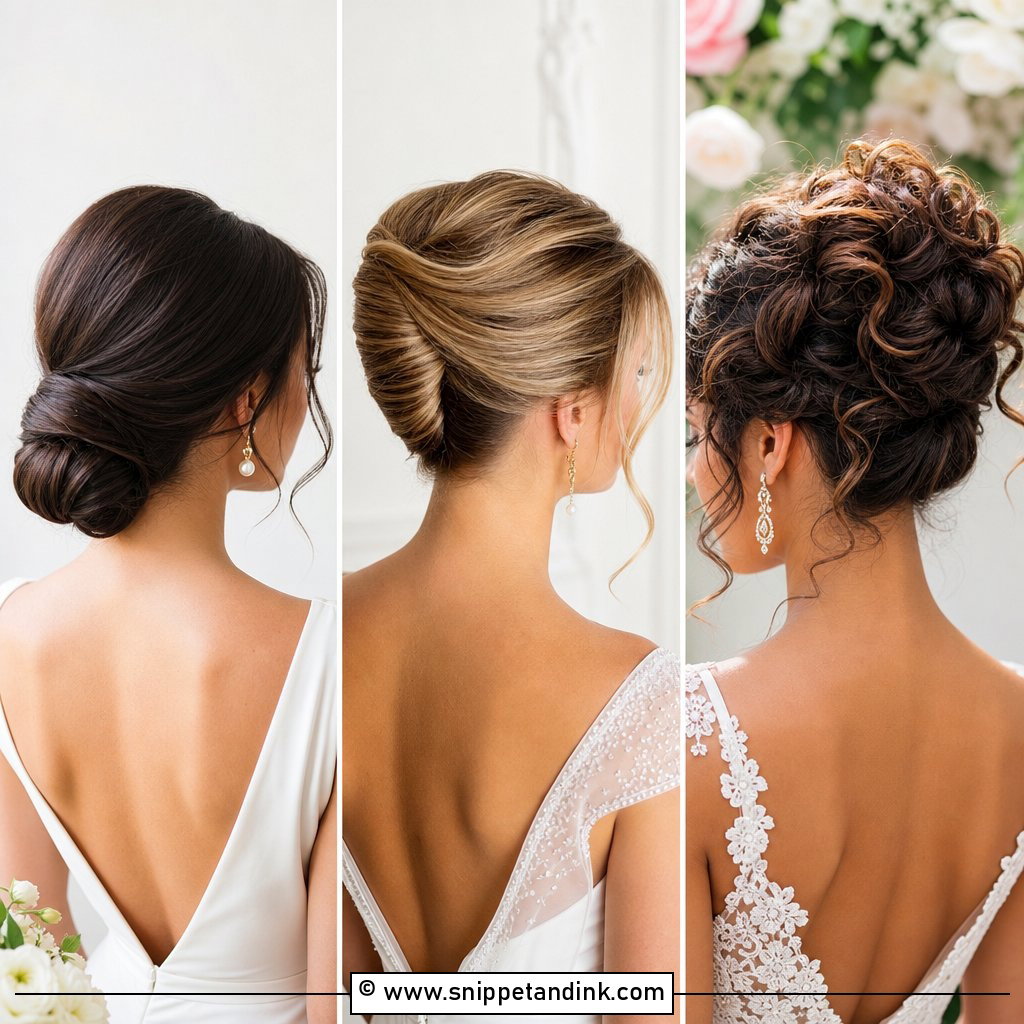
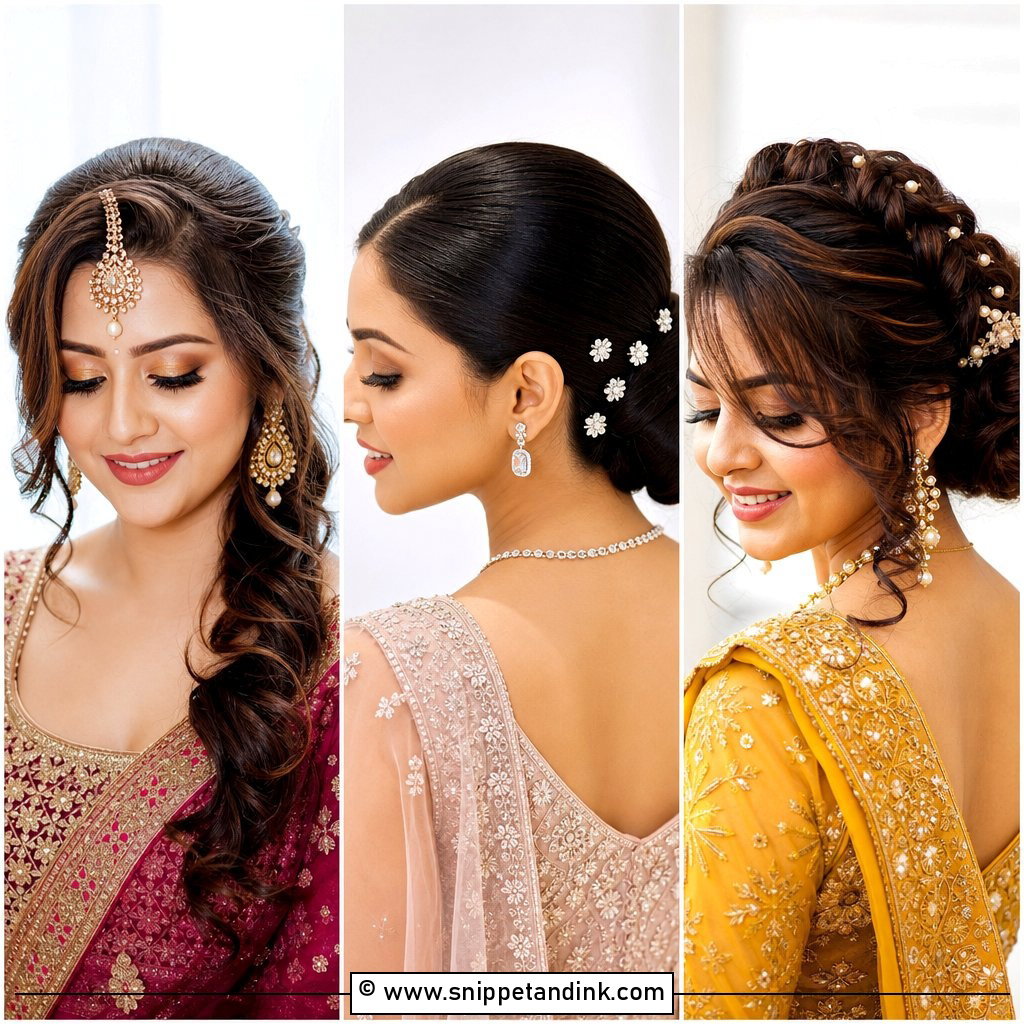
A low bun is the style I give most often to sisters and mothers of the bride, because it works with nearly anything. Sitting at the nape, it leaves room for heavy earrings, a statement necklace and a dupatta. I keep it sleek for a reception and a bit textured for a daytime ceremony. Small pins, pearls or a few fresh flowers add the festive touch. It holds its outline from the side and back, which matters in family group photos where people rarely face the camera straight on.
4. Indian Wedding Open Curls
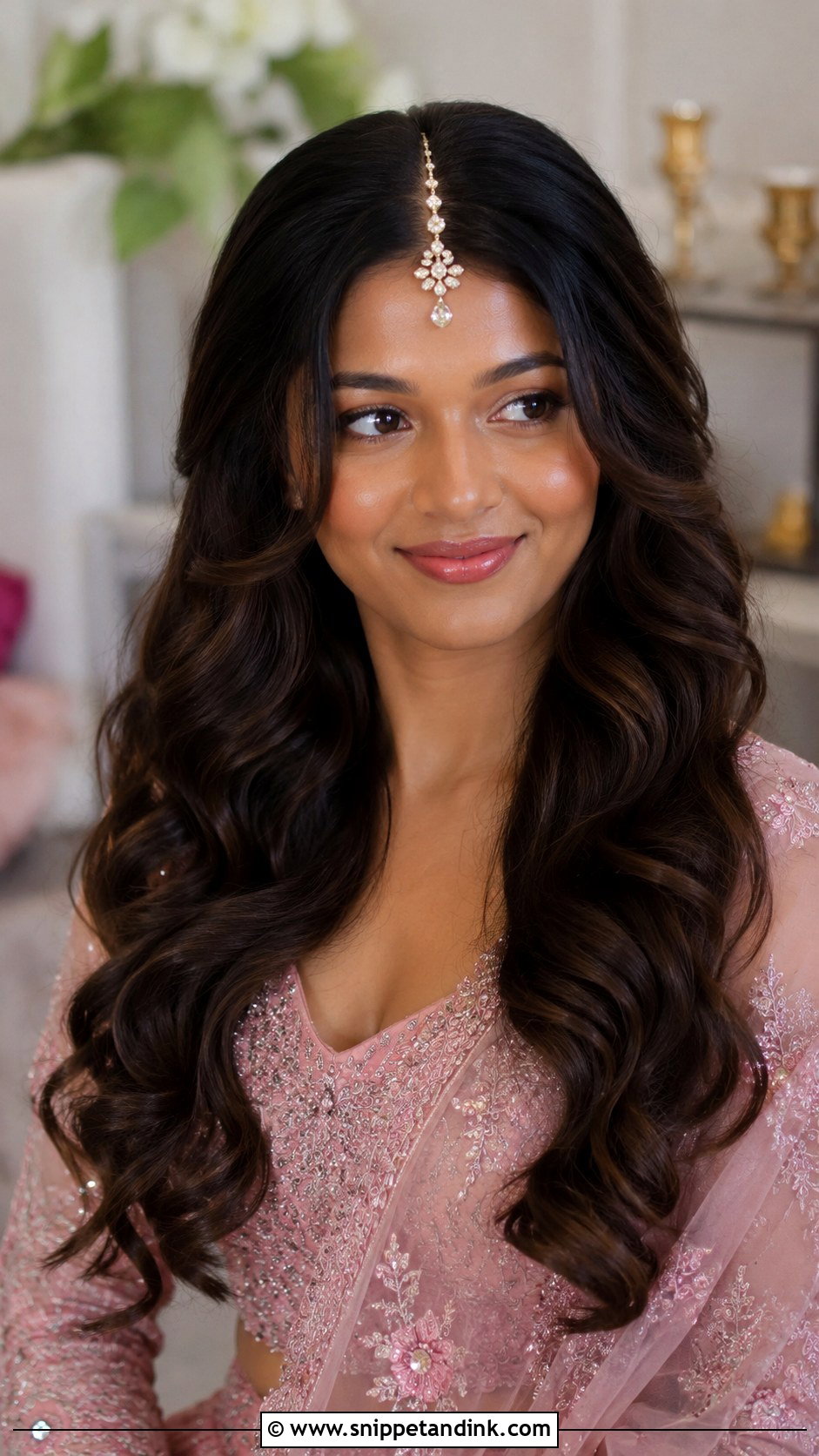
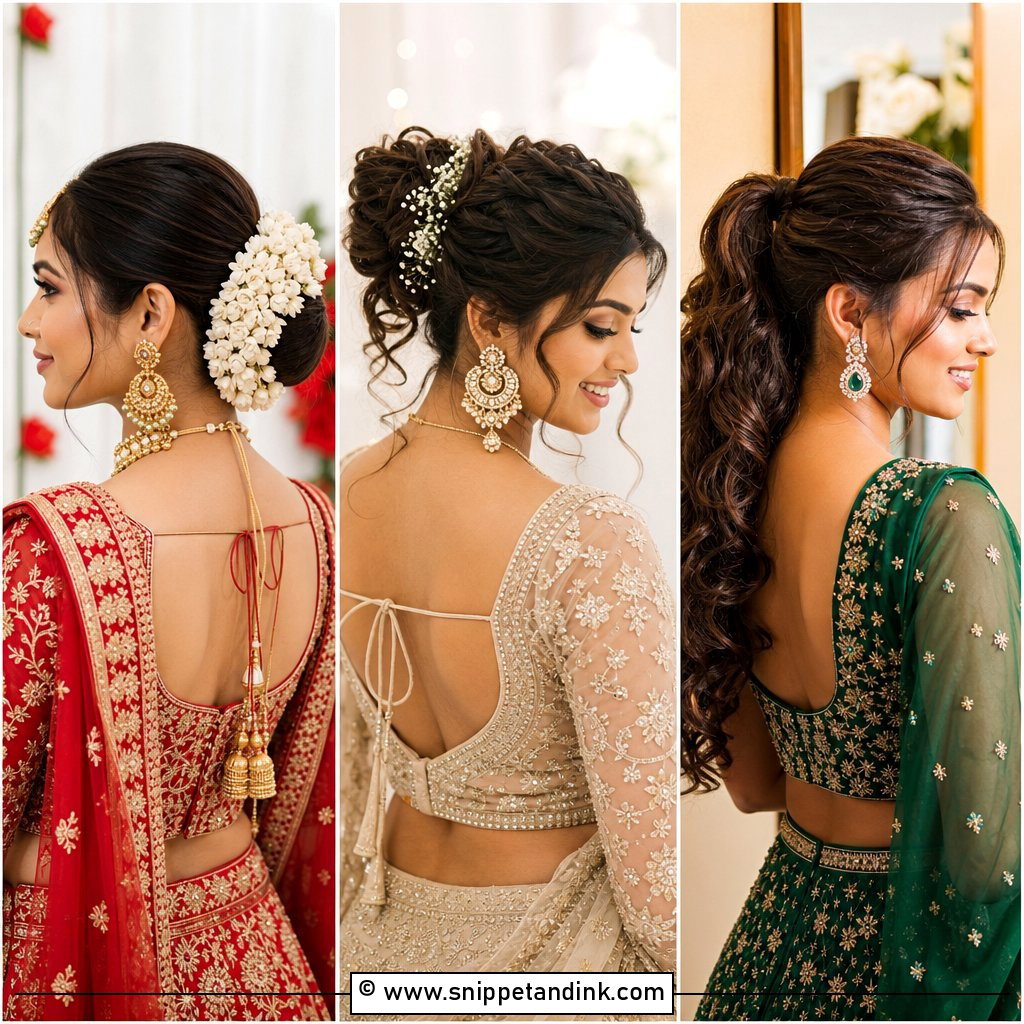
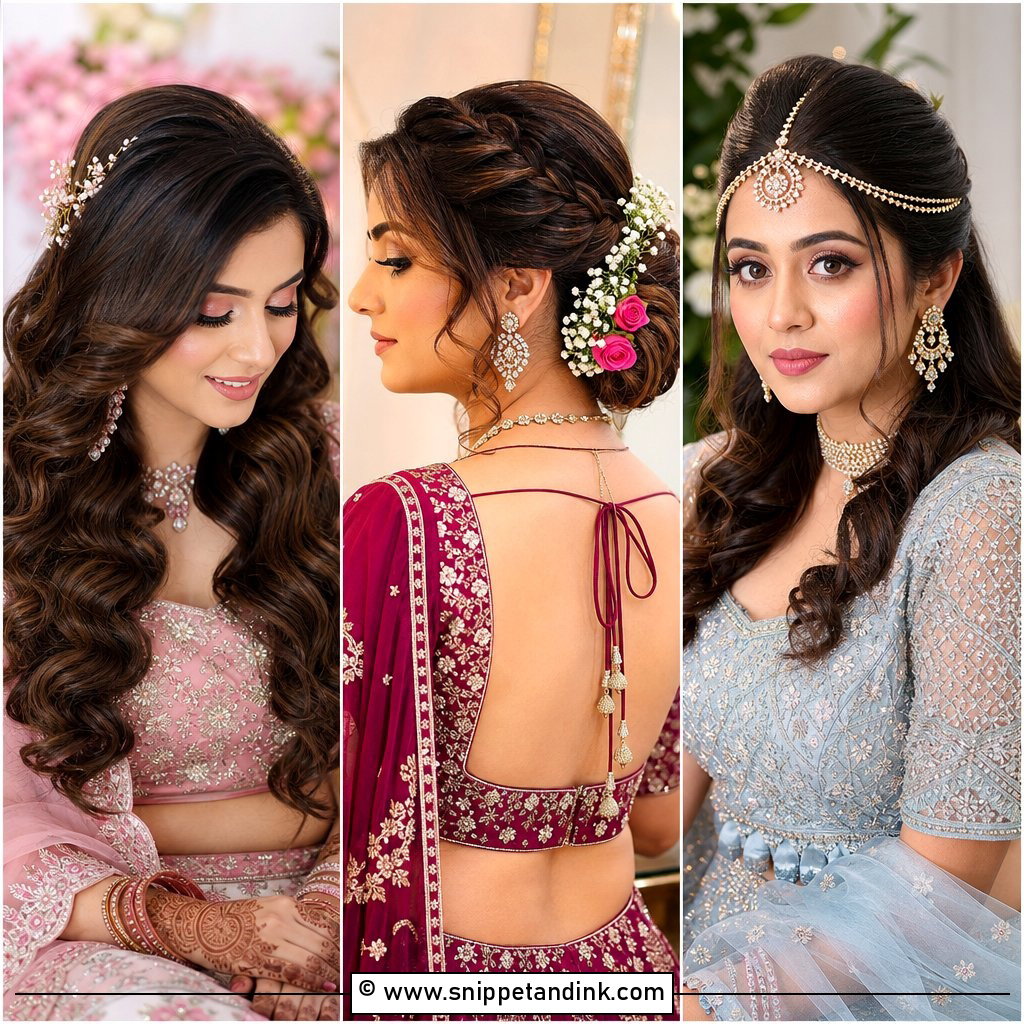
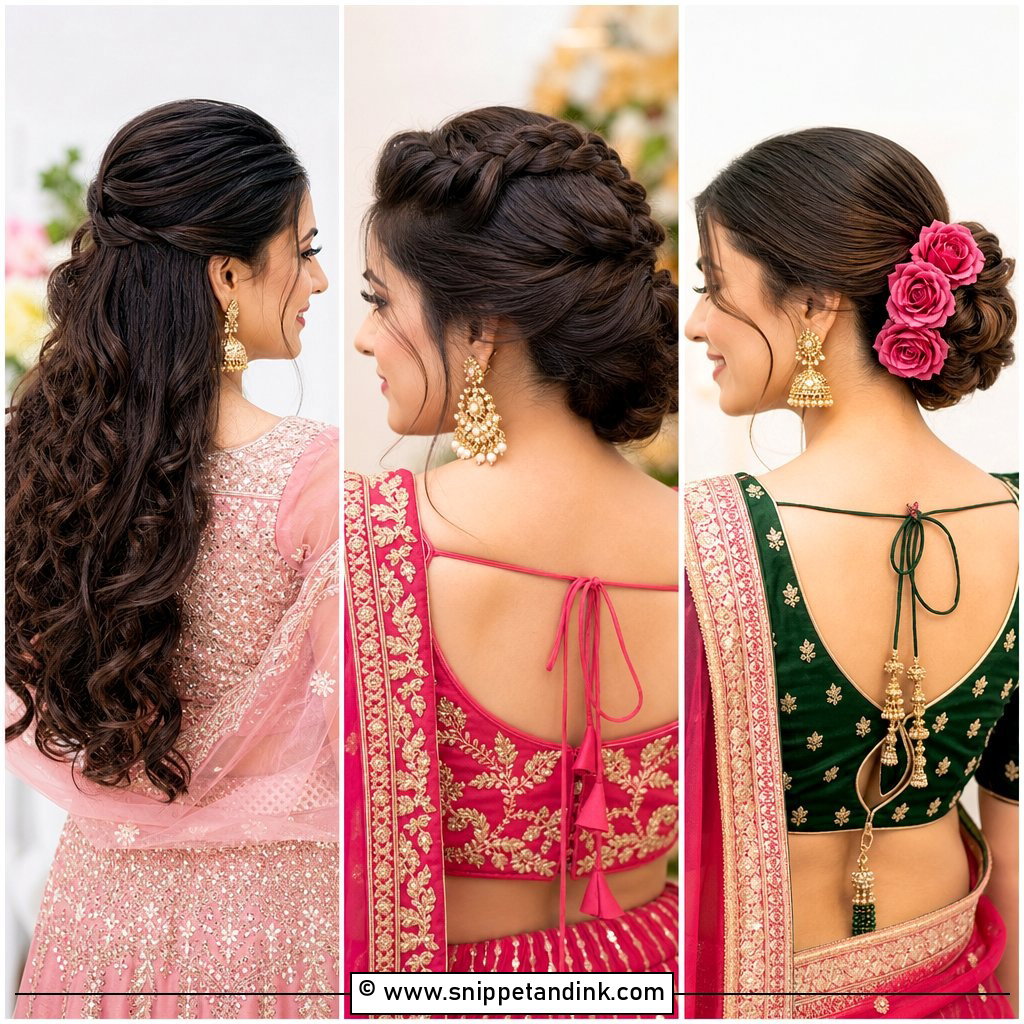
Open curls are my choice for receptions, sangeet, engagement parties and modern portraits. The lengths move without looking casual and frame the neckline of a lehenga, gown or light saree drape. A centre part feels classic and a side part more glamorous. I lift the roots and keep the ends smooth, because frizzy ends are what make open hair look tired by the second hour. A maang tikka or a few floral pins finish it.
5. Indian Bridal Half Up Hairstyle
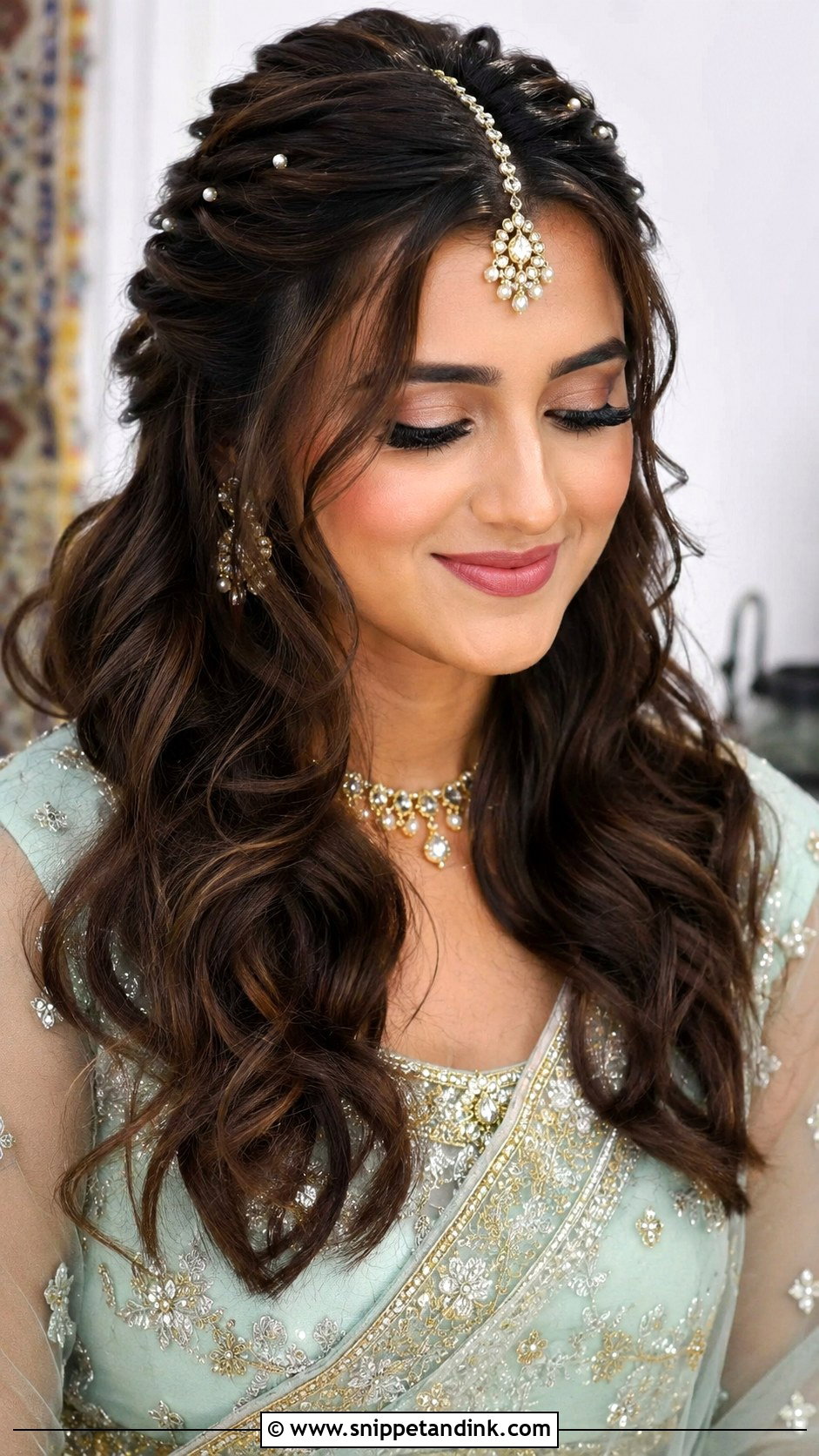
The half up style keeps the crown under control while the lengths stay open. I pin the top section back over a hidden mini ponytail, which gives a maang tikka, passa, tiny flowers or pearl pins something firm to grip. It suits engagement, mehendi, reception or a lighter ceremony. Avoid pulling the crown flat; a little height there balances heavy jewelry and a detailed outfit.
6. Indian Wedding Fishtail Braid
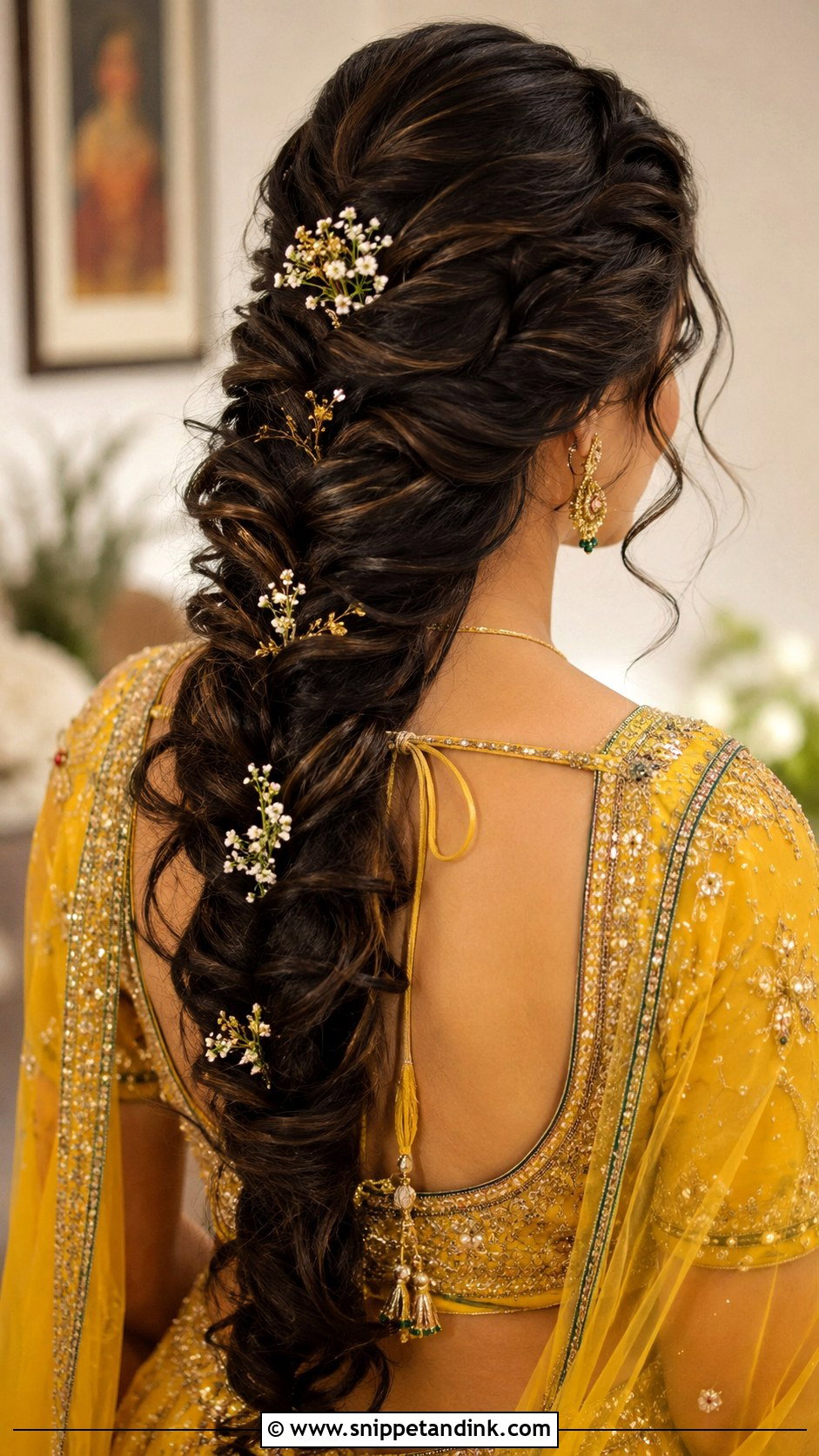
A fishtail braid keeps every strand controlled, which is exactly what you need at mehendi and haldi, when hands are busy and turmeric is everywhere. I weave it tight, then pull the edges out gently for fullness, and add floral accents, pearl pins, baby’s breath or gold accessories as I go. It sits nicely with lehengas, shararas and colorful sarees. A couple of curled face-framing pieces stop it from looking severe.
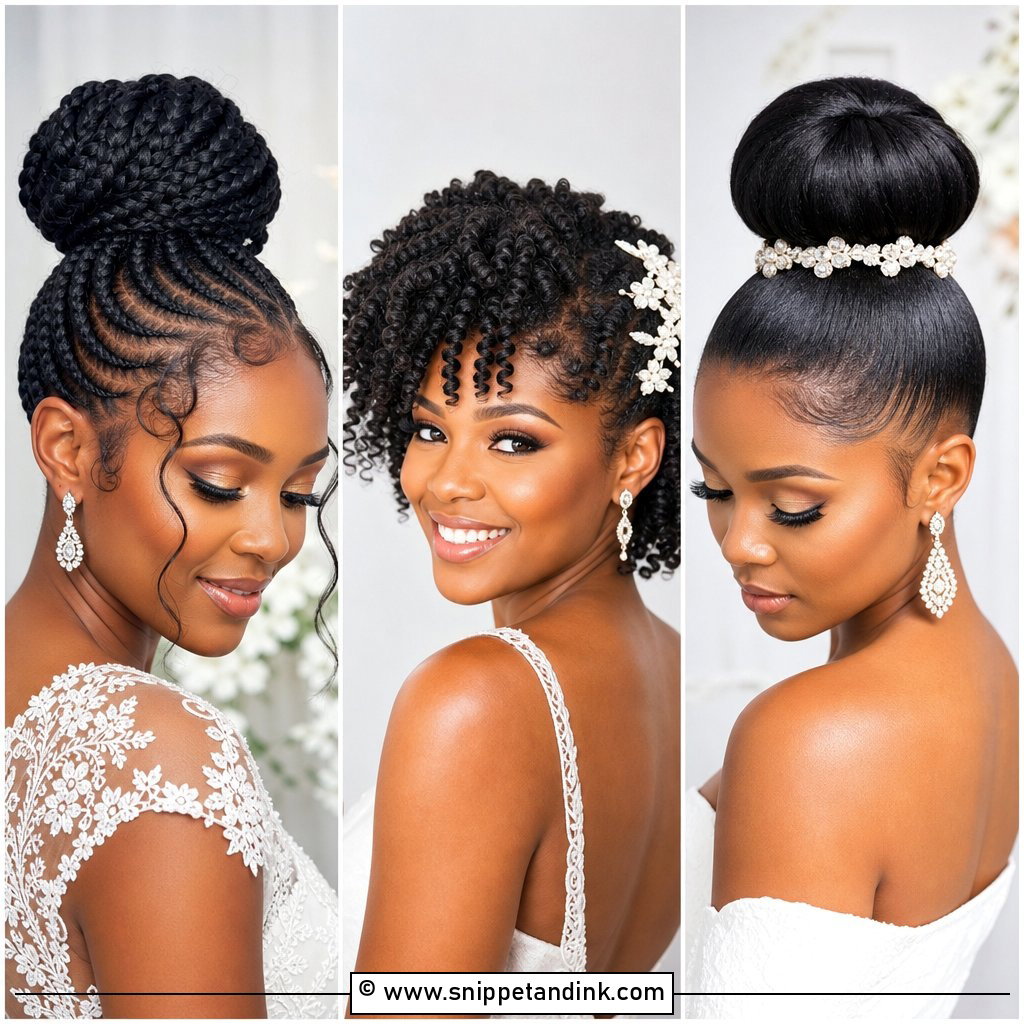
7. Indian Bridal Sleek Bun
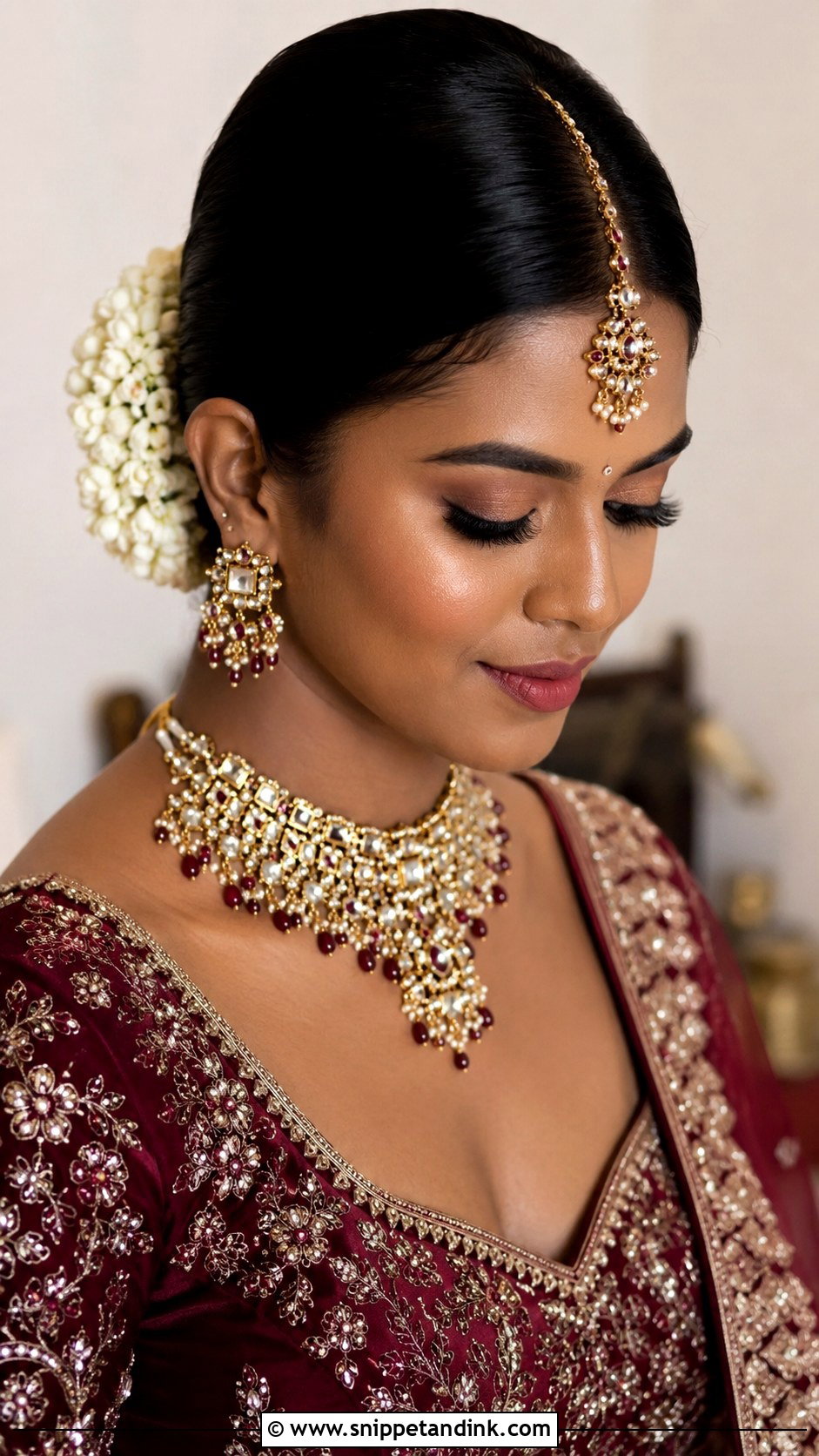
The sleek bun is the one I recommend when the jewelry and dupatta are the stars. Hair is parted cleanly, smoothed with a shine product and secured in a compact bun, so a heavy dupatta, matha patti, layered necklaces and bold earrings all have room. The skill is getting a flyaway-free surface without pulling it so tight it looks harsh. I smooth with a soft bristle brush rather than a comb, then finish with a small gajra, gold comb or pearl border.
8. Indian Wedding Messy Bun
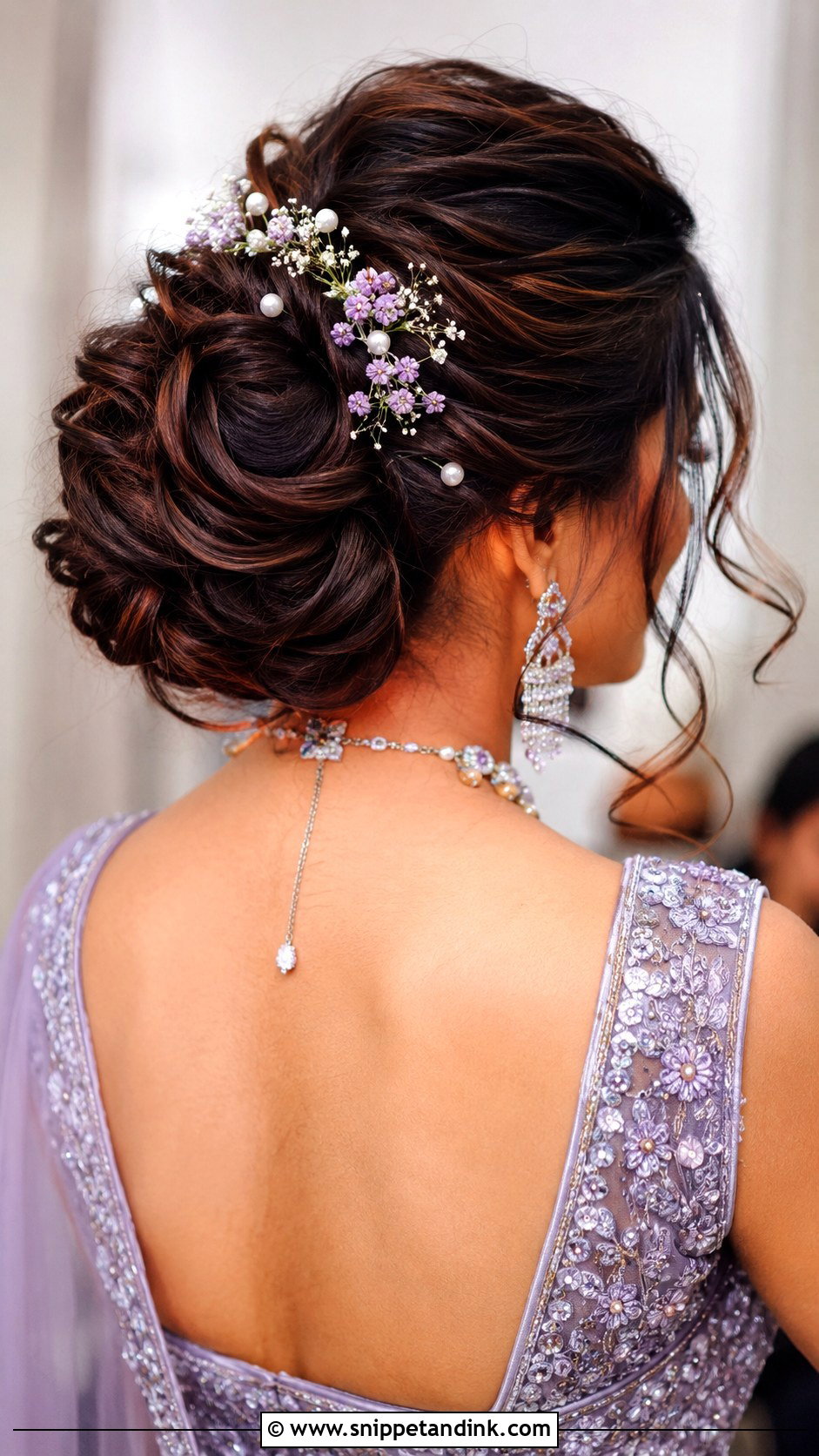
Messy buns suit bridesmaids, sisters of the bride and reception brides who want something softer. The hair is gathered loosely with texture and a few face-framing strands, but it still needs careful pinning underneath to survive dancing and ceremonies. Pastel lehengas, embroidered sarees and flowy gowns all go with it. Small flowers, pearl pins or a delicate hair vine dress it up. Keep the front pieces smooth; frizz at the hairline turns relaxed into unfinished.
9. Indian Bridal Bun With Flowers
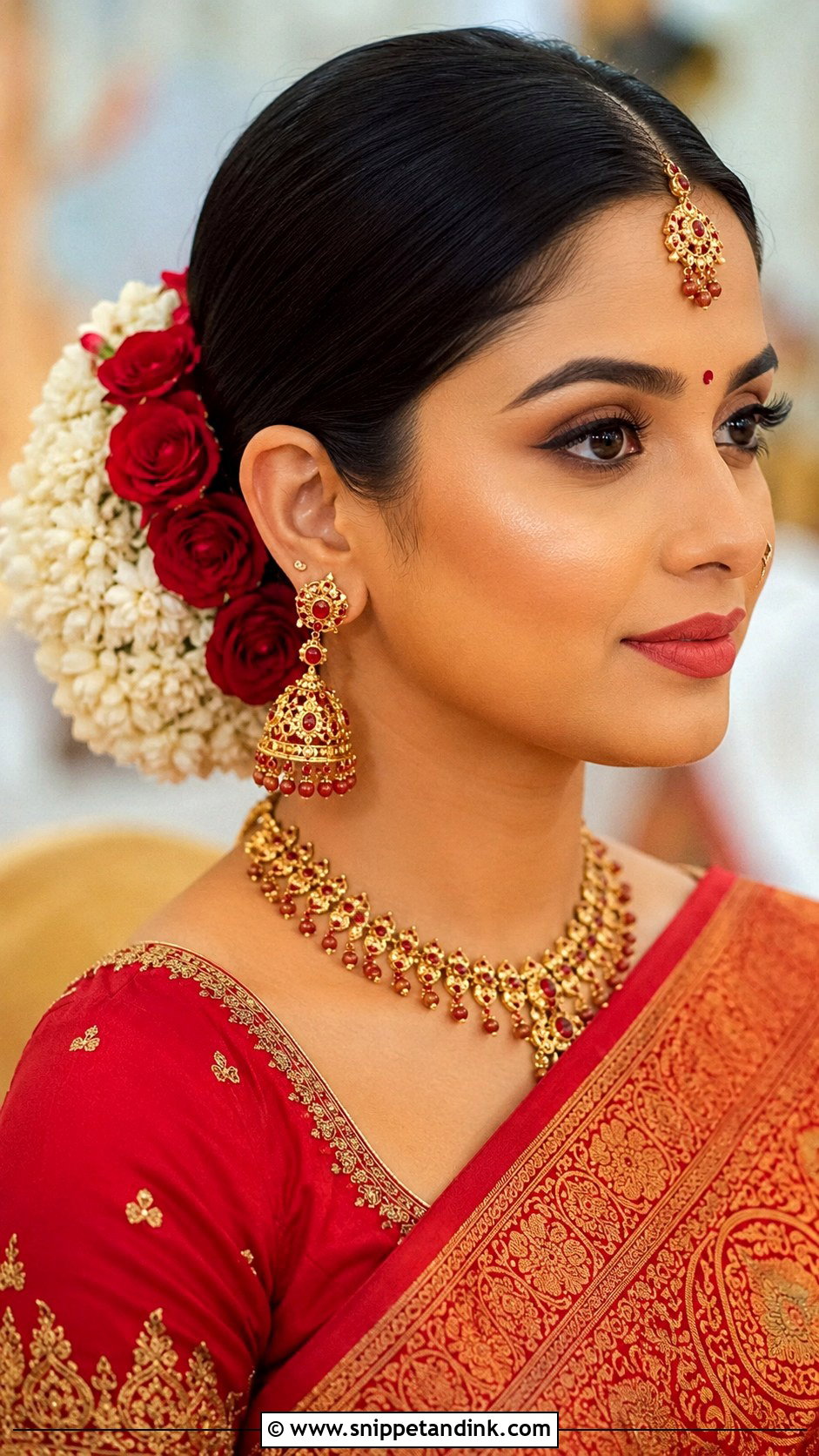
A bun covered in mixed flowers brings colour to the whole look. Beyond jasmine, I use roses, orchids, mogra, carnations or small seasonal blooms, on a low, round, braided or textured base. Match or contrast the flowers with the outfit: red roses read royal, white jasmine classic, pastel blooms soft for daytime events. Fresh flowers do wilt under hot lights, so I pick sturdier blooms like orchids and carnations for long evening functions and keep delicate ones for short daytime events.
10. Indian Wedding Side Braid
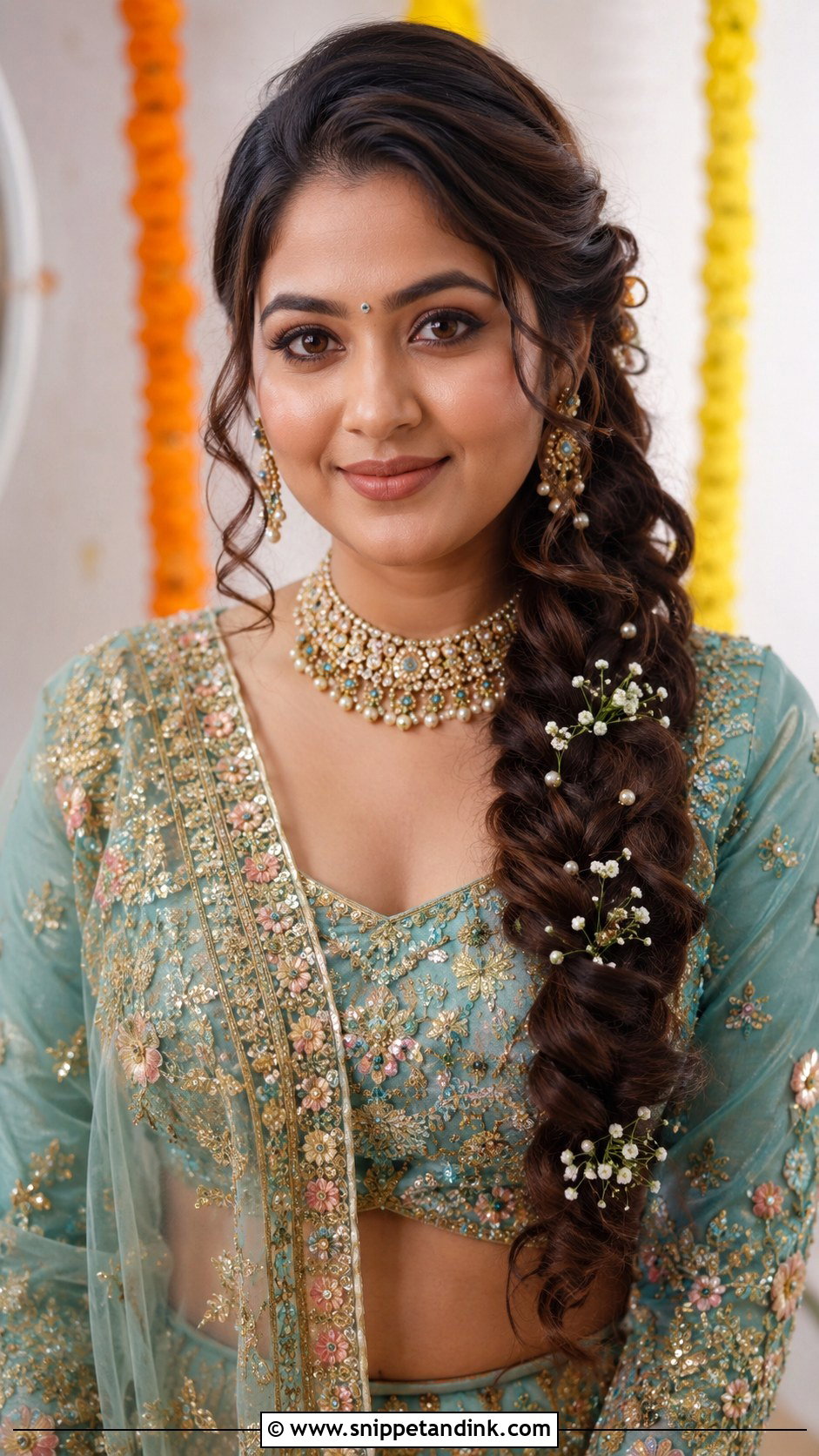
A side braid over one shoulder is the most camera-friendly braid from the front, and it shows off weaving, flowers, pearls or hair jewelry. It suits mehendi, sangeet, roka, and wedding guest looks without feeling heavy. Brides can add extensions and accessories; relatives usually keep it simpler. If your blouse or dupatta has a dramatic back, this is the braid that keeps the back clear.
11. Indian Bridal Ponytail
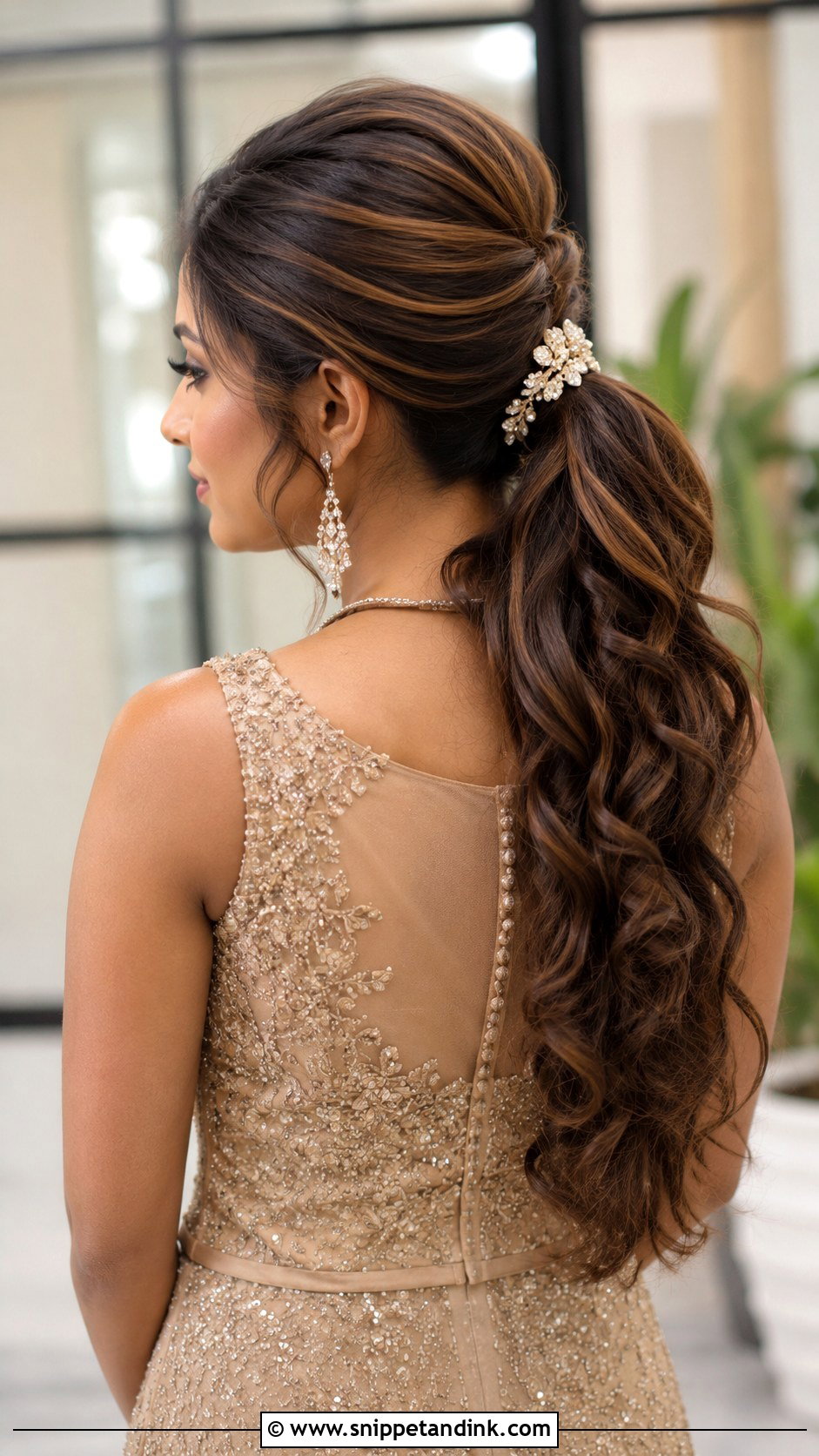
A full ponytail is the modern bridal option for receptions, cocktail events, sangeet and Indo-western outfits. I lift the crown slightly, wrap a section around the base to hide the band, then curl the length. Pearl pins, a jeweled clip or a maang tikka push it toward bridal. It moves when you dance and stays controlled, but heavy hair can make it droop. A second, hidden band just below the first keeps it lifted.
12. Indian Wedding Braided Bun
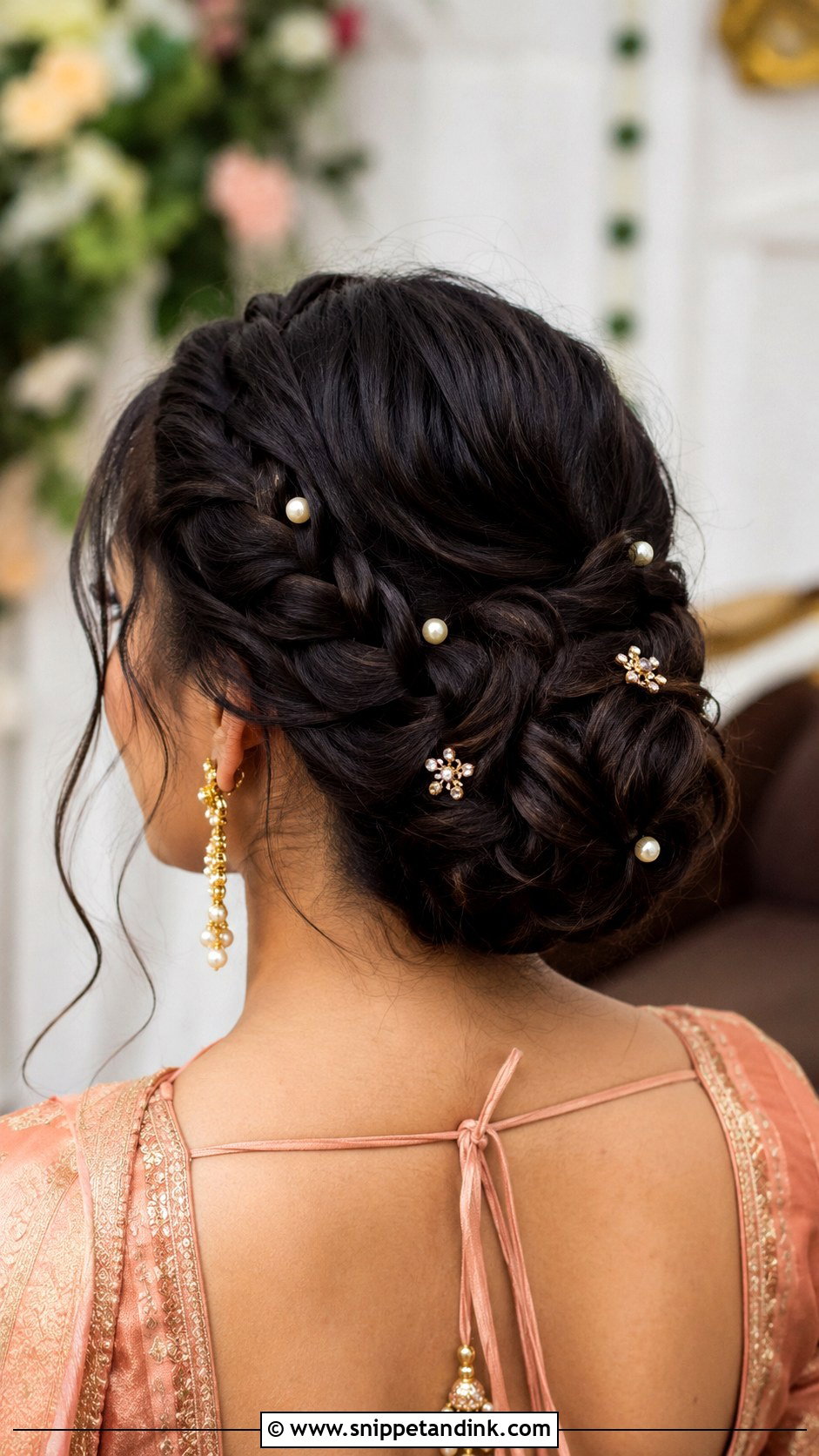
A braided bun gives more detail than a plain bun without losing security. The braid can wrap around the bun, feed into it or form the bun entirely, and the result looks special from the back, where the family sees it during rituals. It suits sarees, lehengas and traditional bridal sets. Gajra, pearl pins or small gold accessories should follow the braid’s line rather than cover it.
13. Indian Bridal Crown Braid
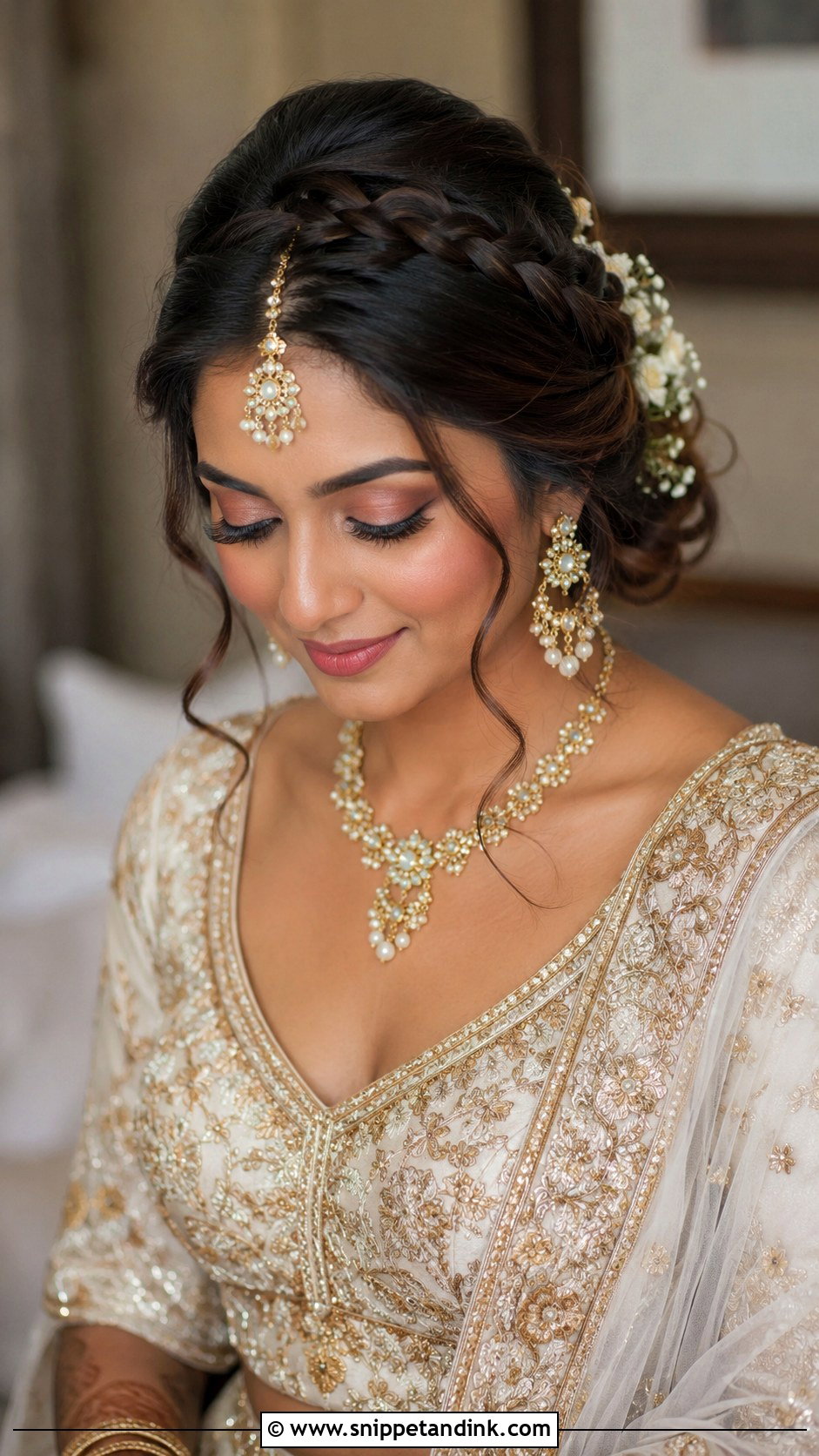
A crown braid frames the top of the head and leads into a low bun, open curls or a half-up finish. It supports maang tikka, matha patti and floral pins and adds texture close to the face in portraits. The risk is looking childish if it’s braided too tight, so I keep the braid smooth but slightly loose and pancake the edges a little for width.
14. Indian Wedding Loose Waves
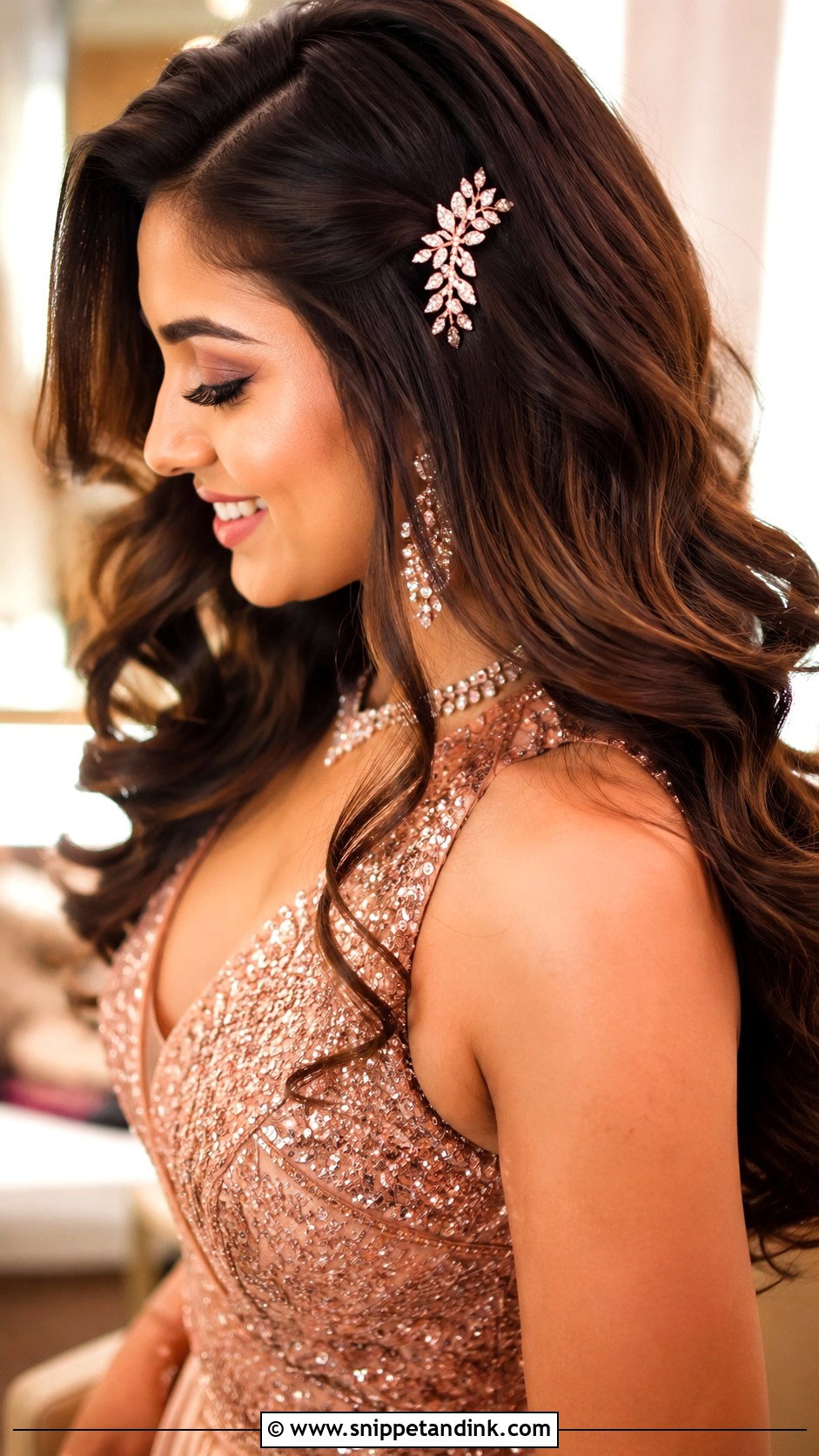
Loose waves are polished but not stiff, which suits receptions, engagement photos, sangeet and modern lehengas or gowns. A centre part feels traditional and a deep side part dramatic. Keep accessories light, a crystal clip or a few pearl pins, so the movement stays the focus. Waves on very straight hair fall quickly, so I set them with a stronger spray in smaller sections than you’d expect.
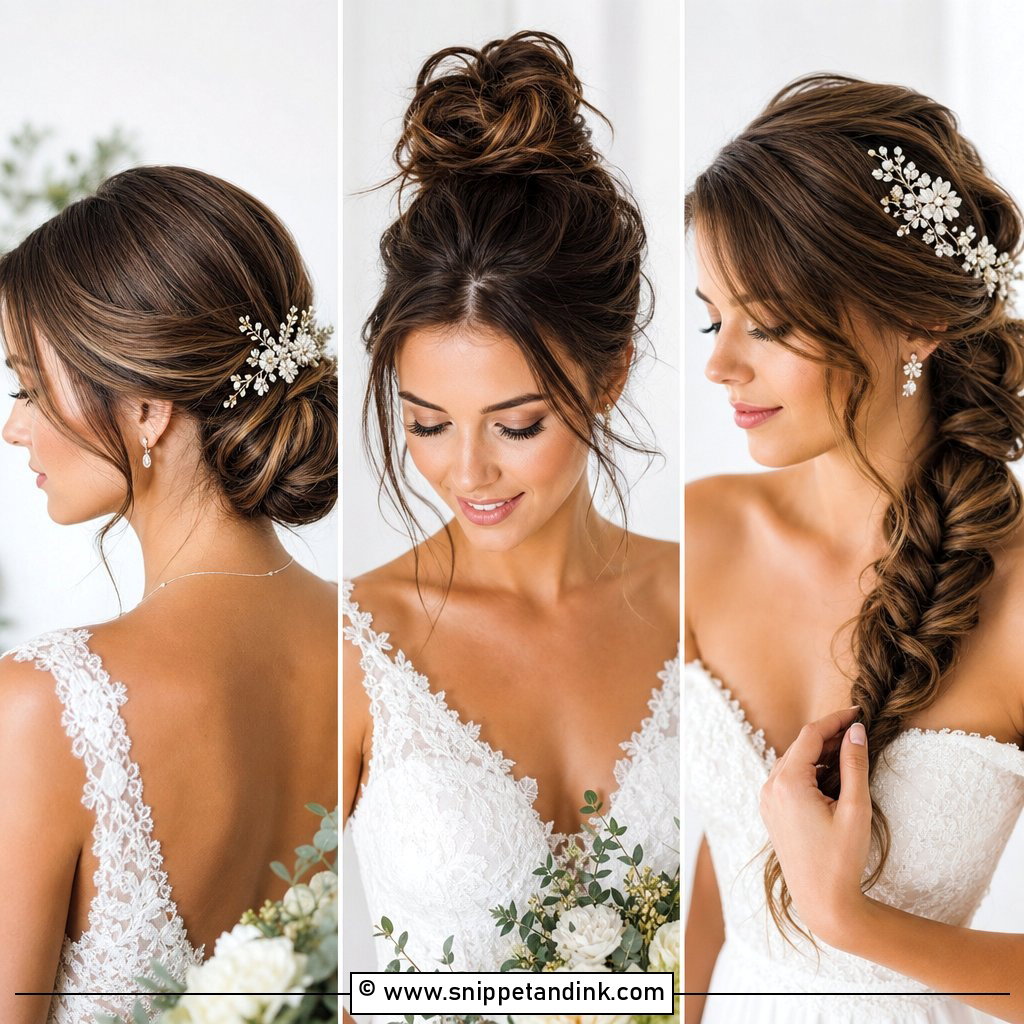
15. Indian Bridal Dupatta Bun
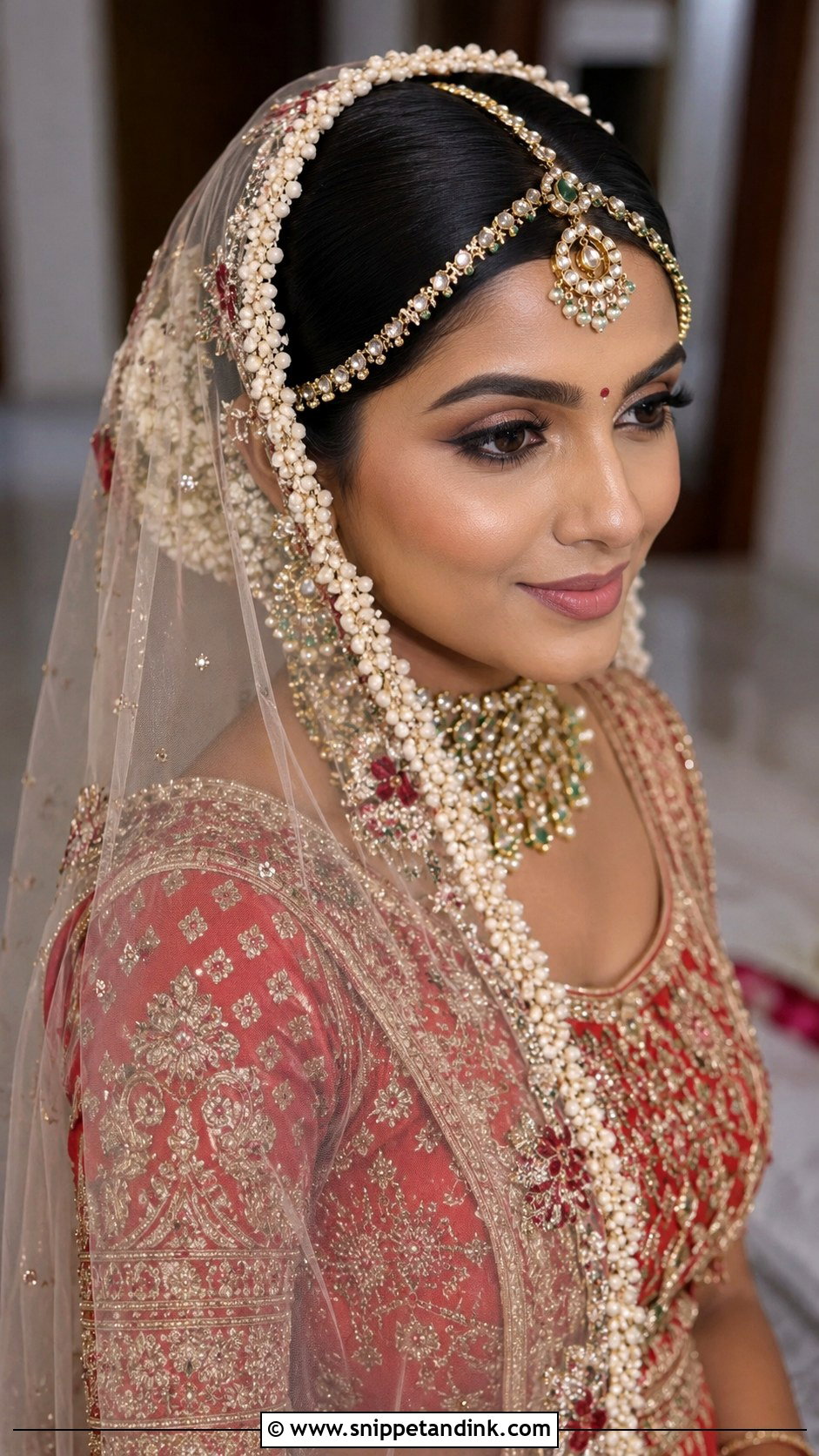
The dupatta bun is built specifically to hold heavy draping. I place it low or mid-height with a firm base, because pins will go through fabric into it, and head jewelry adds more weight. North Indian brides wearing a dupatta over the head need exactly this. Since the dupatta covers much of the hair, the visible edges carry the look: a neat bun outline, a clean parting and a few flowers near the base.
16. Indian Wedding Jasmine Braid
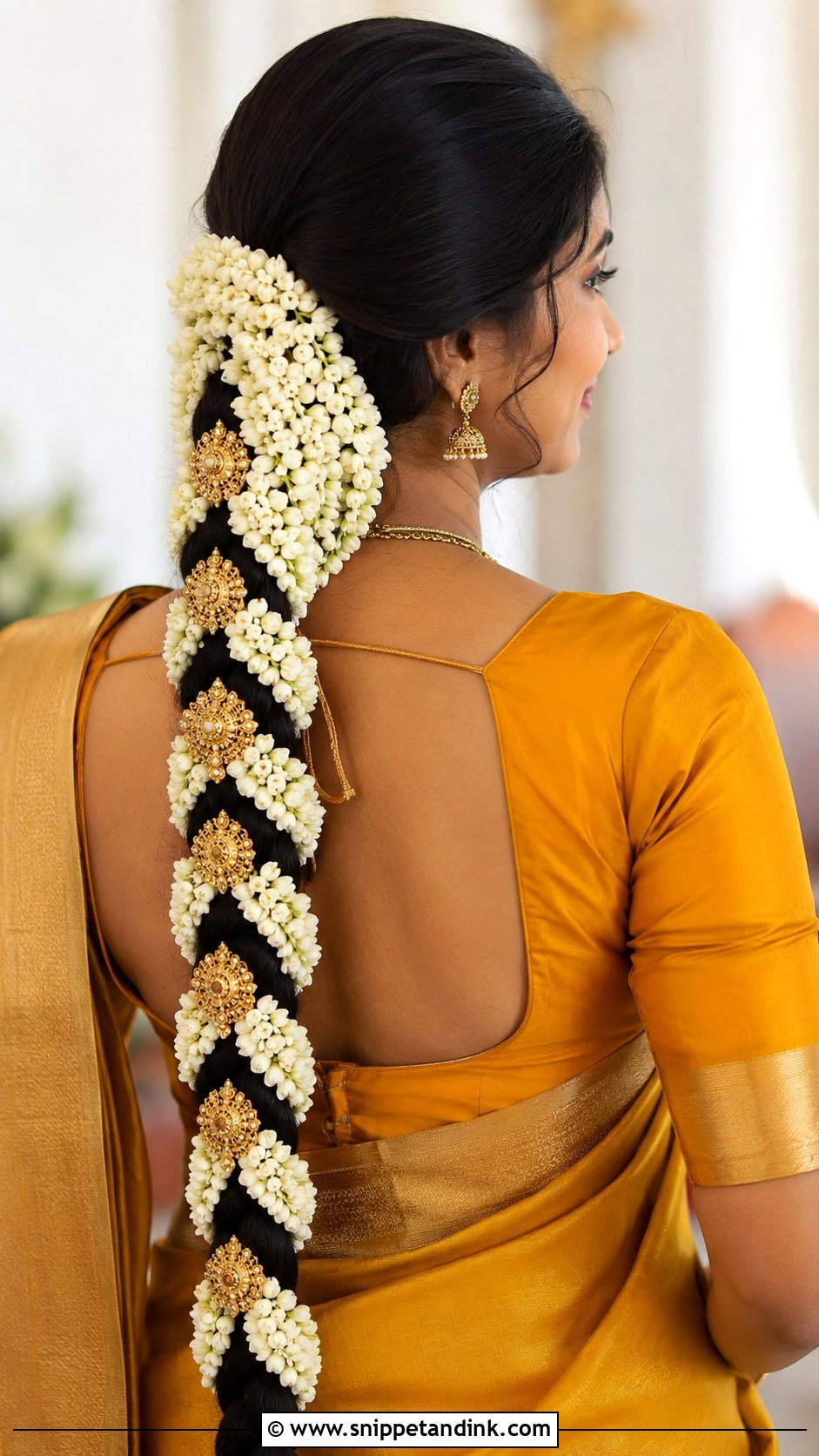
Jasmine strings on a braid can be wrapped along the length or set in neat sections over it. It’s most at home in South Indian bridal looks with silk sarees and gold jewelry, though it works for other functions too. The braid has to be full enough to carry the flowers without sagging, so extensions are common. I space the flower sections evenly and pin each one at both ends, which stops them from twisting sideways as you move.
17. Indian Bridal Curly Bun
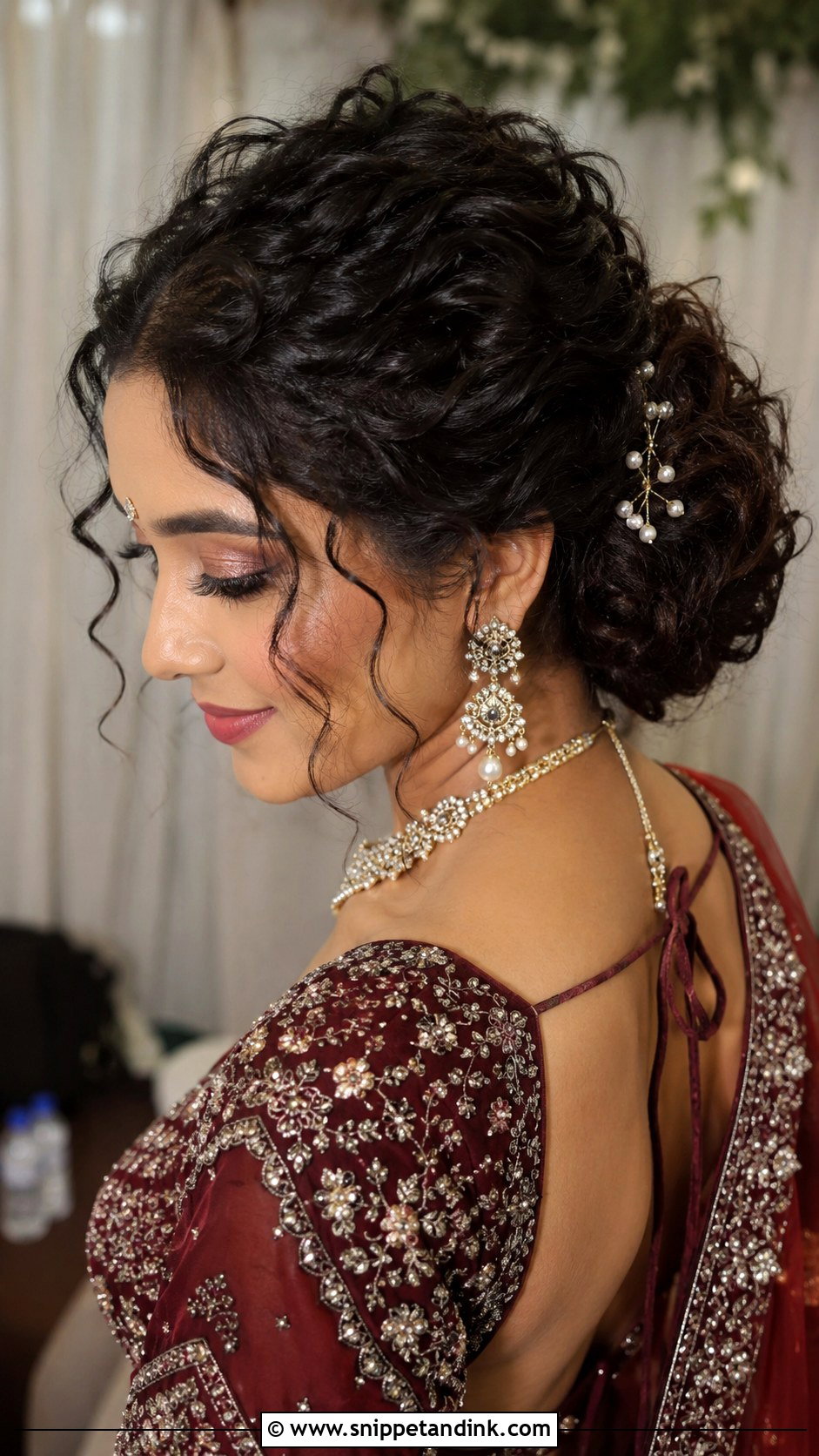
A curly bun shows movement instead of smoothing every strand. Naturally wavy or curly hair is ideal; straight hair can be curled first. I pin each curl into the bun shape individually, which makes it more secure than it looks. Floral pins, pearl accents and statement jewelry all sit well in the gaps. The front can be centre-parted or shaped with soft side pieces, and it works for pheras, receptions and portraits alike.
18. Indian Wedding Side Swept Curls
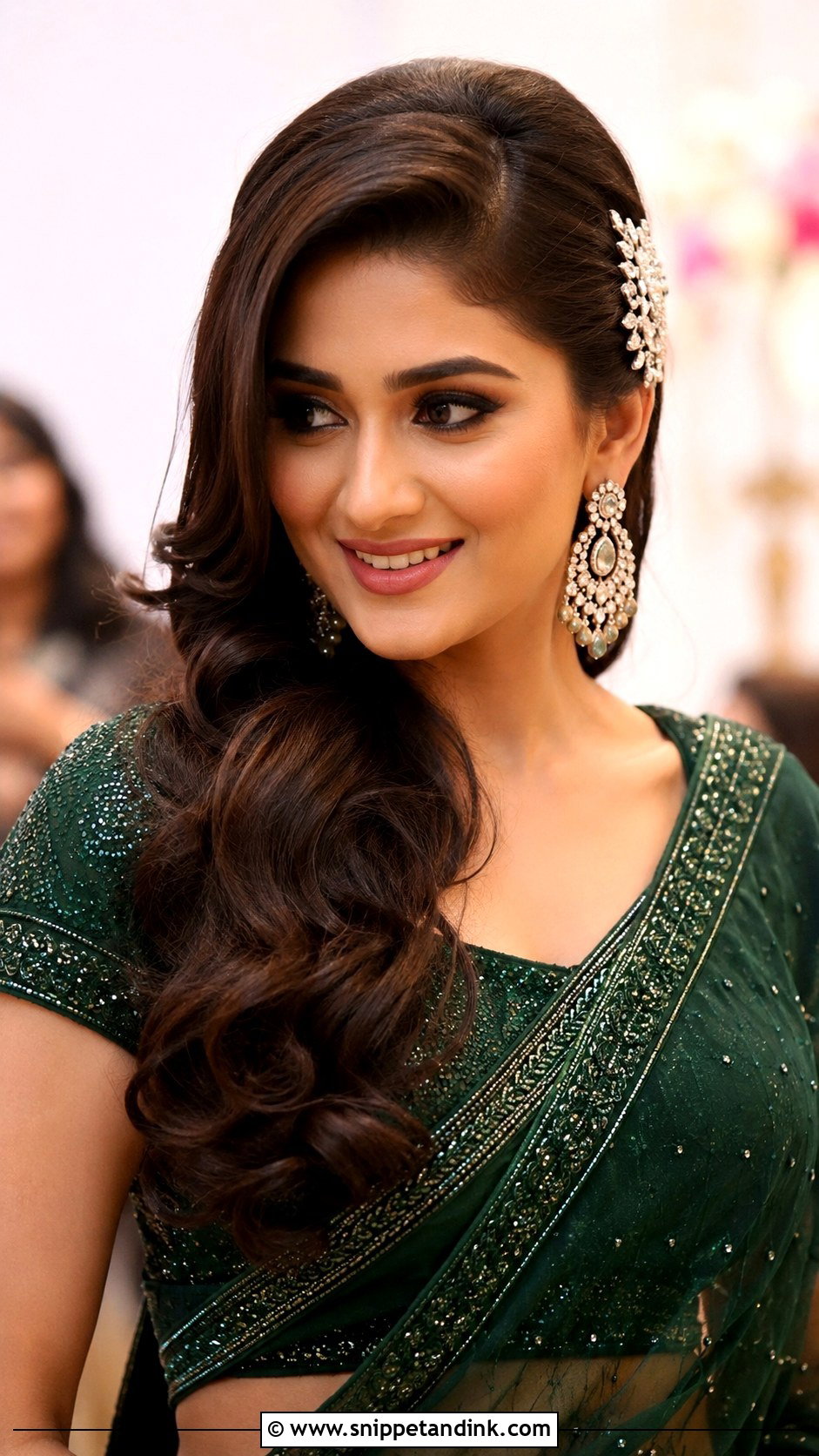
Side swept curls give the face a soft frame and show off the neckline, earrings and shoulder embroidery. They suit receptions, engagement parties and sangeet, with gowns, lehengas or sarees with detailed borders. The pinned side does all the work: without a firm row of pins behind that ear, the shape falls flat. A jeweled clip, floral comb or fine hair chain belongs on that pinned side.
19. Indian Bridal Bun With Matha Patti
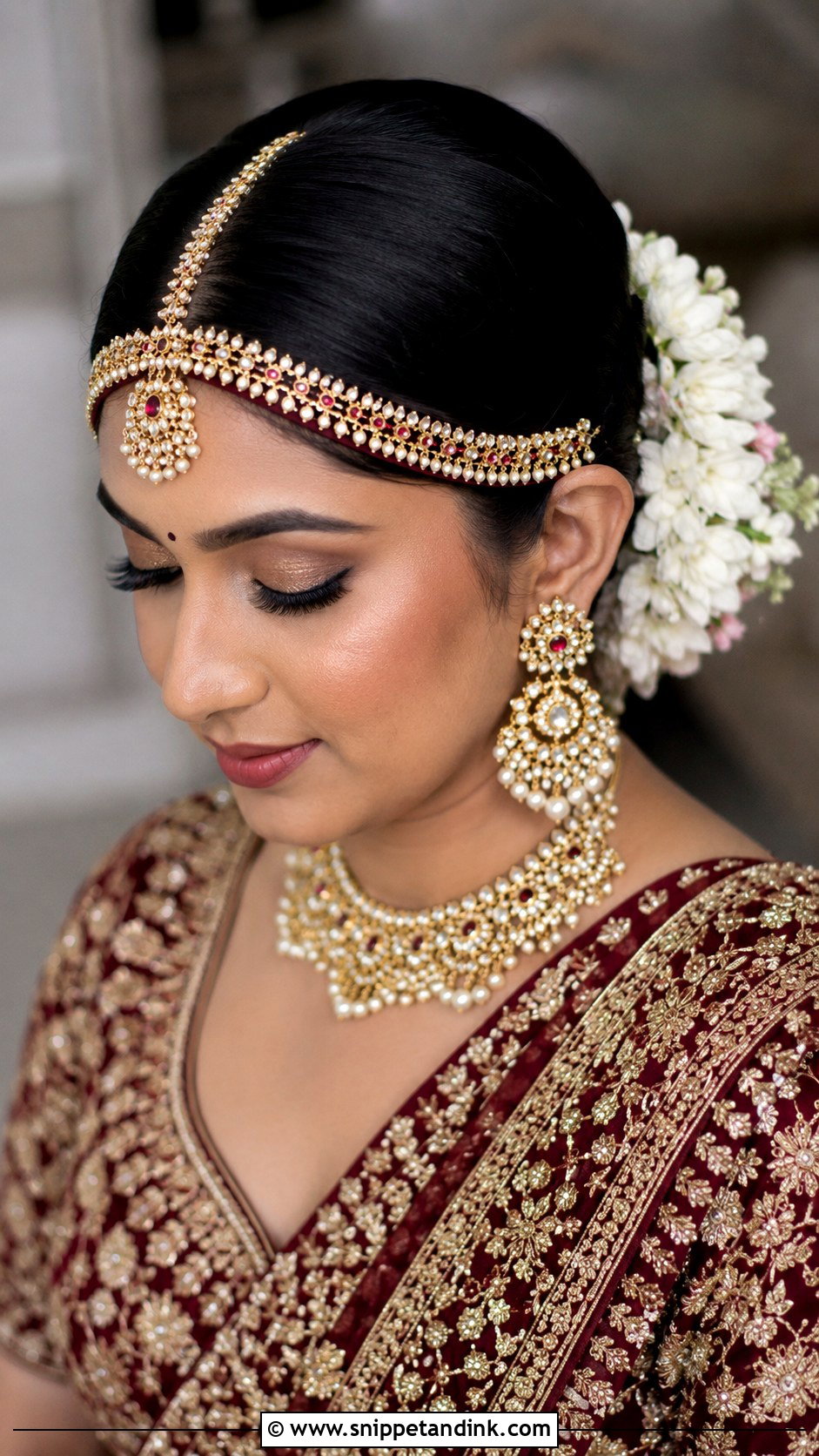
A matha patti changes how I build the whole front. The centre part has to be exact and both sides even, because the patti frames the forehead and shows any lean. I lay it before the final smoothing so its side chains tuck under the hair, then secure the bun at the back. It pairs with red, maroon, gold, ivory and jewel-toned lehengas, wrapped in flowers or kept clean. In ceremony photos the face, jewelry and hair read as one piece.
20. Indian Wedding Pearl Bun
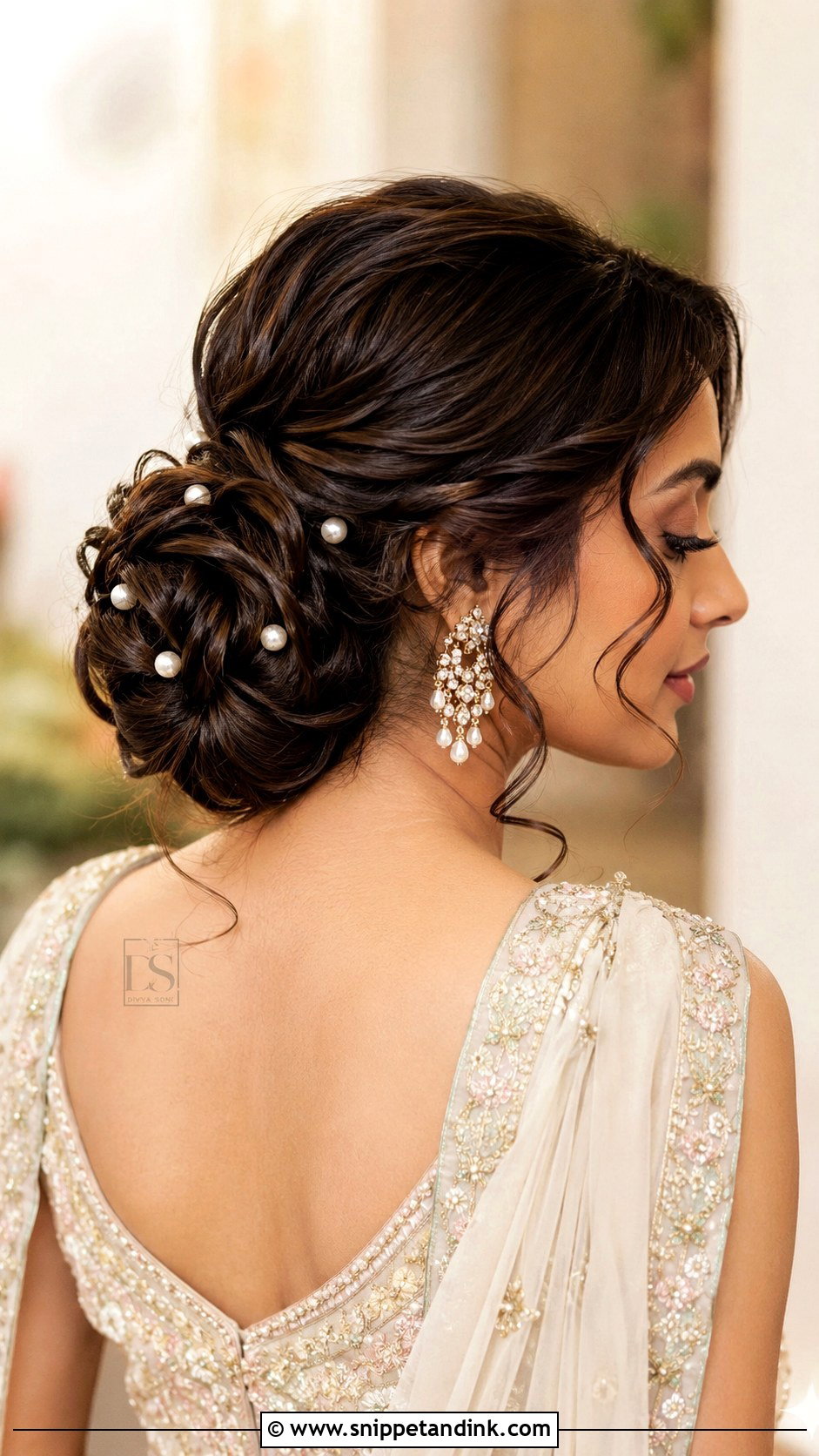
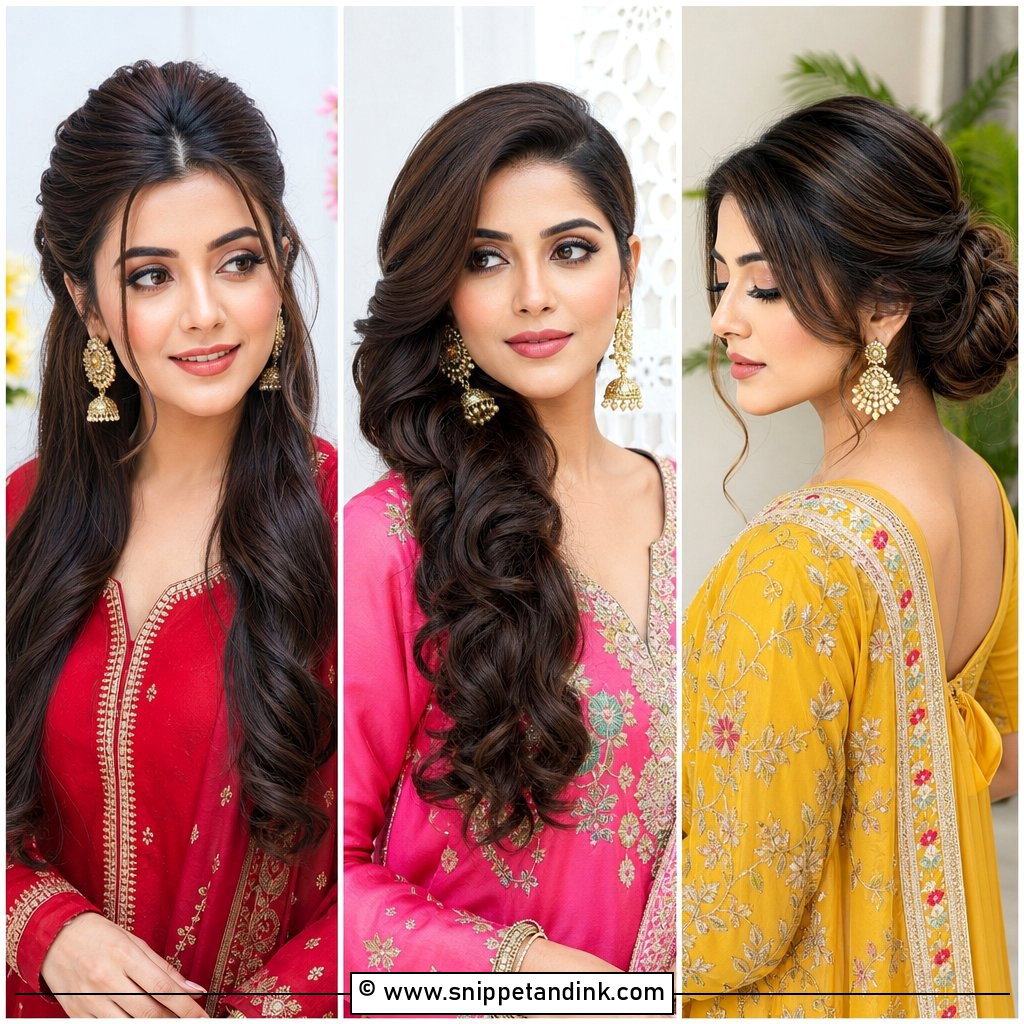
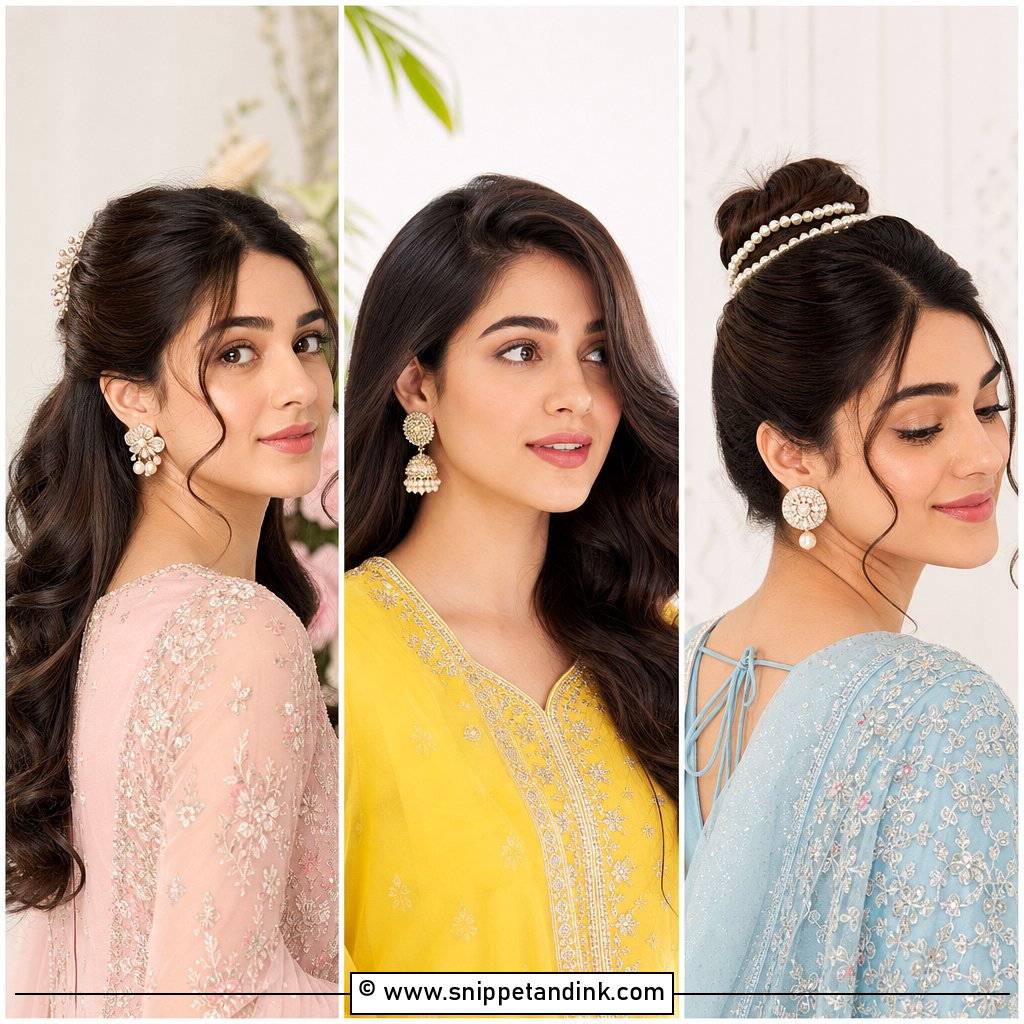
Pearls give a bun a lighter festive finish than flowers. The base can be sleek, textured, braided or low, and pearl pins, chains or a pearl border go around it. It’s a good choice for bridesmaids and guests who don’t want the weight of fresh flowers, and it suits pastel lehengas, ivory sarees and champagne gowns. Pearls reflect soft light well both indoors and out. Space them out with intent; a crowded ring of pins looks busy.
Extensions, Parandi and Faux Gajra When Your Own Hair Falls Short
Many of the braids and buns in this list assume long, thick hair. Plenty of brides and relatives don’t have that, and there’s no shame in borrowing some.
Clip-in lengths and braid extensions
A clip-in or ready-made braid extension is how most South Indian bridal braids reach their length. Match the colour in daylight, not under shop lights, and bring it to the trial so your stylist can blend it with your real hair at the nape.
Parandi tassels
A parandi is a traditional Punjabi braid accessory woven into the end of a plait, with silk threads and tassels that add length and colour. It suits mehendi and sangeet especially well and is far lighter than flowers.
Faux flowers
If fresh jasmine wilts in your climate or gives you a headache, good silk or pearl gajras look close to real in photos and won’t brown by evening. I’d still keep fresh flowers for the main ceremony if fragrance matters to you, and switch to faux for later events.
Try Every Piece On at the Trial
The right style supports your outfit, jewelry, face shape and the day’s schedule, not the other way round. Many brides switch styles across functions: a secure bun for the main ceremony, a braid for traditional rituals, open curls for the reception and a ponytail for dancing. Relatives can borrow the same shapes in quieter versions with fewer accessories. Above all, the hair has to be comfortable through a long, emotional day. Save your favourites early, then test them with the full outfit, jewelry and dupatta well before the wedding.
You'll Like These Ideas:


Leave a Reply