
A painted gown is the closest thing to wearing a single artwork down the aisle. The range now runs from soft watercolour flowers and ocean-blue washes to abstract brushwork, botanical patterns and painted silk. Styling one is mostly about restraint: the paint is already the jewellery, the colour story and the talking point, so shoes, earrings and flowers have to step back. Some brides want a whisper of colour at the hem; others want the whole skirt covered. Below are twenty ways to wear it, each with the practical detail I’d want you to know before ordering, because a painted dress behaves differently from a plain one at fittings and on the day.

Paint After the Fittings, Not Before
The order of work on a painted gown is different from a normal bridal order, and getting it wrong is the most expensive mistake I see. Paint can’t be moved once it’s on, so the dress has to fit before the artist starts.
- Buy or order the base gown first and finish the structural alterations: bodice, side seams, length. Shortening a painted hem means cutting off artwork.
- Agree a sketch or a mock-up. Many artists paint a test on a fabric offcut so you can see the real colours on your fabric.
- Leave proper time for the painting itself. Detailed work on a full skirt or train takes weeks, plus drying and fixing. Ask the artist for a date and then add a buffer.
- Do a final fitting after the paint is done to check nothing has stiffened or shifted, and to set the bustle points around the artwork.
Ask, too, how the paint is fixed. Fabric paints are usually heat-set, while silk dyes are fixed with steam. Either way, the artist should tell you in writing what the gown can and can’t tolerate afterwards, because your cleaner will need to know.
1. Hand Painted Floral A-Line Wedding Dress
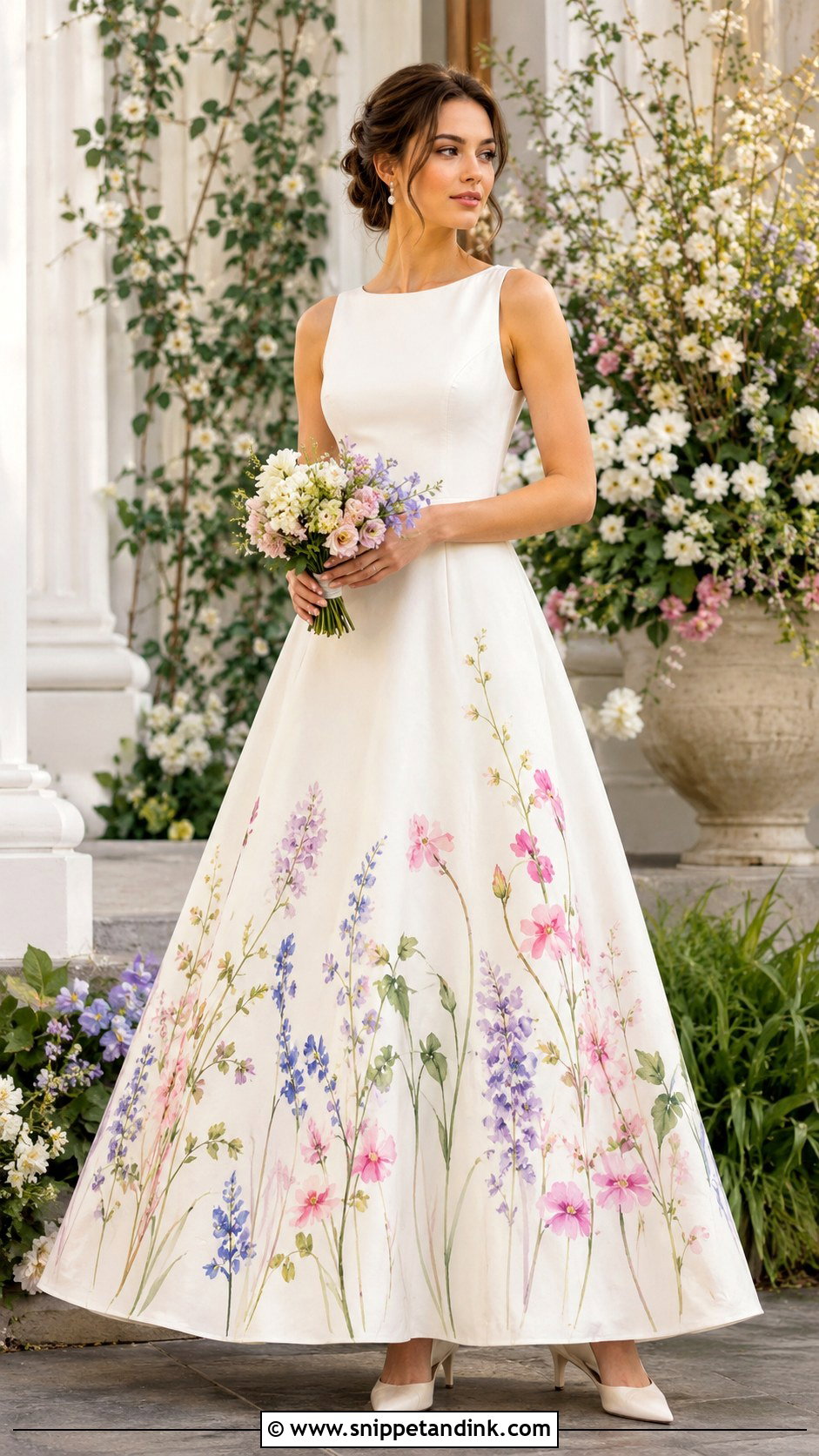
Watercolour blooms that start at the hem and fade out before the waist are the gentlest way into painted bridal. On an ivory silk or satin A-line, pink, lilac, blue and green read like a garden without overwhelming you, and the fitted bodice with a soft flare suits most figures. Pick a bouquet that repeats just one or two of the painted colours, not all of them. Ivory pointed pumps, pearl drops and a low bun keep the top quiet. Hem-weighted painting has one catch: if the dress needs shortening, the artwork is exactly what gets cut, so settle the length before the painting starts.
2. Watercolor Wildflower Ball Gown
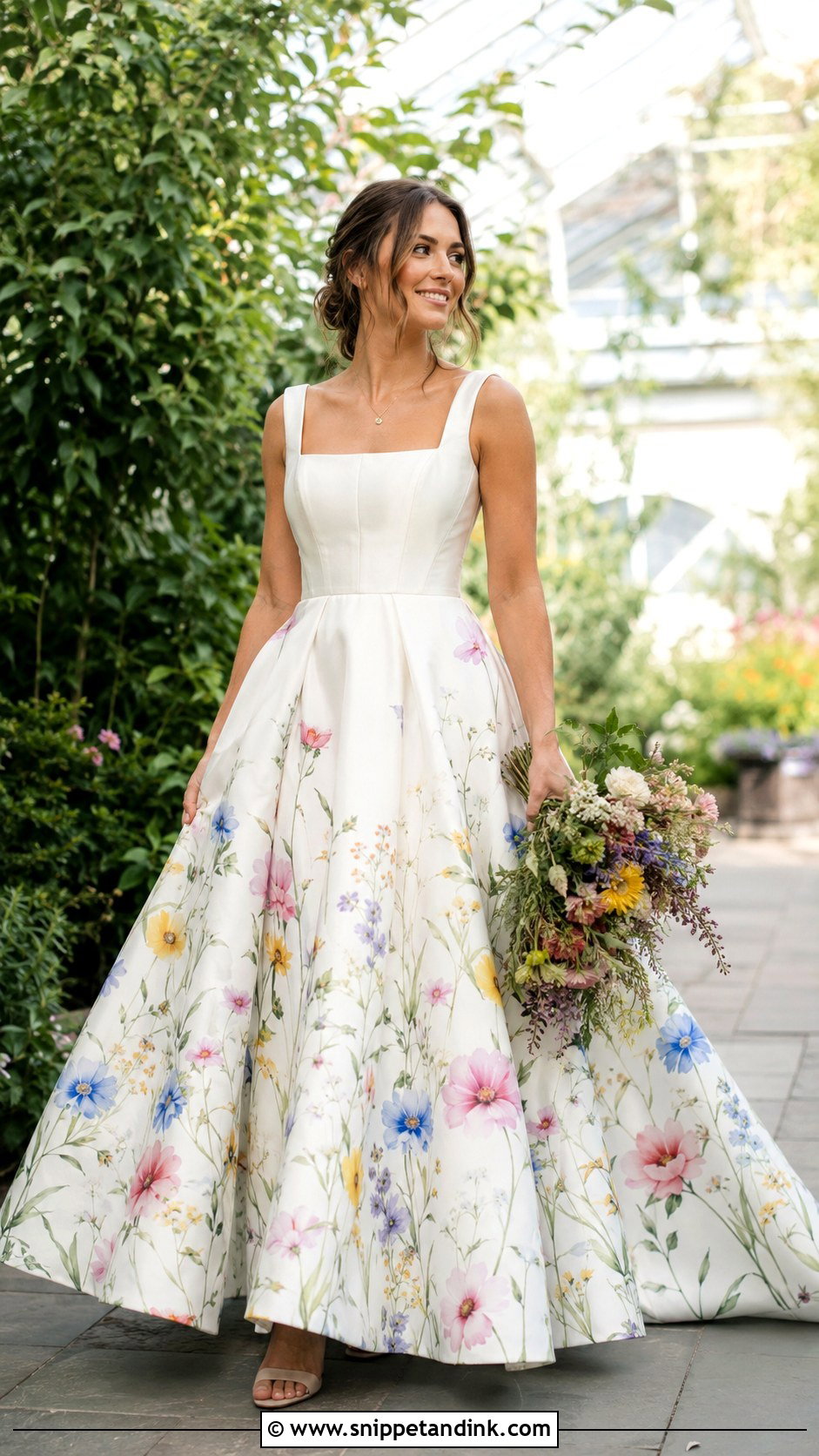
Picture a meadow moving with you down the aisle. A watercolor wildflower ball gown gets that with loose stems and tiny blossoms spread across a full skirt. Balance it with a structured ivory bodice and a square or softly curved neckline. Cornflower blue, butter yellow, soft pink and lavender feel cheerful without tipping into childish. Block-heel sandals, a fine pendant and a loose bouquet of seasonal flowers go with it, plus a plain sheer veil. On a full skirt, ask the artist to paint with the gown on a form at full volume; motifs painted on a flat skirt panel can bunch oddly once the petticoat goes in.
3. Blush Rose Hand Painted Wedding Dress
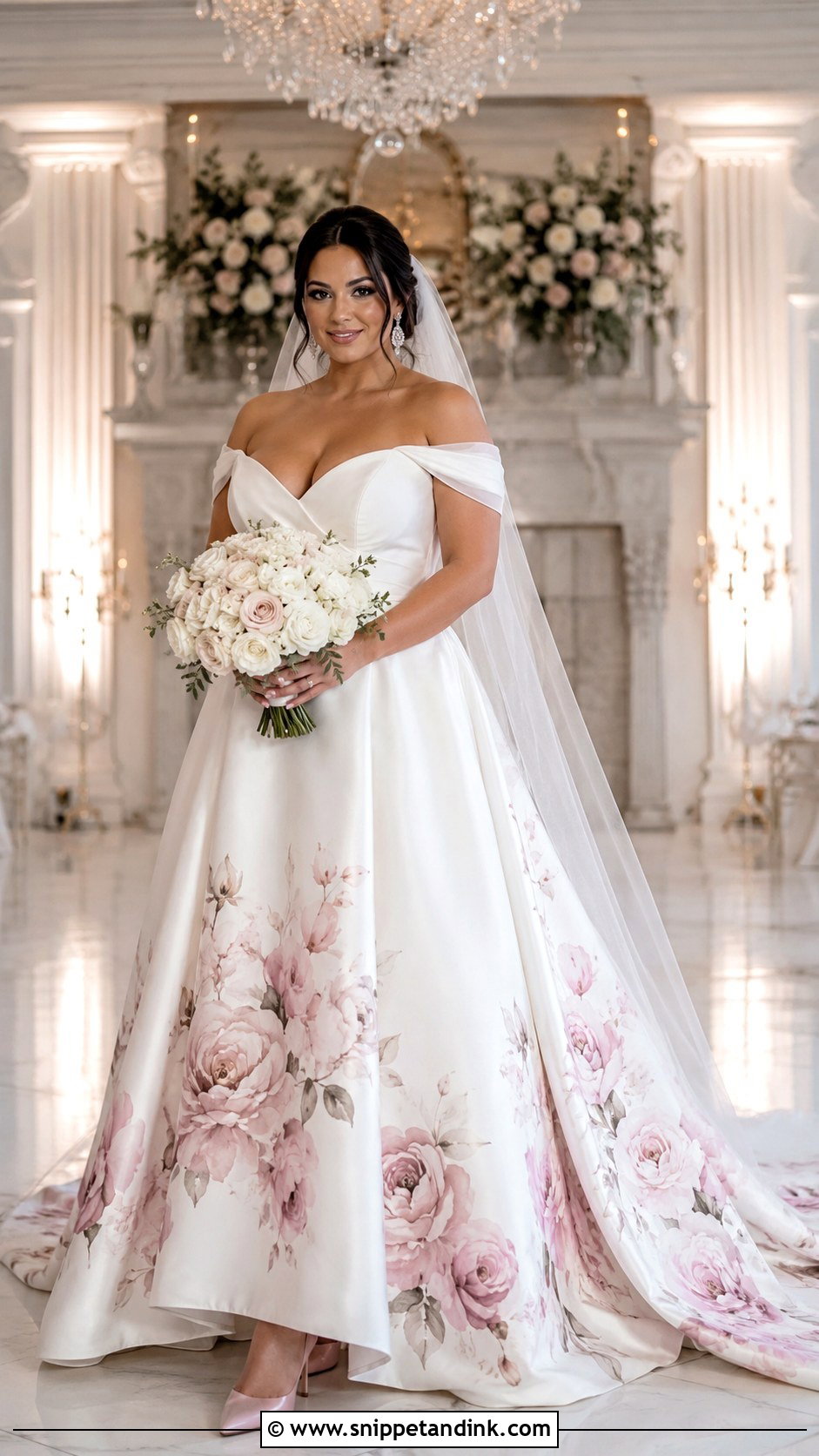
Blush roses add warmth while the gown still reads clearly as white. Keep the roses low, around the skirt, the side of the waist and the train’s edge, and pair them with a sweetheart or off-shoulder bodice on a flowing A-line. Blush pumps, rose-gold earrings and a small ivory clutch suit it; a low twisted updo and natural pink makeup echo the colour. Choose a veil with an unpainted edge so it frames the dress. I’d match the shoe to the palest rose on the skirt, not the deepest. A strong pink shoe pulls the eye down and makes the painting look faded by comparison.
4. Blue Watercolor Hand Painted Wedding Dress
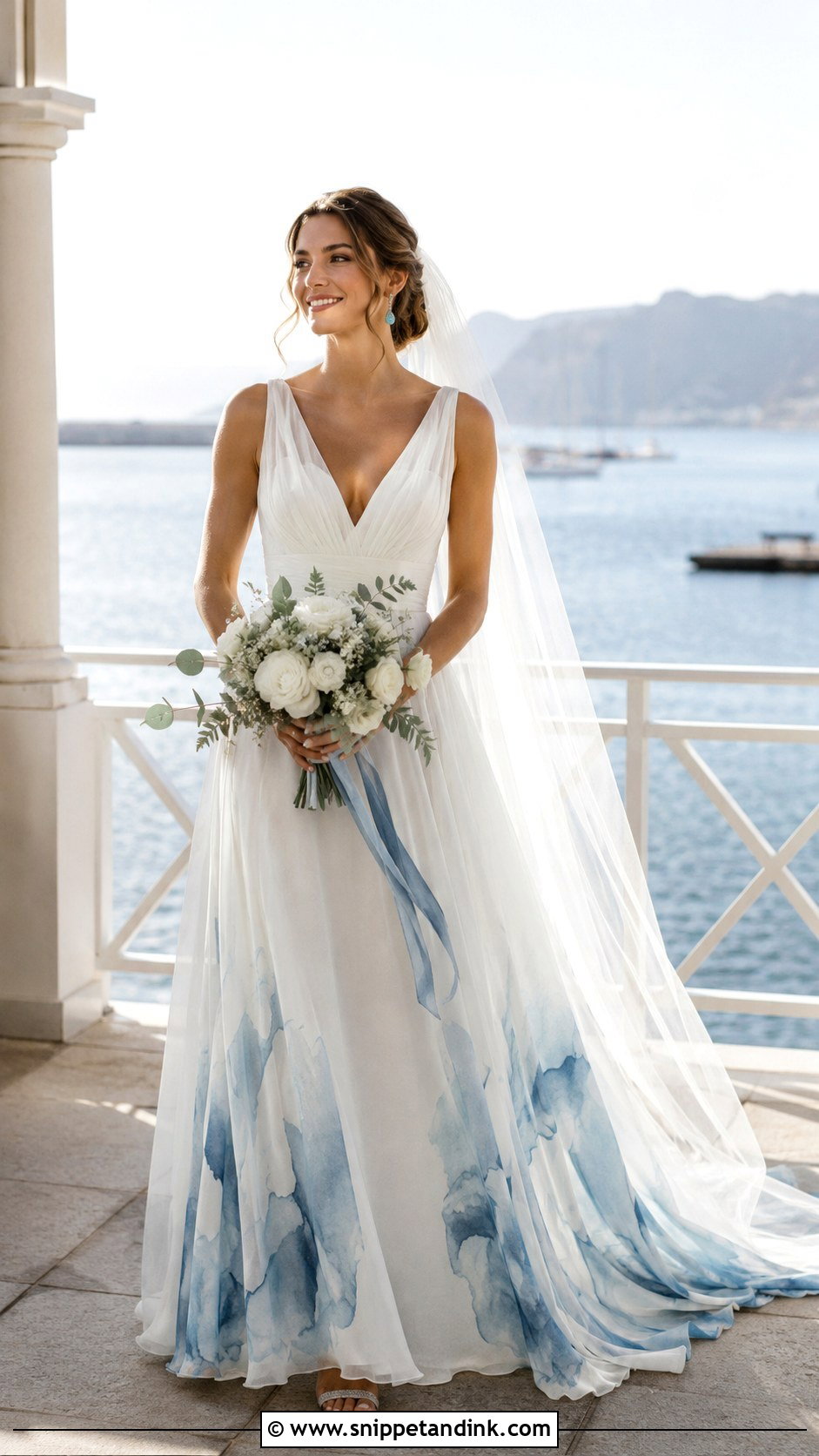
Could the gown itself be your something blue? Pale blue washes rising from the hem like mist or water look fresh on ivory chiffon or silk, especially with a plain V-neck and a softly gathered waist. Silver sandals, aquamarine earrings and a white bouquet tied with dusty blue ribbon finish it, and a sheer fingertip veil softens the top. Pale blue is the colour I’d test in your actual venue light. Under warm tungsten bulbs it can turn greyish, while daylight and cool LED keep it crisp, which is why it works so well by water and at winter weddings.
5. Pastel Ombre Hand Painted Wedding Dress
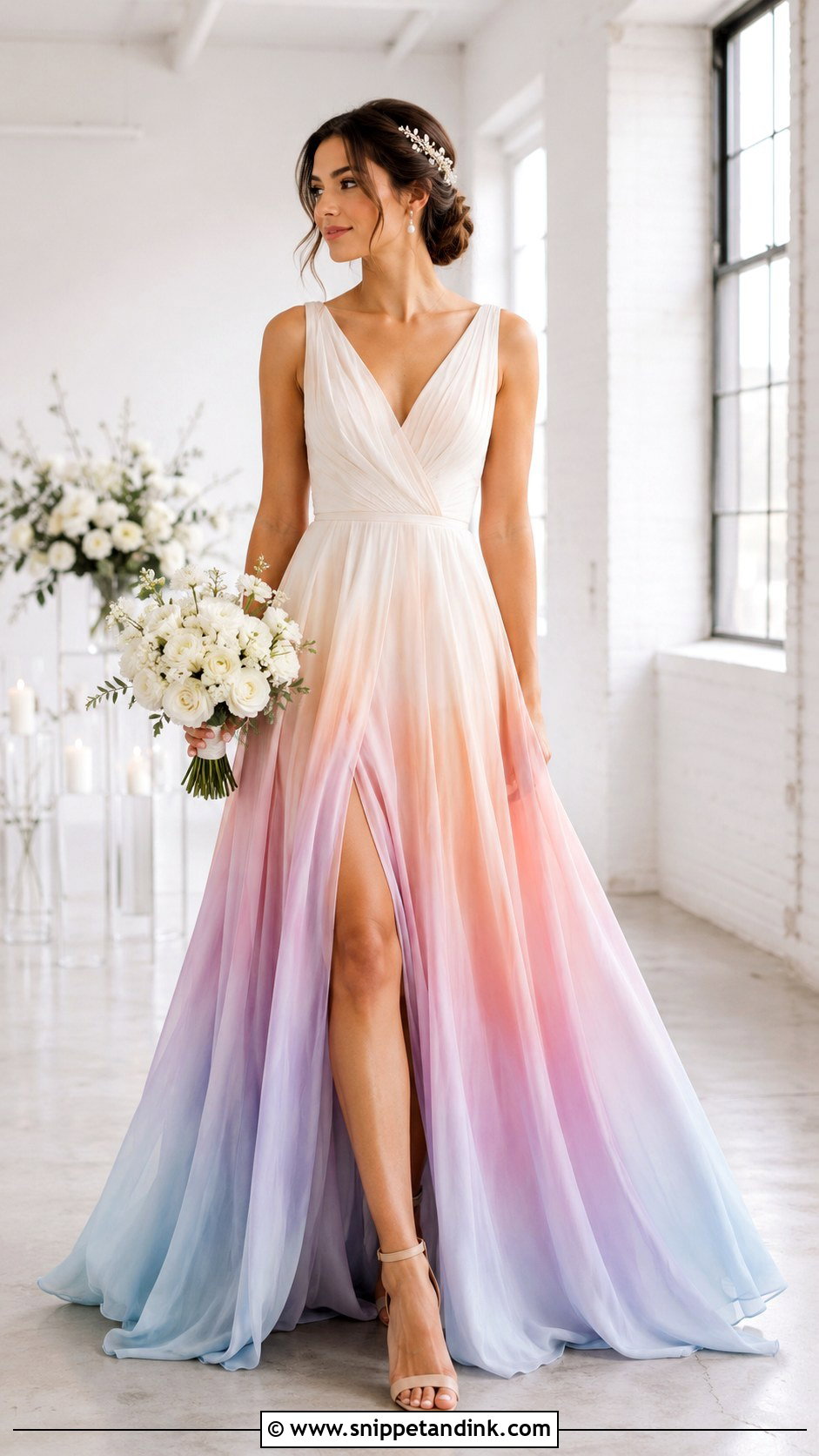
A pastel ombre hand painted wedding dress gives you colour with no pattern at all. Ivory at the bodice melts through blush, peach, lavender and powder blue toward the hem. It needs a fluid skirt, chiffon or organza, so the blend shifts as you walk, and a clean sleeveless bodice with minimal seams. Pearl earrings, neutral ankle straps and a compact white bouquet are enough; a comb works better than a busy veil. Ombre is the hardest effect to paint evenly by hand. Ask to see a finished ombre from the same artist, in person or in daylight photos, before you commit.
6. Botanical Vine Hand Painted Wedding Dress
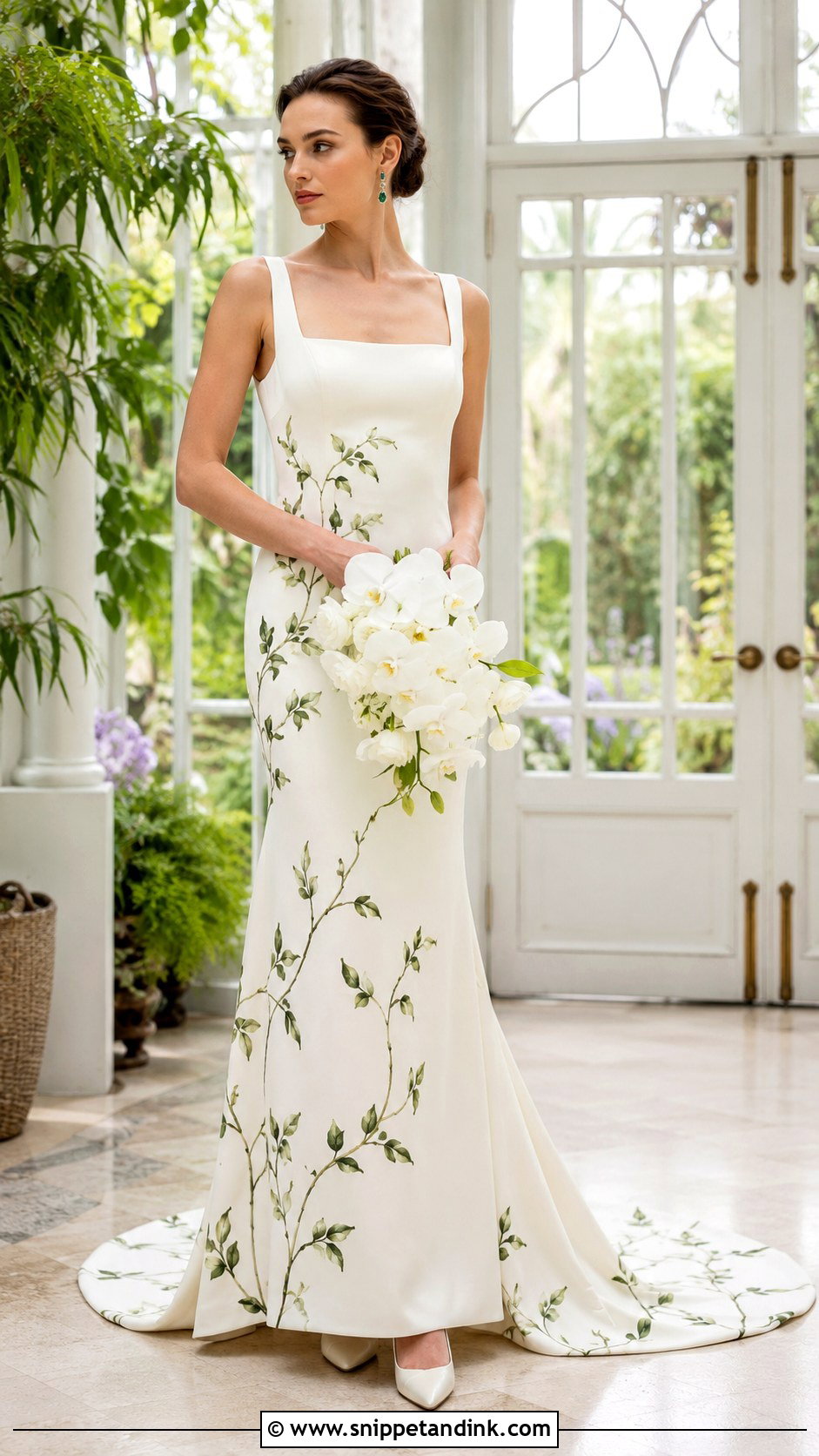
If multicolour florals feel too much, slim green vines are the calmer answer. Branches climb from the train toward the waist, with a few muted leaves straying onto the bodice or sleeves. A fitted ivory crepe gown with a square neck and a gentle flare below the hip is the right canvas, since crepe takes paint evenly without bleeding much. Ivory slingbacks, small emerald earrings and a structured white-and-green bouquet suit it, with a smooth bun or a soft braided updo. It sits naturally in conservatories, woodland venues and estates where greenery is already part of the design.
7. Cherry Blossom Hand Painted Wedding Dress
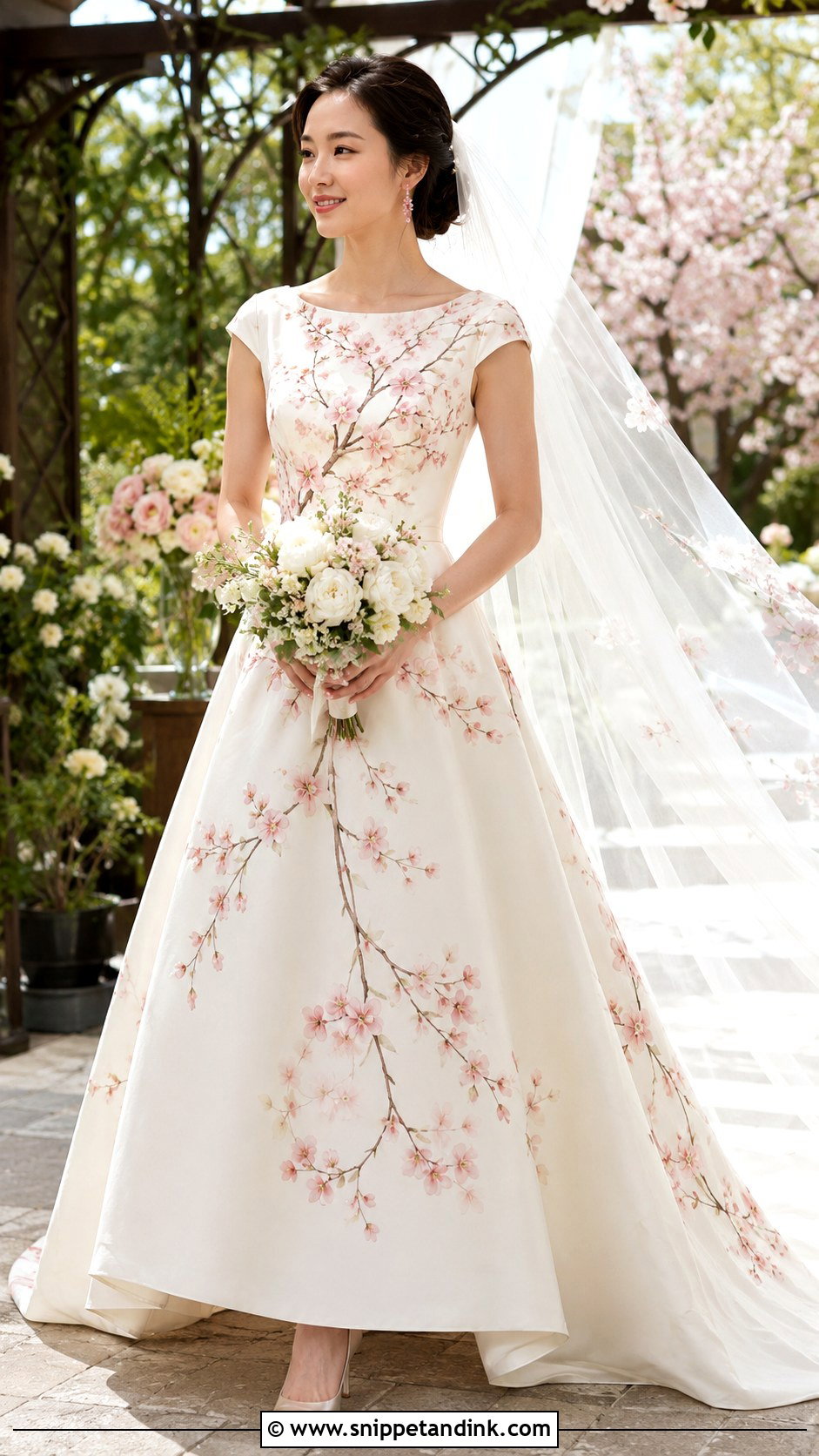
Delicate cherry blossom branches look best placed on a diagonal: up one side of the bodice, across the waist, down the other side of the skirt. That movement keeps them from looking like wallpaper. A fitted top with cap sleeves and a soft A-line skirt keep it wearable. Ivory satin heels, small pink stone earrings and a bouquet of white ranunculus or peonies fit, plus a sheer cathedral veil that lets the branches show through. Keep makeup to soft pink cheeks and a neutral lip. Spring gardens and light-filled rooms with pale wood suit it.
8. Peony Hand Painted Wedding Dress
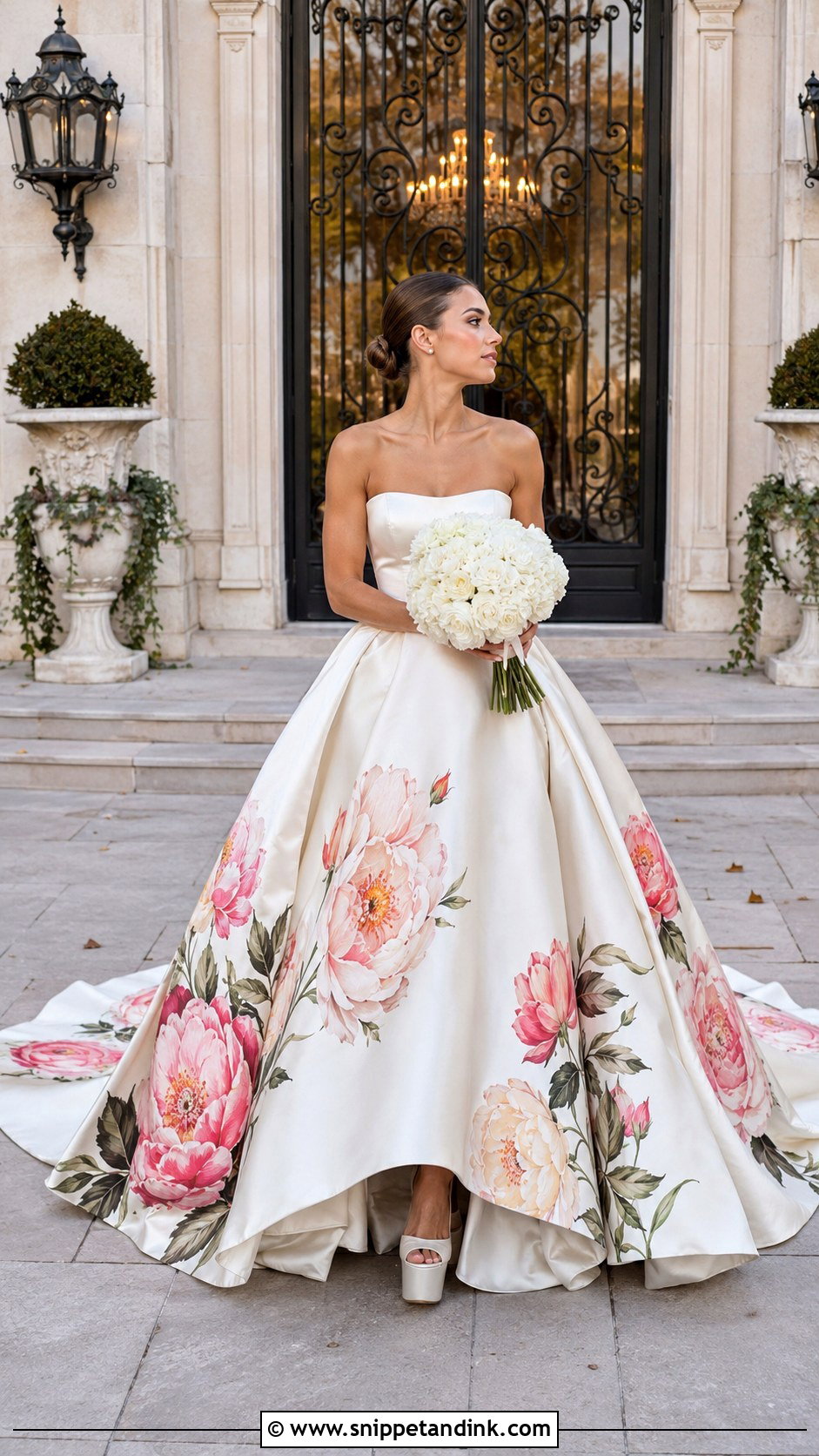
Oversized peonies are loud, so everything else needs to be disciplined. Put pink, coral and cream blooms around the hem and train of a satin ball gown, and let a few buds drift upward to draw the eye toward the waist. A strapless or softly draped bodice leaves the artwork room. Ivory platforms, diamond studs and a plain satin clutch are all you add. Carry mostly white flowers; trying to match every painted shade with real ones always looks forced. On satin, paint sits on the surface more than in the fibre, so ask how the artist seals it against cracking where the skirt folds.
9. Poppy Hand Painted Wedding Dress
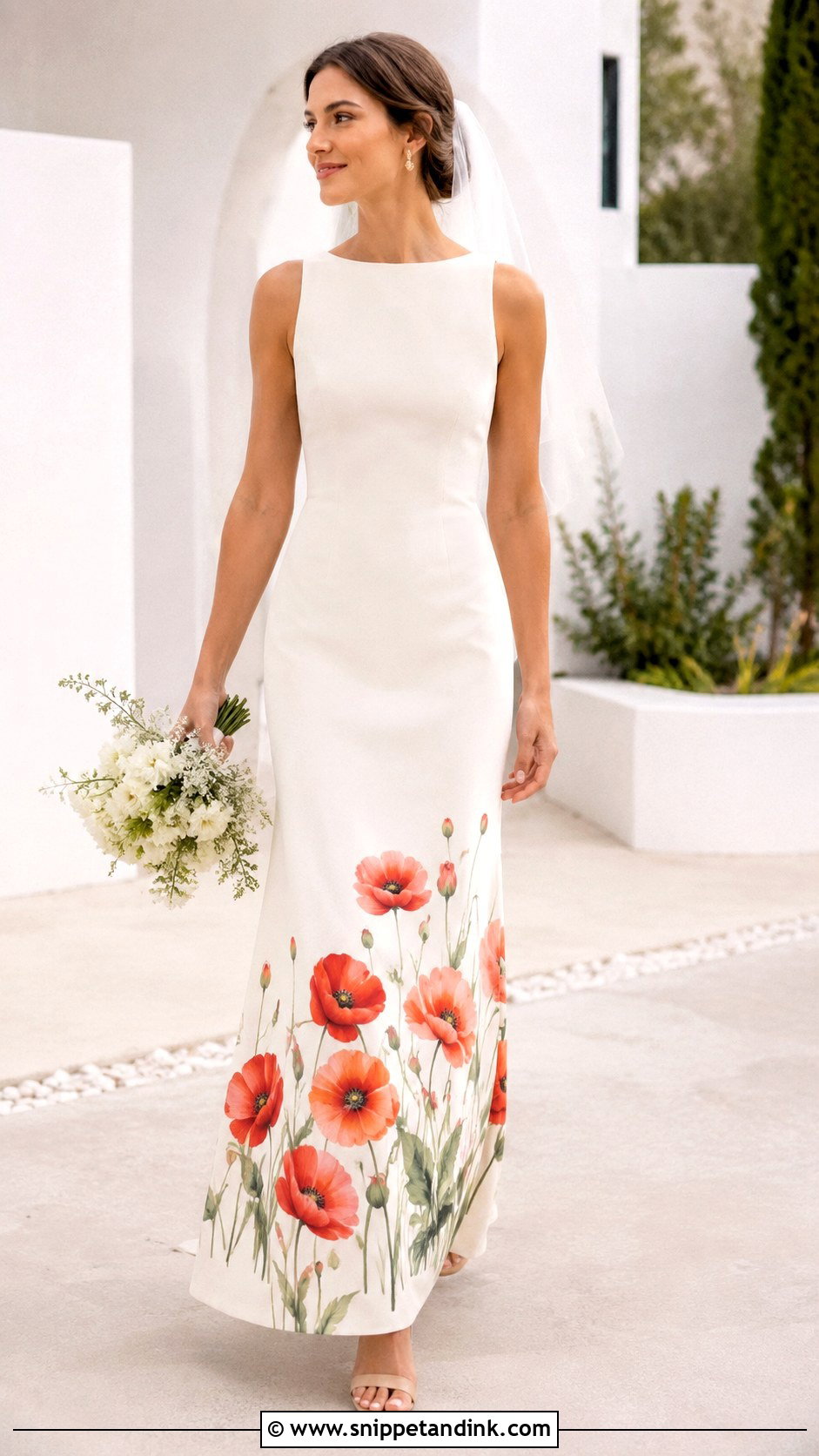
Bright poppies are a summer look, and they need a simple shape to stay elegant. A white or soft ivory column with red, coral or orange poppies around the lower skirt, plus a few near the waist, is the version I like. Nude or ivory block heels, small gold earrings and a white bouquet with a few real poppies suit it, along with a shoulder-length veil and soft waves or a low ponytail. Be aware that real poppies wilt fast once cut. Your florist may suggest a substitute bloom in the same red for the bouquet.
10. Lavender Field Hand Painted Wedding Dress
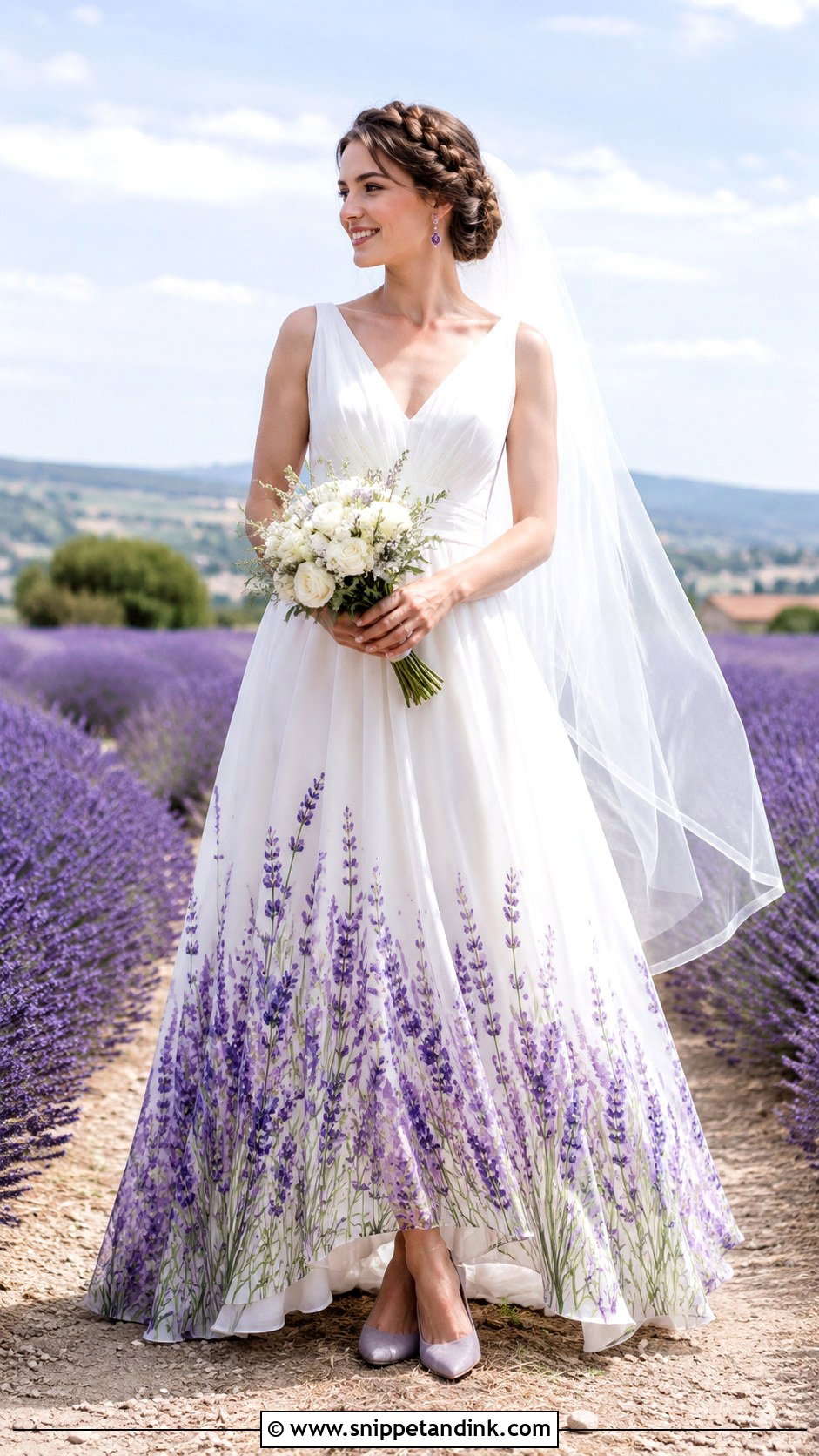
A lavender field works when it’s suggested rather than illustrated. Dense purple at the hem thins into smaller stems and lighter colour toward the waist. A sleeveless chiffon A-line with a gathered bodice moves with the watercolour effect. Pale grey or ivory heels, amethyst drops and a fine bracelet suit it, with white roses, greenery and a little lavender in the bouquet, a loose braided updo and a plain fingertip veil. Purple is the shade most prone to fading in strong sun over time, so store this one well away from windows once the wedding is over.
11. Autumn Leaf Hand Painted Wedding Dress
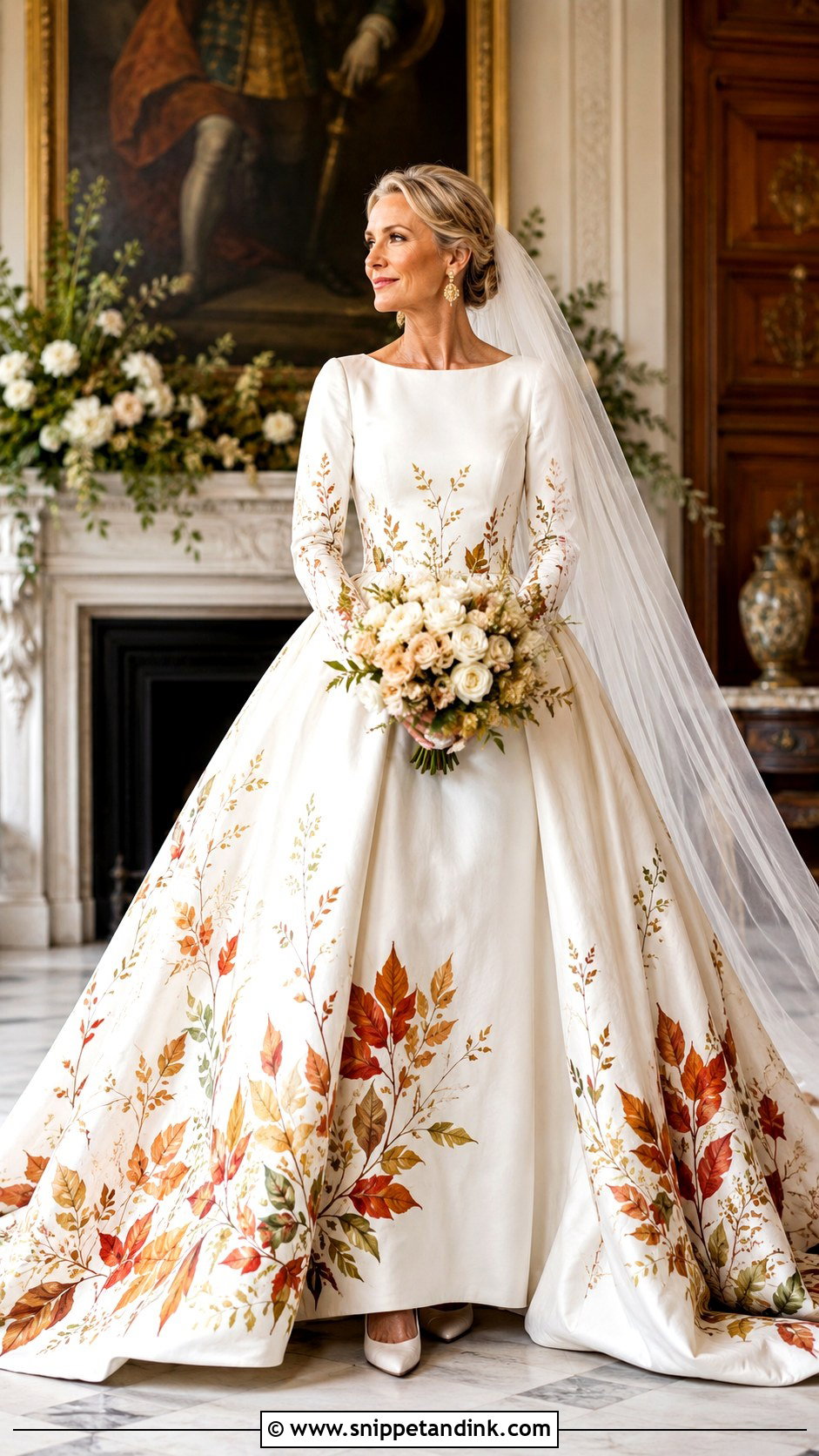
Autumn brides can swap flowers for leaves in rust, amber, muted red and olive. Keep them to the hem and train of an ivory long-sleeve gown, with just a few branches reaching the waist. A fitted bodice and full skirt give structure and leave the artwork visible. Closed-toe ivory pumps, brushed-gold earrings and a cream bouquet with seasonal foliage fit, with a low bun and a cathedral veil. Don’t chase every leaf colour in your accessories. One warm metal and cream flowers let the skirt carry the season.
12. Coastal Wave Hand Painted Wedding Dress
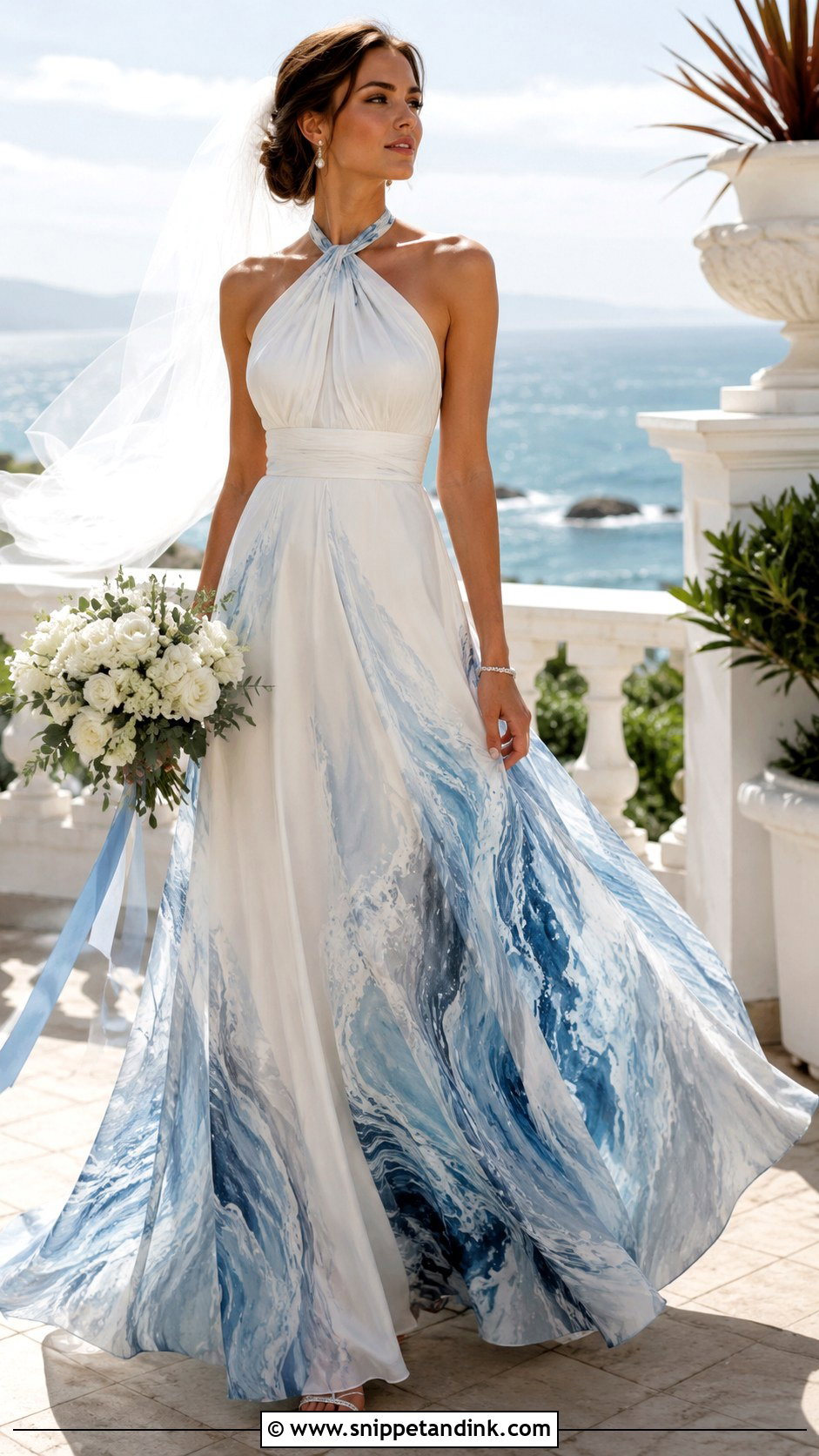
Painted waves give you a modern coastal bridal look without anchors or rope. Fluid blue, aqua, grey and white strokes circling the skirt of a light silk or chiffon gown read as water. A halter or plain sleeveless bodice keeps it clean. Silver flat sandals, pearl earrings and white flowers with soft blue ribbon suit it, and a light veil that stays sheer enough to show the paint. Pin the hair in a secure low knot for the wind. Sea spray is the risk here; keep the hem away from wet sand, because salt water can mark painted silk.
13. Abstract Brushstroke Hand Painted Wedding Dress
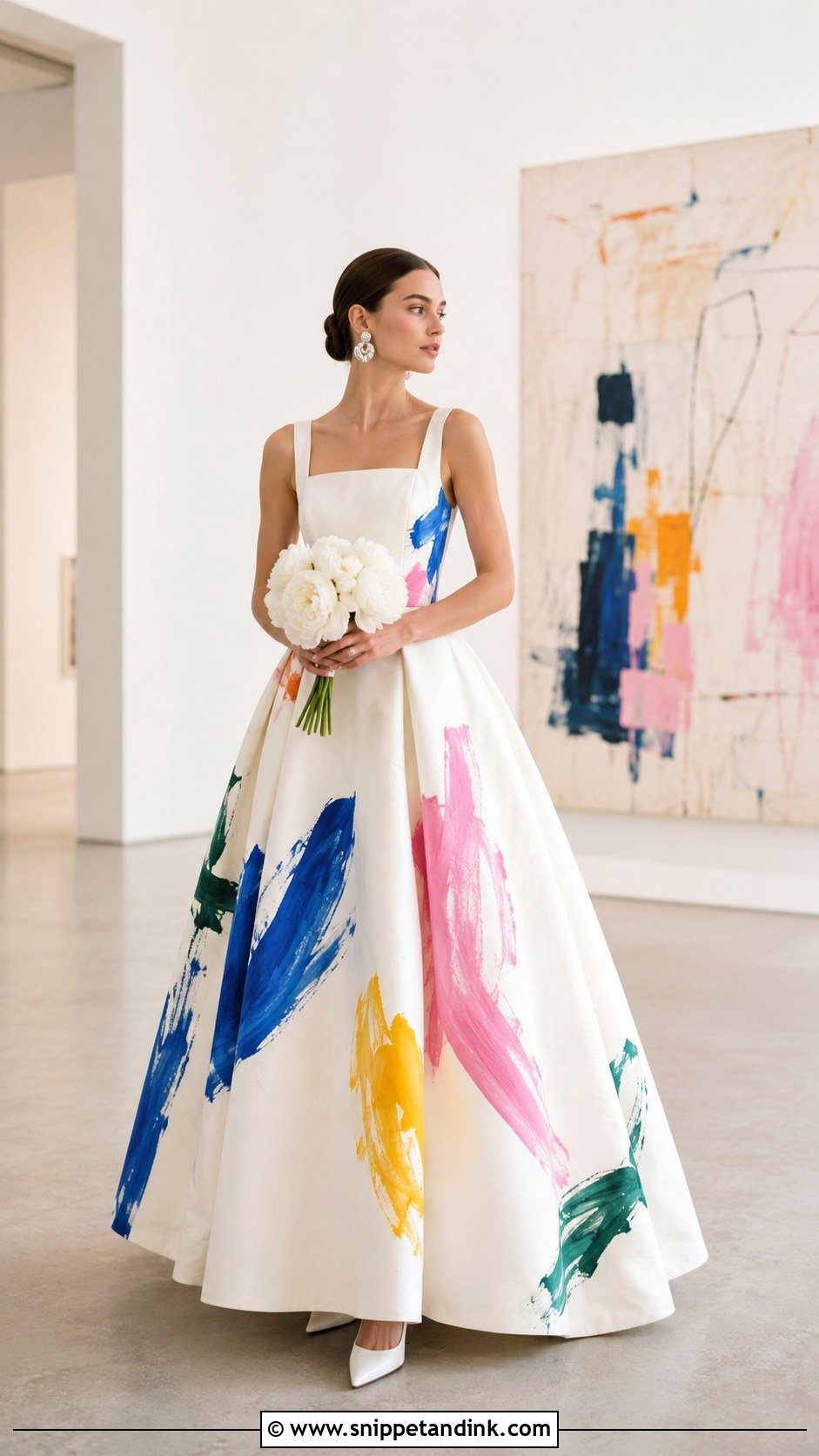
Not every painted gown needs flowers. Abstract brushwork in cobalt, pink, yellow or emerald swept asymmetrically across a structured white ball gown looks like a gallery piece. Keep the bodice strapless or square, with minimal seams and nothing added. White pointed heels, sculptural silver earrings and a bouquet of a single flower type fit, along with a sleek ponytail or polished bun and either a plain short veil or none. This is the style where you most need to see the artist’s portfolio. Confident abstract strokes are harder than they look, and hesitant ones read as smudges.
14. Gold Accent Floral Hand Painted Wedding Dress
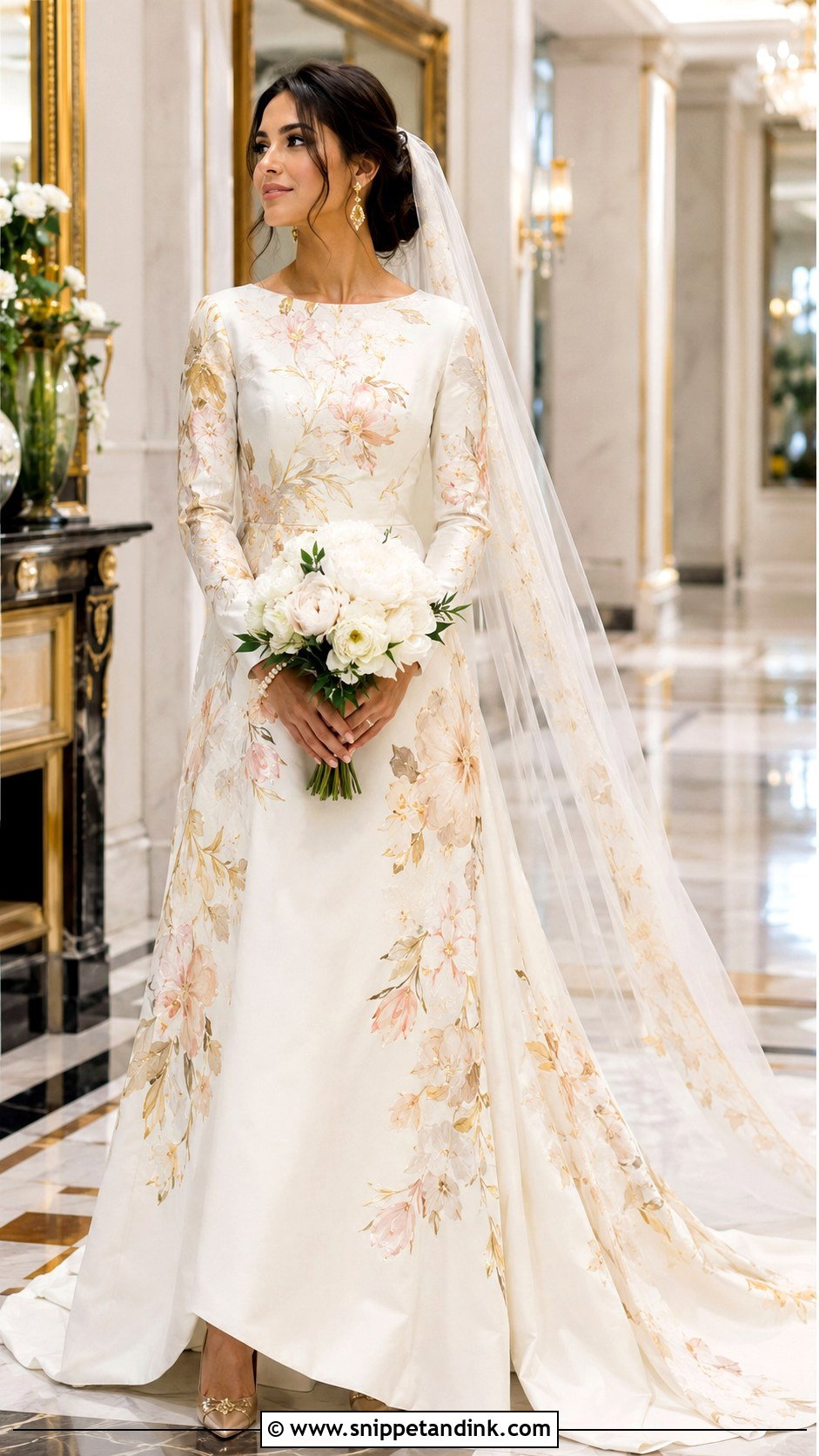
A thin gold outline around a few petals and leaves turns painted flowers formal. Blush and cream blooms on an ivory gown with a fitted long-sleeve bodice and a flowing skirt make the base; the gold should trace, not fill. Champagne heels, small gold drops and a pearl bracelet suit it, and a white bouquet with ivory ribbon avoids adding more metal. A polished chignon and sheer cathedral veil finish it. Metallic fabric paint can stiffen the cloth slightly where it’s applied, so keep gold lines fine on any area that bends, like the waist or elbows.

15. Black And White Hand Painted Wedding Dress
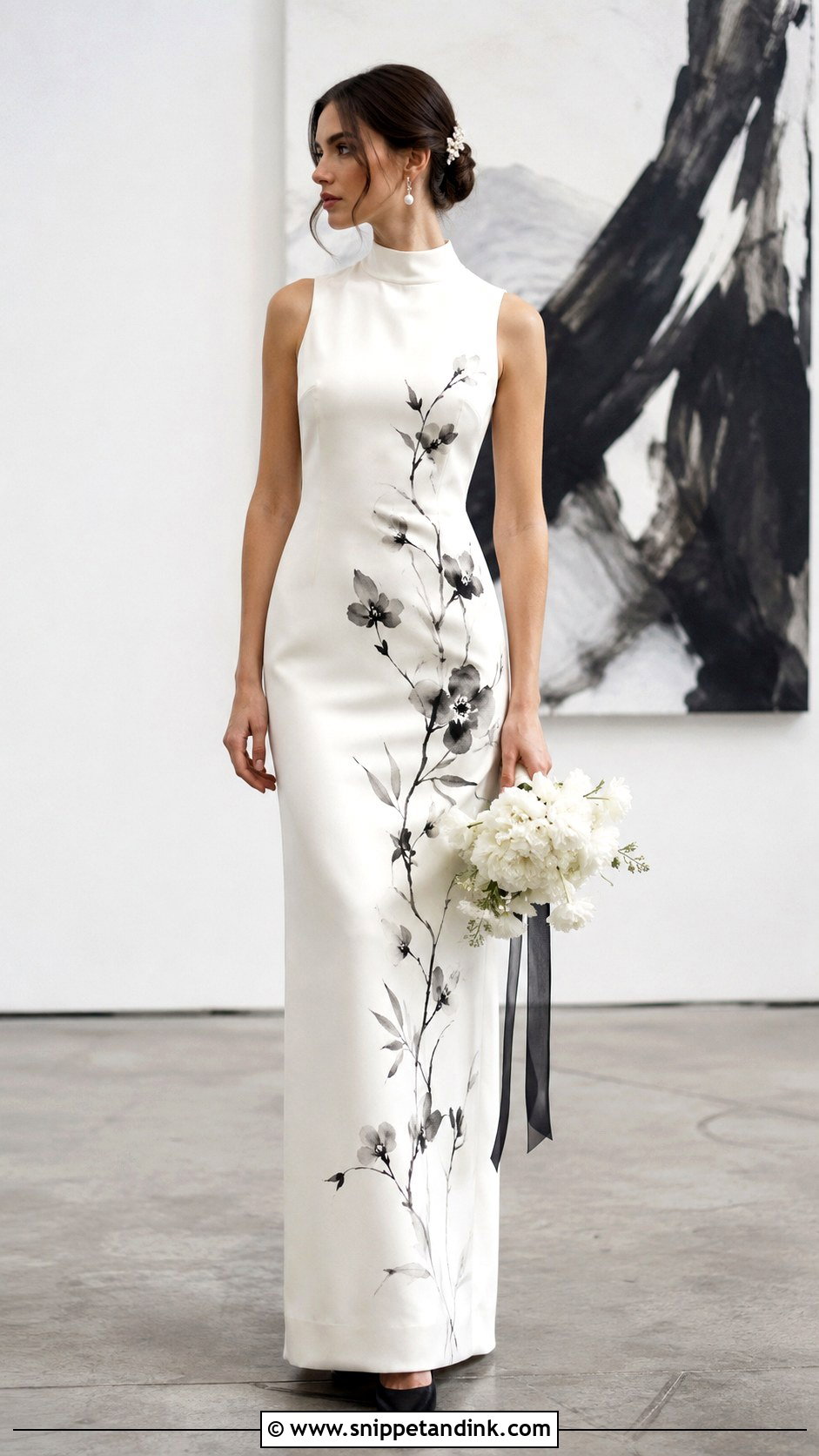
Black on ivory looks striking when it has room to breathe. Fine ink flowers, slender branches or sweeping line art along one side of an ivory crepe gown keeps it graphic. A high neck and fitted column push it modern. Black pointed heels give a small reveal under the hem; add pearl earrings and a white bouquet with dark ribbon, plus a smooth low bun. A plain veil or just a comb works. Black is unforgiving if anything smudges, so ask how the paint is fixed and keep red wine and dark lipstick at arm’s length.
16. Hand Painted Wedding Dress With Sleeves
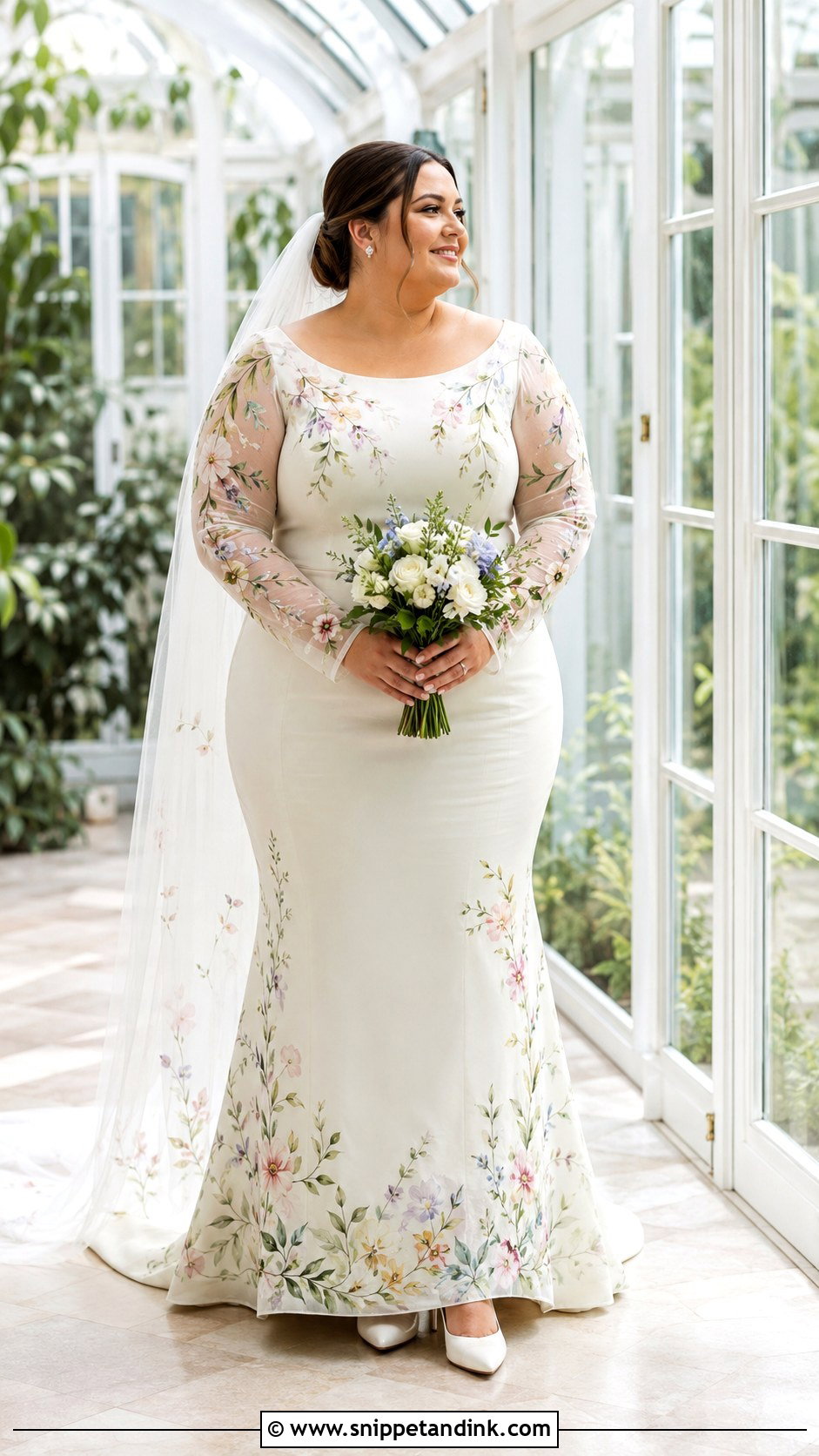
Sheer sleeves covered in fine branches or petals bring the artwork up next to your face, which is where close-up photos look. A fitted ivory gown with long painted sleeves, plus a smaller echo of the pattern near the hem, feels balanced. Ivory closed-toe heels, small studs and a narrow bracelet that doesn’t hide the cuffs suit it, with a low bun and a simple veil. Keep the bouquet compact. Painting on sheer tulle or mesh is delicate work, and the paint can make the mesh slightly stiffer, so try lifting and bending your arms in the finished sleeve.
17. Hand Painted Tea-Length Wedding Dress
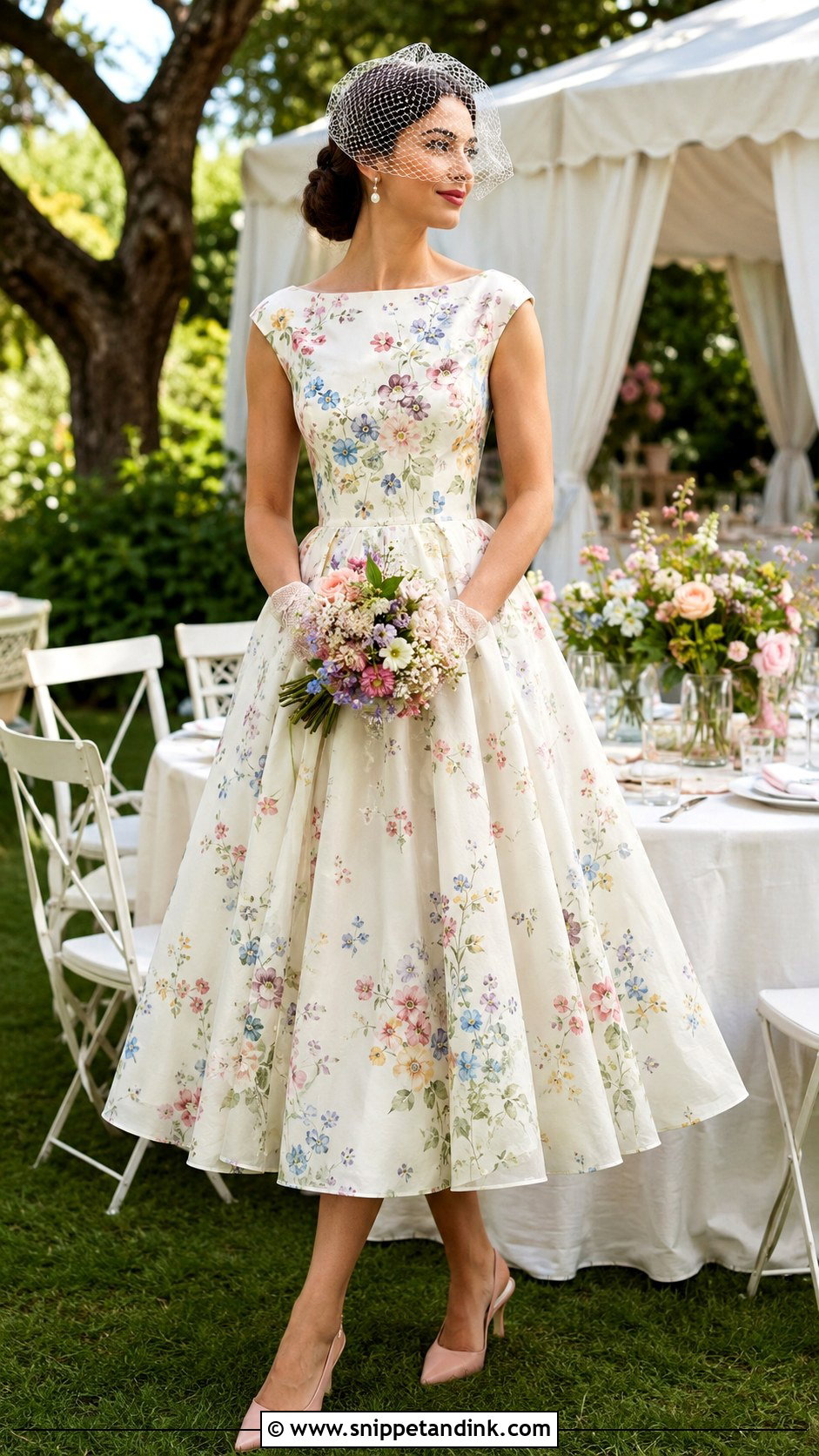
Tea length feels lighter and more playful. An ivory dress with a fitted waist, a full mid-calf skirt and small flowers scattered upward from the hem keeps the artwork at eye level for guests sitting at tables. Your shoes are on display, so blush slingbacks, pearl-trimmed pumps or ivory block heels are worth choosing carefully. Short gloves can suit a formal daytime party, with pearl earrings, a compact bouquet and a birdcage veil or small bow. It’s an easy courthouse or restaurant dress, and a good second outfit when your ceremony gown is too heavy to dance in.
18. Hand Painted Silk Slip Wedding Dress
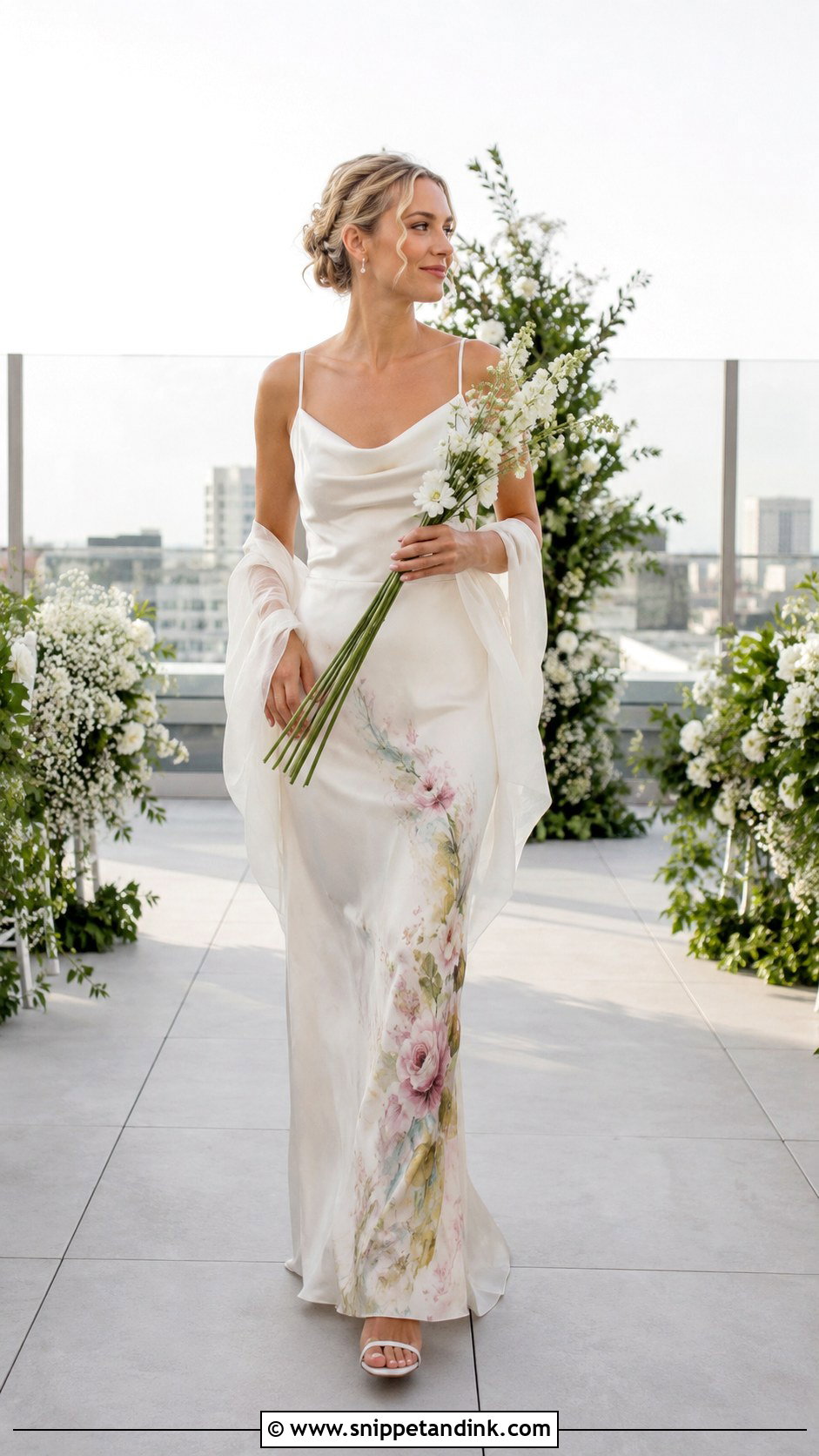
Silk slips are a sleek, quiet canvas. A bias-cut ivory dress with thin straps and watercolour flowers drifting from the hip down one side looks very personal. Paint on silk soaks into the fibre and spreads a little at the edges, which gives those soft, layered tones no two dresses share. Strappy ivory sandals, fine drop earrings and a light shawl for later suit it, with a loose low bun or smooth waves and a long-stemmed bouquet. Because bias silk shows everything underneath, plan smooth underwear, and be ready for a light dress that wrinkles when you sit.
19. Hand Painted Wedding Dress With Train
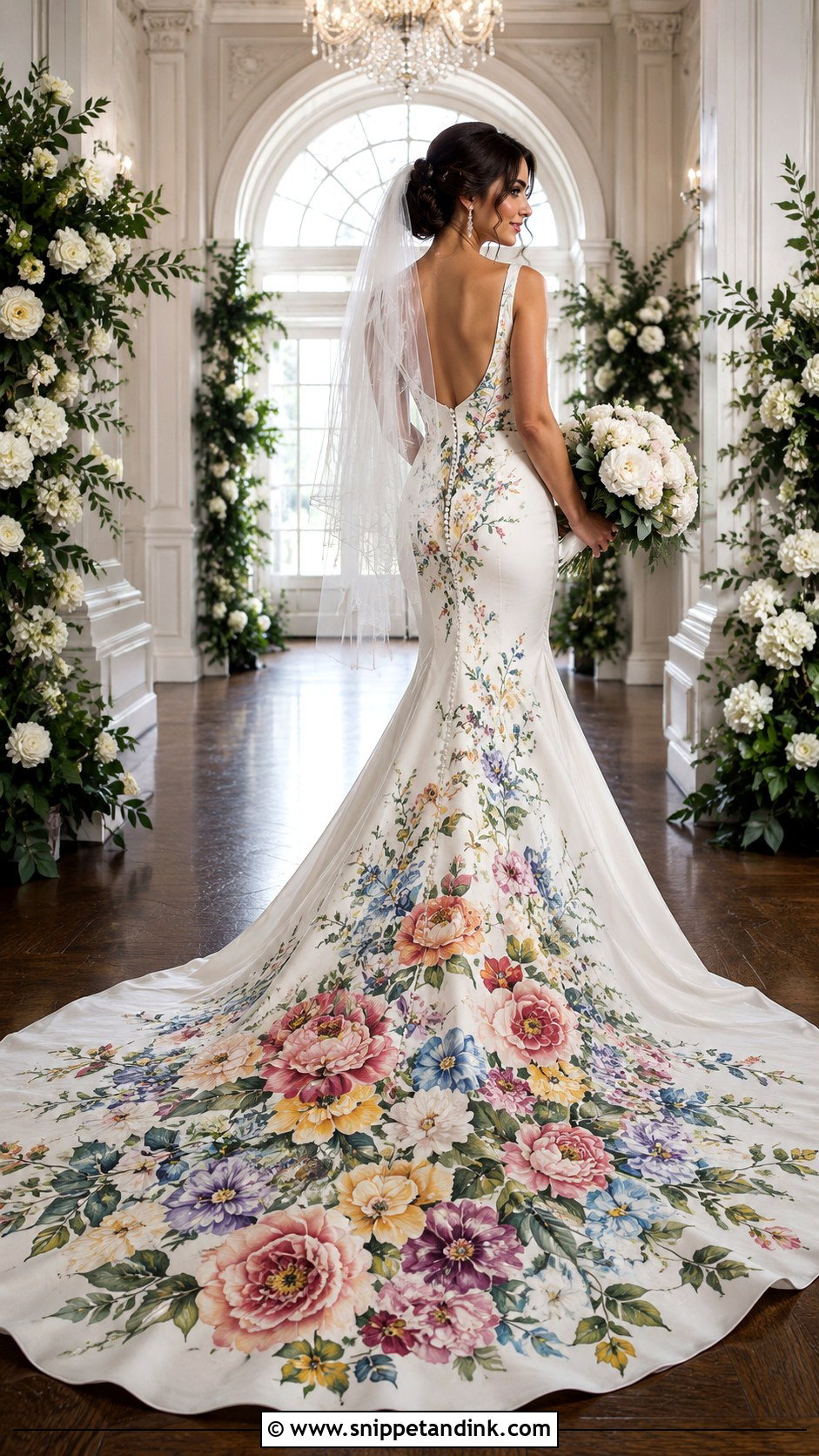
A long train gives the artist the most space and gives guests a surprise. Keep the front of an ivory fit-and-flare mostly plain and concentrate flowers, leaves or abstract colour across the chapel or cathedral train, so the design appears as you turn and walk away. Comfortable ivory pumps, crystal earrings and a white bouquet suit it. The veil should either stop above the busiest painted area or run past the train with no heavy lace. Insist on a secure bustle, because a painted train dragged across a dance floor collects scuffs that can’t be cleaned out of the paint.
20. Custom Story Hand Painted Wedding Dress
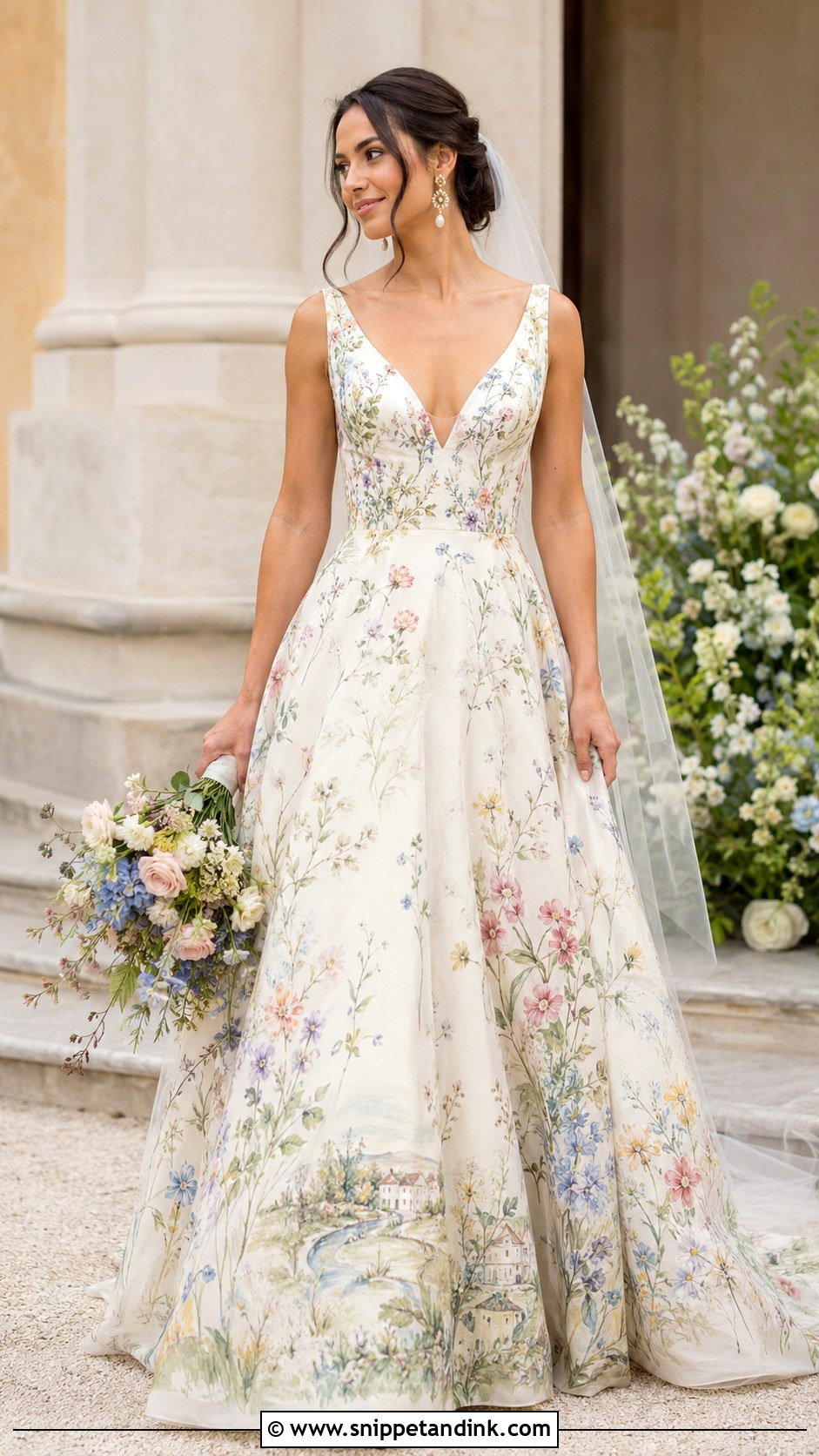
The most personal painted gown tells your own story: flowers from both birth months, plants from the ceremony site, a skyline or coastline you share, even small initials. A simple A-line or ball gown makes a generous canvas without forcing the artwork across awkward seams. Keep the symbols small and few rather than covering every inch. Neutral heels, heirloom jewellery and a bouquet that picks up one element of the design finish it, with a plain veil so guests can see the work. Since each painted gown is done by hand, yours can’t be reproduced exactly, which is the whole appeal. Give the artist your references early and agree a sketch before any paint touches fabric.
Rain, Red Wine and Cleaning a Painted Gown
A painted dress is sturdier than people fear, but water and rubbing are its weak points. A few rules I give every bride who wears one:
- Don’t dab a spill with water on the day. On watercolour-style work it can lift or spread colour. Blot gently with a dry white cloth and leave the rest for a professional.
- If rain is possible, have a clear umbrella ready and keep the train lifted. Wet grass is worse than drizzle, because the hem soaks it up.
- Tell your dry cleaner the gown is hand painted and give them the artist’s care notes. Choose a cleaner who handles bridal or couture pieces and will spot-test first.
- Store it flat or in a breathable cotton bag, folded with acid-free tissue between painted layers so the surfaces don’t rub. Keep it out of direct light; pigments fade over years in sun.
If you plan to pass the gown on or have it reworked later, take good photos of the artwork in daylight once it’s finished. It’s the easiest reference for any future touch-up.
Placing the Paint So It Reads From Every Side
A painted gown works when the artwork and the silhouette support each other. Watercolour flowers feel romantic; waves, leaves, ombre and abstract strokes take it somewhere less expected. Before you sign off the design, look at where the paint will fall from the front, the back and the side, and where you’ll sit and bend. Keep shoes, jewellery, flowers and veil plain enough to let it lead. Then pick colours and images that mean something to you, so the dress is about more than the trend.
You'll Like These Ideas:







Leave a Reply