
Color on a wedding dress is mostly a question of placement. A pale underlay gives a soft glow, a single bow makes a clear accent, and saturated appliqués or an ombré skirt announce themselves from the back of the room. The ideas below run from subtle embroidery and pastel layers to bold bows, painted trains, colored lace and statement accessories, with notes on how each one behaves at fittings and on the day. Before you fall for a shade, hold it against your venue, flowers, jewelry and shoes. Then trust your own taste over tradition, whether that leads you to delicate wildflowers or to black lace.
Color Near Your Face Versus Color at the Hem
Before you pick a shade, decide where it sits, because that changes how much it does. Color at the neckline and bodice reflects onto your skin and shows in every close-up. Color at the hem or train mostly shows in full-length and back shots, and as you walk.
- Near the face, such as bodice embroidery, colored sleeves or neckline beading: hold the exact swatch under your chin in daylight, since a shade that flatters warm skin can drain cool skin and the reverse.
- At the waist, with a sash, bow or belt: the easiest to change your mind about, because most can be removed or swapped up to the last fitting.
- At the hem or train, with dip-dye, ombré, painting or wildflowers: boldest in motion, and nearly invisible in seated reception photos.
- Throughout, with an underlay or colored tulle: the most color with the least drama, because ivory lace or tulle softens it.
If you’re unsure, start at the waist. A removable accent lets you live with color through your fittings without committing the whole gown to it.
1. Floral Embroidered Wedding Dress
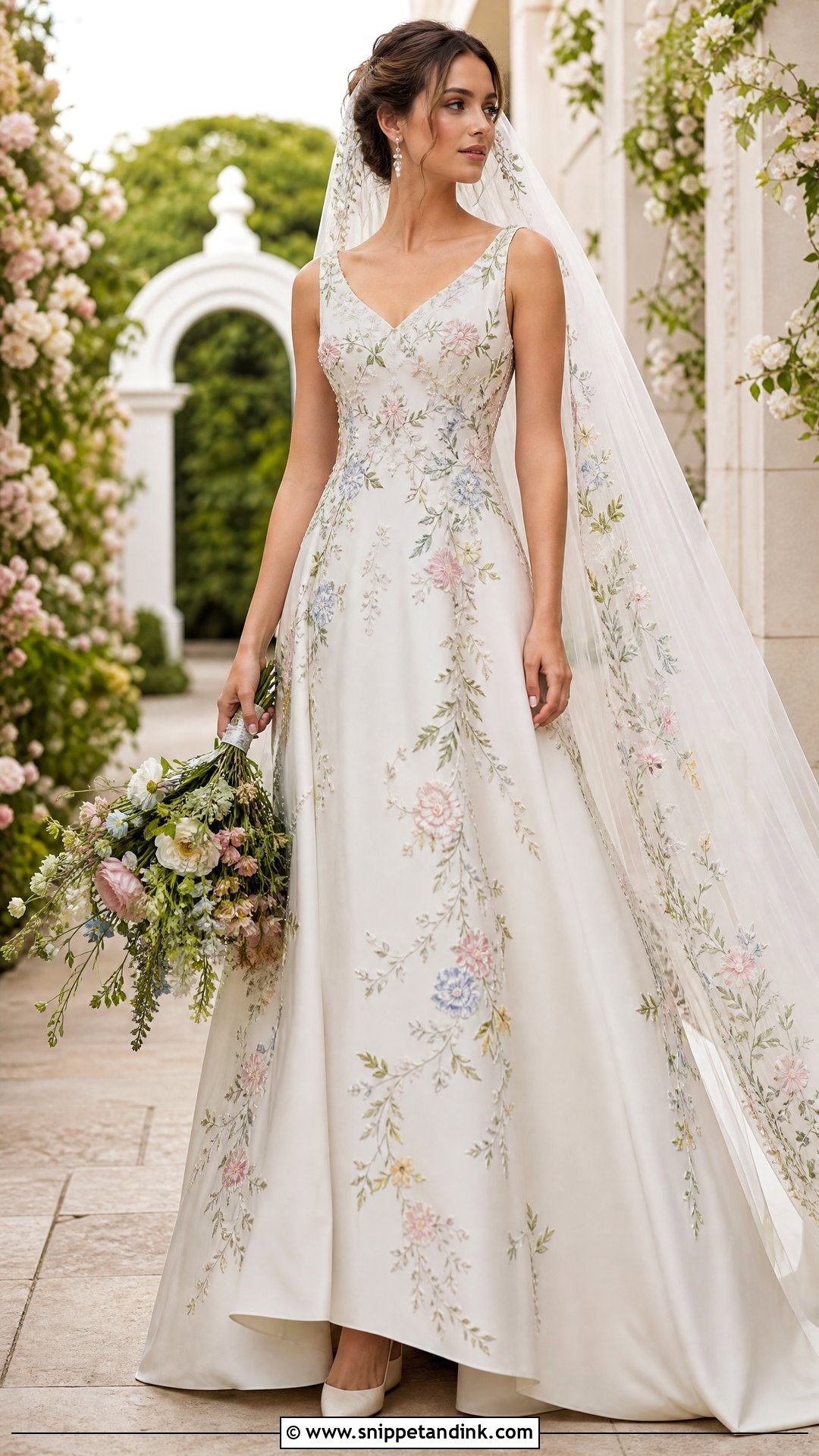
Embroidery is the gentlest way in, because the ivory ground still does most of the work. Picture an ivory A-line with pink, blue, yellow and green embroidery across the bodice and lower skirt; scattered motifs feel airy, while dense ones read as artwork. Ask whether the embroidery is worked into the dress itself or onto a separate layer, since thread running across a seam makes alterations slower and costlier. Ivory pointed pumps, pearl drops and a sheer veil with matching florals at the edge suit it. For the bouquet I’d pull two or three shades from the embroidery, not all of them, so it coordinates without looking matched. Soft waves or a relaxed updo keep the neckline visible.
2. Blue Bow Wedding Dress
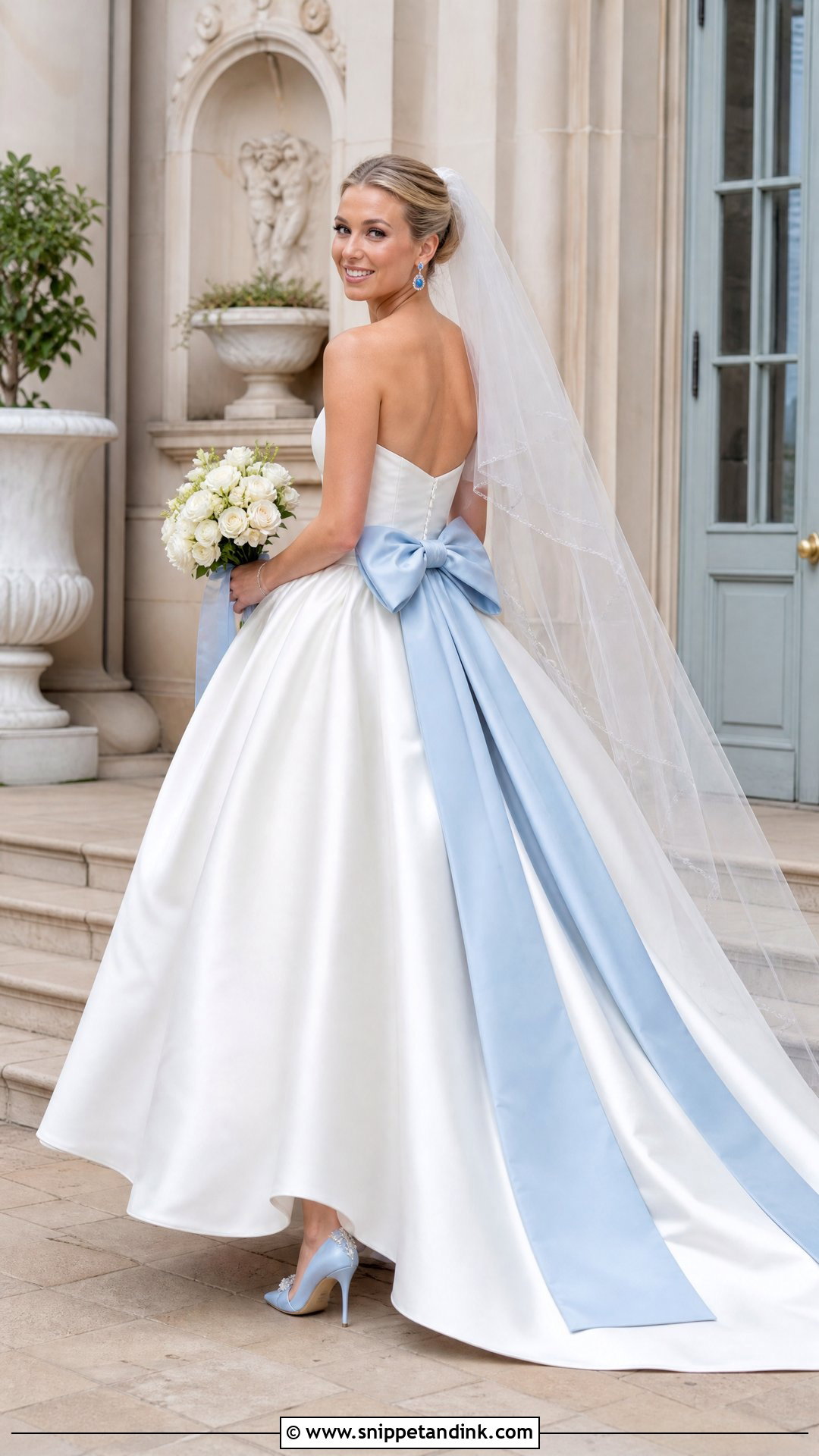
Bows are the easiest color to add and the easiest to remove, which is why I like them for indecisive brides. A wide powder-blue bow at the back waist of a structured satin ball gown, with long tails trailing toward the train, gives a clear accent that doubles as your something blue. Satin bows crush when you sit in a car, so have it steamed on arrival or ask your seamstress to interface the loops so they hold their shape. Pale blue heels, sapphire or aquamarine earrings and a fingertip veil that stops short of the bow finish it. Keep the bouquet mostly white with a few blue stems or a matching ribbon, and wear a polished low bun to leave the back on show.
3. Blush Tulle Wedding Dress
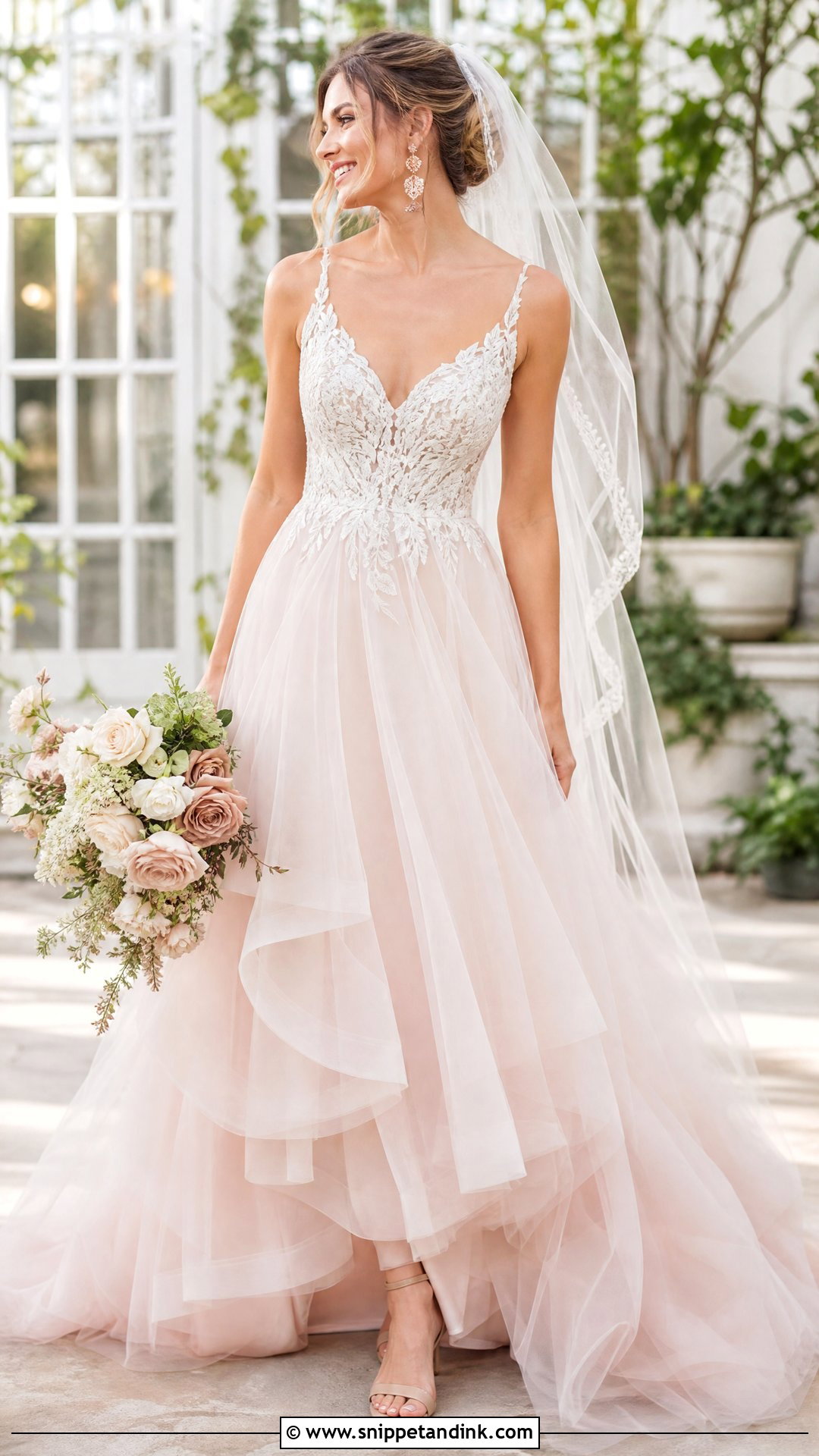
Blush tulle is the approachable version of color, and the one I suggest to a bride who’s curious but nervous. A layered blush skirt under an ivory lace bodice, fitted at the waist with delicate straps or off-the-shoulder sleeves, adds dimension without brightness. Blush also looks different on every skin tone and can wash out very fair skin, so I want to see it held near the face in daylight before anyone orders. Champagne heels, rose-gold earrings and a sheer ivory veil balance the pink and neutral tones. Cream, peach and dusty pink flowers pick up its warmth, with natural makeup and a rosy lip, in a garden or a formal ballroom.
4. Rainbow Ombre Wedding Dress
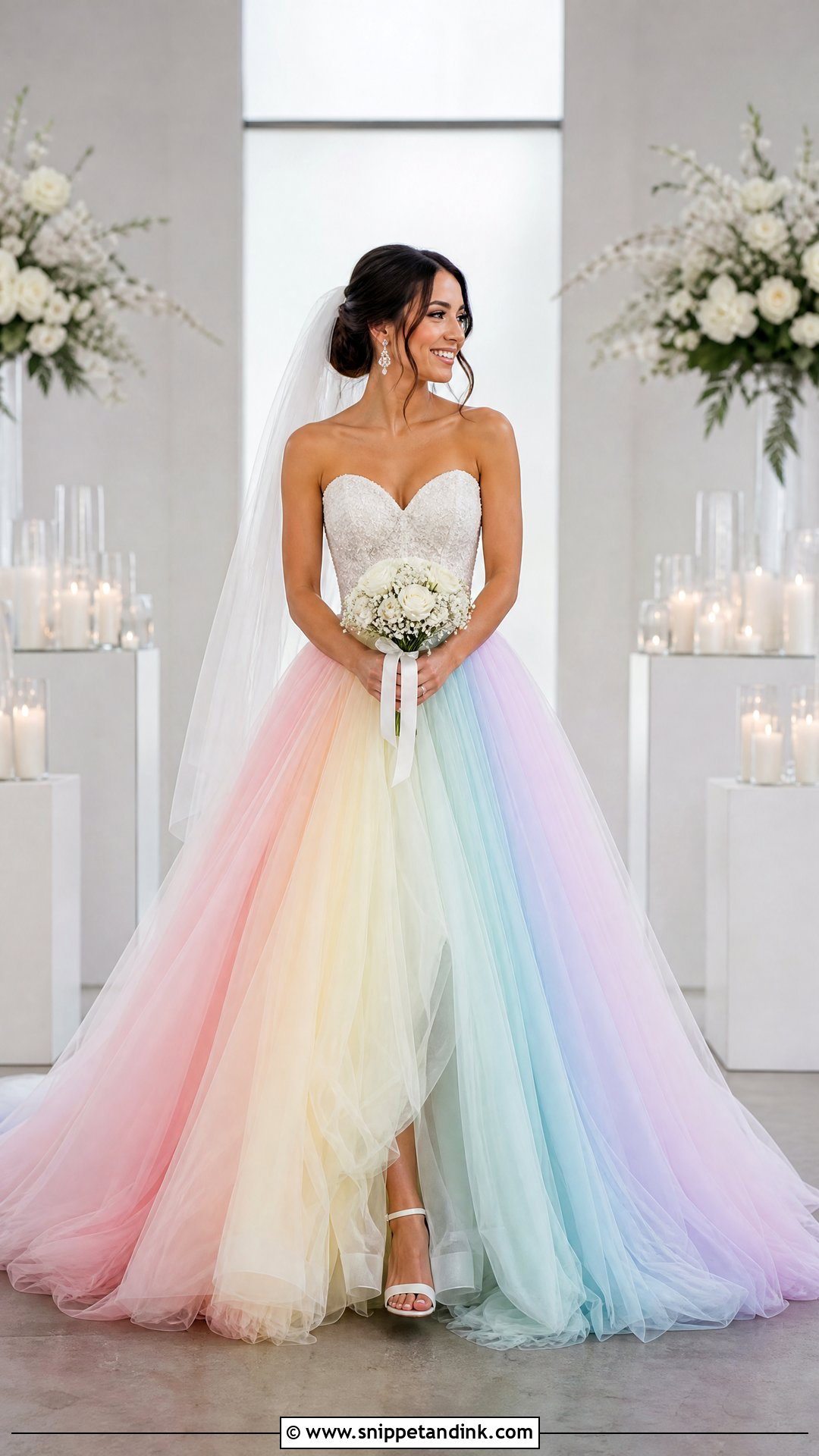
A rainbow ombré wedding dress makes color the whole story while the bodice stays recognizably bridal. Look for a fitted white or ivory top that moves through pastel pink, yellow, green, blue and lavender down the skirt. Tulle and organza are the right fabrics here, because each translucent layer blurs one shade into the next; on solid satin the same gradient tends to look like stripes. White heels, clear crystal earrings and a plain veil under a smooth bun keep everything else quiet, and a small white bouquet stops it competing with the skirt. If there’s a long train, carry the gradient through the final layers so the back view completes the sequence.
5. Red Floral Wedding Dress
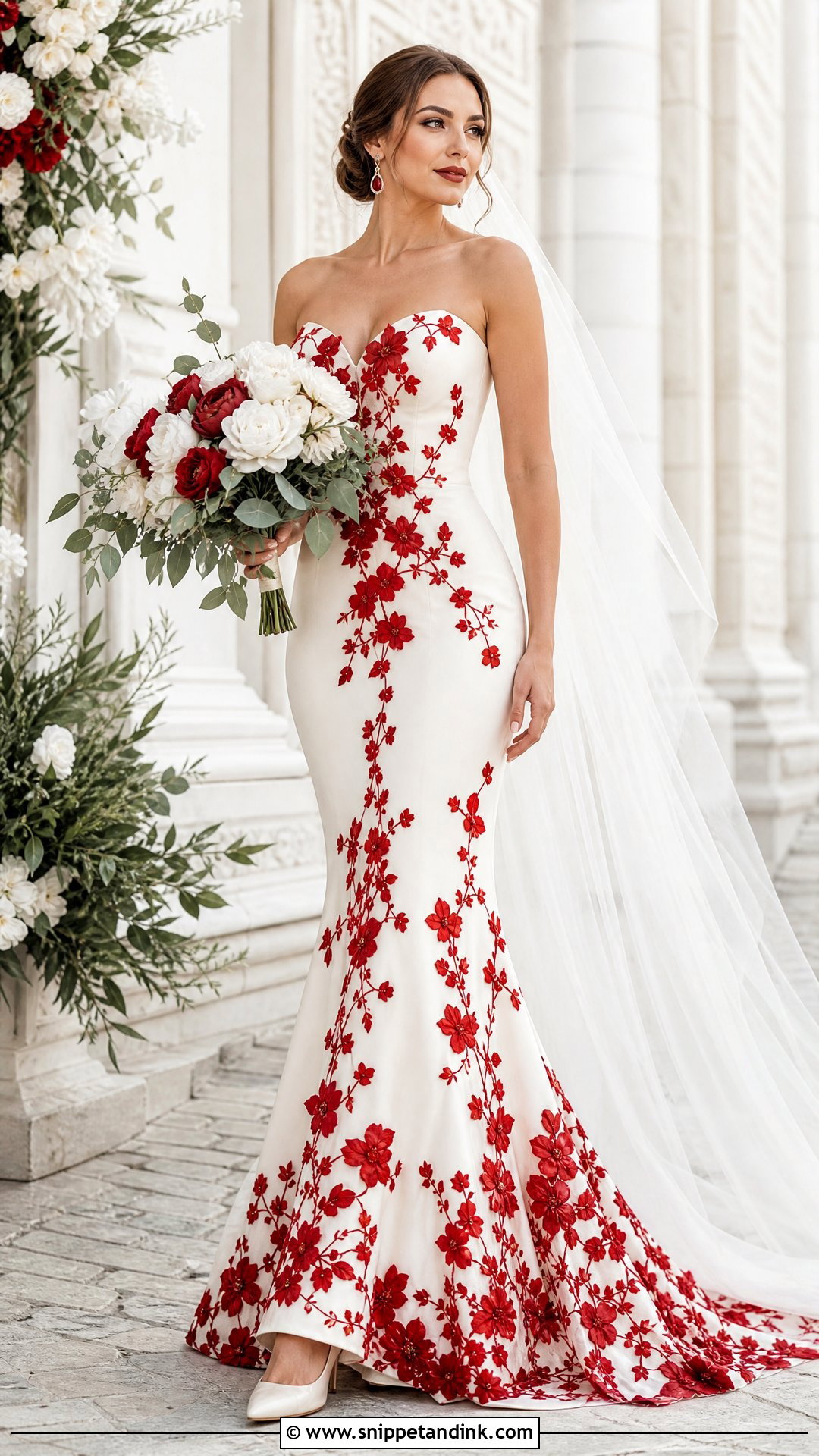
Red reads stronger than any other accent color in photos, so placement decides whether it’s striking or overwhelming. I prefer red floral appliqués climbing from the hem toward the waist on a fitted or A-line ivory gown, with plenty of ivory left between flowers. Red dye is also the most likely to bleed if the appliqués get wet, so ask how they were dyed and have a plan for rain. Ivory pumps, ruby studs and a plain cathedral veil that frames rather than covers the design suit it. Carry white flowers with a few deep red blooms, and let a classic chignon and a red lip echo the gown.
6. Black Lace Wedding Dress
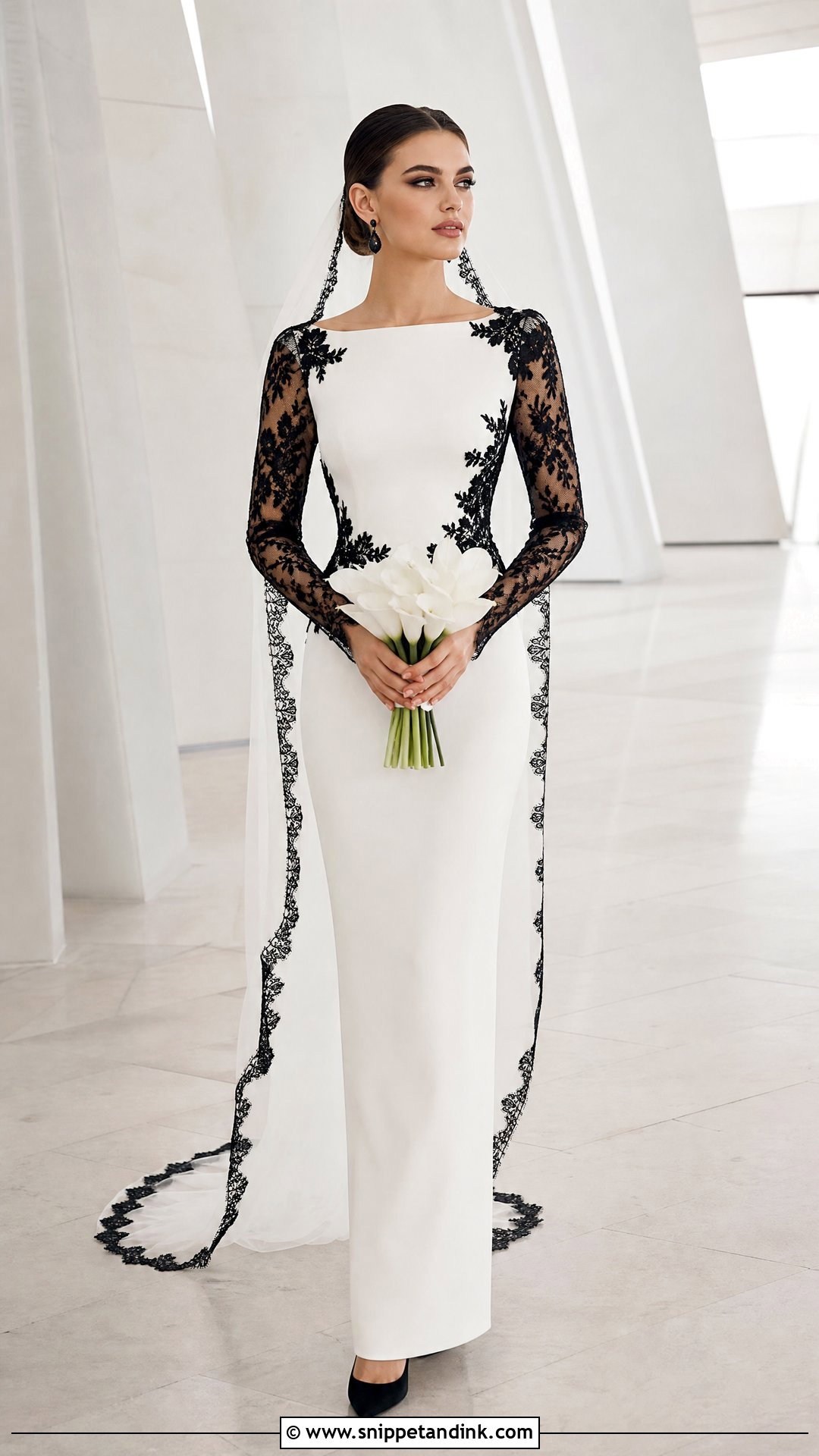
Black lace brings contrast more than color, and plenty of drama. An ivory column or fit-and-flare with black lace sleeves, a black lace bodice overlay or appliqués at the neckline and hem keeps the white an important part of the design. Black against ivory is a hard pairing for a camera: if the photographer exposes for the white, the lace loses its detail, so mention the dress to them ahead of time. Black pointed heels and onyx earrings make a deliberate palette. A plain ivory veil keeps it bridal; one with a narrow black lace border pushes the contrast further. White flowers with greenery, a sleek bun and clean makeup finish it.
7. Sage Green Applique Wedding Dress
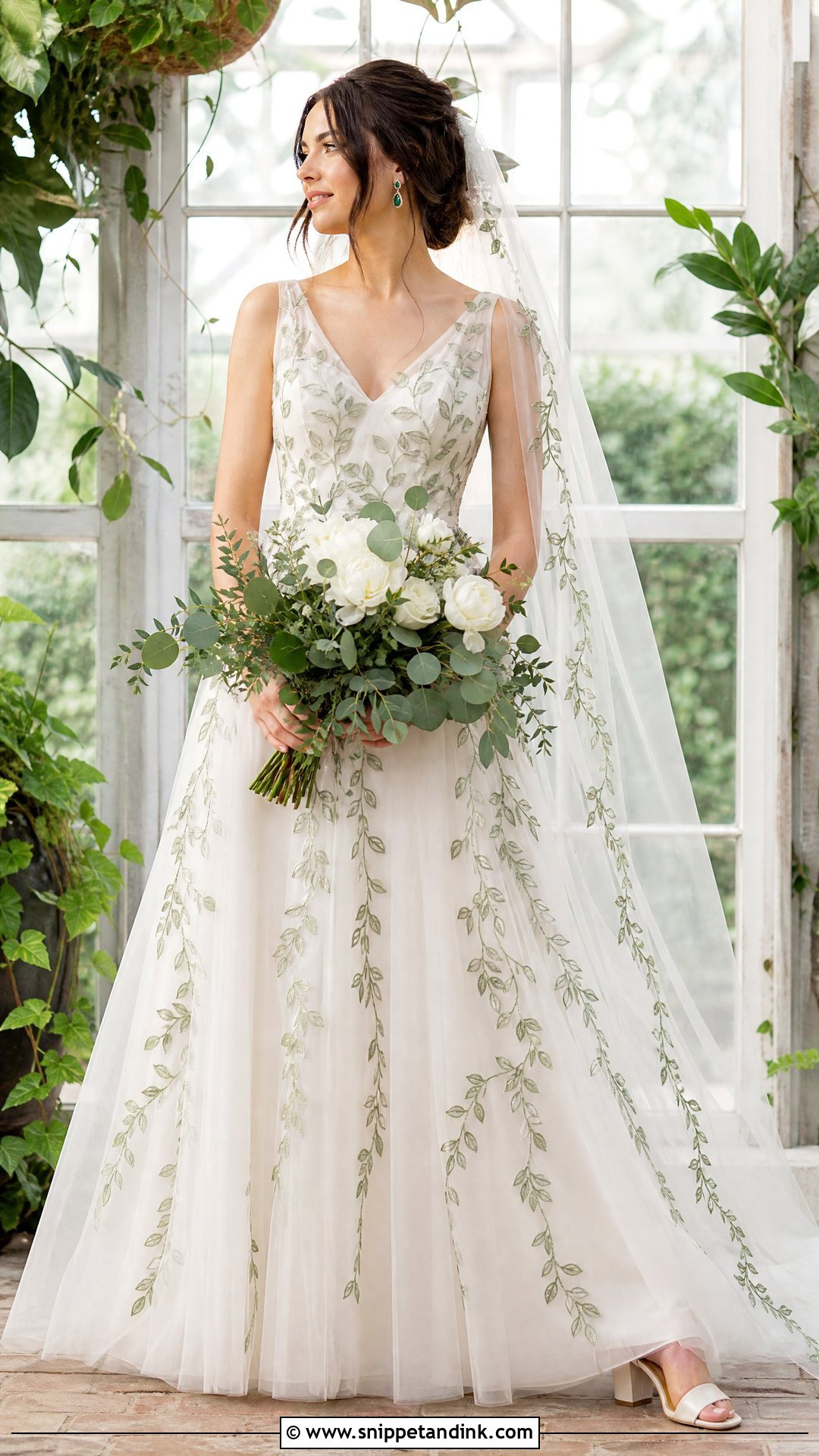
Sage green works where pink feels too sweet. Begin with an ivory tulle dress embroidered with leaves and fine vines along the bodice, waist and train, with a few small white flowers among the greenery to tie it back to the base fabric. Sage is a muted color and can look grey under cool indoor lighting, so check the swatch under the light you’ll actually stand in. Ivory block heels, small emerald or peridot earrings and a sheer veil with scattered leaf appliqués at the hem suit it. A loose bouquet of white flowers, eucalyptus and soft foliage extends the story, and a textured low bun with a green comb or tiny leaf pins finishes it for a garden or greenhouse.
8. Lavender Wedding Dress
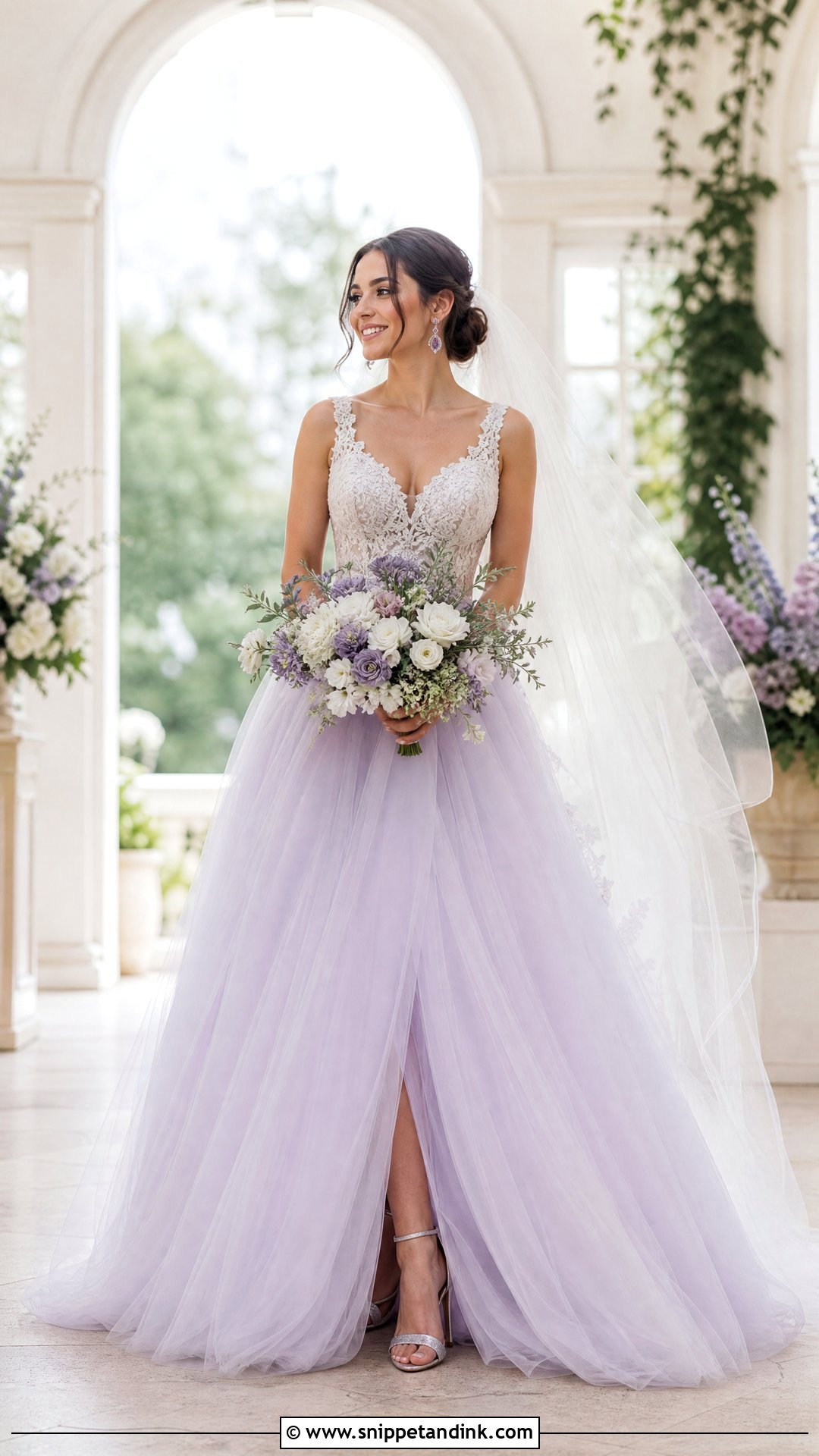
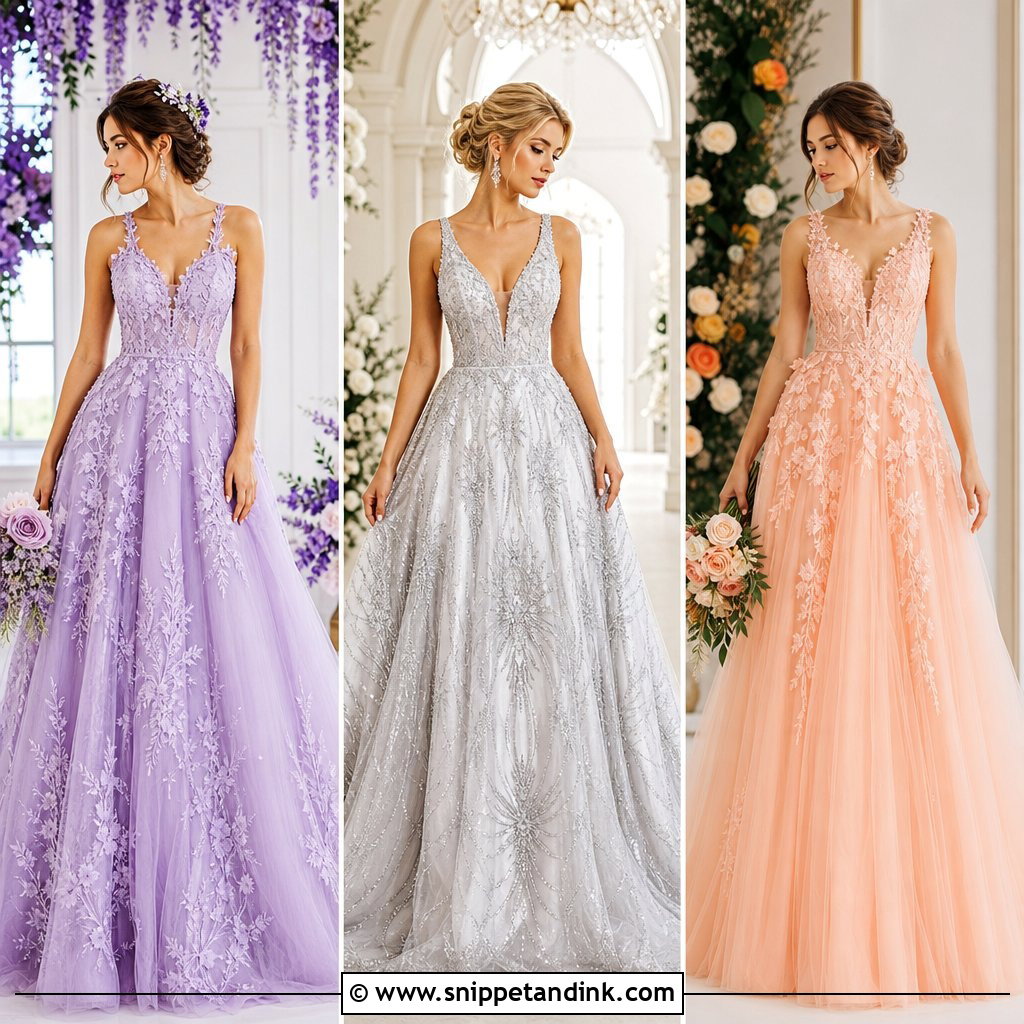
A lavender wedding dress is more than an accent; it’s a colored gown that still reads light. Choose a pale lavender ball gown or flowing A-line in tulle, chiffon or silk organza, with an ivory lace bodice overlay for familiar bridal texture. Lavender is notoriously unstable in photos and can drift toward grey or blue with the light, so let your photographer see the dress in person before they edit. Silver heels, amethyst earrings and a sheer ivory veil let the color show through. White, lilac and muted purple flowers with minimal greenery, a loose updo and cool-toned makeup keep it from tipping into costume, especially at spring and outdoor ceremonies where the skirt can move.
9. Butter Yellow Wedding Dress
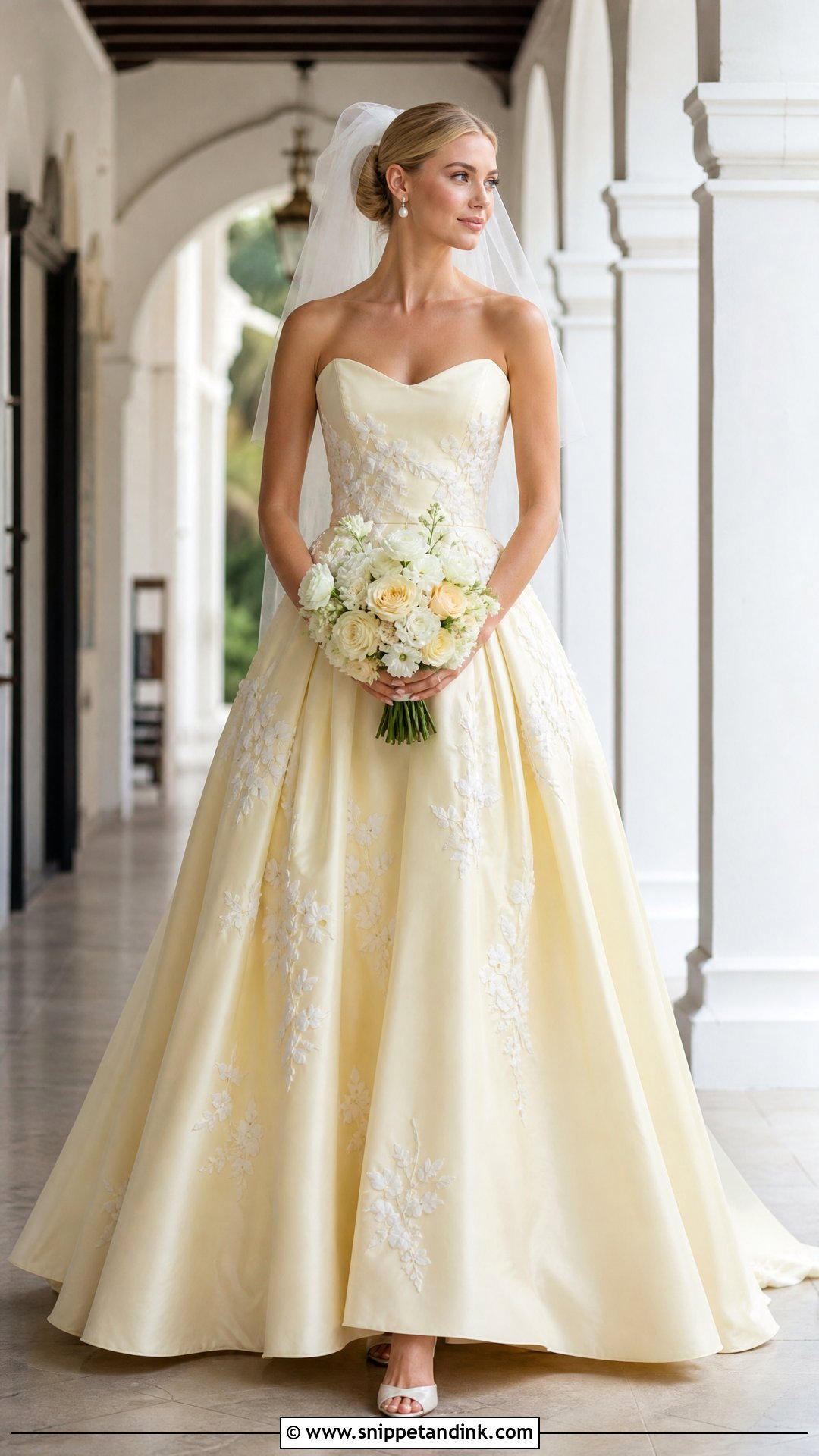
Butter yellow is soft enough to suit most complexions, unlike lemon or deep gold, which can make some skin look sallow. Look for a pale yellow silk wedding dress with a fitted bodice, full skirt and clean neckline; white floral appliqués or ivory lace at the bodice connect it to traditional bridalwear. Pale silk shows water marks and perspiration, so dress shields under the arms are worth sewing in for a warm day. Ivory slingbacks, pearl earrings and a short sheer veil finish it. Carry white flowers with small yellow centers, and keep the hair polished but relaxed, such as a low bun with soft face-framing pieces. Daytime and spring weddings in bright rooms suit it best.
10. Blue Floral Print Wedding Dress
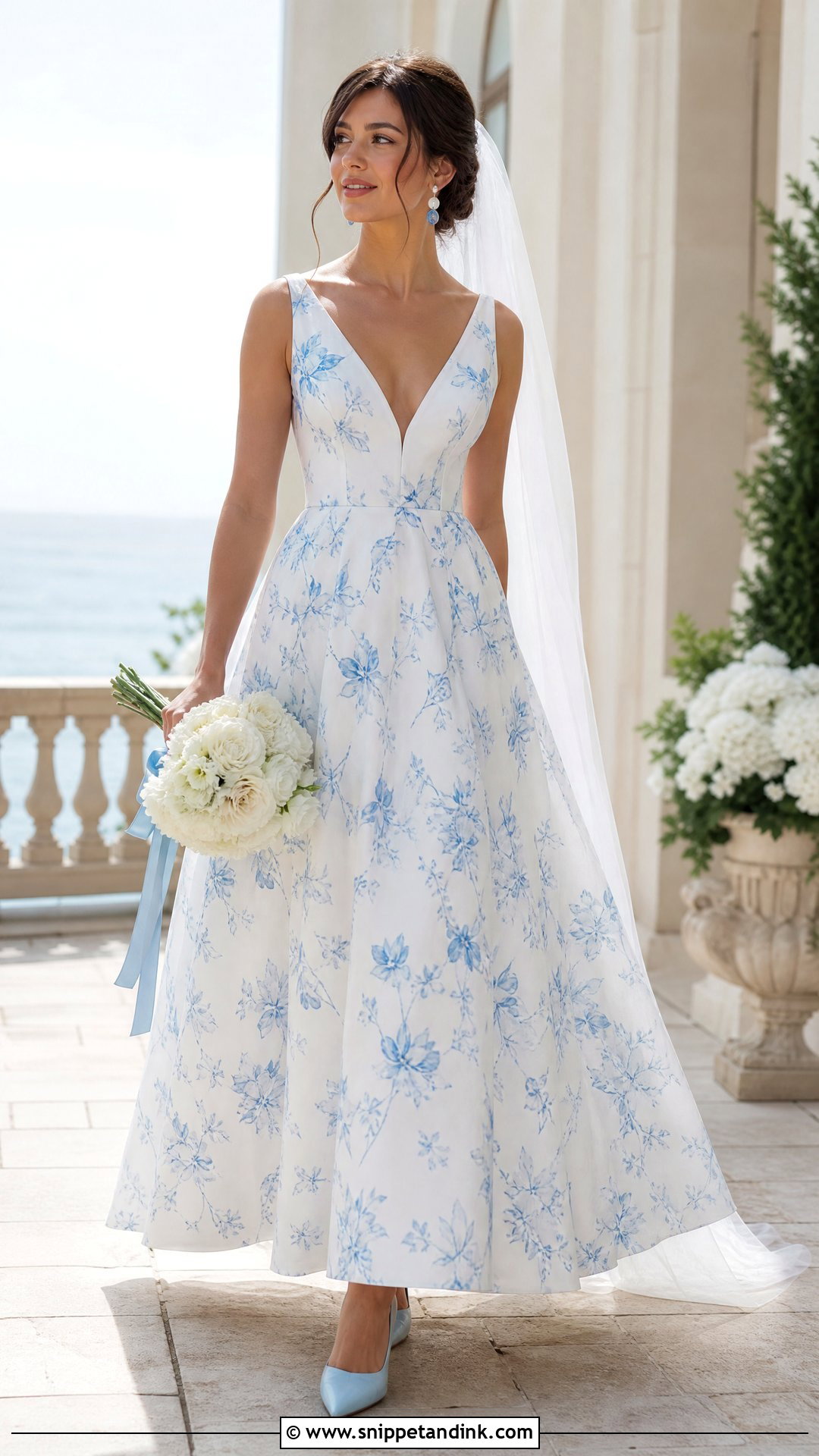
A blue floral print turns a simple white dress into the whole statement. Choose an A-line or ball gown with watercolor-style blue flowers across the skirt and lighter motifs continuing onto the bodice, leaving enough white space that it stays bridal. Printed fabric gives your seamstress less freedom, because a seam moved more than a little breaks the pattern, so order as close to your real measurements as you can. Pale blue pumps, pearl-and-blue-stone earrings and a plain veil that ends above the fullest part of the print suit it. White flowers tied with a narrow blue ribbon and a smooth half-up style finish it for a coastal venue, an estate garden or a formal room.
11. Pink Dip-Dye Wedding Dress
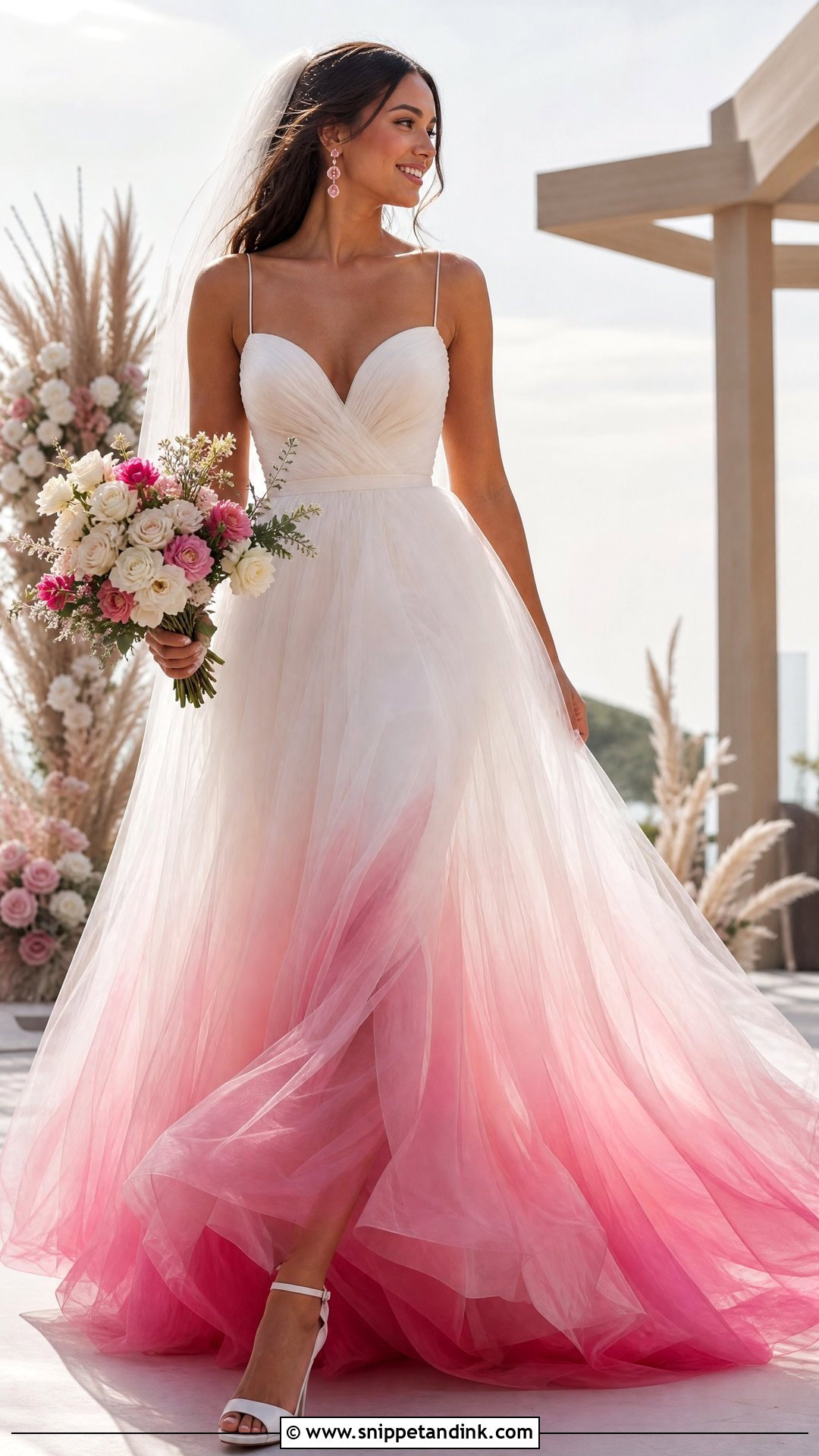
Dip-dye moves from white into saturated pink toward the hem, and the color shows most when the skirt is moving. Start with a white chiffon or tulle gown shading into blush, rose or vivid pink; a gradient starting below the knee is subtle, one starting near the hip is bold. White heels keep the lower color the focus, with rose-quartz studs and a plain fingertip veil, and a compact bouquet of white and pink flowers connects both ends. Keep hair simple, loose waves or a clean low ponytail. At your fitting, walk and turn in it rather than standing still, because that’s when the hem reads properly.
12. Colorful Beaded Wedding Dress
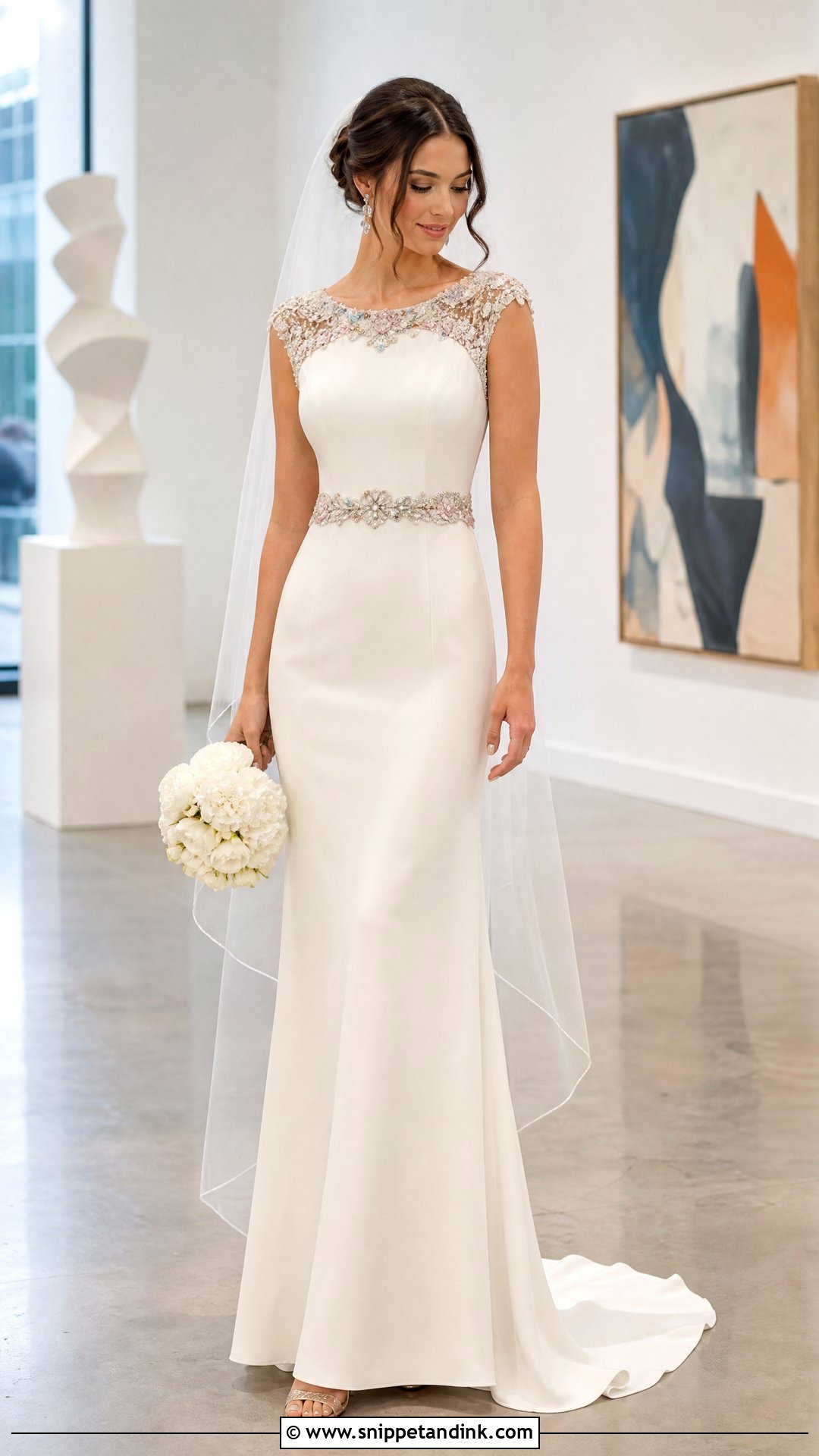
Colored beading adds sparkle and personality, but it also adds weight. An ivory sheath or fitted A-line with pastel beads around the neckline, waist and upper skirt looks best when the pink, blue, green and gold are set in a controlled floral or geometric pattern instead of scattered at random. Heavy beading on a light fabric drags the skirt down and can stretch a bias-cut sheath over a long day, so ask your seamstress to check the internal support. Metallic champagne heels, crystal earrings that repeat one bead color and an unembellished veil finish it. Carry a small white bouquet to give the beadwork space, and wear a neat updo so hair can’t catch on it.
13. Teal Wedding Dress With Ivory Overskirt
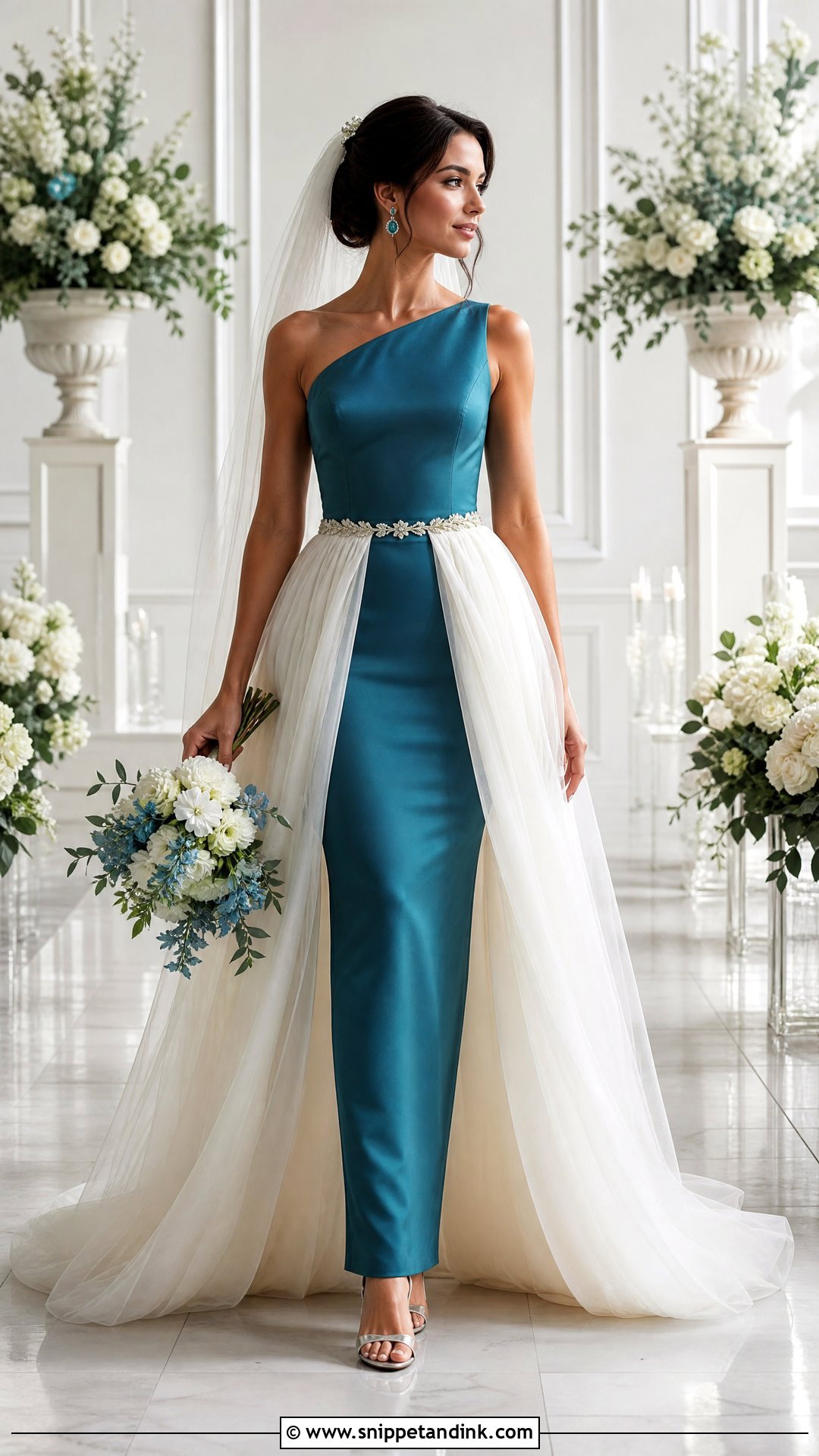
Two looks, one strong reveal. A fitted teal wedding dress goes under a removable open-front ivory tulle or organza overskirt, which gives you traditional ceremony volume while the teal still shows down the front. Practice taking the overskirt off before the day; most fasten with hooks or snaps at the waist, and someone besides you needs to know how they work. Silver heels, teal gemstone earrings and a simple ivory veil suit the ceremony, and the overskirt and veil come off together for a streamlined reception. White flowers with restrained blue-green accents and a sleek low bun complete it.
14. Burgundy Sash Wedding Dress
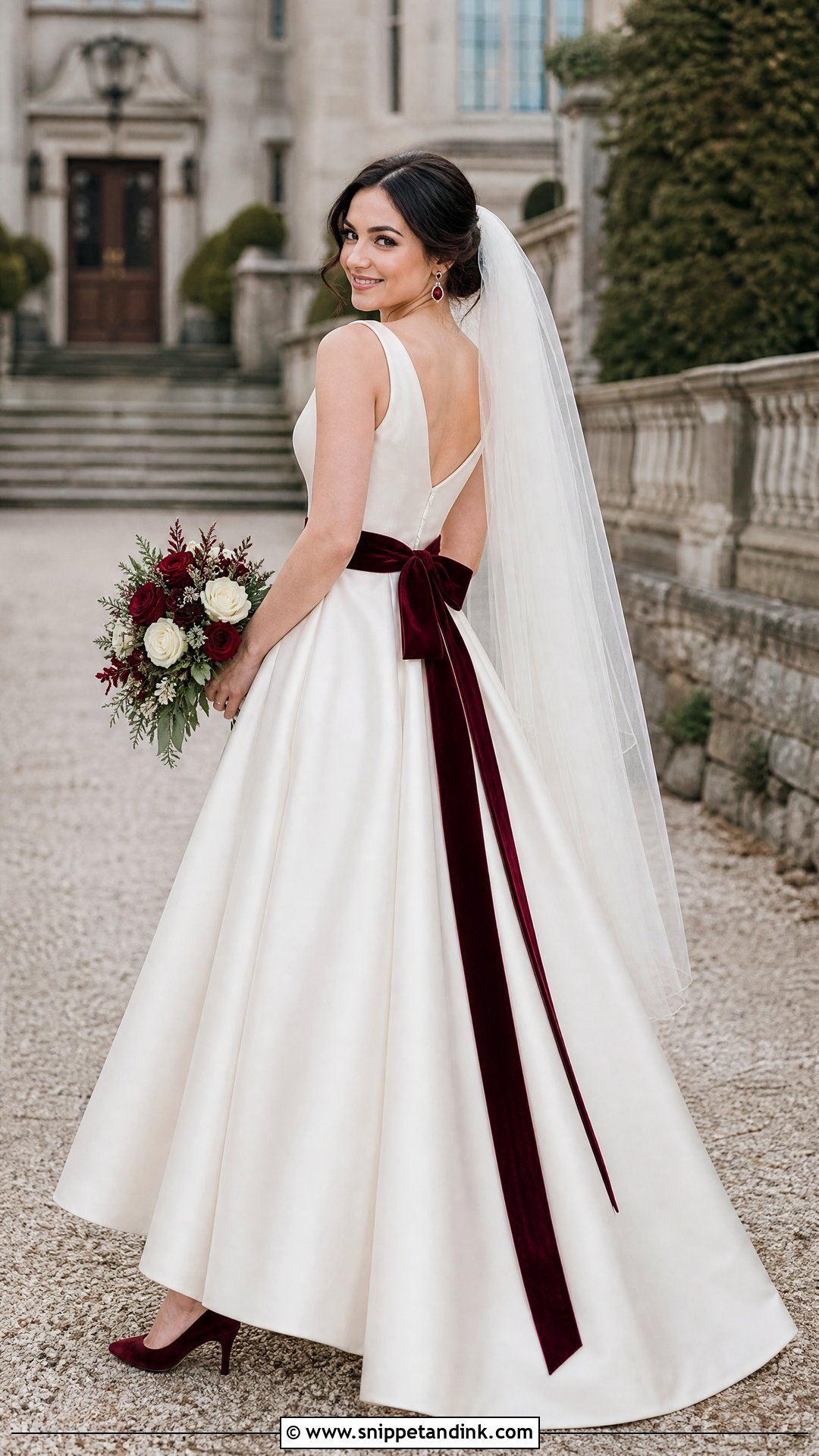
A burgundy sash is the most changeable color on this list, because it can be retied, swapped or removed. Wrap wide velvet or satin around the natural waist of an ivory A-line gown and finish it with a structured bow or long tails at the back. Velvet is heavier and holds a bow better in cold weather; satin creases faster but suits a lighter dress. Burgundy pumps and small garnet earrings match it, while a plain veil avoids competing details. Cream flowers, dark red blooms and restrained greenery make the accent look intentional, and a soft updo with an ivory comb beats adding another burgundy piece. The sash also divides a lace bodice neatly from a smooth skirt, and it’s at its best in autumn and winter.
15. Pastel Ribbon Wedding Dress
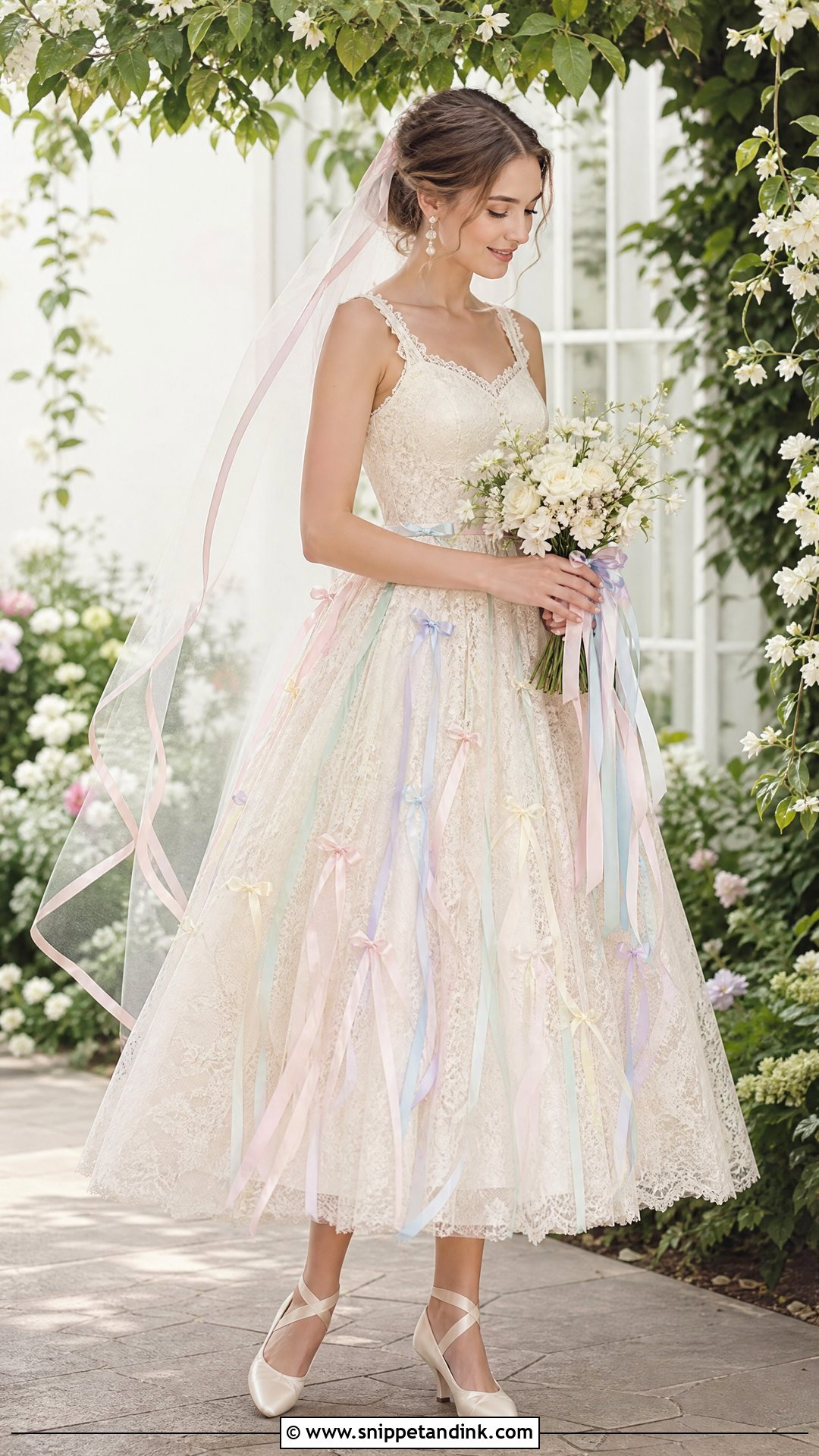
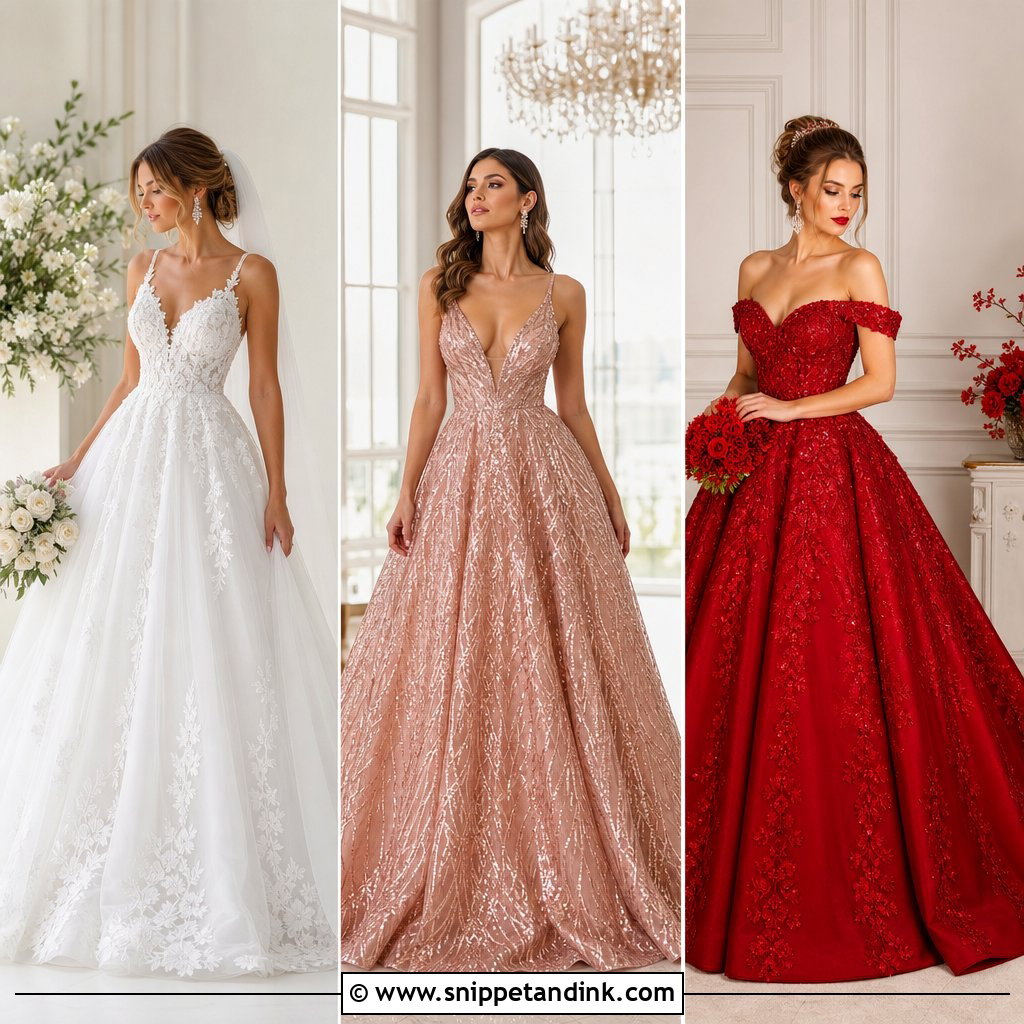
Several pastel ribbons give you many colors in small doses. On an ivory gown, narrow pink, blue, lavender, yellow and mint ribbons can be woven through lace, tied along the straps or gathered at the waist, though the placement needs a plan or it starts to look random. I ask for woven ribbons to be tacked down at intervals, since loose ribbon slips and twists after a few hours of dancing. Ivory ballet-style pumps, pearl earrings and a sheer veil edged in one pastel ribbon go with it. Wrap the white bouquet in several of the same colors and tie one small ribbon around a low bun. It has a youthful quality that sits naturally at spring and garden weddings.
16. Wildflower Wedding Dress
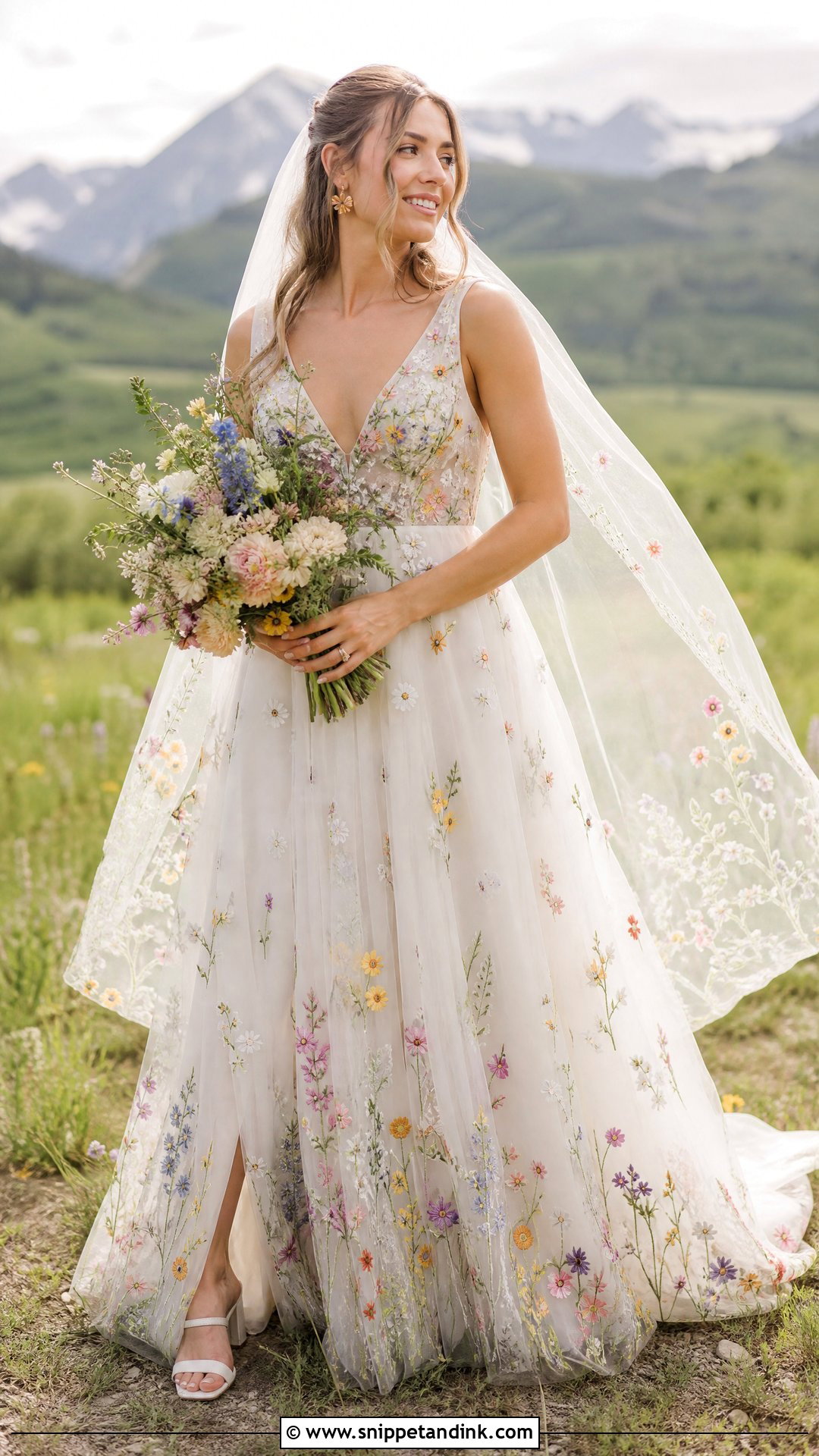
A wildflower wedding dress lets you include several meaningful colors on a soft ivory base. Start with an ivory A-line or flowing tulle gown with small embroidered flowers concentrated at the hem and a few stems climbing toward the waist and bodice. Embroidery near the hem catches on grass and gravel at outdoor ceremonies, so check that the threads are tied off securely and keep small scissors in the emergency kit for snags. Ivory block-heel sandals, simple gold earrings and a sheer veil with a handful of matching flowers suit it. Repeat a few colors in a loose bouquet rather than copying every bloom, and finish with a braided updo or softly pinned waves for a meadow or garden.
17. Gold And Ivory Wedding Dress
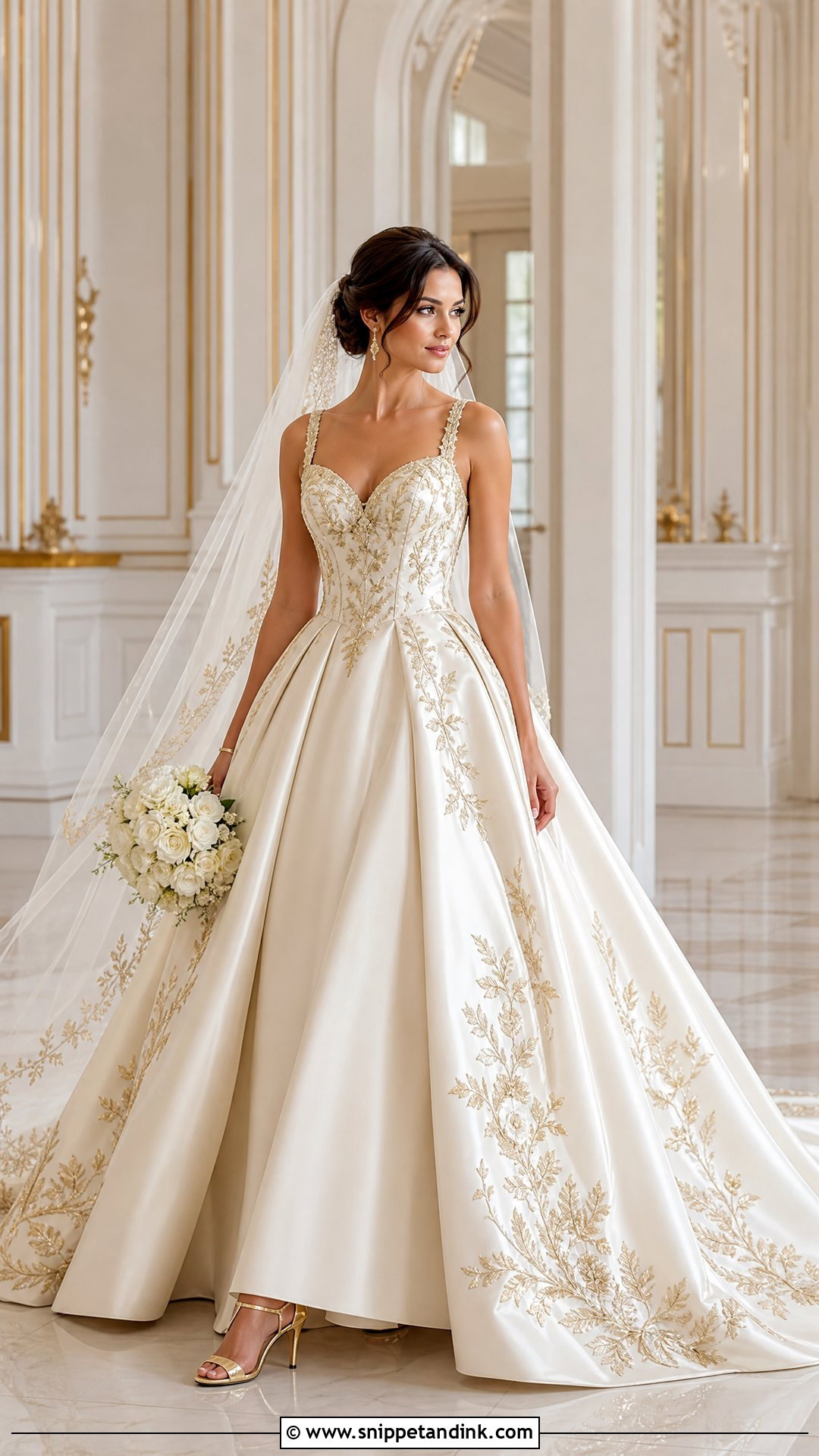
Gold isn’t a bright hue, but antique-gold embroidery on ivory still reads as color, a warm one. Choose a structured ball gown or fitted A-line with gold vines, stars or florals across the bodice and train. Metallic thread can feel scratchy where it meets bare skin, so move your arms at the fitting and check where the embroidery rubs. Gold heels, small drop earrings and an ivory veil with a narrow metallic border finish it. Carry white flowers with soft greenery rather than more gold, and add a smooth bun with one simple gold comb. Formal and evening venues suit it, and the light base keeps it from looking heavy.
18. Colored Lace Underlay Wedding Dress
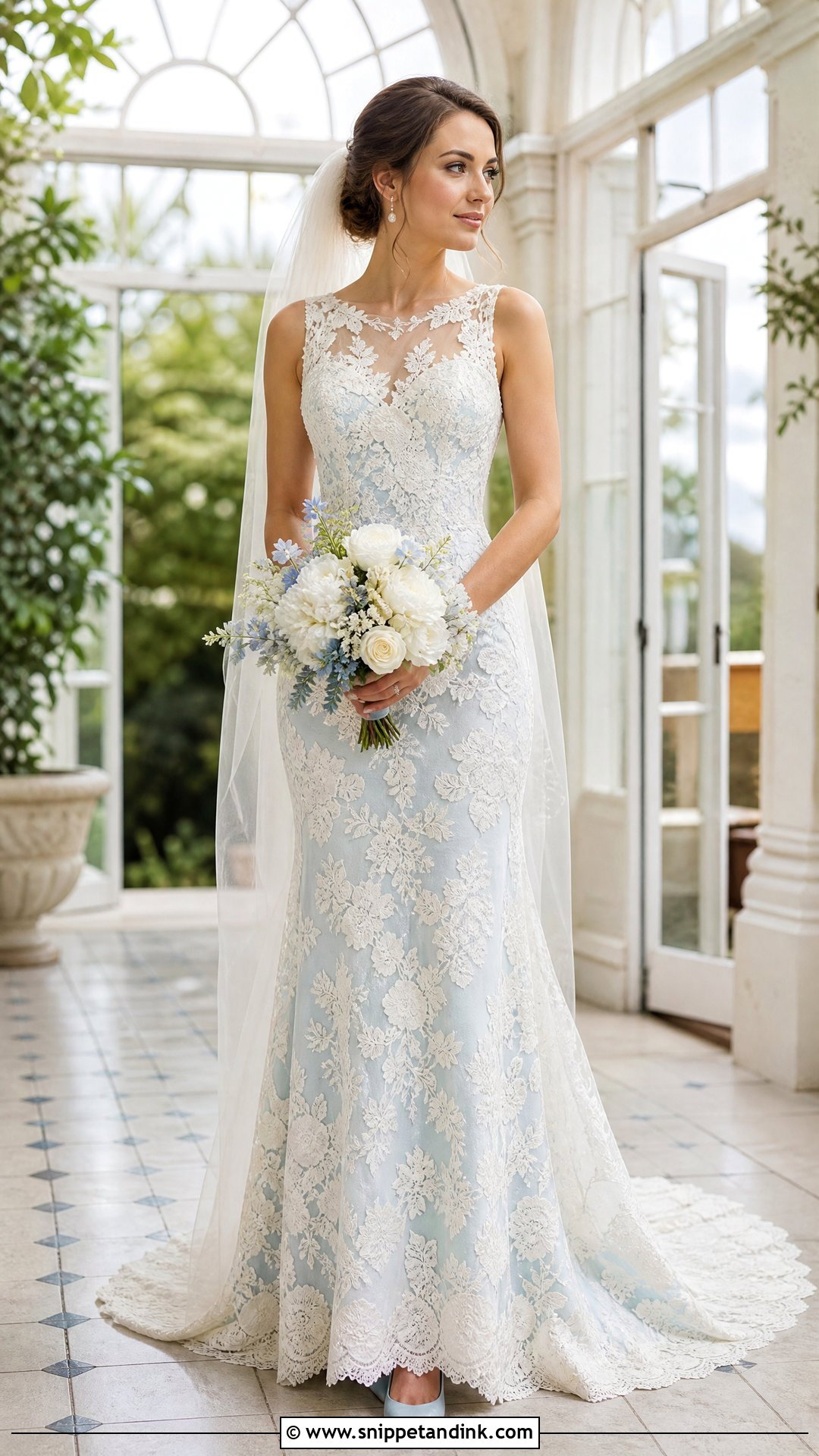
An underlay puts color through the whole gown while staying quiet. An ivory lace dress lined in pale blue, blush, lavender or soft green shows color through every opening in the lace and outlines its pattern. Many bridal shops can order a colored lining as a custom option, and a skilled seamstress can sometimes add one, so ask before assuming a dress only comes in ivory. Match your shoes to the lining and keep to neutral pearl earrings and a plain ivory veil. A white bouquet with one matching accent ties it in. The two layers already carry plenty of detail, so keep other jewelry minimal and choose a softly structured updo.
19. Colorful Cape Wedding Dress
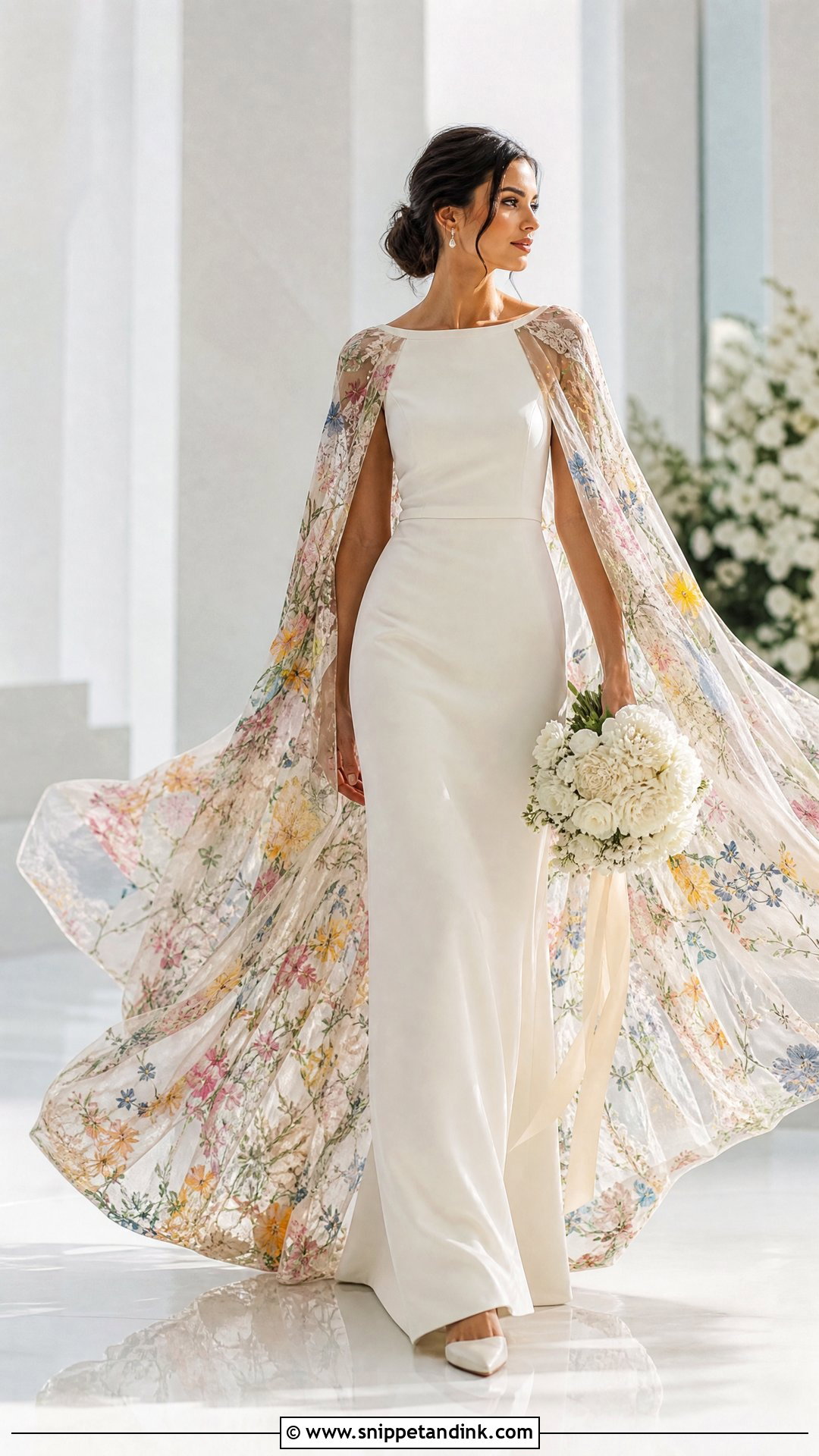
A detachable cape is how I’d add color to a minimalist dress without touching the gown. Start with a clean ivory column, crepe sheath or strapless A-line, then add a floor-length cape in sheer blue, pink, lavender or embroidered multicolor tulle that sweeps past the hem for the entrance. On a strapless dress the cape needs somewhere to attach, so ask for discreet loops or snaps sewn inside the bodice; a cape clipped against bare shoulders slides. Skip the veil and let the cape be the back detail, with ivory pumps and understated earrings. Tie a matching ribbon around a mostly white bouquet. The cape comes off for the reception, and a sleek bun or ponytail keeps the fastening visible.
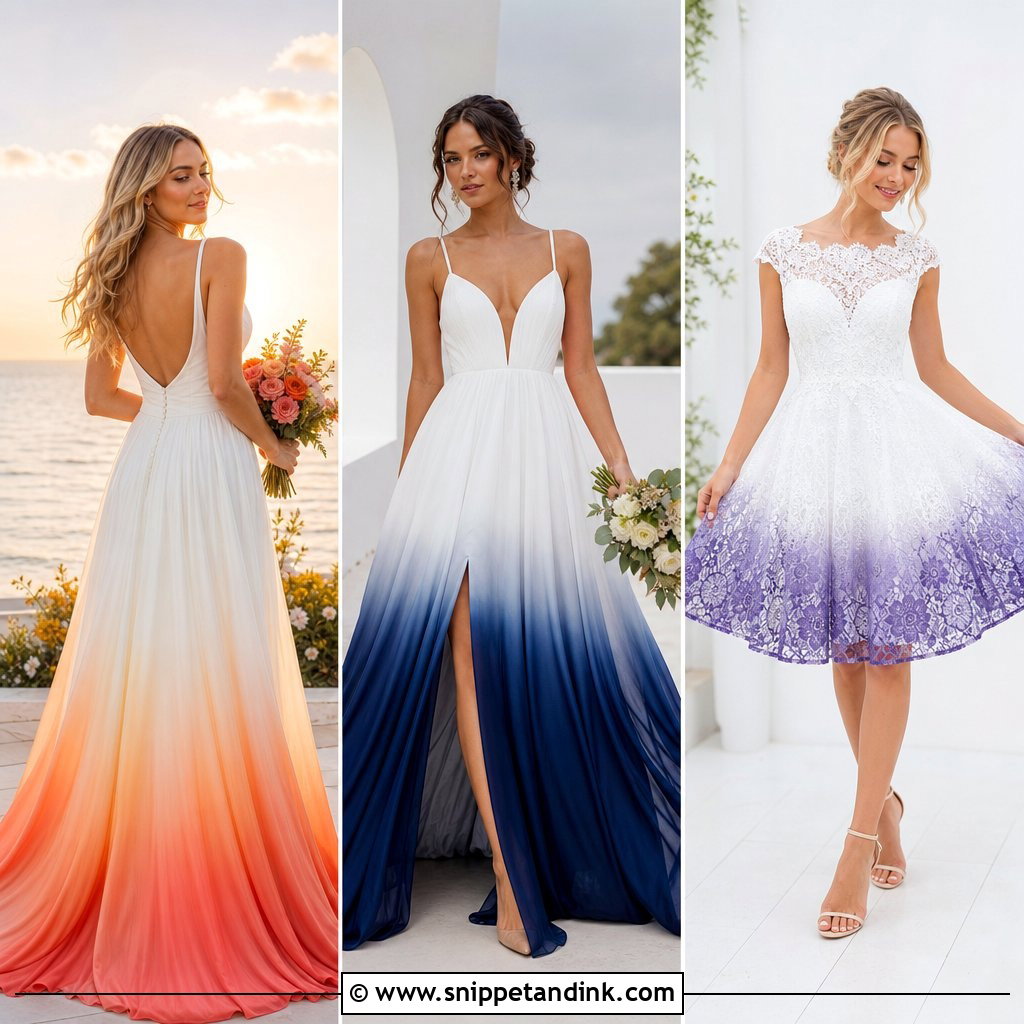



20. Hand-Painted Train Wedding Dress
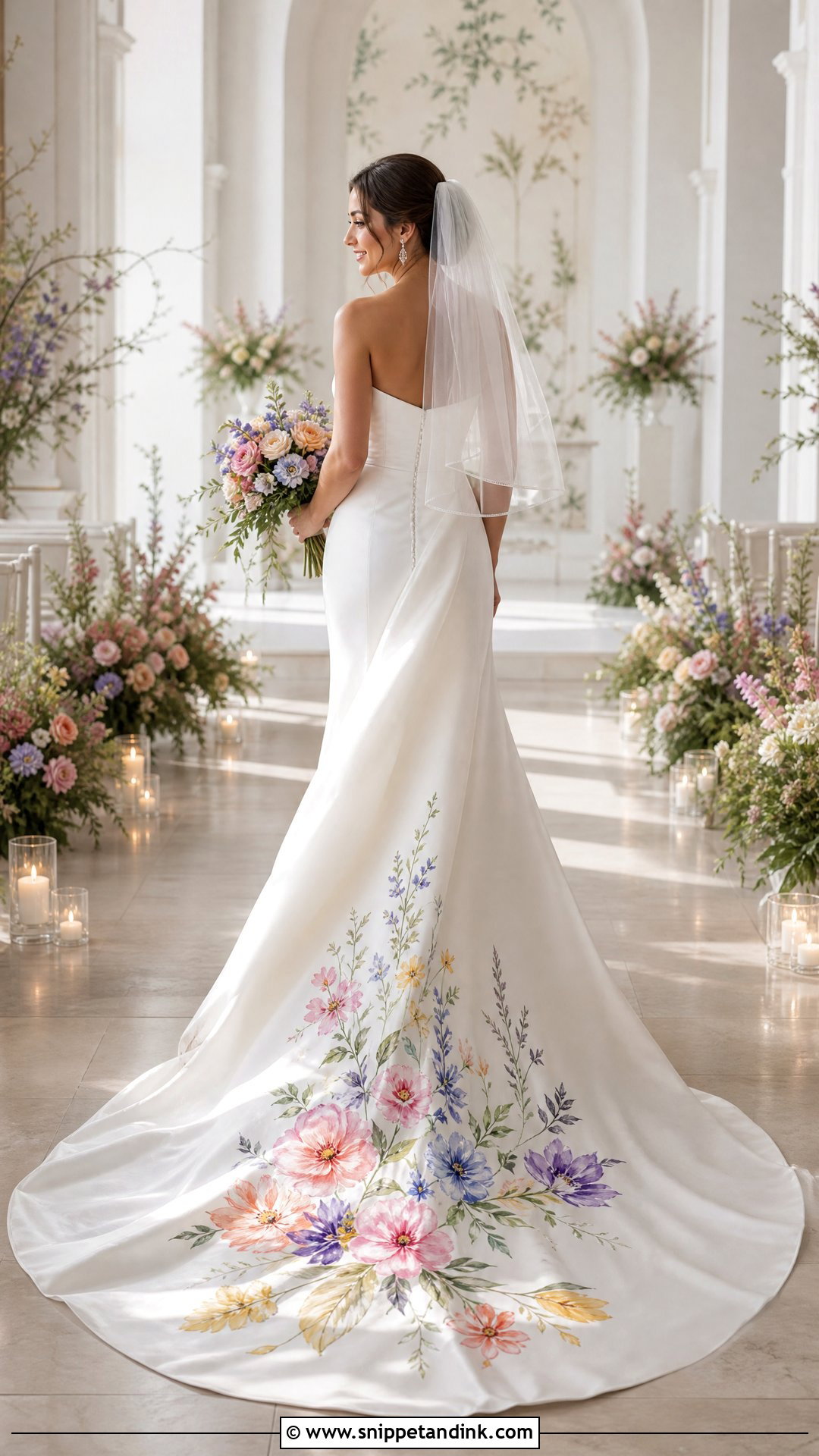
A hand-painted train puts color exactly where everyone looks during the ceremony. Choose a simple ivory dress with a long satin or organza train painted with flowers, watercolor shapes or a personal landscape, and keep the front clean so the back feels like a deliberate reveal. Fabric paint stiffens the cloth slightly and can crack along a hard crease, so store and transport the train loosely rolled rather than folded. Ivory heels, small gemstone earrings and a short veil that stops before the painted section suit it. Carry a bouquet in one or two colors from the artwork and wear a polished updo so attention stays on the back as you walk.
Hemming an Ombré Skirt Can Cut Off the Color
Alterations behave differently once color is part of the design, and this is the conversation I’d have with your seamstress at the very first fitting.
- Dip-dye, ombré and painted hems: taking up the hem removes the most saturated part of the gradient. Ask whether the skirt can be shortened from the waist instead; it’s more work, and the cost varies accordingly.
- Printed fabric: seams can’t move far without breaking the print, so there’s less room to let out or take in.
- Painted or embroidered trains: plan the bustle before the art is placed, or the hooks land in the middle of the design and fold it out of sight at the reception.
- Custom colors and underlays: ask how much time they add to the order and request a fabric swatch first. Dye lots vary, and a sash ordered separately rarely matches exactly.
Rain, Red Wine and Dye Transfer on Ivory
Colored fabric sewn onto ivory carries one risk a plain white dress doesn’t: if the colored part gets soaked, its dye can travel into the ivory around it. Strong reds, deep blues and hand-dyed silks are the usual culprits. Ask the maker whether the colored elements are colorfast, keep a large clear umbrella on hand for outdoor portraits, and blot any spill instead of rubbing it. When the dress goes for cleaning or preservation, point out every colored section so the cleaner can test it before treating the whole gown.
How Much Color Is Enough?
Color makes a gown more personal without taking away its bridal character, from a quiet pastel lining to a full rainbow skirt. When you style it, repeat the shade in only a few places, perhaps the shoes, earrings, bouquet or a ribbon, so the outfit feels connected without every piece matching. Look at the color in daylight and in your venue’s lighting, and ask how the embellishment will affect alterations and movement. Most of all, pick a dress that feels like a natural extension of what you already love to wear.
You'll Like These Ideas:




Leave a Reply