
Bridal fashion around 2000 was all about the strapless bodice. Fitted satin, long trains, thin spaghetti straps and crystal embroidery filled the bridal shops, and pale pink or blue gowns started appearing as brides grew more relaxed about color. Those dresses are coming back now, partly as nostalgia and partly because the shapes are easy to wear. When I style one today, I keep the dress true to the era and make the accessories and beauty quieter than they were back then, which is usually what stops it looking dated. The twenty looks below run from princess ball gowns to slinky slips, each with notes on fit and what to pair it with.
How a Strapless Y2K Bodice Should Hold You All Day
Most of the gowns below are strapless, and the most common complaint I hear about strapless dresses is hitching: tugging the top edge up every few minutes. That’s a fit problem, not something to put up with. A strapless bodice isn’t held up by the bust. It’s held by a snug fit at the ribcage and waist, with boning keeping the shape and an inner waistband taking the strain.
Checks I run at every fitting
- Raise both arms above your head. If the neckline drops or skin shows at the top edge, the ribcage needs taking in, not the bust.
- Sit down and lean forward as if reaching for a glass. The top edge shouldn’t gape away from your chest.
- Ask whether the dress has an inner grosgrain waist stay. If not, a seamstress can usually add one, and it takes much of the weight off the bodice.
- Wear the exact bra or built-in cups you’ll marry in, because changing them later changes the fit.
One honest caution: if you dislike anything tight around the ribs, a strapless bodice will annoy you by the evening however well it’s made. In that case, look at the halter, cap sleeve or empire options further down.
1. Strapless Satin A-Line Wedding Dress
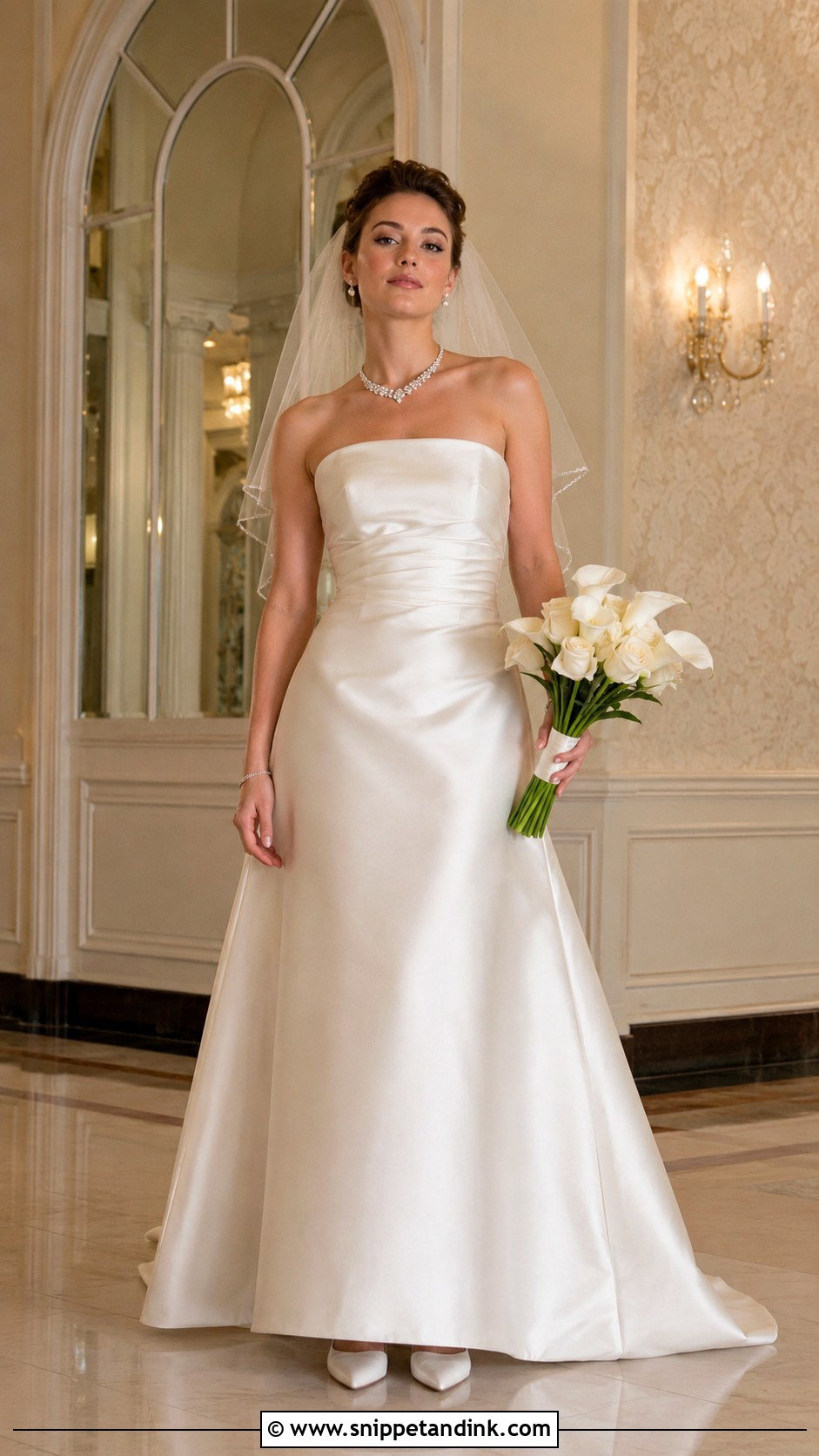
If I had to pick one gown to sum up that year, it would be this one. A strapless satin A-line with light boning in the bodice and a skirt that skims the hips was everywhere, and it still looks right. Bright white, diamond white and ivory all work in satin, but they’re not interchangeable: hold the fabric against your face in daylight, because bright white can make warm skin look sallow. Add a fine crystal necklace, pearl studs and pointed satin pumps, with a fingertip veil and a smooth low bun or half-up style. Rosy cheeks and a neutral gloss finish it. Hotel ballrooms and traditional indoor ceremonies suit it all year.
2. Spaghetti Strap Slip Wedding Dress
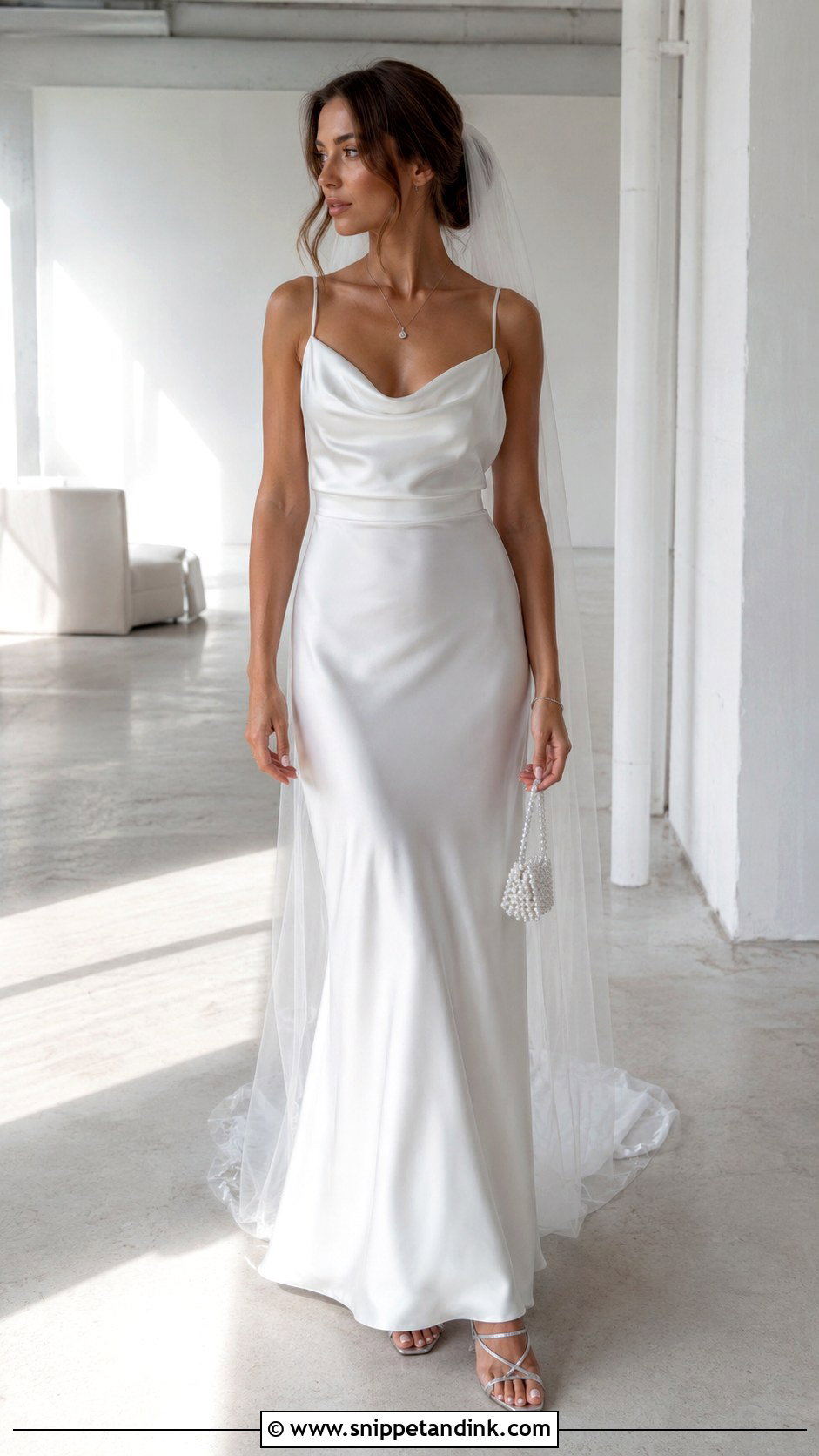
A spaghetti strap wedding dress in silk, satin or crepe is the Y2K slip at its simplest: a softly draped neckline and a bias-cut skirt that follows the body. The cut is honest about what’s underneath. Bias satin clings at the hip and stomach and shows every seam of your underwear, so I fit these over smooth, edge-free shapewear or none at all, and I tell brides who want firm hold to pick a different dress. Strappy silver heels, a small beaded bag and a fine pendant suit it, with a sheer chapel veil and straight hair, soft waves or a loose bun. Lofts, destination weddings and warm-weather venues are its home.
3. Corset Ball Gown Wedding Dress
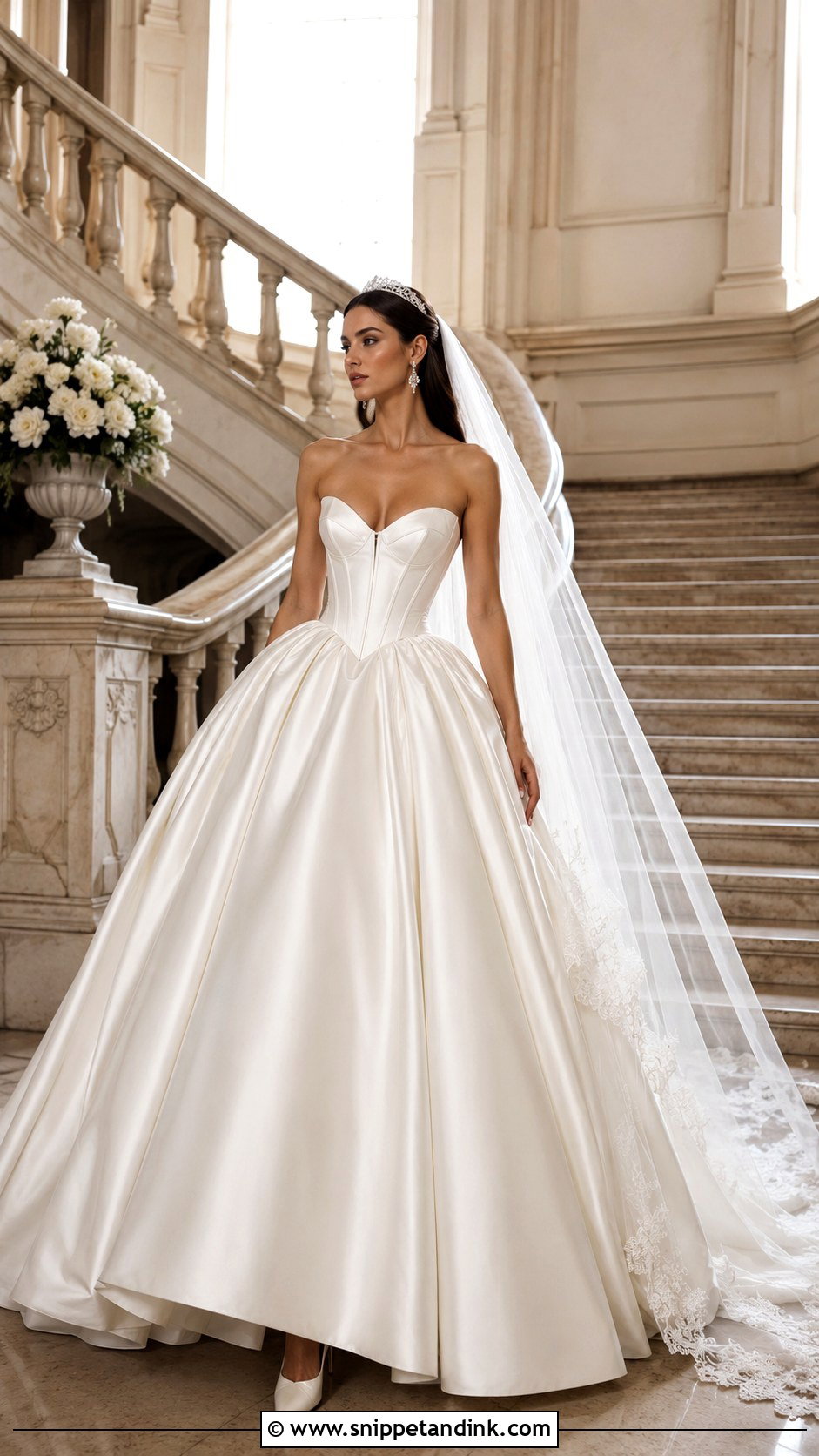
Corset ball gowns are the millennium’s fairy tale: a defined sweetheart neckline, visible seaming and a full satin or tulle skirt. The bodice should support you without stopping you from breathing deeply or sitting to eat. I check that by having the bride sit down and take a full breath at every fitting; if the top edge digs in, the boning or the waist needs adjusting. Crystal drops, closed-toe pumps and a small satin clutch go with it. A slim tiara works when it’s matched with a gathered cathedral veil and hair lifted off the neck. Grand staircases and formal evening ballrooms suit it.
4. Beaded Mermaid Wedding Dress
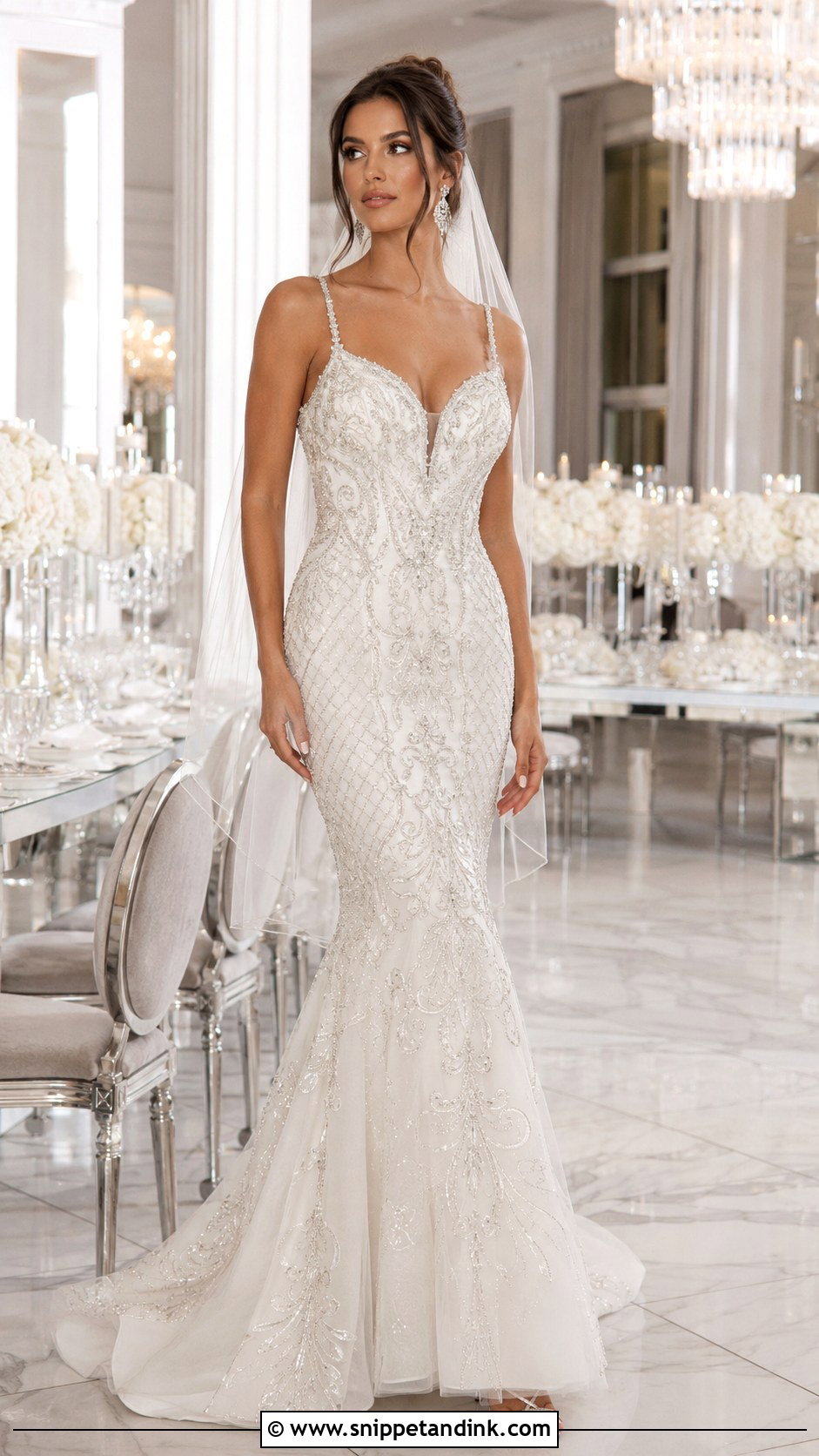
Pick this gown if you want sparkle that reads from across a room. Keep the beading on the bodice, waist and upper skirt so the flare stays soft and moves. Clear crystals, silver beads and light sequins read well against white or ivory. Be aware that a fully beaded bodice is heavy and scratchy on the inner arm; I check where the arms rest against the sides and ask for beads to be removed there if they rub. Simple drops, metallic sandals and a sheer veil with minimal edging suit it, with side-swept waves. Bring a satin stole for cooler evenings. Formal hotels with bright reception lighting show the beadwork best.
5. Square Neck Lace Wedding Dress
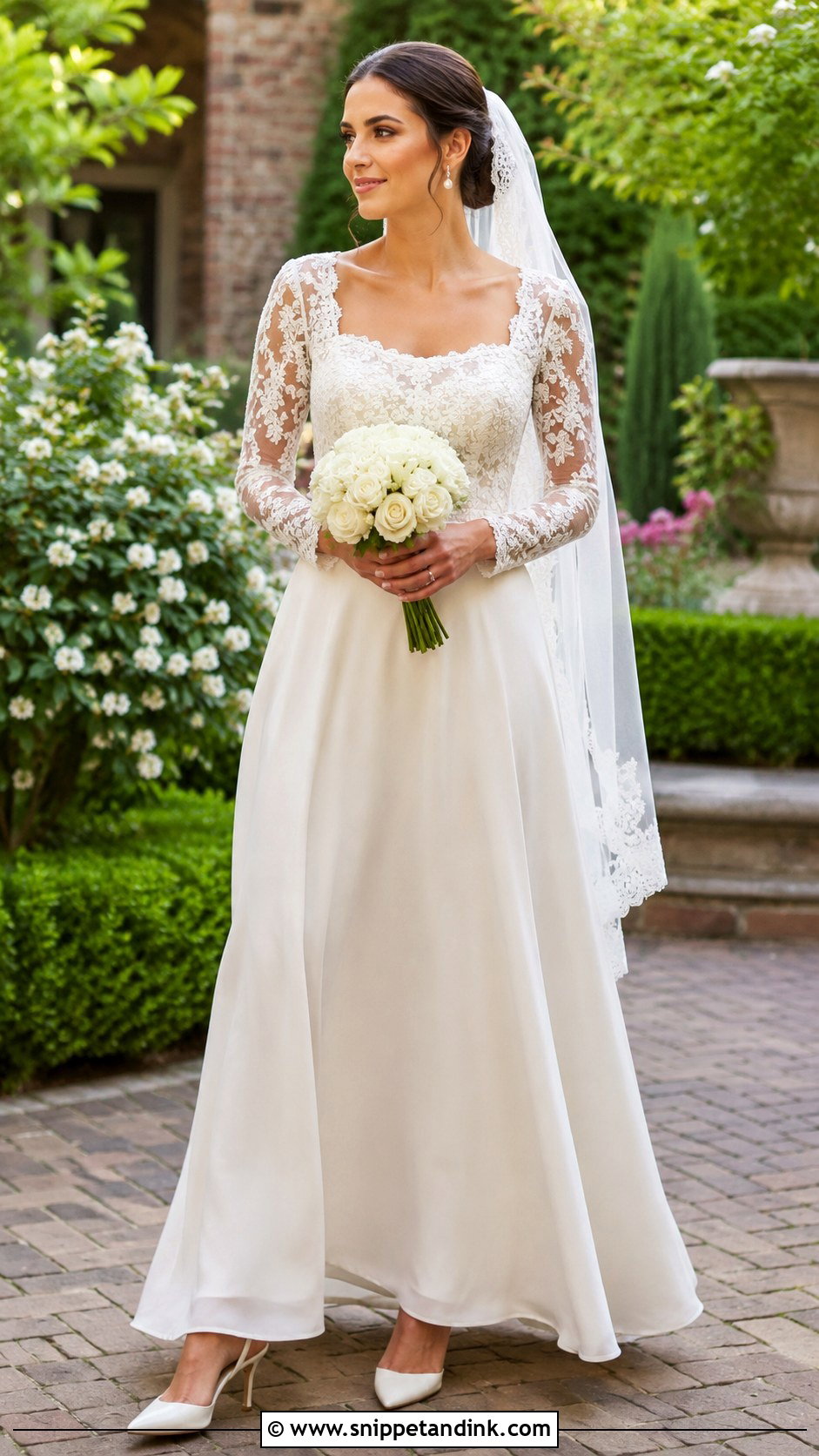
Square necklines in lace bring texture to the streamlined shapes of the era. Choose a fitted bodice, defined waist and a skirt that flows rather than puffs out. Sheer lace sleeves give coverage; a sleeveless version is lighter for spring and summer. The corners of a square neck need to sit flat, and on a smaller bust they can gape when you lean forward, which is a quick fix at a fitting if you point it out. Pearl earrings, ivory slingbacks and a lace-trimmed veil that echoes the dress pattern suit it, with a neat chignon and a small bouquet of white roses and greenery. Gardens and historic homes are natural settings.
6. Halter Neck Wedding Dress
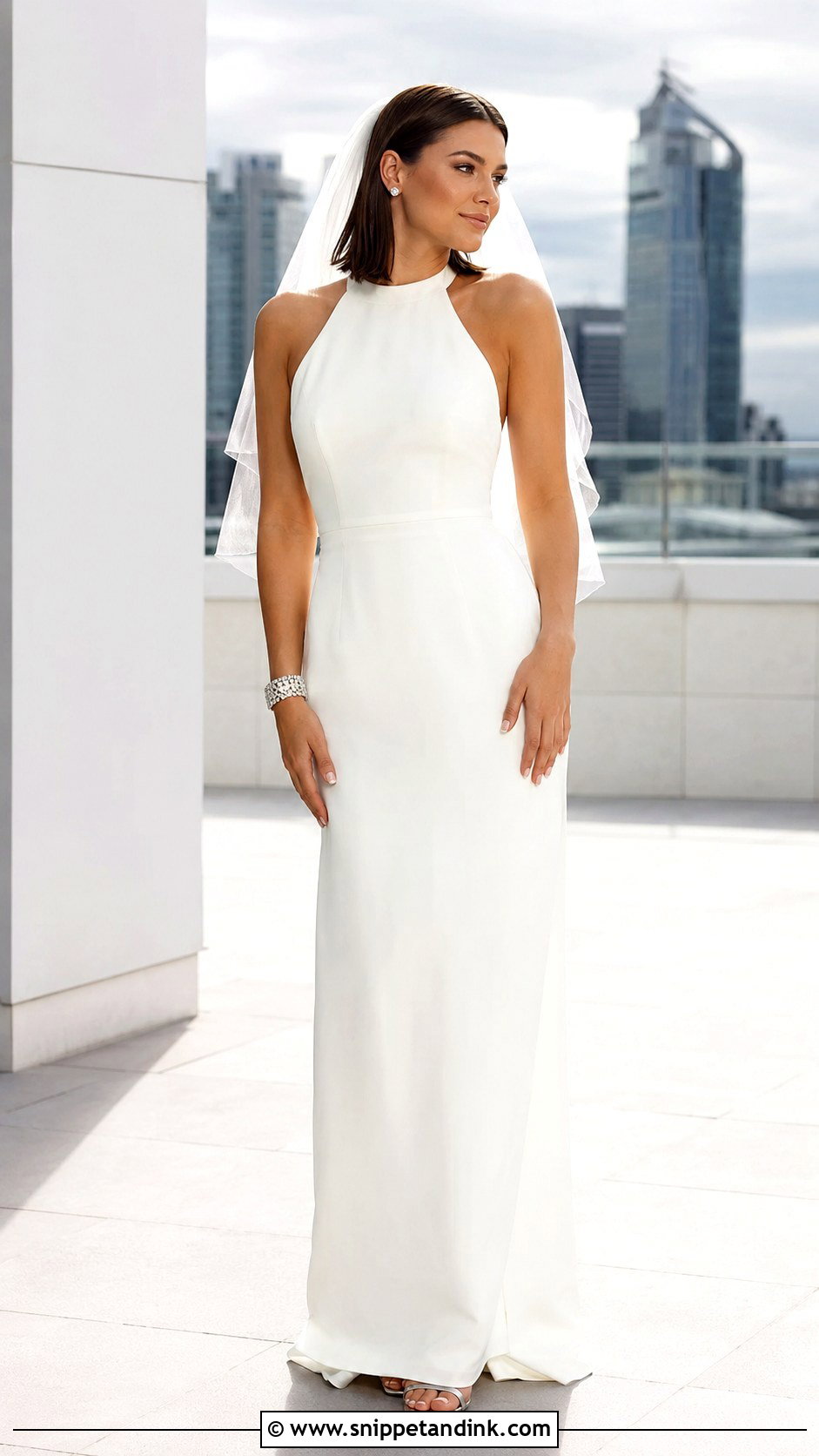
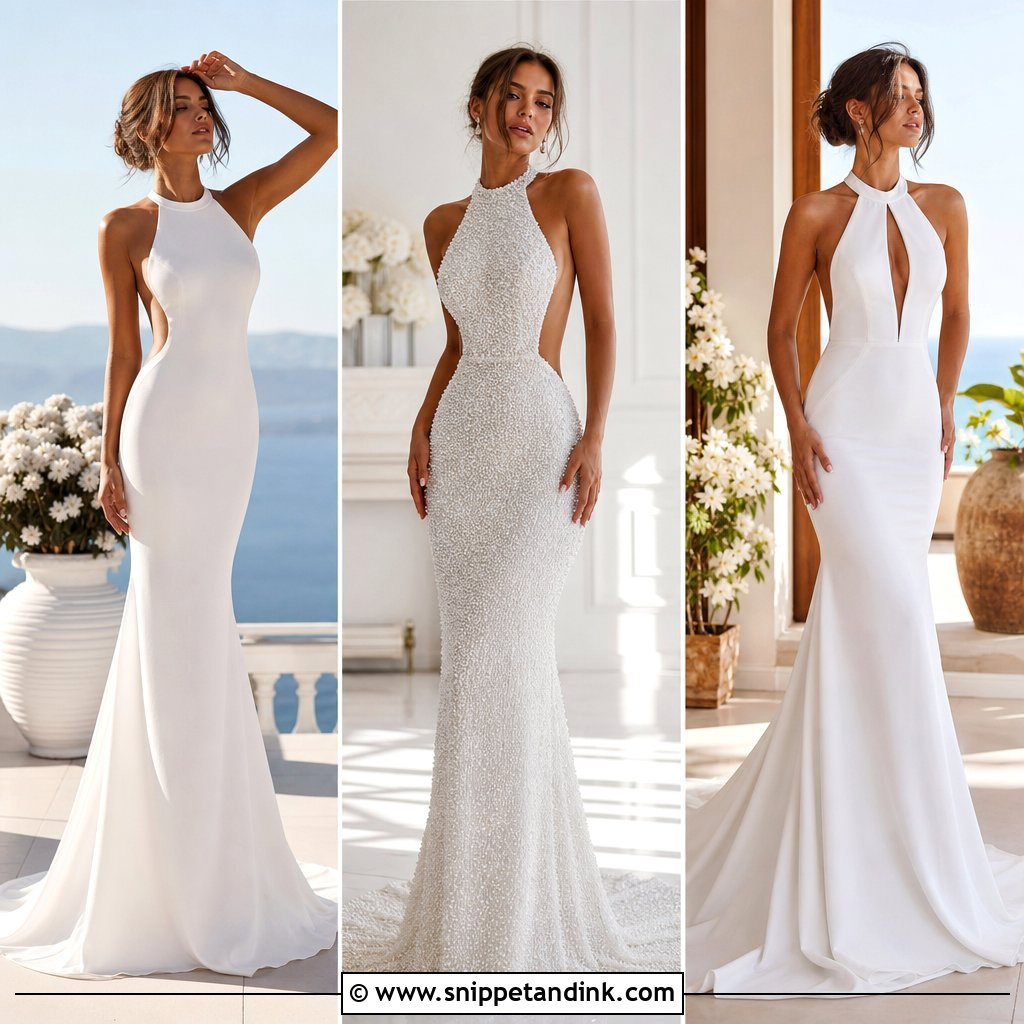
Halters show off the shoulders so well that a necklace becomes unnecessary. A halter neck wedding dress in satin, crepe or chiffon with a fitted waist and a straight or slight A-line skirt reads clean and modern. The halter strap carries weight on the back of the neck, and after several hours a heavy beaded halter can cause a real ache, so I’d keep the neckband light. Polished studs, a crystal bracelet and slim metallic heels go with it, plus a low bun or high ponytail. Skip the long veil in favor of a shoulder-length one or a simple comb. Defined lashes and a glossy neutral lip finish it. Rooftops, beaches and galleries suit it.
7. Off Shoulder Ruched Wedding Dress
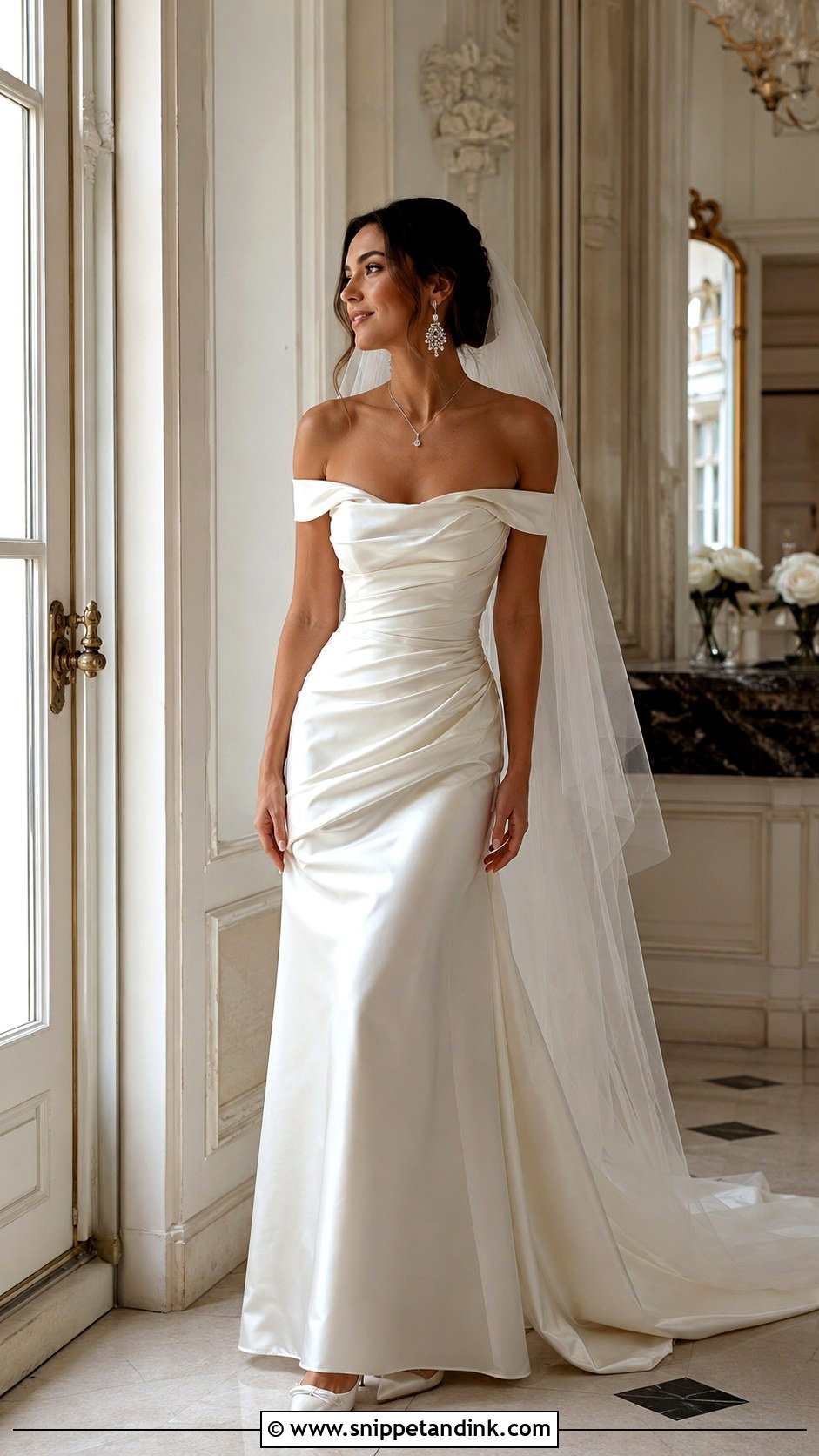
Diagonal ruching across the waist does two jobs at once: it adds texture and it hides the small creases that form when you sit. Look for an off-the-shoulder neckline over that gathered bodice, followed by a softly flared skirt or controlled mermaid hem. Ivory satin looks richer; stretch crepe is kinder to sit and dance in. The shoulder band must be snug enough to stay put when you raise your arms, so test it with a hug at the fitting. A delicate pendant, small chandelier earrings and pointed kitten heels suit it, with a sheer veil under a polished updo and a compact bouquet. Estates, ballrooms and upscale restaurants are good fits.
8. Empire Waist Chiffon Wedding Dress
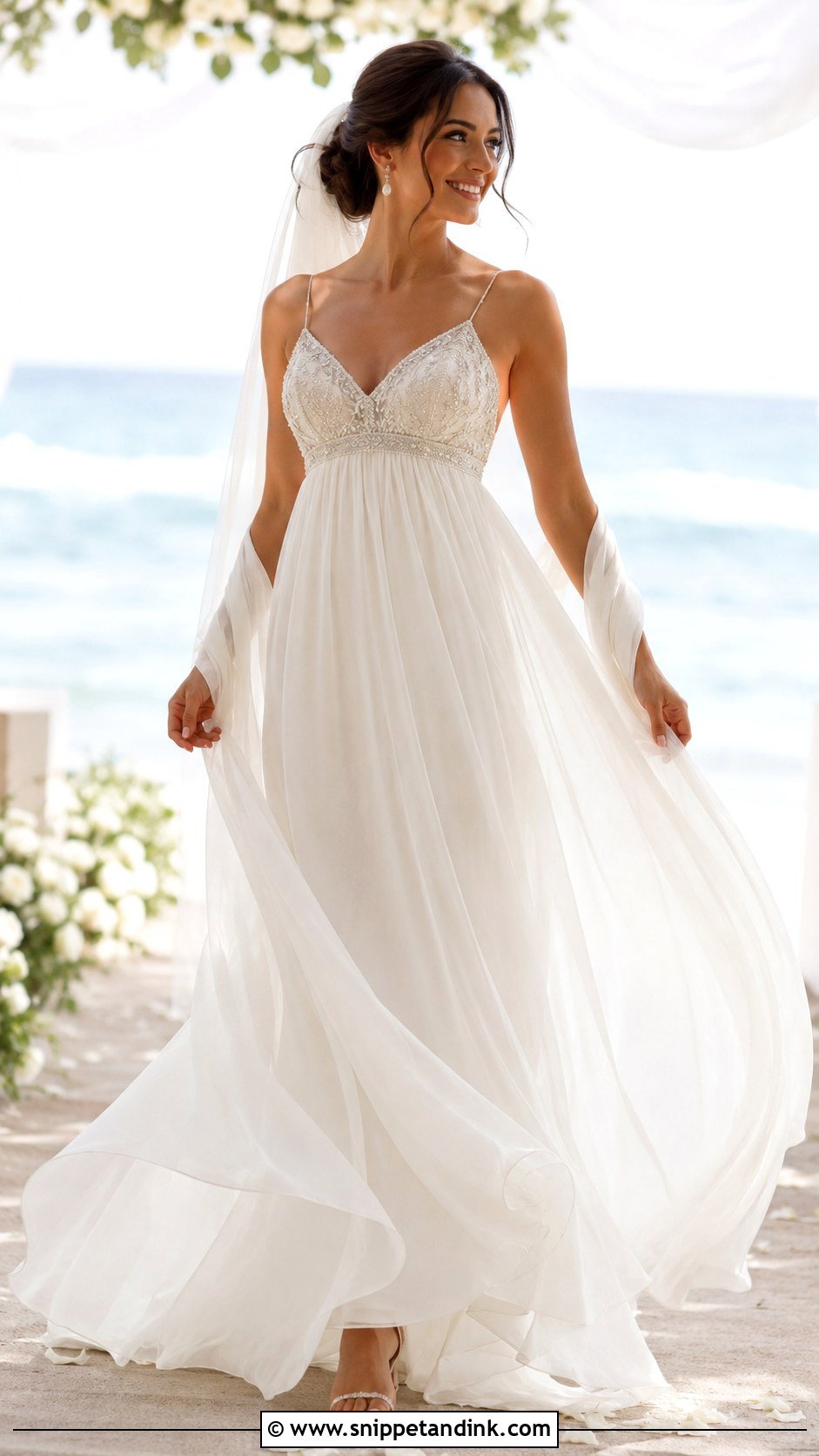
Empire waists are the most comfortable dress on this list. Chiffon falls from just under the bust and moves freely, so the shape suits many bodies and is my usual suggestion for a pregnant bride, since the skirt has room to grow between fittings. Delicate straps and a lightly embellished bodice keep it bridal. Low strappy sandals, pearl drops and a lightweight veil that floats with the fabric work well, with loose waves or a soft updo. Bring a matching chiffon wrap for after sunset. Beaches, gardens and warm venues where heavy satin would feel stifling are where it shines.
9. Sweetheart Organza Wedding Dress
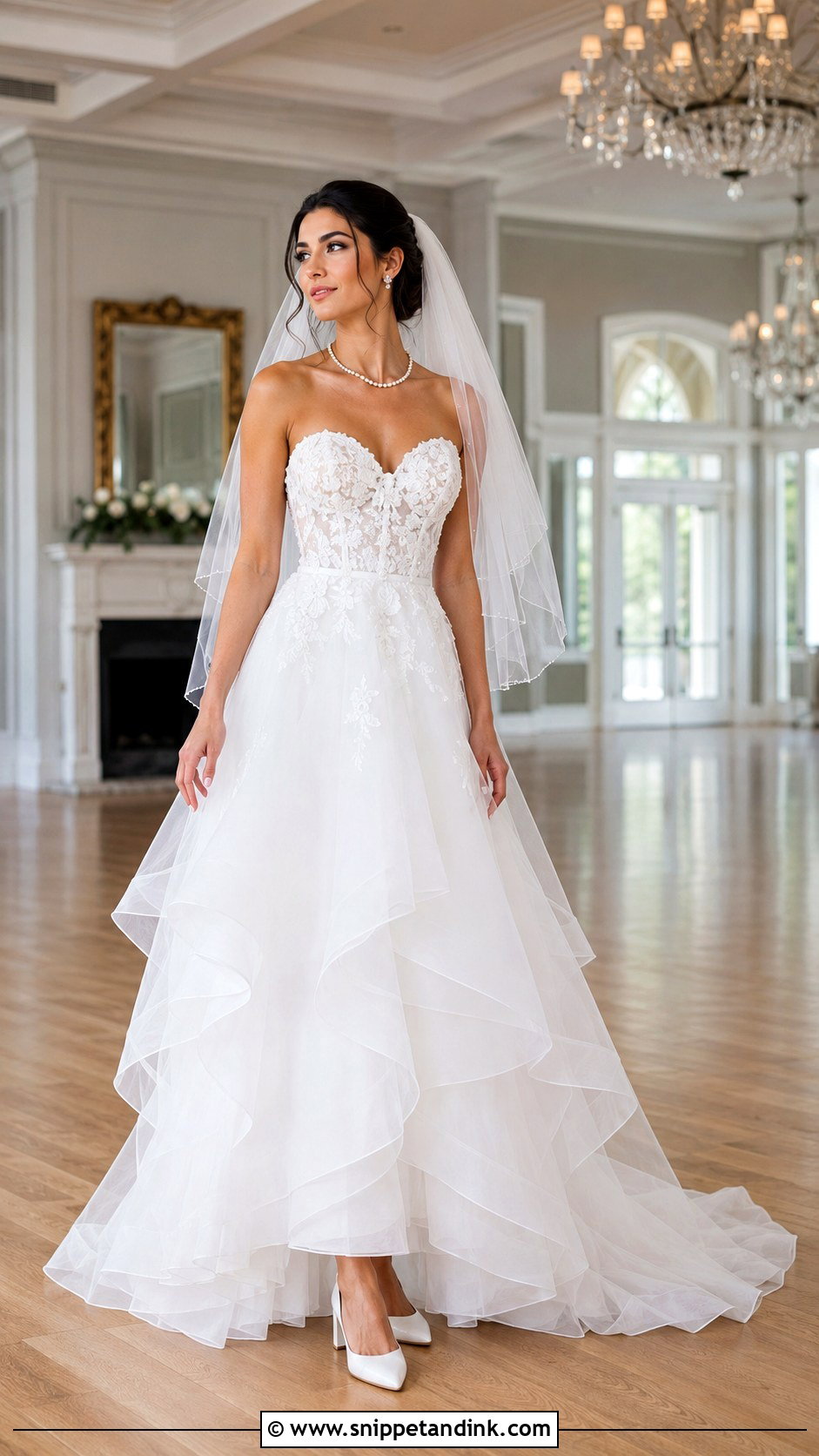
Organza gives you a full skirt that doesn’t look heavy. A sweetheart neckline frames the upper body, and crisp layers make the skirt airy. Organza does crush, though, and it holds a sharp crease if someone sits on it in the car, so I have brides travel with the skirt spread over their lap. Pick a fitted bodice with light embroidery or scattered crystals rather than dense decoration. A short pearl necklace, sparkling studs and block-heel pumps hidden under the skirt suit it, with a mid-length veil and a structured updo. Luminous skin and a pale pink gloss add the Y2K touch. Large halls and country clubs give the skirt room.
10. Two Piece Wedding Dress
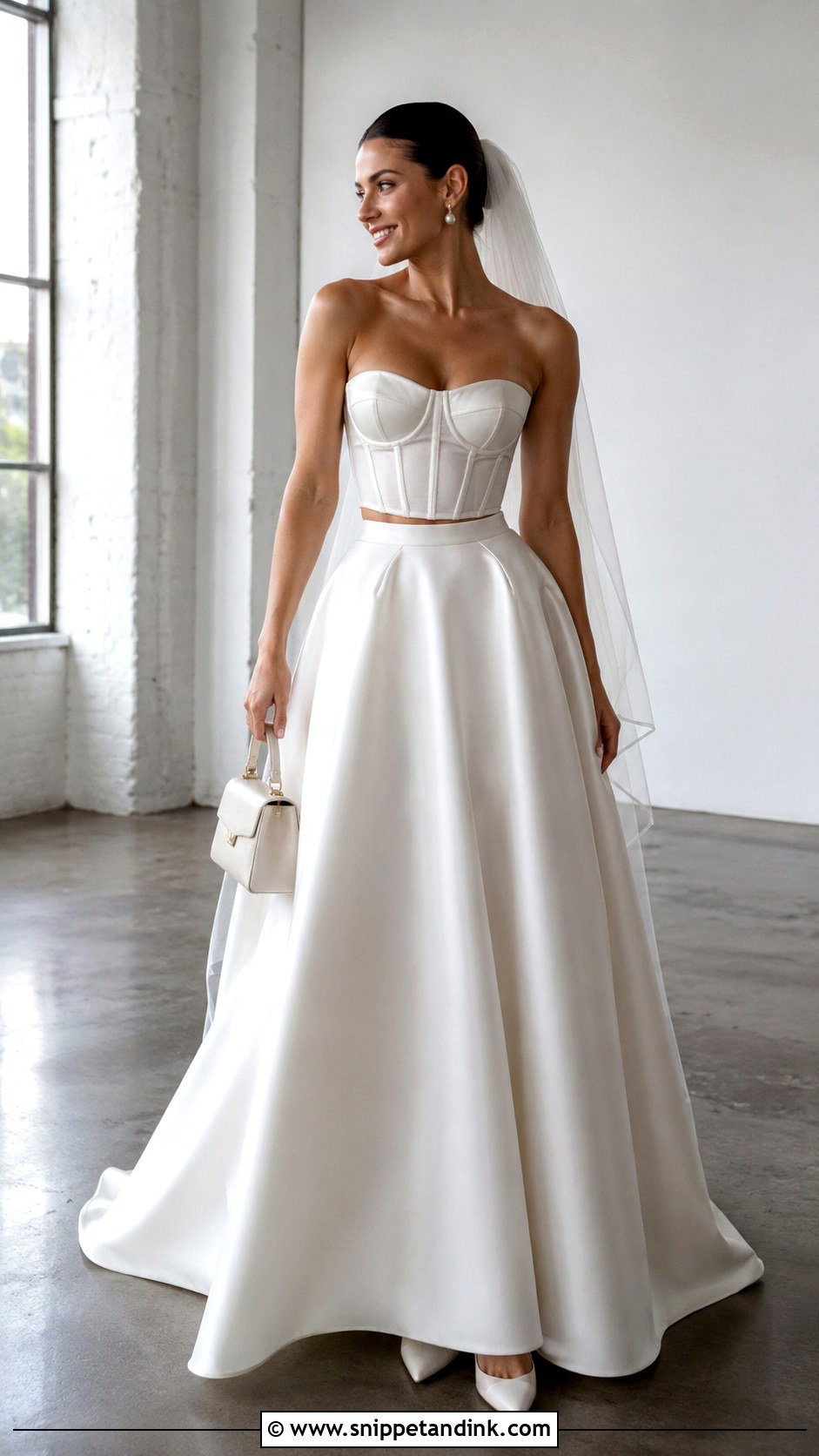
Can two pieces feel formal enough for a ceremony? They can, provided both share the same fabric and finish. Combine a fitted satin or embroidered corset top with a high-waisted A-line skirt that overlaps the bodice slightly, so no skin shows when you lift your arms. A lace top with short sleeves suits brides wanting more cover. Pointed pumps, a simple veil, pearl earrings and a structured mini bag work, with a sleek ponytail or low bun. Avoid pieces in contrasting whites. It’s an easy choice for courthouse and loft weddings, and you can wear each piece again later.
11. Blush Pink Wedding Dress
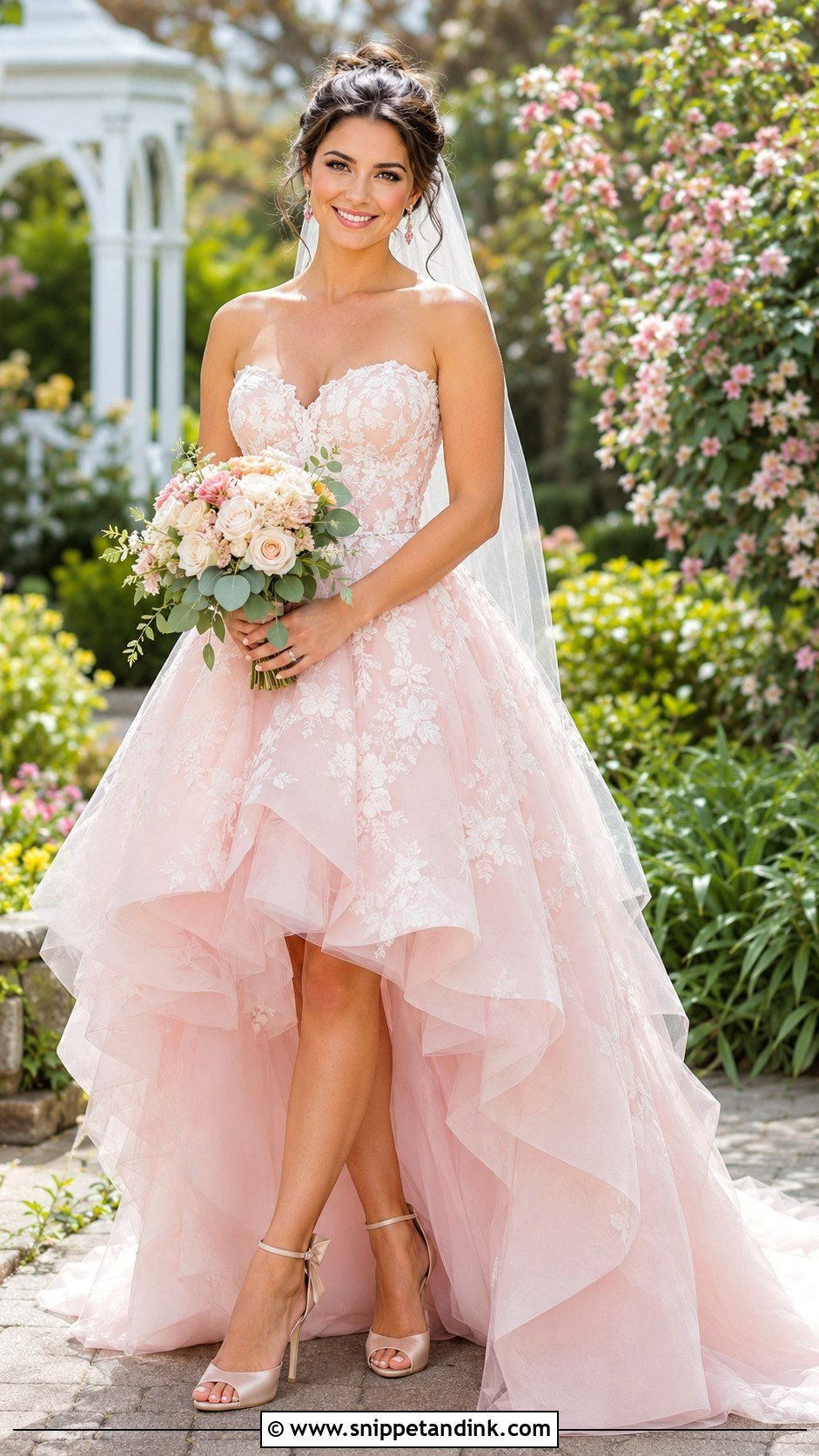
Pale pink is still clearly bridal, which is why it was one of the first colors brides tried in that decade. Choose a cool, pale blush over a saturated one; strong pink tends to clash with warm skin in photos and makes ivory accessories look yellow. A strapless A-line, fitted mermaid or layered tulle all work, and ivory lace over a pink lining adds depth. Rose-toned crystal earrings, neutral satin heels and a sheer ivory veil suit it. Keep the bouquet to cream, pink and muted green, and the makeup neutral so it doesn’t fight the dress. Gardens, spring ceremonies and evening receptions with soft decor are good settings.
12. Asymmetrical Wedding Dress
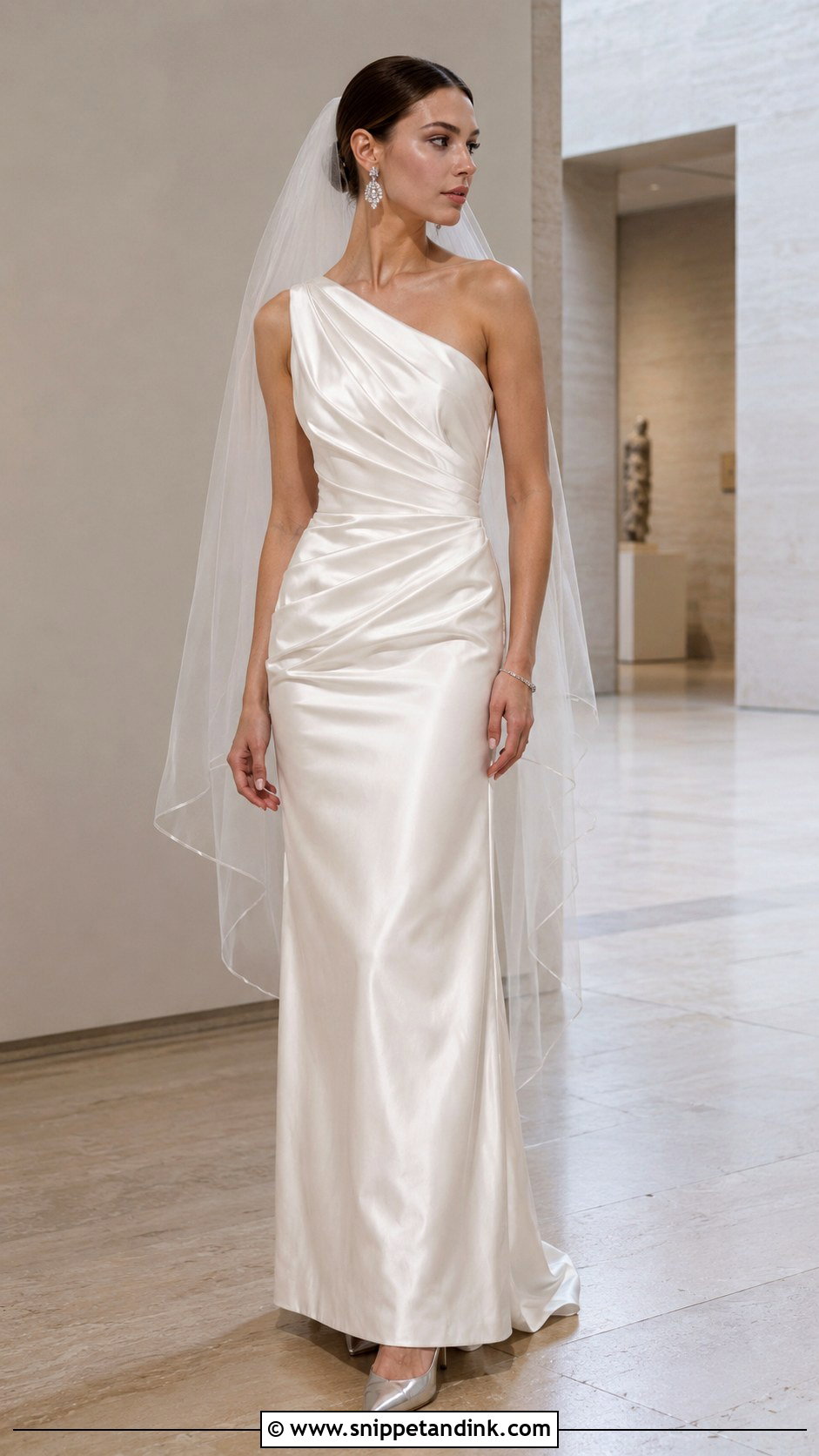
An asymmetrical wedding gown gives the era’s clean lines an edge. Look at one-shoulder bodices, diagonal draping or a skirt with a controlled side gather. Crepe and satin show the directional construction most clearly. Tailoring makes or breaks this one. An uneven neckline that gapes or slides looks like a mistake rather than a design, so the single strap needs to be fitted closely and anchored inside the bodice. Wear one statement earring or small crystal drops and no necklace, with metallic pumps, a narrow bracelet and a chapel veil under a sculpted bun. City venues, museums and contemporary hotels suit it.
13. Tea Length Wedding Dress
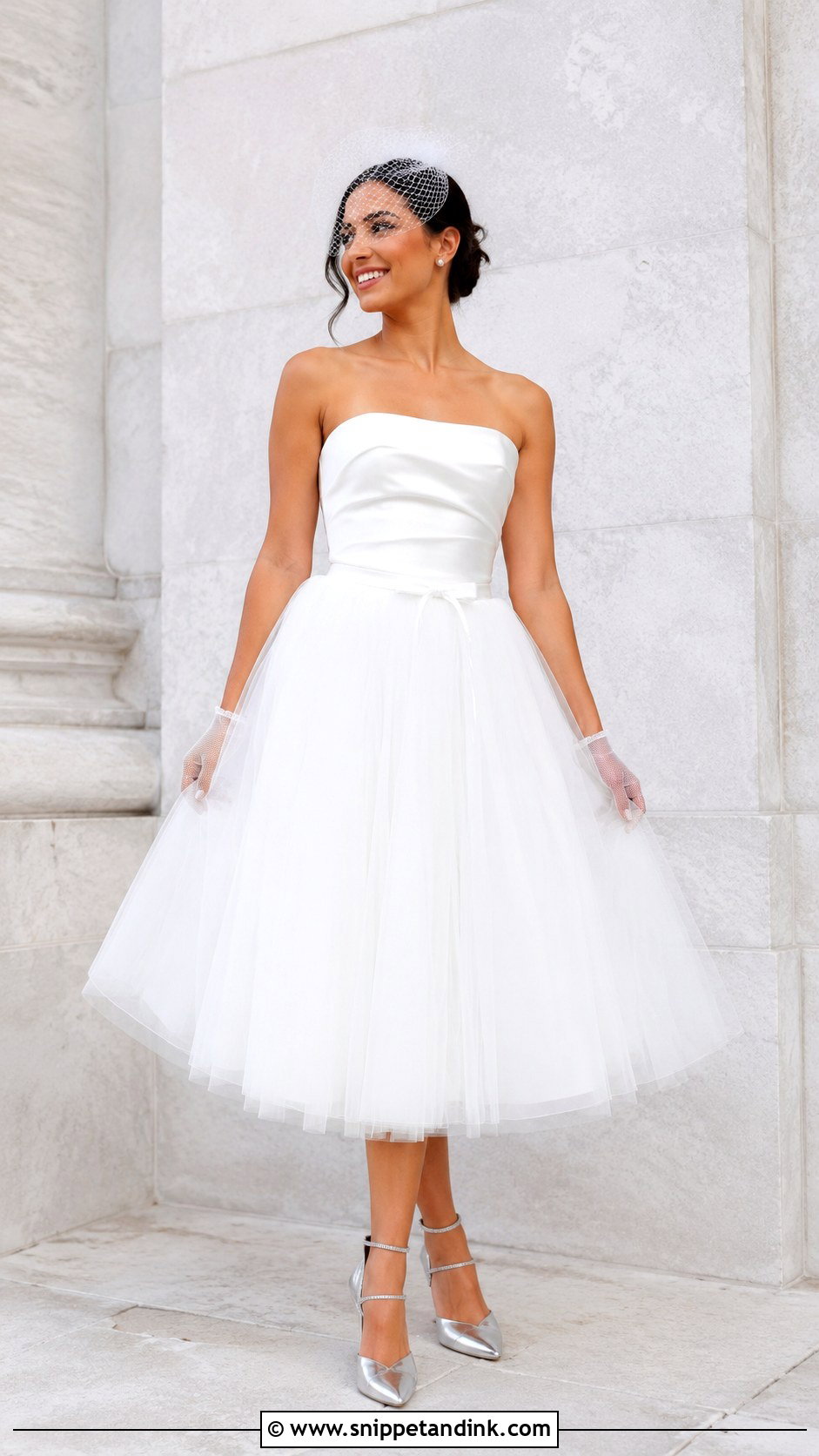
Tea length puts your shoes on show and keeps the whole outfit light. A fitted strapless or sleeveless bodice with a skirt ending between knee and ankle works in satin for structure or layered tulle for movement. Since the shoes are part of the look, break them in properly beforehand; blisters show at this length. Pointed pumps, peep toes or ankle-strap heels in ivory or silver all suit it, with pearl studs, optional short gloves and a birdcage or shoulder-length veil. A softly curled updo finishes it. Courthouse weddings, brunch receptions and second looks are where I reach for it.
14. Tiered Tulle Wedding Dress
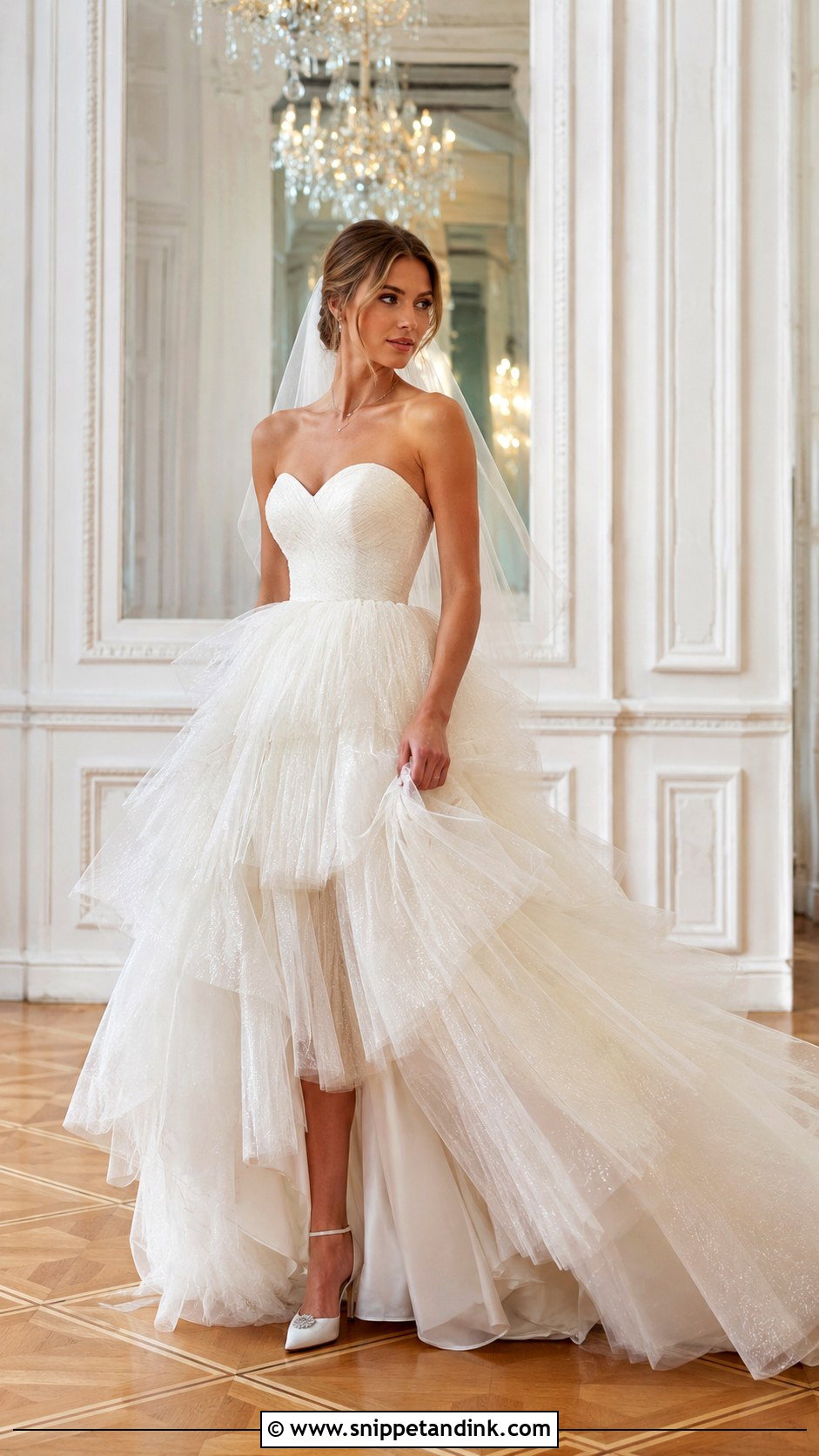
Tiered tulle gives volume and movement without a heavily boned skirt. A fitted bodice with a sweetheart or straight neckline sits above neat tiers beginning below the waist. A single layer with woven sparkle is enough for the millennium feel. Tulle tiers catch on rough surfaces and heels, so I have the hem cut a touch shorter at the front than I would on satin. Slim satin heels, small crystal earrings and a plain veil keep it calm, with smooth waves or a high, polished bun. Ballrooms and formal evening weddings with a dance floor suit it.

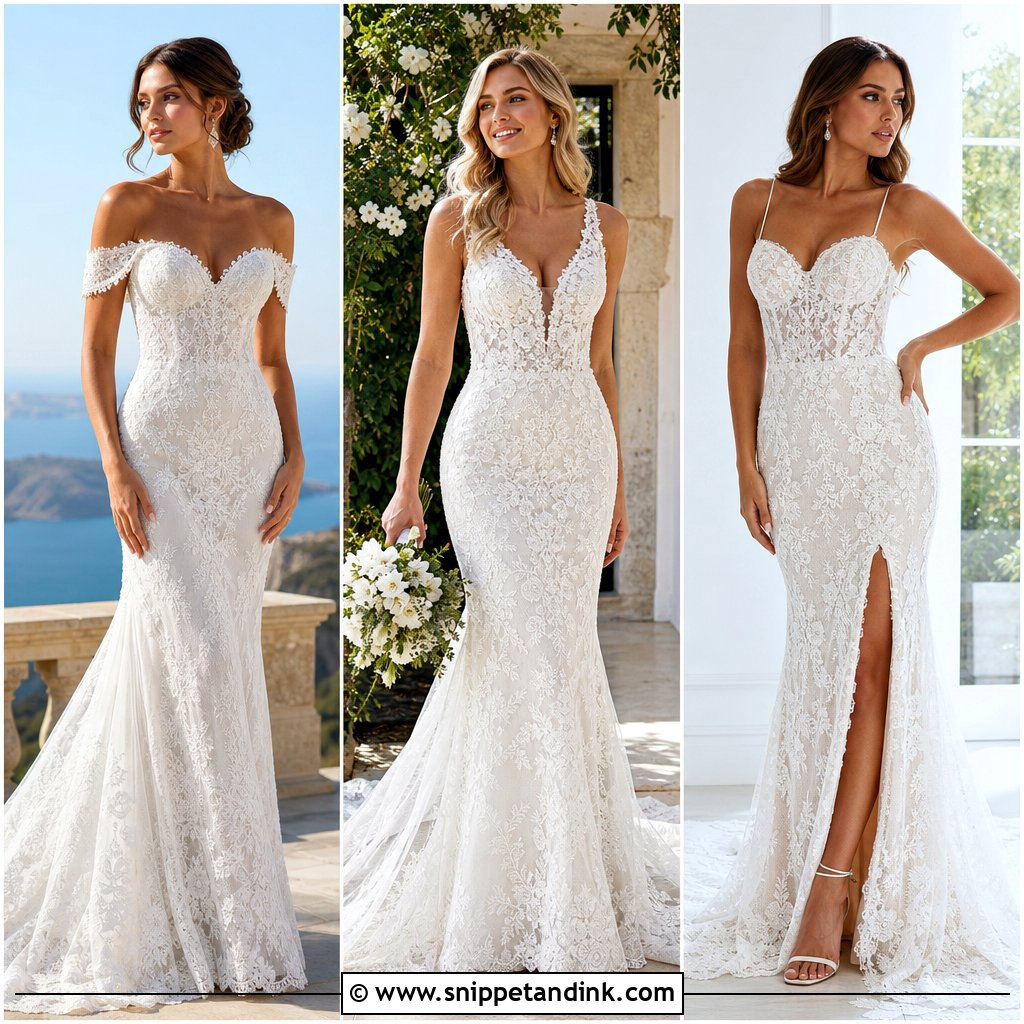

15. Embroidered Wedding Dress
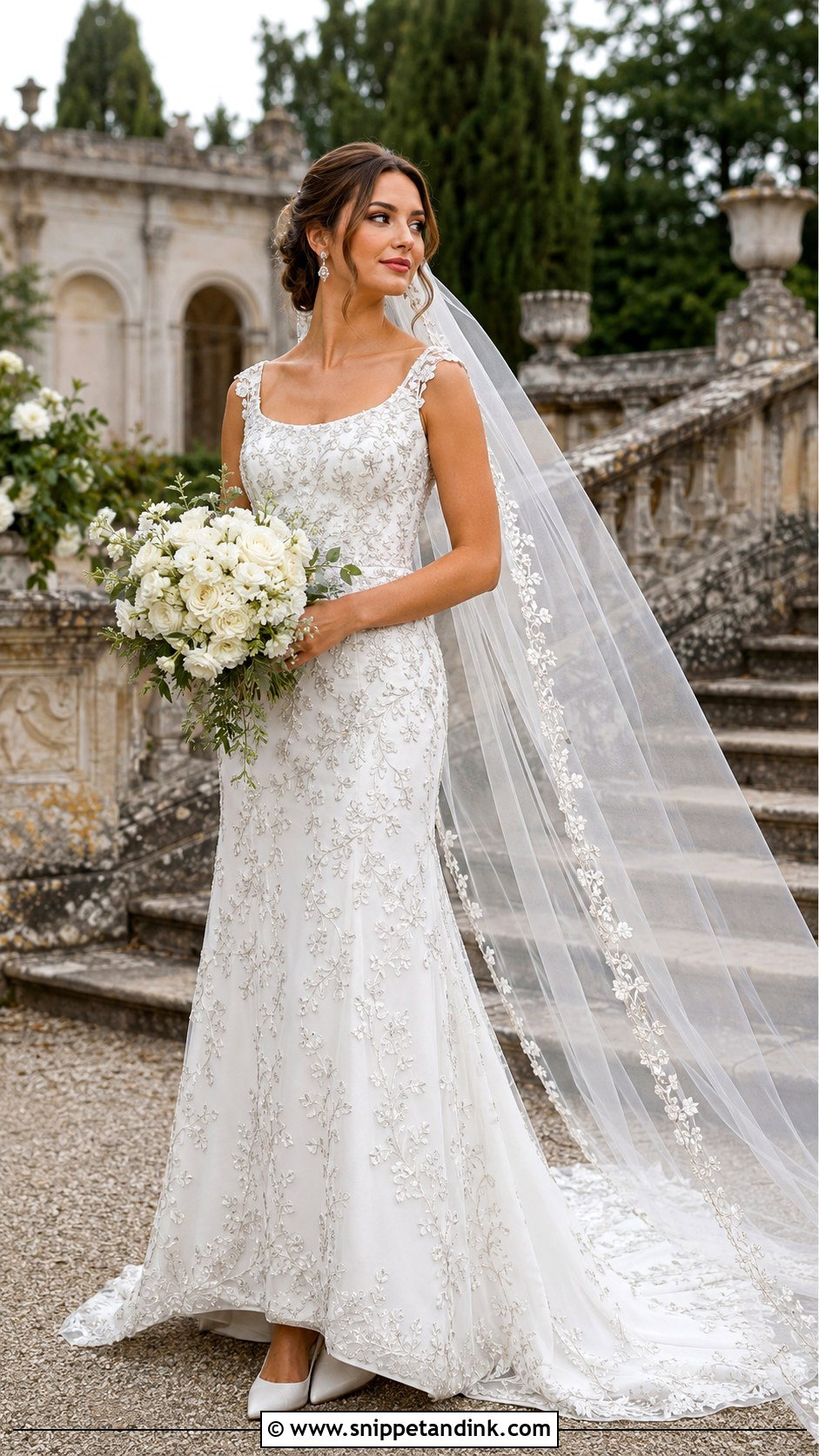
Embroidery makes a simple dress personal. Floral vines, silver threadwork or beaded motifs across the bodice, thinning out down the skirt, keep a fitted A-line from looking overdone. If the embroidery includes colored thread, take that one shade into the bouquet and nowhere else. Embroidered fabric is stiffer than plain satin, so seams that cross it are harder to take in; I always ask a seamstress to look at the gown before a bride commits to big alterations. Understated satin pumps, small gemstone earrings and a sheer veil with only a narrow embroidered border suit it, with a sleek bun so the neckline and back stay visible. Formal gardens and historic venues work well.
16. Low Back Satin Wedding Dress
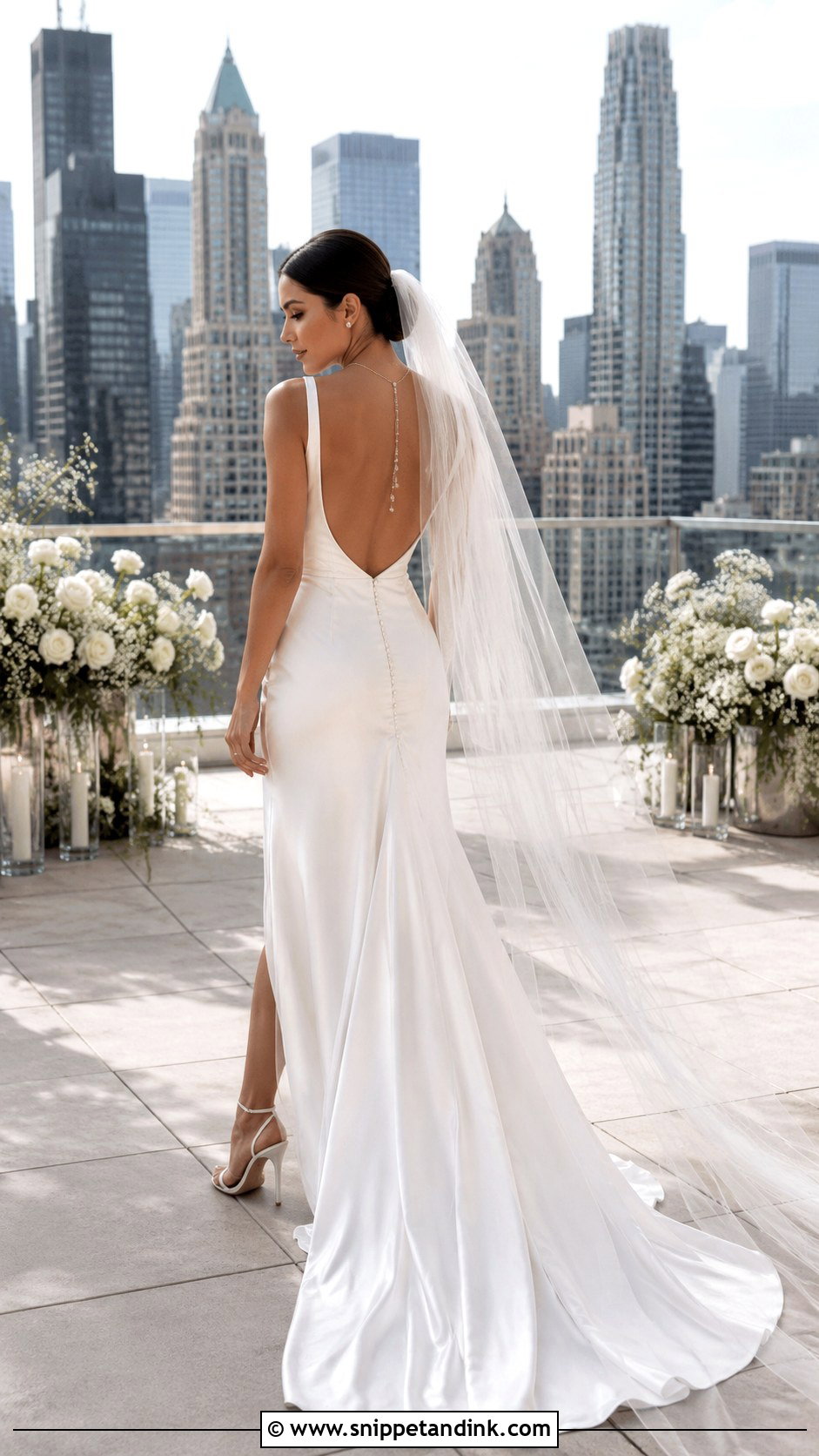
From the front, a low-back satin gown looks simple. The surprise comes when you turn and show a deep rounded or V-shaped back. That opening only works with good internal support and careful alterations so the edge lies flat against the skin; a back that stands away from the body shows instantly in photos. Sort out your underwear before the final fitting, because the fit is set around it. Back-drop jewelry, crystal studs, strappy heels and a veil above a neat low bun suit it, or a row of covered buttons instead of jewelry. Satin marks easily, so steam it on-site before photos. Evening ballrooms, rooftops and minimalist spaces are good settings.
17. Cap Sleeve Lace Wedding Dress
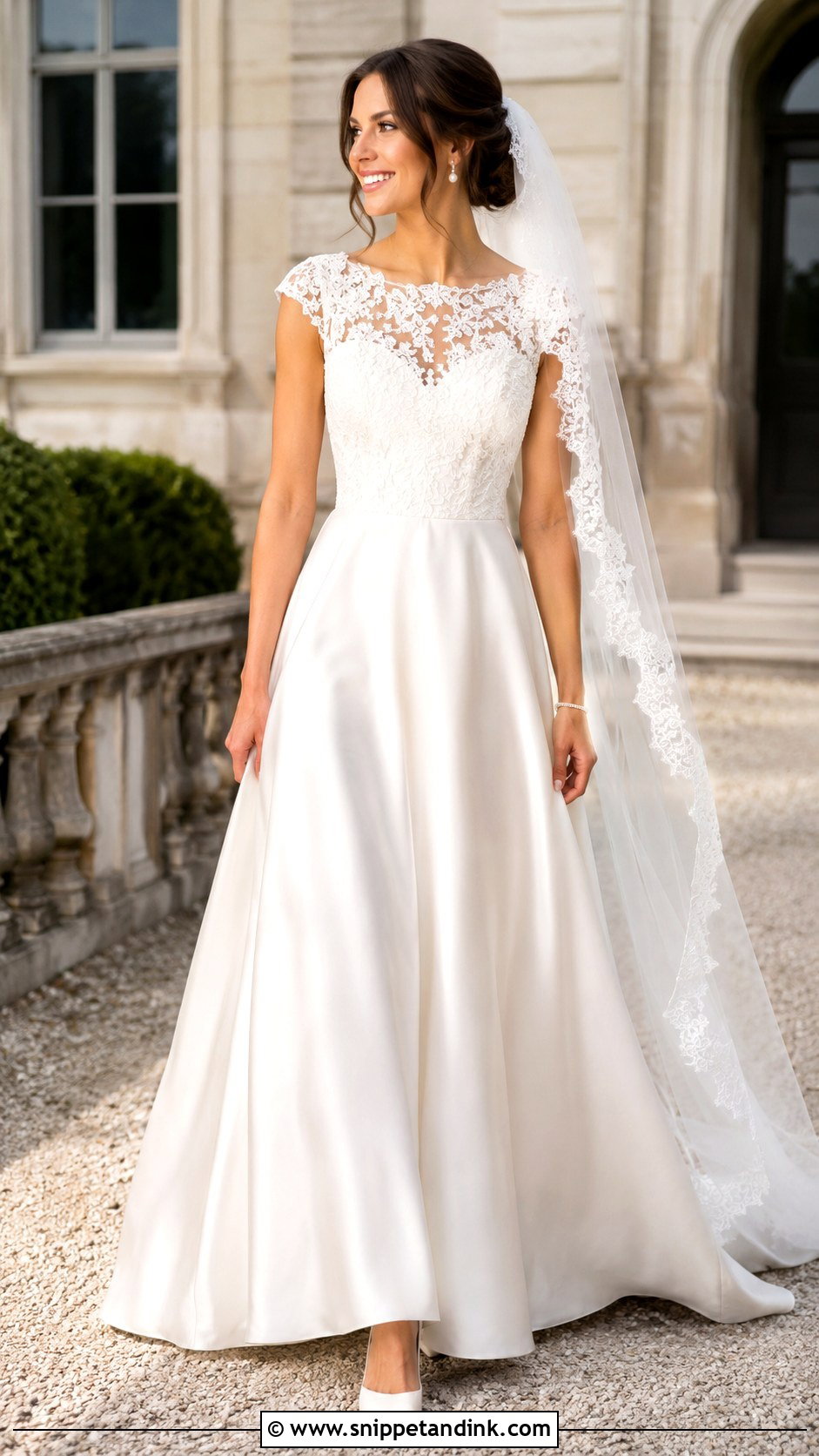
Cap sleeves give a little shoulder cover without the weight of full sleeves. Lace caps should sit smoothly and let you lift your arms, and they pair well with a fitted waist and chiffon, satin or tulle skirt. If the bodice lace is detailed, wear a bracelet instead of a necklace. Pearl drops, ivory pumps and a chapel veil with a narrow lace edge suit it, with a soft French twist or curled low bun. It’s a sensible middle ground for a bride who needs some coverage for the ceremony but still wants the fitted Y2K shape. Spring gardens, autumn estates and daytime ceremonies suit it.
18. Dropped Waist Wedding Dress
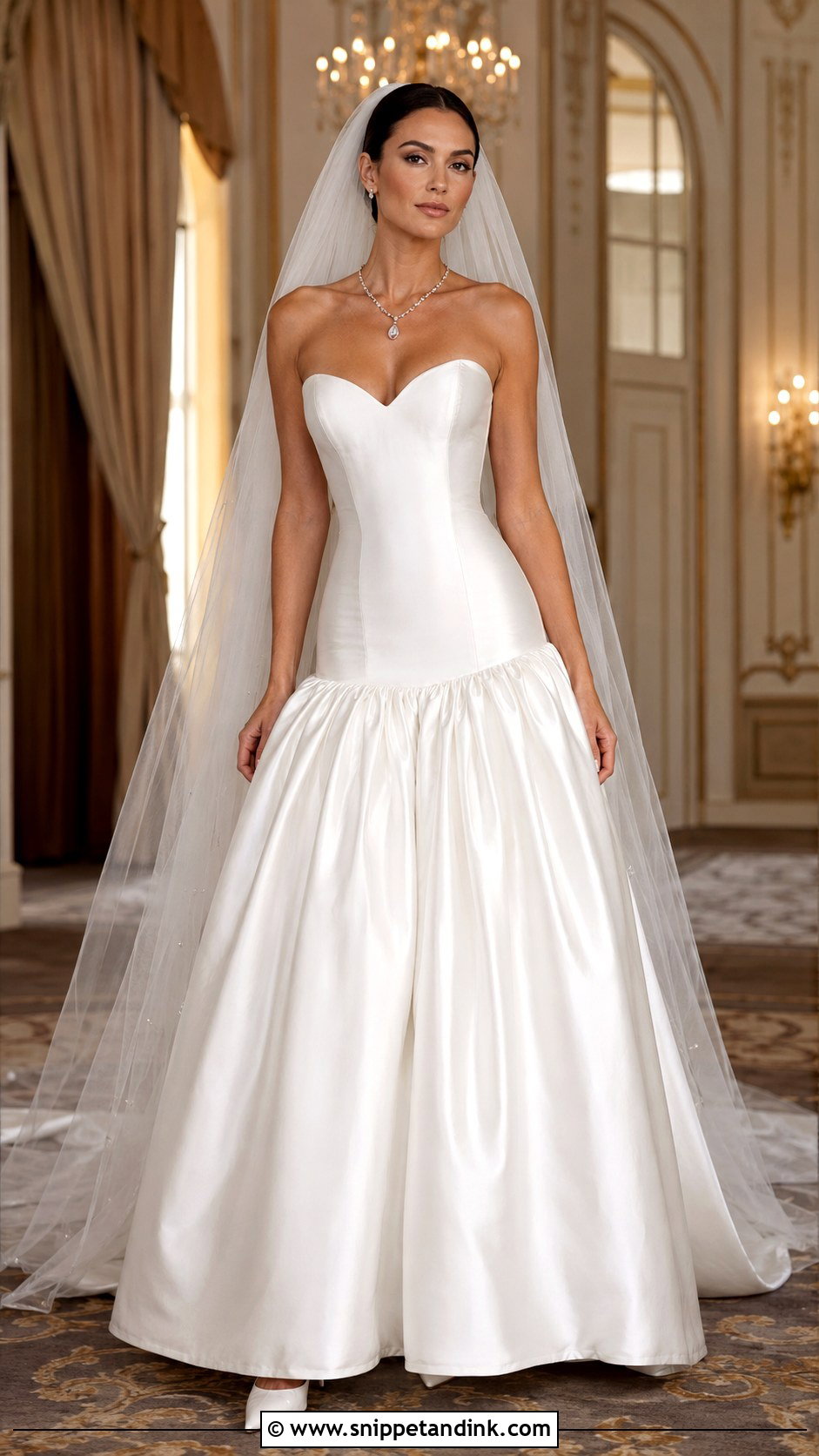
Dropped waists stretch the bodice down toward the hips before opening into a fuller skirt, so the torso looks long and sculpted. Satin and taffeta suit the shape. Waist placement matters more here than in any other silhouette, and a seam set an inch too low can make legs look short, so try a few versions and walk around in each. A strapless sweetheart neckline gives the classic effect; wide straps add support. A crystal necklace, small earrings, pointed pumps and a cathedral veil work, with a lifted updo. Ballrooms and spacious estates suit it.
19. Handkerchief Hem Wedding Dress
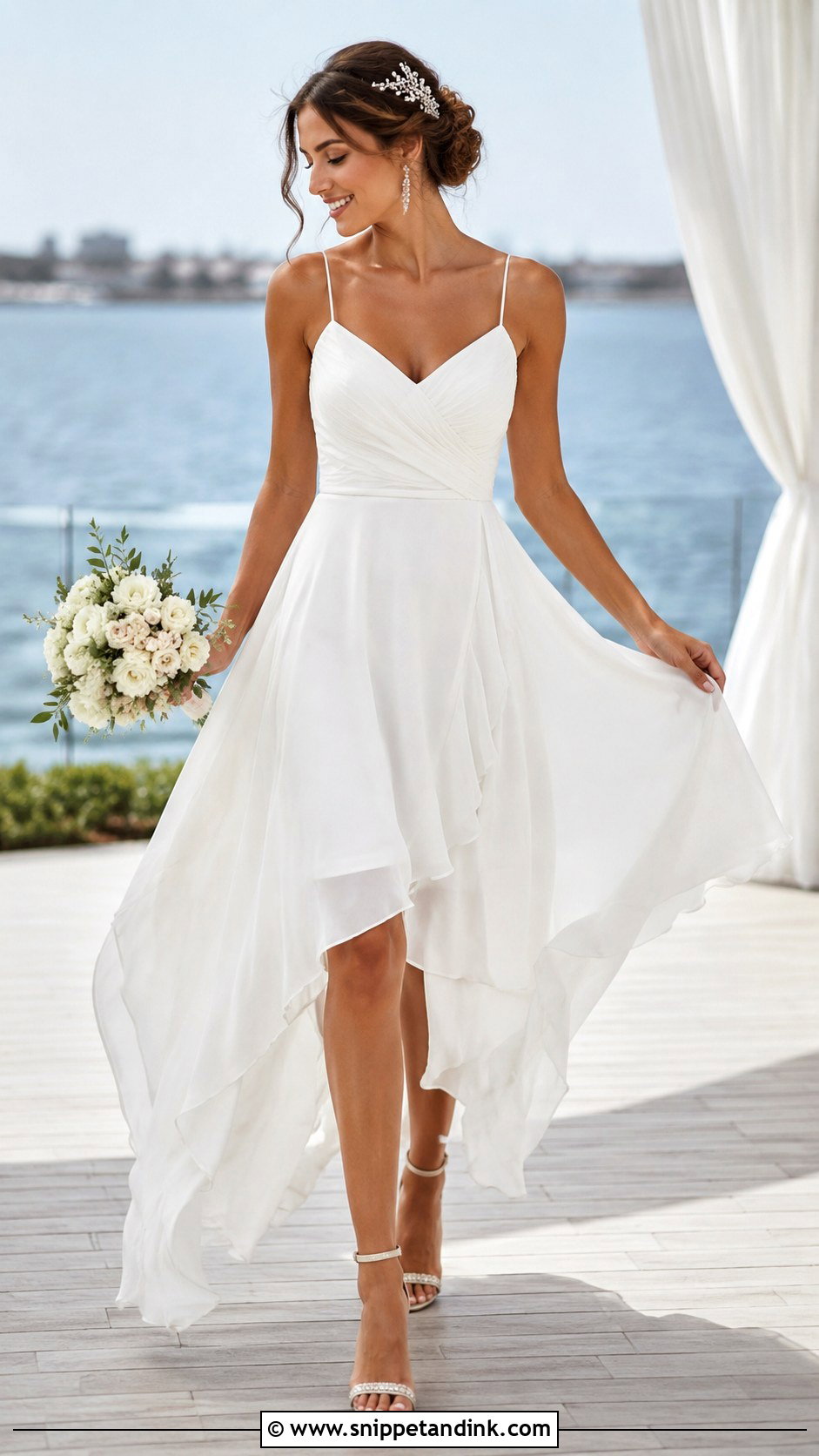
A handkerchief hem falls in several points around the legs and flutters as you move. Chiffon and lightweight tulle work best because they don’t hold a rigid shape. Balance the lively skirt with a fitted sleeveless or spaghetti strap bodice. The uneven hem shows your shoes from almost every angle, so pick a pair that looks finished from the side and back. Ankle-strap sandals, crystal drops and a short veil or jeweled comb suit it, with loose curls or a relaxed updo. Waterfront venues and dance-heavy receptions bring out the movement.


20. Strapless Wedding Dress With Cathedral Veil
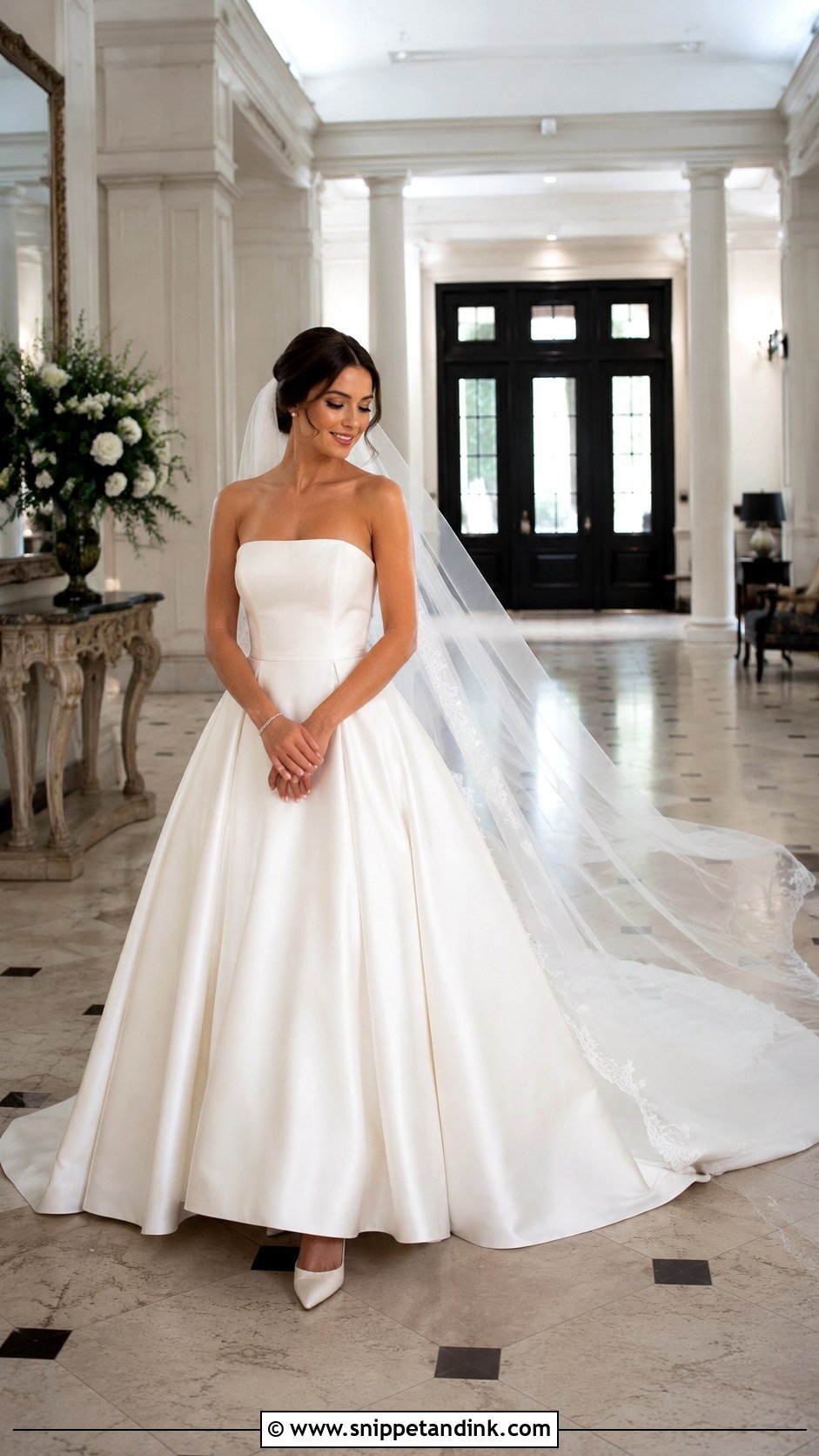
A clean strapless gown under a cathedral veil was the classic finish of the early 2000s. Use a satin or mikado dress with a secure fitted bodice, defined waist and full A-line skirt, kept plain so the veil gives the drama. A long veil is heavier than people expect and pulls back on the comb all ceremony, so the bun underneath needs to be firm and pinned to support it. Pearl studs, a delicate bracelet and closed-toe ivory pumps finish it. For the reception, take the veil off and add a crystal hair piece or short necklace. Large halls and formal estates give the veil room to spread.
Buying an Original Gown From the Early 2000s Secondhand
Plenty of real gowns from this period turn up on resale sites and in consignment shops, often barely worn. They can be good value, but photos hide the problems that matter. If you can, see the dress in person; if not, ask the seller for close-ups of the following before paying.
- The underarm and inner waist lining, where makeup, deodorant and sweat leave marks that show up yellow over time.
- Glued-on crystals, which were common on gowns of that era and can drop off or leave a yellowed glue ring behind.
- The back closure. Lace-up corset backs, a hallmark of the time, give a few inches of adjustment, while a zip gives almost none.
- The hem and the underside of the train, which pick up dirt and small tears that are easy to miss in a photo.
Budget for a professional clean and alterations on top of the price. Strapless gowns are usually easier to take in than to let out, so a dress that’s slightly big is a safer buy than one that’s slightly small.
A Few Y2K References Go a Long Way on Your Wedding Day
Strapless satin, corset ball gowns, slinky slips, beaded mermaids and chiffon empire dresses all still work today when the tailoring is good and the accessories hold back. Start with the silhouette you’re comfortable in, then think about the venue, season, shoes, jewelry, hair, veil and the alterations it will need. You don’t need to recreate the decade exactly. Two or three details that remind you of the era will carry the nostalgia, and the rest of the outfit can simply look like you.
You'll Like These Ideas:


Leave a Reply