
A heavily worked outfit is never just about the embroidery. When I dress a bride or a close family member for a South Asian wedding, the questions that matter are practical: where the weight sits, whether she can sit cross-legged for the pheras or nikah, and how the dupatta stays put through hours of hugging and photos. The looks below run from full bridal lehengas and regal sarees to Anarkalis, sharara sets and Indo-Western gowns. Each comes with the jewellery, footwear and hair I’d put with it, and notes on scaling it back if you’re a guest rather than the bride.
Where the Weight of a Heavy Outfit Actually Sits
A fully worked bridal lehenga can weigh several kilos once the skirt, can-can, blouse and dupattas are added together, and the exact figure varies hugely with fabric and embroidery. How that weight is carried matters more than the number on the scale.
- The waistband. A wide, lined band with hooks and a drawstring spreads the load around your middle. A narrow band or a single zip digs in and slips down.
- The fabric under the work. The same embroidery on net or georgette is far lighter than on raw silk or velvet. Ask to hold the skirt before you order, not just look at it.
- The can-can. Stiff underlayers give the skirt its shape but add bulk and heat. A single good layer often does the job of three cheap ones.
- The dupattas. A heavily bordered head dupatta pulls backward on the hair and neck. I ask for the heavier border on the shoulder dupatta and a lighter edge on the one over the head.
If you already love an outfit that’s too heavy, a good tailor can sometimes add shoulder support to the blouse or reduce the can-can, so ask before you rule it out.
1. Red Heavy Bridal Lehenga With Gold Jewelry
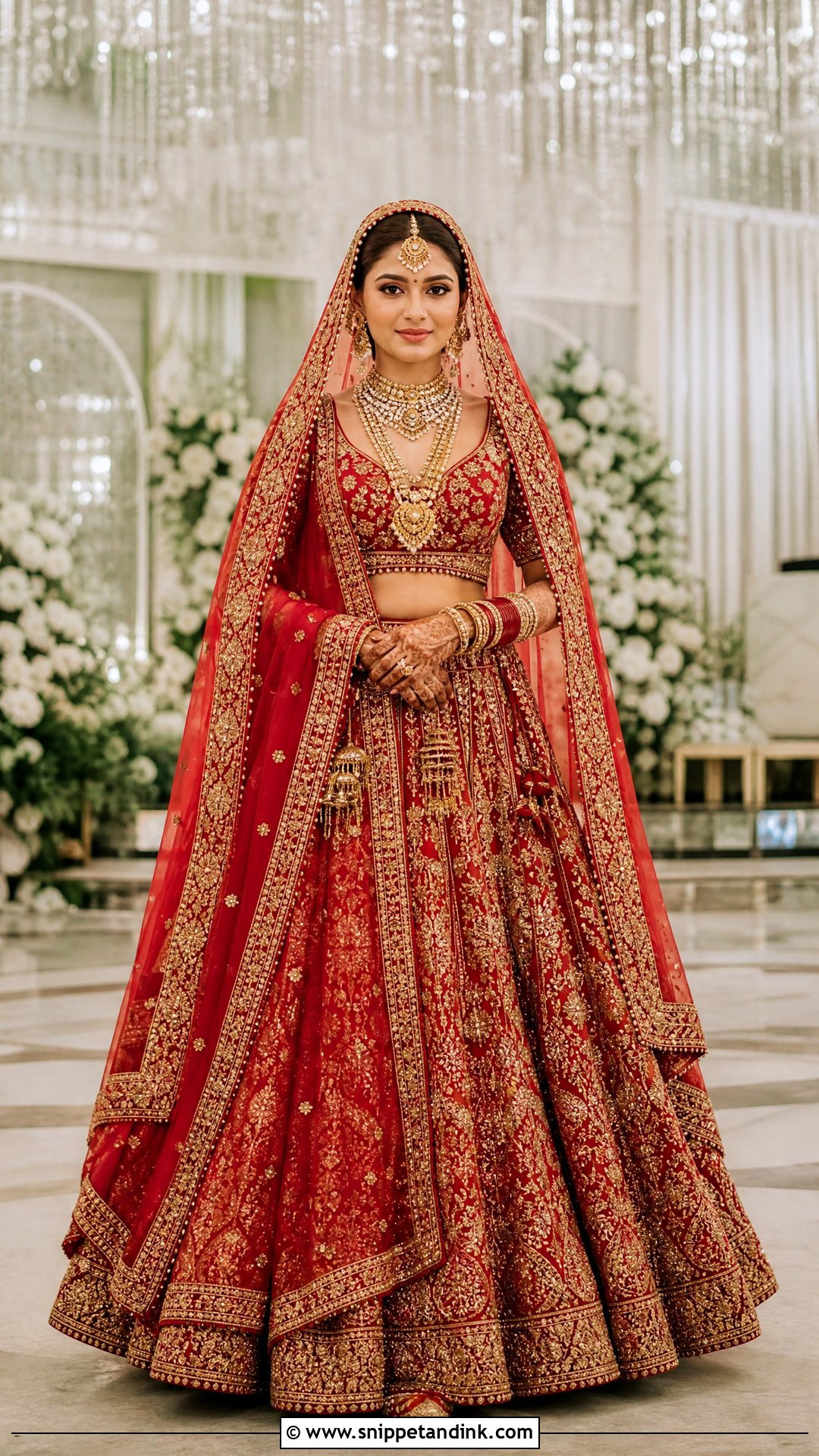
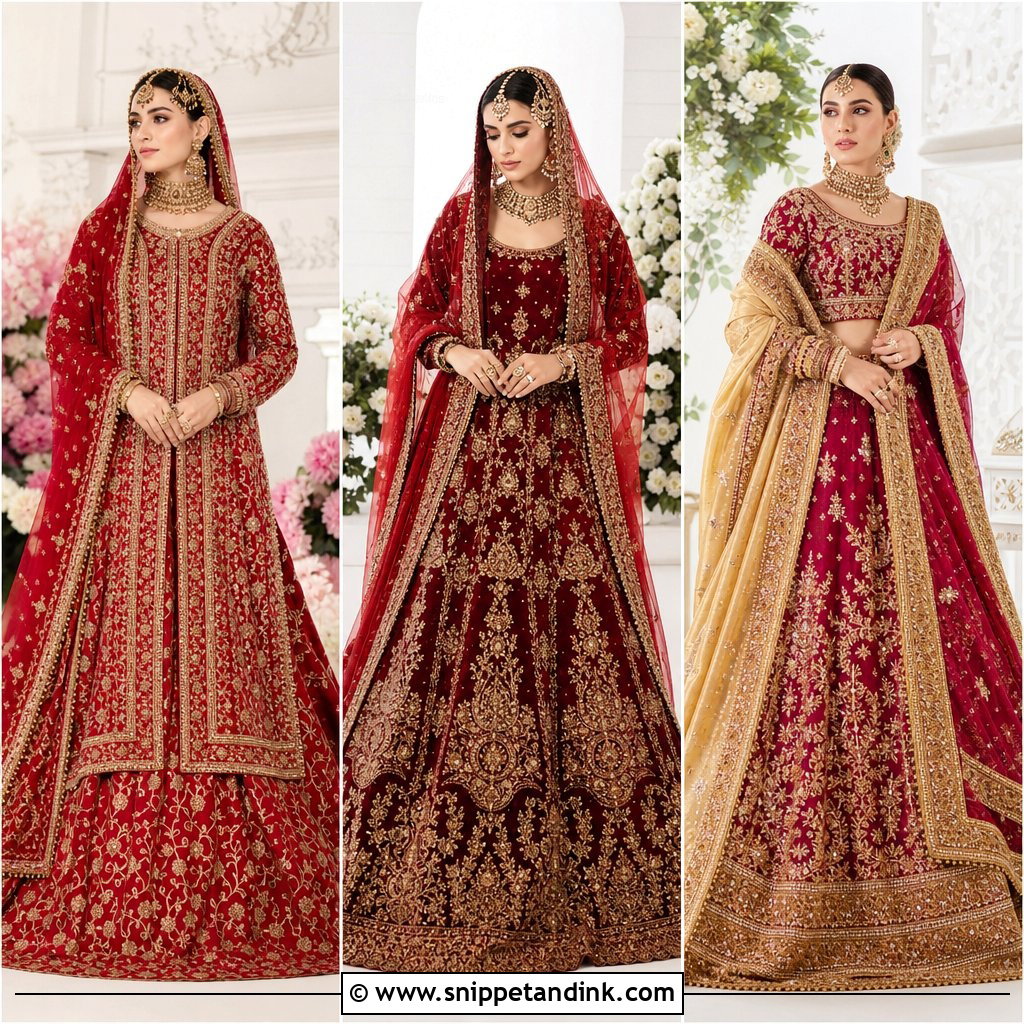
Red with gold jewellery is still the look most families picture for the main ceremony, and it earns that place. A structured blouse and a full skirt worked in zardozi, sequins or dense threadwork carry real weight, so I always check the waistband first: a broad, lined band with a hook-and-drawstring closure spreads the load far better than a thin zip. One red net dupatta goes over the head; a lighter second one crosses a shoulder. Gold choker, long rani haar, statement earrings, bangles and a maang tikka complete the set. Juttis beat narrow heels under a skirt this heavy. Keep the makeup polished and the bun low and neat, since the outfit is already doing the talking.
2. Maroon Velvet Lehenga With Embroidered Dupatta
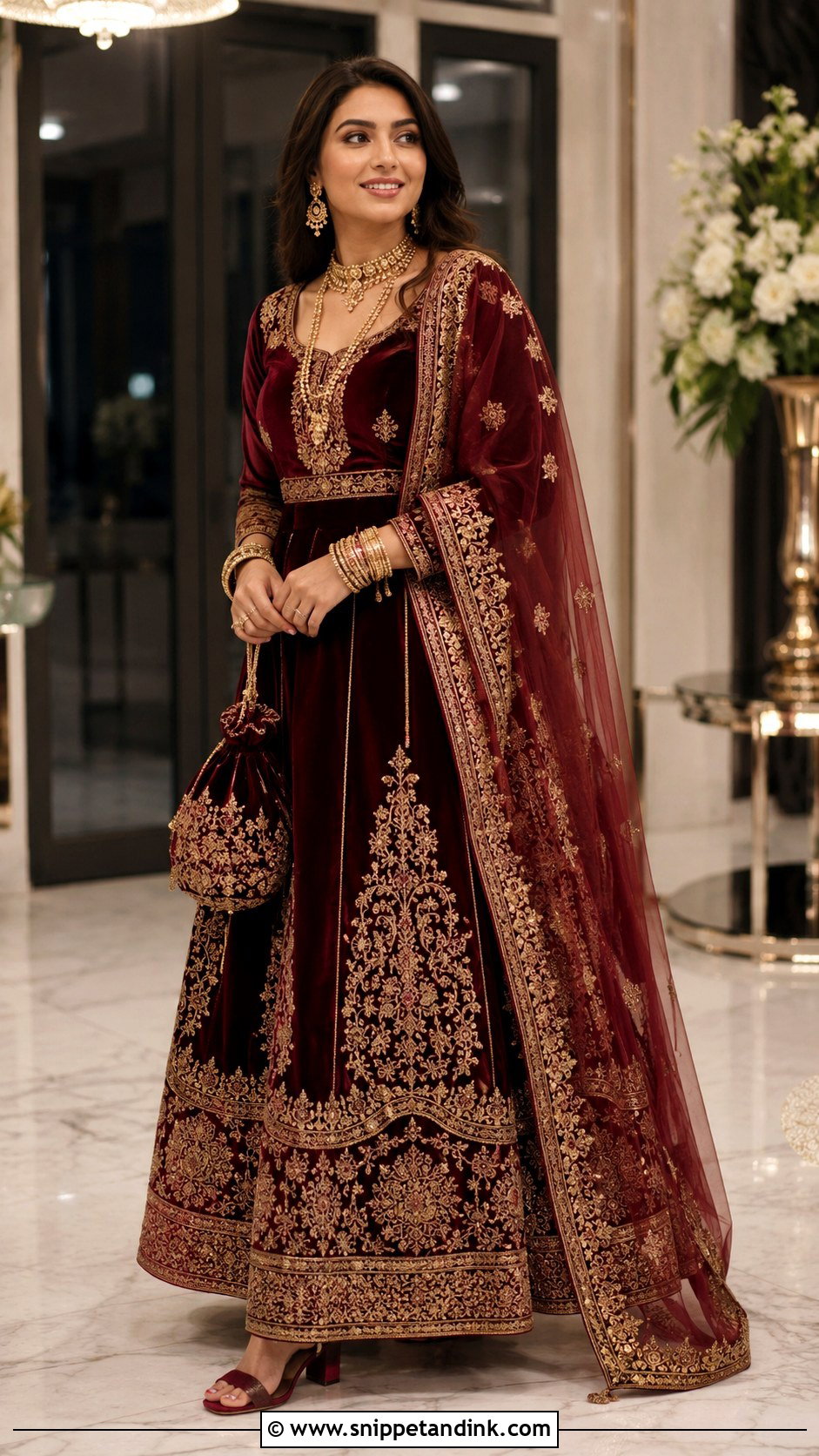
Velvet belongs to winter evenings. In a warm daytime venue it gets uncomfortable fast, and that’s worth knowing before you order. A maroon velvet lehenga with antique gold work concentrated at the hem, waist and neckline looks rich without being embroidered edge to edge, which also keeps the weight down. I pair it with a sheer embroidered dupatta so the outfit still moves. Antique gold earrings, a layered necklace, embellished bangles and a small potli suit the depth of the colour. Velvet block heels or padded juttis, a sleek centre-parted bun and defined eyes finish it. Guests can wear the same idea with lighter jewellery and less work on the skirt.
3. Emerald Green Heavy Anarkali With Churidar
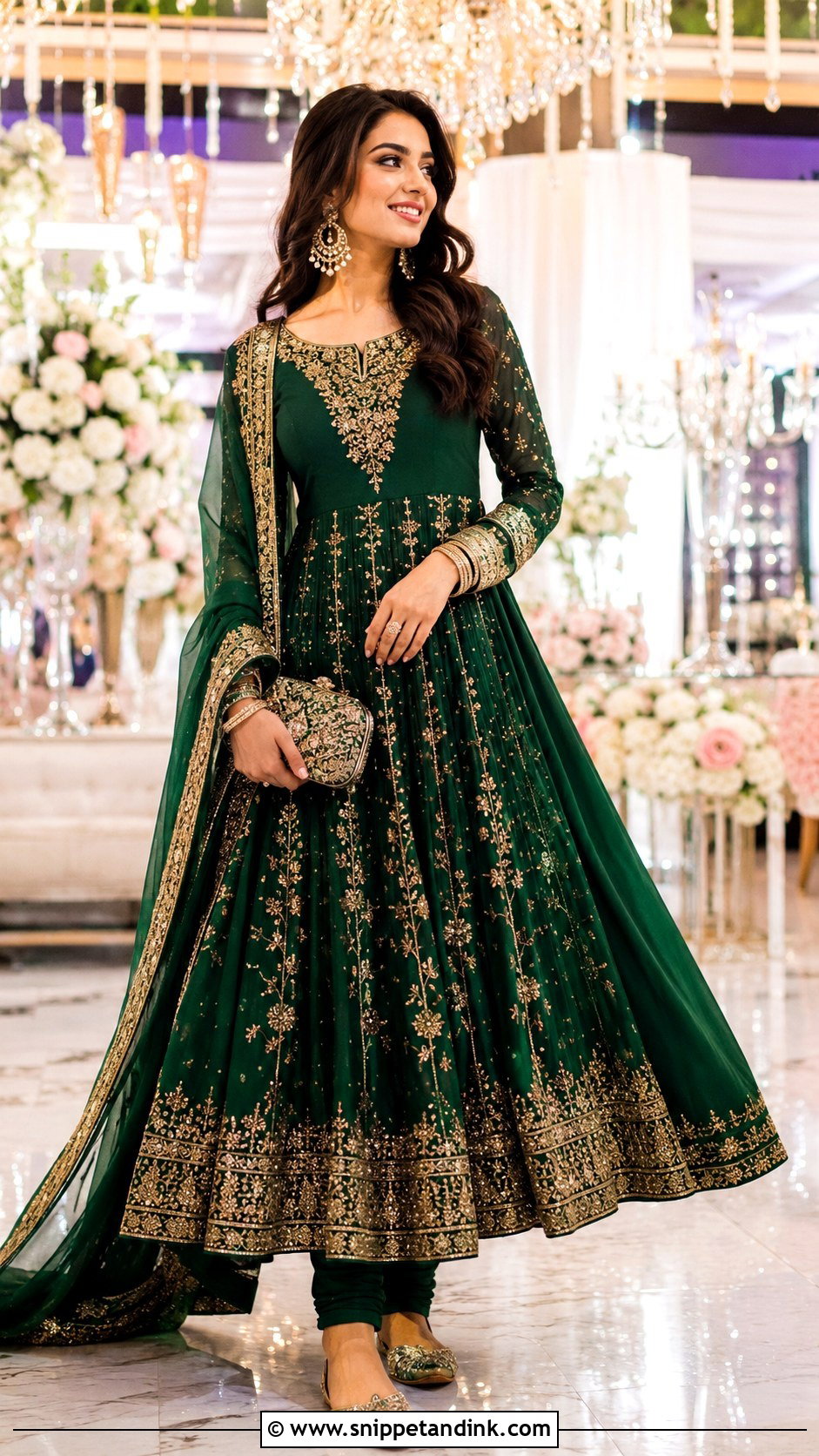
One piece, full skirt, nothing to hold up at the waist: that’s why I often steer older relatives and nervous dancers toward an emerald green Anarkali. Choose a floor-length cut with a fitted bodice and a waist seam placed where you’re actually narrowest; a seam set too high makes the flare start in the wrong place. Gold resham, sequins and beading around the neck and hem give it wedding weight. A matching churidar, a bordered net dupatta pinned on one shoulder, chandelier earrings, stacked bangles and pointed juttis keep the long vertical line intact. Soft curls or a low bun suit a reception or sangeet.
4. Navy Blue Sequin Gown With Statement Earrings
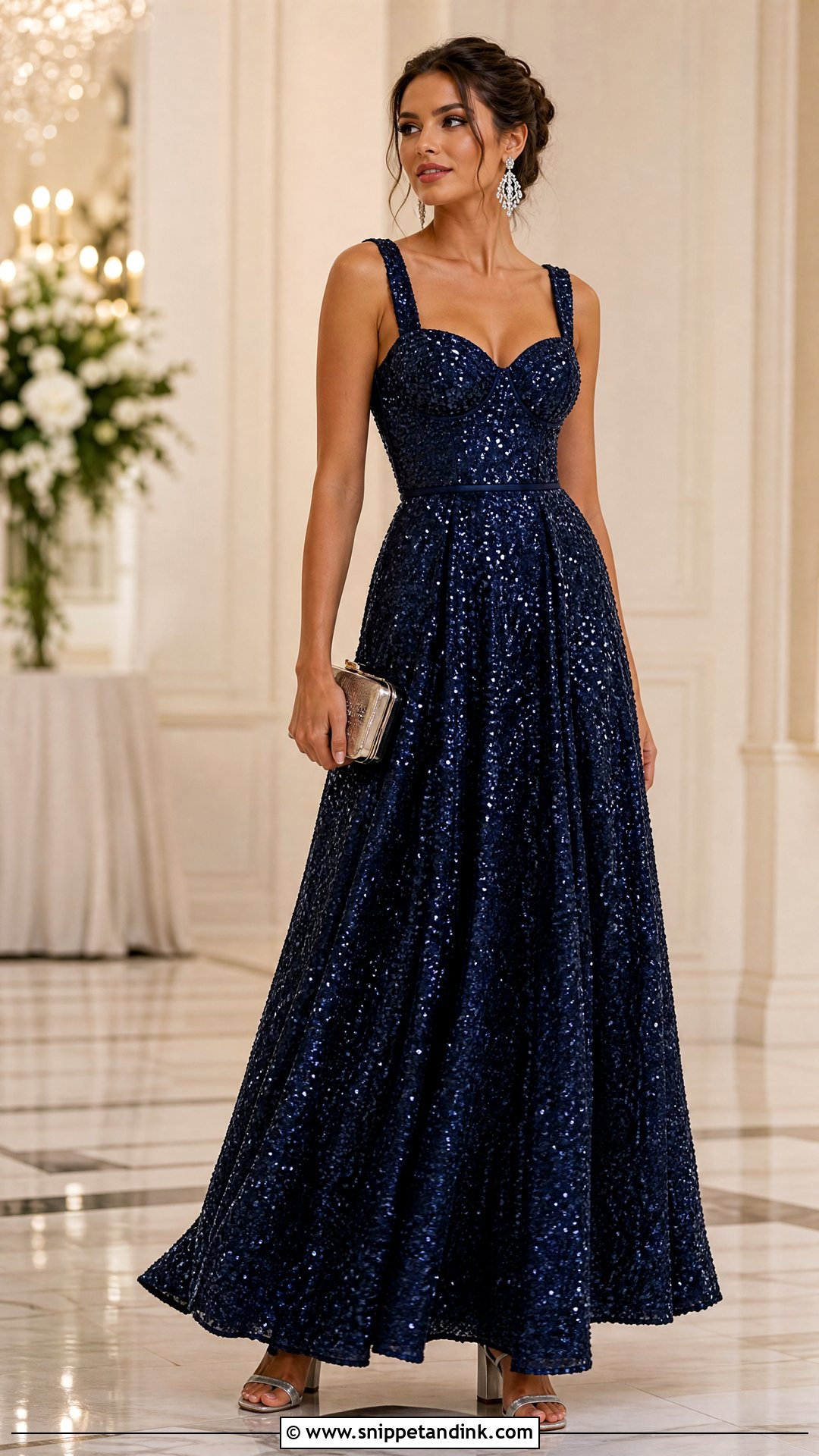
For a reception with a formal Western dress code, navy sequins look glamorous without the glare of silver. I’d always choose a defined waist and a flowing skirt over an all-over fitted shape here, because heavily sequinned fabric has no stretch and becomes tiring to sit in. Tonal navy beading keeps the colour refined. Silver or crystal statement earrings, a slim bracelet and a small metallic clutch are plenty. Wear closed-toe heels or block sandals you trust for a long evening. If the bodice is already heavy with beads, leave the neck bare. Ask the tailor to line any sequinned seams that touch the underarm, since raw sequin edges scratch.
5. Pink Mirror Work Lehenga With Silver Accessories
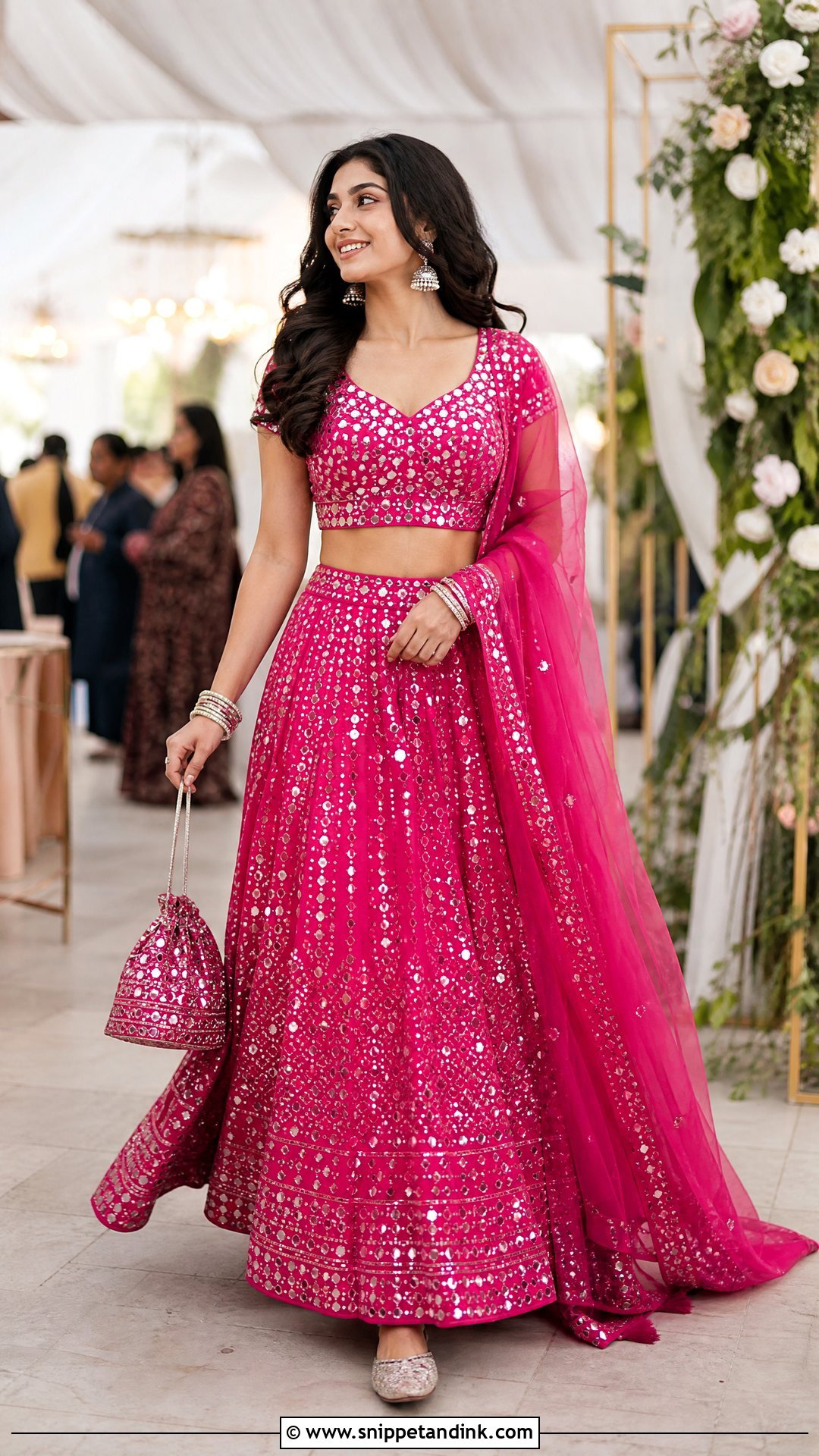
Mirror work is heavy on the eye but, done on georgette, surprisingly light to wear, which is why a pink mirror work lehenga is my favourite sangeet choice for anyone who plans to dance. Check that the mirrors are evenly spaced and firmly stitched; loose ones catch on the dupatta and on other people’s outfits. A supportive matching blouse and soft net dupatta keep the balance. Silver jhumkas, matching bangles and a mirror-work potli carry the theme. Cushioned juttis or low block heels, and a braided ponytail that won’t come loose mid-routine. Brides can go deeper pink and denser; guests can choose blush or rose with open work.
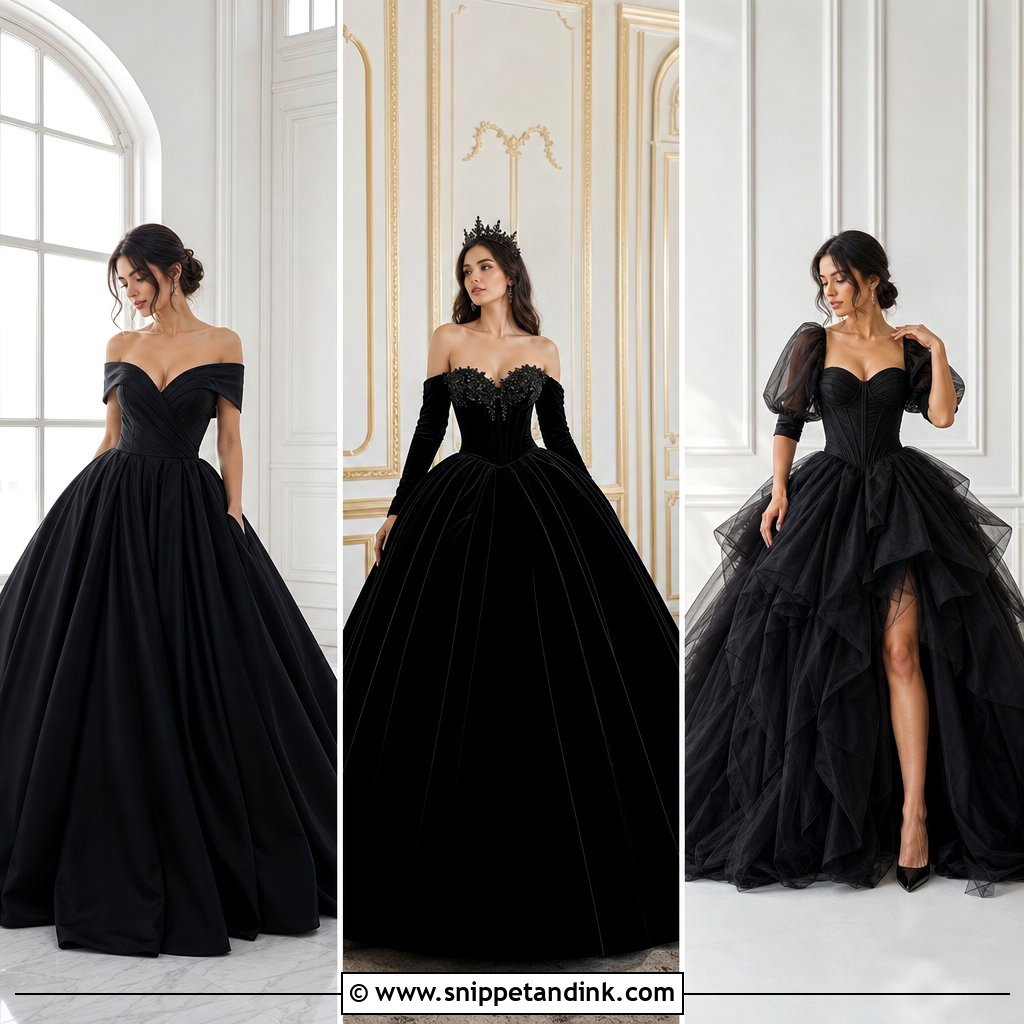
6. Black Embellished Saree With Velvet Blouse
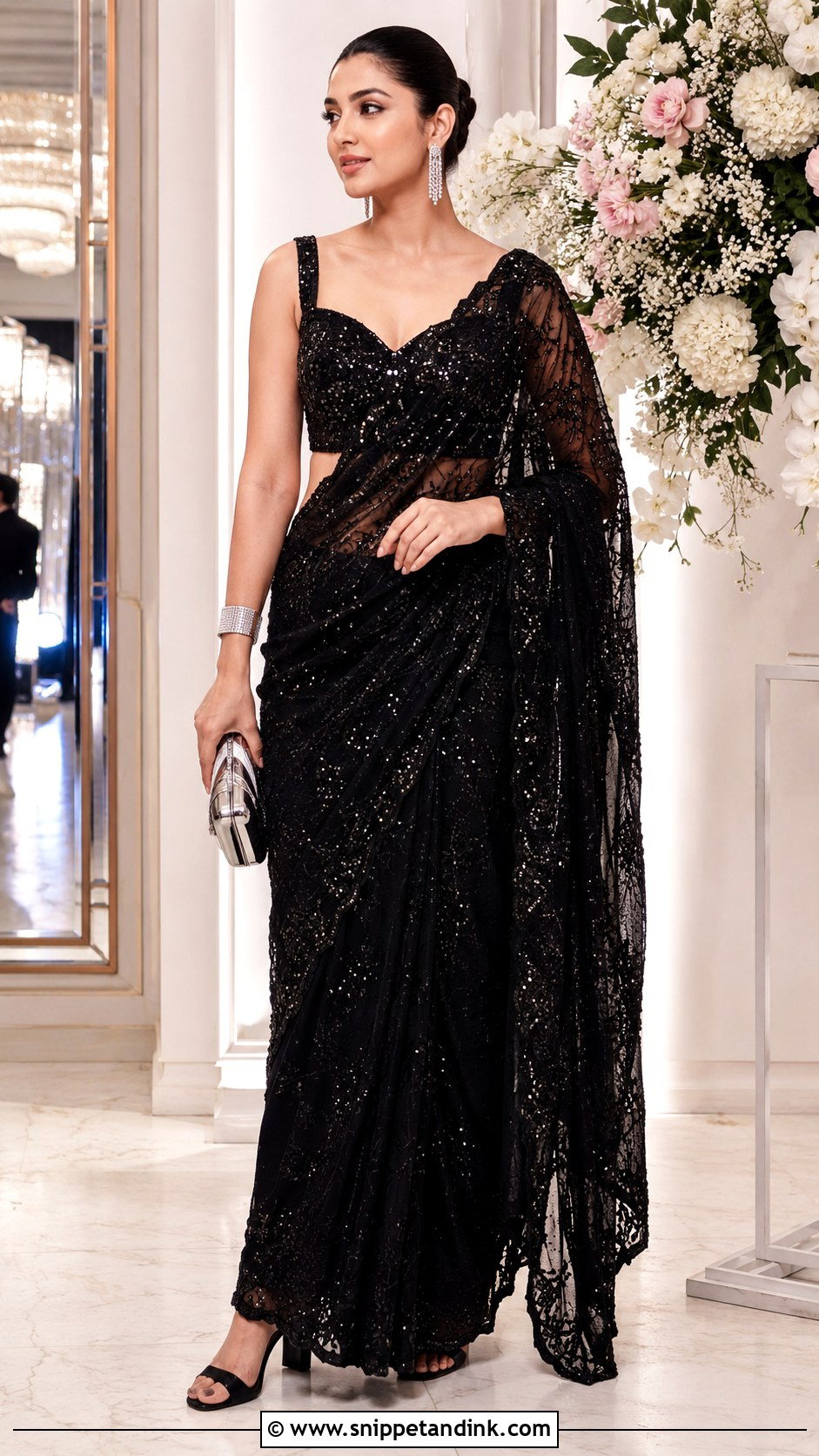
Black is a beautiful reception colour, but it isn’t welcome at every function, and some families still avoid it at weddings altogether. Confirm with the couple before you buy. Once you have the green light, a fluid georgette or crepe saree with sequins or an ornate border, over a structured velvet blouse, gives you soft drape and sharp shape at once. Crystal earrings, a cuff, a metallic clutch and comfortable black heels keep it sleek. I strongly suggest a pre-stitched saree or a professional drape if you plan to dance; a self-tied georgette pleat slides out within an hour. Smooth waves, defined eyes and a soft lip suit it.
7. Gold Heavy Saree With Red Blouse
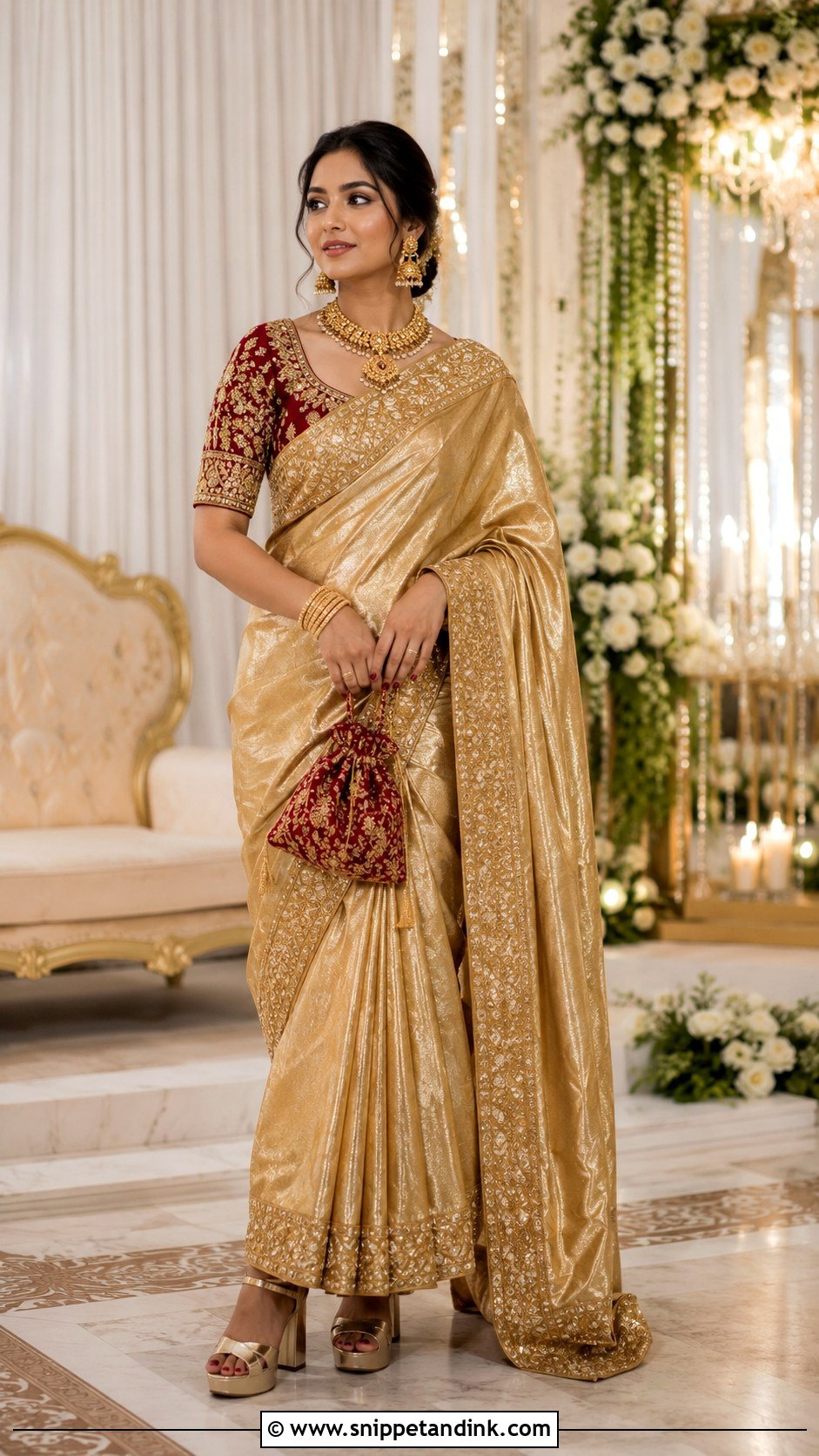
Gold tissue or silk gives you shine without the bulk of a layered skirt. Put it with a deep red blouse embroidered in gold and it reads instantly traditional. I keep the pleats narrow and pin them firmly at the waist, because a metallic saree tucked loosely adds visible volume around the middle. Temple or antique gold jewellery, a red potli and gold block heels pull the palette together, and a low bun with fresh jasmine is the classic finish. Brides can layer more jewellery and add a head veil; guests should keep the blouse simpler so nothing reads bridal.
8. Royal Blue Heavy Sharara With Short Kurta
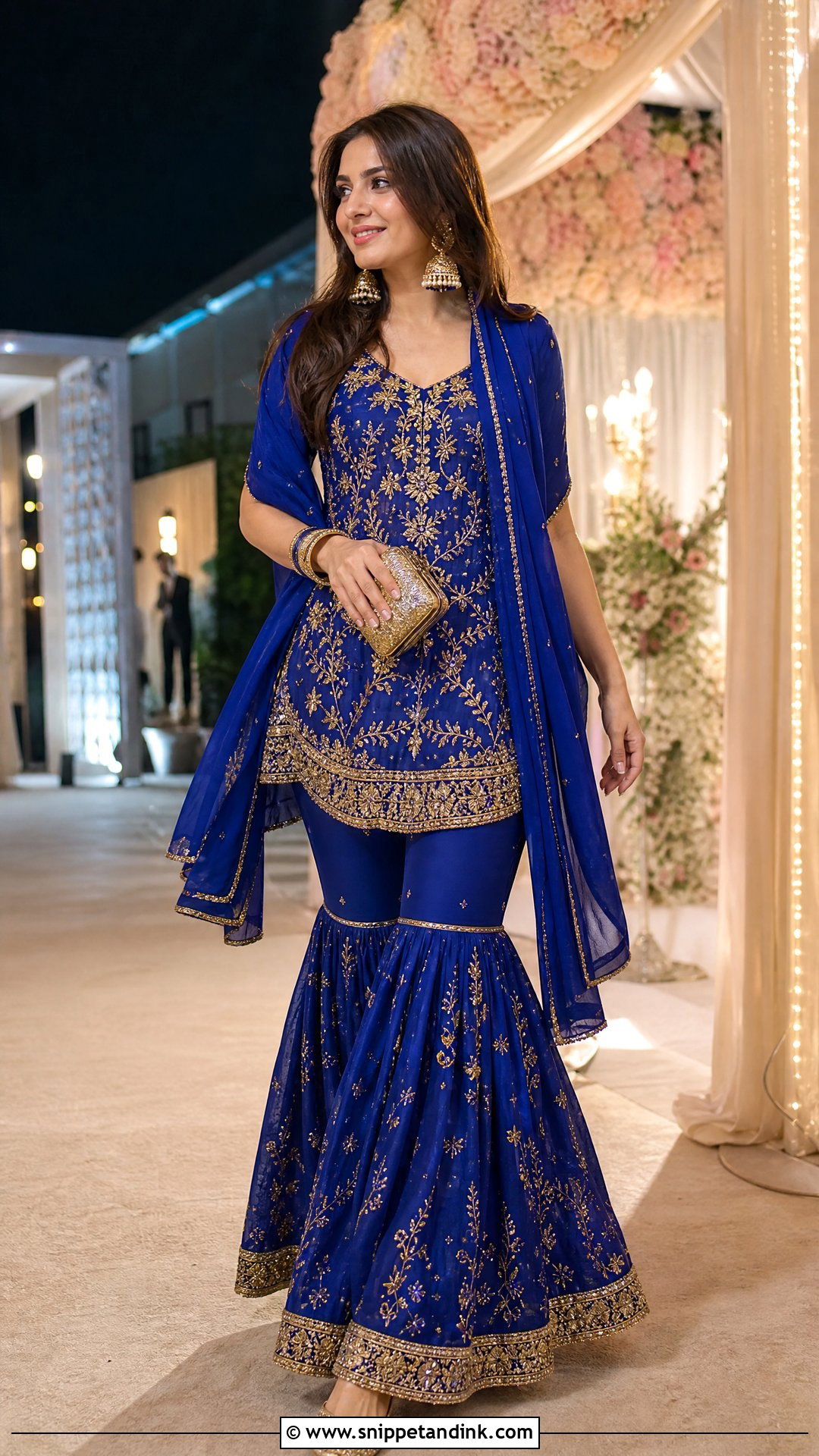
If dancing is the plan, a royal blue sharara set gives you the drama of a heavy outfit with your legs free. Wide flared pants with a short fitted kurta let the flare show properly. Hemline is the detail I fuss over: the pants should just skim the floor in the shoes you’ll wear, never pool over them, or you’ll step on the hem on the first spin. A lightweight embroidered dupatta over one shoulder, gold jhumkas, stacked bangles, a decorative clutch and cushioned juttis complete it. A neat ponytail or side braid keeps it practical for an evening sangeet.
9. Ivory Heavy Lehenga With Pearl Jewelry
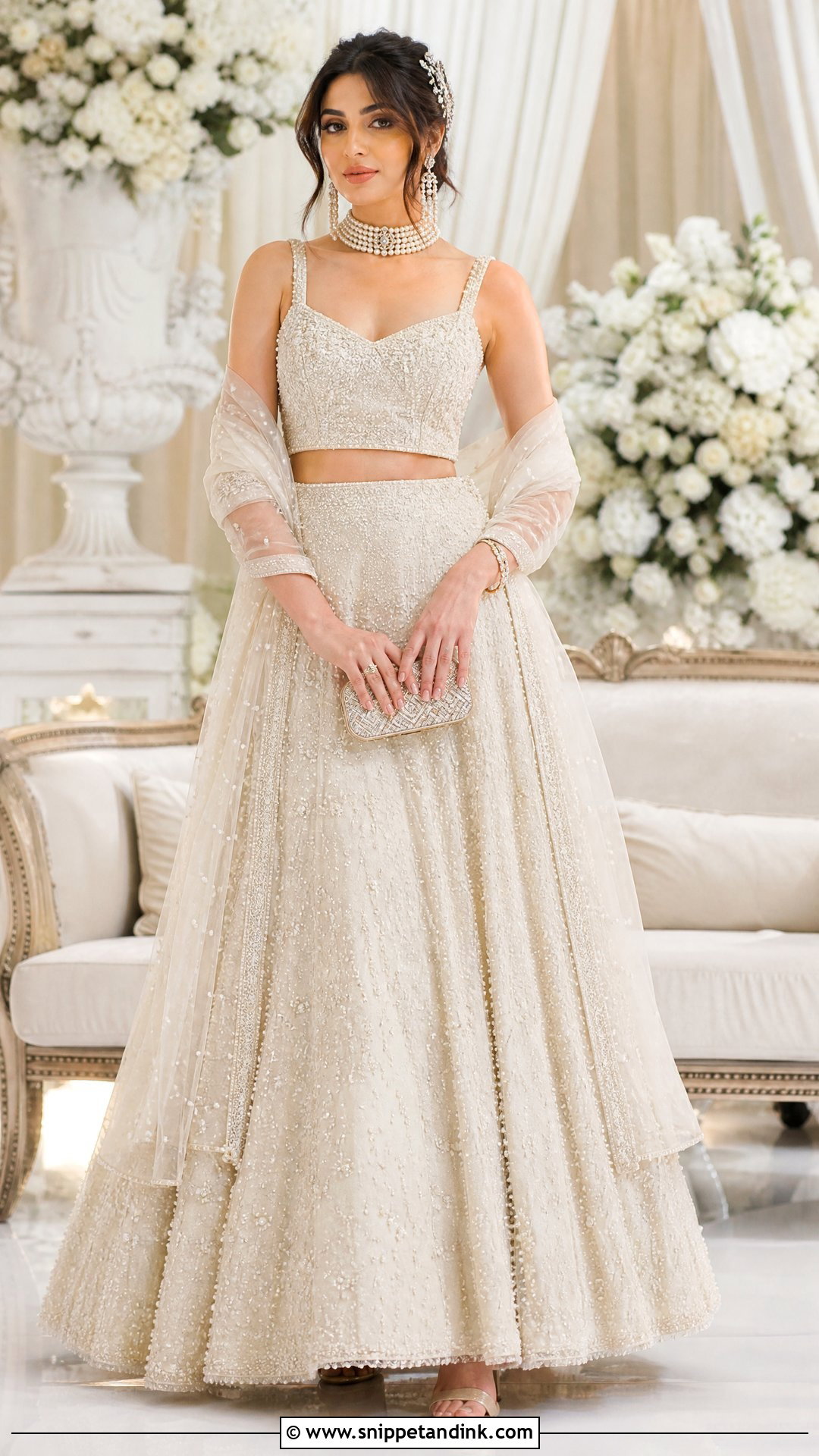
Ivory is having a real moment for receptions and modern ceremonies, and tonal pearl, sequin and fine metallic thread work keeps it luxurious. Pale fabric is unforgiving, though: it shows uneven hems, bulky can-can layers and the line of a petticoat, so I schedule an extra fitting just for the skirt. A fitted blouse, an A-line skirt and a sheer dupatta keep the silhouette clean. Pearl drops, a delicate choker, a jewelled hair piece and a structured ivory clutch suit it, with champagne heels or embroidered juttis. Guests, please check the couple’s customs first; in some families ivory is close to bridal, in others it carries different meaning entirely.
10. Purple Heavy Gharara With Long Kurta
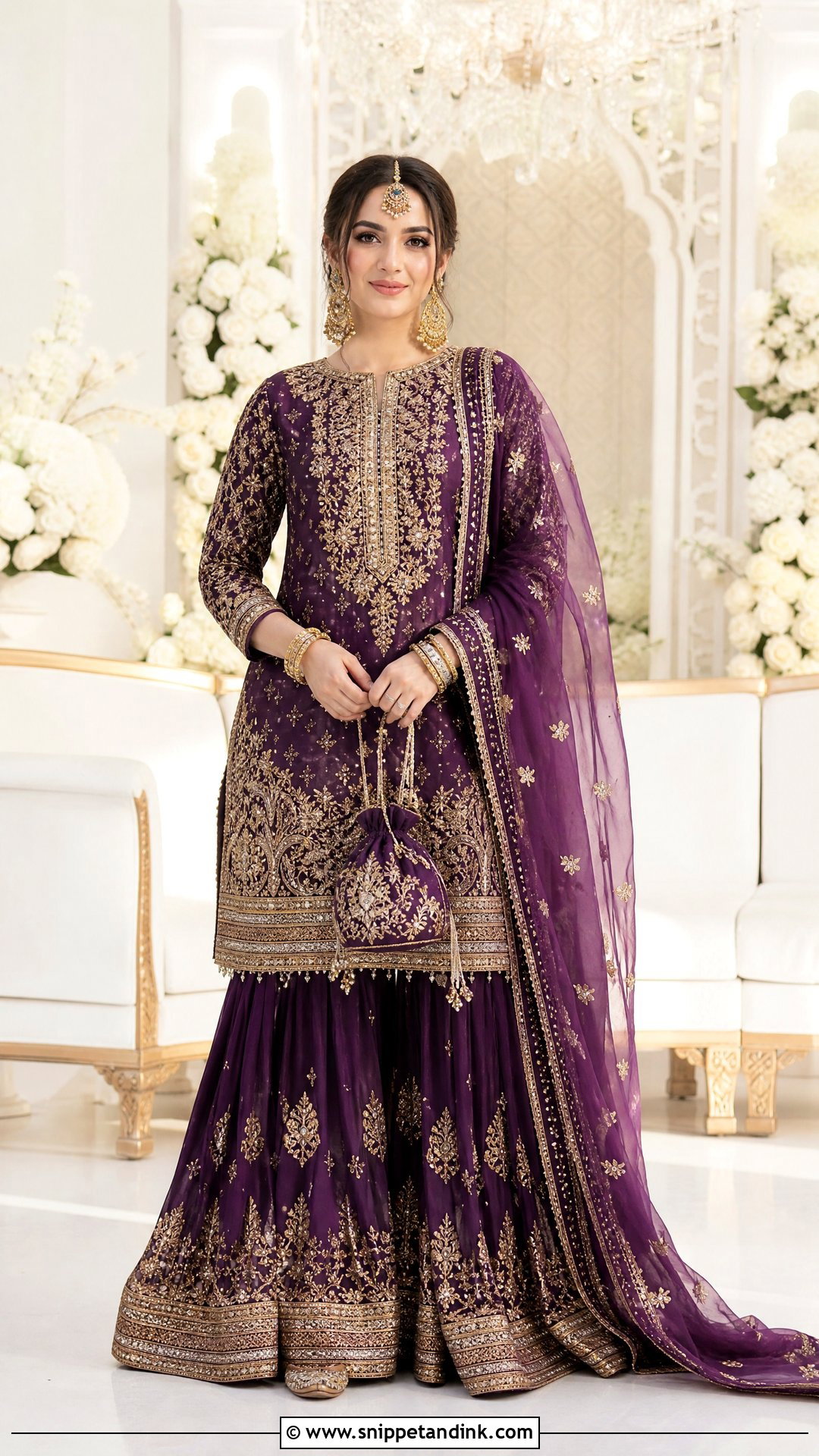
Deep purple suits a gharara because the colour holds up to heavy gold work at night. A knee-length kurta with an embroidered neckline and borders sits over the flared pants, and the embellishment around the knee joint is what shows off the gharara’s shape. Let a gold-edged organza dupatta fall from one shoulder. Antique gold earrings, bangles, a maang tikka and an embroidered potli finish it. Low-profile juttis let the hem fall correctly. I recommend a gharara to anyone facing a long seated ceremony, since the pants let you fold your legs comfortably where a wide skirt would bunch. Nikah, sangeet or evening celebration, it fits all three.
11. Wine Heavy Anarkali Gown With Gold Heels
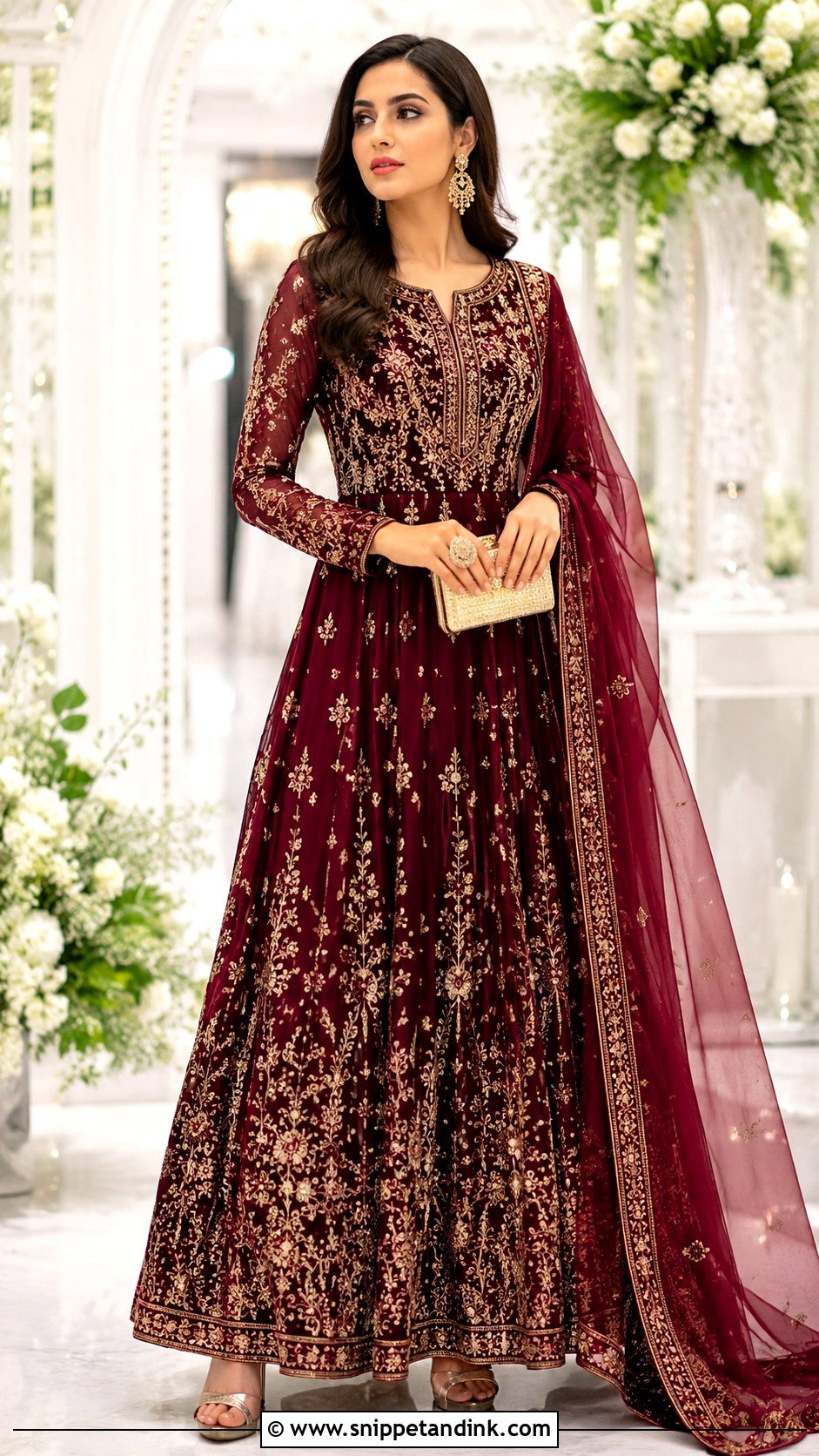
A wine Anarkali gown makes an entrance but is far easier to manage than a wide lehenga on stairs and in cars. Choose a fitted upper section with a modest neckline and a skirt that flares smoothly from the waist. My preference is dense gold work on the bodice that thins out toward the hem: the eye goes to the face, and the skirt is lighter to carry. Add a sheer wine dupatta with a narrow border if the occasion calls for coverage. Gold earrings, a statement ring, a box clutch and sturdy metallic heels complete it. Guests can skip the headpiece and choose a simpler necklace.
12. Peach Heavy Lehenga With Floral Embroidery
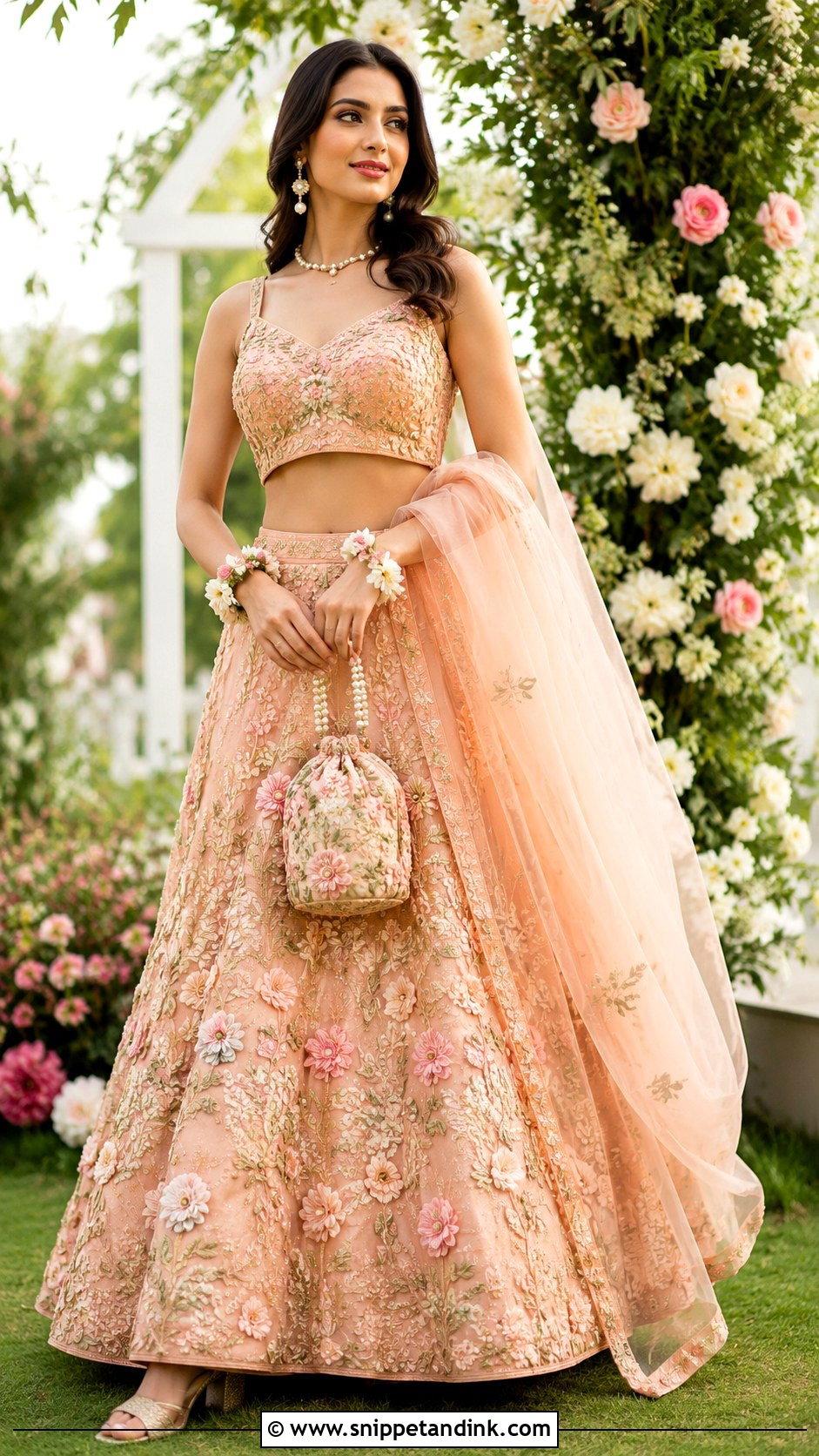
Peach is bright enough for daylight without the intensity of red. Dimensional floral embroidery, pearls and fine threadwork in blush, ivory and muted green give it a garden feel. Pair the skirt with a fitted peach blouse and an airy organza dupatta, then add pearl earrings, a slim necklace, floral bangles and a small embroidered bag. Nude or champagne block heels keep it light, and a braided bun or half-up style suits the flowers. For outdoor summer functions, ask for a cotton lining in the blouse and skirt waistband; synthetic linings trap heat fast under heavy embroidery.
13. Mustard Heavy Palazzo Suit With Embroidered Jacket
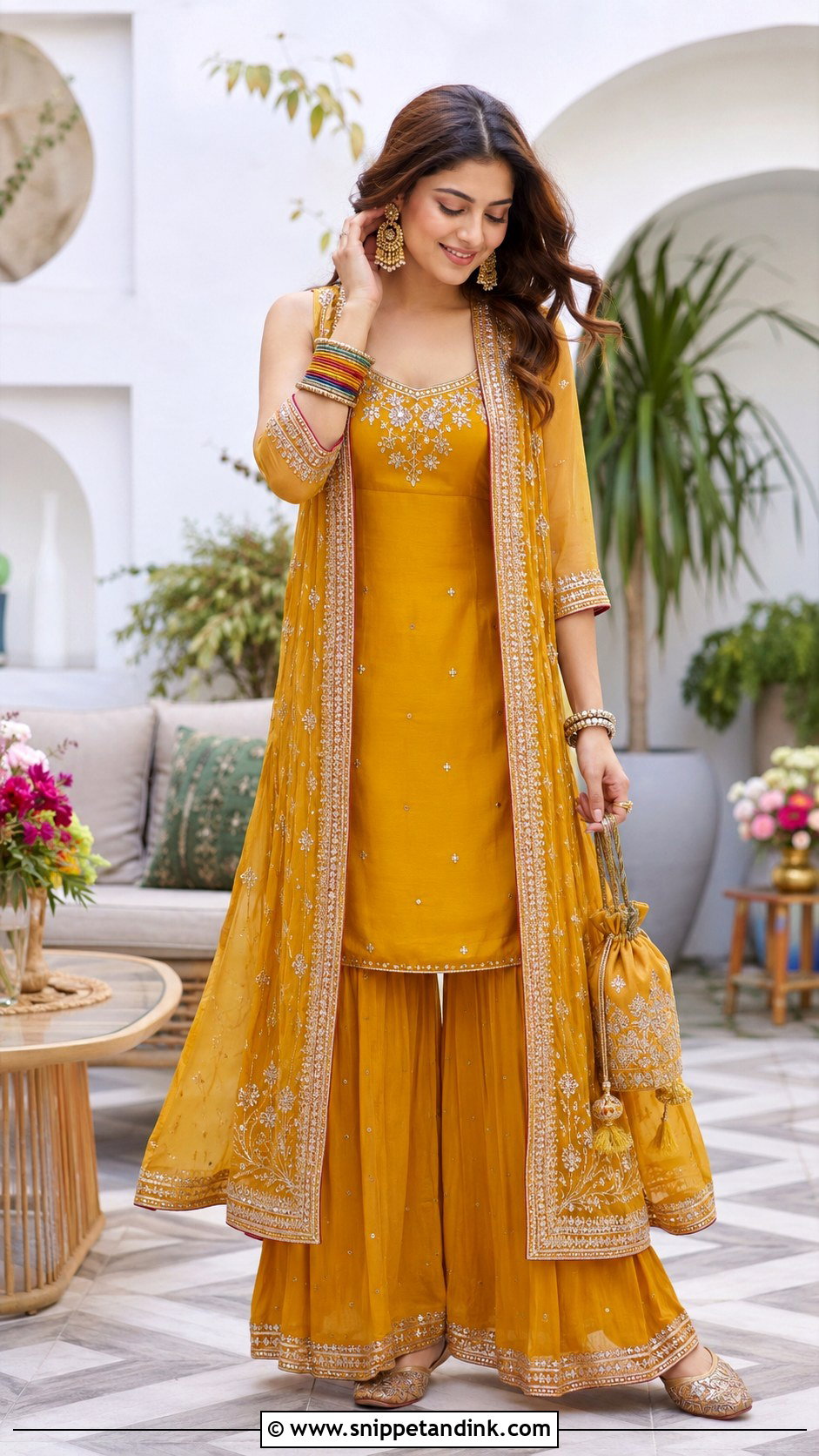
Mustard and a long embroidered jacket make a cheerful daytime outfit that still looks formal. Start with a fitted sleeveless kurta and wide palazzos in silk, crepe or georgette, then layer an open jacket in gota patti, resham or floral work. All the weight sits on your shoulders in the jacket, which is easier than carrying it at the waist, and you can slip the jacket off when the afternoon heats up. Gold drops, colourful bangles, a small potli and juttis are enough; the jacket already frames the neck, so skip a big necklace. A loose braid or textured bun works well at a mehendi.
14. Teal Heavy Saree With Sequin Blouse
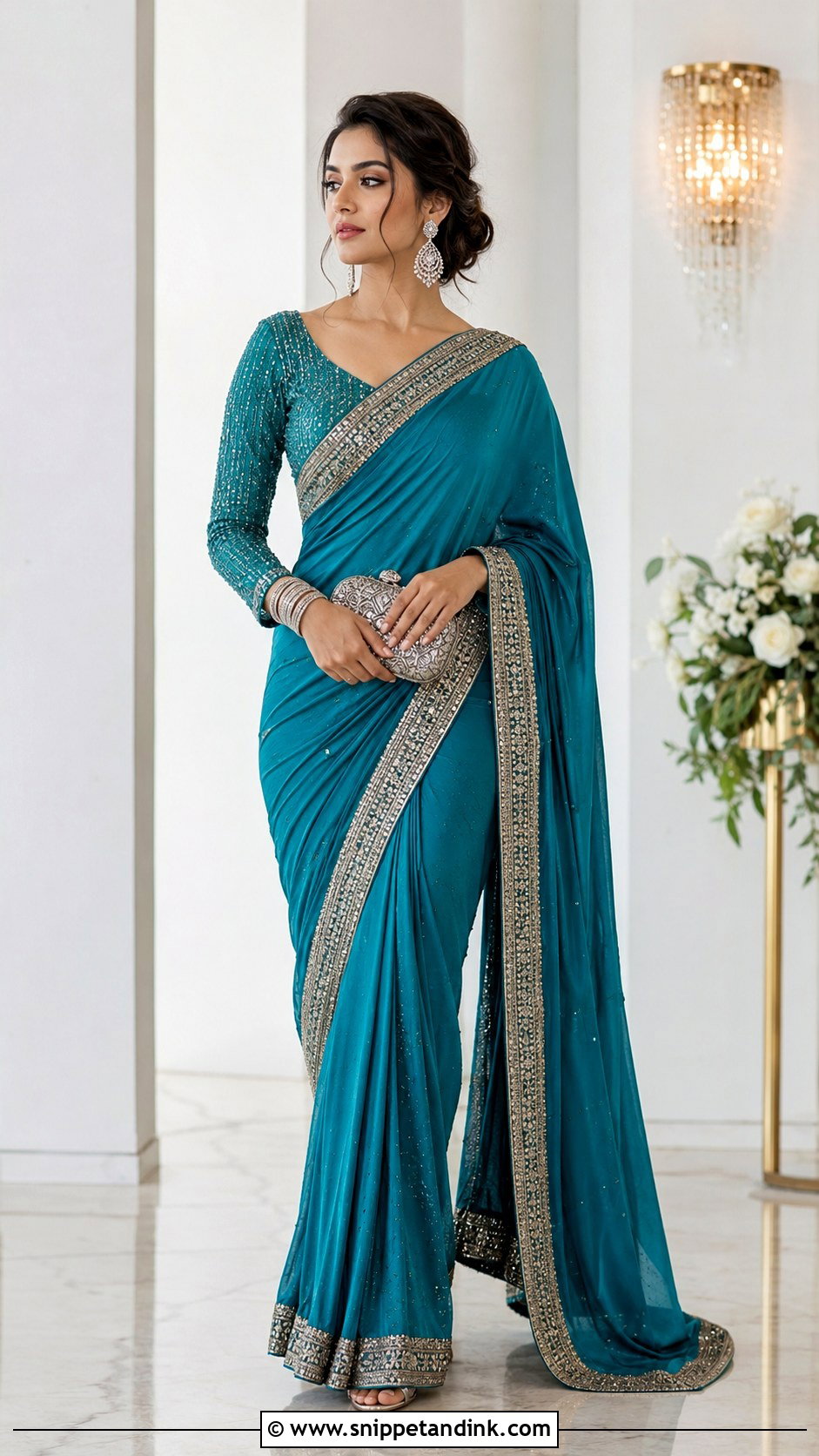
Teal and sequins give you colour and evening sparkle in one streamlined drape. A teal saree in silk blend, georgette or organza with a metallic border goes over a fitted blouse sequinned in teal, antique gold or silver. Keep the blouse neckline simple; when both pieces are worked heavily, a fussy neckline tips it over. I pin the pallu at the shoulder and once more near the wrist when a client wants a drape that holds while she moves. Chandelier earrings, a slim bangle stack, a jewelled clutch and metallic heels finish it. A sleek bun or straight side-parted hair keeps it modern.

15. Orange Heavy Lehenga With Gota Patti Work
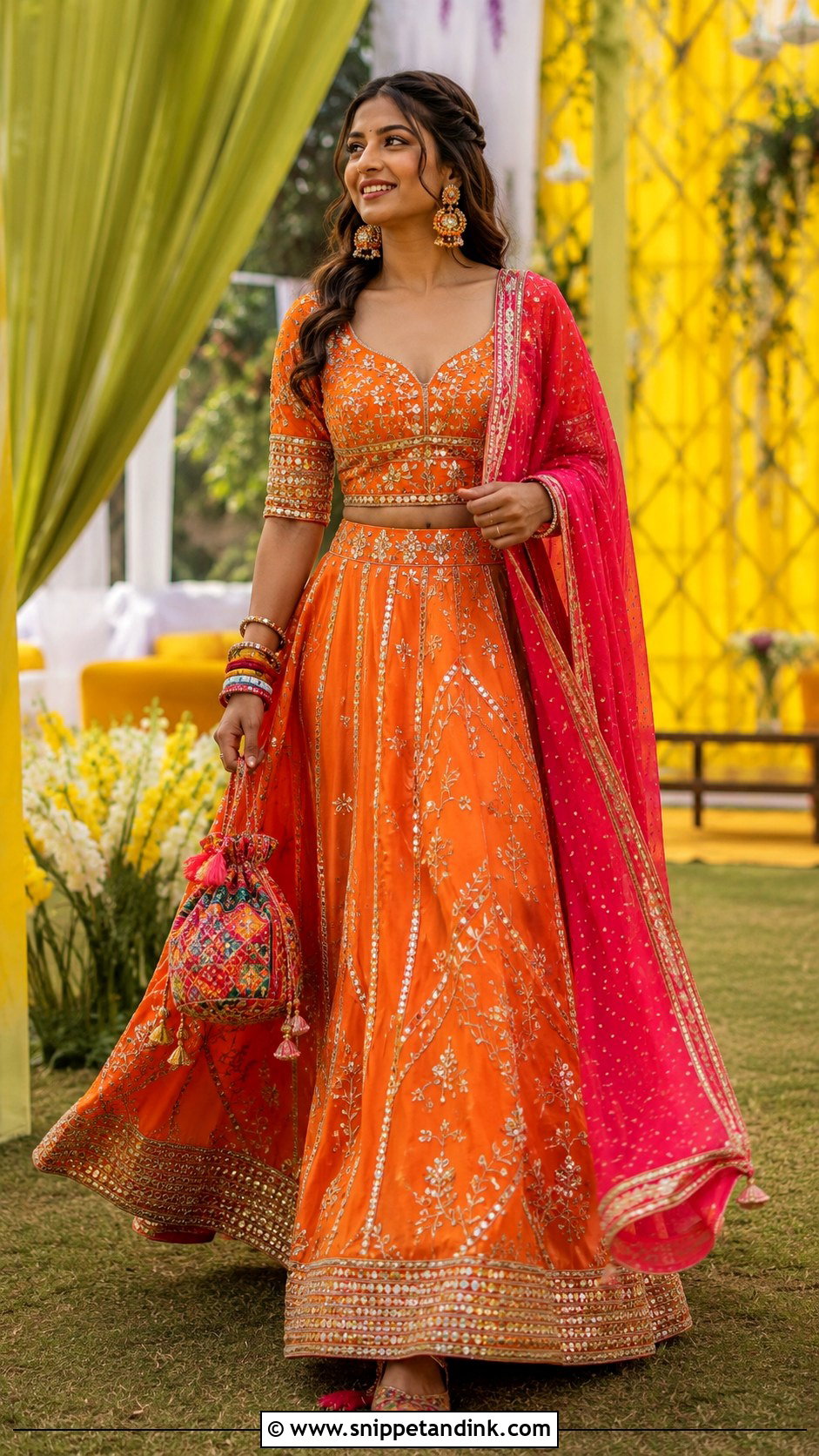
Orange is pure energy for a mehendi, haldi or daytime sangeet. A flared lehenga with gota patti, a matching blouse and a contrasting pink or green dupatta looks festive in bright light. Gota is a good practical choice too: the metallic ribbon work reads rich but weighs far less than dense zardozi. Gold jhumkas, mixed bangles, a colourful potli and cushioned juttis complete it, with a braid dressed in small flowers. If the skirt is heavily worked, choose the lightest dupatta you can find. Haldi paste stains, by the way, so many families keep their best gota piece for after the turmeric is done.
16. Silver Heavy Indo Western Gown With Cape
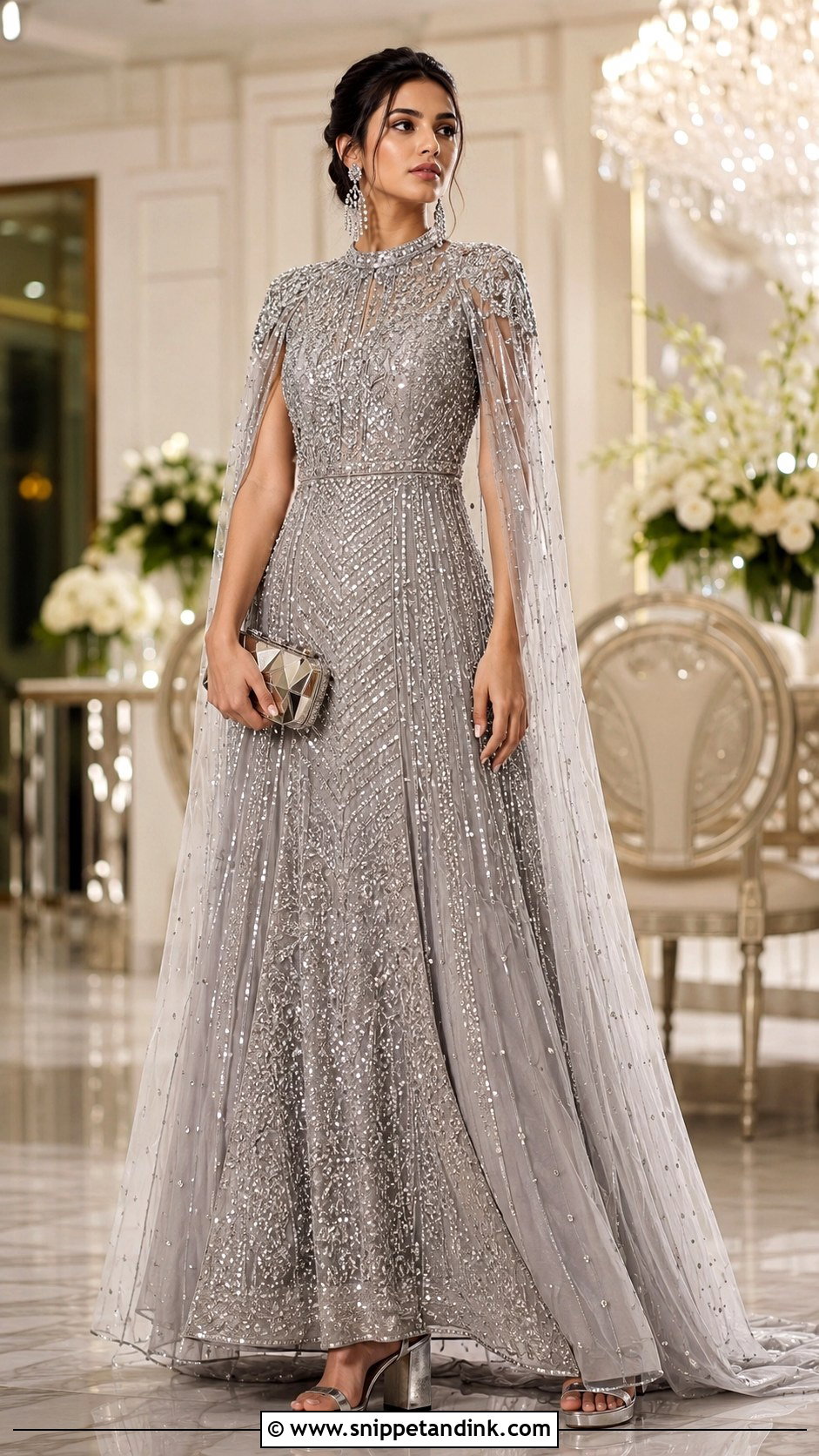
No dupatta, all drama: a silver Indo-Western gown with a sheer cape suits a modern reception. Choose a fitted or gently flared gown in tonal sequins, crystals and beadwork, with a cape that falls behind the arms. I check how the cape attaches before anything else, because a cape held by a single hook pulls the neckline backward all night; it should be stitched or fastened at several points along the shoulder. Crystal earrings, a sleek silver clutch and comfortable metallic heels are all you need. Smooth waves or a sculpted low bun let the cape show. Engagement parties and formal indoor receptions are its natural home.
17. Rani Pink Heavy Anarkali With Green Dupatta
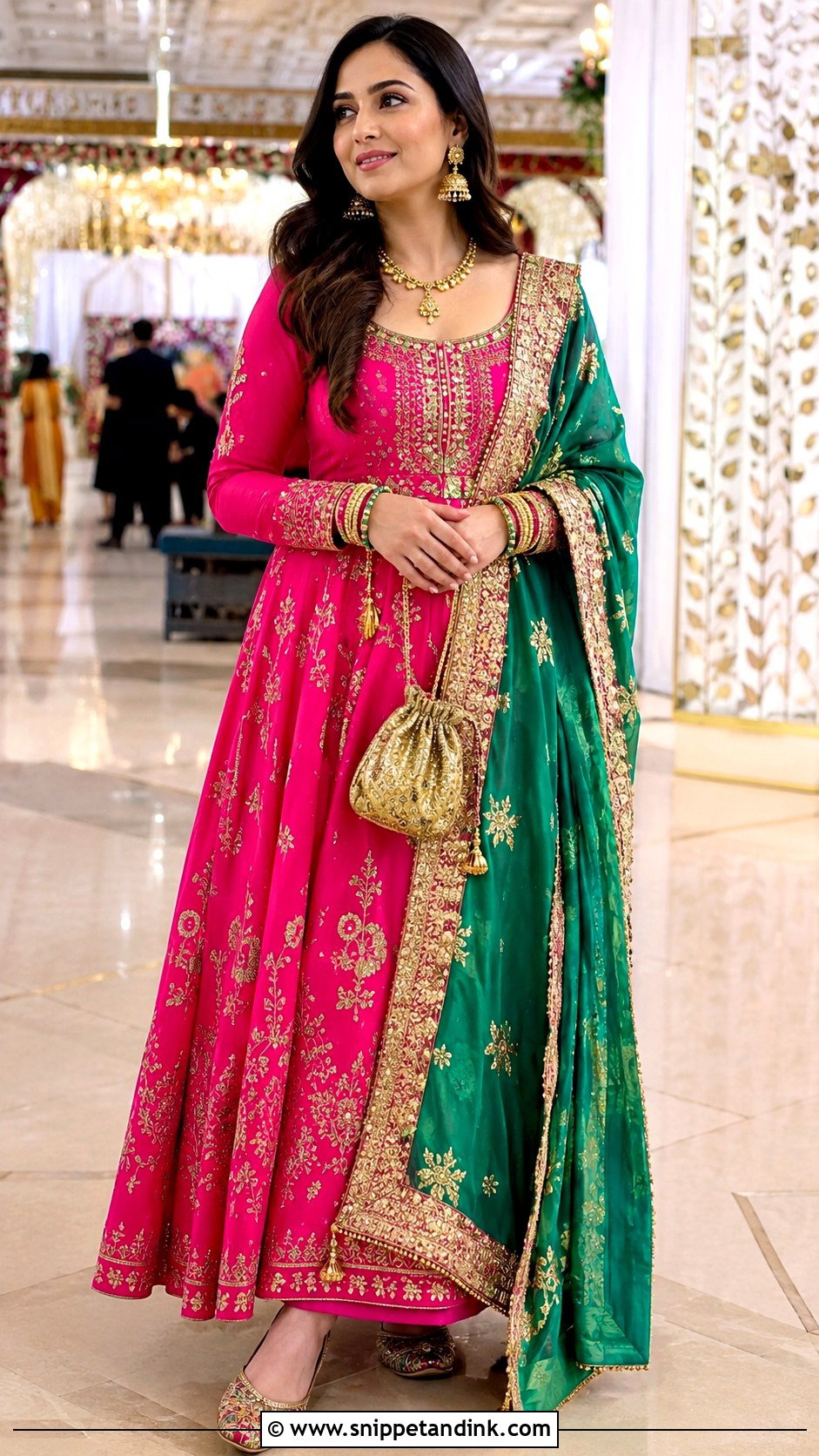
Rani pink against emerald green is one of the most joyful combinations in South Asian dressing. A floor-length Anarkali with gold work at the bodice, sleeves and border, and a green dupatta over one shoulder so both colours show, is all it takes. Keep the flare manageable; an Anarkali with too many kalis gets caught underfoot on stairs. Gold jhumkas, a medium necklace, pink and green bangles, embroidered juttis and a compact gold potli complete the palette. A centre-parted braid or low bun with a little hair jewellery suits it. Guests should choose a narrower border and fewer jewellery pieces so it stays celebratory, not bridal.
18. Beige Heavy Lehenga With Multicolor Embroidery
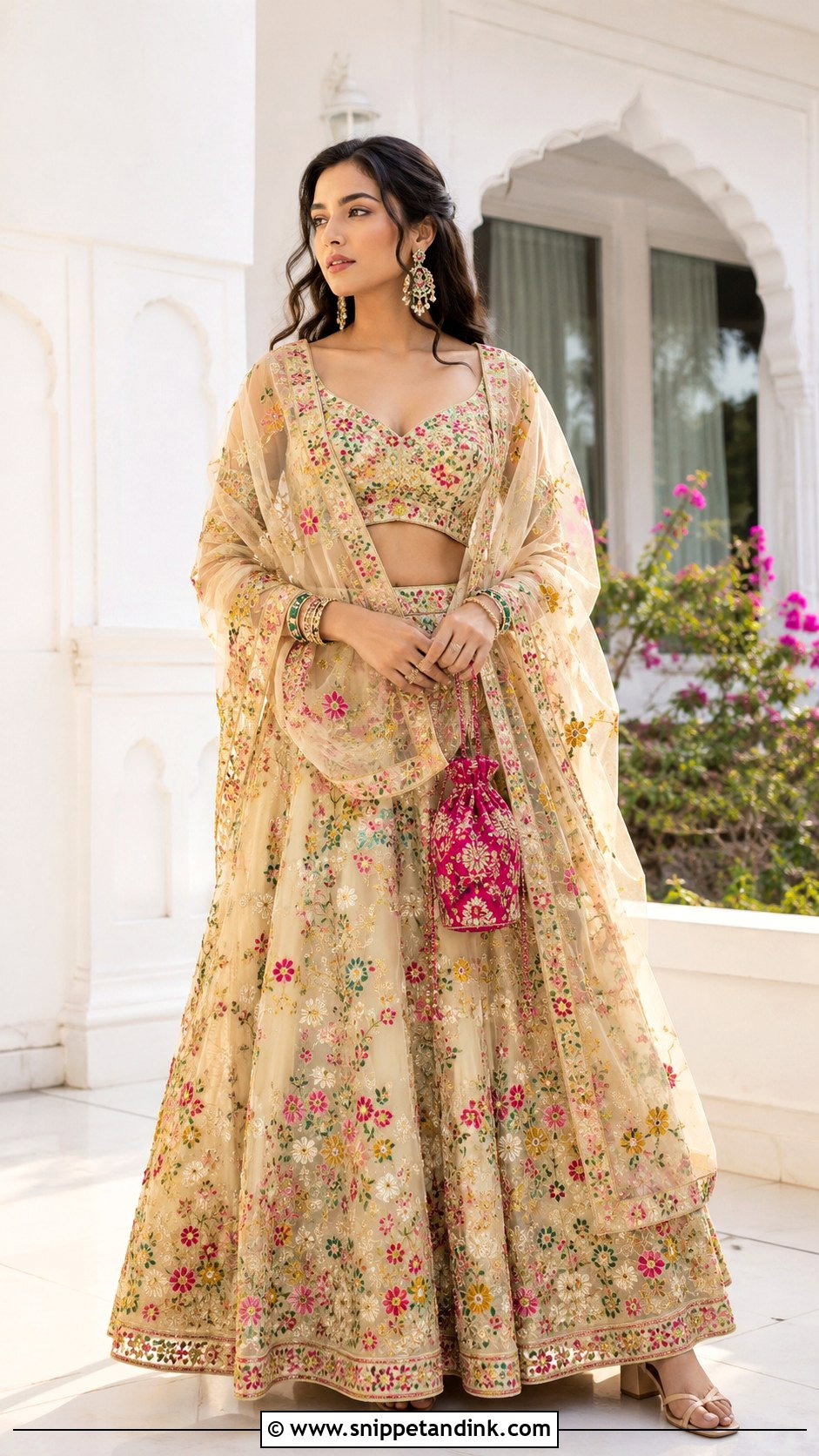
Beige on its own can look flat in photos. Cover it in multicolour floral or geometric embroidery in pink, blue, green, coral and gold, and it comes alive. A beige net dupatta with a colourful border ties the pieces together. My rule with multicolour work is to pull one shade from the embroidery for the makeup or accessories and ignore the rest; matching every colour looks forced. Gemstone earrings, mixed bangles, a bright potli and neutral block heels are enough. This is also the most reusable outfit on the list: the neutral base takes a new blouse or dupatta easily for future weddings.
19. Rust Heavy Silk Saree With Antique Gold Jewelry
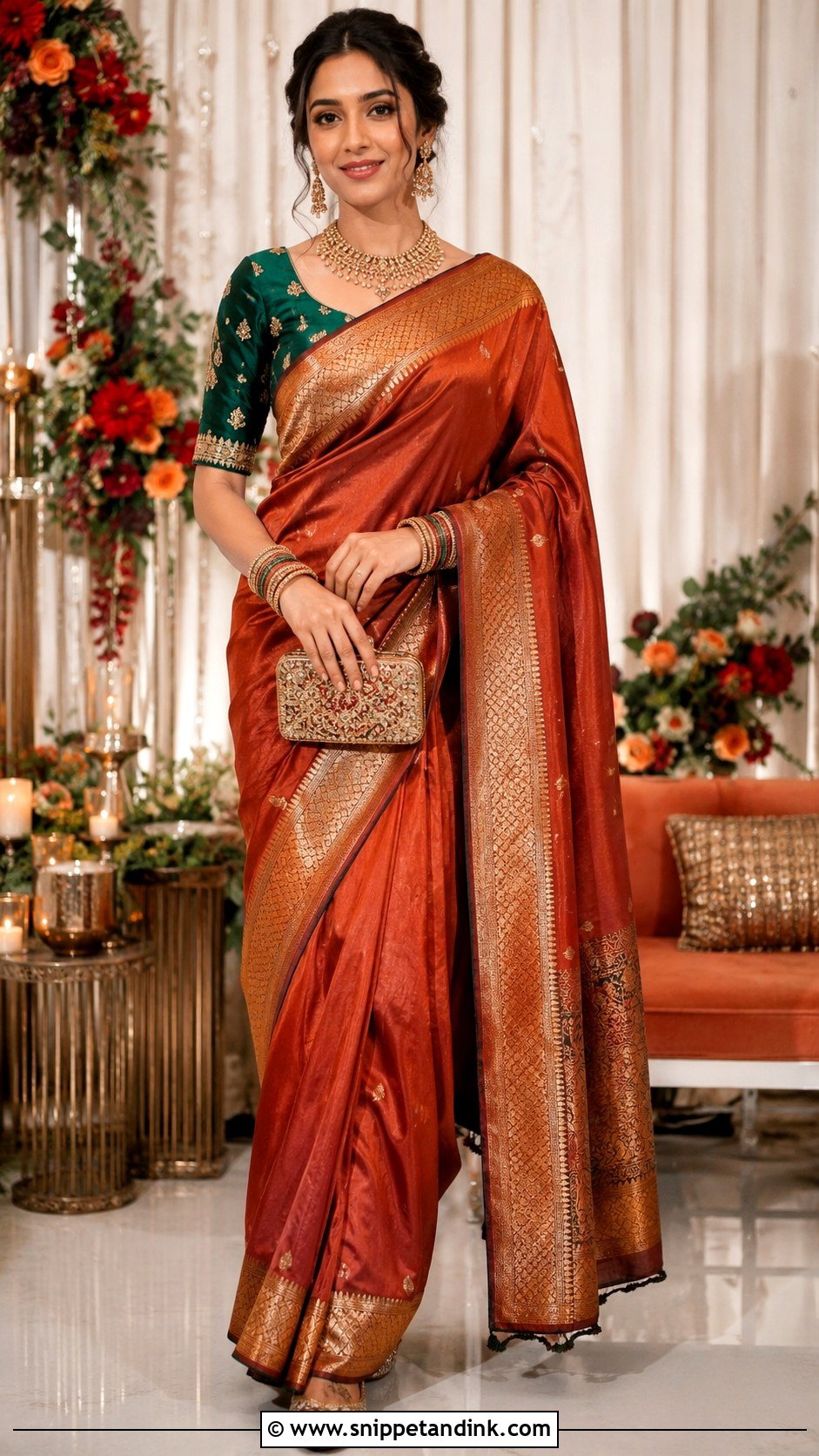
Rust silk is warm and grown-up, and it comes into its own on an autumn evening. A Banarasi-style woven saree with an antique gold border and motifs, over a rust, maroon or deep green blouse, gives subtle contrast. Heavy silk needs firm pleating, so I press the pleats and pin them before the saree is even tucked; loose silk pleats fan out awkwardly in photos. Antique gold earrings, layered bangles and a traditional necklace bring out the richness. A small embroidered clutch and supportive gold heels or juttis finish it. A low bun with fresh flowers is classic. Close relatives who prefer woven texture to sequins tend to love this.

20. Champagne Heavy Peplum Lehenga With Dupatta
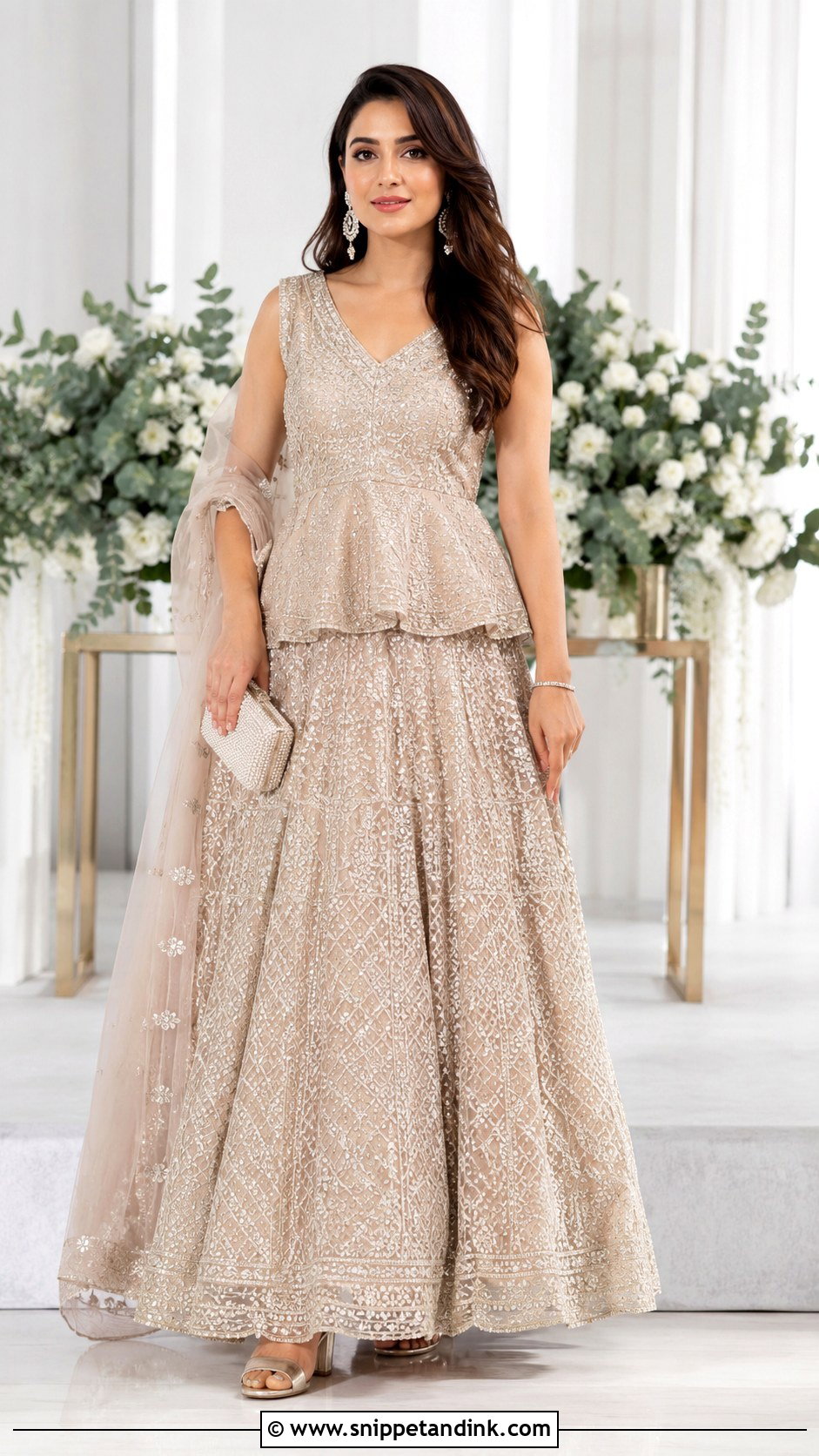
A champagne peplum lehenga solves a common worry: more coverage at the midriff without giving up a full wedding skirt. The peplum should define the waist and fall smoothly over the upper hip; if it flares too early, it adds width instead of shape. Underneath, an A-line skirt in tonal beads, sequins and metallic thread keeps it formal. A lightweight net dupatta over one shoulder protects the peplum’s structure. Crystal earrings, a delicate bracelet, a small champagne clutch and metallic block heels are enough. A sleek ponytail shows the neckline. It suits receptions and engagements, with the embroidery level easily adjusted for bride or guest.
The Order I Dress a Bride in a Heavy Lehenga
Getting dressed in a heavy outfit takes longer than most brides expect, so I build the time into the schedule after hair and makeup are done. The sequence below avoids redoing anything.
- Blouse first, fastened and checked in the mirror, while the hair is protected with a scarf.
- Can-can and lehenga, tied at the natural waist and turned so the main panel is centred.
- Shoes on before any hem is judged, since the length depends on them.
- Shoulder dupatta pinned at the shoulder, waist and back with small safety pins hidden in the embroidery.
- Necklaces and earrings, then the maang tikka and any matha patti.
- Head dupatta last, pinned into the bun at several points so it can’t slide back.
Storing Zardozi, Velvet and Silk After the Wedding
Heavy embroidery tarnishes and creases if it’s put away carelessly. Air the outfit for a day before packing it, so body moisture dries out. Wrap it in a cotton or muslin cloth rather than plastic, which traps humidity, and fold acid-free tissue between the layers so metallic threads don’t rub. Never hang a heavy lehenga by its waistband for months; the weight stretches the band. Refold it along different lines every few months, and send it to a specialist dry cleaner who handles embellished wear rather than a general one.
Wear It for an Hour at Home First
Every outfit here relies on the same unglamorous things: tailoring, supportive footwear and jewellery that fits the garment instead of fighting it. Think about your role, the function, the venue and how many hours you’ll be in it. Brides can go fuller, heavier and more traditional in colour; guests can take any of these looks and lighten the embroidery, simplify the jewellery and avoid bridal reds. Before the day, put the whole outfit on at home, jewellery and shoes included, and wear it while you sit, climb stairs and eat. If it’s still comfortable an hour later, you can trust it through a long wedding.
You'll Like These Ideas:






Leave a Reply