
A handmade bridal gown carries hundreds of hours of your own work down the aisle, and crochet is the craft where that shows most. The twenty dresses below run from bell-sleeved boho maxis and halter beach gowns to a corset bodice, a mini and a gown with a train you can unhook. What changes from one to the next is less the pattern than the yarn, the hook size and what sits underneath. When I fit a crochet gown, the first thing I want to know is how the fabric behaved after blocking, because that tells me more than any photo. So read the ideas with a swatch in mind, and give yourself far more fitting time than a sewn dress would need.
Swatch, Block, Then Hang It Overnight
When a crochet gown goes wrong at a fitting, I can usually trace it back to the swatch. A flat gauge square tells you width; it tells you nothing about length. Crochet is heavy for its size, and a floor-length skirt pulls on every row above it, so the dress you finish on the table is rarely the dress that hangs on the body an hour later.
My routine before a maker commits to a pattern:
- Work a swatch at least 20 cm square in the exact yarn, hook and stitch of the skirt.
- Wash and block it the way the finished dress will be treated, then let it dry fully.
- Measure it, then pin it to a hanger with a small weight clipped along the bottom edge and leave it overnight. Measure again. The difference is how much your skirt will grow.
- Hold the swatch over the lining fabric in daylight and under a phone flash. Gaps that look delicate in daylight can read as bare skin in flash photos.
Yarn and lining choices that change the fit
Mercerized cotton holds its shape best and gives crisp stitches. Bamboo and viscose blends drape beautifully but stretch more, so I’d only use them for flowing skirts, not for a fitted mermaid or corset bodice. For the lining, a matte satin or crepe slides against the crochet instead of gripping it, which helps the dress fall straight.
Give yourself time. A full-length lace gown can take many months of evenings, and I want at least two fittings on the body: one with the bodice pinned before the skirt is worked, and one with the whole dress after blocking, close enough to the wedding that her measurements are settled.
1. Boho Crochet Wedding Dress With Bell Sleeves
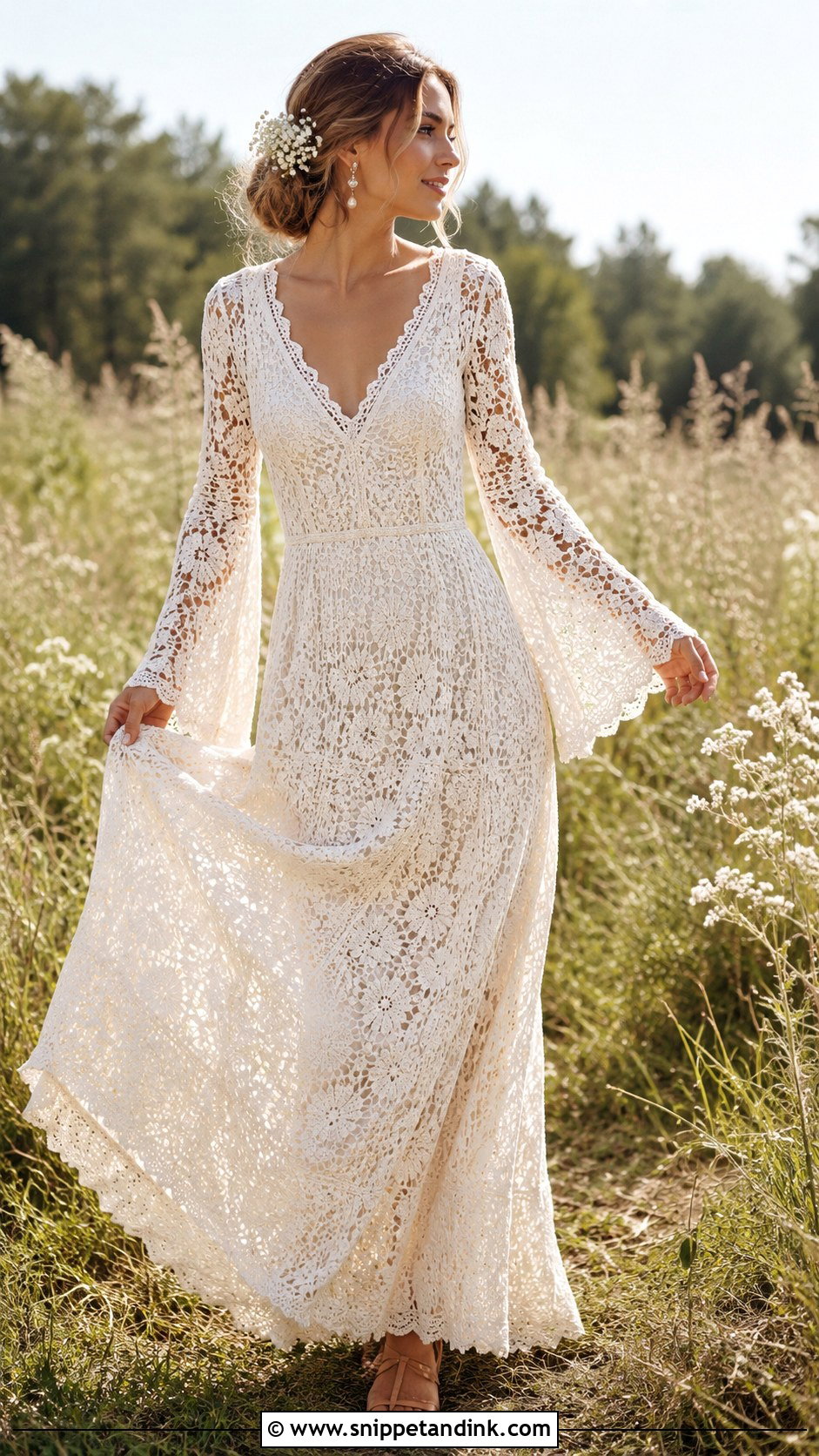
Bell sleeves are where a crochet dress either swings or sags. Start the flare at the elbow, not the shoulder, and work the widening section in fan or floral mesh so the weight stays low; solid stitches there pull the shoulder seam forward every time the bride lifts her arms. The bodice underneath should be a fitted V-neck in a firmer stitch, running into a maxi skirt with a few extra increases near the hem so she can stride. Cotton or a cotton-bamboo blend gives clear stitch definition, and a smooth lining from neckline to floor stops the mesh catching on skin. I keep the styling quiet: flat leather sandals, pearl drops and a loose low bun with small fabric flowers.
2. Beach Crochet Wedding Dress With Halter Neck
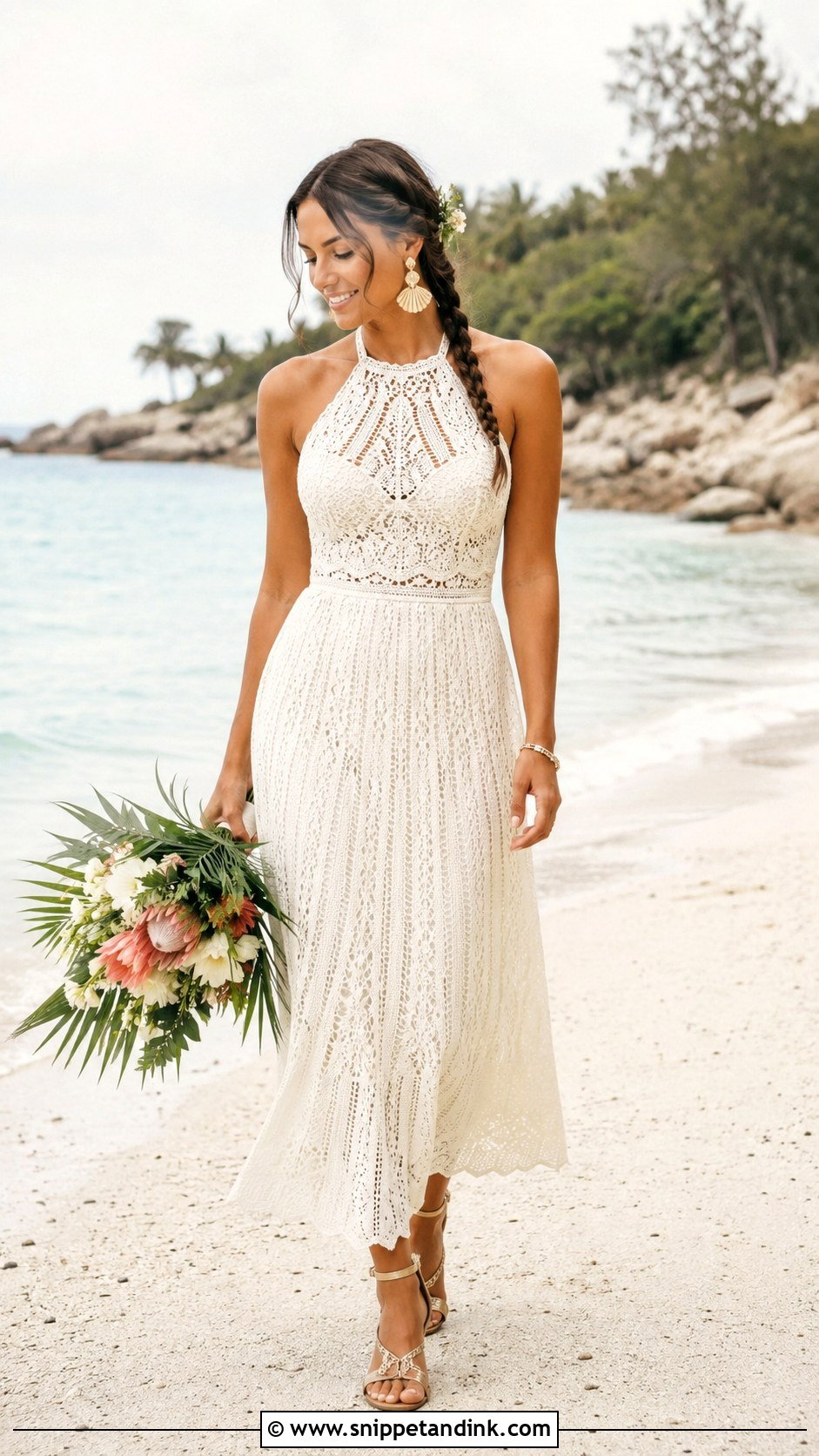
Picture the ceremony at the waterline in a lightweight halter-neck crochet gown. The halter carries the whole bodice from the back of the neck, so I always ask the maker to work the strap in a tight stitch and reinforce where it meets the cups; a loose halter stretches by the end of the reception and the neckline drops. Keep the bust and waist dense for coverage and save the open shell stitches for the skirt, where sea air can move through them. A removable lining lets the dress stay airy without being sheer in flash photos. Metallic flat sandals, small shell earrings, a braid and a compact tropical bouquet finish it without tipping into casual.
3. Vintage 1970s Crochet Wedding Dress With High Neck
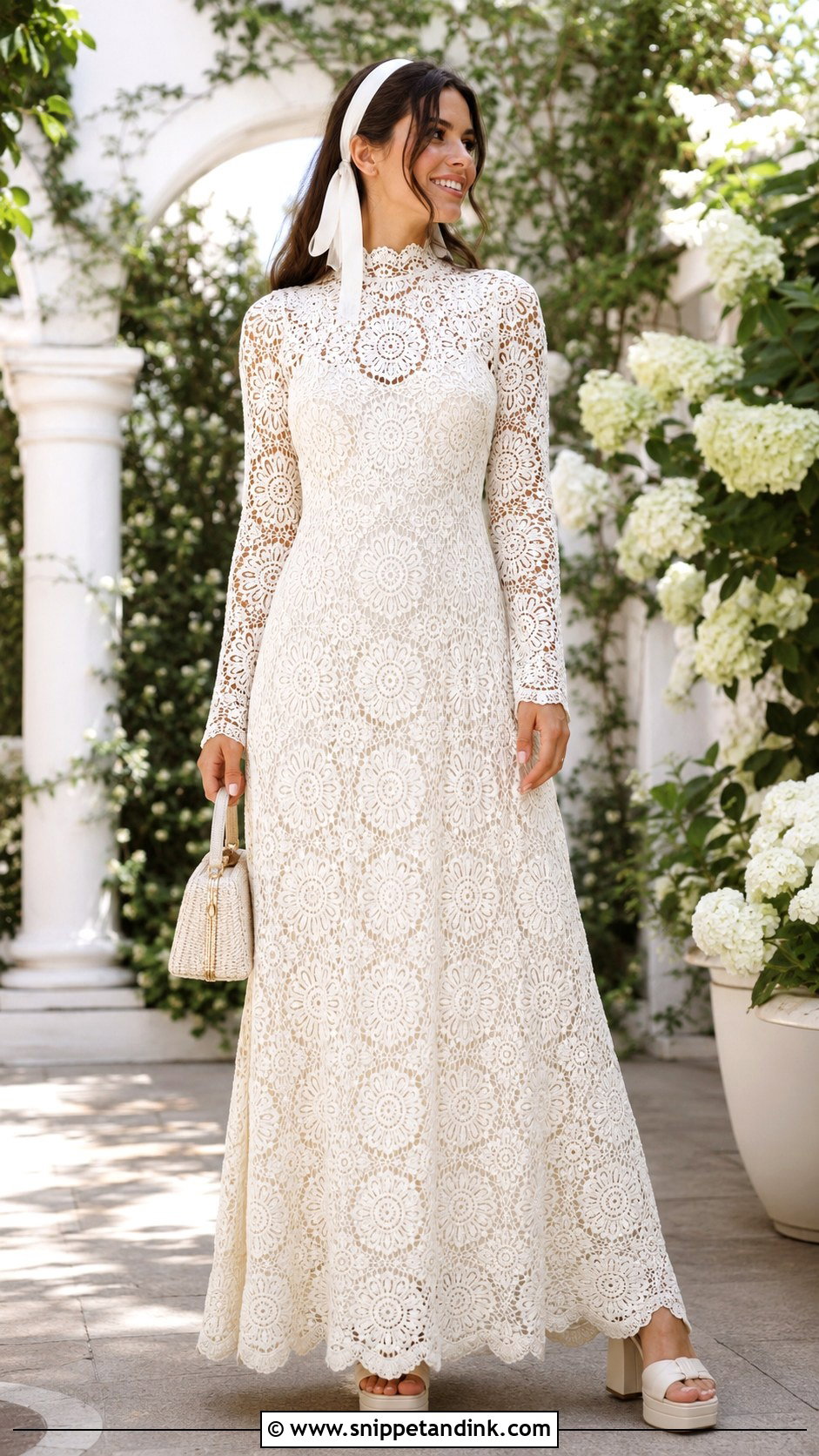
A vintage 1970s crochet wedding dress lives or dies on its high neck. Built from small flower or medallion motifs, the bodice needs each join placed evenly or the neckline twists by a few millimetres and you see it in every front-facing photo. Fine cotton thread gives the most delicate result, but it demands steady tension for weeks, so be honest about your pace. Full fitted sleeves, a softly flared skirt and covered buttons down the back carry the era. The slip underneath matters more than people expect: give it a high neck too, so the lining reads as part of the design. Platforms, a narrow ribbon headband and a small structured bag keep it from looking like a costume.
4. Modern Crochet Wedding Dress With Square Neck
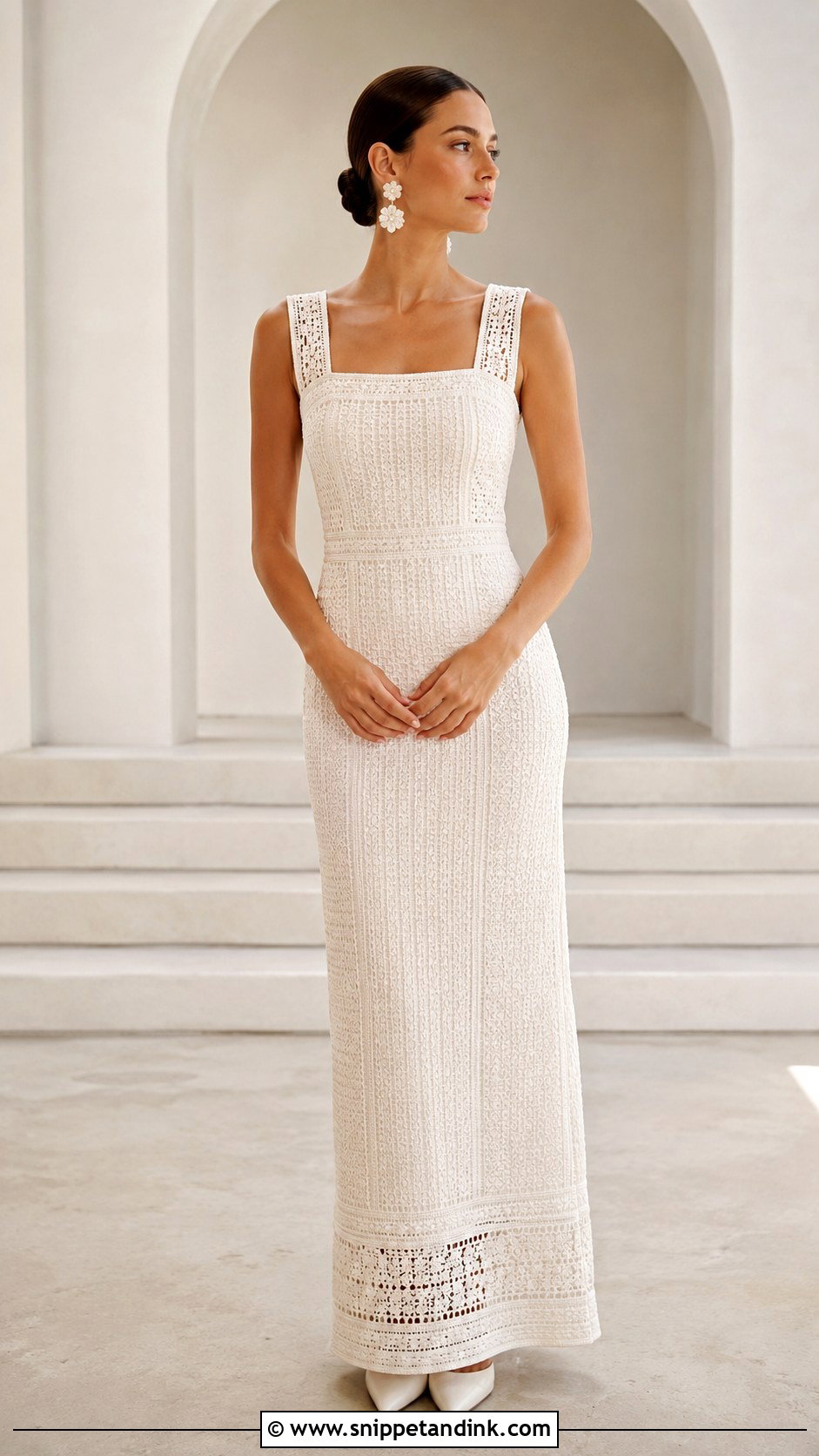
Square necklines show every wobble. The two corners need to sit at exactly the same height, so I pin them on the bride before the straps are finished, never after. Linked double crochet gives a dense, almost woven bodice that holds that clean line, and a narrow geometric border around the neck and straps frames it without fuss. Shape the waist with measured decreases rather than negative ease; crochet pulled tight looks strained, not sleek. A smooth cotton-viscose yarn over a full ivory lining, a straight or gently flared column skirt, pointed flats or low block heels, sculptural earrings and a sleek bun are all this one asks for.
5. Off Shoulder Crochet Wedding Dress
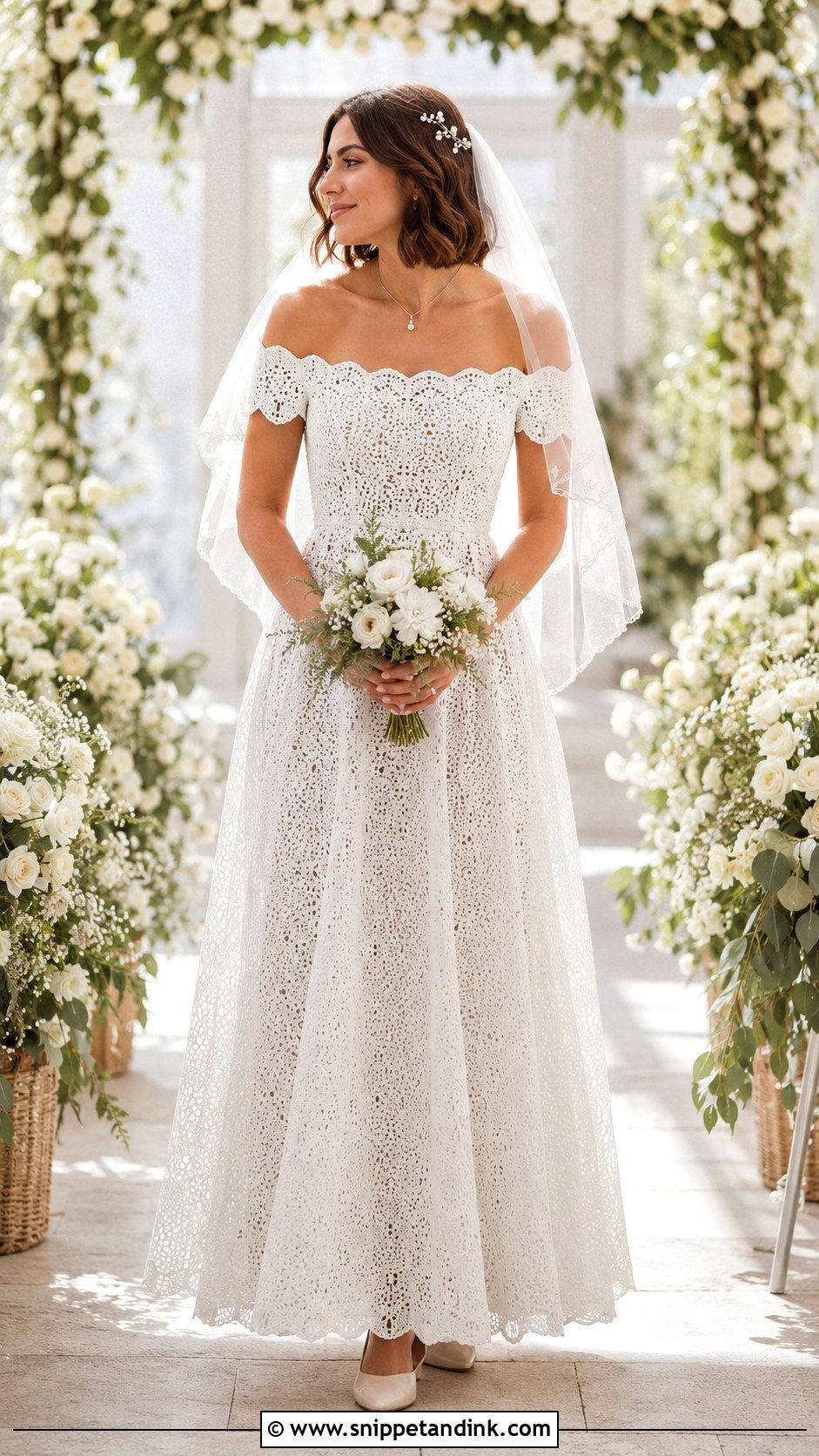
The off-shoulder band is a fit problem first and a design second. It has to grip the upper arm without cutting in, so I’d crochet it as a wide band with elastic thread worked through the inner rows or a ribbon stay sewn inside. Scalloped edging softens the shoulders, while denser stitches around the bust give a smooth base. Use lightweight cotton: a heavy skirt hanging off an off-shoulder neckline drags it lower all evening. Attach the bodice to an A-line skirt in fan or lace rows, line it fully, and add low ivory heels, a fine pendant and pearl hairpins. A shoulder-length veil or a sheer bow keeps the neckline in view.
6. Irish Crochet Wedding Dress With Floral Motifs
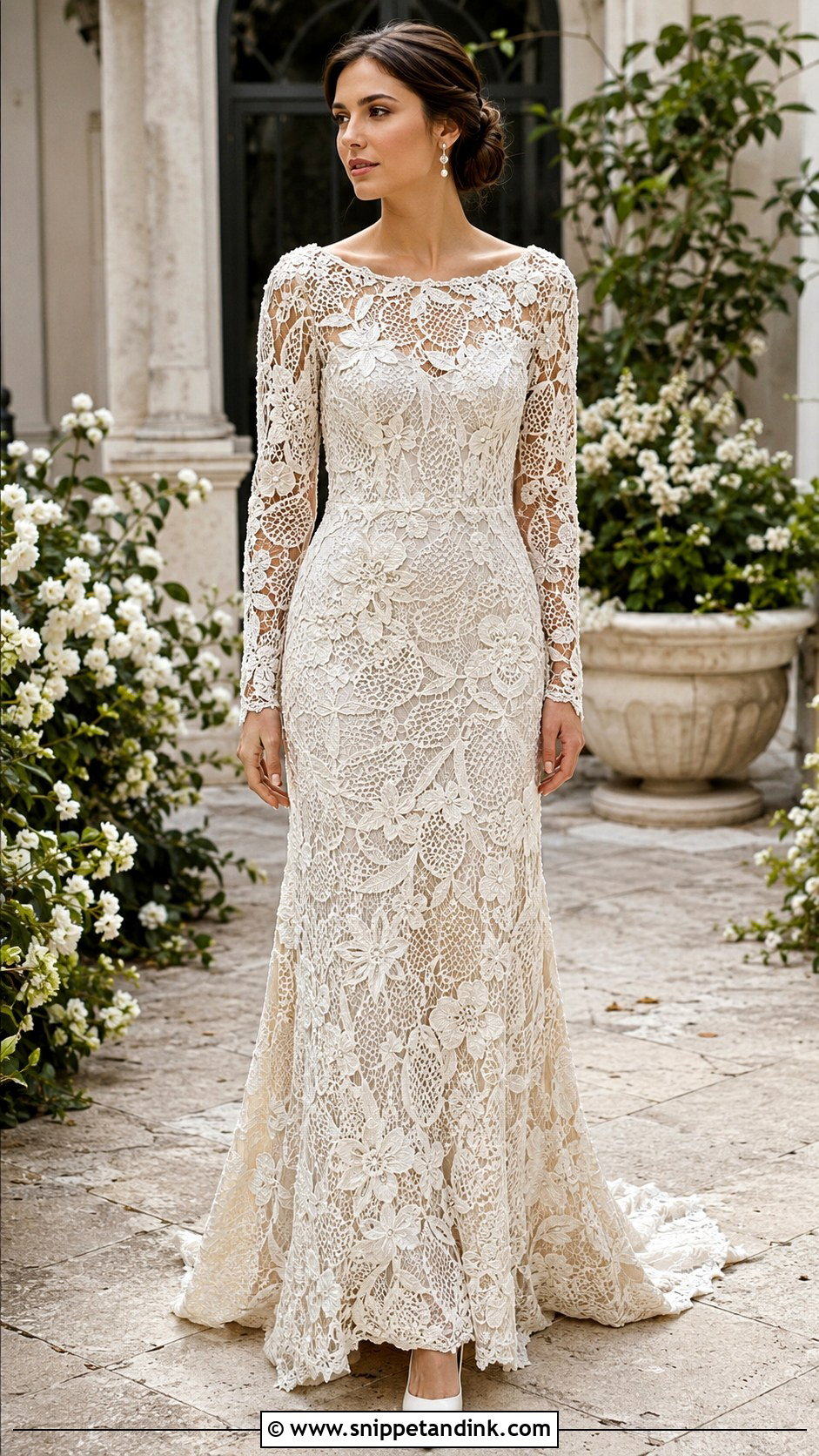
An Irish crochet wedding dress is the most heirloom-worthy idea here and the slowest. Every flower, leaf and vine is made on its own, then arranged face down on a full-size template and joined with netting. Put the larger flowers on the bodice and let them thin out toward the hem. The real advantage is fit: because the mesh is worked between motifs, you can shape the neckline and waist with a precision rows rarely allow. Pick one ivory thread for unity, or close cream tones for depth, and set it over a satin-lined slip. Classic pumps, pearl earrings and a low chignon leave the lace to do the talking.
7. Pineapple Lace Crochet Wedding Dress
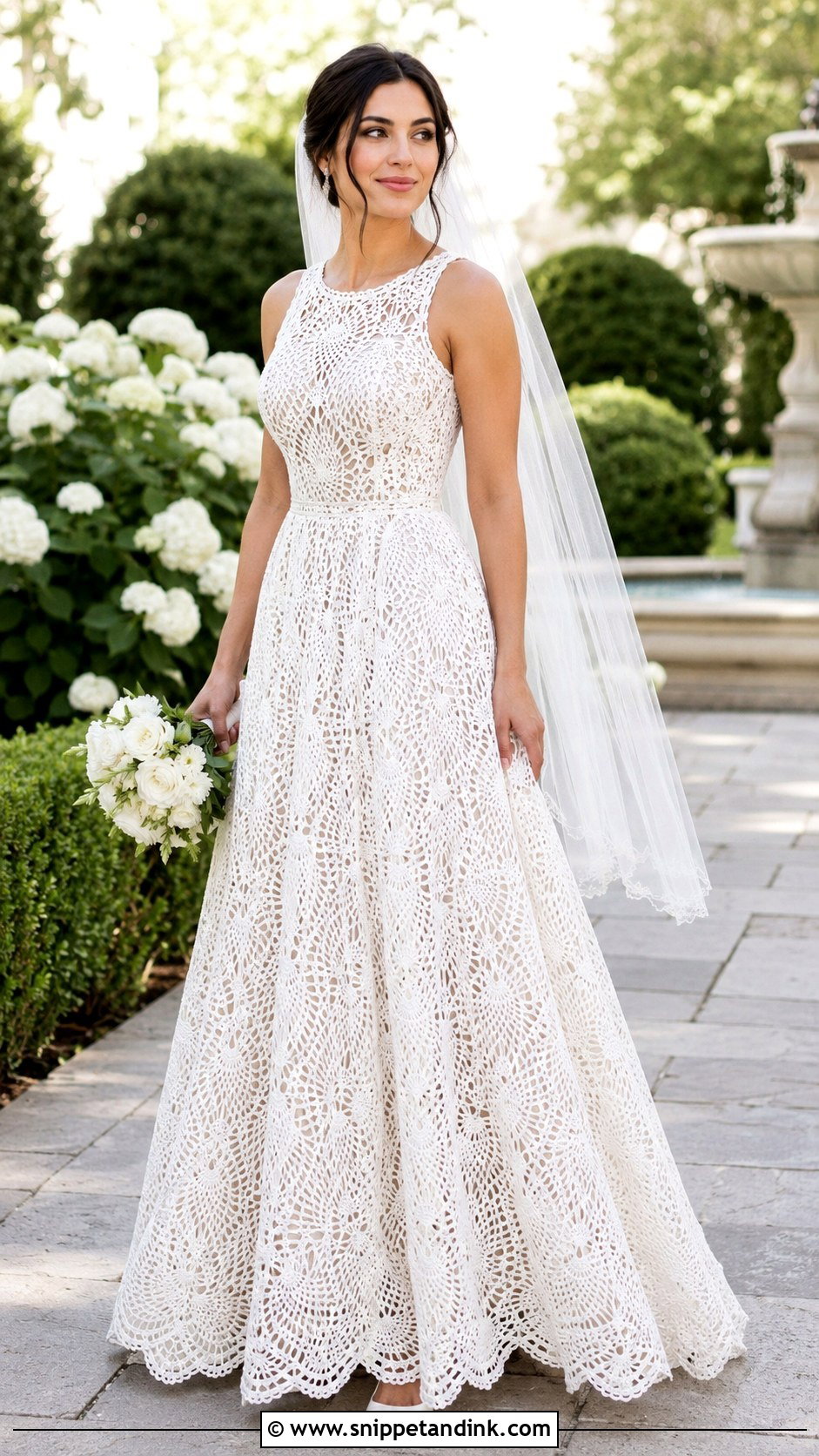
Pineapple lace gives you an elaborate skirt from a single repeating chart, which is why so many makers choose it for a first gown. Each pineapple widens naturally as it travels down, so placing the pattern below the waist builds a full A-line almost by itself. Keep the sleeveless bodice dense and let the repeats open toward the hem. Fine cotton or a cotton-silk blend shows the motif best. I’d cut the lining a touch shorter than the crochet so the scalloped edge hangs free, then add almond-toe heels, a fingertip veil and small white and pale green flowers. Jewelry stays minimal; the pattern is busy enough.
8. Floral Crochet Wedding Dress With A Line Skirt
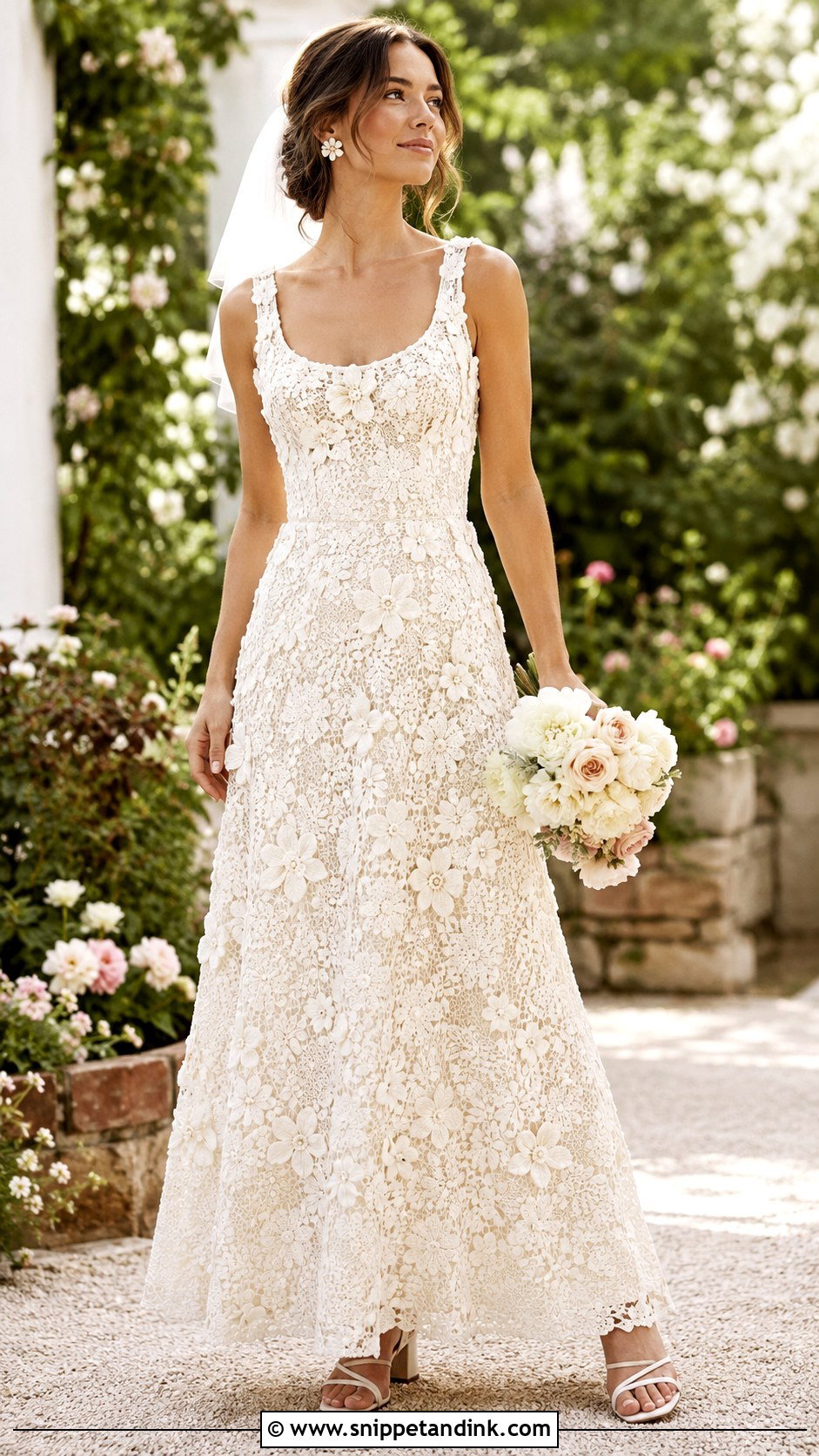
Scattered flowers in two or three sizes look casual on the hanger and take real planning on the body. Before sewing a single motif, I pin them all onto the finished dress while the bride stands, sits and walks, because a flower on the hip that looked balanced flat can sit right where her arm rests. Build the sleeveless bodice first, crochet the skirt in simple mesh or lace panels, then attach motifs around the neckline, waist and lower skirt. Ivory on ivory is classic; pale blush centres add depth. Lightweight crepe or matte satin lining, low block-heel sandals, small floral earrings, soft gathered hair and a short veil complete it.
9. Long Sleeve Crochet Wedding Dress With Open Back
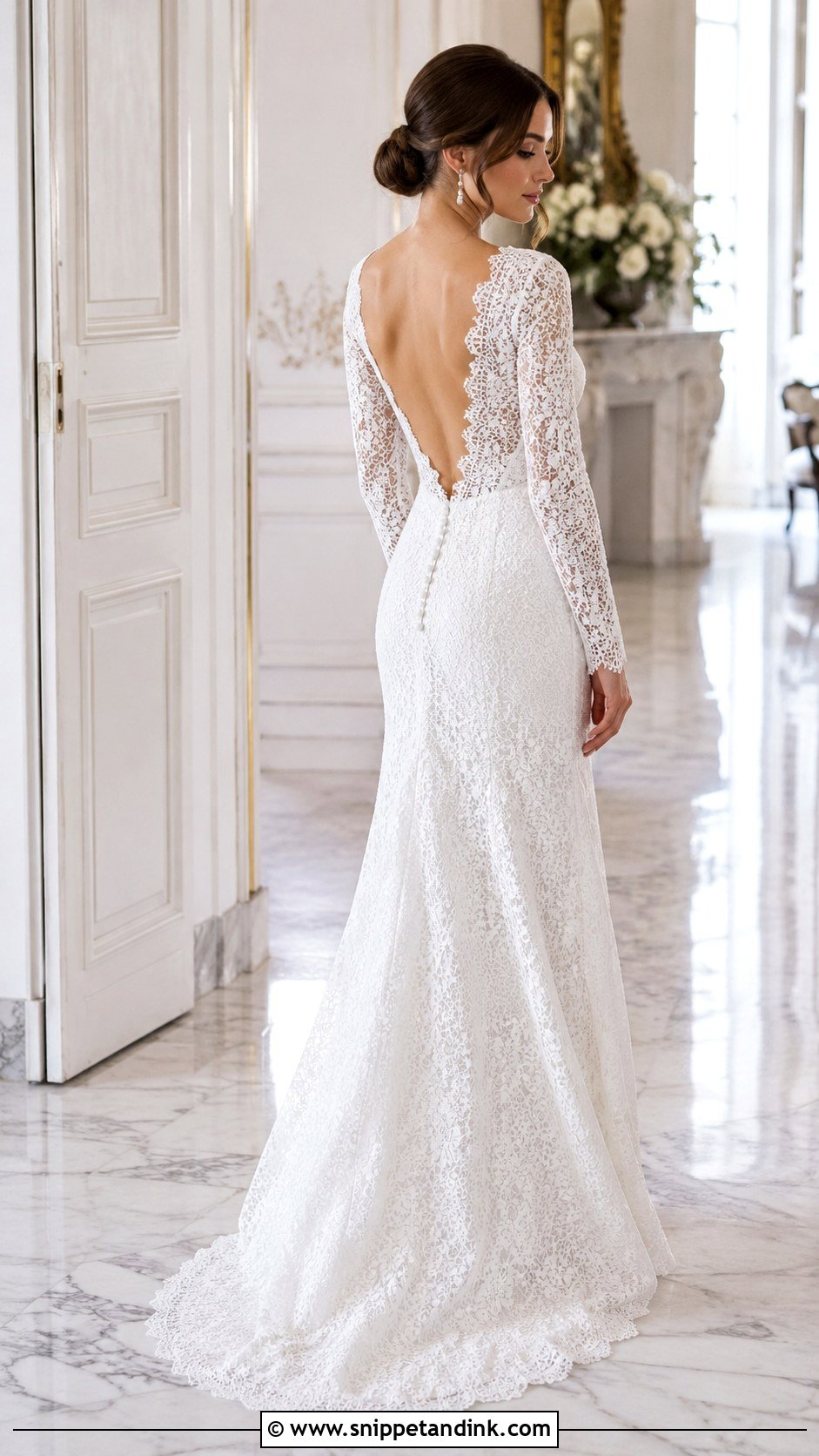
Could a covered gown still feel light? This one manages it by keeping the front high and dense, then opening a round or V-shaped window across the back. The back opening is where I see the most trouble: without a firm crocheted border and a few pearl-button loops across it, the edges roll outward once the dress warms up on the body. Keep the sleeves fitted but in a stitch with some give so she can hug people, reinforce the shoulder seams before the lining goes in, and use a fine cotton blend to cut bulk. A lightly flared skirt, closed-toe heels, a low bun and slender drop earrings point everyone toward the back.
10. Plus Size Crochet Wedding Dress With Empire Waist
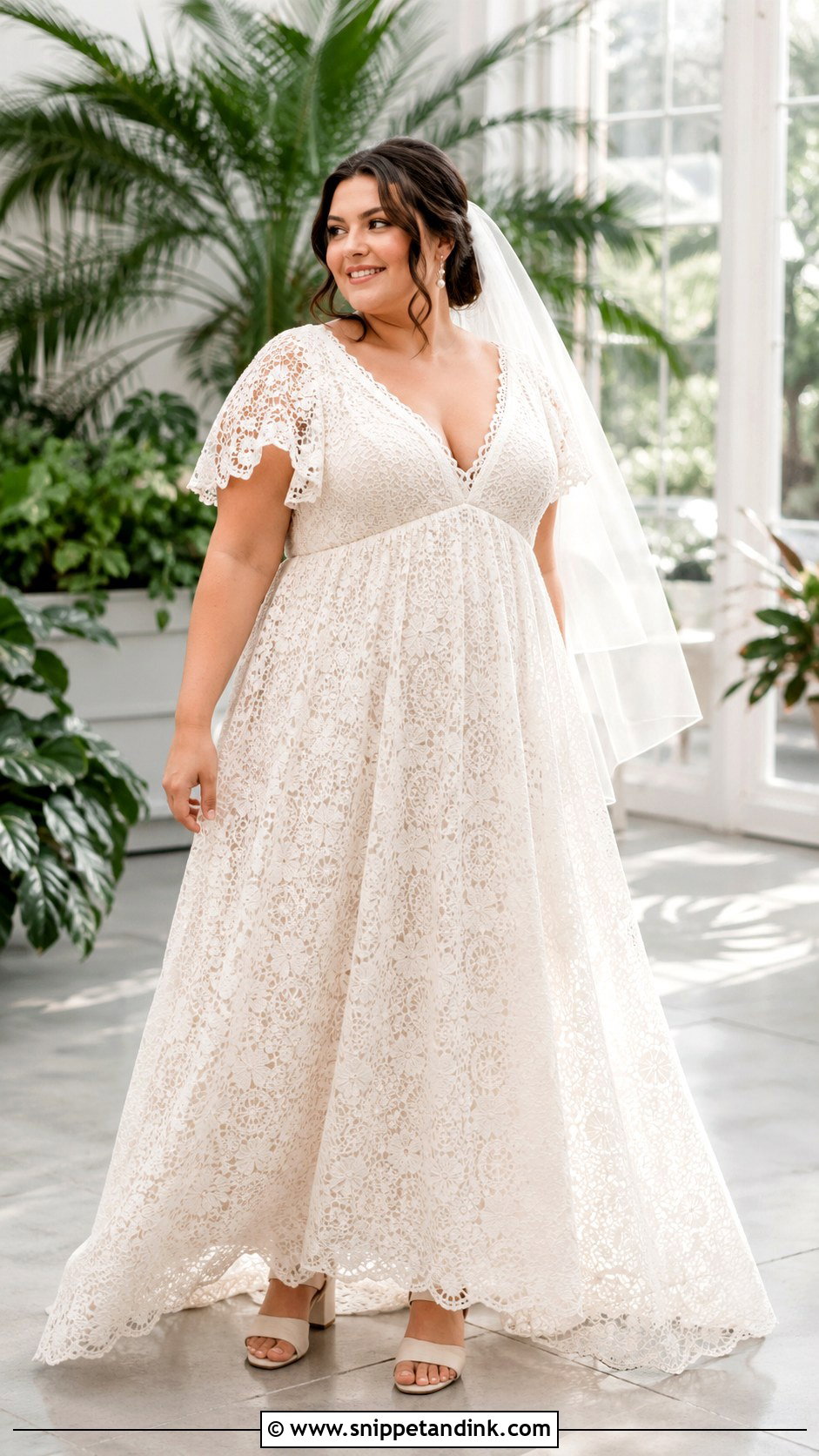
An empire waist moves the shaping up under the bust, so the skirt can fall freely and nothing cinches at the natural waist. On a plus-size gown, the pattern needs real garment measurements, not just a size label; crochet stretches, and I’d rather fit from finished bust and back-length numbers than guess. Wider straps or short flutter sleeves give support and balance, and a stable lining stops the cotton-bamboo yarn from growing over the hips. Side-seam ties let you adjust definition on the day. Cushioned block heels, a medium veil and bold pearl earrings finish a dress that feels secure from the first dance to the last.
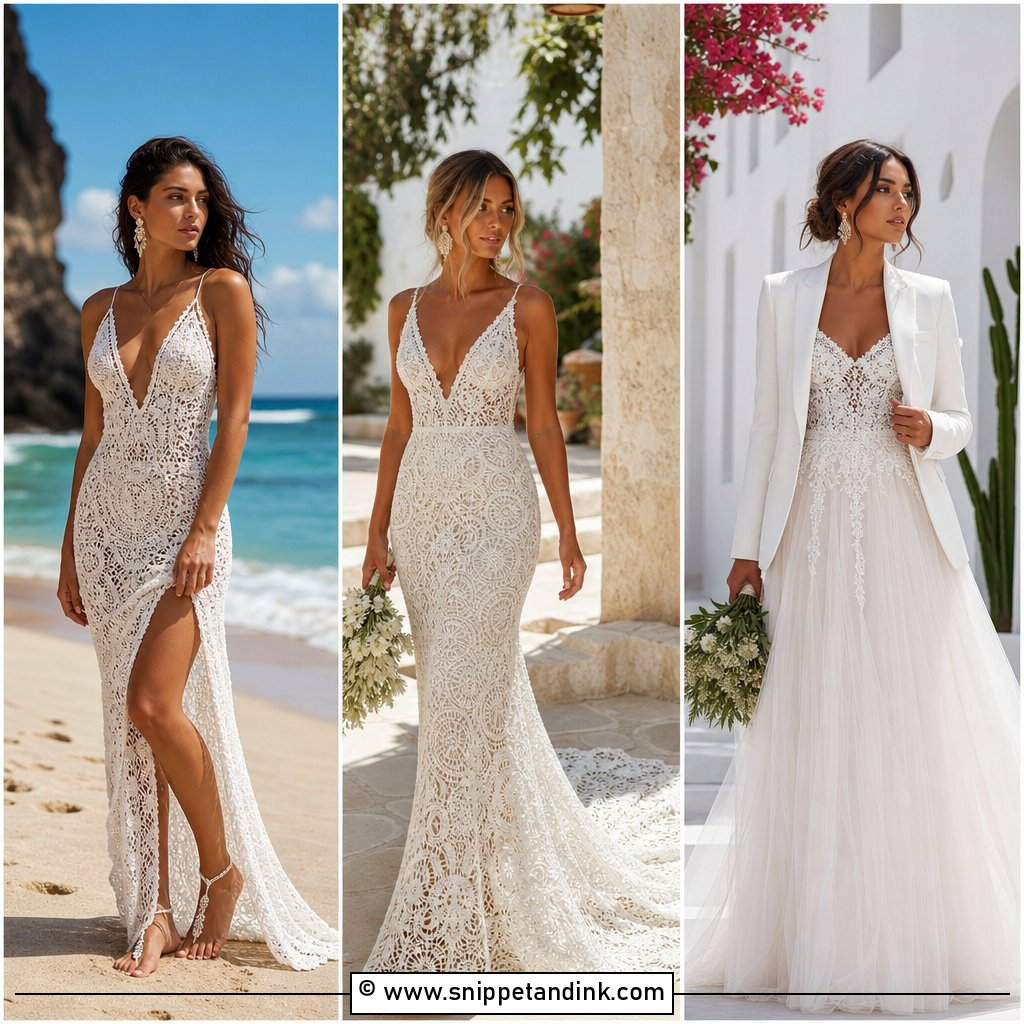
11. Mermaid Crochet Wedding Dress With Train
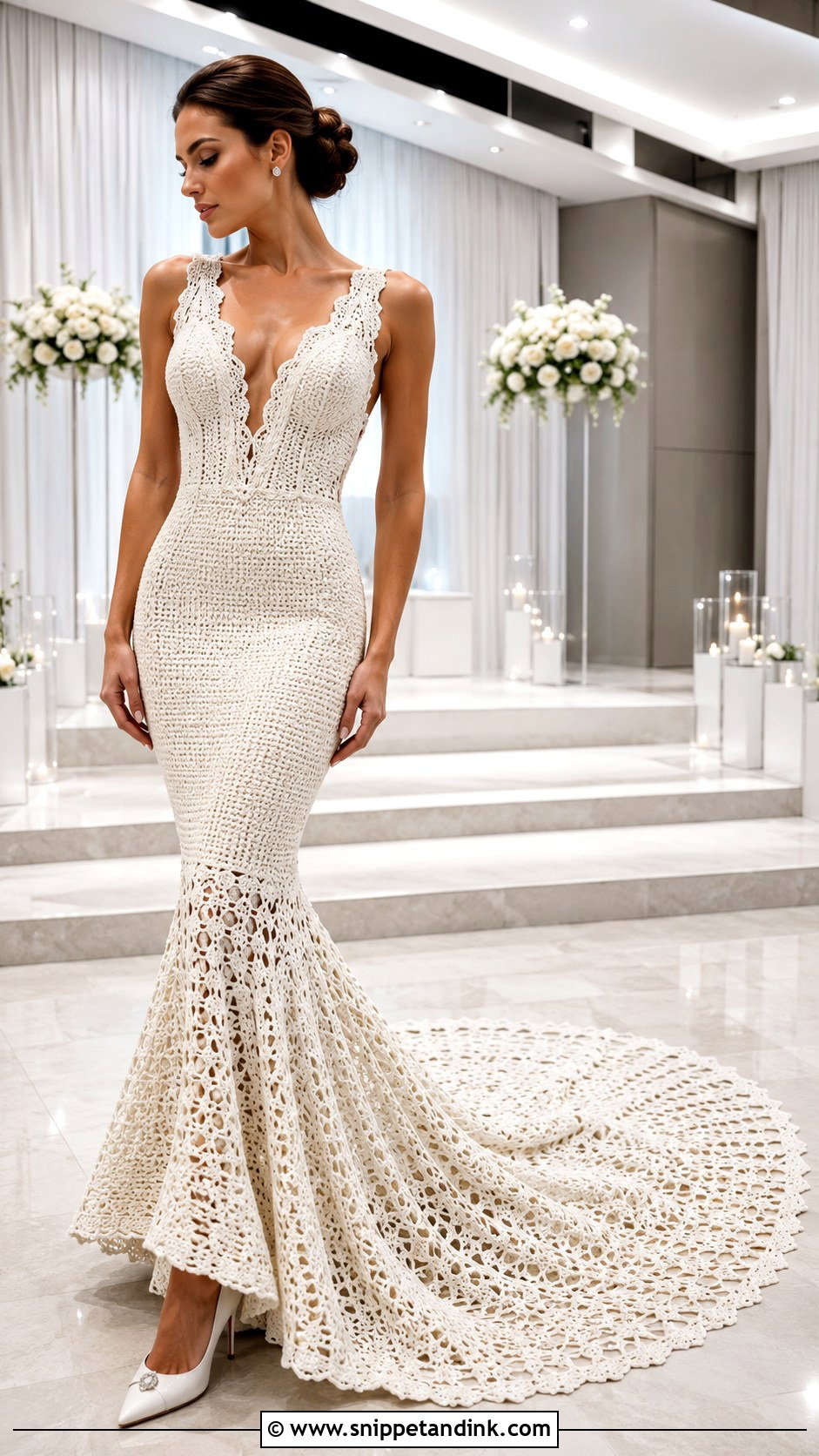
Mermaid shapes fight crochet’s natural tendency to grow. The fitted section through the hips is where stitches stretch under the weight of the flare below, so measure often while you work and expect to take it in at the final fitting. Start the flare just below the knee with evenly spaced increases, then shift to shell or fan stitches. Extend the back panels into a short sweep train with a hidden wrist loop or a bustle point. Mercerized cotton gives crisp definition; a cotton-viscose blend moves more softly. A stretch lining cut to the same silhouette keeps steps possible, and pointed low heels, crystal studs and a sleek updo keep the focus on the shape.
12. Tiered Crochet Wedding Dress With Ruffle Skirt
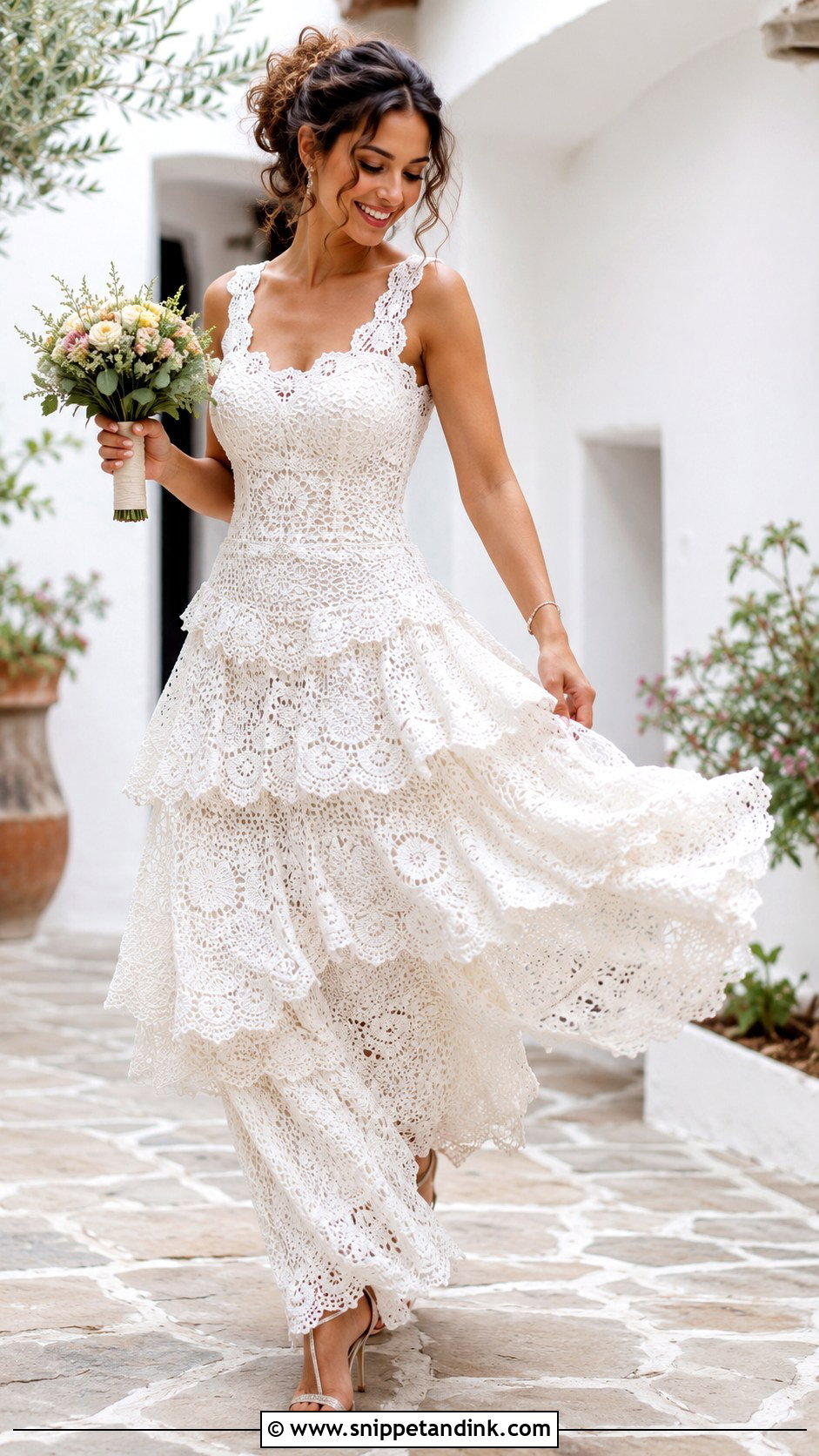
Rows of crochet lace stacked into tiers give a skirt that bounces when you walk. The trick is a stable base layer under the tiers: each ruffle gets attached to that, not to the one above, or the whole skirt slides downward over the day. Start with a fitted bodice on wide straps with a modest V, and alternate tighter mesh with scalloped edges so the texture stays crisp without bulk. Heavy yarn is a mistake here; fine cotton thread or bamboo keeps tiers from dragging. Line to mid-calf or floor, then add heeled sandals, a slim bracelet, pinned curls and a compact bouquet.
13. Tea Length Crochet Wedding Dress
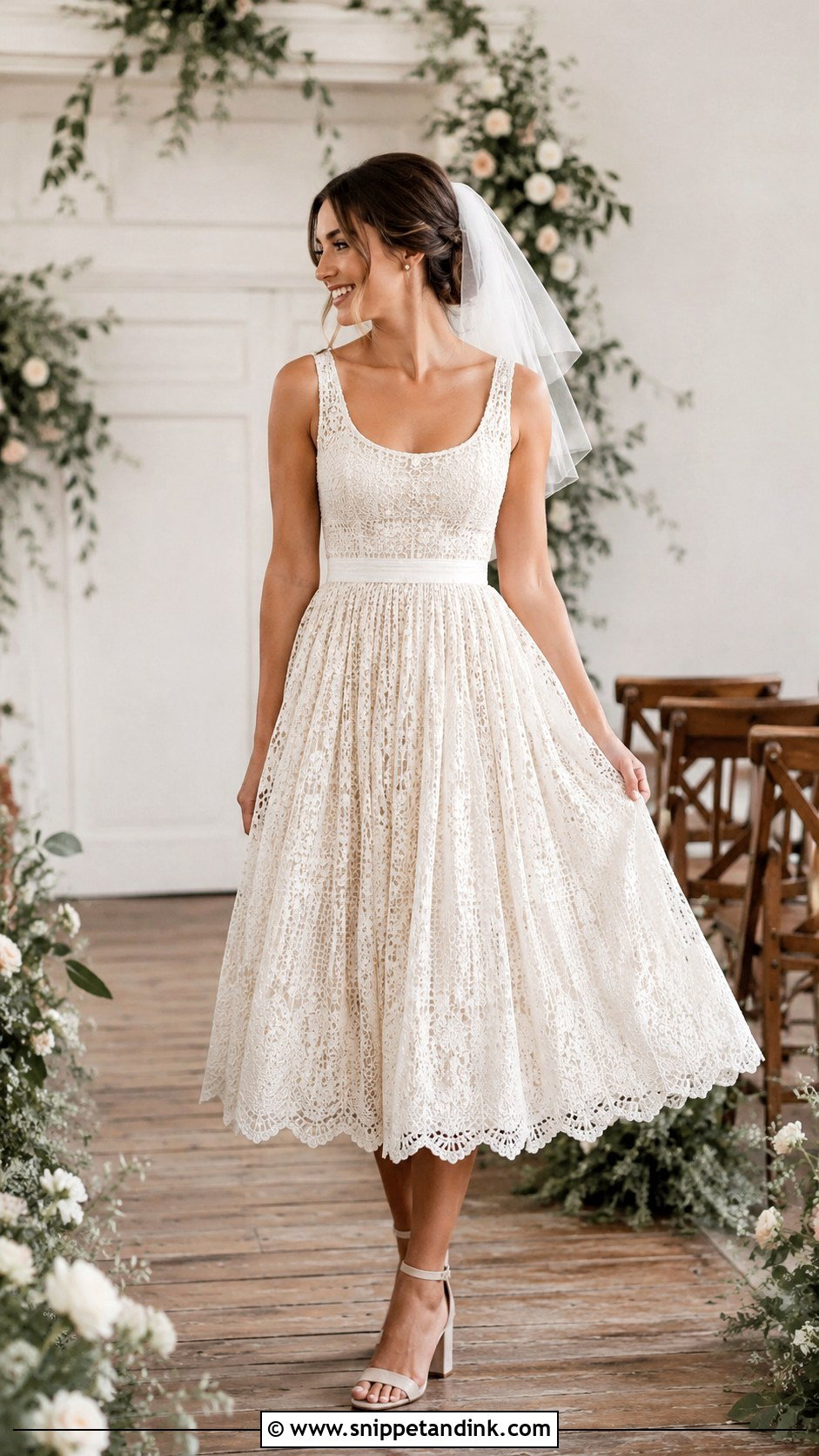
Tea length is the most practical silhouette on this list. The hem lands between knee and ankle, so there is nothing to bustle and nothing to step on during the first dance. Shape a fitted scoop-neck bodice, define the natural waist and increase into a full skirt; repeating shell stitches or joined floral squares give it enough body to hold out. A soft underskirt adds volume, but test that she can sit in it. Finish the hem with a scalloped border. The shoes are on show, so I treat them as part of the dress: ankle-strap block heels, pearl studs and a short veil or comb. It suits a small, relaxed wedding very well.
14. Crochet Mini Wedding Dress With Long Sleeves
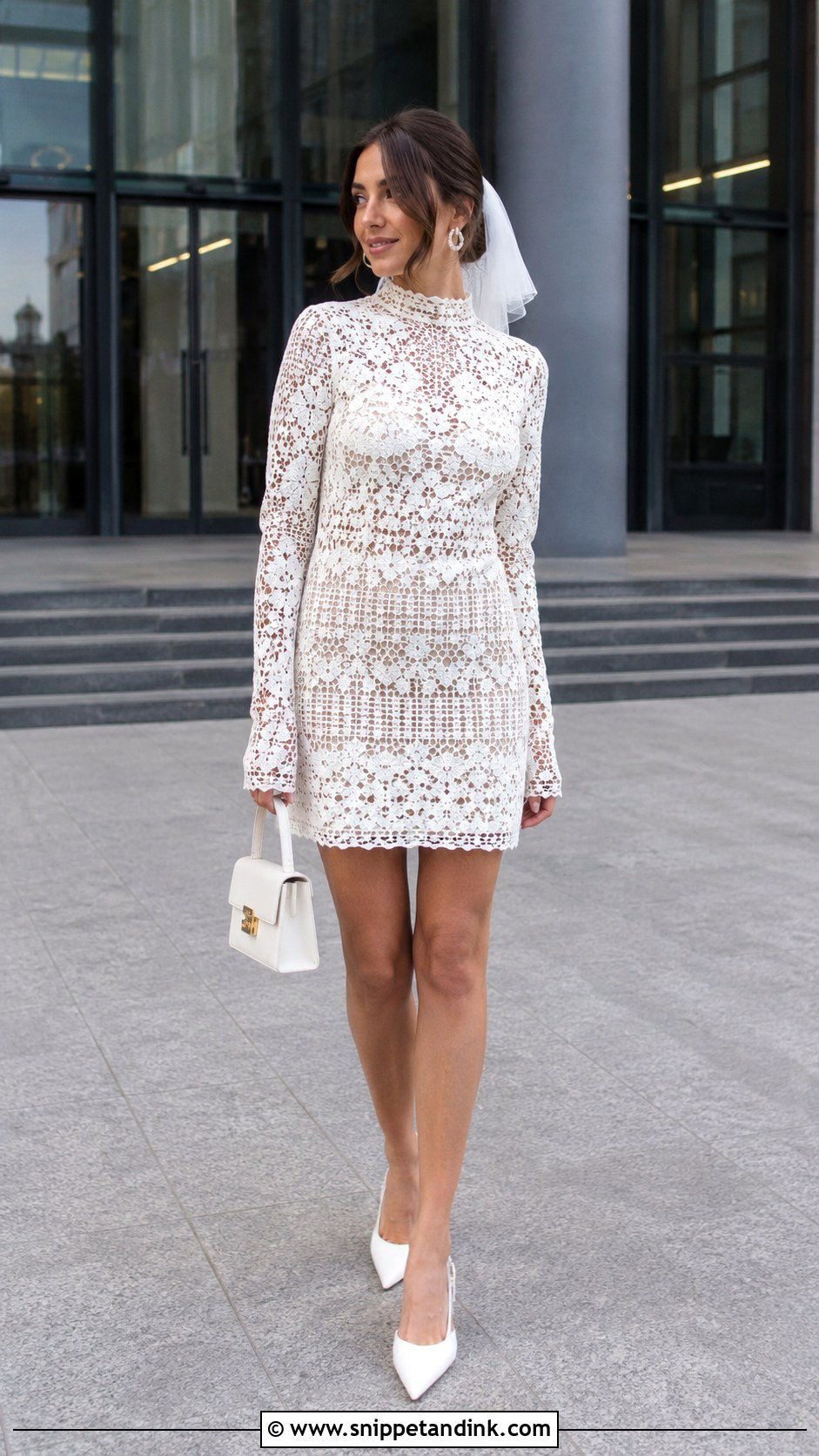
A courthouse ceremony or a casual reception is where a crochet mini makes sense. Long fitted sleeves and a higher neck balance the short hem, and geometric lace or compact flowers keep it modern. Give the waistband a denser stitch to define the shape. The lining is non-negotiable on a mini: it has to be opaque and end exactly level with the crochet hem, because anything peeking out reads as a mistake when she sits on the registry chair. Reinforce shoulder and side seams so it keeps its line. Pointed slingbacks, pearl hoops, a structured mini bag and a short veil or bow make it unmistakably bridal.



15. Cap Sleeve Crochet Wedding Dress With A Line Skirt
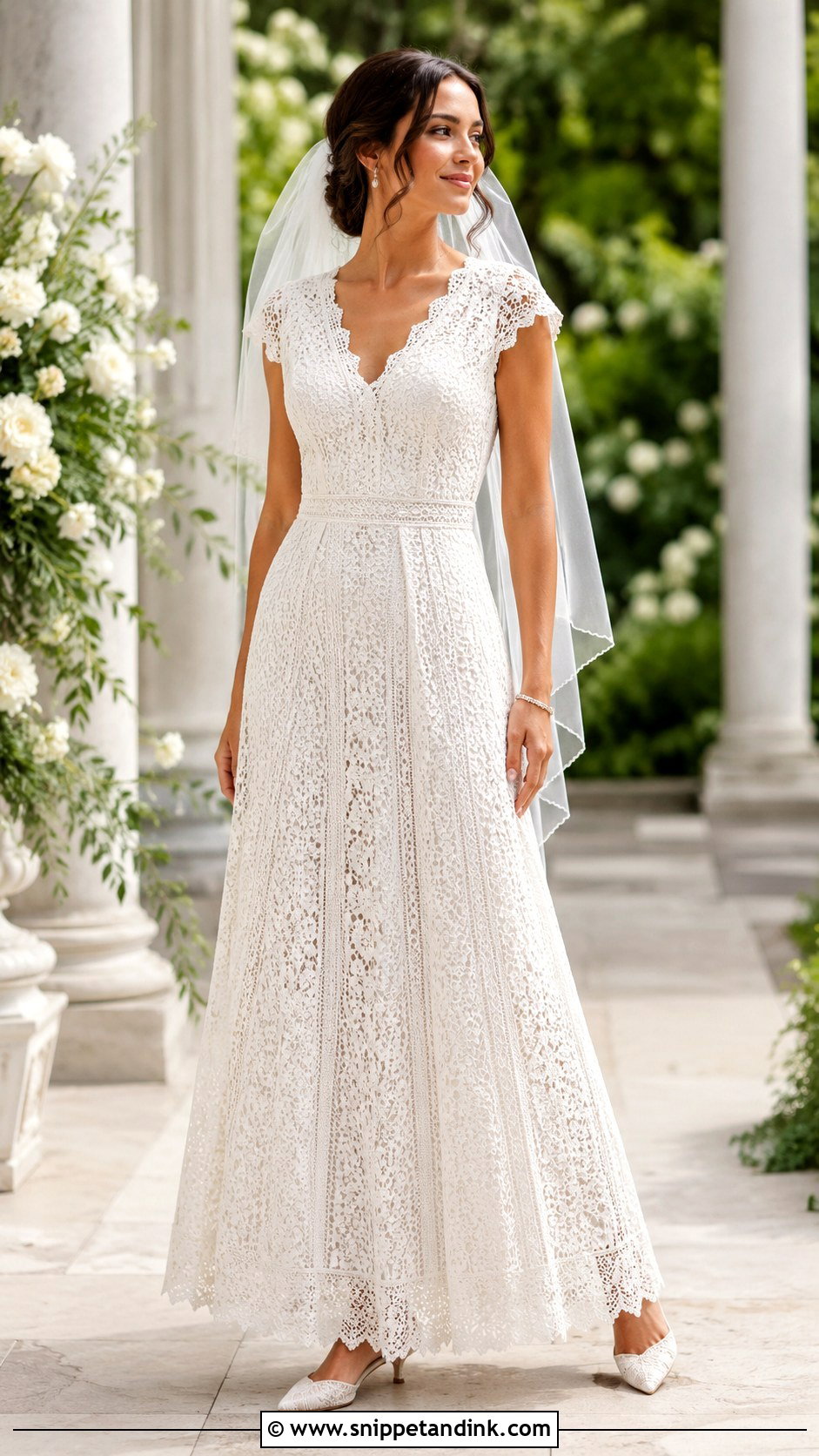
Cap sleeves give a little shoulder coverage without the weight of a full sleeve. I like them worked straight out of the armhole rather than sewn on, which avoids a bulky seam right where the arm moves. Use dense shell stitches for a V-neck or rounded bodice, then move into an A-line skirt with vertical lace panels that lengthen the body. Swatch generously and wash and block that swatch; cotton blends can shrink or relax and you want to know which before the dress is done. A full-length lining and a narrow ribbon stay inside the waist hold the shape. Kitten heels, a fine bracelet and a medium veil suit it.
16. Crochet Wedding Dress With Corset Bodice
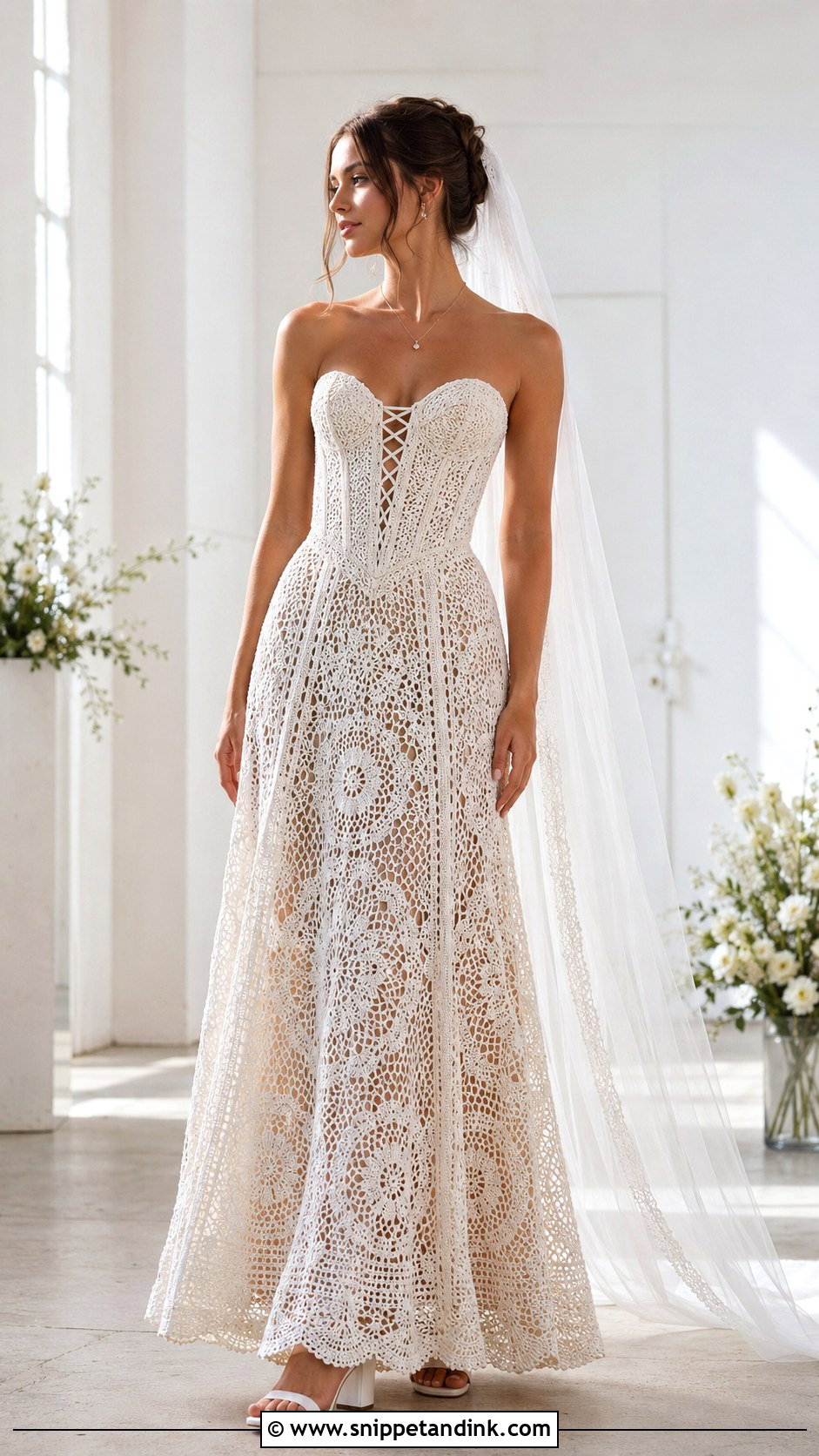
Crochet alone cannot behave like a corset, and I’d steer anyone away from expecting it to. The structure has to come from a professionally fitted fabric foundation, boned if you want real shaping, with the crochet lace panels stitched onto it. Cut the front, sides and back panels to the foundation pattern and attach them carefully so the lace doesn’t pucker at the seams. A lace-up back with a modesty panel lets you adjust on the morning. Below the waist, lighter openwork balances the firm top. Use the same yarn throughout, then add block heels, a small pendant, an updo and a floor-length veil.
17. Two Piece Crochet Wedding Dress With Maxi Skirt
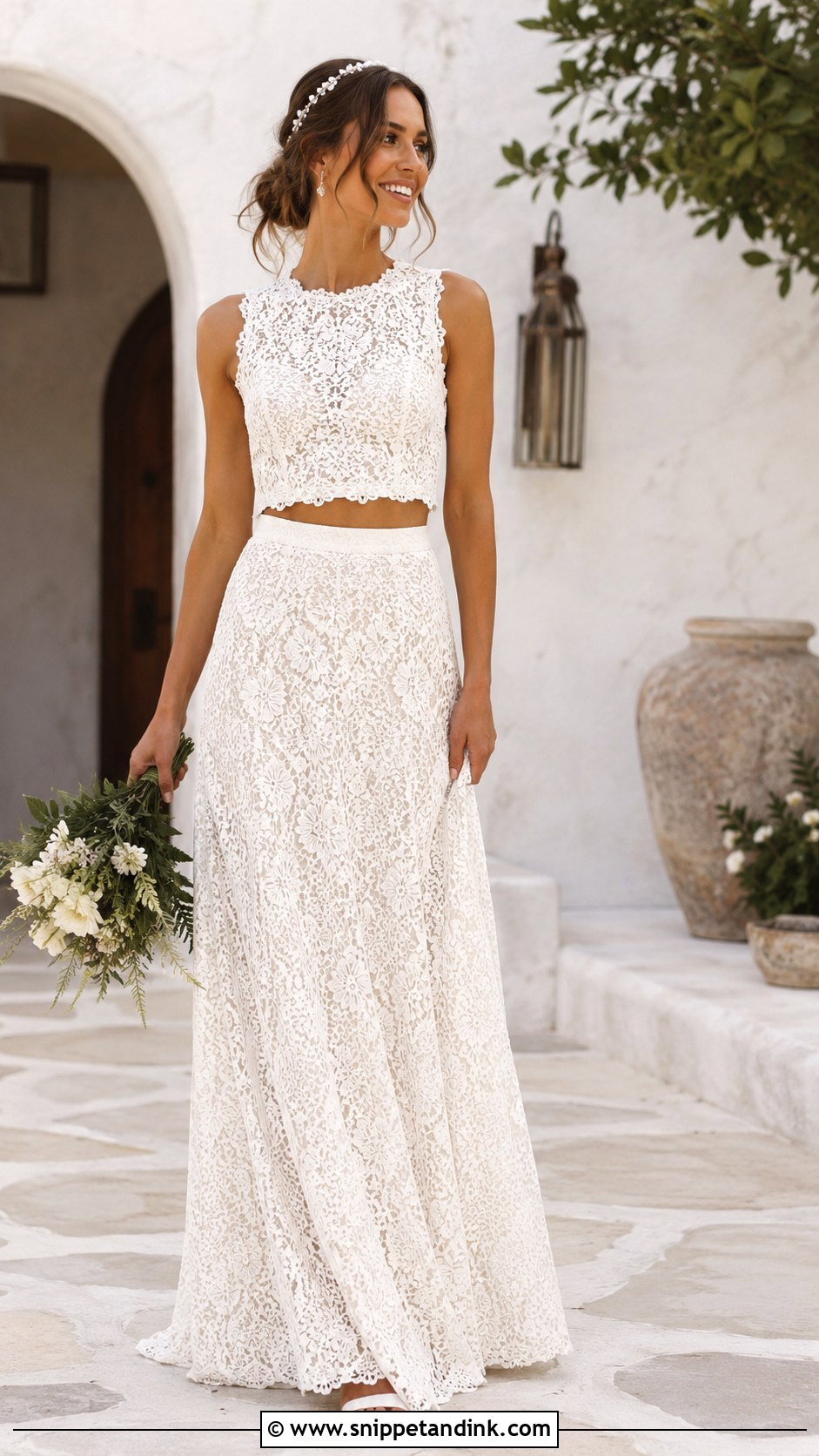
Splitting the gown into a top and a skirt makes a big project far easier to manage, and you can fit each half on its own. Work a fitted short-sleeve or sleeveless top that ends at the natural waist with dense flowers at the neckline and hem, then a high-waisted maxi skirt that starts from a firm waistband. Small hidden snaps between the two stop the top riding up when she raises her arms. A continuous lining can make it read as one dress. Minimal sandals, a slim hairband and small earrings finish it, and both pieces can be worn again afterward, which is rare for a wedding dress.
18. Cape Sleeve Crochet Wedding Dress
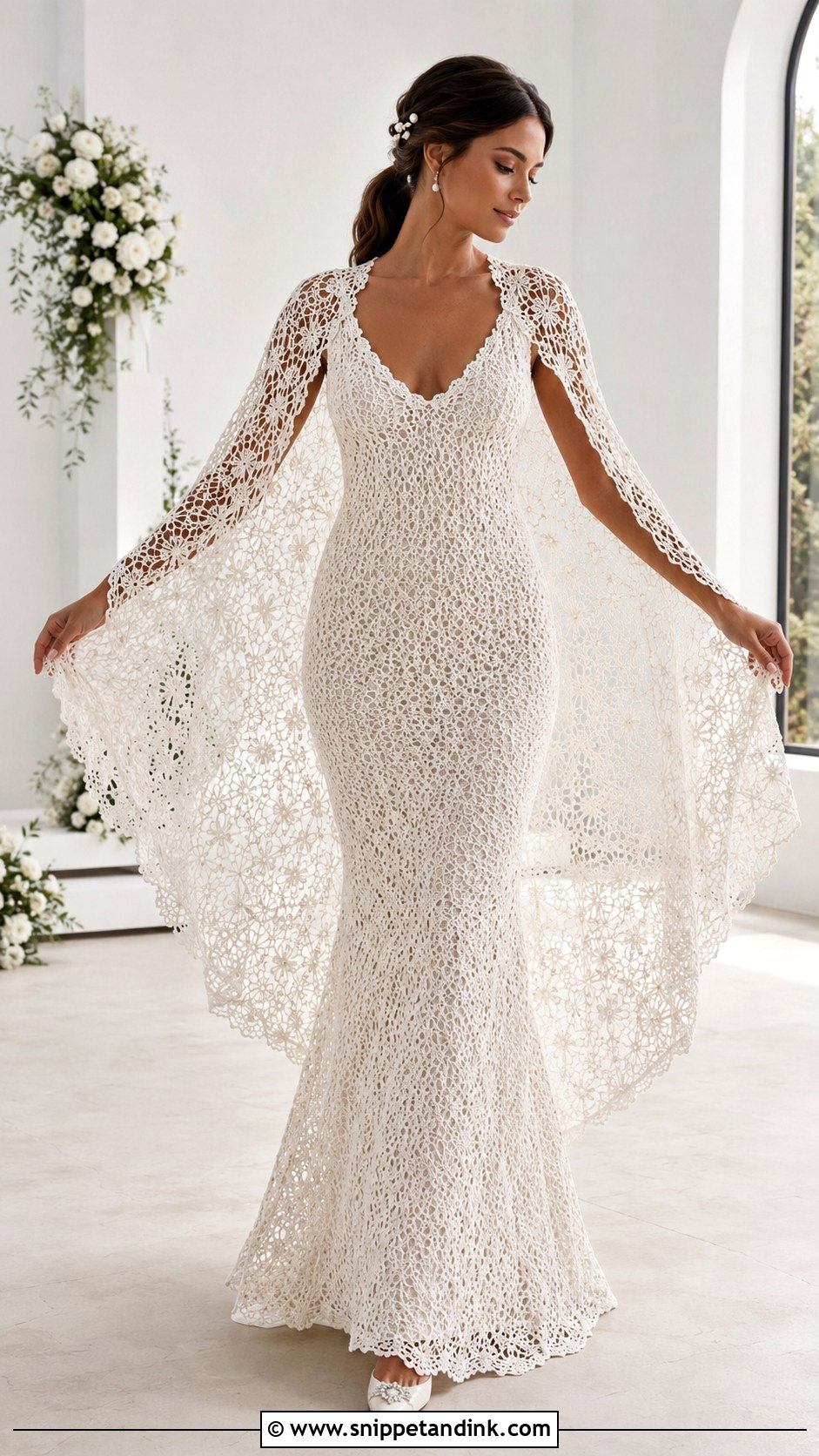
Cape sleeves add movement without the cling of a long sleeve. Make a simple sleeveless column or A-line first, then work two panels from the shoulders and either join them across the upper back or leave them separate for an open cape. The panels must be light: fine mesh, floral lace or fan pattern in a cotton-silk blend, or they pull the shoulders back and the neckline rises at the front. Keep the gown underneath plain, with a fitted waist and lightly flared skirt. I’d skip a long veil entirely here, since it fights the cape for the same space. Pointed flats, pearl hairpins and a low ponytail are enough.
19. Colorful Floral Crochet Wedding Dress
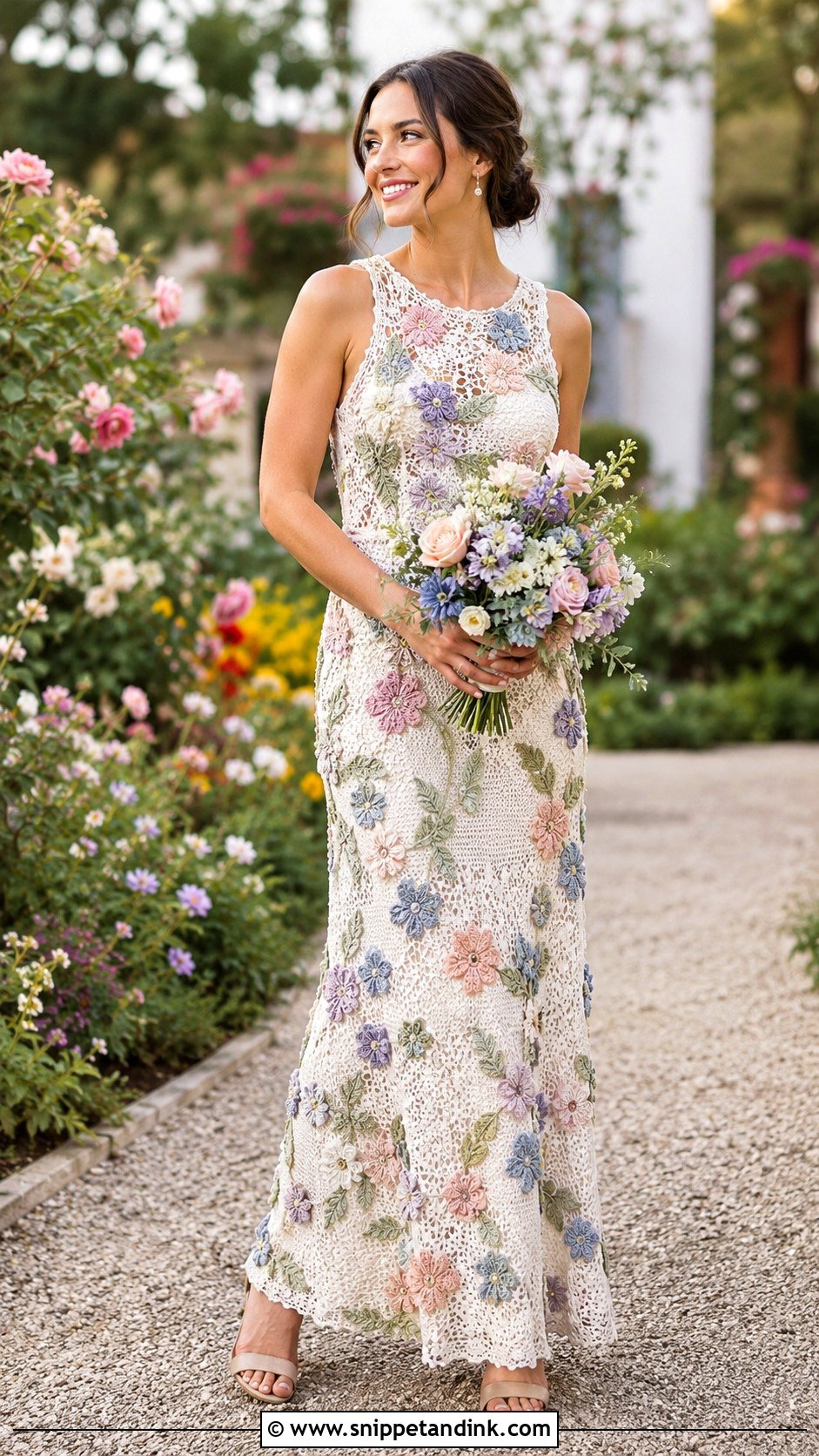
Colour is the easiest way to make a crochet gown personal without changing its shape. Keep the bodice and maxi skirt ivory, then add small flowers in blush, sage, dusty blue or lavender, clustered at the waist and thinning toward the neckline and hem so it still reads as a wedding dress. Use the same yarn weight for every motif, or the heavier flowers will dimple the fabric beneath them. Before committing, I’d wash one coloured motif with an ivory swatch to check the dye doesn’t bleed. Ivory lining, neutral block-heel sandals, quiet earrings and a bouquet that repeats one accent colour finish it.


20. Crochet Wedding Dress With Detachable Train
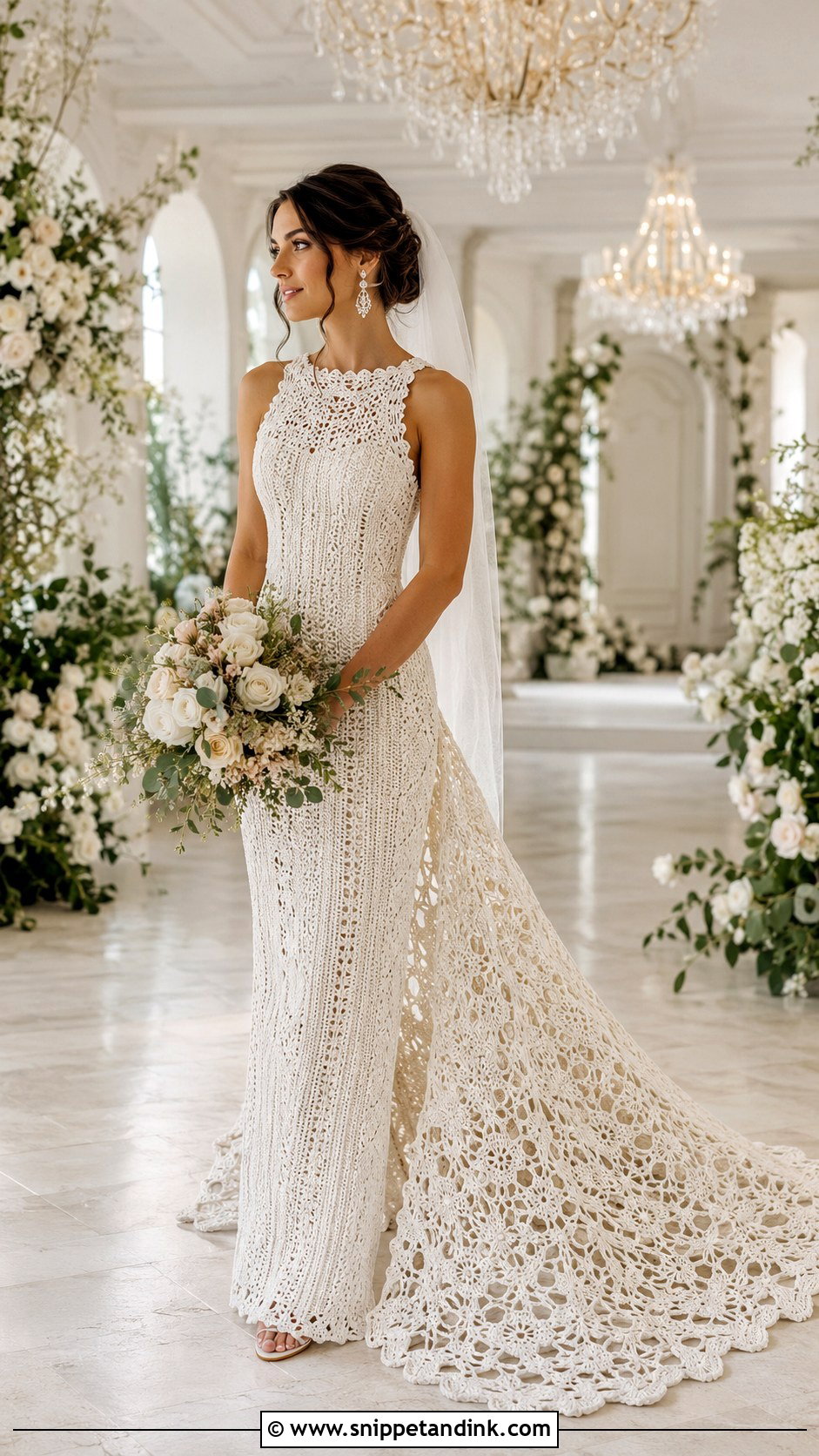
A detachable train gives you the ceremony entrance and a dress you can actually dance in later. Crochet the main gown as a column, A-line or tea length, and make the train separately in lace panels that widen toward the back. Attach it at the waist with concealed buttons, hooks or a ribbon belt hidden under a decorative band. Test the attachment after blocking, because a crochet train gets heavier than it looks and can drag the waistline down at the back. Work both pieces in the same yarn and edging so the join disappears. Stable low heels, drop earrings and a simple veil keep it calm, and someone you trust should know how to unhook it.
Never Hang a Crochet Dress
This is the single rule I repeat most to anyone with a handmade gown. A crochet dress left on a hanger stretches under its own weight, and the shoulders take the strain until the hem drops and the neckline gapes. Store it folded, flat, with acid-free tissue between the folds so the creases stay soft, in a breathable cotton bag or a box. Plastic traps moisture, and that is how ivory cotton yellows.
For travel to the venue, lay it in a long box or across the back seat, folded loosely in tissue. Once it arrives, hang it by the lining or by sewn-in hanging loops at the waist only for the hour before dressing, never overnight. If it needs refreshing, a garment steamer held a hand’s width away relaxes creases; an iron pressed directly onto the stitches flattens their texture for good.
A Snapped Thread on the Wedding Morning
Crochet is more forgiving than woven lace here. A single broken stitch won’t run the way a knit ladder does, but it can open slowly if it’s left. I pack a small repair kit with the dress and hand it to whoever is helping the bride get ready:
- A length of the original yarn, wound on a card and labelled.
- A blunt yarn needle and a small crochet hook in the size used.
- Ivory safety pins and a few clear elastic bands for a quick bustle.
- Small scissors and a lint roller for anything caught in the mesh.
If a stitch breaks, catch both loose ends with the needle, weave them back along the row for a few centimetres in each direction and tie off on the inside. It takes a couple of minutes and nobody will see it.
Is a Crochet Wedding Gown Worth the Hours?
Creating your own bridal gown is a long commitment, but few dresses carry as much of the bride in them. Every style here, from boho to coastal to vintage, starts with the same honest step: crochet and block a large sample, then judge its drape, stretch and weight before you begin the real thing. Choose a lining you like wearing, reinforce the seams that carry load, and practise anything new on scrap. Above all, pick a silhouette you can walk, sit and dance in, because a handmade dress should feel like yours by the end of the night, not just at the first look.
You'll Like These Ideas:









Leave a Reply