
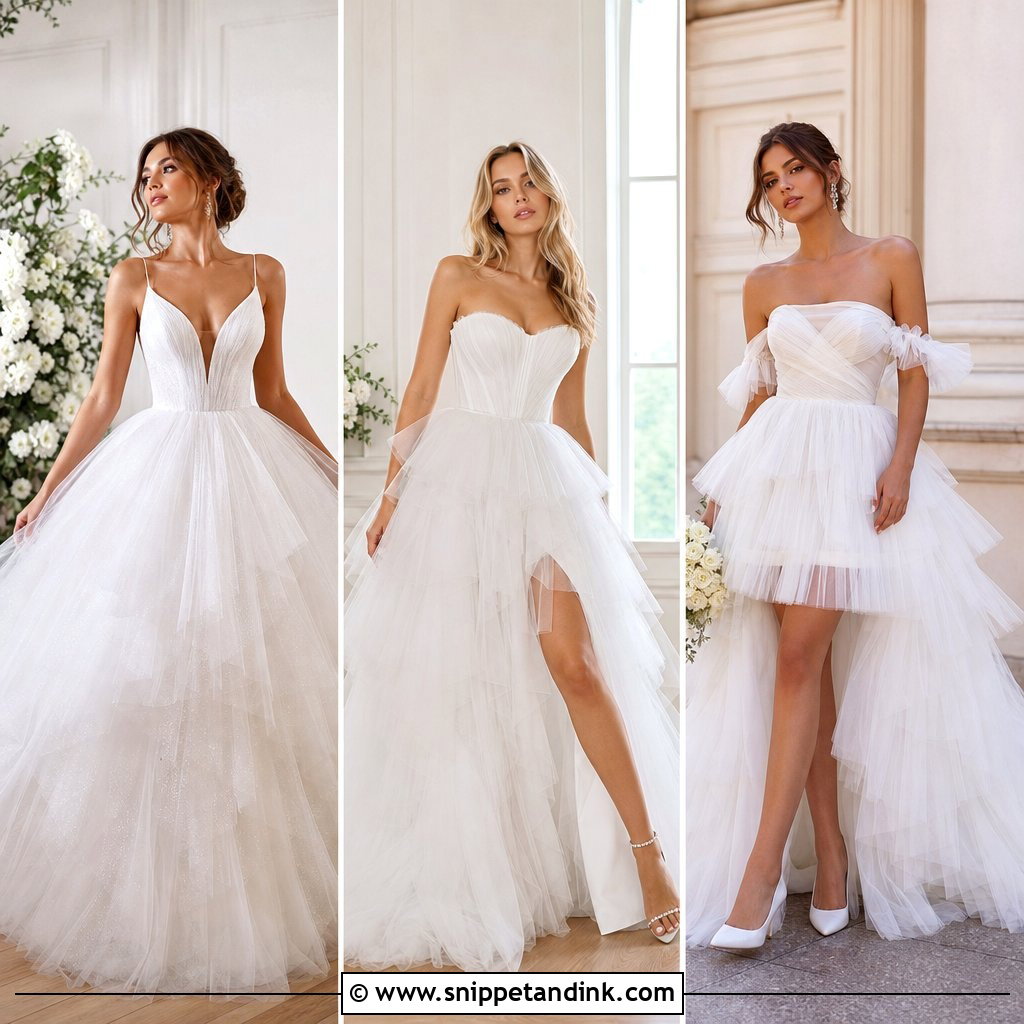
Tiers change how tulle moves. Instead of one cloud of net, the skirt falls in bands that sway separately when you walk, and the spacing of those bands decides whether the dress looks regal or fussy. Wide, evenly spaced tiered tulle gowns build fullness; diagonal or cascading tiers stretch the body into a longer line. Below are twenty complete looks, from ball gowns to minis, with the neckline, waist and accessories that suit each, and a note wherever the construction needs checking at a fitting.
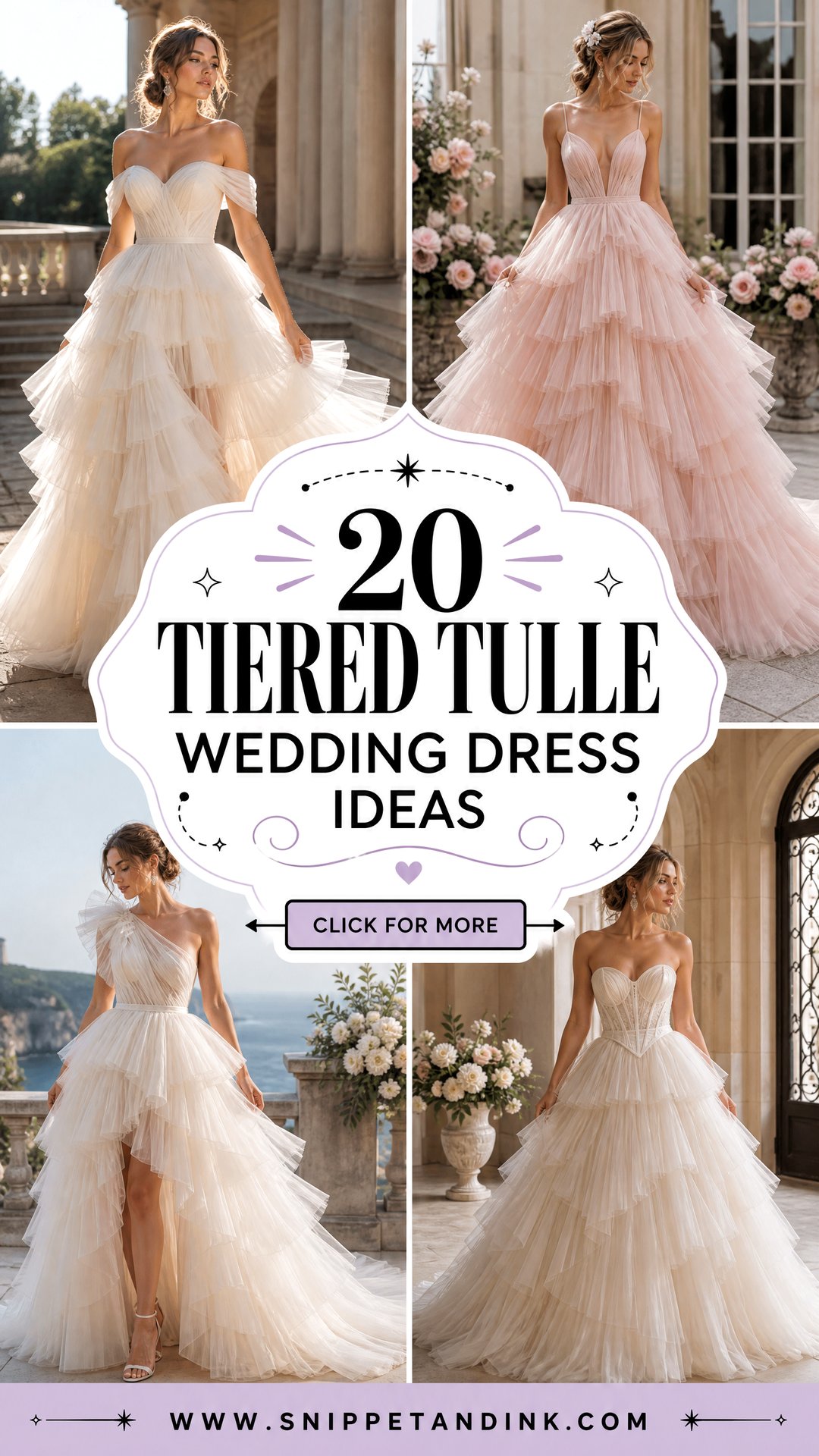
Soft Net or Stiff Tulle: What Actually Holds a Tier Up
Brides often fall for a tiered gown in a photo and then find the sample feels limp or scratchy. The difference is almost always the net. Bridal tulle ranges from very soft silk and fine nylon, which drape and sway, to firmer polyester nets that hold their shape on their own.
- Soft tulle gives movement and a romantic, slightly collapsed look. It needs a petticoat or crinoline underneath to keep tiers from flattening by evening.
- Stiffer tulle builds height and crisp tier edges but can feel scratchy on bare legs, so check the lining reaches past the knee.
- Horsehair braid sewn into tier hems is a common trick to make soft net flare without stiffening the whole skirt.
- More layers mean more weight. A full tiered ball gown can be surprisingly heavy, and that weight hangs from the waist seam.
Ask the consultant to show you the inside of the skirt. How many layers there are, what sits under them and how the tiers are attached tells you far more than the outside does.
1. Strapless Tiered Tulle Wedding Dress
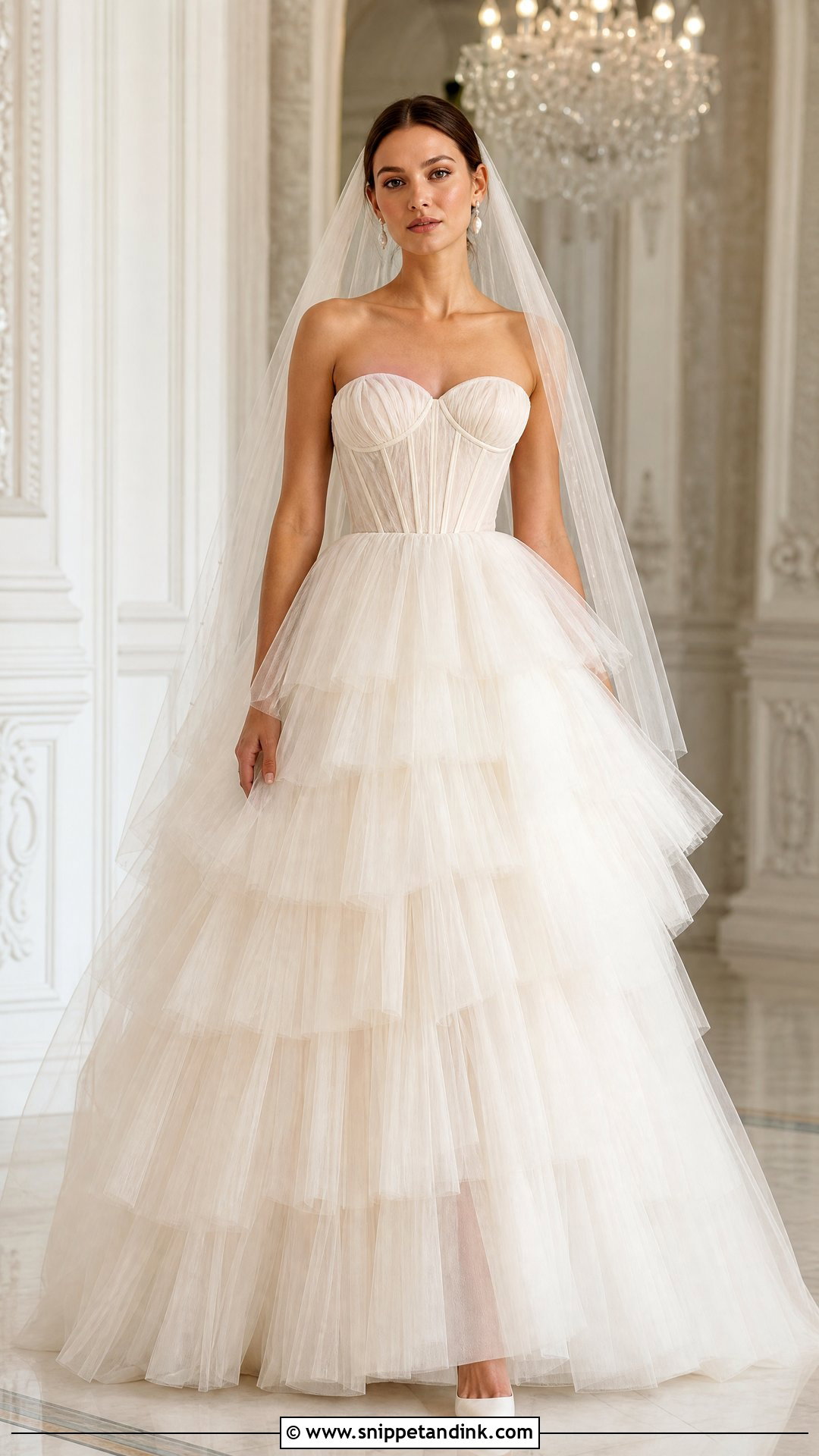
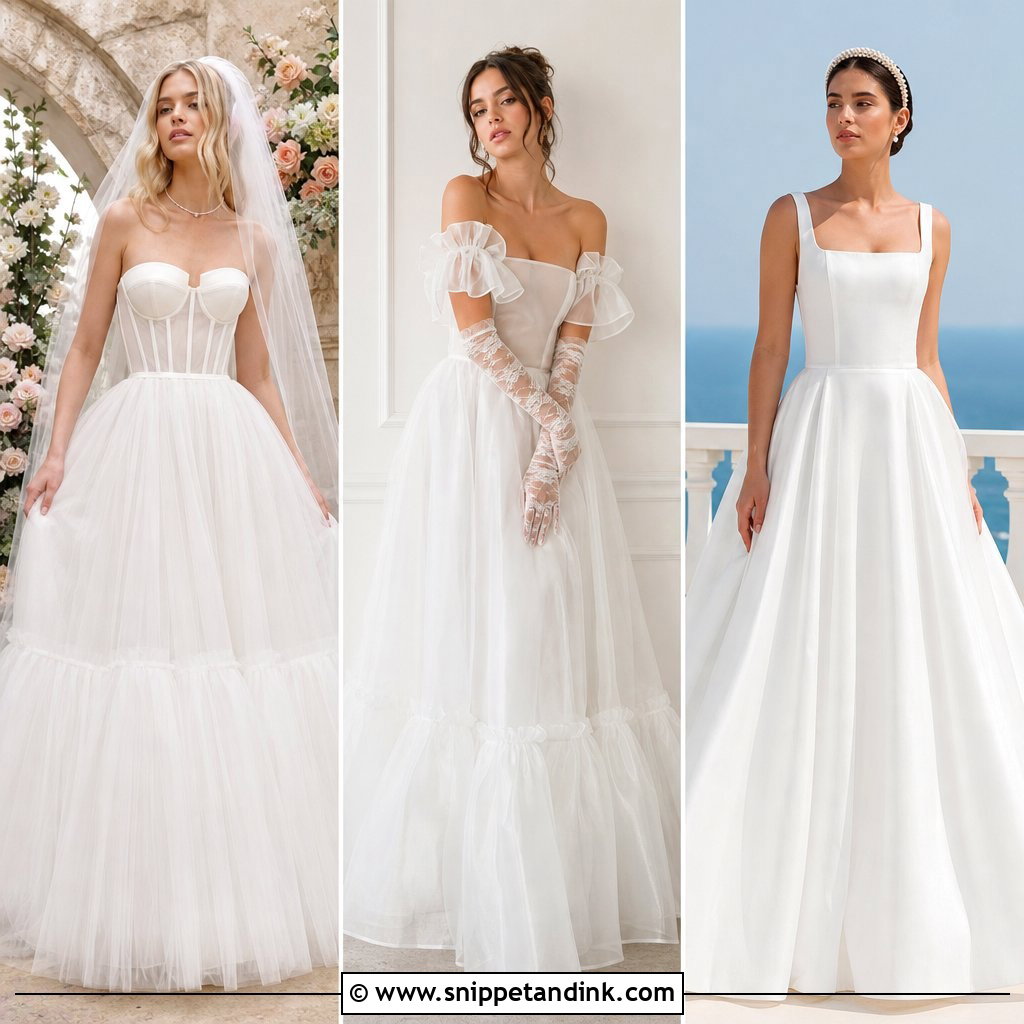
A strapless tiered tulle wedding dress lives or dies by its bodice, since nothing over the shoulders helps hold it up. I look for a properly boned corset with a straight or softly curved neckline, and I ask the bride to lift both arms at the fitting: if the top edge moves, it needs taking in. Starting the graduated tiers just below the natural waist keeps it tidy. Pointed ivory pumps, pearl drops and a small satin clutch suit it, with a fingertip veil and no necklace. Ballrooms and hotels give the skirt room.
2. Long Sleeve Tiered Tulle Wedding Dress
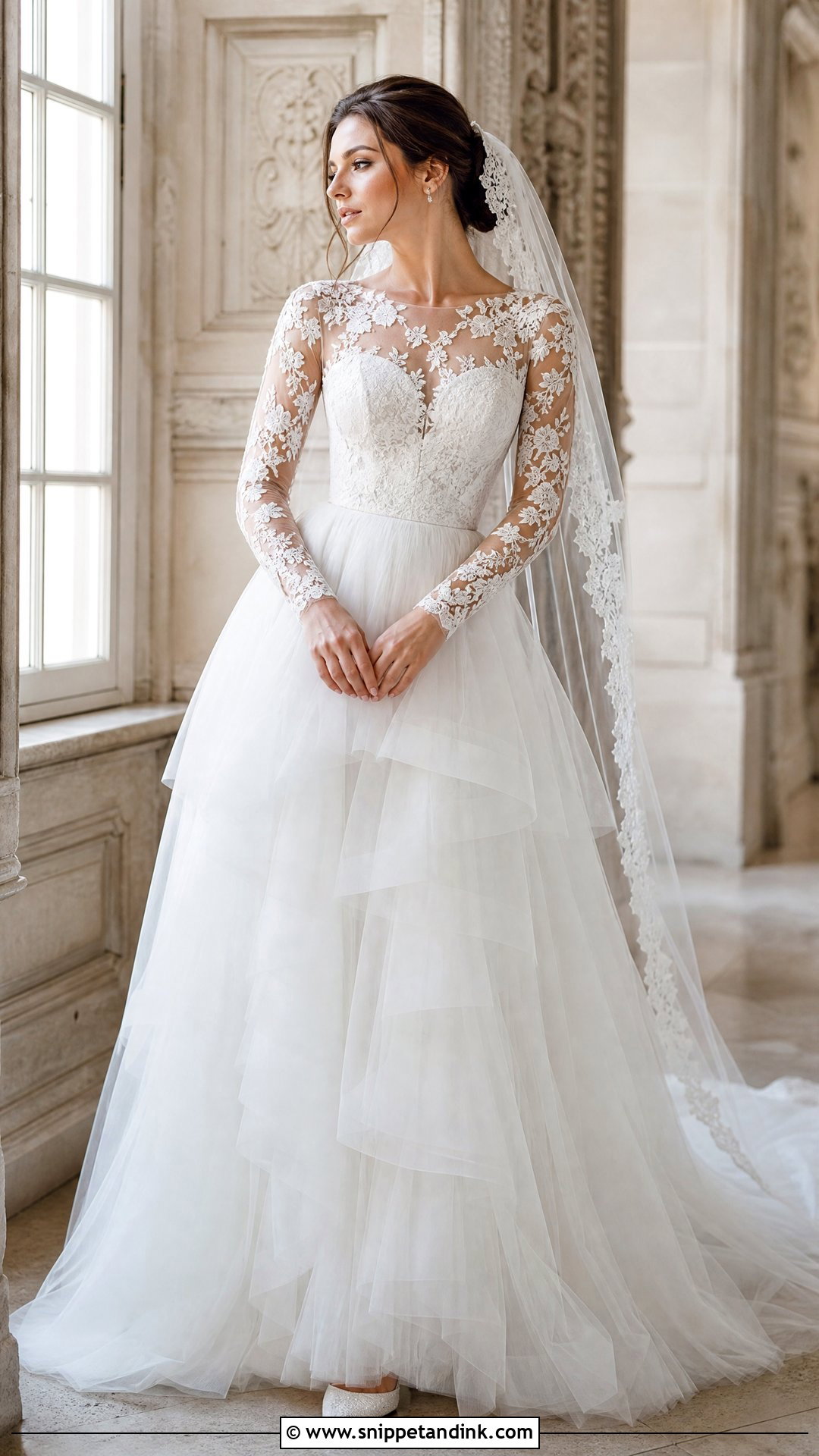
Long sleeves balance the volume of tiers, but only if the sleeves are sheer. Solid sleeves on top of a big layered skirt make the whole dress feel heavy. A fitted illusion bodice with floral lace appliqués eases into an A-line of tulle tiers, and wrist details on the sleeves keep them delicate. Sleeves cut too tightly in the armhole stop you hugging anyone, so test that at the first fitting. Crystal studs, closed ivory heels, a lace-edged chapel veil and a low chignon finish it. Cooler months and historic venues suit it.
3. Off Shoulder Tiered Tulle Wedding Dress
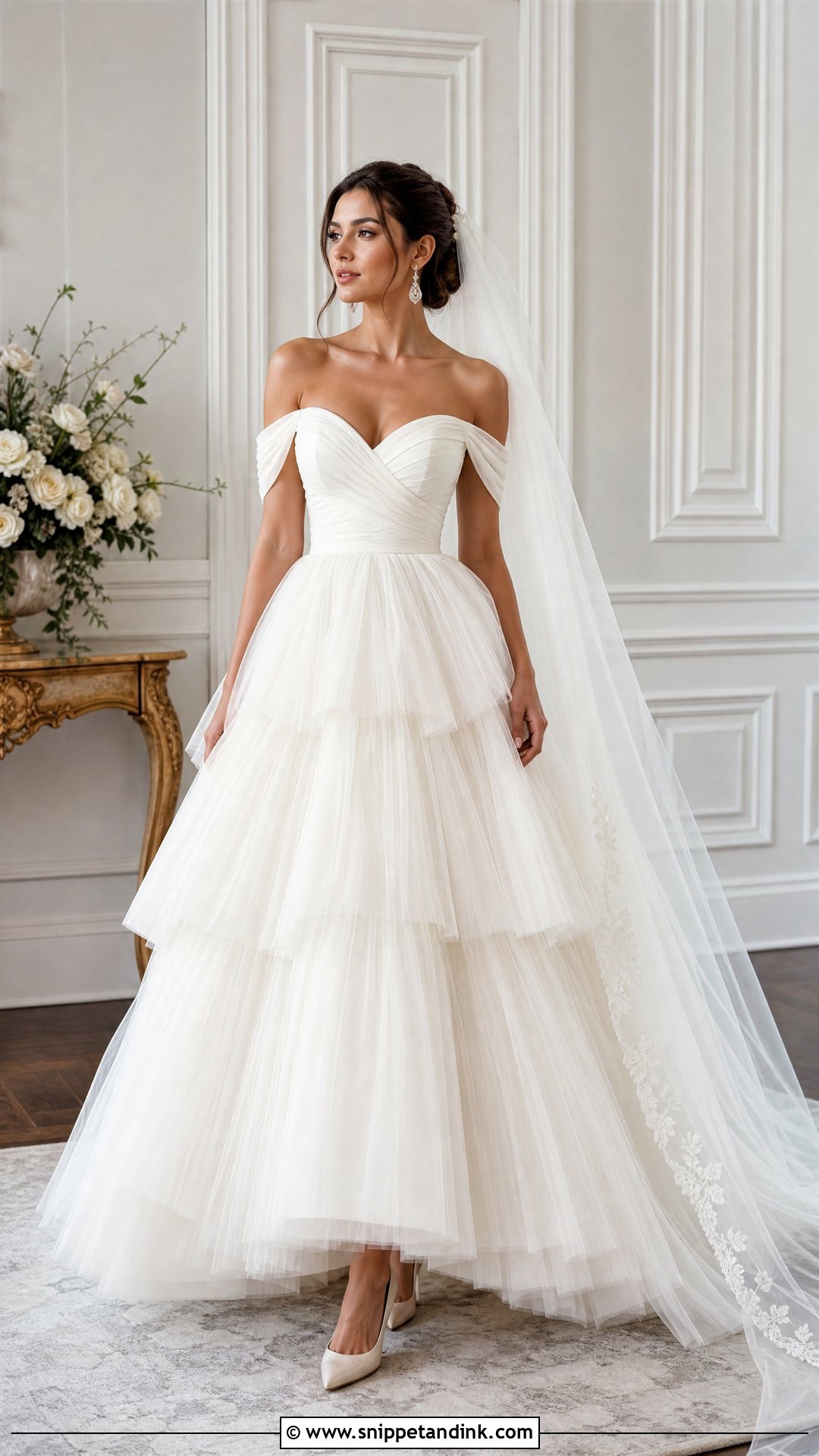
Off-shoulder straps rest on the upper arm, so they need an internal structure that does the holding while they only decorate. Ask whether the bodice has a grip band or boning that keeps it up without the straps. A natural or slightly dropped waist lets the tiers fall gradually instead of springing out. A fine pendant fits the open neckline, with teardrop earrings, neutral heels and a sheer cathedral veil anchored beneath a low bun. Leave gloves and big jewellery out. Estates, conservatories and candlelit ballrooms all suit this neckline.
4. Corset Tiered Tulle Wedding Dress
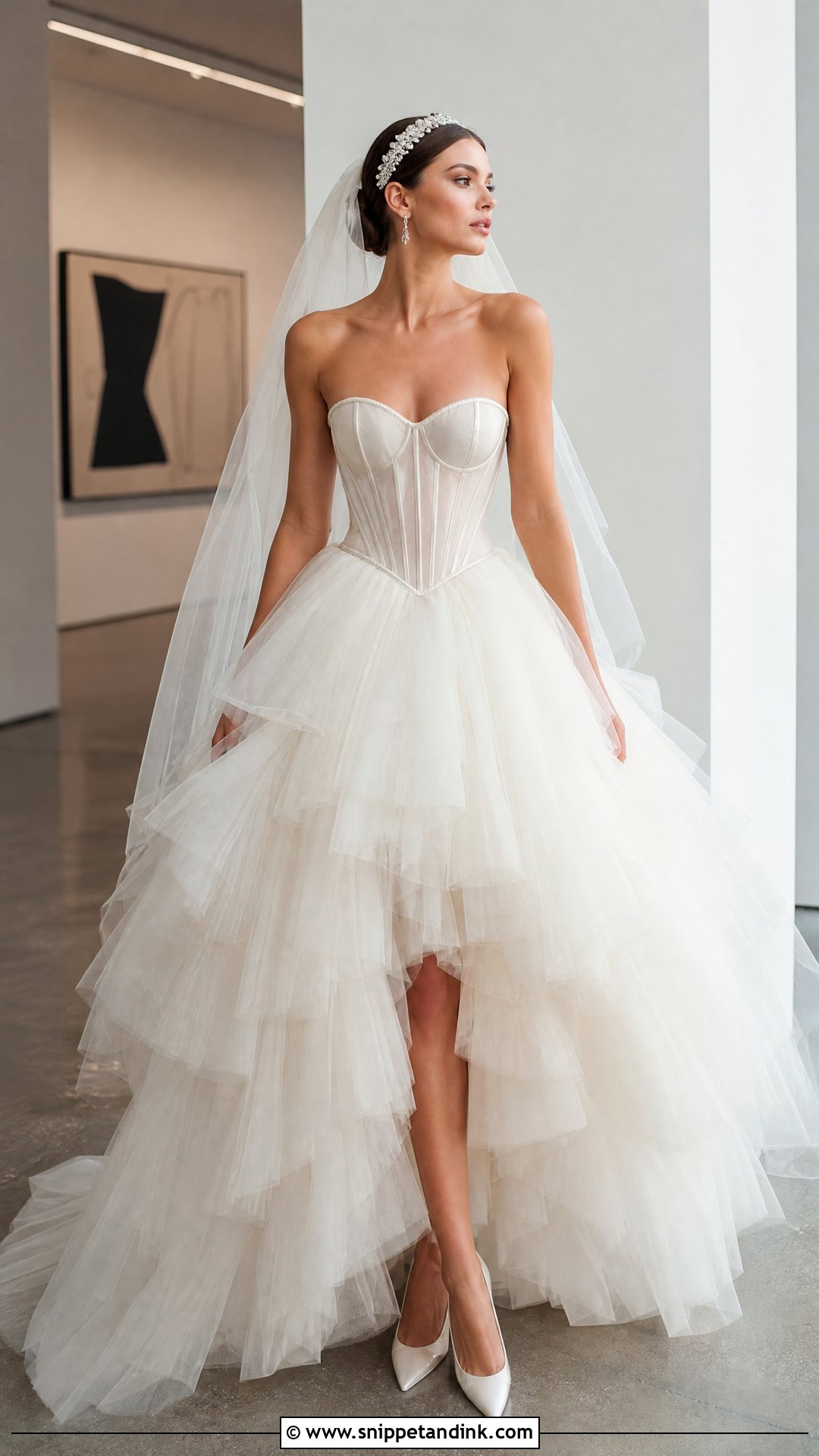
Visible boning gives the tiers something crisp to contrast with. Choose a bodice with secure cups and a waist that closes without pinching, and start the tulle around the high hip so the corset has room. One fitting check I never skip: sit down. Boning that ends too low digs into the thigh when seated. Sleek pointed pumps, a narrow crystal headband and earrings picking up any bodice sparkle suit it, with a raw-edge veil so the outfit doesn’t turn busy. A smooth bun or polished waves behind the shoulders keep the corset lines visible.
5. Lace Tiered Tulle Wedding Dress
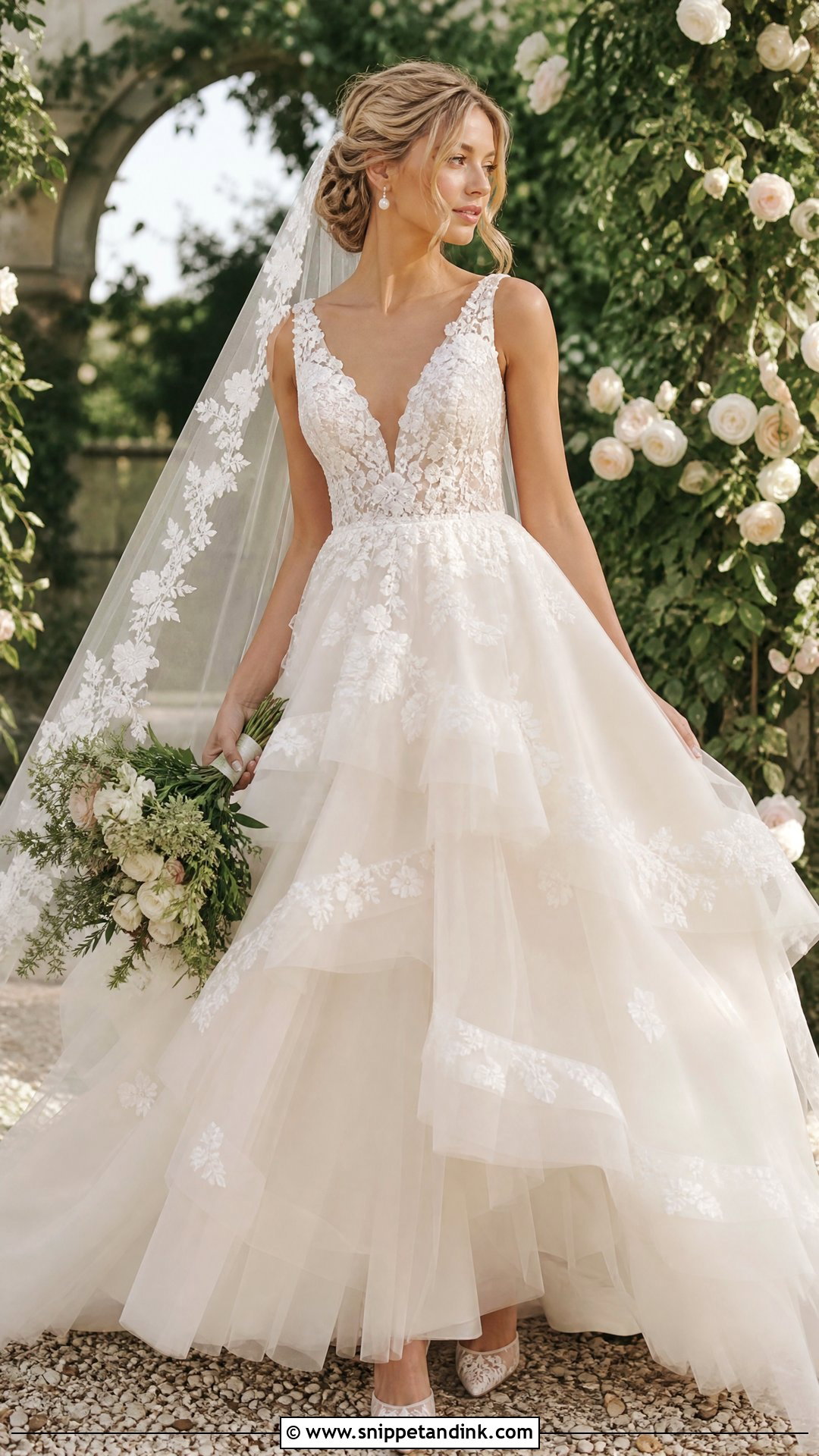
Lace and tulle tiers pair best when a few appliqués spill onto the first tier and then stop. Keep the lower tiers plain so their shape stays readable; lace scattered across every layer flattens the effect. A floral lace bodice, lace-covered pumps, pearl earrings and a soft veil with sparse appliqués on the edge finish it. Lace edges catch on tulle, so ask that the appliqués on the skirt are stitched down all round rather than tacked at a few points. A loose updo or half-up hair fits gardens, vineyards and estates.
6. Sparkly Tiered Tulle Wedding Dress
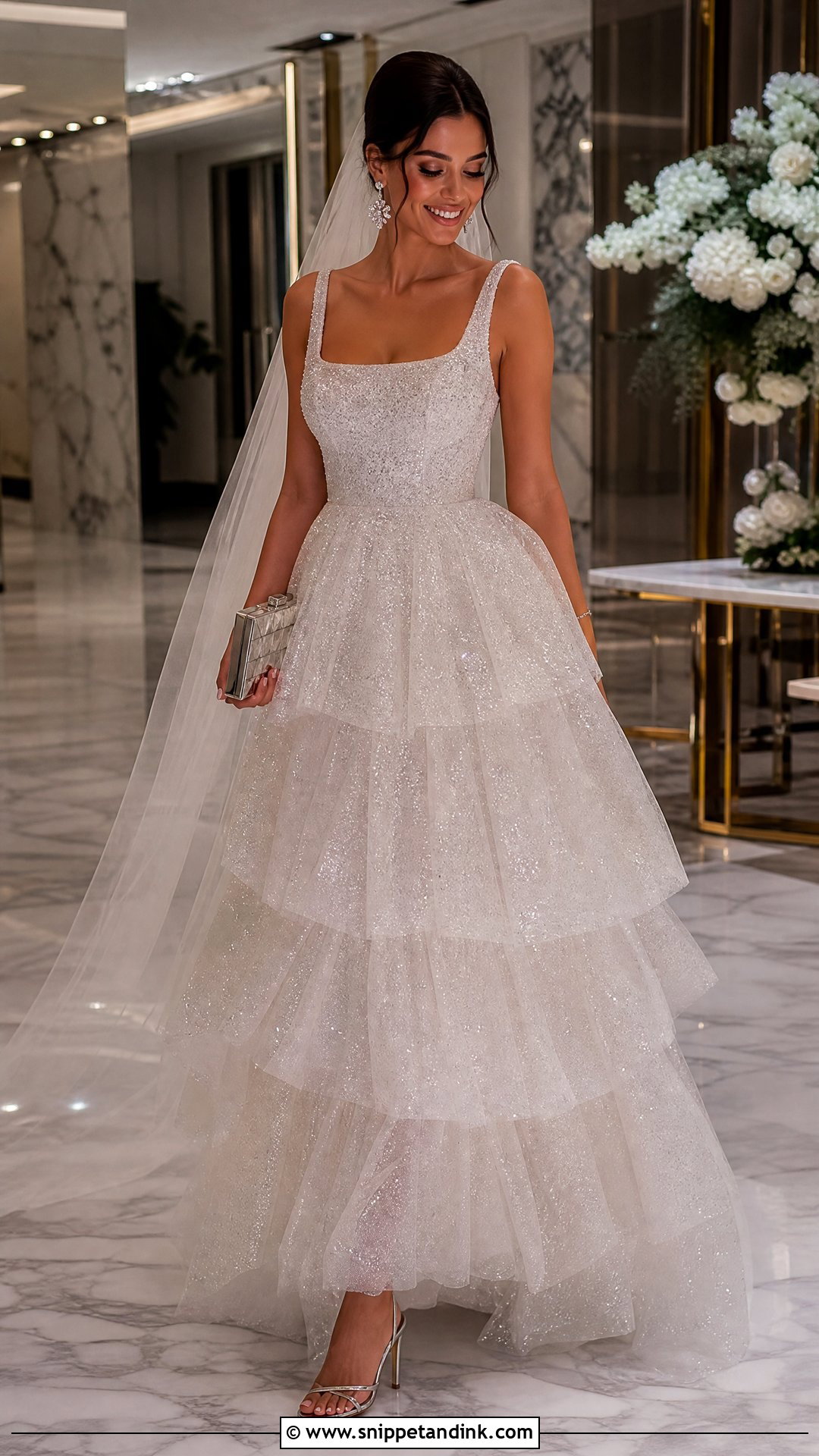
Sparkle on tulle comes in three forms, scattered shimmer, fine sequins and glitter tulle, and I’d use one of them, never all. Glitter tulle sheds a little, especially in the first wear, so expect some on your partner’s jacket. Keep the bodice fitted and simple and the veil unbeaded. Crystal drop earrings, silver heels, a mirrored clutch and a sleek low ponytail or sculpted bun suit it. Look at the fabric in daylight and under warm evening lighting before choosing, since some glitter tulles read grey in shade. Evening ballrooms and rooftops are where it shines.
7. Blush Tiered Tulle Wedding Dress
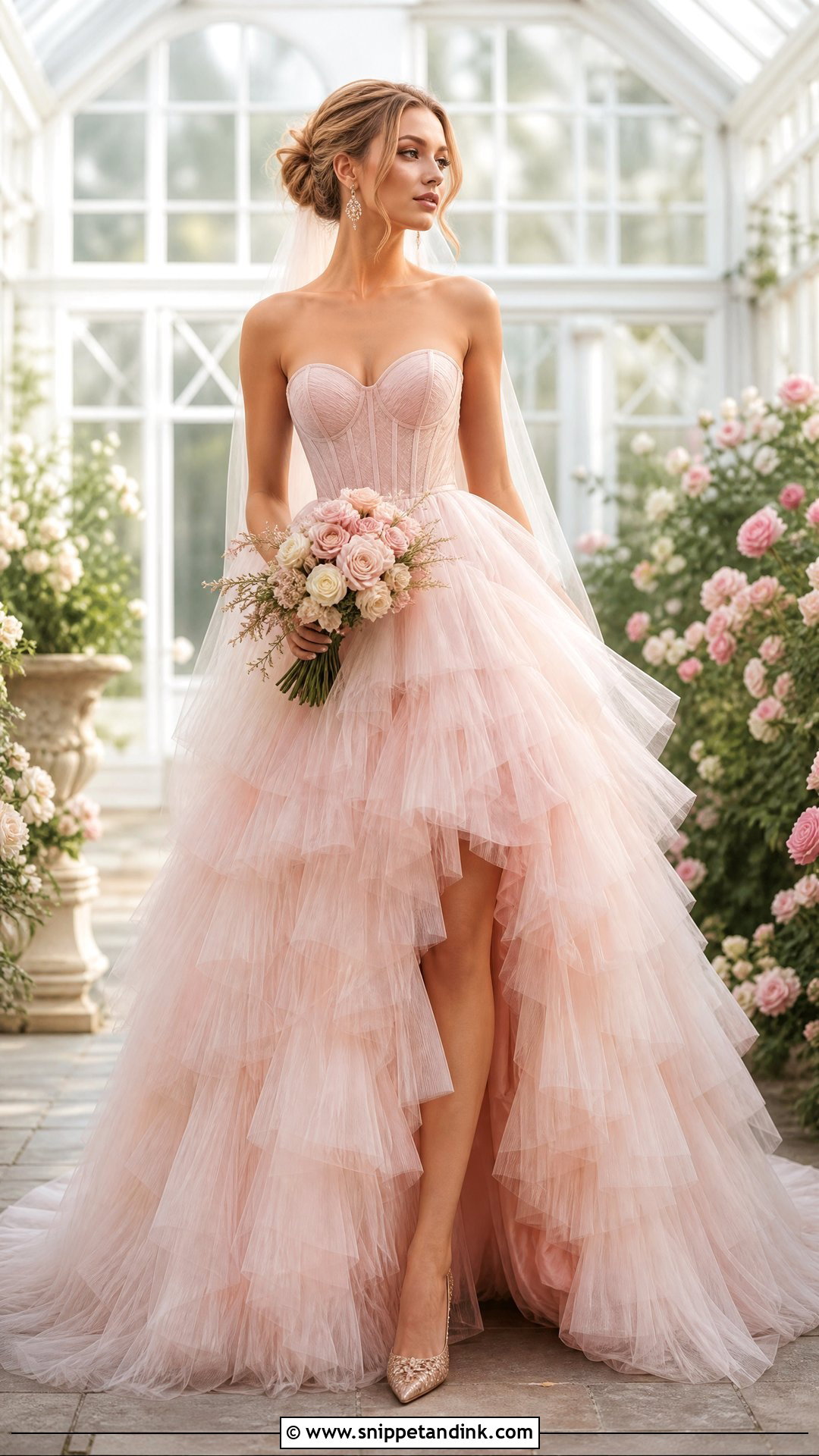
Blush gets its depth from layering, so look for a pale pink lining under ivory or lighter blush tulle rather than one solid shade. Each tier of net filters the lining slightly differently, which is what makes the colour feel alive in photos. A strapless or spaghetti-strap bodice keeps the top fresh. Champagne heels, rose-gold earrings and a sheer ivory veil make a soft tonal outfit. Pink, cream and white flowers link the dress to the bouquet, and a loose low bun suits spring gardens and soft afternoon light.
8. Champagne Tiered Tulle Wedding Dress
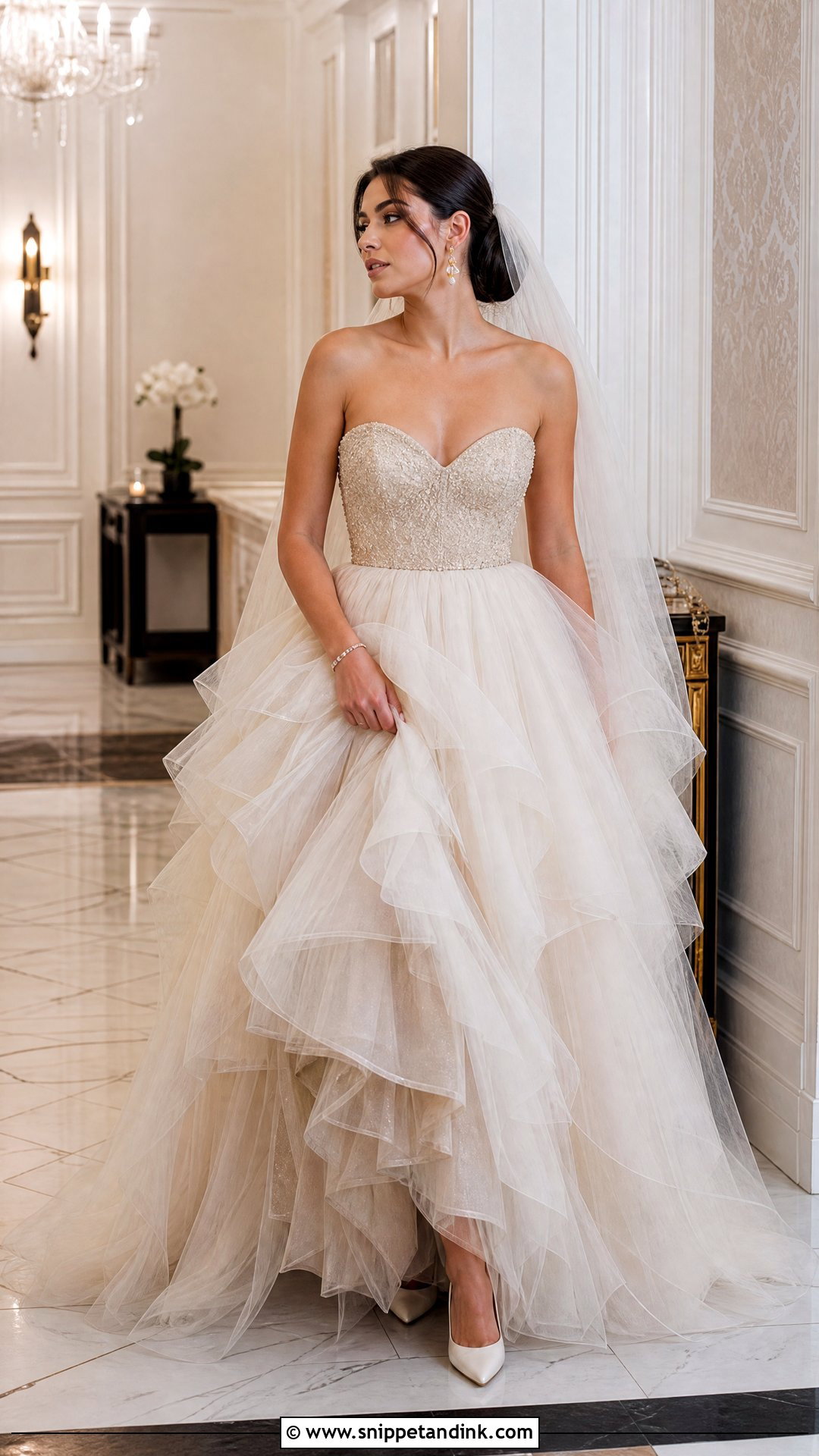
Champagne under ivory tulle adds warmth without moving away from bridal colouring. The gown has a fitted bodice with restrained beadwork, a defined waist and tiers widening gradually to the floor. Champagne is kind to warm skin but can look muddy on very cool undertones, so try it near the face in daylight. Champagne satin pumps, warm metallic earrings and a narrow bracelet suit it, with an ivory veil to avoid a fully matched palette. A neutral manicure and soft, luminous makeup complete it for evening hotels, theatres or autumn weddings.
9. Blue Tiered Tulle Wedding Dress
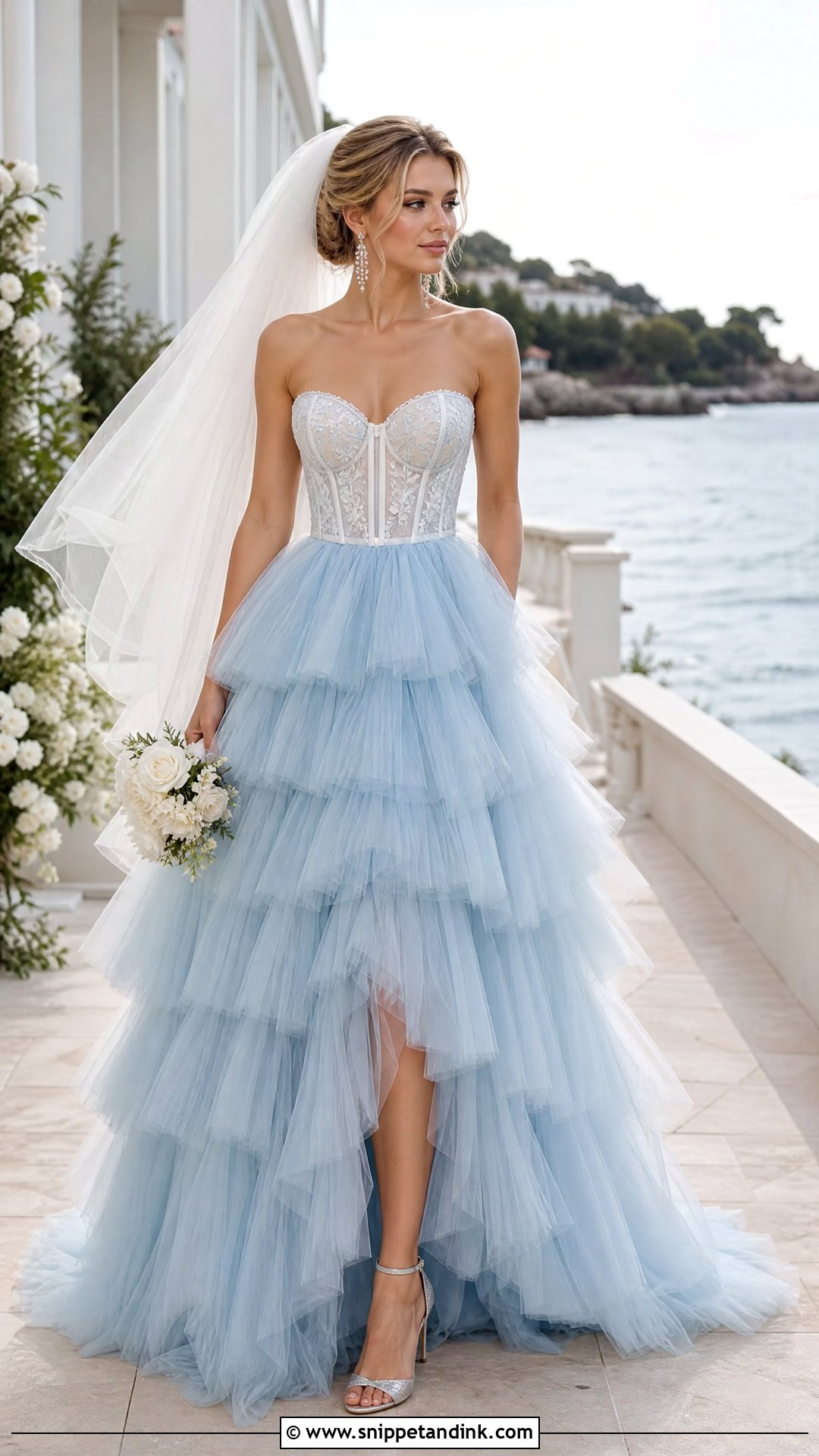
A blue tiered tulle wedding dress is easiest to wear in powder blue softened by an ivory corset bodice or a white tulle overlay. Graduating the tiers spreads the colour through the skirt instead of pooling it in one heavy band at the bottom. Silver heels, crystal earrings and a plain ivory veil add contrast. Keep the bouquet white with soft greenery so the palette doesn’t tip into too many colours. Coastal venues, conservatories and outdoor ceremonies under open sky suit it.
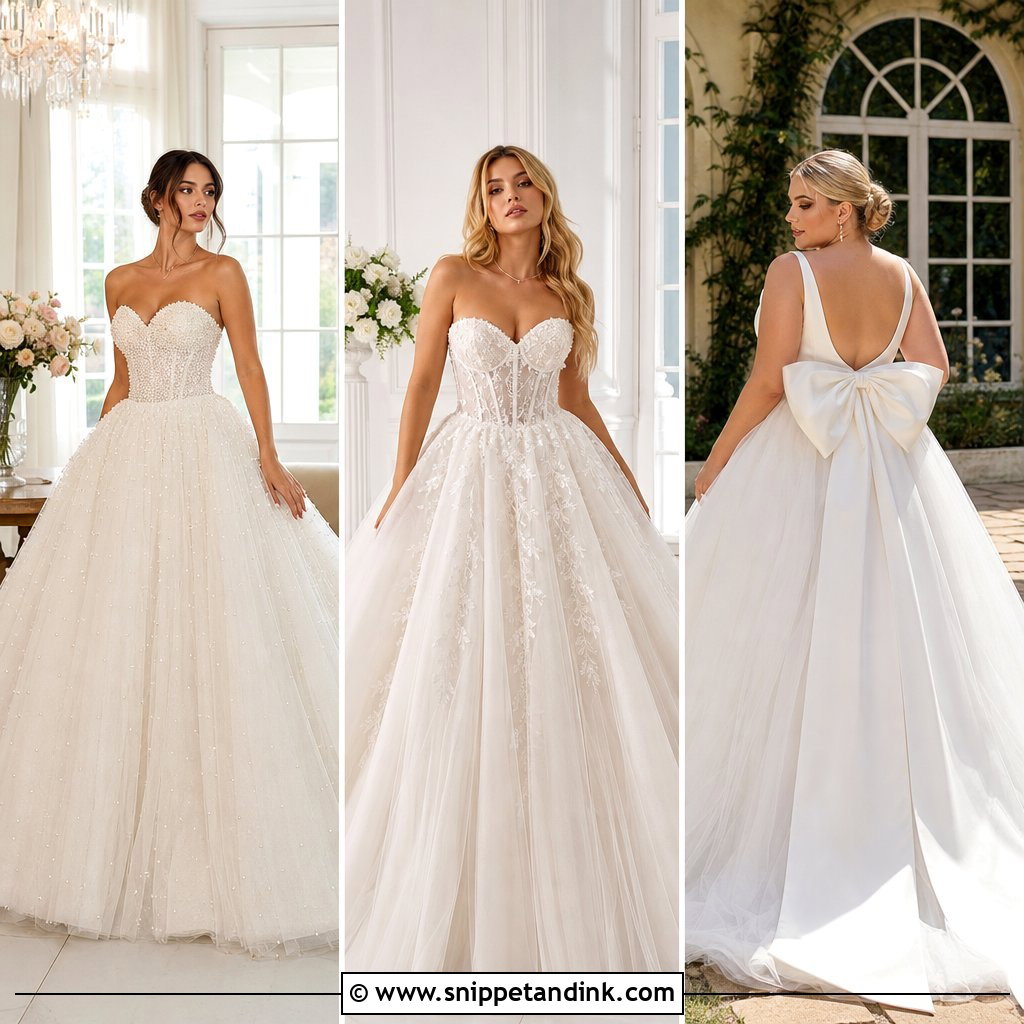
10. Tiered Tulle Ball Gown Wedding Dress
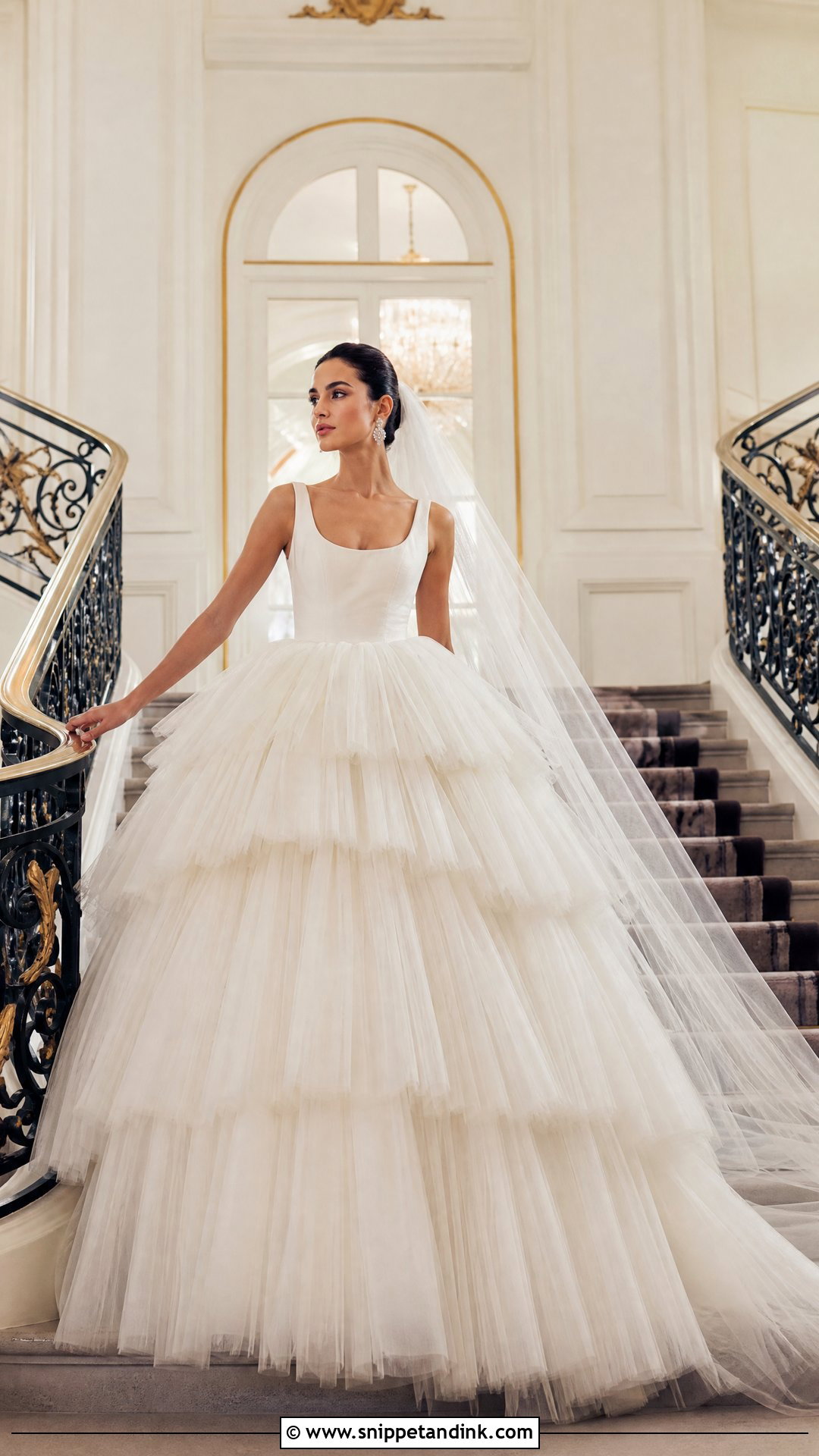
Nothing makes an entrance like a full ball gown in tiers, but it needs space. Measure the venue’s aisle against the skirt’s width at the last fitting; some chapels are narrower than people expect. The balanced versions pair a fitted bodice and defined waist with layers that widen gradually toward the floor, under a scoop, square or strapless neckline. Platform heels hide beneath the skirt and add height for the hem, with classic studs, a smooth updo and a cathedral veil longer than the train. A secure bustle for the back tiers is essential for dancing.
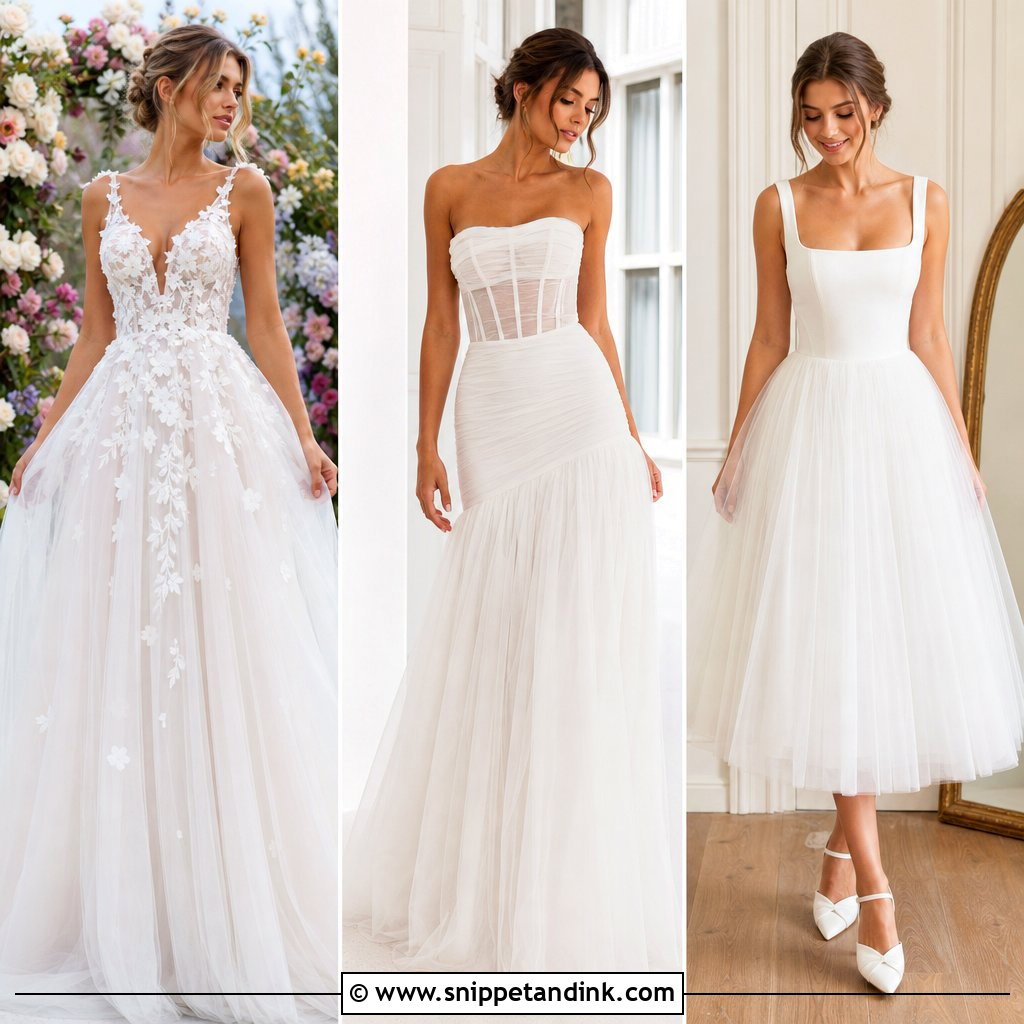
11. Tiered Tulle A Line Wedding Dress
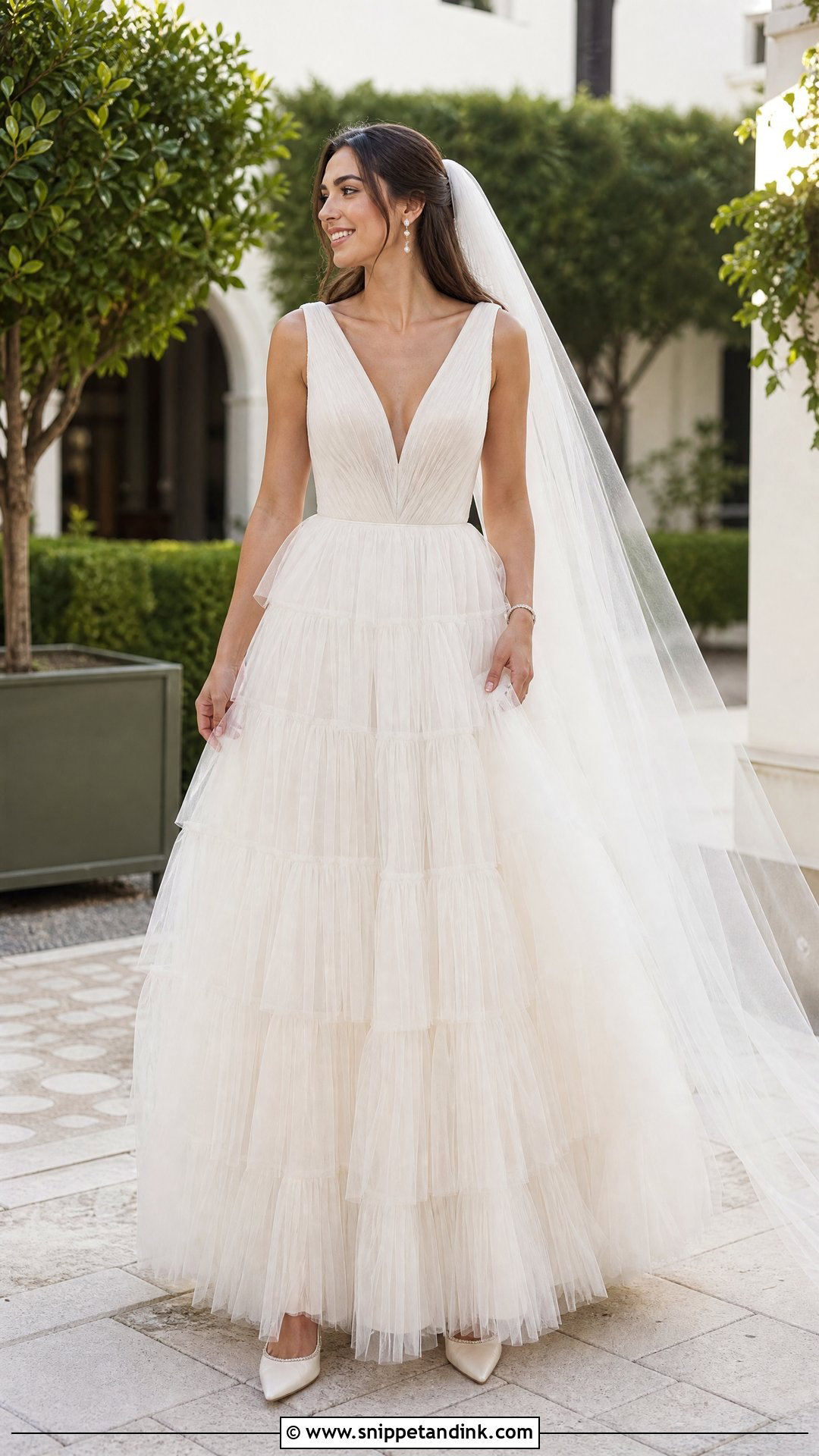
The A-line is the tiered gown I suggest to brides who love the layers but not the width. Narrow tiers placed close together skim away from the waist in a smooth line, and a V-neck or fitted sleeveless top lengthens the body above them. You can walk between ceremony and reception spaces without managing a huge skirt. Pointed pumps, a delicate tennis bracelet, small drop earrings and a light chapel veil finish it, with natural waves or soft pins. Gardens, country clubs and restaurants suit its scale.
12. Tiered Tulle Mermaid Wedding Dress
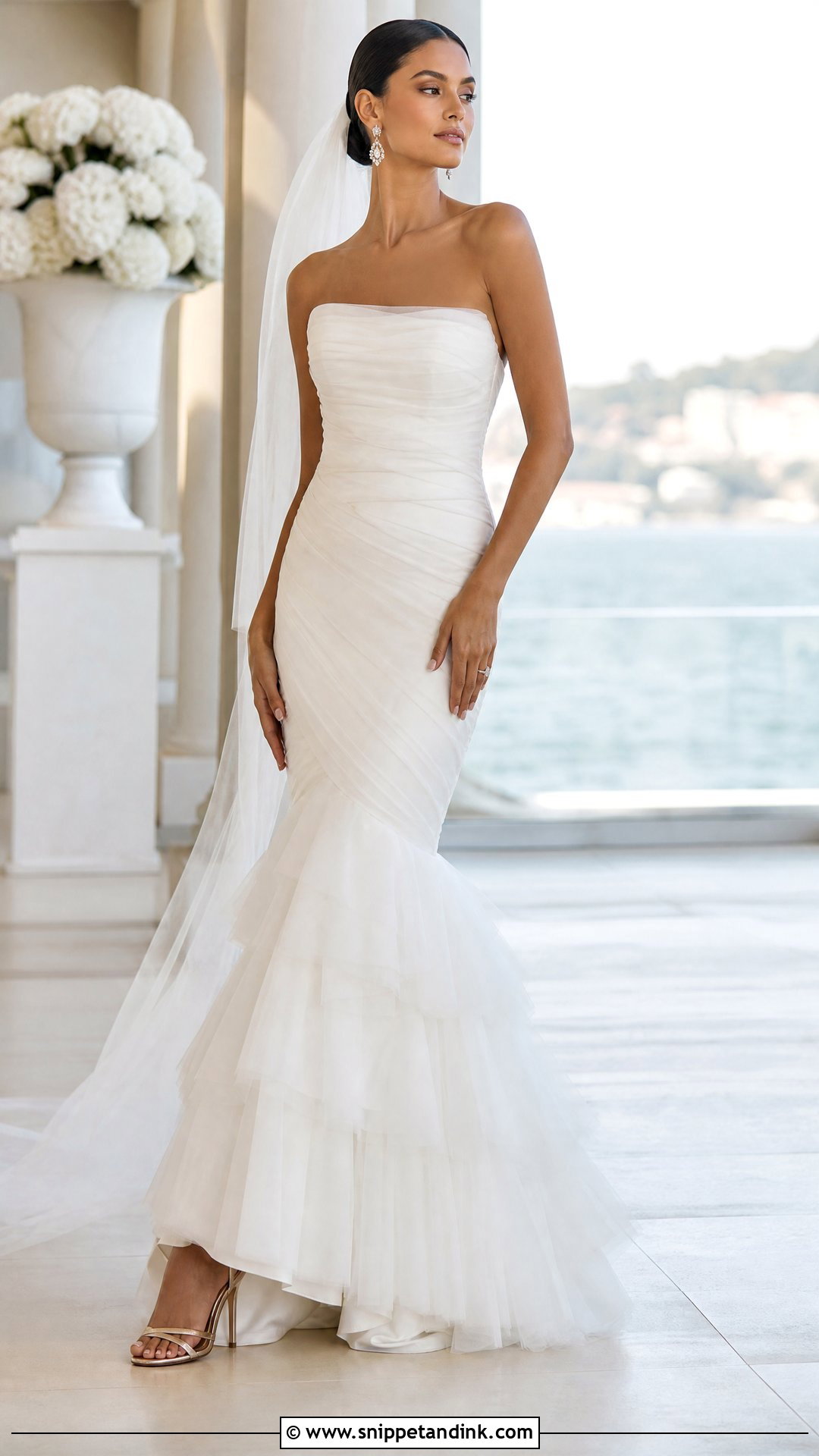
Tiers on a mermaid start at the knee, so the upper body is fitted tightly through torso and hips. Diagonal or asymmetrical layers make the flare look smoother than straight horizontal bands. This is the least forgiving shape on the list to move in. At alterations, sit, walk and climb a step; if the flare starts too high you’ll be taking tiny steps all day. Slim heels, statement earrings and a narrow veil falling behind the body suit it, with sleek side-parted hair. Black-tie ballrooms and waterfront evenings fit its drama.
13. Asymmetrical Tiered Tulle Wedding Dress
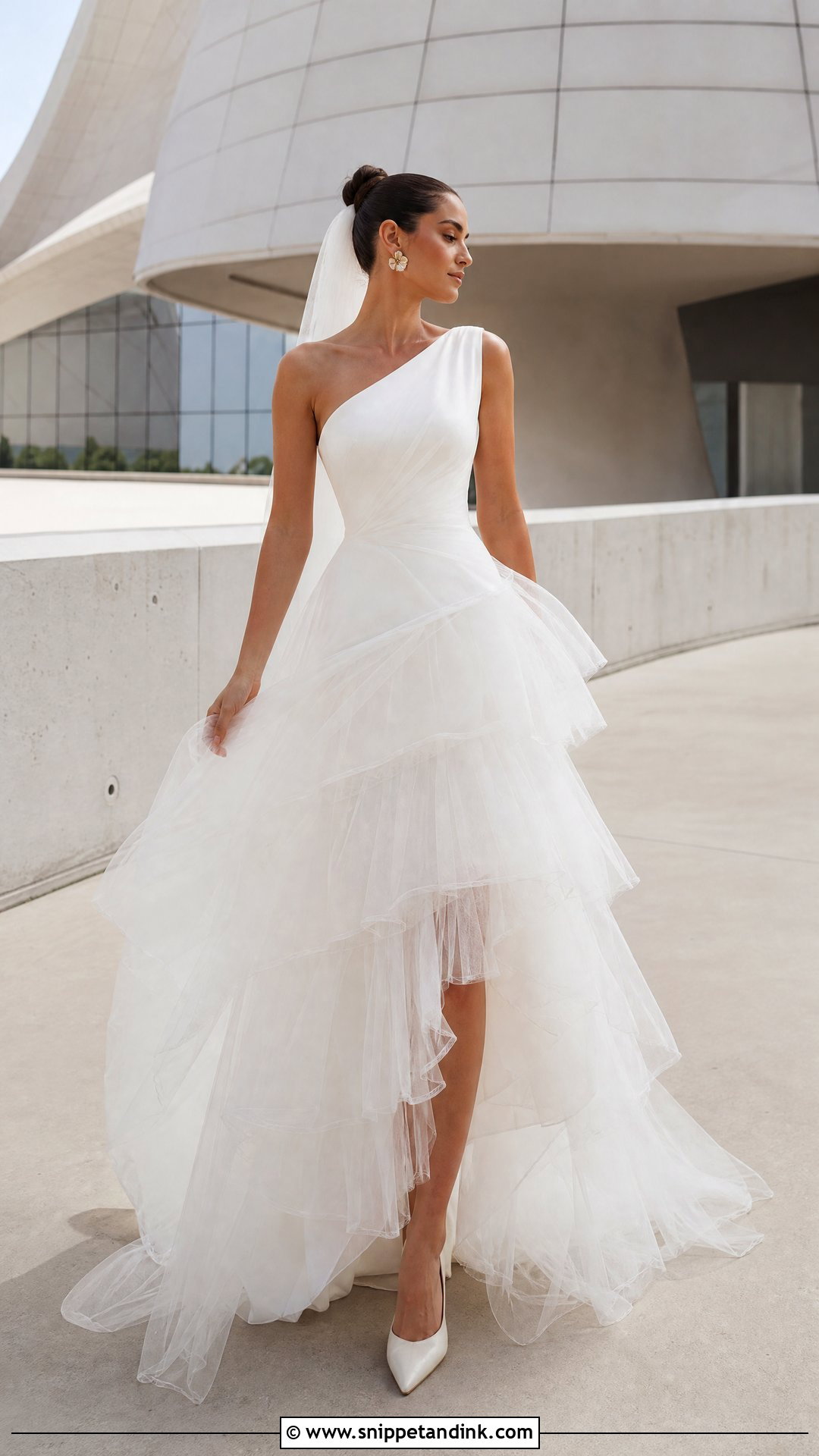
Diagonal tiers break up the width of a full skirt, which is why asymmetry often flatters more than straight bands. A clean one-shoulder, strapless or square bodice balances the movement below. Sculptural earrings, pointed ivory heels and a simple veil under a sleek bun keep it modern, and a long-stemmed minimalist bouquet won’t add competing texture. Check the dress from the front, side and back in a three-way mirror; diagonal layers can look deliberate from one angle and lopsided from another. Museums, rooftops and city venues with an editorial mood suit it.
14. Ruffled Tiered Tulle Wedding Dress
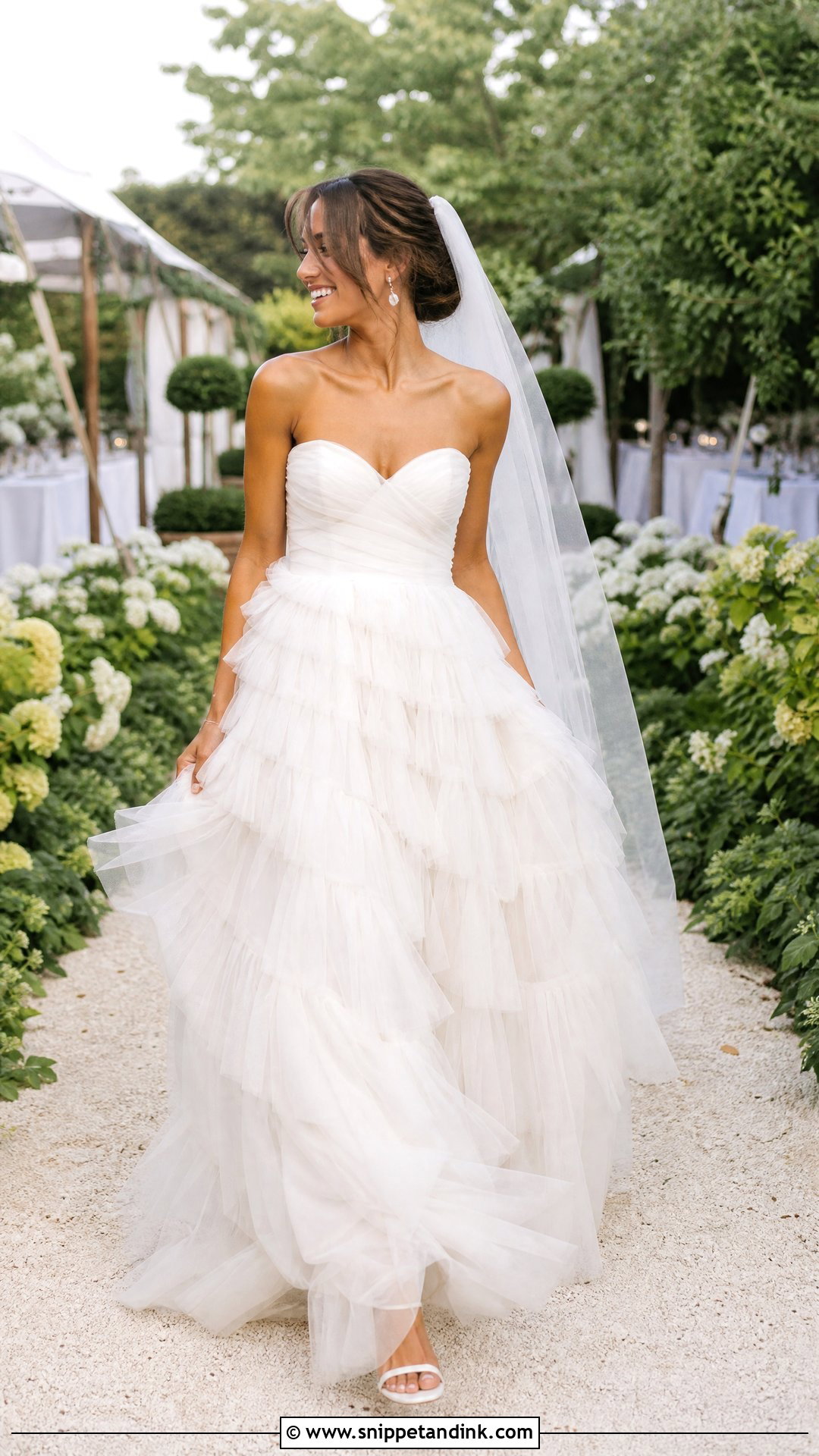
Ruffles should flutter, not stick out. Look for soft tiers with finished edges rather than stiff layers that project from the body, and a plain fitted bodice to give the eye a rest. During fittings I ask brides to walk briskly and turn on the spot; good ruffles swing and settle, while stiff ones bounce. Pearl earrings, satin sandals and a barely there fingertip veil suit it, and a high bun or textured ponytail keeps the ruffles at the back visible. Garden receptions and dance-heavy weddings are its home.
15. Floral Tiered Tulle Wedding Dress
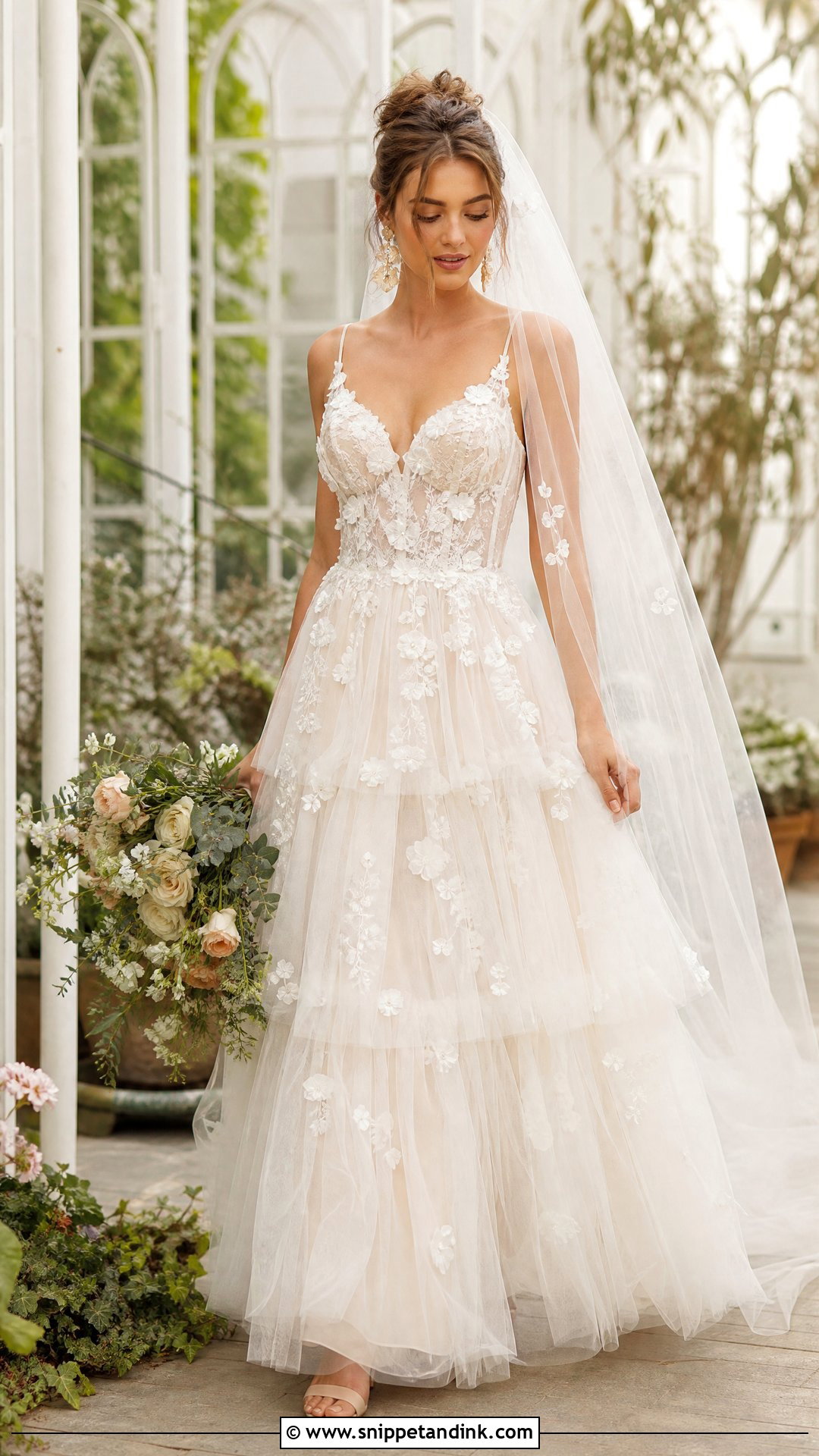
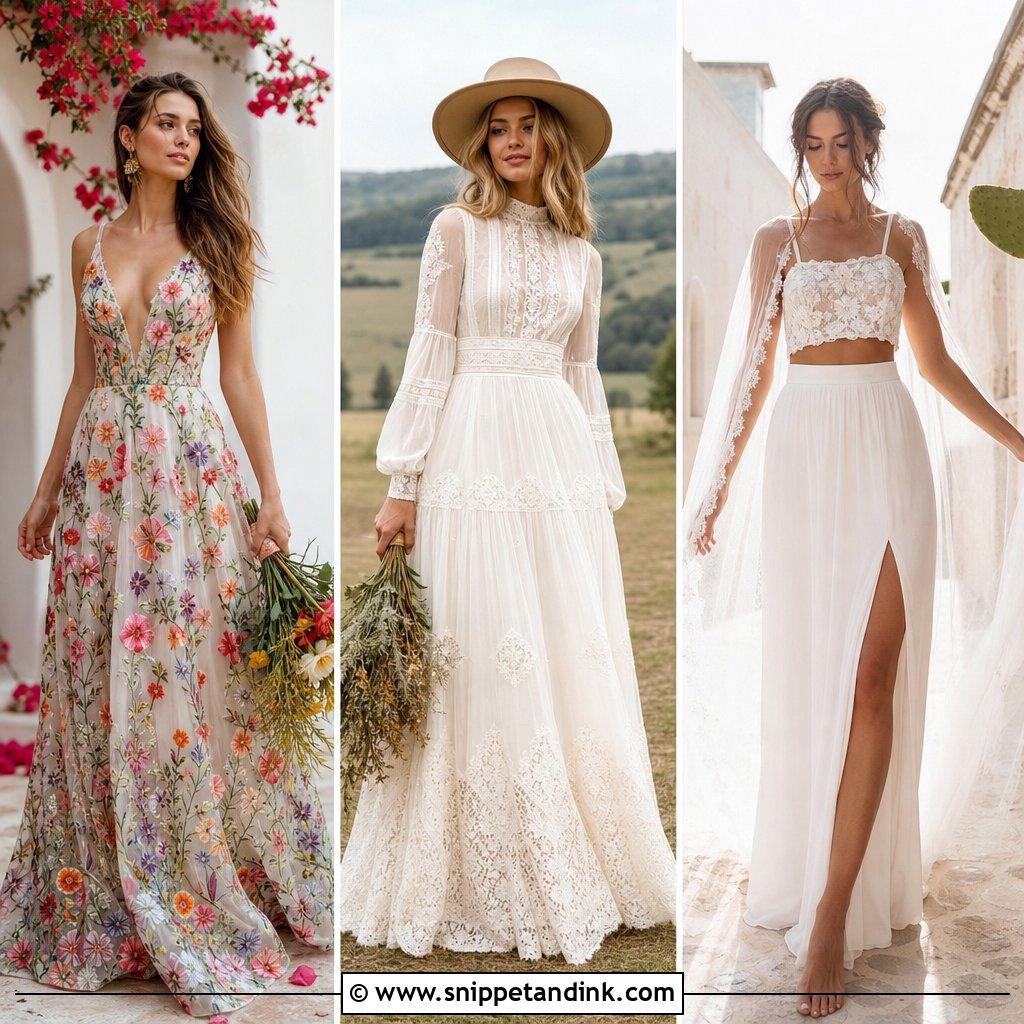
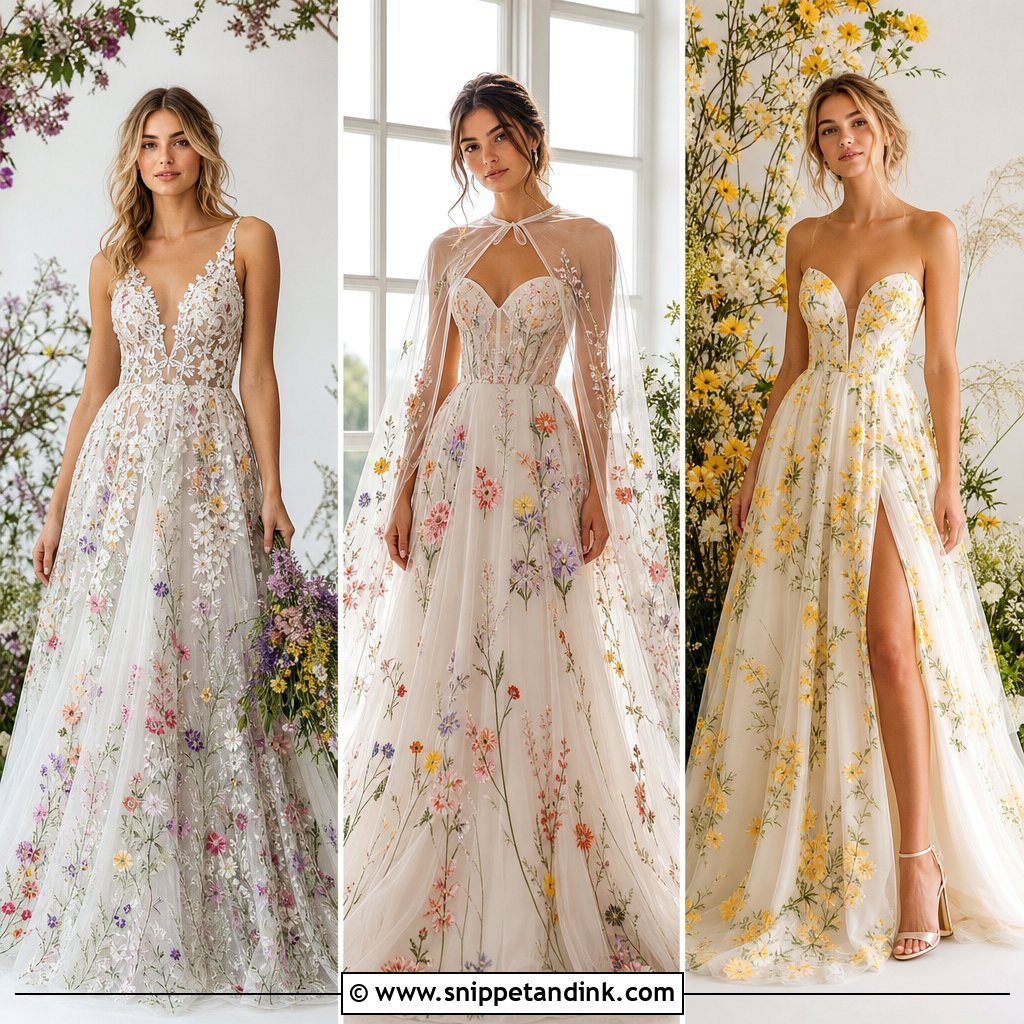
Botanical detail on tulle should be heaviest near the bodice and lighter toward the hem; flowers all the way down weigh the tiers and stop them moving. Three-dimensional blooms or embroidered vines around the bodice and upper skirt, with a few scattered appliqués lower, keep the dress airy. Neutral heels, floral studs and a sheer veil with a few matching appliqués suit it. Fresh flowers tucked into a low updo should be hardy ones that won’t wilt by dinner. Keep the bouquet loose and in complementary shades for a conservatory or country estate.
16. Pearl Tiered Tulle Wedding Dress
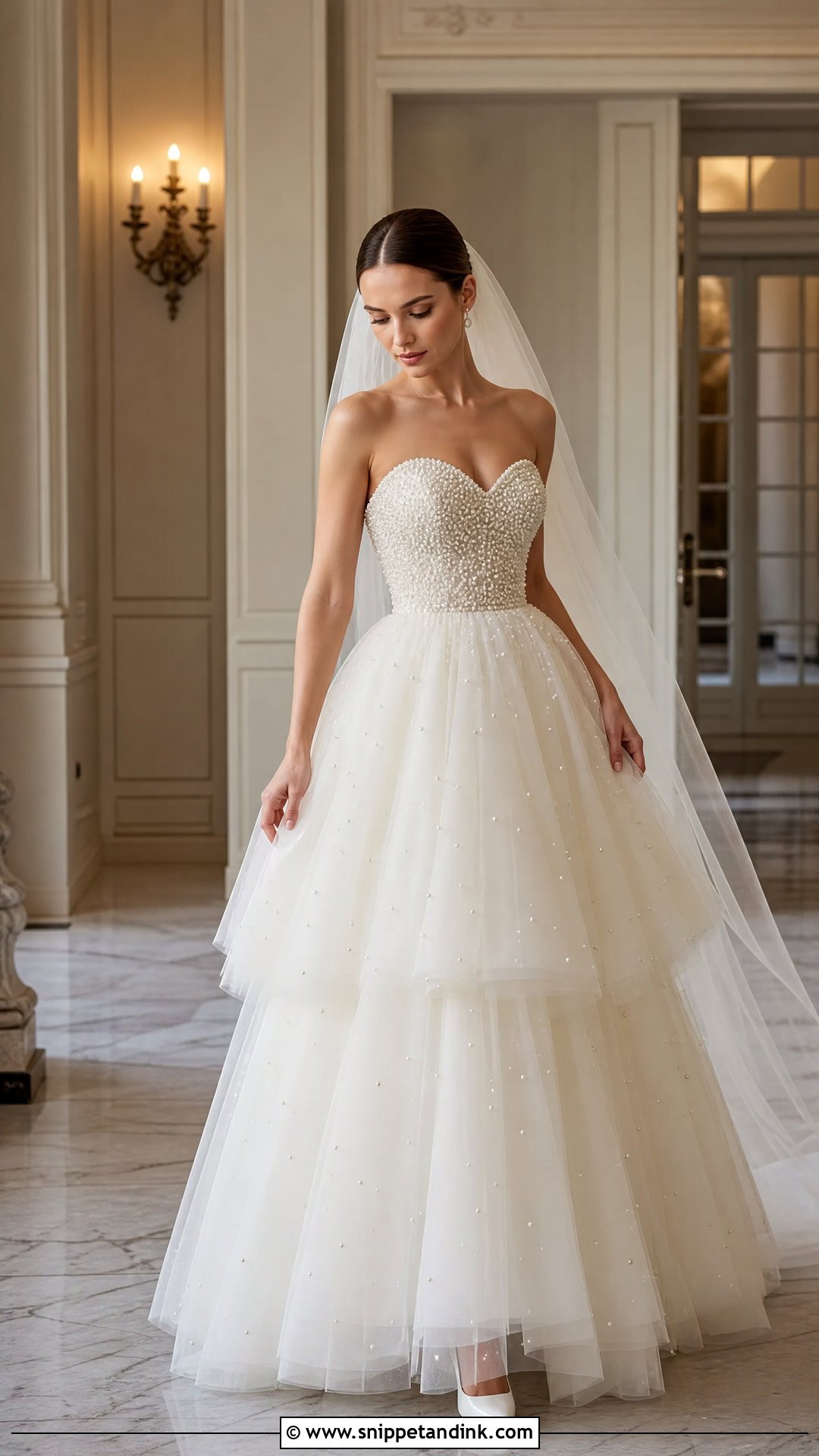
Pearls glow rather than sparkle, so this is the gown for brides who find sequins too much. Concentrate the pearl work on the bodice and scatter it lightly onto the skirt. Pearl earrings, ivory satin heels and a plain veil suit it; a veil with a cut edge won’t snag on raised pearls as much as a lace-edged one. Check the inside of the arms and the hip area, where your hands brush, because pearls there take the most friction and should be individually knotted or stitched. A smooth low chignon and luminous makeup finish it.
17. Basque Waist Tiered Tulle Wedding Dress
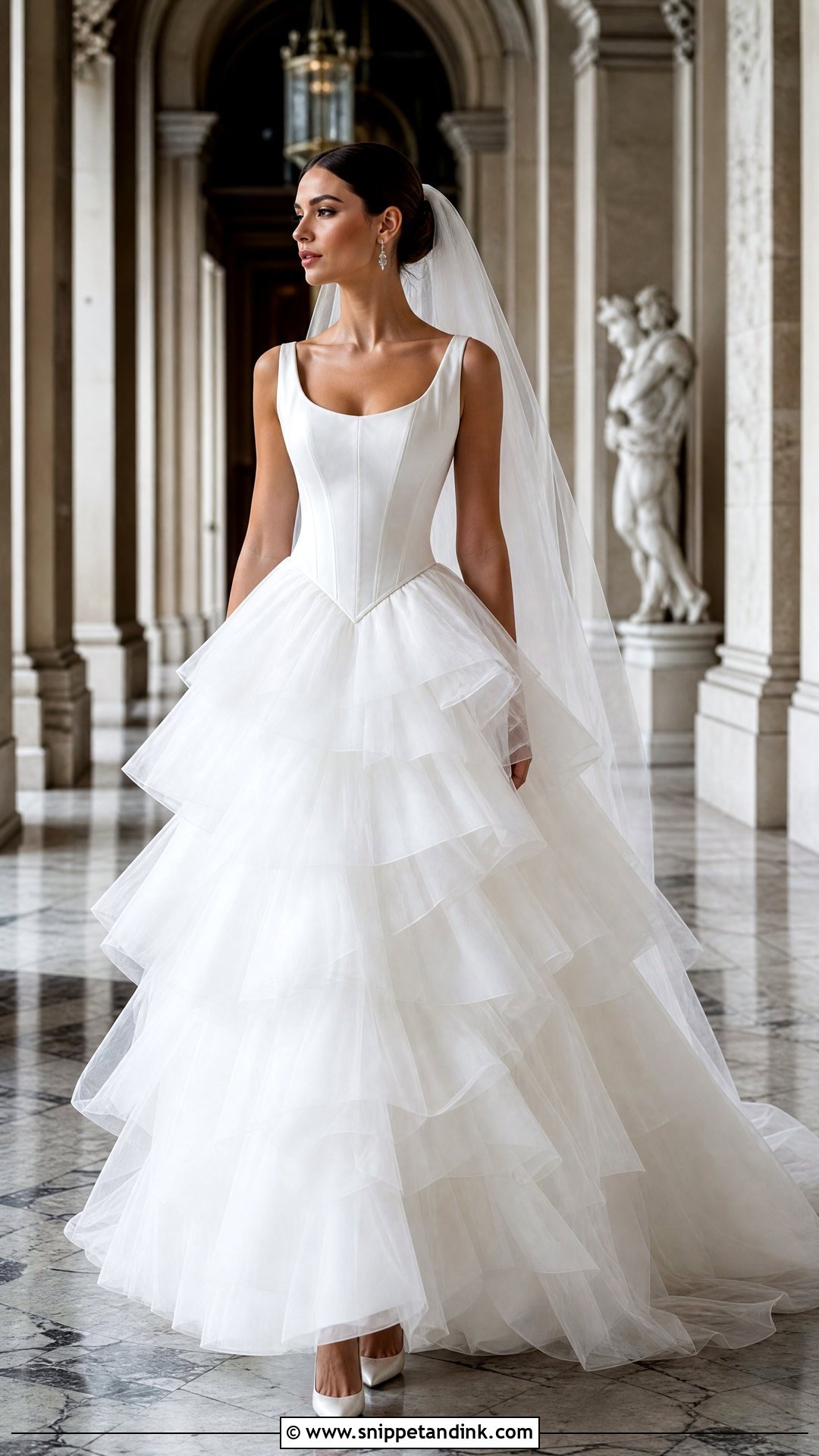
A Basque waist tiered tulle wedding dress uses the V point of the waist to lead the eye into the tiers, so the volume looks planned. A structured corset with a square, scoop or strapless neckline supports it. During alterations, watch the point while you move: it should stay centred and flat, not twist to one side when you turn. Pointed heels, delicate earrings and a long veil beginning below a polished updo suit it. Keep the bodice decoration restrained, since the waist and skirt do the work in grand halls and staircased venues.
18. High Low Tiered Tulle Wedding Dress
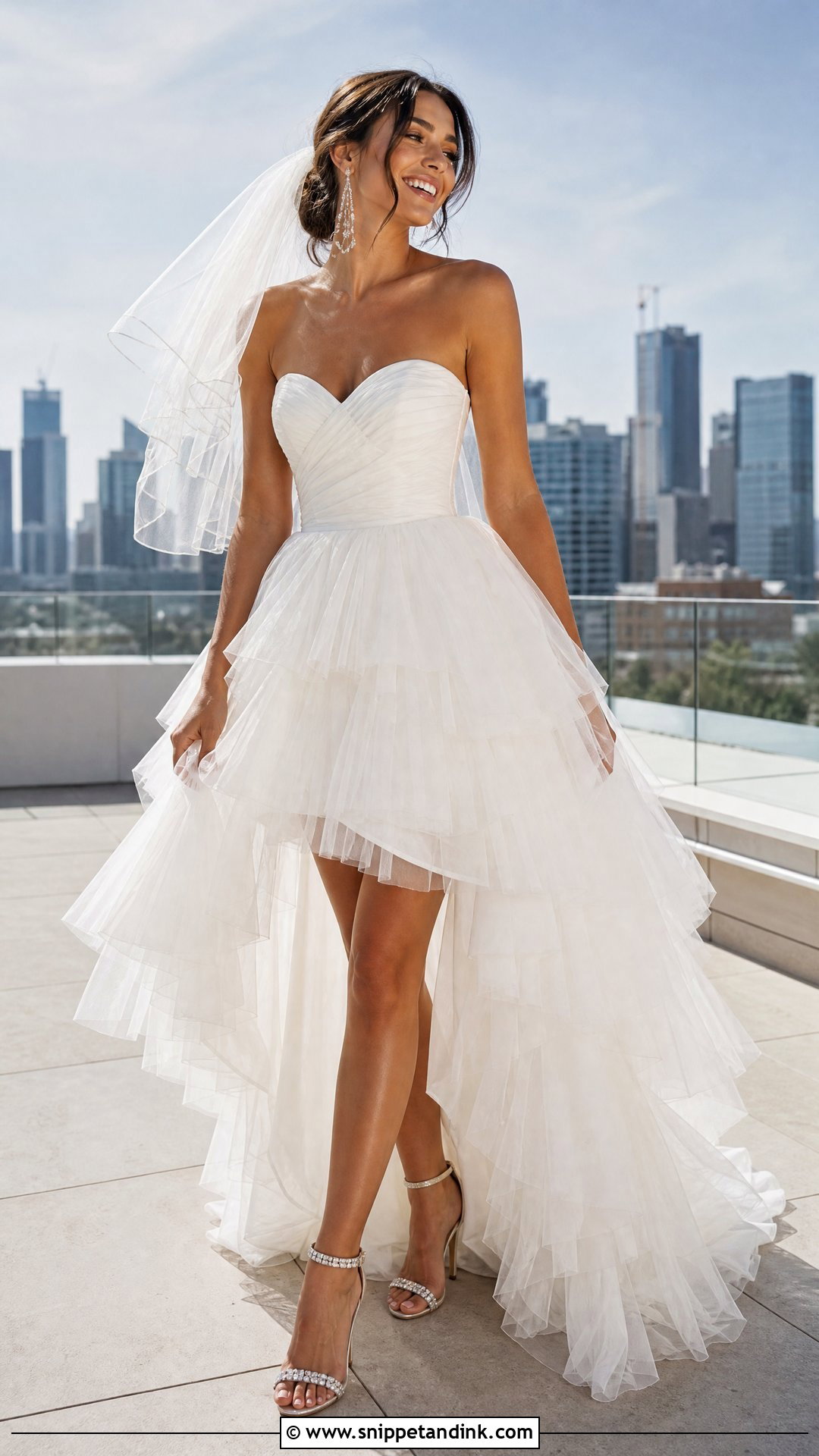
With a high-low hem, keep the difference between front and back gentle. An extreme drop looks like a costume and makes tulle tiers bunch at the sides. A fitted strapless bodice keeps the top clean, and because your shoes show all day, choose embellished pumps or ankle-strap heels you can stand in. Statement earrings and a short veil or structured hair bow suit it, with a small bouquet. Check that the front hem clears your shoe at the toe when you walk. Courthouse ceremonies, rooftops and destination receptions fit it well.
19. Tiered Tulle Wedding Dress With Detachable Overskirt
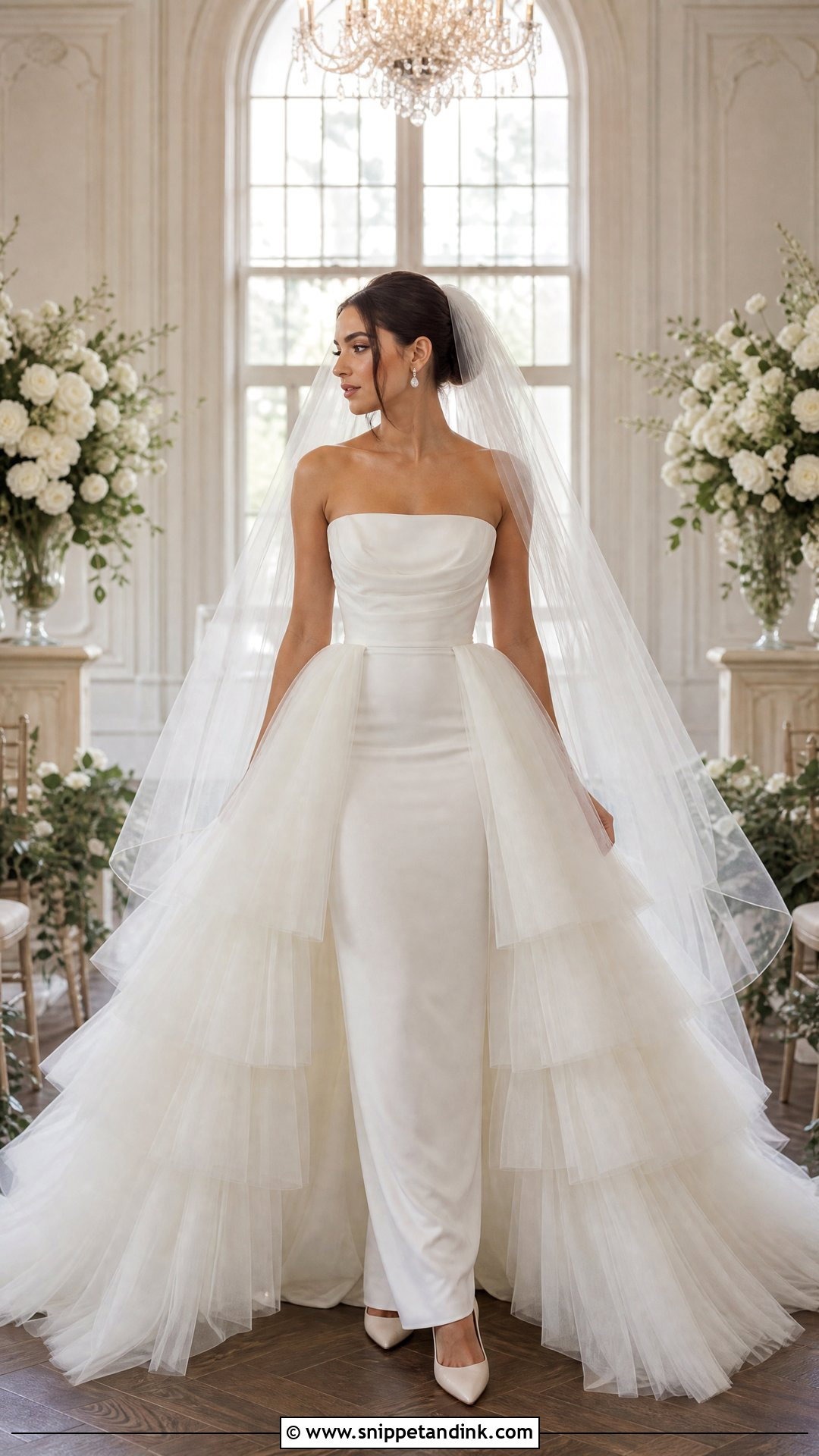
Two looks from one gown: a detachable tiered tulle overskirt goes over a fitted column, sheath or slim A-line for the ceremony, with a cathedral veil, pearl earrings and ivory pumps. After portraits, the overskirt and veil come off and the slimmer dress handles dinner and dancing. A sparkly hair accessory freshens the second look. The attachment is the part to test: ask the seamstress for flat hooks or snaps, and practise releasing it with whoever will help you. It suits venues with separate ceremony and reception spaces.
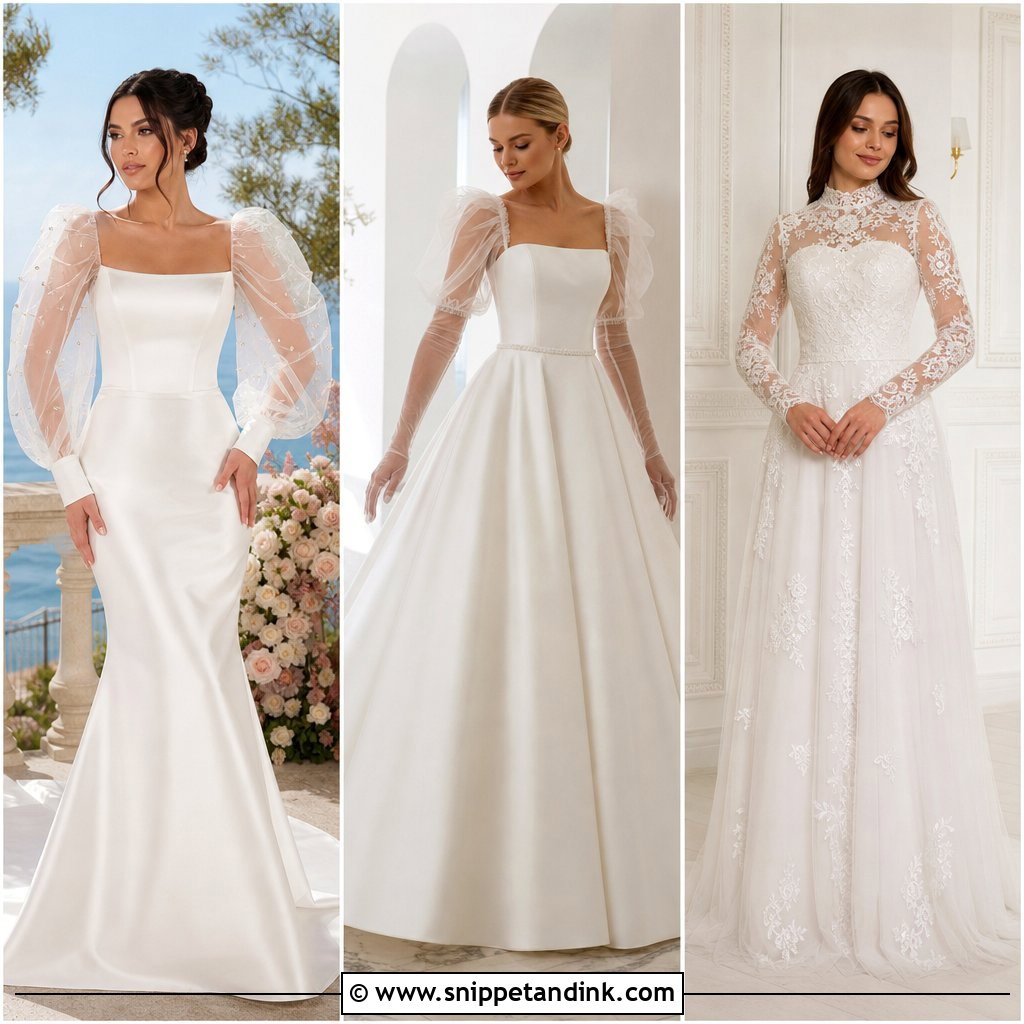

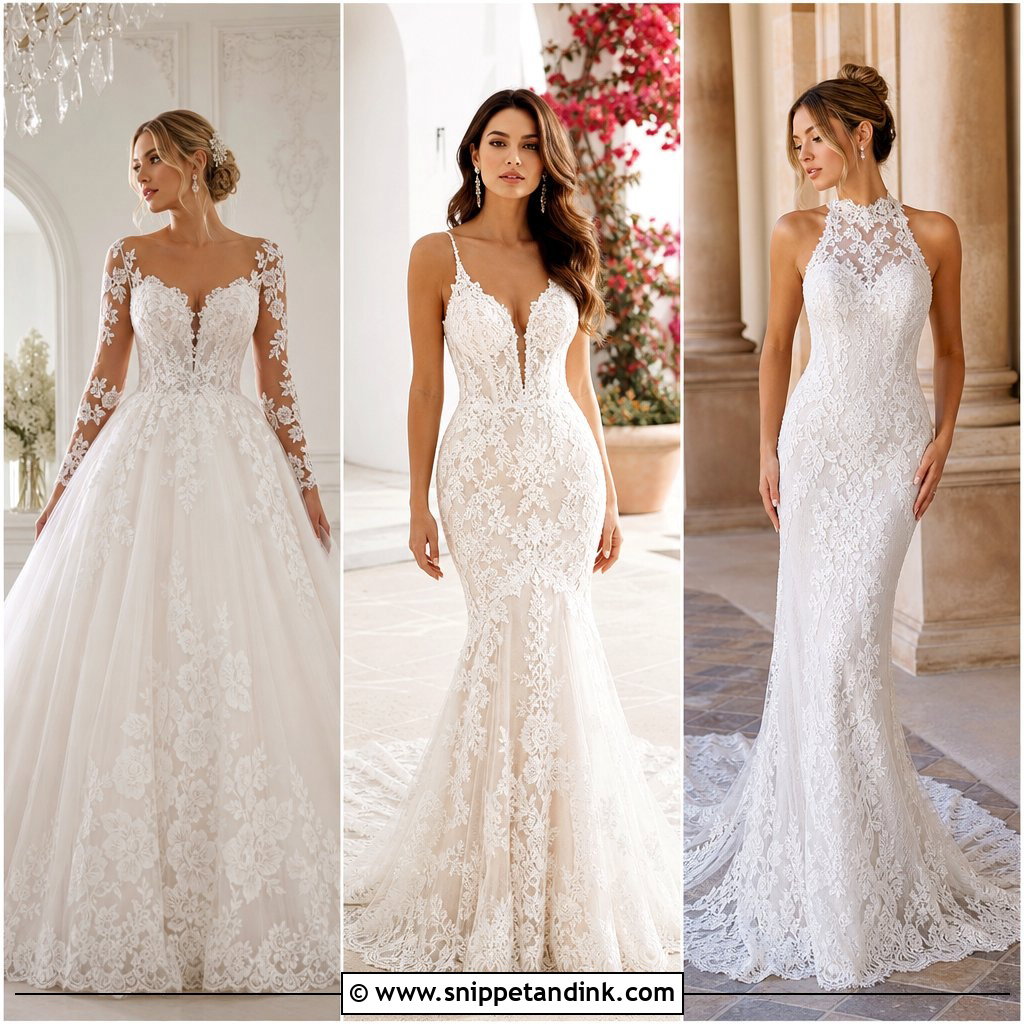
20. Short Tiered Tulle Wedding Dress
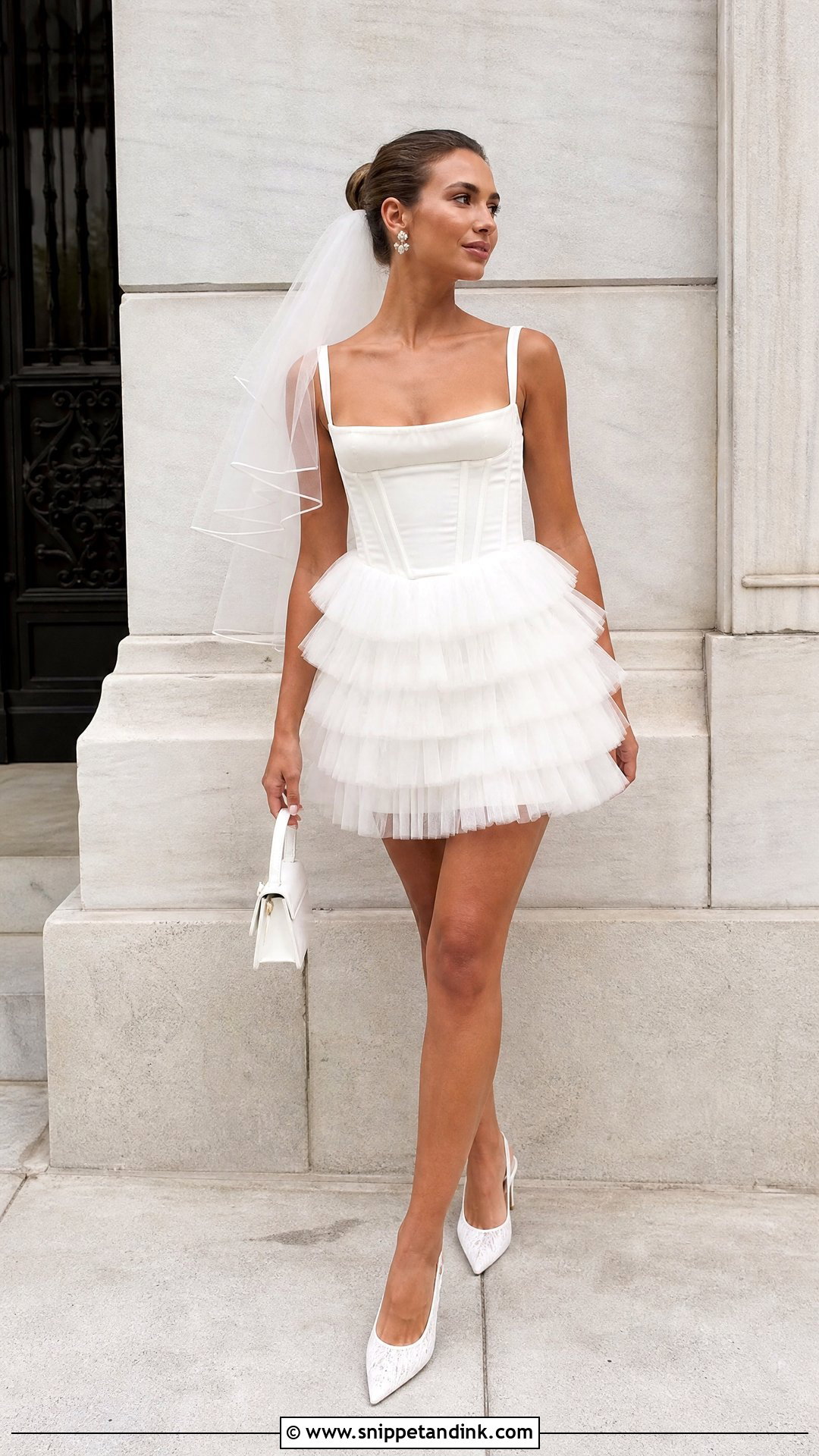
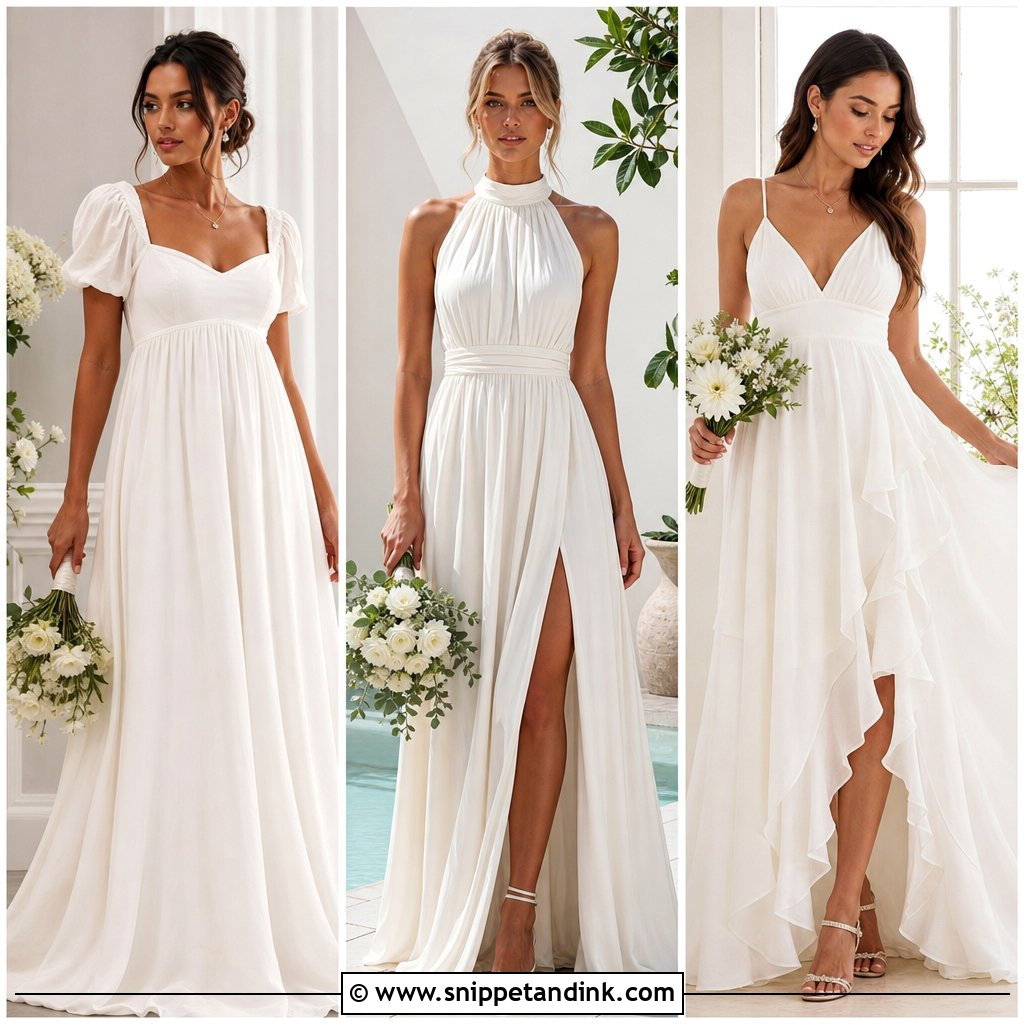
Short tiers need to be compact or they look like a party frock. A fitted mini or knee-length bodice with tight, small tiers moves well without hiding the legs completely. A square neck, a corset top or long sheer sleeves keeps it bridal. Shoes are on full view, so wear pointed pumps, slingbacks or ankle-strap heels you’d happily show off. Statement earrings, a short veil and a small structured bag complete it. Sit and dance in it before you buy; a short tulle skirt can ride up when seated. Courthouse ceremonies, brunches and second looks all suit it.
Steam It, Never Iron It, and Watch What Touches It
Tulle is easy to crush and easy to damage. Most bridal net is nylon or polyester, and a hot iron melts it on contact, so creases come out with a handheld steamer held a few inches away, or simply by hanging the gown for a day or two before the wedding so gravity drops the folds.
- In the car, gather the skirt in front of you and lay a clean sheet over the seat. Sitting on a heap of tiers for half an hour flattens them.
- Rough stone walls, wooden benches, Velcro and beaded bags all pull threads. A small snag can be eased back with a pin; do not cut it.
- In dry winter air, tulle gathers static and clings. A light mist of anti-static spray on the slip, tested on a hidden seam first, helps.
Bustling Layers So They Hang Evenly for Dancing
A train made of tiers is harder to bustle than a single layer, because each tier can drape at a different angle once it is lifted. An under bustle, where the train tucks up beneath and ties inside, often hides the stacked tiers more cleanly than hooking them up over the top. Ask the seamstress to show you both on your gown at the second fitting. Then have the person who will do it on the day practise it while you watch, ideally twice, and photograph the ties or loops with their numbers so nobody guesses in a dim reception room.
How Much Skirt Can Your Venue Hold?
Settle the volume before anything else. How wide can the skirt be for your venue, your aisle and how much you want to move? Once that is decided, the neckline, waist placement, tier direction and embellishment level follow naturally, and shoes, jewellery and veil should support the texture rather than compete with it. Then test the dress walking, sitting, turning and dancing, because tiers reveal problems only in motion. Good fittings let every layer fall where it should.
You'll Like These Ideas:






Leave a Reply