
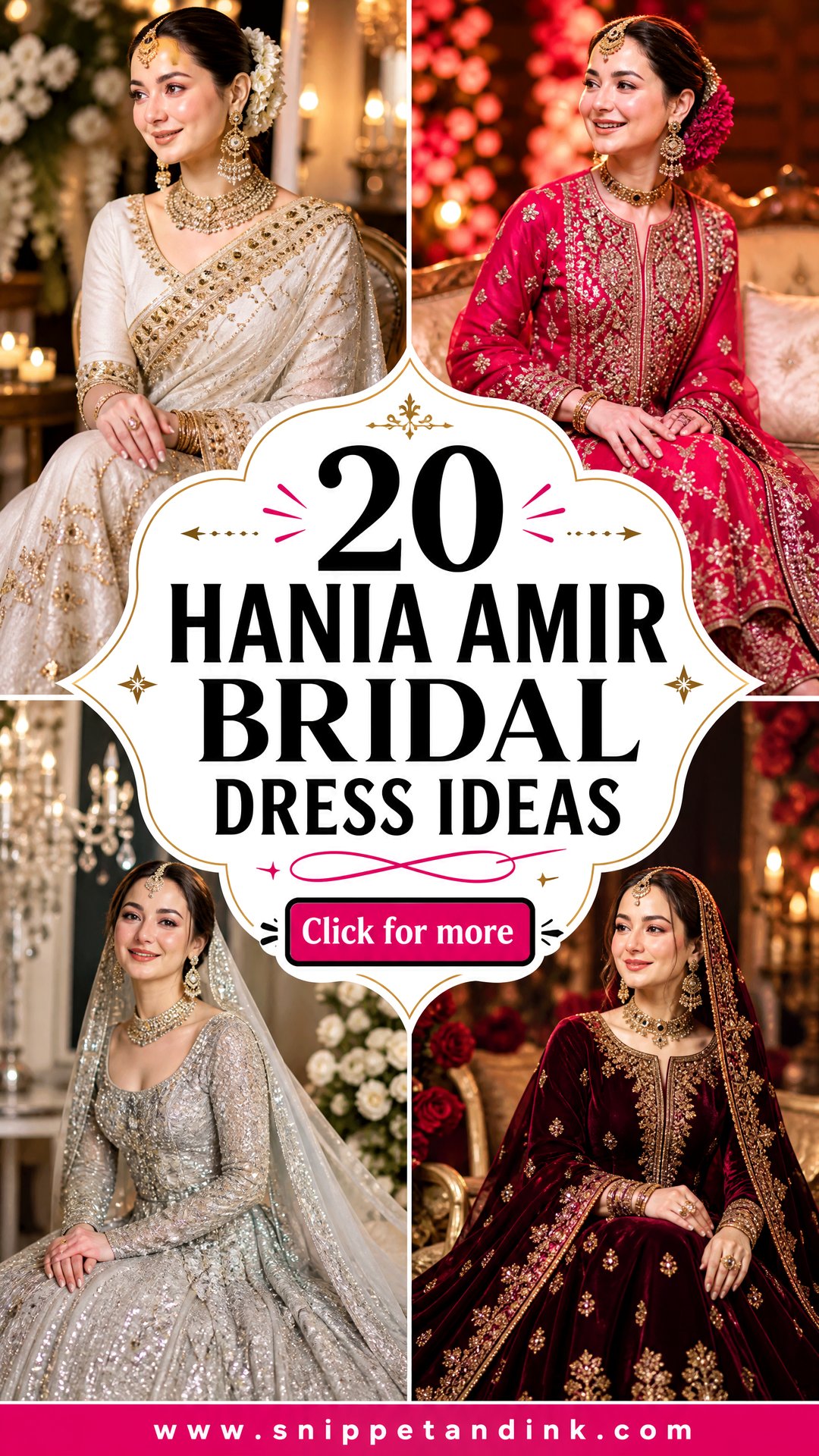
Hania Amir has a knack for making South Asian formalwear look young and light on its feet. What I take from her wardrobe as a stylist is restraint: heavy embroidery on the clothes, then a softer face and fewer jewelry pieces than a traditional bridal set would carry. The twenty looks below run from classic red lehengas and ivory sets to pastel shararas, jewel tones and bright mehndi outfits, and each one is styled head to toe so you can picture the whole bride rather than a skirt on a hanger. Treat them as starting points. Necklines, sleeve length, embroidery density and the way the dupatta falls can all be changed by your designer to suit your frame and the event.
Briefing a Designer With a Celebrity Photo
Brides often arrive at a fitting with a screenshot of Hania Amir and expect the finished outfit to look identical. It rarely can, and that is fine. A styled shoot uses pins, clamps and a body standing still under perfect light. Your outfit has to survive a nikkah on the floor, a long photo session and a full reception, so I use the picture as a brief, not a blueprint.
When I take a reference to a designer, I break it into the pieces that can actually be copied:
- Color, described against a fabric swatch rather than a phone screen, because screens shift reds and pinks noticeably.
- Embroidery density: whether the work covers the whole skirt or sits in borders and scattered motifs. This drives both weight and cost more than the color does.
- Neckline and sleeve length, adjusted to your shoulders and to what your family expects for the ceremony.
- Dupatta fabric and where it will be pinned, since a heavy border changes how it falls on the head.
- The skirt’s flare and how much can-can sits under it, which decides whether you can sit cross-legged or climb a stage step.
Hand embroidery such as zardozi takes time, and good ateliers book up before the main wedding season. I’d start conversations at least four to six months out for a custom piece and leave room for two or three fittings. If you are ordering from overseas, add shipping and customs time, and keep the final fitting close enough to the wedding that weight changes do not undo the work.
1. Hania Amir Red Bridal Lehenga
Deep crimson with antique gold zardozi, dabka and floral threadwork is the version of Hania’s red that I’d show a bride who wants tradition without looking older than she is. The blouse matters more than people expect: a comfortable neckline and elbow-length sleeves let you lift your arms for the rukhsati hug without the seams pulling. Two dupattas work here, a scalloped red one over the head and a lighter one across a shoulder, but ask your tailor to cut the second from a finer net or it adds real weight. Gold platform heels stay hidden under the hem and buy you length. A kundan choker, matching earrings, tikka and stacked bangles finish it, with a smooth center-parted bun and small flowers. Keep the eyes soft brown and the lip a muted red; a bright red mouth against that much embroidery flattens the face in photos.
2. Hania Amir Ivory And Gold Bridal Lehenga
Ivory and gold looks expensive precisely because it does not lean on color. Look for a flowing ivory skirt with detailed gold embroidery, light sequins and a wide border, a structured blouse and a sheer dupatta with embroidered edging. Over the head it reads as ceremony; left open at the front it shows the blouse work. One honest warning: ivory picks up every mark, so I always ask brides to walk the venue floor and plan where the hem will drag. Gold juttis, a pearl-and-kundan necklace, matching earrings and a small tikka keep the palette light, with either a sleek low bun or polished waves. Champagne lids, defined lashes, peach blush and a neutral pink lip suit it, and it is at its best at a daytime nikkah or a quieter reception.
3. Hania Amir Blush Pink Bridal Lehenga
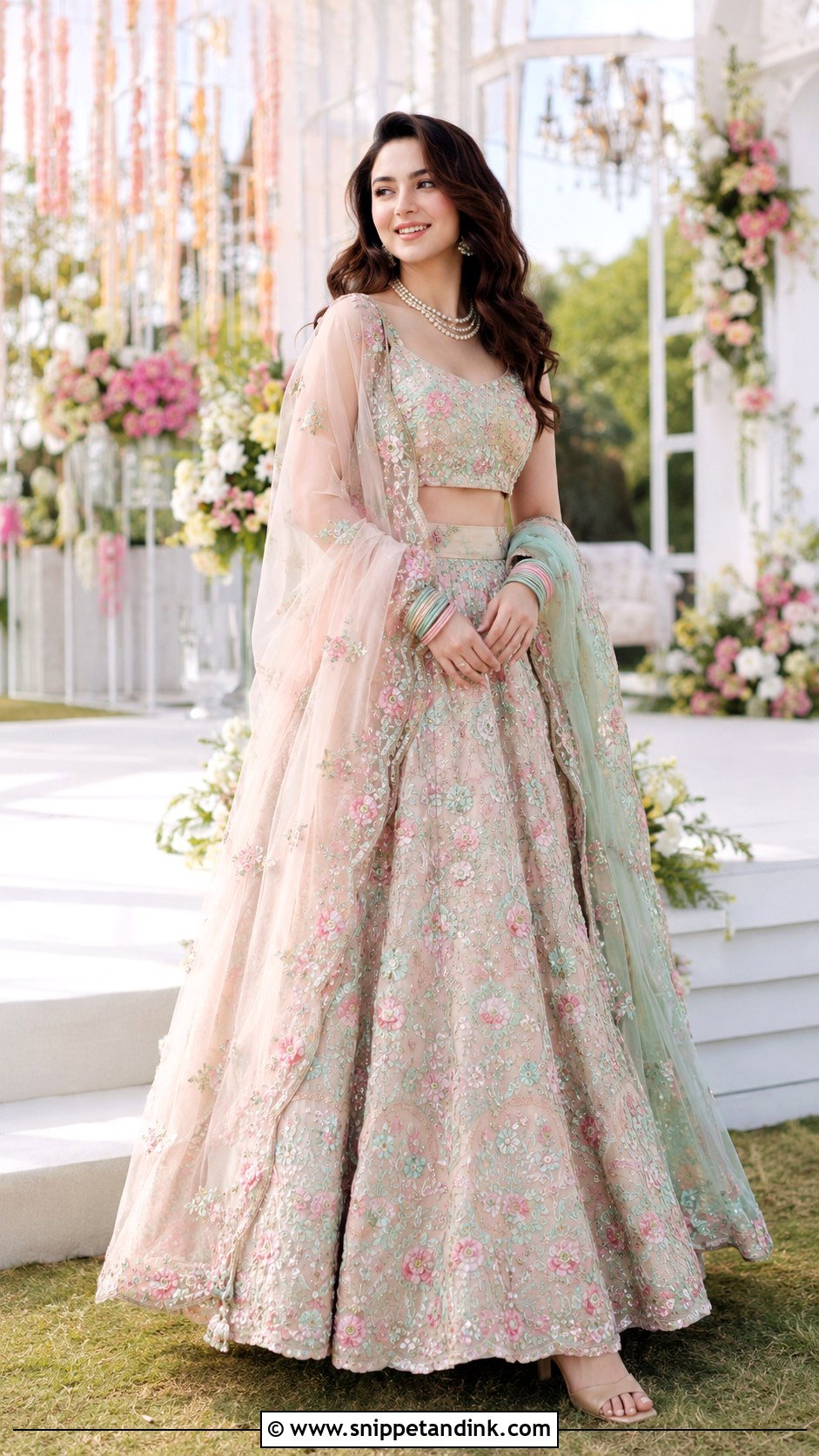
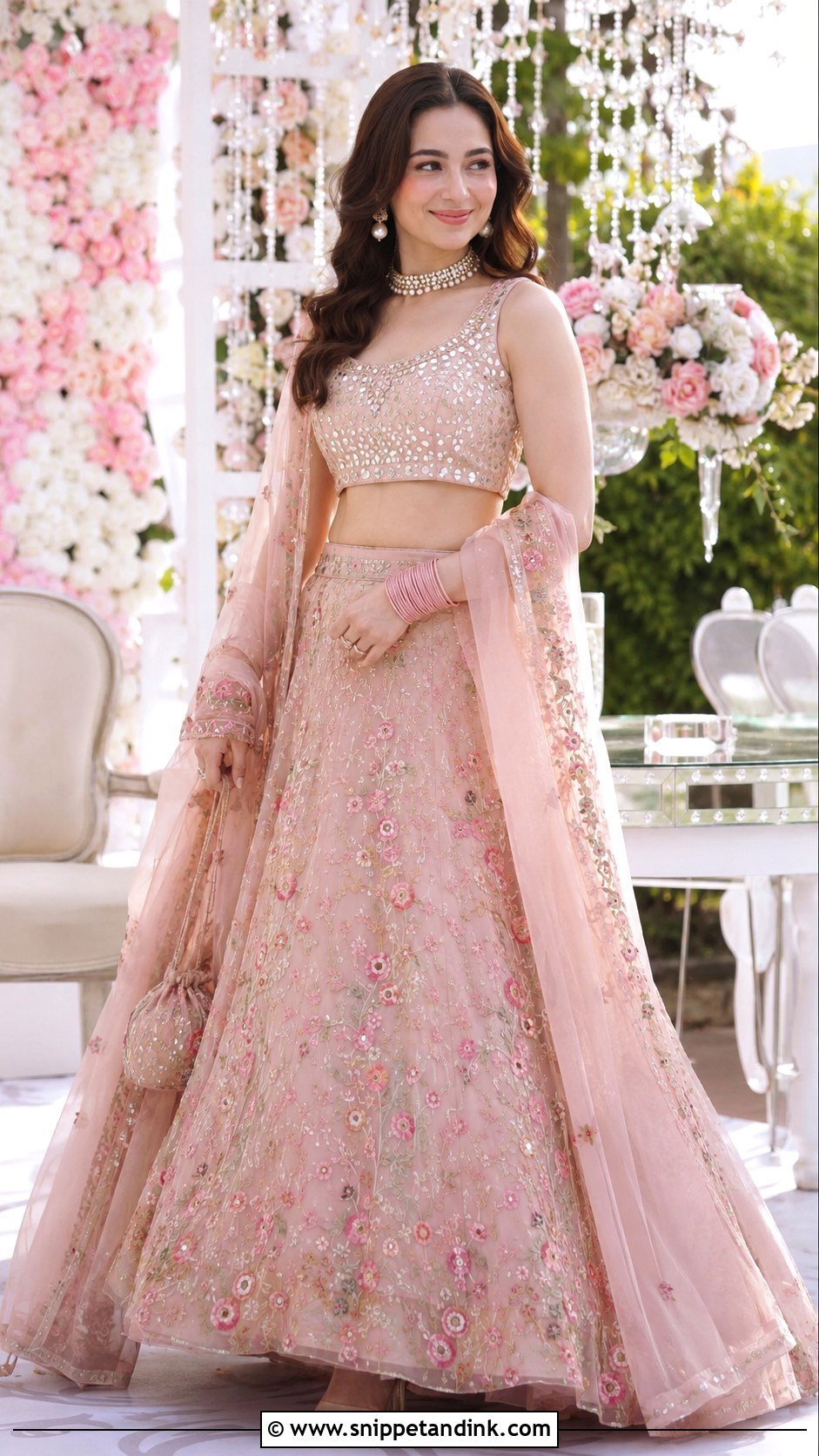
Blush works when the embroidery is scattered rather than solid. Ask for floral threadwork, mirror accents and sequins spaced across the skirt instead of dense work from waist to hem, because pale pink under heavy gold can look washed out in daylight. A matching blouse and an airy organza dupatta keep it light enough to move in. Champagne block heels or embroidered juttis are kinder than stilettos on lawn or carpet. Add pearl drops, a refined kundan choker, slim bangles and a small maang tikka, then loose center-parted waves for Hania’s relaxed feel. Glowing skin, pink blush, subtle liner and a rose lip complete it. If your skin has strong yellow undertones, try the fabric against your face in natural light before committing; some blushes turn chalky next to olive skin.
4. Hania Amir White Sharara Bridal Dress
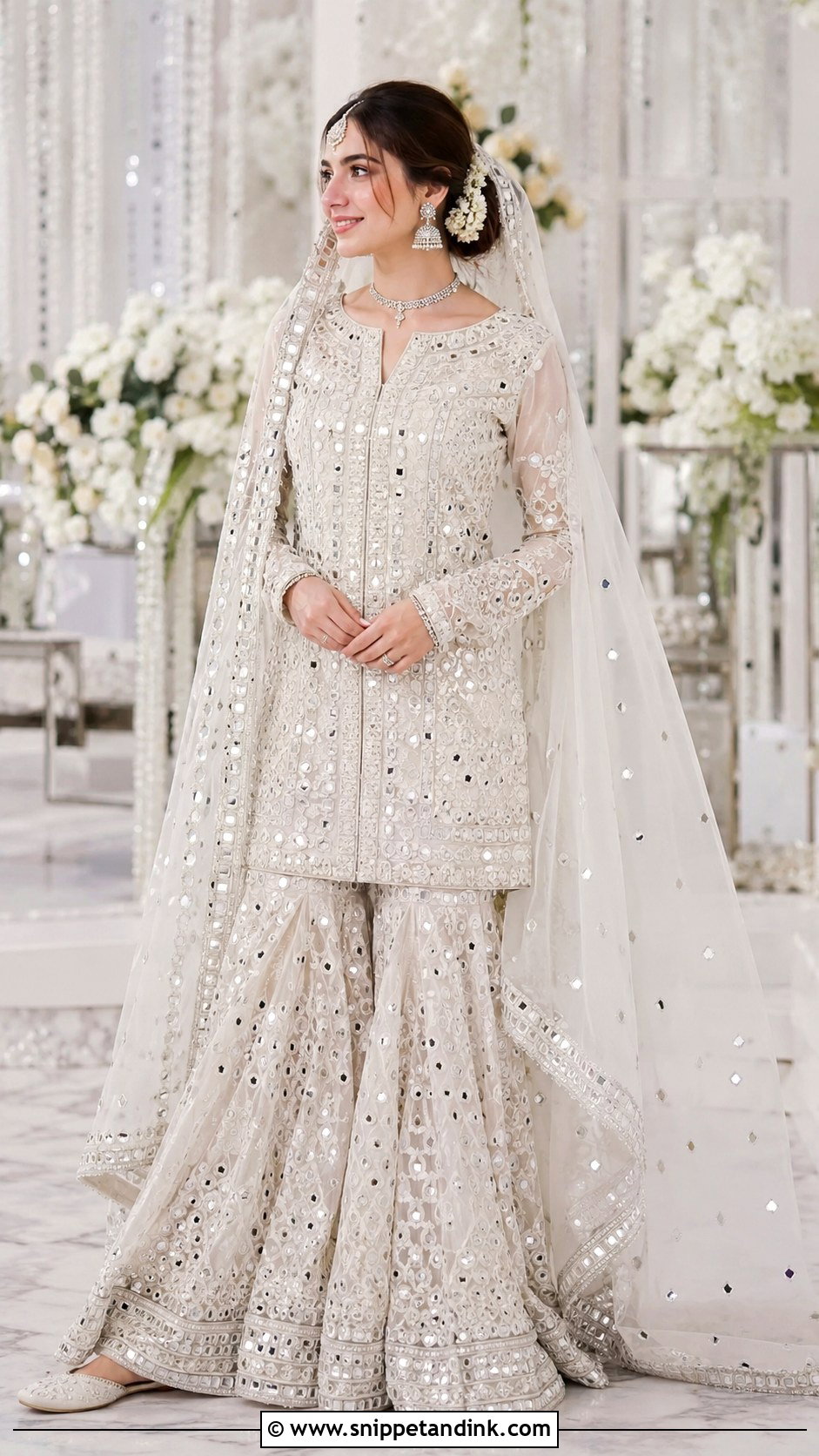
A white sharara is my usual suggestion for a bride who finds a full lehenga too much for a nikkah or intimate daytime event. The short kurta carries the detail in silver threadwork, pearls and small mirrors, while the flared sharara gives movement without a heavy can-can underneath. Check the flare length when you are standing in your actual shoes; sharara hems that pool too much catch on stairs. A sheer white dupatta with a mirror border can go over the head and fall around the shoulders. Silver jhumkas, a delicate choker, a small tikka and white embellished juttis complete it, with a low bun dressed in white flowers. Fresh makeup with softly defined eyes, cool pink blush and a glossy nude lip keeps the whole thing calm and clearly bridal.
5. Hania Amir Golden Gharara Bridal Dress
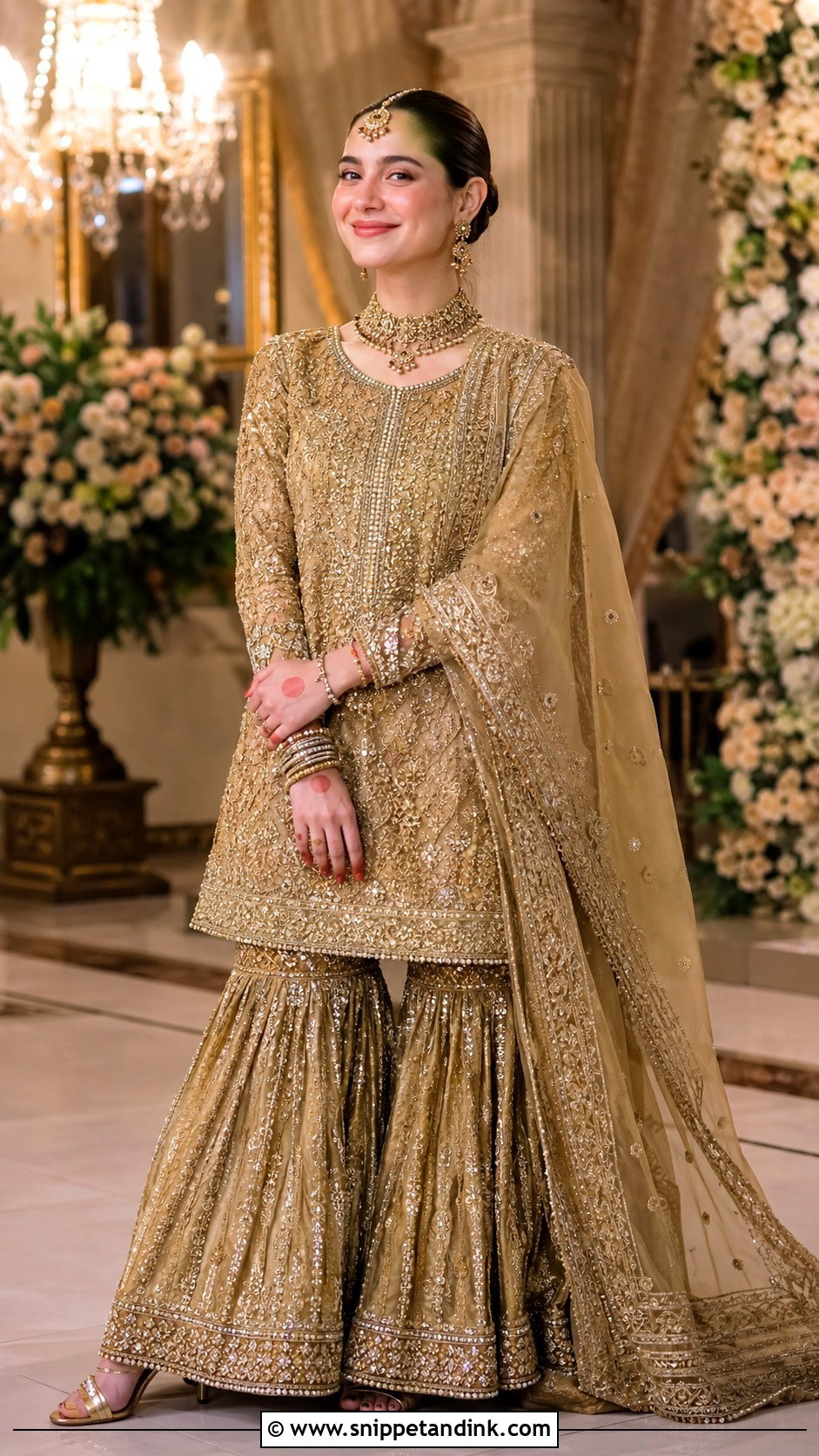
Gold fabric does its best work under evening lighting, so I save a gold gharara for night events. The short kurta should have a defined hem and fitted sleeves so the volume sits only below the knee, where the embellished joint of the gharara starts its flare. That knee band is heavy; sit down in it at the fitting and make sure it does not dig in. An antique gold net dupatta can drape over one shoulder or become a veil. Bronze heels, an antique kundan necklace, statement earrings and coordinated bangles tone down the shine, and a smooth low bun with a center part keeps the eye on the clothes. Use warm neutral makeup with softly smoked eyes and a caramel-pink lip. This is the most camera-ready look in the list, and also the one that shows creases fastest, so steam it on the day.
6. Hania Amir Blue Bridal Lehenga
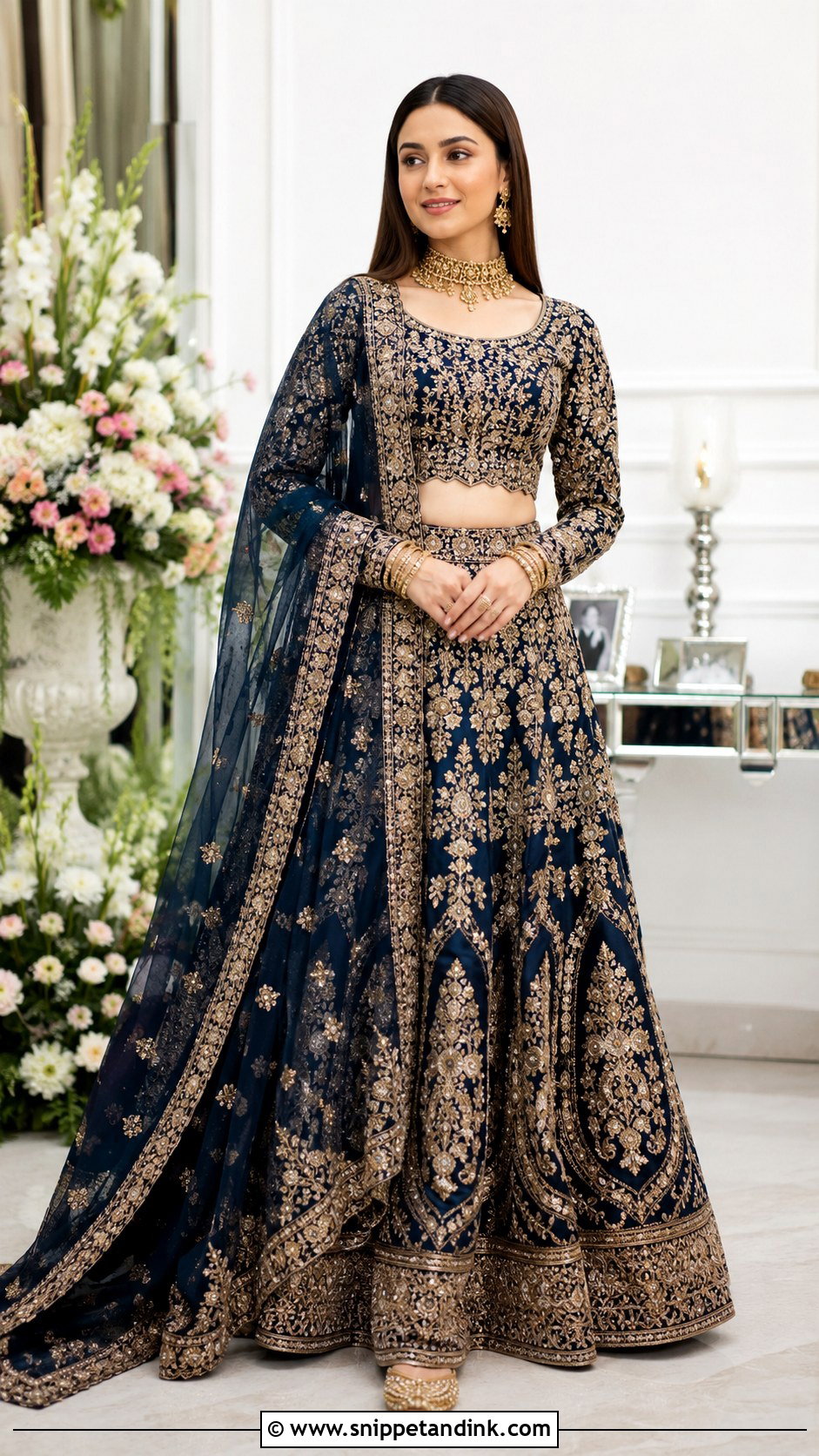
Could blue hold its own against traditional red? An ink-blue lehenga answers that quickly. Antique gold embroidery, small sequins and detailed borders give it the weight a bridal skirt needs, and a sheer blue dupatta edged in gold draped diagonally across the torso shows the shape while giving coverage. I like this drape on brides with a shorter torso because the diagonal line adds length. Antique gold juttis, a substantial choker, drop earrings and slim bangles keep it regal. Straight hair with a clean center part looks modern; a low bun reads more formal. Bronze lids, defined lashes, peach cheeks and a neutral lip balance the strong color. Dark blue can photograph almost black under warm tungsten light, so mention the outfit color to your photographer.
7. Hania Amir Teal Bridal Lehenga
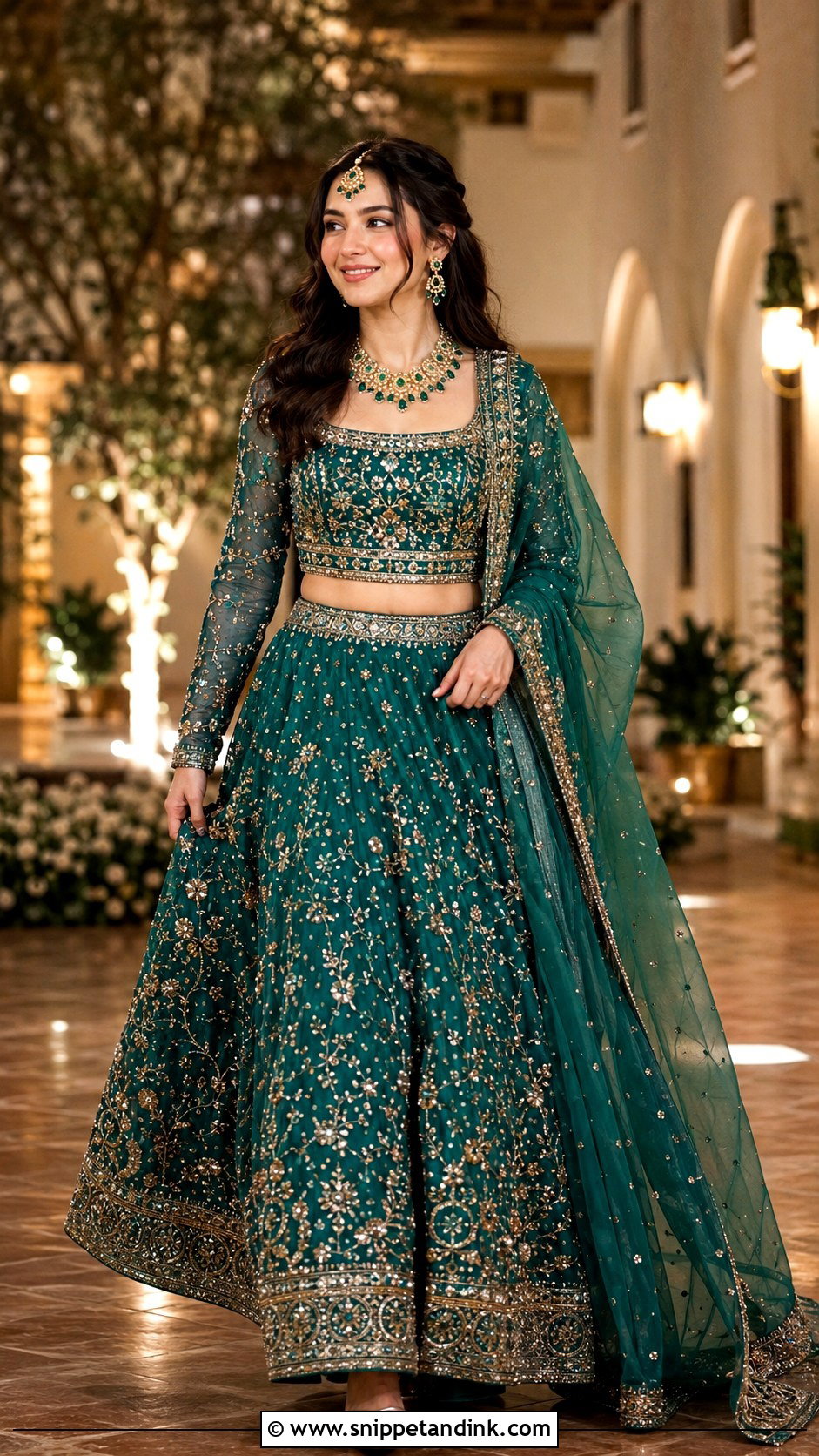
Teal gives a bridal lehenga depth without shouting. Gold zari, sequin vines and placed beadwork sit well on it, and a fitted blouse with a square or gently curved neckline keeps the shape clean. Pin the matching net dupatta over one arm and across the waist so the skirt embroidery stays visible; I tack it at the hip with a small safety pin hidden in the pleat, because a loose net dupatta slides off within the first hour. Metallic heels, emerald-and-kundan earrings, a coordinated necklace and a slim tikka pick up the jewel tone. Soft half-up waves keep it young, with bronze lids, gently sculpted cheeks and a rosy nude lip. Reception, sangeet or an evening ceremony all suit it.
8. Hania Amir Purple And Gold Bridal Saree
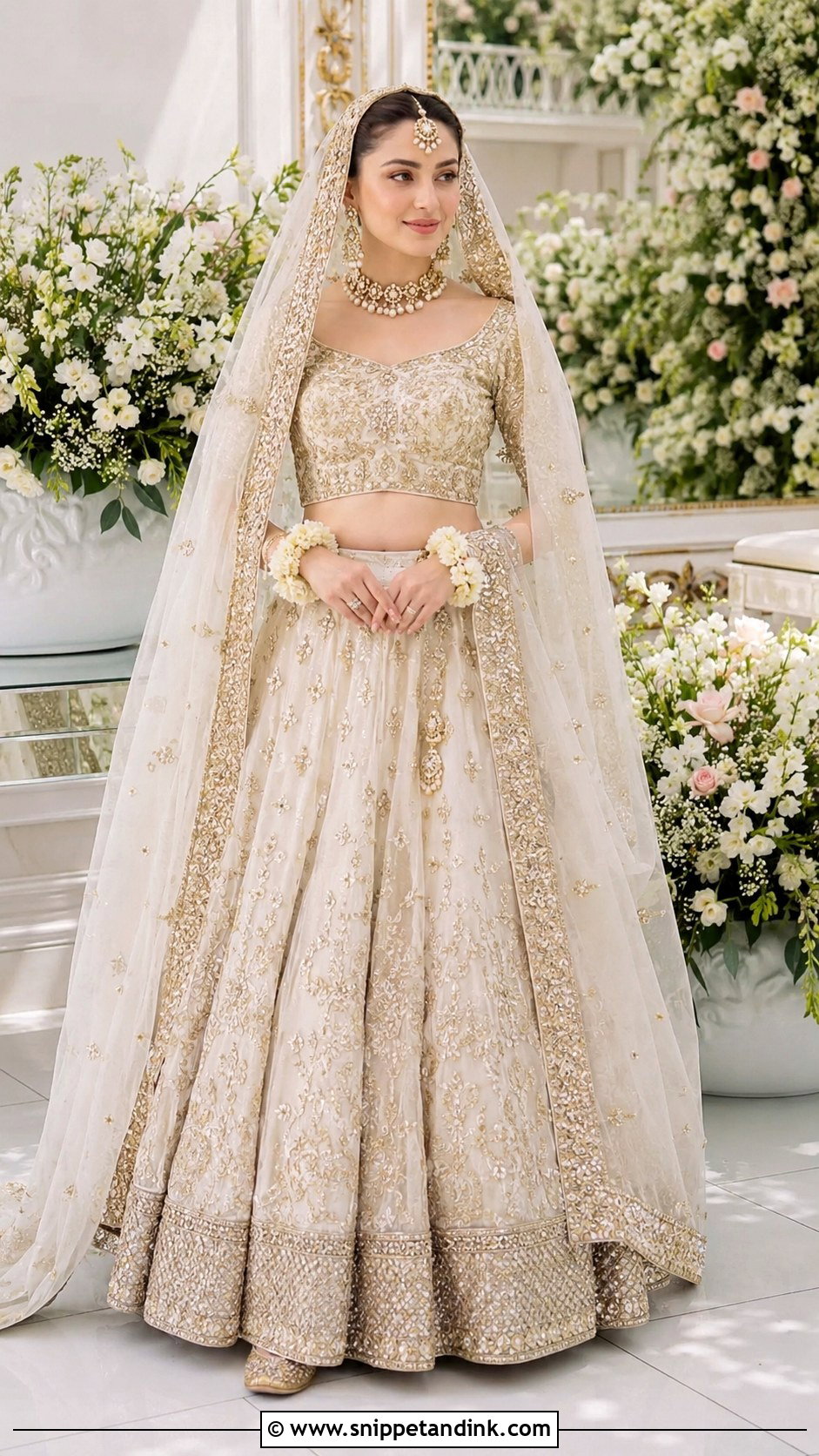
A purple saree is the most streamlined option here, and the fabric decides whether it works. Chiffon, organza or tissue drapes well; a heavy embroidered georgette can make the pleats bulk at the waist. Pair it with a fitted gold blouse that has proper support built in, since a saree blouse is doing the job of a bra all evening. A neat pleated front and long embroidered pallu give the line. Gold heeled sandals, a statement choker, matching earrings and stacked bangles finish it, with a center-parted bun. Softly smoked brown eyes, highlighter, mauve blush and a berry lip suit the color. This Hania Amir-inspired bridal outfit is easier to carry than a skirt, though I’d only recommend it to a bride who has worn a saree for several hours before; first-timers spend the night holding their pleats.
9. Hania Amir White And Gold Bridal Saree
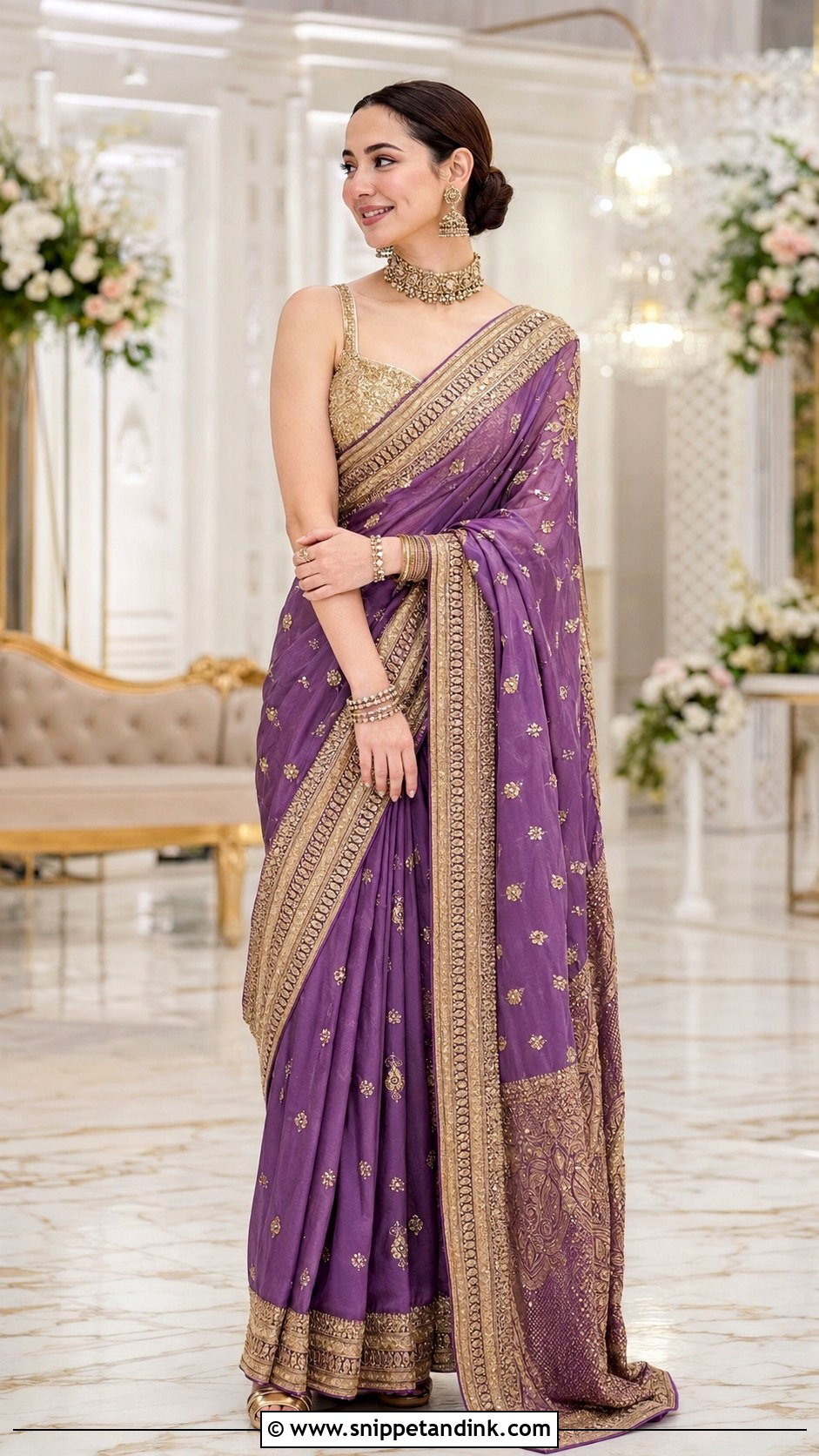
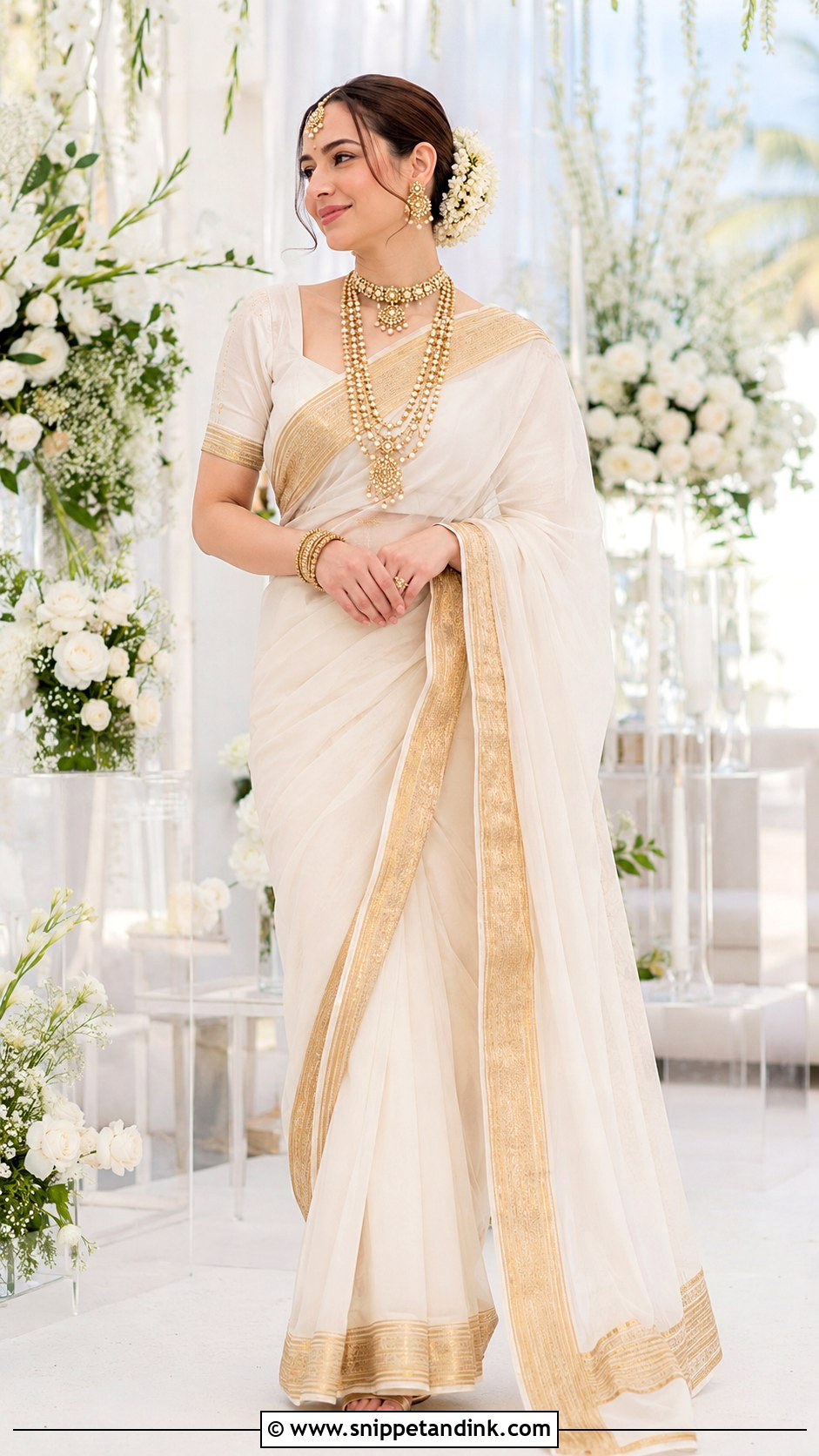
White with a gold border is quiet, and that is its strength. Pick a soft fabric that drapes smoothly, with subtle beadwork or woven motifs rather than all-over embellishment. The structured white blouse can carry the decoration at the neckline and sleeves. The gold-bordered pallu falls over the shoulder or covers the head for the ceremony. I’d use gold sandals, heritage earrings, a layered necklace, bangles and a delicate tikka, plus a polished bun with white flowers. Makeup needs warmth here: golden-brown lids, peach blush and a pink-nude lip, otherwise white next to the face can drain a fair complexion. In some families white is linked with mourning, so have that conversation early if elders will be at the nikkah or reception.
10. Hania Amir Pastel Floral Bridal Lehenga
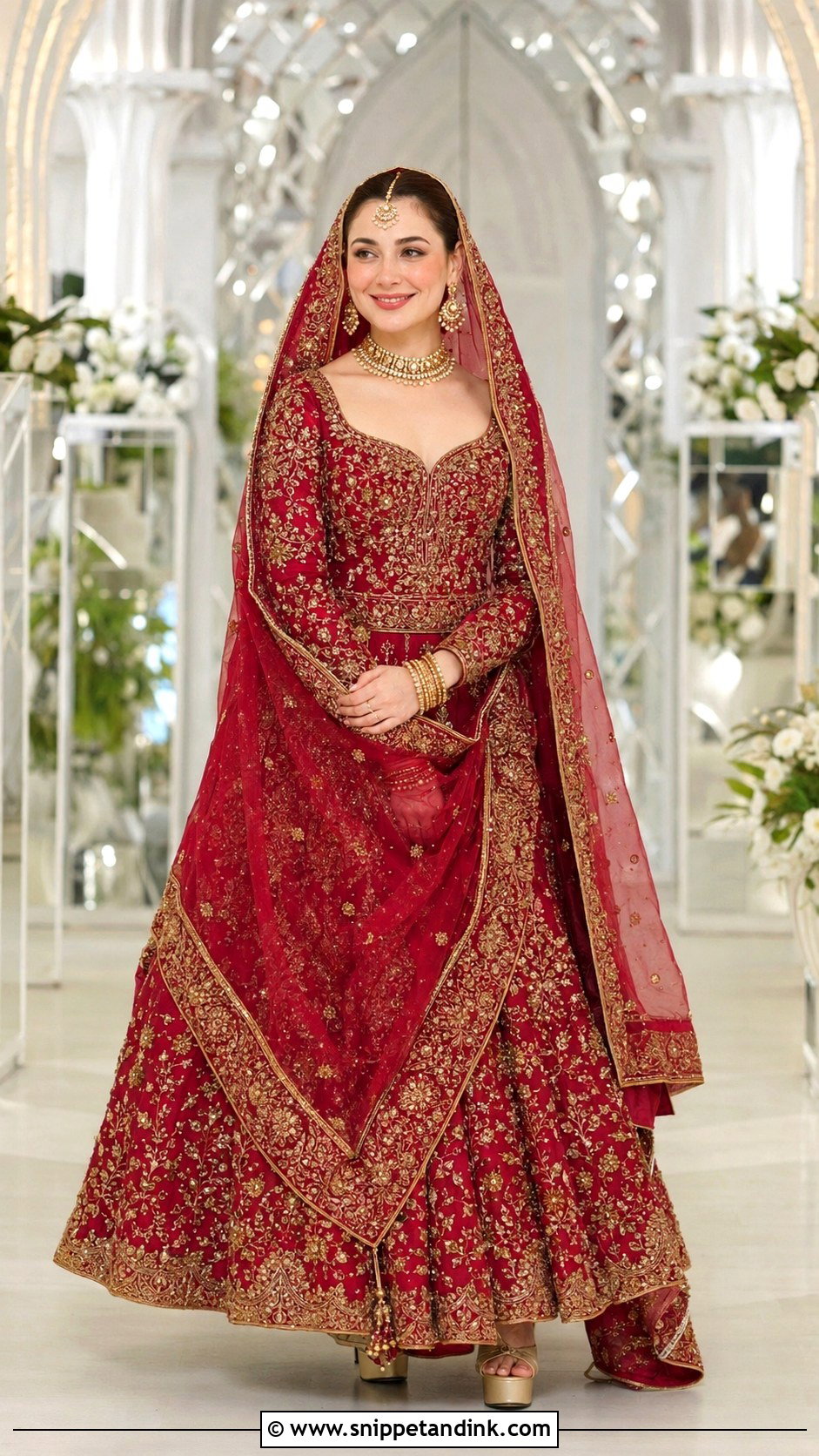
Pastel florals need light hands everywhere else. Choose blush, mint or powder blue with embroidered flowers and scattered sequins, a coordinating fitted blouse and a sheer organza dupatta with a narrow floral border. Nude block heels, pearl earrings, a delicate necklace and pastel bangles keep the weight down. I’d skip a highly structured hairstyle and go for loose waves or a relaxed low bun with small fresh flowers. Pink cheeks, defined lashes and a soft rose lip suit the palette. This is the outfit I’d put on a garden bride, with one caveat: organza and outdoor wind are not friends, so a few hidden pins along the dupatta border save a lot of chasing it across the lawn.
11. Hania Amir Mirror Work Bridal Sharara
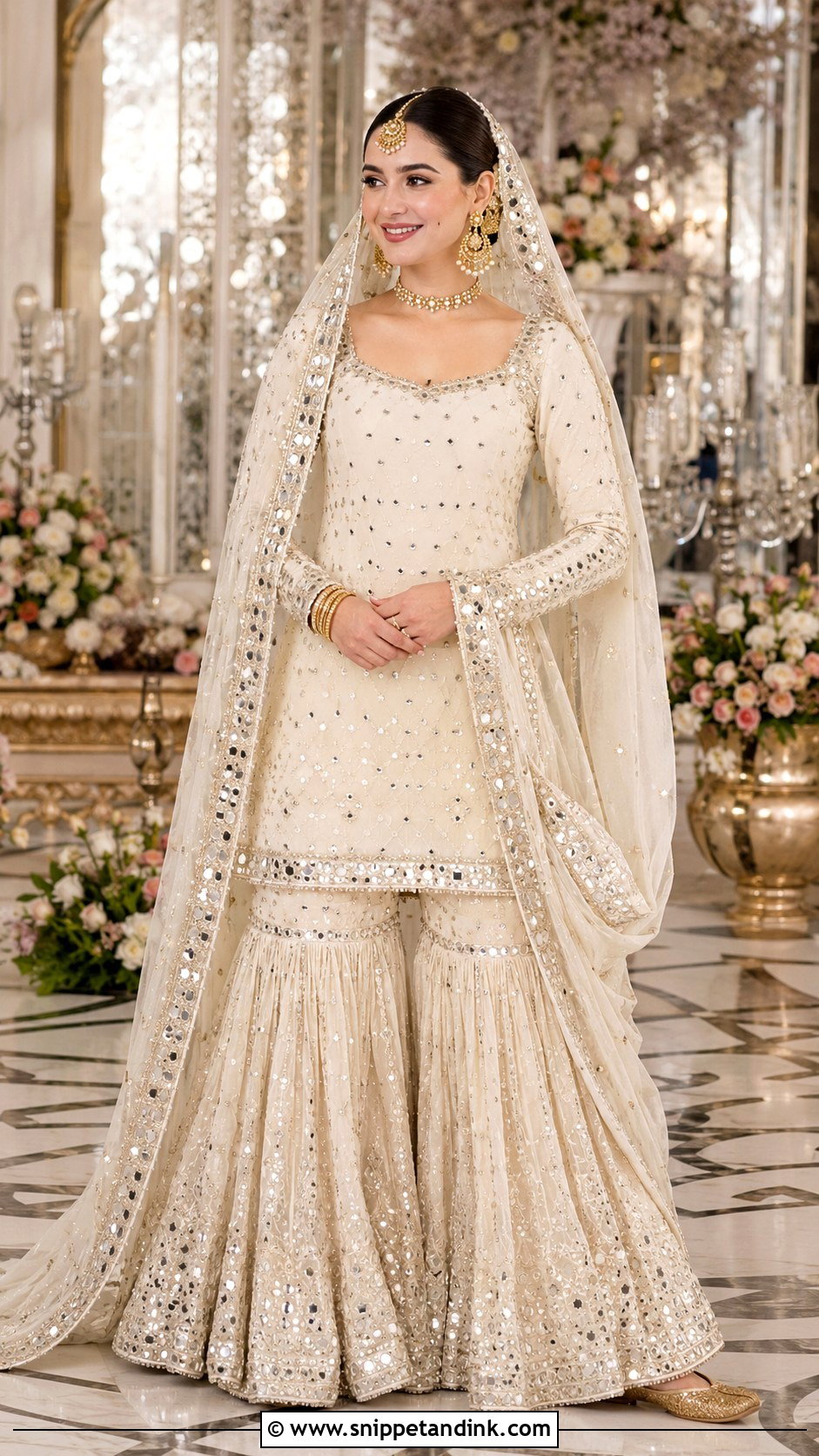
Mirror work sparkles in a livelier way than sequins because each piece reflects as a separate point of light. A cream or pale gold short kurta with small mirrors set among thread embroidery, and a wide sharara repeating the work at the knee and hem, keeps the effect even. Worn as a veil, a mirror-edged dupatta frames the face nicely, but the border is heavier than plain net, so it needs a neat middle-parted bun underneath to anchor it. Gold juttis, oversized earrings, a simple choker and bangles complete it. Champagne shimmer on the eyes, light contour, pink blush and a glossy neutral lip finish the face. Real mirrors can snag fine net and lace, so keep this away from a delicate shawl.
12. Hania Amir Hot Pink Bridal Salwar Suit
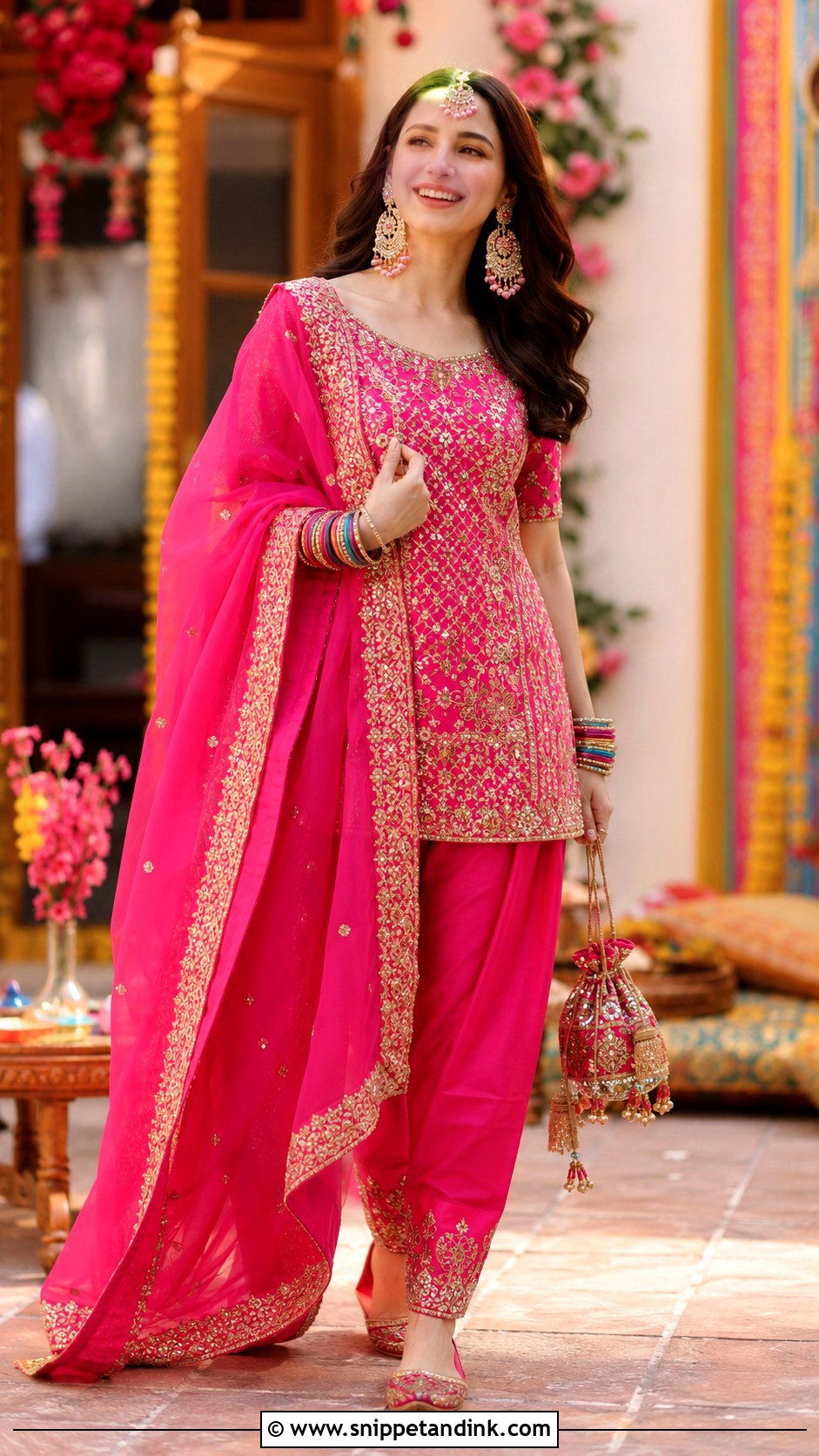
Hot pink is pure energy, and a salwar suit is the most comfortable way to wear it. A short shirt with gold zari at the neckline, cuffs and hem, a structured salwar and a flowing dupatta with a strong border make the base. Gold or pink embroidered juttis are what I’d want on my feet through a long mehndi on the floor. Heavy earrings, a small tikka, colored bangles and a compact potli bag finish it. Loose waves or a braided low bun soften the shade, and makeup should stay balanced with subtle gold lids, defined lashes and a neutral pink lip. Mehndi, mayun, a bridal lunch or any bright pre-wedding event suits it. If your hands will be wet with henna, choose wide cuffs you can push back yourself.
13. Hania Amir Pink And Beige Bridal Sharara
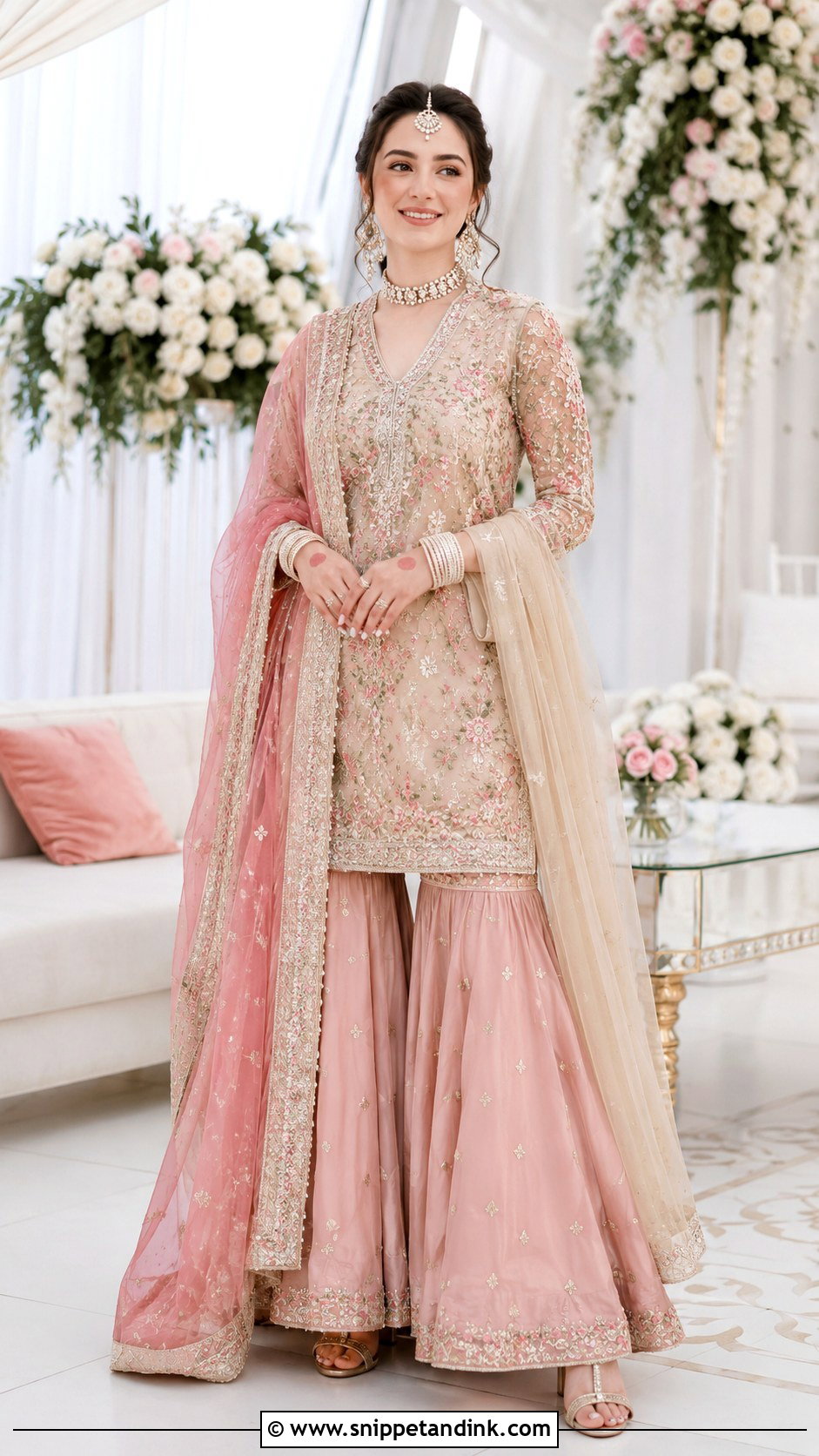
Pink and beige suit a bride who leans warm and understated. The beige short shirt carries pink floral embroidery, gold zari and fine beadwork, over a blush sharara with an embellished flare and a dupatta that mixes both colors. Beige is a tricky shade near the face; on some skin tones it reads grey, so hold the shirt fabric up to your jaw in daylight before ordering. Metallic block heels or embroidered juttis, a pearl choker, matching earrings, a small tikka and pale pink bangles keep everything in the same family. Soft waves with one side pinned back look polished without feeling stiff. Peachy makeup, softly lined eyes and a rosy nude lip work naturally here. A nikkah, a daytime ceremony or a bridal shower are good homes for it.
14. Hania Amir Multicolor Bridal Sharara
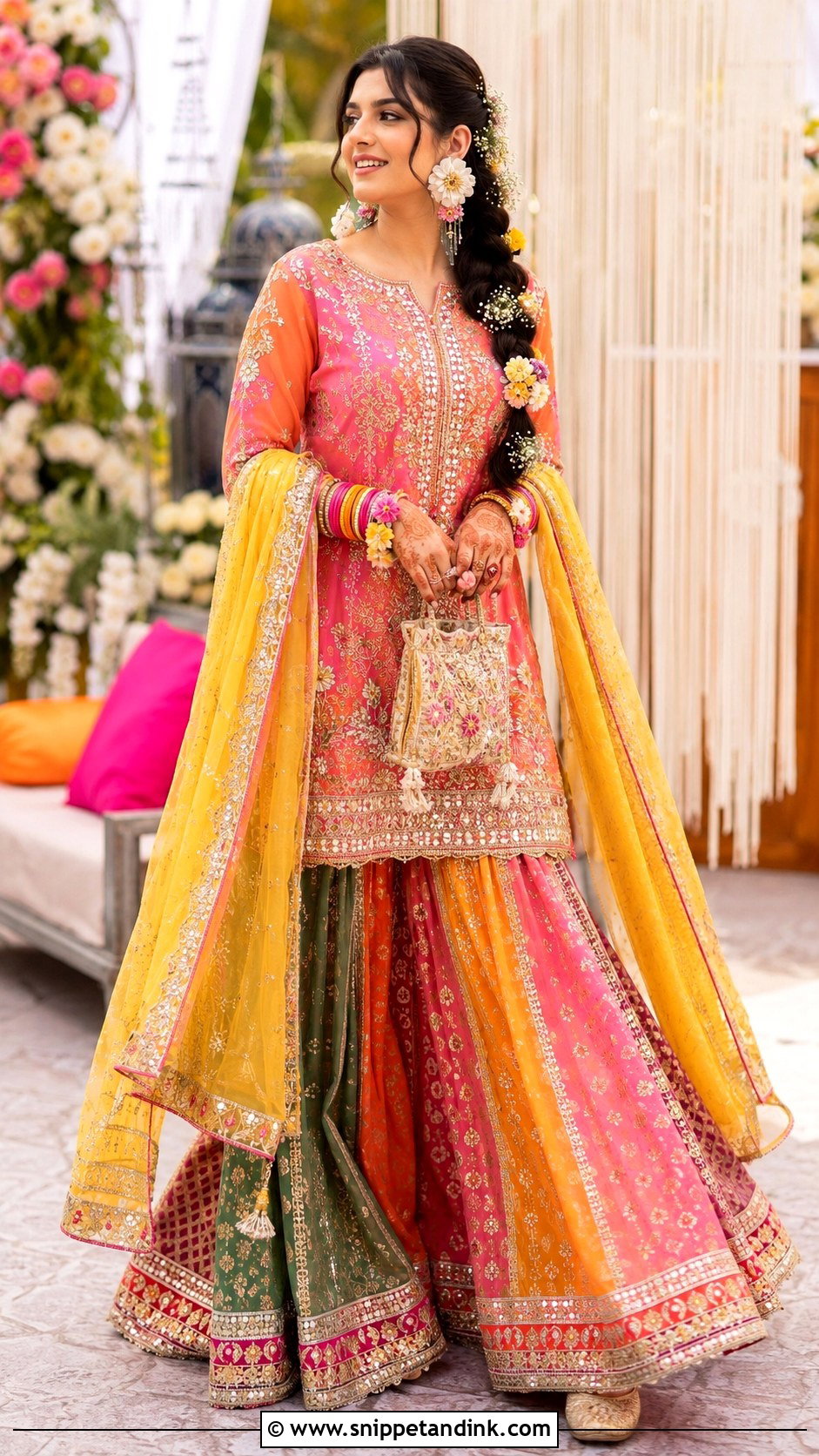
A multicolor sharara is the one place in a South Asian wedding where clashing is the point. Start with a short pink, orange or yellow kurta with contrasting floral embroidery, then a wide sharara with colored panels or borders and a light dupatta in a complementary shade. The trick I use is to repeat one color at least three times, in the kurta, a sharara panel and the bangles, so the mix looks planned. Gold juttis, bright bangles, floral earrings and a small potli bag keep it practical. A soft braid with tiny flowers holds up through dancing far better than open curls. Peach blush, golden lids and a glossy pink lip finish it. Hania’s playful side shows most clearly here, and the outfit is comfortable through a long night of music.
15. Hania Amir Orange Bridal Lehenga
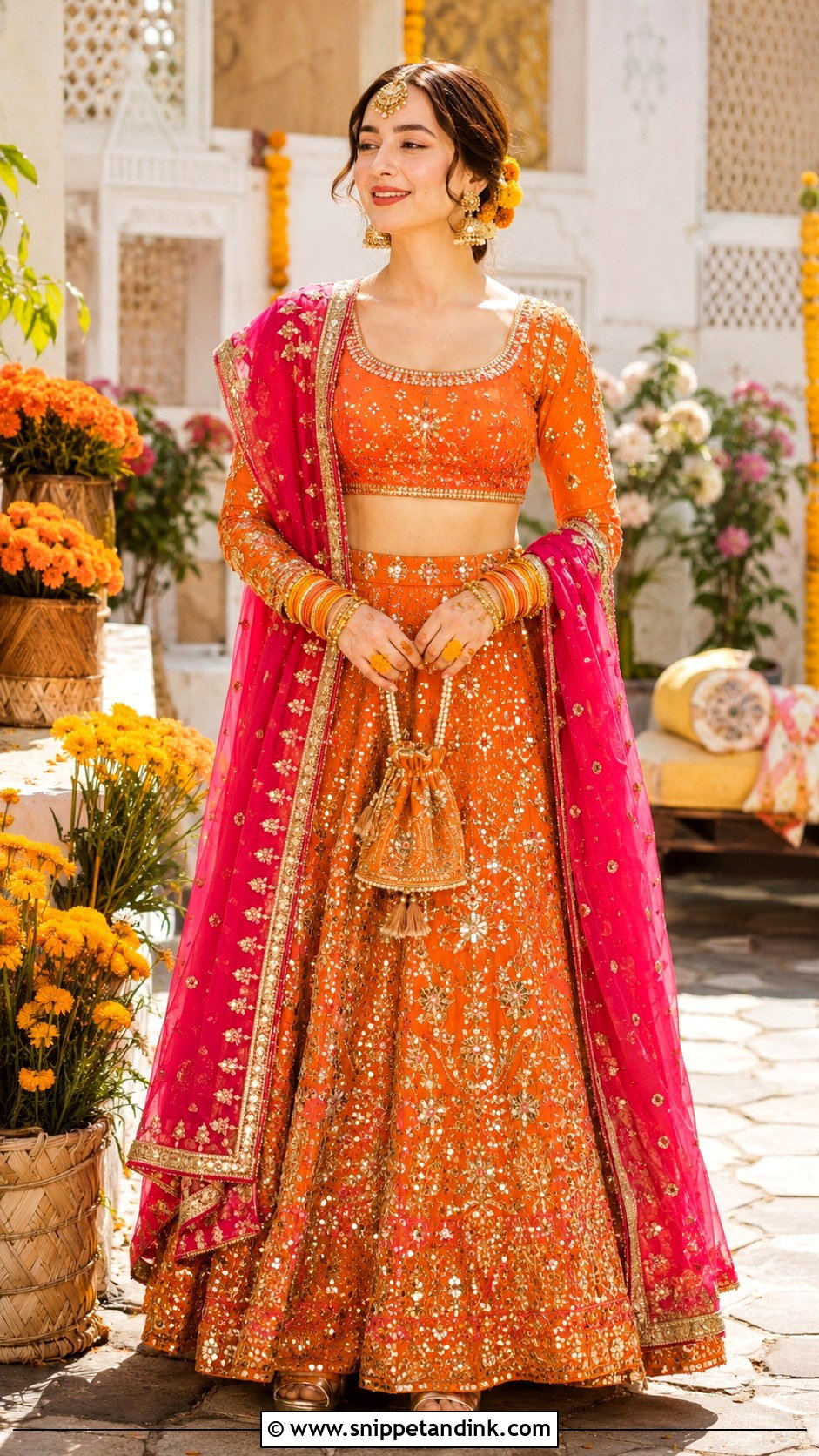
Orange is a daylight color; under sun it glows, under dim indoor light it can turn muddy. A marigold or burnt-orange lehenga with gold embroidery and small magenta accents, a fitted blouse in the same family and a contrasting pink dupatta give it dimension. Gold platform sandals, statement jhumkas, layered bangles and a traditional potli bag complete the outfit. A center-parted low bun with small flowers keeps it neat. Soft bronze eyeshadow, peachy cheeks and a warm pink lip support the color rather than fight it. I’d point a mehndi or mayun bride toward this one. Turmeric stains orange fabric too, so if a haldi happens the same day, change before it starts.
16. Hania Amir Long Jacket Bridal Lehenga
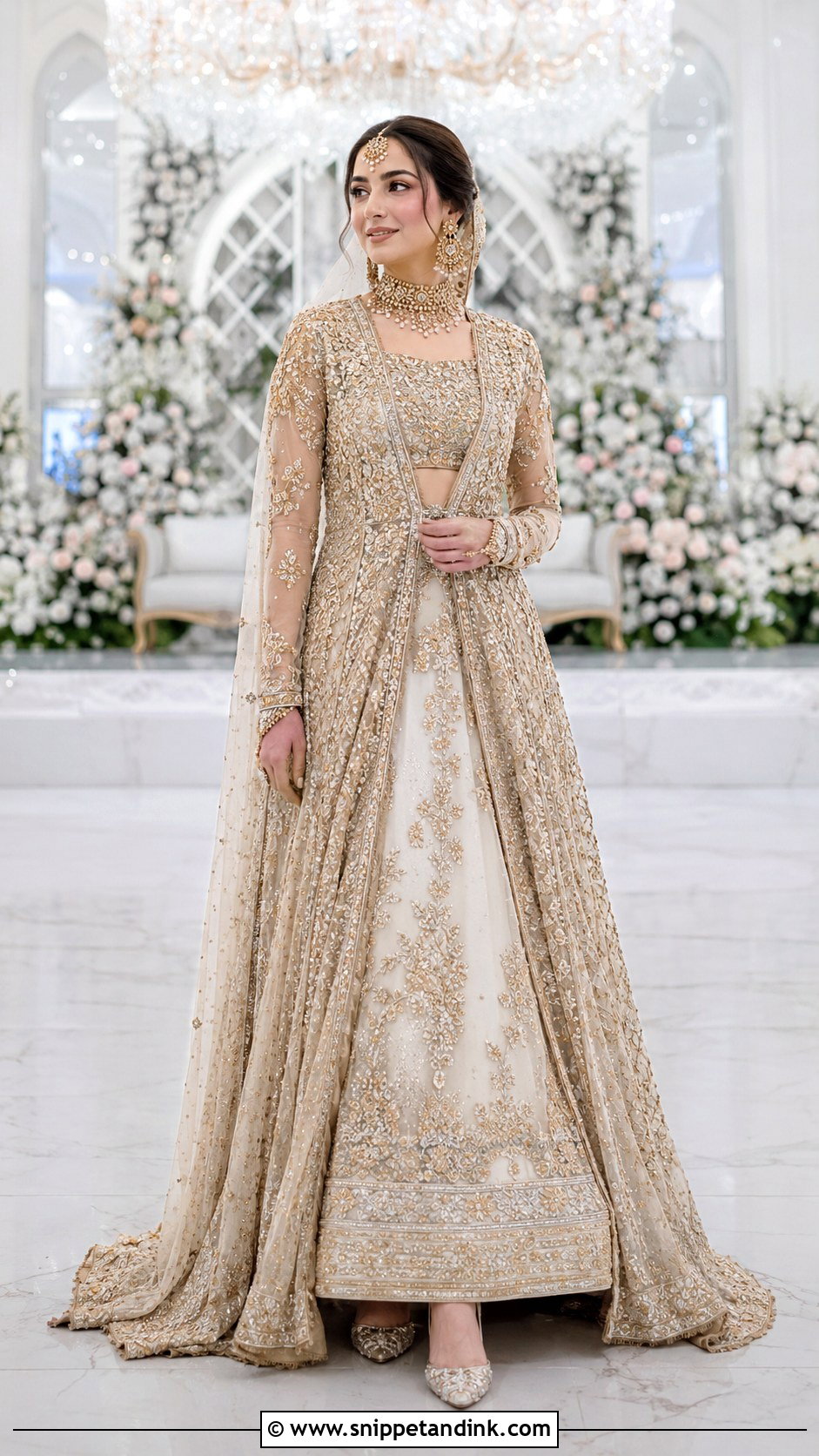
A long embroidered jacket turns a familiar lehenga into something structured. Keep the skirt plain or lightly worked, then layer a fitted blouse and a floor-length open jacket in zari, beadwork and traditional motifs. Ivory, deep red, emerald or antique gold all suit this cut. The jacket is the hero, so the dupatta has to be light and sit over one shoulder only. Before you order, check the jacket’s weight on your shoulders over a full fitting; a heavily beaded floor-length jacket can feel like a coat by the third hour, and an indoor summer venue makes it worse. Pointed juttis, chandelier earrings, a choker and a small tikka finish it, with polished waves or a sleek bun and a muted rose lip. Full-length photographs are where this silhouette really earns its place.
17. Hania Amir Champagne Bridal Gown
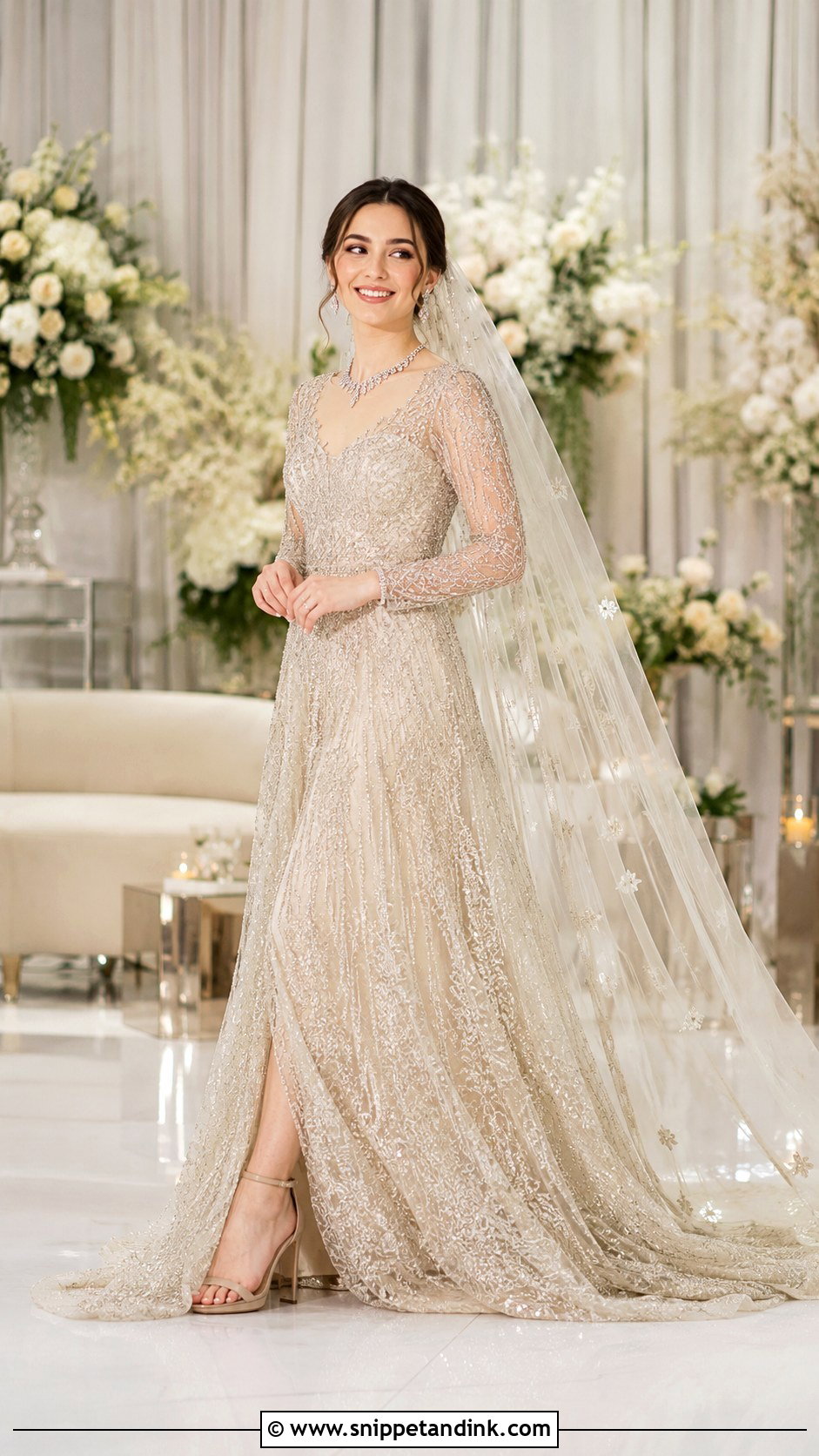
A champagne gown is the softest crossover between South Asian embellishment and western construction. Look for a floor-length fitted bodice, long sheer sleeves and a gently flared skirt, with fine beadwork, pearls and tonal embroidery spread lightly so the dress does not feel heavy. The fitted bodice needs real fittings; unlike a lehenga, there is no drawstring to adjust on the day. Champagne heels, a crystal necklace, drop earrings and a delicate bracelet suit it, with a lightweight veil set beneath a low bun or over soft side-parted waves. Keep the face luminous with taupe eyeshadow, fine eyeliner, peach blush and a satin nude lip. Reception, engagement or a formal indoor wedding all suit it.
18. Hania Amir Emerald Green Bridal Gharara
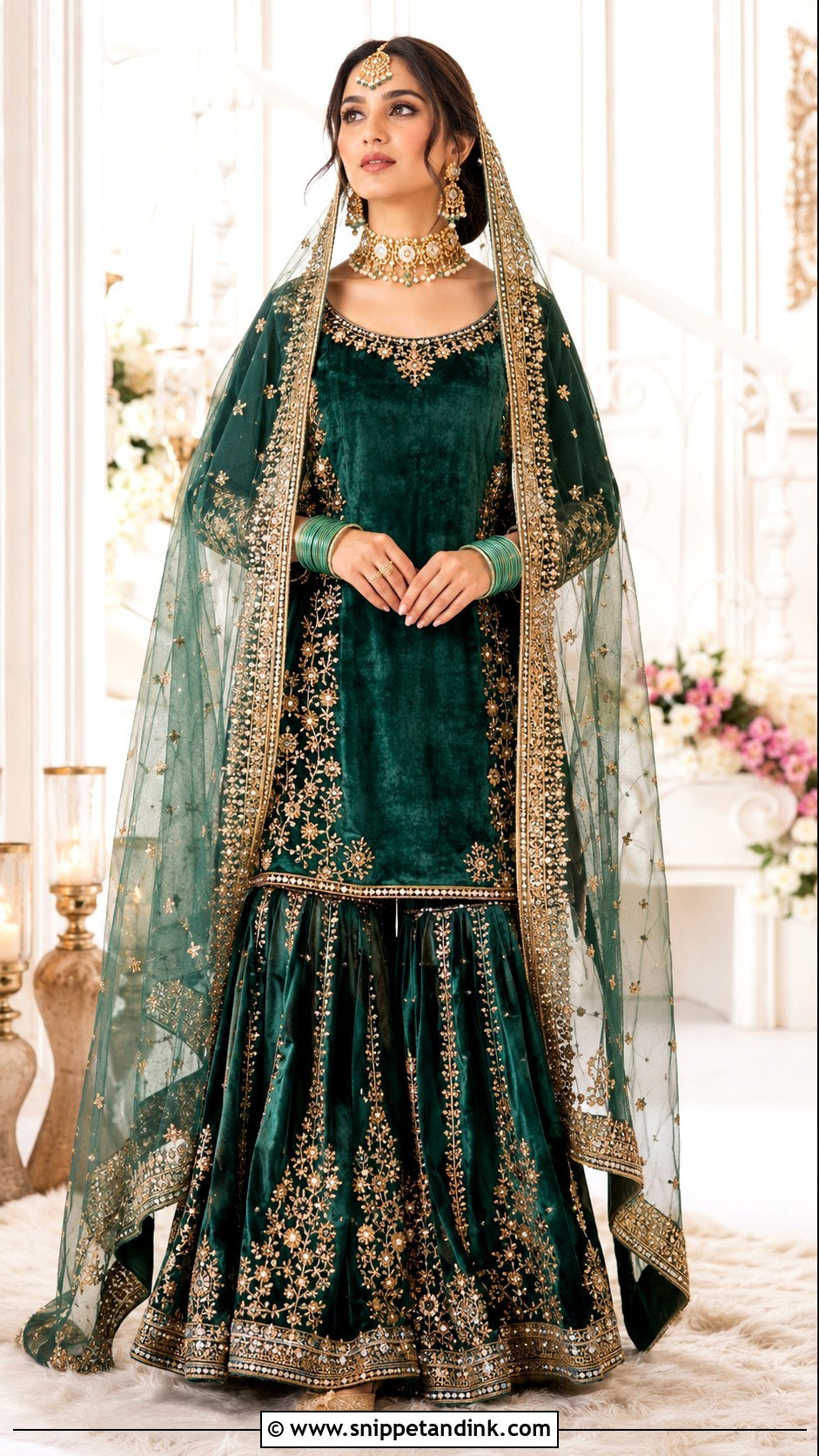
Emerald is a rich, regal break from red. Velvet or raw silk for the short kurta, with antique gold embroidery, gives the color its depth, and a matching gharara with an ornate knee band and a generous flare carries the drama below. Velvet is warm, which is exactly why I only suggest it for winter or a cool evening venue; in a heated marquee it becomes uncomfortable within an hour. A sheer green dupatta with a gold border goes over the head or across the shoulders. Gold juttis, an antique choker, matching earrings, a tikka and deep green bangles complete it, framed by a smooth center-parted bun. Bronze eyes, highlighted skin and a warm rose lip suit the shade.
19. Hania Amir Silver Bridal Lehenga
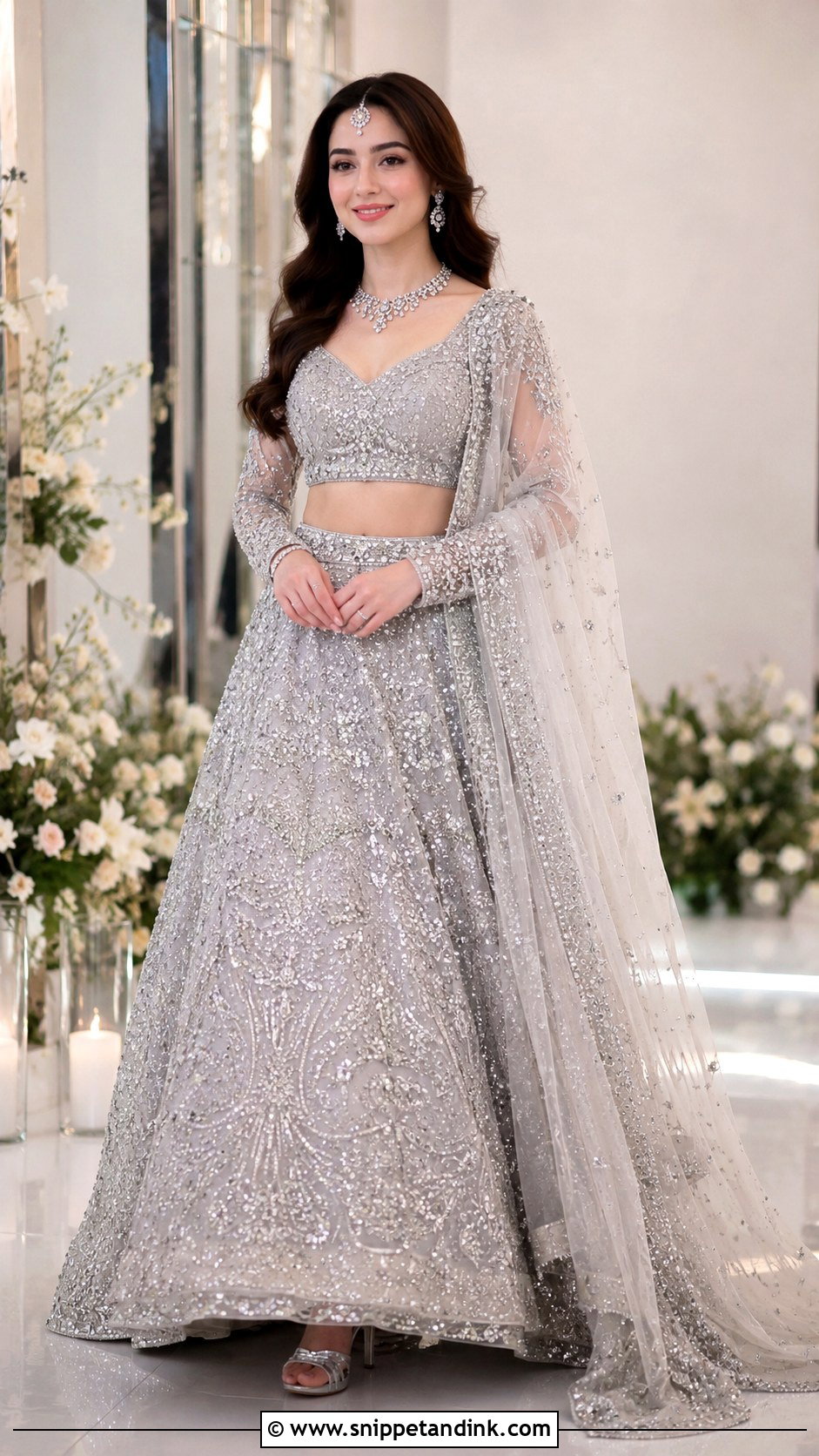
Silver is the cool-toned answer for a bride who doesn’t feel like herself in gold. A pale gray or icy silver lehenga with sequins, crystal embroidery and tonal threadwork, a structured blouse and a sheer dupatta with a slim beaded border keep it consistent. Then switch every metal: silver heels, diamond-style earrings, a matching necklace and a crystal tikka. Mixing in gold jewelry is the most common mistake I see with this color, and it breaks the controlled palette that makes the outfit work. Glossy waves or a textured low bun, taupe shimmer, defined lashes, pink blush and a mauve-nude lip finish it. It belongs at a reception or a formal evening event.
20. Hania Amir Maroon Velvet Bridal Dress
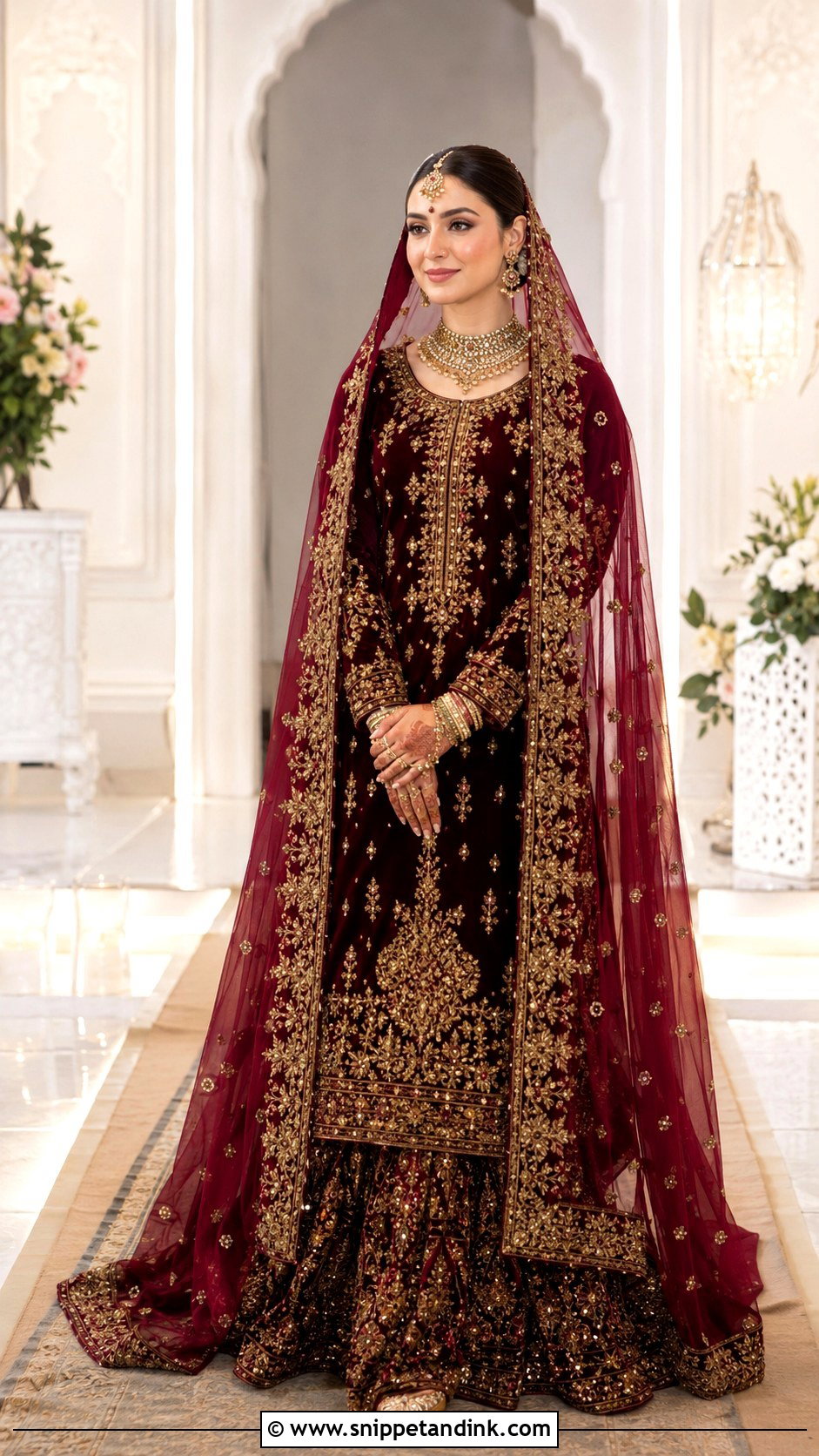
When the setting calls for grandeur, maroon velvet delivers. A long velvet shirt with antique gold motifs, fitted sleeves and a bordered hem, paired with a lehenga or farshi-style skirt, extends the line all the way to the floor. A farshi skirt trails, so plan who carries it on stairs and how you will sit. The sheer maroon dupatta with gold edging goes over the head and one shoulder, anchored by a center-parted low bun. Antique juttis, a layered kundan necklace, statement earrings, a tikka and matching bangles complete it. Warm bronze eyes, softly sculpted cheeks and a deep rose lip suit the fabric. Velvet crushes where you sit, so ask your designer about the pile direction and avoid pressing it flat with an iron.
Carrying a Heavy Lehenga Through the Whole Evening
A fully worked bridal lehenga can be genuinely heavy, and most of that weight hangs from your waist. The fit of the waistband matters more than anything you see in a photograph. I ask for it to sit at the natural waist, not low on the hips, with a wide band that spreads the load and a drawstring or hook placement I can adjust on the day. A skirt that is a little loose slides down under its own weight within an hour.
Pinning the Head Dupatta
For a head drape, I build the anchor first: a low bun or a firm base of back-combed hair at the crown, then U-pins slid through the dupatta into that base so they grip hair, not just fabric. Clear bobby pins at the temples stop it sliding forward when you bow your head. If the dupatta is heavy, I place a second lighter one on the shoulder and pin it at the blouse strap, never to the blouse fabric itself, which tears on fine silk.
Small Things in the Bridal Room
- Wear your wedding shoes for a few hours at home so you can judge the true hem length in them.
- Pack safety pins in two sizes, double-sided fashion tape and a small steamer.
- Practise sitting, standing and walking up two steps in the full outfit at your last fitting.
- Eat before you dress; it is hard to manage a plate once the dupatta is set.
After the Wedding: Folding and Storing Zardozi
Metallic thread tarnishes and velvet crushes if they are packed carelessly. I’d have the outfit dry cleaned by someone who handles bridal embroidery, then fold it with acid-free tissue between the layers so beads never rest directly against fabric. Store it in a breathable cotton or muslin bag, not plastic, which traps moisture. Refold it along different lines every few months so permanent creases don’t set, and keep it away from damp walls. Treated this way, a bridal outfit can be worn again at a sister’s wedding or passed down.
Turning a Celebrity Reference Into Your Own Outfit
Hania Amir’s wardrobe works for brides because it pairs recognizable South Asian craftsmanship with young colors and a lighter hand on accessories. Red and maroon carry the drama; ivory, blush, champagne and silver bring a softer mood. Shararas, ghararas, sarees, gowns and jacket lehengas give you a shape for every event in the schedule. Before you sign off on any design, think through the season, the venue floor, fabric weight, your shoes and how securely the dupatta will sit for hours. Then adapt the look to your own body and your family’s traditions, which is where a celebrity reference turns into your outfit.
You'll Like These Ideas:





Leave a Reply