
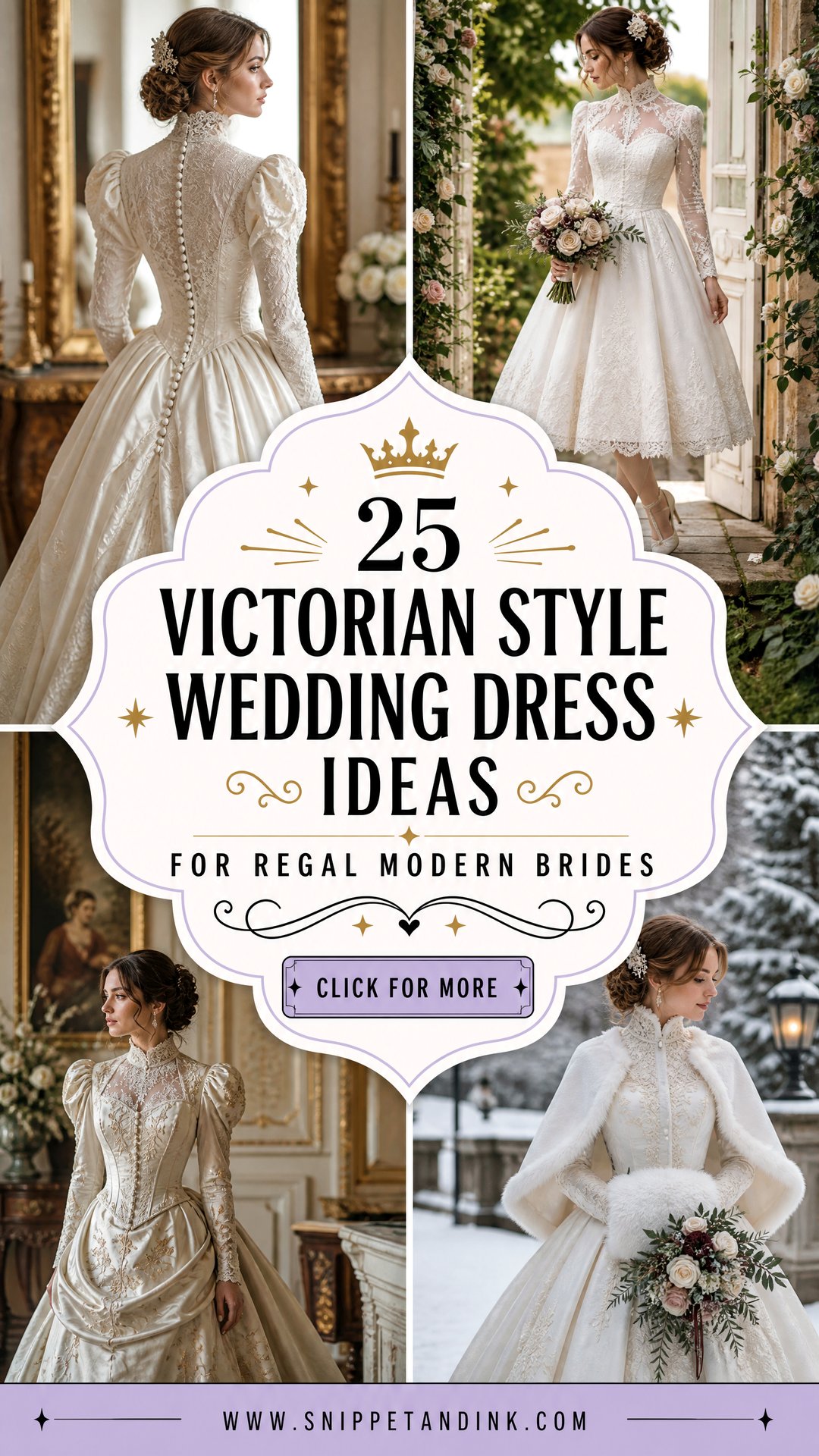
Collecting Victorian style wedding dress ideas is the fun part. Wearing one from the first photo to the last dance is where my work starts. The era gives us high collars, long sleeves, boned bodices, rows of covered buttons, puffed shoulders and long trains, and the modern versions I like best keep that architecture while swapping in lighter linings and softer interfacing. Below are 25 complete looks, each with the dress, shoes, veil and finishing pieces, plus the fitting notes I’d give you if you walked into my studio wearing it.
How Many Period Details One Gown Can Carry
When a bride brings me a mood board full of Victorian gowns, the first thing I do is count the details she has fallen for. High collar, puffed sleeves, boned bodice, button back, bustle, lace, pearls. A real 1880s dress might carry most of them at once, but on a modern bride in modern light that many signatures usually looks like a costume rather than a wedding dress.
My working rule is two strong period details and one quiet one. A high lace collar and a button back, with a little pearl trim. A boned bodice and a bustle, with plain sleeves. Pick the two you would miss most and let everything else stay simple.
Let your venue decide the volume
A ballroom or a stately home can take a full skirt and a train. A small registry office, a narrow chapel aisle or a restaurant reception makes the same skirt feel cramped, and you will spend the night pulling it out of chair legs. For smaller rooms I steer brides toward the A-line, the tea-length dress or the mermaid, and put the period character into the bodice instead.
Season matters more than with most styles
Long sleeves and a lined high collar are warm. In a summer heatwave, unlined lace sleeves, an illusion neckline and a cotton or silk lining make the difference between enjoying the day and counting the minutes. If your date is in July, tell your consultant before you try anything on.
1. High Neck Lace Victorian Wedding Dress
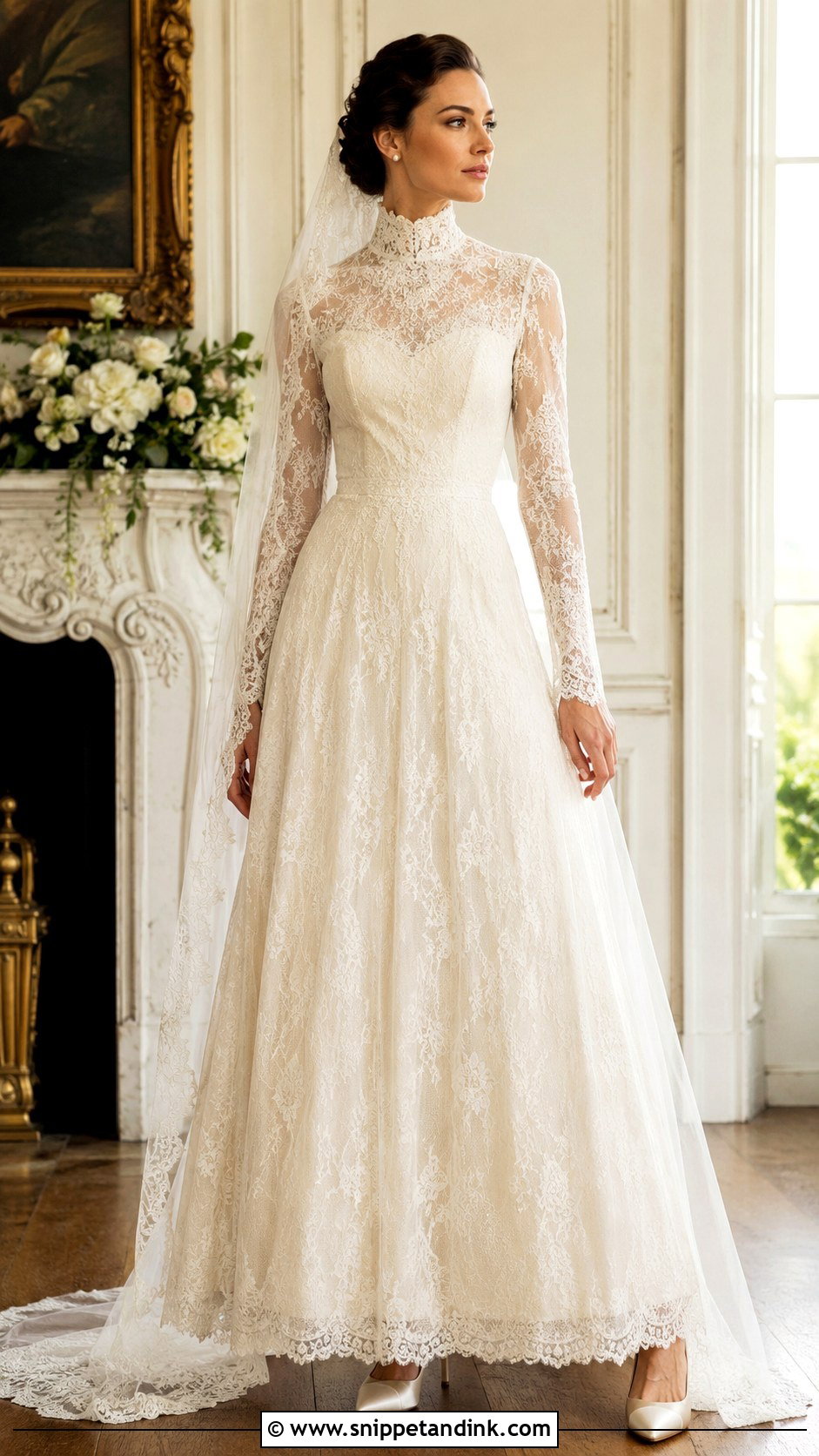
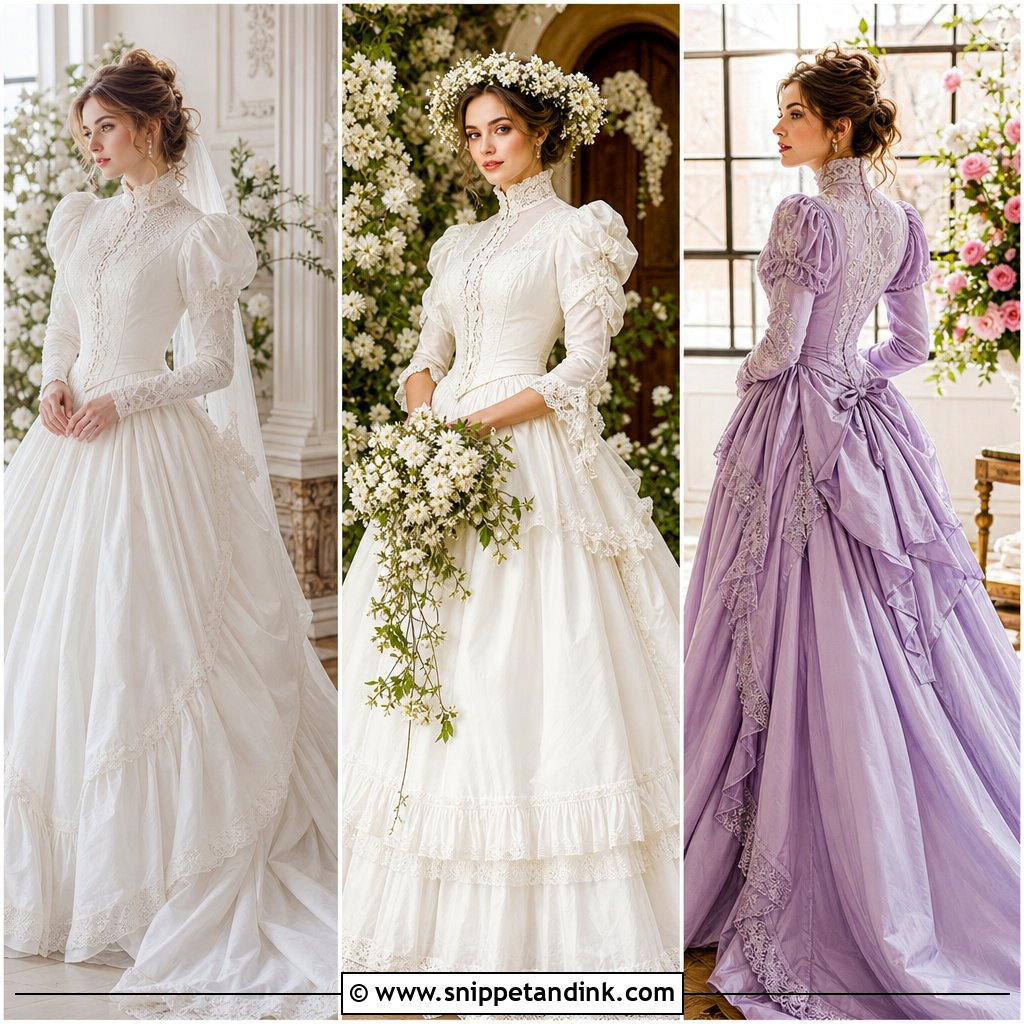
This is the gown most people picture when they hear the word Victorian: an ivory lace collar, close long sleeves, a structured bodice and an A-line skirt. The collar does the framing, so I keep earrings to pearl studs or a tiny drop and nothing at the throat. The detail I check first is the collar height. If it sits higher than the base of your neck, it will rub every time you turn your head, so I usually ask the seamstress to drop it a few millimeters or line it with silk organza. A chapel veil and satin pumps or lace ankle boots finish it.
2. Corset Victorian Wedding Dress
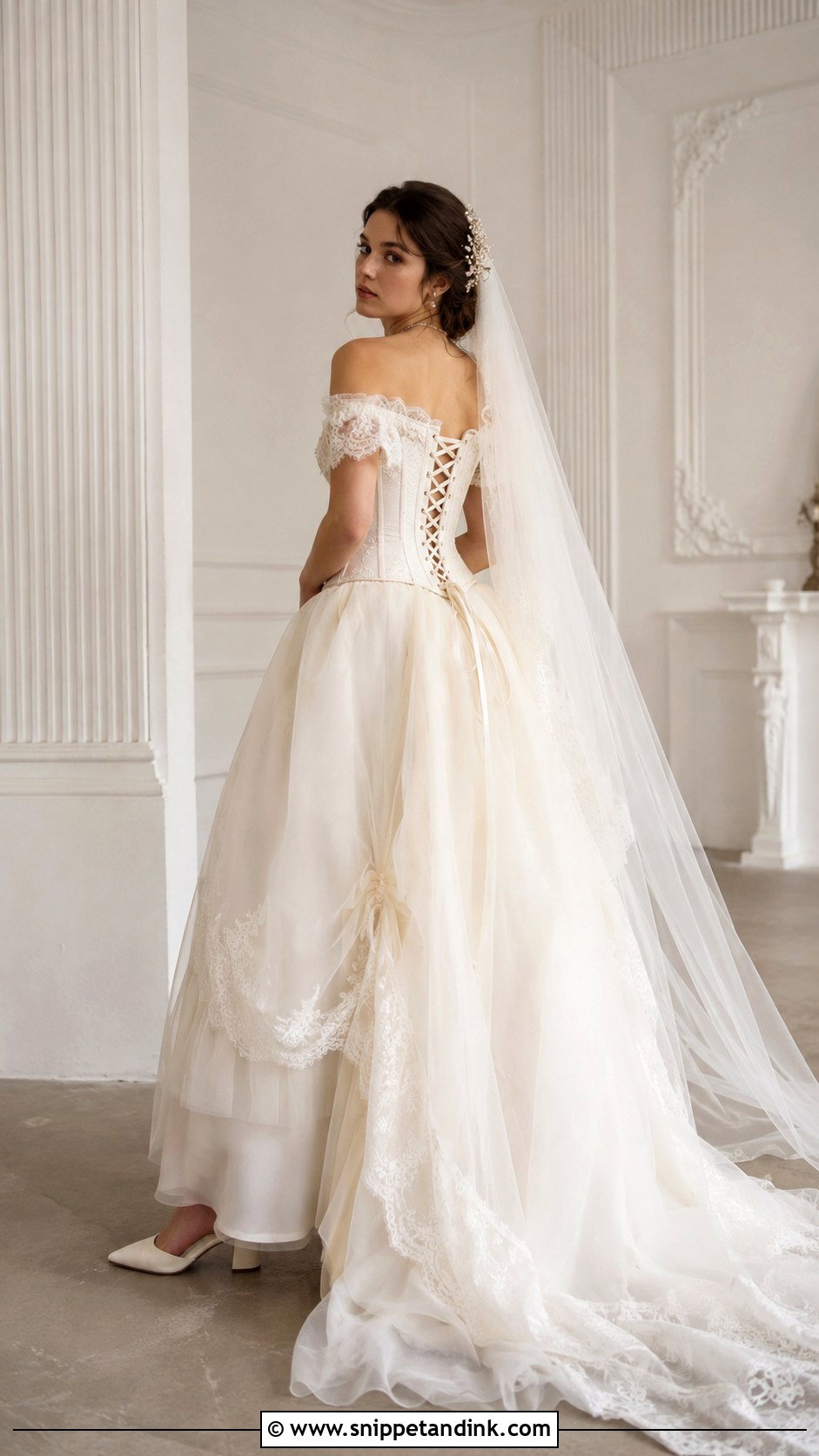
A boned bodice gives you a waist without any effort on your part, which is exactly why it has to fit perfectly. Visible boning, a lace-up back or a structured bodice softened with tulle all work here, and the full skirt balances the fitted top into that hourglass shape. Spiral steel boning bends with you; plastic boning is cheaper but can warp and dig in after hours of sitting. I always do a sit-down test at fittings. Style it with a pearl comb, loose curls and a long veil from the crown, and choose block heels or bridal boots over stilettos.
3. Long Sleeve Victorian Wedding Dress
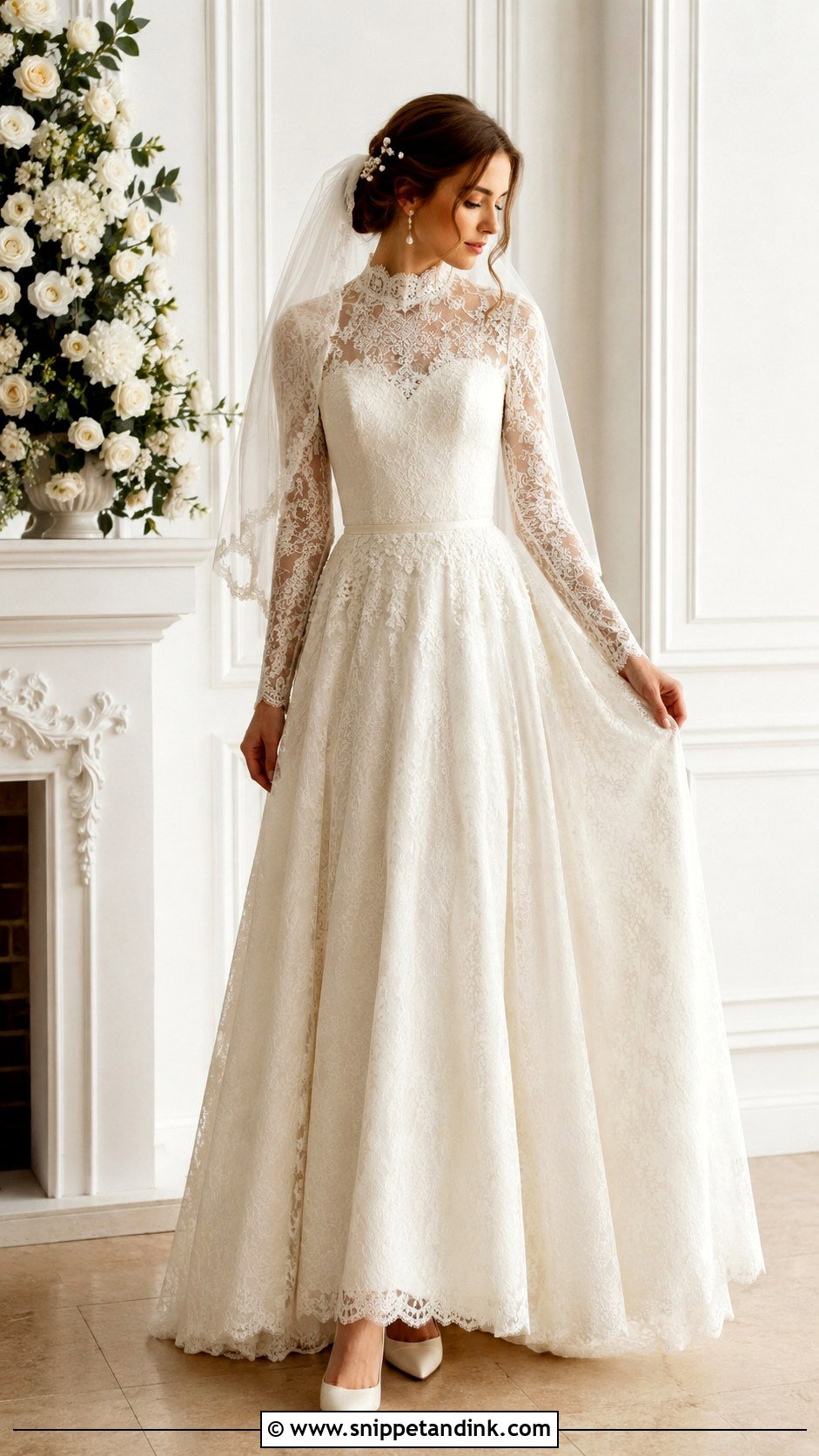
Long sleeves are where comfort is won or lost. Fitted lace, sheer illusion mesh or sleeves closing with covered buttons at the wrist all read Victorian, but I ask every bride to lift both arms as if hugging someone tall. If the bodice rides up or the seam pulls under the arm, the sleeve needs a gusset or a little more ease. Keep the neckline modest and the waist slim, then let a low bun and pearl hairpins stay quiet. Pointed ivory heels or lace-up boots go underneath. I’d save this one for autumn, winter or an air-conditioned room.
4. Puff Sleeve Victorian Wedding Dress
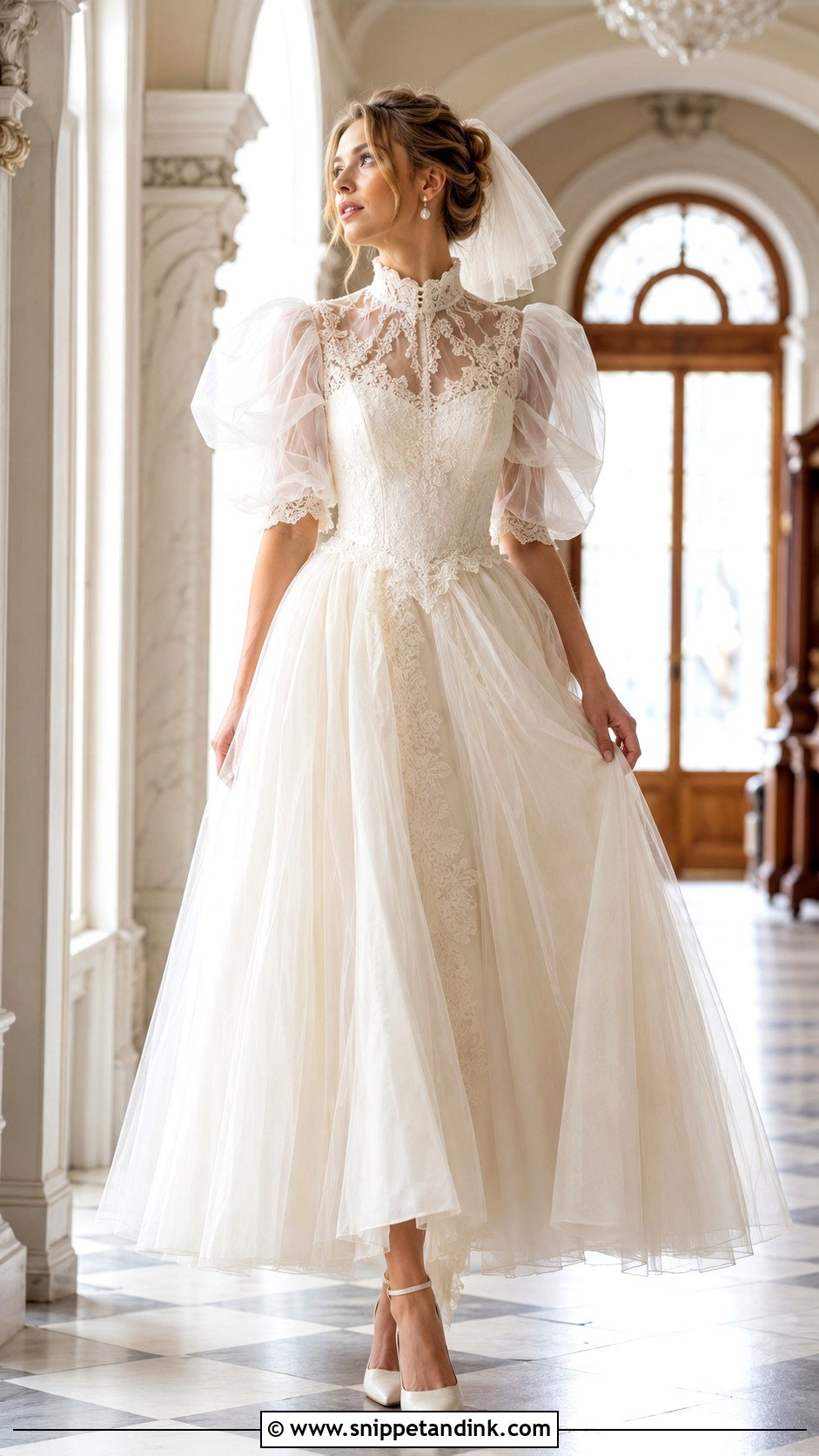
Puffed sleeves need restraint everywhere else. Full shoulders on a busy bodice and a heavy skirt can swallow a smaller frame, so if you love a puff sleeve Victorian wedding dress, ask for a fitted bodice and a plainer skirt. Tulle puffs look soft, lace-covered shoulders look romantic, and satin leg-of-mutton sleeves are the most historically accurate. One practical warning: a big sleeve sits right where a long veil falls, so I lean toward a short or mid-length veil and a sleek updo. Strappy ivory heels finish it.
5. Bustle Victorian Wedding Dress
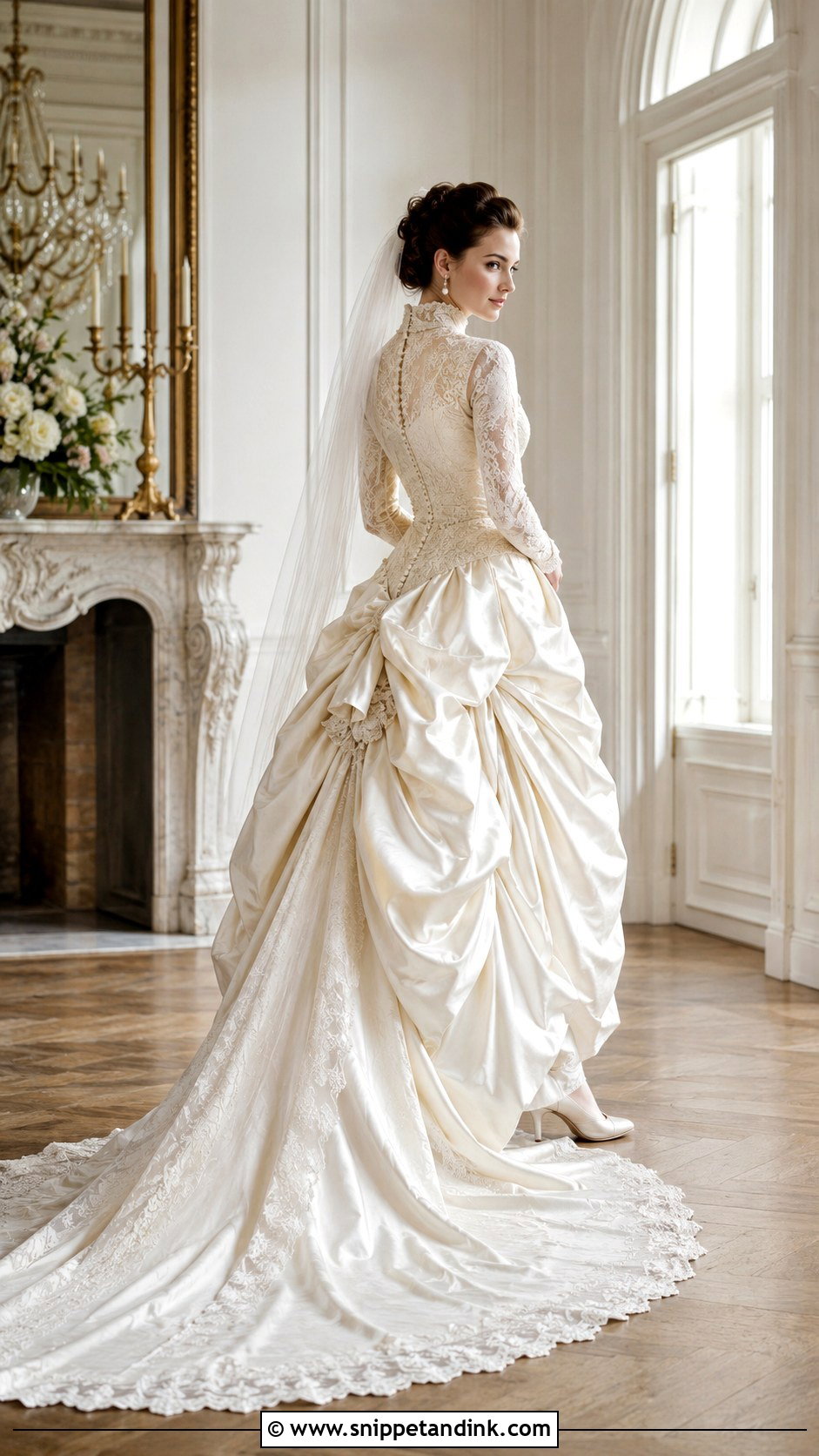
The drama of a bustle Victorian wedding dress lives at the back, in gathered fabric, draping or a train that builds volume behind the skirt. Satin, taffeta and mikado hold a sculpted bustle; tulle gives a softer, lighter one. Keep the bodice fitted with lace, buttons or corset seams so the shape reads from the side. The veil is the thing I watch: a long, opaque one hides everything you paid for, so pick a sheer or shorter style. Gloves, pearl earrings and ivory heels complete it. Ask your photographer for a back-view portrait on the stairs.
6. Victorian Ball Gown Wedding Dress
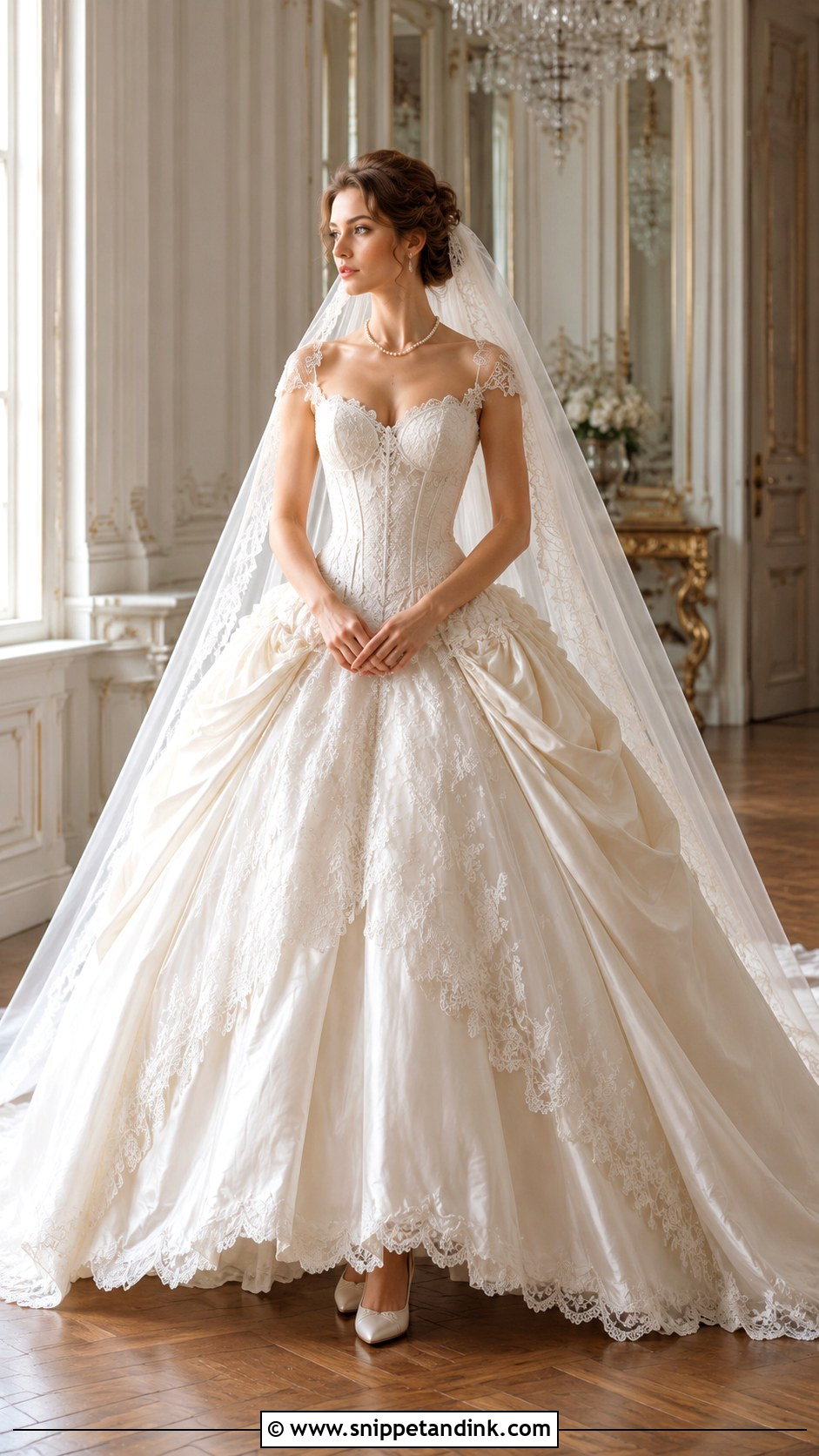
For the full fairytale shape, the ball gown wins. A fitted bodice, a basque waist, covered buttons and lace appliqué on a softly supported skirt all belong here. What separates bridal from costume is the petticoat: a stiff hoop can look theatrical, while layered tulle gives you volume that still moves when you walk. If you want extra romance, choose subtle floral embroidery or a scalloped hem. A long veil, pearl necklace and satin pumps complete it. Big rooms suit it best; in a small chapel aisle you will brush every pew.
7. Victorian Lace Wedding Dress
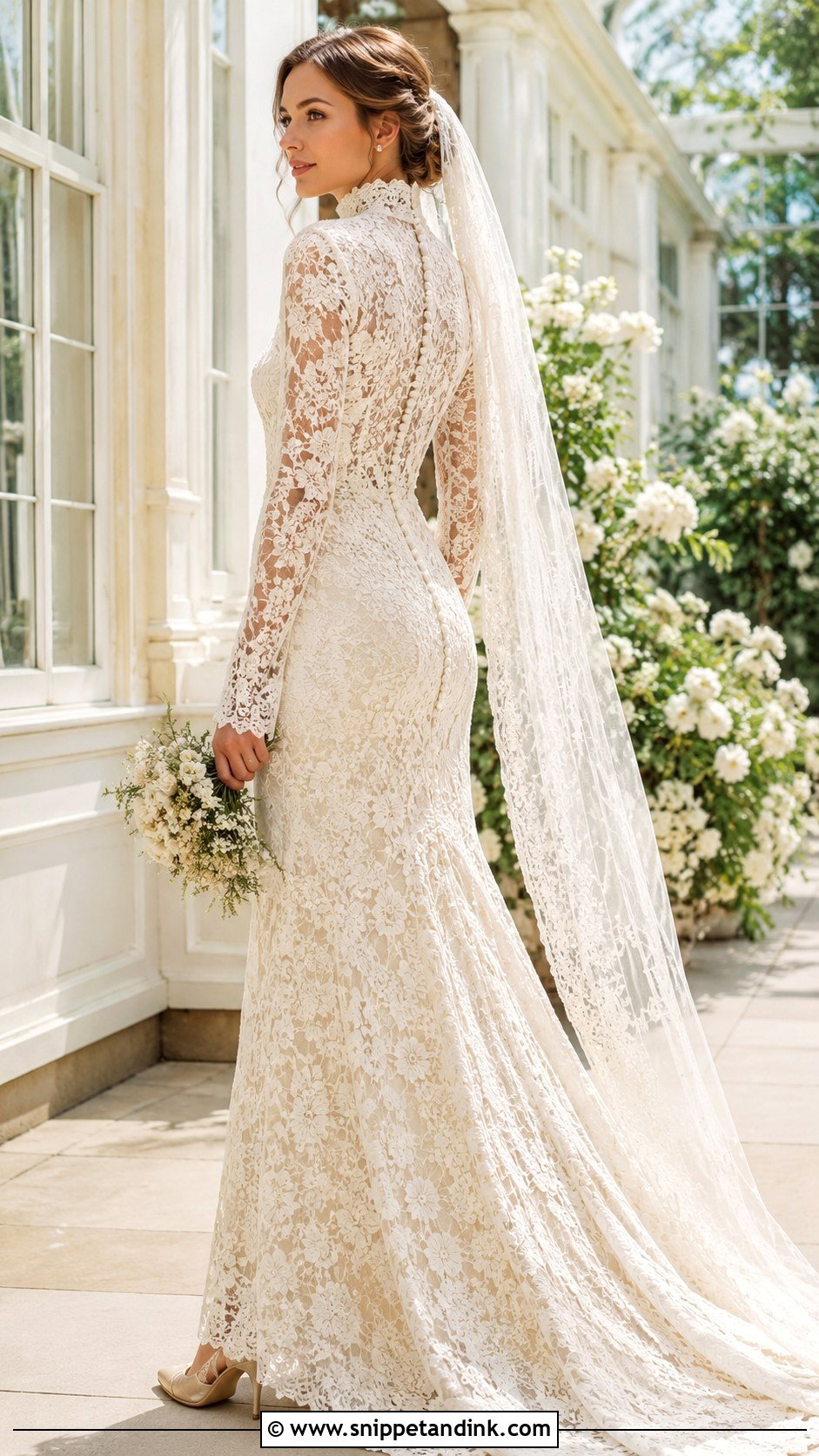
Lace is the fabric I spend the most time explaining. Chantilly is fine and flat, alençon has a corded outline that gives more definition, and heavier guipure holds its own shape. Allover lace looks the most traditional, while a lace bodice over a clean skirt looks more current. All of them sit nicely with high collars, long sleeves and button backs. Keep pearls small and the veil plain. Antique-toned lace can make bright white shoes look harsh, so try ivory or champagne pumps against the actual dress before you buy.
8. Victorian Satin Wedding Dress
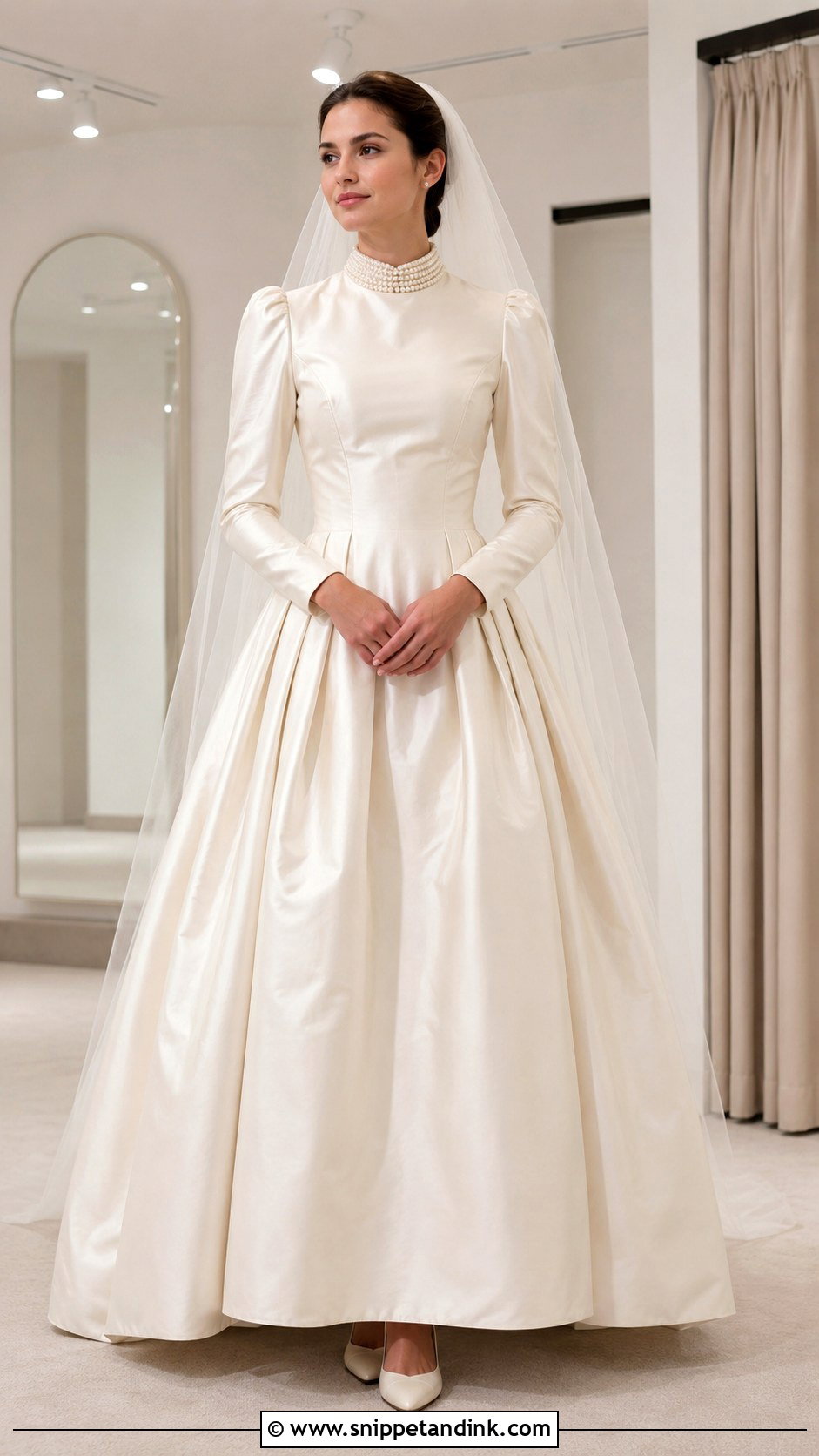
Satin needs very little decoration because the fabric does the work. A structured bodice, long sleeves, a high or square neckline and a full skirt with gentle pleats is all it wants. The honest trade-off is creasing: satin marks across the lap when you sit through a ceremony and dinner, and it shows every seam that isn’t pressed well. Heavy duchess satin creases less than thin polyester satin. A pearl choker, satin-covered buttons and a clean veil finish it, with simple ivory pumps underneath. Choose this if lace and beading feel like too much.
9. Victorian Tulle Wedding Dress
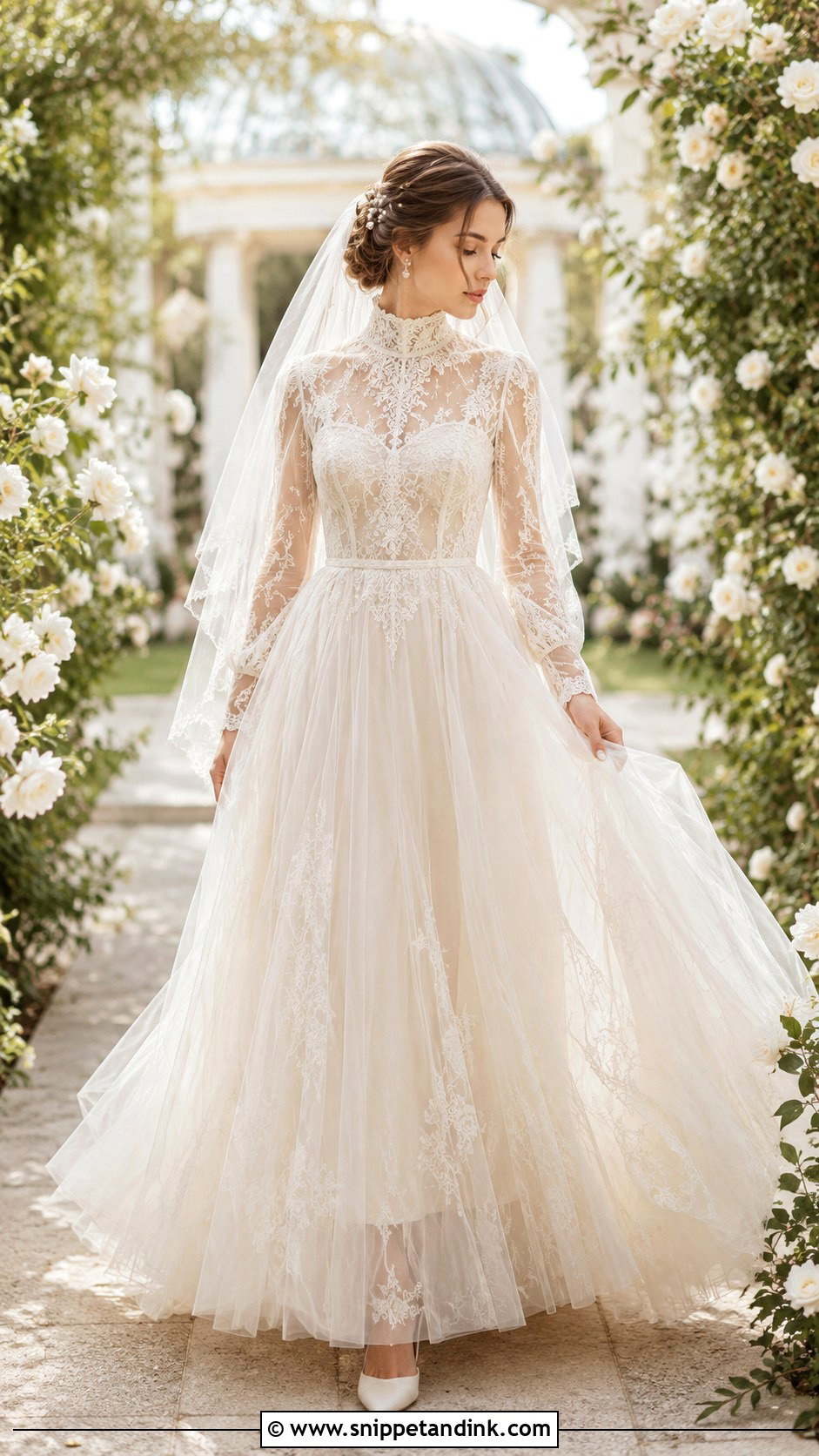
Tulle gives Victorian structure a lighter touch. A sheer high neckline, a lace bodice, light embroidery on long sleeves and a full tulle skirt still feel airy because the skirt is mostly air. Tulle snags easily on rough stone, brambles and the hook on a bracelet, so for a garden venue I warn brides to lift the skirt on paths and leave chunky jewelry at home. A blush or ivory underlayer warms it up. Pair it with a fingertip veil, pearl hairpins and ballet-style heels for a daytime estate or garden wedding.
10. Victorian Ruffle Wedding Dress
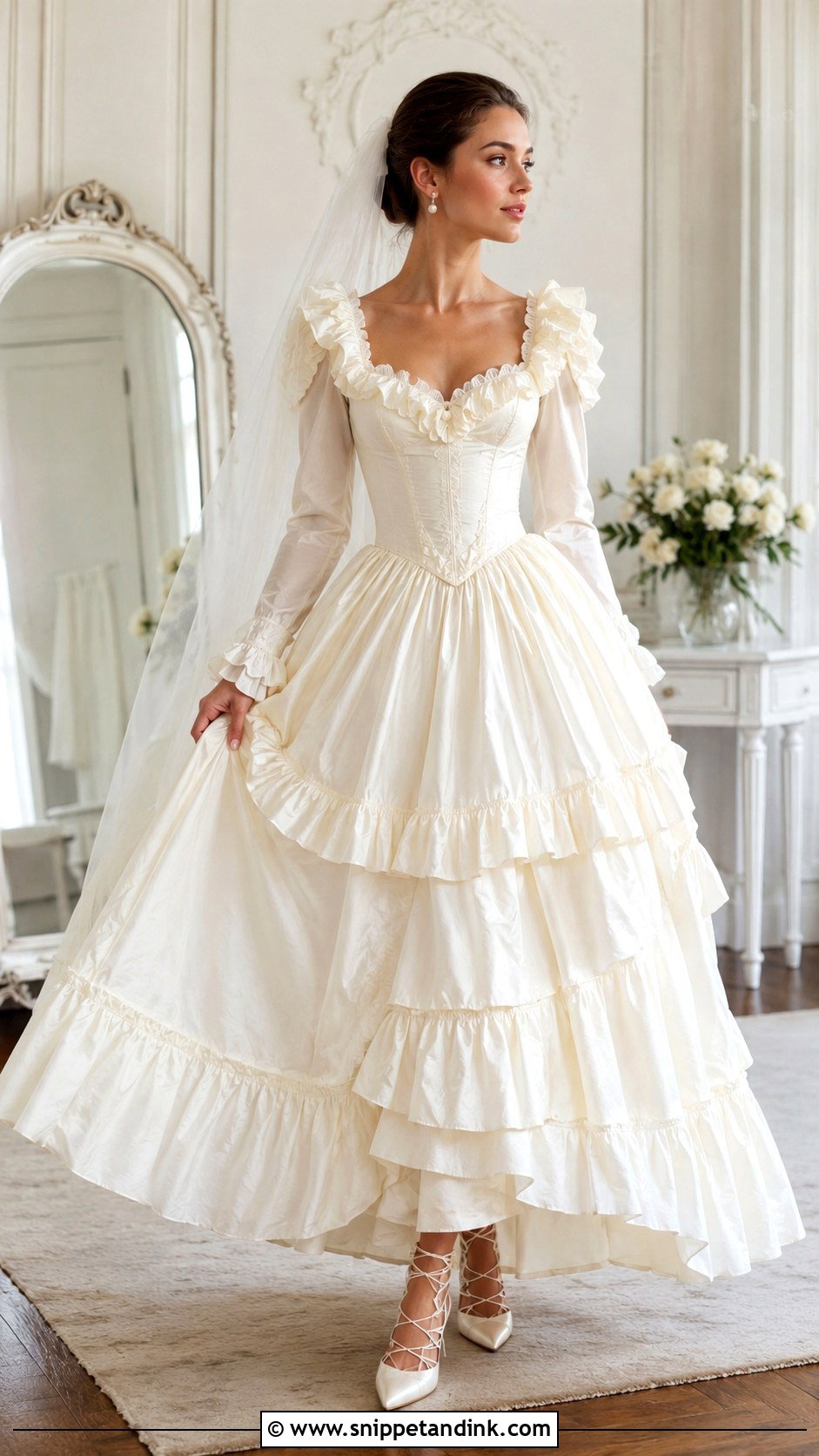
Ruffles need a home, not a scattering. On a Victorian ruffle wedding dress, I pick one zone, whether it’s the neckline, the sleeves, the hem or tiered skirt layers, and keep the rest plain. A fitted bodice above a tiered skirt gives the cleanest result. Ruffles add bulk, so if you are petite I’d keep them below the waist where the extra volume lengthens rather than widens. Pearl earrings, a smooth updo and a plain veil calm the texture down. Ivory heels or soft boots sit nicely under the layers.
11. Victorian Off Shoulder Wedding Dress
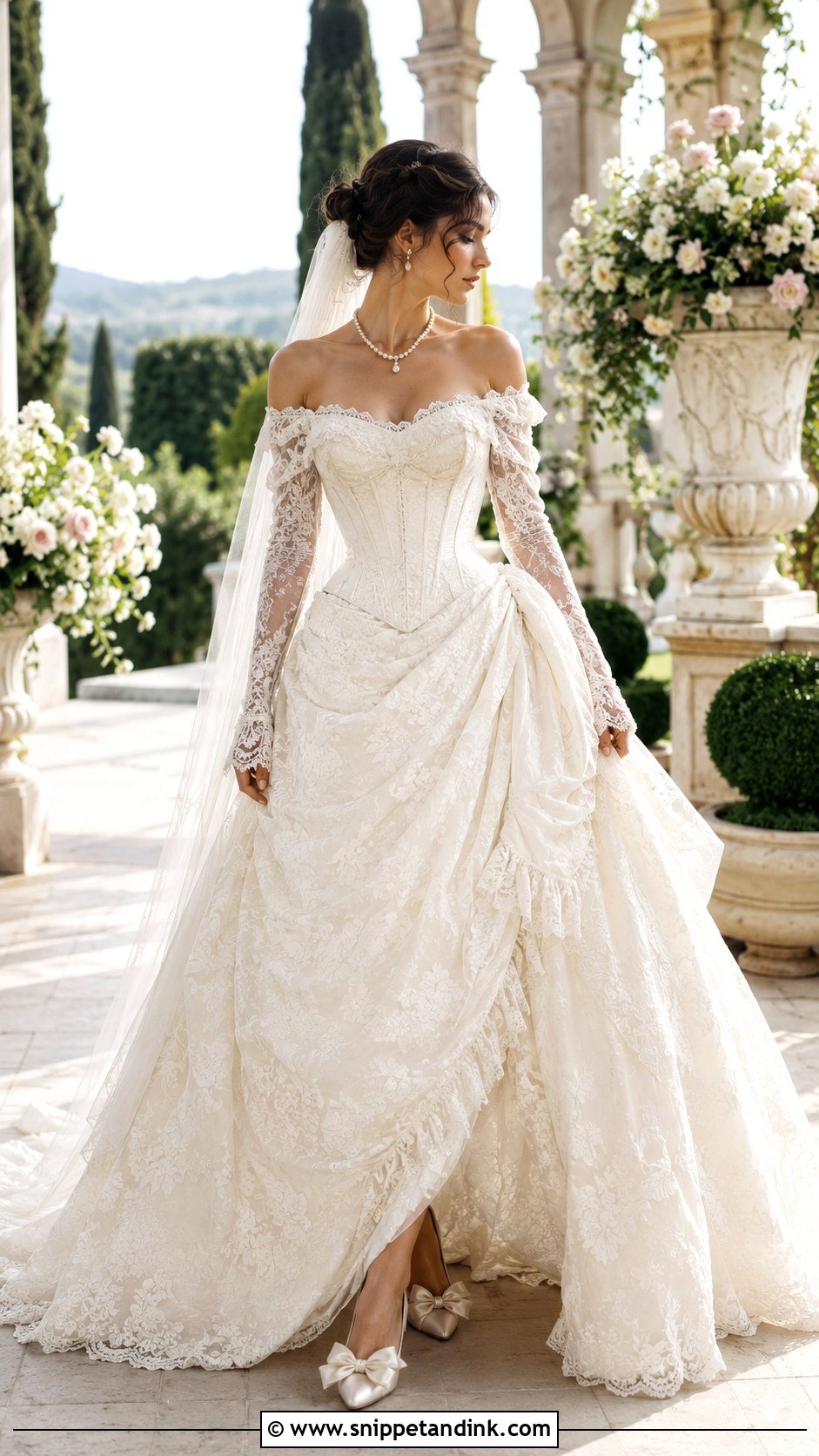
Dropping the collar to the shoulders softens the whole period look. You still get Victorian character from long sleeves, corset shaping and antique lace, but the open neckline gives you room to breathe. The construction detail I care about here is grip: an off-shoulder band needs silicone tape or a firm inner corset, or it will slide every time you raise your arms. Add a pearl necklace, drop earrings and a veil placed low at the back of the head. Ivory pumps or satin heels with a small bow suit it.
12. Victorian Square Neck Wedding Dress
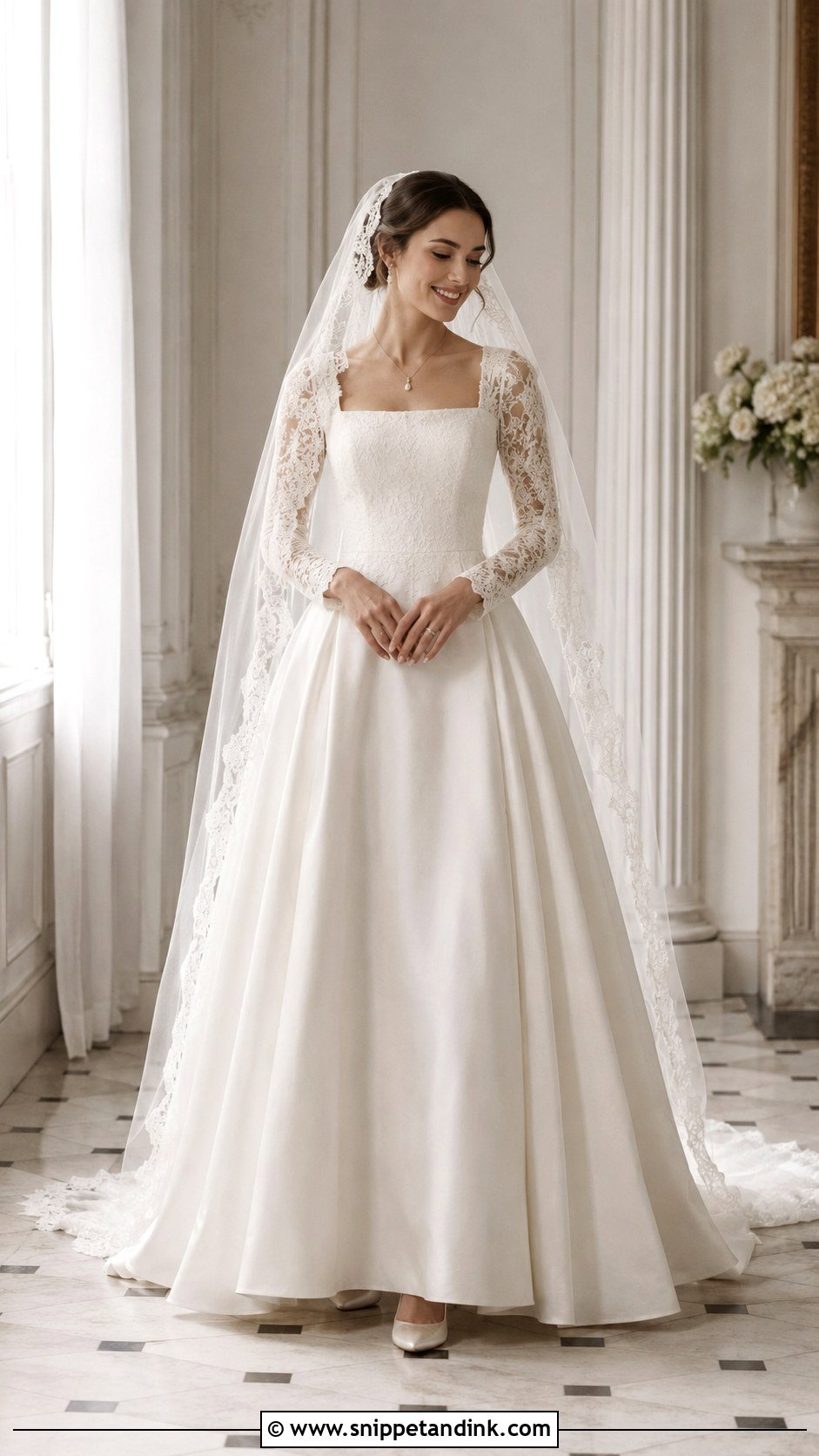
A square neckline gives structure without the full coverage of a high collar, and it flatters most shoulder widths because the straight line balances the face. Long lace sleeves, a fitted bodice and an A-line or full skirt keep it period. This is the neckline I most like with a pearl pendant or delicate choker, because the pendant lands neatly in the open space. Check the corners at your fitting; if they gape when you lean forward, the neckline needs taking in. Finish with a lace-edged veil and plain ivory heels.
13. Victorian Button Back Wedding Dress
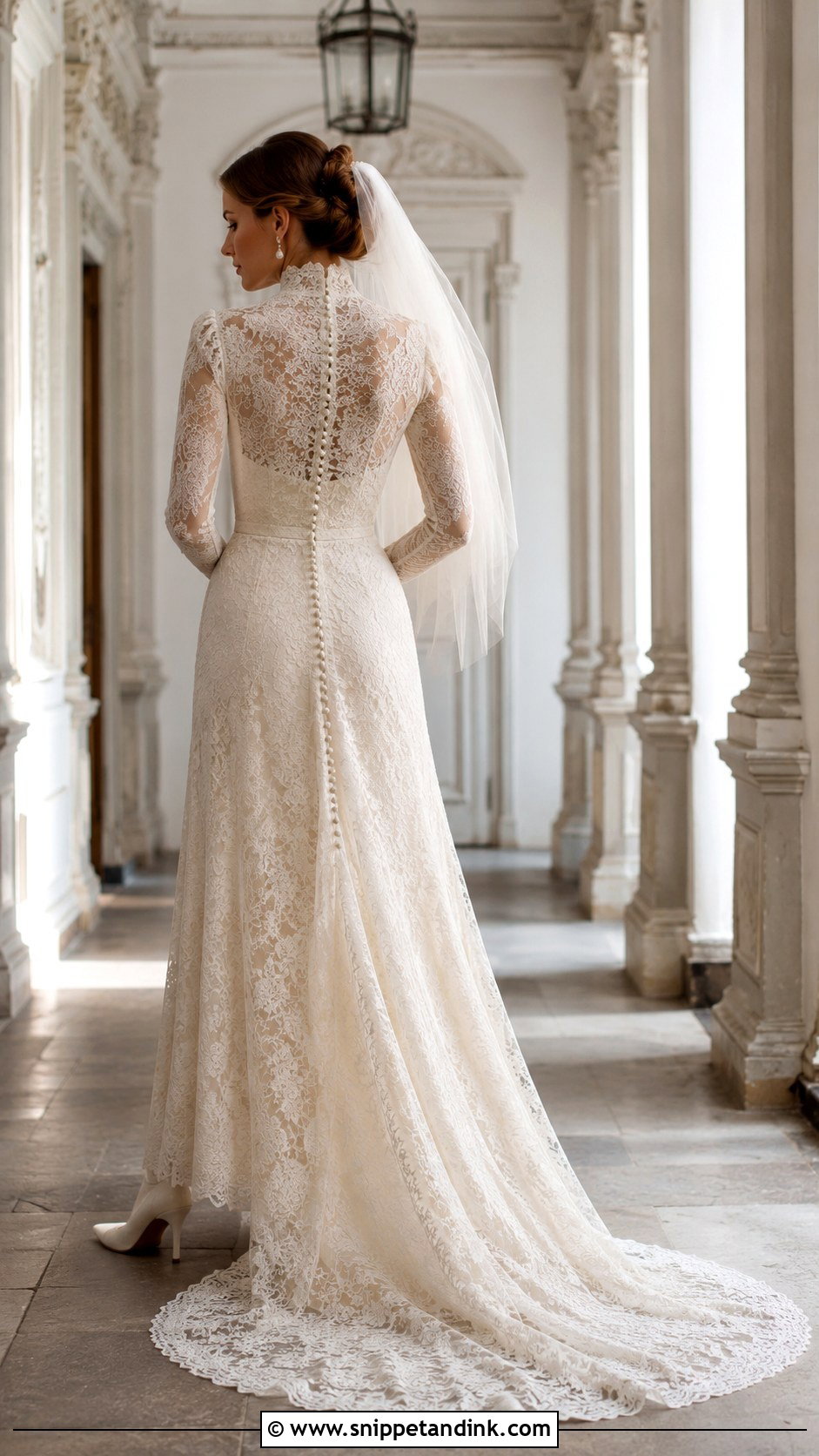
Covered buttons running from neckline to waist, or down the full train, turn a plain gown Victorian in one move. Many bridal button backs hide a zip or elastic loops underneath, and I’d always ask which you are getting. A true loop closure can take a long time to fasten, so give someone a button hook and add it to the morning schedule. Wear an updo or half-up hair so the buttons stay visible, keep pearls and the veil understated, and pick ivory heels or lace boots. Ceremony guests see your back for most of the vows, so it earns its place.
14. Victorian Pearl Wedding Dress
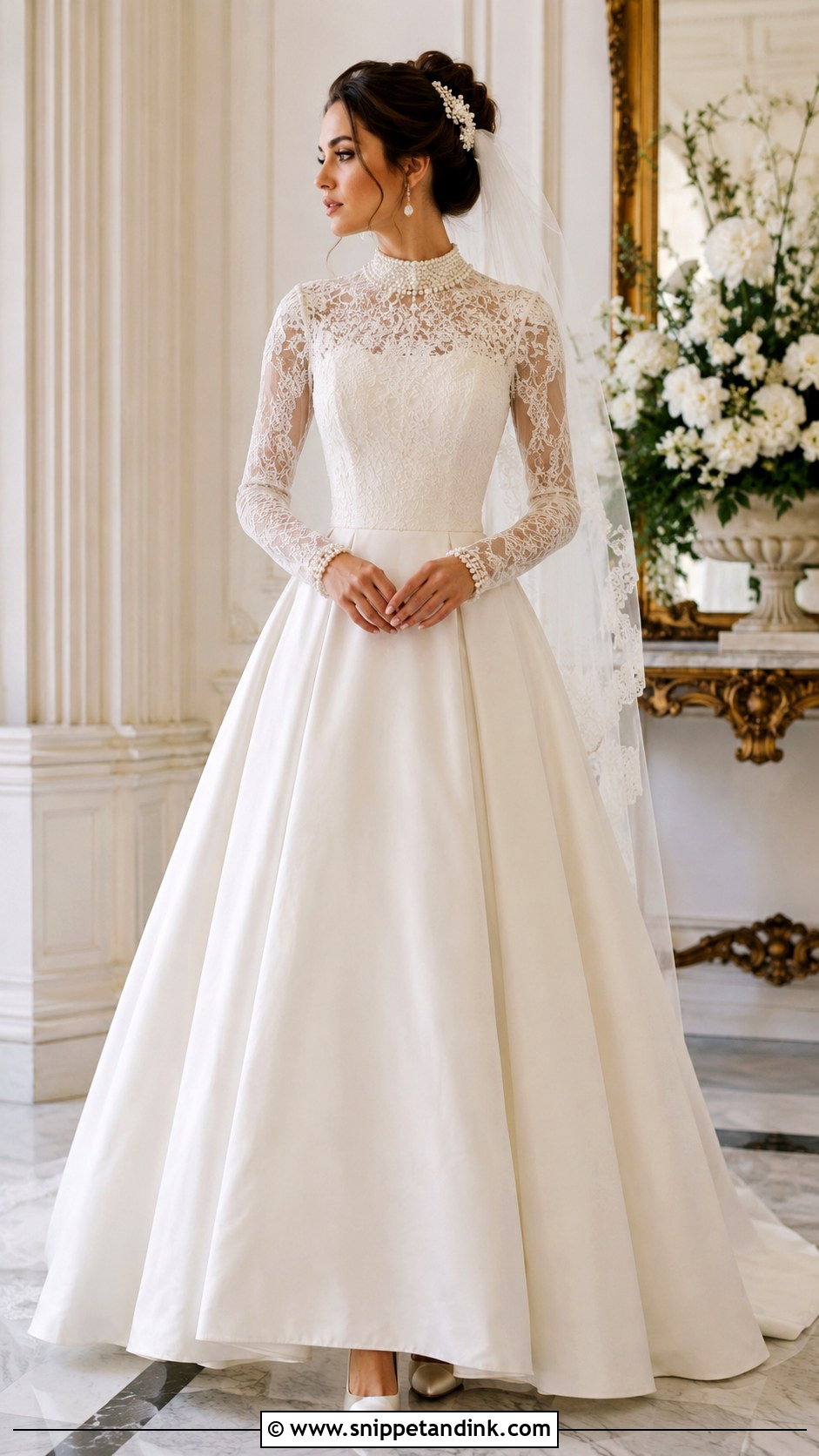
Pearls give this look its polish without any sparkle. On a Victorian pearl wedding dress, beading usually runs along the collar, cuffs, bodice or veil edge, and it sits well with lace sleeves, a corset waist and a softly full skirt. Hand-sewn pearls are heavier than they look, so a heavily beaded collar needs strong backing or it droops by evening. Stay with pearl earrings, a pearl hair comb and satin shoes, and skip bold extras so the beading stays the focus. Formal indoor venues and winter weddings suit it.
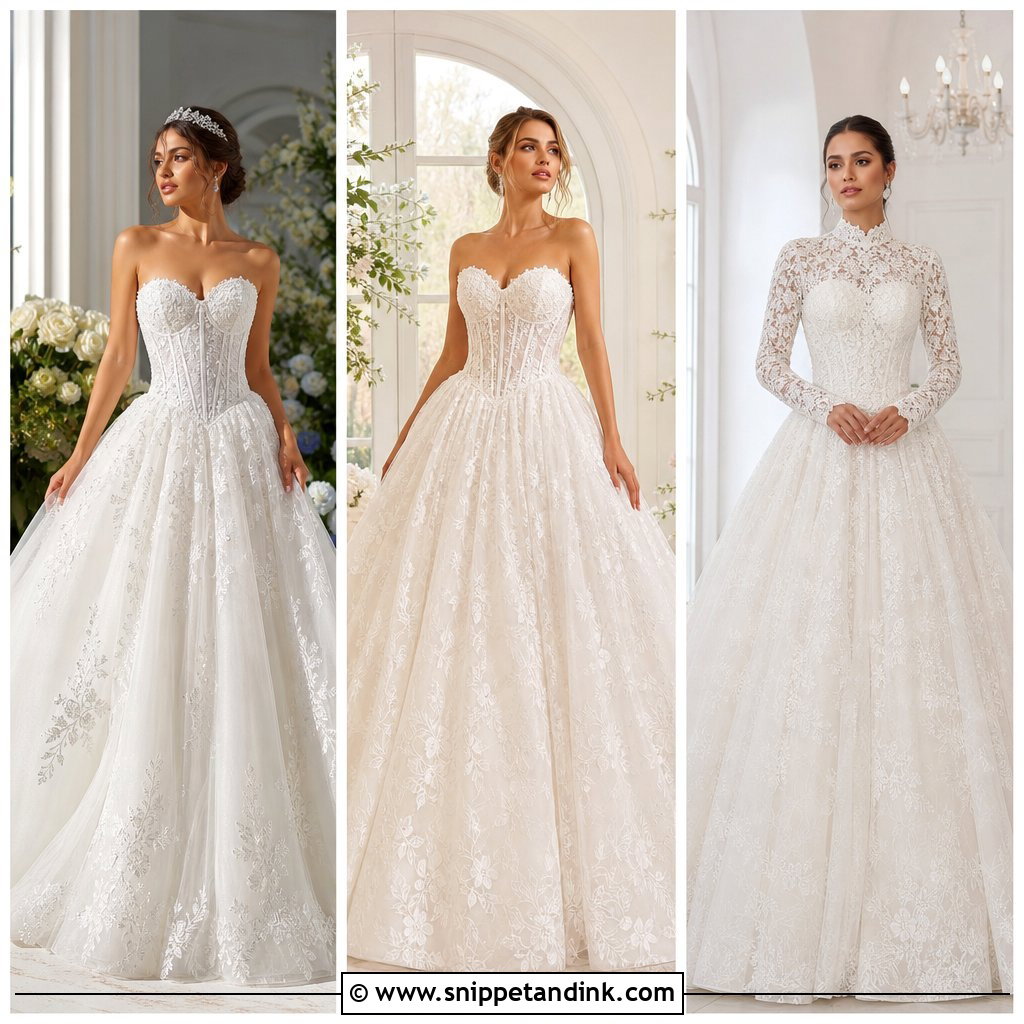

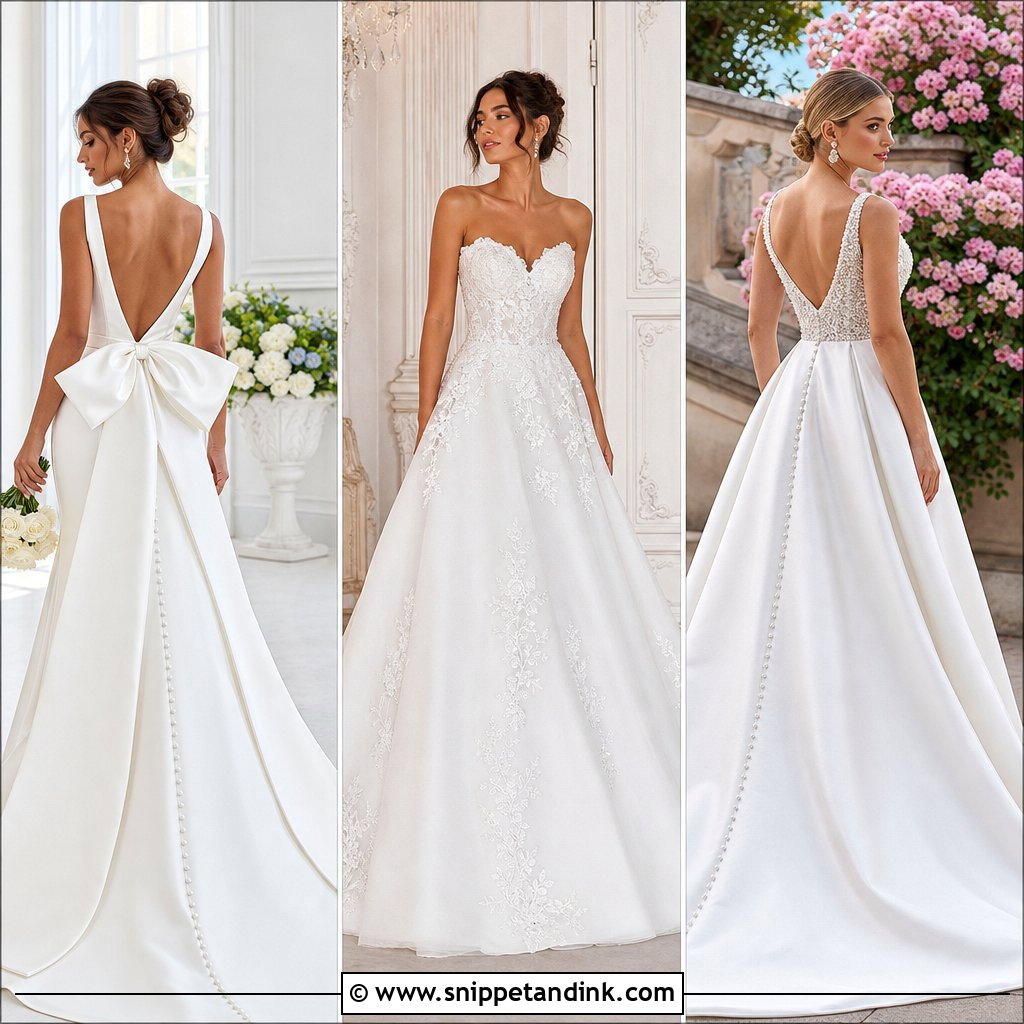
15. Victorian Embroidered Wedding Dress
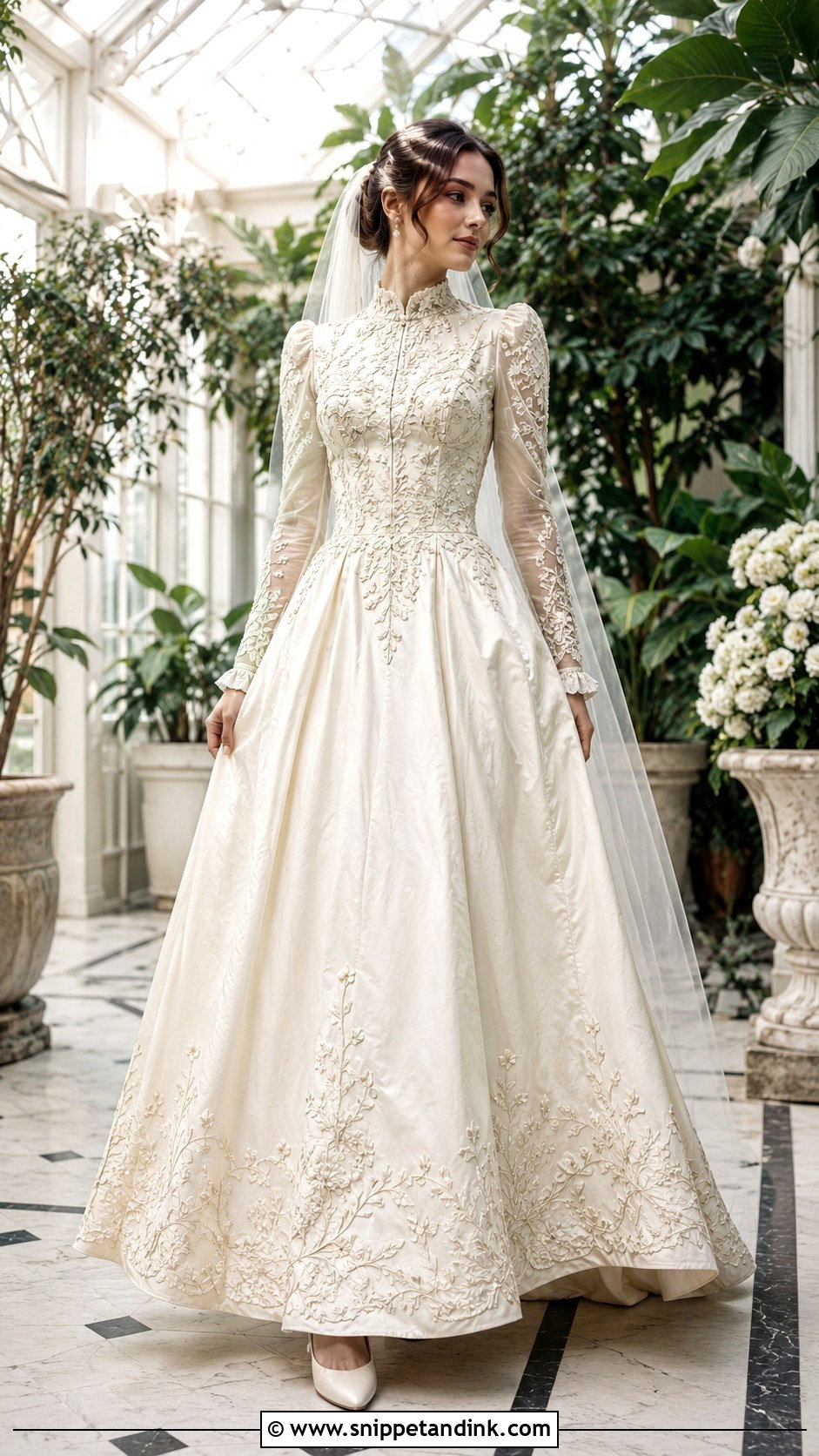
Embroidery is the closest you get to wearing handwork. Floral thread across the bodice, sleeves, hem or train can be ivory-on-ivory for subtle texture, or champagne and silver for more definition. Before you commit, look at it in daylight: tone-on-tone embroidery that looks rich in a showroom can disappear completely in outdoor photos. Keep the shape period, with a high neckline, fitted waist and flowing skirt. Heavy embroidery wants a plain veil; light embroidery can carry a matching one. Pearl earrings and ivory heels keep it bridal.
16. Victorian Floral Wedding Dress
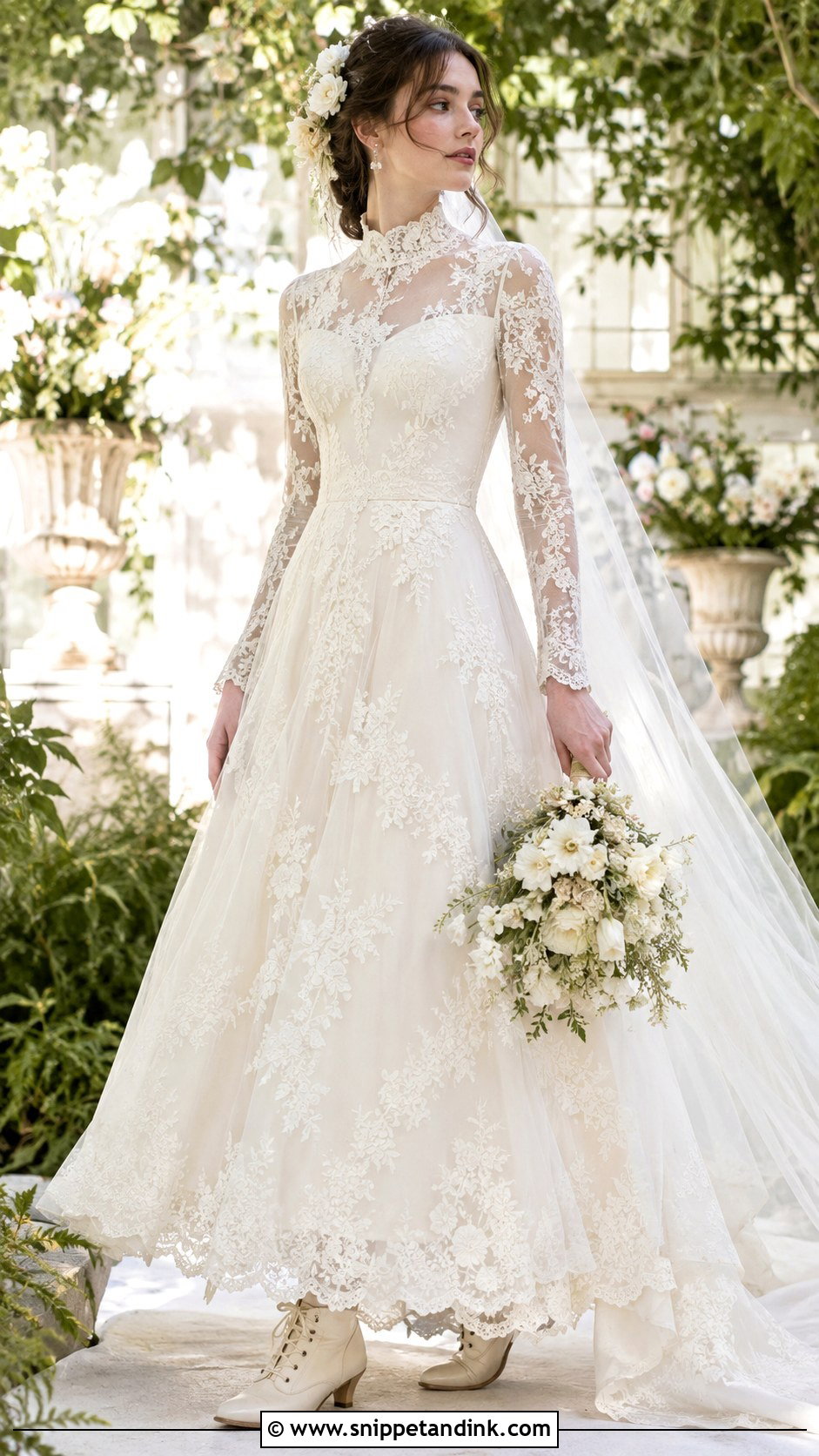
Florals bring the garden onto the dress itself. Embroidered flowers, lace florals or subtle appliqué on an ivory or champagne base all work. A fitted bodice, long sleeves and an A-line skirt stop it from tipping into a costume. My one rule is not to repeat the dress flowers in the bouquet too literally, or the two blur together in photos; choose blooms with a different scale. Floral hairpins, pearl earrings and a sheer veil let the details show through. Cream ankle boots or soft heels suit an outdoor ceremony.
17. Victorian Tea Length Wedding Dress
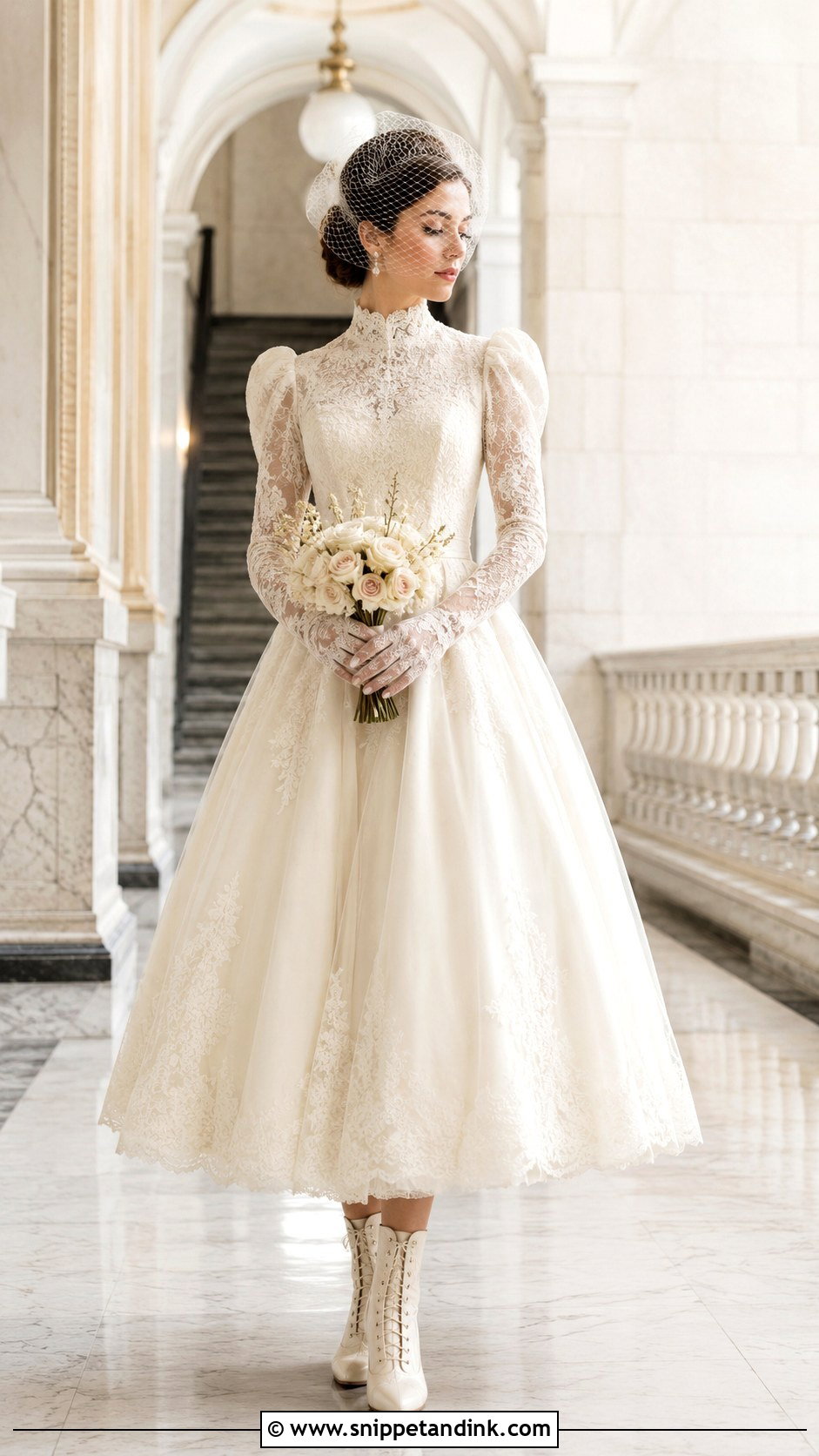
No train means no bustle, no stepping on your hem and no one carrying anything for you. A fitted lace bodice, high neckline, puff sleeves and a full midi skirt below the knee give you all the period detail in a shorter length. The hem lets your shoes show, so they become part of the outfit: lace-up boots, satin pumps or pearl heels. A birdcage veil or short tulle veil keeps the proportions right. Get the hem length set with your actual shoes on. Courthouse ceremonies, garden receptions and small venues suit it.
18. Victorian Mermaid Wedding Dress
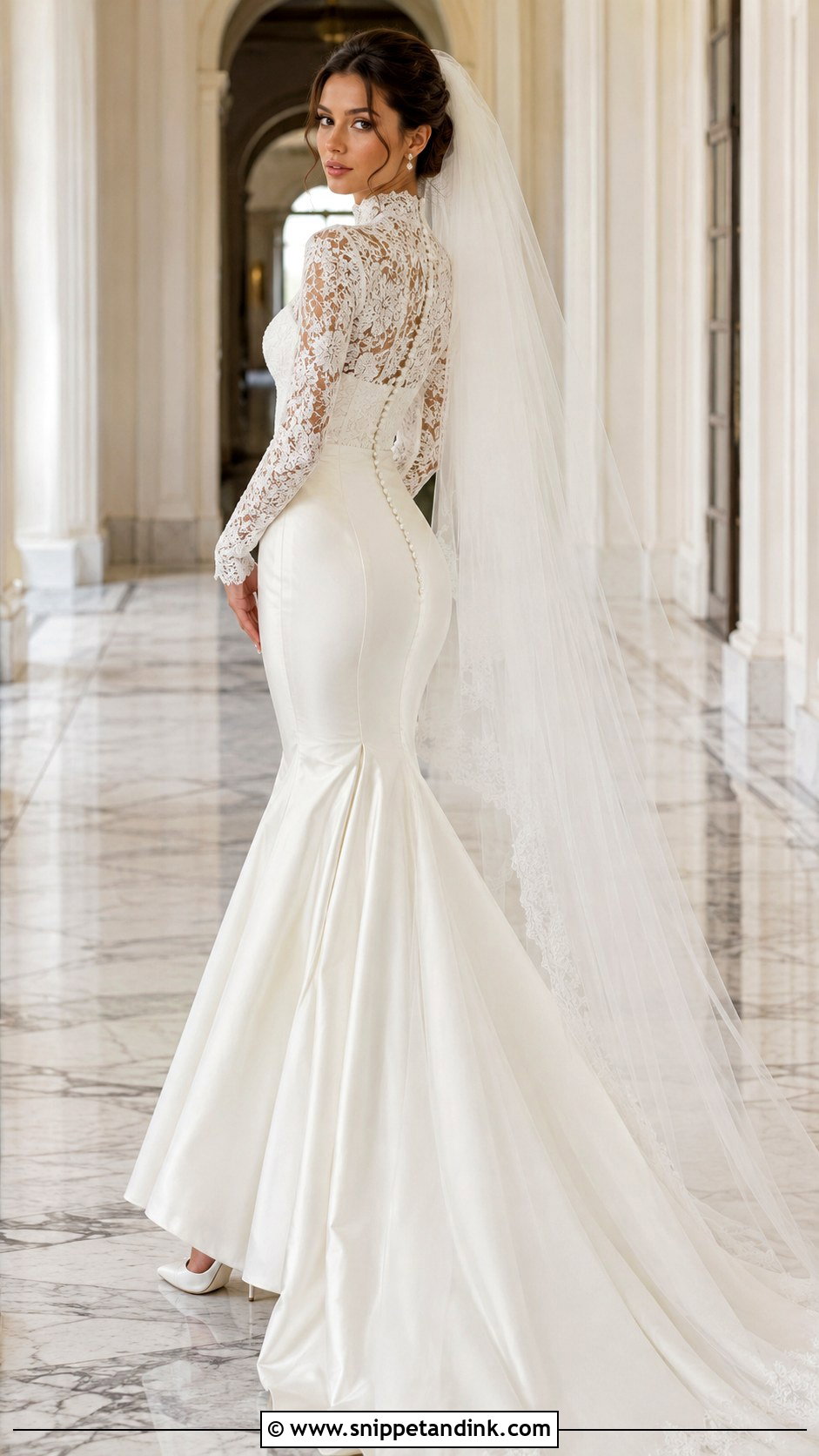
A mermaid shape blends vintage detail with a fitted, modern line. A high-neck or long lace sleeve bodice sits over a skirt that hugs the hips and flares near the knee, and lace, covered buttons, corset seams or a small train keep it Victorian. The limit is movement: you will take shorter steps and you will need to lift the flare on stairs. I always make brides sit and walk briskly at fittings in this cut. Pair it with pearl earrings, a sleek bun, a long veil and pointed ivory heels.
19. Victorian A Line Wedding Dress
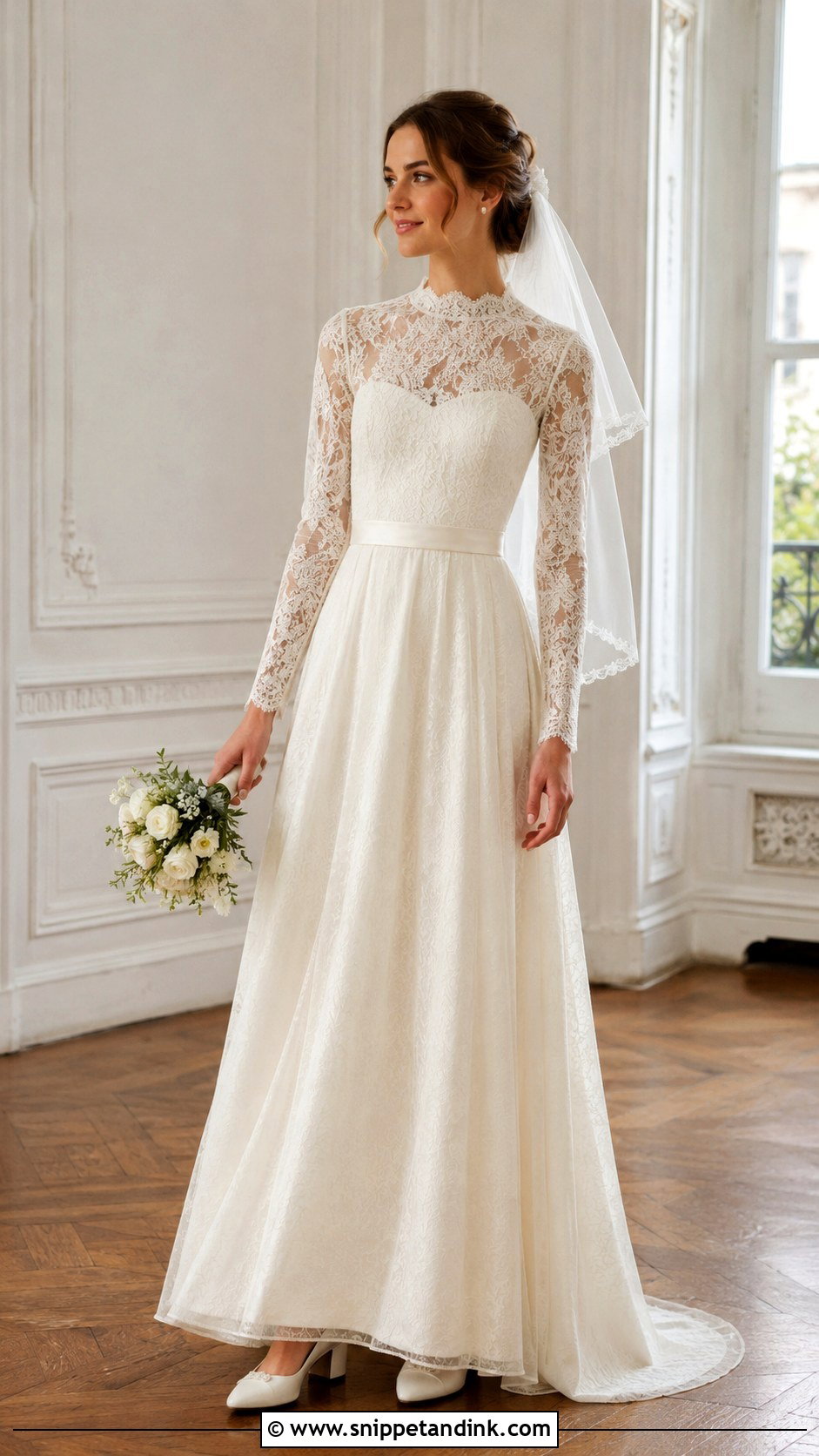
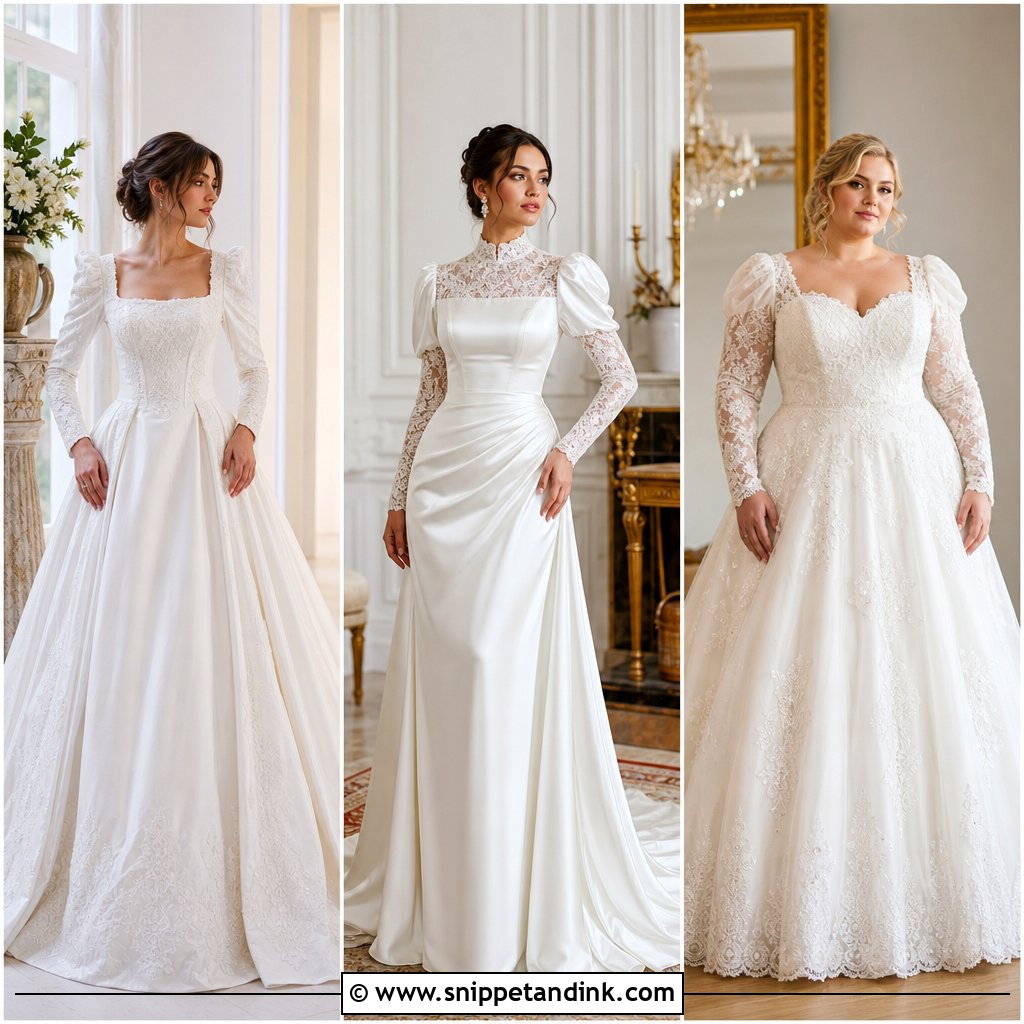
If you are unsure about the whole era, start with an A-line. It defines the waist and skims over the hips, so it moves, sits and dances without fuss. A lace bodice, high neckline, long sleeves and a lightly full skirt give you the Victorian outline; covered buttons or a satin sash add period detail. It’s the cut I’d recommend for anyone with a long day of standing. Add a fingertip veil, pearl studs and ivory block heels, and it fits a church, a barn or a hotel ballroom equally well.

20. Victorian Basque Waist Wedding Dress
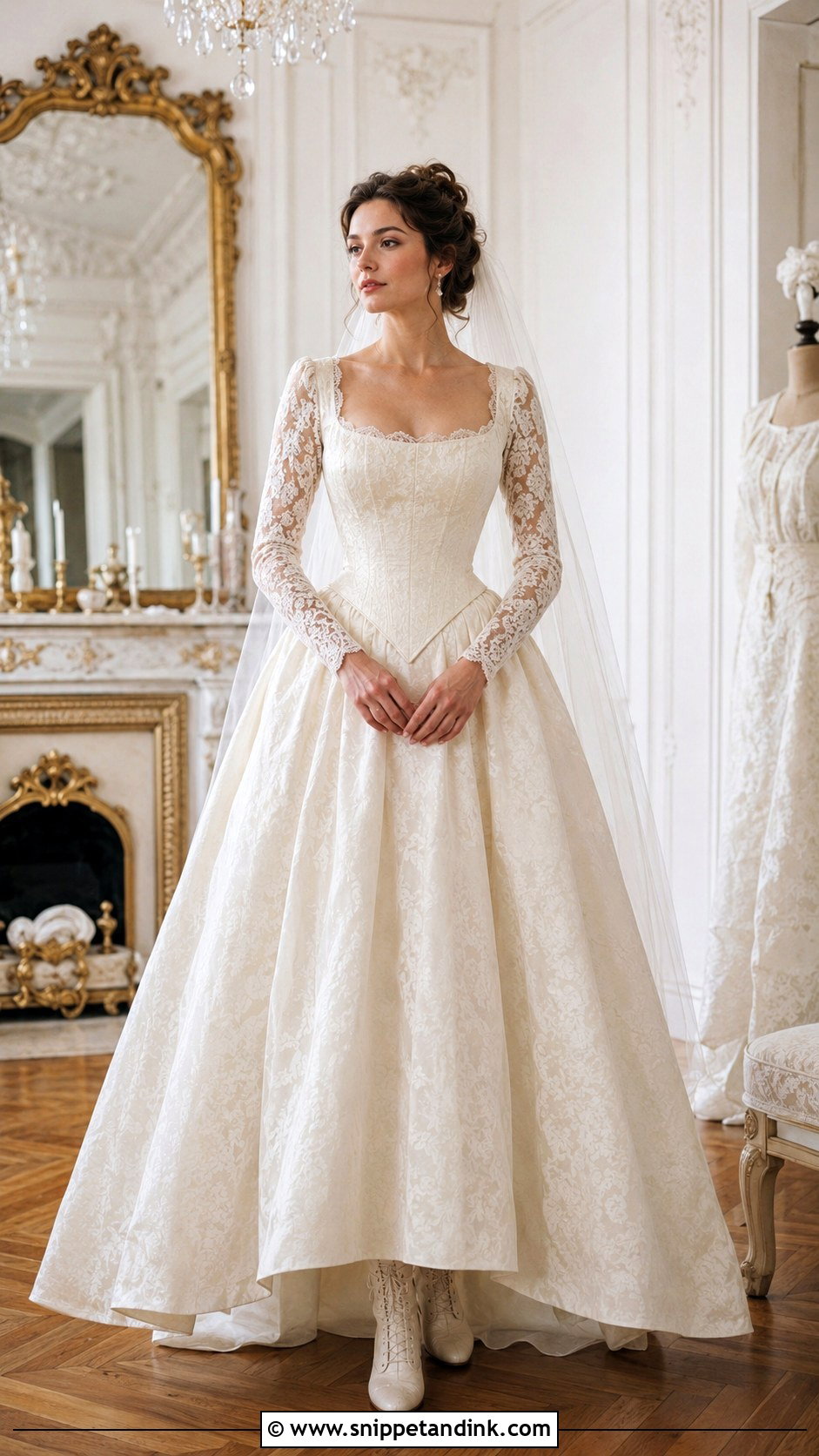
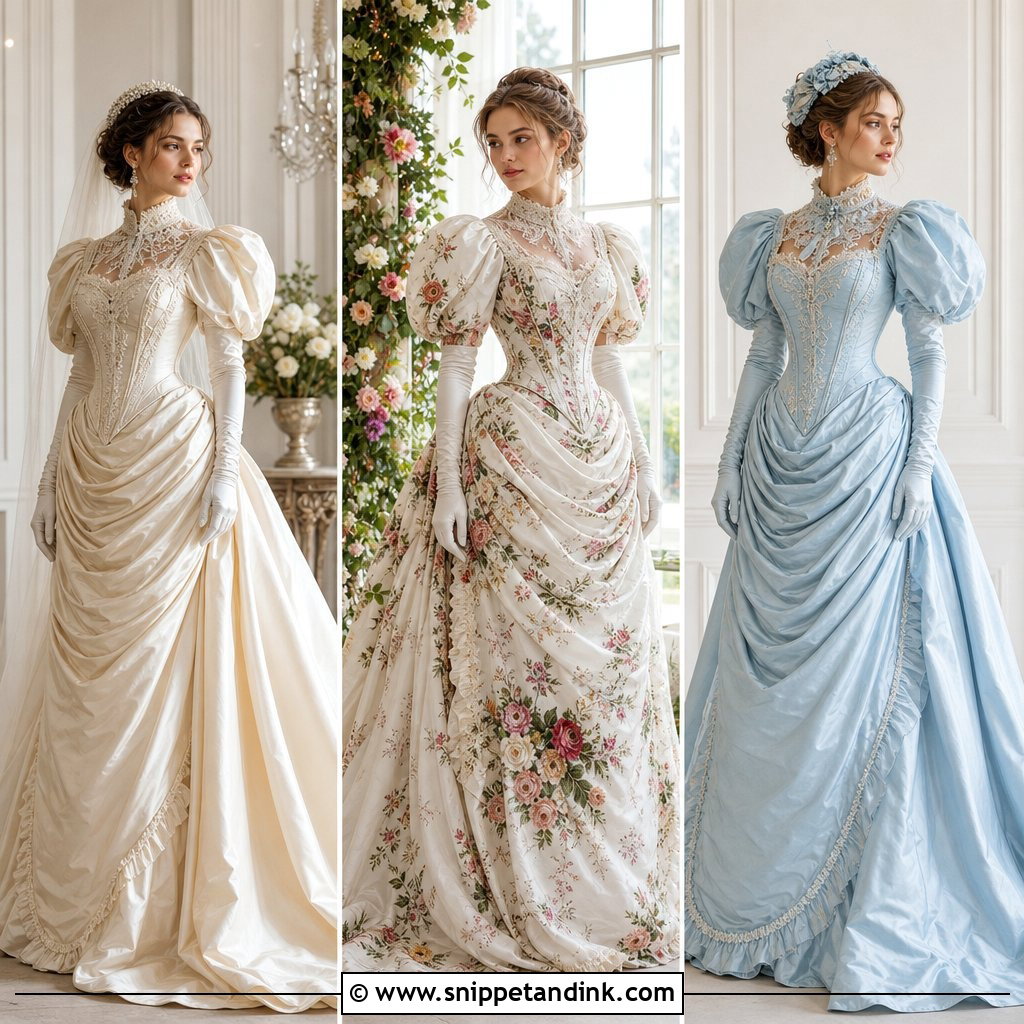
The pointed basque waist dips below the natural waist at the center front, which visually lengthens a shorter torso. It looks best with a corset bodice, a full skirt and lace or satin, and you can choose a high or square neckline depending on how much coverage you want. Fit is everything: the point must sit centerd and flat, so I check it standing and sitting. If it lifts when you sit, it needs more boning at the front. Wear pearl earrings, a soft updo, a veil starting behind the crown and ivory heels or delicate boots.
21. Victorian Cape Wedding Dress
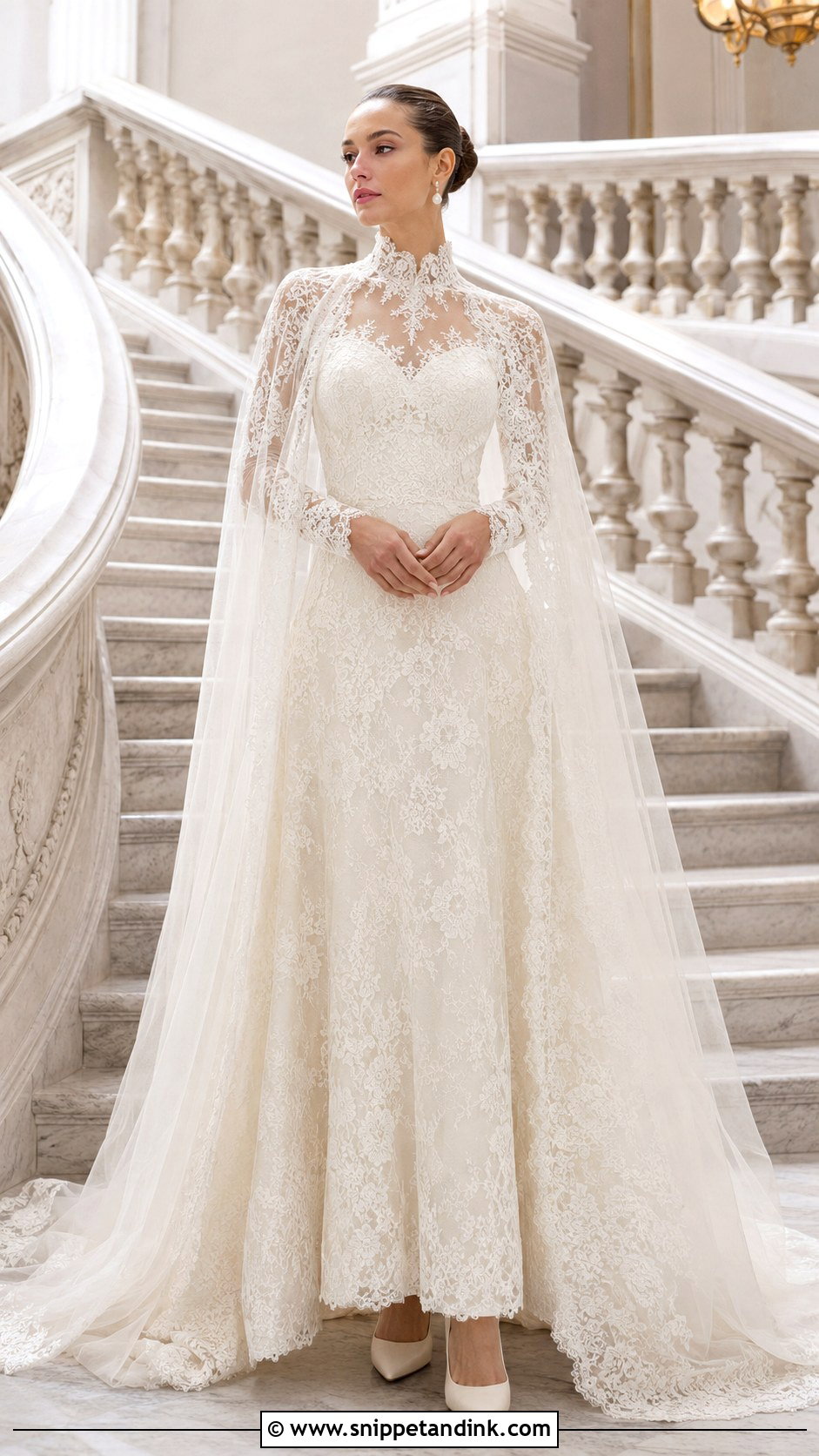
A cape gives coverage and movement at once, which makes it useful on a cool day. Detachable sheer capes, short capelets and full-length bridal capes all sit over a clean gown with a fitted bodice, long sleeves and an A-line or full skirt. Ask how it attaches. Hook-and-eye or snap fastenings at the shoulder are easier to remove for dancing than a cape stitched into the neckline. Pearl earrings and a sleek bun let it frame your face, and simple ivory heels are enough. Many brides choose a cape instead of a veil.
22. Victorian Veil Wedding Dress
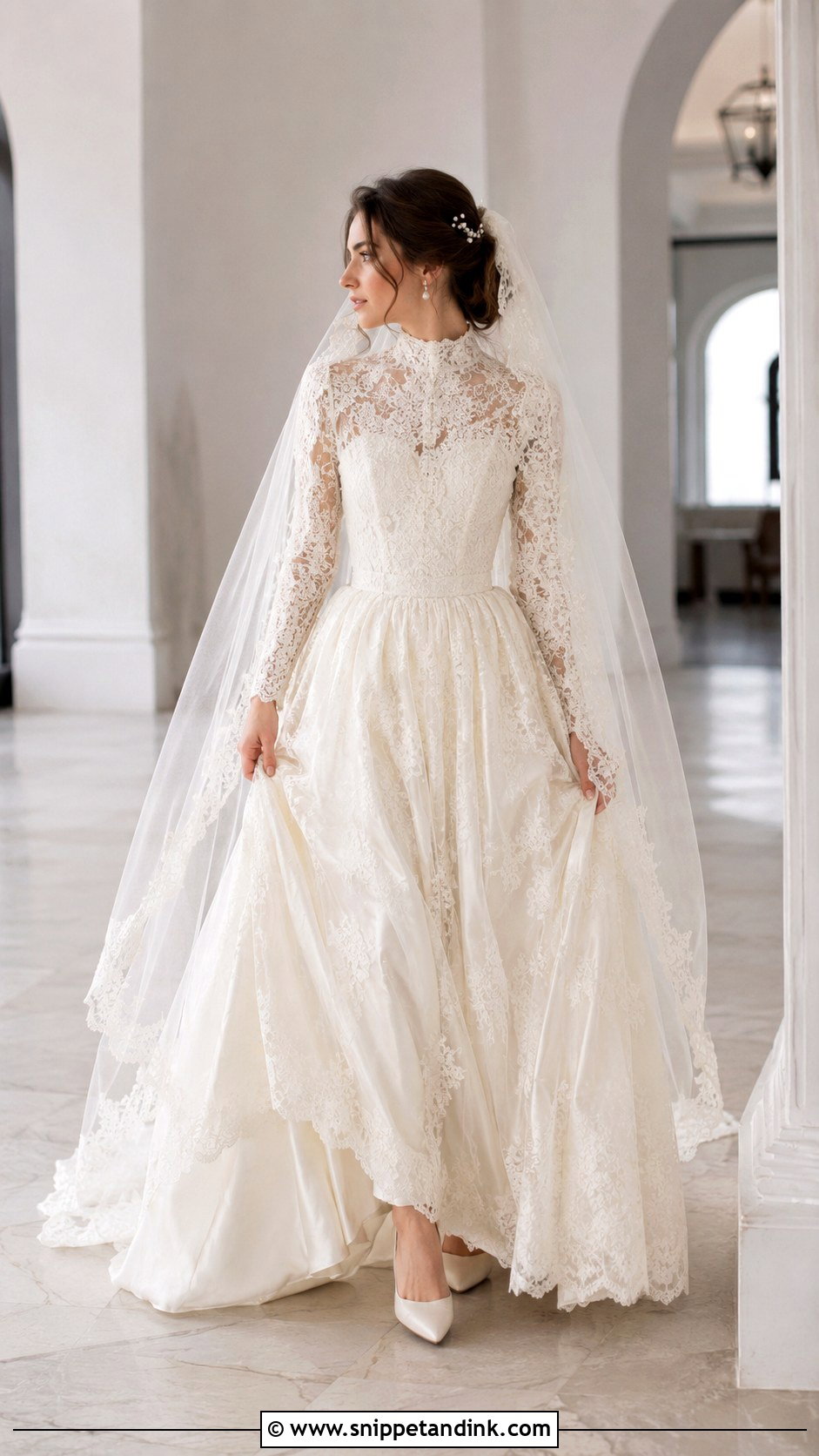
Here the outfit is built around the veil rather than the gown. Start with lace or satin, a high neckline, long sleeves and a defined waist, then add a long lace-edged veil, a mantilla-inspired style or a sheer cathedral length. Lace edging on the veil should match the dress lace in color, not just in style; ivory against diamond white looks grey in photos, so bring a swatch. Keep jewelry small, use pearl hairpins and carry a delicate bouquet. The veil gives portraits movement, especially outdoors with a little breeze.
23. Victorian Bridal Boots Wedding Dress
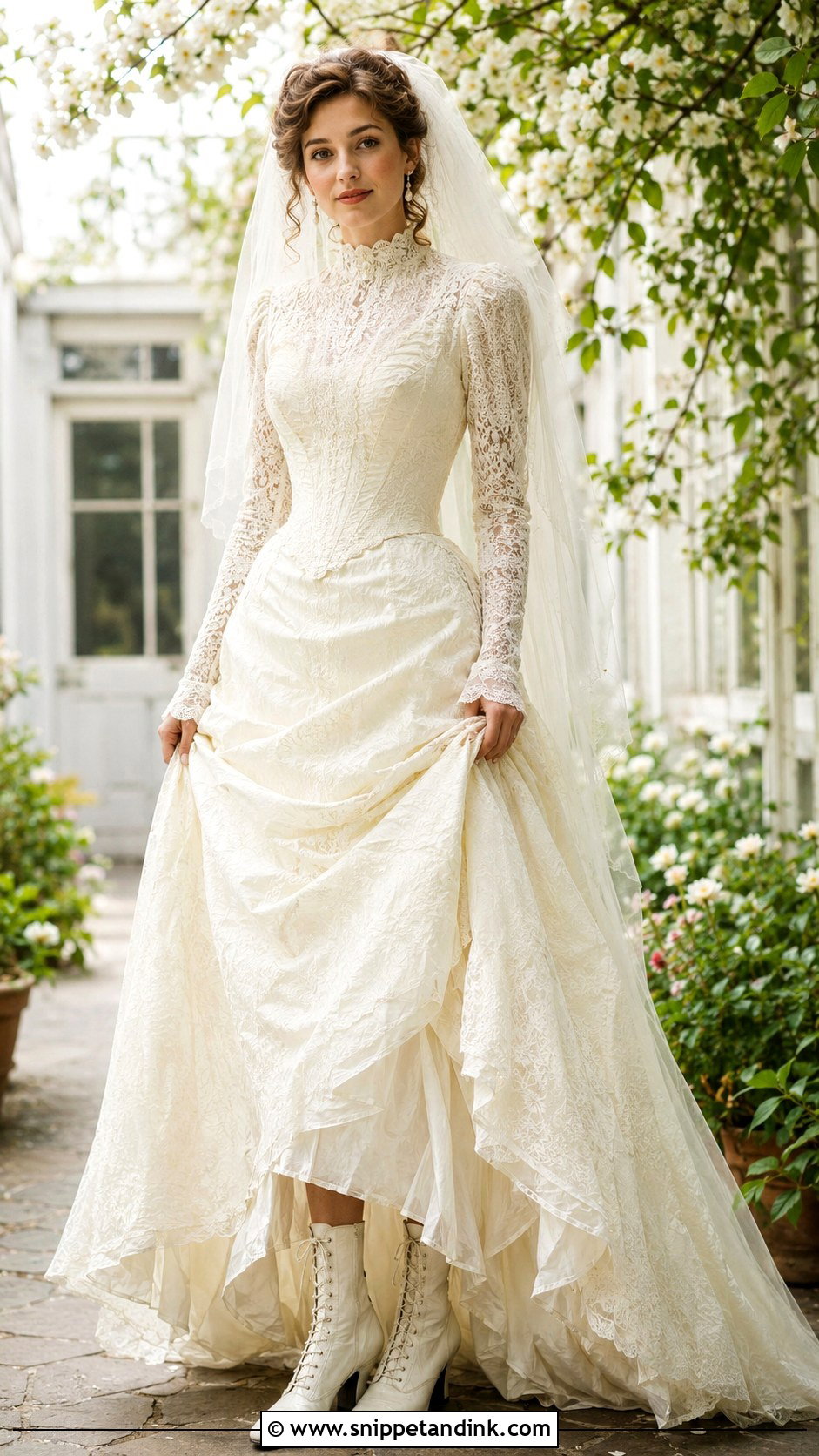
Boots change the whole mood and they are period-correct. Lace-up ivory boots look right under a high neck lace gown, a tea-length dress or a full skirt that shows the shoes as you walk. Soft leather, satin, lace overlays or pearl buttons all suit bridal styling. They also give real ankle support on grass and gravel, where thin heels sink. Break them in for a couple of weeks before the day, because new leather boots rub. Keep the rest romantic with long sleeves, a fitted waist and a simple veil.
24. Victorian Winter Wedding Dress
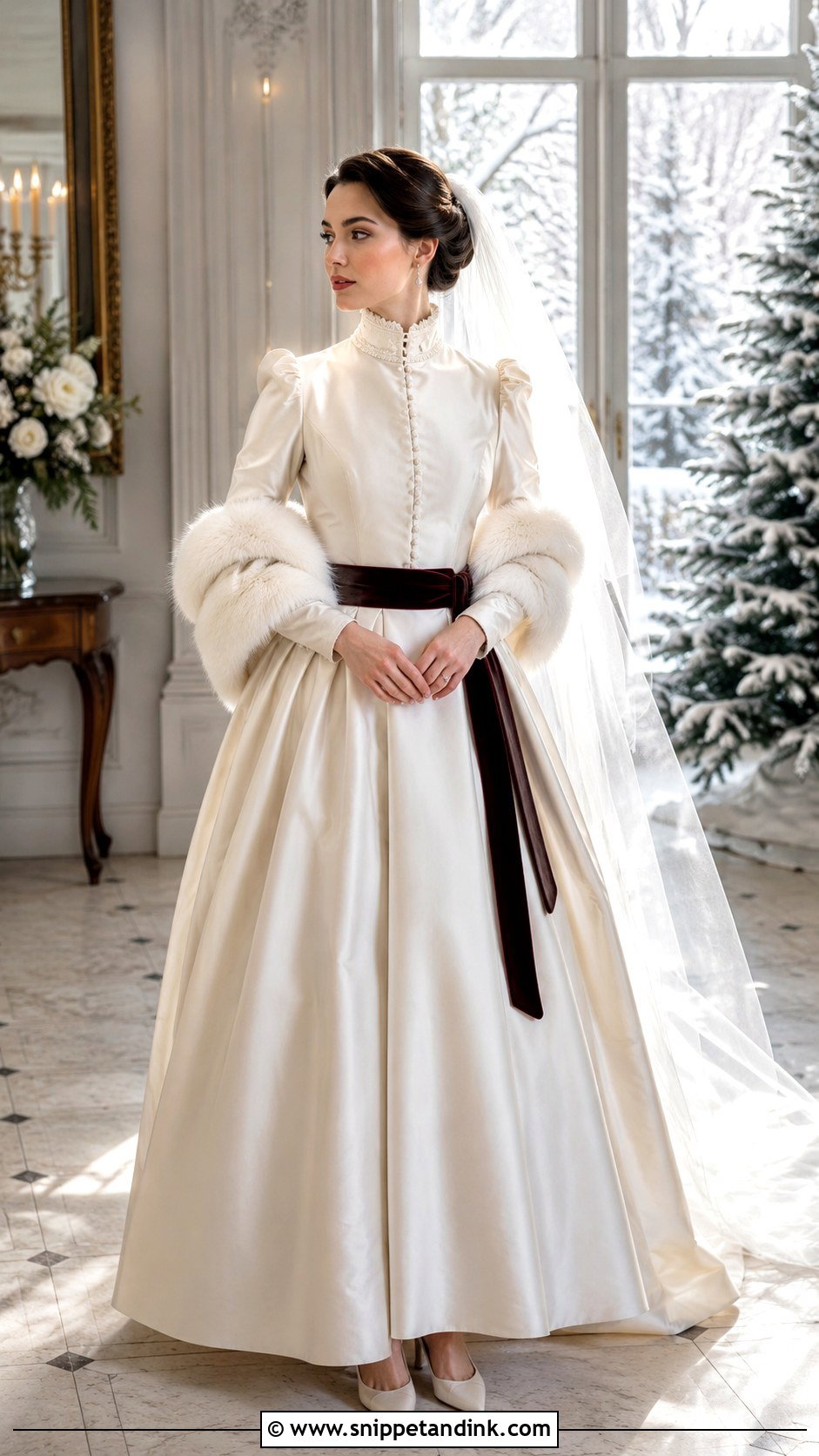
Winter is the season this era was designed for. Heavier satin, brocade, mikado or lined lace with long sleeves and a high neckline keep you warm without a coat over the dress. Add a faux fur stole, a velvet ribbon at the waist, pearl earrings and closed-toe heels or bridal boots. The thing to watch is static: heavy satin and a polyester lining crackle against tights in dry, heated rooms, and a quick spray of anti-static on the lining solves it. A long veil softens the structure. White flowers and greenery finish the bouquet.



25. Black And Ivory Victorian Wedding Dress
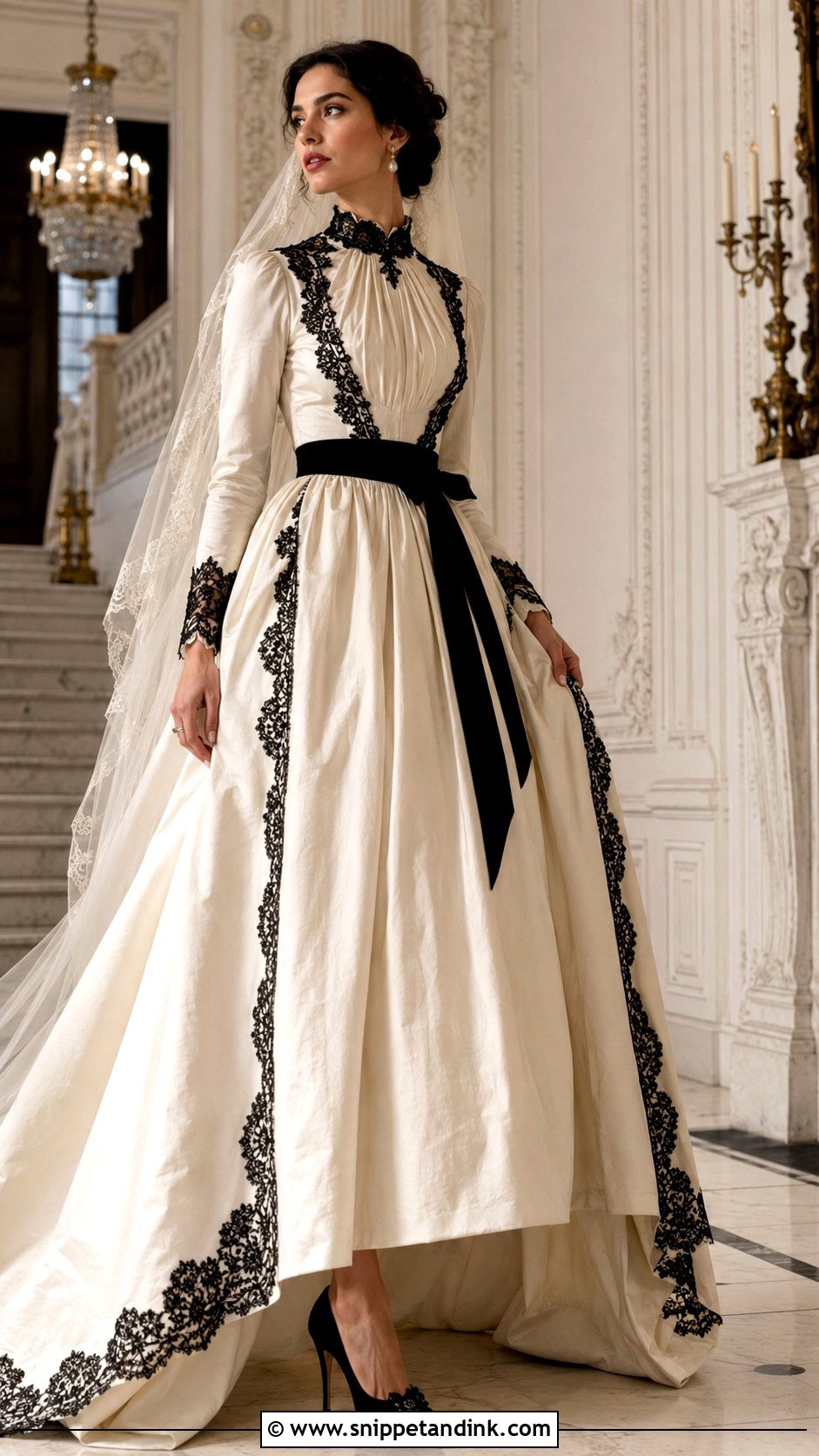
Black trim on ivory gives Victorian romance a sharp edge. Black lace trim, a velvet waist ribbon, black buttons or dark floral embroidery on an ivory gown with a high neckline, corset bodice and long sleeves all work. Keep it to one or two black elements, because three or more starts to look like a costume. Black dye can also transfer onto ivory if it gets damp, so ask whether the trim has been tested for colorfastness. Black velvet heels, pearl earrings and a plain ivory veil complete it for a bride with confident personal style.
What a Boned Bodice Needs From Your Fittings
Structured Victorian gowns are less forgiving than soft modern ones, because the bodice is built to hold one exact shape. Made-to-order gowns often take several months to arrive, and alterations usually need two or three fittings spread over the final couple of months, so I would not leave ordering any later than eight or nine months out. Timelines vary by designer, so ask at the first appointment.
- Wear the exact bra, shapewear and shoes from the first fitting onwards. A boned bodice fitted over the wrong underwear will gape or pinch on the day.
- Sit, bend and lift your arms at every fitting. If the boning digs into your ribs or hips when you sit, it needs shortening or recutting.
- Ask the seamstress to show the person helping you how to lace the corset back and fasten the buttons, and let them practise once.
- Schedule the final fitting about two weeks before the wedding so any small changes in weight are caught without a rush.
Heat, Buttons and Bustles on the Day Itself
Most problems I fix on wedding mornings come from timing rather than the dress. A full row of loop buttons can take a long time to close, so build that into the schedule and keep a button hook in the emergency kit. If your gown has a train, have the bustle shown to one bridesmaid and your mom at the final fitting; pick-up bustles with hooks and French bustles with ribbon ties are fastened very differently, and nobody wants to learn it in a dark corridor before the first dance.
For a high collar in warm weather, plan a quiet ten minutes after the ceremony to cool down somewhere shaded, and keep blotting papers handy for your neck rather than your face. After the wedding, get lace and satin cleaned by a specialist within a few weeks, then store the gown flat in an acid-free box rather than on a hanger, because the weight of a full skirt will stretch the shoulders over time.
The Victorian Detail Worth Building Around
The Victorian look depends on structure, detail and the right amount of coverage, and every gown here gives you a different mix of those three. A high-neck lace gown reads classic, a corset ball gown reads grand, a tea-length dress is the easiest to move in, and black and ivory is the boldest. Whichever you lean toward, judge it as a whole outfit: the veil, shoes, jewelry, hair and the weight of the fabric matter as much as the silhouette. Try it on, sit down in it, lift your arms, and then decide.
You'll Like These Ideas:





Leave a Reply