
I start every South Asian bridal consultation with a question that has nothing to do with color: how long will you be sitting, standing and walking in this outfit? A pheras ceremony, a nikah and an Anand Karaj all ask different things of your clothes, and a lehenga that looks wonderful on a hanger can be exhausting after four hours on the floor. The South Asian wedding dress ideas below run from heavy red lehengas to handwoven sarees, ghararas and fusion gowns. Read them with your ceremony, your venue’s temperature and your family’s traditions in mind, and treat tailoring as part of the outfit, not an afterthought.
How Much Does a Bridal Lehenga Weigh, and Does It Matter?
It matters a lot. Heavily embroidered bridal lehengas can weigh several kilos, and almost all of that hangs from your waistband. When I’m helping a bride choose, I ask the boutique to let her hold the skirt and wear it for at least ten minutes, not just stand for a photo.
- Embroidery on net or georgette is lighter than the same work on velvet or raw silk.
- A can-can layer gives volume without extra fabric weight, though it can feel scratchy; ask for a soft lining between it and your skin.
- A wide waistband with a hook-and-bar closure and an inner belt spreads the weight better than a drawstring.
If you’ll be sitting through a long ceremony, I’d choose the lighter fabric even if it means slightly less embroidery. You’ll look more relaxed in every photo.
1. Red Bridal Lehenga With Gold Embroidery
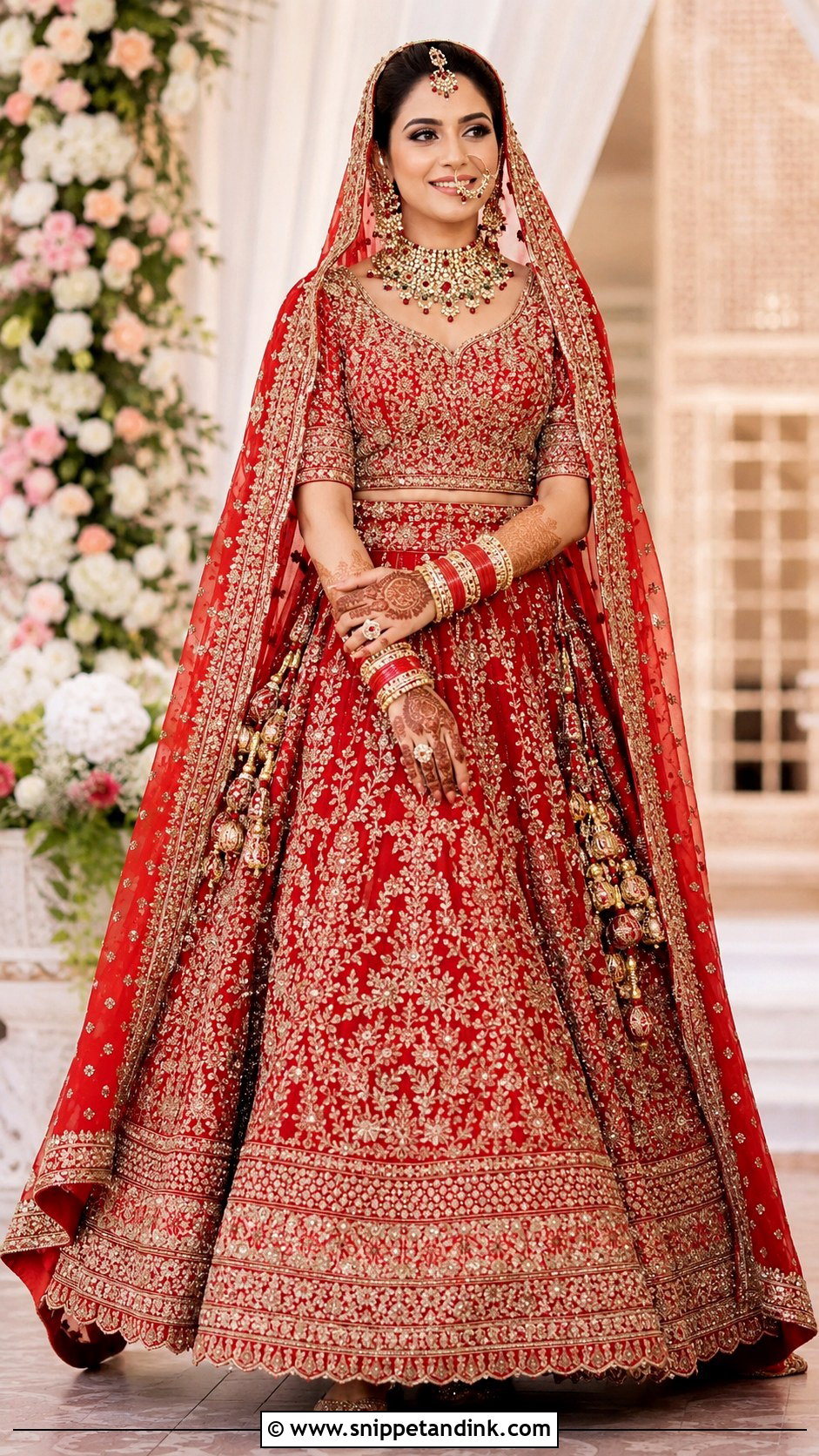
Red with gold is still the outfit most families picture, and for good reason: zardozi and dabka catch candlelight and flash in a way a pastel can’t. What I check first is how the embroidery is spread. Dense work packed into the bottom border makes the skirt swing like a pendulum and pulls at the waistband, so I prefer embellishment spread more evenly up the panels. A blouse with proper boning or cups keeps everything secure through bending and touching feet. Kundan necklace, earrings, maang tikka and bangles are the classic set. Wear embroidered juttis rather than narrow heels; you’ll be on your feet far longer than you think.
2. Ivory Bridal Lehenga With Antique Gold Jewelry
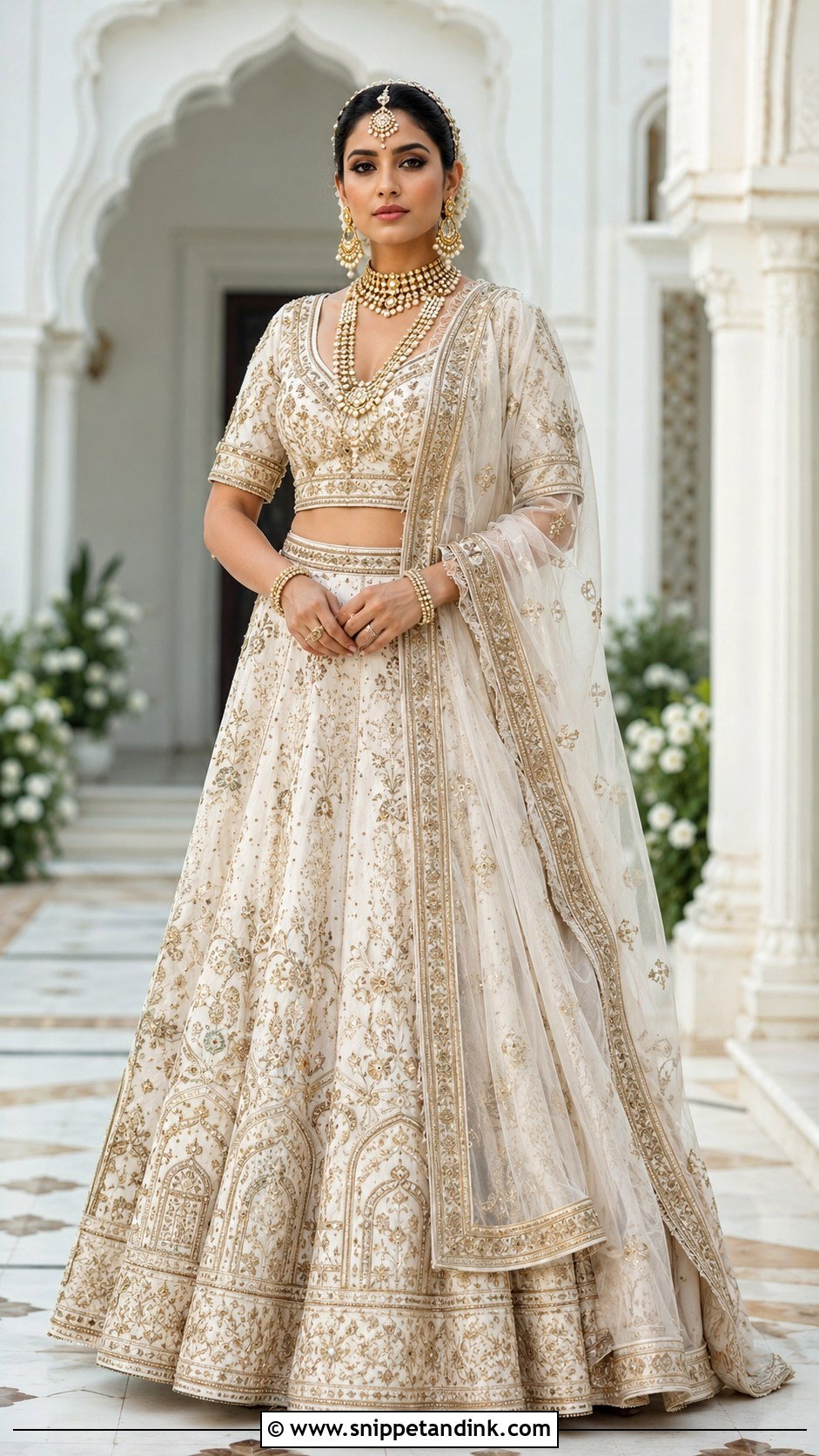
Ivory is the color I’m most careful with, because it can look flat in photos and slightly grey under fluorescent lights. Texture solves it. A silk, organza or tissue lehenga with antique gold embroidery, pearls and a sheer embroidered dupatta gives the camera something to pick up at every layer. Antique gold suits ivory better than bright yellow gold, which can make the fabric look dingy beside it. A small touch of emerald or ruby in the jewelry keeps the look from washing out. Ask to see a fabric swatch in daylight and indoor light before you commit.
3. Pink Floral Lehenga With Pearl Jewelry
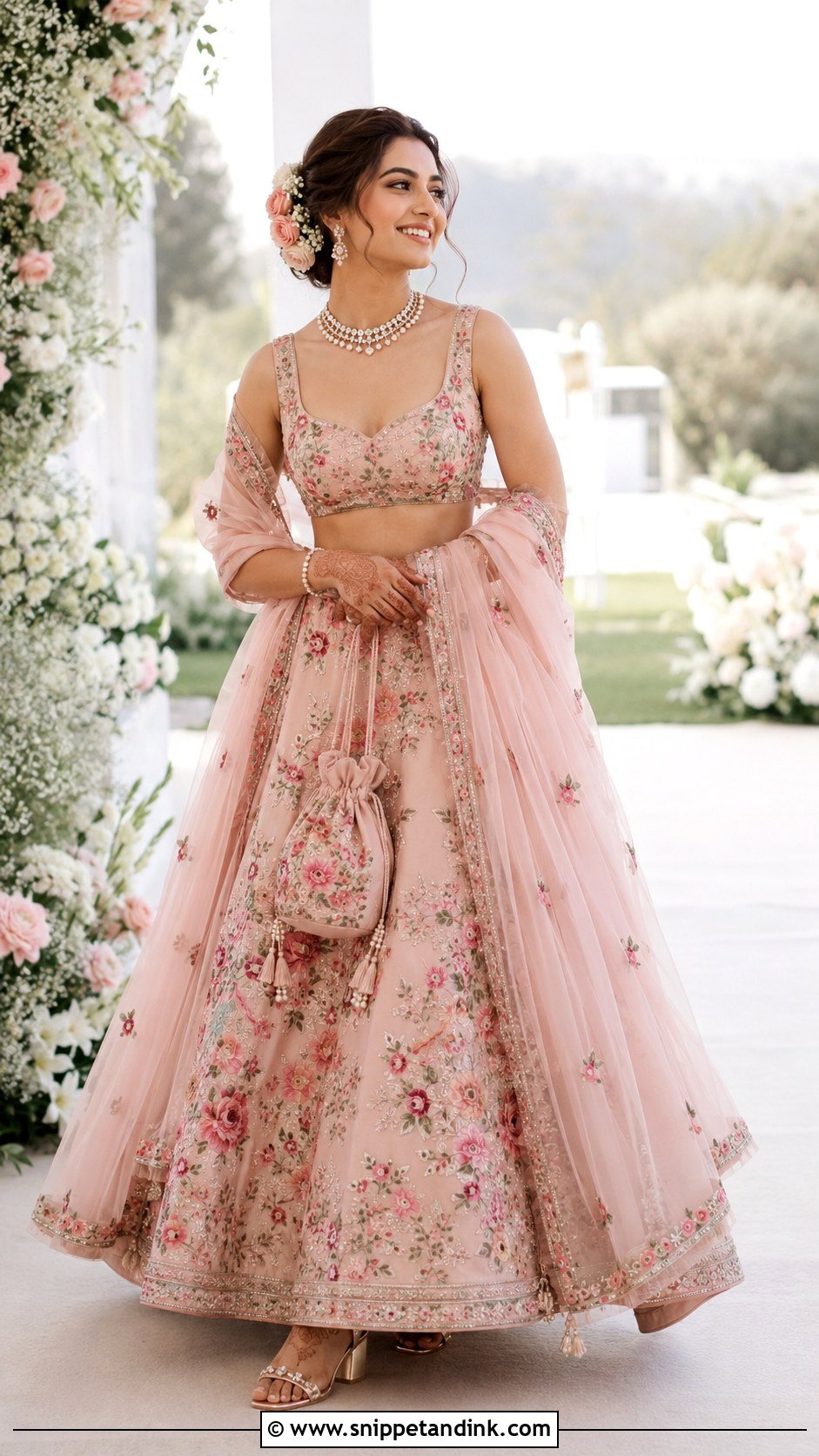
Pink has a huge range, from blush to fuchsia, and the right one depends on your undertone more than on trend. I drape two or three shades against a bride’s bare face at the first appointment; warm skin usually comes alive in rose and coral pinks, while cool undertones suit dusty and blue-leaning shades. For daytime or an outdoor ceremony, botanical threadwork on a flowing skirt with a lightweight organza dupatta keeps the embroidery visible. Pearl jewelry suits the softness, with a few kundan pieces if you want sparkle. A potli bag holds the small things, and a low bun with flowers ties the head to the hem.
4. Maroon Velvet Lehenga With Layered Kundan Jewelry
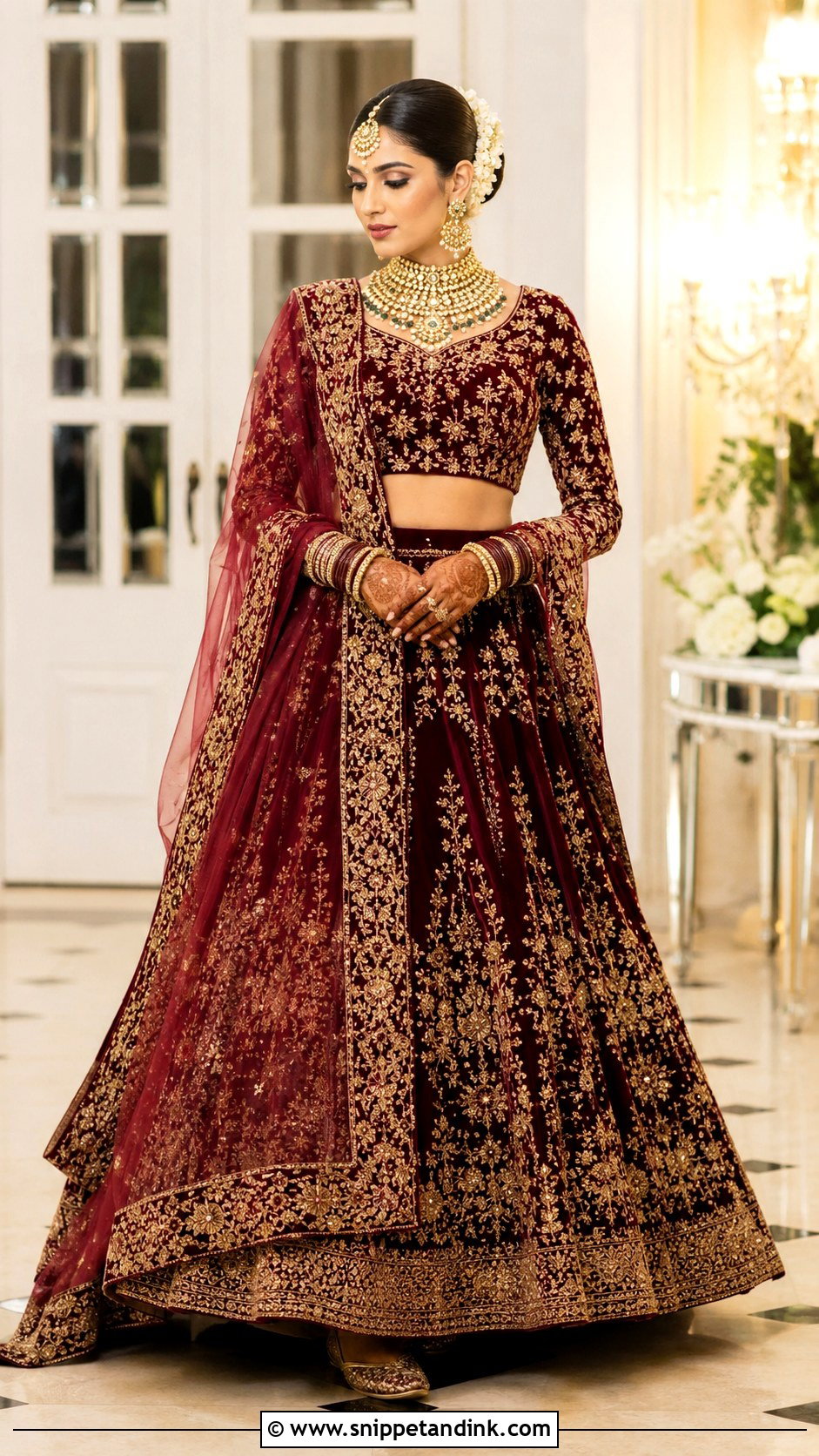
Velvet is warm. That’s wonderful for a winter evening wedding and a real problem in a hot hall with no air conditioning, so this maroon lehenga belongs on cooler dates. It’s also heavy before you add any embroidery, which is why I ask for gold work placed in bands and motifs rather than covering every panel. A velvet blouse with a lighter net or organza dupatta balances the weight. Layered kundan necklaces, big earrings and a centered maang tikka suit the depth of the color. Keep the hair in a sleek bun or long braid so the neckline stays visible, and make sure the waistband has a wide, firm facing to carry the skirt.
5. Kanjeevaram Silk Saree With Temple Jewelry
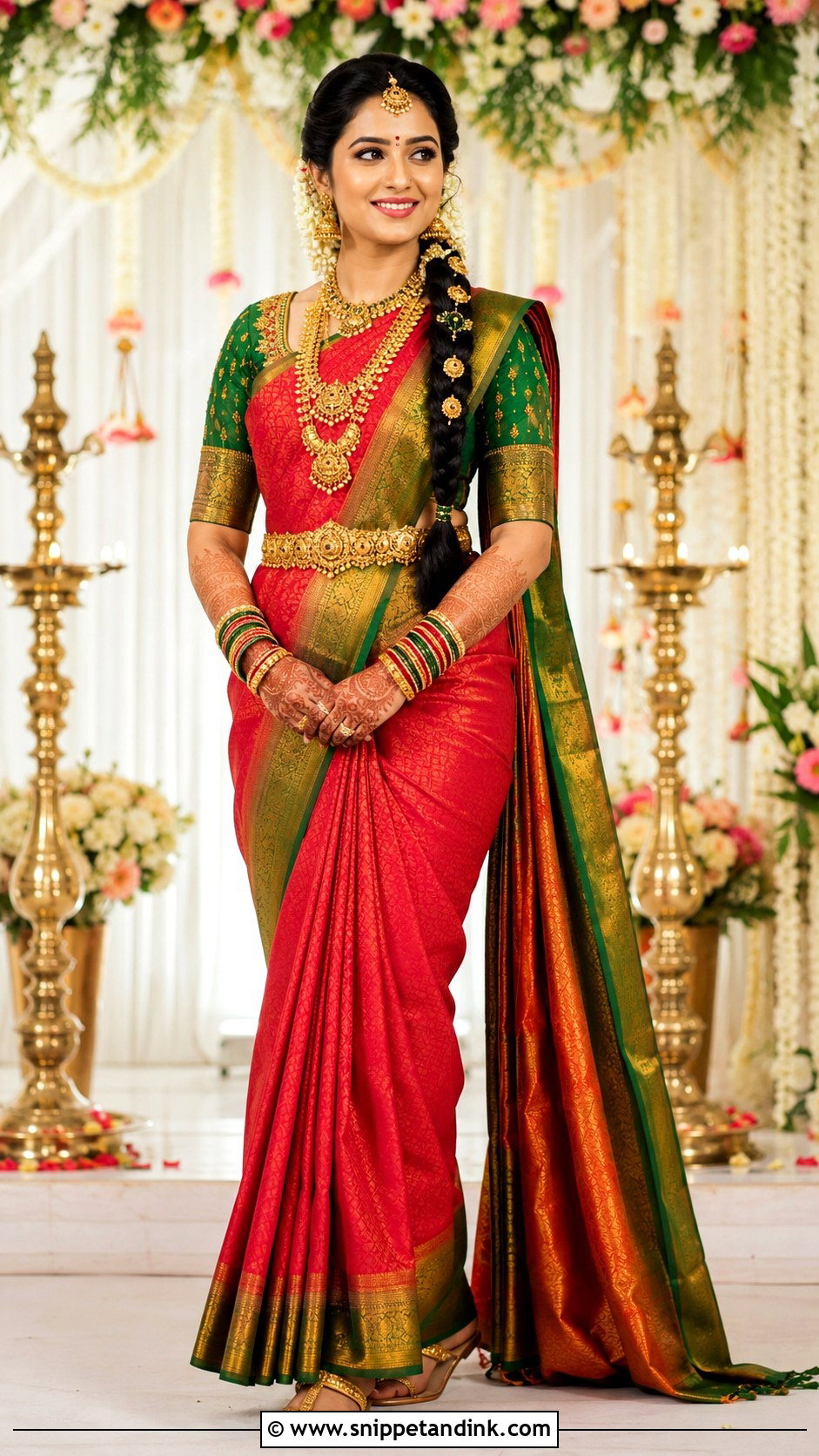
Kanjeevaram silk is woven heavy and stiff, so it holds pleats beautifully but doesn’t forgive careless draping. I have the saree pleated and pinned at the waist and shoulder by someone who knows silk, because loose pleats spread apart within an hour of sitting. Red, orange, green, magenta and gold combinations with a contrasting border suit traditional ceremonies. A fitted blouse featuring elbow-length sleeves with matching zari balances the weight of the border. Temple jewelry, from the short necklace and longer haram to jhumkas and a waist belt, finishes it. Add jasmine to a braid or bun, and pick flat sandals for long rituals.
6. Banarasi Silk Saree With Polki Jewelry
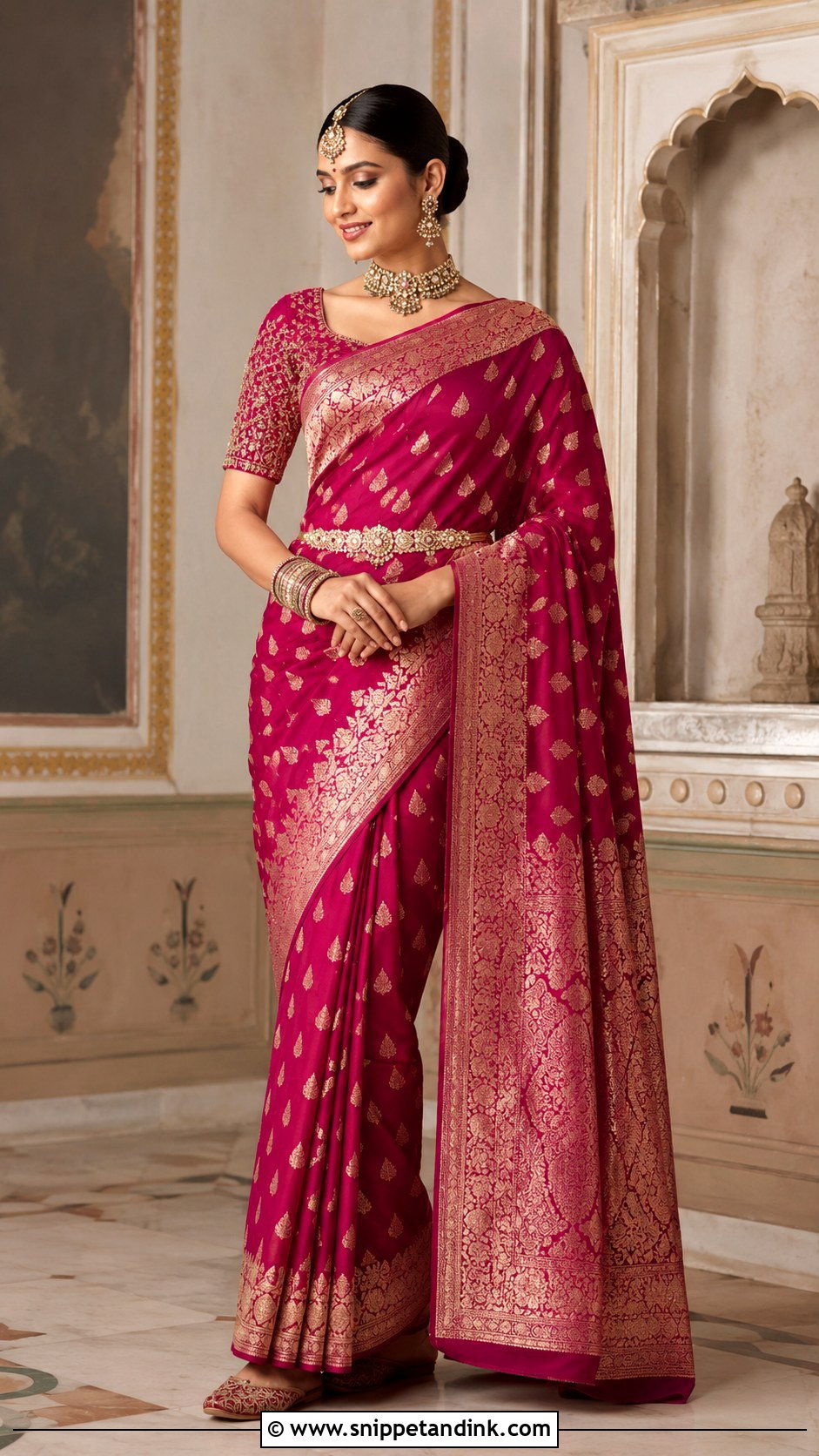
With a Banarasi, the woven motifs are the decoration, so I hold back on everything else. Deep red, jewel green, royal blue and magenta are the traditional choices; champagne and pastels are softer. The blouse needs to be brocade or raw silk with enough structure to carry the drape’s weight at the shoulder. Polki jewelry, stacked bangles, a maang tikka and a waist belt add formality without hiding the textile. My one firm rule: the blouse, petticoat and saree must be fitted together at the last alteration, because a petticoat in the wrong length changes how the whole drape falls.
7. Red And White Bengali Bridal Saree
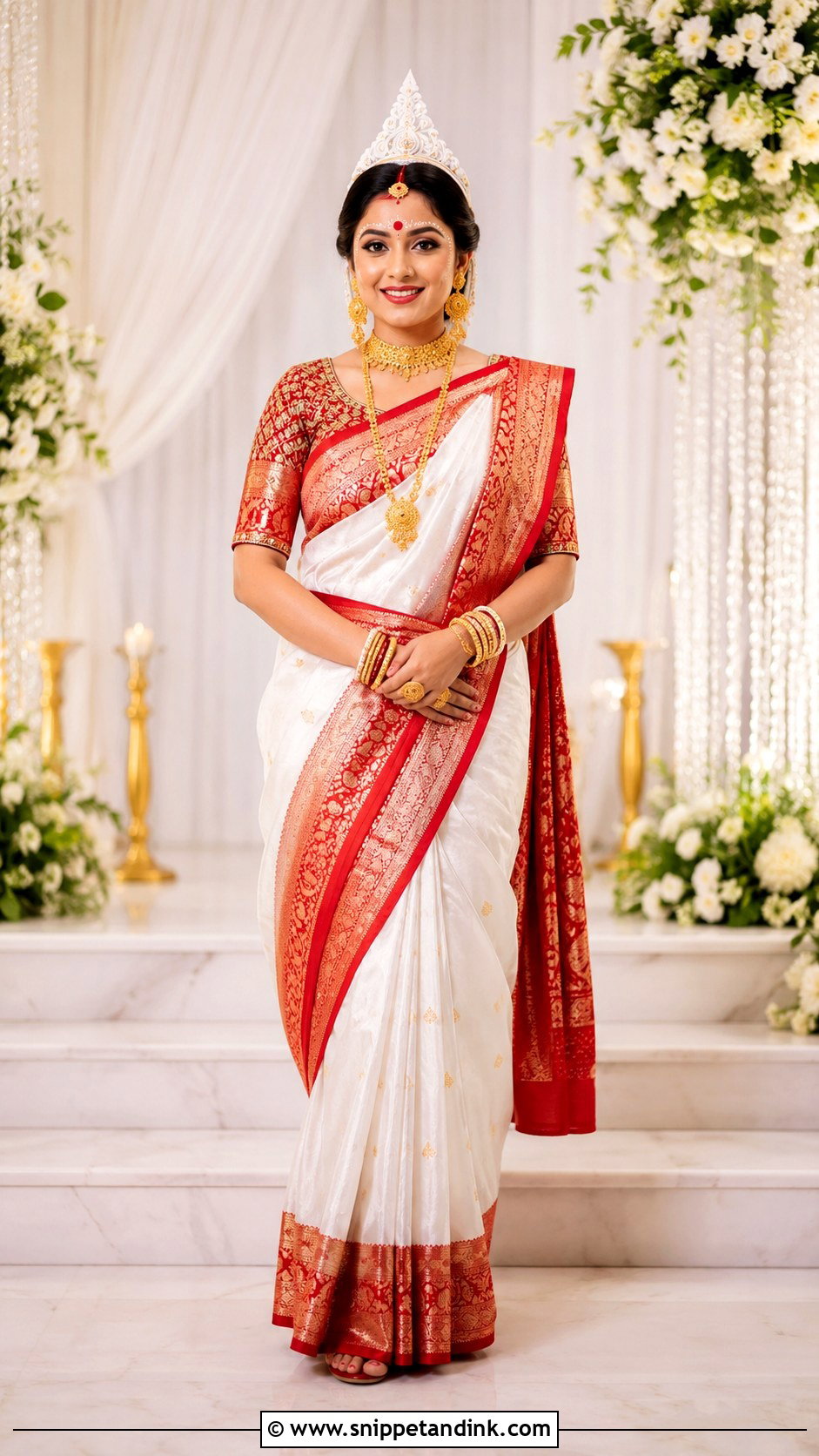
On a white Bengali saree with a broad red border, every uneven pleat shows. That’s the first thing I’d plan for: book someone who drapes Bengali style regularly, and let them practise once before the day. A red blouse with gold zari carries the color up to the shoulders. Gold necklaces, jhumkas and bangles, plus the headpiece, build the ceremonial look, and a neat bun keeps the pallu secure. Alta on the hands and feet, where it’s part of your tradition, echoes the border. Pick low heels or dressy flats for stability.
8. Green Mehndi Lehenga With Floral Jewelry
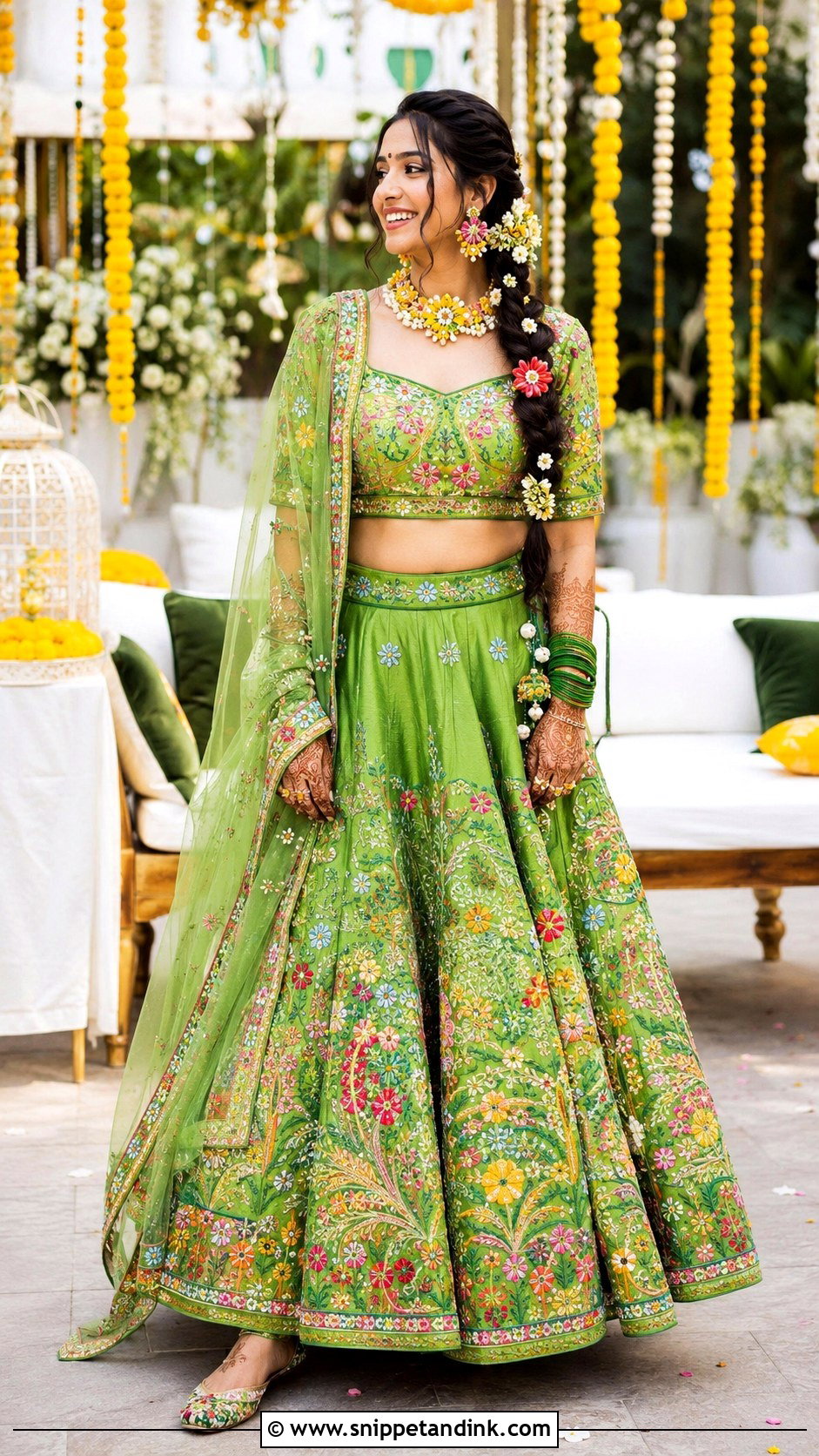
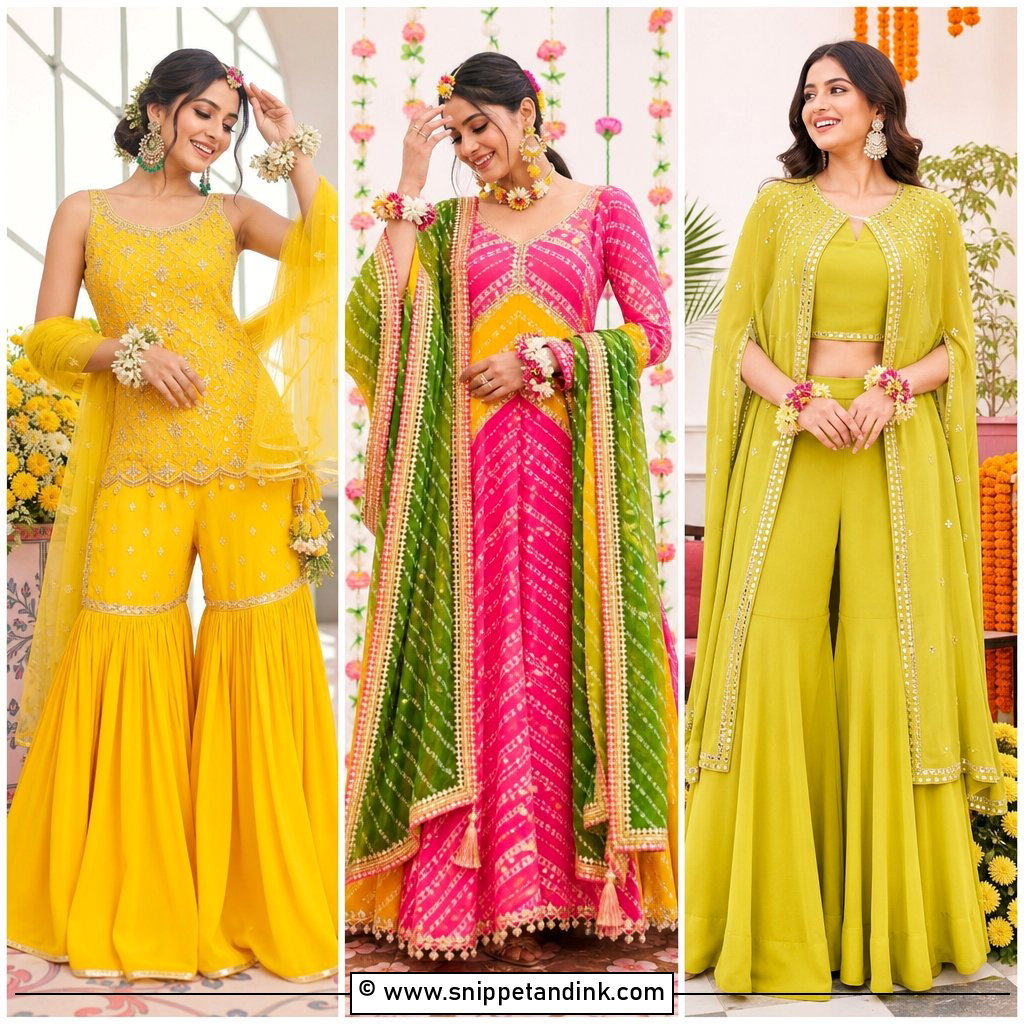
A mehndi lehenga needs to survive being sat in for hours while your hands are out of action, which is why fabric choice matters more than color here. A vibrant green lehenga in georgette or light silk lets you sit cross-legged and get up again without crushing heavy embroidery. Lime, parrot, emerald or a multicolored skirt with pink, orange and yellow all feel festive. Pin the dupatta well away from your arms before the artist starts; wet henna on silk rarely comes out completely. Floral jewelry, colorful bangles and juttis keep it relaxed, and a braid with small flowers stays out of the way.
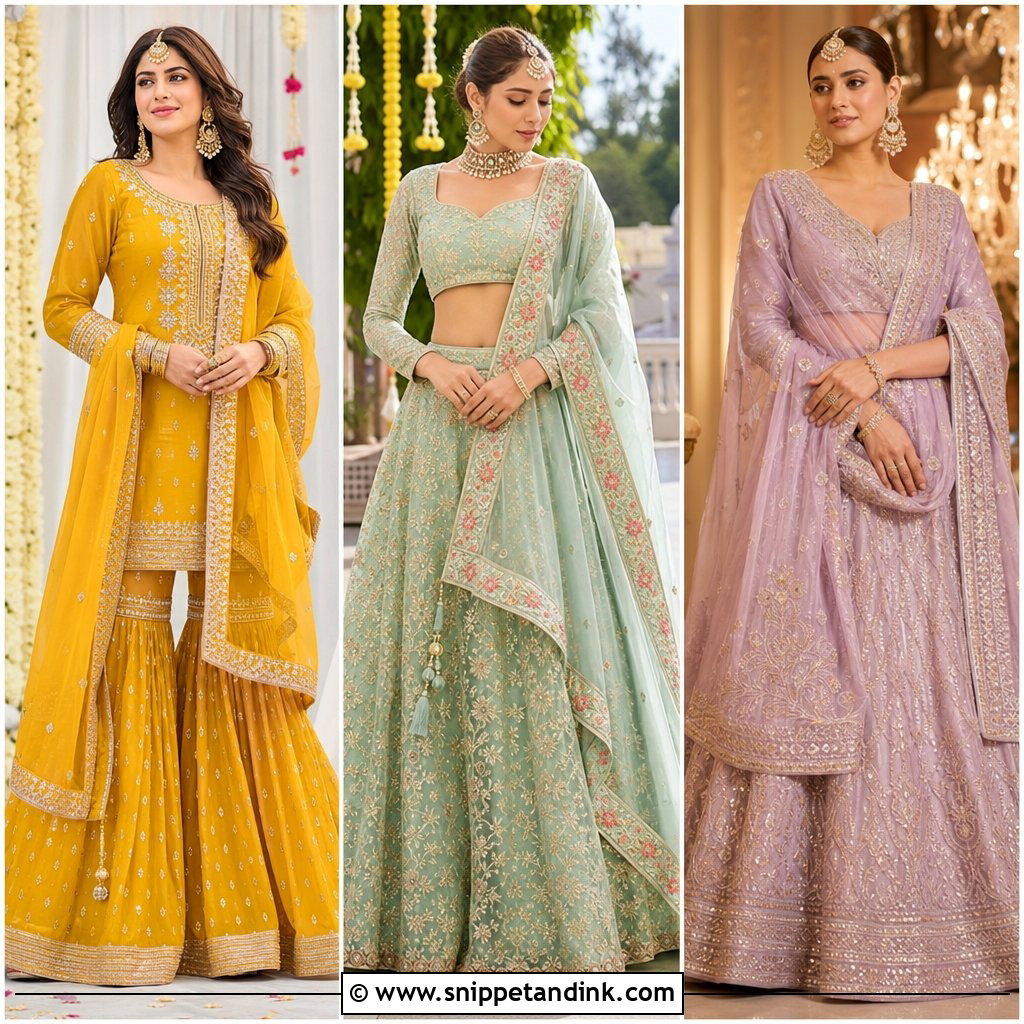
9. Yellow Haldi Sharara With Floral Accessories
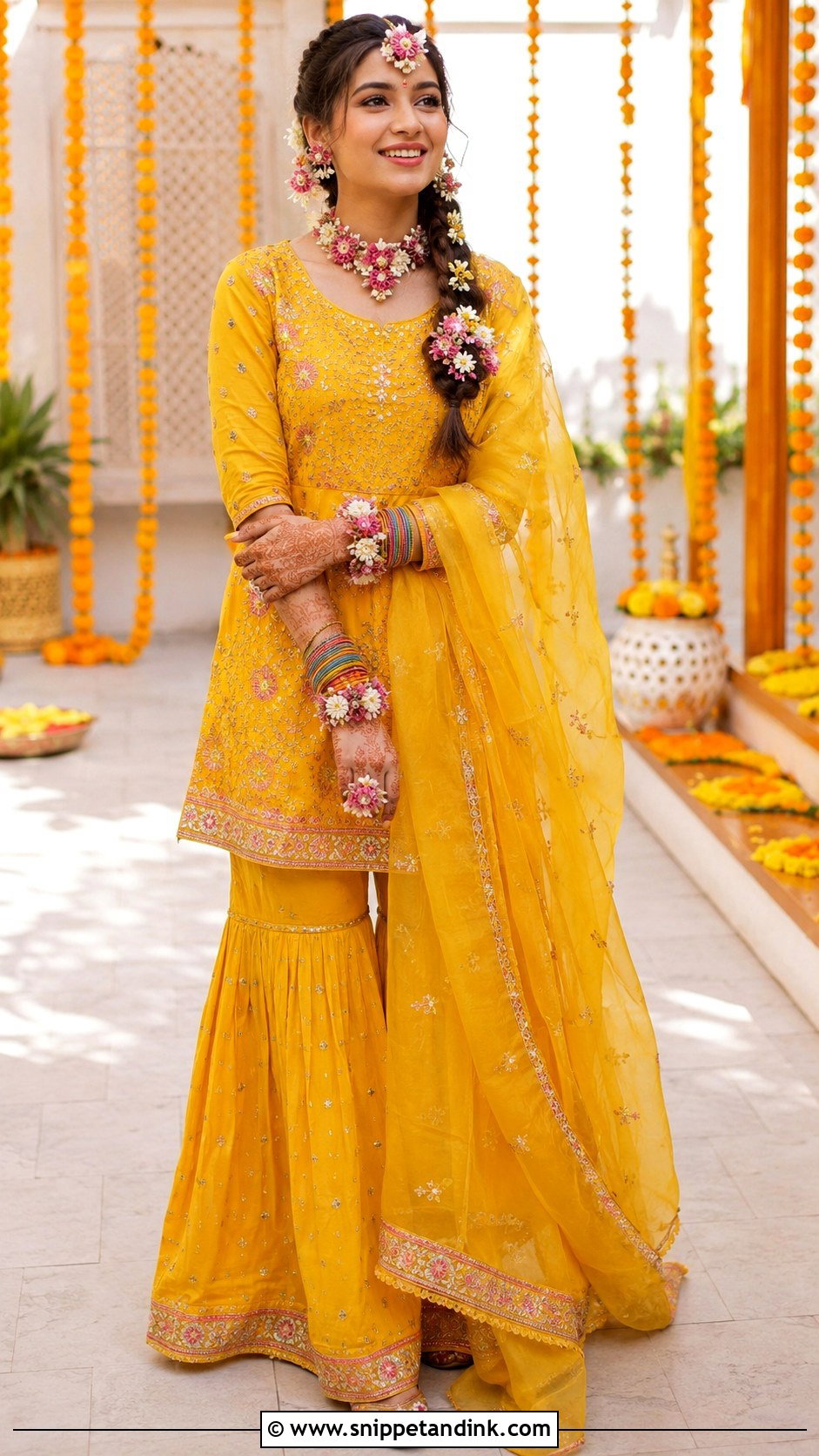
Assume the outfit will get stained. Turmeric paste marks fabric quickly, especially natural fibers, so for a haldi celebration I steer brides away from anything precious or heavily embroidered. A short kurta with wide sharara pants in cotton silk or georgette is comfortable and easy to clean. Secure the dupatta at one shoulder so your hands are free. Floral earrings and a floral necklace suit the mood better than gold. Wear flats you don’t mind ruining, waterproof eye products and a low braid. A few pink, orange or white floral details stop all that yellow looking one-note.
10. Mirror Work Lehenga For Sangeet
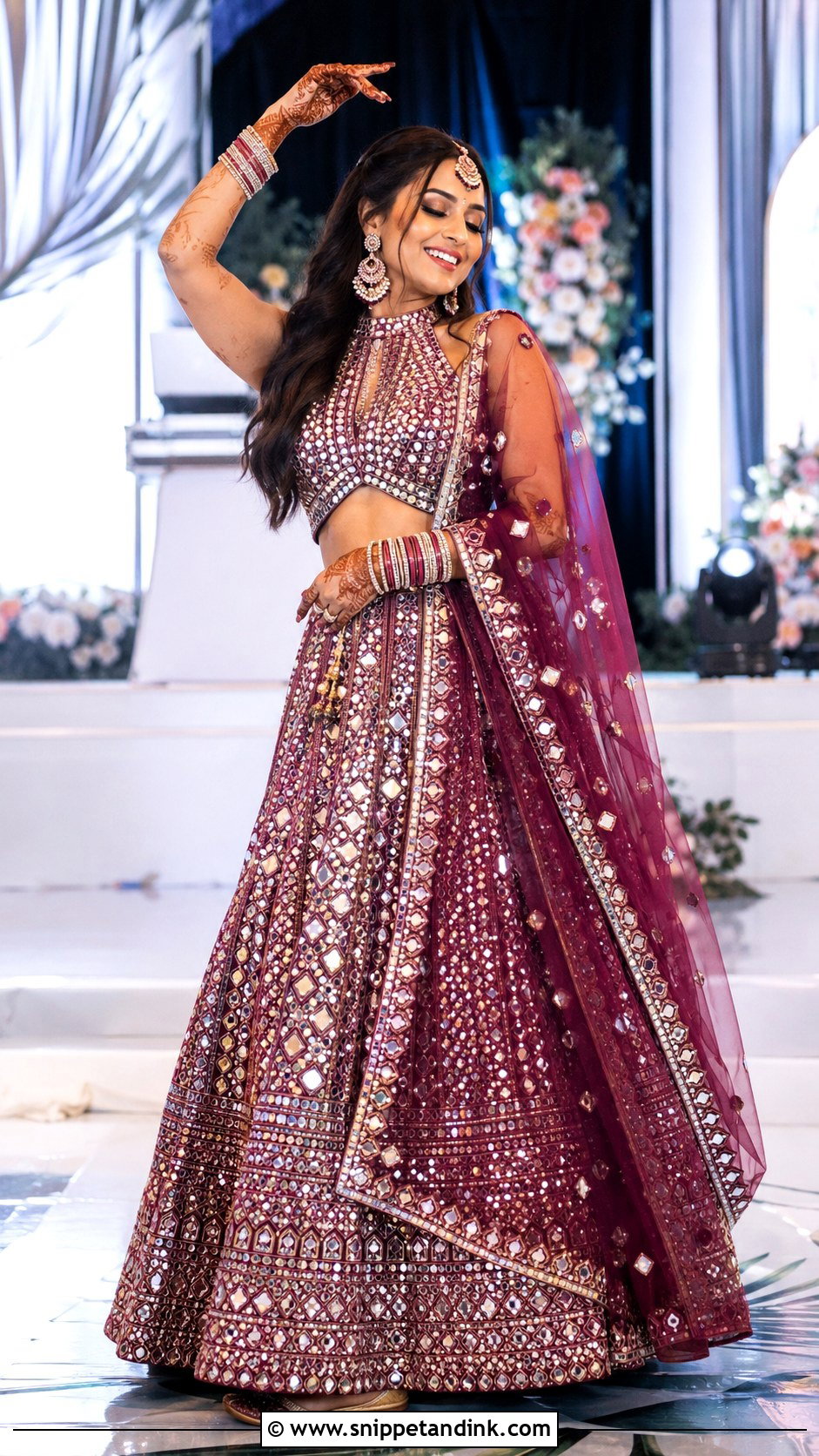
Mirror work is lighter than stonework, which makes it my first suggestion for a sangeet where you’ll actually dance. I check the mirrors are stitched with a full thread surround, not glued, because glued mirrors pop off during spins. A skirt with enough flare to turn, a blouse with wide straps or sleeves, and a dupatta pinned at the shoulder and waist keep everything in place. Statement earrings, stacked bangles and a small maang tikka leave the neck free. Cushioned juttis or low block heels, and a high ponytail or braid that won’t whip into your face.
11. Navy Sequin Saree For Reception
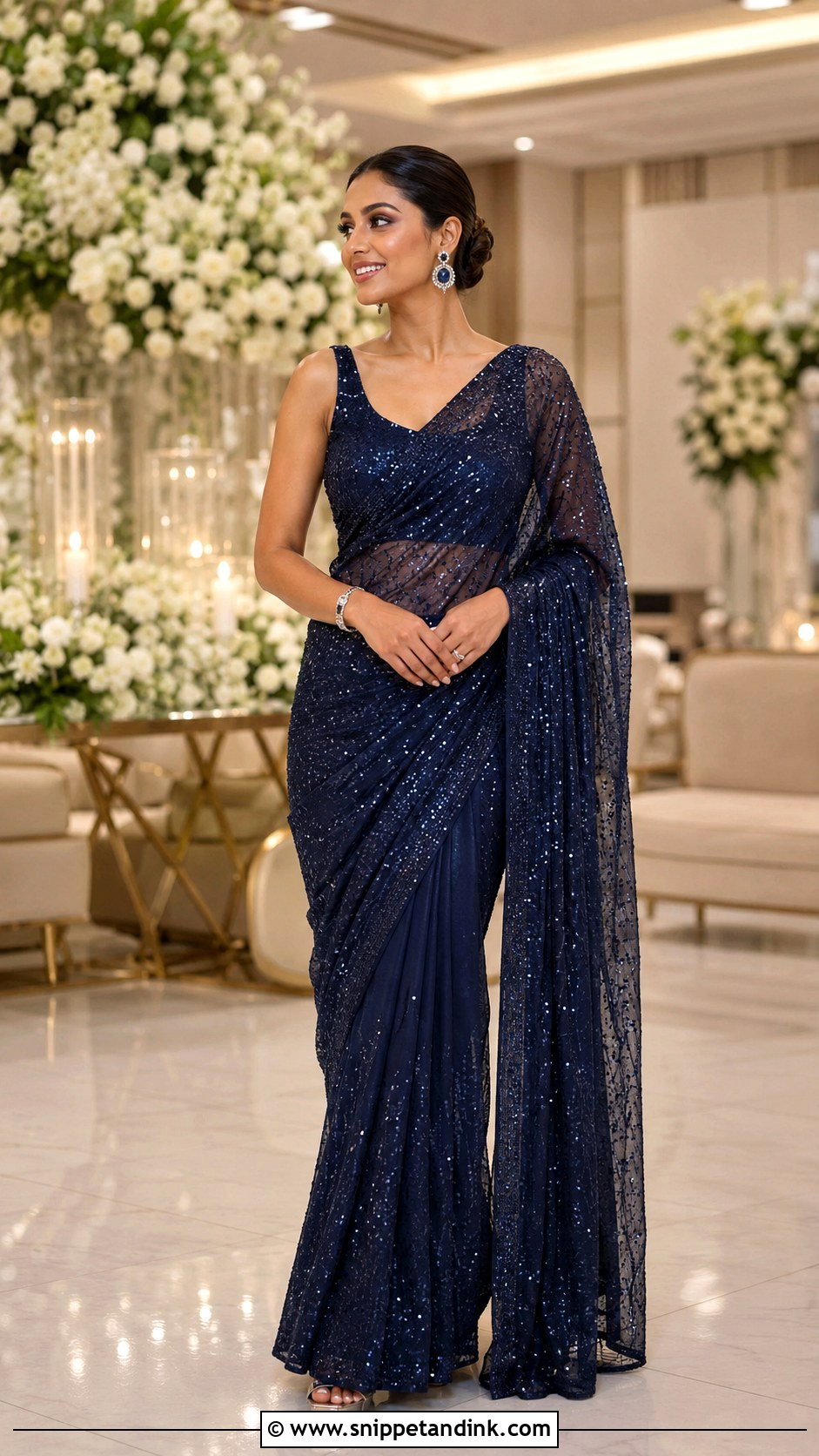
Navy sequins are a strong reception choice if you want something away from bridal red. I look at how the sequins are applied: evenly spaced, flat-sewn sequins move with the drape, while dense clusters add bulk at the hips and scratch the inside of your arms. A pre-draped saree saves time if you’re changing between events. A fitted blouse with a structured neckline gives the fluid fabric a clean base. Silver, diamond-style or sapphire jewelry suits navy; keep to earrings, a bracelet and one ring. Choose a stable block heel, because polished reception floors are slippery.
12. Emerald Green Anarkali With Gold Dupatta
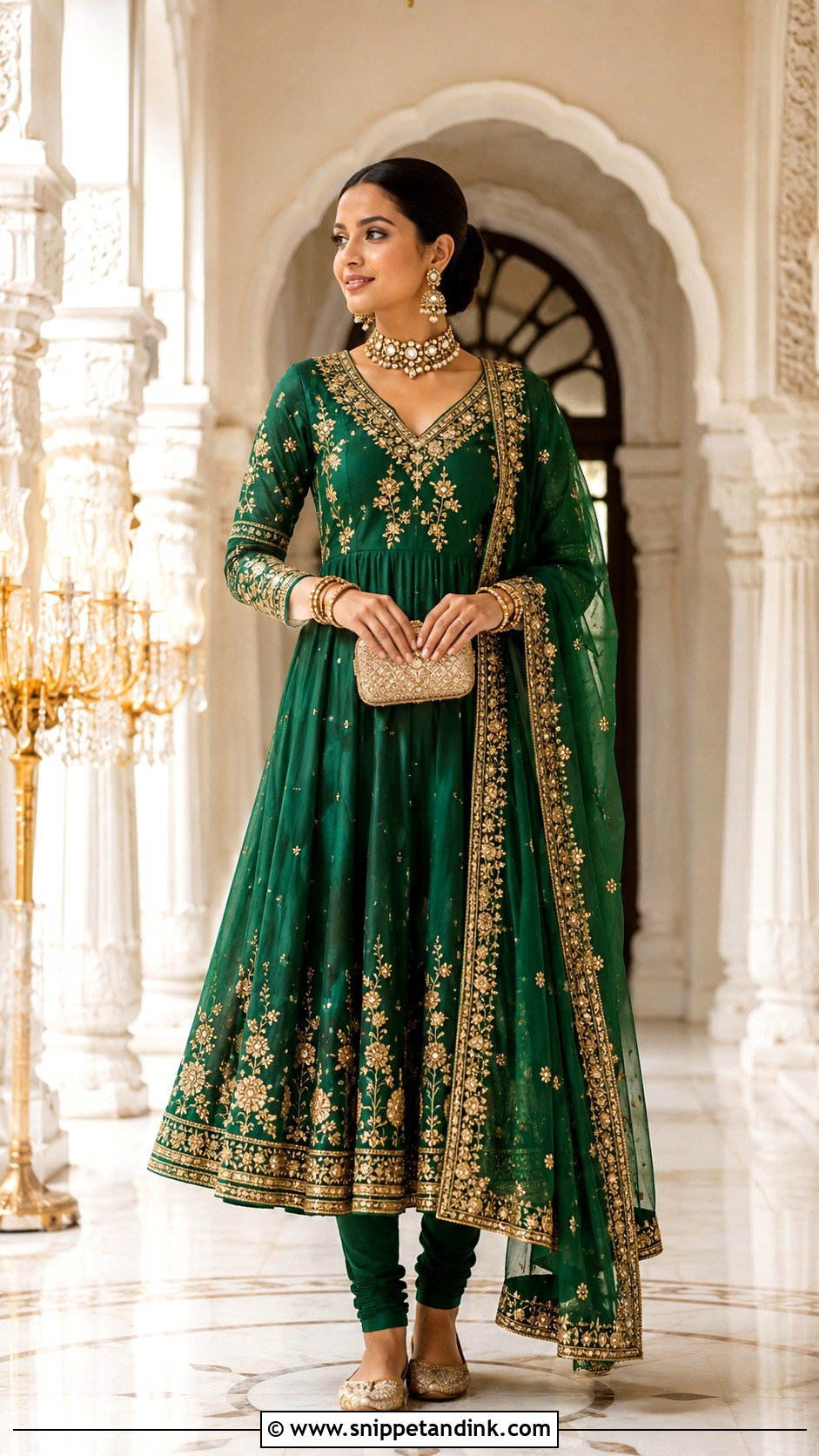
An Anarkali flatters a lot of body shapes, but only if the bodice ends at your true waist. Set it too low and the flare starts at the hip, which shortens the legs. In emerald with gold embroidery at the neckline, cuffs and hem, it reads rich without the weight of a full lehenga. Ask for enough room through the armholes to lift your arms. Pair it with slim churidar, a gold-bordered dupatta pinned over one shoulder, a choker and jhumkas. Mothers and sisters of the bride often borrow this shape too, so it’s an easy way to coordinate the family.
13. Pakistani Bridal Gharara With Long Kurta
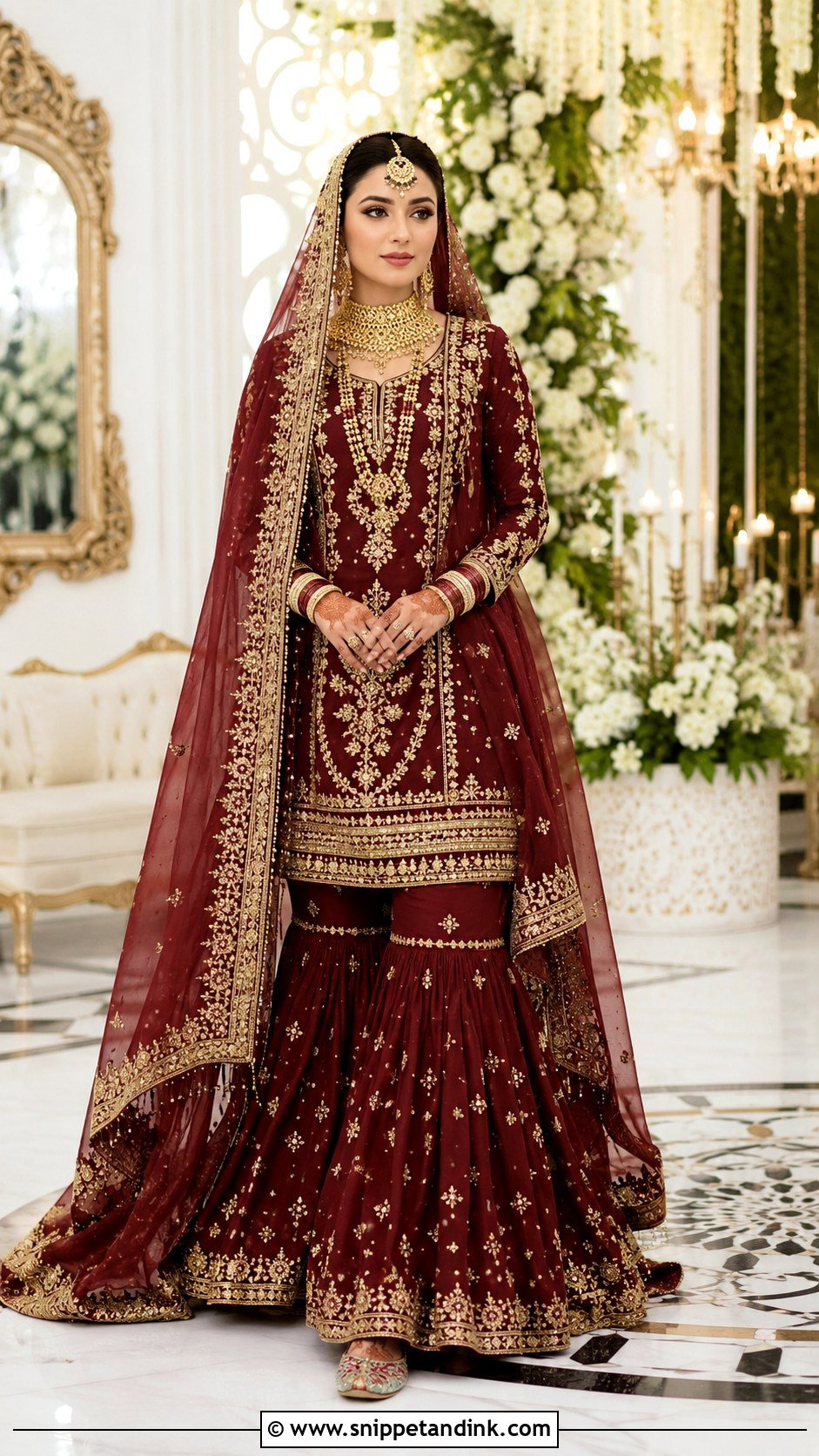
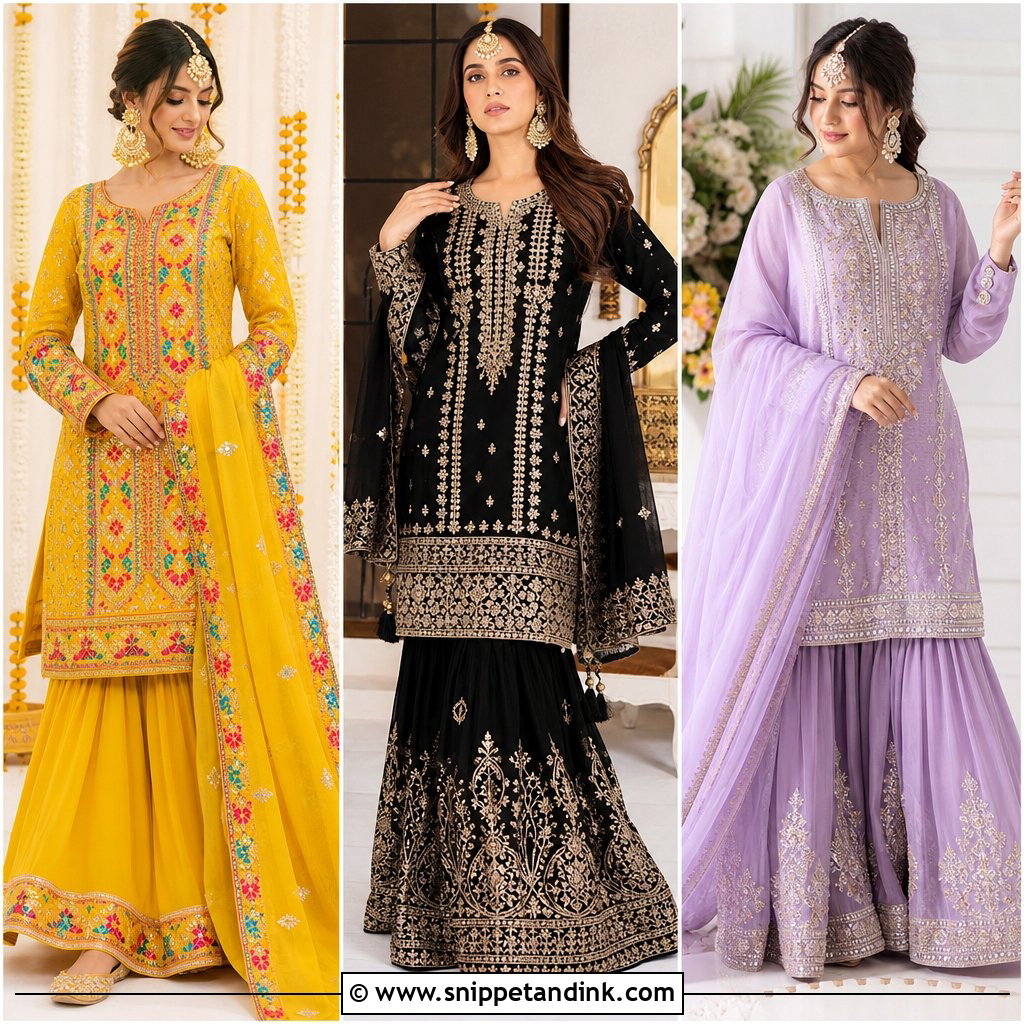
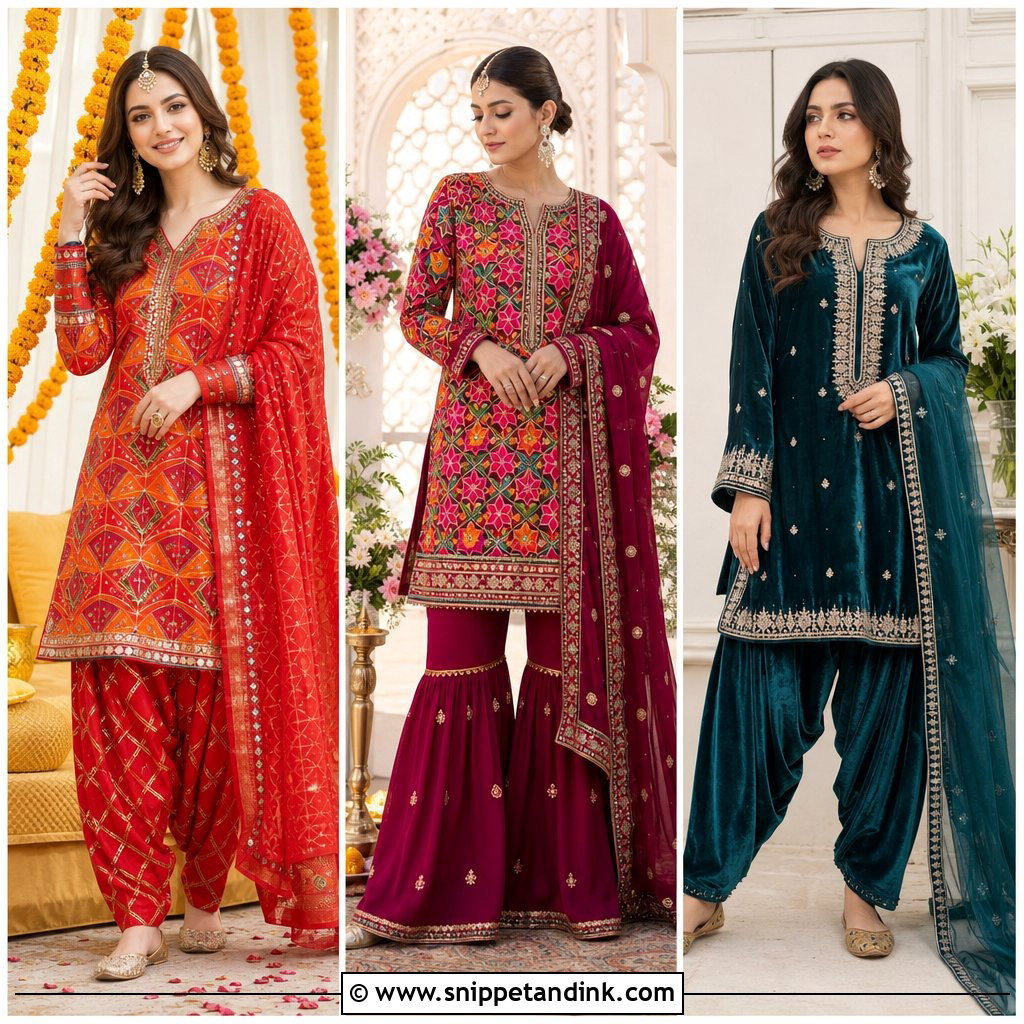
The knee seam on a gharara is where fittings go wrong. Set it too high or too tight and you’ll shuffle all day, so I always have brides sit, climb stairs and kneel in the trial version before final alterations. A long or mid-length embroidered kurta with metallic threadwork suits the full flare below the knee. Red, maroon, ivory, emerald and deep pink all work. The dupatta can go over the head or across the shoulders depending on the ceremony; a sleek bun gives the pins something to grip. Layered necklace, jhumkas, maang tikka, bangles and khussa shoes complete it.
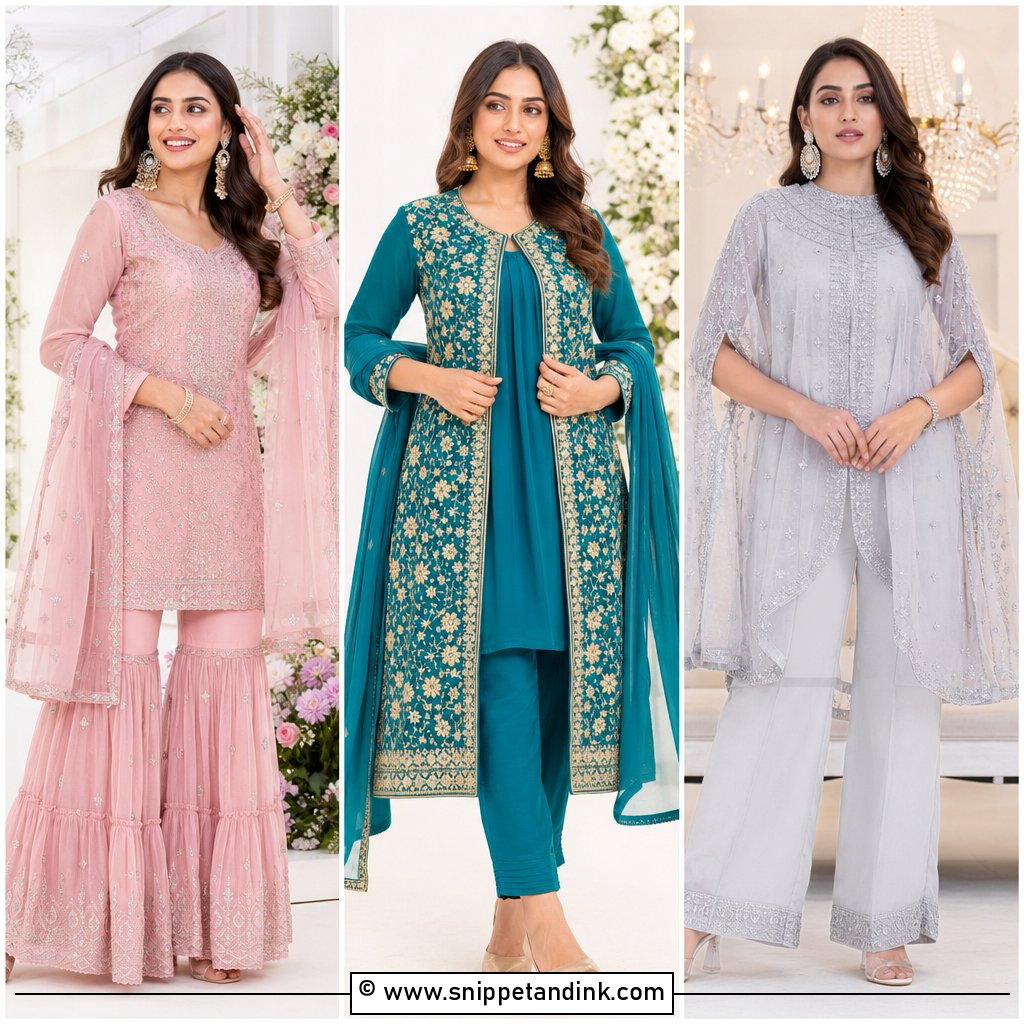
14. Pastel Sharara With Embroidered Jacket
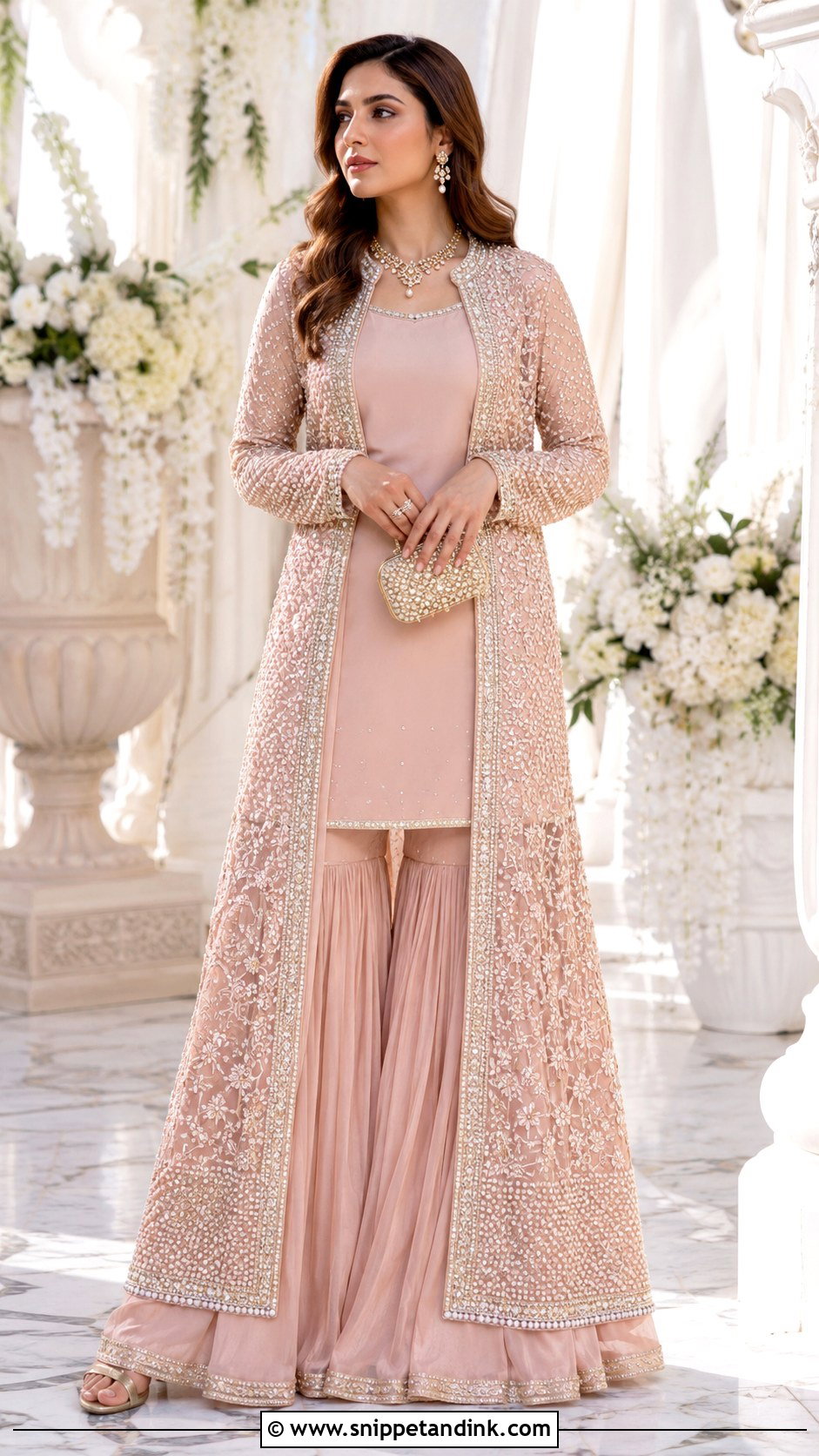
For a nikah or a daytime engagement, a pastel sharara with an embroidered jacket is one of the most comfortable formal looks I put together. A fitted inner kurta with wide sharara pants in blush, mint, powder blue, lilac or champagne, plus a knee-length or floor-length jacket in threadwork or pearls. The open jacket draws a long vertical line. Skip the dupatta if the jacket already gives you the coverage you want. Pearl earrings, a fine necklace and decorative flats keep it light.
15. Maharashtrian Paithani Saree With Nath
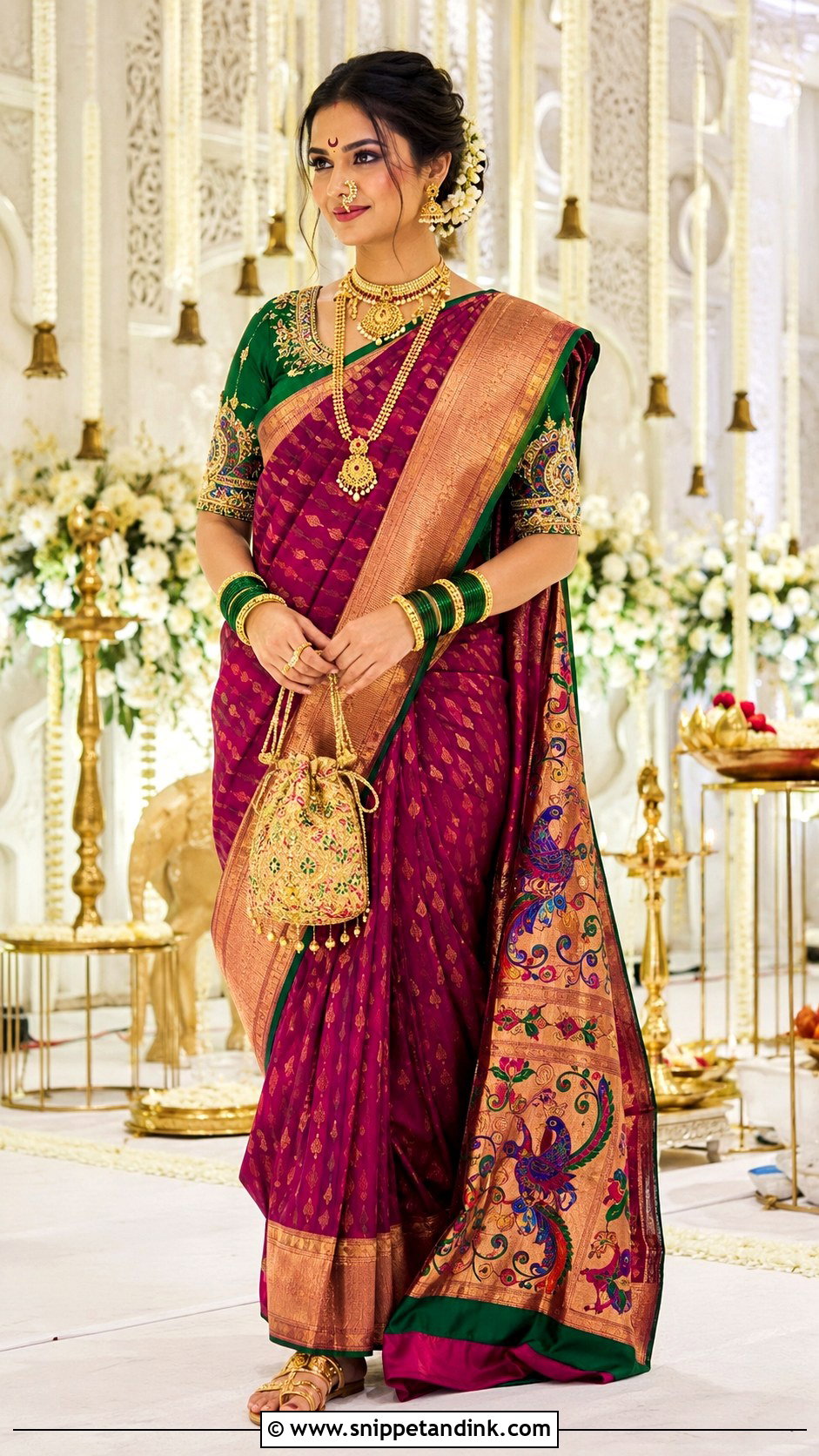
Paithani silk has a woven pallu so detailed that covering it with a big handbag would be a waste, so I keep accessories small. Jewel tones like purple, green, magenta, blue and red, with contrasting borders, give the outfit its color. Choose a blouse that complements the border rather than adding a new pattern. The nath, layered gold necklaces, green bangles and a crescent bindi are the signature details, worn where they’re meaningful to the bride. The traditional nauvari drape needs an experienced draper; it’s quite different from a standard saree, so practise sitting and walking in it beforehand.
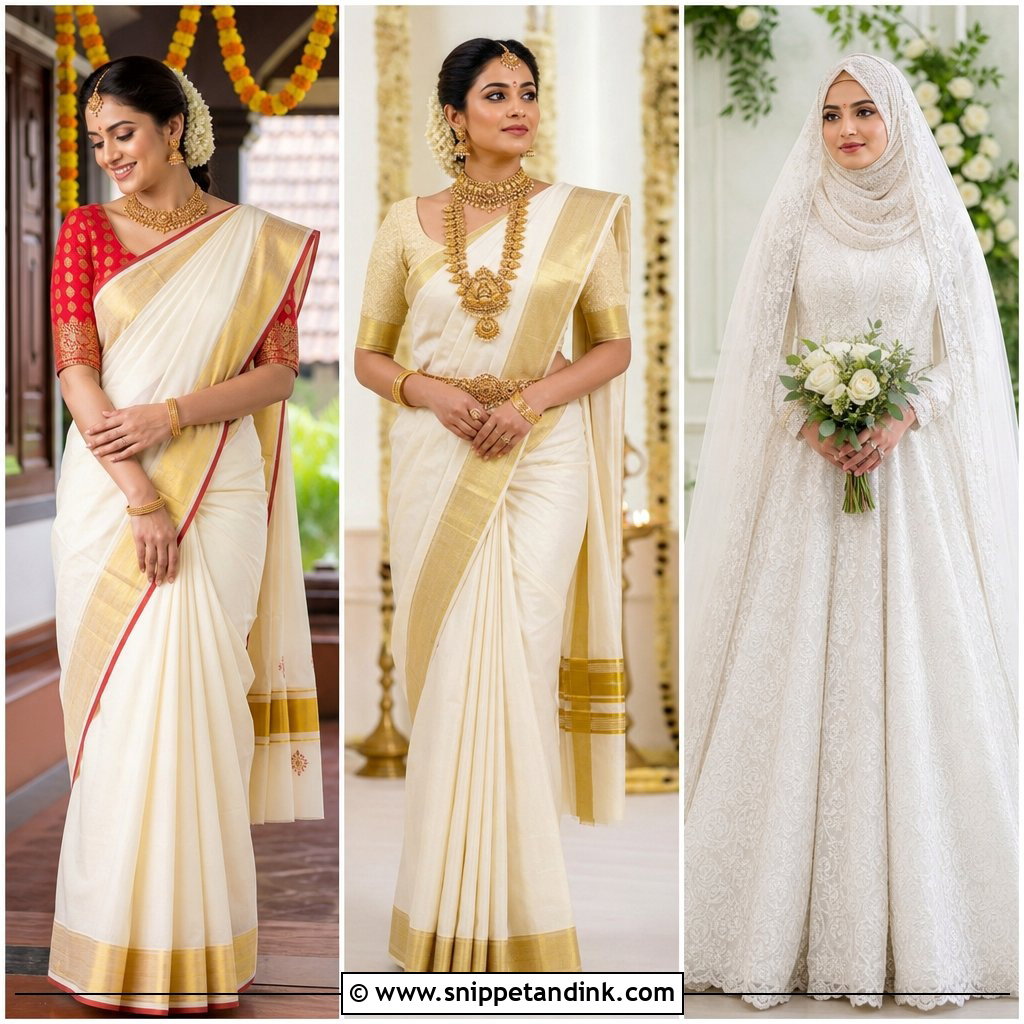
16. Kerala Kasavu Saree With Gold Jewelry
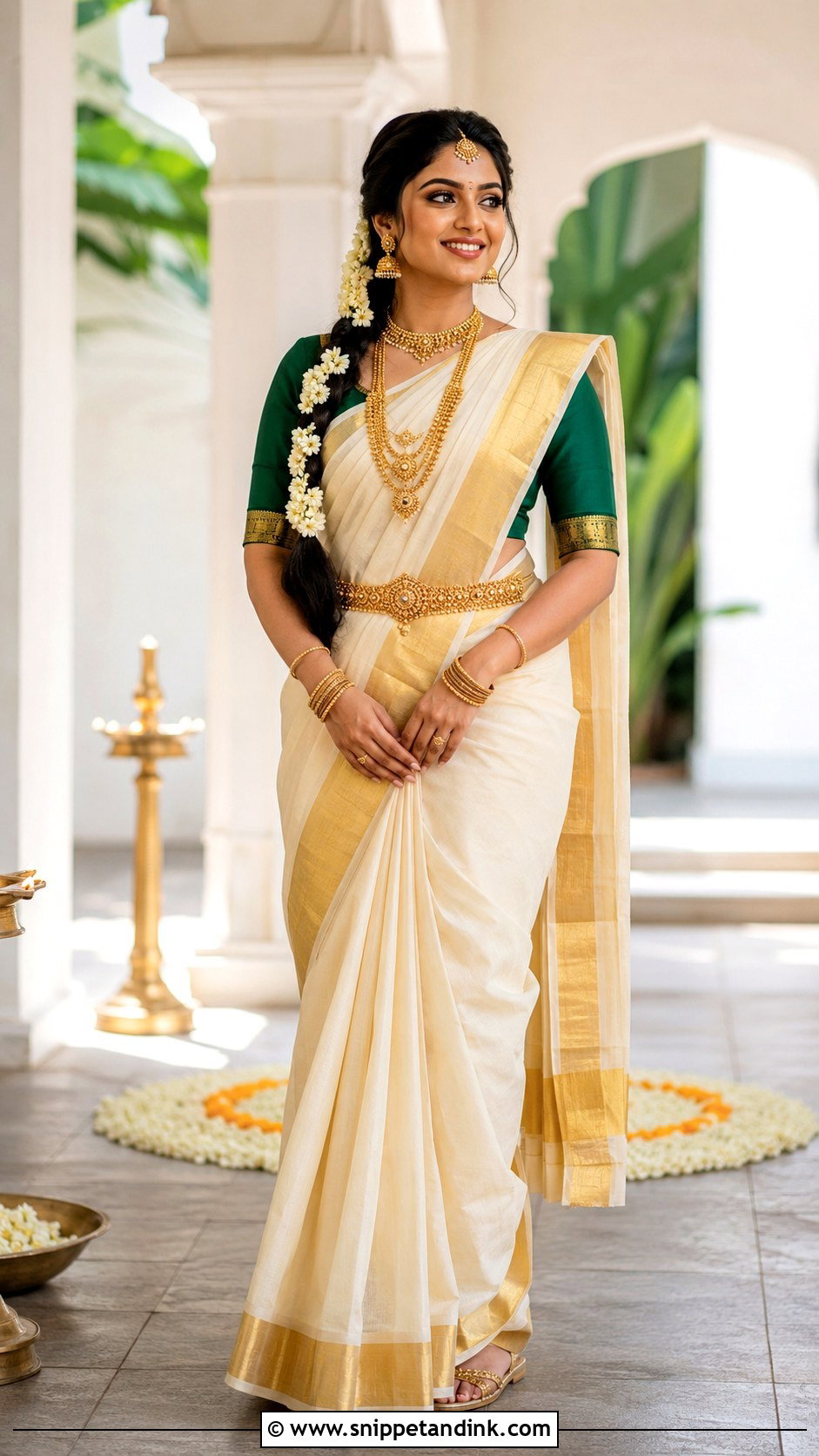
Kasavu cotton is light and cool, which makes a Kerala kasavu saree one of the few bridal options that’s comfortable in real heat. The trade-off is that cotton creases quickly. I have it starched lightly and pressed the morning of the wedding, and I tell brides to sit carefully for photos. A gold, green, red or maroon blouse adds contrast to the cream and gold. Layered gold necklaces, jhumkas, bangles and a waist belt suit it, along with a low bun or braid wound with jasmine. Gold flats blend with the border.
17. Gujarati Panetar Saree With Red Dupatta
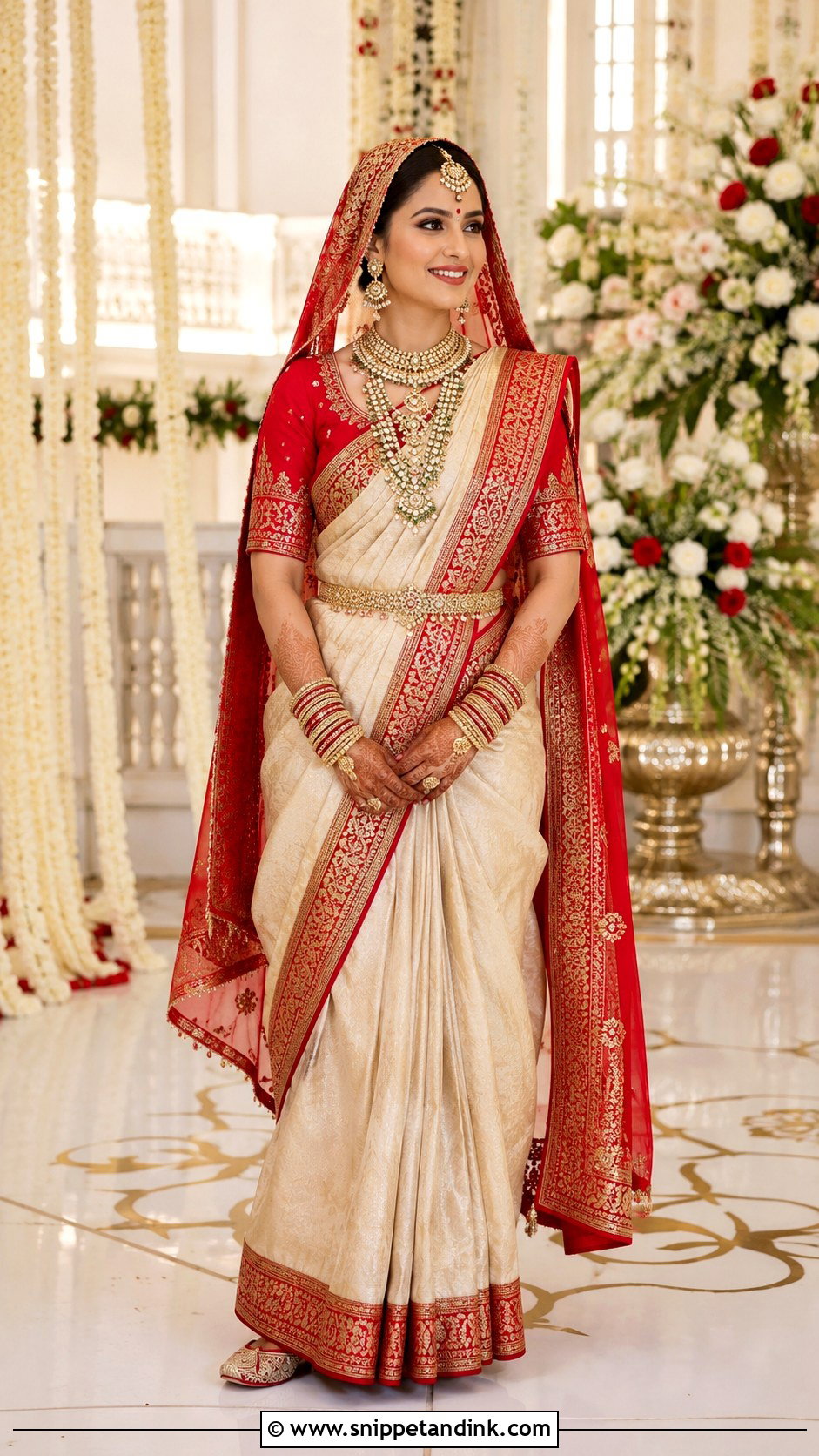
A panetar-style bridal look relies on contrast: a white or cream saree with a bold red border, a fitted red blouse and a separate red dupatta over the head. Two layers over the head means pinning matters, so I anchor the dupatta into a smooth, firm base and use enough pins to hold without pulling at the scalp. Layered gold or kundan necklaces, statement earrings, bangles and a maang tikka add richness. A waist belt helps keep the saree in place. Embellished flats or low block heels suit ceremonies with long periods of standing.
18. Assamese Mekhela Chador Bridal Outfit
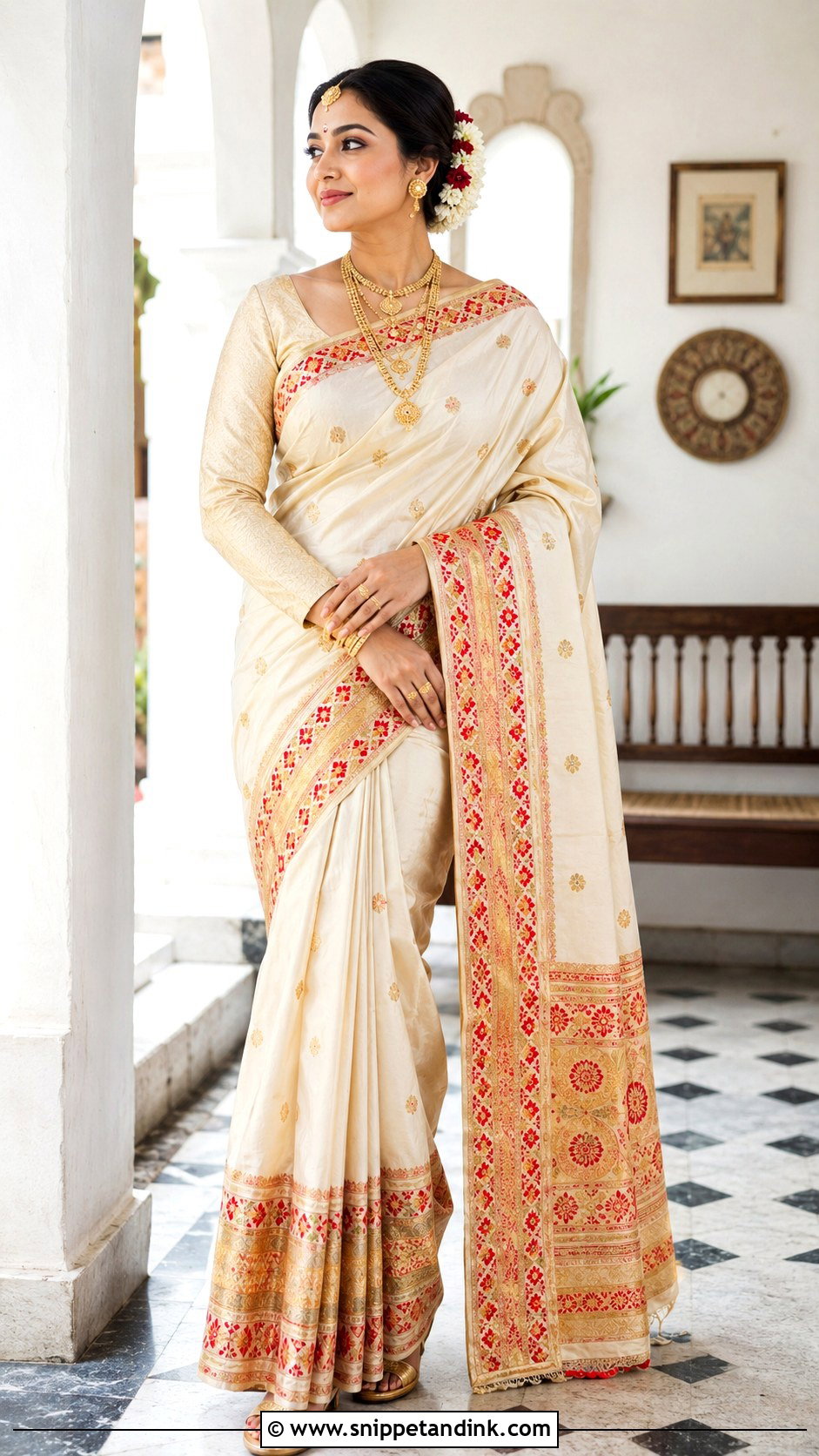
Draping is what gives an Assamese mekhela chador its shape: a wrapped lower skirt and a separate chador pleated and tucked around the upper body. Ivory, cream and gold with red or black woven designs are classic wedding choices, depending on family tradition. Pair it with a fitted blouse that repeats one border color. Gold jewelry, including layered necklaces, earrings, bangles and a forehead ornament, gives the main ceremony its formality. Because the chador shifts if it isn’t pinned precisely, I’d have someone practised in this drape dress you. Keep the bun neat so the chador stays visible around the shoulders, and choose a small bag.
19. Sri Lankan Kandyan Saree With Statement Jewelry
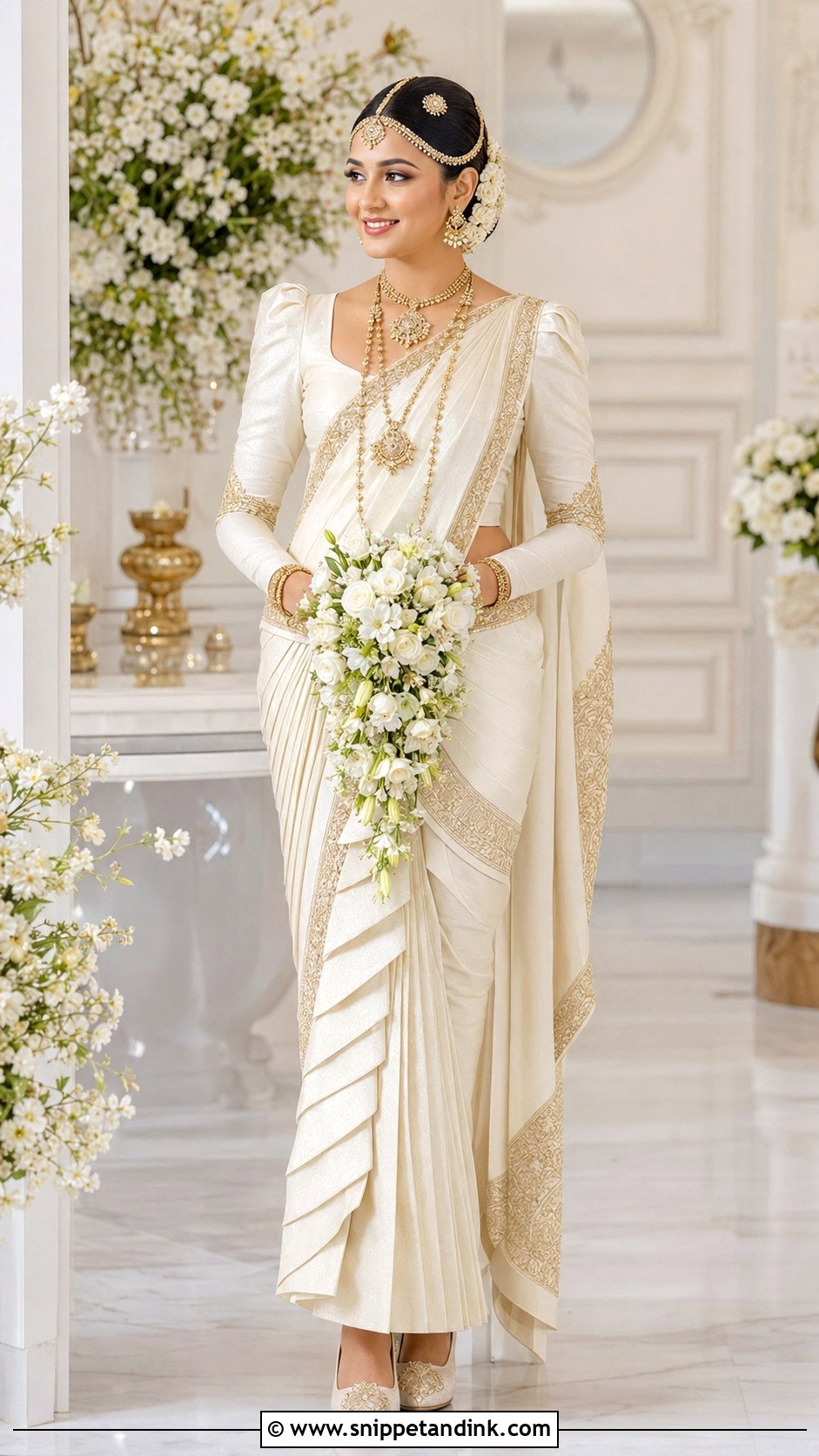
The Kandyan drape gets its shape from the frill and pleats gathered around the waist, so the underlayer and blouse have to fit before the saree goes on. White, ivory, champagne and soft gold are the classic palette, with embroidered borders and beadwork for detail. The blouse usually has structured sleeves that balance the volume at the waist. Statement necklaces, earrings, bracelets and a headpiece complete it. I’d book a full dressing trial with the same person who will dress you on the day, and walk around a room in it, since the volume at the waist changes your balance more than people expect.
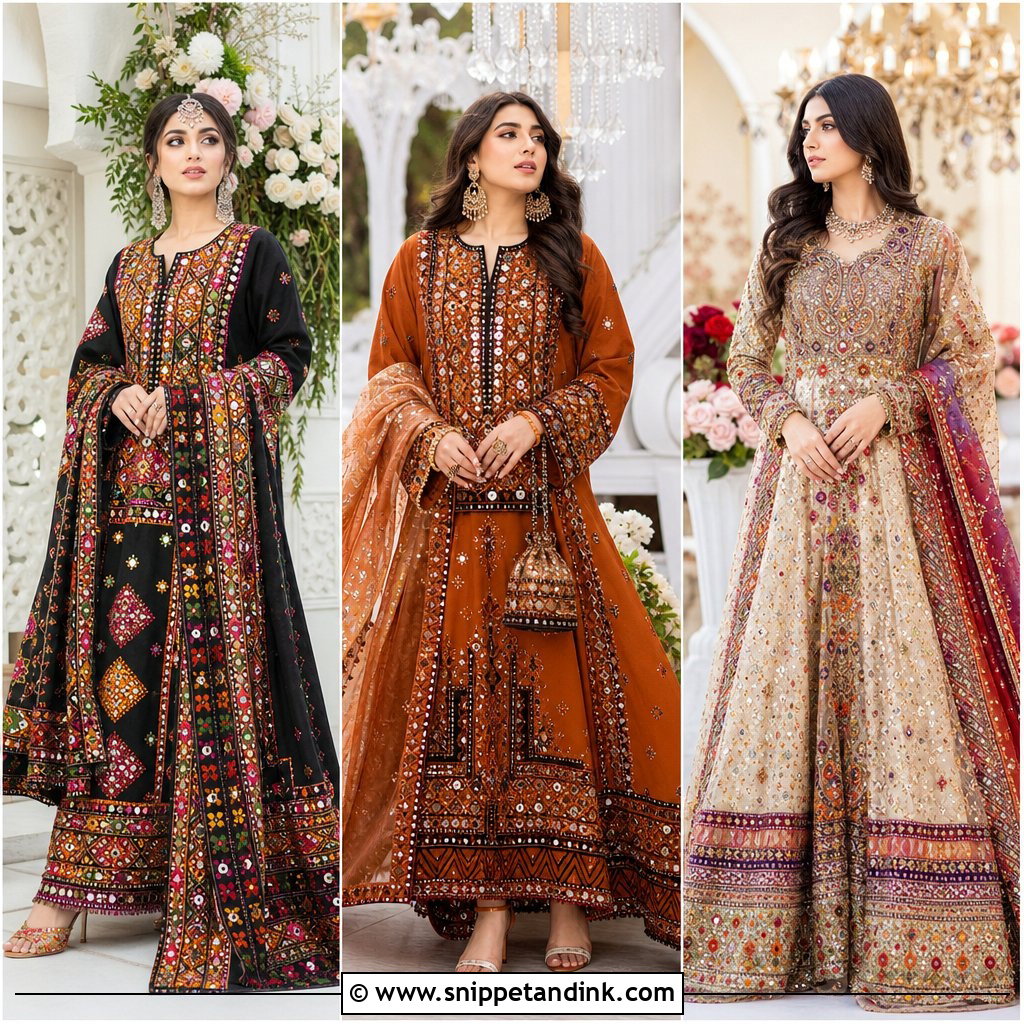
20. Indo Western Bridal Gown With Dupatta
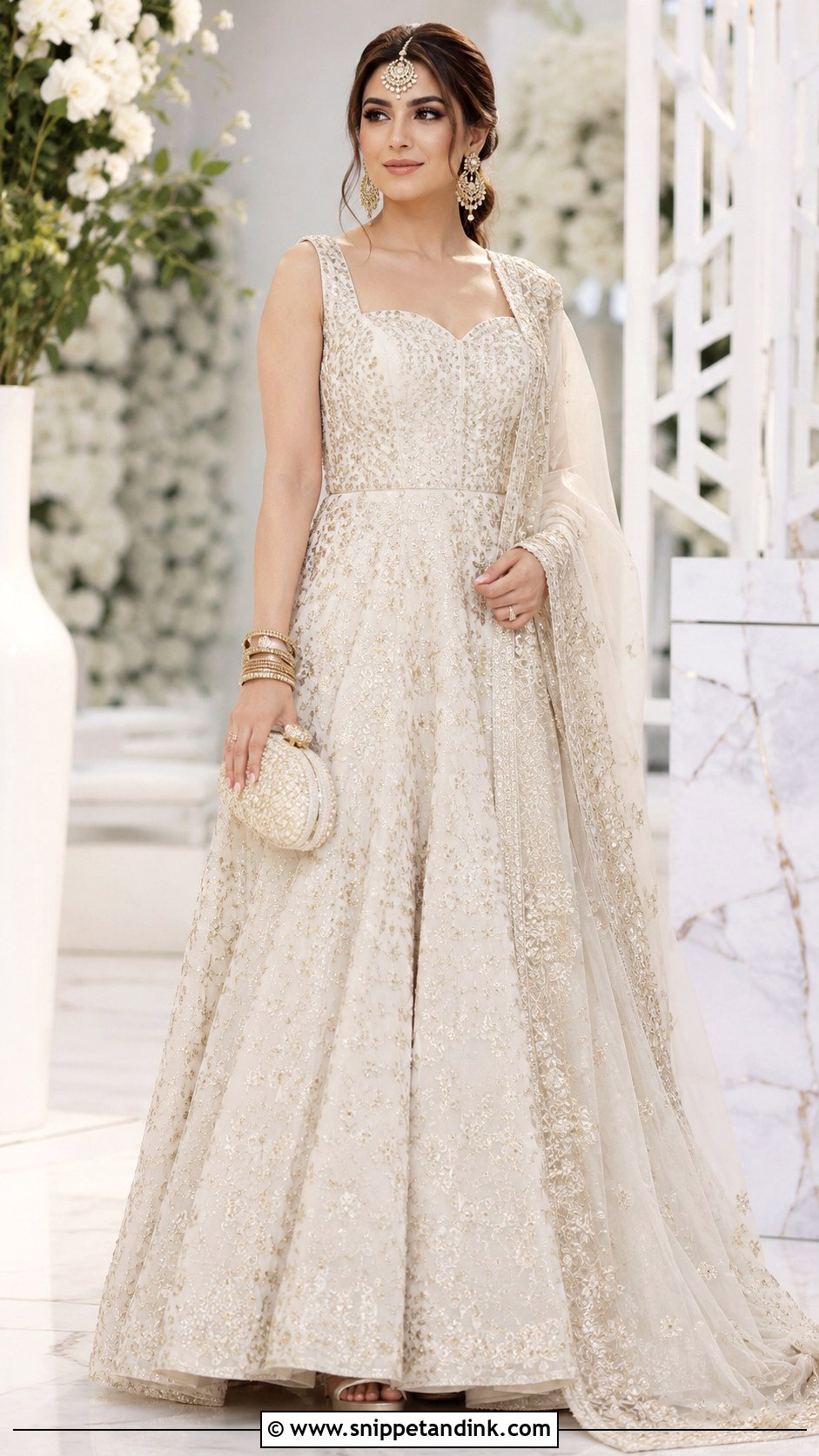
If you don’t want to manage separate lehenga pieces or saree pleats, an Indo Western gown is the easiest formal option to wear. A floor-length gown with a structured bodice, a flared skirt and zardozi, sequin or thread embroidery gives the look of a lehenga in one piece. A detachable dupatta can go over the head for the ceremony and come off for dancing. Ivory, champagne, dusty rose, emerald and deep red all suit it. Have the dupatta attached with snaps or hooks at the shoulder rather than safety pins, which can damage the fabric. Statement earrings, a maang tikka and block heels finish it.
Ordering From a Designer Overseas Without Fitting Disasters
Many brides order from a designer in India or Pakistan while living elsewhere. It works, but the timing needs planning. Custom bridal pieces commonly take several months to make, and shipping and customs can add weeks on top. I’d place the order at least six months ahead and build in time for a local tailor to adjust it after it arrives.
- Have your measurements taken by a professional tailor, not at home with a tape. Send the designer their measurement chart filled in exactly.
- Ask for extra seam allowance in the blouse and waist so a local tailor can let it out.
- Request photos or a video of the finished outfit before it ships, so changes can still be made at the workshop.
- Keep receipts and the designer’s invoice handy for customs.
The dressing kit I’d pack for every event
Safety pins in two sizes, bobby pins in your hair color, double-sided fashion tape, a small sewing kit with thread matched to your blouse, blotting paper and a spare pair of flat shoes. A dupatta that slips during the pheras or a blouse hook that gives way is easy to fix in a minute if someone has the kit in their bag.
Which Outfit for Which Ceremony, and Why Comfort Decides It
Whichever silhouette you love, the outfit has to survive your actual day: the ceremony, the venue’s heat, long periods of sitting and the dancing afterwards. A red lehenga feels traditional, a silk saree shows off weaving and draping, and shararas, ghararas, Anarkalis and fusion gowns give equally strong options. Book a full trial to sit, walk and dance in each outfit with its jewelry and shoes, and fix anything that pinches or slips while there’s still time to alter it.
You'll Like These Ideas:





Leave a Reply