
A Nikkah outfit has a different job from a reception look. You’ll sit for most of the ceremony, sign the nikahnama, keep your head covered and greet a long line of relatives, so the outfit has to feel modest and comfortable before it feels grand. Some brides love a classic ivory gharara with gold jewelry. Others want a pastel lehenga, a draped saree, a regal peshwas or a modern abaya gown for a masjid ceremony. Ivory, champagne, blush, sage, mint and soft gold are popular now, along with jewel tones, lighter fabrics and dupattas that drape well. In my experience the heaviest outfit is rarely the right one. Below are 25 Nikkah looks with full styling, plus what I’d watch for with each.
Dressing for a Ceremony You’ll Spend Mostly Seated
At most Nikkahs, the bride spends the important moments sitting: hearing the ijab and qubool, signing the nikahnama and receiving duas from relatives. Many brides sit on a low seat or cushions on the floor. So when I do a fitting for a Nikkah outfit, I spend more time with the bride sitting down than standing.
- Sit cross-legged on the floor in the outfit. If a gharara or sharara pulls at the knee or the kameez rides up, it needs more ease.
- Lift your arm as if signing. Full sleeves should still cover the wrist.
- Turn your head left and right with the dupatta pinned. If it slides, it needs a different pin point or a lighter fabric.
- Lean forward to greet an elder. A deep neckline or loose blouse will gape here, which is easy to fix with a hook before the day.
If the Nikkah is held in a masjid
Check the masjid’s guidance ahead of time. Many ask for hair, arms and ankles to be covered and for women to sit in a separate area. You’ll usually remove your shoes at the entrance, so your feet will be on show in photos. I suggest a fresh pedicure or mehndi on the feet and keeping embellished heels for after the ceremony. Go light on perfume, too, since strong scent is often discouraged in prayer spaces.
1. White Nikkah Gharara Outfit
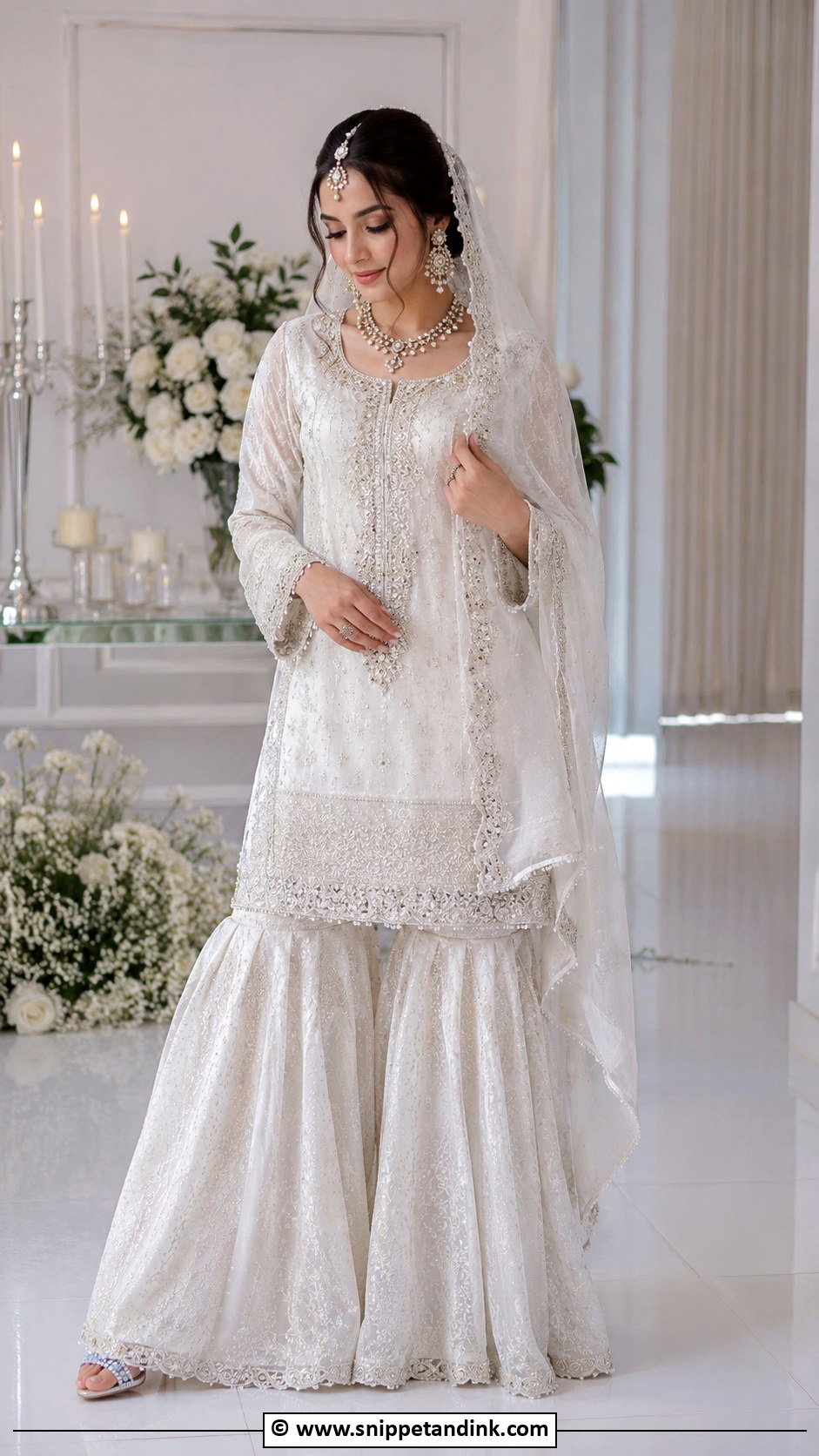
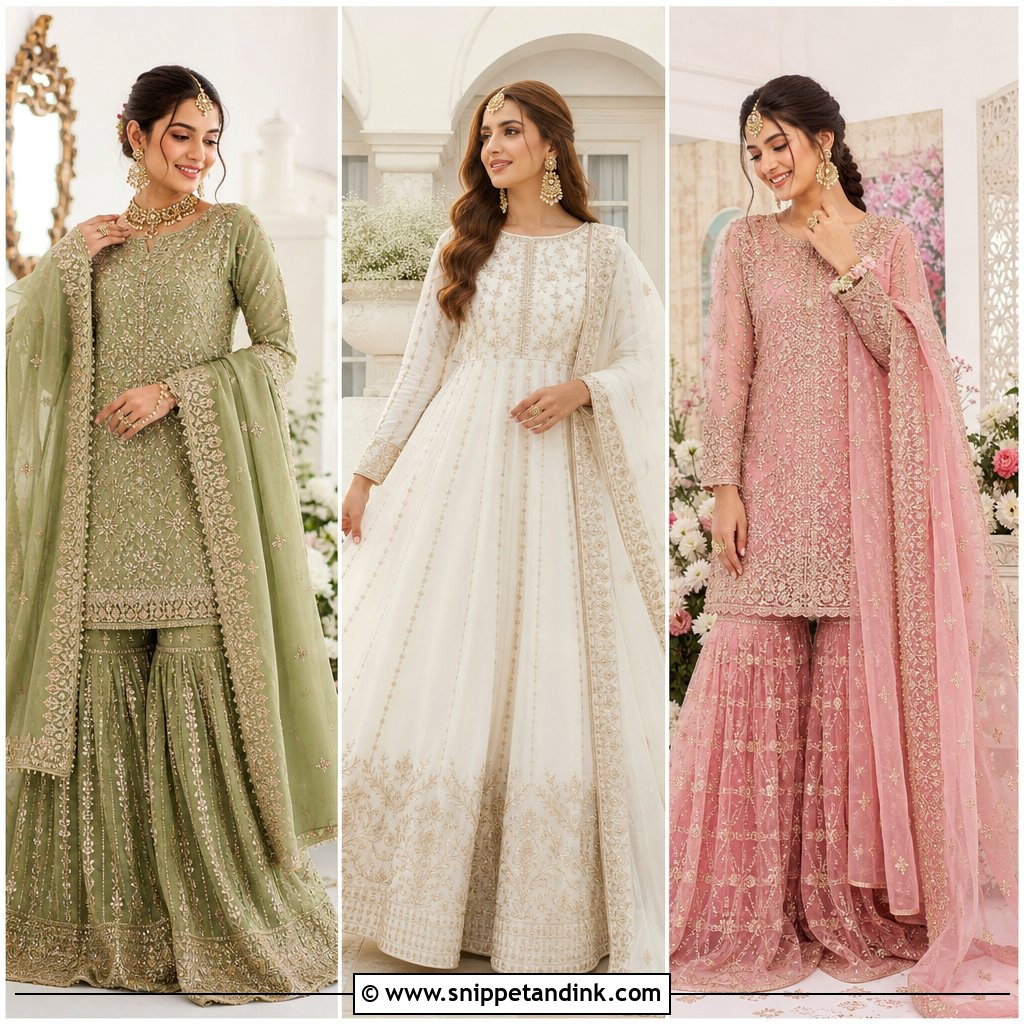
White gharara is the classic for good reason. A short or mid-length kameez with zari, pearls, sequins or threadwork sits over a flared gharara that pools neatly when you sit, which matters more at a Nikkah than at any other event. A white or ivory dupatta with a scalloped border completes it. Kundan, pearls or gold-toned jewelry all suit it, and a passa, jhumkas and a layered necklace make even a plain set read bridal. The gharara’s joint at the knee is where the fit goes wrong; if the flare starts too high, it bunches when you’re seated cross-legged.
2. Ivory Nikkah Lehenga Outfit
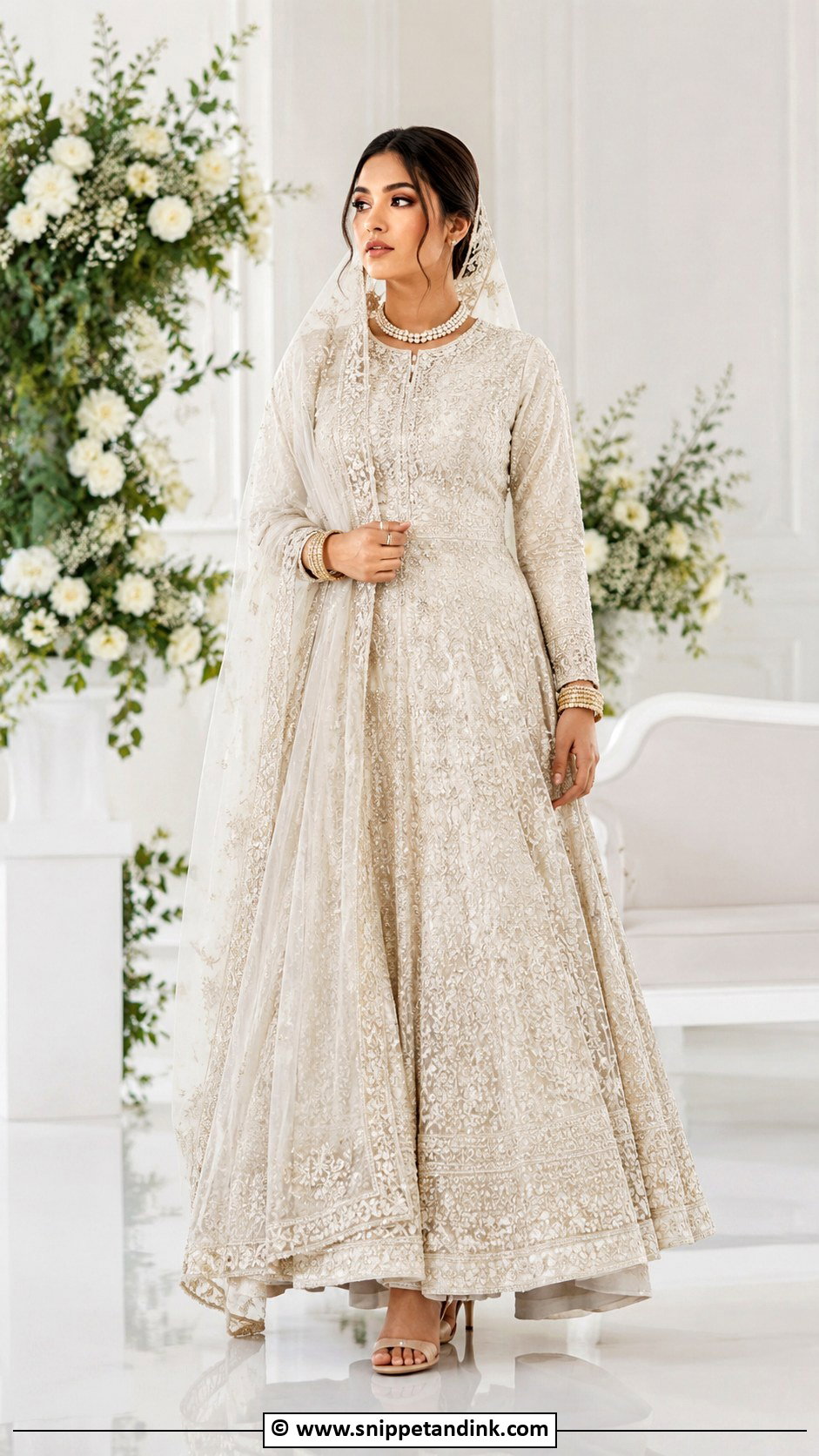
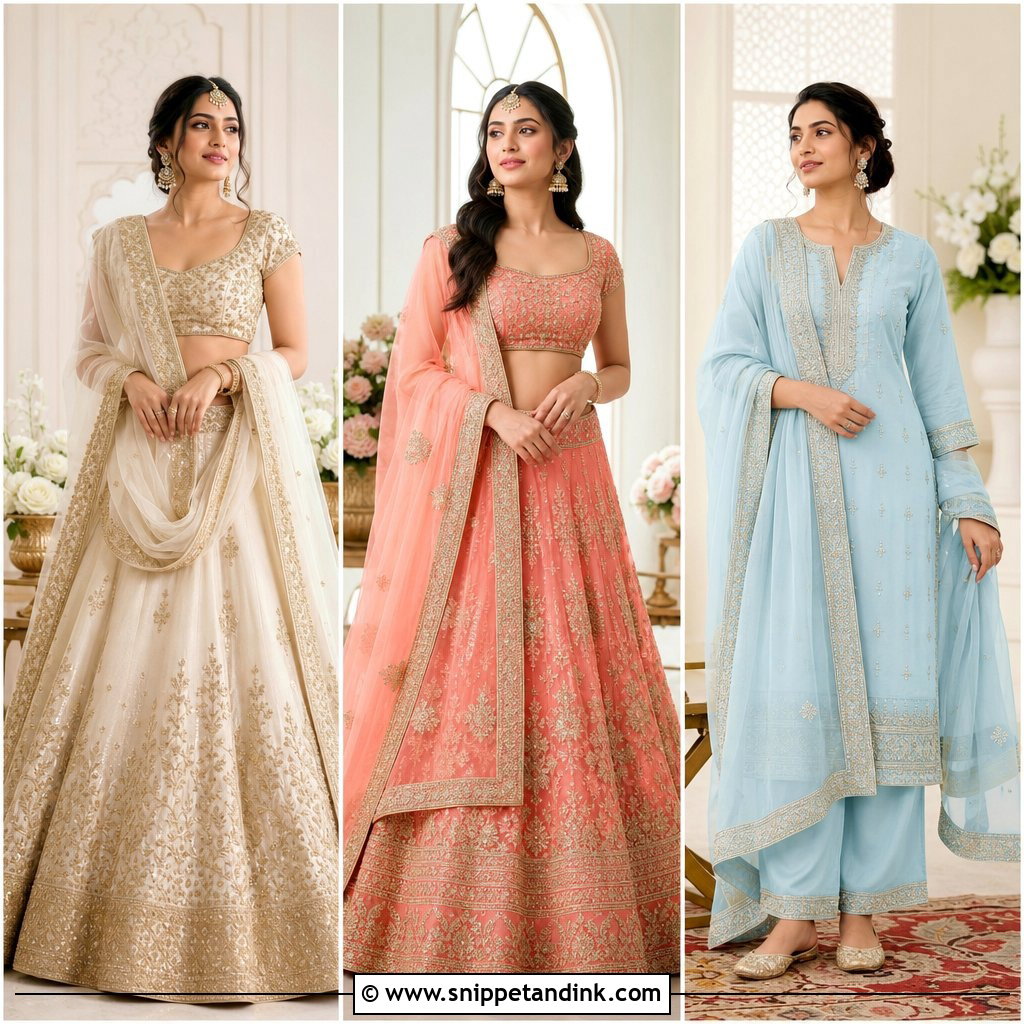
Ivory glows under daylight and indoor lighting alike, without the stark edge of pure white. Look for tonal embroidery, mirror accents or antique gold work, with a modest blouse in full or sheer embroidered sleeves. Drape the dupatta over the head for the ceremony and shift it to one shoulder later. Gold and pearls both warm ivory up. I like ivory lehengas for brides who plan to wear the skirt again, because a plain ivory skirt restyles easily with a new blouse for a family wedding.
3. Champagne Nikkah Sharara Outfit
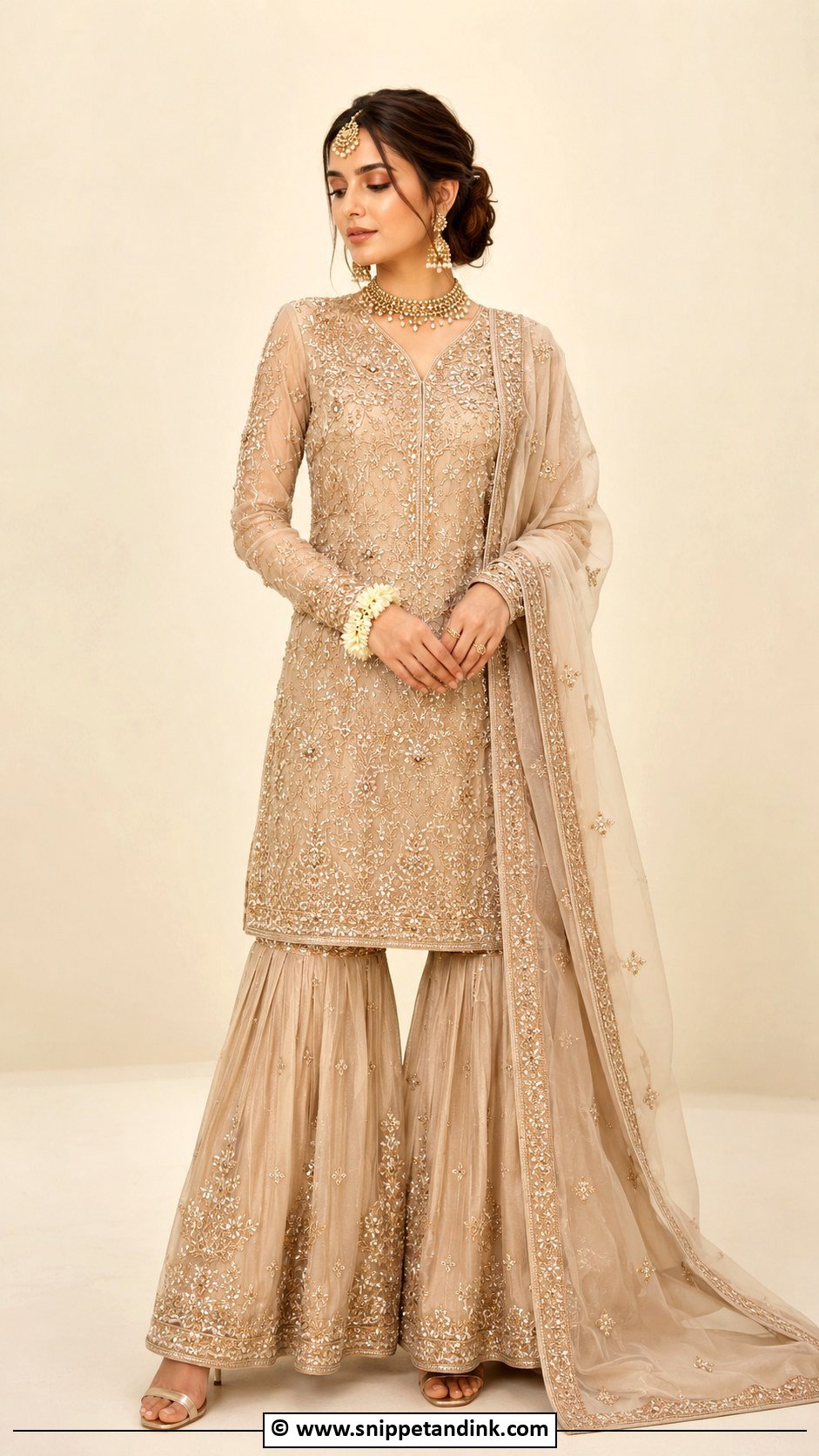
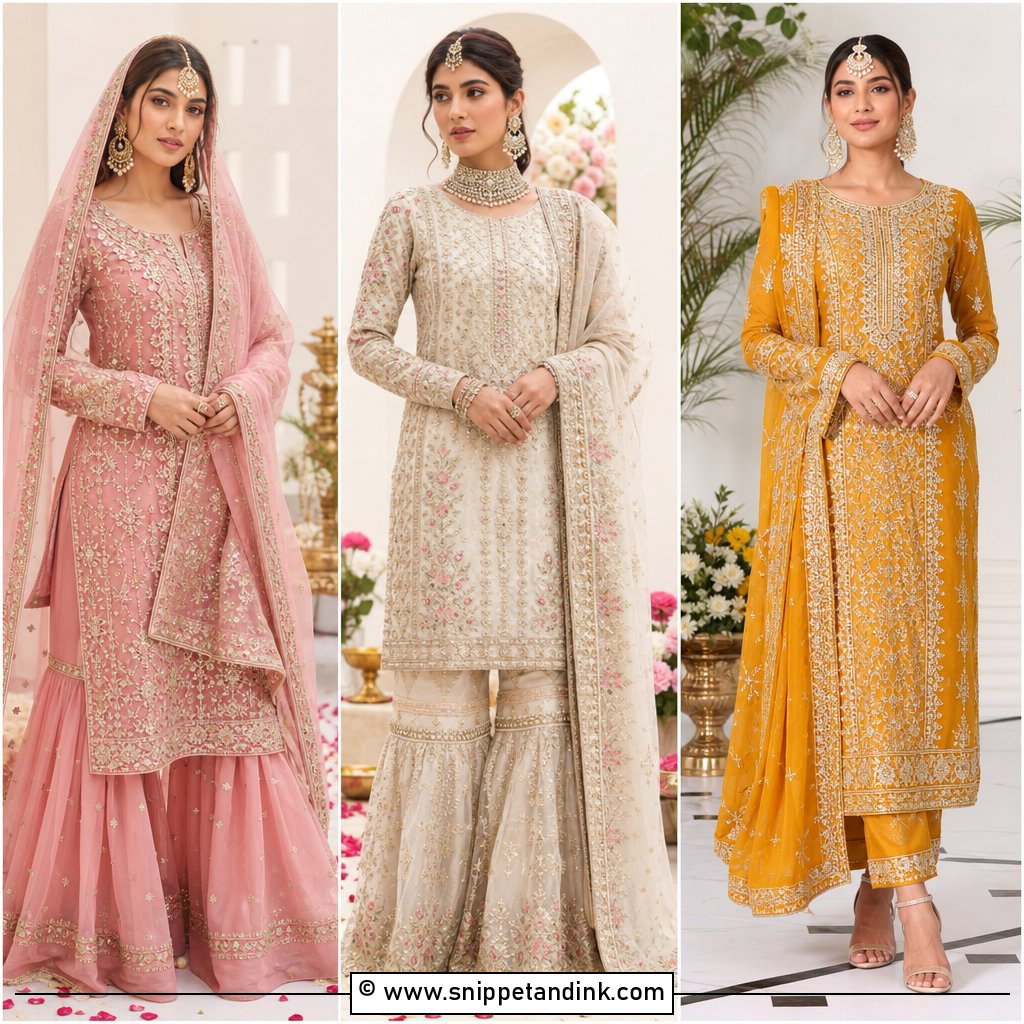
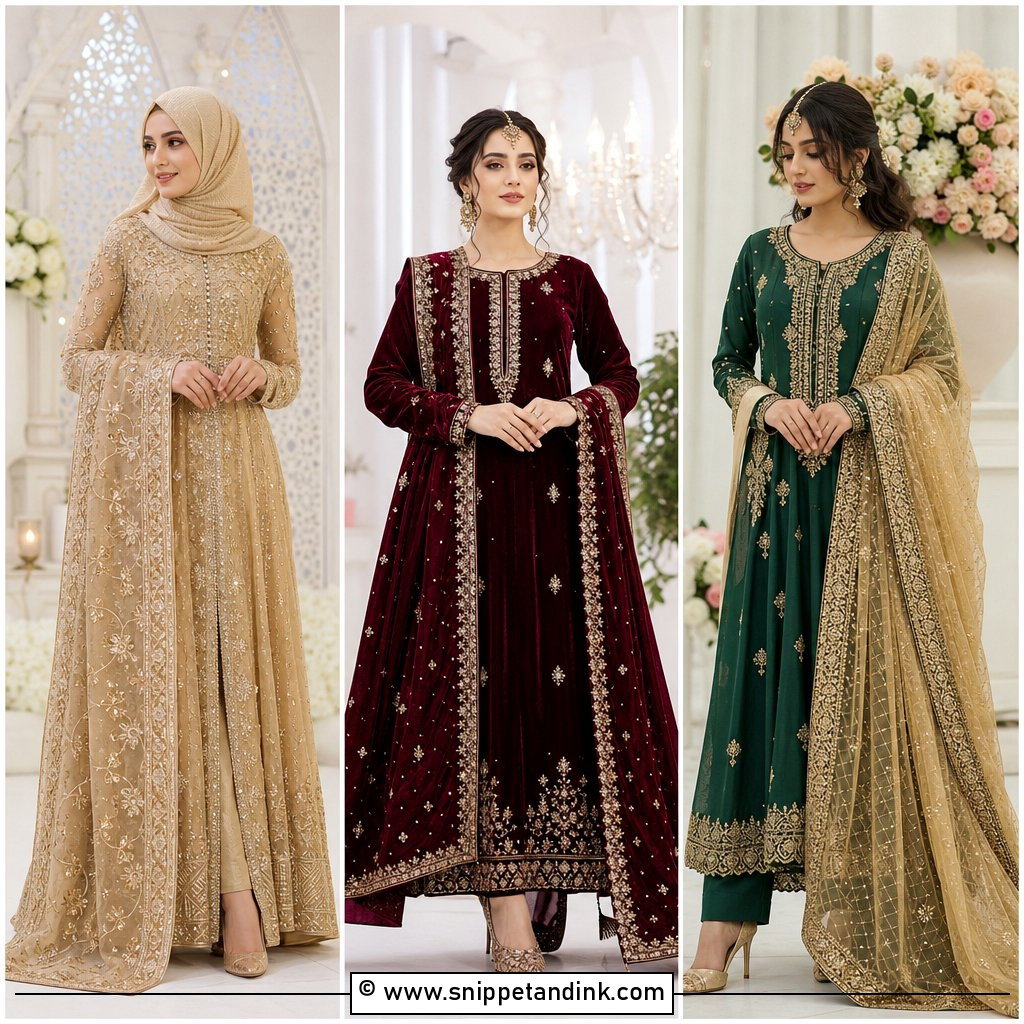
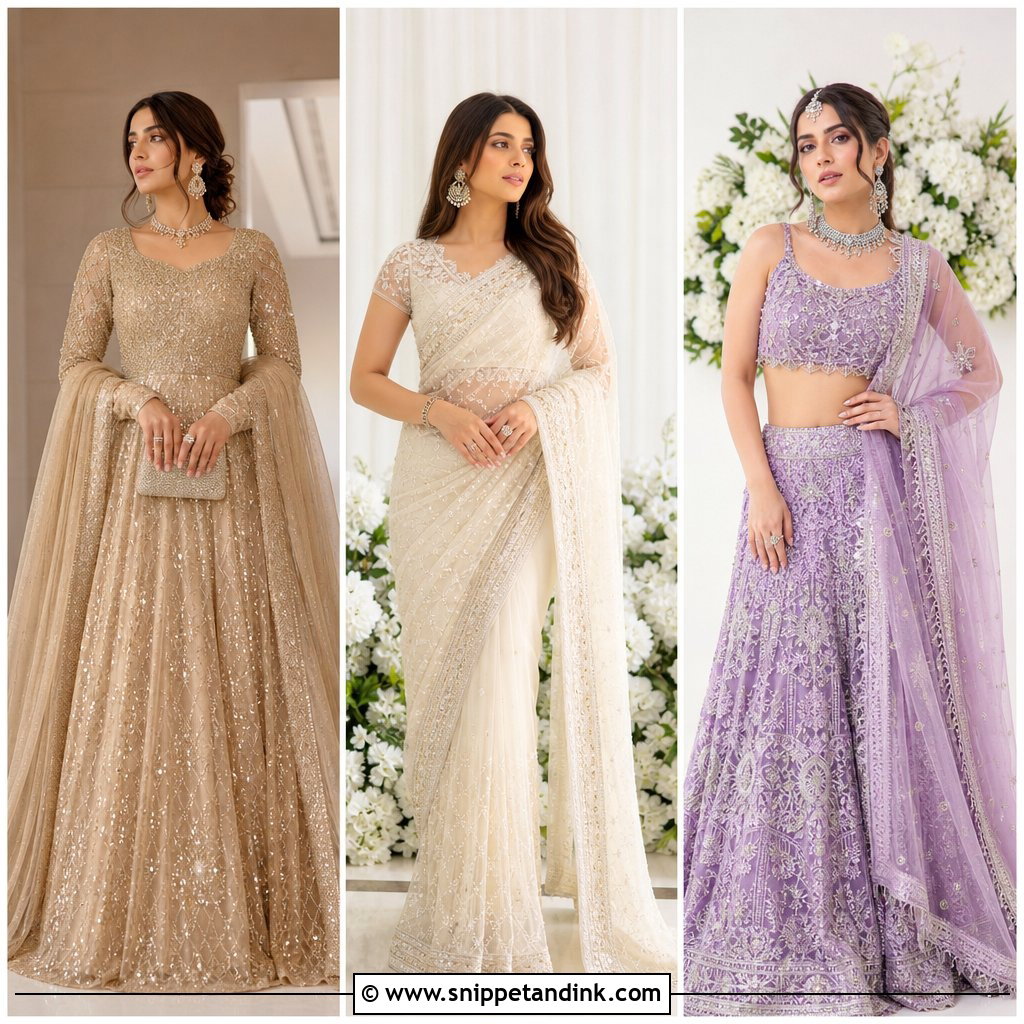
Champagne is the shade I reach for when a bride wants some glamour but no bright colour. It flatters a wide range of skin tones because it sits between gold and beige. A long kameez with fine embroidery, sequins or dabka work goes over a wide sharara, with a net or organza dupatta carrying a detailed border. Antique gold, polki or pearls suit it, with nude heels or gold sandals. Under banquet-hall lighting, dabka and sequins catch light much better than flat threadwork, so choose embroidery with some metal in it if your venue is dim.
4. Blush Pink Nikkah Lehenga Outfit
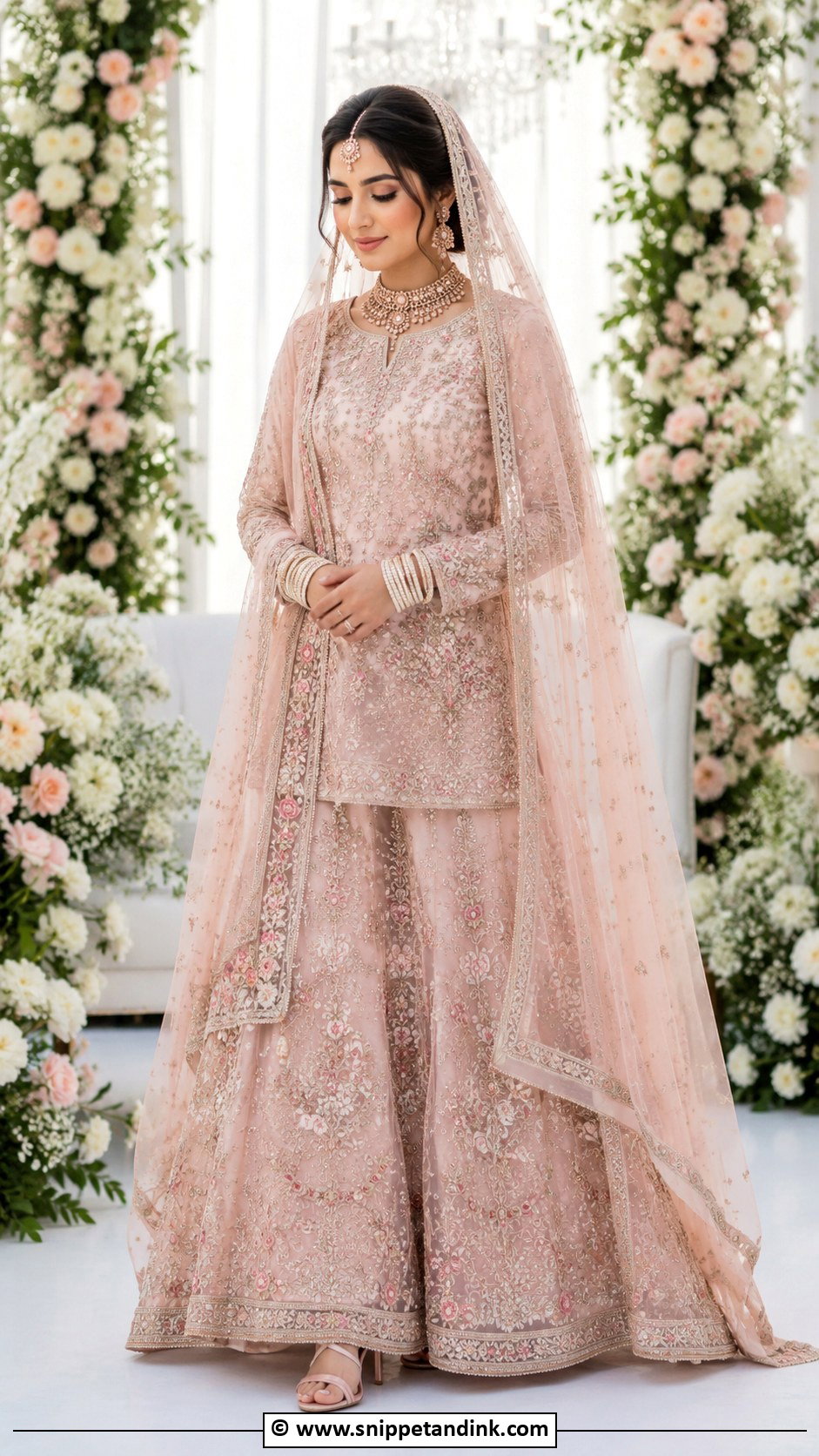
Blush is where most brides who want colour start, and it rarely disappoints. Silver, pearl or champagne embroidery keeps it romantic. A full-sleeve blouse or a longer choli balances the lehenga for a modest look, and a sheer dupatta over the head adds the traditional touch. Rose gold, pearl studs or a fine choker suit the colour. Soft waves, a low bun or hijab styling all work. One caution: very pale blush can look almost white in bright daylight photos, so I check the fabric outdoors before ordering.
5. Sage Green Nikkah Peshwas Outfit
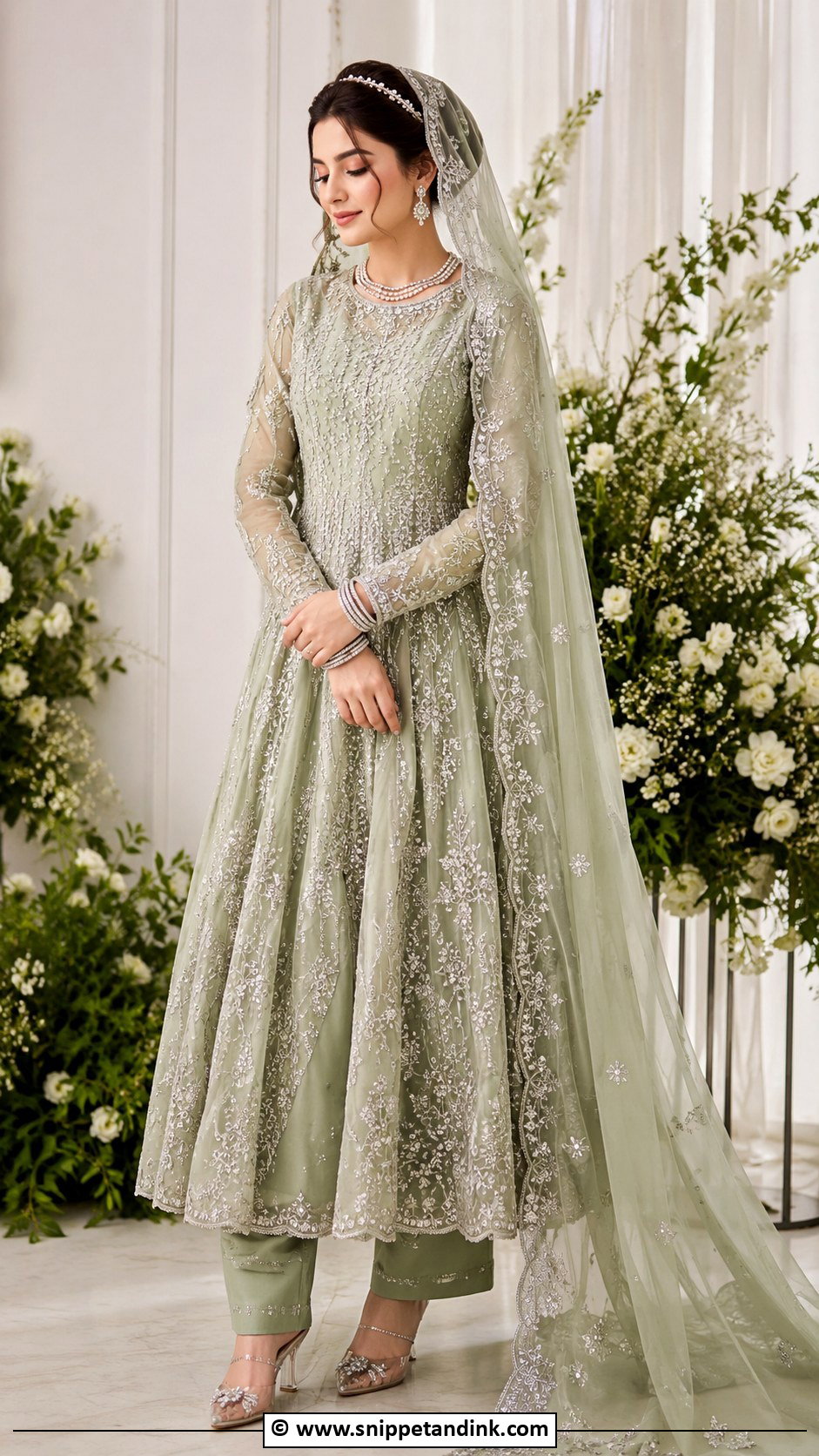
Sage peshwas is quietly regal. The long, flowing frock with a fitted bodice, full sleeves and flared hem gives shape without fuss, and silver, ivory or dull gold embroidery keeps it calm. Wear it over straight pants, churidar or a lehenga-style underskirt depending on formality, with an organza dupatta for structure. Pearls, silver bangles and embellished heels finish it. The panelled skirt of a peshwas spreads into a full circle when you sit on the floor, so I ask the tailor for a little extra length at the back to keep the hem from riding up.
6. Mint Green Nikkah Anarkali Outfit
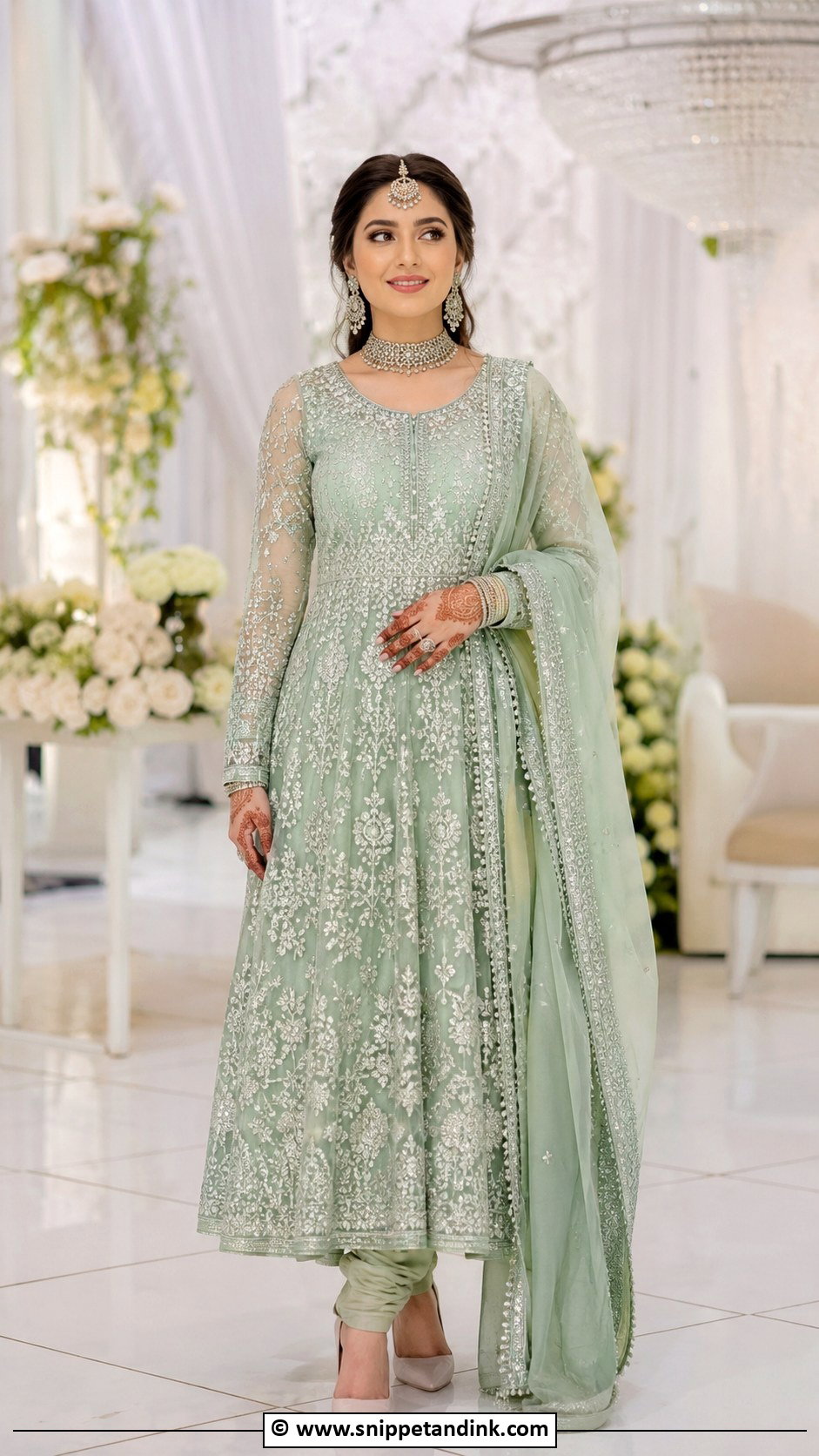
Mint anarkali feels light and easy for a long day. The anarkali’s flare flows best in chiffon, organza, net or silk, with white, silver or pale gold embroidery for a clean finish. Churidar or slim trousers keep attention on the flare. Drape the bordered dupatta over the head for the ceremony, then add silver jewelry, pearl bangles and crystal heels. Mint shows sweat marks and makeup transfer more than darker shades, so I keep tissues and a blotting kit nearby and ask the makeup artist to set the jawline well.
7. Gold Nikkah Farshi Pajama Outfit
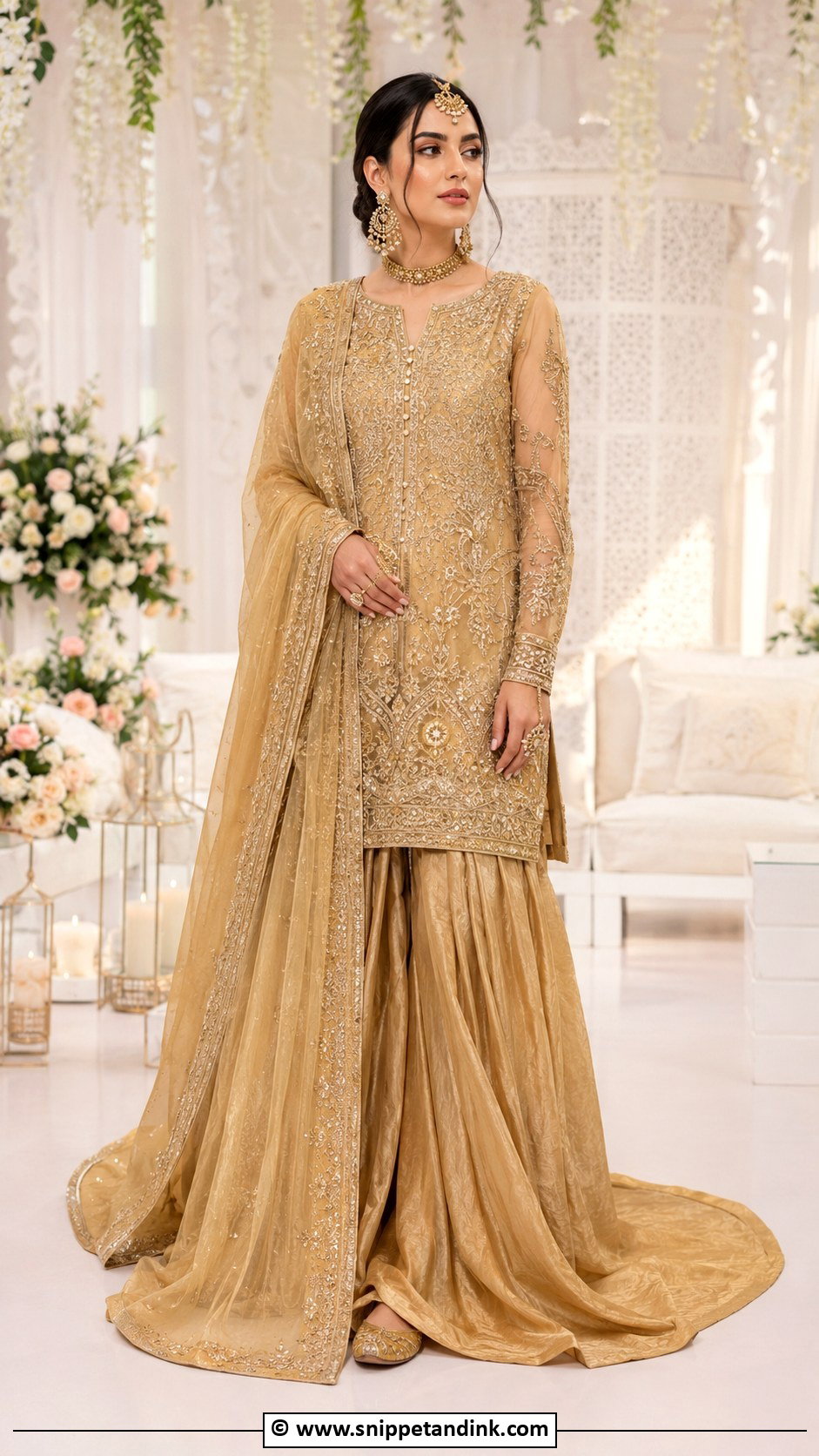
A gold Nikkah farshi pajama outfit brings old-world heritage to the ceremony. The farshi pajama sweeps the floor in a regal pool that looks magnificent in seated portraits. Pair it with a short or knee-length kameez in zardozi, gota, pearls or antique embroidery, and a tissue, organza or net dupatta. With this much presence, a choker, earrings and tikka are enough. Walking is the challenge: the hem is long by design, so I practise with the bride holding the front fold, and suggest khussas over heels for steadier steps.
8. Silver Nikkah Saree Outfit
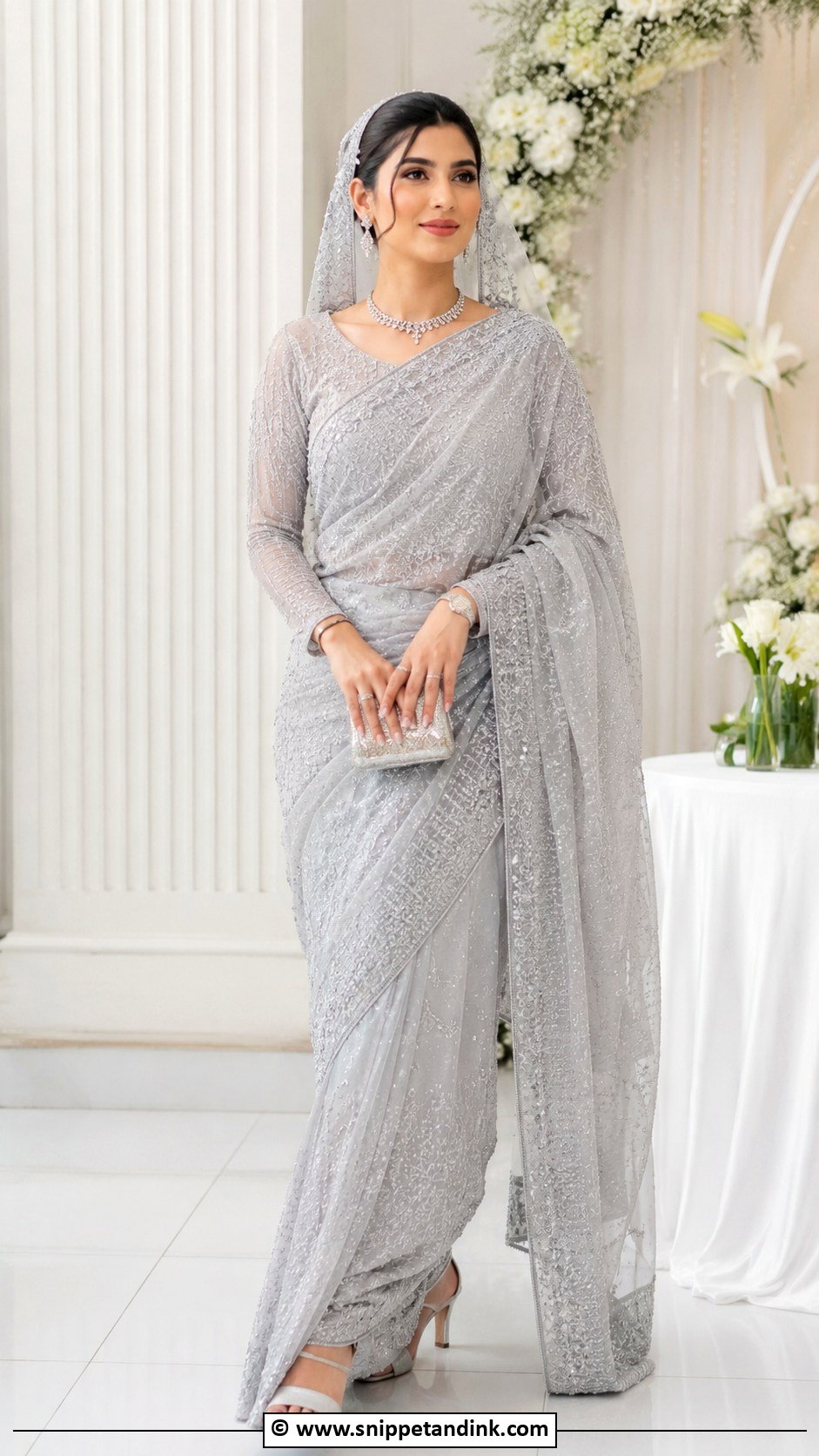
A silver saree suits brides who prefer clean lines to volume. Tissue, organza, silk or chiffon all drape well with delicate embroidery or shimmer. A modest blouse with long sleeves and a high or boat neckline keeps it bridal. The pallu can cover the head during the ceremony or sit pinned over the shoulder. Diamond-style jewelry, pearls or white gold suit silver, with metallic heels and a small clutch. I always have a saree professionally draped and pinned for a Nikkah, since the pleats loosen quickly when you sit and stand repeatedly.
9. Cream Nikkah Kurta With Gharara Outfit
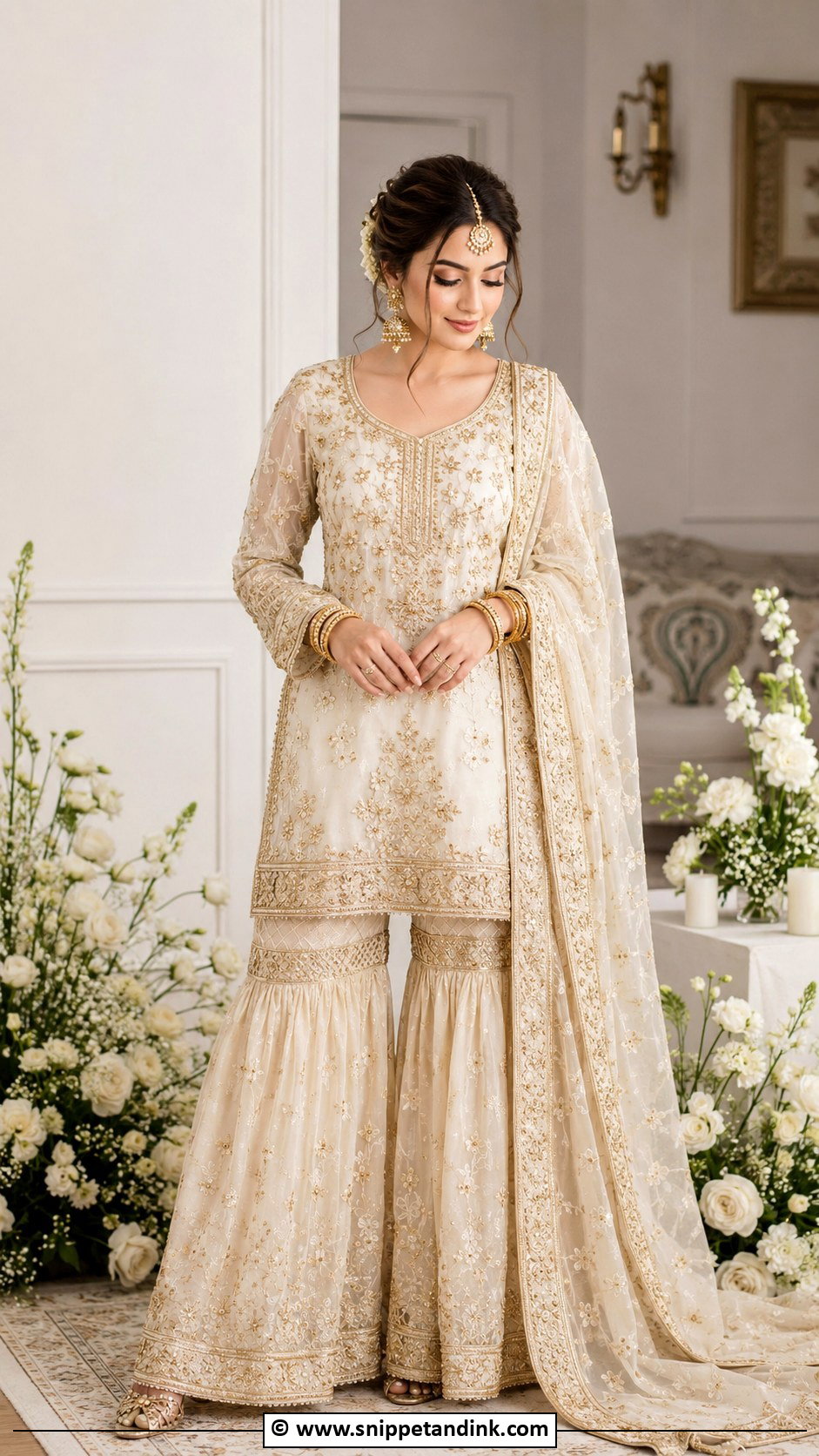
Cream is softer and warmer than bright white, which is why many brides find it more flattering near the face. A straight or slightly flared kurta with embroidery around the neckline, cuffs and hem goes over a matching gharara with lace, gota or threadwork. The dupatta pulls it together, especially with a wide border or scattered motifs. Gold bangles, jhumkas and a tikka finish it classically. I suggest this one most often for home ceremonies and small daytime gatherings.
10. Pastel Blue Nikkah Lehenga Outfit
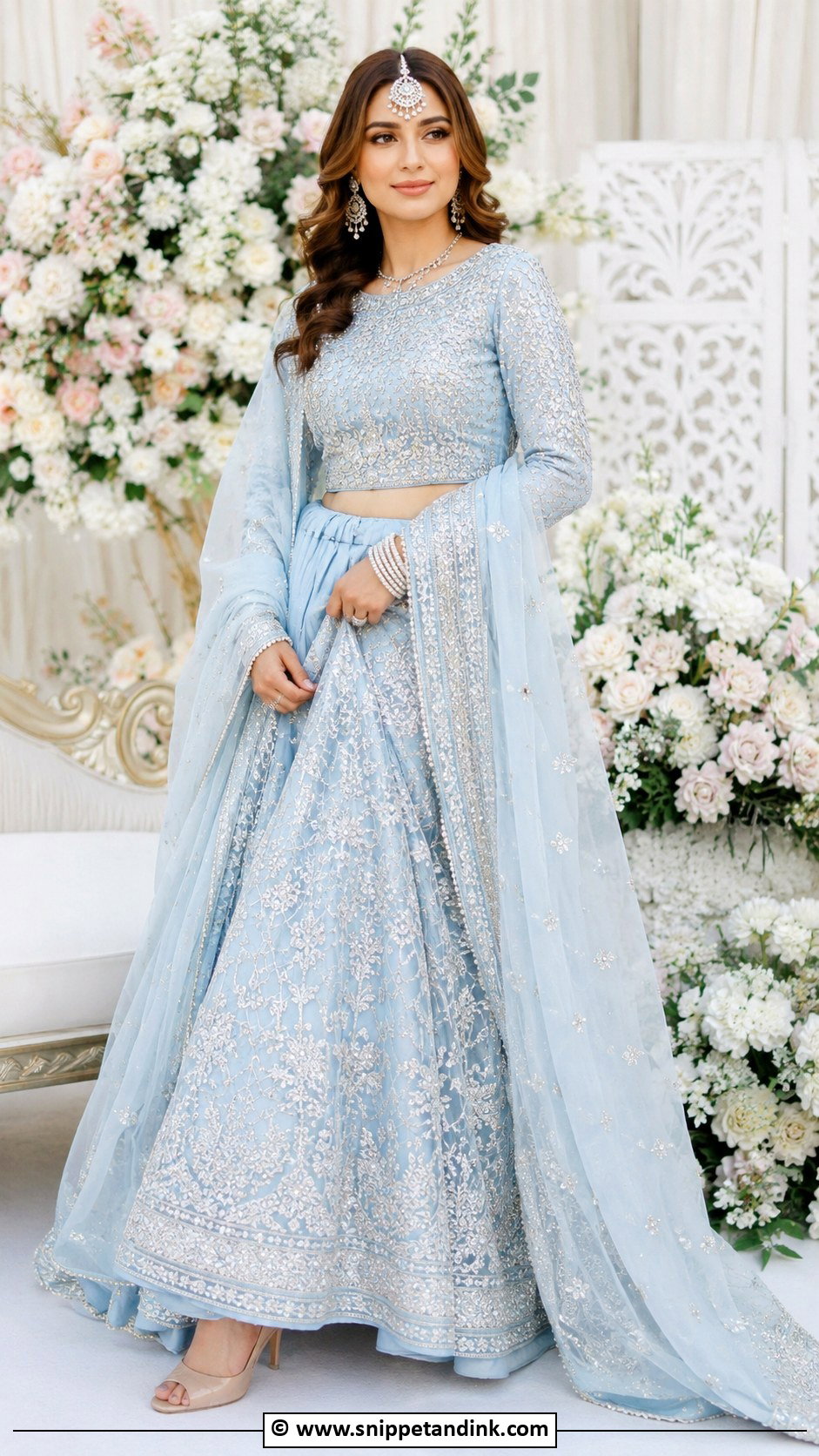
Pastel blue is a cool-toned alternative to ivory or pink. Silver embroidery, pearls or light crystal work keep it delicate, and a matching sleeved blouse with a sheer dupatta keeps it modest. Silver jewelry suits the colour; pearls soften it further. Pale blue, silver or nude heels finish the outfit. On warm or olive skin, icy blue can look slightly grey near the face, so I’d pick a powder blue with a touch of warmth and hold it at the jawline before deciding.
11. Dusty Rose Nikkah Sharara Outfit
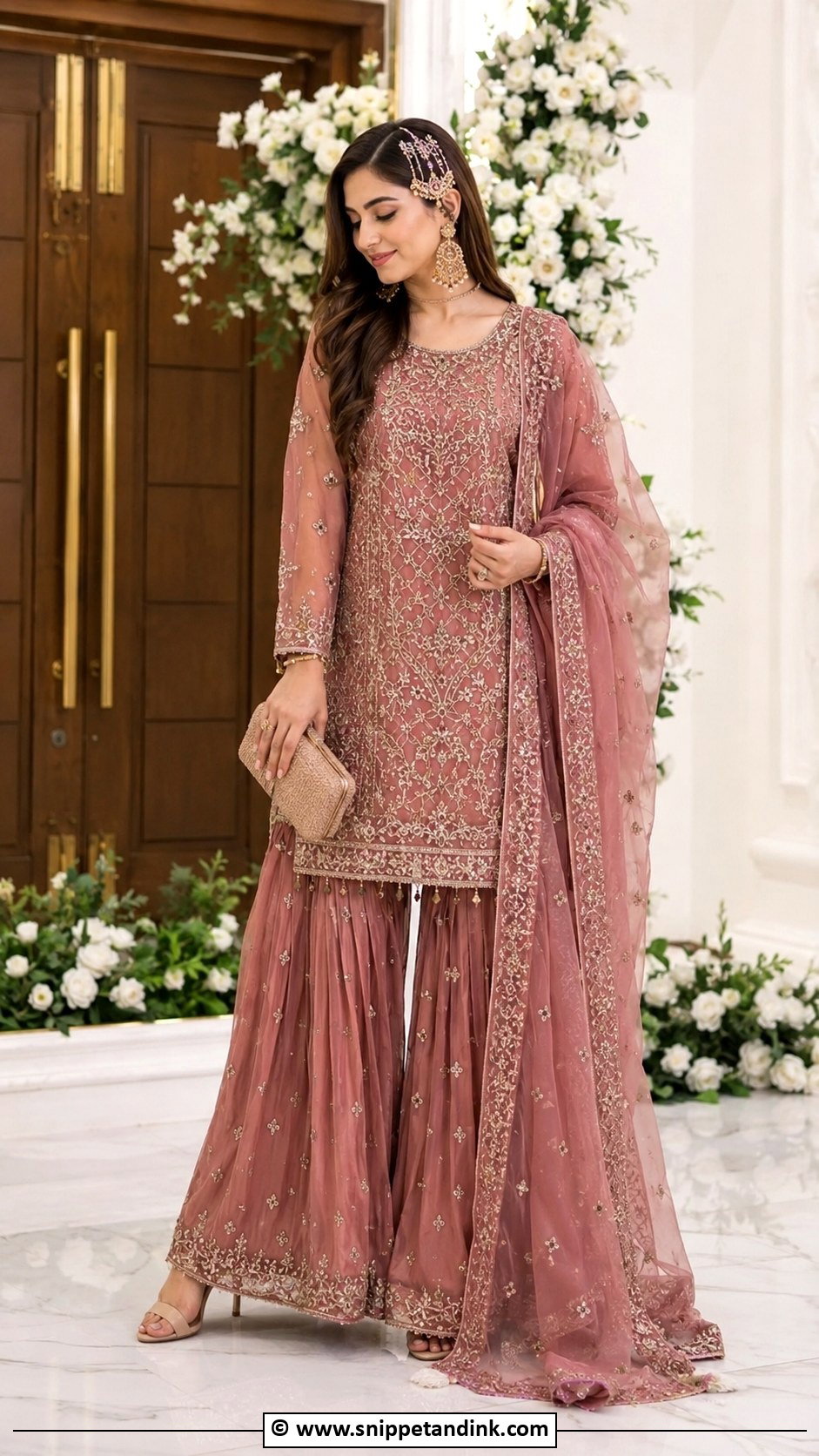
Dusty rose is pink for brides who don’t want sweet pink. The muted tone takes antique gold, champagne or pearl embroidery well. A long shirt fitted at the shoulder with a soft flare sits over a sharara with volume at the hem, and a sheer bordered dupatta completes it. Antique gold or polki adds the bridal touch, with nude, gold or rose-toned shoes. It reads mature and calm in family portraits, especially beside elders in deeper colours.
12. Emerald Green Nikkah Lehenga Outfit
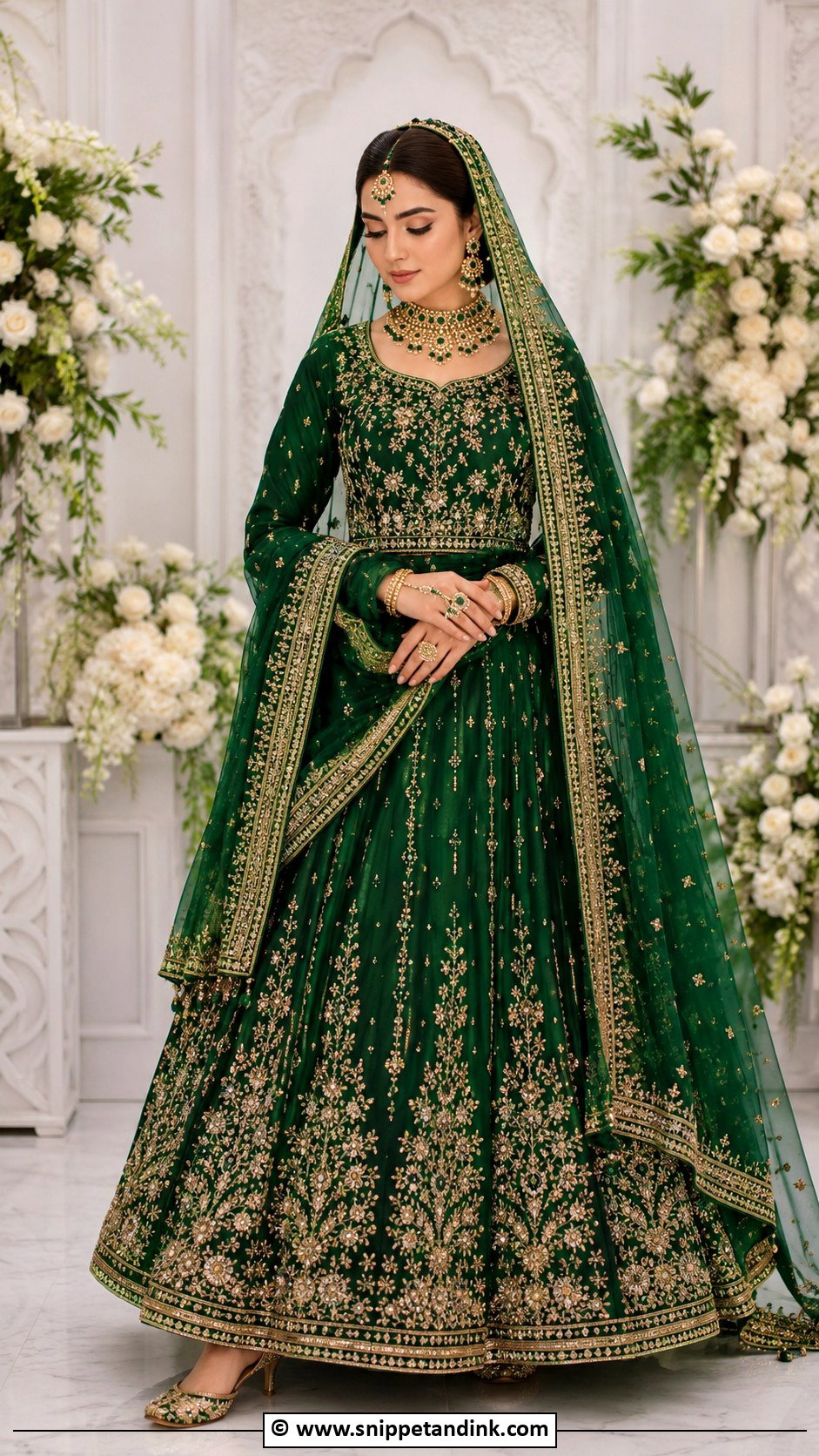
Emerald has deep meaning for many families, and it gives green a richer, jewel-toned edge. Gold embroidery, a modest blouse and a coordinated dupatta are the base. Kundan, polki or antique gold all sit well on it, and a matha patti or passa makes it more traditional. Warm makeup with bronzed eyes and a neutral lip suits the shade, with gold heels or embroidered khussas. Emerald velvet or heavy silk gets warm fast, so I’d only choose the heavier fabrics for a cool season or an air-conditioned hall.
13. Off White Nikkah Abaya Gown Outfit
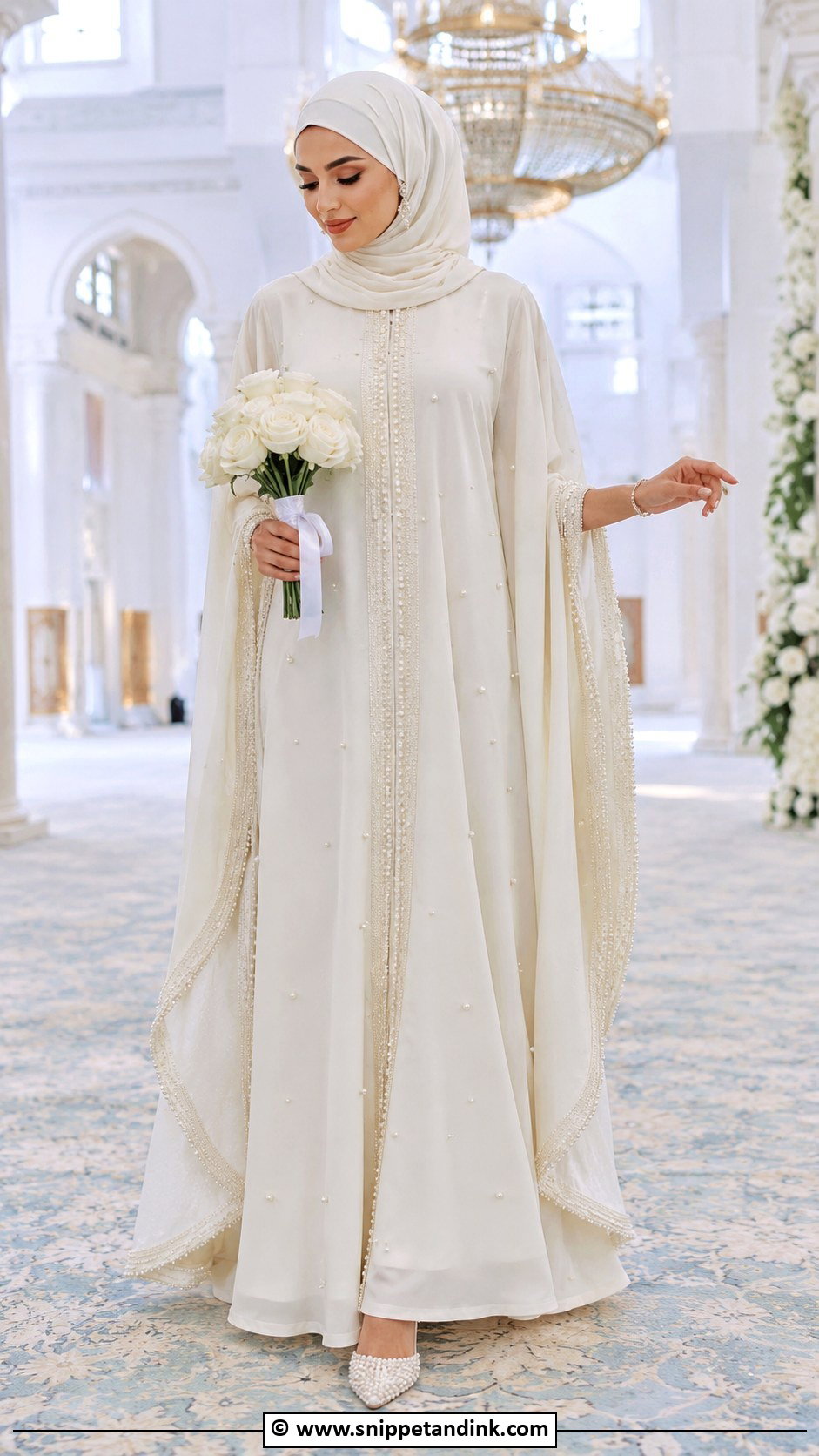
For a masjid ceremony or a very modest bride, an off-white abaya gown is the most practical choice on this list. Look for a flowing shape with pearl work, embroidery, lace panels or subtle beading, so it feels formal rather than everyday. A matching hijab or dupatta gives one continuous line from head to hem. A fine belt adds waist definition if you want it; otherwise let it fall loose. Pearl earrings and a small bracelet are enough. Check the sleeve length with your arms raised, because signing the nikahnama will pull a short sleeve up the wrist.
14. Pearl White Nikkah Maxi Dress Outfit
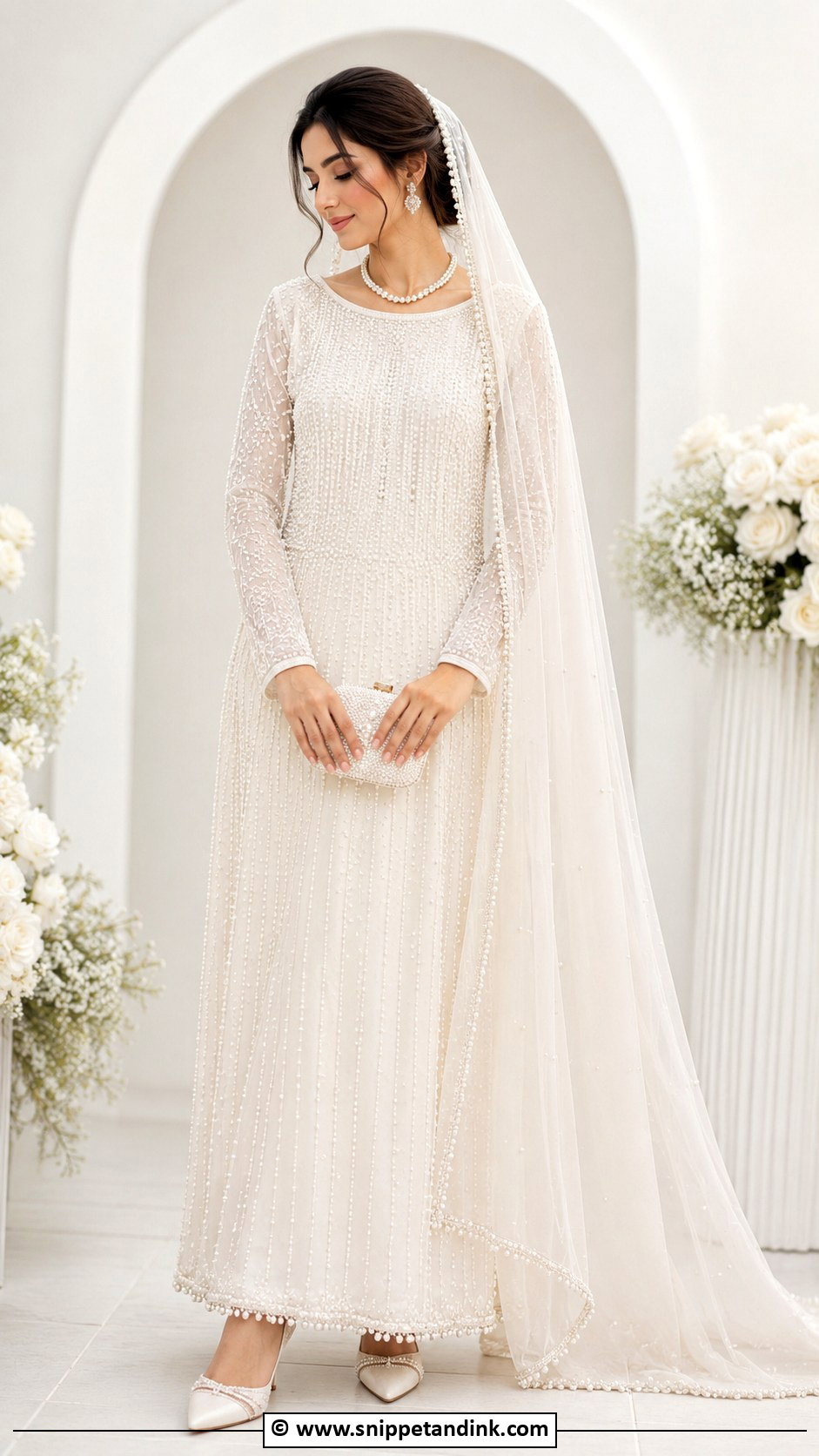
A pearl-white maxi dress is the lightest and most modern option here. A modest neckline, long sleeves and a soft flared skirt with pearl beading, lace or tonal embroidery keep it bridal. Add a dupatta, veil or soft scarf to suit the ceremony setting. Pearls are the natural jewelry, though silver and white gold work too, with closed-toe heels or embellished sandals. It’s an easy fusion look for an intimate Nikkah, and the simplest of all these outfits to wear again.
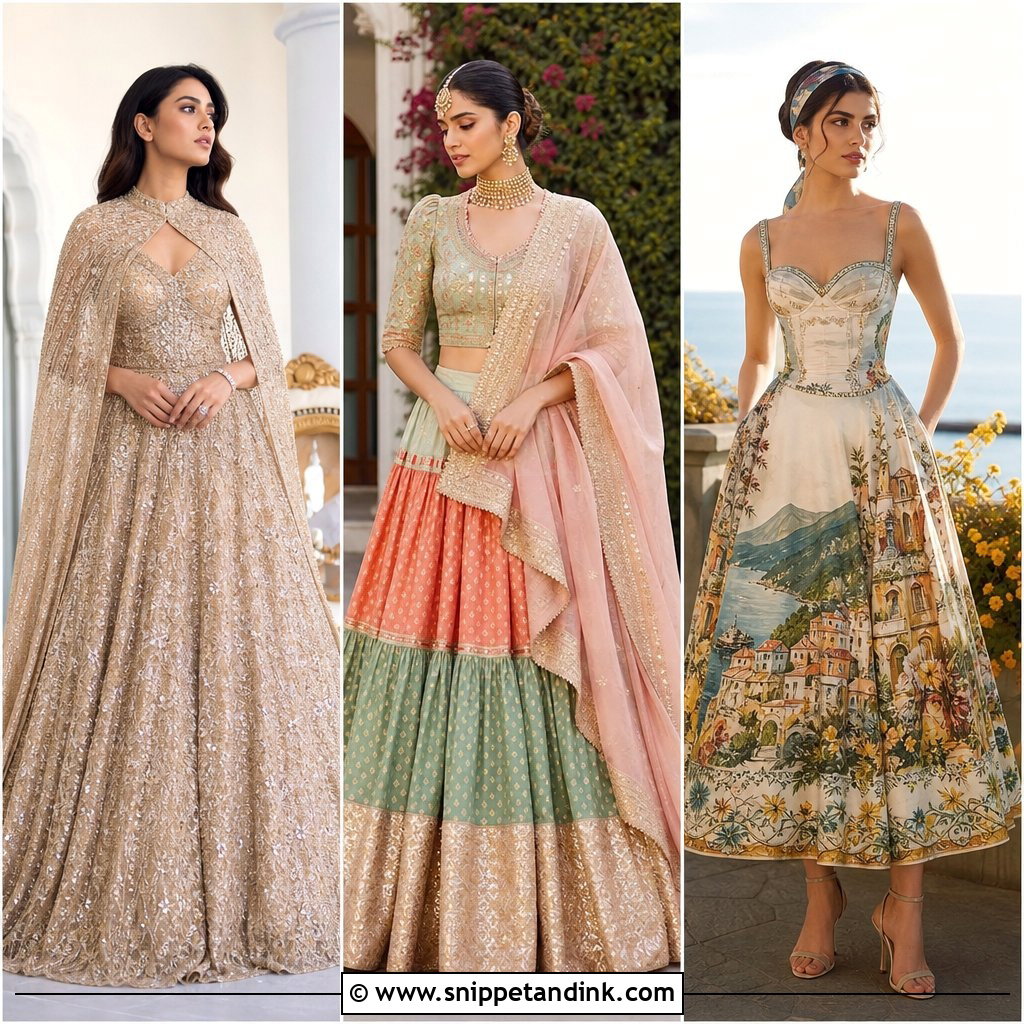
15. Beige Nikkah Organza Lehenga Outfit
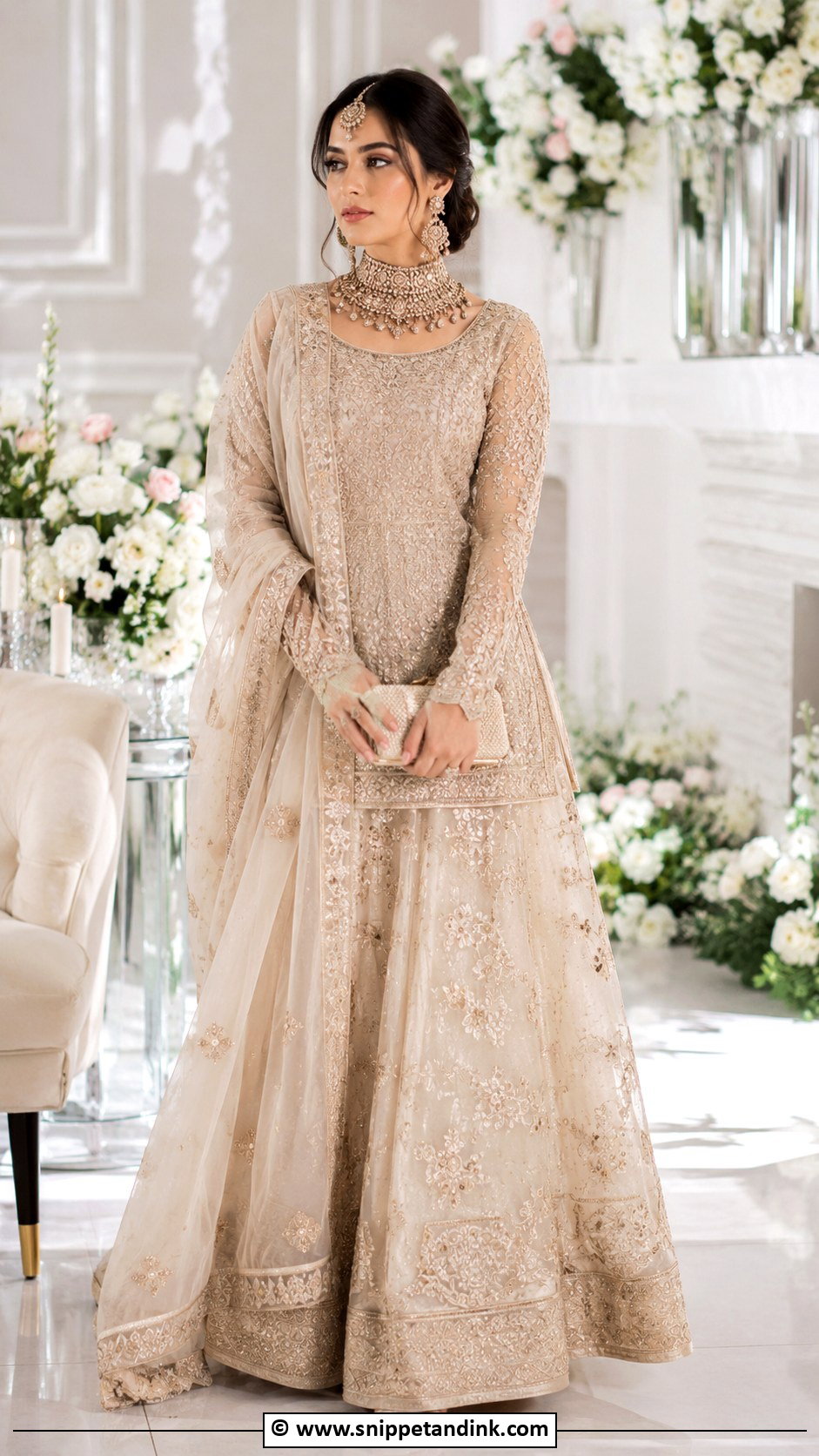
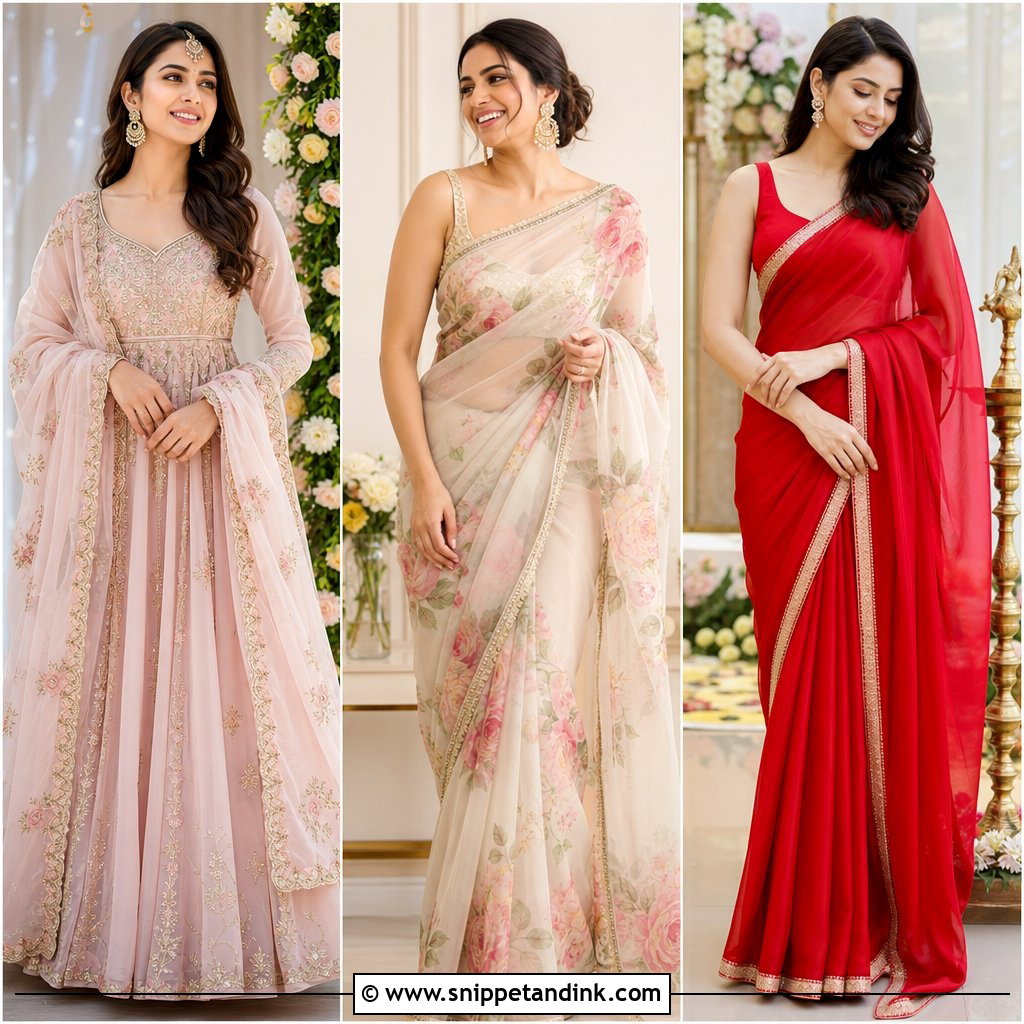
A beige Nikkah organza lehenga outfit only looks bridal when the embroidery has real depth and shine. Flat beige on flat beige can look dull, so I look for raised gold, ivory or champagne work. Organza in the skirt or dupatta keeps it light. A full-sleeve blouse or longer top gives modest balance. Antique jewelry leans traditional; pearls lean soft. Nude heels and a structured clutch finish it. Beige is one of the best colours for outdoor daylight photos, since it doesn’t fight with green or stone backgrounds.
16. Soft Lilac Nikkah Peshwas Outfit
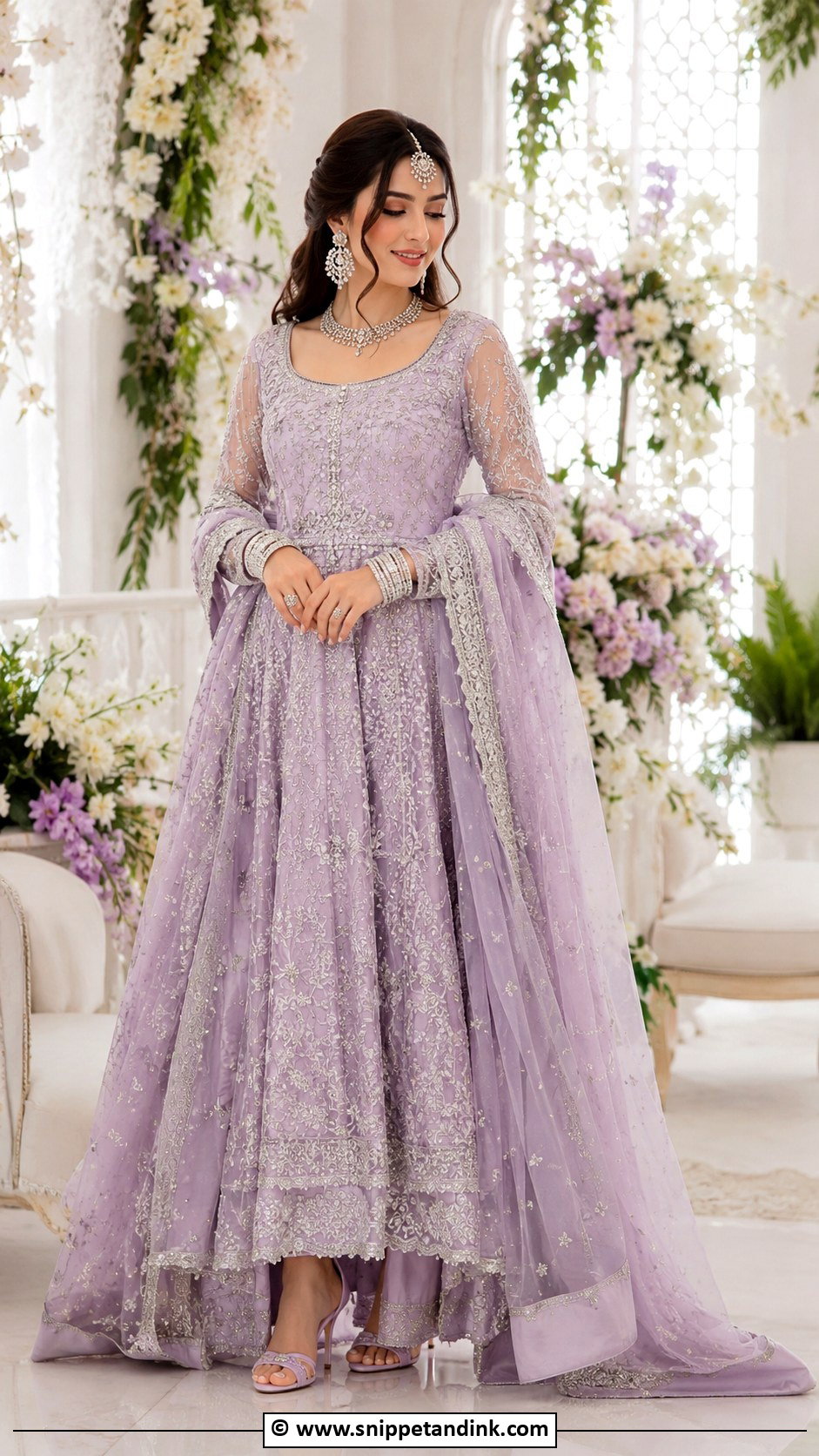
Lilac is less common, which is exactly why some brides love it. It takes silver, pearl and pale gold embroidery well. A long peshwas with a flared skirt gives movement while staying modest, and a matching dupatta with a fine border and light scattered motifs completes it. Silver jewelry and crystal bangles suit the colour. Lilac dyes can shift toward grey or blue under warm indoor bulbs, so I compare the fabric under the venue’s kind of lighting before committing. It suits spring and summer, but works year-round in the right fabric.
17. Rose Gold Nikkah Sharara Outfit
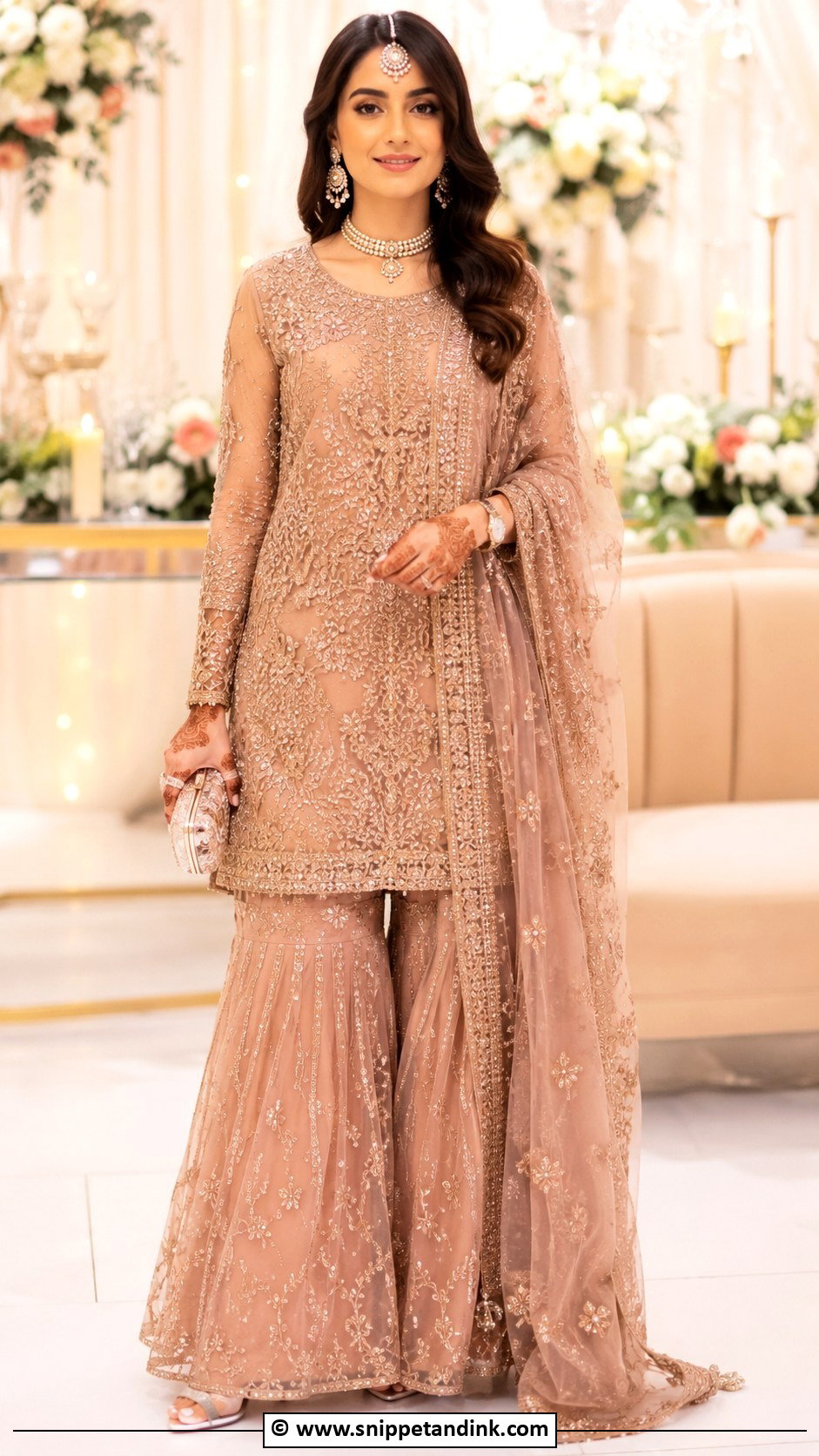
Rose gold brings shine without the full weight of yellow gold. Metallic embroidery, sequins and fine beadwork suit it. Choose a long kameez or short kurti depending on comfort and family preference, over a wide sharara. A matching dupatta with a finished border is essential here; a plain-edged one makes the whole outfit look unfinished. Rose gold jewelry matches, though pearls or antique gold also work, with champagne heels and a soft clutch. Sequins scratch, so I line the inner sleeve on heavily sequinned kameez.
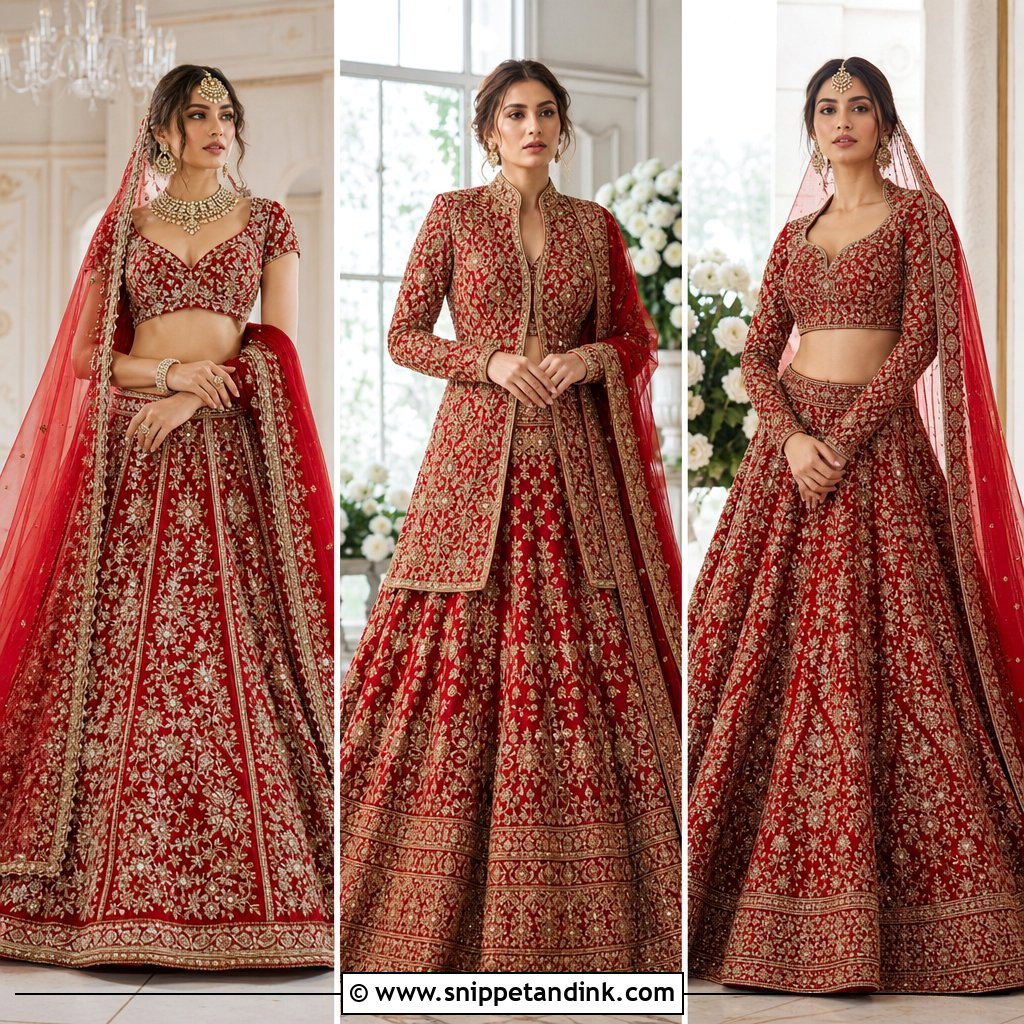
18. Traditional Red Nikkah Lehenga Outfit
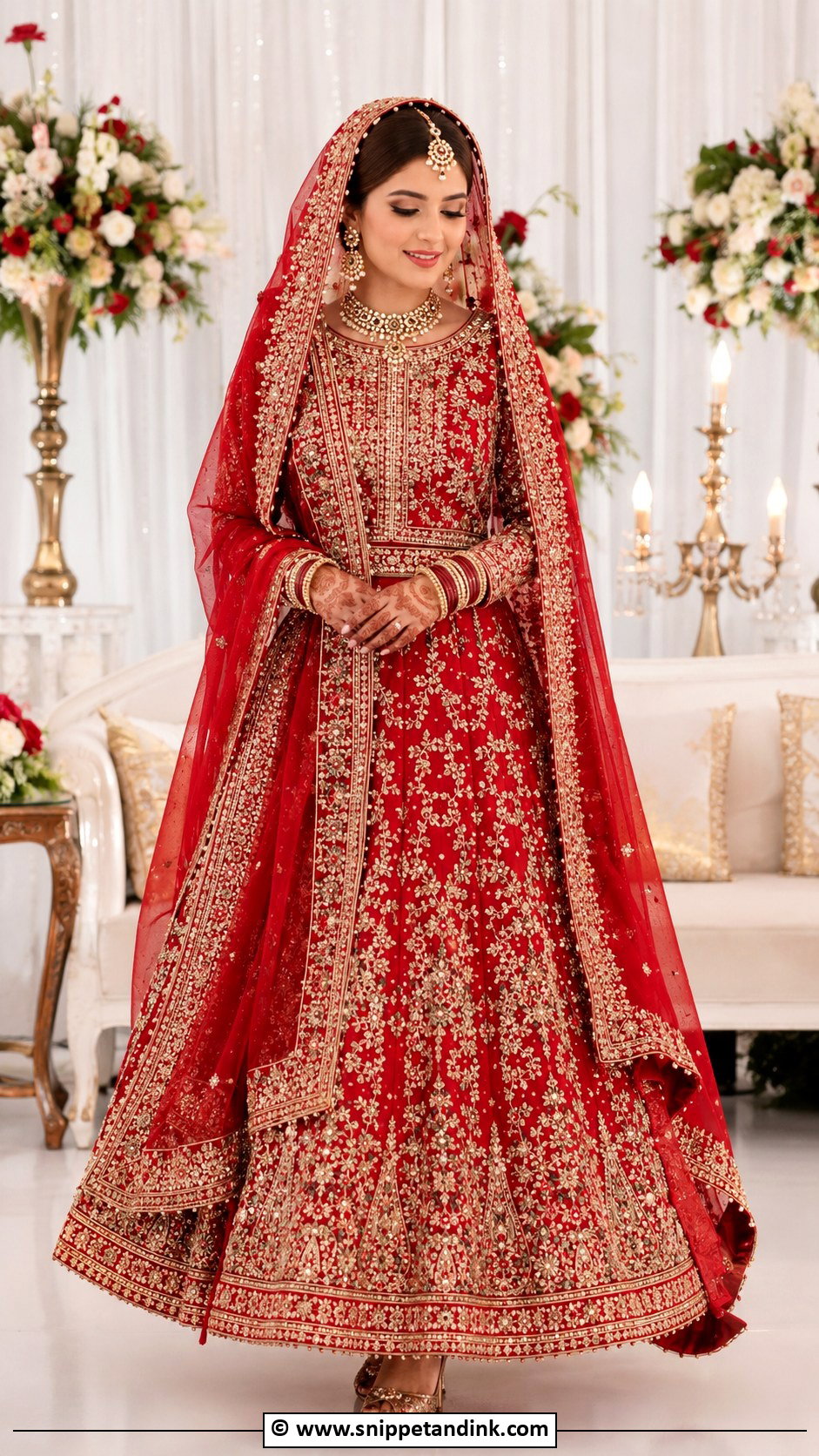
Red is the most traditional colour of all, and some brides want their Nikkah to feel as formal as the main wedding. A red lehenga with gold embroidery, a modest blouse and a dupatta that drapes over the head is the base. For a small, intimate Nikkah, I’d scale the styling back so the outfit doesn’t overwhelm the room: a kundan set, bangles, a tikka and embroidered heels are enough. Soft matte makeup with defined eyes balances the richness.
19. Maroon Nikkah Gharara Outfit
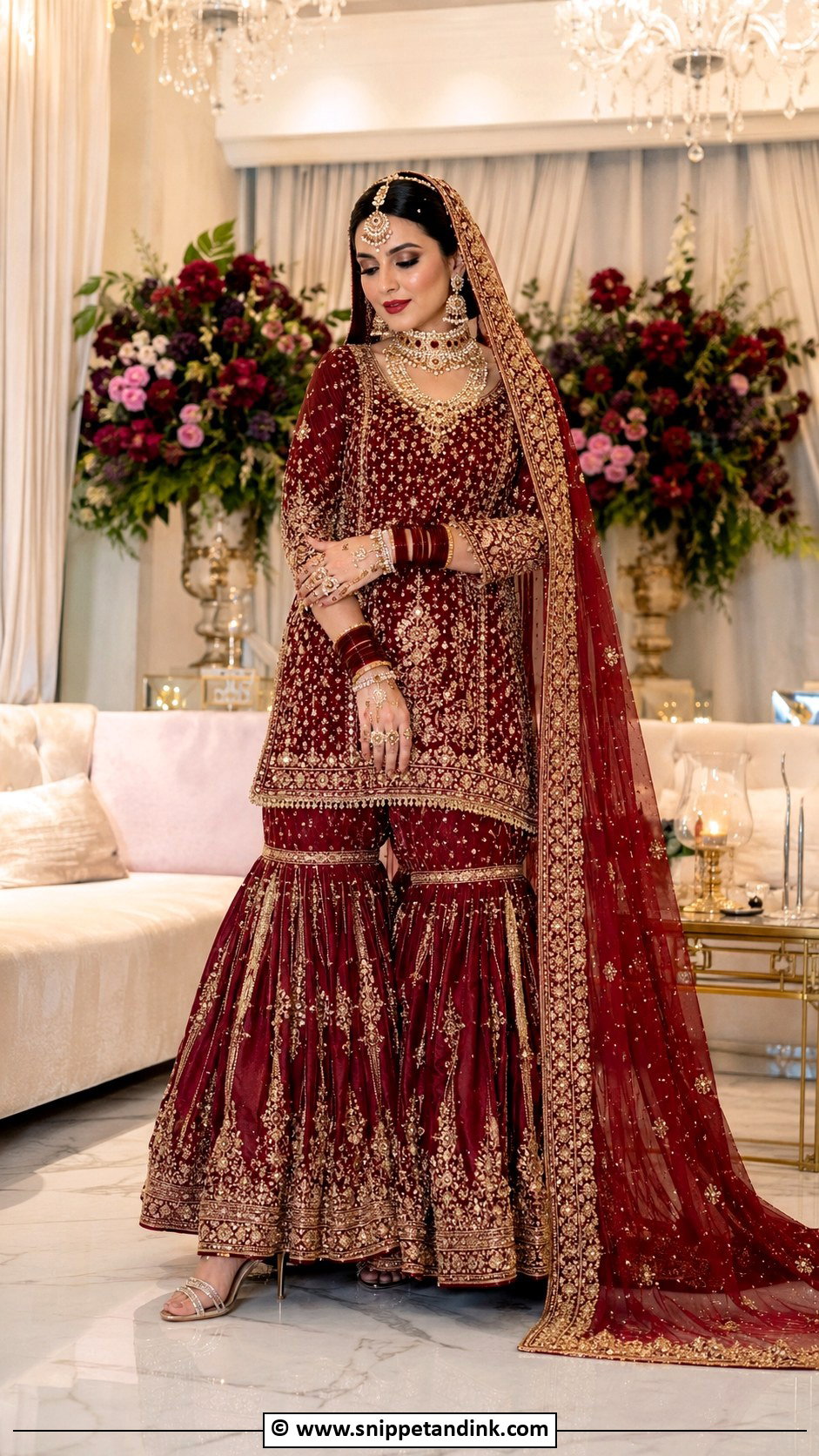
Maroon reads more mature than bright red and works especially well for evening ceremonies. A short embroidered shirt goes over a maroon gharara with gold, copper or antique detailing, and a maroon, gold or beige dupatta can soften it. Kundan, polki and gold suit the depth of the colour. Add deep-toned bangles, embellished heels and a clutch with metallic accents. I ask makeup artists to keep the eyes defined but not dark with maroon, since a heavy smoky eye plus a deep outfit can look severe in photos.


20. Ivory Saree With Veil Nikkah Outfit
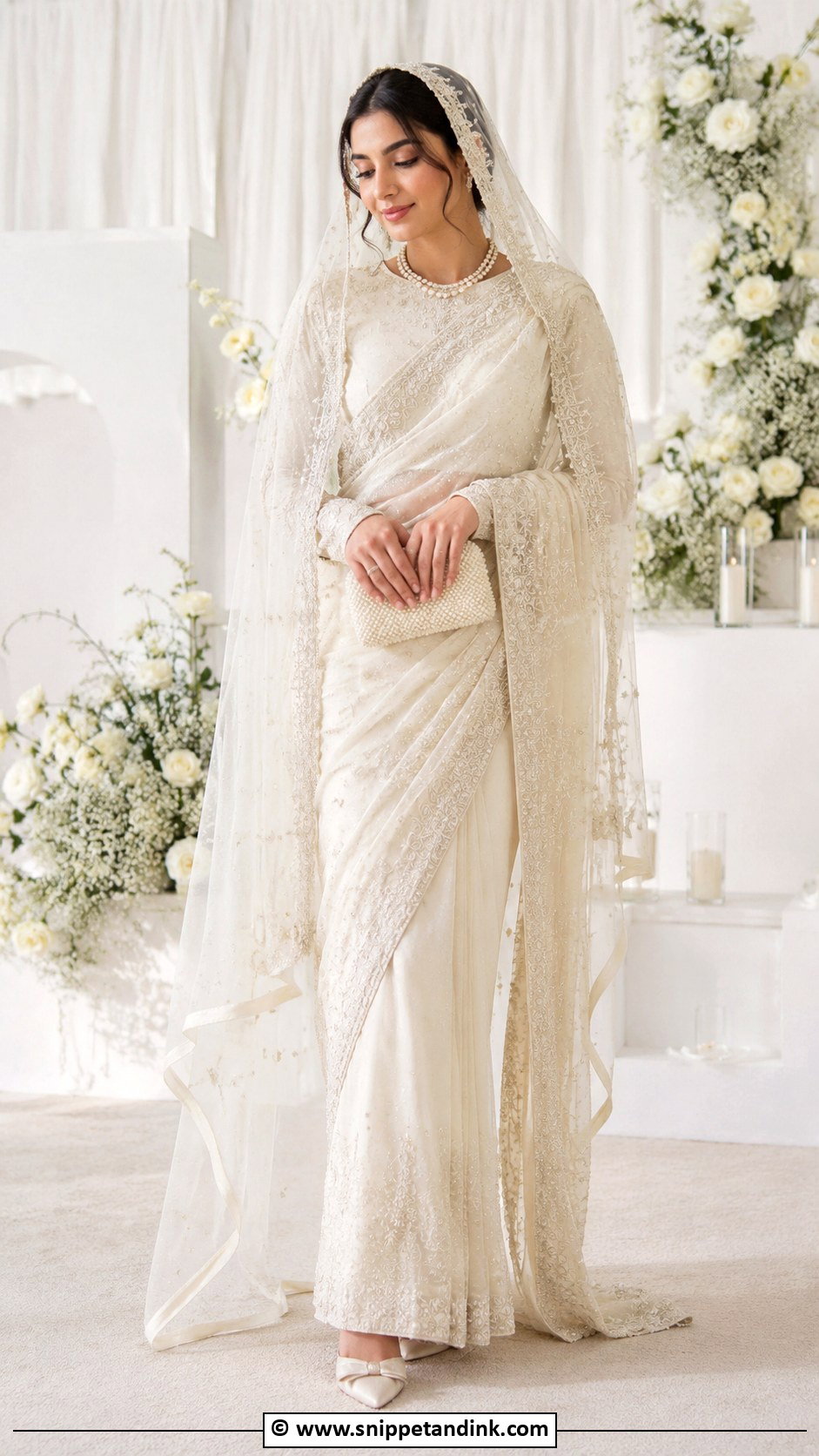
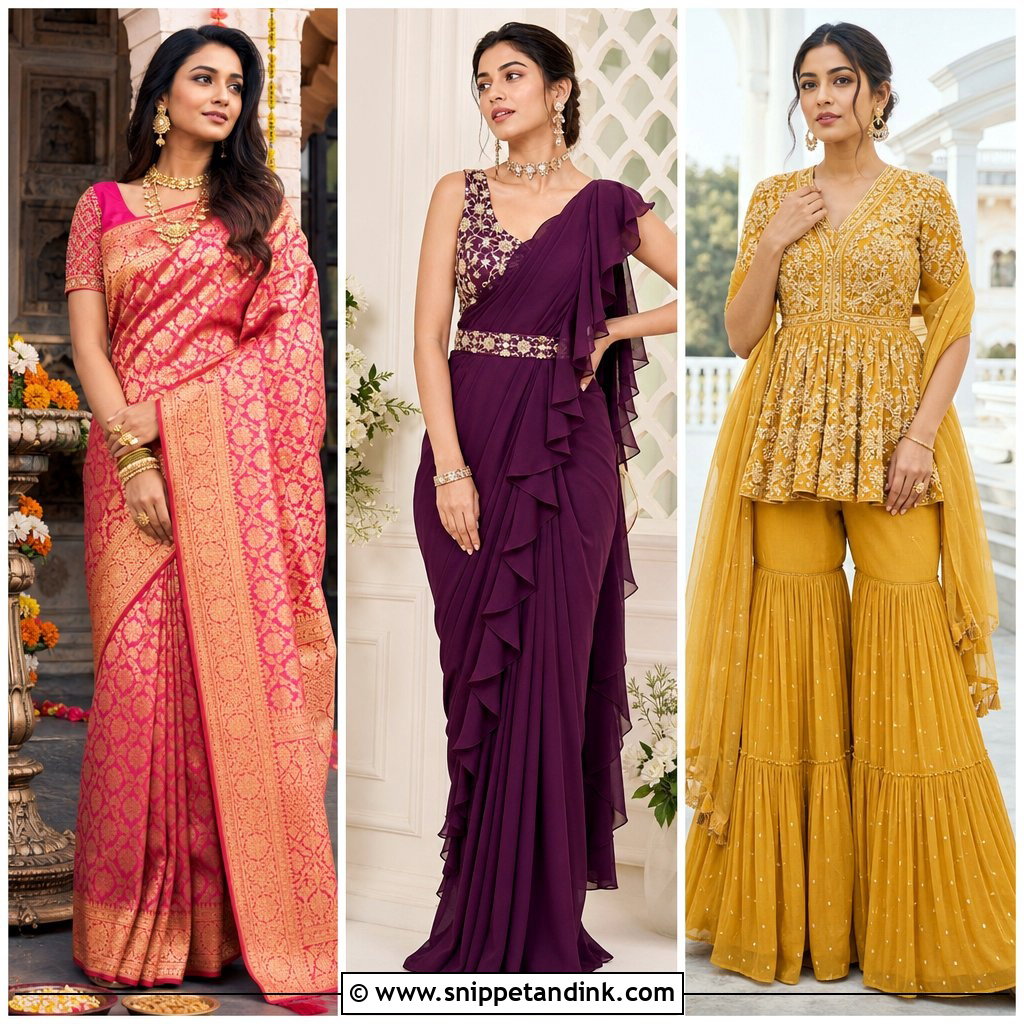
An ivory saree with a separate veil turns a draped look into an unmistakably bridal one. A lightweight saree with gold, pearl or silver embroidery and a full-sleeved blouse is the base; the veil or dupatta goes over the head for the ceremony. I pin the veil to the hair, not the saree, so it stays put when the pallu shifts. Pearl jewelry, a fine necklace and drop earrings suit it, with ivory or metallic heels. It’s much lighter to wear than a heavy lehenga.
21. White Lehenga With Green Dupatta Outfit
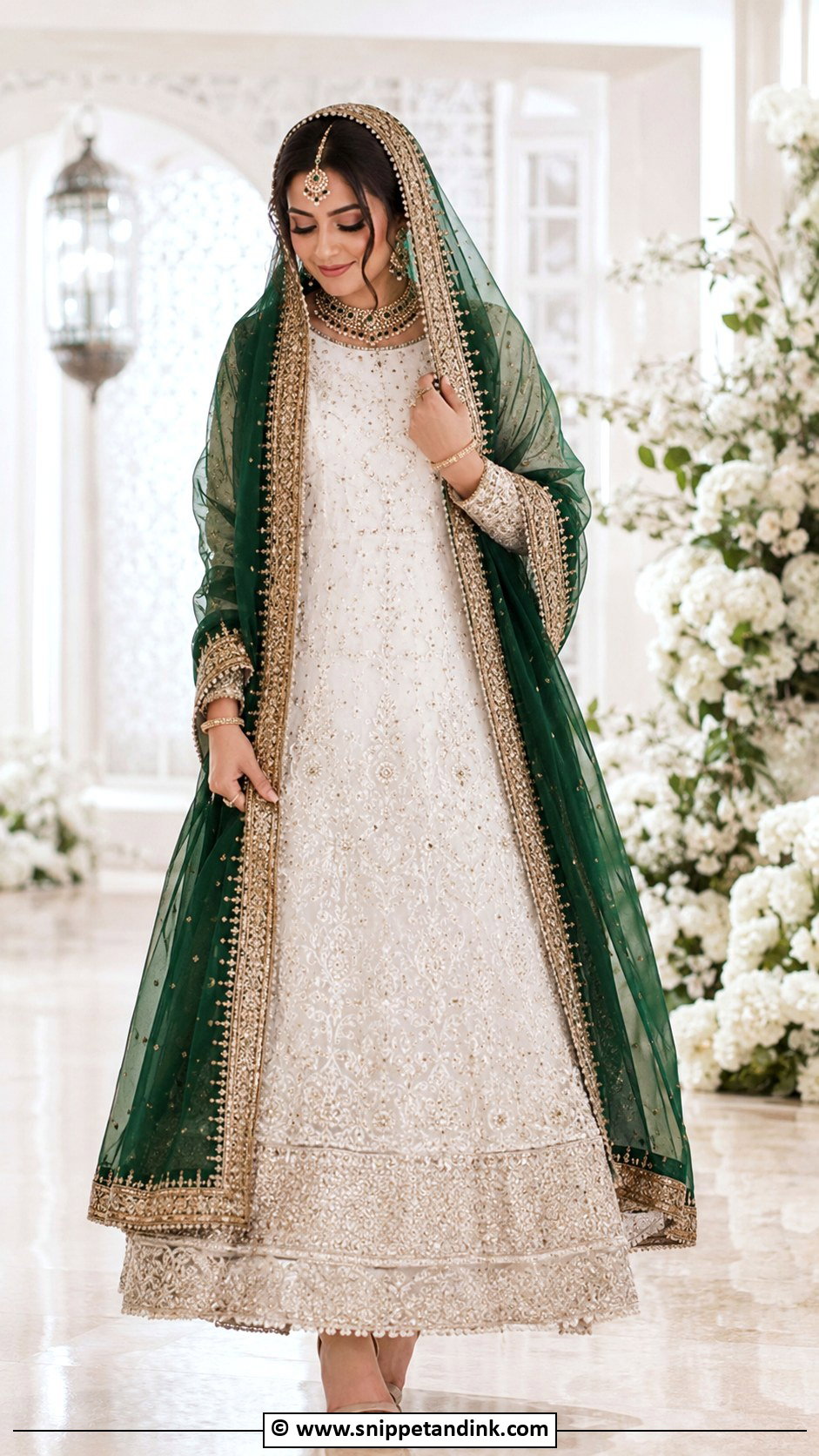
White and green together carry a strong traditional feel. The white lehenga with gold or pearl embroidery keeps the base soft, and a sage, emerald or bottle-green dupatta adds contrast and depth. A green dupatta with a gold border stands out clearly in photos. Kundan jewelry, gold bangles and a tikka complete it, with nude or gold heels. Before ordering, I ask for the dupatta and lehenga to be dyed and embroidered as one order, because a green that’s slightly off against white embroidery is very noticeable.
22. White Anarkali With Gold Dupatta Outfit
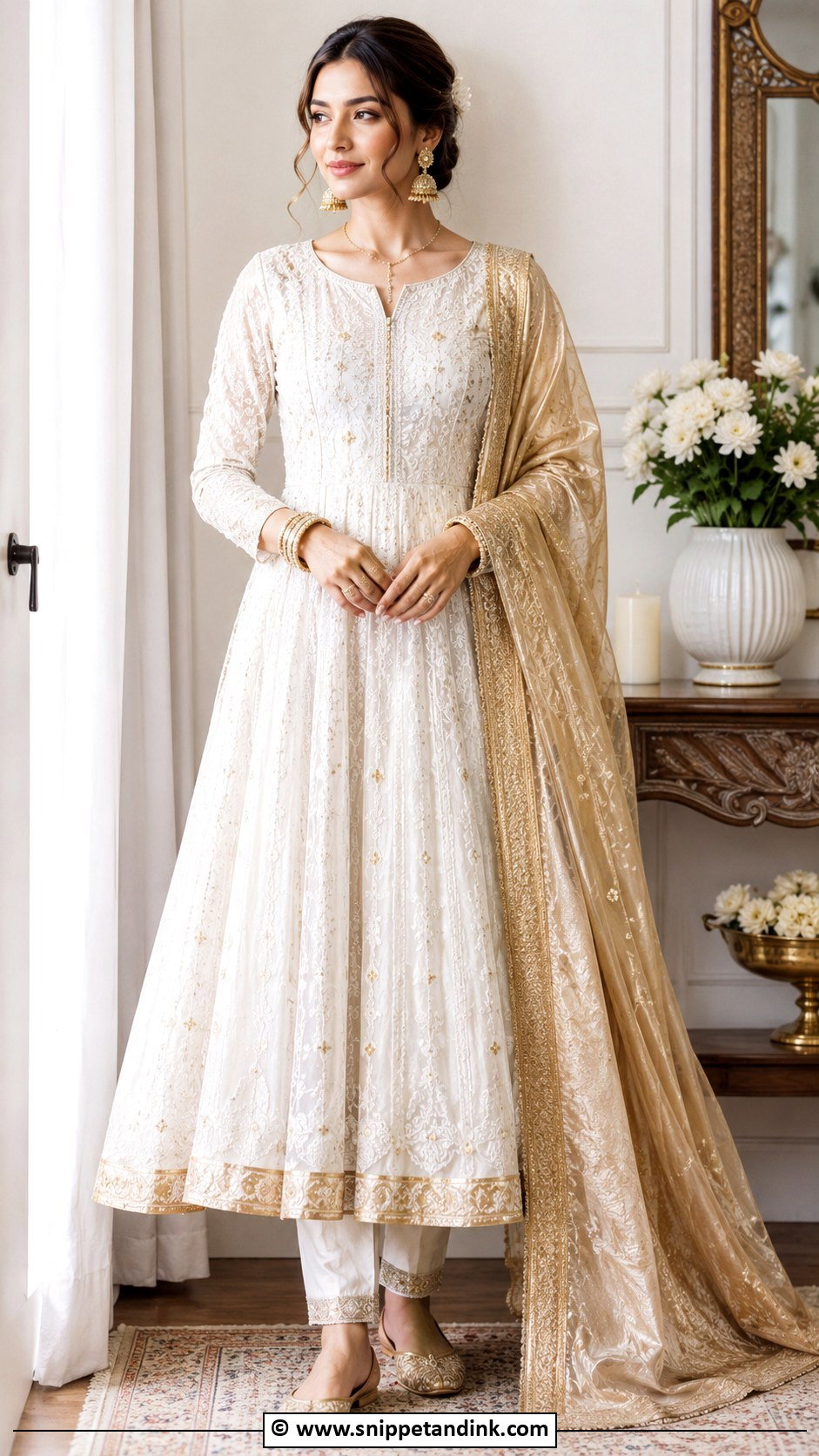
A white anarkali with gold dupatta outfit is one of the easiest to wear here. The white anarkali with subtle embroidery, lace or pearls sets a clean base, and a tissue, organza, net or silk dupatta with a wide gold border brings the richness. Churidar or slim trousers keep the line graceful. Gold jhumkas, bangles and a fine necklace are the natural match, with gold heels or khussas. Tissue dupattas are stiff and slippery, so I use small hidden pins at the crown and shoulder to stop them sliding all ceremony.
23. Floral Nikkah Lehenga Outfit
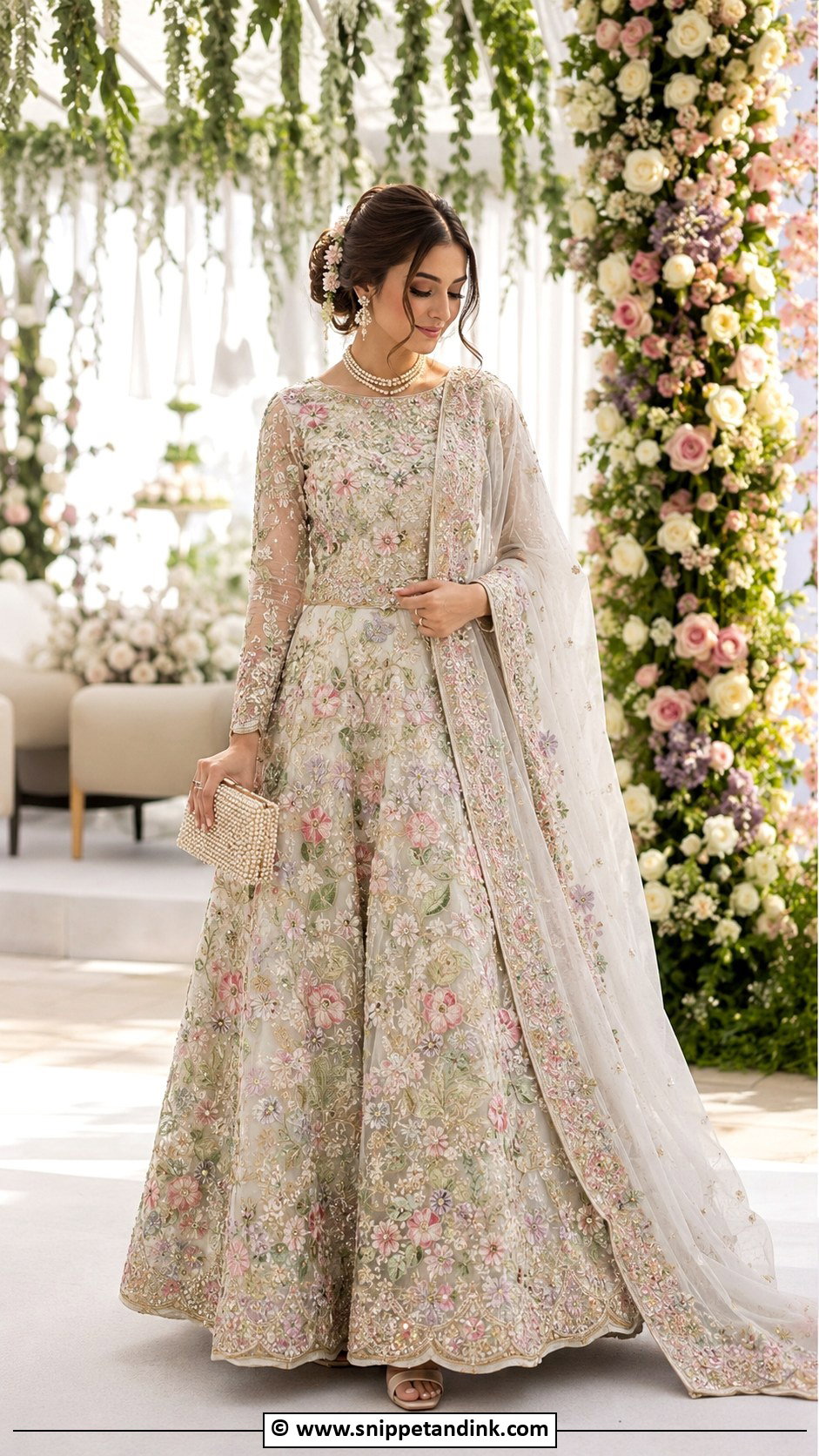
Floral embroidery keeps a lehenga soft and feminine, but the line between bridal and casual is thin. Choose embroidered florals in pastel, ivory, blush, sage or champagne instead of loud prints. A matching sleeved blouse and sheer dupatta refine it, and pearl, kundan or fine gold jewelry suits floral work. I keep the jewelry lighter here, because heavy pieces fight with a busy pattern. Daytime ceremonies and garden venues suit it best.
24. Minimal White Nikkah Suit Outfit
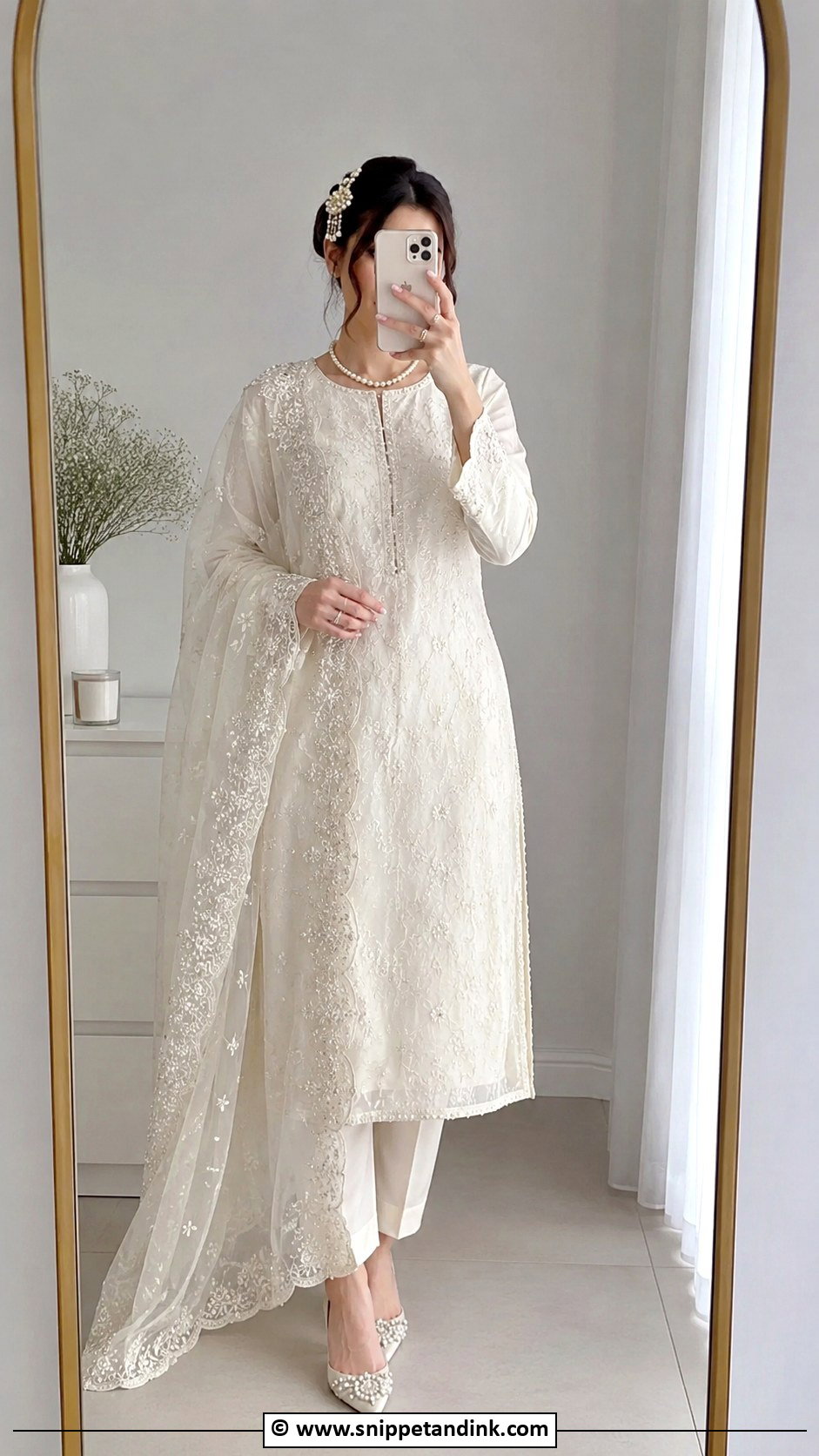
Simplicity only works when the tailoring is excellent. A well-cut long kameez with straight pants or cigarette trousers in silk, raw silk, organza or good chiffon is the base, with light embroidery at the neckline, sleeves and hem. The dupatta does the bridal work here, so choose one with lace, pearls or an embroidered border. A passa, earrings or a layered pearl necklace lift the whole look. Embellished heels or khussas finish it. I suggest it for civil ceremonies and masjid Nikkahs, where an understated look sits well.


25. Heavily Embroidered Nikkah Lehenga Outfit
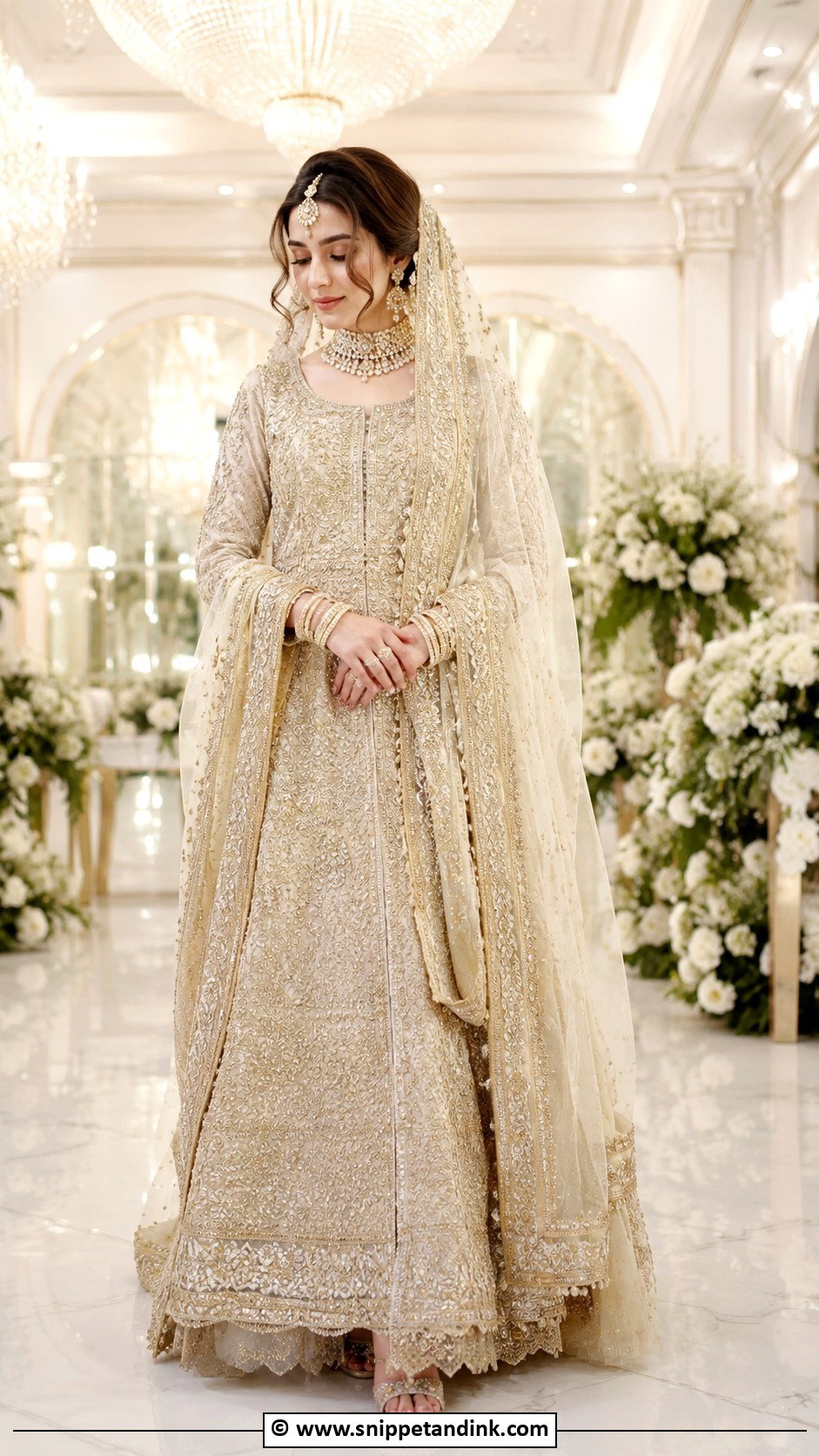
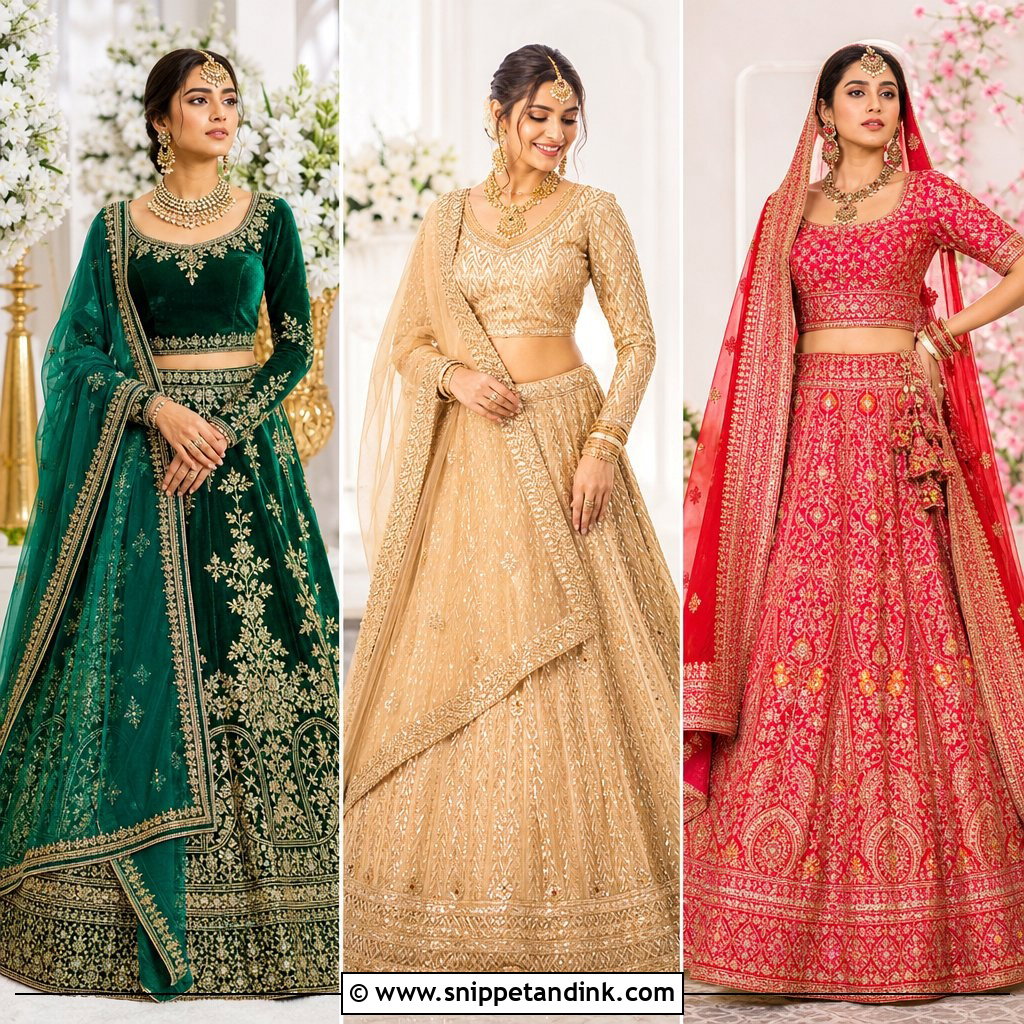
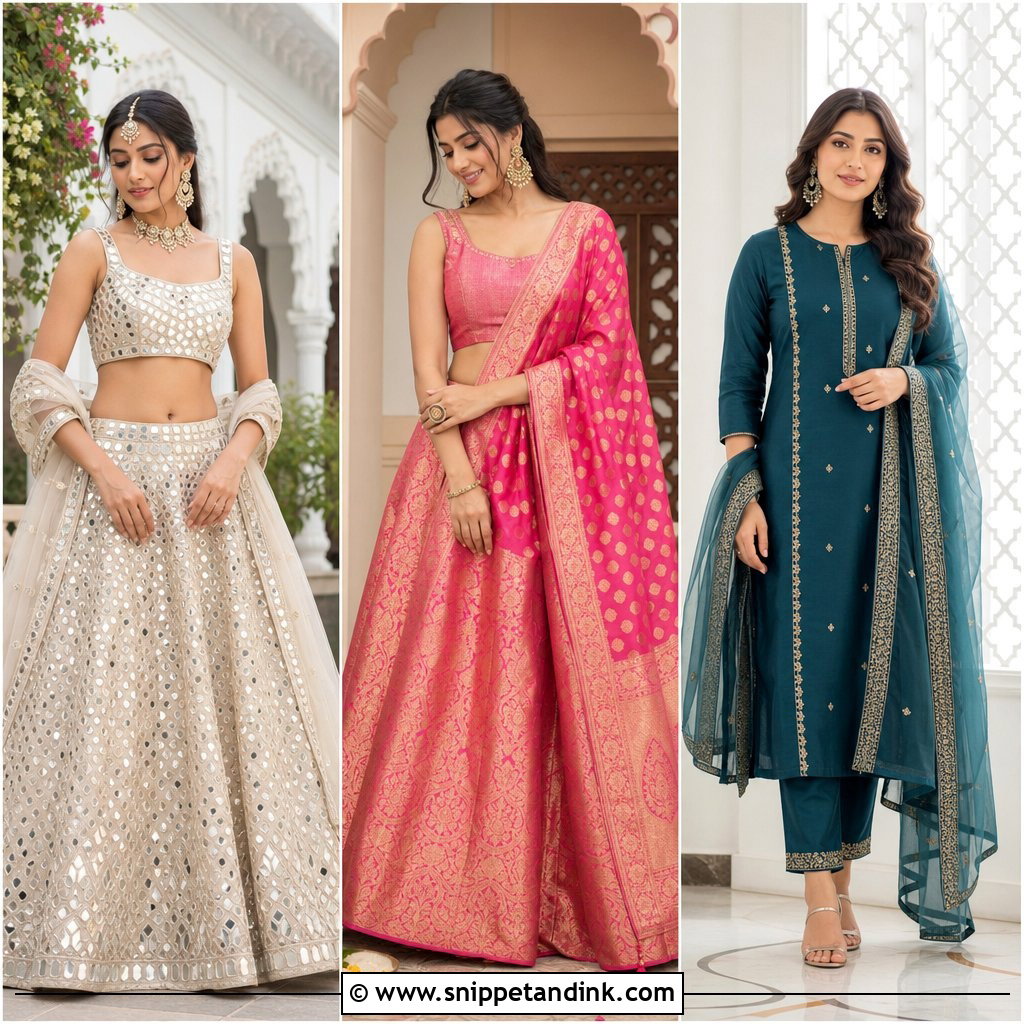
A heavily embroidered lehenga gives full bridal impact in ivory, champagne, gold, blush, green or red. Dense zardozi, sequins, pearls or handwork make it feel grand. Balance the skirt with a modest blouse and a dupatta that drapes well over the head or shoulder, and match the jewelry to the weight: choker, earrings, tikka and bangles. Heavy lehengas can weigh several kilos, and that weight sits on the waist all day, so I check the waistband is wide and padded and suggest comfortable shoes. It belongs at a formal venue or a large family gathering.
Is Ordering a Bridal Outfit From Abroad Worth It?
Many brides outside South Asia order their Nikkah outfit from Pakistan or India, where handwork is richer and often less expensive. It can be the right call, but the timeline is longer than people expect. Custom bridal embroidery commonly takes a few months, then shipping and customs add more, so I’d place an order at least five to six months before the Nikkah.
- Take your measurements with a local tailor rather than at home. A loose waist on a gharara is easy to fix; a tight blouse often isn’t.
- Ask for extra seam allowance at the bust, waist and sleeves so a local tailor can let it out.
- Request close-up photos of the actual embroidery before it ships, not just the catalogue picture.
- Leave at least four weeks after delivery for local alterations.
Zari and Pearls Need Different Care After the Day
Real zari and metallic threadwork tarnish when they meet damp air or plastic. After the wedding, I wrap the outfit in soft white muslin or cotton, never a plastic garment bag, and store it flat or loosely folded. Refold it along different lines every few months so the embroidery doesn’t crack at the creases. Keep perfume off the fabric on the day itself, since sprays can discolour both silk and pearls. For cleaning, find a dry cleaner who handles hand-embroidered bridal wear, and point out every loose bead before they start.
Your Nikkah Outfit Should Let You Sit, Sign and Smile
The easiest way to narrow down a Nikkah outfit is to start with the setting, your family’s traditions, how modest you want to be and how comfortable you need to feel. White, ivory, champagne, blush, mint, sage and gold keep the look soft; emerald, maroon and red feel more traditional. The dupatta, jewelry, shoes and hairstyle can turn even a simple outfit bridal. Make sure you can sit, walk, sign, greet guests and pose in it comfortably. A gharara, lehenga, saree, peshwas, abaya gown or anarkali can all work, as long as it feels like yours.
You'll Like These Ideas:



Leave a Reply