
Satin is the fabric I see brides fall for fastest in the fitting room, because it looks finished with almost nothing on it. It’s also the fabric that shows every fitting mistake, every crease and every drop of champagne, so the cut has to be right. The shapes I’m dressing most right now are clean gowns, bias-cut slip dresses, sculptural ball gowns, draped bodices, pearl details, gloves, reception minis and slim city silhouettes. Each satin behaves differently, and the right one depends on your venue, how much you’ll move and what feels like you. Here are 25 satin styles, with the fitting notes I’d give you on each.
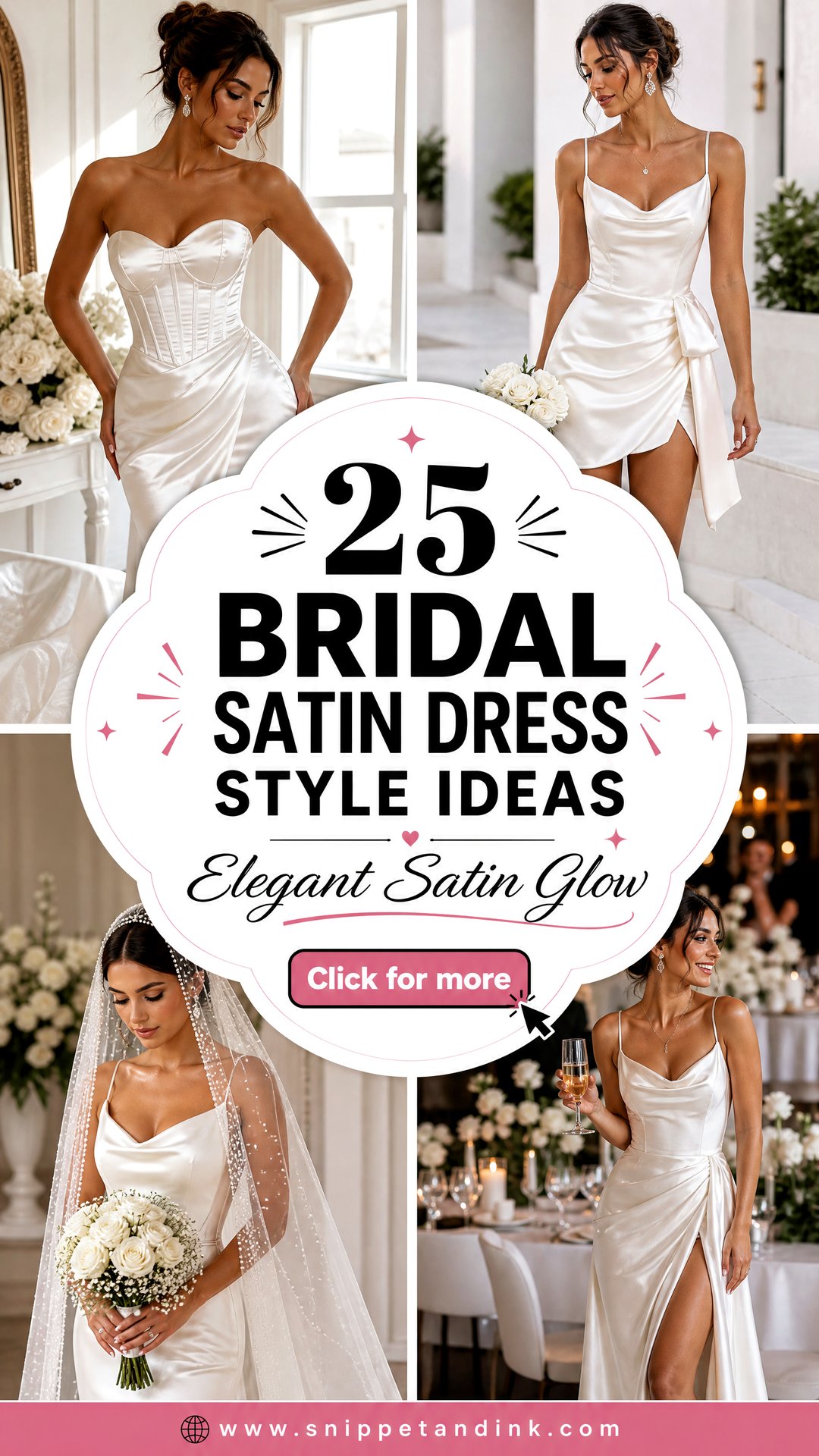
Duchess, Mikado or Charmeuse? Satin Weights Explained
“Satin” describes a weave, not one fabric, and the type matters more than most brides realize. Ask the boutique exactly which satin a gown is made from, then match it to the shape you want.
- Duchess satin: heavy, lustrous and firm. It holds ball gowns, structured A-lines and big bows. It’s warm to wear, which matters for summer outdoor weddings.
- Mikado: a stiff, slightly textured satin with less shine. It’s what gives sculptural gowns their crisp folds and holds a clean architectural line.
- Crepe-back satin: shiny on one side, matte on the other, with a softer hand. Good for columns, sheaths and sleeves because it moves and creases less.
- Charmeuse and silk satin: light and fluid. These are what bias-cut slips and cowl necks are made from. They cling and show every line underneath.
- Stretch satin: a blend with some elastane. Kinder for mermaid and fitted shapes, and for dancing.
Silk satins have a deeper, softer glow; polyester satins are more affordable, more resistant to water marks and often shinier. Neither is wrong. I’d hold a swatch of each under the kind of light you’ll be married in, because one that looks rich in a boutique can look plasticky outdoors.
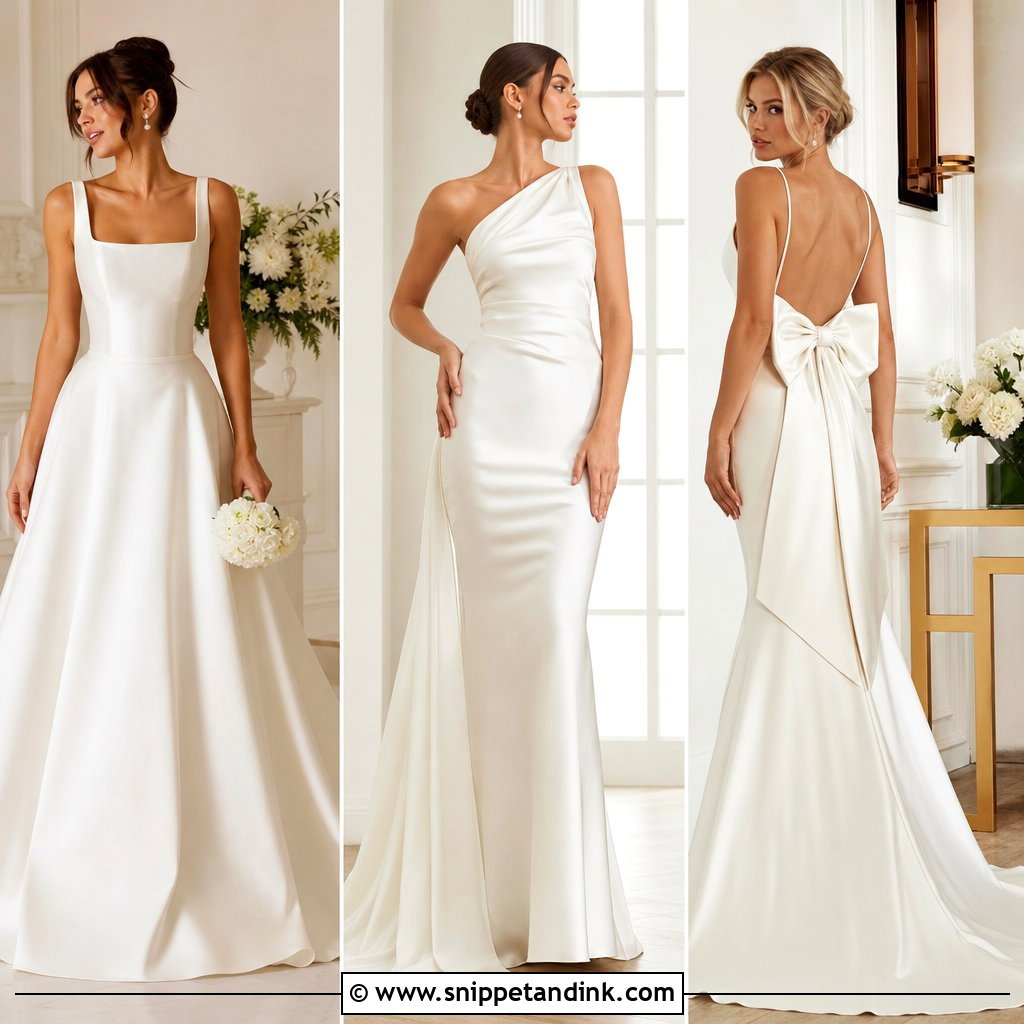
1. Satin A Line Wedding Dress
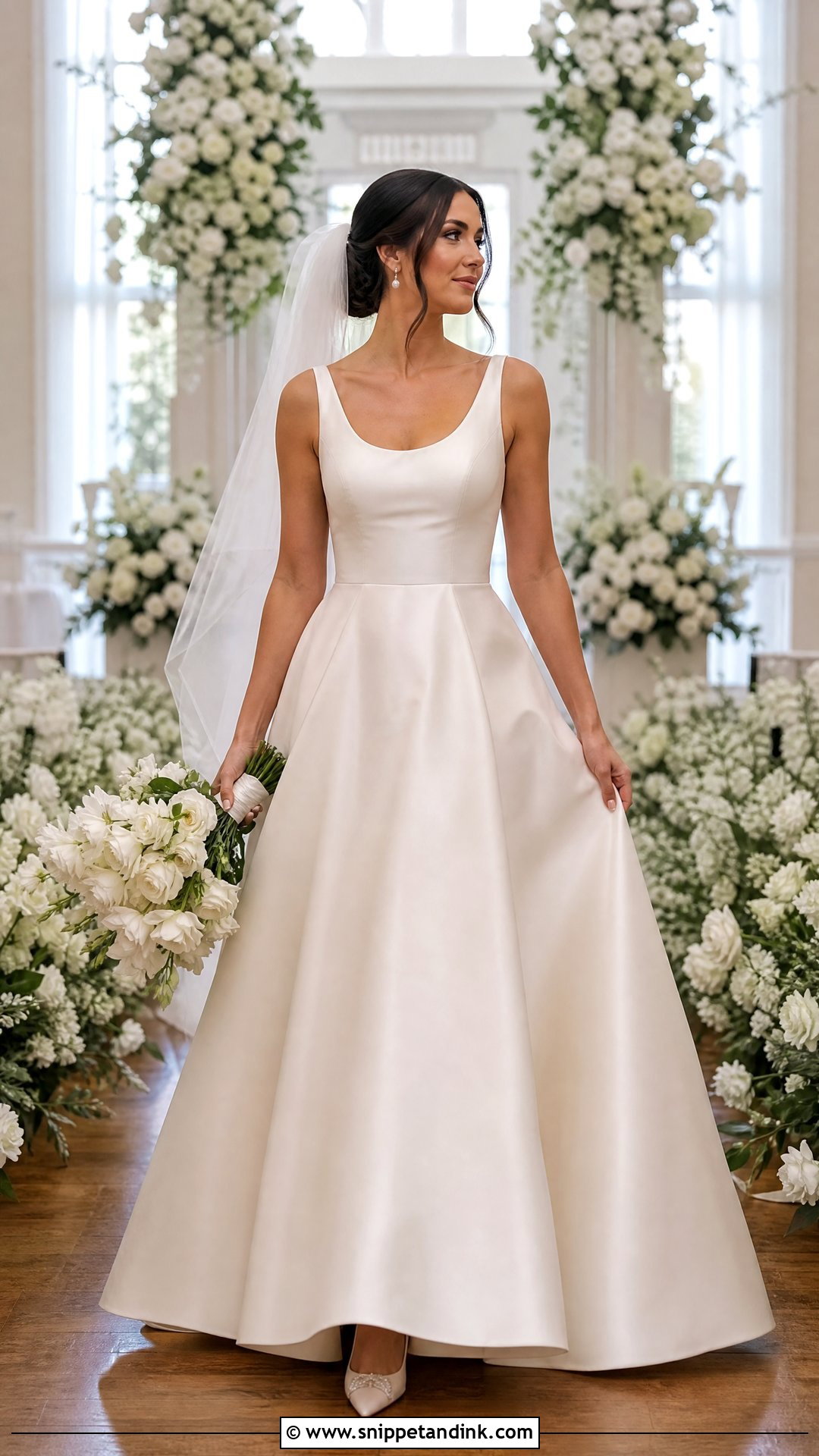
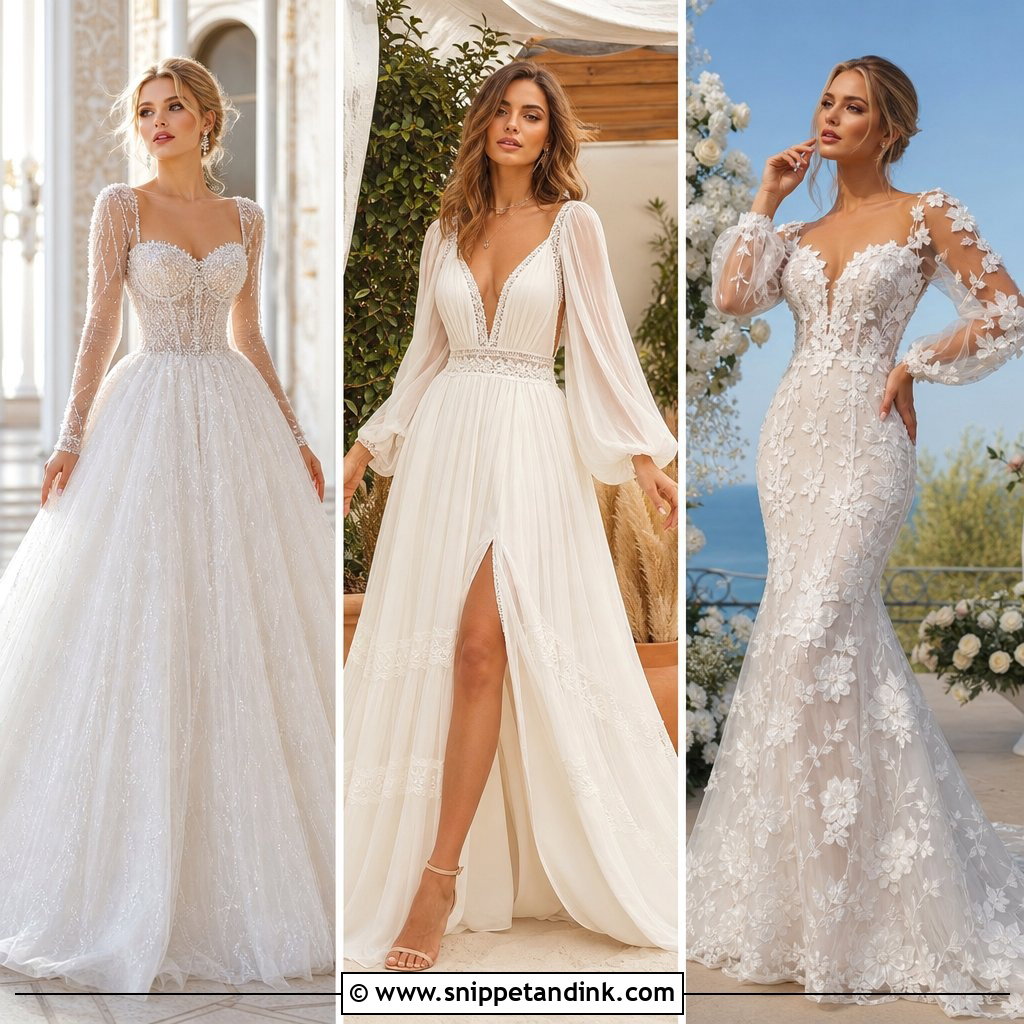
The A-line is the shape I suggest first to a bride who’s unsure, because it works on most figures and you can sit and walk in it all day. The fitted bodice marks the waist and the skirt falls away from the hip. For an outdoor wedding or a bright ballroom I’d choose a satin with a soft sheen, since high-gloss satin flares white in direct light. A scoop, square or sweetheart neckline keeps it fresh. Pointed ivory heels, pearl drops and a medium veil make a classic ceremony outfit without the weight of a full ball gown.
2. Satin Ball Gown Wedding Dress
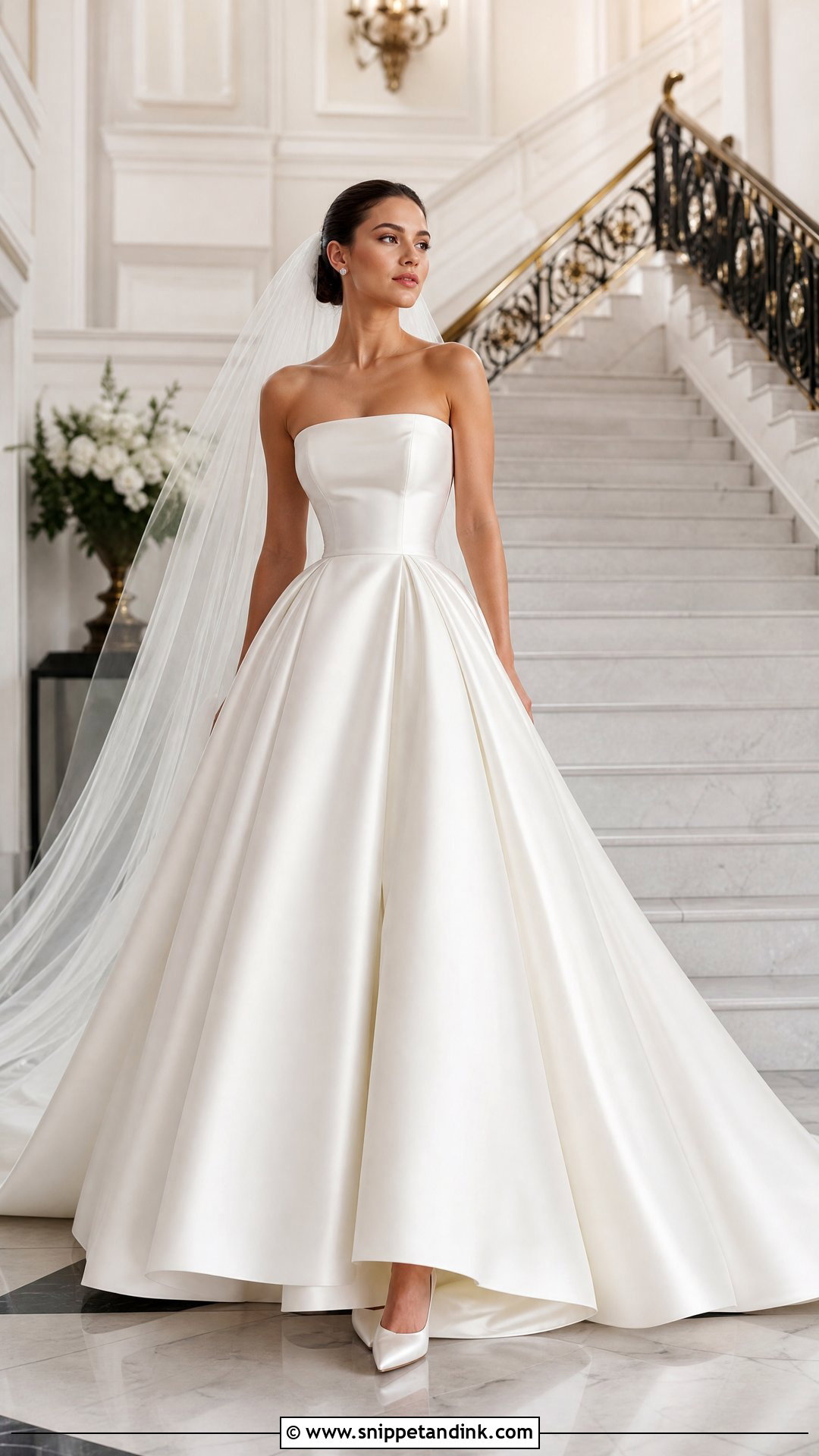
A satin ball gown gives you the full aisle entrance, and satin keeps all that volume smooth rather than busy. Heavy satins like duchess and mikado hold the shape; a light satin will collapse unless there’s a lot of tulle underneath. A basque waist or drop waist makes it feel modern, while a natural waist stays classic. These skirts are heavy, so I check how the bodice is anchored, often with a waist stay inside. Simple studs, a long veil and satin pumps let the skirt do the work in a grand venue or estate.
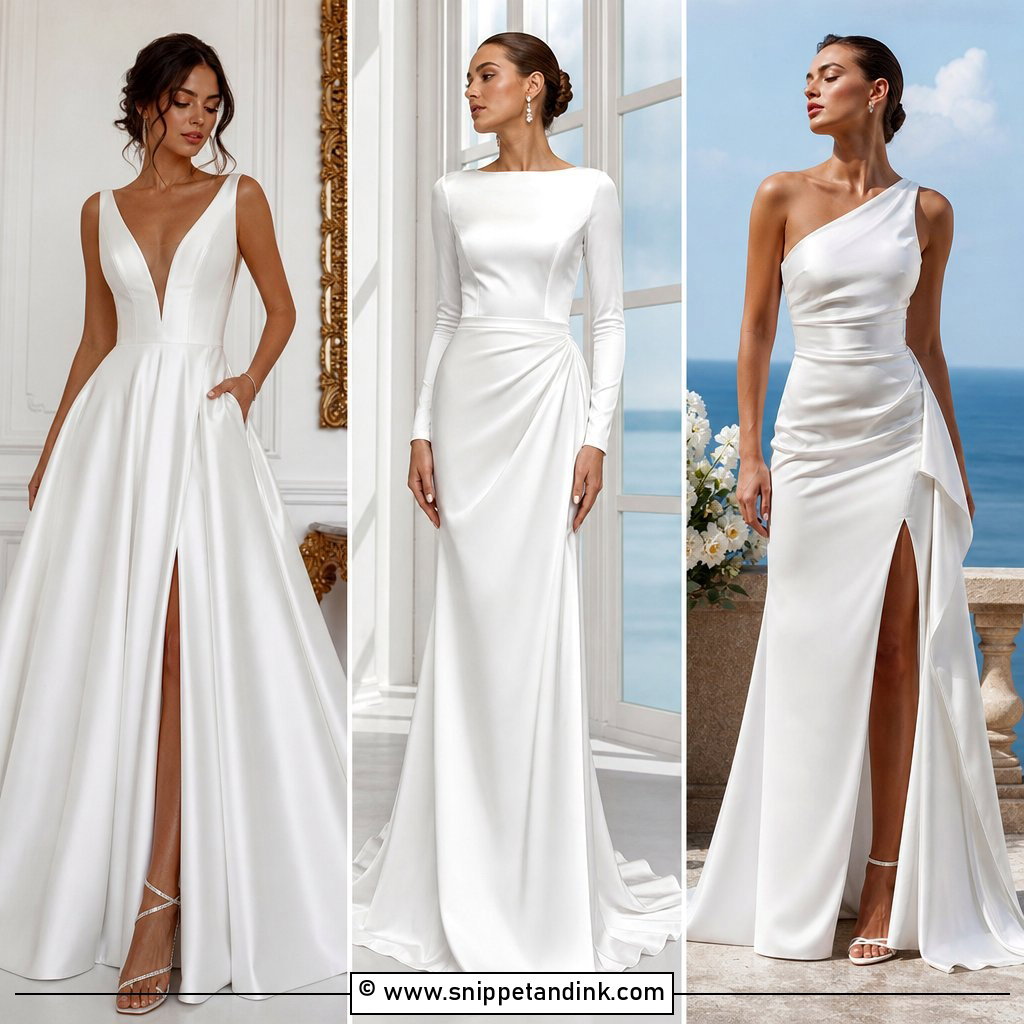
3. Satin Slip Wedding Dress
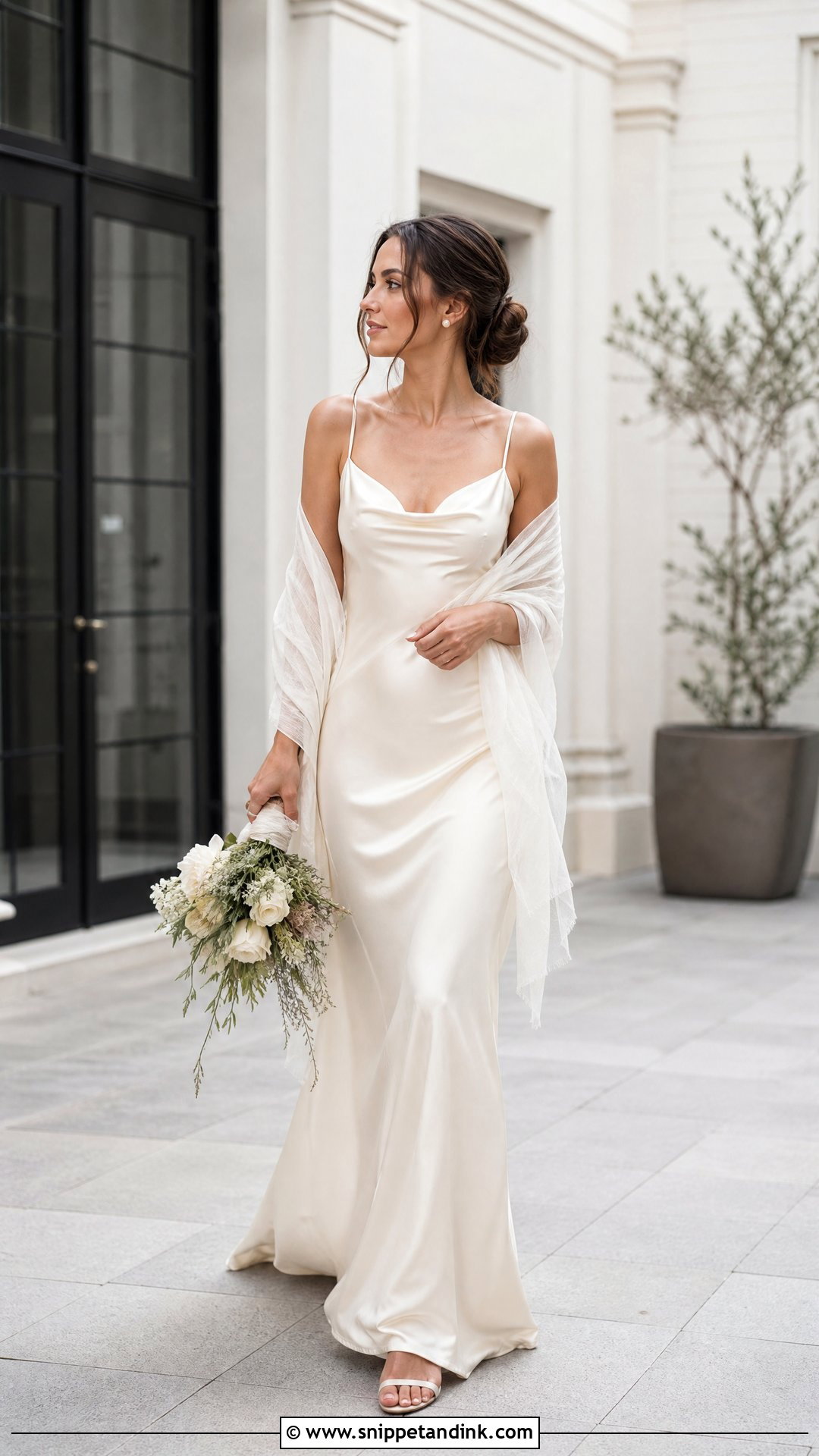
Everything in a slip dress depends on the drape, so fabric quality and fit decide it. Bias-cut satin stretches slightly across the grain and follows the body, which is lovely in motion and unforgiving of underwear lines. I fit slips with the exact shapewear or no-line underwear the bride will wear on the day. Strappy sandals, a cathedral veil, pearl studs and a low bun keep it minimal. A sheer wrap or bridal cape adds coverage for a religious ceremony. It’s suited to city weddings, beaches and elopements.
4. Strapless Satin Wedding Dress
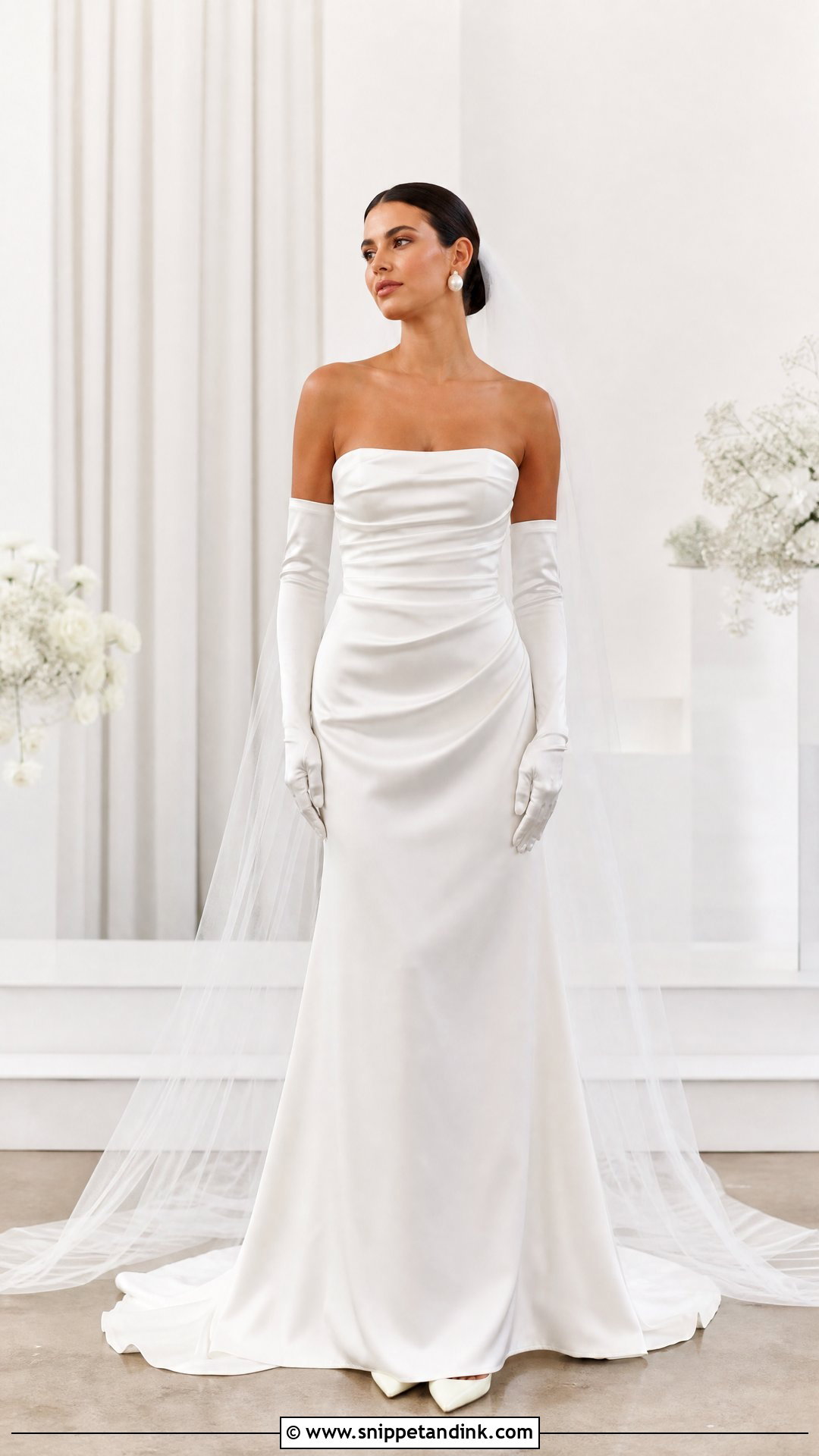
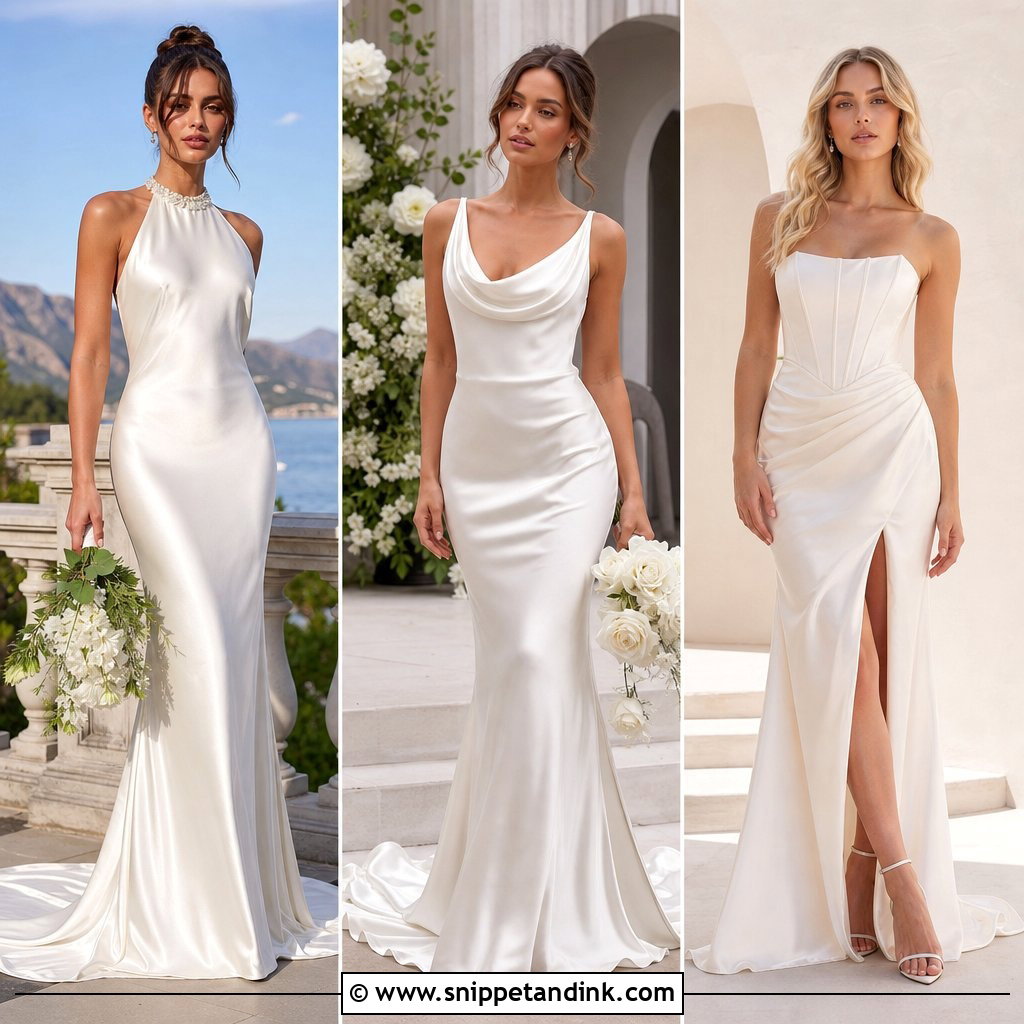
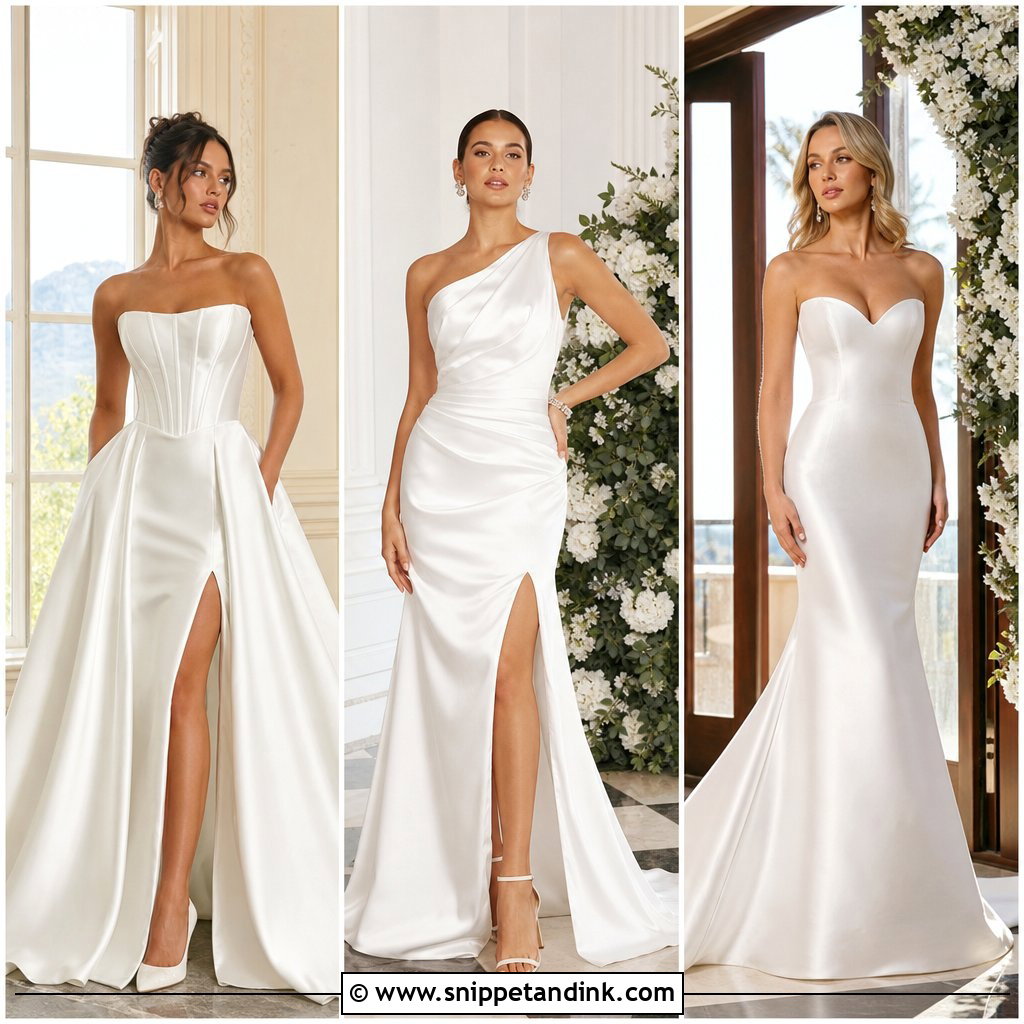
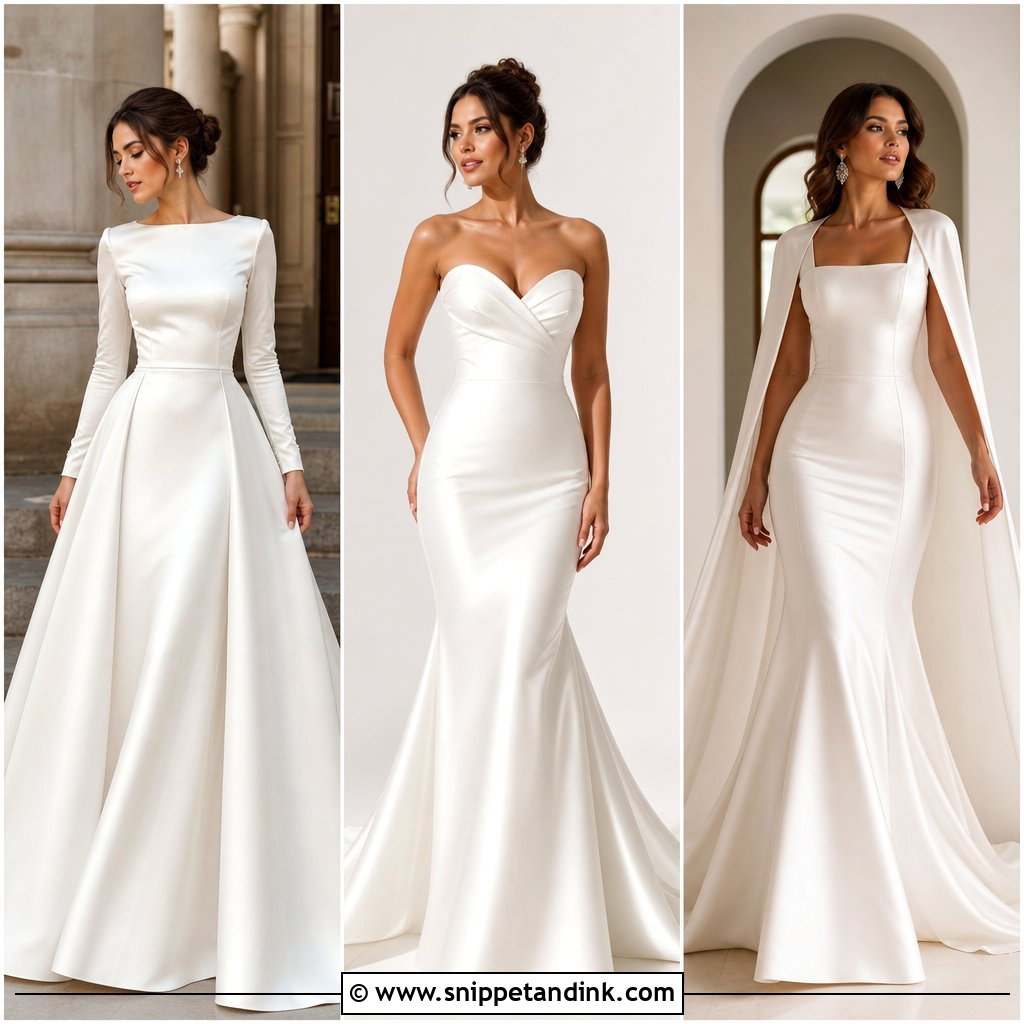
A strapless satin gown can go classic, modern or glamorous depending on the skirt: a column feels sleek, a ball gown traditional. The bodice has to hold itself up without you tugging it all night, and that comes from internal boning and a snug fit at the top of the ribs, not the bust. I have brides hug, sit and raise their arms in the fitting room to test it. Opera gloves make it more fashion-led; a tennis bracelet and pearl earrings keep it simple. Pointed heels and a long veil soften the bare shoulders.
5. Long Sleeve Satin Wedding Dress
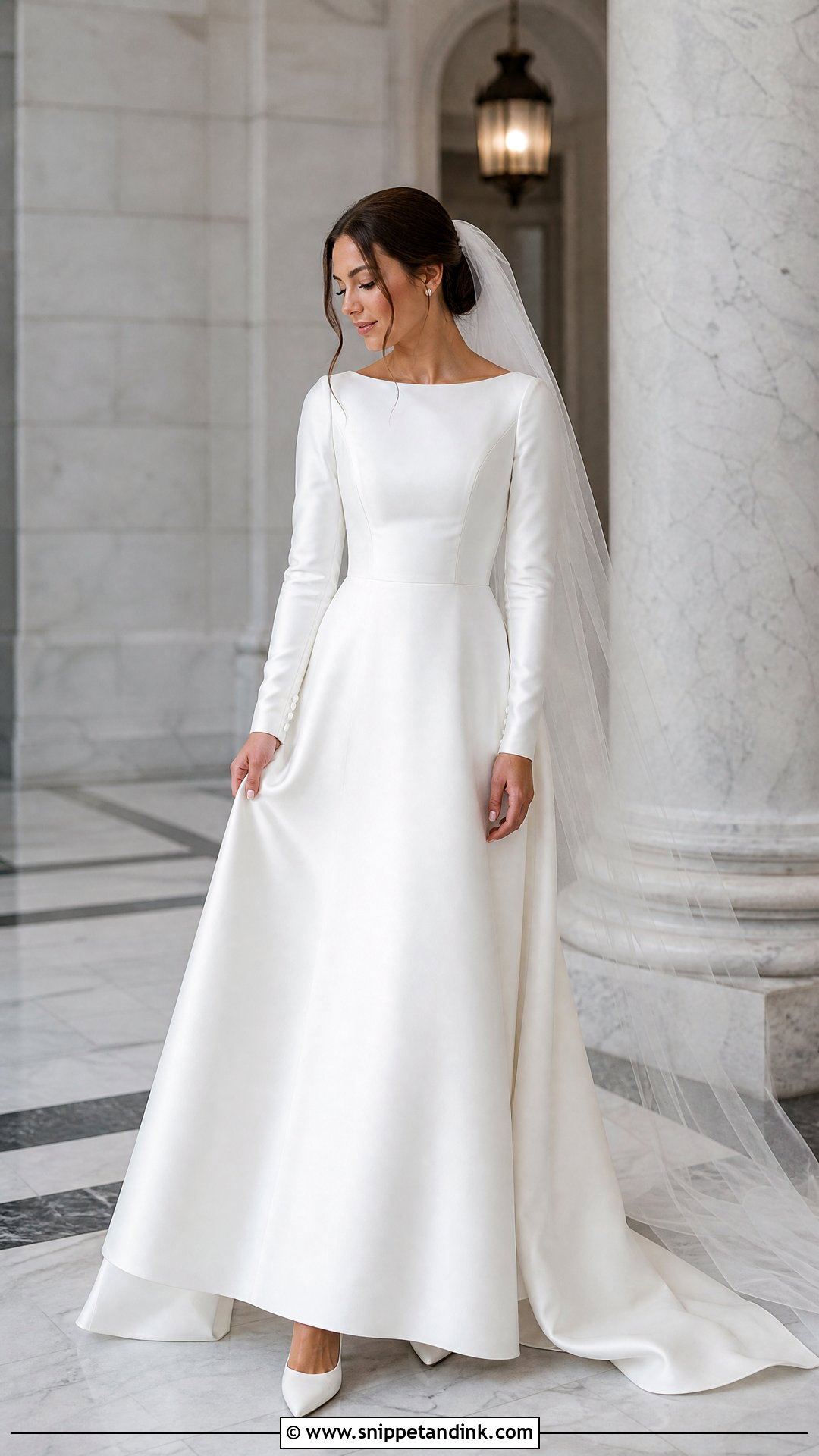
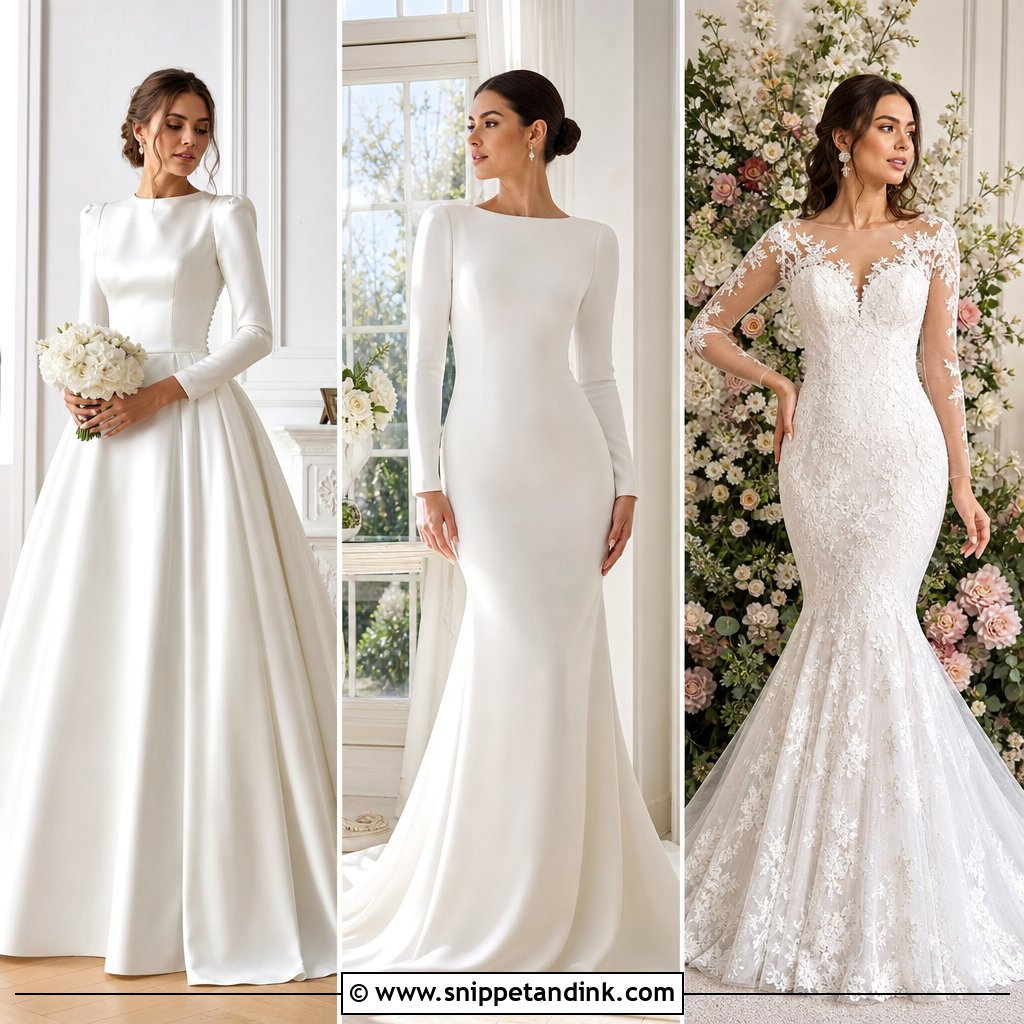
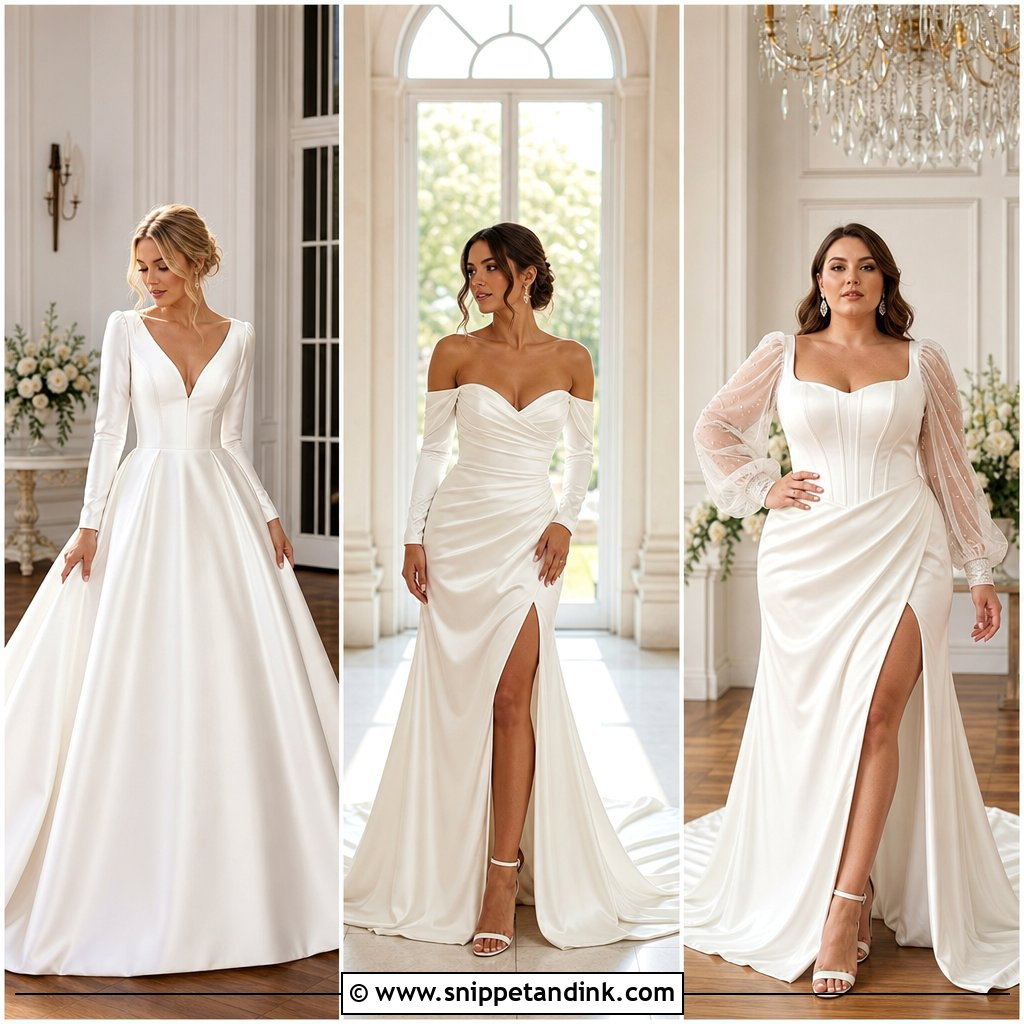
Long sleeves in satin feel graceful and covered, a strong choice for cooler months, formal venues and brides who want more coverage. Fitted sleeves, soft bishop sleeves and small puffs all work. Satin has little stretch, so a fitted sleeve needs room at the elbow and upper arm or you won’t be able to lift a glass. I always do a hug test with sleeves. Pearl buttons, a low back or a simple train pair well, with closed-toe heels and small earrings. The fabric picks up a soft light along the arms in portraits.
6. Off The Shoulder Satin Wedding Dress
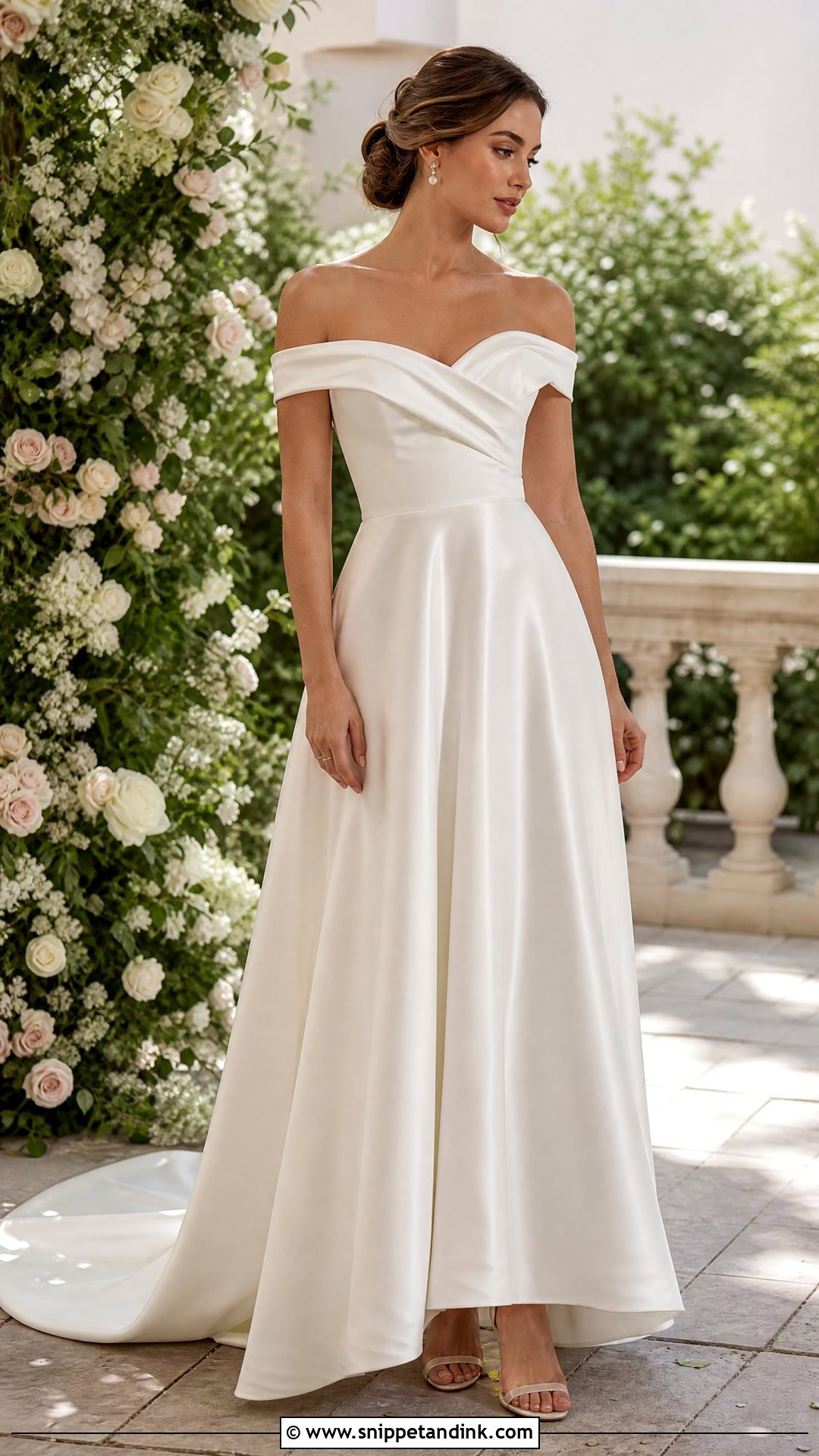
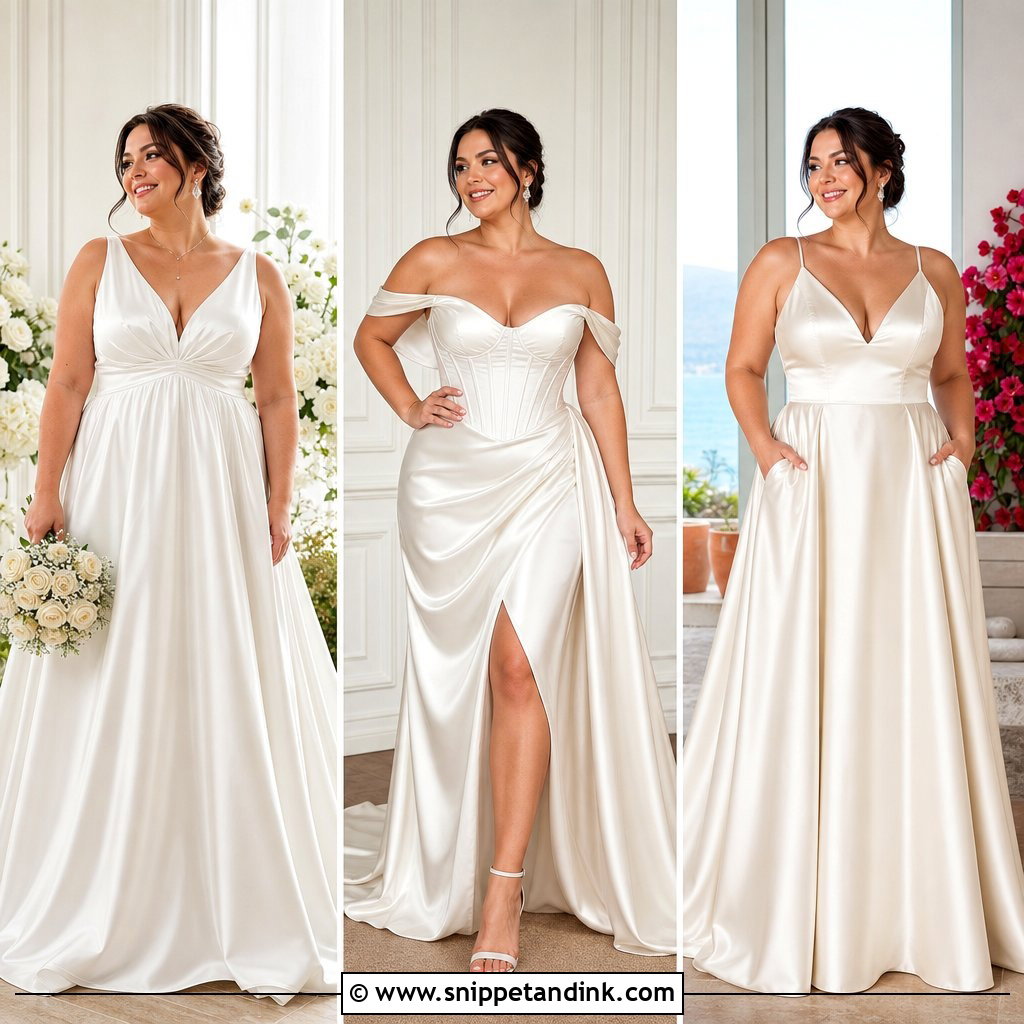
An off-the-shoulder neckline frames the collarbones and keeps satin looking smooth and calm. Pair it with a fitted mermaid shape for glamour or an A-line for something softer. The practical issue is arm movement: an off-the-shoulder band sits across the upper arm and limits how high you can reach, so I check that you can hug and dance without the band riding up. A delicate choker, pearl studs or no necklace at all keep it clean. Soft waves or a low bun leave the neckline visible.
7. Square Neck Satin Wedding Dress
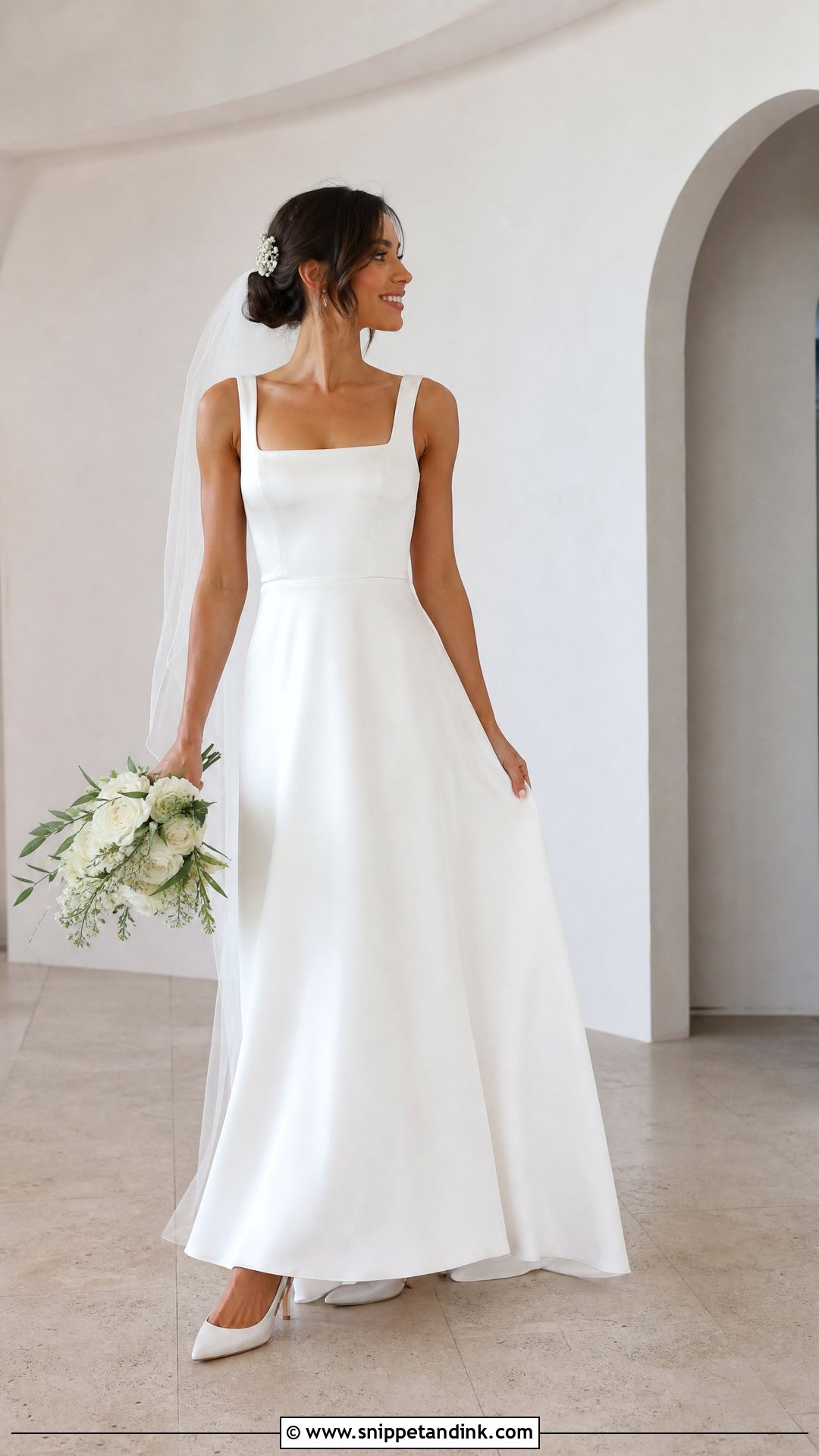
A square neck gives structure without severity, and it suits a wide range of bust sizes. It works on slim satin midis and full A-line gowns alike. Wider straps carry the weight of the bodice better than thin ones, which matters in heavy satin. The neckline frames the face on its own, so minimal jewelry is enough. Slingback heels, a pearl hair pin and a simple veil finish it. I watch the corners of the square at fittings; if the neckline gapes when you lean forward, a small tuck at the strap fixes it.
8. Cowl Neck Satin Wedding Dress
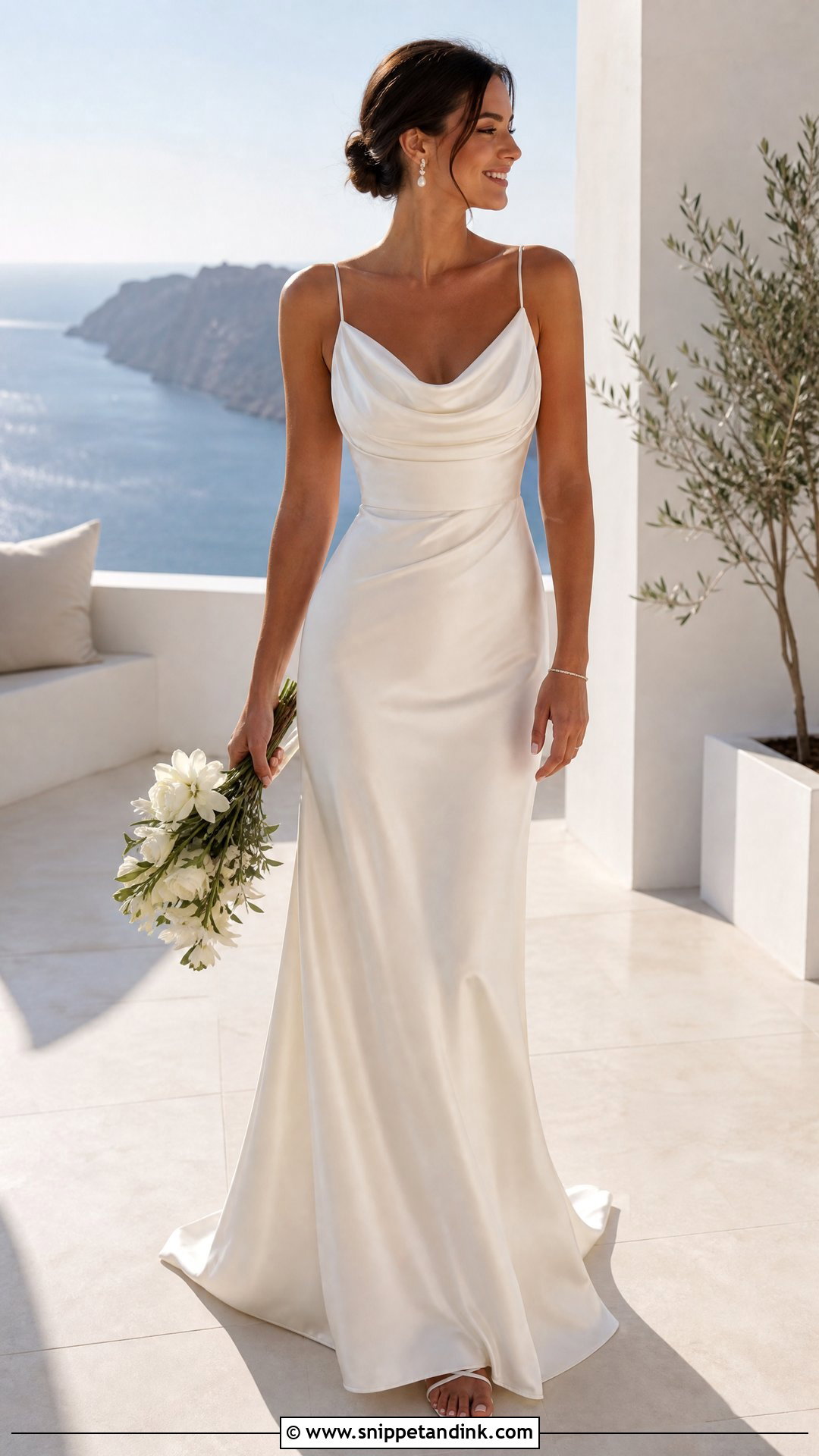
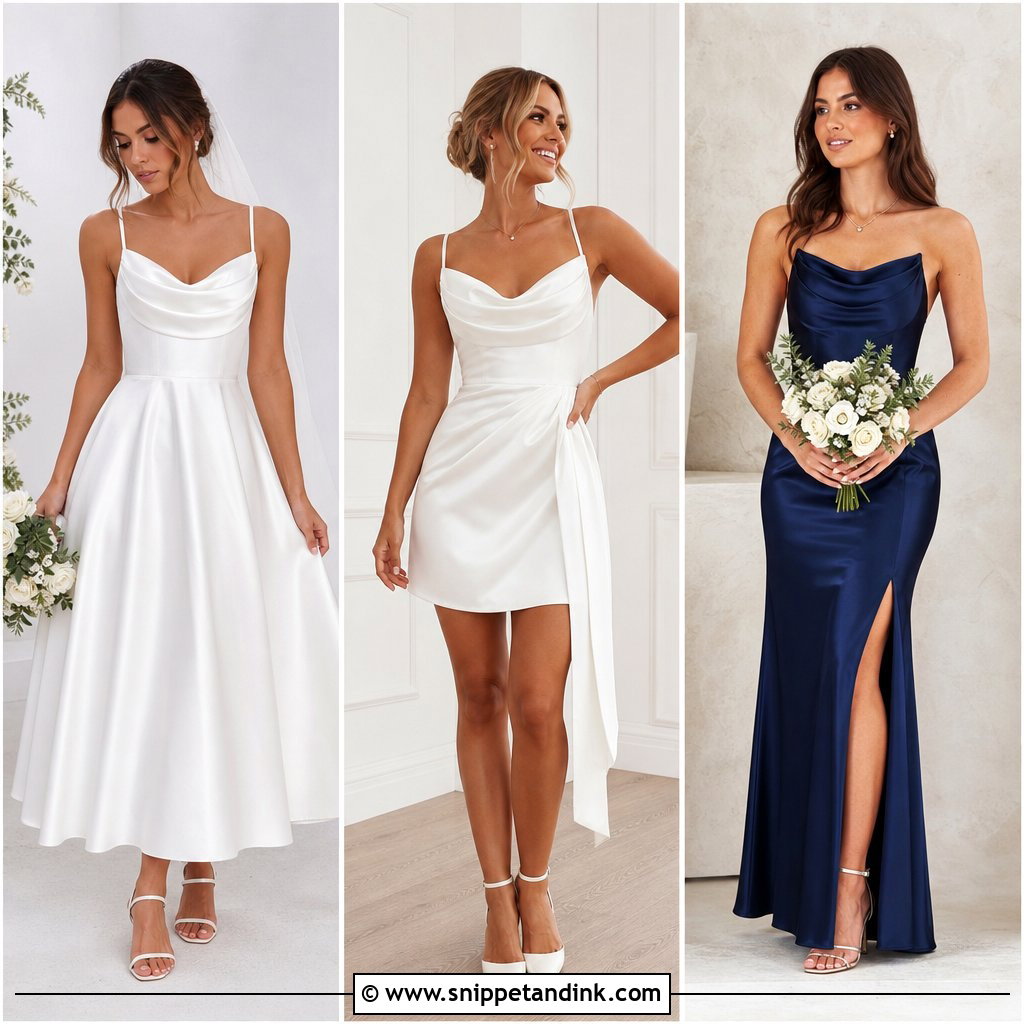
A cowl neck only works in a light satin that can fold under its own weight, like charmeuse or a silk satin. Stiff satin will stand away from the chest rather than drape. The folds add movement without any beading. Barely-there heels, pearl earrings and a sleek updo keep attention on the neckline. A low back with a draped cowl is the dramatic version. A small weight or discreet tack inside the cowl stops it shifting when you bend, which I’d ask your seamstress about. Elopements, destination weddings and reception changes suit it.
9. Satin Mermaid Wedding Dress
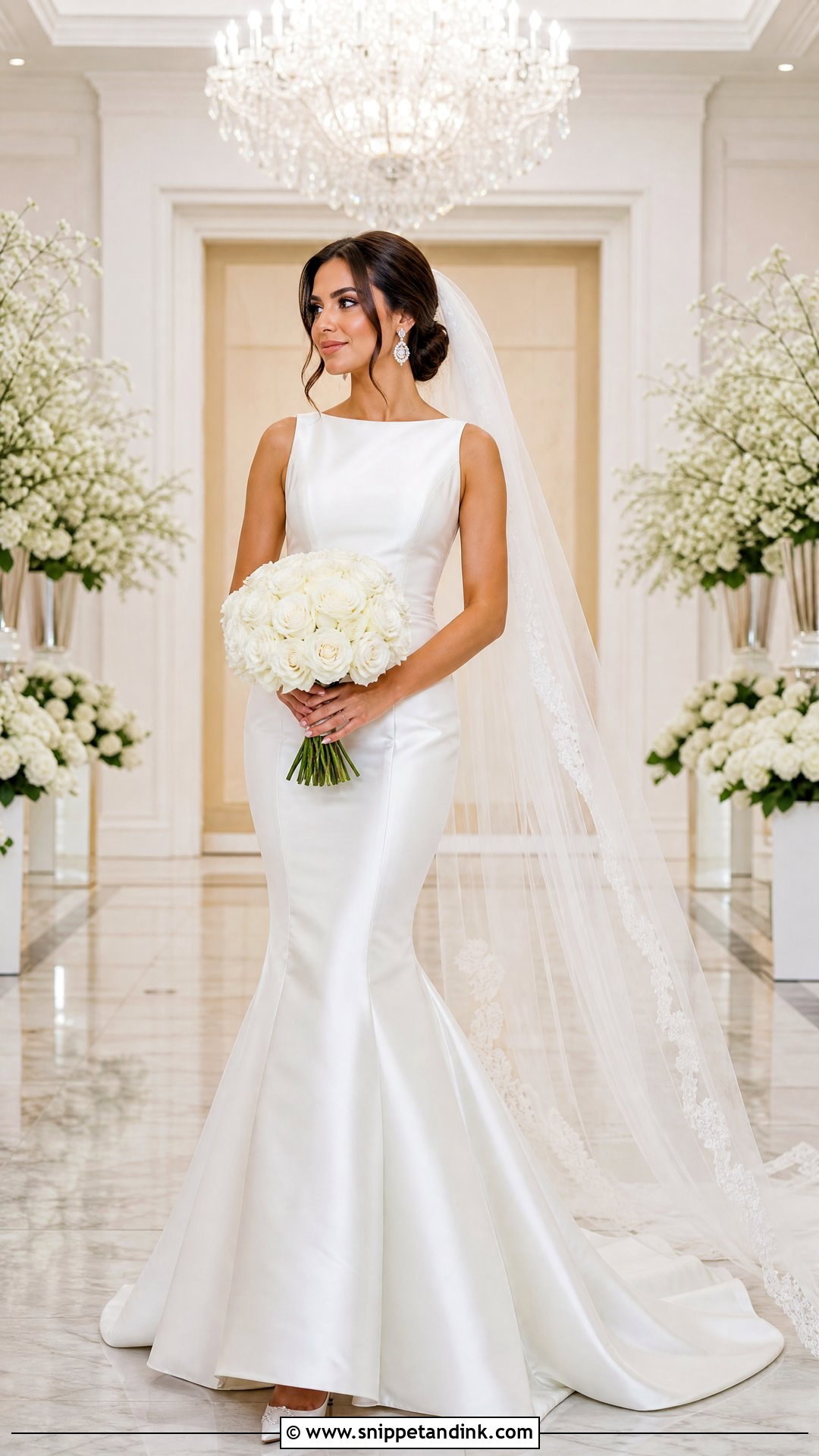
A satin mermaid wedding dress fits closely to the knee and flares at the hem, closer to red-carpet dressing than any shape here. Satin shows light along every curve, so the seaming needs to be precise; I look closely at the side seams for pulling. Stretch satin or careful seaming makes it more comfortable. Walk and sit in it before you buy, because the flare’s height decides how freely you move. Strapless, off-the-shoulder or square necklines suit it, with pointed heels, drop earrings and a long veil.
10. Satin Column Wedding Dress
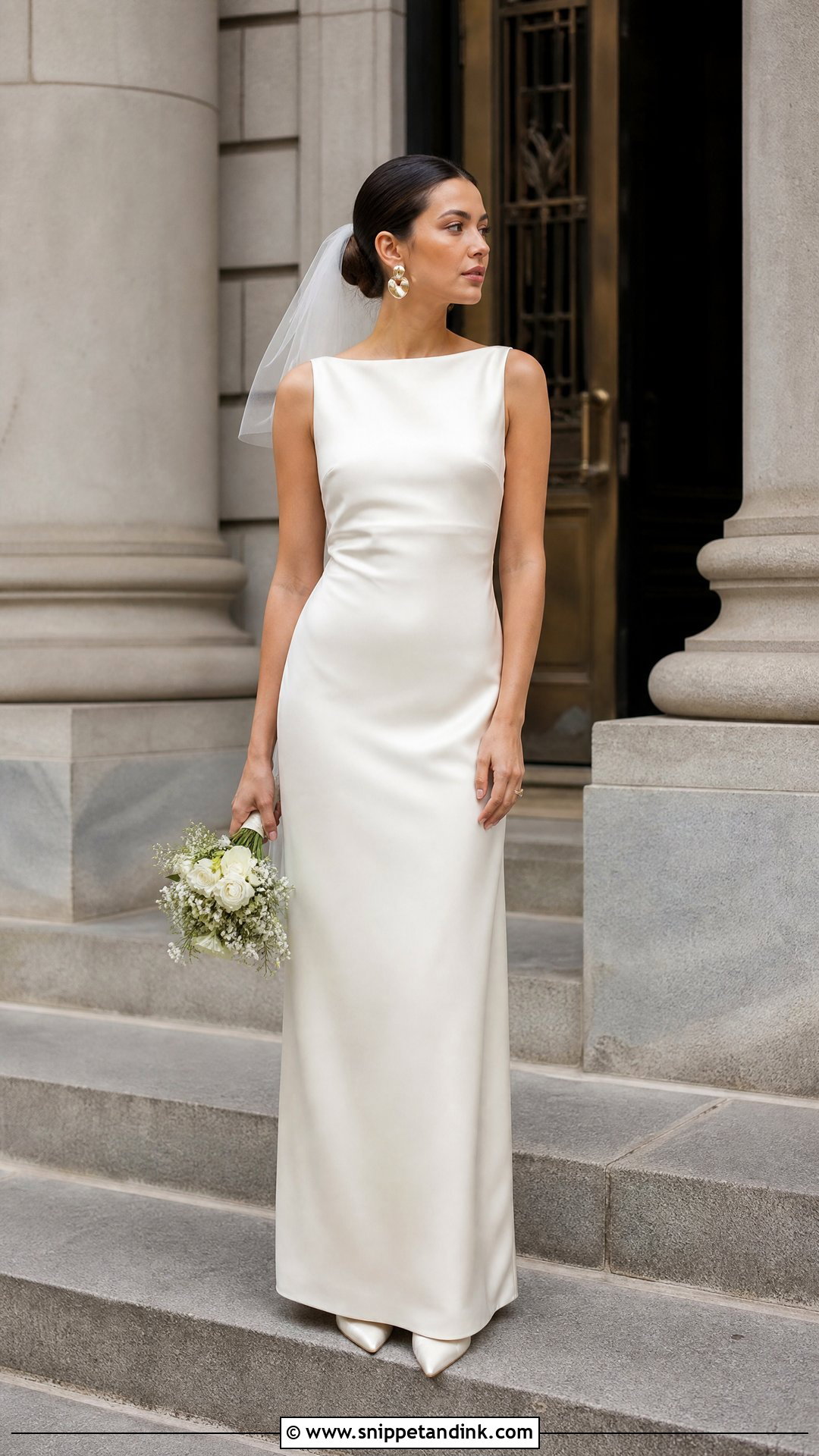
A column falls straight from the body and gives one long, clean line. It’s a formal option for brides who don’t want a wide skirt. The fit has to be right at the hip, since a column that’s too tight wrinkles across the thighs and one that’s too loose looks like a sack, and satin shows both. A high neck, strapless bodice, square neck or draped detail all suit it. Pointed pumps and sculptural earrings, with a simple veil or none, make it city-chic for courthouses, rooftops and galleries.
11. Satin Corset Wedding Dress
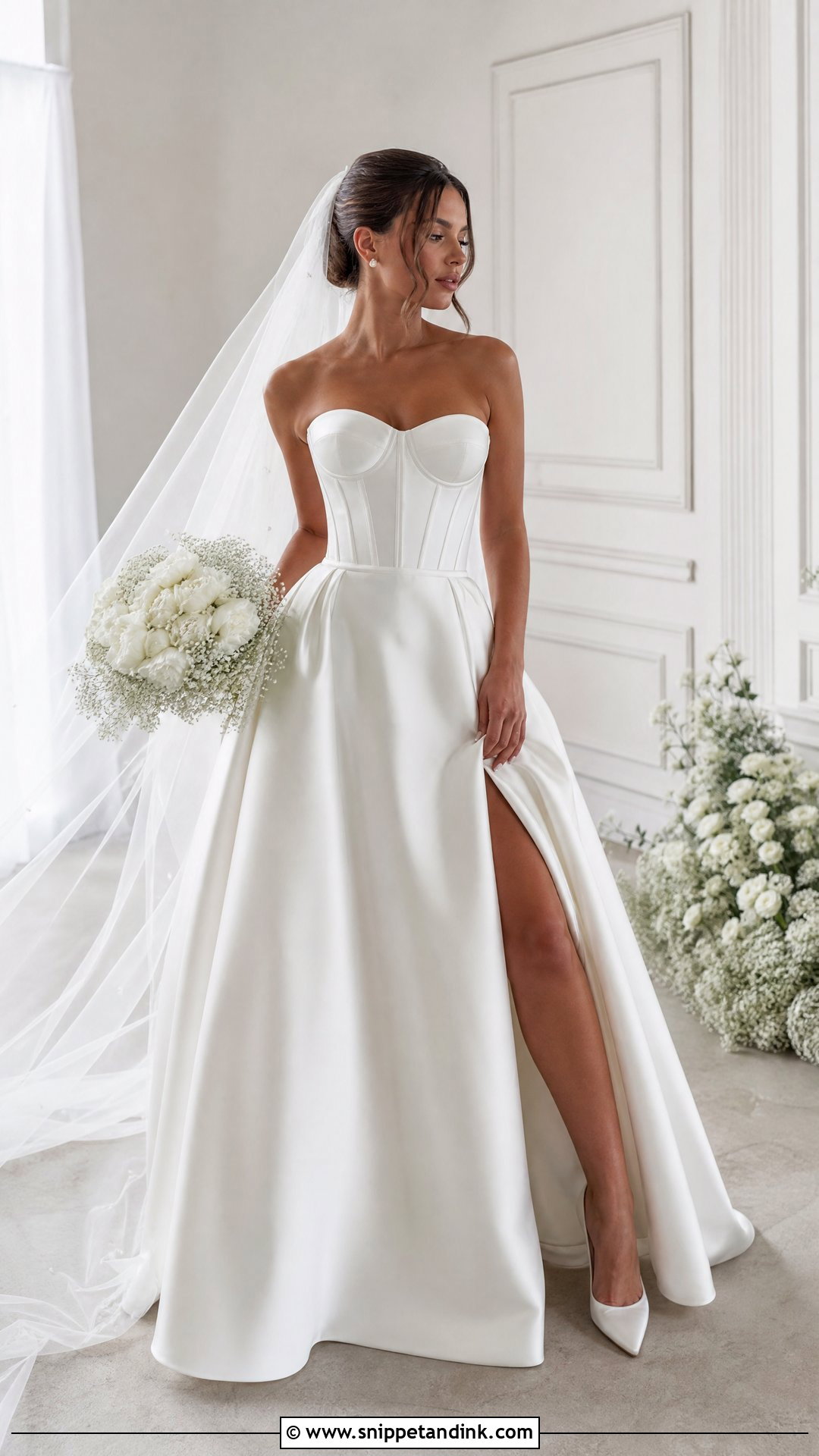
A satin corset gives structure and a defined waist, and depending on the seams and neckline it can look vintage or modern. Pair it with an A-line skirt for balance or a fitted skirt for drama. If the boning shows on the outside, let that be the detail and skip heavy jewelry. Corsets are fitted to the body, so I’d book your final fitting close to the wedding, ideally within a few weeks, in case your measurements shift. Pearl studs, a soft veil and satin heels finish it.
12. Satin Drop Waist Wedding Dress
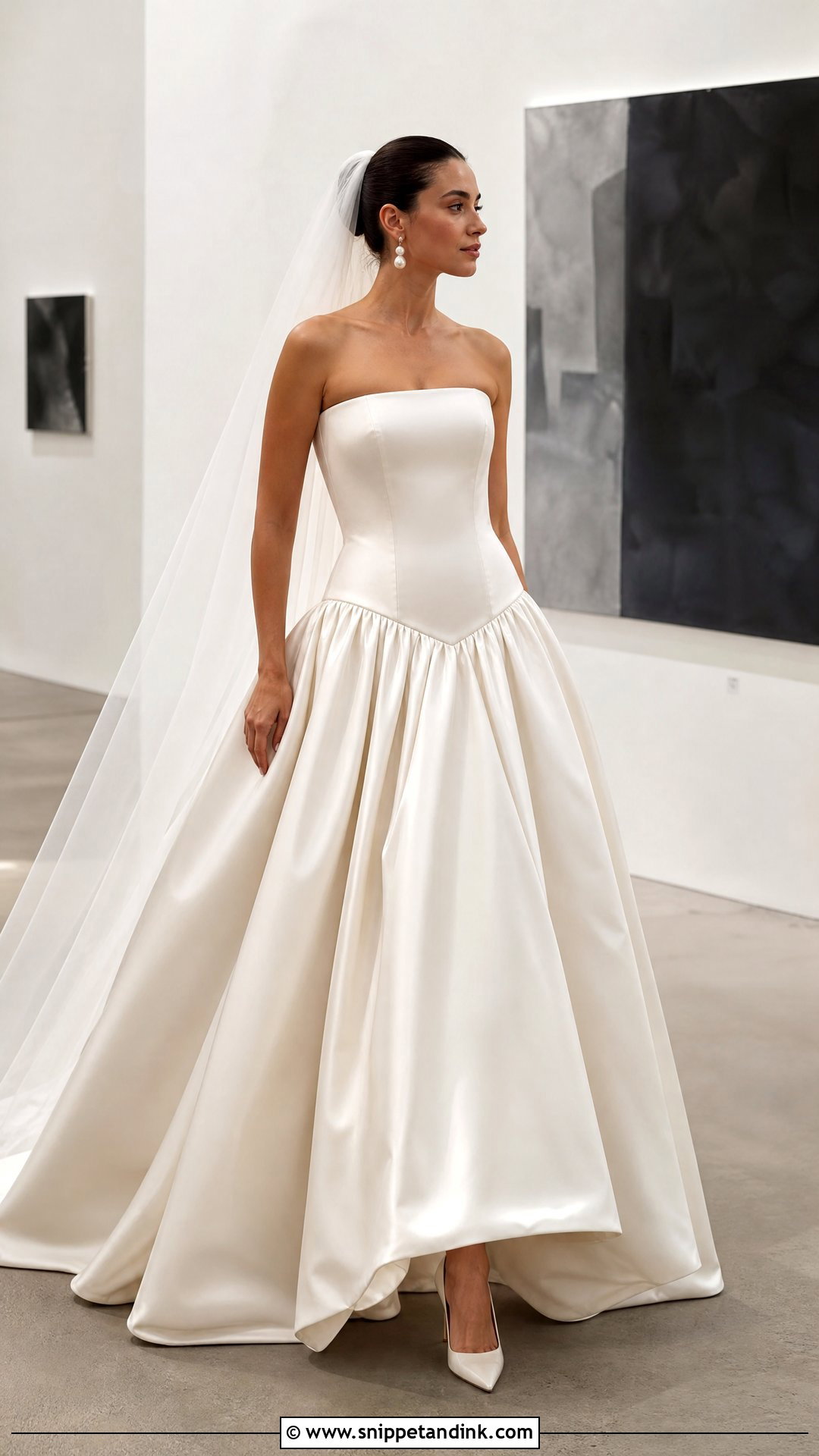
A drop waist sits below the natural waist, lengthening the torso into a sculpted line before the skirt opens. It works with a full skirt, a pleated skirt or a soft A-line. It’s a fashion-led shape, and an honest note: on a short torso it can make the legs look shorter, so I’d try it alongside a natural-waist gown before deciding. Sleek heels, pearl earrings and a smooth veil keep it balanced. It has enough presence for formal venues without heavy embellishment.
13. Satin Basque Waist Wedding Dress
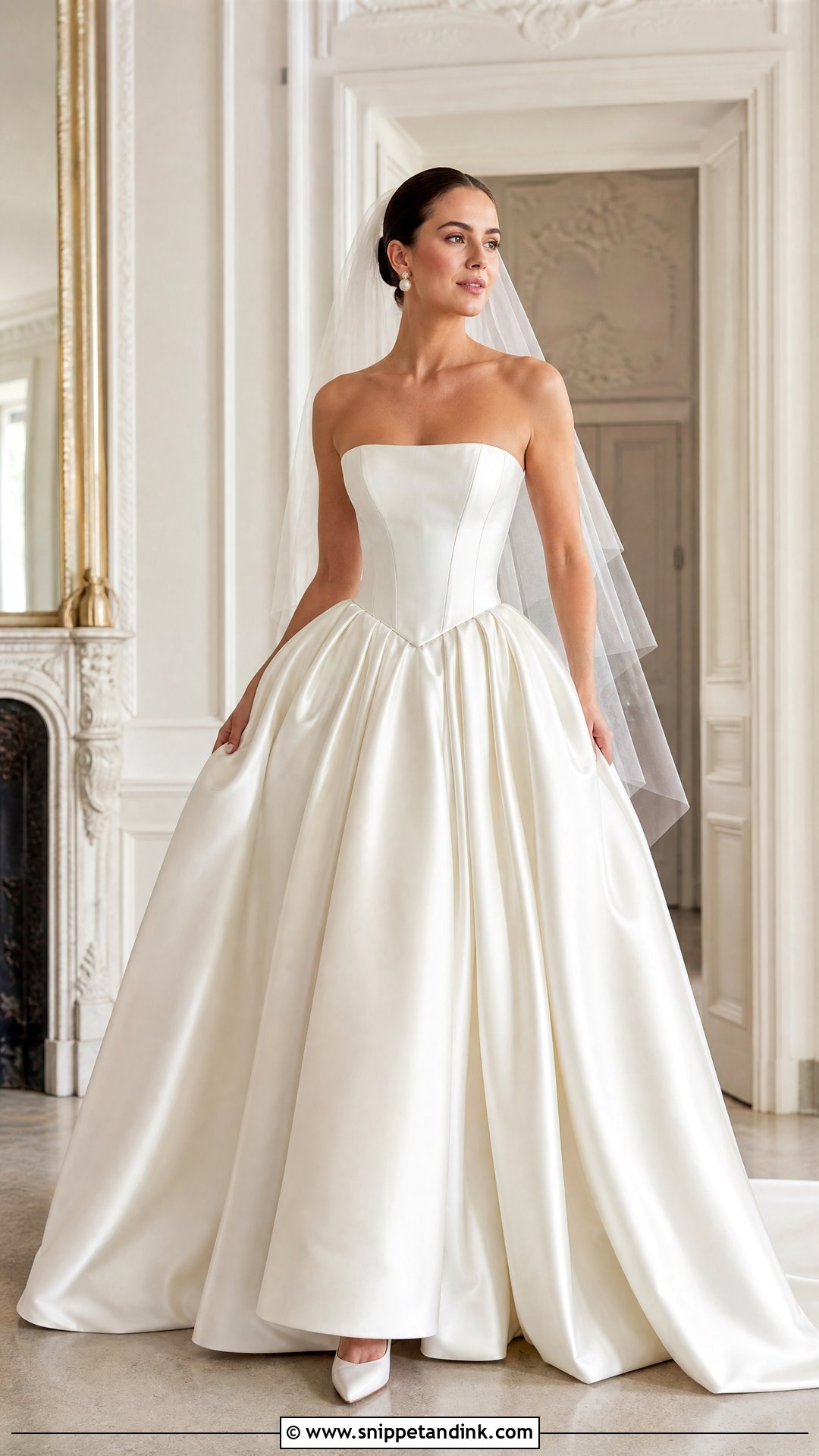
A basque waist dips into a point at the center front, which defines the waist and gives a plain satin gown some shape and personality. It’s especially flattering with strapless and off-the-shoulder necklines. Pair it with a full skirt for romance or a slimmer skirt for a modern take. The point needs to sit exactly at center and lie flat when you sit; satin will crease across it if the bodice is even slightly long. Pearl earrings, satin pumps and a soft veil keep the accessories classic.
14. Satin Wedding Dress With Bow
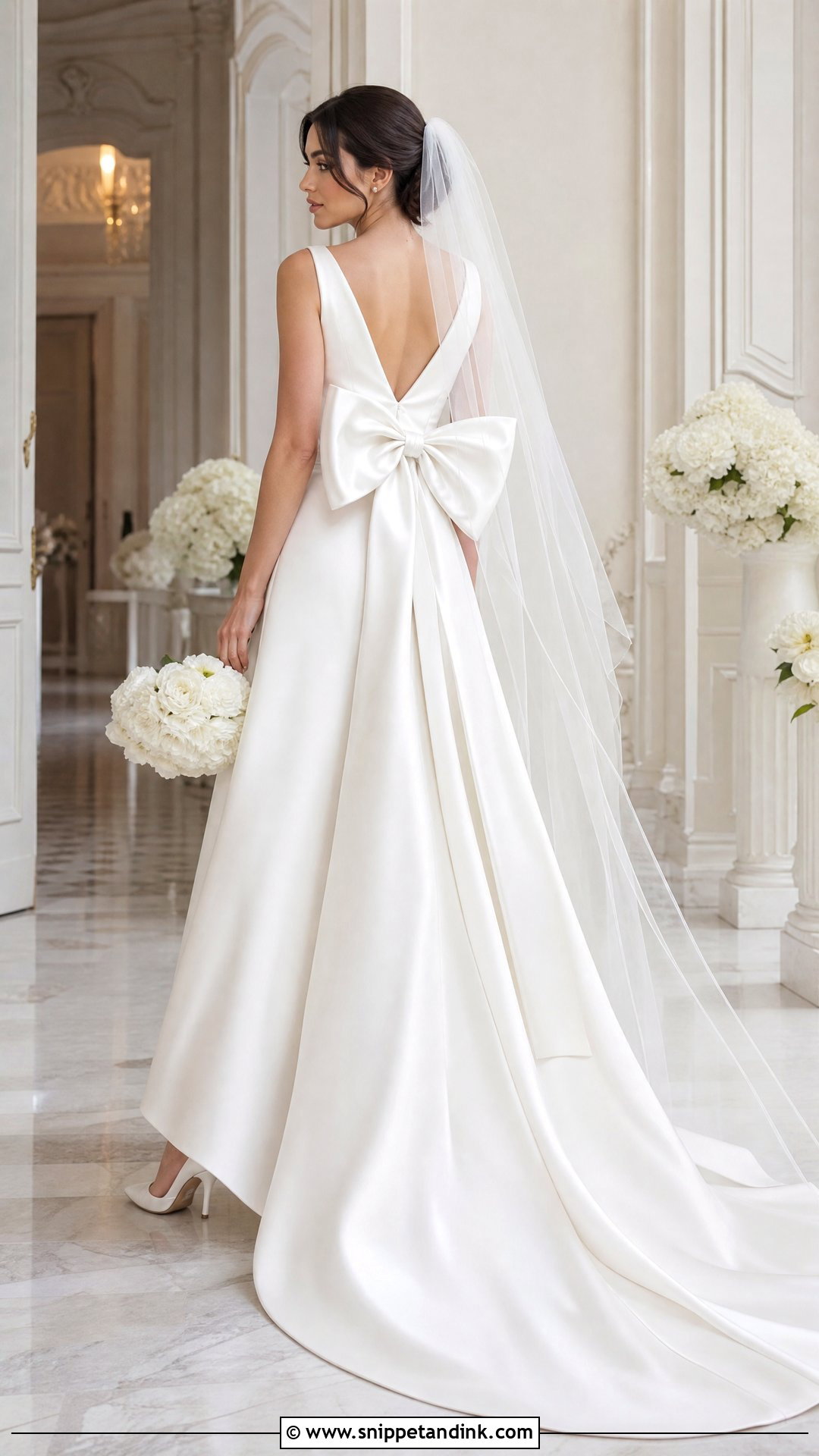
A bow can sit at the back waist, the shoulder, the neckline or on the train, so it can be quiet or bold. A big back bow suits a simple ball gown or A-line, giving a strong back view down the aisle. A shoulder bow is more playful. Large satin bows need interfacing inside or they droop by the reception, so ask how it’s constructed. Choose one bow and let it be the detail, with clean heels, small earrings and a veil that doesn’t cover it.

15. Satin Wedding Dress With Pockets
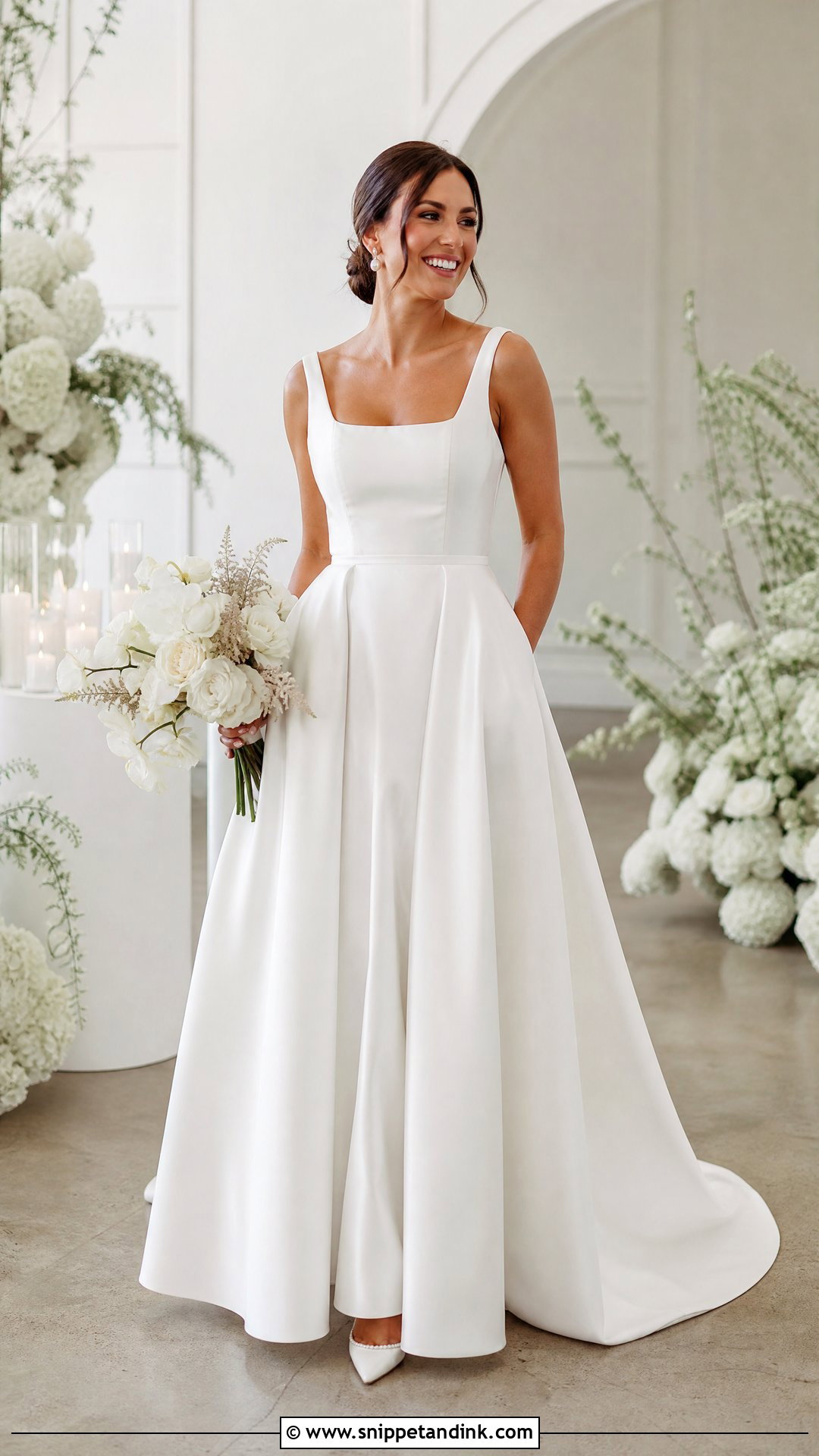
Pockets in a satin gown are practical and a little unexpected. They sit best in A-line and ball gown skirts, where the fullness hides them. You get a relaxed pose for portraits and a place for lip balm and tissues. Keep what you carry light, though: anything heavy pulls the pocket and shows as a dent in satin. Pointed heels, pearl earrings and a structured bouquet keep the look polished. The satin finish stops the pockets from reading casual.
16. Satin Midi Wedding Dress
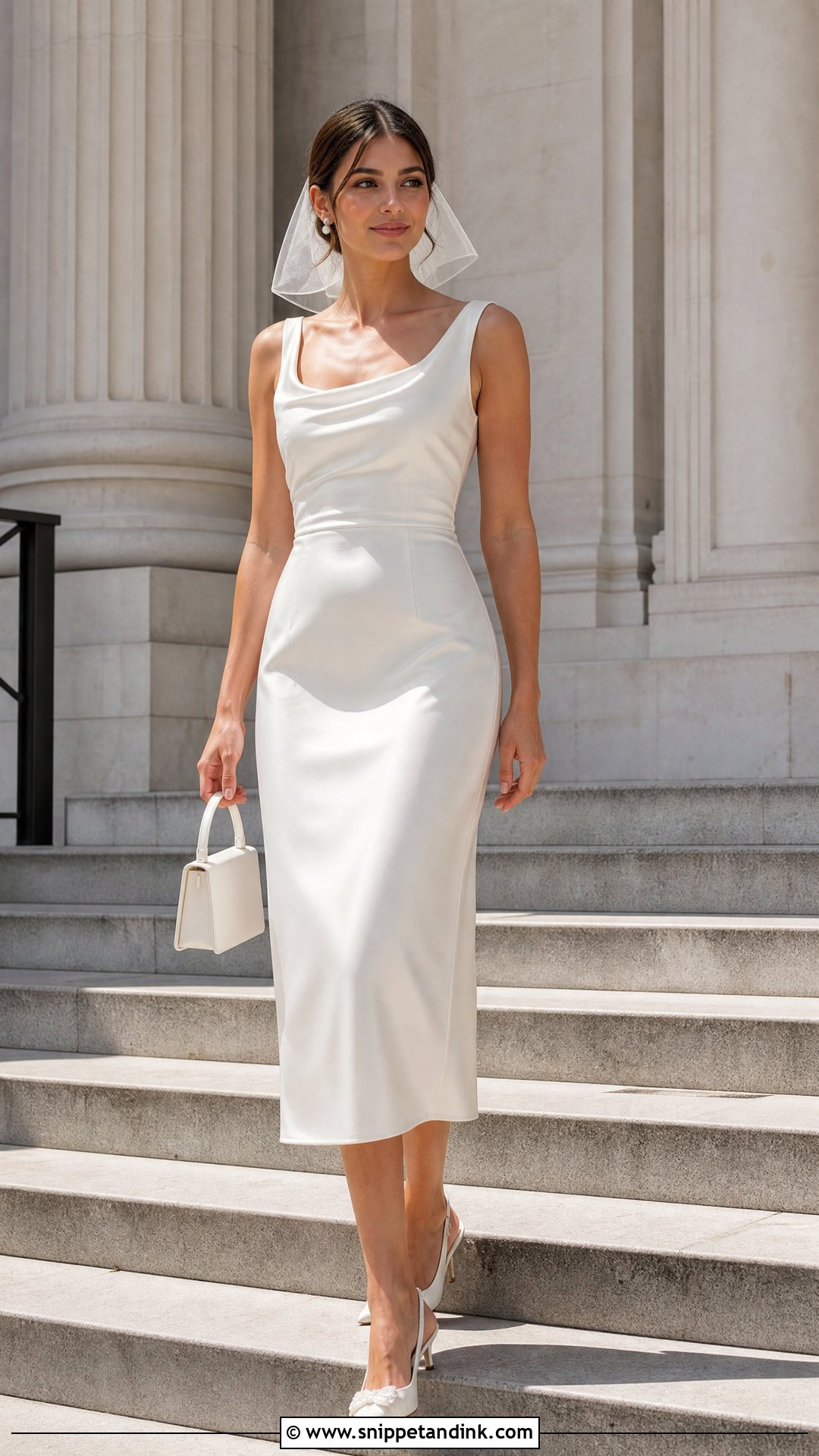
A satin midi suits courthouses, civil ceremonies, rehearsal dinners and small celebrations. Below the knee is elegant and far easier to move in than a full gown. Slingback heels, pearl studs, a short veil and a structured mini bag complete it. Square, strapless or off-the-shoulder necklines work especially well at this length. Midi hems in satin need careful finishing, because a wavy hem shows clearly at calf level. It’s a chance to show your shoes, and it can often be worn again to other formal events.
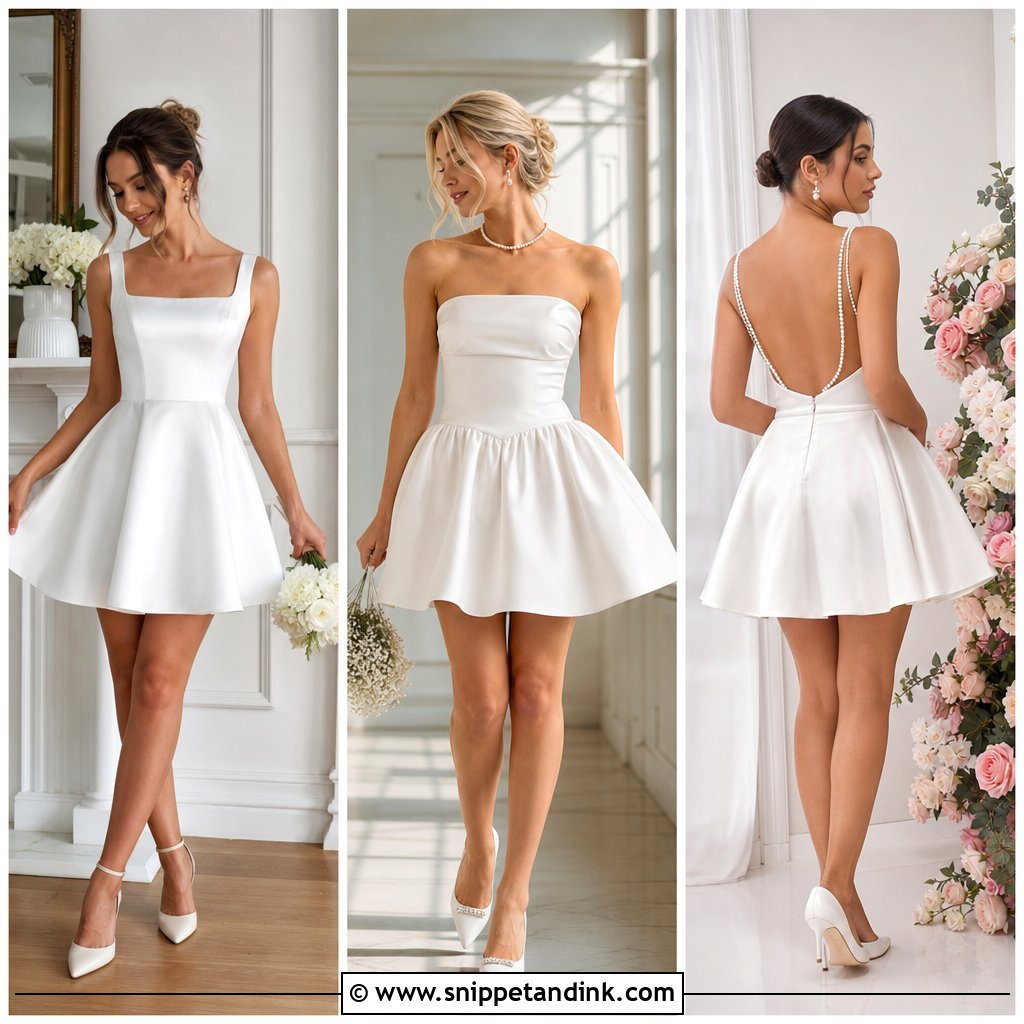
17. Satin Mini Wedding Dress
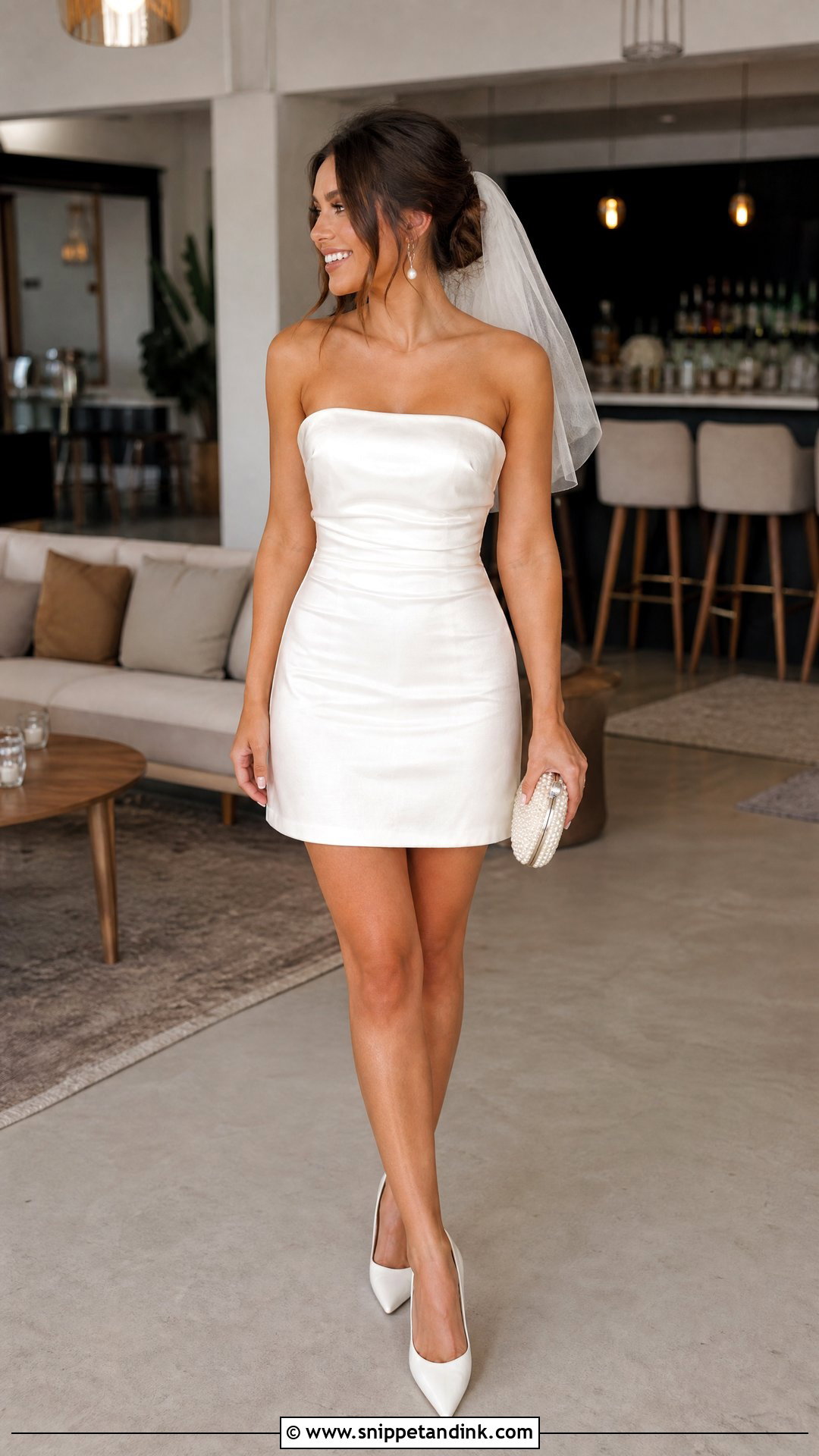
A satin mini suits a reception change, an after-party, a civil ceremony or a bridal shower. Satin keeps a short dress bridal rather than casual. Choose a clean shift shape, a fit-and-flare or a strapless mini with a small bow. Block heels or pointed pumps, pearl earrings and a short veil finish it; sheer gloves or a cropped jacket add polish. Satin minis ride up when you sit, so check the length seated, not just standing, before the hem is set.
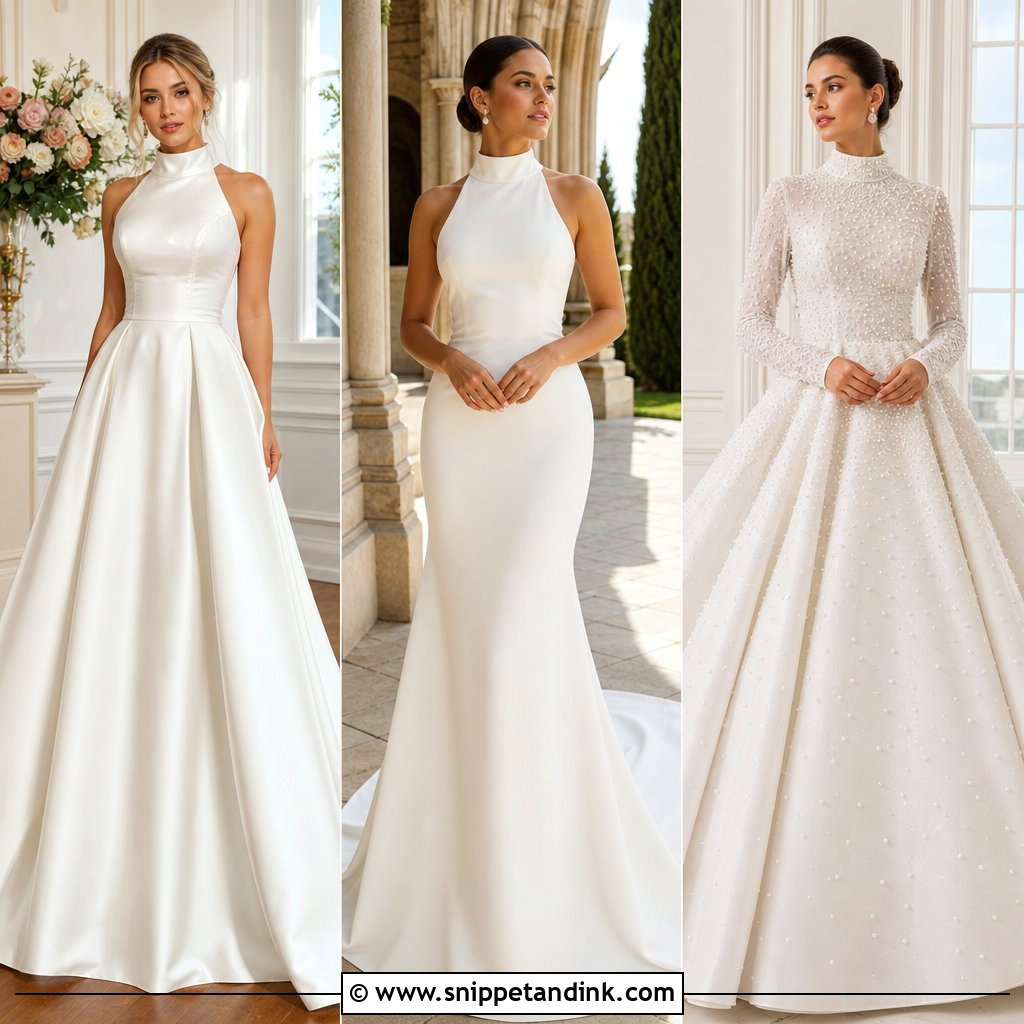
18. Satin High Neck Wedding Dress
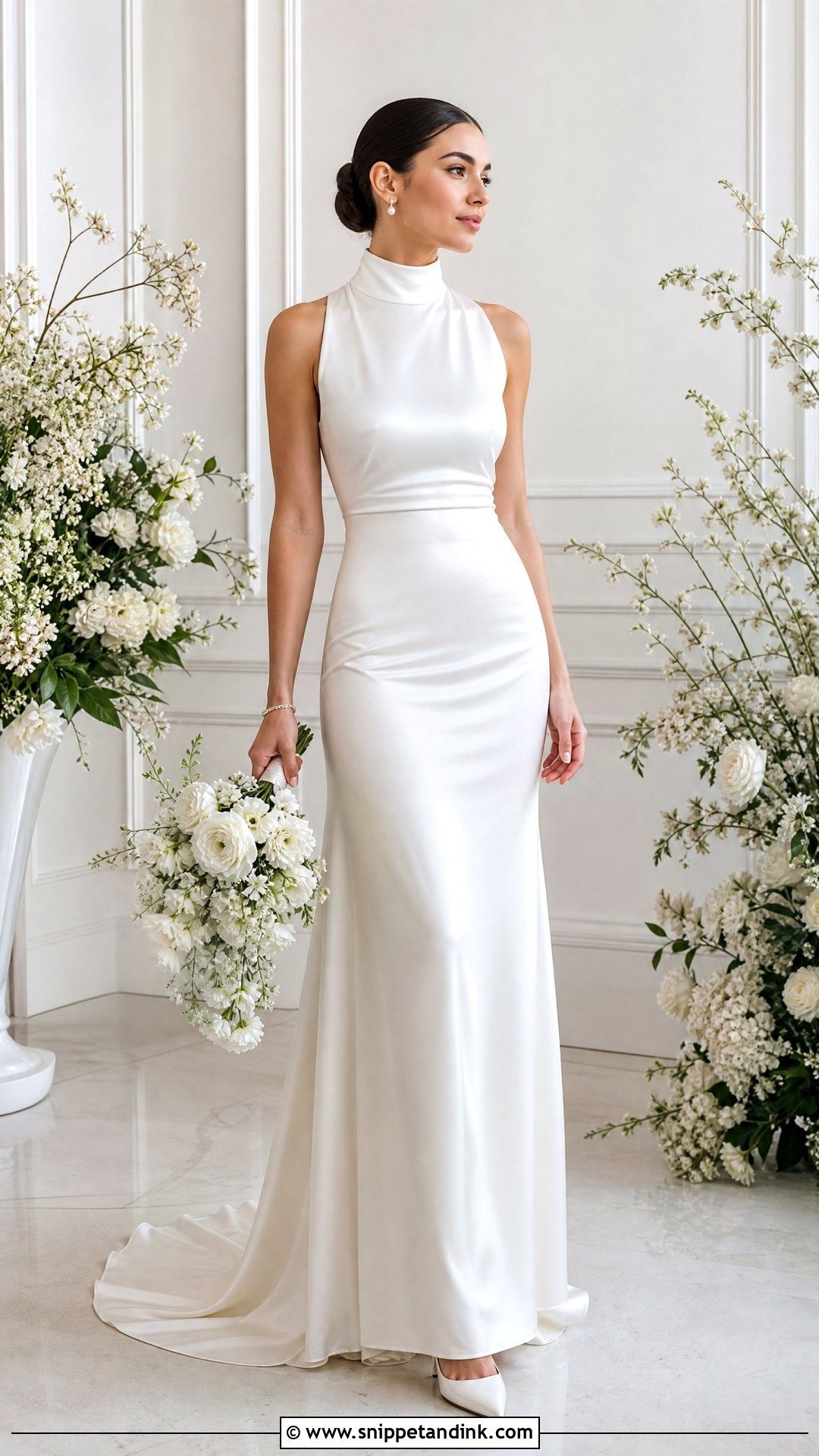
A high neck creates a long, refined line and works with a slim skirt or a soft A-line. The neckline is already strong, so I skip the necklace and choose earrings, a bracelet or a hair piece. Closed-toe heels and a sleek bun keep attention on the face. In a column it feels modern; with long sleeves, vintage. The collar must close without pressing on the throat, so I fit it with the bride turning her head and sitting. Modest coverage with very little detail is exactly what this shape does best.
19. Satin Halter Wedding Dress
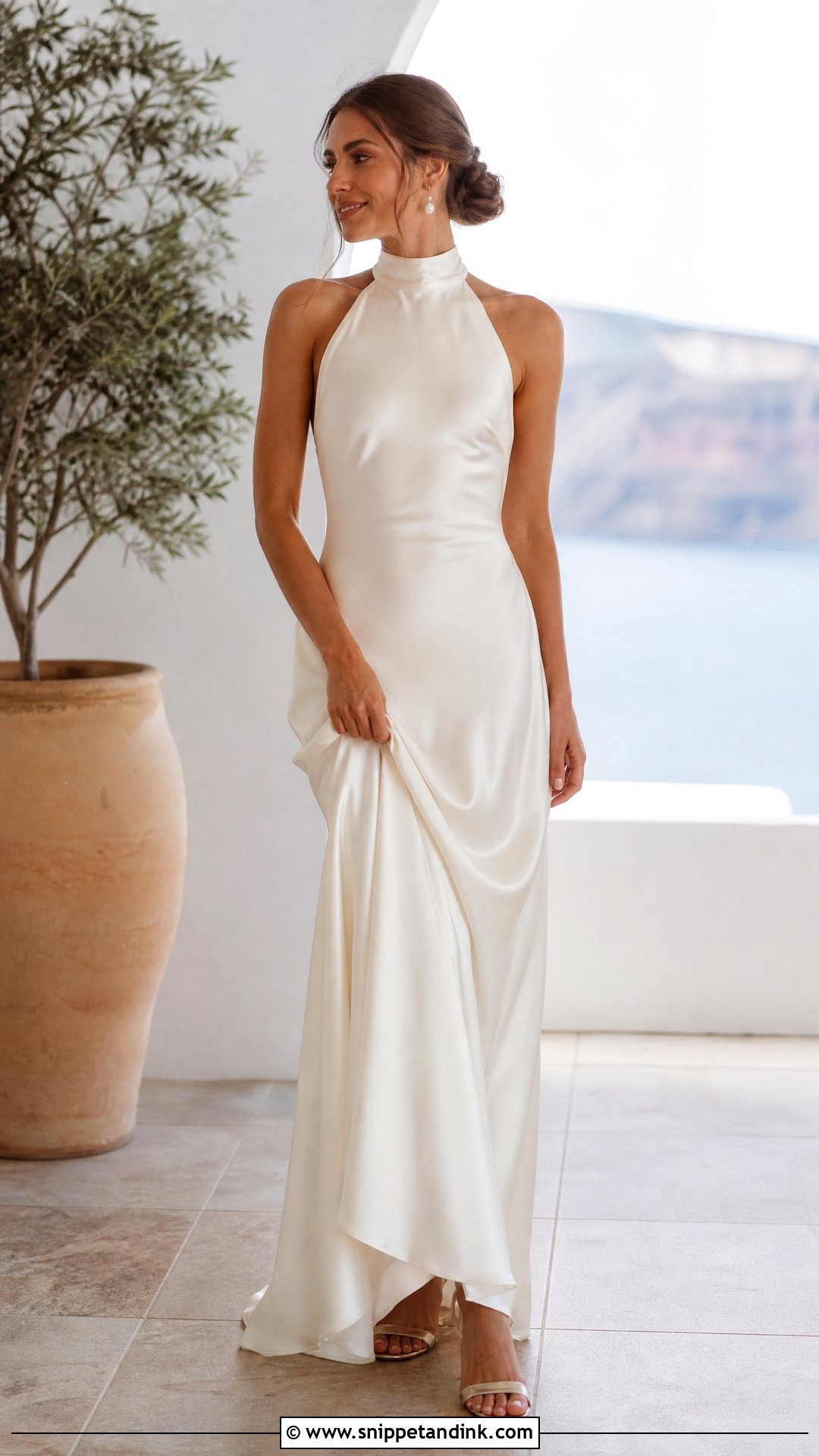
A halter shows the shoulders and gives a clean, strong shape, and it suits warm-weather weddings and destination ceremonies. It works with a slim column, a flowing A-line or a bias slip. Halters carry the bodice weight from the neck, which some brides find tiring after a long day; wide halter straps spread that weight better. Drop earrings, a low bun and delicate heels keep the neckline visible. With an open back, keep the veil light and simple.
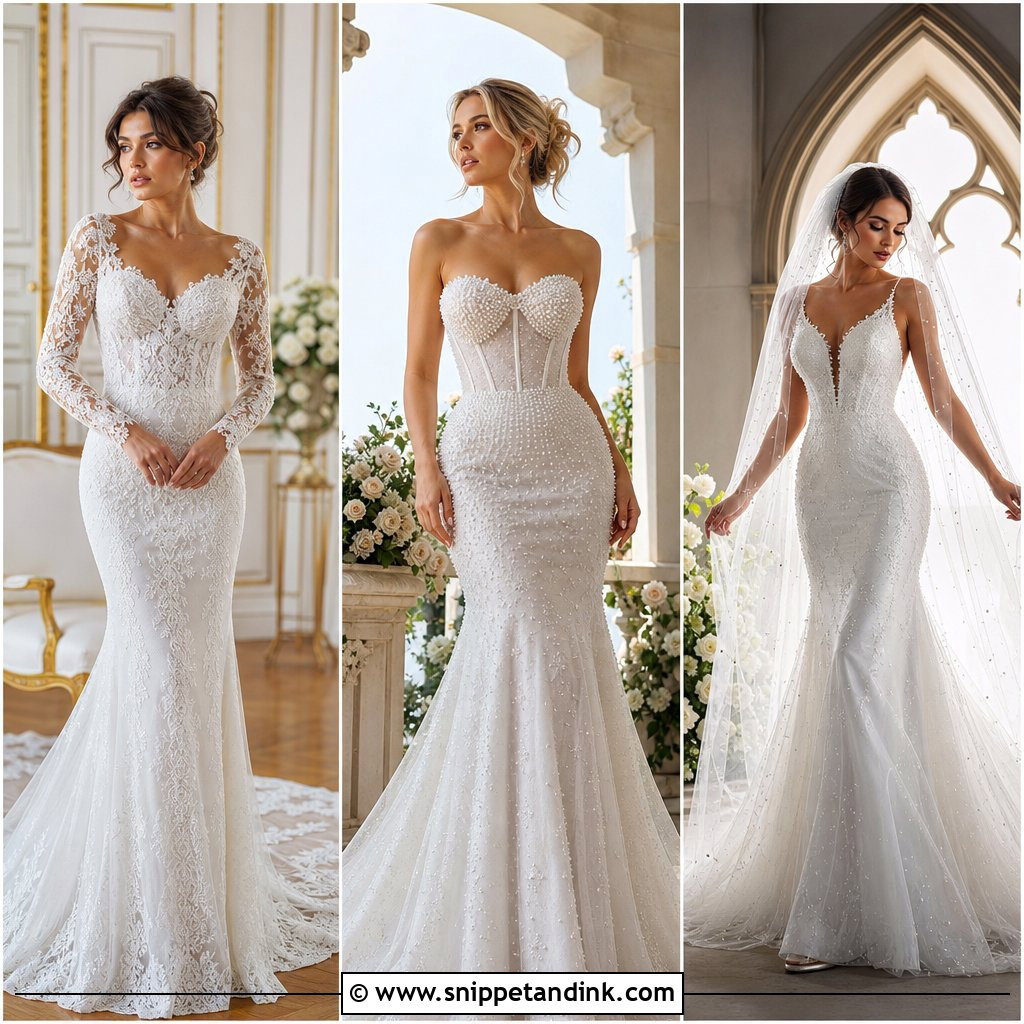
20. Satin Wedding Dress With Gloves
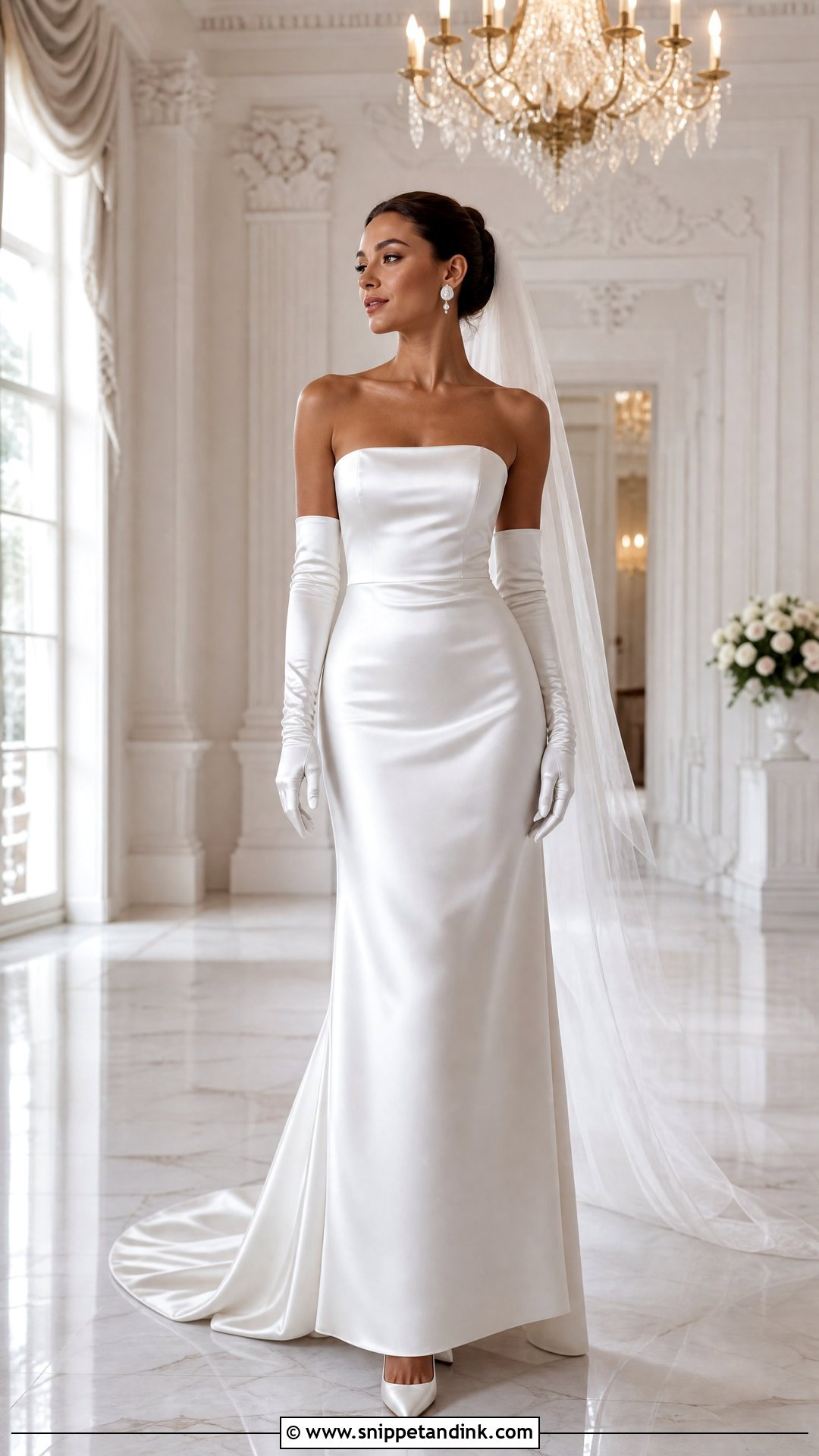
A satin wedding dress with gloves looks styled the moment you put them on. They suit strapless, off-the-shoulder and short-sleeve gowns. Opera length feels formal and dramatic; wrist length feels vintage and softer. Plan the ring exchange: you’ll either remove the left glove before the vows or choose gloves with a ring-finger opening. Smooth, well-fitted gloves look neat in close-ups, while loose ones wrinkle at the wrist. Pearl earrings, satin pumps and a matching veil finish it.
21. Satin Wedding Dress With Pearl Veil
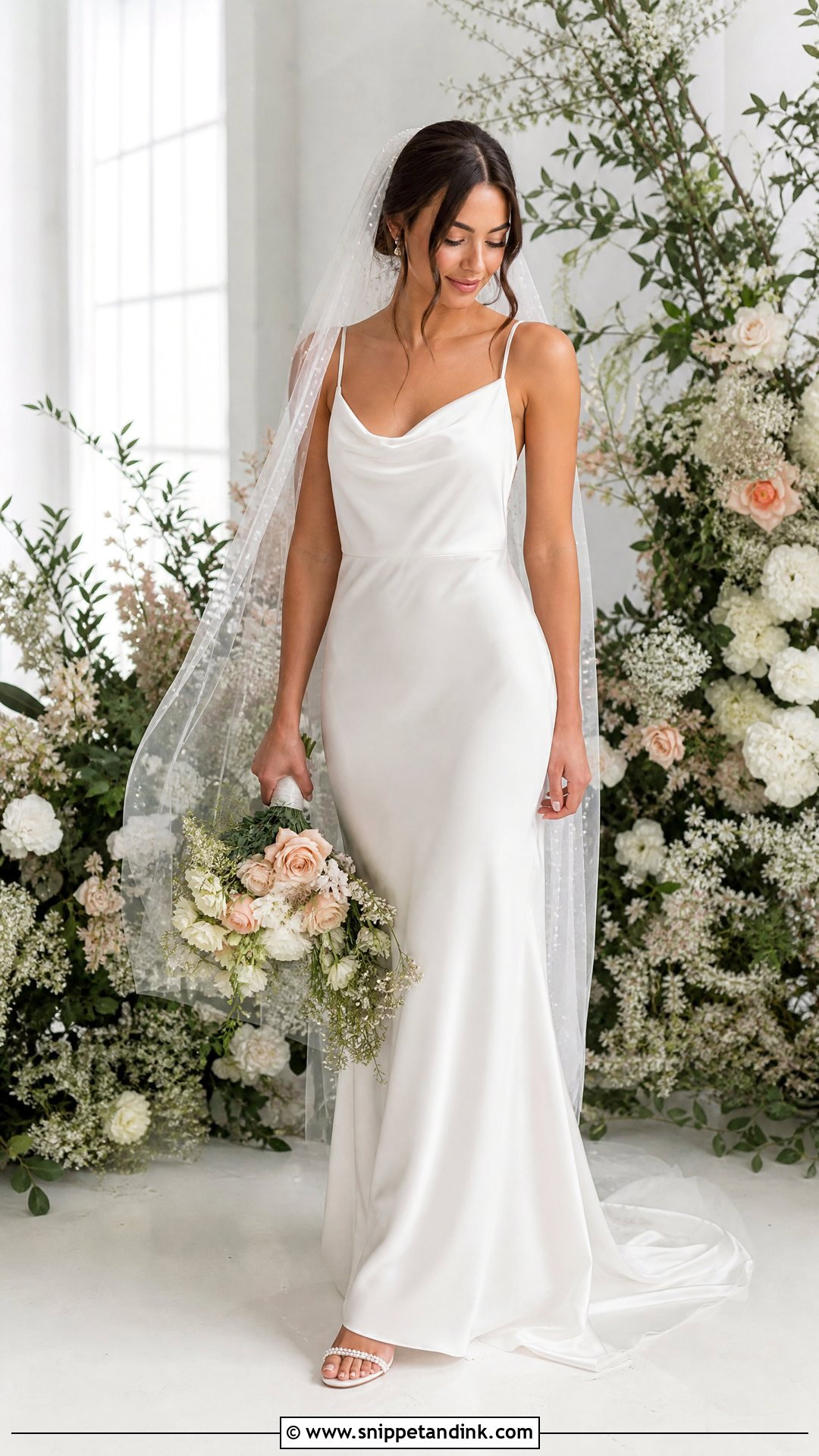
A pearl-scattered veil softens a very plain satin gown and makes it read as bridal for the ceremony. The smooth satin lets the pearls stand out without crowding. It works over slips, strapless gowns, A-lines and columns. If the veil has heavy pearl work, skip earrings or keep to small studs. Pearls add weight to tulle, so the comb needs to be anchored firmly; I ask the hairstylist to plan for it at the trial. Simple heels and a neat hairstyle keep it balanced.
22. Satin Wedding Dress With Overskirt
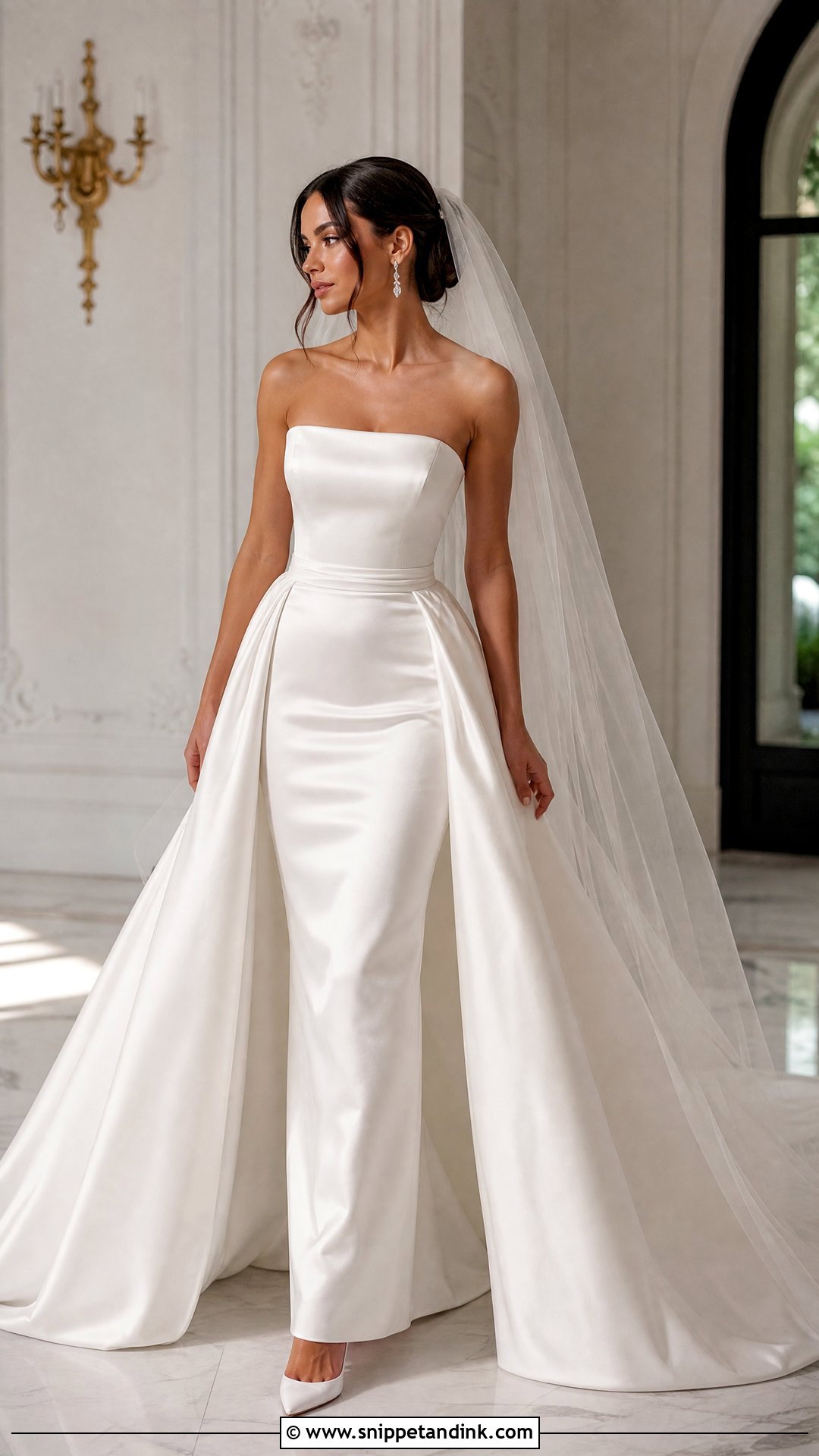
An overskirt gives you two looks from one dress. It adds volume for the ceremony, then comes off for a slimmer reception silhouette. A strapless or corset satin gown pairs well with a detachable satin overskirt. Practise taking it off at a fitting, because hooks and snaps behind the waist are hard to reach yourself. Pointed heels, drop earrings and a long veil suit the first look; switch to a shorter veil or statement earrings afterward. It’s flexibility without buying a second gown.
23. Satin Wedding Dress With Train
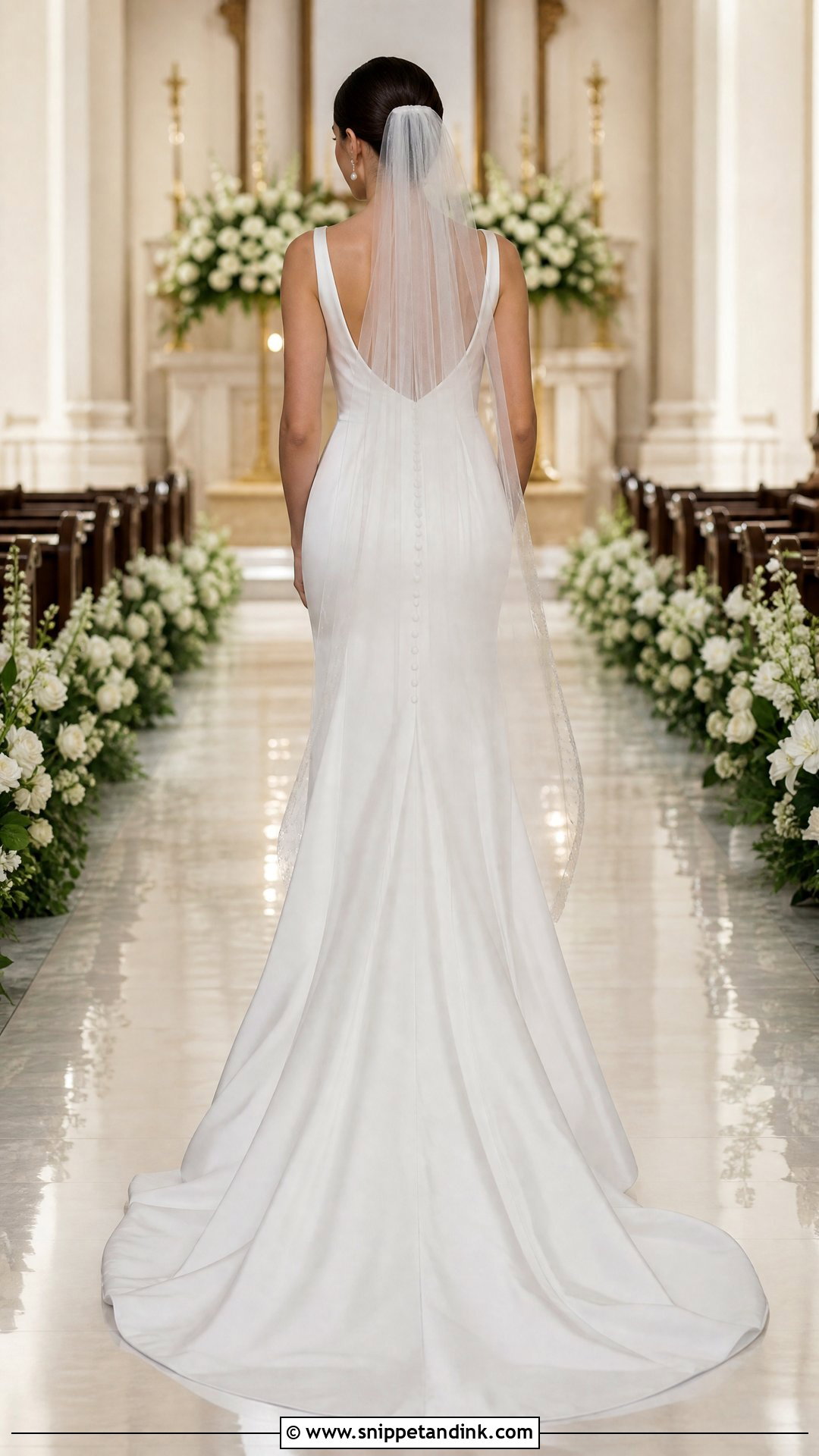
A train gives you a graceful aisle walk and movement in photos. It can be subtle, chapel length or dramatic depending on your venue. Satin trains reflect light across the floor, and they also pick up dirt quickly on stone or grass, so think about your surfaces. Make sure the gown has a bustle if you’ll dance, and have your maid of honor practise it at the last fitting. Secure heels, a long veil and simple jewelry keep the back view clean.
24. Satin Two Piece Bridal Dress
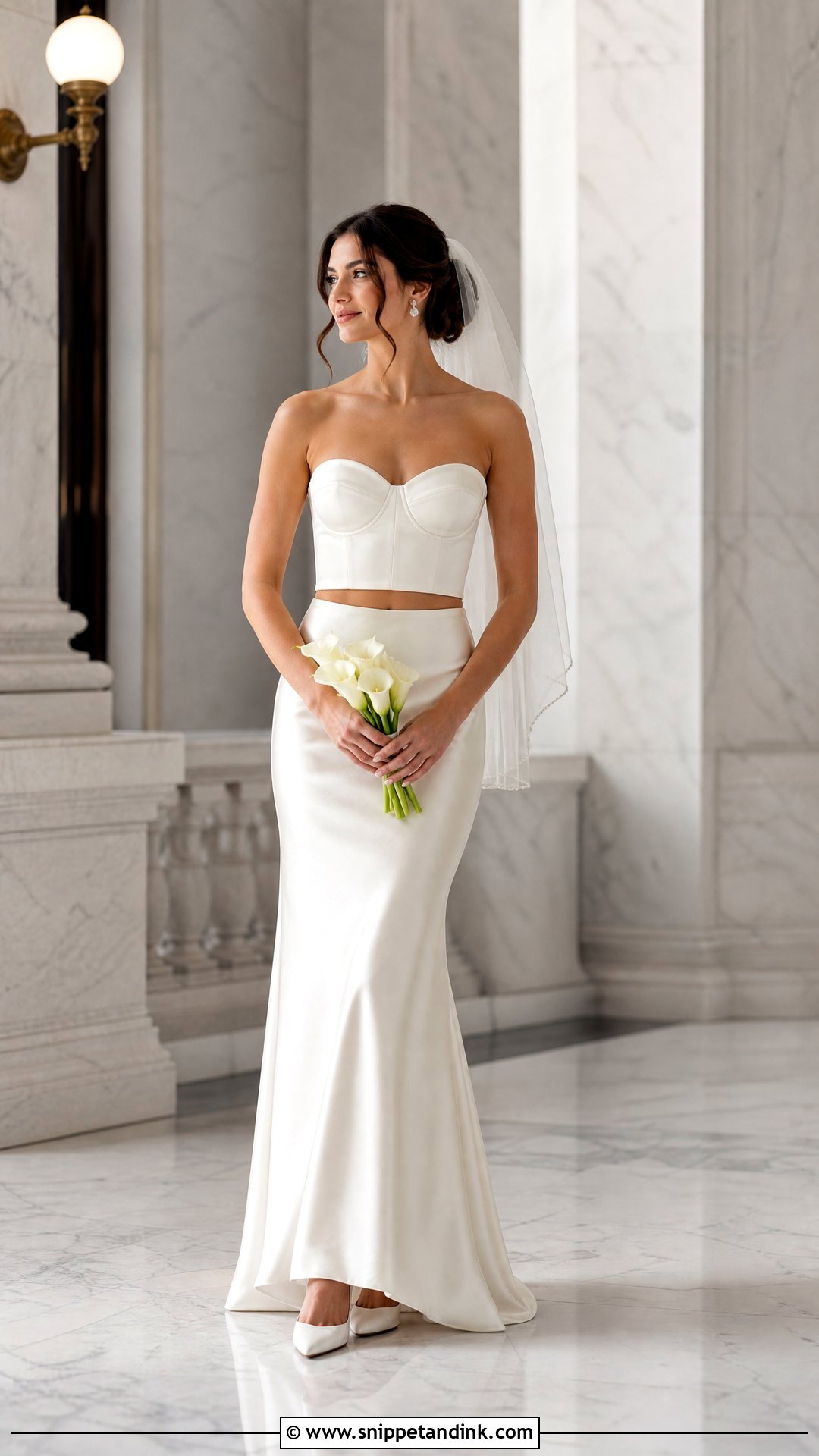
A two-piece set in satin feels fresh but still elegant. It might be a crop top with a full skirt, a structured bustier with a column skirt, or a modest top with an A-line skirt. The best versions show only a sliver of skin or overlap at the waist. Fit is easier, since top and skirt are sized and altered separately, which helps brides whose upper and lower halves are different sizes. Sleek heels, pearl earrings and a simple veil suit civil ceremonies, modern venues and reception changes.
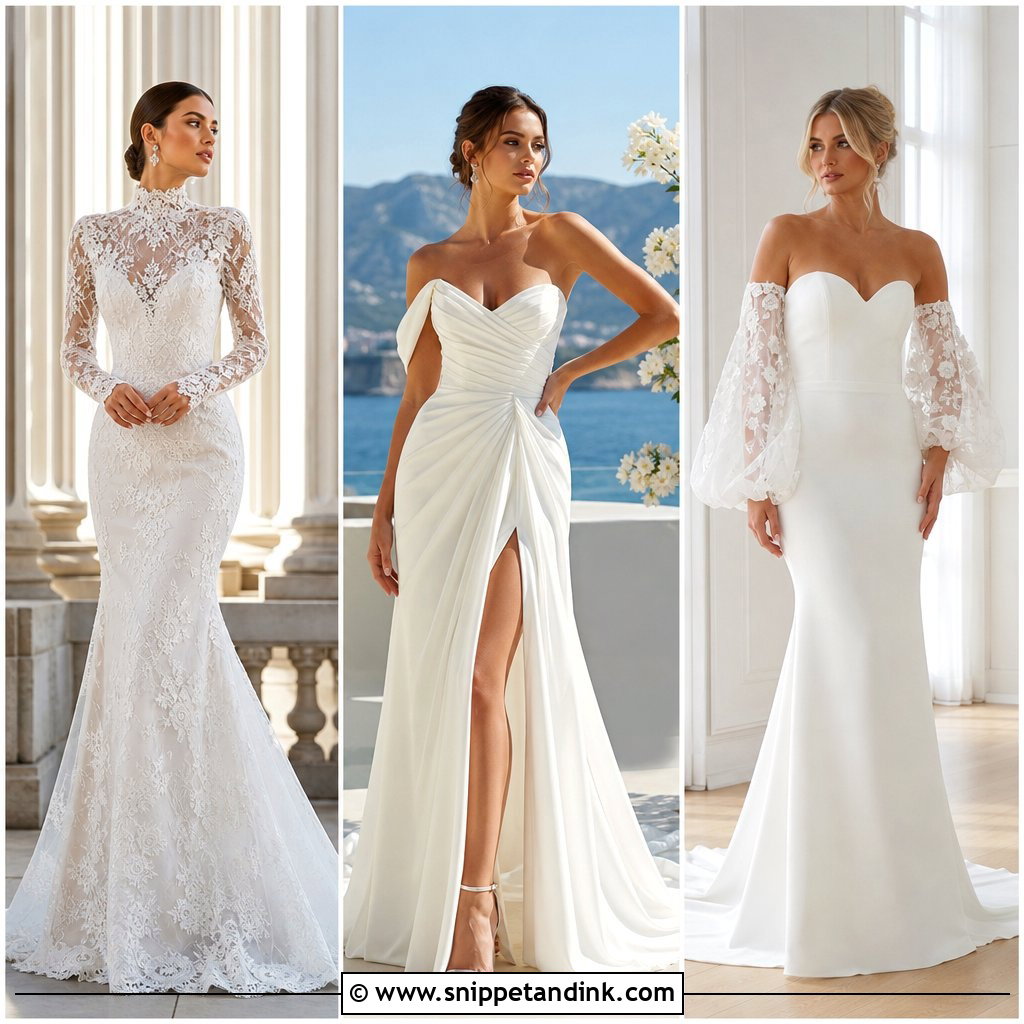
25. Satin Reception Wedding Dress
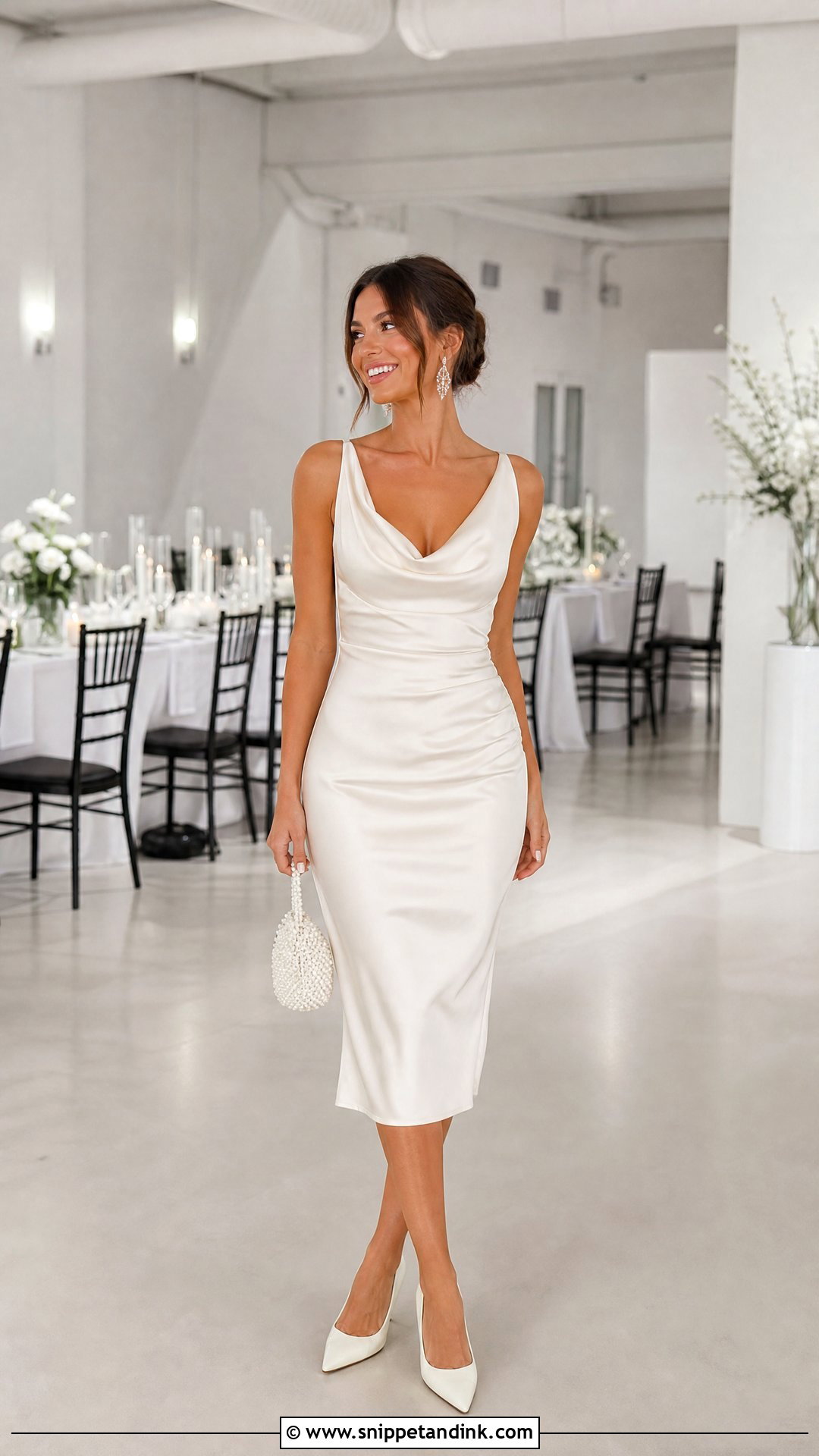
A reception dress should be lighter and easier to dance in. Many brides switch to a satin mini, midi, slip or fitted column. Comfortable heels, statement earrings and a small bridal bag complete it. If the ceremony gown is dramatic, keep the reception dress clean; if the gown is minimal, add a bow, gloves or pearls here. Choose a satin with a little stretch for the dance floor, since rigid satin splits at seams under strain. It still looks polished under the party lights.
Creases, Spills and Storing Satin Once the Party Ends
Satin is the fabric most likely to show wear on the day, and the one that needs the most care afterward.
On the day
Creases form wherever you sit, especially in the car. Lift the skirt behind you before you sit and spread it rather than bunching it. Have a handheld steamer at the venue and keep it moving, never touching the fabric. If someone spills water or champagne, blot gently with a clean white cloth. Rubbing roughens the surface and leaves a dull patch that photographs worse than the stain.
After the wedding
Take the gown to a cleaner who specializes in bridal wear within a few weeks. Sugar from champagne and cake dries clear but turns yellow-brown over time if it isn’t cleaned. Store the dress folded with acid-free tissue in a breathable box or cotton bag, away from light and damp. I’d avoid plastic garment bags and long-term hanging, since heavy satin skirts stretch the shoulders out of shape on a hanger.
Sit, Hug, Climb the Stairs, Then Decide
Satin can look classic in an A-line, dramatic in a ball gown, sleek in a slip and playful in a reception mini. Your venue, comfort, figure and the mood you want in photographs decide which one fits. Satin already brings shine and structure, so let your shoes, veil, gloves, pearls and hair support the dress instead of competing with it. The test I use at every final fitting is simple: if you can sit, hug and walk stairs without thinking about the dress, it’s the right one.
You'll Like These Ideas:






Leave a Reply