
Tattooed brides usually arrive at their first appointment with one question: show it or soften it? Either answer is fine, and the dress does most of the deciding. A neckline, a sleeve length, the drop of a back or the height of a slit controls exactly how much of your ink is visible, and fabric changes how it reads, since crisp satin makes linework look sharp while lace filters it. Hair counts too. An updo puts shoulder pieces on display; loose waves cover them. When I dress a bride with tattoos, I treat the artwork as part of the outfit from the start, the same way I’d treat a family heirloom necklace. Below are twenty complete looks, from plain satin to black gowns, with what I’d check at a fitting for each.
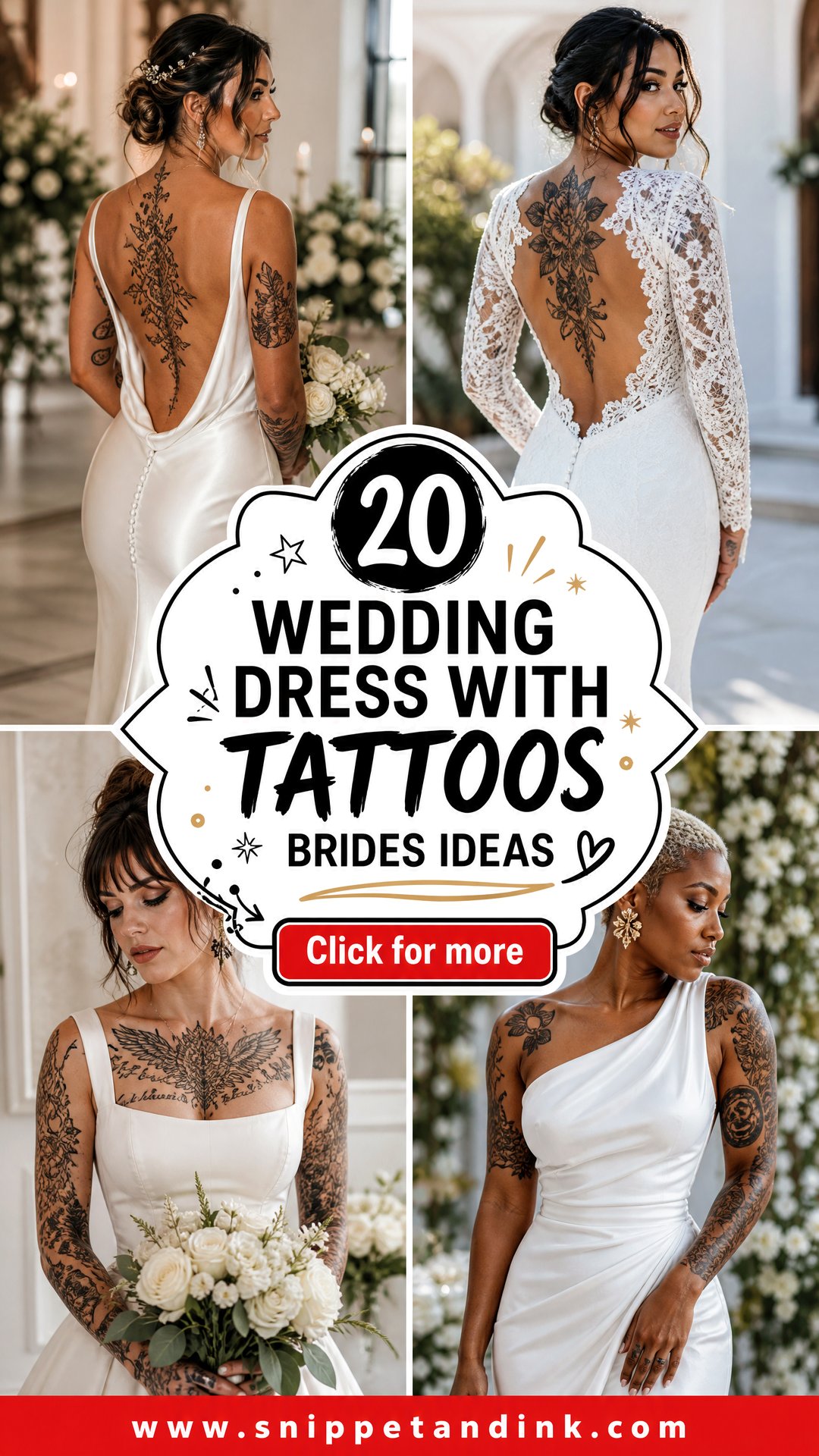
Map Your Tattoos Before the First Dress Appointment
The most useful thing a tattooed bride can bring to a salon is a set of photos of her own body, front, back and both sides, taken in plain light. When I see where each piece starts and stops, I can rule out half the rack in minutes and pull the necklines and backs that actually frame your work.
- Mark which pieces you want visible, which you’re happy to half-show, and which you’d rather cover. That list matters more than any style board.
- Note the edges. A strap, sleeve hem or back seam should sit beside a design or clearly frame it, not cross its centre.
- Wear a strapless bra or the shapewear you plan to wear, so necklines sit where they’ll sit on the day.
- Ask your consultant to photograph you from behind in each dress. You can’t see your own back tattoo in a three-way mirror properly.
If a piece is unfinished and you’re planning another session before the wedding, say so. A sleeve that will grow by the time of the final fitting changes which neckline makes sense.
1. Strapless Ball Gown For Tattooed Bride
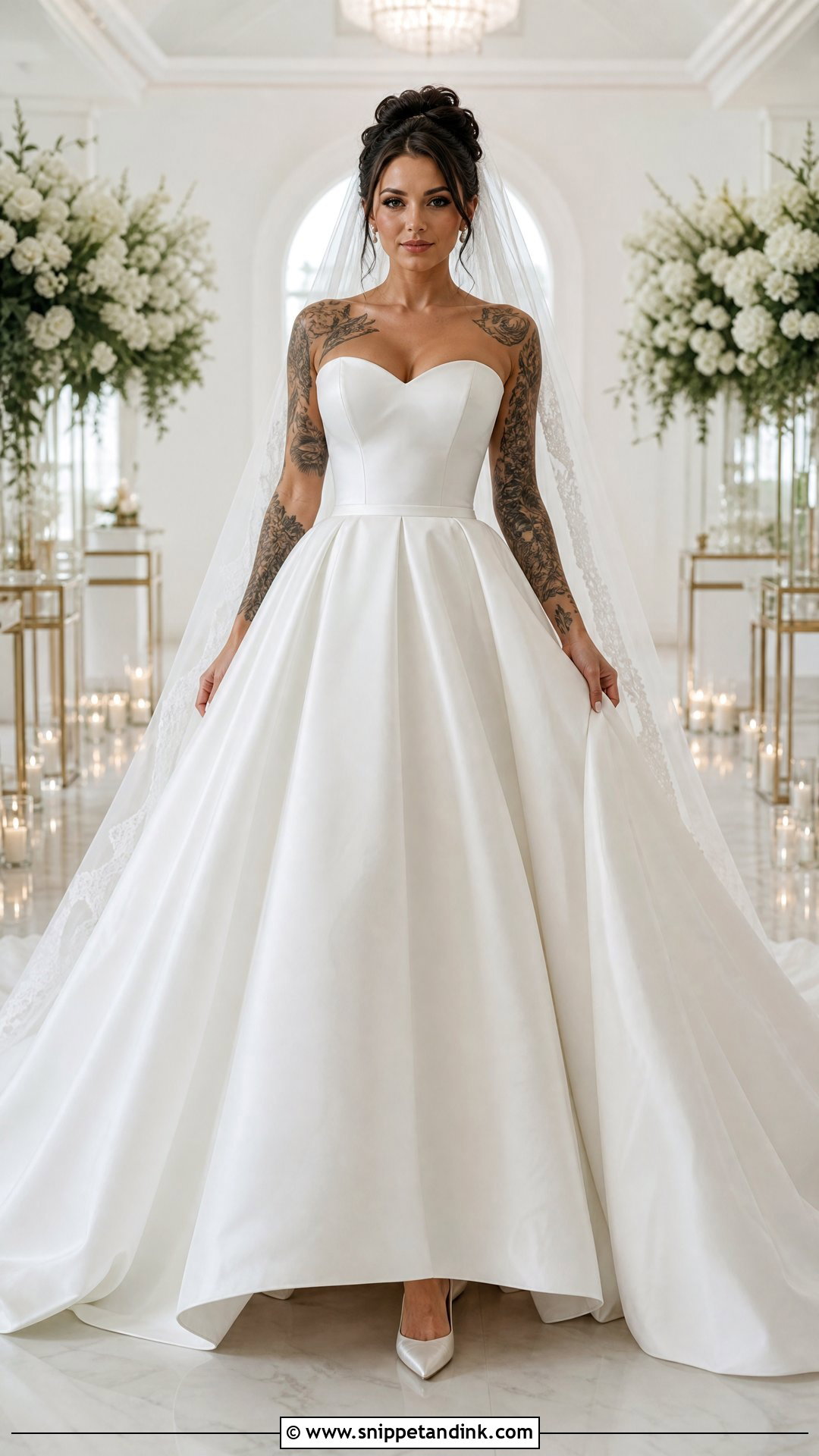
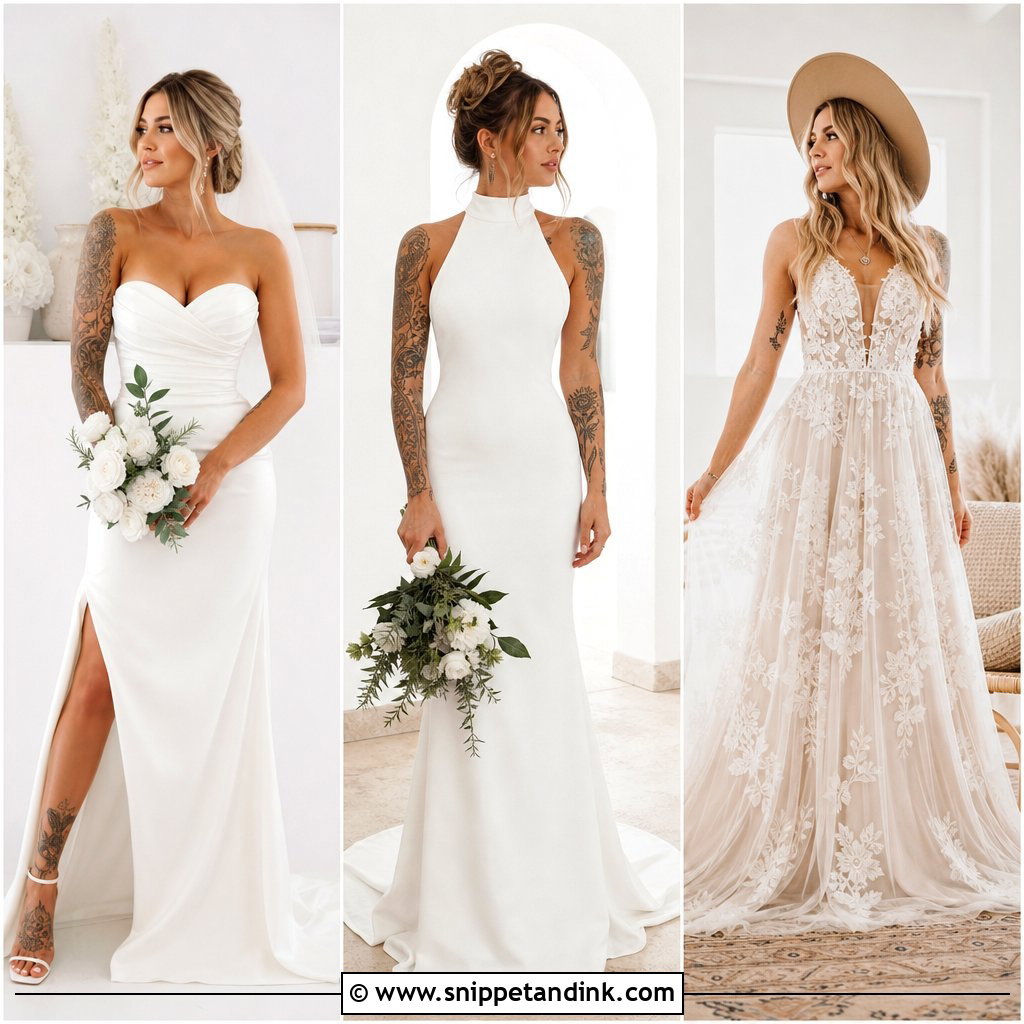
Nothing interrupts the skin in a strapless ball gown, which makes it one of the easiest ways to show shoulder, collarbone, chest and arm pieces all at once. Structured satin gives a clean, pale background where colorful ink pops; tulle softens the contrast and sits more gently beside fine-line or floral work. I’d pair it with a polished updo so nothing hides the upper body, and keep jewellery to pearl studs or one fine necklace. The fitting point I care about is the top edge. A strapless bodice that’s too loose sinks during the day, and if your chest piece starts right at the neckline, a centimetre of slip changes how it’s framed.
2. Off Shoulder Wedding Dress For Tattooed Bride
Could an off-the-shoulder neckline frame your artwork like a border? It often does, especially for collarbone and upper-arm tattoos, because the band runs horizontally right where those pieces usually sit. That’s also the risk. If the sleeve band lands across the middle of an arm tattoo, it cuts the design in half, so I measure where your ink starts and ends before we choose the band height. Full sleeves look best against plain crepe or satin; fine floral work can take a lace bodice. A low textured bun keeps the neckline clear. Test arm movement before alterations, as this cut limits how high you can lift your arms.
3. Sleeveless Crepe Wedding Dress With Arm Tattoos
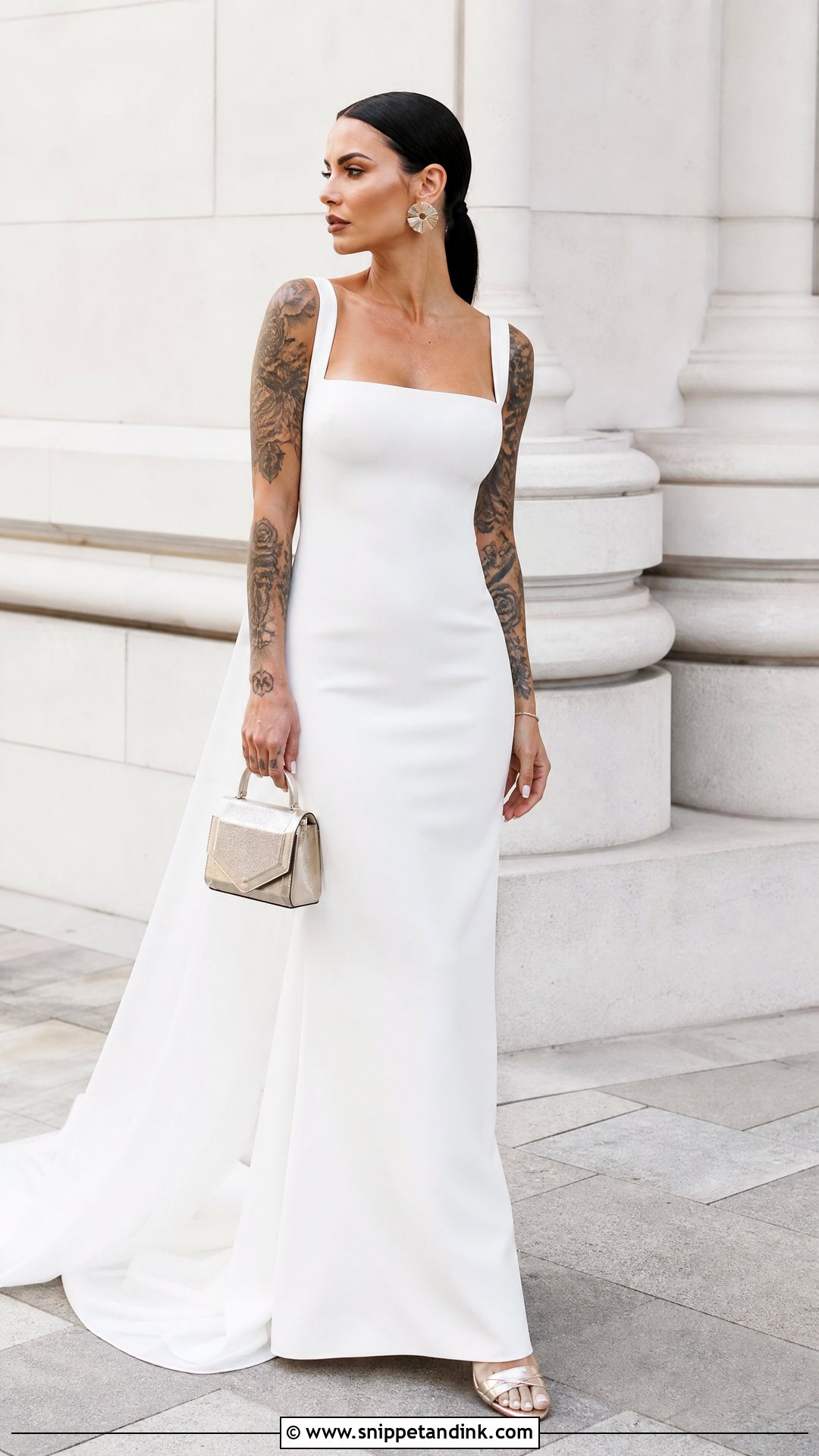
Crepe has a matte, smooth surface that sits quietly next to bold arm tattoos instead of competing with them. A sleeveless column or fit-and-flare keeps the arms fully open. I’d look at strap width carefully here: wider straps support the bust better, but they need to sit beside a shoulder tattoo, not across it. Because crepe is plain, one detail is enough, perhaps a square neck, covered buttons or a detachable train. The thing people don’t expect is how closely this fabric follows the body. It shows every undergarment line, so bring your actual bra or shapewear to each fitting. A slick low ponytail and sculptural earrings suit it.
4. Low Back Satin Wedding Dress With Back Tattoo
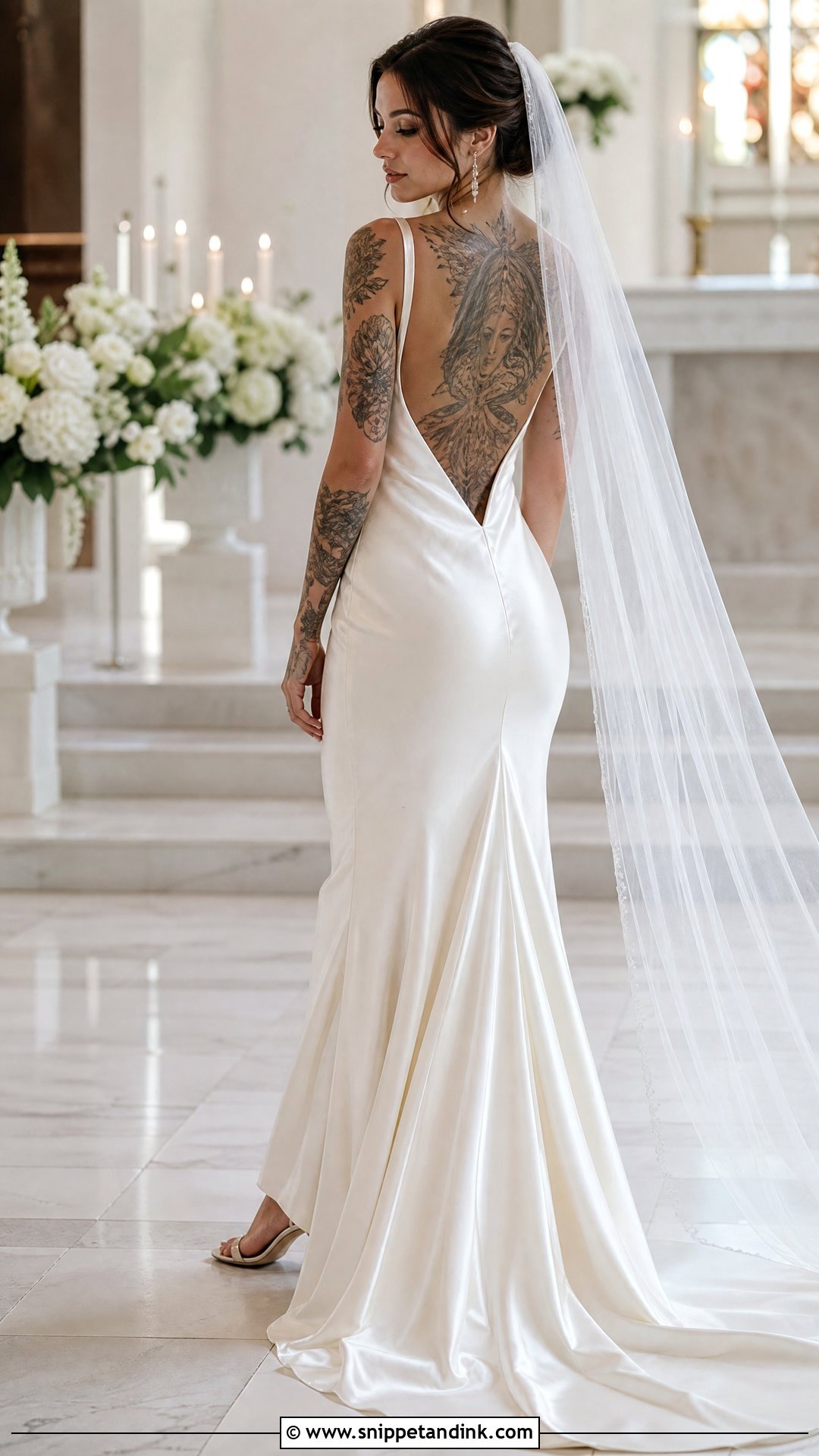
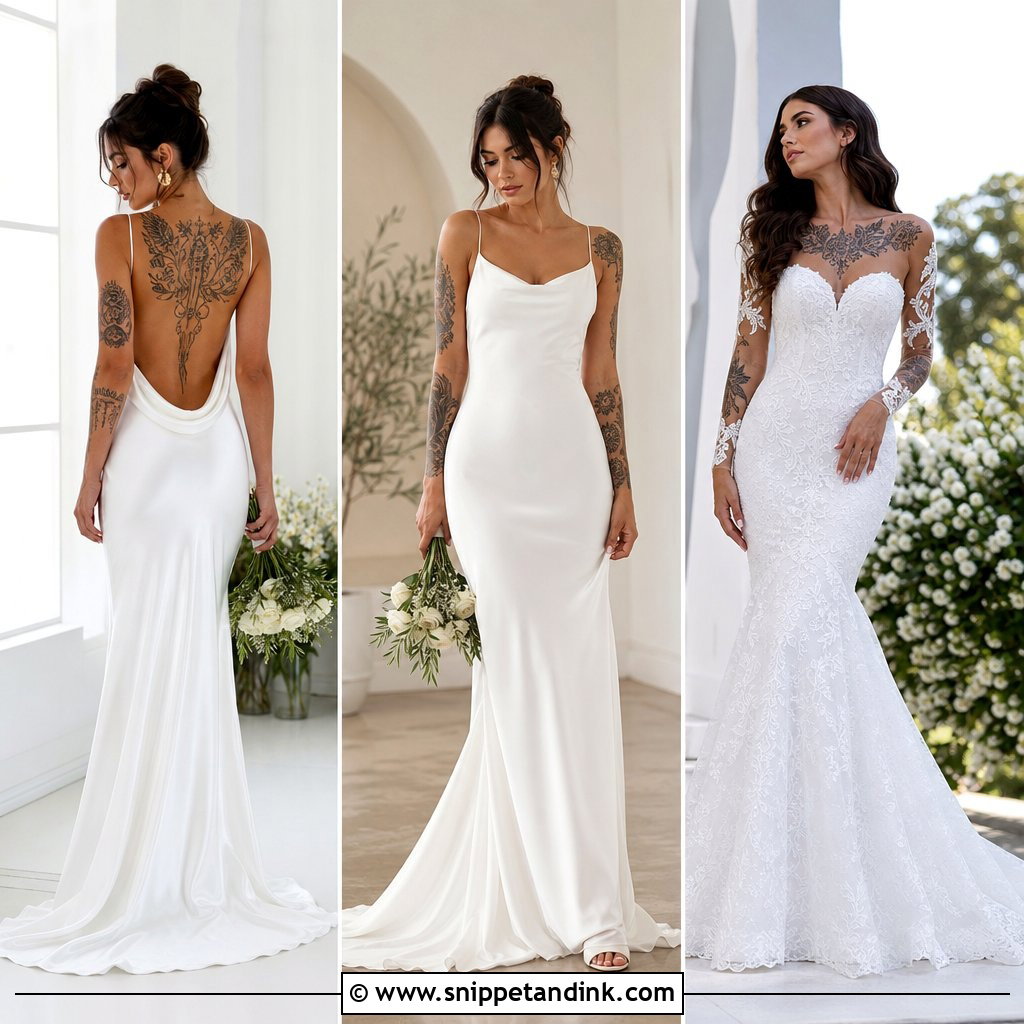
A back tattoo becomes the moment of the ceremony when the dress opens behind you. Choose the back shape to match the tattoo, not the other way round: a deep V suits a vertical spine piece, a rounded scoop frames a shoulder-blade design, and a cowl drape works for something lower and wider. Bias-cut satin moves fluidly; a mermaid holds more structure. Wear your hair up, and attach a fingertip veil below the bun so it hangs clear of the design, since heavy lace edging on a veil sits right over the middle of the back. I always pin the back edge at fittings while the bride looks over her shoulder in a hand mirror, because a cut that splits a design across its focal point is easy to miss from the front.
5. Halter Neck Wedding Dress With Shoulder Tattoos
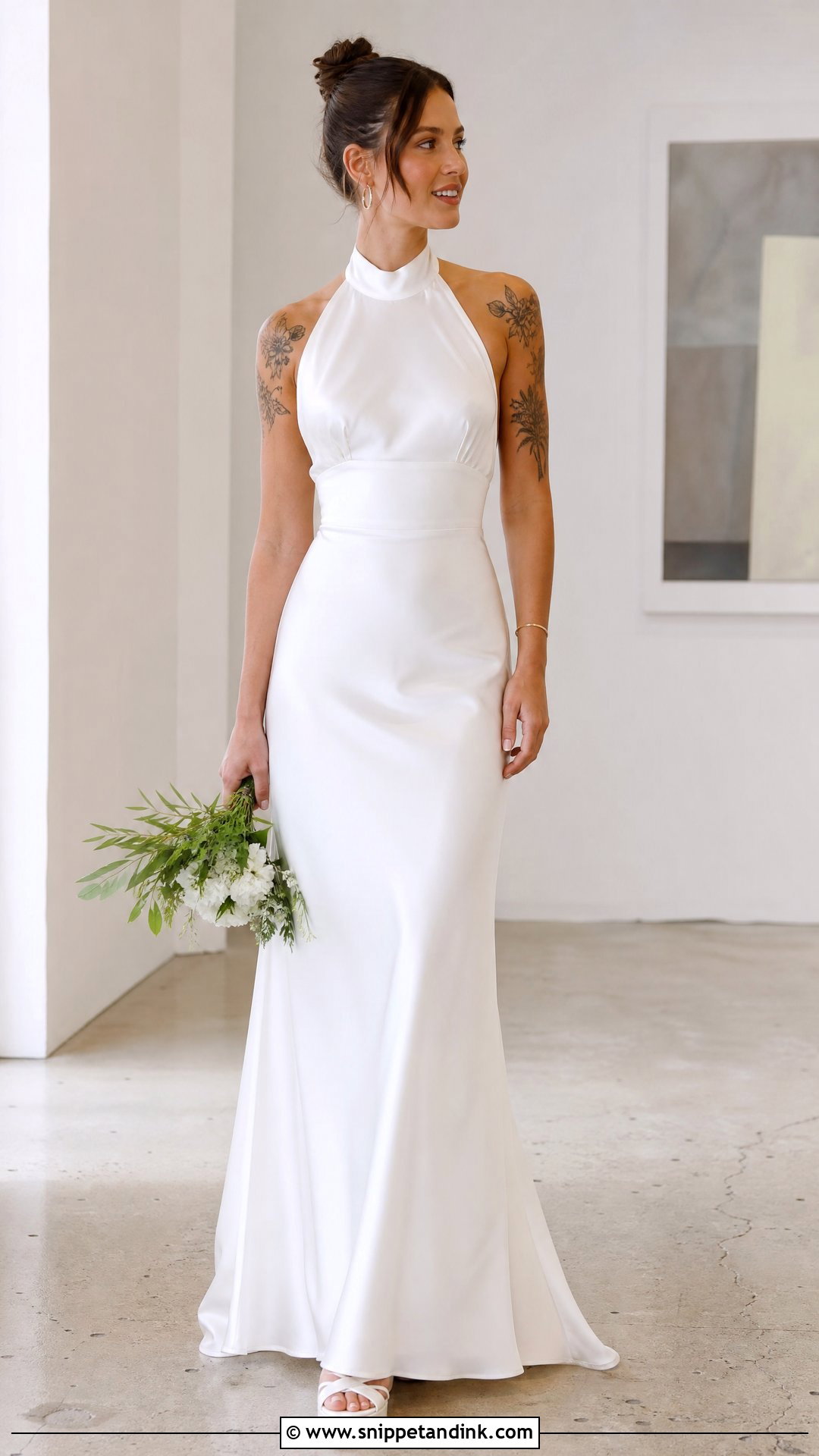
Halters pull the eye up and leave shoulders and arms completely open, which suits shoulder caps and matching pieces on both arms. Smooth satin gives a minimal finish; a lace bodice over a chiffon skirt is softer. The neckline already makes a strong shape, so I’d skip the necklace and let your skin and the dress do the work. Fit is the issue with halters. If the bust support is weak, the strap ends up carrying the dress from your neck, and by evening it aches. A well-fitted halter feels anchored at the ribs. Sit and dance in it at your fitting, and check the strap edge isn’t rubbing a tattoo on the back of the neck.
6. Spaghetti Strap Slip Wedding Dress With Tattoos
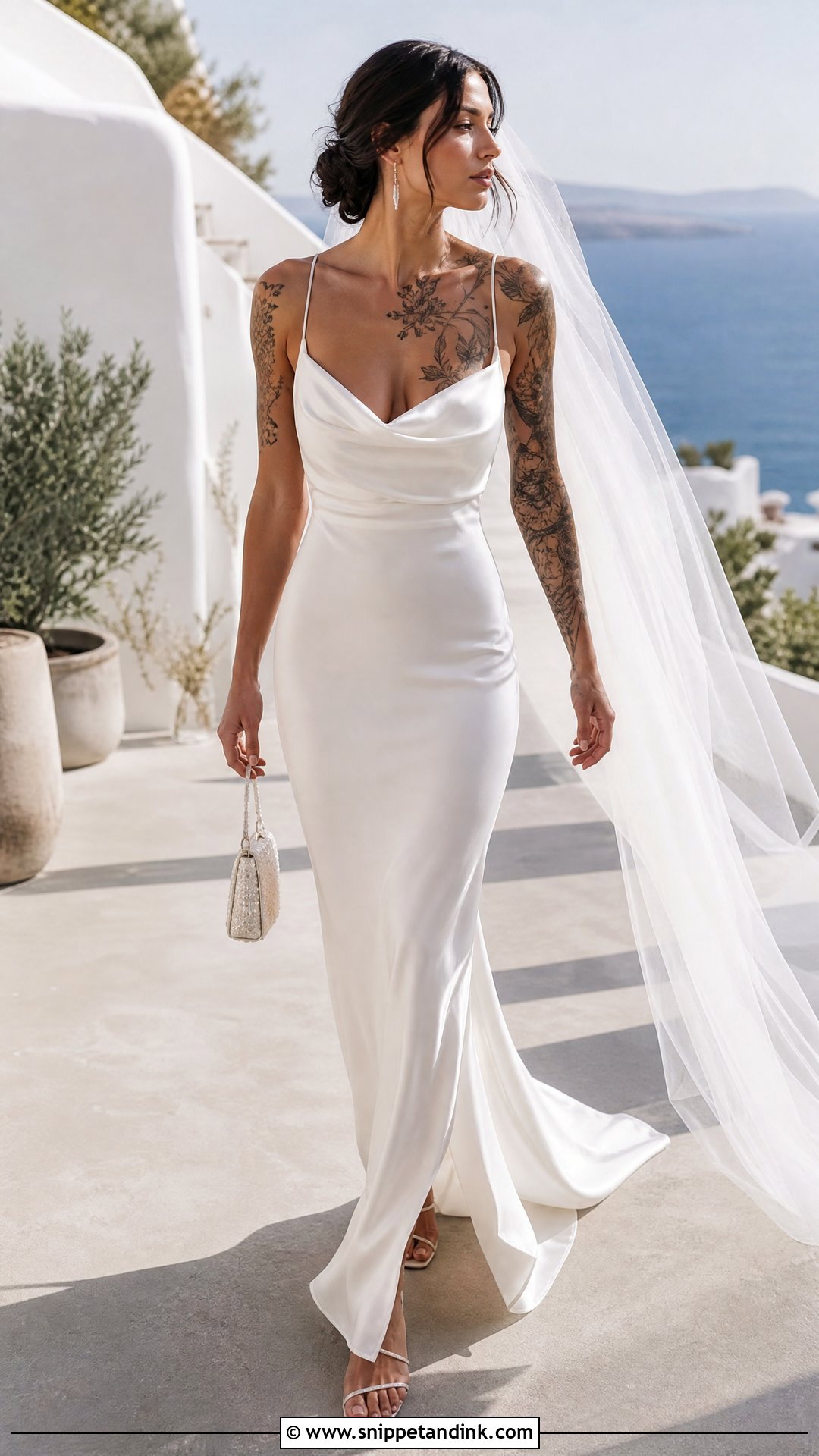
Slip dresses are about as unfussy as bridal gets, and thin straps leave almost every arm, shoulder and upper-back piece in view. A soft cowl or straight neckline gives a little structure at the front. I’d suggest this for courthouse, beach or small ceremonies where a big gown would feel out of place. Loose waves are easy, though an updo shows more of your back. My honest caution: most slips have very little internal support, and bias-cut silk clings to anything underneath. Ask a bridal tailor about sewn-in cups, and make sure the fabric skims the hips rather than pulling across them.
7. Short Sleeve Lace Wedding Dress With Tattoos
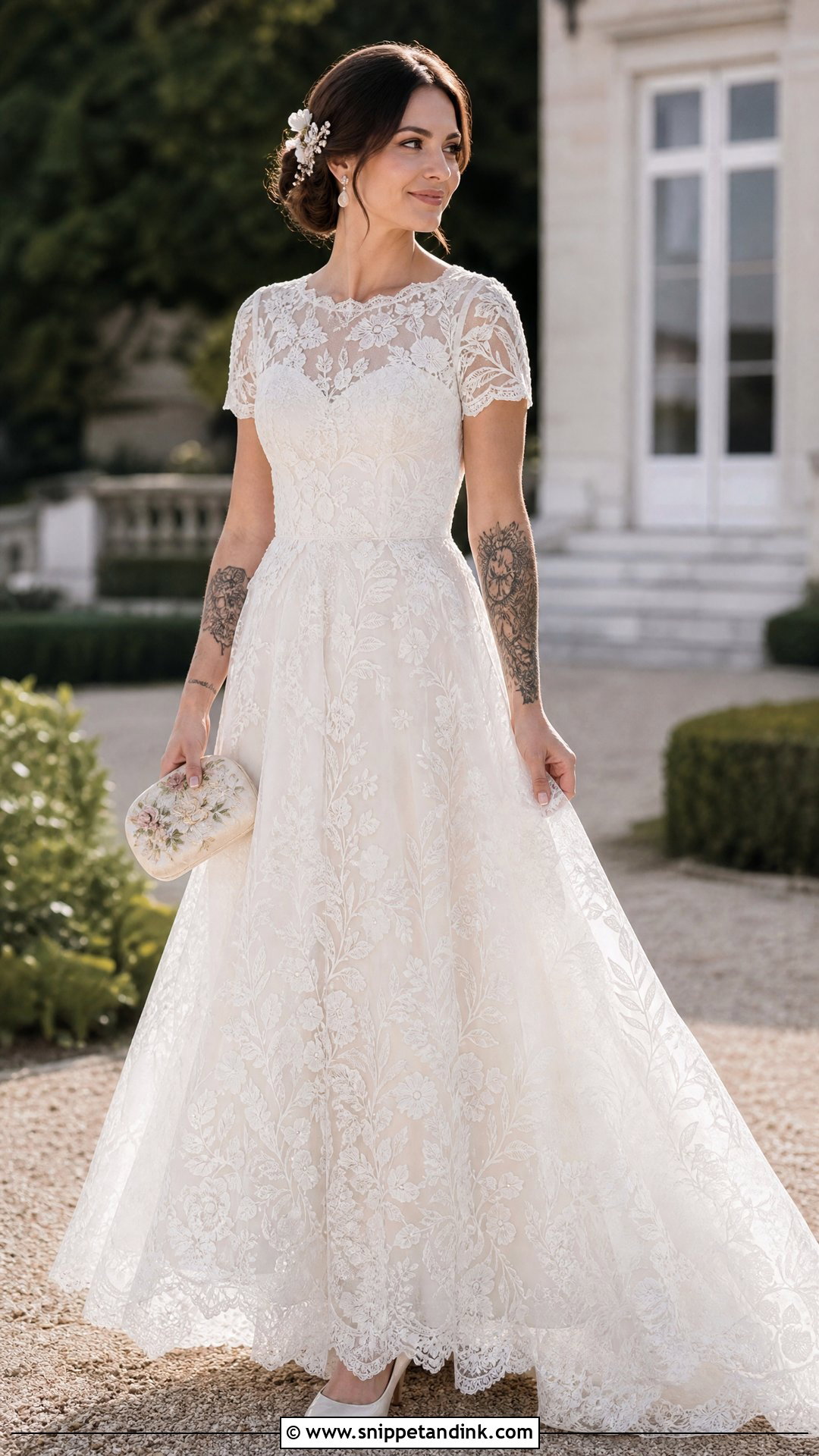
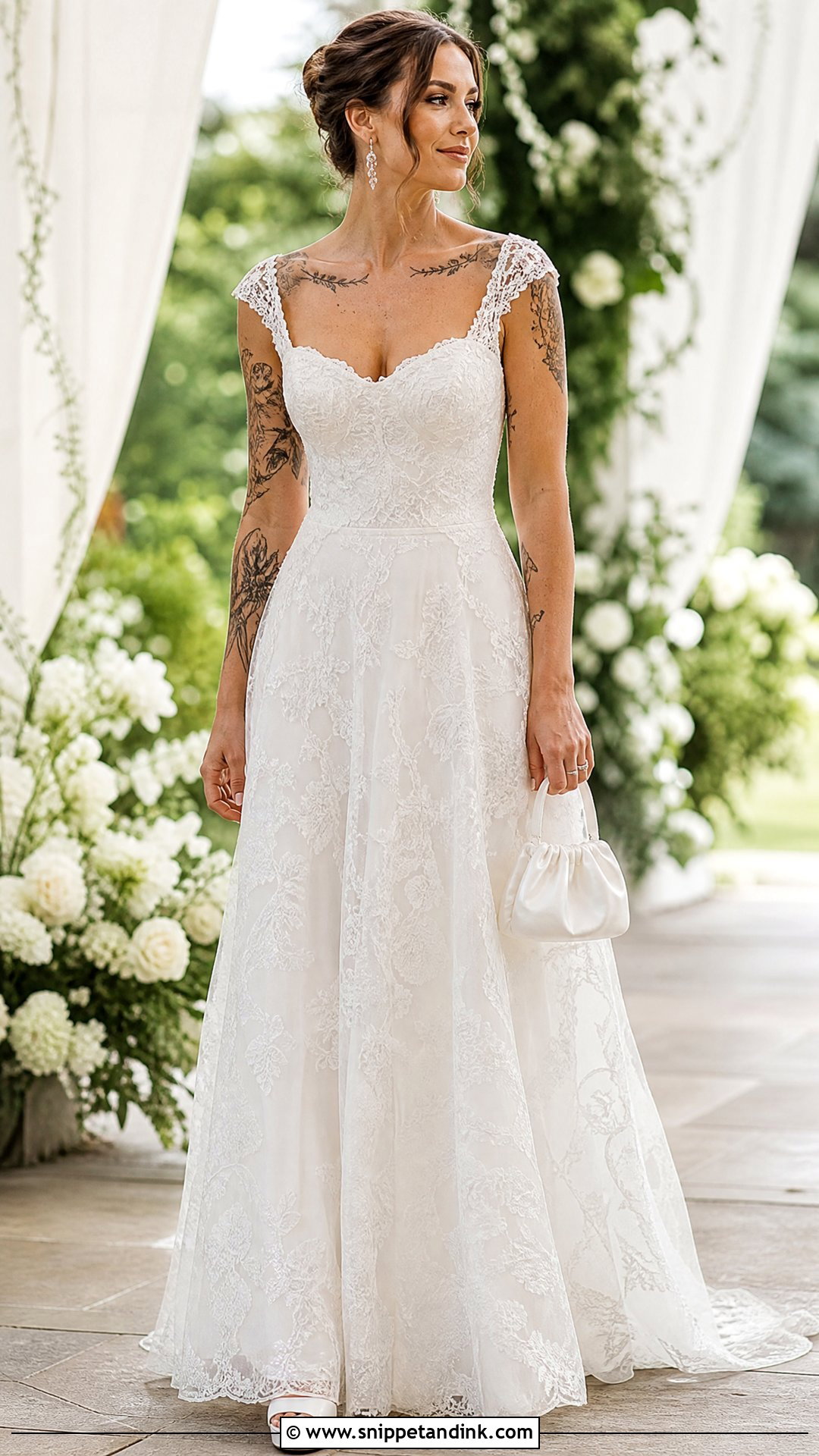
Short lace sleeves sit in an interesting middle ground: they show forearm and wrist tattoos clearly while filtering whatever is on the upper arm. Lace choice matters more than people think. Large botanical motifs echo floral tattoos; fine Chantilly-style lace sits better beside delicate linework, because a busy lace next to a busy tattoo turns into visual noise. Watch where the sleeve hem ends. It shouldn’t cut through the focal point of a design, and a good seamstress can often shorten or reshape the lace edge along a motif. Pair it with an A-line skirt for ease, a floral comb and pearl earrings.
8. Long Sleeve Open Back Wedding Dress With Tattoos
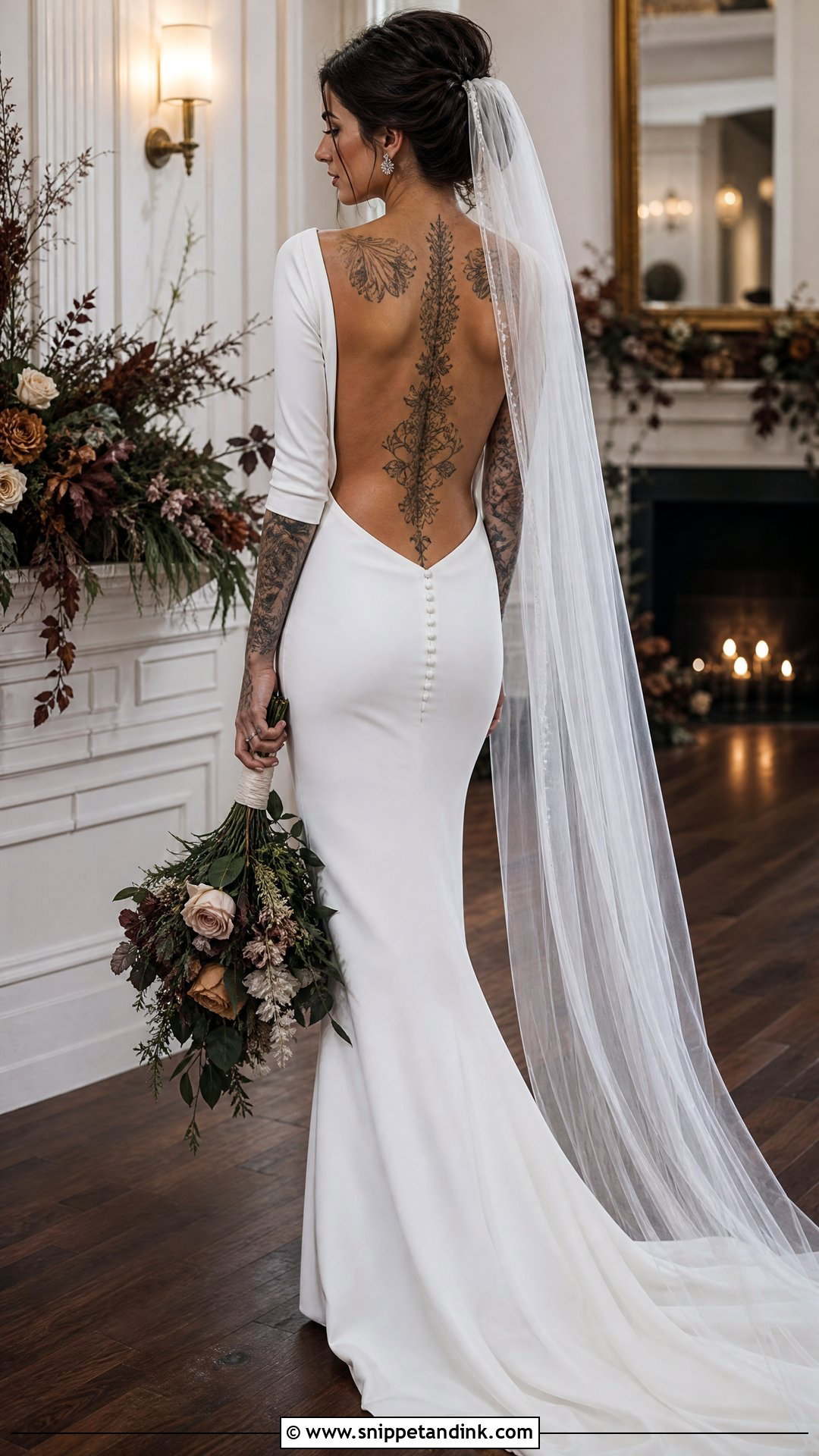
This is the cut I suggest to brides who want coverage at the ceremony and a reveal behind them. Long sleeves soften or hide arm tattoos, and the open back puts a spine, shoulder-blade or lower-back piece in full view. Fitted lace sleeves read romantic; plain crepe is cleaner. It suits autumn and winter well. Pay attention to the veil length so it ends either above or below the tattoo, never midway across it. I also check button rows and mesh edges at the lower back, because a stiff edge can press into skin when you sit and leave a visible red mark in late-evening photos.
9. Square Neck Wedding Dress With Chest Tattoos
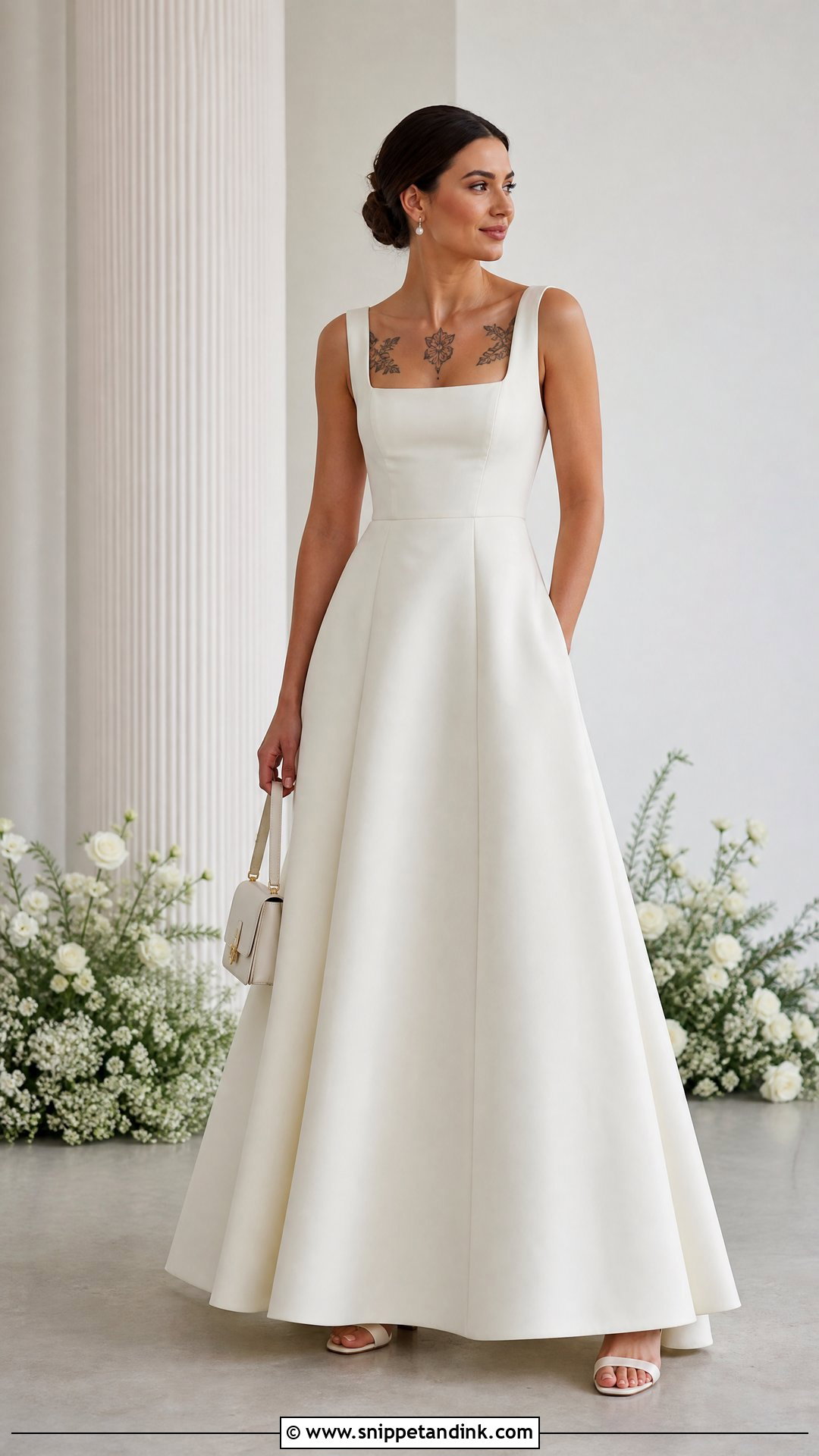
Square necks frame upper-chest and collarbone tattoos with clean, straight edges, and they work with wide straps, thin straps or small cap sleeves. A fitted bodice and A-line skirt balance the proportions; a column gown feels more modern for a city wedding. I’d leave out a large necklace that overlaps the artwork and let the neckline carry the look instead. The square neck is unforgiving about height. A neckline that sits a little too high will slice across the top of a chest piece, so at fittings I photograph the dress from the front and both sides and compare. Tiny adjustments here make a real difference.
10. Sweetheart Wedding Dress With Chest Tattoos
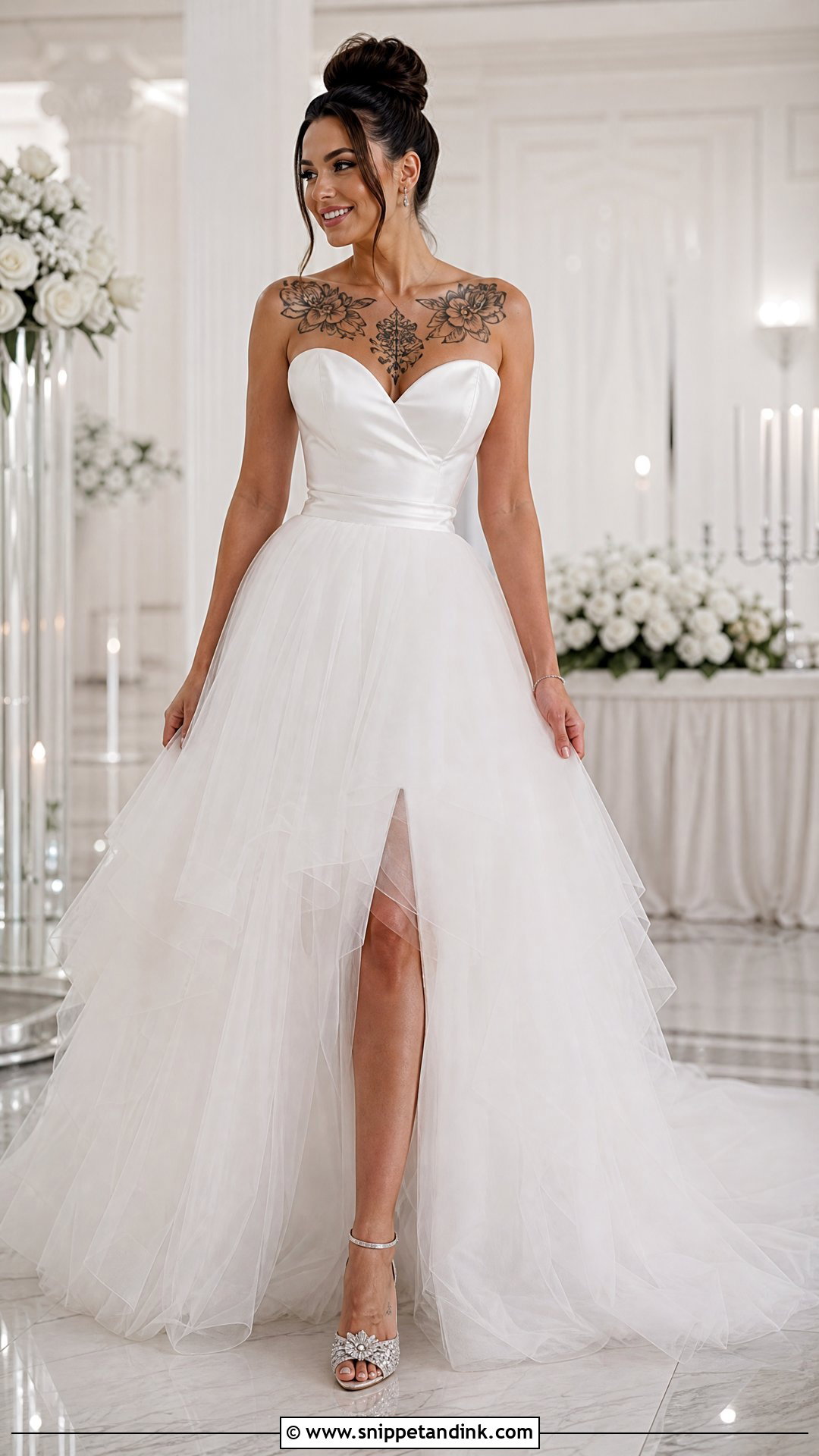
Sweetheart necklines curve under the bust, which leaves a soft frame below chest or collarbone tattoos. Corseted bodices, tulle skirts and fitted satin all suit the shape, and detachable straps are worth asking about if you want extra support for dancing. A plain bodice lets detailed ink stand out; subtle lace pairs with softer floral work. The thing I check first is where the centre dip lands. It should sit below the tattoo, not over its most meaningful part. If the gown is boned, sit, move and raise your arms during the fitting, since boning that shifts will rub.
11. One Shoulder Wedding Dress With Tattoos
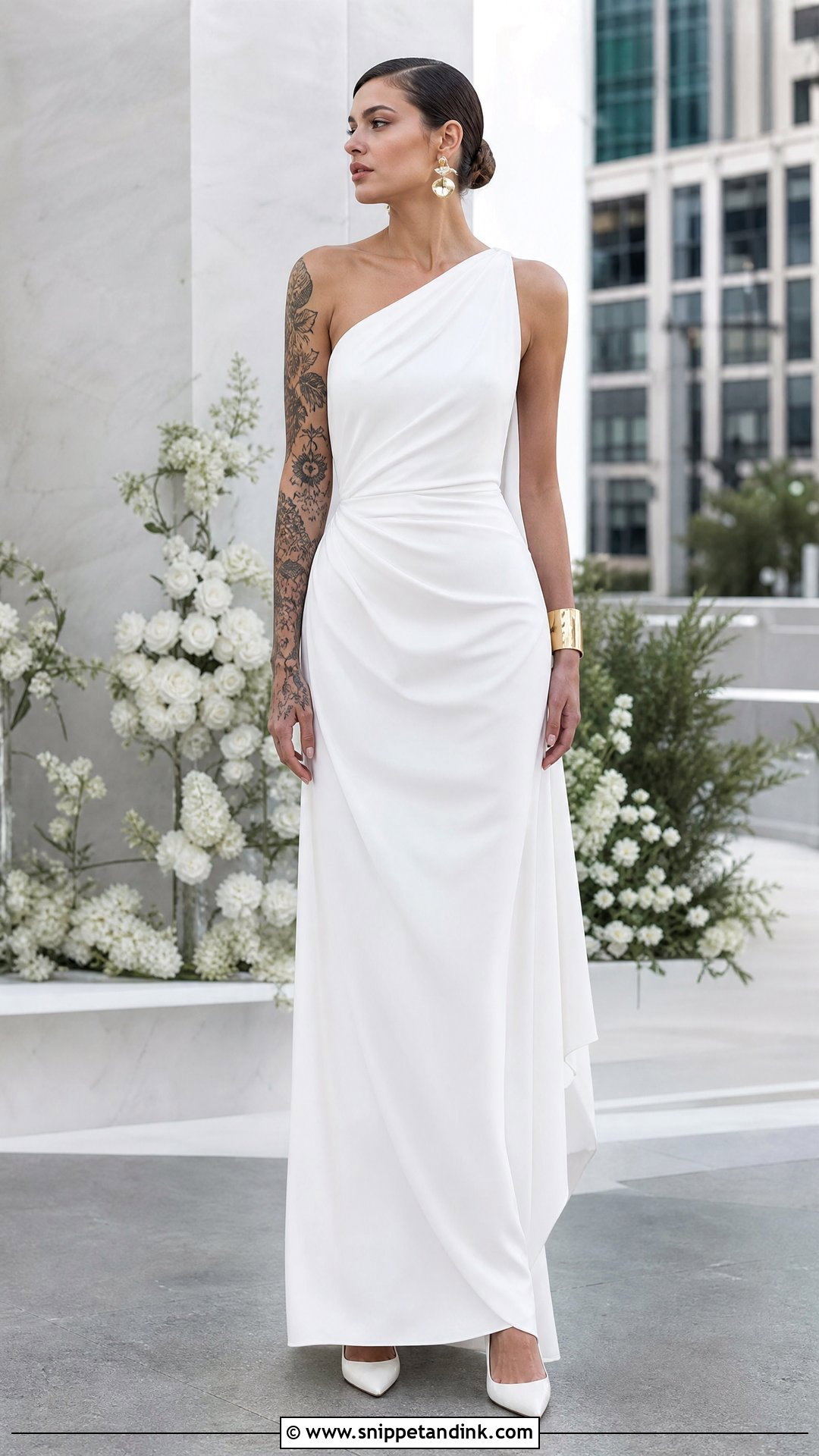
Asymmetry is useful when you have a favourite piece on one arm and something you’d rather keep quieter on the other. A one-shoulder gown shows one side and covers the other, guiding attention where you want it. Draped crepe suits a city ceremony; a chiffon A-line works outdoors. Position a sleek bun away from the covered shoulder, wear bold earrings or a cuff, and skip the necklace. I’d watch the single strap closely during alterations. It carries more of the dress than a pair of straps would, so if it’s not anchored properly, it slides, pinches, and rubs right where the tattoo sits.
12. Plunging Neckline Wedding Dress With Tattoos
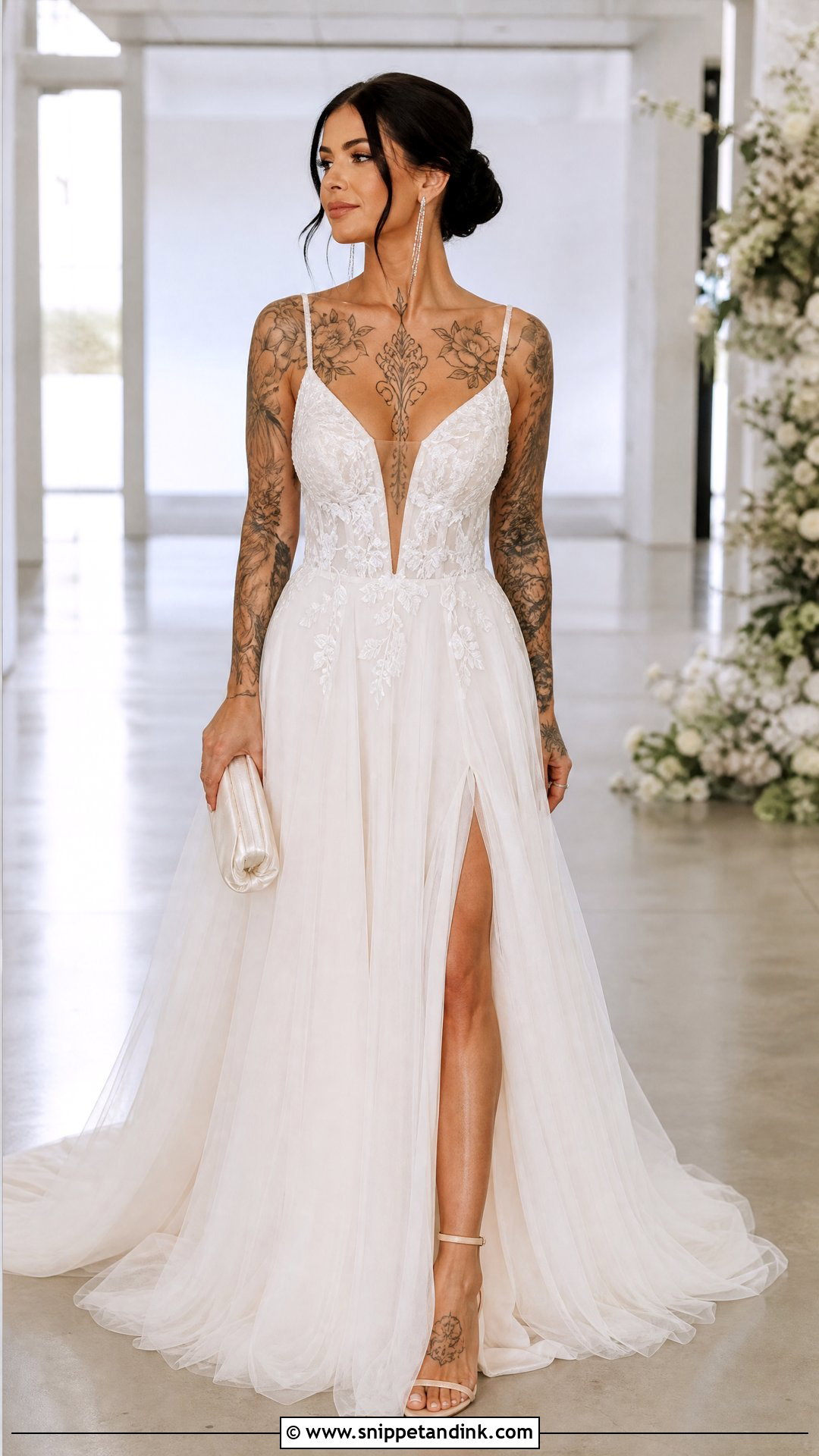
A plunging neckline can show a sternum or chest piece beautifully when the opening follows the shape of the tattoo, so I usually bring a photo of the bride’s ink to the fitting and trace the V against it. Support is everything with this cut: look for boned sides and a discreet illusion panel that keeps the edges in place. A fitted crepe skirt feels current; layered tulle is softer. Keep pendants and long necklaces off the tattoo, as anything swinging over it distracts. Before alterations are finalised, walk, lean, hug and dance in it. If you’re constantly adjusting it, the fit isn’t there yet.
13. High Neck Sleeveless Wedding Dress With Arm Tattoos
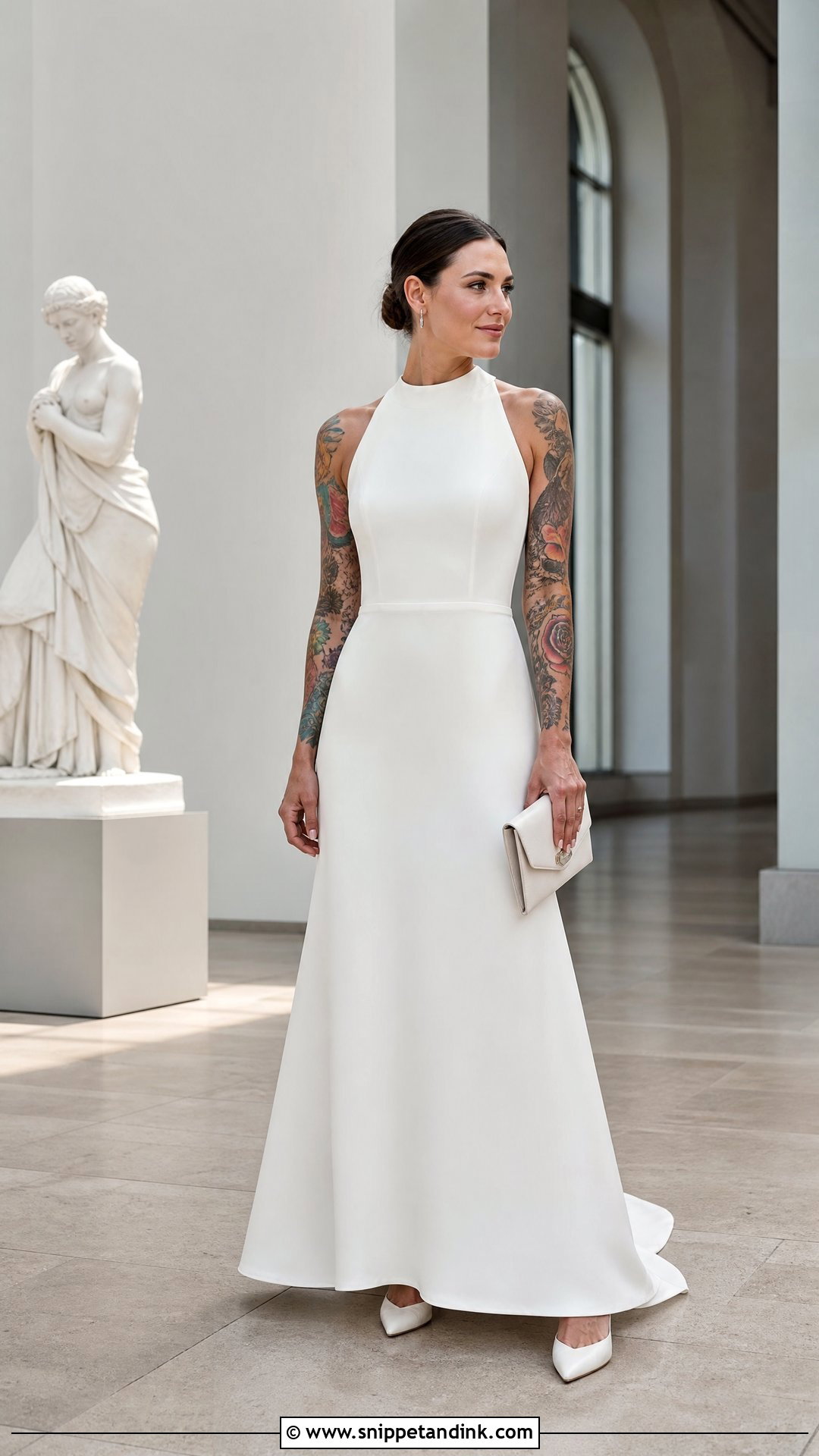
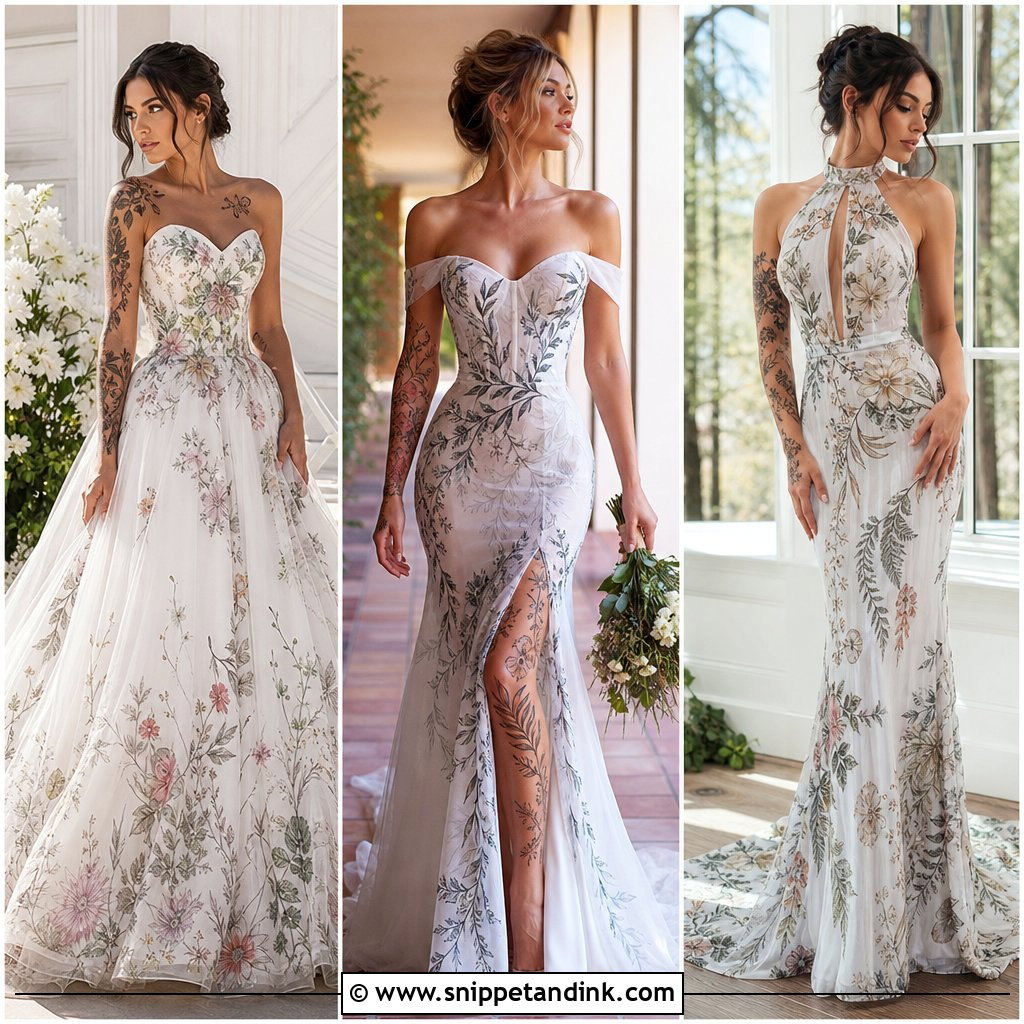
High neck at the front, bare arms at the sides: this shape gives coverage at the chest while leaving arm and shoulder tattoos completely visible. Smooth crepe keeps it modern; botanical lace makes it romantic. Brides with full sleeves usually look best in an unembellished version, so the ink is the strongest pattern on the body. Necklaces aren’t needed. The fit point I’d raise is the armhole. High-neck sleeveless cuts are often cut deep or tight at the arm, and an armhole that digs in creates a bulge right against the edge of a shoulder tattoo. Have it adjusted until the edge lies flat.
14. Tea Length Wedding Dress With Leg Tattoos
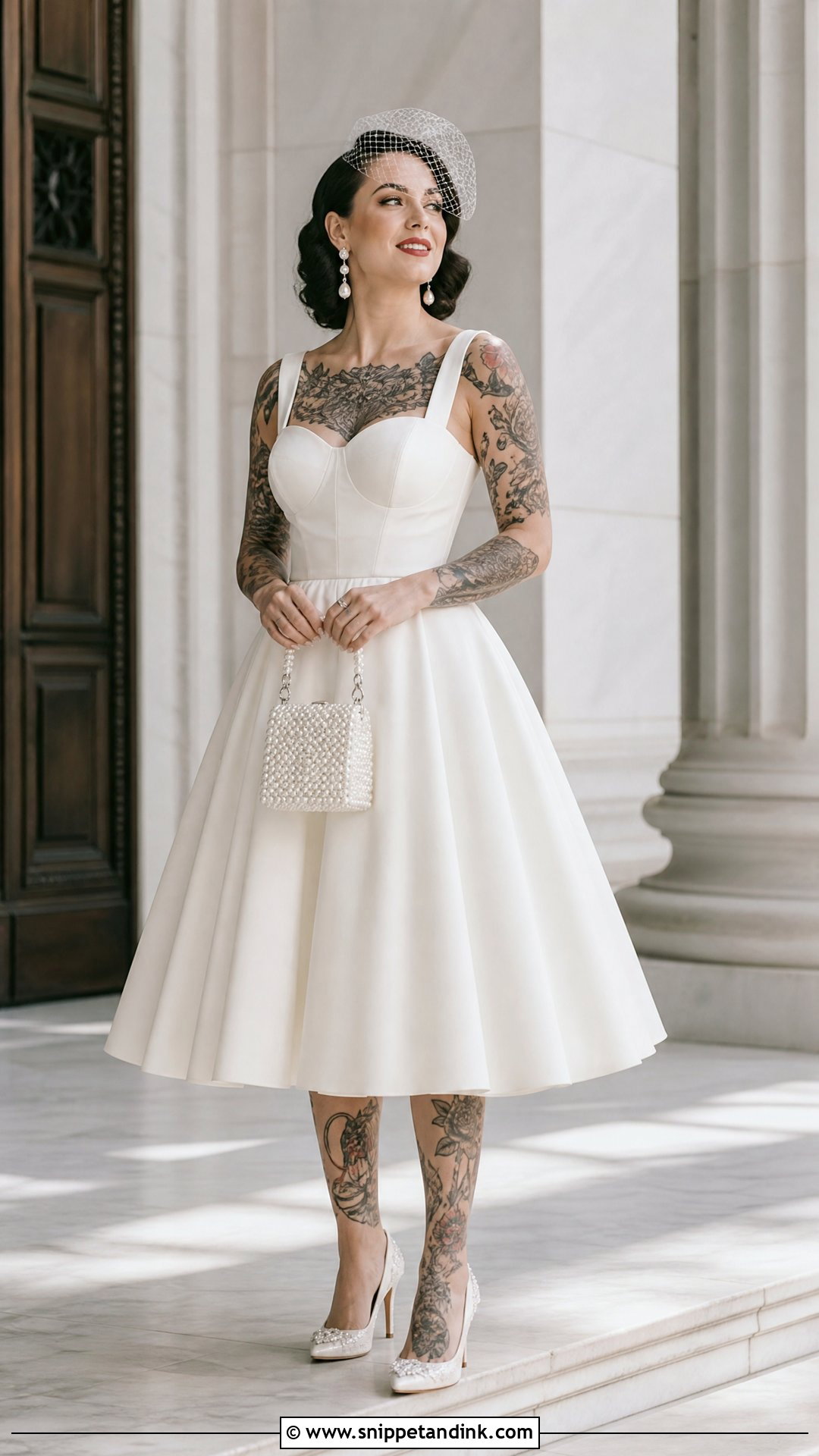
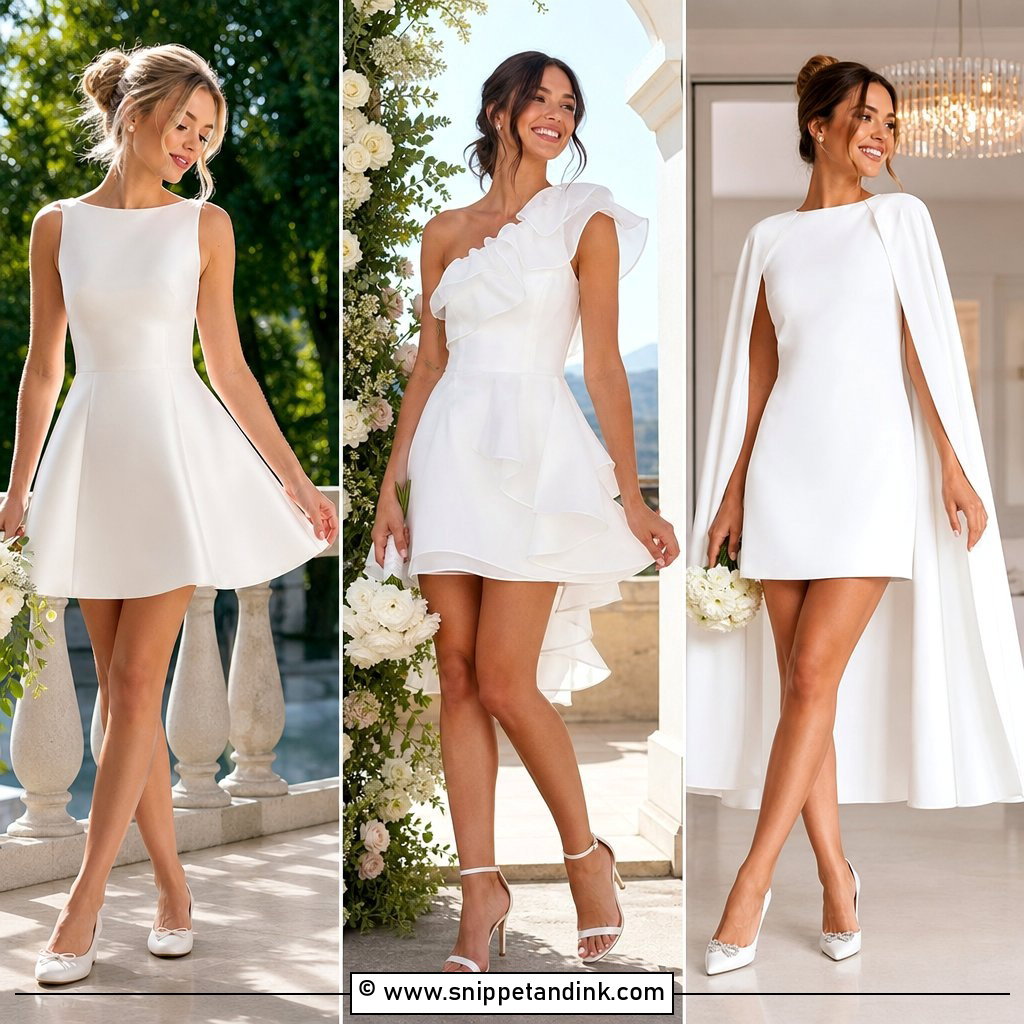
Tea length shows off calf, ankle and lower-leg tattoos, and it puts your shoes in the spotlight too. Embellished pumps, coloured heels or sleek bridal boots all work. A structured A-line gives a vintage feel; a fitted midi suits a courthouse ceremony. I’d add a birdcage veil and simple pearl or silver earrings. If your tattoos are strongly coloured, neutral shoes keep the look calm; black or grey linework can take a metallic shoe for some brightness. Have the hem pinned while you stand and walk, because a two-centimetre change in length can either frame an ankle piece or cut straight through it.
15. Wedding Dress With High Slit And Leg Tattoo
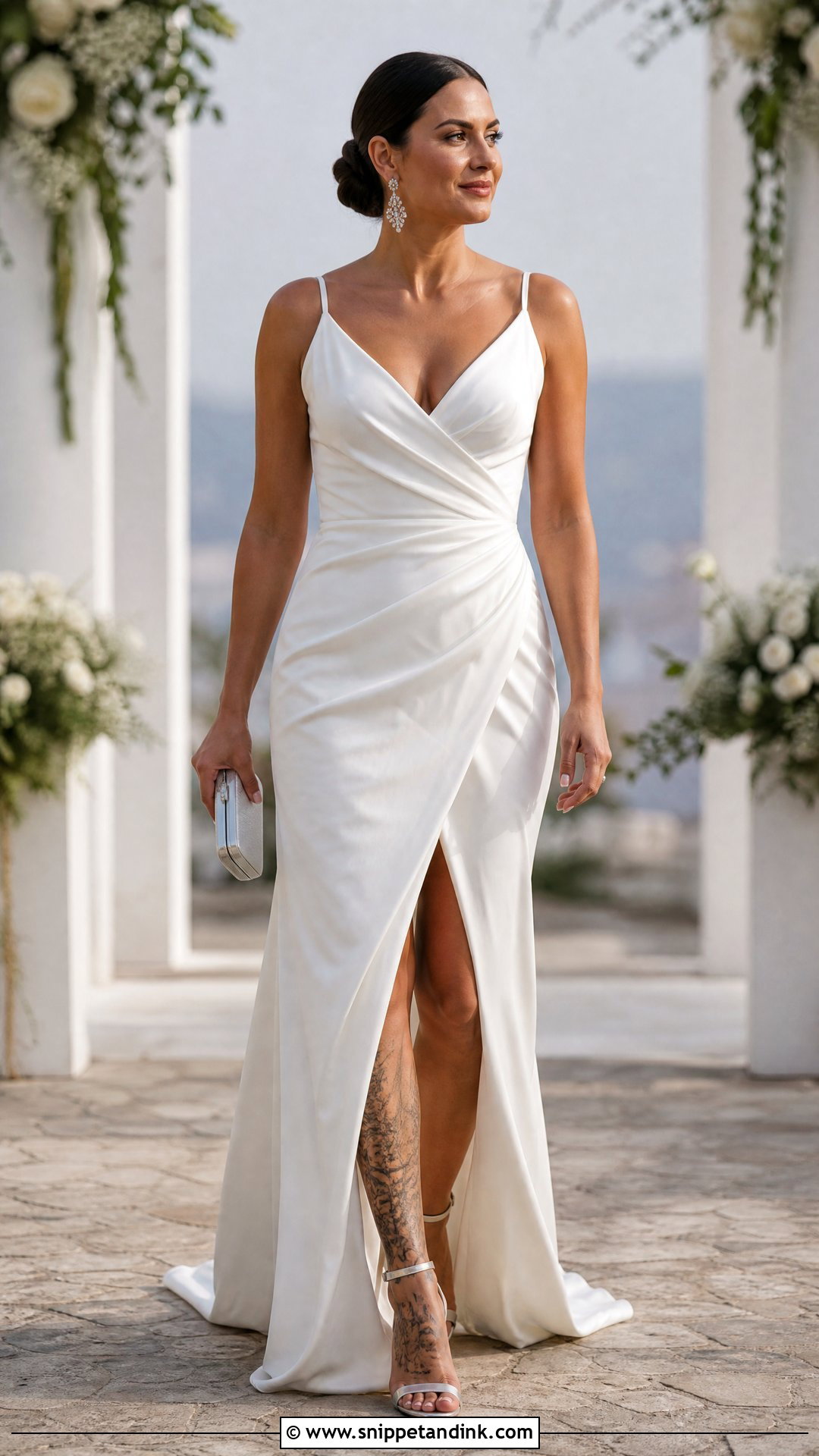
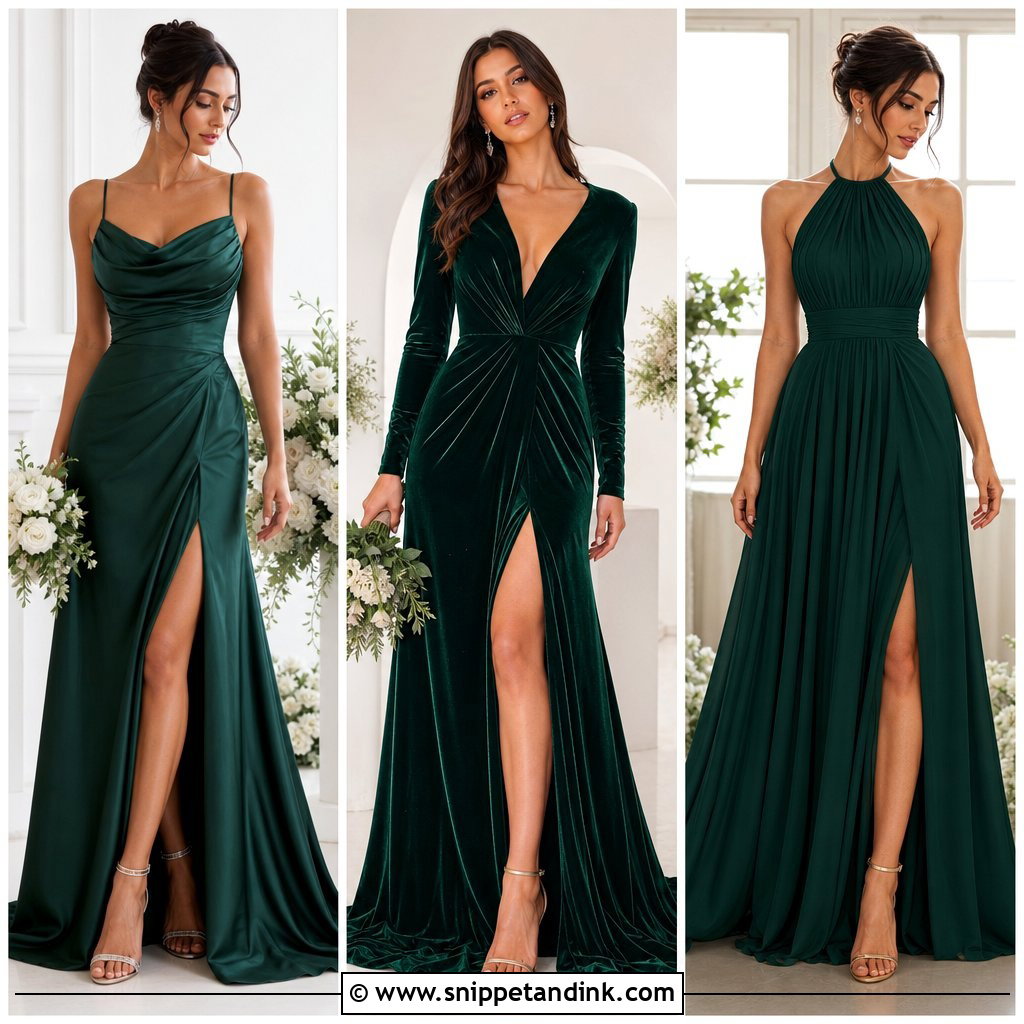
A high slit gives a thigh or leg tattoo a controlled reveal: you see it when you walk, not when you stand still. Wrap-style satin, fitted crepe and flowing chiffon all carry a slit well, as long as it’s securely finished. The opening should show the artwork naturally while you move. I’d keep the bodice simple so the movement of the skirt does the talking, with a smooth updo and supportive heeled sandals. During alterations, climb stairs, sit down and dance to test where the slit lands. If you want flexibility, ask whether a couple of hidden snaps can close it partway for the ceremony and open it for the reception.
16. Boho Wedding Dress With Full Sleeve Tattoos
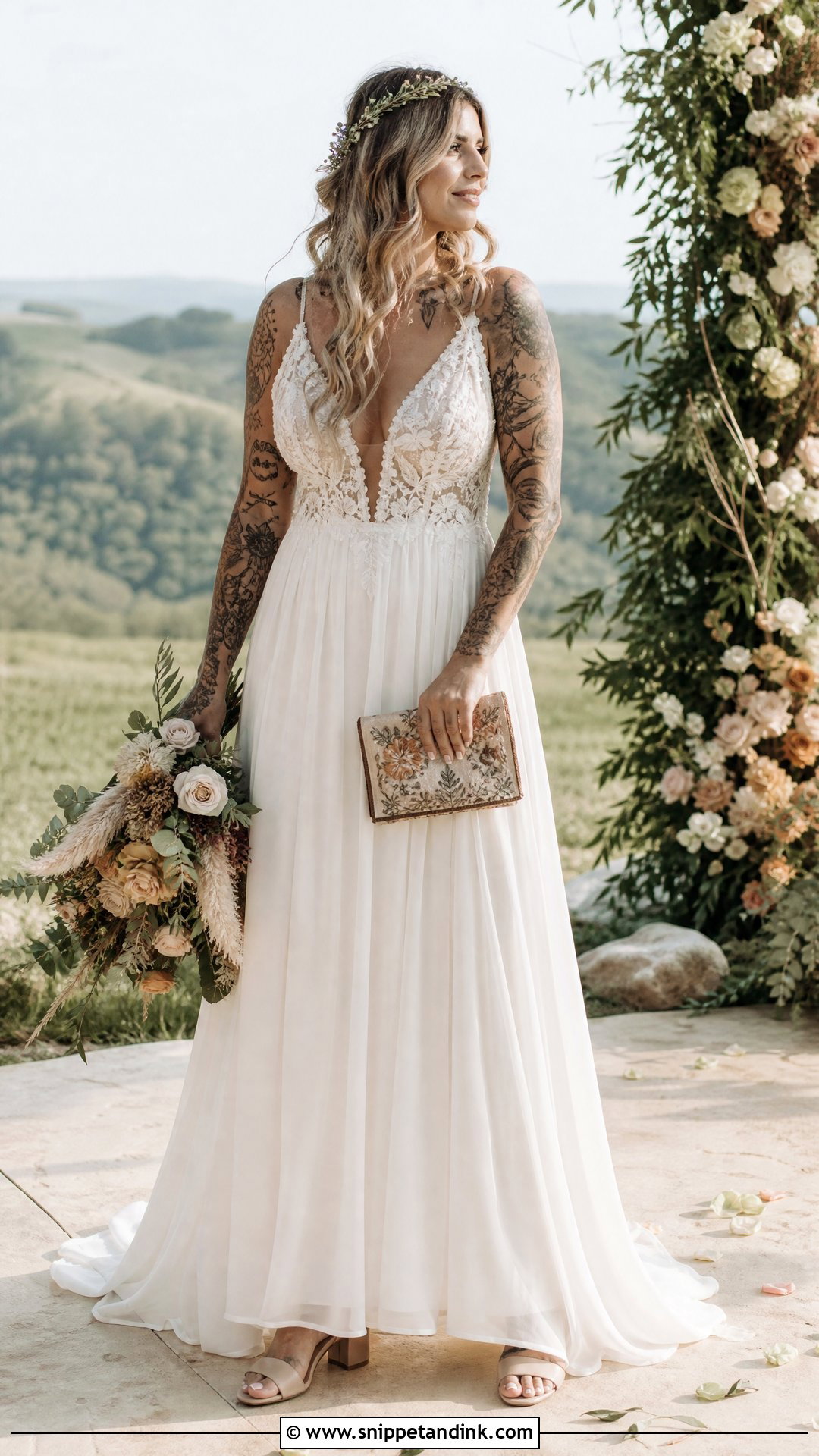
Full sleeves sit naturally beside the loose, organic feel of a boho dress. Thin straps and a deep V keep the arms open, and botanical embroidery on the bodice connects well with floral or nature-inspired artwork. A light chiffon or tulle skirt keeps it relaxed. I’d keep bracelets minimal, since they break up wrist tattoos, and go for textured waves and a fine hair vine. Outdoors, choose a short train that won’t drag through grass or sand. My one honest note: boho embroidery and heavy sleeve work together can get busy fast, so I’d go for a calmer bodice if your sleeves are densely coloured.
17. Minimalist Wedding Dress With Colorful Tattoos
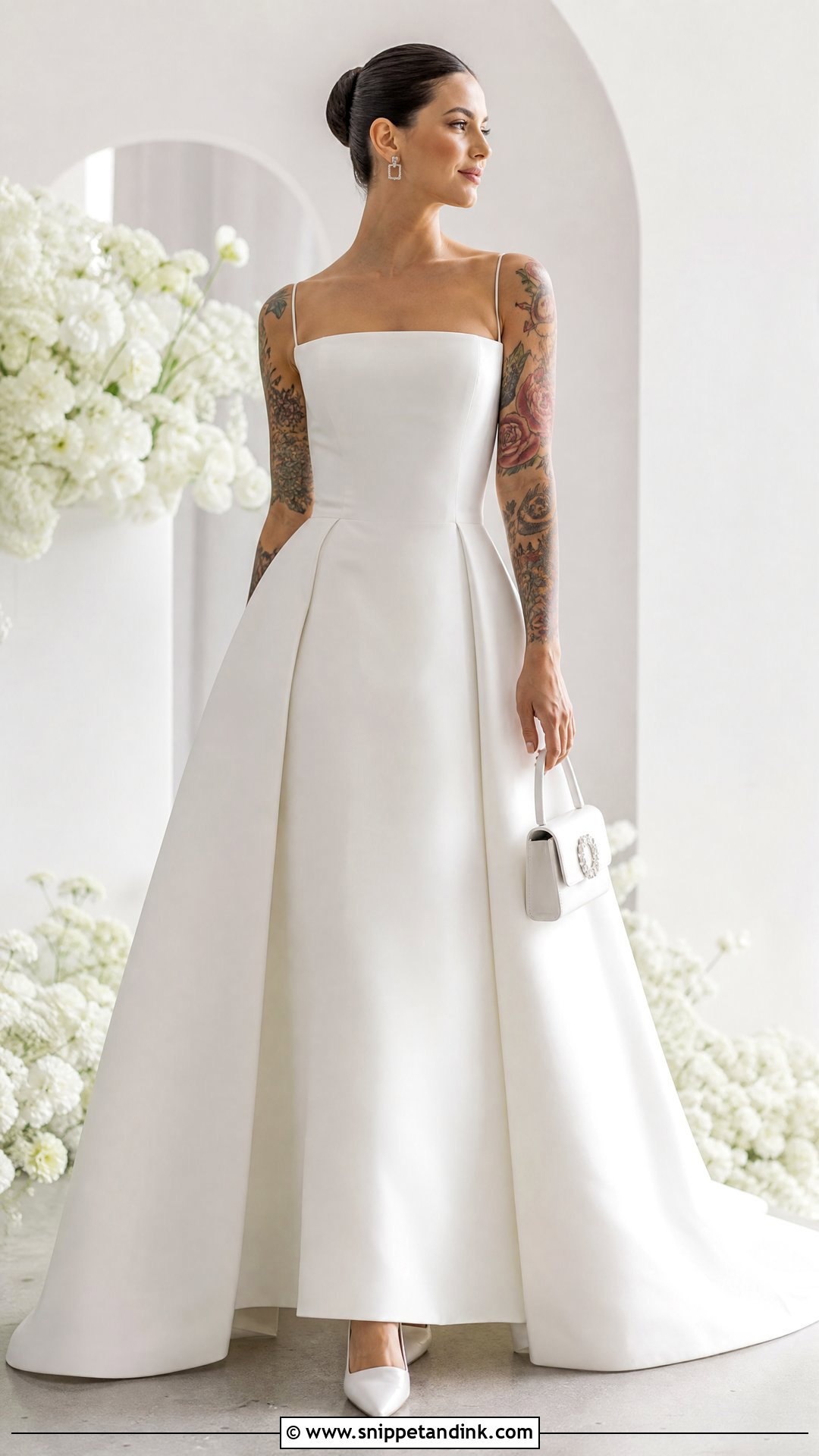
A minimalist gown leaves the colour and pattern to your tattoos. Choose plain satin, mikado or crepe with a clean neckline and excellent tailoring; a straight column, a fitted trumpet or a structured A-line all work. Skip heavy lace and beading. Instead, pick one colour from your artwork and repeat it once, perhaps in earrings or a flower. The step I never skip: hold fabric samples against your skin in daylight. Bright white, soft white and ivory react differently with tattoo pigments, and one of them will look noticeably better against your specific colours than the others.
18. Black Wedding Dress With Tattoos
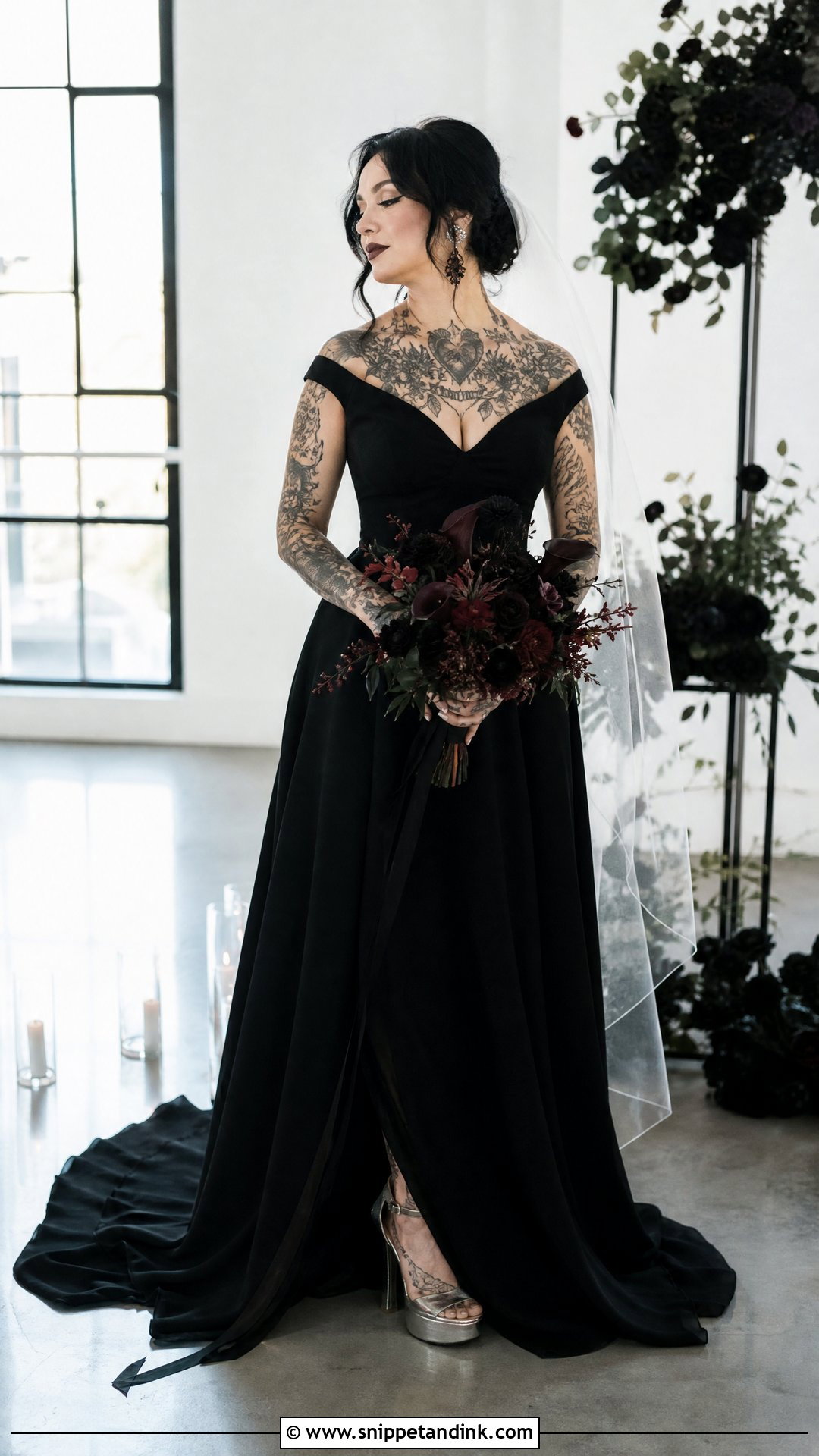
A black wedding dress suits a bride whose wardrobe already leans unconventional, and against black fabric, tattoos look vivid and sharply outlined. Strapless ball gowns, fitted lace or off-the-shoulder silhouettes all translate well, chosen by the formality of the venue. Black heels or metallic ones, a dark floral bouquet, and a sheer black or ivory veil finish it. A practical point from fittings: black swallows detail in dim light, so test and photograph the dress somewhere bright, otherwise both the fabric texture and your ink disappear. It also doesn’t need dramatic makeup. Fresh skin and defined eyes hold their own.
19. Colored Wedding Dress With Tattoos
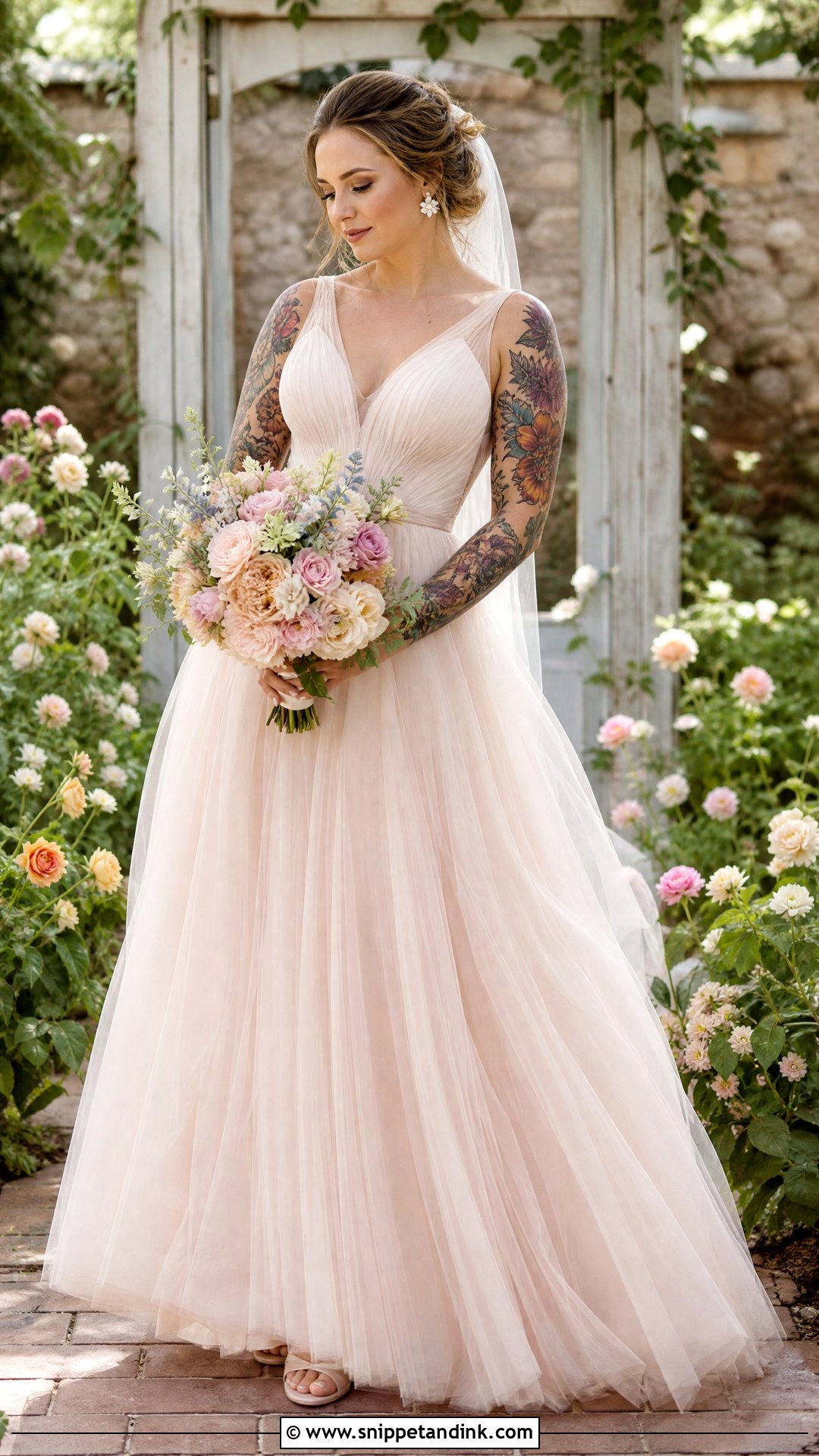
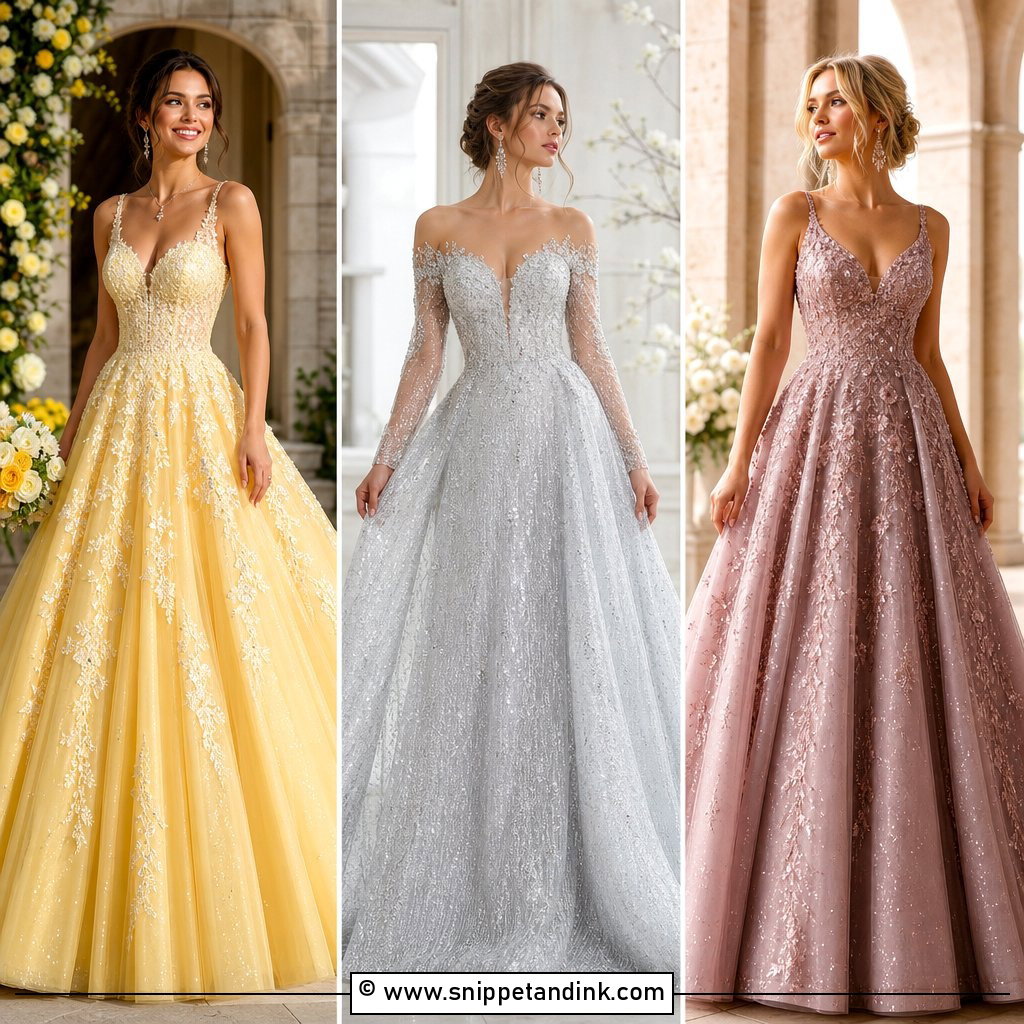
Blush, champagne, pale blue and soft lavender can all sit well beside colourful tattoos. I start by naming the dominant shades in the artwork, then pick a gown with an undertone that suits them rather than fights them. Warm reds and oranges in a tattoo, for example, usually look better against champagne than against a cool blue. Blush tulle reads romantic; champagne satin is polished. Repeat one or two tattoo colours in the bouquet, but don’t try to match every shade, which looks forced. Photograph each dress in daylight and indoors, since coloured fabric shifts more under artificial light than white does.
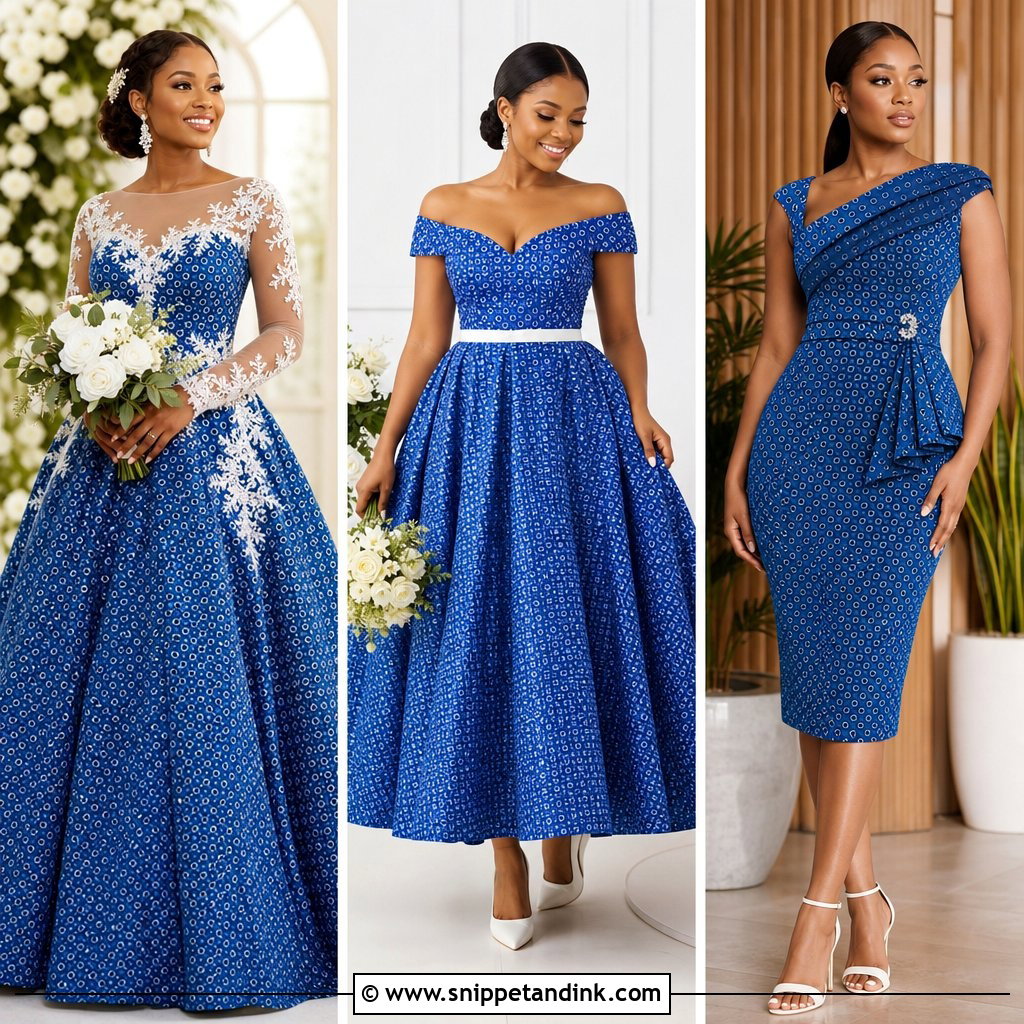

20. Plus Size Wedding Dress For Tattooed Bride
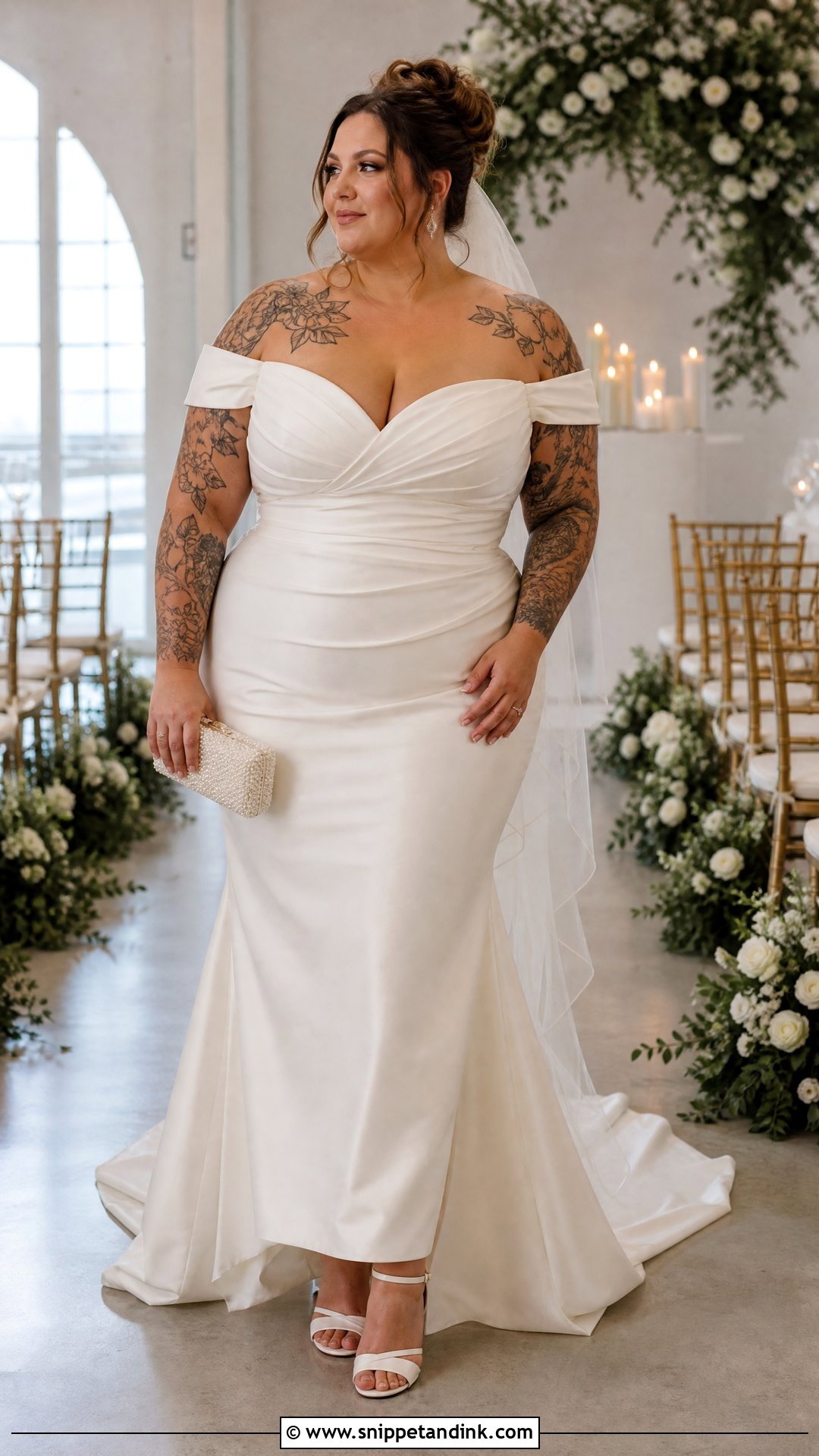
Comfort and real support come first for plus-size brides, and then the silhouette decides which tattoos are on show. A sleeveless A-line shows arm work and moves easily. An off-the-shoulder fit-and-flare frames chest and shoulder pieces, and a high-slit gown highlights a leg tattoo. Ask salons ahead whether they carry samples in or near your size, because trying a neckline on a clipped-back sample tells you little about where it will actually sit against your ink. I’d ignore any rule about which shapes suit which bodies. The right dress fits correctly and lets you move freely.
New Ink, Fresh Skin and a Wedding Date
Brides often want a new tattoo, or a touch-up, before the wedding. I’d plan it carefully. A fresh tattoo goes through redness, peeling and a shiny, slightly raised stage while the surface heals, which usually takes a few weeks, and the skin underneath keeps settling for longer. Close-up photos pick up every flake. Most artists will tell you to leave a comfortable gap, and I’d book any new work at least a month or two before the final fitting rather than the week before.
Healing skin also reacts to fabric. Beaded bodices, stiff lace edges and boning can rub a recent tattoo raw over a long day, and some healing ointments transfer onto pale satin as a faint yellow mark. Avoid sun on new work before the wedding too, since a burned or tanned outline loses its crispness.
If You Want Some of It Covered on the Day
Not every bride wants every piece on show, perhaps for a religious ceremony or for older relatives. You have three honest options, and each has a cost.
- Fabric: lace sleeves, an illusion back or a light bolero for the ceremony only. The simplest and most reliable, and you can take it off later.
- Cover makeup: a heavy-pigment concealer set with powder or a sealing spray. It works on small, dark pieces, but it rubs off on white fabric, so test it against a scrap of your dress fabric first.
- Hair and veil: loose waves or a long veil soften shoulder and back work without hiding it completely.
If you go with makeup, book it with your makeup artist at your trial, not on the morning. Coverage on large colourful pieces takes time, and it needs to sit through hugs and dancing.
Your Ink, Your Call on How Much Shows
Wearing a gown is not about hiding part of yourself, unless covering up is what genuinely makes you comfortable. Necklines, sleeves, hem lengths and backs can frame tattoos anywhere from a small glimpse to a full display. Bring photos of your artwork to appointments, look at each dress from every side, and talk about placement with an experienced alterations specialist. Delicate linework or full sleeves, the aim is the same: a dress that fits your body properly and shows your skin exactly the way you want it shown on the day.
You'll Like These Ideas:




Leave a Reply