
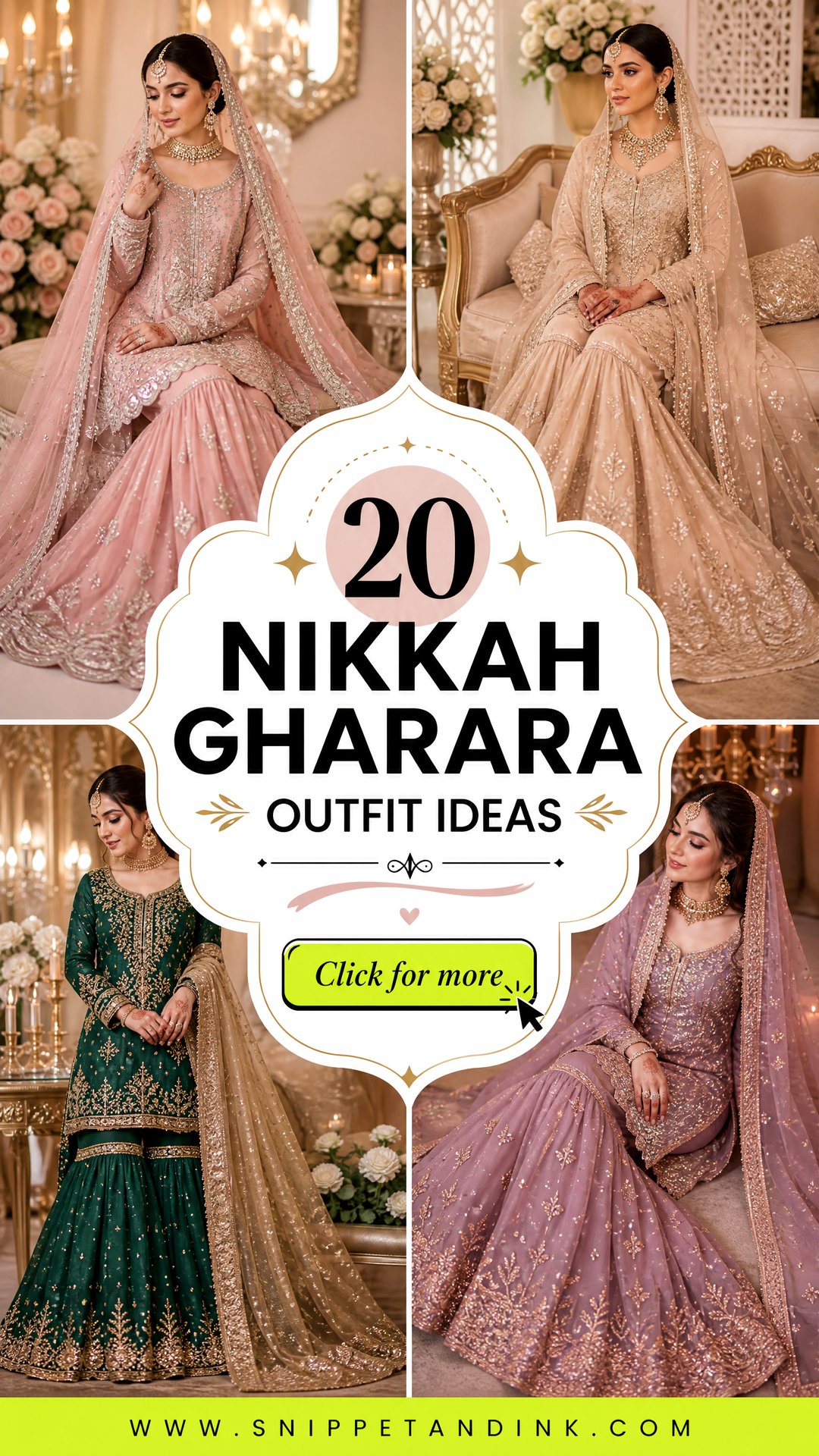
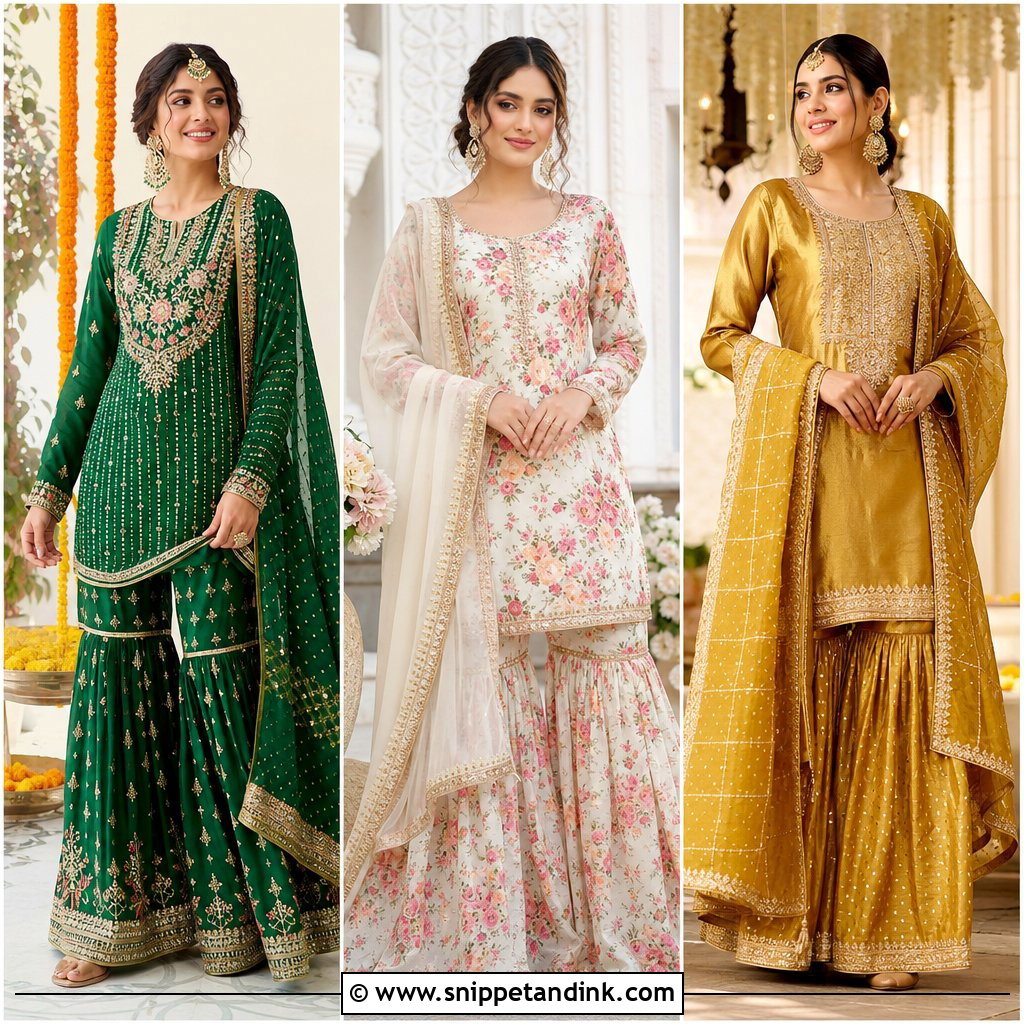
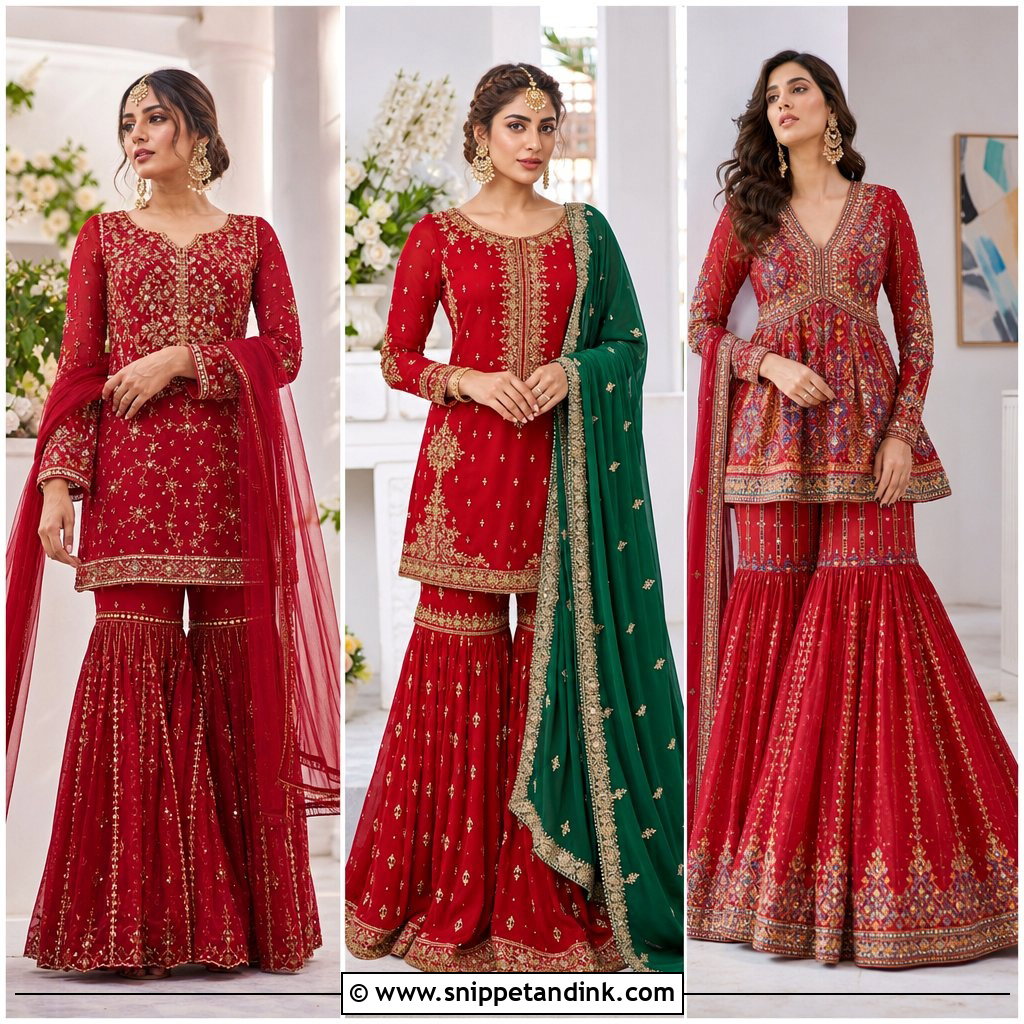
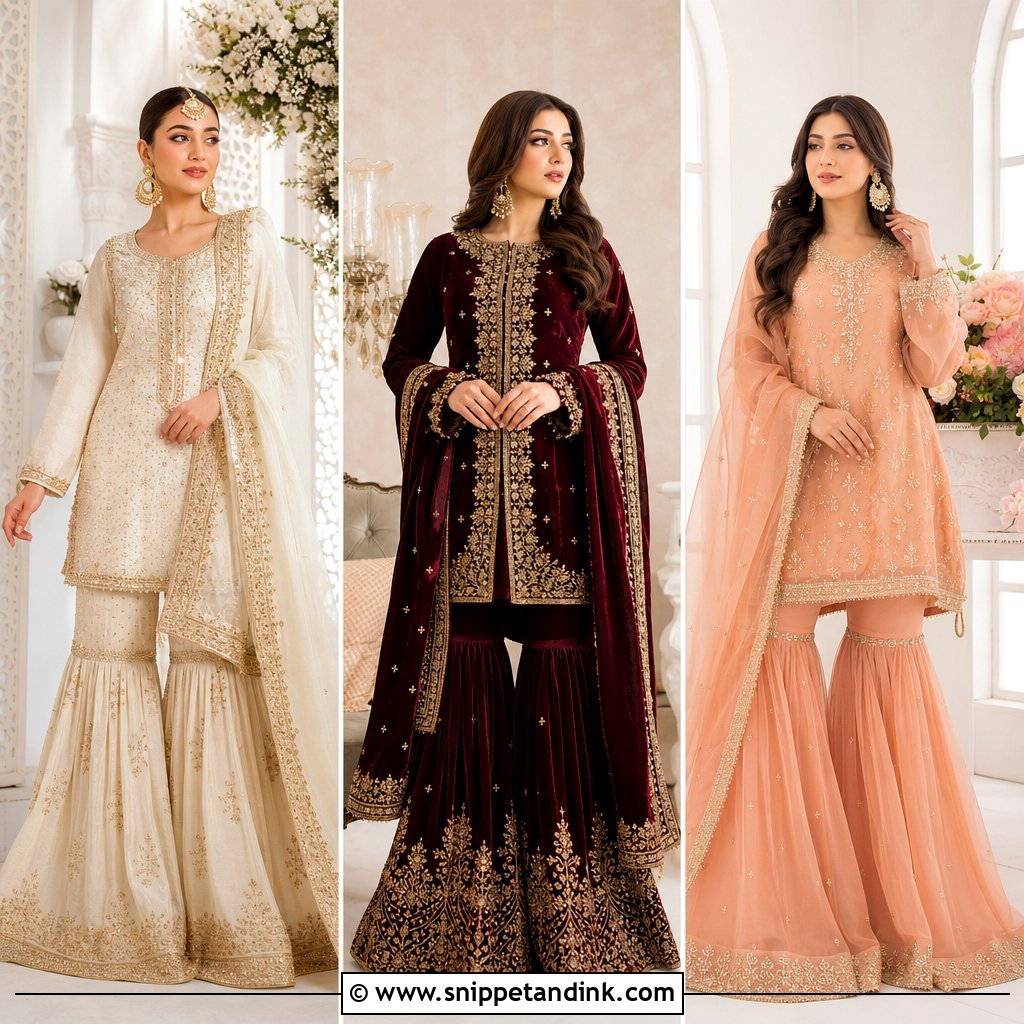
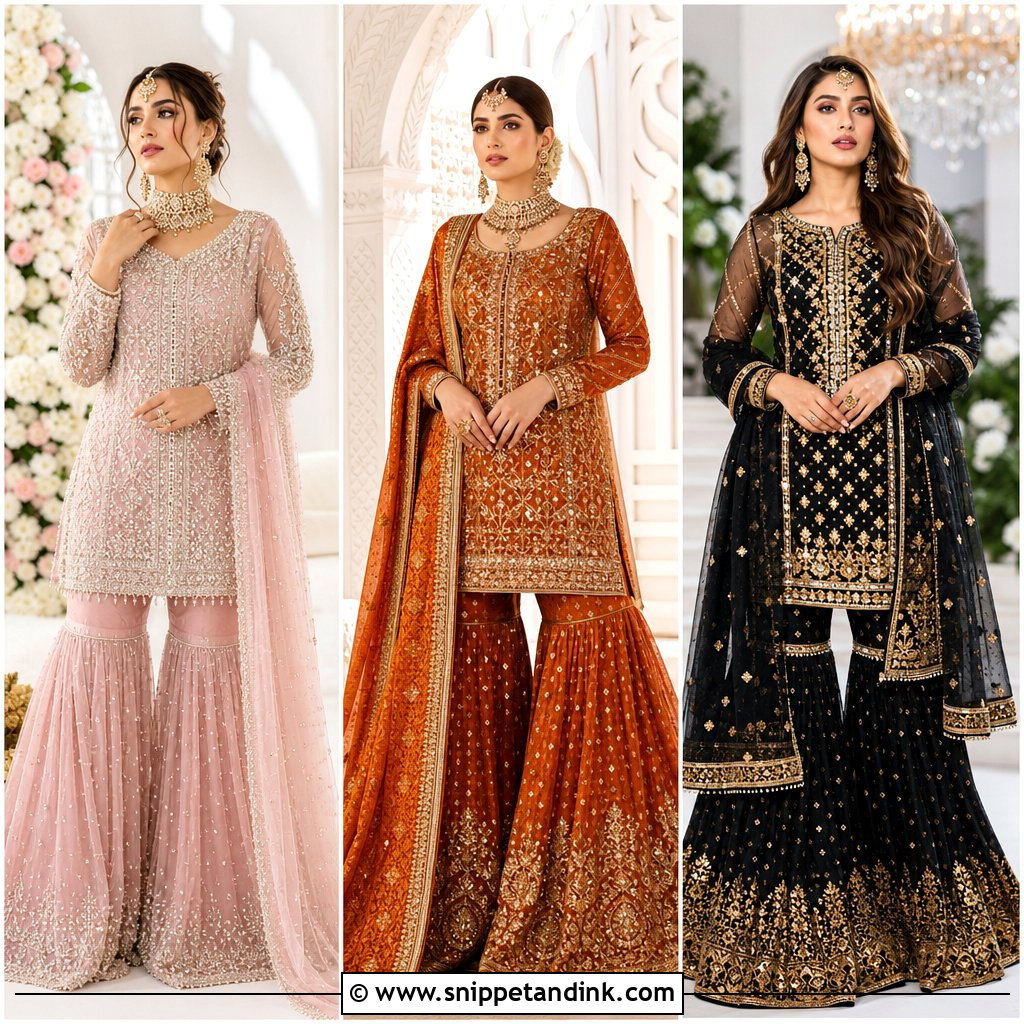
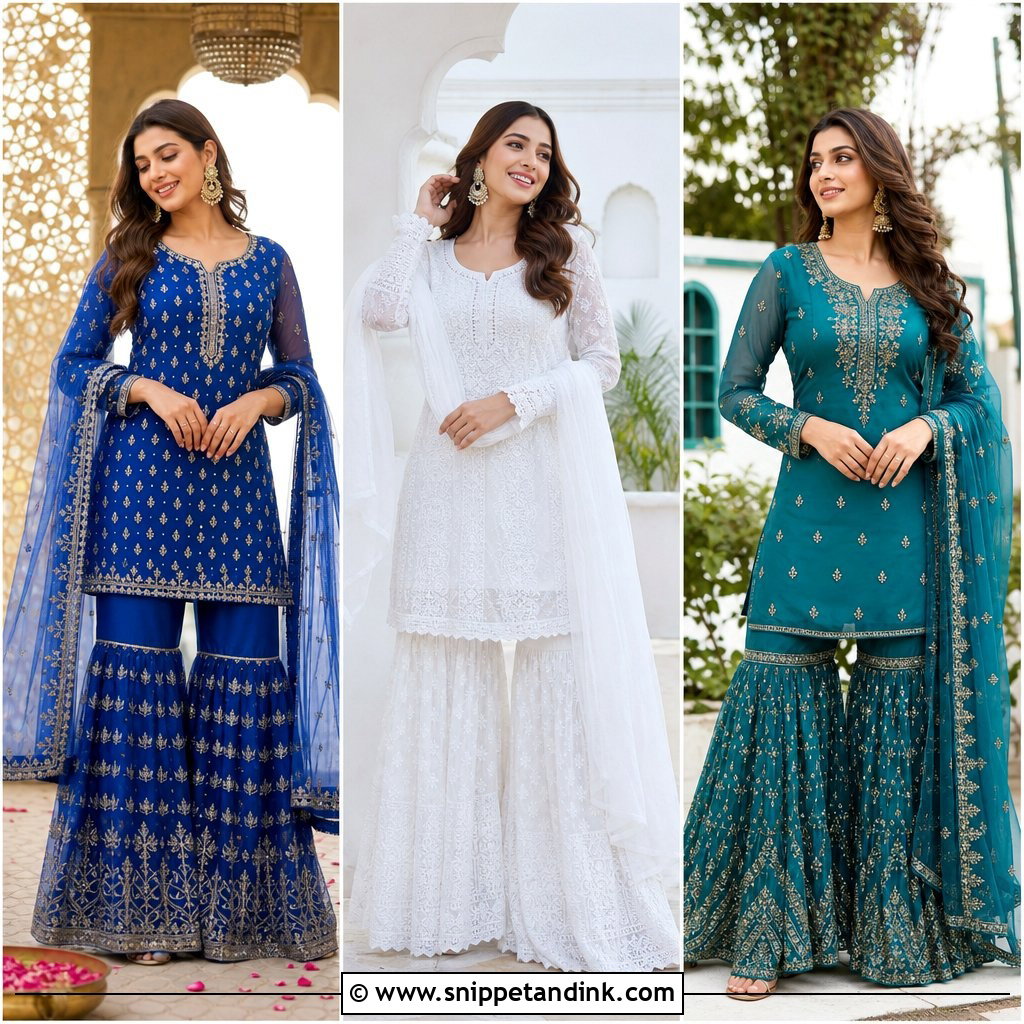
The gharara earns its place at a Nikkah because it’s modest and still moves. Fitted to the knee, then a wide flare below, it reads as traditional without locking you into one way of styling it. Below are twenty complete outfits, shirt, gharara, shoes, jewelry and accessories, running from quiet ivory through pastels to heritage reds and greens, plus several built around a statement dupatta. Most of them can be dialled up or down in embroidery to suit a mosque, a home ceremony or a hall. I’ve noted where hijab styling needs a different approach, since many of these are worn over one.
Spending the Embroidery Budget Where People Will Actually See It
Hand embroidery is priced by time, so a gharara covered edge to edge costs far more than one worked with focus. With a gharara, some areas are seen constantly and others almost never.
Worth the spend
- The shirt neckline and the dupatta border, which frame your face in nearly every photo
- The knee band, the signature of the gharara and the first thing people notice when you walk
- The cuffs, which show every time you sign or raise your hands
Where to hold back
- The upper thigh section, hidden under the shirt for most of the day
- Inner panels of the flare, which fold into each other as you sit and stand
- The back of the shirt if a heavy dupatta will hang over it
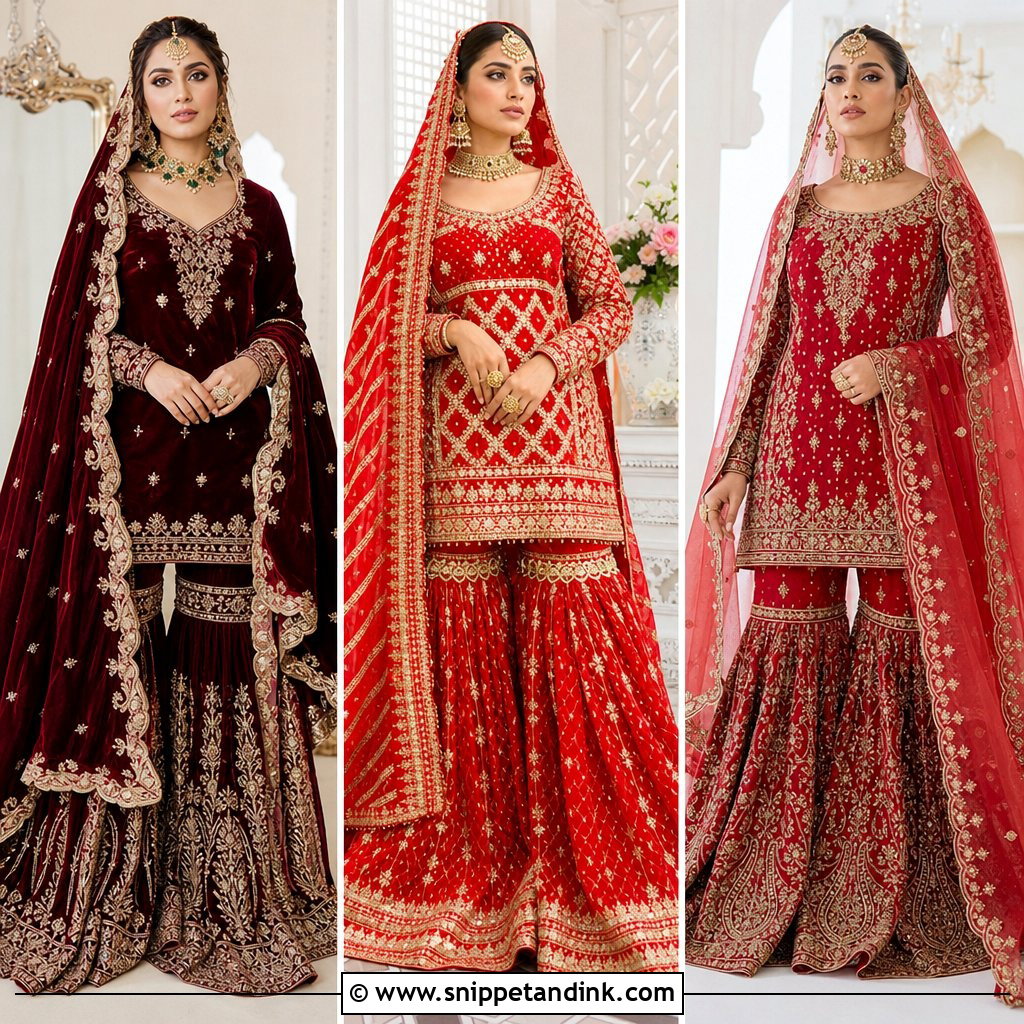
Moving work from hidden areas to the visible ones gives you a richer look for the same price, and the outfit is lighter to wear.
1. Ivory Nikkah Gharara With Gold Embroidery
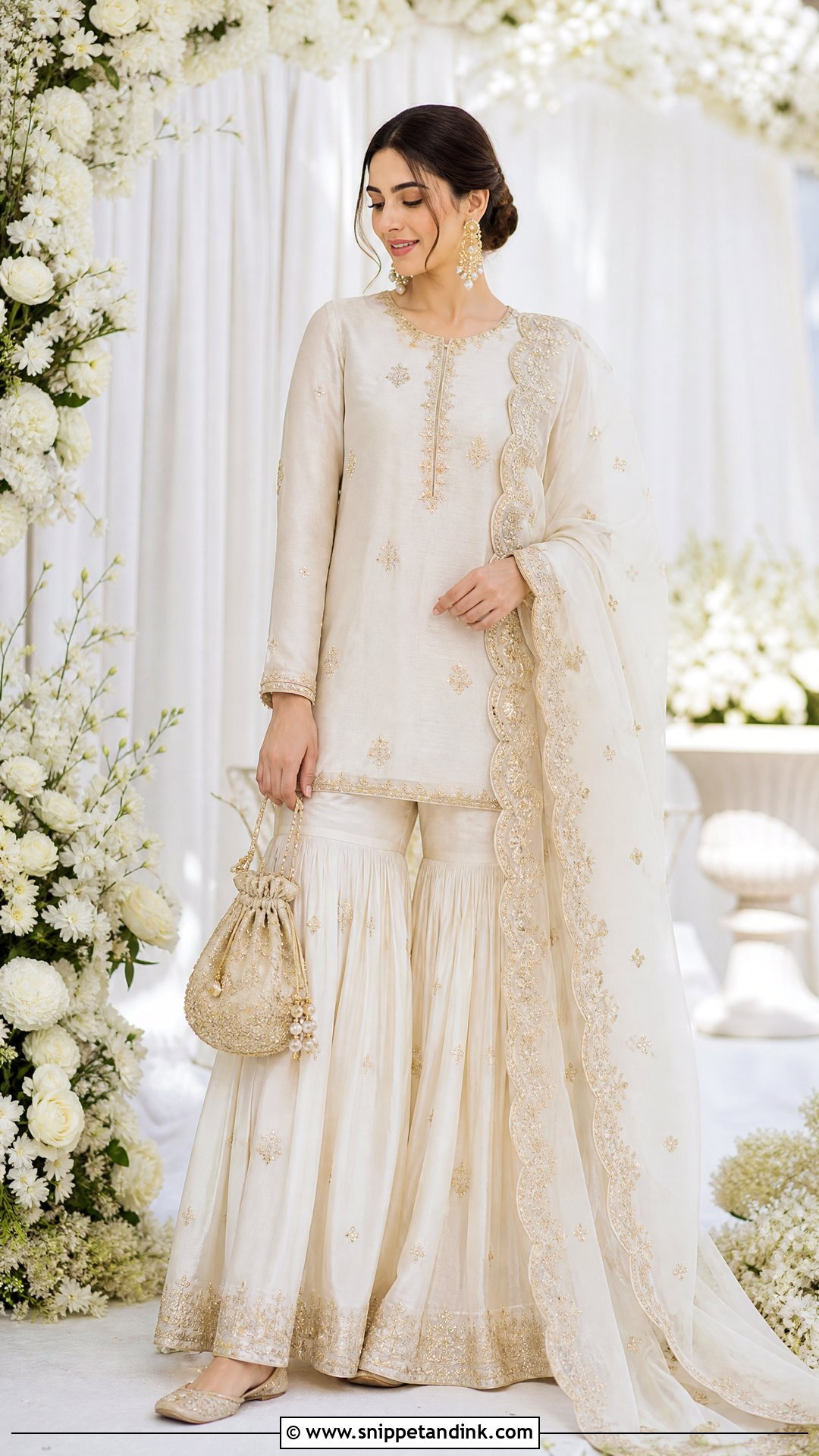
Restrained gold on ivory is the gharara at its calmest. A short raw silk shirt with dabka, pearls and antique gold thread at the neckline, cuffs and hem pairs with a structured gharara, finely pleated, with an embroidered knee band. The organza dupatta with scalloped edging keeps things light. Champagne khussas, pearl drops and a small gold potli are enough. For a hijab, I suggest light ivory chiffon with a narrow border picking up the dupatta’s work. Ivory chiffon is slightly sheer, though, so wear an ivory underscarf so no hair or pins show through in flash photos.
2. White Nikkah Gharara With Pearl Work
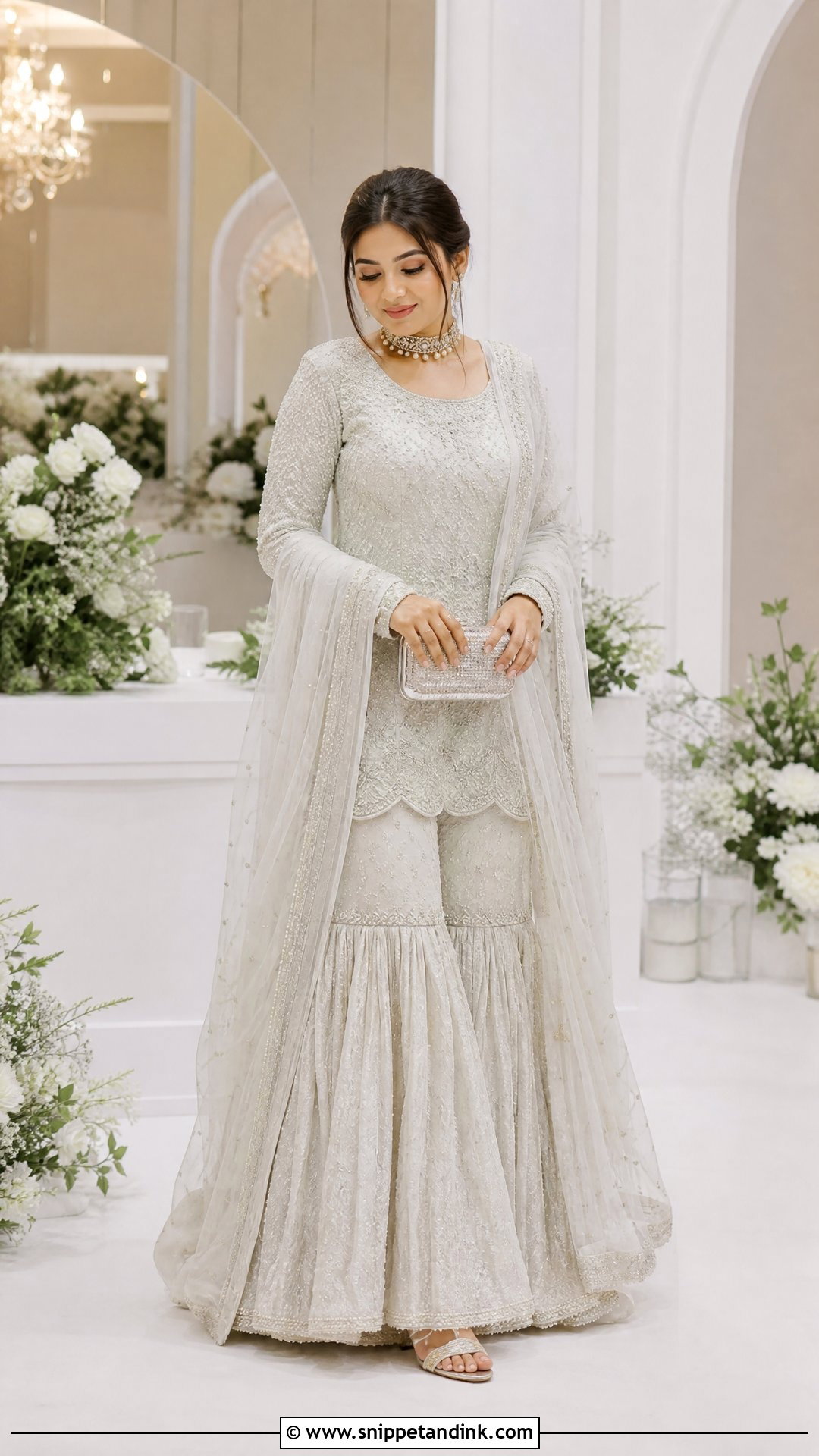
No color, all texture. A straight, slightly fitted shirt in silk or crepe takes pearl vines, tiny sequins and silver thread, and a white gharara with tonal embroidery keeps the outfit in one shade so the flare is the feature. Choose a soft net dupatta with scattered pearls and a tidy border over all-over work. Silver sandals, a pearl choker, earrings and a crystal clutch finish it. White crepe shows every seam allowance and pin line through it, so I always finish the inside seams of a white shirt neatly; you’d be surprised what shows in bright mosque light.
3. Blush Pink Nikkah Gharara With Silver Details
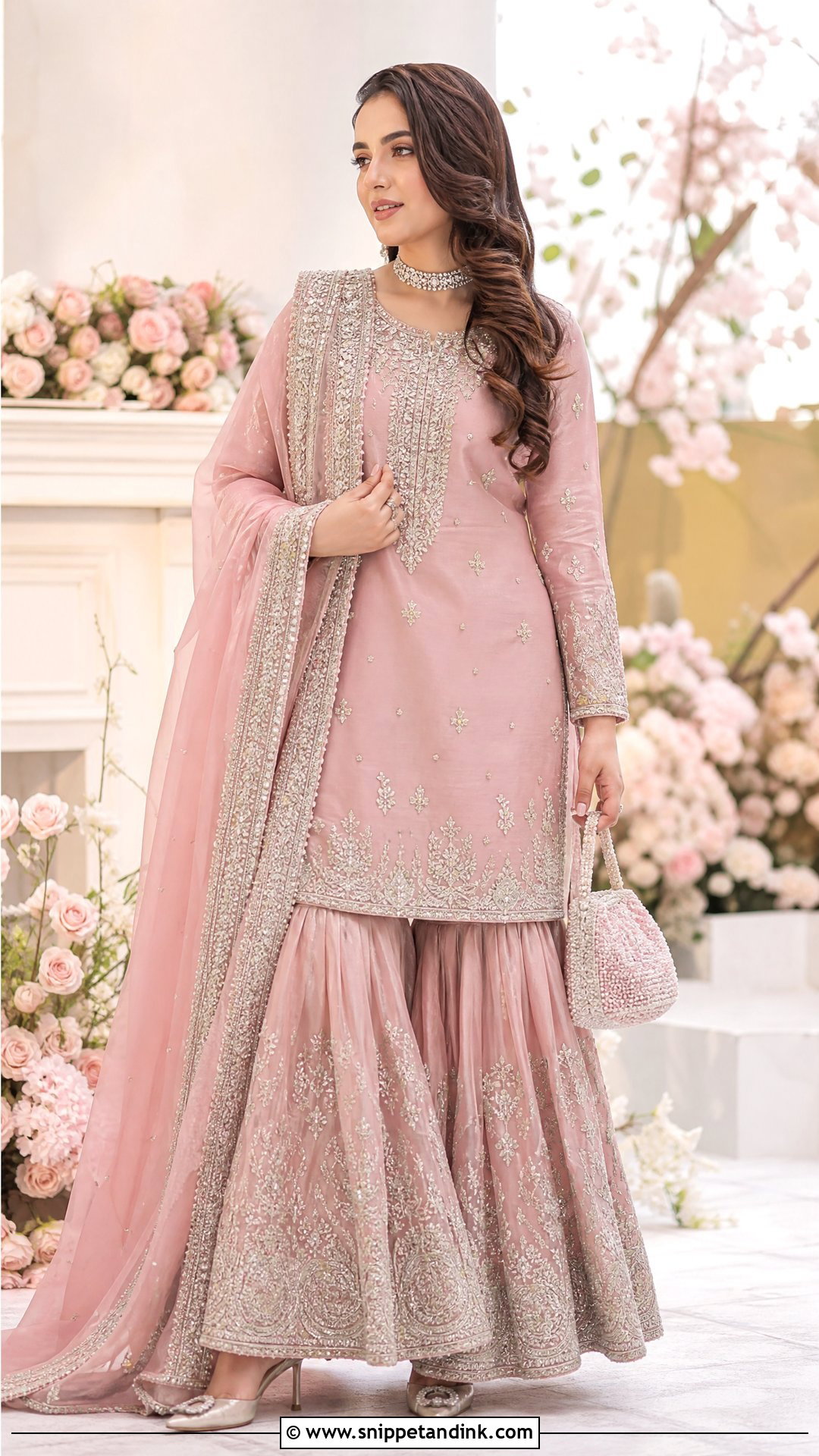
Blush picks up warmth in bright daytime light. I’d choose a blush raw silk shirt with silver zari, crystals and pale pink resham, over a matching gharara embroidered at the knee joints and flare. Drape a silver-edged organza dupatta over the head with one side resting on the arm. Silver kitten heels or embellished khussas, a diamond-style choker, small jhumkas and a beaded bag finish it. Hijab brides can wear a matte blush scarf underneath. Crystal-heavy shirts snag net and organza, so I keep crystals off the shoulders where the dupatta rests.
4. Champagne Nikkah Gharara With Tonal Embroidery
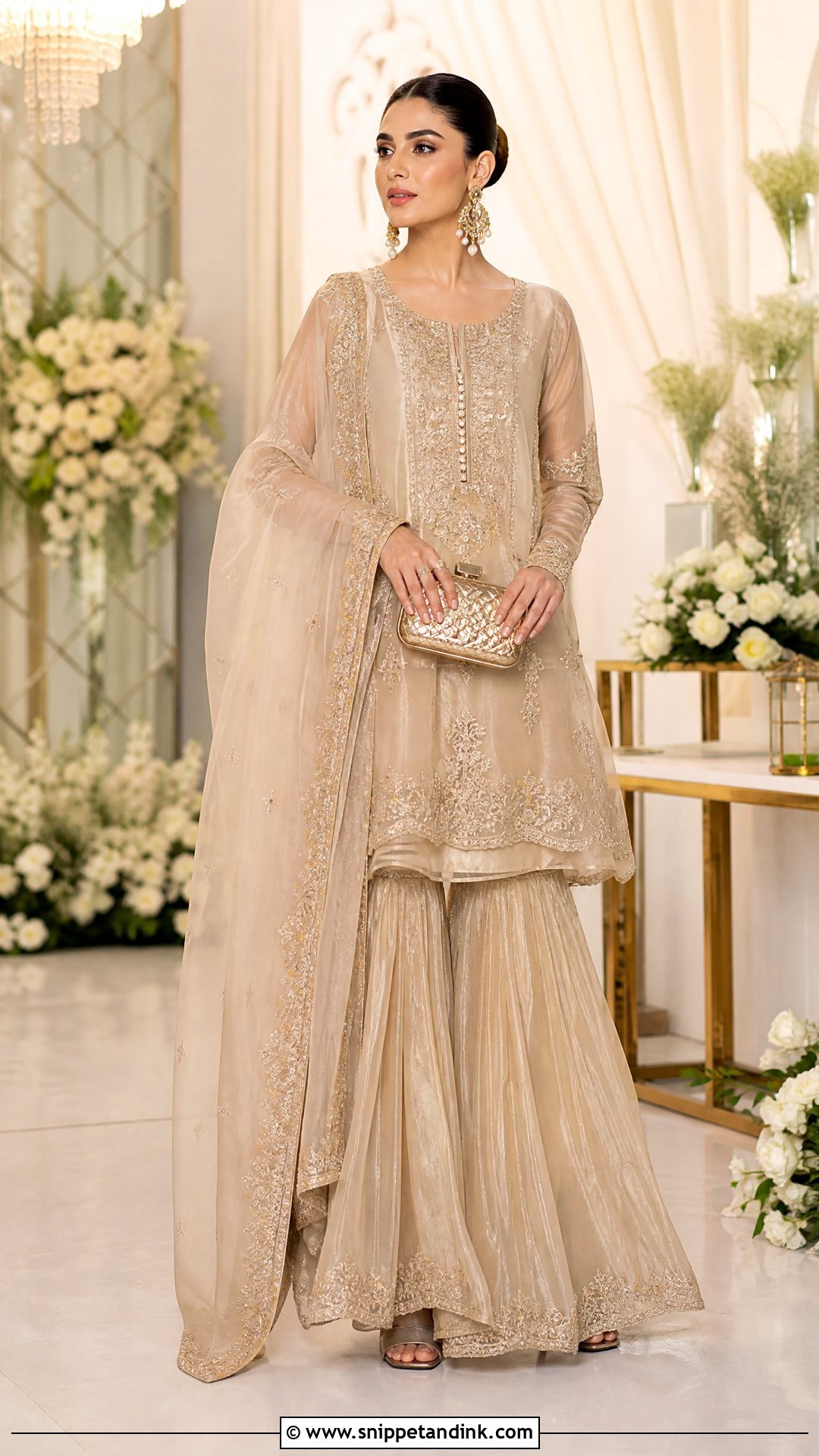
Champagne is understated luxury for an afternoon or evening indoors. Layer a short organza shirt over silk with tonal resham, pearls and soft sequins. One detail I like here: raw silk above the knee and pleated organza below, so the gharara is smooth where it’s fitted and floaty where it flares. A matching dupatta with a narrow border and spaced florals, champagne heels, a metallic clutch and antique gold jewelry keep it warm. A small passa beside a center-parted bun adds a traditional touch. Mixing fabrics at the knee needs a firm band to hide the join, so make sure the band is interfaced.
5. Mint Green Nikkah Gharara With Pearl Dupatta
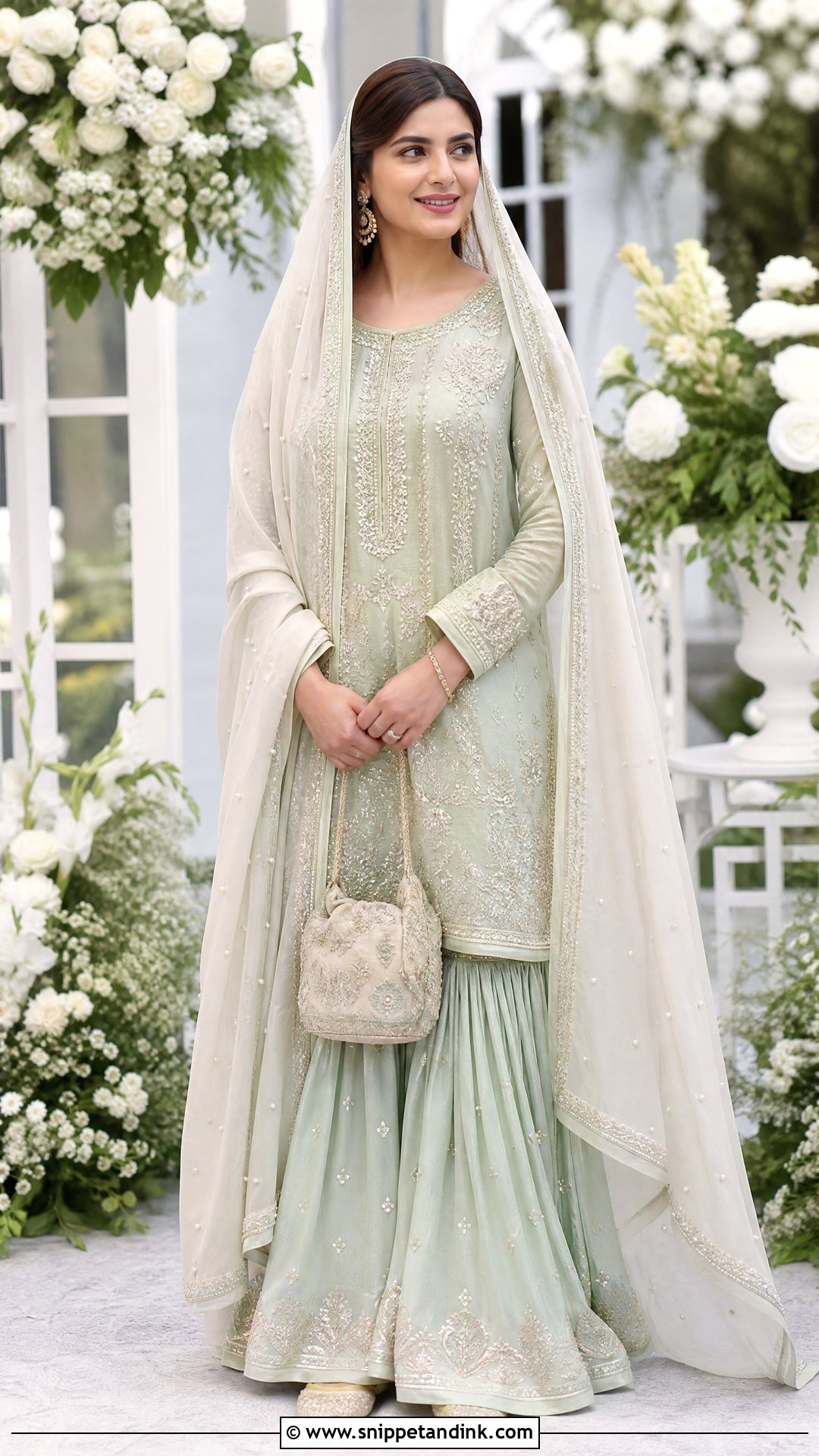
Mint is a garden color. A mint silk shirt with ivory thread, pearls and a little silver goes over a flowing gharara in the same shade, with florals around the knee bands and border. The ivory dupatta with scattered pearls adds gentle contrast, worn over the head or pinned at one shoulder. Ivory khussas, pearl earrings, a slim bracelet and a small embroidered bag finish it. Want more coverage? Extend the shirt to mid-thigh. Any longer and it starts covering the knee band, and then the gharara loses its shape.
6. Powder Blue Nikkah Gharara With Crystal Work
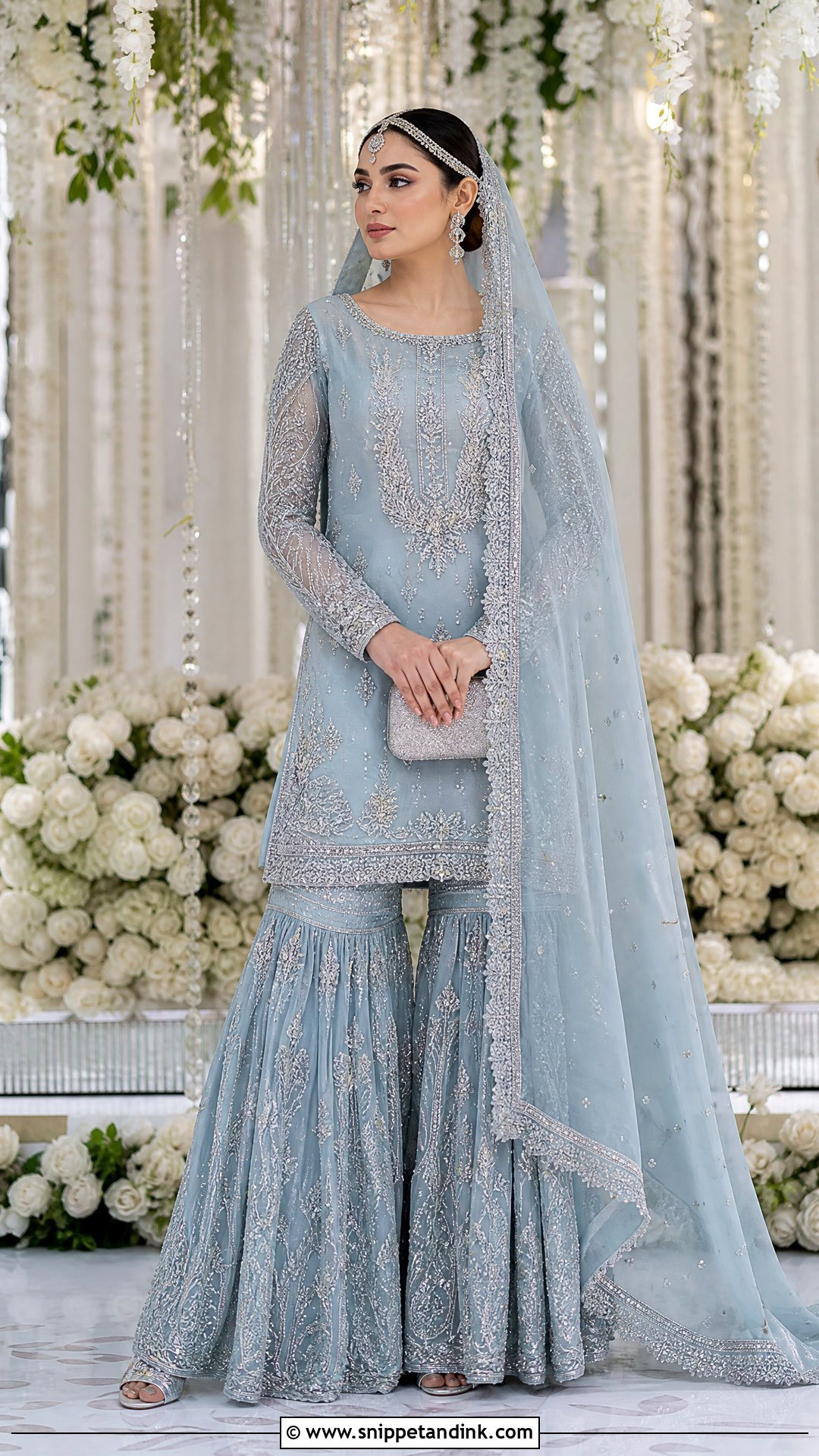
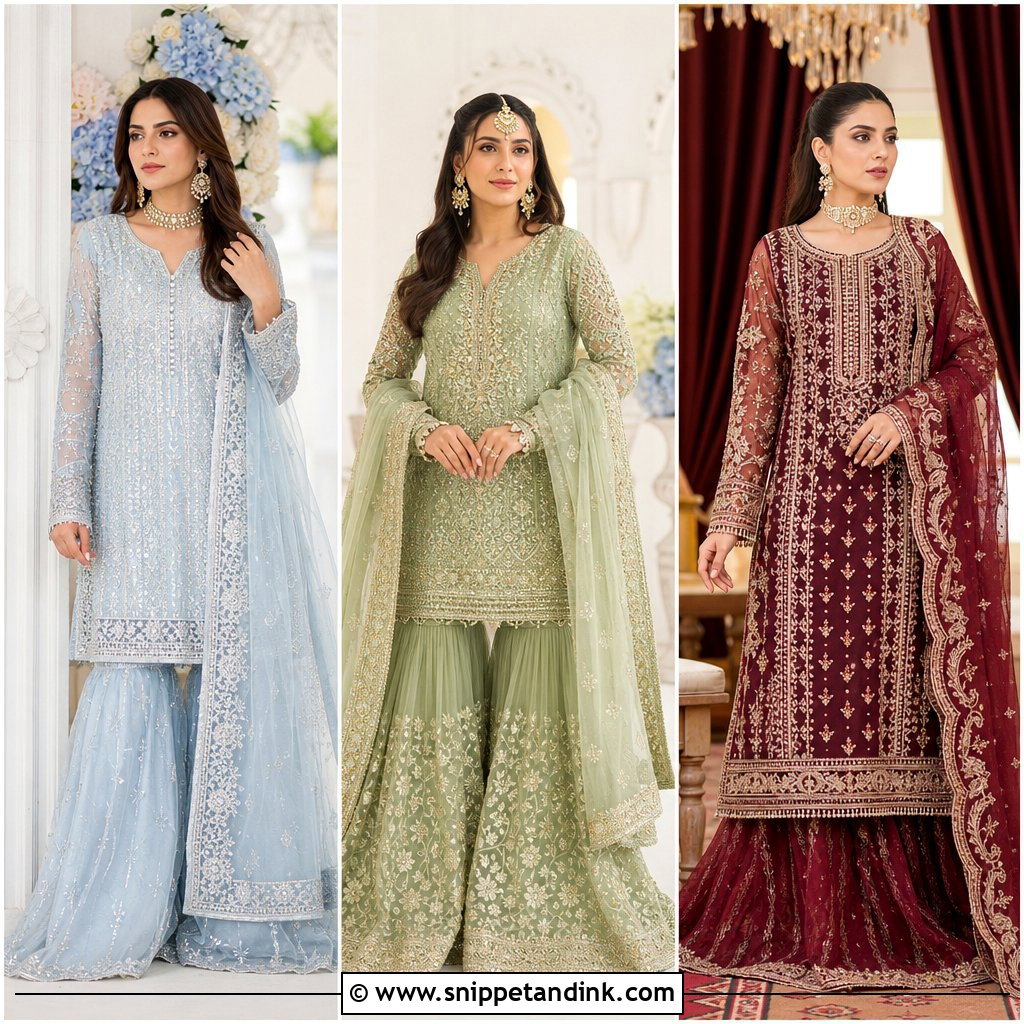
Against white floral decor, powder blue holds its own in photos where ivory would blend in. Choose a fitted brocade or raw silk shirt with crystals, silver thread and tiny pearls, and a matching gharara with an embroidered knee band and a lightly pleated flare. Drape a sheer powder blue dupatta over the head so its crystal edge frames the face. Silver heels, a cool-toned clutch, diamond-style earrings and perhaps a slim crystal matha patti finish it. Brocade is stiff, so I cut the shirt with a little more ease at the underarm, otherwise it pulls when you lift your arms for the dupatta.
7. Lavender Nikkah Gharara With Floral Embroidery
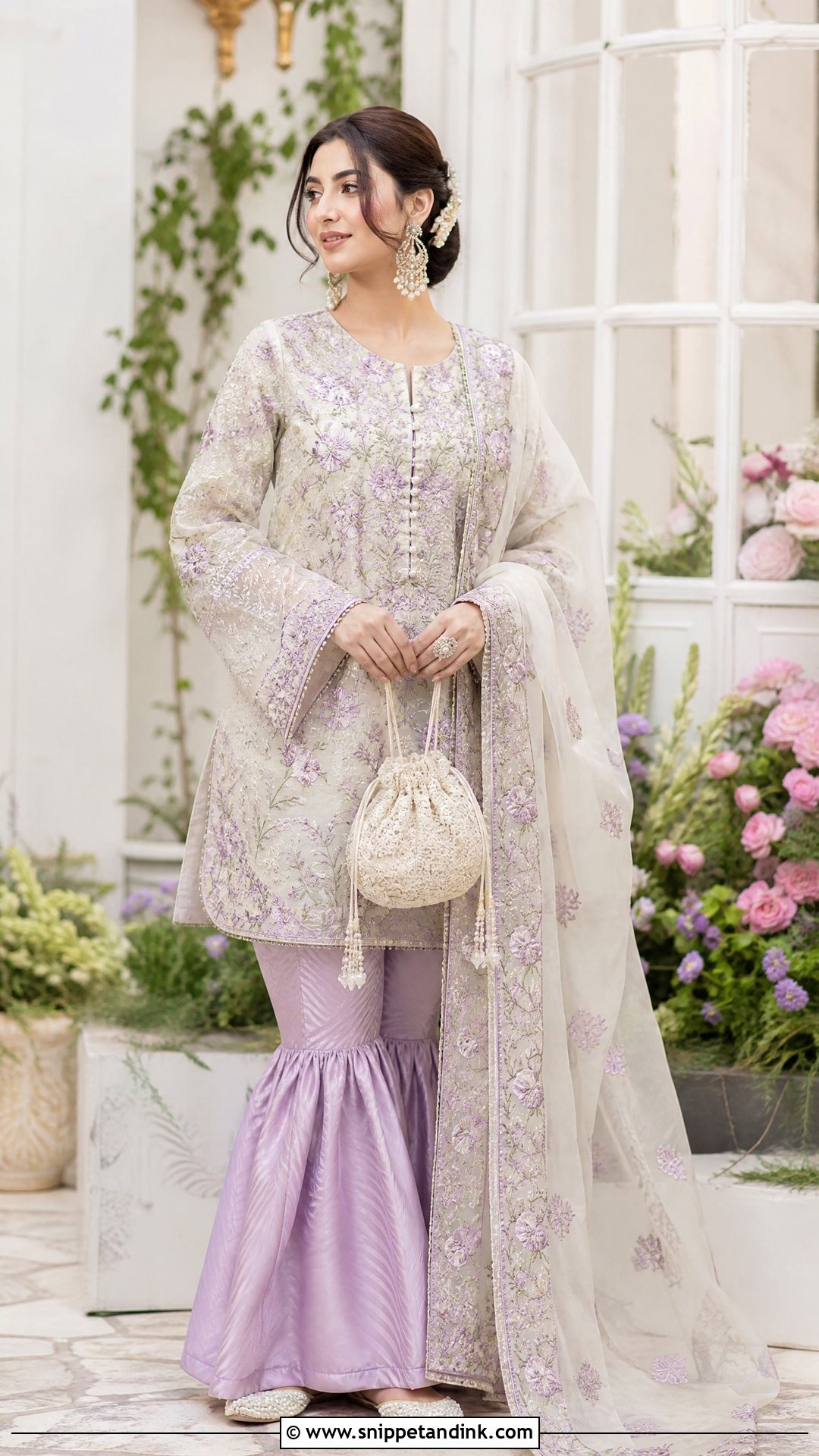
Lavender gives color without the weight of red. A short lavender shirt with ivory resham florals, small pearls and touches of silver pairs with a plain silk gharara with embroidered knee joints and a wide floral border at the hem. An ivory organza dupatta with lavender flowers links the two shades. Pearl-covered khussas, chandelier earrings and an ivory potli finish it. For a hijab look, an ivory chiffon hijab over a lavender undercap carries the color up to the face. Keep the fresh flowers in a bun to small blooms; large ones crush under the dupatta.
8. Peach Nikkah Gharara With Gota Work
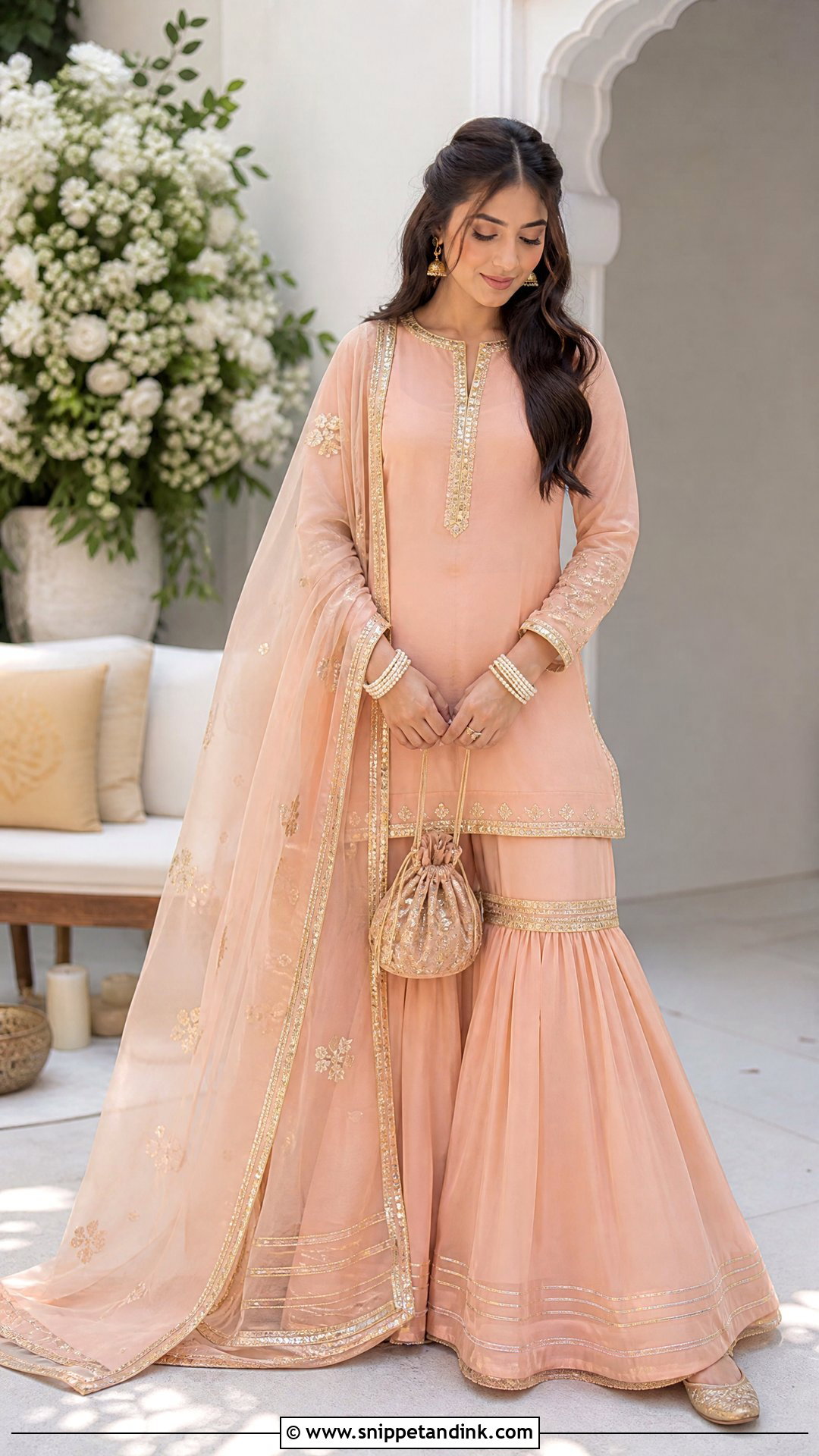
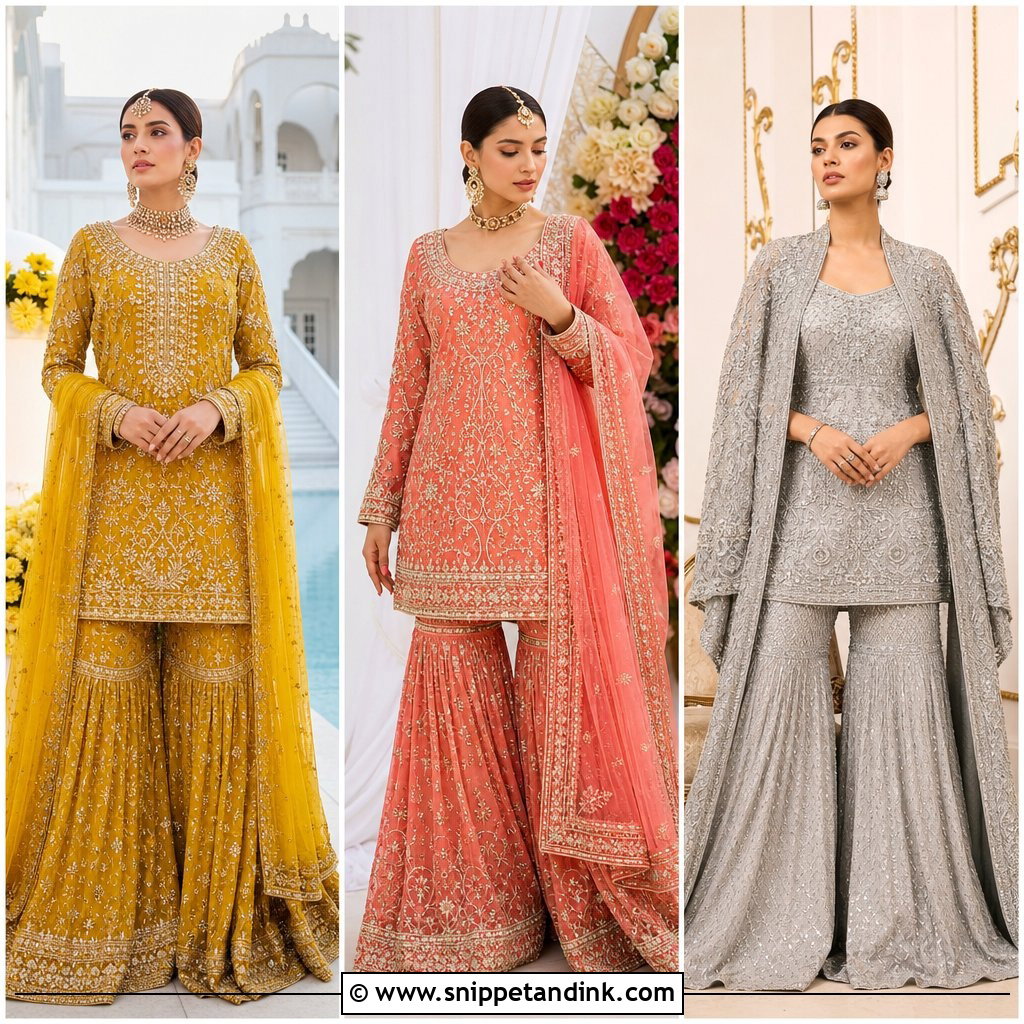
Gota is flat ribbon of metallic weave stitched onto fabric, lighter than zardozi and traditional in its own right. On a peach gharara, fine gota lines, florals and a few pearls keep the shirt from looking dense, and the gharara gets neat pleats, defined knee bands and a metallic border. An organza dupatta with scattered gota details moves easily. Gold khussas, small jhumkas, pearl bangles and a matching potli finish it. Gota can pucker if the fabric underneath is too soft, so I’d steer toward silk or raw silk rather than chiffon for this one.
9. Dusty Rose Nikkah Gharara With Antique Gold Work
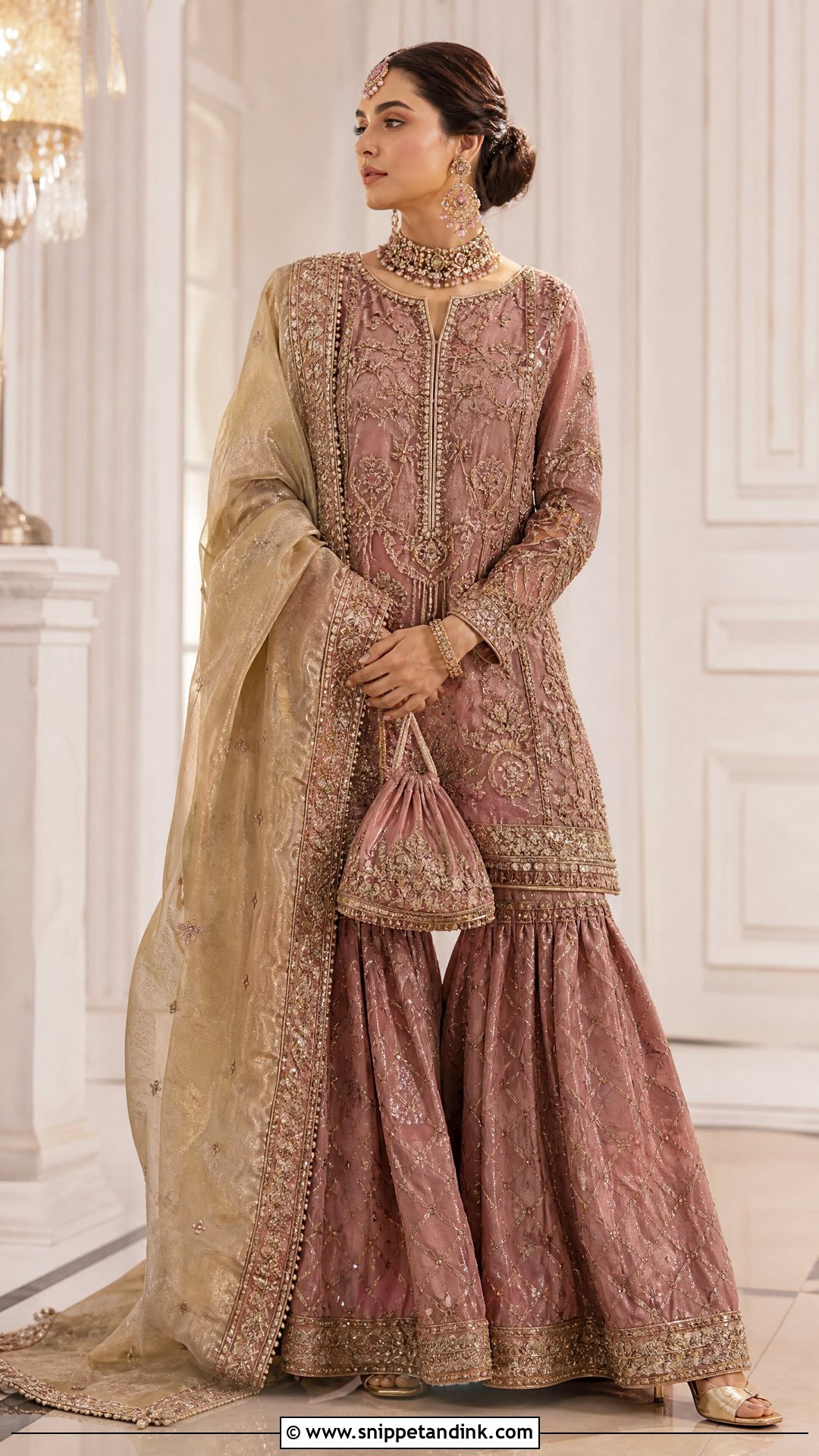
Dusty rose has enough depth for the evening and stays gentle. Choose a short velvet, silk or jamawar shirt with antique gold zardozi at the neck and borders, and keep the gharara’s embroidery controlled so the outfit doesn’t get heavy. A muted gold tissue dupatta gives contrast. Antique gold heels or embroidered khussas, a potli and kundan with rose stones finish it, with a small passa by the bun. Under a hijab, a plain dusty rose scarf beneath the gold-edged dupatta gives a clean frame. Tissue slides on velvet, so pin the dupatta at the shoulder from underneath.
10. Sage Green Nikkah Gharara With Ivory Dupatta
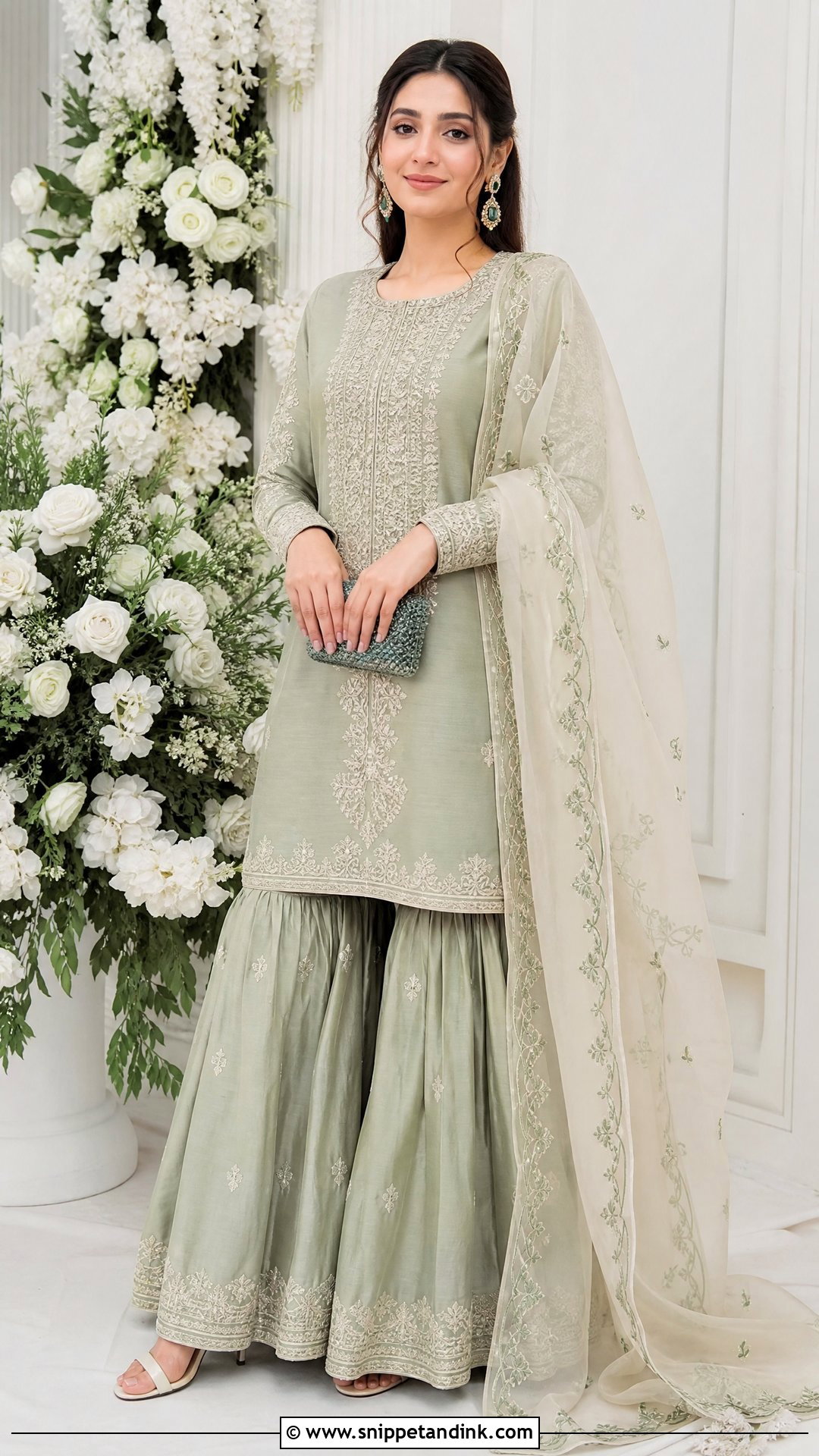
Sage is easy to personalize across settings. Pair a sage raw silk shirt with ivory resham, pearls and a modest boat or round neck with a gharara in the same shade, worked at the knees with a lighter hem border. An ivory net or organza dupatta with sage vines and a narrow pearl trim ties it together. Ivory heels, pearl-and-emerald earrings and a small sage clutch finish it. For more coverage, choose full sleeves with embroidered cuffs and wear the dupatta over an ivory hijab. A boat neck can slip off the shoulder under a heavy dupatta, so I add a small lingerie strap holder inside.
11. Red Nikkah Gharara With Traditional Gold Zari
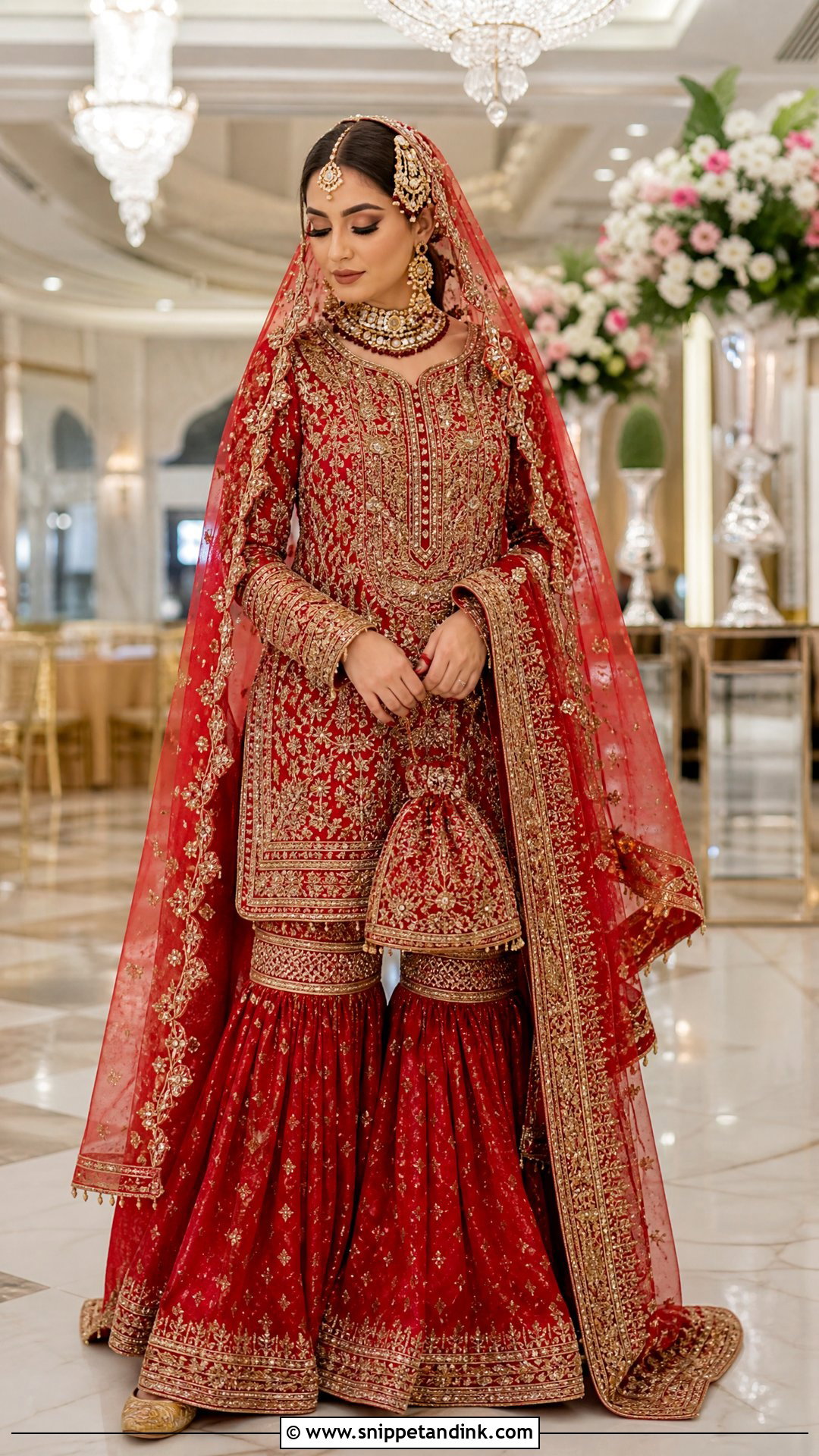
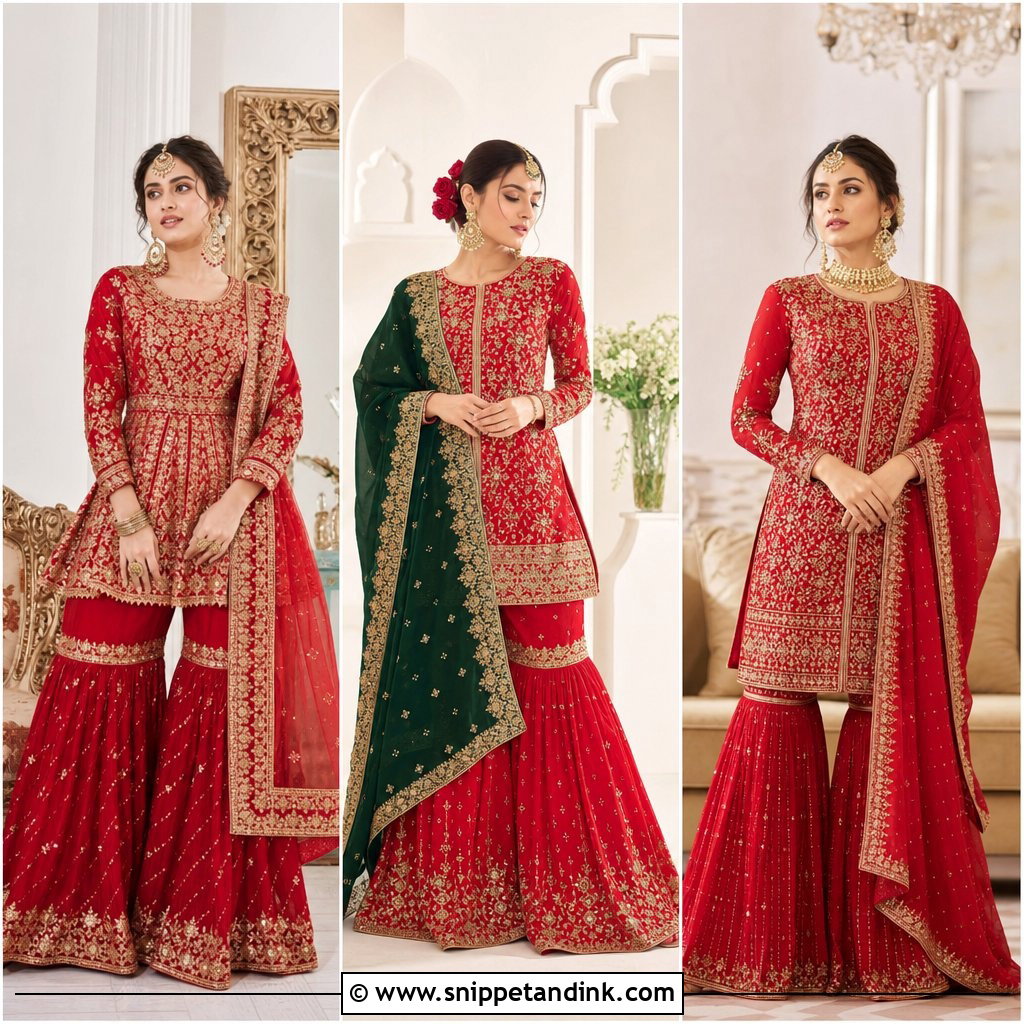
Red and gold need no explanation at a Nikkah. A rich red silk shirt with gold zari, dabka and placed beadwork goes over a red gharara with ornate knee bands and a broad hem, cut with enough flare to walk freely. A red net dupatta with a gold border covers the head. Add gold khussas, a kundan choker, earrings, a passa and a structured potli. I’d pick a deep rose lip over a matching bright red; the same red on lips and fabric flattens the face in photos. A sleek bun keeps the jewelry in view.
12. Maroon Nikkah Gharara With Velvet Shirt
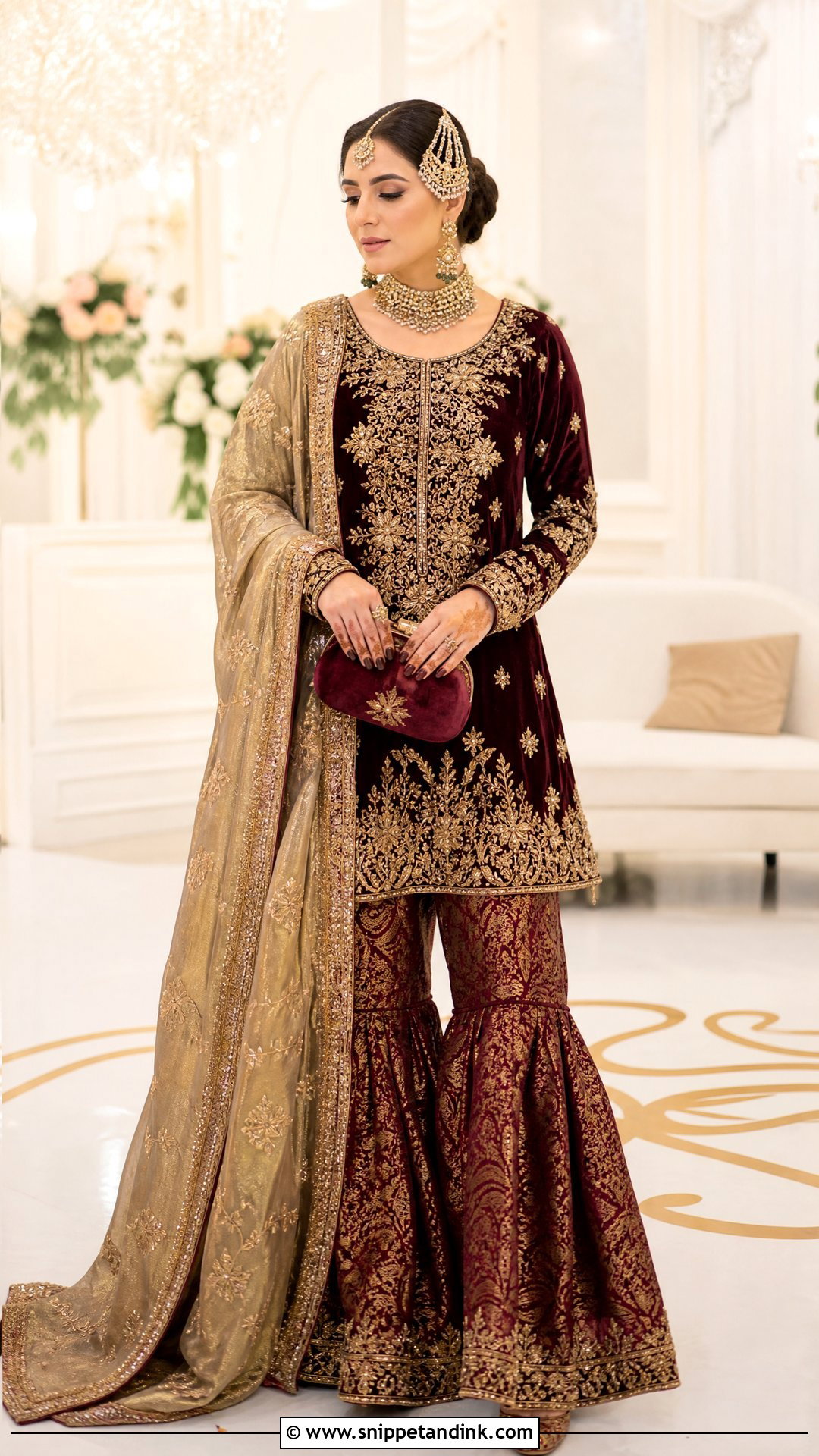
Winter or a formal evening venue is where maroon makes sense. A short velvet shirt embroidered in antique gold, with structured borders and neckline, pairs with a silk or jamawar gharara in the same tone, and the two textures give depth. A muted gold tissue dupatta lightens the dark palette. Antique gold pumps, a maroon velvet clutch and heritage kundan finish it. Soft bronze eyeshadow and a neutral rose lip suit the warmth of the color, and a small passa by a low bun adds the traditional touch. Full sleeves give warmth as well as coverage, which helps in cold halls.
13. Emerald Green Nikkah Gharara With Gold Dupatta
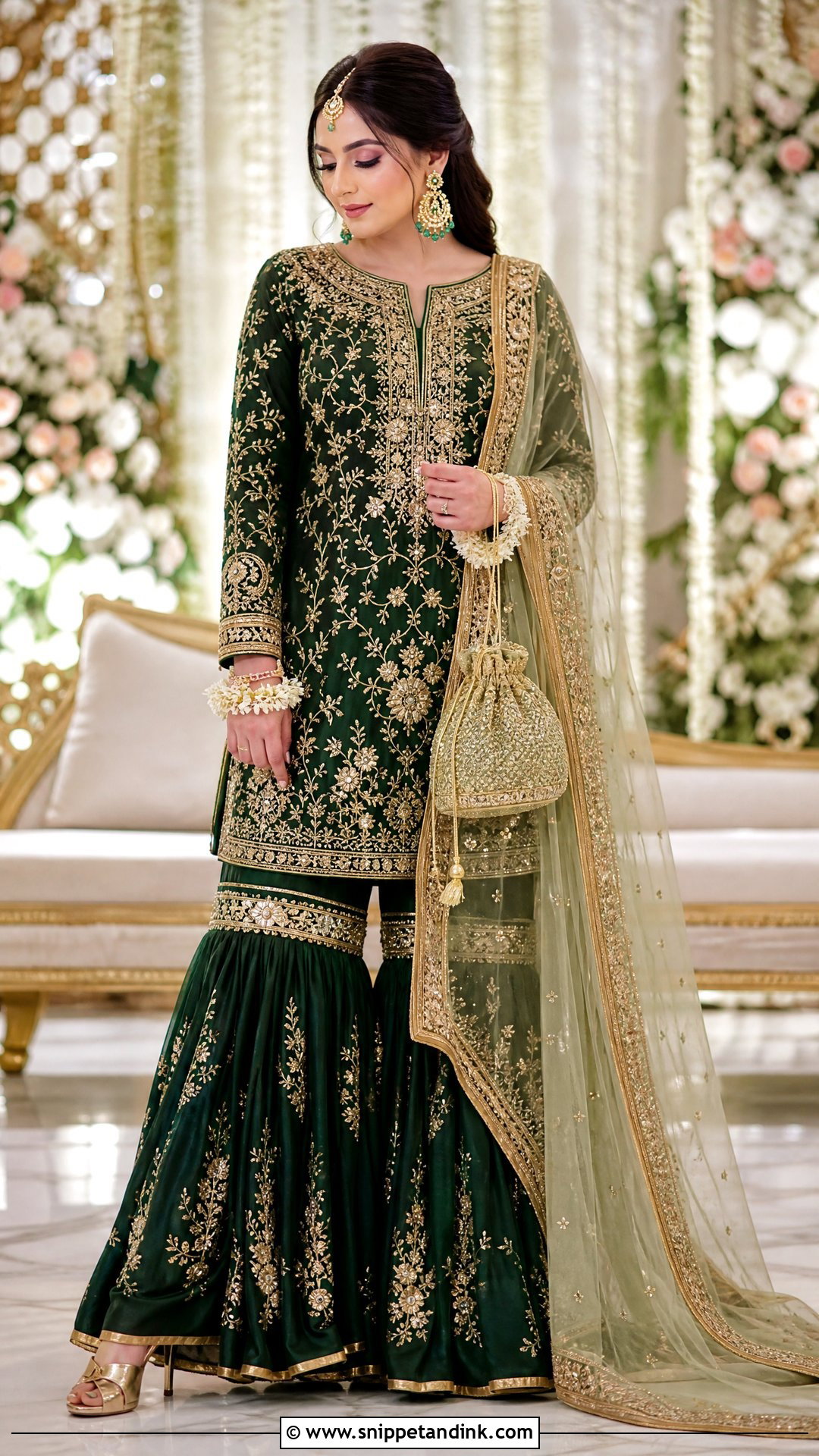
Emerald with gold zari, pearls and a thread of ruby red feels regal without needing much volume. Keep most of the gharara’s embellishment on the lower half, with embroidered knee bands and a gold-edged flare. A sheer gold organza dupatta with emerald borders provides contrast. Gold heels, a jeweled potli and kundan with emerald stones finish it. A center-parted bun lets a tikka or passa sit cleanly. Silk in deep green can show water marks, so keep drinks and hand cream away from the shirt; I always carry a dry cloth for blotting rather than rubbing.
14. Navy Blue Nikkah Gharara With Silver Embroidery
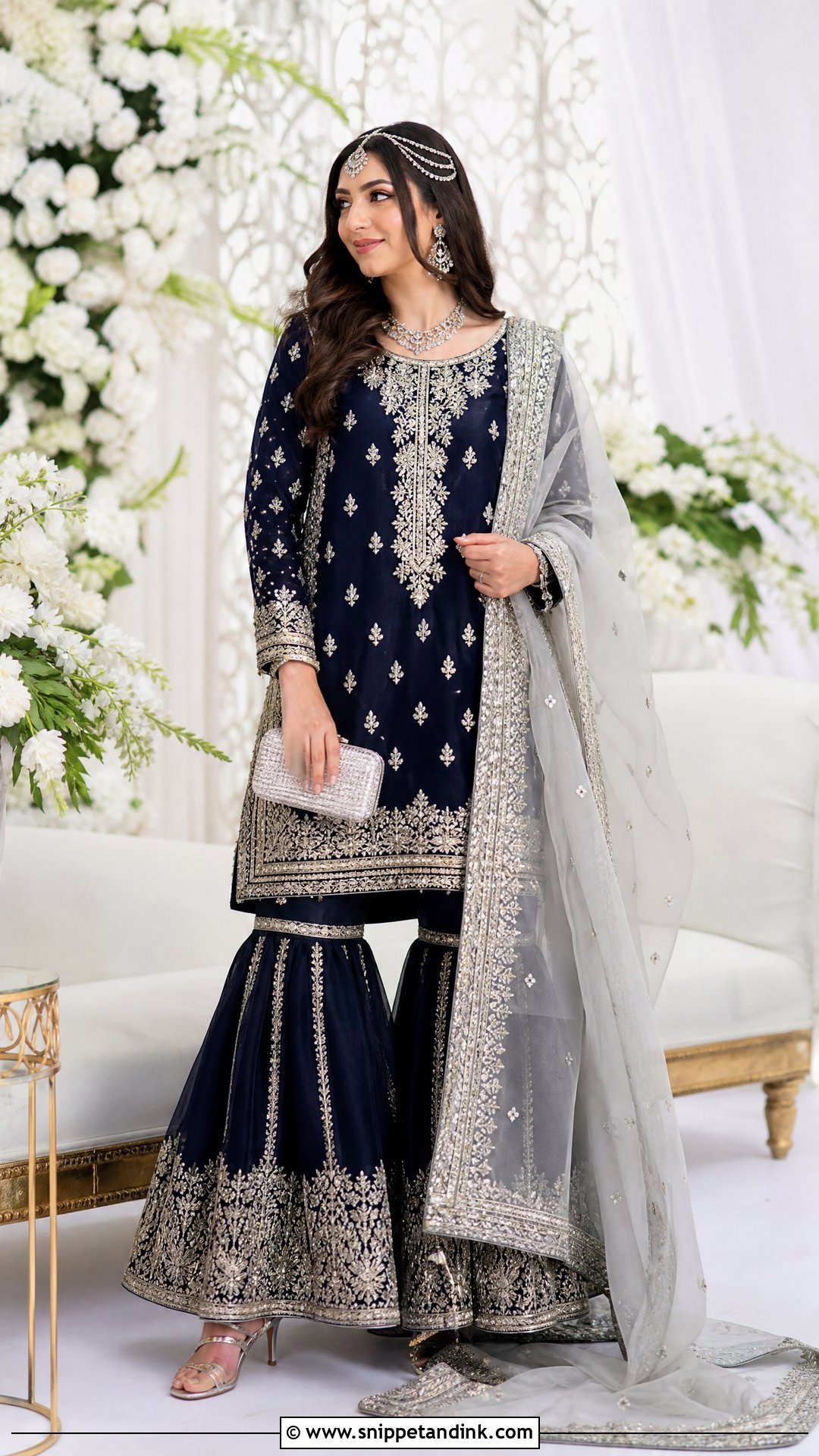
Navy is a dramatic choice for a bride who prefers deep cool shades. A navy raw silk shirt with silver zardozi, crystals and small pearls at the neck, sleeves and hem goes over a navy gharara with silver knee bands. A silver-grey organza dupatta keeps it from looking flat. Silver heels, a crystal clutch and diamond-style jewelry complete it, and a sleek bun and narrow matha patti give bridal presence without fighting the embroidery. For a mosque ceremony, full sleeves and a slightly longer shirt keep coverage while holding the gharara proportions.
15. Mauve Nikkah Gharara With Rose Gold Details
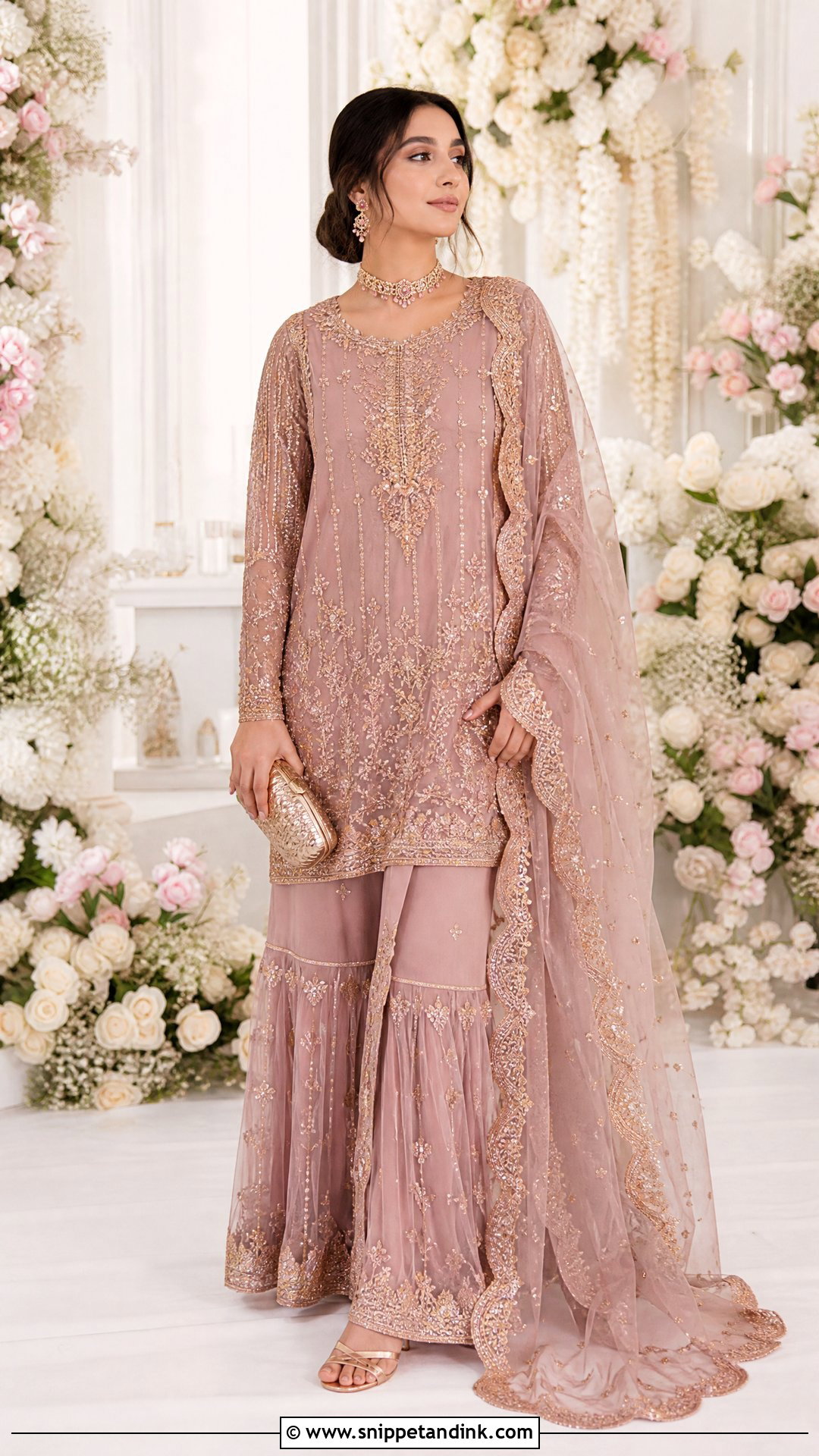
Mauve with rose gold is soft but has enough depth for a formal room. A mauve organza shirt over a silk lining takes rose gold sequins, resham florals and fine beadwork, and the silk gharara has subtle pleats and embellished knee bands. The sheer mauve dupatta with a rose gold scalloped edge completes the set. Rose gold sandals, a metallic clutch and earrings with pink stones finish it. Keep the neckline visible with a short choker or pendant. Rose gold hardware varies a lot in tone between brands, so I bring the shirt along when choosing jewelry and sandals.
16. Ivory Nikkah Gharara With Red Dupatta
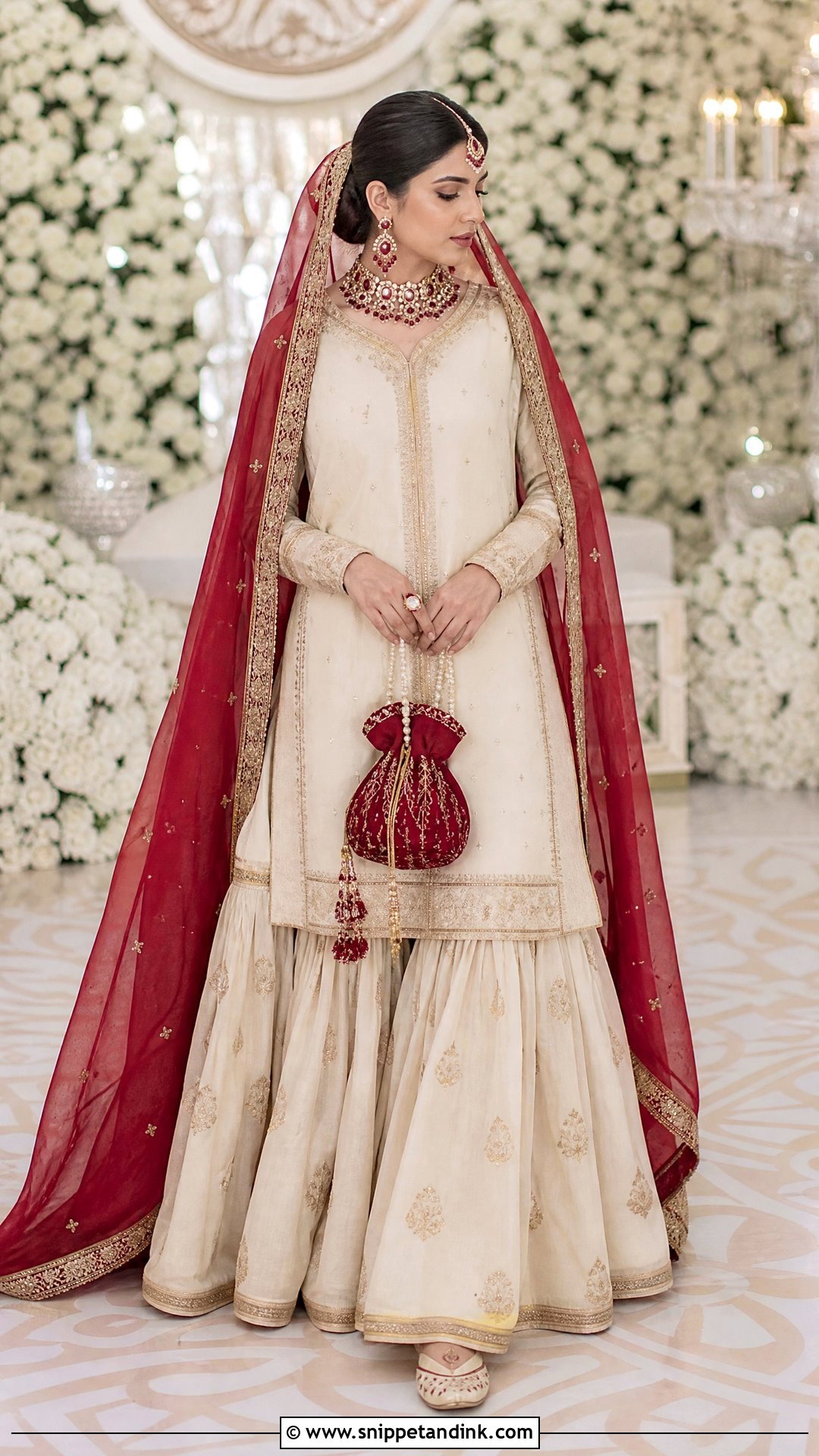
A red dupatta turns an ivory gharara into something unmistakably bridal. Keep the ivory silk shirt and gharara restrained, with gold work, pearls and neat borders, and put the drama in a deep red organza or net dupatta with an ivory-and-gold edge, worn over the head so the color frames the face. Ivory khussas with red embroidery, a red potli and kundan with ruby stones bring it together. If you want traditional red but not a fully red outfit, this is the cleanest way to do it. Red near the face is flattering on most skin tones, which is why I put it on the head rather than the shoulder.
17. Pink Nikkah Gharara With Green Dupatta
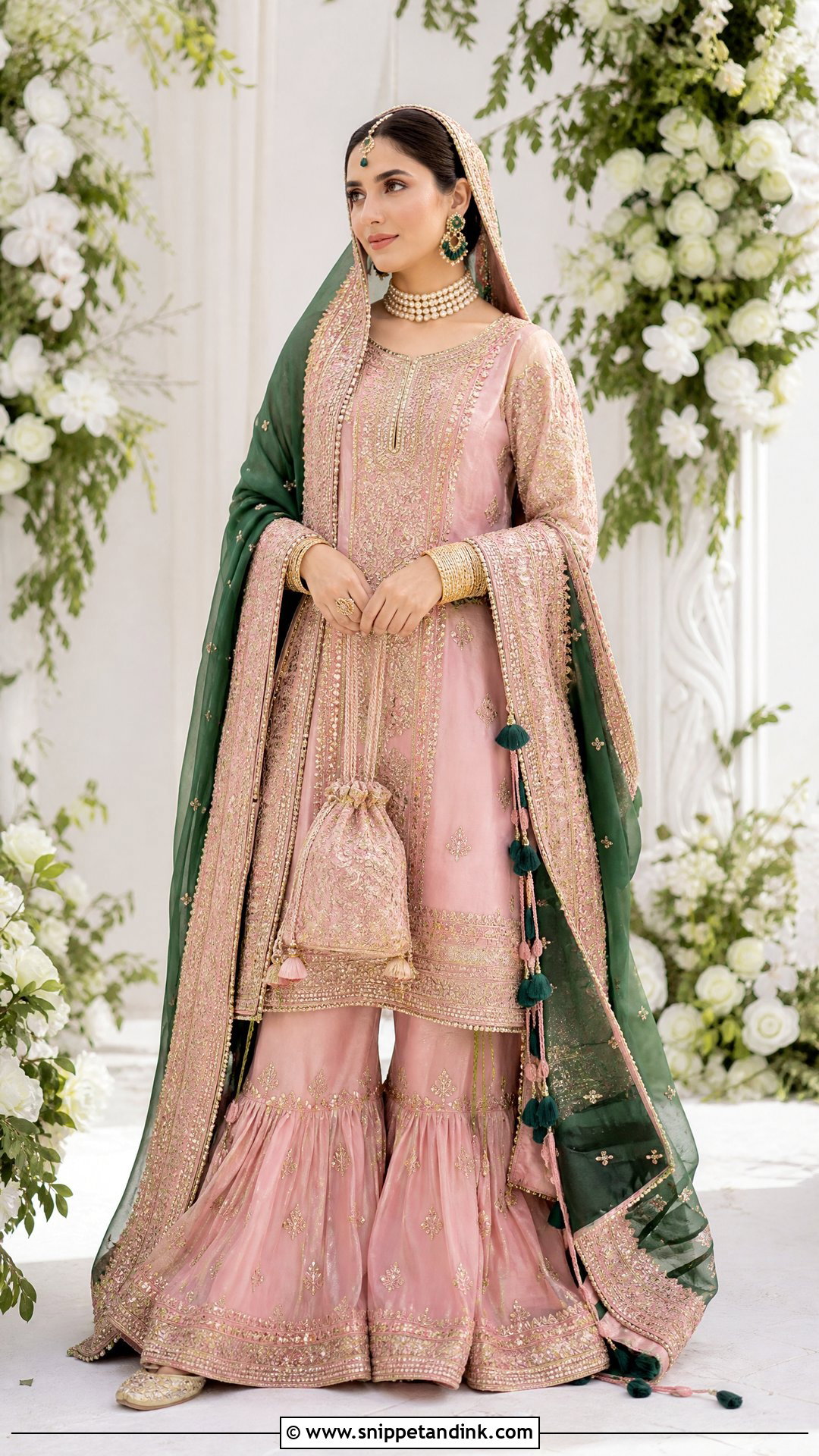
Pink and green is an old pairing in South Asian dress and still looks festive. Choose a soft pink silk shirt with gold florals and a matching gharara with detailed knee bands, then a deep green organza dupatta with a pink border, gold motifs and small tassels. Gold khussas, green stone earrings, a pearl choker and a pink potli finish it. Repeat the green only in small accents. Tassels on a dupatta look charming and catch on everything, jewelry included, so I trim them shorter if they hang past the elbow.
18. Farshi Nikkah Gharara With Short Shirt
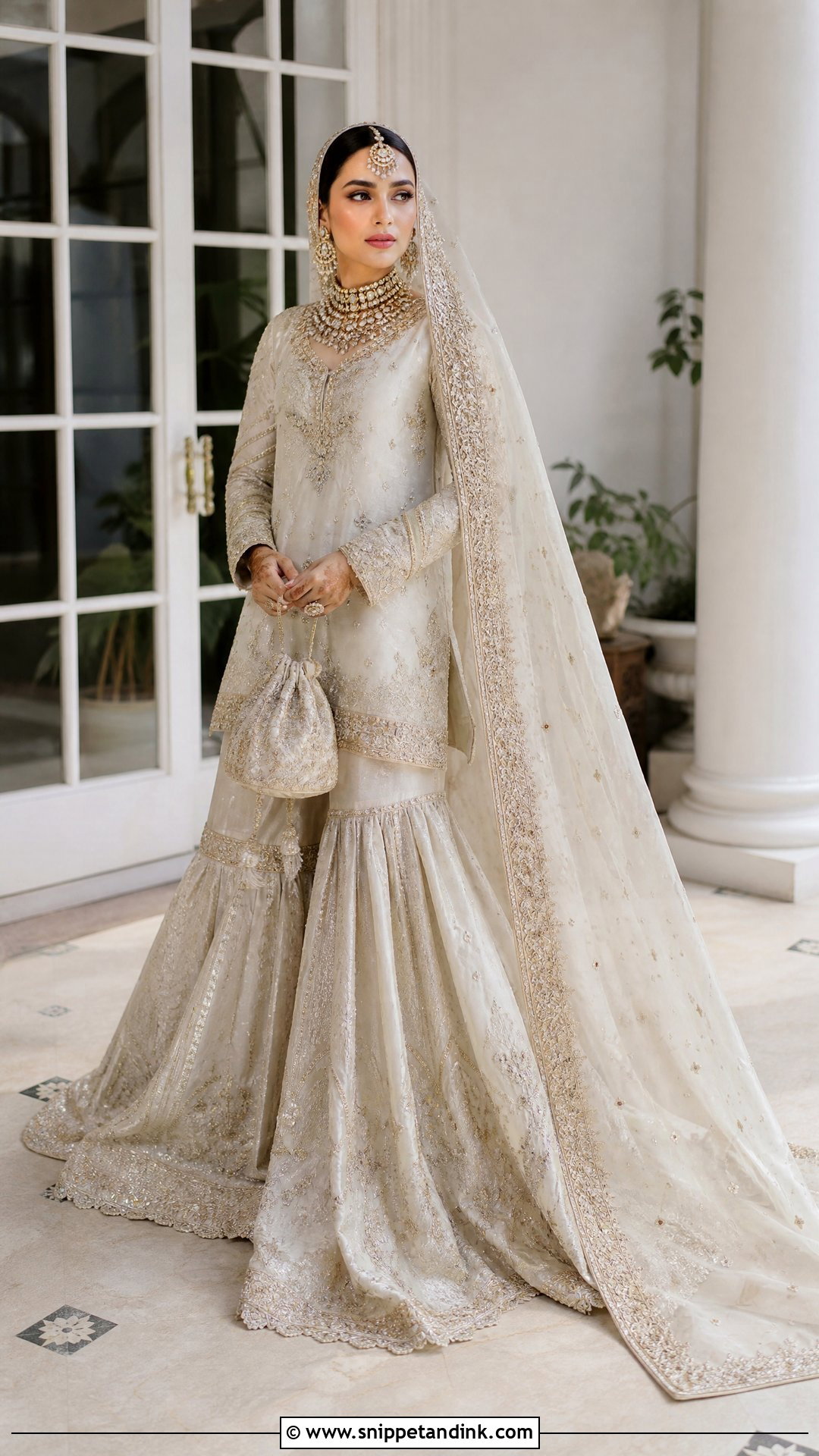
A farshi gharara trails across the floor and suits a formal Nikkah with space to show it. Pair an ivory, blush or champagne farshi with a short structured shirt ending at the upper thigh. Raw silk or jamawar for the lower garment lets the trail fall smoothly. Put zardozi at the knee joints and borders and leave the center panels clean, since heavy work there distorts the drape. A long organza dupatta with an embroidered frame suits the proportions. Choose block heels for stability, plus kundan and a structured potli. Tailoring matters more here than anywhere else; I hem the farshi in the actual shoes, so the trail starts just behind the heel.
19. Floral Nikkah Gharara With Organza Dupatta
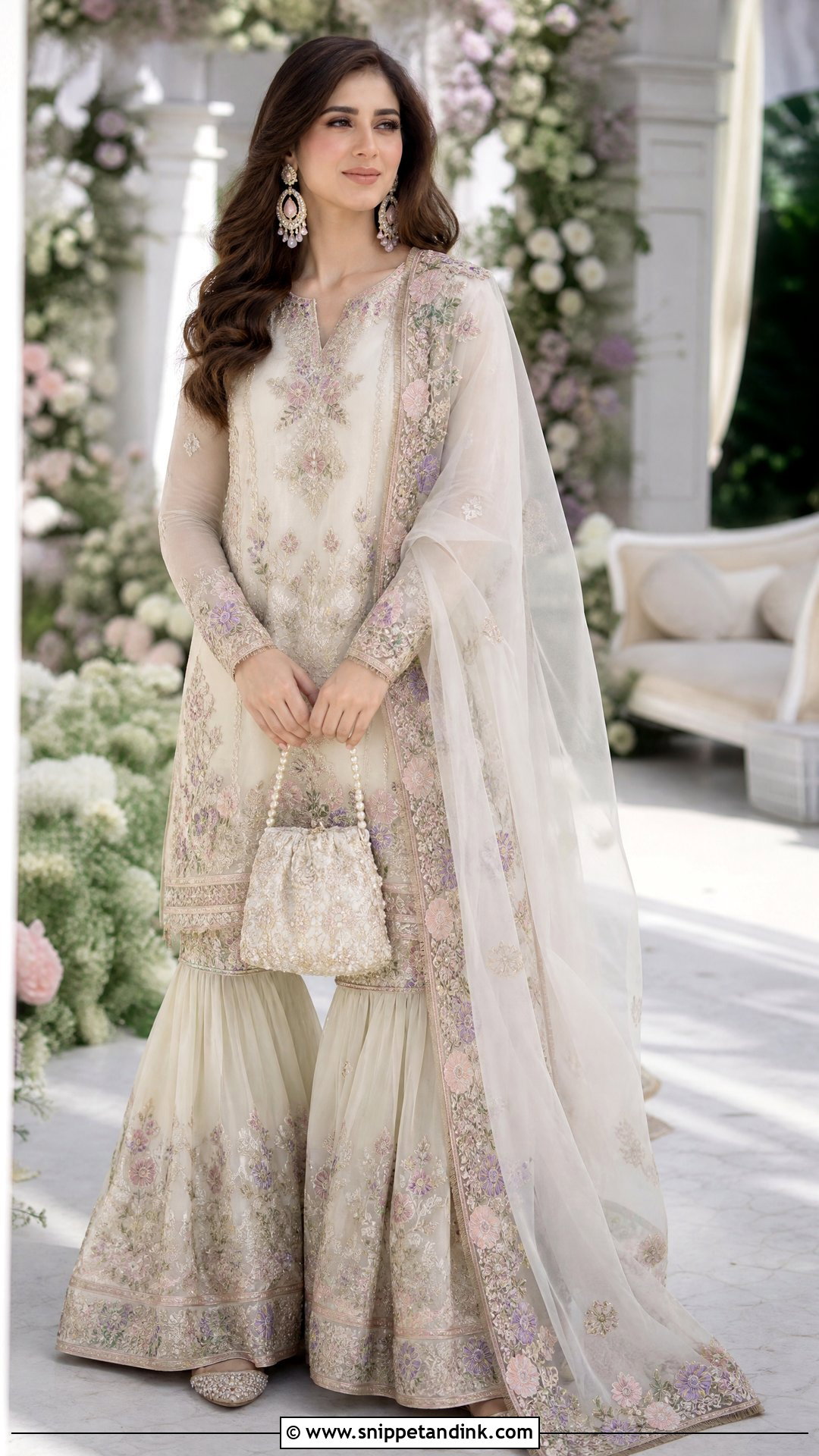
Small florals in blush, sage, lavender and muted gold on an ivory or pastel shirt keep a daytime outfit light. Repeat the pattern on the gharara at the knee joints and lower border, and leave the main fabric plain enough for the embroidery to read. A transparent organza dupatta with a floral frame finishes the set. Pearl khussas, pastel stone earrings and a beaded bag go with it. Fresh flowers in a low bun can echo the embroidery, or a plain pastel hijab gives a modest alternative without adding pattern. I match the hijab to the base fabric, not the flowers.
20. Minimal Nikkah Gharara With Statement Dupatta
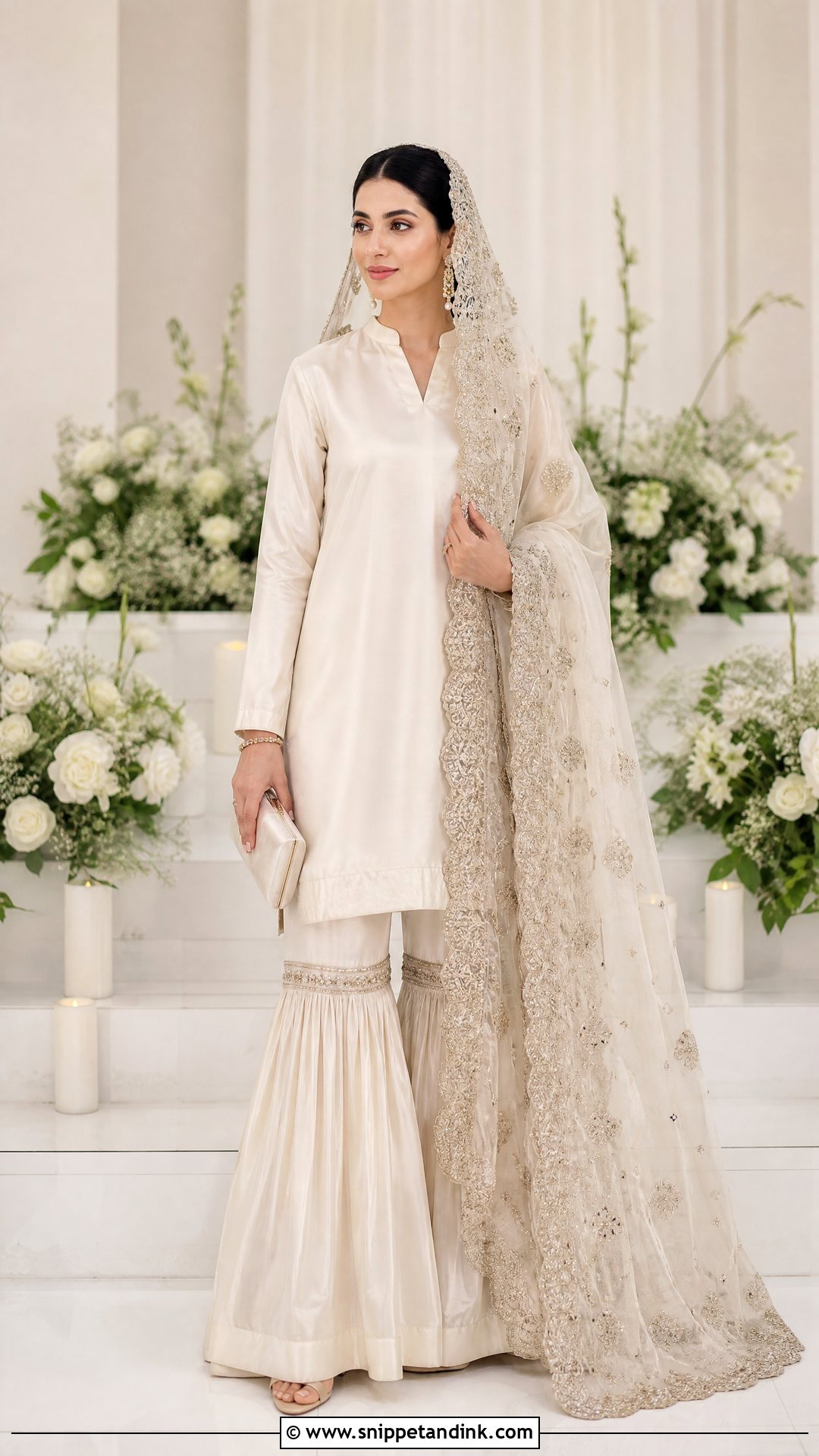
One exceptional dupatta can carry an otherwise plain outfit. Choose a plain ivory, champagne or blush silk shirt with a clean neck and minimal work at the cuffs, over a tailored gharara with precise pleats and narrow embellished bands. Then let the dupatta lead, with hand embroidery, scalloped borders, pearls or calligraphy-inspired motifs that are decorative rather than readable text. Wear it over the head so the work shows. Pearl earrings, a slim bracelet, neutral heels and a satin clutch are enough. This is my favorite setup for brides on a budget, since a dupatta can be bought from a specialist embroiderer and paired with a well-tailored simple set.
The Order I Dress a Gharara Bride on the Morning
Most gharara shirts go on over the head, and that clashes with finished hair and makeup unless you plan the sequence.
- Hair and makeup are done in a button-front top so nothing has to come off over the face.
- The gharara goes on first. It ties at the waist, so it never disturbs hair.
- The shirt goes on next with a thin scarf or a makeup hood over the face, and someone holds the neckline wide as it comes down.
- Jewelry follows: necklace and earrings first, then the tikka or passa.
- The hijab, if worn, is pinned now, and the dupatta goes on last, pinned through to the bun or underscarf.
- Shoes go on before the final check in the mirror, because the hem looks different at heel height.
Showing Off the Flare in Photos
A gharara’s shape disappears in photos if you stand stiffly with your feet together. Step one foot slightly forward and turn your body a little, so the knee band and flare open out. For seated portraits, sit with your knees angled to one side and have someone fan the flares so the border faces the camera. Walking shots work best when you hold the sides lightly at the knee band, which lifts the hem clear of the floor and shows the movement.
Let the Dupatta Settle the Final Decision
From a minimal ivory set to a farshi trail, a gharara should honor tradition and still leave you comfortable. Look at the ceremony setting, the season, fabric weight and how much moving you’ll do. Then plan the shirt, gharara, dupatta, shoes, jewelry and makeup as one outfit, not separate purchases. Tailoring is where a gharara lives or dies, because the knee placement and lower flare are its whole shape. If you’re torn between two options, try both with the dupatta you love most; whichever one makes that dupatta look best is usually the answer.
You'll Like These Ideas:


Leave a Reply