
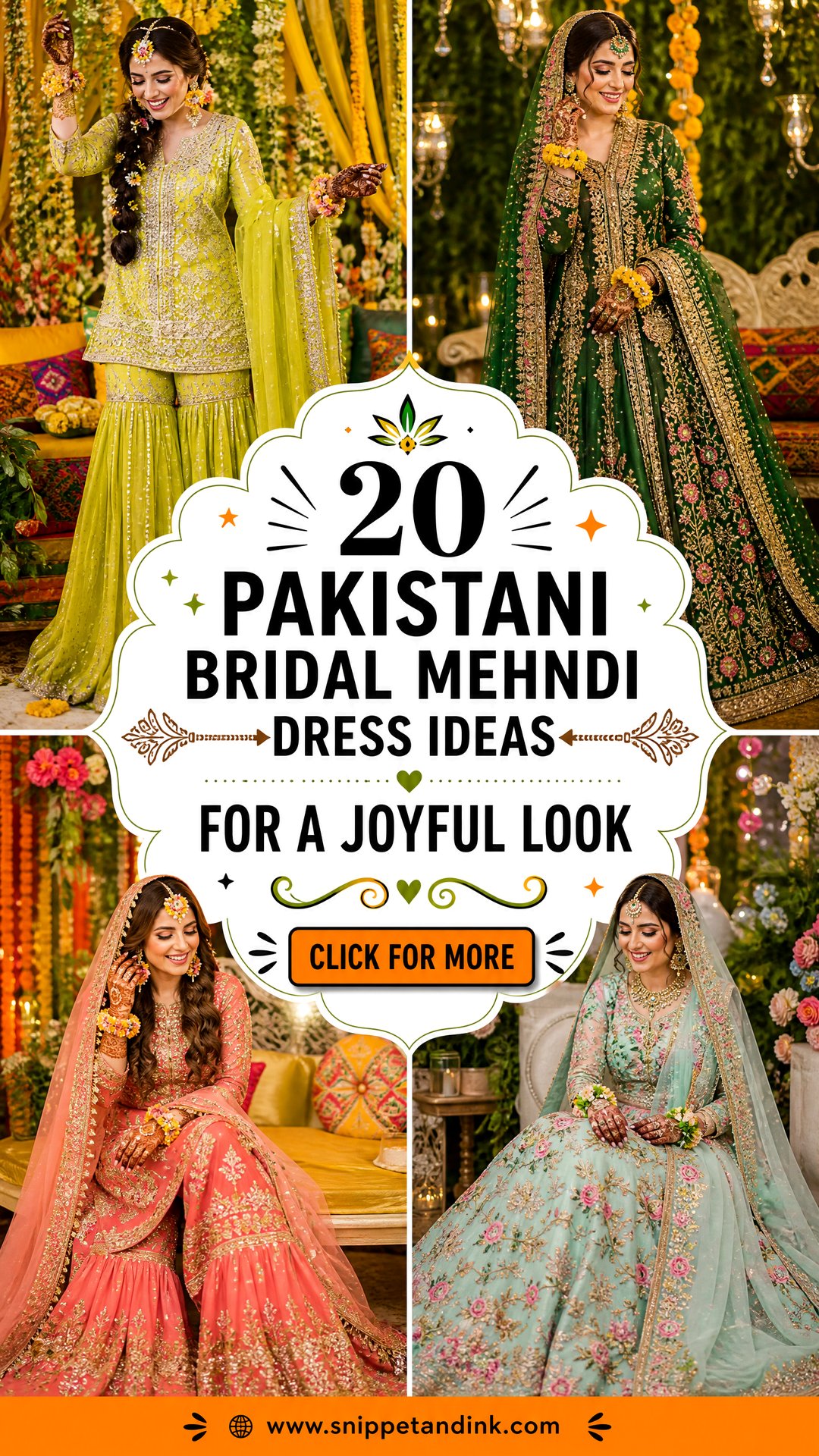
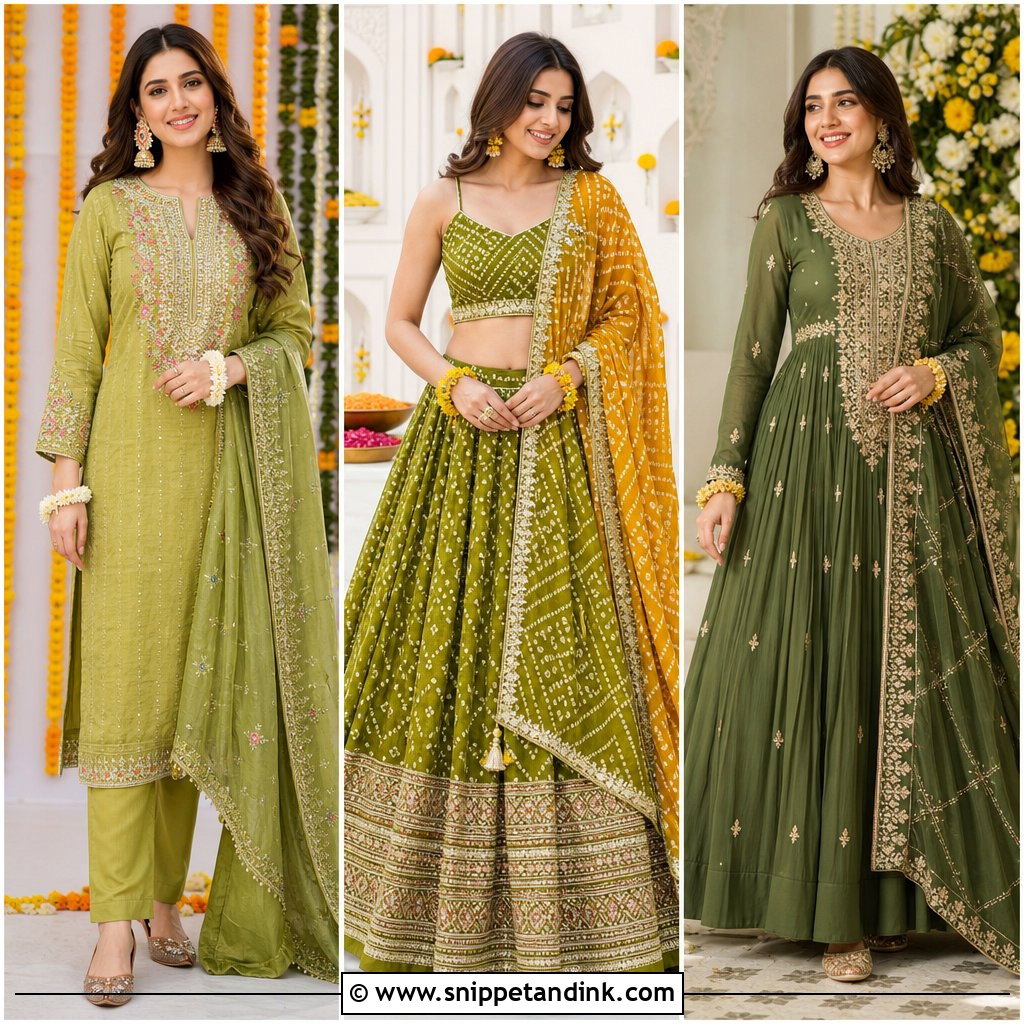
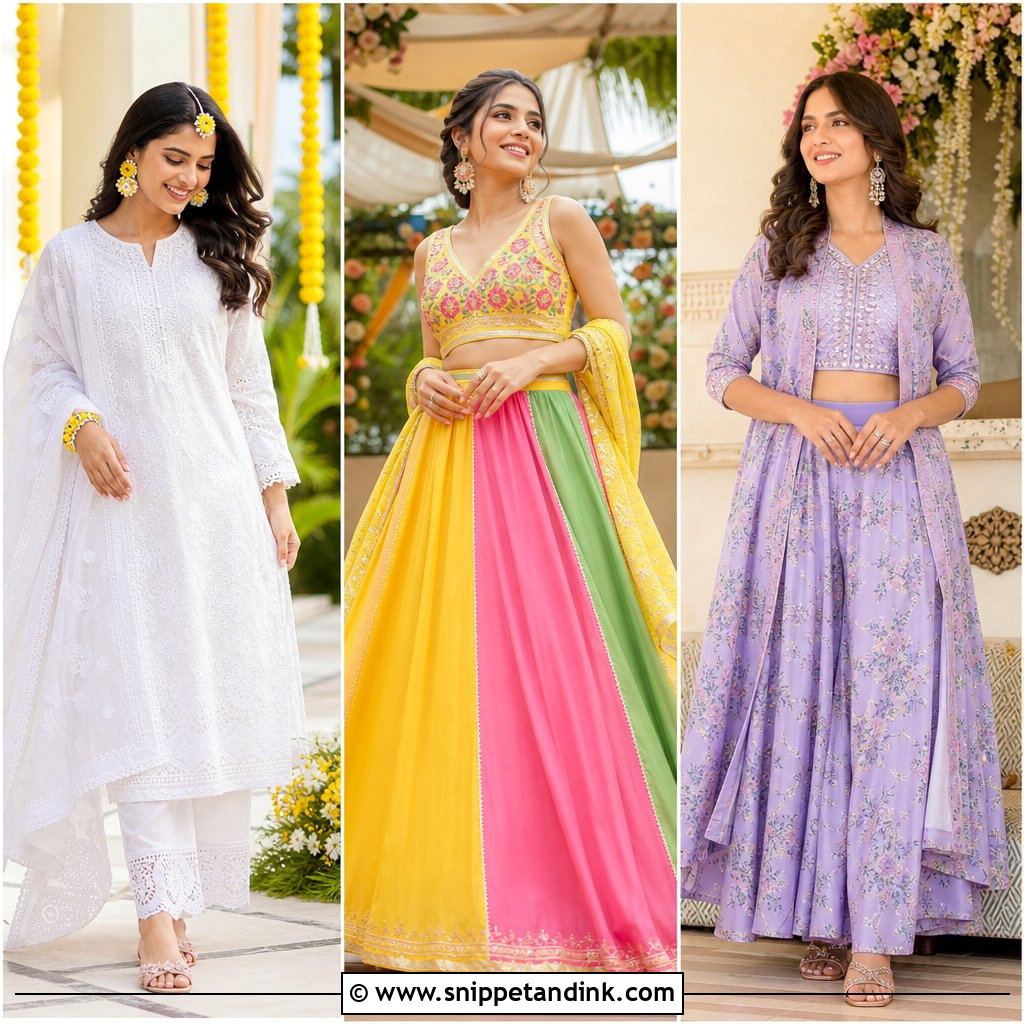
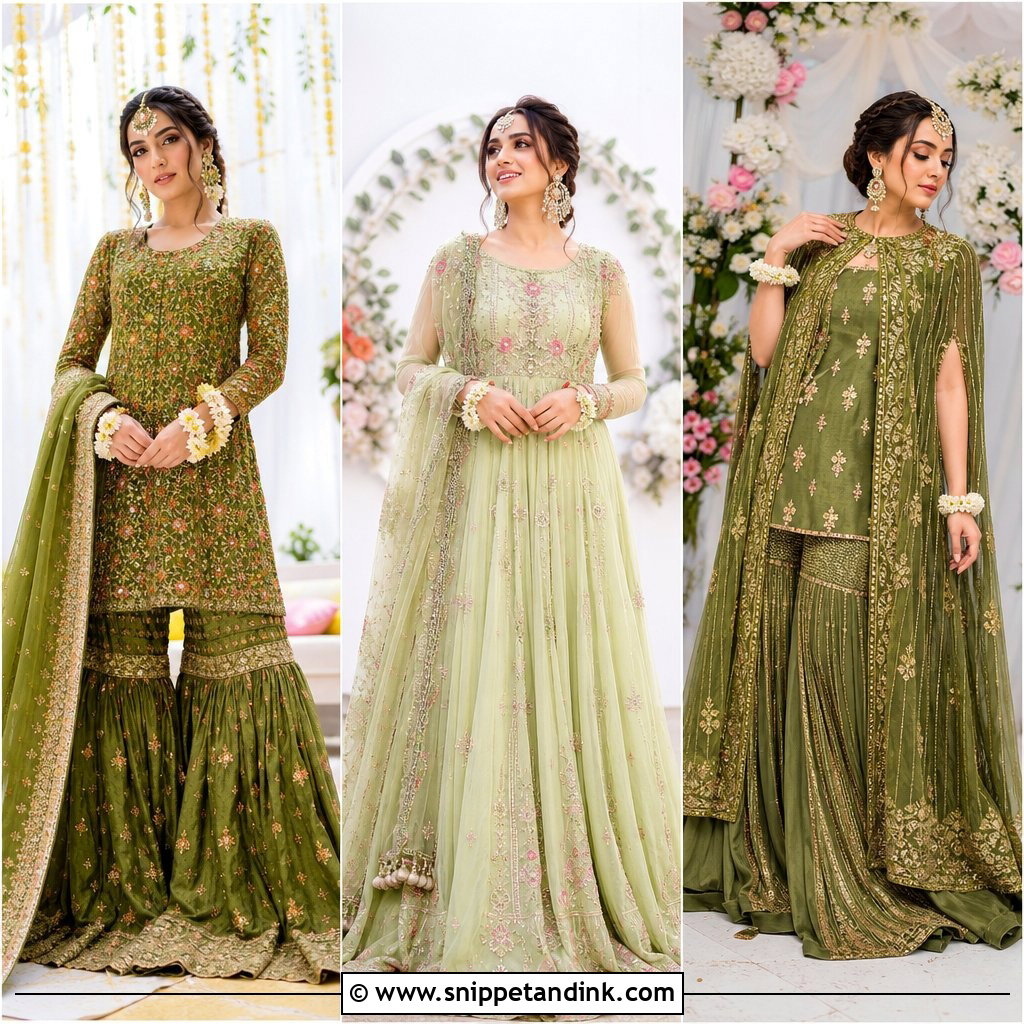
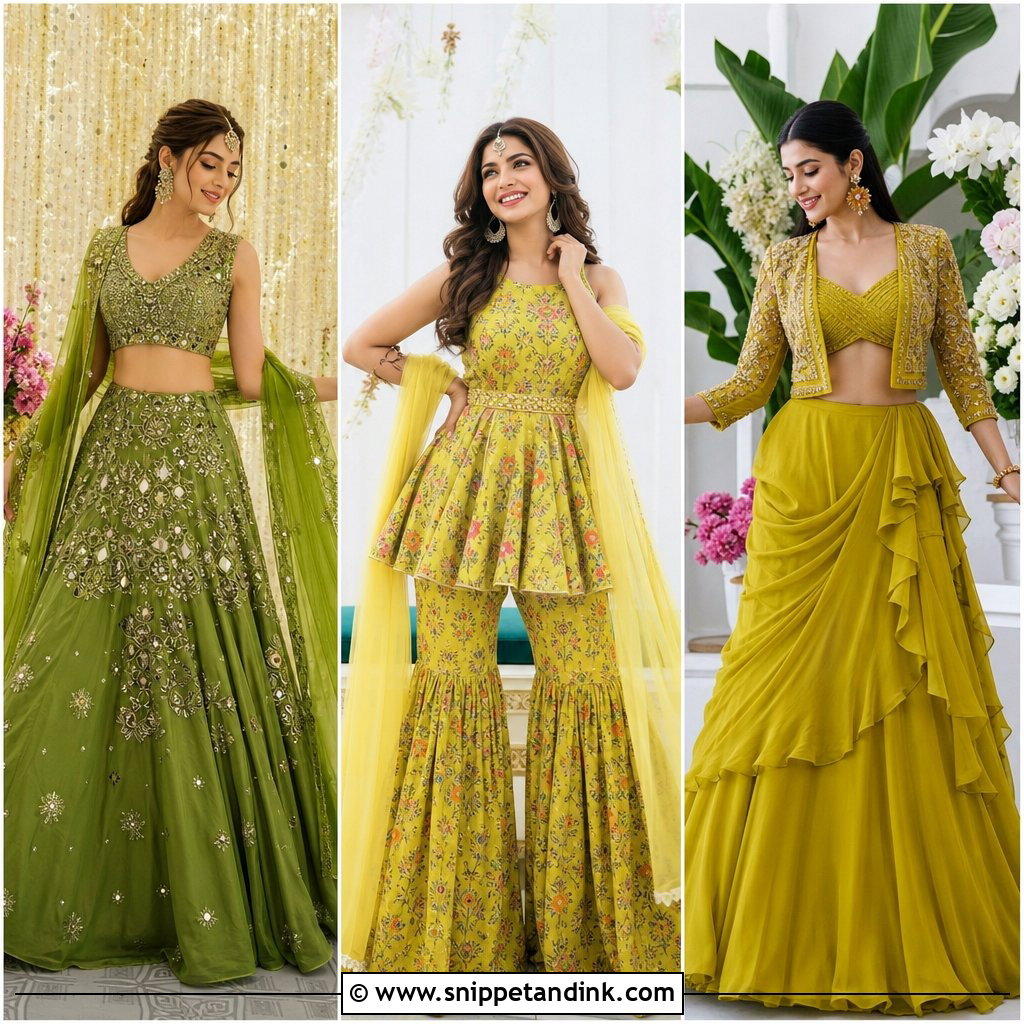
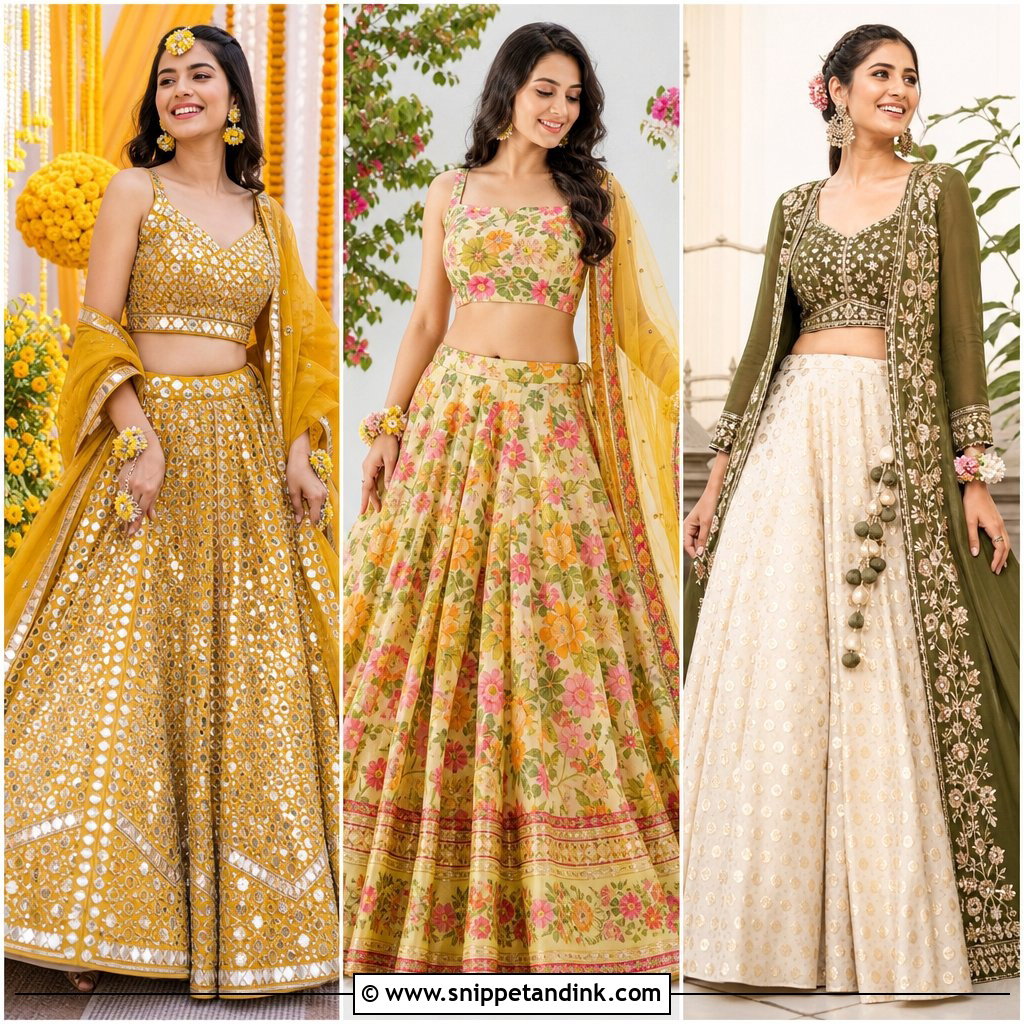
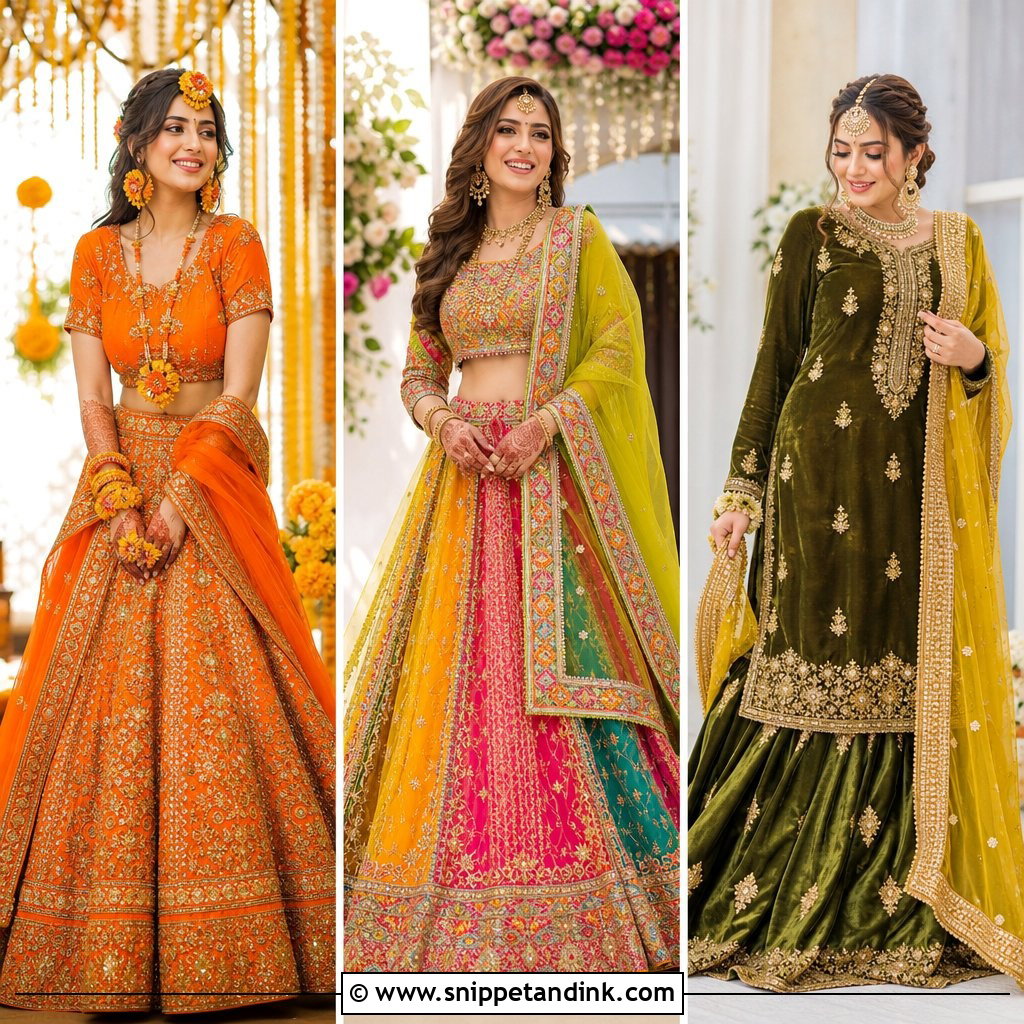
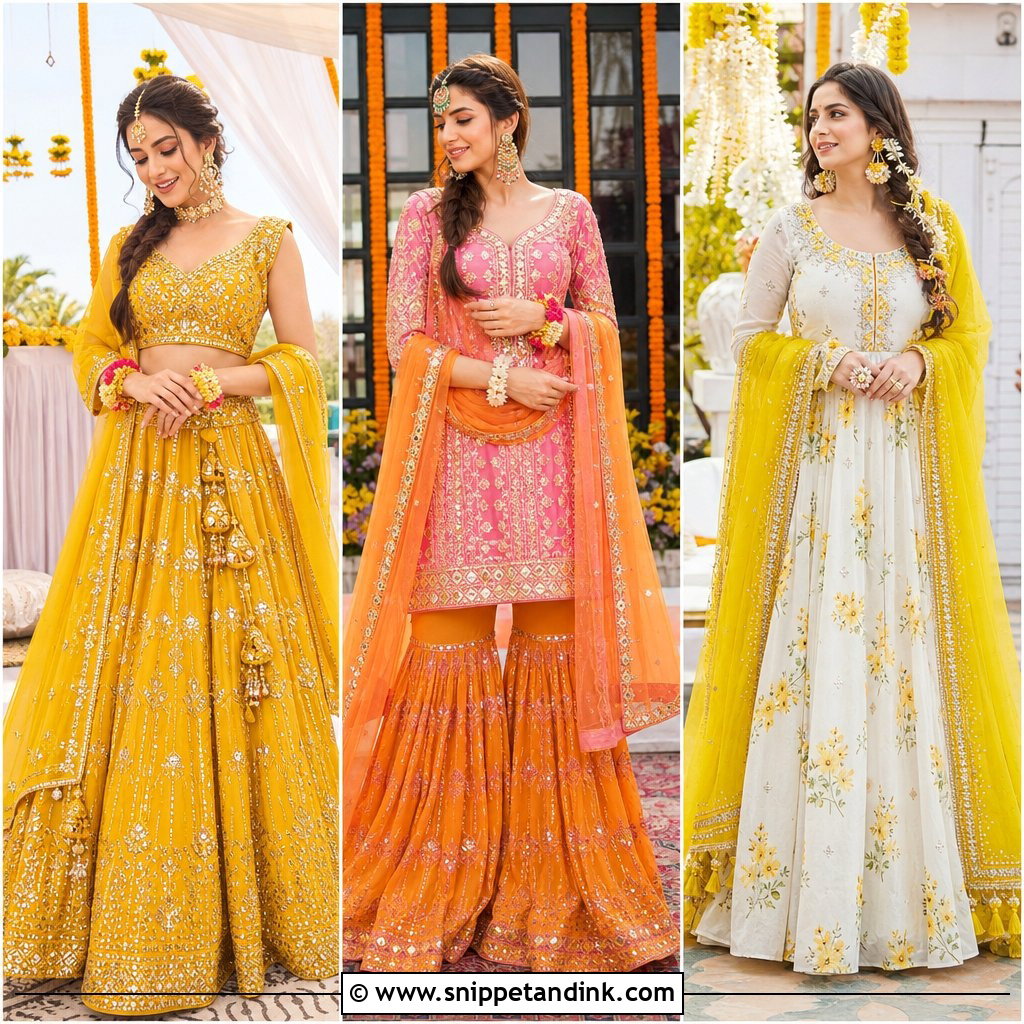
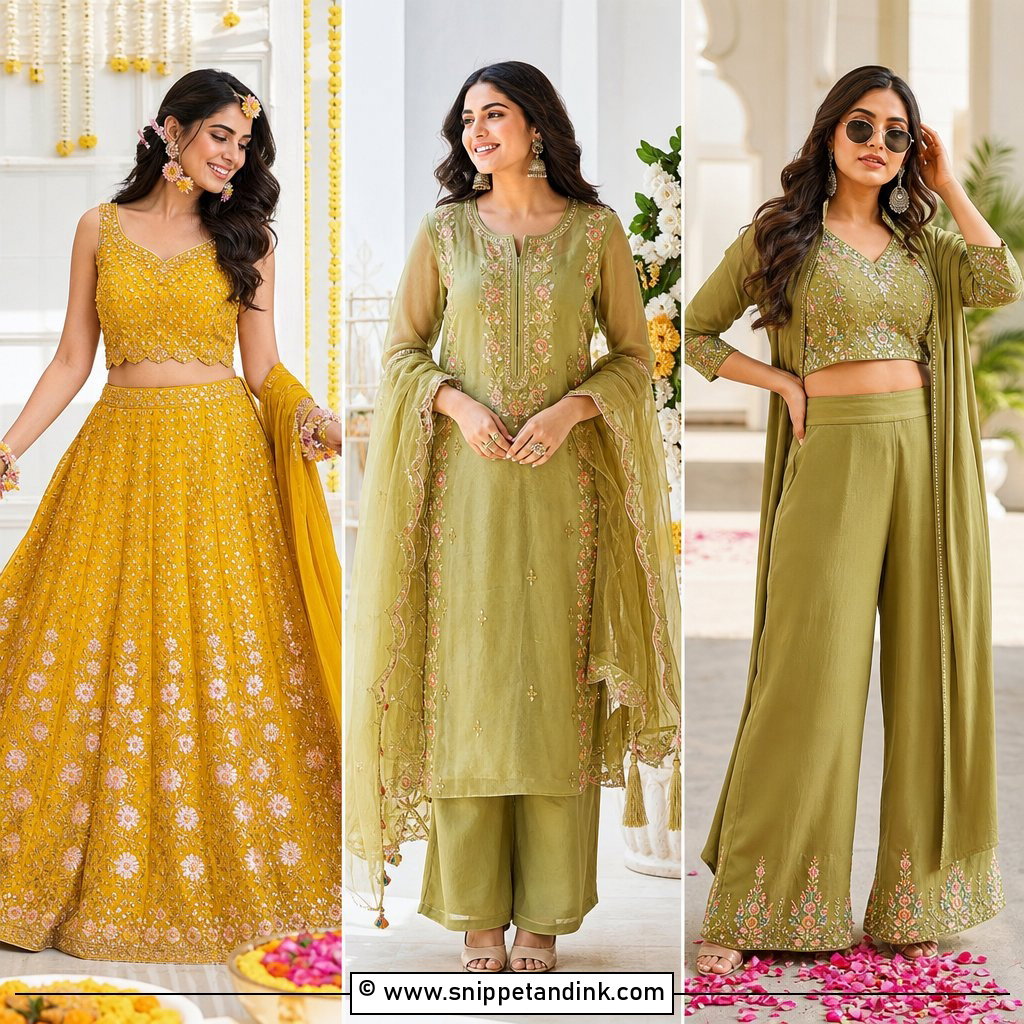
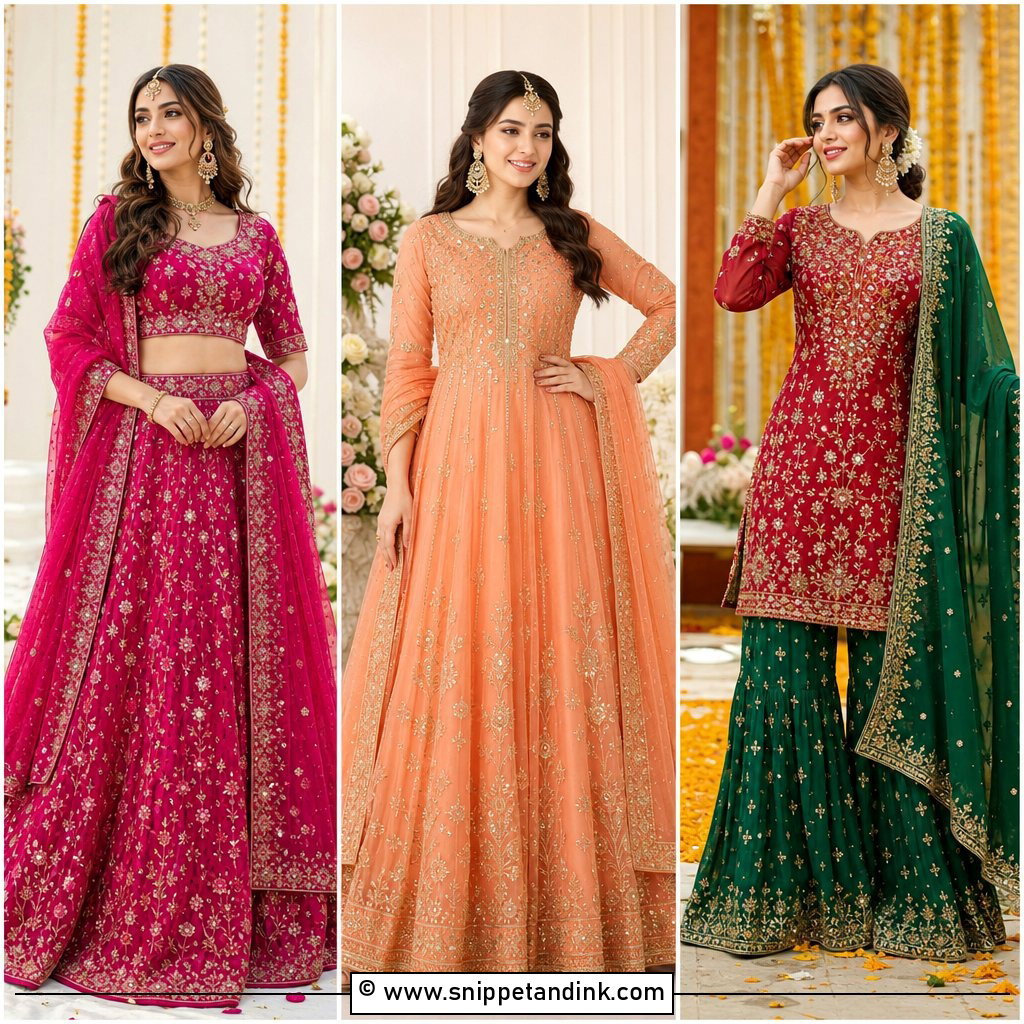
The mehndi is the loosest event of a Pakistani wedding, and the outfit should behave that way. You’ll sit for henna, get pulled into dances and spend hours on a low stage, so I build every mehndi look around movement before color. Below are twenty complete outfits: lehengas, ghararas, shararas, pishwas dresses and a few modern fusion silhouettes. Yellow and green are still the classics, but coral, teal, fuchsia, lavender and multicolor work are all fair game. For each one I’ve paired shoes you can stand in, floral jewelry, fresh makeup and a hairstyle that keeps your hands free for the henna artist.
Gharara, Sharara, Lehenga or Pishwas on a Crowded Dance Floor
Most mehndi photos worth keeping are taken mid-dance, so I ask every bride how much she actually plans to move before we talk about color. Each silhouette behaves differently once the dhol starts.
- Sharara: flares from the hip, so your legs move freely. It’s the easiest to dance in and to sit cross-legged.
- Gharara: fitted to the knee, then flared. Fine for swaying and walking, but big steps pull at the knee joint. A farshi gharara trails on the floor and has to be held.
- Lehenga: how freely it moves depends on the lining and can-can underneath. A light lining swings; a stiff one gives volume but makes stage steps awkward.
- Pishwas or Anarkali: spins well and has no separate waistband to slip, though a very full hem gets heavy.
Test it at your final fitting. Turn quickly, step up as if climbing onto the stage, then sit on the floor. If you need help with any of those, ask for a lighter lining or a shorter hem while there’s still time.
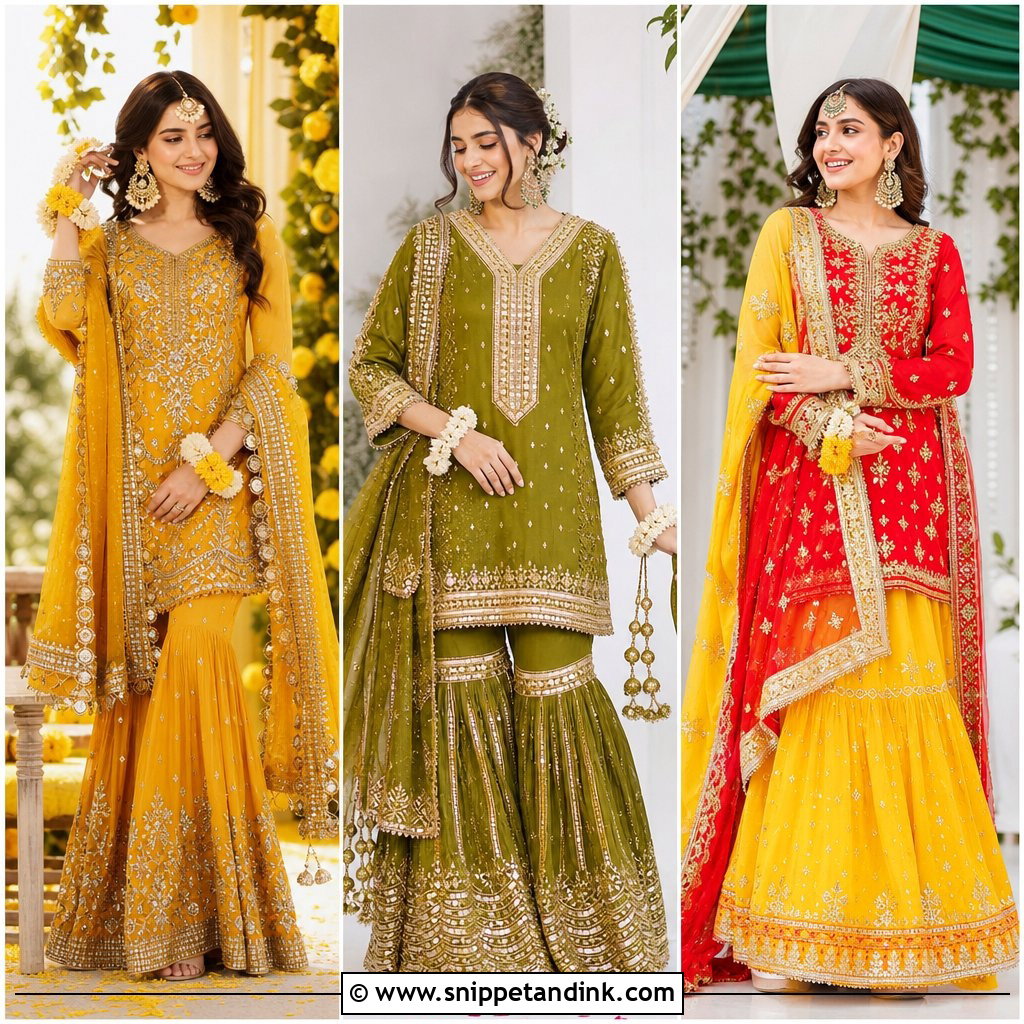
1. Yellow Gota Patti Mehndi Lehenga
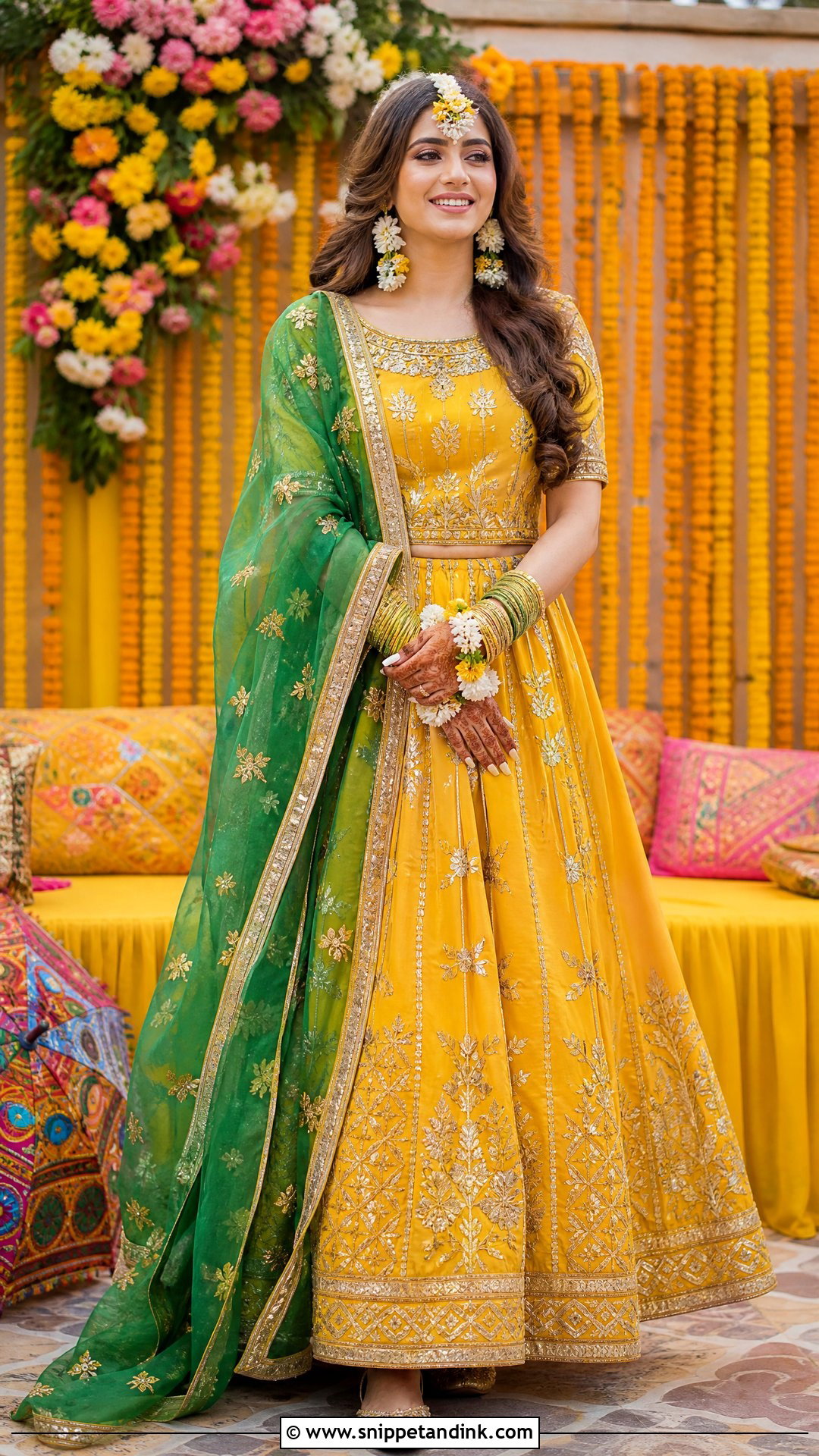
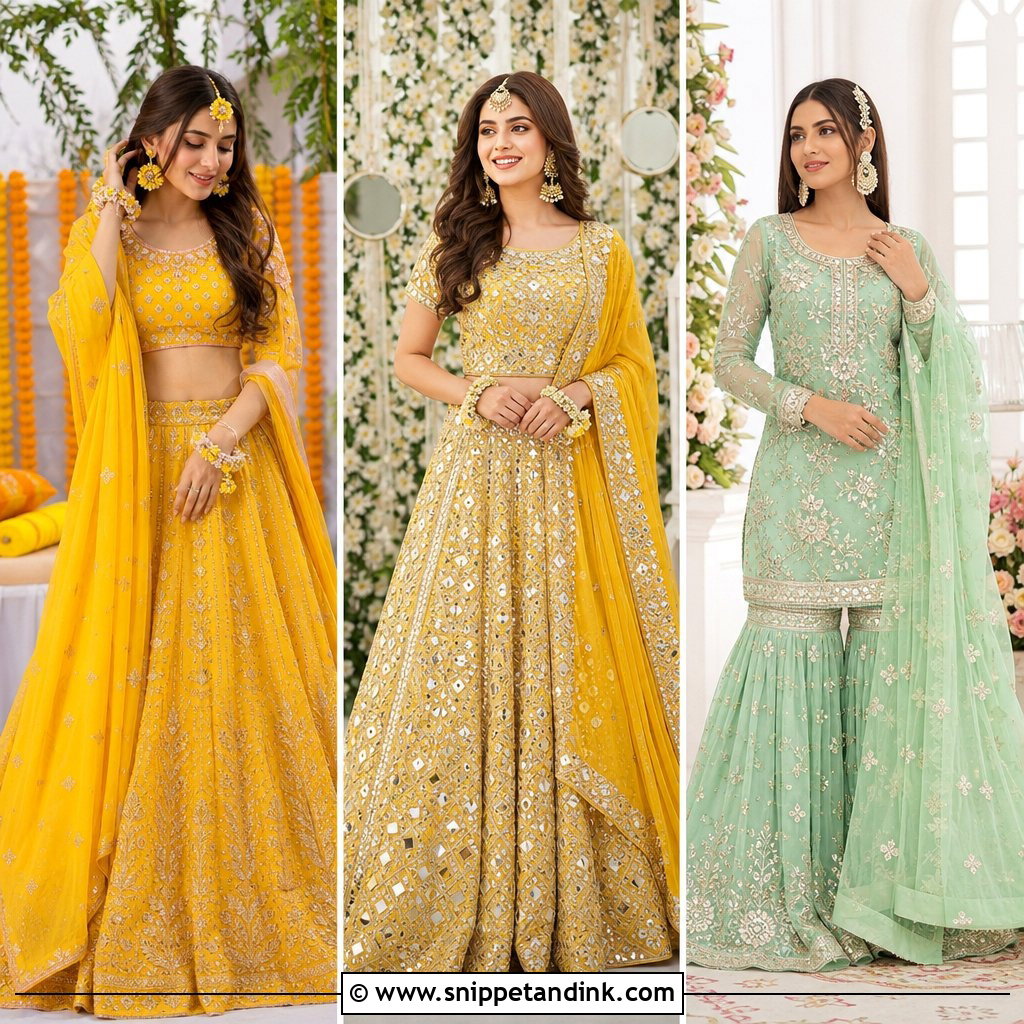
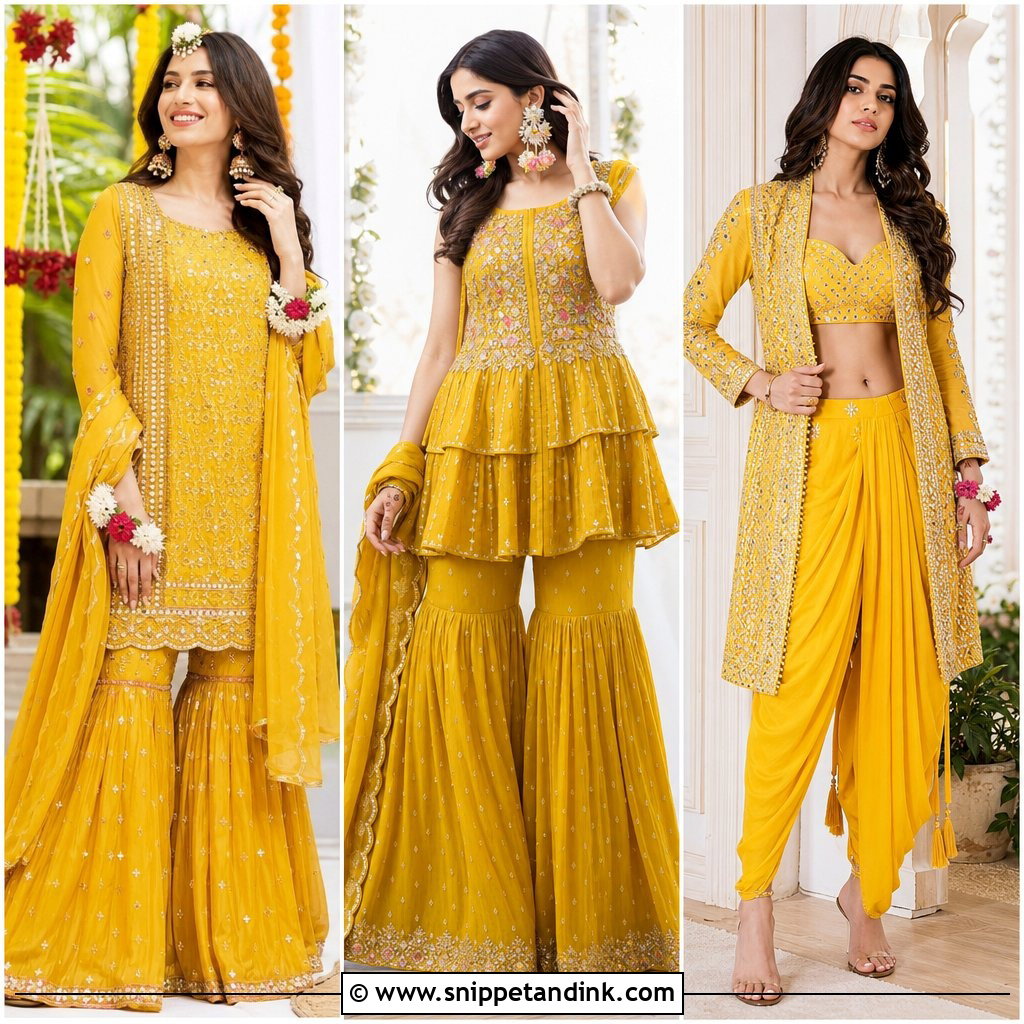
Yellow with gota patti is the classic mehndi outfit for a reason: the gold ribbon work catches lamp and fairy light without adding much weight. I’d pick organza over raw silk if the function is outdoors in warm weather, since raw silk holds heat. Small floral motifs and a few mirror accents are enough on the skirt. Elbow-length sleeves on the choli keep fabric clear of fresh henna on your hands. A green organza dupatta with a scalloped gold border gives contrast, and floral earrings, a tikka, stacked bangles and gold khussas finish it. Wear a loose braid woven with tiny white flowers, peach blush and a rose lip.
2. Lime Green Sharara Mehndi Dress
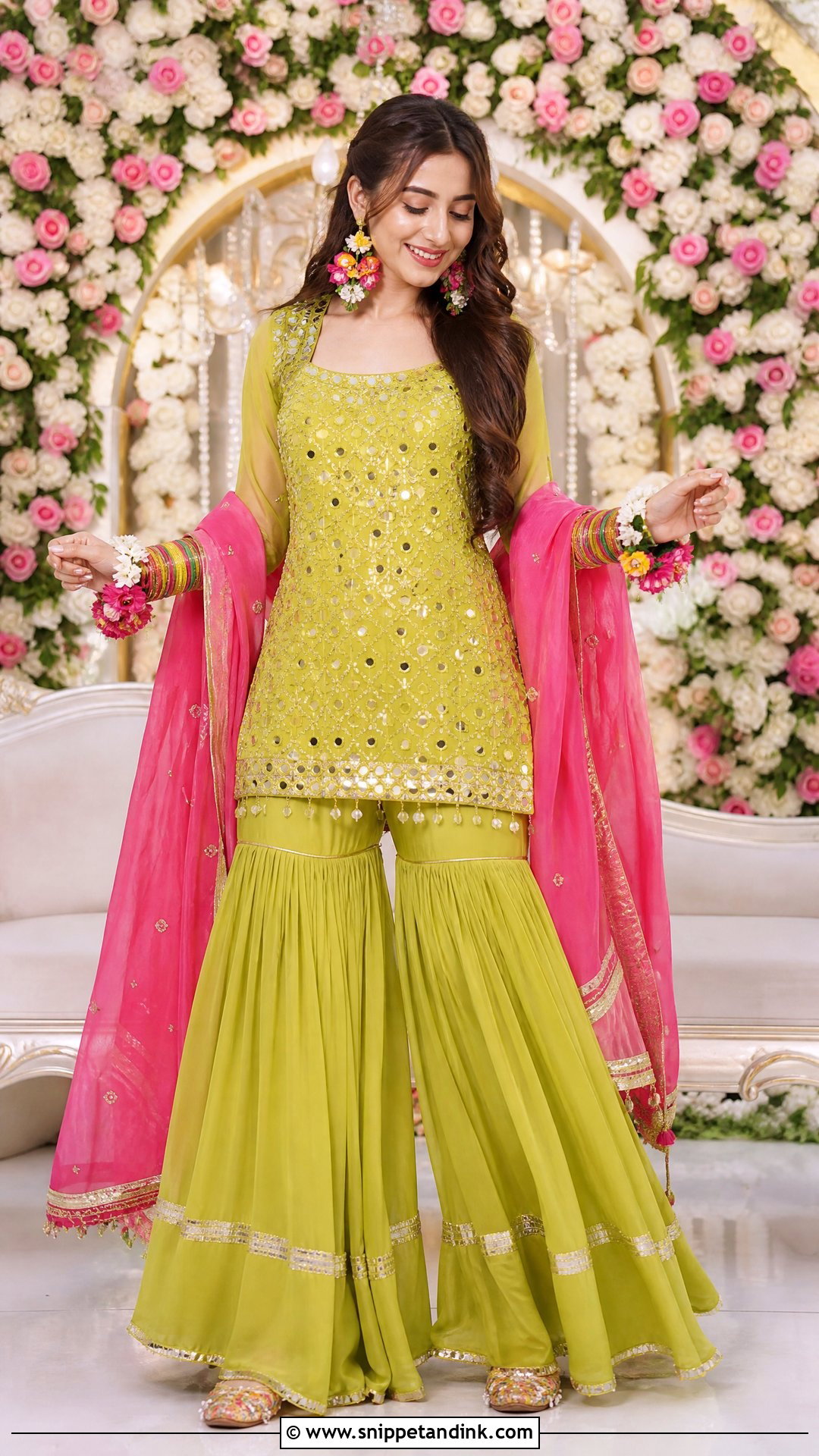
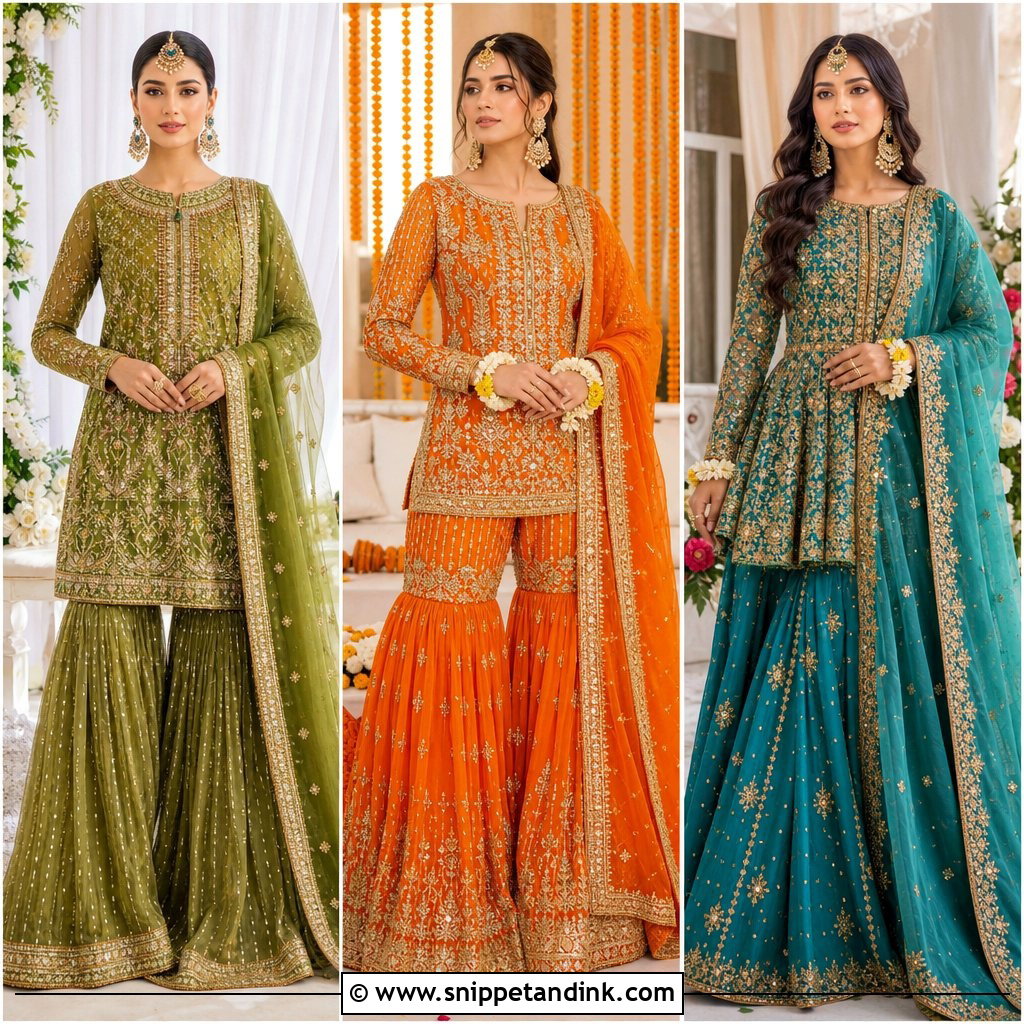
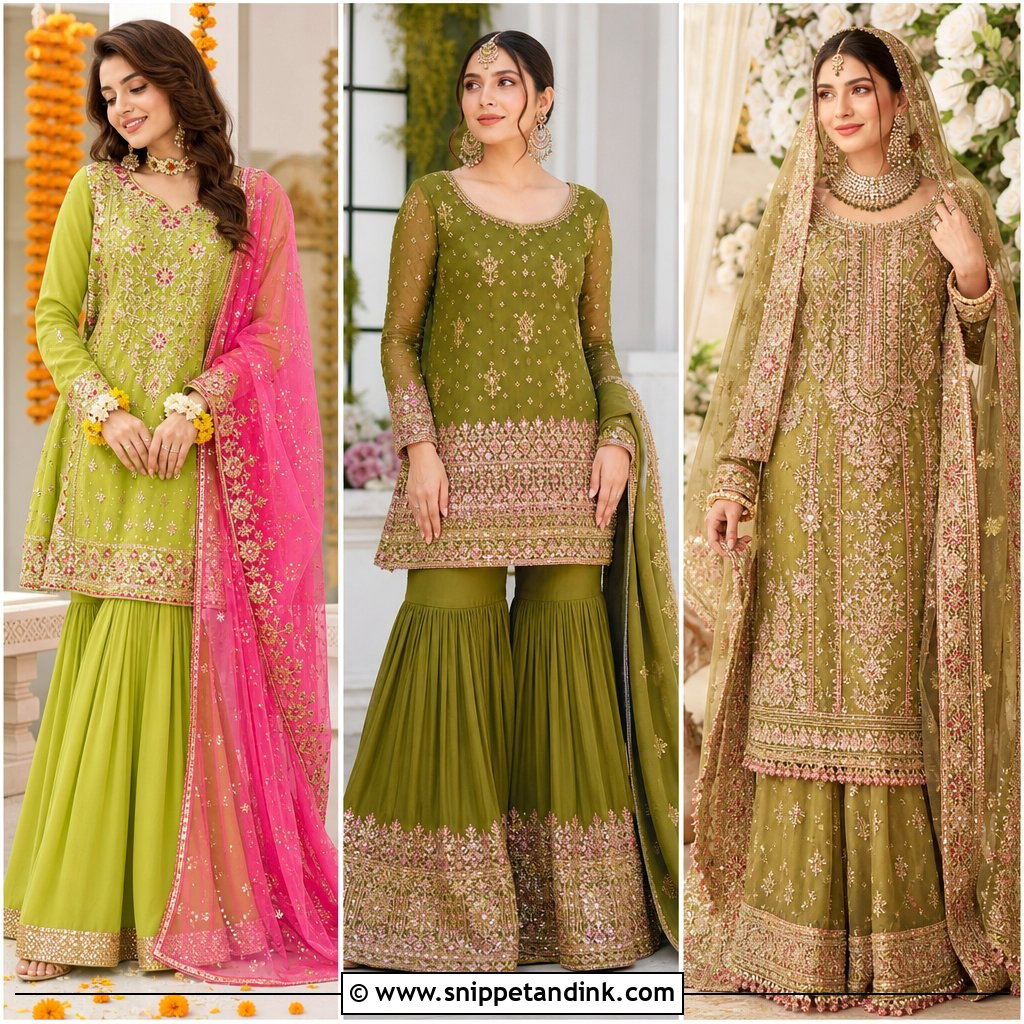
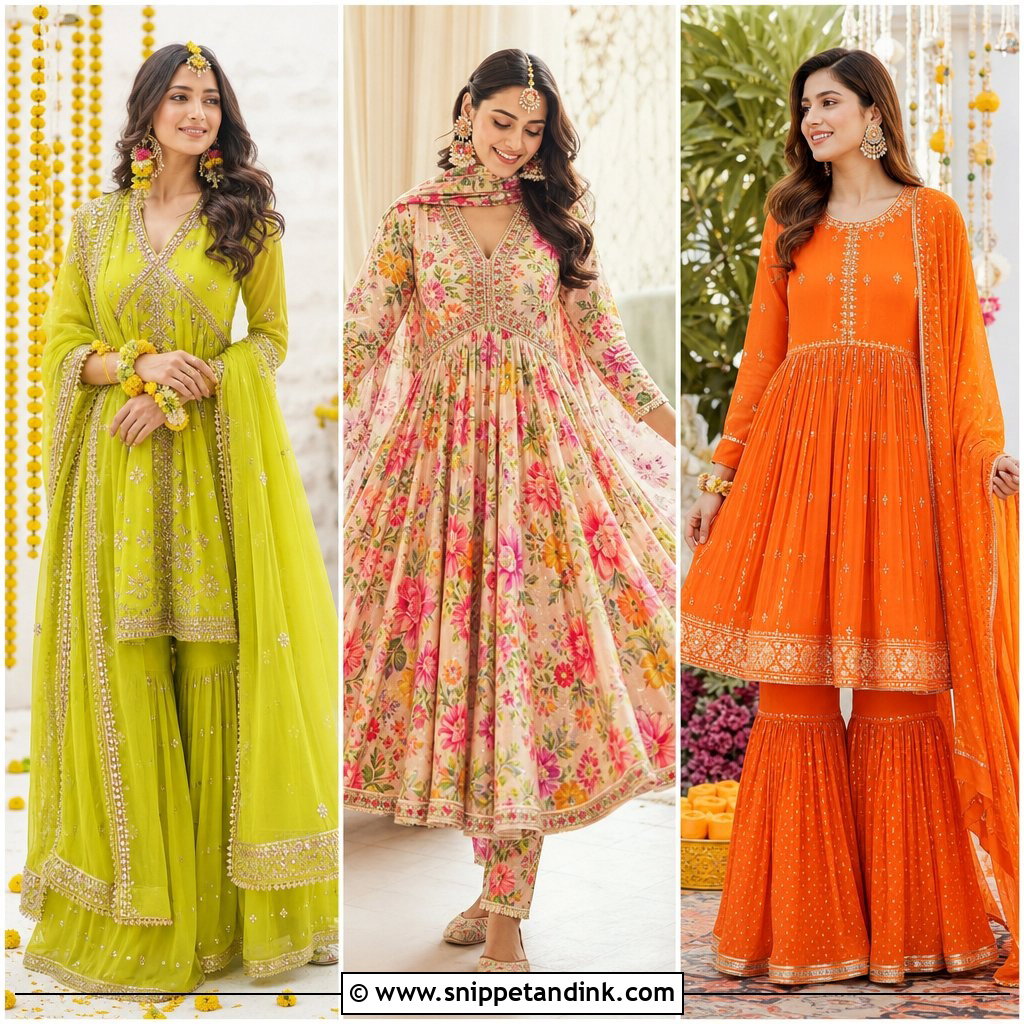
Of every shape in this list, the sharara is the easiest to dance in. A lime green sharara flares from the hip, so your knees are never restricted, and gold gota bands, mirror work and thin fuchsia piping near the hem give it life. Pair it with a short embroidered kurti with side slits; without them, the kurti rides up the moment you sit cross-legged. A pink chiffon dupatta over one shoulder keeps your hands free. Floral jhumkas, colorful bangles, embellished flat sandals, a center-parted ponytail, soft gold eyeshadow and pink lipstick. Best in daylight.
3. Orange And Pink Bridal Gharara
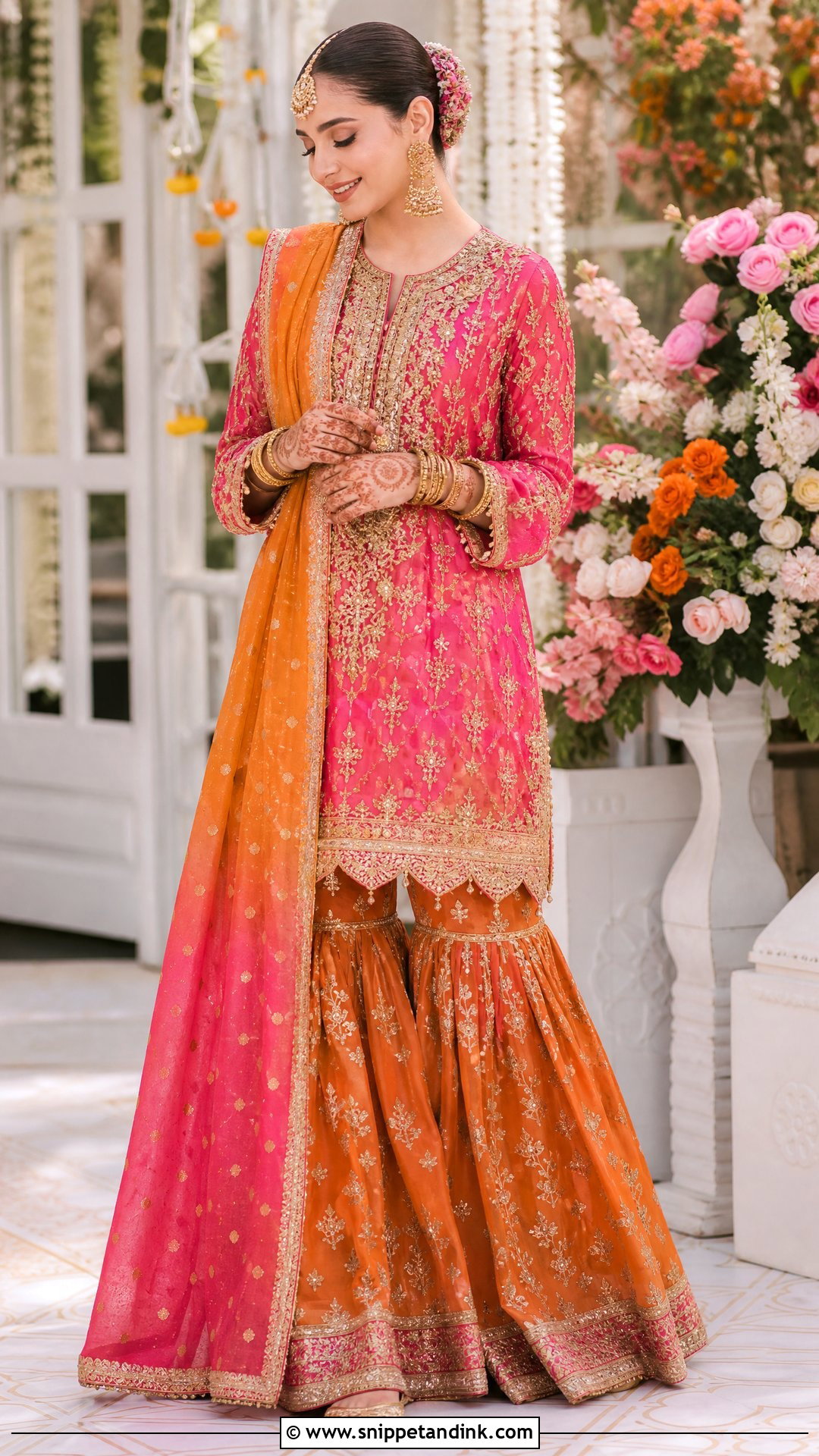
A gharara is fitted down to the knee and then bursts into flare at a joint, traditionally covered with a band of gota. That joint has to sit exactly at your knee. An inch too high or low and it looks like a sewing mistake, so it’s the measurement I recheck at every fitting. Burnt orange below a hot pink short kameez with gold dabka and sequins makes a cheerful pairing. Add a two-tone pink and orange chiffon dupatta with tiny tassels, gold jhumkas, a passa and khussas. A curled side braid with miniature roses, bronze eyeshadow and a muted coral lip tie the colors together.
4. Multicolor Patchwork Mehndi Lehenga
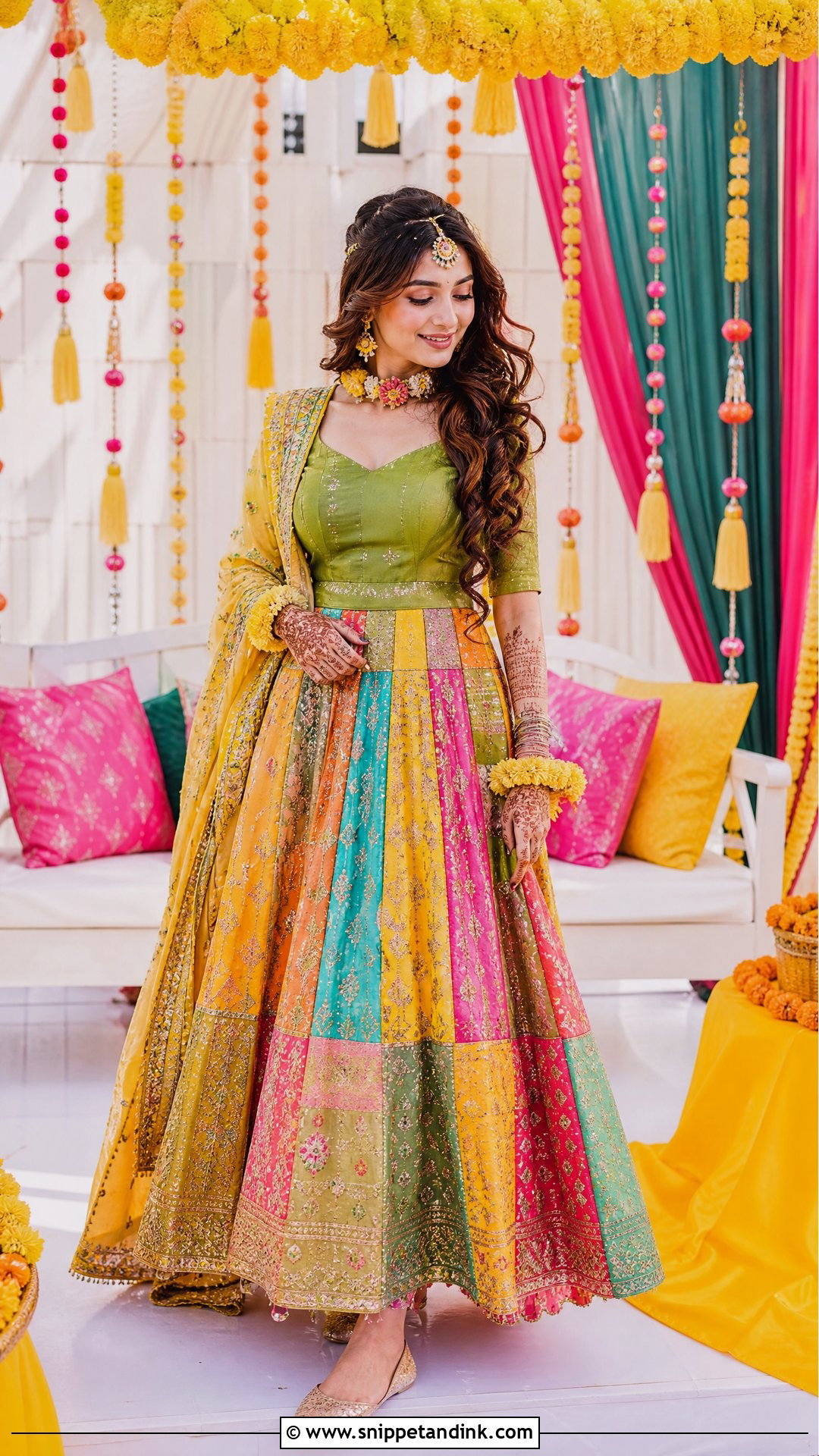
Patchwork already does all the talking, so the rest of the outfit has to step back. Look for a paneled skirt where yellow, pink, turquoise, orange and green are balanced across the hem, tied together by gota trim and mirror borders. The choli should be a single solid color pulled from one of the panels. A sheer yellow dupatta with a narrow multicolor border, a floral choker, a tikka and neutral gold flats are plenty. Soft braid or low bun with fresh flowers. Keep the makeup natural: defined lashes, glowing skin and a soft pink lip.
5. Green Angrakha Pishwas Mehndi Dress
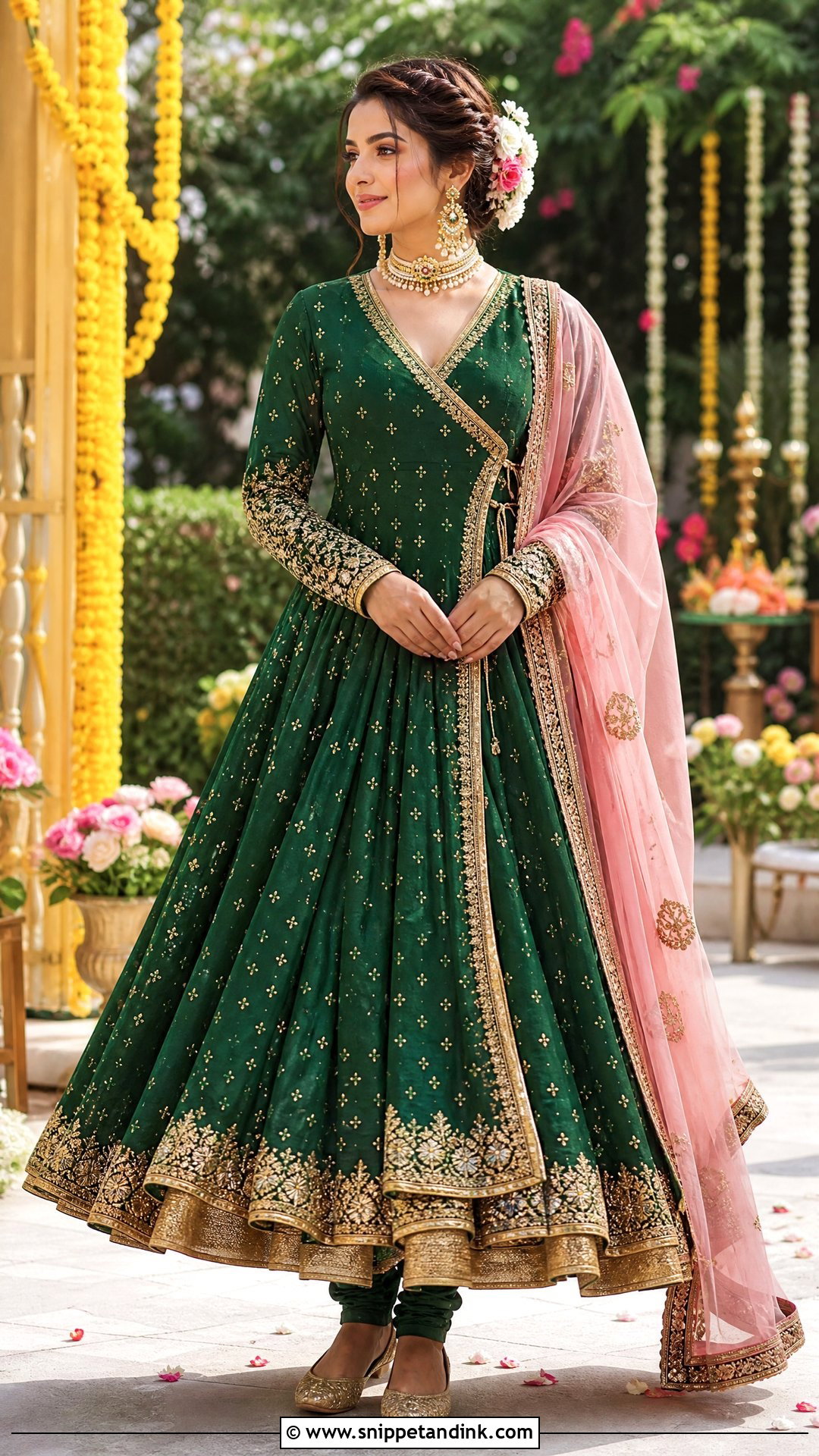
The angrakha bodice crosses over on the diagonal. It flatters most figures, but it gapes at the overlap if the tie or hook is placed badly, so I always have the bride lift both arms at the fitting. Emerald, parrot or olive green all suit it, with gota lines at the neckline, waist and hem and a few small pink florals. Wear slim churidar pants and gold khussas beneath. Pin the pink organza dupatta firmly at one shoulder, because a pishwas spins when you dance and a loose dupatta will fly. A gold choker, pearl jhumkas, a floral hairpiece around a low bun, soft brown eyes and a berry-pink lip.
6. Mustard Peplum And Dhoti Pants
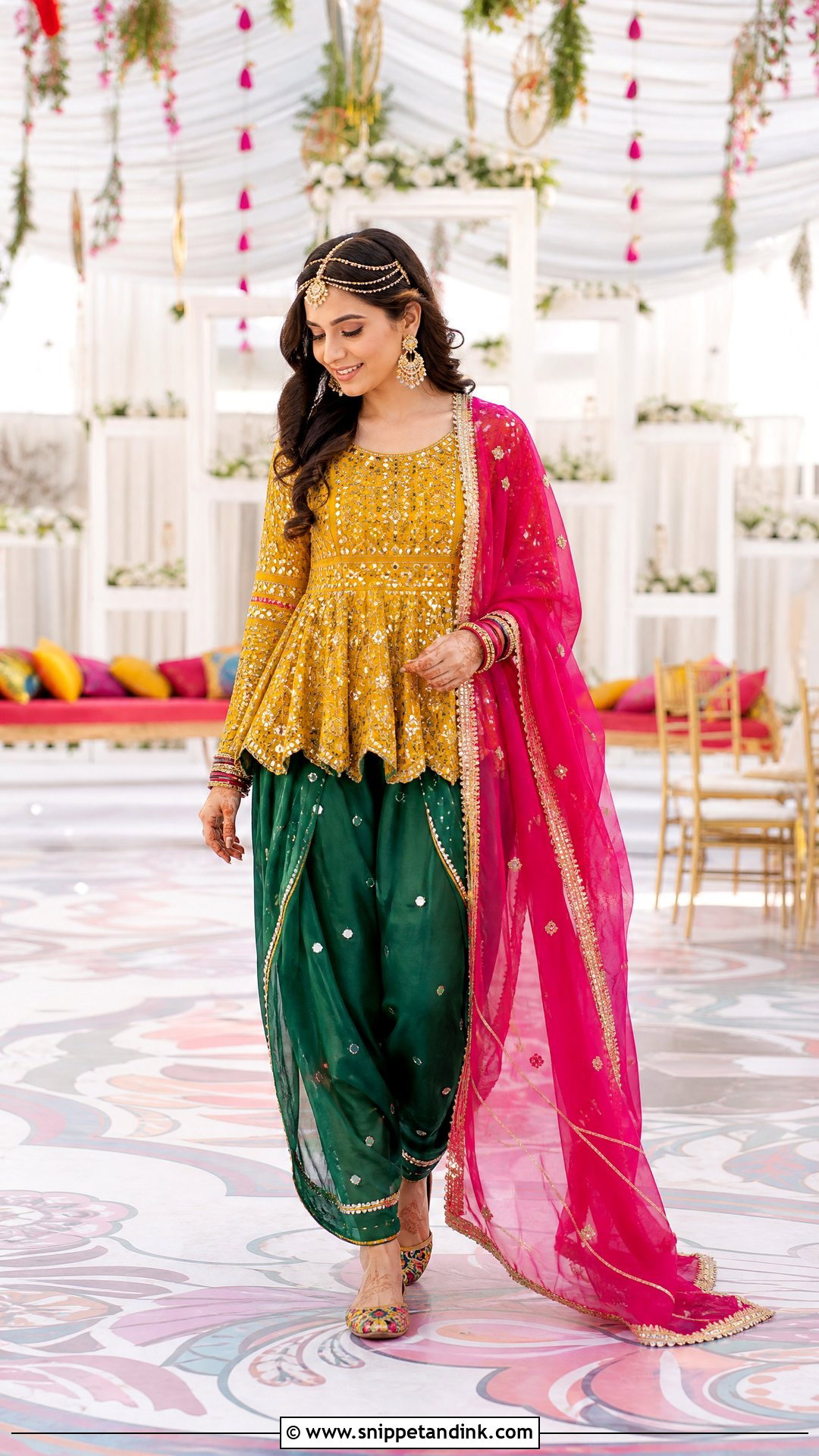
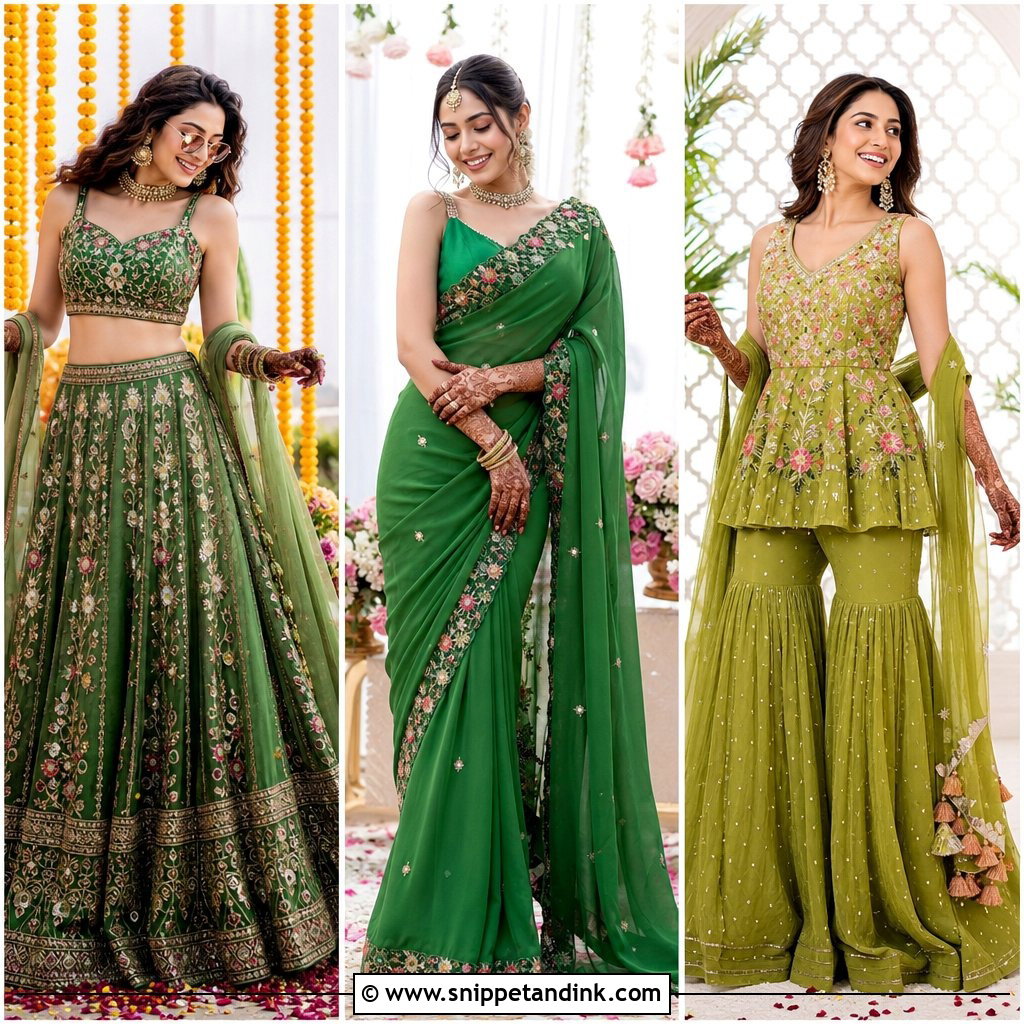
For a bride who wants something modern without losing Pakistani handwork, a mustard peplum top over green dhoti pants is a fusion I like. The peplum should be structured, with mirror work, gold thread and embroidered flowers. The dhoti pants need a soft silk or crepe that drapes; a stiff fabric balloons at the hip and looks bulky in seated photos. Add a fuchsia organza dupatta with a slim gota border, statement earrings, a matha patti, bangles and embroidered juttis. A high braided ponytail shows off the neckline. Glowing skin, softly smoked eyes and warm pink lipstick.
7. Teal Mirror Work Mehndi Lehenga
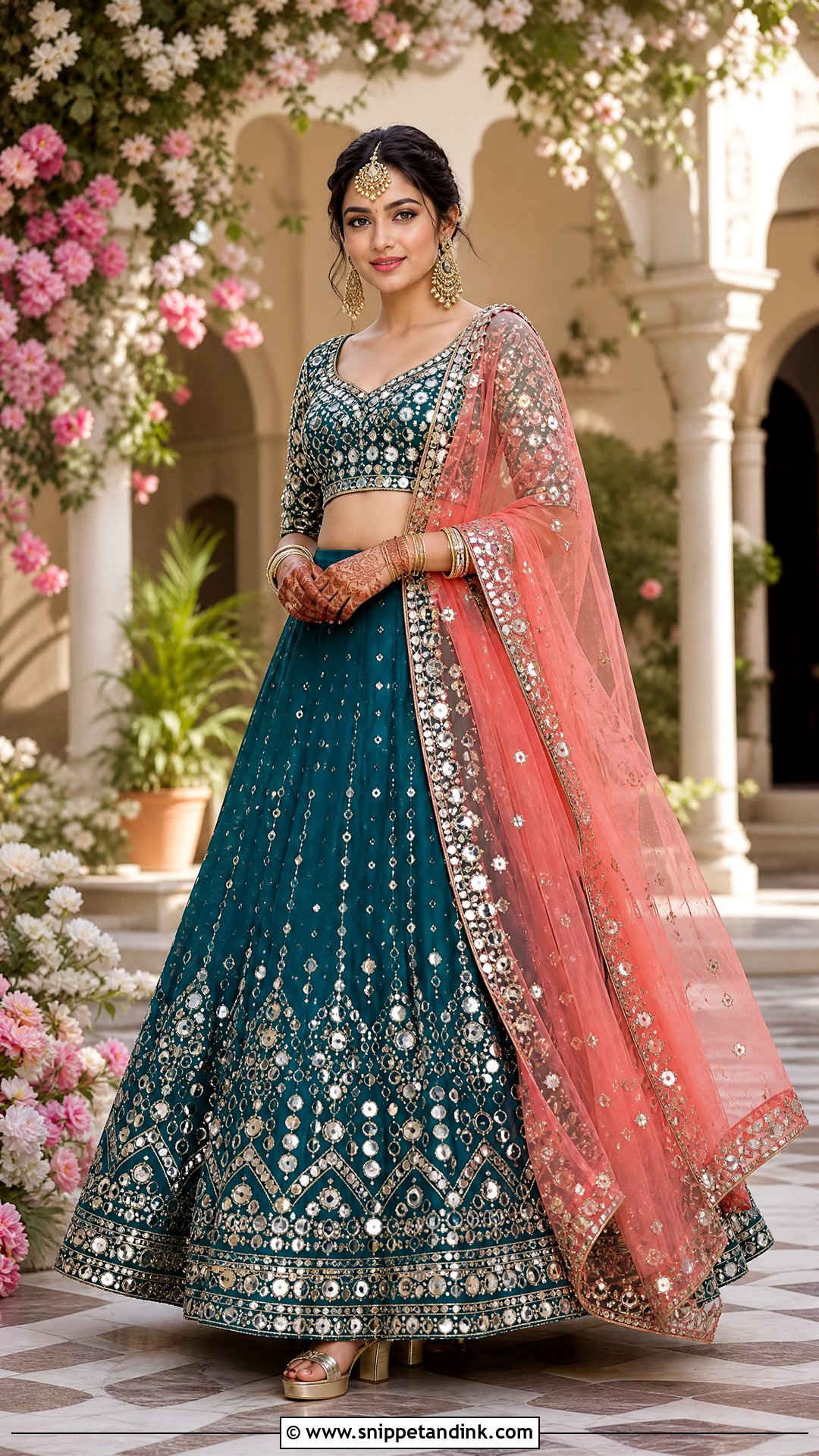
Deep teal is darker than most mehndi palettes, and on its own it can read like an evening reception outfit. The coral or peach dupatta is what pulls it back to a mehndi, so don’t skip it. Look for scattered mirror work, silver-gold embroidery and a wide geometric border on the lehenga, with a square-neck choli and short sleeves. Pin the dupatta at one shoulder and loop it at the wrist, or drape it across the body. Mirror work weighs down a hem, and block-heel sandals give you more stability under it than slim heels do. Antique gold earrings, a small tikka, a sleek low bun with peach flowers, bronze eyes and coral lipstick.
8. Fuchsia Shirt And Bridal Lehenga
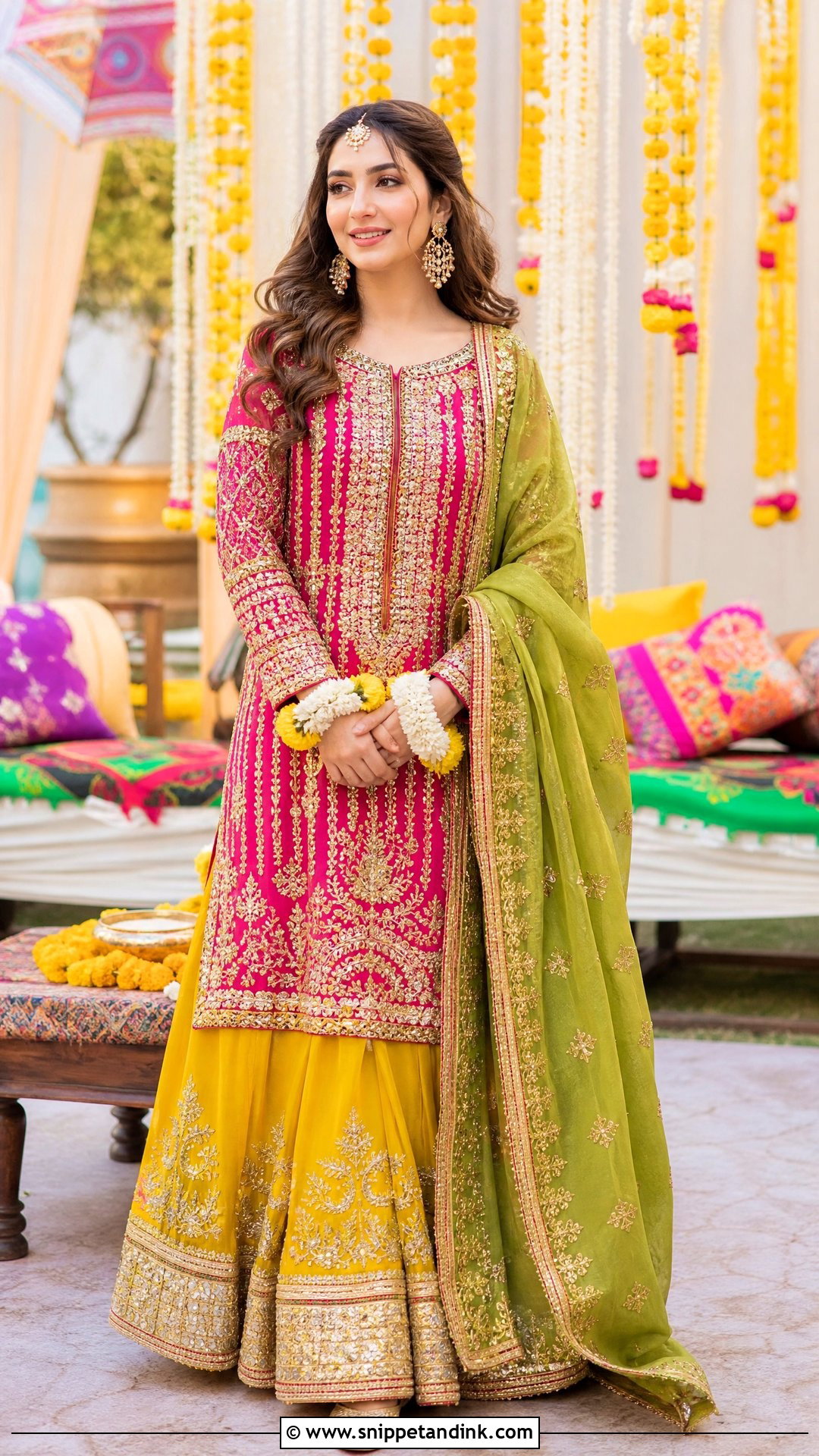
A knee-length shirt over a lehenga gives more coverage at the waist and arms than a choli, which many brides want when elders are present. Fuchsia with gold embroidery and small mirror details at the neckline and cuffs sits well over a mustard or orange lehenga with a broad gota border. Side slits on the shirt are essential, or the lehenga flare can’t move. A green chiffon dupatta adds the third mehndi color. Kundan earrings, a matching tikka, floral bangles and gold khussas. Pin loose waves back from your face so stray strands don’t stick to the henna while it dries. Pink blush and a neutral rose lip.
9. Coral Bridal Gharara Mehndi Dress
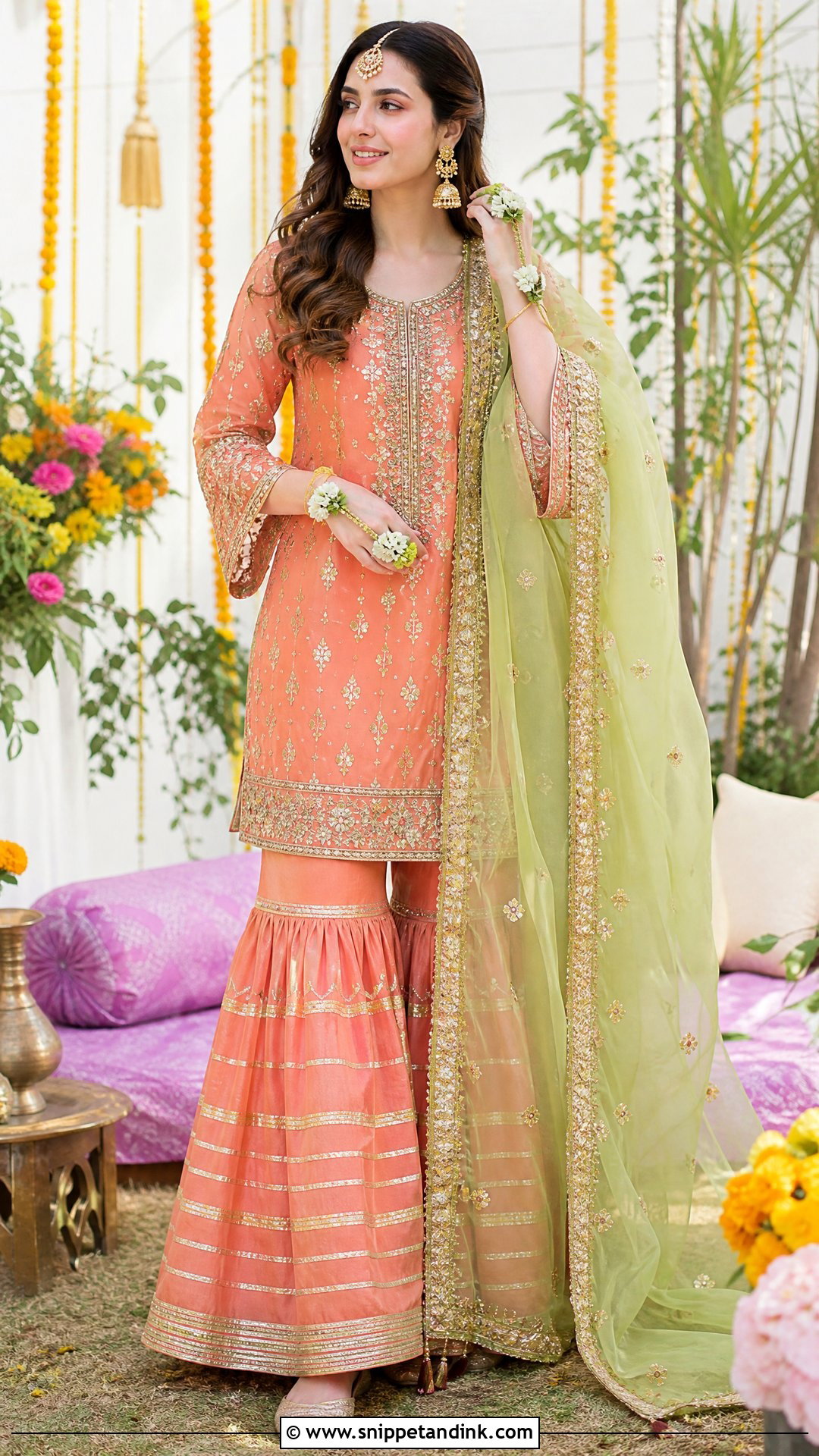
Coral is the shade I suggest to a bride who finds traditional yellow too loud against her skin. A short coral kameez with gold zari, pearl details and a clean round neckline goes over a matching gharara with fine gota stripes and floral embroidery along the flare. Bring in contrast with a pistachio organza dupatta finished in a scalloped edge and tiny tassels. Antique gold jhumkas, a small passa, floral hand jewelry and embellished flats. A center-parted low bun ringed with white and coral flowers, champagne eyeshadow and a rosy nude lip. Daylight and lawn settings suit it best.
10. Yellow Anarkali With Green Dupatta
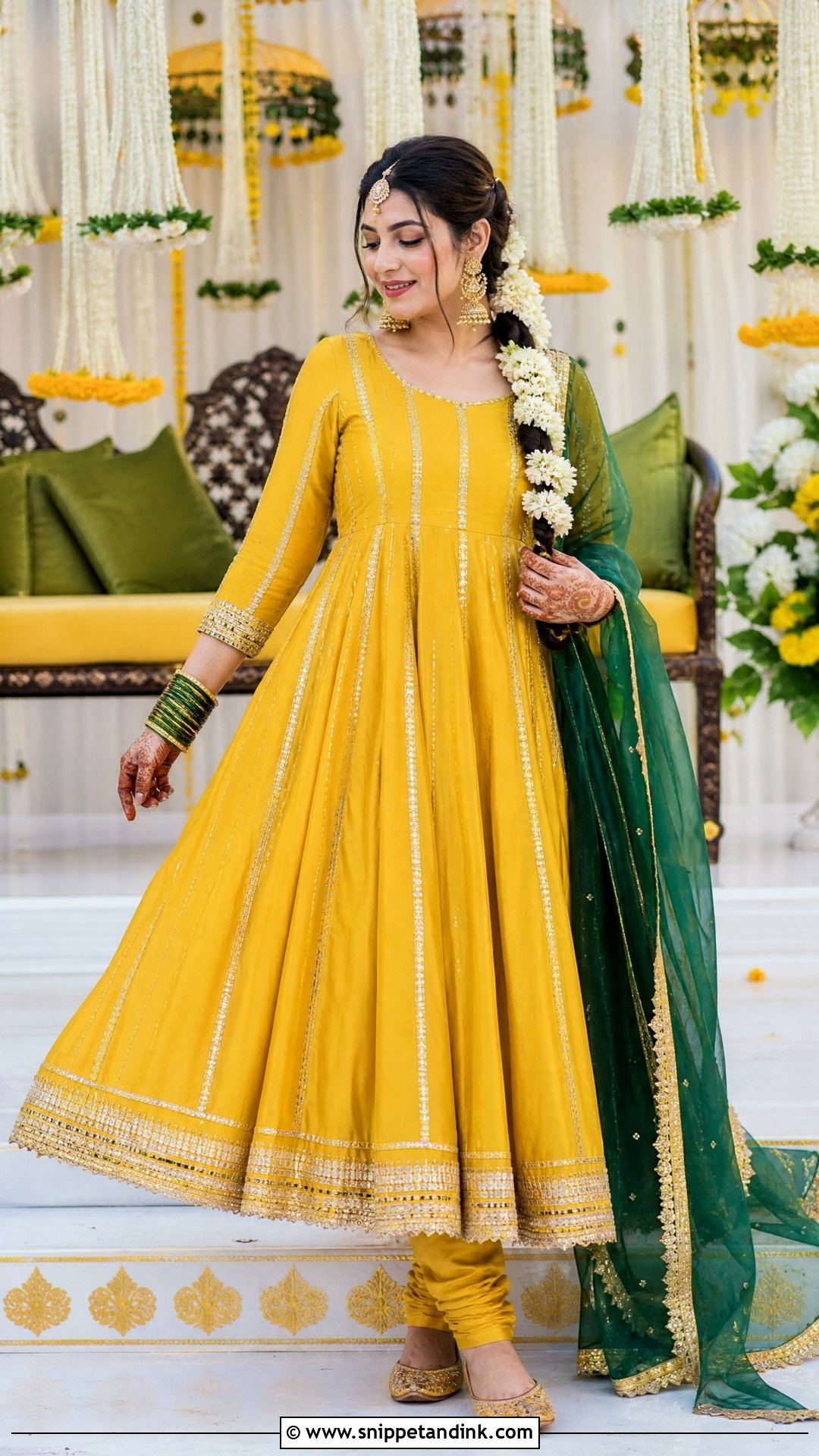
Comfort through a long evening is the strength here. A calf-length yellow Anarkali with a fitted bodice and full skirt lets you sit on floor cushions without wrestling a heavy lehenga. Vertical gota lines lengthen the figure, and small mirror motifs or threadwork add festivity without weight. Wear slim churidars and an emerald dupatta with a gold border, gold jhumkas, a simple tikka, green bangles and mustard khussas. A long braid with jasmine, kohl-lined eyes and a soft berry lip. Check the churidar length while seated; the gathers at the ankle should stay neat, not climb to the shin.
11. Mint Floral Bridal Mehndi Lehenga
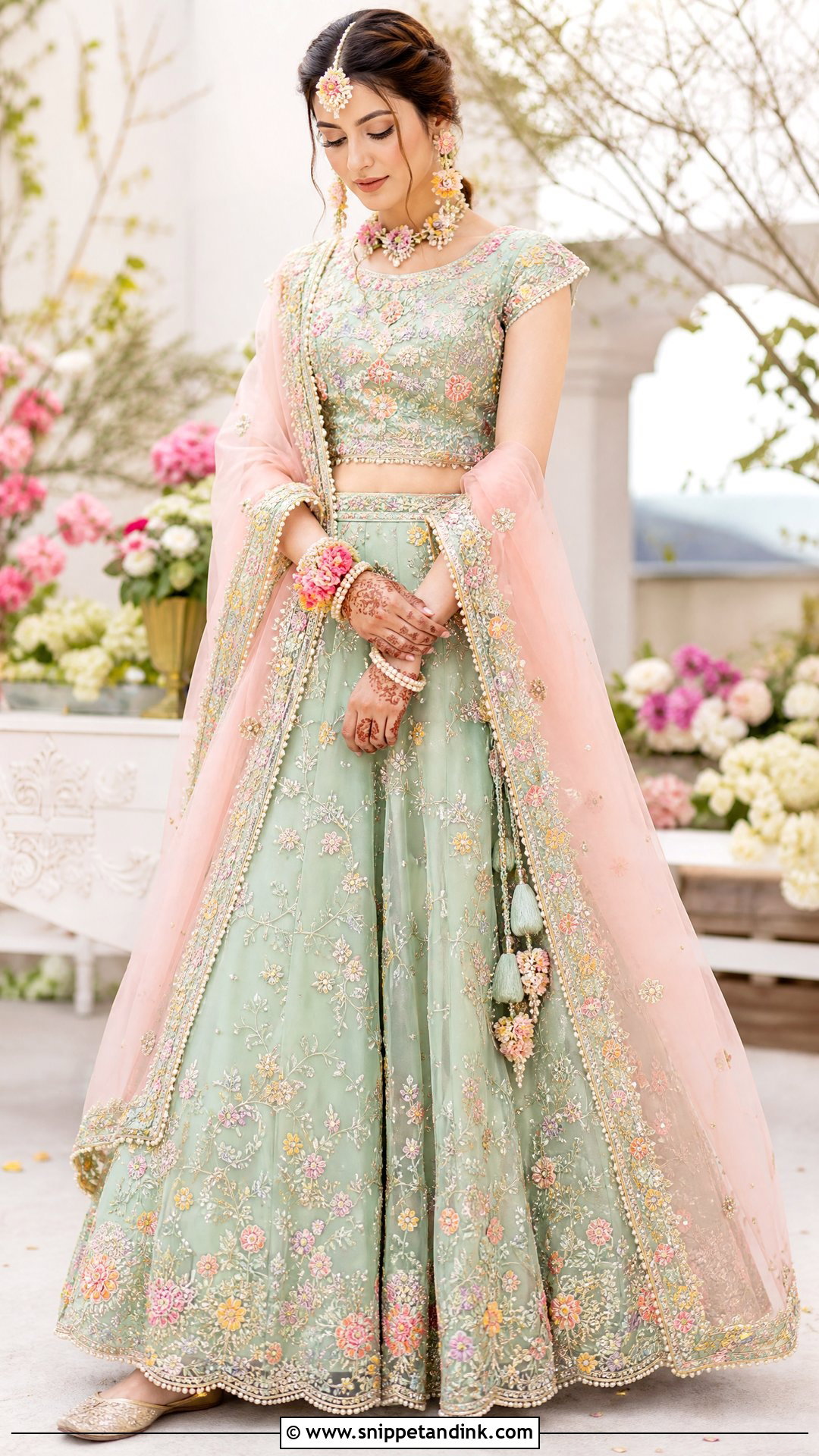
Pastels at a mehndi can disappear against marigold decor, so a mint lehenga needs strong embroidery color to hold its own. Pink, yellow and peach florals on mint organza do that job. Keep the blouse comfortably fitted with pearl edging. Add a blush dupatta with embroidered corners and a narrow gota border, floral jewelry in white, pink and yellow, pearl drops and champagne flats. Loose waves pinned back on one side with fresh flowers, rosy makeup and a soft pink lip. I’d save it for a spring or daytime function.
12. Ivory Multicolor Embroidered Mehndi Lehenga
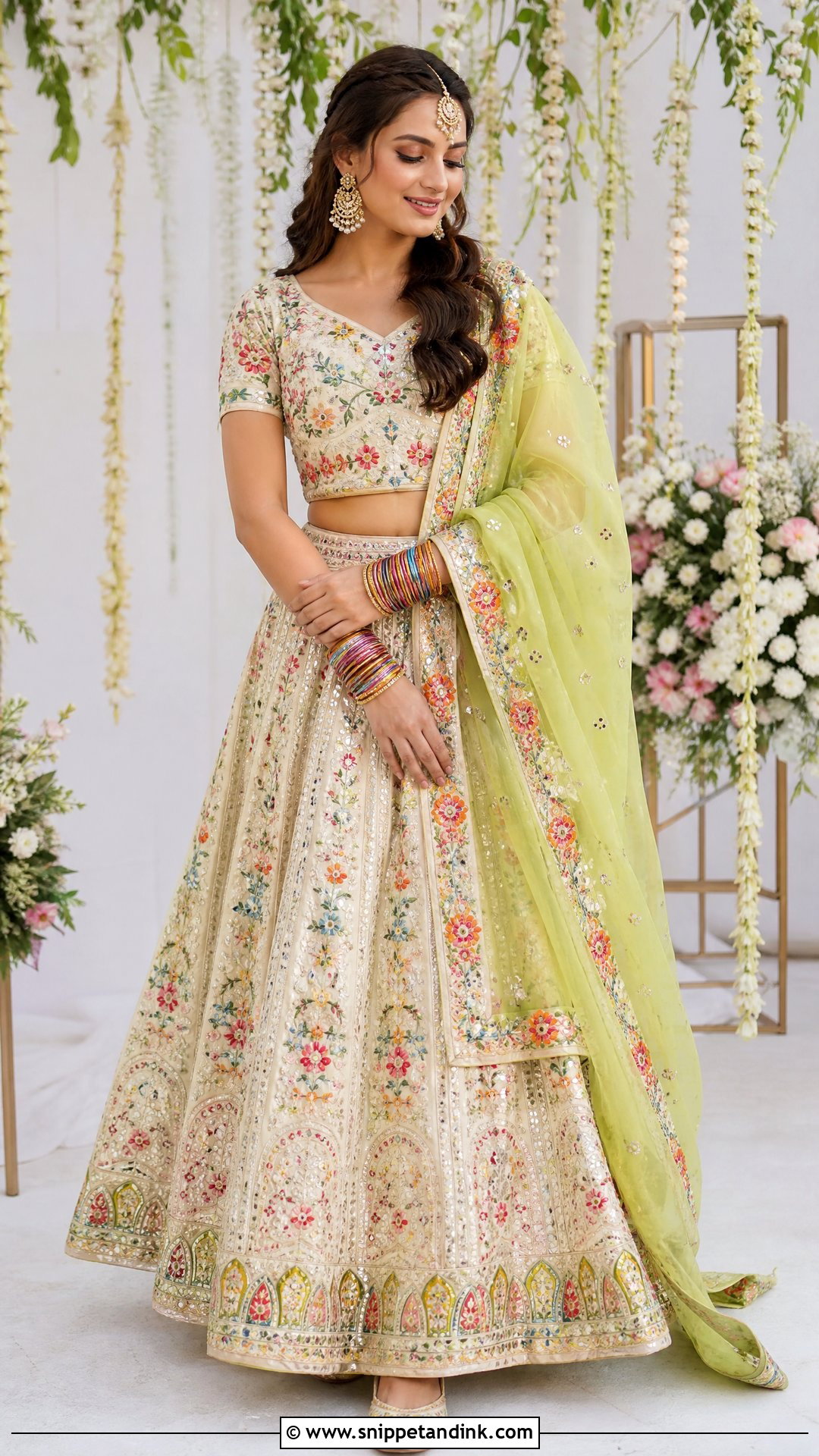
Ivory at a mehndi only works if the dupatta brings the festival color. With multicolor threadwork, small mirrors and restrained gold on the lehenga, and a choli repeating the same embroidery, the outfit reads clean and contemporary. A bright yellow or lime dupatta keeps it from looking like a reception outfit. Be warned that wet henna can stain ivory permanently, so keep your sleeves short and your hands well away from the skirt while the paste dries. Multicolor bangles, chandbali earrings, a tikka, ivory juttis, a textured low ponytail with small yellow flowers, peach blush and a lively pink lip.
13. Purple And Yellow Farshi Gharara
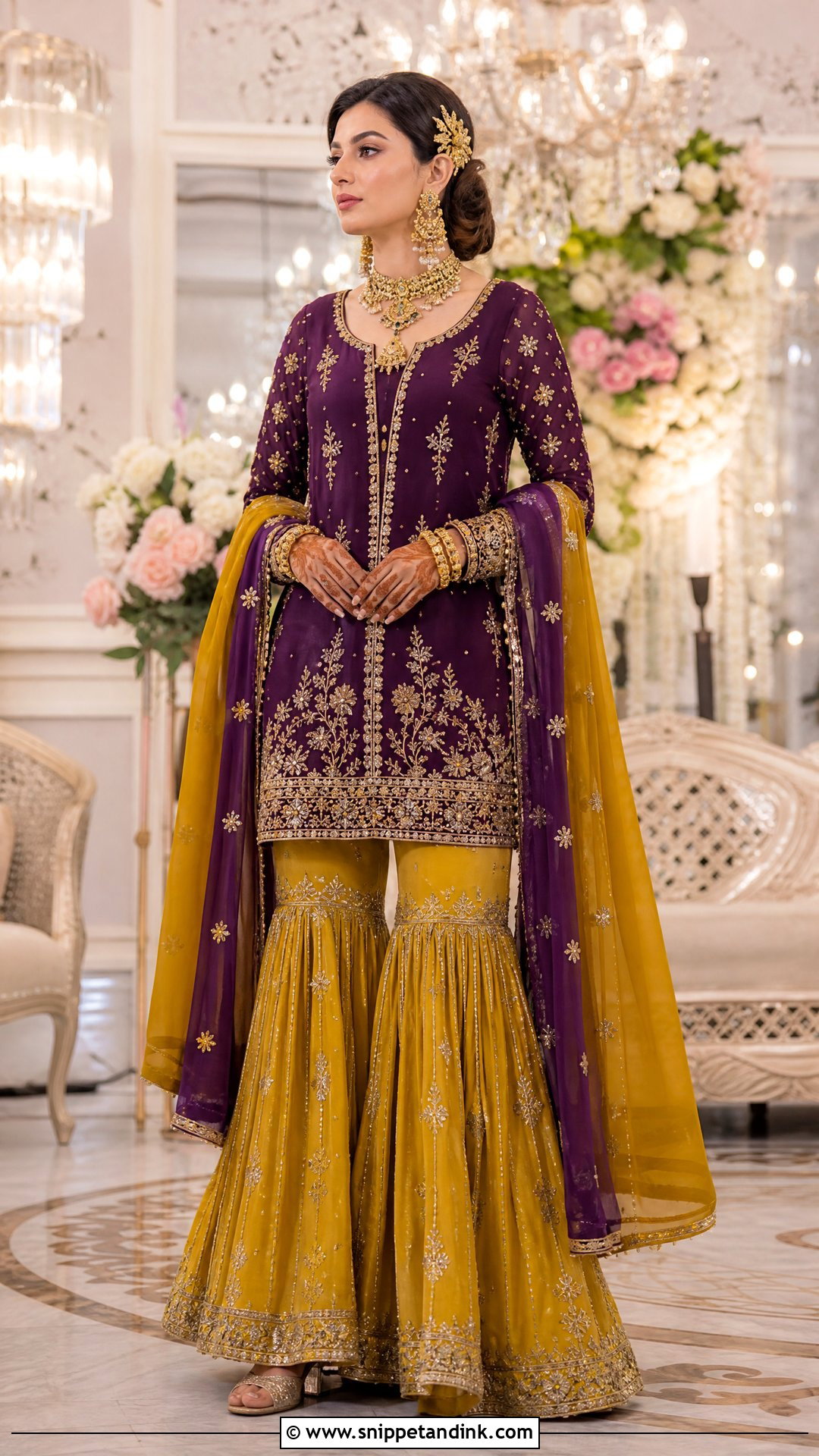
Farshi ghararas trail on the floor, and that’s the catch: they make a grand entrance and are hard to dance in. If you’ll be on the dance floor, plan to hold the hem or have a wrist loop sewn in. A deep purple short shirt with gold dabka, colorful resham flowers and three-quarter sleeves sits over the mustard gharara. Keep the shirt structured and short, because all the volume is below. Add a two-tone organza dupatta with purple edging and sequins, antique gold jewelry, a side passa and low block heels hidden underneath. A smooth low bun, plum eyeshadow and a muted berry lip suit an evening mehndi.
14. Red And Orange Banarsi Mehndi Lehenga
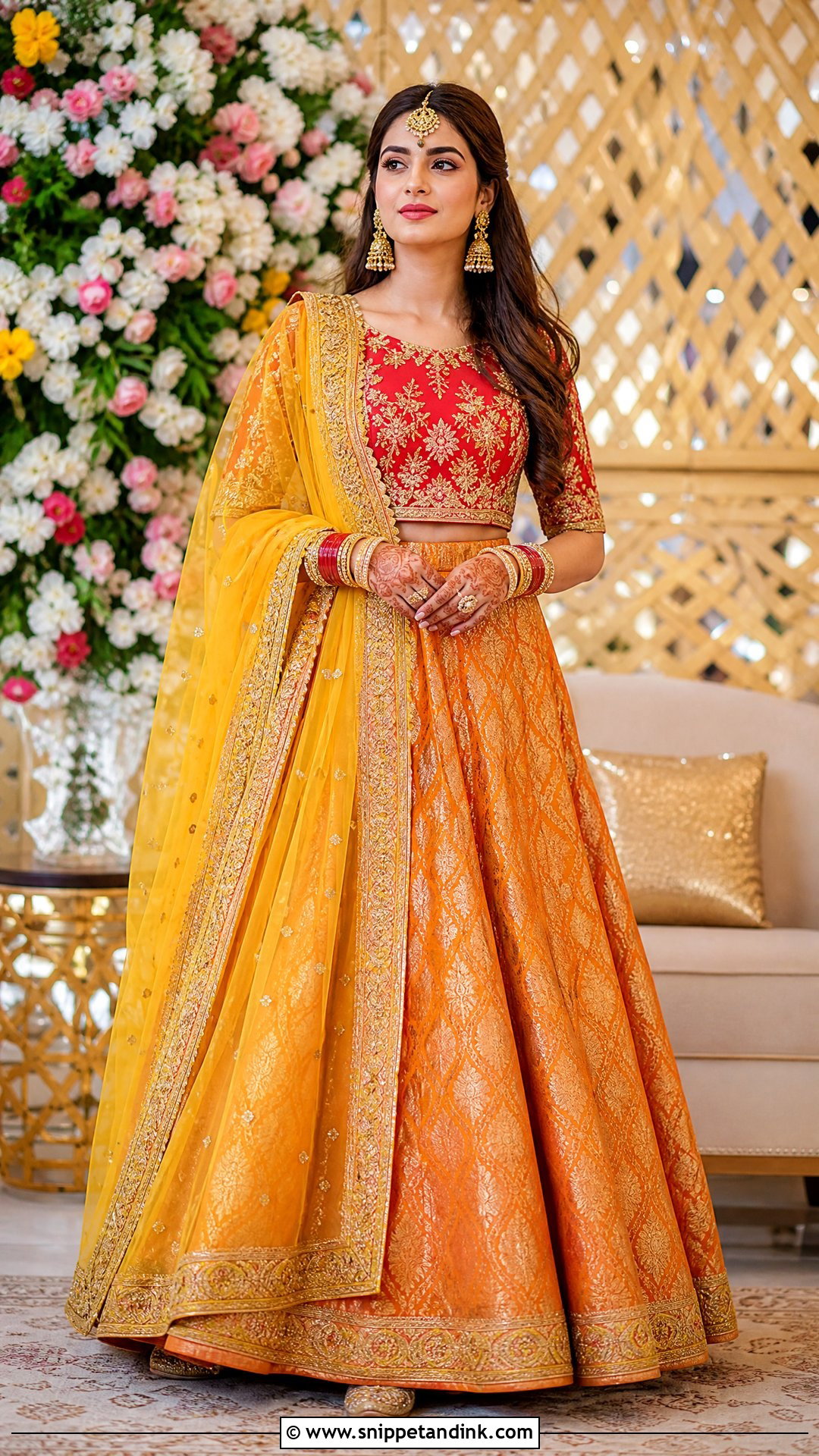
Banarsi is woven, not embroidered. The gold motifs are part of the cloth, so the lehenga has less loose surface work to snag on bangles. An orange Banarsi skirt with a contrasting red border, a red velvet or raw silk choli with restrained gold at the neckline and sleeves, and a yellow net dupatta with gota edging to lighten the deeper tones. Gold jhumkas, a classic tikka, red-and-gold bangles and embroidered khussas. A center-parted braid with gold hair accessories, copper eyeshadow and brick-red lipstick. Treat it as a cooler-weather outfit, because Banarsi is warm in a summer tent.
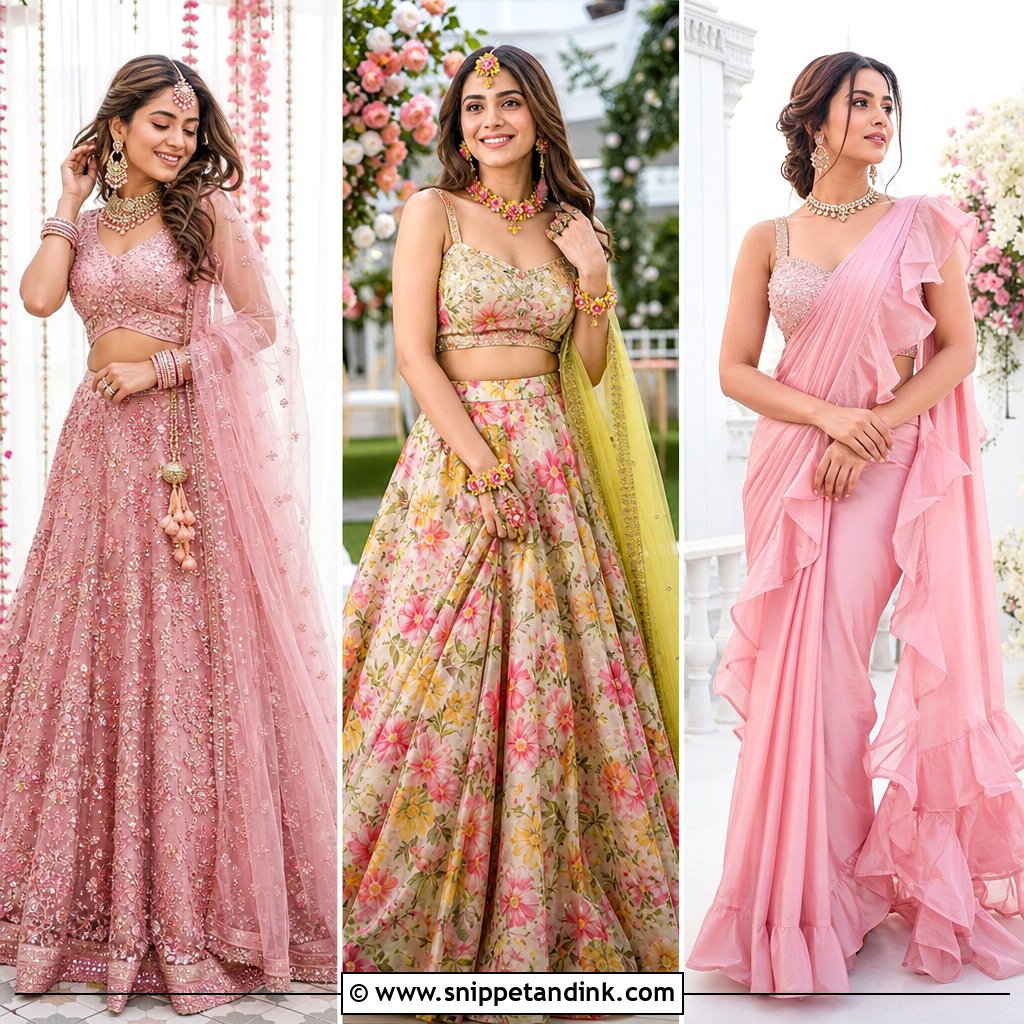
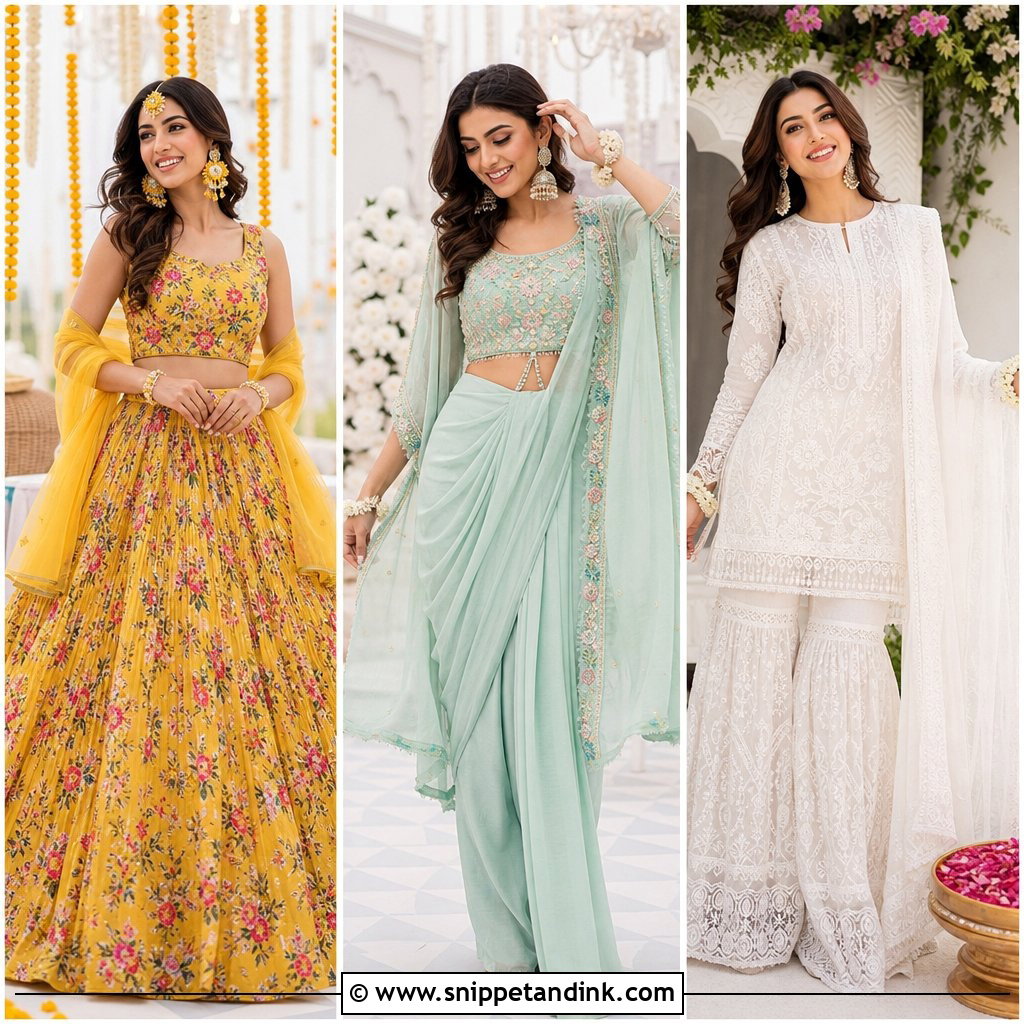
15. Green Velvet Choli And Silk Lehenga
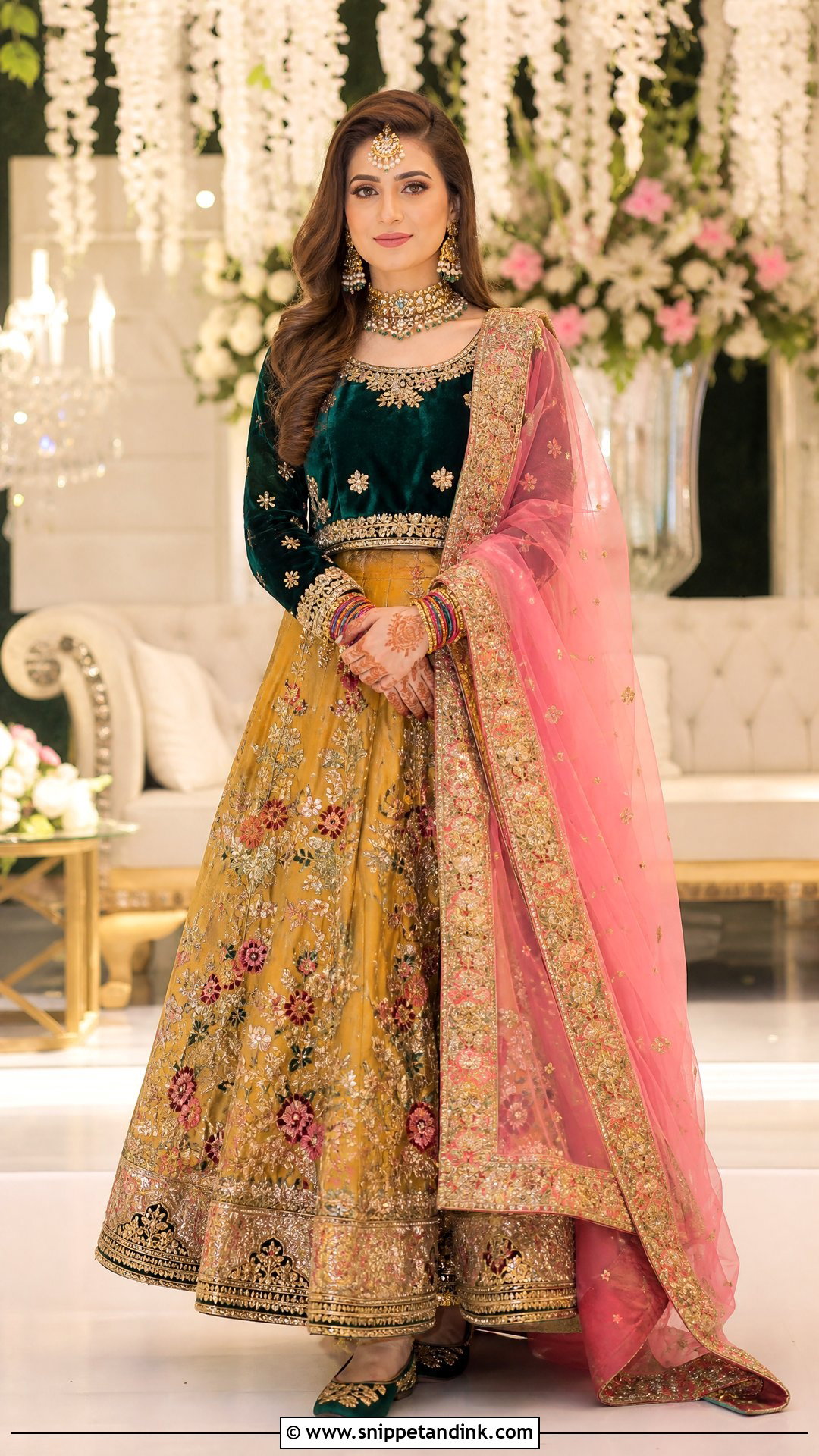
Velvet with silk is warm, which is the whole point for a winter mehndi. An emerald velvet blouse with gold embroidery and elbow sleeves goes over a mustard raw silk lehenga with floral motifs and a wide gota border. The pink organza dupatta is light on purpose; anything heavier on top would make the outfit feel dense and stiff. Pin it over one shoulder so the bodice stays visible. Antique gold jewelry, pink bangles, green khussas, soft waves or a low bun with pink roses, bronze eyes and a rose lip.
16. Pastel Rainbow Bridal Pishwas
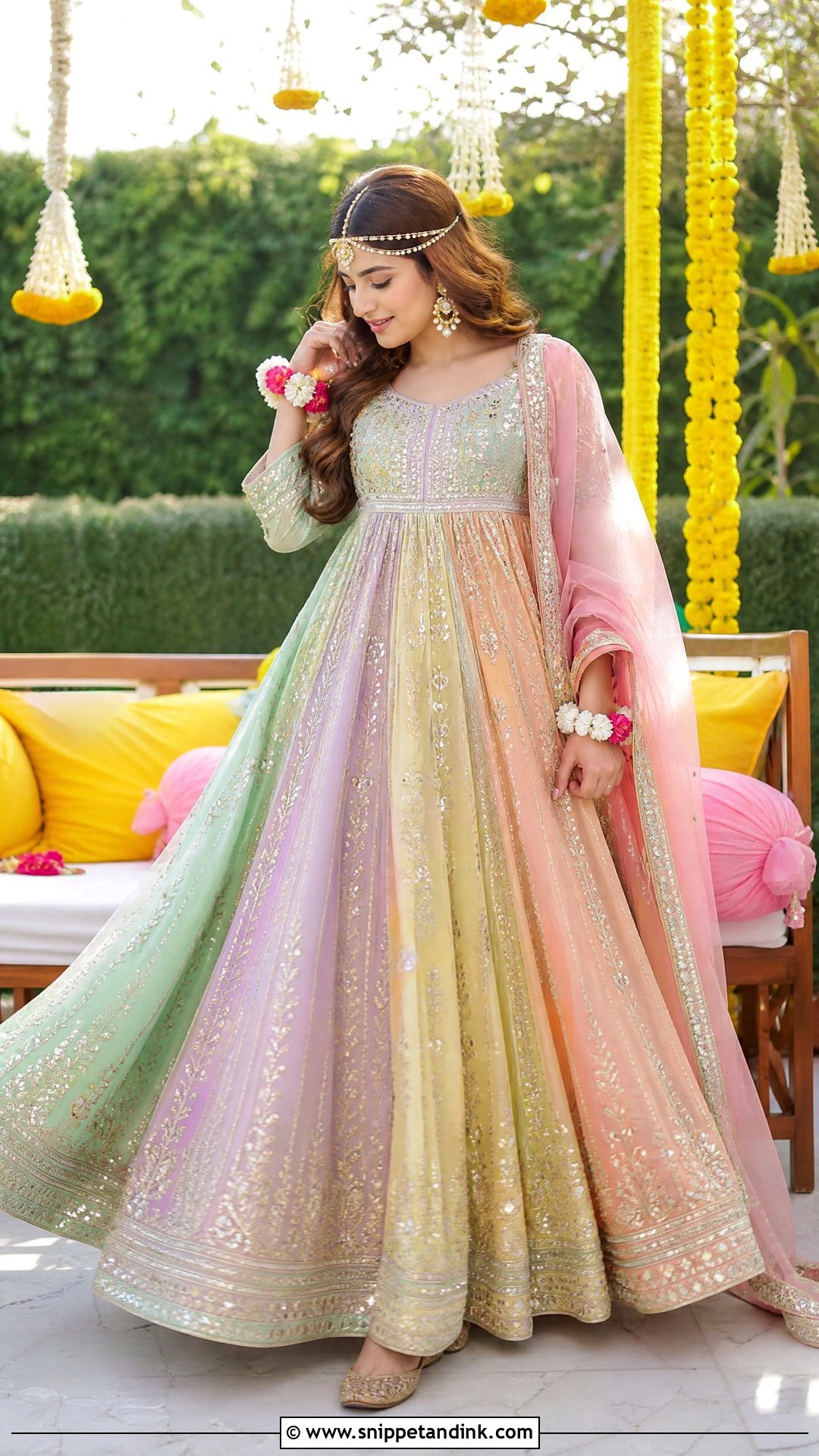
Saturated mehndi colors don’t suit everyone, and a pastel rainbow pishwas is the gentlest way out. Panels of mint, lavender, blush, peach and pale yellow, each edged with fine silver-gold gota, open up into color when you turn. Keep the bodice lightly embroidered so the panels stay the feature. A pale pink organza dupatta, pearl earrings, a delicate matha patti, floral bracelets and champagne flats. A half-up style with loose curls and miniature flowers, lilac-tinted eyes and a rosy lip. It shows best in a bright garden, where it stands apart from louder floral decor.
17. Phulkari Shirt And Bridal Lehenga
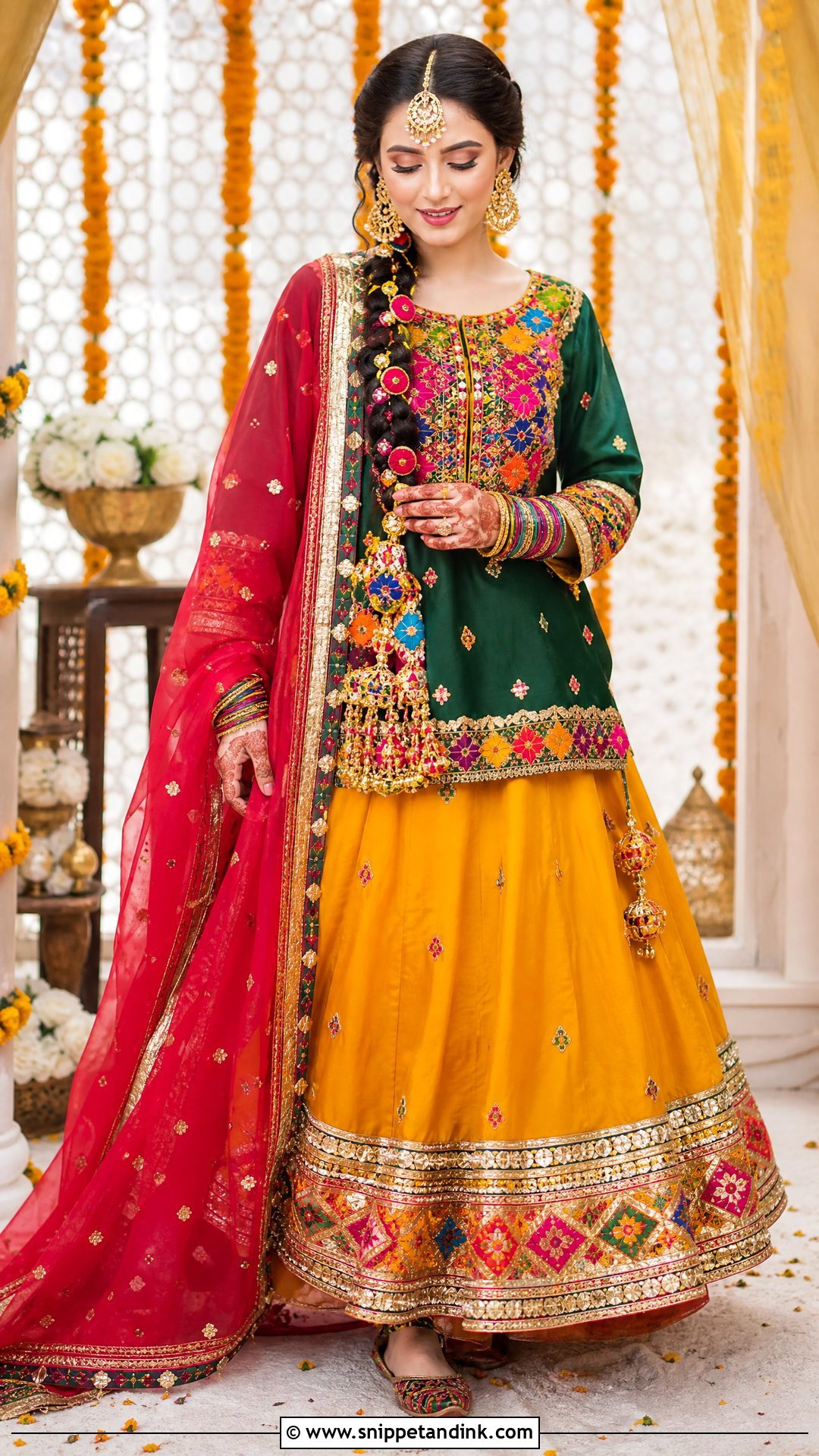
Phulkari comes from Punjab, and its darned geometric and floral embroidery is dense enough to carry the whole outfit. Choose a short black, red or deep green phulkari shirt and keep the lehenga solid, mustard or orange with simple gota borders. A red chiffon dupatta with tassels links the two. Traditional gold earrings, a paranda braid, multicolor bangles and Punjabi juttis. Leave the neckline open enough for a small choker so the jewelry doesn’t sit on the embroidery. Kohl-lined eyes, warm blush and a pink lip. Old phulkari can be fragile, so if you’re wearing a family piece, have a tailor reinforce its seams first.
18. Marigold Bridal Maxi With Floral Jewelry
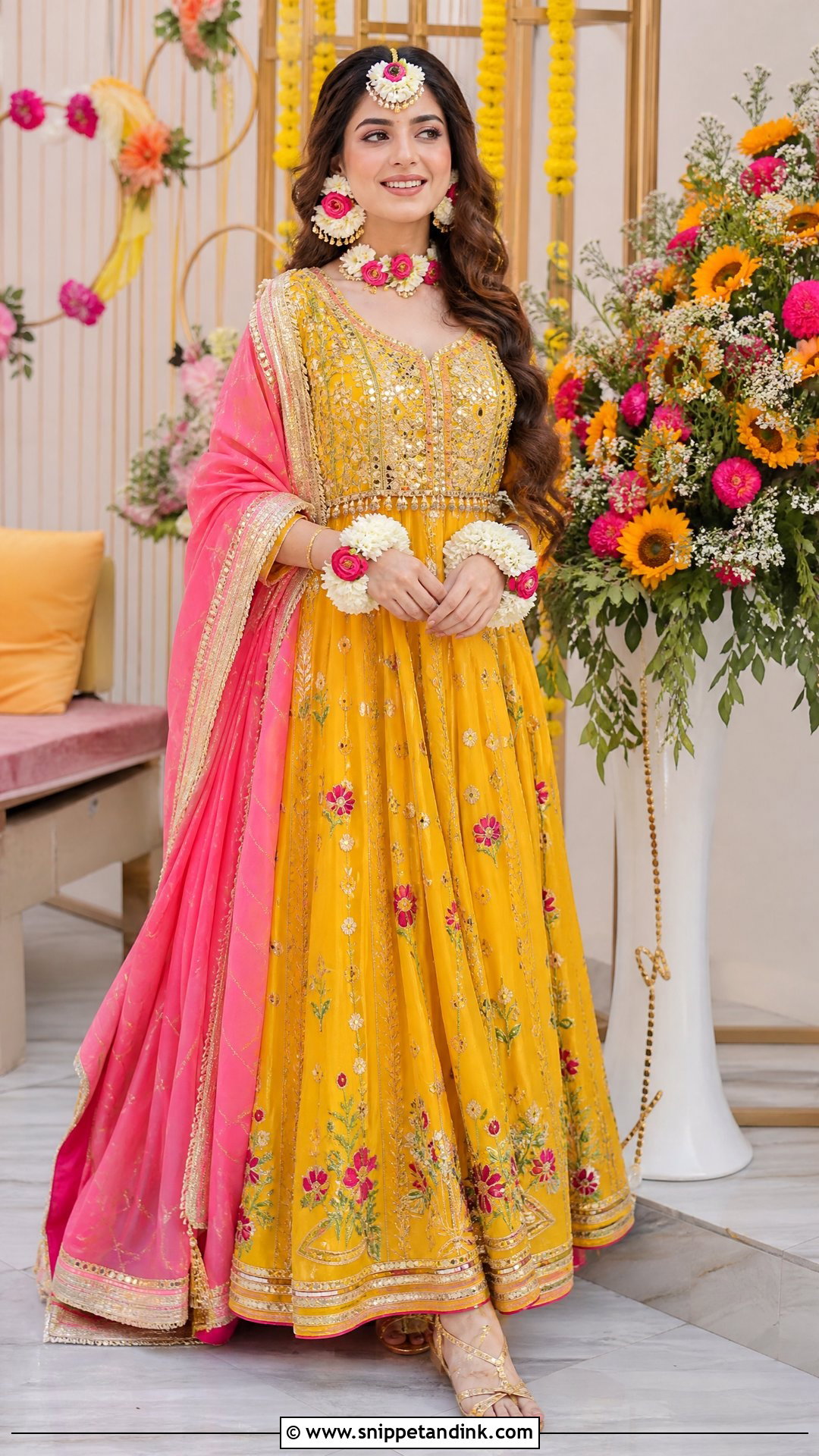
One garment, no waistband to adjust, nothing to slip: a maxi is the lowest-maintenance outfit here. Go for a floor-length marigold design with a fitted waist, a gently flared skirt and gold embroidery around the bodice, with small pink and green florals for depth. A pink dupatta sits loosely over one shoulder. White and pink floral jewelry, a choker, earrings, tikka and hand garlands, gives it the mehndi signature. Gold flat sandals, a relaxed side braid woven with flowers, peach blush and a fresh pink lip. Fresh flower jewelry wilts in heat, so ask for it to be delivered close to the start of the function.
19. Turquoise Kaftan Mehndi Dress
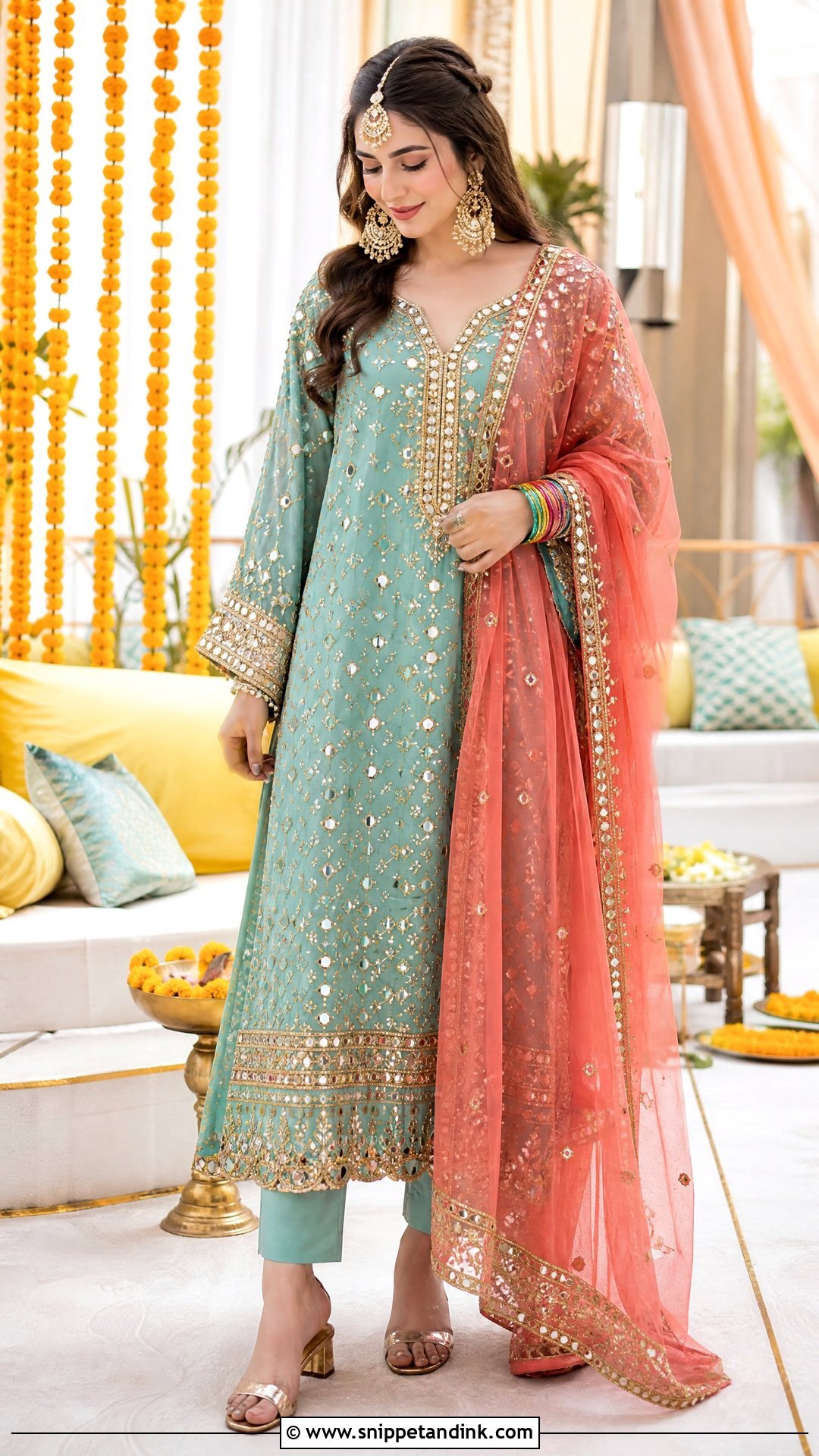
A kaftan is the least structured option on this list, and without a defined inner waist or tie it can look like loungewear in photos. Choose a floor-length turquoise kaftan with wide sleeves and gold mirror embroidery at the neckline and borders, with coral, yellow or pink thread details. Those wide sleeves drag through wet henna, so fold them back during application or change into the kaftan after the paste has dried. Slim trousers underneath, metallic low heels, an optional coral dupatta over one shoulder, chandelier earrings, a delicate headpiece and colorful bangles. A sleek low ponytail, bronze eyeshadow and coral lipstick.
20. Yellow Bridal Mehndi Sari
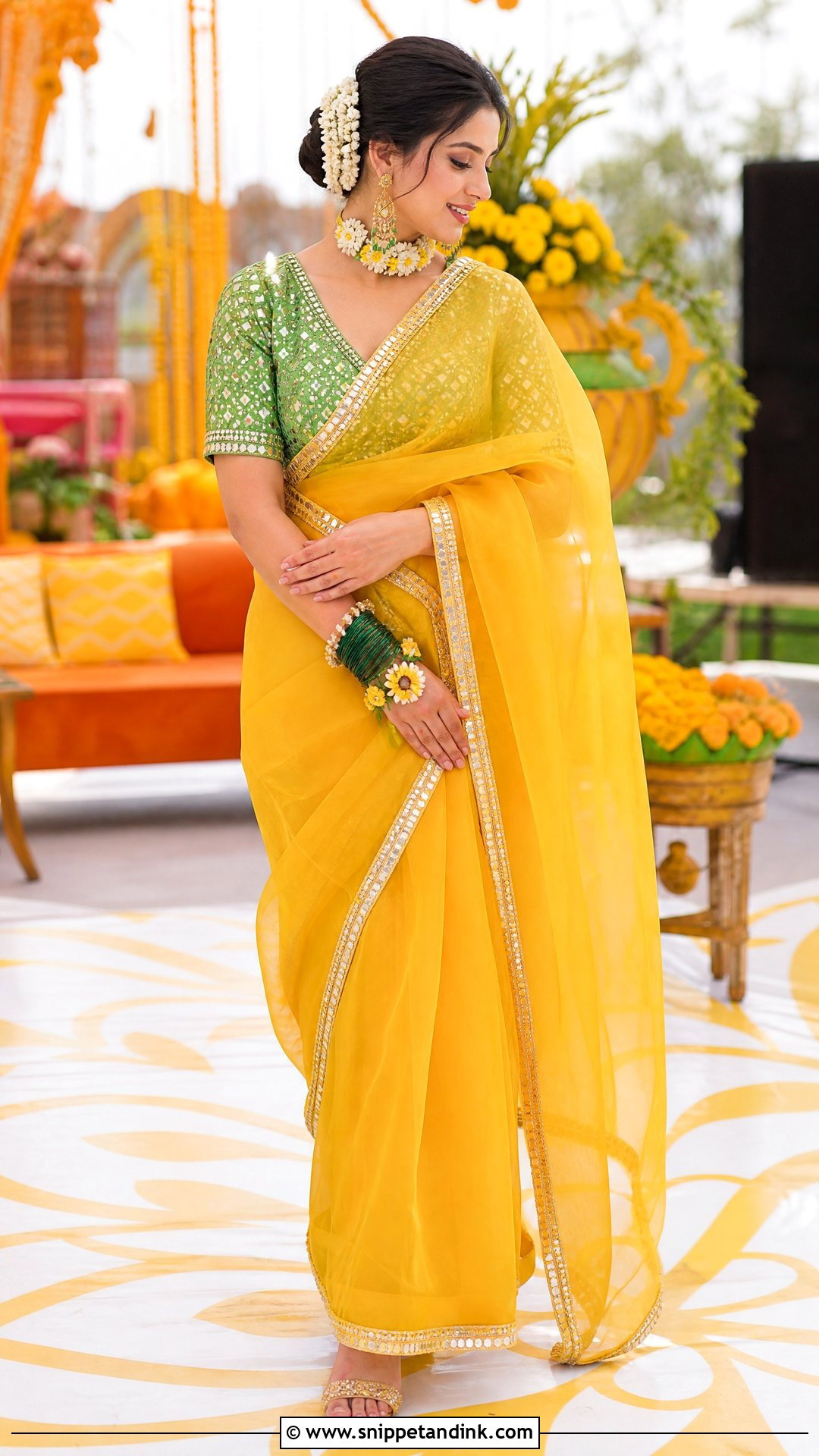
A sari is unusual at a Pakistani mehndi, and that’s exactly its appeal for some brides. Organza or chiffon with a gold gota border and small embroidered florals drapes cleanly over a fitted green blouse with elbow sleeves and mirror work. Pin the pallu securely at the shoulder, with a second pin hidden under the pleats, or you’ll be fixing it every time you lift your hennaed hands. A floral choker, gold earrings, green bangles and low-heel sandals. A center-parted bun circled with jasmine, defined eyes and a rose lip. If you’ve never worn a sari for hours, practice walking and sitting in it the week before.
Wet Henna, Embroidered Sleeves and Pale Fabric
Henna paste stains fabric just as it stains skin, and the lemon-sugar mix many artists dab on to keep the paste moist is sticky as well. On ivory, mint or any pastel silk, one smudge can stay for good. A few habits protect the outfit:
- Wear elbow-length or short sleeves, or fold and pin wide sleeves back while the paste dries.
- Sit on a dark cotton sheet or keep a spare dupatta across your lap during application.
- Wait until the paste is fully dry before hugging anyone or fixing your dupatta. Dry paste flakes off; wet paste smears.
- Brush the flakes away from embroidery, because they lodge between sequins and gota and are tedious to pick out.
Many brides have their henna applied a day or two before the function so the stain has time to darken, and that avoids most of this. In that case, pick sleeves and bangles that leave the backs of your hands visible, since that’s the detail guests and the photographer will want to see.
If the mehndi is on a summer lawn
Tents, fairy lights and a crowd hold heat. Organza, chiffon and light cotton silk breathe far better than velvet, raw silk or Banarsi, and a cotton lining in the bodice absorbs moisture where polyester won’t. Choose gota over heavy dabka, and keep any fresh flower jewelry somewhere cool until the moment you put it on.
Dance in It Before You Decide
The right mehndi outfit lets you sit through hours of henna, pose for photographs and dance without thinking about your clothes. Start with the silhouette that matches how much you plan to move and how much coverage you want. Then settle on a color palette and one main embellishment, gota, mirror work, phulkari or floral threadwork, and resist adding a second. Pin the dupatta properly, wear shoes you can stand in all evening, and let the jewelry and makeup follow the outfit rather than compete with it.
You'll Like These Ideas:


Leave a Reply