
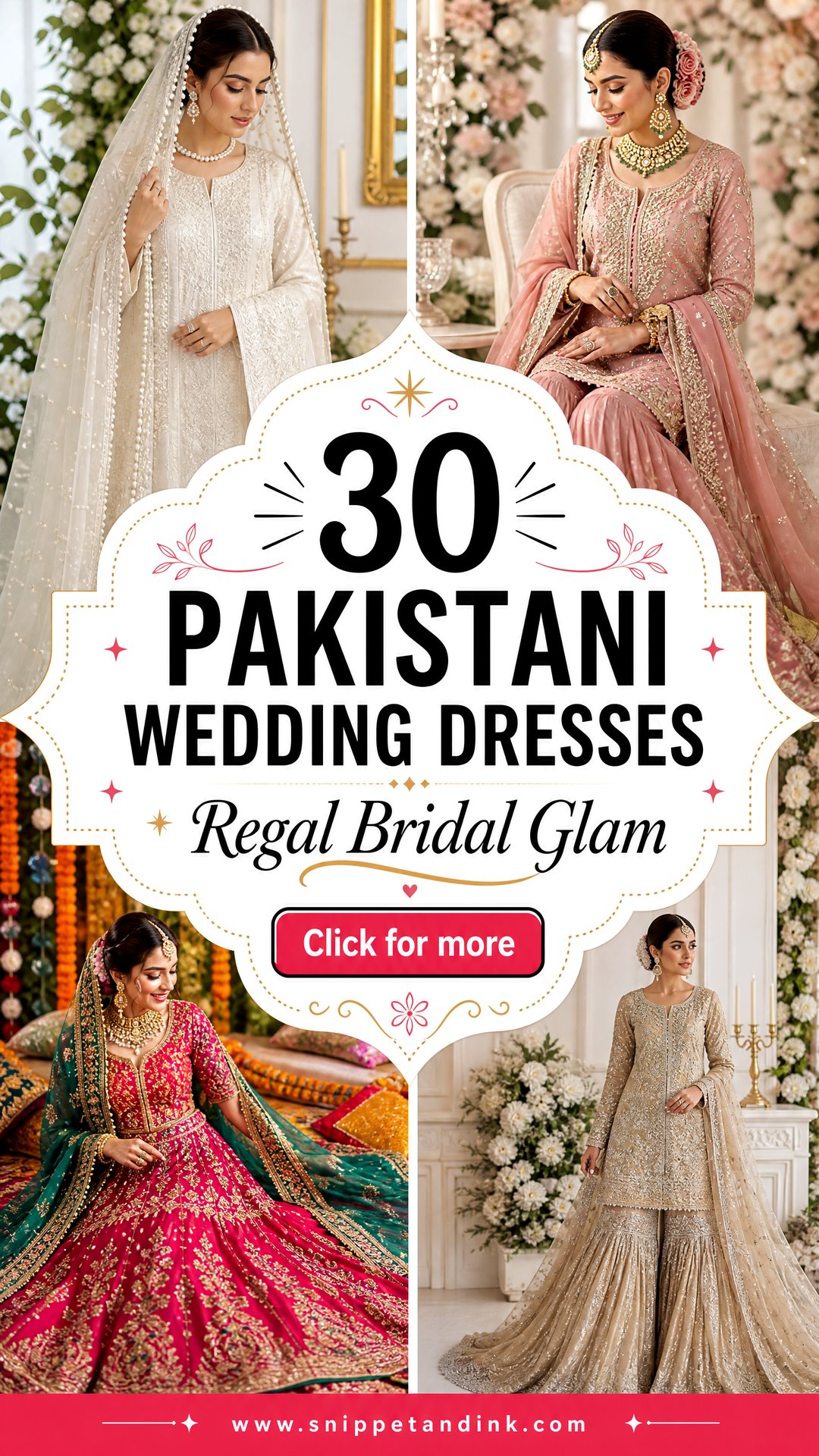
Rich colour, careful handwork and a silhouette that suits the ceremony: that’s the formula behind most Pakistani wedding outfits, whether it’s a red Barat lehenga or a pastel Walima gown. Today the wardrobe stretches well beyond the lehenga, to shararas, ghararas, pishwas, sarees, jacket lehengas and long shirts with heavily embellished dupattas. In my fittings, the outfit that wins is rarely the most elaborate. It’s the one the bride can sit, walk and greet people in for five hours without thinking about it. Below are thirty head-to-toe looks, with notes on what each one asks of the person wearing it.
Adapting These Outfits for a Bride Who Wears Hijab
Many of the brides I dress cover their hair, and almost every look below can be adapted without losing its character. The work happens in the fitting and in how the dupatta and hijab are layered.
- Ask for full or three-quarter sleeves and a higher neckline at the pattern stage. Adding sleeves later rarely matches the embroidery.
- Long shirts, pishwas and anarkalis give coverage built in; with a short choli, a long jacket or cape over it solves the problem neatly.
- Pin the hijab first with an underscarf cap so it cannot slip, then set the bridal dupatta over it with pins at the crown and behind the ears.
- Choose a hijab in a fabric that matches the dupatta’s weight. A slippery satin hijab under a heavy net dupatta moves all night.
- Bring jewellery on to the dupatta itself: a jhoomar or tikka pinned over the fabric, and earrings swapped for a statement necklace or hand jewellery.
I always do one full trial with the hijab, dupatta and jewellery together, because the total weight on the head is the thing people underestimate.
1. Red Bridal Lehenga With Long Shirt
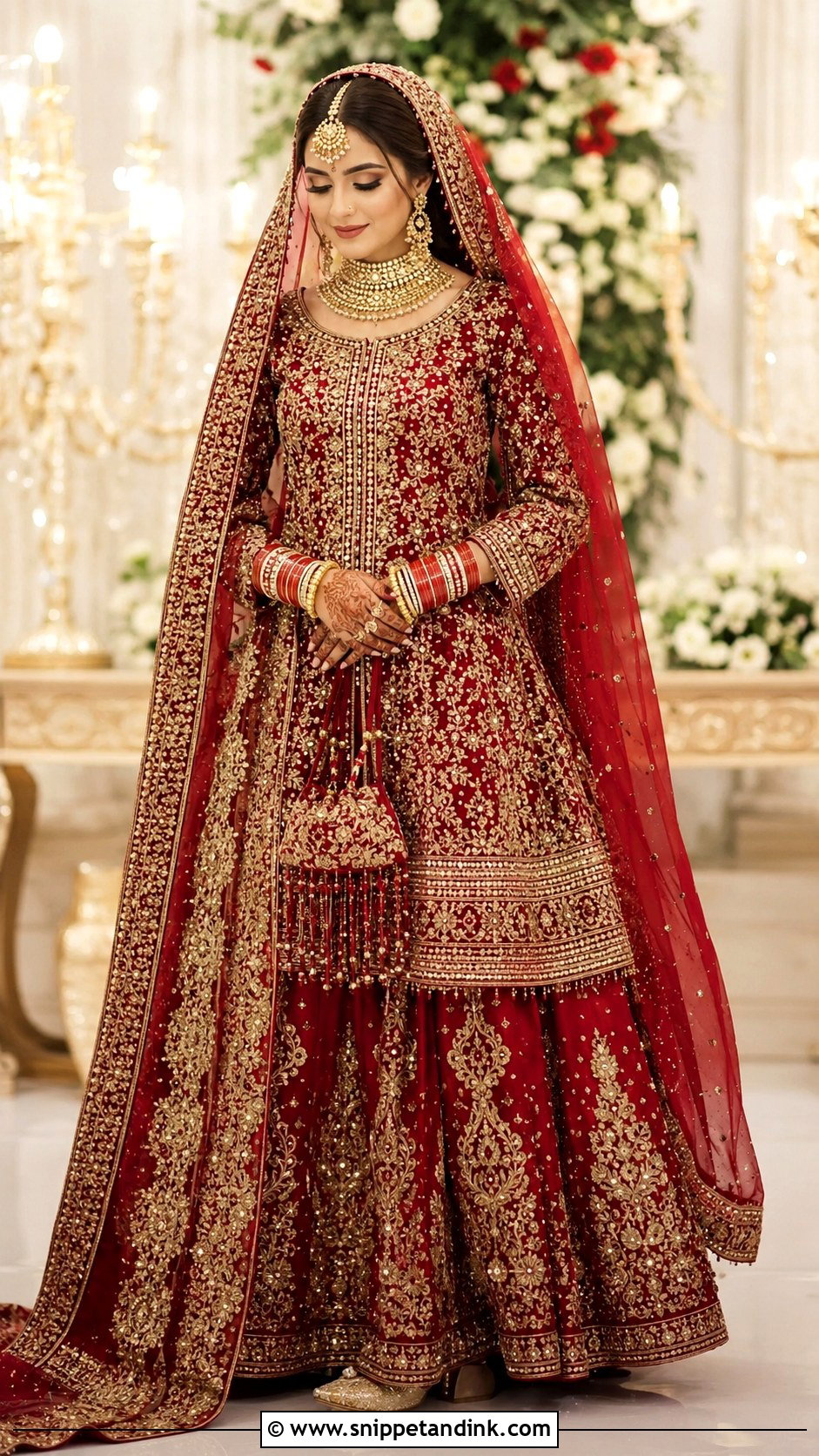
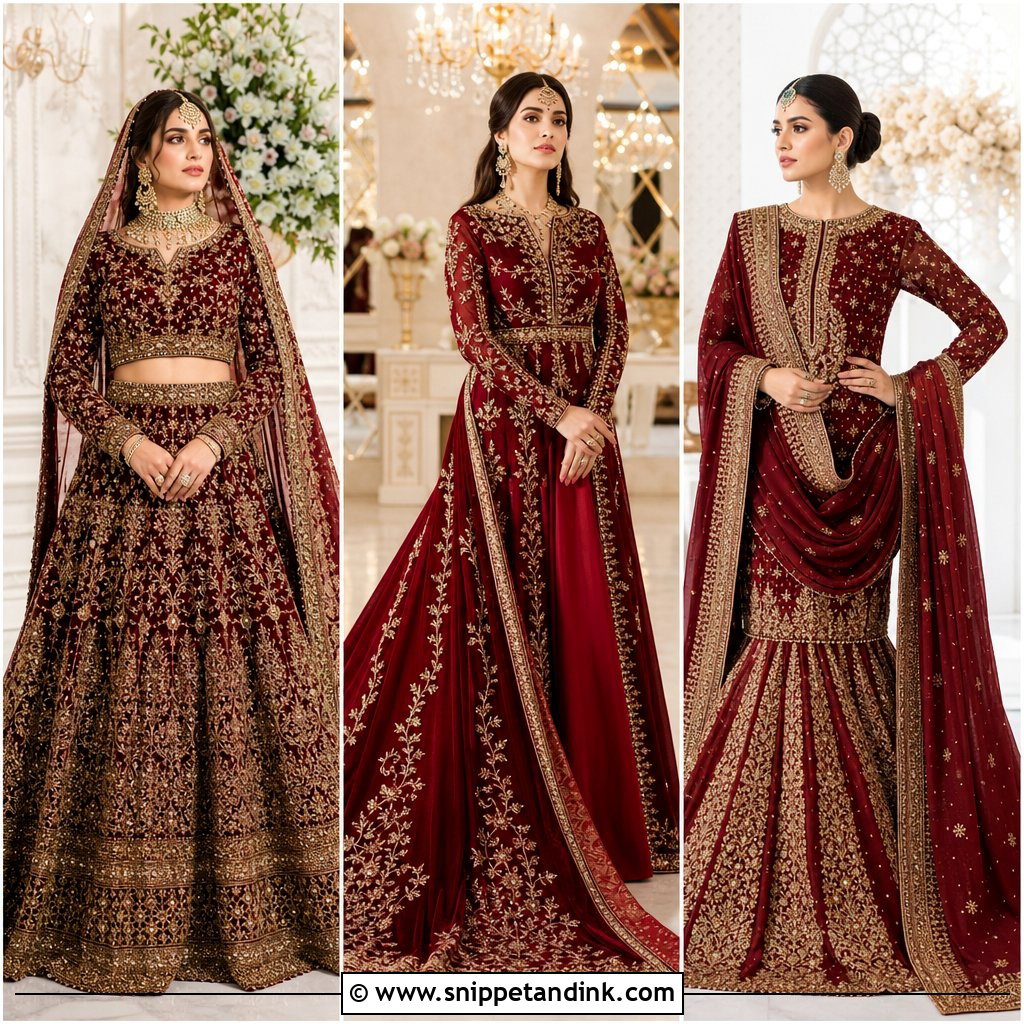
Long shirt over lehenga is the Barat shape I’m asked for most, and among Pakistani wedding dresses for Barat it’s the safest bet for a bride who wants coverage. The kameez gives a modest, royal line; the lehenga gives movement. Deep red, ruby or antique crimson in zardozi, dabka and resham is the traditional finish. I pin the bordered dupatta over the head and across one shoulder, which leaves one arm free and keeps the shirt’s front panel visible. Gold jhumkas, a matha patti and khussas complete a look that holds up from every camera angle.
2. Maroon Velvet Lehenga With Dupatta
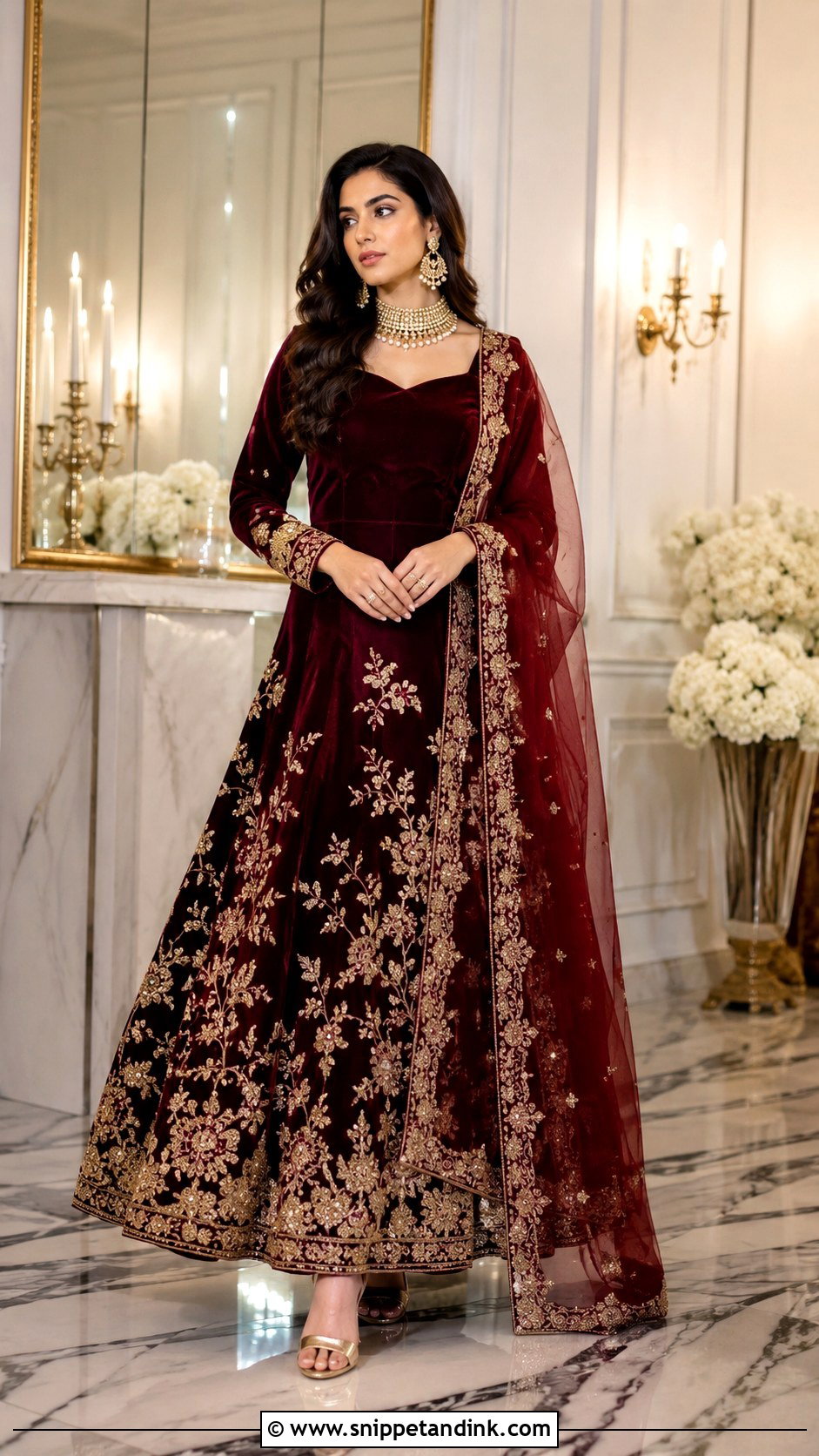
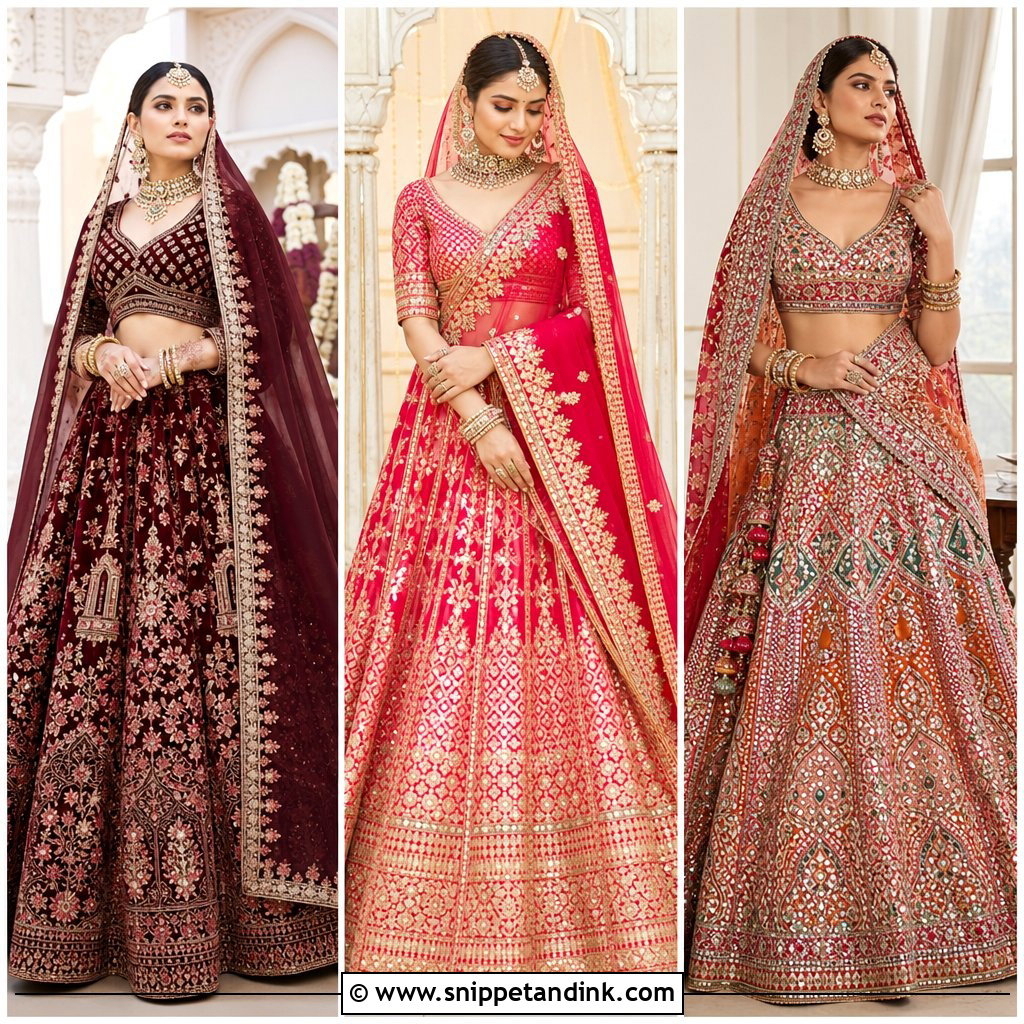
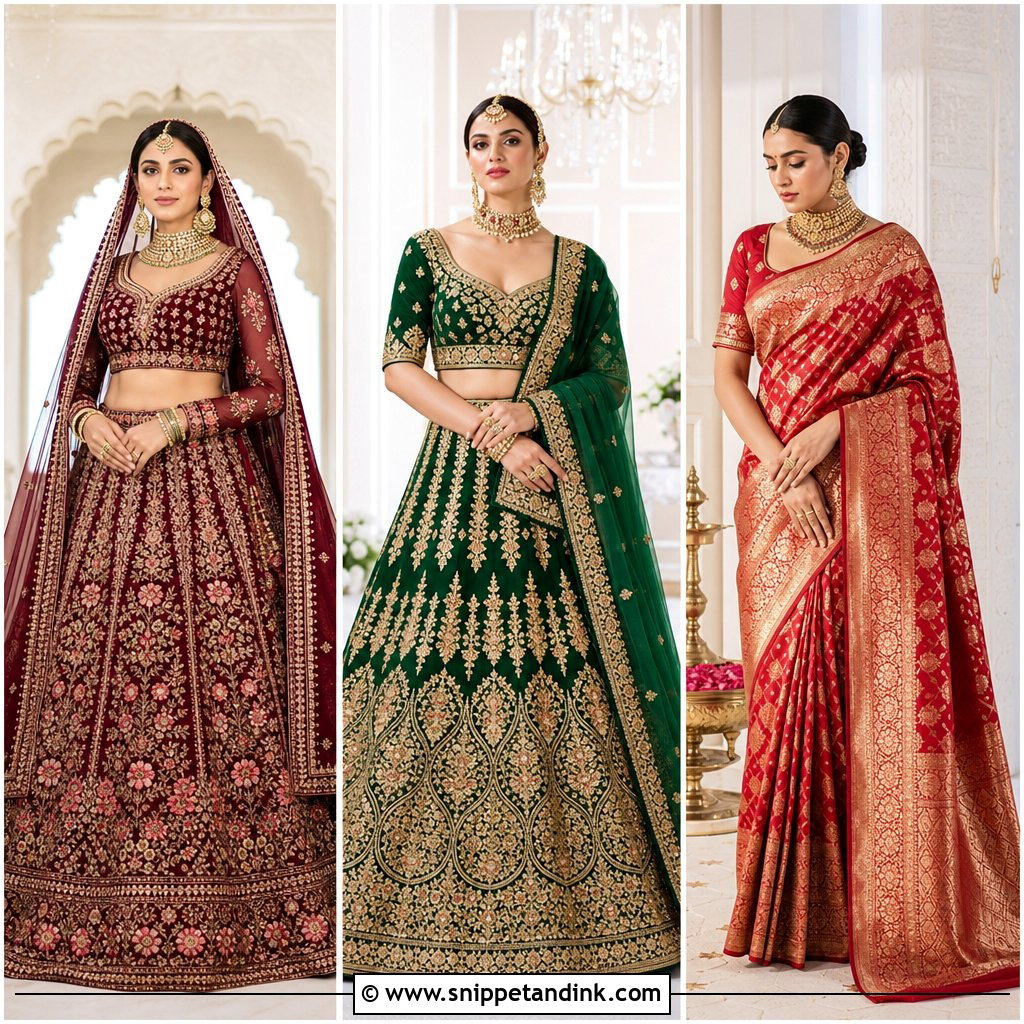
Velvet is a winter fabric, full stop. A maroon velvet lehenga holds embroidery so well that even modest bronze or gold work looks expensive. The danger is heat and weight, so I always pair it with a net or organza dupatta and ask whether the venue is heated or air-conditioned before signing off. A structured blouse or long shirt, a choker, statement earrings and gold heels or khussas finish it for Barat or evening portraits.
3. Pastel Walima Gown With Embroidery
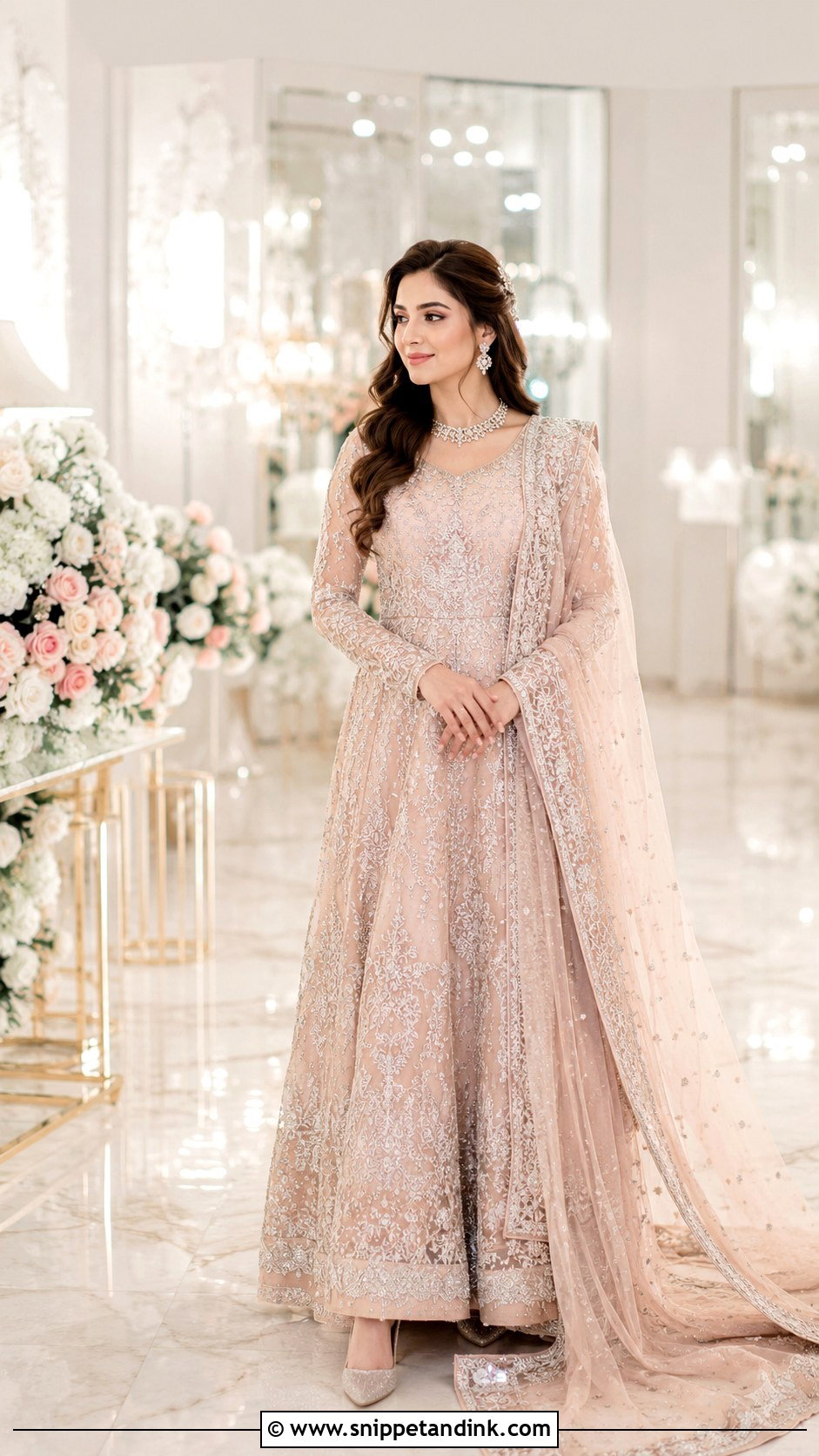
Walima is where most brides want to feel lighter. A floor-length gown in blush, powder blue, mint, champagne or lavender, worked in silver, pearls, crystals or thread, gives a reception look without loudness. A fitted bodice with a soft flare lets you walk and greet guests easily. One thing I watch: pastel gowns show sweat marks and makeup transfer more than dark fabric, so I suggest dress shields and a careful hand with the dupatta near the face. Drop earrings or a sleek choker and rosy makeup keep it modern.
4. White Nikkah Dress With Pearl Dupatta
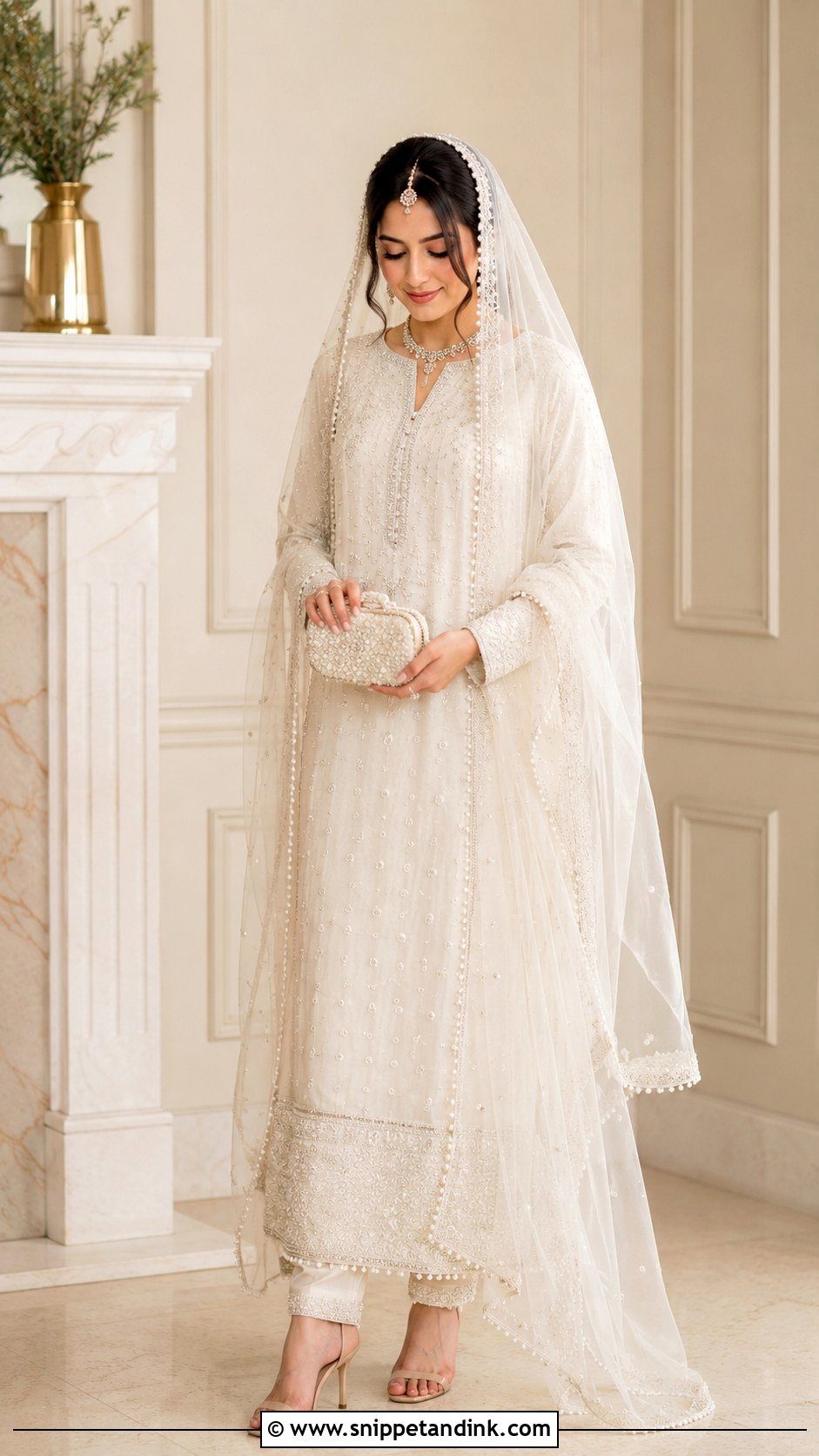
For a Nikkah, white or ivory has a purity that suits the occasion. A long shirt, pishwas or maxi in off-white or pearl white, with soft silver, beige or gold embroidery, keeps things calm. The pearl-edged dupatta is what lifts it and frames the face, so it deserves the most attention in the fitting. Draped over the head with neat pleats at the temple, it looks ceremonial and stays put. Pearl jewellery, nude heels and soft makeup suit daytime ceremonies, home events and mosque settings where simplicity matters.
5. Gold Gharara With Short Kameez
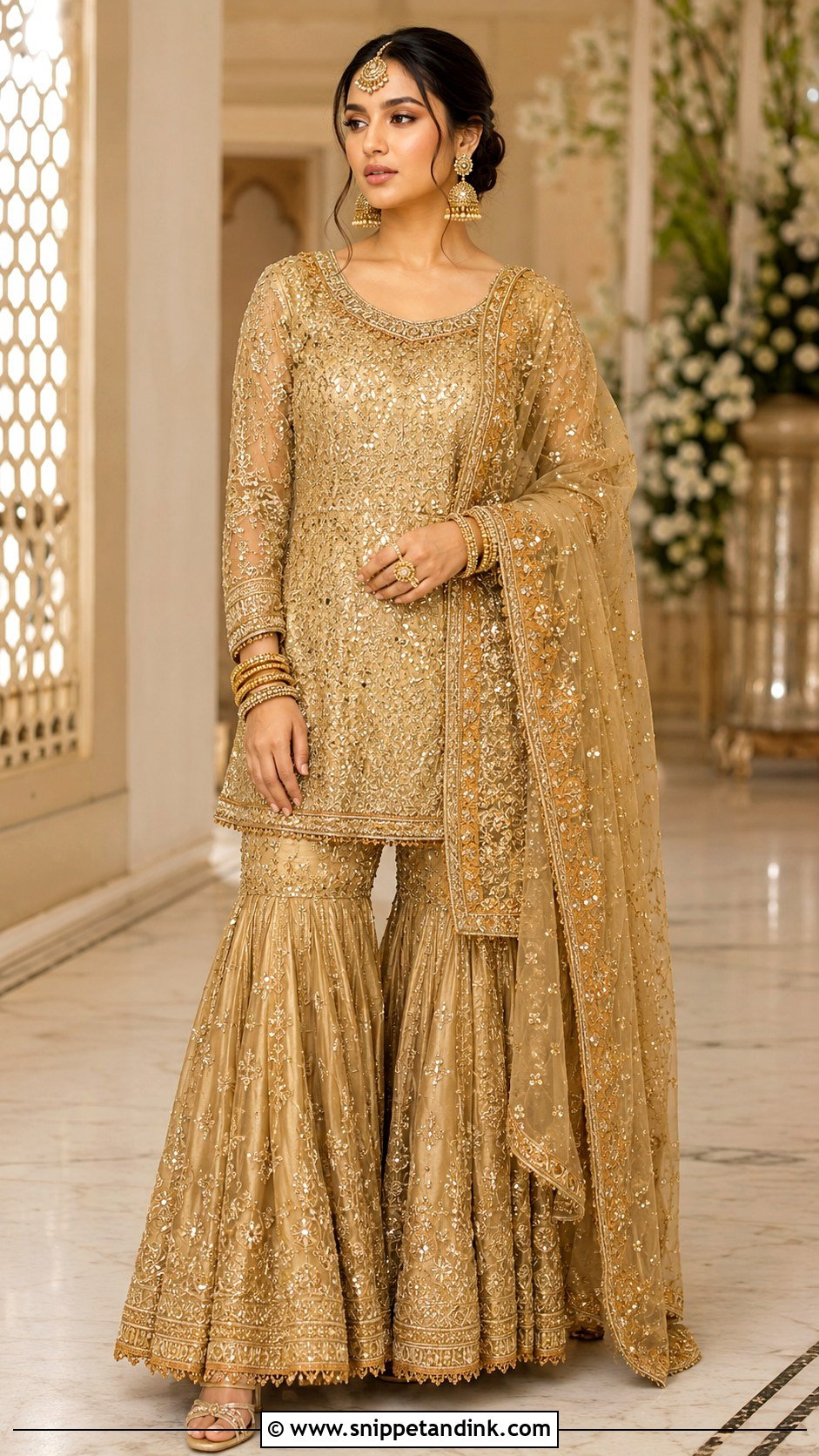
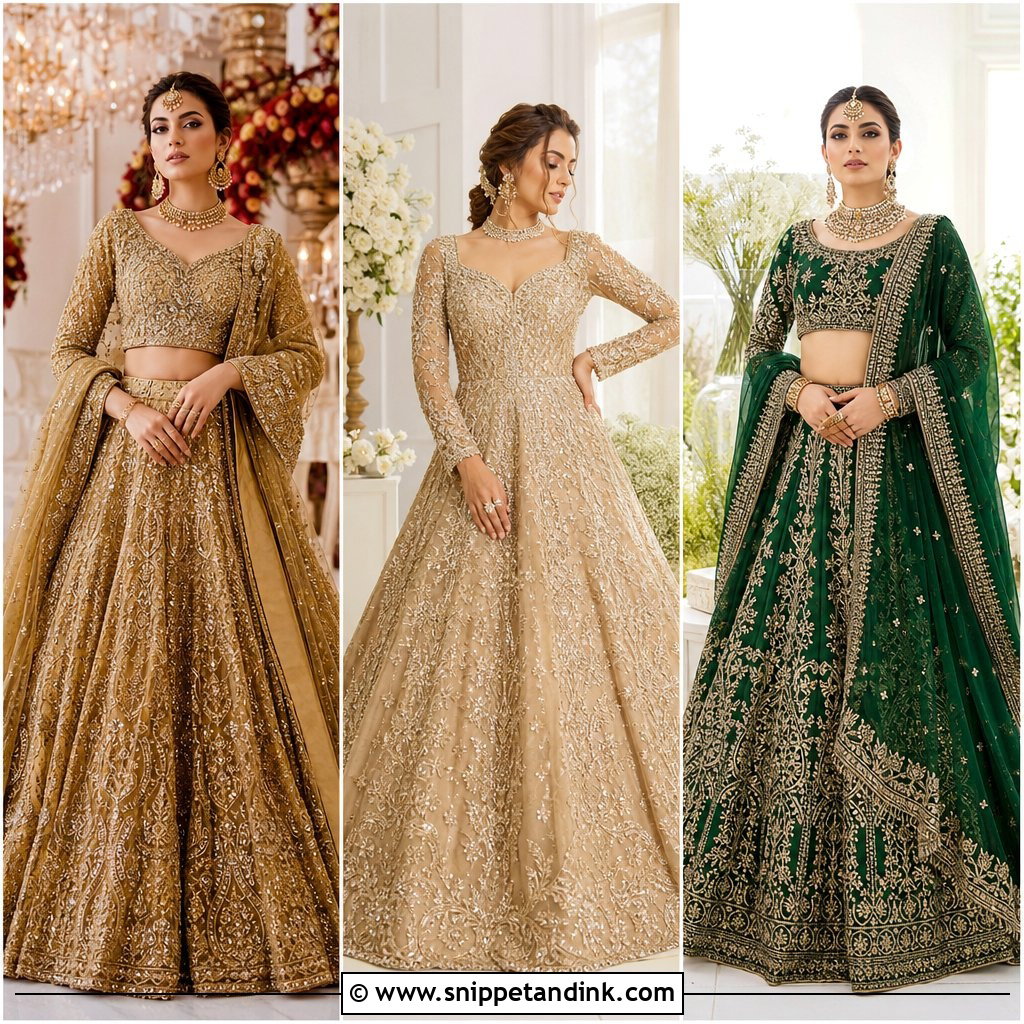
A gold gharara with a short kameez has real old-world charm. The gharara fits close to the knee and then flares dramatically, so the knee joint has to be placed exactly right; I mark it with the bride standing in her shoes. Tissue, jamawar or brocade in gota, zari or mirror work keeps it festive. Add a heavy dupatta for balance, a passa, jhumkas and bangles, and you have a heritage look for Nikkah, Mayun or a family event.
6. Green Mehndi Sharara With Gota Work
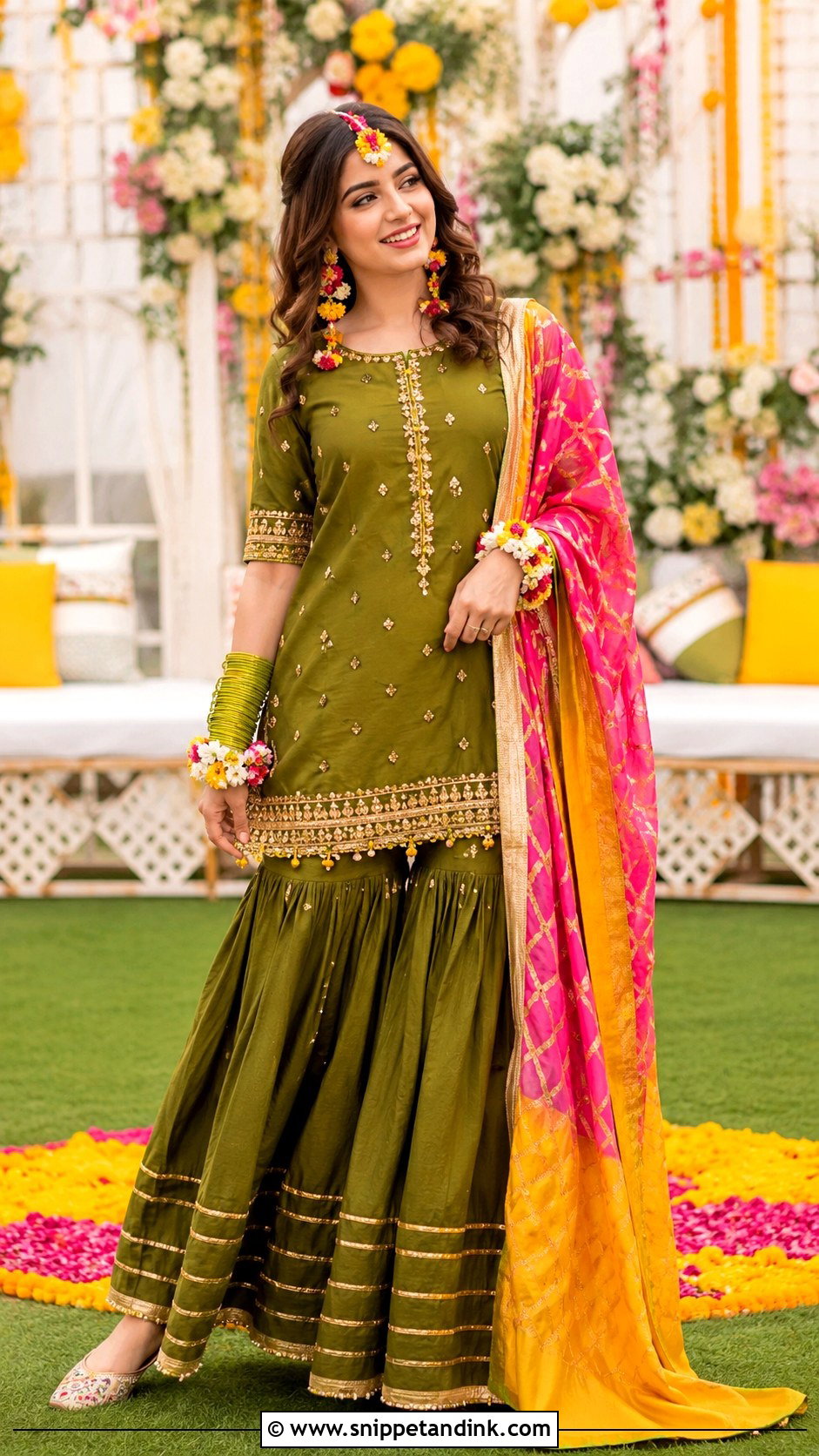
Green at a Mehndi is a joyful choice, and a sharara is the easiest way to dance in it. Mehndi green, olive, emerald or parrot green with gold gota and mirror work, a short kurti and a yellow, orange or pink dupatta make the classic contrast. Choose a lighter fabric, chiffon, georgette or raw silk, because stiff fabric fights you on the dance floor. Flower jewellery, bangles and khussas, plus a braid with fresh flowers, round it out.
7. Mustard Mayun Pishwas With Churidar
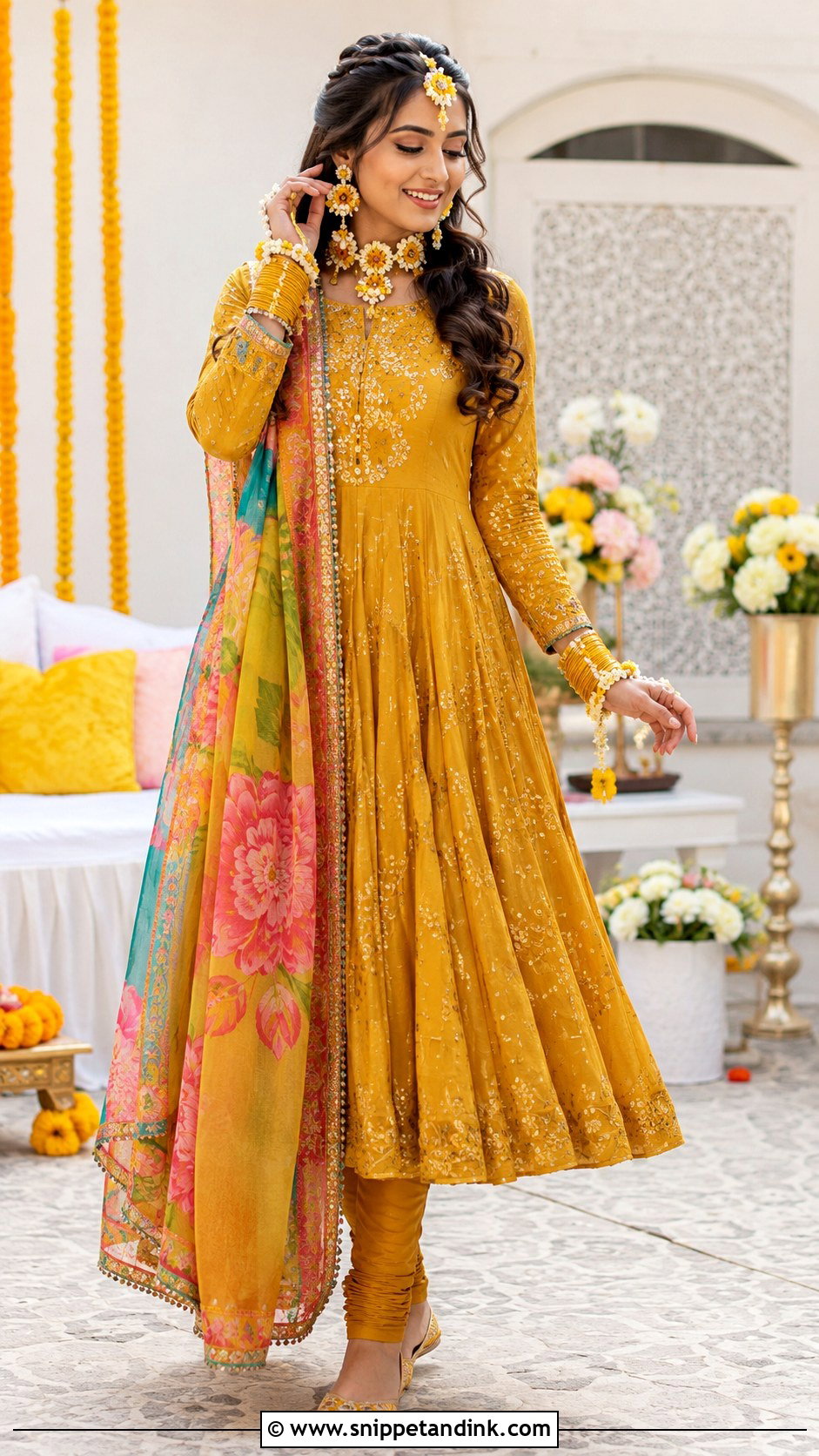
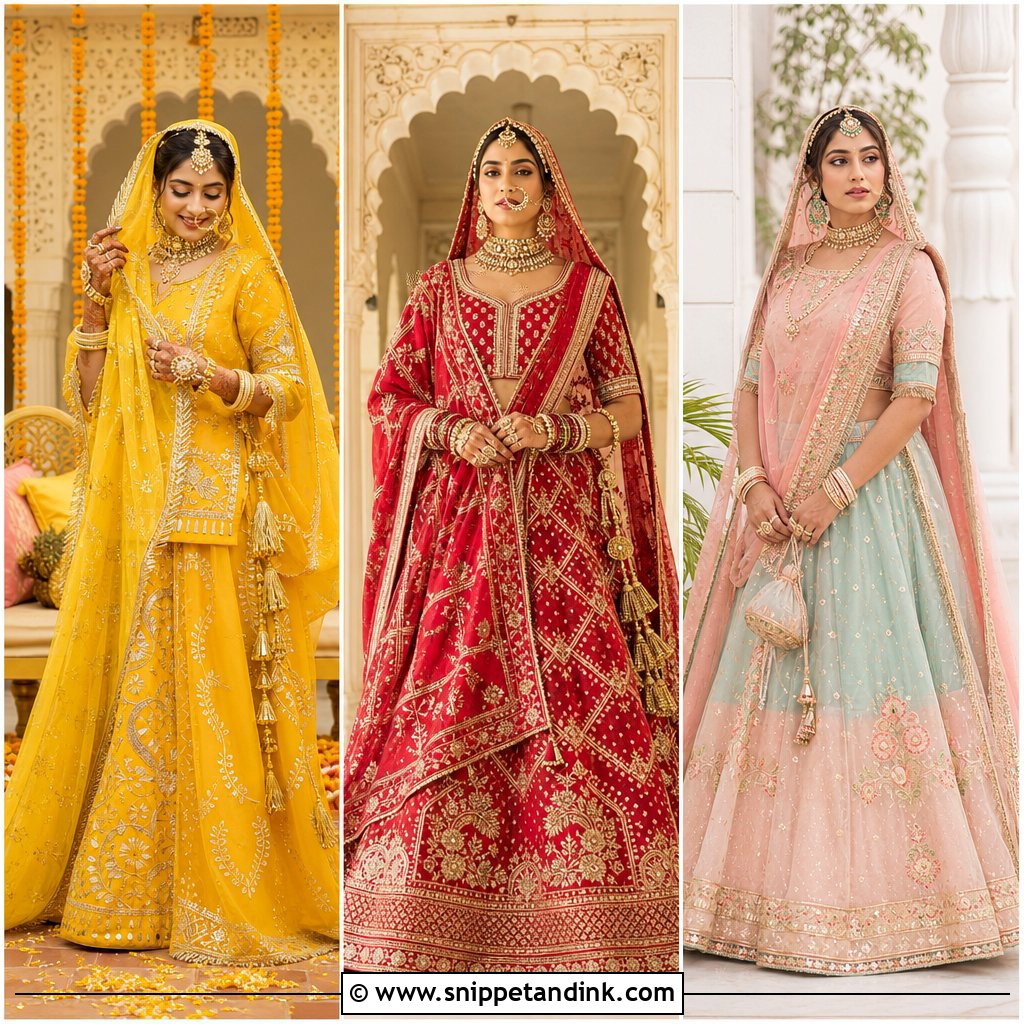
Mayun calls for marigold, turmeric and mustard yellows, and a pishwas over churidar is a lovely, practical way to wear them. The flare moves softly while the fitted churidar stays clean, which matters when ubtan is being applied to your hands and face. Keep the embroidery to light gota, mirror or thread at the neckline, sleeves and hem; heavier work only gets stained. A colourful orange, green or pink dupatta, floral jewellery, khussas and natural makeup are all you need.
8. Pink Bridal Lehenga With Organza Dupatta
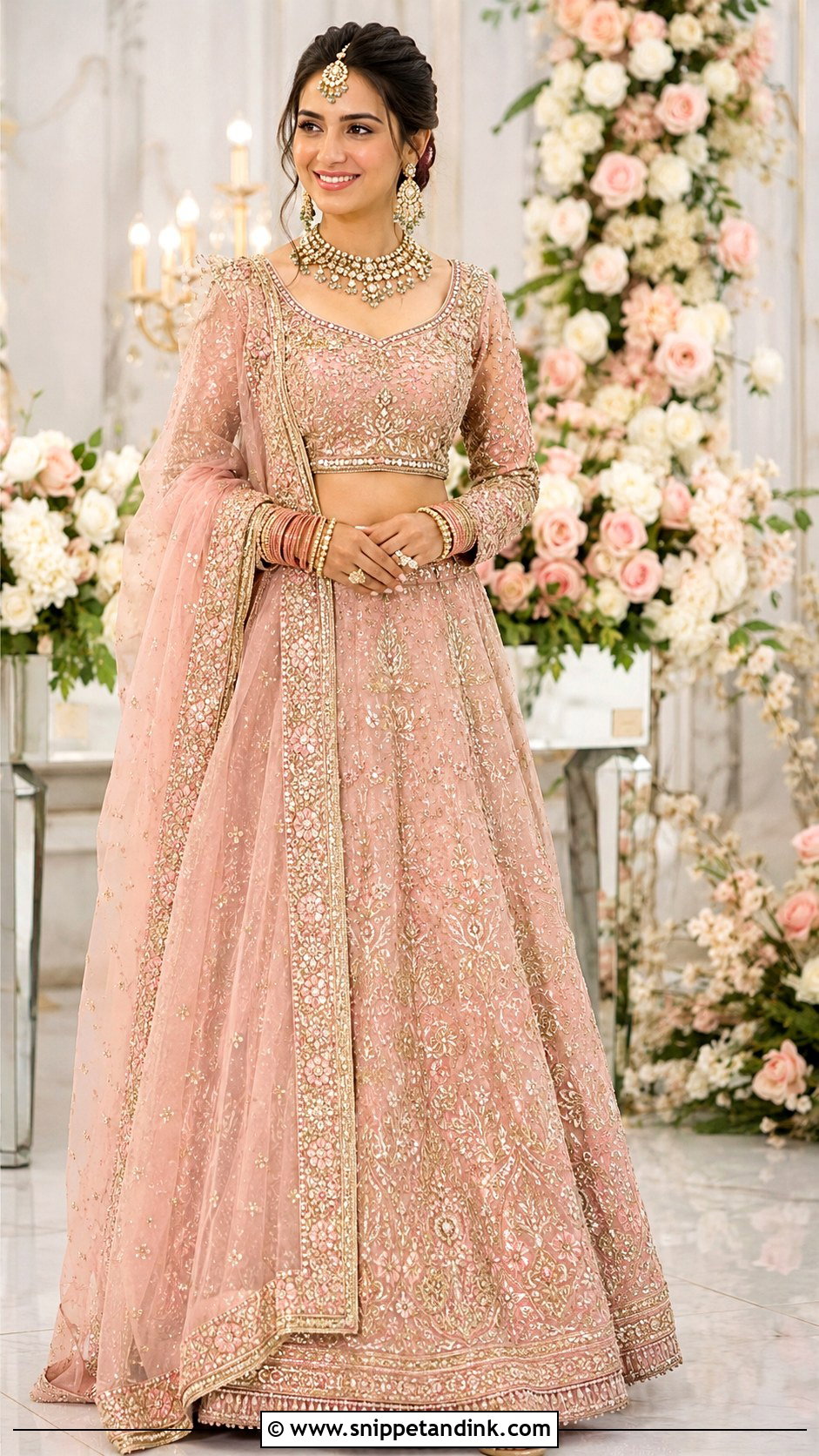
A pink bridal lehenga stays romantic while still reading as Pakistani bridal wear. Rose, tea pink, dusty pink and rani pink all work, each for a different event. Raw silk or net with gold, silver or pearl embroidery, plus an organza dupatta, keeps it soft. My rule here is simple: if the lehenga is heavily worked, the blouse or shirt stays clean and structured, otherwise the eye has nowhere to rest. Kundan jewellery and a sleek bun suit it for Nikkah, Barat or Walima, depending on how deep the colour goes.
9. Ivory Lehenga With Gold Embroidery
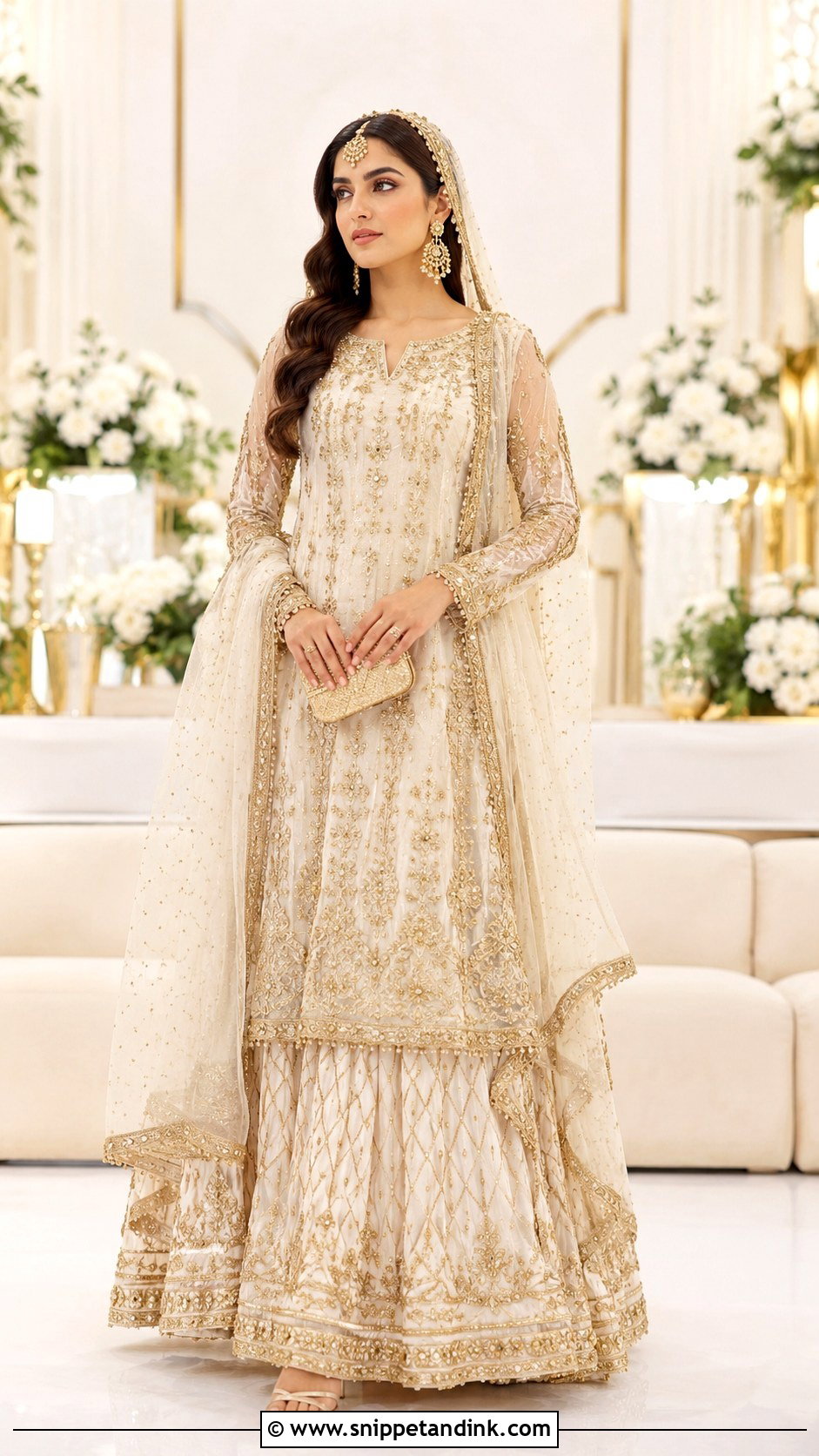
Ivory and antique gold together are a softer alternative to red that still feels fully bridal, and they hold up in both daylight and evening light. A long shirt or modest choli, a full lehenga and a sheer dupatta in zardozi, sequins, pearls and thread add depth without losing the neutral base. I’d avoid bright yellow gold jewellery with antique gold embroidery; matching the metal tone keeps the whole outfit looking deliberate. A soft bun and glowing makeup finish it for Nikkah, Walima or a minimal Barat.
10. Black Formal Lehenga With Heavy Dupatta
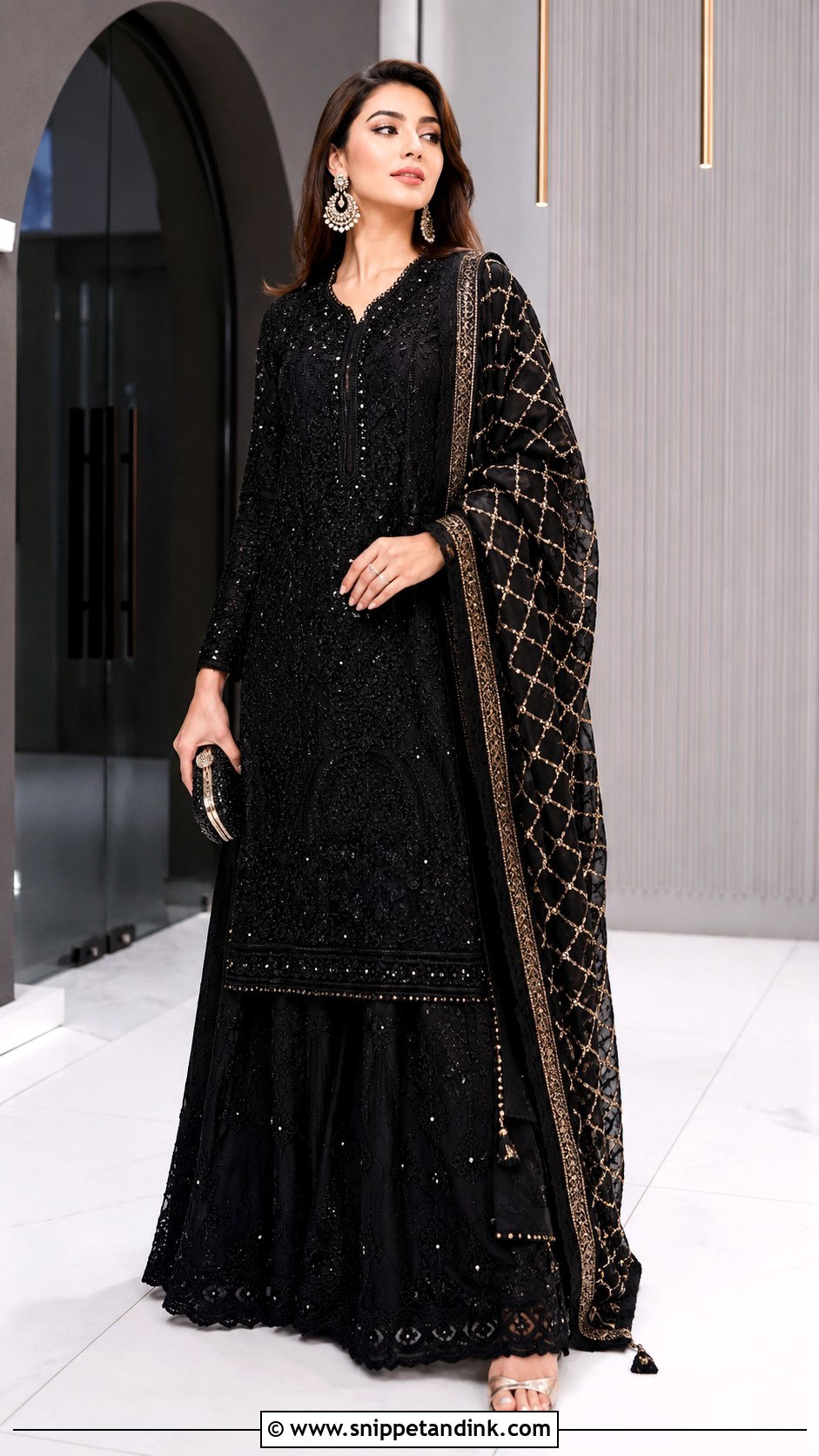
Black works for guests, sisters of the bride and reception events, not the bride herself in most families. Gold, copper, silver or jewel-toned embroidery keeps it festive. A full lehenga with a worked blouse or long shirt and a statement dupatta with heavy borders, sequins or mirrors makes it wedding-appropriate. Check with the family first; some still consider black unlucky at weddings. Metallic heels, a clutch and dramatic earrings suit evening functions.
11. Navy Blue Walima Lehenga With Silver Work
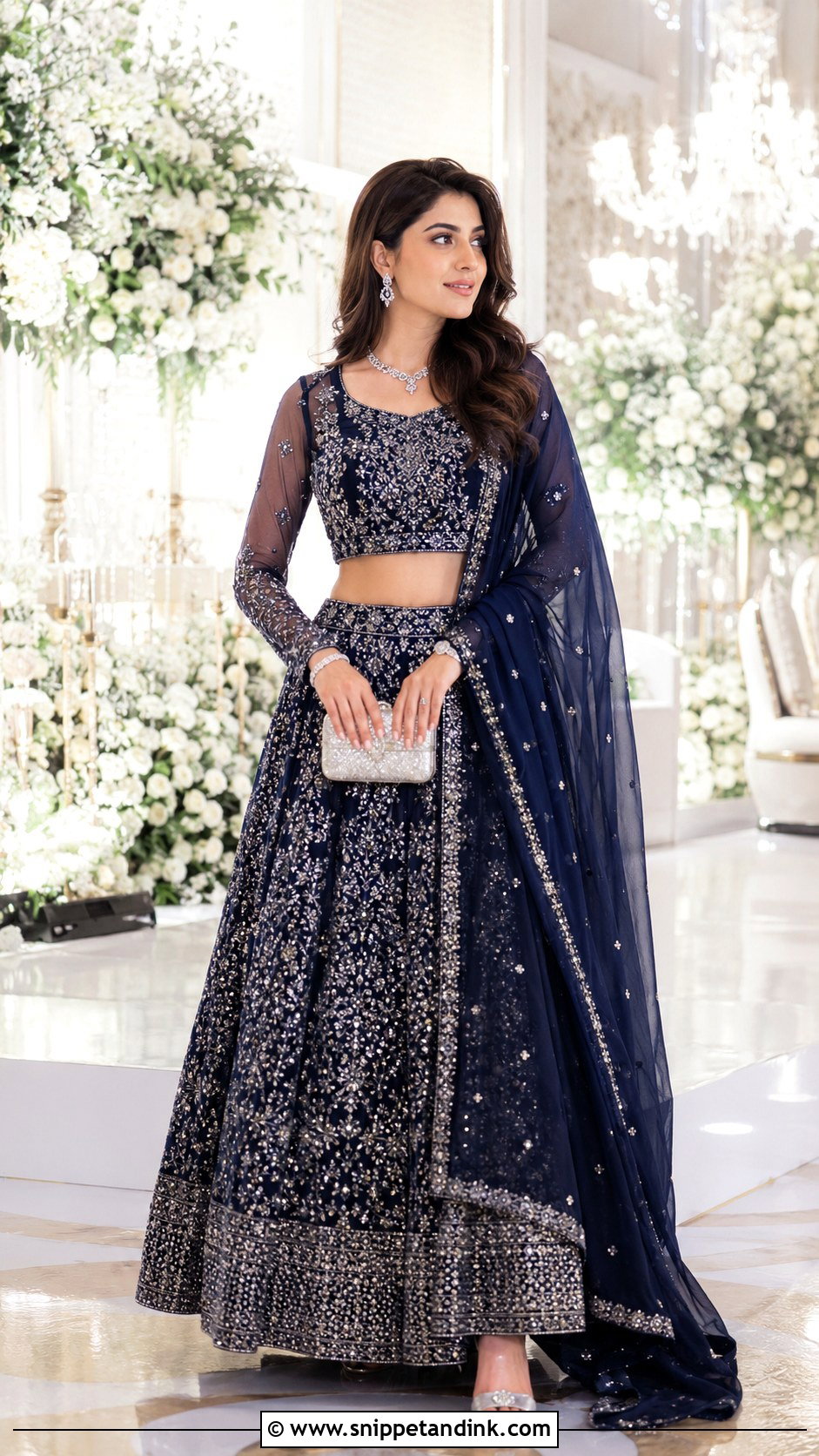
Navy is softer than black but every bit as formal. A Walima lehenga with silver sequins, crystals or thread embroidery suits bridesmaids, sisters or even a reception bride. A matching blouse or long shirt and a sheer dupatta keep it cohesive. Silver heels, diamond-style jewellery and a sleek clutch finish it. Navy can look almost black in dim halls, so silver embroidery is what keeps it from disappearing in photos; I wouldn’t choose a navy with only tonal thread work for an evening event.
12. Beige Sharara With Long Kameez
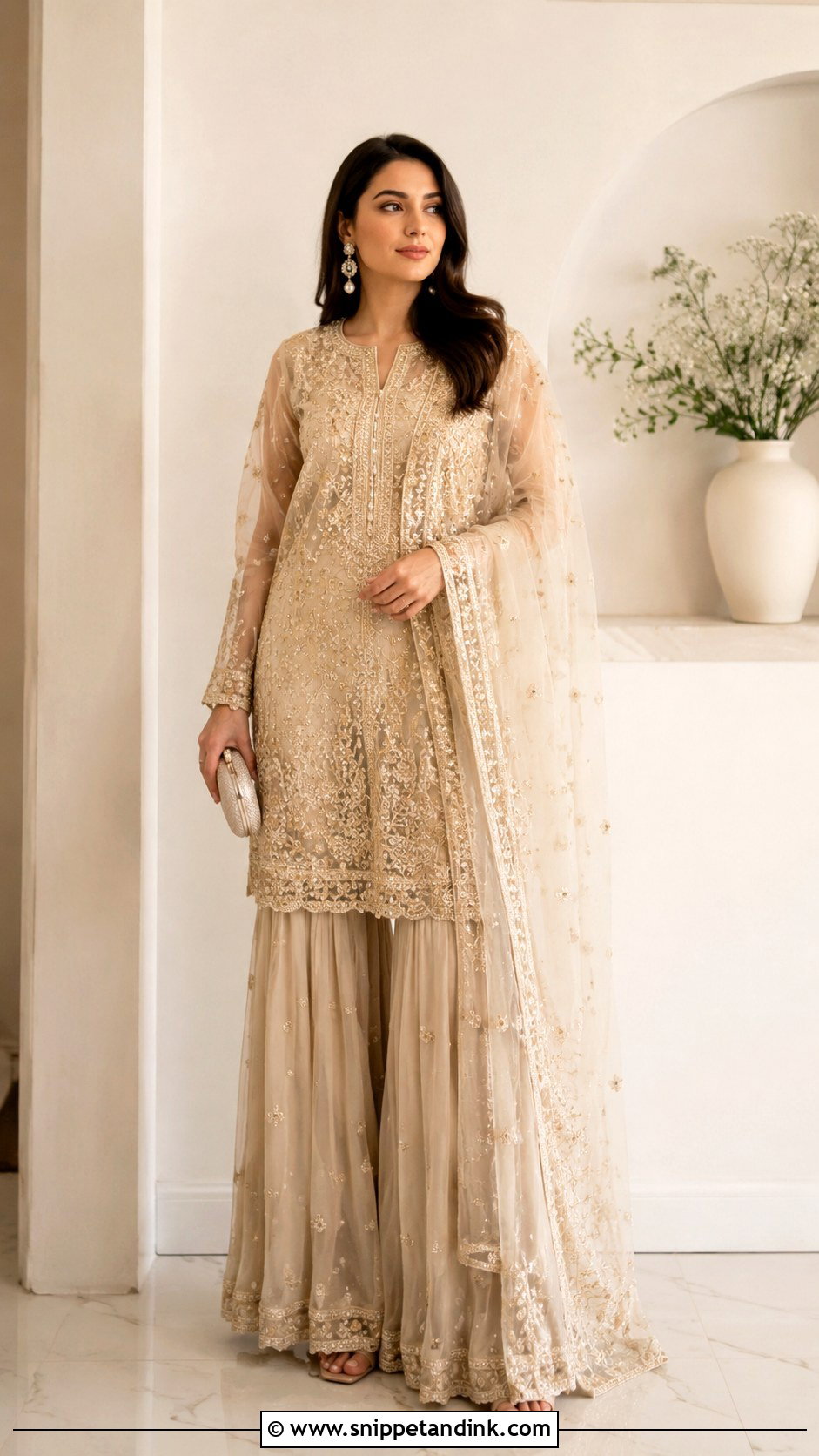
Beige, sand, champagne and taupe look refined with pearl, gold or ivory embroidery, and a sharara with a long kameez adds traditional volume with modest coverage. It suits Nikkah, engagement or daytime events. A lightweight dupatta with a finished border keeps it from going heavy. My caution with beige: choose a shade with a little warmth, or it drains the face in daylight. Pearl earrings, nude heels and a neat hairstyle keep the look clean.
13. Peach Anarkali Dress With Dupatta
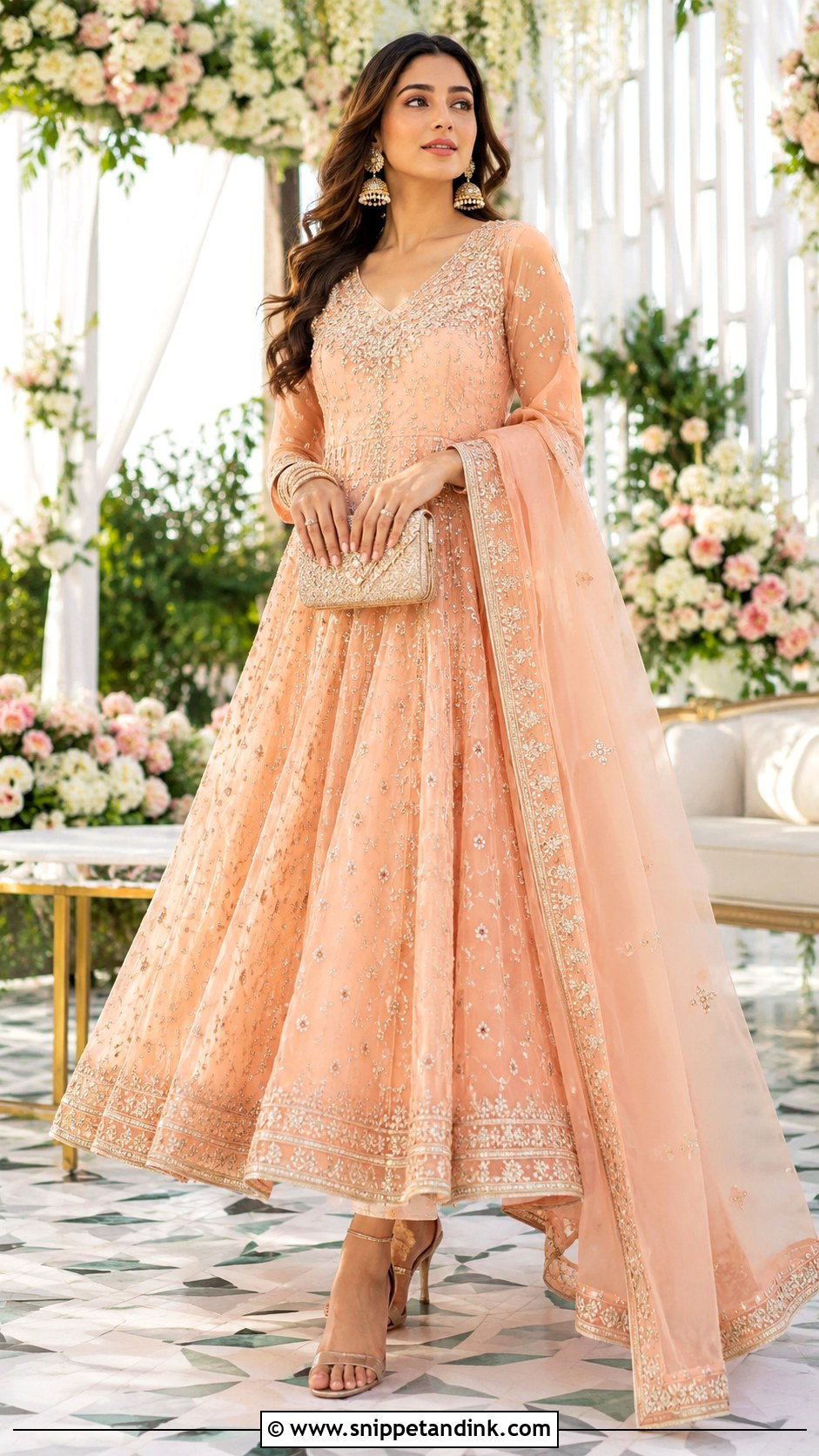
The anarkali flatters a wide range of figures because the fitted bodice and flared skirt shape the body without a separate lehenga. In peach, coral or apricot with delicate gold, silver or resham embroidery, and a dupatta with lace, sequins or gota borders, it is polished enough for a wedding. It suits Nikkah, dholki, engagement or guest wear, and it’s lighter than full bridal wear. I would put a little weight at the hem, a border or a facing, so the flare falls instead of floating when you move.
14. Silver Reception Gown With Net Dupatta
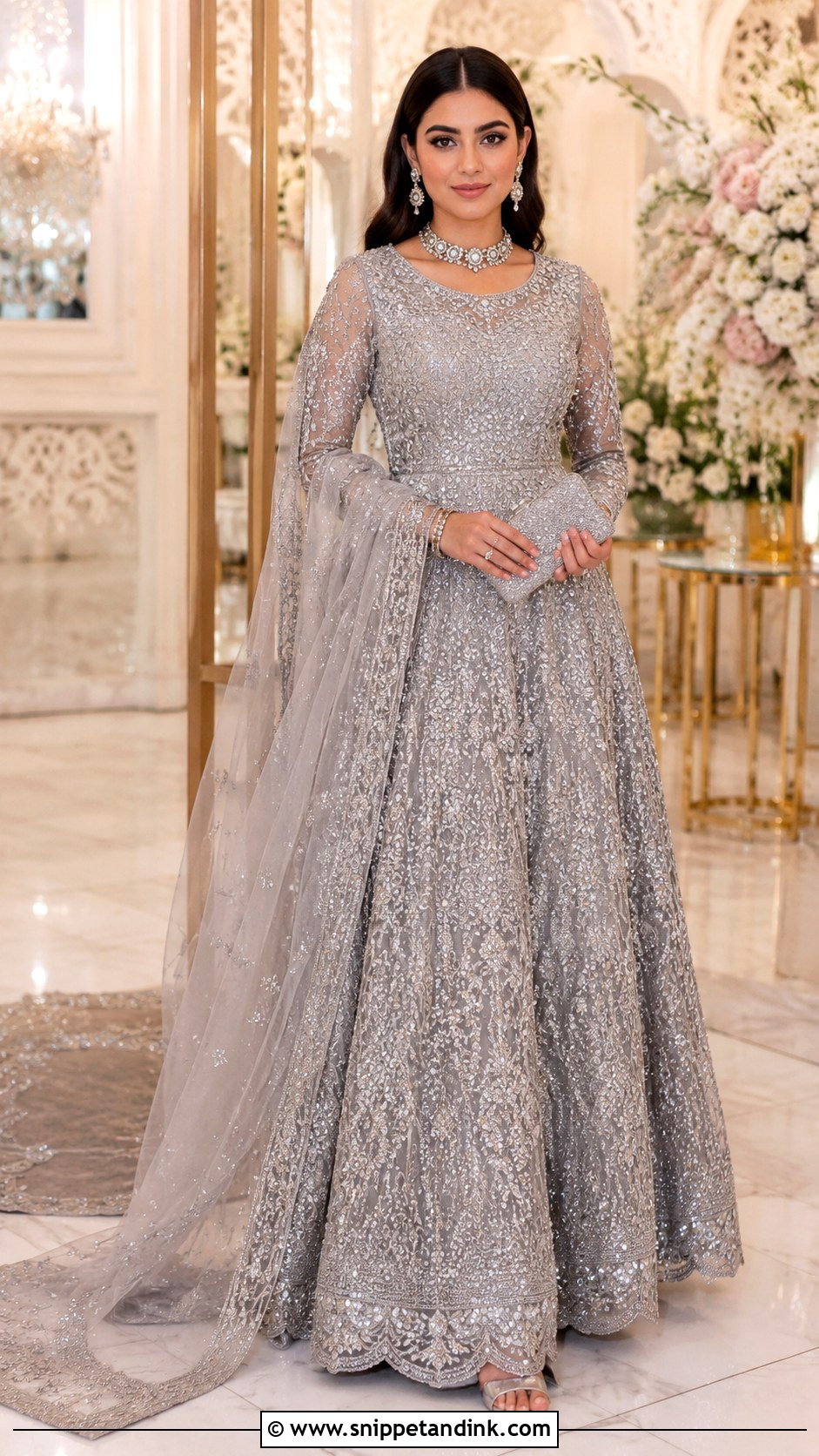
A silver gown with a net dupatta gives a reception a glamorous but graceful finish. The cut can be straight, flared or slightly trailing, depending on the formality. Silver embroidery, crystals, pearls and sequins catch bright venue lights well, and the net dupatta softens the modern shape so it still reads Pakistani. If the gown trails, ask for a wrist loop at the back so you can lift it while walking and dancing. Silver heels, a crystal clutch and a low bun suit it.

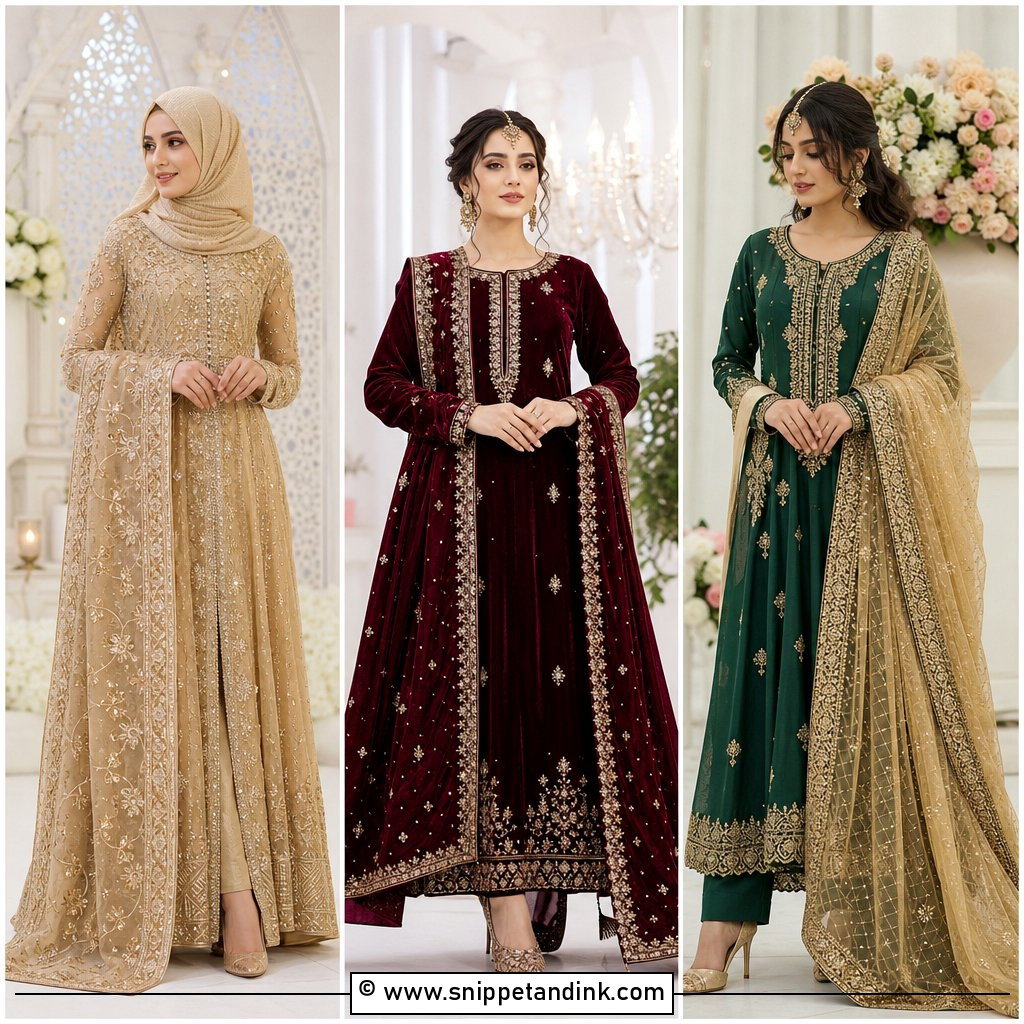
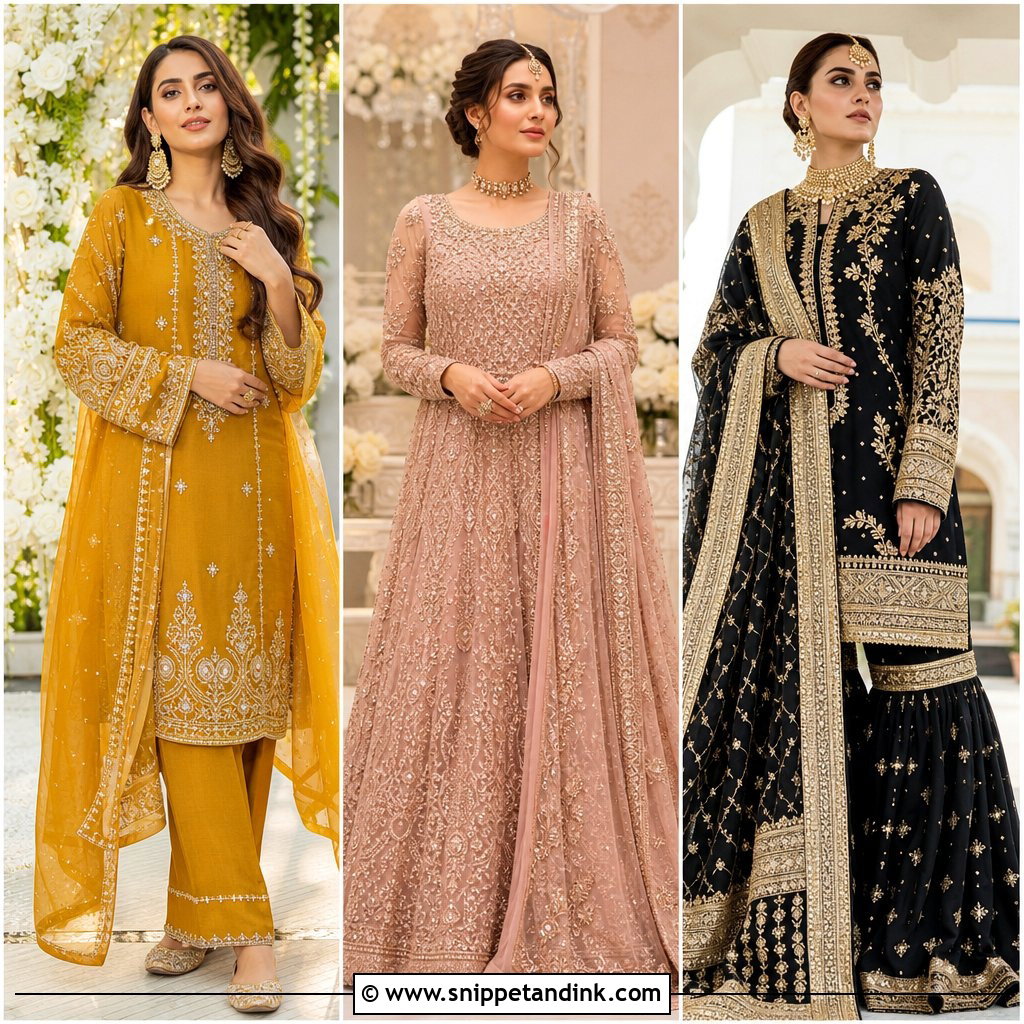
15. Tea Pink Gharara With Kundan Jewelry
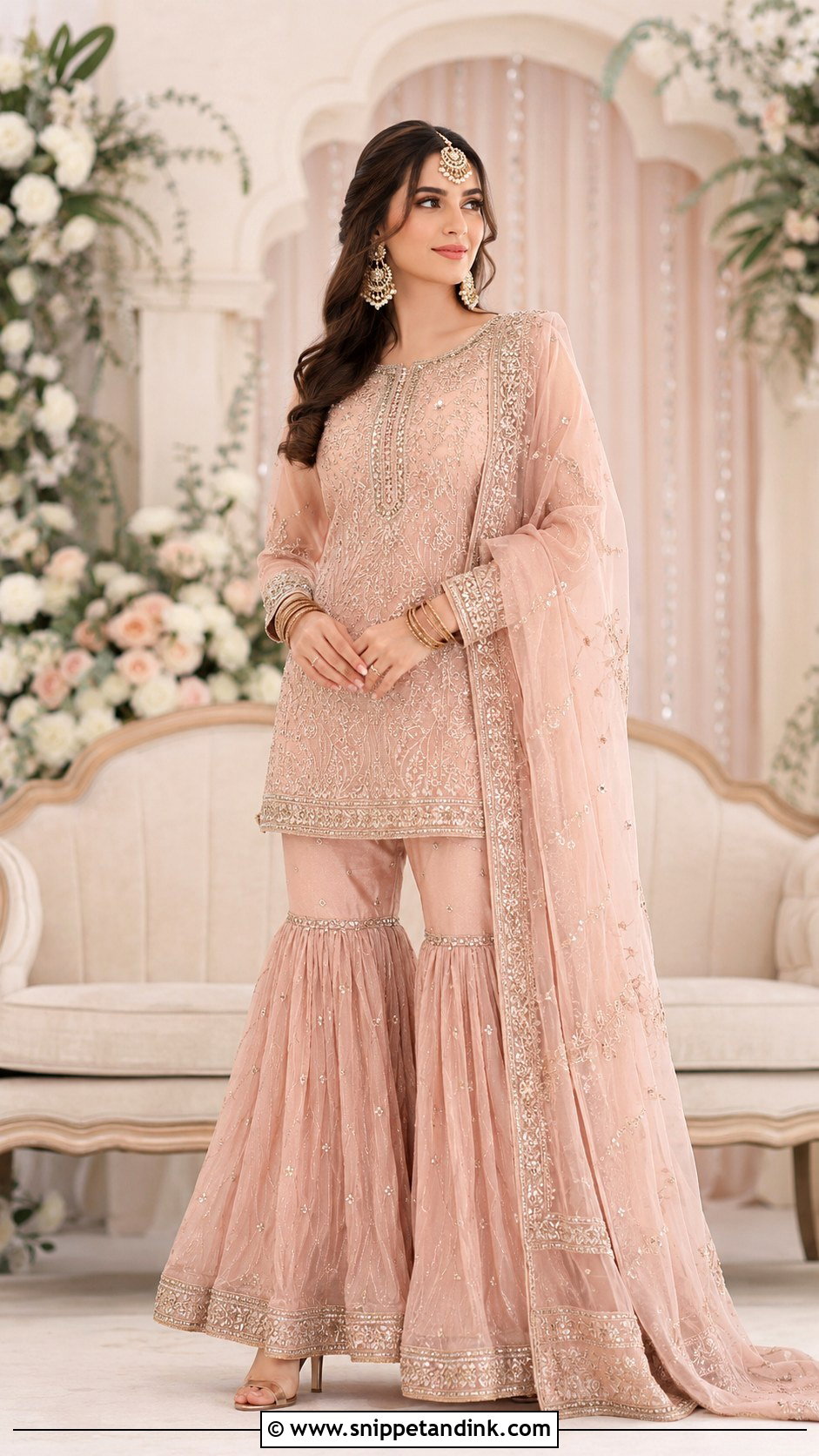
Tea pink is delicate but still festive with antique gold or pearl detailing, which makes a tea pink gharara a natural fit for Nikkah or daytime events. A short or mid-length kameez shows off the gharara’s signature flare. Pin the bordered dupatta neatly so it doesn’t slide off the shoulder during rasams. Kundan earrings, a tikka and bangles bring warmth to the soft colour. Brides, sisters and close family can all wear it.
16. Emerald Green Bridal Lehenga With Gold Jewelry
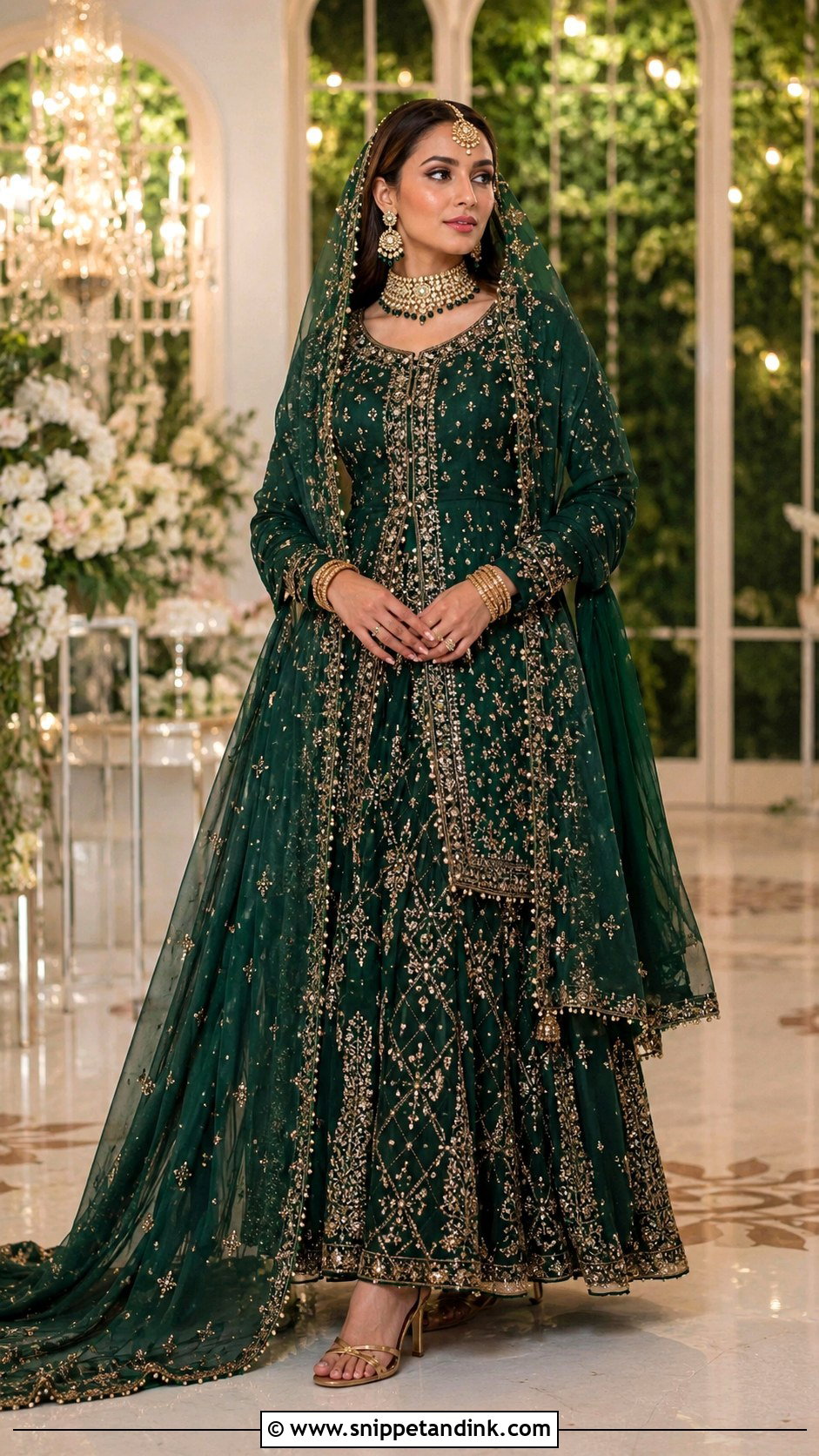
Emerald and gold is one of my favourite pairings for a bride who wants tradition without red. The deep green carries antique gold zardozi, dabka, sequins and resham richly. A full lehenga with a long shirt or structured blouse and a matching or contrast dupatta works for Barat, reception or formal portraits. Emerald can look nearly black in low light, so it pays to have the photographer use some fill light. A gold matha patti, choker and bangles finish it.
17. Red Gharara With Heavy Border Dupatta
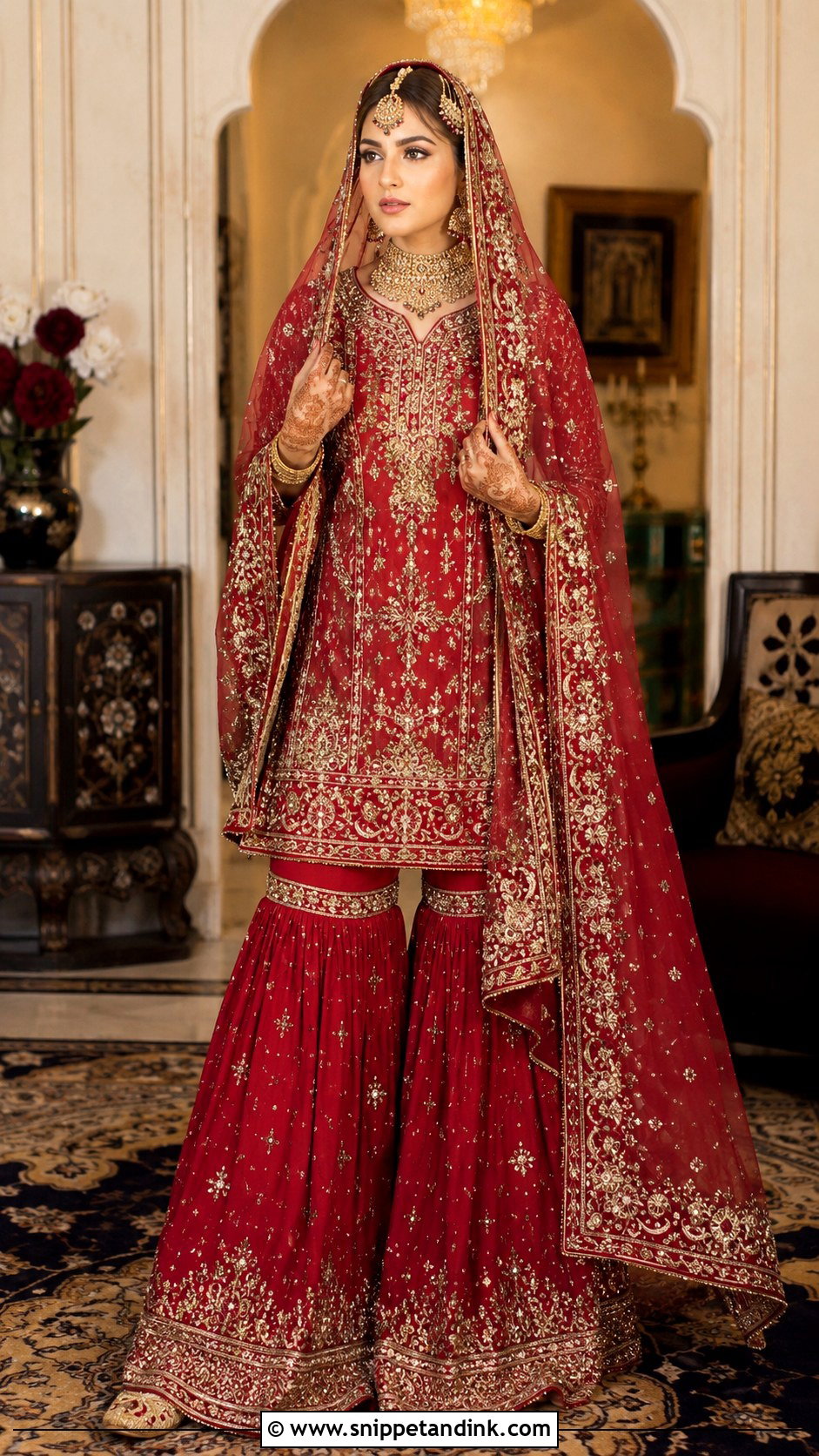
The red gharara is pure heritage. Gold, maroon or antique embroidery on the kameez and gharara panels, with a heavily bordered dupatta over the head and across the front, gives it the ceremonial look many families expect. Gharara borders are heavy; I ask for a light lining on the gharara so it doesn’t scratch or cling to the legs. A passa, choker, jhumkas and khussas finish an outfit that feels rich without being a standard lehenga.
18. Lavender Walima Dress With Crystal Work
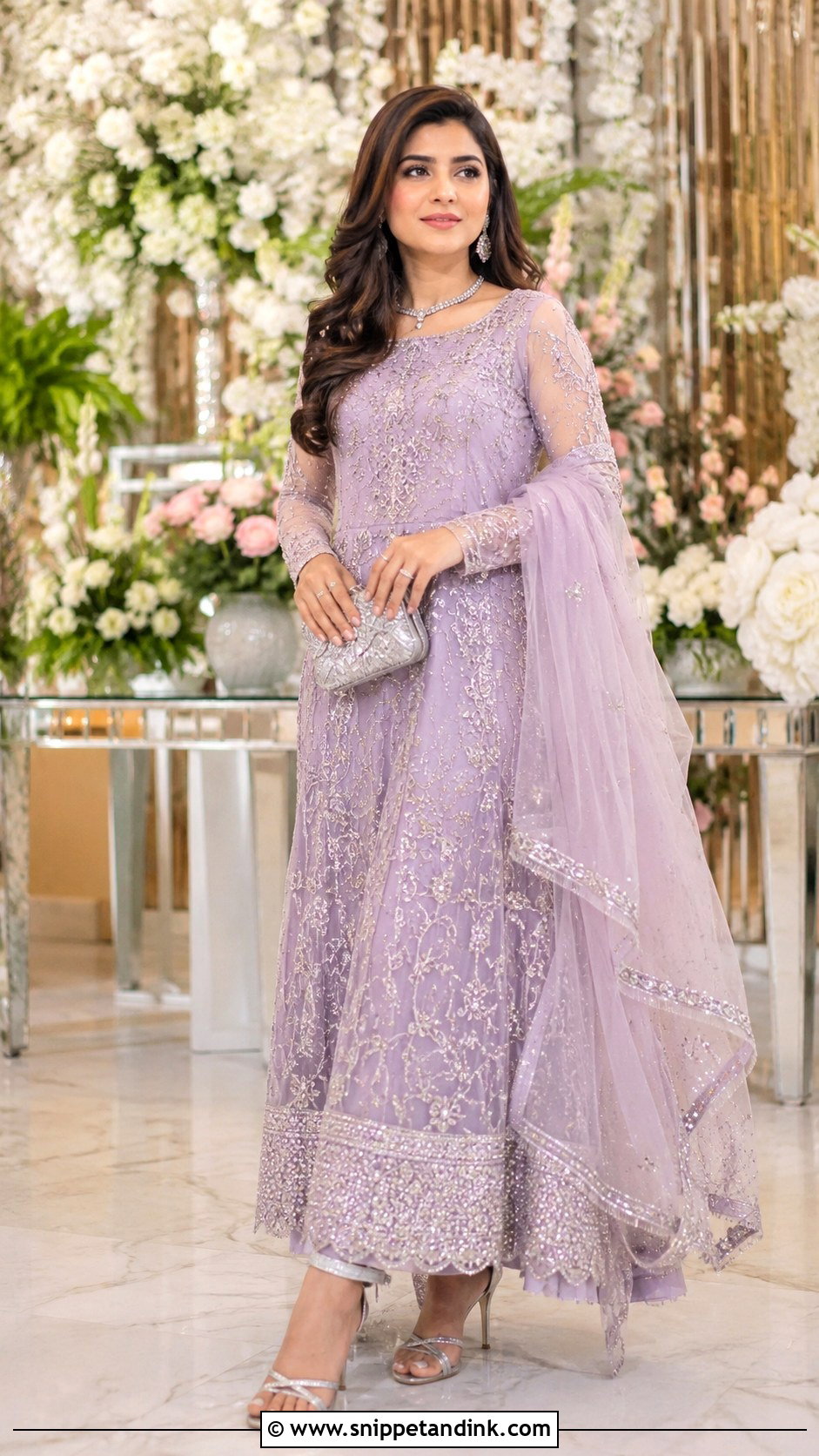
Lavender is the spring and summer Walima colour: soft, fresh and light in photos. Crystal, silver, pearl or sequin detailing on a gown, pishwas or lehenga suits it, with a sheer dupatta to keep the look airy. Choose the silhouette by venue more than by trend; a lehenga is harder to manage on a small stage than a gown. Silver heels, delicate jewellery and pink-toned makeup keep it graceful without becoming too traditional.
19. Orange Mehndi Lehenga With Mirror Work
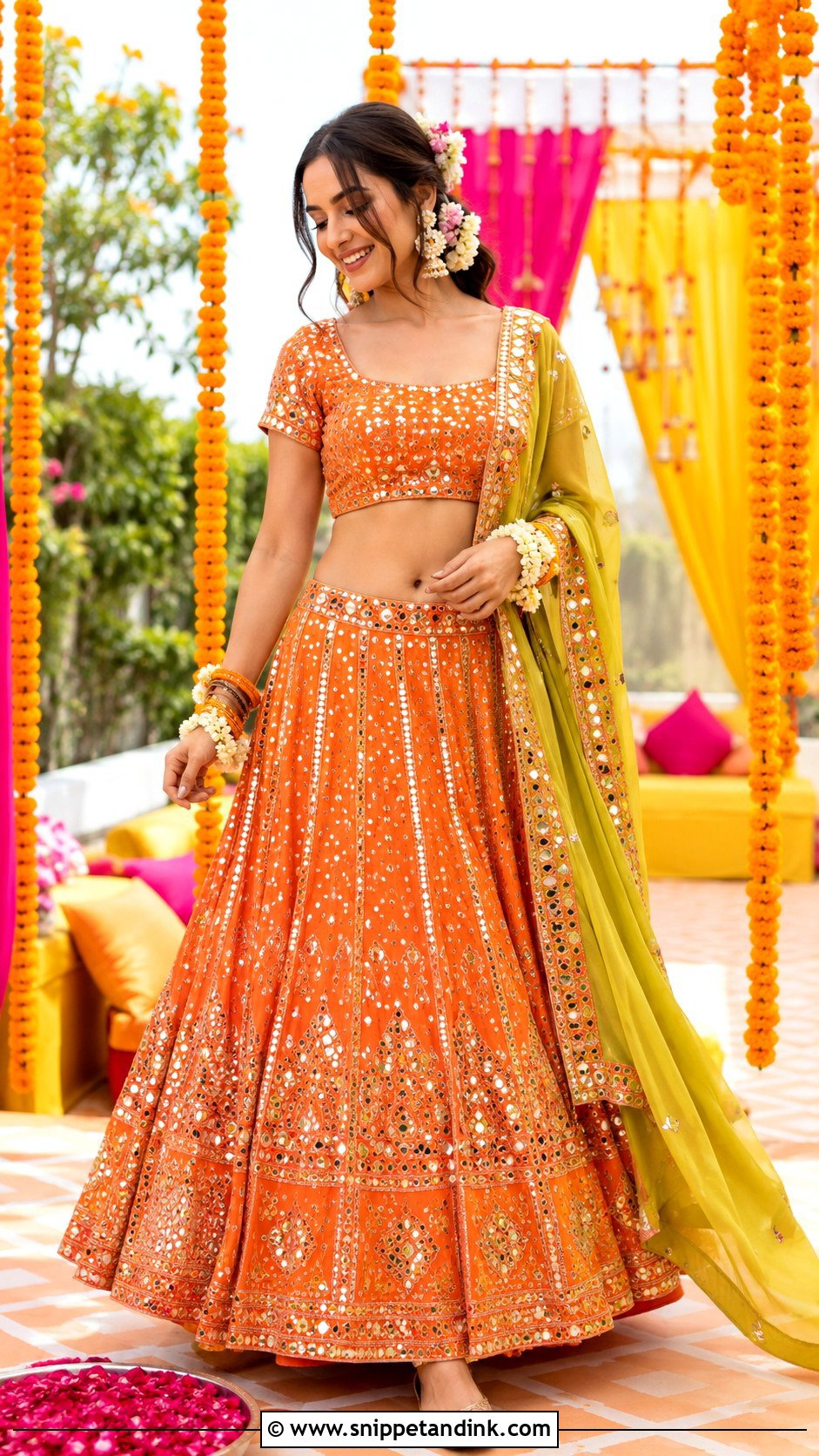
An orange Mehndi lehenga with mirror work is bright and full of energy. Tangerine, orange or burnt saffron take gold gota, mirrors and colourful thread well. Pair it with a short choli or peplum and a pink, green or yellow dupatta. Mehndi means movement, so I’d rather see a lighter lehenga with fewer panels than a heavy one that needs constant lifting. Khussas, bangles and floral hair accessories keep it festive for brides, bridesmaids or sisters.
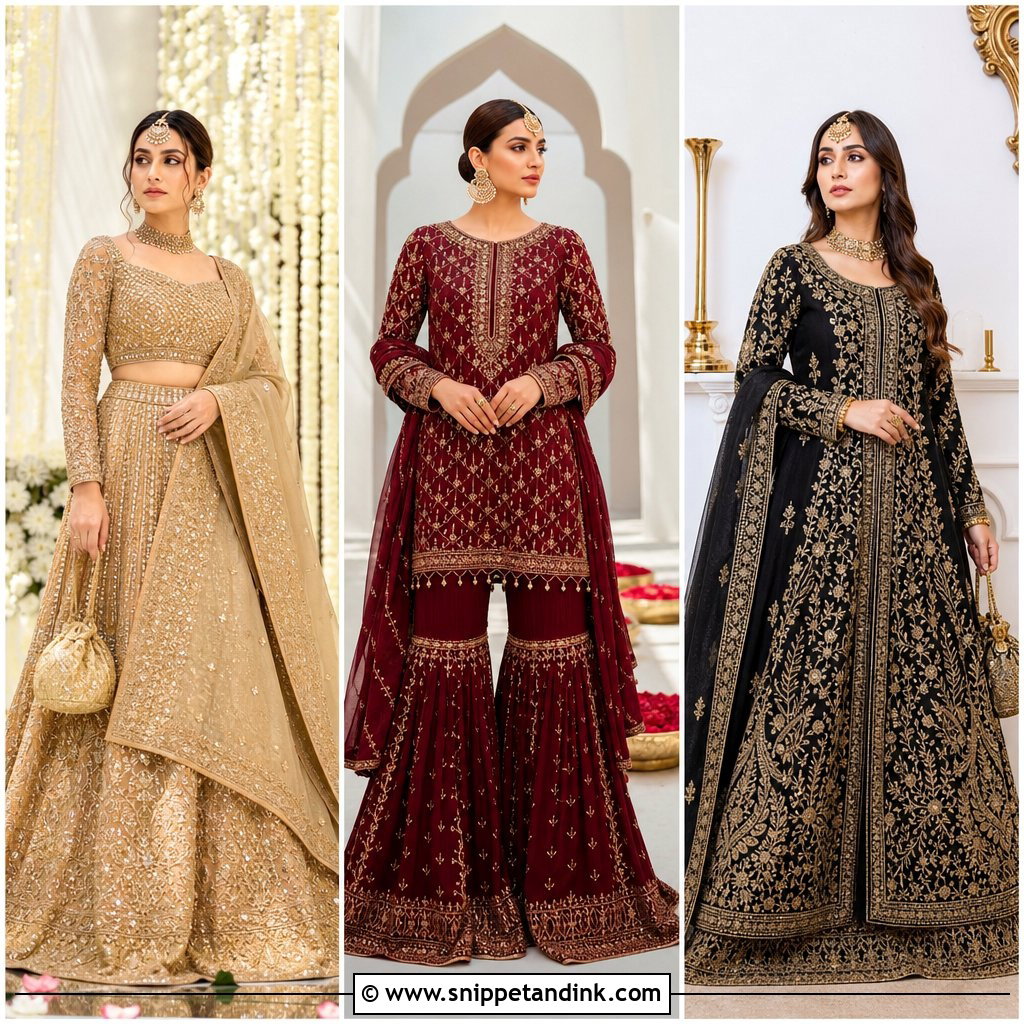




20. Yellow Sharara With Pink Dupatta
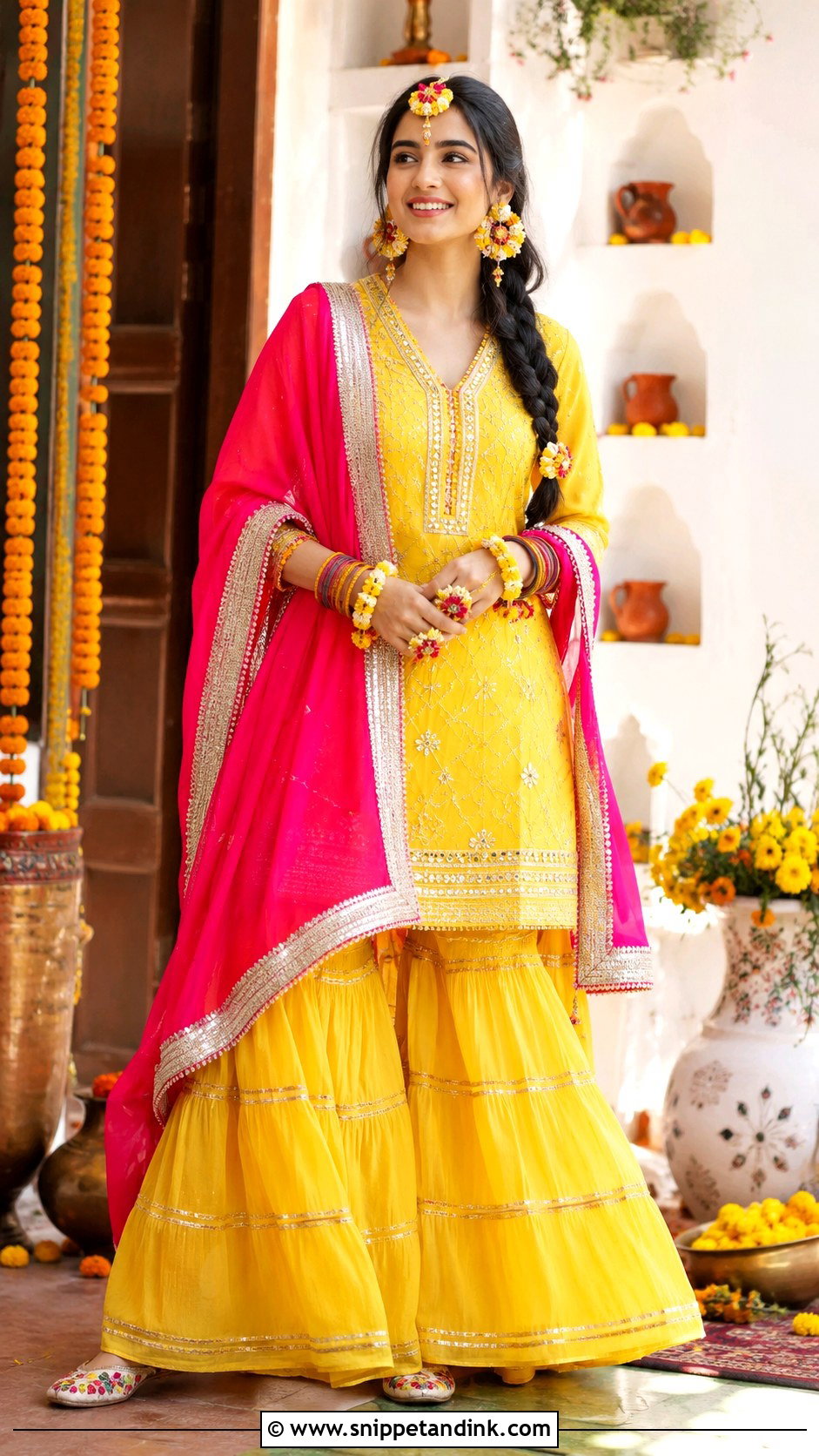
Yellow with pink is one of the oldest colour pairings in South Asian weddings, and a yellow sharara with a pink dupatta suits Mayun, dholki, or Mehndi events. A short kurti in gota, mirror or light embroidery lets the wide sharara lead. Make sure the dupatta border is finished properly; on a sharara it’s the piece swinging around you all night. Floral jewellery, bangles, khussas and a braid with flowers finish a colourful pre-wedding look.
21. Champagne Bridal Saree With Embellished Blouse
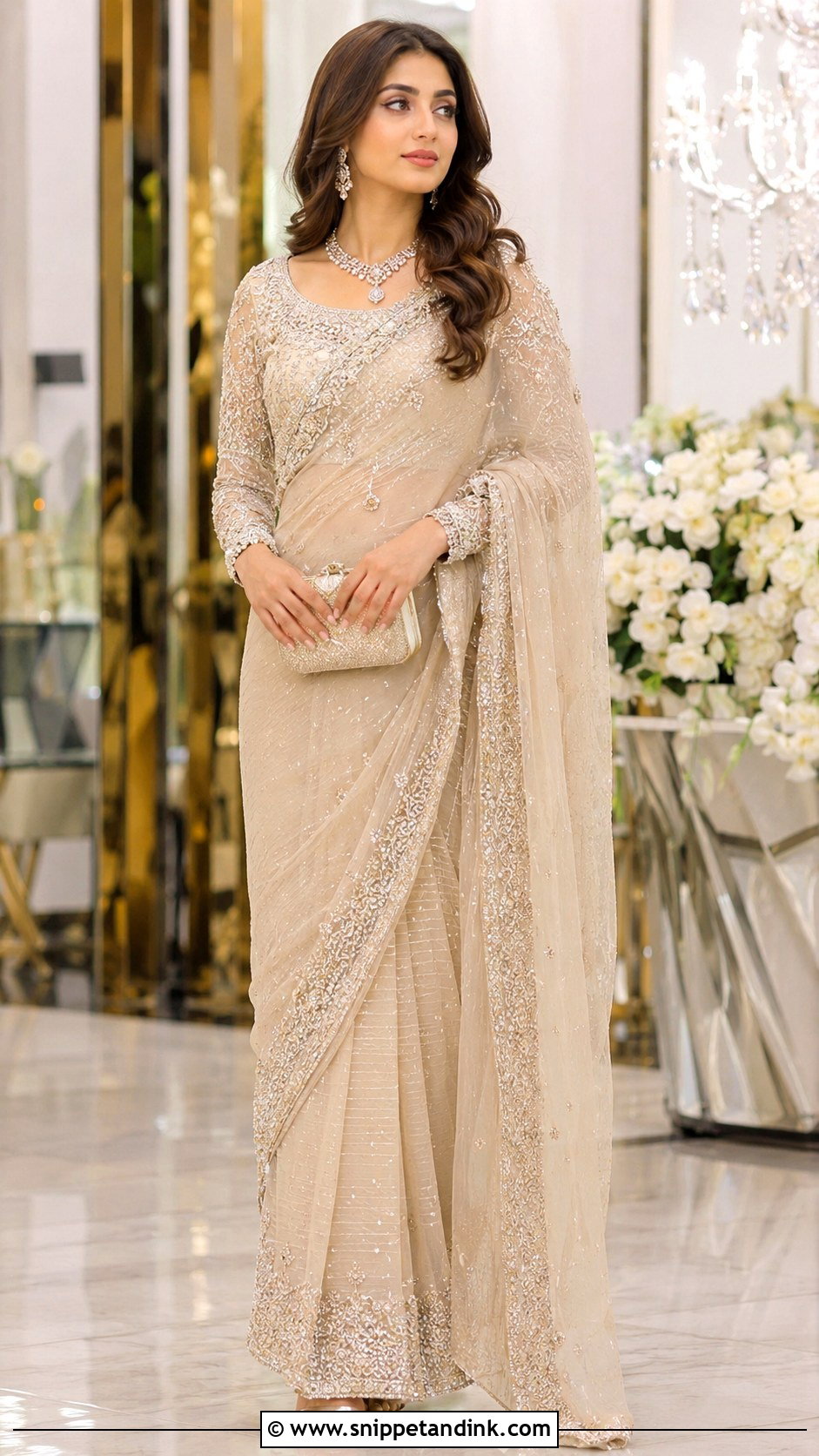
Sarees at Pakistani weddings tend to be styled more modestly, with longer blouses, full sleeves and structured drapes. A champagne saree with pearls, sequins, crystals or antique gold embroidery and a richly bordered pallu gives a sleek Walima or reception look. Have a professional drape it on the day, and ask for the pleats to be pinned at the waist and the pallu at the shoulder, so you can sit without the drape shifting. Jewellery should follow the neckline; a low bun or side-parted waves keep it polished.
22. Rust Lehenga With Antique Gold Work
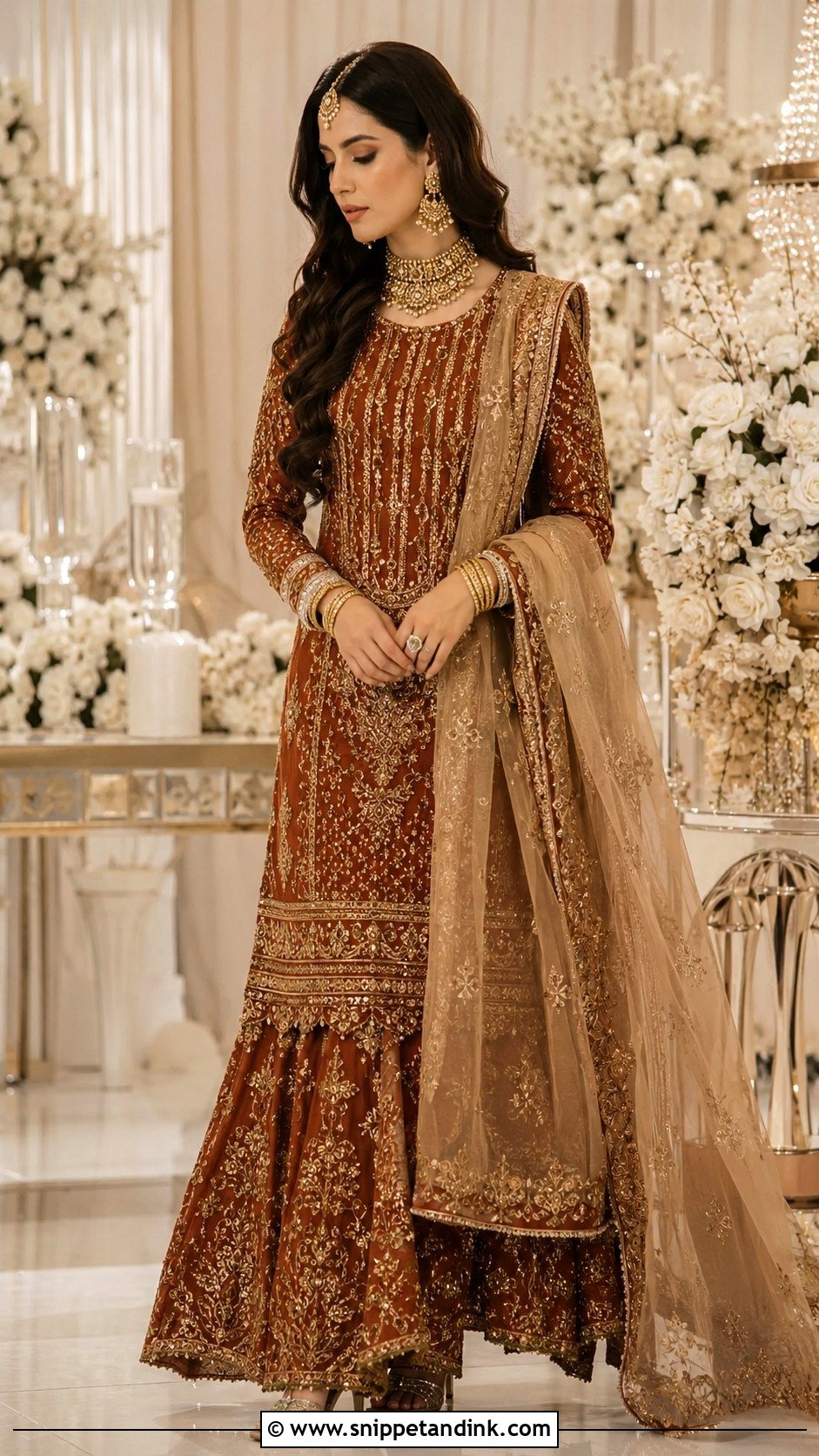
Rust, copper and burnt orange are heritage shades that feel warm and rich at fall weddings, Mehndi or even a Barat. A rust lehenga with a long shirt or structured blouse, detailed borders and antique gold embroidery has depth without brightness. A matching or beige dupatta balances it. Warm-toned makeup with soft eyes and glowing skin suits the palette. Rust is especially kind to warm and deeper skin tones; on very cool, pale skin, I’d test it next to the face first.
23. Powder Blue Gown With Pearl Work
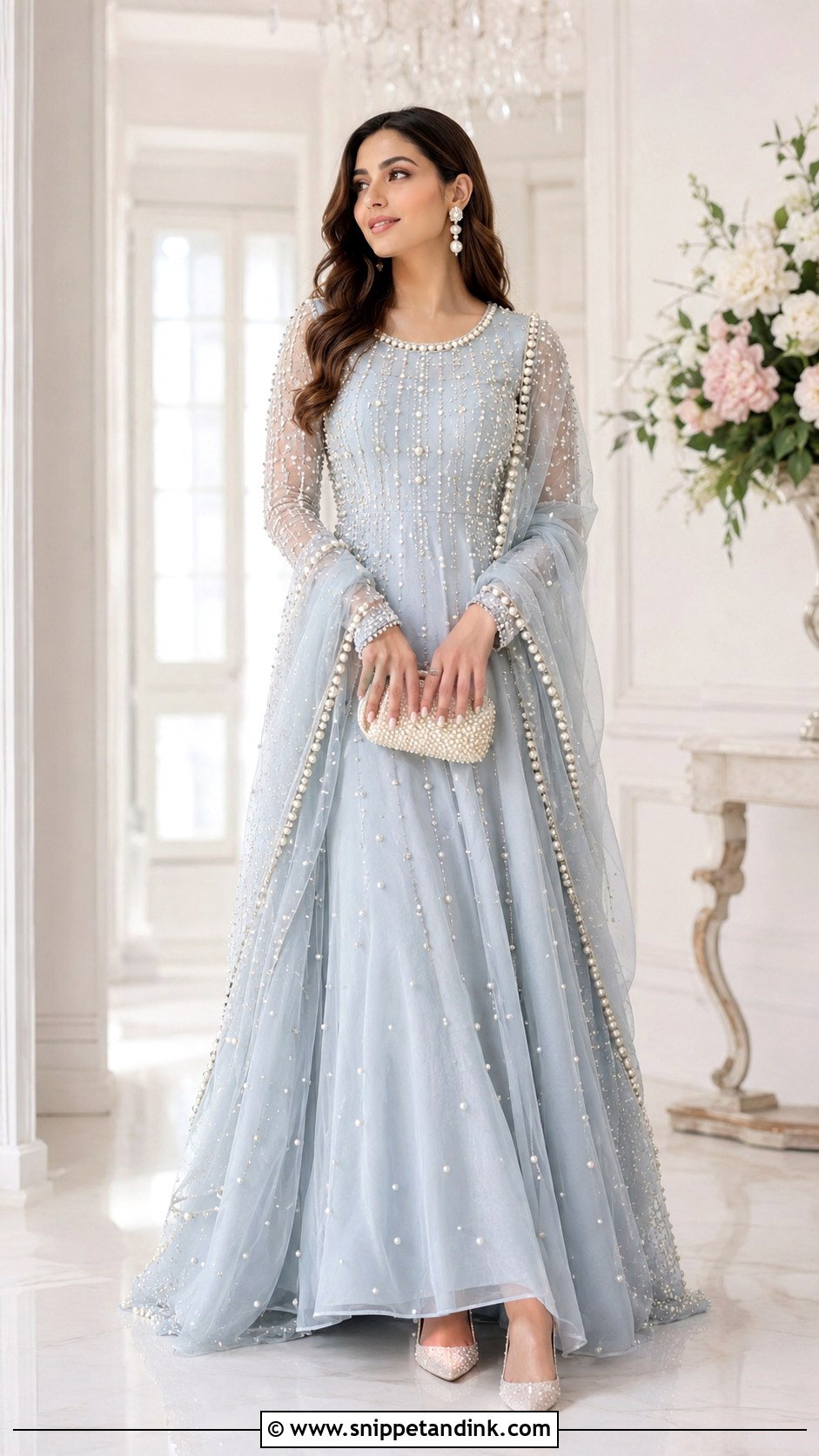
Powder blue with pearls has a calm, romantic quality for Walima, engagement or reception. A floor-length gown with a fitted bodice and a gentle flare, plus a sheer dupatta with pearl edging, gives it traditional balance. Pearl work adds weight to light fabric, so I check that the bodice is boned or interfaced enough to hold its shape. Silver or pearl jewellery, pale heels and neutral lips finish it, for brides who like cool colours and for guests alike.
24. Fuchsia Mehndi Lehenga With Green Dupatta
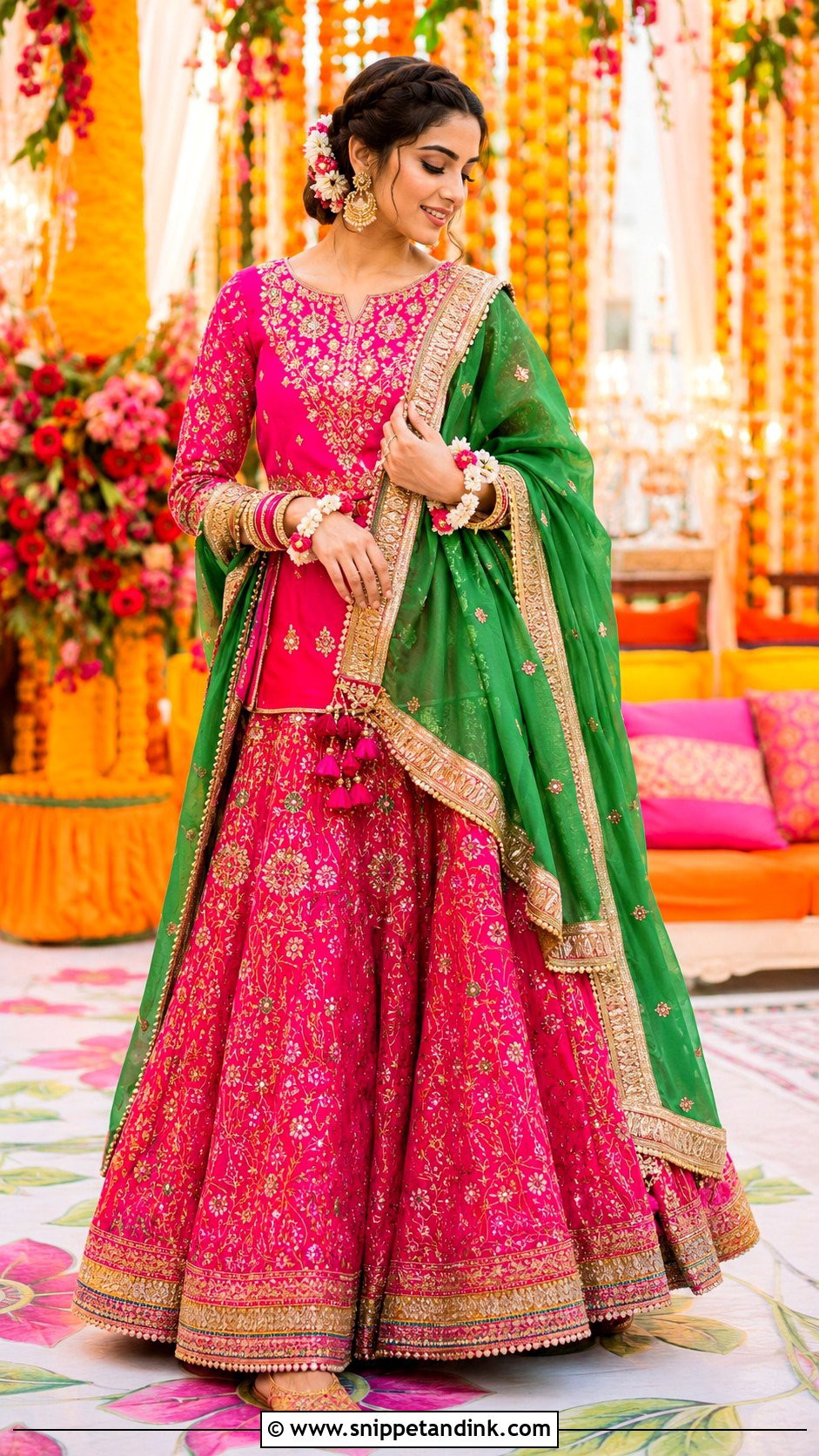
Fuchsia and green is a classic South Asian pairing for good reason: the two colours lift each other. A fuchsia Mehndi lehenga in gota, mirror or colourful thread work, with a short blouse, peplum or cropped kameez and a green dupatta with gold borders, has real energy. Bangles, jhumkas, khussas and floral hair details keep it light. Bridesmaids, sisters and Mehndi brides can all wear it without a heavy silhouette.

25. Grey Walima Lehenga With Silver Dupatta
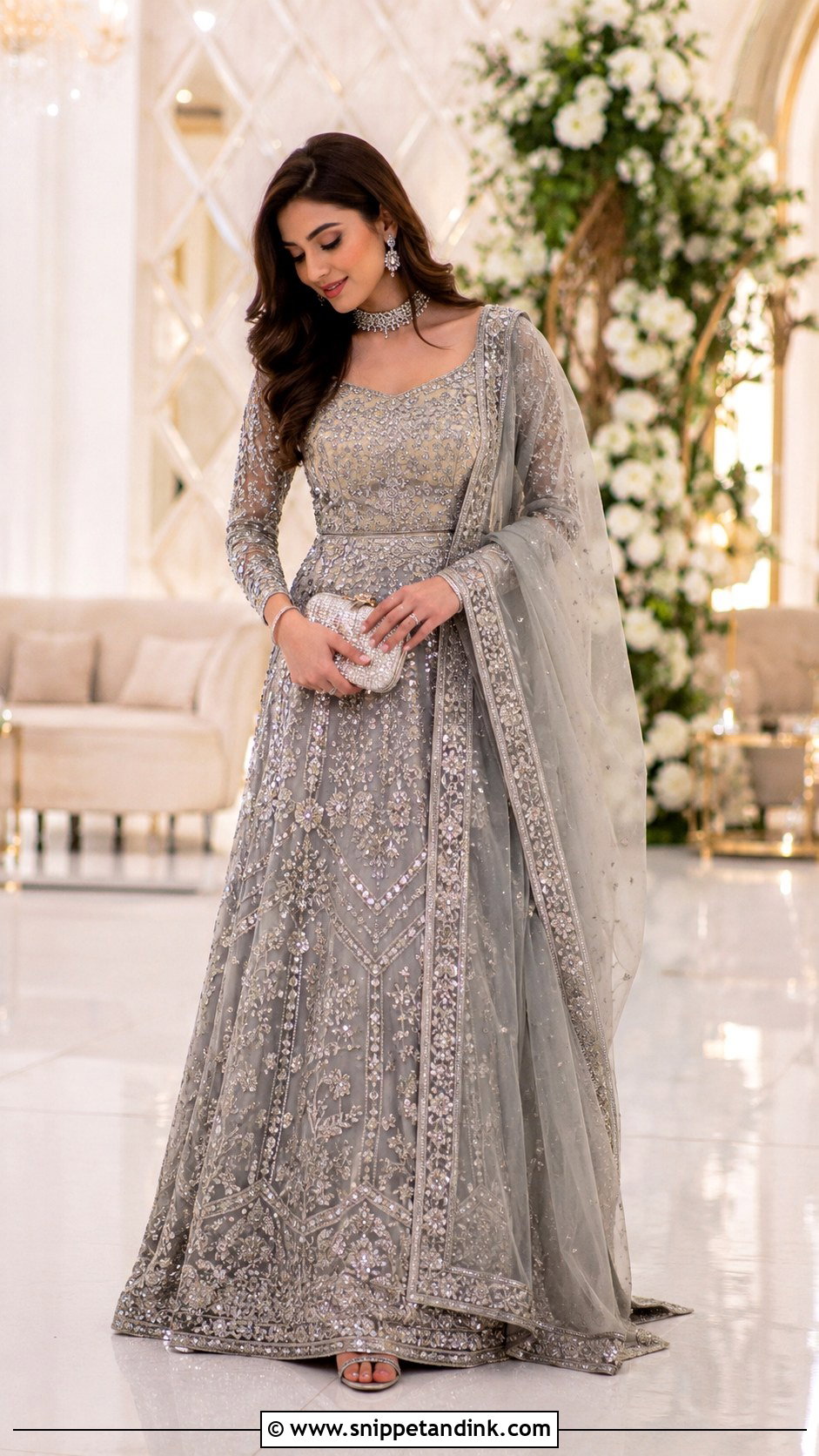
Grey surprises people. Soft dove grey or smoky silver, worked in crystals, sequins, pearls and metallic thread, makes a Walima lehenga that feels formal but not loud. Pair a fitted blouse or long shirt with a sheer silver dupatta. Grey needs warmth near the face to avoid looking flat, so I add a touch of rose to the cheeks and lips. A sleek bun, smooth waves or a polished hijab style suit the cool palette.
26. Mint Green Pishwas With Gold Details
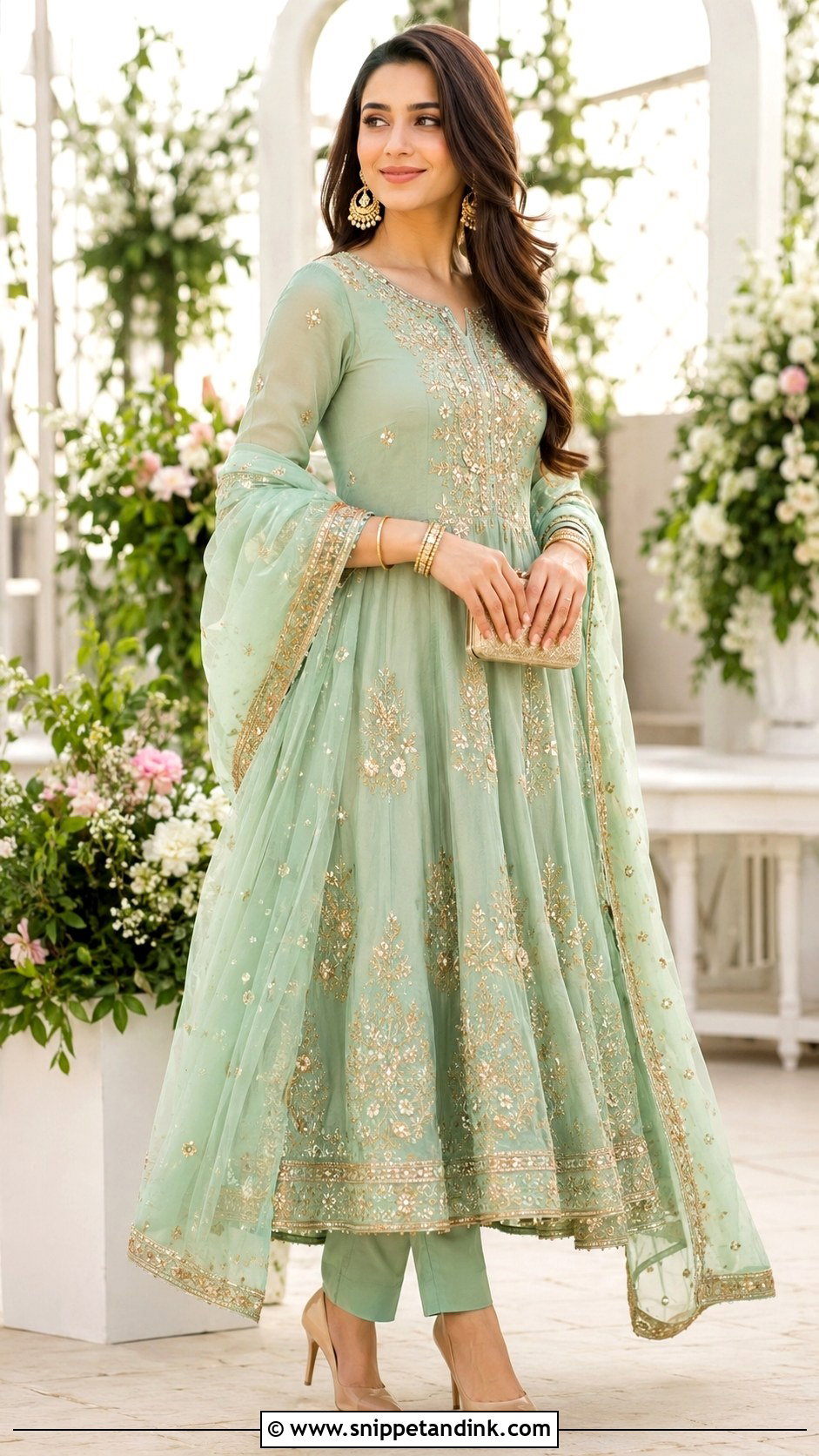
Mint and gold is a fresh pairing for Nikkah, engagement or daytime events. The pishwas flare moves gracefully while staying modest, and antique gold, ivory or pearl embroidery suits mint well. A matching churidar or slim trousers and a sheer dupatta complete it. Mint is light enough that it can look washed out against white walls, so I’d let the gold work be generous. Brides who want something delicate and guests who’d rather skip a heavy lehenga can both wear it.
27. Bridal Jacket Lehenga With Trail
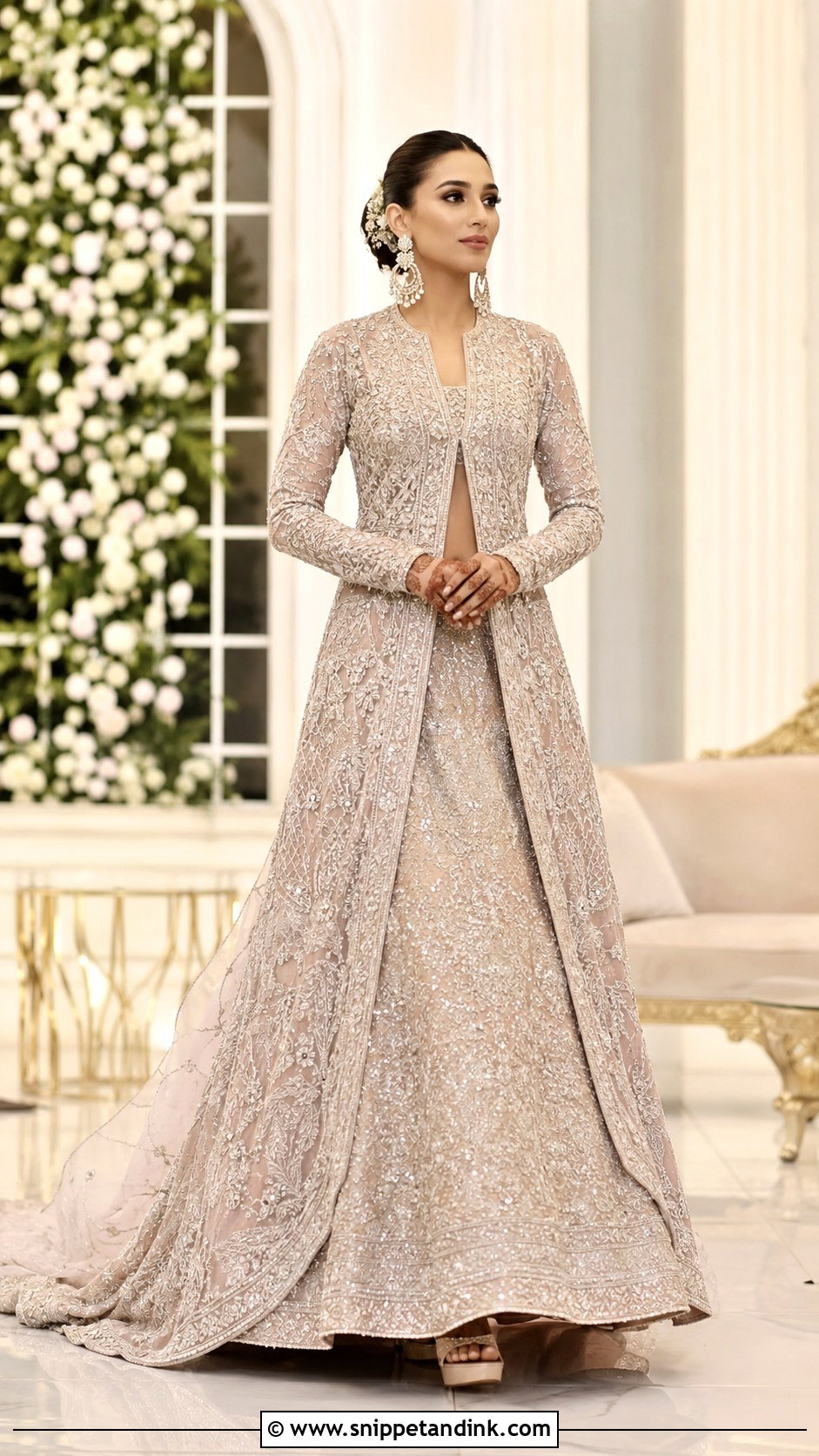
A jacket lehenga with a trail is a couture-style entrance piece. The jacket can be long, open-front or fully closed, with embroidery across shoulders, sleeves and hem, over a flared lehenga. A small trail adds drama without becoming hard to manage; anything longer needs a helper and a hidden loop. In ivory, gold, red, maroon or pastel, it suits receptions and Walima. If the jacket gives enough coverage, I’m happy to skip the dupatta entirely, which also simplifies the hair.
28. Long Shirt With Farshi Gharara
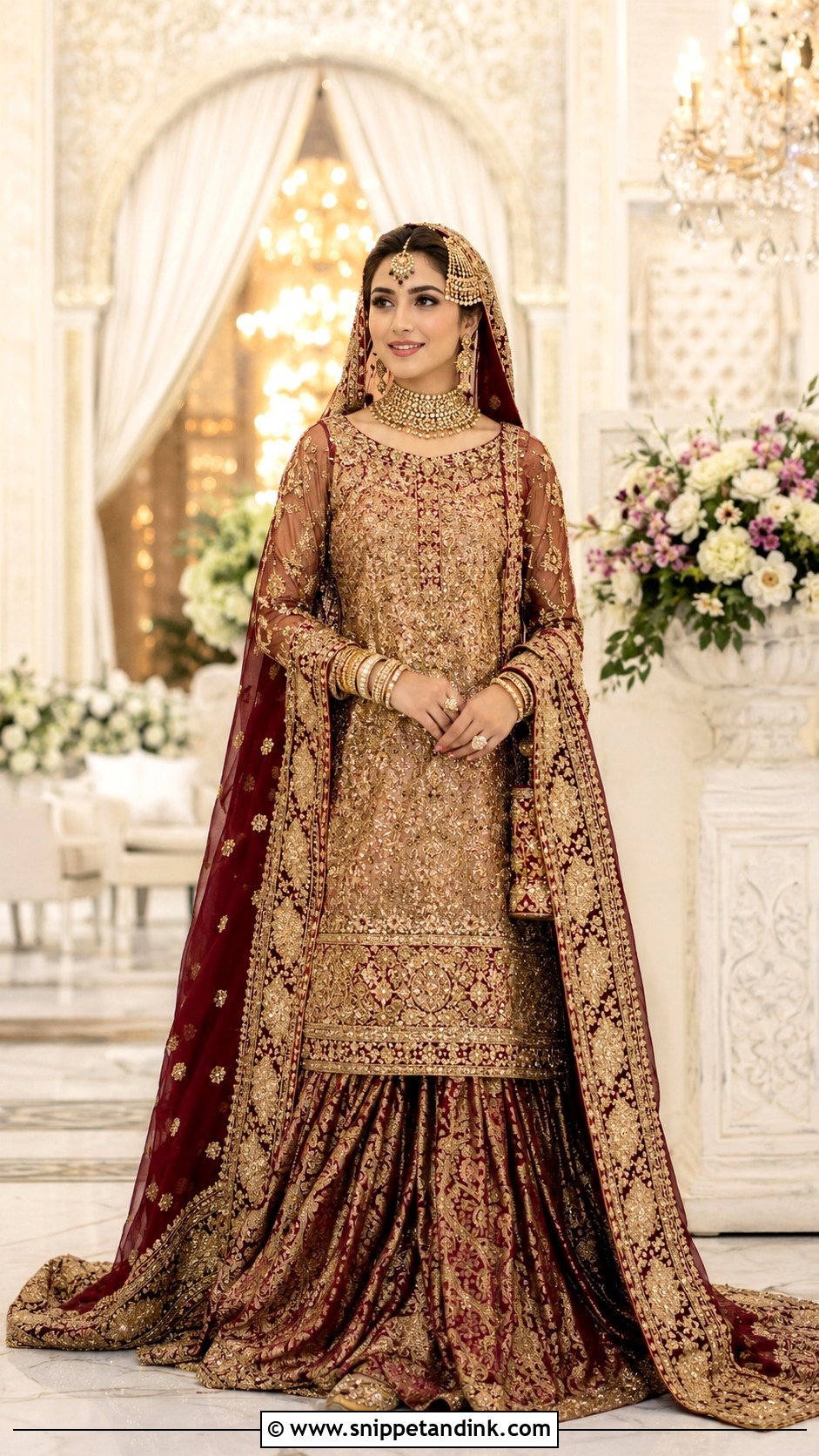
The farshi gharara, with its extra fabric and floor-sweeping volume, is one of the grandest Pakistani looks. Pair it with a long, heavily embroidered shirt in jamawar, tissue, raw silk or brocade and a wide-bordered dupatta. A tikka, passa, choker and bangles keep it traditional. With this much fabric at your feet, practise walking in it at home in your wedding shoes. I’d also skip high heels; a supportive flat or low block heel is far safer under all that volume.
29. Mauve Maxi Dress With Embroidered Dupatta
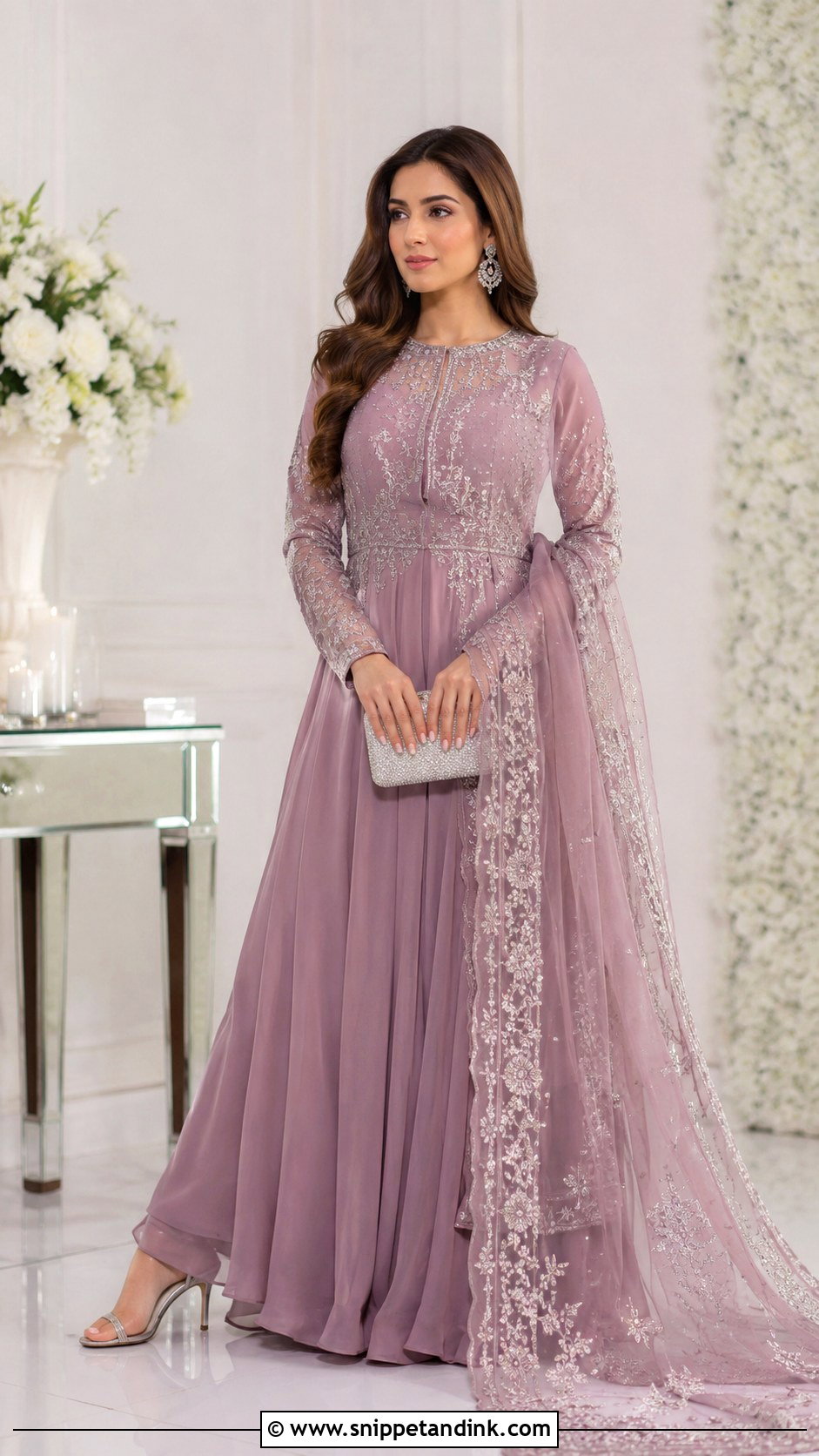
Mauve sits between pink and purple and flatters most skin tones without being bright. A floor-length maxi with silver, pearl or tone-on-tone embroidery and a matching bordered dupatta is formal enough for Walima, Nikkah, or engagement events. One-piece outfits like this are easier for anyone who dislikes managing a heavy lehenga, and they pack more simply. Silver heels, small drop earrings and soft curls, a neat bun or a hijab style complete it.
30. Teal Sharara With Embellished Peplum
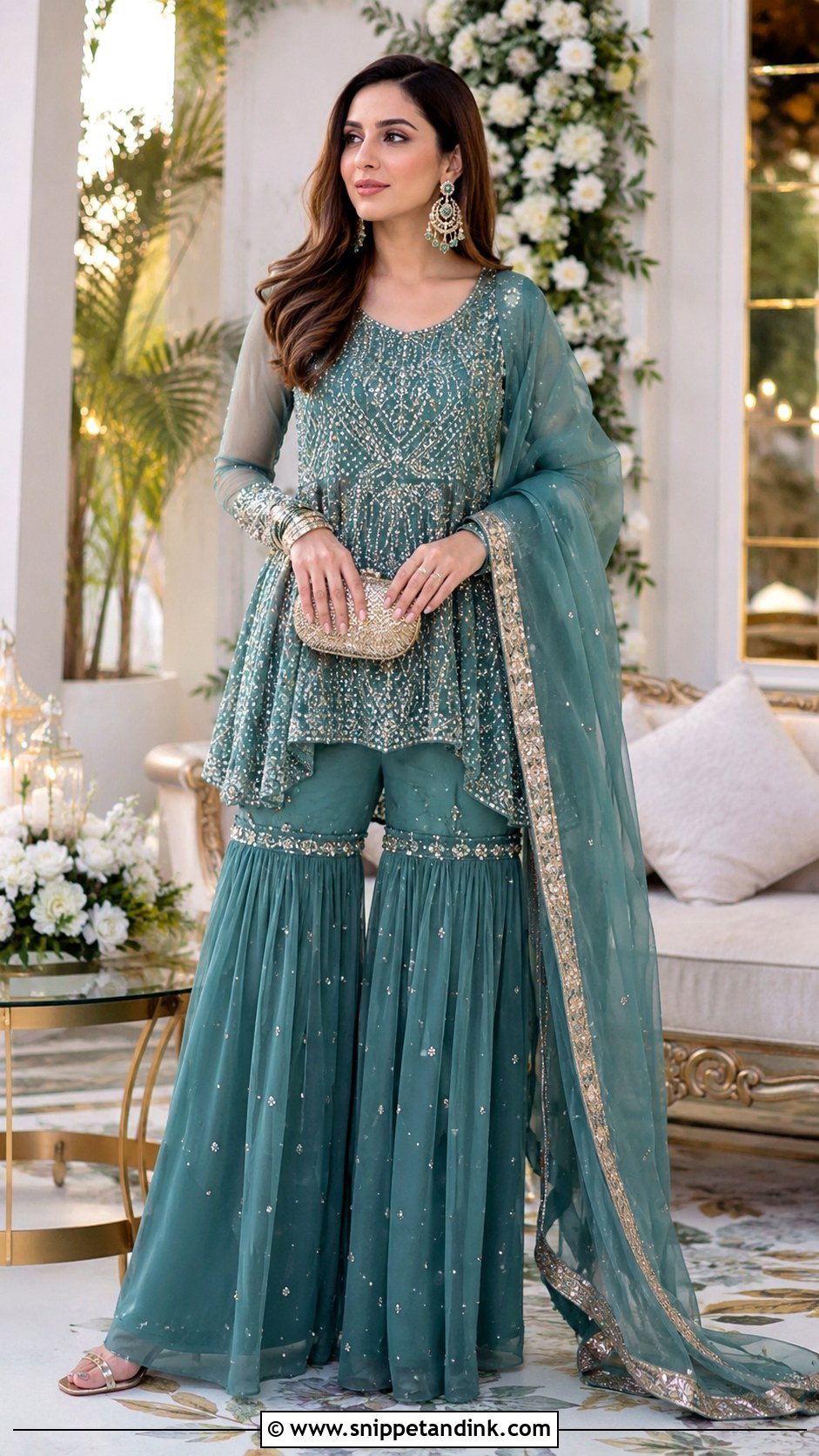
Teal is rich but uncommon at weddings, so it stands out without competing with the bride. A teal sharara with an embellished peplum shapes the waist while the sharara gives movement. Gold, silver or multicolour embroidery can change the mood by event. A sheer dupatta draped lightly over the shoulders or pinned to one side, statement earrings and khussas or heels finish it for Mehndi, reception or guest wear.
Zardozi, Dabka, Tilla or Gota? Reading the Embroidery Before You Buy
Shop descriptions use these words loosely, and they affect weight, price and how the piece ages. This is how I explain them at a first appointment.
- Zardozi: raised metallic embroidery built from metal thread, wire and sequins. Heavy, rich, and the most time-consuming to make.
- Dabka: tiny coiled springs of metallic wire, cut and stitched down. It gives a raised, textured shine and is often combined with zardozi.
- Tilla: fine metallic thread laid on the surface and couched down. Flatter and lighter than dabka, good for borders and nikkah outfits.
- Gota: woven metallic ribbon appliquéd on to the fabric. Bright and festive, light enough for mehndi and mayun.
- Resham: silk or silk-look thread embroidery, softer in colour and the lightest of all.
Most modern zari is not real gold or silver, which is perfectly fine, but it can tarnish if it is stored damp. Ask what the thread is made of, and if you want an outfit to hand down, it’s worth paying for better quality metallic work on the dupatta at least.
Balance Is What Makes Each Function’s Outfit Work
There are so many good options because a Pakistani wedding has so many moments: a classic red lehenga for Barat, a white pearl outfit for Nikkah, a pastel gown for Walima, and shararas, ghararas, sarees and pishwas for guests and family. The thing that makes any of them work is balance. Match fabric to season, embroidery weight to how long you’ll wear it, and the dupatta, jewellery and shoes to the shape of the dress. Get those right and the outfit feels like you, not like a costume.
You'll Like These Ideas:








Leave a Reply