
An Indian wedding is rarely one outfit. Between haldi, mehendi, sangeet, the ceremony and the reception, a bride may change five or six times, and her sisters and guests are dressing for several events too. That is why the wardrobe now mixes heavy heritage pieces with lighter ones: lehengas, sarees, shararas, anarkalis, gowns and fusion cuts, in pastels as often as jewel tones. When I plan these wardrobes, I start with the ritual, not the trend, because sitting cross-legged at a mandap for an hour asks something very different of a garment than dancing at a sangeet. The 25 outfits below run from the main ceremony to the lighter functions, with styling for each.
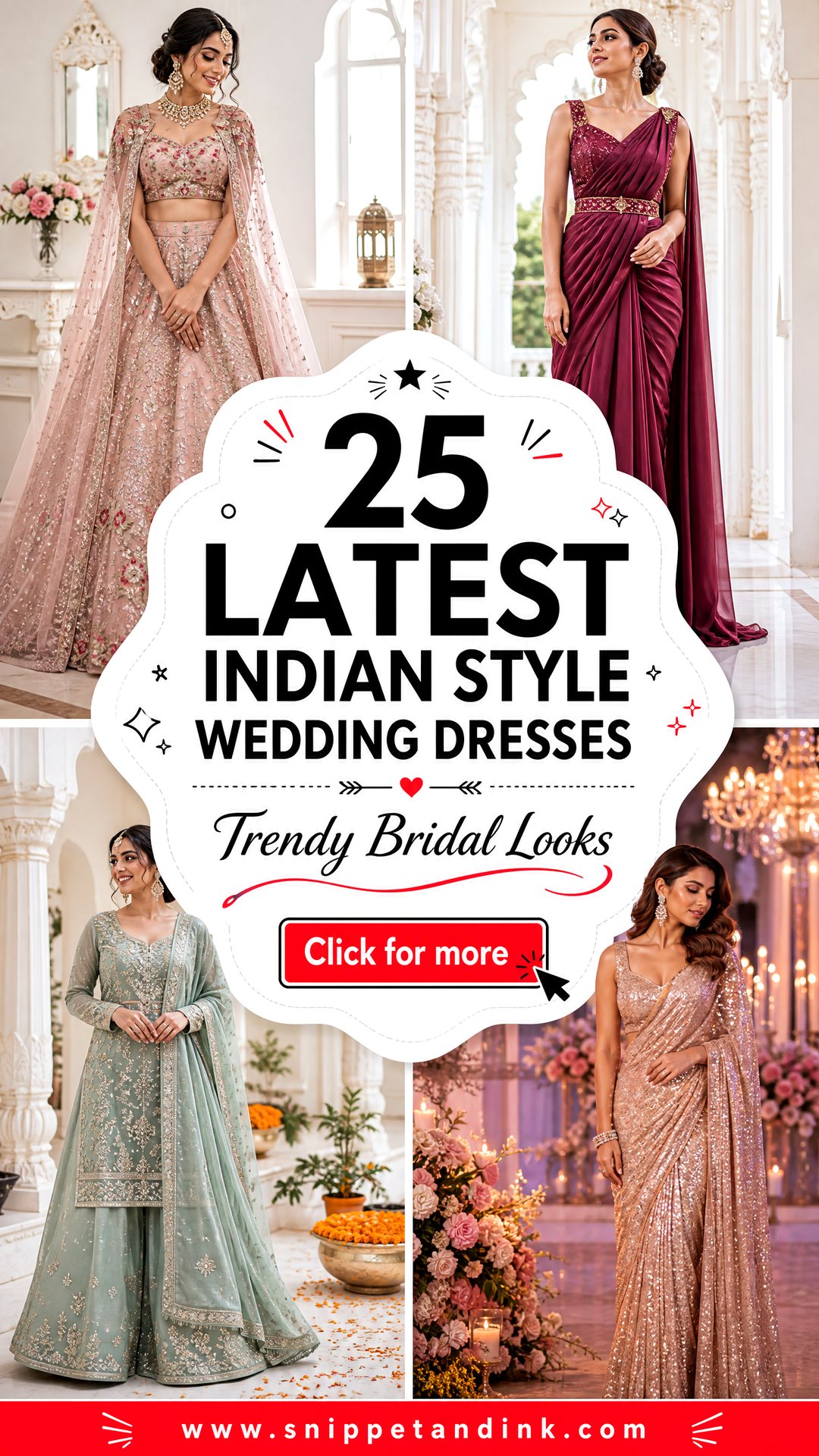
How Many Outfits a Five-Function Wedding Really Needs
Brides often plan the ceremony lehenga in detail and leave the other events to the last month. I’d plan them together, because colours, weights and budgets affect each other across the week.
Match the garment to the ritual
- Haldi: washable cotton or light georgette in yellow. Turmeric stains for good, so nothing precious.
- Mehendi: a light lehenga or sharara with short sleeves, comfortable for hours of sitting with wet henna.
- Sangeet: something you can dance in, such as a lehenga saree, sharara or cape lehenga.
- Ceremony: the heaviest outfit, but test it sitting cross-legged if your rituals happen at a mandap.
- Reception: a gown, sequin saree or lighter lehenga, since you will stand and greet guests for a long time.
Timing the orders
Custom bridal lehengas commonly take three to six months, depending on the embroidery and the designer, so order the ceremony outfit first. Lighter pieces can follow. I schedule the final blouse fitting two or three weeks before the wedding, with the exact bra and shoes you will wear, because weight changes in the last months show first in the blouse. Ask for a can-can or extra lining if you want the lehenga flare to hold its shape, and keep all the dupattas in one place so the right one leaves the house each day.
1. Red Bridal Lehenga Dress
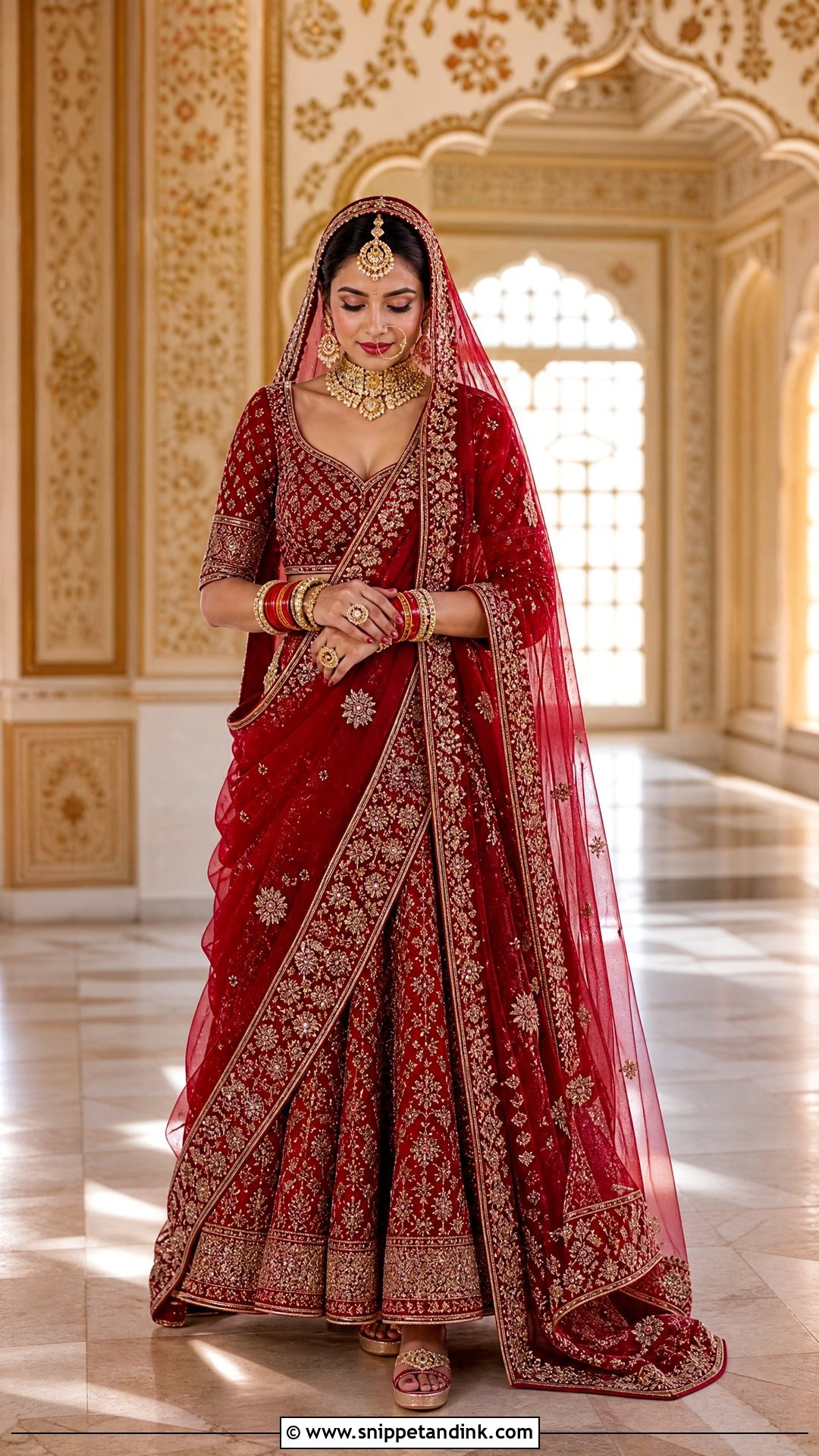
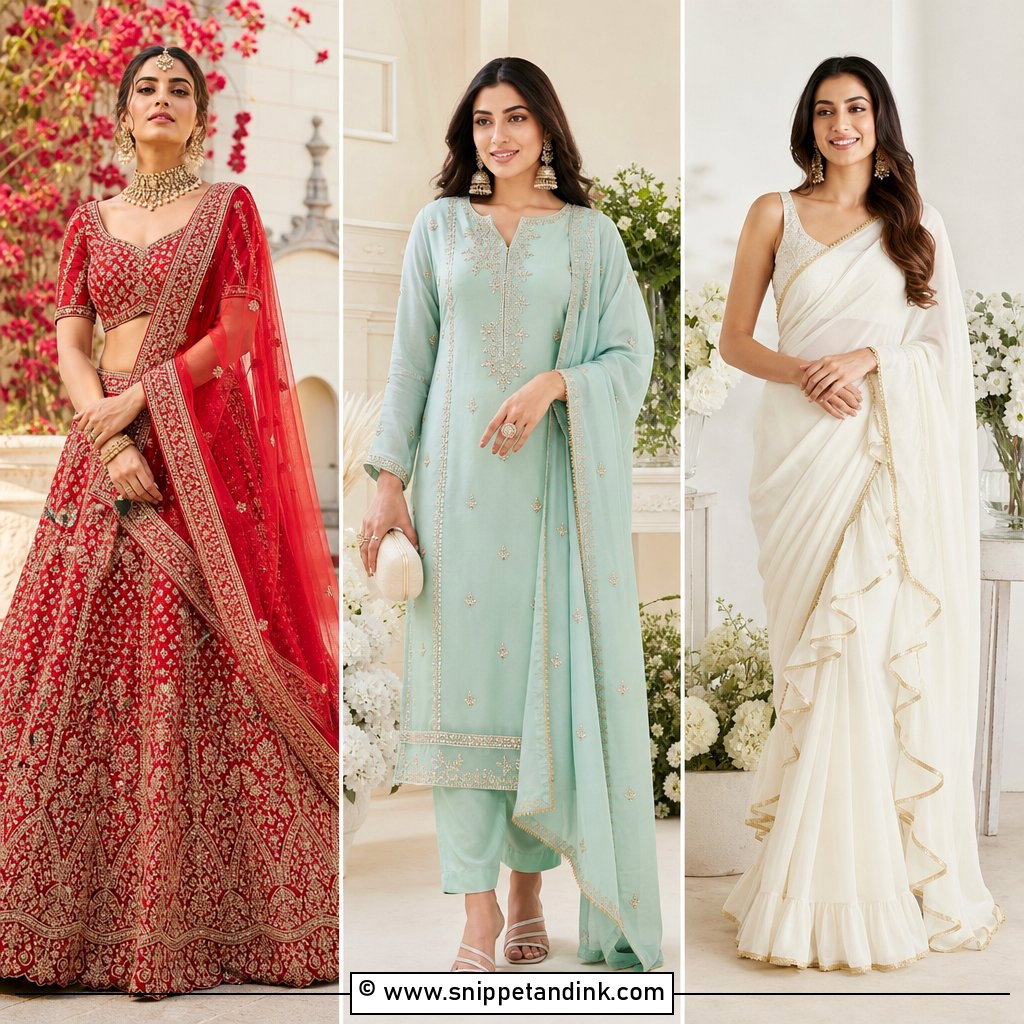
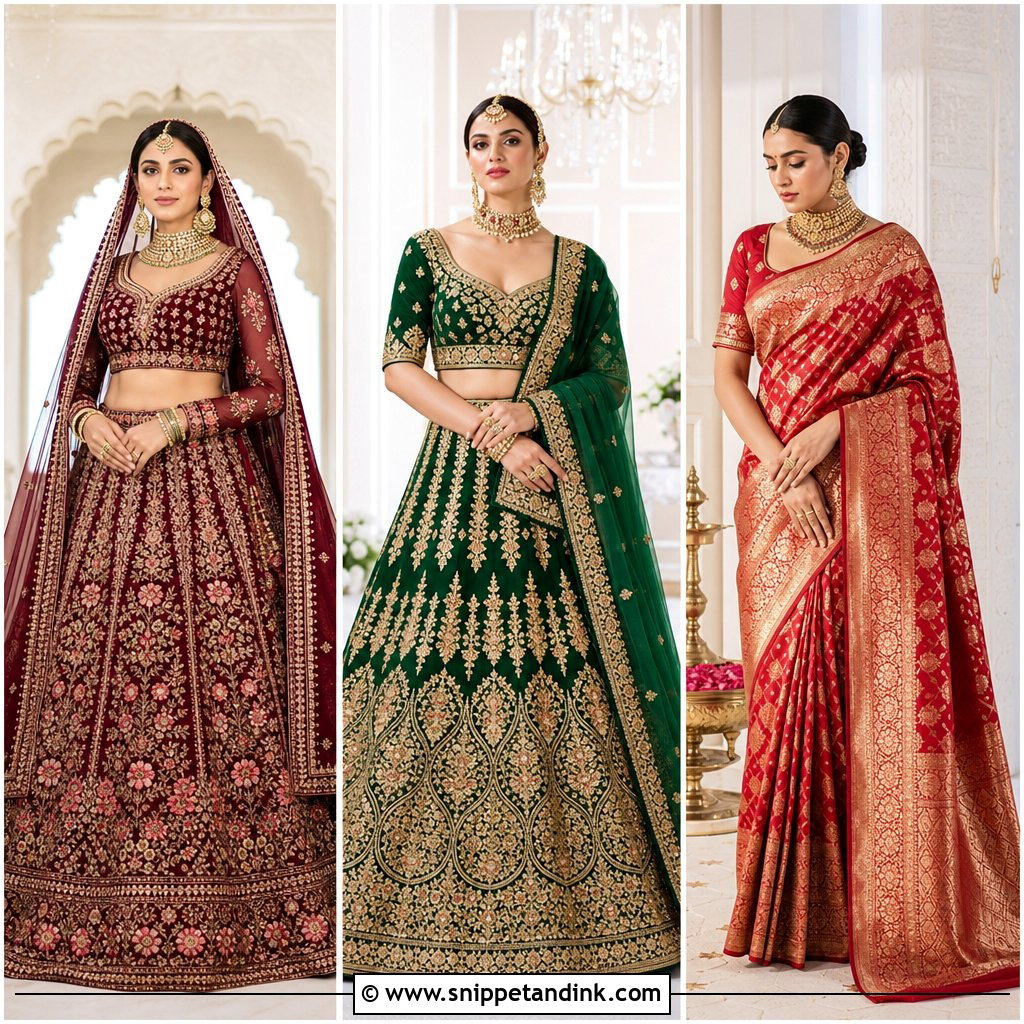
Red is still the colour most brides wear for the main ceremony, and the reasons are emotional as much as visual. A full flared lehenga in raw silk, velvet or brocade, worked with zardozi, resham, sequins or thread, gives the classic silhouette; a fitted blouse balances the skirt and a sheer dupatta over the head finishes it. Gold suits red best, with a choker, a long haar, matha patti, bangles and statement earrings. Heavy bridal lehengas weigh several kilos, so I ask brides to wear theirs for an hour at the final fitting, sitting down, before the day. Hidden under the hem, embroidered juttis are kinder than heels for the pheras.
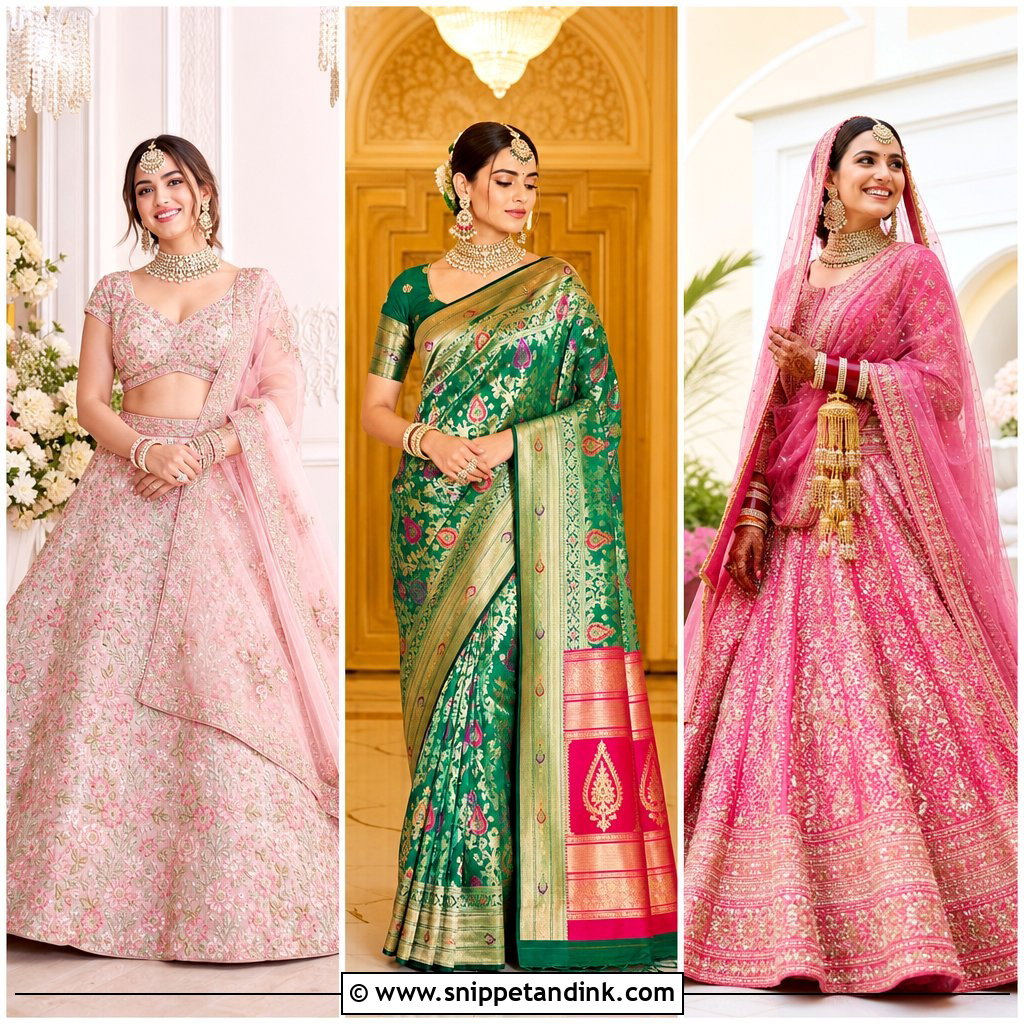
2. Pastel Bridal Lehenga Dress
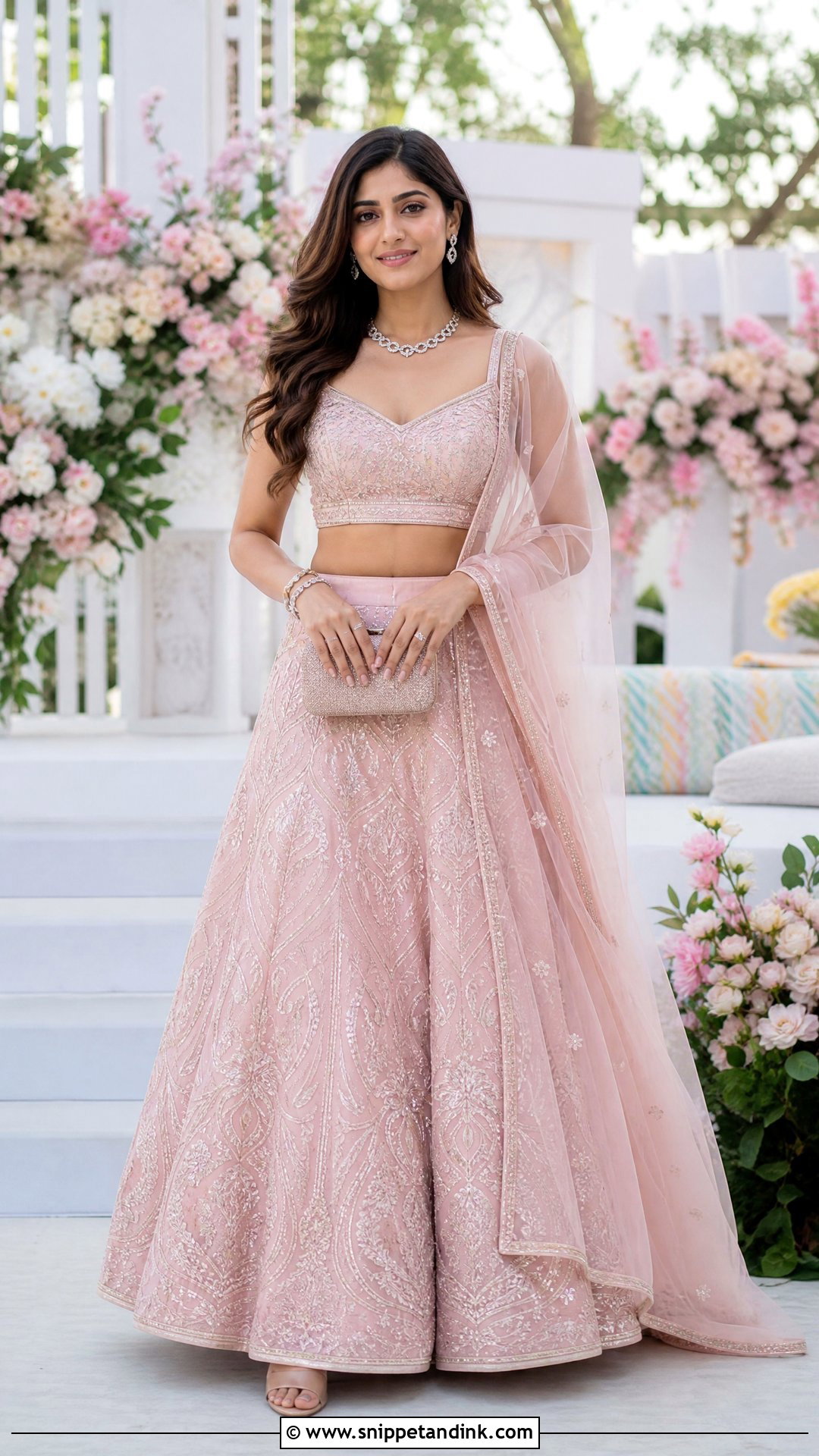
Pastels bring softness without giving up the grandeur. Blush, powder blue, mint, lavender and champagne all read well in daylight and at destination venues, worked with pearls, tonal embroidery, mirrors or small sequins. A matching blouse and a light dupatta keep it calm, and diamond, polki or pearl jewelry keeps it fresh. My caution with pale lehengas is the mehendi and haldi stains that travel with you from earlier functions; keep the pastel for a day when your hands are dry. Soft curls, dewy makeup and nude heels suit engagement and daytime ceremonies.
3. Ivory Bridal Lehenga Dress
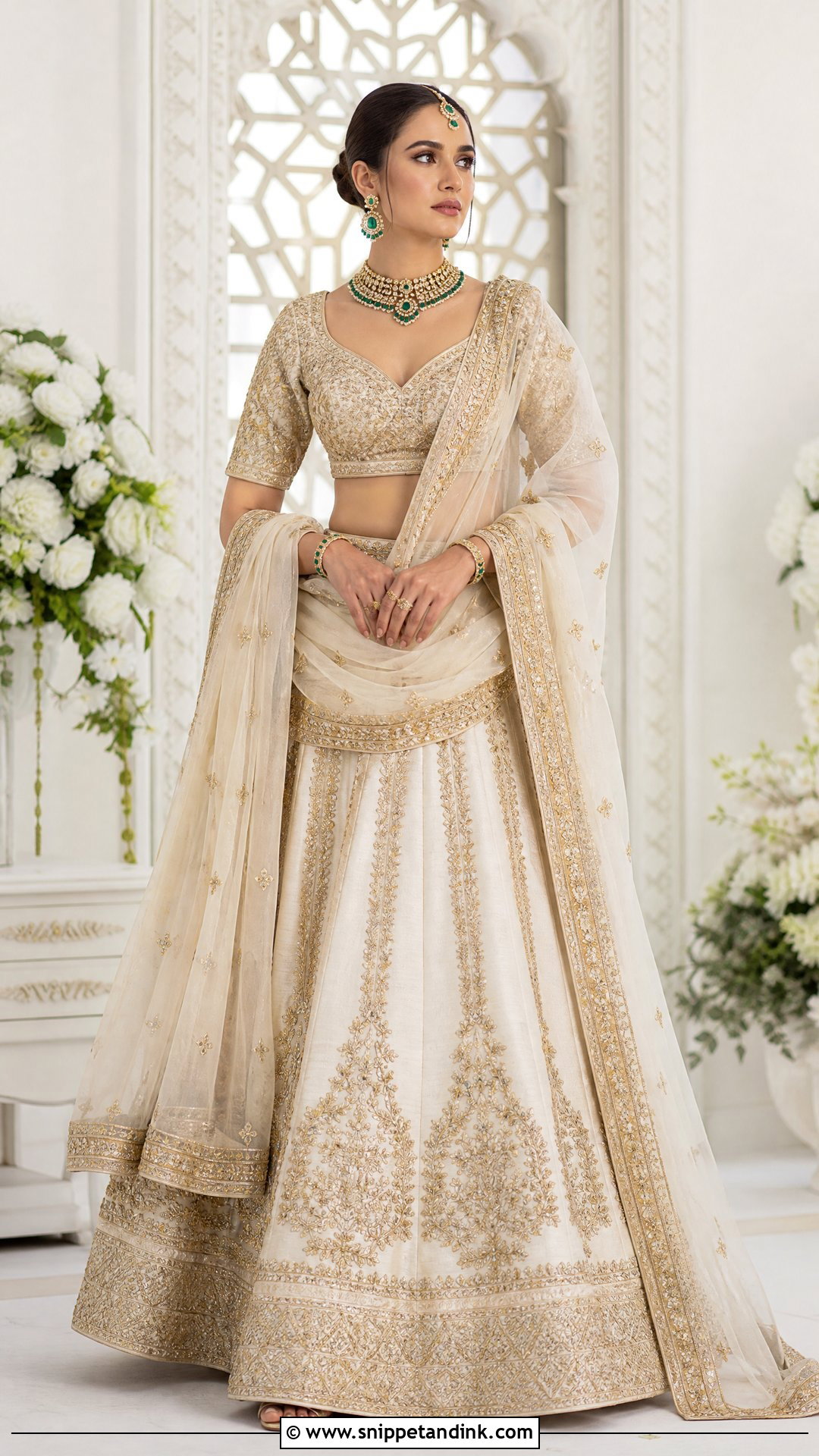
Ivory only stays bridal when the embroidery is rich. Gold zardozi, antique threadwork, pearls and a few crystals give it depth; a plain ivory lehenga can look like a guest outfit. The blouse neckline can be deep or modest, and a sheer dupatta with a heavy border adds drama for the ceremony. Kundan with emerald or ruby brings warmth and contrast. In some families white and ivory still carry associations with mourning, so I always suggest a quick word with elders before ordering. A sleek bun, metallic heels and glowing makeup finish it.
4. Banarasi Silk Saree Dress
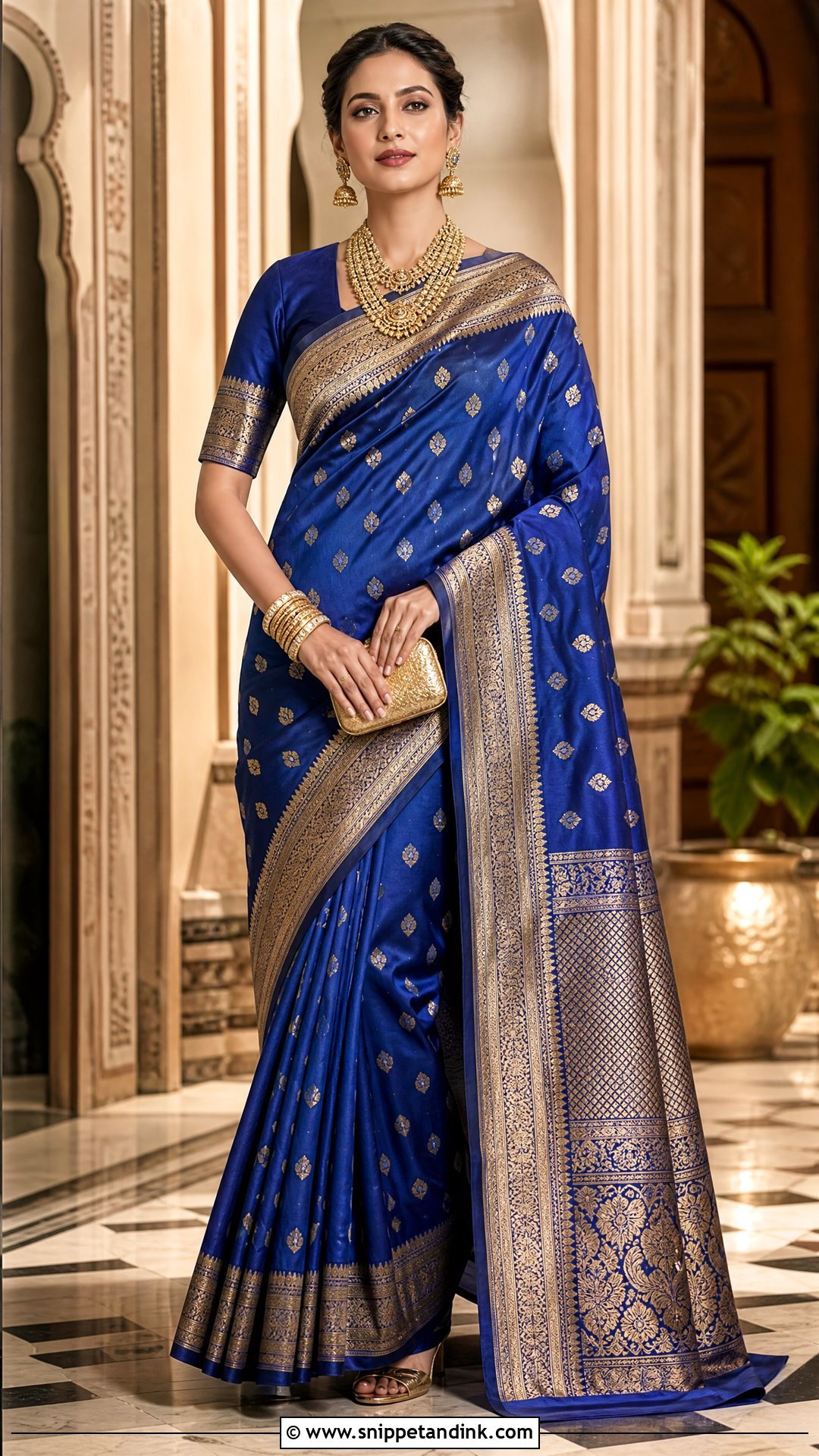
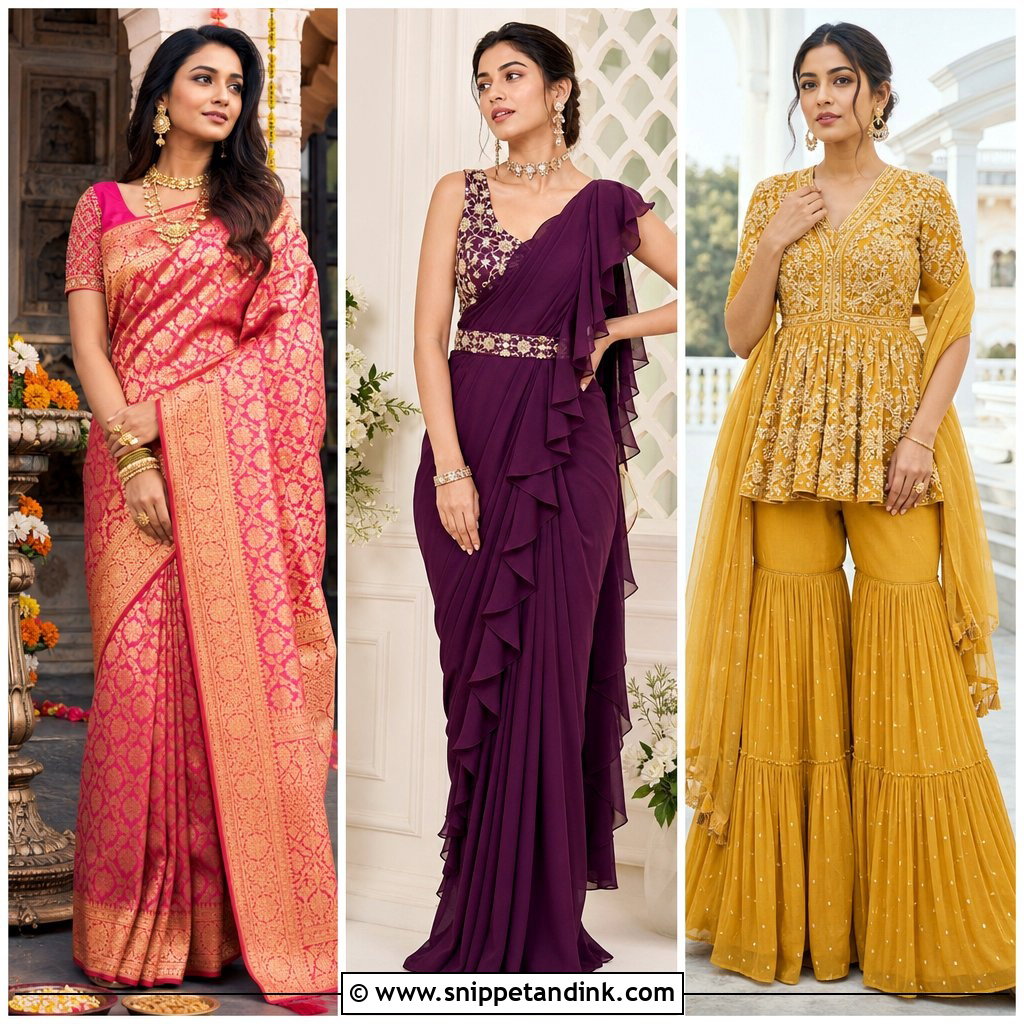
A Banarasi silk saree is heritage you can feel in the hand: woven zari borders, a heavy pallu and a silk that catches light. Deep red, royal blue, emerald, rani pink and gold all look festive. The pallu is heavy, so a good blouse fit at the shoulder matters, and I pin it at the shoulder in two places for a long ceremony. Temple jewelry, bangles, a neat bun with flowers and gold heels or embroidered flats complete it. It suits brides who love classic textiles and guests who want elegance over trend.
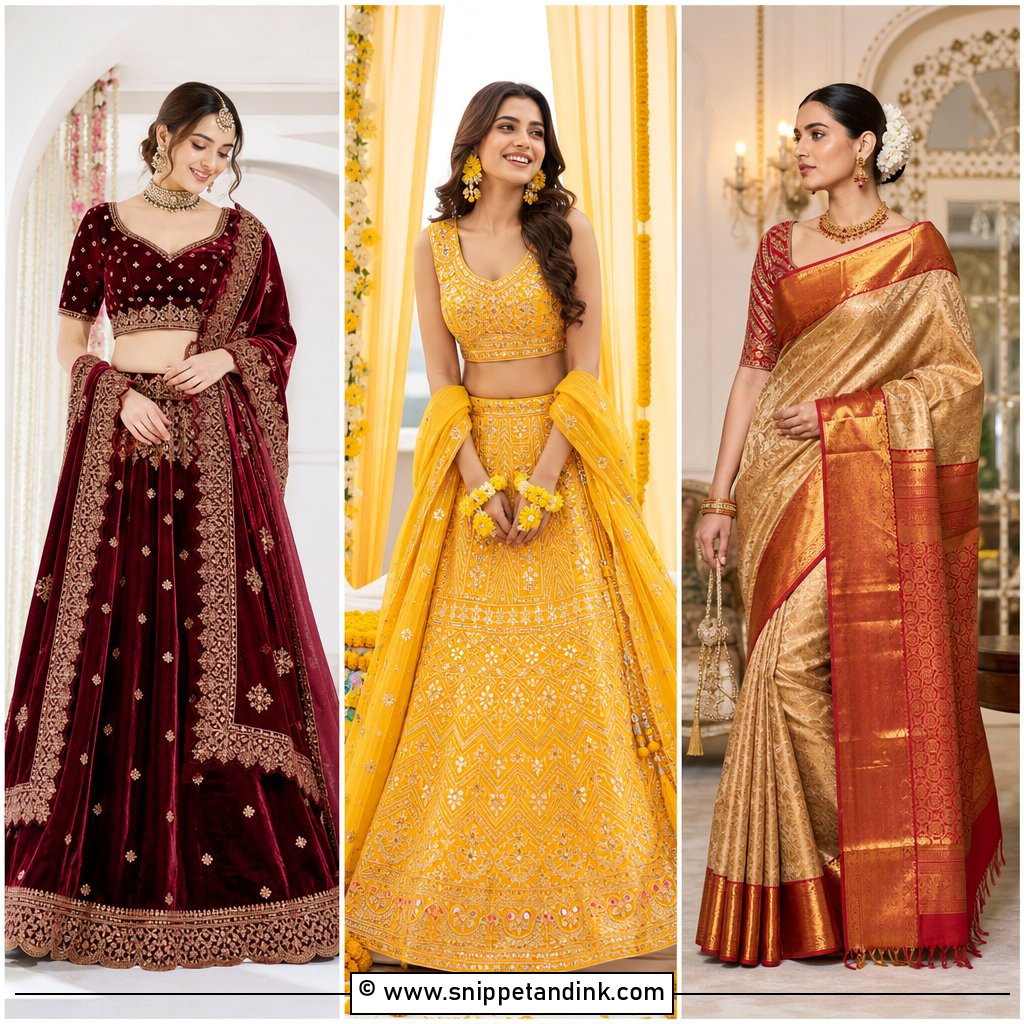
5. Kanjivaram Silk Saree Dress
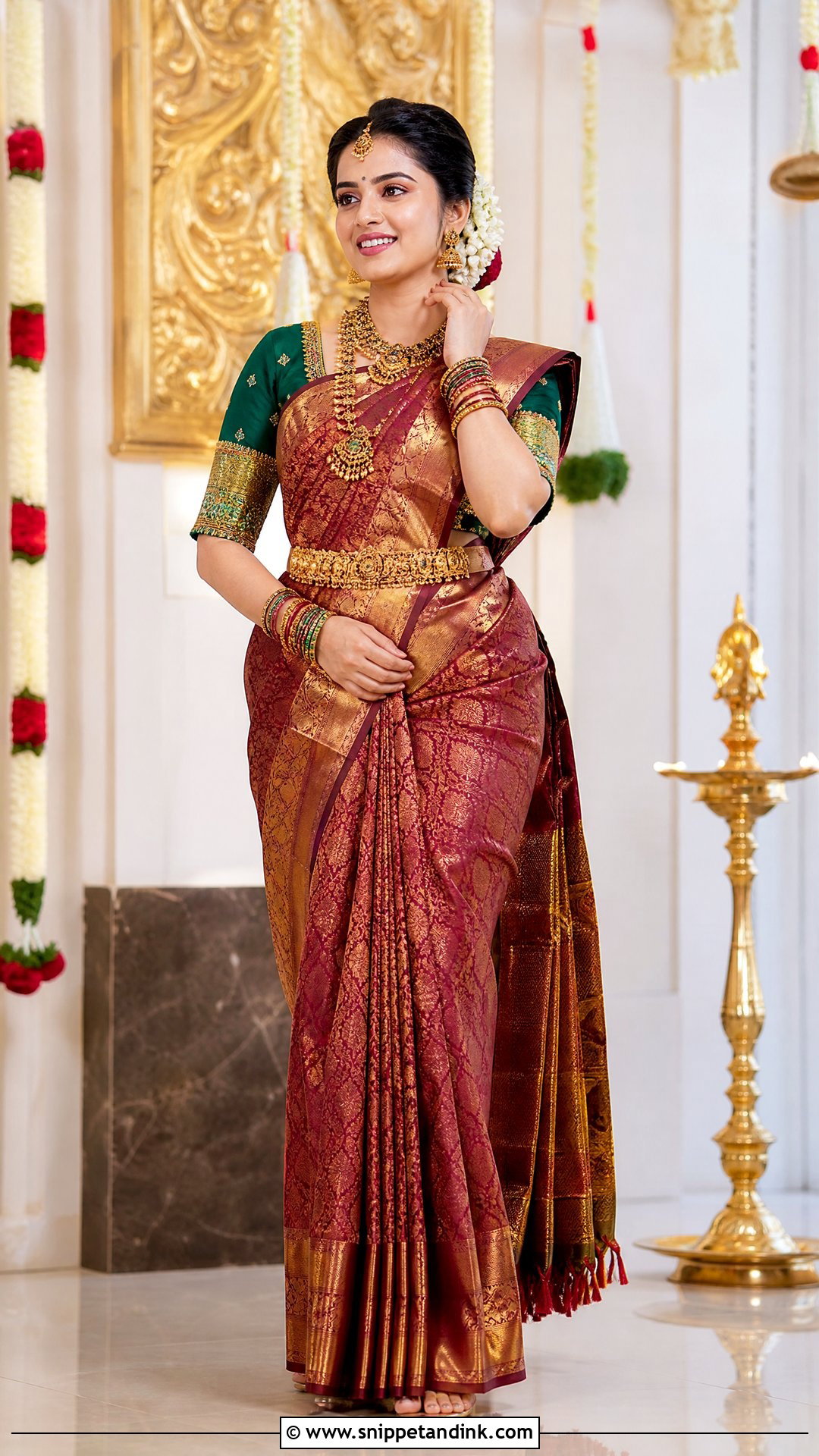
The Kanjivaram is the South Indian bridal silk, with a broad border and traditional motifs woven in heavy, lustrous silk. It needs very little added to it. Maroon, mustard gold, peacock blue, emerald and deep purple are traditional; a contrast blouse makes the border sing. Real Kanjivaram is stiff when new, so I’d have it draped once before the day to soften the pleats. Temple jewelry, layered necklaces, jhumkas, an oddiyanam waist belt, bangles and a flower-covered braid or bun finish it, with comfortable gold sandals. Mothers and sisters wear it as proudly as brides.
6. Organza Saree Dress
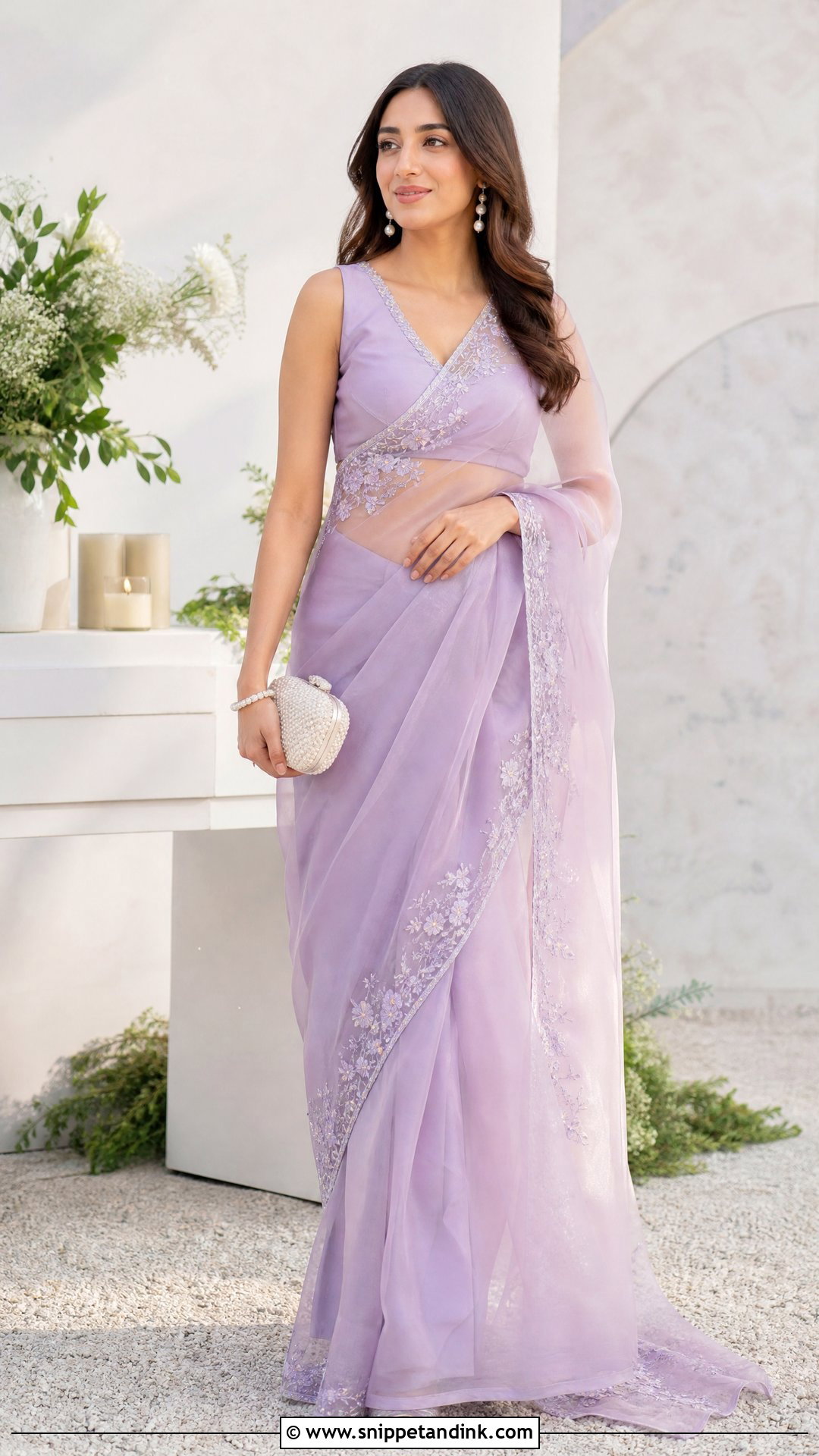
Organza sarees are light and crisp, so they hold a clean drape without weight. Pastel organza with floral embroidery, pearl borders or a few sequins suits daytime; deeper shades with metallic work suit evening. The crispness has a downside: organza creases sharply and can feel scratchy against bare skin at the waist, so a soft petticoat and careful pleating help. A fitted blouse, delicate jewelry, strappy heels and soft waves finish it for an engagement, mehendi or reception.
7. Lehenga Saree Dress
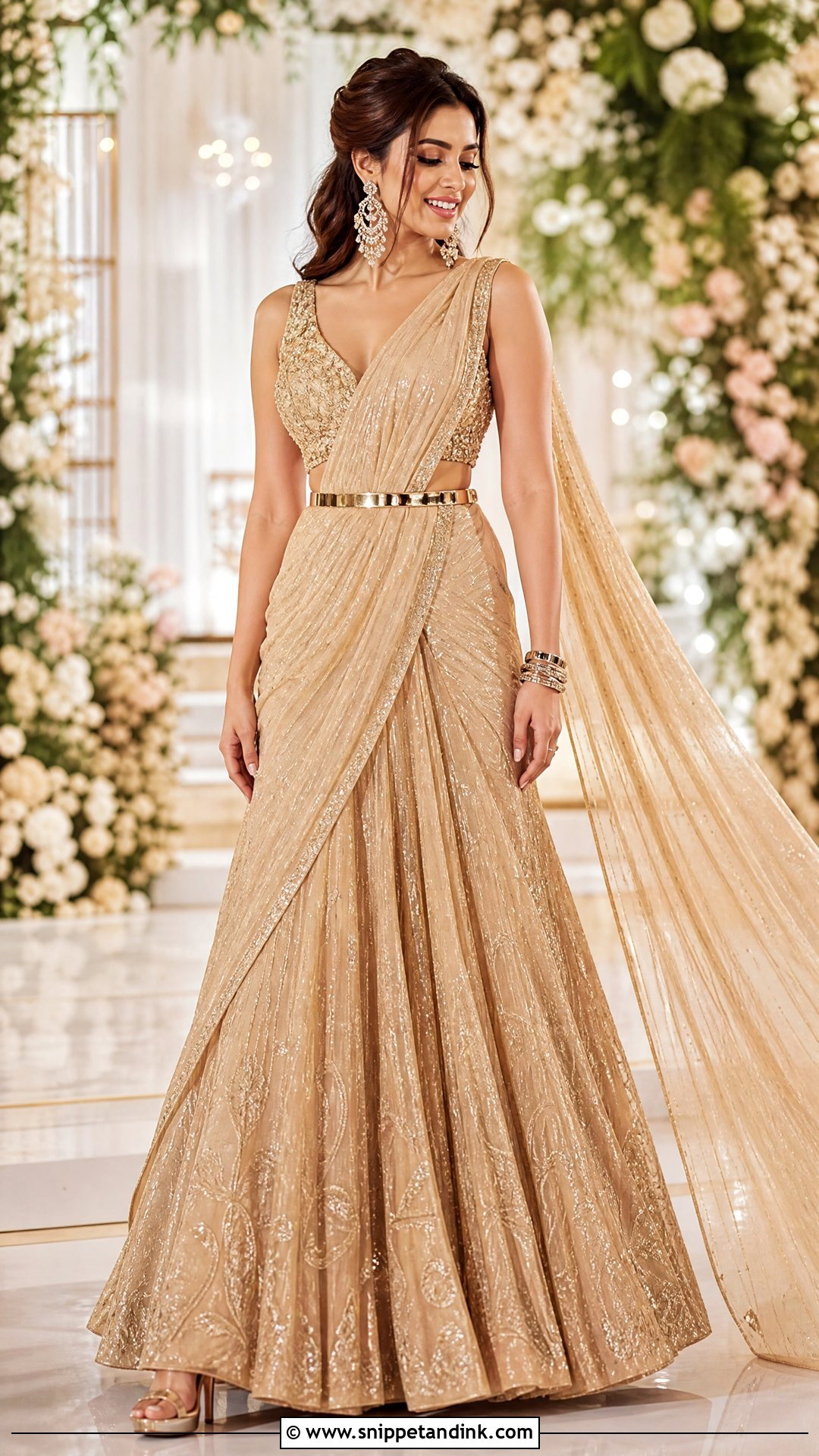
A lehenga saree gives the saree look with lehenga ease. The pallu is usually pre-attached over a flared skirt and blouse, so there are no pleats to redo when you dance. Georgette, net, silk or crepe with embellishment looks dressy enough for a wedding. I add a belt to most of them, not only for style but because it stops the pallu sliding forward through the evening. Chandelier earrings, bangles and metallic heels suit sangeet and reception.
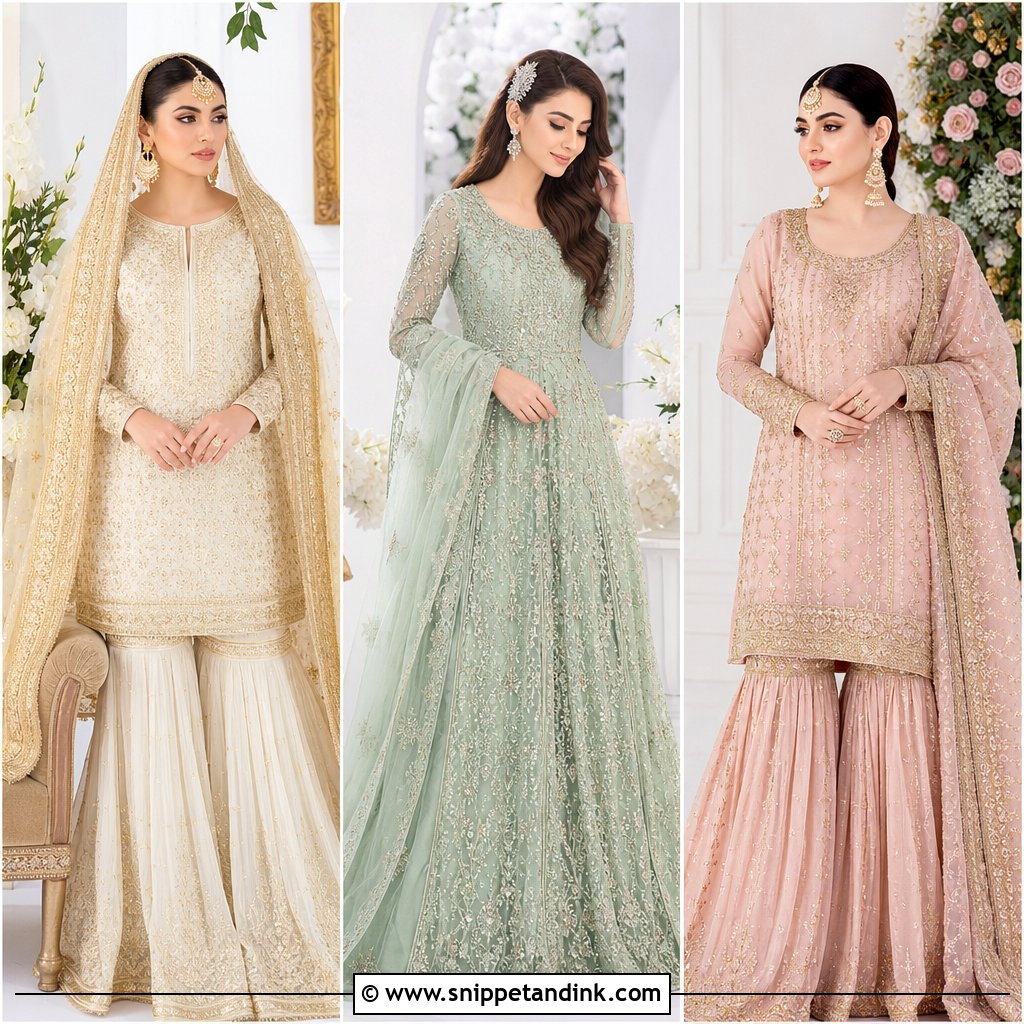
8. Sharara Suit Dress
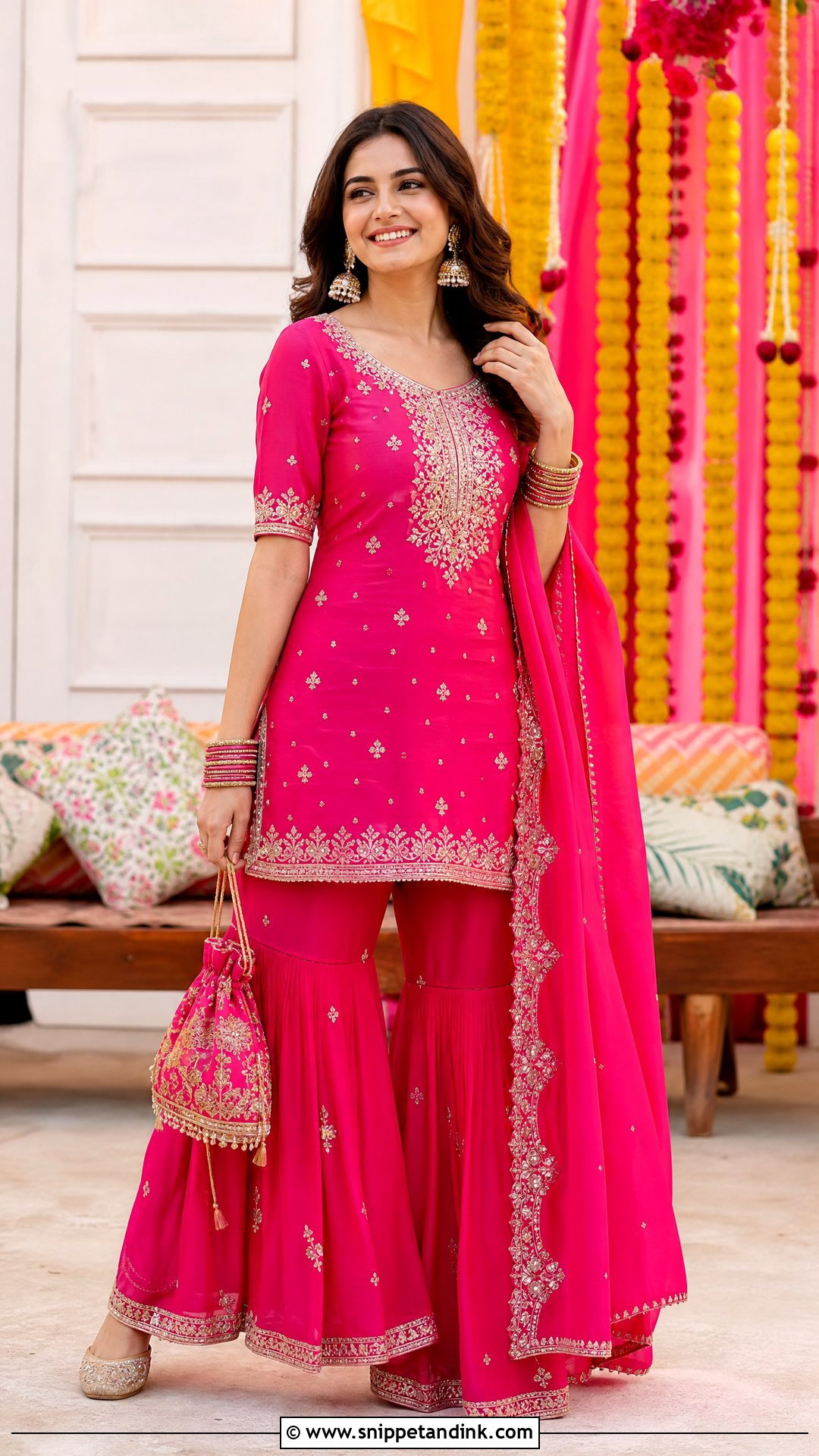
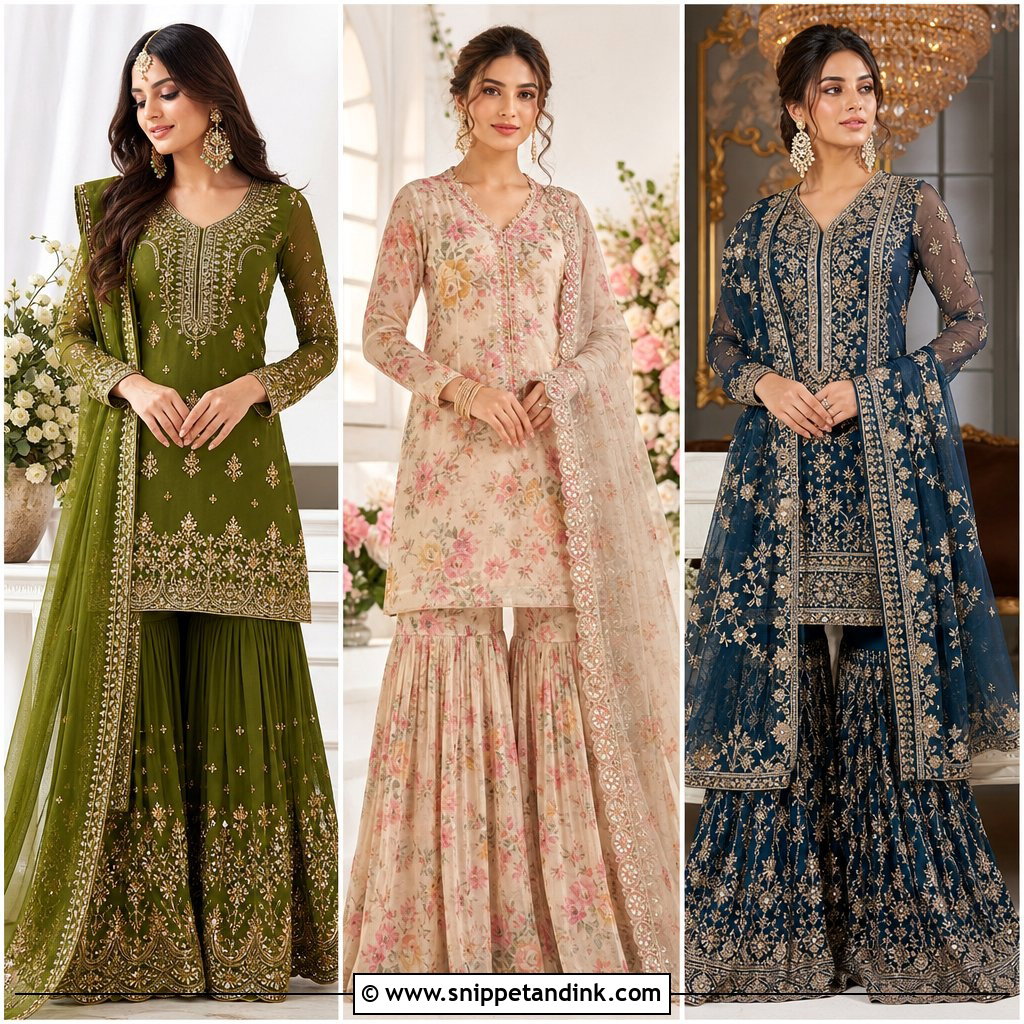
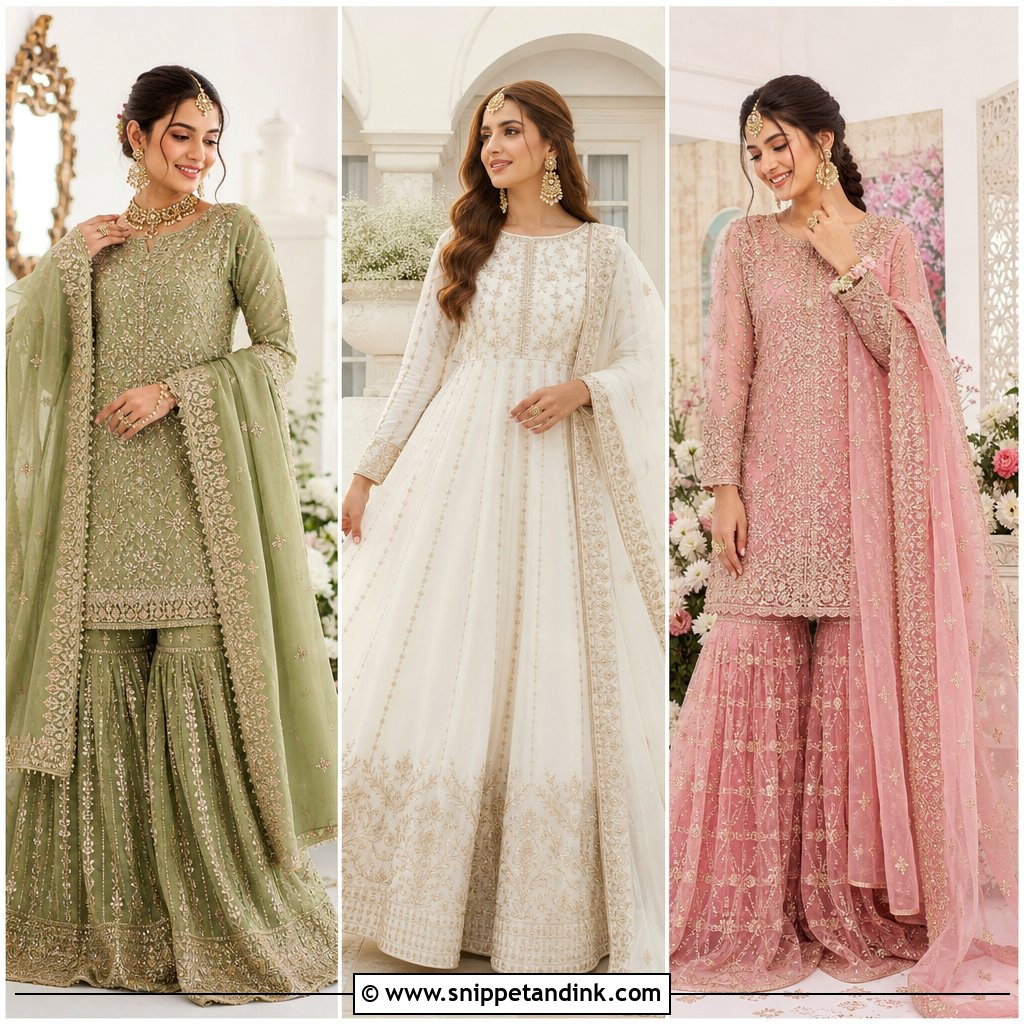
A sharara suit dress is the one I recommend for anyone who plans to dance all night. The pants flare from the waist and move with you, and a short or mid-length kurta balances them. Georgette, silk, brocade or organza with mirror work, gota patti or sequins looks festive; a matching dupatta completes it. Check the sharara length with your actual shoes on, since the flares catch under a heel if they are cut long. Statement earrings, stacked bangles and juttis suit mehendi, sangeet and haldi.
9. Gharara Suit Dress
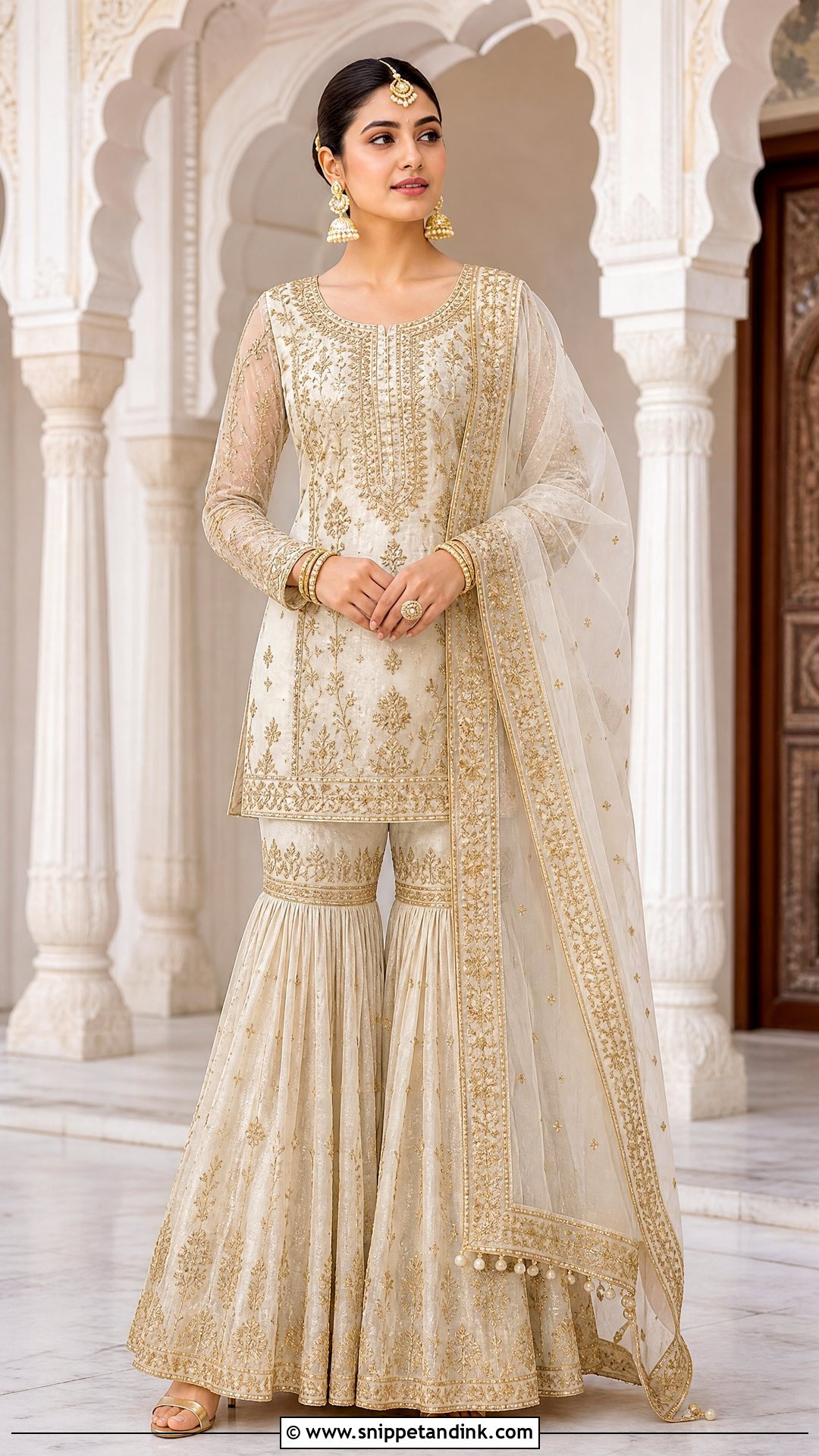
The gharara has old-world charm: fitted to the knee, then a dramatic flare below a gathered band. Paired with a short kurti, an embellished dupatta and traditional jewelry, it feels formal and graceful. Silk, brocade, tissue and georgette suit it; soft gold, ivory, peach, emerald and maroon all look elegant. The knee joint is where tailoring shows, so ask for the band to sit just below the kneecap so you can kneel and sit comfortably. Jhumkas, a passa and embroidered juttis suit nikkah, engagement and family weddings.
10. Anarkali Gown Dress
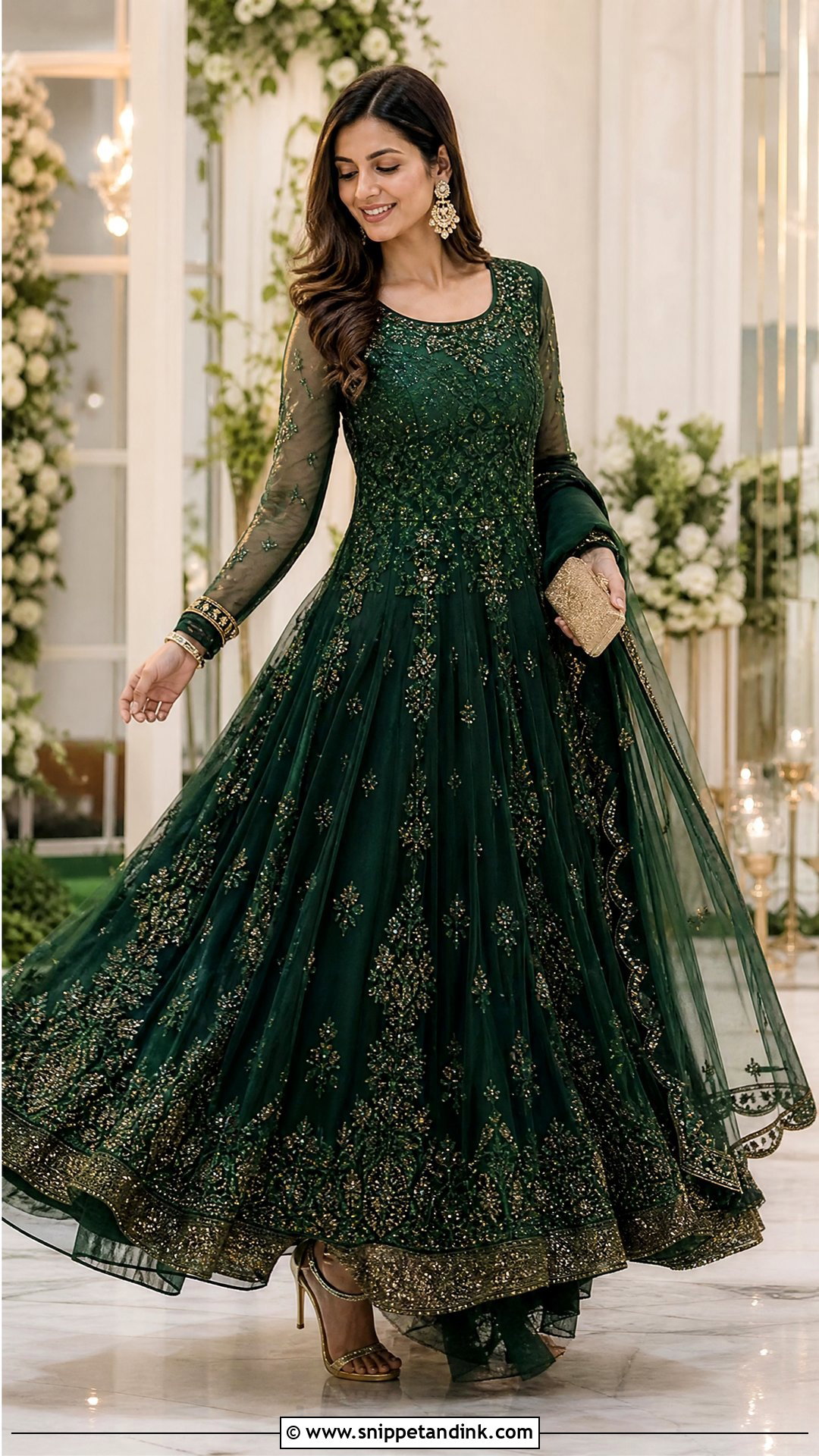
Anarkalis add height. The long flared shape suits many body types and is comfortable through a long function. Embroidery can sit on the bodice, sleeves, hem or dupatta; net and organza suit warm months, velvet and silk the cooler ones. A floor-length anarkali needs the hem set to your heel height at the fitting, or it drags. Heels, statement earrings, a clutch and a sleek bun or soft curls finish it for receptions and engagements.
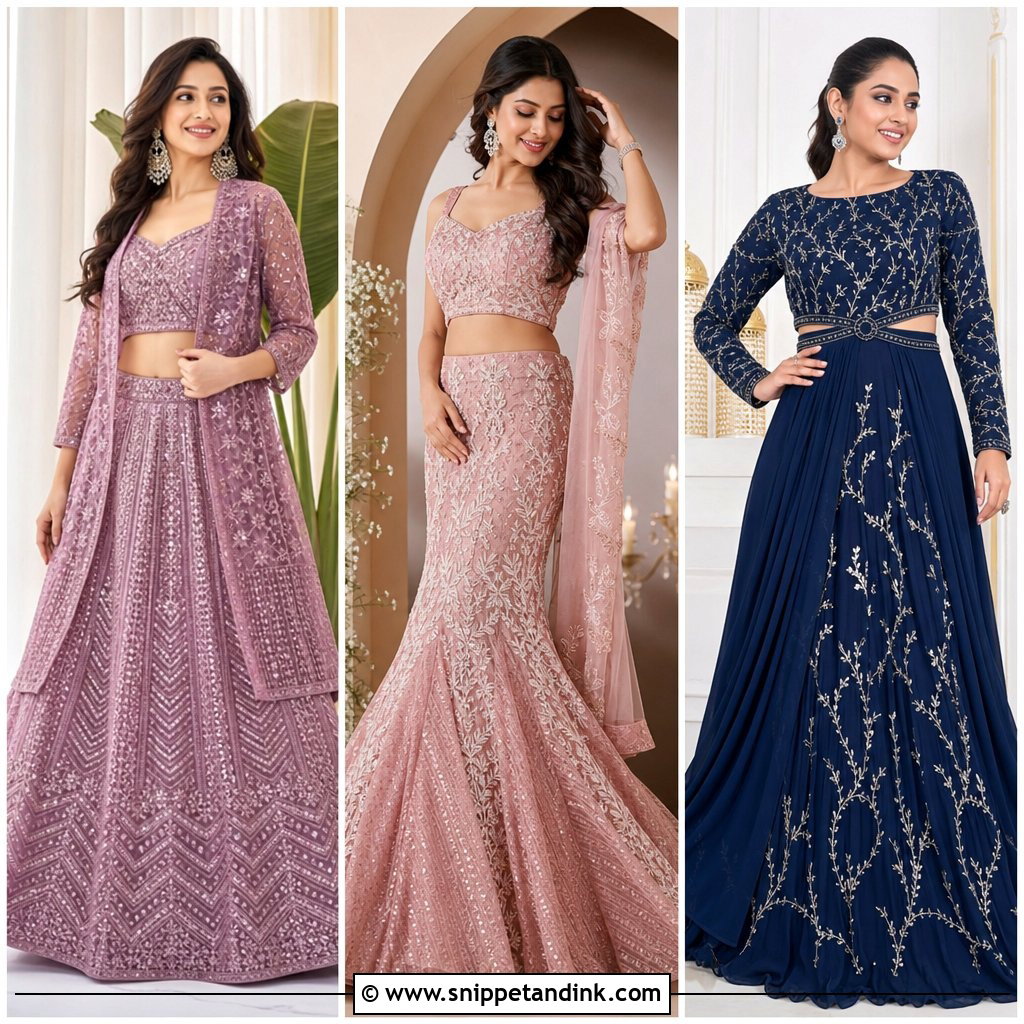
11. Jacket Lehenga Dress
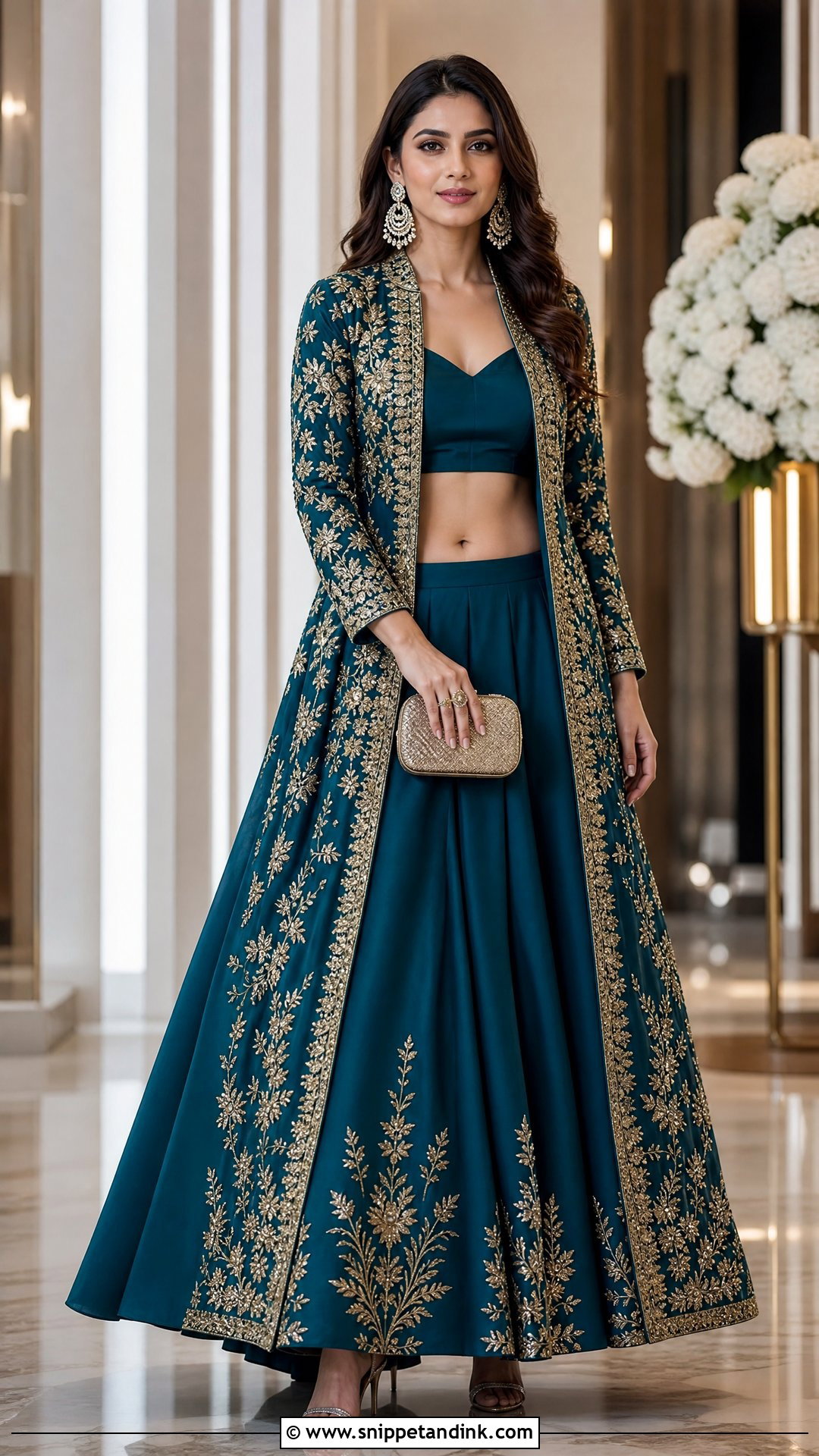
A jacket lehenga replaces the dupatta with a long embroidered jacket, which gives structure and coverage. Sheer jackets suit warm evenings; silk, velvet or brocade suit winter weddings. A long jacket is dramatic, a short one playful. When the jacket neckline is heavily worked, I skip the necklace and let earrings and a cocktail ring do the job. Heels finish the look, and the jacket keeps you warm at outdoor winter receptions.
12. Cape Lehenga Dress
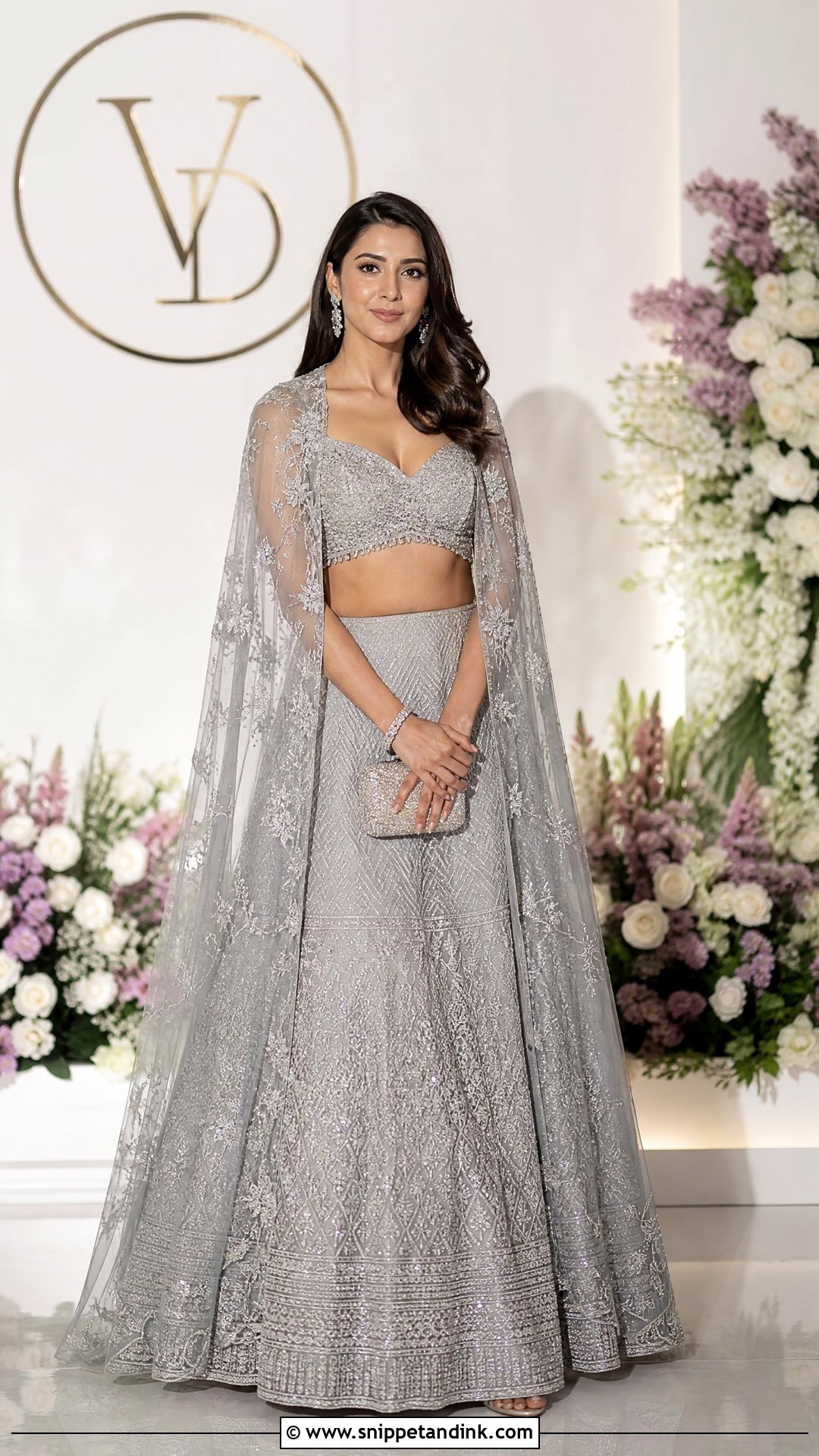
Capes solve the dupatta problem. Instead of adjusting fabric all evening, you get movement around the shoulders that stays put. A fitted blouse with a sheer embroidered cape keeps the silhouette balanced; sequins, pearls, fine embroidery or crystal work make the cape the focus. Clip the cape to the blouse at the shoulder with a small hook, since sheer capes slide back when you hug people. Sleek earrings, a bracelet and heels suit receptions and sangeet nights.
13. Velvet Lehenga Dress
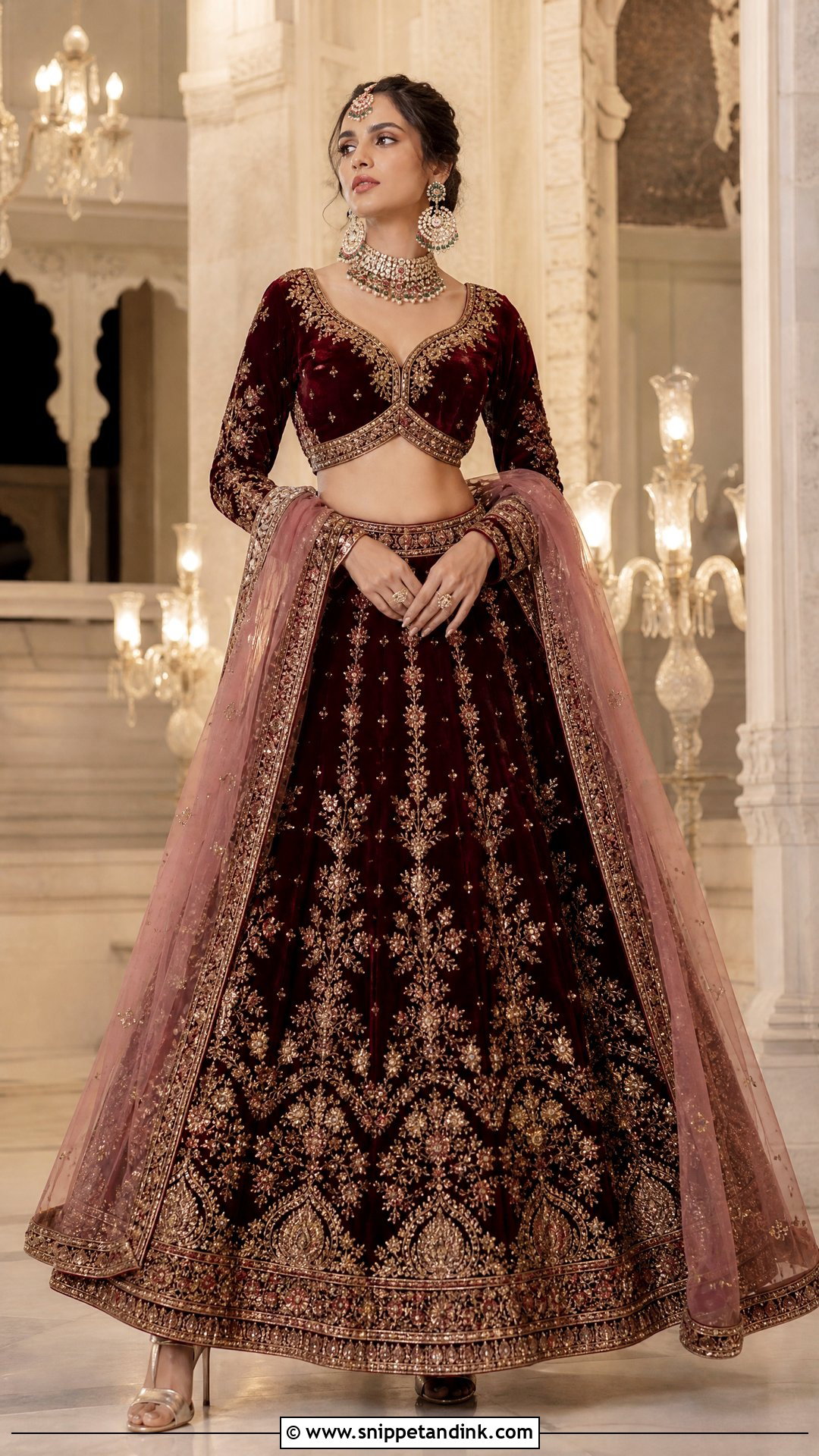
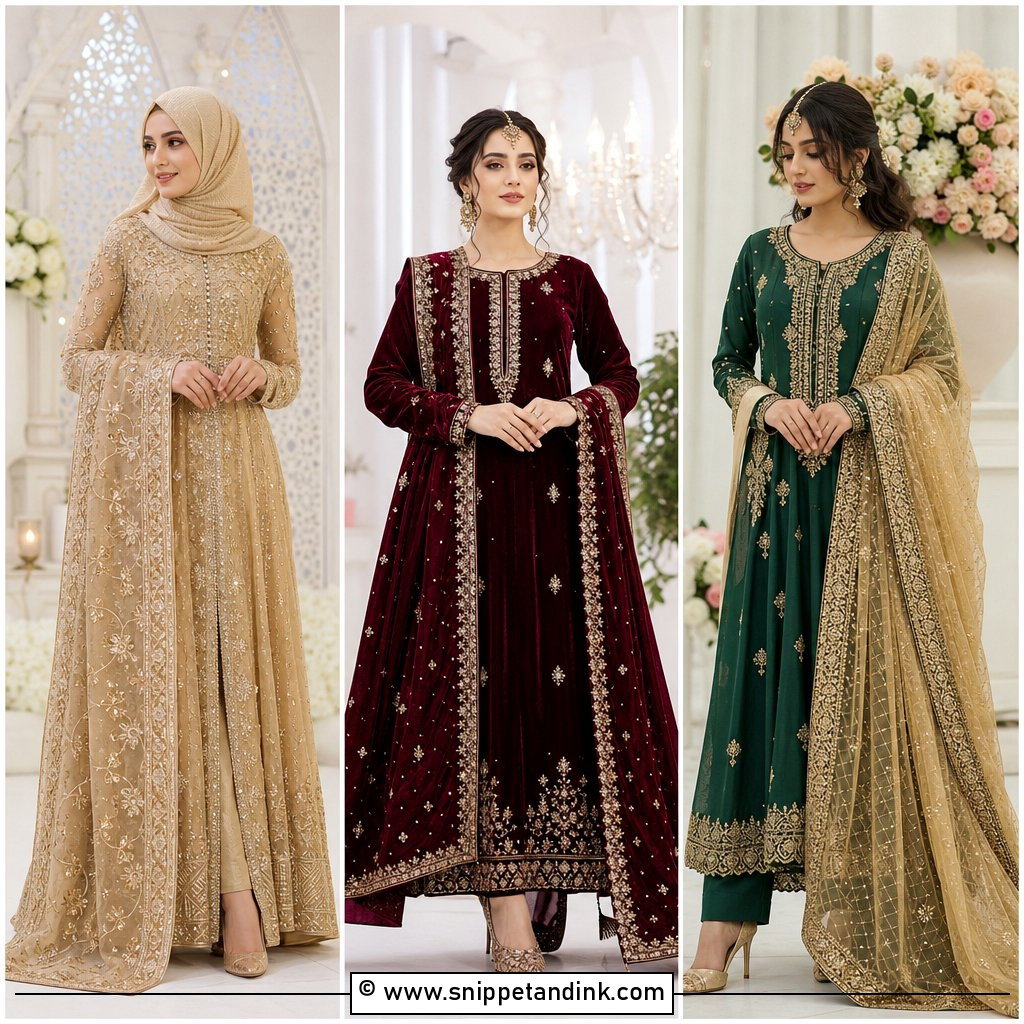
Velvet gives a rich, royal feel for evening and winter. Burgundy, navy, emerald, plum and maroon look deepest in it because velvet absorbs light and then glows where the pile catches it. Gold embroidery, antique zari or dabka work keeps it traditional, and a light net or organza dupatta stops the outfit looking heavy. Velvet is warm, so I keep it for cool evenings rather than a packed summer hall. Polki jewelry, bold earrings, classic heels and a defined eye or deep lip suit brides, sisters, or close wedding guests who want something luxurious.
14. Mirror Work Lehenga Dress
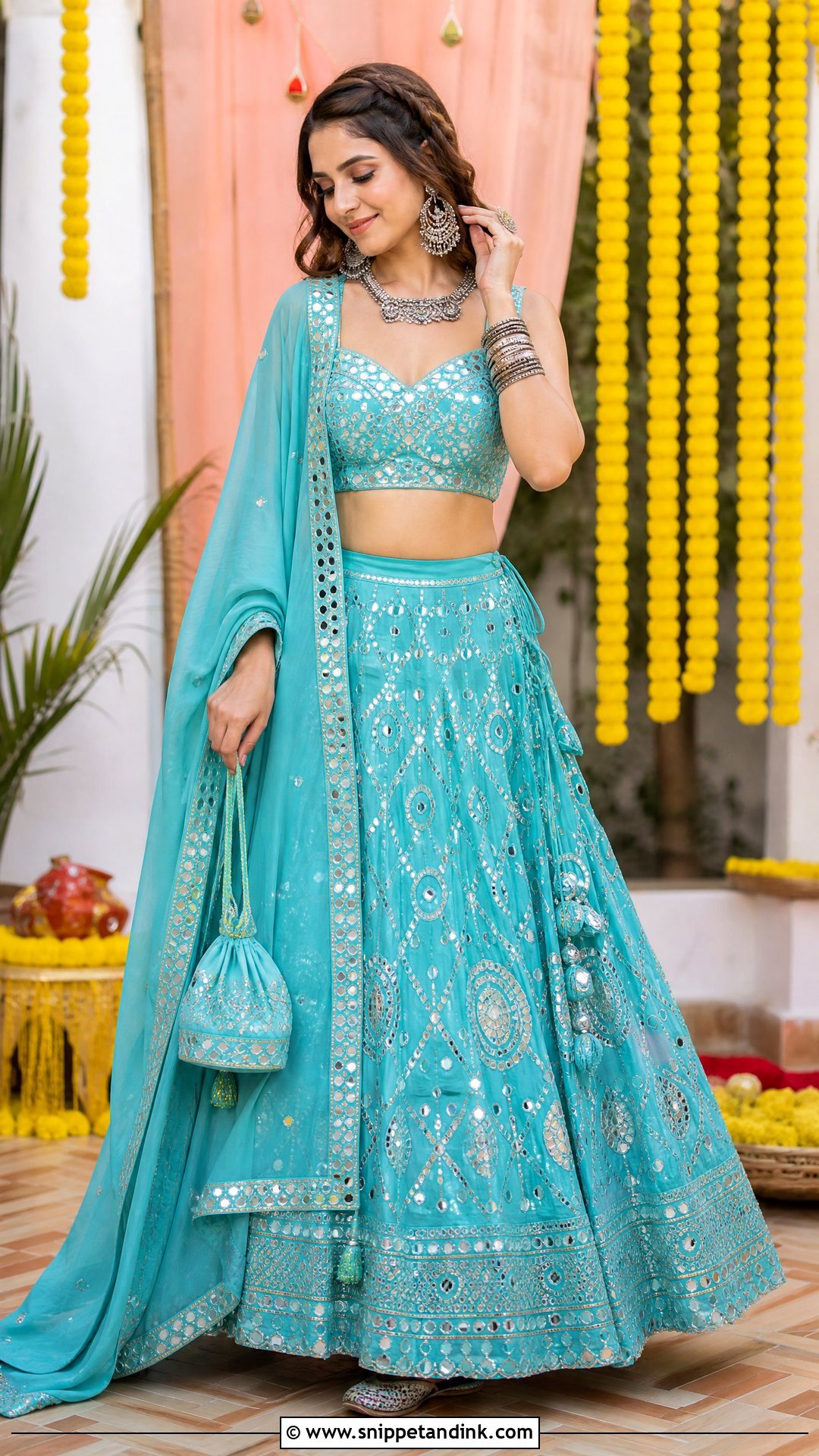
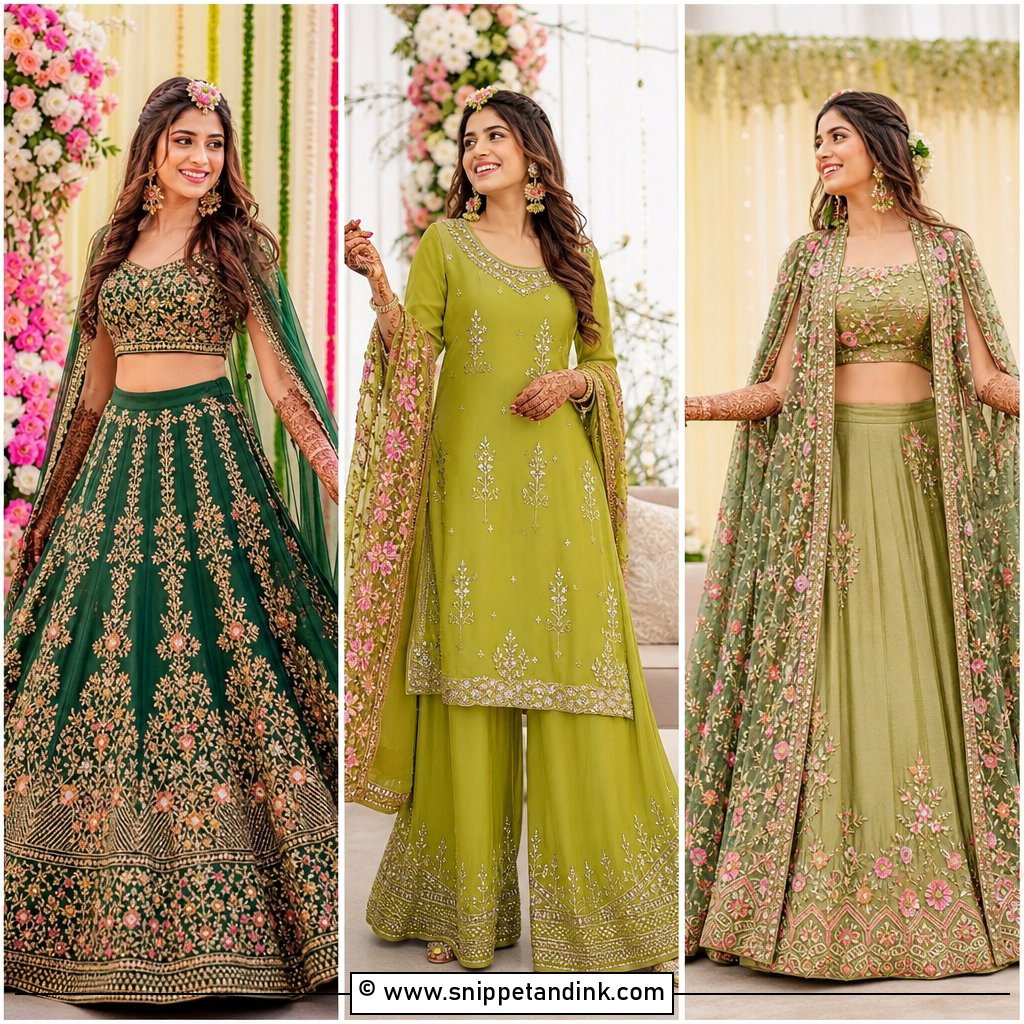
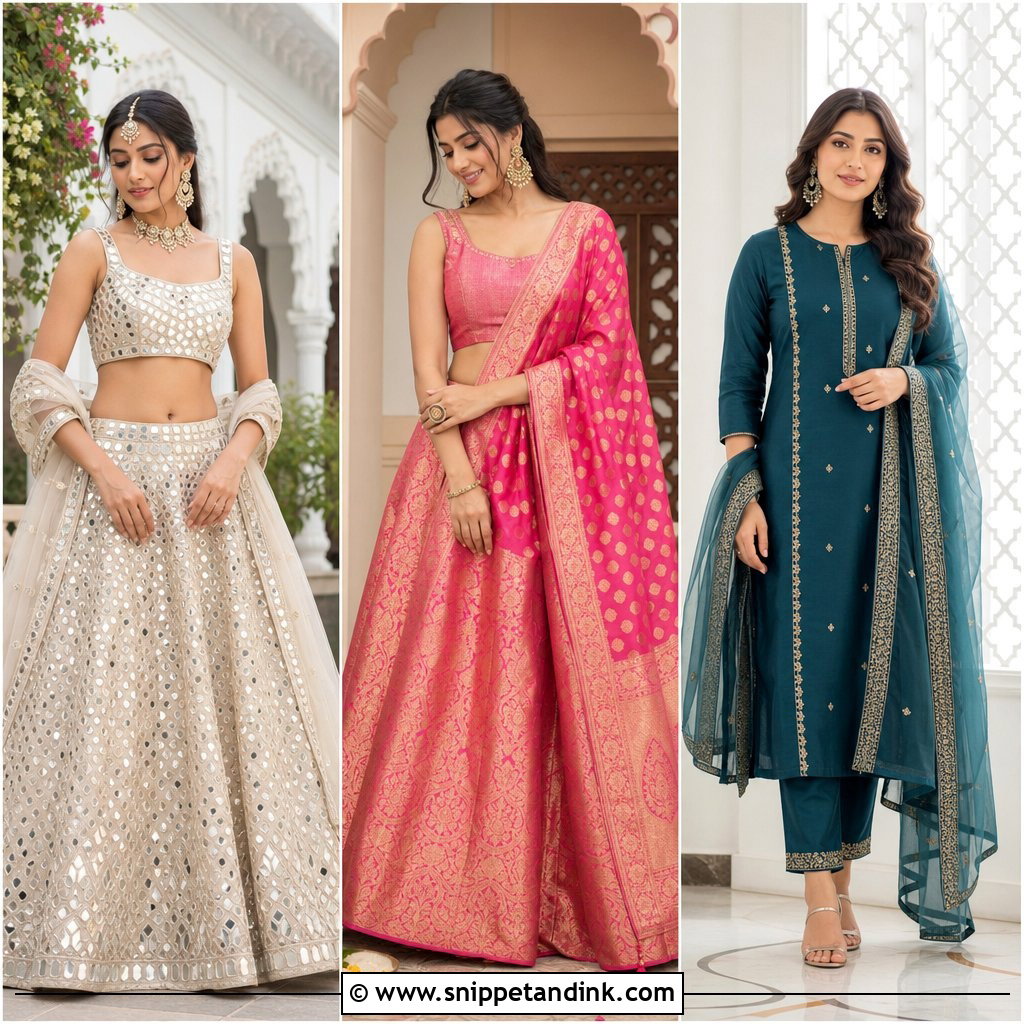
Mirror work is made for functions full of music and movement. The small mirrors flash in daylight and lamp light, which is exactly what you want at a mehendi or sangeet. Yellow, fuchsia, orange, turquoise and green feel joyful; subtle mirrors on a pastel or ivory base feel more polished. Mirrors are stitched on with thread, and they can snag fine dupattas, so I pair mirror work with a cotton or georgette dupatta rather than delicate net. Oxidized jewelry, bangles, a potli bag and juttis complete it.
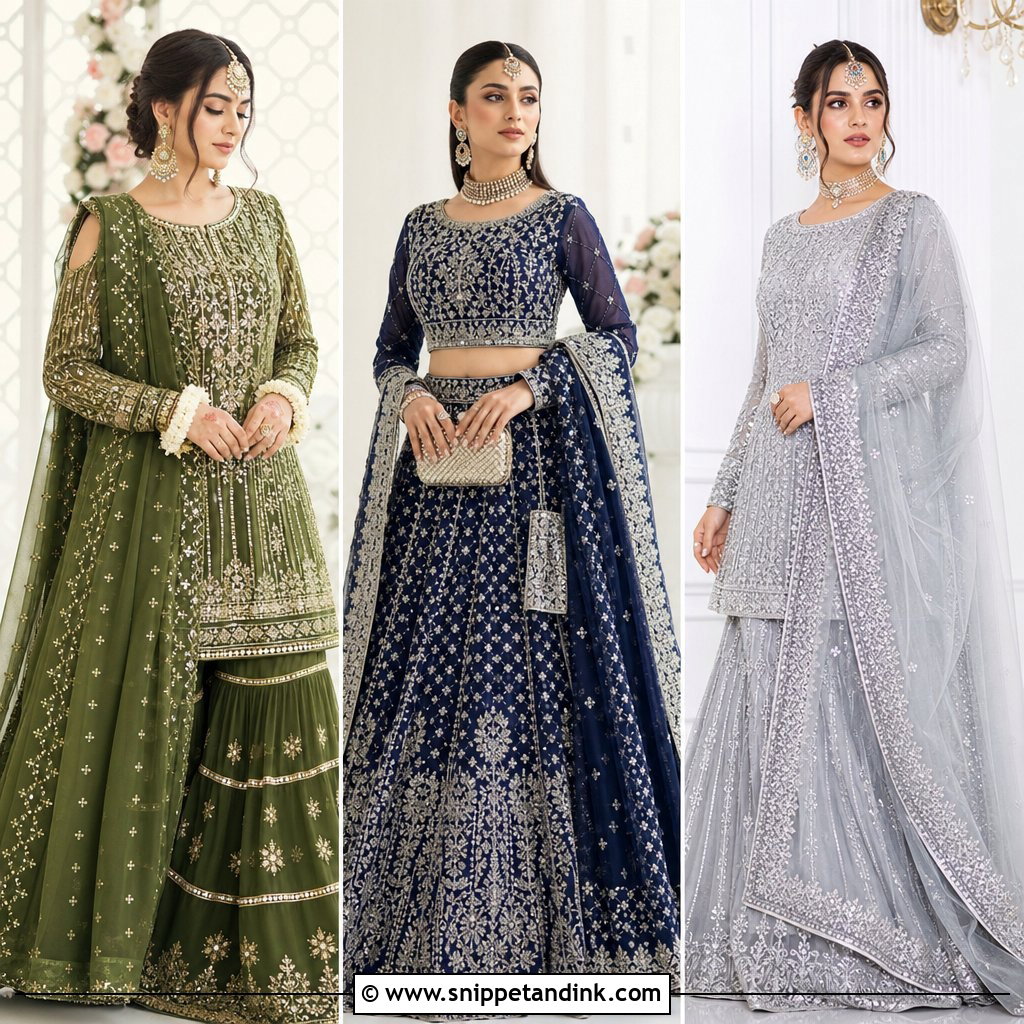
15. Floral Lehenga Dress
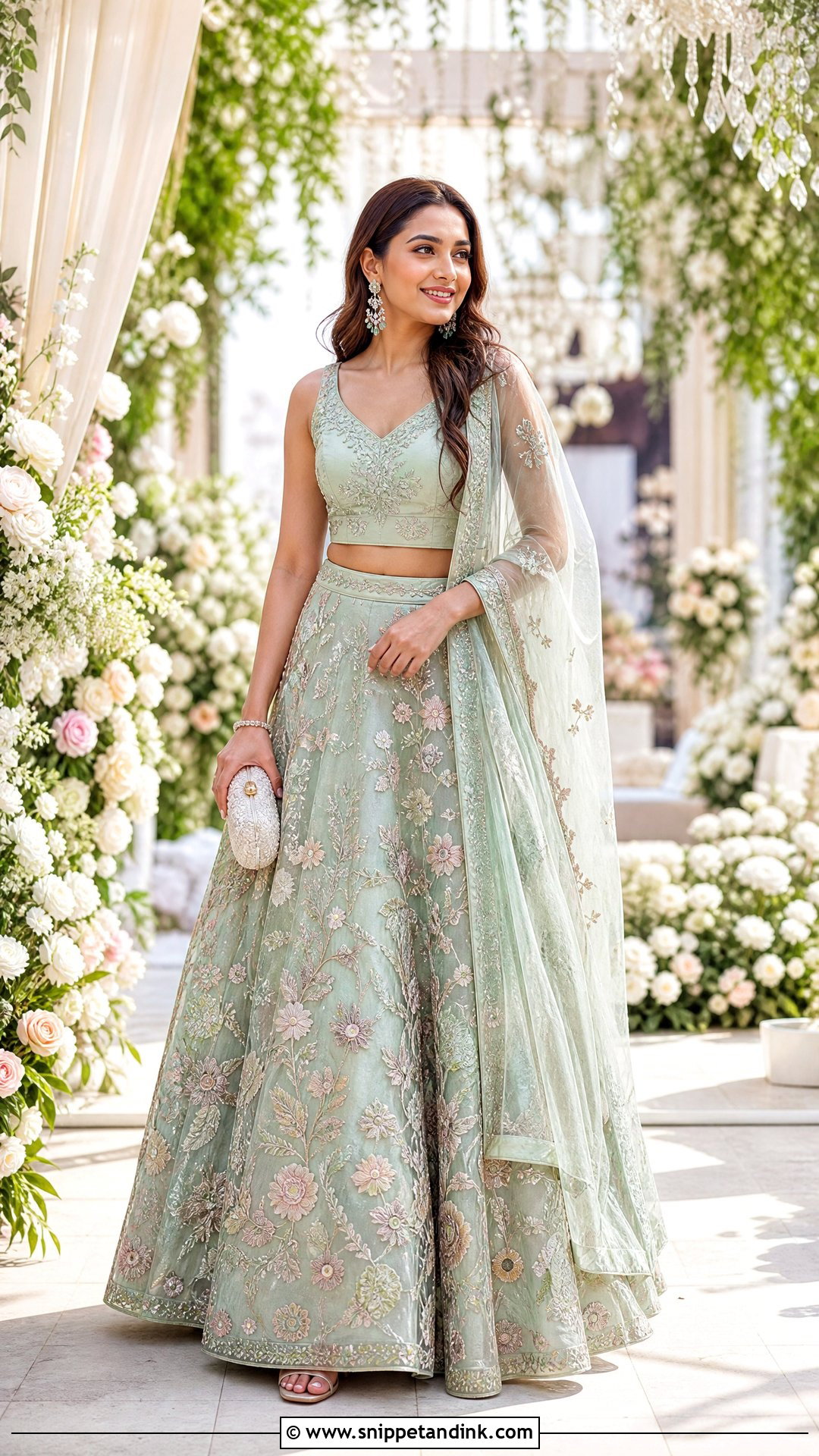
Florals suit daytime functions. Printed florals keep a lehenga light; embroidered florals make it formal. Organza, silk, georgette and chiffon all take florals well. Pastel pink, sage, ivory, peach and lavender sit naturally in a garden, while deeper floral designs suit evening. Keep the blouse simple and the jewelry delicate so the print can breathe, and choose heels or embellished flats by the ground you will stand on. It gives bridesmaids, sisters and guests a feminine option without traditional weight.
16. Yellow Haldi Lehenga Dress
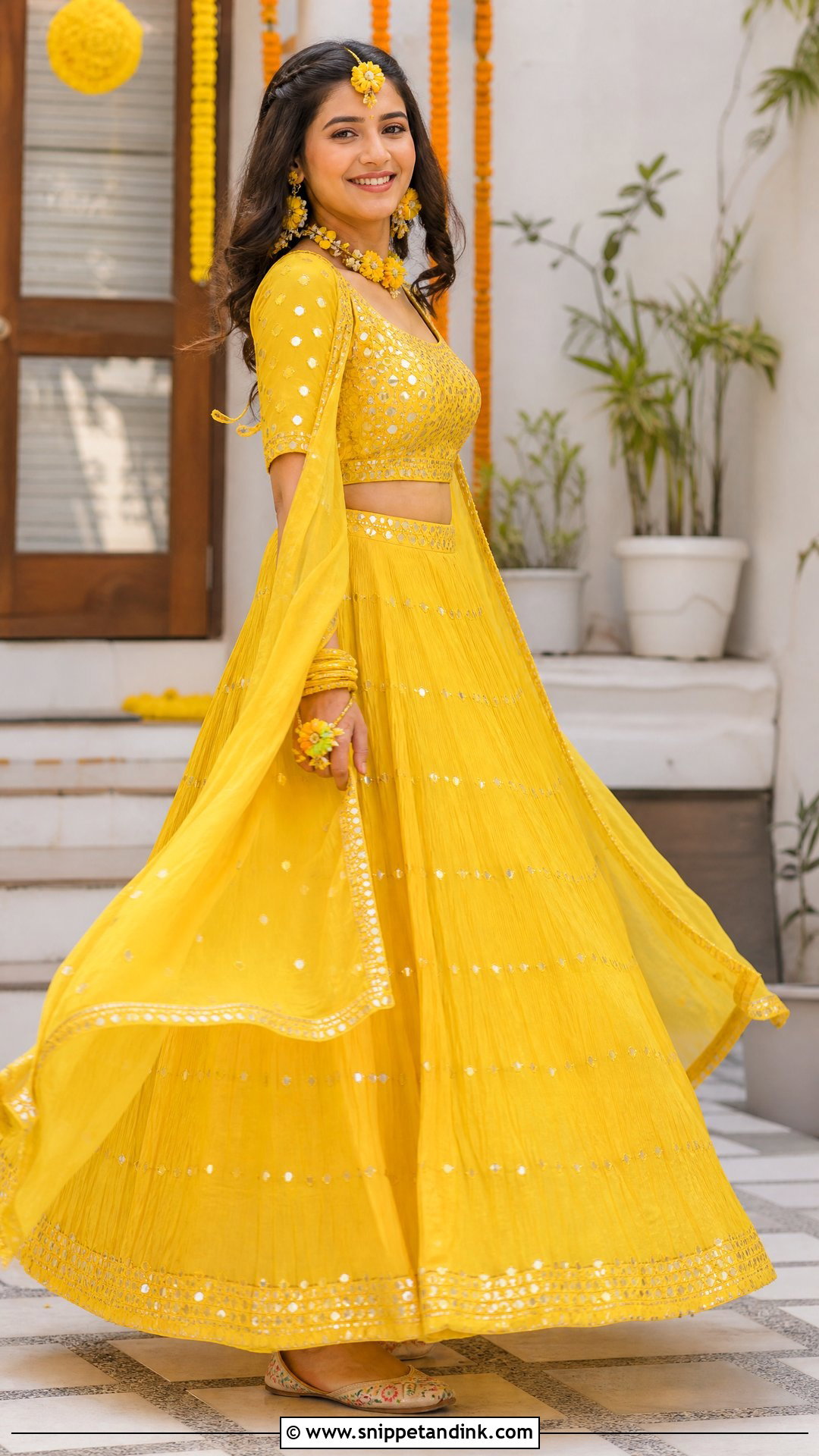
A yellow haldi lehenga dress should be the one outfit you are happy to ruin a little. Turmeric paste stains permanently, so I steer brides to cotton silk, georgette or mulmul rather than anything heirloom. Mirror work, gota patti or simple prints look festive without weight. Pair it with a short blouse, a flowing dupatta, floral jewelry and juttis you don’t mind washing. Turmeric, lemon, mustard and marigold all suit, and hair should be easy: a braid or soft waves.
17. Green Mehendi Lehenga Dress
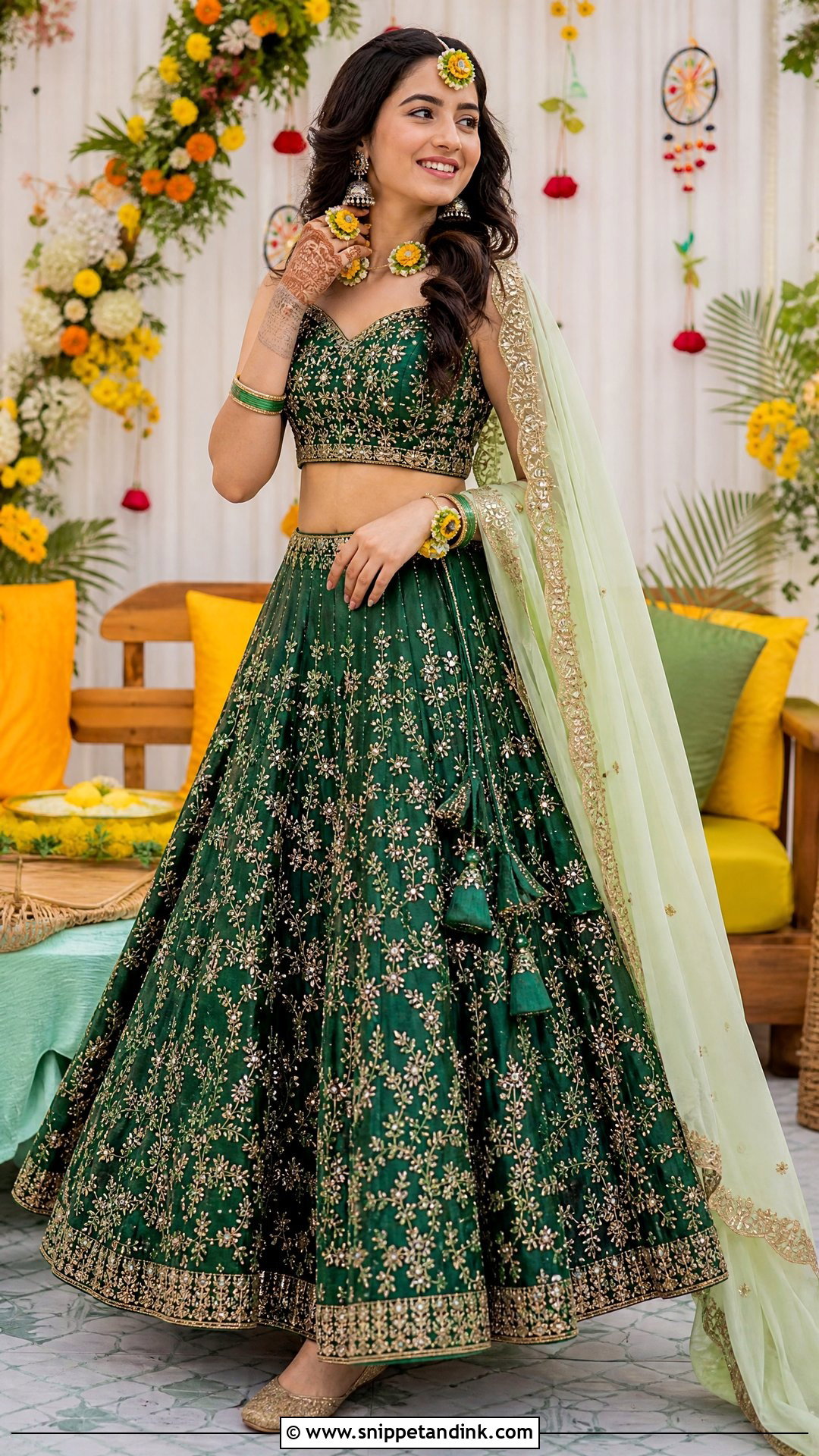
A green mehendi lehenga dress is the traditional colour for this function. Emerald, parrot green, mint, sage and olive all work. The practical point is that you will sit still for hours with wet henna on your hands and feet, so the blouse must be comfortable seated and the dupatta light enough that someone else can drape it. Short or elbow sleeves keep fabric off the paste. Floral jewelry, oxidized earrings, bangles and a braid with fresh flowers finish the look.
18. Ruffle Saree Dress
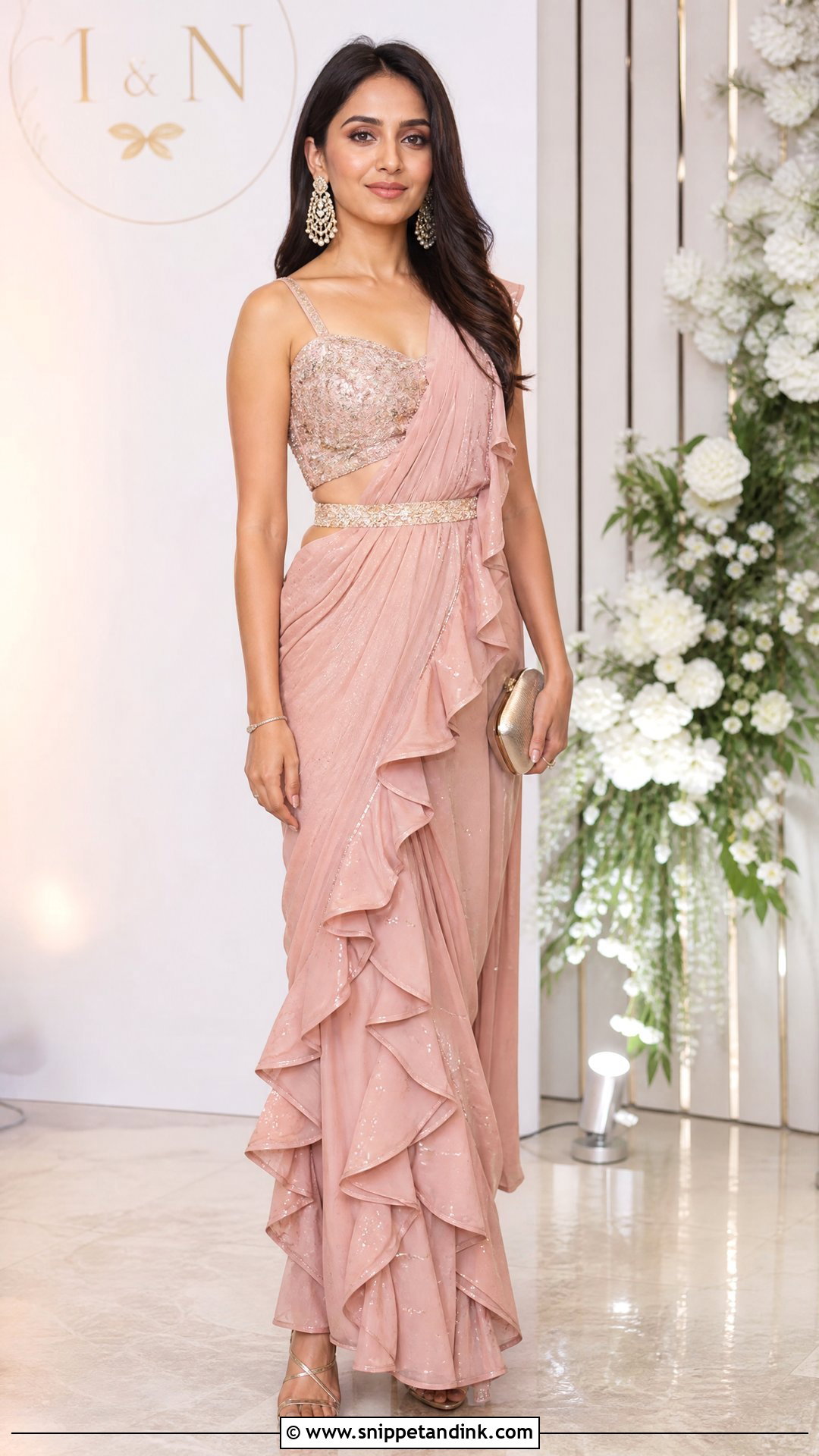
Ruffle sarees are a fusion choice that younger guests love for receptions. The ruffles add movement and volume without heavy embroidery, in chiffon, georgette or crepe. A structured blouse, a belt or an embellished crop top keeps it polished. Ruffles add bulk at the hem, so drape it slightly shorter than a regular saree to avoid tripping on stairs. Statement earrings, heels and a sleek clutch are all it needs.
19. Pre Draped Saree Dress
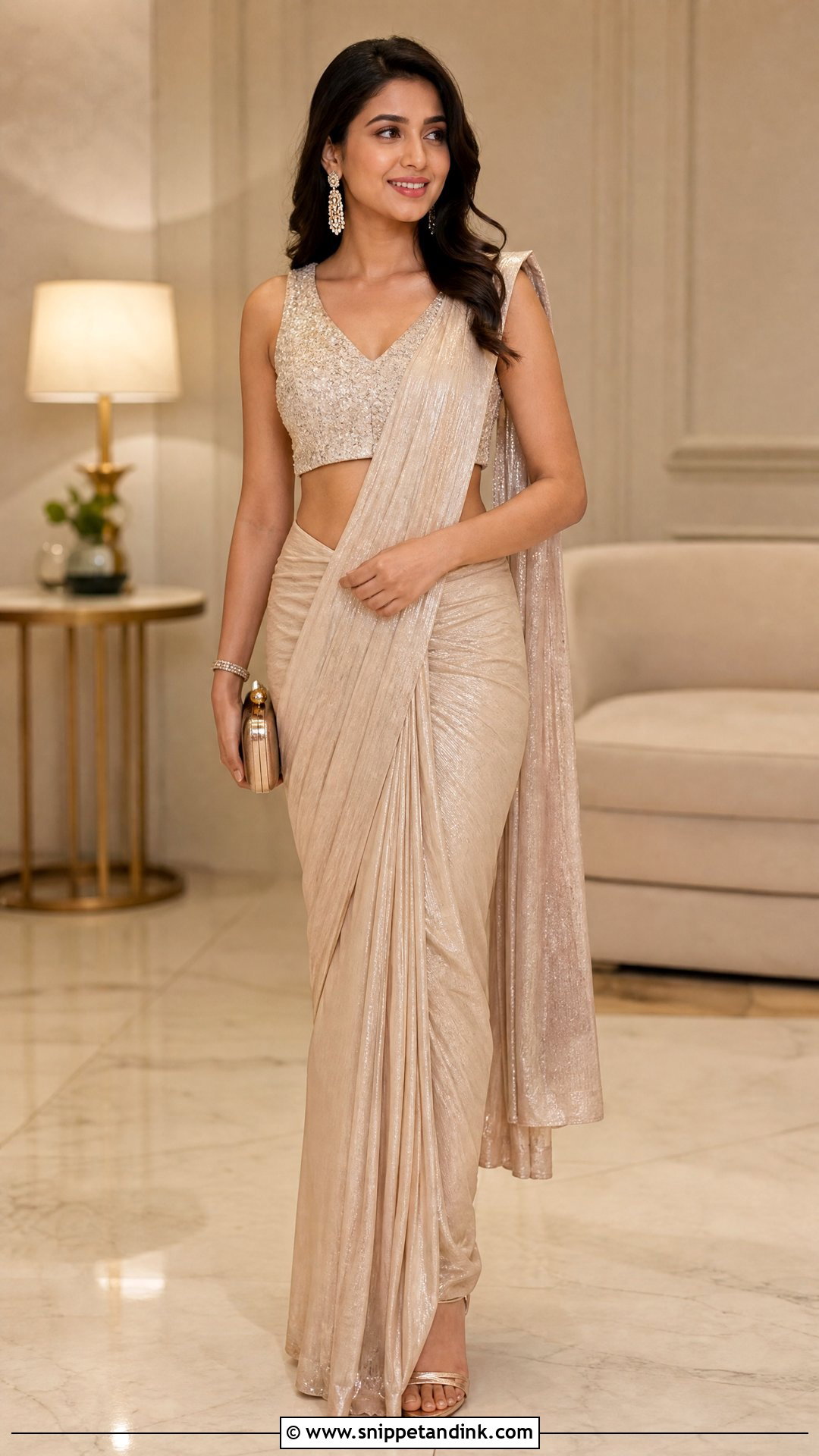
Pre-draped sarees are stitched with the pleats and pallu already in place, so they go on like a skirt and stay secure all night. Satin, crepe, georgette and shimmer fabrics all look polished. The blouse transforms it: embroidery, sequins or structured sleeves change the whole mood. I recommend them for destination weddings and for anyone who doesn’t drape often, since there is no risk of pleats coming loose mid-dance. Heels, earrings, a clutch and a bracelet finish it.



20. Indo Western Gown Dress
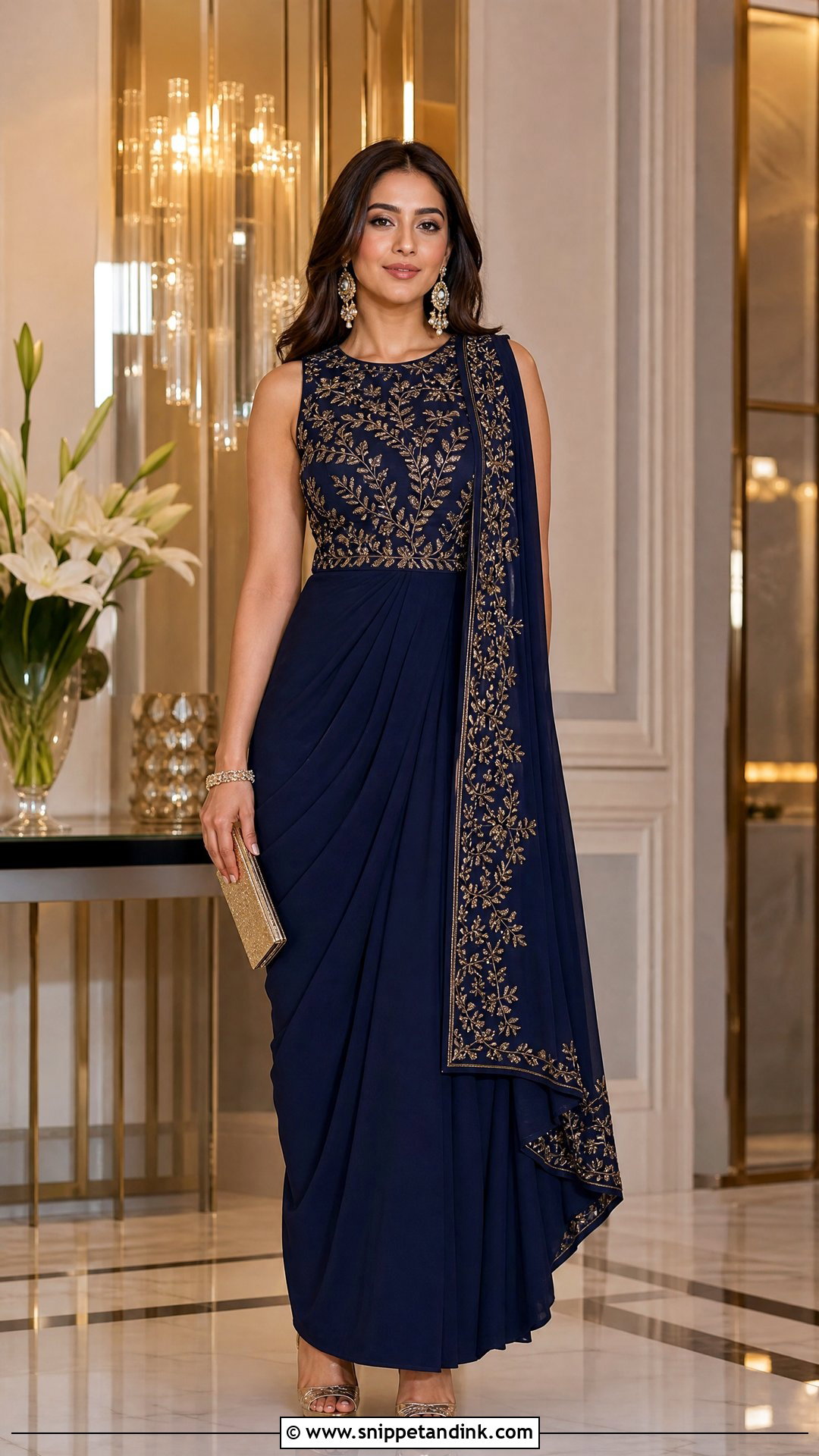
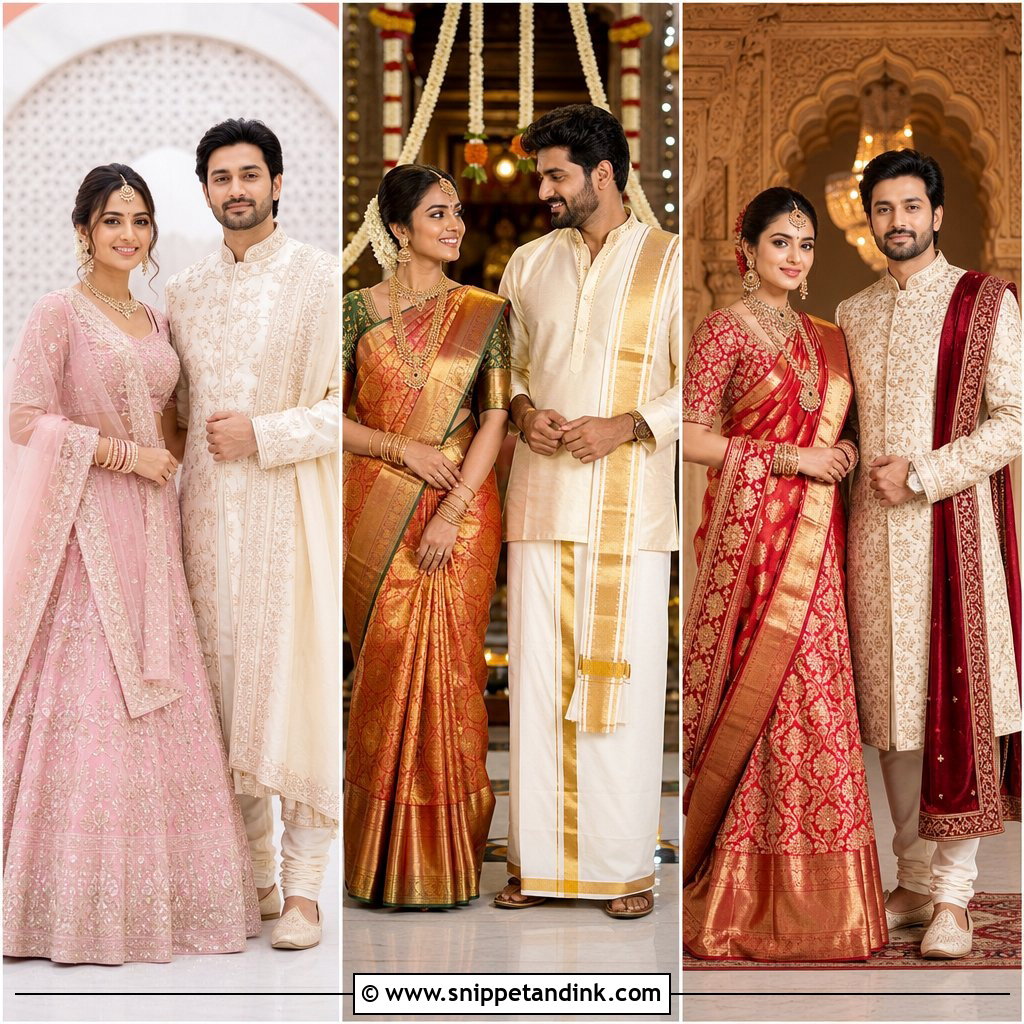
An Indo-Western gown blends Indian embroidery with a gown shape. Draped skirts, embroidered bodices, cape sleeves, attached dupattas and metallic details all appear on them, cut fitted, flared or A-line. Jewel tones, champagne, silver, blush and navy suit evening. Because the neckline is usually the focus, keep the hair up and the necklace small. It suits women who want wedding glamour but feel more at ease in a gown than a saree.
21. Peplum Lehenga Dress
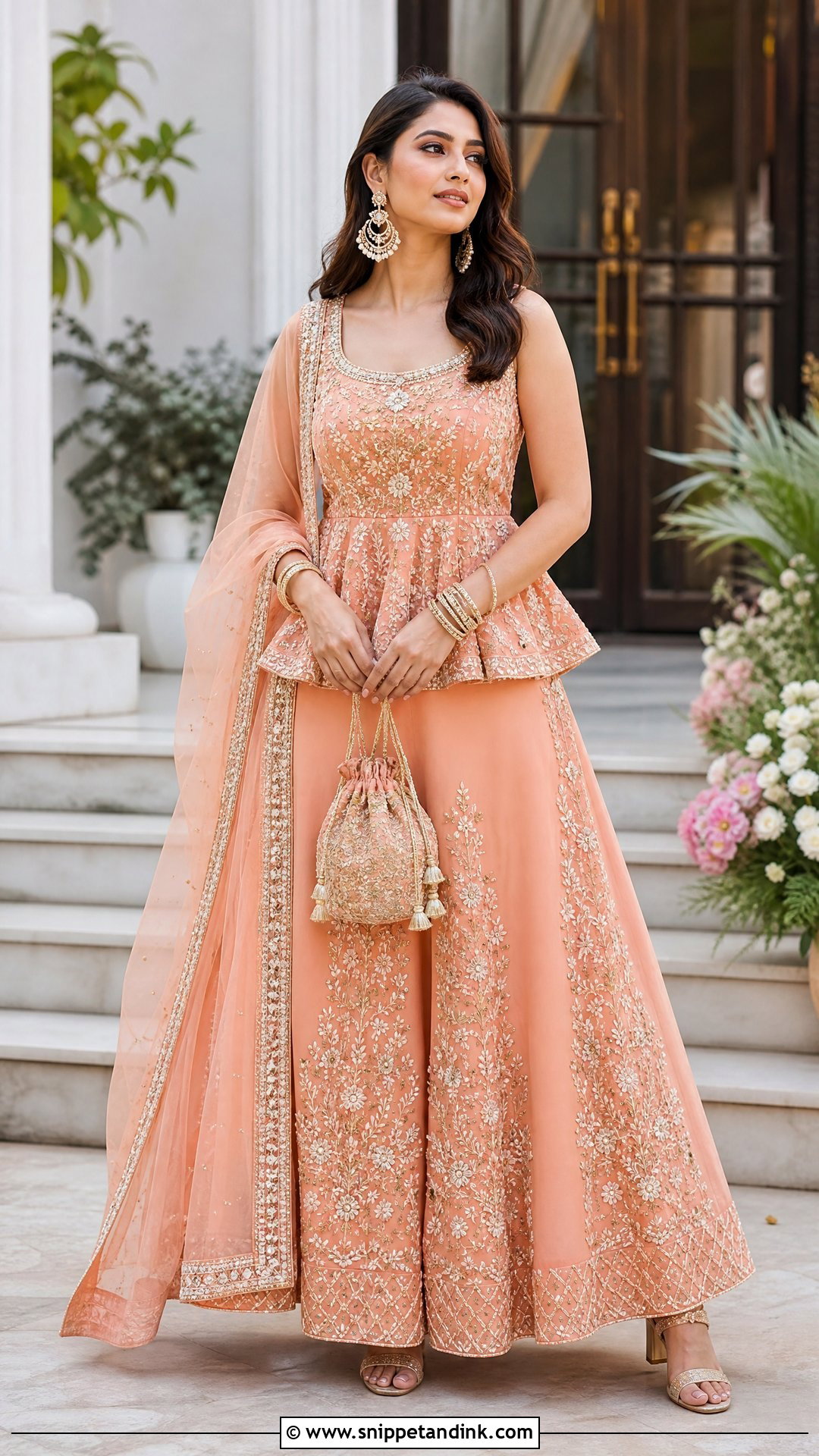
A peplum top over a lehenga skirt defines the waist and covers more than a short blouse. Embroidered silk, brocade, organza or georgette make it dressy. The peplum flare should start at your natural waist; set lower, it shortens the legs. A light dupatta over one shoulder is optional when the top is detailed. Chandbalis, bangles, heels and a small potli bag suit bridesmaids and sisters, and it is easy to dance in.
22. Palazzo Suit Dress
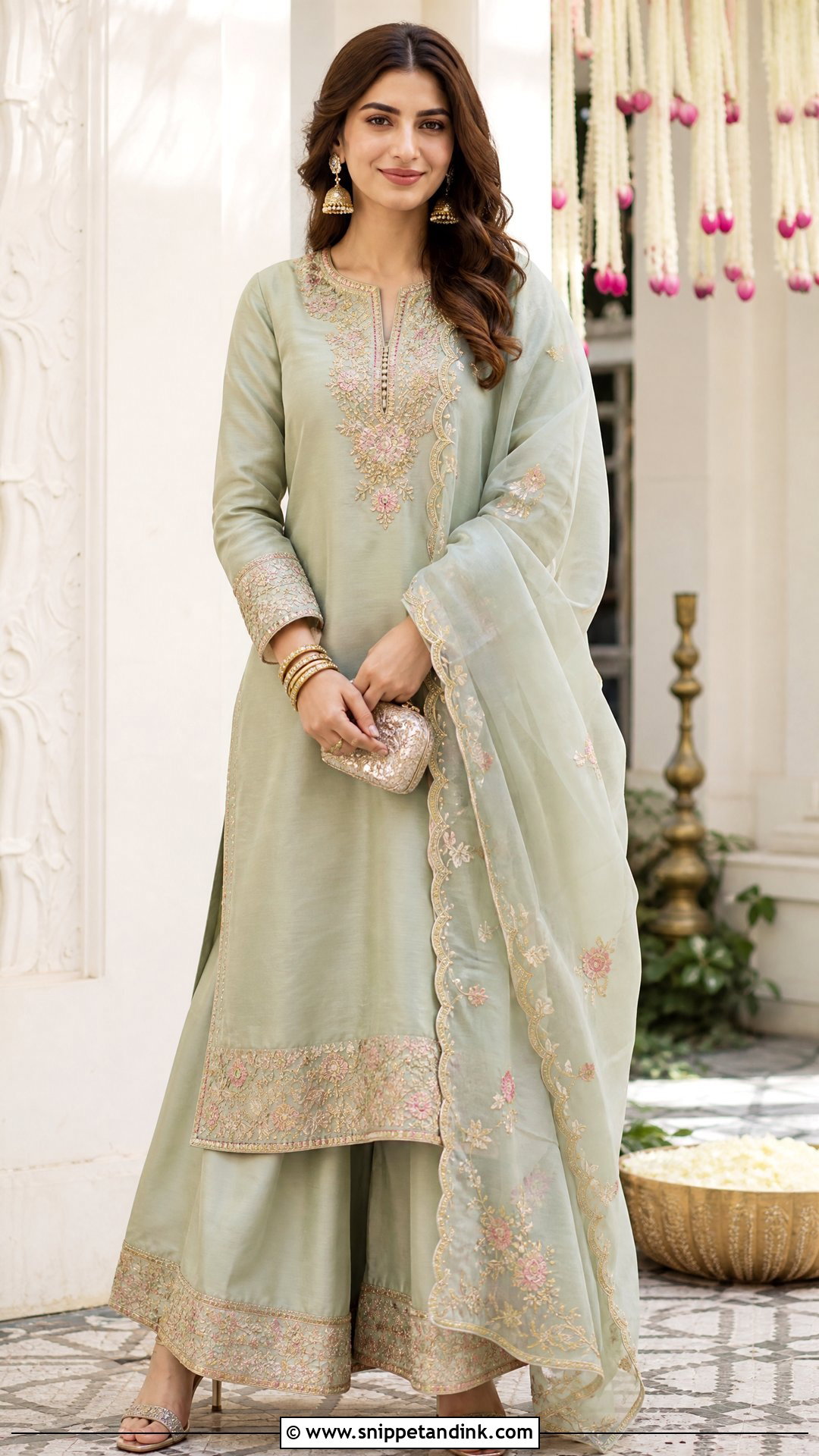
Palazzo suits look polished when the fabric is right. A long kurta or short embellished kurti over wide-leg palazzos, with a coordinated dupatta, works in silk, georgette, chanderi or brocade. Embroidery at the neckline, sleeves, hem or dupatta is enough for a wedding. They pack flat, don’t crush badly and need no draping skills, which is why I suggest them for travel-heavy destination weekends. Jhumkas, bangles, embellished sandals and a clutch finish them for daytime ceremonies and smaller events.
23. Chikankari Lehenga Dress
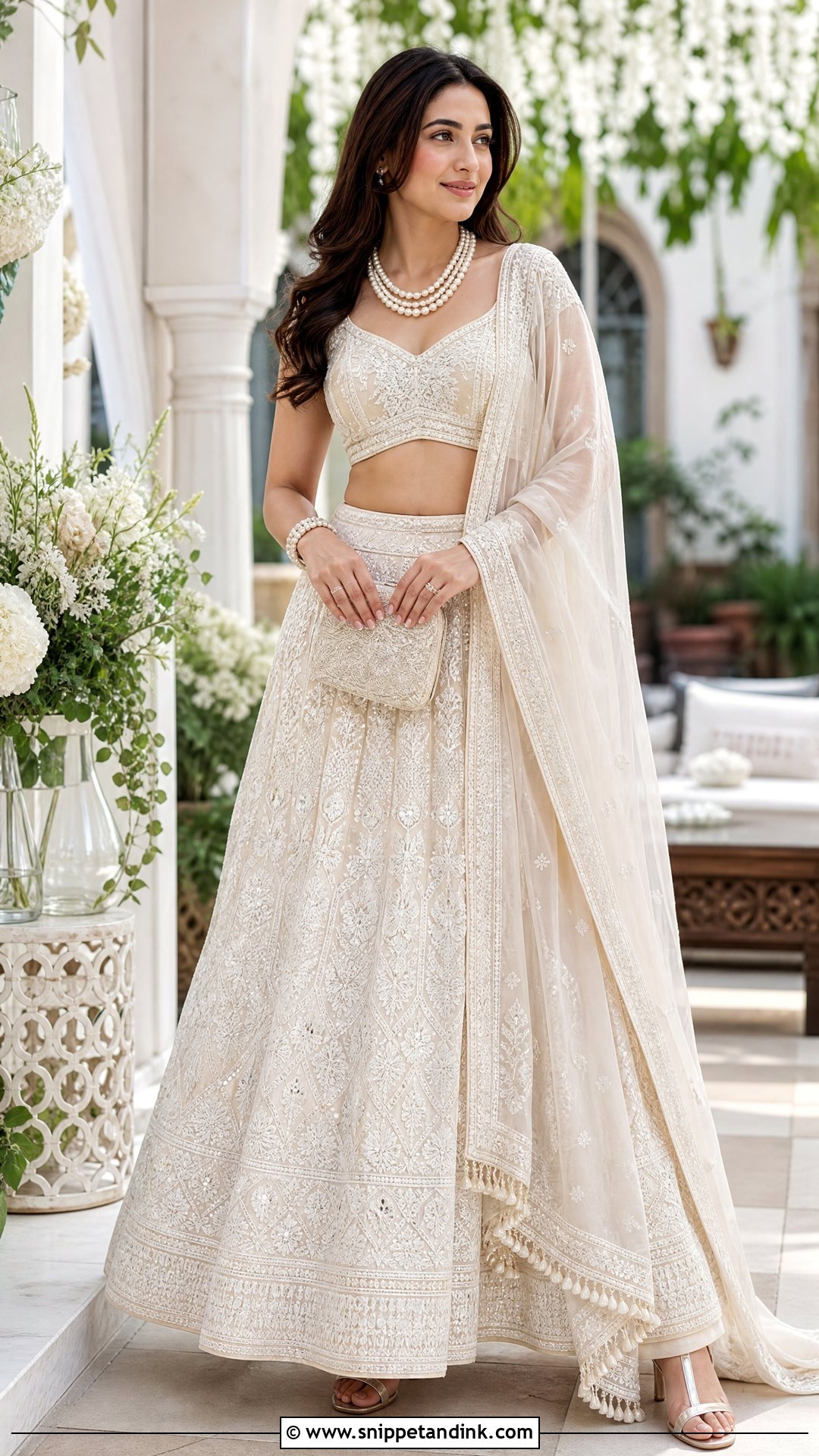
Chikankari is fine hand embroidery, traditionally white thread on light cotton or georgette, and a chikankari lehenga dress carries that handcrafted look. White, ivory, blush, sage and pastel yellow show the stitches best. For a wedding I’d add sequins, pearls or mukaish so it reads festive in photos, since plain chikankari can look flat from a distance. Pair it with a matching blouse, sheer dupatta, pearl jewelry and soft metallic heels. It is light enough for summer and daytime functions, with a low bun and fresh makeup.
24. Sequin Saree Dress
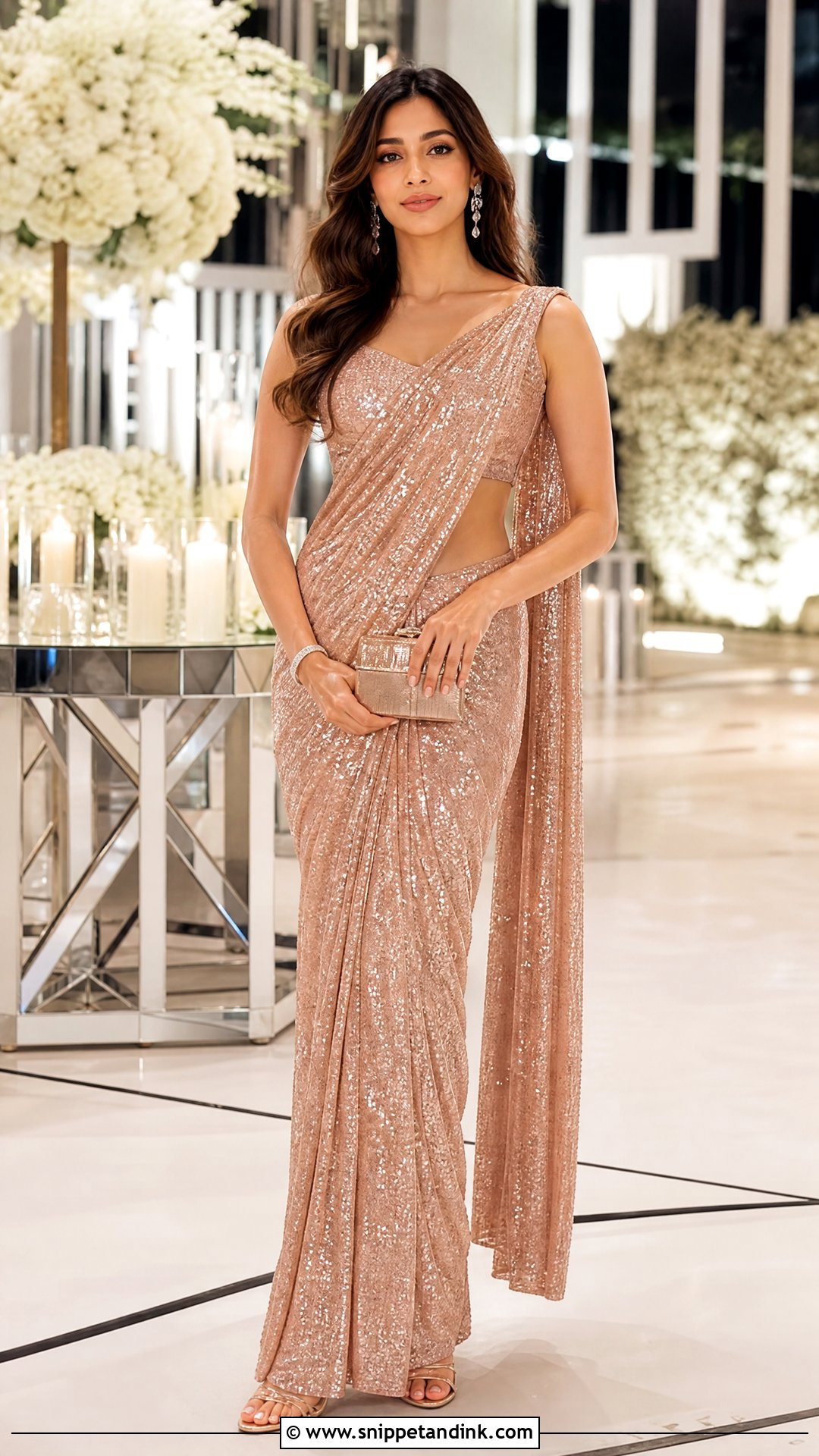
A sequin saree gives sparkle without lehenga weight, in champagne, silver, rose gold, navy, emerald or black. A simple blouse balances the shimmer; a structured one adds drama. Sequins catch flash hard, so I keep jewelry minimal and the bangles few, or the photos become all glare. Sleek earrings, heels, a small clutch and soft waves or a sleek ponytail suit receptions and sangeet nights.



25. Brocade Lehenga Dress
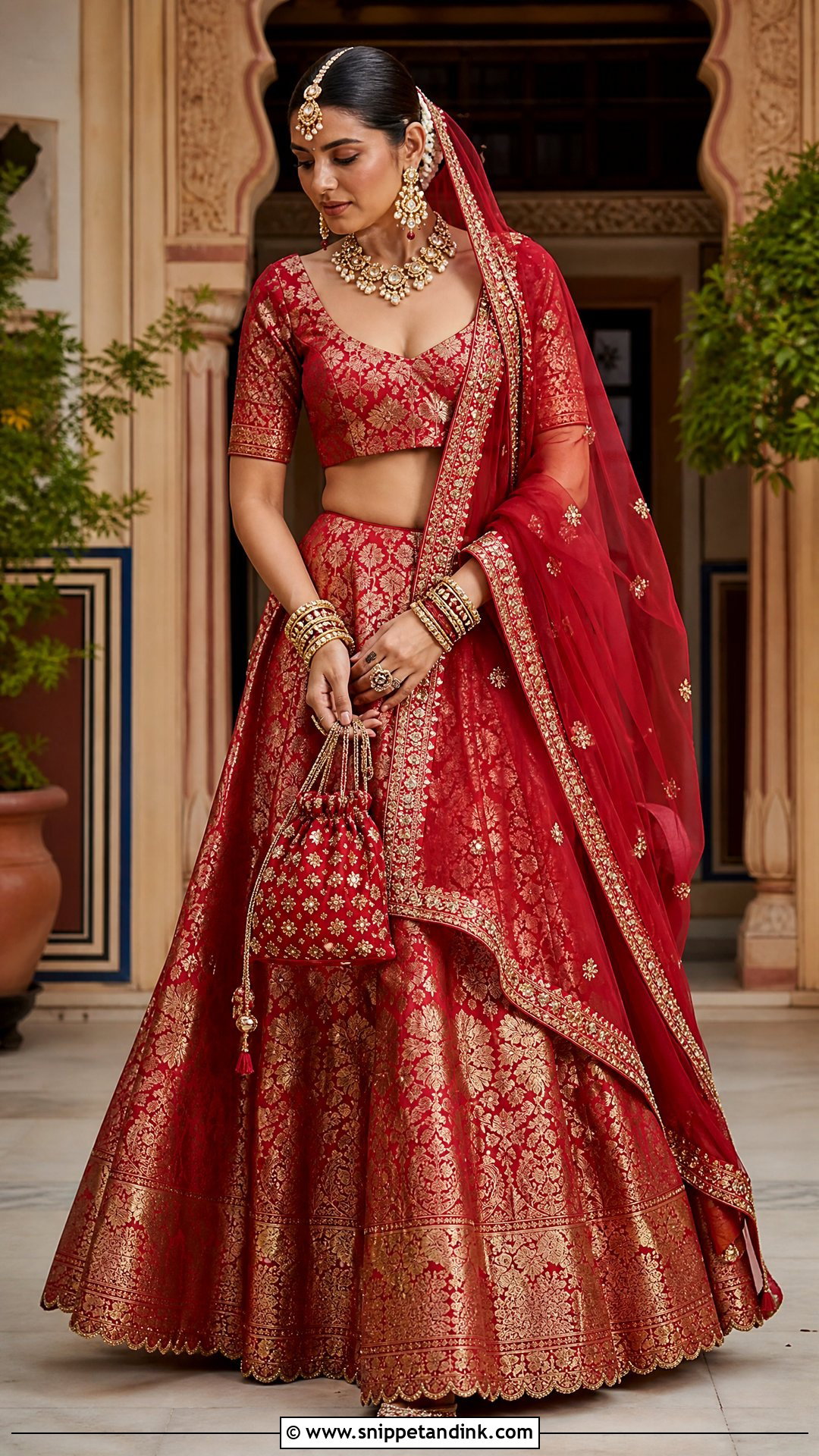
Brocade has its pattern woven in, so it looks festive before anyone adds embroidery, and it is often lighter to carry than a heavily worked lehenga. Ruby, emerald, teal, royal blue and magenta give it a strong wedding feel. Brocade is stiff, which gives the skirt a good shape but can rub at the waist, so ask for a soft lining band. A silk blouse, sheer dupatta, kundan jewelry, embroidered heels and a centre-parted bun or soft curls suit traditional ceremonies.
Storing Silk and Zari So It Lasts Another Generation
Many of these pieces get passed down, so how you store them after the wedding matters as much as how you wear them.
- Dry clean heavy silk, zari and velvet, and mention any food, sweat or henna marks so the cleaner treats them early.
- Wrap each piece in soft muslin or plain cotton. Plastic traps moisture and can yellow silk.
- Refold silk sarees along different lines every few months. Silk left on the same fold for years can split along it.
- Keep zari away from direct contact with mothballs and damp, both of which dull and tarnish metallic thread.
- Store lehengas flat or loosely rolled with tissue in the folds; hanging a heavy skirt by its waistband stretches it.
- Air them on a dry day once or twice a year, out of direct sun, which fades deep reds and greens.
Done this way, a Banarasi or Kanjivaram bought for one wedding can be draped again by a daughter or niece decades later.
Red for the Pheras, Mirror Work for the Dance Floor
The ceremony usually decides the first outfit: red feels classic, pastel romantic, silk heritage and a pre-draped saree practical. After that, shararas, ghararas, anarkalis, gowns and cape lehengas cover the lighter functions. For every piece, think about the event, the venue and how long you will sit, stand or dance in it. An outfit that moves well and lets you breathe will look right in every photo, from haldi to the last dance.
You'll Like These Ideas:





Leave a Reply