
The question I get most before an Indian wedding isn’t what’s in fashion. It’s what to wear to which event, and whether you’ll survive a four-hour ceremony in it. The answer depends on your role, the venue, the season and how much sitting, dancing and greeting the day holds. Silk sarees, embroidered lehengas, shararas, anarkalis and Indo-western pieces all have their moment. Each look below comes complete with jewelry, shoes and bag, along with the practical detail I’d check before you buy or borrow it.
Invited to Your First Indian Wedding? Start Here
Many of the guests I dress have never worn Indian clothes before, and the first worry is always getting it wrong. Hosts are usually delighted to see guests in Indian wear. A few simple points keep you comfortable and respectful.
- Ask the couple or family for each event’s dress code; a haldi, a sangeet and a reception can be very different
- Leave heavy bridal red to the bride unless you’re told otherwise
- Check about black and plain white; some families consider them unlucky at ceremonies
- At a Sikh ceremony in a gurdwara, everyone covers their head and removes their shoes, so bring a scarf
- Temples also ask for shoes off, so wear something easy to slip on and off
If you’re unsure, a salwar kameez, an anarkali or a lehenga with a pinned dupatta are the easiest starting points for first-timers. I’d leave a full saree drape for when you have someone to help you on the day.
1. Red Bridal Lehenga Outfit
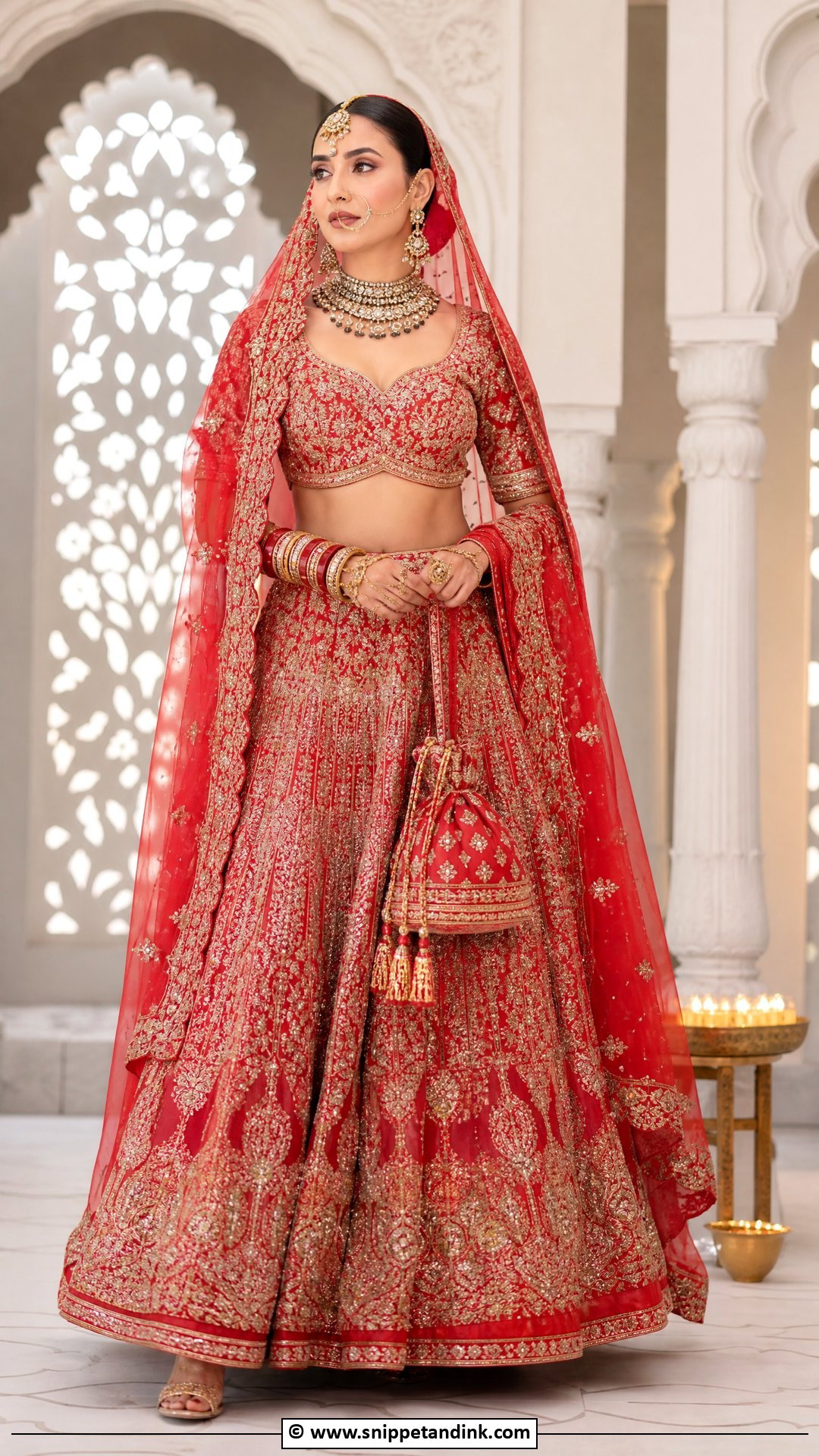
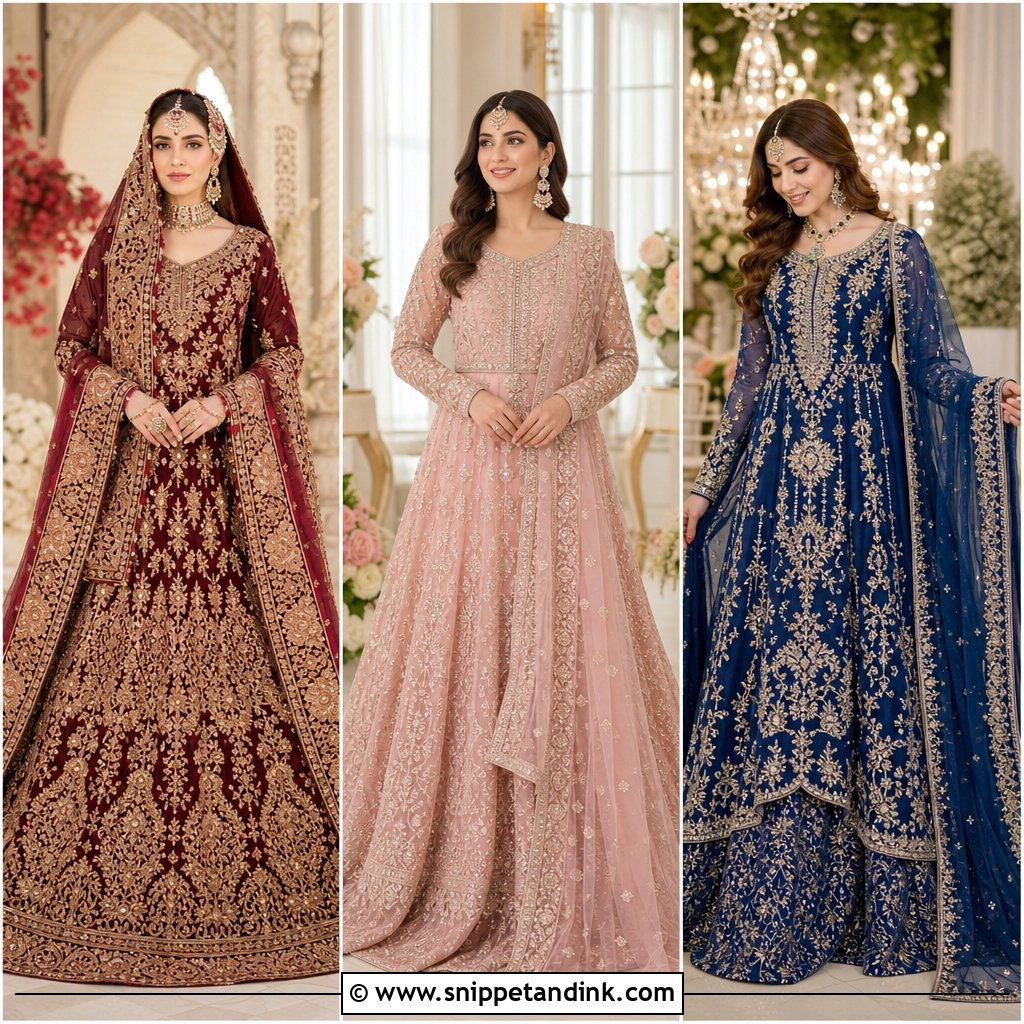
Nothing says wedding ceremony like red, and a heavy one carries its weight on the hips for hours. Zari, gota patti, zardozi or thread embroidery on a full skirt with a fitted blouse gives the traditional finish. I balance a heavy skirt with a blouse neckline that frames the choker rather than competing with it. A layered necklace, maang tikka, bangles and embellished heels or juttis complete it, and a structured potli keeps lipstick and pins close. Have the dupatta draped and pinned by someone who’s practiced it.
2. Pastel Bridal Lehenga Outfit
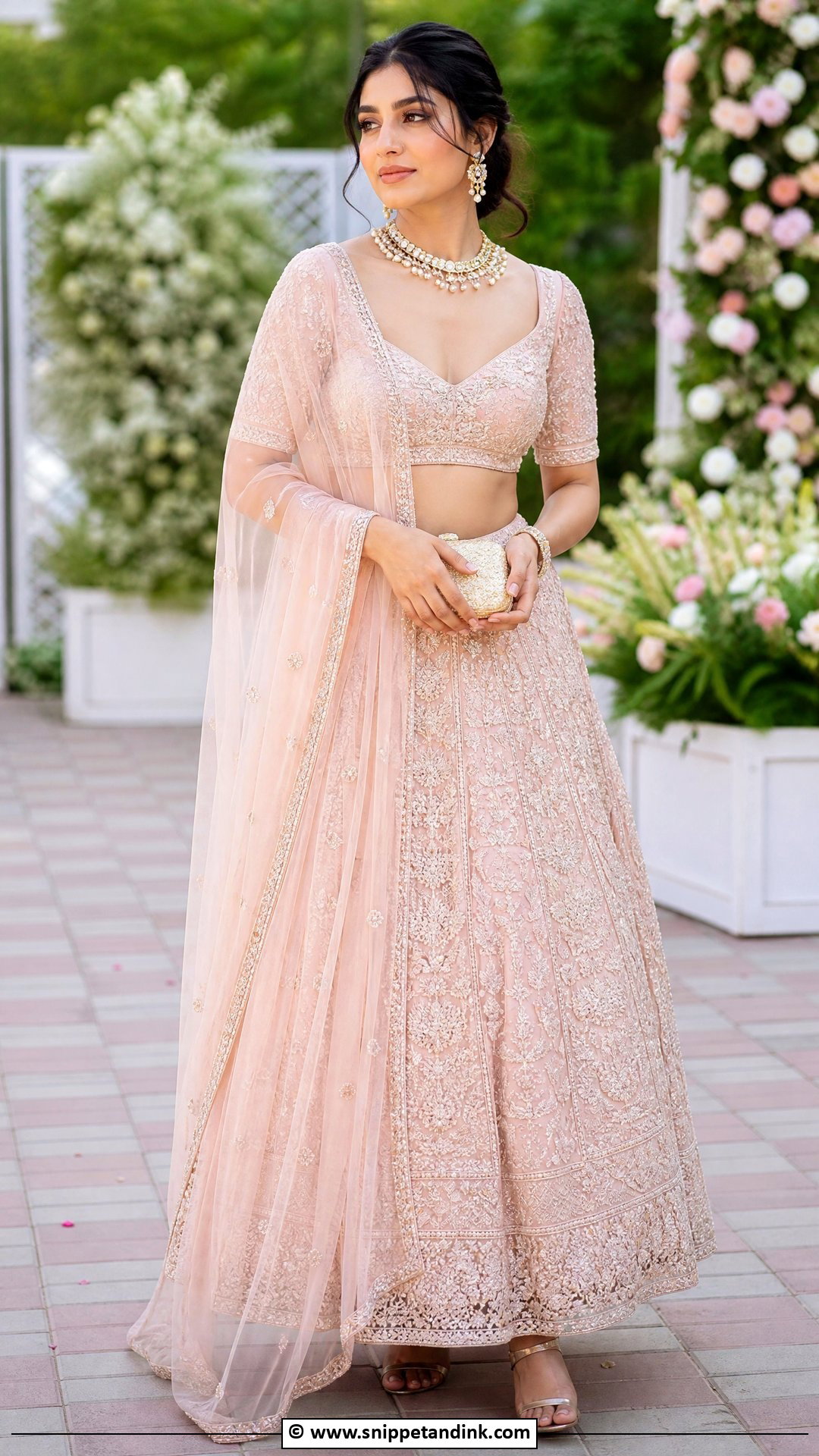
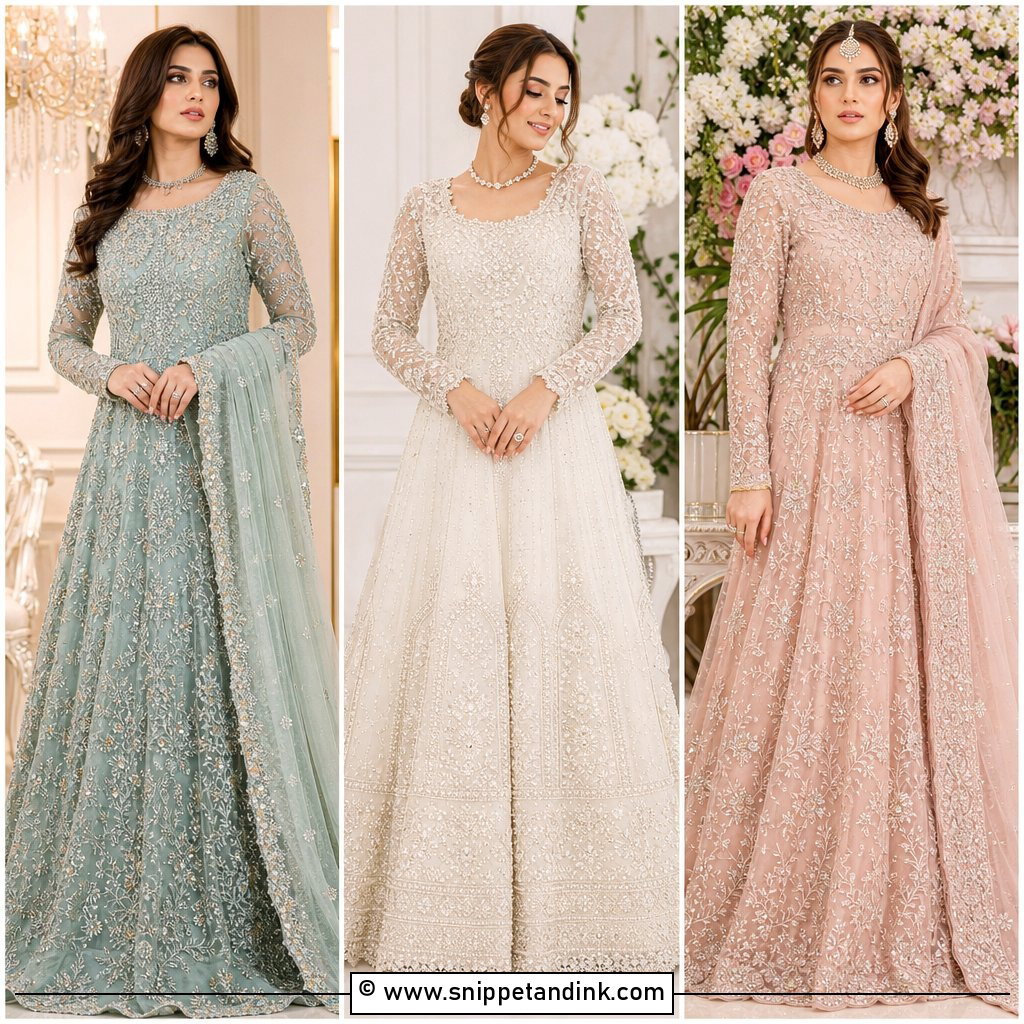
Blush, ivory, peach, mint and powder blue suit a daytime ceremony or a garden venue, where natural light shows off fine work. Pearl, sequin or tone-on-tone thread embroidery adds shine without fighting the softness. The risk with pastels is looking washed out on camera, so I always ask the makeup artist for more definition at the eyes and a deeper lip than she’d use with red. Kundan, pearl bangles, metallic heels and a sheer scalloped dupatta finish it.
3. Gold Silk Saree Outfit
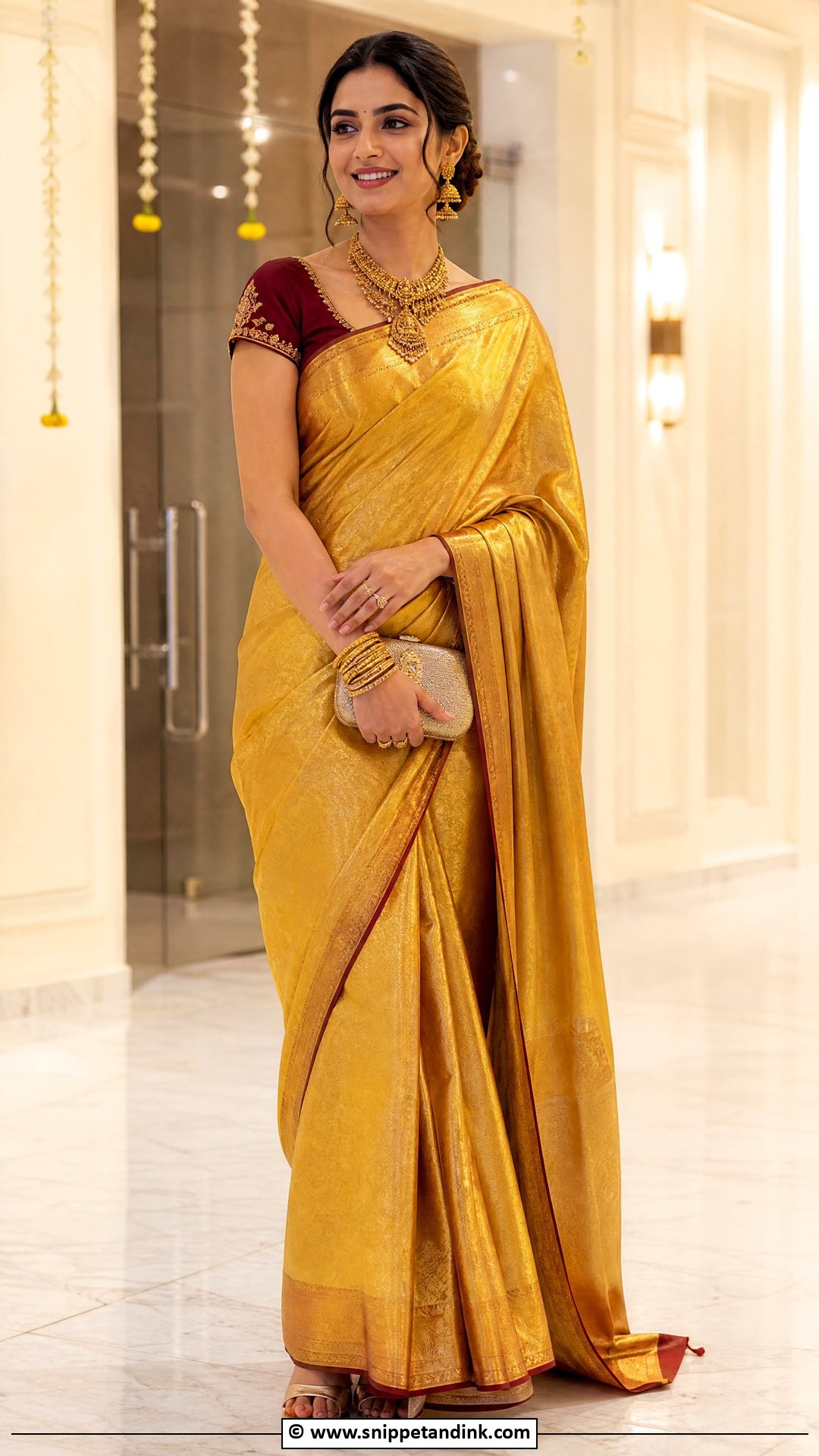
Gold silk is one of the most flexible pieces in a family’s wardrobe: dressed down for a cousin, dressed up with heavy temple jewelry for a mother or a bride. The blouse decides the role. Gold on gold looks bridal; maroon, emerald or deep pink reads festive guest. Silk has natural body, so the pleats sit beautifully once set, but they need to be pinned at the waist and shoulder or they’ll fan out as you walk. A bindi, bangles, heeled sandals and a flower bun finish it.
4. Kanjeevaram Saree Outfit
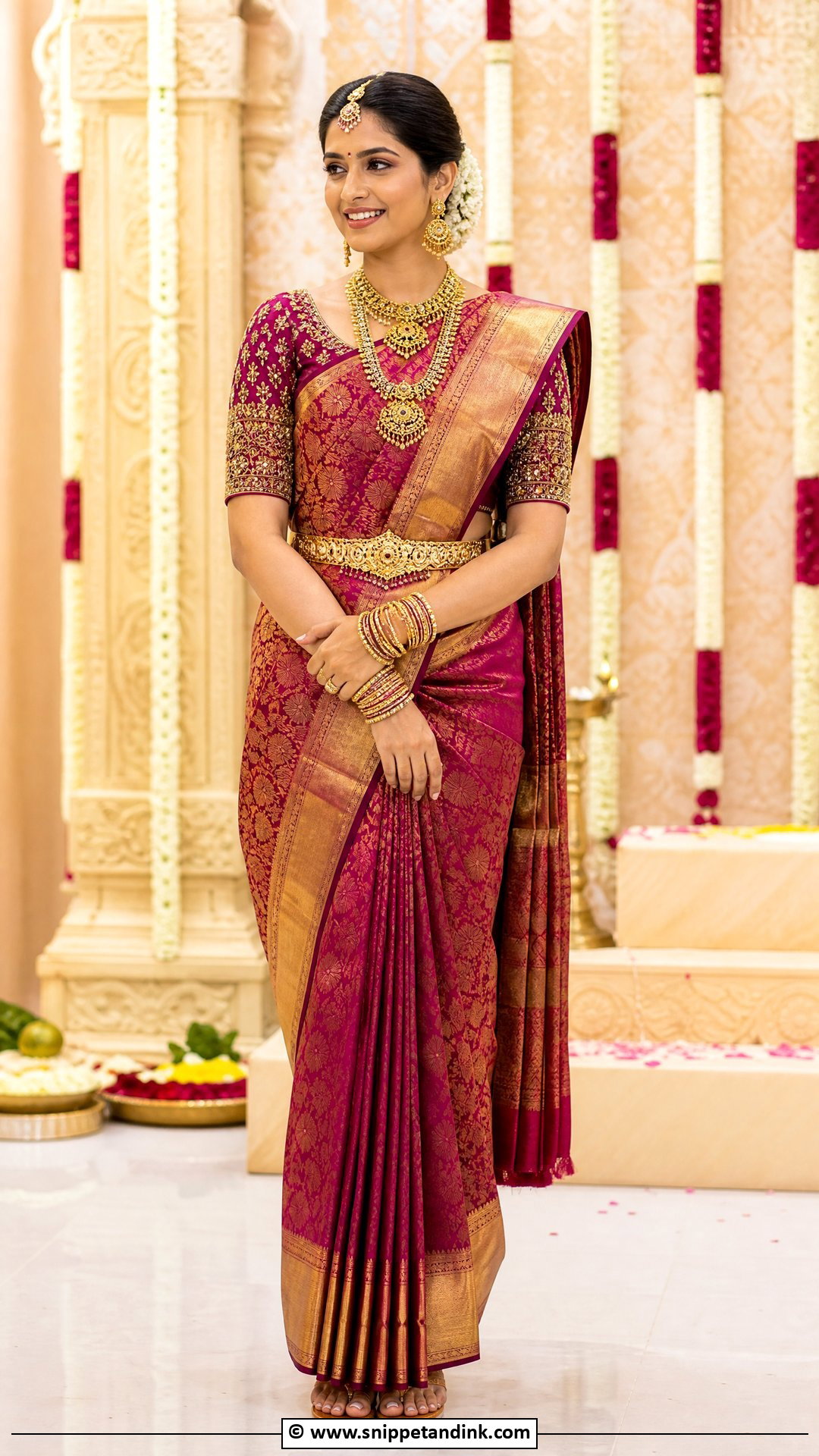
Kanjeevaram silk is thick and heavy, with contrast borders woven in: magenta with gold, green with red, royal blue with copper. That weight means the drape needs a waist belt or careful pinning to stay put through long ceremonies. I’d pair it with a short or elbow-length blouse, traditional gold jewelry and block heels or embellished sandals. A jasmine bun and bangles complete it. It suits brides, close family and guests at a South Indian wedding equally well, with the jewelry scaled to the role.
5. Banarasi Saree Outfit
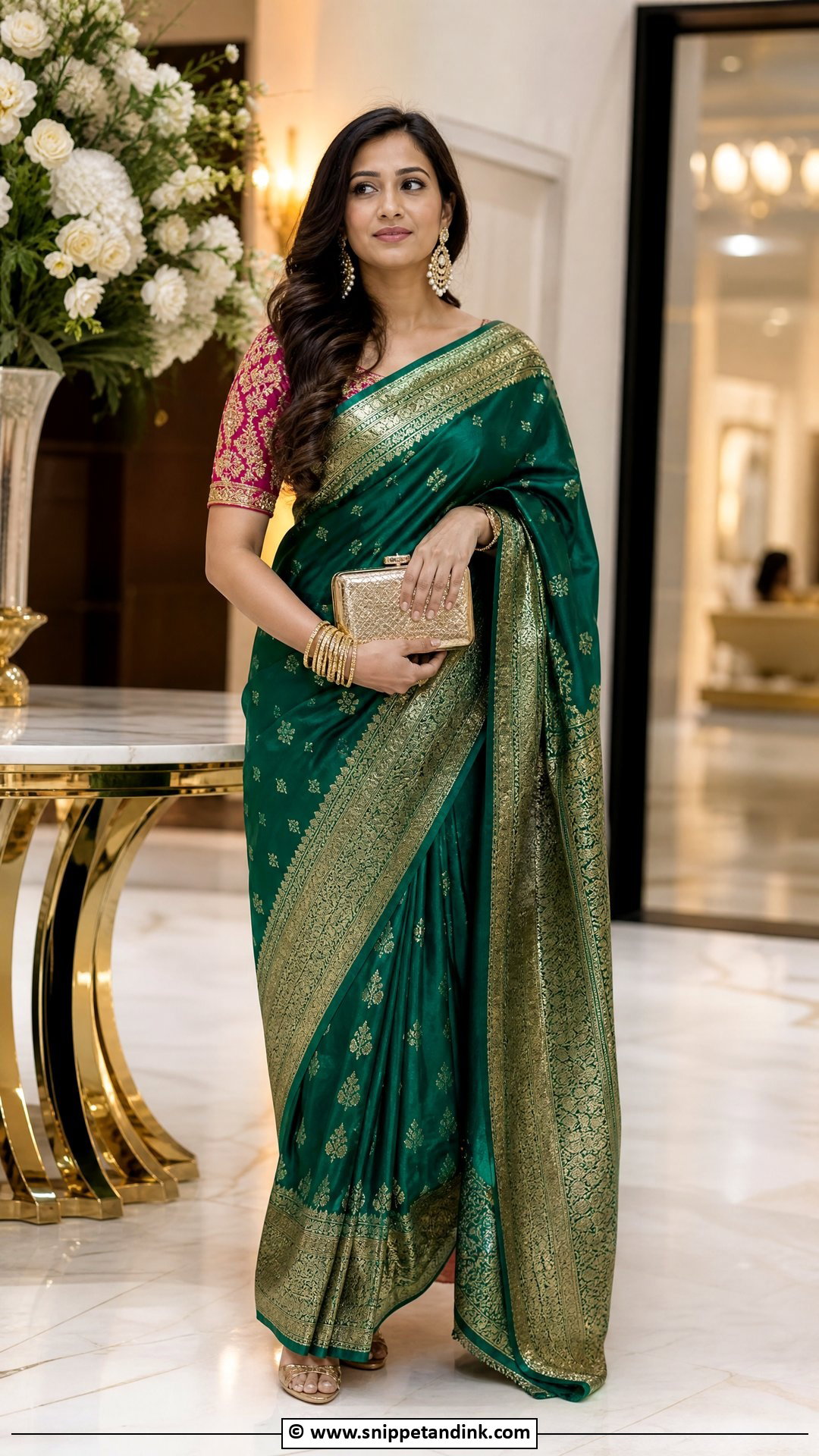
A good Banarasi earns its price over years. The woven brocade motifs are part of the fabric, not stitched on, so it can be worn again and again for formal family events. Purple, emerald, ruby or navy suit evenings; champagne or rose suit daytime. A contrast blouse, statement earrings, bangles and a sleek clutch finish it. Keep the drape structured, because the brocade’s stiffness shows every uneven pleat, and choose a low bun or center-parted waves.
6. Floral Lehenga Outfit
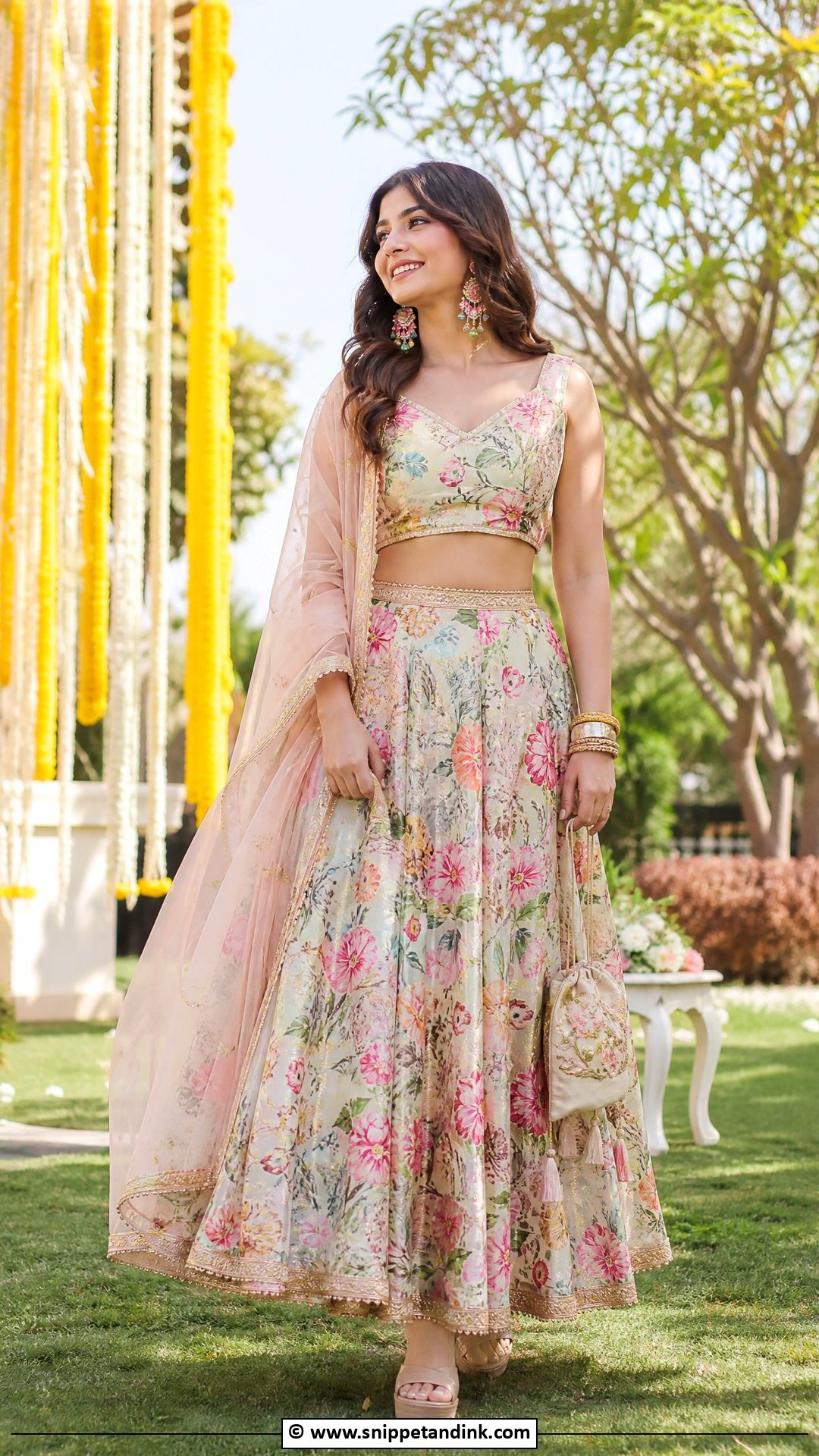
Printed florals feel light for a mehendi or haldi; embroidered florals hold up at a daytime wedding. A cropped blouse, a flowing skirt and a soft dupatta make it easy to wear for hours. Bold prints call for simpler jewelry, while pastel florals can take a few more colorful earrings and stacked bangles. I’d choose wedge heels for lawn venues, since stilettos sink straight into grass. A potli bag finishes it.
7. Mirror Work Lehenga Outfit
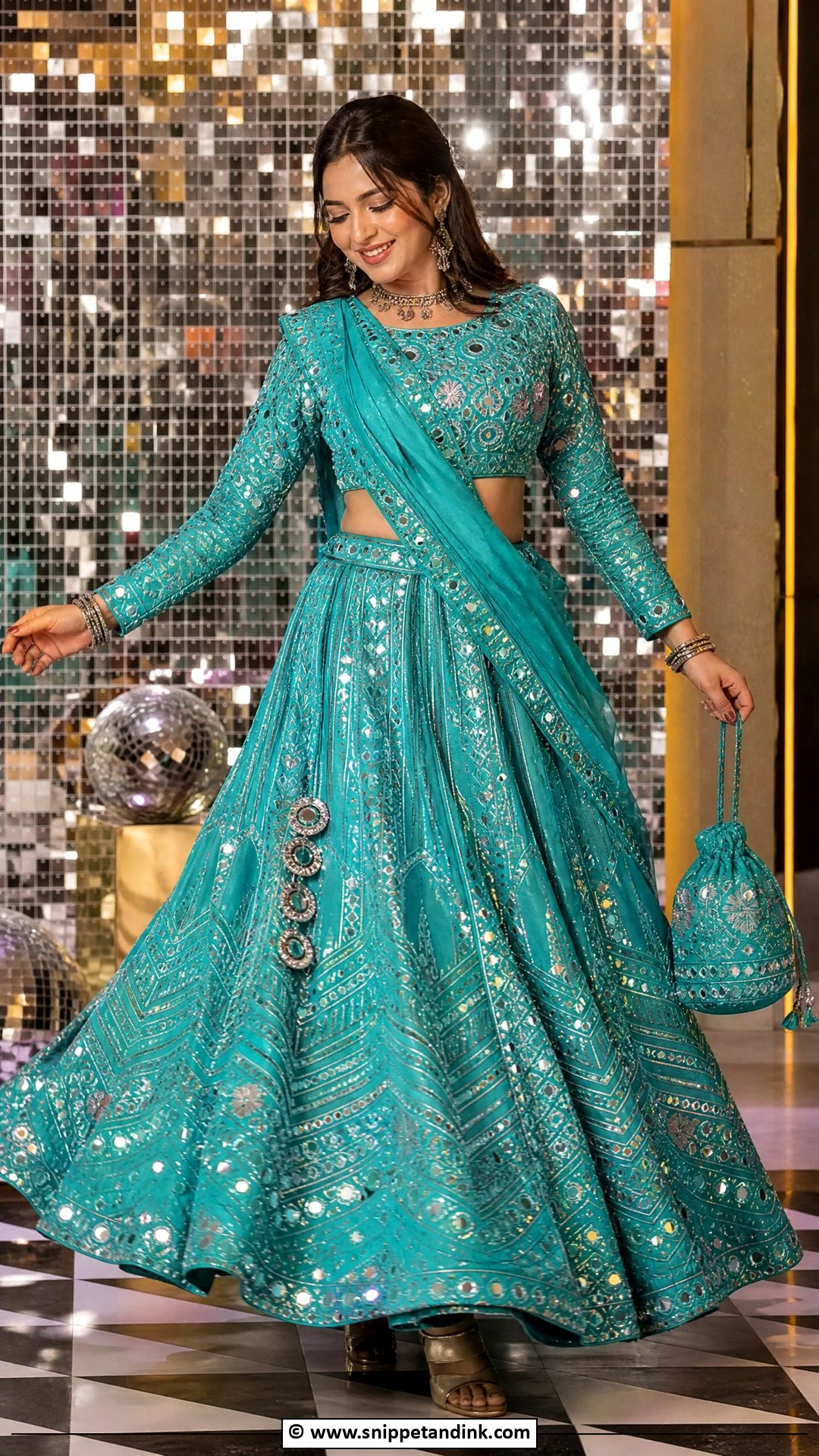
Mirrors catch every light at night, which is why a mirror work lehenga outfit comes alive at a sangeet or an evening mehendi. Orange, turquoise, lime, pink or ivory all suit it. Because the fabric already sparkles, I swap a heavy necklace for bold oxidized earrings. Comfortable block heels and a light dupatta let you dance freely. Check the mirror edges on the inside of the blouse; rough backing can rub skin raw over a long night.
8. Sequin Saree Outfit
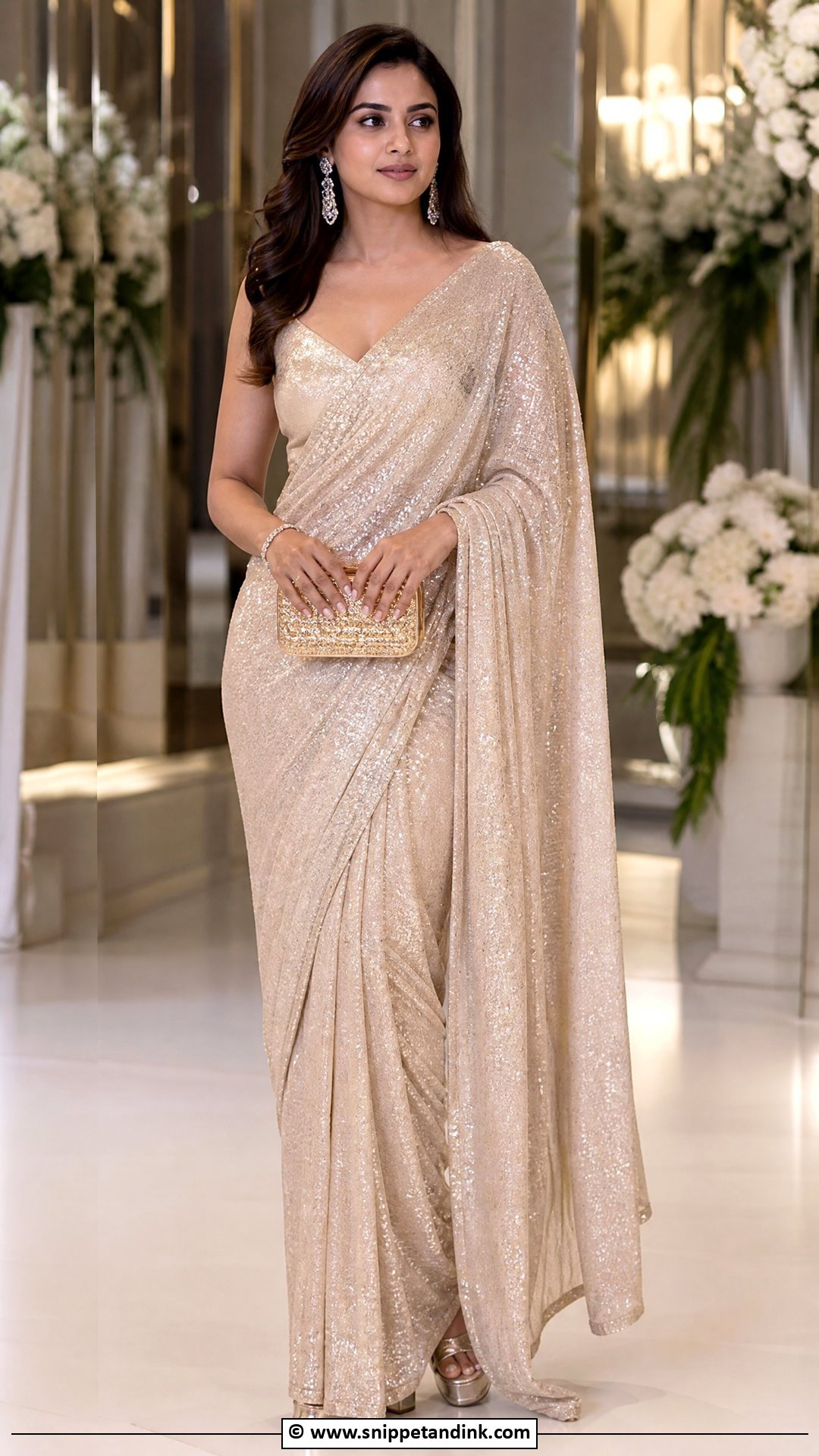
A sequin saree gives reception sparkle with a fraction of a lehenga’s weight. Champagne, silver, blush, navy or emerald look polished. Sequins scratch the inner arm, so I suggest either a full-sleeve blouse or a sleeveless one with no friction point at all. Crystal earrings, a bracelet, a small clutch and metallic heels keep it clean. Soft waves or a sleek ponytail finish it. Lightweight georgette bases drape best; sequins on heavy net can stand away from the body.
9. Embroidered Anarkali Suit Outfit
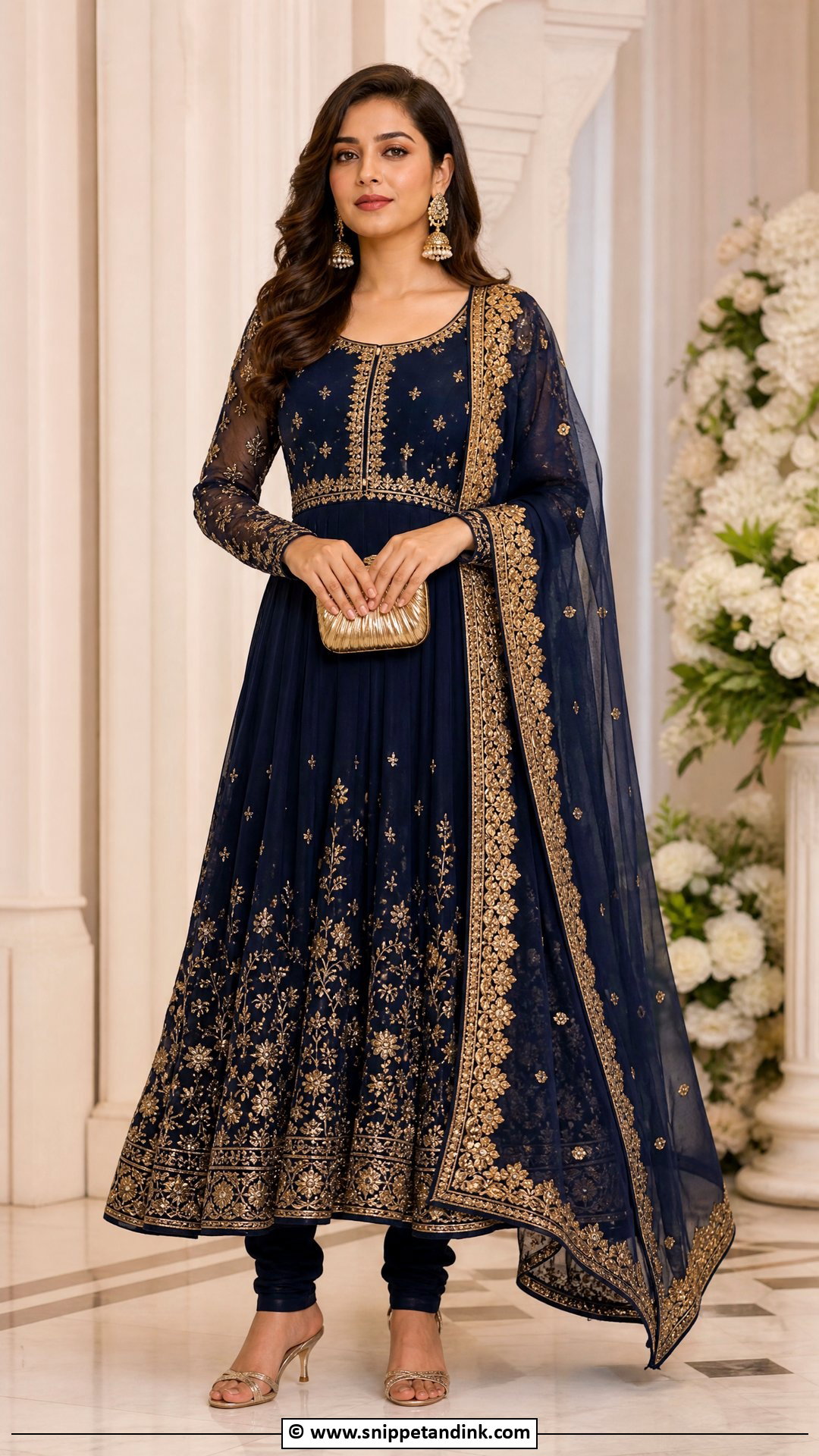
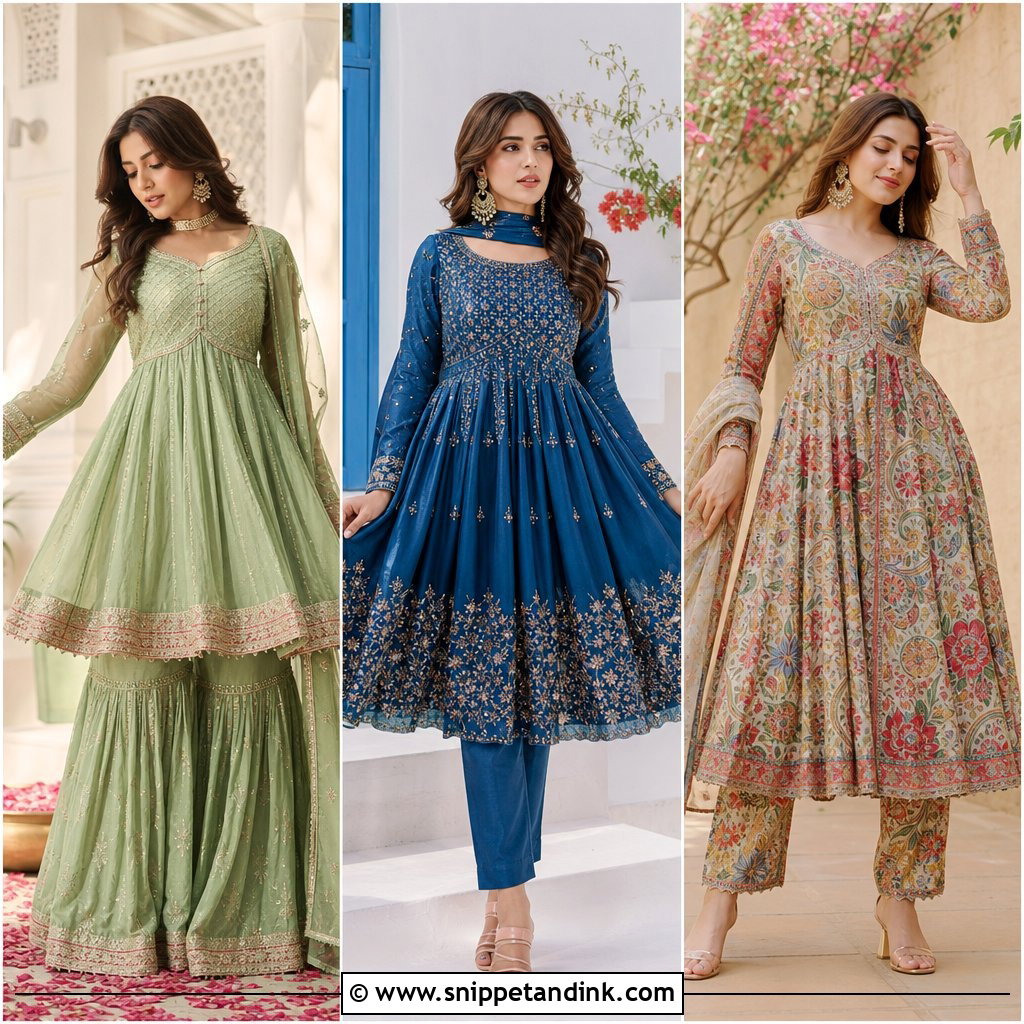
An anarkali’s fitted bodice and flared skirt flatter many builds and let you move freely. An embroidered Anarkali suit outfit in silk, georgette, net or organza, with detail around the neckline, sleeves and hem, works for ceremonies, receptions and family functions. Churidar pants, a matching dupatta, statement earrings and embellished heels complete it. If the embroidery is heavy at the neck, I’d keep jewelry to the ears and wrists. Long sleeves and a higher neckline give more coverage for religious ceremonies.
10. Sharara Suit Outfit
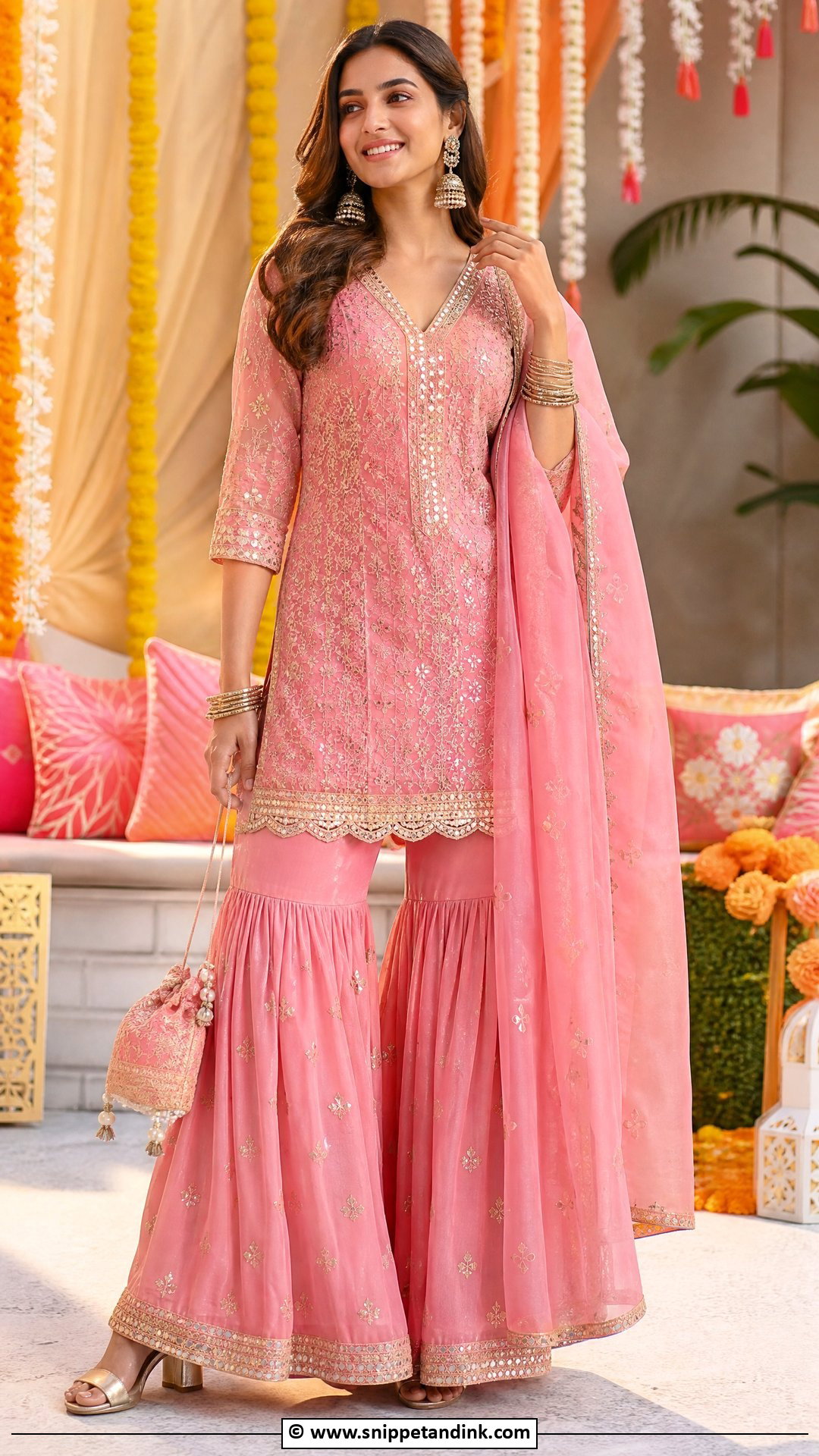
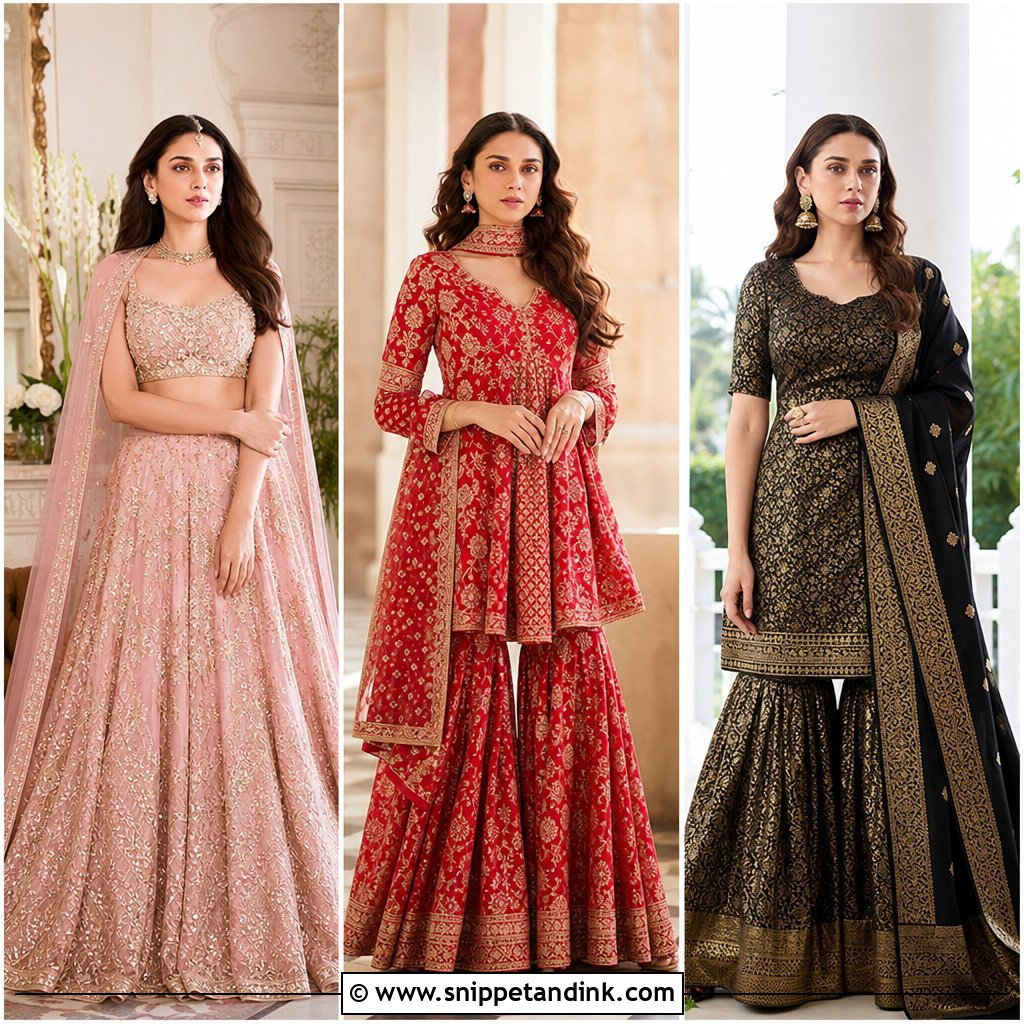
A sharara is easier to walk and dance in than a lehenga, and that’s usually why guests pick it. The wide legs swing with you, and a short or mid-length kurti keeps the proportions right. Embroidery, mirror work, sequins or gota patti make it festive. I insist on block heels with a sharara; flats let the hem drag and catch underfoot. A matching dupatta, jhumkas and bangles finish it, with a center part and soft curls or a low bun.
11. Gharara Suit Outfit
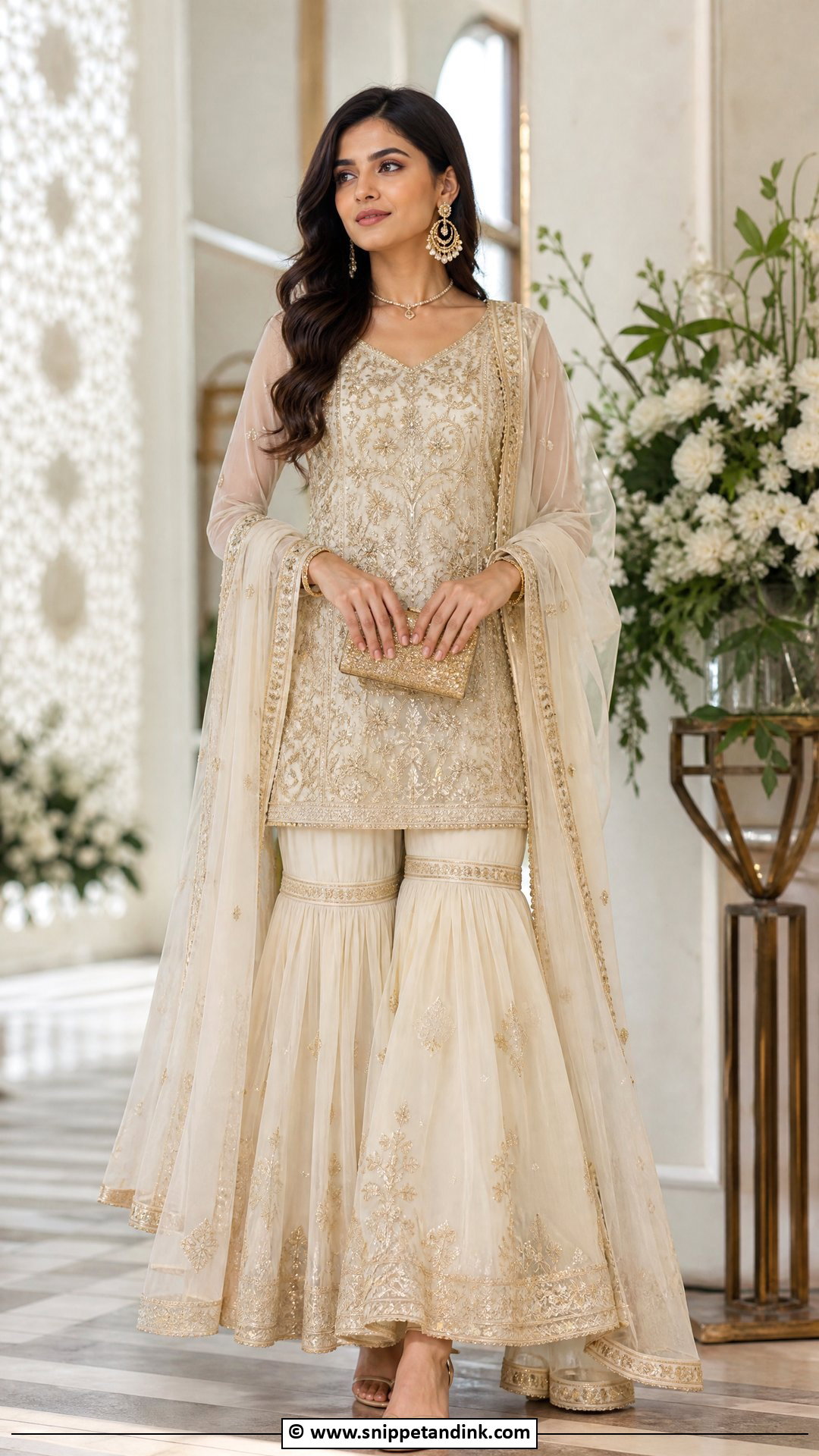
A gharara is fitted to the knee, then flares out, often with a gathered band at the knee joint, which gives it an old-world silhouette quite different from a sharara. Silk, brocade, georgette or organza with a short kurti and dupatta suit it. Chandbali earrings, a delicate necklace, embellished heels and a small clutch complete it. Soft metallics, jewel shades and pastel embroidery all work. It’s a good pick for family and close friends who want something traditional but not a lehenga.
12. Palazzo Suit Outfit
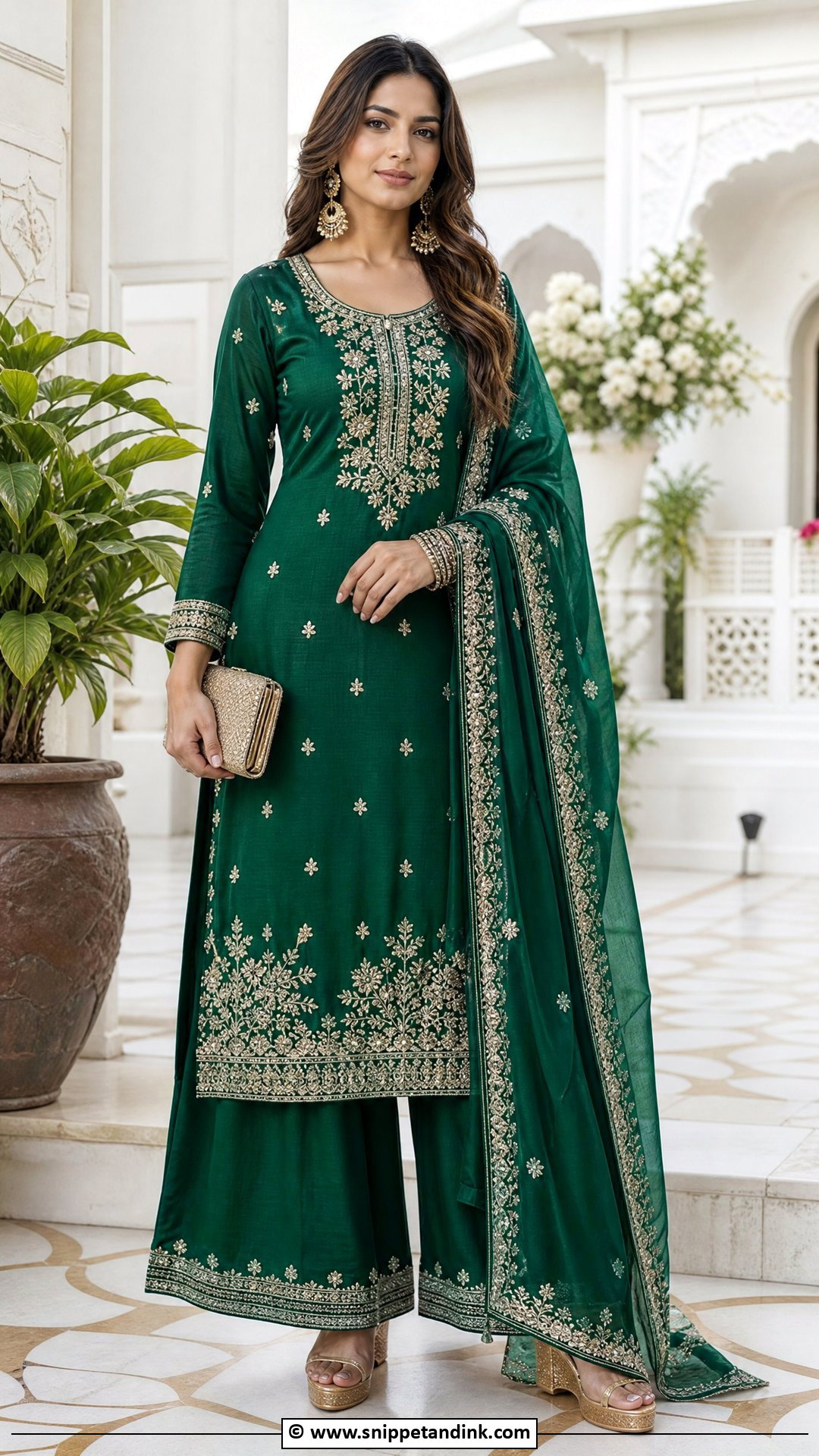
Palazzos are the easiest festive option for a guest who wants comfort, and they travel well for destination weddings. Wide-leg pants with a long kurta or straight tunic in silk, chiffon, brocade or embroidered georgette create a long, clean line. A bordered dupatta, statement earrings, stacked bangles and wedges or block heels complete it. Choose richer fabrics and a structured clutch, because a palazzo set in plain cotton can look casual next to lehengas.
13. Jacket Lehenga Outfit
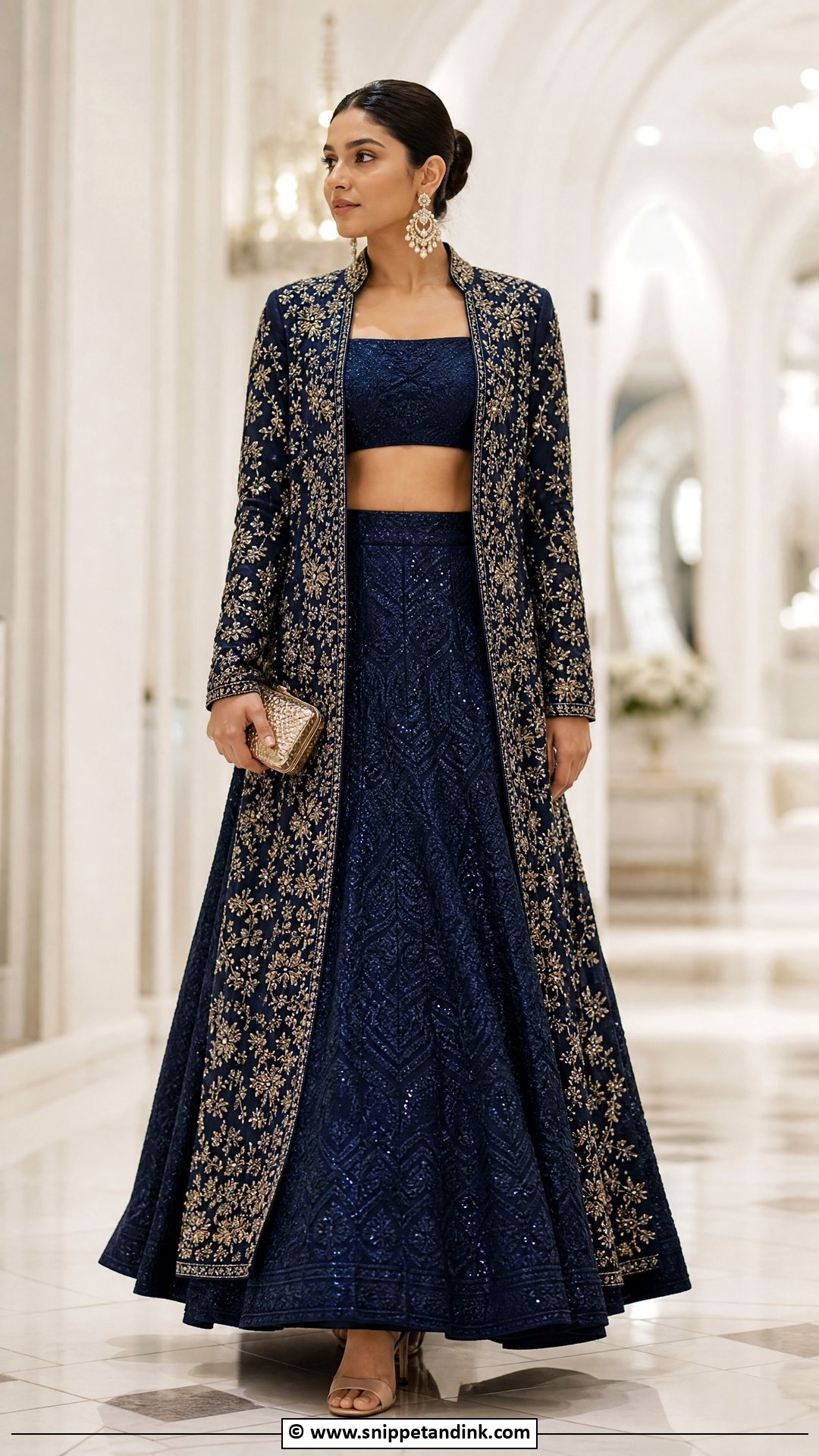
A long embroidered jacket in place of a dupatta adds structure and coverage, which makes a jacket lehenga a comfortable choice for winter weddings and receptions. Sheer jackets keep it light; brocade makes it richer. Since the jacket is the feature, I skip necklaces and let earrings and a sleek clutch do the work. Lift your arms at the fitting: heavy brocade sleeves can restrict you through a long evening of dancing.
14. Cape Lehenga Outfit
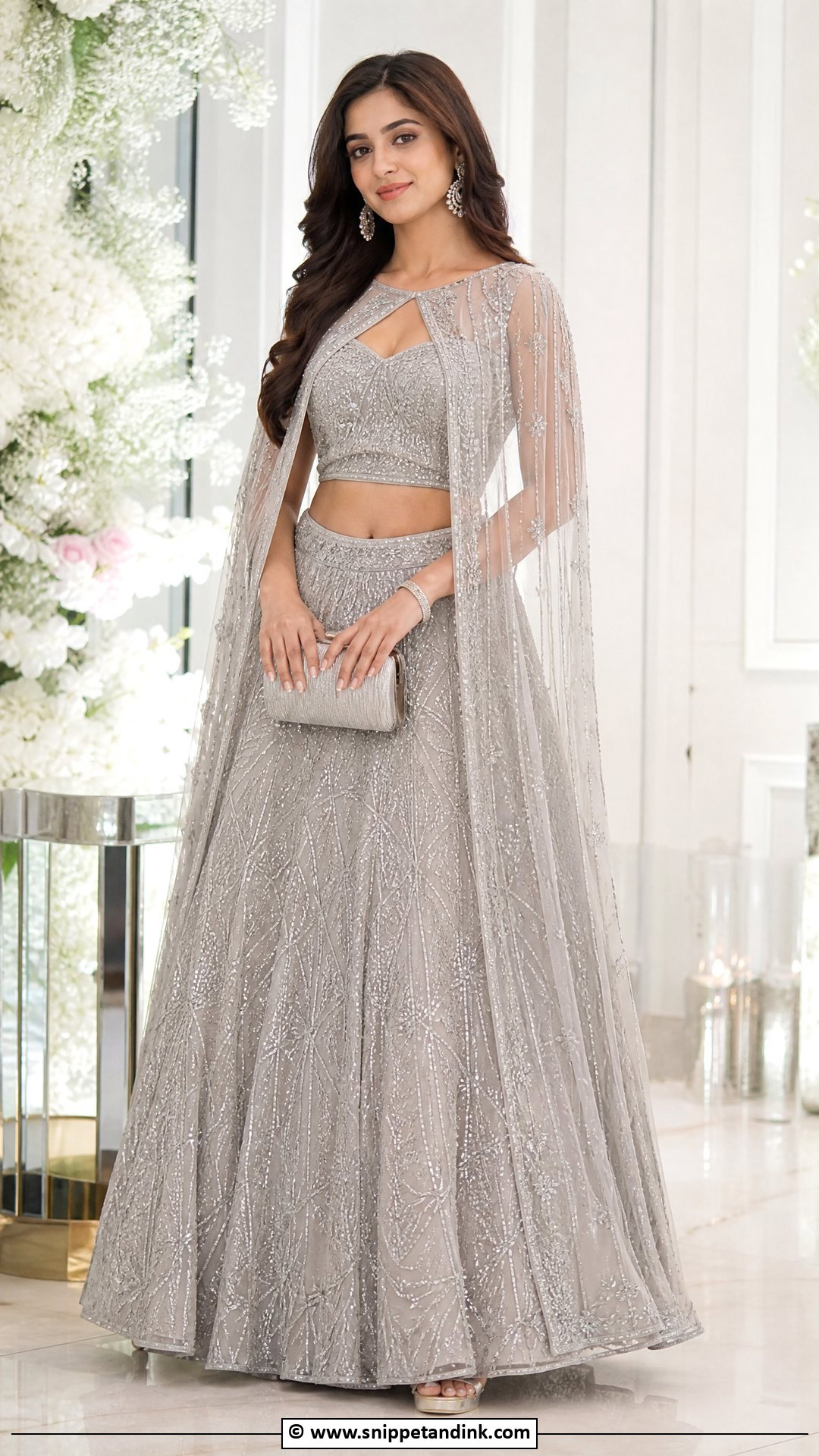
Guests who hate adjusting a dupatta all night are usually happiest in a cape. It sits on the shoulders, stays put while you greet people, and moves when you dance. A sheer embroidered cape over a fitted blouse is lighter; a structured cape is more dramatic for a reception. Pastels, metallics and jewel tones all suit it. Drop earrings, a bracelet, slim heels and a matching clutch keep the styling clean.


15. Ruffle Saree Outfit
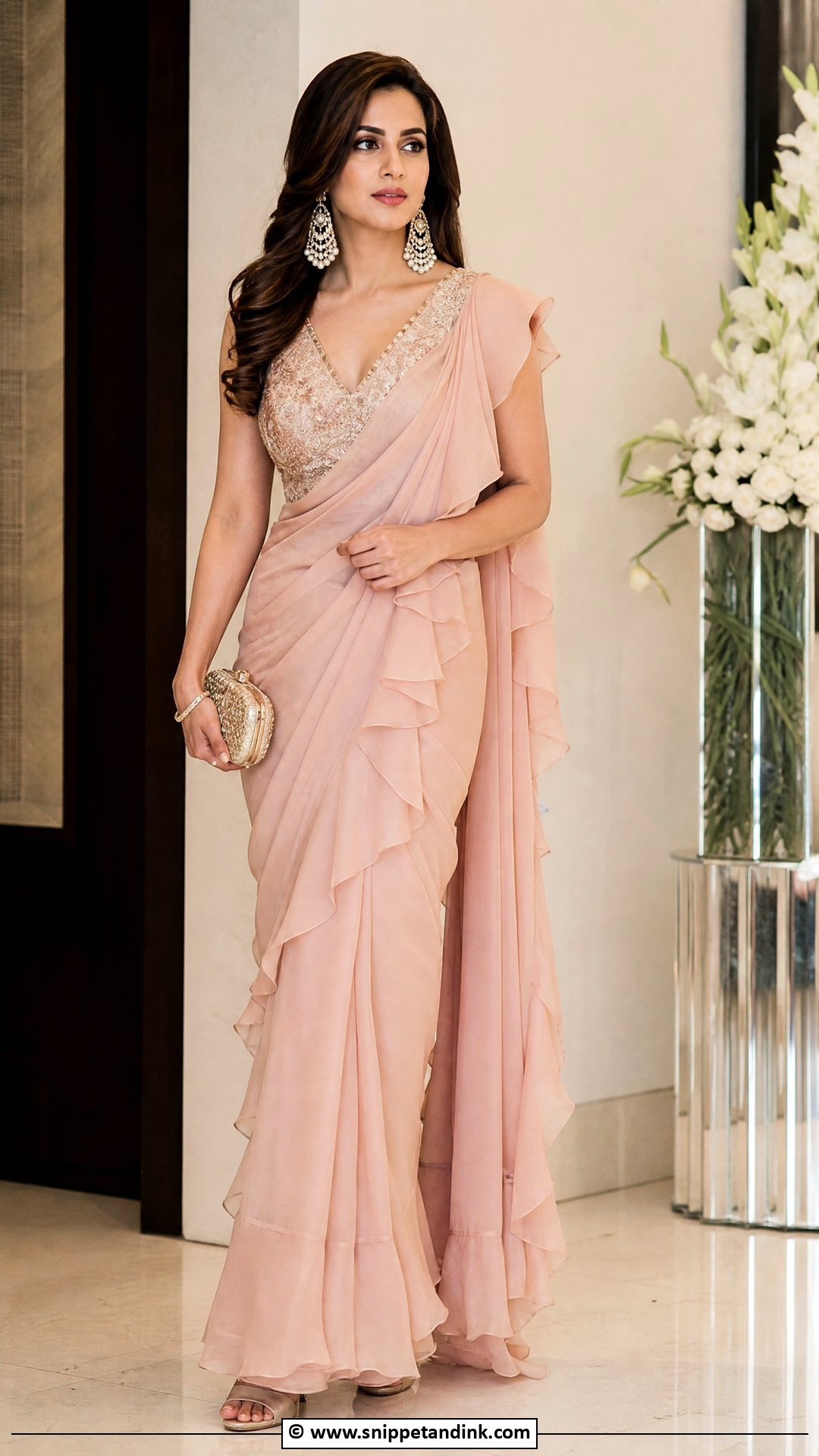
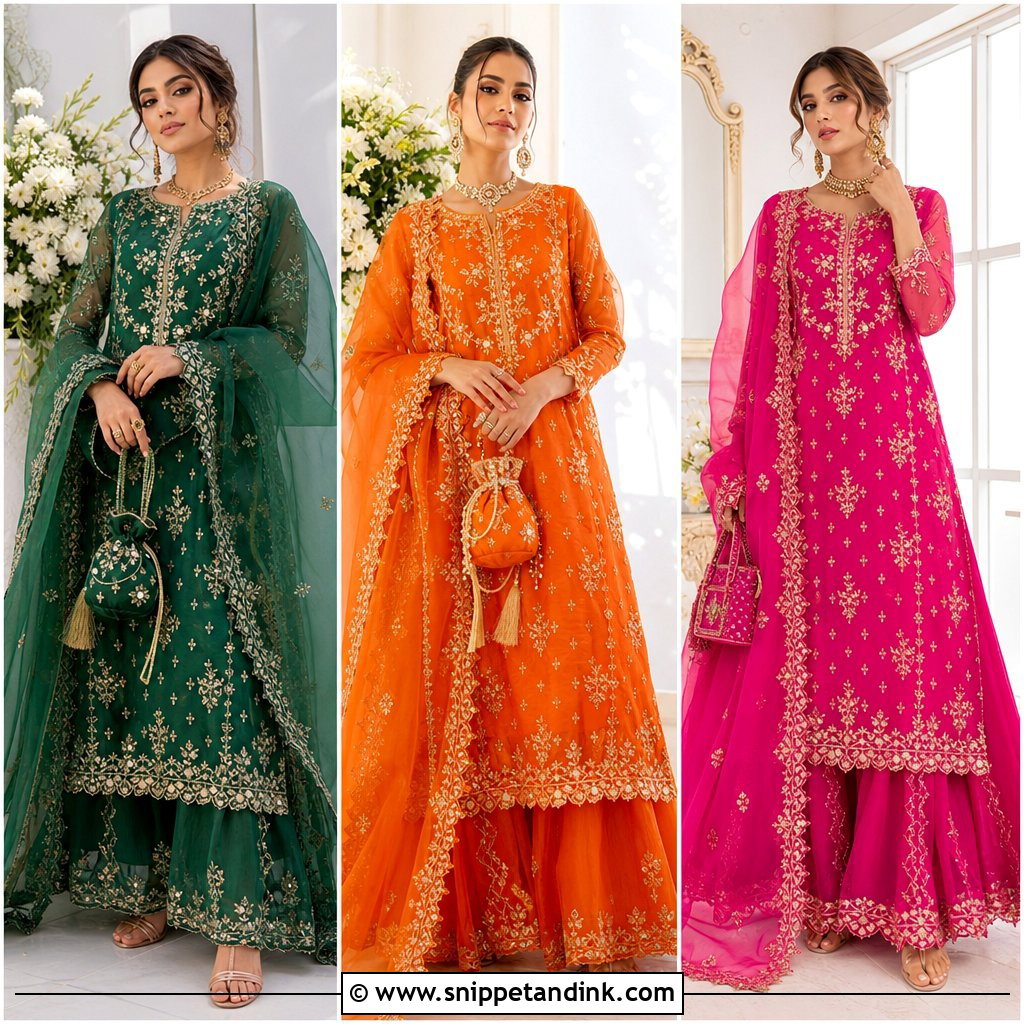
Ruffles add volume and youth to a saree, but only in light fabric. Georgette, chiffon or organza let the ruffles fall softly; heavier silks make them stand out stiffly. A sleeveless, halter or embroidered blouse suits it. Chandelier earrings, metallic heels and a compact clutch are enough, and I’d skip the necklace entirely, since the ruffled border already brings texture near the shoulder. It’s a fashion-led choice for a sangeet or reception.
16. Organza Saree Outfit
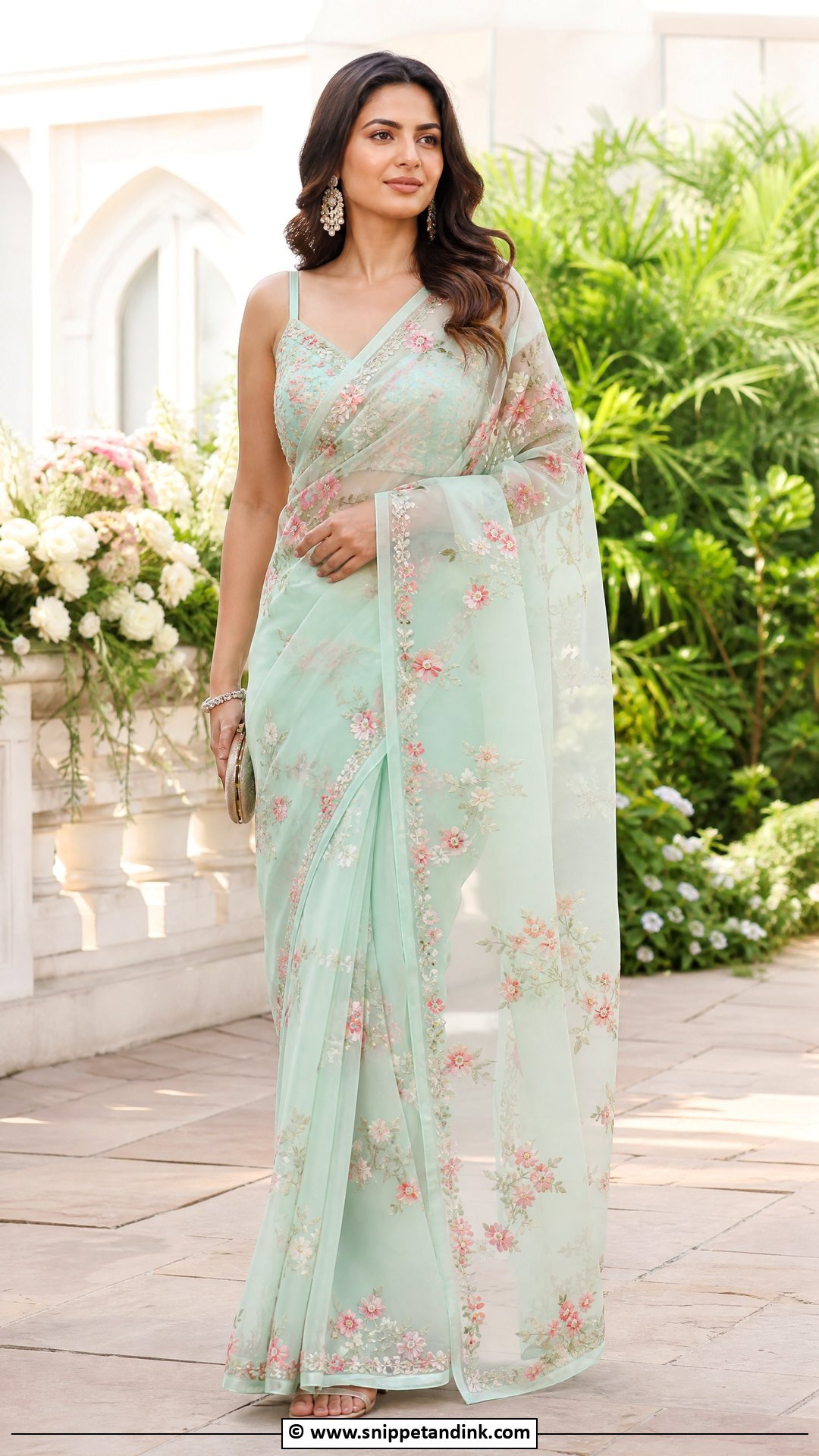
Organza is crisp, translucent and creases sharply, so steam it on the day and avoid sitting for long before photos. Floral embroidery, pearl detailing or soft zari borders make it festive. Lavender, mint, peach and ivory look delicate in daylight. A fitted blouse, delicate earrings, a bracelet and heeled sandals complete it. Organza stands slightly away from the body, so I keep accessories minimal and check the petticoat isn’t visible in sunlight.
17. Velvet Lehenga Outfit
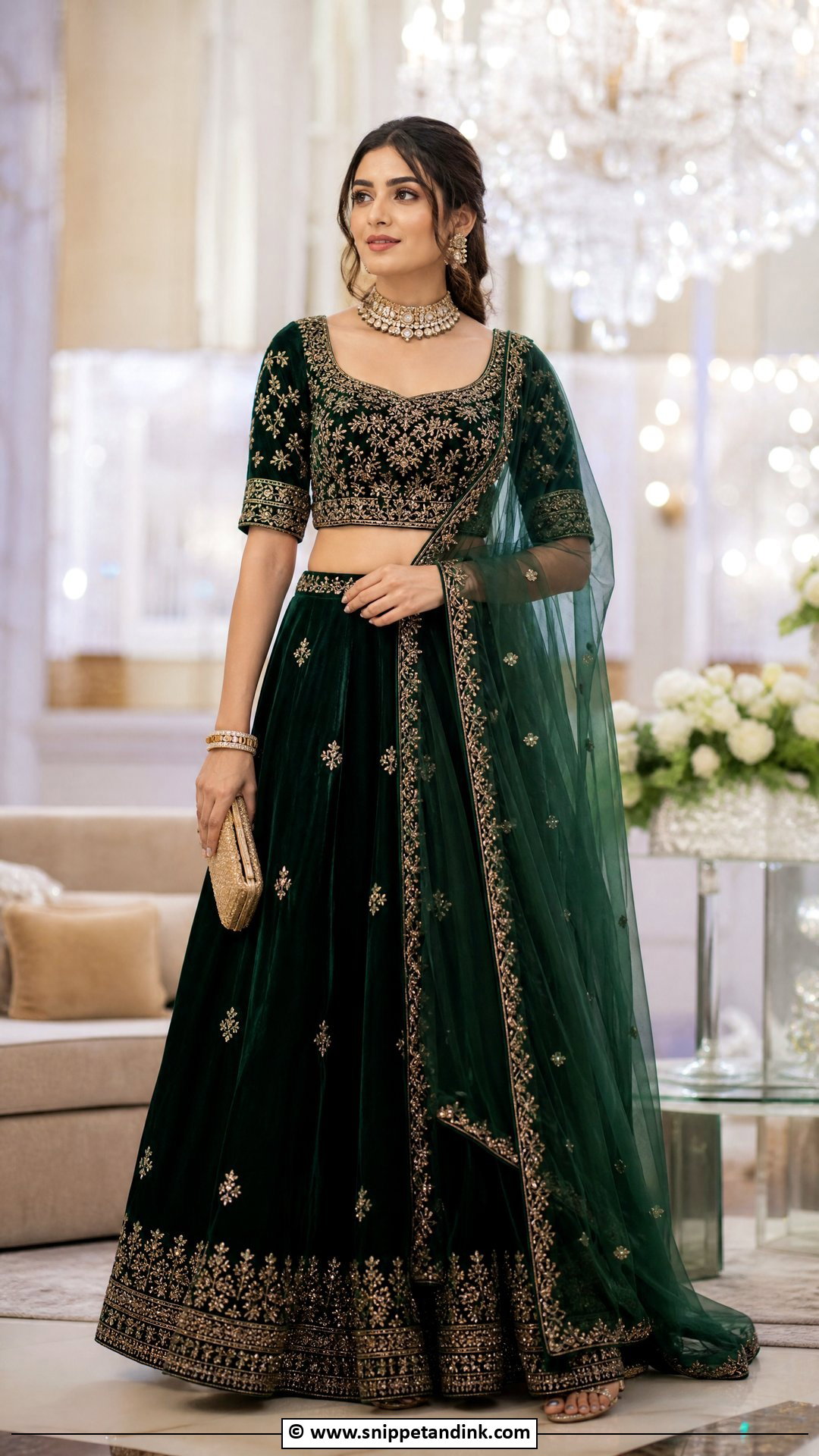
Velvet holds deep color like nothing else: maroon, emerald, navy, plum or a blackened teal. It is also warm and heavy, so I only suggest it for winter or a well air-conditioned evening venue. Embroidery at the hem, blouse and dupatta border balances the weight. Kundan earrings, a choker, bangles and embellished heels suit it. Let the fabric carry the outfit and keep everything else restrained; a sleek bun or soft curls finish it.
18. Chikankari Lehenga Outfit
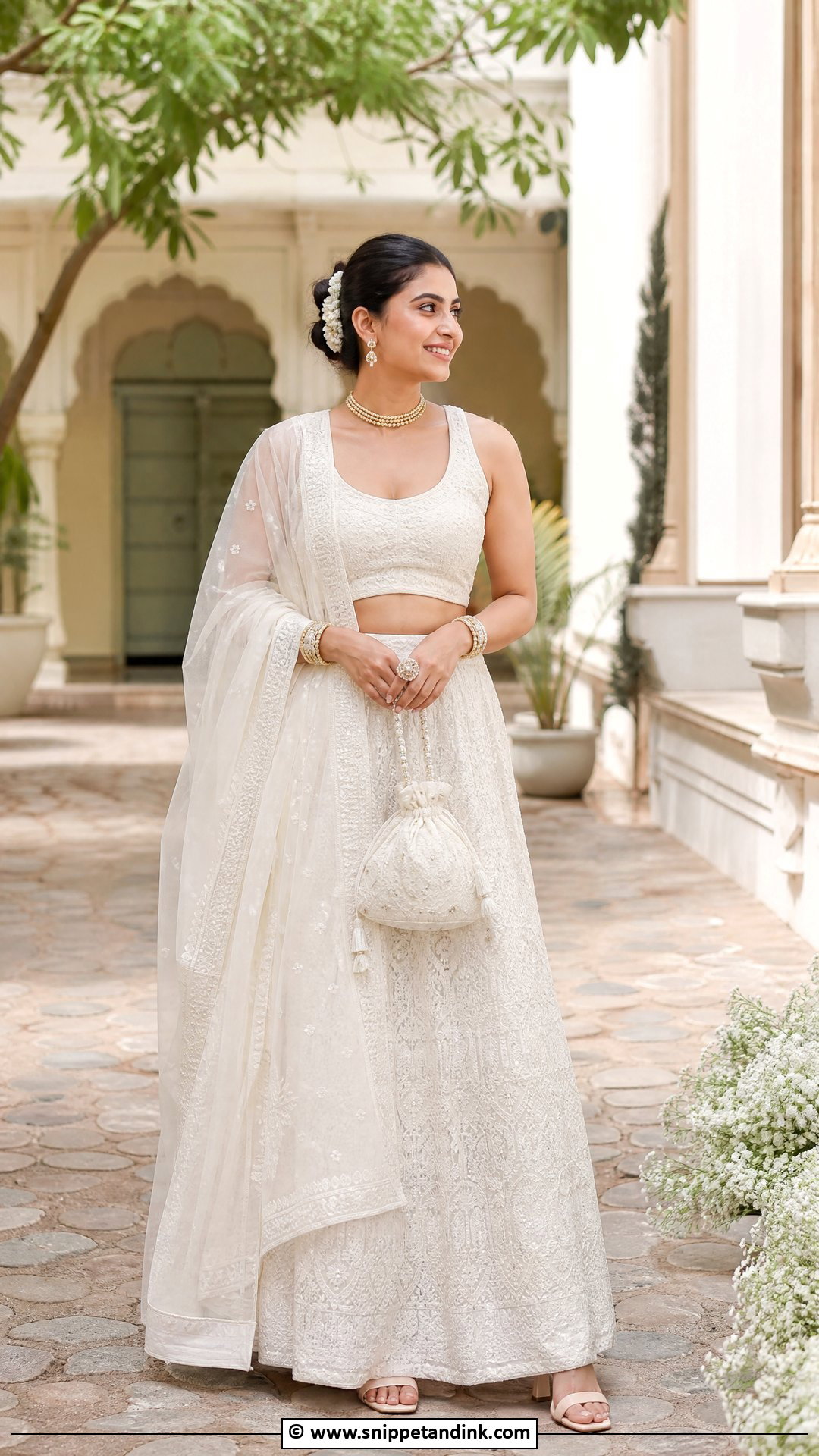
Chikankari is hand embroidery from Lucknow, traditionally white thread on fine cotton or georgette, and it suits daytime events and bridesmaids well. Ivory, blush, sage, powder blue or champagne show the stitches best. Mukaish or sequins add shine for a more festive event. Pearl jewelry, juttis or block heels and a small potli finish it. Fine chikankari snags on jewelry clasps and rough chairs, so I’d keep bracelets simple.
19. Bandhani Saree Outfit
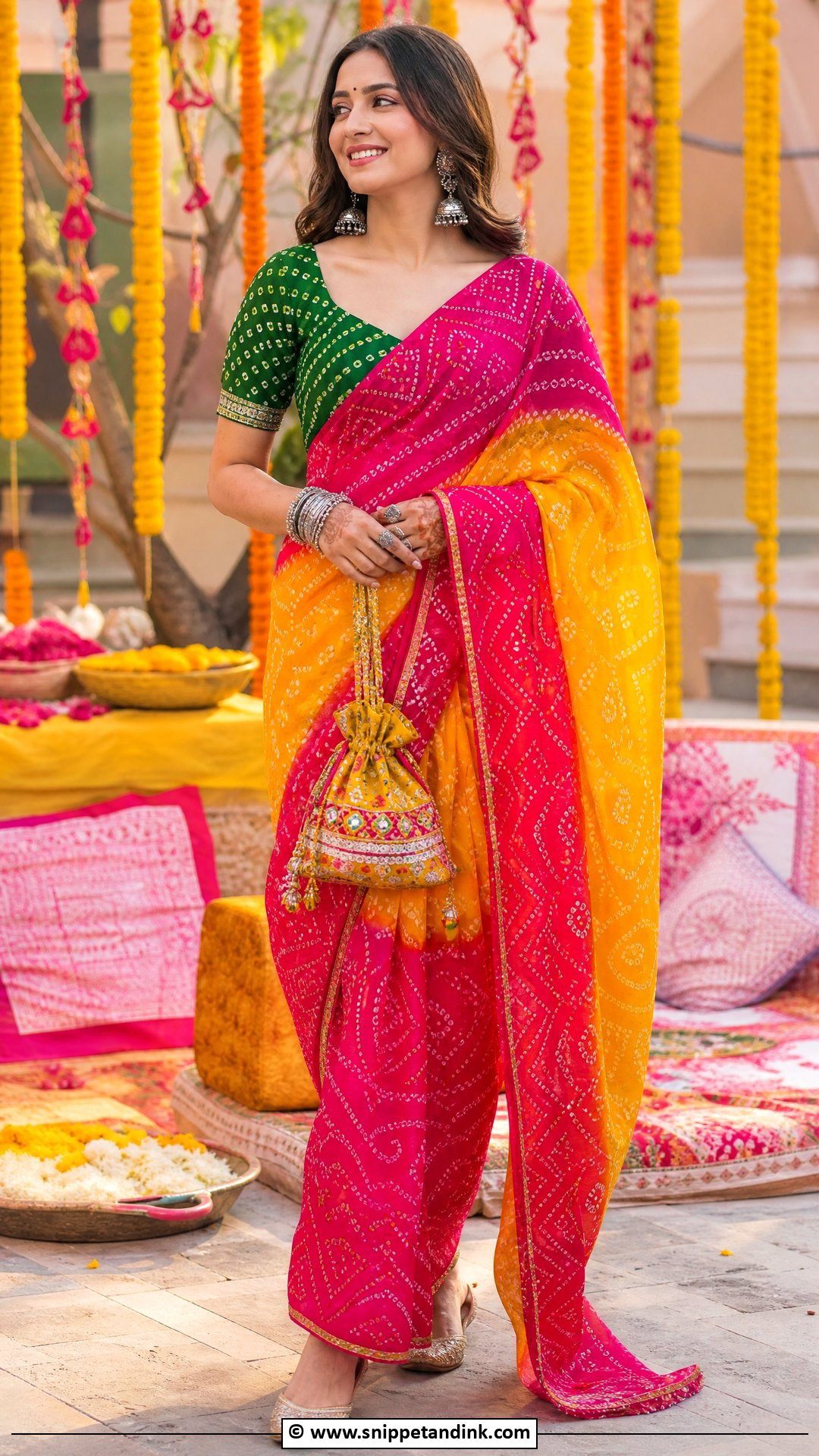
Bandhani is tie-dye: the fabric is pinched and tied into tiny knots before dyeing, which leaves the dotted pattern. It’s a Gujarati and Rajasthani craft and suits mehendi, haldi and daytime events. Yellow, pink, orange, green or red with a contrasting blouse look festive. Oxidized jewelry, bangles, a bindi and wedges or juttis complete it. Real bandhani can bleed color in its first wash, so dry clean it or wash it alone in cold water.



20. Bandhani Lehenga Outfit
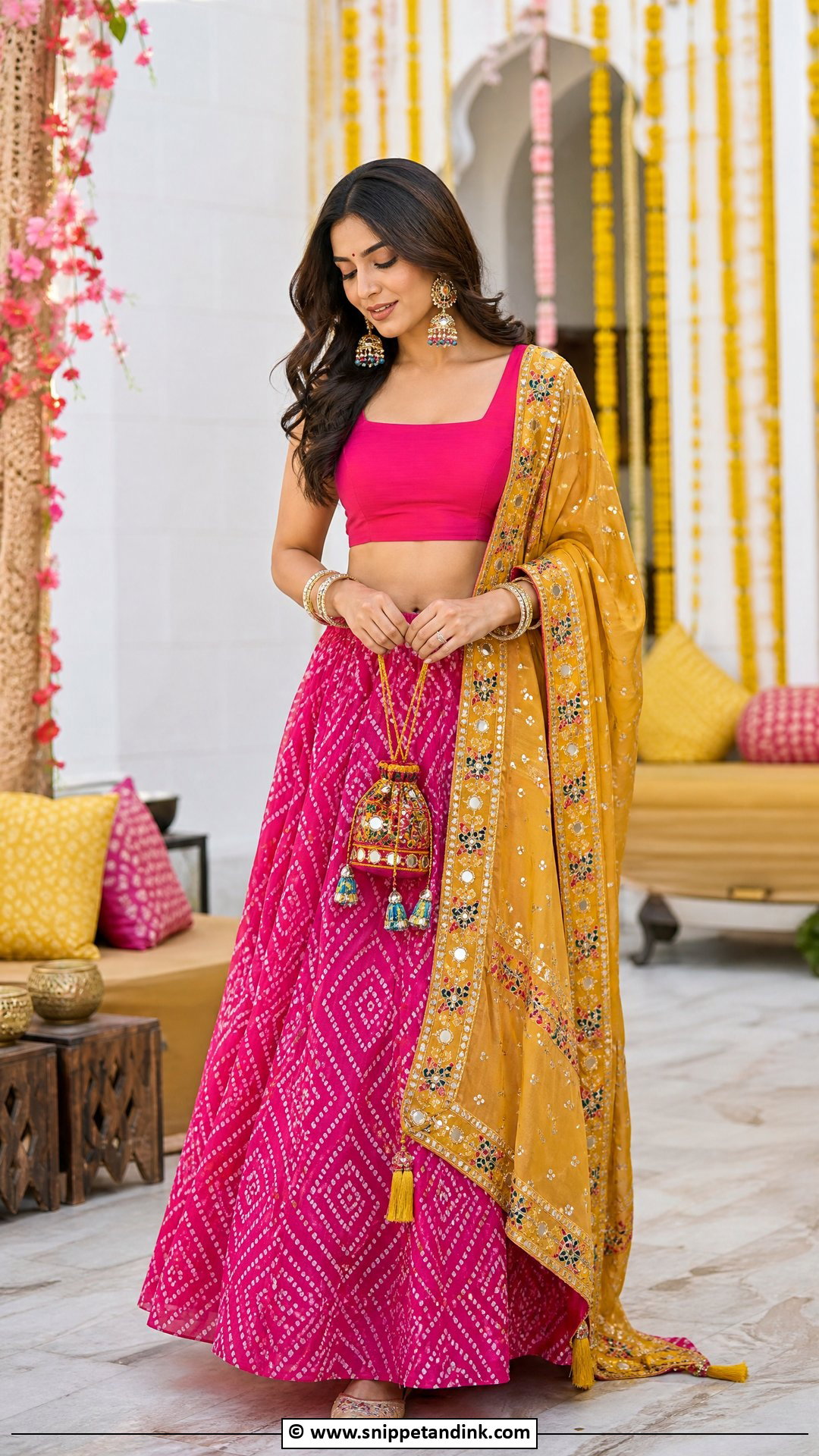
Lively and youthful, a Bandhani lehenga outfit brings color to any pre-wedding event. A flared skirt with a simple blouse and an embroidered dupatta works, or a coordinated set printed throughout. When the bandhani is bold, I keep the blouse clean and let the dupatta add texture. Mirror earrings, stacked bangles, juttis and a small embroidered bag suit it. Yellow, fuchsia, orange and green combinations feel right for a haldi or mehendi.
21. Salwar Kameez Outfit
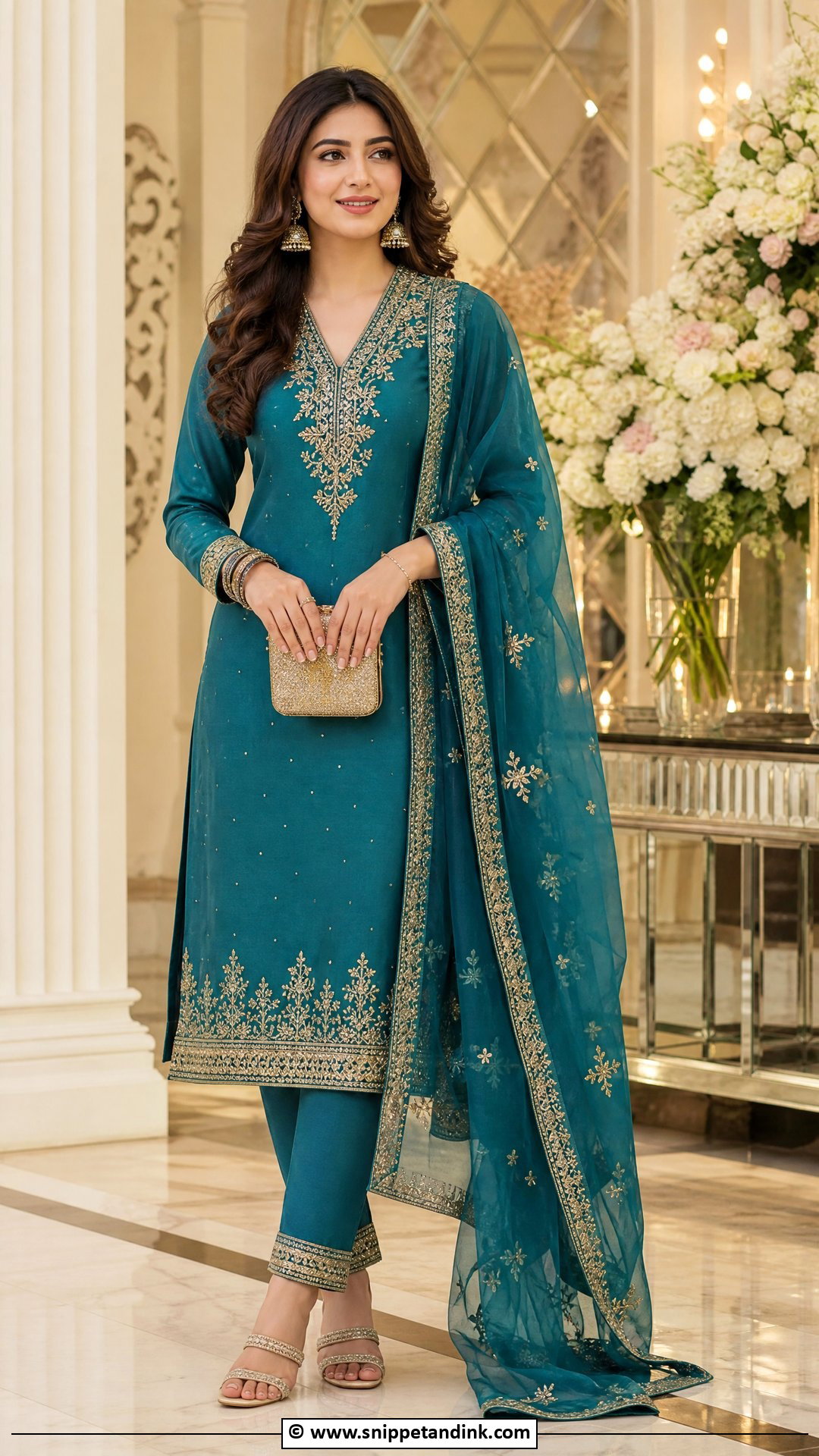
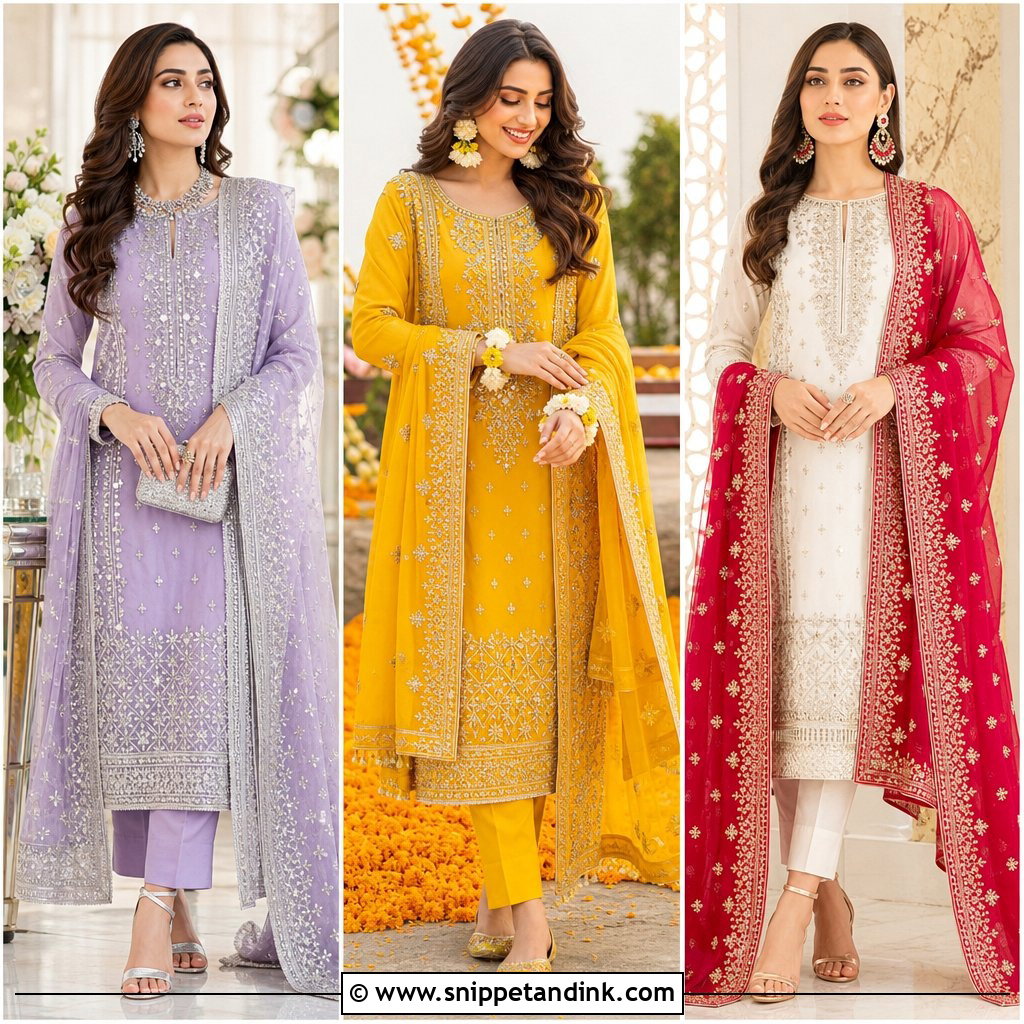
A well-made salwar kameez is the outfit I recommend to guests with a packed schedule of ceremonies. It’s comfortable to sit in for hours and moves easily. Choose a kameez with embroidery, beadwork or a rich border in silk, georgette, crepe or brocade. A straight or slightly flared cut suits most builds. Jhumkas, bangles, a clutch and embellished sandals finish it. A dupatta with detailed edging, pinned neatly at one shoulder, is what makes it look wedding-ready.
22. Straight Kurta Set Outfit
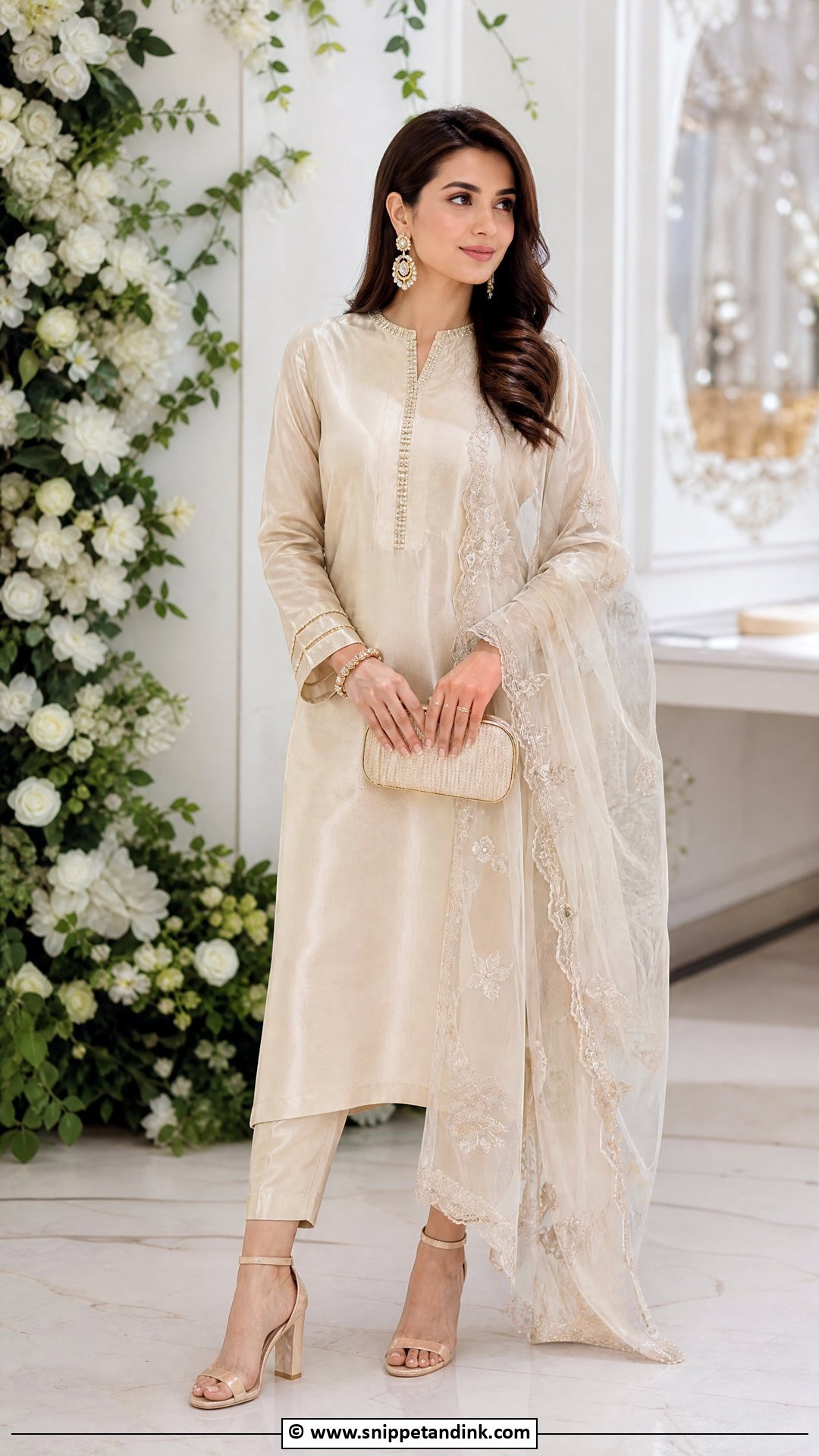
Fabric decides whether a straight kurta set outfit looks wedding-ready or office-ready. A long straight kurta in silk, chanderi, georgette or brocade with slim pants or cigarette trousers, plus a detailed dupatta such as embroidered organza or a Banarasi-style weave, gets you there. Statement earrings, a bracelet, block heels and a structured clutch complete it. It suits smaller functions and daytime ceremonies, with polished hair and makeup to keep it formal.
23. Indo Western Gown Outfit
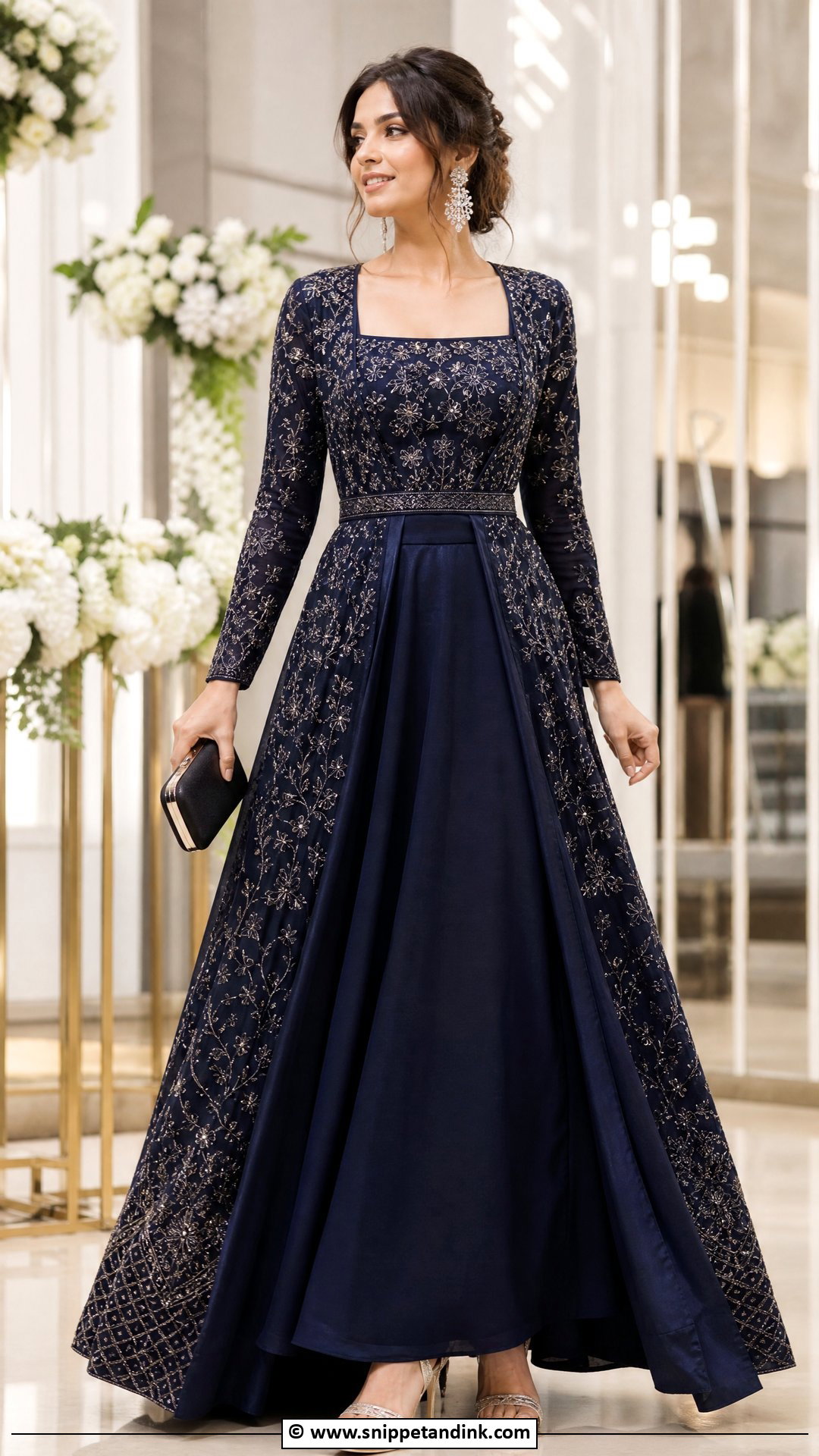
Indo-western gowns are often the most comfortable option for guests who’ve never worn a saree or lehenga. A floor-length gown with beadwork, sequins, cape sleeves or a dupatta-style overlay suits receptions, engagement parties and formal evenings. Jewel tones, metallics and deep neutrals look right at night. Statement earrings, high heels and a sleek clutch finish it. Keep the layering to a minimum; one embellished feature is plenty.
24. Lehenga Saree Outfit
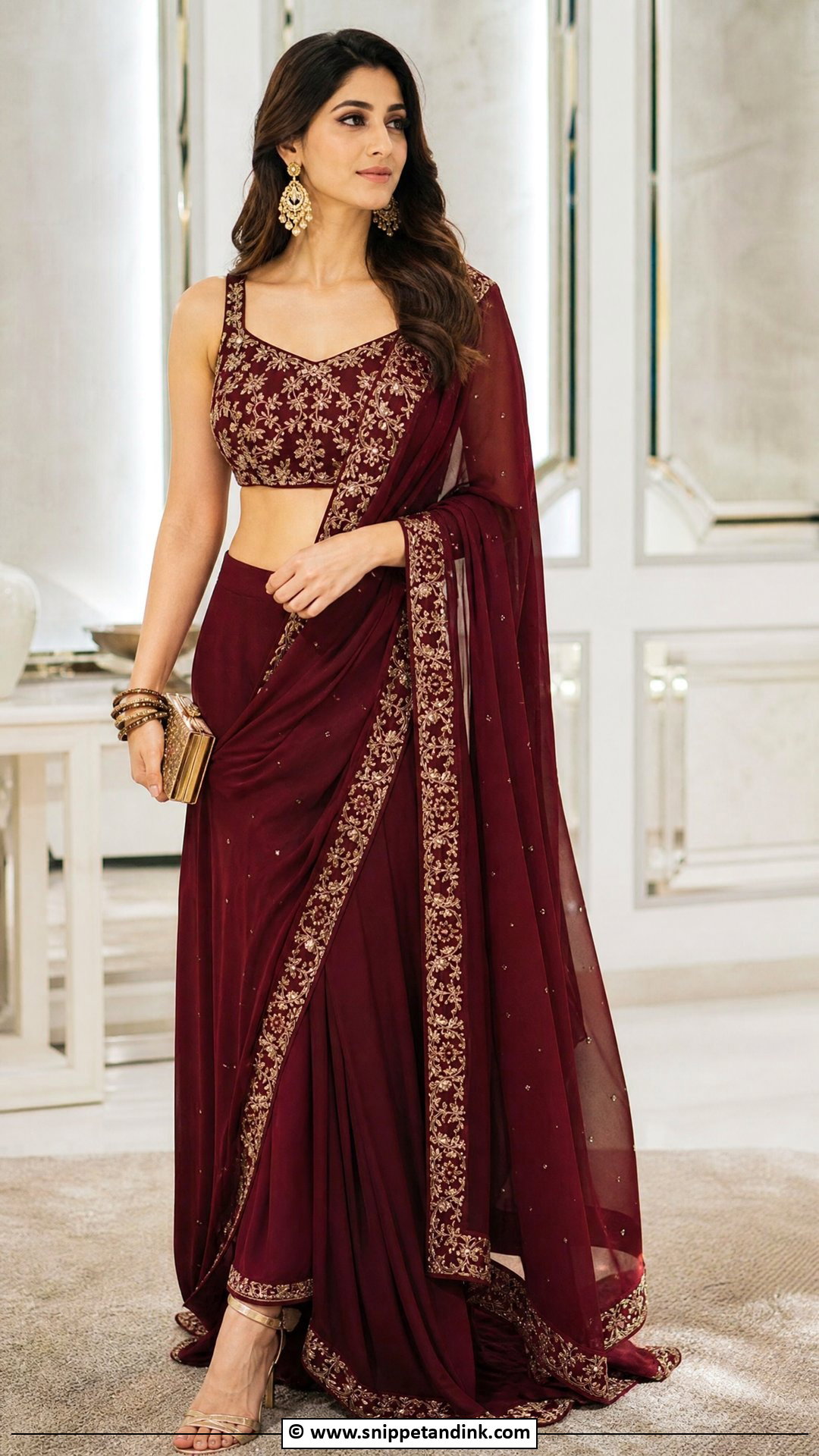
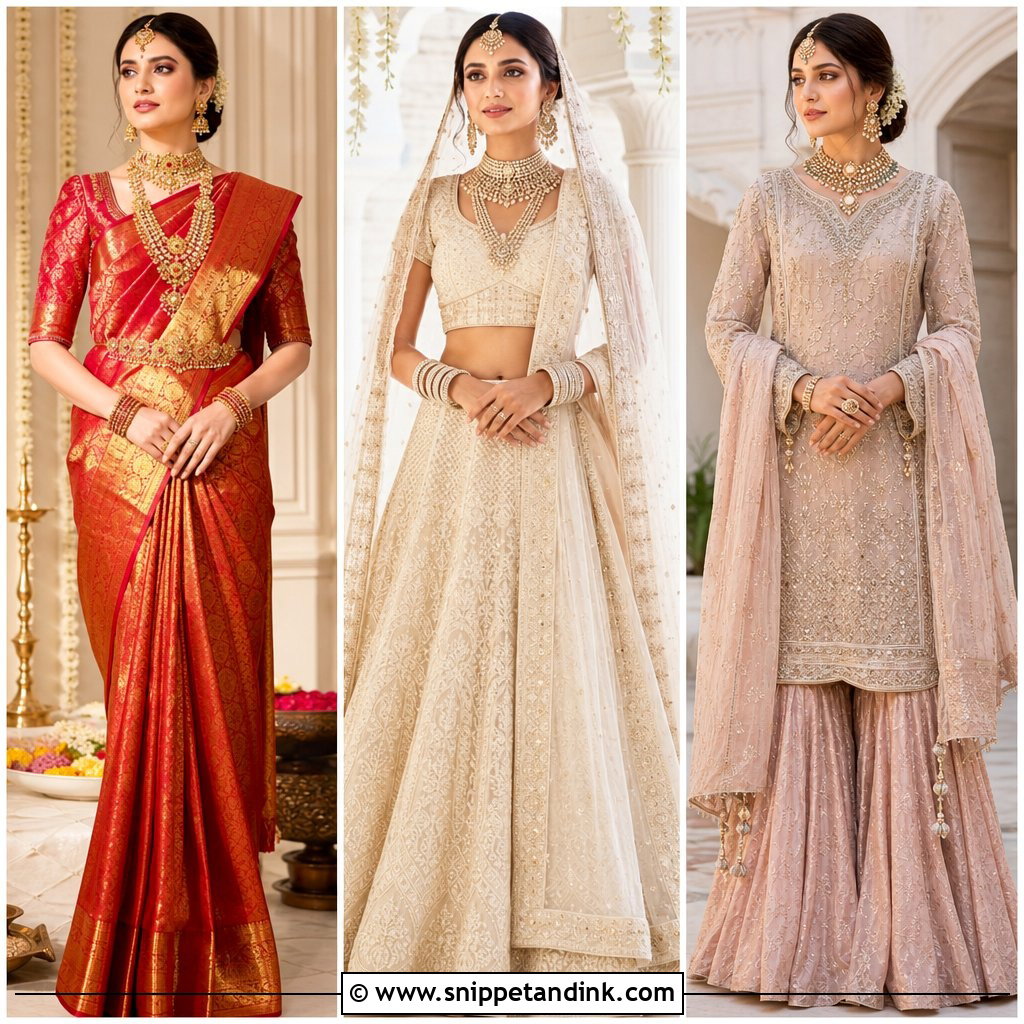
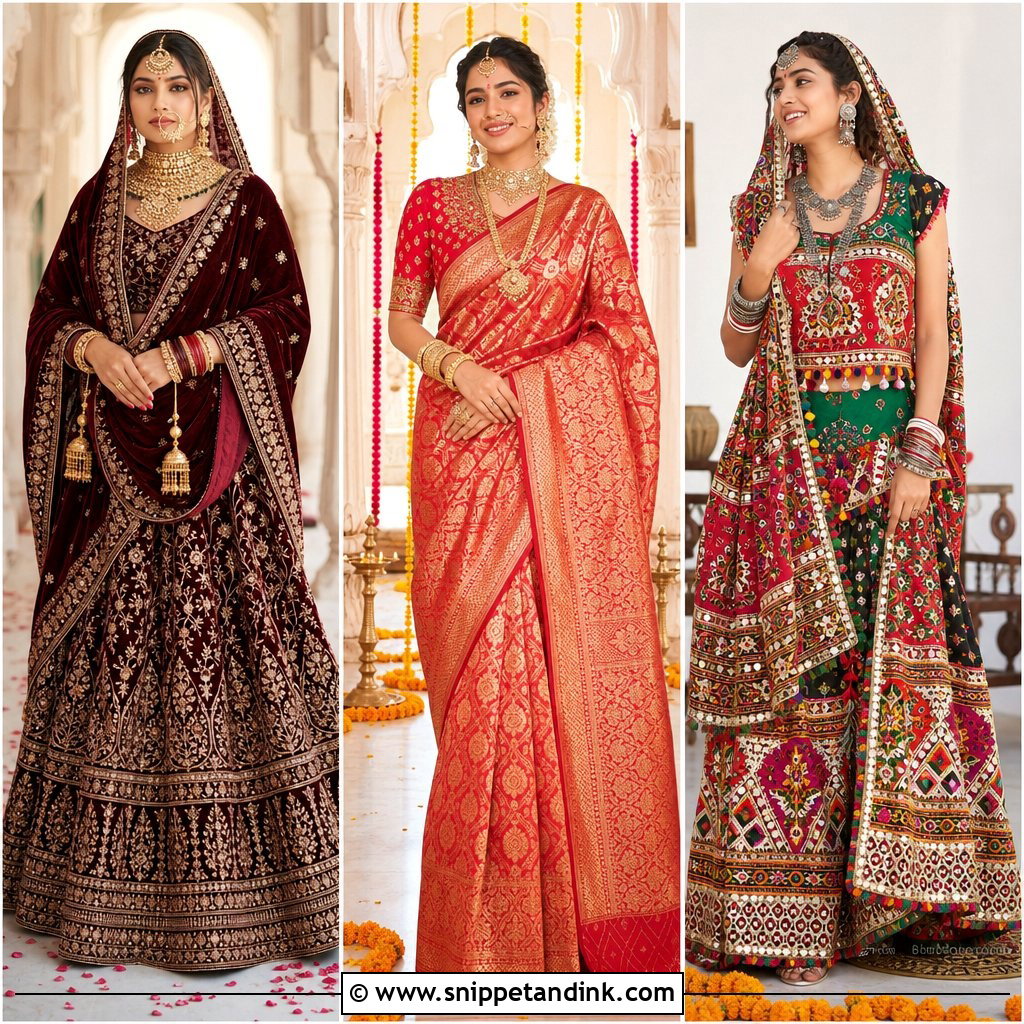
A lehenga saree gives you saree pleats with a stitched skirt underneath, so nothing can come untucked on the dance floor. The pallu still drapes like a saree. Embroidered borders, a fitted blouse and a flowing pallu suit formal events. It defines the waist and stays in place better than a traditional drape, which is why I suggest it for bridesmaids and reception looks. Choose lightweight fabric if you plan to dance; earrings, bangles, heels and a small clutch complete it.

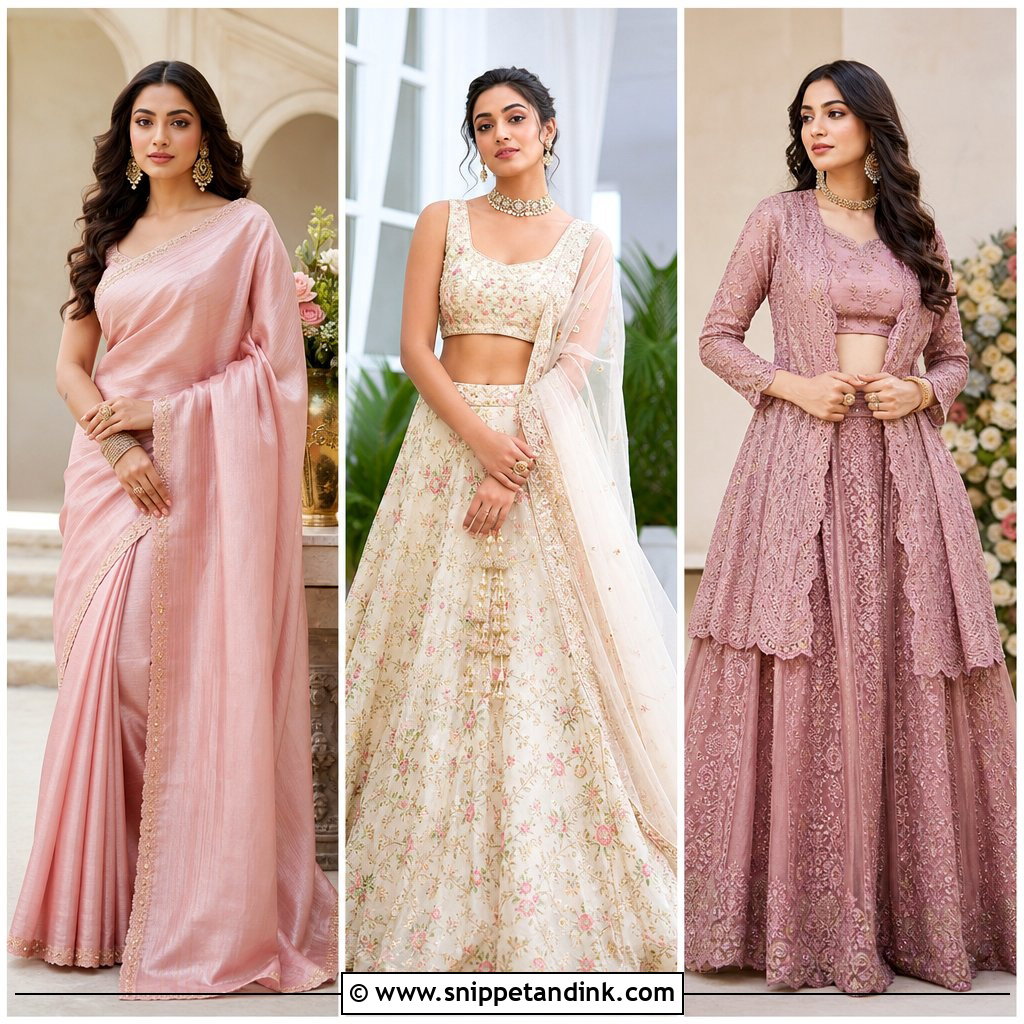

25. Peplum Sharara Outfit
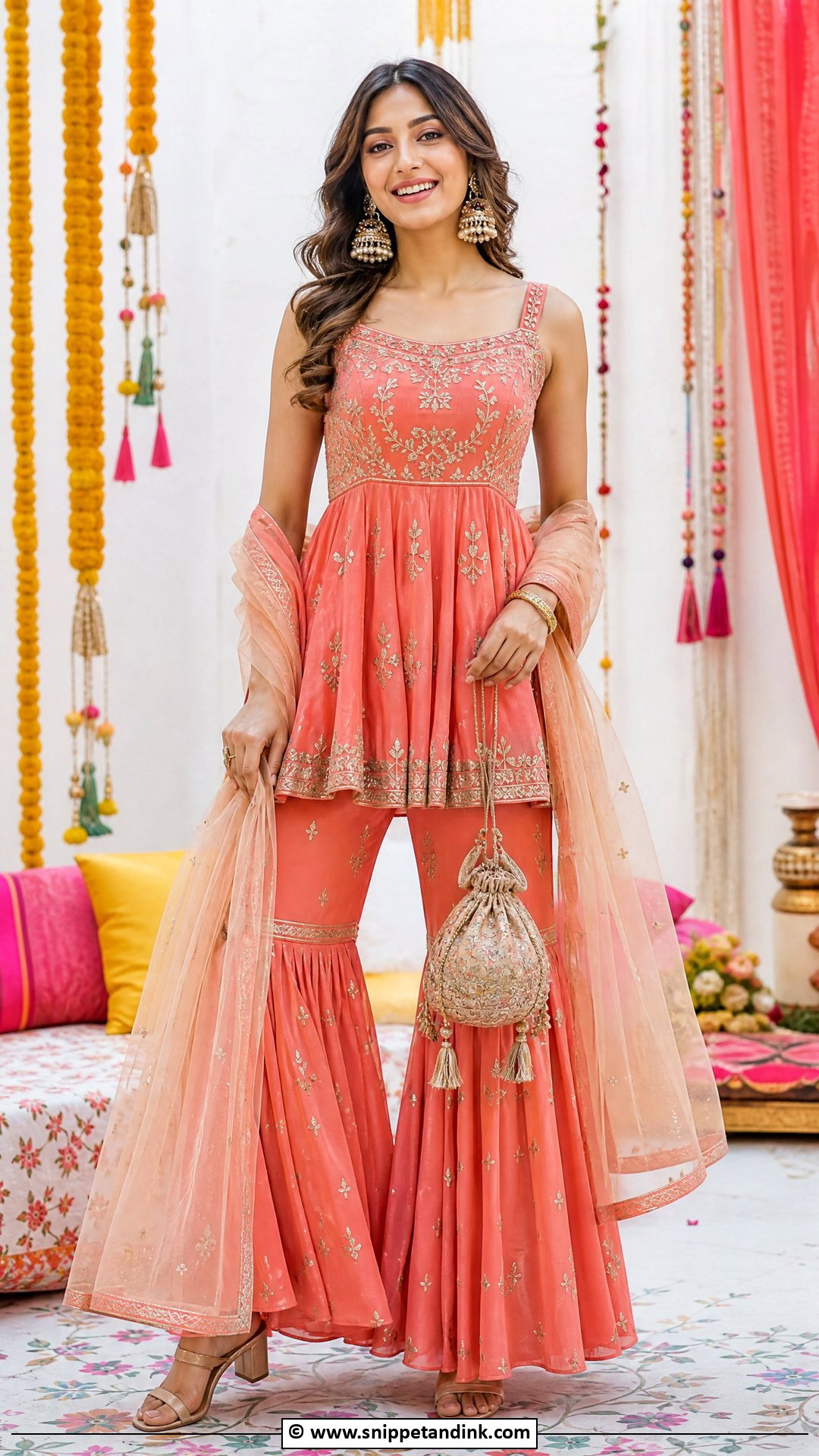
A peplum top defines the waist, and sharara pants add the volume underneath, so you get structure without a heavy skirt. Embroidery, mirror work, sequins or gota patti make it festive. A dupatta draped over one shoulder is optional when the top is detailed. Statement earrings, a sleek bracelet, block heels and a small potli suit it for a sangeet, mehendi or family gathering. Keep the hair polished to balance the playful shape.
26. Crop Top Skirt Outfit
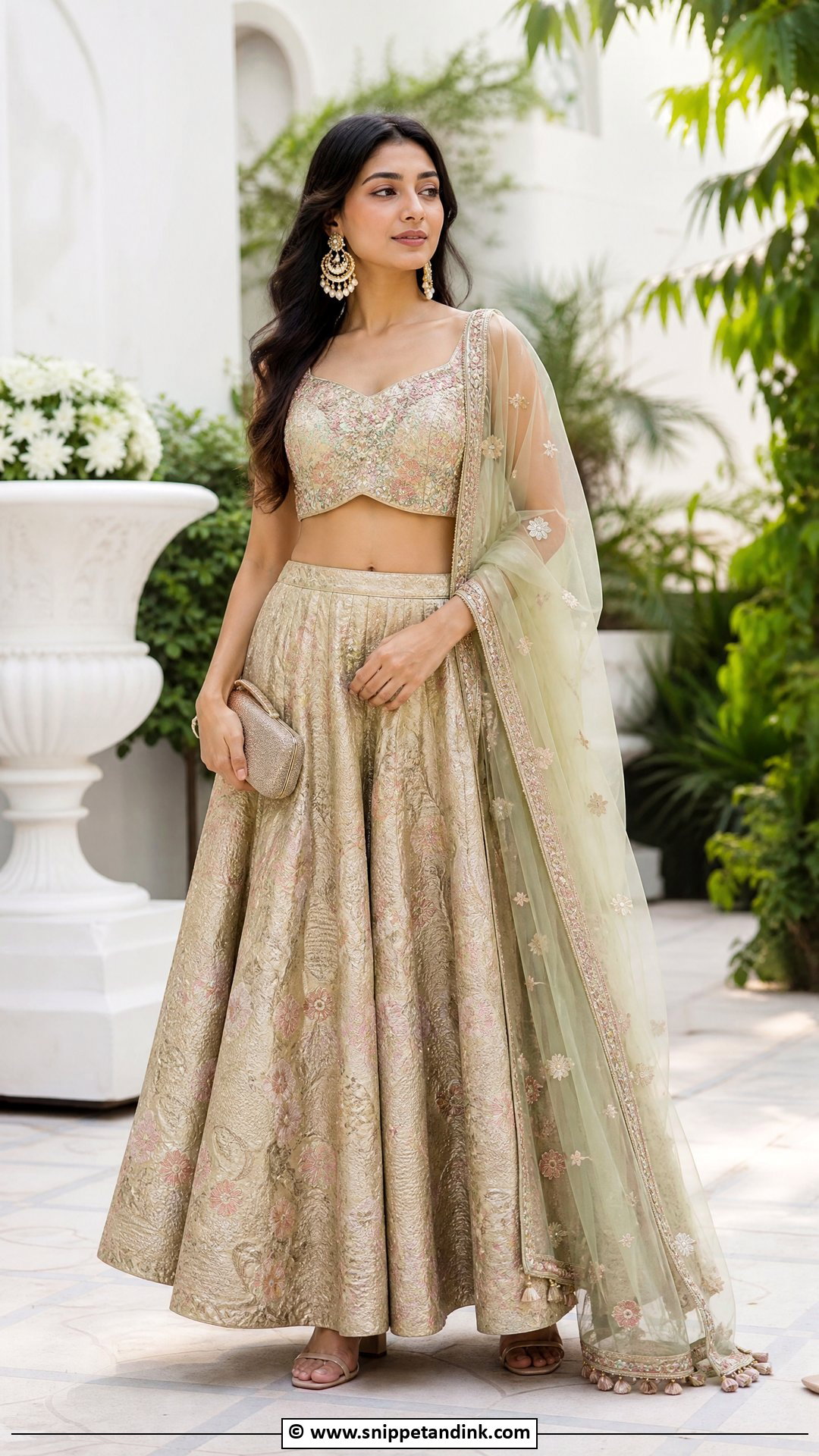
A crop top and skirt works when one half is clearly the star. A flared skirt with embroidery, print or brocade paired with a detailed top can quickly look heavy, so I keep one of them simpler. Add a dupatta for a more traditional event, or a long jacket for a contemporary look. Statement earrings, heels and a clutch finish it for a mehendi, sangeet or destination wedding. It feels like a lehenga with less weight.
27. Dhoti Pants Outfit
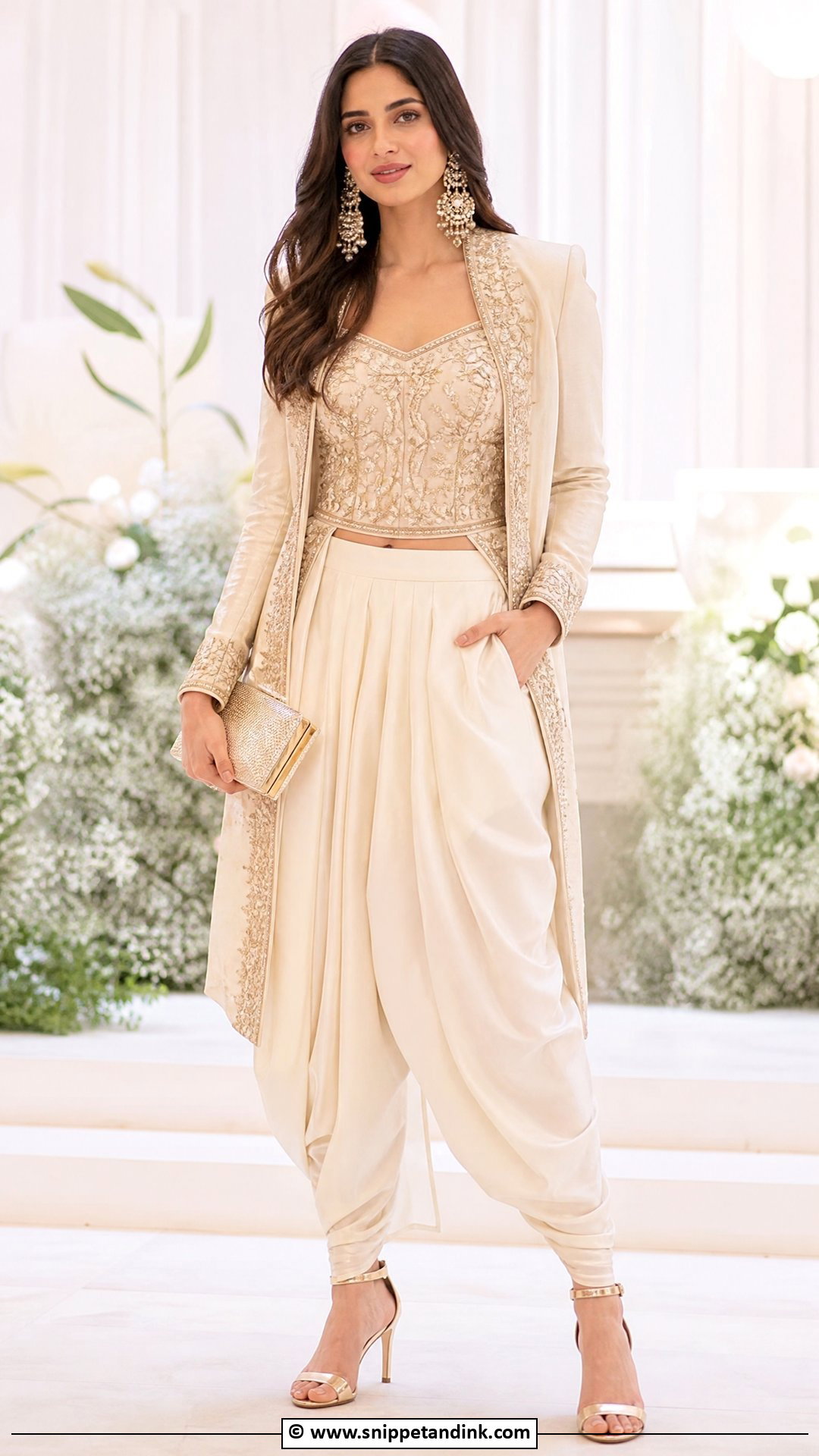
Draped trousers make a dhoti pants outfit easy to sit, dance and walk in, which matters at a long celebration. Pair the dhoti pants with an embroidered crop top, a short kurti, a peplum blouse or a structured jacket. A dupatta or cape adds movement. Statement earrings, metallic heels and a box clutch complete it. Choose rich fabrics and festive detailing, because dhoti pants in plain cotton read casual. A sleek ponytail or bun keeps the line sharp.
28. Saree With Belt Outfit
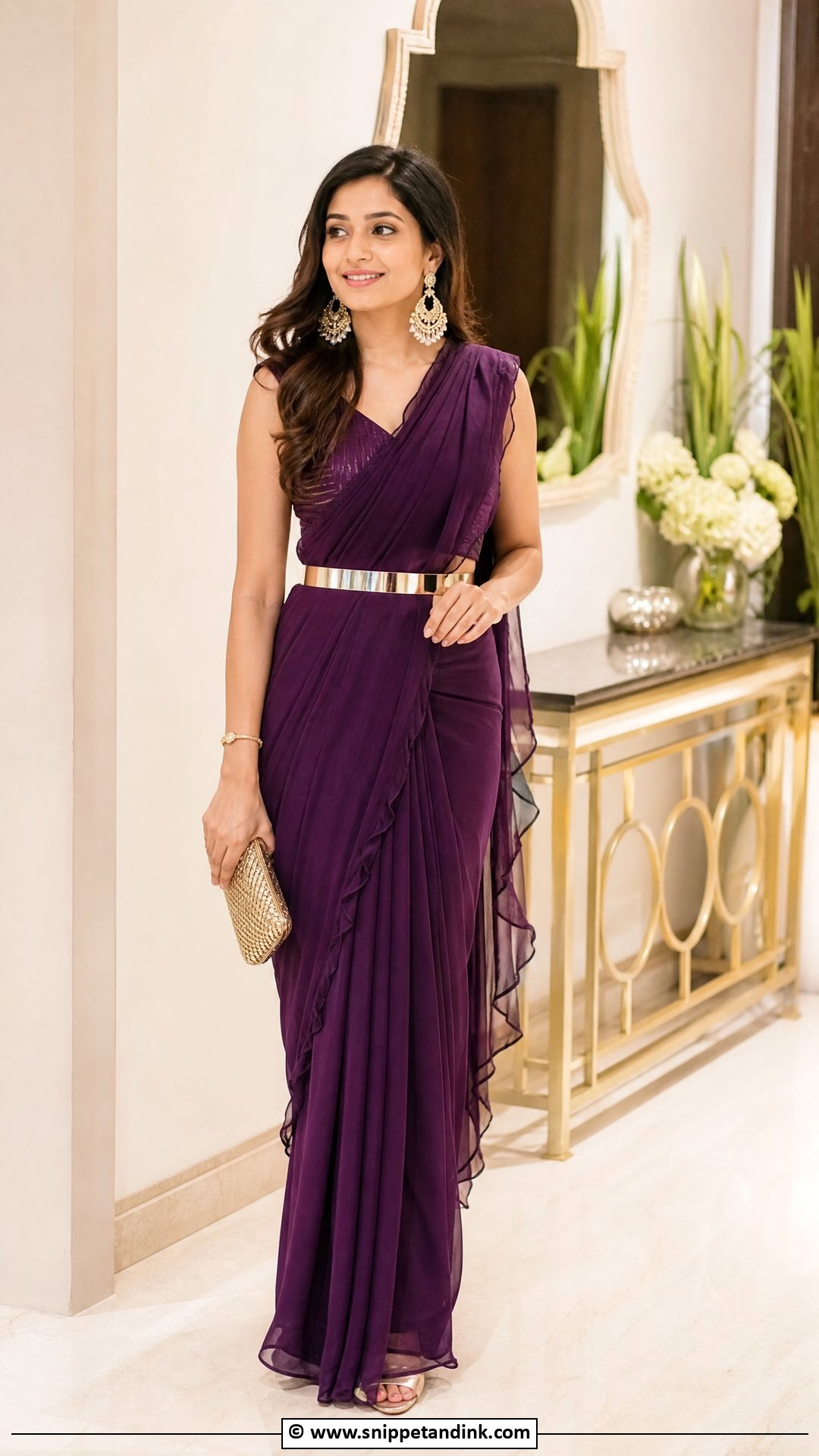
A belt solves the most common saree problem: a pallu that keeps slipping. It defines the waist and anchors the drape, so you stop adjusting through a busy evening. Silk, chiffon, organza or sequin sarees all suit a metallic, embroidered or fabric-covered belt. My rule is simple: a heavily embellished saree takes a plain belt, and a plain saree can take a detailed one. A fitted blouse, statement earrings, heels and a clutch finish it.
29. Printed Anarkali Outfit
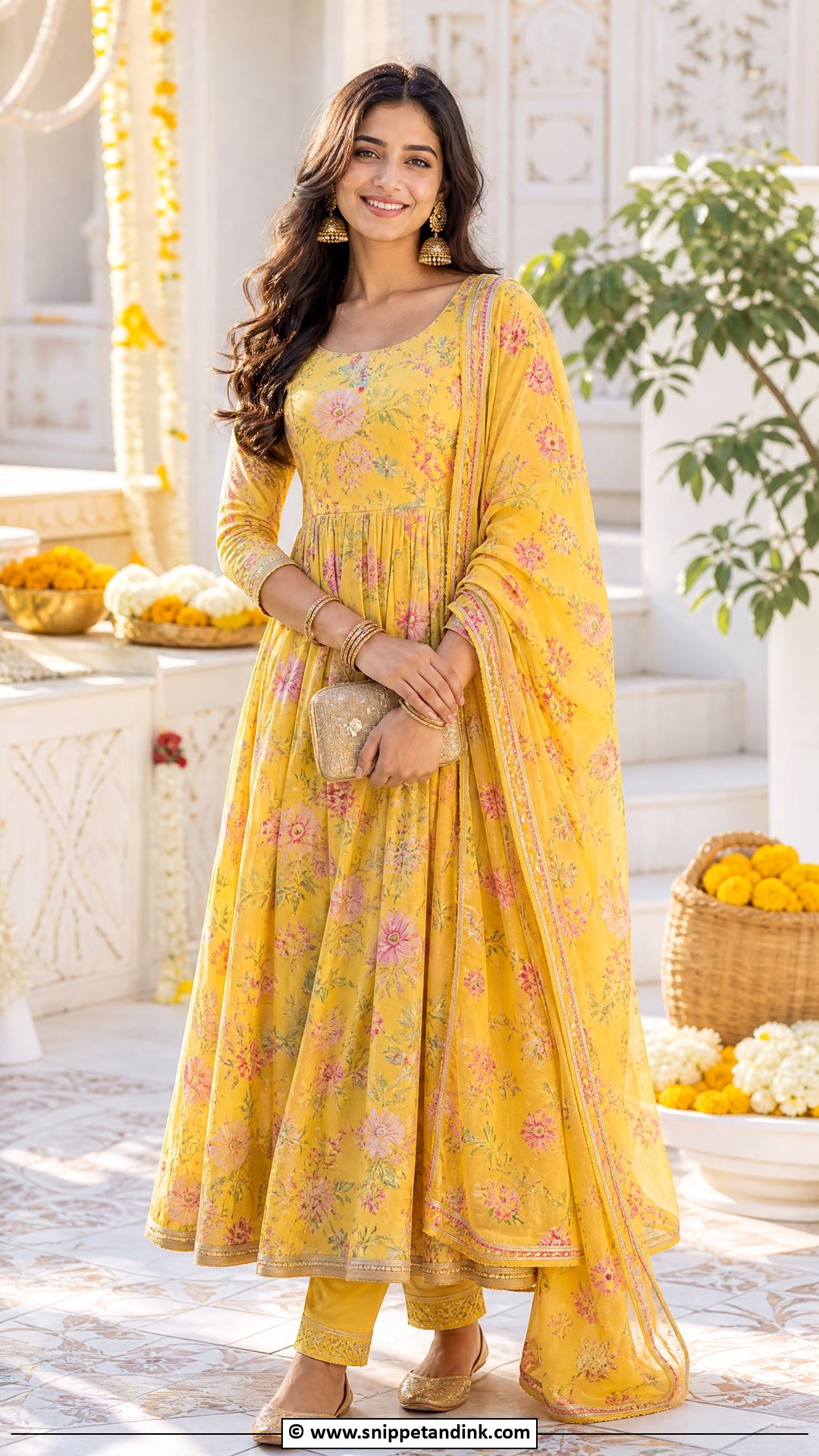
Printed anarkalis are light and easy for haldi, mehendi or a smaller family function. Floral, paisley, block print or Mughal-inspired motifs all suit it. Bright colors feel festive; muted prints feel understated. A well-fitted bodice is what makes it flattering, so I’d have the side seams taken in rather than wearing it loose. Slim pants or churidar, a matching dupatta, jhumkas, bangles, juttis and a small clutch complete it.
30. Heavy Reception Lehenga Outfit
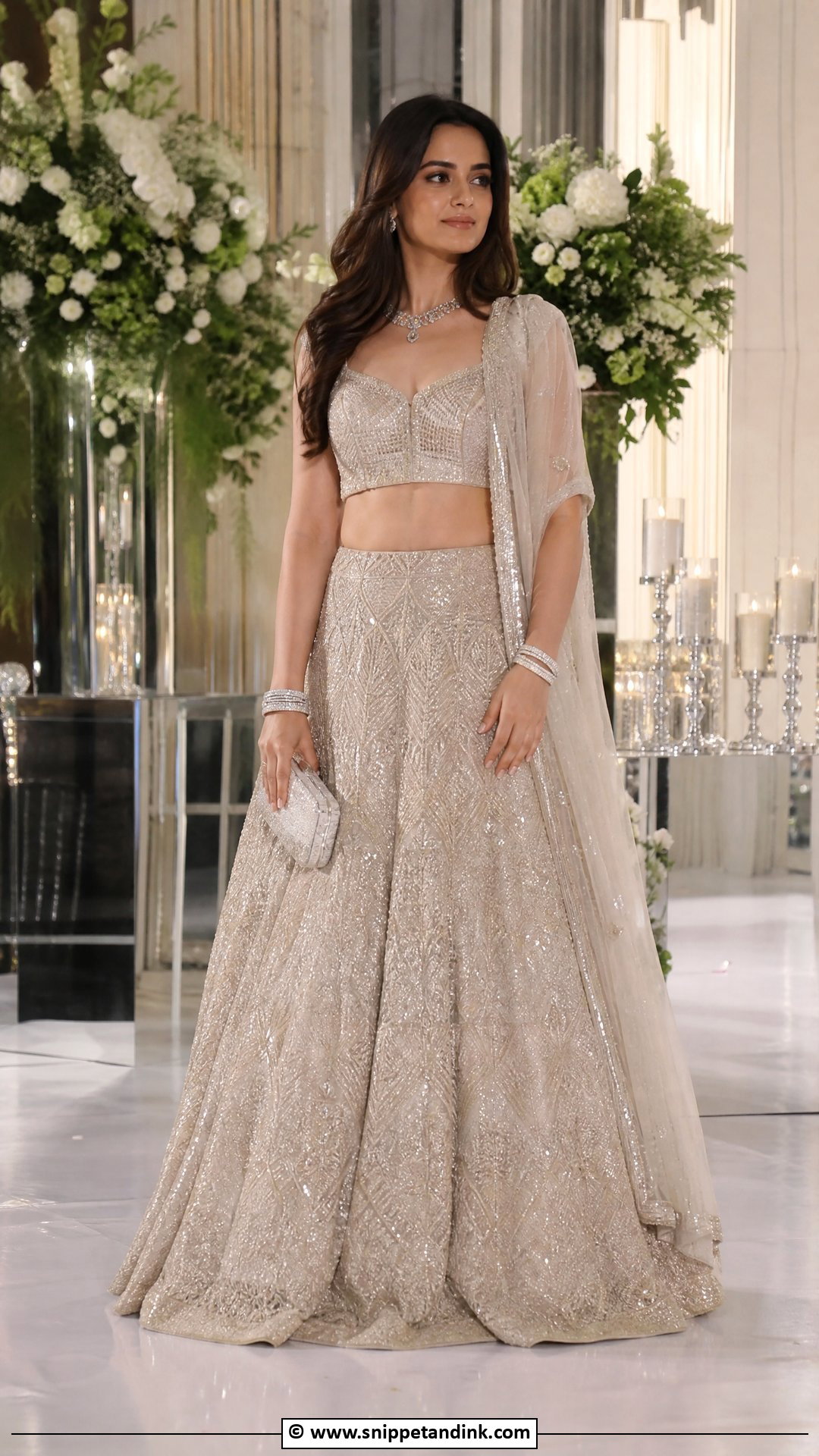
Reception lehengas carry the most embellishment of any outfit: sequins, crystals, zardozi or metallic embroidery in champagne, silver, navy, emerald or deep rose. That makes them heavy, so I balance the skirt with a structured blouse and a light dupatta. Diamond-style jewelry, high heels, bangles and a refined clutch suit it. Receptions mean hours of standing and greeting, so check that you can walk comfortably and the skirt doesn’t need lifting at every step.
31. Bridesmaid Lehenga Outfit
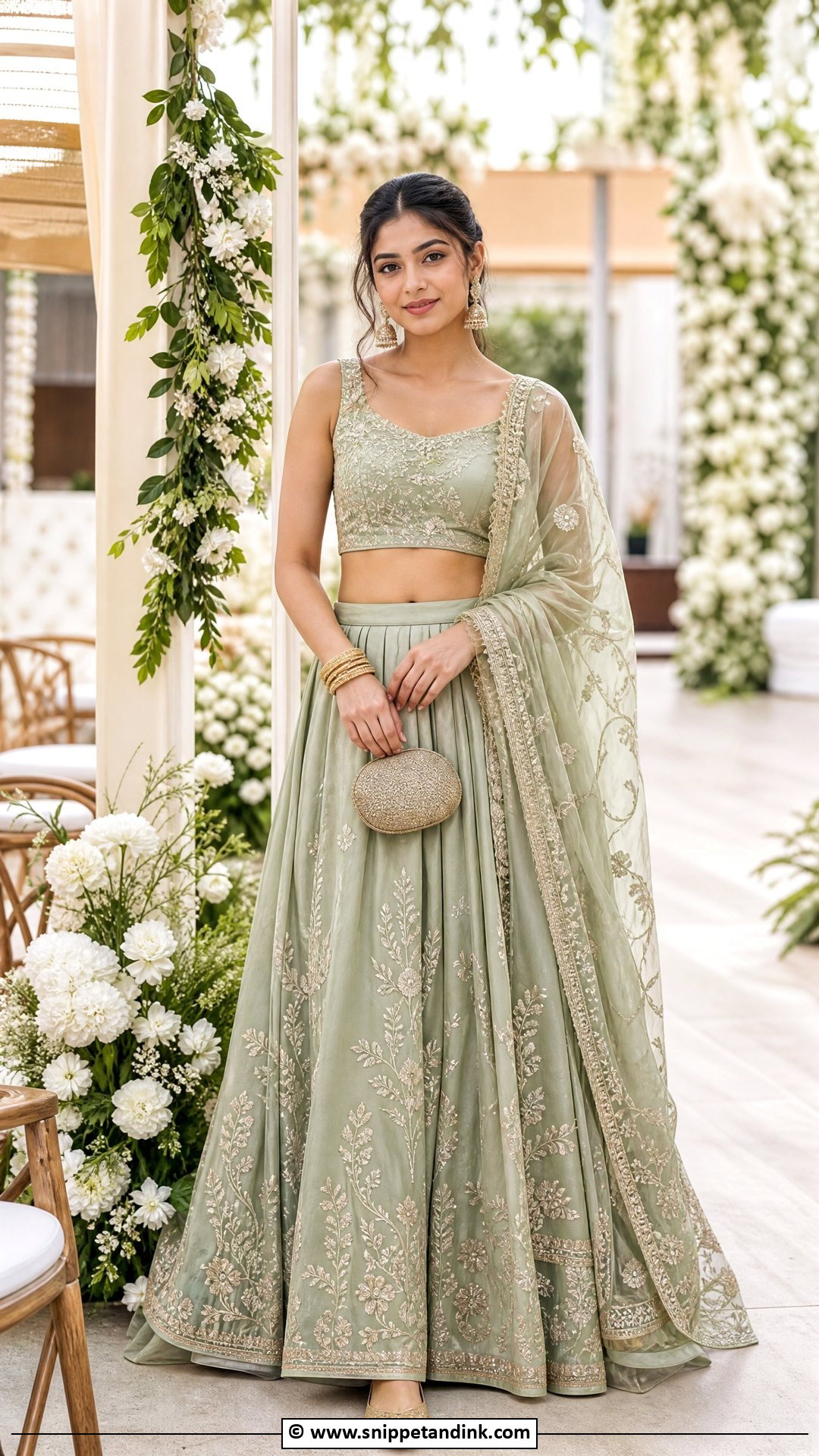
Bridesmaids run errands, carry things and stand in a lot of photos, so a heavy skirt or tricky drape is a real burden. A light, flared lehenga with lightweight embroidery, a comfortable blouse and a securely pinned dupatta is the right balance. Soft pastels, jewel tones or one shared palette work for group photos. I like matching accessories across the group with different necklines or sleeve lengths, so each person wears what flatters her.
32. Mother Of The Bride Saree Outfit
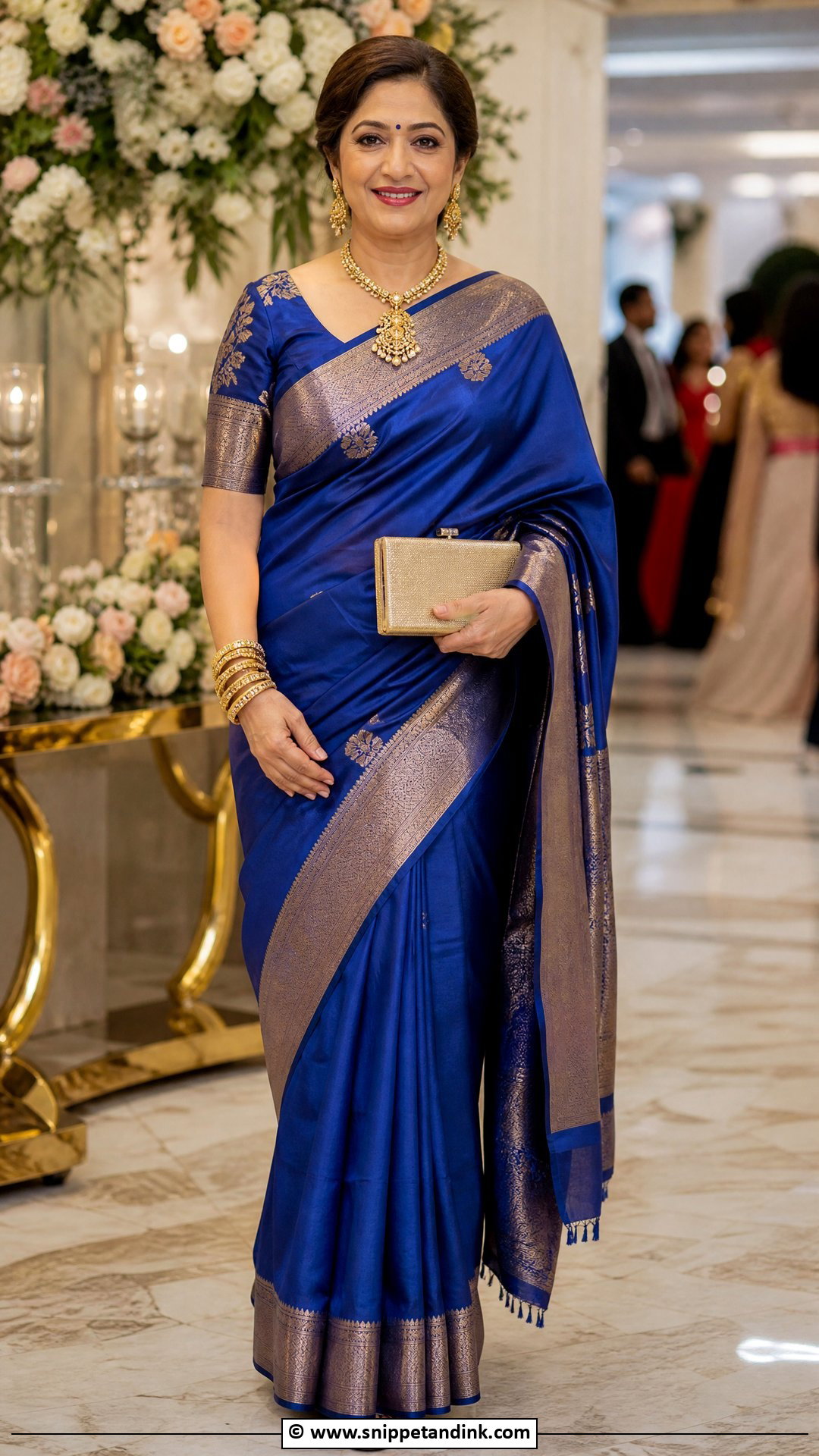
The mother of the bride will greet hundreds of guests, take part in rituals and move between events all day. Her saree needs to look special and be secure. Silk, Banarasi, Kanjeevaram, tissue or embroidered georgette in maroon, emerald, royal blue, gold, plum or teal all photograph richly. A tailored blouse, traditional jewelry, bangles and comfortable heels complete it. I’d have the drape pinned at shoulder and waist by someone experienced; a neat bun, soft makeup and a bindi finish it.
33. Wedding Guest Lehenga Outfit
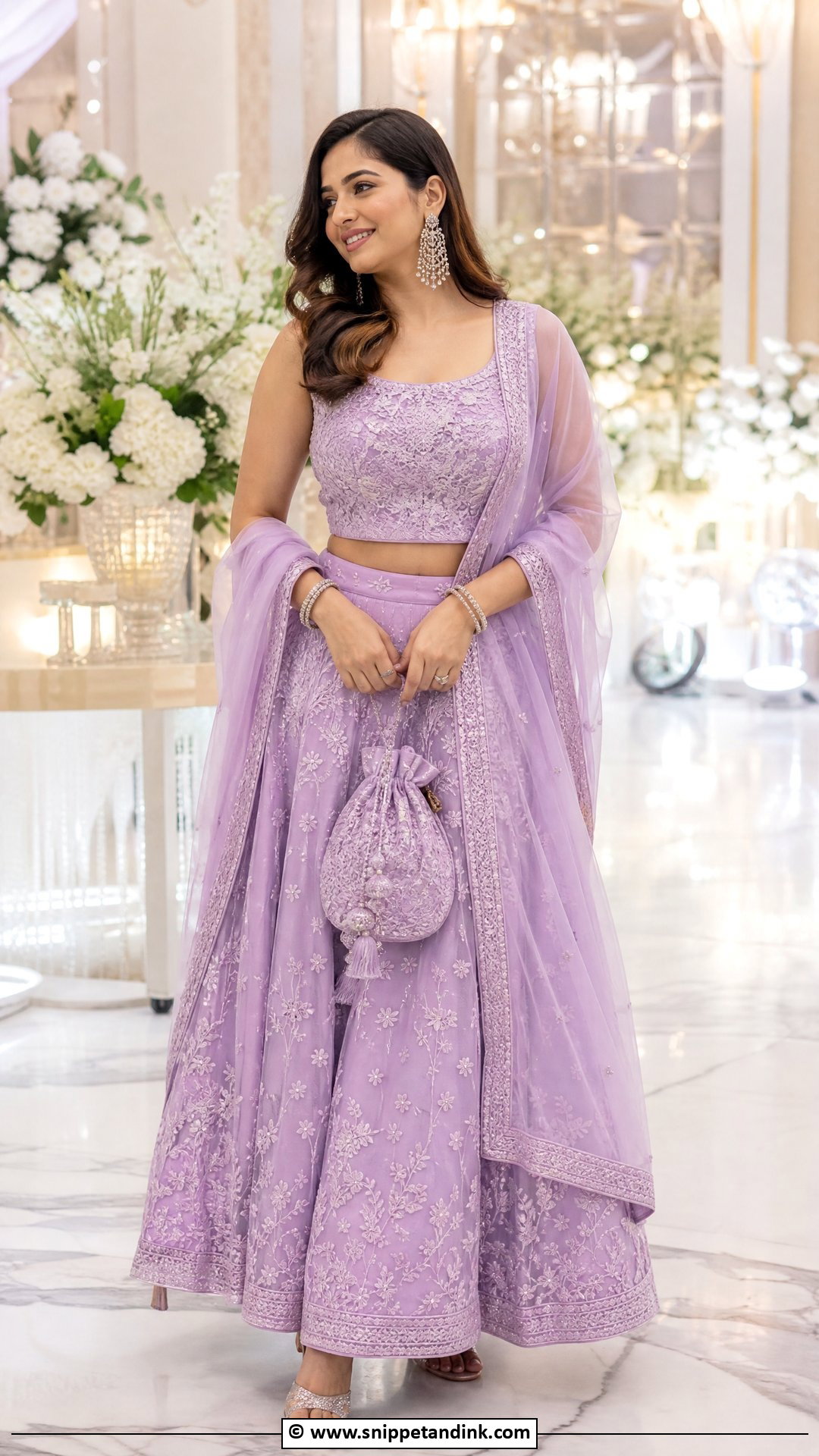
As a guest, the rule is festive without looking bridal. Lighter embroidery, printed fabric or softer colors keep you clear of the bride, unless the dress code asks for full grandeur. A flowing skirt, blouse and dupatta suit a ceremony, sangeet or reception. Avoid a heavy red bridal design unless you’ve been told it’s welcome. Pastels, jewel tones, florals and metallic accents are safe. Earrings, bangles, block heels and a potli bag complete it. Choose a lehenga you can sit and dance in without constant adjusting.
34. Wedding Guest Saree Outfit
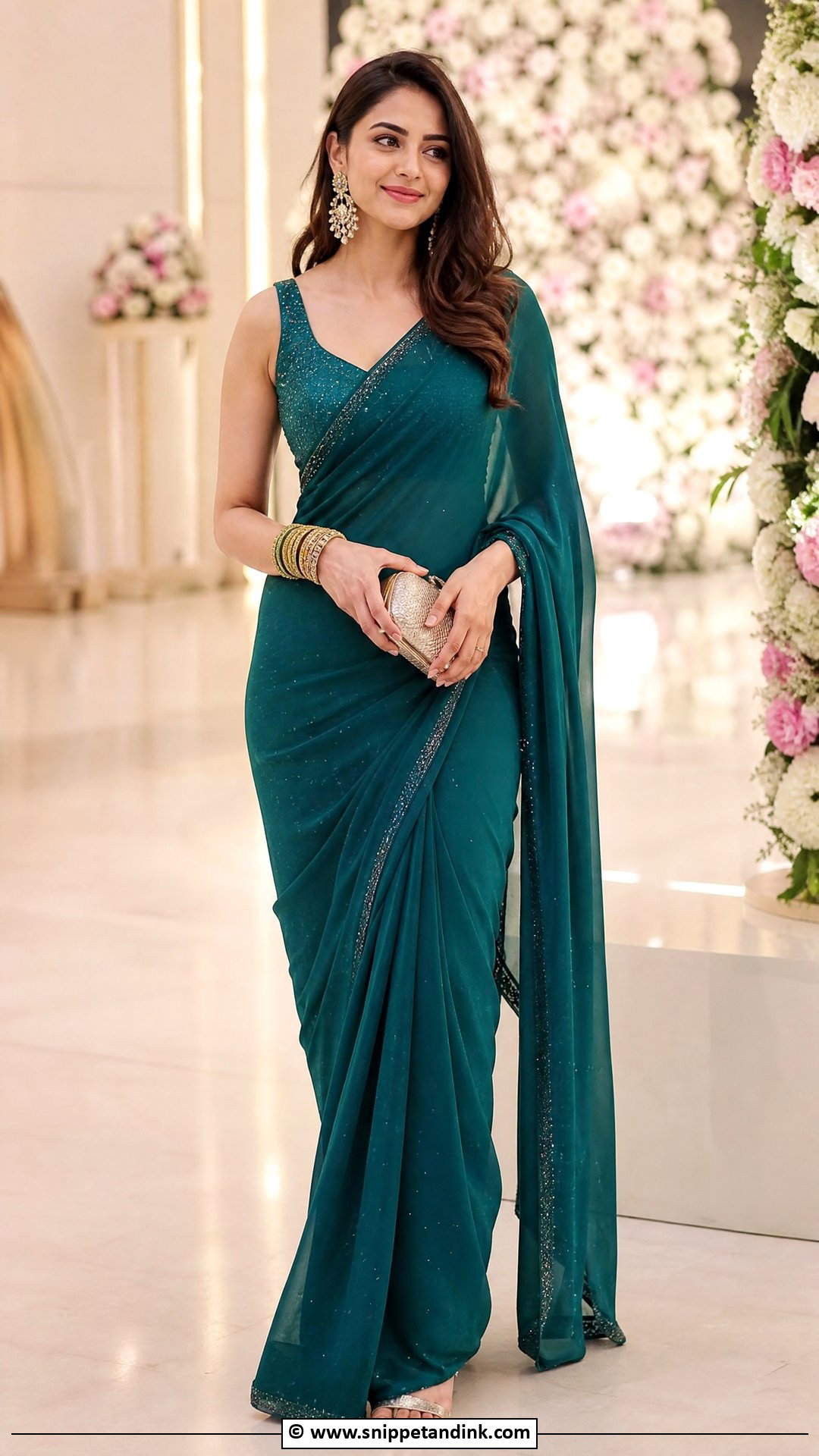
Sarees work at almost every function once you pick the fabric to match the hour. Florals, pastels and soft silk suit a daytime ceremony; jewel tones, metallic borders and subtle shimmer suit the evening. A well-fitted blouse, statement earrings, bangles, heels and a clutch complete it. If you’re new to sarees, ask for the pleats to be pre-stitched or book someone to drape you on the day, since a drape that comes loose mid-ceremony is no fun at all.
35. Haldi Yellow Suit Outfit
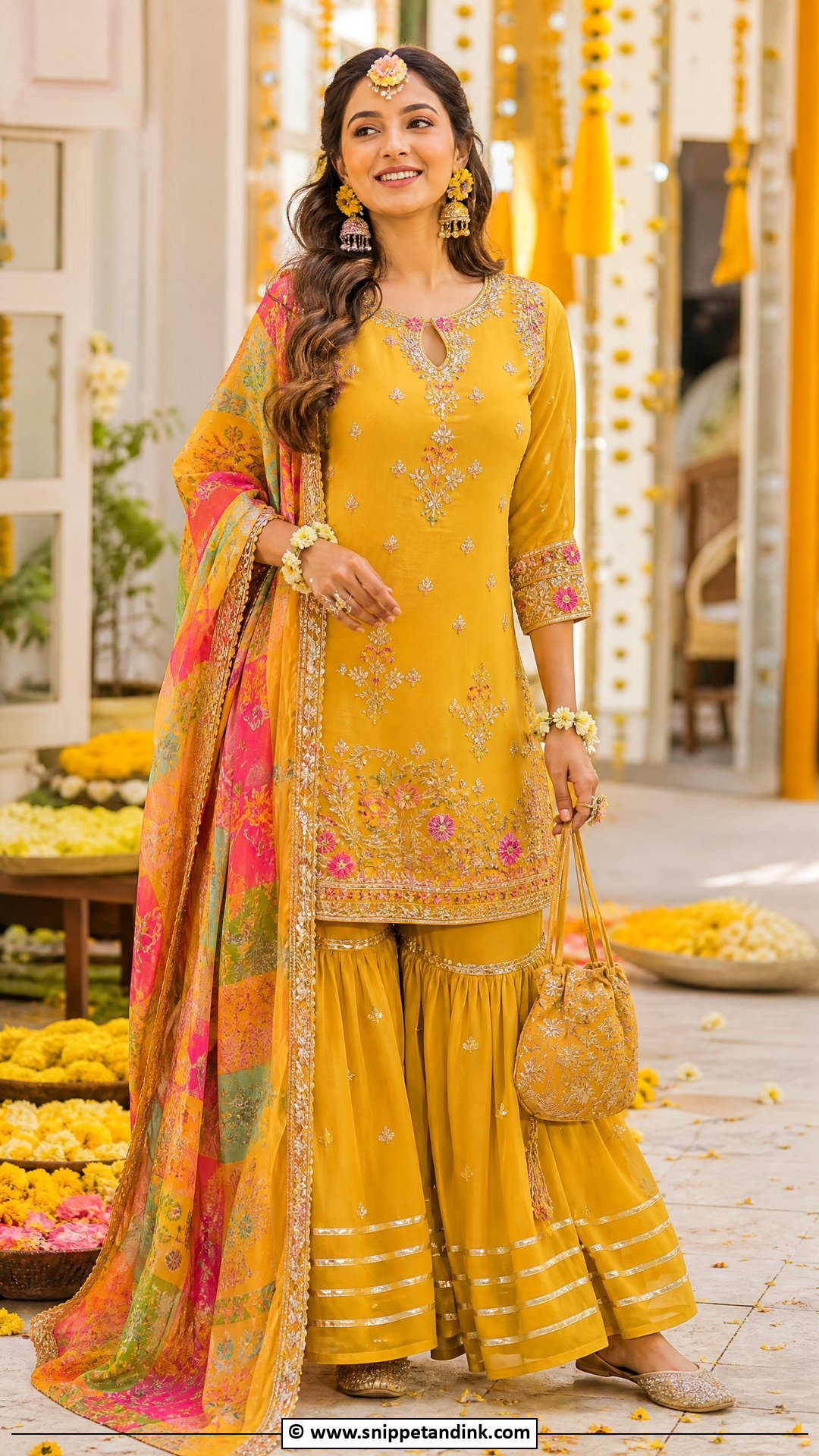
Haldi gets messy, and turmeric stains are hard to remove from silk, so a haldi yellow suit outfit should be made from fabric you don’t mind marking. A yellow kurta set, sharara, palazzo suit or anarkali in cotton silk, georgette, chanderi or light organza is ideal. Light embroidery, mirror work or gota patti keeps it festive. Floral jewelry, jhumkas, juttis and a colorful dupatta finish it. Leave the expensive juttis at home.
Semi-Stitched, Unstitched or Ready-Made: Reading the Label
Indian festive wear is often sold in three states, and the difference matters for your timeline. Ready-made pieces can be worn as they arrive, with minor alterations. Semi-stitched lehengas and suits have the skirt or kurta largely made, but the blouse and waist are left open for a tailor to fit to you. Unstitched sets arrive as fabric with embroidery and need full tailoring.
I’d allow at least two to three weeks for a tailor to finish semi-stitched or unstitched pieces, more in the wedding season, when good tailors are booked solid. Take a blouse that already fits you well for them to copy, and try the finished piece with the bra and shoes you’ll actually wear.
Safety Pins, Blouse Hooks and the Emergency Pouch
Indian outfits have more fastenings than most Western clothes, so more can go wrong in a long day. I pack a pouch for every event with:
- A strip of small and medium safety pins, plus bobby pins and U-pins for dupattas
- Spare blouse hooks and a needle already threaded in a neutral color
- Double-sided fashion tape for a pallu or neckline that won’t sit flat
- Blotting papers and a small brush for sequins that catch hair
- Plasters for heels, since juttis and new sandals often rub at the back
From Haldi Yellow to Reception Sequins, Dress for the Hour
Indian weddings ask for different outfits at different hours, from bridal lehengas and silk sarees to comfortable suits, shararas and Indo-western pieces. Choose by the event, the weather, the venue and how long you’ll be on your feet. Traditional sarees and lehengas suit ceremonies; lighter silhouettes with movement suit sangeet and mehendi; sequins, velvet and gowns suit receptions. Add the right jewelry, shoes, bag and a secure drape, and each outfit will feel complete.
You'll Like These Ideas:




Leave a Reply