
Engagement henna has a tricky job. It has to feel festive and look good in ring photos, but it shouldn’t outshine the bridal mehendi you’ll wear a few weeks or months later. When a bride sits down with me for her engagement, I usually aim for medium coverage and leave room for personal details like initials, a date or a small couple motif. The 30 designs below cover Indian, Arabic, Indo-Arabic, Moroccan, Gulf and minimal layouts, and for each one I’ve shared how I’d actually draw it, which hands it suits and where it tends to go wrong.
When the Cone Should Touch Your Hands
Natural henna doesn’t show its true colour when the paste comes off. It starts out bright orange and darkens over the next 24 to 48 hours to reddish brown or maroon. That’s why I schedule engagement henna one to two days before the ceremony, never the same morning. Same-day henna will look orange in your ring photos.
Plan for the time as well. A simple design takes under an hour per pair of hands, while full Indian coverage can take three. Then the paste needs to stay on for several hours, ideally overnight, so you won’t be able to use your hands much that evening.
- Exfoliate gently and do any waxing a day before henna, not after; waxing over a fresh stain lifts it.
- Arrive with clean, dry hands and no lotion or oil, which block the dye.
- Get your manicure done before henna; nail polish removers and soaking fade the stain.
- Wear loose, dark clothing with sleeves that roll up easily.
1. Full Hand Engagement Mehendi Design
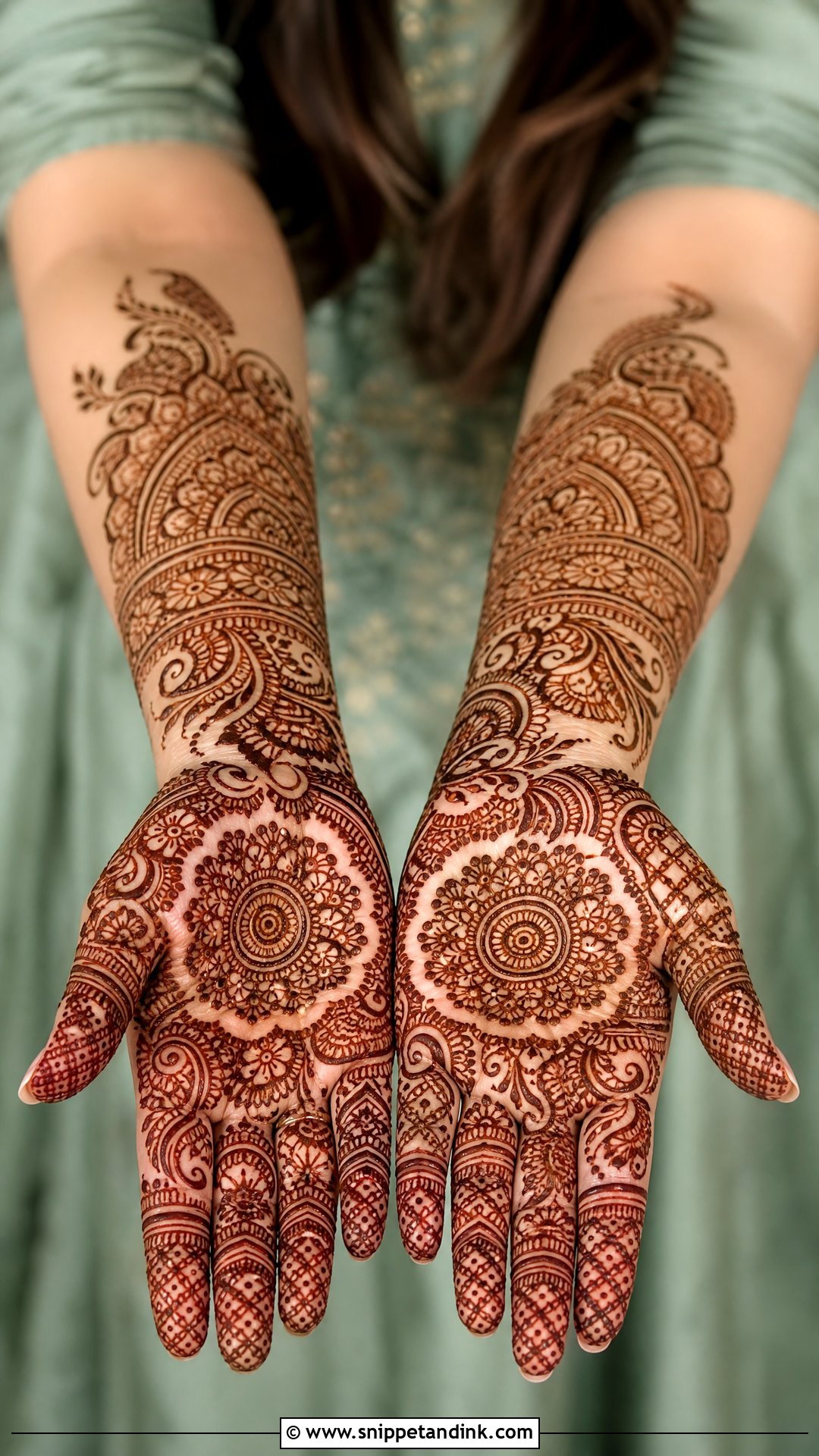
A full hand design gives you the bridal feeling early. It covers palms, fingers, wrists and the lower forearm, usually with paisleys, florals and fine filler lines, finished with a band at the wrist. When I draw one for an engagement, I keep the centre of the palm a little more open than I would for the wedding, often with a small mandala or the couple’s initials, then build the heavier work outward. The fingertips get a solid fill, because that’s where henna stains darkest and it frames the whole hand. Keep in mind that a full hand takes two to three hours, so plan your day around sitting still.
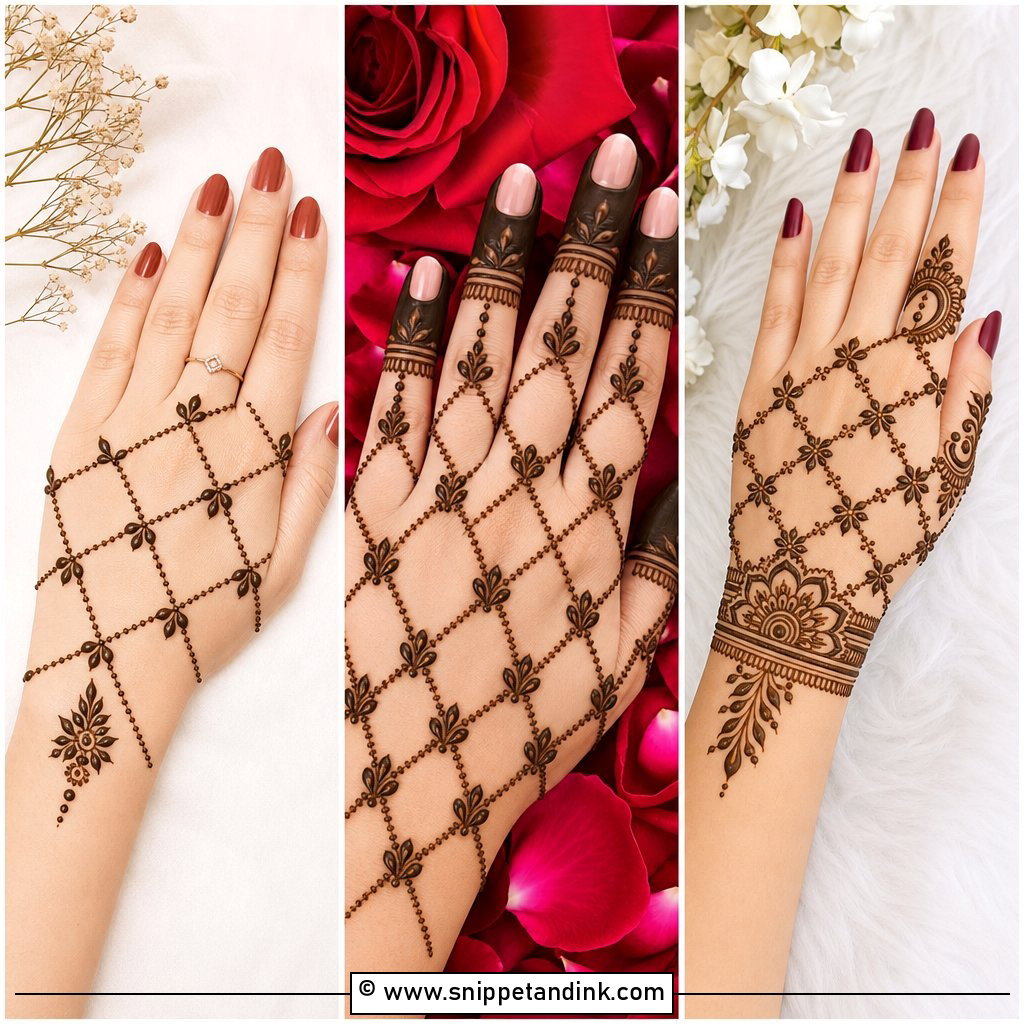
2. Back Hand Engagement Mehendi Design
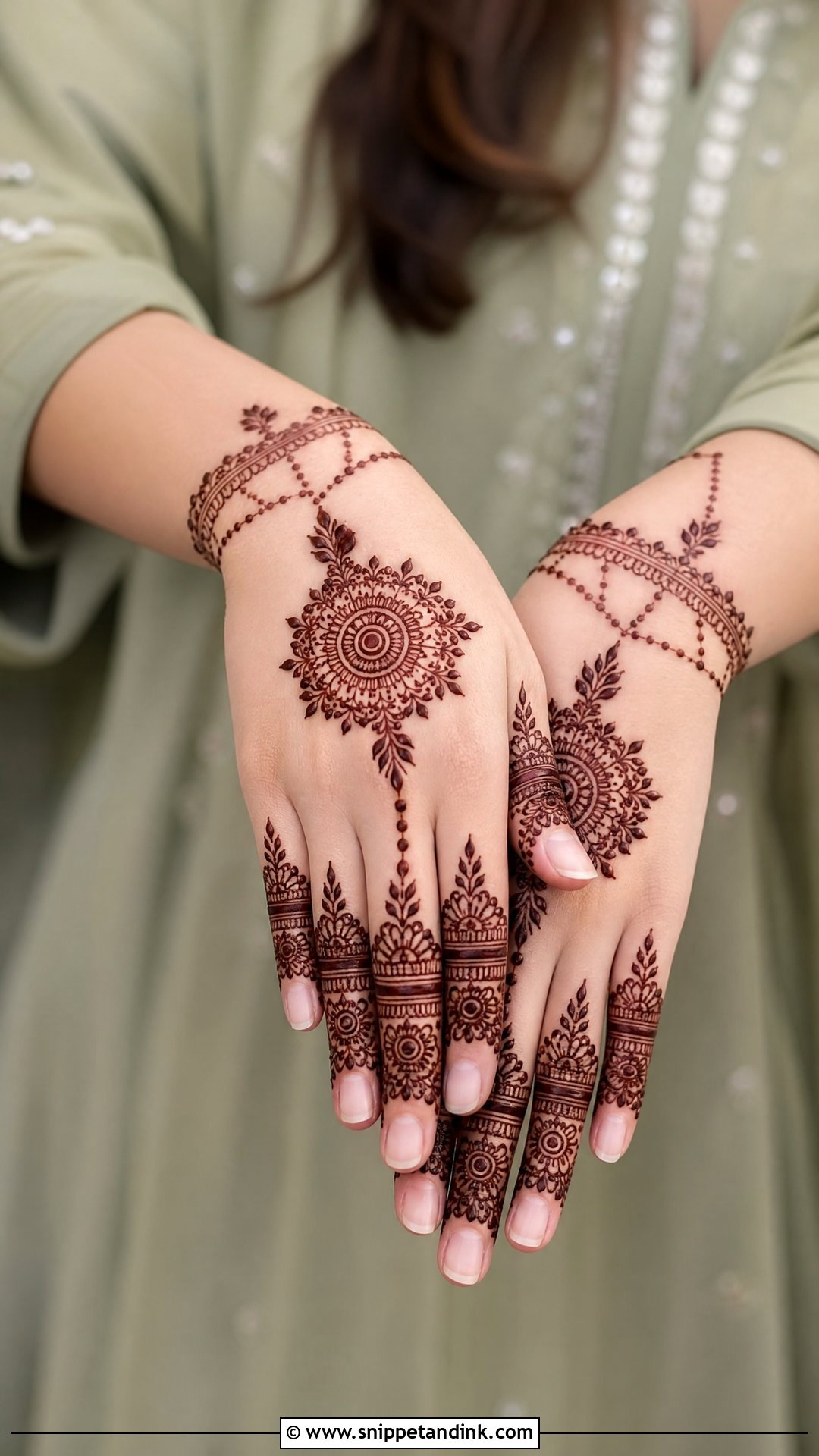
The back of the hand is what everyone sees during the ring exchange, which is why this layout is so popular. I start at the fingers and let the pattern flow toward the wrist like a piece of jewelry, usually with a central mandala and a floral bracelet. The one rule I follow is keeping the ring finger’s base lighter, since dense work there hides the ring in close-ups. It’s quick to apply and suits sisters and bridesmaids too, so it’s an easy way to coordinate the family.
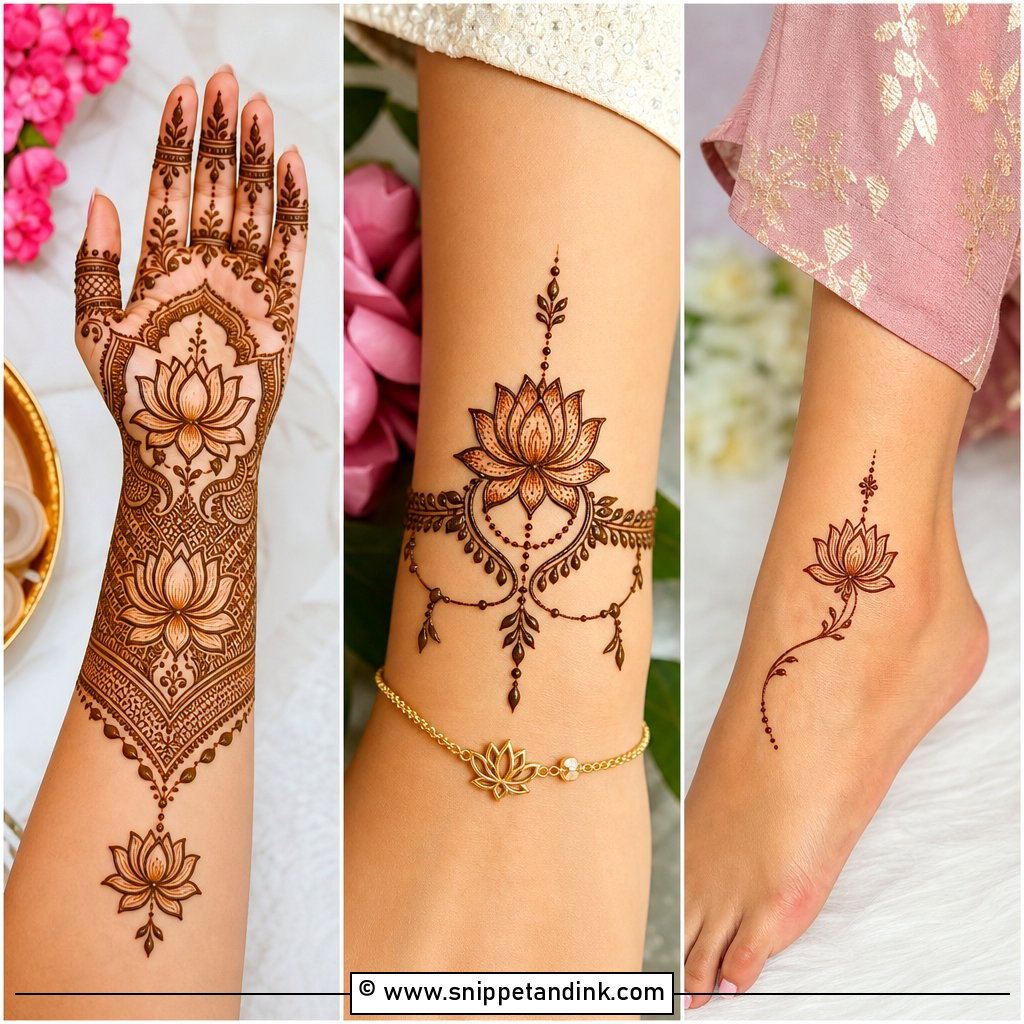
3. Front Hand Engagement Mehendi Design
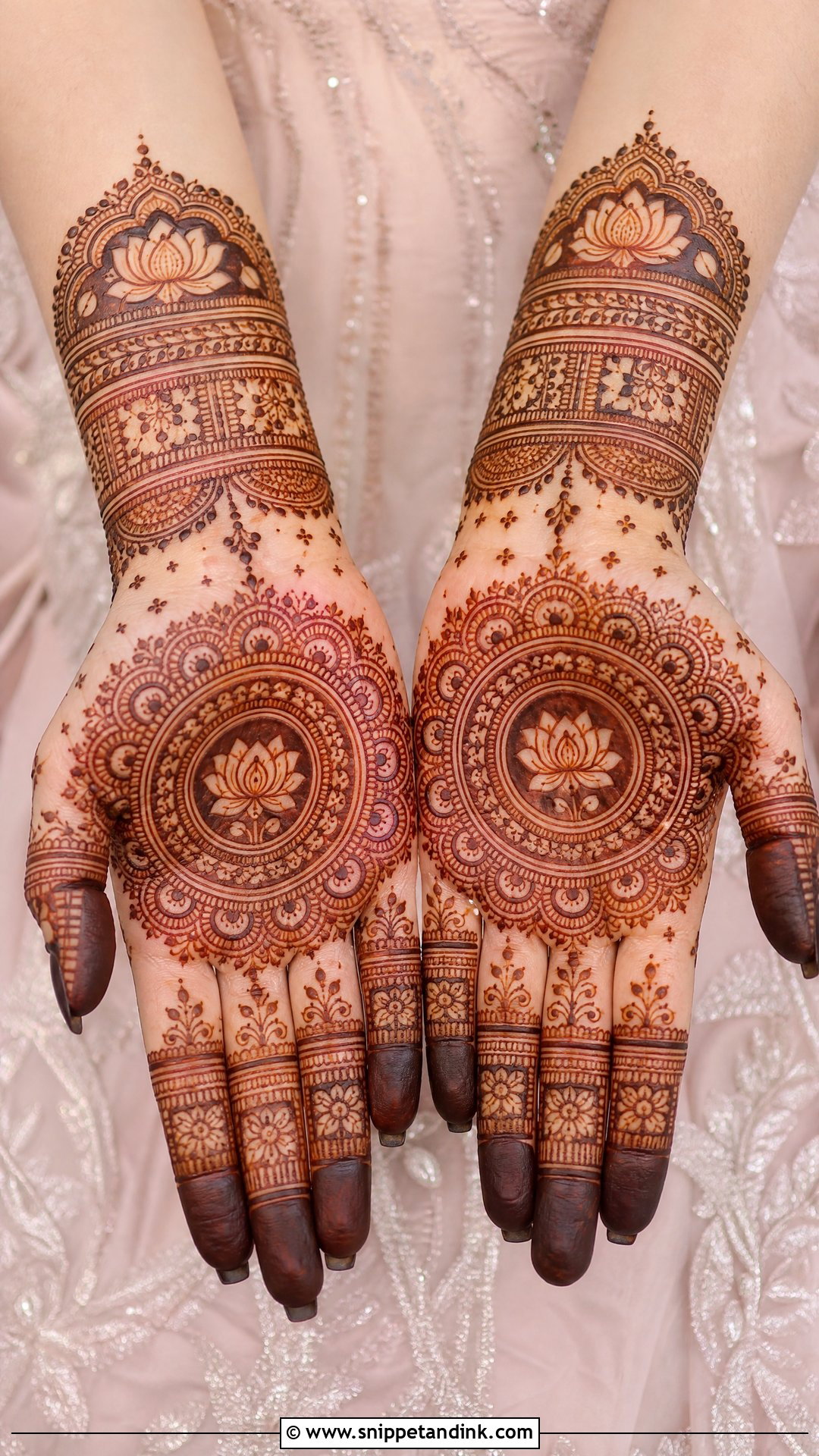
The palm is where henna traditionally lives, and it’s also where the stain comes out darkest, because palm skin is thicker. I build palm designs around a central mandala, paisley trails or a lotus, with checks and slim bands on the fingers. This is the space for hidden initials or the engagement date. My advice is to let the main motifs breathe; when every gap is filled, the lines blur into each other as the stain darkens, and the design reads as a dark smudge from a distance.
4. Simple Engagement Mehendi Design
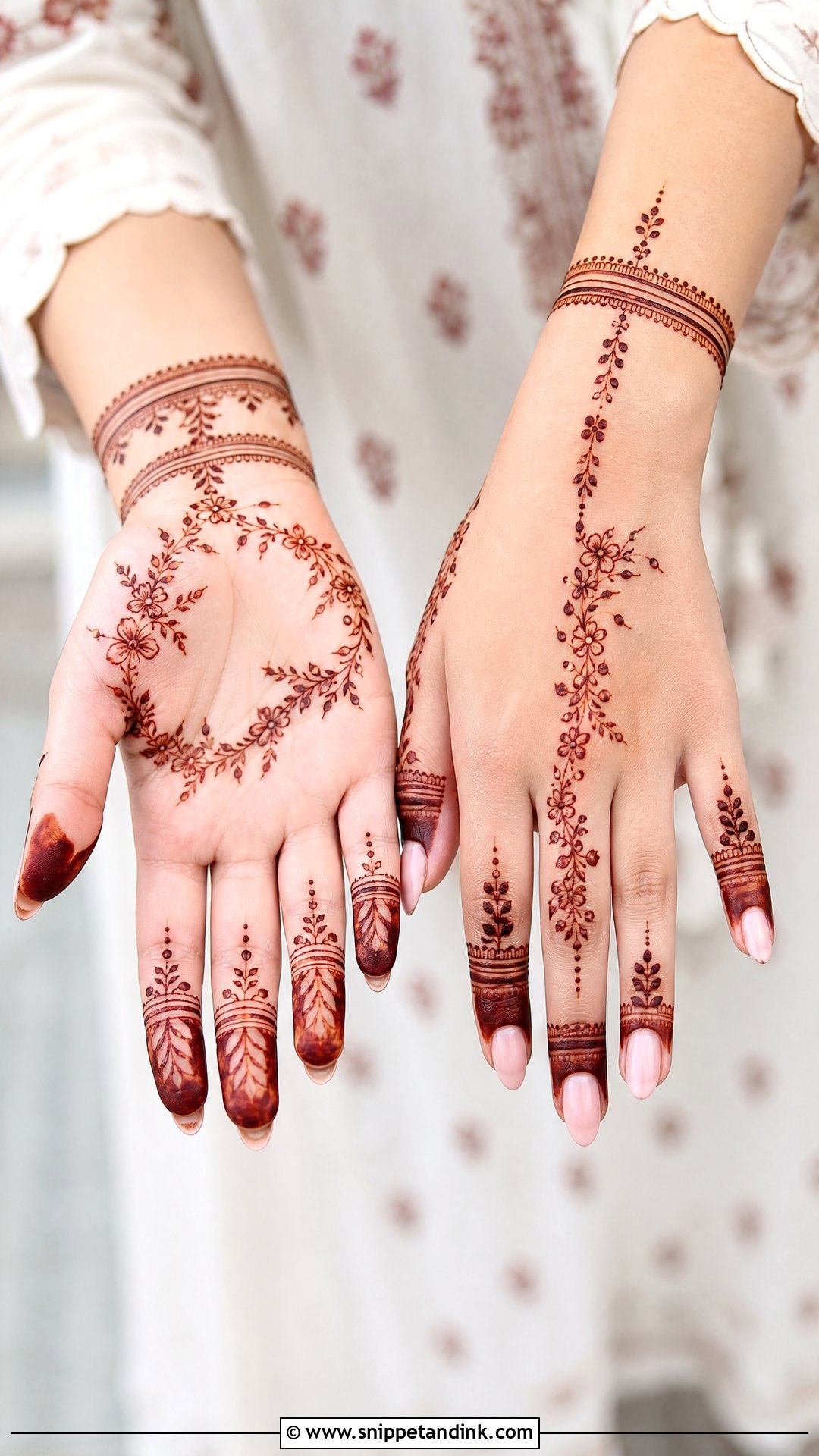
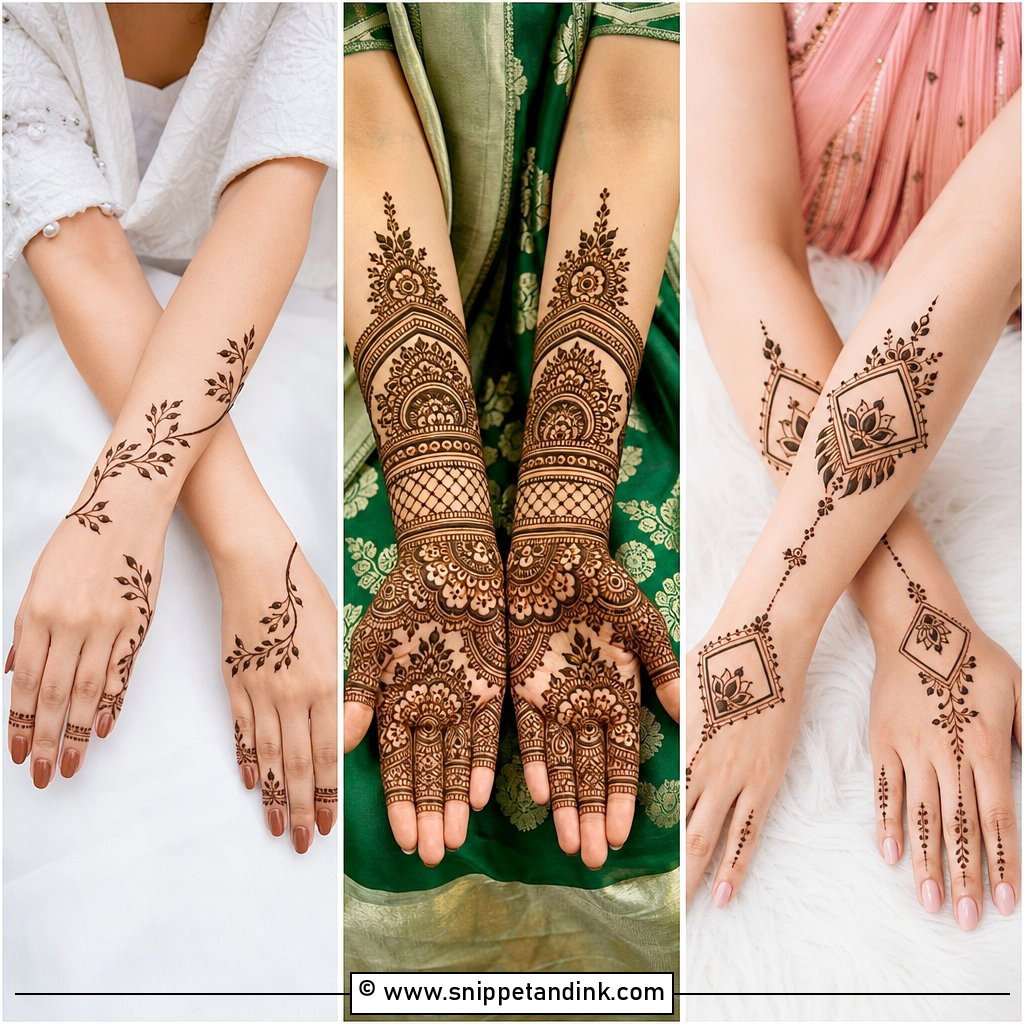
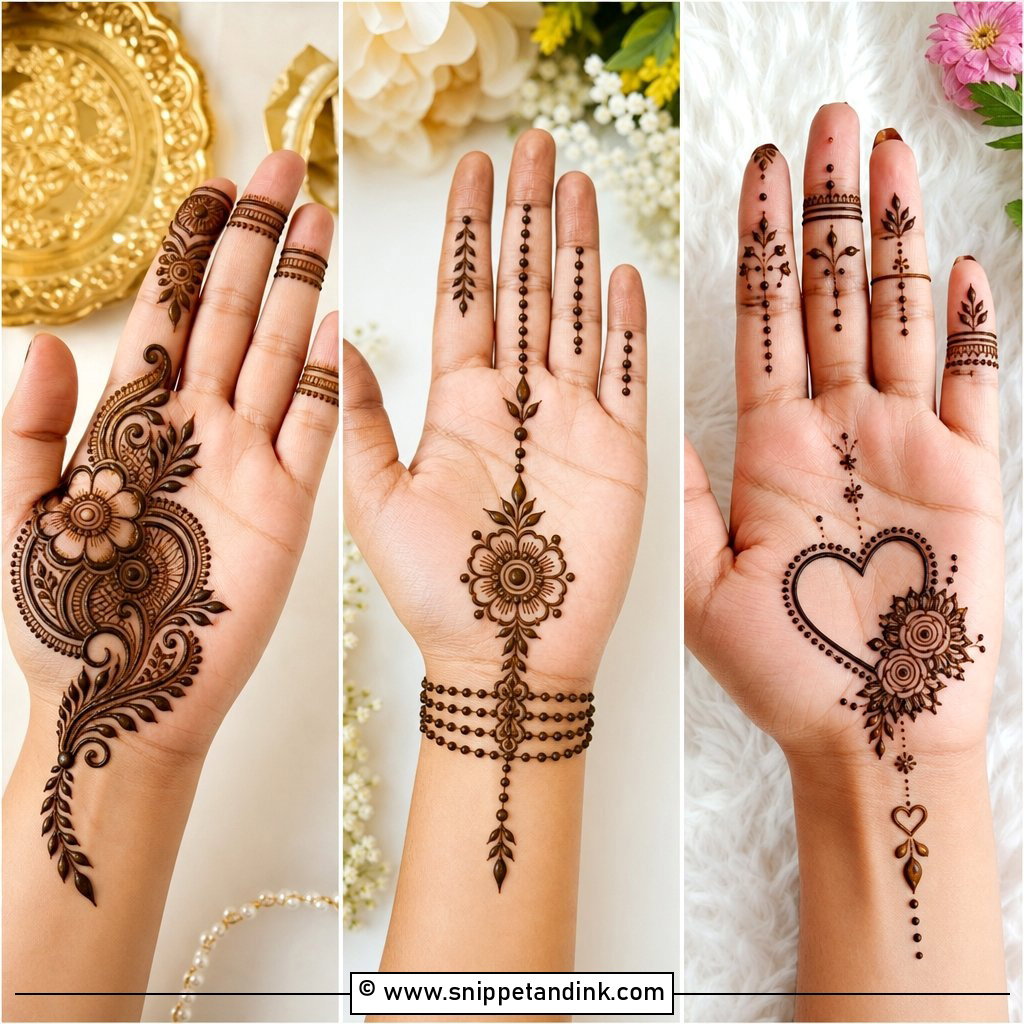
A simple design is still a proper design; the difference is restraint. I focus on clean florals, a light vine and a bracelet-style border at the wrist, and I finish the fingers carefully, because neat fingertips are what make simple henna look festive instead of unfinished. One statement motif on the palm or back, connected with small leaves, is usually enough. It suits small ceremonies and anyone who wants henna that’s easy to live with at work the following week.
5. Arabic Engagement Mehendi Design
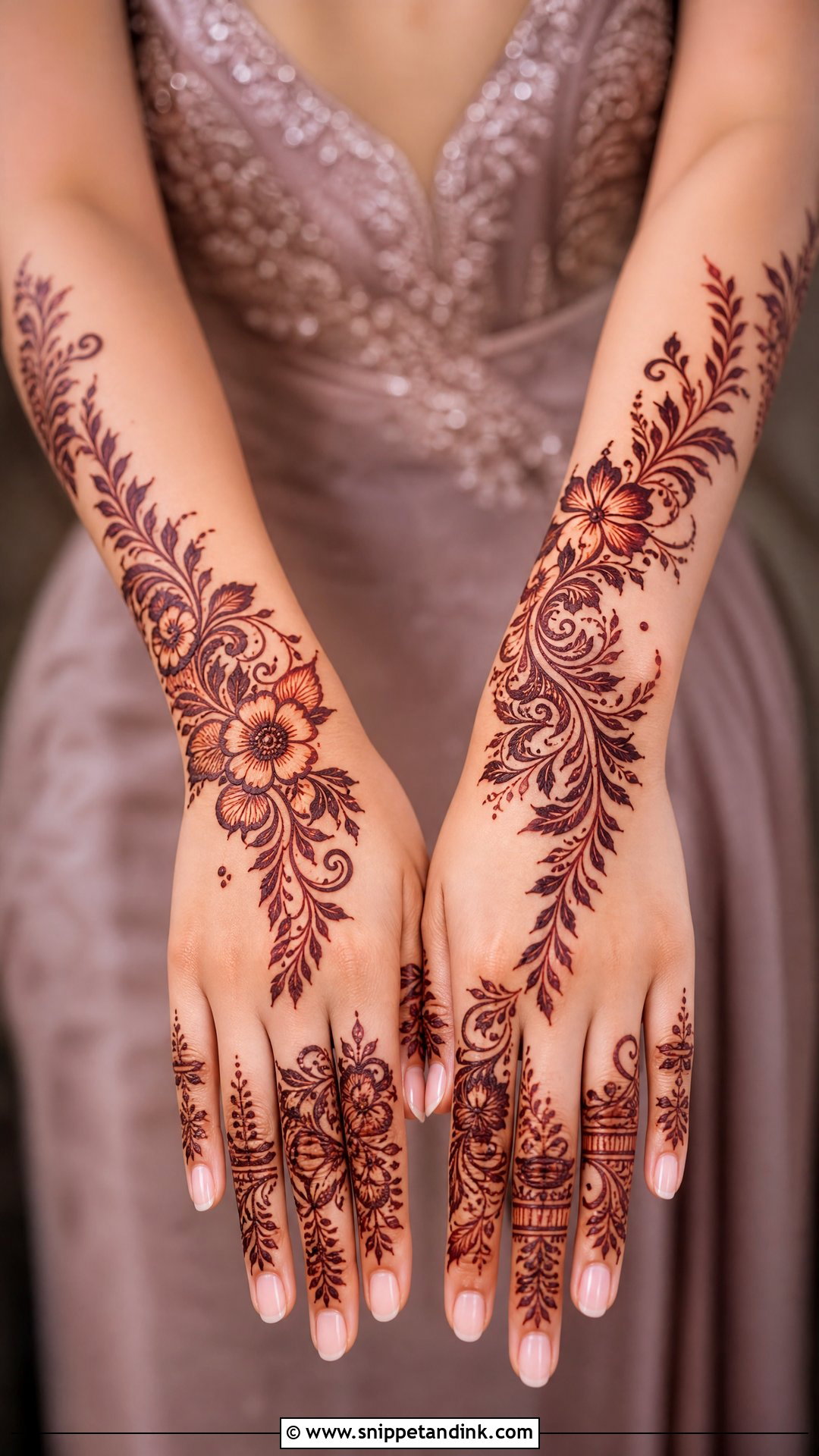
Arabic designs move diagonally, usually from one side of the wrist across the hand toward the index finger. That long line makes the hand look slimmer and longer. Large flowers, leafy vines and shaded petals are typical, and the bold outlines give strong contrast once the stain develops. It’s also faster than a dense Indian design, which helps if you’re short on time on the day. I’d leave the fingertips clean or lightly capped to keep it modern.
6. Indian Engagement Mehendi Design
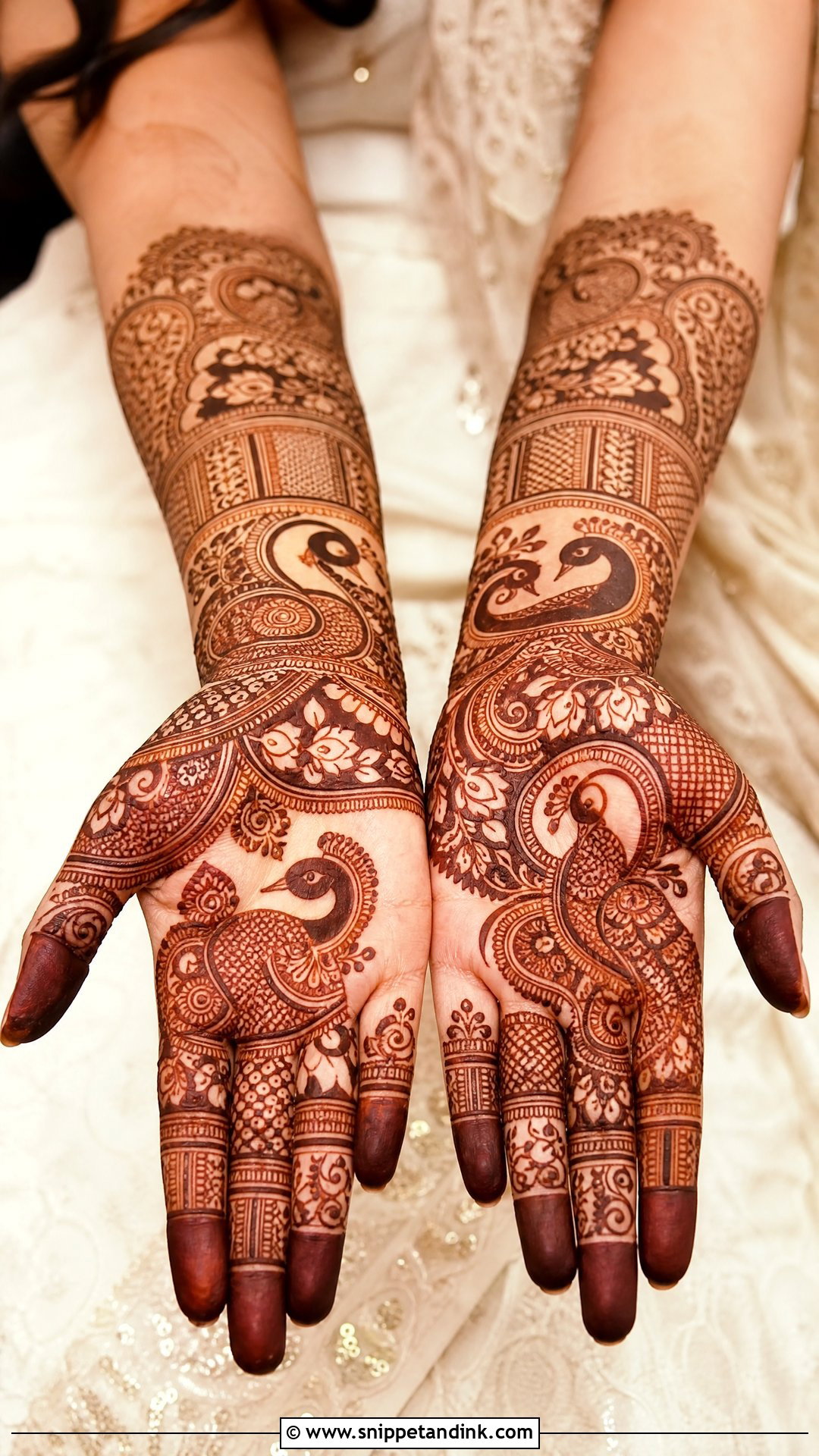
Indian engagement henna is the most detailed style here: paisleys, peacocks, lotus flowers, fine mesh and dense filler. For an engagement I usually draw it slightly lighter than a full bridal set, keeping a central palm motif, detailed fingers and a decorative wrist cuff. Fine Indian lines need a steady hand and a cone with a very fine tip; if an artist’s lines wobble on the practice sheet, they’ll wobble on your palm. Hidden initials or a small ring symbol fit easily into this style.
7. Indo Arabic Engagement Mehendi Design
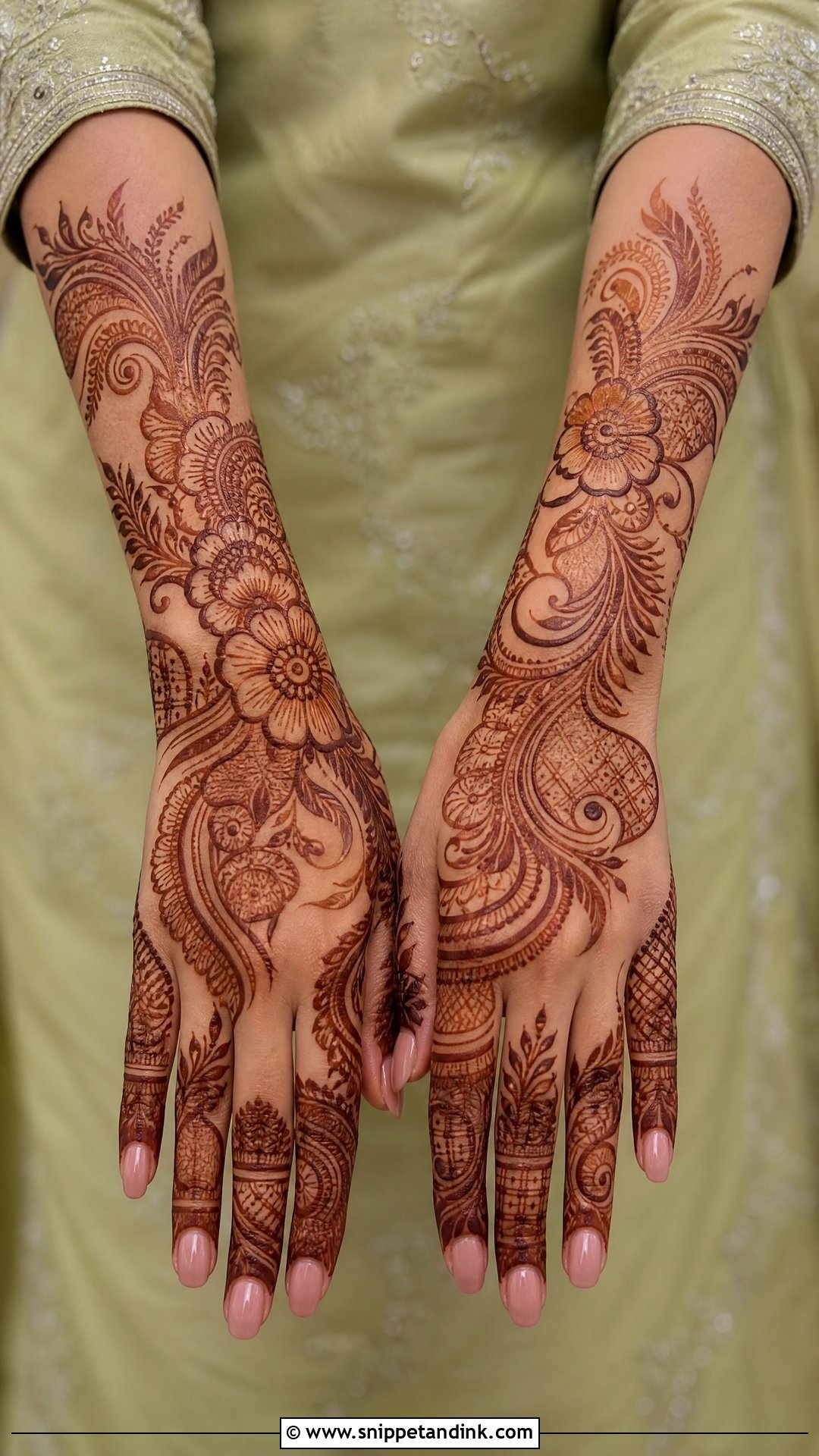
Indo-Arabic combines the bold diagonal flow of Arabic work with the fine detail of Indian henna. You’ll see large flowers, paisley trails and shaded leaves alongside small jaali sections and detailed fingers. It’s my most requested engagement style, since it looks rich without being fully packed and works on both sides of the hand. For photos, I keep the diagonal trail neat and finish the back with a ring-friendly back-hand finish so your jewelry stays visible.
8. Engagement Ring Mehendi Design
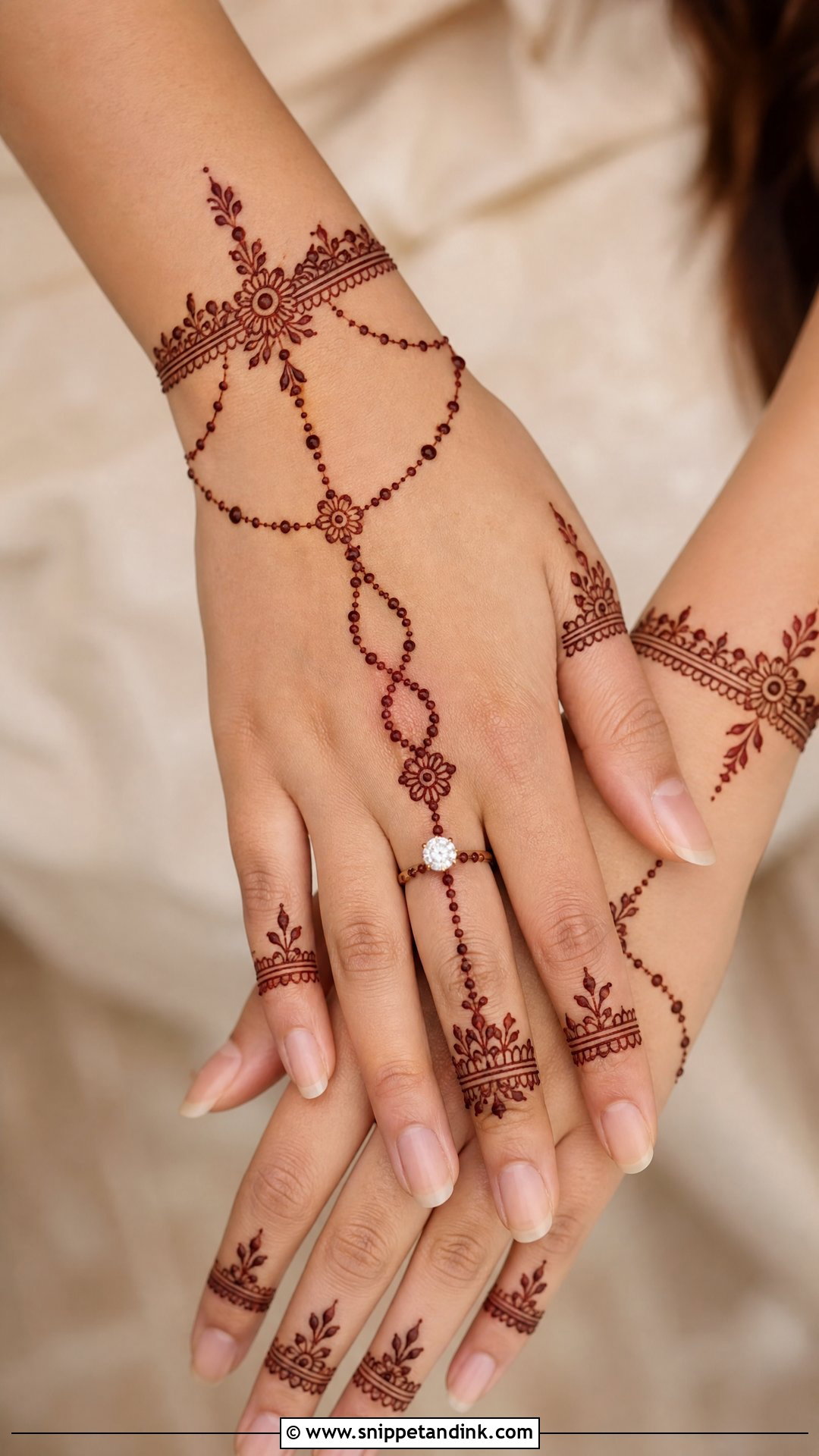
A ring-focused design is built around the finger that matters. I draw delicate chains, small florals and slim leafy bands that all point toward the ring finger, then leave a clean gap at the base where the ring will sit. That gap matters: henna under the band gets rubbed by the metal and fades unevenly, and a busy pattern there competes with the stone. A small mandala on the back of the hand ties it together. It’s the design I’d suggest if the ring exchange photos are the ones you care about most.
9. Engagement Mehendi Design With Initials
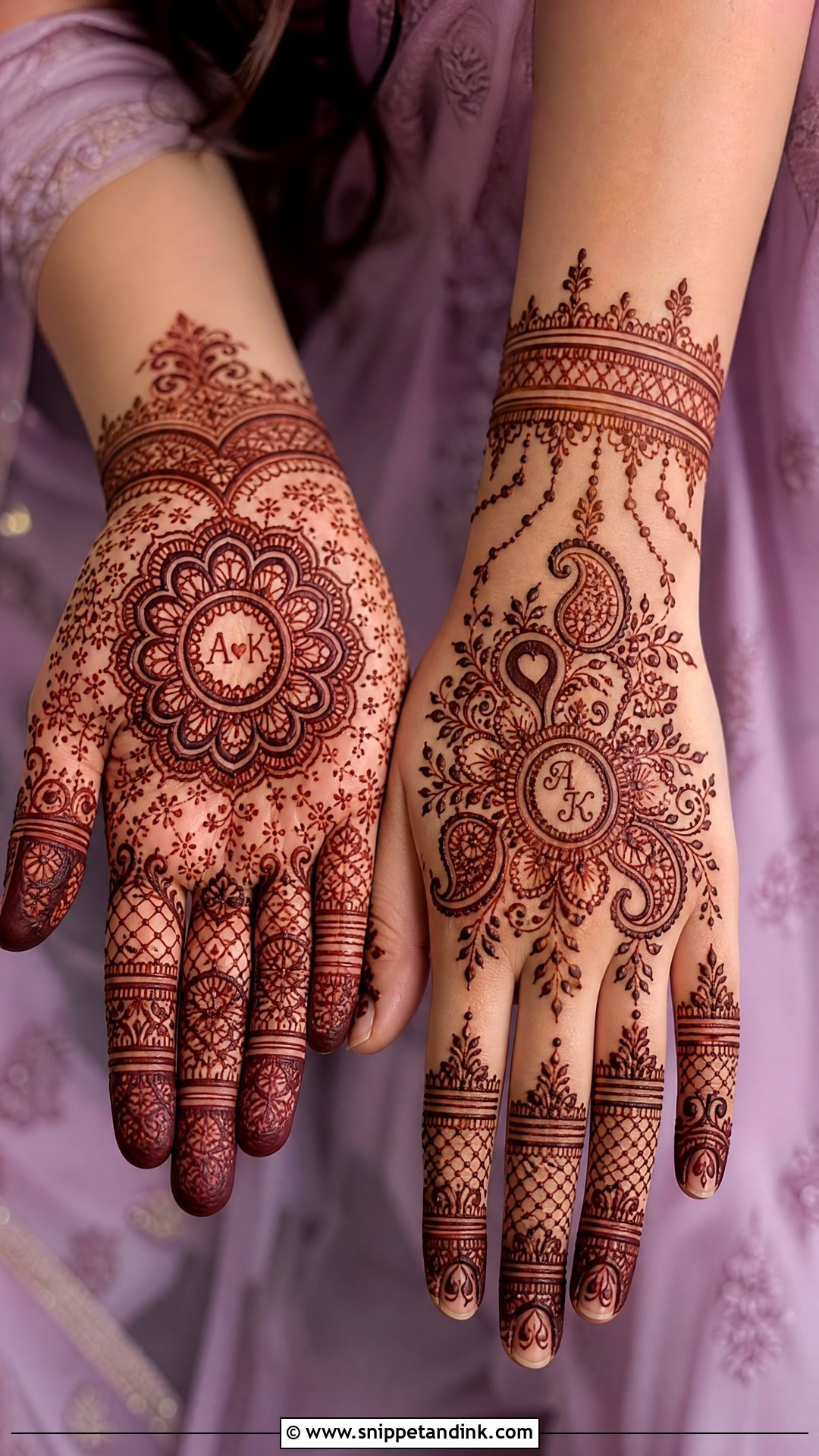
Initials are the most personal detail in henna, and they’re easiest to hide. I tuck them into a heart, a paisley or a mandala, or near the wrist. If you want them visible in photos, place them on the palm or the centre of the back of the hand. If you want a hidden game for your partner to search for later, I blend them into the filler lines. They work in Indian, Arabic and Indo-Arabic layouts alike.
10. Engagement Date Mehendi Design
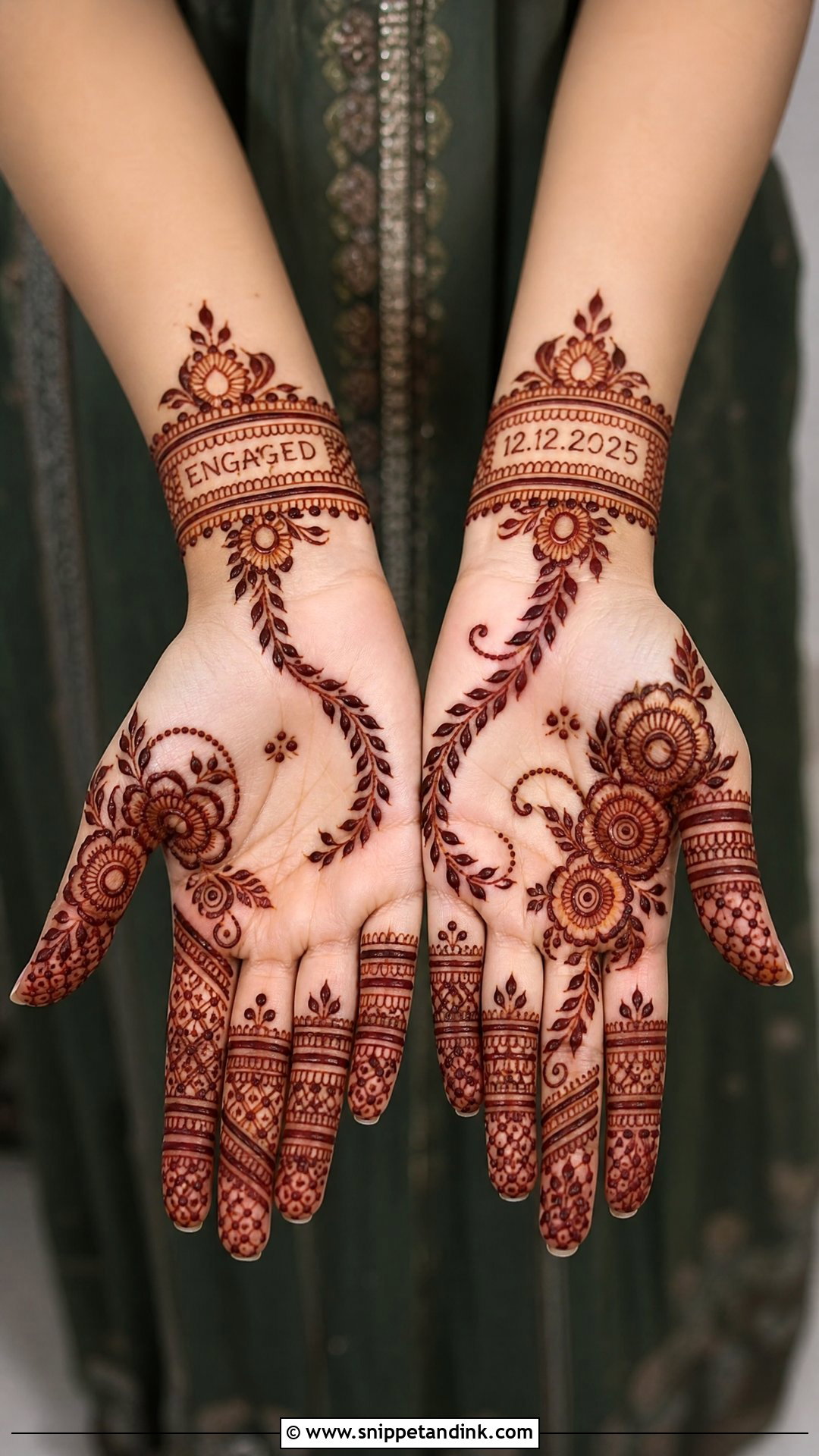
An Engagement date mehendi design turns the hands into a dated keepsake. I write the date in small numbers near the wrist, inside a bracelet band or below a mandala. Numbers need clean space around them; surrounded by dense filler, they disappear once the stain darkens. Pair the date with initials or a ring motif if you like, and check the date format with the artist before she starts, because a reversed day and month can’t be erased once the paste goes on.
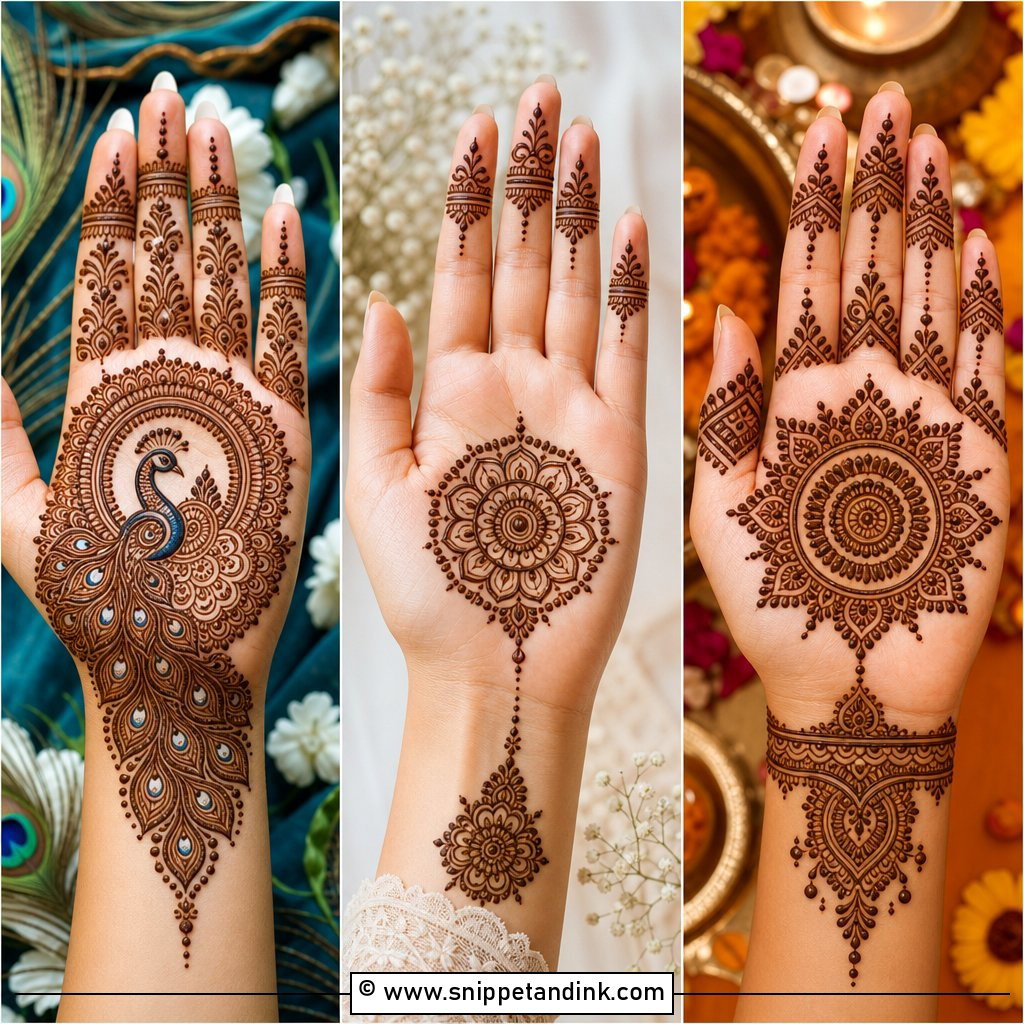
11. Mandala Engagement Mehendi Design
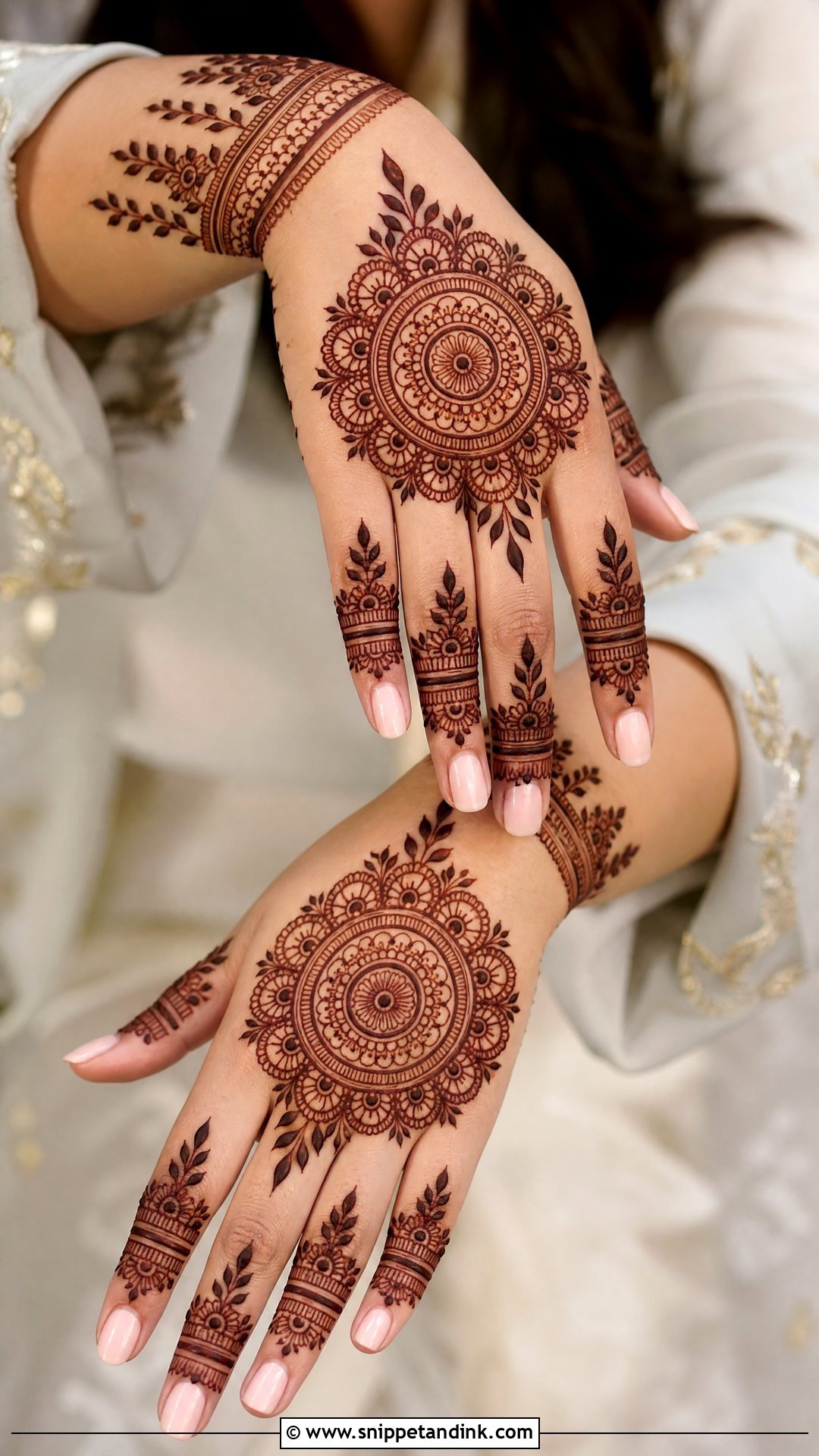
A round mandala on the palm or back of the hand gives the design a calm centre, with lines, leaves and dots on the fingers. I draw the circle first and build it ring by ring outward, which keeps it symmetrical. A large palm mandala reads classic; a back-hand mandala with bracelet chains looks more modern. Leave some bare skin around the circle so its shape stands out. Small hands suit this layout especially well, since the round centre gives them a clear focal point.
12. Floral Engagement Mehendi Design
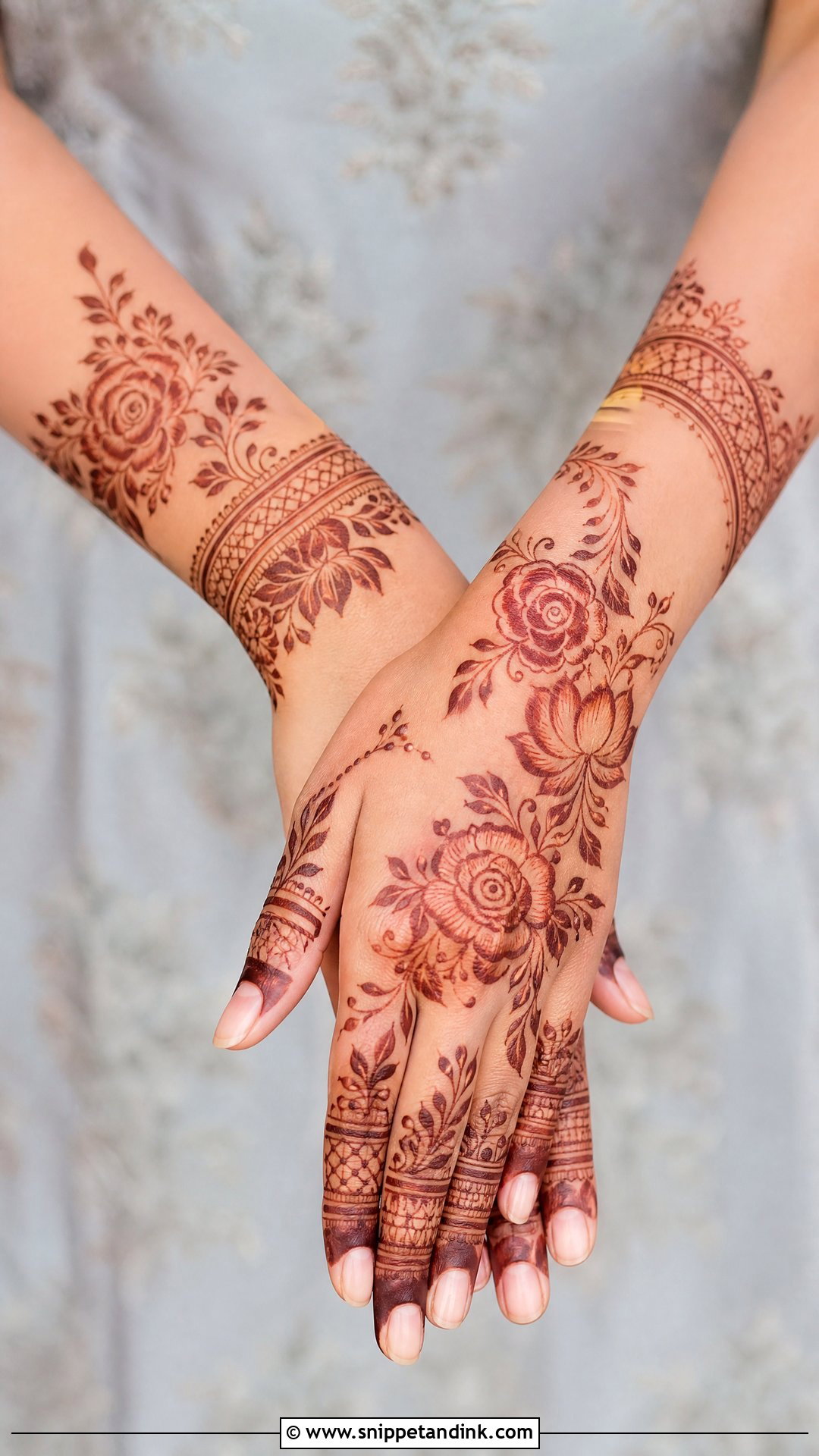
Florals are the easiest style to adapt. A diagonal trail of roses and leaves reads Arabic, while a full palm of lotus petals and blossoms reads Indian. I keep the outlines bold and the petals clearly separated, because thin petal edges that touch each other merge as the stain deepens. Bold, spaced flowers look modern; adding fine fillers makes them richer. Pastel outfits and soft makeup suit floral work best.
13. Peacock Engagement Mehendi Design
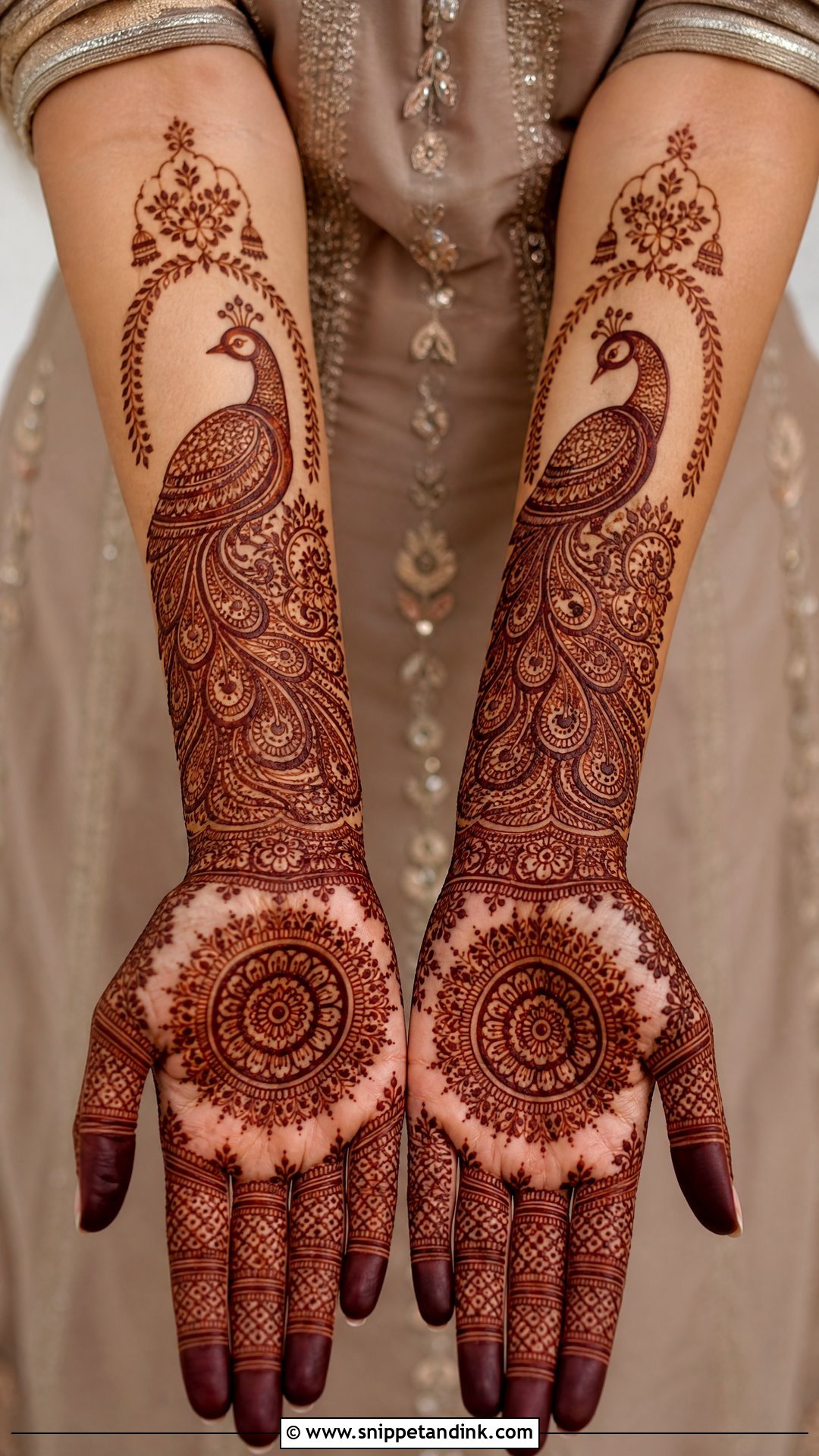
Peacocks give henna a royal feel. The bird can sit on the palm, curve along the wrist, or show up only as feathers on the back of the hand. For an engagement, I keep it smaller than I would on a wedding hand, so the peacock doesn’t swallow the design. One peacock on each hand, facing each other when you hold your palms together, makes a nice photo. Silk outfits and traditional jewelry suit it, especially once the stain turns deep maroon.
14. Paisley Engagement Mehendi Design
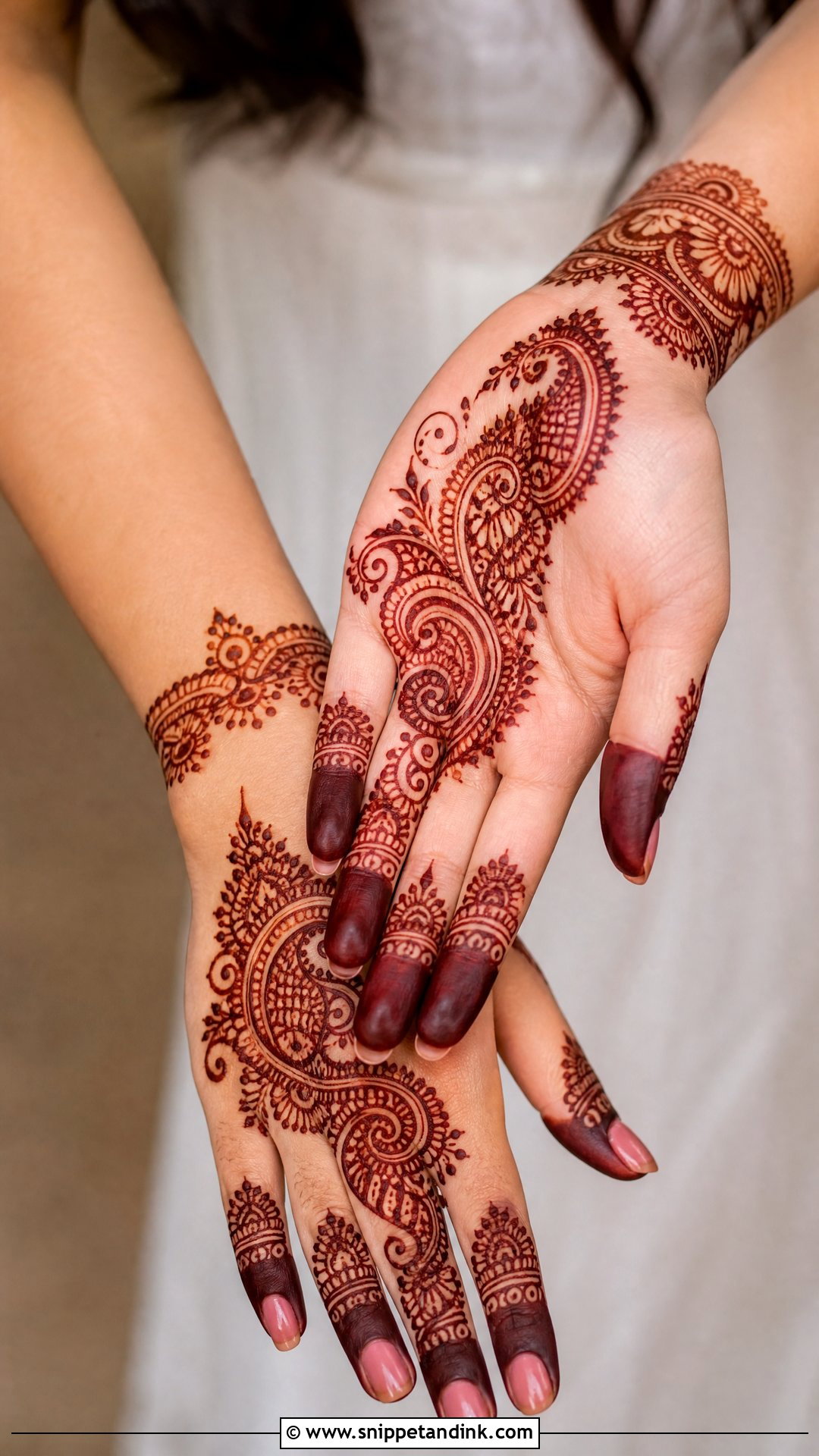
Paisleys fit almost every hand because their curve follows the natural movement of the fingers and wrist. I use them as the main motif in Indian and Indo-Arabic designs, filled with tiny lines, dots and petals. For a lighter look, one large paisley on the palm with simple fingers is enough. Paisleys need little else to feel festive, which is why I lean on them when a bride wants coverage without personal symbols.
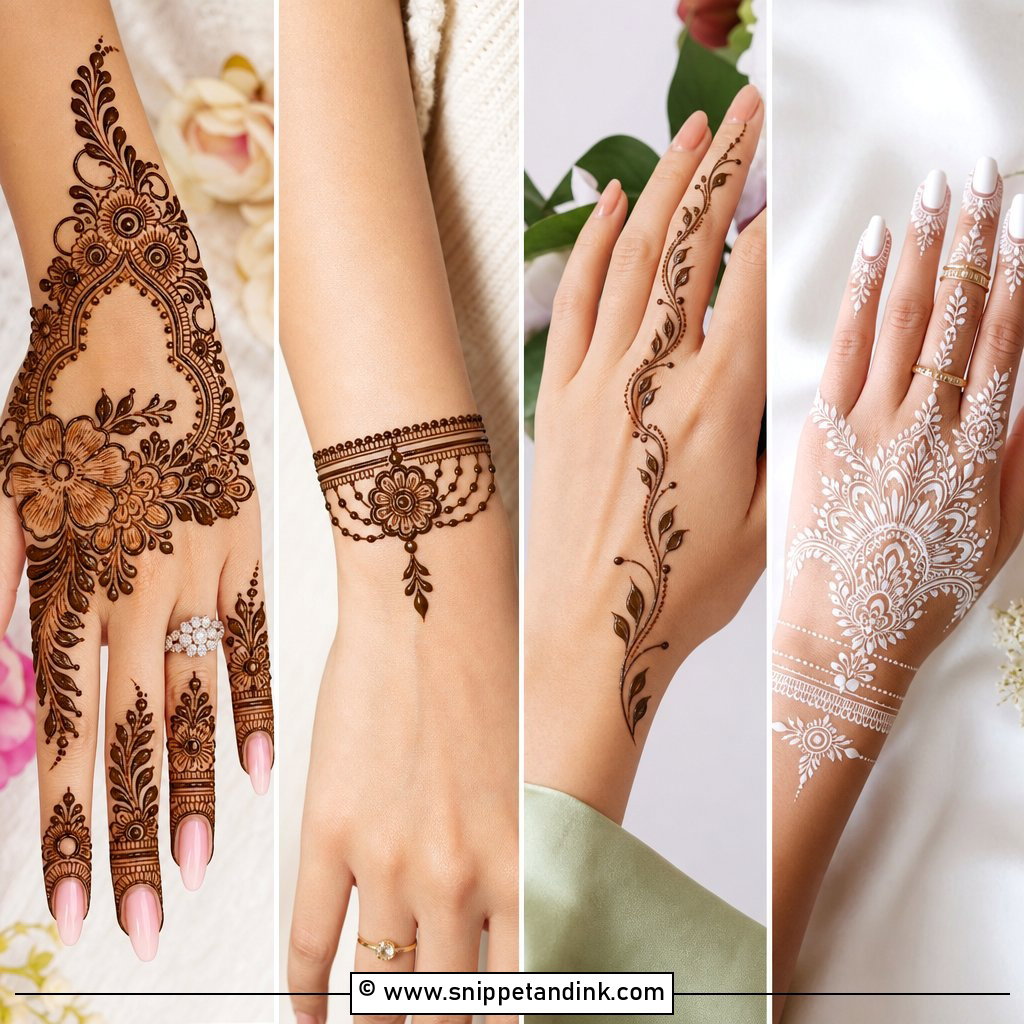
15. Jaali Engagement Mehendi Design
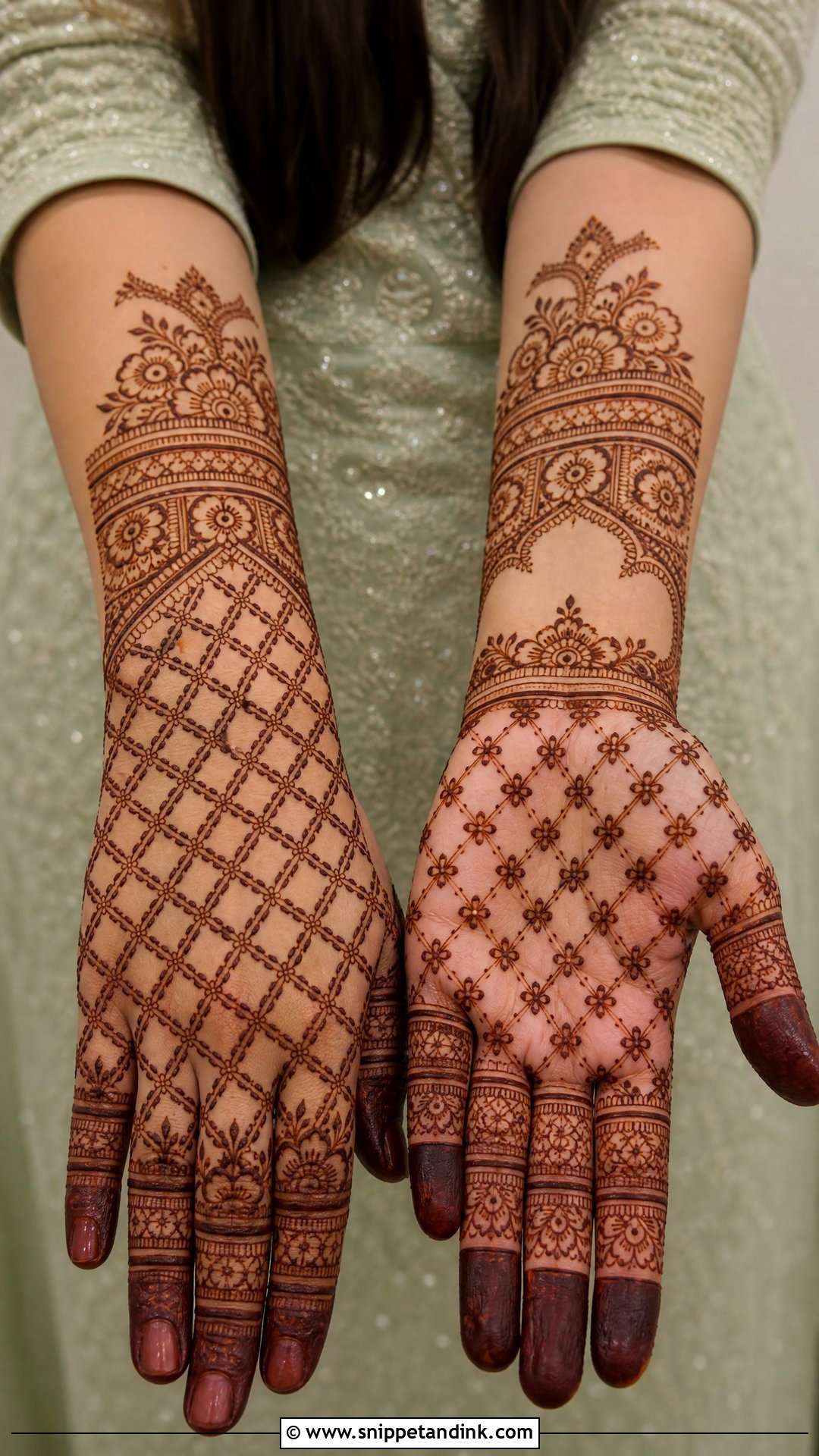
Jaali is mesh-like work, usually on the back of the hand, the fingers or the wrist. It gives a lace effect that sits nicely next to rings and bangles. The mesh can be diamond-shaped or curved, and I mix in dots for texture. It’s also the most unforgiving pattern for line quality: uneven spacing in a grid is obvious immediately. I balance jaali with open flowers or bare skin so the hand doesn’t look crowded.
16. Bracelet Engagement Mehendi Design
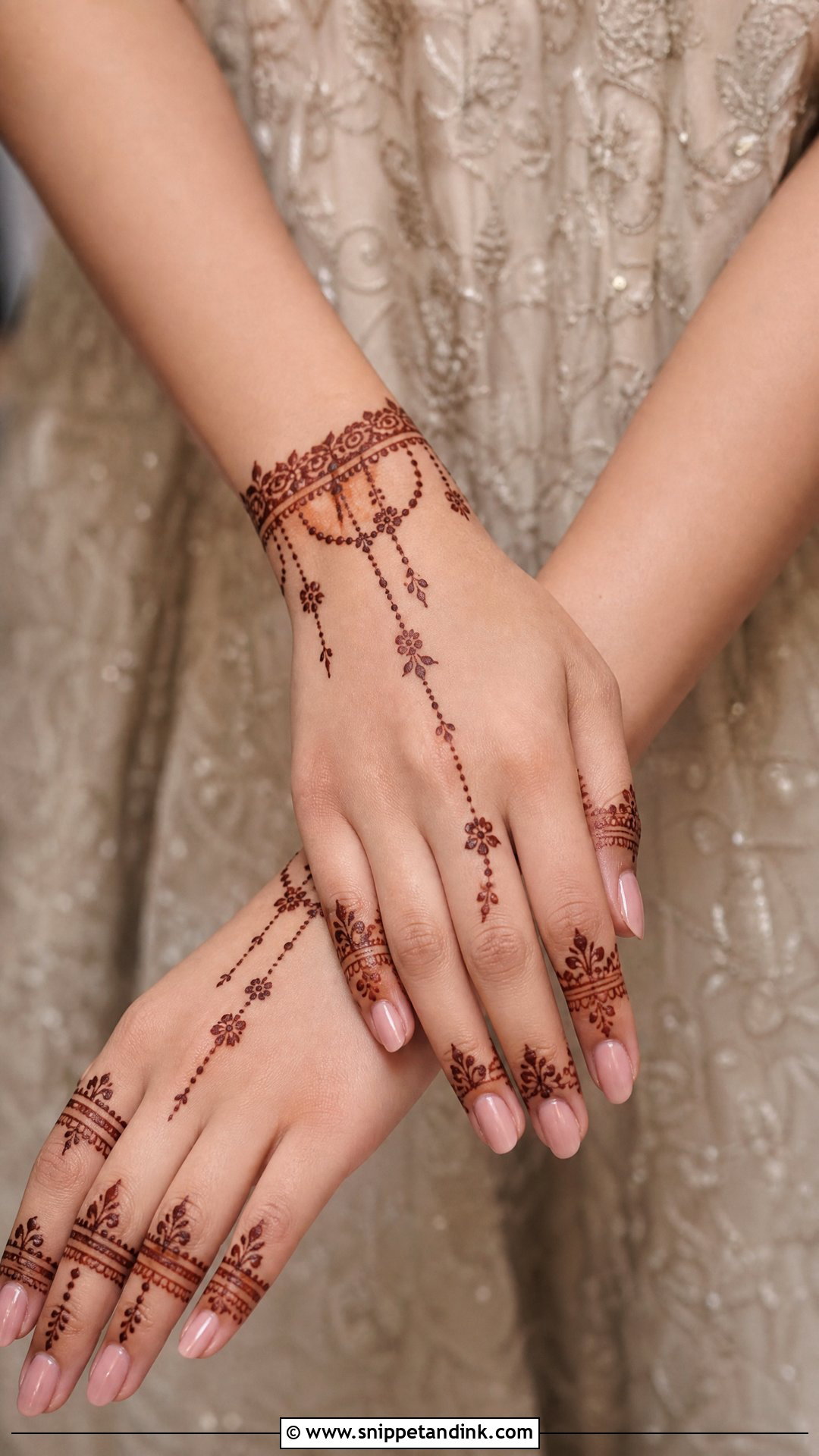
A bracelet design draws jewelry on the wrist: a band, hanging chains, small flowers and dots, sometimes connected to a motif on the back of the hand. It complements bangles instead of fighting them. It’s also my suggestion when the outfit has long sleeves, because the decorated wrist still shows. The band must be evenly spaced all the way around; I draw it with your wrist resting flat and then check it again with the hand turned.
17. Finger Engagement Mehendi Design
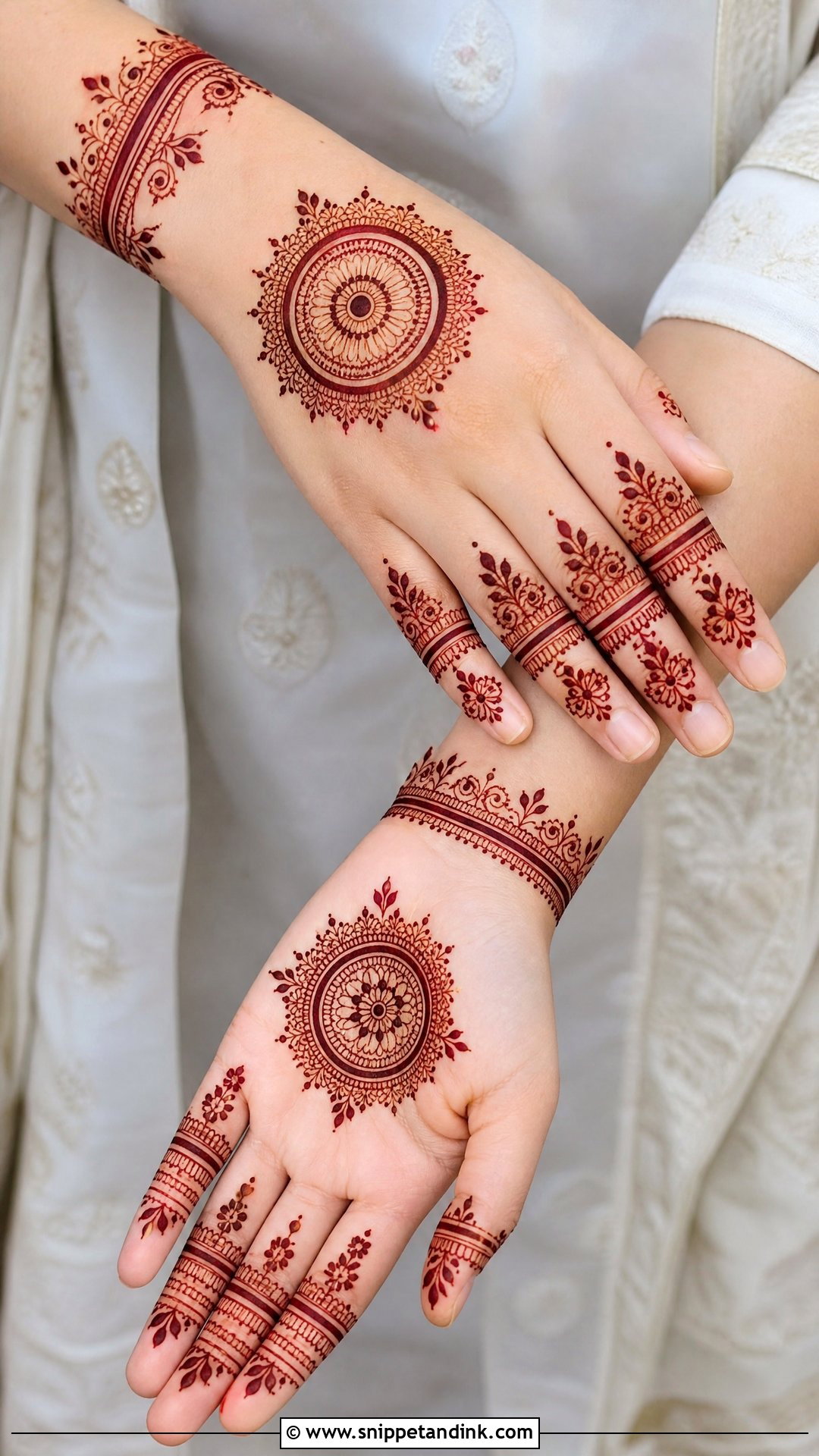
Finger-focused henna keeps the palm or back light and puts the detail where your rings are. Stacked bands, leafy tips, dots, small flowers and geometric touches all work. It’s quick to apply and comfortable to wear. I coordinate all ten fingers even if each one has its own small pattern, so the hand reads as one design. Add a small palm mandala or wrist chain if it needs anchoring.
18. Minimal Engagement Mehendi Design
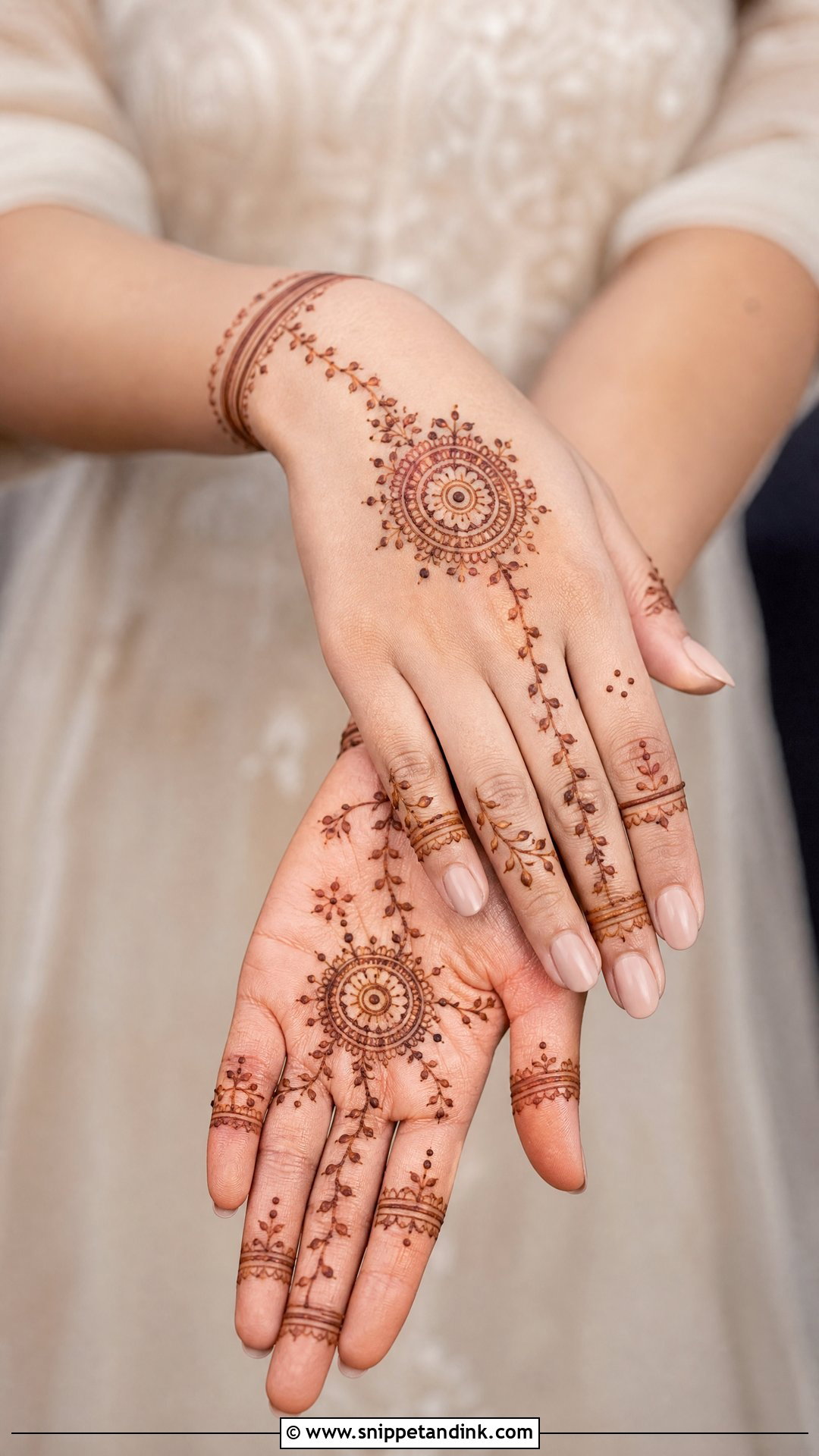
Minimal henna depends entirely on neatness. With so few lines, every wobble shows. A small mandala, one slim vine, delicate finger bands or a dainty bracelet is often all I draw. It suits contemporary outfits, short nails and smaller hands. If you’ve never worn henna before and aren’t sure you’ll like it, this is a good starting point.
19. Modern Engagement Mehendi Design
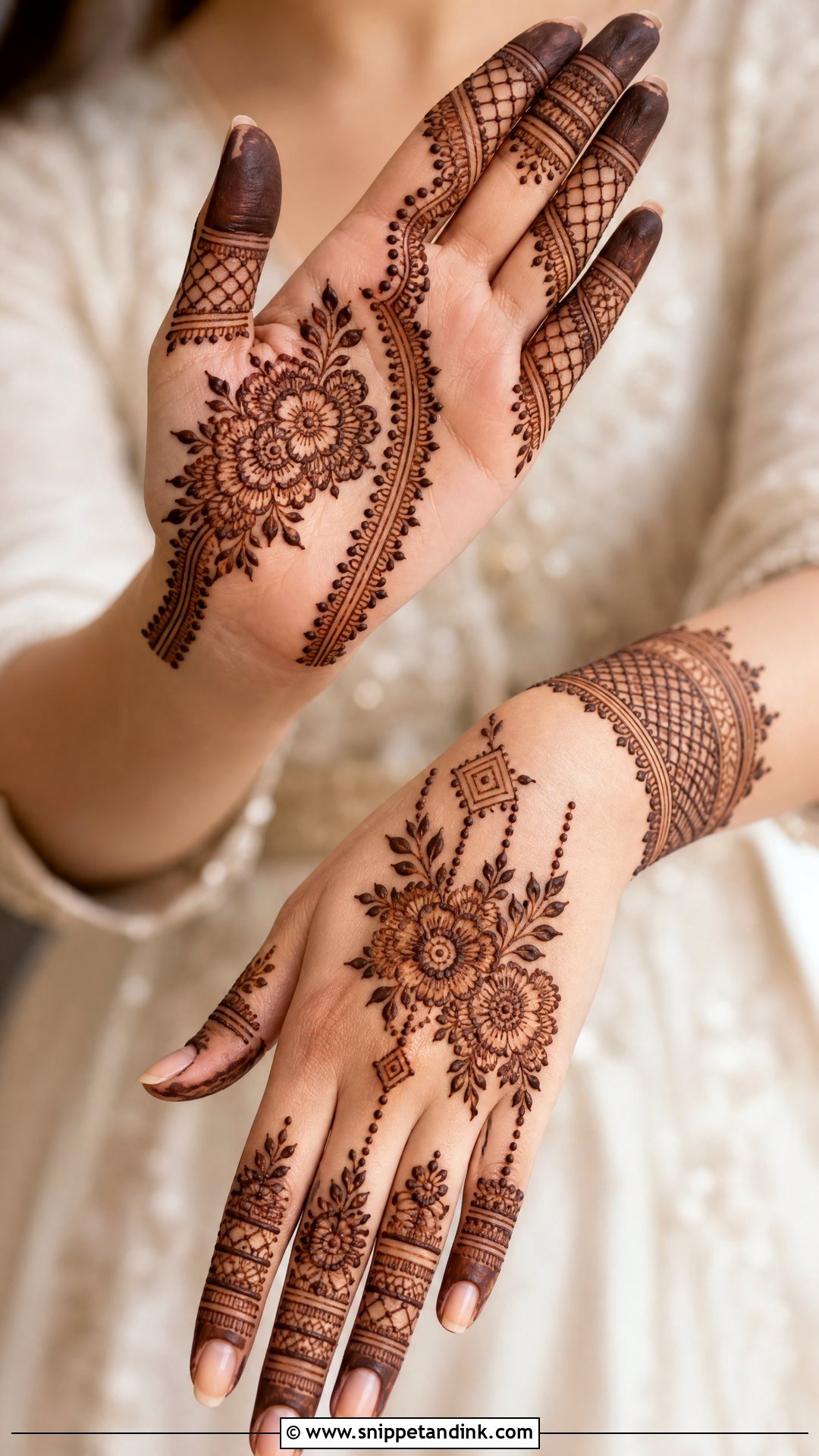
Modern layouts play with negative space, asymmetry and geometric details while keeping traditional motifs. The pattern might highlight only one side of the palm or form a statement shape on the back of the hand. I find modern designs need the most planning, since random-looking motifs only work if the spacing is controlled. Initials or a date fit easily. It suits engagement shoots and simpler outfits.
20. Bridal Engagement Mehendi Design
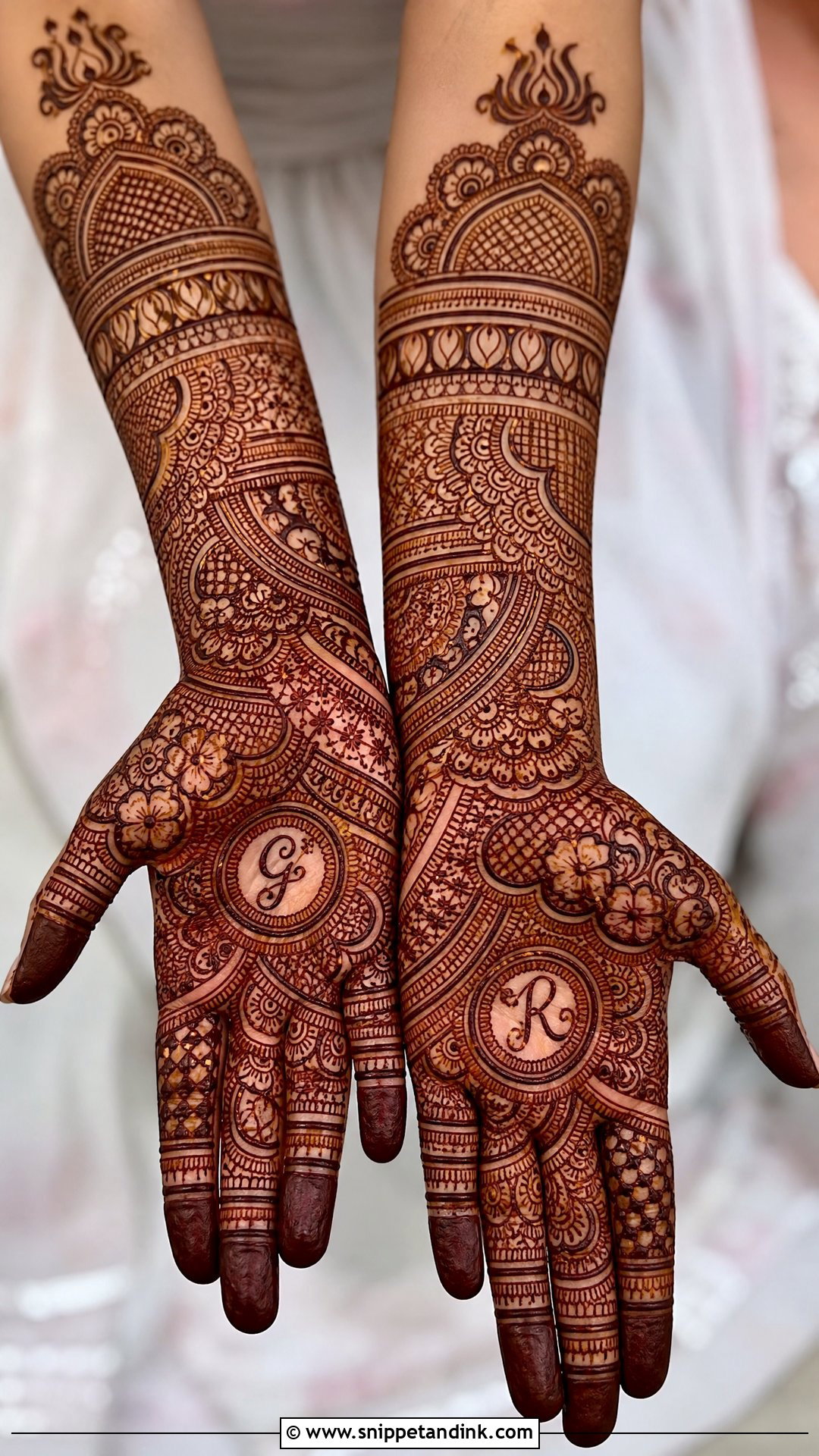
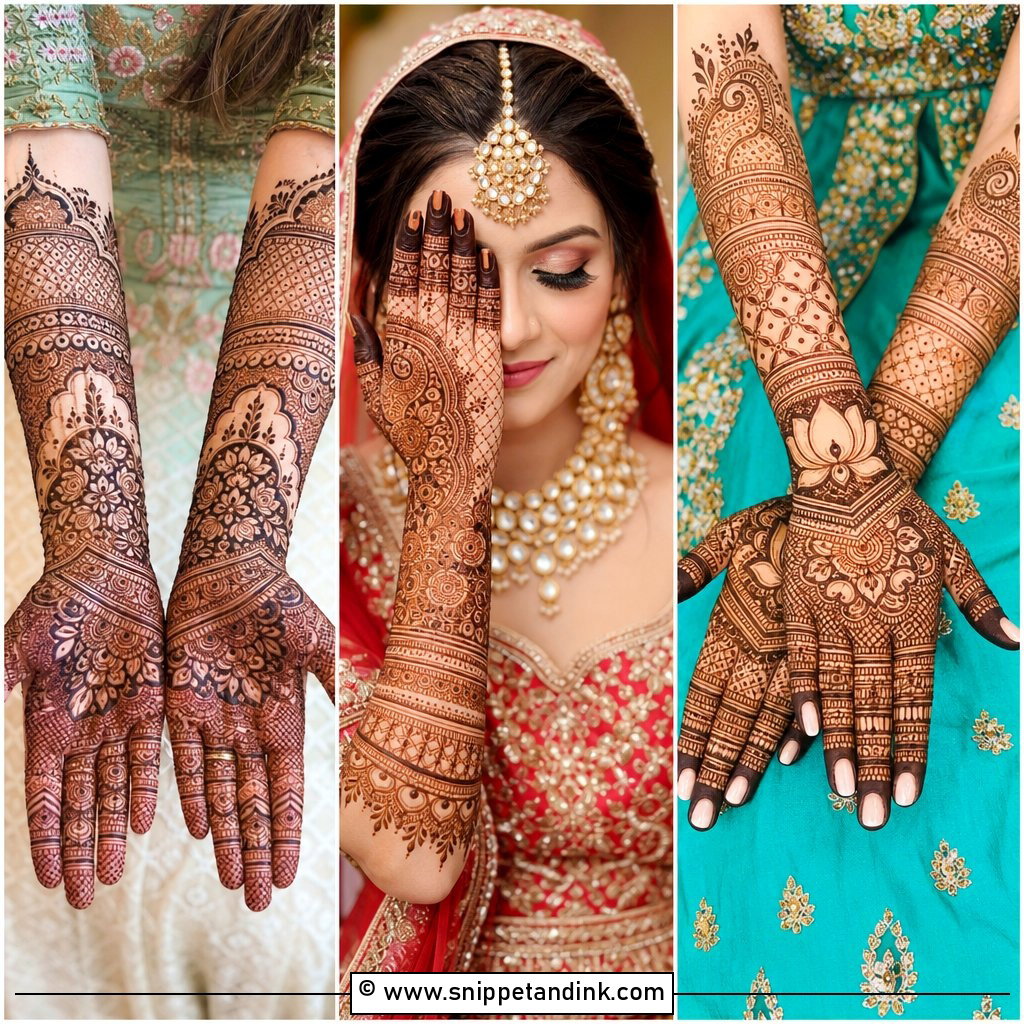
A bridal engagement design sits between party henna and the full wedding set. It covers the hands to the wrist or a little beyond, with florals, paisleys, mandalas and jaali, plus personal elements. My usual advice: if your wedding henna will be very heavy, go medium-density for the engagement. That way each ceremony looks different in your albums, and your engagement stain has time to fade completely before the bridal one goes on.
21. Engagement Mehendi Design For Short Hands
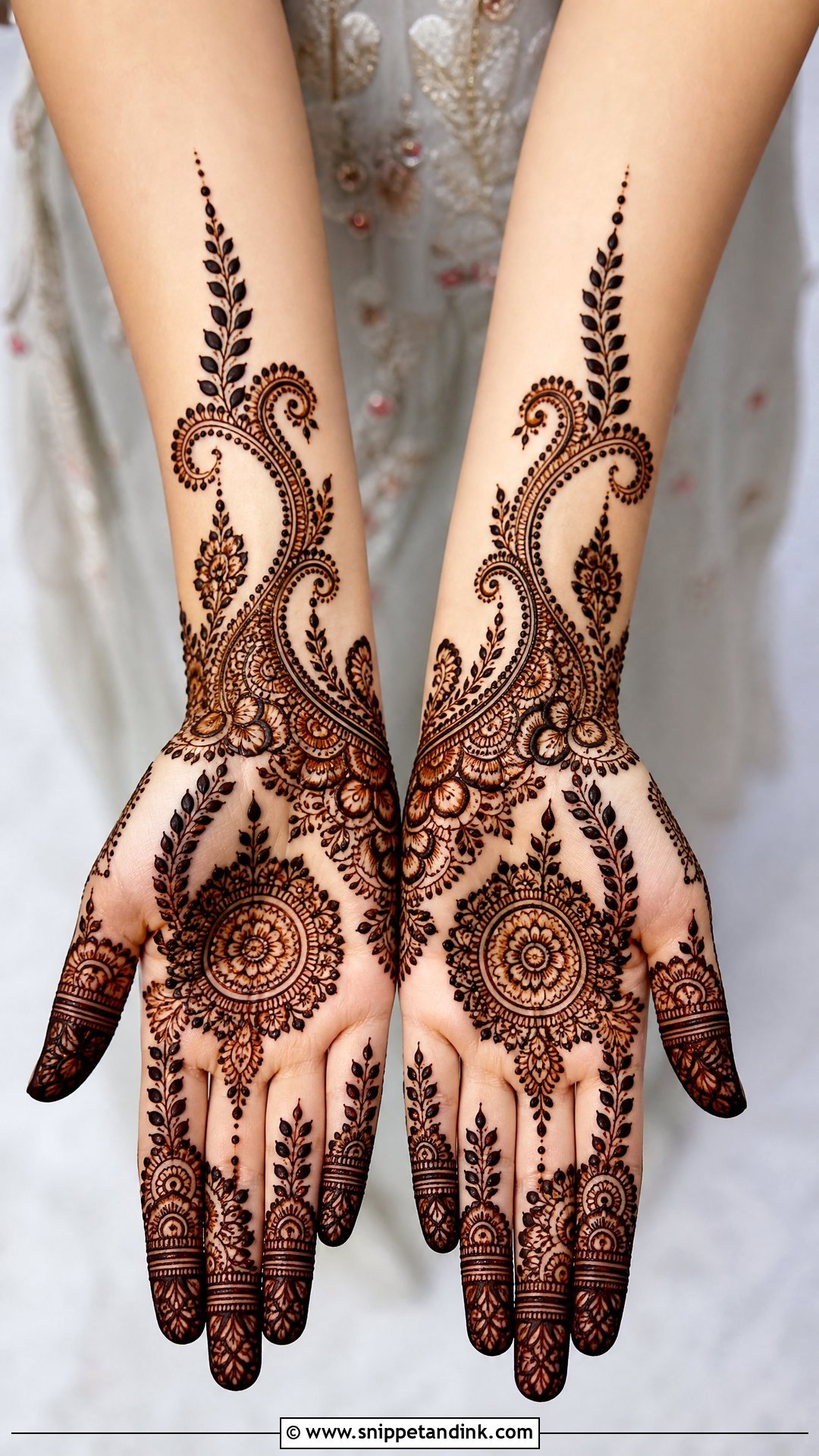
On short hands, my goal is to add length. I use vertical trails, slim vines, narrow paisleys and detailed fingers, and avoid big motifs that cover the whole palm. A small central mandala with long leafy extensions creates the lengthening effect. Back-hand bracelet designs help as well. Fingertips should be neat and slightly bold, and open spaces keep the design light enough to make the hand look longer in photos.
22. Engagement Mehendi Design For Long Hands
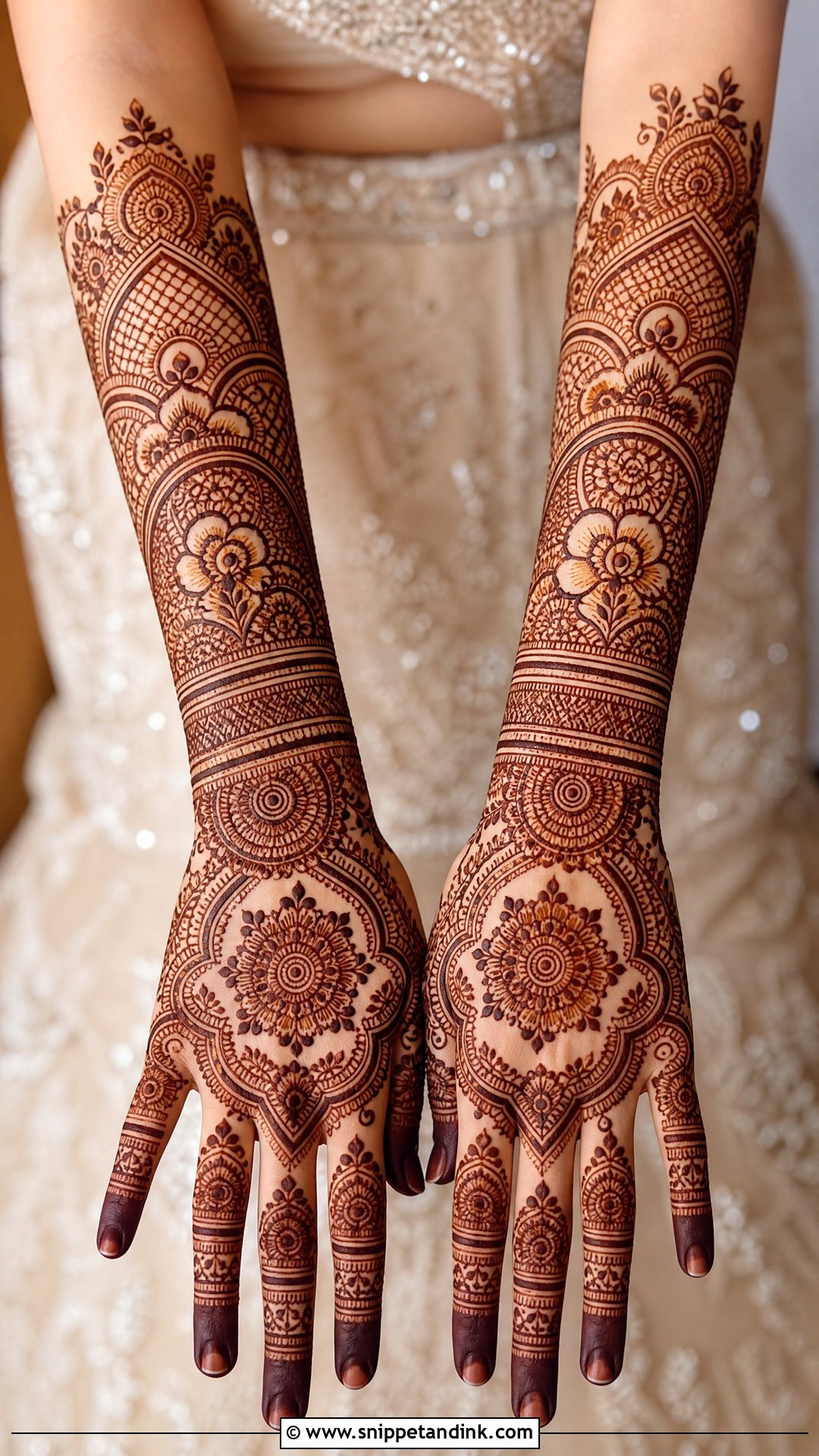
Long hands can carry fuller patterns: layered paisleys, broad floral trails, detailed jaali or full Indian coverage, and they look graceful with designs that extend onto the forearm. The thing I avoid on long hands is a design that’s very narrow from top to bottom; it makes the hand look even longer. A wider layout, like a large mandala with bracelet chains, balances it.
23. Engagement Mehendi Design For Dark Skin
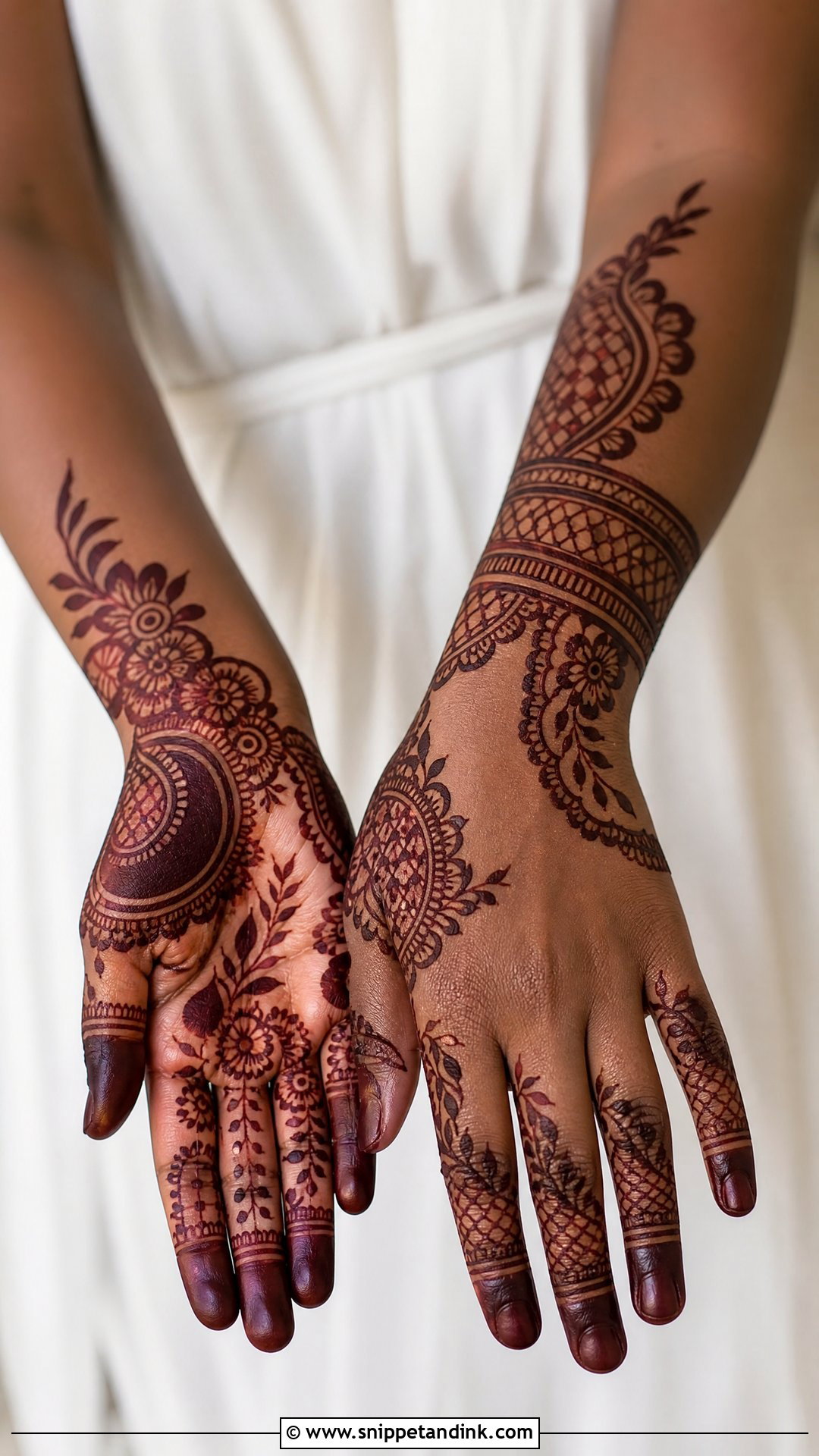
On deeper skin tones, henna stains to a rich maroon-brown, and the design needs contrast to show. I use bolder outlines, larger flowers, clean paisleys and thicker borders, with well-defined fingertips. Very fine, crowded filler can blur together from a distance, so I balance fine work with bold elements. Back-hand bracelet designs and floral trails photograph clearly. Good aftercare matters even more here, since a deeper stain gives more contrast.
24. Engagement Mehendi Design For Fair Skin
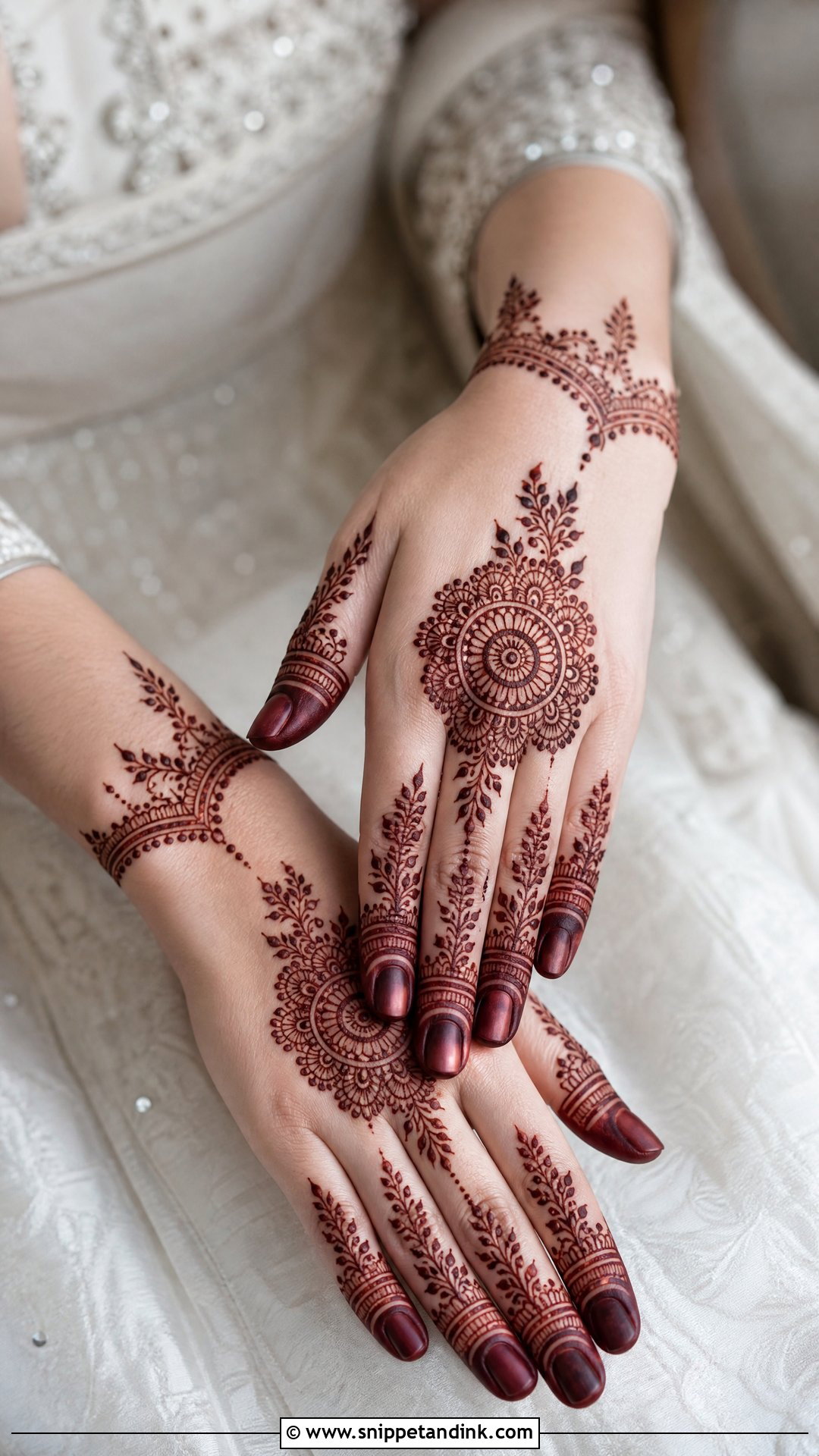
On fair skin, almost every line shows, so fine shading and detailed jaali come through clearly in photos. That visibility cuts both ways: smudges and uneven lines also stand out. I’m extra careful with application near the fingers on fair hands and leave a little open space between motifs so the design doesn’t look dense. Intricate Indian work and fine mandalas suit fair skin well.
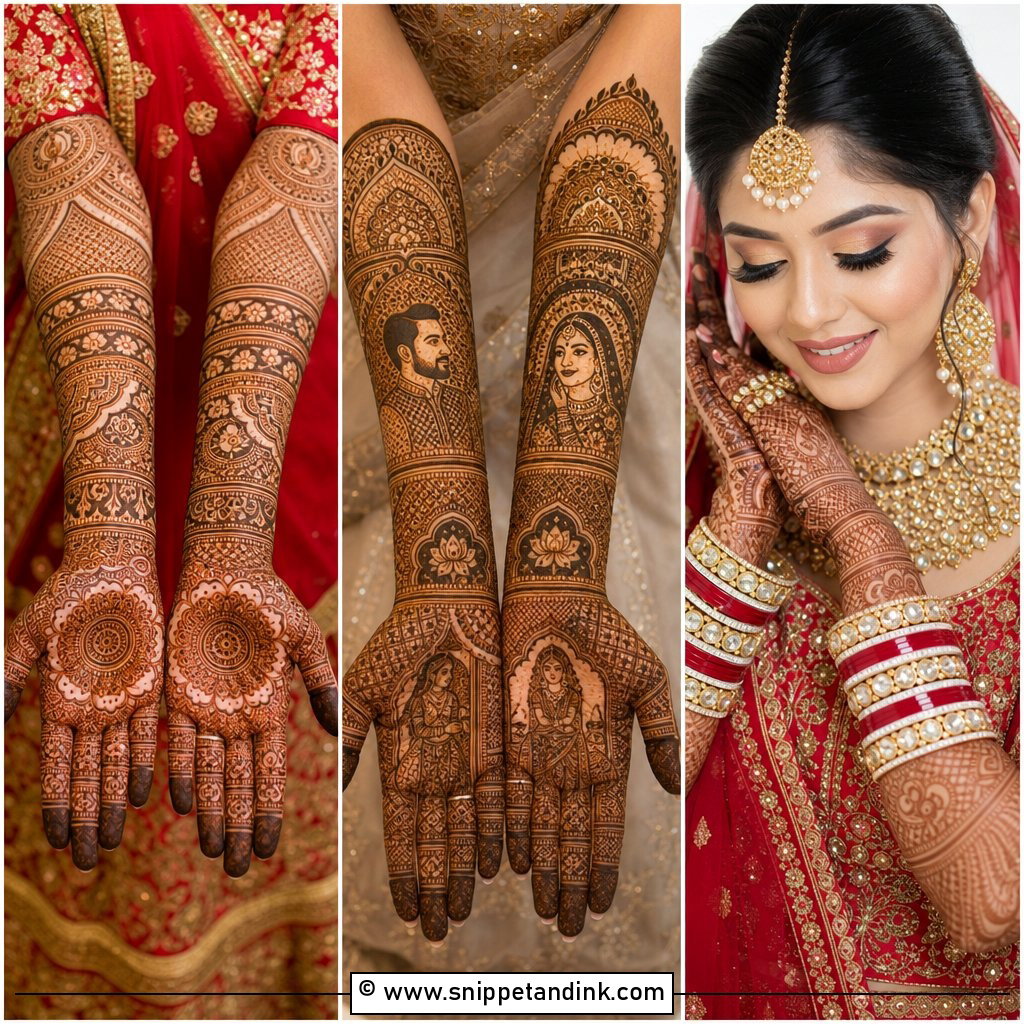
25. Moroccan Engagement Mehendi Design
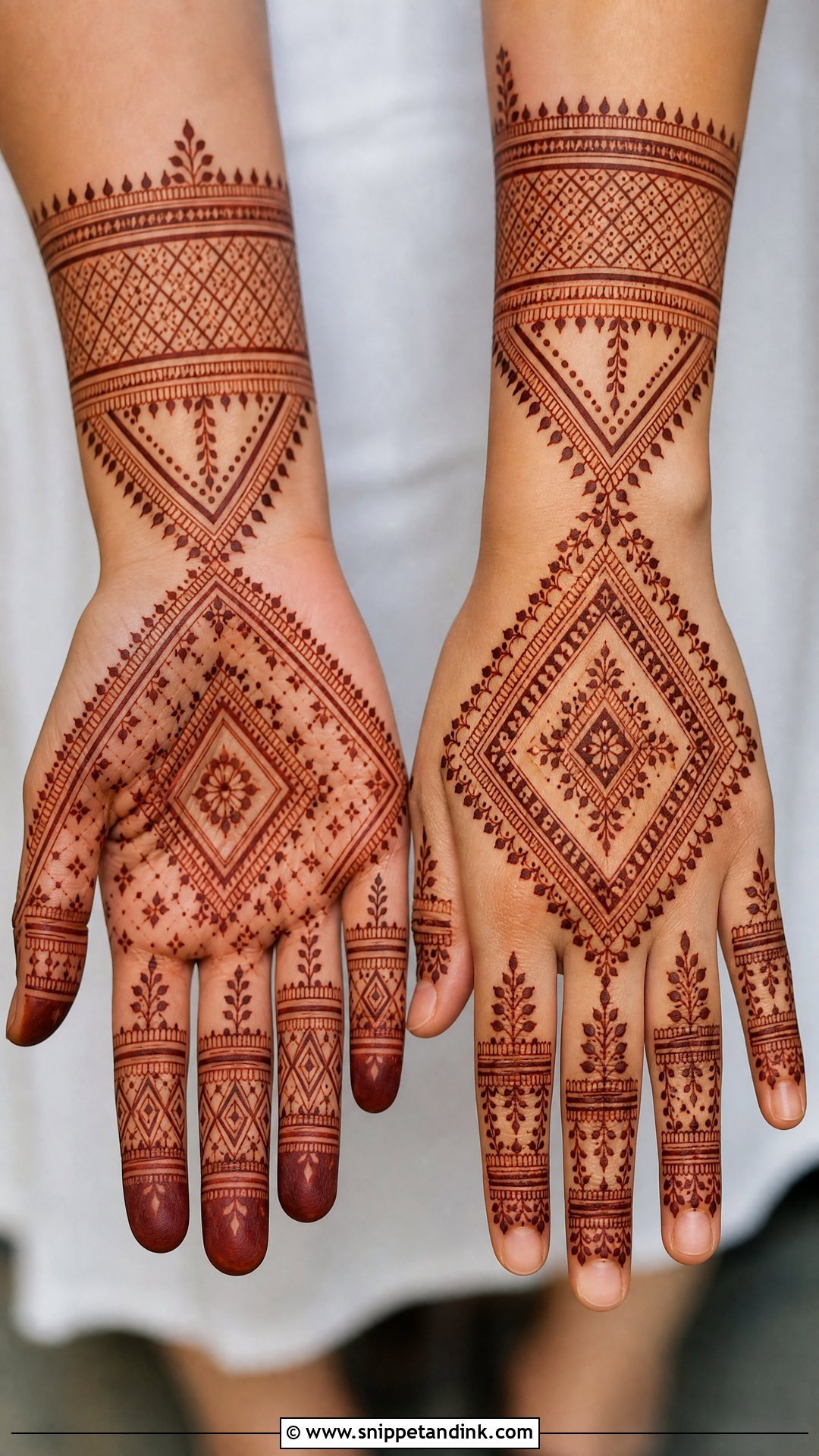
Moroccan henna is geometric: diamonds, triangles, straight lines, checks and structured wrist bands. It feels very different from floral Indian or Arabic work. The shapes follow the angles of the hand naturally, which is why they look so good on the back of the hand and fingers. Straight lines are hard to draw freehand, so ask to see an artist’s geometric work before booking. A few small florals soften it for an engagement.
26. Gulf Engagement Mehendi Design
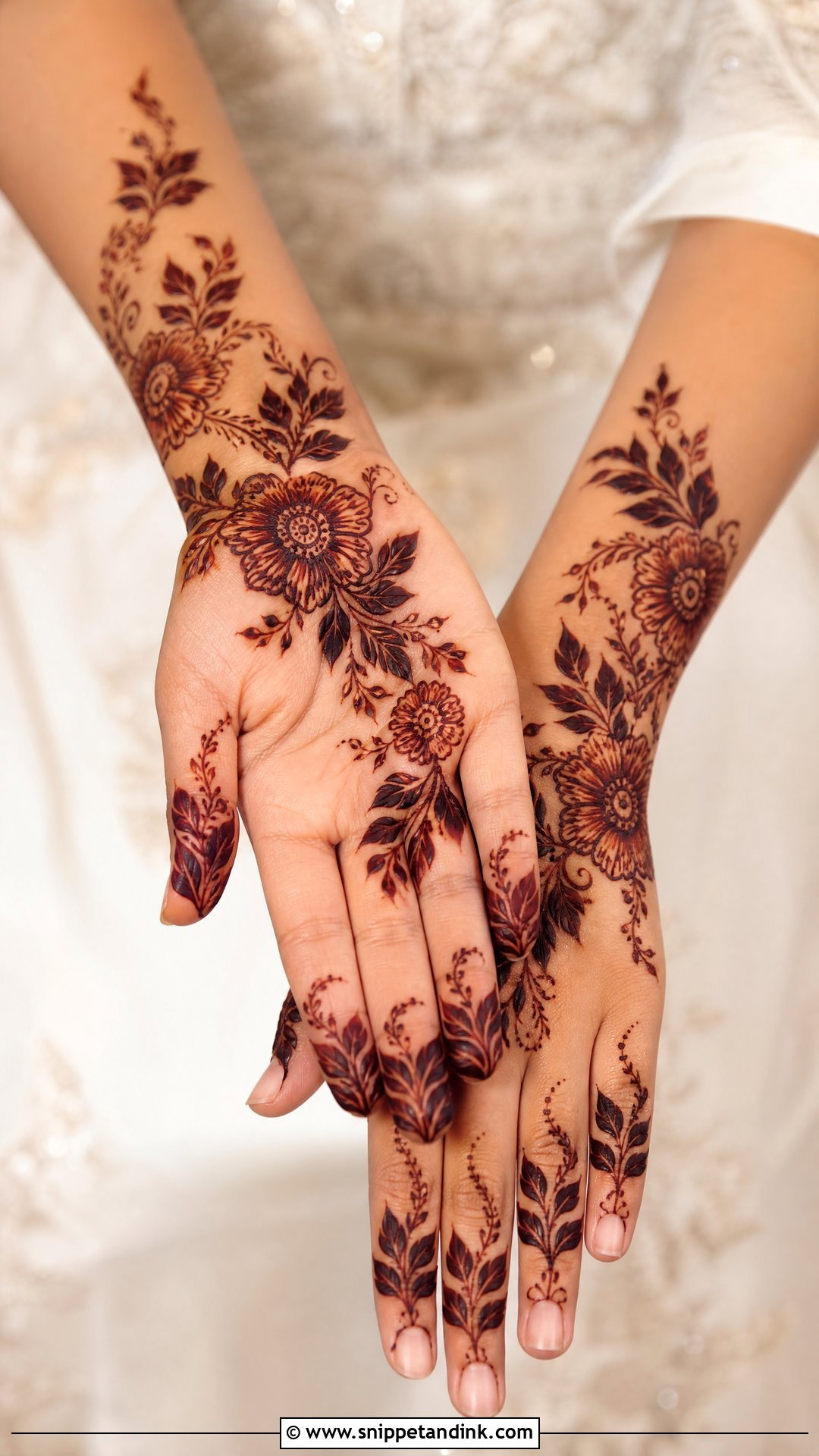
Gulf or Khaleeji-inspired henna uses bold florals, flowing vines and open spaces. It’s fuller than simple Arabic work but less packed than Indian bridal. Large flowers sit across the palm or back of the hand, with leaves running toward the fingers and wrist. The bold strokes stain well and read clearly in photos. I keep the finger patterns consistent with the main trail. It works well with statement rings and embroidered outfits.
27. White Engagement Mehendi Design
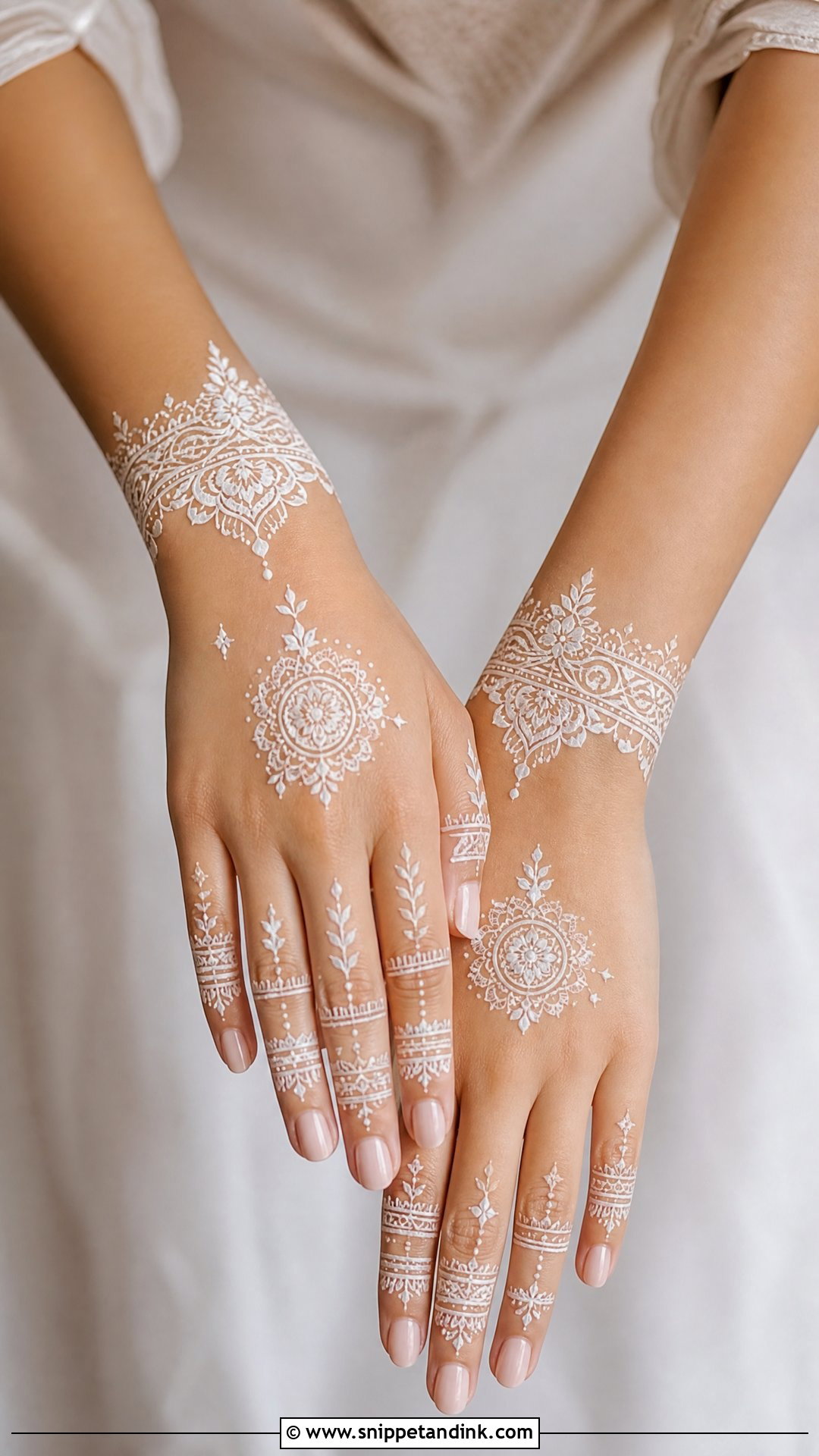
White mehendi isn’t henna at all. It’s a body paint or skin-safe adhesive applied on top of the skin, so it lasts a day or two at most and rubs off with washing. That makes it suitable for a short event or a photo session, not for a celebration that runs over several days. I keep white designs clean, lace-like patterns, floral cuffs and fine finger details, because thick white lines look messy. Patch test the product on your inner arm a day ahead. For a stain that lasts, choose natural henna.
28. Glitter Engagement Mehendi Design
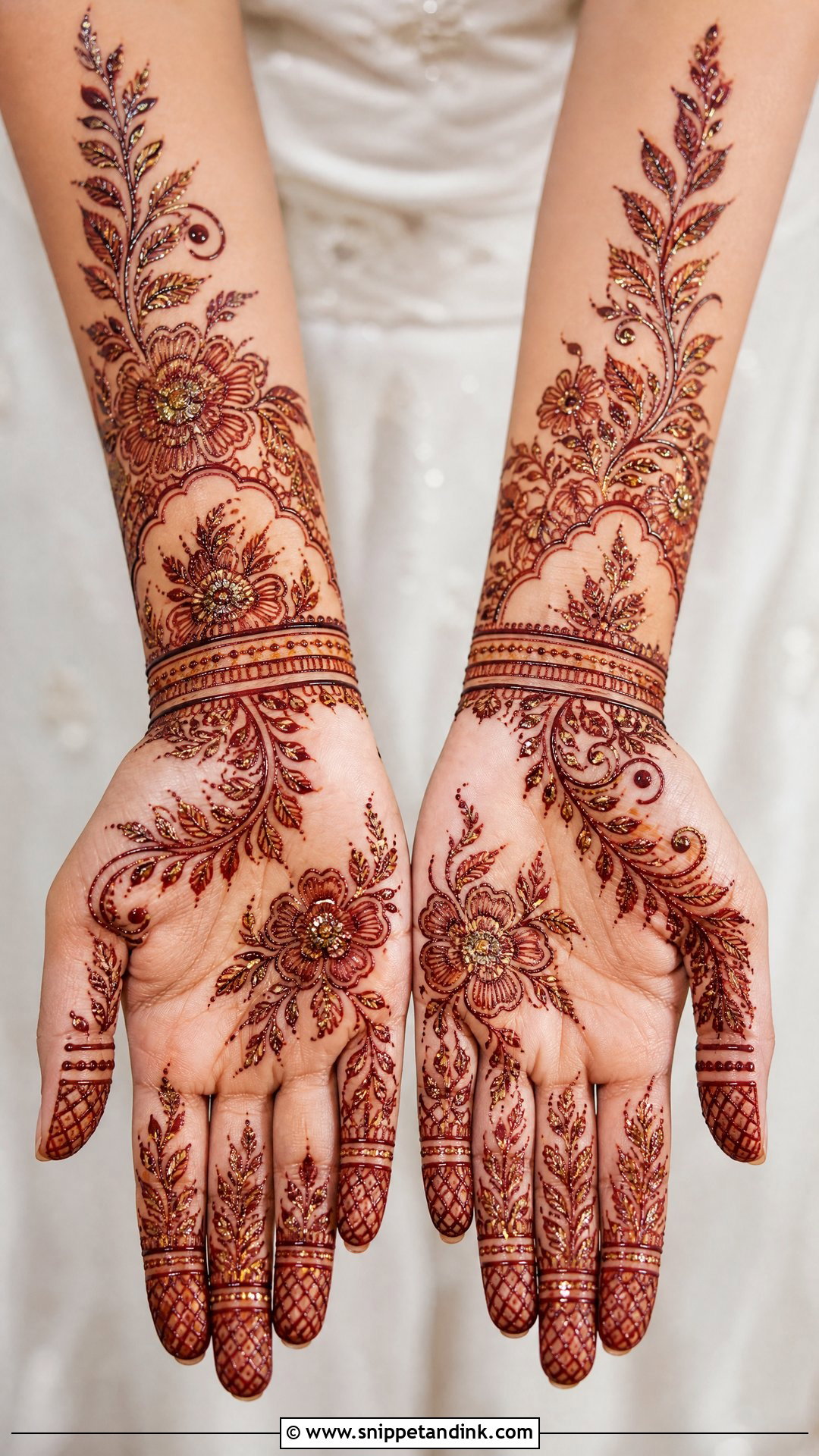
Glitter adds sparkle on top of a henna design, usually with a skin-safe cosmetic glue. I use it sparingly: flower centres, bracelet bands or small highlights, never the whole design. Gold, copper and rose-gold glitter go best with engagement jewelry. Apply it only after the henna paste has come off, or the glue will block the stain underneath. Glitter lasts a day or so; the stain stays for one to two weeks.
29. Couple Portrait Engagement Mehendi Design
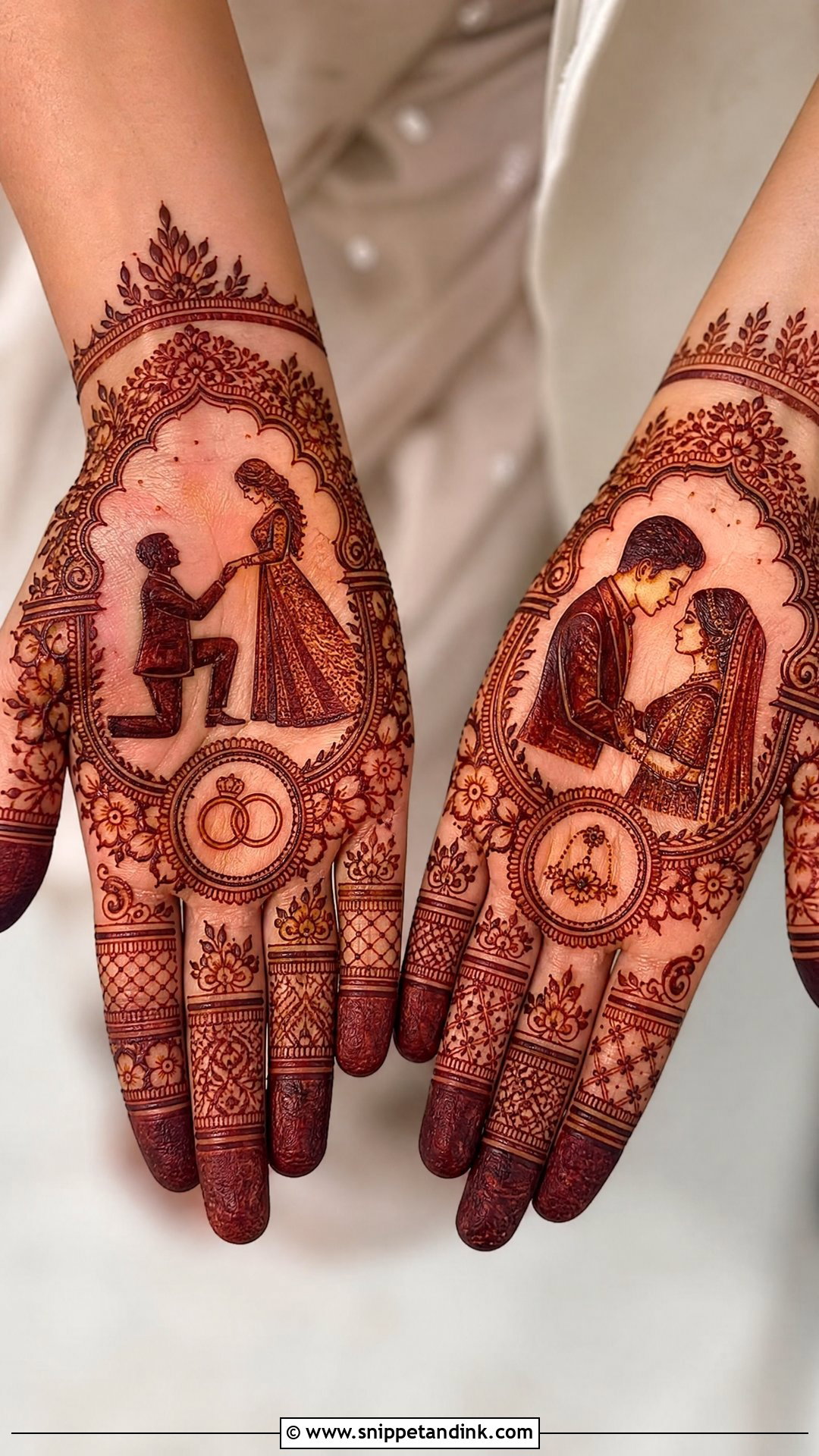
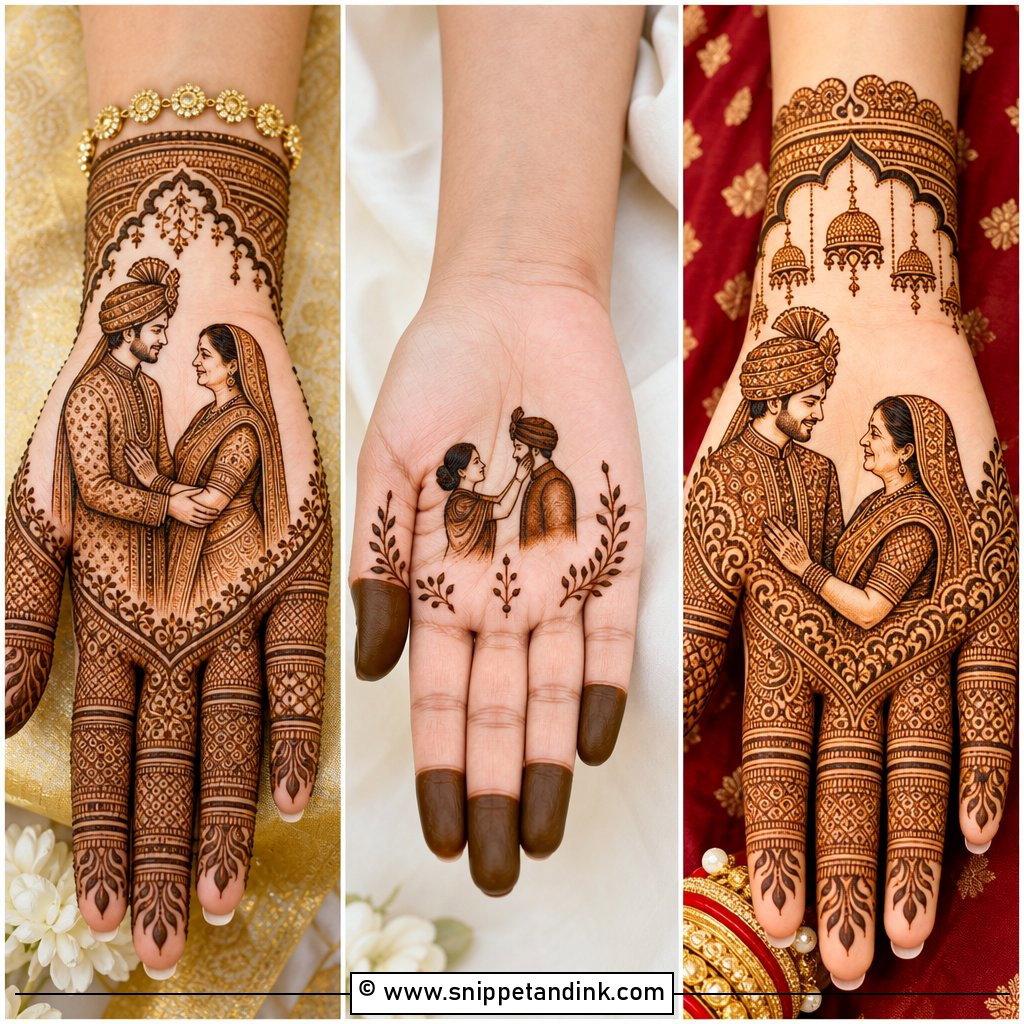
Portrait henna can show a bride and groom silhouette, a ring exchange or simple figures on the palms. It needs a skilled artist, since faces must be clean and recognizable at a small size. For an engagement I keep the portraits small and frame them with florals or mandalas. Check the artist’s portfolio for figure work specifically; plenty of excellent floral artists don’t draw faces well.
30. Engagement Mehendi Design For Both Hands
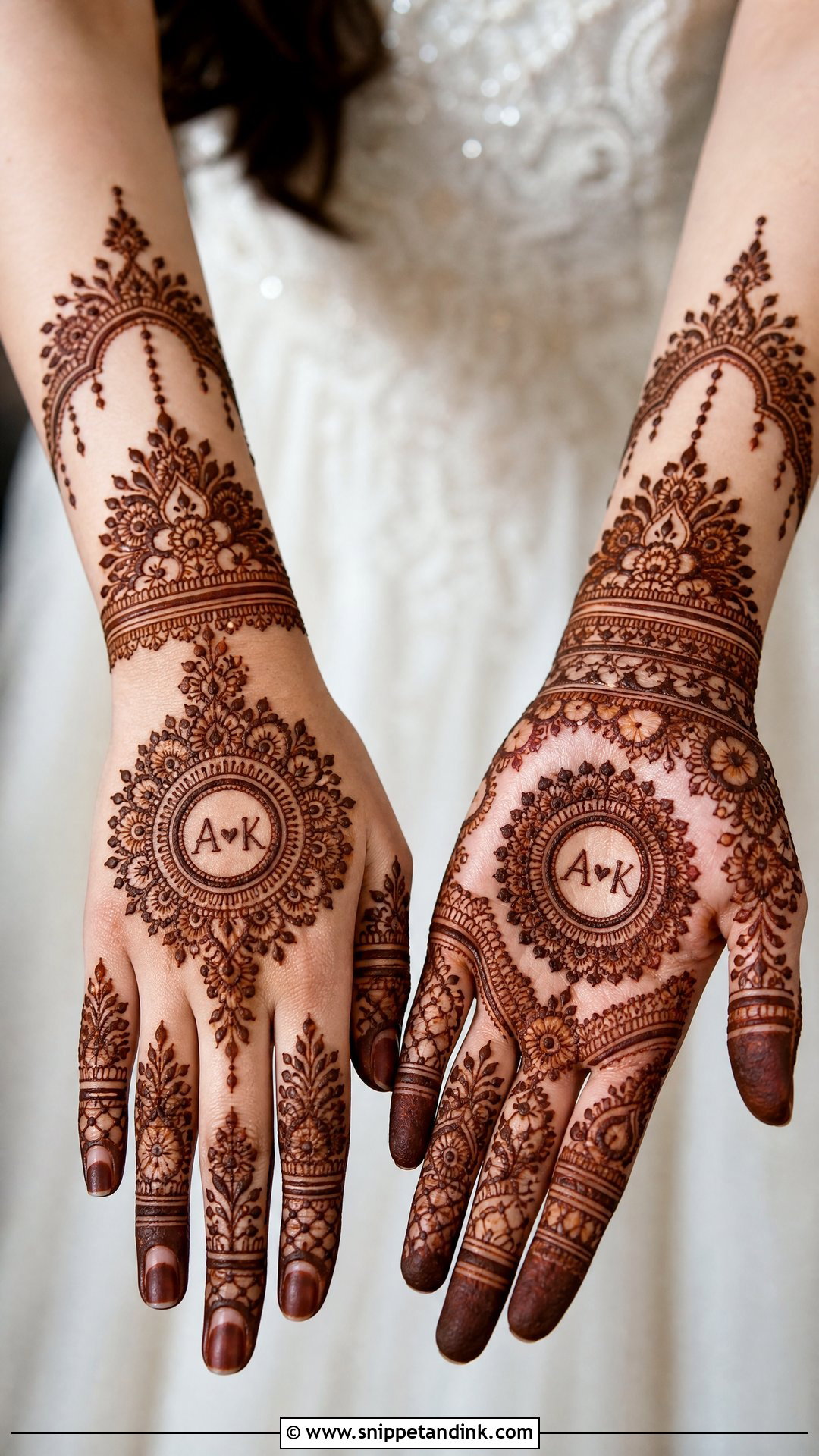
Two hands should look like a pair even if each one has its own layout. One hand might hold the initials or date, the other the ring motif or a floral mandala. Matching borders, similar finger patterns and balanced wrist bands make the pair feel complete when you hold both hands up in a photo. I usually draw the dominant hand first so its design can dry while I work on the other one; you’ll want that hand free sooner.
Aftercare and the Cones I Refuse to Use
Most of the colour is decided after I put the cone down. Once the paste is dry to the touch, I dab it with a little lemon and sugar so it stays stuck to the skin longer. Keep it on for at least six hours; overnight is better. Then scrape it off with a blunt edge or rub it off with dry hands. Don’t wash it off.
- Avoid water on your hands for 12 to 24 hours after removing the paste.
- Keep your hands warm; warmth helps the stain darken, cold slows it down.
- A thin layer of natural balm or oil before showering protects the stain.
- Skip chlorinated pools and harsh hand sanitizer for the first couple of days.
Why I won’t use ‘black henna’ or instant dark cones
Natural henna never stains black, and it never goes dark the moment the paste comes off. Cones that promise jet black or instant colour often contain PPD, a hair-dye chemical that can cause blistering and allergic reactions, sometimes leaving scars or a lifelong sensitivity to hair dye. Ask your artist what’s in her cones. A natural paste smells earthy, often of essential oils, and leaves an orange stain at first. If the stain is dark brown or black right away, something else is in it.
Even with natural paste, a quick patch test on the inner wrist the week before is worth it if you have sensitive skin.
The Pair of Hands You’ll Hold Up for the Ring Photo
Start from what you’ll wear and how many weeks are left before the wedding. A full hand feels traditional, Arabic trails look long and graceful, mandalas stay classic and minimal designs keep things light. Initials, dates, ring motifs and couple portraits make the henna personal. Think about your outfit, your jewelry, your hand shape and the moments you’ll be photographed. Good engagement henna frames the ring, suits you and sits comfortably through the whole event.
You'll Like These Ideas:






Leave a Reply