
A shaadi rarely asks you to dress once. There’s the mehndi in the afternoon, the sangeet that runs past midnight, the nikkah or pheras, then a reception where everyone wants photos. When I style guests for a run of functions, the question I start with is never “what’s prettiest” but “what can she sit, eat and dance in for six hours.” Right now the clothes I’m fitting most are lighter lehengas, pre-draped sarees, sharara sets and cape dupattas, along with elegant Indo-western silhouettes for the younger crowd. Below are thirty outfits, each with the thing I’d actually check before you buy or borrow it.
Planning Four Functions From One Suitcase
When guests come to me for a multi-day wedding, I map outfits to events before we look at a single lehenga. Each function has a different mood, a different floor and a different amount of sitting, and the outfit should follow those facts.
- Haldi: something washable and yellow or floral, because turmeric paste ends up on everyone. Cotton silk, never your best silk.
- Mehndi: short sleeves, a light skirt or sharara, and nothing you mind sitting on the floor in for two hours.
- Sangeet: your most movable outfit. Shararas, cape lehengas and dhoti sets survive the dance floor.
- Ceremony: the most traditional piece you own, with covered shoulders if it’s held in a temple or gurdwara.
- Reception: the place for sequins, velvet or a gown, since it’s usually indoors and after dark.
I also have clients pack one neutral backup, an embroidered suit or a plain silk saree, in case a function changes venue or a zip breaks. It has saved more than one evening.
1. Red Bridal Lehenga Shaadi Outfit
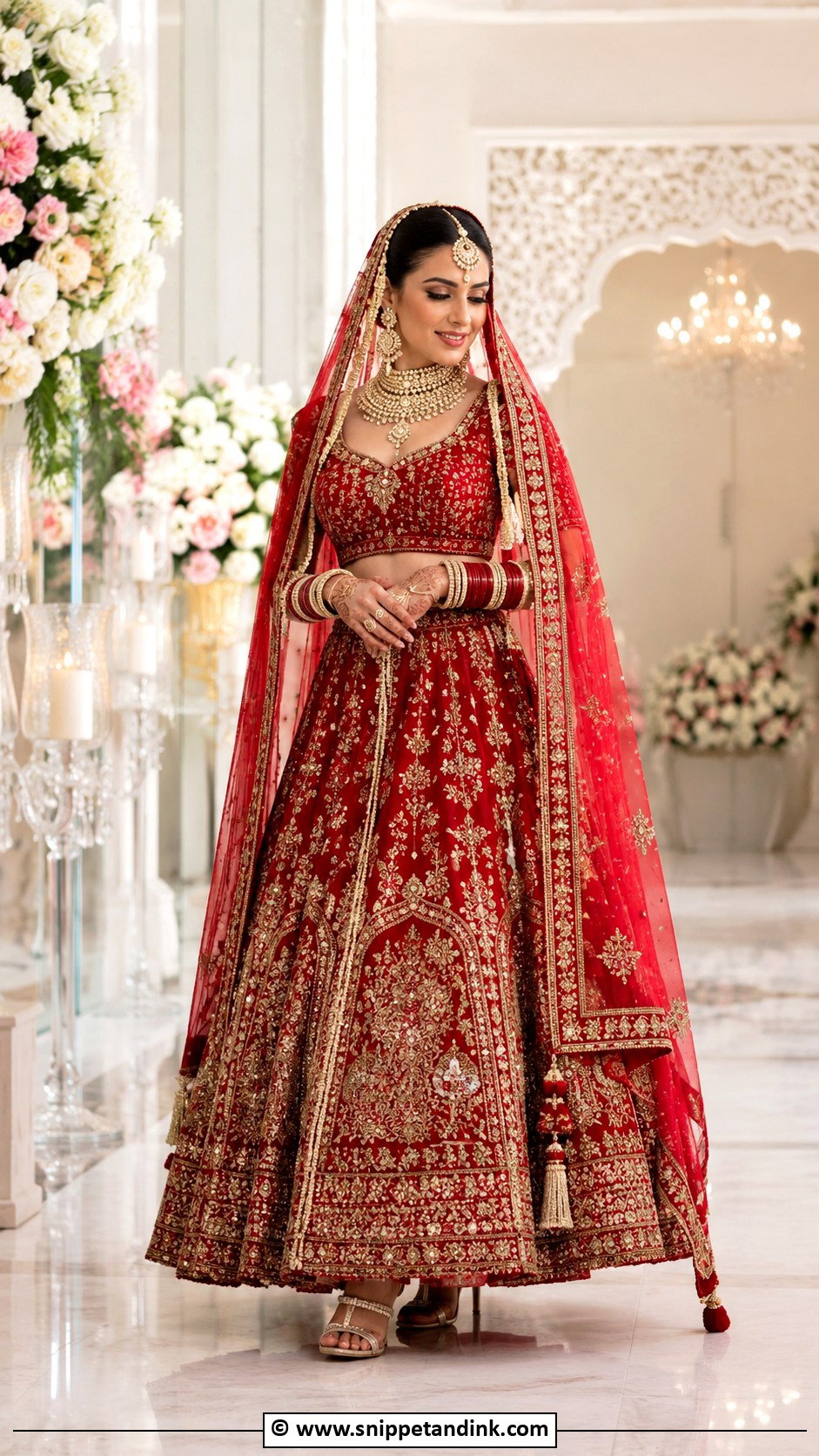
Red is still the colour I see most at the main ceremony, and for good reason: it reads as festive from across a mandap. The fabric matters more than the shade, though. Raw silk holds zardozi without sagging, while a heavy velvet skirt can weigh several kilos once the can-can goes in, so I always ask a bride to walk a full circle in it at the fitting. If you’re wearing a passa or matha patti, pin it before the dupatta goes on, not after, or the dupatta drags it sideways every time you turn your head.
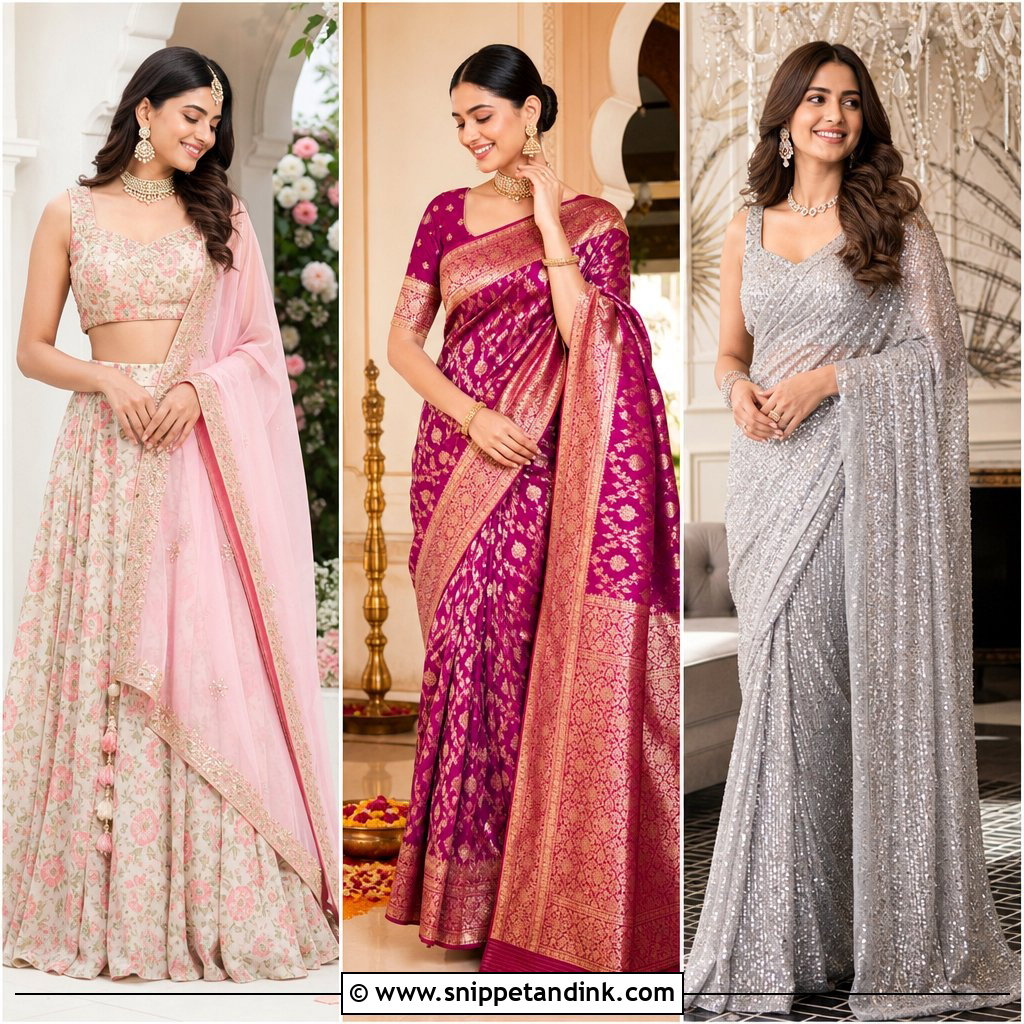
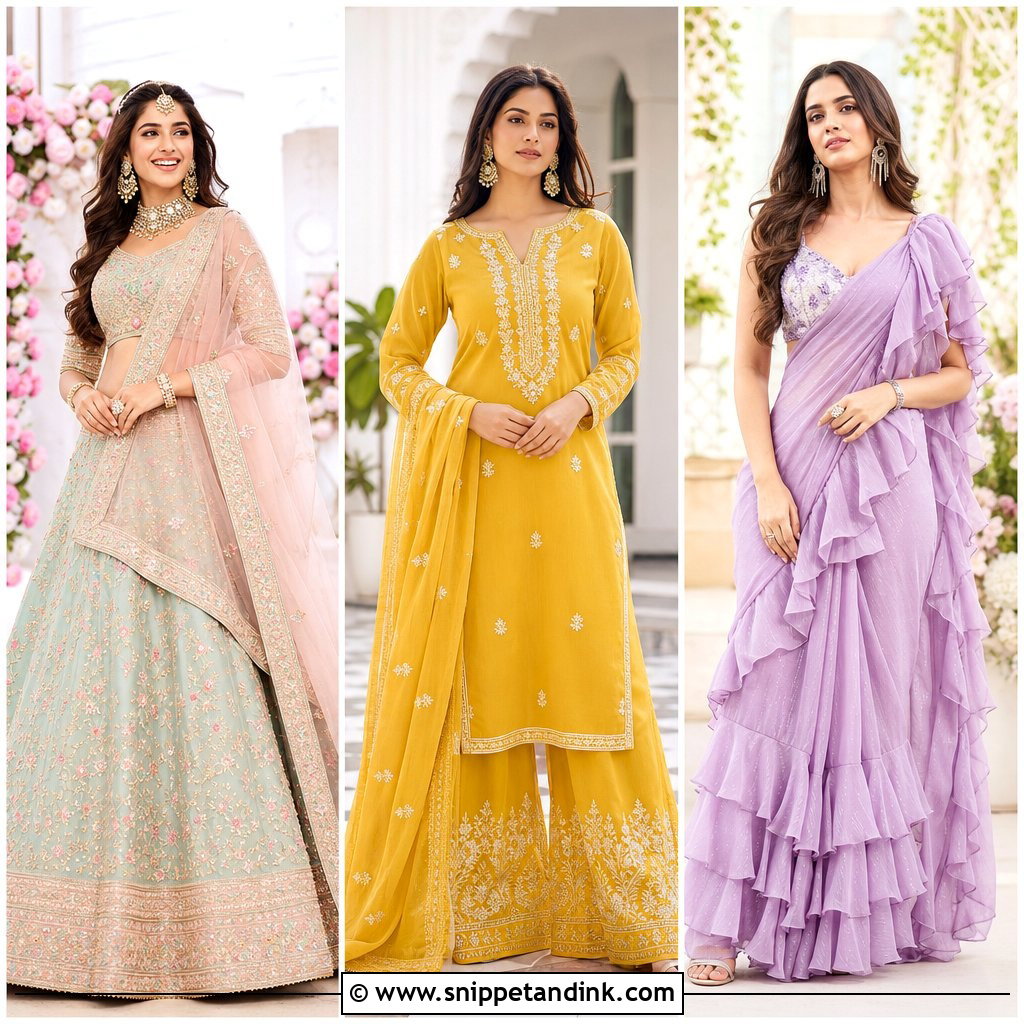
2. Pastel Lehenga Shaadi Outfit
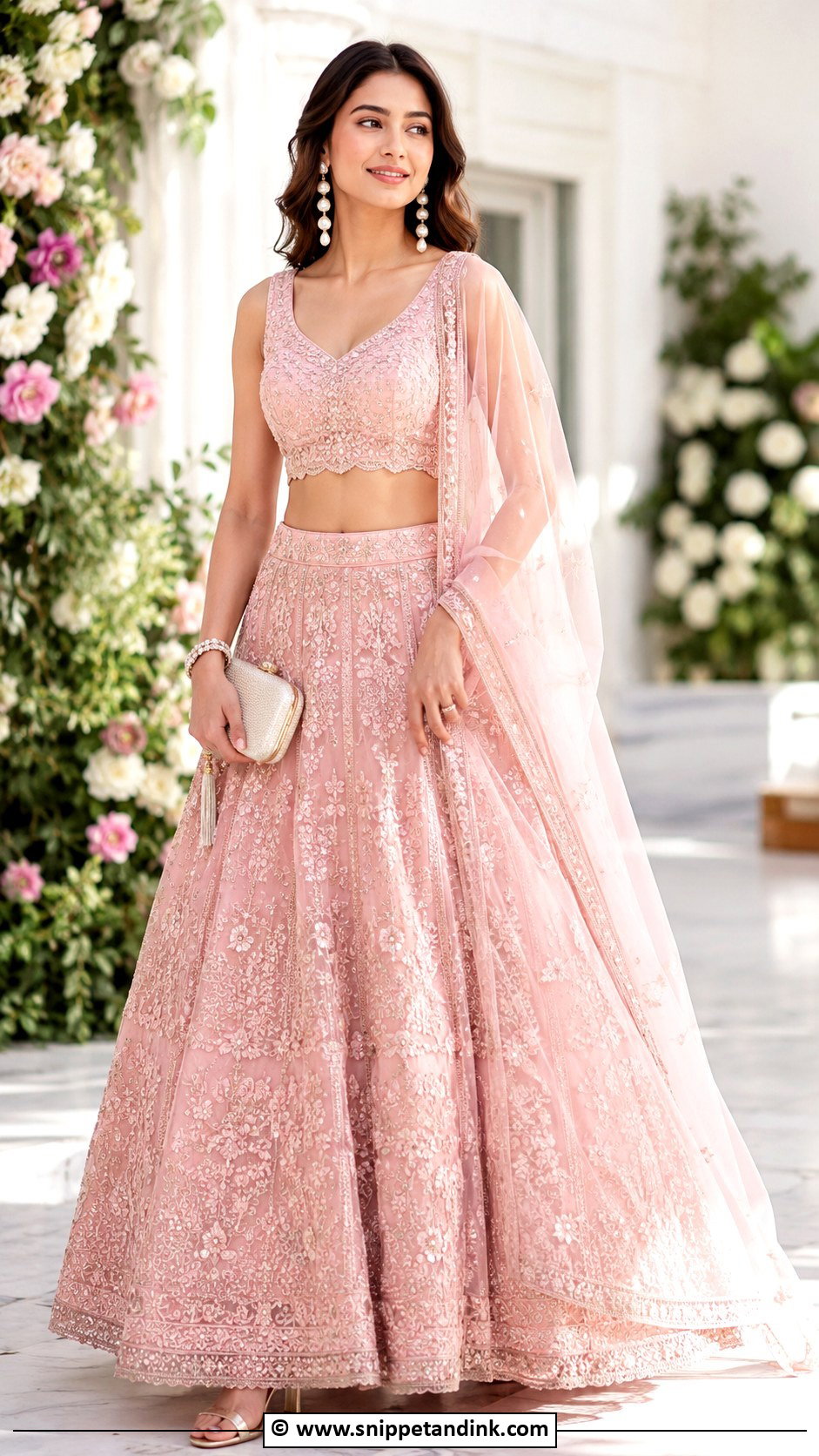
Pastels are my first suggestion for a daytime function, because direct sun turns heavy jewel tones almost black in photos while blush, mint or powder blue stay true. The catch is fabric transparency. A pale georgette that looked fine in a showroom can show the can-can seams outdoors, so I hold the skirt up to a window before signing off. Pearl and chikankari details suit these shades; dense gold zari tends to fight them. Soft waves or a low bun with fresh flowers finish it without competing.
3. Mirror Work Lehenga Shaadi Outfit
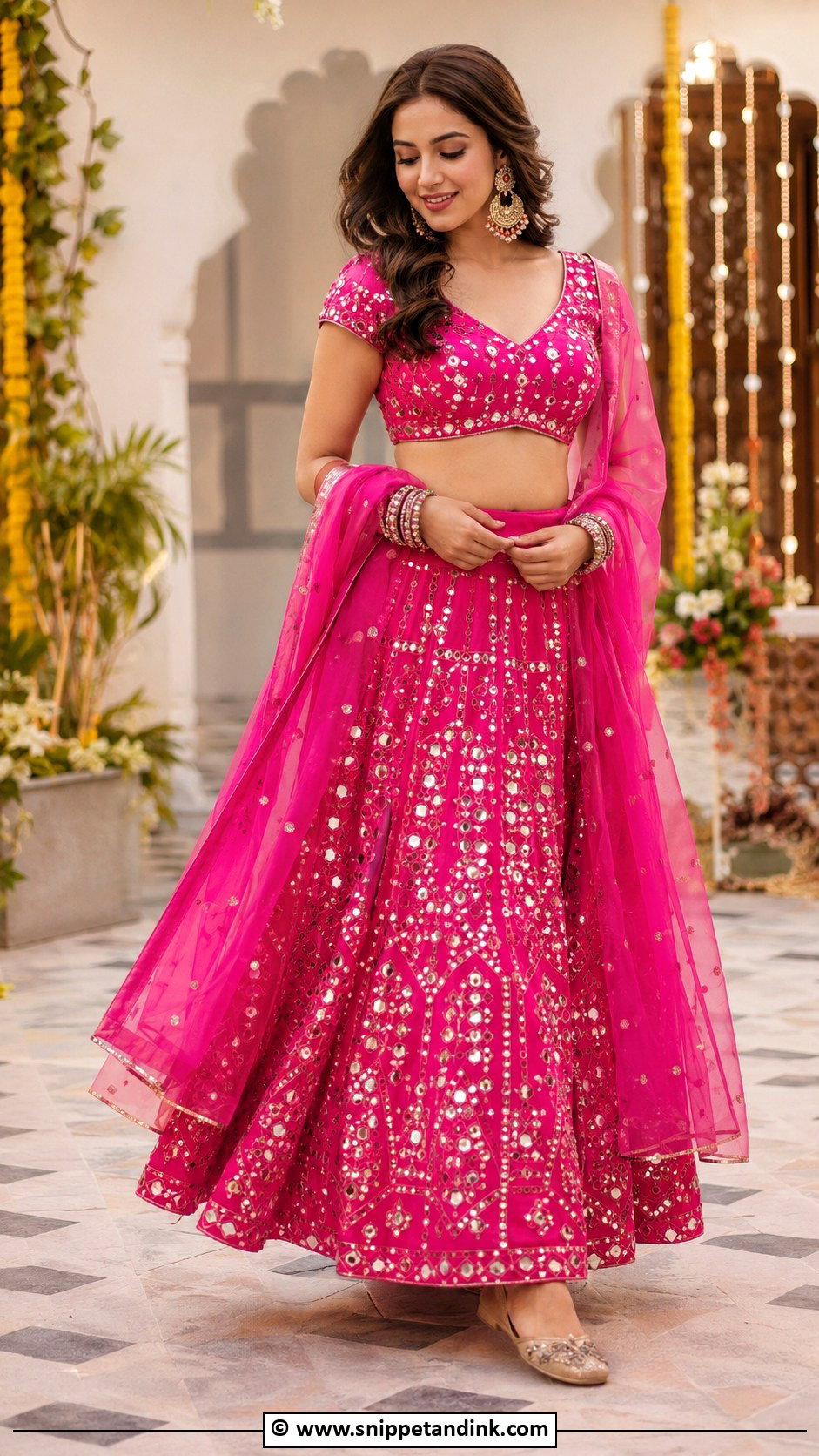
Mirror work earns its place at night, when every small glass piece throws back the fairy lights. A mirror work lehenga in fuchsia, turquoise or marigold is what I’d send someone to a sangeet in. Check the back of the embroidery before you buy: hand-stitched mirrors with tight thread surrounds survive dancing, glued ones pop off by the second song. Because the skirt already carries so much shine, I keep the jewellery to earrings and bangles and let the outfit do the talking.
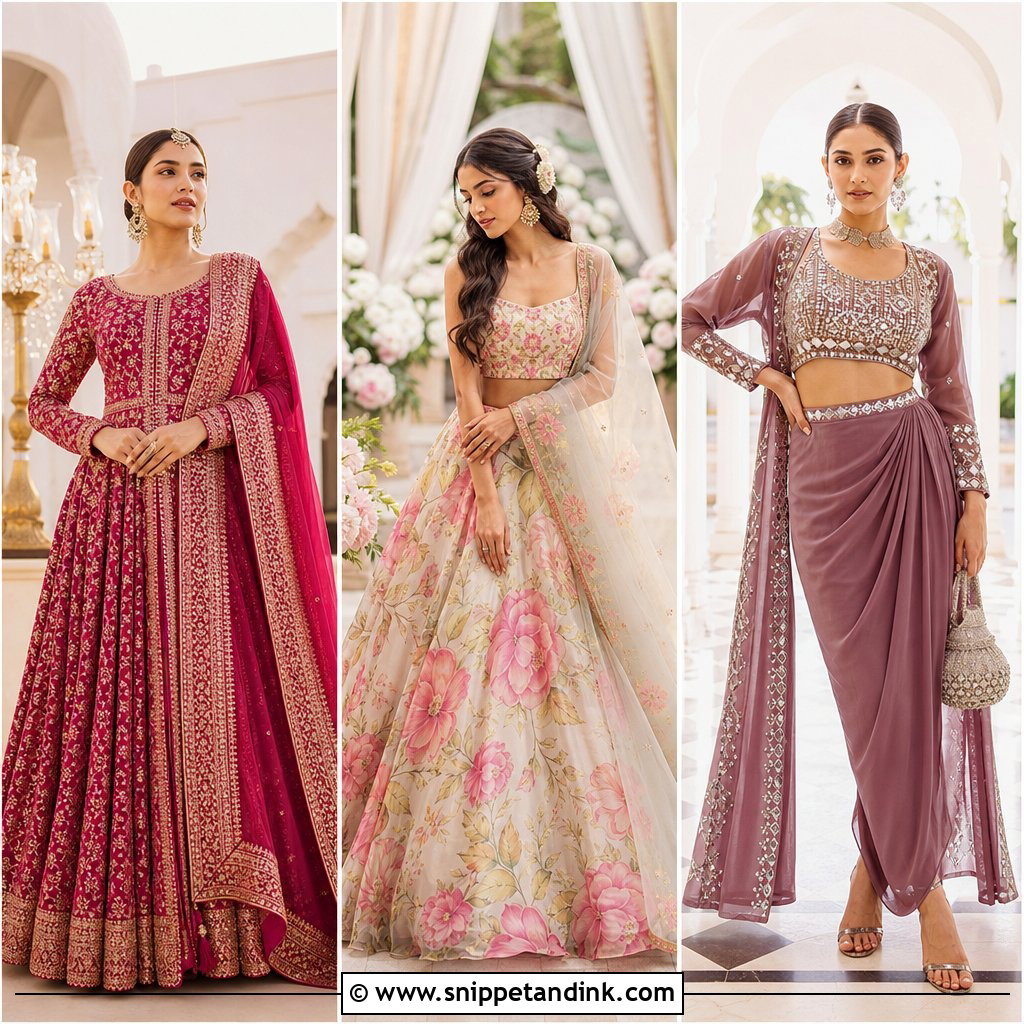
4. Floral Lehenga Shaadi Outfit
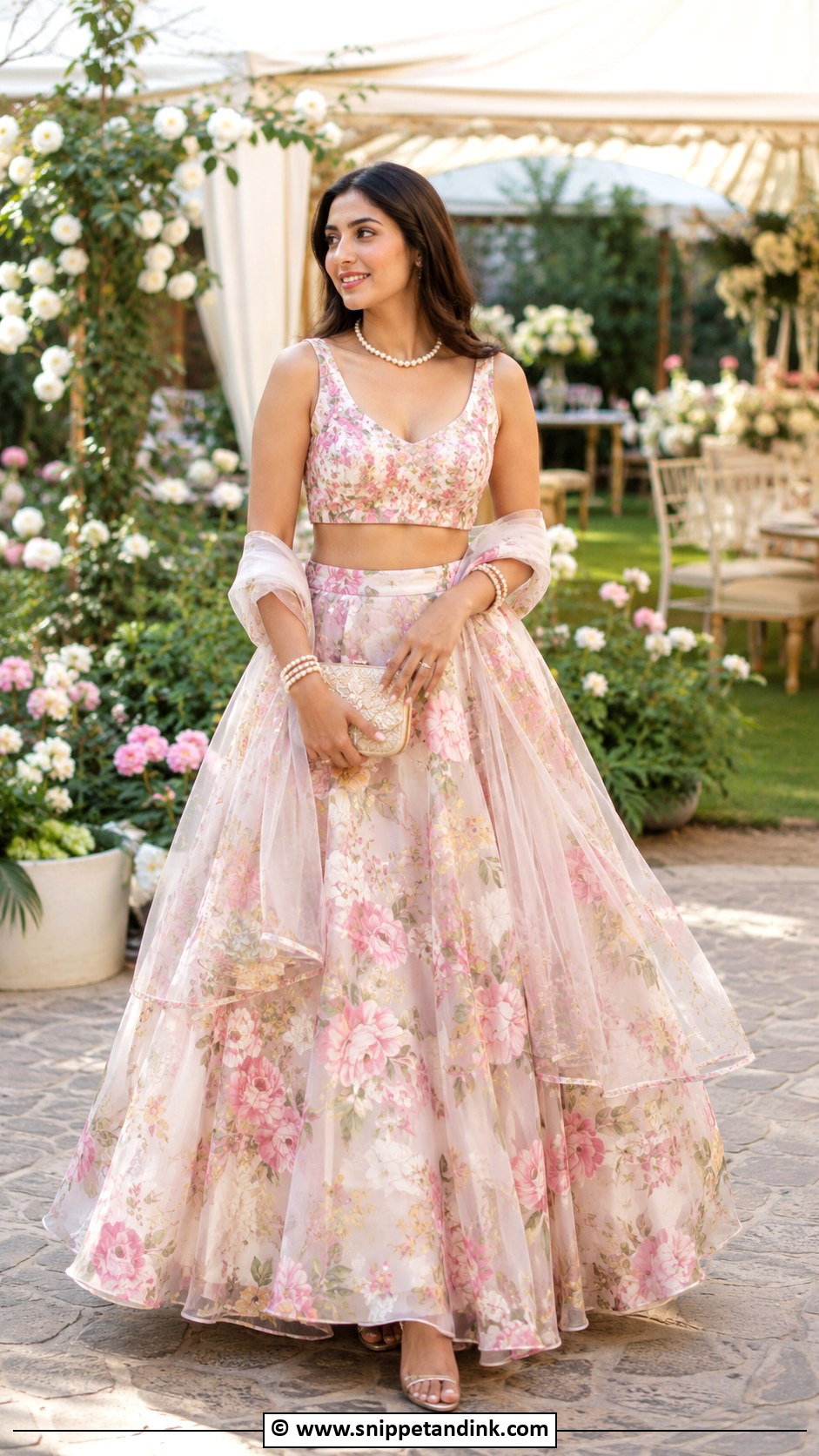
Floral prints are the friendliest choice for a haldi or a garden mehndi, mostly because a print hides turmeric splashes and grass marks far better than a solid. Organza and chanderi hold their shape outdoors; printed georgette clings in humidity. My rule for accessories is simple. A bold print gets small pearl studs. A faint, washed print can carry a statement choker. Dewy skin and loose waves suit it, and it’s light enough to wear from morning rituals into lunch.
5. Saree With Statement Blouse Shaadi Outfit
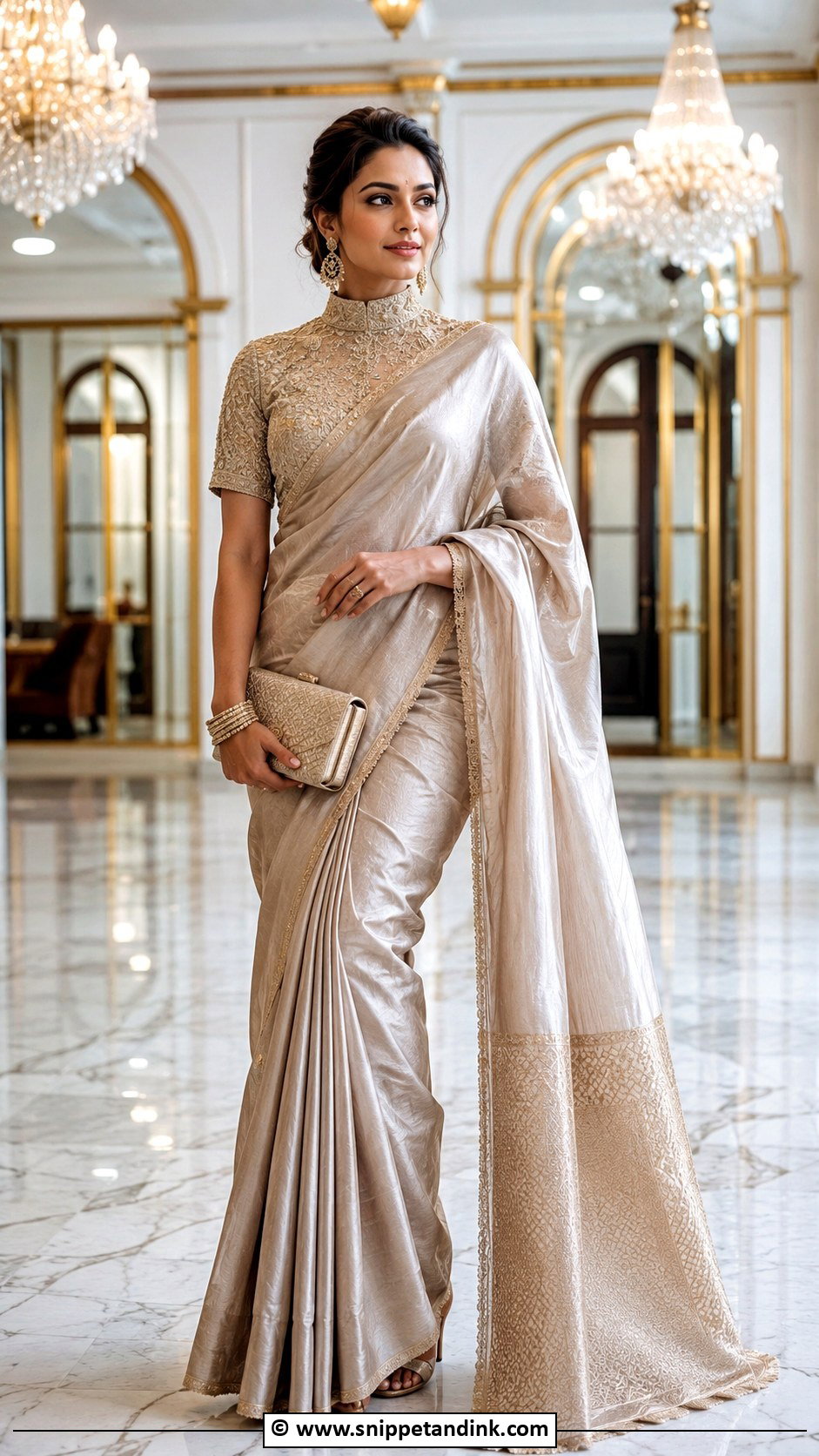
This is the outfit I suggest to guests who already own a good saree and don’t want to buy a whole new look. The blouse does the updating. Puff sleeves, a high neck or a beaded back make an old silk feel current, while the saree itself keeps the outfit traditional. Have the tailor leave at least an inch of seam allowance in the blouse so it can be let out later. And if you’re not confident draping, get the pleats pressed and pinned the day before; they’ll hold far better than pleats folded in a rush in a hotel room.
6. Pre Draped Saree Shaadi Outfit
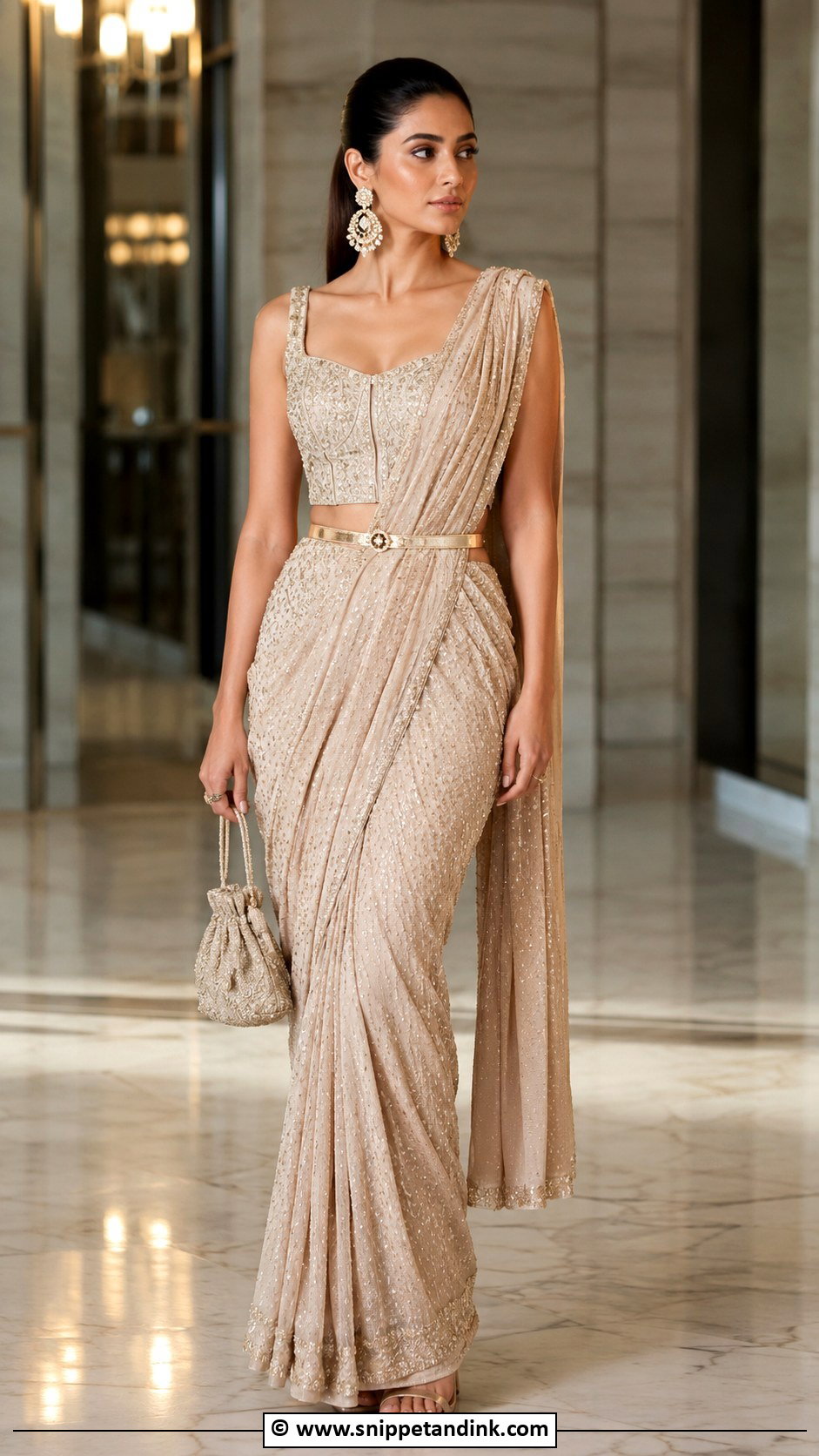
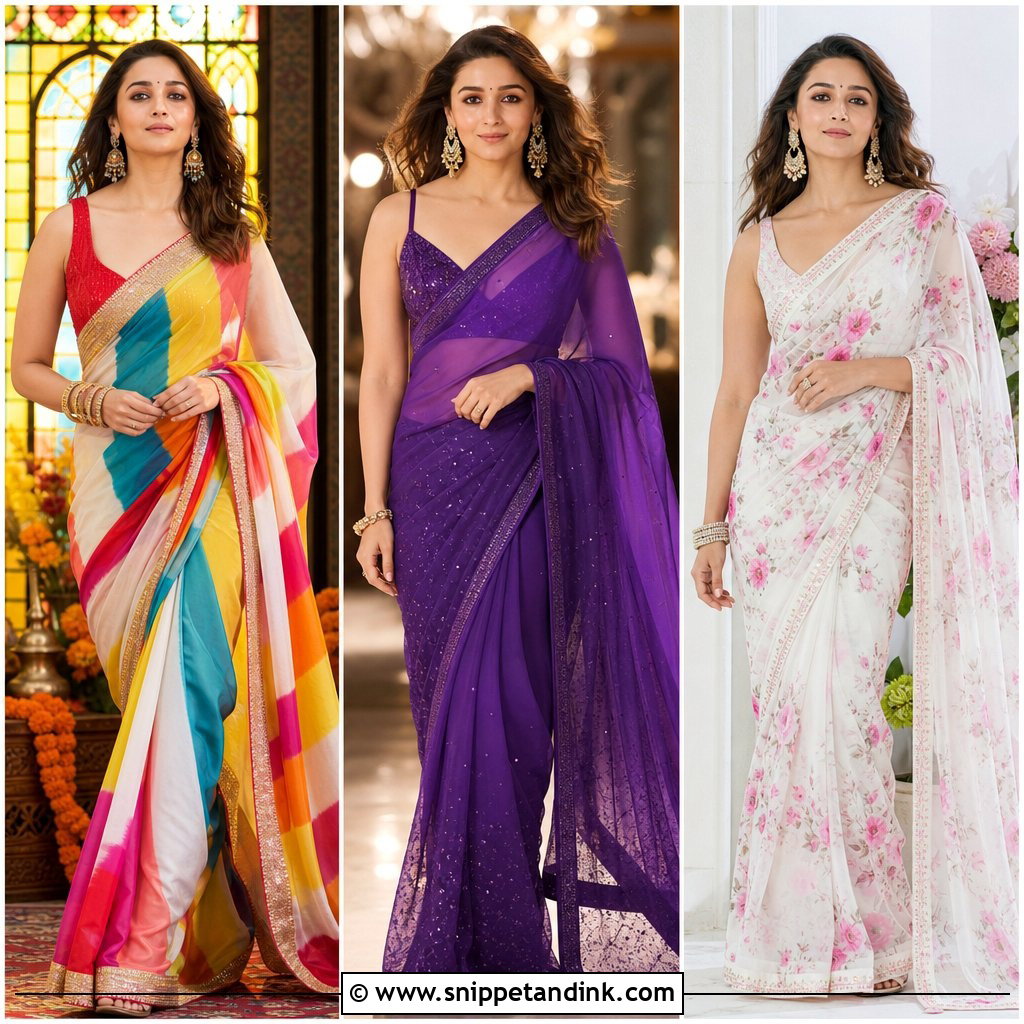
A pre-draped saree comes with the pleats already stitched, so you step in, zip or hook it, and pin the pallu. I reach for these with guests who have never worn a saree and are nervous about it unravelling on the dance floor. Satin and crepe fall smoothly; shimmer georgette can look stiff if the pleats were stitched too flat. A slim belt at the waist does real work here, it stops the pallu sliding off the shoulder when you lift your arms. One caution: buy it after you know your shoe height, since the hem is fixed.
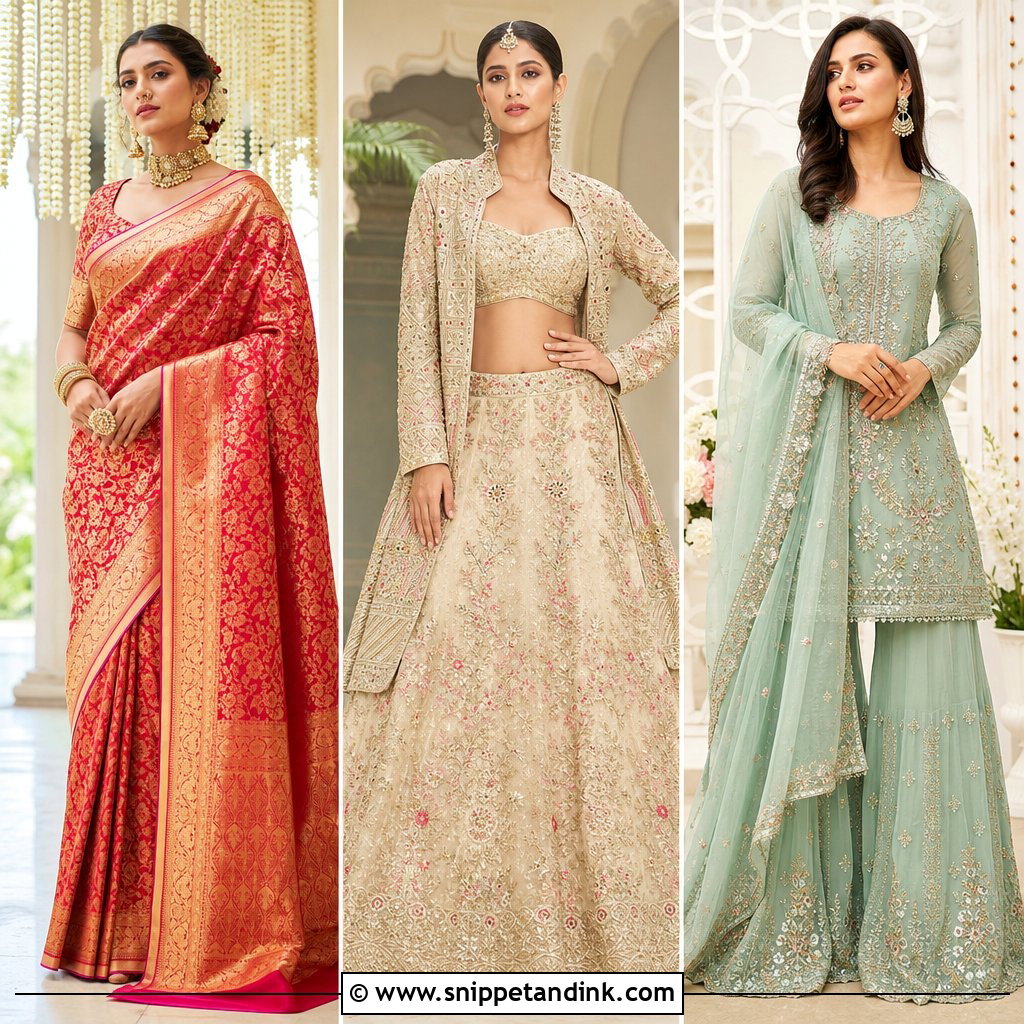
7. Banarasi Saree Shaadi Outfit
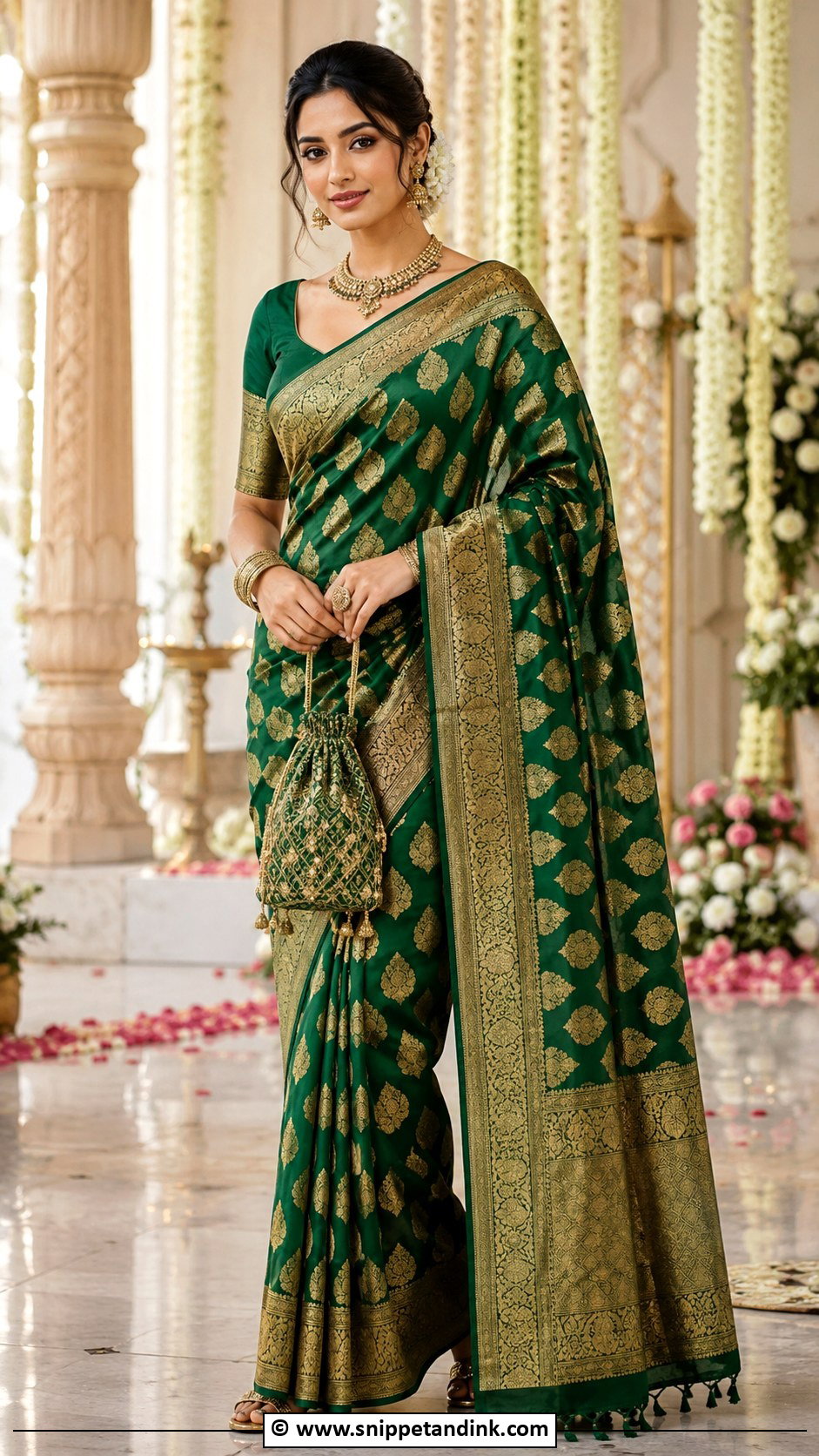
A Banarasi carries its own weight, both in looks and literally. Woven zari borders make the drape heavier at the hem, so it falls cleanly but takes firm tucking at the waist. Deep red, emerald, royal blue and mustard show the weave best. I keep the styling quiet with gold jewellery, a potli and traditional heels, because a busy blouse fights the woven motifs. If it’s a family heirloom, check the zari for tarnish a few weeks ahead; a dry-clean refresh takes time, and you don’t want to discover black spots the night before.
8. Organza Saree Shaadi Outfit
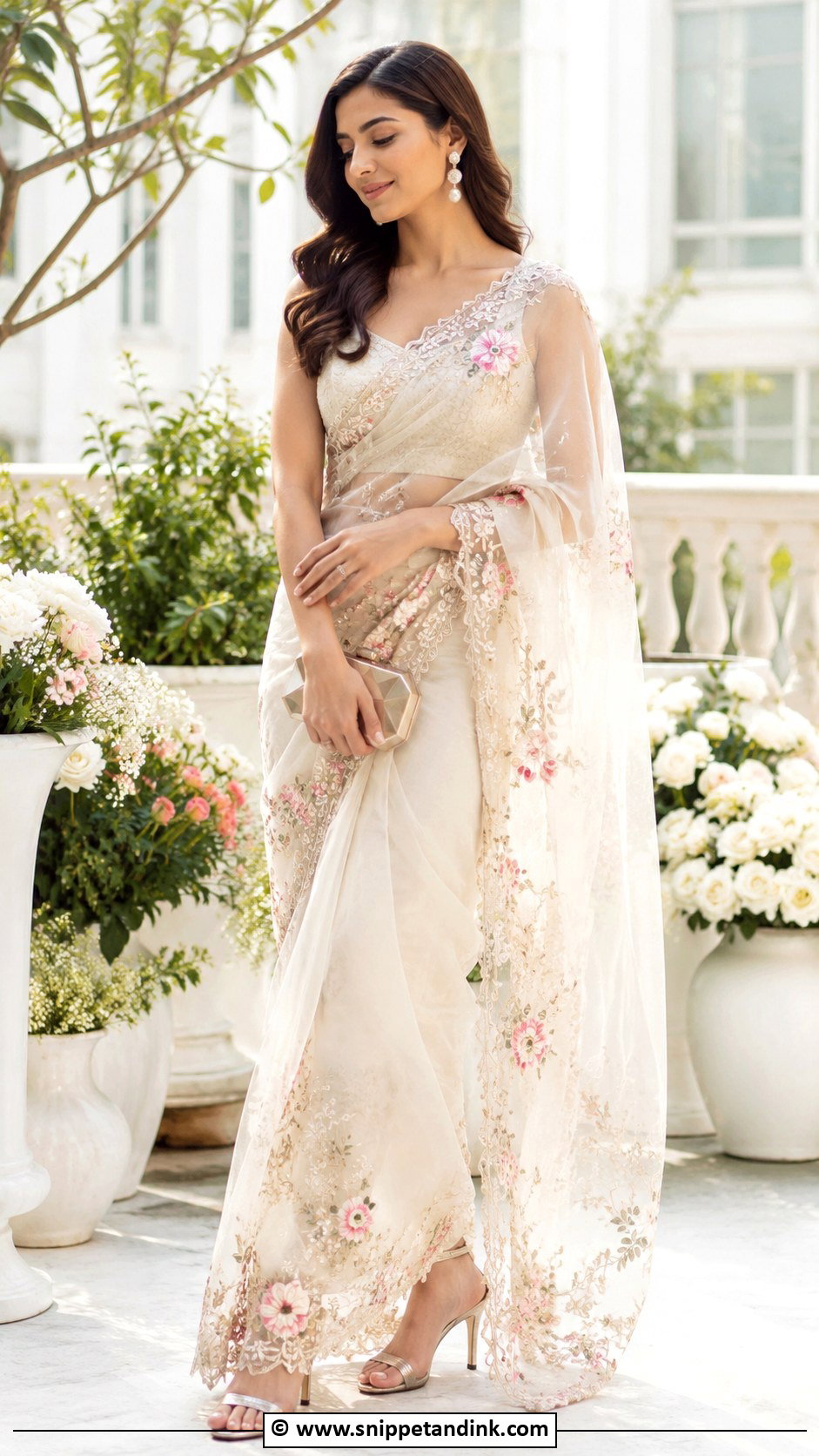
Organza looks airy but it is a crisp fabric, and that crispness is the thing to manage. The pleats want to fan out rather than fall, so I use more pins than usual and press each pleat lightly with a cool iron through a cloth. Floral embroidery or a pearl border suits it better than heavy zari, which drags the fine weave. Pair it with pearl jewellery and a structured clutch. A low bun balances the volume around the hips; loose hair tends to tangle in the stiff pallu.
9. Sharara Suit Shaadi Outfit
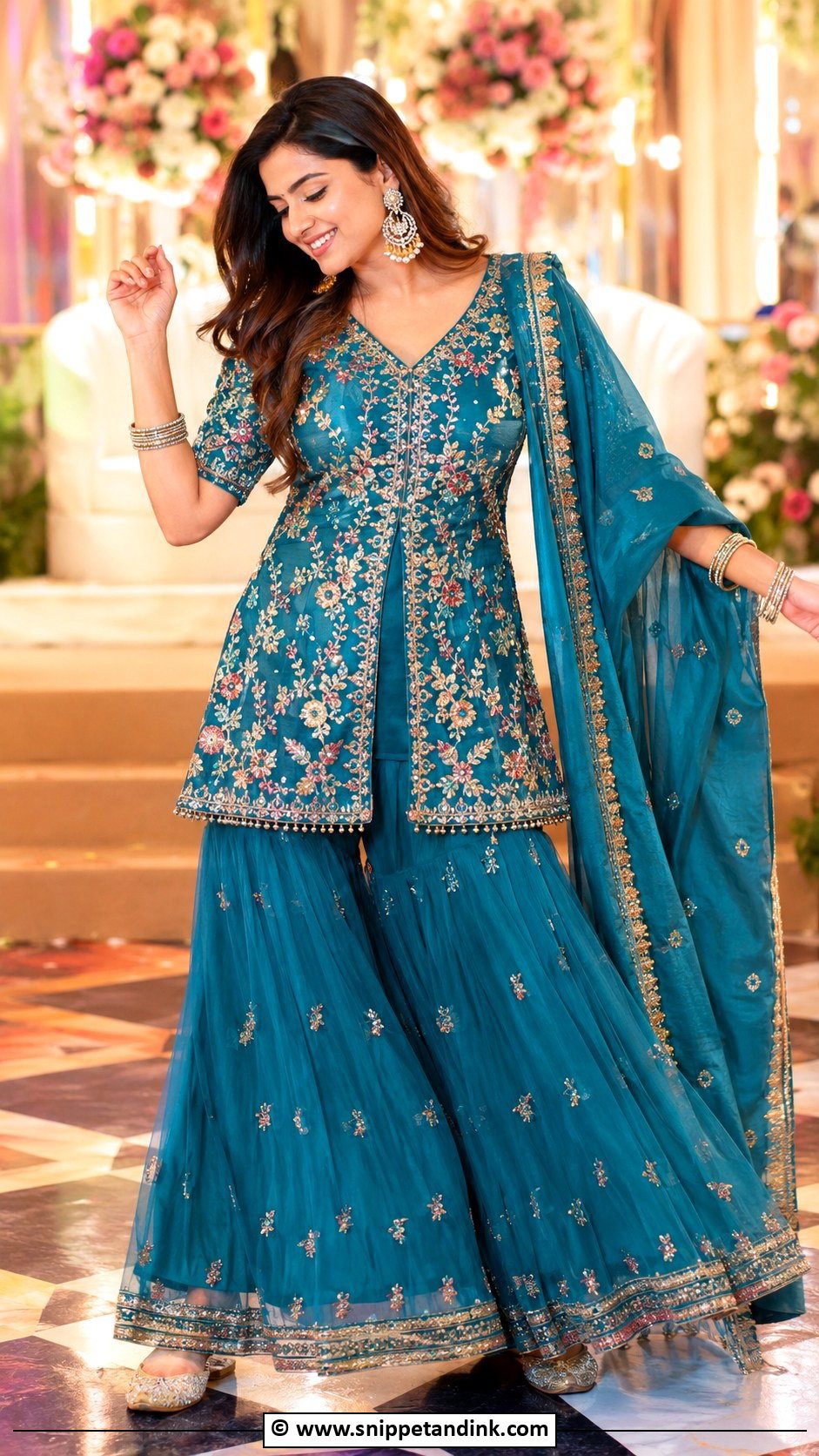
Sharara suits are what I’d hand anyone who plans to dance all night. The flared pants move with you, there’s no skirt to trip over, and you can sit cross-legged at the mehndi without fuss. Length is the fitting detail people get wrong: the hem should brush the top of your shoe, because a sharara that pools on the floor gets stepped on. Gota patti and mirror work suit evening functions. A short kurta reads younger and shows off the flare, while a knee-length one is the more traditional, graceful option.
10. Gharara Suit Shaadi Outfit
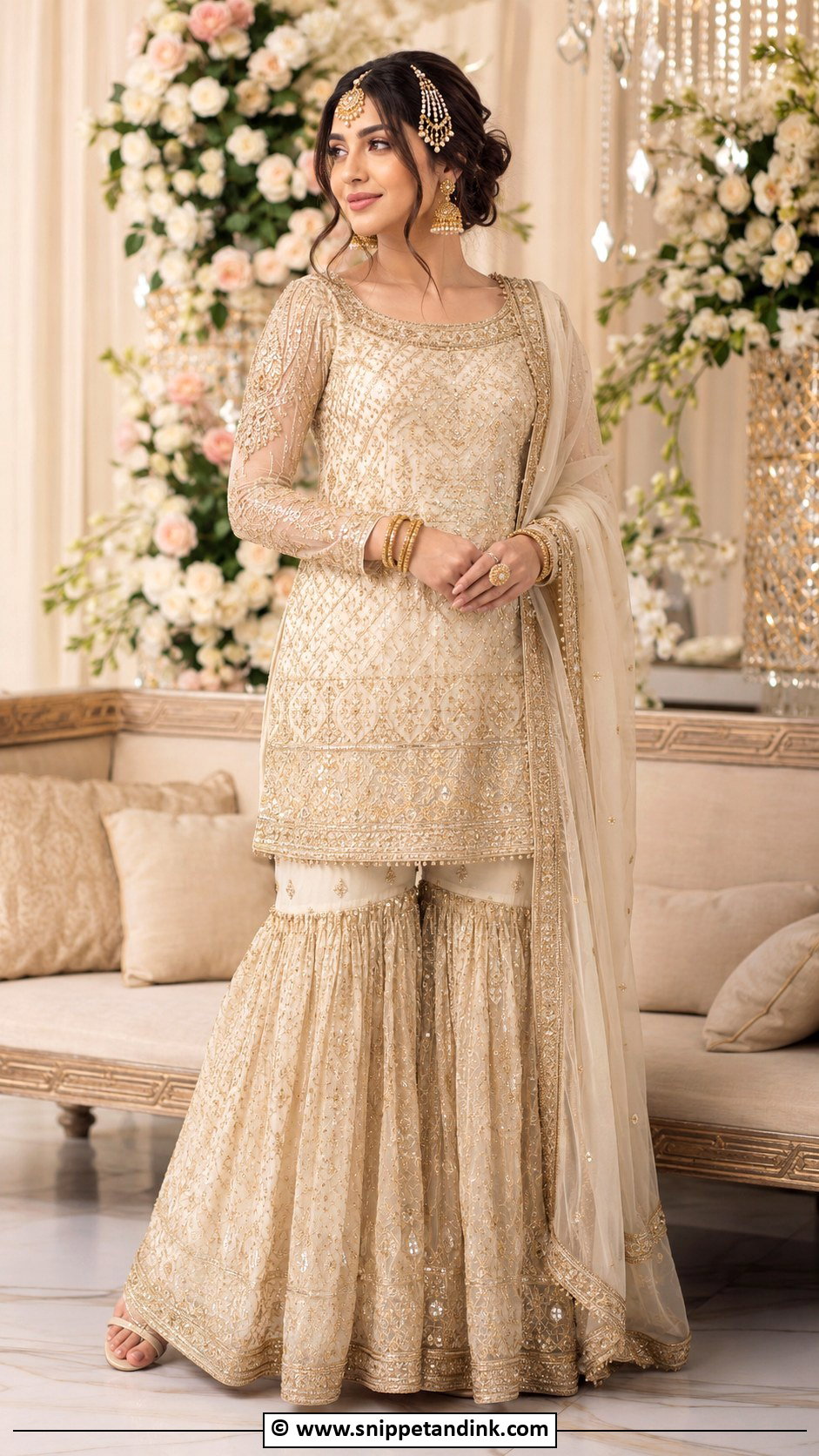
Unlike a sharara, which flares from the hip, a gharara fits to the knee and then breaks into its flare, usually at a seam hidden under a band of gota. That seam is where I check the stitching, since it takes all the strain when you sit. A short kurti shows the shape best. Silk, brocade and georgette all work; chiffon needs a lining or the flare looks limp. Jhumkas and a side-parted style lean into the old-world look this silhouette is known for, and it’s a natural fit for a nikkah.
11. Anarkali Suit Shaadi Outfit
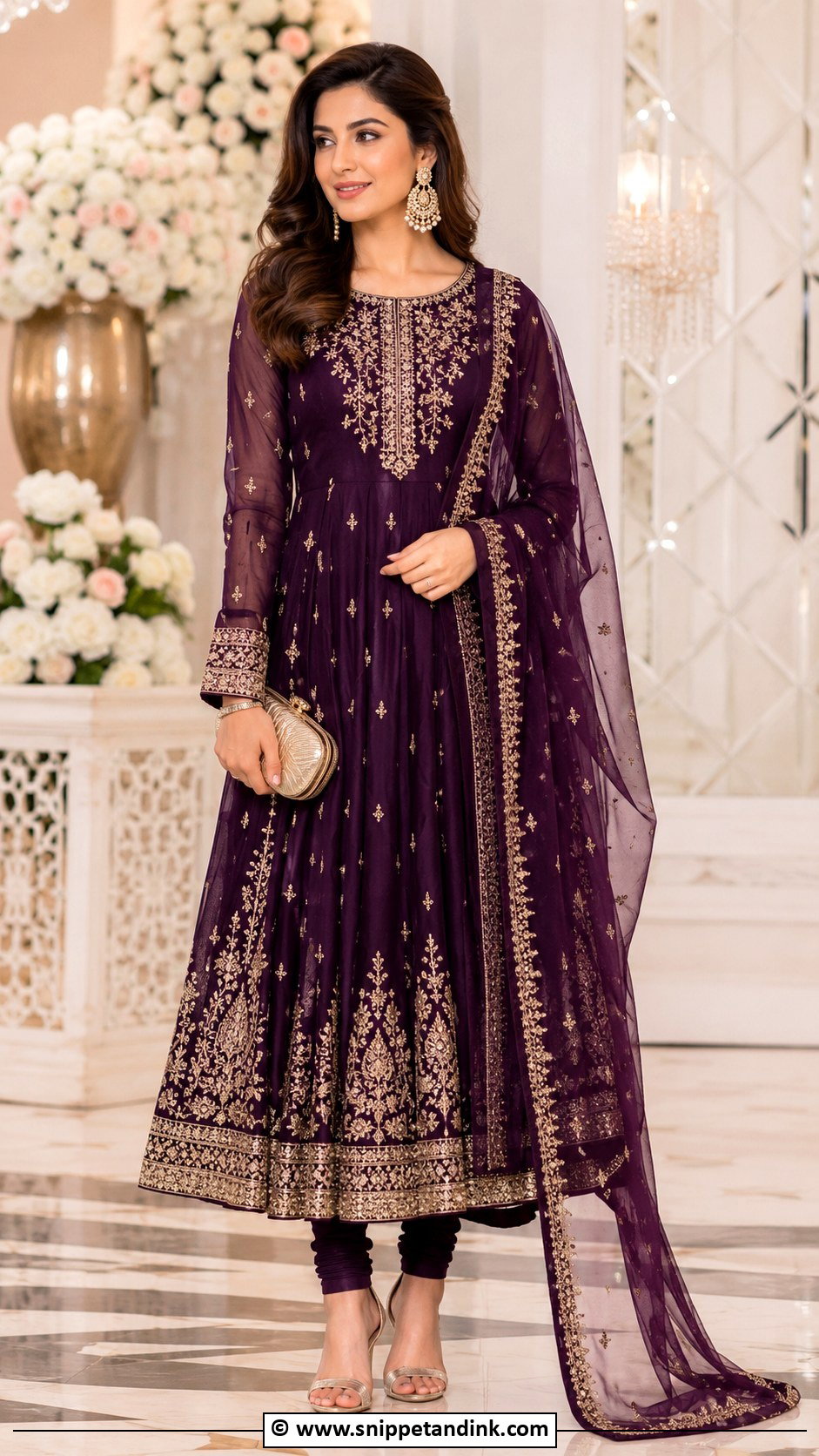
If a guest tells me she just wants to feel comfortable and covered, an Anarkali is usually where we land. The flare starts high, so it skims rather than clings, and the churidar or slim pants underneath mean you can sit on a low divan without worrying about the hem. Net and georgette give the most swing. For an evening function I go deeper with jewel tones and a heavy border; for daytime, pastels with light embroidery. Keep the dupatta lighter than the dress or the whole look gets bulky.
12. Floor Length Anarkali Shaadi Outfit
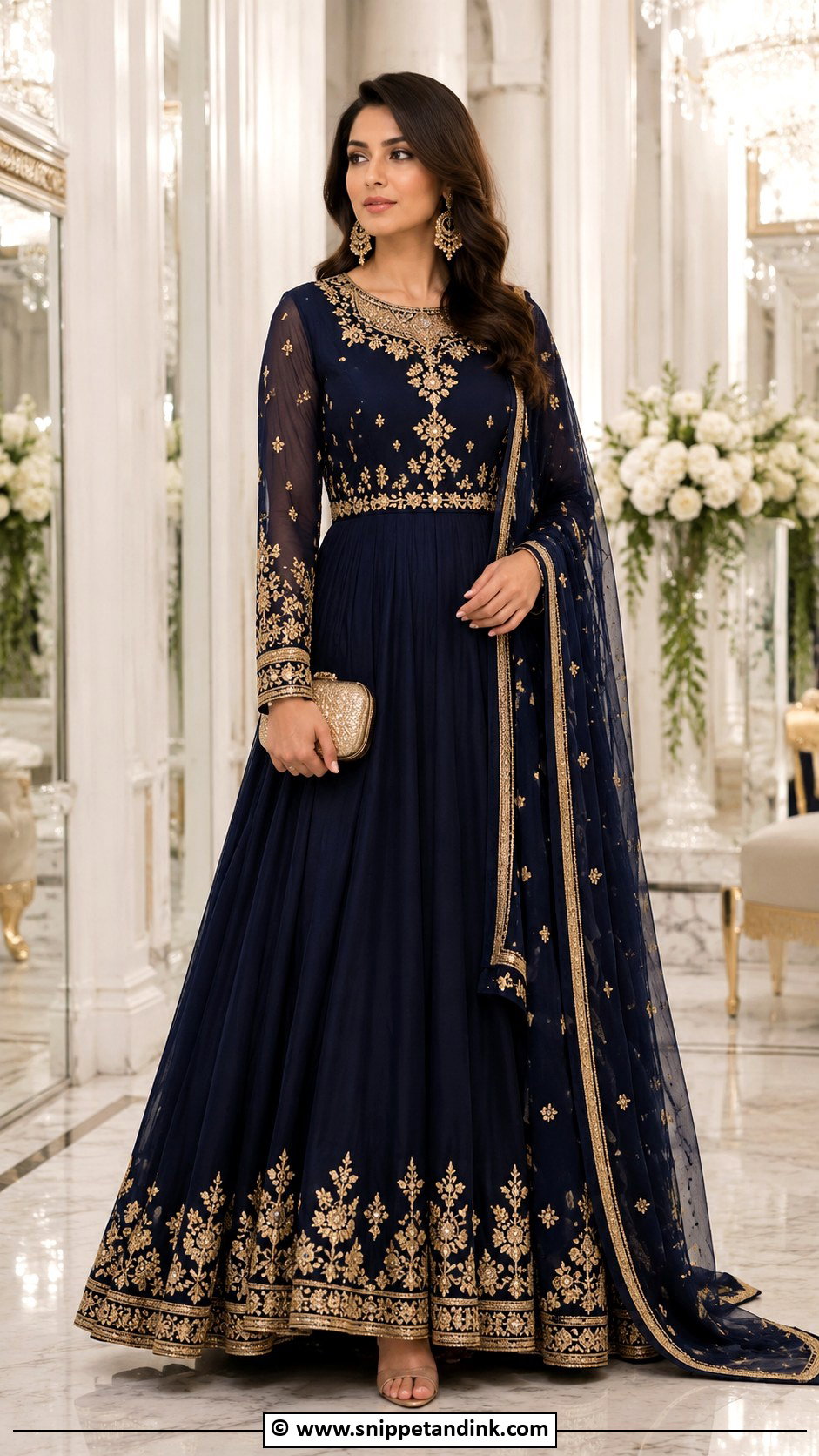
A floor-length Anarkali gives you the drama of a gown without leaving ethnic dress behind. It’s the outfit I suggest for receptions where a lehenga feels like too much to manage. Hem length is everything: hem it wearing the exact heels you’ll dance in, because an inch too long catches on stairs and an inch too short looks borrowed. Navy, deep green, maroon and ivory all look refined. If the neckline is embroidered, skip the necklace and wear earrings only.
13. Cape Lehenga Shaadi Outfit
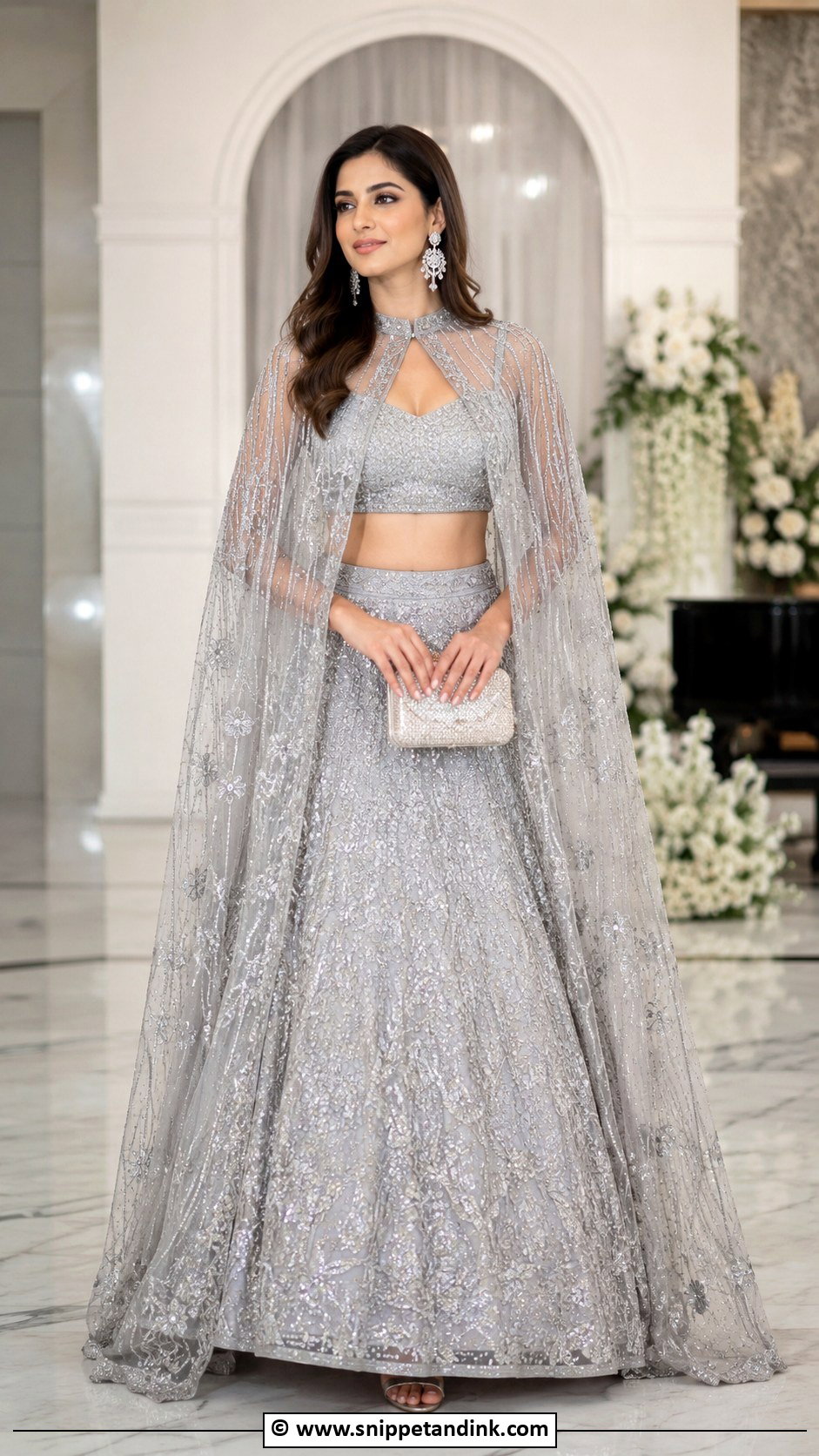
A cape lehenga solves the single biggest complaint I hear from guests: a dupatta that won’t stay put. The cape is stitched or hooked at the shoulders, so it moves when you move and stays there. Sheer capes with embroidered edges suit warm venues; a longer jacket-style cape adds coverage for a cooler evening. Keep the earrings sleek and the hair off the neck, since curls catch in cape seams. It photographs with movement on the dance floor, which is exactly why I like it for sangeet nights.
14. Jacket Lehenga Shaadi Outfit
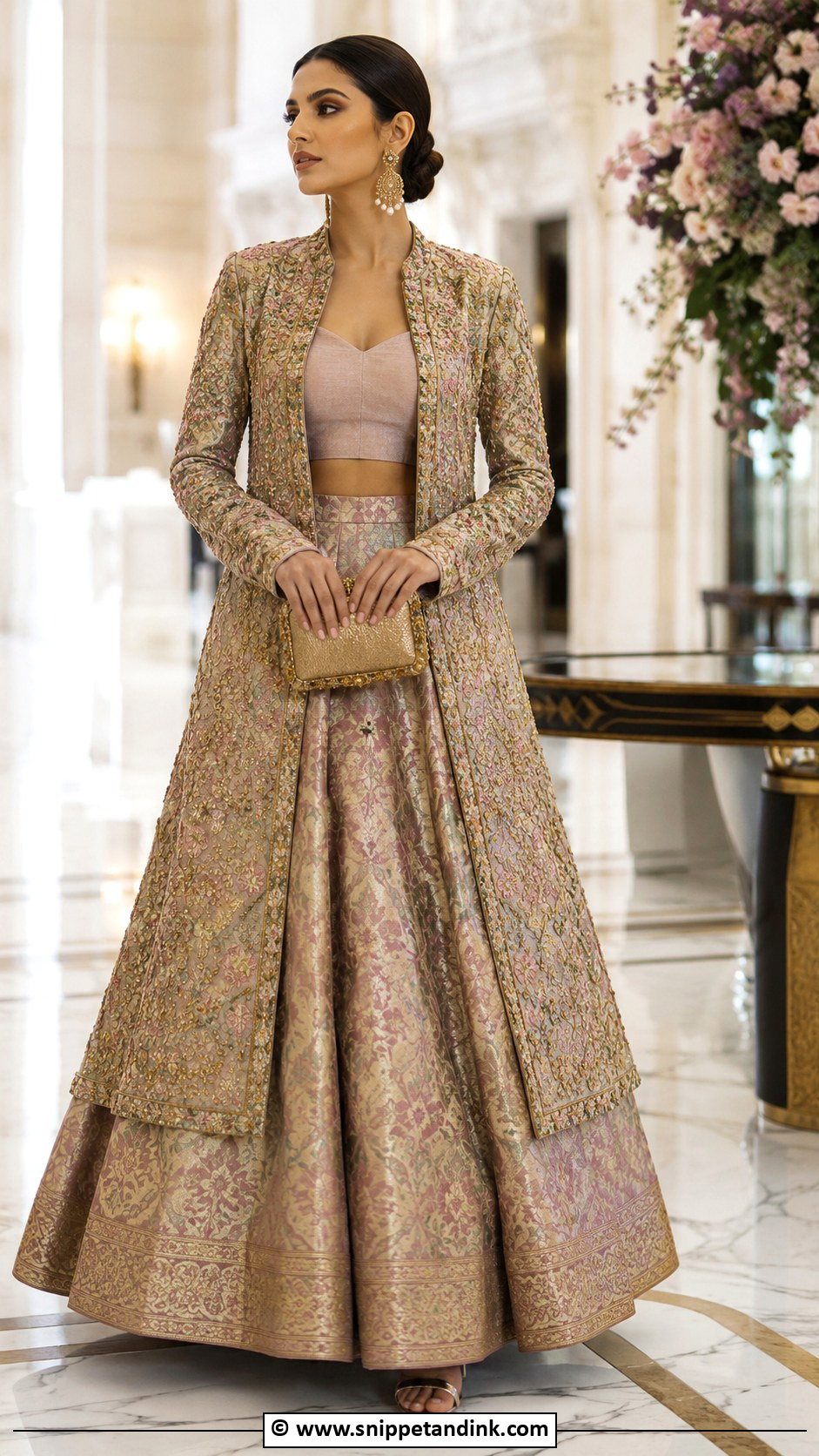
For a winter wedding or an outdoor evening, a jacket lehenga is the honest answer to “how do I stay warm without a shawl over everything.” The balance I aim for is a plain blouse and skirt under a heavily worked jacket, or the reverse, never both busy. Velvet and brocade jackets add real warmth. If the jacket has a high collar, leave the necklace at home and let earrings carry the jewellery. Try sitting down in it at the fitting; a long structured jacket can bunch awkwardly at the hips.
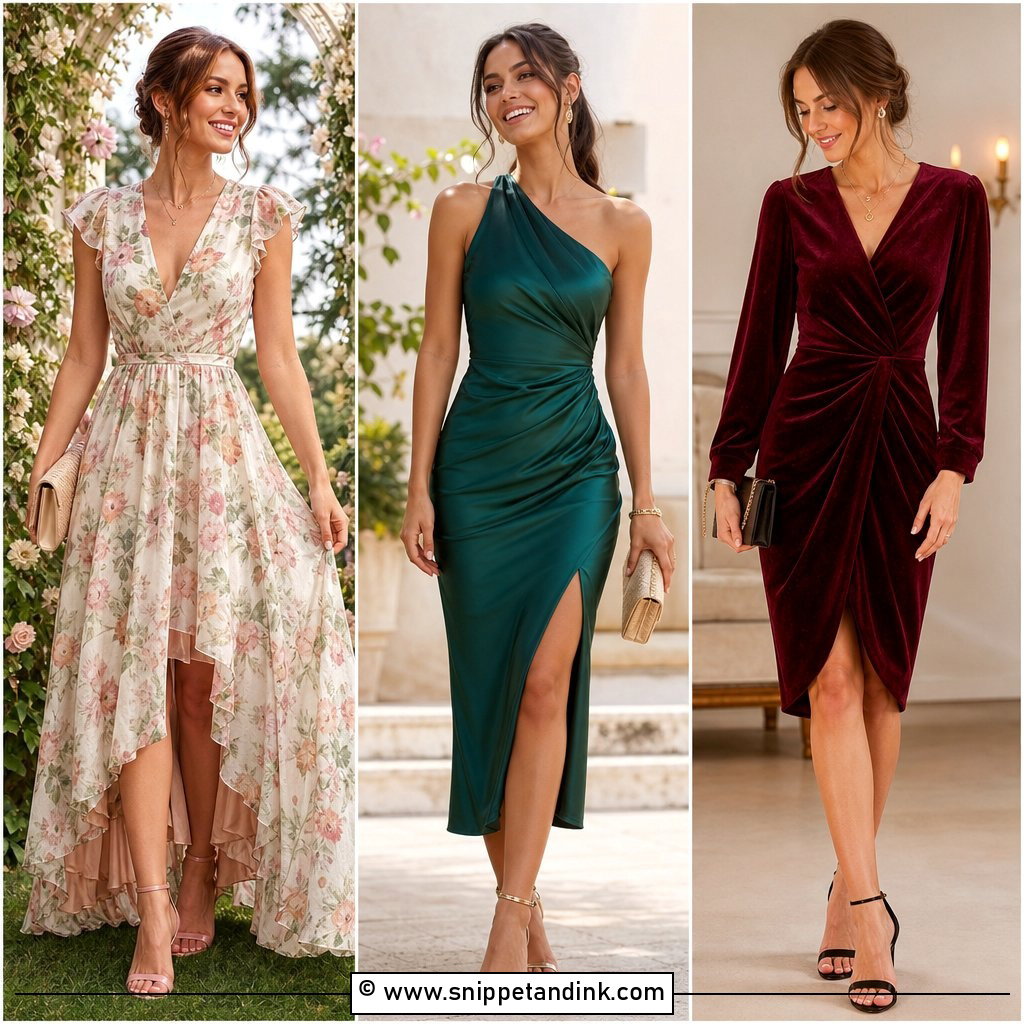
15. Peplum Sharara Shaadi Outfit
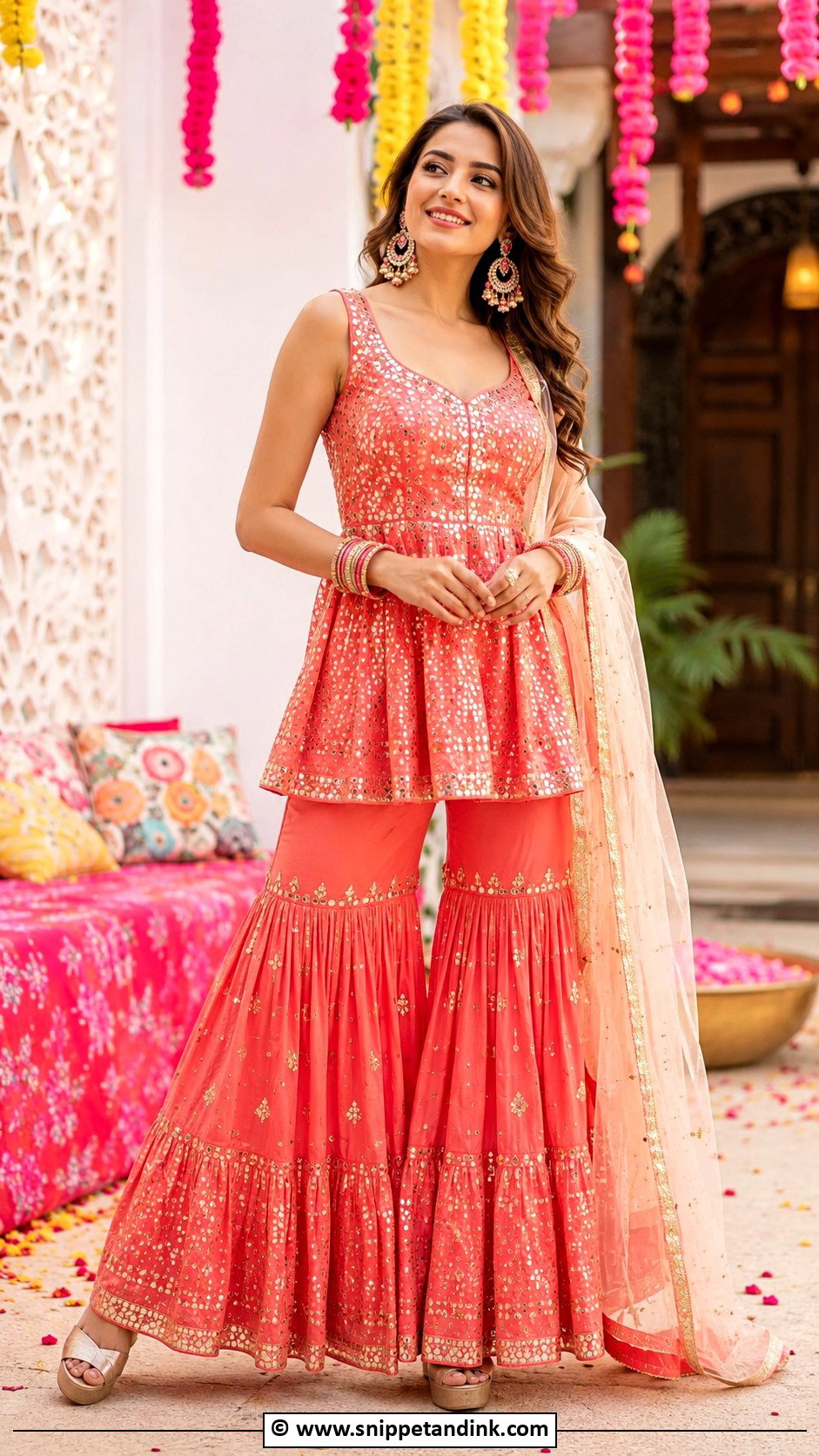
The peplum top cinches at the waist and then flares, which is why it flatters so many body types when worn with a sharara. I suggest it for mehndi and sangeet, where you’re in and out of seats and on the floor for dancing. Watch the peplum length. It should end just below the waist; a longer one crowds the flare of the pants. Mirror work or light gota in coral, teal or yellow keeps it festive, and a small dupatta pinned to one shoulder means one less thing to hold.
16. Kurta Palazzo Shaadi Outfit
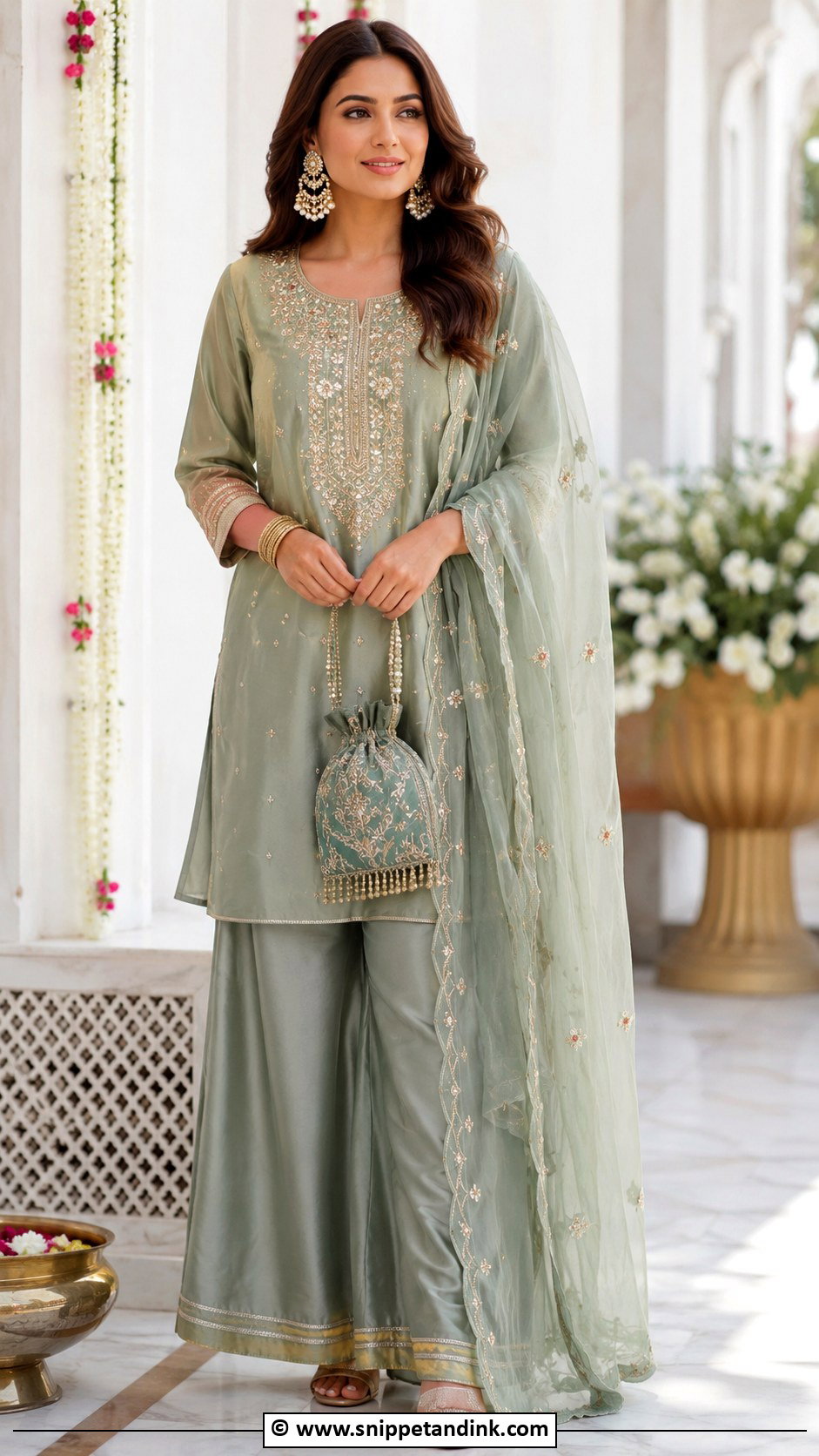
I recommend a kurta palazzo set most often for travel weddings, where you’re packing several outfits into one suitcase and moving between venues. Silk and brocade kurtas look dressed up enough for a nikkah or morning ceremony. Wide-leg palazzos breathe in heat far better than churidars. Straight kurtas read sleeker; flared ones feel more traditional. Dress it up with chandbalis and a potli. Be aware it can look underdressed at a big evening reception unless the kurta itself is properly embellished.
17. Chikankari Lehenga Shaadi Outfit
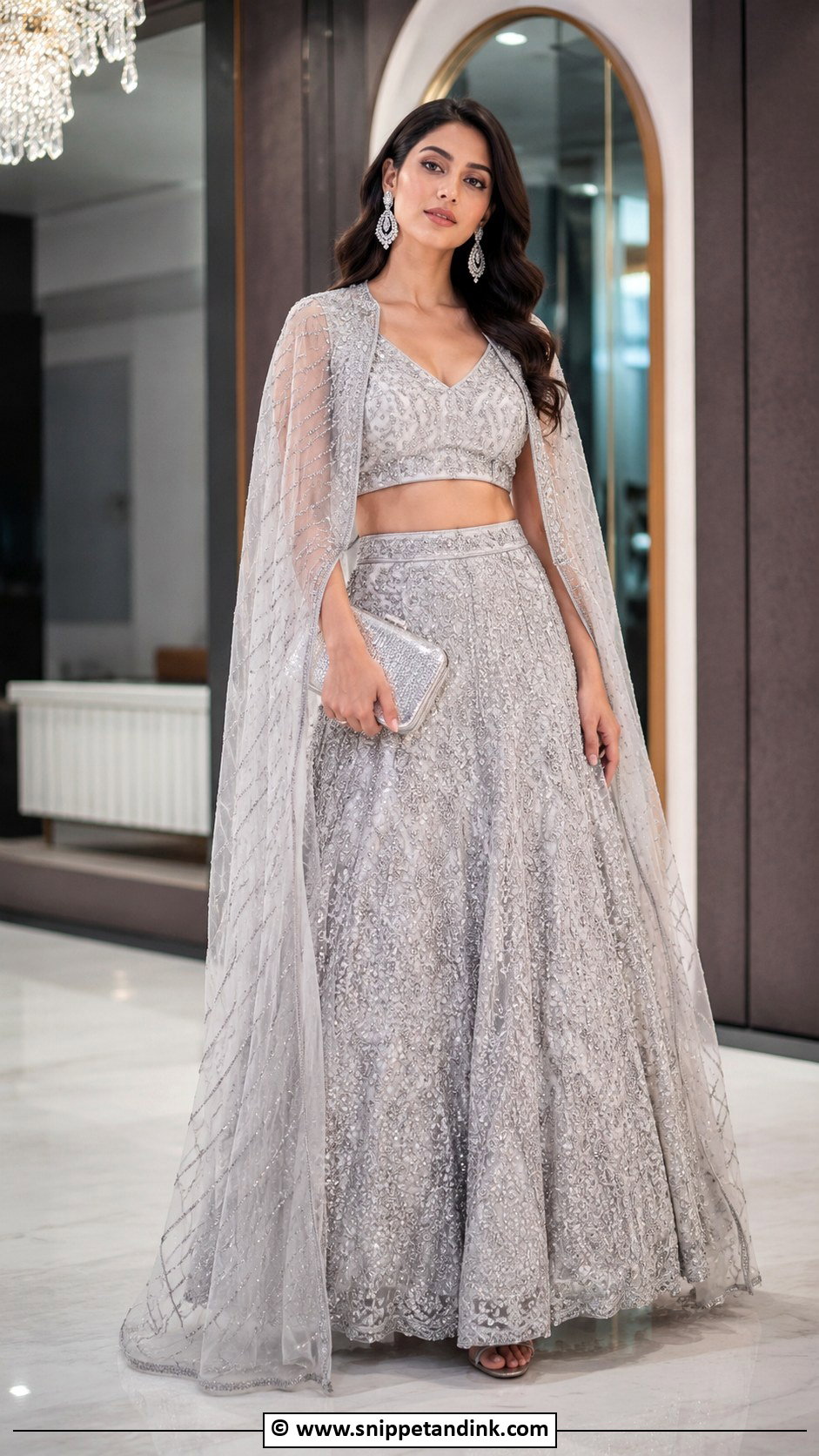
Chikankari is shadow work done by hand in white or tonal thread, and its whole appeal is that it’s quiet. I put clients in it for daytime functions and summer weddings when they want something festive that won’t overheat them. Ivory, mint and powder blue show the stitching best. Because the embroidery is subtle, one stronger piece of jewellery, a ring or statement earrings, gives it a focal point. Hand-wash or dry-clean only; machine washing frays the delicate threads at the edges of the motifs.
18. Velvet Lehenga Shaadi Outfit
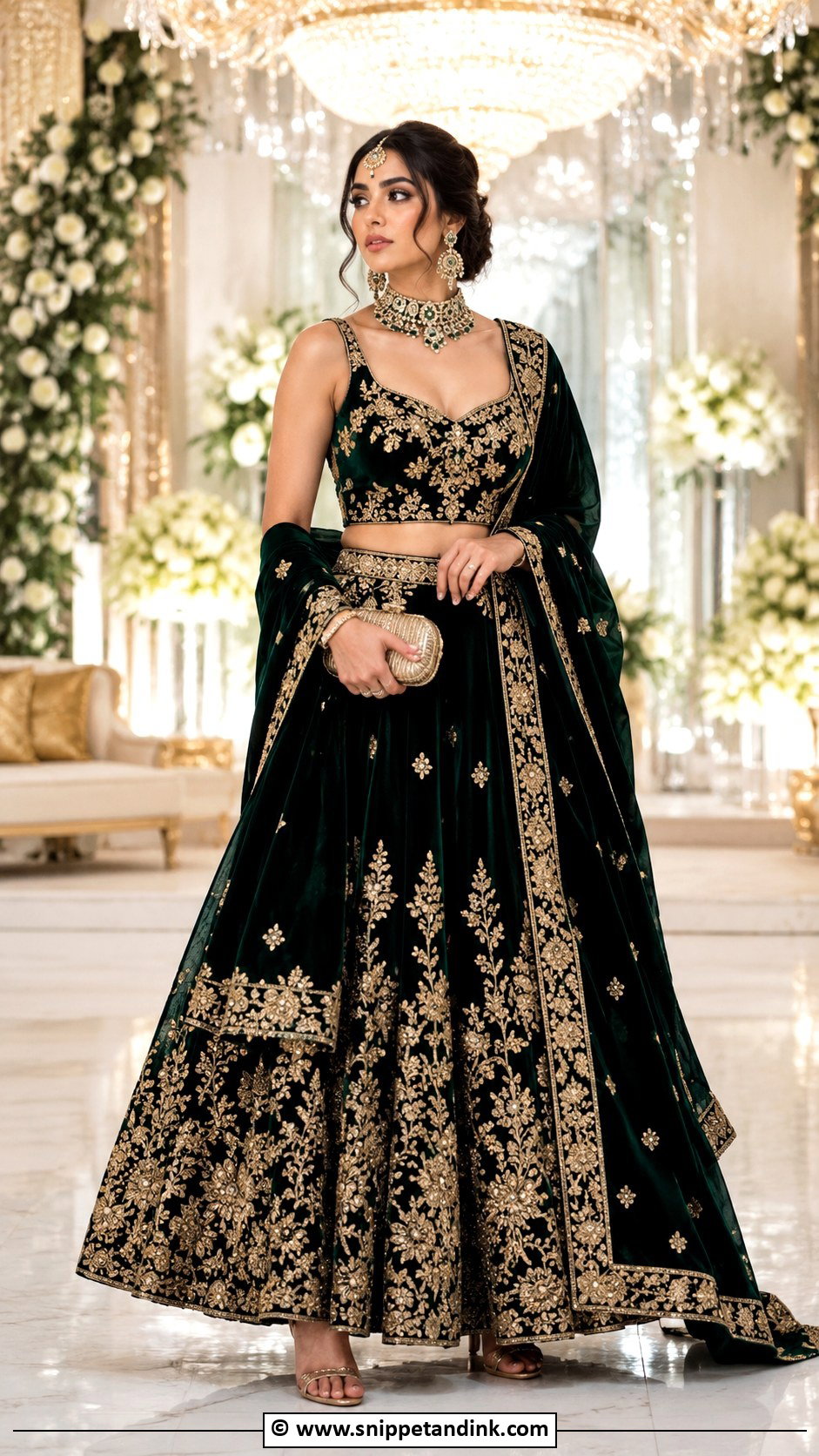
Velvet belongs to winter. In a warm marquee it turns into a sauna, so I check the venue and month before I ever suggest it. Emerald, maroon, plum and navy look richest because velvet absorbs light and deepens colour. Embroidery at the hem and blouse keeps the weight balanced. Kundan or polki suits it best. One practical warning: velvet crushes when you sit for a long ceremony, so hang it in a steamy bathroom before you dress, and avoid pressing the pile flat with a hot iron.
19. Silk Saree Shaadi Outfit
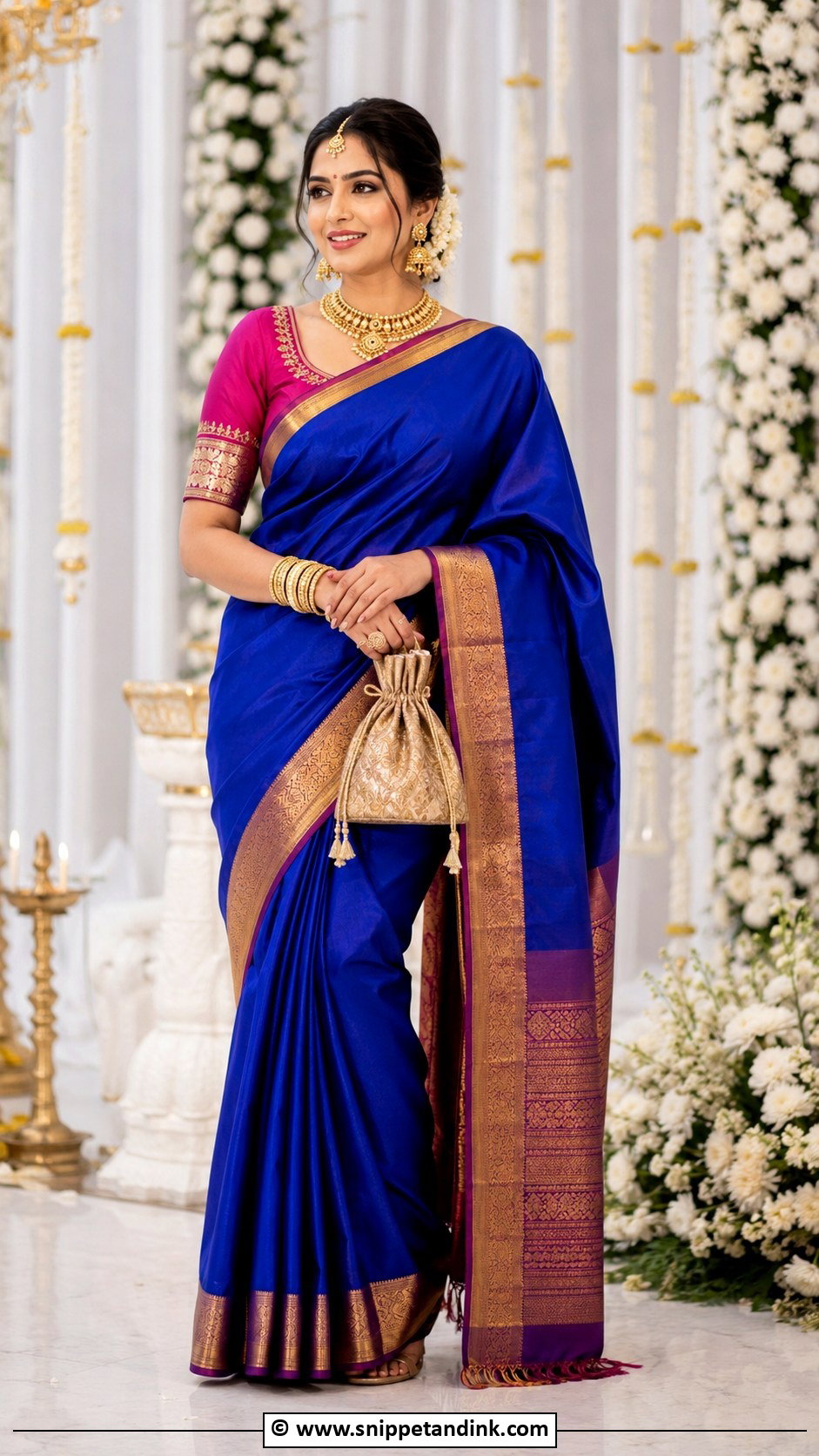
A silk saree works at almost any wedding function, in almost any region, at almost any age, which is why I keep saying it’s the safest outfit in this list. Kanjeevaram is heavy and stiff, Mysore silk is lighter and softer, and a Banarasi sits between them; choose by how long you’ll be standing. A fitted blouse matters more here than with any other drape, since silk shows every pull. A contrast blouse or a belt modernises it, though at religious ceremonies I’d keep the styling traditional.
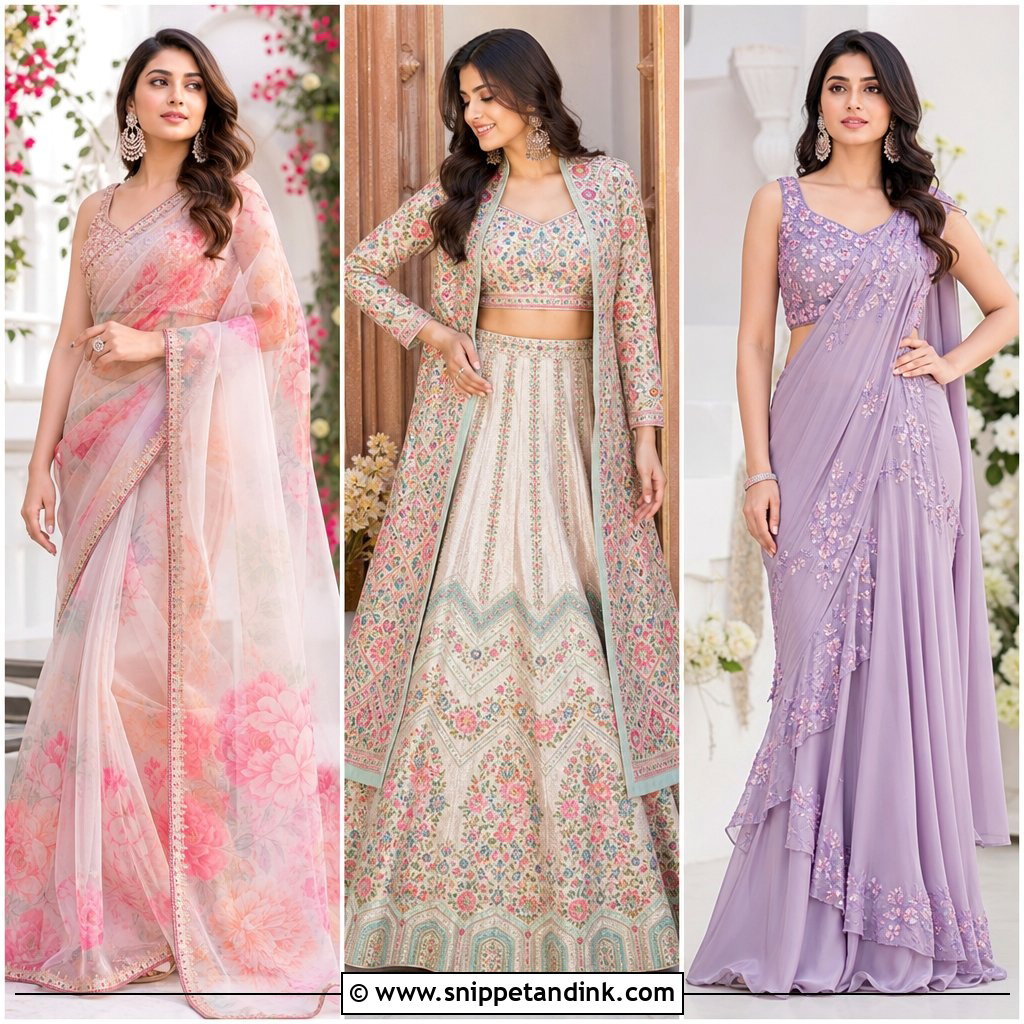
20. Sequin Saree Shaadi Outfit
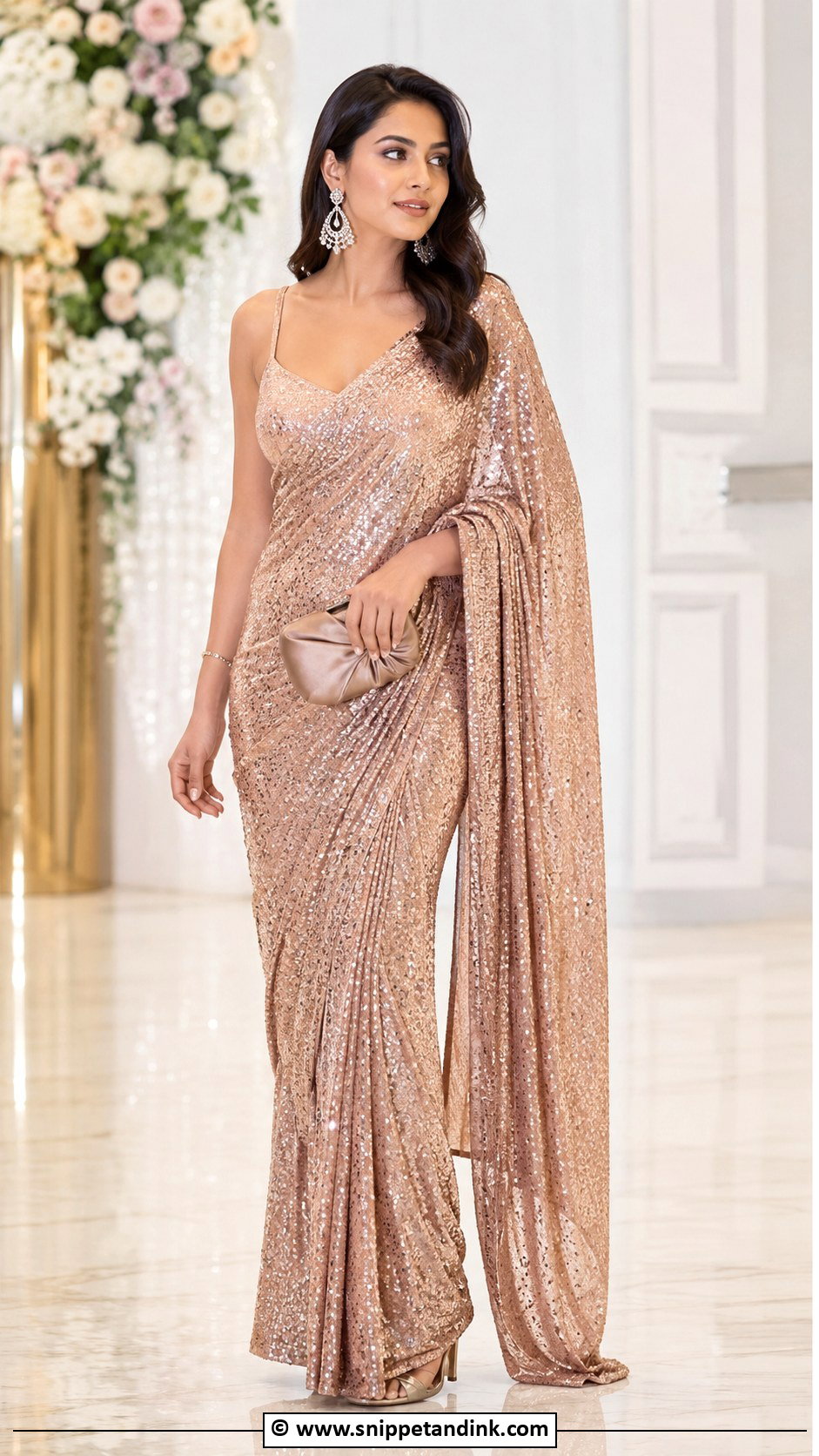
Sequins catch every light in a reception hall, so this is an outfit for after dark. Champagne, rose gold and deep green read glamorous rather than loud. The makeup decision follows from the fabric: with that much shimmer on the body, I keep the face matte with a soft glow on the cheekbones only, otherwise the camera flash turns everything into one shiny surface. Check the inner arm area of the blouse before buying. Scratchy sequins there will rub your skin raw over a long night.
21. Indo Western Dhoti Set Shaadi Outfit
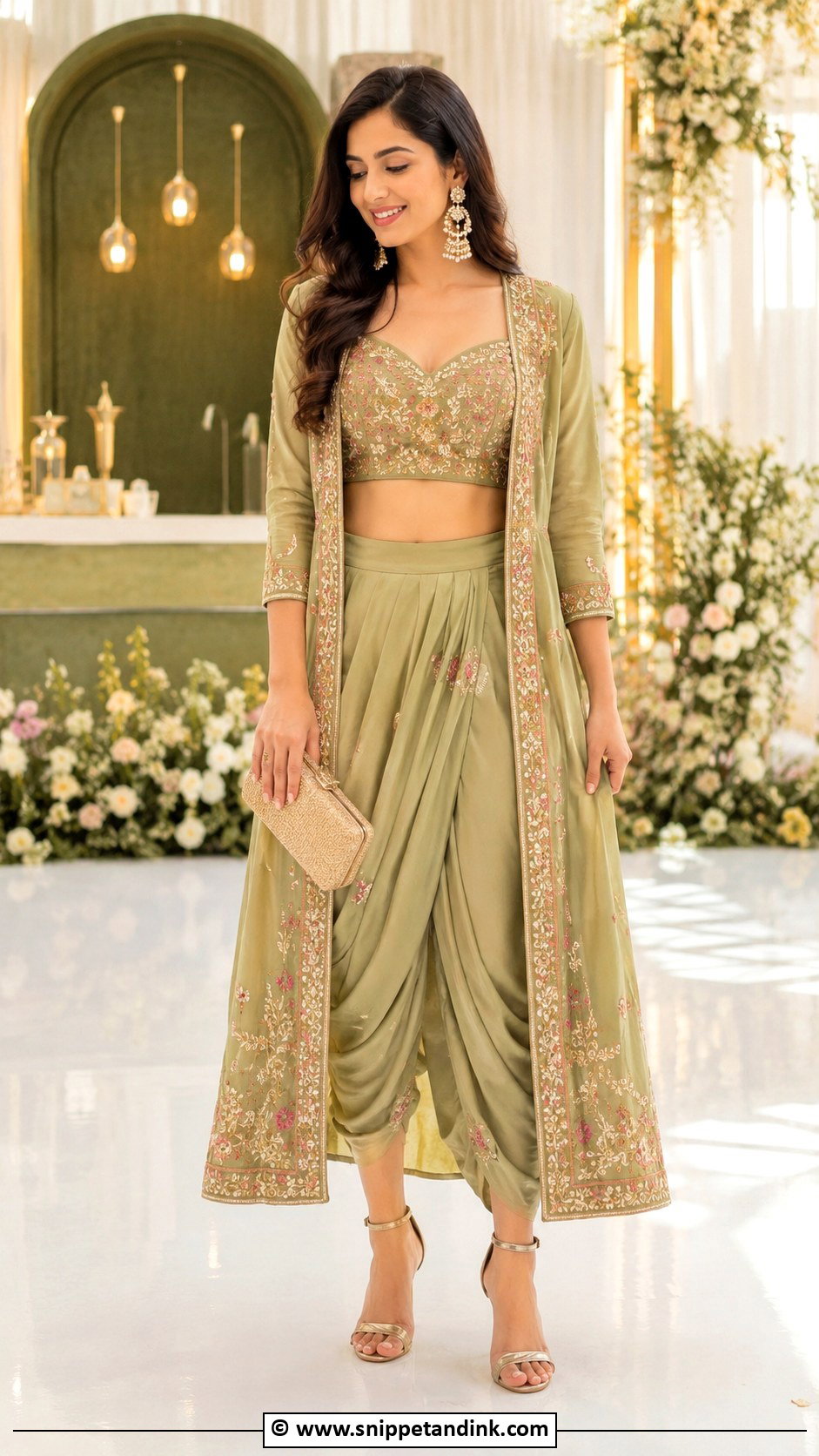
An Indo western dhoti set is the outfit I’d give a guest who feels most herself in trousers. The draped dhoti bottom moves well, and a crop top or jacket on top adds structure. It’s built for mehndi and sangeet dancing. At a conservative family ceremony, though, I’d hold back, since some elders still read it as too casual. Bright colours suit daytime; metallics and jewel tones carry it into the evening. Heels and statement earrings make it look deliberate rather than casual.
22. Co Ord Set Shaadi Outfit
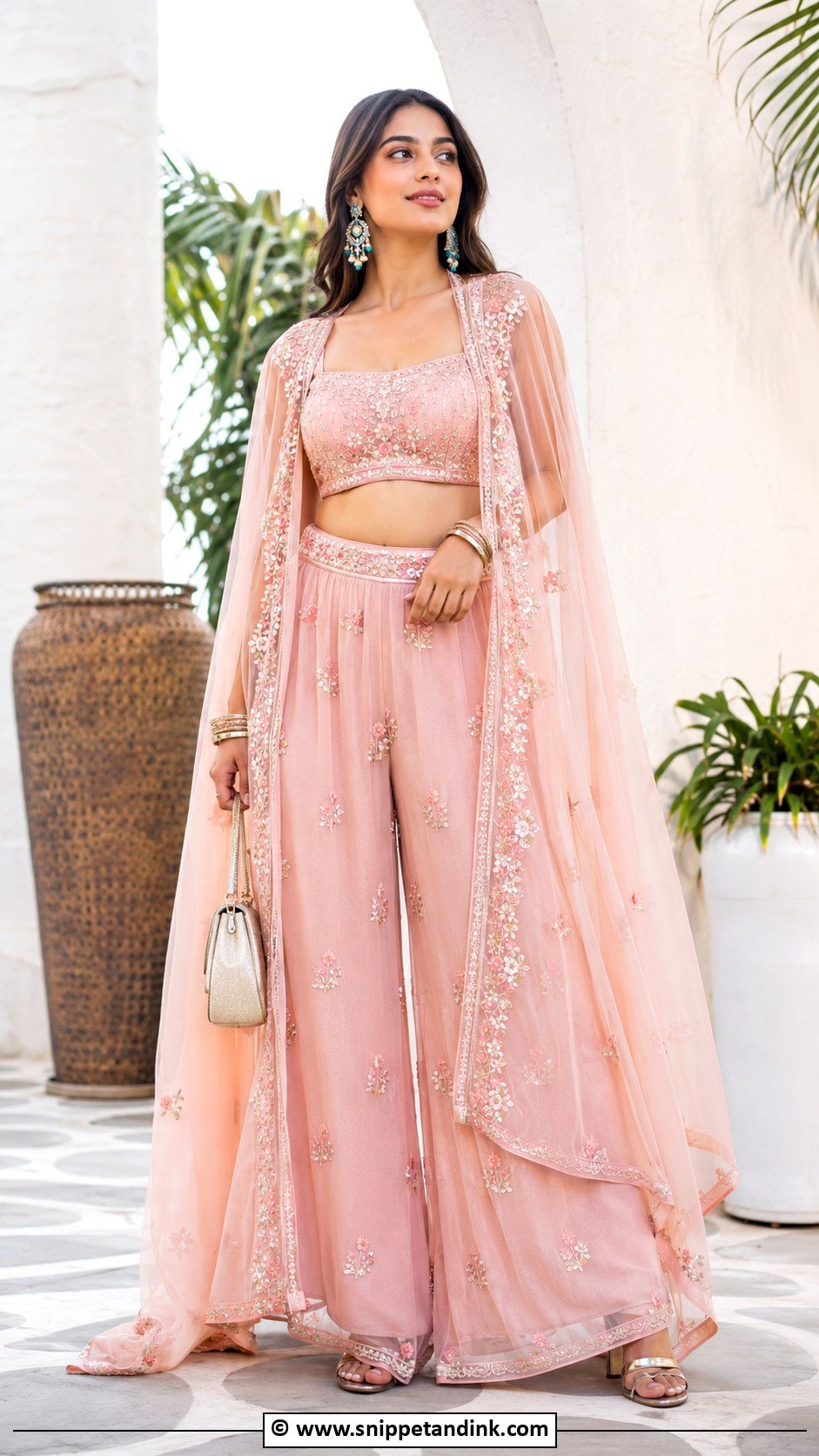
Co-ord sets are the clever buy in this list because you’ll wear them again. A matching embroidered top and skirt or palazzo can go to a friend’s dinner afterwards, separately. For a shaadi, I add a dupatta or cape to make it read as formal. Prints suit haldi and mehndi; embroidery suits evenings. My only caution is fabric weight: a thin co-ord set can look like daywear in photos next to heavy lehengas, so choose silk, organza or brocade over cotton for the main events.
23. Lehenga Saree Shaadi Outfit
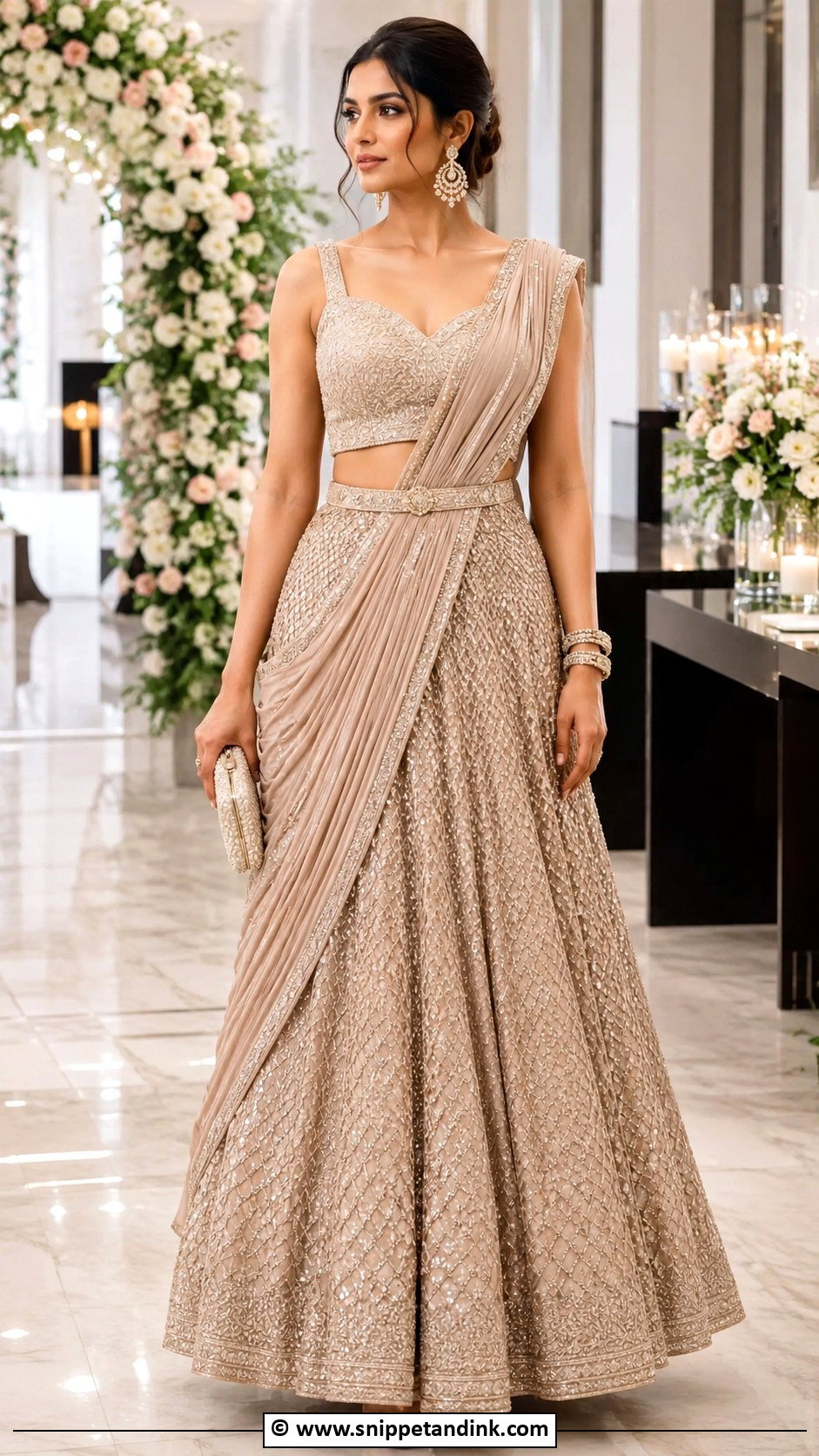
A lehenga saree gives you the volume of a lehenga skirt with a pallu draped over the shoulder, usually pre-stitched. It’s easier to manage than a full saree and still looks formal. The pallu attachment point is what I check: it should be sewn into the skirt’s waistband, not just safety-pinned, or it slips by midnight. A waist belt helps anchor it. Satin and georgette suit receptions; net and shimmer suit sangeet. I’d skip it for a guest who has to bend and serve at the ceremony.
24. Ruffle Saree Shaadi Outfit
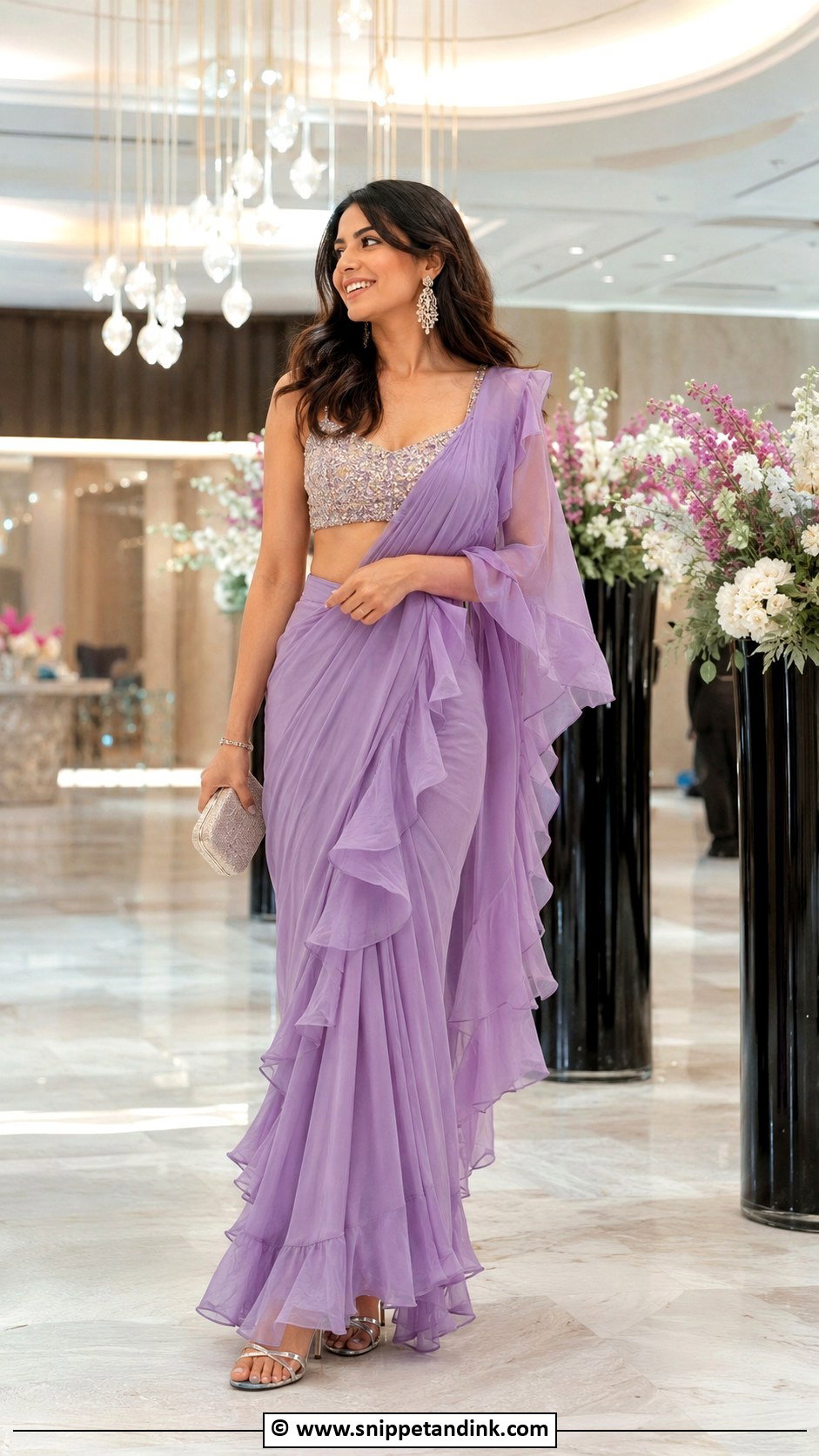
Ruffle sarees are for the guest who likes fashion-forward ethnic wear and doesn’t mind being noticed. The ruffles add volume, so the fabric must be light, georgette or chiffon, or the whole thing turns bulky at the hips. I keep the jewellery minimal because the frills already supply the texture. A high ponytail suits it surprisingly well. This is a sangeet or reception outfit; at a temple ceremony it can feel too playful, so check the mood of the event first.
25. Pakistani Suit Shaadi Outfit
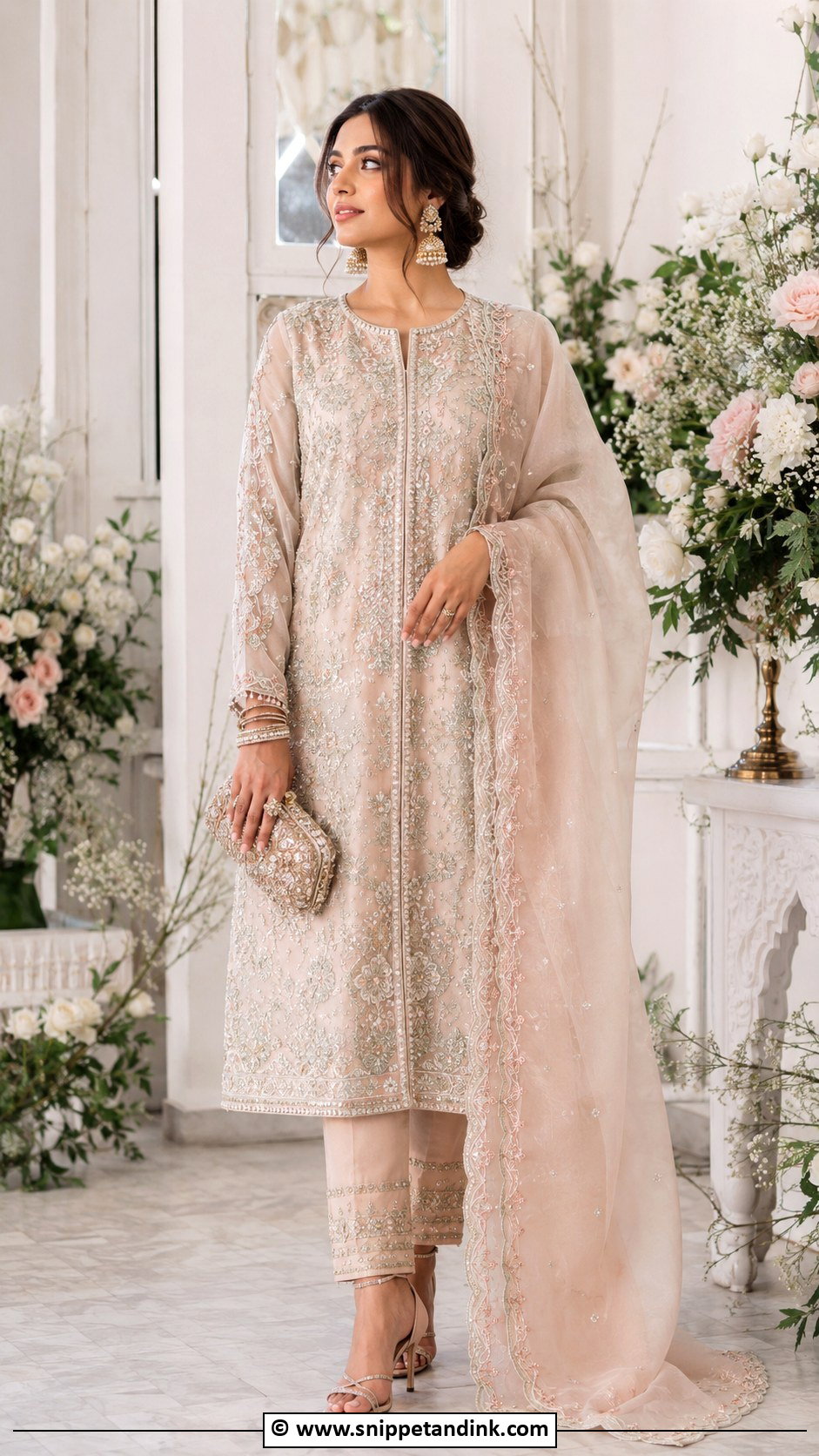
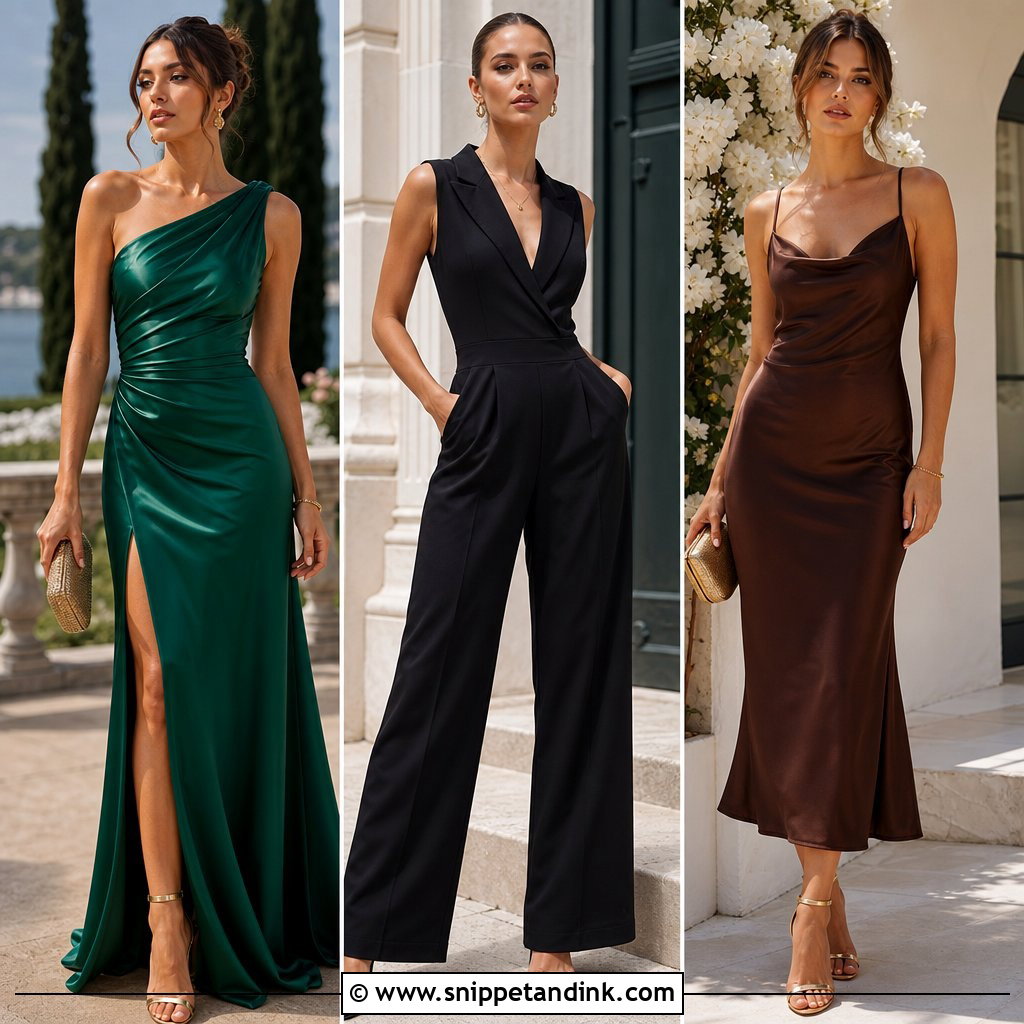
A Pakistani-style suit, a long embroidered kameez over straight or cigarette pants, is what I suggest most for nikkahs and formal family gatherings where modest dressing matters. The length of the kameez is the styling decision: knee length reads modern, ankle length reads formal. Chiffon and organza dupattas soften the cut. Sage, mauve, ivory and gold look refined. A side-parted bun and jhumkas finish it. It’s easy to wear through a long ceremony, which counts for more than people expect.
26. Haldi Yellow Sharara Shaadi Outfit
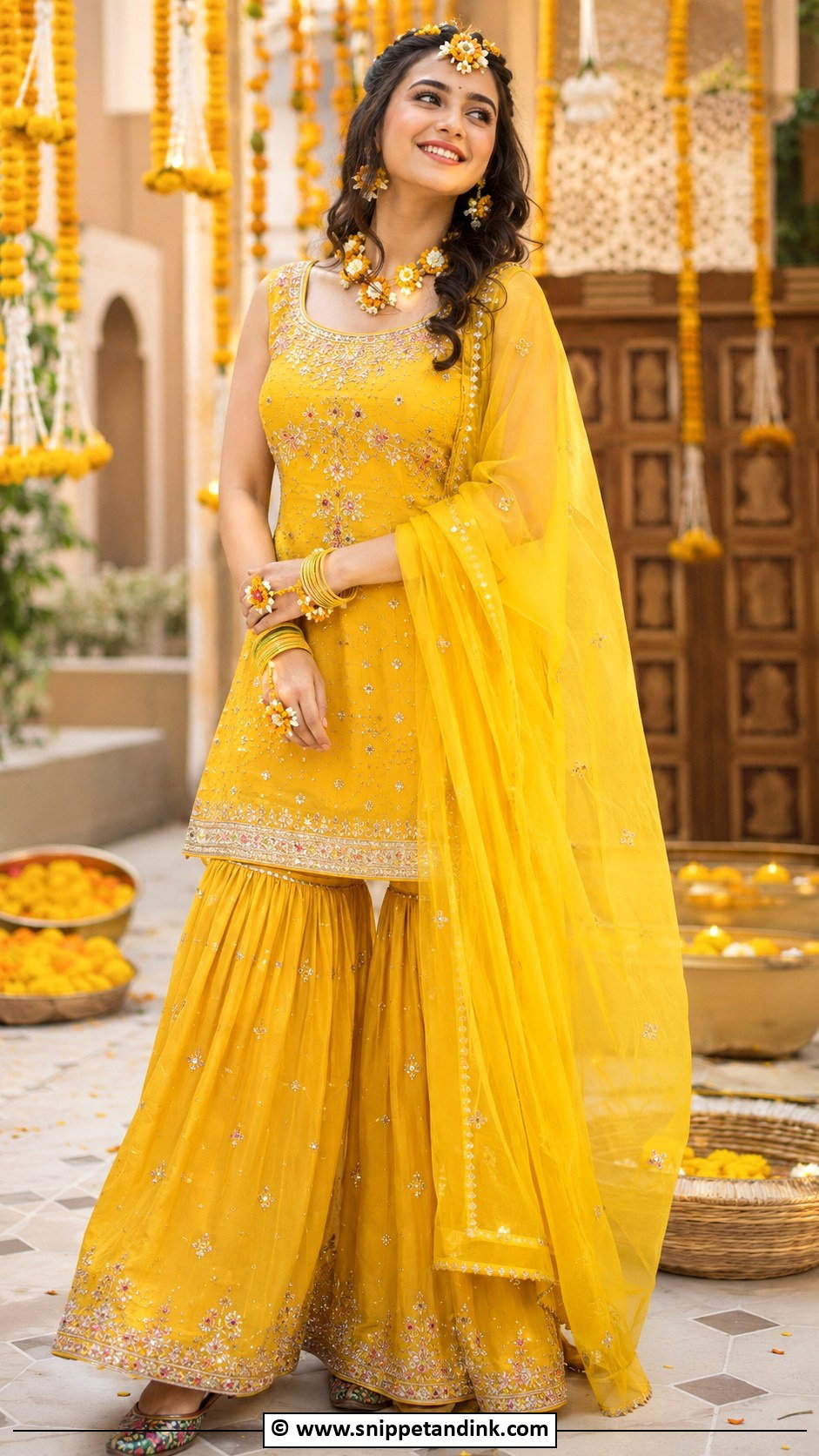
A yellow sharara is practically the uniform at a haldi, and it’s a sensible one. Turmeric paste stains anything it touches, and yellow hides it. That’s also why I’d never send anyone to a haldi in silk they care about; cotton silk or chanderi is the better call. Gota and mirror details keep it festive. Juttis are the right shoes, since the floor often gets wet and slippery. Floral jewellery suits the mood, and a braid keeps hair out of the paste.
27. Mehndi Green Lehenga Shaadi Outfit
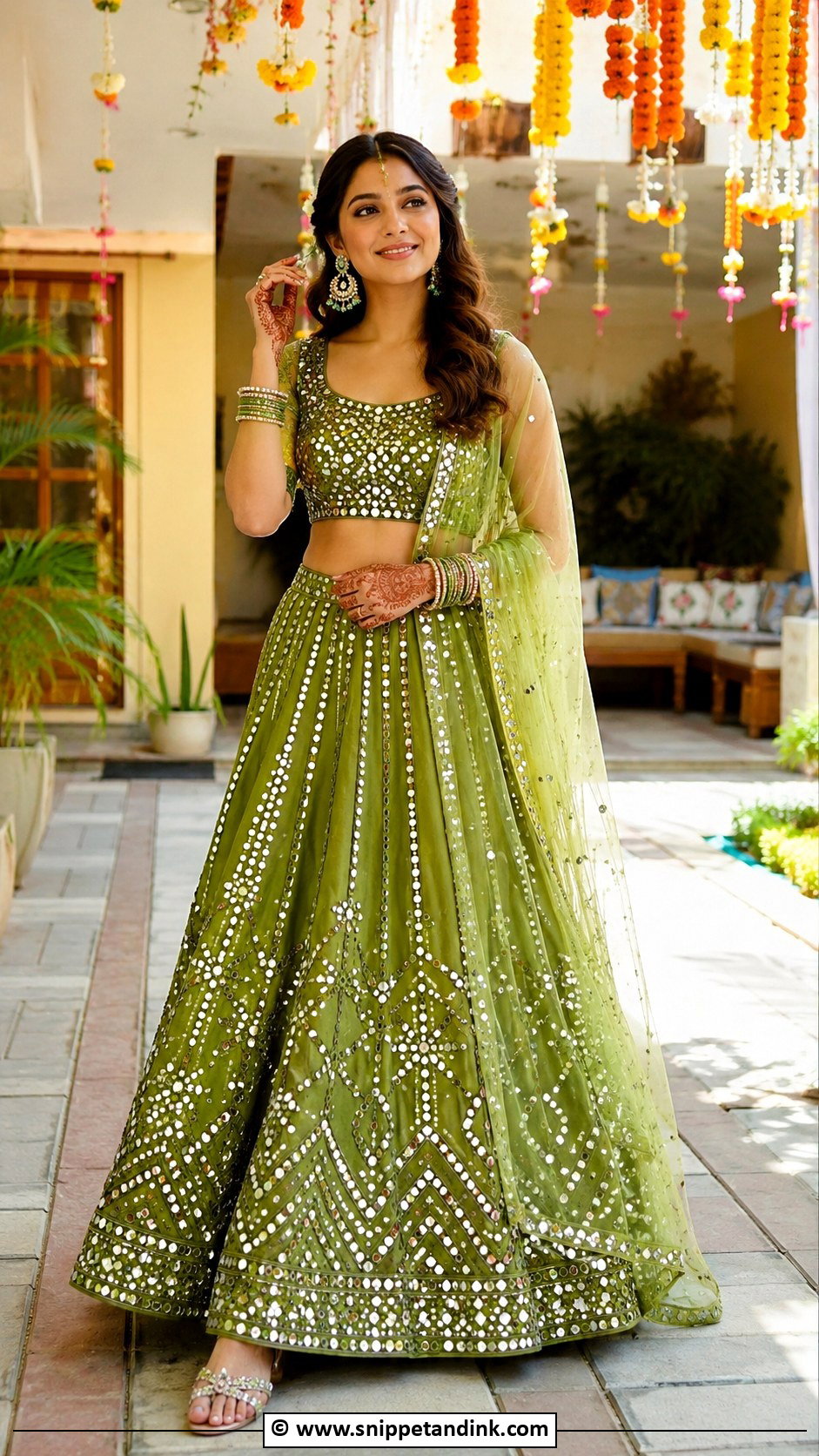
Green at a mehndi is a long-standing tradition, and it also flatters the fresh henna stain on hands. Lime and parrot green suit daytime; emerald and bottle green work in the evening. The thing I watch for is skirt weight. Mehndi involves sitting still for hours while the paste dries, then getting up to dance, so a heavy skirt is uncomfortable both ways. Mirror work and gota stay light. Keep sleeves short or three-quarter so they don’t smudge wet henna on the arms.
28. Reception Gown Shaadi Outfit
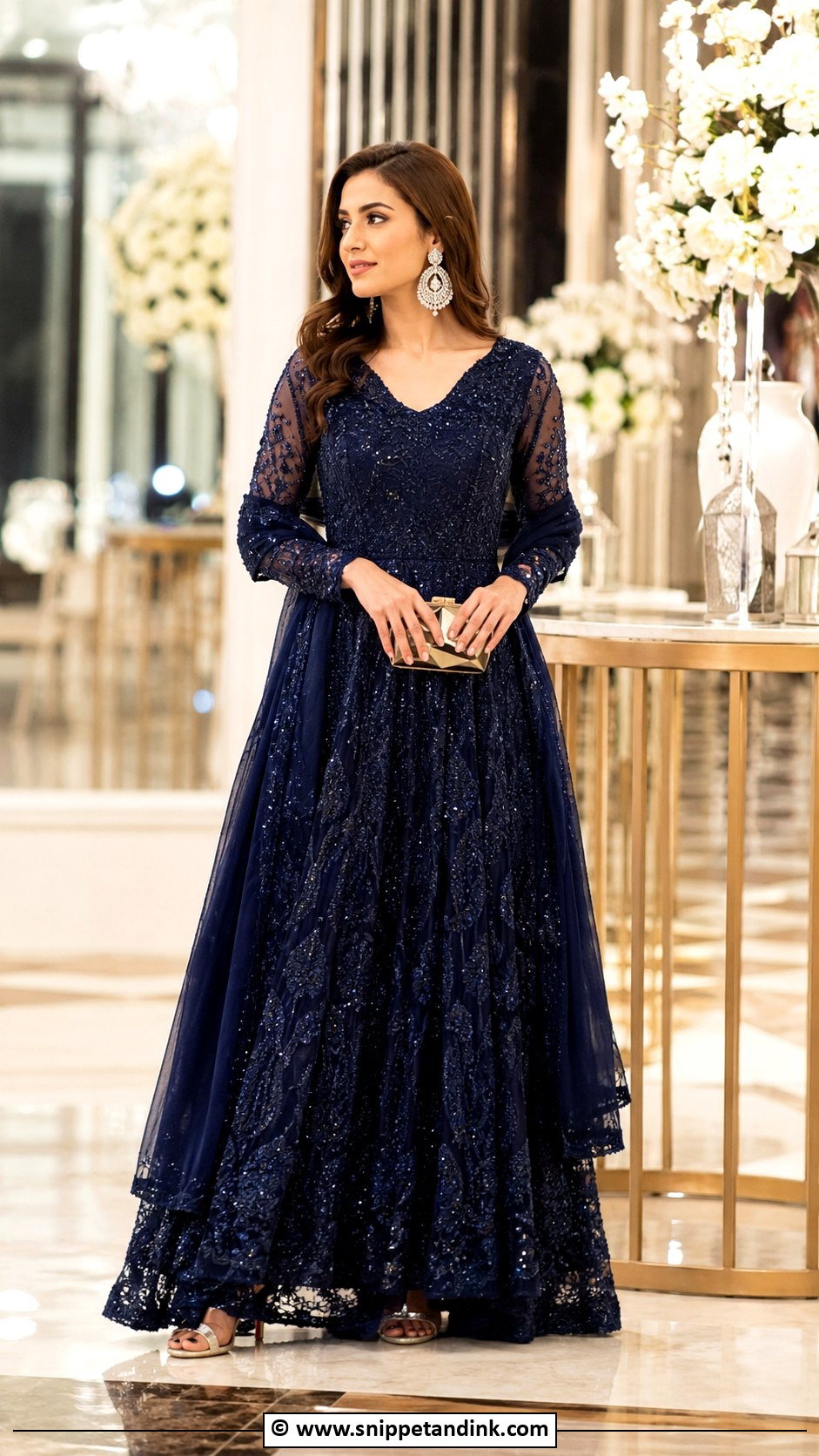
A reception gown suits the guest who wants one piece and no draping. Ethnic gowns with Anarkali flare or attached capes look festive; a plain western ball gown can look out of place at a desi reception, so I lean toward embroidery or beadwork. Jewel tones and metallics photograph well under stage lights. If the neckline is detailed, skip the necklace. Have it steamed on the hanger the day of; gowns crease badly across the lap during the car ride.
29. Bridesmaid Lehenga Shaadi Outfit
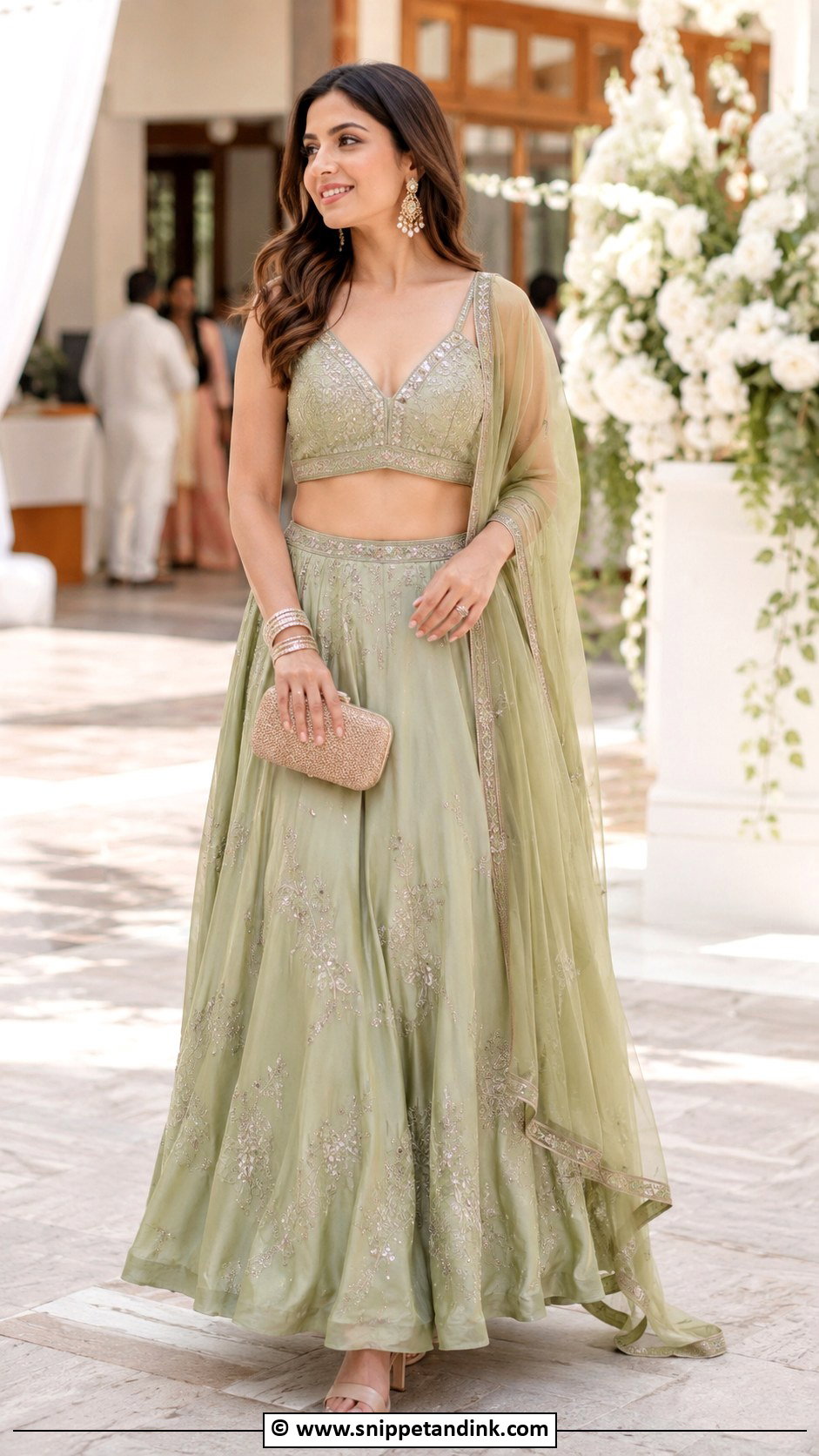
Bridesmaid lehengas have one job: to look festive next to the bride without competing. Coordinating rather than matching is what I usually suggest, so the group shares a palette, sage and blush, say, while each picks a cut that suits her. Lightweight georgette or organza keeps everyone comfortable through long events. If the group can’t agree on colour, matching one element, like dupatta shade or jewellery tone, is enough to look cohesive. Keep it clearly less embellished than the bridal outfit.
30. Simple Guest Suit Shaadi Outfit
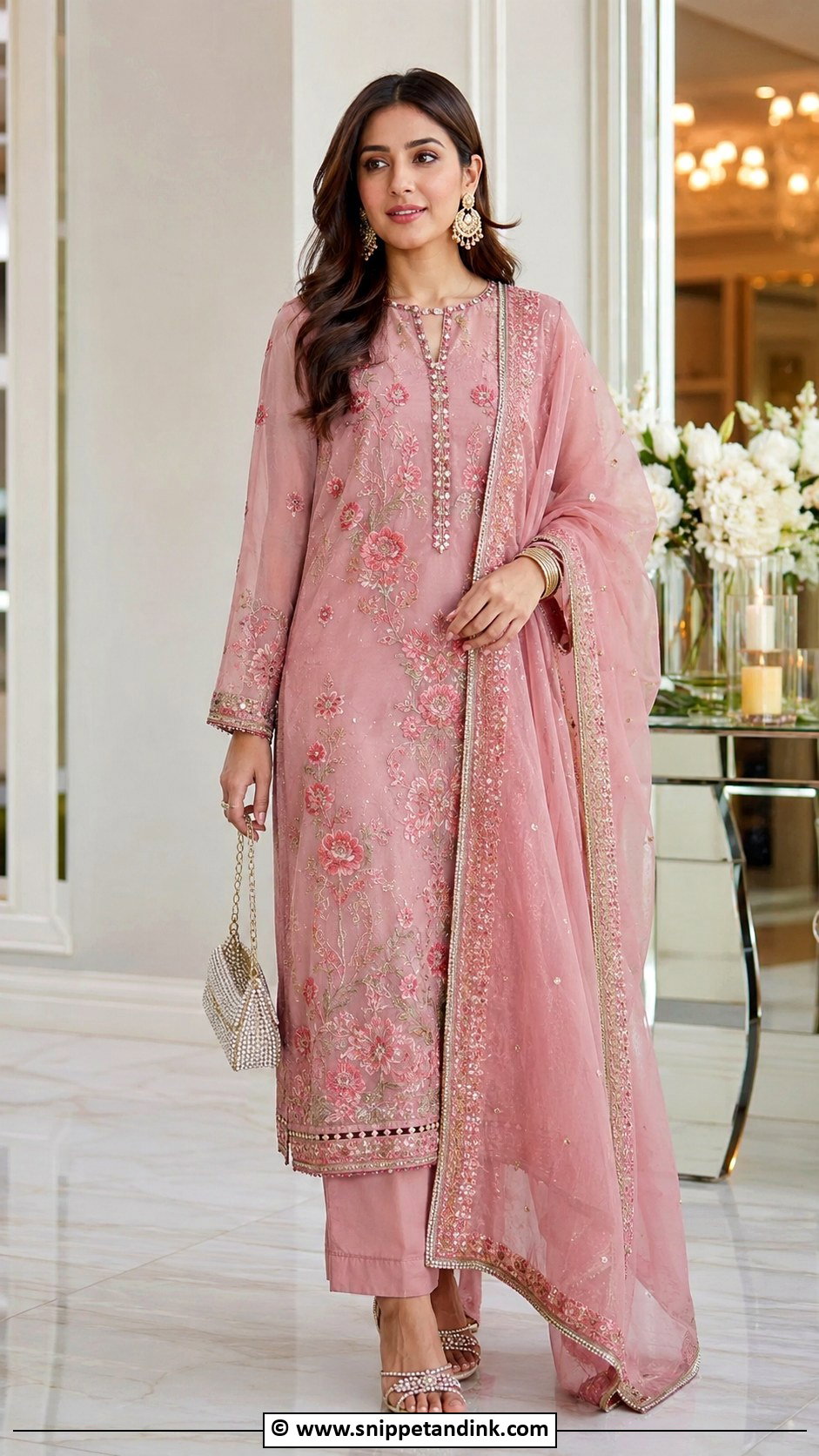
A simple guest suit works when you’re attending as a friend, a colleague or a distant relative and don’t want to overdress. Fit is what lifts it from everyday wear. A straight embroidered suit taken in at the waist looks far more polished than an expensive one off the rack. Light zari or mirror detailing keeps it festive. When I’m unsure about a dress code, this is the outfit I fall back on, since it’s never wrong at a smaller ceremony.
The Sit, Stair and Spin Test I Run at Every Fitting
An outfit that looks right standing still in a mirror can fail the moment you move. At the final fitting I ask every client to do four things in the outfit and the actual shoes.
- Sit on a low chair for a full minute. If the blouse cuts under the arms or the waistband digs in, it needs letting out.
- Walk up and down a few stairs holding the skirt with one hand. A hem that catches now will catch all night.
- Raise both arms above your head as if dancing. The blouse shouldn’t ride up past the bra line.
- Turn quickly on the spot. Loose mirrors, slipping pallus and unpinned dupattas show themselves right away.
Anything that fails needs a tailor’s fix, and most wedding tailors are fully booked in the weeks before peak season. I’d leave at least two to three weeks between the fitting and the first function, more if the alterations involve embroidery.
Caring for Zari, Velvet and Mirror Work Between Functions
Heavy ethnic wear isn’t meant to be folded and stuffed back into a suitcase each night. Hang lehengas by the waistband loops, inside out, so the embroidery doesn’t rub against itself. Velvet needs steam, not a hot iron, which flattens the pile permanently.
Zari and gota tarnish when they touch skin oils and humidity, so wrap them in muslin or a cotton sheet, never plastic, which traps moisture. Check mirror work after each function and stitch back any loose pieces before you pack it. If something gets stained with food or turmeric, don’t scrub it; blot it and take it to a dry cleaner who handles bridal wear, as soon as you can.
One Outfit Per Event, and Shoes You Can Dance In
The outfits that work best at a shaadi are the ones matched to the event: a lehenga at the main ceremony, a sharara for dancing, a saree for formal rituals. Before buying, think about how many hours you’ll be in it, what the weather will be, and whether you can sit down. Lighter fabrics, secure drapes and comfortable shoes do more for you than an extra layer of embroidery. Plan each function’s outfit and the jewellery and footwear that go with it, and you’ll spend the celebration enjoying yourself instead of fixing a dupatta.
You'll Like These Ideas:



Leave a Reply