
The lotus carries real meaning at many South Asian weddings, and it’s a flower I enjoy styling because it has presence without needing a crowd of other blooms around it. It works in buns, braids, half-up looks and lighter reception styles, and pink, white or blush lotus sits naturally beside silk sarees, lehengas, temple jewellery, kundan sets and jasmine. It also behaves very differently from roses or jasmine once it’s cut, which most mood boards don’t show. These twenty looks range from a full South Indian braid to a sleek low bun, with notes on placement, weight and how each one holds through the rituals.
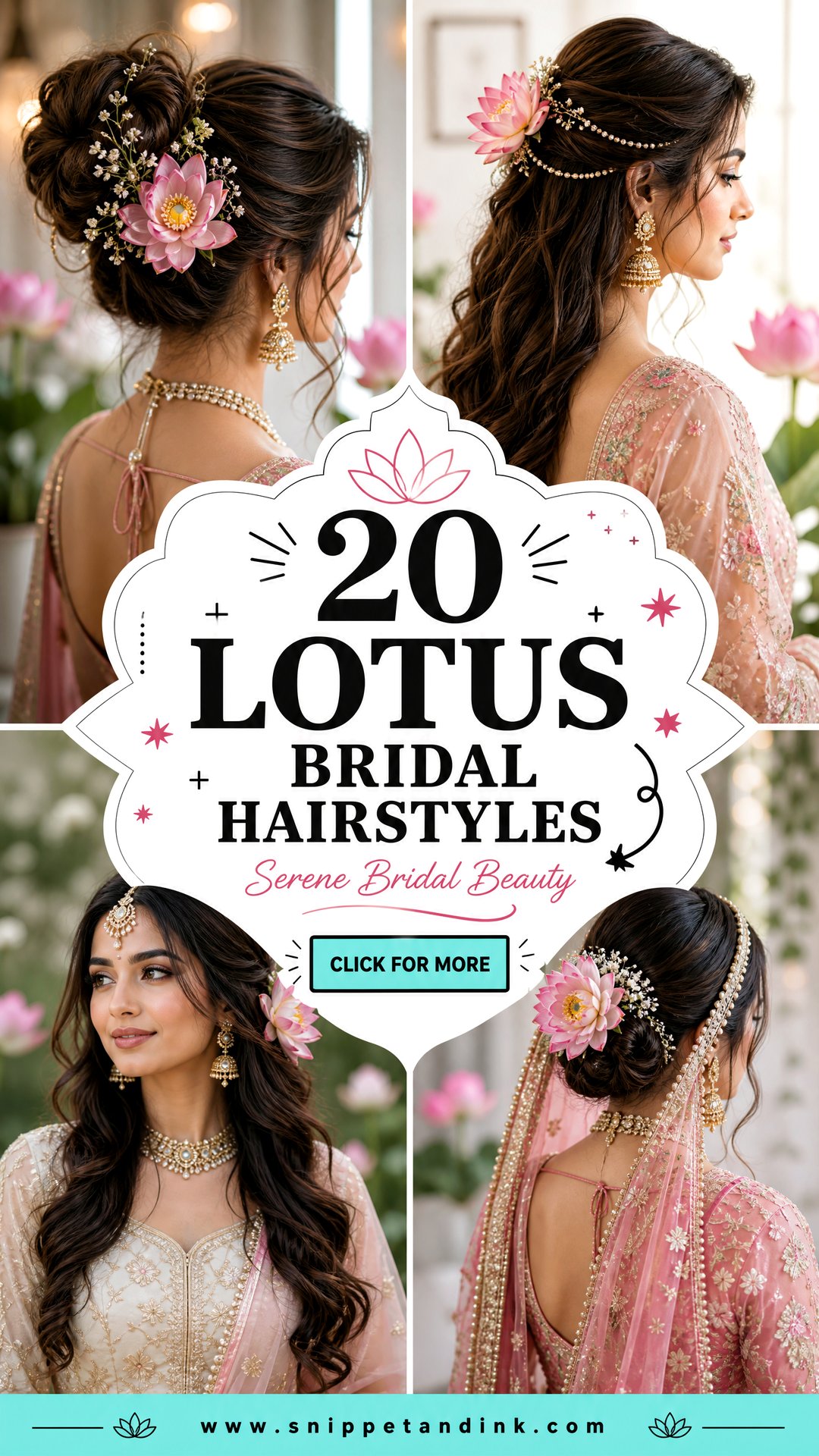
Fresh Lotus Is Fragile, So Plan Around It
Lotus is a water flower. Once it’s out of water, the petal edges bruise and brown easily, and open blooms start to droop within a few hours, faster under hot lights. That doesn’t mean avoiding it, just planning for it.
- Ask your florist for buds or half-open flowers rather than fully open ones. They’re lighter and hold their shape longer.
- Keep the flowers in cool water until the last moment, and add them after the jewellery and dupatta are set.
- Handle by the base only. Fingers on the petals leave marks that show in close-ups.
- For a long muhurtham, consider crafted lotus: silk, foam or clay flowers, or gold lotus motifs on temple hair ornaments. They don’t wilt, and many families use them alongside fresh jasmine.
A good compromise is fresh lotus at the bun for photos, with a crafted one on the braid where you can’t see it wilting.
Colour matters too. White lotus can look flat against very fair skin and a cream saree, while deep pink reads strongly against gold and red. Hold a flower against your outfit at the trial and look at it on a phone screen, since that’s how most people will see your photos.
1. Lotus Bridal Bun
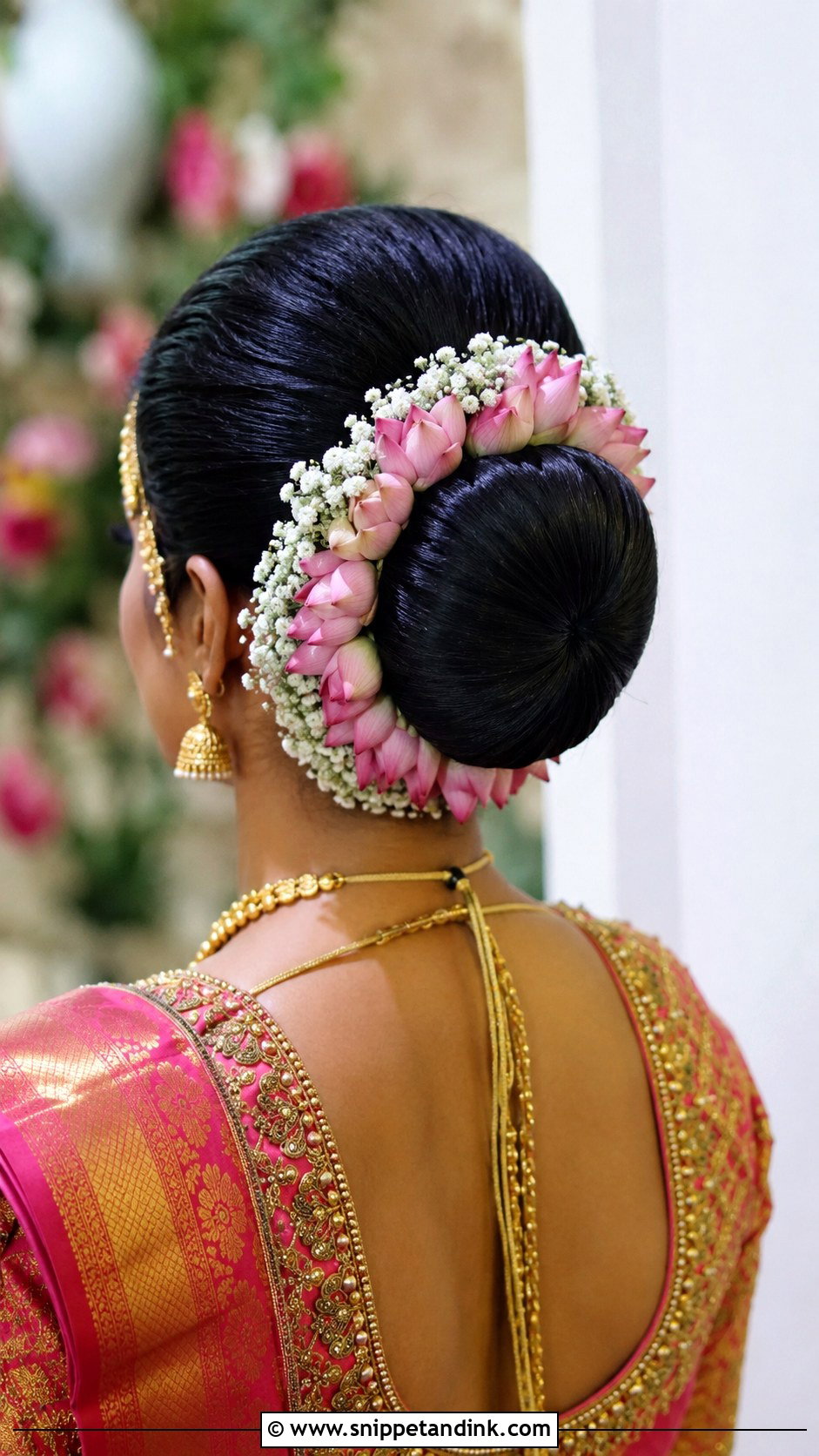
A clean part, hair smoothed back and a low or mid bun: this is the base I trust most for a long ceremony, because it holds a veil, a dupatta and heavy jewellery all at once. Lotus petals can circle the bun like a halo, with jasmine or baby’s breath filling the gaps. I use hidden padding inside the bun so the flowers have something firm to be pinned into, rather than sitting on hair alone. It keeps the face open and the neckline clean with sarees, lehengas and temple jewellery, and it holds through rituals, portraits and the long round of family photos.
2. Lotus Bridal Braid
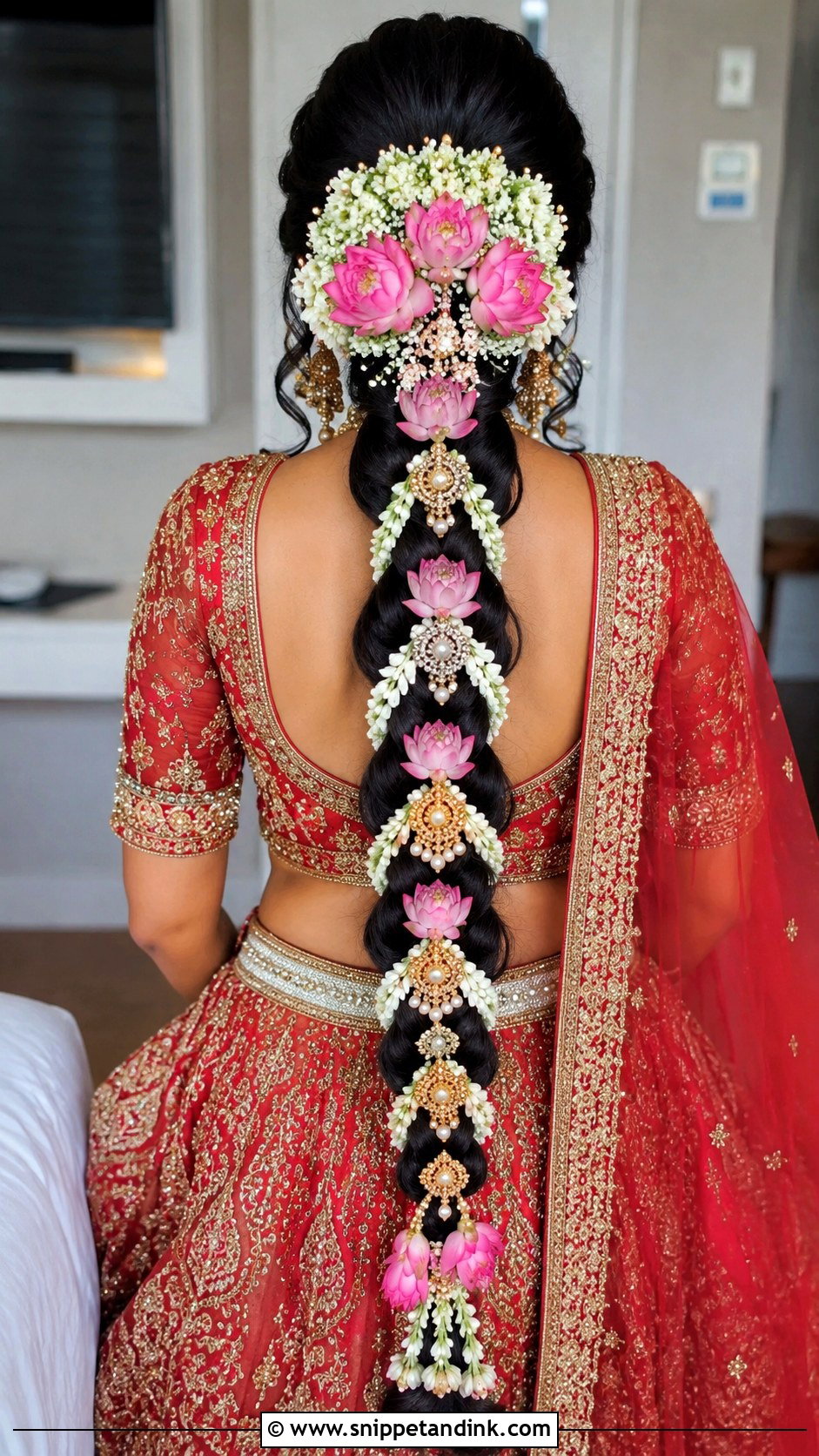
A long, structured braid gives lotus flowers plenty of room: at the top, in the middle or along the whole length. It sits naturally with South Indian bridal outfits, gold jewellery and silk sarees, and extensions can add length or fullness if your own braid is short. I keep the crown smooth or slightly lifted depending on the face shape. The mistake I see is too many large blooms on one braid, which pulls it sideways. Mix one or two lotus flowers with jasmine strings, pearl pins or gold braid ornaments so it looks rich but balanced.
3. Lotus Poola Jada
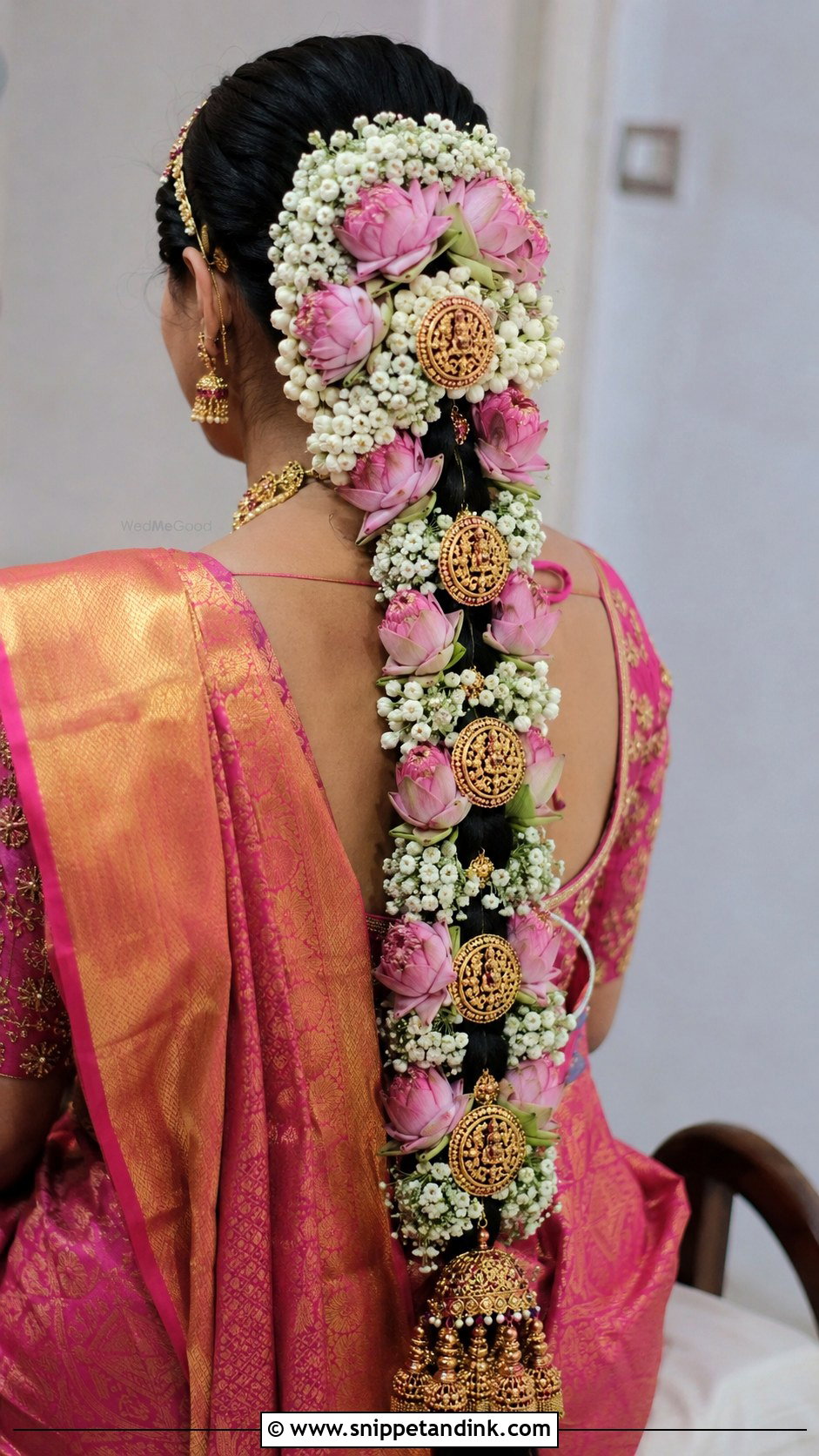
Lotus poola jada is the full floral braid, covered from crown to tail with flowers, decorative discs and bridal ornaments. Lotus works as the statement bloom at the base, the centre or the tail. With Kanjeevaram silk, temple jewellery and traditional makeup it’s hard to beat. It’s also heavy. I attach the jada to a firm braid base, often reinforced with a hidden extension braid, and keep the flowers light enough that you can turn your head without the whole weight swinging. Comfort over three or four hours of ritual matters more than one extra bloom.
4. Lotus Low Bun
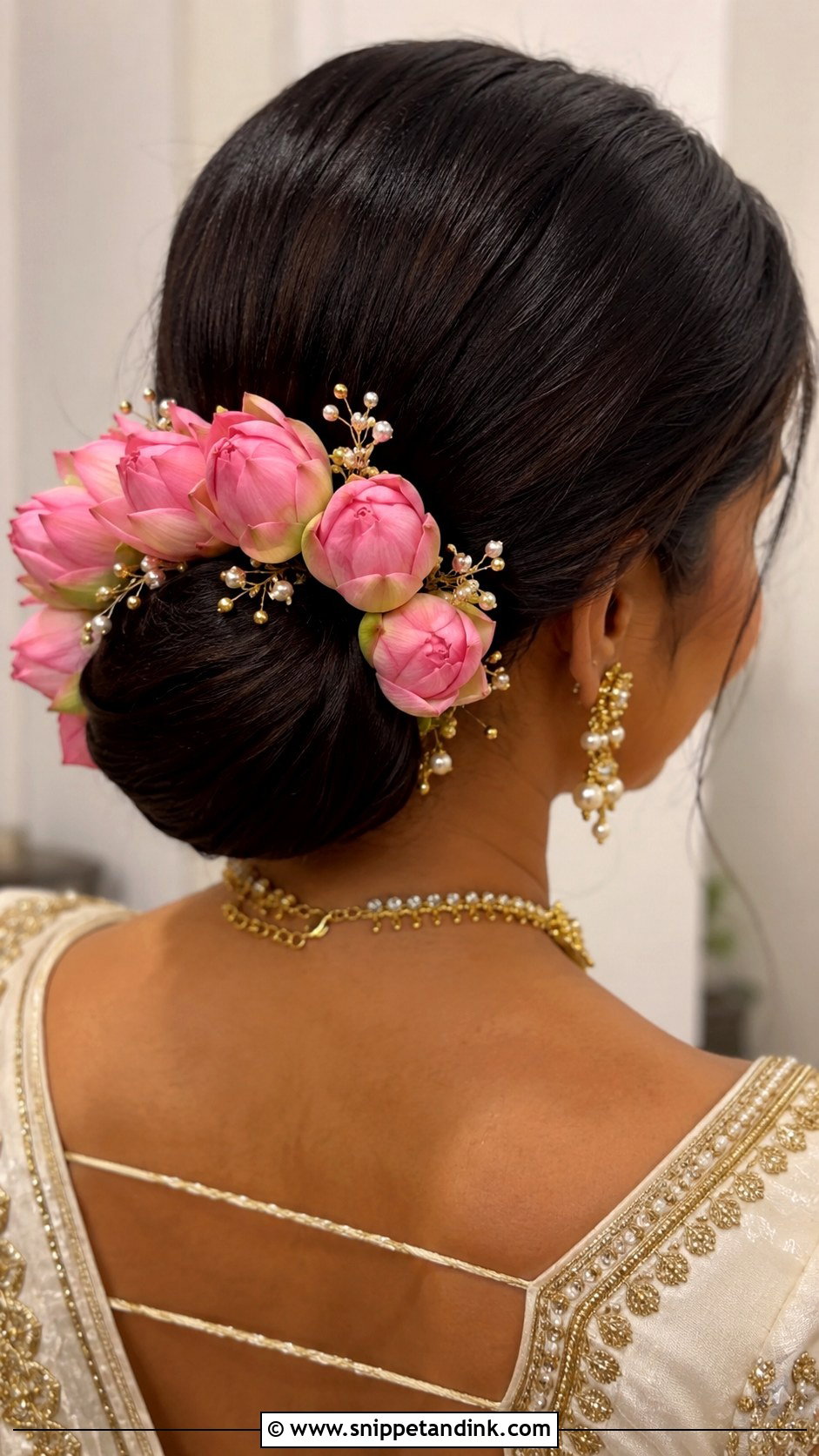
Sitting near the nape, a low bun keeps the height down and slips comfortably under a dupatta or veil. A few lotus flowers can sit on one side, circle the bun, or be arranged in a crescent along its edge for a more modern feel. Face-framing pieces let me adjust it for oval, round or heart-shaped faces. It works with chokers, long necklaces and statement earrings. Smoothing cream and a little shine spray give the clean finish that close-up portraits demand, since every stray hair near a large bloom shows.
5. Lotus Messy Bun
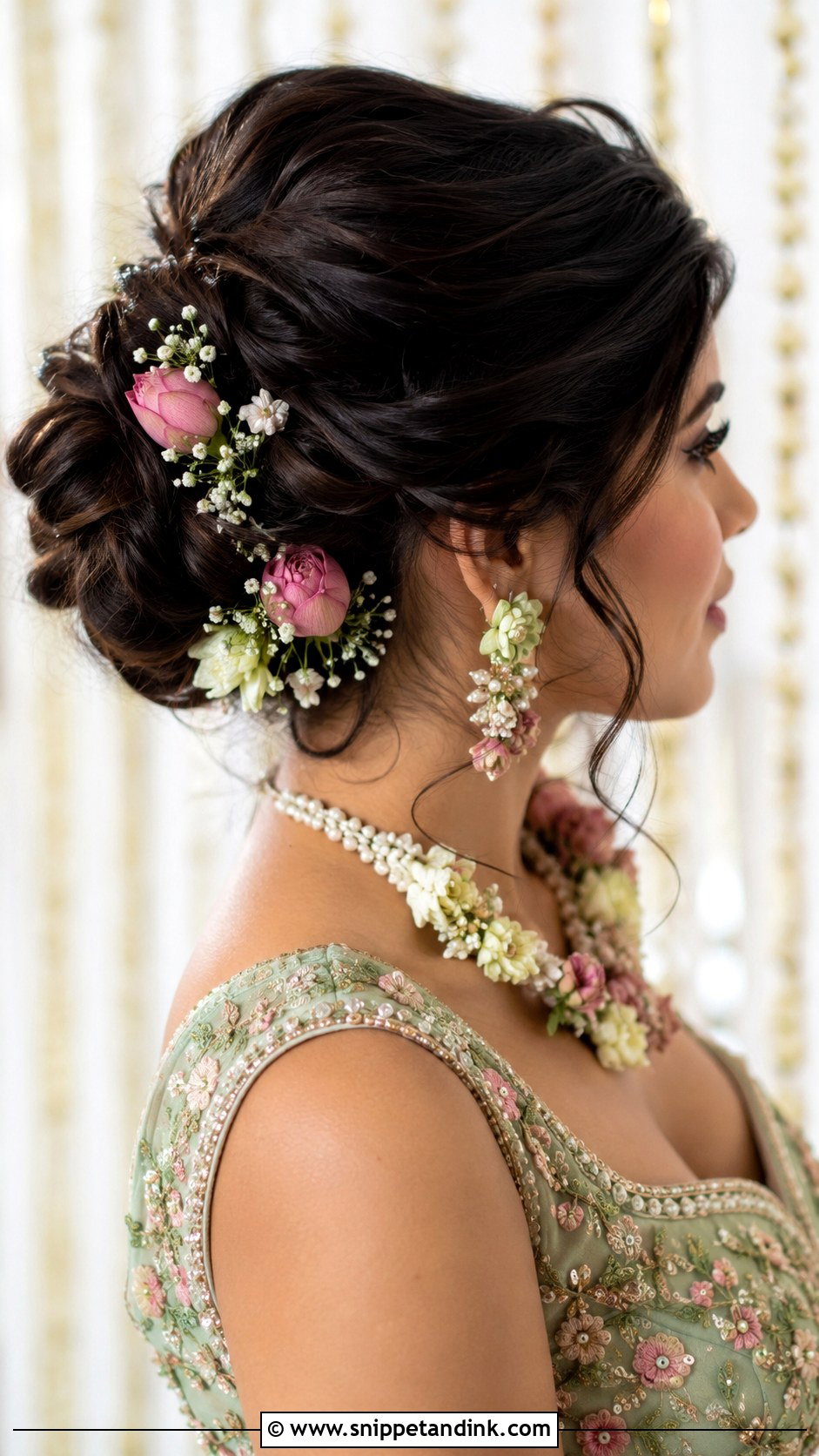
For a mehendi, haldi or relaxed function, a softer bun suits the mood better than a sleek one. I curl the hair first, then pin it loosely with soft pieces left around the face. Small lotus buds, single petals and tiny white flowers tuck through the bun for texture. Buds are the smarter choice here than open blooms, because they’re lighter and hold their shape longer in daytime heat. Keep jewellery a little lighter so the hair stays the focus without the whole look feeling busy.
6. Lotus Side Bun
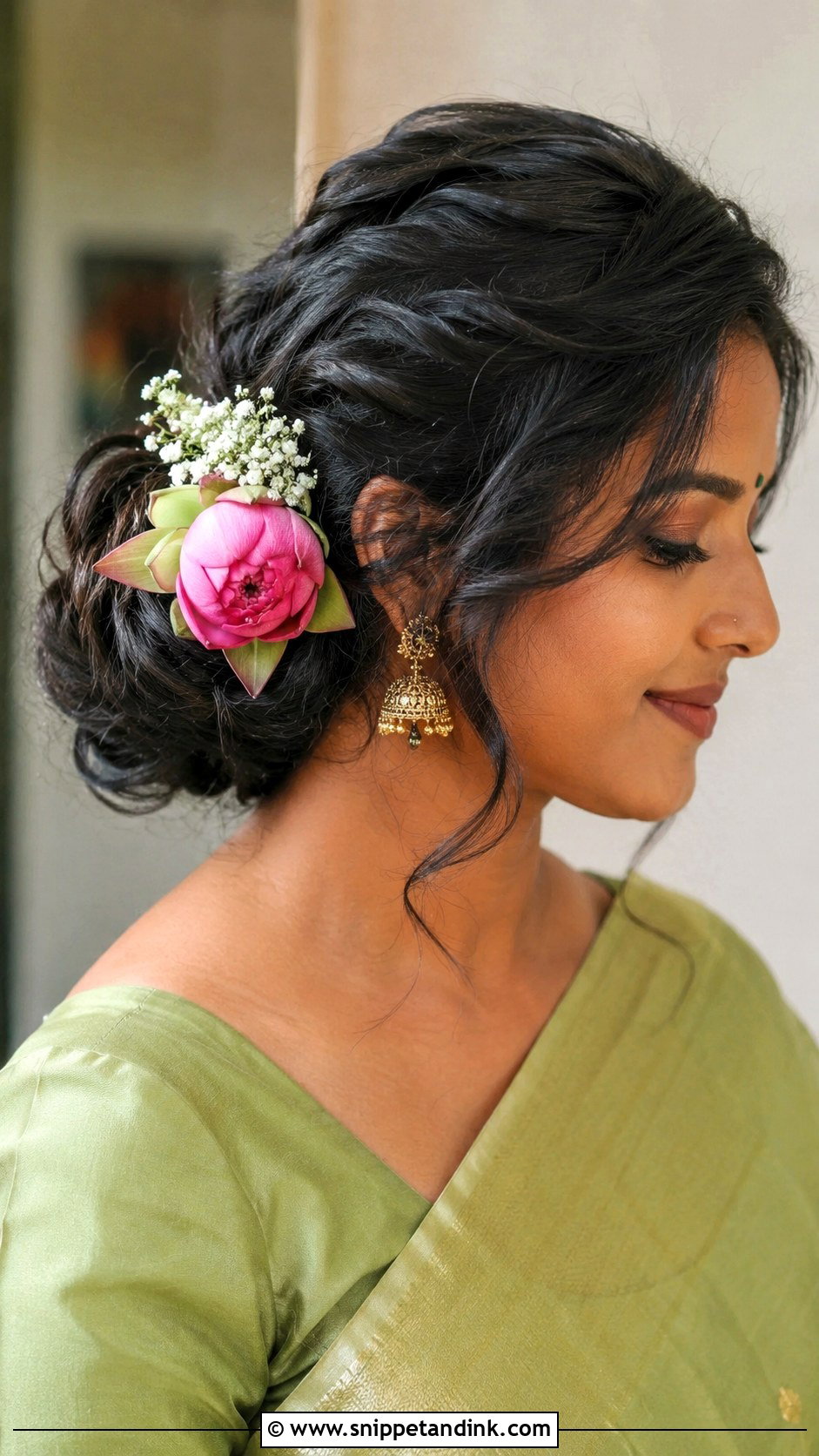
Placing the bun slightly to one side gives you a strong profile, which is lovely for stage moments and for blouses with detailed backs. Lotus flowers can circle the bun or sit as one bold accent near the ear. It moves between sarees, lehengas and gowns easily. On layered hair I curl first, since curls give the shorter pieces grip and stop them escaping the bun. The off-centre placement also leaves the front clear for a maang tikka, matha patti or dramatic earrings without crowding the face.
7. Lotus Braided Bun
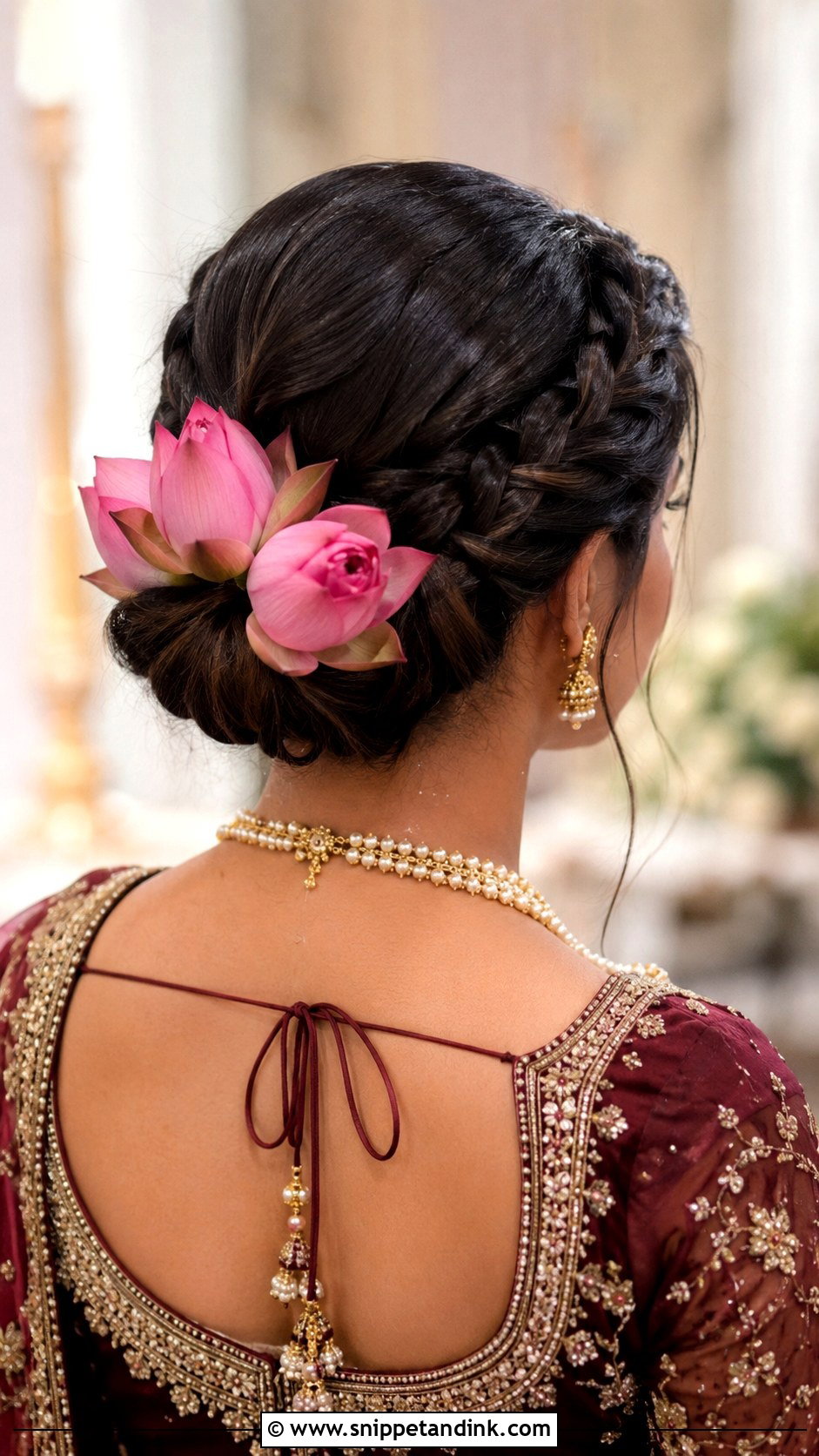
One or two braids along the crown, with the remaining hair wrapped into a bun at the back, gives detail from the front and the back. Lotus flowers sit around the bun or exactly where the braids meet, which is the strongest point to pin them. This is one of the most secure looks here for a long ceremony, because the braids grip the scalp and support the bun’s weight. Tiny curled pieces at the temples soften it; a clean, smooth part makes it more classic.
8. Lotus Half Up Hairstyle
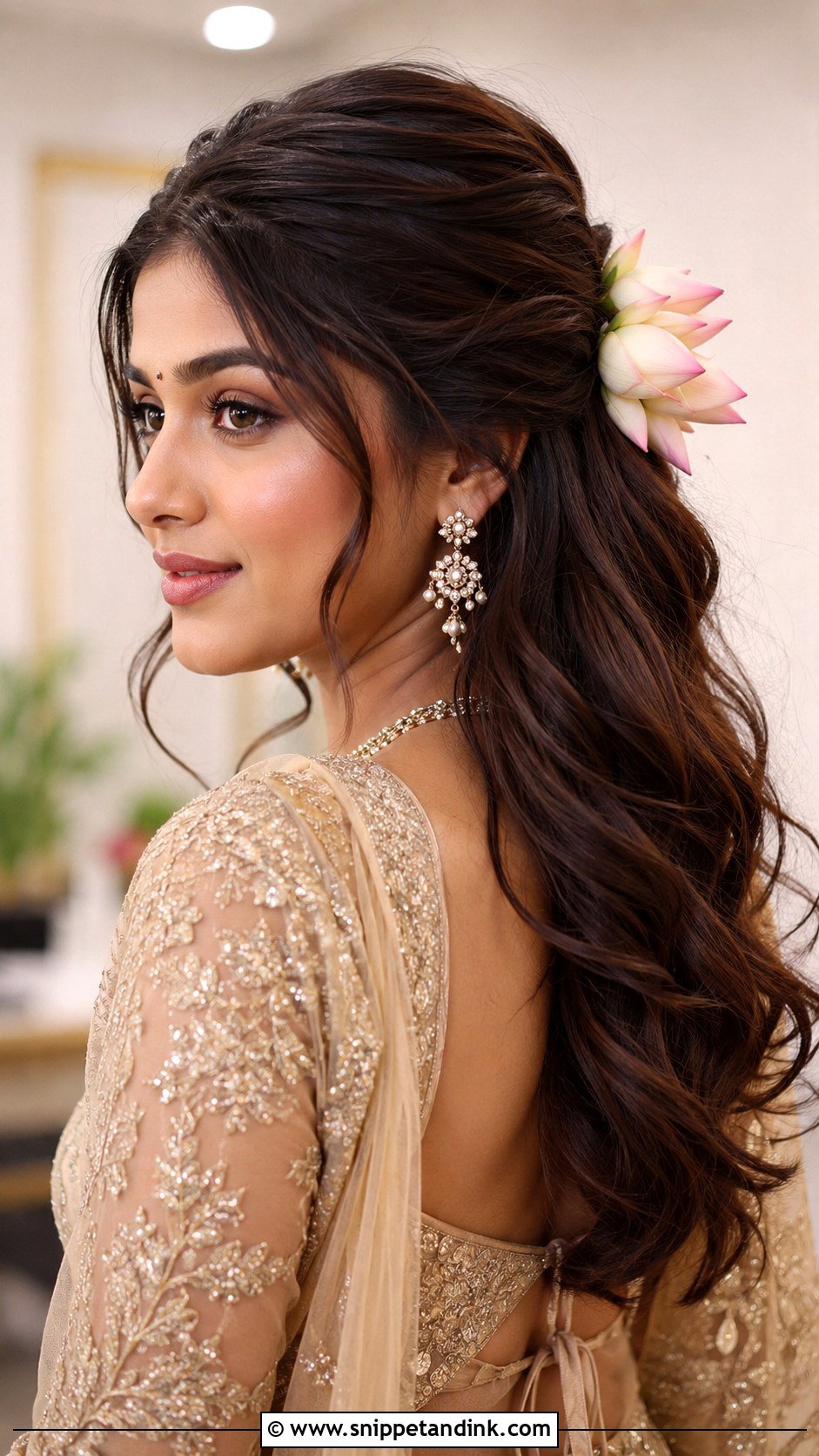
With the top section twisted, braided or pinned back and the rest left in soft curls or waves, a half-up style lets you wear your hair down while keeping it secure. The lotus sits at the back where the hair gathers, which is the only part of a half-up look firm enough to hold a heavy bloom. It suits engagements, receptions and outdoor functions. I brush the curls out softly rather than leaving them tight, and finish with light hold spray so they stay touchable.
9. Lotus Open Hair
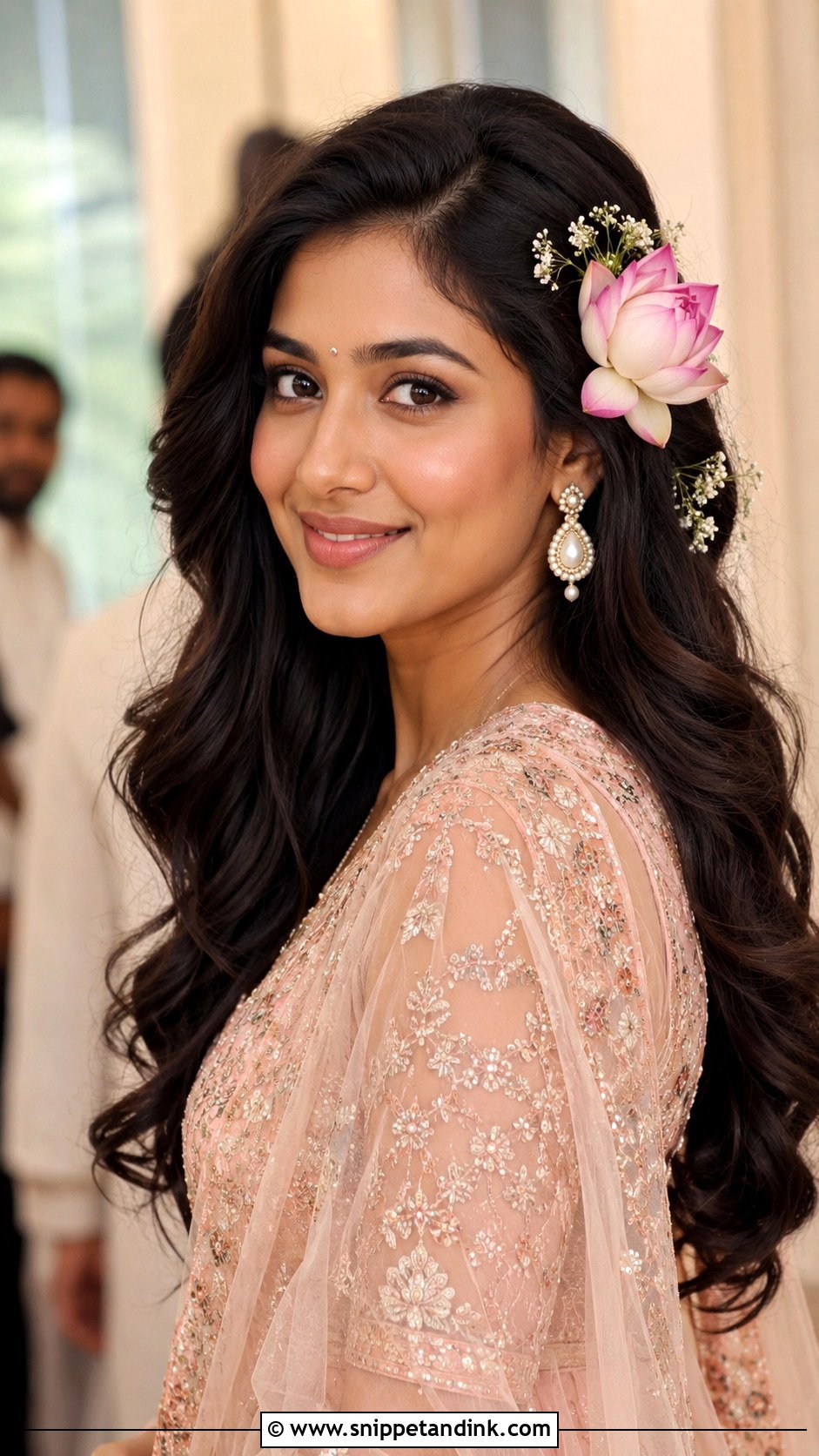
Soft waves, polished curls or a smooth blowout, with one lotus near one side or behind the ear: open hair is the simplest way to wear the flower. It suits pre-wedding shoots, mehendi functions and reception outfits. The challenge is attachment, since open hair has no base. I build a small hidden twist behind the ear and pin the flower into that. Choose a modest bloom rather than a large one, and use a humidity-resistant product, because open hair loses its shape first in a warm hall.
10. Lotus Crown Braid
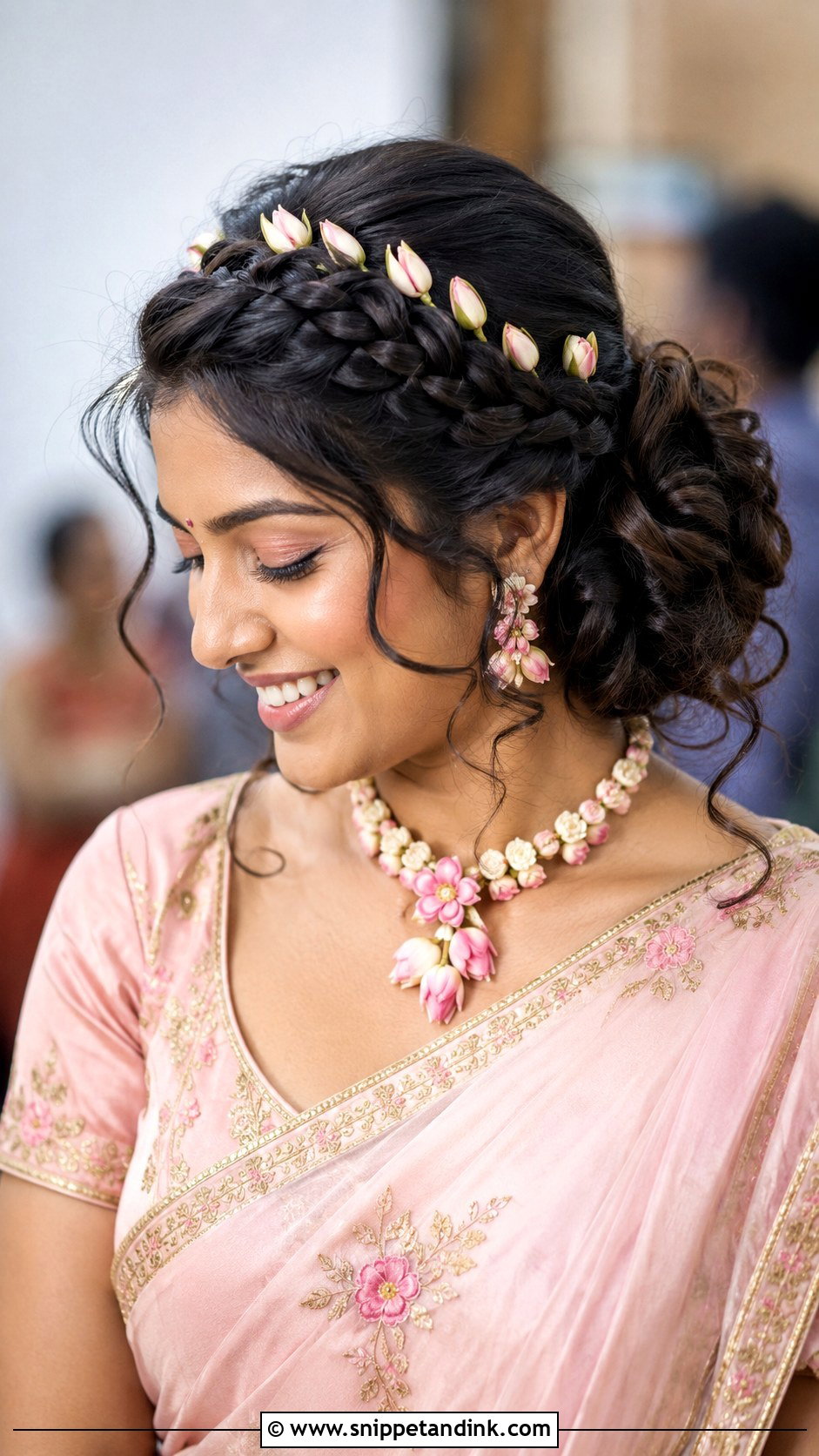
A braid wrapped around the head like a crown, with the rest pinned into a bun or left in waves, is secure without looking severe. Small lotus flowers or single petals tuck between the braid’s loops, where they’re gripped from both sides. It works with veils, dupattas and floral jewellery. I keep the braid slightly loose at the hairline so it flatters the face rather than pulling it back, and a couple of soft curls near the ears finish it.
11. Lotus Fishtail Braid
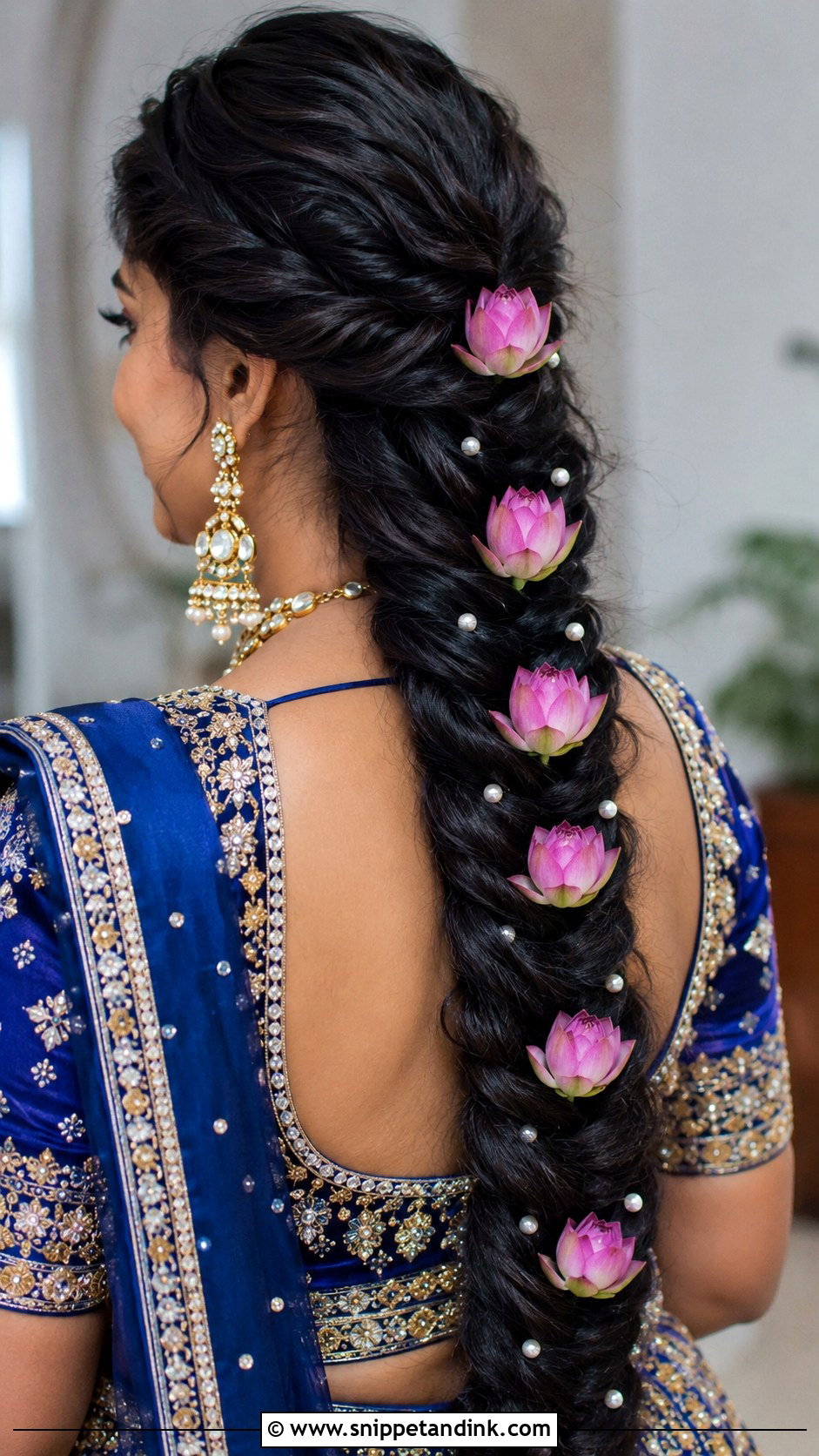
The fishtail’s tight herringbone pattern shows off floral accents well, especially with lotus petals placed along the outer edges. It needs long hair or extensions to show the pattern; on shoulder-length hair the braid ends before it really begins. It reads more modern than a classic three-strand braid. Small pearls, gold pins or jasmine buds add bridal detail. Fishtails take longer to braid than most stylists expect, so make sure the timing is in your getting-ready schedule.
12. Lotus Bubble Braid
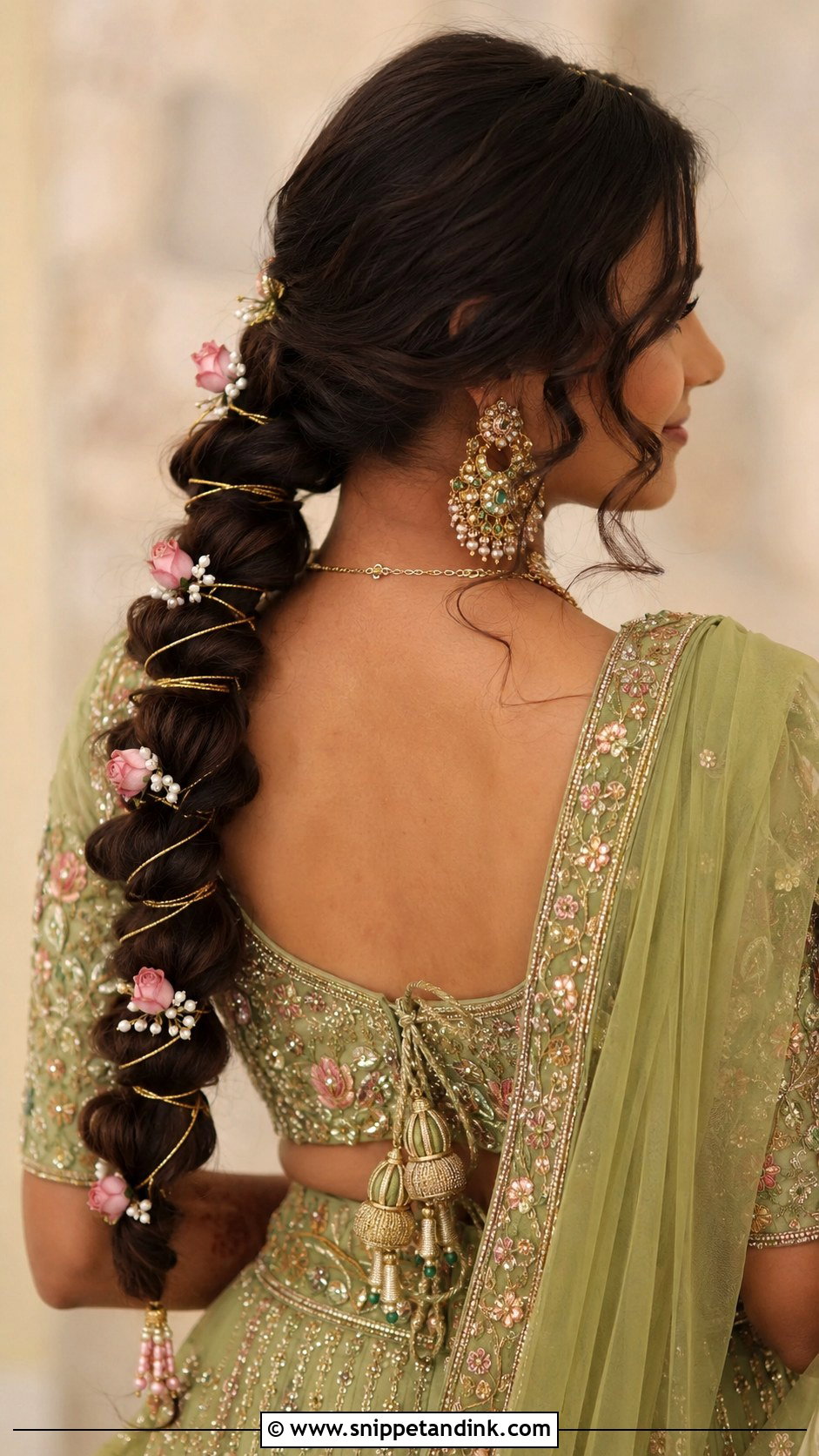
Sections are tied off down the length to form rounded bubbles, and each one can be wrapped with flowers, pearls or gold thread. Lotus buds sit neatly between the bubbles and give it a sculpted shape. It suits mehendi, sangeet or a modern reception, and it’s easiest on thick hair or with extensions, since thin hair makes small, flat bubbles. The elastics also make it very secure for dancing. A centre part, side part or a few face-framing waves keeps the front soft.
13. Lotus Sleek Bun
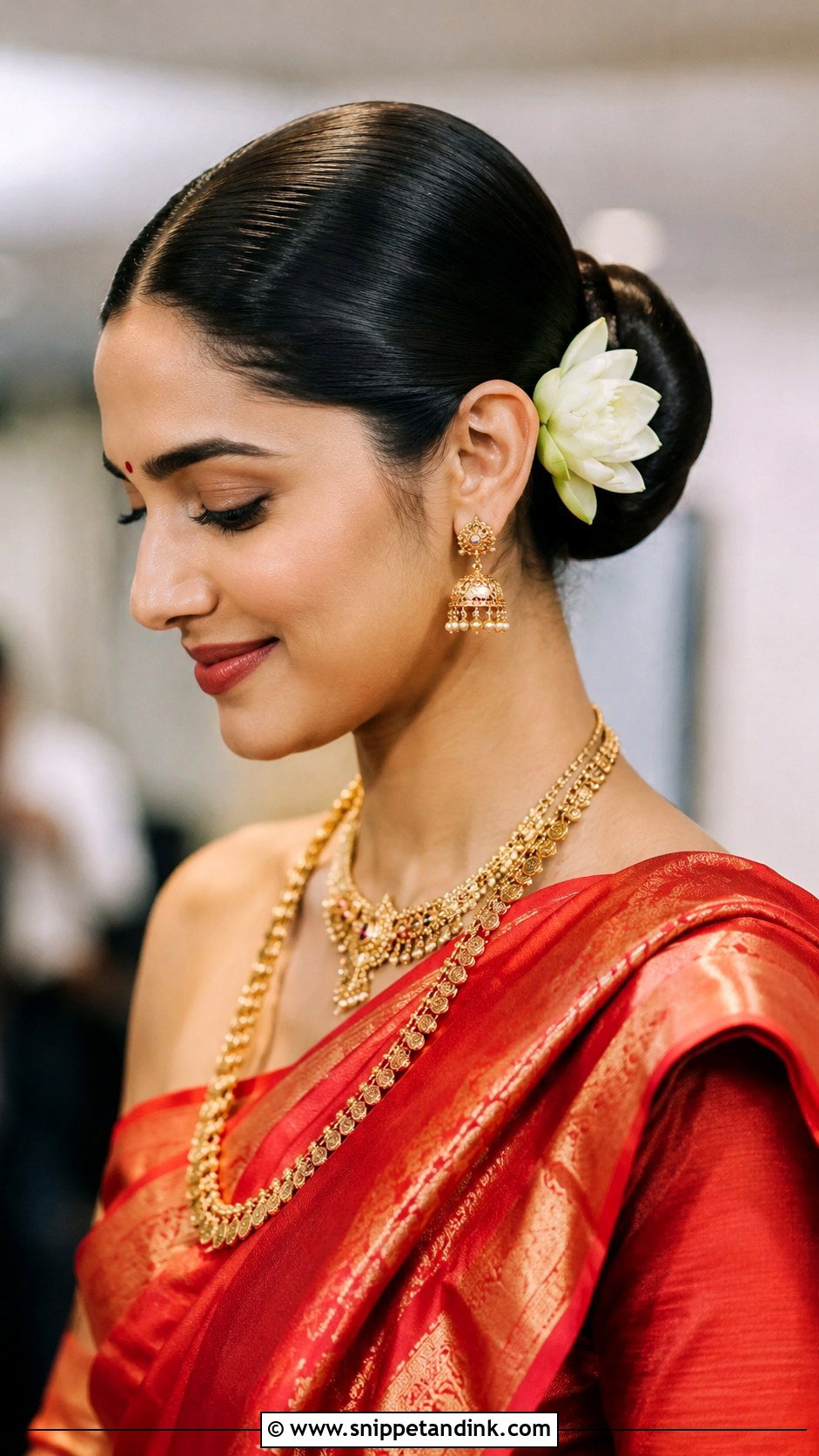
Centre-parted or side-parted and smoothed into a neat bun, this is the most polished option here. Lotus flowers can circle the bun or sit as one statement at the back. It works with bold eyes, red lips, temple jewellery and heavily embroidered outfits. Every strand shows in a sleek style, so prep is everything: smoothing serum, strong-hold gel at the hairline and a fine-tooth brush. If your hair frizzes in humidity, plan for a touch-up after the main ritual.
14. Lotus Curly Bun
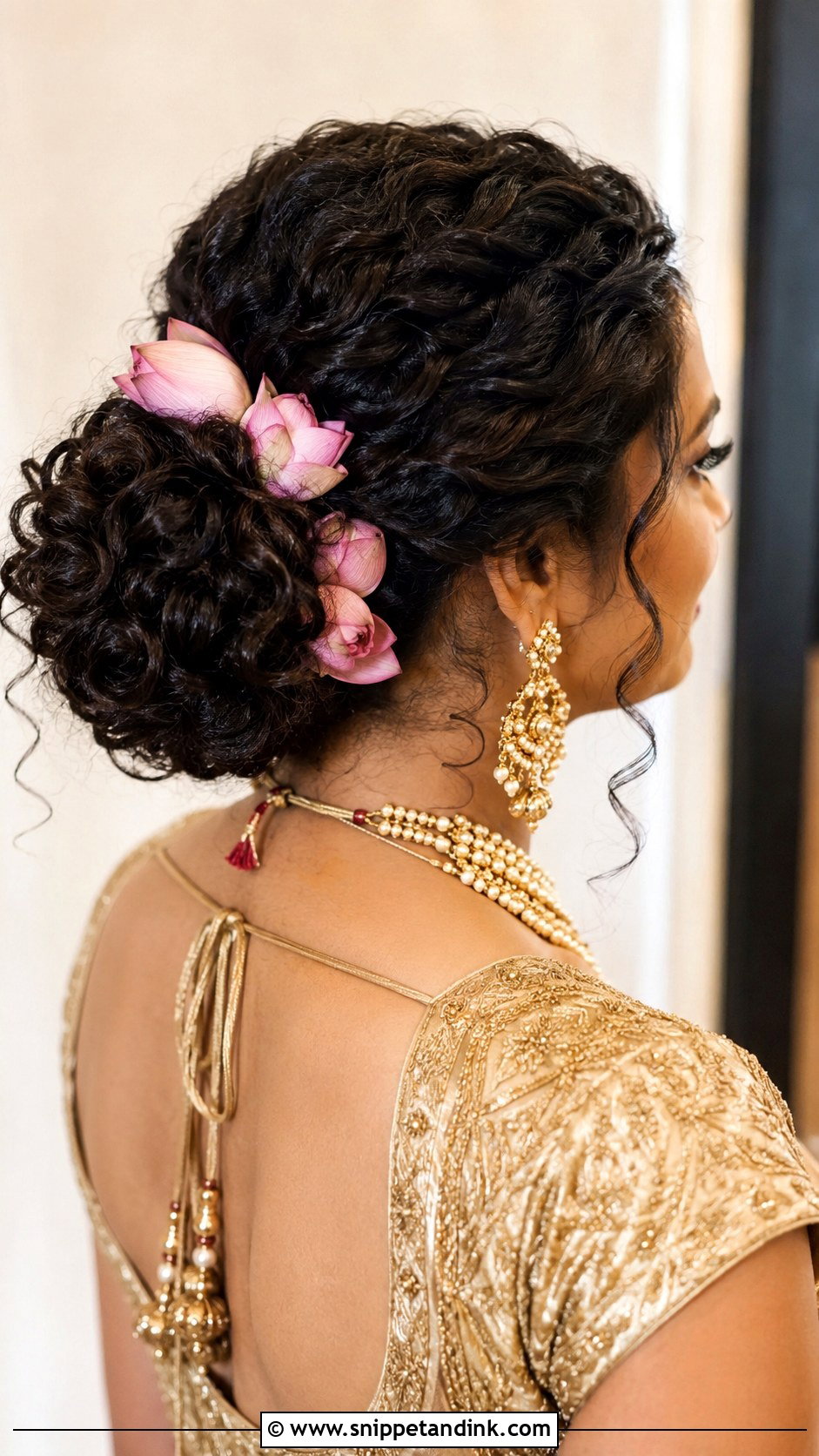
Curled first, then pinned into a rounded bun, this style shows texture from every angle. Lotus flowers can tuck into the curls, circle the bun or pair with jasmine for a fuller floral shape. Naturally wavy or curly hair suits it well, since the bun works with your texture instead of hiding it. I define the curls before pinning; skipping that step gives a bun that looks flat in photos. A soft shine spray finishes it for the ceremony, engagement or reception.
15. Lotus Gajra Bun
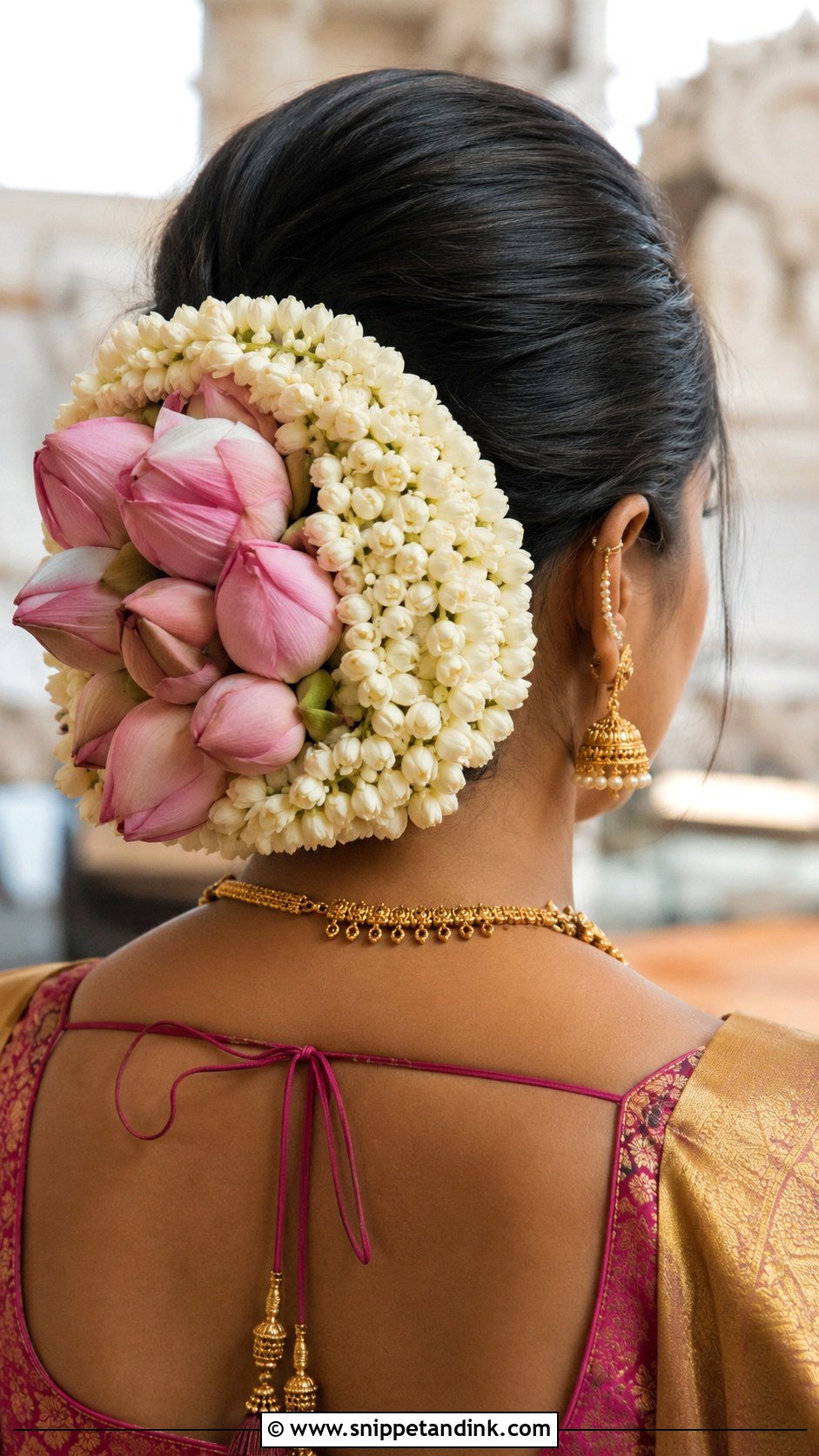
Wrapping the bun with jasmine gajra and finishing with lotus at the side, top or centre combines fragrance with a statement bloom. It feels right for a traditional ceremony with silk, gold jewellery and a classic bindi. Balance decides whether it works. Large lotus blooms need a neat, controlled jasmine wrap; smaller lotus accents leave room for more floral layers. I pin the gajra first, then place the lotus last, so the heaviest flower goes into the most secure spot.
16. Lotus Reception Hairstyle
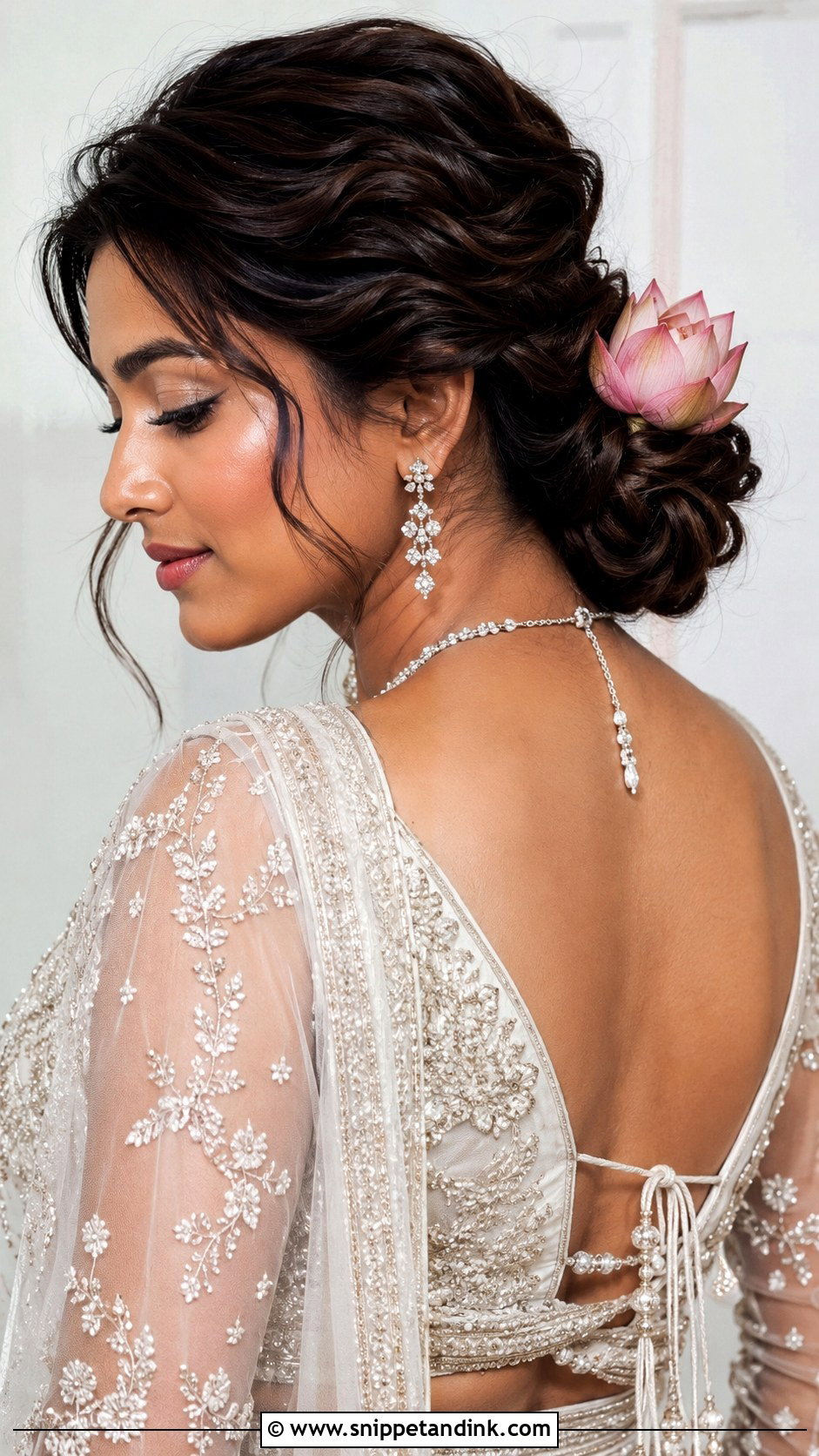
Reception hair can be more glamorous than the ceremony look while keeping the floral thread going. Soft waves, a low twisted bun or a half-up style all suit lotus accents. Most brides I style want lighter flowers and more shine at this point, so the hair looks polished under strong lights. A single blush lotus tucked into one side suits a gown, lehenga or modern saree. Plan it so the change from ceremony hair is quick; reception hair is often done in under thirty minutes.
17. Lotus Wedding Hairstyle For Saree
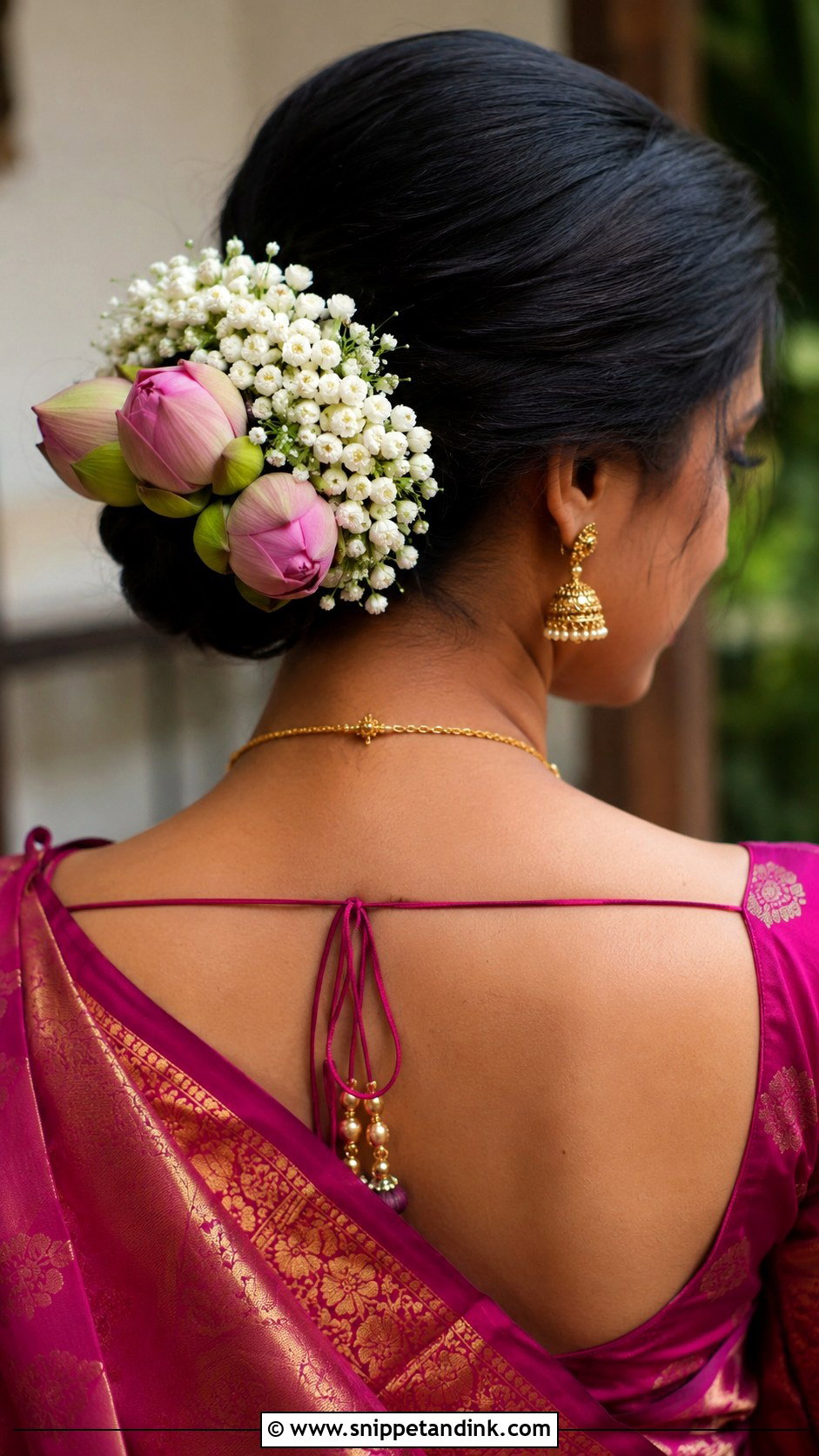
Low buns, long braids and poola jada all suit sarees because they show off the back of the blouse and the neckline. Lotus flowers soften the look while keeping it traditional. A heavy, richly woven saree usually needs a cleaner hairstyle with fewer flowers; a simple saree leaves room for more detail with lotus, jasmine, pearls or gold accessories. I like to match the flower colour to the saree border, blouse shade or jewellery tone. Bring a photo of the drape to your trial so the hair and pallu work together.
18. Lotus Wedding Hairstyle For Lehenga
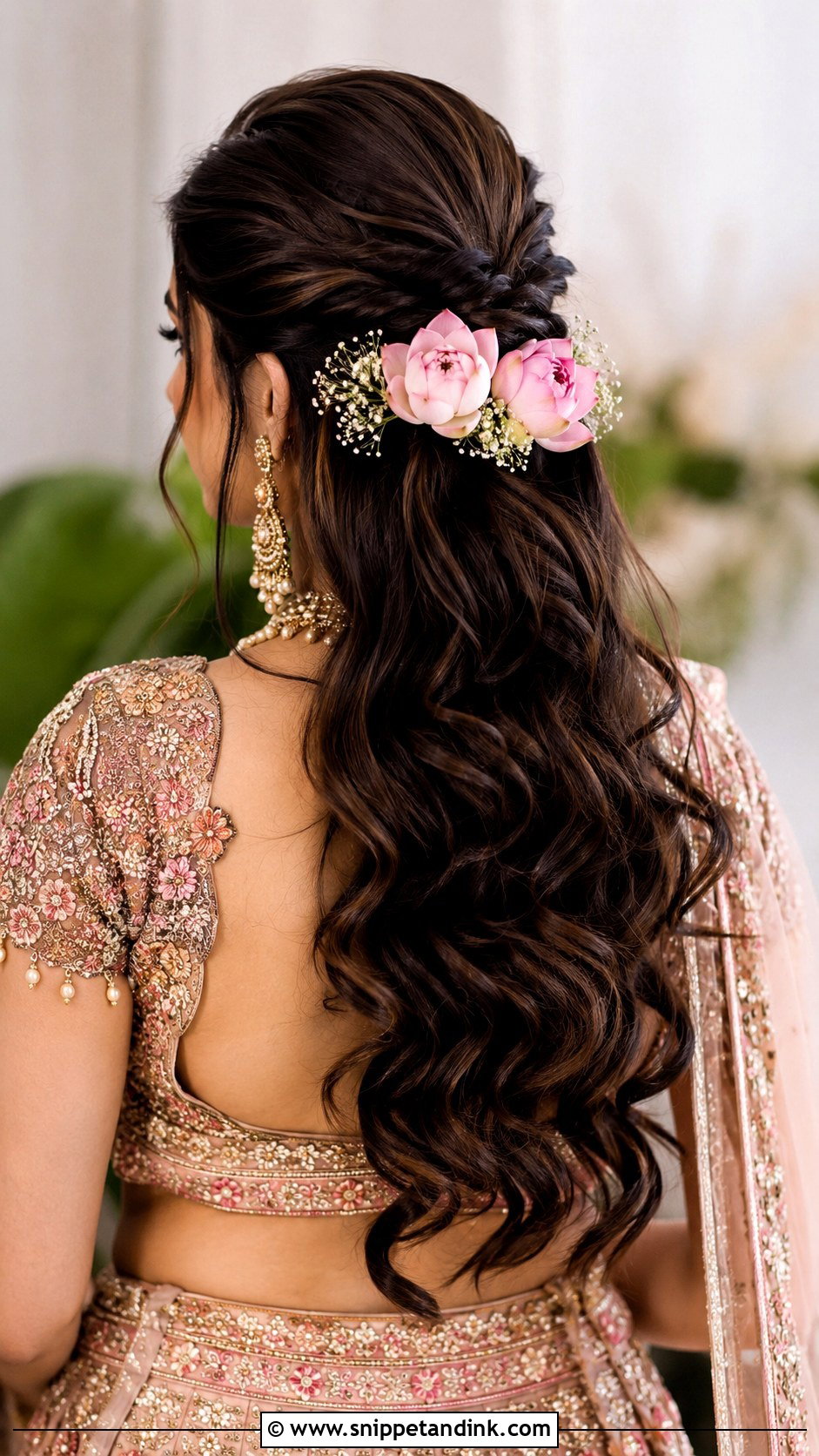
A lehenga can take soft, grand or modern hair depending on its weight. With a heavy bridal lehenga, a low bun with lotus flowers keeps the look elegant and gives the dupatta a firm base. A lighter lehenga suits soft curls or a half-up style with lotus accents. Kundan, polki, pearl or floral jewellery all work. The hair shouldn’t compete with an embroidered blouse or neckline, which is easier to judge at a trial with the outfit than from photos.
19. Lotus Bridal Hairstyle With Maang Tikka
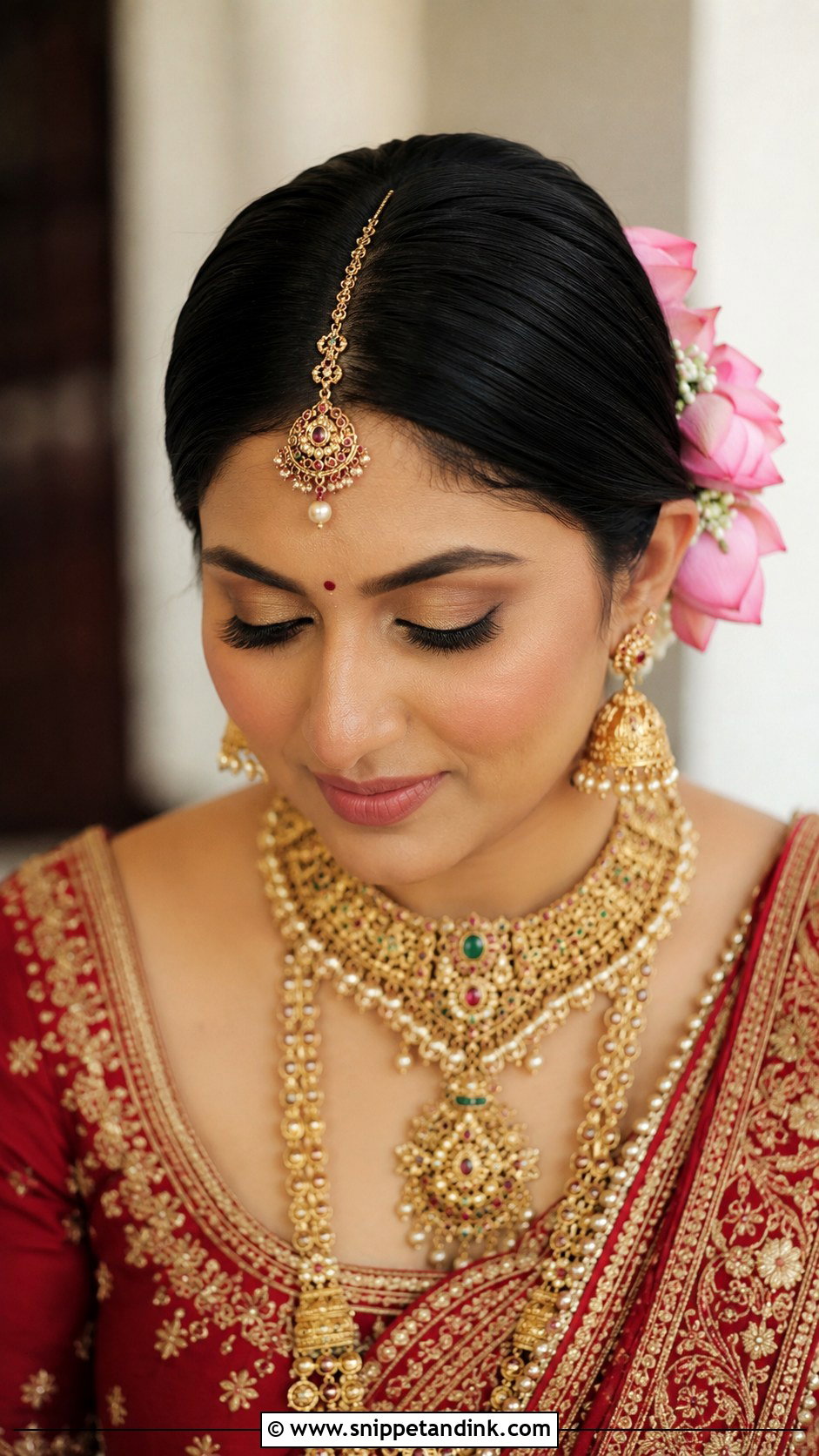
The tikka needs a clean front section to sit correctly, and a centre part suits most designs. I pin the tikka first with strong pins near the part, then build the back into a bun, braid or half-up style and add the lotus last, placed behind the head so it doesn’t compete with the forehead jewellery. Doing it in this order keeps the tikka centred; adding flowers first often shifts the hair and tilts the pendant.
20. Lotus Bridal Hairstyle With Dupatta
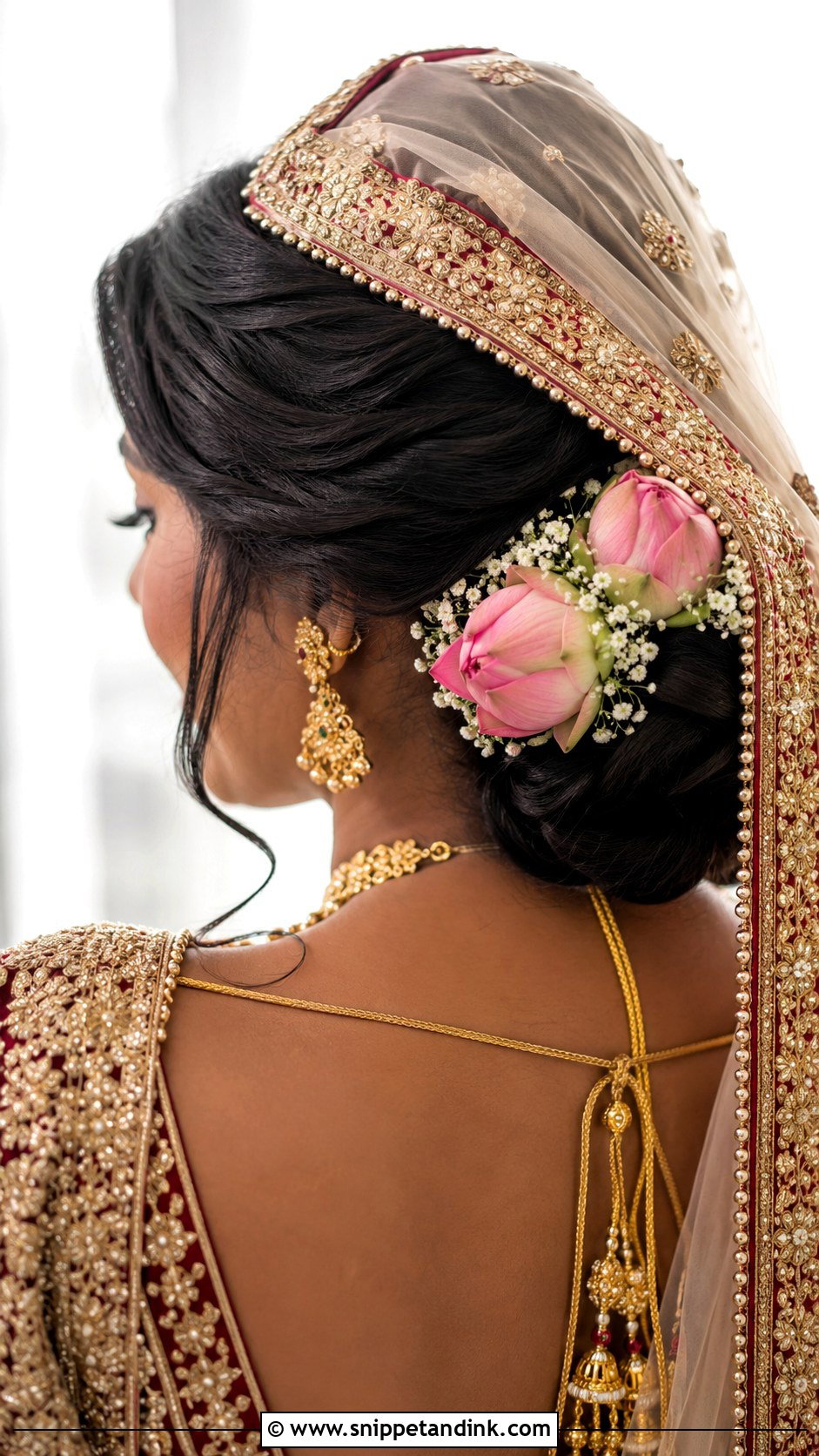
A dupatta needs a stable base, which is why low buns, braided buns and long braids work best under one. Lotus flowers can sit just below the dupatta edge, around the bun or along a visible braid. A heavy dupatta pressing onto a large flower is uncomfortable within an hour, so I keep blooms away from the pressure points where the dupatta is pinned. Test the pins at your trial with the real dupatta, not a substitute; the weight is never quite the same.
Sitting Through Hours of Ritual in a Floral Braid
Many South Indian ceremonies mean sitting on the floor or a low seat for a long time, often in front of a fire, with a heavy braid hanging behind you. Most of the discomfort brides feel comes from how the weight is attached, not the total weight.
Spread the load
I anchor a jada or heavy floral braid at several points along the scalp, not just at the crown. If all the weight hangs from one spot, you’ll feel it in your neck before the rituals are halfway through.
Mind the floor
A long braid will touch the floor when you sit. Ask whoever is helping you to lift and lay it to one side each time you sit down, so the flowers at the tail don’t get crushed or caught.
Heat from the fire
Sitting near a sacred fire wilts fresh flowers faster and softens hairspray. Lean on pins and braiding for hold rather than product, and keep a few spare jasmine strings and pins with a family member for quick repairs between rituals.
A Lotus Placed With Purpose
Lotus can be bold or delicate depending on where it sits, which is why it works across sarees, lehengas, veils, dupattas and every function from mehendi to reception. A lotus bun reads classic, a lotus braid reads traditional, and a half-up look with one bloom feels relaxed. Match the style to your outfit, jewellery, hair texture and how long you’ll be seated. At your trial, check the weight of the flowers, then photograph the look from the front, side and back before you decide.
You'll Like These Ideas:



Leave a Reply